

Submitted:
10 December 2025
Posted:
11 December 2025
You are already at the latest version
Abstract
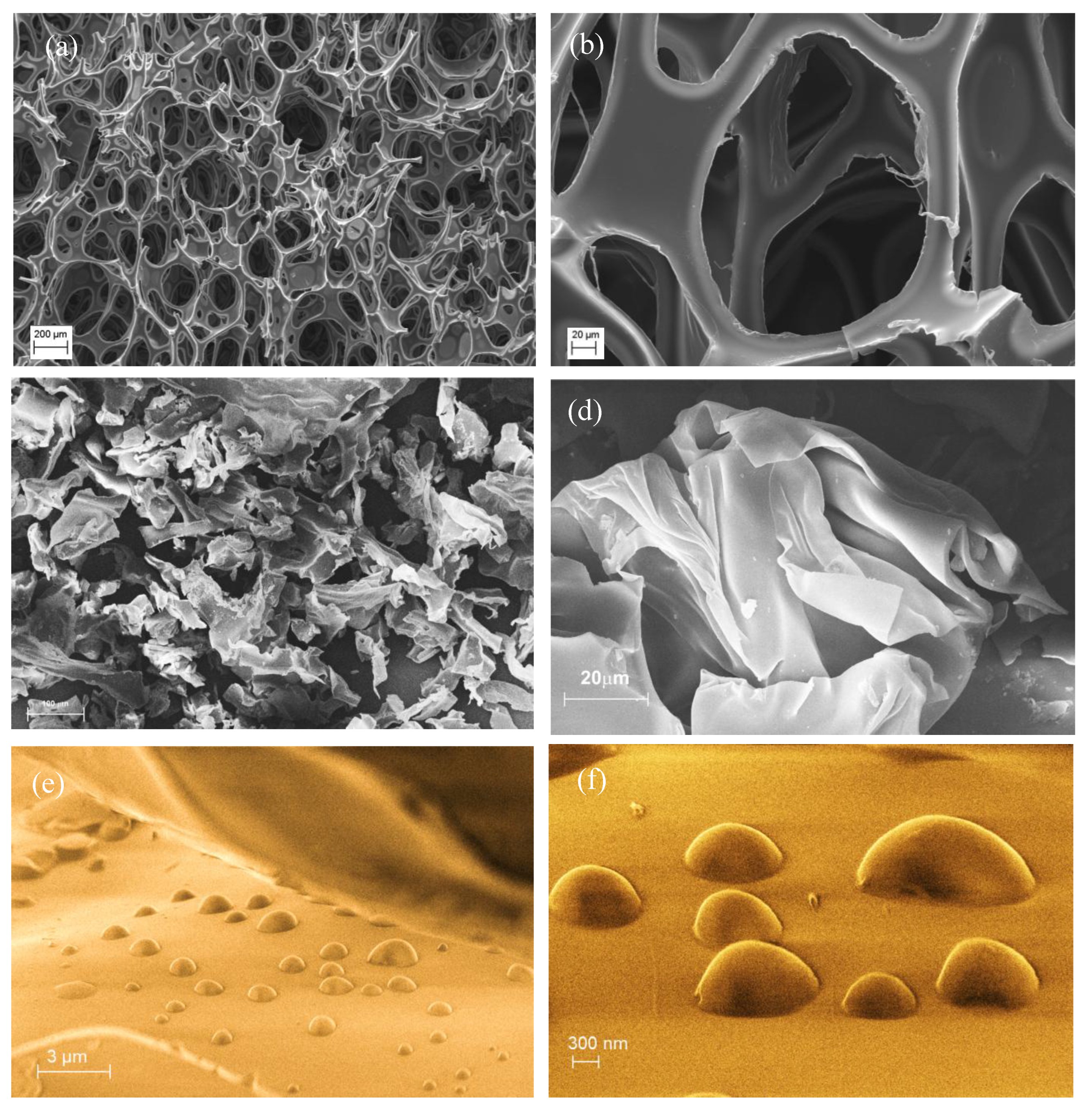
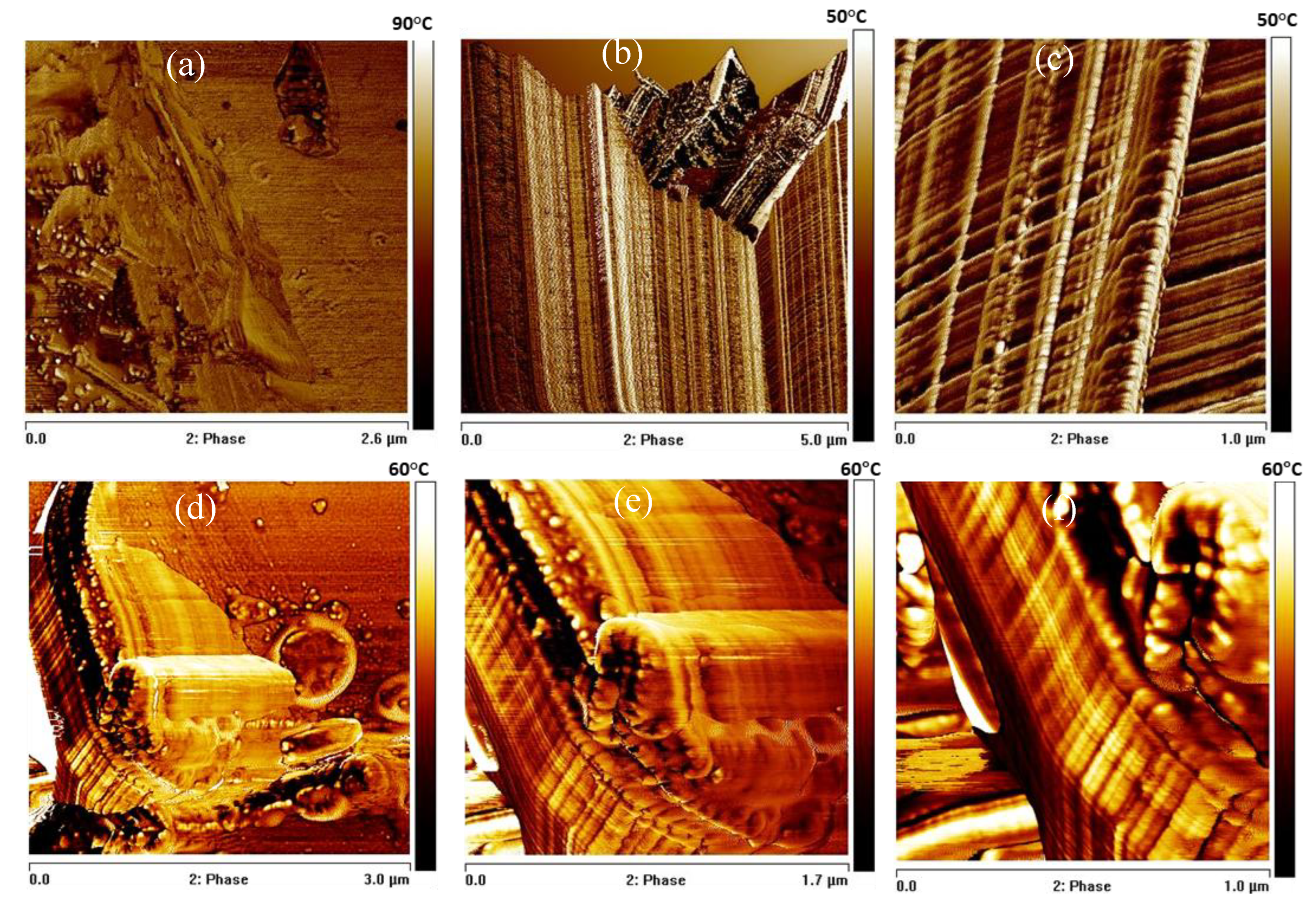
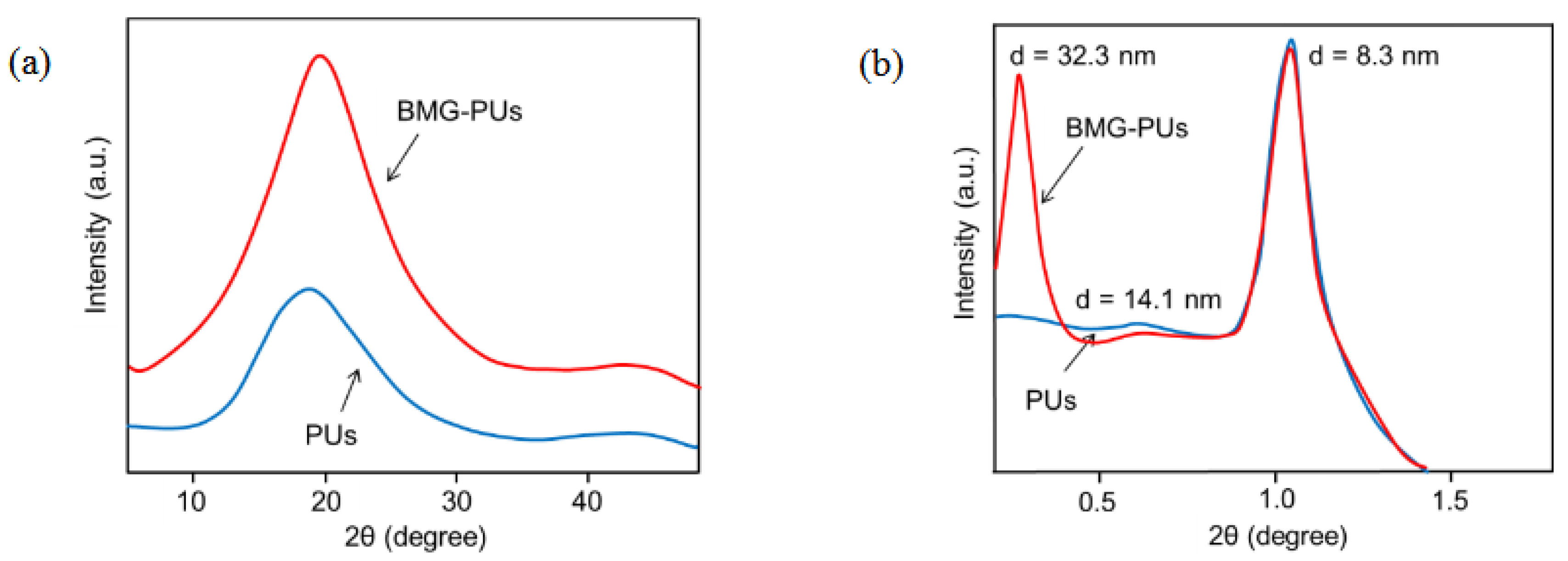
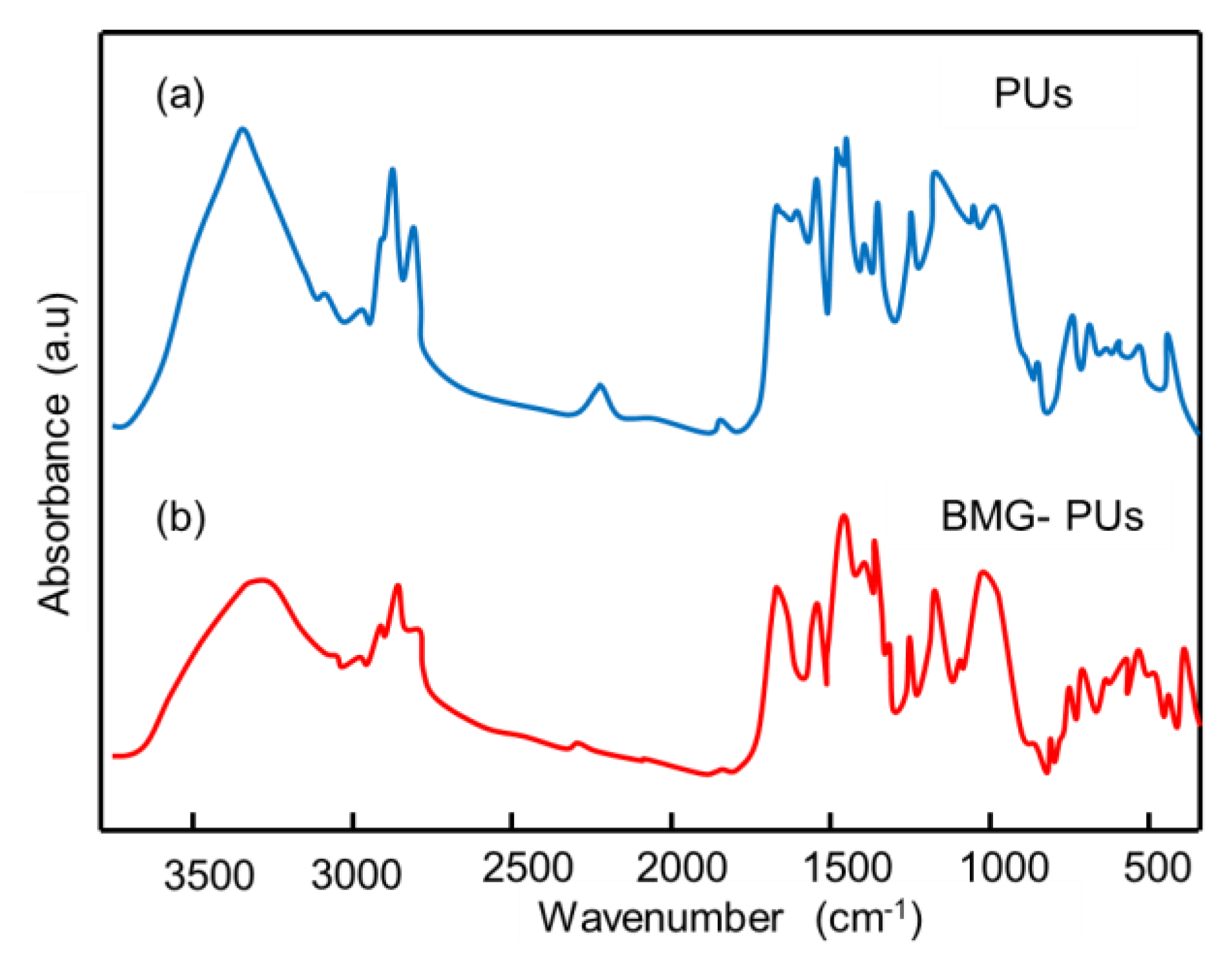
Polyurethane (PU) is widely recognized for its efficient oil sorption properties. However, this capacity is highly dependent on its intrinsic chemical composition and morphological structure which can be altered by mechanical or chemical treatments commonly applied before using as a sorbent. In this study, we present a comprehensive investigation of the oil sorption behavior of both soft and rigid PU foams, and their blade-milled ground (BMG) counterparts obtained by mechanical treatment of several recycled PU-based products, including seats, mattresses, side panel of cars, packaging components, insulating panels of refrigerators and freezers. We found that blade-milling of the soft PU foams leads to a significant reduction in oil sorption capacity, proportional to the extent of grinding. Pristine soft PU foams and the BMG-PUs with intermediate particle size (1 mm –250 μm) exhibited the highest oil uptake (30 -20 g/g), whereas the finest fraction (250 μm – 5 μm) showed lower capacity (3-7 g/g). In contrast, rigid PU foams showed consistently low oil sorption (~5 g/g), with negligible differences between the original and ground materials. At the macroscopic level, optical and morphological analyses revealed the collapse of the 3D porous network and a reduction in surface area. On the microscopic scale, spectroscopic, structural, and thermal analyses confirmed phase separation and rearrangement of hard and soft segmented domains within the polymer matrix, suggesting a different mechanism for oil sorption of BMG-PU. Despite reduced performance compared to pristine foams, BMG-PU powders, especially those with intermediate dimensions and originating from soft PU foams, present a viable, low-cost, and sustainable alternative for oil sorption applications, including oil spill remediation, while offering an effective strategy for effective recycling of PU foam wastes.
Keywords:
1. Introduction
2. Experiment
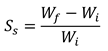
3. Results and Discussion
3.1. Recycle of Dismantled PU Foams and Mechanical Treatment by Blade-Milling Process: Analysis of Size, Morphology and Chemico-Physical Properties
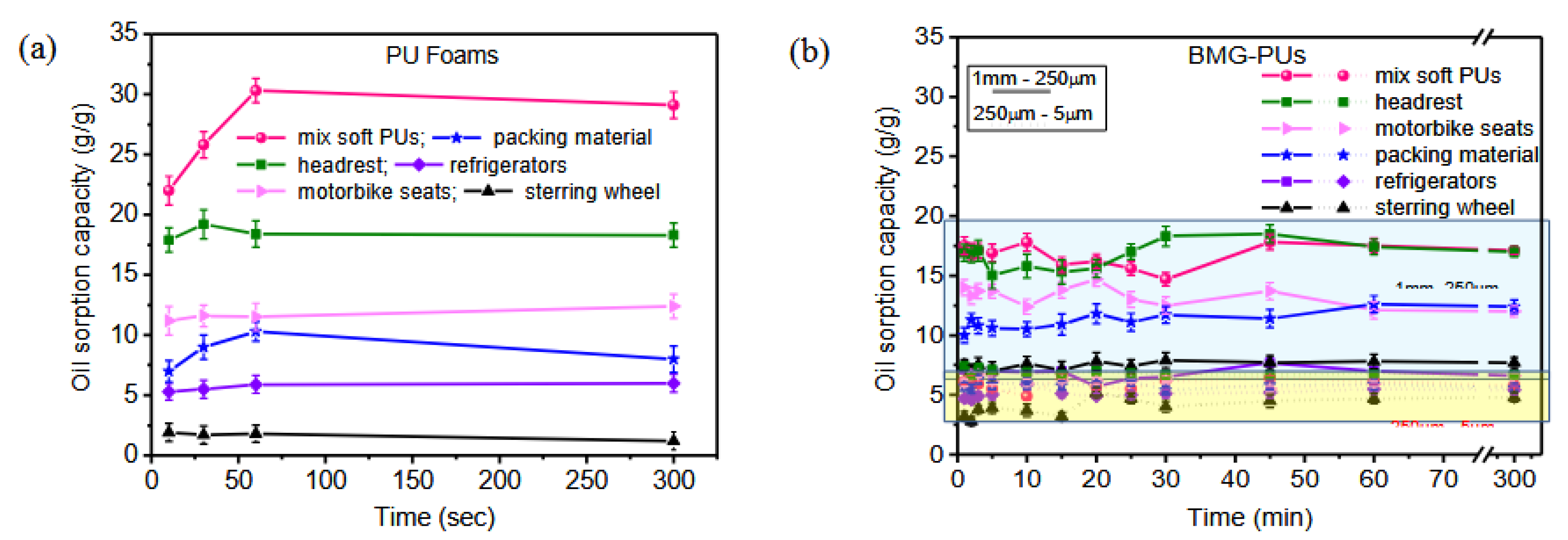
3.2. Oil Sorption Capacity of PU Foams and Powder
3.3. Analysis of Structural, Chemico-Physical Changes Induced by Mechanical Treatment
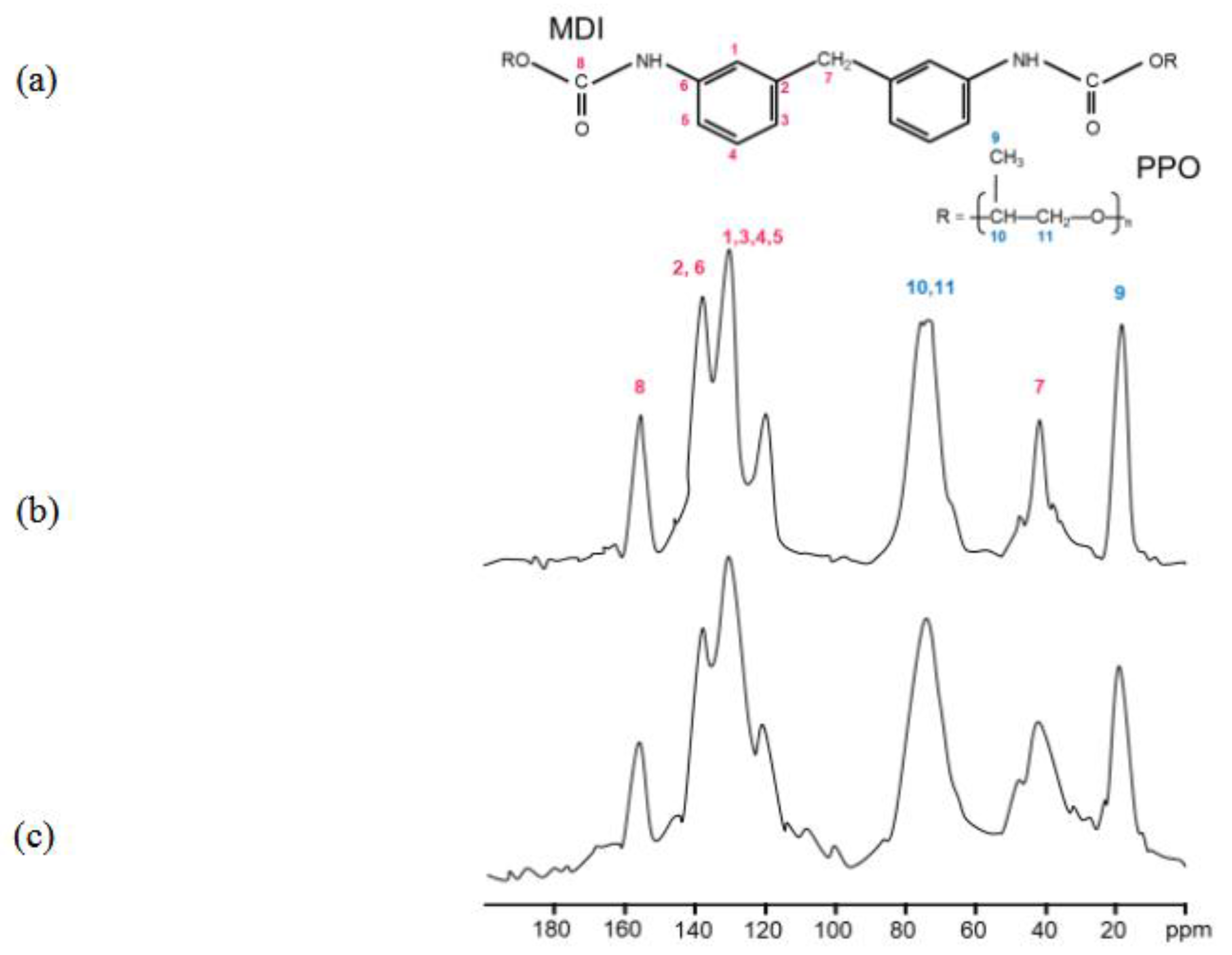
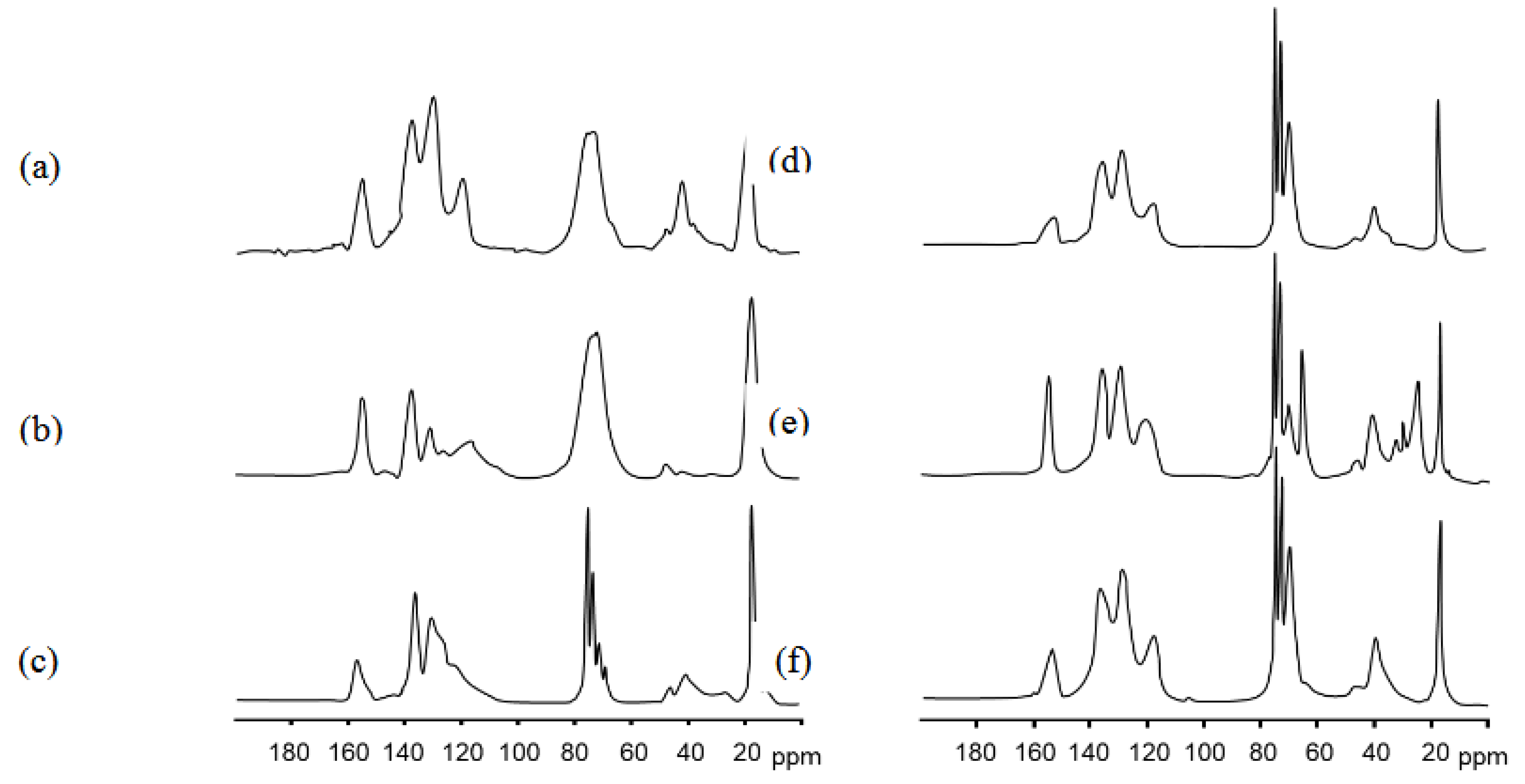
3.4. Morphological, Structural and Chemico-Physical Changes Induced by the Grinding Process
3.5. Oil Sorption Mechanism of PU Foam and BMG-PU Powder
4. Conclusion
Acknowledgments
References
- Akindoyo J.O.; Beg M.D.H.; Ghazali S.; Islam M.R.; Jeyaratnam N.; Yuvaraj A.R.; Polyurethane types, synthesis and applications – a review. RSC Adv 2016, 6, 114453–82. [CrossRef]
- Krol P. Synthesis methods, chemical structures and phase structures of linear polyurethanes. Properties and applications of linear polyurethanes in polyurethane elastomers, copolymers and ionomers. Prog Mater Sci 2007, 52, 915–1015. [CrossRef]
- Laurichesse S.; Avérous L.; Chemical modification of lignins: Towards biobased polymers Prog. Polym. Sci., 2014, 39, 1266–1290. [CrossRef]
- Ates M.; Karadag S.; Ekerc A.A.; Ekerd B.; Polyurethane foam materials and their industrial applications Polym Int 2022; 71: 1157–1163. [CrossRef]
- Szycher M.; Szycher’s Handbook of Polyurethanes, CRC Press, Boca Raton, 2nd edn, 2017.
- Wu S.; Ma S.: Zhang Q.; Yang C. A comprehensive review of polyurethane: Properties, applications and future perspectives Polymer 2025, 327, 16, 128361. [CrossRef]
- Chaudhary M. L.; Gupta R. K. Polyurethanes: An Introduction in Non-Isocyanate Polyurethanes: Chemistry, Progress, and Challenges. ACS Symposium Series 2025 Vol. 1507, 1-14. doi/10.1021/bk-2025-1507.ch001.
- Chaudhary M. L.; Patel R.; Gupta R. K. Beyond isocyanates: Advances in non-isocyanate polyurethane chemistry and applications. Polymer, 2025, 332, 128553. [CrossRef]
- Maamoun A. A.; Arafa M.; Esawi A.M. K. Flexible polyurethane foam: materials, synthesis, recycling, and applications in energy harvesting – a review. Mater. Adv., 2025, 6, 1842-1858. [CrossRef]
- Qiu J.; Zhao H.; Luan S.; Wang L.; Shi H. Recent advances in functional polyurethane elastomers: from structural design to biomedical applications. Biomater. Sci., 2025, 13, 2526-2540. [CrossRef]
- Jayalath P.; Ananthakrishnan K.; Jeong S.; Shibu R. P.; Zhang M.; Kumar D.; Yoo C. G.; Shamshina J. L.; Therasme O. Bio-Based Polyurethane Materials: Technical, Environmental, and Economic Insights. Processes., 2025, 13(5), 1591; [CrossRef]
- Rossignolo G.; Malucelli G.; Lorenzetti A.; Recycling of polyurethanes: where we are and where we are going. Green Chem., 2024, 26, 1132 . [CrossRef]
- Yang W.; Dong Q.; Liu S.; Xie H.; Liu L. and Li J.; Recycling and Disposal Methods for Polyurethane Foam Wastes. Procedia Environ. Sci., 2012, 16, 167–175. [CrossRef]
- Datta J.; Głowińska E.; Włoch M.; Mechanical Recycling via Regrinding, Rebonding, Adhesive Pressing, and Molding, in Recycling of Polyurethane Foams, ed. T. Sabu, A. V. Rane, K. Krishnan, V. K. Abitha and G. T. Martin, William Andrew Publishing, 2018, pp. 57–65.
- Nafziger J. L.; Lowenkron S. B.; Koehler C. E.; B. N. Stevens, Flexible polyurethane rebond foam having improved tear resistance and methodfor the preparation thereof, U.S. Patent 5312888, 1994.
- Santucci, V.; Fiore, S. Recovery of Waste Polyurethane from E-Waste—Part I: Investigation of the Oil Sorption Potential. Materials 2021, 14, 6230. [CrossRef]
- Lee H.; Chen G.; Chang B.P.; Mekonnen T.H.; Recent progress in the development of porous polymeric materials for oil ad/absorption application RSC Appl. Polym., 2025, 3,43 . [CrossRef]
- de Folly d'Auris, A.; Rubertelli, F.; Taini, A.; Vocciante, M. A novel polyurethane-based sorbent material for oil spills management, J. Environ Chem Eng, 2023, 11 (6), 111386. [CrossRef]
- Dacewicz E.; Grzybowska-Pietras J.; Polyurethane Foams for Domestic Sewage Treatment. Materials, 2021, 14 (4)933 . [CrossRef]
- Wang J.; Chen Y.; Xu Q.; Cai M.; Shi Q.; Gao J.; Highly efficient reusable superhydrophobic sponge prepared by a facile, simple and cost effective biomimetic bonding method for oil absorption. Scientific Reports 2021 11, 11960. [CrossRef]
- Al-Khalaf A.A.; S. Al-Lami H.; Abbas A.F.: Flexible polyurethane foam with improved oleophilic and hydrophobic properties for oil spill cleaning, Petroleum Sci Technol, 2022 42(3), 287–302. [CrossRef]
- Liu H.-D.; Wang Y.; Yang M.-B.; He Q.; Evaluation of Hydrophobic Polyurethane Foam as Sorbent Material for Oil Spill Recovery, J. Macromol Sci Part A: Pure and Applied Chemistry, 2014, 51:1, 88-100. [CrossRef]
- Tomon T.R.B.; Omisol C.J.M.; Aguinid B.J.M.; Sabulbero K.X.L. ; Alguno A.C.; Malaluan R.M.; Lubguban A.A.; A novel naturally superoleophilic coconut oil-based foam with inherent hydrophobic properties for oil and grease sorption Scientific Reports 2024 14:14223. [CrossRef]
- Ma X.; Zhang C.; Gnanasekar P.; Xiao P.; Luo Q. ; Li S.; Qin D. ; Chen TChen .; J.; Zhu J.; Yan N.; Mechanically robust, solar-driven, and degradable lignin-based polyurethane adsorbent for efficient crude oil spill remediation. Chem Eng Journal 2021 415, 128956. [CrossRef]
- Li X.; Zhang J.; Liu H.; Li Z.; Zheng G.; Zhou L.; Fu P.; Sustainable superhydrophobic lignin-based polyurethane foam: an innovative solution for oil pollutant adsorption. RSC Adv., 2025, 15, 377-387 . [CrossRef]
- Calcagnile P.; Fragouli D.; Bayer I.S.; Anyfantis G.C.; Martiradonna L.; Cozzoli P.D.; Cingolani R.; Athanassiou A.; Magnetically driven floating foams for the removal of oil contaminants from water, ACS Nano 2012, 6 (6) () 5413–5419. [CrossRef]
- Li H.; Liu L.; Yang F.; Oleophilic polyurethane foams for oil spill cleanup Procedia Environmental Sciences 2013, 18, 528 – 533 . [CrossRef]
- Ng, Z.C.; Roslan, R.A.; Lau, W.J.; Gürsoy, M.; Karaman, M.; Jullok, N.; Ismail, A.F. A Green Approach to Modify Surface Properties of Polyurethane Foam for Enhanced Oil Absorption. Polymers 2020, 12, 1883. [CrossRef]
- Olivito, F.; Ilham, Z.; Wan-Mohtar, W. A.; Oza, A. I.; Procopio, G., A.; Nardi, M. Oil Spill Recovery of Petroleum-Derived Fuels Using a Bio-Based Flexible Polyurethane Foam. Polymers 2025, 17(14), 1959; [CrossRef]
- Xiong S., Zhang K., Wang C., Wang G., Wang X., Xia L., Xia G., Hua C. The Influence of Enclosed Isocyanate Dosage on the Reaction Rate, Mechanical Properties and Grinding Performance of Polyurethane Grinding Wheels J Appl. Polym Sci 2025 142, 22 pp . [CrossRef]
- K. Szadkowska, N. Kępczak, W. Stachurski, Pawłowski W., Rosik R., Bechciński G., Sikora M., Witkowski B.Sikorski J. Influence of Machining Parameters on the Surface Roughness and Tool Wear During Slot Milling of a Polyurethane Block. Materials 2025, 18(1), 193; [CrossRef]
- Velankar, S.; Cooper, S.L. Microphase separation and rheological properties of polyurethane melts. 3. Effect of block length. Macromolecules 1998, 31, 9181–9192. [CrossRef]
- Yilgör, I.; Yilgör, E.; Wilkes, G.L. Critical parameters in designing segmented polyurethanes and their effect on morphology and properties: A comprehensive review. Polymer 2015, 58, A1–A36. [CrossRef]
- Paez-Amieva, Y.; Martín-Martínez, J.M. Understanding the Interactions between Soft Segments in Polyurethanes: Structural Synergies in Blends of Polyester and Polycarbonate Diol Polyols. Polymers 2023, 15, 4494. [CrossRef]
- Fernandes, I.d.A.A., de Oliveira, A.P.P., Bassetti, F.d.J., Kloss, J.R. and Coral, L.A.d.A. Bio-based polyurethanes: a comprehensive review on advances in synthesis and functionalization. Polym Int. 2025, 74, 11, 941-957 . [CrossRef]
- Suganuma, K., Matsuda, H.; Asakura, T. Characterization of polyurethane and a silk fibroin-polyurethane composite fiber studied with NMR spectroscopies. Polym J 2022 54, 803–813. [CrossRef]
- Cheng, B.X., Gao, W. C.; Ren, X.M.; Ouyang, X. Y.; Zhao, Y.; Zhao, H.; Wu, W.; Huang, C. X.; Liu, Yang.; Liu, X.Y.; Li, H. N.; Li, R.K.Y. A review of microphase separation of polyurethane: Characterization and applications. Polymer Testing. 2022 107, , 107489. [CrossRef]
- Sheth, J.P. et al., Probing the Hard Segment Phase Connectivity and Percolation in Model Segmented Poly(urethane urea) Copolymers. Macromolecules, 2005, 38, 5681-5.
- Peter Schön, et al., Quantitative mapping of elastic moduli at the nanoscale in phase separated polyurethanes by AFM, Eur. Polym. J., 2011, 47, 692-698.
- de Souza F.M.; Kahol P.K.; Gupta R.K.; Introduction to Polyurethane Chemistry. In Gupta and Kahol; Polyurethane Chemistry: Renewable Polyols and Isocyanates In ACS Symposium Series; 2021,1, 1-24. [CrossRef]
- Trovati G.; Sanches E.A.; Neto S.C., Mascarenhas Y.P.; Chierice G.O.;. Characterization of polyurethane resins by FTIR, TGA, and XRD, J Appl Polym Scie; 2010 115, 1 () 263-268. [CrossRef]
- Schemmer B.; Kronenbitter C.; Mecking S.; Thermoplastic Polyurethane Elastomers with Aliphatic Hard Segments Based on Plant-Oil-Derived Long-Chain Diisocyanates. Macromol Mater Eng 2018, 303, 4. – 1700416. [CrossRef]
- Dias R.C.M.; Góes A.M.; Serakides R.; Ayres E.; Oréfice R.L.;. Porous Biodegradable Polyurethane Nanocomposites: Preparation, Characterization, and Biocompatibility Tests. Materials Research. 2010; 13(2): 211-218. [CrossRef]
- Laity, P.R., Taylor, J.E., Wong, S.S., Khunkamchoo, P., Norris, K., Cable, M., Andrews, G. T., Johnson, A.F., Cameron, R.E. A 2-dimensional small-angle X-ray scattering study of the microphase-separated morphology exhibited by thermoplastic polyurethanes and its response to deformation. Polymer 2004 45, 5215–5232. https://doi. 10.1016/j.polymer.2004.05.032].
- Chen, C.P.; Dai. S. A.; Chang, H.L.; Su, W.C.; Wu, T.M.; Jeng, R. J. Polyurethane elastomers through multi-hydrogen-bonded association of dendritic structures. Polymer, 2005, 11849-11857.
- Lee H.T.; Lin L.H.; Waterborne Polyurethane/Clay Nanocomposites: Novel Effects of the Clay and Its Interlayer Ions on the Morphology and Physical and Electrical Properties. Macromolecules 2006; 39(18), 6133-6141. [CrossRef]
- Stanzione, M.; Russo, V.; Oliviero, M.; Verdolotti, L.; Sorrentino, A.; Di Serio, M.; Tesser, R.; Iannace, S.; Lavorgna, M. Synthesis and characterization of sustainable polyurethane foams based on polyhydroxyls with different terminal groups. Polymer 2018, 149, 134-145. [CrossRef]
- Burelo, M., Franco-Urquiza, E.A., Martínez-Franco, E., Moreno-Núñez, B.A., Gómez, C.M., Stringer, T. and Treviño-Quintanilla, C.D. Effect of Thermal Aging on Polyurethane Degradation and the Influence of Unsaturations in the Hard Segment. J Polym Sci, 2025 63: 2639-2650. DOI: 2481/10.1002/pol.20250260.
- Li, X.-B., Cao, H.-B. and Zhang, Y. Thermal degradation kinetics of rigid polyurethane foams blown with water. J. Appl. Polym. Sci., 2006 102: 4149-4156. [CrossRef]
- Liu, S.-H.; Shen, M.-Y.; Kuan, C.-F.; Kuan, H.-C.; Ke, C.-Y.; Chiang, C.-L. Improving Thermal Stability of Polyurethane through the Addition of Hyperbranched Polysiloxane. Polymers 2019, 11, 697. [CrossRef]


Disclaimer/Publisher’s Note: The statements, opinions and data contained in all publications are solely those of the individual author(s) and contributor(s) and not of MDPI and/or the editor(s). MDPI and/or the editor(s) disclaim responsibility for any injury to people or property resulting from any ideas, methods, instructions or products referred to in the content. |
© 2025 by the authors. Licensee MDPI, Basel, Switzerland. This article is an open access article distributed under the terms and conditions of the Creative Commons Attribution (CC BY) license (http://creativecommons.org/licenses/by/4.0/).


