

Submitted:
11 January 2024
Posted:
12 January 2024
You are already at the latest version
Abstract
Artificial Intelligence (AI) made its first appearance in 1956, and since then it has progressively introduced itself in healthcare system and patients’ information and care. AI functions can be grouped under the following headings: Machine Learning (ML), Deep Learning (DL), Artificial Neural Network (ANN), Convolutional Neural Network (CNN), Computer Vision (CV). Chronic limb-threatening ischemia (CLTI) represents the last stage of peripheral artery disease (PAD), and has increased over recent years, together with the rise in prevalence of diabetes and population ageing. Nowadays AI grants the possibility of developing new diagnostic and treatment solutions in the vascular field, given the possibility of accessing clinical, biological, and imaging data. By assessing the vascular anatomy in every patient, as well as the burden of atherosclerosis, and classifying the level and degree of disease, sizing and planning the best endovascular treatment, defining the perioperative complications risk, integrating experiences and resources between different specialties, identifying latent PAD, thus offering evidence-based solutions and guiding surgeons in the choice of the best surgical technique, AI challenges the role of the physician’s experience in PAD treatment.
Keywords:
artificial intelligence
; peripheral arterial disease
; vascular surgery
; artificial neural network
; convolutional neural network
1. Introduction and Background
Artificial Intelligence (AI) made its first appearance in 1956, and has progressively gained relevance in our lives, not only in media, telecommunications, marketing, transport, finance, education, sport, but also in healthcare systems, and patients’ information and care. AI functions can be grouped under the following headings: Machine Learning (ML) is able to predict output given new input data by using a machine-induced process of learning; Deep Learning (DL) is a specific class of ML that uses multiple processing layers to amplify input data and suppress irrelevant variations to increase the probability of detection and classification; Artificial Neural Network (ANN) and Convolutional Neural Network (CNN) are the most commonly used DL algorithms, both inspired by human neural connections organized in layers; Computer Vision (CV) is the highest representation of imaging detection and elaboration for daily problem-solving [1].
They aim to replicate human capacities of understanding, learning, remembering, reasoning, adapting, interacting and, finally, creating new solutions, basically incorporating and combining a big amount of data in a mathematical relationship to create a model that can predict new values applied to new data. In the present review we will focus on the role of AI in vascular surgery in general, and particularly in peripheral artery disease (PAD), and on its chance to substitute human experience in evaluating and treating PAD.
2. Current applications and future development of AI in vascular surgery
2.1. Healthcare information
Medical or health records, as well as images, are useful data to establish the diagnosis, the possible therapeutic options and the eventual prognosis of vascular patients. Load of information that could be provided to PAD patients about their disease prevention, treatment, evolution through AI is enormous. Powerful information drives patients towards lifestyle, behavioral and also environmental favorable changes.
2.2. Detection and characterization of disease
AI can surely be employed in defining disease prediction models by combining different data sources like demographics, medical records, and angiographic features, thus decreasing the possibility of underrecognized detection of vascular disease. Supervised Learning and Natural Language Processing are examples of AI processes to maximize accuracy in vascular disease detection [2]. Combining genetic information with other dataset sources to identify and characterize the disease is the new and challenging frontier of AI. It has been applied to AAA identification [3] but can be more challenging in other vascular diseases, such as PAD, because of the difficulty of identifying unique genetic risks. Increasing the number of datapoints utilized might possibly overcome this limitation in the future [4].
2.3. Automatic image analysis
Automatic analysis of images and videos is currently achieved by Computer Vision in numerous medical branches. In vascular diseases computational carotid plaque composition and stenosis analysis [5,6,7,8,9], automatic detection and characterization of ischemic brain lesion [10], 3-dimensional analysis of aneurysms morphology or post-endovascular repair endoleak surveillance [11,12,13,14,15], duplex scan (DS) or computed tomography angiography (CTA) and magnetic resonance imaging identification, localization and quantification of PAD disease [16,17,18] are examples of AI tools for optimizing surgical or endovascular strategies.
2.4. Natural language processing model for retrieve patients’ disease
Natural language processing models have been employed to analyze and code medical reports by using linear classifiers and neural networks. They can be used for large-scale retrospective patient identification to develop community, as well as personalized, prevention and treatment strategies [19]. Moreover, they can be used to develop follow-up protocols and future research paths.
2.5. Personalized medical decision-making
ML models are of the utmost importance in driving choice between different new and old therapies, often with multiple drugs whose interactions should be adequately investigated to reduce side effects. Analysis of costs could also be machine-generated, thus comparing clinical, as well as economic, risks and benefits, helping in generating personalized medicine and implementing safety surveillance.
2.6. Risk stratification
AI’s capability of combining hundreds of different risk factors for vascular diseases, and PAD in particular, increase the possibility of identifying complex relationship that can make the disease more or less aggressive in its clinical features. A typical example is the ML algorithms that can predict mortality risk in PAD patients [20], or rate of major adverse cardiovascular events estimation, based on risk factors and vasculature imaging detection and analysis [21,22,23,24,25,26,27]. Another example is the AI software developed by Suri et al. [28,29] for characterization of carotid DS and detection of symptomatic and asymptomatic carotid stenosis for stroke prediction, that could be increasingly trained by new dataset thus augmenting potential for prevention.
2.7. Surveillance protocols and patterns
By combining data on surveillance protocols and events, AI is able to predict rate of adverse events in vascular patients and so to suggest different surveillance or treatment strategies at different time points. An example are AI algorithms to predict aneurysmal growth and rupture that could help in refining risk stratification and therefore developing different surveillance patterns and strategies [30,31,32]. Automatic quantitative measurements and morphologic characterization are nowadays standard AI tools for abdominal aortic aneurysm management [33].
2.8. Research in Evidence Based Medicine (EBM)
Combination and analysis of what is called “big data” can tackle EBM matters in few seconds. From the basic biological to the clinical research, AI could promote useful information extraction, analysis, and manipulation. AI patterns have been created to help in clinical trials design and data collection, together with their analysis of inclusion and exclusion criteria and results. Combination of those results in metanalysis is an easy and correct way to help in finding the correct EBM-path for patients. Moreover, current practice databases could be used by AI to derive rapid decision-making steps for clinical practice, like in Stanford Medicine’s “green button service” a tool that analyzes Stanford’s medical records data and delivers a consultation report back to physicians thus allowing them to obtain quick access to evidence on which treatment works for which patients [34].
2.9. Robots for care, surgery or drug administration
Robots are increasingly employed in daily activities in industrial countries. It is not surprising that AI machines are employed to take care of patients, and to deliver drugs in the correct time window. Moreover, robot-guided interventions have increased significantly in the last years. CTA and fluoroscopic images are continuously integrated by AI software to adjust robotic movements to physiologic and pathologic changes in the human body.
2.10. Remote patients’ care
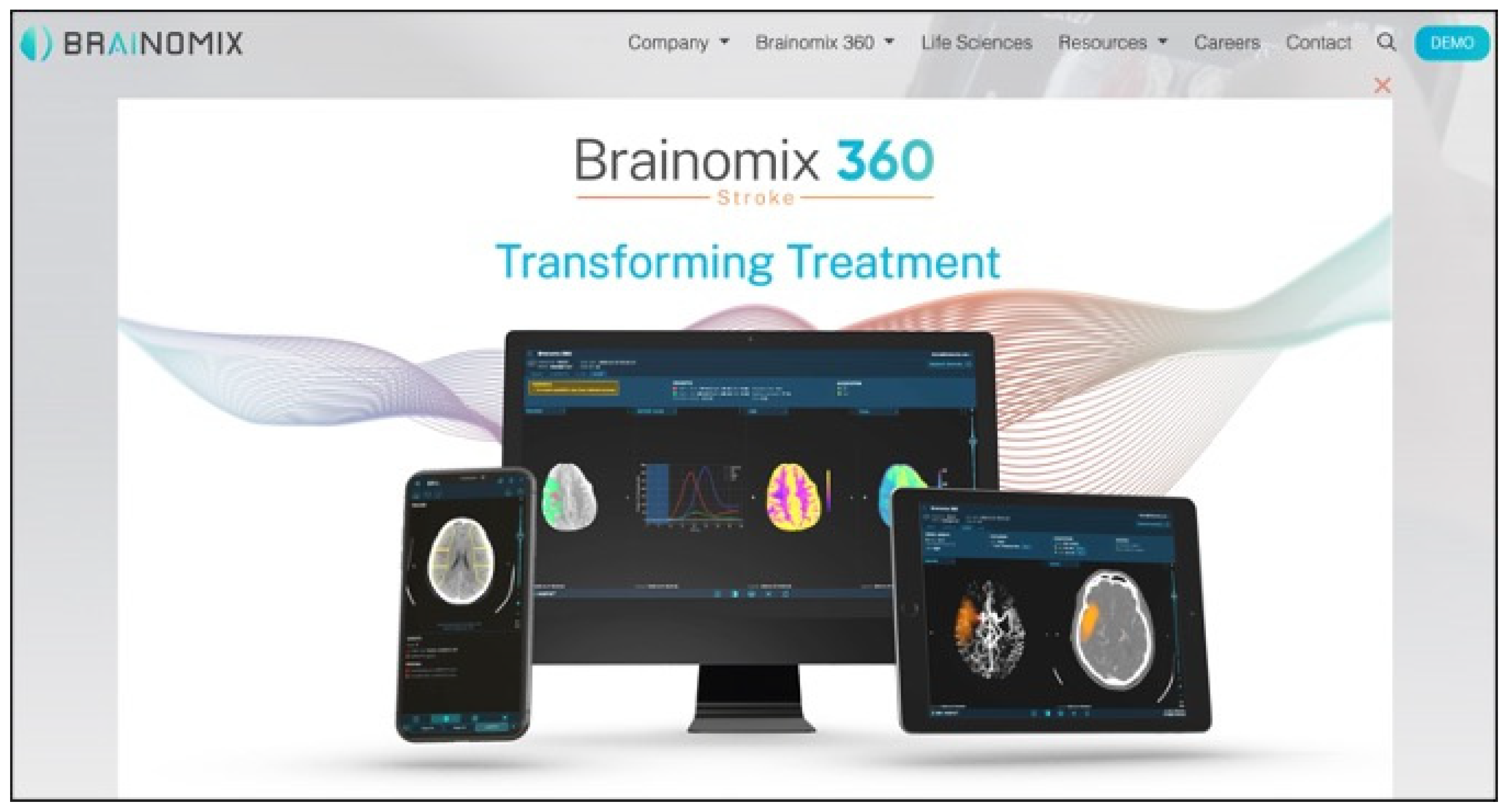
Invaluable tools for remote care are AI-derived. Imaging post-processing and automatic enhancement and measurements could help in promoting remote guidance of healthcare professionals. This applies to basic electrocardiographic readings or for more sophisticated imaging processing to deliver remote care (Figure 1).
2.11. Education and training of surgeons
Simulation can sometimes be a good surrogate for reality. Recently, sophisticated and realistic virtual reality simulators have been developed and tested for surgery training. Their usefulness has been proved in numerous studies, especially in endovascular procedures [35].
3. Peripheral Arterial disease (PAD) and AI
Prevalence of PAD has been estimated to be more than 200 million occurrences in the whole World in 2015 [36], probably underestimated. Chronic limb-threatening ischemia (CLTI) represents PAD’s last stages, and occurrences have undoubtfully increased over the last years, together with the rise in prevalence of diabetes and population ageing, so much so that nowadays wound care accounts for 2-4 per cent of European Healthcare costs [37]. Prompt diagnosis of PAD, even in the pre-surgical phase, is of the outmost importance to start preventive treatments that could help to save limbs, together with lives. History of PAD treatment has gained a dramatically important evolution in the endovascular era, to such an extent that nowadays the major classification of the disease is endovascularly-driven (GLASS classification) [38].
At present, AI may play a central role in developing new diagnostic and treatment solutions in the vascular field, given the possibility of accessing clinical, biological, and imaging data. Vascular diseases management by AI could provide ground for diagnostic, prognostic, and operative solutions. The possibility of assessing the vascular anatomy in every patient, as well as the burden of atherosclerosis, and so classifying the level and degree of the disease, as it is currently performed in aortic aneurysm characterization, is surely charming. This possibility, combined with that of correctly defining the perioperative complications risk, could guide surgeons in the choice of the best surgical technique. Sizing and planning of the best endovascular treatment is enhanced by AI that could lead to defining a personalized therapeutic strategy for every patient. CTA automatic peripheral vessel identification to localize and quantify disease has been reported in a study by Dai et al. [17] where they used a convolutional neural network based on 17050 axial images in 265 PAD patients to classify above and below-knee artery stenosis with an accuracy greater then 90% in the majority of stenosis classes. Also, Doppler waveforms can be integrated in neural networks to detect and classify PAD with an accuracy of 0.69, 1, and 0.86 for mono, bi and triphasic waveforms, respectively [16].
It is not to be overlooked that PAD treatment is often performed between different specialties, with the difficulty of integrating experiences and resources. AI can play a significant role in integrating objective evaluation tools and offering evidence-based solutions. Automating screening of patients’ medical records can help identifying latent PAD, thus driving towards more specific diagnostic tools to be used in order to classify the burden of the disease and help in making the best treatment choice by integrating clinical events information [20,39,40]. Natural Language Processing algorithms are the best representation of AI generated classification of PAD [41]. Sometimes, given the broad heterogeneity of presentation of PAD despite the commonly known risk factors, Unsupervised Learning, mainly based on clustering algorithms of multi-dimensional patient data, may help in revealing disease subgroups with different phenotypes and in tailoring treatment strategies in those different subgroups. ML, by incorporating information from different areas of human life, such as behavior and lifestyle, could be employed to generate predictions and recommendations for optimal life changes (e.g. regular physical activity) that can influence the development and progression of arterial disease [42]. It could also be used to promote and maintain a supervised exercise therapy (SET) program in PAD patients, as established by the Society for Vascular Surgery in 2021 [43]. Differential diagnosis could so be improved by achieving the so-called precision cardiovascular medicine, whose ultimate aim is, of course, choosing the right treatment for the right patient at the right time. Mortality risk prediction, as well as amputation-free survival estimation and surgical site infection risk after revascularization, can be calculated using ML algorithms that combine data on a huge number of different risk factors and can predict their effects and future developments [20,44]. Unfortunately, ML-based major adverse limb events prognostic tools are currently not being developed, mainly because necessary datasets for the algorithms’ creation are difficult to obtain. Reliability of certain kinds of databases’ might be debatable when a prediction tool must be developed; likewise physiological markers detected during physical examination are difficult to classify, categorize, and report. Hence, this data cannot be reliably incorporated and used for ML constructions. Nevertheless, as anticipated from coronary CTA [45,46], ML models might be trained by specifically-built databases to establish the relationship between vessel CTA images and symptoms, or angiosome lesions. The key point is, once again, which dataset to provide the ML algorithm with. This dataset must be tailored to specifically satisfy the required need. This undoubtedly poses difficulties in compiling and maintaining the dataset. Despite some studies demonstrating the capability of detecting the severity of PAD, differentiating ischemic vs. neurogenic claudication, predicting PAD mortality, ambulation potential after amputation, and surgical site infection following lower extremity bypass, by integrating imaging and clinical functional data [47], PAD presents itself with a broad heterogeneity in clinical features and outcomes, so that traditional physical examination in experienced hands is detrimental to the right choice between whether, how, and when to treat.
4. Limitations and risk of bias
Apart from the risk of mythizing AI, some limitations to its applicability and role must be acknowledged. Big amounts of data are mandatory in order to create algorithms and neural networks. This data must be correctly collected with a potential risk of misclassification and misinterpretation. Data heterogeneity can be responsible for inconclusive or also paradoxical AI driven solutions. Clinical registries and trials are of the outmost importance to create a reliable database for AI algorithms establishment.
The algorithms used to generate diagnostic and therapeutic tools may lack the possibility to establish causal relationship. In addition, interpretability and accountability of such algorithms can also be debatable in certain cases. Physicians’ expertise in AI algorithms interpretation is hardly replaceable [48]. Implementation of physicians and data scientists’ collaboration will be required in the near future, to learn to ‘speak the same language’. Lastly, new AI tools require adequate computational platforms and power that might not be available in every environment.
5. Conclusions
AI is gaining increasing importance in patients’ diagnostics, treatment, surveillance, and research. It also has a high potential for future development in vascular medicine and PAD in particular, where integration of clinical and imaging modalities, together with a clinician’s experience are still nowadays the best combination for PAD diagnosis and treatment.
To develop AI diagnostic and caring tools, and transforming them in real-world practice will be the focus of future technology implementation and using in daily routine.
Author Contributions
Conceptualization, Writing – Original Draft Preparation: E.M. and L.C.; Supervision, Project Administration, Funding Acquisition: E.M. Methodology, Investigation, Resources: L.C.; Formal Analysis, Data Curation: M.D.F., E.C., M.G.P., G.G., A.B., G.C., and M.P.; Validation, Writing – Review & Editing, Visualization: E.M., L.C., M.D.F., E.C., M.G.P., G.G., A.B., G.C., and M.P.;
Funding
This research received no external funding.
Institutional Review Board Statement
Ethical review and approval were waived for this study due to the review nature of the content.
Acknowledgments
The authors gratefully acknowledge the contribution of Edoardo Guarino, M Eng, M Sc, for the language editing of this manuscript.
Conflicts of Interest
The authors declare no conflicts of interest.
References
- Fischer, U.M. , Shireman, P.K., Lin, J.C. Current applications of artificial intelligence in vascular surgery. Semin Vasc Surg 2021, 34, 268–271. [Google Scholar] [CrossRef]
- Afzal, N.; Sohn, S.; Abram, S.; Scott, C.G.; Chaudhry, R.; Liu, H.; Kullo, I.J.; Arruda-Olson, A.M. Mining peripheral arterial disease cases from narrative clinical notes using natural language processing. J Vasc Surg 2017, 65, 1753–1761. [Google Scholar] [CrossRef] [PubMed]
- Li, J.; Pan, C.; Zhang, S.; Spin, J.M.; Deng, A.; Leung, L.L.K.; Dalman, R.L.; Tsao, P.S.; Snyder, M. Decoding the Genomics of Abdominal Aortic Aneurysm. Cell. 2018, 174, 1361–1372.e10. [Google Scholar] [CrossRef] [PubMed]
- Klarin, D., Lynch; et al. Genome-wide association study of peripheral artery disease in the Million Veteran Program. Nat Med. 2019, 25, 1274–1279. [Google Scholar] [CrossRef] [PubMed]
- Lekadir, K.; Galimzianova, A.; Betriu, A.; Del Mar Vila, M.; Igual, L.; Rubin, D.L.; Fernandez, E.; Radeva, P.; Napel, S. A Convolutional Neural Network for Automatic Characterization of Plaque Composition in Carotid Ultrasound. IEEE J Biomed Health Inform. 2017, 21, 48–55. [Google Scholar] [CrossRef] [PubMed]
- Zhou, R.; Fenster, A.; Xia, Y.; Spence, J.D.; Ding, M. Deep learning-based carotid media-adventitia and lumen-intima boundary segmentation from three-dimensional ultrasound images. Med Phys. 2019, 46, 3180–3193. [Google Scholar] [CrossRef] [PubMed]
- Yeo, L.L.; Sharma, V.K. Automatic Detection and Measurement of Atherosclerotic Plaques in Carotid Ultrasound Using Deep Learning. International Stroke Conference. 2020. [CrossRef]
- Wu, J.; Xin, J.; Yang, X.; Sun, J.; Xu, D.; Zheng, N.; Yuan, C. Deep morphology aided diagnosis network for segmentation of carotid artery vessel wall and diagnosis of carotid atherosclerosis on black-blood vessel wall MRI. Med Phys. 2019, 46, 5544–5561. [Google Scholar] [CrossRef]
- Zunair, H.; Hamza, A.B. Sharp U-Net: Depthwise convolutional network for biomedical image segmentation. Comput Biol Med 2021, 136, 104699. [Google Scholar] [CrossRef]
- Akay, E.M.Z.; Hilbert, A.; Carlisle, B.G.; Madai, V.I.; Mutke, M.A.; Frey, D. Artificial Intelligence for Clinical Decision Support in Acute Ischemic Stroke: A Systematic Review. Stroke. 2023, 54, 1505–1516. [Google Scholar] [CrossRef]
- Talebi, S.; Madani, M.H.; Madani, A.; Chien, A.; Shen, J.; Mastrodicasa, D.; Fleischmann, D.; Chan, F.P.; Mofrad, M.R.K. Machine learning for endoleak detection after endovascular aortic repair. Sci Rep. 2020, 10, 18343. [Google Scholar] [CrossRef]
- Hahn, S.; Perry, M.; Morris, C.S.; Wshah, S.; Bertges, D.J. Machine deep learning accurately detects endoleak after endovascular abdominal aortic aneurysm repair. JVS: Vascular Science. 2020, 1, 5–12. [Google Scholar] [CrossRef]
- Caradu, C.; Spampinato, B.; Vrancianu, A.M.; Bérard, X.; Ducasse, E. Fully automatic volume segmentation of infra-renal abdominal aortic aneurysm CT images with deep learning approaches versus physician controlled manual segmentation. J Vasc Surg 2021, 74, 246–256.e6. [Google Scholar] [CrossRef]
- Chandrashekar, A.; Handa, A.; Shivakumar, N.; Lapolla, P.; Uberoi, R.; Grau, V.; Lee, R. A Deep Learning Pipeline to Automate High-Resolution Arterial Segmentation with or without Intravenous Contrast. Ann Surg. 2022, 276, e1017-lpagee1027. [Google Scholar] [CrossRef]
- Wanhainen, A.; Mani, K.; Golledge, J. Surrogate Markers of Abdominal Aortic Aneurysm Progression. Arterioscler Thromb Vasc Biol. 2016, 36, 236–44. [Google Scholar] [CrossRef]
- Luo, X.; Ara, L.; Ding, H.; Rollins, D.; Motaganahalli, R.; Sawchuk, A.P. Computational methods to automate the initial interpretation of lower extremity arterial Doppler and duplex carotid ultrasound studies. J Vasc Surg 2021, 74, 988–996.e1. [Google Scholar] [CrossRef] [PubMed]
- Dai, L.; Zhou, Q.; Zhou, H.; Zhang, H.; Cheng, P.; Ding, M.; Xu, X.; Zhang, X. Deep learning-based classification of lower extremity arterial stenosis in computed tomography angiography. Eur J Radiol. 2021, 136, 109528. [Google Scholar] [CrossRef] [PubMed]
- Zhang, J.L.; Conlin, C.C.; Li, X.; Layec, G.; Chang, K.; Kalpathy-Cramer, J.; Lee, V.S. Exercise-induced calf muscle hyperemia: Rapid mapping of magnetic resonance imaging using deep learning approach. Physiol Rep. 2020, 8, e14563. [Google Scholar] [CrossRef] [PubMed]
- Wu, X.; Zhao, Y.; Radev, D.; Malhotra, A. Identification of patients with carotid stenosis using natural language processing. Eur Radiol 2020, 30, 4125–4133. [Google Scholar] [CrossRef] [PubMed]
- ERoss, E.G.; Shah, N.H.; Dalman, R.L.; Nead, K.T.; Cooke, J.P.; Leeper, N.J. The use of machine learning for the identification of peripheral artery disease and future mortality risk. J Vasc Surg. 2016, 64, 1515–1522.e3. [Google Scholar] [CrossRef]
- Hippe, D.S.; Balu, N.; Chen, L.; Canton, G.; Liu, W.; Watase, H.; Waterton, J.C.; Hatsukami, T.S.; Hwang, J.N.; Yuan, C. Confidence Weighting for Robust Automated Measurements of Popliteal Vessel Wall Magnetic Resonance Imaging. Circ Genom Precis Med. 2020, 13, e002870. [Google Scholar] [CrossRef]
- Chen, L.; Canton, G.; Liu, W.; Hippe, D.S.; Balu, N.; Watase, H.; Hatsukami, T.S.; Waterton, J.C.; Hwang, J.N.; Yuan, C. Fully automated and robust analysis technique for popliteal artery vessel wall evaluation (FRAPPE) using neural network models from standardized knee MRI. Magn Reson Med. 2020, 84, 2147–2160. [Google Scholar] [CrossRef] [PubMed]
- Gulshan, V., Peng; et al. Development and Validation of a Deep Learning Algorithm for Detection of Diabetic Retinopathy in Retinal Fundus Photographs. JAMA. 2016, 316, 2402–2410. [Google Scholar] [CrossRef] [PubMed]
- Arcadu, F.; Benmansour, F.; Maunz, A.; Willis, J.; Haskova, Z.; Prunotto, M. Deep learning algorithm predicts diabetic retinopathy progression in individual patients. NPJ Digit Med. 2019, 2, 92. [Google Scholar] [CrossRef] [PubMed]
- Bora, A., Balasubramanian; et al. Predicting the risk of developing diabetic retinopathy using deep learning. Lancet Digital Health. 2021, 3, E10–E19. [Google Scholar] [CrossRef]
- Abràmoff, M.D.; Lavin, P.T.; Birch, M.; Shah, N.; Folk, J.C. Pivotal trial of an autonomous AI-based diagnostic system for detection of diabetic retinopathy in primary care offices. NPJ Digit Med. 2018, 1, 39. [Google Scholar] [CrossRef] [PubMed]
- Poplin, R.; Varadarajan, A.V.; Blumer, K.; Liu, Y.; McConnell, M.V.; Corrado, G.S.; Peng, L.; Webster, D.R. Prediction of cardiovascular risk factors from retinal fundus photographs via deep learning. Nat Biomed Eng. 2018, 2, 158–164. [Google Scholar] [CrossRef] [PubMed]
- Skandha, S.S., Gupta; et al. 3-D optimized classification and characterization artificial intelligence paradigm for cardiovascular/stroke risk stratification using carotid ultrasound-based delineated plaque: Ateromatic RM 2.0. Comput Biol Med 2020, 125, 103958. [Google Scholar] [CrossRef]
- Saba, L.; Biswas, M.; Suri, H.S.; Viskovic, K.; Laird, J.R.; Cuadrado-Godia, E.; Nicolaides, A.; Khanna, N.N.; Viswanathan, V.; Suri, J.S. Ultrasound-based carotid stenosis measurement and risk stratification in diabetic cohort: a deep learning paradigm. Cardiovasc Diagn Ther. 2019, 9, 439–461. [Google Scholar] [CrossRef]
- Brutti, F.; Fantazzini, A.; Finotello, A.; Müller, L.O.; Auricchio, F.; Pane, B.; Spinella, G.; Conti, M. Deep Learning to Automatically Segment and Analyze Abdominal Aortic Aneurysm from Computed Tomography Angiography. Cardiovasc Eng Technol 2022, 13, 535–547. [Google Scholar] [CrossRef]
- Hinton, G.E.; Osindero, S.; Teh, Y.W. A fast learning algorithm for deep belief nets. Neural Comput. 2006, 18, 1527–54. [Google Scholar] [CrossRef]
- Chandrashekar, A.; Lapolla, P.; Shivakumar, N.; Ngetich, E.; Grau, V.; Lee, R. Prediction of Abdominal Aortic Aneurysm Growth Using Geometric Assessment of Computerised Tomography Images Acquired During the Aneurysm Surveillance Period. Ann Surg. 2023, 277, e175–e183. [Google Scholar] [CrossRef]
- Raffort, J., Adam. Artificial intelligence in abdominal aortic aneurysm. J Vasc Surg. 2020, 72, 321–333.e1. [Google Scholar] [CrossRef]
- Gombar, S.; Callahan, A.; Califf, R.; Harrington, R.; Shah, N.H. It is time to learn from patients like mine. NPJ Digit Med. 2019, 2, 16. [Google Scholar] [CrossRef] [PubMed]
- Javidan, A.P.; Li, A.; Lee, M.H.; Forbes, T.L.; Naji, F. A Systematic Review and Bibliometric Analysis of Applications of Artificial Intelligence and Machine Learning in Vascular Surgery. Ann Vasc Surg 2022, 85, 395–405. [Google Scholar] [CrossRef] [PubMed]
- Song, P.; Rudan, D.; Zhu, Y.; Fowkes, F.J.I.; Rahimi, K.; Fowkes, F.G.R.; Rudan, I. Global, regional, and national prevalence and risk factors for peripheral artery disease in 2015: An updated systematic review and analysis. Lancet Glob. Health. 2019, 7, e1020–e1030. [Google Scholar] [CrossRef] [PubMed]
- Posnett, J., Gottrup; on behalf of the Eucomed Advanced Wound Care Sector Group. The resource impact of wounds on health-care providers in Europe. J Wound Care 2009, 18, 154–161. [Google Scholar] [CrossRef] [PubMed]
- Conte, M.S., Bradbury; GVG Writing Group for the Joint Guidelines of the Society for Vascular Surgery (SVS); European Society for Vascular Surgery (ESVS); World Federation of Vascular Societies (WFVS). Global Vascular Guidelines on the Management of Chronic Limb-Threatening Ischemia. Eur J Vasc Endovasc Surg. 2019, 58, S1–S109.e33. [Google Scholar] [CrossRef]
- McCarthy, C.P., Ibrahim; et al. A clinical and proteomics approach to predict the presence of obstructive peripheral arterial disease: From the Catheter Sampled Blood Archive in Cardiovascular Diseases (CASABLANCA) Study. Clin Cardiol. 2018, 41, 903–909. [Google Scholar] [CrossRef] [PubMed]
- Baloch, Z.Q.; Raza, S.A.; Pathak, R.; Marone, L.; Ali, A. Machine Learning Confirms Nonlinear Relationship between Severity of Peripheral Arterial Disease, Functional Limitation and Symptom Severity. Diagnostics 2020, 10, 515. [Google Scholar] [CrossRef]
- Weissler, E.H.; Zhang, J.; Lippmann, S.; Rusincovitch, S.; Henao, R.; Jones, W.S. Use of Natural Language Processing to Improve Identification of Patients With Peripheral Artery Disease. Circ Cardiovasc Interv. 2020, 13, e009447. [Google Scholar] [CrossRef] [PubMed]
- Yom-Tov, E.; Feraru, G.; Kozdoba, M.; Mannor, S.; Tennenholtz, M.; Hochberg, I. Encouraging Physical Activity in Patients With Diabetes: Intervention using a Reinforcement Learning System. J Med Internet Res. 2017, 19, e338. [Google Scholar] [CrossRef] [PubMed]
- Vascular.org. Available online: https://vascular.org/news-advocacy/articles-press-releases/vesap5-mobile-app-now-available (accessed on 23 October 2023).
- Davis, F.M.; Sutzko, D.C.; Grey, S.F.; Mansour, M.A.; Jain, K.M.; Nypaver, T.J.; Gaborek, G.; Henke, P.K. Predictors of surgical site infection after open lower extremity revascularization. J Vasc Surg. 2017, 65, 1769–1778.e3. [Google Scholar] [CrossRef] [PubMed]
- Zreik, M.; Lessmann, N.; van Hamersvelt, R.W.; Wolterink, J.M.; Voskuil, M.; Viergever, M.A.; Leiner, T.; Ivana Išgum, I.I. Deep learning analysis of the myocardium in coronary CT angiography for identification of patients with functionally significant coronary artery stenosis. Med Image Anal. 2018, 44, 72–85. [Google Scholar] [CrossRef] [PubMed]
- Coenen, A., Kim; et al. Diagnostic Accuracy of a Machine-Learning Approach to Coronary Computed Tomographic Angiography-Based Fractional Flow Reserve: Result From the MACHINE Consortium. Circ Cardiovasc Imaging. 2018, 11, e007217. [Google Scholar] [CrossRef]
- Li, B.; Feridooni, T.; Cuen-Ojeda, C.; Kishibe, T.; de Mestral, C.; Mamdani, M.; Al-Omran, M. Machine learning in vascular surgery: a systematic review and critical appraisal. NPJ Digit Med. 2022, 5, 7. [Google Scholar] [CrossRef]
- Rodziewicz, T.L.; Houseman, B.; Hipskind, J.E. Medical Error Reduction and Prevention. In StatPearls; StatPearls Publishing: Treasure Island, FL, USA, 2023. [Google Scholar]
Figure 1.
BrAInomix® is a dedicated AI-based software that is able to rapidly analyze brain CT to calculate ASPECTS score, perfusion brain CT to calculate penumbra and core ischemia, and angio-CT to calculate ischemic areas and collateral pathways.
Figure 1.
BrAInomix® is a dedicated AI-based software that is able to rapidly analyze brain CT to calculate ASPECTS score, perfusion brain CT to calculate penumbra and core ischemia, and angio-CT to calculate ischemic areas and collateral pathways.
Disclaimer/Publisher’s Note: The statements, opinions and data contained in all publications are solely those of the individual author(s) and contributor(s) and not of MDPI and/or the editor(s). MDPI and/or the editor(s) disclaim responsibility for any injury to people or property resulting from any ideas, methods, instructions or products referred to in the content. |
© 2024 by the authors. Licensee MDPI, Basel, Switzerland. This article is an open access article distributed under the terms and conditions of the Creative Commons Attribution (CC BY) license (http://creativecommons.org/licenses/by/4.0/).
Copyright: This open access article is published under a Creative Commons CC BY 4.0 license, which permit the free download, distribution, and reuse, provided that the author and preprint are cited in any reuse.


