

Submitted:
27 April 2024
Posted:
14 May 2024
You are already at the latest version
Abstract
The integration of modern technologies like intramedullary fixators and advanced biometallic alloys has revolutionized traumatology and orthopedics. While these innovations have improved treatment, the exploration of new materials for implants persists. Tantalum and niobium, both non-toxic with similar properties, are preferred for titanium-based biomedical alloys due to their exceptional biocompatibility and corrosion resistance. Acting as stabilizers in titanium alloys, they form passive oxide layers resisting corrosion and remain compatible with biological systems. The novel Ti21Nb6Ta (TNT) alloy promises enhanced osteosynthesis outcomes. Our in vivo research on experimental animals evaluated the biocompatibility and osteoinduction of TNT compared to Ti-6Al-4V (BT-6) alloy (control group). The study comprised three experiments across different animal species, assessing acute toxicity, irritant effects, and long-term biocompatibility and osteoinduction through simulated osteosynthesis. Results indicated that aqueous extracts from both alloys were non-toxic and non-irritating. Furthermore, both demonstrated high biocompatibility and active osteoinduction potential after three months of implantation.
Keywords:
metal alloy
; Ti-Nb-Ta
; toxicity
; biocompatibility
; implantation
; bone tissue.
1. Introduction
The growing life expectancy and aging population lead to an increased need for preserving a high quality of life, which includes maintaining satisfactory organ and system functions in old age. Among these requirements, a special emphasis is placed on preserving the functions of the musculoskeletal system [1]. The introduction of modern osteosynthesis systems has brought significant changes to the methods of treatment in the field of traumatology and orthopedics, including the use of advanced methods, tools, and materials [2]. Osteosynthesis materials have also evolved to address medical challenges such as the transport of antiviral drugs [3], antibiotics [4], cancer treatment [5], drug delivery systems, and biovisualization [6].
Implantable medical devices must possess the necessary properties to interact with bone. These materials should demonstrate resistance to corrosion and wear, as well as high hardness and plasticity. The correct choice of biomaterial plays a crucial role in ensuring the long-term success of the implant. Titanium has been the preferred material for intracortical applications due to its outstanding osteointegration ability, biocompatibility, high corrosion resistance, modulus of elasticity similar to bone, and excellent compatibility with soft tissues [7,8]. The attachment of this material to bone tissue becomes possible through the formation of an oxide layer during passivation [9]. To reduce the risk of early fractures or loosening of the implant, a material with a modulus of elasticity close to that of bone is required. Currently, scientific research is focused on minimizing the modulus of elasticity of the material without sacrificing its wear resistance, biocompatibility, and corrosion resistance [10].
It is known that pathological reactions to foreign bodies can occur in the surrounding tissues where the implant is placed and throughout the body. In particular, metallic implants are not always harmless in the aggressive environment of biological fluids [11,12].
In our study, composite alloys TNT (Ti21Nb6Ta) were used due to the excellent biomechanical indicators of each element of the composite alloy. Metallic biomaterials such as Niobium (Nb) and Tantalum (Ta) are non-toxic elements with similar physical and chemical properties, making them suitable for use in titanium alloys for biomedical purposes due to outstanding biocompatibility and high corrosion resistance [13]. According to literature data, Niobium (Nb) has lower fatigue strength than Tantalum or pure titanium, but there is limited recent research on this metal [14]. About ten years ago, the Nb-2Zr alloy was proposed for biomedical purposes, demonstrating excellent corrosion resistance, fatigue strength, and crack propagation resistance in conditions simulating the biological environment, making it a promising material for stents, for example, the Nb-28Ta-3.5W-1.3Zr alloy was developed as a new material for stents with low magnetic susceptibility, reducing artifacts in MRI [15].
Tantalum (Ta) exhibits exceptional chemical stability and biocompatibility comparable to titanium [16,17]. Therefore, since the 1940s, Tantalum has found application in dentistry and orthopedics, including its use in X-ray markers for bones, vascular clips, reconstruction of cranial defects, and nerve restoration [16]. Porous tantalum has also been developed for integration with bone tissue in surgical interventions such as hip and knee joint endoprosthetics, spinal surgery, and use as bone graft substitutes, yielding positive results [18,19].
The titanium alloy BT-6 (Ti-6Al-4V) was chosen as the control group composite alloy because BT-6 (Ti-6Al-4V) is one of the common combinations of biocompatible alloys used in the production of biomedical implants worldwide [20]. There is no comprehensive research on the combination of TNT (Ti21Nb6Ta) according to literature data. This combination may improve the outcomes of surgical treatment due to enhanced product properties.
We previously conducted preclinical studies of the above alloys in in vitro conditions: we investigated the cytotoxicity of aqueous extracts of metal alloys on fibroblasts and human periosteal cells; assessed the hemolytic activity of metal extracts in interaction with the blood of experimental animals and studied the pyrogenic properties of metals using the kinetic chromogenic method with the LAL test. According to the results of these tests, aqueous extracts from TNT and BT-6 metal alloys did not exhibit toxic effects on fibroblasts and human periosteal cells, and they did not possess hemolytic and pyrogenic activity in vitro. The aim of this study is to conduct preclinical research to assess the biocompatibility and osteointegration of the titanium, tantalum, and niobium alloy TNT (Ti21Nb6Ta) in animal experiments (in vivo).
2. Materials and Methods
The study of acute toxicity and irritant properties of aqueous extracts was conducted at the National Center for Biotechnology in Astana. The implantation of the tested samples into laboratory animals (rabbits) and subsequent observation were carried out at the National Scientific Center of Traumatology and Orthopedics named after academician N.D. Batpenov of the Ministry of Health of the Republic of Kazakhstan in Astana.
The strategy for assessing acute toxicity, irritant action, biocompatibility, and osteoinduction of TNT and BT-6 metal alloys was developed in accordance with the guidelines outlined in the manual for conducting preclinical studies of medicinal products and medical devices [21]. All experimental animal studies were conducted in compliance with the principles of the Helsinki Declaration of the World Medical Association (revised in 2013) [22] and the Order of the Minister of Health of the Republic of Kazakhstan dated December 21, 2020, № ҚР ДСМ-310/2020 "On the Approval of the Rules for Conducting Biomedical Research and Requirements for Research Centers" [23]. The animal study was conducted after approval from the Local Ethics Committee of the National Center for Biotechnology No.1 dated September 23, 2019.
2.1. Animals
In this study, outbred CD-1 mice, albino guinea pigs obtained from the National Center for Biotechnology of the Ministry of Education and Science of the Republic of Kazakhstan, and sexually mature rabbits of the "Chinchilla" breed aged 6-8 months were used. The animals were kept in a vivarium with a 12-hour light/dark cycle at a temperature of 22-23°C. The conditions of housing and feeding of the animals complied with regulatory norms and rules.
2.2. Metallic Implants
The materials for the study included both the experimental alloy TNT (Ti21Nb6Ta) and control samples of the titanium alloy BT-6 (Ti-6Al-4V), provided by the Ulbinskiy Metallurgical Plant. For the implantation of TNT alloy into tissues (bone, periosteum, soft tissues) of laboratory animals (experimental), 20 samples of the TNT (Ti21Nb6Ta) alloy were made in the form of cages, each measuring 5×5×2 mm, and 20 samples of the titanium alloy BT-6 (Ti-6Al-4V) (for the control group) in the form of solid metal blocks, each measuring 4×2×2 mm.
Preparation of aqueous extracts from metal alloy samples TNT and BT-6 was carried out in accordance with GOST ISO 10993-12-2011 (Medical products. Evaluation of the biological action of medical devices. Part 12. Preparation of test samples and control samples). Aqueous extracts of metal alloys TNT and BT-6 were sterilized by autoclaving at 121°C for 30 minutes. Then, the samples were placed in a sterile 50 ml test tube and filled with 0.9% sterile NaCl solution. The sample/solution ratio was 1g/10ml. Subsequently, the test tube with the samples was incubated in a thermostat at 37°C for 24 hours. Afterward, the aqueous extracts were stored in the refrigerator at +4°C for temporary storage.
2.3. Evaluation of Acute Toxicity of Aqueous Extracts TNT and BT-6
In assessing acute toxicity, outbred CD-1 mice with an average weight of 24±1.5 g were used, with equal gender distribution. Groups were formed taking into account obtaining statistically significant results with 6 individuals in each experimental group (6 groups). The control and test animals receiving aqueous extract preparations were of the same sex, age, obtained simultaneously from the nursery, and kept in similar conditions. As the action of the test substance depends on the physiological condition of the animals, which can change under the influence of a number of external factors, all studies were conducted at the same time of day (morning to noon).
The mode of administration, method of administration, and dose levels: aqueous extracts from metal alloys TNT and BT-6 were administered intragastrically as a single dose. Intragastric administration was performed on awake (non-anesthetized) animals. The mouse was fixed by the base of the tail, placed on the table, and covered with a towel. Holding the tail with one hand, the torso was slightly pressed to the table with the palm. The skin in the occipital area was grasped with the thumb and forefinger, stretching the cheeks, opening the mouth. The head was positioned upward. The probe, placed on a syringe, was started to be introduced through the back wall of the throat and advanced along the esophagus to enter the stomach. The substance was introduced using a syringe after the probe entered the stomach. The maximum allowable volume for intragastric administration for mice was 50 ml/kg. The tested aqueous metal alloy extracts were introduced in a way to determine the minimum dose at which 100% of the animals would die and the maximum dose at which 100% of the animals would survive. The control group of animals received the corresponding solvent (physiological saline) in the same volume (0.5 ml) and according to the same scheme (single administration) as the tested aqueous extracts from metal alloys TNT and BT-6.
The times of development of possible intoxication and death of animals were recorded. At the end of the experiment, a macroscopic examination of the internal organs of the animals was conducted. The median lethal concentration (LD50) in case of death of laboratory animals was calculated using the Kerber method.
The number of experimental animals was 18 female mice and 18 male mice. The groups of animals for the experiment to determine the acute toxicity of aqueous extracts from metal alloys TNT and BT-6 were distributed as follows (Figure 1):
Observation period: Observations of laboratory animals were conducted for 2 weeks. Before the introduction of the test water extracts, one week after the introduction, and two weeks after the introduction, the body weight of the animals was determined. The following parameters were assessed daily: the general condition of the animals, peculiarities of their behavior, motor activity, the presence and nature of convulsions, coordination of movements, frequency and depth of respiratory movements, the condition of the hair and skin, the color of mucous membranes, and the quantity and consistency of fecal masses. One day after the introduction of the test substances, a general urine analysis was performed.
At the end of the two-week period from the introduction of water extracts, the animals were euthanized by carbon dioxide overdose. Subsequently, the internal organs of the mice were dissected for macroscopic evaluation of the condition of the internal organs and determination of their mass.
2.4. Assessment of the Irritanting Effects of TNT and BT-6 Water Extracts:
Conjunctival test: For the test, 1 drop of the solution of the tested water extracts was introduced under the upper eyelid of albino guinea pigs, while 1 drop of sterile physiological saline solution (control) was introduced into the second eye. The reaction was recorded after 15 minutes (rapid reaction) and after 24–48 hours (delayed hypersensitivity), and was assessed on the following scale (in points): 0 – no reaction; 1 – slight redness of the tear duct; 2 – redness of the tear duct and sclera towards the cornea; 3 – redness of the entire conjunctiva and sclera. The reaction is accompanied by itching, and scratching may lead to the development of purulent conjunctivitis.
Experimental animals: Male albino guinea pigs, weighing 574.8±16.7 g, in groups of 5 individuals each (2 groups).
Epicutaneous application method: Epicutaneous applications were performed on albino guinea pigs. Three drops of the solution of the tested water extracts were applied to the shaved skin of the lateral surface of the body of albino guinea pigs, measuring 2×2 cm. Substances were applied 5 times a week for 2 weeks, with a total of 10 applications. The skin reaction was recorded daily on the scale of skin test assessment. This experiment allows for the identification of the risk of developing non-allergic contact dermatitis.
Experimental animals: Male albino guinea pigs, weighing 574.8±16.7 g, in groups of 5 individuals each (4 groups).
2.5. Assesment of the Biocompatibility and Osteoinduction of TNT and BT-6 Metal Alloy:
To study biocompatibility (local tissue reaction to the implant) and osteoinduction (bone tissue regeneration around the implant), 40 Chinchilla rabbits, aged 6-8 months, with an average weight of 2830±39 g, with no gender distinction, were used. The condition of the animals' bodies was assessed before the start of the experiment, at 30, 60, and 90 days after the implantation of metal structures made of TNT and BT-6 metal alloys using clinical, histomorphological, and radiographic studies. Throughout the experiment, observations were made on the behavior, feed intake, and body mass dynamics of experimental and control animals. Additionally, X-ray analysis of the forelimbs was performed to determine the inflammatory processes and the degree of callus formation in the implantation area. At the end of the study, the animals were euthanized by overdosing with anesthetic, the mass of internal organs was determined, and samples of the radius bone with implanted materials were taken for histomorphological studies.
After random selection, all laboratory animals were divided into 2 groups:
Group I rabbits (experimental) (N-20) – implantation of a TNT alloy cage into an artificially created defect in the mid-third of the radius bone of the right forelimb.
Group II rabbits (control) (N-20) – implantation of a solid metal block made of BT-6 titanium alloy into an artificially created defect in the mid-third of the radius bone of the left forelimb.
The implantation of TNT and BT-6 alloy specimens was performed by performing a surgical procedure to implant them into the radius bone, at the mid-third level of the forelimb, with partial contact of the implant with surrounding tissues (muscles, fascia, connective tissue). This tactic of implant placement was justified by the need to study the interaction of alloys not only with bone tissue but also with surrounding tissues.
Before the implantation operation, premedication of laboratory animals was carried out with dimedrol 1% 0.1 mg/kg, atropine 0.1% 1 mg/kg, and gentamicin 80 mg intramuscularly.
Against the background of intramuscular anesthesia (Ketamine 1 mg/kg), with a pre-shaved surgical field (front surface of the forelimb), general anesthesia was induced (Ketamine 1 mg/kg, the dose and time of substance administration were recorded in the experiment log), and laboratory animals were fixed on the operating table in a prone position.
The surgical field was treated with an antiseptic solution. A skin incision and subcutaneous fat tissue, 25-30 mm long, were made on the front surface of the forelimb in the projection of the mid-third of the radius bone. The wound edges were fixed with wound retractors, hemostasis was carried out along the wound using coagulation, the muscle layer and periosteum were longitudinally incised. Using a portable trauma drill at a low drilling speed with additional cooling by using physiological saline solution NaCl 0.9%, drilling of the bone tissue was performed with a drill (Figure 2).
The formation of an artificial defect in the middle third of the radius bone of the forearm was done manually to match the size of the implanted samples, ensuring a tight insertion of the implanted samples of the TNT alloy and BT-6 alloy into the bone tissue (Figure 3).
Further, the surgical incision was closed layer by layer with continuous sutures using Vicryl 6/0. In accordance with established GLP standards, animals were provided with proper care during the postoperative period, including the treatment of the surgical wound. Laboratory animals were observed for 3 hours after the operation. Suture treatment was performed with a 0.05% solution of chlorhexidine for 3 days. Throughout the experiment, all animals showed no signs of inflammatory phenomena, the sutures were consistent, and the wounds healed by primary intention.
Laboratory animals were withdrawn from the experiment through randomized selection of 5 individuals at 30, 60, and 90 days after the implantation of TNT and BT-6 samples, corresponding to the international standard ISO/DIS 10993-9 "Biological Evaluation of Medical Devices - Part 9: Framework for Identification and Quantification of Potential Degradation Products."
2.6. Histological Analysis
Samples were fixed in a 10% neutral formalin solution (pH=7.2). After washing in phosphate buffer, the samples were decalcified, sequentially dehydrated in 70%, 95%, 95%, 100%, 100% ethanol, and immersed in xylene. Subsequently, the samples were infiltrated with paraffin and embedded in paraffin blocks. Histological sections with a thickness of 5 micrometers were cut on a microtome (Slee, Germany) and transferred to glass slides. After drying in a thermostat at 45°C, slides with paraffin sections were treated twice with xylene to remove paraffin. Then, the samples were rehydrated according to the following scheme: 100%, 100%, 95%, 95%, 70% ethanol, distilled water. After that, they were stained with hematoxylin, rinsed with water, stained with eosin, and dehydrated sequentially with 95%, 95%, 100%, 100% ethanol. After xylene treatment, histological medium was applied to the slides, and cover slips were placed. The analysis of stained samples was conducted using a light microscope Axio Scope A1 (Carl Zeiss, Germany).
Statistical analysis of the results was performed using Microsoft Excel and Statistica 8. Distributions were described by mean and standard error of the mean. Intergroup differences were evaluated by the non-parametric Kruskal-Wallis test. Differences were considered significant at a 95% probability threshold (p<0.05).
3. Results
3.1. Results of the Acute Toxicity Test
The effects of aqueous extracts of the studied metal alloys on the body weight dynamics of mice following a single intragastric administration at the maximum technically achievable dose of 50 ml/kg of body weight are presented in (Table 1).
Throughout the experiment, observations were made on the general condition and behavior of the animals, possible mortality, and the manifestation of intoxication symptoms (Table 2).
Two weeks after the administration of extracts from metal alloys TNT and BT-6, mice were removed from the experiment. Macroscopic examination of the internal organs of laboratory animals was conducted, and the internal organs were extracted and their masses were determined (Table 3).
The results of the general urine analysis of mice one day after the administration of the investigated aqueous extracts are reflected in (Table 4).
Based on the results of the general urine analysis of the test animals, it can be noted that the changes fall within the reference intervals, indicating the absence of toxic effects of extracts from metal alloys on the mice's organism (Table 4).
3.2. Conjunctival Test
The results of the study on the irritating properties of extracts from metal alloys TNT and BT-6 in the conjunctival test are presented in (Table 5).
3.3. Skin Application Test
The results of the study on the irritating properties of extracts from metal alloys TNT and BT-6 using the skin application method are presented in (Table 6).
3.4. Biocompatibility and Osteoinduction Study
The results of the macroscopic analysis are reflected in (Table 7).
The results of an X-ray examination of the forelimbs of rabbits are presented in (Figure 4).
The results of histomorphological examination are shown in (Figure 5).
4. Discussion
Acute Toxicity Study
The aim of this method was to determine the tolerated, toxic, and lethal doses of aqueous extracts of metal alloys and the reasons for the death of animals.
Upon a single intragastric administration of aqueous extracts of metal alloys at the maximum technically achievable dose of 50 ml/kg body weight in mice, no deaths were observed. As the aqueous extracts of metal alloys TNT and BT-6 were found to be of low toxicity, and it was impossible to determine the median lethal concentration (LD50) due to the absence of deaths in the experiment, it was decided to administer the mice the maximum technically achievable volume, which amounted to 50 ml/kg body weight.
The results presented in (Table 1) indicate no influence of aqueous extracts of metal alloys TNT and BT-6 on the body mass dynamics of mice upon a single intragastric administration at the maximum technically achievable dose of 50 ml/kg body weight. The significance level "p" in all groups showed no statistically significant difference among the TNT, BT-6, and control groups. For comparison, in the toxicity study of rare-earth rocks, which have attracted increased interest recently, scandium chloride demonstrated an average lethal dose LD50 of 4000 mg per kilogram of body weight in mice upon acute toxicity assessment [24,25]; yttrium chloride exhibited much higher toxicity, with LD50 values of only 46.7 mg/l and 36.6 mg/l per kilogram of body weight [26].
Within the first day after the administration of aqueous extracts of metal alloys TNT and BT-6 and throughout the experiment (for 2 weeks), no changes in behavior, appearance, or motor activity of laboratory mice were observed. The administered doses of aqueous extracts of metal alloys did not cause the death of mice or any significant changes in their behavior (Table 2).
Currently, numerous metals and non-metallic products are being studied for osteosynthesis. For example, rare-earth elements tend to accumulate in the organs of animals, especially in the liver, spleen, lungs, and kidneys, as documented in previous studies [27]. To compare groups, internal organs (brain, heart, lungs, liver, spleen, kidneys, gonads/ovaries) were taken to determine their mass, which may vary due to compensatory mechanisms of the organism. The mass of internal organs in mice receiving extracts of metal alloys did not differ from the mass of internal organs in mice in the control group (Table 3), and the significance level "p" in all groups showed no statistically significant difference between the TNT, BT-6, and control groups, respectively. The examined organs retained their macroscopic appearance. This suggests that the use of TNT and BT-6 alloys does not lead to systemic toxicity in the body.
The macroscopic picture of the internal organs of laboratory animals receiving extracts of metal alloys did not differ from the picture of the internal organs of control laboratory animals.
Based on the results of acute toxicity studies of extracts of metal alloys TNT and BT-6 on outbred laboratory mice of the CD-1 line according to the generally accepted hygienic classification, both extracts of metal alloys TNT and BT-6 belong to hazard class 4 - substances of low hazard (GOST 12.1.007-76).
Study of Irritating Properties
Prolonged interaction of metal constructions with tissue fluids can lead to corrosion of metallic implants, resulting in the release of metal ions and abrasive particles. These substances can cause an inflammatory reaction and contribute to the rejection of implants by the immune system, ultimately leading to their instability [27,28]. The BT-6 alloy used as a control does not have irritating properties, as evidenced by previous studies [29] and confirmed by our tests (Table 5), where the presented extracts of metal alloys TNT and BT-6 in the conjunctival test did not exhibit irritating properties.
From the data presented in (Table 6), it can be seen that the presented extracts of metal alloys TNT and BT-6, with topical cutaneous application, did not cause redness and swelling of the skin, which could indicate the development of a skin allergic reaction.
Biocompatibility Study
No inflammatory processes or necrosis of bone tissue were detected in the experimental group of animals throughout the entire study period. Thus, these data indicate that metal alloys TNT and BT-6 do not exert toxic effects on the bone tissue of experimental animals (rabbits).
Macroscopic analysis showed that the parameters of the internal organs of the experimental rabbits did not differ from the control group. As seen in (Table 7), the liver, kidney, and spleen mass of the experimental group (TNT) corresponded to the control, and the significance level "p" in all groups showed no statistically significant difference among the groups. Additionally, X-ray examination of the forelimbs of rabbits showed no inflammatory processes in the area of implantation of metal alloys during 10, 60, and 90 days after the surgical procedure, indicating the stability of implant placement for 90 days and pronounced bone callus, more in the TNT sample (Figure 4).
Histomorphological studies showed that in the radial bones of the control animals (BT-6), the periosteum exhibited a typical structure. They consist of two layers: external (fibrous) and internal (osteogenic). The periosteal bone tissue was uniformly stained. In the zones of bone trabeculae in the metaphyses of control animals, most bone trabeculae were oriented parallel to the longitudinal axis of the bone. In the zones of bone trabeculae in the metaphyses of control animals, bone tissue had a typical structure and was uniformly stained. No inflammatory processes or necrosis of bone tissue were found in the control group of animals. In the experimental group of animals (TNT), there were no significant differences in bone tissue compared to the control group. In experimental animals at 10, 60, and 90 days, slight porosity of bone trabeculae and areas of enhanced bone tissue regeneration were observed. Both proximal and distal metaphyses retained a large, lattice-like structure of bone trabeculae (Figure 5). For comparison, a study by Katunar M. et al. (2017) showed the results of the implantation of anodized zirconium, which is a component of many biomedical alloys due to its good biocompatibility, in a rat femur bone model. Histological analysis showed that the lamellar bone is continuous and in close contact with the metal surface in both implants. There is no fibrous tissue between the implant and the bone, and there were no clusters of mononuclear cells (lymphocytes, monocytes), osteoclasts near the implant, which was also observed in our experiment [30]. In the case of composite (metal + epoxy coating) implants, Chan, Y.-H. et al. (2018) investigated the histomorphology of bioactive glass fiber-reinforced composite (GFRC) implants in the femur of rabbits, which showed similar microscopy data and satisfactory biocompatibility of GFRC samples. The Ti-6Al-4V alloy served as the control group of implants in our study, as in theirs [31].
5. Conclusion
The conducted acute toxicity tests indicate the low toxicity and safety of the new TNT alloy. It has also been observed that the tested extracts of metal alloys TNT and BT-6 in the conducted tests (conjunctival test and the method of dermal application) do not exhibit irritating properties. Histomorphological studies showed the absence of pathological changes in soft and bone tissues in the area of implantation of TNT and BT-6 alloy samples.
Additionally, the X-ray and macroscopic analysis revealed more significant bone tissue ingrowth with the implant in the tested TNT sample, indicating positive osteoinductive properties of this alloy.
The conducted studies provide evidence of the biocompatibility and osteoinduction of the new TNT (Ti21Nb6Ta) alloy, as demonstrated by a comprehensive set of in vivo tests conducted by us.
Author Contributions
Conceptualization – N.B., O.B., S.P.; methodology – K.O., A.B., D.R.; verification - B.A., V.O.; formal analysis – D.S.; writing (original draft) – A.K.; writing (review and editing) – A.K., A.M., B.M.
Funding
The research was funded within the framework of the scientific and technical program, targeted funding of the Ministry of Education and Science of the Republic of Kazakhstan. (55165/ПЦФ-МОН РК-OT-19).
Conflicts of Interest
The authors declare no conflicts of interest. Sponsors did not participate in the design, collection, analysis, interpretation of data, writing of the manuscript, or the decision to publish the results.
References
- Holzapfel BM, Reichert JC, Schantz JT, Gbureck U, Rackwitz L, Nöth U, Jakob F, Rudert M, Groll J, Hutmacher DW. How smart do biomaterials need to be? A translational science and clinical point of view. Adv Drug Deliv Rev. 2013;65(4):581-603. [CrossRef] [PubMed]
- Lazarev AF, Solod EI, Ahtjamov IF. Racional'nyj osteosintez (Rational osteosynthesis). [in Russian]. Kazan': Izd-vo «Skripta».2011:287. Available from URL: https://www.alib.ru/5_lazarev_a_solod_q_ahtyamov_racionalnmnnyj_osteosintez_w1t11251ee286d04b4a126c277014626d860d9e.html.
- Rai M, Deshmukh SD, Ingle AP, Gupta IR, Galdiero M, Galdiero S. Metal nanoparticles: The protective nanoshield against virus infection. Crit Rev Microbiol. 2016;42(1):46-56. Epub 2014 Apr 22. [CrossRef] [PubMed]
- Pelgrift RY, Friedman AJ. Nanotechnology as a therapeutic tool to combat microbial resistance. Adv Drug Deliv Rev. 2013 Nov;65(13-14):1803-15. [CrossRef] [PubMed]
- Awasthi R, Roseblade A, Hansbro PM, Rathbone MJ, Dua K, Bebawy M. Nanoparticles in Cancer Treatment: Opportunities and Obstacles. Curr Drug Targets. 2018;19(14):1696-1709. [CrossRef] [PubMed]
- Rafique R., Kailasa SK., Park TJ. Recent advances of upconversion nanoparticles in theranostics and bioimaging applications. TrAC Trends Anal. Chem. 2019;120:115646. [CrossRef]
- Li Y, Yang C, Zhao H, Qu S, Li X, Li Y. New Developments of Ti-Based Alloys for Biomedical Applications. Materials (Basel). 2014 Mar 4;7(3):1709-1800. [CrossRef] [PubMed] [PubMed Central]
- Geetha M, Singh AK, Asokamani R, Gogia, AK. Ti based biomaterials, the ultimate choice for orthopaedic implants—A review. Prog. Mater. Sci. 2009;54:397–425. [CrossRef]
- Zhang LC, Chen LY. A Review on Biomedical Titanium Alloys: Recent Progress and Prospect. Adv. Eng. Mater. 2019;21:1801215. [CrossRef]
- Kourtis S, Damanaki M, Kaitatzidou S, Kaitatzidou A, Roussou V. Loosening of the fixing screw in single implant crowns: predisposing factors, prevention and treatment options. J Esthet Restor Dent. 2017 Jul 8;29(4):233-246. Epub 2017 May 27. [CrossRef] [PubMed]
- Thyssen JP, Menné T. Metal allergy--a review on exposures, penetration, genetics, prevalence, and clinical implications. Chem Res Toxicol. 2010 Feb 15;23(2):309-18. [CrossRef] [PubMed]
- Thomas P, Summer B, Krenn V, Thomsen M. Allergiediagnostik bei Verdacht auf Metallimplantatunverträglichkeit [Allergy diagnostics in suspected metal implant intolerance]. Orthopade. 2013 Aug;42(8):602-6. German. [CrossRef] [PubMed]
- Niinomi M, Nakai M, Hieda J. Development of new metallic alloys for biomedical applications. Acta Biomater. 2012 Nov;8(11):3888-903. [CrossRef] [PubMed]
- Yang Y-L, Song Z-Q, Xu J. Corrosion fatigue behavior of MRI-compatible Nb-60Ta-2Zr alloy in exposure to simulated physiological solution. International Journal of Fatigue. 2022;Vol155:106583.ISSN0142-1123. [CrossRef]
- Rubitschek F, Niendorf T, Karaman I, Maier HJ. Corrosion fatigue behavior of a biocompatible ultrafine-grained niobium alloy in simulated body fluid. J Mech Behav Biomed Mater. 2012 Jan;5(1):181-92. Epub 2011 Sep 8. [CrossRef] [PubMed]
- Mohsan AUH, Wei D. Advancements in Additive Manufacturing of Tantalum via the Laser Powder Bed Fusion (PBF-LB/M): A Comprehensive Review. Materials (Basel). 2023;16(19):6419. Published 2023 Sep 27. [CrossRef]
- Yang F, Wu M, Chen H, et al. Combination therapy with BMSCs-exosomes and porous tantalum for the repair of femur supracondylar defects. Mol Med Rep. 2023;28(1):130. [CrossRef]
- Wang X, Xu S, Zhou S, Xu W, Leary M, Choong P, Qian M, Brandt M, Xie YM. Topological design and additive manufacturing of porous metals for bone scaffolds and orthopaedic implants: A review. Biomaterials. 2016Mar;83:127-41. [CrossRef] [PubMed]
- Zhou L, Yuan T, Tang J, He J, Li R. Mechanical and corrosion behavior of titanium alloys additively manufactured by selective laser melting—A comparison between nearly β titanium, α titanium and α + β titanium. Opt. Laser Technol. 2019;119:105625. [CrossRef]
- Chen L-Y, Cui Y-W, Zhang L-C. Recent Development in Beta Titanium Alloys for Biomedical Applications. Metals. 2020;10(9):1139. [CrossRef]
- Rukovodstvo po provedeniju doklinicheskih issledovanij lekarstvennyh sredstv. Nauchnyj centr jekspertizy sredstv medicinskogo primenenija Minzdravsocrazvitija Rossii (Guidelines for conducting preclinical studies of medicinal products. Scientific Center for Expertise of Medical Products of the Ministry of Health and Social Development of Russia) [in Russian]. Moscow, Grif and K, 2012; 1:944. ISBN 978-5-8125-1466-3. – EDN SDEWMP. Available from URL: https://rsmu.ru/fileadmin/templates/DOC/Zakon_RF/Mironov_Rukovodstvo_po_provedeniju_doklinicheskikh_issledovanii_lekarstvennykh_sredstv.pdf.
- World Medical Association Declaration of Helsinki. JAMA, 2013; 310(20): 2191. [CrossRef]
- Decree of the Minister of Health of the Republic of Kazakhstan dated December 21, 2020, No. QR DSM-310/2020. Registered with the Ministry of Justice of the Republic of Kazakhstan on December 22, 2020, No. 21851. On the approval of the rules for conducting biomedical research and requirements for research centers.
- Liu J, Lin Y, Bian D, Wang M, Lin Z, Chu X, Li W, Liu Y, Shen Z, Liu Y, Tong Y, Xu Z, Zhang Y, Zheng Y. In vitro and in vivo studies of Mg-30Sc alloys with different phase structure for potential usage within bone. Acta Biomater. 2019 Oct 15;98:50-66. [CrossRef] [PubMed]
- Xiong L, Huang J, Wu C, et al. Yttrium chloride induces ferroptosis in cardiomyocytes via iron accumulation and triggers cardiac lipid peroxidation and inflammation that cause heart adverse events in mice. Ecotoxicol Environ Saf. 2023;263:115279. [CrossRef]
- Myrissa A, Braeuer S, Martinelli E, Willumeit-Römer R, Goessler W, Weinberg AM. Gadolinium accumulation in organs of Sprague-Dawley® rats after implantation of a biodegradable magnesium-gadolinium alloy. Acta Biomater. 2017;48:521-529. [CrossRef]
- Hosoki M, Bando E, Asaoka K, Takeuchi H, Nishigawa K. Assessment of allergic hypersensitivity to dental materials. Biomed Mater Eng. 2009;19(1):53-61. [CrossRef]
- Stejskal V, Ockert K, Bjørklund G. Metal-induced inflammation triggers fibromyalgia in metal-allergic patients. Neuro Endocrinol Lett. 2013;34(6):559-565. [PubMed]
- Wang H, Zhao B, Liu C, Wang C, Tan X, Hu M. A Comparison of Biocompatibility of a Titanium Alloy Fabricated by Electron Beam Melting and Selective Laser Melting. PLoS One. 2016;11(7):e0158513. Published 2016 Jul 8. [CrossRef]
- Katunar MR, Gomez Sanchez A, Santos Coquillat A, et al. In vitro and in vivo characterization of anodised zirconium as a potential material for biomedical applications. Mater Sci Eng C Mater Biol Appl. 2017;75:957-968. [CrossRef]
- Chan YH, Lew WZ, Lu E, et al. An evaluation of the biocompatibility and osseointegration of novel glass fiber reinforced composite implants: In vitro and in vivo studies. Dent Mater. 2018;34(3):470-485. [CrossRef]
Figure 1.
Scheme of division into groups and types of interventions.
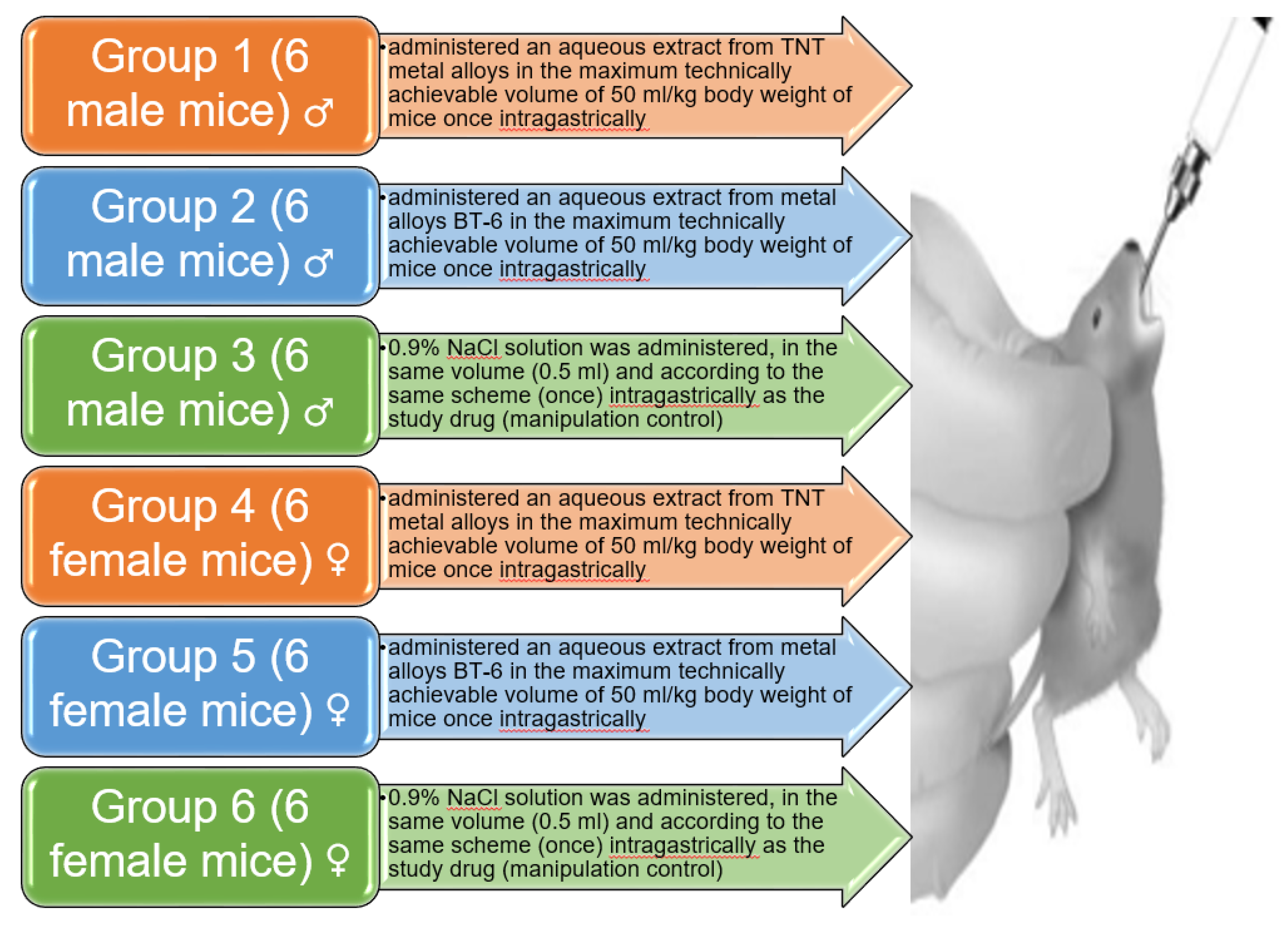
Figure 2.
A) Formation of the surgical wound. B) Creation of a defect on the rabbit's radius bone to fit the size of the implant. The white arrow indicates the location of the defect. .
Figure 2.
A) Formation of the surgical wound. B) Creation of a defect on the rabbit's radius bone to fit the size of the implant. The white arrow indicates the location of the defect. .
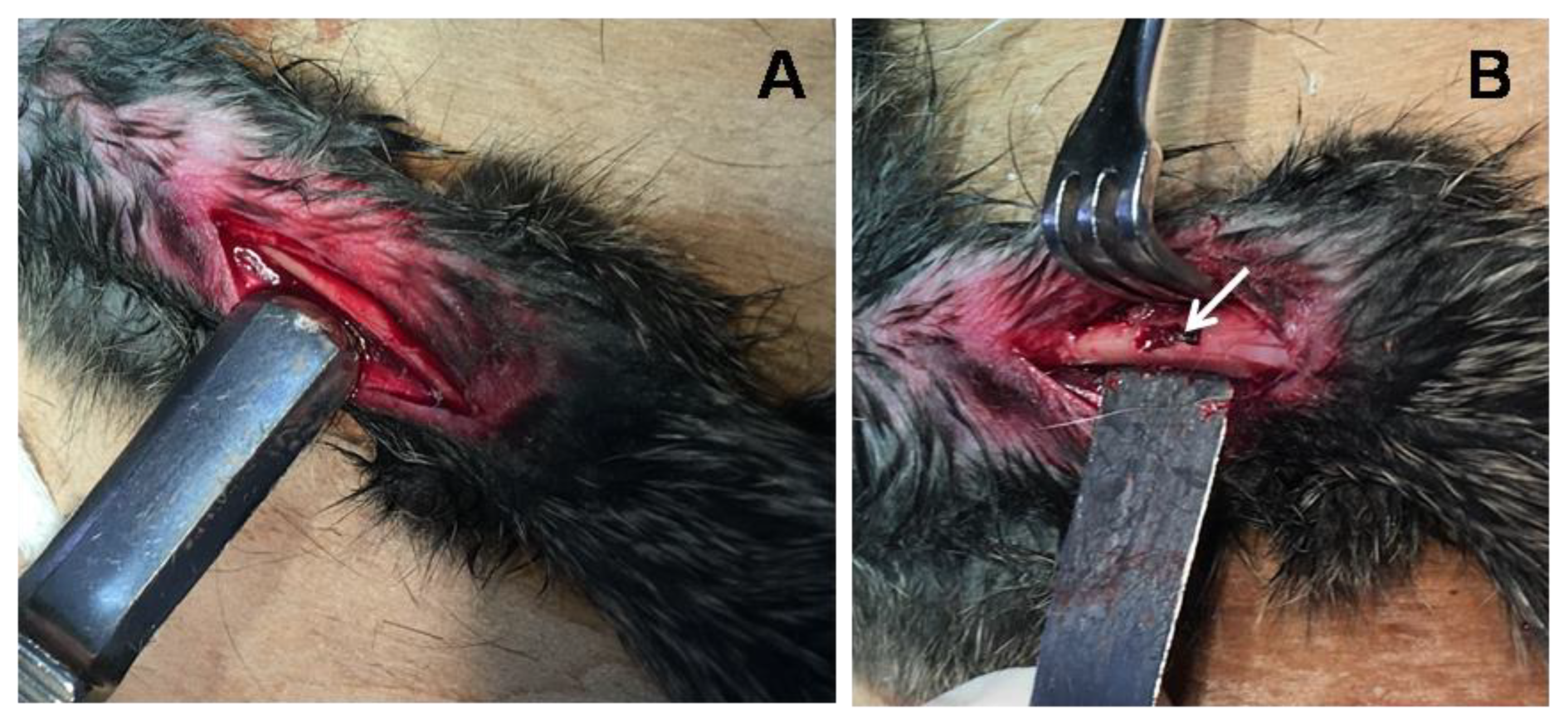
Figure 3.
Installation of implants made of TNT alloy and titanium alloy BT-6 into the artificially created defect in the bone tissue of the middle third of the radius bone. The white arrow indicates the sample of TNT and BT-6 alloy after implantation into the bone tissue.
Figure 3.
Installation of implants made of TNT alloy and titanium alloy BT-6 into the artificially created defect in the bone tissue of the middle third of the radius bone. The white arrow indicates the sample of TNT and BT-6 alloy after implantation into the bone tissue.
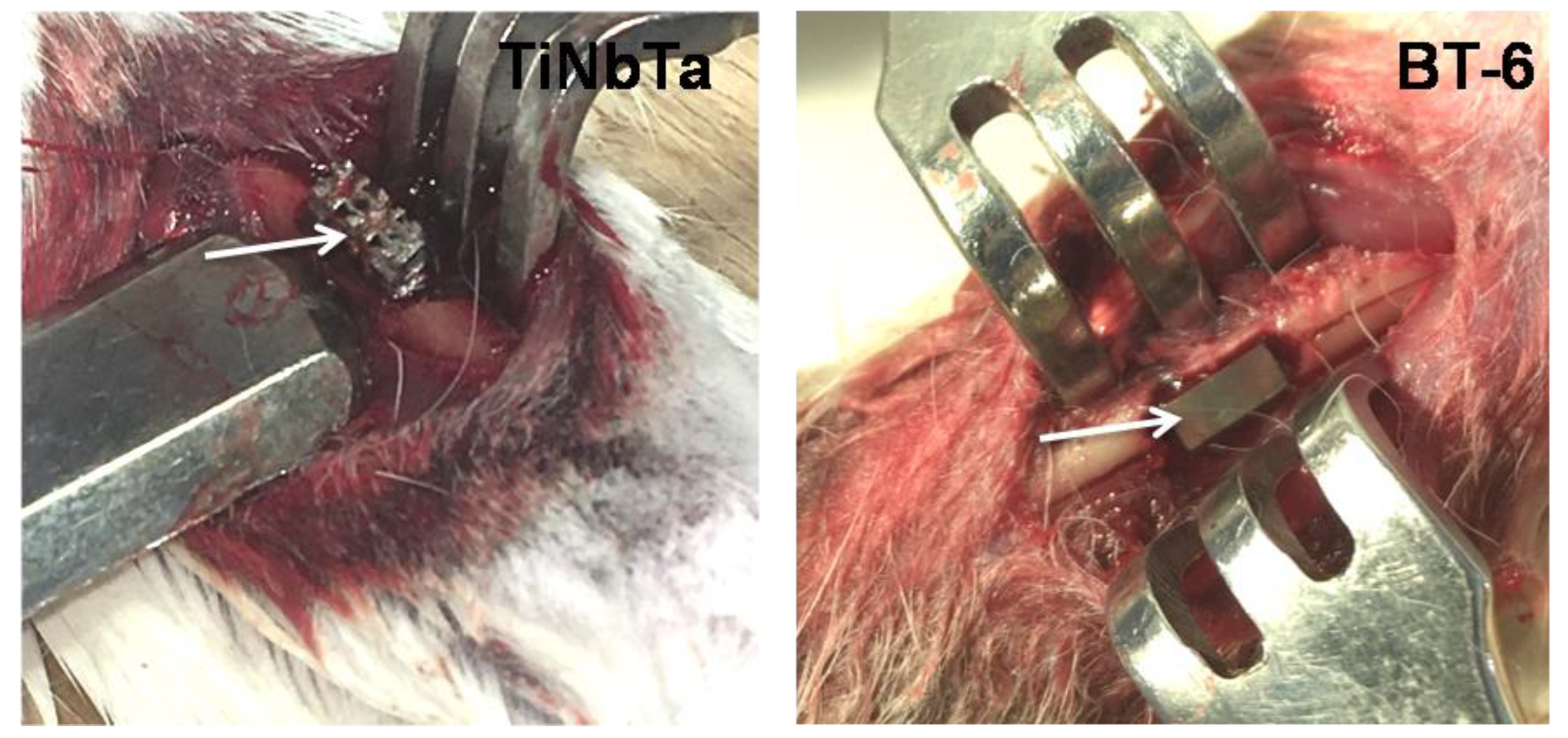
Figure 4.
X-ray of a rabbit’s forearm in the area of implantation of TNT and BT-6 metal alloys .
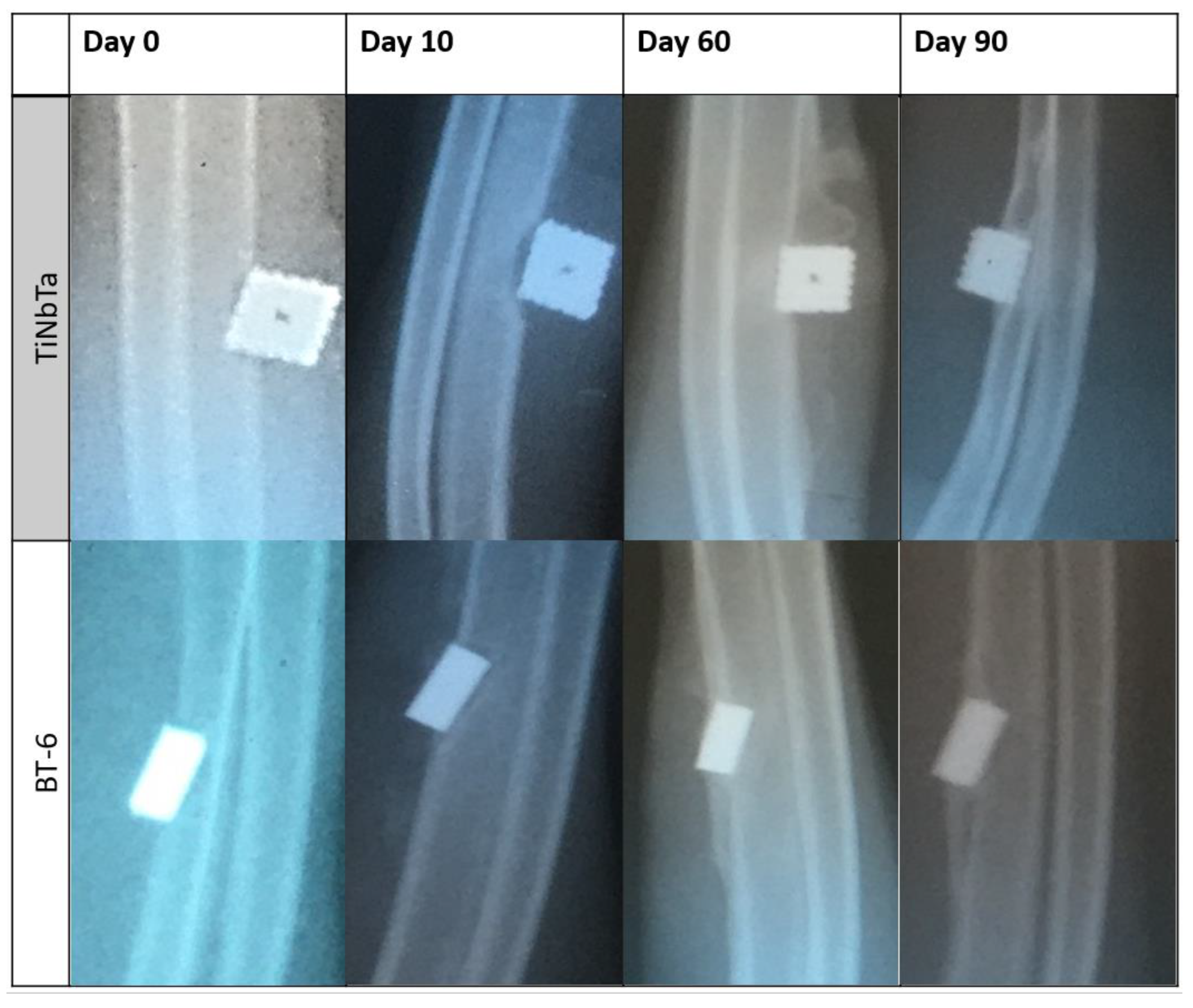
Figure 5.
Histomorphological analysis of the biocompatibility of TNT metal alloys and BT-6 titanium alloy. A, D) Macroscopic images of the radius with implanted samples of TNT and BT-6 metal alloys. B, C) Histological sections of bone tissue sections of the control group of animals (BT-6). E, F) Histological sections of bone tissue sections of the experimental group of animals (TNT). Magnification 100x.
Figure 5.
Histomorphological analysis of the biocompatibility of TNT metal alloys and BT-6 titanium alloy. A, D) Macroscopic images of the radius with implanted samples of TNT and BT-6 metal alloys. B, C) Histological sections of bone tissue sections of the control group of animals (BT-6). E, F) Histological sections of bone tissue sections of the experimental group of animals (TNT). Magnification 100x.
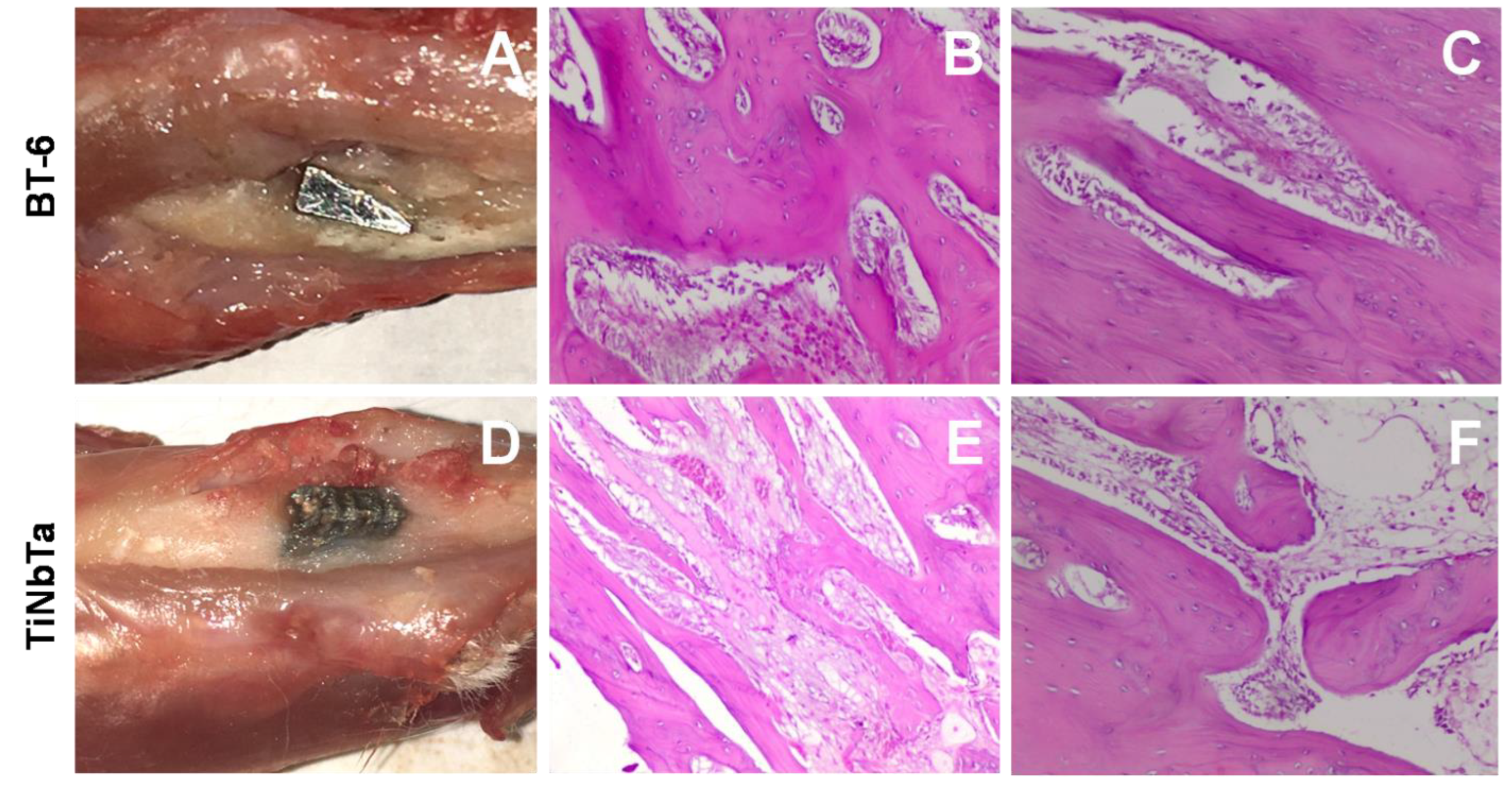

Table 1.
Influence of Aqueous Extracts from Metal Alloys TNT and BT-6 on the Body Weight of Mice following a Single Intragastric Administration at the Maximum Technically Achievable Dose of 50 ml/kg of Body Weight.
Table 1.
Influence of Aqueous Extracts from Metal Alloys TNT and BT-6 on the Body Weight of Mice following a Single Intragastric Administration at the Maximum Technically Achievable Dose of 50 ml/kg of Body Weight.
| Study group | Initial body weight of mice, g | Body weight of mice 1 week after drug administration, g | Body weight of mice 2 weeks after drug administration, g |
| 1 group, «TNT», ♂, n=6 | 27,7±0,5 | 29,8±0,6 | 32,2±0,8 |
| 2 group, «ВТ-6», ♂, n=6 | 26,9±0,6 | 28,8±1,2 | 29,9±1,1 |
| 3 group, control, ♂, n=6 | 26,7±0,5 | 28,4±0,6 | 29,5±1,0 |
| 4 group, «TNT», ♀, n=6 | 24,9±0,7 | 25,6±0,5 | 25,6±0,7 |
| 5 group, «ВТ-6», ♀, n=6 | 25,6±0,9 | 27,5±0,9 | 28,0±1,1 |
| 6 group, control, ♀, n=6 | 23,3±0,8 | 25,0±1,0 | 25,8±1,2 |
| р=0,161 | р=0,236 | р=0,281 |
Notes: ♂ – symbol denoting maleness; ♀ – symbol denoting femaleness; p – significance level, p<0,05 – statistically significant differences compared to the corresponding values in the control group of animals; n – number of animals in the group.
Table 2.
Influence of Extracts from Metal Alloys TNT and BT-6 on the Condition of Mice following a Single Intragastric Administration of 0.5 ml over Two Weeks.
Table 2.
Influence of Extracts from Metal Alloys TNT and BT-6 on the Condition of Mice following a Single Intragastric Administration of 0.5 ml over Two Weeks.
| Parameter under study | Group of animals, n=6 | |||||
|---|---|---|---|---|---|---|
| 1 group, «TNT», ♂ | 2 group, «ВТ-6», ♂ | 3 group, control, ♂ | 4 group, «TNT», ♀ | 5 group, «ВТ-6», ♀ | 6 group, control, ♀ | |
| Intensity and nature of physical activity | Mice are active. Coordination of movements is not impaired. | |||||
| Presence and nature of seizures | None | |||||
| Condition of hair and skin | No changes were detected (the coat is white, clean, smooth) | |||||
| Condition and color of mucous membranes | No changes detected | |||||
| Reaction to sound and pain stimuli | React | |||||
| Animal death | 0 | |||||
| Urination (color of urine) | No changes detected | |||||
| Defecation (consistency, color) | No changes detected | |||||
Notes: ♂ – symbol denoting maleness; ♀ – symbol denoting femaleness; n – number of animals in the group.
Table 3.
Influence of extracts from metal alloys TNT and BT-6 on the absolute mass of internal organs in mice with a single intragastric administration at the maximum technically achievable dose of 50 ml/kg body weight of mice.
Table 3.
Influence of extracts from metal alloys TNT and BT-6 on the absolute mass of internal organs in mice with a single intragastric administration at the maximum technically achievable dose of 50 ml/kg body weight of mice.
| Study group | Weight of internal organs, g | ||||||
|---|---|---|---|---|---|---|---|
| Brain | Heart | Lungs | Liver | Spleen | Kidneys | Gonads/ovaries | |
| 1 group, «TNT», ♂, n=6 | 0,425±0,024 | 0,190±0,015 | 0,259±0,022 | 1,673±0,152 | 0,118±0,012 | 0,249±0,009 | 0,105±0,004 |
| 2 group, «ВТ-6», ♂, n=6 (control) | 0,415±0,028 | 0,181±0,014 | 0,260±0,020 | 1,644±0,146 | 0,160±0,018 | 0,242±0,009 | 0,103±0,005 |
| 3 group, false control, ♂, n=6 | 0,394±0,017 | 0,163±0,010 | 0,225±0,016 | 1,434±0,077 | 0,131±0,008 | 0,230±0,014 | 0,096±0,005 |
| 4 group, «TNT», ♀, n=6 | 0,431±0,012 | 0,176±0,009 | 0,265±0,012 | 1,832±0,096 | 0,140±0,013 | 0,207±0,007 | 0,027±0,002 |
| 5 group, «ВТ-6», ♀, n=6 (control) | 0,434±0,014 | 0,174±0,010 | 0,274±0,014 | 1,746±0,125 | 0,154±0,013 | 0,213±0,016 | 0,026±0,002 |
| 6 group, false control, ♀, n=6 | 0,401±0,022 | 0,158±0,012 | 0,256±0,022 | 1,595±0,118 | 0,164±0,010 | 0,192±0,007 | 0,024±0,002 |
| р=0,122 | р=0,115 | р=0,426 | р=0,096 | р=0,135 | р=0,152 | ♂р=0,243;♀р=0,296 | |
Notes: ♂ – symbol denoting maleness; ♀ – symbol denoting femaleness; p – significance level, p<0,05 – statistically significant differences compared to the corresponding values in the control group of animals; n – number of animals in the group.
Table 4.
Influence of extracts from metal alloys TNT and BT-6 on the biochemical indicators of urine with a single intragastric administration at the maximum technically achievable dose of 50 ml/kg body weight of mice.
Table 4.
Influence of extracts from metal alloys TNT and BT-6 on the biochemical indicators of urine with a single intragastric administration at the maximum technically achievable dose of 50 ml/kg body weight of mice.
| Study group | Parameters studied | ||||||||||
|---|---|---|---|---|---|---|---|---|---|---|---|
| Leukocytes, units/μl | Red blood cells, units/μl | Ketones, mmol/l | Protein, g/l | Nitrites (negative/positive) | Bilirubin, µmol/l | Urobilinogen, µmol/l | Glucose, mmol/l | pH | Specific gravity | Ascorbic acid, mg/dl | |
| 1 group, «TNT»,♂, n=6 | 6/6 – neg. | 6/6 – neg. | 6/6 – neg. | 6/6 – 0,3 g/l | 6/6 – neg. | 6/6 – neg. | 6/6 – 3,5 µmol/l | 6/6 – neg. |
6,0±0,0 (6/6–6,0) |
1,030 ± 0,000 |
2/6 – 0 mg/dl 2/6 – 10 mg/dl 2/6 – 20 mg/dl |
| 2 group, «ВТ-6»,♂, n=6 (control) | 6/6 – neg. | 6/6 – neg. | 6/6 – neg. |
1/6 – 0,1 g/l 5/6 – 0,3 g/l |
6/6 – neg. | 6/6 – neg. | 6/6 – 3,5 µmol/l | 6/6 – neg. |
6,0±0,0 (6/6–6,0) |
1,030 ± 0,000 |
3/6 – 0 mg/dl 1/6 – 10 mg/dl 2/6 – 20 mg/dl |
| 3 group, false control,♂, n=6 | 6/6 – neg. | 6/6 – neg. | 6/6 – neg. |
1/6 – 0,1 g/l 5/6 – 0,3 g/l |
6/6 – neg. | 6/6 – neg. | 6/6 – 3,5 µmol/l | 6/6 – neg. |
6,0±0,0 (6/6–6,0) |
1,029 ± 0,001 |
2/6 – 0 mg/dl 2/6 – 10 mg/dl 2/6 – 20 mg/dl |
| 4 group, «TNT», ♀, n=6 | 6/6 – neg. | 6/6 – neg. | 6/6 – neg. |
1/6 – 0,1 g/l 5/6 – 0,3 g/l |
6/6 – neg. | 6/6 – neg. | 6/6 – 3,5 µmol/l | 6/6 – neg. |
6,0±0,0 (6/6–6,0) |
1,027 ± 0,002 |
3/6 – 0 mg/dl 2/6 – 10 mg/dl 1/6 – 20 mg/dl |
| 5 group, «ВТ-6», ♀, n=6 (control) | 6/6 – neg. | 6/6 – neg. | 6/6 – neg. | 6/6 – 0,3 g/l | 6/6 – neg. | 6/6 – neg. | 6/6 – 3,5 µmol/l | 6/6 – neg. |
6,0±0,0 (6/6–6,0) |
1,030 ± 0,000 |
4/6 – 0 mg/dl 2/6 – 10 mg/dl |
| 6 group, false control, ♀, n=6 | 6/6 – neg. | 6/6 – neg. | 6/6 – neg. | 6/6 – 0,3 g/l | 6/6 – neg. | 6/6 – neg. | 6/6 – 3,5 µmol/l | 6/6 – neg. |
6,0±0,0 (6/6–6,0) |
1,027 ± 0,002 |
4/6 – 0 mg/dl 2/6 – 10 mg/dl |
Note: n – number of animals in the group.
Table 5.
Results of the study on the irritating properties of extracts from metal alloys TNT and BT-6 in the conjunctival test in albino guinea pigs.
Table 5.
Results of the study on the irritating properties of extracts from metal alloys TNT and BT-6 in the conjunctival test in albino guinea pigs.
| Groups | Number of animals with a positive reaction in the conjunctival test | ||
|---|---|---|---|
| After 15 minutes | In 24 hours | In 48 hours | |
| 1 group, «TNT», ♂ , n=5 | 0 | 0 | 0 |
| 1 group, «Control 1», ♂ , n=5 | 0 | 0 | 0 |
| 1 group, «ВТ-6», ♂ , n=5 | 0 | 0 | 0 |
| 1 group, «Control 2», ♂ , n=5 | 0 | 0 | 0 |
Note: ♂ – symbol denoting maleness; n – number of animals in the group.
Table 6.
Results of the study on the allergenic properties of extracts from metal alloys TNT and BT-6 using the skin application method in albino guinea pigs.
Table 6.
Results of the study on the allergenic properties of extracts from metal alloys TNT and BT-6 using the skin application method in albino guinea pigs.
| Groups | Number of applications | Number of animals with a positive reaction (presence of erythema/edema) |
|---|---|---|
| 1 group, «TNT», ♂ , n=5 | 10 | 0/0 |
| 1 group, «Control 1», ♂ , n=5 | 10 | 0/0 |
| 1 group, «ВТ-6», ♂ , n=5 | 10 | 0/0 |
| 1 group, «Control 2», ♂ , n=5 | 10 | 0/0 |
Примечания: ♂ – symbol denoting maleness; n – number of animals in the group.
Table 7.
Mass of internal organs of animals (rabbits).
| Indicators | Control group ВТ-6 (n=10) | Experienced group TNT (n=10) | р |
|---|---|---|---|
| Body weight, g | 2780±47 | 2850±58 | р=0,356 |
| Kidneys, g | 4,8±0,62 | 5,1±0,53 | р=0,169 |
| Liver, g | 98±3,51 | 102±3,42 | р=0,295 |
| Spleen, g | 1,36±0,09 | 1,38±0,11 | р=0,128 |
Disclaimer/Publisher’s Note: The statements, opinions and data contained in all publications are solely those of the individual author(s) and contributor(s) and not of MDPI and/or the editor(s). MDPI and/or the editor(s) disclaim responsibility for any injury to people or property resulting from any ideas, methods, instructions or products referred to in the content. |
© 2024 by the authors. Licensee MDPI, Basel, Switzerland. This article is an open access article distributed under the terms and conditions of the Creative Commons Attribution (CC BY) license (http://creativecommons.org/licenses/by/4.0/).
Copyright: This open access article is published under a Creative Commons CC BY 4.0 license, which permit the free download, distribution, and reuse, provided that the author and preprint are cited in any reuse.


