

Submitted:
17 September 2024
Posted:
18 September 2024
You are already at the latest version
Abstract
This article presents the results of analyzing emergency situations that lead to substantial economic losses during recovery efforts. Various technical solutions are explored that can identify the onset and, in some cases, the duration of natural or technical factors influencing the occurrence of such emergencies. The relevance of developing a combined protection system for wind generators is substantiated. The system comprises a three-tier structure. The first, lowest level, collects real-time data on monitored parameters. The second level stores this data, calculates missing coordinates using observers, and generates warning messages for wind generator operators about potential emergency situations. The third, highest level, includes the operator's computer. This combined protection system plays a crucial role in reducing emergency occurrences and enhancing the reliability and lifespan of wind generators.
Keywords:
protection system
; wind generator
; emergency situations
; icing
; lightning
; vibration
; temperature increase
1. Introduction
Despite the inherent instability of electricity produced by alternative energy sources, there has been a consistent increase in the amount of energy generated by these technologies. Currently, renewable energy accounts for 18% of the electricity consumed in the European Union, 20% in the USA, 28% in China, and 35.9% in Australia [1,2,3,4,5].
Alongside the deployment of new alternative energy sources, leading countries in this sector are focusing on reducing the environmental impact, enhancing the reliability of innovative technical solutions, and mitigating the influence of changing climatic conditions on these technologies [6,7,8,9,10,11,12,13].
Key factors affecting the development of wind energy include increasing the rated power of wind turbines, specialization in component production, the move towards direct drive systems (eliminating the need for gearboxes), improving competitiveness by reducing the cost of energy produced, and the development of new materials and optimized electromechanical designs [14,15].
Reducing the cost of electricity produced by wind turbines can be achieved by minimizing emergency situations and extending the service life of wind generators. One solution to these challenges is to study emergency situations and develop technical solutions for a combined protection system based on the findings.
The primary advantages of wind power compared to other electricity generation methods include the absence of fuel resource needs, no ash disposal, and no carbon dioxide or sulfur emissions. Unlike solar panels, wind turbines do not suffer from the degradation of semiconductor elements that convert solar to electrical energy.
Wind generators with a horizontal axis of rotation are the most commonly used. This includes turbines manufactured by companies like Siemens Gamesa (Germany) and Vestas Wind Systems A/S (Denmark) [16,17].
These turbines have the highest conversion efficiency of wind to electrical energy. However, they generate increased vibrations, which negatively impact the surrounding environment, both above and below ground. The power equipment of a wind power plant (Figure 1) with a horizontal axis of rotation contains wind turbine 1 and a system for converting wind energy into electrical energy in nacelle 2 [18,19,20].
For offshore wind generators, floating designs with vertical rotation axes, such as the SeaTwirl S2 model (Norway), have gained popularity. These designs can efficiently operate at wind speeds of up to 50 m/s, with plans to scale their capacity to 30 MW [8]. Offshore wind farms, with their unique design features, offer a higher density of wind power plants across water surfaces [21].
Wind generators can operate both in generation mode into the power supply network and in autonomous mode when the wind generator is the only source of electrical energy for consumers. The technical characteristics of the generated energy are controlled using power semiconductor converters.
2. Literature Review
Promising Trends in the Development of Wind Turbines
Several innovative technical solutions for wind turbines are currently undergoing research and experimental trials:
- Bladeless Wind Energy Converter
Specialists Weixing Lu and Allan Roberts have proposed a bladeless wind energy converter that utilizes the piezoelectric effect. This technology incorporates advanced, highly efficient piezoelectric crystals developed using nanotechnology. The device channels airflow through ducts, with the walls formed by a multilayer structure consisting of two layers of polyvinylidene fluoride (PVDF), separated by a thin brass layer. The piezoelectric polymer ducts generate no perceptible sound, creating a bladeless wind generator that effectively eliminates sound propagation [22].
However, the drawbacks of this bladeless wind generator include low energy output and high design complexity, which results in the cost of generated energy being significantly higher than that produced by traditional horizontal-axis wind turbines.
- 2.
- Balloon-Type Wind Generator
To enhance the efficiency and stability of wind turbines, designers are exploring solutions to elevate turbines as high as possible above ground level. One such innovation is the balloon-type wind generator, developed by Altaeros (Massachusetts Institute of Technology). This "Buoyant Air Turbine" can be raised to a height of up to 300 meters, where wind speeds are five times stronger than those near the ground with conventional mast-mounted turbines [23].
Despite the advantages of this approach, a key limitation is the need for continuous monitoring and stabilization of the gas pressure within the nacelle.
- 3.
- Ionic Wind Generator
Another promising solution to improve wind energy conversion efficiency is the ionic wind generator. A team from Kyocera Corporation in Kyoto, led by Takashige Yagi, has developed a device that can increase wind speed and modify wind direction. The ionic wind generator operates by applying a constant high voltage to two closely spaced electrodes, generating a directed flow of ionic wind [24].
This technology offers the ability to create an airflow pulse at a specific time and location with minimal energy consumption, enhancing wind speed. However, the drawbacks include the need to divert part of the generated energy to ionize the air, the complexity of the design, and the increased risk of lightning strikes due to the placement of the air ionizer at the top of the wind turbine.
A team led by Yang Hao at the Key Laboratory of Modern Power System Simulation and Control & Renewable Energy Technology at Northeast Electric Power University has also emphasized the importance of analyzing emergency situations, both at the wind turbines themselves and within power supply systems, in cases where they are interconnected [25].
Analyzing Disturbing Factors in Wind Turbine Operation
The various disturbing factors affecting wind turbine operations can be classified into two groups:
- -
- The first group consists of climatic factors.
- -
- The second group includes factors related to the technical condition of the wind turbines’ structural elements and power supply systems.
The climatic factors that significantly impact wind turbine reliability include:
- -
- Wind speeds that exceed the maximum permissible levels as regulated by the turbine's technical specifications, along with variations in air flow acceleration and oscillation frequency.
- -
- Lightning strikes, their frequency, and the spatial correlation between the areas of lightning activity and wind turbine locations, as well as the energy characteristics of the strikes.
- -
- Icing of wind turbine structural elements, including the intensity and duration of icing.
The technical factors that affect the electromechanical systems of wind turbines include:
- -
- Wear and tear on mechanical components such as bearings, gearboxes, and generators, as well as mechanical braking systems.
- -
- Deterioration in the insulating properties of electrical wiring and cable products in generator windings.
- -
- Declining efficiency of cooling systems in electromechanical components of wind turbines.
- -
- Overheating of the windings in the electromechanical converters of wind turbines.
Specialists, including Nicholas T. Luchetti from the Department of Atmospheric and Oceanic Sciences at the University of Colorado, and Arrieta-Prieto M. from the Wei Yiming Key Laboratory of Atmospheric Environment and Extreme Meteorology, conducted studies on the characteristics of air flows at the boundaries of thunderstorm fronts in both mountainous and flat areas [26,27,28,29]. Thunderstorm fronts can create localized loads on wind turbine structures that significantly exceed maximum permissible values. Previous studies focused on the impact of thunderstorm fronts in flat terrains [30].
In complex terrains, such as rocky mountains, experimental studies revealed that wind speed, temperature, humidity, and turbulence at altitudes of at least 300 meters were slightly lower compared to storms on flat terrain. However, the peak energy of turbulent wind kinetics reached values of 4 m2;·kg·s⁻2;. The rapid fluctuations in wind speed during a thunderstorm front reduce the reliability of the mechanical components of wind turbines.
On flat terrain, the static wind speed, changes in direction, and acceleration are much higher than in mountainous areas. In coastal regions, typhoons have a significant negative impact on wind turbine design. Wind speeds in the center of a typhoon can reach 50 m/s, with gusts up to 70 m/s, and the radius of storm winds can extend up to 170 km [31,32].
In countries such as the United States, Europe, and Australia, the likelihood of tornadoes is quite high. In the center of a tornado, wind speeds can reach 130 m/s, with tornado diameters extending up to 3 km. Additionally, as cyclone altitude increases, temperatures decrease. Tornadoes are often accompanied by lightning strikes, further exacerbating the destructive impact [33,34].
Excessive wind speeds that surpass the maximum permissible limits for wind turbines can lead to increased vibration amplitudes and the bending of the horizontal-axis wind turbine structure. This dynamic load causes microcracks in the metal components and can sometimes result in complete structural failure. By monitoring controlled parameters such as wind speed, air temperature, vibration amplitude, and the tilt angle of the wind turbine structure, and adjusting the turbine's operating modes accordingly, it is possible to mitigate the negative impacts on the turbine’s design.
Specialists such as Ren Yushu, Xu Weixin, and Fu Jiaolan from Sun Yat-Sen University & the Southern Marine Science and Engineering Guangdong Laboratory (Zhuhai, China) have studied the density of lightning strikes and their relationship with climatic factors in China [35]. The likelihood of a lightning strike on a rotating wind turbine is significantly higher than on a stationary one. To reduce the risk of lightning strikes on wind turbines during a thunderstorm front, it is necessary to stop the turbine’s rotation.
Previous experimental studies established a correlation between warming temperatures and an increase in lightning strikes. The energy characteristics of lightning show that lightning typically lasts no more than 2 seconds, with the current of the lightning leader ranging from 10 to 500 kA. The average energy released by a single lightning strike can reach 500 MJ, and such energy entering the structure of a wind turbine could ignite a fire [36].
A team of specialists from Pakistan, China, and the USA, led by Ain Noor Ul from the Department of Electrical Engineering at the University of Engineering and Technology (Pakistan), developed a software product for detecting lightning strikes using fuzzy logic. This system achieved a prediction accuracy of 98% when tested against experimental data [37].
Currently, thunderstorm activity forecasting is performed indirectly using specialized software. Key indicators include changes in air temperature, the temperature of the lower cloud layers, and the speed of vertical airflows. The combination of the speed and acceleration of these changes helps predict the formation of thunderclouds and subsequent lightning strikes.
A connection has been established between thunderstorm activity and solar activity. Solar flares increase the electric field strength in thunderclouds by 60% within two days after the flare, leading to greater thunderstorm activity. This phenomenon results from increased atmospheric ionization caused by the solar wind [38,39,40,41].
An important aspect in the development of wind turbine protection systems is the registration and geolocation of lightning strikes. This is typically achieved using acoustic and electromagnetic sensors, though acoustic sensors have longer response times compared to electromagnetic ones. Studies at the New Mexico Institute of Mining and Technology have resulted in the development of a combined lightning sensor that integrates panoramic light and acoustic sensors, enabling precise geolocation and assessment of lightning energy characteristics [42,43,44,45].
By combining acoustic and light sensors, it is possible to estimate the distance to a lightning strike based on the delay in acoustic sensor response compared to the light sensor. This technique allows for real-time tracking of approaching thunderstorm fronts.
A lightning strike is essentially a conductive channel of cold plasma through which pulsed current flows, with amplitude values reaching tens of thousands of amperes. The electromagnetic field generated by lightning covers a wide spectrum with high intensity. Studies conducted at Khaldoun University (Algeria) examined how this electromagnetic field affects the reliability of electronic components in control systems [46].
Wind turbines are complex mechanical structures, with each component serving a specific functional purpose. Climatic conditions, such as decreasing ambient temperatures, have a significant negative impact on wind turbine performance. One such negative climatic factor is icing, which causes an increase in both static and dynamic loads on the turbine’s mechanical structure.
3. Methodology
One of the key tasks in enhancing the technical reliability of wind turbines is the study and development of a combined protection system for their electromechanical equipment [72]. The combined protection systems proposed in [73,74] are multi-level systems.
- • Level 1: The lowest level involves real-time monitoring of the technical condition parameters of the wind turbine's electromechanical equipment. This level is implemented through independent hardware devices, such as direct measurement sensors equipped with their own controllers to process and store real-time data.
- • Level 2: This level consists of observers responsible for continuously calculating missing parameters that cannot be measured directly by sensors. These observers use indirect methods, typically implemented through modular controllers, to compute the system's coordinates.
- • Level 3: At this level, control signals are generated based on the input from the first and second levels, which provide information on the technical condition of the electromechanical equipment and their derivatives. The derivative value is used to estimate the rate of change in the monitored parameters [73,74].
- • Level 4: This level is responsible for generating a set of control signals. The software block for this level is also implemented within the control controller.
The protection system proposed in [75] aims to reduce operational costs and extend the service life of wind turbines, thereby lowering the overall cost of electricity generation.
Disturbing factors that reduce the reliability of the electromechanical components can be divided into two main groups:
- Natural Phenomena: These factors have a cause-and-effect relationship with environmental conditions.
- Technical Factors: These include the technical condition of the electromechanical equipment and peripheral systems, as well as the electrical parameters of the power supply network, especially in the case of grid-connected operations.
When developing a combined protection system, the most critical tasks include:
- • Classifying disturbing factors and identifying the controlled coordinates and corresponding control actions for each factor.
- • Assessing the impact and potential economic damage caused by these disturbing factors.
- • Classifying the control actions that can prevent the failure of components and assemblies in a wind turbine system.
Thus, enhancing technical reliability requires a comprehensive approach to the study and development of combined protection systems for electromechanical equipment in wind power plants [75].
Requirements for a Combined Protection System
Based on the analysis of existing technical solutions for wind turbine designs, as well as the cause-and-effect relationships between natural phenomena and emergencies, operational characteristic violations, and safety precautions during routine maintenance, a set of technical requirements for a combined protection system has been developed.
The combined protection system for wind turbines must provide the following functionalities:
- • Real-time monitoring of the approach of thunderstorm fronts.
- • Calculation and control of the probability of icing and its onset.
- • Continuous monitoring of wind speed.
- • Real-time monitoring of the temperature of the power transformer windings, gearbox, mechanical brakes, and generator windings.
- • Monitoring of the wear and tear of bearings in wind turbines, generators, gearboxes, and mechanical brakes.
- • Calculation of the remaining lifespan of the wind turbine’s structural components.
- • Automatic generation of recommendations for the operator and control commands in pre- and post-emergency situations.
- • Supervisory control and management with visualization of the technological processes.
The implementation of a combined protection system for wind turbines will ensure the following:
- • A reduced likelihood of fires in wind turbine installations.
- • Prevention of emergency situations caused by icing of structural elements.
- • Reduced structural load when wind speeds exceed the maximum permissible limits.
- • Mitigation of the negative impact of lightning strikes on the mechanical parts of the wind turbine and its monitoring and control systems.
- • Fewer emergency situations due to wear on bearings, generators, gearboxes, and mechanical brakes.
- • More efficient use of the resources of the controlled components in the mechanical structure of the wind turbine.
Structural Flowchart of a Combined Protection System
To meet the technical requirements of a combined protection system, a three-level hardware structure must be organized (Figure 3).
- First Level (Lower Level): This level consists of a set of control and indicator sensors. It is responsible for the real-time collection of data related to the wind turbine’s technical condition. These sensors transmit information via communication channels to the second level, the controller. Control and indicator sensors are divided into two groups based on the parameters they monitor:
- The first group monitors the mechanical components of the wind turbine, including the bearings of the turbine, gearbox, generator, and mechanical brake.
- The second group monitors environmental conditions that affect the turbine, such as icing, wind speeds exceeding permissible limits, and the approach of thunderstorm fronts.
Data from humidity and air temperature sensors serve as input for an observer that estimates the probability and duration of icing on the turbine's structural elements. Electromagnetic field strength sensors and acoustic sensors detect the approach of a thunderstorm front, while the wind speed sensor measures the current wind speed. All collected data is then transferred to the second level.
- Second Level: This level consists of the controller, which processes the incoming information and calculates appropriate responses based on the monitored parameters.
- Logical Decision-Making Block: The decision-making block generates control commands aimed at reducing the negative impact of environmental and operational factors on the wind turbine.
The real-time data from the three-axis accelerometer, along with the wear assessment of the wind turbine bearings, generator bearings, gearbox bearings, and gears, form the basis for calculating the current residual lifespan of these components.
At the second level, observer algorithms are used to estimate the numerical values of parameters that cannot be directly measured by control and indicator sensors. These include calculating the maximum permissible values for wind speed, as well as the temperature of the power transformer windings, gearbox, mechanical braking system, and generator windings. If the calculated current values exceed the specified permissible limits, information regarding the approach of a thunderstorm front and the probability of icing onset is transmitted to the logical decision-making block.
The second level of the combined protection system is implemented via a programmable controller. The primary functions of the controller include:
- • Calculating control parameters using observer algorithms.
- • Generating control commands in emergency situations.
- • Providing recommendations to the personnel servicing the wind turbine system, as outlined in Table 1.
The third level of the combined protection system includes an operator’s computer equipped with software for visualizing the technological processes (SCADA). This computer should display real-time data, such as wind speed, the temperature of key components in the wind turbine structure, the remaining lifespan of the turbine, gearbox, generator, and mechanical braking system, along with recommendations for the operating personnel and commands from the logical decision-making block.
Given the rapid changes in parameters—such as the approach of a thunderstorm front, the onset of icing, wind speeds exceeding the maximum permissible limits, and temperatures surpassing safe levels for the power transformer windings, generator windings, gearbox, and mechanical brake—quick decision-making is crucial. The consequences of emergency situations are often linked to significant economic losses, so it is essential to promptly implement actions to mitigate these impacts.
Controller Algorithm for the Combined Protection System
Based on the previously developed functional diagram (Figure 3) and the list of the main functions of the controller (Table 1), the controller algorithm for the combined protection system has been created (Figure 4). The primary purpose of the combined protection system is to alert the operator about potential or ongoing emergency situations, initiate operations to stop the wind turbine, provide recommendations for resolving emergencies, and issue commands to begin the shutdown procedure.
The controller program algorithm begins with program initialization, position 1 (Figure 4). The initialization command is triggered either by supplying power to the controller or via the operator’s computer keyboard. The next step is to set the maximum permissible values for the monitored parameters, position 2:
- • Rmin: The minimum allowable coefficient representing the resource capacity of the controlled devices within the wind generator.
- • Smin: The minimum allowable distance to the thunderstorm front.
- • Pmax: The maximum allowable probability of icing onset.
- • Kmax: A coefficient representing the maximum allowable wind speed and temperature for the wind generator’s structural elements.
These maximum permissible values can be adjusted after the program is stopped using the "Stop" command, position 20. The next step in the algorithm is to test the functionality of the system components, position 3. If all components are functional (condition N=1, position 4), the control and indicator sensors are polled, position 6. If any element is found faulty, an error message is displayed on the operator’s computer screen, position 5, followed by the standard wind turbine shutdown procedure.
To process the current data and determine the rate of change in the monitored parameters, which helps predict the remaining lifespan of the wind turbine’s structural elements, the current values of the monitored parameters are saved, position 7.
Addressing issues related to routine maintenance of the wind turbine’s mechanical components in a timely manner reduces accidents and increases operational profitability. The resource coefficient (R) of the controlled elements is calculated in a subroutine, position 8. If the residual life coefficient is lower than the minimum allowable value (R < Rmin, position 9), a message is generated, notifying the need for routine maintenance or complete replacement of the affected component, position 10. If the condition R < Rmin is not met, the wind turbine is in good condition, and the cycle operation continues.
Operational disruptions due to the negative impacts of lightning and icing on the wind turbine are stochastic in nature.
To reduce the likelihood of adverse effects from lightning strikes, the system monitors the approach of thunderstorm fronts. A subroutine, position 11, calculates the current distance to the thunderstorm front. If this distance becomes smaller than the minimum allowable value (Smin, position 12), indicating that the storm front is approaching the turbine, a "Stop" command is issued (position 20), and the wind turbine shutdown procedure is initiated, position 21.
The wind turbine shutdown procedure includes the following steps: feathering the blades, stopping the turbine’s rotation, activating the mechanical brake, disconnecting from the external power supply, and blocking the information channels of the combined protection system.
The probability of the start time and duration of icing on the wind turbine structure is determined in the subroutine, position 14. The most effective way to calculate the onset and duration of icing is by developing an observer based on the information from the humidity, ambient temperature, and wind speed sensors, particularly for wind blowing in the opposite direction [55]. If the probability of icing exceeds the maximum permissible value, Pmax (position 15), the operator is notified of the onset of icing (position 16), and the wind turbine shutdown procedure is initiated (position 21).
Monitoring of the maximum permissible values for wind speed, power transformer winding temperature, generator winding temperature, gearbox temperature, and mechanical brake temperature is performed in the subroutine, position 17. If any of the current parameter values exceed the corresponding maximum permissible threshold, K > Kmax (position 18), a notification is generated for the operator, along with appropriate messages and recommendations displayed on the computer (position 19). The next step is to initiate the wind turbine shutdown procedure (position 21).
The analysis of the causes leading to emergency situations in wind turbines, as well as the technical solutions for implementing protection systems, revealed that emergency situations are typically studied in isolation, with technical solutions developed to address individual incidents. However, the combined protection system proposed in this work offers comprehensive protection for wind turbine systems against all currently known major pre- and post-accident factors.
This combined protection system is based on a prioritized analysis of wind turbine emergency situations, taking into account existing technical solutions for converting wind energy into electrical power. It also addresses the specific challenges of wind turbines operating within electrical grids.
The developed algorithm, which enables parallel data processing, allows for independent real-time protection for any controlled parameter. Given that maximum permissible values for controlled parameters may vary across different regions where wind turbines are in use, the algorithm is designed to allow for these values to be adjusted accordingly.
5. Conclusions
This paper highlights the importance of studying and developing a combined protection system for wind turbines. The following key emergency factors and their consequences are identified:
- • Wind speeds exceeding the maximum permissible limits can lead to the destruction of structural elements in the wind turbine system.
- • Increased frequency of lightning strikes raises the likelihood of fires in the structural components of the wind turbine.
- • Icing of the wind turbine can increase the amplitude of vibrations, potentially causing structural damage.
- • Uncontrolled wear of mechanical equipment significantly reduces the service life of the wind turbine and may result in an emergency shutdown due to structural failure.
- • Prolonged exposure to temperatures exceeding safe limits can lead to the destruction of structural elements and, in some cases, fire.
The proposed protection system continuously monitors environmental parameters and tracks the technical condition of the wind turbine’s structural elements. It provides protection against excessive wind speeds, lightning strikes, and icing, while also managing the wear and temperature of the turbine's components.
A future direction for the development of the combined protection system involves enhancing the algorithms for predicting icing and the approach of thunderstorm fronts.
Author Contributions
Conceptualization, S.I., V.K. and G.N.; methodology, S.I. and G.T.; software, A.M.; validation, V.K.; formal analysis, S.I. and G.T.; investigation, G.E. and A.M.; resources, S.I.; data curation, G.T.; writing—original draft preparation, S.I. and V.K.; writing—review and editing, S.I. and A.M.; visualization, G.E.; supervision, S.I.; project administration, S.I.; funding acquisition, S.I. All authors have read and agreed to the published version of the manuscript.
Funding
Participation in the research of the authors V.K, G.N., G.E., S.I. and A.M. was funded of the Science Committee of the Ministry of Science and Higher Education of the Republic of Kazakhstan within the framework of the grant “Development of indirect thermal protection systems for asynchronous generators of wind power plants” (Grant No. AP19677354, 2024).
Data Availability Statement
No new data were created
Conflicts of Interest
The authors declare no conflicts of interest.
References
- European Parliament and Council. (2022). Decision (EU) 2022/591 on a General Union Environment Action Program to 2030. http://data.europa.eu/eli/dec/2022/591/oj.
- U.S. Energy Information Administration. (2023). Monthly Energy Review: December 2023 (p. 296).
- Healy, L. (2023). 2022 Snapshot: Clean Energy Australia Report (pp. 11-15). Rye Park NSW: Tilt Renewables.
- Chien, F. , Hsu, C.-C., Ozturk, I., Sharif, A., & Sadiq, M. The role of renewable energy and urbanization towards greenhouse gas emission in top Asian countries: Evidence from advance panel estimations. Renewable Energy 2022, 186, 207–216. [Google Scholar]
- Enevoldsen, P. , Permien, F. -H., & von Krauland, A.-K. Corrigendum to "How much wind power potential does Europe have? Examining European wind power potential with an enhanced socio-technical atlas." Energy Policy 2019, 132, 1092–1100. [Google Scholar]
- Hoen, B., Firestone, J., & Rand, J. Attitudes of U.S. wind turbine neighbors: Analysis of a nationwide survey. Energy Policy (November) 2019, 1/27-27/27.
- Bórawski, P. , Bełdycka-Bórawska, A., Jankowski, K. J., Dubis, B., & Dunn, J. W. Development of wind energy market in the European Union. Renewable Energy 2020, 161, 691–700. [Google Scholar]
- Williams, E. , Hittinger, E., Carvalhoa, R., & Williams, R. Wind power costs expected to decrease due to technological progress. Energy Policy 2017, 106, 427–435. [Google Scholar]
- Noel, W. , Mapping, T. M., Yu, Q., Leach, A., & Brian, A. Mapping the evolution of Canada’s wind energy fleet. Energy 2022, 167, 112690. [Google Scholar]
- Yang, N. , Yang, J., Pang, M., Zhang, P., Chang, Y., Zhang, L., Hao, Y., & Chen, Y. Decarbonization of the wind power sector in China: Evolving trend and driving factors. Environmental Impact Assessment Review 2023, 103, 107292. [Google Scholar]
- Maia, N. Z. , Almeida, L. P., Nicolodi, J. L., Calliari, L., & Castelle, B. Long-term trends and wave climate variability in the South Atlantic Ocean: The influence of climate indices. Regional Studies in Marine Science 2023, 66, 103131. [Google Scholar]
- Asadi, M. , Ramezanzade, M., & Pourhossein, K. A global evaluation model applied to wind power plant site selection. Applied Energy 2023, 336, 120840. [Google Scholar]
- Asadi, M. , & Ramezanzade, M. (2023). Overview of extreme weather events, impacts, and forecasting techniques. In Extreme Weather Forecasting (pp. 1-86).
- Hopwood, D. Generation innovation: Part two: We continue our focus on cost reduction in wind energy, and ask some major innovators in the sector where we are heading for in the major markets. Renewable Energy Focus 2011, 12, 36–41. [Google Scholar] [CrossRef]
- Gao, Q. , Hayward, J. A., Sergiienko, N., Khan, S. S., Hemer, M., Ertugrul, N., & Ding, B. Detailed mapping of technical capacities and economics potential of offshore wind energy: A case study in South-eastern Australia. Renewable and Sustainable Energy Reviews 2024, 189(Part A).
- SiemensGamesa. (2020, May 26). Unmatched in the U.S.: Siemens Gamesa SG 14-222 DD offshore wind turbines to power 2.6-GW Dominion Energy project (p. 3).
- Vestas-American Wind Technology. (2024, March 5). Vestas is readying New York for offshore wind and moves forward conditional agreement for the Empire Wind 1 project.
- Syuhada, A. , Sary, R., Afandi, D., & Fahriza, I. (2022, ). Study of blades number influence on the rotation of the turbine shaft on a horizontal axis wind turbine. In Lecture Notes in Mechanical Engineering (pp. 473-481). 4th International Conference on Experimental and Computational Mechanics in Engineering, Banda Aceh. 14 September.
- Monjardín-Gámez, J. J. , Campos-Amezcua, R., & Gómez-Martínez, R. Large eddy simulation and experimental study of the turbulence on wind turbines. Energy 2023, 273, 127234. [Google Scholar]
- Solodusha, S. , & Suslov, K. An approach to stabilizing the dynamic loads of a wind turbine generator based on the control of the blades setting angle. IFAC-PapersOnLine 2022, 55, 76–80. [Google Scholar] [CrossRef]
- SeaTwirl. (2024). S2x from SeaTwirl: Wind power engineering of the next generation. https://seatwirl.com/products/seatwirl-s2/.
- Lu, W. , & Roberts, A. (2011). U.S. Patent No. 8067878 B1. U.S. Patent and Trademark Office.
- Ferguson, F. D. (2008). U.S. Patent No. 7335000 B2. U.S. Patent and Trademark Office.
- Yagi, T. , Tojyo, T., & Makino, H. (2012). U.S. Patent No. 8929049 B2. U.S. Patent and Trademark Office.
- Hao, Y. , Hu, L., Zhaohao, D., & Cheng, L. Two-stage optimal configuration of condenser for high-proportion wind power sending-end power grid considering short circuit ratio increase and transient overvoltage suppression. Dianwang Jishu Power System Technology 2024, 48, 540–551. [Google Scholar]
- Peng, K. , & Ma, Y. Validation of ERA5 boundary layer meteorological variables by remote-sensing measurements in the Southeast China mountains. Remote Sensing 2024, 16, 54. [Google Scholar]
- Lane, T. P. , King, A. D., & Perkins-Kirkpatrick, S. E. Attribution of extreme events to climate change in the Australian region: A review. Weather and Climate Extremes 2023, 42, 100622. [Google Scholar]
- Luchetti, N. T. , Friedrich, K., Rodell, C. E., & Lundquist, J. K. Characterizing thunderstorm gust fronts near complex terrain. Journal of Applied Meteorology and Climatology 2020, 148, 3267–3286. [Google Scholar]
- Arrieta-Prieto, M. , & Schell, K. R. Spatially transferable machine learning wind power prediction models: v-logit random forests. Renewable Energy 2024, 223, 120066. [Google Scholar]
- Wang, J. , Chen, L., & Li, S. Characteristics of spring Mongolian cyclones in the recent 70 years: Background circulations and weather influences. International Journal of Climatology 2024, 44, 328–343. [Google Scholar]
- Yunpeng, L. , Yunhai, L., & Meng, L. Typhoon Chan-Hom induced sediment cross-shore transport in the mud depo-center of the East China Sea inner shelf. Marine Geology 2015, 469. Article 107223.
- Andrews, M. S. , Gensini, V. A., & Haberlie, A. M. Climatology of the elevated mixed layer over the contiguous United States and Northern Mexico using ERA5: 1979–2021. Journal of Climate 2024, 37, 1833–1851. [Google Scholar]
- Baggett, C. F. , Nardi, K. M., & Childs, S. J. Skillful subseasonal forecasts of weekly tornado and hail activity using the Madden-Julian Oscillation. Journal of Geophysical Research: Atmospheres 2018, 123, 12–661. [Google Scholar]
- Veloso-Aguila, D. , Rasmussen, K. L., & Maloney, E. D. Tornadoes in Southeast South America: Mesoscale to planetary-scale environments. Monthly Weather Review 2024, 152, 295–318. [Google Scholar]
- Yushu, R. , Weixin, X. , & Jiaolan, F. Characteristics of intracloud lightning to cloud-to-ground lightning ratio in thunderstorms over Eastern and Southern China. Atmospheric Research 2024, 300, 107231. [Google Scholar]
- Campos, C. , Couto, F. T., & Santos, F. L. M. ECMWF lightning forecast in mainland Portugal during four fire seasons. Atmosphere 2024, 15, 156. [Google Scholar]
- Ul, A. N. , Farhan, M. , & Chong, T. Lightning nowcasting using fuzzy logic—A risk assessment framework for resilience of microgrids. Electric Power Systems Research 2024, 230, 110253. [Google Scholar]
- Laiz, S. , Neal, R. , & Pope, J. O. Identification of weather patterns and transitions likely to cause power outages in the United Kingdom. Communications Earth and Environment 2024, 5, 49. [Google Scholar]
- Cavaiola, M. , Cassola, F. , & Sacchetti, D. Hybrid AI-enhanced lightning flash prediction in the medium-range forecast horizon. Nature Communications 2024, 15, 1188. [Google Scholar]
- Błȩcki, J. , Iwański, R., & Wronowski, R. Study of the lightning activity over Poland for different solar activity. Artificial Satellites 2022, 57, 194–209. [Google Scholar]
- Campos, C. , Couto, F. T., & Santos, F. L. M. ECMWF lightning forecast in mainland Portugal during four fire seasons. Atmosphere 2024, 15, 156. [Google Scholar]
- Li, C. , Hu, Q., Wang, J., Li, J., Zhou, M., Li, Q., & Fan, Y. Characterization of close electric field waveforms from triggered lightning. IEEE Transactions on Electromagnetic Compatibility 2021, 63, 2033–2040. [Google Scholar]
- Hong, H. , Wang, B., Lu, G., Li, X., Ge, Q., Xie, A., Wu, Y., Qiu, X., & Chen, J. Tracking lightning through 3D thunder source location with distributed acoustic sensing. Journal of Geophysical Research: Atmospheres 2024, 129, e2023JD038882. [Google Scholar]
- Arechiga, R. O. , Johnson, J. B., Edens, H. E., Thomas, R. J., & Rison, W. Acoustic localization of triggered lightning. Journal of Geophysical Research: Atmospheres 2011, 116, D09103. [Google Scholar]
- Bestard, D., Coulouvrat, F., & Farges, T. (2023). Localization and quantification of the acoustical power of lightning flashes. In Proceedings of Forum Acusticum 2023: 10th Convention of the European Acoustics Association.
- Lakhdar, A. Numerical simulation of the negative downward leader current with the associated Far-EM field generated by lightning. IEEE Transactions on Electromagnetic Compatibility 2024, 66, 240–246. [Google Scholar] [CrossRef]
- Rotondo, D. , Cristofaro, A., & Johansen, T. A. Robust fault and icing diagnosis in unmanned aerial vehicles using LPV interval observers. International Journal of Robust and Nonlinear Control 2024, 29, 5456–5480. [Google Scholar]
- Rotondo, D. , Cristofaro, A., & Johansen, T. A. Diagnosis of icing and actuator faults in UAVs using LPV unknown input observers. Journal of Intelligent and Robotic Systems: Theory and Applications 2018, 91(3-4), 651–665.
- Corradini, M. L. , Ippoliti, G., & Orlando, G. A sliding mode observer-based icing detection and estimation scheme for wind turbines. Journal of Dynamic Systems, Measurement and Control, Transactions of the ASME 2018, 140, 014502. [Google Scholar]
- Corradini, M. L., Ippoliti, G., & Orlando, G. A robust observer for detection and estimation of icing in wind turbines. IECON Proceedings (Industrial Electronics Conference) 2016, 1894–1899.
- Ying, L. , Xu, Z., & Zhang, H. Graph temporal attention network for imbalanced wind turbine blade icing prediction. IEEE Sensors Journal 2024, 24, 9187–9196. [Google Scholar]
- Huang, X. , Wang, Y., & Zhu, Y. Icing forecast of transmission line based on genetic algorithm and fuzzy logic. Gaodianya Jishu/High Voltage Engineering 2016, 42, 1228–1235. [Google Scholar]
- Li, Q. , Gou, Y., Liu, S., & Rao, Y. A detection method of ice accretion based on flash pulse infrared thermography. Transactions of Nanjing University of Aeronautics and Astronautics 2023, 40, 105–111. [Google Scholar]
- Ying, L. , Xu, Z., & Zhang, H. Graph temporal attention network for imbalanced wind turbine blade icing prediction. IEEE Sensors Journal 2024, 24, 9187–9196. [Google Scholar]
- Qu, J. , Wang, Q., Peng, B., & Yi, X. Icing prediction method for arbitrary symmetric airfoil using multimodal fusion. Hangkong Dongli Xuebao/Journal of Aerospace Power 2024, 39, 20220143. [Google Scholar]
- Wang, L. , He, Y., & He, Y. Wind turbine blade icing risk assessment considering power output predictions based on SCSO-IFCM clustering algorithm. Renewable Energy 2024, 223, 119969. [Google Scholar]
- Yu, S. , Song, M., & Gao, R. A review of icing prediction techniques for four typical surfaces in low-temperature natural environments. Applied Thermal Engineering 2024, 241, 122418. [Google Scholar]
- Zhuang, C. , Zhang, Y., You, F., Cheng, Z., & Lin, G. Thermal aging analyses of a gearbox oil used for wind turbine nacelles. Journal of Physics: Conference Series 2022, 2166, 012047. [Google Scholar]
- Zhang, Y., You, F., Sun, W., Li, P., Lin, W., & Shu, C. (2019). Fire hazard analyses of typical oils in wind turbine nacelle based on single and composite indices. In Proceedings of the 9th International Conference on Fire Science and Fire Protection Engineering (ICFSFPE 2019). Article 9055848.
- Kramti, S. E. , Ali, J. B., Bechhoefer, E., & Sayadi, M. Toward an online strategy for mechanical failures diagnostics inside wind turbine generators based on spectral analysis. Wind Engineering 2021, 45, 782–792. [Google Scholar]
- Sai Balaji, M. A. , Katiyar, J. K., Eakambaram, A., Sethupathi, B. P., Kamalakannan, J., & Baskar, A. Comparative study of sintered and composite brake pad for wind turbine applications. Proceedings of the Institution of Mechanical Engineers, Part J: Journal of Engineering Tribology 2023, 237, 1430–1445. [Google Scholar]
- Xiong, G. , Zhang, Y. , Yang, P., Zhu, Z., & Hu, P. An analysis of the burning accident of the tower bottom cabinet of G58-850KW wind turbine group. IOP Conference Series: Earth and Environmental Science 2020, 508, 012054. [Google Scholar]
- Liu, X. , Bai, Y., Wang, X., Ding, X., Zhang, J., Zhang, T., & Zhang, K. Evaluation method of insulation system for wind turbine generator based on accelerated multi-factor ageing test. Annual Report - Conference on Electrical Insulation and Dielectric Phenomena (CEIDP) 2013, 56–59.
- Liu, X. , Bai, Y. , Wang, X., Ding, X., Zhang, J., Zhang, T., & Zhang, K. Evaluation method of insulation system for wind turbine generator based on accelerated multi-factor ageing test. Annual Report - Conference on Electrical Insulation and Dielectric Phenomena (CEIDP) 2013, 6747073, 56–59. [Google Scholar]
- Liu, X. , Zhang, T. , Bai, Y., Ding, X., & Wang, Y. Effects of accelerated repetitive impulse voltage aging on performance of model stator insulation of wind turbine generator. IEEE Transactions on Dielectrics and Electrical Insulation 2014, 21, 6877988–1606. [Google Scholar]
- Arabul, A. Y., Arabul, F. K., & Jayaram, S. H. (2023). Investigation of temperature effects on the ageing of paper oil insulation under repetitive transient voltages. 2023 IEEE Electrical Insulation Conference (EIC), 190730.
- Caponetti, F. , & Kjær, M. A. (2017). Patent № CN104937263A: Control of wind turbines. China.
- Hu, S. , Xie, C. , & Yin, C. An adaptive reclosing scheme for cross-line faults on double-circuit wind power outgoing lines with shunt reactors. Energies 2024, 17, 1273. [Google Scholar]
- Satya Bharath, K. V. , Haque, A. , Khan, M. A., & Kuma, R. Failure mode effect classification for power electronics converters operating in a grid-connected system. IEEE Systems Journal 2023, 17, 3138–3149. [Google Scholar]
- Simonov, A., Ilyushin, P., & Suslov, K. (2023). On the prevention of voltage resonance at the point of wind farm connection to the distribution network. 2023 IEEE International Conference on Electrical, Computer and Energy Technologies (ICECET), Cape Town, South Africa.
- Torkzadeh, R. , van Waes, J. , Ćuk, V., & Cobben, S. Model validation for voltage dip assessment in future networks. Electric Power Systems Research 2023, 217, 109099. [Google Scholar]
- Lebsir, A. , Bentounsi, A. , & Benbouzid, M. E. H. Electric generators fitted to wind turbine systems: An up-to-date comparative study. Journal of Electrical Systems 2015, 11, 281–295. [Google Scholar]
- Mohanrajan, S. R. , Krishna, S. V., Reddy, L. N., Teja, A. S., & Vishal, B. A study of motor-generator topologies for pumped storage applications. Conference on Advances in Engineering and Technology (ICAET 2014) 2014, 627–635. [CrossRef]
- Enany, T. A. , Mostafa, M. A., & Othman, E. S. Direct current signal injection enhanced with artificial intelligence technique for asynchronous motors thermal monitoring. Twentieth International Middle East Power Systems Conference (MEPCON), Cairo, Egypt 2018, 828–833. [CrossRef]
- Xi'an Huaao. (2012). Patent № CN102487191A: Motor overheating protection relay. China.
- Fish, M. W. , & Alexander, D. F. (1949). Patent US2463935A: Thermal motor protector. United States.
- Anderson, C. (2020). Wind turbines: Theory and practice. Cambridge University Press.
- Toma, C. Fn extension of the notion of observability at filtering and sampling devices. Proceedings of the International Symposium on Signals, Circuits and Systems (Iasi SCS) 2001, 233–236.
- Li, H., Gedikli, E. D., & Lubbad, R. Exploring time-delay-based numerical differentiation using principal component analysis. Physica A 2020, 556, 124839, 1–20.
- Anderson, C. (2000). Wind turbines: Theory and practice. Cambridge University Press.
Figure 1.
Wind power plant with a horizontal axis of rotation.
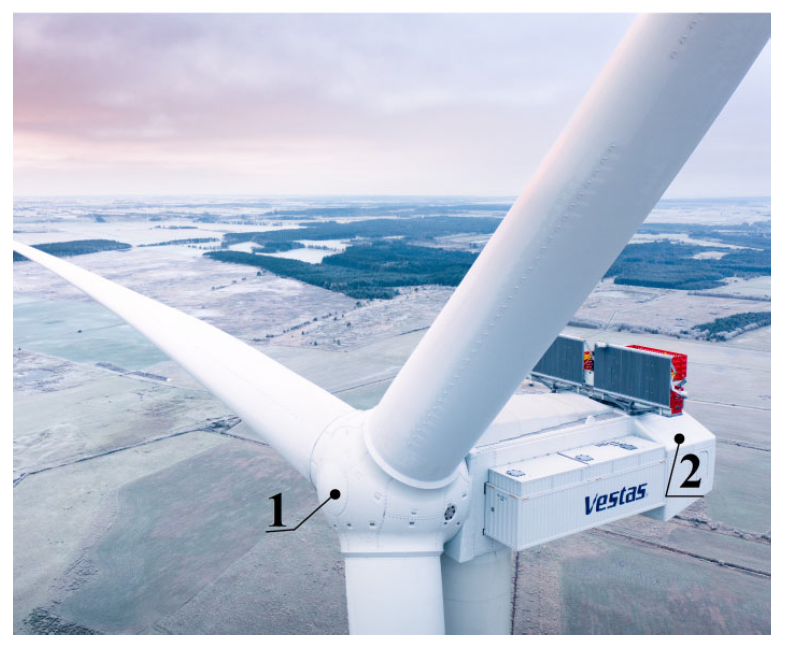
Figure 2.
Offshore power plants fleet.
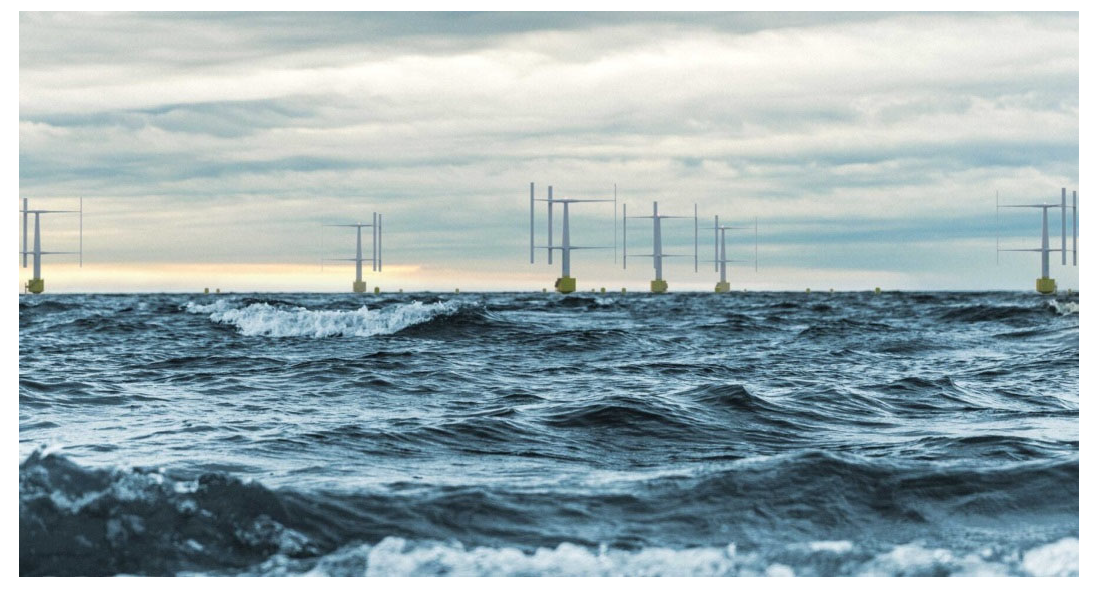
Figure 3.
Functional diagram of a wind generator combined protection system.
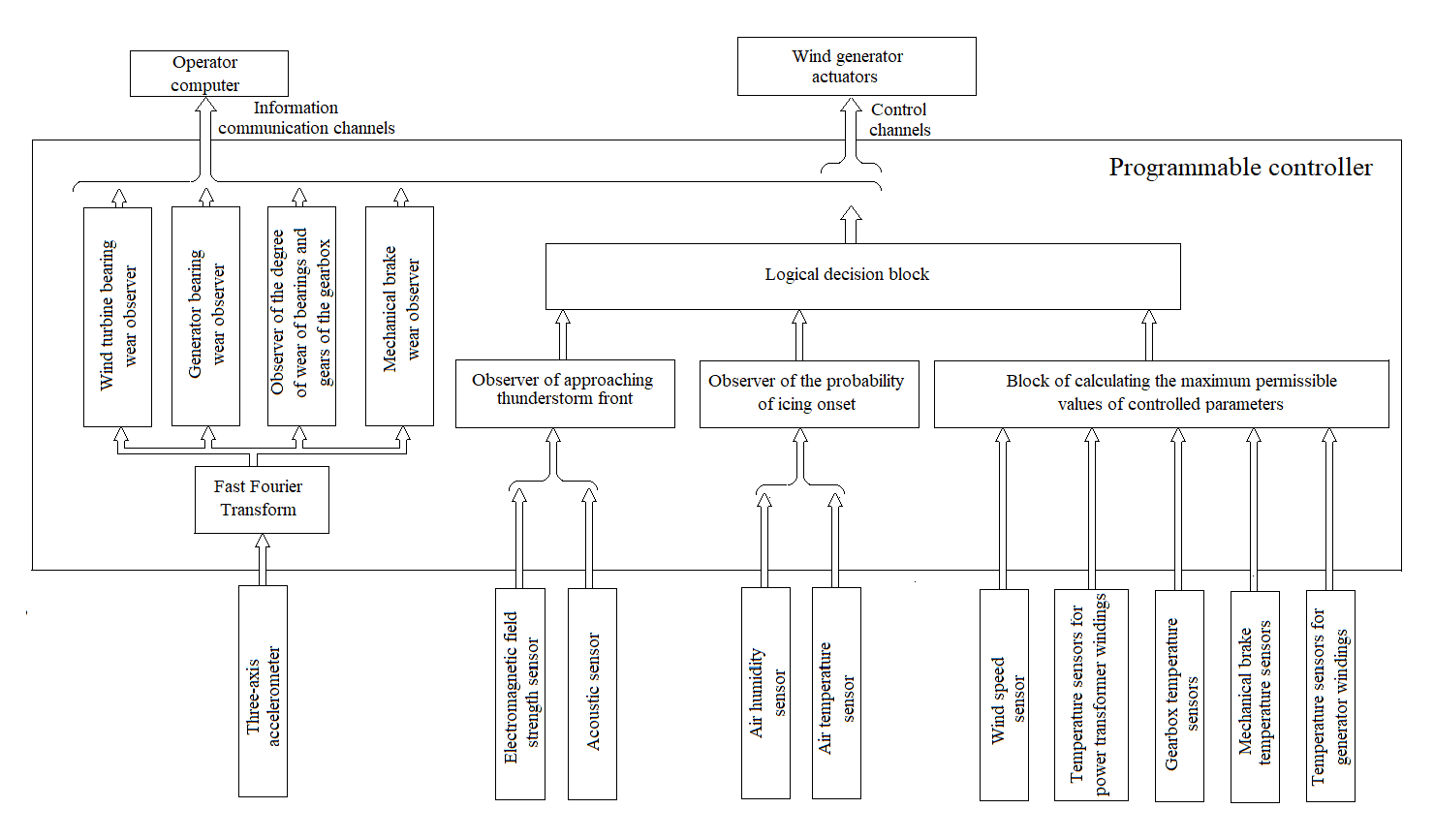
Figure 4.
Combined protection system controller algorithm.
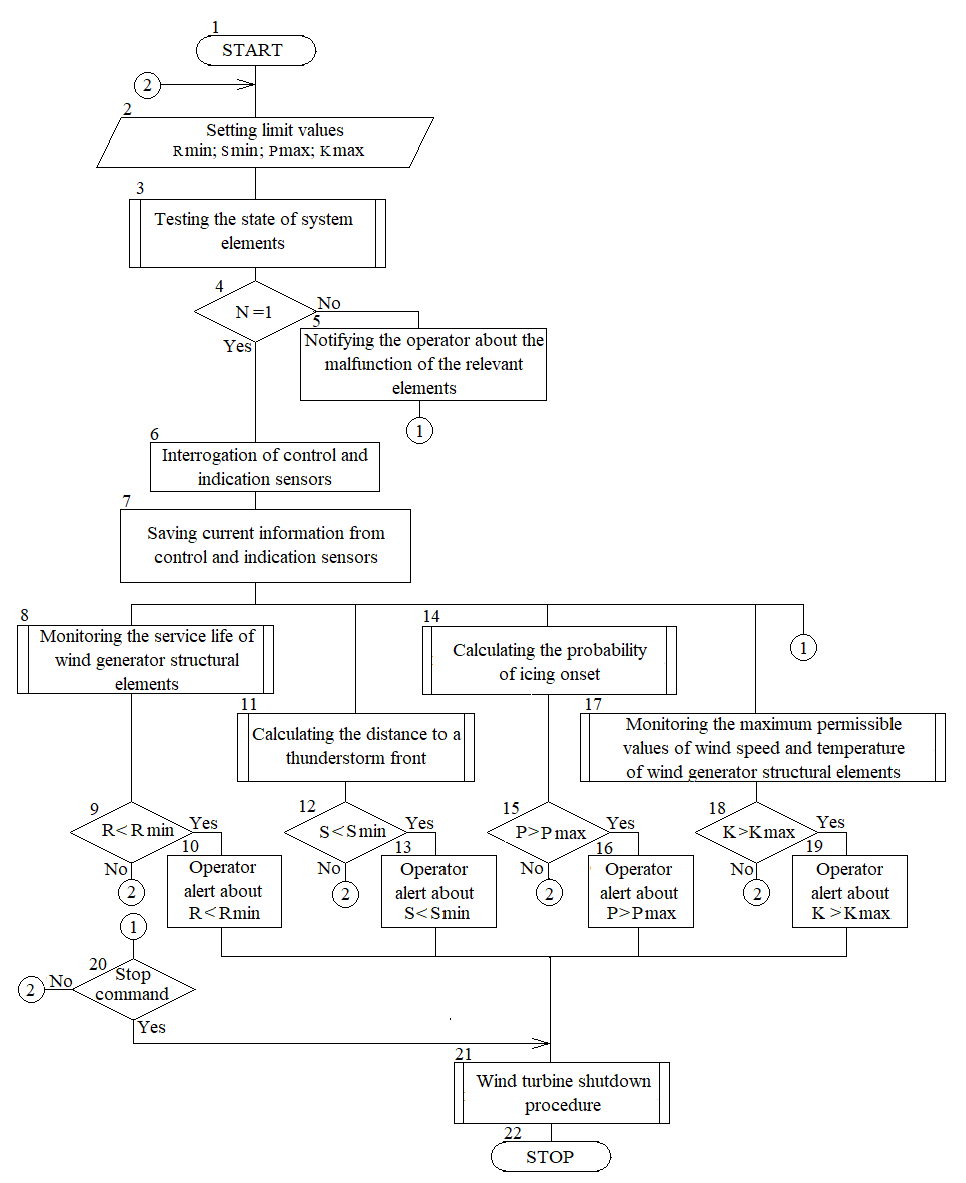

Table 1.
List of main functions of the combined protection system in case of emergency situations.
| No. | Emergency situation | A set of commands for a combined protection system |
|---|---|---|
| 1 | Reducing the calculated residual life of wind turbine bearings, generator bearings, gearbox bearings and gears and mechanical brakes. | Generating an appropriate information message to the wind power plant operator. |
| 2 | Storm front approaching | Stopping the wind turbine. De-energizing power and information devices. Blocking the input circuits of information channels. Generating an information message to the wind power plant operator. |
| 3 | Icing onset | Stopping the wind turbine. Generating an information message to the wind power plant operator. |
| 4 | Exceeding the maximum permissible wind speed | Feathering of wind turbine blades. Stopping the wind turbine. Generating an information message to the wind power plant operator. |
| 5 | Exceeding the permissible temperature of the power transforme windings, generator windings, gearbox, mechanical brake. | Stopping the wind turbine. Disconnecting power devices from then external power source. Generating an appropriate information message to the wind power plant operator. |
Disclaimer/Publisher’s Note: The statements, opinions and data contained in all publications are solely those of the individual author(s) and contributor(s) and not of MDPI and/or the editor(s). MDPI and/or the editor(s) disclaim responsibility for any injury to people or property resulting from any ideas, methods, instructions or products referred to in the content. |
© 2024 by the authors. Licensee MDPI, Basel, Switzerland. This article is an open access article distributed under the terms and conditions of the Creative Commons Attribution (CC BY) license (http://creativecommons.org/licenses/by/4.0/).
Copyright: This open access article is published under a Creative Commons CC BY 4.0 license, which permit the free download, distribution, and reuse, provided that the author and preprint are cited in any reuse.


