
Submitted:
15 October 2024
Posted:
16 October 2024
You are already at the latest version
Abstract
Fish is essential to feeding the world's population and provides hundreds of millions of people with a substantial amount of protein in their diets. Fish is one of the most affordable and readily available forms of animal protein, making up roughly 20% of total animal protein intake. It is simple to obtain these fish through cultivated or captured fisheries. However, the aquaculture industry is viewed as the main means of supplying the world's growing fish demand given the ongoing indiscriminate harvests in capture fisheries. Global aquaculture systems are under serious threats from climate change, which will have an impact on disease prevalence, species mix, water quality, and overall production. The possible impacts of climate change on freshwater aquaculture production and its consequences for the sustainability of the sector are reviewed in this paper. Rising temperatures, El Niño Southern Oscillation events, lowered dissolved oxygen, toxic algal blooms, altered rainfall patterns, water pH, altered salinity, and extreme weather events are a few of the aspects of a changing climate that have been discussed.
Keywords:
climate change
; global warming
; temperature
; El Niño Southern Oscillation
; aquaculture
; adaptation
1. Introduction
Aquaculture is rapidly expanding its production, establishing itself as the fastest-growing food production sector worldwide. Based on information from the Food and Agriculture Organization (FAO), global fish production in 2022 has surged to 185.4 million tonnes with an increase of 4.4 percent on 2020 levels (The State of World Fisheries and Aquaculture FAO, 2024). With 10.23 million tonnes of food fish produced in 2022—the second-highest contribution after China—aquaculture is the main sub-sector that produces fish. Freshwater fish, such as carps, make up the majority of aquaculture production, which accounts for about 87% of fish farmed for human consumption (Bais, 2018). However, the primary concern is whether the sector is growing sustainably and swiftly enough to meet the future projected demand aggravated by a rapidly growing human population and a changing climate (Maulu et al., 2021). Climate change refers to alterations in the meteorological statistical distribution during periods varying from several decades to several million years (IPCC Special Report on Impacts of Global Warming of 1.5°C, 2018). Freshwater aquaculture faces additional pressure from climate change, which has more complex effects because it involves poikilothermic animals, which are extremely sensitive to biotic and abiotic stressors that directly affect fish physiology, behavior, growth, and reproduction (Adhikari et al., 2018). While there have been enormous studies on the consequences of climate change on marine ecosystems, there are still many unanswered questions about how it affects freshwater ecosystems, especially those that support aquaculture. A comprehensive analysis of the consequences of climate change and its variables on freshwater ecosystems has not been attained yet. Our research examines how various components of climate change are affecting the freshwater biodiversity and ecosystem, focusing on its effects on production and sustainability. It discusses how factors such as rising water temperatures, El Niño Southern Oscillation, precipitation changes, and weather patterns on growth, health, and survival of fishes, predominantly freshwater fishes. The article highlights how climate change can disrupt freshwater aquaculture ecosystems, and how surface water chemistry is constantly changing in response to daily, seasonal, and climatic rhythms. The following section presents obstacles to effective adaptation in addition to some alternatives for mitigation and adaptation that may be more widely applicable. The conclusions drawn are summarized in the final section, along with some recommendations for potential future research.
2. Implications of Climate Change on Predominantly Freshwater Aquaculture
According to IPCC (2023), due to their significant influence from both climatic and non-climatic factors, freshwater environments are regarded as among the planet's most vulnerable ecosystems. Climate change poses significant risks to over 90% of global fish production, with major producers in Asia and the United States being most vulnerable (Cao et al., 2023). The Zoological Society of London (ZSL) recently claimed in 2022 that the Living Planet Index (LPI) has shown an 83% decline in the populations of freshwater species since 1970, as reported by the World Wide Fund for Nature (WWF, 2022). The latest global assessment by International Union for Conservation of Nature indicates that 25% of freshwater fish are at risk of extinction, and at least 17% of threatened species are impacted by climate change. Anadromous fish, Atlantic salmon's global population decreased by 23% between 2006 and 2020, causing it to move from Least Concern to Near Threatened status (IUCN, 2023).
2.1. Global Warming
The recent climate assessment by the Intergovernmental Panel on Climate Change predicts that global warming will cause average global temperatures to increase by 1.5°C or more over the next 20 years (IPCC, 2023). This has led to a significant impact on aquatic species, particularly fish, which are poikilothermic and are vulnerable to temperature changes. A 1.5°C increase in global temperature is expected to result in higher fish mortality rates for most species (Maulu et al., 2021). Another study predicted that if global warming reaches 5°C by 2100, up to 60% of fish species may be unable to tolerate the temperatures within their current range (Dahlke et al., 2020). Another report says that a 3.2°C global mean temperature increase could pose a threat to over half of the habitat for one-third of all freshwater fish species (Barbarossa et al., 2021). Rising temperatures' effects on freshwater systems lead to increased stratification, decreased nutrient circulation, and consequences for primary production and trophic levels. High temperatures and lowered dissolved oxygen have led to the deaths of critically endangered species like Tameen barb and red line torpedo barb in the Chandragiri River in Kerala, India (Nair et al., 2020).
Ectotherms increase their metabolic rate by two to three times for every 10°C increase in water temperature. However, aquaculture species' metabolic rate decreases when temperatures exceed their threshold due to physiological stress. Labeo rohita embryos and larvae were exposed to varying temperatures in an experiment by Ashaf-Ud-Doulah et al. (2021). The results showed that the high temperature of 34°C caused evidence of damaged zygotes, cellular deformities, and damaged yolk sacs, along with the shortest incubation time and the lowest rates of hatching success. At 36°C, there was no hatching seen. When rohu larvae were exposed to temperatures of 34 and 36°C, they displayed minimal survival and developmental abnormalities like eye fusion, axial curvature, yolk sac ulceration, blood coagulation, and tail shortening. In Clarias batrachus, digestive processes are affected by temperature changes, with lipase activity increasing at 30°C, suggesting a metabolic change in severe heat stress (Ahmad et al., 2014). Vargas-Chacoff et al. (2018) examined how stress responses and osmoregulation were affected in Atlantic salmon molts raised in freshwater and saltwater by high water temperatures and salinity. With or without prior acclimation, fish exposed to seawater at 24°C showed the highest mortality rate (100%) and the poorest ion regulation. In freshwater and saltwater, higher temperatures also resulted in a decrease in Na+-K+-ATPase activity.
Vass et al. (2009) analyzed 30-year time series data from published literature and ongoing studies on the Ganga River and water bodies in its plains, finding higher minimum water temperatures—1.5°C in the Ganga's colder sections and 0.2 to 1.6°C in the State of West Bengal's aquaculture farms—in the Gangetic plains. The months of September through December that follow the monsoon have also seen an increase in rainfall. The result is a reduction in the availability of fish spawn in the Ganga River as well as the inability of Indian Major Carps (IMC) to reproduce. It has been noted that the warm-water fish species Glossogobius gurius and Xenentodon cancila have shifted geographically to the colder Ganga river stretch. In the past three decades, the predator-prey ratio in the middle section of the Ganga river has also decreased, going from 1:4.2 to 1:1.4. In the last 20 years, there has been a noticeable shift in the amount of fish produced in the middle section of the Ganga River. The contribution of IMC has dropped from 41.4% to 8.3%, while the contribution of catfish and other miscellaneous species has increased.
Amidst global fish mortality incidents, a catastrophic fish kill occurred in April this year at Song May Reservoir, Dong Nai Province, Vietnam due to severe heatwaves and subsequent drought. Extreme temperatures caused water levels to drop, leading to severe oxygen depletion and mass mortality of approximately 200 tonnes of fish (CNN, 2024). Another significant fish kill occurrence occurred in June 2024 when mass fish mortalities were reported in Bustillos Lagoon, Chihuahua in Mexico as the temperatures climbed above 40°C which led to the lagoon's water levels being dangerously low (Today, 2024). A similar, dreadful incident occurred in Menindee, Australia, in March of last year. Millions of fish perished in the Darling-Baaka River due to a combination of factors including an ongoing heatwave, which led to low oxygen levels in the water (Radford, 2023).
In India, both fish production and sowing of inland fish have plummeted by 30% as stated by the Department of Fisheries, due to high temperatures, heatwaves, and drought in the Mysore district, Karnataka. Reportedly many of the tanks and lakes have dried up deeply hampering inland fishing and aquaculture activities in the district (TOI, 2024).
2.2. El Niño Southern Oscillation
El Niño Southern Oscillation (ENSO) is a natural climatic phenomenon that occurs in irregular cycles of 2-7 years, lasting 12-18 months (FAO, 2024). El Niño events cause monsoon rains to be less intense, leading to droughts, and changes in wind circulation and temperature patterns. In Peru, it causes heavy rains due to warm surface water off the coast (Kakoti et al., 2023). ENSO is the primary contributor to global precipitation variability, accounting for 38% of interannual variance in average land precipitation and 8% of space-time variability (FAO, 2020). It also affects aquaculture productivity, leading to the switch to drought-resistant species in freshwater fisheries (ReliefWeb, 2020). Additionally, global fish production typically reduces during extreme El Niño (World Organisation for Animal Health, 2023).
India experienced a 14.5% rainfall deficit during the 2015 monsoon season, making it the tenth driest year between 1906 and 2015. Seven of these drought years coincided with El Niño occurrences (Mishra et al., 2016). Resna (2016) studied the impact of El Niño and La Niña on Kerala's fishery resources between 2007-18. They found decreased catch per unit effort for total fish landings during strong El Niño events in 2015-16 and moderate El Niño events in 2009-10. Oil sardine fish maturation and recruitment were poor during these events. Anchovy fishery also experienced decreases during El Niño events and increased La Niña. La Niña conditions, particularly in northwest India and Bangladesh, contribute to increased rainfall (Kakoti et al., 2023). The overall fish production for the fiscal year 2023–24 in Dakshina Kannada District, as reported by the Dakshina Kannada Fisheries Department, is 1.8 lakh metric tonnes. This is a 43% decrease from the previous year. This represents a significant drop from the production levels of 2020–21 (2.2 metric tonnes), 2021–22 (2.9 lakh metric tonnes), and 2022–23 (3.3 lakh metric tonnes), as stated by Times of India (Sanjiv, 2024). Addressing the impact of ENSO on marine fisheries, the population of oil sardines (along the west coast) dropped from 1.55 lakh tons in 2014 to 0.46 lakh tons during the ENSO event that occurred in 2015–2016 (Shetye et al., 2019). According to the production data, Karnataka's production decreased by 18% from 5,47,784 tonnes in 2017–18 to 4,45,213 tonnes in 2018–19 and then dropped further to 3,74,514 tonnes in 2020-21 (Singh et al., 2022). According to the research, Maharashtra recorded the lowest yearly catch in 45 years in 2019, with a sharp fall in the number of fish collected across all species. The state's total estimated fish landings or the amount of fish caught that reaches the ports, were 2.01 lakh tonnes in 2019 compared to 2.95 lakh tonnes in 2018—a decrease of 32%. Not just Maharashtra, the entire western coast has shown a declining trend in annual fish catch. Fish landings decreased by 44.4%, 15.4%, and 4% in Goa, Kerala, and Gujarat, respectively. The species with the biggest declines in 2019 included the Indian oil sardine and the Indian mackerel (Kajal, 2020).
Compared to the marine counterpart, the relationship between El Niño and freshwater fisheries is complex and has received little study to date. Although the effects of climatic variability on freshwater ecosystems are becoming increasingly recognized, limited specific studies have been done on how El Niño affects the sustainability of freshwater fisheries. It is challenging to discern the precise effects of El Niño on fisheries since it can affect freshwater ecosystems through a variety of channels, including variations in temperature, precipitation, and flow patterns. In order to support sustainable lives and increase the resilience of freshwater fisheries, it is imperative that these research gaps be filled.
2.3. Precipitation and Water Level
Rainfall variations have two opposing effects on aquaculture productivity and sustainability: increased rainfall (flooding) and periods of little to no rainfall (drought). Elevating rainfall raises risks to production in low-lying areas, including fish loss, unwanted species invading ponds, and damage to ponds. Aquaculture production's environmental sustainability may be adversely impacted by the mixing of pond water and fish with wild species, primarily due to the introduction of invasive fish species and the degradation of water quality (Maulu et al., 2021). Reduced precipitation can cause water stress, affecting aquaculture productivity by causing shortage of water and deterioration of water quality (CIFRI, 2014).
The United Nations Environment Programme (UNEP) reports that climate change and population pressure are causing Lake Chad, once one of the world's largest water bodies, to disappear, causing a humanitarian crisis in central Africa. Reduced rainfall, rising temperatures, and increased agriculture have led to a 90% shrinkage in the lake, a 60% decrease in fish production, and the degradation of pasturelands.
Earlier this year, a sudden fish-kill event occurred on Eight Mile Creek Beach in South Australia, resulting in the deaths of sharks, snapper, Australian salmon, stingrays, and lingfish. The event is believed to be caused by heavy rainfall and a rapid drop in water salinity. The creek is drying up, pushing more freshwater into the ocean, reducing salinity, and causing fish mortalities. (Bradbrook, 2024).
In India, the southwest monsoon has shifted, and the amount of rainfall during the monsoon and post-monsoon seasons has decreased (Pal et al., 2021). The August 2018 floods in Kerala's three major rivers resulted in the invasion of two egregious alien species, the alligator gar and the arapaima, endangering native freshwater-dependent biodiversity (Kumar et al., 2019). The Ganga River's fish spawn availability index has decreased from 1529 ml in 1965-1969 to 568 ml in 2005-2009, indicating a decline in the quality of Indian major carp seed. The decrease in rainfall pattern during the peak breeding period (May-August) has led to the failure to breed and recruitment of juvenile Indian major carps, as per data from Allahabad from 1979-2009 (Das et al., 2013).
2.4. Dissolved Oxygen
DO concentrations are influenced by various factors, including upwelling, respiration, photosynthesis, pollution, and temperature and salinity. Fish physiology is significantly impacted by these variations, with hypoxic conditions occurring when the DO concentration falls below 5-6 mg/L in fresh water. Oxygen depletion from industrial wastes, agricultural runoff, and sewage plant wastes can lead to stress, poor appetite, sluggish growth, susceptibility to illness, and mortality. Fish metabolism is significantly impacted by dissolved oxygen levels, causing slow growth rates and reduced nutrient absorption (Ali et al., 2022). Reductions in dissolved oxygen can impact the development and growth of eggs and fry, as well as the ability of juveniles and adults to swim, eat, and reproduce. In contrast to 52 eggs per fish in the control group, zebrafish exposed to hypoxia (0.5-0.8 mg/L) only produced 9 eggs per fish after the first day of the experiment, according to Zhou et al. (2001).
A devastating fish kill incident occurred in the Darling River near Menindee, Australia in continuation with last year. Over 30 million fish were found dead in the Darling River, attributed to low levels of dissolved oxygen in the water. In February of this year, dissolved oxygen levels in the Darling River dropped below the critical threshold for fish health almost daily, with the lowest recorded level being 0.1 mg/L on February 27. The water quality conditions in the river have continued to deteriorate, with dissolved oxygen levels dropping to zero on April 26, most likely caused by the formation of a dense algal bloom on the surface of the Darling River, causing rapid depletion of oxygen in the water (Connick, 2024). Similarly, 10 tonnes of fish were found floating in the Chitkul tank in Patancheru, Hyderabad in India in June 2024, estimating the cost of dead fish is over ₹1 crore, due to lowered oxygen levels of 0.8 mg/L, as a result of the discharge of industrial effluents in the water body (Rajani, 2024).
2.5. Salinity
Higher salinity in freshwater can significantly stress fish metabolism, impacting survival, growth, feed intake, and species distribution. In an experiment, Rainbow trout fingerlings were exposed to various salinity concentrations for 60 days, finding that all died at 30 ppt salinity. The study also revealed that rising water salinity raises thyroid and cortisol levels, essential for osmoregulation and energy supply. Serum alanine aminotransferase activity increased at 20 ppt, suggesting organ damage (Ranjbar and Nejad, 2020). In a recent study, Labeo rohita fingerlings were subjected to a series of salinities for 96 hours in an experiment by Sharma et al., 2020. The results showed that the salinity levels decreased the tissue's levels of Ascorbic acid, growth, and survival rate. A salinity of 4.5 ppt was found to have the greatest mortality.
2.6. Water pH
Freshwater fishes typically have an ideal pH range of 6.5 to 8.5, with salmonids and cyprinids being particularly vulnerable to alkaline pH values above 9.2 and below 4.8 (Demeke and Tassew, 2016). High and low pH levels can impact growth, reproduction, and immunity, and even cause mortality in fish. In eutrophic reservoirs, high alkaline pH can develop due to the absorption of CO2 by green plants, impacting water's buffering ability. Fish exposed to high alkaline or acidic water may experience a decrease in gill ionic balance, leading to high mortality. Low pH also affects the innate immune response by decreasing the phagocytic activity of neutrophils in channel catfish. In some cases, unsuccessful egg fertilization and increased fish embryo mortality have been observed in water with a pH lower than 4.0, indicating that acidic waters can delay all developmental stages (Swain et al., 2020).
2.7. Harmful Algal Blooms
Hydrogen-rich phytoplankton in water bodies can cause harmful algal blooms, which can lead to toxins that can make water unsafe and kill fish, and poison humans. Phosphates are the main cause of excessive nutrient accumulation, leading to freshwater algal blooms. In Kolhapur, India, cyanobacterial contamination in reservoirs like Rajaram, Kotitirth, and Rankala has been investigated. Human activities have increased phosphate and nitrate levels, leading to the growth of Microcystis aeruginosa blooms (Gaikward et al., 2013). The toxic levels pose a serious risk to public health and the reservoirs themselves. Dal Lake in Srinagar has experienced multiple large-scale fish deaths, with dissolved oxygen rates decreasing over the past 40 years. Untreated sewage discharge and agricultural runoff from nearby catchments have increased the amount of phosphates and nitrates in the lake (Kumar, 2022).
Figure 1.
Image shows bloom of red algae on the surface of Dal Lake, Kashmir (Dialogue Earth, 11 Oct 2023). (Kumar, 2022).
Figure 1.
Image shows bloom of red algae on the surface of Dal Lake, Kashmir (Dialogue Earth, 11 Oct 2023). (Kumar, 2022).
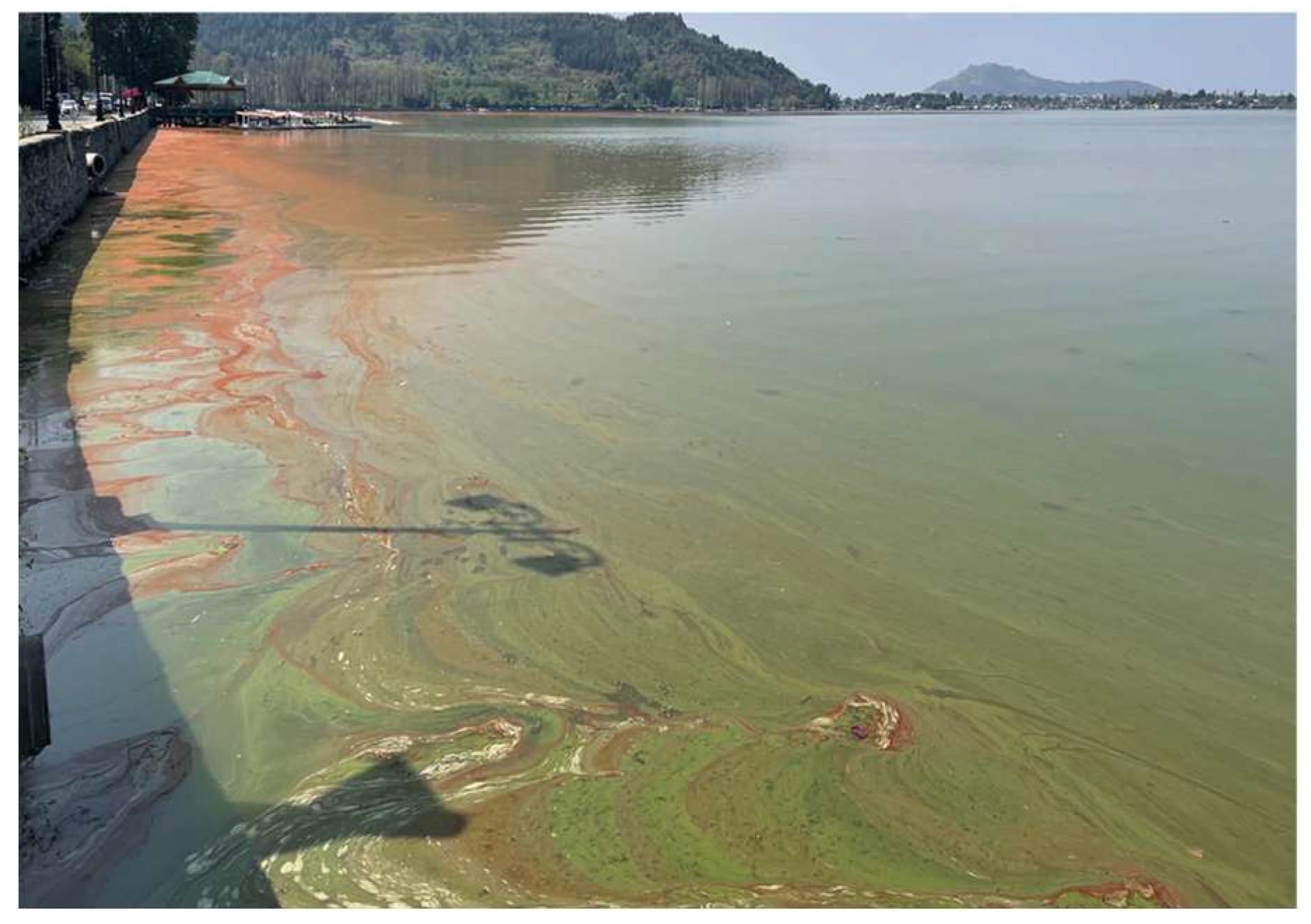
Algal blooms on Dal Lake's surface are typically chalky or resemble paint on the water's surface. These harmful algal blooms, which include cyanobacteria and red, brown, or green algae, have a negative influence on both aquatic ecosystems and human health.
Figure 2.
Image shows dead fish in Periyar River, Kerala in March 2019 due to the formation of Platymonas spp. algal bloom (The News Minute, 8 April 2019).
Figure 2.
Image shows dead fish in Periyar River, Kerala in March 2019 due to the formation of Platymonas spp. algal bloom (The News Minute, 8 April 2019).
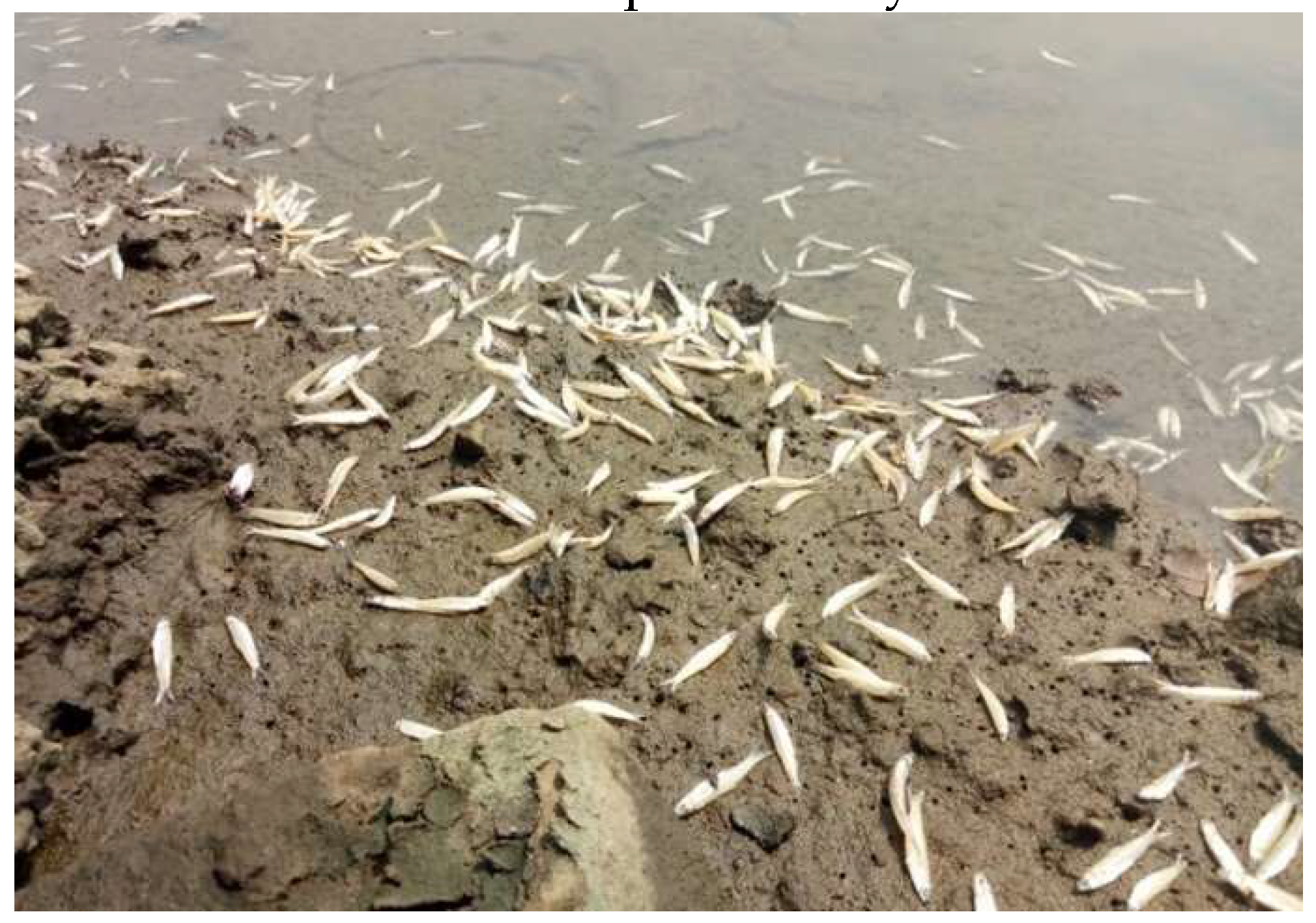
Thousands of fish died in the Periyar River in Kerala in March 2019. Kerala board conducted a microbiological examination of the river sample and the analysis revealed the presence of a marine algae Platymonas spp. Which resulted in formation of algal bloom and ultimately oxygen depletion in the river.
Figure 3.
Image shows fish deaths in Sabarmati River, Ahmedabad in April 2019 due to a severe algal bloom (TOI, 2019).
Figure 3.
Image shows fish deaths in Sabarmati River, Ahmedabad in April 2019 due to a severe algal bloom (TOI, 2019).
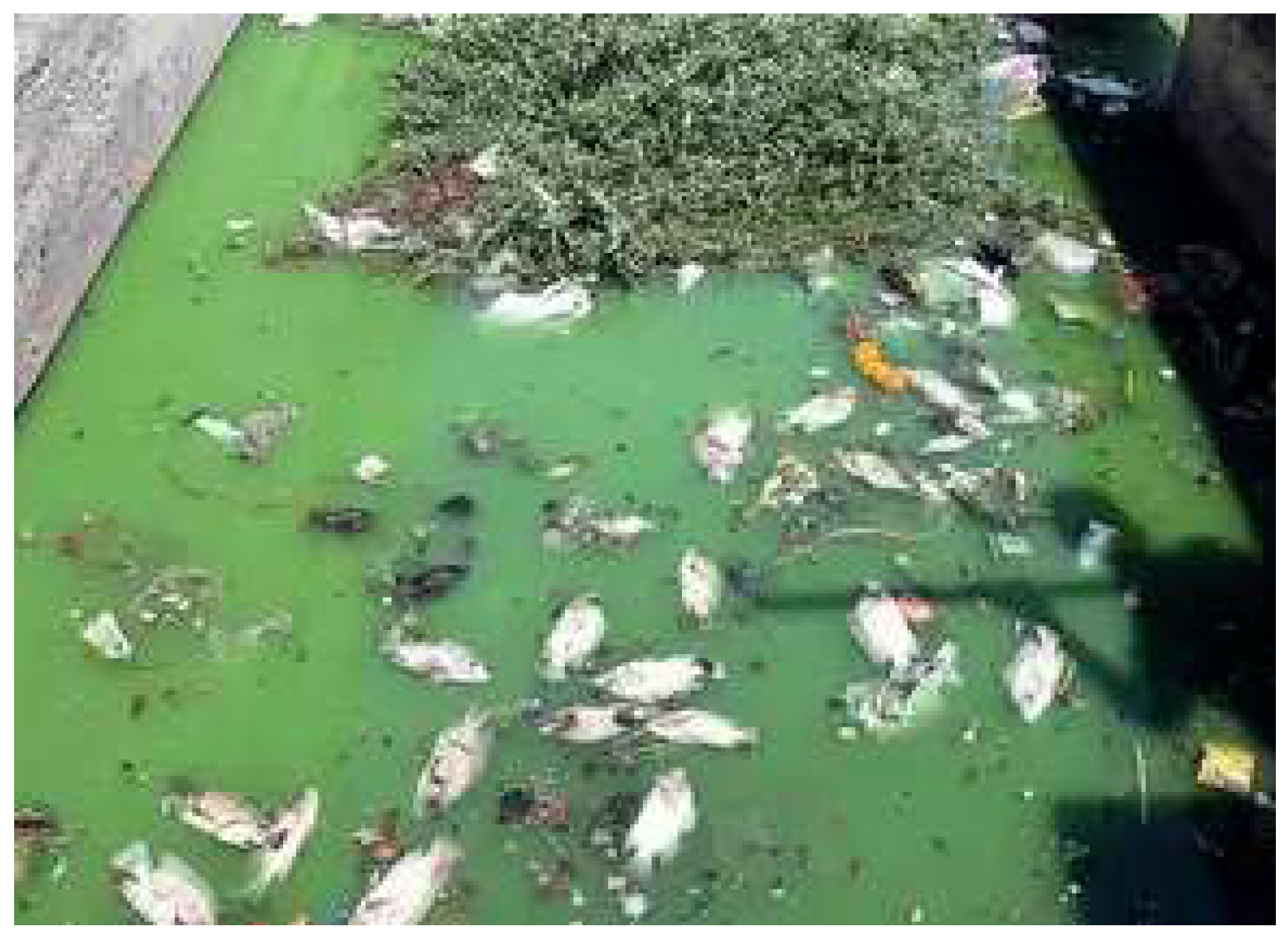
Massive fish deaths were reported in Sabarmati River, Ahmedabad in April 2019. Ahmedabad Municipal Corporation claimed that the untreated sewage wastes that were dumped into the river resulted in serious algal blooms, oxygen depletion, and ultimately, a large number of fish deaths. (TOI, 2019)
2.8. Severe Climatic Events
Extreme weather phenomena like storms, waves, and cyclones are expected to impact aquaculture and fisheries growth in the north Indian Ocean, which experiences about 7% of all tropical cyclones worldwide. Cyclones are more common on India's east coast, which borders the Bay of Bengal (Mohanty et al., 2017; Pal and Sarkar, 2021). The eastern sector's salinity level has increased by 6 ppt over the past three decades, significantly higher than the Indian Ocean's average (Pal and Sarkar, 2021). Over the past 25 years, the frequency of Tropical Cyclones has increased by 0.0492 cyclones per year, with the Bay of Bengal experiencing 5.48 cyclones annually. If this frequency continues, it is predicted that by 2050, there will be a cyclone once every 7.08 weeks or 7.35 storms per year (Green et al., 2021).
Cyclones can change the hydrological parameters and habitat structure, which can affect fish diversity and species assemblage patterns, ultimately affecting local livelihood and food security. The intrusion of brackish water species in freshwater ecosystems due to cyclones has been found to alter the diversity of riverine fish (Gupta et al., 2023).

Table 1.
The socio-economic impacts of some severe cyclones on the fishermen in India. This table illustrates the severe damage caused by the past cyclones to large areas of inland waterbodies, ponds and tanks and caused large-scale freshwater fish deaths due to saline water intrusion in freshwaters in the affected states. The cyclones caused devastating impacts on fishermen’s households, and caused damages to the assets of fishermen including their boats and nets, leading to economic loss of millions of Indian Rupees.
Table 1.
The socio-economic impacts of some severe cyclones on the fishermen in India. This table illustrates the severe damage caused by the past cyclones to large areas of inland waterbodies, ponds and tanks and caused large-scale freshwater fish deaths due to saline water intrusion in freshwaters in the affected states. The cyclones caused devastating impacts on fishermen’s households, and caused damages to the assets of fishermen including their boats and nets, leading to economic loss of millions of Indian Rupees.
| Cyclone | Year | State affected | Impacts |
|---|---|---|---|
| Super cyclone | 1999 | Odisha |
|
| Phailin | 2013 | Odisha |
|
| Fani | 2019 | Odisha |
|
| Amphan | 2020 | West Bengal Odisha |
|
| Tauktae | 2021 | Gujarat Maharashtra Daman & Diu Karnataka Kerala |
|
| Yaas | 2021 | West Bengal Odisha |
|
Kerala floods: Kerala experienced severe flooding in August 2018, the worst in 100 years. The floods impacted riverine microhabitats in the middle and lower reaches of the main river systems, particularly in the Periyar River, which was vital for species like Microphis cuncalus and Carinotetraodon travancoricus. Researchers discovered seven alien fish species invaded four rivers, including two dangerous species: arapaima and alligator gar (KUFOS, 2019).
3. Adaptation and Mitigation Strategies
This sector is vulnerable to several issues, along with climate change and biodiversity loss, despite its outstanding contribution to the global and Indian economy. The degree of change and the sensitivity of specific species or ecosystems determine how much of an impact climate change can have. It is important to implement strategies that support sustainability and enhance the available resources before the threat posed by climate change becomes more significant. In light of climate change, conserving fisheries entails (Ruby and Ahilan, 2017):
- Significantly reducing the strain on already-stretched fishery resources.
- Enabling fish species to successfully adapt and settle.
- Improving the ability of fisheries communities to adapt and survive.
The fisheries and aquaculture sectors face significant challenges due to climate change, including ensuring food supply, improving nutritional security, enhancing livelihood and economic output, and maintaining ecosystem safety. To transition to a future resilient to climate change, transformative adaptation plans are needed at national, subnational, and local levels. These plans must allow autonomous adaptation in the medium and long term (FAO, 2022). Evaluating current climate variability and considering future changes is crucial in the adaptation-making process. Flexible and adaptive management techniques can enable ongoing adjustments as climate impacts are identified. Few studies have specifically examined the socioeconomics of the Indian fishing industry in relation to climate change. To develop effective adaptation and mitigation strategies, research in multiple disciplines is necessary to fill knowledge gaps. It is critical to create adaptation policies for the inland fisheries sector that can be modified and updated as new information becomes available. Reducing fishing effort is essential for the recovery of depleted fisheries stocks and restoring overfished fish populations and ecosystems can benefit society and the fishing sector by increasing fish stocks' productivity, boosting biodiversity, and enhancing their ability to withstand and adapt to climate change (Sharma et al., 2015). Effective implementation of climate change adaptation and mitigation policies may depend on enhancing education and communication among stakeholders and within the inland fisheries sector. By taking these steps, the fishing sector can grow and effectively address any opportunities or threats brought about by climate change.
4. Conclusion
The potential impact of climate change on freshwater aquaculture production and its consequences for the sustainability of the sector have been brought to light in this review. Climate change is affecting global and Indian fisheries, posing threats to food and nutrition security. This study highlights the additional pressure and vulnerability of freshwater ecosystems to climate change and climate-induced water quality changes, including elevated temperatures, fluctuating water levels, dissolved oxygen, pH, and salinity. This paper further discusses how significantly these factors affect the physiology, growth and survival of freshwater fish. The intricate relationship between El Niño and freshwater fisheries has not been extensively studied up until now. While there is growing recognition of the impact of climate variability on freshwater ecosystems, little research has been done specifically on how El Niño impacts freshwater ecosystems. Coupled with global warming, the expected increase in intense ENSO events is anticipated to amplify the effects of ENSO on ecosystems, fisheries, and aquaculture-dependent livelihoods, as well as on the climate.
The impact of climate change depends on its magnitude and the vulnerability of particular species or ecosystems, and the only way to become more climate-resilient is to increase adaptive capacity. To address this, climate change adaptation technologies must be developed and implemented directly to fishing communities through trainings, workshops, and awareness campaigns. The increased climatic uncertainty makes it difficult to identify effect pathways and vulnerable areas in the aquaculture ecosystem. A better understanding of the positive and negative effects of climate change and potential countermeasures is needed to meet current and future challenges. Research is needed to explore adaptation strategies for small-scale farmers to increase revenue and productivity. Building stronger ties between aquaculture, fisheries, and other industries is necessary to handle disputes and ensure food security goals. A framework to minimize climate change effects requires cooperation between research institutes, industry, and communities. Fisheries and aquaculture must be properly included in policies and programs related to climate change to effectively manage global commons, food security, and commerce.
References
- The State of World Fisheries and Aquaculture 2024. 2024.
- Bais, B. Fish scenario in India with emphasis on Indian major carps. International Journal of Avian & Wildlife Biology. 2018;3.
- Maulu S, Hasimuna OJ, Haambiya LH, Monde C, Musuka CG, Makorwa TH, et al. Climate Change Effects on Aquaculture Production: Sustainability Implications, Mitigation, and Adaptations. Frontiers in Sustainable Food Systems. 2021;5.
- IPCC, 2018: Global Warming of 1.5°C.An IPCC Special Report on the impacts of global warming of 1.5°C above pre-industrial levels and related global greenhouse gas emission pathways, in the context of strengthening the global response to the threat of climate change, sustainable development, and efforts to eradicate poverty [Masson-Delmotte, V., P. Zhai, H.-O. Pörtner, D. Roberts, J. Skea, P.R. Shukla, A. Pirani, W. Moufouma-Okia, C. Péan, R. Pidcock, S. Connors, J.B.R. Matthews, Y. Chen, X. Zhou, M.I. Gomis, E. Lonnoy, T. Maycock, M. Tignor, and T. Waterfield (eds.)]. Cambridge University Press, Cambridge, UK and New York, NY, USA, 616 pp.
- S A, Keshav CA, Barlaya G, Rathod R, Rn M, Ikmail S, et al. Adaptation and Mitigation Strategies of Climate Change Impact in Freshwater Aquaculture in some states of India. Journal of Fisheries Sciences Com. 2018;12.
- Parmesan, C. Terrestrial and Freshwater Ecosystems and Their Services. Cambridge University Press eBooks, 2023, p. 197–378.
- Cao L, Halpern BS, Troell M, Short R, Zeng C, Jiang Z, et al. Vulnerability of blue foods to human-induced environmental change. Nature Sustainability. 2023;6:1186–98.
- D. D. Living Planet Report 2022 – Building a nature-positive society. WWF, Gland, Switzerland; 2022.
- Freshwater fish highlight escalating climate impacts on species - IUCN Red List. IUCN n.d.
- AR6 Synthesis Report: Climate Change 2023 — IPCC. IPCC n.d.
- Dahlke FT, Wohlrab S, Butzin M, Pörtner H-O. Thermal bottlenecks in the life cycle define climate vulnerability of fish. Science. 2020;369:65–70.
- Barbarossa V, Bosmans J, Wanders N, King H, Bierkens MFP, Huijbregts M a. J, et al. Threats of global warming to the world’s freshwater fishes. Nature Communications. 2021;12.
- Nair RP, Tholkudiyil SR, Shaji CP. An Unusual Fish Kill in Chandragiri River, Kasaragod District, Kerala, India. Journal of the Bombay Natural History Society (JBNHS). 2021;118.
- Ashaf-Ud-Doulah M, Islam SMM, Zahangir MM, Islam MS, Brown C, Shahjahan M. Increased water temperature interrupts embryonic and larval development of Indian major carp rohu Labeo rohita. Aquaculture International. 2021;29:711–22.
- Ahmad T, Singh SP, Khangembam BK, Sharma JG, Chakrabarti R. Food consumption and digestive enzyme activity of Clarias batrachus exposed to various temperatures. Aquaculture Nutrition. 2014;20:265–72.
- Vargas-Chacoff L, Regish AM, Weinstock A, McCormick SD. Effects of elevated temperature on osmoregulation and stress responses in Atlantic salmon Salmo salar smolts in fresh water and seawater. Journal of Fish Biology. 2018;93:550–9.
- Vass KK, Das MK, Srivastava PK, Dey S. Assessing the impact of climate change on inland fisheries in River Ganga and its plains in India. Aquatic Ecosystem Health & Management. 2009;12:138–51.
- Hundreds of thousands of fish die off in Vietnam as heatwave roasts Southeast Asia - KTVZ. KTVZ 2024.
- Today, U. Thousands of fish die in Mexico after lagoon dries amid extreme heat and drought. USA TODAY 2024.
- Radford, BA. Menindee: Millions of dead fish wash up near Australian town 2023.
- India, TO. Drought impacts inland fishing in Mysuru district. The Times of India 2024.
- Kakoti M, Paul A, Sarma HH, Sonowal S. El Niño Southern Oscillation (ENSO): An Overview on Indian Monsoon and Food Security. ResearchGate. 2023.
- Bertrand A, Lengaigne M, Takahashi K, Avadi A, Poulain F, Harrod C. El Niño Southern Oscillation (ENSO) effects on fisheries and aquaculture 2020.
- El Niño Southern Oscillation (ENSO) effects on fisheries and aquaculture - World. ReliefWeb 2020.
- The wide-ranging impacts of El Niño on wildlife and animal health. WOAH - World Organisation for Animal Health 2023.
- Mishra V, Aadhar S, Asoka A, Pai S, Kumar R. On the frequency of the 2015 monsoon season drought in the Indo-Gangetic Plain. Geophysical Research Letters 2016;43.
- Resna, K. Impact of El Nino and La Nina on selected commercially important marine fishery resources of Kerala 2020.
- Sanjiv, D. El Nino impact: Dakshina Kannada’s fish catch dips by 43% in ’23-’24 fiscal. The Times of India 2024.
- Shetye SS, Kurian S, Gauns M, Vidya PJ. 2015–16 ENSO contributed reduction in oil sardines along the Kerala coast, south-west India. Marine Ecology. 2019;40.
- Singh S, Nayak H, Panathila S. Marine Fish Landings of Karnataka, 2020: An Overview. ResearchGate 2022.
- Kajal, K. Is the Lower Fish Catch Along India’s West Coast the Work of Climate Change? 2020.
- Sharma AP, Naskar M, Joshi KD, Das ManasKumar. Impact of climate variation on breeding of major fish species in inland water. Bulletin No. 185. ResearchGate 2014.
- The tale of a disappearing lake. UNEP n.d.
- Bradbrook, S. PIRSA says rainfall runoff likely cause behind fish kill, including sharks, stingrays, in regional South Australia. ABC News 2024.
- Pal S, Sarkar J. Change in the Hydro-climatic Variables and Impact on Indian Fisheries Sector: An Overview. ResearchGate. 2021.
- Green S, Raj Keer N, Geoffrey R, T I, Selvan T, Kasukurthi T. Impact of tropical cyclones on fishers livelihood: A review. The Pharma Innovation Journal 2021;SP-10–9:623–31.
- Gupta S, Ray A, Sarkar S, Das N, Mondal B, Haldar A. Impact of cyclone Yaas on fisheries resources of Eastern Sunderban part of West Bengal, India. International Research Journal of Biological Sciences 2023:42–4.
- Kumar B, Raj S, CP A, Raghavan R. Jurassic invaders: flood-associated occurrence of arapaima and alligator gar in the rivers of Kerala. ResearchGate. 2019.
- Das MK, Sharma AP, Sahu SK, Srivastava PK, Rej A. Impacts and vulnerability of inland fisheries to climate change in the Ganga River system in India. Aquatic Ecosystem Health & Management. 2013;16:415–24.
- Ali B, Anushka, Mishra A. Effects of dissolved oxygen concentration on freshwater fish: A review. International Journal of Fisheries and Aquatic Studies. 2022;10:113–27.
- Zhou BS, Wu RS, Randall DJ, Lam PK. Bioenergetics and RNA/DNA ratios in the common carp (Cyprinus carpio) under hypoxia. Journal of Comparative Physiology B. 2001;171:49–57.
- Connick, F. Why are fish still dying in the Darling River at Menindee — and what can we do to prevent it? ABC News 2024.
- Rajani, A. 10 tonnes of dead fish found floating in Chitkul tank, locals blame effluents. The Times of India 2024.
- Ranjbar M, Nejad MM. Effect of water salinity on enzymatic and hormonal indices of (Oncorhynchus mykiss) fingerlings. 2020;12:309–14.
- Sharma K, Dey A, Kumar S, Chaudhary BK, Mohanty S, Kumar T, et al. Effect of salinity on growth, survival and biochemical alterations in the freshwater fish Labeo rohita (Hamilton 1822). Indian Journal of Fisheries. 2020;67.
- Demeke A, Tassew A. A review on water quality and its impact on Fish health. 2015.
- Swain S, Sawant PB, Chadha NK, Chhandaprajnadarsini EM, Katare M. Significance of water pH and hardness on fish biological processes: A review. International Journal of Chemical Studies. 2020;8:830–7.
- Gaikwad S, patil S. The occurrence of Microcystis aeruginosa bloom: indicator of deteriorating the health of Kolhapur district reservoirs. 2013; 3: 1 - 4.
- Coroneo, J. Fish suffocate in Kashmir’s oxygen-deprived lakes. Dialogue Earth 2023.
- Kumar R, Parvaze S, Huda MB, Allaie SP. The changing water quality of lakes—a case study of Dal Lake, Kashmir Valley. Environmental Monitoring and Assessment. 2022;194.
- Mohanty B, Vivekanandan E, Mohanty S, Mahanty A, Trivedi R, Tripathy M, et al. The Impact of Climate Change on Marine and Inland Fisheries and Aquaculture in India. 2017:569–601.
- Neethu Joseph, Neethu Joseph. Kerala continues to see fish deaths in the Periyar as authorities pass the buck. The News Minute 2019.
- Tnn. Massive fish die-off witnessed in Sabarmati. The Times of India 2019.
- Odisha Super Cyclone | Extremely Severe Cyclone. Thefansworld 2019.
- Asian Development Bank, Government of Odisha, The World Bank, Patnaik N, Mohapatra J, Department of Economic Affairs, et al. Rapid damage and Needs Assessment Report: Cyclone Phailin in Odisha 2013. 2013.
- United Nations Children’s Fund (UNICEF), Odisha State Disaster Management Authority (OSDMA). The Damage, Loss, and Needs Assessment (DLNA) for Cyclone Fani in Odisha. 2019.
- Das PK, Kumar T, Bandyopadhyay SK, Banerjee S. Impact assessment of Cyclone Amphan on agriculture over parts of West Bengal using remote sensing. Journal of the Indian Society of Coastal Agricultural Research. 2022;40.
- Loss of Life and Property Due to Cyclone Tauktae and Yaas. n.d.
- Raghavan R, Down To Earth. Impact of 2018 Kerala Floods on Aquatic Biodiversity with special reference to single location endemic species. 2019.
- Ruby P, Ahilan B. An overview of climate change impact in fisheries and aquaculture. Climate Change 2018:87–94.
- Gatta, PP. The State of World Fisheries and Aquaculture 2022. 2022.
- Sharma AP, Joshi KD, Naskar M, Das MK, Central Inland Fisheries Research Institute. Inland Fisheries & Climate change: Vulnerability and adaptation options. Central Inland Fisheries Research Institute; 2015.
Disclaimer/Publisher’s Note: The statements, opinions and data contained in all publications are solely those of the individual author(s) and contributor(s) and not of MDPI and/or the editor(s). MDPI and/or the editor(s) disclaim responsibility for any injury to people or property resulting from any ideas, methods, instructions or products referred to in the content. |
© 2024 by the authors. Licensee MDPI, Basel, Switzerland. This article is an open access article distributed under the terms and conditions of the Creative Commons Attribution (CC BY) license (http://creativecommons.org/licenses/by/4.0/).
Copyright: This open access article is published under a Creative Commons CC BY 4.0 license, which permit the free download, distribution, and reuse, provided that the author and preprint are cited in any reuse.


