

Submitted:
10 November 2024
Posted:
11 November 2024
You are already at the latest version
Abstract
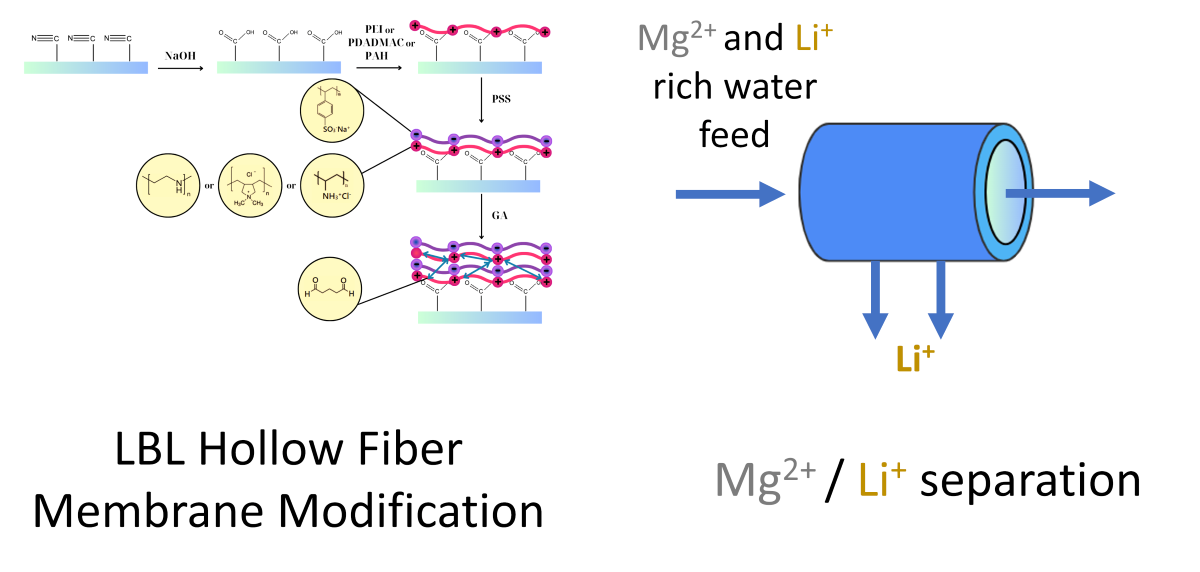
This study explores the Layer-by-Layer (LbL) modification of PAN hollow fibers for effective Mg2+/Li⁺ separation. It employs a Layer-by-Layer (LBL) method of surface modification using polyelectrolytes, specifically aiming to enhance ion selectivity and improve the efficiency of lithium extraction from brines or lithium battery wastes, which is critical for battery recycling and other industrial applications. The modification process involves coating the hydrolysed PAN fibers with alternating layers of positively charged such as poly(allylamine hydrochloride) (PAH), polyethyleneimine (PEI), or poly(diallyldimethylammonium chloride) (PDADMAC) and negatively charged poly(styrene sulfonate) (PSS) to form polyelectrolyte multilayers (PEMs). This study evaluates the modified membranes in Mg2+ and Li⁺ salt solutions, demonstrating significant improvements in selectivity for Mg2+/Li⁺ separation. PAH was identified as the optimal positively charged polyelectrolyte. PAN hollow fibers modified with ten bilayers of PAH/PSS achieved rejection rates of 95.4% for Mg²⁺ ions and 34.8% for Li⁺ ions and permeance 0.39 LMH/bar. This highlights the potential of Layer-by-Layer (LbL) techniques in effectively addressing the challenges of ion separation across a variety of applications.
Keywords:
Mg2+/Li+ separation
; Nanofiltration
; Layer-by-layer deposition
; PAN hollow fiber
; Polyelectrolytes
1. Introduction
The demand for lithium has been rising quickly in recent years, mostly due to the development of lithium-ion batteries [1]. Lithium is used extensively in portable electronic devices, the nuclear industry, new energy vehicles, as well as ceramics and glass industries [2,3]. A global shortage of Li resources, caused by the rising demand for Li+ batteries, has been observed as industry consumed more than 30% of Li+ resources and was predicted to reach 66% by 2025. An estimated 60% of the world’s lithium resources are found in seawater and salt-lake brines, where Li+ coexists with other ions like Mg2+, K+, Ca2+ and Na+ [1,4]. Lithium extraction from salt-lake brines constitutes a significant challenge, as requires effective separation of Mg2+ and Li+ with comparable hydration radius (0.43 nm and 0.38 nm) [2]. Several techniques have been investigated for lithium extraction and the selective separation of lithium from magnesium, such as chemical precipitation, adsorption, solvent extraction, concentration-evaporation, electrochemical method, membrane separation as well as reaction-coupled separation technology [5,6]. Among these, membrane separation techniques are particularly advantageous due to their low energy consumption and high separation efficiency. The major benefit of membrane processes is their ability to continuously operate with high selectivity, which is essential for handling the similar ionic radius of Mg²⁺ and Li⁺, making them promising for industrial-scale applications. Additionally, membrane separation minimizes the need for chemical additives, which can further reduce operational costs while maintaining high purity levels for lithium extraction [6]. Specifically, nanofiltration technology considering its high separation efficiency, low energy consumption [7], easy operational procedures and environmental friendliness [4,8] is not only an effective method for Li+ extraction from natural sources, but is also a promising technology for potential lithium-ion battery recycling. Recycling remains an additional challenging but also important process. According to research, 100% of LIBs need to be recycled, with a minimum 90% recovery of lithium, to have enough lithium carbonate equivalent for all of the 21st century [9]. Conventional nanofiltration membranes, due to their negatively charged surface, are ineffective for Mg2+/Li+ separation and Mg2+ rejection. Many researchers have explored possible modification methods to improve the Mg2+/Li+ selectivity by producing membranes with positive active layers [10]. A promising approach involves interfacial polymerization utilizing positively charged amine monomers. Membranes produced using this method incorporating active layers of polyethyleneimine (PEI), branched polyethyleneimine (BPEI), or 1,4-bis(3-aminopropyl)piperazine (BAPP), as well as those modified with additional positively charged components and nanoparticles demonstrated heightened selectivity (general SF > 10) [11]. The LBL assembly technique offers a straightforward and environmentally friendly alternative for surface modification of nanofiltration membranes. This method is based on the formation of separative polyelectrolyte multilayers (PEMs) with an adjustable thickness, achieved through the exposure of surface to either cationic or anionic polyelectrolytes (PEs) [12]. In the context of Li+ ions separation using polyelectrolyte multilayer hollow fibers, the Donnan effect can play a significant role. These PEM hollow fibers can act as selective barriers for ion transport based on size, charge, and other physicochemical properties of the ions. LBL nanofiltration membranes have found application in various fields, including wastewater treatment for micropollutant removal, phosphorus and scandium recovery [11,12], drug delivery, antibacterial or anti-inflammatory coating for implants [13], oil/water separation [12] and Mg2+/Li+ separation [11]. Numerous research in the field of ion separation has demonstrated the efficacy of nanofiltration (NF) membranes modified through the LBL method. NF membranes with poly(diallyldimethylammonium chloride (PDADMAC) and poly(sodium 4-styrenesulfonate) (PSS) as polycations and polyanions have demonstrated significant effectiveness in removing scale-forming divalent cations (Mg2+, Ca2+, Sr2+, and Ba2+) from feedwaters with different salinities [14]. Additionally, LBL assemblies of poly[(N,N’-dicarboxymethyl) allylamine] (PDCMAA) and poly (allylamine) hydrochloride (PAH) have been reported for Cu2+/Mg2+ separation, showcasing promising results [15]. Remarkable performance has been observed in NF polyelectrolyte membranes with PEMs composed of PAH and polystyrene sulfonate (PSS), contributing to an enhanced water softening performance for feed water [16]. Furthermore, these membranes have exhibited notable capabilities in Mg2+/Li+ separation [10,11]. These findings collectively highlight the versatility and potential of ion separation techniques, particularly those utilizing NF membranes and LBL modifications, in addressing diverse separation challenges.
In this study we modified PAN hollow fibers through varying durations of hydrolyzation, employing the LBL deposition method with poly(allylamine hydrochloride) (PAH) and poly(styrene sulfone) (PSS) up to 5 and 10 bilayers. The performance of these membranes was evaluated in Mg2+/Li+ separation using single salt (LiCl and MgCl2) solutions. The efficacy of the LBL nanofiltration hollow fiber membrane technique was confirmed by comparing the results with those of other studies, attesting to its superior performance.
2. Materials and Methods
PAN hollow fiber membranes were provided by Eco-Task group limited Hong Kong with inner/outer diameters of 1.1/ 2.1 cm and pore size 0.2 μm. Polycation electrolyte poly(allylamine hydrochloride) (PAH) was provided by Thermo Scientific Chemicals (US). Polycation electrolytes poly(diallyldimethylammonium chloride) (PDADMAC) and poly(ethyleneimine) (PEI) were provided by Sigma Aldrich. Polyanion electrolyte poly(styrene sulfonate) (PSS, MW = 70.000) was supplied from Thermo Scientific Chemicals (US). Glycerol was provided by Sordalab. Glutaraldehyde (GA 50% aqueous solution) and sodium hydroxide (NaOH) were provided by Fisher Scientific. Magnesium chloride (MgCl2) and sodium chloride (NaCl) were supplied by Sigma Aldrich. Lithium chloride (LiCl) was supplied by Thermo Scientific Chemicals (US).
PAN hollow fiber samples were first rinsed with deionized water. To start a hydrolysis process, the samples were subsequently immersed in a NaOH aqueous solution of 2 molar concentration for 1, 1.5, 2, and 2.5 hours. The temperature of the hydrolysis reaction was maintained at 45 °C. Ultimately, each sample was removed, rinsed with deionized water and allowed to air dry overnight. Hydrolysed membranes without LBL deposition were labeled as HPAN.
Three PAN hollow fibers with a length of 4 cm were used for LBL deposition and the hollow fiber area was 0.0003768 m2. Before coating, hollow fibers were rinsed with DI water at 2.0 bar for 10 min to remove the conservative chemicals and clean the inner surface. Glycerol solution 5% w/w was pumped into the fibers for 20 min, using a continuous flow pump. The polycationic PAH solution was prepared using 1% w/w PAH and 15% w/w NaCl (final pH of the solution was 3.9). The polycationic PDADMAC solution was prepared using 5% w/w PDADMAC and 15% w/w NaCl (final pH of the solution was 7.2). The polycationic PEI solution was prepared using 2% w/w PEI and 15% w/w NaCl (final pH of the solution was 10.7). The polyanionic PSS solution was prepared using 0.4% w/w PSS and 15% w/w NaCl (final pH of the solution was 6.5). For the surface modification (LBL) of the HPAN hollow fibers one type of polycationic solution was used each time with the polyanionic solution (PSS). Therefore, we developed three LBL combinations (a) PAH/PSS, (b) PDADMAC/PSS and (c) PEI/PSS. The polyelectrolyte solutions were pumped at 2.0 bar pressure for 5 min. Any excess of polyelectrolyte solutions was washed off by deionized water, at least two times. The number of bilayers produced in this study was five and ten for all three polyelectrolyte combinations. For example, one bilayer was produced by using one layer of PAH solution, followed by deionized water rinsing and then with one layer of PSS solution, followed by deionized water rinsing. The resulting membranes were cross-linked by GA solution (1% w/w) for 15 min at room temperature 25 degrees Celsius. Polyelectrolyte multilayer hollow fibers were labeled as (PAH/PSS)5-X and (PAH/PSS)10-X, for 5 and 10 bilayers respectively, where X is the time of pretreatment. The deposition of polyelectrolytes on the membrane is illustrated in Figure 1.
The membrane morphology was characterized by means of Scanning Electron Microscopy. The preparation consisted of quenching the samples in liquid nitrogen to ensure brittle fracture and then were coated with gold using a POLARON E5100 sputter coater. A FEI Quanta Inspect Scanning Electron Microscope (SEM) was used, in Secondary Electron mode, operating at 15 kV. Various magnifications and spot sizes (1.5-5) were selected to ensure the optimal imaging and chemical analysis conditions. For the chemical analysis, the Working Distance was set to 10 mm, and an Energy Dispersive X-ray Spectroscopy (EDS) super ultra-thin window detector by EDAX was used. Fourier transform infrared spectroscopy (FTIR) was performed using a Nicolet iS50 (Thermo Scientific) instrument to determine the chemical composition and modifications of PAN samples. The rejection, R, was determined through conductivity measurements conducted on both permeate and feed solutions (1000 mg/L) of MgCl2 (pH=8) and LiCl (pH=8.4). The solutions were pumped into the fibers at pressure of 0.5-2 bar and the results were identified using a conductivity meter. Permeance, P (LMH/bar) was calculated as the volume of permeate water (L) per unit time (H) and surface area (M) under a unit applied pressure (bar) (Figure 2).
3. Results
3.1. Characterization of LBL Modified Hollow Fiber Membranes
The inner surface of bare PAN hollow fibers displays small pores and a sponge-like pore structure (Figure 3a). Following hydrolysis, the structural morphology remains largely unchanged (Figure 3b). However, subsequent coating with (PAH/PSS) results in a noticeable reduction in surface pore size, observed with the formation of both 5 and 10 bilayers (Figure 3c, 3d, 3e, 3f). Microscopic examination of the side inner surface of bare PAN hollow fibers reveals a smooth morphology (Figure 4a, 4b). In contrast, the deposition of 5 bilayers (PAH/PSS) (Figure 4c), and to a greater extent, 10 bilayers, results in a progressively rougher surface texture (Figure 4d).
Figure 5a shows the transmittance FT-IR spectra of untreated and hydrolysed PAN hollow fibers. The peak at 1635 cm-1 is corresponding to the carbonyl group (C=O) of untreated PAN sample. The peaks at 1452 and 2242 cm-1, are belonging to the C–N stretching of the –C≡N group. These bands significantly decrease in the hydrolysed samples. Apparently, the peak intensity at 2242 cm-1 did not substantially change after hydrolysis, indicating that only a small number of nitrile groups (–C≡N) in untreated PAN hollow fiber were converted to the –C=N– groups [17,18]. A new peak at 1575 cm⁻¹ is observed, which is assigned to amide (–CONH₂) moieties [18]. Additionally, another new peak at 1406 cm⁻¹ corresponds to imine groups (–C=N–) in the hydrolysed samples [18], with the peak intensity decreasing for shorter pretreatment times. The presence of PSS in LBL modified samples is confirmed by three new peaks within 1000-1126 cm-1 wavelength (Figure 5b). The peaks at 1036 and 1126 cm-1 belong to symmetric stretching of the S-O [13,19]. The peak at 1637 cm-1 (Figure 5c) is attributed to protonated NH3+ groups in PAH-Cl while the peak at 2931 cm-1 corresponds to the stretching vibration of -NH3+ [13,19]. According to other studies, the peak at 2931 cm-1 (Figure 5d) may be attributed to the asymmetric vibration of the –CH2 groups of PAH-Cl [13].
3.2. Separation Performance for Mg2+ and Li+
The rejection results of Mg2+ and Li+ appear to be significantly influenced by the hydrolysis time of PAN hollow fibers, with membranes exhibiting better rejection of Mg2+ and Li+ as the hydrolysis time increases, particularly beyond 2 hours (Figure 6a). Simultaneously, it is observed that for hydrolysis times less than 1.5 hours, there is no significant change in the rejection of Mg2+ and Li+ (Figure 6a). It seems that the carboxylic groups formed on the surface of the hydrolysed PAN hollow fibers acted as functional sites for the deposition of the PAH layer. Additionally, Mg2+ rejections increase with the number of PAH/PSS bilayers, while Li+ rejections remain relatively stable. The factors affecting the separation of Mg2+ and Li+ include the pore size of the membrane, as well as Donnan exclusion. In nanofiltration membranes, pore size acts as a key steric hindrance, meaning larger ions like Mg²⁺, which have a larger hydrated radius (0.43 nm), are more restricted in passing through the pores compared to smaller ions like Li⁺ (0.38 nm) [11]. In this study, the addition of layers through LBL deposition minimizes the pore size of the membranes, further enhancing steric hindrance for Mg²⁺ ions. This reduction in pore size directly impacts the membrane’s selectivity, as the smaller pores created by LBL deposition restrict the passage of larger ions more effectively, resulting in improved separation performance between Mg²⁺ and Li⁺. Moreover, due to its single positive charge, Li+ likely exhibits reduced rejection as a result of limited Donnan exclusion. It appears that Mg2+ ions, having a higher charge density than Li+ ions, may interact more intensely with the sulfonic groups of PSS, potentially leading to preferential penetration or retention of one ion over the other. Permeance drastically decreases for membranes with hydrolysis times of 2 and 2.5 hours, as well as for membranes with a higher number of PAH/PSS bilayers (Figure 6b). This effect may be attributed either to hydrolysis or to a reduction in the pore size of the membrane. Membranes (PAH/PSS)10-2 (Figure 6c) and (PAH/PSS)10-2.5 demonstrate nearly perfect rejections of MgCl2 (95.4 and 94.8 respectively) and similar rejections of LiCl (32.8 and 49.7 respectively). The membrane (PAH/PSS)10-2.5 exhibited optimal results in terms of rejection efficiency and permeability and is characterized by permeability 0.81 and 1.27 respectively for MgCl2 and LiCl (Figure 6d). To evaluate the long-term stability of the fabricated membranes, a stability assessment was conducted on the two highest-performing membranes. This assessment demonstrated consistent performance in both MgCl2 and LiCl rejection and permeance across three distinct operational cycles, with measurements taken weekly over a three-week period. The results are presented in Table 1.
Upon examining the effects of hydrolysis duration on membrane performance, the pretreatment condition of 2 hours with 2M NaOH solution was identified as the most effective. This pretreatment was used to evaluate the performance of the membranes when modified with polyelectrolytes polyethylenimine (PEI) and poly(diallyldimethylammonium chloride) (PDADMAC). Analytical results demonstrate that membranes modified with PAH exhibit superior separation efficiency compared to those modified with PEI and PDADMAC (Figure 7). Furthermore, an increase in the number of bilayers correlates with an enhanced solute rejection rate, accompanied by a corresponding decrease in permeance, indicating a trade-off between separation efficiency and membrane permeability. The rejection, selectivity coefficient and permeance values of the PAN hollow fibers are listed in Table 2. The selectivity coefficient (S) was calculated as:
S = (1 - R_Li) / (1 - R_Mg)
Where R_Li and R_Mg are the rejection rates for Li⁺ and Mg²⁺ respectively.
4. Discussion
Comparing the (PAH/PSS)10-2 and (PAH/PSS)10-2.5 membranes with those reported in the literature, the results are similarly advantageous. LBL PES hollow fiber nanofiltration (NF) membranes assembled by poly(styrene sulfonate) (PSS)/poly(allylamine) (PAH) demonstrated high rejection rates for Mg2+ (99.1%) and Li+ (59.4%), and were characterized by a water permeability of 18.4 Lm−2h−1bar−1 [11]. Additional research on (PSS/PAH) PES hollow fibers, both with and without crosslinking, exhibited very high (>90%) rejections of MgCl2 and a comparable rejection rate (~80%) for LiCl [10]. Similar ranges of MgCl2 rejection rates (96-98%) were observed with (PSS/PAH)2.5 membranes, with slightly lower values (91-97%) for the corresponding crosslinked membranes [12]. Particularly for Mg2+, further studies have been conducted, such as those involving PES hollow fibers deposited with only two bilayers of (PSS/PAH) polyelectrolytes [20] and crosslinked PES hollow fibers with (PSS/PAH) layers [16]. These studies exhibited a Mg2+ rejection rate of 94%, with a water permeability of around 12 LMH/bar and a rejection rate over 95% of MgCl2 with more than 10 LMH/bar permeability, respectively.
The current study achieved a Mg²⁺ rejection rate of 95.4% and a Li⁺ rejection rate of 32.8%with ten bilayers of PAH/PSS on hydrolysed PAN fibers. These results are compared with other studies on LBL modified membranes (Table 3). The performance aligns with findings by He et al., who reported Mg²⁺ rejection rates of 96-98% using (PSS/PAH)2.5 membranes [10]. Similarly, another study demonstrated a Mg²⁺ rejection rate of over 95% using LΒL-modified PES membranes [16]. These comparisons underscore the robustness of the LΒL technique in achieving high Mg²⁺ rejection rates consistently across different membrane substrates and configurations. The permeability observed in the current study (0.39 LMH/bar) for the optimized (PAH/PSS)10-2 membrane is lower compared to some reports. The lower permeability might be due to the smaller pore sizes resulting from extended hydrolysis times and multiple bilayers, indicating a trade-off between rejection efficiency and permeability. Nevertheless, the extended hydrolysis time was essential to provide smaller membrane pore size, but also negatively charged -COO- groups on the hydrolysed PAN surface and thus assisting the deposition of positively charged PAH layers. The findings of Bruening et al. present two distinct approaches utilizing polyelectrolytes PAH/PSS for Mg²⁺/Li⁺ separation. In one approach, Nafion membranes were coated with alternating layers of poly(allylamine hydrochloride) (PAH) and poly(sodium 4-styrenesulfonate) (PSS). This layer-by-layer approach created a highly selective barrier that favors the transport of Li⁺ while effectively rejecting Mg²⁺ due to size and charge interactions. The polyelectrolyte multilayers created an environment where smaller monovalent ions like Li⁺ could pass through more easily than larger divalent ions like Mg²⁺. This was due to both steric hindrance and electrostatic repulsion, as the fixed charges in the membrane repel similarly charged co-ions [21]. Additionally, in another study Nafion membranes were coated with alternating layers of poly(allylamine hydrochloride) (PAH) and poly(sodium 4-styrenesulfonate) (PSS). This layer-by-layer (LBL) approach enhanced the selectivity for monovalent ions like Li⁺ over divalent ions like Mg²⁺. The pH of the solution played a critical role in the performance of these membranes. Increasing the pH from 6.5 to 8.3 significantly enhanced the cation fluxes and limiting currents, making the membrane more cation-permselective. At higher pH levels, the selectivity for Li⁺ over Mg²⁺ increased dramatically, achieving a selectivity ratio greater than 700 at neutral pH. This was attributed to the enhanced permeability of monovalent cations through the polyelectrolyte-coated membranes. The proposed mechanism for separating lithium from magnesium involved a combination of selective polyelectrolyte multilayer coatings on ion-exchange membranes, optimized pH conditions, and effective ion transport dynamics under an electric field. This innovative approach offers high selectivity and recovery rates, making it a promising method for lithium extraction in various industrial applications [22]. Notably, literature indicates that GA crosslinking in LbL nanofiltration membranes effectively reduces pore size, thereby enhancing size-based exclusion effects. Additionally, GA crosslinking reduces positive charge density by transforming amine groups into neutral imine bonds, which minimizes the membrane's attraction to smaller ions. This modification further improves Mg2+/Li+ selectivity by favoring the rejection of larger, multivalent ions while reducing permeability to smaller monovalent ions [10,11,12]. In a different study, PAH, PEI, PDADMAC as positively charged polyelectrolytes were deposited with PSS on PES membranes [23]. It was found that the Mg2+ rejection was higher than 95% when PAH was used and the Mg2+ rejection was decreasing in the order of using positively charged polyelectrolytes as PAH > PDADMAC > PEI. This result is in accordance with our experimental results where it was found that (PAH/PSS) had the best Mg2+ rejection followed by (PDADMAC/PSS) and then (PEI/PSS). An explanation for this is probably due to the molecular structure of PAH, where the NH3+ is found perpendicular to the polymer chain and thus readily available to interact with the negatively charged PSS, without hindrance effect. From the other side the positive ions of PDADMAC (N+) are surrounded by methyl groups and thus their positively charged groups are hindered. Similarly, the positive ions of PEI are found in the main back-bone polymer chain and thus hindered from the interaction with negatively charged PSS ions. In comparison to the study by Rajesh et al. [24], which explored the use of ionically crosslinked polyelectrolyte multilayers of branched polyethylenimine (BPEI) and polyacrylic acid (PAA) on PAN nanofiber mats modified with cellulose acetate for the separation of ionic impurities, our current study using PAN hollow fiber membranes modified with PAH/PSS bilayers demonstrates several key similarities and differences. Both studies employ the LΒL assembly technique to enhance ion separation efficiency. Rajesh et al. achieved a MgSO₄ rejection of 98.7% with a water flux of 19.7 L/m²/h using 15 bilayers of BPEI/PAA, indicating a highly effective separation layer with significant flux capabilities [24]. In contrast, our study achieved a Mg²⁺ rejection rate of 95.4% using 10 bilayers of PAH/PSS, highlighting the efficacy of PAH/PSS in achieving high rejection rates with fewer bilayers compared to BPEI/PAA. A notable difference lies in the ion separation capabilities for lithium. Rajesh et al. did not specifically address Li⁺ separation, focusing primarily on multivalent ions like Mg²⁺ and SO₄²⁻ [24]. Our study, however, achieved a Li⁺ rejection rate of 34.8%, underscoring the selective separation challenges posed by monovalent ions like lithium. The lower permeability in our study (0.39 LMH/bar) compared to Rajesh et al. (19.7 LMH/bar) may be attributed to the smaller pore sizes resulting from extended hydrolysis times and multiple bilayers, indicating a trade-off between rejection efficiency and permeability. The use of different polycations also plays a critical role in separation efficiency. Rajesh et al.'s use of BPEI, known for its high charge density and amine group availability, contrasts with our use of PAH, PDADMAC and PEI, which similarly provides effective charge interaction but with a different molecular structure and steric effects. Another reason is that Rajesh et al. did not hydrolyse PAN fiber mats but applied a cellulose acetate layer using spin-cast. The work of Wang et al. with B15C5-MX-NF on PES, showed a relatively good separation performance [2].
Considering the successful outcomes and comparisons with existing research, future studies could explore optimizing the LBL assembly process to balance permeability and rejection rates with the use of other polyelectrolytes. Additionally, investigating the long-term stability and fouling resistance of these membranes in real-world applications would provide valuable insights for scaling up the technology for industrial use.
By considering a preliminary techno-economic study (without providing much details in this research work), the (PAH/PSS)5-2 membrane could offer a superior balance of cost-effectiveness, permeance, and Mg²⁺/Li⁺ selectivity, making it a better choice for most industrial applications focused on lithium extraction from brine. Its higher permeance could reduce both capital and operating costs, making it more feasible for large-scale operations.
The (PAH/PSS)10-2 membrane, while providing higher Mg²⁺ rejection and better selectivity, higher costs could incur due to its much lower permeance. This membrane could be more suitable for niche applications where maximum Mg²⁺ separation is essential, despite the increased capital and operational expenditures.
5. Conclusions
The study explored the separation of magnesium and lithium ions using PAN hollow fiber membranes modified through an LBL polyelectrolyte technique. The LBL-modified PAN hollow fiber membranes demonstrated significant improvements in the separation efficiency of Mg²⁺ and Li⁺ ions. The study found that ten bilayers of PAH/PSS on hydrolysed PAN fibers resulted in a rejection rate of 95.4% for Mg²⁺ and 34.8% for Li⁺ ions. This highlighted the method's effectiveness in selectively targeting and separating specific ions based on their charge and size. The hydrolysis time of the PAN hollow fibers was a crucial factor in enhancing the ion rejection rates. Membranes hydrolysed for more than 2 hours showed better performance in rejecting Mg²⁺ and Li⁺ ions. The increased hydrolysis time facilitated the formation of carboxylic groups, which acted as functional sites for polyelectrolyte deposition. Among the polycations tested, poly(allylamine hydrochloride) (PAH) was identified as the most effective in enhancing Mg²⁺ rejection. This superior performance was attributed to the molecular structure of PAH, where NH₃⁺ groups were readily available for interaction with negatively charged PSS without significant hindrance. In contrast, other polycations like PDADMAC and PEI showed lower Mg²⁺ rejection due to steric hindrance from surrounding groups. The study noted that the permeance of the membranes decreased with longer hydrolysis times and increased bilayer numbers. This was likely due to a reduction in pore size, which provides greater hindrance to ion passage. The optimized (PAH/PSS)10 membrane exhibited an optimal balance between rejection efficiency and permeability, highlighting the importance of controlling the LBL assembly process to achieve desired performance. The findings from this study were consistent with previous research on LBL-modified nanofiltration membranes. The results confirmed that PAH/PSS-modified membranes offer superior Mg²⁺ rejection compared to other polyelectrolytes. The study's outcomes align with the reported high rejection rates and permeability values from similar LBL nanofiltration membrane studies, underscoring the technique's robustness and applicability in ion separation processes.
Overall, the research demonstrates that LBL modification of PAN hollow fibers is a promising and effective method for the selective separation of Mg²⁺ and Li⁺ ions, with potential applications in lithium extraction from brines and lithium battery recycling. To further address the issue of low permeance, future studies could explore combining different polyelectrolytes (for example 5 to 10 bilayers of PDADMAC/PSS and 2-4 bilayers PAH/PSS), increase the number of bilayers that showed good permeance to 20 bilayers or introducing intermediate layers such as graphene oxide to those bilayers to enhance both separation efficiency and permeance. Finally, to address the issue of low permeance, future studies could include the use of less number of bilayers on PAN membranes with less than 200 nm pore size, the use of ion solutions at different pH’s and the use of electrodes and applied electric field that could enhance both selectivity and permeance.
Supplementary Materials
The following supporting information can be downloaded at the website of this paper posted on Preprints.org, Figure S1: Pan hollow fiber sample; Figure S2: Experimental set-up of LBL deposition.
Funding
This research was funded by INNOMEM “Open Innovation Test Bed for nano-enabled Membranes”, grant number 862330.
Acknowledgments
We would like to thank dr. N. Boukos for his assistance with SEM microscopy, as well as dr. C. Trapalis for his support in our FTIR experiments at National Centre For Scientific Research Demokritos.
Conflicts of Interest
“The authors declare no conflicts of interest.”.
References
- Zhang, Y.; Fan, Y.; Zhou, G.; Cao, Y.; Wang, J.; Jiang, X.; Zhang, N.; Yin, S. Based on High Cross-Linked Structure Design to Fabricate PEI-Based Nanofiltration Membranes for Mg2+/Li+ Separation. Journal of Membrane Science 2024, 693, 122351. [Google Scholar] [CrossRef]
- Wang, H.; Zeng, G.; Yang, Z.; Chen, X.; Wang, L.; Xiang, Y.; Zeng, X.; Feng, Z.; Tang, B.; Yu, X.; et al. Nanofiltration Membrane Based on a Dual-Reinforcement Strategy of Support and Selective Layers for Efficient Mg2+/Li+ Separation. Separation and Purification Technology 2024, 330, 125254. [Google Scholar] [CrossRef]
- Zhao, P.; Guo, F.; Wang, L.; Zhen, H.; Zhang, N.; Yin, S.; Zhou, G.; Ruan, X.; He, G.; Jiang, X. Nanofiltration Membrane with Modified Nano-Gradient Structure and Positive Charge for Li Separation from High Mg/Li Ratio Brine. Desalination 2024, 577, 117394. [Google Scholar] [CrossRef]
- Li, Q.; Liu, Y.; Jia, Y.; Ji, Y.; Yan, F.; Li, J.; Mohammad, Y.; He, B. High Performance Li+/Mg2+ Separation Membrane by Grafted Short Chain Amino-Rich Monomers. Journal of Membrane Science 2023, 677, 121634. [Google Scholar] [CrossRef]
- Ni, H.; Wang, N.; Yang, Y.; Shen, M.; An, Q.-F. Positively-Charged Nanofiltration Membrane Constructed by Polyethyleneimine/Layered Double Hydroxide for Mg2+/Li+ Separation. Desalination 2023, 548, 116256. [Google Scholar] [CrossRef]
- Sun, Y.; Wang, Q.; Wang, Y.; Yun, R.; Xiang, X. Recent Advances in Magnesium/Lithium Separation and Lithium Extraction Technologies from Salt Lake Brine. Separation and Purification Technology 2021, 256, 117807. [Google Scholar] [CrossRef]
- Jia, R.; Wu, L.-K.; Xu, Z.-L.; Hedar, M.; Luo, L.-H.; Wu, Y.-Z.; Li, H.-X.; Tong, Y.-H.; Xu, S.-J. Efficient Separation of Li+/Mg2+ via Positively Charged TFN Membrane Based on the PEI Interlayer. Chemical Engineering Science 2024, 284, 119523. [Google Scholar] [CrossRef]
- Zhao, S.; Cui, W.; Shen, Q.; Yao, Z.; Fang, C.; Zhang, L.; Zhu, L. Porous Organic Polymer Interlayers Modulated Nanofiltration Membranes for Ultra-Permselective Li+ /Mg2+ Separation. Journal of Membrane Science 2024, 690, 122207. [Google Scholar] [CrossRef]
- Wamble, N.P.; Eugene, E.A.; Phillip, W.A.; Dowling, A.W. Optimal Diafiltration Membrane Cascades Enable Green Recycling of Spent Lithium-Ion Batteries. ACS Sustainable Chem. Eng. 2022, 10, 12207–12225. [Google Scholar] [CrossRef]
- He, R.; Xu, S.; Wang, R.; Bai, B.; Lin, S.; He, T. Polyelectrolyte-Based Nanofiltration Membranes with Exceptional Performance in Mg2+/Li+ Separation in a Wide Range of Solution Conditions. Journal of Membrane Science 2022, 663, 121027. [Google Scholar] [CrossRef]
- He, R.; Dong, C.; Xu, S.; Liu, C.; Zhao, S.; He, T. Unprecedented Mg2+/Li+ Separation Using Layer-by-Layer Based Nanofiltration Hollow Fiber Membranes. Desalination 2022, 525, 115492. [Google Scholar] [CrossRef]
- Dong, C.; He, R.; Xu, S.; He, H.; Chen, H.; Zhang, Y.-B.; He, T. Layer-by-Layer (LBL) Hollow Fiber Nanofiltration Membranes for Seawater Treatment: Ion Rejection. Desalination 2022, 534, 115793. [Google Scholar] [CrossRef]
- Zhao, Z.; Li, Q.; Gong, J.; Li, Z.; Zhang, J. A Poly(Allylamine Hydrochloride)/Poly(Styrene Sulfonate) Microcapsule-Coated Cotton Fabric for Stimulus-Responsive Textiles. RSC Adv. 2020, 10, 17731–17738. [Google Scholar] [CrossRef] [PubMed]
- Cheng, W.; Liu, C.; Tong, T.; Epsztein, R.; Sun, M.; Verduzco, R.; Ma, J.; Elimelech, M. Selective Removal of Divalent Cations by Polyelectrolyte Multilayer Nanofiltration Membrane: Role of Polyelectrolyte Charge, Ion Size, and Ionic Strength. Journal of Membrane Science 2018, 559, 98–106. [Google Scholar] [CrossRef]
- Sheng, C.; Wijeratne, S.; Cheng, C.; Baker, G.L.; Bruening, M.L. Facilitated Ion Transport through Polyelectrolyte Multilayer Films Containing Metal-Binding Ligands. Journal of Membrane Science 2014, 459, 169–176. [Google Scholar] [CrossRef]
- Liu, C.; Shi, L.; Wang, R. Crosslinked Layer-by-Layer Polyelectrolyte Nanofiltration Hollow Fiber Membrane for Low-Pressure Water Softening with the Presence of SO42− in Feed Water. Journal of Membrane Science 2015, 486, 169–176. [Google Scholar] [CrossRef]
- Abedi, M.; Sadeghi, M.; Pourafshari Chenar, M. Improving Antifouling Performance of PAN Hollow Fiber Membrane Using Surface Modification Method. Journal of the Taiwan Institute of Chemical Engineers 2015, 55, 42–48. [Google Scholar] [CrossRef]
- Deng, S.; Bai, R.; Chen, J.P. Behaviors and Mechanisms of Copper Adsorption on Hydrolyzed Polyacrylonitrile Fibers. Journal of Colloid and Interface Science 2003, 260, 265–272. [Google Scholar] [CrossRef]
- Li, X.; Umar, A.; Chen, Z.; Tian, T.; Wang, S.; Wang, Y. Supramolecular Fabrication of Polyelectrolyte-Modified Reduced Graphene Oxide for NO2 Sensing Applications. Ceramics International 2015, 41, 12130–12136. [Google Scholar] [CrossRef]
- Rajabzadeh, S.; Liu, C.; Shi, L.; Wang, R. Preparation of Low-Pressure Water Softening Hollow Fiber Membranes by Polyelectrolyte Deposition with Two Bilayers. Desalination 2014, 344, 64–70. [Google Scholar] [CrossRef]
- Ding, D.; Yaroshchuk, A.; Bruening, M.L. Electrodialysis through Nafion Membranes Coated with Polyelectrolyte Multilayers Yields >99% Pure Monovalent Ions at High Recoveries. Journal of Membrane Science 2022, 647, 120294. [Google Scholar] [CrossRef]
- Ahmad, M.; Yaroshchuk, A.; Bruening, M.L. Moderate pH Changes Alter the Fluxes, Selectivities and Limiting Currents in Ion Transport through Polyelectrolyte Multilayers Deposited on Membranes. Journal of Membrane Science 2020, 616, 118570. [Google Scholar] [CrossRef]
- Liu, C.; Shi, L.; Wang, R. Enhanced Hollow Fiber Membrane Performance via Semi-Dynamic Layer-by-Layer Polyelectrolyte Inner Surface Deposition for Nanofiltration and Forward Osmosis Applications. Reactive and Functional Polymers 2015, 86, 154–160. [Google Scholar] [CrossRef]
- Rajesh, S.; Zhao, Y.; Fong, H.; Menkhaus, T.J. Polyacrylonitrile Nanofiber Membranes Modified with Ionically Crosslinked Polyelectrolyte Multilayers for the Separation of Ionic Impurities. Nanoscale 2016, 8, 18376–18389. [Google Scholar] [CrossRef]
Figure 1.
Illustration of LBL deposition on PAN hollow fibers and the chemical structures of polyelectrolytes and GA.
Figure 1.
Illustration of LBL deposition on PAN hollow fibers and the chemical structures of polyelectrolytes and GA.
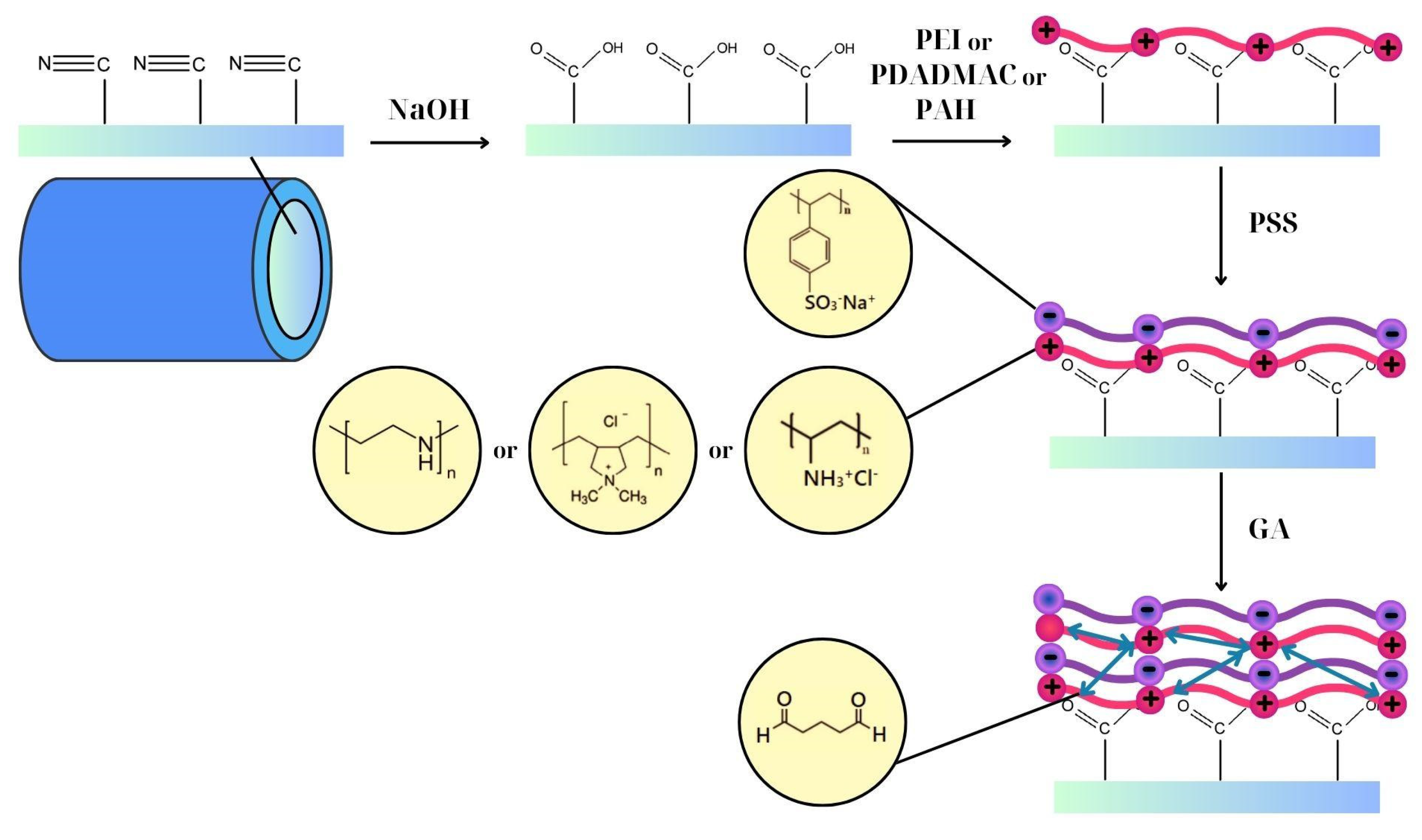
Figure 2.
Experimental set-up for testing the metal ion concentration through the membrane (permeance).
Figure 2.
Experimental set-up for testing the metal ion concentration through the membrane (permeance).
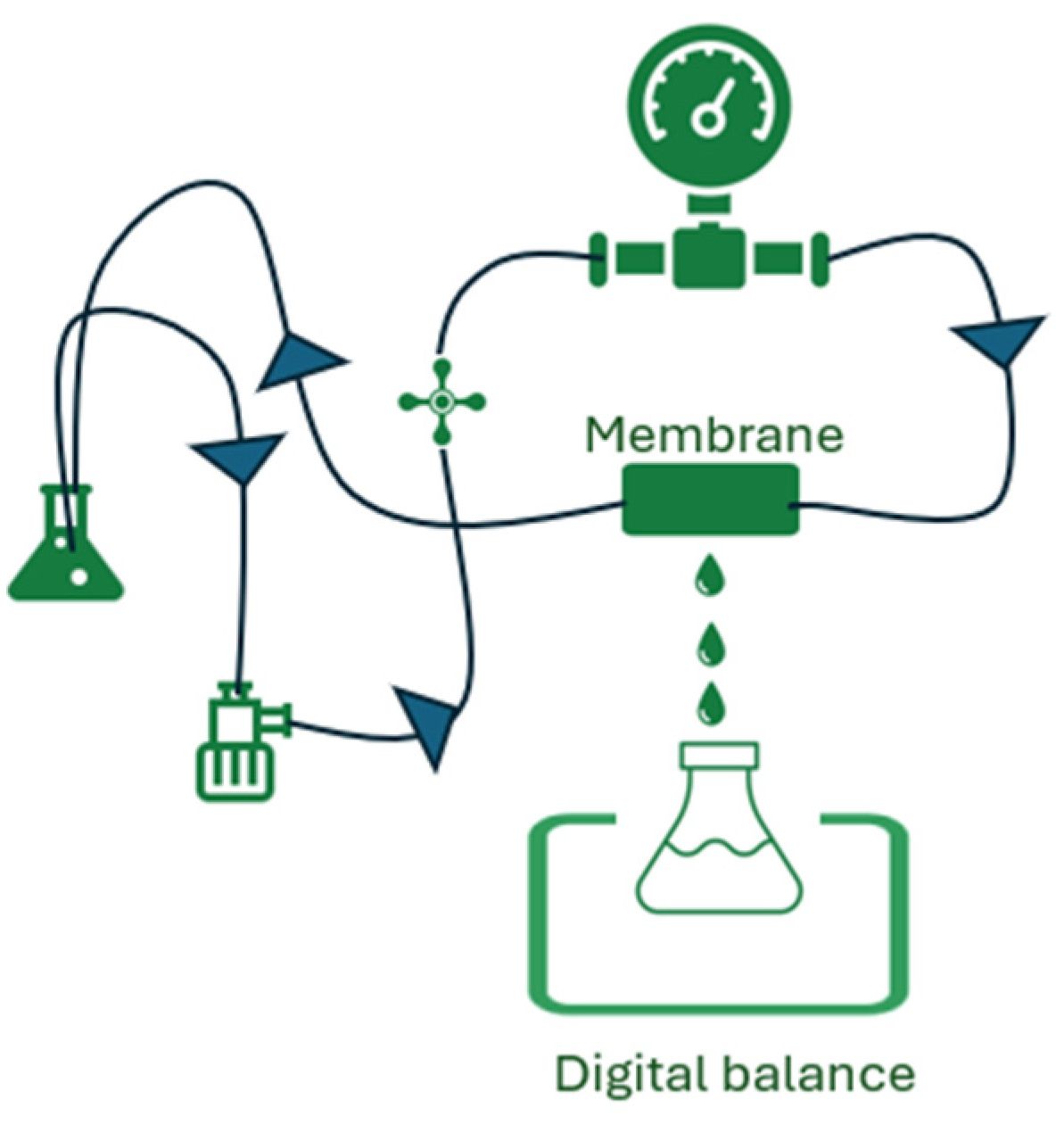
Figure 3.
SEM Images of PAN hollow fiber substrates: (a) unmodified substrate, exhibiting an average pore size of 200 nm (±50 nm), (b) modified substrates after a 2h pretreatment with 2M NaOH, (c, d) modified with 2h pretreatment with NaOH 2M and subsequent deposition of 5 bilayers of (PAH/PSS), (e,f) modified substrates after a 2h pretreatment with NaOH 2M and subsequent deposition of 10 bilayers (PAH/PSS).
Figure 3.
SEM Images of PAN hollow fiber substrates: (a) unmodified substrate, exhibiting an average pore size of 200 nm (±50 nm), (b) modified substrates after a 2h pretreatment with 2M NaOH, (c, d) modified with 2h pretreatment with NaOH 2M and subsequent deposition of 5 bilayers of (PAH/PSS), (e,f) modified substrates after a 2h pretreatment with NaOH 2M and subsequent deposition of 10 bilayers (PAH/PSS).
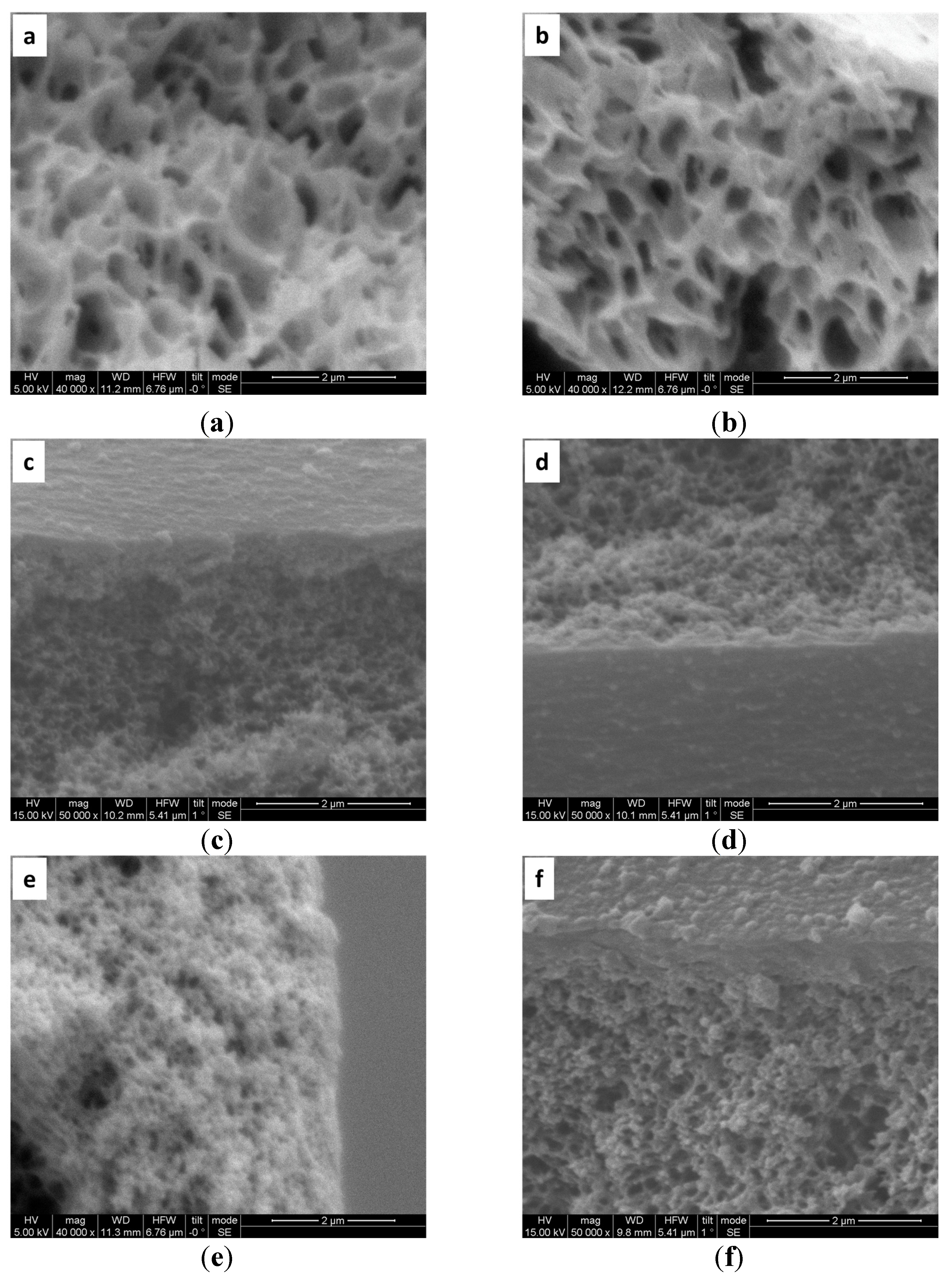
Figure 4.
SEM Images of PAN hollow fiber substrates: (a, b) unmodified substrate, exhibiting an average pore size of 200 nm (±50 nm), (c) modified with 30min pretreatment with NaOH 2M and subsequent deposition of 5 bilayers of (PAH/PSS), (d) modified substrates after a 30min pretreatment with NaOH 2M and subsequent deposition of 10 bilayers (PAH/PSS).
Figure 4.
SEM Images of PAN hollow fiber substrates: (a, b) unmodified substrate, exhibiting an average pore size of 200 nm (±50 nm), (c) modified with 30min pretreatment with NaOH 2M and subsequent deposition of 5 bilayers of (PAH/PSS), (d) modified substrates after a 30min pretreatment with NaOH 2M and subsequent deposition of 10 bilayers (PAH/PSS).
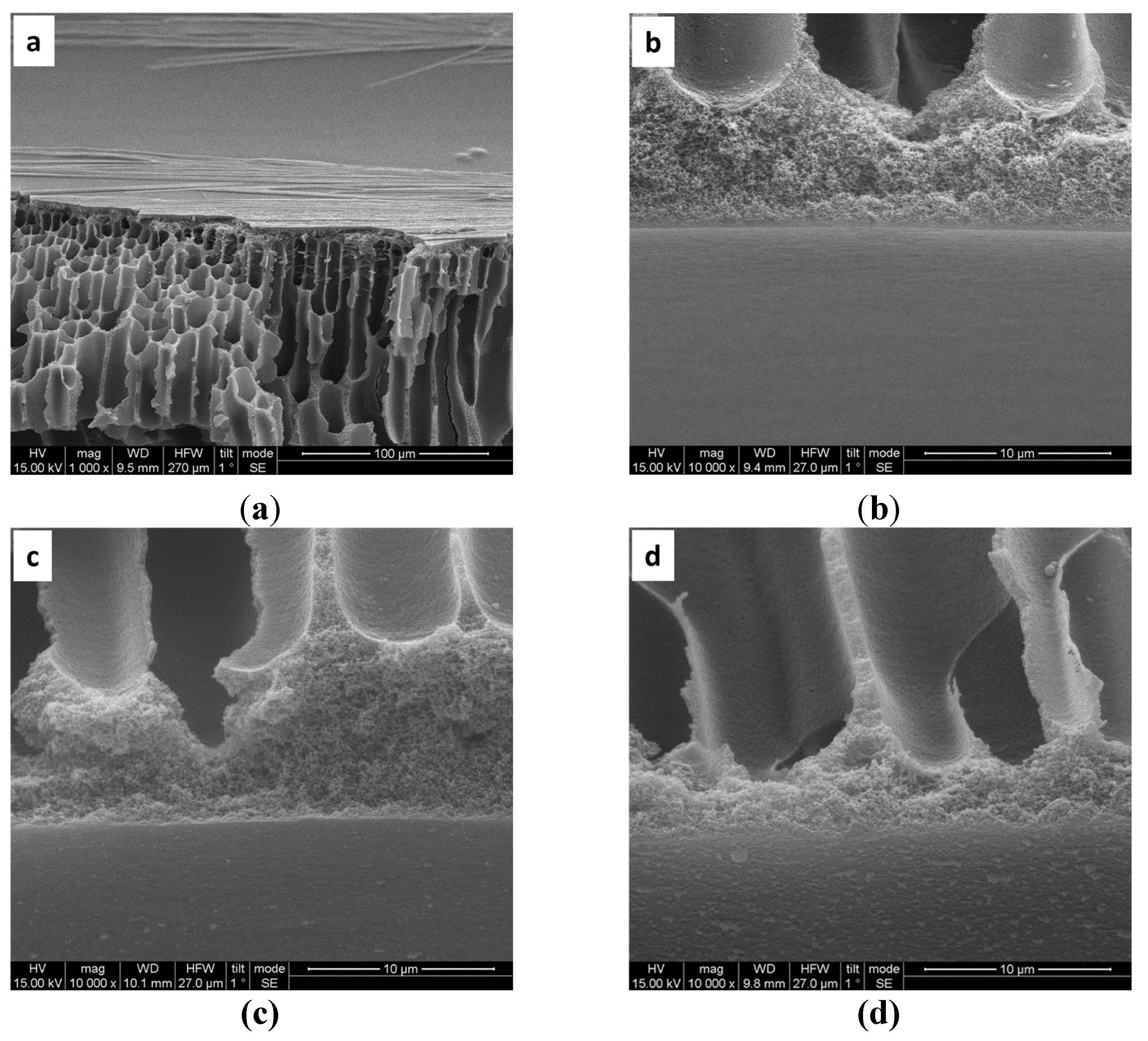
Figure 5.
FTIR spectra of PAN hollow fiber with different pretreatment and (PAH/PSS) modification (a) PAN hollow fiber without pretreatment or modification, with 30 min and 2h 2M NaOH pretreatment, (b, c, d) PAN hollow fiber without pretreatment or modification, with 2h 2M NaOH pretreatment and 10 bilayer (PAH/PSS) deposition.
Figure 5.
FTIR spectra of PAN hollow fiber with different pretreatment and (PAH/PSS) modification (a) PAN hollow fiber without pretreatment or modification, with 30 min and 2h 2M NaOH pretreatment, (b, c, d) PAN hollow fiber without pretreatment or modification, with 2h 2M NaOH pretreatment and 10 bilayer (PAH/PSS) deposition.
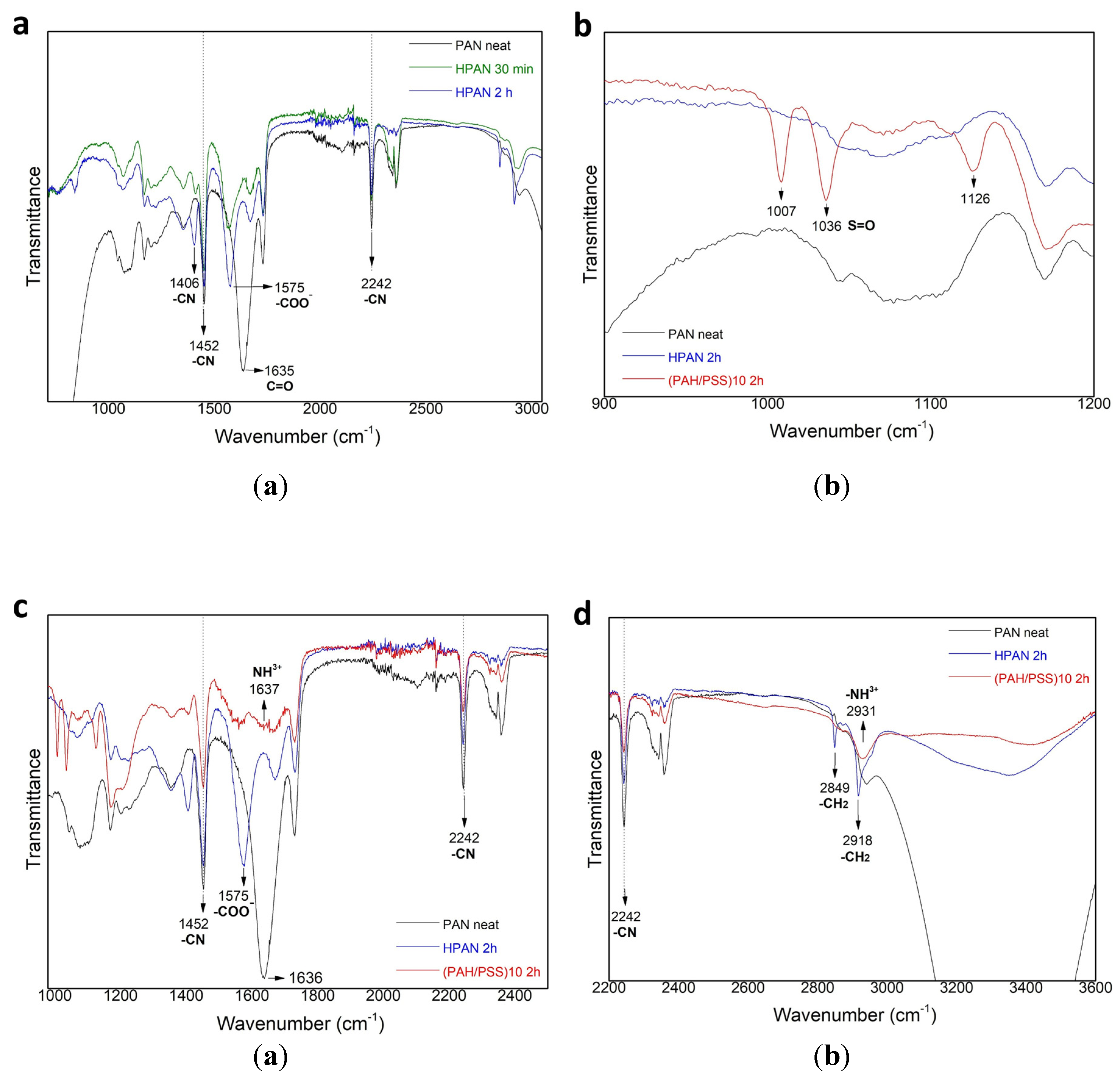
Figure 6.
(a) Mg2+ rejection and Li+ rejection of all membranes with (PAH/PSS) deposition (b) Mg2+ rejection, Li+ rejection and permeance of PAN hollow fibers with 1.5-2.5h time of hydrolysis and 5,10 bilayers of (PAH/PSS) (c) Mg2+ rejection, Li+ rejection and permeance of (PAH/PSS)10-2 membrane (d) Mg2+ rejection, Li+ rejection and permeance of (PAH/PSS)10-2.5 membrane.
Figure 6.
(a) Mg2+ rejection and Li+ rejection of all membranes with (PAH/PSS) deposition (b) Mg2+ rejection, Li+ rejection and permeance of PAN hollow fibers with 1.5-2.5h time of hydrolysis and 5,10 bilayers of (PAH/PSS) (c) Mg2+ rejection, Li+ rejection and permeance of (PAH/PSS)10-2 membrane (d) Mg2+ rejection, Li+ rejection and permeance of (PAH/PSS)10-2.5 membrane.
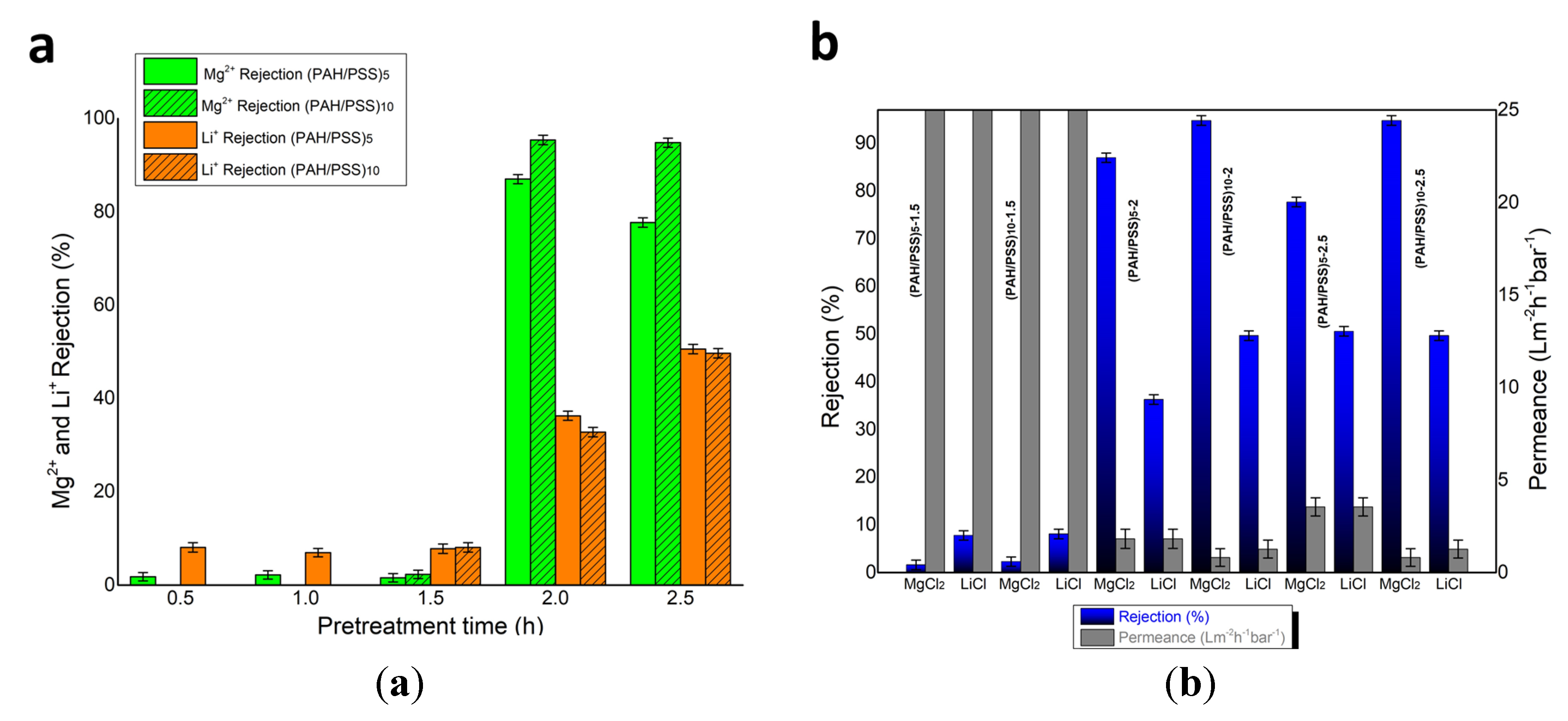
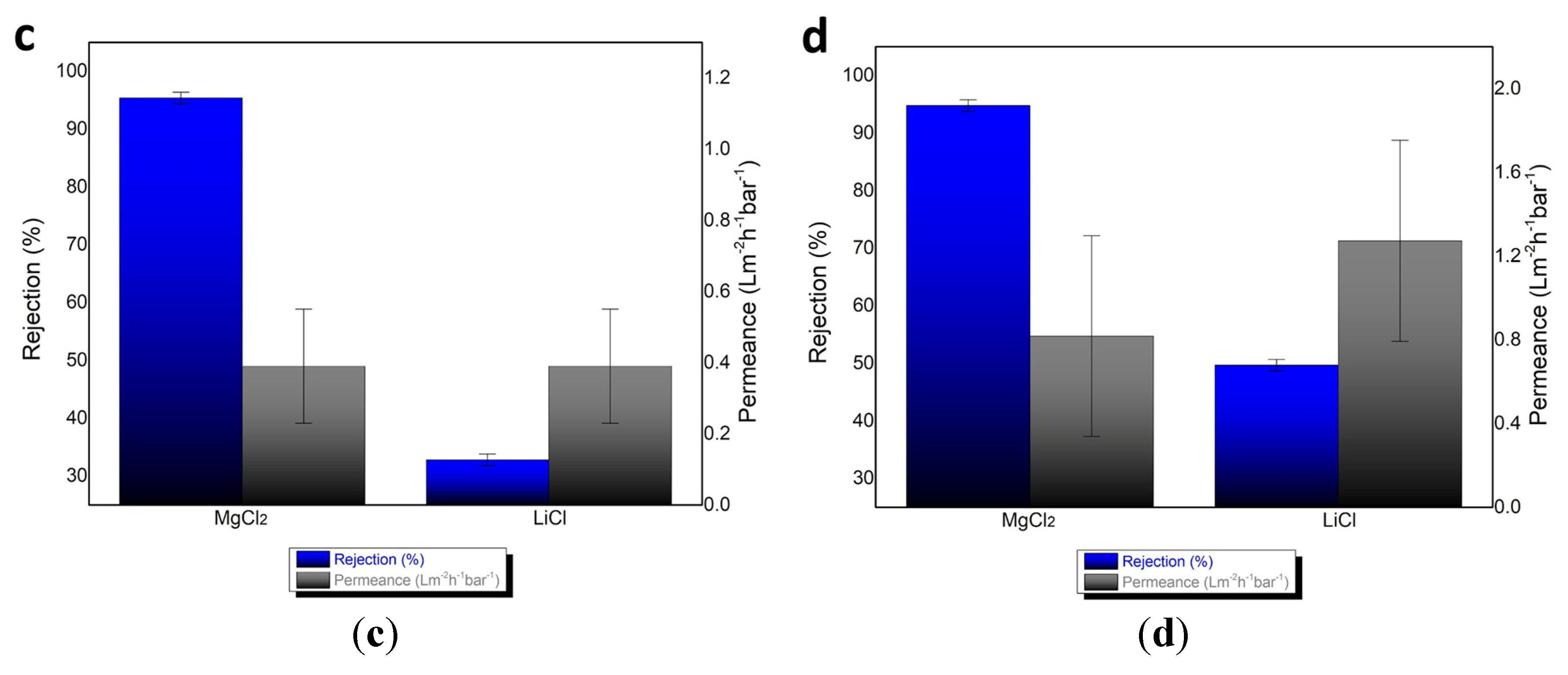
Figure 7.
(a) Comparison of the performance of PAH/PSS, PDADMAC/PSS and PEI/PSS LBL membranes. (b) Comparison of the selectivity coefficient and permeance of PAH/PSS, PDADMAC/PSS and PEI/PSS LBL membranes.
Figure 7.
(a) Comparison of the performance of PAH/PSS, PDADMAC/PSS and PEI/PSS LBL membranes. (b) Comparison of the selectivity coefficient and permeance of PAH/PSS, PDADMAC/PSS and PEI/PSS LBL membranes.
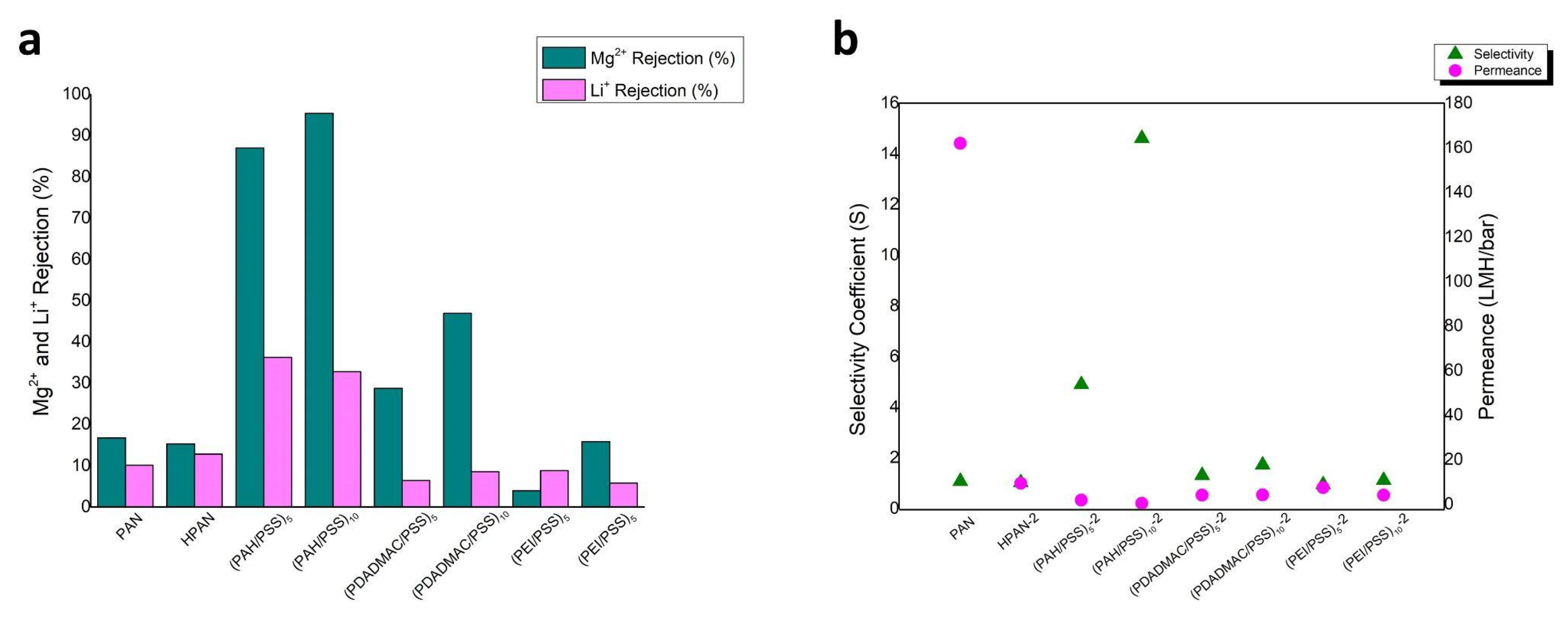

Table 1.
Summary of the performance of (PAH/PSS)10-2 and (PAH/PSS)10-2 membranes after three weekly measurements.
Table 1.
Summary of the performance of (PAH/PSS)10-2 and (PAH/PSS)10-2 membranes after three weekly measurements.
| 1st week | 2nd week | 3rd week | ||||
|---|---|---|---|---|---|---|
| (PAH/PSS)10-2 | (PAH/PSS)10-2.5 | (PAH/PSS)10-2 | (PAH/PSS)10-2.5 | (PAH/PSS)10-2 | (PAH/PSS)10-2.5 | |
| Mg Rejection (%) | 95.40 ±0.9 | 94.8 ±1 | 96.00 ±0.9 | 94.5.2 ±1 | 95.36 ±0.9 | 94.8 ±1 |
| Li Rejection (%) | 32.80 ±0.9 | 49.7 ±1 | 32.80 ±0.9 | 49.6 ±1 | 31.90 ±0.9 | 49.8 ±1 |
| Permeance (LMH/bar) | 0.39 ±0.47 | 1.04 ±0.52 | 0.34 ±0.47 | 1.05 ±0.52 | 0.35 ±0.47 | 1.05 ±0.52 |
Table 2.
Summary of the performance of hydrolysed and modified PAN membranes.
| Sample name | Mg Rejection (%) | Li Rejection (%) | Selectivity Coefficient (S) |
Permeance (LMH/bar) |
|---|---|---|---|---|
| PAN | 16.73 ±1 | 10.11 ±1 | 1.079 | 161.91 ±0.51 |
| HPAN-2 | 15.30 ±1.4 | 12.80 ±1.4 | 1.030 | 9.37 ±0.5 |
| (PAH/PSS)5-2 | 87.00 ±1 | 36.30 ±1 | 4.900 | 1.83 ±0.49 |
| (PAH/PSS)10-2 | 95.40 ±0.9 | 32.80 ±0.9 | 14.609 | 0.39 ±0.47 |
| (PDADMAC/PSS)5-2 | 28.74 ±1 | 6.39 ±1 | 1.313 | 4.07 ±0.49 |
| (PDADMAC/PSS)10-2 | 46.95 ±1 | 8.53 ±1 | 1.724 | 4.11 ±0.49 |
| (PEI/PSS)5-2 | 3.97 ±1.1 | 8.83 ±1.1 | 0.949 | 7.46 ±0.5 |
| (PEI/PSS)10-2 | 15.83 ±0.9 | 5.79 ±0.9 | 1.119 | 4.03 ±0.48 |
Table 3.
Comparison of the current results with other previous works on LBL modified membranes for monovalent / divalent ion separation.
Table 3.
Comparison of the current results with other previous works on LBL modified membranes for monovalent / divalent ion separation.
| Study | Membrane Type | Mg2+ Rejection (%) | Li+ Rejection (%) | Selectivity coefficient | Permeance (LMH/bar) | Notes |
|---|---|---|---|---|---|---|
| Current Study | (PAH/PSS)10 on hydrolyzed PAN hollow fiber | 95.4 | 32.8 | 14.61 | 0.39 | High/average selectivity coefficient. Low permeance. |
| Current Study | (PAH/PSS)5 on hydrolyzed PAN hollow fiber | 87.00 | 36.30 | 4.900 | 1.83 | Average selectivity coefficient. Low/Average permeance. |
| He et al. 2022 | (PSS/PAH)2.5 on PES hollow fiber | 99.1 | 59.4 | 45.11 | 18.4 | High selectivity coefficient. High permeance. |
| Liu et al. 2015 | Crosslinked (PSS/PAH)1.5C on PES hollow fiber | 98.2 | 33.5 (Na+) | 36.94 | 10 | High selectivity coefficient. High permeance. |
| Liu et al. 2015 | (PSS/PAH)2 on PES hollow fiber | 98.1 | 58.6 (Na+) | 21.79 | >10 | High/average selectivity coefficient. High permeance. |
| Liu et al. 2015 | NF 270 | 42.9 | 37.1 (Na+) | 1.10 | >10 | Commercial membrane, low selectivity coefficient. High permeance. |
| Liu et al. 2015 | NF 90 | 96 | 68.6 (Na+) | 7.85 | 6-7 | Commercial membrane, average selectivity coefficient. High/average permeance. |
| Rajesh et al. 2016 | (BPEI/PAA)15 on PAN nanofiber mats coated with CA | 95.3 | 34.1 (Na+) | 14.02 | 5 | Different polyelectrolytes, average selectivity coefficient. High/average permeance. |
| Wang et al. 2024 | B15C5-MX-NF on PES |
89.7 | 21.4 | 7.63 | 10.8 | Different polyelectrolytes, average selectivity coefficient. High permeance. |
Disclaimer/Publisher’s Note: The statements, opinions and data contained in all publications are solely those of the individual author(s) and contributor(s) and not of MDPI and/or the editor(s). MDPI and/or the editor(s) disclaim responsibility for any injury to people or property resulting from any ideas, methods, instructions or products referred to in the content. |
© 2024 by the authors. Licensee MDPI, Basel, Switzerland. This article is an open access article distributed under the terms and conditions of the Creative Commons Attribution (CC BY) license (http://creativecommons.org/licenses/by/4.0/).
Copyright: This open access article is published under a Creative Commons CC BY 4.0 license, which permit the free download, distribution, and reuse, provided that the author and preprint are cited in any reuse.


