

Submitted:
14 November 2024
Posted:
18 November 2024
You are already at the latest version
Abstract
(1) Background: The aim of the study is to assess the relationship between gender equitable attitudes and norms, and gender based financial perceptions among adolescent boys and girls in Mexico. This evaluation is part of a larger Girl Rising Financial Education Initiative (GR FEI) conducted amongst adolescents in Mexico; (2) Methods: A quantitative study was conducted including 979 adolescents (boys n=385, girls n=589) at baseline. Gender equitable attitudes and norms were measured using a scale consisting of 3 subdomains (roles/privileges/restrictions, gender attributes and gender violence) and gender based financial perceptions were measured using a vignette; (3) Results: Multivariate Linear regression analyses revealed that positive gender based financial perceptions were associated with significantly higher gender equitable attitudes after adjusting for sociodemographic differences. Girls reported significantly higher gender equitable attitudes when compared to boys (Model 1: β = 0.240, 95% CI [0.218, 0.347], p < 0.001); (4) Conclusion: Introducing financial education initiatives at an early age can shape the way young people interact with money. It not only improves overall literacy but also reinforces the idea that financial literacy and decision-making are not limited by gender.
Keywords:
Adolescents
; Financial perceptions
; Gender norms
; Gender
1. Introduction
The Organization for Economic Co-operation and Development (OECD) defines financial literacy as both the knowledge, and behavior required to make sound financial decisions [1]. This encompasses not only being informed about financial matters but also having the skills, attitude, and motivation to effectively manage one’s finances for long-term wellbeing. Lusardi and Mitchell refer to financial literacy as a form of “investment in human capital” [2], by which they mean that investing in financial knowledge can improve one's ability to navigate complex financial concepts and achieve success. Due to the wide array of modern financial products and services in the market, financial literacy is now more crucial than ever. These products, such as student loans, mortgages, credit cards, pension accounts, and annuities, are challenging for financially inexperienced individuals to comprehend and manage effectively [2]. Without a solid understanding of financial concepts and practices, individuals may struggle to make informed decisions regarding borrowing, saving, investing, and managing assets.
Considering the significant impact of financial literacy on economic behaviors, it is critical to understand the extent of financial literacy among diverse populations, especially to identify disparities in financial skills among different demographic groups such as women, adolescents, and those with lower socioeconomic status [3,4]. The 2014 S&P Global FinLit Survey revealed that globally, only 1 in 3 people are financially literate [1]. The rate of financial literacy varies significantly worldwide, even among member nations of G7 and G20 blocks, which report low levels of literacy despite higher national income [1,5].
1.1. Gender Norms, Attitudes & Financial Perceptions
Gender norms refer to traditional, social principles that dictate human behavior based on gender identity and what is deemed acceptable [6]. These norms often uphold a hierarchical system that favors behaviors and roles associated with masculinity over those associated with femininity. This structure further perpetuates systemic inequality by reinforcing existing power imbalances between men and women [7]. Consequently, women are steered towards early marriage, unpaid care work, and jobs that are deemed less important and lower paying, thus putting them at risk of financial instability and dependence [8,9]. In most households, women are rarely involved in financial decision-making, a role traditionally assumed by men [10]. Disaggregated data from financial literacy studies highlight heightened gaps in literacy by gender, age, and socioeconomic status. Women not only score significantly less than men in financial knowledge, but they also have a higher tendency to indicate that they feel less confident, and “don’t know” the correct answer to financial questions [1,11,12,13,14]. Therefore, empowering women with financial education at an early age can play a critical role in narrowing this gender gap [14]. The significance of financial and livelihood education for youth is further underscored in the 2030 Sustainable Development Goals (SDG 4.3, 4.4, 4.6), emphasizing the role of financial literacy in achieving broader societal and economic objectives [15,16].
Mexico has made significant progress in empowering women in the recent years. However, existing traditional gender roles and stereotypes perpetuate inequities in varying fields: education, economics, health, and politics [17]. Women perform over 75% of unpaid care work, leaving very little time for paid work. Additionally, only 44.5% of working age Mexican women are employed, compared to 78.5% of employed men [18]. Gender gaps in employment and earnings tend to widen during childbearing years, thereby disproportionately affecting women's ability to participate in the workforce, their earnings, and their opportunities for career advancement [18].
1.2. Finance in the Context of Mexico
Mexico ranks 12th among G20 member nations for financial education, with a score of 57.62%, placing it even lower than Indonesia [19]. Low financial literacy among its population is one of the contributing factors to Mexico’s delayed financial and economic development [19,20]. Several studies have reported low financial literacy among high school students in Mexico, with less than 1 in 5 students demonstrating an understanding of basic financial concepts [21,22,23]. In 2018, only 47% of the adult population had a bank account, which is staggeringly low compared to regional OECD member countries [20]. Despite the adoption of ‘financial inclusion’1 in 2012, access to financial services is yet limited, and a substantial proportion of the population continues to rely on cash and informal credit systems [20]. Further compounding the crisis is significant gender disparity in financial inclusion. The 2021 National Survey of Financial Inclusion revealed that among individuals with a savings account, 14.9% were men, while only 2.4% were women [24]. Notably, married individuals reported worse financial inclusion as compared to unmarried individuals [24].
1.3. Girl Rising
Girl Rising (GR) is a global campaign that uses powerful storytelling and partnerships to inspire social action and challenge long-held views about girls and women. Girl Rising delivers its educational programming and teacher training in 12 countries and has recently expanded into Mexico. The GR Financial Education Initiative (FEI) is a comprehensive 24-session curriculum built around the critically acclaimed Girl Rising feature film, including additional multimedia tools with the objective of supporting adolescents in identifying, articulating, and sharing their gender-related experiences through activities and stories.
1.3.1. GR Partners
In Mexico, GR partnered with Credit Suisse’s Financial Empowerment Initiative2 (financial partner) and Aflatoun International3 (financial education curriculum partner) to fund and direct the expansion of the program. Through this partnership, GR built on their existing gender-focused curriculum to address financial barriers that often limit girls’ potential and economic involvement through financial education and empowerment curricula.
To implement the educational program, GR partnered with Glasswing International and CIAM Cancún. Glasswing aims to improve education through after school programs and school revitalization, health through promoting trauma-informed care and nutrition, community empowerment through volunteer opportunities, and employment entrepreneurship through work training and economic reactivation4. CIAM Cancún aims to promote peace and gender equality through promoting justice, equality, and human rights5. Their educational initiatives focus on teaching nonviolent communication, conflict resolution, community collaboration, and gender equity.
2. Methods
This study is part of a larger GR financial education program that assessed Gender Equitable Attitudes and Norms, Gender Responsiveness, Gender Equitable Environment, Agency, Voice, Gender-based Financial Perceptions, Financial Literacy and Skills, and Attitudes Towards Finances, among adolescents and educators before and after program implementation. However, the present study will focus only on Gender Equitable Attitudes and Norms and Gender-based Financial Perceptions among adolescent boys and girls in Mexico.
2.1. Study Design
A quasi-experimental design utilizing a one-group pre- and post-test method was employed. The evaluation study included two “independent samples” at baseline and follow-up. It was assumed that individuals in the baseline and follow-up samples are composed of the same participants. The baseline assessment was conducted prior to the start of the GR FEI program, and a follow-up assessment was conducted immediately after the completion of the program.
2.2. Study Sample
The GR FEI program was implemented in 14 schools in Mexico. However, the final evaluation samples consisted of baseline data of adolescents from only three schools: one CIAM school in Cancún, Quintana Roo, and two Glasswing schools in Tijuana, Baja California, and Leòn, Guanajuato. The total sample included 979 participants of ages 11-19 years. The present study describes the results of gender equitable attitudes and norms, and gender-based financial perceptions.
2.3. Instruments and Measures
The evaluation instruments were developed by faculty and students at The George Washington University, with input from GR, and then finalized after the pilot phase with students and teachers in January 2023. Youth assent for participating in the quantitative survey was obtained by reading the information and instructions provided on the first page of the survey. The survey did not collect any identifying information from adolescents or educators and participation was anonymous.
Survey data was collected using iSurvey, an online questionnaire dissemination tool. The instruments were developed in English, translated to Spanish, and back-translated into English. During the pilot phase, both the English and Spanish language instruments underwent thorough assessment for comprehension, vocabulary, and technical terminology with input from adolescents, educators, and leaders from partner organizations. Sociodemographic information collected through the survey included age, grade, school, gender, sibling information and household composition.
2.3.1. Gender Equitable Attitudes and Norms
Gender attitudes and norms were captured via two vignettes and a gender equity scale. The current study assessed gender attitudes and norms using only the gender equity scale. The scale included 13 statements adapted from the Gender Equitable Measurement scale created for the Gender Equity Movement in Schools program in Mumbai, India [25]; the UNICEF Evaluation of Empowering Young Girls and Women in Maharashtra, India [26]; and the Gender Equitable Mean scale from the Compendium of Gender Scales [27]. The statements consisted of three subdomains - gender roles/privileges/restrictions (8 statements), gender attributes (3 statements), and gender violence (2 statements). Definitions of the sub-domains can be found in the Appendix. The response options ranged from strongly disagree to strongly agree, for example, “Girls and boys should share household tasks equally”. Negatively worded statements were reverse coded, for example, “Boys should get health services more than girls,” and the statements were summated to create a gender equitable attitudes and norms scale. The internal reliability of the overall scale was ɑ = 0.863. The three subdomains also showed high internal consistency: roles/privileges/restrictions scale α = 0.789, gender attributes scale α = 0.8, and gender violence scale α = 0.58.
2.3.2. Gender-Based Financial Perceptions
Gender-based financial perceptions were measured via the gender-based financial perceptions scale and one vignette. A vignette is a short story of a hypothetical scenario that is often used in research to glean information about the responder’s attitudes, perceptions or opinions [28]. Vignettes are widely used in social sciences and are often considered useful for studying sensitive or subjective topics [29]. By offering a non-personal way to respond to a specific situation, vignettes can help reduce social desirability bias in research.
The vignette described a husband and wife who both work at a bank and make the same amount of money, however, the husband is in charge of finances and does not allow his wife to be involved in the family’s finances. Five questions followed this vignette to evaluate participants’ gender based financial perceptions (three 5-point Likert-scale questions, 1 yes/no answer choice, and 1multiple choice question).
2.4. Data Analysis
All survey data analyses were conducted in IBM SPSS Statistics Version 28. Bivariate tests (Independent T-tests and Chi-square tests) was conducted to analyze the sociodemographic characteristics, gender equitable attitudes and norms, and financial perceptions between boys and girls. A multivariate linear regression analysis was done to assess the influence of gender based financial perceptions on gender equitable attitudes and norms, after adjusting for gender, age, school, grade, presence of younger brother and male parent/guardian.
3. Results
Table 1 presents the sociodemographic characteristics of the study participants with the characteristic frequency (N) and valid percentage (%). The study sample consisted of 979 participants with 385 (39.4%) adolescent boys and 580 (59.3%) adolescent girls. Most of the participants were in the 1st or 2nd semesters of high school (n=293, 30.1%). Participants had a mean age of 14.62 years (range = 11 to 19 years). Of the three schools surveyed, maximum participants were from Conalep school (n=515, 52.9%). Among all participants surveyed at baseline, 386 participants reported having an older brother and most of them reported either having a male parent/guardian (n=648) or a female parent or guardian (n=861) at home. Adolescent boys and girls differed significantly by age, school, grade level (p < 0.001), and presence of a younger brother and male parent/guardian at home (p < 0.05).
Table 2 below presents the mean scores for overall gender equitable attitudes and norms scale and the 3 subdomains. As shown in the table, gender roles/privileges/restriction, gender attitudes and gender violence mean scores were all significantly higher for girls compared to boys, p <0.001 at baseline. This indicates a stronger inclination towards favorable gender equitable attitudes among girls in contrast to boys. The overall gender equitable attitude scale mean was 4.24 ± 0.59 with high internal consistency (ɑ = 0.864).
Table 3 results are based on the following gender based financial perception vignette:
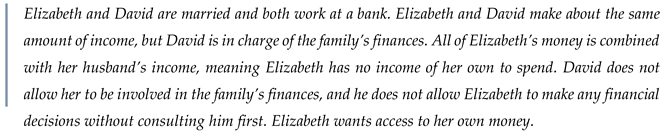
Following the vignette participants were asked 5 questions. The first three questions asked participants to respond to questions using a 5-point Likert-scale, the fourth question asked if the husband should take care of all the family finances in yes/no format, and the fifth question included 3 options for whose job it is to manage finances in a relationship. Table 3 represents the mean scores of these responses by gender. Girls reported a significantly higher/positive gender based financial perception mean score (p < 0.001) when compared to boys. This indicates a stronger inclination towards favorable gender-based financial perceptions among girls in contrast to boys. A significantly higher number of girls, 91.8%, also disagreed with the statement that David should take care of all the family finances (p <0.01).
Table 4 represents multivariable linear regression models that examine changes in overall gender equitable attitudes and the 3 subdomains–gender roles/privileges/restrictions, gender attributes, and gender violence–after adjusting for age, gender, grade, presence of younger brother and male parent/guardian. There are several significant findings from the result. Participants who disagreed with the statement “Elizabeth should not have access to her own money…” (question 1), reported significantly higher level of gender equitable attitudes across all 4 gender equitable attitudes and norms models (Model 1: β = 0.183, 95% CI [0.068, 0.163], p <0.001). Agreeing that "Elizabeth should have access to her own money because she earned it" was associated with higher gender equitable attitudes (Model 1: β = 0.093, 95% CI [0.026, 0.117], p <0.01). Responding "Yes" to "Do you agree that David should take care of all the family finances?" was associated with significantly lower gender equitable attitudes across all 4 models (Model 1: β = -0.117, 95% CI [-0.349, -0.118], p <0.001). Reporting that it’s a woman's job or both partners' job to manage finances was associated with significantly higher gender equitable attitudes compared to reporting that it’s a man's job (For Model 1, woman's: β = 0.081, 95% CI [0.053, 0.481], p <0.05; both: β = 0.087, 95% CI [0.035, 0.326], p <0.05). Girls reported having significantly higher gender equitable attitudes than boys (Model 1: β = 0.240, 95% CI [0.218, 0.347], p <0.001).
4. Discussion
The evaluation of the GR FEI program aimed to assess the relationship between gender equitable attitudes and norms, and gender based financial perceptions among adolescent boys and girls in Mexico. While the results from this study reveal a complex relationship between gender equitable attitudes and norms, and gender-based financial perceptions among adolescent boys and girls in Mexico, there are many key findings. A key finding is the significant difference in how boys and girls perceive gender equity across various domains, including family roles, educational opportunities, and financial autonomy. Girls consistently demonstrated more favorable attitudes toward gender equity, both in terms of household dynamics and financial decision-making, compared to boys [30]. This pattern underscores the need to explore how societal and cultural norms, as well as individual experiences, shape adolescents’ perspectives on gender roles.
The strong positive relationship between gender equitable attitudes and financial perceptions is evident in the findings on the financial vignette involving Elizabeth and David. Girls overwhelmingly rejected traditional, patriarchal financial norms, with 91.8% disagreeing with the statement that David should take care of all the family finances. This suggests that girls not only endorse equal financial rights but also actively reject gendered financial hierarchies. The significantly higher scores among girls for the statements affirming Elizabeth’s right to access her own money reflect a broader recognition of women’s financial independence, reinforcing the general trend of girls holding more progressive gender equitable attitudes [30,31].
Boys, in contrast, were more likely to agree with traditional gender norms related to financial management, as indicated by their lower scores in gender-based financial perceptions. This mirrors the findings across other domains of gender-equitable attitudes, where boys were less likely to support equal roles in household tasks or leadership positions for girls. The results suggest that boys, more than girls, may internalize traditional gender roles that prioritize male authority in financial matters. These patterns reveal a potential disconnect between boys’ gender equitable attitudes and their views on financial decision making, which could be influenced by cultural norms that privilege male dominance in family finances.
4.1. Limitations
While the results of this qualitative study are promising, it is not without limitations. A major limitation is that only baseline data was analyzed for the purpose of this research. To accurately assess the impact of the GR FEI program, future research should explore the differences between baseline and follow-up data over time. Another limitation of this study is that it relied on self-reported data, which can be prone to social desirability bias where participants respond in a way they perceive as more socially acceptable rather than stating their own beliefs and attitudes.
4.2. Conclusions
In sum, the study highlights a significant gender divide in both general attitudes toward gender equity and specific financial perceptions among adolescents. Adolescence is a formative period and interventions during this age can shape the way young people interact with money. But particularly for girls, introducing financial education and encouraging them to engage in money management activities can help shape their attitudes towards financial autonomy. Girls’ more favorable views on gender equity across various domains, particularly, financial autonomy, suggest that they may be more receptive to social changes in promoting gender equality. Meanwhile, boys may require more targeted interventions` that challenge traditional gender roles, particularly, in the realm of financial decision-making. These findings point to the importance of addressing gender norms holistically, integrating discussions on both gender equity and financial autonomy in efforts to promote more equitable attitudes among adolescents in Mexico.
Author Contributions
All authors agree to be accountable for all aspects of the work in ensuring that questions related to the accuracy or integrity of any part of the work are appropriately investigated and resolved. Development & Implementation of Methods - Dr. Amita Vyas and Dr. Nitasha Nagaraj.Preparation of Manuscript - Ms. Rhea Kartha, Dr. Amita Vyas and Dr. Nitasha Nagaraj. Statistical Analysis - Ms. Rhea Kartha and Dr. Nitasha Nagaraj.
Funding
Funding support was provided by Girl Rising and the George Washington University (GWU) - Maternal and Child Health Center of Excellence.
Informed Consent Statement
Informed consent was obtained from all subjects involved in the study.
Data Availability Statement
The data that support the findings of this study are not publicly available due to restrictions imposed by the institution that conducted the research. Data access is restricted to ensure compliance with institutional policies.
Acknowledgements
We thank the people who made this evaluation possible. We recognize the staff of Global Girl Rising Mexico for their partnership in the successful implementation of the program and for serving as liaisons to the schools and youth. We thank Glasswing International and CIAM Cancun in Mexico and their administrators for collaborating and supporting this project. We are most grateful for the many youth who participated in this evaluation and made the contribution to this field possible. We would also like to thank GWU’s Capital Connection Fund for their support.
Conflicts of Interest
The authors declare no conflict of interest.
Appendix A: Definitions of the gender equitable attitudes and norms sub-domains
- Roles: Expectations of what an individual is supposed to or required to do based on familial, cultural, and/or social norms.Privileges: Advantages that members of one gender face over the other gender.
- Restrictions: Disadvantages that members of one gender face over the other gender.
- Attributes: A direct comparison between boys and girls in which boys are considered to be more superior to girls.
- Violence: Experiences of social norms regarding physical and/or sexual abuse of girls and women.
| 1 | Financial inclusion refers to “The access and usage of a portfolio of financial products and services for the population, under an appropriate regulatory framework that protects the interests of users and promotes its financial capabilities” (The Global Partnership for Financial Inclusion, 2012) |
| 2 | Credit Suisse Financial Education Initiative - https://www.credit-suisse.com/media/assets/about-us/docs/our-company/corporate-responsibility/economy-society/fei-financial-education-fact-sheet.pdf
|
| 3 | Aflatoun International - https://aflatoun.org
|
| 4 | Glasswing International - https://glasswing.org/es/
|
| 5 | CIAM Cancún - https://www.ciamcancun.org/
|
References
- OECD, OECD/INFE 2020 International Survey of Adult Financial Literacy, 2020. Available online: https://www.oecd-ilibrary.org/finance-and-investment/oecd-infe-2020-international-survey-of-adult-financial-literacy_145f5607-en (accessed on 29 October 2024).
- A. Lusardi, O.S. Mitchell, The Economic Importance of Financial Literacy: Theory and Evidence, Journal of Economic Literature 52 (2014) 5–44. [CrossRef]
- OECD, Promoting Financial Inclusion through Financial Education, OECD (2013). https://www.oecd.org/en/publications/promoting-financial-inclusion-through-financial-education_5k3xz6m88smp-en.html (accessed , 2024). 29 October.
- A. Lusardi, F.-A. Messy, The importance of financial literacy and its impact on financial wellbeing, Journal of Financial Literacy and Wellbeing 1 (2023) 1–11. [CrossRef]
- Mitchell, A. Lusardi, Financial Literacy and Economic Outcomes: Evidence and Policy Implications, The Journal of Retirement 3 (2015) 107–114. [CrossRef]
- Save the Children, How Harmful Gender Norms Create an Unequal World for Children, Save the Children (n.d.). Available online: https://www.savethechildren.org/us/charity-stories/how-gender-norms-impact-boys-and-girls (accessed on 29 October 2024).
- UNFPA, UNICEF, Technical Note on Gender Norms, United Nations Population Fund (2020). Available online: https://www.unfpa.org/resources/technical-note-gender-norms (accessed on 29 October 2024).
- R. Fonseca, K.J. R. Fonseca, K.J. Mullen, G. Zamarro, J. Zissimopoulos, What Explains the Gender Gap in Financial Literacy? The Role of Household Decision Making, The Journal of Consumer Affairs 46 (2012) 90–106. [CrossRef]
- H.E. Peters, S. Adelstein, R. Abare, Gender Norms and Women’s Economic Empowerment in Low-Income Countries: What We Learned by Reviewing the Evidence, Urban Institute (2019). Available online: https://www.urban.org/urban-wire/gender-norms-and-womens-economic-empowerment-low-income-countries-what-we-learned-reviewing-evidence.
- C. Boggio, F. Coda Moscarola, A. Gallice, What is good for the goose is good for the gander?, Economics of Education Review 75 (2020) 101952. [CrossRef]
- B. Greimel-Fuhrmann1, M. Silgoner, Analyzing the Gender Gap in Financial Literacy, International Journal for Infonomics (IJI) 11 (2018). [CrossRef]
- A. Lusardi, Financial literacy and the need for financial education: evidence and implications, Swiss Journal of Economics and Statistics 155 (2019). [CrossRef]
- L. Klapper, A. Lusardi, P. van Oudheusden, Financial Literacy Around the World: Insights From The Standard & Poor’s Ratings Services Global Financial Literacy Survey, Global Financial Literacy Excellence Center (2015). https://gflec.org/wp-content/uploads/2015/11/Finlit_paper_16_F2_singles.pdf.
- OECD, Women and Financial Education: Evidence, Policy Responses and Guidance, OECD Publishing, Paris, 2013. [CrossRef]
- J. Billimoria, Why young people are key to achieving the SDGs, World Economic Forum (2016). Available online: https://www.weforum.org/agenda/2016/09/why-young-people-are-key-to-achieving-the-sdgs/ (accessed on 29 October 2024).
- The Global Goals, Goal 4: Quality education, The Global Goals (2021). Available online: https://www.globalgoals.org/goals/4-quality-education/ (accessed on 29 October 2024).
- A.-E. Hietanen, S. Pick, Gender Stereotypes, Sexuality, and Culture in Mexico, in: Psychology of Gender Through the Lens of Culture, Springer International Publishing, Cham, 2015: pp. 285–305. [CrossRef]
- OECD, The Pursuit of Gender Equality: An Uphill Battle, OECD Web Archive (2017). Available online: https://web-archive.oecd.org/2018-07-18/451014-Gender2017-MEX-en (accessed on 29 October 2024).
- A. Mungaray, N. Gonzalez Arzabal, G. Osorio Novela, Financial education and its effect on income in Mexico, Problemas Del Desarrollo. Revista Latinoamericana de Economía 52 (2021). [CrossRef]
- Maravalle, A.G. Pandiella, Expanding access to finance to boost growth and reduce inequalities in Mexico, OECD Economics Department Working Papers, No. 1717, OECD Publishing, Paris, 2022. [CrossRef]
- A.V. Amezcua, J.A.H. Everardo, Financial Literacy and Mathematics: A Study among Young Mexican High School Students, Revista Mexicana de Economía y Finanzas 12 (2016) 1–22. https://www.redalyc.org/journal/4237/423750525001/html/.
- E.O. Arceo-Gómez, F.A. Villagómez, Financial literacy among Mexican high school teenagers, International Review of Economics Education 24 (2017) 1–17. [CrossRef]
- A.B. Valencia Álvarez, J.R. Valenzuela González, Financial Literacy: Gaps Found Between Mexican Public and Private, Middle, and High-School Students, in: Research Anthology on Personal Finance and Improving Financial Literacy, IGI Global, 2021: pp. 518–543. [CrossRef]
- J. Antonio López Cabrera, How Mexico is Tackling Financial Inclusion, Baker Institute (2023). Available online: https://www.bakerinstitute.org/research/how-mexico-tackling-financial-inclusion (accessed on 29 October 2024).
- P. Achyut, N. Bhatla, S. Khandekar, S. Maitra, R.K. Verma, Building Support for Gender Equality Young Adolescents in School: Findings from Mumbai, India., ICRW, New Delhi, 2011. Available online: https://www.icrw.org/wp-content/uploads/2016/10/GEMS-Building-Support-for-Gender-Equality-Adolescents.pdf (accessed on 29 October 2024).
- UNICEF, Evaluation of Empowering Young Girls and Women in Maharashtra, India, UNICEF Evaluation (2014). Available online: https://www.unicef.org/evaluation/reports#/detail/103/evaluation-of-empowering-young-girls-and-women-in-maharashtra-india (accessed on 29 October 2024).
- G. Nanda, Compendium of Gender Scales, FHI 360/C-Change, Washington, DC, 2011. Available online: https://objects.scraper.bibcitation.com/user-pdfs/2024-10-29/2400ec7a-a696-48a7-9329-b10d90d91ea9.pdf (accessed on 29 October 2024).
- D. Gould, Using vignettes to collect data for nursing research studies: how valid are the findings?, Journal of Clinical Nursing 5 (1996) 207–212. [CrossRef]
- Silva, A.S.; Campos-Silva, W.L.; Gouvea, M.A.; Farina, M.C. Vignettes: a data collection technique to handle the differential operation of items in surveys, BBR. Brazilian Business Review 2019, 16, 16–31. [Google Scholar] [CrossRef]
- P. Profeta, Gender Equality in Decision-Making Positions: The Efficiency Gains, Intereconomics 52 (2017) 34–37. [CrossRef]
- S. Sundarasen, U. Rajagopalan, M. Kanapathy, K. Kamaludin, Women’s financial literacy: A bibliometric study on current research and future directions, Heliyon 9 (2023) e21379. [CrossRef]

Table 1.
Study sample of adolescent boys and girls at baseline.
| Overall % (N) or Mean (SD) N = 979 |
Boys % (N) N = 385 |
Girls % (N) N = 580 |
|
| Grade*** | |||
| 1st grade of secondary school | 18.5% (180) | 22.3% (86) | 16.1% (93) |
| 2nd grade of secondary school | 15.1% (147) | 19.7% (76) | 12.1% (70) |
| 3rd grade of secondary school | 13.6% (133) | 23.6% (91) | 7.3% (42) |
| 1-2 semesters of high school | 30.1% (293) | 19.7% (76) | 36.4% (210) |
| 3-4 semesters of high school | 22.8% (222) | 14.5% (56) | 28.1% (162) |
| Age*** | |||
| Range: 11 – 19 years | 14.62 (± 1.54) | 14.26 (± 1.53) | 14.85 (± 1.51) |
| School*** | |||
| Octavio Paz (Tijuana) | 21.8% (212) | 28.2% (108) | 17.6% (102) |
| Telesecundaria General (León) | 25.4% (247) | 37.3% (143) | 18.0% (104) |
| Conalep (Cancún) | 52.9% (515) | 34.5% (132) | 64.4% (372) |
| Sibling type (participants selected all options that applied) | |||
| Older brothers | 39.4% (386) | 143 (37.1%) | 237 (40.9%) |
| Younger brothers* | 33.0% (323) | 146 (37.9%) | 174 (30.0%) |
| Older sisters | 33.4% (327) | 126 (32.7%) | 193 (33.3%) |
| Younger sisters | 32.1% (314) | 128 (33.2%) | 184 (31.7%) |
| Do not have any brothers or sisters | 7.2% (70) | 29 (7.5%) | 41 (7.1%) |
| Household composition (participants selected all options that applied) | |||
| Male parent/guardian* | 66.2% (648) | 276 (71.7%) | 365 (62.9%) |
| Female parent/guardian | 87.9% (861) | 332 (86.2%) | 517 (89.1%) |
| Brothers/Sisters | 63.7% (624) | 231 (60.0%) | 383 (66.0%) |
| Grandparents | 13.1% (128) | 50 (13.0%) | 77 (13.3%) |
| Aunts/Uncles | 6.0% (59) | 22 (5.7%) | 36 (6.2%) |
| Cousins | 3.8% (37) | 13 (3.4%) | 23 (4.0%) |
| Others | 1.8% (18) | 7 (1.8%) | 10 (1.7%) |
Statistical Significance: *p <0.05; **p <0.01; ***p <0.001.
Table 2.
Gender Equitable Attitudes and Norms by Gender.
| Gender Equitable Attitudes and Norms Subdomains | Overall Mean (SD) |
Boys Mean (SD) |
Girls Mean (SD) |
|
Gender equitable attitudes and norms scale α = 0.863, Mean = 4.24 (± 0.589) |
N = 963 | N = 383 | N = 580 |
| Sub-domain: Roles/privileges/restrictions*** | |||
| Boys should be fed before girls during meals.† | 4.30 (± 0.927) | 4.17 (± 1.064) | 4.39 (± 0.814) |
| Boys should get health services more than girls.† | 4.36 (± 0.882) | 4.17 (± 1.010) | 4.48 (± 0.761) |
| Boys should go to school more than girls.† | 4.39 (± 0.868) | 4.22 (± 0.977) | 4.50 (± 0.770) |
| When a man/husband/father and woman/wife/mother disagree about the number of children to have, the husband’s opinion matters more.† | 4.39 (± 0.870) | 4.09 (± 0.975) | 4.58 (± 0.734) |
| A man/husband/father should have final say in all family matters.† | 4.21 (± 1.041) | 3.86 (±1.187) | 4.45 (± 0.858) |
| Girls need their parents’ protection more than boys.† | 3.26 (± 1.193) | 3.00 (± 1.264) | 3.42 (± 1.114) |
| Girls and boys should share household tasks equally. | 4.43 (± 1.002) | 4.13 (± 1.220) | 4.63 (± 0.767) |
| Girls can be as good at being a leader as boys. | 4.31 (± 1.053) | 3.91 (± 1.242) | 4.57 (± 0.805) |
| Subdomainα = 0.789, Mean = 4.21 (± 0.622) | |||
| Sub-domain: Attributes*** | |||
| Boys are better at math and science than girls.† | 4.08 (± 1.028) | 3.78 (± 1.056) | 4.28 (± 0.958) |
| Boys are naturally better at sports than girls.† | 3.72 (± 1.223) | 3.18 (± 1.313) | 4.07 (± 1.014) |
| Boys are naturally smarter than girls.† | 4.19 (± 0.959) | 3.83 (± 1.052) | 4.42 (± 0.812) |
| Subdomainα = 0.8, Mean = 3.99 (± 0.904) | |||
| Sub-domain: Violence*** | |||
| There are times when a husband or boy needs to hit his wife or girlfriend.† | 4.77 (± 0.566) | 4.67 (± 0.671) | 4.83 (± 0.474) |
| Girls like to be teased by boys.† | 4.45 (± 0.873) | 4.3 (± 0.926) | 4.55 (± 0.820) |
| Subdomainα = 0.58, Mean = 4.61 (± 0.612) | |||
†These items were reverse coded to create a consistent scale with higher scores denoting more favorable gender equitable attitudes. Statistical Significance: *p <0.05; **p <0.01; ***p <0.001.
Table 3.
Gender Based Financial Perceptions [Elizabeth Vignette] by Gender.
|
Questions |
Overall Mean (SD) or % (N) N = 961 |
Boys Mean (SD) or % (N) N = 375 |
Girls Mean (SD) or % (N) N = 574 |
| 5-point Likert scale items (Strongly Disagree - Strongly Agree)*** | |||
| Elizabeth should not have access to her own money because it is not a woman’s place to be involved in family finances.† | 4.42 (± 0.945) | 4.24 (± 1.053) | 4.53 (± 0.855) |
| Elizabeth should not have access to her own money because she does not have the same abilities to work with money like David does.† | 4.43 (± 0.911) | 4.26 (± 1.004) | 4.53 (± 0.835) |
| Elizabeth should have access to her own money because she earned it. | 4.53 (± 0.791) | 4.41 (± 0.878) | 4.61 (± 0.725) |
| Do you agree that David should take care of all the family finances? Choose Yes or No** | |||
| Yes | 10.5% (101) | 14.5% (54) | 8.2% (47) |
| No | 89.3% (846) | 85.5% (319) | 91.8% (527) |
| In a relationship, whose job is it to manage the finances? Please select ONLY ONE option*** | |||
| It is the man’s job to manage the finances | 5.3% (51) | 8.9% (33) | 3.2% (18) |
| It is the woman’s job to manage the finances | 3.0% (29) | 4.0% (15) | 2.5% (14) |
| It is the man and woman’s job together to manage the finances | 89.3% (862) | 87.1% (323) | 94.4% (539) |
†These items were reverse coded to create a consistent scale with higher scores denoting more favorable gender based financial perceptions. Statistical Significance: *p <0.05; **p <0.01; ***p <0.001.
Table 4.
Multivariate linear regression model of overall gender equitable attitudes and norms, gender roles/privileges/restrictions, gender attributes and gender violence.
Table 4.
Multivariate linear regression model of overall gender equitable attitudes and norms, gender roles/privileges/restrictions, gender attributes and gender violence.
| Model 1 | Model 2 | Model 3 | Model 4 | |||||
| Gender Equitable Attitudes (overall) | Roles / Privileges / Restrictions | Attributes | Violence | |||||
| Adjusted Beta | 95% CI | Adjusted Beta | 95% CI | Adjusted Beta | 95% CI | Adjusted Beta | 95% CI | |
| Elizabeth should not have access to her own money because it is not a woman’s place to be involved in family finances. + |
0.183*** |
(0.068, 0.163) |
0.182*** |
(0.069, 0.168) |
0.136** |
(0.052, 0.207) |
0.122** |
(0.019, 0.135) |
| Elizabeth should not have access to her own money because she does not have the same abilities to work with money like David does+ |
0.177*** |
(0.066, 0.165) |
0.165*** |
(0.060, 0.161) |
0.165*** |
(0.082, 0.246) |
0.106* |
(0.009, 0.131) |
| Elizabeth should have access to her own money because she earned it. | 0.093** | (0.026, 0.117) | 0.102*** | (0.035, 0.126) | 0.047 | (–0.019, 0.129) | 0.115** | (0.036, 0.145) |
| Do you agree that David should take care of all the family finances? | ||||||||
| No | (Ref) | (Ref) | (Ref) | (Ref) | (Ref) | (Ref) | (Ref) | (Ref) |
| Yes | –0.117*** | (–0.349, –0.118) | –0.099*** | (–0.319, –0.085) | –0.099** | (–0.494, –0.112) | –0.095** | (–0.331, –0.053) |
| In a relationship, whose job is it to manage the finances? | ||||||||
| Man’s job | (Ref) | (Ref) | (Ref) | (Ref) | (Ref) | (Ref) | (Ref) | (Ref) |
| Woman’s job | 0.081* | (0.053, 0.481) | 0.123*** | (0.194, 0.632) | –0.037 | (–0.172, 0.551) | –0.052 | (–0.449, 0.084) |
| Man and woman’s job together | 0.087* | (0.035, 0.326) | 0.103** | (0.069, 0.373) | 0.062 | (–0.044, 0.445) | 0.003 | (–0.173, 0.184) |
| Age | –0.023 | (–0.054, 0.037) | –0.078 | (–0.078, 0.017) | 0.024 | (–0.061, 0.089) | 0.118 | (–0.010, 0.101) |
| Gender | ||||||||
| Boys | (Ref) | (Ref) | (Ref) | (Ref) | (Ref) | (Ref) | (Ref) | (Ref) |
| Girls | 0.240*** | (0.218, 0.347) | 0.188*** | (0.164, 0.299) | 0.283*** | (0.406, 0.622) | 0.083 | (0.021, 0.182) |
| Grade | ||||||||
| 1st grade - secondary school | (Ref) | (Ref) | (Ref) | (Ref) | (Ref) | (Ref) | (Ref) | (Ref) |
| 2nd grade - secondary school | 0.102** | (0.043, 0.281) | 0.115** | (0.067, 0.316) | 0.098 | (0.044, 0.442) | –0.038 | (–0.210, 0.083) |
| 3rd grade - secondary school | 0.064 | (–0.037, 0.252) | 0.070 | (–0.027, 0.275) | 0.102 | (0.026, 0.499) | –0.091 | (–0.336, 0.017) |
| 1-2 semesters - high school | –0.061 | (–0.588, 0.434) | 0.066 | (–0.456, 0.628) | –0.229 | (–1.307, 0.428) | –0.136 | (–0.822, 0.468) |
| 3-4 semesters - high school | –0.045 | (–0.581, 0.460) | 0.072 | (–0.450, 0.654) | –0.190 | (–1.281, 0.484) | –0.138 | (–0.851, 0.461) |
| School | ||||||||
| Octavio Paz | (Ref) | (Ref) | (Ref) | (Ref) | (Ref) | (Ref) | (Ref) | (Ref) |
| Telesecundaria General | –0.035 | (–0.143, 0.050) | –0.063 | (–0.188, 0.013) | 0.013 | (–0.135, 0.186) | 0.049 | (–0.051, 0.187) |
| Conalep | 0.324 | (–0.132, 0.882) | 0.266 | (–0.217, 0.859) | 0.403 | (–0.142, 1.580) | 0.116 | (–0.501, 0.779) |
| Younger Brother | ||||||||
| No | (Ref) | (Ref) | (Ref) | (Ref) | (Ref) | (Ref) | (Ref) | (Ref) |
| Yes | –0.017 | (–0.083, 0.042) | –0.014 | (–0.083, 0.048) | –0.020 | (–0.143, 0.068) | 0.000 | (–0.078, 0.079) |
| Male Parent/ Guardian | ||||||||
| No | (Ref) | (Ref) | (Ref) | (Ref) | (Ref) | (Ref) | (Ref) | (Ref) |
| Yes | 0.042 | (–0.013, 0.117) | 0.032 | (–0.027, 0.109) | 0.055 | (–0.005, 0.212) | 0.078 | (0.020, 0.181) |
Statistical Significance: *p <0.05; **p <0.01; ***p <0.001.
Disclaimer/Publisher’s Note: The statements, opinions and data contained in all publications are solely those of the individual author(s) and contributor(s) and not of MDPI and/or the editor(s). MDPI and/or the editor(s) disclaim responsibility for any injury to people or property resulting from any ideas, methods, instructions or products referred to in the content. |
© 2024 by the authors. Licensee MDPI, Basel, Switzerland. This article is an open access article distributed under the terms and conditions of the Creative Commons Attribution (CC BY) license (http://creativecommons.org/licenses/by/4.0/).
Copyright: This open access article is published under a Creative Commons CC BY 4.0 license, which permit the free download, distribution, and reuse, provided that the author and preprint are cited in any reuse.


