

Submitted:
18 November 2024
Posted:
19 November 2024
You are already at the latest version
Abstract
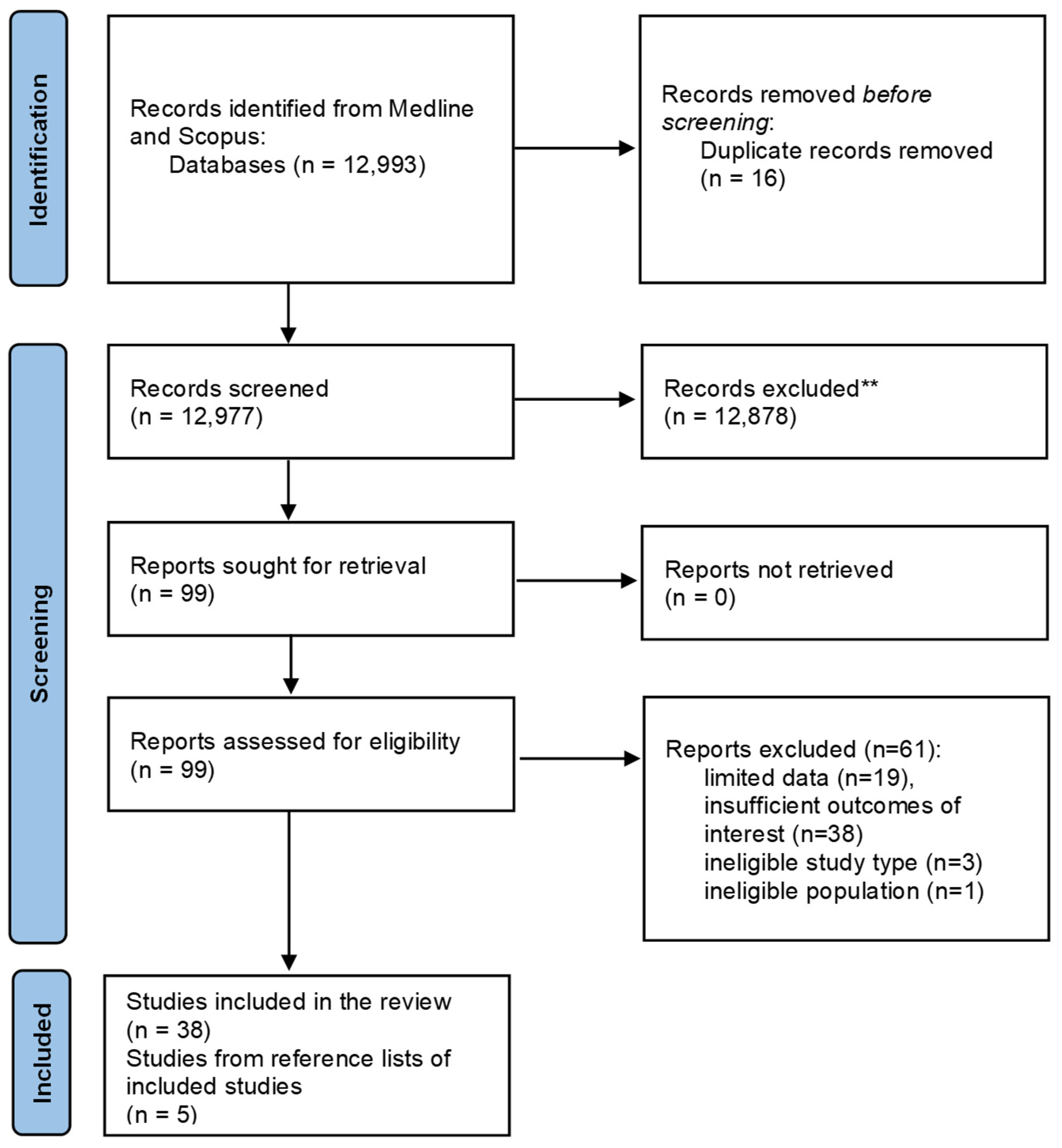
BACKGROUND: Genetic and genomic literacy is pivotal in empowering cancer patients and citizens to navigate the complexities of omics sciences, resolve misconceptions surrounding clinical research and genetic/genomic testing, and make informed decisions about their health. In a fast-evolving scenario where routine testing has become widespread in healthcare, this scoping review aimed to identify current literacy and knowledge gaps among cancer patients and citizens on matters related to genetics and genomics. METHODS: Adhering to the PRISMA framework, the review included 43 studies published between January 2018 and June 2024, which evaluated the understanding of genetics and genomics among cancer patients, caregivers, and citizens. RESULTS: Although the selected studies had significant heterogeneity in populations and evaluation tools, our findings indicate inadequate literacy levels, with citizens displaying lower proficiency than cancer patients and caregivers. The review highlighted consistent knowledge gaps in understanding the genetic and genomic underpinnings of diseases, encompassing misconceptions about mutation types and inheritance patterns, limited awareness of available genetic testing options, and difficulties in interpreting test results. Ethical and privacy concerns and the psychological impact of genetic testing were also common, highlighting the imperative need for effective communication between healthcare providers and patients. CONCLUSIONS: Given the dynamic nature of genomic science, the review underscores the need for continuously evolving educational programs tailored to diverse populations. Our findings could guide the development of educational resources addressed explicitly to cancer patients, caregivers, and the lay public.
Keywords:
Background
Methods
Study Selection
Data Extraction and Presentation
Results
Study Characteristics
Results on Genetic and Oncogenomic Literacy
A—Cancer Patients and/or Survivors
B—Cancer Patients and Caregivers (mixed results)
C—Caregivers and Family Members
D—Citizens
Factors Influencing the Level of Genetics/Genomics Knowledge
Discussion
Strengths and Limitations
Conclusions
Funding
Acknowledgements
Conflicts of Interest
References
- Botham, J.; Shilling, V.; Jones, J. Patient and public understanding of the concept of ‘personalised medicine’ in relation to cancer treatment: a systematic review. Futur. Heal. J. 2021, 8, e703–e708, . [CrossRef]
- Gambardella, V.; Tarazona, N.; Cejalvo, J.M.; Lombardi, P.; Huerta, M.; Roselló, S.; Fleitas, T.; Roda, D.; Cervantes, A. Personalized Medicine: Recent Progress in Cancer Therapy. Cancers 2020, 12, 1009, . [CrossRef]
- Zimani, A.N.; Peterlin, B.; Kovanda, A. Increasing Genomic Literacy Through National Genomic Projects. Front. Genet. 2021, 12, . [CrossRef]
- Sørensen, K.; Brand, H. Health Literacy: The Essential Catalyst for the Responsible and Effective Translation of Genome-Based Information for the Benefit of Population Health. Public Heal. Genom. 2011, 14, 195–200, . [CrossRef]
- Calabrò, G.E.; Sassano, M.; Boccia, S. Citizens’ Literacy in Genomics: A Delphi Survey of Multidisciplinary Experts in the Field. Genes 2022, 13, 498, . [CrossRef]
- Dressler, L.G.; Jones, S.S.; Markey, J.M.; Byerly, K.W.; Roberts, M.C. Genomics Education for the Public: Perspectives of Genomic Researchers and ELSI Advisors. Genet. Test. Mol. Biomarkers 2014, 18, 131–140, . [CrossRef]
- Gupta, A.; A Cafazzo, J.; Ijzerman, M.J.; Swart, J.F.; Vastert, S.; Wulffraat, N.M.; Benseler, S.; Marshall, D.; Yeung, R.; Twilt, M. Genomic Health Literacy Interventions in Pediatrics: Scoping Review. J. Med Internet Res. 2021, 23, e26684, . [CrossRef]
- Sherburn, I.A.; Finlay, K.; Best, S. How does the genomic naive public perceive whole genomic testing for health purposes? A scoping review. Eur. J. Hum. Genet. 2022, 31, 35–47, . [CrossRef]
- Ha, V.T.D.; Frizzo-Barker, J.; Chow-White, P. Adopting clinical genomics: a systematic review of genomic literacy among physicians in cancer care. BMC Med Genom. 2018, 11, 1–19, . [CrossRef]
- Lea, D.; Kaphingst, K.; Bowen, D.; Lipkus, I.; Hadley, D. Communicating Genetic and Genomic Information: Health Literacy and Numeracy Considerations. Public Heal. Genom. 2010, 14, 279–289, . [CrossRef]
- Peterson, E.B.; Chou, W.-Y.S.; Gaysynsky, A.; Krakow, M.; Elrick, A.; Khoury, M.J.; A Kaphingst, K. Communication of cancer-related genetic and genomic information: A landscape analysis of reviews. Transl. Behav. Med. 2018, 8, 59–70, . [CrossRef]
- Liberati, A.; Altman, D.G.; Tetzlaff, J.; Mulrow, C.; Gotzsche, P.C.; A Ioannidis, J.P.; Clarke, M.; Devereaux, P.J.; Kleijnen, J.; Moher, D. The PRISMA statement for reporting systematic reviews and meta-analyses of studies that evaluate healthcare interventions: explanation and elaboration. BMJ 2009, 339, b2700–b2700, . [CrossRef]
- Aizuddin AN, Syed Rusli SAS, Ramdzan AR, Syed Omar SA, Mahmud Z, Abdul Latiff Z, et al. Willingness to Pay for Cancer Genetic Testing in a Tertiary Healthcare Centre. IIUM Medical Journal Malaysia. 2021;20(3):5-12.
- Butow, P.; Napier, C.; Campbell, R.; Bartley, N.; Best, M.; Ballinger, M. Validation of the Knowledge of Genome Sequencing (KOGS) scale in cancer patients. Patient Educ. Couns. 2022, 105, 3110–3115, . [CrossRef]
- Makhnoon, S.; Bowen, D.J.; Shirts, B.H.; Fullerton, S.M.; Meischke, H.W.; Larson, E.B.; Ralston, J.D.; Leppig, K.; Crosslin, D.R.; Veenstra, D.; et al. Relationship between genetic knowledge and familial communication of CRC risk and intent to communicate CRCP genetic information: insights from FamilyTalk eMERGE III. Transl. Behav. Med. 2021, 11, 563–572, . [CrossRef]
- Wing, S.E.; Hu, H.; Lopez, L.; Solomon, I.; Shen, J.; Raquel, C.; Sur, M.; Chao, J.; Cristea, M.; Fakih, M.; et al. Recall of Genomic Testing Results Among Patients with Cancer. Oncol. 2021, 26, e2302–e2305, . [CrossRef]
- Anderson, E.C.; DiPalazzo, J.; Edelman, E.; Helbig, P.; Reed, K.; Miesfeldt, S.; Thomas, C.; Lucas, F.L.; Fenton, A.T.H.R.; Antov, A.; et al. Patients' Expectations of Benefits From Large-Panel Genomic Tumor Testing in Rural Community Oncology Practices. JCO Precis. Oncol. 2021, 5, 1554–1562, . [CrossRef]
- Roth, J.A.; Trivedi, M.S.; Gray, S.W.; Patrick, D.L.; Delaney, D.M.; Watabayashi, K.; Litwin, P.; Shah, P.; Crew, K.D.; Yee, M.; et al. Patient Knowledge and Expectations About Return of Genomic Results in a Biomarker-Driven Master Protocol Trial (SWOG S1400GEN). JCO Oncol. Pr. 2021, 17, e1821–e1829, . [CrossRef]
- Roberts, J.S.; Gornick, M.C.; Le, L.Q.; Bartnik, N.J.; Zikmund-Fisher, B.J.; Chinnaiyan, A.M.; for the MI-ONCOSEQ Study team Next-generation sequencing in precision oncology: Patient understanding and expectations. Cancer Med. 2019, 8, 227–237, . [CrossRef]
- Adams, E.J.; Asad, S.; Reinbolt, R.; Collier, K.A.; Abdel-Rasoul, M.; Gillespie, S.; Chen, J.L.; Cherian, M.A.; Noonan, A.M.; Sardesai, S.; et al. Metastatic breast cancer patient perceptions of somatic tumor genomic testing. BMC Cancer 2020, 20, 1–11, . [CrossRef]
- Mullally, W.J.; Keane, F.; Nolan, A.; Grogan, L.; Breathnach, O.S.; Hennessy, B.T.; Collins, D.C.; Morris, P.G. Lack of familiarity with genetic testing among patients in Ireland with Cancer. Ir. J. Med Sci. (1971 -) 2021, 190, 547–553, . [CrossRef]
- Gornick, M.C.; Kurian, A.W.; An, L.C.; Fagerlin, A.; Jagsi, R.; Katz, S.J.; Hawley, S.T. Knowledge regarding and patterns of genetic testing in patients newly diagnosed with breast cancer participating in the iCanDecide trial. Cancer 2018, 124, 4000–4009, . [CrossRef]
- Pozzar, R.A.; Hong, F.; Xiong, N.; Stopfer, J.E.; Nayak, M.M.; Underhill-Blazey, M. Knowledge and psychosocial impact of genetic counseling and multigene panel testing among individuals with ovarian cancer. Fam. Cancer 2022, 21, 35–47, . [CrossRef]
- Shin, W.; Jeong, G.; Son, Y.; Seo, S.-S.; Kang, S.; Park, S.-Y.; Lim, M.C. The Knowledge and Attitude of Patients Diagnosed with Epithelial Ovarian Cancer towards Genetic Testing. Int. J. Environ. Res. Public Heal. 2021, 18, 2312, . [CrossRef]
- Underhill-Blazey, M.; Stopfer, J.; Chittenden, A.; Nayak, M.M.; Lansang, K.; Lederman, R.; Garber, J.; Gundersen, D.A. Development and testing of the KnowGene scale to assess general cancer genetic knowledge related to multigene panel testing. Patient Educ. Couns. 2019, 102, 1558–1564, . [CrossRef]
- Dehar, N.; Abedin, T.; Tang, P.; Bebb, G.; Cheung, W.Y. A Comparison of Patients’ and Physicians’ Knowledge and Expectations Regarding Precision Oncology Tests. Curr. Oncol. 2022, 29, 9916–9927, . [CrossRef]
- McCuaig, J.M.; Thain, E.; Malcolmson, J.; Keshavarzi, S.; Armel, S.R.; Kim, R.H. A Comparison of Patient-Reported Outcomes Following Consent for Genetic Testing Using an Oncologist- or Genetic Counselor-Mediated Model of Care. Curr. Oncol. 2021, 28, 1459–1471, . [CrossRef]
- Bartley, N.; Best, M.; Jacobs, C.; Juraskova, I.; Newson, A.J.; Savard, J.; Meiser, B.; Ballinger, M.L.; Thomas, D.M.; Biesecker, B.; et al. Cancer patients’ views and understanding of genome sequencing: a qualitative study. J. Med Genet. 2020, 57, 671–676, . [CrossRef]
- Napier, C.E.; Davies, G.; Butow, P.N.; Schlub, T.E.; Best, M.C.; Bartley, N.; Juraskova, I.; Meiser, B.; Tucker, K.M.; Biesecker, B.B.; et al. Cancer patient knowledge about and behavioral intentions after germline genome sequencing. Patient Educ. Couns. 2021, 105, 707–718, . [CrossRef]
- Liang, M.I.; Wong, D.H.; Walsh, C.S.; Farias-Eisner, R.; Cohen, J.G. Cancer Genetic Counseling and Testing: Perspectives of Epithelial Ovarian Cancer Patients and Gynecologic Oncology Healthcare Providers. J. Genet. Couns. 2018, 27, 177–186, . [CrossRef]
- Davies, G.; Butow, P.; Napier, C.E.; Bartley, N.; Juraskova, I.; Meiser, B.; Ballinger, M.L.; Thomas, D.M.; Schlub, T.E.; Best, M.C. Advanced Cancer Patient Knowledge of and Attitudes towards Tumor Molecular Profiling. Transl. Oncol. 2020, 13, 100799, . [CrossRef]
- Best MC, Bartley N, Jacobs C, Juraskova I, Goldstein D, Newson AJ, et al. Patient perspectives on molecular tumor profiling: “Why wouldn’t you?”. BMC Cancer. 2019;19(1):753.
- Marron, J.M.; Cronin, A.M.; DuBois, S.G.; Glade-Bender, J.; Kim, A.; Crompton, B.D.; Meyer, S.C.; Janeway, K.A.; Mack, J.W. Duality of Purpose: Participant and Parent Understanding of the Purpose of Genomic Tumor Profiling Research Among Children and Young Adults With Solid Tumors. JCO Precis. Oncol. 2019, 3, 1–17, . [CrossRef]
- Underhill-Blazey, M.; Blonquist, T.; Chittenden, A.; Pozzar, R.; Nayak, M.; Lansang, K.; Hong, F.; Garber, J.; Stopfer, J.E. Informing models of cancer genetic care in the era of multigene panel testing with patient-led recommendations. J. Genet. Couns. 2021, 30, 268–282, . [CrossRef]
- Park JS, Shin S, Lee YJ, Lee ST, Nam EJ, Han JW, et al. Implication and Influence of Multigene Panel Testing with Genetic Counseling in Korean Patients with BRCA1/2 Mutation-Negative Breast Cancer. Cancer Res Treat. 2022;54(4):1099-110.
- Gómez-Trillos, S.; Sheppard, V.B.; Graves, K.D.; Song, M.; Anderson, L.; Ostrove, N.; Lopez, K.; Campos, C.; Gonzalez, N.; Hurtado-De-Mendoza, A. Latinas’ knowledge of and experiences with genetic cancer risk assessment: Barriers and facilitators. J. Genet. Couns. 2019, 29, 505–517, . [CrossRef]
- Frost, C.J.; Andrulis, I.L.; Buys, S.S.; Hopper, J.L.; John, E.M.; Terry, M.B.; Bradbury, A.; Chung, W.K.; Colbath, K.; Quintana, N.; et al. Assessing patient readiness for personalized genomic medicine. J. Community Genet. 2018, 10, 109–120, . [CrossRef]
- Hamilton, J.G.; Long, J.M.; Brandt, A.C.; Brower, J.; Symecko, H.; Salo-Mullen, E.E.; Christian, S.N.; Harstad, T.; Couch, F.J.; Garber, J.E.; et al. Patients’ Medical and Psychosocial Experiences After Detection of a CDH1 Variant With Multigene Panel Testing. JCO Precis. Oncol. 2019, 3, 1–14, . [CrossRef]
- Robles-Rodriguez, E.; Houser, L.; Sanchez, B.; Ormerod, C.; Washburn, S.; Oertle, S.K.; Jerome-D'Emilia, B. Women's Knowledge of Genomic Testing and Precision Medicine in Breast Cancer Treatment Decision-Making.. 2024, 51, 199–208.
- Wang, H.; Chen, L.-S.; Hsiao, H.-Y.; Hsiao, S.C.; Han, T.; Chang, E.; Assoumou, B.; Wang, J.H.-Y. Chinese American and Non-Hispanic White Breast Cancer Patients’ Knowledge and Use of BRCA Testing. Int. J. Environ. Res. Public Heal. 2023, 20, 3384, . [CrossRef]
- Pramanik, R.; Vats, S.; Mitra, S.; Deo, S.; Kumar, L.; Gogia, A.; Khurana, S.; Batra, A. Assessment of Knowledge and Attitude of Breast and Ovarian Cancer Patients Regarding Hereditary Breast-Ovarian Cancer Syndrome at a Tertiary Cancer Institute: A Cross-Sectional Observational Study. Indian J. Med Paediatr. Oncol. 2023, 45, 028–034, . [CrossRef]
- Johnson, L.; Sykes, A.D.; Lu, Z.; Valdez, J.M.; Gattuso, J.; Gerhardt, E.; Hamilton, K.V.; Harrison, L.W.; Hines-Dowell, S.J.; Jurbergs, N.; et al. Speaking genomics to parents offered germline testing for cancer predisposition: Use of a 2-visit consent model. Cancer 2019, 125, 2455–2464, . [CrossRef]
- Bon, S.B.B.; Wouters, R.H.P.; Hol, J.A.; Jongmans, M.C.J.; Heuvel-Eibrink, M.M.v.D.; Grootenhuis, M.A. Parents' experiences with large-scale sequencing for genetic predisposition in pediatric renal cancer: A qualitative study. Psycho-Oncology 2022, 31, 1692–1699, . [CrossRef]
- Xiao, W.; Ji, X.; Ye, H.; Zeng, H.; Gao, Y.; Chen, R.; Chen, X.; Mao, Y.; Yang, H. Parent Knowledge of Screening and Genetic Testing in Retinoblastoma. J. Ophthalmol. 2020, 2020, 1–7, . [CrossRef]
- Puryear, L.; Downs, N.; Nevedal, A.; Lewis, E.T.; Ormond, K.E.; Bregendahl, M.; Suarez, C.J.; David, S.P.; Charlap, S.; Chu, I.; et al. Patient and provider perspectives on the development of personalized medicine: a mixed-methods approach. J. Community Genet. 2017, 9, 283–291, . [CrossRef]
- Guo, F.; Hirth, J.M.; Fuchs, E.L.; Cofie, L.E.; Brown, V.; Kuo, Y.-F.; Fernandez, M.E.; Berenson, A.B. Knowledge, Attitudes, Willingness to Pay, and Patient Preferences About Genetic Testing and Subsequent Risk Management for Cancer Prevention. J. Cancer Educ. 2022, 37, 362–369, . [CrossRef]
- Saya, S.; McIntosh, J.G.; Winship, I.M.; Milton, S.; Clendenning, M.; Kyriakides, M.; Oberoi, J.; Buchanan, D.D.; Jenkins, M.A.; Emery, J.D. Informed choice and attitudes regarding a genomic test to predict risk of colorectal cancer in general practice. Patient Educ. Couns. 2021, 105, 987–995, . [CrossRef]
- Krakow, M.; Ratcliff, C.L.; Hesse, B.W.; Greenberg-Worisek, A.J. Assessing Genetic Literacy Awareness and Knowledge Gaps in the US Population: Results from the Health Information National Trends Survey. Public Heal. Genom. 2017, 20, 343–348, . [CrossRef]
- A Metcalfe, S.; Hickerton, C.; Savard, J.; Terrill, B.; Turbitt, E.; Gaff, C.; Gray, K.; Middleton, A.; Wilson, B.; Newson, A.J. Australians' views on personal genomic testing: focus group findings from the Genioz study. Eur. J. Hum. Genet. 2018, 26, 1101–1112, . [CrossRef]
- Horrow, C.; Pacyna, J.E.; Sutton, E.J.; Sperry, B.P.; Breitkopf, C.R.; Sharp, R.R. Assessing optimism and pessimism about genomic medicine: Development of a genomic orientation scale. Clin. Genet. 2019, 95, 704–712, . [CrossRef]
- Alvord, T.W.; Marriott, L.K.; Nguyen, P.T.; Shafer, A.; Brown, K.; Stoller, W.; Volpi, J.L.; Vandehey-Guerrero, J.; Ferrara, L.K.; Blakesley, S.; et al. Public perception of predictive cancer genetic testing and research in Oregon. J. Genet. Couns. 2020, 29, 259–281, . [CrossRef]
- Fogleman, A.J.; Zahnd, W.E.; Lipka, A.E.; Malhi, R.S.; Ganai, S.; Delfino, K.R.; Jenkins, W.D. Knowledge, attitudes, and perceived barriers towards genetic testing across three rural Illinois communities. J. Community Genet. 2019, 10, 417–423, . [CrossRef]
- Oberg, J.A.; Ruiz, J.; Ali-Shaw, T.; Schlechtweg, K.A.; Ricci, A.; Kung, A.L.; Chung, W.K.; Appelbaum, P.S.; Bender, J.L.G.; Levine, J.M. Whole-Genome and Whole-Exome Sequencing in Pediatric Oncology: An Assessment of Parent and Young Adult Patient Knowledge, Attitudes, and Expectations. JCO Precis. Oncol. 2018, 2, 1–11, . [CrossRef]
- A Hill, J.; Gedleh, A.; Lee, S.; A Hougham, K.; Dimaras, H. Knowledge, experiences and attitudes concerning genetics among retinoblastoma survivors and parents. Eur. J. Hum. Genet. 2018, 26, 505–517, . [CrossRef]
- Stallings, S.C.; Richmond, J.; Canedo, J.R.; Beard, K.; Bonnet, K.; Schlundt, D.G.; Wilkins, C.H.; Aldrich, M.C. Assessing patient-level knowledge of precision medicine in a community health center setting. J. Community Genet. 2023, 14, 197–210, . [CrossRef]
- Unger, J.M.; Cook, E.; Tai, E.; Bleyer, A. The Role of Clinical Trial Participation in Cancer Research: Barriers, Evidence, and Strategies. Am. Soc. Clin. Oncol. Educ. Book 2016, 35, 185–198, . [CrossRef]
- Unger, J.M.; Hershman, D.L.; Till, C.; Minasian, L.M.; Osarogiagbon, R.U.; E Fleury, M.; Vaidya, R. “When Offered to Participate”: A Systematic Review and Meta-Analysis of Patient Agreement to Participate in Cancer Clinical Trials. JNCI J. Natl. Cancer Inst. 2020, 113, 244–257, . [CrossRef]
- Jansen, T.; Rademakers, J.; Waverijn, G.; Verheij, R.; Osborne, R.; Heijmans, M. The role of health literacy in explaining the association between educational attainment and the use of out-of-hours primary care services in chronically ill people: a survey study. BMC Heal. Serv. Res. 2018, 18, 1–13, . [CrossRef]
- Jaya, H.; Matusin, S.N.I.; Mustapa, A.; Abdullah, M.S.; Hamid, M.R.W.H.A. Public knowledge of and attitudes toward genetics and genetic testing in Brunei Darussalam. Front. Genet. 2023, 14, . [CrossRef]
- Hong, S.J.; Biesecker, B.; Ivanovich, J.; Goodman, M.; Kaphingst, K.A. Factors affecting breast cancer patients' need for genetic risk information: From information insufficiency to information need. J. Genet. Couns. 2019, 28, 543–557, . [CrossRef]

| Author, Year | Knowledge of general genetic/genomic concepts | Knowledge of genetic/genomic concepts related to cancer | Knowledge of genetic/genomic testing |
|---|---|---|---|
| Aizuddin et al., 2021 [13] | N/A | High score: 41.4% (Score for high: 6-10) |
50.6% scored high (Score for high: 6-10) |
| Butow et al., 2022 [14] | N/A | Mean score: 47.9 % (SD = 30.1 %, n = 261) | N/A |
| Makhnoon et al., 2021 [15] | N/A | N/A | Average score: 48.2% (10.6 of 22 total possible points) |
| Wing et al., 2021 [16] | N/A | Average correct questions: 5 (SD = 2) out of 9 | Average correct questions: 10 (SD = 5) out of 19 |
| Anderson et al., 2021 [17] | N/A | N/A | 48% correct answers (SD 31%) |
| Roth et al., 2021 [18] | N/A | N/A | The proportion providing correct answers to these questions was moderate |
| Roberts et al., 2019 [19] | N/A | N/A | Average score of 5.3 (SD = 0.99) out of 6 items (88% correct answers) |
| Adams et al., 2020 [20] | Mean score of 0.72 (range: 0–1) | N/A | N/A |
| Mullally et al., 2021 [21] | N/A | N/A | 58% (n= 49) declared little or no knowledge |
| Gornick et al., 2018 [22] | N/A | Low level: 29.8% correct answers | High level: 72.49%-89.20% correct for each question |
| Pozzar et al. 2022 [23] | N/A | Mean score: 11.9 (SD = 3.5) out of 19 | N/A |
| Shin et al., 2021 [24] | N/A | N/A | Mean score: 6 (range of 0–11) |
| Underhill-Blazey et al., 2021 [34] | N/A | Mean score: 12.3 (SD 3.4) out of 19 / on average participants answered 63% of questions correctly | N/A |
| Park et al., 2022 [35] | N/A | N/A | Mean score: 66.9 (SD 21.7) (range 0-100) |
| Marron et al., 2019 [33] | N/A | 4 participants had high genetic knowledge and 5 had low | N/A |
| Underhill-Blazey et al., 2019 [25] | N/A | Mean knowledge score:10 (SD 3) (range 0–16) | N/A |
| Dehar et al., 2022 [26] | N/A | Moderate | Moderate to high |
| McCuaig et al., 2021 [27] | N/A | N/A | Mean score: 7.8 (SD 2.1) (range 0-10) |
| Bartley et al., 2020 [28] | N/A | N/A | 85% of participants acknowledged that they did not fully understand or were uncertain about what genome sequencing is |
| Napier et al., 2022 [29] | N/A | N/A | Mean score: 45% (SD 25) |
| Liang et al., 2018 [30] | N/A | Moderate | High level of knowledge |
| Davies et al., 2020 [31] | N/A | N/A | Overall, poor to moderate knowledge with an average correct response score of 43% (SD 20%) |
| Best et al., 2019 [32] | N/A | N/A | Participants’ understanding was generally poor |
| Gómez-Trillos et al., 2020 [36] | N/A | N/A | Low level of knowledge of genetic services |
| Frost et al., 2019 [37] | N/A | High level of familiarity with/interest in genetic | N/A |
| Hamilton et al., 2019 [38] | Mean score: 0.84 (SD 0.16) (range 0 to 1) |
N/A | N/A |
| Robles-Rodriguez et al., 2024 [39] | N/A | Confused about precision medicine, with 42% believing that genes have little effect on health | Participants understood the concept of genetic testing, but they had difficulties relating genomic testing to personalised medicine |
| Pramanik et al., 2024 [41] | N/A | Mean score: 5.11 (SD 2.54) (range: 0-13) |
N/A |
| Wang et al., 2023 [40] | N/A | N/A | Mean score: 1.90 (SD = 1.48) (range 0–7) |
| Author, Year | Knowledge of general genetic/genomic concepts | Knowledge of genetic/genomic concepts related to cancer | Knowledge of genetic/genomic testing |
|---|---|---|---|
| Oberg et al., 2018 [53] | Mean score: 4.11 (SD 1.41) (range 0-7) | Mean score: 8.0 (SD 2.37) (range 0-12) | Mean score: 6.0 (SD 4.44) (range 0-16) |
| Hill et al., 2018 [54] | N/A | Variable (often limited) knowledge of retinoblastoma genetics | N/A |
| Stallings et al., 2023 [55] | N/A | Low familiarity ratings for precision medicine-related terms | N/A |
| Author, Year | Knowledge of genetic/genomic concepts related to cancer | Knowledge of genetic/genomic testing |
|---|---|---|
| Aizuddin et al., 2021 [13] | High: 39.4% (Score for high: 6-10) | High: 33.8% (Score for high: 6-10) |
| Johnson et al., 2019 [42] | Median percentage of total correct answers: 77.8% / 54% of the participants had 75%-100% correct answers | N/A |
| Bon et al., 2022 [43] | Parents faced difficulties grasping genetic concepts | N/A |
| Xiao et al., 2020 [44] | N/A | Median total score: 5 (range: −2–7) / Less than one-third parents (n = 37, 29.4%) correctly answered all 7 questions |
| Marron et al., 2019 [33] | 24 participants had high genetic knowledge and 8 had low | N/A |
| Napier et al., 2022 [29] | N/A | Mean knowledge score: 43% (25%) |
| Author, Year | Knowledge of general genetic/genomic concepts | Knowledge of genetic/genomic concepts related to cancer | Knowledge of genetic/genomic testing |
|---|---|---|---|
| Aizuddin et al., 2021 [13] | N/A | High: 19.2% (Score for high: 6-10) | High: 15.6% (Score for high: 6-10) |
| Puryear et al., 2017 [45] | Mean score: 6.6 ± 3.6/12 (Score range −5 to 12) | N/A | N/A |
| Guo et al., 2022 [46] | N/A | Low | N/A |
| Saya et al., 2022 [47] | N/A | N/A | 73% (95% CI: 65–80%) had adequate knowledge |
| Krakow et al., 2018 [48] | N/A | N/A | Moderate |
| Metcalfe et al., 2018 [49] | Low to moderate | N/A | Low |
| Horrow et al., 2019 [50] | N/A | N/A | Mean score: 8.1 (2.5), 0.0-11.0 |
| Alvord et al., 2020 [51] | N/A | N/A | Mean score: 1.90 (SD = 0.7), 0-4 |
| Fogleman et al., 2019 [52] | N/A | N/A | 69.0% were aware of genetic screening modalities for cancer |
Disclaimer/Publisher’s Note: The statements, opinions and data contained in all publications are solely those of the individual author(s) and contributor(s) and not of MDPI and/or the editor(s). MDPI and/or the editor(s) disclaim responsibility for any injury to people or property resulting from any ideas, methods, instructions or products referred to in the content. |
© 2024 by the authors. Licensee MDPI, Basel, Switzerland. This article is an open access article distributed under the terms and conditions of the Creative Commons Attribution (CC BY) license (http://creativecommons.org/licenses/by/4.0/).


