Preprint
Article

This version is not peer-reviewed.

ShapeBand: Design of Shape-changing Wristband with Soft Materials and Physiological Sensors for Anxiety Regulation

A peer-reviewed article of this preprint also exists.

Submitted:

21 December 2024

Posted:

23 December 2024

You are already at the latest version

Abstract

We introduce ShapeBand, a new shape-changing wristband designed for exploring multisensory and interactive anxiety regulation with soft materials and physiological sensing. Our approach takes a core principle of self-help psychotherapeutic intervention, aiming to help users to recognize anxiety triggers and engage in regulation with attentional distraction. We conducted user-centered design activities to iteratively refine our design requirements and delve into users’ rich experiences, preferences and feelings. With ShapeBand, we explored bidirectional and dynamic interaction flow in anxiety regulation and subjective factors influencing its use. Our findings suggest that integrating both active and passive modulations can significantly enhance user engagement for effective anxiety intervention. This study provides valuable insights into the future design of tangible anxiety-regulation interfaces that can be tailored to subjective feelings and individual needs.

Keywords: 
;  ;  

1. Introduction

Anxiety is a bodily response with experiencing feelings of worry, nervousness, and an increased level of alertness to possible threats. While mild anxiety is common and potentially beneficial [1,2], when moderate to severe anxiety becomes chronic and persists for a long period, it can transition from a typical reaction into a disorder [3,4]. In the absence of proper external regulation, individuals often resort to unhealthy coping mechanisms such as skin picking [5,6], which can further aggravate their condition [7]. Thus, it is crucial to have effective intervention for anxiety management. Existing interventions are categorized into pharmacological and non-pharmacological interventions [8], with the former eliciting more severe side effects, highlighting the promising potential of research into non-pharmacological methods.
Existing non-pharmacological methods can be either active or passive according to whether they are actively performed by the user [9,10]. Meditation and mindfulness are widely used as cognitive reappraisal methods of active regulation showing effectiveness in active regulation of anxiety [10,11]. Additionally, distraction and respiratory regulation can both be used to regulate anxiety through either active or passive ways [12]. Both ways have limitations. Active regulation requires self-management and proactive involvement [13], whereas passive regulation may lack consistency because of vague guidelines and reduced self-management [12,14].
Another essential factor in anxiety intervention is reminding the user [15]. This helps ensure that people are aware of their own state. This tends to assist the user to more suitably comprehend the anxiety triggers and can be applied as a motivation for active regulation. Biofeedback research in recent years has been aligned with its support on this [16]. A range of physiological sensors have been explored for physiological changes along with anxiety and other affective states, such as galvanic skin response (GSR) sensor, photoplethysmography (PPG) [17,18,19]. The physiological information can likewise be utilized as the switch-on signal of passive regulation to achieve instantaneous intervention effects [20]. Biofeedback to monitor and remind people is generally one-way augmentative feedback, where users reflect upon their physiological states through amplified feedback [21]. Nonetheless, biofeedback can also enable bidirectional, dynamic, and adaptive feedback that adjusts to the user's state and interaction [22]. Incorporating this into wearable devices portability [23,24] can help consistently monitor users’ states and remind users when needed, with their portability. In fact, wearables designed for emotional reminders and regulation exist, which employ technologies such as passive haptic and visual feedback [25,26,27], with wide acceptability [28]. However, these devices often lack bidirectional interactivity and there is a need to delve into factors that can influence the effectiveness of both active and passive methods.
To explore this, in this work, we create a new physical interface ShapeBand, a shape-changing wristband with physiological sensing, which can support bidirectional interaction with multisensory channels for anxiety regulation. We conduct a design workshop and subsequent iterations for prototyping. This process results in four shape-changing wristbands utilizing bidirectional active and passive ways, which are explored in a follow-up qualitative study. The active method involves users’ pressing a rebound silicone bubble to receive haptic feedback for mindfulness, distraction and behavioral change. The passive approach uses visual and tactile feedback from fluid flow into the wristband and heat generation to provide alerts, distraction, and respiratory regulation. With ShapeBand, a series of interactive sessions were performed, followed by semi-structured interviews contributing key insights for future research. This paper’s main contributions are:
  • ShapeBand: a shape-changing wristband iteratively designed with a user-centered design approach for exploring multisensory and interactive anxiety regulation.
  • Insights from a qualitative study into main design factors that affect anxiety regulation with both active and passive methods through the interface.

2. Related Work

2.1. Meditation, Mindfulness and Anxiety Regulation

Existing non-pharmacological anxiety regulation methods encompass various techniques, including behavioural therapy and physiological intervention, such as respiratory modulation [31,32,33]. These methods can be either active or passive forms based on whether the subject undergoing emotional regulation is actively engaged or not [10]. Cognitive reappraisal, meditation and mindfulness are both cognitive activities controlled by self-awareness [34,35], which fall under the category of active regulation [10,11]. Meditation is a form of psychological training aimed at enhancing emotional regulation through concentration [36]. This helps reduce anxiety reactions by training attention and fostering non-reactive processing of emotions. Meditators learn to observe and experience emotions without being overwhelmed by negative feelings [37]. In addition, positive thinking maintains a non-judgmental attitude toward current feelings and experiences in the context of anxiety regulation [38]. This practice requires users to consciously focus on the sensations of the present moment, such as breathing, heartbeat, or physical contact without deliberately altering them, thus preventing immersion or rumination on undesirable emotions [38,39]. Techniques that utilize tactile interfaces to promote positive thinking have demonstrated good results in anxiety regulation [40], while it requires practice over time [11].
Distraction and respiratory modulation are the two that can be applied both actively and passively [12]. Distraction effectively manages anxiety by redirecting focus from anxiety-inducing stimuli to non-threatening ones [41]. Different distraction techniques utilize tactile, visual, and auditory sensory channels to create a deviation in the user's attention [42]. However, this approach does not directly address physiological responses associated with anxiety episodes [44], which can affect to a certain level its overall efficacy in alleviating symptoms. Active distraction approaches are less intrusive for users and minimizes their cognitive burden [45]. On the other hand, passive distraction does not require the user to actively trigger [43,46]. Both modalities also exhibit impacts on the user's behavior, thought patterns and physiological states [47]. The sense of touch has a variety of physical and emotional properties, for example, small everyday actions such as tapping a shoulder can affect the way people feel and behave [48]. Distraction through visual and auditory channels are likewise active as well as passive through users' autonomous choices as well as passive acceptance [49]. Some existing findings indicate shifting attention solely to one sensory channel can significantly lower cognitive load while causing minimal distraction [50]. On the other hand, directing attention across multiple sensory channels often results in cognitive overload [51].
Another well-researched technique to manage anxiety is breathing adjusting, which has a dynamic, bidirectional link with users’ emotional states [52]. This is because regulating breathing increases parasympathetic nervous system activity and simultaneously reduces over-activation of the sympathetic nervous system, consequently reducing anxiety and stress levels [53]. With active breathing regulation, users can either consciously slow down their breathing rate or actively use external tools, such as visual guidance [54]. For the passive way, the phenomenon of autonomic respiratory entrainment is frequently applied, implying the gradual achievement of a common rhythm through the interaction of two interacting entities [55,56]. As an illustration, specific frequencies of haptic and visual feedback can subtly influence a user’s breathing and heart rate [57]. This unconscious adjustment of breathing has been proven to effectively manage emotions [58] and demands little cognitive resources [59]. Nevertheless, achieving desired results from altering breathing patterns usually requires consistent training and practice [52], indicating that relying solely on breathing regulation for anxiety relief may be relatively time-consuming. The effectiveness of active regulation methods depends on the user’s drive [13]. Passive methods are also limited due to the lack of clear guidance on how users perform [12]. It is important to investigate how two ways of regulation can be integrated for improving self-help regulation.

2.2. Potential Benefits of Shape-Changing Interfaces for Anxiety Regulation

Interactivity plays an important role in facilitating users’ self-regulation of emotional states [60]. Shape-changing interfaces is one of a kind, which can increase tangible interactivity. Such interfaces enhance the user experience through physical transformations such as changes in form, texture, and spatial configuration [30,61,62]. They can dynamically adjust their shapes in response to user input or environmental changes, using a variety of smart materials and actuators, such as stretchable structures, shape memory alloys, and self-heating modules [29]. Shape-changing interfaces can generate physical haptic feedback through form changes, allowing users to receive tactile information through senses such as touch and pressure. Simultaneously, these shape changes also provide visual information, enabling users to gather multi-channel cognitive input [30]. This can offer a more active approach to anxiety regulation.
Interestingly, shape-changing interfaces’ volumetric and textural changes in materials can not only produce different tactile but also visual effects [30]. These effects can be of use for promoting distraction and positive thinking, which is an essential part of anxiety regulation in which the user receives and processes information through different sensory channels [38,42]. Further, a shape-changing interface with rhythmic movements can act as a synergistic phenomenon to unconsciously regulate breath or distract [57,43]. This can potentially be combined with physiological sensing for multisensory biofeedback, dynamically responding to users’ emotional states [63], which has yet not been explored. All of this holds a great promise for a new interactive system for anxiety regulation.

2.3. Fabrication of Shape Changing Wristband

There exist a range of methods for building macroscopic objects, including subtractive, additive, and formative manufacturing [64]. Fabrication is a key to create deformation interfaces using soft materials. Materials form the foundation for deformation interfaces, which mechanically deform under direct or indirect electrical stimuli [65]. This research focuses on users’ physical interaction with an interface for feeling more comfortable and less anxious; thus, intuitively we make our shape-changing interface to be soft and non-intrusive for long-term use. Given this, the deformability of soft materials make them well-suited for the fabrication of shape-changing interfaces [65,66]. Common soft materials, including natural rubber, synthetic rubber, and polymer composites, exhibit good deformability [67]. Among these, silicone stands out for its excellent durability under high strain, allowing it to twist and stretch comfortably to fit different body parts. Further, many commercially available silicones are highly stable and biocompatible, even during prolonged skin contact [68,69]. It can be utilised in various manufacturing methods including direct additive manufacturing and injection molding.

3. ShapeBand: Design Approach

Figure 1 overviews the pipeline of this work, from our initial fabrication, design workshop for ShapeBand iteration to a follow-up qualitative study. To provide haptic feedback with its shape-changing capabilities, we took inspiration from the sensation of poking bubbles. This led to the use of a deformable and user-friendly soft silicone material to create the wristband, allowing for a more engaging and responsive tactile experience to aid in anxiety regulation.

3.1. Silicone Wristband Fabrication

Figure 1 overviews the pipeline of this work, from our initial fabrication, design workshop for ShapeBand iteration to a follow-up qualitative study. To provide haptic feedback with its shape-changing capabilities, we took inspiration from the sensation of poking bubbles. This led to the use of a deformable and user-friendly soft silicone material to create the wristband, allowing for a more engaging and responsive tactile experience to aid in anxiety regulation.
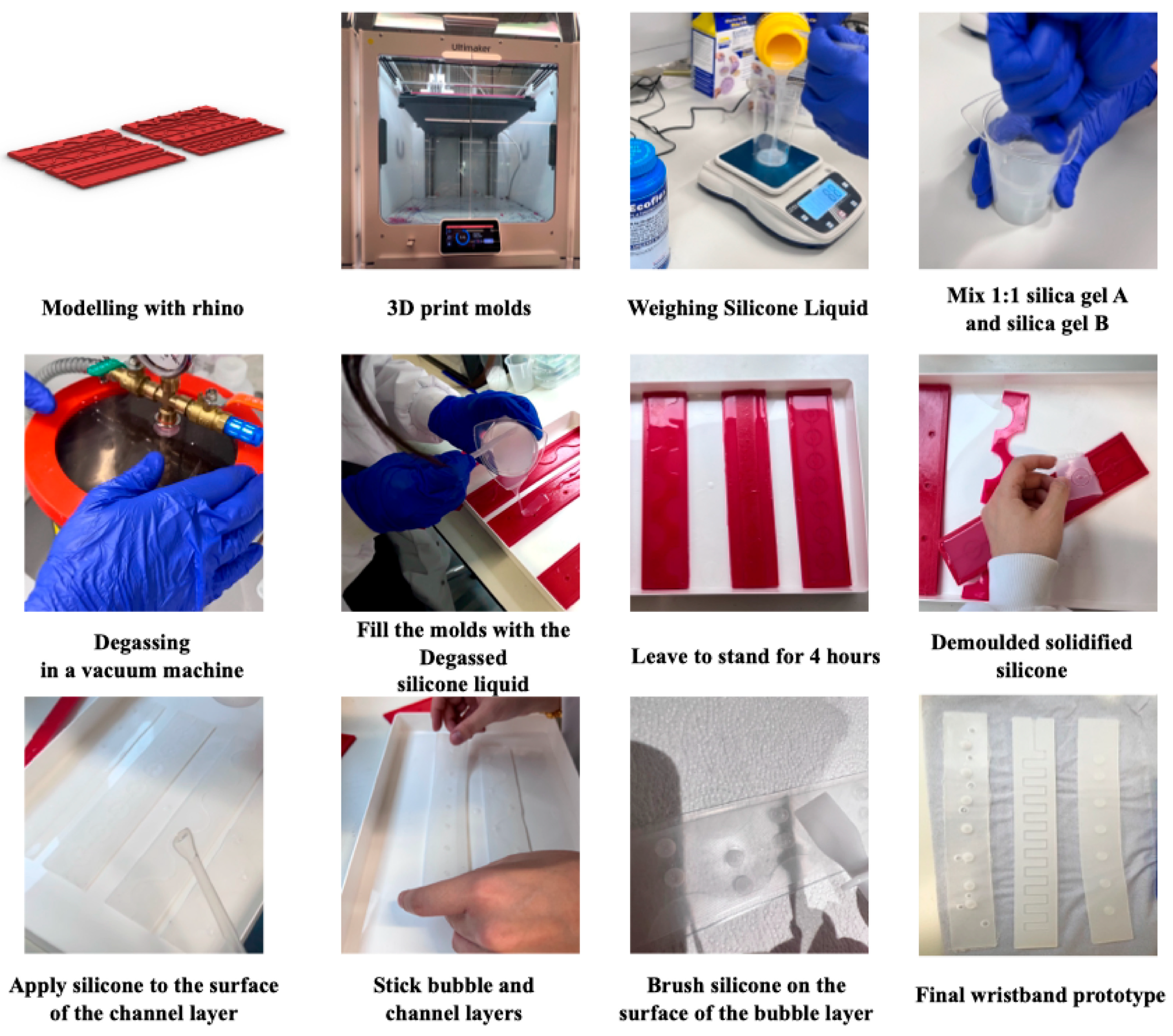
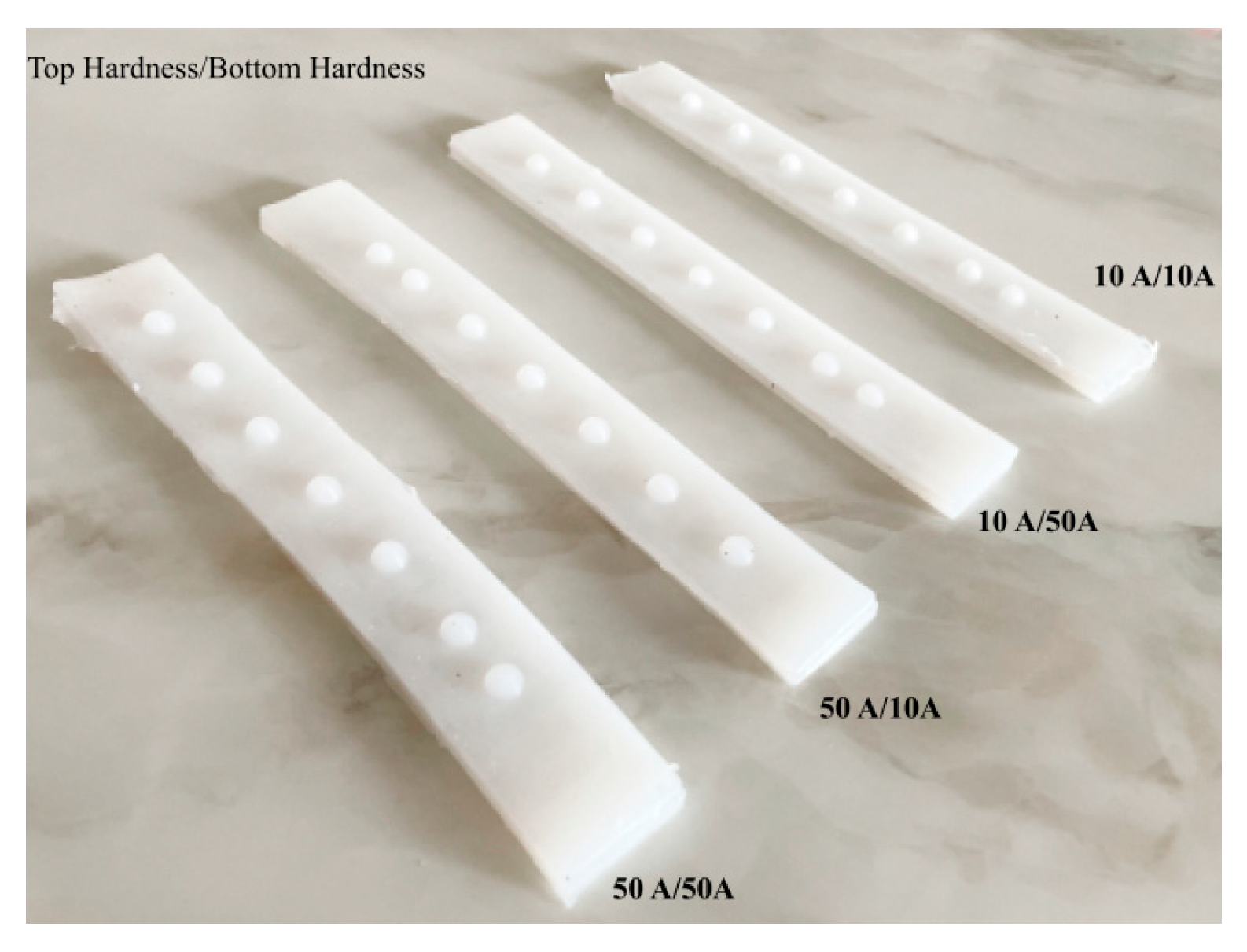
After some initial simple ergonomic low-fidelity modelling to ascertain the Shapeband dimensions, we designed the device in Rhino CAD in two sections - the lower liquid flow channel section and the upper bubble section. Negative moulds of these sections were then modeled and printed using a Ultimaker S5 3D Printer in PLA. The Ecoflex Silicone was prepared by manually mixing equal weights of uncured Part A and Part B, degassing in a vacuum chamber, careful pouring into the moulds, and leaving for 4+ hours to set. An additional brushed-on layer was found to enhance the visibility and strength of the bubbles when applied to the wristband's top surface. This additional step was incorporated as the final stage in the wristband production process to achieve improved results (see Figure 3 and Figure 4 for the wrist band fabrication processes and initial four wristbands).
Figure 2. Silicone wristbands fabrication process.
Preprints 143706 g002
Figure 3. Initial four wristbands for co-design.
Preprints 143706 g003
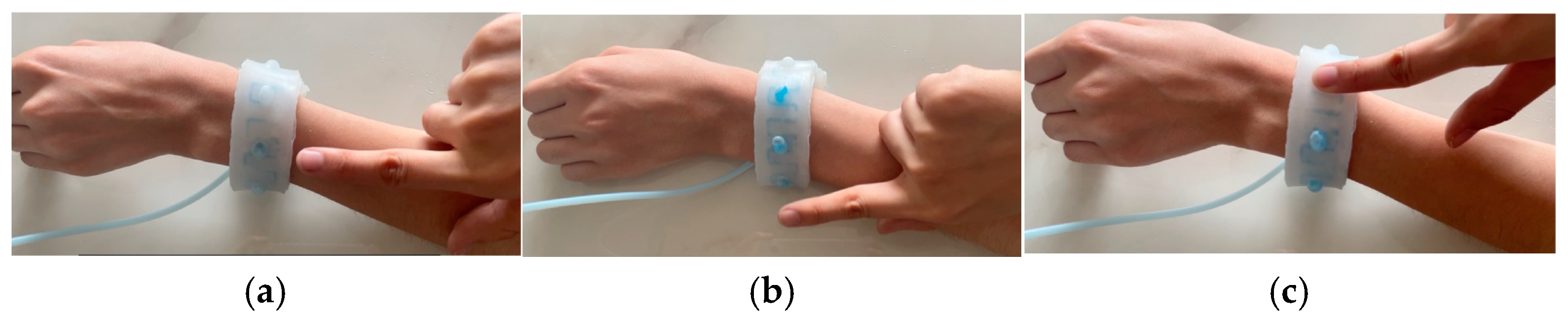
Figure 4. Initial wristband design: (a) Liquid-filled bubbles when anxiety level (b) Press bubbles to reduce anxiety (c) Drain the liquid from the bubble until it is empty.
Preprints 143706 g004

3.2. Design Workshop and Iteration

The initial design focuses on the interaction-induced deformation and self-driven dynamic deformation effects of the wristband's bubble-poke mechanism, as well as visual biofeedback. This integrates both active adjustment methods and passive reminder approaches to facilitate self-help psychotherapeutic interventions. The design outcome is based on a design workshop with 6 designers who have experiences with anxiety regulation, ensuring that the final design reflects user input and collaborative feedback for enhanced effectiveness in anxiety regulation.

3.2.1. Design Workshop to Iterate the Design

After completing physical validation of the fabrication process, we held a design workshop. We invited six participants (designers with anxiety regulation experiences) to this workshop to experience the prototype with different parameters and freely interact with the prototype after fabrication. After workshops, we further conducted semi-structured interviews with individual designers to understand their subjective experience. Voice record data were all transcribed and two independent researchers coded all transcription using a bottom-up inductive method and compared and iteratively revised and grouped into themes.

3.2.2. Results

Our analysis reveals, in general, feedback provided in the visual and haptic form were preferable among participants because they are easier to perceive and naturally integrate with the user's physical environment. Participants welcomed change-based feedback, such as shape changes after touch or colour changes over time as feedback, reminders. Also, designers highlighted that they would like to see these devices designed as more flexible wristband-type accessories. Overall, four major themes were found:
  • Theme 1: The form changing of the air bubbles in the centre due to the pressing action provides haptic feedback.
More than half of the participants (N = 5) highlighted that they preferred bubbles with a higher degree of hollowness because hollow bubbles produce a bouncing sensation when touching, providing more pleasure and sensory stimulation. This suggests that the shape-change resulting from this interaction assists the user to perceive haptic feedback.
  • Theme 2: Applicability of different changing mechanisms for anxiety regulation wearable devices.
The feedback mechanisms can be categorised as shape change, colour change, temperature change and sound change. In terms of shape change, four participants would have preferred that the bubble bounced back to its original shape after being pressed down again. This recovery from deformation would mean repeatability and higher usability.
When putting the liquid inside the prototype, one participant mentioned that it gives a cold sensation to the skin when the water enters the bubble. She suggested that such temperature change could become part of the feedback. When we questioned other participants about their views on temperature as a new form of feedback, they said there was not enough of a pronounced sense of this temperature haptic feedback to be viable. One participant would have liked some form of auditory feedback, such as pressing the switch of a desk lamp and a keyboard. Half of the participants (N = 3) however expressed concern that such feedback may compromise their privacy.
  • Theme 3: Haptic feedback is obtained by deforming the shape-changing interface with different movements.
Half of the participants’ (N = 3) initial interaction behaviors were to touch the bubble on the prototype, including pulling the bubble, pressing the bubble, and gently stroking the bubble. Another participant laid the prototype flat on a table and played it like a piano. On consideration of different participants existing habits, one who plays with worry beads and one who plays the piano, we realized that the individual user's existing behavioral habits would be projected onto the use of the prototype, turning it into an open space for interpretation.
  • Theme 4: Demonstrate different personal preferences when using shape-shifting wristbands.
In terms of wearing style, considering practicality, participants agreed that wristbands have flexible usage suitable for everyday wear. However, there exist two different wearing preferences. Five participants chose to wear the bubbles facing outwards so that when anxiety arose, they could be relieved by pressing on the bubbles. However, one participant chose to wear the bubbles facing inwards. She expressed that when the bubbles bulged, the touch was more direct like someone gently squeezing her wrist to remind her to relax and not be anxious.

3.2.3. Initial Design Phase Outcome.

Based on user feedback, we arrived at the initial design shown in Figure 4 - a wristband to help regulate anxiety during daily activities, such as when moving in public or interacting with others. In this initial design, the driver module of the wristband consisted of an Arduino and a GSR sensor, building on PhysioKit [70]. When the user's arousal level changes, the coloured liquid enters the interior of the wristband through the water channel and fill the hollow structure bubbles. This changing mechanism provides immediate visual biofeedback to users, allowing them to perceive and cope with anxiety more intuitively and take action. The biofeedback sensor monitors the user's emotional changes during the process of emptying the liquid by pressing the bubbles and is used to carry out changes in visual biofeedback, and when emptying is complete, it will be filled for the next cycle.

3.2.4. Final Design and Implementation

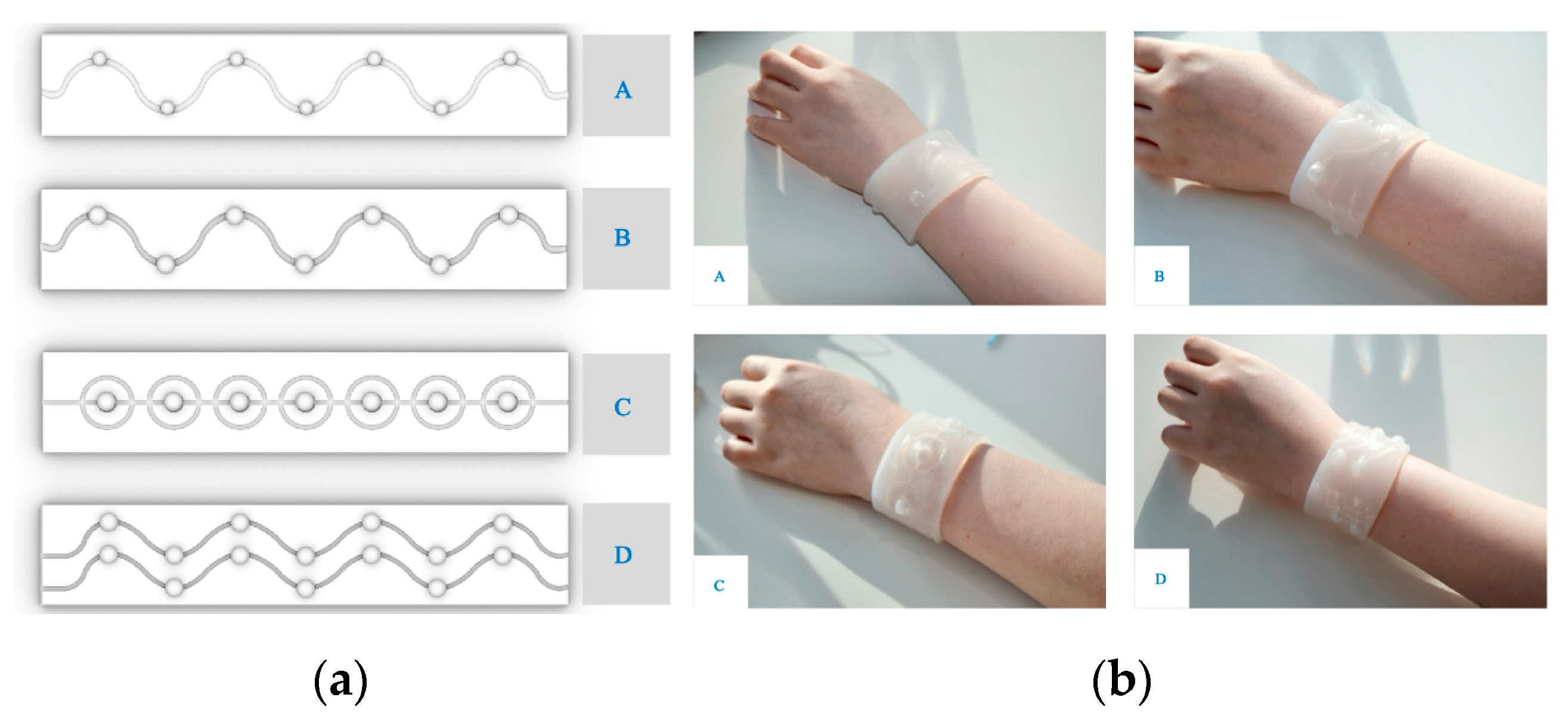
After completing the initial version of the wristband and incorporating feedback from design sessions and user testing, it was clear that the initial design - which only used an active adjustment method and a visual reminder - needed improvements. To enhance its effectiveness in regulating anxiety and explore additional features, we made iterative changes to the original design. These modifications included altering the wristband’s shape, adding a passive adjustment method, and introducing a tactile reminder. This new design builds upon the original concept but includes these enhancements to improve its functionality and user experience. To achieve this, four types were designed and produced in Figure 5. We incorporated different bubbles and channel shape changes, as well as incorporating the dynamic change of the liquid flow and a temperature sensor.
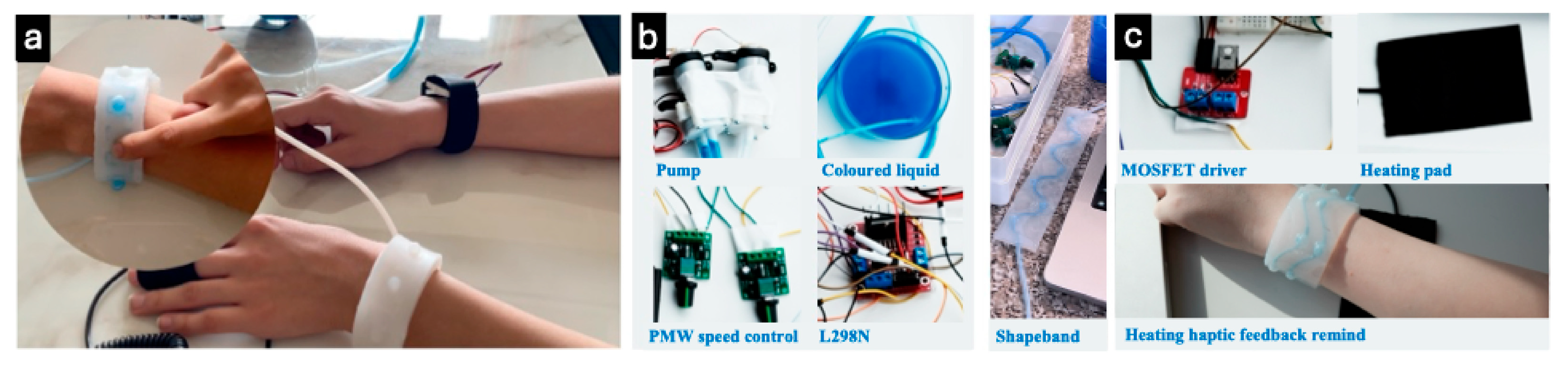
To achieve the effect of water flowing in the wristband at a certain frequency a water pump and an air pump are utilised and the l298n module is used for controlling the start and stop of these two pumps. Including an air pump and a water pump in the rotation would enable two different media, ie. air and liquid, to be alternately pumped into the channel and subsequently generate a rhythmic pulsation of water in the hose. In the course of testing, it was detected that the existing water and air pumps were running extremely fast, resulting in an excessive water flow rhythm. For achieving optimal speed control frequency, two PMW speed controllers were directly connected to the pumps, with overall system management handled by an Arduino Uno board. To monitor the user's mood and stress levels, a PPG sensor was employed to trigger water flow. Existing research indicates that a sudden spike in HR and a rapid drop in HRV could indicate anxiety sate [18] [71], which we implemented for this rapid prototyping. Nevertheless, for practical purposes, accurate HRV analysis relies on time-series data over a sufficiently long period, making it more suitable for long-term monitoring rather than immediate detection.
The Max30102 was employed in this device to control the start and stop of water and air pumps. Finally, as the water flow is designed to be utilised as a distraction while utilising a certain flow frequency to guide breathing, the frequency of the water flow was designed to be 12 times per minute, which is within a range of expected breathing rates of healthy individuals [72]. To accomplish the desired effect, the operation of the water and air pumps was regulated by a delay (time) heuristically set to 3800 milliseconds. For the subsequent study, a low range heating pad was exploited. The pad’s activation was managed by a MOSFET driver, which automatically adjusted the pad's power based on physiological anxiety signals detected by the PPG sensor. The final prototype is shown in Figure 6.
As result, the function of different shape-changing wristbands was designed with active and passive anxiety regulation methods employing active haptic feedback, passive respiratory rate regulation and multimodal approach to emotion visualisation. With the bubble surface changes on the wristbands, we aim to explore contributing factors on effectiveness in the next section.

4. Diving into ShapeBand: Interviews

With the final iterated prototype, we investigate whether the wristband could effectively modulate anxiety and identify the factors influencing anxiety regulation, with two major research questions: (a) how the shape changing biofeedback wristband affects anxiety regulation? (b) What design elements of the ShapeBand influence its effectiveness in alerting and regulating anxiety?

4.1. Interview Study

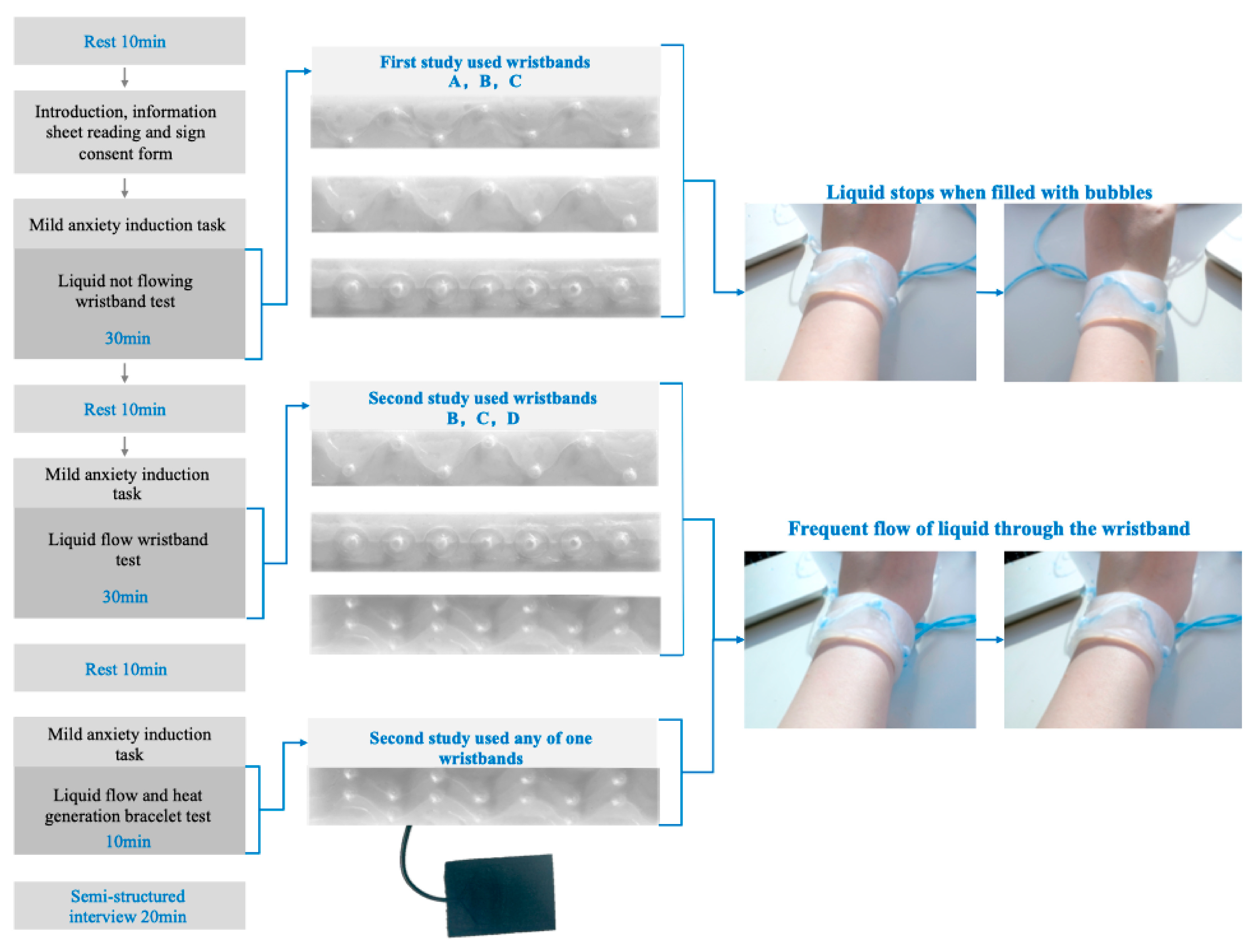
Based on our pilot, we applied the Stroop Color Word Conflict Test for mild anxiety induction - a method widely used for effectively inducing some form of stress and anxiety and mood fluctuations in participants [73]. The specific slight stress-inducing method utilised in this study is the task of correctly naming the true colour of the entire colour words presented. This study is categorised into three groups based on the factors under investigation, with each group comprising both emotion induction and regulation tasks, as summarized in Figure 7. To minimise ambient auditory noise, participants wore earplugs and took a 10-minute break between each set.
Regarding the first group, the study aimed to explore how the active method, along with varying tactile and visual feedback influenced anxiety regulation. To achieve this, wristbands A, B, and C, each featuring different bubble designs, were used in a randomized sequence to assess their effects on anxiety regulation. Following the modulation design of the wristbands, colored liquid filled the bubbles when stress was detected and halted once bubbles were filled. Participants interacted with each bubble design to experience various haptic feedback for the active method and passive attention-grabbing effects.
For the second group, wristbands B, C, and D were tested in a randomized sequence, flowing colored liquid at a preset frequency upon detecting adverse emotions by the PPG sensor in these wristbands. Participants first observed the water flow to examine the effectiveness of passive regulation, then actively interacted with the wristbands by pressing on the bubbles. The aim was to explore the combined effectiveness of passive and active regulation strategies and assess how visual feedback changes and multisensory integration impacted emotional regulation and alerting effects. The final liquid-flow wristband from the previous set, combined with the PPG sensor-controlled heating pad, was used to evaluate the effect of multisensory stimulation on attentional attraction, with pressure-induced vocabulary still varying. At the end of the study, participants took part in a semi-structured interview to provide qualitative insights. The detailed process of this study is outlined below.

4.2. Data Colleaction and Analysis

Semi-structured interviews were conducted in a serene environment with 16 participants. The study proto- col was approved by the University College London Interaction Centre ethics committee (ID Number: UCLIC/1920/006/Staff/Cho). The interviews focused on central themes with follow-up questions to gather detailed qualitative data. The collected data was transcribed by teams to ensure accuracy and anonymized for confidentiality.
Data analysis was conducted using a thematic analysis approach [74]. After transcription, a thorough review of each transcript was carried out. Open coding was then performed using a bottom-up approach, and Inter-rater Reliability Analysis was applied to ensure reliability, ultimately achieving a Cohen's Kappa value of 0.73. In cases of coding discrepancies, these were carefully reviewed and resolved by the researchers, who had undergone prior training to maintain consistency. Subsequently, using Nvivo, the codes were grouped into higher-level categories, and the thematic themes were iteratively refined through three stages of development.

5. Result

Analysis of the 16 individual transcripts resulted in the identification of six main themes and their associated subthemes.
  • Theme 1: Pros and cons of active and passive anxiety regulation methods.
In this study, three different active and passive approaches are investigated: active haptic feedback, passive visual feedback, and passive respiratory conditioning. The first theme explains the principles behind each conditioning method, how these methods are applied, and the limitations of each approach.
  • Theme 1.1: Active haptic feedback can help regulate anxiety through attentional distraction.
Most participants interacted with the silicone bubbles by actively pressing them: “This behaviour is very much reminiscent of some of the games I used to play as a child, some of the bubble wrap that was pressed, so I would just keep going and pressing all the air bubbles” (P12). Participants highlighted pressing the silicone bubbles presented unique haptic feedback while it produced positive attentional distraction, “When I press it, I feel that this thing is very fun, and then I feel I won’t be able to focus on the anxiety anymore, instead focusing on the bubble haptic feeling” (P1). This also reflects the fact that this type of tactile feedback brings the basis for positive thinking. As well as “pressing the bubble also lets me find something to pick, ... I will not want to go to pick my hands” (in regards to their hand-picking behaviour associated with anxiety) (P12).
  • Theme 1.2: Active haptic feedback is however limited by users’ intention, self-management, and the level of stimulus.
While the active haptic feedback presented a positive effect on anxiety regulation, it showed some limitations. One participant mentioned “I don’t think I will press it when feeling tired” (P9). This illustrates that pressing the bubbles requires some effort, and users can experience moments when they are too stressed or too tired, leading to an inability to press the bubbles effectively. P6 mentions “It feels like when you don’t just focus on that anxiety, so I have to keep pressing the bubbles.” Which reflects that changing the anxiety regulation method requires a certain degree of user action. Some participant reflected that “It’s that if he just singularly puts it into my hand, I wouldn’t necessarily think to press him if I didn’t look at it” (P14). This suggests that the proactive approach also relies on the user’s ability to self-manage emotions and the effectiveness and timeliness of the reminder method. This could suggest that the attention diversion provided by a single feedback method may lack sufficient stimulus to maintain the user’s attention for an extended period, leading to a reduced effect on anxiety regulation.
  • Theme 1.3: Anxiety relief through passive distraction and respiratory modulation supported by visual feedback
Firstly, the majority of participants expressed that the flow of water and shape-changes accordingly (as visual feedback as passive method) diverted their attention: “It's just fun, I think people pay attention to focus on things that move” (P10). These responses demonstrate the passive attraction and distraction effect of the water flow in the wristband on participants' attention. Regarding whether this attention attraction can regulate users' anxiety, P5 first shared her feelings about this type of regulation “It will, because the thing about watching the water flow in it distracts me, and it's not really related to the anxiety thing, so it's going to regulate the anxiety by distracting me.” This supports that this passive approach provided a visual means of diverting attention and moderating emotions. At the same time, some participants also mentioned the effect of this passive initiation on the regulation of breathing: “When the liquid comes in, I inhale, slow rhythm affecting my breathing” (P11) and “bubbles will have a sense of contraction. It's that the flow of liquid in the wristband will trigger the contraction of the bubbles, and one will involuntarily take a deep breath” (P16). This demonstrates the entrainment effect of passive visual feedback, which passively regulates the user's breathing rate to align with the water flow frequency.
  • Theme 1.4: Passive attentional shifts are stimulated by a single stimulus, lacking guidance and being time-consuming.
Some participants' responses also reflected some drawbacks of passive methods. P13 mentioned that “When I look at this wristband for a while, I'm just staring at one spot, and my vision isn't being processed. It still feels like I'm thinking about anxiety. Maybe if the color and frequency of the liquid changed a bit, it could hold my attention longer”. This indicates that passively attracting the user's attention through visual feedback (from the constant flow of liquid) may not be engaging enough to sustain attention diversion over an extended period. Regarding the effectiveness of breathing regulation, “It's probably more of an attraction to attention, I didn't pay much attention to my respiratory rate until you said it” (P4). Suggests that this passive regulation of breathing is less effective due to the lack of clear guidance. Moreover, “Unlike the immediate feedback you get from pressing the bubbles, you don't feel much of an effect on your breathing at first, and then it feels unconsciously synchronised later on after a longer period of time” (P7). Illustrating that, unlike active haptic feedback and the distraction provided by passive visual feedback, it takes a longer period to achieve effective anxiety regulation.
  • Theme 2: Roles of wristband information changes in unimodal feedback
This theme focuses on whether changes in each haptic or visual feedback of the wristband affect attentional distraction for anxiety regulation. It also examines whether alterations received by a single cognitive channel influence attentional attraction and distraction.
  • Theme 2.1: haptic feedback’s attentional distraction
When different sizes and numbers of silicone bubbles were used in the study for active haptic distraction, almost all participants reported that changes in bubble design produced different types of haptic feedback: “It's the big bubbles it's the feeling you get from pressing that's stronger and because the small bubbles don't feel like they're pressing something” (P2). The varying sizes of the bubbles resulted in different tactile sensations. Additionally, a participant stated, “More bubbles allow me to get more presses at the same time, whether it's one finger press or multiple” (P7). This shows that the number of bubbles also influences the haptic feedback experienced. Based on these differences in tactile feedback, participants similarly mentioned that “It still has an effect on regulating anxiety because it's tactile in a different way, and there's no way for me to divert my attention without too much obvious tactile feedback” (P12). Different types of haptic feedback affect the sensation that the user experiences when pressing the bubbles, with the wristband’s shape-changing design having a notable positive impact.
  • Theme 2.2: Visual Feedback and Timeliness of Anxiety Reminders
The wristband’s visual design also plays a crucial role in anxiety regulation by influencing the timeliness of reminders. Dynamic visual feedback, such as flowing liquid, was particularly effective in attracting attention. One participant shared, “In terms of me being able to realise that I'm anxious quicker than I could with that earlier pattern of not flowing” (P10). This suggests that dynamic visual changes provide more immediate reminders of the user’s anxious state compared to static designs.
Furthermore, the shape and size of visual elements, such as bubbles, affected their prominence and effectiveness. As one participant noted, “The reason these two elements play a stronger reminder role might be that they occupy a larger area on the bracelet, making them more noticeable” (P2). Another commented, “With the double bubble, there are more bubbles filled with water, which creates a more noticeable visual difference and attracts more attention” (P3). These insights underscore how design factors like size and movement influence the efficacy of visual reminders in prompting anxiety awareness.
  • Theme 2.3: Visual Design Variations and Their Impact on Anxiety Regulation
The specific visual configurations of the wristband, such as the flow of coloured liquid and channel shapes, also affect its anxiety regulation effectiveness. One participant noted, “There's a round one, and I feel like this one might be a little bit richer would just be more distracting because I'd keep looking at this blue liquid flowing in there” (P5). This highlights how more complex visual designs can enhance attentional distraction compared to simpler, monotonous patterns.
In addition to distraction, visual feedback also impacts respiratory regulation. A participant remarked, “This kind of more obvious bar-shaped this kind of more can guide the breath more, because the water flow in the inside is very smooth” (P3). This indicates that carefully designed visual elements can support breathing entrainment, enhancing anxiety regulation. These findings demonstrate how visual design not only influences distraction but also contributes to physiological regulation.
  • Theme 3: Interaction effects employing both active and passive adjustment methods
This theme explores combining active and passive methods of anxiety regulation in the design of wristbands, allowing the user to choose between using both methods together or alternately. This combined design provides users with more options for regulating their anxiety and enhances their overall experience.
Participants described feelings they experienced when using both approaches together: “I feel like the water flow makes me want to press the bubble more because there are moments when the bubble is filled with water and moments when it isn’t, creating a contrast” (P1). And “It might be that when I press the bubble, my finger affects the feeling of the water flow. The feedback is quite interesting. For instance, if there’s a single layer, it will be blocked, but if it’s a round shape, it may change the direction of the water flow, altering both the water and the bubbles. This makes the feedback a bit more interesting” (P5). Different designs of bubbles and channels produced varying effects when the user simultaneously pressed the bubbles and watched the water flow, providing interactive feedback.
Regarding the effect of this combination on attention grabbing, P6 mentioned “The fact that I can block it when you press it makes me feel good, and I actually feel like it takes my attention away from the anxiety.” Additionally, the interactions generated by these two methods reflected an unconscious guidance of the user's breathing: “Because pressing created some interaction, I concentrated more on watching the flow of the water. This made me not just passively find something to look at as I had done before, but actively focus on the rhythm, and my breathing became synchronized with it” (P13). The combination of active and passive approaches can direct the user's respiratory rate through distinct visual feedback and deep attention engagement. P2's perspective highlighted that this interaction also demonstrated better anxiety regulation: “The interaction between pressing the bubbles and the flow of water gives me a sense of play, as if I’m trying to catch the water as it flows by when I press the bubbles.” And P15 shared her experience “But when I press and the water flows at the same time, I feel like just following it helps adjust my breathing. Meanwhile, my hands have something to do, which makes everything feel better”. It would be easy to lose interest in watching the water flow alone, but the interaction between the water flow and pressing the bubbles made the visual feedback more engaging.
  • Theme 4: Multi-sensory channels of touch and vision influence the intensity of distracting stimuli and timely reminders.
This theme discusses the impact of the multisensory experience brought about when using a combination of active and passive methods on the effects of anxiety regulation, as well as whether attention-grabbing methods using both visual and tactile channels created by water flow and additional heating pads have any effect on reminding users of their anxiety.
The use of a combined active and passive modulation approach resulted in a multi-sensory experience that was both visual and tactile. Participants shared their experiences of this double cognitive channel: “If I look at the water flow alone, it might become boring after a while. But when I add in the press bubbles, the tactile sensation keeps me engaged longer, helping to distract me and regulate my anxiety” (P16). The inclusion of a sensory channel had an impact on the moderation of anxiety, suggesting that the number of sensory channels significantly influences the effectiveness of anxiety regulation.
In the third study, a heating pad combined with the flow of coloured liquid was included to investigate how multi-sensory experiences alert users. P12 mentioned "I think adding a haptic channel, like this heat haptic, is quicker than visual feedback. With visual feedback, you can't always pay attention, but with haptic, you feel it right away, and you can confirm your state by the flow of the liquid." This suggests that haptic reminders play a timelier role, compensating for the lack of immediate interventions when relying solely on visual cognitive channel reminders. Users can also confirm their anxiety state through the fluid flow, with this visualization of biofeedback information offering a more intuitive representation of emotional state.

6. Discussion

This paper presents a shape-changing biofeedback interactive anxiety modulation wristband, incorporating a two-way interactive modulation design, with visualization of mood data and different shapes. Through our study, we have examined the effectiveness of wristband design with combined active and passive regulation methods. We also research potential anxiety-regulating effects influenced by the design factors of the wristband. Overall participants demonstrated significant interest and acceptance of these advanced anxiety regulation wristbands. From the data analysis, the combination of active and passive modulation in the wristband could lead to better anxiety regulation.
This study found that making the silicone bubbles’s shape change on the wristband produced a distinct tactile sensation [30], which effectively distracted users and alleviated anxiety. When the bubble is squashed and the liquid inside is released, the user then gets a similar emotional satisfaction from the analogy to the release of anxiety. Additionally, users reported a shift in subconscious behaviors, such as a reduction in stress-related habits like skin picking, attributed to the active tactile feedback method [22]. This aligns with findings on haptic feedback moderating anxiety [47]. Users interact with this biofeedback-based device through tactile interaction is an experiential process, that giving the user more autonomy in the process allowing them to explore their emotions and interact with them, and thus helping them to regulate their anxiety. At the same time, this sensation of touch provides the basis for regulating anxiety using the method of positive thinking, where the user can focus on the tactile sensation of pressing bubbles [38].
The passive regulation method, which utilizes dynamic changes in liquid flow within a channel, has shown a positive distraction effect and, in certain cases, helping respiratory regulation, creating a clear synergistic rhythmic effect [55,56]. Combined with biofeedback, this produces a passive bidirectional loop. This passive approach to regulation enables users to manage anxiety without actively intervening. Instead, they are passively engaged through external environmental stimuli. It employs various tactile feedback mechanisms and dynamic water flow to shift the user’s attention away from anxiety. The water flows at a specific frequency, guiding the user's breathing to synchronize with it, which helps regulate anxiety by redirecting their focus. By contrast with active regulation, this passive method demands minimal effort from the user, making it particularly suitable for individuals with lower capacity to manage anxiety independently.
Visual feedback of fluid filling, flow and tactile feedback of heat are all effective in visualizing biofeedback. This makes the user aware that they are experiencing anxiety in a timely manner along with physiological monitoring [70], the user's emotions control the adjustment of the wristband and the alerts that are activated or deactivated, whilst the user receives this information about their own emotional state. This visualized biofeedback approach supports the idea that rather than claiming to ‘detect’ and ‘improve’ people's feelings, it sets up a context in which people can develop open-ended, social, emotional interpretations of their physiological data [16]. The continuous flow of colored fluids provides an immediate biofeedback visualization of the effects, indicating the user's emotional arousal state.
A blend of active and passive methods can offer positive interactivity. The results indicated that these different interactions, characterized by dynamic alteration in bubbles and water flow, provided users with a gamified experience and delivered more potent external stimuli. The concept of gamification has been utilized in emotion management and regulation, with its application to anxiety regulation resulting in more intense stimuli for users, thereby extending both the duration and impact of distraction [75]. The stopping fluid of liquid in our biofeedback before incorporating the passive approach requires the user to empty it completely before re-injecting new biofeedback data, which forms a bidirectional interaction. The blended method alternates between actively pressing bubbles and observing the water flow. Further, multiple choice options reinforce the self-management of the users' emotional ability. The results indicate that when users struggle with active regulation, they tend to switch to passive methods, and vice-versa. Essentially, these two approaches leverage different sensory channels and regulation mechanisms. This flexible mechanism broadens the wristband's adaptability, increasing its suitability for a wider range of users and scenarios.
The study incorporated different changing ways in wristbands designed to engage multiple sensory channels concurrently, to assess their impact on anxiety regulation. The findings revealed that using a shape-changing interface does result in a multi-sensory experience [30] and, utilizing a combination of sensory channels, provides more comprehensive cognitive information. When both visual and haptic channels were activated together, they significantly improved the distraction effect for the user, highlighting the superior efficacy of multisensory feedback over single-channel distractions [50]. The occupancy of cognitive channels beyond haptics also led to a quicker and more pronounced distraction of the user's attention. Integration of thermotactic feedback combined with visual feedback from the flow of liquid within the various-shaped channels also displayed a more timely and intuitive transfer of biofeedback information, enabling users to rapidly recognize their emotional state [76]. Considering multi-sensory channels can make it more inclusive [77], for instance, enabling users with visual impairments to perceive it more effectively and broadening its applicability to a wider range of user populations.

Future Work and Limitation

Firstly, there is a need for enhancing the portability of such wearable devices. The current design of ShapeBand relies on numerous external components for fluid movement. For improvement, future iterations could integrate the water flow design feature as a type of virtual or electronic visual feedback, possibly utilizing animations to mimic liquid movement. Further, certain design limitations still persist, while the combination of active and passive regulation methods partially addresses the differences in anxiety regulation effects related to users' willingness and usage scenarios. For example, if certain users perceive passive regulation and reminders as intrusive, integrating personalized activation methods and more advanced approaches with machine learning in recognizing users’ psychophysiological states could help tailor to each individual user [78,79]. Lastly, affective states include complex physiological characteristics that cannot be readily captured with single metrics [17]. Future research can further benefit from advances in computational physiology and affective computing.

7. Conclusions

In this study, we developed four shape deformation wristbands designed to help regulate anxiety in daily life. In a series of human-centred approaches, we explored the effectiveness of these wristbands and assessed factors influencing their usage qualitatively. We find that the design elements impacting the anxiety alerts and regulation of this wristband can be categorized into two main areas: the design of wristband cognitive information (such as changes within a single sensory channel) and the number of sensory channels integrated into the wristband. Overall, employing a blend of active and passive modulation methods is important in designing anxiety wristbands for more positive and healthful management outcomes.

Author Contributions

Conceptualization, Y.C.; initial prototyping, Z.X., methodology, Y.L., Z.X., and Y.C.; design artefacts, Y.L., Z.X.; data collection and analysis, Y.L., Z.X; manuscript preparation, Y.L, B.O, Y.C; fabrication supervision, B.O., Y.C.; overall supervision, Y.C.; project administration, Y.C. All authors have read and agreed to the published version of the manuscript.

Institutional Review Board Statement

The study protocol is approved by the University College London Interaction Centre ethics committee (ID Number: UCLIC/1920/006/Staff/Cho).

Informed Consent Statement

Informed consent was obtained from all subjects involved in the study.

Acknowledgments

Authors thank our participants who participated in the study.

Conflicts of Interest

The authors declare no conflicts of interest.

References

  1. Mukholil, M. KECEMASAN DALAM PROSES BELAJAR. Eksponen 2018, 8, 1–8. [CrossRef]
  2. Robinson, O.J.; Krimsky, M.; Grillon, C. The Impact of Induced Anxiety on Response Inhibition. Frontiers in Human Neuroscience 2013, 7. [CrossRef]
  3. Hale, A.S. ABC of Mental Health: Anxiety. BMJ 1997, 314, 1886–1886. [CrossRef]
  4. Barlow, D.H. Unraveling the Mysteries of Anxiety and Its Disorders from the Perspective of Emotion Theory. American Psychologist 2000, 55, 1247–1263. [CrossRef]
  5. Amstadter, A. Emotion Regulation and Anxiety Disorders. Journal of Anxiety Disorders 2008, 22, 211–221. [CrossRef]
  6. Arnold, L.M.; McElroy, S.L.; Mutasim, D.F.; Dwight, M.M.; Lamerson, C.L.; Morris, E.M. Characteristics of 34 Adults with Psychogenic Excoriation. The Journal of Clinical Psychiatry 1998, 59, 509–514. [CrossRef]
  7. Eisner, L.R.; Johnson, S.L.; Carver, C.S. Positive Affect Regulation in Anxiety Disorders. Journal of Anxiety Disorders 2009, 23, 645–649. [CrossRef]
  8. Bandelow, B.; Michaelis, S.; Wedekind, D. Generalized Anxiety Disorders. Dialogues in Clinical Neuroscience 2017, 19. [CrossRef]
  9. Carver, C.S.; Scheier, M.F.; Weintraub, J.K. Assessing Coping Strategies: A Theoretically Based Approach. Journal of Personality and Social Psychology 1989, 56, 267–283. [CrossRef]
  10. Parkinson, B.; Totterdell, P. Classifying Affect-Regulation Strategies. Cognition & Emotion 1999, 13, 277–303. [CrossRef]
  11. Zeidan, F.; Martucci, K.T.; Kraft, R.A.; McHaffie, J.G.; Coghill, R.C. Neural Correlates of Mindfulness Meditation-Related Anxiety Relief. Social Cognitive and Affective Neuroscience 2014, 9, 751–759. [CrossRef]
  12. Webb, T.L.; Miles, E.; Sheeran, P. Dealing with Feeling: A Meta-Analysis of the Effectiveness of Strategies Derived from the Process Model of Emotion Regulation. Psychological Bulletin 2012, 138, 775–808. [CrossRef]
  13. Hashini Senaratne Detecting Temporal Phases of Anxiety in the Wild: Toward Continuously Adaptive Self-Regulation Technologies. 2019. [CrossRef]
  14. Murnane, E.L.; Cosley, D.; Chang, P.; Guha, S.; Frank, E.; Gay, G.; Matthews, M. Self-Monitoring Practices, Attitudes, and Needs of Individuals with Bipolar Disorder: Implications for the Design of Technologies to Manage Mental Health. Journal of the American Medical Informatics Association 2016, 23, 477–484. [CrossRef]
  15. Qu, D.; Liu, D.; Cai, C.; Zhang, X.; Yu, J.; Zhang, Q.; Liu, K.; Wei, Z.; Tan, J.; Cui, Z.; et al. Process Model of Emotion Regulation-Based Digital Intervention for Emotional Problems. Digital Health 2023, 9. [CrossRef]
  16. Moge, C., Wang, K. and Cho, Y. Shared user interfaces of physiological data: Systematic review of social biofeedback systems and contexts in hci. In Proceedings of the 2022 CHI Conference on Human Factors in Computing Systems, 2022, pp. 1-16.
  17. Cho, Y., Julier, S.J. and Bianchi-Berthouze, N. Instant stress: detection of perceived mental stress through smartphone photoplethysmography and thermal imaging. JMIR mental health 2019, 6(4), p.e10140. [CrossRef]
  18. Zhang, Z.; Su, H.; Peng, Q.; Yang, Q.; Cheng, X. Exam Anxiety Induces Significant Blood Pressure and Heart Rate Increase in College Students. Clinical and Experimental Hypertension 2011, 33, 281–286. [CrossRef]
  19. Joshi, J. and Cho, Y. iBVP Dataset: RGB-Thermal rPPG Dataset With High Resolution Signal Quality Labels. Electronics 2024, 13(7), p.1334. [CrossRef]
  20. Lehrer, P.; Eddie, D. Dynamic Processes in Regulation and Some Implications for Biofeedback and Biobehavioral Interventions. Applied Psychophysiology and Biofeedback 2013, 38, 143–155. [CrossRef]
  21. Xu, Z. and Cho, Y. Exploring Artistic Visualization of Physiological Signals for Mindfulness and Relaxation: A Pilot Study. 2023, arXiv:2310.14343.
  22. Yeo, S.K.; Lee, W.K. The Relationship between Adolescents’ Academic Stress, Impulsivity, Anxiety, and Skin Picking Behavior. Asian Journal of Psychiatry 2017, 28, 111–114. [CrossRef]
  23. Seneviratne, S.; Hu, Y.; Nguyen, T.; Lan, G.; Khalifa, S.; Thilakarathna, K.; Hassan, M.; Seneviratne, A. A Survey of Wearable Devices and Challenges. IEEE Communications Surveys & Tutorials 2017, 19, 2573–2620. [CrossRef]
  24. Appelboom, G.; Camacho, E.; Abraham, M.E.; Bruce, S.S.; Dumont, E.L.; Zacharia, B.E.; D’Amico, R.; Slomian, J.; Reginster, J.Y.; Bruyère, O.; et al. Smart Wearable Body Sensors for Patient Self-Assessment and Monitoring. Archives of Public Health 2014, 72. [CrossRef]
  25. Frederik Ølgaard Jensen; Sigurd Dalsgaard Pedersen; Pakanen, M. SuspenderMender - Designing for a Shared Management of Anxiety in Higher Education Context through a Pair of Wearables Simulating Physical Touch. 2024. [CrossRef]
  26. Cochrane, K.; Cao, Y.; Girouard, A.; Loke, L. Breathing Scarf: Using a First-Person Research Method to Design a Wearable for Emotional Regulation. Sixteenth International Conference on Tangible, Embedded, and Embodied Interaction 2022. [CrossRef]
  27. MacLean, D.; Roseway, A.; Czerwinski, M. MoodWings. Proceedings of the 6th International Conference on PErvasive Technologies Related to Assistive Environments - PETRA ’13 2013. [CrossRef]
  28. Goodyear, V.A.; Armour, K.M. Young People’s Perspectives on and Experiences of Health-Related Social Media, Apps, and Wearable Health Devices. Social Sciences 2018, 7, 137. [CrossRef]
  29. Qamar, I.; Groh, R.; Holman, D.; Roudaut, A. HCI Meets Material Science: A Literature Review of Morphing Materials for the Design of Shape-Changing Interfaces. [CrossRef]
  30. Rasmussen, M.K.; Pedersen, E.W.; Petersen, M.G.; Hornbæk, K. Shape-Changing Interfaces. Proceedings of the 2012 ACM annual conference on Human Factors in Computing Systems - CHI ’12 2012. [CrossRef]
  31. Beltzer, M.L.; Ameko, M.K.; Daniel, K.E.; Daros, A.R.; Boukhechba, M.; Barnes, L.E.; Teachman, B.A. Building an Emotion Regulation Recommender Algorithm for Socially Anxious Individuals Using Contextual Bandits. British Journal of Clinical Psychology 2021, 61, 51–72. [CrossRef]
  32. Saleem, S.; Ahmad Khan, I.; Saleem, T. ANXIETY and EMOTIONAL REGULATION; The Professional Medical Journal 2019, 26. [CrossRef]
  33. Gross, J.J. Antecedent- and Response-Focused Emotion Regulation: Divergent Consequences for Experience, Expression, and Physiology. Journal of Personality and Social Psychology 1998, 74, 224–237. [CrossRef]
  34. OCHSNER, K.; GROSS, J. The Cognitive Control of Emotion. Trends in Cognitive Sciences 2005, 9, 242–249. [CrossRef]
  35. Shapiro, S.L.; Carlson, L.E.; Astin, J.A.; Freedman, B. Mechanisms of Mindfulness. Journal of Clinical Psychology 2006, 62, 373–386. [CrossRef]
  36. Edenfield, T.M.; Saeed, S.A. An Update on Mindfulness Meditation as a Self-Help Treatment for Anxiety and Depression. Psychology Research and Behavior Management 2012, 5, 131–141. [CrossRef]
  37. Menezes, C.B.; Bizarro, L. Effects of Focused Meditation on Difficulties in Emotion Regulation and Trait Anxiety. Psychology & Neuroscience 2015, 8, 350–365. [CrossRef]
  38. Desrosiers, A.; Vine, V.; Klemanski, D.H.; Nolen-Hoeksema, S. MINDFULNESS and EMOTION REGULATION in DEPRESSION and ANXIETY: COMMON and DISTINCT MECHANISMS of ACTION. Depression and Anxiety 2013, 30, 654–661. [CrossRef]
  39. Hofmann, S.G.; Gómez, A.F. Mindfulness-Based Interventions for Anxiety and Depression. Psychiatric Clinics of North America 2017, 40. [CrossRef]
  40. Haynes, A.C.; Lywood, A.; Crowe, E.M.; Fielding, J.L.; Rossiter, J.M.; Kent, C. A Calming Hug: Design and Validation of a Tactile Aid to Ease Anxiety. PLoS ONE 2022, 17, e0259838–e0259838. [CrossRef]
  41. McCaul, K.D.; Malott, J.M. Distraction and Coping with Pain. Psychological Bulletin 1984, 95, 516–533. [CrossRef]
  42. MacLean, K.E. Designing with Haptic Feedback. Available online: https://ieeexplore.ieee.org/abstract/document/844146.
  43. Nakamura, T.; Yamamoto, A. Multi-Finger Electrostatic Passive Haptic Feedback on a Visual Display. 2013. [CrossRef]
  44. Helbig-Lang, S.; Petermann, F. Tolerate or Eliminate? A Systematic Review on the Effects of Safety Behavior across Anxiety Disorders. Clinical Psychology: Science and Practice 2010, 17, 218–233. [CrossRef]
  45. MacLean, K.E. Putting Haptics into the Ambience. IEEE Transactions on Haptics 2009, 2, 123–135. [CrossRef]
  46. Cho, Y., Bianchi, A., Marquardt, N. and Bianchi-Berthouze, N. RealPen: Providing realism in handwriting tasks on touch surfaces using auditory-tactile feedback. In Proceedings of the 29th Annual Symposium on User Interface Software and Technology 2016, pp. 195-205.
  47. Miri, P.; Flory, R.; Uusberg, A.; Uusberg, H.; Gross, J.J.; Isbister, K. HapLand. Proceedings of the 2017 CHI Conference Extended Abstracts on Human Factors in Computing Systems - CHI EA ’17 2017. [CrossRef]
  48. Eckstein, M.; Mamaev, I.; Ditzen, B.; Sailer, U. Calming Effects of Touch in Human, Animal, and Robotic Interaction—Scientific State-of-The-Art and Technical Advances. Frontiers in Psychiatry 2020, 11. [CrossRef]
  49. Galal, S.; Vyas, D.; Hackett, R.K.; Rogan, E.; Nguyen, C. Effectiveness of Music Interventions to Reduce Test Anxiety in Pharmacy Students. Pharmacy 2021, 9, 10. [CrossRef]
  50. KEELE, S.W.; W. TRAMMELL NEILL MECHANISMS of ATTENTION. Elsevier eBooks 1978, 3–47. [CrossRef]
  51. Wickens, C.D. The Effects of Divided Attention on Information Processing in Manual Tracking. Journal of Experimental Psychology: Human Perception and Performance 1976, 2, 1–13. [CrossRef]
  52. Ley, R. The Modification of Breathing Behavior. Behavior Modification 1999, 23, 441–479. [CrossRef]
  53. Bentley, T.G.K.; D’Andrea-Penna, G.; Rakic, M.; Arce, N.; LaFaille, M.; Berman, R.; Cooley, K.; Sprimont, P. Breathing Practices for Stress and Anxiety Reduction: Conceptual Framework of Implementation Guidelines Based on a Systematic Review of the Published Literature. Brain Sciences 2023, 13, 1612. [CrossRef]
  54. Yu, M.-C.; Chen, J.-S.; Chang, K.-J.; Hsu, S.-C.; Lee, M.-S.; Hung, Y.-P. I − M − Breath: The Effect of Multimedia Biofeedback on Learning Abdominal Breath. Lecture notes in computer science 2011, 548–558. [CrossRef]
  55. Antti Pirhonen; Tuuri, K. Calm down – Exploiting Sensorimotor Entrainment in Breathing Regulation Application. Lecture notes in computer science 2011, 61–70. [CrossRef]
  56. Braendholt1, M.; Kluger2, D.; Varga4, S.; Heck5, D.; Gross2, J.; Allen1, M. Breathing in Waves: Understanding Respiratory-Brain Coupling as a Gradient of Predictive Oscillations.
  57. Wang, J.; Lu, J.; Xu, Z.; Wang, X. When Lights Can Breathe: Investigating the Influences of Breathing Lights on Users’ Emotion. International Journal of Environmental Research and Public Health 2022, 19, 13205. [CrossRef]
  58. Jerath, R.; Beveridge, C. Respiratory Rhythm, Autonomic Modulation, and the Spectrum of Emotions: The Future of Emotion Recognition and Modulation. Frontiers in Psychology 2020, 11. [CrossRef]
  59. Choi, K.Y.; Ishii, H. AmbienBeat. Proceedings of the Fourteenth International Conference on Tangible, Embedded, and Embodied Interaction 2020. [CrossRef]
  60. Höök, K. Affective Loop Experiences – What Are They? Lecture notes in computer science 2008, 1–12. [CrossRef]
  61. Yao, L.; Niiyama, R.; Ou, J.; Follmer, S.; Della Silva, C.; Ishii, H. PneUI. Proceedings of the 26th annual ACM symposium on User interface software and technology 2013. [CrossRef]
  62. Nakagaki, K.; Vink, L.; Counts, J.; Windham, D.; Leithinger, D.; Follmer, S.; Ishii, H. Materiable. Proceedings of the 2016 CHI Conference on Human Factors in Computing Systems - CHI ’16 2016. [CrossRef]
  63. Albraikan, A.; Hafidh, B.; El Saddik, A. IAware: A Real-Time Emotional Biofeedback System Based on Physiological Signals. IEEE Access 2018, 6, 78780–78789. [CrossRef]
  64. Apsite, I.; Biswas, A.; Li, Y.; Ionov, L. Microfabrication Using Shape-Transforming Soft Materials. Advanced Functional Materials 2020, 30, 1908028. [CrossRef]
  65. Coelho, M.; Zigelbaum, J. Shape-Changing Interfaces. Personal and Ubiquitous Computing 2010, 15, 161–173. [CrossRef]
  66. Ravindra Kempaiah; Nie, Z. From Nature to Synthetic Systems: Shape Transformation in Soft Materials. Journal of Materials Chemistry B 2014, 2, 2357–2368. [CrossRef]
  67. Elango, N.; Faudzi, A.A.M. A Review Article: Investigations on Soft Materials for Soft Robot Manipulations. The International Journal of Advanced Manufacturing Technology 2015, 80, 1027–1037. [CrossRef]
  68. Kumar, V.; Md. Najib Alam; Yewale, M.A.; Park, S. Robust Performance for Composites Using Silicone Rubber with Different Prospects for Wearable Electronics. Polymers for Advanced Technologies 2023, 35. [CrossRef]
  69. Abdollahi, S.; Markvicka, E.J.; Majidi, C.; Feinberg, A.W. 3D Printing Silicone Elastomer for Patient-Specific Wearable Pulse Oximeter. Advanced Healthcare Materials 2020, 9, 1901735. [CrossRef]
  70. Joshi, J., Wang, K. and Cho, Y. PhysioKit: An Open-Source, Low-Cost Physiological Computing Toolkit for Single-and Multi-User Studies. Sensors 2023, 23(19), p.8244.
  71. Zhu, J.; Ji, L.; Liu, C. Heart Rate Variability Monitoring for Emotion and Disorders of Emotion. Physiological Measurement 2019, 40, 064004. [CrossRef]
  72. Cho, Y., Julier, S.J., Marquardt, N. and Bianchi-Berthouze, N. Robust tracking of respiratory rate in high-dynamic range scenes using mobile thermal imaging. Biomedical optics express 2017, 8(10), pp.4480-4503.
  73. Cho, Y., Bianchi-Berthouze, N. and Julier, S.J. DeepBreath: Deep learning of breathing patterns for automatic stress recognition using low-cost thermal imaging in unconstrained settings. In 2017 Seventh international conference on affective computing and intelligent interaction (ACII), 2017, pp. 456-463.
  74. Braun, V.; Clarke, V. Using Thematic Analysis in Psychology. Qualitative Research in Psychology 2006, 3, 77–101. [CrossRef]
  75. Ibrahim, E.N.M.; Jamali, N.; Suhaimi, A.I.H. Exploring Gamification Design Elements for Mental Health Support. International Journal of Advanced Technology and Engineering Exploration 2021, 8, 114–125. [CrossRef]
  76. Chung, A.H.; Gevirtz, R.N.; Gharbo, R.S.; Thiam, M.A.; Ginsberg, J.P. Pilot Study on Reducing Symptoms of Anxiety with a Heart Rate Variability Biofeedback Wearable and Remote Stress Management Coach. Applied Psychophysiology and Biofeedback 2021. [CrossRef]
  77. Brule, E., Bailly, G., Brock, A., Valentin, F., Denis, G. and Jouffrais, C. MapSense: multi-sensory interactive maps for children living with visual impairments. In Proceedings of the 2016 CHI conference on human factors in computing systems 2016, pp. 445-457.
  78. Cho, Y. Rethinking eye-blink: Assessing task difficulty through physiological representation of spontaneous blinking. In Proceedings of the 2021 CHI conference on human factors in computing systems, 2021, pp. 1-12.
  79. Joshi, J., Agaian, S.S. and Cho, Y. FactorizePhys: Matrix Factorization for Multidimensional Attention in Remote Physiological Sensing. Advances in neural information processing systems 2024, 37.
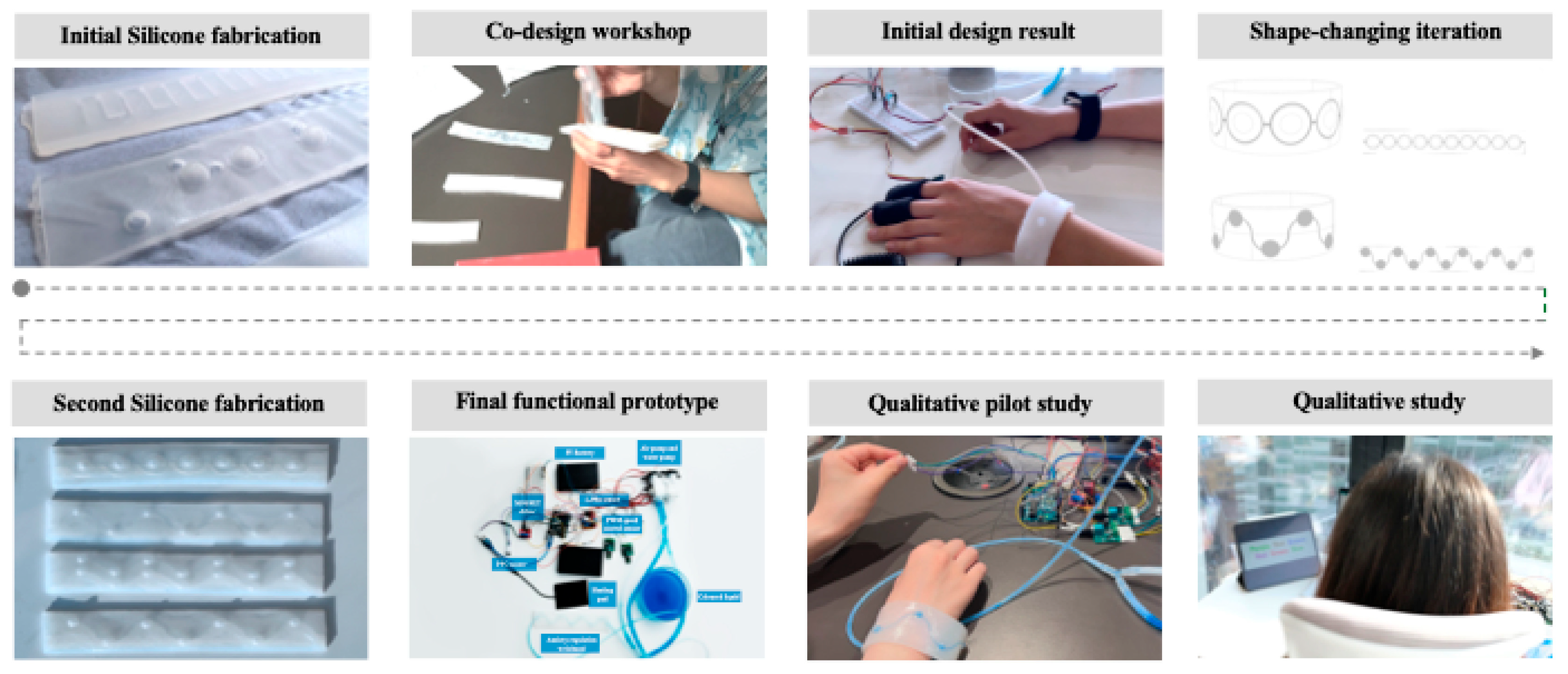
Figure 1. The overall pipeline of this work with a user-centered design approach.
Preprints 143706 g001
Figure 5. Initial wristband design: (a) Four iteration design(b) Final four shape-changing wristband.
Preprints 143706 g005
Figure 6. ShapeBand functional prototype.
Preprints 143706 g006
Figure 7. The study pipeline including 3 activity groups and semi structured interviews.
Preprints 143706 g007
Disclaimer/Publisher’s Note: The statements, opinions and data contained in all publications are solely those of the individual author(s) and contributor(s) and not of MDPI and/or the editor(s). MDPI and/or the editor(s) disclaim responsibility for any injury to people or property resulting from any ideas, methods, instructions or products referred to in the content.
Copyright: This open access article is published under a Creative Commons CC BY 4.0 license, which permit the free download, distribution, and reuse, provided that the author and preprint are cited in any reuse.
Prerpints.org logo

Preprints.org is a free preprint server supported by MDPI in Basel, Switzerland.

Subscribe

Disclaimer

Terms of Use

Privacy Policy

Privacy Settings

© 2025 MDPI (Basel, Switzerland) unless otherwise stated