

Submitted:
03 January 2025
Posted:
06 January 2025
You are already at the latest version
Preprints on COVID-19 and SARS-CoV-2
Abstract
The article explores the history of industrial revolutions and their impact on various indus-tries and public life. Authors argue that industrial transformation and innovation are mani-festations of the Fourth Industrial Revolution (FIR), which introduced new technologies like virtual-real space, quality procedures, robotic systems, and smart factories. We examine how the widespread use of information and communication technology (ICT) has signifi-cantly altered economic behavior and highlighted the importance of new laws for sustaina-ble development. Additionally, we discuss that the fourth industrial revolution, character-ized by linked items, digitalization, artificial intelligence, and 3D printing, has led to in-creased automation and fragmentation of value chains worldwide. We also examine elec-tronic trade as a crucial component of industrialized nations' logistics value chain and eco-nomic strength. In this article, we highlighted the COVID-19 pandemic increasing the im-portance of digital trade for the resilience of the economy. We explore all the world gov-ernments now prepared to expand and supervise the digital economy by introducing new digital laws. However, least-developed countries struggle due to limited resources, infra-structure, and finance for substantial digital economy investments, emphasizing the need for increased digital economy skills and resources.
Keywords:
Artificial Intelligence (AI)
; COVID-19
; Fourth Industrial Revolution (FIR)
; International Trade Laws
; Industrial Revolution
; Sustainability
Background and Justification
The Third Industrial Revolution (TIR) as a new period of technical and economic revolution that began in the early twenty-first century. It is based on the historical framework of industrial revolutions, which encompasses the transition from rural to industrial civilizations in the 18th and 19th centuries, as well as the advent of mass production and electricity in the late 19th and early 20th centuries. The revolution represents a shift towards a more sustainable and globally networked economy, fueled by advancements in digital technology and renewable energy sources.1 The widespread use of the internet and digitalization of information, which has eased the quick transmission of information and established a worldwide communication network, are key components of this notion. The emphasis is on moving away from dependency on Smart grids to successfully manage and distribute power while decreasing energy waste by integrating renewable energy sources into existing energy infrastructures. The revolution encourages a transition from centralized power generation and towards a more localized and distributed model of energy production, letting people and companies produce their own electricity using technologies such as solar panels and wind turbines. Online platforms and digital technology facilitate resource sharing, further emphasizing collaboration and sharing economies. The Third Industrial Revolution (TIR) advocates decentralization in several elements of energy generation, manufacturing, and decision-making processes. The ultimate objective is to develop an economy that is more ecologically responsible and efficient.2
The influence of broad adoption of Information and Communication Technologies (ICT), particularly in the context of the Third Industrial Revolution. This shift has a considerable impact on the behaviors of economic actors and customers, as well as the fundamental processes of manufacturing, selling, and purchasing products and services. The internet and ICT technologies have aided in the move to e-commerce, allowing economic transactions to take place beyond geographical boundaries. E-commerce has developed as a powerful and game-changing force in the business world, covering activities such as online shopping, digital marketing, electronic payments, and online exchanges of products and services. It has increased organizations worldwide reach, allowing them to connect with a more diversified and vaster client base.3 E-commerce has provided consumers with more convenience, a greater range of product and service options, and the ability to purchase from practically anywhere with an internet connection. This transition has not only disrupted traditional company structures, but it has also had far-reaching consequences for global trade and the entire operation of economies. As technology advances, e-commerce will continue to grow and change the landscape of trade in the twenty-first century.4
The First Industrial Revolution began in Britain and spread to Europe and the US. The Second Industrial Revolution saw Japan and other Asian nations create "Factory Asia." The Third Industrial Revolution aims to shift from national and global production systems to "custom production," with multinational companies re-shoring operations to the developed world. Chinese leaders are concerned that the Third Industrial Revolution could leave China without a significant shift in global production patterns. At that time, they believed that China missed out on the Second Industrial Revolution and if it missed the third, it would be a disaster. The third industrial revolution, as proposed by a speaker in Shanghai, is a shift from national to global production systems to "custom production," with multinational corporations re-shoring operations to developed countries. The revolution aims to produce goods for the masses, rather than large numbers for a small market. China's top leaders agree that this revolution.5
Introduction
The use of Information and Communication Technologies (ICT) has had a substantial influence on the Third Industrial Revolution, changing the behaviors of economic actors and customers as well as basic production, sale, and buying processes. The shift to e-commerce has been critical in facilitating economic transactions beyond geographical boundaries.6 We are currently in the fourth industrial revolution (FIR), which is ushering in a global information society. Big Data, FIR, and artificial intelligence are examples of digitalization. The fourth industrial revolution will enhance people's propensity to create, with disruptive ideas becoming increasingly important for maintaining a competitive market position.7 To exploit day-to-day Business and conquer new issues, businesses must act with both hands, which is known as ambidexterity. Companies, on the other hand, struggle to manage both at the same time. To make unique ideas a reality, six design domains of innovation management have been discovered through literature research, impulses for innovation, generating ideas and executing, innovation organization, culture, and strategy. These domains span a wide range of responsibilities linked to idea development, from concept generation to execution. The first three realms of activity represent the process of innovation, while the latter three indicate the framework conditions for inventive potential. Because of the reduction of innovation cycles and the quick launch of digital products, innovation has increased substantially. The fourth industrial revolution is projected to boost people's propensity to create, with disruptive ideas becoming increasingly vital for establishing 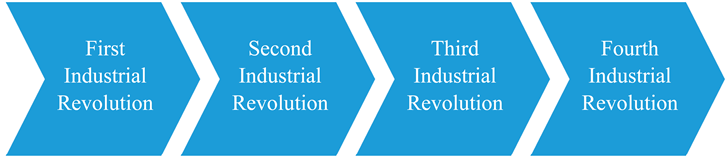 a successful market position. To exploit day-to-day business and conquer new issues, businesses must act with both hands, which is known as ambidexterity.8
a successful market position. To exploit day-to-day business and conquer new issues, businesses must act with both hands, which is known as ambidexterity.8
The Fourth Industrial Revolution(FIR) must address the unintended effects of personalization, which were the emphasis of the Third and Fourth Industrial Revolutions, respectively. It is expected that fourth will be able to reduce or fix these unstructured and open-ended concerns in order to mitigate these repercussions. For example, Facebook and Microsoft are teaming together with seven institutions to conduct a "Deepfake Detection Challenge" in order to develop new methods for detecting fake films. Another privacy concern that might be considered a violation of the Fourth Amendment is real-time face recognition. AI engineers are becoming increasingly careful in their AI ambitions as they realize the incredible power of their technology.9
Artificial intelligence (AI) is the theory and development of computer systems capable of performing tasks requiring human intelligence, such as visual perception, speech recognition, decision-making, and language translation. Over the past 100 years, AI has become an enabling technology with applications like self-driving cars, digital assistants, robot-advisors, and automated legal practices. 10 Its transformative impacts on the world economy may increase average wages and wellbeing, but also destabilize labor markets, increase inequality, and promote nonexclusive growth. AI's potential transformative effects are expected to be significant in the coming years.11 The rise of AI presents challenges to global trade governance, but it has the potential to revolutionize industries like data analytics and translation services. International trade regulations can help overcome challenges, such as increasing global access to data for AI training. The potential of AI in commerce is significant, and trade regulations can promote and support its advancement. Understanding the challenges and opportunities of AI in commerce is crucial for navigating the complex landscape of global trade.12
Investments in artificial intelligence (AI) are viewed as strategic by several nations. The percentage of research papers written by Chinese scientists increased noticeably as a result of Chinese investments in AI, whereas the percentage of papers from European, Australian, and Canadian scientists decreased significantly (though not in absolute terms because there were more papers overall).13 AI-related trade policy, which includes privacy laws, can impact the global use of AI. Countries with liberal privacy laws may gain a temporary advantage if the best privacy law is relatively lax. Trade agreements can prevent races to the bottom by defining worldwide privacy norms, but this may not benefit any one nation more. Countries with more stringent privacy protections could focus on other sectors. Same like Google has declared that it would not extend its AI collaboration with the United States Air Force, which might have resulted in a contract termination 14
The Fourth Industrial Revolution (FIR) is predicted to take place during the next half-century, affecting every industry and resulting in substantial changes in production, agriculture, management, and government. While the first three industrial revolutions happened across three centuries, the fourth is expected to occur over the next half-century. Personal data, including genetic data, is being acquired autonomously in practically every commercial transaction. However, future rights to gather and utilize data may be a concern. While future data usage will be controlled by clear agreements, such as those found on Facebook, Ancestry.com, and 23andMe, data privacy violations will persist.15 Companies frequently include provisions for starting research, doing company growth, and changing privacy policies at any moment. Personal information that Customization has been critical to the success of high-tech, personal data-driven companies such as Apple, Google, Amazon, Facebook, Microsoft, Alibaba, Baidu, and Tencent. However, many companies have also had unexpected repercussions, which have resulted in fines. Apple has paid the highest tax fine; Google has paid the highest antitrust fine, and Facebook has paid the highest data privacy fine. Every day, data breaches occur, with a recent hacker disclosing the personal information.16
The Centre for the Fourth Industrial Revolution (CFIR) is a platform proposed to address the global issue of the fourth industrial revolution, which requires specialized expertise. It will operate across the Commission on Science and Technology for Sustainable Development in the South (COMSATS) member nations and be accessible to developing countries interested in collaborating. The platform will involve various stakeholders, including governments, academics, commercial organizations, start-ups, and civil society, to assess the impact of fourth-generation technologies. COMSATS will build coordination and communication routes among Consolidated Framework for Implementation Research (CFIR) members, and CFIR will co-create governance protocols and policy frameworks. The CFIR aims to educate developing countries' human resources on Framework for Implementation Research (FIR) technologies through hands-on workshops and seminars. It plans to reorganize the professional education system to accommodate FIR technologies and collaborate with the private sector to organize work-based learning for students. The organization promotes careers through public campaigns and investment in training systems. CFIR will bring together policymakers, researchers, entrepreneurs, and business managers to ensure knowledge and equipment sharing among participating countries and ensure the availability of trained professionals.17
Methodology
In examining the legal environment of digital trade and its pivotal role in facilitating a sustainable industrial revolution, we employed a methodological approach that emphasizes thoroughness and clarity while remaining adaptable to the dynamic nature of the subject matter. Our study began with a comprehensive exploration of existing literature, utilizing platforms such as legal databases, academic journals, and industry reports to gather relevant information on digital trade legislation, compliance frameworks, and best practices. Recognizing the rapid evolution of digital technologies and associated legal frameworks, we formulated a flexible search strategy that allowed us to capture emerging trends and significant developments in the area. To ensure a focused inquiry, we established clear inclusion and exclusion criteria relevant to the scope of our research. This involved identifying key topics such as The regulatory challenges of digital trade, and the impact of emerging technologies. on traditional trade laws, and the implications for sustainable practices within industries. We then pieced together a list of targeted keywords and search strings that encapsulated these themes, enabling a systematic evaluation of the literature.
Our review process was organized into several stages: first, an initial screening based on titles and abstracts to filter out irrelevant studies, followed by a more in-depth evaluation of the full texts of potentially pertinent articles and books . Throughout this process, we took a systematic approach to documenting our decisions and the criteria used for inclusion, aiming to enhance the transparency and replicability of our findings. Moreover, in order to understand the broader context of our findings, we integrated qualitative analyses of case studies and regulatory frameworks from various jurisdictions, thereby enriching our perspective on the legal dynamics at play in digital trade. By synthesizing information from diverse sources, we aimed to unravel the complex intersections between digital trade legislation and sustainable industrial practices. This methodological framework not only allowed for an insightful analysis of the current legal landscape but also highlighted critical gaps and future avenues for research, contributing to a deeper understanding of the essential legal infrastructure supporting the ongoing industrial revolution in the digital age. The results of our efforts are visually supported through accompanying charts and figures, which illustrate the thematic connections and trends identified throughout our investigation.
Impacts of the 4th Industrial Revolution on Industries
International Organization for Standardization (ISO) 9000 is a quality management system standard that focuses on guiding and regulating the quality management of an organization. Automation in industrial processes attempts to lower labor costs while improving productivity and assuring the quality management system's efficacy. Industrial automation is being increasingly used in manufacturing to reduce labor costs and improve efficiency.18 Automation is suitable for large volumes, small items, and basic designs, but hand assembly is often required for non-compliant products. Studies have explored computer-aided systems and the impact of the fourth industrial revolution data analysis on machine performance, aiming for quicker, more flexible, and reliable manufacturing.19
The fourth industrial revolution refers to developments in the manufacturing industry, including new technology and procedures, and was initially announced in Germany at the Hannover Messes trade event in 2011. Numerous European manufacturing research institutions and firms have researched this approach, emphasizing information sharing, controlled equipment, and intelligent production lines. The virtual environment, which enables for defect predictions and maintenance activities, is one example of the fourth industrial revolution. Except for physical manufacturing methods and factories, the fourth industrial revolution (FIR) comprises administrative procedures and services. The growth of cyber methods and digital ecosystems in the industry value chain is credited with the creation of FIR. The concept is related to smart factories, smart industry, advanced manufacturing, and industrial internet in other European nations.20
Electronic trade has become a crucial part of logistics value chains, enhancing economic development and resilience, especially in developed nations. It offers real-time tracking and data analytics for efficient supply chain management, simplifying operations and reducing lead times. E-commerce also provides access to global markets, boosting exports and economic growth. It creates jobs across various industries, contributing to economic stability. E-commerce necessitates infrastructure creation like fulfillment centers and distribution networks.21 It encourages entrepreneurship and economic diversity, and governments can collect taxes on e-commerce transactions. E-commerce also provides economic resilience, enabling businesses to continue functioning during disasters.22
The digital content directive aims to maintain the contract's standard of conformance, covering both conventional issues like quantity and quality, and incorporating features essential in the digital context. Digital content and services must have specified functionality, interoperability, and must be regularly updated. They should have the quality and performance attributes customers expect from similar content or services. Compliance with trial versions or previews is adapted to the digital context, as inadequate compliance can result from provider faulty installation or integration instructions. Digital dispute resolution focuses on cure, with traders having the freedom to choose how to resolve issues. Solutions include updates and fresh copies. If the cure is difficult or disproportionate, traders may accept price reduction or termination if the fault returns, the trader denies treatment, or nonconformity is severe. Suppliers should discontinue using consumer-provided material unless it has no use outside of the trader's digital content or services, aggregates data, or was created collaboratively. After termination, consumers should be able to obtain other materials, traders can restrict access, and customers should return any received digital content. Lastly, seventy-seven nations have pledged to liberalize trade in "data processing services," and the General Agreement on Trade in Services (GATS) schedules cover a range of computer and associated services in their scope. As a result, GATS is relevant when a government action impacts a foreign company's capacity to export AI-based services to that nation.23
Emergence of Laws and Technology
Technologists often argue that legislation should be authorized due to technological possibilities, but this viewpoint is contested as the law cannot be wished away. Lawyers are often seen as impediments to achieving valuable outcomes, with lawyers often perceived as not understanding their clients, over-lawyering, and breaking deals. The financial crisis heightened suspicions of the establishment and state. While it is possible to regulate the digital world, the law may need to allow different types of technology-driven regulation, code and soft law are forms of regulation.24 Law must always take precedence over code, just as it must take precedence over market or society standards. Code can reduce the impact of legal regulations but cannot modify underlying legal norms. Legal constraints limit what code can accomplish, and if disconnected from community norms and market choices, it may weaken. Code can impact customer decisions by satisfying consumer desires through privacy programs, but may restrict alternatives for merchants. Soft law and code are forms of regulation, but they are not the same as law.25
Law takes precedence over code, as it does over market or societal standards. Code can reduce legal rules but cannot alter fundamental standards. Legal limits its actions, and removing it from community standards and market choices can deteriorate. Private law rules in contract and tort will continue to regulate the sale of goods and services in the digital environment unless special regulations are altered to promote the digital agenda. This means that digital and technology corporations may still have to deal with these principles, even if they opt out of specific consumer legislation. Both the UK and the EU have modified sales legislation for digital material, complying with basic consumer protection ideals from the conventional consumer sale of products context.26 Based on UK legislation, the EU approach gives greater information and supports basic consumer protection objectives by assuring reasonable expectations for digital content and services and addressing the lifetime nature of some digital content and service contracts.27
COVID-19 pandemic for Developed and Developing nations
The COVID-19 pandemic and the Fourth Industrial Revolution have highlighted the importance of digital trade for economic resilience, equitable development, and sustainability. A favourable regulatory framework, including safe online transactions, consumer rights protection, and cross-border e-commerce, can stimulate digital trade. Governments and international organizations play a critical role in building an enabling environment through legislative frameworks and cybersecurity measures. Digital commerce promotes inclusive growth by enabling small and medium-sized firms and entrepreneurs to access global markets. Reducing physical transportation is essential for sustainable development.28 The Covid-19 pandemic has accelerated the shift to virtual home education. This has led to global public discourse highlighting the contradictions between face-to-face education and virtual education, with the belief that schools are obsolete, allowing capital to initiate a new phase of public-school destruction. 29
The 'home school' concept, advocated by Betsy DeVos, aims to reduce costs of maintaining school equipment. The 'education society' concept, advocated in the 1980s, shifted state duties to communities and families. During the Covid-19 pandemic, parents and families were required to provide their children with computer equipment, internet access, platform access, and virtual pedagogy. This is a permanent feature of education and schooling, with the Global Pedagogical Blackout marking the beginning of a planetary-scale social reengineering process. FIR, introduced in 2011, has revolutionized the health and manufacturing industries by promoting information interchange between firms, robots, and humans. Point of Care diagnostics and AI technology are enabling person-cantered digital health services. However, the COVID-19 pandemic may lead to a new industrial revolution, causing FIR systems to struggle to process data may usher in the next industrial revolution, ushering in Society 5.0. As AI's computational capacity doubles every two years, it becomes increasingly important in the face of increased data processing and availability.30
The competitiveness of electronic trade and digital technologies
The rise of electronic commerce and digital technology has led to significant investments in digital economies, aiming to boost competitiveness, create economic resilience, and prepare for the FIR. This includes improving connections, developing advanced digital skills, and building a digitally savvy workforce. Digital infrastructure investment, legislative support for innovation, and digital entrepreneurship are crucial components of digital economy growth. Digitally proficient businesses are better positioned to adapt, innovate, and expand their market reach, ultimately improving the economy and fostering economic resilience.31 Digitalization is crucial for the integration of industrialized nations' economies, as it offers a global platform for businesses and organizations. This shift is occurring in various industries, including media, vehicles, tourism, agriculture, and healthcare. To fully digitize these sectors, digital knowledge and information technology are needed. Priorities include modernizing digital infrastructure, establishing digital production for product quality and industry competitiveness, maintaining efficient small and medium-sized enterprises, establishing data centres for secure storage and processing, and implementing digital data platforms for business needs.32
The Industrial Revolution led to a significant increase in per capita income and societal quality of life, partly due to the advent of digital technologies. The digital revolution has significantly impacted society, increasing economic activity and improving societal quality of life. The Internet, the flagship of the digital revolution, connected the world and aided globalization, with the proportional weight of the Internet and linked industries reaching 3.4% of GDP in 2009.33 Digitization's influence is increasingly visible, affecting all industries, particularly the capital market. The digital ecosystem's growth is influenced by the quality of security and legal systems, which should set norms, protect rights, and stimulate investment and innovation. Governments must commit to long-term growth, eliminate infrastructure barriers, and modernize legislation. The European Commission has proposed a digital single market plan to remove barriers and standardize standards. Despite the digital revolution revolutionizing the economy, issues like job losses and social inequality remain a major concern.34
Importance of Trade Through AI
Global supply networks can become more proactive with the use of AI.35 The success of supply networks depends on data from the very beginning to the very end. Although it is still developing and has its limits, it may enhance global trade. One way is by boosting adopter productivity, which also increases exports. Evidence for the link between AI and productivity is still in its infancy. In general, productivity statistics still need to uncover the advantages of transformational technologies like AI, particularly in data-intensive industries like banking, insurance, and online consumer platforms. The "modern productivity paradox" This contradiction could be explained by false expectations, inaccurate measurement, redistribution, and implementation delays.36 Positive benefits are anticipated if AI capabilities are disseminated and supplementary innovations are produced and put into practise because the latter may be the main cause of the lack of productivity proof. Trade is also boosted by AI's promise to increase supply chain effectiveness. Improved production, improved customer demand forecasts, and more intelligent, automated manufacturing are some examples of this. AI's improved use of logistics might lower greenhouse gas emissions in supply networks. AI may assist businesses in lowering manufacturing costs and responding to customer demand more swiftly. Reduced language barriers, improved supply-and-demand relationships, and more logistical efficiency can all be beneficial. Customs and other border authorities may use AI to save expenses associated with cross-border commerce.37
International standards and other policy disciplines like IP protection are also significant. Tariffs on Information and communication technology (ICT) equipment may have an impact on the availability and cost of critical gear and finished consumer products, such as smartphones. ICT services, such as computer and telecommunications services, are essential for creating the communication networks required to create AI systems.38 Opportunities to monetise AI technology exist in the services sector as well. Increasing access to elite data scientists could be possible by enabling cross-border expert migration. Movement of data, which serves as the main input for AI systems, will be essential.39
Foreign trade is only one of several areas where artificial intelligence (AI) has made major advancements. AI has the potential to significantly transform international trade in light of the rising need for speedy and efficient trade. AI can assist traders in efficiently communicating with overseas partners and customers thanks to its real-time language translation capabilities. Language barriers may be reduced as a result, opening up overseas commerce to companies of all sizes. AI can assist merchants in identifying and controlling possible dangers in international commerce. AI may assist traders in making educated choices and reducing risks by evaluating trade data and market movements.40
Emergence Global AI Trade Regulations and Laws
Australia lacks specific legislation for artificial intelligence (AI), with most regulatory measures implemented through existing legislation or government policy papers. The new south wales government (NSW) has developed the first AI plan, the AI Assurance Framework, and established the NSW AI Review Committee. Other regulatory authorities have taken measures to encourage AI use, such as the Online Safety Act of 2021 and the Commonwealth Scientific and Industrial Research Organisation's Responsible AI Network. Most paper submissions suggest the establishment of a specialized regulatory body and federal guidelines for ethical and responsible AI use.41 The EU AI Act will use a risk-based methodology, categorizing AI systems into four distinct risk levels based on their specific applications: (1) unacceptable-risk, (2) high-risk, (3) limited-risk, (4) minimal/no-risk. The Act is expected to prioritize AI systems that pose unacceptable risks and high risks. These risk 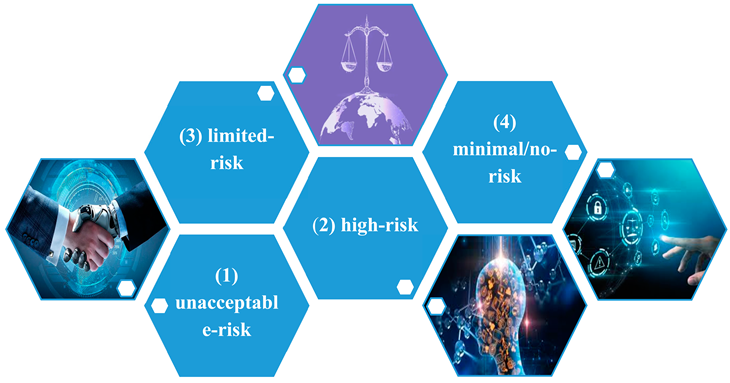 categories have been extensively discussed and addressed in the modifications made by the EU Parliament and Council, as well as during the trilogies deliberations.42
categories have been extensively discussed and addressed in the modifications made by the EU Parliament and Council, as well as during the trilogies deliberations.42
The Shanghai Regulations govern AI Science and Technology innovation, industrial growth, application empowerment, and industrial governance in Shanghai, governing entities operating in the AI sector, involving local economic and information departments.43 The UK's Data Protection and Digital Information (No. 2) Bill aims to protect data from AI-driven automated decision-making hazards, ensuring compliance with Article 22 of the UK GDPR and addressing potential risks. The Canadian government introduced the Artificial Intelligence and Data Act (AIDA) in June 2022, aiming to regulate global and inter-provincial AI trade and commerce, and establish standardized AI system design criteria.44 Global governments are acknowledging the need of implementing regulations on artificial intelligence (AI) in order to guarantee ethical use, safeguard privacy, and effectively handle possible problems linked to automated decision-making systems. Additional laws and regulations may have been introduced to regulate AI.
Electronic Trade and Competition Between Countries
The Fourth Industrial Revolution is expected to impact various industries by fostering new firms and innovative ideas through new technology. However, it may also lead to the failure of industries lacking innovative capabilities, necessitating a reorganization of the economy. China's rapid creation of new firms, facilitated by network, big data, and e-commerce technology, is a critical driving force in modern economic growth.45 The revolution can lead to increased knowledge operations, innovation, resource regenerative growth, and concept creation. The smart economy integrates ecommerce, e-business, and productivity through information and communication technology. It includes economic relations, city reputation, entrepreneurship, innovation, international relations, labour market flexibility, and municipal efficiency. Smart mobility offers a new transportation network that allows people to easily transfer modes of transportation, choose low-emission vehicles, plan transit, and improve quality of life. The smart economy encompasses ecommerce, e-business, and productivity enhancement through information and communication technology. It encompasses economic interactions, reputation, entrepreneurship, innovation, international relations, labour market flexibility, and adaptability.46 It is a modern transportation network that enables people to switch modes of transportation, replace cars with low-emission vehicles, schedule transit, and improve quality of life. The global e-commerce network connects nations, peoples, and organizations on local, regional, and national scales. The speed of e-commerce is crucial, as it constantly redefines place, time, and personality.47
Government policies promoting supporting industries like information technology can enhance a country's technical and economic environment and strengthen global ties. However, the lack of globally relevant sectors hinders e-commerce spread. The growing popularity of the Internet has sparked interest from national and international leaders. Some emerging countries face e-commerce difficulties that require immediate attention and legislation to ensure their domestic e-commerce positioning aligns with the international Internet community. As e-commerce is still young and expanding, public policy concerns include consumer protection and national interests, and international agreements are required in sectors.48 E-commerce promotes information exchange but also raises concerns about content limitations. Countries have laws governing information and advertising, and international cooperation is needed to combat deception and fraud. Legal concerns include copyright, intellectual property, database protection, patents, trademarks, and domain names. Institutions like the private sector, consumer groups, professional associations, governments, and international authorities must address these issues. Intellectual property laws vary across countries, and businesses in underdeveloped nations must balance the benefits of business with the risks of intellectual property theft or piracy.49
Implications Face by Least Developed Countries (LDCs)
The fourth industrial revolution (FIR), which has great economic growth potential, faces several challenges in least developing countries. Because it is still in its early stages, it will require substantial time and effort to completely implement and adopt FIR. Advanced countries on the path of the FIR have a long way to go before fully reaping its benefits. Many concerns must be solved before developing countries can make strategies to embrace the fourth industrial revolution. One of example is Bangladesh, a major textile manufacturing country, and it is one of the countries facing these issues as it moves towards FIR.50 By addressing these challenges, developing nations may reap the benefits of the fourth industrial revolution. Poor nations face significant challenges in adopting new manufacturing paradigms like Fourth Industrial Revolution (FIR) due to lack of basic infrastructure, electricity shortages, and lack of internet connectivity. Addressing these issues is crucial for developing countries to succeed in the Fourth Industrial Revolution (FIR).51
The future of smart factories faces challenges in ensuring device, data, and privacy security, as well as preventing cybercrimes. Countries developing smart factories require security specialists and research centres to address emerging threats. Data science and big data analytics are needed to interpret large data volumes for autonomous manufacturing control.52 However, developing nations lack experts in machine learning and data science for the Future Industrial Revolution (FIR). High-skilled manpower is crucial for this new era. The underdeveloped nations face scalability issues due to the lack of FIR. To overcome this, IT-based industries must integrate technology, market, and society. However, emerging countries face challenges in successfully merging FIR technology with national and international markets and meeting user requirements and expectations. New technology-based enterprises can boost job creation and economic development, but developing nations face financial liquidity issues. To overcome this, they can increase crowdfunding, empower worker-led companies, and reform national taxation frameworks. This separates money from capitalists and strengthens the institutional structure for Foreign Investment Reporting (FIR). Investing in education, research, and innovation is crucial for capitalizing on the industrial revolution.53
Pakistan, a primarily agricultural economy, is investing in Science and Technology (S&T) to improve infrastructure, education, and research. The Higher Education Commission (HEC) is promoting the construction of research centres in growing fields, including AI, robotics, automation, data analytics, cloud computing, and cyber security.54 These projects aim to strengthen Pakistan's capabilities and contribute to its future growth, capitalizing on Foreign Direct Investment (FIR). The Presidential Initiative for Artificial Intelligence and Computing (PIAIC) was established in December 2018 to teach and research fourth-generation technologies like AI, data science, cloud computing, edge computing, block chain, and Internet of Things (IoT).55 It has developed programs to increase worker capacity in AI, Cloud Native Computing, Amazon Web Services, and Block Chain. Ignite is a national technology fund aiming to train one million individuals for the future workforce, providing initial investment, Final Year Projects, and over 1 million training by 2023. Pakistan needs to enhance infrastructure, internet access, and energy to transition to smart manufacturing. Developing nations face challenges in adopting FIR, but a collaborative strategy is proposed to help them adapt to the changing technology environment, with governments working together to overcome common deadlocks.56
New Dynamic of Structural Digital Transformation
The Fourth Industrial Revolution's technological identity is primarily cyber-physics, focusing on automated cyber-physical systems (CPS) that combine physical reality processes with computing and communication infrastructures. CPS includes reactive computing, concurrency, feedback control, real-time calculation, and safety-critical applications. The reaction to this revolution is a creative marriage of technology and the market, characterized by cutting-edge initiatives like smart manufacturing systems, smart cities, self-driving vehicles, and block chain-based financial systems.57 Massive technical development programs involve collaboration among universities, society, and the government, with a focus on innovation and skill training for technological and educational advancement. The Fourth Industrial Revolution will complicate the generation of new technologies, particularly combinatorial ones, due to their unpredictable nature and adaptive management. As climate change threatens the world, emerging technologies must be evaluated for their impact on sustainable transformation. Improving stakeholder involvement and openness can enhance the effectiveness of innovation initiatives.58
The Fourth Industrial Revolution was a significant shift in technology, necessitating a design thinking approach cantered on people-cantered technology. Companies must anticipate future developments and expand into new markets to bridge the gap between machines and people. The three essential roles of technology in this revolution, integrating, and mediating. Substitute technology can replace humans by performing tasks more effectively and productively, while integrator technology enhances human capability and efficiency. Companies must adapt to this change to stay competitive in the ever-evolving technology landscape. To achieve this, a virtuous cycle should be established, starting with systematic workplace knowledge accumulation, scientific codification, documentation for textbook production, effective training and teaching methods development, and evaluation of new practices, repeating from phase one.59
Artificial intelligence, robotics, Internet of Things (IoT), big data, cloud computing, autonomous vehicles, 3-D printing, nanotechnology, biotechnology, materials science, energy storage, and quantum computing are transforming how we connect billions of people via mobile devices.60 To overcome limited resources, governmental and private sector research strategies, patent creation, knowledge transfer, and commercialization. Flexibility is crucial in R&D and can be achieved through a 'flexible focusing' method. Focusing on one or two R&D priorities can hinder a company's ability to respond to unexpected changes and market developments. The best strategy is experimentation, allowing the company to test the potential of new businesses and extend its investment and concentration. Relying solely on internal R&D may miss opportunities to enter new markets and fail to thrive.61 The AI is the Fourth Industrial Revolution focuses on understanding the self-organization concept and combining six digital transform and six analogy transform technologies with AI, emphasizing the importance of relationships between technologies and industry. These technologies will create new demand for products and services like smart factories and autonomous vehicles.62 The Fourth Industrial Revolution may lead to the emergence of AI, robots, the Internet of Things (IoT), 3-D printing, and autonomous machines in various fields like cyber-physical systems, smart factories, smart goods, Machine-to-machine (M2M), big data, and cloud business.63
Risks Associated with Digital Transformation
Despite all of its advantages, AI may potentially be dangerous for both people such as customers and workers, and businesses such as supply chains. People deal with challenges related to safety such as digital safety and privacy, ethics, reputational risk, financial risk, threats to equality, and unjust treatment. Risks to organizations include hampered performance both financially and non-financially, legal problems, compliance problems, adverse reputational repercussions, and integrity challenges. AI may influence national security, the economics, politics, and infrastructure are among the spheres of society.64
The usage of AI has frequently resulted in unsafe scenarios being presented. Numerous incidents that are frequently caused by the experimental nature of AI and the novelty of its applications have influenced people's physical safety. For instance, in March 2018 a self-driving Uber car (Volvo XC90) with a human safety driver murdered a pedestrian called Elaine Herzberg in Tempe, Arizona.65 Watson, an AI system created by IBM to provide inquiries with human-language replies, was accused in 2018 of making poor recommendations that would have jeopardized the care of cancer patients.66 Individuals are also impacted by worries about privacy and online safety. A data breach at Clearview AI in February 2021 led to the participation of law enforcement authorities and exposed a database of over 3 million facial recognition photographs from Facebook and Twitter.67 Due to this vulnerability, both consumers and organizations are concerned about the security and morality of face recognition databases. When data is collected, there is a chance that it might be shared with those that the customer does not want to have access to it. This raises concerns from consumers about how AI might influence their reputation. Concerns about fair treatment also arise from Clearview AI's consumer picture database because most of the people whose photos were included there presumably had no idea that they were being taken.68
The application of AI may potentially result in problems with the financial system, such as incorrect stock market projections. Developers looking to enhance machine learning's capacity to generate precise stock market forecasts may find it challenging to create algorithms due to several issues, such as statistical noise and dynamic data.69 Algorithm developers must carefully evaluate these risks since inaccurate predictions have the potential to negatively impact both organizational financial health and performance as well as customer financial health.70
Suggestions to Decrease Present Gap
Governmental organizations play a crucial role in the success of the industrial revolution, promoting eco-innovation and effective industrial clusters. To respond to the Fourth Industrial Revolution, governments should enhance industry integration, strengthen academic-industry links, improve the smart industrial supply chain ecosystem, facilitate start-up businesses, enhance self-sustaining products and services, and improve critical technologies' professional competency. Establishing government-led standards, shared infrastructure, and technological and vocational training and talent development systems is essential. Educational institutions should reassess teaching and learning objectives, emphasizing technology advancements and their implications for industrial applications and daily life.
The FIR poses a threat to job creation, social innovation, and product innovation. To respond successfully, nations must maintain flexibility in acquiring necessary skills. This can be achieved by supporting and deregulating business models, which provide a framework for connecting technologies and markets. A strong business plan is essential for innovation growth. Governments should allow unfettered development of business ideas before regulating them based on potential risks, as allowing regulation first may miss the potential for innovative business models.
In a free market, eliminating regulation is crucial for industrial competition, as seen in the deregulation wave in America's telecom and aviation industries. Human labour is vital for success in the 21st century, and future management must understand members' capabilities, interests, and knowledge. Education should be altered to promote sensitivity, creativity, and communication. Mutual understanding between scientists and the general population is essential, as new technology may cause misunderstandings. Scientists should prioritize public trust over short-term gains, as seen in the stem cell research controversy.
Institutions must self-organize to transform time, place, and humanity into Big Data for AI predictions and adaptations in the virtual world. The Fourth Industrial Revolution uses analog transformation, making Big Data valuable. Understanding human wants is crucial for future commerce, making converting time, location, and people into Big Data essential.
Conclusion
Globalisation has led to the complexity of products and increased cost of production and services. Technologies, like the Internet of things, cloud computing, big data, artificial intelligence, 3D printing, augmented reality, Block chain, nanomaterials, and synthetic biology, are expected to significantly influence global trade volume, lower costs, and shorten transaction completion and delivery times. To boost capital mobility and foster new partnerships, national governments should enhance capital mobility through crowd financing and strengthen national investment banks. Education policies must adapt to knowledge-based advances and lifelong learning, while fiscal policy must be modified according to labour market demands. Rising unemployment due to robot and AI employment necessitates revenue-based adaptation, productivity-based taxes, and guaranteed basic income for social resilience and innovation. Try to improve people's quality of life by reducing work and meeting demands through efficient production methods and digital platforms.
Technological advancements are pushing digital transformation in industry and production, influenced by current economic trends and emerging digital technologies. Understanding this shift requires evaluating current economic developments and emerging digitalization-related technologies and practices. The digital era is poised to revolutionize international transfer, ensuring reliability, timeliness, security, and reducing losses due to fraud. It will also significantly shift the global commerce system, allowing for the rapid expansion of medical, design, advising, control, monitoring, and education services. Intelligent systems and digital transformation aim to enhance supply chain efficiency and transparency. Institutions must adapt and be vigilant in workforce mobility for the FIR. College and professional education knowledge management should be reorganized for the FIR. Existing training institutions for engineers and managers may need extensive reorganization. Interdisciplinary education is insufficient, and a well-organized knowledge system is necessary for the FIR. Industrial revolution is a global movement focusing on technology integration and rapid growth special effects, and coping techniques of FIR is required, which uses informational and computing ideas to improve industrial processes and increase productivity.
Implications
The implications of the legal environment surrounding digital trade are profound and multifaceted, particularly as they pertain to the sustainable industrial revolution. As digital trade continues to reshape traditional business models and supply chains, the establishment of a robust legal framework becomes essential for fostering innovation and ensuring equitable trade practices. A comprehensive legal environment can facilitate the seamless flow of digital goods and services across borders, thereby enabling companies to capitalize on new market opportunities while adhering to regulations that promote sustainability. This is crucial, as sustainable practices often require cooperation among various stakeholders, including governments, businesses, and consumers.
Moreover, well-defined regulations can help mitigate risks associated with digital trade, such as cybersecurity threats, data privacy concerns, and intellectual property rights. By providing clear guidance on compliance and best practices, these regulations can instill confidence in both businesses and consumers, encouraging investment and participation in the digital economy. As businesses shift towards more sustainable practices, the legal framework must also adapt to accommodate innovative solutions that prioritize environmental stewardship, such as green logistics and circular economy principles. Additionally, the implications extend to the design of digital infrastructure and technology adoption. A supportive legal environment can incentivize companies to invest in sustainable technologies, fostering a culture of innovation and responsibility. By aligning digital trade regulations with the goals of sustainable development, policymakers can promote a more equitable and resilient economy that benefits all stakeholders. Ultimately, the intersection of digital trade and sustainability is not merely a regulatory challenge; it presents an opportunity to redefine industrial practices for a more sustainable future, ensuring that economic growth does not come at the expense of environmental health and social equity.
Limitations
Despite our exploration of the legal environment of digital trade and its implications for a sustainable industrial revolution provides valuable insights, it is important to acknowledge several limitations that may impact the comprehensiveness and applicability of our findings. First and foremost, the fast-paced evolution of digital technologies and trade practices presents a challenge; legal frameworks often lag behind technological advancements, leading to an incomplete understanding of emerging regulatory landscapes. This dynamic environment means that any conclusions drawn may quickly become outdated as new laws and practices emerge. Additionally, the diversity of legal systems and regulatory approaches across different countries complicates the establishment of universal principles applicable to digital trade. Variations in regulations, compliance requirements, and enforcement mechanisms can hinder the ability to draw generalized conclusions, as industries within different jurisdictions may face distinct challenges and opportunities. This geographical inconsistency means that while some recommendations may be applicable in certain regions, they may not hold true universally, limiting their practical implementation. Furthermore, our review predominantly focuses on existing literature and case studies, which might not encompass all relevant perspectives or highlight every emerging issue in digital trade and sustainability. As a result, critical voices or innovative practices from smaller enterprises or developing nations might be underrepresented, potentially skewing our understanding of the true scope of the legal environment in digital trade.
Lastly, time and resource constraints inherent in the research process meant that our investigative scope had to be selective, which may have led to omitting certain pertinent themes or nuances. As a result, future research addressing these limitations is essential to build a more comprehensive understanding of the legal nuances influencing digital trade and sustainable industrial practices, ultimately contributing to more effective policy formulations and industry strategies.
| 1 | Peter N. Stearns, The Industrial Revolution in World History (Milton, UNITED KINGDOM: Taylor & Francis Group, 2020), http://ebookcentral.proquest.com/lib/xianjiaotong/detail.action?docID=6371935. |
| 2 | Haradhan Mohajan, ‘Third Industrial Revolution Brings Global Development’, 2021. |
| 3 | Abderahman Rejeb et al., ‘Blockchain Technologies in Logistics and Supply Chain Management: A Bibliometric Review’, Logistics 5, no. 4 (2021): 72. |
| 4 | ‘Chapter 1* Governance in the Twenty-First Century in: Understanding Global Cooperation’, 14 June 2023, https://brill.com/display/book/9789004462601/BP000008.xml. |
| 5 | Mohajan, ‘Third Industrial Revolution Brings Global Development’. |
| 6 | Aisha Mohdhar and Khaled Shaalan, ‘The Future of E-Commerce Systems: 2030 and Beyond’, Recent Advances in Technology Acceptance Models and Theories, 2021, 311–30. |
| 7 | Danson Kimani et al., ‘Blockchain, Business and the Fourth Industrial Revolution: Whence, Whither, Wherefore and How?’, Technological Forecasting and Social Change 161 (2020): 120254. |
| 8 | Naveen Donthu and Anders Gustafsson, Effects of COVID-19 on Business and Research, Journal of Business Research, vol. 117 (Elsevier, 2020). |
| 9 | Brian Dolhansky et al., ‘The Deepfake Detection Challenge (Dfdc) Dataset’, arXiv Preprint arXiv:2006.07397, 2020. |
| 10 | Andi Zhobe et al., ‘The Magic Quadrant: Assessing Ethical Maturity for Artificial Intelligence’, in Cybersecurity, Privacy and Freedom Protection in the Connected World: Proceedings of the 13th International Conference on Global Security, Safety and Sustainability, London, January 2021 (Springer, 2021), 313–26. |
| 11 | Jan Hatzius, ‘The Potentially Large Effects of Artificial Intelligence on Economic Growth (Briggs/Kodnani)’, Goldman Sachs, 2023, https://static.poder360.com.br/2023/03/Global-Economics-Analyst_-The-Potentially-Large-Effects-of-Artificial-Intelligence-on-Economic-Growth-Briggs_Kodnani.pdf. |
| 12 | Seema Garg, Navita Mahajan, and Jayanta Ghosh, ‘Artificial Intelligence as an Emerging Technology in Global Trade: The Challenges and Possibilities’, in Handbook of Research on Innovative Management Using AI in Industry 5.0 (IGI Global, 2022), 98–117. |
| 13 | Qingnan Xie and Richard B. Freeman, ‘Bigger than You Thought: China’s Contribution to Scientific Publications and Its Impact on the Global Economy’, China & World Economy 27, no. 1 (2019): 1–27. |
| 14 | Belinda Townsend et al., ‘What Generates Attention to Health in Trade Policy-Making? Lessons from Success in Tobacco Control and Access to Medicines: A Qualitative Study of Australia and the (Comprehensive and Progressive) Trans-Pacific Partnership’, International Journal of Health Policy and Management 10, no. 10 (2021): 613. |
| 15 | Charles Matranga, ‘Family Ties: The Familial Privacy Implications of Direct-to-Consumer Genetic Testing’, Food & Drug LJ 75 (2020): 456. |
| 16 | Ryoma Nikaido, ‘HOW GOVERNMENTS SHOULD REGULATE BIG-TECHNOLOGY COMPANIES’, n.d. |
| 17 | MICHAEL Gastrow, ‘Policy Options for the Fourth Industrial Revolution in South Africa’, 2020. |
| 18 | Tatiana Salimova et al., ‘The Perspective of Quality Management System Development in the Era of Industry 4.0’, Humanities & Social Sciences Reviews 8, no. 4 (2020): 483–95. |
| 19 | Changrok Soh, Minwoo Kim, and Daniel Connolly, ‘The Fourth Industrial Revolution, Human Labor and Human Rights’, Journal of International and Area Studies 27, no. 2 (2020): 95–112. |
| 20 | Fengwei Yang and Sai Gu, ‘Industry 4.0, a Revolution That Requires Technology and National Strategies’, Complex & Intelligent Systems 7 (2021): 1311–25. |
| 21 | Hau L. Lee and Zuo-Jun Max Shen, ‘Supply Chain and Logistics Innovations with the Belt and Road Initiative’, Journal of Management Science and Engineering 5, no. 2 (2020): 77–86. |
| 22 | Dmitry Ivanov, Jennifer Blackhurst, and Ajay Das, ‘Supply Chain Resilience and Its Interplay with Digital Technologies: Making Innovations Work in Emergency Situations’, International Journal of Physical Distribution & Logistics Management 51, no. 2 (2021): 97–103. |
| 23 | Gabriel Gari, ‘China’s Preferential Treatment on Trade in Services: Is the Sleeping Dragon About to Wake Up?’, Journal of World Trade 54, no. 6 (2020). |
| 24 | Cary Coglianese, ‘Environmental Soft Law as a Governance Strategy’, Jurimetrics 61 (2020): 19. |
| 25 | Coglianese. |
| 26 | Geraint Howells, ‘Protecting Consumer Protection Values in the Fourth Industrial Revolution’, Journal of Consumer Policy 43, no. 1 (2020): 145–75. |
| 27 | Rakesh Belwal, Rahima Al Shibli, and Shweta Belwal, ‘Consumer Protection and Electronic Commerce in the Sultanate of Oman’, Journal of Information, Communication and Ethics in Society 19, no. 1 (2021): 38–60. |
| 28 | Dilshad Shaik and Ms V. Poojasree, ‘Consumer Protection in E-Commerce: A Legal and Compliance Framework in the Digital Market’, in 1st International Conference on Law and Human Rights 2020 (ICLHR 2020) (Atlantis Press, 2021), 18–23. |
| 29 | Daniele Schilirò, ‘Towards Digital Globalization and the Covid-19 Challenge’, 2020. |
| 30 | Abdeljalil Beniiche, Sajjad Rostami, and Martin Maier, ‘Society 5.0: Internet as If People Mattered’, IEEE Wireless Communications 29, no. 6 (2022): 160–68. |
| 31 | Shengjun Yuan et al., ‘Digitalization of Economy Is the Key Factor behind Fourth Industrial Revolution: How G7 Countries Are Overcoming with the Financing Issues?’, Technological Forecasting and Social Change 165 (2021): 120533. |
| 32 | Yuan et al. |
| 33 | Jesus Felipe and Gemma Estrada, ‘What Happened to the World’s Potential Growth after the 2008–2009 Global Financial Crisis?’, Journal of the Japanese and International Economies 56 (2020): 101072. |
| 34 | Yuan et al., ‘Digitalization of Economy Is the Key Factor behind Fourth Industrial Revolution: How G7 Countries Are Overcoming with the Financing Issues?’ |
| 35 | Dmitry Ivanov, Jennifer Blackhurst, and Ajay Das, ‘Supply Chain Resilience and Its Interplay with Digital Technologies: Making Innovations Work in Emergency Situations’, International Journal of Physical Distribution & Logistics Management 51, no. 2 (2021): 97–103. |
| 36 | Erik Brynjolfsson, Seth Benzell, and Daniel Rock, ‘Understanding and Addressing the Modern Productivity Paradox’, Massachussetts Institute of Technology. Available Online: Https://Workofthefuture. Mit. Edu/Research-Post/Understanding-and-Addressingthe-Modern-Productivity-Paradox/(Accessed on 9 May 2022), 2020. |
| 37 | Ivanov, Blackhurst, and Das, ‘Supply Chain Resilience and Its Interplay with Digital Technologies: Making Innovations Work in Emergency Situations’. |
| 38 | Aleksandra Kuzior and Alla Lobanova, ‘Tools of Information and Communication Technologies in Ecological Marketing under Conditions of Sustainable Development in Industrial Regions (through Examples of Poland and Ukraine)’, Journal of Risk and Financial Management 13, no. 10 (2020): 238. |
| 39 | Ribeiro de Almeida et al., ‘A Survey on Big Data for Trajectory Analytics’. |
| 40 | Berend Stoel, ‘Use of Artificial Intelligence in Imaging in Rheumatology–Current Status and Future Perspectives’, RMD Open 6, no. 1 (2020): e001063. |
| 41 | ‘An Overview of Emerging Global AI Regulations’, Securiti, accessed 28 December 2023, https://securiti.ai/ai-regulations-around-the-world/. |
| 42 | ‘Dawn of the EU’s AI Act: Political Agreement Reached on World’s First Comprehensive Horizontal AI Regulation | White & Case LLP’, 14 December 2023, https://www.whitecase.com/insight-alert/dawn-eus-ai-act-political-agreement-reached-worlds-first-comprehensive-horizontal-ai. |
| 43 | Ben Murphy, ‘Regulations for the Promotion of the Development of the Artificial Intelligence Industry in Shanghai Municipality’, n.d. |
| 44 | ‘An Overview of Emerging Global AI Regulations’. |
| 45 | Yehua Dennis Wei, Juan Lin, and Ling Zhang, ‘E-Commerce, Taobao Villages and Regional Development in China’, Geographical Review 110, no. 3 (2020): 380–405. |
| 46 | Wei, Lin, and Zhang. |
| 47 | Wei, Lin, and Zhang. |
| 48 | Ning Li, ‘The Promotion of Digital Economy to Development of China’s Service Trade’, in XV International Conference" Russian Regions in the Focus of Changes"(ICRRFC 2020) (Atlantis Press, 2021), 37–42. |
| 49 | Wei, Lin, and Zhang, ‘E-Commerce, Taobao Villages and Regional Development in China’. |
| 50 | Ismail Hossain Tushar, ‘Industry Revolution 4.0 and Digital Transformation-It’s Implementation, Opportunity and Challenges in Bangladesh Textile Industry’, 2020. |
| 51 | Rameen Butt et al., ‘Integration of Industrial Revolution 4.0 and IOTs in Academia: A State-of-the-Art Review on the Concept of Education 4.0 in Pakistan’, Interactive Technology and Smart Education 17, no. 4 (2020): 337–54. |
| 52 | Sohail Asghar et al., ‘The Fourth Industrial Revolution in the Developing Nations: Challenges and Road Map’ (Research Paper, 2020). |
| 53 | Evanthia K. Zervoudi, ‘Fourth Industrial Revolution: Opportunities, Challenges, and Proposed Policies’, Industrial Robotics-New Paradigms, 2020. |
| 54 | Asghar et al., ‘The Fourth Industrial Revolution in the Developing Nations: Challenges and Road Map’. |
| 55 | Sadia Jamil, ‘Artificial Intelligence and Journalistic Practice: The Crossroads of Obstacles and Opportunities for the Pakistani Journalists’, Journalism Practice 15, no. 10 (2021): 1400–1422. |
| 56 | UN ESCAP, ‘National Study on Digital Trade Integration on Pakistan’, 2021. |
| 57 | Baudouin Dafflon, Nejib Moalla, and Yacine Ouzrout, ‘The Challenges, Approaches, and Used Techniques of CPS for Manufacturing in Industry 4.0: A Literature Review’, The International Journal of Advanced Manufacturing Technology 113 (2021): 2395–2412. |
| 58 | Lucreţia Dogaru, ‘The Main Goals of the Fourth Industrial Revolution. Renewable Energy Perspectives’, Procedia Manufacturing 46 (2020): 397–401. |
| 59 | Violeta Sima et al., ‘Influences of the Industry 4.0 Revolution on the Human Capital Development and Consumer Behavior: A Systematic Review’, Sustainability 12, no. 10 (2020): 4035. |
| 60 | Gissel Velarde, ‘Artificial Intelligence and Its Impact on the Fourth Industrial Revolution: A Review’, arXiv Preprint arXiv:2011.03044, 2020. |
| 61 | Hyuk Chung, ‘Adoption and Development of the Fourth Industrial Revolution Technology: Features and Determinants’, Sustainability 13, no. 2 (2021): 871. |
| 62 | Kimani et al., ‘Blockchain, Business and the Fourth Industrial Revolution: Whence, Whither, Wherefore and How?’ |
| 63 | Adelaja Oluwaseun Adebayo, Mani Shanker Chaubey, and Levis Petiho Numbu, ‘Industry 4.0: The Fourth Industrial Revolution and How It Relates to the Application of Internet of Things (IoT)’, Journal of Multidisciplinary Engineering Science Studies (JMESS) 5, no. 2 (2019): 2477–82. |
| 64 | Benjamin Cheatham, Kia Javanmardian, and Hamid Samandari, ‘Confronting the Risks of Artificial Intelligence’, McKinsey Quarterly 2, no. 38 (2019): 1–9. |
| 65 | Simon Chesterman, ‘Artificial Intelligence and the Problem of Autonomy’, Notre Dame J. on Emerging Tech. 1 (2020): 210. |
| 66 | Christine E. Kistler et al., ‘Individualized Colorectal Cancer Screening Discussions between Older Adults and Their Primary Care Providers: A Cross-Sectional Study’, MDM Policy & Practice 3, no. 1 (2018): 2381468318765172. |
| 67 | Thiago Dias Oliva, ‘Content Moderation Technologies: Applying Human Rights Standards to Protect Freedom of Expression’, Human Rights Law Review 20, no. 4 (2020): 607–40. |
| 68 | Elizabeth A. Rowe, ‘Regulating Facial Recognition Technology in the Private Sector’, Stan. Tech. L. Rev. 24 (2020): 1. |
| 69 | John Dewey and James Hayden Tufts, Ethics (Good Press, 2019). |
| 70 | Michael P. Recht et al., ‘Integrating Artificial Intelligence into the Clinical Practice of Radiology: Challenges and Recommendations’, European Radiology 30 (2020): 3576–84. |
References
- Adebayo, Adelaja Oluwaseun, Mani Shanker Chaubey, and Levis Petiho Numbu. ‘Industry 4.0: The Fourth Industrial Revolution and How It Relates to the Application of Internet of Things (IoT)’. Journal of Multidisciplinary Engineering Science Studies (JMESS) 5, no. 2 (2019): 2477–82.
- Asghar, Sohail, Gulmina Rextina, Tanveer Ahmed, and Manzoor Illahi Tamimy. ‘The Fourth Industrial Revolution in the Developing Nations: Challenges and Road Map’. Research Paper, 2020.
- Belwal, Rakesh, Rahima Al Shibli, and Shweta Belwal. ‘Consumer Protection and Electronic Commerce in the Sultanate of Oman’. Journal of Information, Communication and Ethics in Society 19, no. 1 (2021): 38–60. [CrossRef]
- Beniiche, Abdeljalil, Sajjad Rostami, and Martin Maier. ‘Society 5.0: Internet as If People Mattered’. IEEE Wireless Communications 29, no. 6 (2022): 160–68.
- Butt, Rameen, Hammad Siddiqui, Raheel Ahmed Soomro, and Muhammad Mujtaba Asad. ‘Integration of Industrial Revolution 4.0 and IOTs in Academia: A State-of-the-Art Review on the Concept of Education 4.0 in Pakistan’. Interactive Technology and Smart Education 17, no. 4 (2020): 337–54. [CrossRef]
- Chapter 1* Governance in the Twenty-First Century in: Understanding Global Cooperation’, 14 June 2023. https://brill.com/display/book/9789004462601/BP000008.xml.
- Chung, Hyuk. ‘Adoption and Development of the Fourth Industrial Revolution Technology: Features and Determinants’. Sustainability 13, no. 2 (2021): 871. 10.3390/su13020871.
- Coglianese, Cary. ‘Environmental Soft Law as a Governance Strategy’. Jurimetrics 61 (2020): 19.
- Dafflon, Baudouin, Nejib Moalla, and Yacine Ouzrout. ‘The Challenges, Approaches, and Used Techniques of CPS for Manufacturing in Industry 4.0: A Literature Review’. The International Journal of Advanced Manufacturing Technology 113 (2021): 2395–2412.
- Dogaru, Lucreţia. ‘The Main Goals of the Fourth Industrial Revolution. Renewable Energy Perspectives’. Procedia Manufacturing 46 (2020): 397–401.
- Dolhansky, Brian, Joanna Bitton, Ben Pflaum, Jikuo Lu, Russ Howes, Menglin Wang, and Cristian Canton Ferrer. ‘The Deepfake Detection Challenge (Dfdc) Dataset’. arXiv Preprint arXiv:2006.07397, 2020.
- Journal of Business Research, 2020.
- ESCAP, UN. ‘National Study on Digital Trade Integration on Pakistan’, 2021.
- Felipe, Jesus, and Gemma Estrada. ‘What Happened to the World’s Potential Growth after the 2008–2009 Global Financial Crisis?’ Journal of the Japanese and International Economies 56 (2020): 101072.
- Gastrow, MICHAEL. ‘Policy Options for the Fourth Industrial Revolution in South Africa’, 2020.
- Howells, Geraint. ‘Protecting Consumer Protection Values in the Fourth Industrial Revolution’. Journal of Consumer Policy 43, no. 1 (2020): 145–75. [CrossRef]
- Ivanov, Dmitry, Jennifer Blackhurst, and Ajay Das. ‘Supply Chain Resilience and Its Interplay with Digital Technologies: Making Innovations Work in Emergency Situations’. International Journal of Physical Distribution & Logistics Management 51, no. 2 (2021): 97–103. [CrossRef]
- Jamil, Sadia. ‘Artificial Intelligence and Journalistic Practice: The Crossroads of Obstacles and Opportunities for the Pakistani Journalists’. Journalism Practice 15, no. 10 (2021): 1400–1422.
- Kimani, Danson, Kweku Adams, Rexford Attah-Boakye, Subhan Ullah, Jane Frecknall-Hughes, and Ja Kim. ‘Blockchain, Business and the Fourth Industrial Revolution: Whence, Whither, Wherefore and How?’ Technological Forecasting and Social Change 161 (2020): 120254.
- Lee, Hau L., and Zuo-Jun Max Shen. ‘Supply Chain and Logistics Innovations with the Belt and Road Initiative’. Journal of Management Science and Engineering 5, no. 2 (2020): 77–86. [CrossRef]
- Li, Ning. ‘The Promotion of Digital Economy to Development of China’s Service Trade’. In XV International Conference" Russian Regions in the Focus of Changes"(ICRRFC 2020), 37–42. Atlantis Press, 2021.
- Matranga, Charles. ‘Family Ties: The Familial Privacy Implications of Direct-to-Consumer Genetic Testing’. Food & Drug LJ 75 (2020): 456.
- Mohajan, Haradhan. ‘Third Industrial Revolution Brings Global Development’, 2021.
- 24 Mohdhar, Aisha, and Khaled Shaalan. ‘The Future of E-Commerce Systems: 2030 and Beyond’. Recent Advances in Technology Acceptance Models and Theories, 2021, 311–30.
- Mokyr, Joel, and Robert H. Strotz. ‘The Second Industrial Revolution, 1870-1914’. Storia Dell’economia Mondiale 21945, no. 1 (1998).
- Nikaido, Ryoma. ‘HOW GOVERNMENTS SHOULD REGULATE BIG-TECHNOLOGY COMPANIES’, n.d.
- Rejeb, Abderahman, Karim Rejeb, Steve Simske, and Horst Treiblmaier. ‘Blockchain Technologies in Logistics and Supply Chain Management: A Bibliometric Review’. Logistics 5, no. 4 (2021): 72. [CrossRef]
- Rifkin, Jeremy. The Third Industrial Revolution: How Lateral Power Is Transforming Energy, the Economy, and the World. Macmillan, 2011.
- Saleem, Nazimudeen. Global Economic and Public Policy Framework. Lulu. com, 2007.
- Salimova, Tatiana, Natalia Vatolkina, Vasily Makolov, and Natalia Anikina. ‘The Perspective of Quality Management System Development in the Era of Industry 4.0’. Humanities & Social Sciences Reviews 8, no. 4 (2020): 483–95. [CrossRef]
- Schilirò, Daniele. ‘Towards Digital Globalization and the Covid-19 Challenge’, 2020.
- Shaik, Dilshad, and Ms V. Poojasree. ‘Consumer Protection in E-Commerce: A Legal and Compliance Framework in the Digital Market’. In 1st International Conference on Law and Human Rights 2020 (ICLHR 2020), 18–23. Atlantis Press, 2021.
- Sima, Violeta, Ileana Georgiana Gheorghe, Jonel Subić, and Dumitru Nancu. ‘Influences of the Industry 4.0 Revolution on the Human Capital Development and Consumer Behavior: A Systematic Review’. Sustainability 12, no. 10 (2020): 4035.
- Soh, Changrok, Minwoo Kim, and Daniel Connolly. ‘The Fourth Industrial Revolution, Human Labor and Human Rights’. Journal of International and Area Studies 27, no. 2 (2020): 95–112.
- Stearns, Peter N. The Industrial Revolution in World History. Milton, UNITED KINGDOM: Taylor & Francis Group, 2020. http://ebookcentral.proquest.com/lib/xianjiaotong/detail.action?docID=6371935.
- Tushar, Ismail Hossain. ‘Industry Revolution 4.0 and Digital Transformation-It’s Implementation, Opportunity and Challenges in Bangladesh Textile Industry’, 2020.
- Velarde, Gissel. ‘Artificial Intelligence and Its Impact on the Fourth Industrial Revolution: A Review’. arXiv Preprint arXiv:2011.03044, 2020. [CrossRef]
- Wei, Yehua Dennis, Juan Lin, and Ling Zhang. ‘E-Commerce, Taobao Villages and Regional Development in China’. Geographical Review 110, no. 3 (2020): 380–405.
- Yang, Fengwei, and Sai Gu. ‘Industry 4.0, a Revolution That Requires Technology and National Strategies’. Complex & Intelligent Systems 7 (2021): 1311–25.
- Yuan, Shengjun, Hammed Oluwaseyi Musibau, Sema Yılmaz Genç, Riffat Shaheen, Anam Ameen, and Zhixiong Tan. ‘Digitalization of Economy Is the Key Factor behind Fourth Industrial Revolution: How G7 Countries Are Overcoming with the Financing Issues?’ Technological Forecasting and Social Change 165 (2021): 120533.
- Industrial Robotics-New Paradigms.
Disclaimer/Publisher’s Note: The statements, opinions and data contained in all publications are solely those of the individual author(s) and contributor(s) and not of MDPI and/or the editor(s). MDPI and/or the editor(s) disclaim responsibility for any injury to people or property resulting from any ideas, methods, instructions or products referred to in the content. |
© 2025 by the authors. Licensee MDPI, Basel, Switzerland. This article is an open access article distributed under the terms and conditions of the Creative Commons Attribution (CC BY) license (http://creativecommons.org/licenses/by/4.0/).
Copyright: This open access article is published under a Creative Commons CC BY 4.0 license, which permit the free download, distribution, and reuse, provided that the author and preprint are cited in any reuse.


