Preprint
Article

This version is not peer-reviewed.

Trends in Labor Analgesia: Analysis of Patients’ Web Searches Across Europe Using a Machine Learning Model

Submitted:

06 January 2025

Posted:

07 January 2025

You are already at the latest version

Abstract

Epidural analgesia is widely regarded as the gold standard for pain relief during labor. Despite its effectiveness, significant disparities in adoption persist due to cultural, medical, and informational factors. This study aimed to analyze online search behaviors related to epidural analgesia in the six most populous European countries, evaluate temporal trends, and assess the predictive power of machine learning models for search volumes.MethodsWeekly search data from 2020 to 2024 were obtained from Google Trends for France, Germany, Italy, Spain, Turkey, and the United Kingdom (UK). Data were analyzed using linear regression, time-series decomposition, and Mann-Kendall tests to identify monotonic trends. An Auto Regressive Integrated Moving Average (ARIMA) model was developed to forecast search volumes for 2025. Machine learning models such as Random Forest (RF) and Gradient Boosting Machine (GBM), were employed to evaluate the influence of variables such as country and temporal factors on search patterns. Model performance was assessed using specific metric (R², RMSE, MAE, and MBE) and statistical comparisons were made between the models.ResultsFrance and Turkey exhibited significant downward trends in search interest, while Germany showed a slight upward trend, and Italy, Spain, and the UK demonstrated stable patterns. ARIMA forecast indicated stable search volumes for most countries, with the UK reaching the highest activity. RF outperformed GBM, achieving R² values of 0.92 (testing) and 0.93 (training), with "Country" identified as the most influential predictor. Associated queries highlighted common public concerns, including epidural timing, risks, and side effects.ConclusionsThese findings reveal the value of understanding public interest in epidural analgesia to address concerns effectively. Healthcare providers should guide patients toward reliable online information. Future initiatives should include educational tools, national health programs, and interdisciplinary collaboration to enhance informed decision-making and optimize maternal care outcomes.

Keywords: 
;  ;  ;  ;  

Condensation Page

Tweetable statement: Online interest in epidural labor analgesia varies across Europe, shaped by cultural and systemic factors. Targeted, evidence-based digital resources are crucial to address pregnant women’s informational needs and enhance maternal health outcomes.
Short Title: Online Search Trends in Epidural Labor Analgesia: Insights from Six European Countries Using Predictive Modeling and Machine Learning
AJOG at a Glance: This study analyzes online search behaviors over the past five years related to epidural labor analgesia across six European countries, revealing significant variations. The UK exhibited the highest and most consistent search activity, while France and Turkey showed declining trends. Predictive modeling identified “Country” as the most influential factor shaping search volumes. These findings highlight the need for tailored, evidence-based digital resources to address informational gaps, support informed decision-making, and enhance maternal health outcomes.
AJOG at a Glance:
Why was this study conducted?
  • To analyze online search behaviors related to epidural labor analgesia across six European countries.
  • To evaluate temporal trends, identify gaps and assess factors influencing search volumes.
  • What are the key findings?
  • Search trends vary across countries, reflecting differences in public interest on epidural labor analgesia.
  • The UK exhibited the highest and most consistent search activity, while France and Turkey showed declining trends.
  • Predictive modeling identified “Country” as the most influential predictor of search volumes.
What does this study add to what is already known?
  • Highlights disparities in online interest in epidural labor analgesia across Europe.
  • Demonstrates the need for tailored, evidence-based digital resources to address pregnant women’s informational needs and improve maternal health outcomes.

Introduction

Epidural analgesia is a widely utilized technique for pain relief during labor and is considered the gold standard in many countries around the world [1]. This procedure involves the administration of anesthetic medication into the epidural space, targeting the lower body, including the uterus, cervix, and vagina, to block pain signals while allowing the mother to remain awake and actively participate in the delivery process [2]. Even if it is a largely used technique, epidural analgesia has potential risks or complications [3]. These may include hypotension, headache caused by accidental dural puncture, or, in rare cases, infections or nerve damages [4,5]. Proper patient selection, skilled anesthetic management, and continuous monitoring can minimize these risks [6]. Worldwide, the use of epidural analgesia during labor is shaped by cultural perceptions, availability of resources, and established medical practices [7,8]. Furthermore, although the global utilization of epidural analgesia for labor pain relief has risen in recent years [9], significant disparities remain in its use between countries, as well as notable variations within individual nations [10].
Pregnant women frequently make decisions about labor analgesia well before consulting with an anesthesiologist or obstetrician [11]. These choices are often shaped by external influences, including advice from friends and information found online. A nationwide survey of pregnant women showed a significant increase in the use of the internet for childbirth-related health information, rising from just over three-quarters to nearly universal usage within a few years [12]. Google (Google Inc., Mountain View, California) has become the primary platform for accessing online information, with 94% of women utilizing it to search for pregnancy-related topics [13]. Social media platforms have also become a significant source of health-related information, providing easily accessible content on pregnancy [14].
Understanding how individuals use search engines and social media to seek health-related information highlights the need for accurate and reliable resources to guide users in making informed decisions. The aim of this study was to analyze users’ online search behaviors related to epidural analgesia during labor across various European countries, as well as the most frequently searched associated queries.

Methods

Search Strategy and Data Collection

This study analyzed internet search trends related to labor epidurals over five years (2020–2024) using Google Trends data (https://trends.google.com). The analysis focused on the six most populous European countries—Turkey, Germany, France, the United Kingdom, Italy, and Spain [15]. Weekly search volumes for “epidural in labor” were recorded from January 1, 2020, to December 31, 2024. Keywords were translated into the native languages of each country (Turkey: Epidural doğum; Germany: PDA Geburt (Periduralanästhesie Geburt); France: Accouchement sous péridurale; United Kingdom: Epidural labour; Italy: Epidurale parto; Spain: Epidural parto) using Google Translate, and translations were validated for cultural and linguistic accuracy by consulting native-speaking people with sufficient cultural background from each country. Google Trends provided relative search volume (RSV) data, normalized to a scale of 0 to 100, allowing for analysis of temporal and geographic patterns in search behavior.

Data Processing and Analysis

The trajectory of the data of interest towards weekly internet searches was estimated by linear regression for each country to evaluate temporal trends in search volumes and the presence of a monotonic time trend was assessed by Mann-Kendall test. The search volume of each country was adjusted to refine the raw search volume data for each country by removing the baseline intercept [16]. This adjustment eliminates country-specific baseline differences, emphasizing deviations in search volumes to enhance cross-country comparisons and clarify trends over time. The dataset was further explored using time-series decomposition, disaggregating the search volume data into its constituent components [17]. Seasonal and Trend decomposition [18] was applied separately for each country to divide time-series data into three components: seasonal (capturing regular cycles), trend (long-term progression), and residual (irregular variations). Using LOESS, a robust non-parametric smoothing method, this technique effectively handled non-stationary data and outliers [19]. An Auto Regressive Integrated Moving Average (ARIMA) model [20] was employed to forecast search volumes and confidence intervals for the next 12 months. Advanced machine learning methods, including Random Forest (RF) and Gradient Boosting Machine (GBM), were used to identify predictive variables. RF aggregated decision tree results to optimize accuracy and account for feature interactions [21], while GBM iteratively minimized prediction errors [22]. The dataset was split into training and validation sets (80:20 ratio) to assess generalization. Model performance was evaluated using R2, RMSE, MAE, and MBE metrics [23], with bootstrapping employed to calculate their mean and standard deviation [24]. Paired t-tests were used to determine significant differences between models. R software v4.3.2 (R Foundation for Statistical Computing, Vienna, Austria, www.r-project.org) was used for the analyses. The sequential steps undertaken in this complex analysis are schematically illustrated in Figure 1.

Results

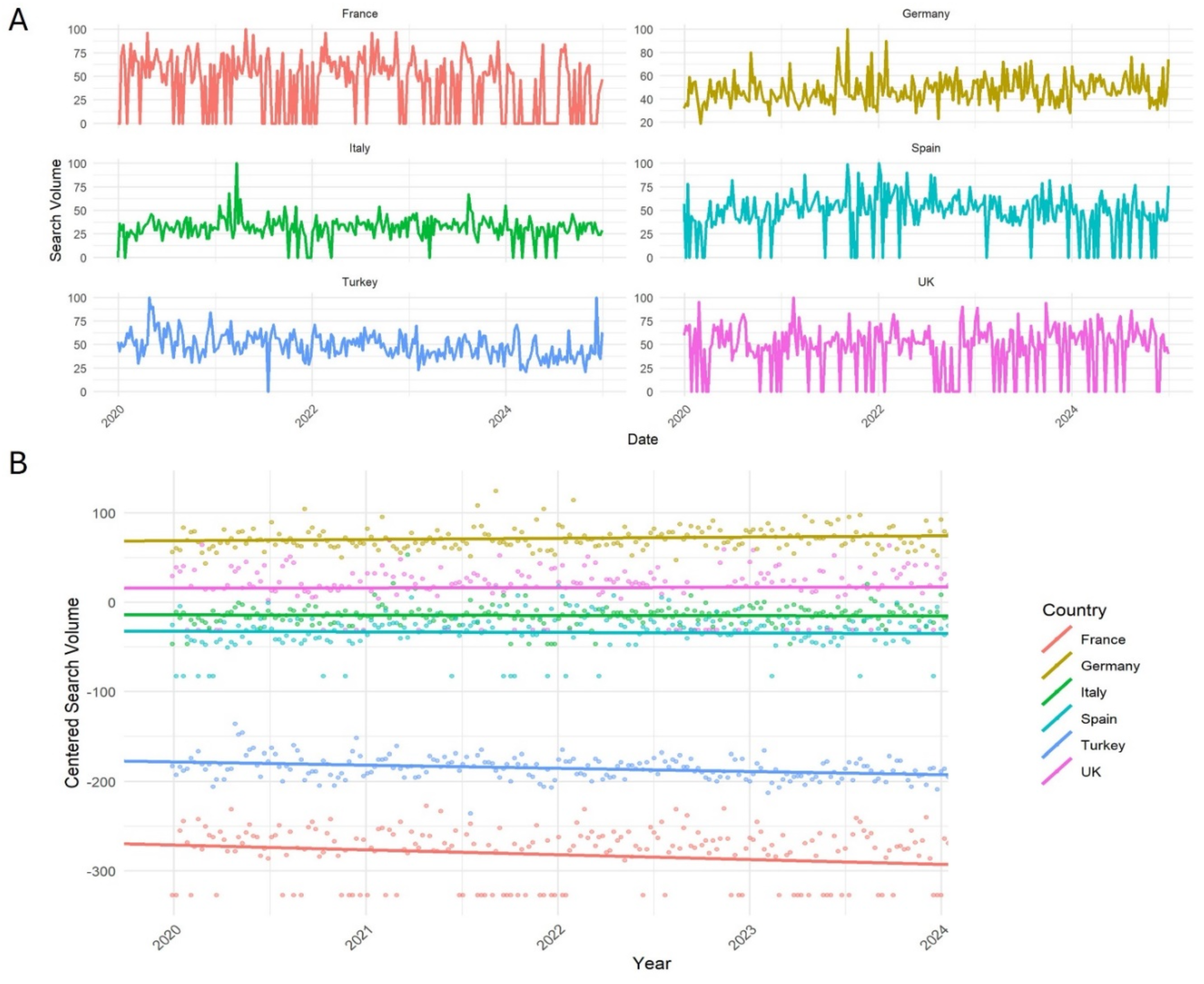
A total of 1560 data points, with 260 from each country, were included in the analysis. The Google Trends curves were generated using weekly search activity measurements spanning over 5 years, providing a detailed view of search volumes for each country. The raw curves, as presented in Figure 2A, reflect the temporal trends and variations in search activity across the six countries. The regression analysis revealed distinct temporal trends, as shown in Figure 2B.
Specifically, France and Turkey exhibited statistically significant negative slopes (-0.0148 and -0.00975, respectively), indicating a significant declining trend in search volumes over time (p<0.001). Conversely, Germany showed a statistically significant positive slope (0.00377, p=0.006), suggesting a slight increase in search volumes over time. In contrast, the slopes for Italy, Spain, and the UK were not statistically significant (p=0.58, p=0.48 and p=0.77, respectively), indicating that the search volumes in these countries remained relatively stable over the observed period (Table 1).
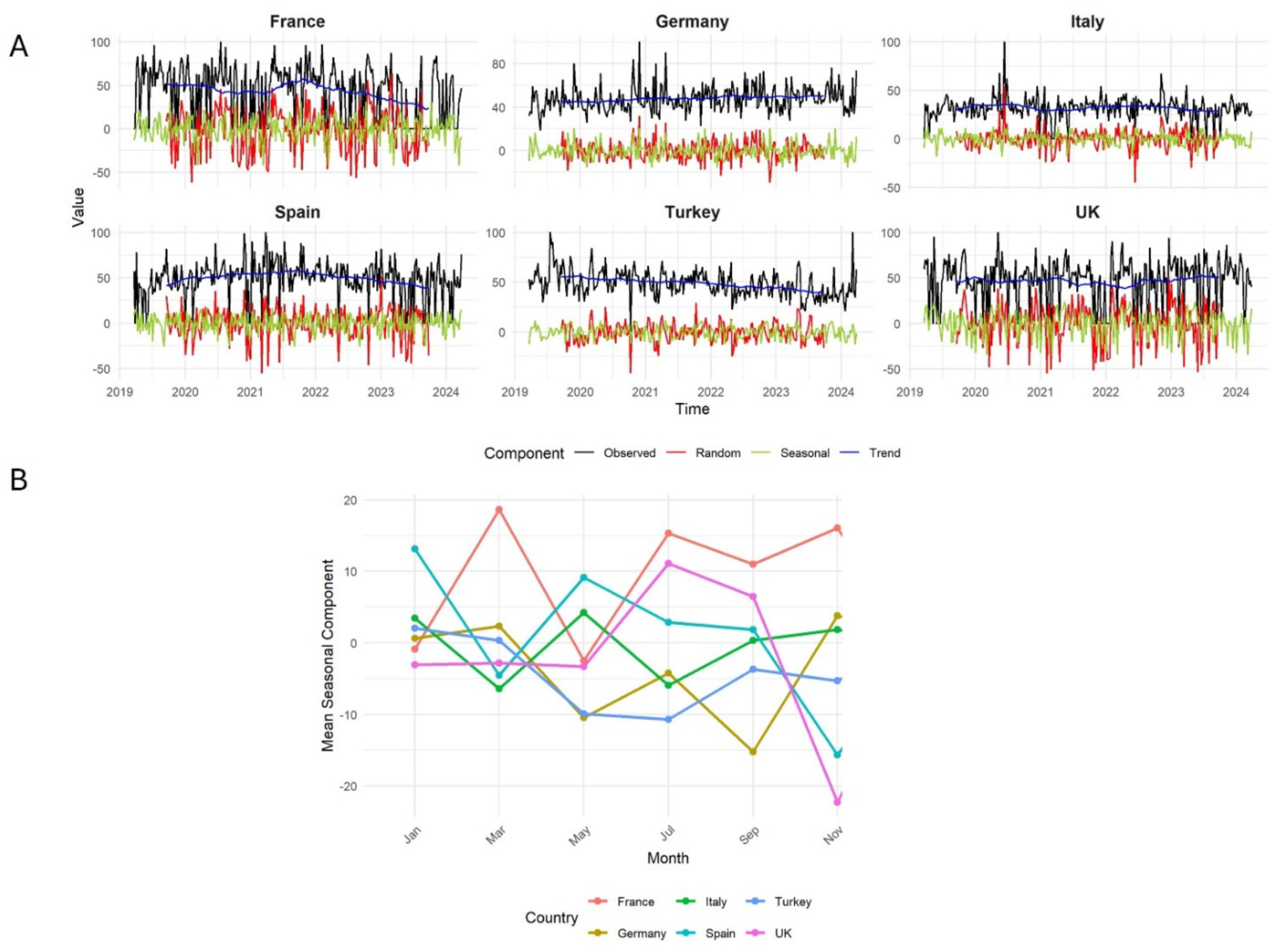
The Mann-Kendall trend test revealed significant variations in search interest trends across the six countries. France and Turkey showed highly consistent changes over time (p<0.001), Germany exhibited a milder significant trend (p=0.002), while Italy (p=0.99), Spain (p=0.77), and the UK (p=0.27) showed no significant trends, indicating stable or fluctuating search interest (Figure 3A). For instance, France displayed pronounced peaks in March and July, reflecting increased search activity during these months, while the UK exhibited a notable dip in March, indicating reduced activity (Figure 3B). Germany and Spain showed relatively stable seasonal fluctuations, with moderate variations throughout the year. Italy’s seasonal trends included a marked increase in July, suggesting heightened search interest during that period. Turkey demonstrated distinct peaks in November, along with smaller variations across other months. The residual component, depicted in red (Figure 3A), accounted for irregularities and anomalies not explained by the trend or seasonality. These residuals emphasized the presence of unexplained variations in the data. Specific decomposition according to each country are presented as supplementary Figure 1.
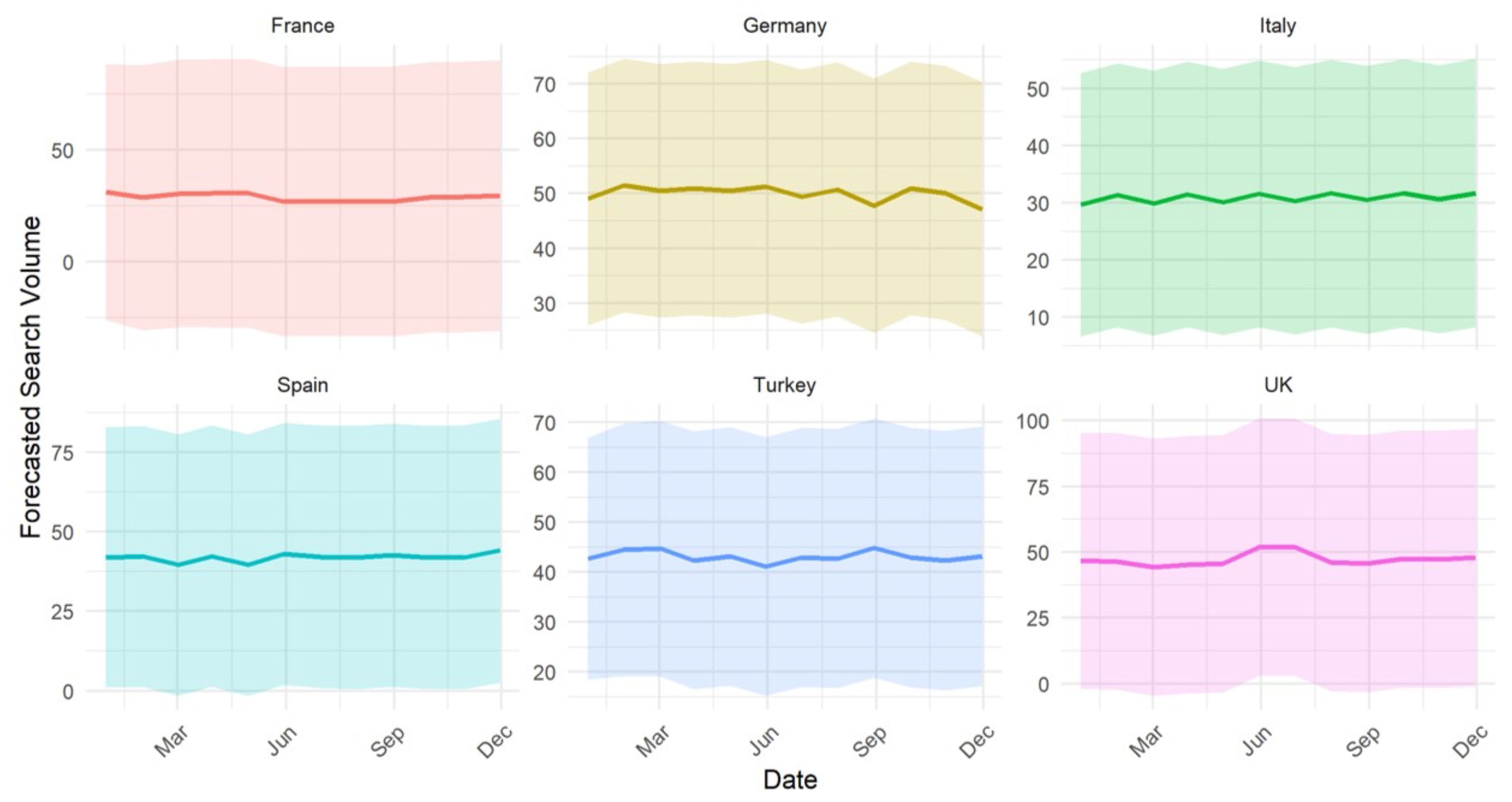
ARIMA-based forecasts for 2025 predict stable search volumes in France, Germany, Italy, and Spain, with slight downward trends in Germany and Turkey (Figure 4). Spain is expected to maintain a baseline around 50, while the UK is projected to have the highest and most consistent search activity, averaging 75 throughout the year.
The 1560 search volume data points were integrated into a RF model, which demonstrated strong predictive power with an R2 of 0.93 for the training set and 0.92 for the testing set, indicating high variance explanation. The model showed low prediction errors, with RMSE values of 7.12 (training) and 7.81 (testing) and MAE values of 5.08 (training) and 5.49 (testing). Minimal bias was observed, with MBE values near zero (-0.02 for training and -0.26 for testing), confirming accurate and reliable predictions.
Feature importance analysis showed that “Country” was the most influential predictor, contributing 64.45% to the model’s performance and highlighting significant geographical differences in search behavior. Temporal variables, including “Month” (24.05%) and “Date” (23.57%), also played meaningful roles in capturing seasonal and temporal trends, though to a lesser extent.
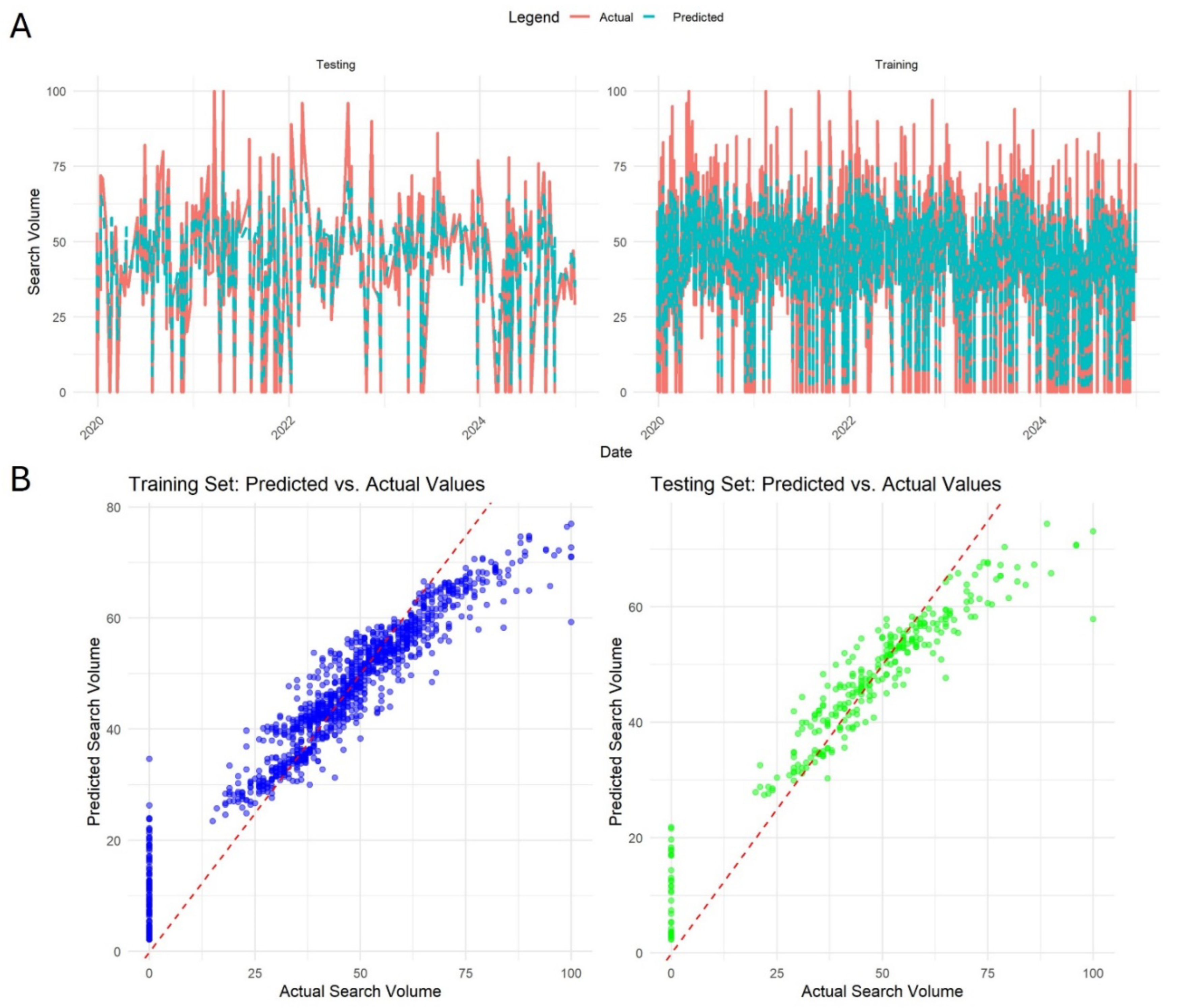
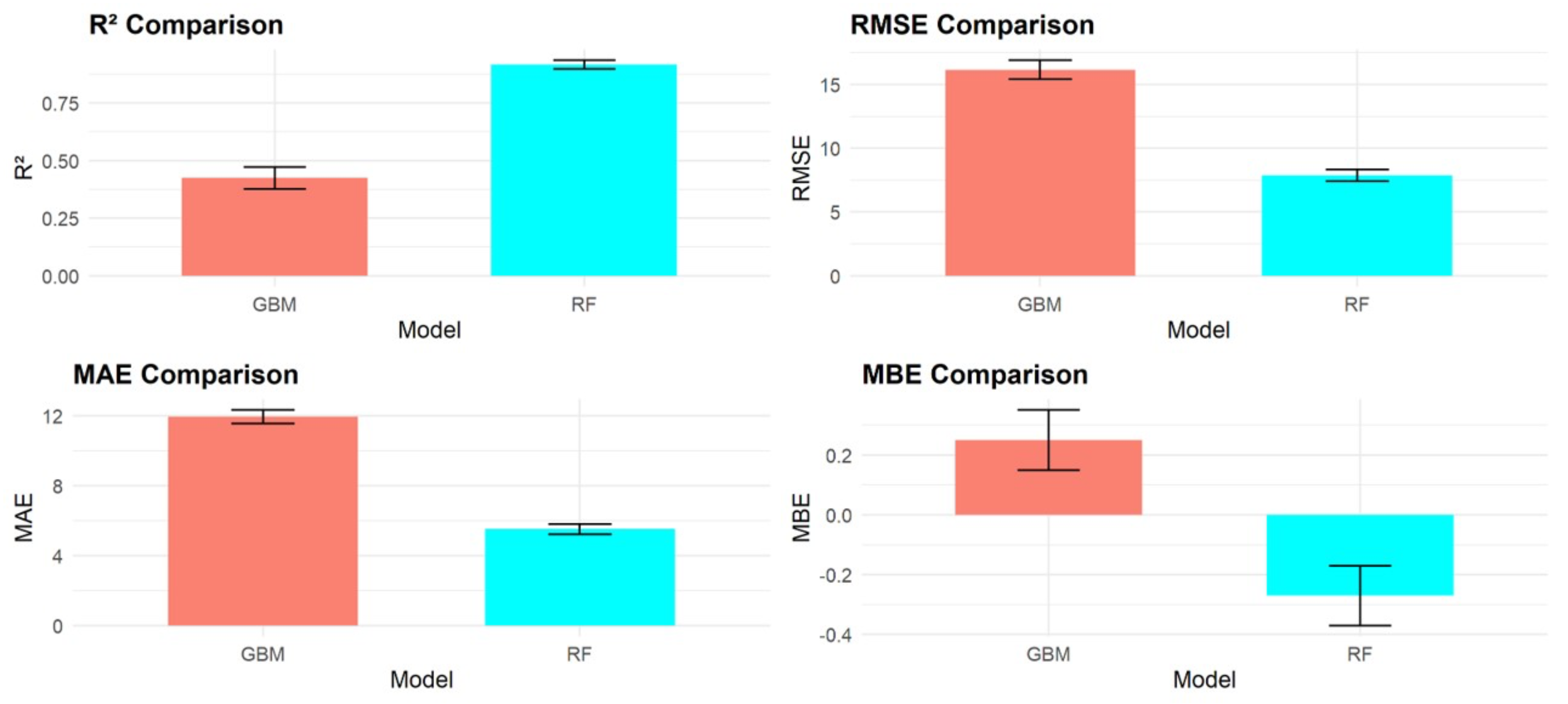
The GBM model showed strong performance on the training dataset (R2 = 0.947, RMSE = 4.87, MAE = 2.98, MBE = -0.024). However, its performance dropped significantly on the testing dataset (R2 = 0.426, RMSE = 16.18, MAE = 11.97), indicating overfitting. The testing MBE of 0.238 revealed a slight overprediction tendency (Figure 6A,B).
The comparative analysis between the RF and GBM models demonstrated significant performance differences. According to the t-test results, the RF model outperformed the GBM model across all evaluated metrics (p< 0.001), (Figure 7). These results highlight RF as the better-performing model, with more precise and robust predictions for search volume data.
The primary associated queries related to “epidural” and “labor,” which were most frequently searched by users, showed remarkable similarity across the different countries. These queries are summarized and ranked by their percentage increase in search volume, as presented in Table 2.

Discussion

This study analyzed Google Trends data to examine online search interest in “epidural” and “labor” across six countries, uncovering distinct seasonal patterns and trends. France and Turkey showed significant long-term declines, Germany exhibited a modest upward trend, and Italy, Spain, and the UK maintained relatively stable search volumes. ARIMA forecasting projected stable search volumes for most countries, with slight downward trends in Germany and Turkey, while the UK is expected to lead in consistent search activity throughout 2025. Predictive modeling identified “Country” as the most influential predictor (64.45%), followed by temporal variables like “Month” (24.05%) and “Date” (23.57%), highlighting the role of geographic and seasonal factors in search behavior.
The internet has become a primary resource for individuals seeking health information, offering easy access to a wide range of medical topics especially after COVID-19 pandemic [25,26]. For instance, in 2023, 91% of individuals in the European Union reported using the internet within the past three months, with 62% specifically using it to search for health-related information, including symptoms, treatments, and general healthcare advice [27]. A study involving 877 non-obstetric surgical patients revealed that more than 40% sought online information about their medical conditions, whereas only 4% used the internet to gather details about anaesthesia [28]. Another study supported these findings, reporting that only 7% of patients sought information specifically about anaesthesia [29]. The study also revealed that individuals with prior anesthetic experience were less likely to use the internet for such searches. Additionally, many patients expressed a desire for guidance in identifying trustworthy online sources for reliable health information. In contrast, the internet was reported in many studies to be used as a source of health information about childbirth by more than 90% of women [13,30,31,32,33,34]. Pregnant women often turn to the internet to address their “information needs,” despite receiving guidance about pregnancy during consultations with their physicians [35]. A study suggested that while doctors provide valuable insights during clinic visits, women seek additional information online to enhance their understanding and boost their confidence throughout their pregnancy [32]. Internet use among pregnant women is influenced by factors such as education level, employment status, and the number of previous pregnancies [36]. In fact, women with advanced education were more inclined to seek online guidance compared to those with less than a high school education. Similarly, employed women were more likely to utilize the internet for health-related information than those who were unemployed. Additionally, women experiencing their first pregnancy are more likely to seek advice compared to those who had previous pregnancies [30,37]. Notably, the majority of women did not share the information they obtained from the internet with their healthcare providers [38]. As a result, healthcare providers may remain unaware of any potentially inaccurate information or misconceptions about pregnancy that women might encounter online.
Our results highlighted different trends in search interest across countries which can be attributed to several potential factors. Cultural and societal norms significantly influence how women in labor perceive, experience, and express their pain [39]. Additionally, cultural attitudes toward medical interventions, such as the use of epidurals or other pain relief methods, can impact women’s choices and expectations during labor. In France and Turkey, the significant downward trends might reflect a growing reliance on alternative information sources, such as social media or direct consultations with healthcare providers, or a lack of recent public awareness campaigns. Conversely, Germany’s modest upward trend may result from consistent public health initiatives or increasing curiosity about labor options. No recent data are available to explain this behavior; however, a previously published study examining a period prior to the timeframe analyzed in our research highlighted a significant trend toward natural childbirth in Germany between 2000 and 2018 [40]. Consequently, a renewed surge of interest following 2018 could be hypothesized to explain our results.
Stable trends in Italy, Spain, and the UK could indicate well-established healthcare systems where reliable information is readily accessible, reducing the need for online searches. However, the UK emerged as the country with the highest volume of searches on this topic. This may be attributed to the country’s extensive experience with epidural labor analgesia, further supported by the significant number of published articles on the subject, as highlighted in a recent bibliometric analysis [41]. Turkey exhibited a statistically significant declining trend in search volumes over time. This finding is consistent with a previously published survey of Turkish obstetricians and gynecologists, which underscored their concerns regarding the use of epidural analgesia during labor [42]. The primary issue identified was insufficient education on epidural analgesia during and after obstetric specialty training. To address this, enhanced collaboration between anesthetists, gynecologists, and midwives is essential to improve understanding and practices. Additionally, cultural factors may play a role. For example, pregnant women of Turkish origin in Germany have reportedly rejected epidural analgesia during labor due to fears of potential long-term complications, such as paralysis and low back pain, and the perception that vaginal delivery with epidural analgesia is not natural [43].
Demographic factors, such as aging populations and declining birth rates, along with economic, political, and geographic influences, may contribute to reduced health-related search interest in some countries. In high internet-usage nations like France, technological saturation may lower search frequency for common topics, while variations in medical practices, such as the routine or rare use of epidurals, also impact search behavior.
Forecasted search volumes for the next 12 months indicate stable trends in France, Germany, Italy, and Spain, reflecting sustained interest in labor pain management. Slight downward trends in Germany and Turkey may suggest declining public interest due to cultural, educational, or healthcare factors. In contrast, the UK is expected to maintain the highest and most consistent search activity throughout 2025, highlighting its leading role in epidural labor analgesia practices and public engagement with the topic. Our machine learning analysis identified “Country” as the most influential predictor of search volume, underscoring the importance of geographic differences in shaping search behaviors. In contrast, temporal variables like “Month” and “Date,” while capturing seasonal and time-related trends, had a comparatively smaller impact. The analysis of associated queries related to “epidural” and “labor” revealed similar search behaviors across countries, reflecting shared concerns among pregnant women globally. Queries focused on practical aspects like timing (“best time to get epidural during labor,” +500%) and duration (“how long does an epidural last during labor,” +300%), as well as concerns about side effects (“side effects of epidural during labor,” +110%) and risks (“risks of epidural,” +50%). Questions about epidural impact on labor progression (“does epidural slow down labor,” +90%) and basic understanding (“epidural meaning,” +50%) further underscore the demand for accessible and reliable information. These findings highlight the importance of clear, accurate resources to support informed decision-making during pregnancy. Pregnant women often experienced mixed emotions when accessing online information, with a significant challenge being the difficulty in assessing its credibility and reliability [33,38]. Additionally, identifying trustworthy websites to obtain accurate, scientifically validated information was another major concern [44]. The Internet has become a vital resource for health-related information but concerns about the quality of content and users’ ability to assess its credibility are growing [45]. Many individuals lack sufficient knowledge about their health conditions and the skills to use online information effectively for informed decision-making [46]. As a result, the doctor-patient relationship remains essential, as self-diagnosis and treatment based exclusively on online resources cannot replace professional medical guidance.
Our findings have several important implications for clinical practice and future research. It is crucial for healthcare providers to understand the types of information that pregnant women actively seek online. This awareness places health professionals in a key position to guide women towards credible websites while cautioning against misleading or inaccurate online content.
Gynecologists should actively create scientifically accurate online content to guide pregnant women through the challenges of pregnancy, improving understanding and addressing concerns. Personalized educational programs on prenatal care, nutrition, and symptom management could further empower women and enhance maternal-fetal health outcomes. Collaborative efforts between gynecologists, anesthesiologists, and obstetricians are essential for developing reliable information on epidural analgesia. Additionally, promoting physical exercise, which has been shown to increase endorphin levels and improve maternal well-being and labor outcomes, is another relevant aspect of comprehensive prenatal care [47]. National health programs could establish official, evidence-based information portals to address the unique needs of expectant mothers. Additionally, artificial intelligence (AI) could support the development of personalized, immersive programs, providing tailored insights, interactive education, and real-time support on topics such as labor preparation, pain management, and maternal health [48,49].
These initiatives would enhance informed decision-making, build trust between patients and healthcare professionals, and improve maternal health outcomes. Conducting national surveys could further identify users’ needs, knowledge gaps, and preferences, providing valuable insights for tailored interventions.

Limitations

Our study has several limitations. First, reliance on Google Trends data introduces biases, as it provides relative indices rather than absolute search volumes and excludes individuals who do not use Google as their primary search engine. Second, the analysis was limited to six European countries and a single language per country, potentially missing search terms used by migrants or in other languages. The study also cannot determine the accuracy or intent behind search queries, which may not always reflect genuine health-seeking behavior related to epidural labor analgesia. Cultural, linguistic, and socio-economic differences, as well as varying levels of technological proficiency, further influence search behaviors and limit the generalizability of results. Additionally, the temporal nature of the data prevents exploration of causal relationships between search trends and clinical practices or outcomes. Finally, the lack of qualitative insights, such as interviews or surveys, restricts understanding of the motivations driving observed behaviors. Future research addressing these limitations could provide a more comprehensive perspective on the topic.

Conclusions

This study examines online search behaviors related to epidural labor analgesia across six populous European countries, using time-series analysis, predictive modeling, and machine learning to identify key factors influencing search trends and public interest. The findings highlight the need for health professionals to address pregnant women’s informational needs by identifying gaps and developing evidence-based, tailored digital resources. Observed disparities in search trends underscore the impact of cultural, technological, and systemic factors on health-seeking behavior. Future initiatives should focus on enhancing health literacy, addressing misconceptions, and fostering trust through national programs and targeted educational tools. Qualitative studies and surveys will be crucial to understanding motivations and concerns, complementing search trend analyses to support informed decision-making, improve maternal health outcomes, and strengthen patient-provider relationships.

Supplementary Materials

The following supporting information can be downloaded at the website of this paper posted on Preprints.org. Figure S1. Decomposition of Additive Time Series Across Six Countries. Time-series decomposition of search volumes related to epidural labor analgesia for six European countries, including observed data, trend components (long-term progression), seasonal components (recurring patterns), and random components (irregular variations). The analysis highlights variations in search behaviors over the 2020–2024 period, illustrating country-specific trends and seasonal fluctuations.

Author Contributions

Conceptualization, M.L.G.L., M.M., G.V.; methodology, M.L.G.L., M.R., M.C., A.P.; software and formal analysis, M.L.G.L.; data curation, M.L.G.L; writing-original draft preparation, M.L.G.L., M.M, M.C.; writing-review and supervision, G.V., A.P., P.S., C.T., A.C. All authors have read and agreed to the published version of the manuscript.

Funding

This research received no external funding.

Institutional Review Board Statement

Not applicable.

Informed Consent Statement

Not applicable.

Acknowledgments

We thank John Shaw and David Michael Abbott for their assistance with the English revision. We are also grateful to the Fondazione Paolo Procacci for the support in the publication process.

Conflicts of Interest

The authors declare no conflict of interest.

Abbreviations

ARIMA Auto Regressive Integrated Moving Average
GBM Gradient Boosting Machine
RF Random Forest
RSV Relative Search Volume
LOESS locally estimated scatterplot smoothing
MAE Mean Absolute Error
MBE Mean Bias Error
RMSE Root Mean Square Error
R2 Coefficient of Determination
CI Confidence Interval
PDA Peridural Anaesthesia (German term for epidural analgesia)
UK United Kingdom

References

  1. Sng BL, Sia ATH. Maintenance of epidural labour analgesia: The old, the new and the future. Best Pract Res Clin Anaesthesiol. 2017;31(1):15-22. [CrossRef]
  2. Anim-Somuah M, Smyth RM, Cyna AM, Cuthbert A. Epidural versus non-epidural or no analgesia for pain management in labour. Cochrane Database Syst Rev. 2018;5(5):CD000331. [CrossRef]
  3. Mercieri M, Mercieri A, Paolini S, et al. Postpartum cerebral ischaemia after accidental dural puncture and epidural blood patch. Br J Anaesth. 2003;90(1):98-100.
  4. Callahan EC, Lee W, Aleshi P, George RB. Modern labor epidural analgesia: implications for labor outcomes and maternal-fetal health. Am J Obstet Gynecol. 2023;228(5S):S1260-S1269. [CrossRef]
  5. Del Buono R, Pascarella G, Costa F, et al. Predicting difficult spinal anesthesia: development of a neuraxial block assessment score. Minerva Anestesiol. 2021;87(6):648-654. [CrossRef]
  6. Drake EJ, Coghill J, Sneyd JR. Defining competence in obstetric epidural anaesthesia for inexperienced trainees. Br J Anaesth. 2015;114(6):951-957. [CrossRef]
  7. Mathur VA, Morris T, McNamara K. Cultural conceptions of Women’s labor pain and labor pain management: A mixed-method analysis. Soc Sci Med 1982. 2020;261:113240. [CrossRef]
  8. Abdelhafeez AM, Alomari FK, Al Ghashmari HM, et al. Awareness and Attitude Toward Epidural Analgesia During Labor Among Pregnant Women in Taif City: A Hospital-Based Study. Cureus. 2023;15(11):e49367. [CrossRef]
  9. Kothari D, Bindal J. Impact of obstetric analgesia (regional vs. parenteral) on progress and outcome of labour: a review. In: ; 2011. Accessed January 3, 2025. https://www.semanticscholar.org/paper/Impact-of-obstetric-analgesia-(regional-vs-on-and-a-Kothari-Bindal/195d70c0af2c7095483fc0c365ff9c64319c9b9f.
  10. Amadasun FE, Aziken ME. Knowledge And Attitude Of Pregnant Women To Epidural Analgesia In Labour. Ann Biomed Sci. 2008;7(1-2). [CrossRef]
  11. Brinkler R, Edwards Z, Abid S, et al. A survey of antenatal and peripartum provision of information on analgesia and anaesthesia. Anaesthesia. 2019;74(9):1101-1111. [CrossRef]
  12. Declercq ER, Sakala C, Corry MP, Applebaum S, Herrlich A. Major Survey Findings of Listening to Mothers(SM) III: Pregnancy and Birth: Report of the Third National U.S. Survey of Women’s Childbearing Experiences. J Perinat Educ. 2014;23(1):9-16. [CrossRef]
  13. Lagan BM, Sinclair M, Kernohan WG. Internet use in pregnancy informs women’s decision making: a web-based survey. Birth Berkeley Calif. 2010;37(2):106-115. [CrossRef]
  14. Muskens L, Boekhorst MGBM, Pop VJM, van den Heuvel MI. Browsing throughout pregnancy: The longitudinal course of social media use during pregnancy. Midwifery. 2024;129:103905. [CrossRef]
  15. Europe Population 2024. Accessed January 3, 2025. https://worldpopulationreview.com/continents/europe.
  16. Di Gennaro G, Licata F, Greco F, Beomonte Zobel B, Mallio CA. Interest in mammography across European countries: a retrospective “Google Trends” comparative study. Quant Imaging Med Surg. 2023;13(11):7523-7529. [CrossRef]
  17. Zeger SL, Irizarry R, Peng RD. On time series analysis of public health and biomedical data. Annu Rev Public Health. 2006;27:57-79. [CrossRef]
  18. Trull O, García-Díaz JC, Peiró-Signes A. Multiple seasonal STL decomposition with discrete-interval moving seasonalities. Appl Math Comput. 2022;433:127398. [CrossRef]
  19. Aigner W, Miksch S, Müller W, Schumann H, Tominski C. Visualizing time-oriented data—A systematic view. Comput Graph. 2007;31(3):401-409. [CrossRef]
  20. Jakobsen E, Olsen KE, Bliddal M, Hornbak M, Persson GF, Green A. Forecasting lung cancer incidence, mortality, and prevalence to year 2030. BMC Cancer. 2021;21(1):985. [CrossRef]
  21. Breiman L. Random Forests. Mach Learn. 2001;45(1):5-32. [CrossRef]
  22. Zhang Z, Zhao Y, Canes A, Steinberg D, Lyashevska O, written on behalf of AME Big-Data Clinical Trial Collaborative Group. Predictive analytics with gradient boosting in clinical medicine. Ann Transl Med. 2019;7(7):152. [CrossRef]
  23. Chicco D, Warrens MJ, Jurman G. The coefficient of determination R-squared is more informative than SMAPE, MAE, MAPE, MSE and RMSE in regression analysis evaluation. PeerJ Comput Sci. 2021;7:e623. [CrossRef]
  24. Nevitt J, Hancock GR. Improving the Root Mean Square Error of Approximation for Nonnormal Conditions in Structural Equation Modeling. J Exp Educ. 2000;68(3):251-268. [CrossRef]
  25. Di Novi C, Kovacic M, Orso CE. Online health information seeking behavior, healthcare access, and health status during exceptional times. J Econ Behav Organ. 2024;220:675-690. [CrossRef]
  26. Lo Bianco G, Papa A, Schatman ME, et al. Practical Advices for Treating Chronic Pain in the Time of COVID-19: A Narrative Review Focusing on Interventional Techniques. J Clin Med. 2021;10(11):2303. [CrossRef]
  27. Digitalisation in Europe – 2024 edition - Interactive publications - Eurostat. Accessed January 3, 2025. https://ec.europa.eu/eurostat/web/interactive-publications/digitalisation-2024.
  28. Kurup V, Considine A, Hersey D, et al. Role of the Internet as an information resource for surgical patients: a survey of 877 patients. Br J Anaesth. 2013;110(1):54-58. [CrossRef]
  29. Wieser T, Steurer MP, Steurer M, Dullenkopf A. Factors influencing the level of patients using the internet to gather information before anaesthesia: a single-centre survey of 815 patients in Switzerland : The internet for patient information before anaesthesia. BMC Anesthesiol. 2017;17(1):39. [CrossRef]
  30. Bakhireva LN, Young BN, Dalen J, Phelan ST, Rayburn WF. Patient utilization of information sources about safety of medications during pregnancy. J Reprod Med. 2011;56(7-8):339-343.
  31. Gao L ling, Larsson M, Luo S yuan. Internet use by Chinese women seeking pregnancy-related information. Midwifery. 2013;29(7):730-735. [CrossRef]
  32. Huberty J, Dinkel D, Beets MW, Coleman J. Describing the use of the internet for health, physical activity, and nutrition information in pregnant women. Matern Child Health J. 2013;17(8):1363-1372. [CrossRef]
  33. Larsson M. A descriptive study of the use of the Internet by women seeking pregnancy-related information. Midwifery. 2009;25(1):14-20. [CrossRef]
  34. Bert F, Gualano MR, Brusaferro S, et al. Pregnancy e-health: a multicenter Italian cross-sectional study on Internet use and decision-making among pregnant women. J Epidemiol Community Health. 2013;67(12):1013-1018. [CrossRef]
  35. Diaz JA, Griffith RA, Ng JJ, Reinert SE, Friedmann PD, Moulton AW. Patients’ use of the Internet for medical information. J Gen Intern Med. 2002;17(3):180-185. [CrossRef]
  36. Shieh C, Mays R, McDaniel A, Yu J. Health literacy and its association with the use of information sources and with barriers to information seeking in clinic-based pregnant women. Health Care Women Int. 2009;30(11):971-988. [CrossRef]
  37. Kavlak O, Atan SÜ, Güleç D, Oztürk R, Atay N. Pregnant women’s use of the internet in relation to their pregnancy in Izmir, Turkey. Inform Health Soc Care. 2012;37(4):253-263. [CrossRef]
  38. Sayakhot P, Carolan-Olah M. Internet use by pregnant women seeking pregnancy-related information: a systematic review. BMC Pregnancy Childbirth. 2016;16:65. [CrossRef]
  39. Navarro-Prado S, Sánchez-Ojeda M, Marmolejo-Martín J, Kapravelou G, Fernández-Gómez E, Martín-Salvador A. Cultural influence on the expression of labour-associated pain. BMC Pregnancy Childbirth. 2022;22(1):836. [CrossRef]
  40. Ratiu D, Hayder AQ, Gilman E, et al. Shifting Trends in Obstetrics: An 18-year Analysis of Low-risk Births at a German University Hospital. Vivo Athens Greece. 2024;38(1):390-398. [CrossRef]
  41. Yu K, Ding Z, Yang J, Han X, Li T, Miao H. Bibliometric Analysis on Global Analgesia in Labor from 2002 to 2021. J Pain Res. 2023;16:1999-2013. [CrossRef]
  42. Pirbudak L, Balat O, Kutlar I, Uğur MG, Sarimehmetoğlu F, Oner U. Epidural analgesia in labor: Turkish obstetricians’ attitudes and knowledge. Agri Agri Algoloji Derneginin Yayin Organidir J Turk Soc Algol. 2006;18(2):41-46.
  43. Petruschke I, Ramsauer B, Borde T, David M. Differences in the Frequency of Use of Epidural Analgesia between Immigrant Women of Turkish Origin and Non-Immigrant Women in Germany - Explanatory Approaches and Conclusions of a Qualitative Study. Geburtshilfe Frauenheilkd. 2016;76(9):972-977. [CrossRef]
  44. Lima-Pereira P, Bermúdez-Tamayo C, Jasienska G. Use of the Internet as a source of health information amongst participants of antenatal classes. J Clin Nurs. 2012;21(3-4):322-330. [CrossRef]
  45. Chen L, Liu W. The effect of Internet access on body weight: Evidence from China. J Health Econ. 2022;85:102670. [CrossRef]
  46. Dwyer DS, Liu H. The impact of consumer health information on the demand for health services. Q Rev Econ Finance. 2013;53(1):1-11. [CrossRef]
  47. Varrassi G, Bazzano C, Edwards WT. Effects of physical activity on maternal plasma beta-endorphin levels and perception of labor pain. Am J Obstet Gynecol. 1989;160(3):707-712. [CrossRef]
  48. Cascella M, Leoni MLG, Shariff MN, Varrassi G. Artificial Intelligence-Driven Diagnostic Processes and Comprehensive Multimodal Models in Pain Medicine. J Pers Med. 2024;14(9):983. [CrossRef]
  49. Cascella M, Shariff MN, Viswanath O, Leoni MLG, Varrassi G. Ethical Considerations in the Use of Artificial Intelligence in Pain Medicine. Curr Pain Headache Rep. 2025;29(1):10. [CrossRef]
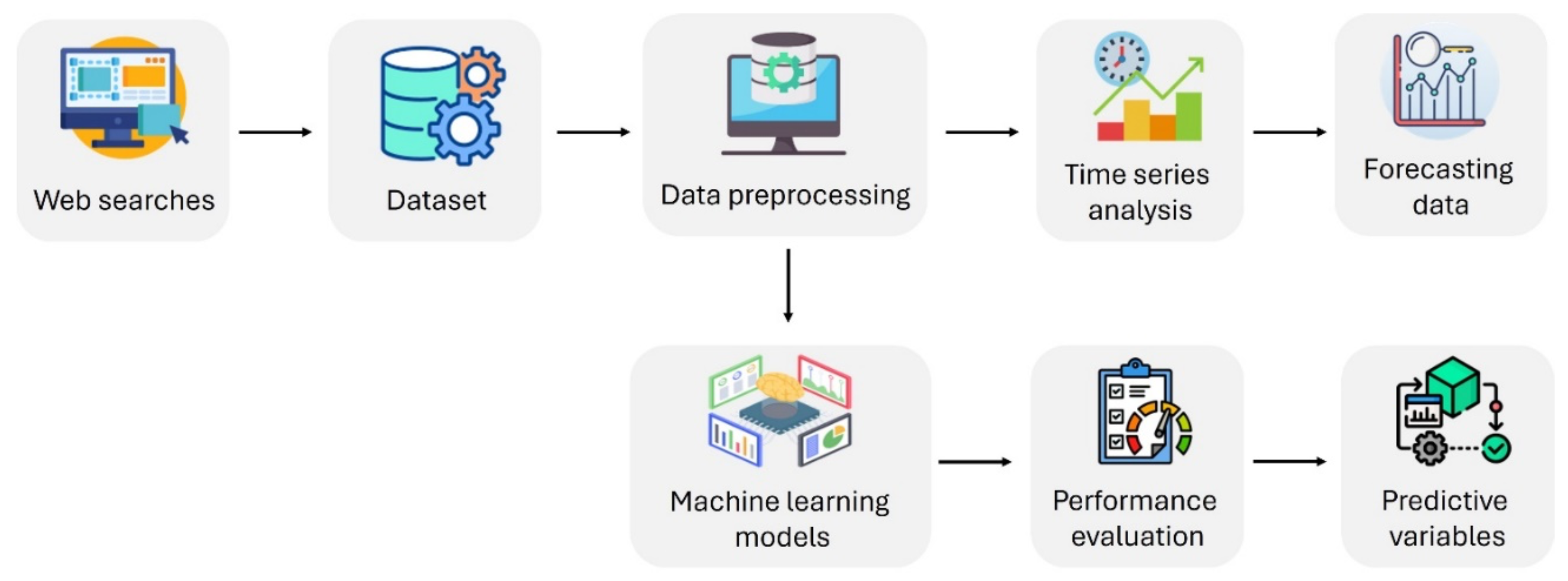
Figure 1. Sequential steps of the analysis process. The process began with data collection of web searches through Google Trends. The data were organized into a structured dataset and underwent preprocessing to ensure quality and consistency. Time series analysis was conducted to explore trends, seasonality, and irregularities over time. The ARIMA model was employed for forecasting, enabling the prediction of future search volumes. Machine learning models, such as Random Forest and Gradient Boosting Machine, were utilized to analyze relationships between variables and search volumes. Performance evaluation was carried out to measure model accuracy using statistical metrics, while key predictive variables were identified to interpret the primary drivers behind the results.
Preprints 145401 g001
Figure 2. Raw data on search volume trends and corresponding regression lines. A) Weekly search volume trends for “epidural labor” across six countries (France, Germany, Italy, Spain, Turkey, and the UK) over a five-year period. Each panel represents the raw data temporal evolution of search activity within a specific country, with search volumes scaled from 0 to 100 relative to the peak search period. B) Temporal trends in search volumes for each country from 2020 to 2024. The regression lines represent the fitted linear trends, while the points indicate individual weekly data.
Preprints 145401 g002
Figure 3. Seasonal Decomposition and Trends in Search Volumes Across Countries. A) Time-series decomposition of search volumes for France, Germany, Italy, Spain, Turkey, and the UK, highlighting observed data (black), trends (blue), seasonal components (green), and random noise (red) for the 5 years (2020 -2024). B) Mean seasonal components for each month, showcasing distinct seasonal patterns and variations in search activity across the six countries.
Preprints 145401 g003
Figure 4. Twelve-month forecast of search volumes by country. Each panel illustrates the projected search volumes (solid lines) for the next 12 months, for each country, along with the 95% confidence intervals (shaded areas), which represent the uncertainty of these predictions. The forecasts highlight anticipated trends in search activity across France, Germany, Italy, Spain, Turkey, and the UK in 2025.
Preprints 145401 g004
Figure 5. Actual vs. Predicted Search Volumes and Model Performance. Comparison between actual and predicted search volumes for the training and testing datasets using the Random Forest model. A) Temporal trends, with actual values (red) and predicted values (green). B) Scatterplots of predicted versus actual values for the training (blue) and testing (green) datasets, with the red dashed line representing perfect predictions. The alignment of points along the line highlights the model’s predictive accuracy.
Preprints 145401 g005
Figure 6. Performance of the GBM model: actual vs. predicted search volumes. A) GBM model’s performance, comparing actual and predicted search volumes over time and their relationship in scatter plots for the training and testing datasets (B). Training data showed a closer fit to the ideal regression line, while the testing data revealed higher prediction errors, reflecting overfitting tendencies.
Preprints 145401 g006
Figure 7. Comparison of Model Performance Metrics. Bar plots illustrating the performance metrics (R2, RMSE, MAE, and MBE) for RF and GBM models. Error bars represent the standard deviation of each metric, highlighting the superior performance and lower variability of the RF model across all metrics.
Preprints 145401 g007
Table 1. Caption.
Table 1. Caption.
Country Slope 95% CI p
France -0.0148 -0.0217 to -0.00799 p<0.001
Germany 0.00377 0.00110 to 0.00644 0.006
Italy -0.000775 -0.00351 to 0.00196 0.58
Spain -0.00177 -0.00665 to 0.00312 0.48
Turkey -0.00975 -0.0126 to -0.00687 p<0.001
UK 0.000865 -0.00488 to 0.00661 0.77
Table 2. Caption.
Table 2. Caption.
Associated queries Percentage increase
Best time to get epidural during labor 500%
How long does an epidural last during labor 300%
Side effects of epidural during labor 110%
Does epidural slow down labor 90%
When can you get an epidural during labor 80%
Epidural side effects 70%
Epidural meaning 50%
Risks of epidural 50%
Disclaimer/Publisher’s Note: The statements, opinions and data contained in all publications are solely those of the individual author(s) and contributor(s) and not of MDPI and/or the editor(s). MDPI and/or the editor(s) disclaim responsibility for any injury to people or property resulting from any ideas, methods, instructions or products referred to in the content.
Copyright: This open access article is published under a Creative Commons CC BY 4.0 license, which permit the free download, distribution, and reuse, provided that the author and preprint are cited in any reuse.
Prerpints.org logo

Preprints.org is a free preprint server supported by MDPI in Basel, Switzerland.

Subscribe

Disclaimer

Terms of Use

Privacy Policy

Privacy Settings

© 2025 MDPI (Basel, Switzerland) unless otherwise stated