Preprint
Article

This version is not peer-reviewed.

Differential Virulence Gene Profiling and Expression of Campylobacter Species from Chicken and Human Fecal Samples in Egypt

A peer-reviewed article of this preprint also exists.

Submitted:

07 January 2025

Posted:

07 January 2025

You are already at the latest version

Abstract

Campylobacter is considered to be the most leading bacterial cause of human gastroenteritis worldwide. Consumption of undercooked or contaminated chicken food is the main source of human campylobacteriosis. Although Campylobacter is a leading cause of gastroenteritis, data on the comparative virulence gene profiles of Campylobacter jejuni (C. jejuni) and Campylobacter coli (C. coli) from chicken and human sources in Egypt remain scarce. This study aimed to characterize the virulence genes profiles of both C. jejuni and C. coli isolated from chicken and human fecal samples in Ismailia governorate, Egypt. A total of 20 isolates of each species were screened for 15 virulence genes. All isolates carried virB11, iam, racR, and tetO. In chicken isolates, the prevalence of additional virulence genes was higher, with pldA, dnaJ, flaA, cdtB, ciaB, and wlaN detected in 100%, 100%, 100%, 80%, 60%, and 0% of C. jejuni isolates and 100%, 100%, 60%, 60%, 40%, and 20% of C. coli isolates, respectively. In contrast, human isolates showed a markedly lower prevalence, with dnaJ, flaA, and cdtB detected in 20% of C. jejuni and 40% of C. coli isolates, while pldA, ciaB, and wlaN were absent in all human isolates. qPCR revealed significantly higher expression levels of dnaJ, virB11, flaA, and iam in chicken isolates compared to human isolates, with mean fold changes of 11.5, 7.16, 5.39, and 3.72 for C. jejuni, and 8.34, 5.21, 2.84, and 2.5 for C. coli, respectively. Differential expression of racR, cdtB, and tetO was not significant. Ganglioside mimicry genes (Cst11, wlaN, Waac, ggt, and cgtB) were absent in all human isolates. These findings underscore the significant variability in virulence gene profiles between chicken and human Campylobacter isolates and highlight the importance of molecular characterization in risk assessment and epidemiological surveillance of Campylobacter infections.

Keywords: 
;  ;  ;  ;  ;  

1. Introduction

Campylobacter is one of the most important four causes for global diarrheal diseases with an estimated 96 million cases and 37,600 deaths annually, predominantly in developing countries [1]. In developing countries, campylobacteriosis in children is frequent and sometimes resulting in death [2]. Mainly C. jejuni and C. Coli are well-recognized causes of human campylobacteriosis with symptoms ranging from mild watery diarrhea to serious neuropathies as Guillain-Barré syndrome [3].
Campylobacter spp. are gram-negative, microaerophilic bacteria characterized by their spiral shape and motility, which is facilitated by a polar flagellum. These organisms thrive at higher temperatures (42°C), making avian hosts, particularly poultry, an ideal reservoir for C. jejuni and C. coli. Notably, these bacteria colonize poultry asymptomatically, unlike in humans, where they cause disease [4]. Poultry is considered to be the main source for human campylobacteriosis [5]. Chicken, in contrast to human, scarcely develop pathological lesions [6]. The high body temperature of poultry species provides an optimal environment for the growth of thermophilic Campylobacter species, particularly C. jejuni and C. coli which make poultry constitute the main source of human campylobacteriosis [7].
Despite the significant burden of disease, the molecular basis of Campylobacter pathogenicity remains incompletely understood. However, several virulence factors have been identified based on in vitro and in vivo studies. For example, flaA, which encodes flagellin and cadF, which encodes a protein that interacts with a host extracellular matrix protein fibronectin are required for Campylobacter adherence to and/ or colonization of the host cell surface [8]. Other genes such as ciaB, pldA, and genes of the pVir plasmid are involved in host cell invasion [9]
Virulence genes like cdtA, cdtB, and cdtC are responsible for the expression of Campylobacter cytolethal distending toxin and eventually cell death. Lipo-oligosaccharides associated genes; cgtB, waaC, and wlaN, responsible for β-1,3 galactosyltransferase production, invasion associated genes; ciaB, pldA, and virB11, and antibiotic resistance genes; tetO, tetA and gyrB were investigated by [10]. Systematic surveillance and molecular characterization are essential for understanding epidemiological patterns and designing effective interventions. This study aims to explore the genetic diversity, virulence gene profiles, and differential gene expression in Campylobacter isolates from chicken and human fecal samples, with a focus on the comparative molecular mechanisms underlying zoonotic transmission.

2. Materials and Methods

2.1. Sample Preparation and Bacterial Isolation

A total of 200 Chicken broilers and human fecal samples (100 of each) were collected as follow; 100 Chicken ceca from ten different poultry commercial slaughterhouses and 100 human stool samples from medical laboratories in Ismailia governorate during 2018. All samples were collected in sterile polyethylene cubs and transported in an ice box with refrigerants to be examined within a few hours for isolation of Campylobacter species at the Reference Laboratory for Veterinary Quality Control on Poultry Production (RLQP), Ismailia branch. All samples were prepared as follows; from Chicken, fecal samples were obtained by removal of cecal wall using sterile scissors and taking one gram of cecal contents. One gram from each sample was added to 9 ml Thioglycolate broth (1/10 dilution) to form a fecal suspension. For Human samples, one gram from each fecal sample was added to 9 ml Thioglycolate broth (1/10 dilution) to form a fecal suspension. All samples were examined by passive filtration method [11].
Approximately 0.1 ml from the freshly prepared fecal suspension was carefully and aseptically layered onto a 0.45 µm cellulose nitrate filter, which has been previously placed on top of a freshly prepared non-selective blood agar plate. Care must be taken not to allow the inoculum to spill over the edge of the filter. The bacteria were allowed to migrate through the filter for 30–45 min. at 37°C or at room temperature. The filter was aseptically removed, and then the fluid that passed through the filter was streaked on the blood agar plate using a sterile bacteriological loop and then incubated micro-aerobically at 42°C for 48 hrs.

2.2. Molecular Confirmation and Identification of Campylobacter Virulence Genes by PCR

A total of 20 Campylobacter isolates were selected for molecular detection of 15 different virulence genes, comprising 10 isolates from chicken samples (5 C. jejuni and 5 C. coli) and 10 isolates from human samples (5 C. jejuni and 5 C. coli). DNA was extracted using the QIAamp DNA Mini Kit (QIAGEN, Germany) following the manufacturer’s instructions.
Oligonucleotide primers were supplied from Metabion (Germany). Primers sequences and cycling conditions for confirmation and typing of Campylobacter spp. were performed as reported previously [12] [13]. The target genes included: amplification of flaA and csrA genes responsible for adhesion [14] and [15], virB11, ciaB, pldA, iam genes responsible for invasion [9];[14];[16], cdtB gene responsible for cytotoxicity [9], dnaJ and racR genes responsible for Campylobacter resistance to stress conditions [17] and [9], waaC, wlaN, cstII, cgtB and Ggt genes responsible for Campylobacter ganglioside Mimicry [15] [18], and tetO gene responsible for tetracycline resistance [19]. For all assays, Emerald Amp GT PCR master mix (Takara, Japan) was used. PCR products were separated by electrophoresis using a Gelpilot 100 bp DNA Ladder (Qiagen, Germany) and visualized with a gel documentation system. Images of the gels were captured, and data were analyzed using dedicated software to confirm the presence of the targeted genes.

2.3. Gene Expression of 7 Campylobacter Virulence Genes in Chicken Samples Versus Human Samples

The expression levels of seven virulence genes (dnaJ, virB11, flaA, iam, racR, cdtB and tetO) in C. jejuni and C. coli were analyzed in isolates from chicken and human samples, with 23S rRNA serving as the reference housekeeping gene. Total RNA was extracted using the RNeasy Mini Kit (QIAGEN, Germany) following the manufacturer’s protocol. Complementary DNA (cDNA) synthesis was performed using RevertAid Reverse Transcriptase (Thermo Fisher, 200 U/µL). qPCR was conducted using the Quantitect SYBR Green PCR Kit (QIAGEN). Specific oligonucleotide primers for each target gene were synthesized by Metabion (Germany). Cycling conditions for qPCR are detailed in Table 1. Amplifications were performed on the Stratagene MX3005P Real-Time PCR System, a fully integrated platform for quantitative PCR detection and data analysis.
Table 1. Cycling conditions for SYBR green real time PCR.
Gene Reverse transcription Primary
denaturation
Amplification (40 cycles) Dissociation curve (1 cycle) References
Secondary denaturation Annealing
(Optics on)
Extension Secondary denaturation Annealing
Final denaturation
23S rRNA 50˚C
30 min.
94˚C
15 min.
94˚C
15 sec.
55˚C
30 sec.
72˚C
30 sec.
94˚C
1 min.
55˚C
1 min.
94˚C
1 min.
[12]
cdtB 50˚C
30 min.
94˚C
15 min.
94˚C
15 sec.
51˚C
30 sec.
72˚C
30 sec.
94˚C
1 min.
51˚C
1 min.
94˚C
1 min.
[21]
dnaJ 50˚C
30 min.
94˚C
15 min.
94˚C
15 sec.
42˚C
30 sec.
72˚C
30 sec.
94˚C
1 min.
42˚C
1 min.
94˚C
1 min.
[17]
flaA 50˚C
30 min.
94˚C
15 min.
94˚C
15 sec.
55˚C
30 sec.
72˚C
30 sec.
94˚C
1 min.
55˚C
1 min.
94˚C
1 min.
[14]
racR 50˚C
30 min.
94˚C
15 min.
94˚C
15 sec.
45˚C
30 sec.
72˚C
30 sec.
94˚C
1 min.
45˚C
1 min.
94˚C
1 min.
[22]
VirB11 50˚C
30 min.
94˚C
15 min.
94˚C
15 sec.
53˚C
30 sec.
72˚C
30 sec.
94˚C
1 min.
53˚C
1 min.
94˚C
1 min.
[9]
Iam 50˚C
30 min.
94˚C
15 min.
94˚C
15 sec.
50˚C
30 sec.
72˚C
30 sec.
94˚C
1 min.
50˚C
1 min.
94˚C
1 min.
[23]
tetO 50˚C
30 min.
94˚C
15 min.
94˚C
15 sec.
55˚C
30 sec.
72˚C
30 sec.
94˚C
1 min.
55˚C
1 min.
94˚C
1 min.
[16]

2.4. Analysis of the SYBR Green RT-PCR for Gene Expression

Amplification curves and cycle threshold (CT) values were generated using the Stratagene MX3005P software. To estimate the variation of gene expression on the RNA of the different samples, the CT of each sample was compared with that of the control group according to the “ΔΔCT” method stated previously [20] using the following ratio: (2-ΔΔct). Whereas ΔΔCT = ΔCT reference (23srRNA) – ΔCT target (for each gene).
ΔCT target (for each gene) = CT control (Human) – CT treatment (chicken)
ΔCT reference (23srRNA) = CT control (Human) – CT treatment (chicken).

2.5. Ethical Statement

All procedures involving the collection of human fecal samples were conducted with prior informed consent from participants, ensuring anonymity and confidentiality, in compliance with ethical guidelines and institutional approval.

3. Results

3.1. Prevalence of Campylobacter Virulence Genes and tetO Gene

The prevalence of virulence genes in both chicken and human samples could be categorized into; Group no. 1, genes that were detected in 100% of tested chicken and human samples (virB11, iam, racR and tetO), Group no. 2, genes that were detected in chicken and human samples with different ratios (dnaJ, flaA and cdtB), Group no. 3, genes that were detected in chicken samples and not in human samples (pldA, ciaB and wlan), and Group no. 4, genes that were not detected in any of tested samples neither chicken nor human (Cst11, csrA, Waac, ggt and cgtB) Table (2)
For chicken samples, pldA and dnaJ genes were detected in all C. jejuni and C. coli samples, flaA gene was detected in all C. jejuni and in 60% of C. coli samples. cdtB gene was detected in 80% and 60% of C. jejuni and C. coli samples; respectively, and ciaB gene was detected in 60% and 40% of C. jejuni and C. coli samples; respectively. Wlan gene was detected in 20% of C. coli and not detected from any of C. jejuni samples. For human samples, dnaJ, flaA, and cdtB were detected in 20% C. jejuni and 40% of C. coli samples, while pldA, ciaB, and wlan were not detected in any sample from human source as shown in Table 2 & Figure 1.
Table 2. Results of Campylobacter species virulence genes and tetO gene in human and chicken fecal Samples.
Virulence gene Human Chicken
C. jejuni (%) C. Coli (%) C. jejuni (%) C. Coli (%)
flaA 20 40 60 100
csrA 0 0 0 0
virB11 100 100 100 100
iam 100 100 100 100
pldA 0 0 100 100
ciaB 0 0 60 40
cdtB 20 40 80 60
dnaJ 20 40 100 100
racR 100 100 100 100
wlaN 0 0 0 20
waaC 0 0 0 0
cstII 0 0 0 0
cgtB 0 0 0 0
ggt 0 0 0 0
tetO 100 100 100 100

3.2. Expression of 7 Campylobacter Virulence Genes in Chicken Samples Versus Human Samples

The expression of seven virulence genes from C. jejuni and C. coli isolates obtained from chicken and human samples is presented in Table (3). The data revealed significant differences in the expression of four out of the seven tested virulence genes between the chicken and human groups (control). The mean fold changes for these four genes were as follows: dnaJ (11.5), virB11 (7.16), flaA (5.39), and iam (3.72) in C. jejuni, and dnaJ (8.34), virB11 (5.21), flaA (2.84), and iam (2.5) in C. coli. In contrast, the expression of tetO, racR, and cdtB did not show significant differences between the chicken and human groups for either C. jejuni or C. coli.
Table 3. Results of 7 virulence genes expressions in C. jejuni and C. coli in chicken versus human group (control).
source C. jejuni C. coli
gene Human Group
(control)
Chicken Group Human Group
(control)
Chicken Group
flaA 1b 5.39a 1b 2.84a
VirB11 1b 7.16a 1b 5.21a
iam 1b 3.72a 1b 2.5a
cdtB 1a 0.7a 1a 0.8a
dnaJ 1b 11.5a 1b 8.34a
racR 1a 0.81a 1a 0.86a
tetO 1a 1.06a 1a 1.1a

4. Discussion

Poultry especially chicken comprises the main source of human campylobacteriosis. Campylobacter are able to colonize the caecum of chicken in extremely high numbers of up to 109 CFU/g of fecal matter, even though this pathogen is present in such high quantities, the chicken rarely exhibits symptoms of disease [24]. Variable virulence genes detection in Campylobacter species isolated from chicken and human fecal samples has been reported [25]. Ref. [26] emphasized that the molecular profiling of Campylobacter spp. can enhance microbial risk assessment by providing insights into the genetic relatedness of strains implicated in foodborne outbreaks.
In this study, flaA, which is the main gene responsible for Campylobacter motility and involved in adhesion and colonization, was detected in rate of 20% and 40% in human C. jejuni and C. coli and of 60% and 100% in chicken C. jejuni and C.coli respectively. This is in agreement with a previous study that detected flaA gene in 20% of human C. jejuni isolates in Indonesia [27]. On the other hand, flaA gene was found in 100% of C. jejuni and C. coli isolates [28]. Our study revealed higher expression of flaA gene in chicken C. jejuni group (5.39) and C. coli (2.84) than in human (control groups). These data agreed with Stintzi who revealed upregulated between 1.5- to 2-fold at 5 and 10 min after a temperature increase from 37 to 42°C in cluster C which contains flaA gene [29]. These data suggested higher flagellar biosynthesis and subsequently colonization of Campylobacter species in chicken than in human gastrointestinal tract.
The global regulator, CsrA (Carbon starvation regulator) gene, has been well characterized in several bacterial genera and is known to regulate several independent pathways via a post-transcriptional mechanism, but remains relatively uncharacterized in the genus Campylobacter. Previously, reported data illustrating the requirement for CsrA in several virulence-related phenotypes of C. jejuni strain 81–176, indicating that the Csr pathway is important for Campylobacter pathogenesis [30]. The csrA mutant exhibits changes in several virulence-related properties, including oxidative stress resistance, motility, adherence, and invasion. In this study we couldn’t detect CsrA gene in any of examined human or chicken fecal samples using conventional PCR, while another group have been detected CsrA gene in 100% of examined C. jejuni human origin isolates and 87.3% of C. jejuni chicken meat origin isolates [15]. Many of virulence genetic factors connected with Campylobacter invasiveness are placed on the pVir plasmid for example, virB11 gene that encodes the IV secretory system protein [31].
In this study, results revealed that all C. jejuni and C. coli samples were positive for virB11 gene. These results are higher than that detected by Wieczorek and Osek who found virB11 in (32.7%) of C. jejuni and (92.9%) form C. coli isolates from poultry carcasses while detection rate from poultry fecal samples was 65% and 40% for C. jejuni and C. coli; respectively [32]. Another study examined VirB11 gene in C. jejuni and C. coli from different sources and found that (13.6% and 9.1%) of chicken, (41.7% and 0%) of pigs, (14.3% and 100%) of Dogs, and (16.7% and 0%) of children samples were positive for VirB11 gene in C. jejuni and C. coli; respectively [33].
In contrary, virB11 gene was not detected in any of the examined 37 C. jejuni and 8 C. coli isolates from poultry and poultry by-products [34]. The role of the protein encoded by the virB11 gene in the colonization and invasion of eukaryotic cells by Campylobacter spp. has not been elucidated [33]. 100% detection of virB11 gene indicates the important role of the pVir plasmid and its virulence factors in Campylobacter colonization and invasiveness in chicken and human. Higher expression of virB11 gene in chicken than human indicates higher colonization of Campylobacter species in chicken than human gastrointestinal tract. Data reported revealed higher expression of virB11gene in chicken C. jejuni group (7.16) and C. coli (5.21) than human samples (control groups). These data comply with the higher colonization of Campylobacter species in chicken than human gastrointestinal tract.
The ciaB gene plays a significant role because of the secretion of a CiaB 73 kDa protein which is important for the invasion of epithelial cells as well as the colonization of intestines of avian species, and CiaB proteins are also secreted in the presence of poultry serum and mucus [35]. In this study, the ciaB gene was detected in 60% and 40% in C. jejuni and C. coli samples; respectively, from chicken origin while this gene was not detected in any of human samples neither C. jejuni nor C. coli. Previously, CiaB gene was detected in 47% C. jejuni and in 10% C. coli; respectively, from chicken fecal samples and in 45% C. jejuni and in 43% of C. coli; respectively, from human clinical samples [25] . On the other side, CiaB gene was detected in all C. jejuni isolates from human and chicken fecal samples [36].
The invasion-associated marker (iam) gene is one of most important factors responsible for Campylobacter invasion of host cell and it was detected in 85% of invasive strains and 20% of non-invasive strains [37]. In this study we detect iam gene in 100% of C. jejuni and C. coli from chicken and human fecal samples. This is similar to what was observed before in Canada, where the iam gene was detected in 92.31% of human clinical samples [35]. 100% detection of invasion-associated marker iam gene indicates its important role in Campylobacter invasion of host cells and its higher expression in chicken than human indicates higher colonization of Campylobacter species in chicken than human gastrointestinal tract.
The pldA gene is also related to cell invasion and is responsible for the synthesis of an outer membrane phospholipase that is important for cecal colonization [25]. Interestingly, the distribution of pldA gene in this study is dissimilar among the two hosts investigated; in chicken, C. jejuni and C. coli showed 100% positive, while in human no positive sample was found. In South Africa, they detected pldA gene in 57% and 100% of chicken fecal C. jejuni and C. coli isolates; respectively, while human fecal samples showed lower detection with a rate of 49% and 57% for C. jejuni and C. coli, respectively [25]. Another group reported an increase from 88% to 100% in the presence of the pldA gene in C. jejuni isolates from chicken with age of broilers as a major contributing factor [9]. In this study, detection of cdtB gene is dissimilar among the two hosts; Campylobacter species with detection rate of 20% and 40% in human C. jejuni and C. coli; respectively was observed. While detection rate of 80% and 60% in chicken C. jejuni and C. coli; respectively was obtained. These data aligns partially with a group who detected cdtB in 20% and 14% in human C. jejuni and C. coli; respectively and 53% and 60% in chicken C. jejuni and C. coli; respectively [25]. In contrast, other studies detected cdtB in 100% of human clinical and chicken fecal C. jejuni and C. coli samples [9,15].
The study elucidates that, dnaJ gene was detected in 100% of chicken C. jejuni and C. coli, while in human samples, detection was 20% and 40% of C. jejuni and C. coli samples; respectively. Results of chicken samples were in accordance with Datta et al. who detected dnaJ in 100% of all chicken fecal samples examined, while found a difference in human samples with a detection rate of 98% [9]. On the other hand, our results in human samples was closely similar to those who detected dnaJ gene in 46% and 50% of human C. jejuni and C. coli samples; respectively, although there are some differences in results of dnaJ from chicken samples which came in a rate of 69% and 70% for C. jejuni and C. coli; respectively [25]. Others detected dnaJ gene in 100% of human C. jejuni and C. coli [28]. Higher expression of dnaJ gene in chicken C. jejuni group (11.5) and C. coli (8.34) than human isolates (control groups) was observed in our study. These results represent a great role of dnaJ in Campylobacter colonization in chicken and its high environmental persistence, although it has been assumed to be delicate bacteria. Coherently, Stintzi confirmed the upregulation of dnaJ upon temperature stress and demonstrated the temperature-responsive regulation of many other heat shock proteins [29].
Herein, results reported that racR gene was detected in 100% of human and chicken C. jejuni and C. coli samples and these data confirmed the importance of racR gene in C. jejuni and C. coli colonization. Likewise, racR gene was detected in 98.2 and 100% of C. jejuni isolates from human and chicken; respectively [9]. This also partially agree with findings by [35] who reported racR in 94.2% of C. jejuni from human clinical samples. The consistent detection of racR underscores its critical role in Campylobacter colonization and environmental adaptation. In our study, we couldn’t detect any of LOS associated genes in any of the examined human or chicken fecal samples using conventional PCR except wlaN gene that found in 20% of chicken C. coli. wlaN gene was detected in 25%, 23.8%, and 4.7% of C. jejuni isolates from human, poultry meat, and chicken fecal; respectively [9] . While cst-II and ggt genes were detected in 83.6% and 32.7% of 55 examined C. jejuni human origin isolates and in 40% and 5.5% of 55 C. jejuni broiler chicken meat origin isolates in Chile [15].
Tetracycline resistance in Campylobacter spp. is primarily mediated by a ribosomal protection protein (tetO), which is transferred as a plasmid-encoded gene [34] . Our data showed that all human and chicken C. jejuni and C. coli tested samples were positive for tetO gene. These results agreed with Hassanain who reported that the rate of tetracycline resistance in C. jejuni isolates from human was 75% [38]. These data indicated that tetO is widespread among Campylobacter spp. probably due to conjugative plasmids. Lower results of tetracycline resistance with a rate of 52.5% and 27.1% of human and poultry isolated C. jejuni; respectively, and 34.8% and 56.7% of human and poultry isolated C. coli; respectively were reported [39]. 100% detection of tetO indicates high tetracyclines resistance of Campylobacter in both chicken and human.

5. Conclusions

These results revealed higher colonization of Campylobacter species in chicken than human gastrointestinal tract and suggest its zoonotic transmission from broiler chicken to human. There are significant differences in the expression of dnaJ, virB11, flaA, and iam genes of both C. jejuni and C. coli in chicken group versus human (control group). While the expression difference of tetO, racR, and cdtB was not significant in human and chicken groups for C. jejuni nor C. coli. Further studies are needed to explore other antibiotic resistance. The variable detection of different virulence genes underscores the genetic diversity of Campylobacter spp., warranting larger studies to assess its prevalence in Egypt and emphasizing the importance of molecular characterization of different virulence genes in epidemiological evaluation and risk assessment of Campylobacter infection. The wlaN gene, detected in 20% of C. coli chicken samples, was the only ganglioside mimicry (GM) gene found, while Cst11, csrA, Waac, ggt, and cgtB were absent in both chicken and human samples. These findings highlight the need for further studies on GM genes and their role in Campylobacter pathogenesis.

Author Contributions

Conceptualization, M.E. Methodology, A.M.; analysis and interpretation of results, A.M.; writing- original draft preparation, A.M.; writing- reviewing & editing, A.M.,M.I., A.H.,W.H.,A.W.,S.E. and M.E.; practical work supervision and investigation, W.H. Principal Investigator, M.E.

Funding

This research received no external funding.

Informed Consent Statement

Informed consent was obtained from all subjects involved in the study.

Conflicts of Interest

The authors declare no conflicts of interest.

References

  1. Kirk, M.D., et al., World Health Organization Estimates of the Global and Regional Disease Burden of 22 Foodborne Bacterial, Protozoal, and Viral Diseases, 2010: A Data Synthesis. PLoS Med, 2015. 12(12): p. e1001921.
  2. Kotloff, K.L.; Nataro, J.P.; Blackwelder, W.C.; Nasrin, D.; Farag, T.H.; Panchalingam, S.; Wu, Y.; Sow, S.O.; Sur, D.; Breiman, R.F.; et al. Burden and aetiology of diarrhoeal disease in infants and young children in developing countries (the Global Enteric Multicenter Study, GEMS): a prospective, case-control study. Lancet 2013, 382, 209–222. [Google Scholar] [CrossRef] [PubMed]
  3. Khoshbakht, R., et al., Occurrence of virulence genes and strain diversity of thermophilic campylobacters isolated from cattle and sheep faecal samples. Iranian Journal of Veterinary Research, 2014. 15(2): p. 138-144.
  4. OIE, Chapter 2. 9. 3. infection with Campylobacter jejuni and C. coli. OIE Terrestrial Manual 2017.
  5. Facciolà, A.; Riso, R.; Avventuroso, E.; Visalli, G.; Delia, S.A.; Laganà, P. Campylobacter: from microbiology to prevention. J. Prev. Med. Hyg. 2017, 58, E79–E92. [Google Scholar] [PubMed]
  6. Pielsticker, C., G. Glünder, and S. Rautenschlein, Colonization properties of Campylobacter jejuni in chickens. European Journal of Microbiology and Immunology, 2012. 2(1): p. 61-65.
  7. Noormohamed, A.; Fakhr, M.K. Prevalence and Antimicrobial Susceptibility of Campylobacter spp. in Oklahoma Conventional and Organic Retail Poultry. Open Microbiol. J. 2014, 8, 130–137. [Google Scholar] [CrossRef] [PubMed]
  8. Vidal, A.B.; Colles, F.M.; Rodgers, J.D.; McCarthy, N.D.; Davies, R.H.; Maiden, M.C.J.; Clifton-Hadley, F.A. Genetic Diversity of Campylobacter jejuni and Campylobacter coli Isolates from Conventional Broiler Flocks and the Impacts of Sampling Strategy and Laboratory Method. Appl. Environ. Microbiol. 2016, 82, 2347–2355. [Google Scholar] [CrossRef]
  9. Datta, S.; Niwa, H.; Itoh, K. Prevalence of 11 pathogenic genes of Campylobacter jejuni by PCR in strains isolated from humans, poultry meat and broiler and bovine faeces. J. Med Microbiol. 2003, 52, 345–348. [Google Scholar] [CrossRef]
  10. Rizal, A., A. Kumar, and A.S. Vidyarthi, Prevalence of pathogenic genes in Campylobacter jejuni isolated from poultry and human. Internet Journal of Food Safety, 2010. 12: p. 29-34.
  11. Steele, T.W.; McDermott, S. The use of membrane filters applied directly to the surface of agar plates for the isolation of campylobacter jejuni from feces. Pathology 1984, 16, 263–265. [Google Scholar] [CrossRef]
  12. Wang, G., et al., Colony multiplex PCR assay for identification and differentiation of Campylobacter jejuni, C. coli, C. lari, C. upsaliensis, and C. fetus subsp. fetus. Journal of clinical microbiology, 2002. 40(12): p. 4744-4747.
  13. Shin, E.; Lee, Y. Comparison of three different methods for campylobacter isolation from porcine intestines. Journal of microbiology and biotechnology 2009, 19, 647–50. [Google Scholar]
  14. Zheng, J., et al., Adherence to and invasion of human intestinal epithelial cells by Campylobacter jejuni and Campylobacter coli isolates from retail meat products. Journal of food protection, 2006. 69(4): p. 768-774.
  15. González-Hein, G.; Huaracán, B.; García, P.; Figueroa, G. Prevalence of virulence genes in strains of Campylobacter jejuni isolated from human, bovine and broiler. Braz. J. Microbiol. 2013, 44, 1223–1229. [Google Scholar] [CrossRef]
  16. Wieczorek, K.; Osek, J. Antimicrobial Resistance Mechanisms amongCampylobacter. BioMed. Res. Int. 2013, 2013, 340605. [Google Scholar] [CrossRef]
  17. Chansiripornchai, N.; Sasipreeyajan, J. PCR Detection of Four Virulence-Associated Genes of Campylobacter jejuni Isolates from Thai Broilers and Their Abilities of Adhesion to and Invasion of INT-407 Cells. J. Veter- Med Sci. 2009, 71, 839–844. [Google Scholar] [CrossRef]
  18. Linton, D., et al., Phase variation of a β-1, 3 galactosyltransferase involved in generation of the ganglioside GM1-like lipo-oligosaccharide of Campylobacter jejuni. Molecular microbiology, 2000. 37(3): p. 501-514.
  19. Pratt, A.; Korolik, V. Tetracycline resistance of Australian Campylobacter jejuni and Campylobacter coli isolates. J. Antimicrob. Chemother. 2005, 55, 452–460. [Google Scholar] [CrossRef] [PubMed]
  20. Yang, C., et al., Application of real-time PCR for quantitative detection of Campylobacter jejuni in poultry, milk and environmental water. FEMS Immunology & Medical Microbiology, 2003. 38(3): p. 265-271.
  21. Nahar, N. and R. Rashid, Genotypic Analysis of the Virulence and Antibiotic Resistance Genes in Campylobacter species in silico. Journal of Bio analysis and Biomedicine, 2018. 10(1): p. 13-23.
  22. Talukder, K.A.; Aslam, M.; Islam, Z.; Azmi, I.J.; Dutta, D.K.; Hossain, S.; Nur-E-Kamal, A.; Nair, G.B.; Cravioto, A.; Sack, D.A.; et al. Prevalence of Virulence Genes and Cytolethal Distending Toxin Production in Campylobacter jejuni Isolates from Diarrheal Patients in Bangladesh. J. Clin. Microbiol. 2008, 46, 1485–1488. [Google Scholar] [CrossRef] [PubMed]
  23. Gibreel, A., et al., Incidence of antibiotic resistance in Campylobacter jejuni isolated in Alberta, Canada, from 1999 to 2002, with special reference to tet (O)-mediated tetracycline resistance. Antimicrobial Agents and Chemotherapy, 2004. 48(9): p. 3442-3450.
  24. Thibodeau, A.; Fravalo, P.; Yergeau, .; Arsenault, J.; Lahaye, L.; Letellier, A. Chicken Caecal Microbiome Modifications Induced by Campylobacter jejuni Colonization and by a Non-Antibiotic Feed Additive. PLOS ONE 2015, 10, e0131978. [CrossRef]
  25. Reddy, S.; Zishiri, O.T. Genetic characterisation of virulence genes associated with adherence, invasion and cytotoxicity in Campylobacter spp. isolated from commercial chickens and human clinical cases. Onderstepoort Journal of Veterinary Research 2018, 85. [Google Scholar] [CrossRef] [PubMed]
  26. Kinga Wieczorek, J.O., Molecular characterization of Campylobacter spp. isolated from poultry faeces.
  27. and carcasses in Poland. Acta Veterinaria Brno, 2011. 80: p. 19-27.
  28. Murphy, H.M.; Prioleau, M.D.; Borchardt, M.A.; Hynds, P.D. Review: Epidemiological evidence of groundwater contribution to global enteric disease, 1948–2015. Hydrogeol. J. 2017, 25, 981–1001. [Google Scholar] [CrossRef]
  29. Cho, H.-H.; Kim, S.-H.; Min, W.; Ku, B.-K.; Kim, Y.-H. Prevalence of virulence and cytolethal distending toxin (CDT) genes in thermophilic Campylobacter spp. from dogs and humans in Gyeongnam and Busan, Korea. Korean J. Veter- Sci. 2014, 54, 39–48. [Google Scholar] [CrossRef]
  30. Stintzi, A. Gene Expression Profile of Campylobacter jejuni in Response to Growth Temperature Variation. J. Bacteriol. 2003, 185, 2009–2016. [Google Scholar] [CrossRef]
  31. A Fields, J.; A Thompson, S. Campylobacter jejuni CsrA complements an Escherichia coli csrA mutation for the regulation of biofilm formation, motility and cellular morphology but not glycogen accumulation. BMC Microbiol. 2012, 12, 233–233. [Google Scholar] [CrossRef]
  32. Bacon, D.J.; Alm, R.A.; Burr, D.H.; Hu, L.; Kopecko, D.J.; Ewing, C.P.; Trust, T.J.; Guerry, P. Involvement of a Plasmid in Virulence of Campylobacter jejuni 81-176. Infect. Immun. 2000, 68, 4384–4390. [Google Scholar] [CrossRef]
  33. Wieczorek, K. and J. Osek, Identification of virulence genes in Campylobacter jejuni and C. coli isolates by PCR. Bull Vet Inst Pulawy, 2008. 52(1): p. 211-6.
  34. Krutkiewicz, A.; Klimuszko, D. Genotyping and PCR detection of potential virulence genes in Campylobacter jejuni and Campylobacter coli isolates from different sources in Poland. Folia Microbiol. 2010, 55, 167–175. [Google Scholar] [CrossRef]
  35. Jribi, H.; Sellami, H.; Ben Hassena, A.; Gdoura, R. Prevalence of Putative Virulence Genes in Campylobacter and Arcobacter Species Isolated from Poultry and Poultry By-Products in Tunisia. J. Food Prot. 2017, 80, 1705–1710. [Google Scholar] [CrossRef]
  36. Biswas, D.; Hannon, S.J.; Townsend, H.G.; Potter, A.; Allan, B.J. Genes coding for virulence determinants of Campylobacter jejuni in human clinical and cattle isolates from Alberta, Canada, and their potential role in colonization of poultry. Int. Microbiol. 2011, 14, 25–32. [Google Scholar] [CrossRef] [PubMed]
  37. Frazão, M.R.; Medeiros, M.I.C.; Duque, S.D.S.; Falcão, J.P. Pathogenic potential and genotypic diversity of Campylobacter jejuni: a neglected food-borne pathogen in Brazil. J. Med Microbiol. 2017, 66, 350–359. [Google Scholar] [CrossRef] [PubMed]
  38. Carvalho, A.C.T.; Ruiz-Palacios, G.M.; Ramos-Cervantes, P.; Cervantes, L.-E.; Jiang, X.; Pickering, L.K. Molecular Characterization of Invasive and Noninvasive Campylobacter jejuni and Campylobacter coli Isolates. J. Clin. Microbiol. 2001, 39, 1353–1359. [Google Scholar] [CrossRef] [PubMed]
  39. Hassanain, N.A., Antimicrobial resistant Campylobacter jejuni isolated from humans and animals in Egypt. Global Veterinaria, 2011. 6(2): p. 195-200.
  40. Bardoň, J., et al., Virulence and antibiotic resistance genes in Campylobacter spp. in the Czech Republic. Epidemiologie, mikrobiologie, imunologie: casopis Spolecnosti pro epidemiologii a mikrobiologii Ceske lekarske spolecnosti JE Purkyne, 2017. 66(2): p. 59-66.
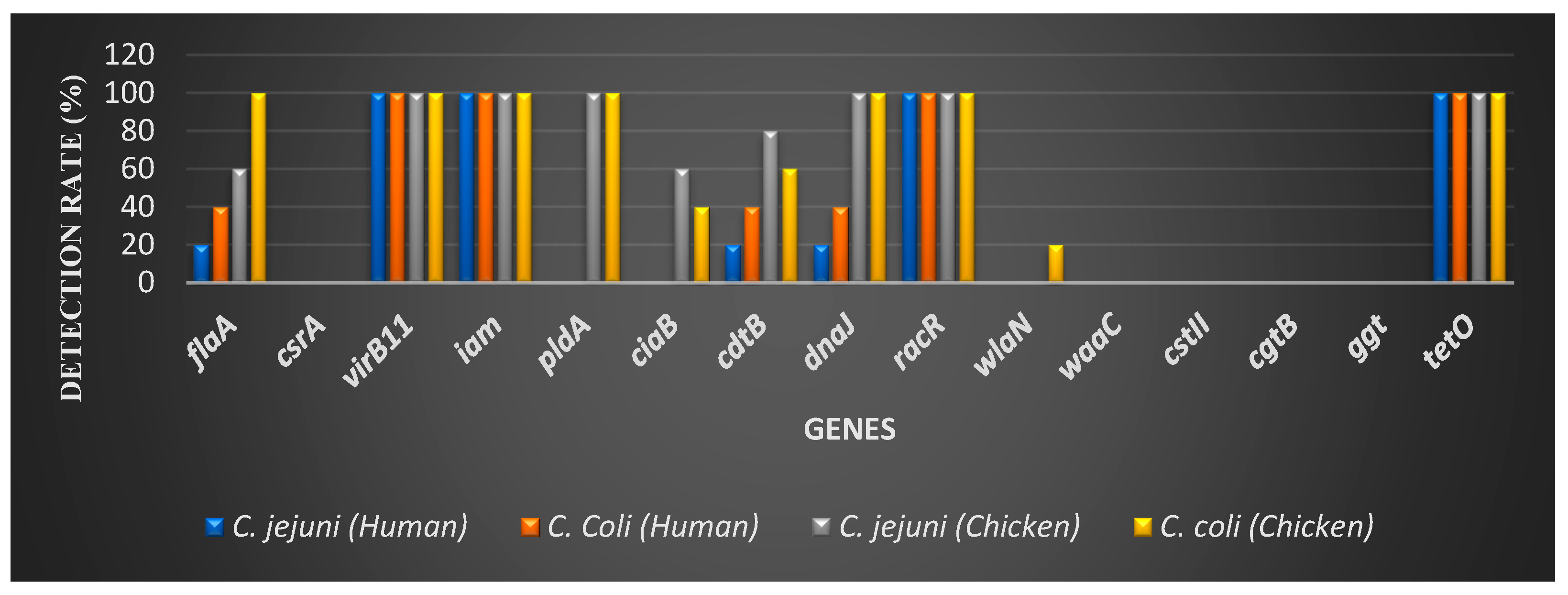
Figure 1. Detection rate (%) of Campylobacter virulence genes and tetO gene in human and chicken fecal samples.
Preprints 145434 g001
Disclaimer/Publisher’s Note: The statements, opinions and data contained in all publications are solely those of the individual author(s) and contributor(s) and not of MDPI and/or the editor(s). MDPI and/or the editor(s) disclaim responsibility for any injury to people or property resulting from any ideas, methods, instructions or products referred to in the content.
Copyright: This open access article is published under a Creative Commons CC BY 4.0 license, which permit the free download, distribution, and reuse, provided that the author and preprint are cited in any reuse.
Prerpints.org logo

Preprints.org is a free preprint server supported by MDPI in Basel, Switzerland.

Subscribe

Disclaimer

Terms of Use

Privacy Policy

Privacy Settings

© 2025 MDPI (Basel, Switzerland) unless otherwise stated