

Submitted:
17 January 2025
Posted:
18 January 2025
You are already at the latest version
Abstract
Energy harvesting wireless sensor networks (EH-WSNs) appear as the fundamental backbone of research that attempts to expand the lifespan and efficiency of sensor networks positioned in resource-constrained environments. This review paper provides a in-depth examination of latest developments in this area, highlighting the important components comprising routing protocols, energy management plans, cognitive radio applications, physical layer security (PLS), and EH approaches. Across a well-ordered investigation of these features, the article clarifies the notable developments in technology, highlights recent barriers, and inquires avenues for future revolution. The article starts by furnishing a detailed analysis of different energy harvesting methodologies, incorporating solar, thermal, kinetic, and radio frequency (RF) energy, and their respective efficacy in non-identical operational circumstances. It also inspects state-of-the-art energy management techniques aimed at optimizing energy consumption and storage to guarantee network operability. Moreover, the integration of cognitive radio into EH-WSNs is acutely assessed, highlighting its capacity to improve spectrum efficiency and tackle associated technological problems. The present work investigates ground-breaking methodologies in Physical Layer Security (PLS) that uses energy harvesting measures to improve the data security. In this review article, these techniques are explored with respect to classical encryption and discussed its as well the network security points of view. The assessment furthers criticizes traditional routing protocols and their significance in Energy Harvesting Wireless Sensor Networks (EH-WSNs) as well as the balance that has long been sought between energy efficiency and security in this space. The paper closes with the importance of continuous research to tackle existing challenges and to leverage newly available means as highlighted in this document. In order to adequately serve the increasingly changing requirements of EH-WSNs, future research will and should, be geared towards incorporating AI techniques with some advanced energy storage solutions. This paper discusses the integration of novel methodologies and interdisciplinary advancements for better performance, security and sustainability for WSNs.
Keywords:
1. Introduction
2. Background and Motivation
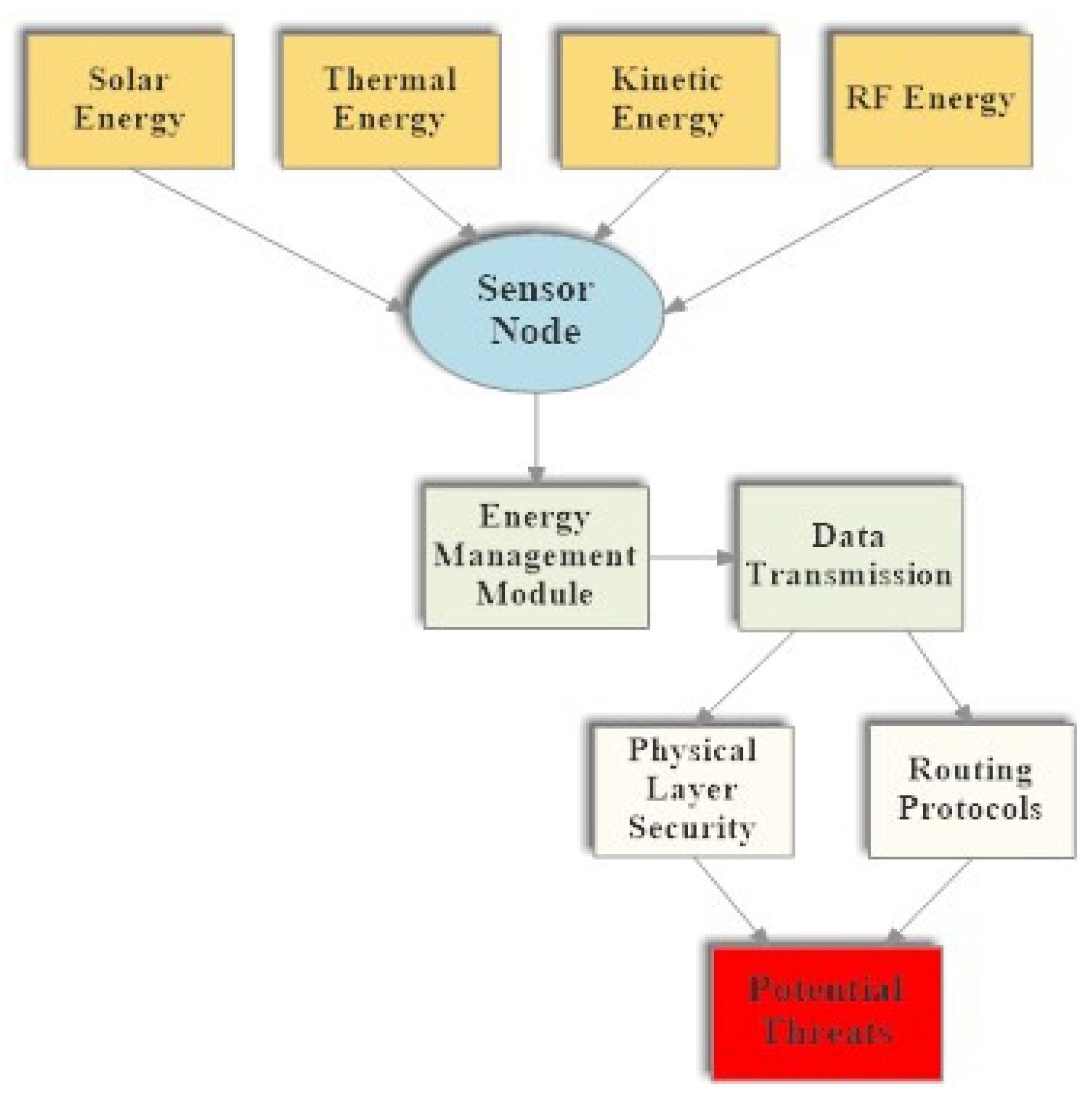
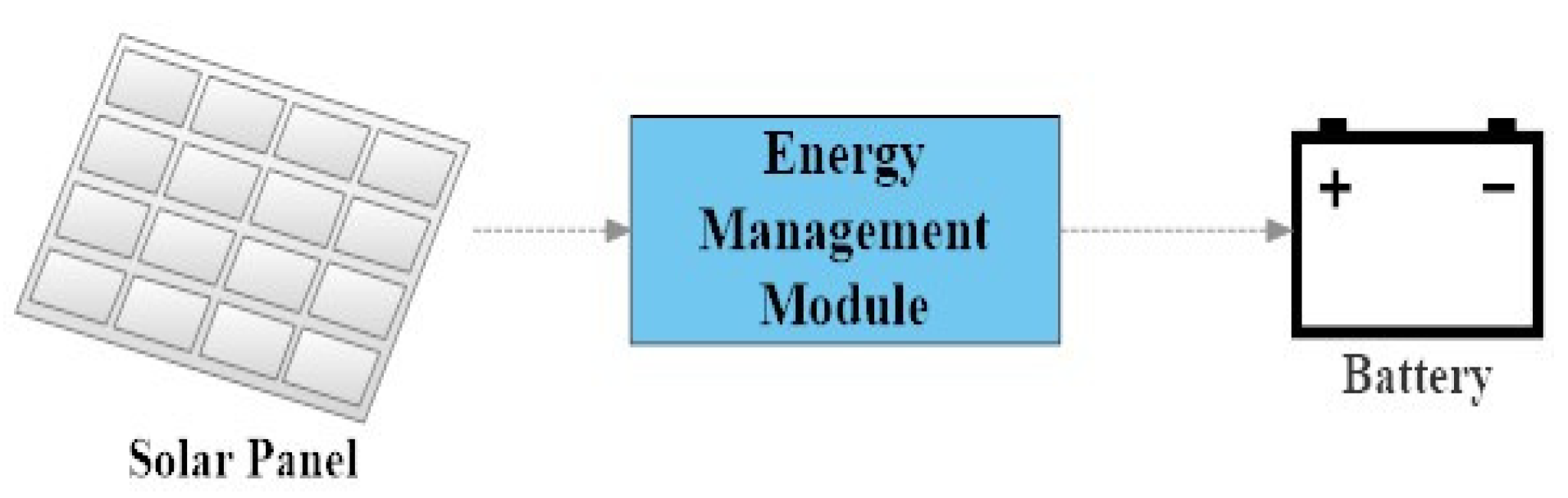
- Solar Energy: This energy is derived from sunlight and the solar panels are used to convert it into electrical energy.
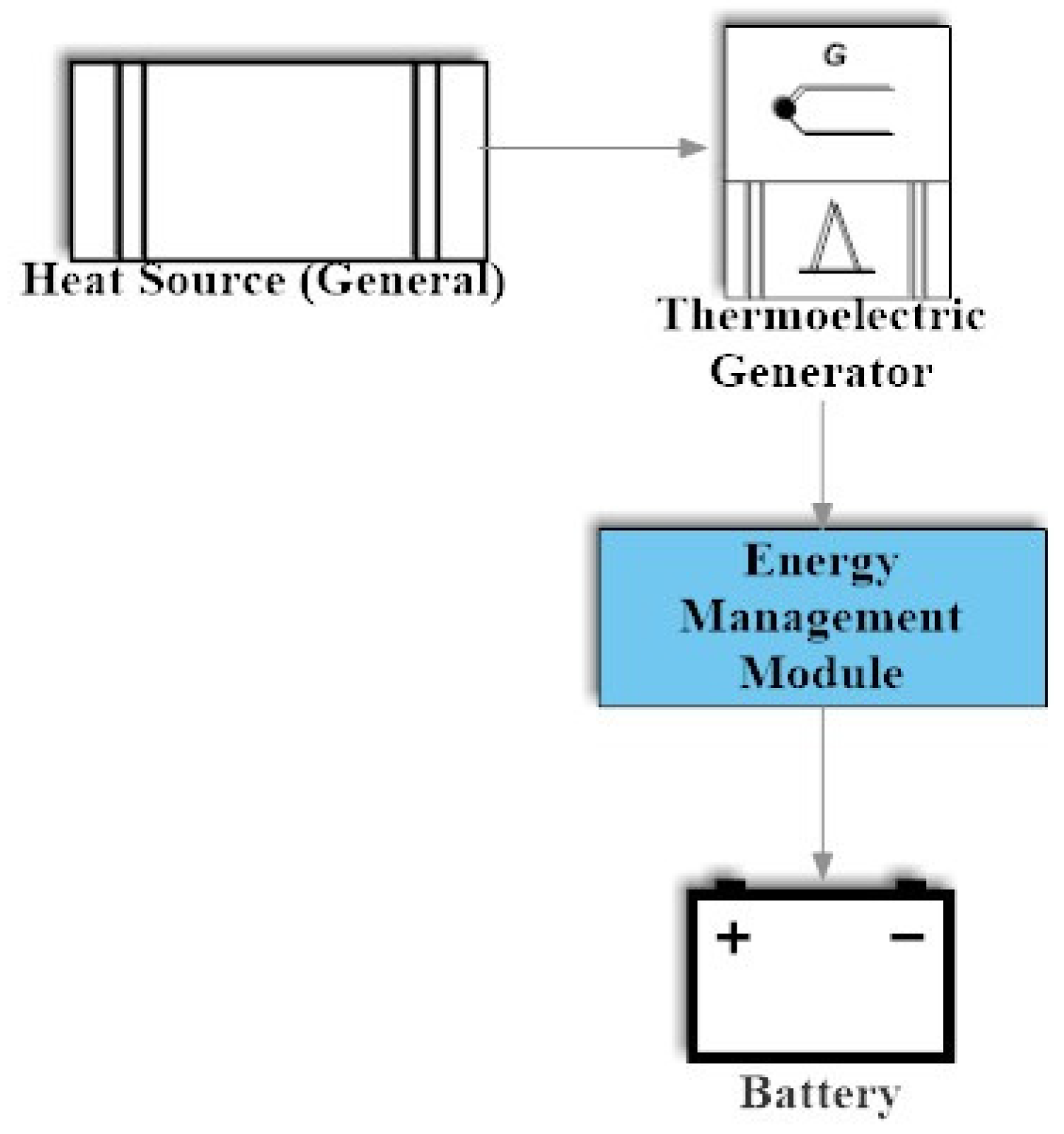
- Thermal Energy: Manufactured from temperature via thermoelectric generators that transform warmth electricity into electric power.
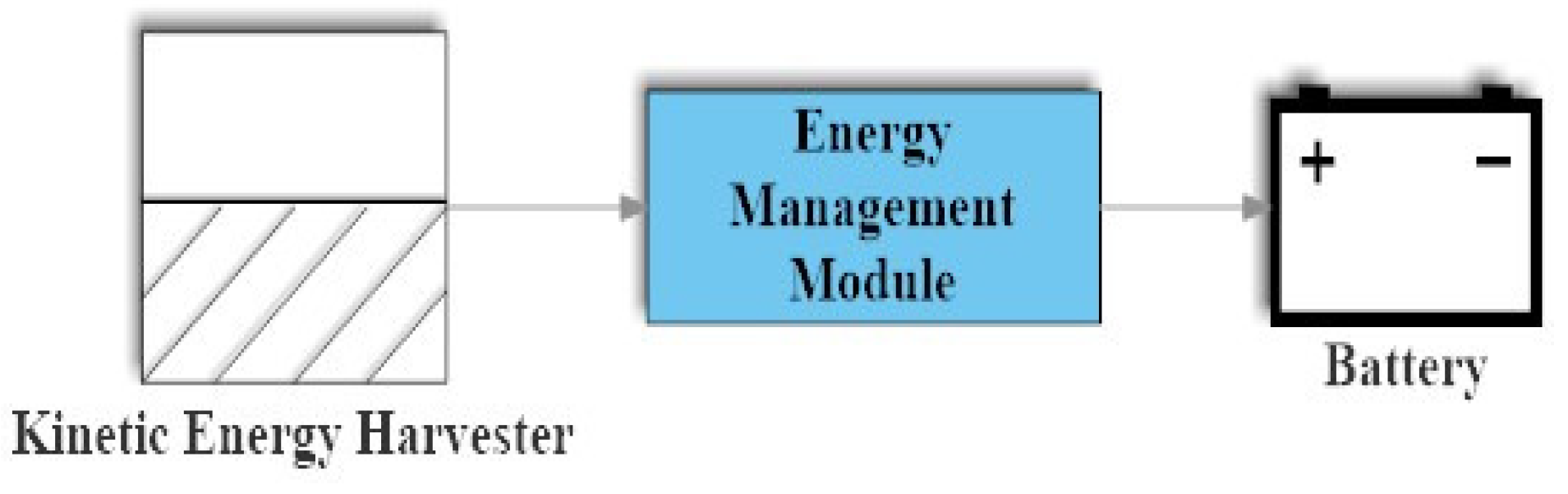
- Kinetic Energy: generated through vibrations or motion, and piezoelectric materials are employed to transmute in an electric power.
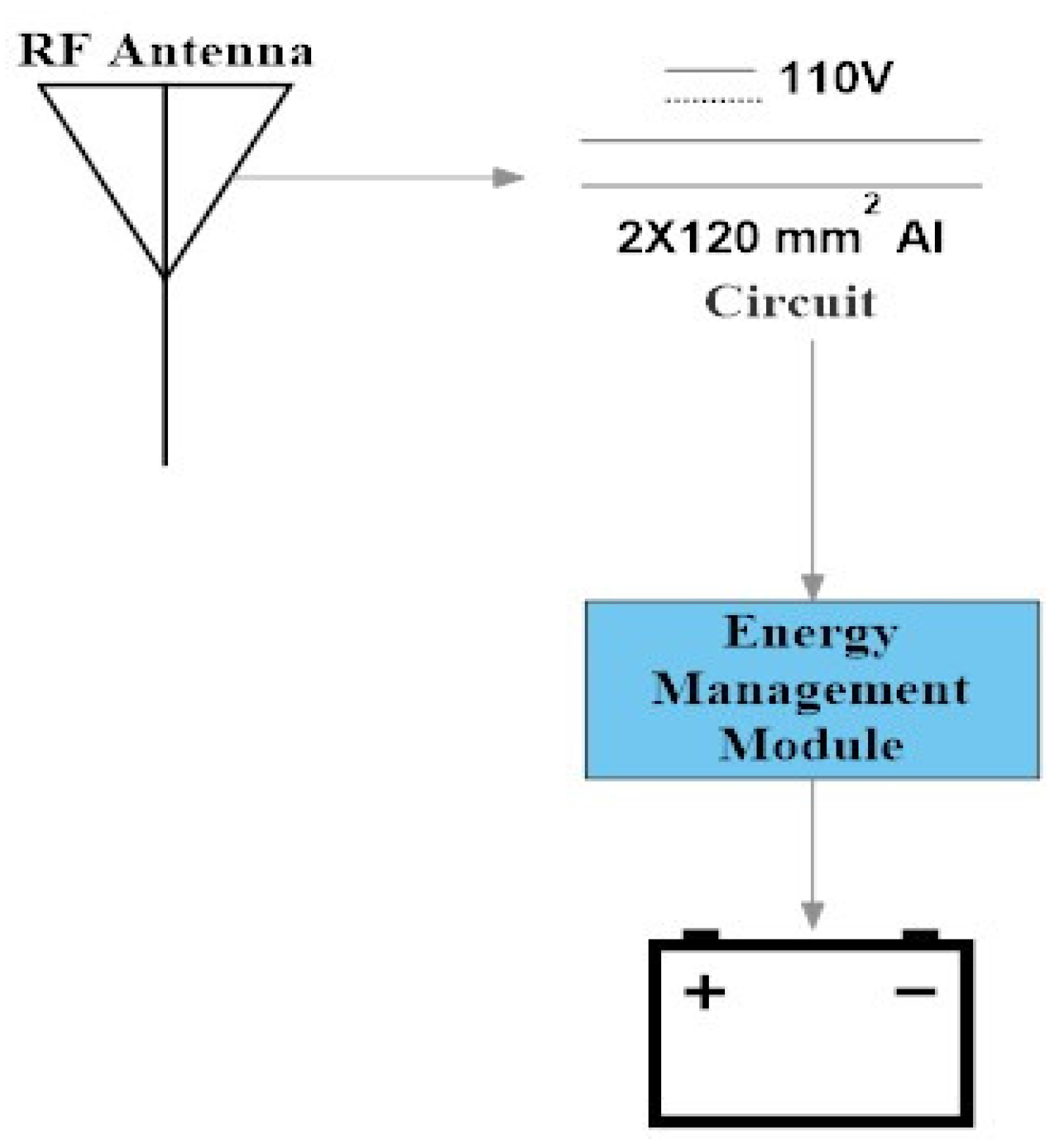
- RF Energy: RF harvesting modules are used to Harvest energy from radio frequency signals.
3. Energy Harvesting Techniques
3.1. Solar Energy Harvesting
- High Power Output: Solar panels can generate substantial amounts of energy, suitable for various applications.
- Mature Technology: Well-established technology with extensive research and development.
- Environmentally Friendly: Solar energy is renewable and does not produce emissions.
- Intermittent Availability: Solar energy depends on weather conditions and time of day.
- Space Requirement: Efficient solar panels require adequate surface area, which might be challenging in some applications.
3.2. Thermal Energy Harvesting
- Continuous Operation: Can operate as long as there is a temperature gradient, which can be constant in many environments.
- Compact Design: TEGs are generally small and can be integrated into various devices.
- Low Efficiency: TEGs typically have low conversion efficiency, making them suitable for low-power applications.
- Temperature Gradient Requirement: Requires a consistent temperature difference to generate power effectively.
3.3. Kinetic Energy Harvesting
- Versatility: Can be used in various settings, including wearable devices and industrial equipment.
- Low Maintenance: Passive energy harvesting requires minimal maintenance compared to battery-powered systems.
- Variable Power Output: Power generation depends on the intensity and frequency of mechanical motion.
- Complex Integration: Integrating kinetic energy harvesters into existing systems can be challenging.
3.4. RF Energy Harvesting
- Non-Intrusive: Can capture energy from existing RF sources without additional infrastructure.
- Can be deployed in various environments with prevalent RF signals.
- Low Power Density: RF energy is typically low in power density, making it suitable for low-power applications.
- Distance Dependent: Efficiency decreases with increasing distance from the RF source.
3.5. Comparative Analysis of Energy Sources
4. Energy Management Strategies
4.1. Energy Storage Solutions
- Batteries: Because of their ability to store large amounts of energy, batteries can be recharged and are extensively utilized in WSN. There are several varieties of batteries, including lithium-ion, nickel-metal hydride (NiMH), and lead-acid. The positives are high energy density and known technology, while the disadvantages are limited cycle life, temperature sensitivity, and a relatively expensive cost.
- Supercapacitor: Has a high power density and the ability to deliver energy in short bursts. Greater cycle life and quicker charge/discharge rates in comparison to batteries are the benefits. The drawbacks are more expensive than standard batteries and a lower energy density.
- Hybrid System: Combines batteries and supercapacitors to maximize the benefits of both technologies. Its advantages include balancing energy and power density, which improves total system efficiency. The restrictions include design complexity and cost.
4.2. Energy Consumption Optimization
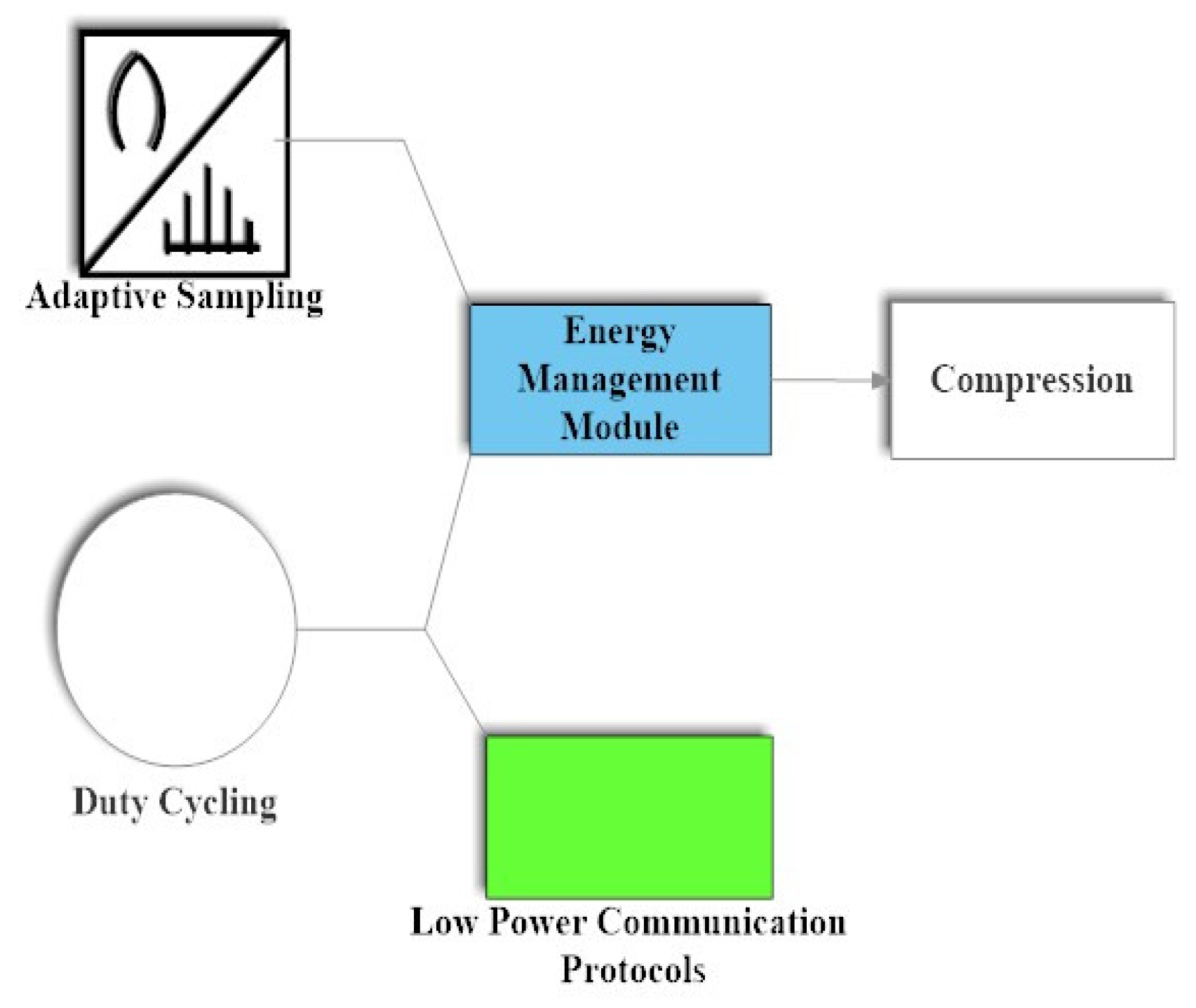
- Adaptive Sampling: Adjusts the frequency of data collection based on environmental conditions or application needs.
- Compression Techniques: Reduces the amount of data transmitted by compressing sensor data before transmission.
- Duty Cycling: Alternates between active and sleep modes to reduce energy consumption during idle periods.
- Low-Power Communication Protocols: Utilizes energy-efficient communication protocols that minimize power usage during data transmission.
- Efficient Algorithms: Implements algorithms that minimize computational complexity and energy consumption.
- Edge Computing: Processes data locally on the sensor node to reduce the amount of data transmitted and save energy.
4.3. Energy Management Protocols
4.3.1. Energy-Efficient Routing Protocols
- Objective: Optimize the path for data transmission to minimize energy consumption.
- Examples: Energy-efficient variants of routing protocols like LEACH (Low-Energy Adaptive Clustering Hierarchy) and TEEN (Threshold-sensitive Energy Efficient Network).
4.3.2. Energy Harvesting Aware Protocols
- Objective: Incorporate energy harvesting capabilities into routing and data management strategies.
- Examples: Protocols that adjust energy consumption based on the availability of harvested energy.
4.3.3. Load Balancing Protocols
- Objective:Distribute energy consumption evenly across the network to prevent early depletion of energy in specific nodes.
- Examples: Load-balancing mechanisms that dynamically adjust node roles based on energy levels.
4.4. Integration with Wireless Sensor Networks
4.4.1. System Design Considerations
- Compatibility:Ensuring that energy harvesting components are compatible with the sensor node and network architecture.
- Scalability: Designing energy management systems that can scale with the network size and application demands.
4.4.2. Implementation Challenges
- Cost:Balancing the cost of advanced energy management solutions with the benefits they provide.
- Complexity: Addressing the complexity of integrating diverse energy harvesting methods and management protocols into a cohesive system.
5. Cognitive Radio for Wireless Sensor Networks
5.1. Overview of Cognitive Radio
- Spectrum Sensing: Detects the presence of primary users (licensed users) and identifies unused spectrum bands.
- Dynamic Spectrum Access: Allows secondary users (unlicensed users) to access spectrum bands when primary users are not active.
- Adaptive Transmission: Adjusts transmission parameters based on the spectrum environment.
5.2. Spectrum Sensing and Management
- Energy Detection: Measures the energy of the received signal to determine the presence of primary users.
- Matched Filtering: Uses known characteristics of primary user’s signals to detect their presence.
- Cyclo-stationary Feature Detection: Exploits the periodicity of signals to detect primary users.
- Spectrum Allocation: Assigning spectrum bands to users based on their requirements and availability.
- Spectrum Sharing: Allowing multiple users to share the same spectrum band using different access strategies.
5.3. Energy-Efficient Spectrum Usage
- Spectrum Optimization: By keeping-away congested or under-utilized bands, it uses spectrum bands more intelligently.
- Adaptive Power Control: Modifies the transmission power based upon the observed spectrum environment in order to reserve the energy.
5.4. Challenges and Solutions
- Interference Management: Making sure that the secondary users (SUs) do not obstruct primary users (PUs) or other secondary users.
- Security Concerns: Keeping CR systems safe from malicious attacks and certifying steady spectrum access.
- Complexity in Implementation: It would be complex and costly to Integrate the CR technology into existing WSN infrastructure.
6. Physical Layer Security
- Secrecy Capacity: The maximum amount of information that can be safely transmitted over a communication channel.
- The Signal-to-Noise Ratio (SNR): This ratio is a comparison of the level of the desired signal to the level of background noise.
- Channel State Information (CSI): It states that knowledge of the channel conditions is crucial for optimal scheduling and allocation of radio resources.
- Energy-Harvesting-Based Security: Employing the energy harvesting abilities of the network, in order to assist secure communication.
- Secure Data Transmission: Making sure that data is transmitted securely using PLS methods, even with less energy resources.
- Reduced Computational Overhead: PLS does not need complex cryptographic algorithms, bringing down the computational burden.
- Enhanced Security in Adverse Conditions: PLS can preserve security even in demanding environments with excessive levels of interference.
7. Routing Protocols in EH-WSNs
- Direct Routing Protocols: Send data directly from the source to the destination without intermediate nodes.
- Hierarchical Routing Protocols: Use a tiered structure where nodes are grouped into clusters, and data is routed through cluster heads.
- Geographic Routing Protocols: Utilize the geographic location of nodes to determine the routing path.
- Energy-Aware Routing: Select routes based on the energy levels of nodes to extend the network’s lifetime.
- Load Balancing: Distribute the data transmission load evenly across the network to avoid energy depletion in specific nodes.
- Sleep Scheduling: Implement sleep-wake cycles to conserve energy by putting nodes into low-power modes when not actively transmitting data.
- Multi-hop Routing: Data is transmitted through multiple intermediate nodes before reaching the destination, which helps in overcoming long-distance transmission challenges.
- Multi-path Routing: Multiple paths are used for data transmission, providing redundancy and load balancing to improve reliability and fault tolerance.
- Data Encryption: Encrypt data during transmission to prevent unauthorized access.
- Authentication: Verify the identity of nodes to prevent malicious nodes from participating in the network.
- Secure Routing Protocols: Implement routing protocols designed to resist security threats and ensure data integrity.
8. Challenges, Opportunities and Future Trends
8.1. Challenges Faced by EH-WSNs
8.2. Opportunities for Improvement and Innovation
8.3. Future Trends in Energy Harvesting and Security
8.3.1. Emerging Technologies
- Advanced Energy Harvesting Materials: Research into novel materials, such as nano-materials and meta-materials, has the potential to improve the efficiency and scope of energy harvesting technology. These compounds can enhance the performance of solar cells, thermoelectric generators, and other energy harvesting systems.
- Integration of IoT and EH-WSNs: Innovation in EH is anticipated to be fueled by the expanding Internet of Things (IoT). Improved network efficiency and innovative energy management techniques are expected outcomes of integration with IoT devices.
- Smart Grids and EH-WSNs: The combination of EH-WSNs and smart grid technologies can improve energy distribution and utilization. Smart grids will provide EH-WSNs more control over energy supplies, allowing them to adjust to fluctuating energy availability.
8.3.2. Innovations in Energy Management
- Enhanced Energy Storage Solutions: Advanced supercapacitors and solid-state batteries are two examples of energy storage innovations that will offer more dependable and effective energy storage options for EH-WSNs.
- Adaptive Energy Management Systems: Future energy management systems are predicted to be more flexible and intelligent, leveraging AI and machine learning to optimize energy consumption in real time based on network circumstances and energy availability.
- Blockchain for Energy Transactions: Energy transactions in EH-WSNs might be managed and verified using blockchain technology, guaranteeing security and openness in the distribution and consumption of energy.
8.3.3. Advances in Security Mechanisms
- Quantum Cryptography: Quantum cryptography provides a new level of security by enforcing quantum mechanics rules during data transmission. This technology could be built into EH-WSNs to improve data security.
- Bio-Inspired Security Approaches: Investigations into bio-inspired security mechanisms—that is, security based on biological processes—may yield novel approaches to protecting EH-WSNs from cyber attacks.
- Adaptive Security Protocols: Future security protocols are predicted to be more adaptable, able to change their protection methods in response to real-time threat analysis and network conditions.
9. Summary of Key Findings
9.1. Comparison of Energy Harvesting Techniques
9.2. Energy Management Strategies
9.3. Cognitive Radio Benefits and Challenges
9.4. Physical Layer Security Techniques
9.5. Routing Protocols Overview
10. Conclusion
Data Availability Statement
Conflicts of Interest
References
- Belghith, A.; Obaidat, M. Wireless sensor networks applications to smart homes and cities. In Smart cities and homes; Elsevier, 2016; pp. 17–40.
- Engmann, F.; Katsriku, F.A.; Abdulai, J.D.; Adu-Manu, K.S.; Banaseka, F.K. Prolonging the lifetime of wireless sensor networks: a review of current techniques. Wireless Communications and Mobile Computing 2018, 2018, 8035065. [Google Scholar] [CrossRef]
- Williams, A.J.; Torquato, M.F.; Cameron, I.M.; Fahmy, A.A.; Sienz, J. Survey of energy harvesting technologies for wireless sensor networks. IEEE Access 2021, 9, 77493–77510. [Google Scholar] [CrossRef]
- Nwalike, E.D.; Ibrahim, K.A.; Crawley, F.; Qin, Q.; Luk, P.; Luo, Z. Harnessing energy for wearables: a review of radio frequency energy harvesting technologies. Energies 2023, 16, 5711. [Google Scholar] [CrossRef]
- Sah, D.K.; Hazra, A.; Mazumdar, N.; Amgoth, T. An efficient routing awareness based scheduling approach in energy harvesting wireless sensor networks. IEEE Sensors Journal 2023, 23, 17638–17647. [Google Scholar] [CrossRef]
- Muhammad Umer, M.; Hong, J.; Muhammad, O.; Awwad, F.A.; Ismail, E.A. Energy-Efficient and Resilient Secure Routing in Energy Harvesting Wireless Sensor Networks with Transceiver Noises: EcoSecNet Design and Analysis. Journal of Sensors 2024, 2024, 3570302. [Google Scholar] [CrossRef]
- Bathre, M.; Das, P.K. Hybrid energy harvesting for maximizing lifespan and sustainability of wireless sensor networks: A comprehensive review & proposed systems. In Proceedings of the 2020 international conference on computational intelligence for smart power system and sustainable energy (CISPSSE). IEEE; 2020; pp. 1–6. [Google Scholar]
- Singh, J.; Kaur, R.; Singh, D. Energy harvesting in wireless sensor networks: A taxonomic survey. International Journal of Energy Research 2021, 45, 118–140. [Google Scholar] [CrossRef]
- Sahoo, B.M.; Sabyasachi, A.S. A Metaheuristic Algorithm Based Clustering Protocol for Energy Harvesting in IoT-Enabled WSN. Wireless Personal Communications.
- Raghunathan, V.; Kansal, A.; Hsu, J.; Friedman, J.; Srivastava, M. Design considerations for solar energy harvesting wireless embedded systems. In Proceedings of the IPSN 2005. Fourth International Symposium on Information Processing in Sensor Networks, 2005, 2005. IEEE; pp. 457–462. [Google Scholar]
- Abdin, Z.; Alim, M.A.; Saidur, R.; Islam, M.R.; Rashmi, W.; Mekhilef, S.; Wadi, A. Solar energy harvesting with the application of nanotechnology. Renewable and sustainable energy reviews 2013, 26, 837–852. [Google Scholar] [CrossRef]
- Hao, D.; Qi, L.; Tairab, A.M.; Ahmed, A.; Azam, A.; Luo, D.; Pan, Y.; Zhang, Z.; Yan, J. Solar energy harvesting technologies for PV self-powered applications: A comprehensive review. Renewable Energy 2022, 188, 678–697. [Google Scholar] [CrossRef]
- Zhang, Y.; Gao, H.; Cheng, S.; Li, J. An efficient EH-WSN energy management mechanism. Tsinghua Science and Technology 2018, 23, 406–418. [Google Scholar] [CrossRef]
- Thomas, D.; Shankaran, R.; Sheng, Q.Z.; Orgun, M.A.; Hitchens, M.; Masud, M.; Ni, W.; Mukhopadhyay, S.C.; Piran, M.J. QoS-aware energy management and node scheduling schemes for sensor network-based surveillance applications. IEEE Access 2020, 9, 3065–3096. [Google Scholar] [CrossRef]
- Teng, Y.; Liu, M.; Yu, F.R.; Leung, V.C.; Song, M.; Zhang, Y. Resource allocation for ultra-dense networks: A survey, some research issues and challenges. IEEE Communications Surveys & Tutorials 2018, 21, 2134–2168. [Google Scholar]
- Benini, L.; Bogliolo, A.; De Micheli, G. A survey of design techniques for system-level dynamic power management. IEEE transactions on very large scale integration (VLSI) systems 2000, 8, 299–316. [Google Scholar] [CrossRef]
- Lavanya, N.; Shankar, T. A review on energy-efficient scheduling mechanisms in wireless sensor networks. Indian Journal of Science and Technology 2016, 9, 1–4. [Google Scholar] [CrossRef]
- Bottarelli, M.; Epiphaniou, G.; Ismail, D.K.B.; Karadimas, P.; Al-Khateeb, H. Physical characteristics of wireless communication channels for secret key establishment: A survey of the research. Computers & Security 2018, 78, 454–476. [Google Scholar]
- Umer, M.M.; Jiang, H.; Zhang, Q.; Manlu, L.; Muhammad, O. Time-slot based architecture for power beam-assisted relay techniques in CR-WSNs with transceiver hardware inadequacies. Bulletin of the Polish Academy of Sciences. Technical Sciences 2023, 71. [Google Scholar] [CrossRef]
- Muhammad, O.; Jiang, H.; Umer, M.M.; Muhammad, B.; Ahtsam, N.M. Optimizing Power Allocation for D2D Communication with URLLC under Rician Fading Channel: A Learning-to-Optimize Approach. Intelligent Automation & Soft Computing 2023, 37. [Google Scholar]
- Hosseini, S.M.; Soleymani, M.; Kelouwani, S.; Amamou, A.A. Energy recovery and energy harvesting in electric and fuel cell vehicles, a review of recent advances. IEEE Access 2023, 11, 83107–83135. [Google Scholar] [CrossRef]
- Qamar, M.Z.; Khalid, Z.; Shahid, R.; Tsoi, W.C.; Mishra, Y.K.; Kyaw, A.K.K.; Saeed, M.A. Advancement in indoor energy harvesting through flexible perovskite photovoltaics for self-powered IoT applications. Nano Energy 2024, 129, 109994. [Google Scholar] [CrossRef]
- Fernando, X.; Lăzăroiu, G. Spectrum sensing, clustering algorithms, and energy-harvesting technology for cognitive-radio-based internet-of-things networks. Sensors 2023, 23, 7792. [Google Scholar] [CrossRef]
- Xu, H.; Gao, H.; Zhou, C.; Duan, R.; Zhou, X. Resource allocation in cognitive radio wireless sensor networks with energy harvesting. Sensors 2019, 19, 5115. [Google Scholar] [CrossRef]
- Grossi, M. Energy harvesting strategies for wireless sensor networks and mobile devices: A review. Electronics 2021, 10, 661. [Google Scholar] [CrossRef]
- Aldin, H.N.S.; Ghods, M.R.; Nayebipour, F.; Torshiz, M.N. A comprehensive review of energy harvesting and routing strategies for IoT sensors sustainability and communication technology. Sensors International, 1002. [Google Scholar]
- Kanoun, O.; Bradai, S.; Khriji, S.; Bouattour, G.; El Houssaini, D.; Ben Ammar, M.; Naifar, S.; Bouhamed, A.; Derbel, F.; Viehweger, C. Energy-aware system design for autonomous wireless sensor nodes: A comprehensive review. Sensors 2021, 21, 548. [Google Scholar] [CrossRef] [PubMed]
- Bengheni, A.; Didi, F.; Bambrik, I. EEM-EHWSN: Enhanced energy management scheme in energy harvesting wireless sensor networks. Wireless Networks 2019, 25, 3029–3046. [Google Scholar] [CrossRef]
- Shokoor, F.; Shafik, W. Harvesting energy overview for sustainable wireless sensor networks. Journal of Smart Cities and Society.
- Van Leemput, D.; Hoebeke, J.; De Poorter, E. Integrating Battery-Less Energy Harvesting Devices in Multi-Hop Industrial Wireless Sensor Networks. IEEE Communications Magazine 2024, 62, 66–73. [Google Scholar] [CrossRef]
- Cai, Z.; Chen, Q.; Shi, T.; Zhu, T.; Chen, K.; Li, Y. Battery-free wireless sensor networks: A comprehensive survey. IEEE Internet of Things Journal 2022, 10, 5543–5570. [Google Scholar] [CrossRef]
- Adu-Manu, K.S.; Adam, N.; Tapparello, C.; Ayatollahi, H.; Heinzelman, W. Energy-harvesting wireless sensor networks (EH-WSNs) A review. ACM Transactions on Sensor Networks (TOSN) 2018, 14, 1–50. [Google Scholar] [CrossRef]
- Jackson, G.; Ciocoiu, S.; McCann, J.A. Solar energy harvesting optimization for wireless sensor networks. In Proceedings of the GLOBECOM 2017-2017 IEEE Global Communications Conference. IEEE; 2017; pp. 1–6. [Google Scholar]
- Gorjian, S.; Minaei, S.; MalehMirchegini, L.; Trommsdorff, M.; Shamshiri, R.R. Applications of solar PV systems in agricultural automation and robotics. In Photovoltaic solar energy conversion; Elsevier, 2020; pp. 191–235.
- Liu, Y.; Riba, J.R.; Moreno-Eguilaz, M.; Sanllehí, J. Application of thermoelectric generators for low-temperature-gradient energy harvesting. Applied Sciences 2023, 13, 2603. [Google Scholar] [CrossRef]
- Jouhara, H.; Żabnieńska-Góra, A.; Khordehgah, N.; Doraghi, Q.; Ahmad, L.; Norman, L.; Axcell, B.; Wrobel, L.; Dai, S. Thermoelectric generator (TEG) technologies and applications. International Journal of Thermofluids 2021, 9, 100063. [Google Scholar] [CrossRef]
- Khaligh, A.; Zeng, P.; Zheng, C. Kinetic energy harvesting using piezoelectric and electromagnetic technologies state of the art. IEEE transactions on industrial electronics 2009, 57, 850–860. [Google Scholar] [CrossRef]
- Wang, L.; Fei, Z.; Qi, Y.; Zhang, C.; Zhao, L.; Jiang, Z.; Maeda, R. Overview of human kinetic energy harvesting and application. ACS Applied Energy Materials 2022, 5, 7091–7114. [Google Scholar] [CrossRef]
- Wu, X.; Qi, L.; Zhang, T.; Zhang, Z.; Yuan, Y.; Liu, Y. A novel kinetic energy harvester using vibration rectification mechanism for self-powered applications in railway. Energy Conversion and Management 2021, 228, 113720. [Google Scholar] [CrossRef]
- Sherazi, H.H.R.; Zorbas, D.; O Flynn, B. A comprehensive survey on RF energy harvesting: Applications and performance determinants. Sensors 2022, 22, 2990. [Google Scholar] [CrossRef] [PubMed]
- Ibrahim, H.H.; Singh, M.J.; Al-Bawri, S.S.; Ibrahim, S.K.; Islam, M.T.; Alzamil, A.; Islam, M.S. Radio frequency energy harvesting technologies: A comprehensive review on designing, methodologies, and potential applications. Sensors 2022, 22, 4144. [Google Scholar] [CrossRef] [PubMed]
- Ullah, M.A.; Keshavarz, R.; Abolhasan, M.; Lipman, J.; Esselle, K.P.; Shariati, N. A review on antenna technologies for ambient RF energy harvesting and wireless power transfer: Designs, challenges and applications. IEEE Access 2022, 10, 17231–17267. [Google Scholar] [CrossRef]
- Angulo, F.; Navarro, L.; Quintero M, C.G.; Pardo, M. A simple WiFi harvester with a switching-based power management scheme to collect energy from ordinary routers. Electronics 2021, 10, 1191. [Google Scholar] [CrossRef]
- Lu, X.; Wang, P.; Niyato, D.; Kim, D.I.; Han, Z. Wireless networks with RF energy harvesting: A contemporary survey. IEEE Communications Surveys & Tutorials 2014, 17, 757–789. [Google Scholar]
- Soyata, T.; Copeland, L.; Heinzelman, W. RF energy harvesting for embedded systems: A survey of tradeoffs and methodology. IEEE Circuits and Systems Magazine 2016, 16, 22–57. [Google Scholar] [CrossRef]
- Bland, A.; Khzouz, M.; Statheros, T.; Gkanas, E.I. PCMs for residential building applications: A short review focused on disadvantages and proposals for future development. Buildings 2017, 7, 78. [Google Scholar] [CrossRef]
- Riaz, A.; Sarker, M.R.; Saad, M.H.M.; Mohamed, R. Review on comparison of different energy storage technologies used in micro-energy harvesting, WSNs, low-cost microelectronic devices: challenges and recommendations. Sensors 2021, 21, 5041. [Google Scholar] [CrossRef]
- Choudhary, A.; Barwar, N. Sensor Node Design Optimization Methods for Enhanced Energy Efficiency in Wireless Sensor Networks. In Proceedings of the International Conference on Cryptology &, Network Security with Machine Learning. Springer; 2023; pp. 229–242. [Google Scholar]
- Ogundile, O.O.; Alfa, A.S. A survey on an energy-efficient and energy-balanced routing protocol for wireless sensor networks. Sensors 2017, 17, 1084. [Google Scholar] [CrossRef]
- Shen, J.; Wang, A.; Wang, C.; Hung, P.C.; Lai, C.F. An efficient centroid-based routing protocol for energy management in WSN-assisted IoT. Ieee Access 2017, 5, 18469–18479. [Google Scholar] [CrossRef]
- Ahmad, W.S.H.M.W.; Radzi, N.A.M.; Samidi, F.S.; Ismail, A.; Abdullah, F.; Jamaludin, M.Z.; Zakaria, M. 5G technology: Towards dynamic spectrum sharing using cognitive radio networks. IEEE access 2020, 8, 14460–14488. [Google Scholar] [CrossRef]
- Nasser, A.; Al Haj Hassan, H.; Abou Chaaya, J.; Mansour, A.; Yao, K.C. Spectrum sensing for cognitive radio: Recent advances and future challenge. Sensors 2021, 21, 2408. [Google Scholar] [CrossRef]
- Wang, B.; Liu, K.R. Advances in cognitive radio networks: A survey. IEEE Journal of selected topics in signal processing 2010, 5, 5–23. [Google Scholar] [CrossRef]
- Amutha, J.; Sharma, S.; Nagar, J. WSN strategies based on sensors, deployment, sensing models, coverage and energy efficiency: Review, approaches and open issues. Wireless Personal Communications 2020, 111, 1089–1115. [Google Scholar] [CrossRef]
- Nakas, C.; Kandris, D.; Visvardis, G. Energy efficient routing in wireless sensor networks: A comprehensive survey. Algorithms 2020, 13, 72. [Google Scholar] [CrossRef]
- Hamamreh, J.M.; Furqan, H.M.; Arslan, H. Classifications and applications of physical layer security techniques for confidentiality: A comprehensive survey. IEEE Communications Surveys & Tutorials 2018, 21, 1773–1828. [Google Scholar]
- Sun, L.; Du, Q. A review of physical layer security techniques for Internet of Things: Challenges and solutions. Entropy 2018, 20, 730. [Google Scholar] [CrossRef]
- Sanenga, A.; Mapunda, G.A.; Jacob, T.M.L.; Marata, L.; Basutli, B.; Chuma, J.M. An overview of key technologies in physical layer security. Entropy 2020, 22, 1261. [Google Scholar] [CrossRef]
- Ge, Y.; Nan, Y.; Chen, Y. Maximizing information transmission for energy harvesting sensor networks by an uneven clustering protocol and energy management. KSII Transactions on Internet and Information Systems (TIIS) 2020, 14, 1419–1436. [Google Scholar]
- Khademi Nori, M.; Sharifian, S. EDMARA2: A hierarchical routing protocol for EH-WSNs. Wireless Networks 2020, 26, 4303–4317. [Google Scholar] [CrossRef]
- Han, B.; Ran, F.; Li, J.; Yan, L.; Shen, H.; Li, A. A novel adaptive cluster based routing protocol for energy-harvesting wireless sensor networks. Sensors 2022, 22, 1564. [Google Scholar] [CrossRef] [PubMed]
- Pathak, S.D.; Dilts, D.M.; Biswas, G. On the evolutionary dynamics of supply network topologies. IEEE Transactions on Engineering Management 2007, 54, 662–672. [Google Scholar] [CrossRef]
- Shaikh, F.K.; Zeadally, S. Energy harvesting in wireless sensor networks: A comprehensive review. Renewable and Sustainable Energy Reviews 2016, 55, 1041–1054. [Google Scholar] [CrossRef]

| Technique | Advantages | Limitations |
|---|---|---|
| Solar Energy | High Power Output, Mature Technology |
Intermittent Availability, Space Requirement |
| Thermal Energy | Continuous Operation, Compact Design |
Low Efficiency, Temperature gradient requirement |
| Kinetic Energy | Versatility, Low Maintenance |
Variable Power Output, Complex Integration |
| RF Energy | Non-Intrusive, Scalable |
Low Power Density, Distance Dependant |
| Feature | Physical Layer Security (PLS) |
Traditional Encryption |
|---|---|---|
| Computational Overhead | Low | High |
| Security Level | High in adverse Conditions |
High with proper key management |
| Implementation Complexity | Low | High |
| Challenge | Description |
|---|---|
| Energy Efficiency | Manage limited energy resources while ensuring reliable data transmission and network functionality |
| Network Scalability | Addressing issues related to performance and lifetime as the network grows in size |
| Data Security | Ensuring secure data transmission and protection against unauthorized access |
| Dynamic Topologies | Handling changes in node availability and network structure |
| Integration with Existing Technologies |
Ensuring compatibility and interpretability with existing systems |
| Opportunity | Description |
|---|---|
| Advanced Energy Harvesting Technologies |
Innovations in harvesting technologies for better energy capture |
| Smart Energy Management Systems |
Systems that dynamically manage energy based on availability and network needs |
| Enhanced Routing Protocols |
Development of routing protocols that optimize data transmission and network performance |
| Integration of AI and Machine Learning |
Use of AI and ML for adaptive energy management and routing |
| Improved Security Mechanisms |
Enhancing security protocols to protect data and resist attacks |
| Technique | Advantages | Limitations |
|---|---|---|
| Solar Energy | High energy yield in sunny conditions |
Dependent on sunlight availability |
| Thermal Energy | Can be harvested from waste heat |
Low efficiency compared to other methods |
| Kinetic Energy | Suitable for dynamic environments |
Limited energy output and efficiency |
| RF Energy | Can be harvested from ambient RF signals |
Low energy density and range |
| Strategy | Description | Impact |
|---|---|---|
| Energy Storage |
Utilization of batteries and supercapacitors to store the energy |
Increases reliability and operatiional lifespan |
| Energy-Aware Routing |
Routing decisions based on current energy levels |
Enhances energy efficiency and network performance |
| Load Balancing |
Distributing data trans- -mission to prevent node overuse |
Balances energy consump- -tion across the network |
| Aspects | Benefits | Challenges |
|---|---|---|
| Spectrum Efficiency |
Improved utilization of available spectrum |
Requires sophiticated spectrum management |
| Dynamic Access |
Ability to access unused spectrum bands |
Complexity in spectrum sensing and adaptation |
| Integration Issues |
Compatibility with existing systems and technologies |
Integration with current network infrastructure |
| Techniques | Description | Challenges |
|---|---|---|
| Energy Harvesting Based Security |
Security using harvested energy for data protection |
Effectiveness in various environmental conditions |
| Encryption Alternatives |
Reduces need for traditional encryption methods |
Requires robust physical layer security mechanisms |
| Protocol | Description | Key Considerations |
|---|---|---|
| Direct Routing | Direct path from source to destination |
Effectiveness in various environmental conditions |
| Hierarchical Routing | Data passed through cluster heads in a tiered structure |
Efficient for large networks but adds complexity |
| Geographic Routing | Routing based on geographic location of nodes |
Requires accurate location data and may not scale well |
Disclaimer/Publisher’s Note: The statements, opinions and data contained in all publications are solely those of the individual author(s) and contributor(s) and not of MDPI and/or the editor(s). MDPI and/or the editor(s) disclaim responsibility for any injury to people or property resulting from any ideas, methods, instructions or products referred to in the content. |
© 2025 by the authors. Licensee MDPI, Basel, Switzerland. This article is an open access article distributed under the terms and conditions of the Creative Commons Attribution (CC BY) license (http://creativecommons.org/licenses/by/4.0/).


