

Submitted:
06 February 2025
Posted:
07 February 2025
You are already at the latest version
Abstract
The construction industry increasingly relies on concrete to meet growing urban population demands. However, concrete has a high carbon footprint, which contradicts the Sustainable Development Goals and the Circular Economy policies promoted by the European Commission. The use of Recycled Aggregate Concrete (RAC) is a cost-effective circularity strategy to mitigate environmental impacts. Several countries have integrated RAC into their standards and have achieved promising circularity results. Spain is committed to enhancing resource productivity and using circular materials through practices established during the design phase. Although the residential sector plays a significant role within the construction industry, the potential for circularity of RAC in such residential building structures remains unexplored. The present study aims to fill this gap by assessing the circularity of four scenarios in a multi-family building using a circularity assessment method for residential building structures: the CARES Framework. The results reveal that RAC, following the Structural Code requirements, can enhance the circularity performance: at the material level by up to 42.82%; at the element level by 21.68%; and at the system level by 10.81%. These results demonstrate that circularity declines the higher the assessment levels is, which underscores the essential integration of circular materials with adaptability and disassembly criteria.
Keywords:
Recycled aggregate concrete
; recycled aggregate
; circular economy
; sustainable buildings
; green buildings
; green concrete
; construction and demolition waste
; structural performance
; reinforced concrete
1. Introduction
Over the past two decades, rapid urban population growth has led to an intensification of construction and demolition activity [1]. In order to satisfy this increasing demand, the built environment has relied on concrete as its primary manufactured material due to its affordability, versatility, and high strength [2]. Currently, concrete is the most widely used manufactured material, and is extensively employed in structural and non-structural elements [3]. However, the concrete production process has a significant carbon footprint, since it emits approximately 850 kg of CO2 per ton of clinker produced and requires substantial natural resources [4].
The current practices of the concrete industry are at odds with the objectives set forth by the European Commission (EC), which aim for a reduction of Greenhouse Gas (GHG) emissions of at least 55% by 2030 and a net zero scenario by 2050 [5]. The European Green Deal [5] and the Circular Economy Action Plan [6] establish practices to minimise landfill and enhance material recovery by emphasising the importance of designing for durability, reparability and recyclability [7]. However, fulfilling these initiatives relies on the effective transition to a Circular Economy (CE) model [8]. This regenerative economic system promotes the closed-loop flow of goods through reuse, thereby producing secondary raw materials or serving other purposes. Such practices prevent further resource extraction, optimise material usage, and foster the regeneration of natural systems [9,10,11]. The CE, therefore, encourages sustainable development by acknowledging the interconnectedness of ecological stewardship, social development and economic growth [12,13,14].
The International Energy Agency (IEA) [15] recommends that the concrete industry improve energy efficiency and incorporate alternative fuels and raw materials to align with the net zero scenarios. As a response, several studies have focused on replacing traditional production fuels with biomass or other types of waste [16], as well as reducing resource extraction by including supplementary cementitious materials [17], developing more durable or self-healing concrete [18,19,20], utilising higher-strength concretes [21,22,23], capturing and storing CO2 emissions [24,25,26], and incorporating Recycled Aggregates (RA) in concrete production [27,28,29,30].
Recycled Aggregate Concrete (RAC) is an innovative material obtained from crushed, screened, and washed RA derived from discarded concrete [31]. It has significant cost-effective potential for the reduction of GHG emissions since the Natural Aggregate Concrete (NAC) mixture usually consists of approximately 70% to 80% aggregate by volume [32]. The EC is interested in using RAC to optimise the 850 million tonnes of Construction and Demolition Waste (CDW) generated in the European Union (EU) annually [33], thereby contributing to the annual demand for 2.55 billion tonnes of aggregate [34]. However, certain studies [27,35] highlight that the mechanical properties of RAC are approximately 10% to 20% lower than those of NAC. This disparity is attributed to the adhered mortar [36] and micro-cracks formed during the recycling or recovery process [37]. Consequently, the water absorption of RAC is approximately ten times greater than that of NAC, while its bulk density is reduced by about 22% [38]. Furthermore, the compressive, splitting, and flexural properties of RAC are diminished by 9.25%, 18.5%, and 17.6%, respectively [39]. Axial compression, shear resistance, and bond strength are also 6% to 24% lower than that of NAC [40].
International standards have considered these findings and have limited the percentage of RA permitted, particularly in structural applications. These restrictions mainly rely on the expected grade of concrete strength and the class of exposure [41]. Furthermore, the RA selected must satisfy requirements on their type, origin, dry density, water absorption, and percentage of contaminants present [42]. As reported by the European Aggregates Association (UEPG) [34], the production of recycled and reused aggregates in European countries is approximately 9.3%. The countries with the highest percentage of RA included in their total annual production are Belgium (29.3%), the Netherlands (24.7%) and the UK (23.9%) (Figure 1). Meanwhile, Germany leads Europe in the total output of RA, by producing 72 million tonnes per year [34].
The integration of secondary raw materials in these countries is supported by established concrete recycling industries and RA standards focused on reducing the percentage of contaminants and on the water absorption capacity [42,43]. For instance, German standards DIN 4226-100 [44] and DIN 12620 [45] set requirements for the use of RA in structural applications. These standards allow the configuration of up to 90% RA sourced from concrete waste (Type 1) and up to 70% RA from demolition waste (Type 2). These percentages are significantly higher than most European country standards, where the permissible RA percentage is approximately 20% [41]. However, there are stricter limitations regarding the acceptable levels of contaminants. Thus, for the RAC Type 1, the maximum allowable rates of mineral contaminants are 2%, for non-mineral contaminants 0.2%, and 1% for asphalt. Otherwise, these percentages for the RAC Type 2 are 3%, 0.5% and 1%, respectively.
In Spain, the design of structures with RAC is included in the Structural Code [46]. This guideline specifies that using RAC is permitted for both mass and reinforced concrete, with a maximum compressive strength of 40 N/mm2. Only coarse RA obtained from intact structural or high-strength concrete is deemed suitable for structural applications. The maximum allowable content is capped at 20% of the total coarse aggregate weight, with water absorption not exceeding 7%. In this case, the water absorption of the Natural Aggregates (NA) in the mixture is limited to less than 4.5%. Exceeding the ratio of RA would necessitate additional studies and complementary experimentation. Moreover, the UNE-EN 12620 [47] stipulates that the maximum permissible proportion for lightweight particles is 2%. At the same time, the limits for asphalt and other materials (such as clay, glass, plastics, and metals) are set at 1% and 0.5%, respectively.
Progress in standard requirements aligns with the initiatives of the EC. Indeed, studies examining the transition toward circularity in EU member states [48,49] reveal a slight improvement over the past two decades. This is evidenced by the Resource Productivity Indicator (RPI) (Figure 2), which demonstrates the increasing efficiency of material use over time. This increase is driven by the growth of Gross Domestic Product (GDP) relative to Domestic Material Consumption (DMC) [50]. Resource Productivity Indicator analysis shows that the pace and intensity of this transition vary across different countries, with the Netherlands, Italy, France, Spain, and Germany at the forefront.
However, according to the third and fourth reports of the CE Spanish Strategy (EEEC: acronym in Spanish) [48,49], the reduction in material usage in Spain is still closely tied to economic fluctuations. Thus, the notable rise in the RIP since 2008 results from reduced building sector participation in value generation. Figure 2 illustrates that this trend has moved upward in recent years; however, absolute decoupling has yet to be achieved. The national CE reports [48,49] emphasise that the current focus of the Spanish productive system is on implementing circularity strategies at the End of Life (EOL). While this approach facilitates circularity, it does not effectively promote a transition to a CE model with less resource-intensive development. Consequently, these reports underscore the necessity of integrating circularity strategies from the initial stages of the production process. This shift could enhance the national Circular Material Use (CMU) rate of 8.5% recorded in 2023 (Figure 3) [51], which remains significantly below the EU target of 23.4% by 2030 [49].
Designing structures with RAC presents an opportunity to integrate circularity strategies from the outset. Nonetheless, resistance to change, risk aversion, and limited understanding of CE principles among stakeholders in the Spanish building sector all hinder its broader implementation [48]. Several studies [52,53,54] state that these barriers could be overcome by conducting case study analyses that demonstrate the feasibility and advantages of adopting CE strategies in building projects. This research is particularly crucial for residential projects in Spain, since new multifamily residential buildings account for approximately 70% of annual building construction [55]. The study of these buildings from the CE standpoint is increasingly gaining momentum and is driven by various initiatives. These include the analysis of key circularity indicators in the Spanish building sector [8] and the development of strategies to integrate the framework of Level(s) within the local context [56].
A comprehensive review of the existing literature reveals substantial progress in the evaluation of the carbon footprint of the Spanish residential stock [57]. Furthermore, various case studies promote the adoption of waste reduction principles and off-site approaches at the design stage [58,59], and their implementation in BIM [60,61]. There is also a marked effort to enhance energy efficiency in the envelopes and systems of multi-family residential buildings [62,63,64], alongside ongoing research to achieve nearly zero-energy conditions for buildings in cold rural Mediterranean zones [65]. Despite these advancements, the literature review reveals that the circularity potential of RAC in Spanish residential building structures remains unexplored. However, a notable case study from Sardinia, Italy [66], provides valuable insights for conducting similar assessments. Likewise, the contributions from the Spanish guide on the use of RA derived from CDW [67] and the structural design criteria involving RAC proposed by Tošic et al. [68] are particularly relevant and provide a foundation for future RAC research and application in Spain.
In order to fill this gap in the literature, this work aims to determine the circularity potential of including RAC in the structure of the most commonly constructed type of newly multi-family residential buildings in Spain. For this purpose, the Spanish residential stock is studied to identify the most representative structural system. Then, the circularity assessment is conducted, involving one of the projects carried out by the public housing development enterprise known as EMVISESA [69]. This analysis examined four scenarios, each of which considered a set of distinct assumptions: (i) Scenario 1 (S1), maintaining material linearity throughout its lifespan; (ii) Scenario 2 (S2), implementing circularity strategies at the EOL; (iii) Scenario 3 (S3), considering circularity strategies for all materials, excluding concrete, throughout the entire life cycle; and (iv) Scenario 4 (S4), incorporating circularity strategies for all materials, including concrete, throughout the entire life cycle.
The study thereby examined the entire landscape of the CE transition by evaluating the current state (S1) and potential variations in the process (S2 to S4). Notably, S2 examines the circular performance of ongoing industry initiatives as outlined in the EEEC reports [48,49]. At the same time, S3 reflects the growing interest among the companies involved, especially in the steel industry, in incorporating a higher percentage of secondary raw materials while ensuring compliance with the required physical and mechanical properties [70]. This condition also applies to concrete in S4, since recycled aggregates (RA) must be regarded from the design phase due to stipulations established in the Structural Code [46].
The circular performance is assessed with the CARES Framework (CARES-F) [71], an innovative circularity assessment method that integrates ISO standards, the framework of Level(s), and Life Cycle Assessment (LCA) criteria into the traditional MCI framework to determine the circular performance of residential building structures. This powerful method presents multiple advantages, such as a lifecycle perspective that considers all stages of the building life cycle, as well as all materials involved, including packaging, formwork, and material losses. It also includes transport impacts, biomaterials, and quantitative Key Performance Indicators for Design for Disassembly (DfD) and Design for Adaptability (DfA).
This paper is structured as follows: Section 1 introduces fundamental concepts, the background and the objective of the study. Section 2 outlines the research methodology. Section 3 presents the characterisation of the most commonly constructed type of building structure. Section 4 exhibits the circular performance of the representative models in each scenario. Section 5 discusses the circularity potential of each strategy and future lines of research. Lastly, Section 6 concludes the study by providing the final observations.
2. Materials and Methods
As shown in Figure 4, the research methodology is divided into two phases.
Phase 1, presented in Section 3, studies the Spanish residential stock through the databases from the National Institute of Statistics (INE: acronym in Spanish) [72] and the Ministry of Transport and Sustainable Mobility (MITMA: acronym in Spanish) [55,73]. This analysis identifies key characteristics of the most constructed type of newly multi-family residential building, such as the number of storeys, the materials used, and the representative structural system. In accordance with this information, the structure of a residential building carried out by a public housing development enterprise known as EMVISESA [69] is considered for the analysis in Section 4.
In Phase 2, materials are quantified for each structural element based on the BIM model of the representative structure. This data is subsequently used for the circularity assessment of the structure, which is performed through the CARES-F [71], the circularity assessment framework designed for residential building structures that have already been described in Section 1. The analysis encompasses the aforementioned four scenarios (Figure 4).
3. Characterisation of the Multi-Family Building Model
The third report of the EEEC [48] points out that, in Spain, the behaviour of the construction industry has changed since 2010, particularly in 2015. This shift is evident in the data from the Population and Housing Census 2021 [72], which shows a progressive increase in the construction of residential buildings from 2015 onwards, particularly in multi-family buildings (Figure 5).
The annual reports on building construction developed by the MITMA [55,73] align with this trend, and reveal that 70.71% of construction projects involved new multi-family units (Figure 6).
This article attempts to evaluate the circular performance of the structure of the most commonly constructed type of new-build multi-family residential buildings in the current context of Spain. In order to identify this type, data from the Population and Housing Census 2021 [72] covering the period from 2015 to 2020 was analysed. The findings indicate that a four-storey building constitutes the most predominant newly constructed multi-family building (Figure 7).
The analysis of the MITMA reports [55,73] reveals that approximately 68% of the vertical structural elements in residential buildings are constructed from reinforced concrete (Figure 8a). Unfortunately, there is no specific documentation outlining the typical compressive strength of this concrete. However, it should be borne in mind that the minimum compressive strength stipulated by the Spanish Structural Code for reinforced concrete is 25 MPa. A previous study of Spanish residential construction [74] highlights that this material is also predominant in floor systems. This finding is further supported by reports on building construction [54,68], which show that 77.63% of the floors are unidirectional (Figure 8b).
Considering these most common characteristics, the structural system was considered of a real multi-family residential building located in Seville, Spain. It was developed by EMVISESA [69], the public housing development company in Seville. The building comprises four above-ground storeys and one below-ground level, and accommodates 16 dwellings, parking spaces, and storage rooms. The structure features a reinforced concrete frame with a gross floor area of 2,314 m2 (Figure 9).
4. Circularity Assessment of Each Scenario
This section outlines the circularity performance of the building structure discussed in Section 3 across four different scenarios: (i) S1, maintaining material linearity throughout its lifespan; (ii) S2, implementing circularity strategies at the EOL; (iii) S3, considering circularity strategies for all materials, excluding concrete, throughout the entire life cycle; and (iv) S4, incorporating circularity strategies for all materials, including concrete, throughout the entire life cycle.
The evaluation of circular performance was conducted using the CARES-F [71], a circularity assessment tool focused on the circularity of residential building structures. This evaluation consists of three consecutive levels: material, element, and system, each comprising several sub-indices, as illustrated in Figure 10.
A special feature of this framework is that, for the assessment of circularity, in addition to considering the materials that end up as a product, it also includes other materials such as formwork, packaging, and material losses. Another particular aspect at the material level is the transportation impact assessed through the Distance Index (DI). In this study, only distribution centres and waste management facilities within a 20 km radius of the project were considered for all scenarios. This assumption was based on a fuel optimisation criterion, which aimed to reduce GHG emissions and transportation costs. The analysis used logistics software [75] to identify the optimal routes, and focused on roads that permit heavy-good vehicles. It also considered truck capacity based on the type of material and adhered to specifications from the General Vehicle Regulations [76]. In the specific instance of concrete, the capacity of the truck mixer and the discharge rate were determined based on the Spanish Structural Code [46]. Moreover, speed regulations from the General Traffic Regulations [77] were considered in the estimation of the transportation time for concrete, thereby ensuring that the material did not set during transit.
At the element level, the CARES-F [71] normalises the MCI with the mass representativeness of each material and modifies this sub-index with the disassembly potential (DP) factor. The DP considers disassembled connections, the geometry of the edges of elements, prefabricated elements, and materials that do not require periodical secondary finishes to ensure acceptable structural performance over time. This last aspect primarily influences the circularity of the reinforced concrete elements.
Lastly, the system level is analysed by modifying the normalised sub-index derived from the element level with the adaptability potential (AP) factor. The AP considers the geometric characteristics of the structure, as well as the arrangement and load-bearing capacity of the structural elements. In this study, this data is obtained from the building structure presented in Section 3. The building data set is provided in the supplementary data file.
4.1. Scenario 1: Maintaining Material Linearity Throughout Its Lifespan
This scenario assesses the circularity of the building structure under a linear economic model in which resources are extracted, manufactured, and disposed of. As noted in Section 1, this scenario is predominant, and it is therefore assumed to represent the current situation.
Based on this background, it was assumed that all elements in this scenario have been produced through resource extraction and become waste without being maximised in their use through circularity strategies. The only exceptions are biodegradable materials: these undergo a physical, chemical, thermal, or biological decomposition process, which break them down into carbon dioxide, biomass, and water [78].
Following the hierarchy structure of the CARES-F [71], the material level was analysed first. The circularity assessment at this level is defined by the Material Circularity Index (MCI), which considers the material scenario conditions, their technical and functional lifespans, as well as the impact of their transportation on input and output flows. Since the structure is of reinforced concrete, the materials that become structural elements, as well as those involved, including packaging, formwork, and material losses, are taken into account. Table 1 displays the 12 most representative materials based on their total mass, while Figure 11 shows their respective MCI.
The circularity assessment at the element level is represented by the Element Circularity Index (ECI). This index considers the MCI of the materials that constitute each structural element and their individual DP. The outcomes of this analysis for the reinforced concrete elements that comprise the building structure are depicted in Figure 12.
Lastly, the System Circularity Index (SCI) was determined based on the previously defined ECI, as well as on the AP. This evaluation reflects that the SCI for this scenario is 24.1%.
4.2. Scenario 2: Implementing Circularity Strategies at the EOL
This scenario examines the circularity of the building structure outlined in Section 3, whereby a linear input flow of materials and a circular output flow are assumed at the EOL. This scenario was considered based on the third and fourth EEEC reports [48,49], which reveal that current industry efforts focus on implementing circularity strategies at the EOL.
In this scenario, the output flow considers the reusable, recyclable, and manufacturable percentages of materials, as well as the biologically renewable materials present in each structural element. These fractions were obtained from research, reports from material-specific organisations, and government databases that reflect the situation in Spain. Table 2 presents and organises the consulted sources according to the European List of Waste (LoW) codes [79].
In this scenario, the MCI of the most representative materials based on Table 1 are shown in Figure 13.
At the element level, the circularity assessment considers the MCI of the materials constituting each structural element and their corresponding DP. The results of this procedure are reflected in the ECI presented in Figure 14 below.
The SCI is determined based on the ECI previously defined, as well as the AP. This evaluation reflects that the SCI for this scenario is 26.4%.
4.3. Scenario 3: Considering Circularity Strategies for All Materials, Excluding Concrete, Throughout the Entire Life Cycle
In this scenario, the circularity assessment of the reinforced concrete structure is grounded in the criterion that all materials within the input flow, apart from concrete, incorporate a proportion of secondary raw materials, are reused, or consist of biomaterials. Furthermore, circularity strategies are applied to the output flow of all materials.
This scenario reflects the growing interest among companies, particularly in the steel industry, to include a higher percentage of secondary raw materials in their manufacturing processes while ensuring compliance with the required physical and mechanical properties [70]. For reinforced concrete structures, this initiative influences their circular performance due to the integration of rebars. This evaluation of circular performance therefore adopts a perspective that strives, as far as possible, to implement circularity strategies throughout the entire lifecycle. Concrete is excluded from this assessment, since RA must be considered from the design stage because it is dictated by the stipulations established in the Structural Code [46].
For this assessment, the percentages of secondary raw materials specified in the Guideline for the reuse of recycled materials in construction [67] were applied to components made of steel or alloys within the input flow. Regarding plastics, the references provided in Table 2 and the data presented by Döhler et al. [86] were considered. Moreover, information related to packaging in the input flow and the reusable, recyclable, manufacturable, and renewable fractions at the EOL was derived from the references in Table 2.
Based on this information, the MCIs for the representative materials are depicted in Figure 15.
Based on these results and considering the DP of each element, Figure 16 presents the ECI corresponding to each reinforced concrete structural element.
Thus, in this scenario, the SCI based on the ECI and the AP is 26.9%.
4.4. Scenario 4: Incorporating Circularity Strategies for All Materials, Including Concrete, Throughout the Entire Life Cycle
In Scenario 4, RAC is selected as a structural material alongside the considerations outlined in Scenario 3. This approach accounts for the requirements established in the Spanish Structural Code [46] for RAC, which stipulates a maximum allowable percentage of recycled coarse aggregate at 20% by weight of the total coarse aggregate content. It also establishes a maximum compressive strength of 40 MPa for reinforced concrete with RA and a restriction on the origin of RA: it can only originate from intact structural concrete or high-strength concrete. The physical and mechanical properties of the RA and NA that are contained in the mixture are also defined.
As noted in Section 3, the structure of the building considered has been designed with concrete whose compressive strength is 25 MPa. In this analysis, the concrete is considered to have XC0 exposure, namely no risk of corrosion, and hence, according to the Spanish Structural Code [46], its maximum water-cement ratio is 0.65, and the minimum cement content is 250 kg/m3.
The research conducted by Amario et al. [87] explores the feasibility of employing the Compressible Packing Model (CPM) for the proportion of concrete mixtures produced with RAC. To this end, several structural RAC mixtures with varying strength classes and proportions of RA were designed and experimentally validated through mechanical and durability testing. The Recycled Coarse Aggregate (RCA) used was obtained from the debris of reinforced concrete beams produced and tested in laboratory [88]. Given that the properties of the RA and NA examined conform to the specifications of the Structural Code [46], the concrete mixture C25-0120 (Table 3), which corresponds to concrete with a compressive strength of 25 MPa and 20% of RCA, is considered for the circularity assessment of this scenario.
Based on this background, the MCI of the most representative materials of the building structure are presented in Figure 17. Conversely, Figure 18 depicts the ECI associated with the reinforced concrete elements that constitute the structure.
In light of the preceding results, the SCI of this scenario is 34.9%.
5. Discussions and Future Research
The circularity assessment of the four scenarios yields decisive results concerning the transition to a CE model in the Spanish residential sector. The quantitative implementation of circularity strategies throughout the life cycle underscores the critical importance of the implementation of this approach from the design phase. While this assertion strengthens previous studies [14,61,89], the quantitative analysis through scenarios that explore the implementation of strategies at each life cycle phase, and particularly the assessment of the circularity potential of RAC at both the element and system levels from the design phase, provides insights into RAC, structural design standards, Design for Circularity (DfC), CE policy frameworks, and engagement of structural designers and stakeholders in the shift towards a CE model.
In order to analyse these contributions in detail, this section discusses the findings through two different perspectives: (i) the impact of material circularity strategies at all levels in each scenario and (ii) the implications of each scenario at the macro level.
5.1. Impact of Material Circularity Strategies at All Levels in Each Scenario
The circularity assessment of the scenarios studied in Section 4 demonstrates how the adoption of strategies at the material level influences the circular performance of the entire structure and each of its elements.
The evaluation of this measure through scenarios that represent the progressive application of this measure in the lifecycle of the building thereby reveals that the implementation of circularity strategies in concrete at the EOL (S2 and S3) boosts its circular performance by 8.16% compared to the linear flow in S1 (comparative analysis in Figure 19a). Moreover, the incorporation of RCA at 20% by weight of the total coarse aggregate content (S4) results in a 42.82% increase in the circularity of concrete (Figure 19a). A similar trend is observed with steel rebars (Figure 19b), where the introduction of circularity strategies at the EOL (S2) enhances circularity by 31.32% relative to a linear flow (S1). In contrast, the adoption of a circularity perspective from the design phase (S3 and S4) leads to an even more significant increase in circular performance at the material level, with an improvement of 38.27% compared to S1.
However, the analysis of circularity at both the element and system levels reveals that since the circularity assessment scale exceeds the material level, the effectiveness of the RAC is reduced (Figure 20). This decline occurs since the disassembly potential affects the circularity of the elements, whereas adaptability potential is decisive for changes over time at the system level.
The findings demonstrate that replacing traditional materials with RAC enhances the circular performance of the structure by 10.81% (Figure 20b), even in residential buildings that exhibit limited potential for disassembly and adaptability. While this highlights the efficacy of RAC in promoting circularity, the circular performance score of 34.9% in S4 (Section 4.4) emphasises the need to incorporate DfD and DfA criteria to enhance circular performance at both the element and system levels. Notable measures to achieve this include using prefabricated elements with removable connections [90], off-site construction methods [91], and the arrangement of elements to facilitate the adaptability of structure over time [92,93]. Furthermore, circular performance can be further improved at the material level by integrating supplementary cementitious materials, implementing biomineralisation techniques, utilising carbon capture technologies, and employing 3D printing methods [94]. Nevertheless, successful implementation of these initiatives requires supporting standards that build confidence among stakeholders. Several existing standards, such as the Structural Code, only tangentially reference a few of these strategies. Therefore, additional research is essential to broaden their application for structural purposes.
5.2. Implications of Each Scenario at the Macro Level
The circularity assessment through these scenarios provides valuable insights into the macro-level or national scale, particularly since the construction sector accounts for 6% of the Spanish GDP, of which new-build residential construction represents 19% of its activities [95]. Each scenario illustrates a specific stage in the transition to a circular model, founded on the premise of implementing circularity strategies at the material level. In this study, the most circular scenario is that of S4, which incorporates RAC from the design stage.
Thus, the comparative analysis between S1, which represents the current linear model based on extraction, use, and disposal, and S2, which illustrates the approach adopted by certain economic sectors to enhance circularity through strategies implemented at the EOL, reveals a 2.31% increase in the circularity performance of the structure (Figure 20b), with the SCI rising from 24.1% in S1 to 26.4% in S2 (Figure 21).
This modest enhancement in circular performance stems from the limited possibilities for resource reduction of S2, particularly concerning the optimisation of materials, the reuse of elements for similar or different purposes, and the maximisation of their usage as a structural system over time. At the macro scale, this scenario reveals restricted opportunities to achieve the absolute decoupling between GDP and DMC (Figure 2) within the construction sector, since it does not entail the reduction and maximised utilisation of resources at the highest level, but inherently relies on the extraction of raw materials. This partial perspective on circularity also influences the CMU rate (Figure 3), which is diminished due to the adoption of less effective strategies and the loss of perspective in the recovery and integration of secondary raw materials in total consumption. This trend is mirrored in the UEPG report [34], which indicates that the RA production rate in Spain stands at approximately 2.4% (Figure 1).
In order to increase circularity in the manufacturing process and maximise the use of resources, an increasing number of industries that form part of the construction sector are seeking to increase the circularity of materials through the use of a fraction of raw materials. Scenario 3 represents this perspective, leaving aside the cement industry since the inclusion of RA implies its consideration from the design phase. The evaluation of this scenario shows an increase in the circular performance of the structure of 2.81% (Figure 20b) concerning S1 by increasing the SCI from 24.09% to 26.9% (Figure 21). However, its increase concerning S2 is reduced to 0.5% by increasing its SCI from 26.4% in S2 to 26.9 in S3 (Figure 21). Although low, this improvement is not negligible given that the mass participation ratio of materials that include circularity strategies in this scenario represents only 6.67% of the total building mass (Table 1). The evaluation of this scenario on a larger scale demonstrates the very limited possibilities of increasing the circularity of the Spanish construction sector when, with representative reinforced concrete structures (Section 3), the adoption of strategies in concrete is not actively promoted.
The evaluation of the findings in S3 promotes the assessment of S4, in which the use of RA in concrete is considered. Based on its results, the analysis shows an increase in circularity concerning S1 of 10.81% (Figure 20b), 8.0% more than S3 and 8.5% more than S2 (Figure 21). Although this increase is significant, circular performance remains low, with an SCI of 34.9%. These results reflect the need for design standards whose limitations focus mainly on reducing the percentage of contaminants admissible for RA so that the participation of secondary raw materials is greater.
6. Conclusions
The discussion leads to the conclusion that the implementation of strategies at the material level is fundamental in the transition towards a CE model. This is particularly important for concrete, whose production process is resource intensive. While the adoption of RAC as a material-level strategy is effective, it is not enough for structures to meet the EC objectives. Therefore, it is essential to incorporate additional strategies at the material level, such as supplementary cementitious materials, as well as innovative techniques that increase the durability of concrete and reduce GHG emissions during production. Moreover, the integration of DfD and DfA criteria in the design of structures is crucial. Without this integration, efforts made at the material level may be compromised at the element and system levels due to the limited possibilities of reusing elements at the highest possible value and adapting structures to potential future changes in use.
The full effectiveness of these initiatives can only be achieved with the accompaniment of supportive policy frameworks that foster the production of sustainable materials and set clear quantitative targets for each economic sector. Furthermore, it is necessary that design standards promote the adoption of circular design principles at all levels, encouraging designers to integrate these criteria from the early stages of their projects while research delves into the design of structures with innovative materials. The collaborative involvement of these actors would build trust among stakeholders, thereby reducing reliance on raw material extraction and CDW while maximising resource reuse and optimising materials.
In the Spanish construction sector, the effectiveness of these measures would enable, in the long term, the absolute decoupling between GDP and DMC to be achieved, as well as an increase in the rate of CMU.
Author Contributions
Conceptualization, A.V., C.LL.; methodology, A.V., C.LL.; software, A.V.; validation, A.V., C.LL.; formal analysis, A.V.; investigation, A.V.; resources, A.V.; data curation, A.V.; writing—original draft preparation, A.V.; writing—review and editing, A.V., C.Ll., M.V.M.; visualization, A.V.; supervision, C.Ll., M.V.M.; project administration, C.Ll.; funding acquisition, C.Ll. All authors have read and agreed to the published version of the manuscript.
Funding
This publication forms part of the following projects: Grant TED2021-129542B-I00, funded by MCIN/AEI/10.13039/501100011033 and by the European Union “NextGenerationEU”/PRTR” and Grant PID2022-137650OB-I00 funded by MCIN/AEI/10.13039/501100011033 and by ERDF, UE.
Institutional Review Board Statement
Not applicable.
Informed Consent Statement
Not applicable.
Data Availability Statement
Data is available in a publicly accessible repository.
Acknowledgements
The MCIN funded the FPI scholarship, the subject of the research activities carried out as part of this Architecture PhD study.
Conflicts of Interest
The authors declare there to be no conflicts of interest.
Abbreviations
The following abbreviations are used in this manuscript:
| AP | Adaptability Potential |
| CARES-F | Circularity Assessment Method for Residential Structures (CARES Framework) |
| CDW | Construction and Demolition Waste |
| CE | Circular Economy |
| CMU | Circular Material Use |
| CPM | Compressible Packaging Model |
| DfA | Design for Adaptability |
| DfC | Design for Circularity |
| DfD | Design for Disassembly |
| DI | Distance Index |
| DMC | Domestic Material Consumption |
| DP | Disassembly Potential |
| EC | European Commission |
| ECI | Element Circularity Index |
| EEEC | CE Spanish Strategy |
| EOL | End Of Life |
| EU | European Union |
| GDP | Gross Domestic Product |
| GHG | Greenhouse Gas |
| IEA | International Energy Agency |
| INE | National Institute of Statistics (acronym in Spanish) |
| MCI | Material Circularity Index |
| MITMA | Ministry of Transport and Sustainable Mobility (acronym in Spanish) |
| NAC | Natural Aggregate Concrete |
| NCA | Natural Coarse Aggregate |
| NFA | Natural Fine Aggregate |
| RA | Recycled Aggregate |
| RAC | Recycled Aggregate Concrete |
| RCA | Recycled Coarse Aggregate |
| RPI | Resource Productivity Indicator |
| S1 | Scenario 1 |
| S2 | Scenario 2 |
| S3 | Scenario 3 |
| S4 | Scenario 4 |
| SCI | System Circularity Index |
| SDG | Sustainable Development Goals |
| SP | Superplasticiser |
References
- Neupane, R.P.; Devi, N.R.; Imjai, T.; Rajput, A.; Noguchi, T. Cutting-Edge Techniques and Environmental Insights in Recycled Concrete Aggregate Production: A Comprehensive Review. Resources, Conservation & Recycling Advances 2025, 25, 200241. https://doi.org/10.1016/j.rcradv.2024.200241.
- Scrivener, K.L. Options for the Future of Cement. Indian Concrete Journal 2014, 88, 11–21.
- Developments in the Formulation and Reinforcement of Concrete; Mindess, S., Ed.; Woodhead Publishing series in civil and structural engineering; Second edition.; Woodhead Publishing: Duxford, United Kingdom is an imprint of Elsevier, 2019; ISBN 978-0-08-102616-8.
- Collivignarelli, M.C.; Cillari, G.; Ricciardi, P.; Miino, M.C.; Torretta, V.; Rada, E.C.; Abbà, A. The Production of Sustainable Concrete with the Use of Alternative Aggregates: A Review. Sustainability 2020, 12, 7903. https://doi.org/10.3390/su12197903.
- European Commission The European Green Deal Available online: https://commission.europa.eu/strategy-and-policy/priorities-2019-2024/european-green-deal_en (accessed on 22 September 2024).
- European Commission. Joint Research Centre. A New Circular Economy Action Plan For a Cleaner and More Competitive Europe; 2020;
- Banjerdpaiboon, A.; Limleamthong, P. Assessment of National Circular Economy Performance Using Super-Efficiency Dual Data Envelopment Analysis and Malmquist Productivity Index: Case Study of 27 European Countries. Heliyon 2023, 9. https://doi.org/10.1016/j.heliyon.2023.e16584.
- Vásquez-Cabrera, A.; Montes, M.V.; Llatas, C. Meta-Analyses of Available Circular Assessment Methods: An Approach to the Spanish Building Sector. In Proceedings of the I Bienal de Investigación en Arquitectura (I BIAUS 2024); Sevilla, 2024.
- Eurostat Circular Economy - Material Flows Available online: https://ec.europa.eu/eurostat/statistics-explained/index.php?title=Circular_economy_-_material_flows (accessed on 29 December 2024).
- Ellen MacArthur Foundation Circular Economy Introduction Available online: https://www.ellenmacarthurfoundation.org/topics/circular-economy-introduction/overview (accessed on 22 August 2024).
- ISO/DIS 59004 Circular Economy – Terminology, Principles and Guidance for Implementation; 2024.
- Arranz, C.F.A.; Arroyabe, M.F. Institutional Theory and Circular Economy Business Models: The Case of the European Union and the Role of Consumption Policies. Journal of Environmental Management 2023, 340, 117906. https://doi.org/10.1016/j.jenvman.2023.117906.
- Gardetti, M.A. 1 - Introduction and the Concept of Circular Economy. In Circular Economy in Textiles and Apparel; Muthu, S.S., Ed.; The Textile Institute Book Series; Woodhead Publishing, 2019; pp. 1–11 ISBN 978-0-08-102630-4.
- Bragança, L.; Griffiths, P.; Askar, R.; Salles, A.; Ungureanu, V.; Tsikaloudaki, K.; Bajare, D.; Zsembinszki, G.; Cvetkovska, M. Circular Economy Design and Management in the Built Environment: A Critical Review of the State of the Art; Springer Tracts in Civil Engineering; Springer Nature Switzerland: Cham, 2025; ISBN 978-3-031-73489-2.
- International Energy Agency Cement Available online: https://www.iea.org/energy-system/industry/cement (accessed on 28 December 2024).
- Demirbas, A.; Demirbas, M.F. Biomass and Wastes: Upgrading Alternative Fuels. Energy Sources 2003, 25, 317–329. https://doi.org/10.1080/00908310390142352.
- Singh, R.P.; Vanapalli, K.R.; Jadda, K.; Mohanty, B. Durability Assessment of Fly Ash, GGBS, and Silica Fume Based Geopolymer Concrete with Recycled Aggregates against Acid and Sulfate Attack. Journal of Building Engineering 2024, 82, 108354. https://doi.org/10.1016/j.jobe.2023.108354.
- V. Zhang, L.; Nehdi, M.L.; Suleiman, A.R.; Allaf, M.M.; Gan, M.; Marani, A.; Tuyan, M.; Bacteria, C.C. Crack Self-Healing in Bio-Green Concrete. Compos. Pt. B-Eng. 2021, 227, 109397. https://doi.org/10.1016/j.compositesb.2021.109397.
- Sangadji, S. Can Self-Healing Mechanism Helps Concrete Structures Sustainable? In Proceedings of the 3rd International Conference on Sustainable Civil Engineering Structures and Construction Materials - Sustainable Structures for Future Generations (SCESCM); Tim, T.C., Ueda, T., Mueller, H.S., Eds.; Elsevier Science Bv: Amsterdam, 2017; Vol. 171, pp. 238–249.
- Tziviloglou, E.; Pan, Z.; Jonkers, H.M.; Schlangen, E. Bio-Based Self-Healing Mortar: An Experimental and Numerical Study. Journal of Advanced Concrete Technology 2017, 15, 536–543. https://doi.org/10.3151/jact.15.536.
- Regin, J.J.; Ilanthalir, A.; Shyni, R.L. Optimizing Lightweight Concrete with Coconut Shell Aggregates for High Strength and Sustainability. Glob. Nest. J. 2024, 26, 06214. https://doi.org/10.30955/gnj.006214.
- Pacheco, J.; Doniak, L.; Carvalho, M.; Helene, P. The Paradox of High Performance Concrete Used for Reducing Environmental Impact and Sustainability Increase. In Proceedings of the II INTERNATIONAL CONFERENCE ON CONCRETE SUSTAINABILITY - ICCS16; Galvez, J.C., DeCea, A.A., FernandezOrdonez, D., Sakai, K., Reyes, E., Casati, M.J., Enfedaque, A., Alberti, M.G., DeLaFuente, A., Eds.; Int Center Numerical Methods Engineering: 08034 Barcelona, 2016; pp. 442–453.
- Xargay, H.; Folino, P.; Sambataro, L.; Etse, G. Temperature Effects on Failure Behavior of Self-Compacting High Strength Plain and Fiber Reinforced Concrete. Constr. Build. Mater. 2018, 165, 723–734. https://doi.org/10.1016/j.conbuildmat.2017.12.137.
- Lim, S.G.; Tay, Y.W.D.; Paul, S.C.; Lee, J.; Amr, I.T.; Fadhel, B.A.; Jamal, A.; Al-Khowaiter, A.O.; Tan, M.J. Carbon Capture and Sequestration with In-Situ CO2 and Steam Integrated 3D Concrete Printing. Carbon Capture Sci. Technol. 2024, 13, 100306. https://doi.org/10.1016/j.ccst.2024.100306.
- Kline, J.; Kline, C. CO2 Capture from Cement Manufacture and Reuse in Concrete. In Proceedings of the 2018 IEEE-IAS/PCA Cement Industry Technical Conference; IEEE: New York, 2018.
- Kim, S.; Park, C. Durability and Mechanical Characteristics of Blast-Furnace Slag Based Activated Carbon-Capturing Concrete with Respect to Cement Content. Appl. Sci.-Basel 2020, 10, 2083. https://doi.org/10.3390/app10062083.
- Folino, P.; Xargay, H. Recycled Aggregate Concrete - Mechanical Behavior under Uniaxial and Triaxial Compression. Constr. Build. Mater. 2014, 56, 21–31. https://doi.org/10.1016/j.conbuildmat.2014.01.073.
- Babalola, O.E.; Awoyera, P.O.; Tran, M.T.; Le, D.-H.; Olalusi, O.B.; Viloria, A.; Ovallos-Gazabon, D. Mechanical and Durability Properties of Recycled Aggregate Concrete with Ternary Binder System and Optimized Mix Proportion. Journal of Materials Research and Technology 2020, 9, 6521–6532. https://doi.org/10.1016/j.jmrt.2020.04.038.
- Vahidi, A.; Mostaani, A.; Teklay Gebremariam, A.; Di Maio, F.; Rem, P. Feasibility of Utilizing Recycled Coarse Aggregates in Commercial Concrete Production. Journal of Cleaner Production 2024, 474, 143578. https://doi.org/10.1016/j.jclepro.2024.143578.
- Dosho, Y. Development of a Sustainable Concrete Waste Recycling System: -Application of Recycled Aggregate Concrete Produced by Aggregate Replacing Method-. ACT 2007, 5, 27–42. https://doi.org/10.3151/jact.5.27.
- Xiao, J.; Li, L.; Shen, L.; Poon, C.S. Compressive Behaviour of Recycled Aggregate Concrete under Impact Loading. Cement and Concrete Research 2015, 71, 46–55. https://doi.org/10.1016/j.cemconres.2015.01.014.
- Schneider, M.; Romer, M.; Tschudin, M.; Bolio, H. Sustainable Cement Production—Present and Future. Cement and Concrete Research 2011, 41, 642–650. https://doi.org/10.1016/j.cemconres.2011.03.019.
- Fischer, C.; Werge, M.; Reichel, A. Present Recycling Levels of Municipal Waste and Construction & Demolition Waste in the EU; EU as a Recycling Society; European Environment Agency: Copenhagen, 2009; pp. 1–73;.
- In European Aggregates Association A Sustainable Industry for a Sustainable Europe—Annual Review 2017–2018; European Aggregates Association: Brussels, Belgium, 2018; 34. European Aggregates Association A Sustainable Industry for a Sustainable Europe—Annual Review 2017–2018; European Aggregates Association: Brussels, Belgium, 2018;
- Kazmi, S.M.S.; Munir, M.J.; Wu, Y.-F.; Patnaikuni, I.; Zhou, Y.; Xing, F. Influence of Different Treatment Methods on the Mechanical Behavior of Recycled Aggregate Concrete: A Comparative Study. Cement and Concrete Composites 2019, 104, 103398. https://doi.org/10.1016/j.cemconcomp.2019.103398.
- Hou, S.; Duan, Z.; Xiao, J.; Li, L.; Bai, Y. Effect of Moisture Condition and Brick Content in Recycled Coarse Aggregate on Rheological Properties of Fresh Concrete. Journal of Building Engineering 2021, 35, 102075. https://doi.org/10.1016/j.jobe.2020.102075.
- Neupane, R.P.; Imjai, T.; Makul, N.; Garcia, R.; Kim, B.; Chaudhary, S. Use of Recycled Aggregate Concrete in Structural Members: A Review Focused on Southeast Asia. Journal of Asian Architecture and Building Engineering 2023, 1–24. https://doi.org/10.1080/13467581.2023.2270029.
- Zaetang, Y.; Sata, V.; Wongsa, A.; Chindaprasirt, P. Properties of Pervious Concrete Containing Recycled Concrete Block Aggregate and Recycled Concrete Aggregate. Construction and Building Materials 2016, 111, 15–21. https://doi.org/10.1016/j.conbuildmat.2016.02.060.
- Chakradhara Rao, M. Properties of Recycled Aggregate and Recycled Aggregate Concrete: Effect of Parent Concrete. Asian J Civ Eng 2018, 19, 103–110. https://doi.org/10.1007/s42107-018-0011-x.
- Rahal, K.N.; Alrefaei, Y.T. Shear Strength of Recycled Aggregate Concrete Beams Containing Stirrups. Construction and Building Materials 2018, 191, 866–876. https://doi.org/10.1016/j.conbuildmat.2018.10.023.
- Tam, V.W.Y.; Soomro, M.; Evangelista, A.C.J. A Review of Recycled Aggregate in Concrete Applications (2000–2017). Construction and Building Materials 2018, 172, 272–292. https://doi.org/10.1016/j.conbuildmat.2018.03.240.
- Salgado, F.D.A.; Silva, F.D.A. Recycled Aggregates from Construction and Demolition Waste towards an Application on Structural Concrete: A Review. Journal of Building Engineering 2022, 52, 104452. https://doi.org/10.1016/j.jobe.2022.104452.
- Tam, V.W.Y.; Tam, L.; Le, K.N. Cross-Cultural Comparison of Concrete Recycling Decision-Making and Implementation in Construction Industry. Waste Management 2010, 30, 291–297. https://doi.org/10.1016/j.wasman.2009.09.044.
- DIN 4226-100 Aggregates for Concrete and Mortar—Part 100: Recycled Aggregates. Deutsches Institut Fur Normung 2002.
- EN DIN 12620 Aggregates for Concrete; Berlin, Germany, 2008.
- Ministerio de Transportes y Movilidad Sostenible Capítulo 8. Estructuras de hormigón. Propiedades tecnológicas de los materiales. In Código Estructural; 2021.
- UNE-EN 12620 Áridos para hormigón; Madrid, España, 2009.
- Morató, J.; Jiménez, L.M.; Calleros-Islas, A.; De la Cruz, J.L.; Díaz, L.D.; Martínez, J.; P.-Lagüela, E.; Penagos, G.; Pernas, J.J.; Rovira, S.; et al. Situación y Evolución de La Economía Circular En España; Fundación COTEC: Madrid, España, 2021;
- Morató, J.; Jiménez, L.M.; Penagos, G.; Sánchez, O.L.; Villanueva, B.; de la Cruz, J.L.; Martí, C.; Lagüela, E.P.; Pereira, S.; Pernas, J.J.; et al. Situación y Evolución de La Economía Circular En España; Fundación COTEC: Madrid, España, 2023;
- Eurostat Resource Productivity Available online: https://ec.europa.eu/eurostat/databrowser/product/page/CEI_PC030 (accessed on 11 January 2025).
- Eurostat Circular Material Use Rate Available online: https://ec.europa.eu/eurostat/databrowser/view/sdg_12_41/default/map?lang=en (accessed on 10 January 2025).
- Giorgi, S.; Lavagna, M.; Wang, K.; Osmani, M.; Liu, G.; Campioli, A. Drivers and Barriers towards Circular Economy in the Building Sector: Stakeholder Interviews and Analysis of Five European Countries Policies and Practices. Journal of Cleaner Production 2022, 336, 130395. https://doi.org/10.1016/j.jclepro.2022.130395.
- AlJaber, A.; Martinez-Vazquez, P.; Baniotopoulos, C. Barriers and Enablers to the Adoption of Circular Economy Concept in the Building Sector: A Systematic Literature Review. Buildings 2023, 13, 2778. https://doi.org/10.3390/buildings13112778.
- Cruz Rios, F.; Grau, D.; Bilec, M. Barriers and Enablers to Circular Building Design in the US: An Empirical Study. J. Constr. Eng. Manage. 2021, 147, 04021117. https://doi.org/10.1061/(ASCE)CO.1943-7862.0002109.
- Ministry of Transport and Sustainable Mobility Statistics of Buildings Constructed (2022) Available online: https://apps.fomento.gob.es/BoletinOnline/?nivel=2&orden=10000000 (accessed on 12 January 2025).
- Diaz-Lopez, C.; Carpio, M.; Martin-Morales, M.; Zamorano, M. Defining Strategies to Adopt Level(s) for Bringing Buildings into the Circular Economy. A Case Study of Spain. J. Clean Prod. 2021, 287, 125048. https://doi.org/10.1016/j.jclepro.2020.125048.
- Gonzalez-Vallejo, P. Evaluación Económica y Ambiental de la Construcción de Edificios residenciales. Aplicación a España y Chile. PhD Thesis, Universidad de Sevilla: Sevilla, 2017.
- Llatas, C. A Model for Quantifying Construction Waste in Projects According to the European Waste List. Waste Management 2011, 31, 1261–1276. https://doi.org/10.1016/j.wasman.2011.01.023.
- Llatas, C.; Osmani, M. Development and Validation of a Building Design Waste Reduction Model. Waste Management 2016, 56, 318–336. https://doi.org/10.1016/j.wasman.2016.05.026.
- Quiñones, R.; Llatas, C.; Montes, M.V.; Cortés, I. Quantification of Construction Waste in Early Design Stages Using Bim-Based Tool. Recycling 2022, 7, 63. https://doi.org/10.3390/recycling7050063.
- Llatas, C.; Quiñones, R.; Bizcocho, N. Environmental Impact Assessment of Construction Waste Recycling versus Disposal Scenarios Using an LCA-BIM Tool during the Design Stage. Recycling 2022, 7, 82. https://doi.org/10.3390/recycling7060082.
- Rodriguez Serrano, A.A.; Alvarez, S.P. Life Cycle Assessment in Building: A Case Study on the Energy and Emissions Impact Related to the Choice of Housing Typologies and Construction Process in Spain. Sustainability 2016, 8, 287. https://doi.org/10.3390/su8030287.
- Castrillon-Mendoza, R.; Rey-Hernandez, J.M.; Castrillon-Mendoza, L.; Rey-Martinez, F.J. Sustainable Building Tool by Energy Baseline: Case Study. Appl. Sci.-Basel 2024, 14, 9403. https://doi.org/10.3390/app14209403.
- Mercader-Moyano, P.; Anaya-Duran, P.; Romero-Cortes, A. Eco-Efficient Ventilated Facades Based on Circular Economy for Residential Buildings as an Improvement of Energy Conditions. Energies 2021, 14, 7266. https://doi.org/10.3390/en14217266.
- Lopez-Ochoa, L.M.; Sagredo-Blanco, E.; Las-Heras-Casas, J.; Garcia-Lozano, C. Towards Nearly Zero-Energy Buildings in Cold Rural Mediterranean Zones: The Case of La Rioja (Spain). BUILDINGS-BASEL 2023, 13, 680. https://doi.org/10.3390/buildings13030680.
- Balletto, G.; Borruso, G.; Mei, G.; Milesi, A. Strategic Circular Economy in Construction: Case Study in Sardinia, Italy. J. Urban Plann. Dev. 2021, 147, 05021034. https://doi.org/10.1061/(ASCE)UP.1943-5444.0000715.
- Proyecto GEAR Guía Española de áridos reciclados procedentes de RCD; 2nd ed.; 2012;
- Tošić, N.; Torrenti, J.M.; Sedran, T.; Ignjatović, I. Toward a Codified Design of Recycled Aggregate Concrete Structures: Background for the New fib Model Code 2020 and Eurocode 2 . Structural Concrete 2021, 22, 2916–2938. https://doi.org/10.1002/suco.202000512.
- EMVISESA Empresa Municipal de la Vivienda de Sevilla. Available online: https://www.emvisesa.org/ (accessed on 25 September 2024).
- In Ihobe; LKS Ingeniería; Ecoingenium Guía para el uso de materiales reciclados en construcción; Ihobe, Sociedad Pública de Gestión Ambiental: Bilbao, 2016; 70. Ihobe; LKS Ingeniería; Ecoingenium Guía para el uso de materiales reciclados en construcción; Ihobe, Sociedad Pública de Gestión Ambiental: Bilbao, 2016;
- Vásquez-Cabrera, A.; Montes, M.V.; Llatas, C. CARES Framework: A Circularity Assessment Method for Residential Building Structures. Sustainability 2025, 17, 443. https://doi.org/10.3390/su17020443.
- INE Population and Housing Census 2021 Available online: https://www.ine.es/Censo2021/Inicio.do?L=0 (accessed on 17 January 2025).
- Ministry of Transport and Sustainable Mobility Statistics of Buildings Constructed (2003 - 2019) Available online: https://www.transportes.gob.es/informacion-para-el-ciudadano/informacion-estadistica/construccion/construccion-de-edificios/publicaciones-de-construccion-de-edificios-licencias-municipales-de-obra (accessed on 17 January 2025).
- González-Vallejo, P.; Solís-Guzmán, J.; Llácer, R.; Marrero, M. La construcción de edificios residenciales en España en el período 2007-2010 y su impacto según el indicador Huella Ecológica. Inf. constr. 2015, 67, e111. https://doi.org/10.3989/ic.14.017.
- IMPARGO CargoApps 2.0 TMS para transportistas y empresas de transporte Available online: https://company.impargo.de/es/tms-cargo-app-2.0 (accessed on 3 December 2024).
- Available online: https://www.boe.es/buscar/act.php?id=BOE-A-1999-1826 (accessed on 3 December 2024).
- .
- Emblem, H.J. Packaging and Environmental Sustainability. In Packaging Technology; Emblem, A., Emblem, H., Eds.; Woodhead Publishing, 2012; pp. 65–86 ISBN 978-1-84569-665-8.
- Sander, K.; Schilling, S.; Lüskow, H.; Gonser, J.; Schwedtje, A.; Küchen, V. Review of the European List of Waste; European Commission in cooperation with Ökopol GmbH and ARGUS GmbH, 2008;
- Available online: https://ec.europa.eu/eurostat/cache/metadata/en/cei_srm020_esmsip2.htm (accessed on 25 September 2024).
- In EGGA Acero galvanizado y construcción sostenible; European General Galvanizers Association: Madrid, España, 2021; 81. EGGA Acero galvanizado y construcción sostenible; European General Galvanizers Association: Madrid, España, 2021;
- Available online: https://ec.europa.eu/eurostat/cache/metadata/en/cei_srm010_esmsip2.htm (accessed on 25 September 2024).
- 2022; 83. Plastics Europe The CE of Plastics; Madrid, España, 2022;
- 2020; 84. EuRIC aisbl Metal Recycling Factsheet; Belgium, EU, 2020;
- Available online: https://ec.europa.eu/eurostat/cache/metadata/en/env_waspac_esms.htm (accessed on 25 September 2024).
- Döhler, N.; Wellenreuther, C.; Wolf, A. Market dynamics of biodegradable bio-based plastics: Projections and linkages to European policies. EFB Bioeconomy Journal 2022, 2, 100028. https://doi.org/10.1016/j.bioeco.2022.100028.
- Amario, M.; Rangel, C.S.; Pepe, M.; Toledo Filho, R.D. Optimization of Normal and High Strength Recycled Aggregate Concrete Mixtures by Using Packing Model. Cement and Concrete Composites 2017, 84, 83–92. https://doi.org/10.1016/j.cemconcomp.2017.08.016.
- Vaz, A.; Shehata, I.; Shehata, L.; Gomes, R.B. Comportamento de Vigas Reforçadas Sob Ação de Carregamento Cíclico. Revista IBRACON de Estruturas e Materiais 2017, 10, 1245–1272.
- In WRAP Designing out Waste: A Design Team Guide for Buildings; Waste and Resources Action Program: Oxon, 2023; 89. WRAP Designing out Waste: A Design Team Guide for Buildings; Waste and Resources Action Program: Oxon, 2023;
- Durmisevic, E. Transformable Building Structures. Design for Disassembly as a Way to Introduce Sustainable Engineering to Building Design & Construction. PhD Thesis, Technische Universiteit Delft: Delf, 2006.
- Dodd, N.; Donatello, S.; Cordella, M.; Perez, Z. Indicador 2.4 de Level(s): Diseño para la deconstrucción; European Commission, 2021;
- Geraedts, R. FLEX 4.0, A Practical Instrument to Assess the Adaptive Capacity of Buildings. Energy Procedia 2016, 96, 568–579. https://doi.org/10.1016/j.egypro.2016.09.102.
- Dodd, N.; Donatello, S.; Cordella, M. Indicador 2.3 de Level(s): Diseño con fines de adaptabilidad y reforma; European Commission, 2021;
- Yao, Y.; Hong, B. Evolution of Recycled Concrete Research: A Data-Driven Scientometric Review. Low-carbon Materials and Green Construction 2024, 2. https://doi.org/10.1007/s44242-024-00047-5.
- Subdirección General de Economía Circular Estrategia Española de Economía Circular. España Circular 2030; Ministerio para la Transición Ecológica y el Reto Demográfico (MITECO): Madrid, 2018;
Figure 1.
Percentage of RA production in European countries (Authors’ own based on [34]).
Figure 1.
Percentage of RA production in European countries (Authors’ own based on [34]).
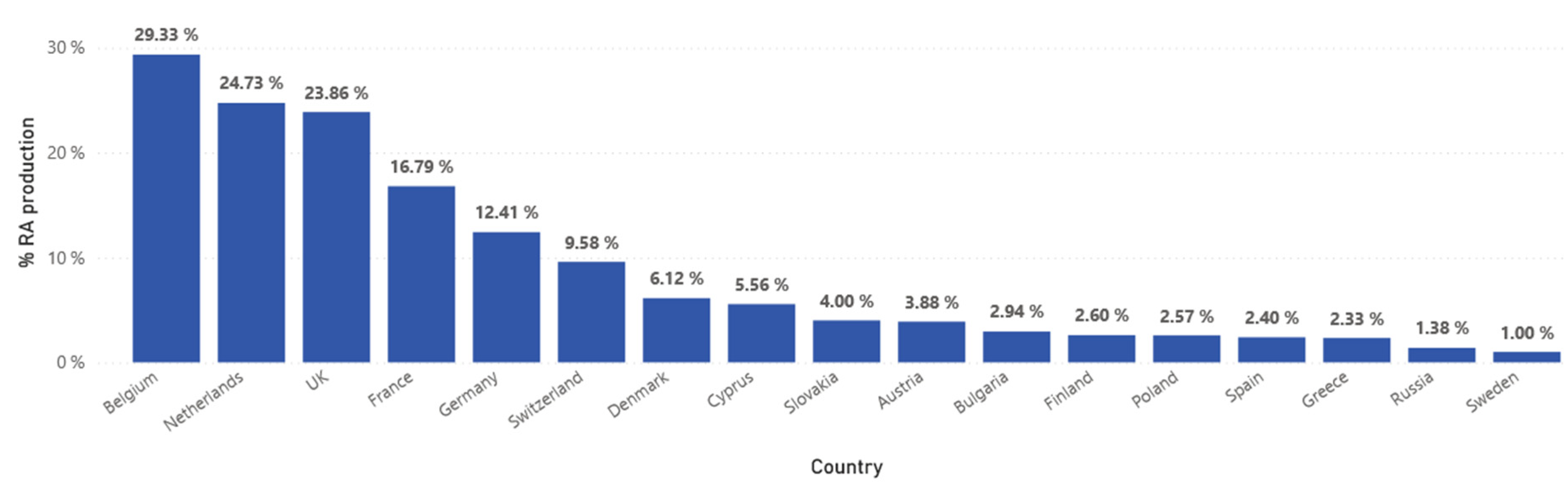
Figure 2.
Resource Productivity Indicator (RPI) (2000 – 2023) (Authors’ own based on [50]).
Figure 2.
Resource Productivity Indicator (RPI) (2000 – 2023) (Authors’ own based on [50]).
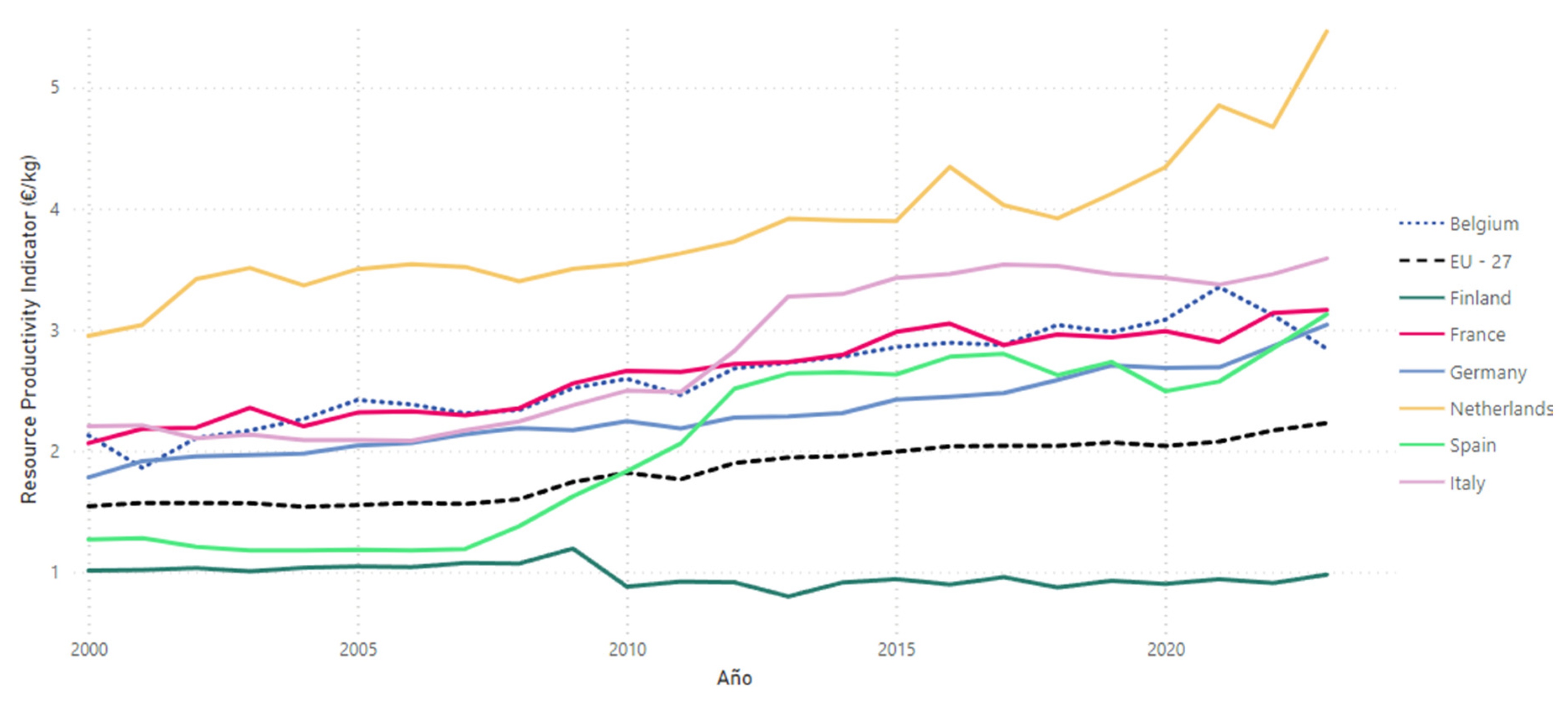
Figure 3.
Circular Material Use (CMU) rate (2019 – 2023) (Authors’ own based on [51]).
Figure 3.
Circular Material Use (CMU) rate (2019 – 2023) (Authors’ own based on [51]).
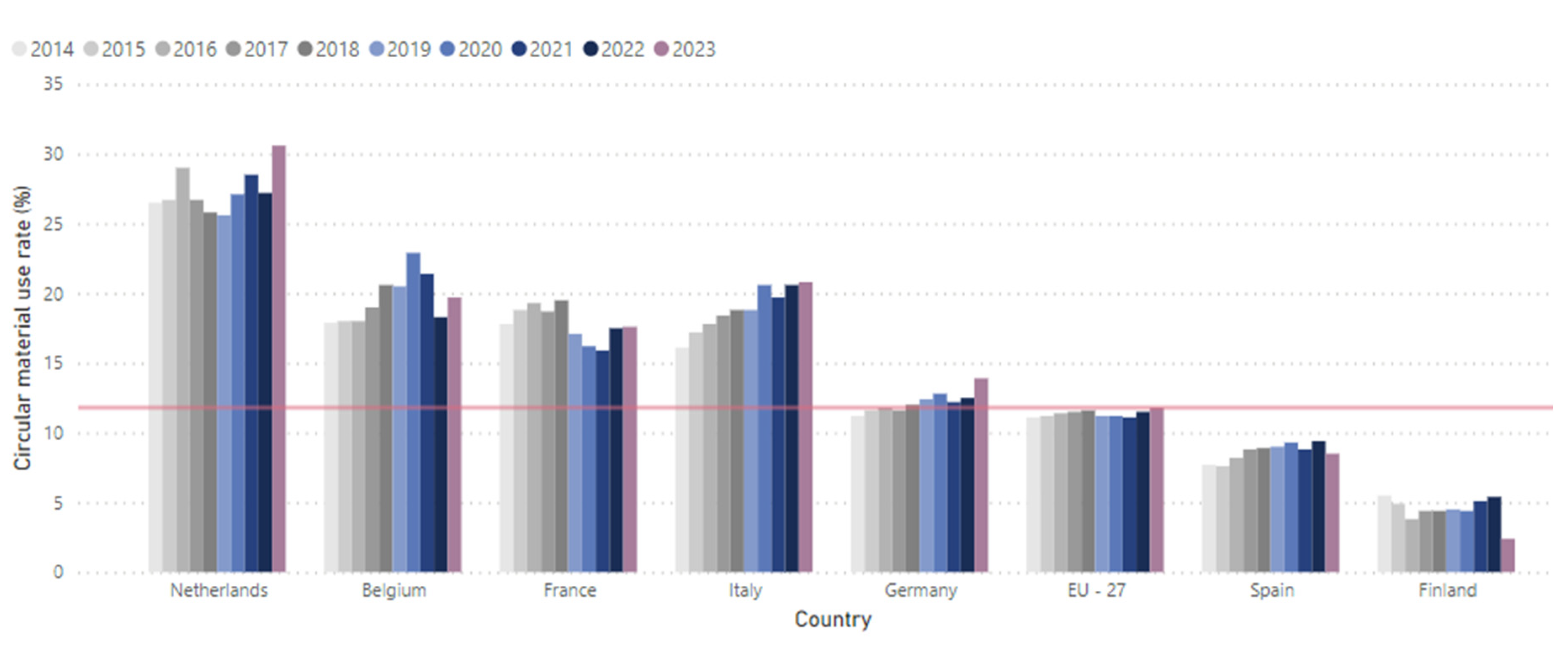
Figure 4.
Flowchart of the research methodology (Authors’ own).
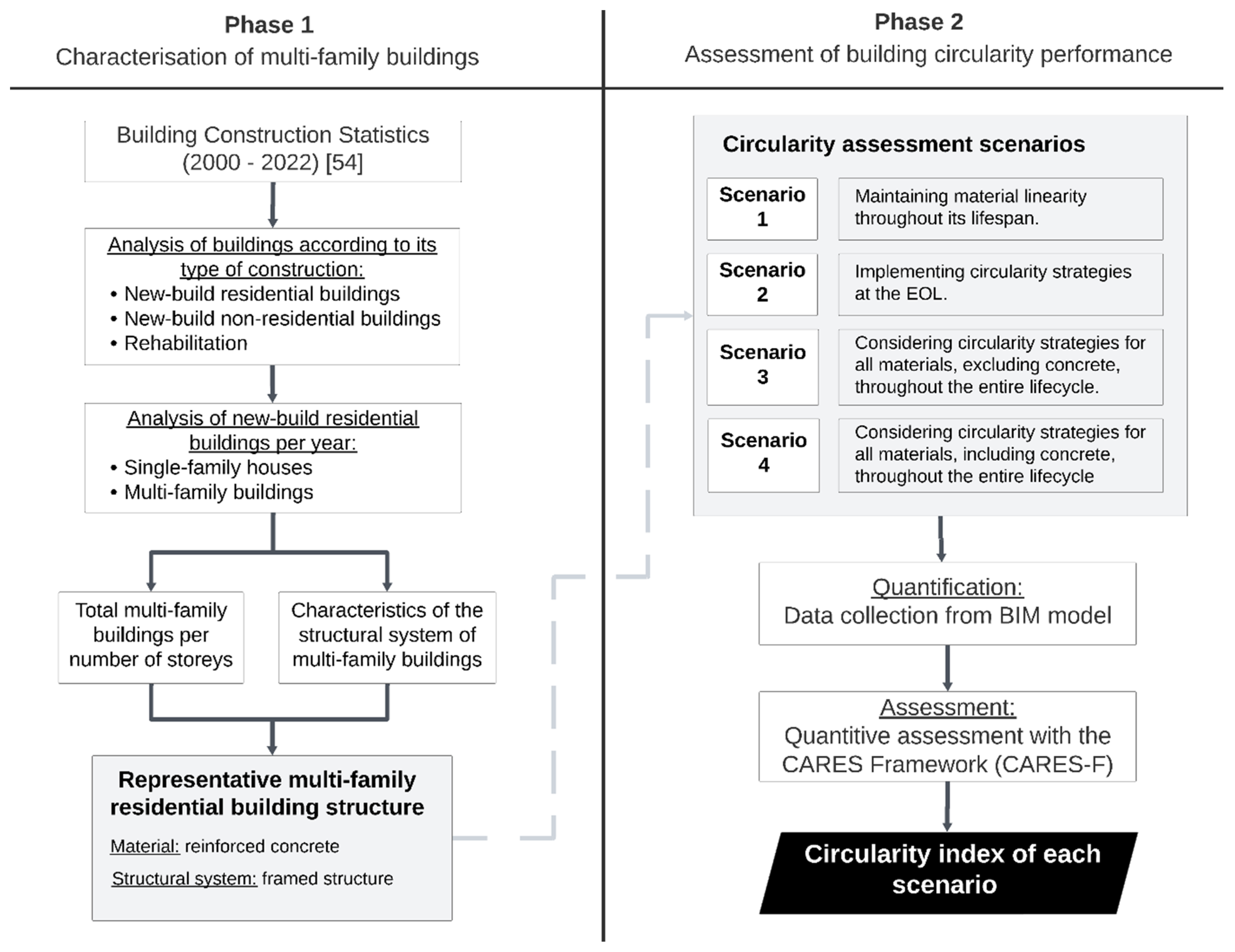
Figure 5.
Residential buildings constructed in Spain each year (2011 - 2020) (Authors’ own based on [72]).
Figure 5.
Residential buildings constructed in Spain each year (2011 - 2020) (Authors’ own based on [72]).
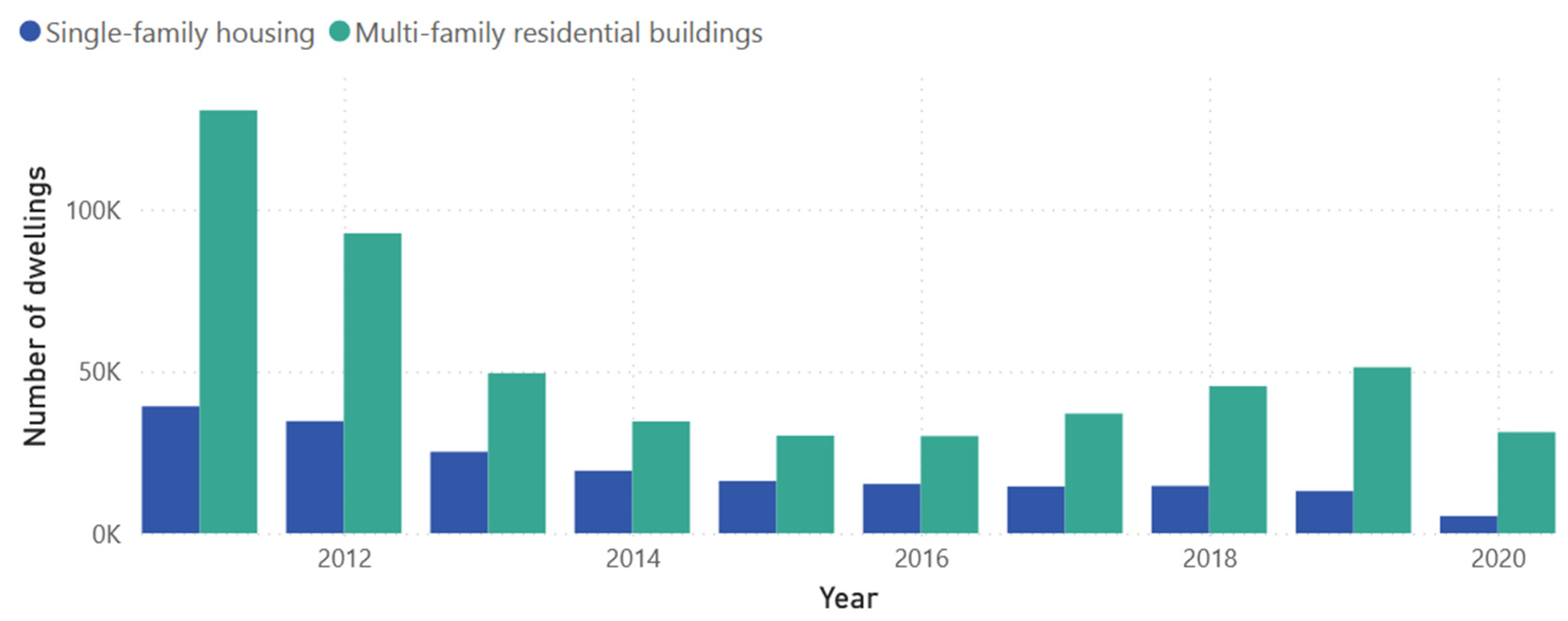
Figure 6.
Construction projects on buildings in Spain from 2011 to 2020 (Authors’ own based on [55,73]).
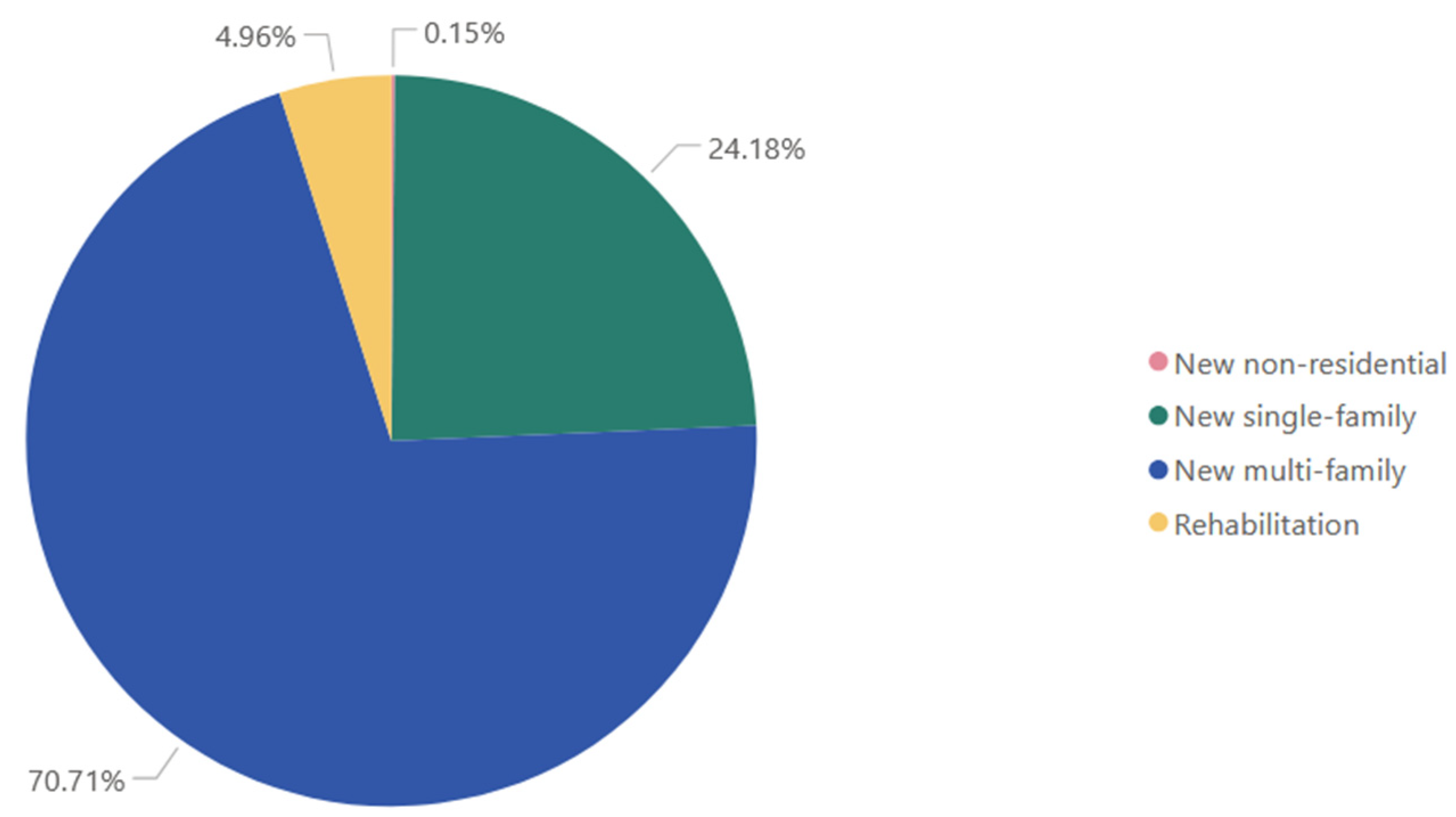
Figure 7.
Constructed new-build multi-family buildings in terms of number of storeys in Spain from 2015 to 2020 (Authors’ own based on [72]).
Figure 7.
Constructed new-build multi-family buildings in terms of number of storeys in Spain from 2015 to 2020 (Authors’ own based on [72]).
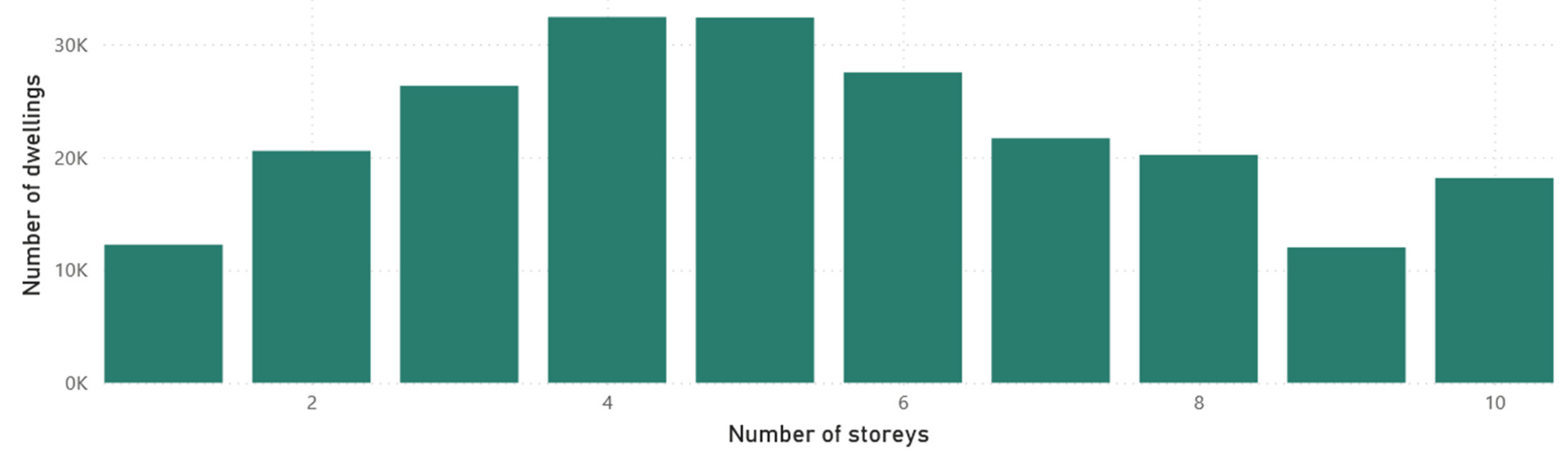
Figure 8.
Structural characteristics of multi-family residential buildings in Spain. (a) Materials used to construct vertical structural elements; (b) Characteristics of floor systems (Authors’ own).
Figure 8.
Structural characteristics of multi-family residential buildings in Spain. (a) Materials used to construct vertical structural elements; (b) Characteristics of floor systems (Authors’ own).
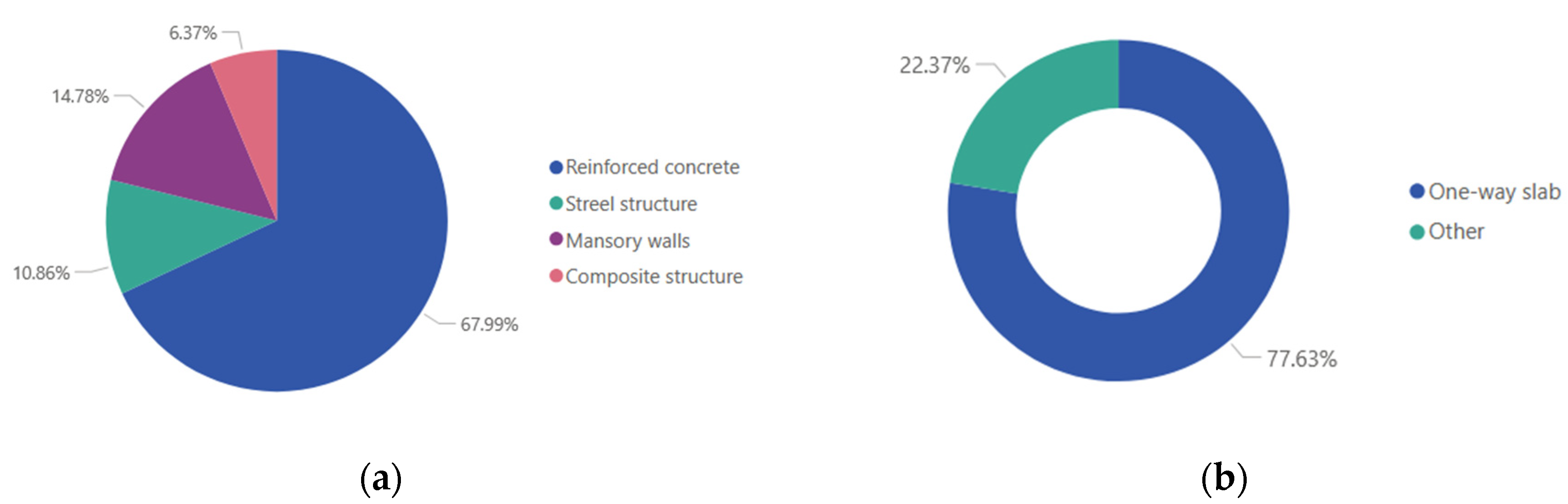
Figure 9.
Structural system modelled on BIM software developed by [60]: (a) 3D Model view; (b) cross-section.
Figure 9.
Structural system modelled on BIM software developed by [60]: (a) 3D Model view; (b) cross-section.
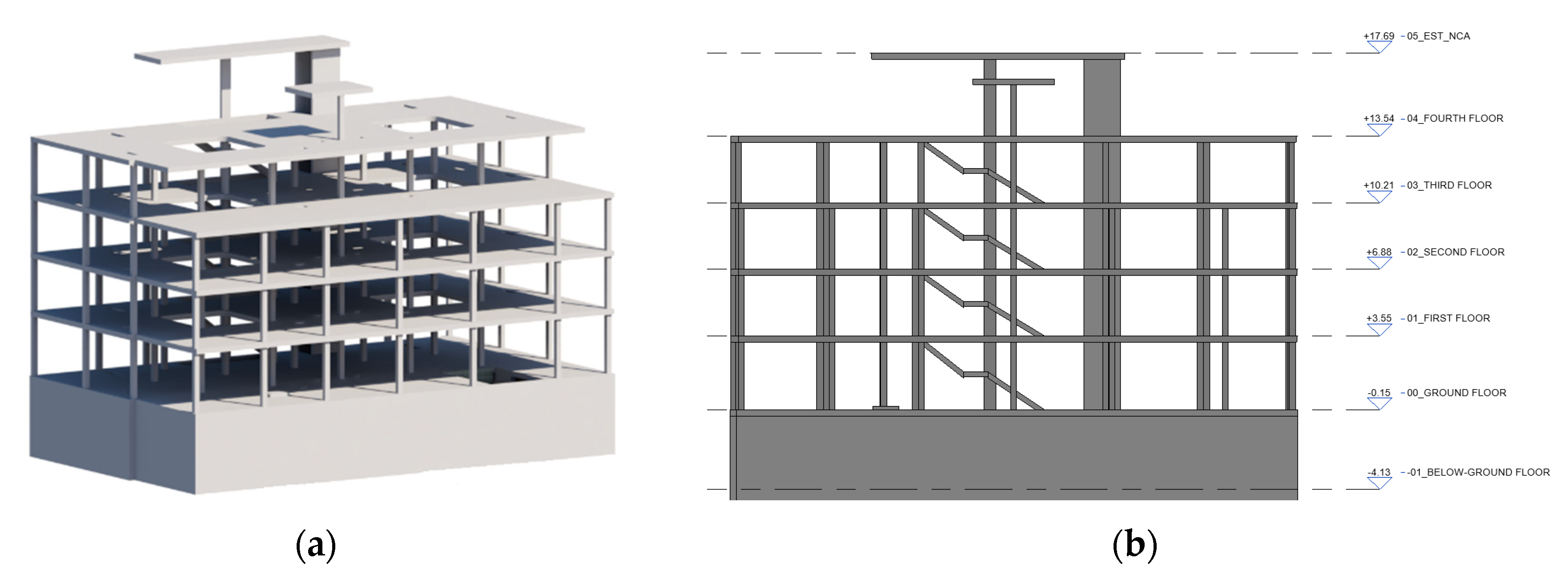
Figure 10.
CARES-F conceptual and assessment model overview developed by [71].
Figure 10.
CARES-F conceptual and assessment model overview developed by [71].
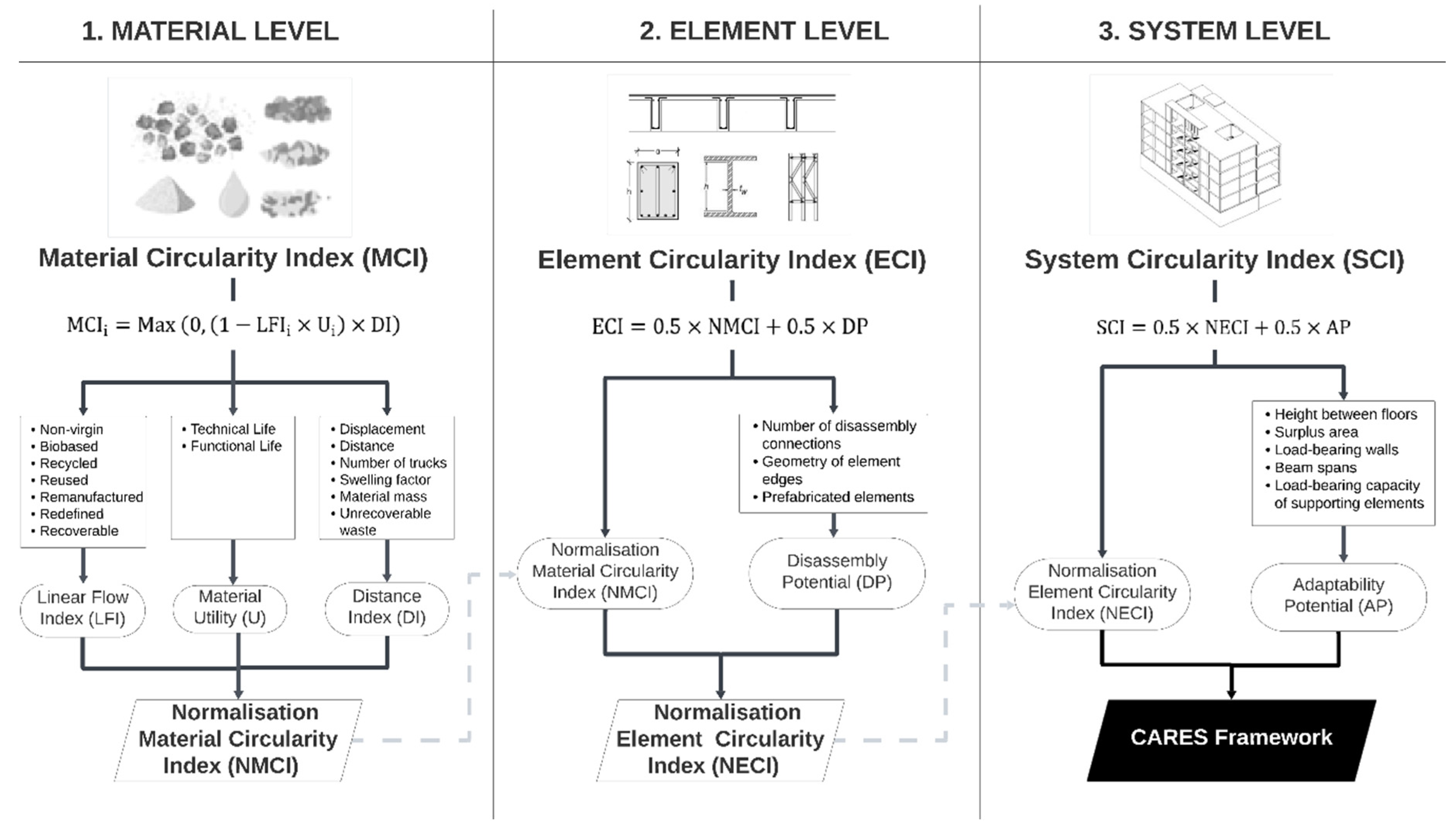
Figure 11.
MCI of representative materials in S1 (Authors’ own).
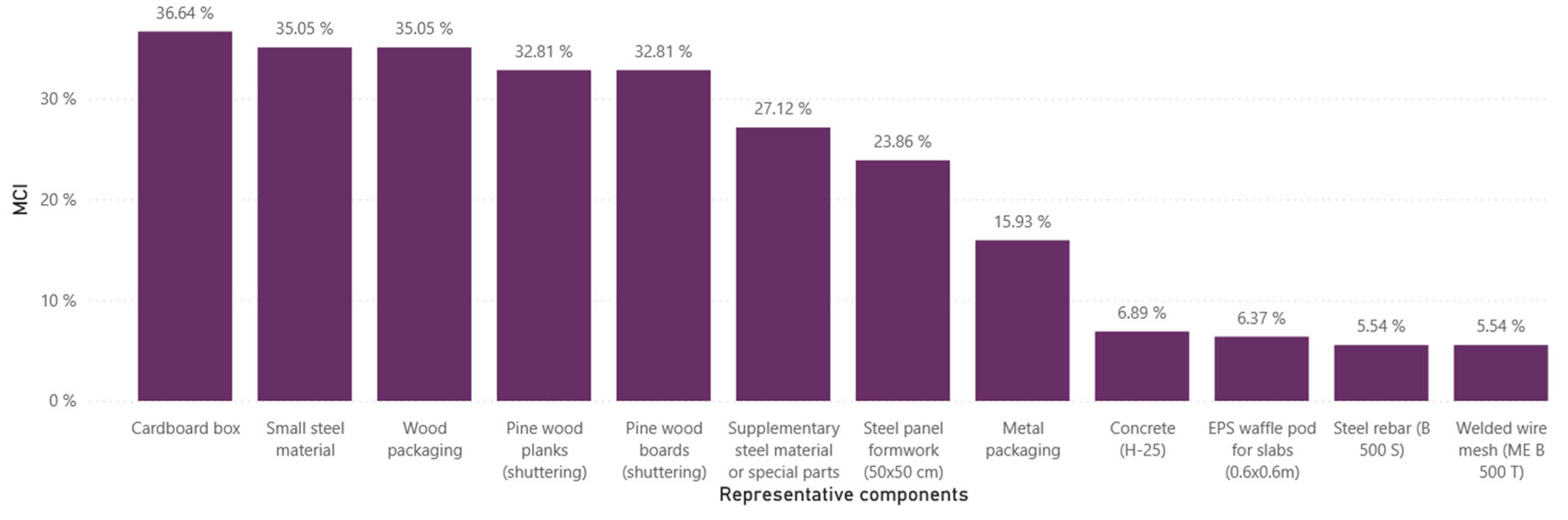
Figure 12.
ECI of reinforced concrete structural elements in S1 (Authors’ own).
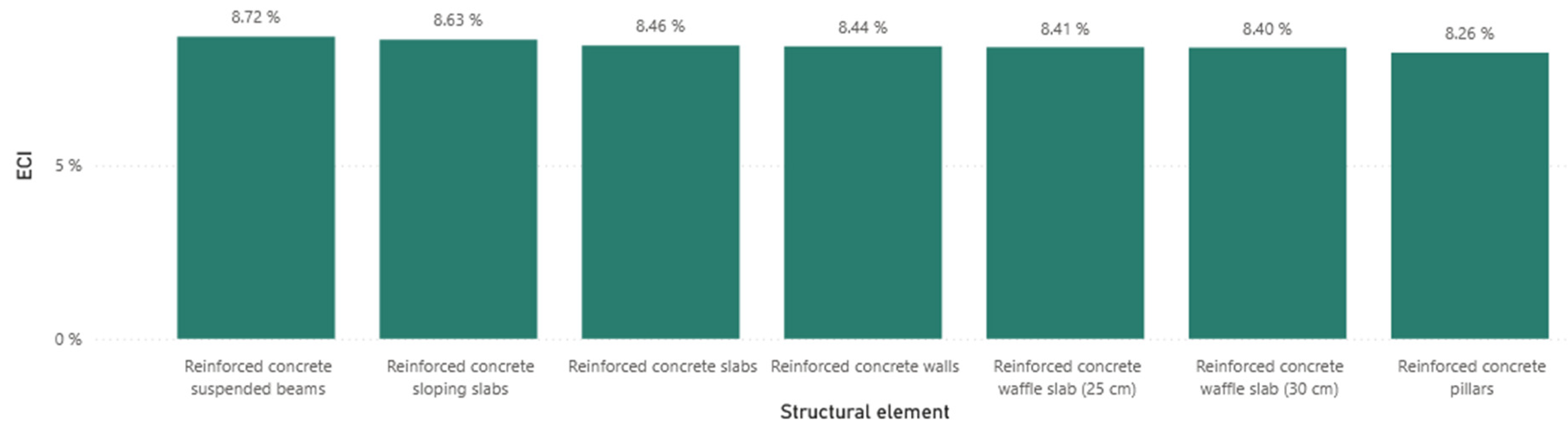
Figure 13.
MCI of representative materials in S2 (Authors’ own).
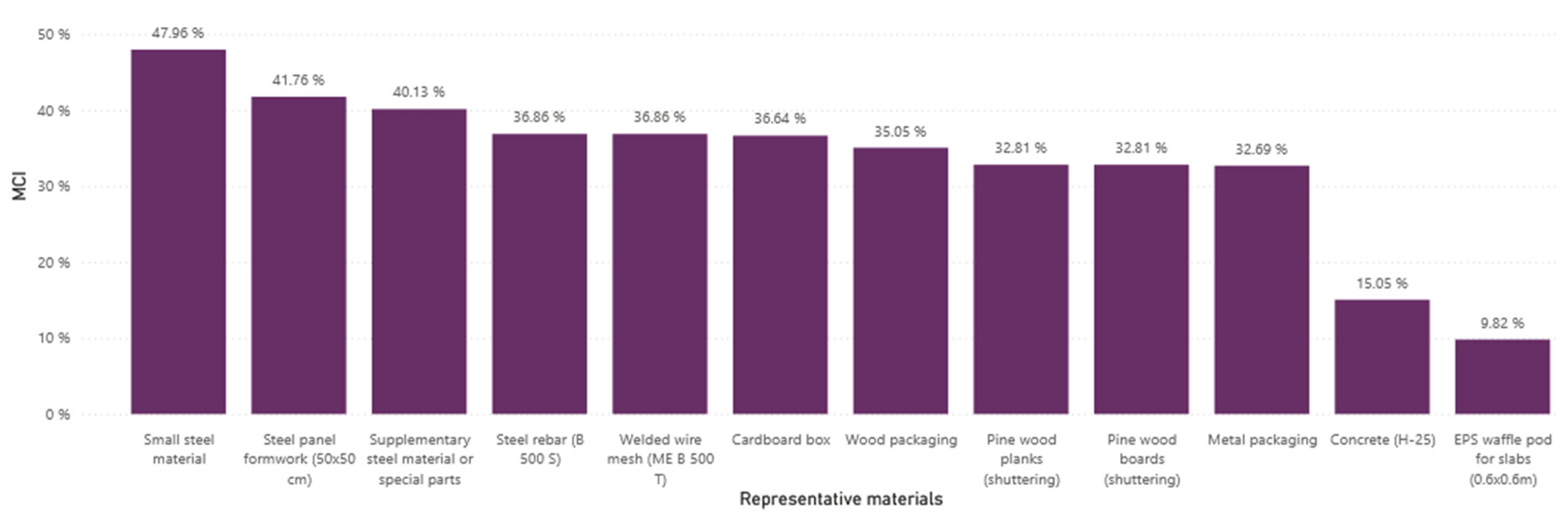
Figure 14.
ECI of reinforced concrete structural elements in S2 (Authors’ own).
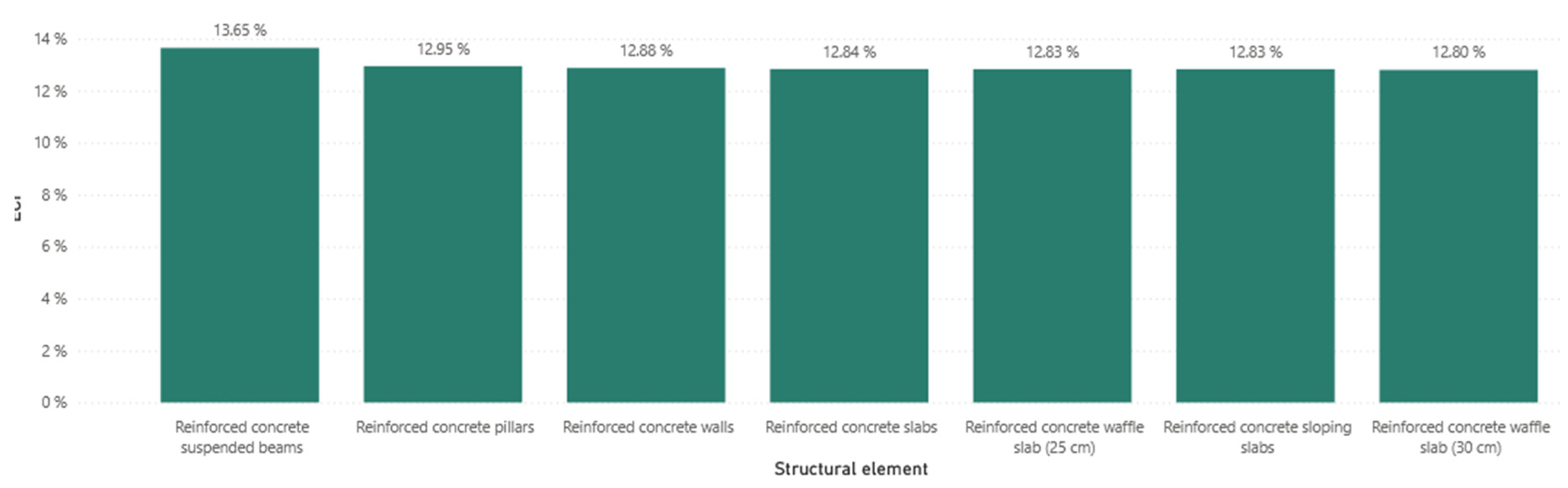
Figure 15.
MCIs of representative materials in S3 (Authors’ own).
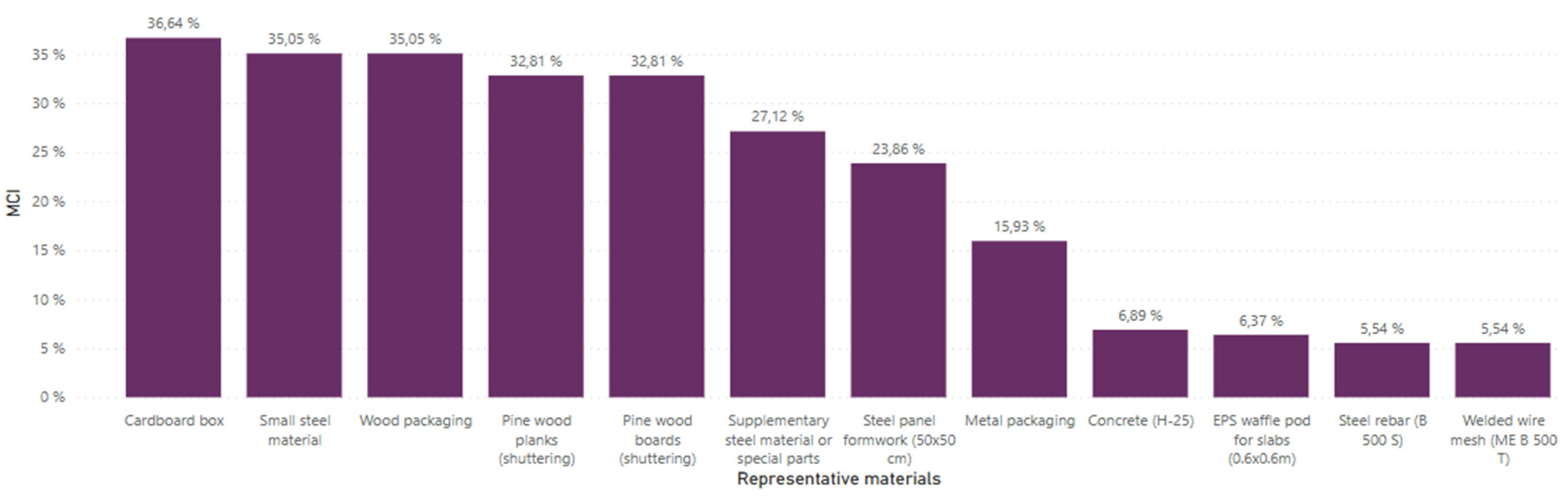
Figure 16.
ECI of reinforced concrete structural elements in S3 (Authors’ own).
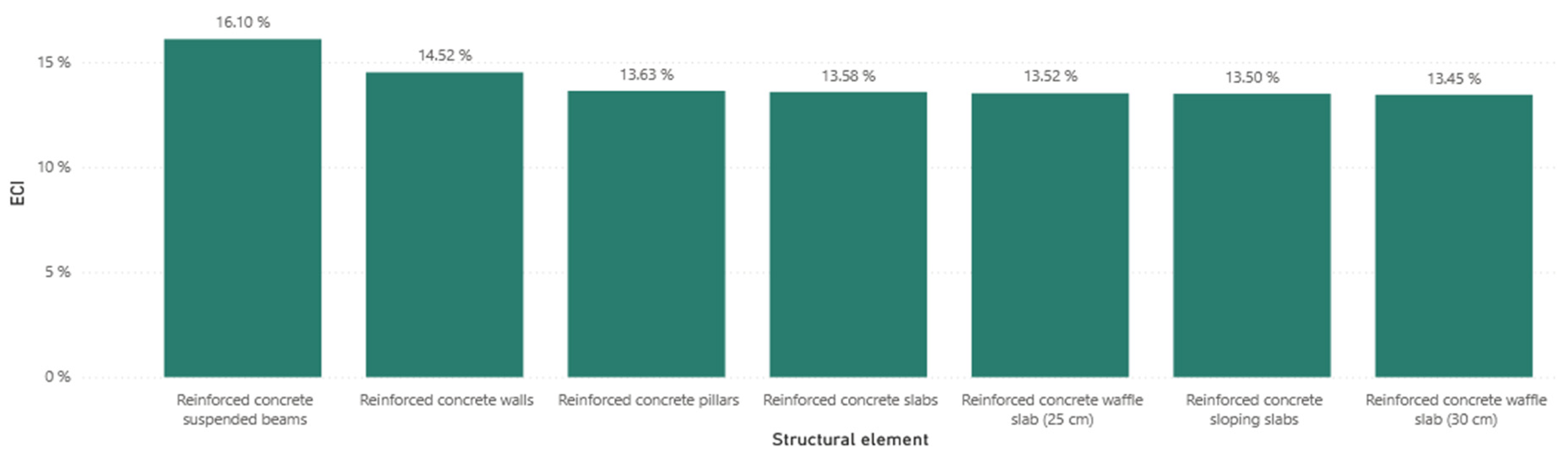
Figure 17.
MCI of representative materials in S4 (Authors’ own).
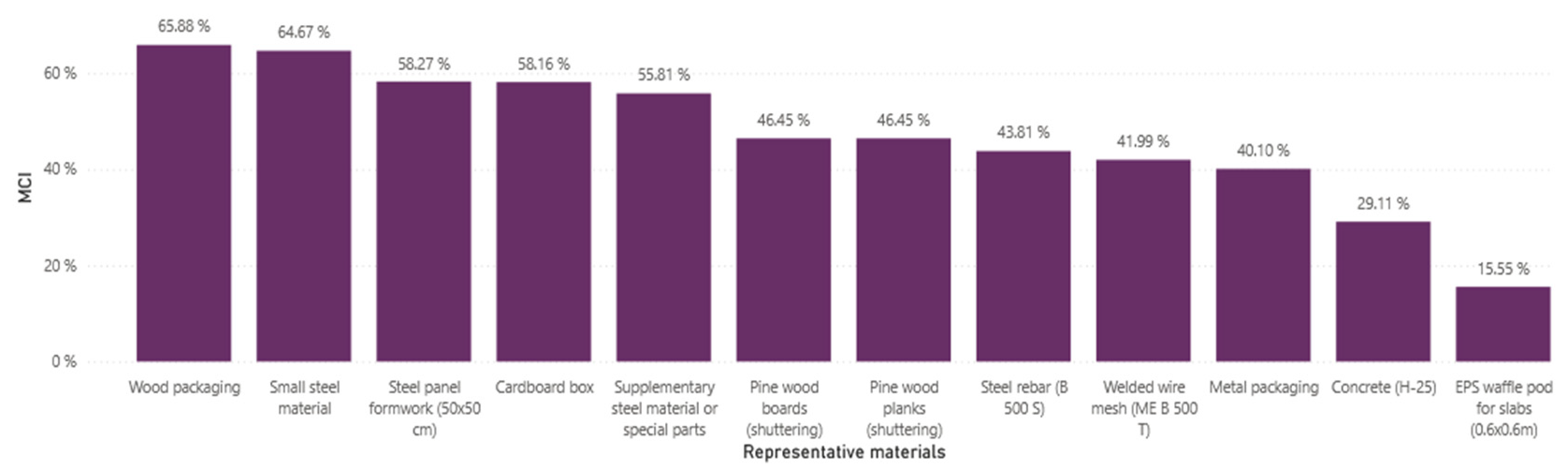
Figure 18.
ECI of reinforced concrete structural elements in S4 (Authors’ own).
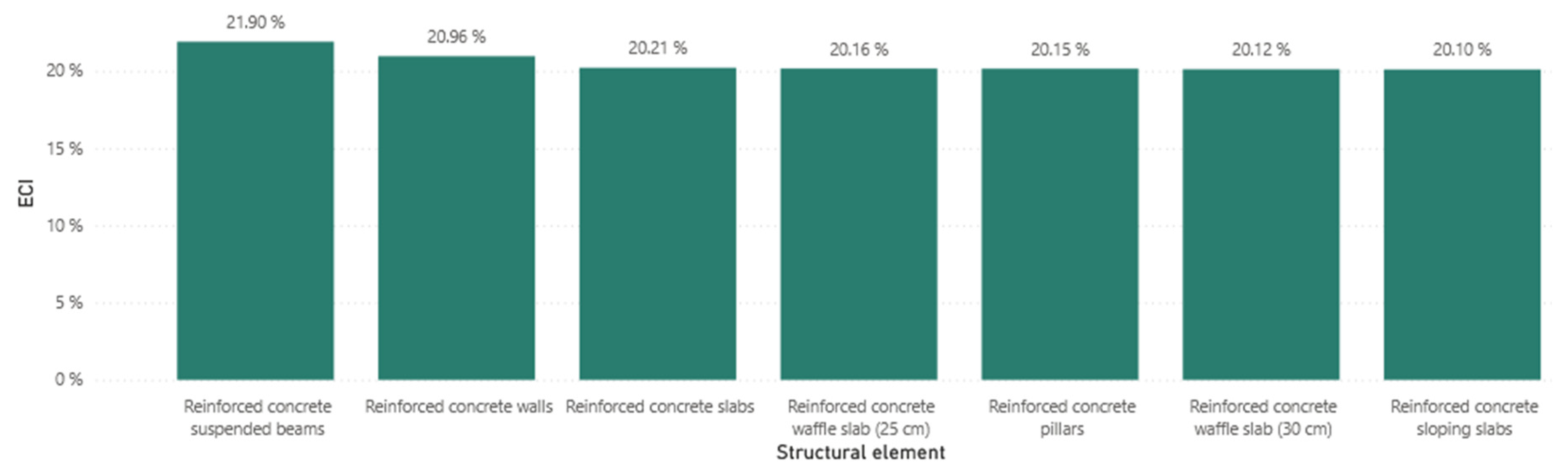
Figure 19.
Comparative analysis of MCI: (a) improvements in the MCI of concrete of S2 to S4 compared to S1; (b) improvements in the MCI of steel rebars of S2 to S4 compared to S1 (Authors’ own).
Figure 19.
Comparative analysis of MCI: (a) improvements in the MCI of concrete of S2 to S4 compared to S1; (b) improvements in the MCI of steel rebars of S2 to S4 compared to S1 (Authors’ own).
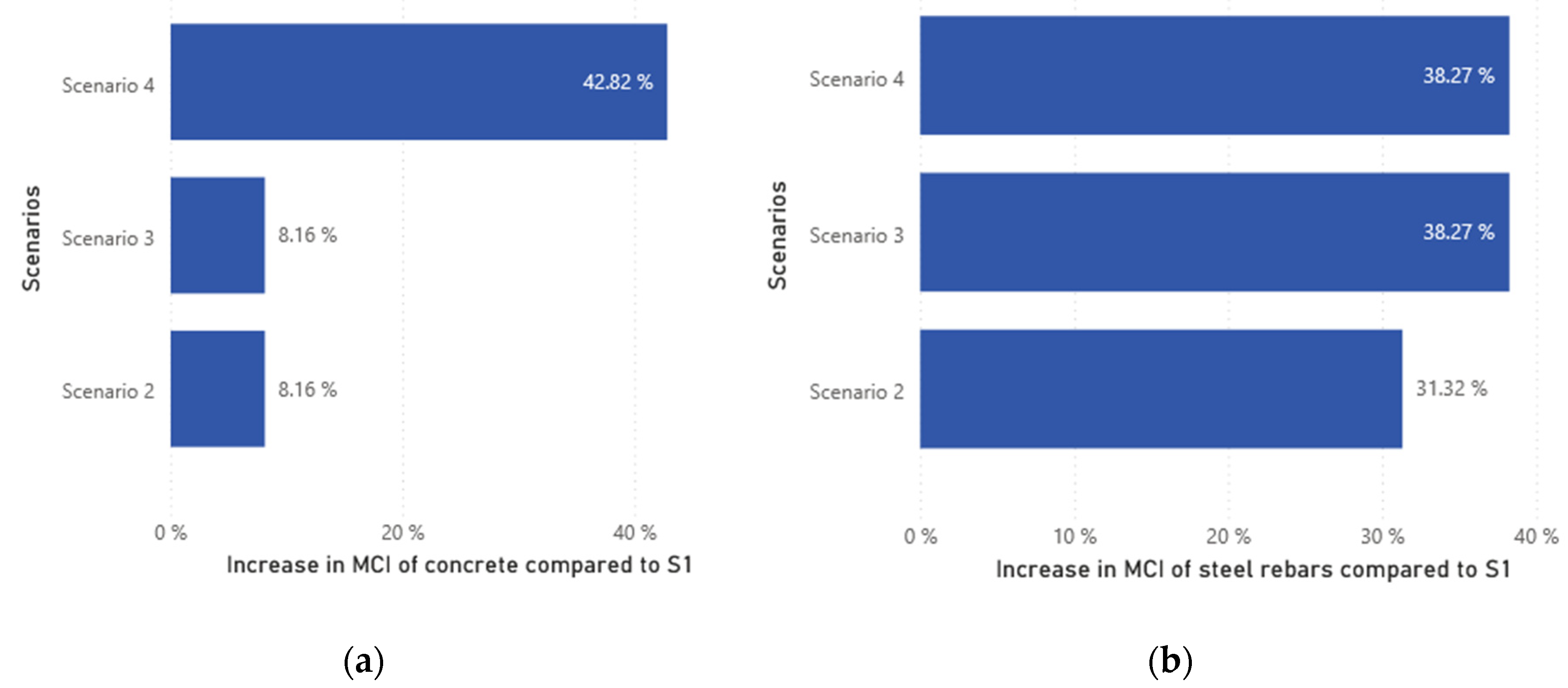
Figure 20.
Comparative analysis of ECI and SCI: (a) average increase in ECI of S2, S3 and S4 compared to S1; (b) increase in SCI of S2, S3 and S4 compared to S1 (Authors’ own).
Figure 20.
Comparative analysis of ECI and SCI: (a) average increase in ECI of S2, S3 and S4 compared to S1; (b) increase in SCI of S2, S3 and S4 compared to S1 (Authors’ own).
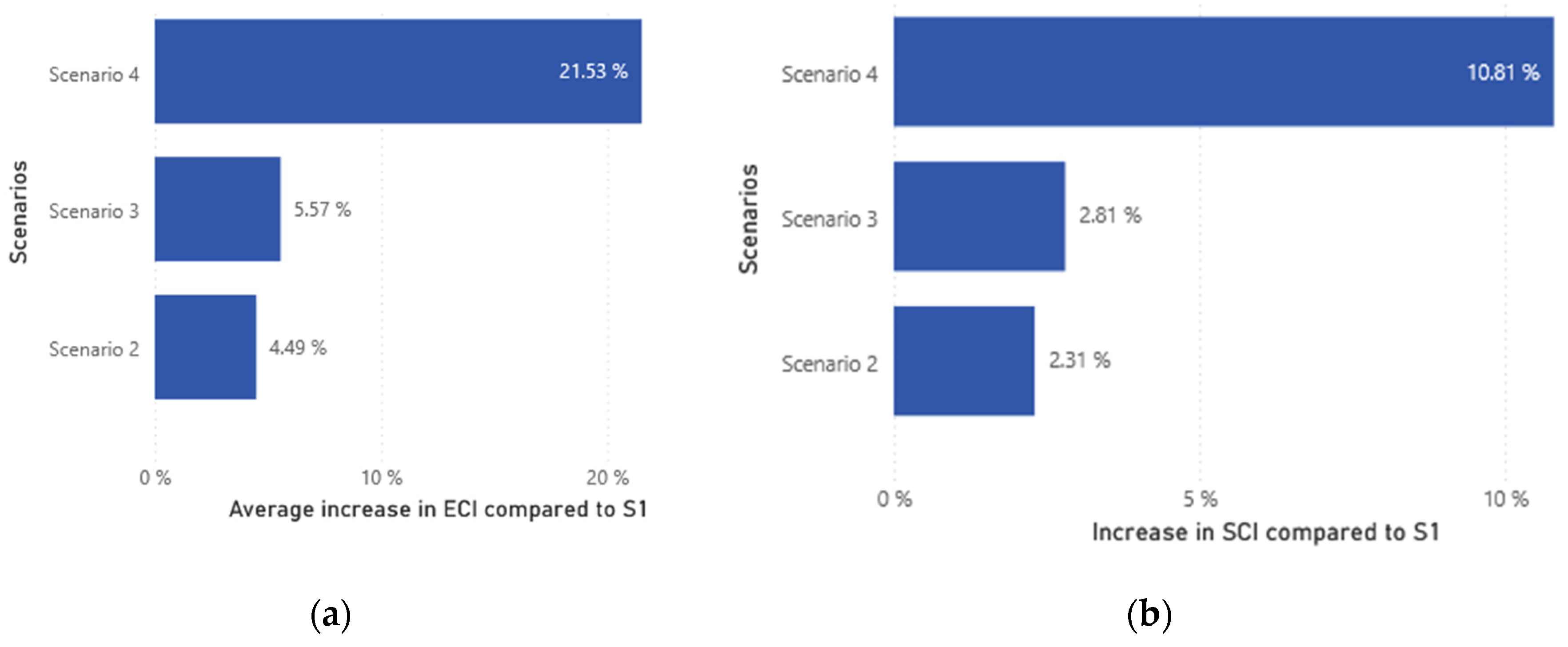
Figure 21.
SCI of each scenario (Authors’ own).
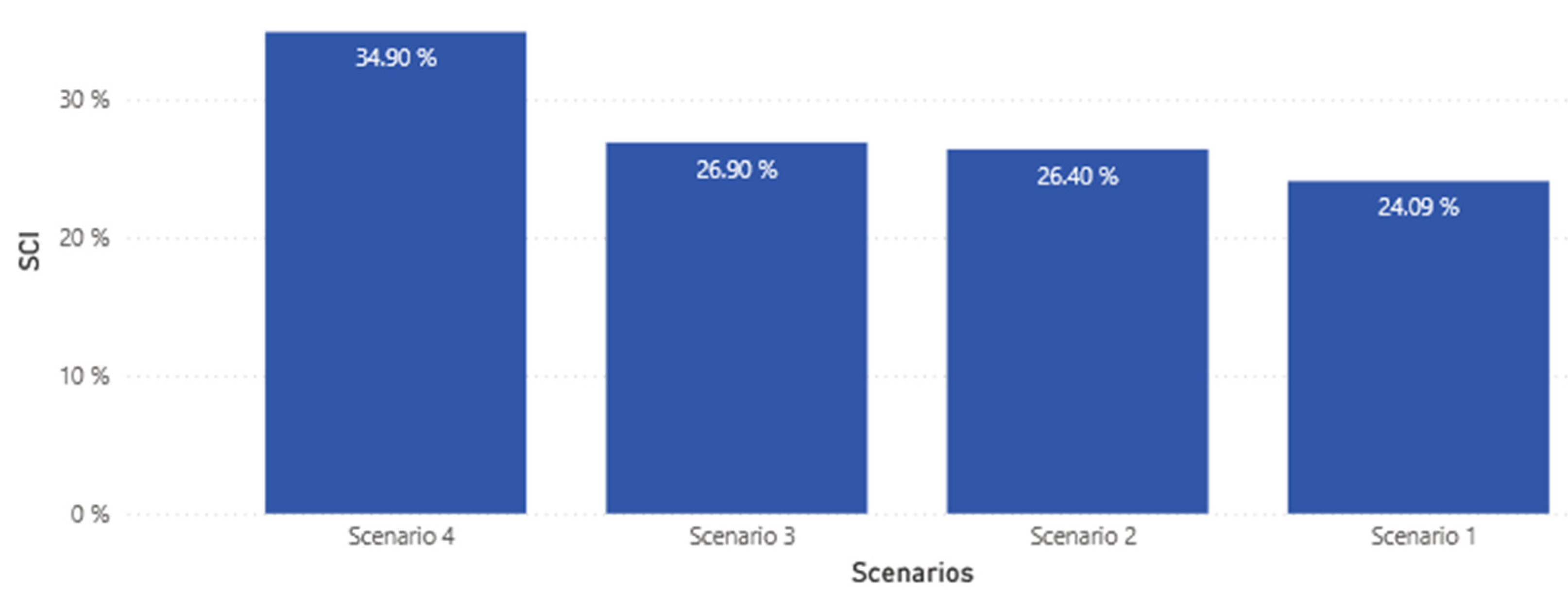

Table 1.
Representative materials of the building structure (Authors’ own).
| LoW1 Code and Description | Representative material | Participation mass ratio | |
| 17 01 01 | Concrete | Concrete (H-25) | 93.33% |
| 17 04 05 | Iron and steel | Steel rebar (B 500 S) | 2.82% |
| 17 04 05 | Iron and steel | Small steel material | 1.08% |
| 15 01 11* | Metallic packaging containing a hazardous solid porous matrix | Metallic packaging | 0.55% |
| 17 04 05 | Iron and steel | Supplementary steel material or special parts | 0.54% |
| 17 02 01 | Wood | Pinewood planks (shuttering) | 0.45% |
| 17 02 01 | Wood | Pinewood boards (shuttering) | 0.43% |
| 17 04 05 | Iron and steel | Welded wire mesh (ME B 500 T) | 0.13% |
| 17 06 04 | Insulation materials | EPS waffle pod for slabs (0.6x0.6m) | 0.11% |
| 15 01 03 | Wooden packaging | Wooden packaging | 0.10% |
| 17 04 05 | Iron and steel | Steel panel formwork (50x50 cm) | 0.10% |
| 15 01 01 | Paper and cardboard packaging | Cardboard box | 0.10% |
1. European List of Waste (LoW) [79]
Table 2.
Sources consulted for the analysis of S2 (Authors’ own).
| LoW Code and Description | Title | Author | Year | |
| 170101 | Concrete | Spanish Guide to Recycled Aggregates from RCD | GEAR [67] | 2012 |
| 170405 | Iron and steel | Guideline for recycled materials reuse in construction Trade in Recyclable Raw Materials (database) Galvanised steel and sustainable construction (report) |
Ihobe [70] Eurostat [80] EGGA [81] |
2016 2022 2021 |
| 170201 | Wood | Contribution of Recycled Materials to Raw Materials Demand (database) | Eurostat [82] | 2020 |
| 170203 | Plastic | The CE of plastics (report) Packaging and environmental sustainability |
Plastics Europe [83] Emblem et al. [78] |
2022 2012 |
| 150111* | Metallic packaging | Metal Recycling Factsheet | EuRIC AISBL [84] | 2022 |
| 150103 | Wooden packaging | Packaging Waste by Waste Management Operations (database) Trade in Recyclable Raw Materials (database) |
Eurostat [85] | 2023 |
| 150101 | Paper and cardboard packaging | Eurostat [80] | 2022 | |
Table 3.
Concrete mixture composition and properties developed by [87].
Table 3.
Concrete mixture composition and properties developed by [87].
| Composition | Properties | ||
| Cement | 266.4 kg/m3 | Compressive strength | 25 MPa |
| Free water | 170.0 kg/m3 | % of RCA | 20 % |
| Natural Fine Aggregate (NFA) | 844.4 kg/m3 | Effective water-cement ratio | 0.64 |
| Natural Coarse Aggregate (NCA) | 803.0 kg/m3 | ||
| Recycled Coarse Aggregate (RCA) | 195.6 kg/m3 | ||
| Superplasticiser (SP) | 2.7 kg/m3 | ||
Disclaimer/Publisher’s Note: The statements, opinions and data contained in all publications are solely those of the individual author(s) and contributor(s) and not of MDPI and/or the editor(s). MDPI and/or the editor(s) disclaim responsibility for any injury to people or property resulting from any ideas, methods, instructions or products referred to in the content. |
© 2025 by the authors. Licensee MDPI, Basel, Switzerland. This article is an open access article distributed under the terms and conditions of the Creative Commons Attribution (CC BY) license (http://creativecommons.org/licenses/by/4.0/).
Copyright: This open access article is published under a Creative Commons CC BY 4.0 license, which permit the free download, distribution, and reuse, provided that the author and preprint are cited in any reuse.


