Preprint
Review

This version is not peer-reviewed.

Pathophysiological Links Between Myocardial Infarction and Anxiety Disorder, Major Depressive Disorder, Bipolar Disorder and Schizophrenia

A peer-reviewed article of this preprint also exists.

Submitted:

08 February 2025

Posted:

10 February 2025

You are already at the latest version

Abstract

There is increasing evidence demonstrating that psychiatric conditions elevate the risk of developing accelerated atherosclerosis and early-onset cardiovascular disease (CVD) including myocardial infarction (MI). Several mechanisms contribute to this observation. Dysfunction of the autonomic nervous system and hyperactivity of the hypothalamic-pituitary-adrenal axis in these patients contribute to the development of (MI). Additionally, patients with underlying psychiatric disorders often have abnormal levels of anti-inflammatory and pro-inflammatory cytokines, which can lead to early vascular damage and subsequent atherosclerosis. Elevated PAI-1 levels, reduced tPA activity, and decreased brain-derived neurotrophic factor (BDNF), influenced by coagulation and inflammation, may contribute to depression and its link to MI. Oxidative stress, marked by increased reactive species and impaired antioxidant defenses, is associated with cellular damage and has been consistently implicated in schizophrenia and bipolar disorder, potentially contributing to myocardial infarction. Finally, molecular genetic studies have indicated that psychiatric disorders and myocardial infarction may share potential pleiotropic genes. The interplay between psychiatric conditions and myocardial infarction underscores the importance of integrated care approaches to manage both mental and physical health.

Keywords: 
;  ;  ;  ;  ;  ;  

1. Introduction

Myocardial infarction (MI) and psychiatric conditions are two major causes of disability and death worldwide [1]. Many studies have demonstrated that survivors of MI are at an elevated risk of developing psychiatric disorders and vice versa [1]. However, the exact neurobiological pathways that link MI to psychiatric illness remain poorly understood [2]. Individuals with major psychiatric conditions have a life expectancy that is approximately 15 to 25 years shorter than that of the general population, with cardiovascular disease accounting for the majority of these premature deaths [3,4]. Cardiovascular disease is the leading cause of death among individuals with major psychiatric conditions with mortality rates being more than twice compared to the general population, and this continues to rise over recent decades [5].
The relationship between myocardial infarction and cardiovascular disease appears to be bidirectional, with acute coronary events and chronic cardiovascular conditions potentially triggering the development of psychiatric conditions [6]. In addition, evidence indicates that even among patients with low coronary artery calcium scores, mortality rates in those with major psychiatric conditions remain three to four times higher than in the general population [7]. Emerging research highlights shared pathophysiological mechanisms between myocardial infarction and psychiatric conditions, encompassing biological, neurohormonal and genetic factors [8]. This review aims to explore the molecular mechanisms between myocardial infarction and major psychiatric conditions.

2. Anxiety Disorder and Major Depressive Disorder

Figure 1 demonstrated the pathophysiology of myocardial infarction and depression. Studies have demonstrated that patients with MI had a higher risk of developing newly diagnosed anxiety and major depressive disorders [9]. MI serves as a significant risk factor for newly diagnosed clinical anxiety and depressive disorders within the first two years following the event [9]. The biopsychosocial model suggests that the interplay of biological, psychological, and social factors may contribute to the development of anxiety and depressive disorder post-myocardial infarction [10].
MI triggers responses like hypothalamic-pituitary-adrenal (HPA) axis activation and autonomic nervous system (ANS) dysregulation, potentially leading to prefrontal cortex and anterior cingulate gyrus dysfunction, which contributes to depression and anxiety disorder [11]. In addition, MI activates the secretion of corticotropin-releasing hormone (CRH) from the hypothalamus, stimulating the anterior pituitary gland to release adrenocorticotropic hormone (ACTH) [2]. ACTH stimulates adrenal glands to produce cortisol and catecholamines and abnormal cortisol level leading to HPA axis dysfunction due to impaired feedback control. Study demonstrated that cortisol levels in post-MI patients spike immediately after the event due to HPA axis activation but return to normal within 72 hours [12]. While post-MI patients with depression lasting over three months showed a flattened daily cortisol rhythm, those without depression had significantly lower afternoon cortisol levels compared to the morning [12]. Abnormal cortisol rhythms have been associated with cognitive impairment and diminished stress-coping abilities, potentially heightening the risk of major depressive disorder and anxiety disorders [12,13].
Inflammation is one of the main pathophysiological mechanisms of development of depression in patients post-MI [14]. During MI, damage-associated molecular patterns (DAMPs) like heat shock proteins (HSPs) and high-mobility group box 1 (HMGB1) are released from the heart muscles due to oxygen deprivation [14]. These molecules activate immune cells, such as macrophages to release pro-inflammatory cytokines, including interleukin (IL)-6, IL-1β, and tumor necrosis factor (TNF)- α which is essential for phagocytosis of damage cardiac muscle and cardiac repair [14,15]. Inflammatory cytokines are implicated in the development of depression, as demonstrated in both animal and human studies [11]. Research in rodent models reveals that inflammatory cytokines such as IL-1β and TNF-α can induce depressive-like behavior which is also observed in humans where elevated inflammatory markers may lead to depressed mood [16,17]. Inflammatory cytokines can disrupt neurotransmitter systems, such as reducing serotonin levels via increased indoleamine 2,3-dioxygenase activity and altering dopamine and norepinephrine metabolism and production leading to dysregulation of mood [18,19,20]. In addition, inflammatory cytokines activate the kynurenine pathway, which increases quinolinic acid production which actives the N-methyl-D-aspartate (NMDA) receptor activation leading to the development of depressive symptoms [21].
Plasminogen activator inhibitor 1 (PAI-1), encoded by the SERPINE1 gene, serves as a key inhibitor of tissue plasminogen activator (tPA) in the extracellular space and has been associated with increased the risk to depression and the response of selective serotonin reuptake inhibitors [22,23]. PAI-1 levels increase during periods of psychological stress and depression, while serotonergic antidepressant treatment has been associated with reduced PAI-1 levels [22,24]. Additionally, patients with depression often exhibit lower baseline tPA levels, which significantly increase following antidepressant therapy, highlighting a potential relationship between depression and MI [25]. Elevated PAI-1 and fibrinogen levels may inhibit fibrinolysis leading to evaluated risk of MI [11]. The coagulation system may lead to the development of depression through the tPA-plasmin pathway, which converts pro-Brain-derived neurotrophic factor (BDNF) into BDNF, a neurotrophin essential for synaptic plasticity and neuronal connectivity [26]. In addition, increased inflammatory cytokines also shown to decreased levels of BDNF [27,28]. Reduced BDNF levels, particularly in brain regions involved in mood regulation like the amygdala, prefrontal cortex, hippocampus, and amygdala, have been consistently linked to emotional stress and depression [29].
Mendelian randomization studies have demonstrated a significant link between genetic predisposition to depression and a higher risk of developing MI [11]. Otte et al identified an association between the serotonin transporter gene variant (5-HTTLPR) and an increased risk of depression in patients with myocardial infarction (MI), with carriers of this variant exhibiting a poorer response to treatment with antidepressants [30]. In addition, patients with both depression and MI have increased sensitivity or upregulation of serotonin receptors and reduced expression of serotonin-transporter receptor leading to increased thromboembolic risk [31]. Furthermore, the S allele of the 5-HTT gene polymorphic region has been linked with both depressive symptoms and adverse cardiac outcomes [32]. Genetic differences in the IL-1 gene demonstrated to have a higher likelihood of developing depression following a MI, potentially due to increase in the inflammatory response during MI [33].

3. Bipolar Disorder

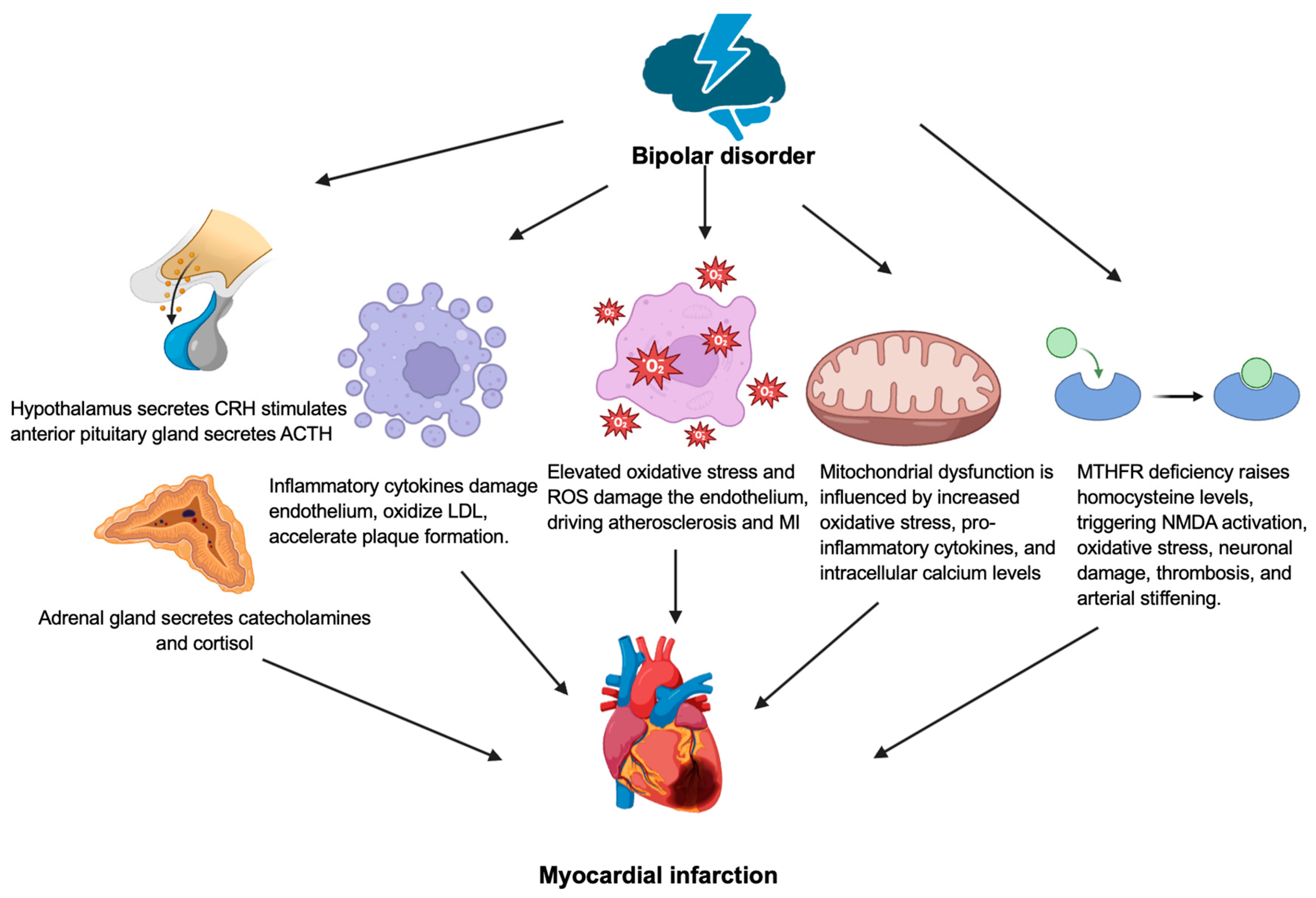
Figure 2 showed the pathophysiology of myocardial infarction and bipolar disorder. Patients with bipolar disorders experienced prolonged stress due the acute mania or depression leading to disrupted parasympathetic response [34]. The heart-brain axis allows communication between the cardiovascular and nervous systems, with sympathetic and parasympathetic activity mediated by acetylcholine, epinephrine, and norepinephrine to regulating cardiac contractility and heart rate variability [35,36]. Limited research has reported that patients with bipolar disorders have decreased heart rate variability, a key indicator of autonomic nervous system activity [37,38]. Reduced heart rate variability is associated with a 32–45% higher risk of development cardiovascular disease [39]. During the acute phase of mania or depression in bipolar disorders, the HPA is activated, leading to the paraventricular nuclei to secret CRH [34]. This stimulates the anterior pituitary gland to produce ACH, leading to elevated cortisol levels [34]. Hypercortisolemia contributes to insulin resistance and hyperglycemia, leading to increase the release of pro-inflammatory cytokines [34]. The inflammatory cytokines damage endothelial cells, accelerate the formation of atherosclerotic plaque due to oxidization of low-density lipoprotein (LDL) leading to cholesterol crystal build-up and MI [40].
The neurobiological basis of bipolar disorders may involve dysfunctions in neurotrophic pathways and energy metabolism, with increased oxidative stress causing lipid and protein peroxidation, impairing signal transduction, structural plasticity, and cellular resilience [41]. In vivo magnetic resonance spectroscopy studies demonstrated altered levels of phosphocreatine, phosphomonoesters, and intracellular pH, highlighting disruptions in oxidative phosphorylation, energy production, and phospholipid metabolism in bipolar disorders [41]. The acute phase of bipolar disorder leads to increased oxidative stress, characterized by elevated levels of oxidants including peroxides and malondialdehyde, and reduced antioxidants such as vitamin E, coenzyme Q10, catalase that results in generating reactive oxygen species (ROS) through pathways involving redox factor 1, activator protein 1, and hypoxia-inducible factor 1 [42,43]. This oxidative damage contributes to endothelial wall injury, promoting atherosclerosis and cardiovascular diseases [44]. In addition, lipid peroxidation, driven by excess ROS damages polyunsaturated fatty acids in cell membranes, leading to the formation of lipid hydroperoxides and cellular dysfunction [45]. This oxidative damage can compromise mitochondrial integrity, disrupt energy metabolism, and trigger inflammatory responses, contributing to the development and progression of MI [45].
Mitochondrial dysfunction in bipolar disorder is influenced by increased oxidative stress, pro-inflammatory cytokines, and intracellular calcium levels, which are more pronounced during manic episodes [46]. Increased calcium ions and oxidative stress enhance oxidative phosphorylation through pathways involving adenosine triphosphate (ATP) synthase, AMP-activated protein kinase (AMPK), SIRT-1, SIRT-3, and NAD+ [47]. Mitochondrial dysfunction in bipolar disorders leading to excessive calcium and oxidative stress may exacerbate myocardial injury in individuals with underlying ischaemic heart disease. Excessive calcium entry into mitochondria via the mitochondrial calcium uniporter (MCU) and impaired extrusion by the Na⁺/Ca²⁺ exchanger (NCX) results in mitochondrial calcium overload, leading to the opening of the mitochondrial permeability transition pore (MPTP) [48]. This, combined with oxidative stress-induced damage to mitochondrial membranes and proteins, results in ATP depletion, mitochondrial swelling, and cardiomyocyte death [49]. These processes exacerbate myocardial injury and infarct.
Bipolar disorder is associated with deficiency of methylenetetrahydrofolate reductase (MTHFR) enzyme which essential for homocysteine metabolism leading to increased central and peripheral homocysteine levels during the manic and euthymic phases [50]. Increased homocysteine level leads to NMDA receptor activation, causing increased intracellular calcium, ROS production, and subsequent causing neuronal autophagy or necrosis [51]. Hyperhomocysteinemia depletes nitric oxide and antioxidants, leading to an increase in platelet-derived growth factors and the activation of clotting factors which leads to platelet adhesion, aggregation, thrombus formation [52]. In addition, hyperhomocysteinemia also disrupts the structural integrity of collagen, proteoglycans and elastin leading to arterial stiffening [53]. All these factors contribute to vessels occlusion and increased risk of MI in patients with bipolar disorders [34].

4. Schizophrenia

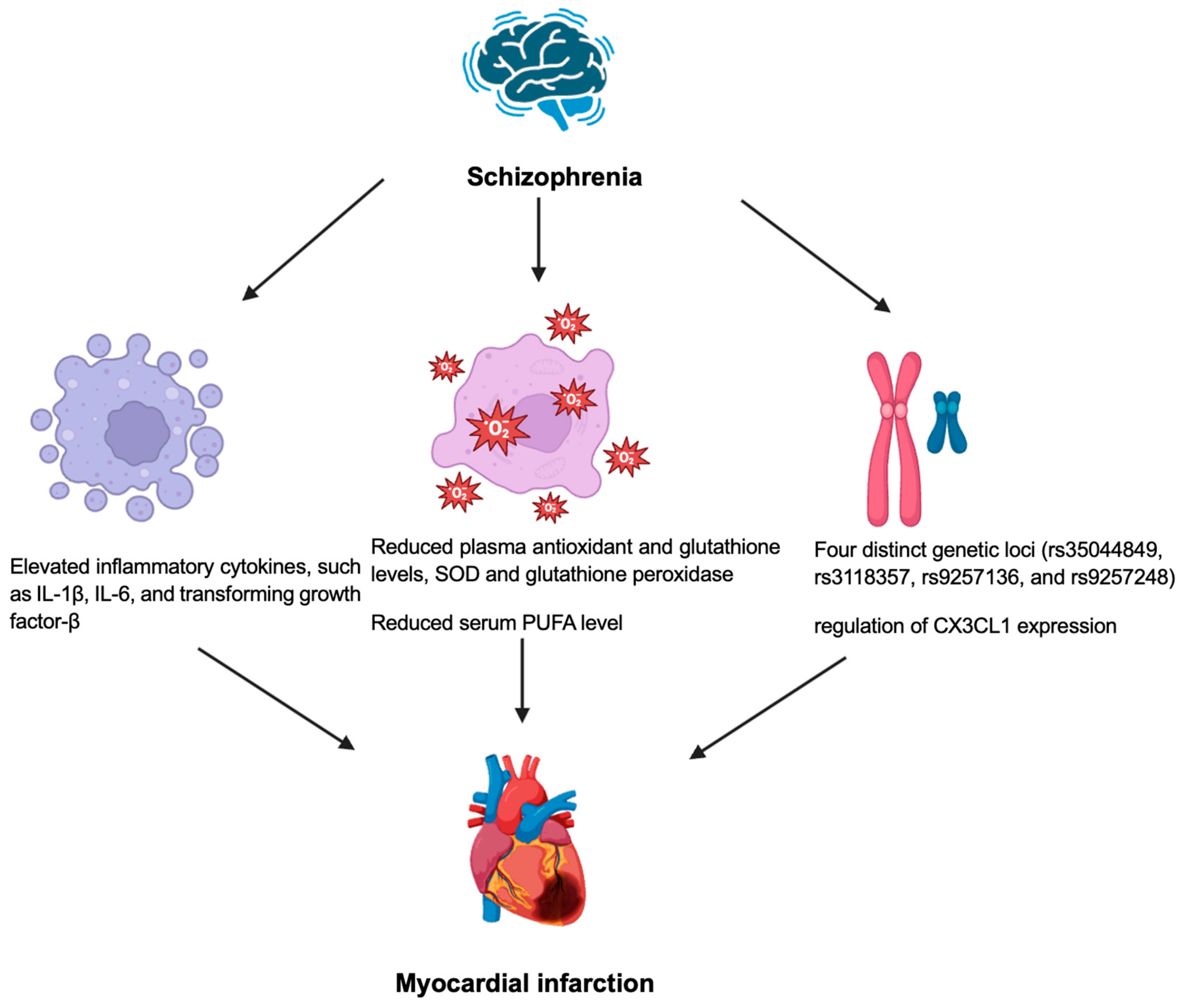
Inflammation and immune system dysfunction have been observed in individuals with schizophrenia [54]. Cytokines play an essential role in mediating the effects of inflammation in schizophrenia, potentially associating prenatal insults to the schizophrenia [54]. Prenatal infections and maternal immune system alterations have been identified as significant factors, increasing the likelihood of schizophrenia and related neurocognitive and neuroanatomical abnormalities in offspring [55]. Patients with psychosis may demonstrate a higher level of pro-inflammatory cytokines [56]. The activation of the inflammatory response system may lead to microglial activation, as evidenced by post-mortem studies showing an increase in microglial density in the brains of patients with schizophrenia [57]. This process is believed to disrupt neuronal circuit development and function in the brain [58]. Cytokines may also induce neuronal apoptosis, potentially contributing to the functional brain deficits associated with schizophrenia [58]. Elevated levels of cytokines, such as IL-1β, IL-6, and transforming growth factor-β, have been reported during acute relapses and the first episodes of schizophrenia but often normalize following antipsychotic treatment [59]. However other cytokines, including IL-12, IL-γ, TNF-α, and soluble IL-2 receptor, remain elevated during acute relapses, first episodes, and even with antipsychotic therapy [37]. Increased levels of cytokines including IL-1α, IL-6, IL-8, IL-12, IL-33 and IL-35 have a positive correlation with atherosclerosis and increased risk of developing myocardial infarction [60].
Oxidative stress, characterized by elevated reactive species and diminished antioxidant defences, is implicated in cellular damage and has been consistently observed in schizophrenia [61]. Research assessing oxidative stress in schizophrenia has utilising several peripheral biomarkers like reduced plasma antioxidant and glutathione levels and diminished antioxidant enzymes activities including superoxide dismutase (SOD) and glutathione peroxidase [61]. Studies indicate that patients with acute coronary syndrome exhibit significantly lower SOD levels compared to healthy controls, with NSTEMI patients showing even lower levels than STEMI patients, suggesting more severe oxidative stress [62]. The reduced SOD and catalase levels may result from increased utilization to neutralize free radicals generated during myocardial ischemia, reflecting a depletion of antioxidant defenses [62]. In addition, approximately one-third of schizophrenia patients exhibit pronounced redox dysregulation, with acute-phase polyunsaturated fatty acid (PUFA) deficits and detrimental responses to eicosapentanoate (EPA) or vitamin E and C, although these effects stabilize during remission, marked by persistent redox imbalance in low-PUFA subgroups [63,64]. A reduced serum PUFA level has been shown to an increased risk of cardiovascular events including myocardial infarction [65].
Genome-wide association studies demonstrated shared genetic variants associated with schizophrenia and cardiovascular diseases due to the similar pathophysiology of inflammation and metabolism [66]. Four distinct genetic loci (rs35044849, rs3118357, rs9257136, and rs9257248) have demonstrated significant colocalization between schizophrenia and cardiovascular disease, suggesting that these variants may influence both cardiovascular and neurological systems [67]. The shared genetic loci highlights a potential role for this locus in the heart-brain axis through the regulation of CX3CL1 expression which is a chemokine that implicated in immune responses and neuroinflammation, potentially linking cardiovascular disease and schizophrenia [67]. CX3CL1 is overexpressed in atherosclerotic plaques, contributing to their formation and progression by recruiting inflammatory cells like monocytes to vascular walls leading to an increased risks of myocardial infarction [68]. In addition, elevated CX3CL1 levels have been observed in heart failure patients, correlating with increased risk of cardiac dysfunction through mechanisms involving inflammation and tissue remodeling [69]. Furthermore, the association rs35044849 with various schizophrenia phenotypes and proHB-EGF reduces cardiac contractility, causes interstitial fibrosis and exacerbate cardiac remodeling after myocardial infarction leading to worsening cardiac function [67].
Figure 3. Pathophysiology of myocardial infarction and schizophrenia. IL: interleukin, PUFA: polyunsaturated fatty acid, SOD: superoxide dismutase.
Preprints 148715 g003

5. Conclusions

This review highlights the bidirectional relationship between MI and major psychiatric conditions. The shared pathophysiological mechanisms, such as inflammation, oxidative stress, neurohormonal dysregulation, and genetic factors, underlie this connection between MI and psychiatric illnesses. Advancements in understanding the pathophysiological mechanisms provide critical insights regarding the complexity of managing patients with comorbid MI and psychiatric disorders. Further research is essential to identify targeted interventions addressing these shared mechanisms to improve both mental and cardiovascular diseases. A holistic approach incorporating multidisciplinary care, early diagnosis, and innovative therapeutic strategies is essential for optimizing outcomes in this vulnerable population.

Conflicts of Interest

The authors declare no conflicts of interest.

Abbreviations

The following abbreviations are used in this manuscript:
ACTH Adrenocorticotropic hormone
AMPK AMP-activated protein kinase
ANS Autonomic nervous system
ATP Adenosine triphosphate
BNDF Brain-derived neurotrophic factor
CRH Corticotropin-releasing hormone
DAMP Damage-associated molecular patterns
EPA Eicosapentanoate
HMGB1 High-mobility group box 1
HPA Hypothalamic-pituitary-adrenal
HSP Heat shock proteins
IL Interleukin
LDL Low-density lipoprotein
MI Myocardial infarction
MTHFR Methylenetetrahydrofolate reductase
MPTP Mitochondrial permeability transition pore
MCU Mitochondrial calcium uniporter
NCX Na⁺/Ca²⁺ exchanger
NMDA N-methyl-D-aspartate
NSTEMI Non-ST elevation MI
PAI-1 Plasminogen activator inhibitor 1
PUFA Polyunsaturated fatty acid
ROS Reactive oxygen species
SOD Superoxide dismutase
STEMI ST elevation myocardial infarction
TNF Tumor necrosis factor
tPA tissue plasminogen activator

References

  1. Kumar, M.; Nayak, P.K. Psychological sequelae of myocardial infarction. Biomedicine & Pharmacotherapy 2017, 95, 487–496. [Google Scholar] [CrossRef]
  2. Grippo, A.J.; Johnson, A.K. Stress, depression and cardiovascular dysregulation: a review of neurobiological mechanisms and the integration of research from preclinical disease models. Stress 2009, 12, 1–21. [Google Scholar] [CrossRef] [PubMed]
  3. Ringen, P.A.; Engh, J.A.; Birkenaes, A.B.; Dieset, I.; Andreassen, O.A. Increased mortality in schizophrenia due to cardiovascular disease - a non-systematic review of epidemiology, possible causes, and interventions. Front Psychiatry 2014, 5, 137. [Google Scholar] [CrossRef]
  4. Laursen, T.M.; Wahlbeck, K.; Hällgren, J.; Westman, J.; Ösby, U.; Alinaghizadeh, H.; Gissler, M.; Nordentoft, M. Life expectancy and death by diseases of the circulatory system in patients with bipolar disorder or schizophrenia in the Nordic countries. PLoS One 2013, 8, e67133. [Google Scholar] [CrossRef]
  5. Lambert, A.M.; Parretti, H.M.; Pearce, E.; Price, M.J.; Riley, M.; Ryan, R.; Tyldesley-Marshall, N.; Avşar, T.S.; Matthewman, G.; Lee, A.; et al. Temporal trends in associations between severe mental illness and risk of cardiovascular disease: A systematic review and meta-analysis. PLoS Med 2022, 19, e1003960. [Google Scholar] [CrossRef]
  6. Goldfarb, M.; De Hert, M.; Detraux, J.; Di Palo, K.; Munir, H.; Music, S.; Piña, I.; Ringen Petter, A. Severe Mental Illness and Cardiovascular Disease. Journal of the American College of Cardiology 2022, 80, 918–933. [Google Scholar] [CrossRef]
  7. Kugathasan, P.; Johansen, M.B.; Jensen, M.B.; Aagaard, J.; Nielsen, R.E.; Jensen, S.E. Coronary Artery Calcification and Mortality Risk in Patients With Severe Mental Illness. Circ Cardiovasc Imaging 2019, 12, e008236. [Google Scholar] [CrossRef]
  8. De Hert, M.; Detraux, J.; Vancampfort, D. The intriguing relationship between coronary heart disease and mental disorders. Dialogues Clin Neurosci 2018, 20, 31–40. [Google Scholar] [CrossRef]
  9. Feng, H.P.; Chien, W.C.; Cheng, W.T.; Chung, C.H.; Cheng, S.M.; Tzeng, W.C. Risk of anxiety and depressive disorders in patients with myocardial infarction: A nationwide population-based cohort study. Medicine (Baltimore) 2016, 95, e4464. [Google Scholar] [CrossRef]
  10. Roest, A.M.; Heideveld, A.; Martens, E.J.; de Jonge, P.; Denollet, J. Symptom dimensions of anxiety following myocardial infarction: associations with depressive symptoms and prognosis. Health Psychol 2014, 33, 1468–1476. [Google Scholar] [CrossRef]
  11. Garrels, E.; Kainth, T.; Silva, B.; Yadav, G.; Gill, G.; Salehi, M.; Gunturu, S. Pathophysiological mechanisms of post-myocardial infarction depression: a narrative review. Front Psychiatry 2023, 14, 1225794. [Google Scholar] [CrossRef] [PubMed]
  12. Wilkowska, A.; Rynkiewicz, A.; Wdowczyk, J.; Landowski, J. Morning and afternoon serum cortisol level in patients with post-myocardial infarction depression. Cardiol J 2019, 26, 550–554. [Google Scholar] [CrossRef] [PubMed]
  13. Sjögren, E.; Leanderson, P.; Kristenson, M. Diurnal saliva cortisol levels and relations to psychosocial factors in a population sample of middle-aged Swedish men and women. Int J Behav Med 2006, 13, 193–200. [Google Scholar] [CrossRef]
  14. Frangogiannis, N.G. The inflammatory response in myocardial injury, repair, and remodelling. Nat Rev Cardiol 2014, 11, 255–265. [Google Scholar] [CrossRef]
  15. Libby, P.; Ridker, P.M.; Hansson, G.K. Progress and challenges in translating the biology of atherosclerosis. Nature 2011, 473, 317–325. [Google Scholar] [CrossRef]
  16. Konsman, J.P.; Luheshi, G.N.; Bluthé, R.M.; Dantzer, R. The vagus nerve mediates behavioural depression, but not fever, in response to peripheral immune signals; a functional anatomical analysis. Eur J Neurosci 2000, 12, 4434–4446. [Google Scholar] [CrossRef]
  17. Penninx, B.W.; Kritchevsky, S.B.; Yaffe, K.; Newman, A.B.; Simonsick, E.M.; Rubin, S.; Ferrucci, L.; Harris, T.; Pahor, M. Inflammatory markers and depressed mood in older persons: results from the Health, Aging and Body Composition study. Biol Psychiatry 2003, 54, 566–572. [Google Scholar] [CrossRef]
  18. Maes, M.; Bosmans, E.; De Jongh, R.; Kenis, G.; Vandoolaeghe, E.; Neels, H. Increased serum IL-6 and IL-1 receptor antagonist concentrations in major depression and treatment resistant depression. Cytokine 1997, 9, 853–858. [Google Scholar] [CrossRef]
  19. Raison, C.L.; Capuron, L.; Miller, A.H. Cytokines sing the blues: inflammation and the pathogenesis of depression. Trends Immunol 2006, 27, 24–31. [Google Scholar] [CrossRef]
  20. O'Connor, J.C.; Lawson, M.A.; André, C.; Moreau, M.; Lestage, J.; Castanon, N.; Kelley, K.W.; Dantzer, R. Lipopolysaccharide-induced depressive-like behavior is mediated by indoleamine 2,3-dioxygenase activation in mice. Mol Psychiatry 2009, 14, 511–522. [Google Scholar] [CrossRef]
  21. Dantzer, R.; O'Connor, J.C.; Lawson, M.A.; Kelley, K.W. Inflammation-associated depression: from serotonin to kynurenine. Psychoneuroendocrinology 2011, 36, 426–436. [Google Scholar] [CrossRef] [PubMed]
  22. Tsai, S.J. Role of tissue-type plasminogen activator and plasminogen activator inhibitor-1 in psychological stress and depression. Oncotarget 2017, 8, 113258–113268. [Google Scholar] [CrossRef] [PubMed]
  23. Tsai, S.J.; Hong, C.J.; Liou, Y.J.; Yu, Y.W.; Chen, T.J. Plasminogen activator inhibitor-1 gene is associated with major depression and antidepressant treatment response. Pharmacogenet Genomics 2008, 18, 869–875. [Google Scholar] [CrossRef] [PubMed]
  24. Geiser, F.; Conrad, R.; Imbierowicz, K.; Meier, C.; Liedtke, R.; Klingmüller, D.; Oldenburg, J.; Harbrecht, U. Coagulation activation and fibrinolysis impairment are reduced in patients with anxiety and depression when medicated with serotonergic antidepressants. Psychiatry Clin Neurosci 2011, 65, 518–525. [Google Scholar] [CrossRef]
  25. Jiang, H.; Chen, S.; Li, C.; Lu, N.; Yue, Y.; Yin, Y.; Zhang, Y.; Zhi, X.; Zhang, D.; Yuan, Y. The serum protein levels of the tPA-BDNF pathway are implicated in depression and antidepressant treatment. Transl Psychiatry 2017, 7, e1079. [Google Scholar] [CrossRef]
  26. Karege, F.; Perret, G.; Bondolfi, G.; Schwald, M.; Bertschy, G.; Aubry, J.M. Decreased serum brain-derived neurotrophic factor levels in major depressed patients. Psychiatry Res 2002, 109, 143–148. [Google Scholar] [CrossRef]
  27. Hashimoto, K. Brain-derived neurotrophic factor as a biomarker for mood disorders: an historical overview and future directions. Psychiatry Clin Neurosci 2010, 64, 341–357. [Google Scholar] [CrossRef]
  28. Krishnan, V.; Nestler, E.J. The molecular neurobiology of depression. Nature 2008, 455, 894–902. [Google Scholar] [CrossRef]
  29. Hofer, M.; Pagliusi, S.R.; Hohn, A.; Leibrock, J.; Barde, Y.A. Regional distribution of brain-derived neurotrophic factor mRNA in the adult mouse brain. Embo j 1990, 9, 2459–2464. [Google Scholar] [CrossRef]
  30. Otte, C.; McCaffery, J.; Ali, S.; Whooley, M.A. Association of a serotonin transporter polymorphism (5-HTTLPR) with depression, perceived stress, and norepinephrine in patients with coronary disease: the Heart and Soul Study. Am J Psychiatry 2007, 164, 1379–1384. [Google Scholar] [CrossRef]
  31. Schins, A.; Honig, A.; Crijns, H.; Baur, L.; Hamulyák, K. Increased coronary events in depressed cardiovascular patients: 5-HT2A receptor as missing link? Psychosom Med 2003, 65, 729–737. [Google Scholar] [CrossRef] [PubMed]
  32. Nakatani, D.; Sato, H.; Sakata, Y.; Shiotani, I.; Kinjo, K.; Mizuno, H.; Shimizu, M.; Ito, H.; Koretsune, Y.; Hirayama, A.; et al. Influence of serotonin transporter gene polymorphism on depressive symptoms and new cardiac events after acute myocardial infarction. Am Heart J 2005, 150, 652–658. [Google Scholar] [CrossRef] [PubMed]
  33. Bujak, M.; Frangogiannis, N.G. The role of IL-1 in the pathogenesis of heart disease. Arch Immunol Ther Exp (Warsz) 2009, 57, 165–176. [Google Scholar] [CrossRef]
  34. Shah, D.; Singh, B.; Varnika, F.; Fredrick, F.C.; Meda, A.K.R.; Aggarwal, K.; Jain, R. Linking hearts and minds: understanding the cardiovascular impact of bipolar disorder. Future Cardiol 2024, 20, 709–718. [Google Scholar] [CrossRef]
  35. La Rovere, M.T.; Porta, A.; Schwartz, P.J. Autonomic Control of the Heart and Its Clinical Impact. A Personal Perspective. Front Physiol 2020, 11, 582. [Google Scholar] [CrossRef]
  36. van Weperen, V.Y.H.; Ripplinger, C.M.; Vaseghi, M. Autonomic control of ventricular function in health and disease: current state of the art. Clin Auton Res 2023, 33, 491–517. [Google Scholar] [CrossRef]
  37. Goldstein, B.I.; Carnethon, M.R.; Matthews, K.A.; McIntyre, R.S.; Miller, G.E.; Raghuveer, G.; Stoney, C.M.; Wasiak, H.; McCrindle, B.W. Major Depressive Disorder and Bipolar Disorder Predispose Youth to Accelerated Atherosclerosis and Early Cardiovascular Disease: A Scientific Statement From the American Heart Association. Circulation 2015, 132, 965–986. [Google Scholar] [CrossRef]
  38. Henry, B.L.; Minassian, A.; Paulus, M.P.; Geyer, M.A.; Perry, W. Heart rate variability in bipolar mania and schizophrenia. J Psychiatr Res 2010, 44, 168–176. [Google Scholar] [CrossRef]
  39. Hillebrand, S.; Gast, K.B.; de Mutsert, R.; Swenne, C.A.; Jukema, J.W.; Middeldorp, S.; Rosendaal, F.R.; Dekkers, O.M. Heart rate variability and first cardiovascular event in populations without known cardiovascular disease: meta-analysis and dose–response meta-regression. EP Europace 2013, 15, 742–749. [Google Scholar] [CrossRef]
  40. Fatkhullina, A.R.; Peshkova, I.O.; Koltsova, E.K. The Role of Cytokines in the Development of Atherosclerosis. Biochemistry (Mosc) 2016, 81, 1358–1370. [Google Scholar] [CrossRef]
  41. Steckert, A.V.; Valvassori, S.S.; Moretti, M.; Dal-Pizzol, F.; Quevedo, J. Role of oxidative stress in the pathophysiology of bipolar disorder. Neurochem Res 2010, 35, 1295–1301. [Google Scholar] [CrossRef]
  42. Goldstein, B.I. Bipolar Disorder and the Vascular System: Mechanisms and New Prevention Opportunities. Can J Cardiol 2017, 33, 1565–1576. [Google Scholar] [CrossRef] [PubMed]
  43. Juan, C.A.; Pérez de la Lastra, J.M.; Plou, F.J.; Pérez-Lebeña, E. The Chemistry of Reactive Oxygen Species (ROS) Revisited: Outlining Their Role in Biological Macromolecules (DNA, Lipids and Proteins) and Induced Pathologies. Int J Mol Sci 2021, 22. [Google Scholar] [CrossRef] [PubMed]
  44. Checa, J.; Aran, J.M. Reactive Oxygen Species: Drivers of Physiological and Pathological Processes. J Inflamm Res 2020, 13, 1057–1073. [Google Scholar] [CrossRef] [PubMed]
  45. Wu, X.; Li, J.; Cheng, H.; Wang, L. Ferroptosis and Lipid Metabolism in Acute Myocardial Infarction. Rev Cardiovasc Med 2024, 25, 149. [Google Scholar] [CrossRef] [PubMed]
  46. Morris, G.; Walder, K.; McGee, S.L.; Dean, O.M.; Tye, S.J.; Maes, M.; Berk, M. A model of the mitochondrial basis of bipolar disorder. Neurosci Biobehav Rev 2017, 74, 1–20. [Google Scholar] [CrossRef]
  47. Cantó, C.; Menzies, K.J.; Auwerx, J. NAD(+) Metabolism and the Control of Energy Homeostasis: A Balancing Act between Mitochondria and the Nucleus. Cell Metab 2015, 22, 31–53. [Google Scholar] [CrossRef]
  48. Hernandez-Resendiz, S.; Prunier, F.; Girao, H.; Dorn, G.; Hausenloy, D.J. Targeting mitochondrial fusion and fission proteins for cardioprotection. J Cell Mol Med 2020, 24, 6571–6585. [Google Scholar] [CrossRef]
  49. De Stefani, D.; Raffaello, A.; Teardo, E.; Szabò, I.; Rizzuto, R. A forty-kilodalton protein of the inner membrane is the mitochondrial calcium uniporter. Nature 2011, 476, 336–340. [Google Scholar] [CrossRef]
  50. Salagre, E.; Vizuete, A.F.; Leite, M.; Brownstein, D.J.; McGuinness, A.; Jacka, F.; Dodd, S.; Stubbs, B.; Köhler, C.A.; Vieta, E.; et al. Homocysteine as a peripheral biomarker in bipolar disorder: A meta-analysis. Eur Psychiatry 2017, 43, 81–91. [Google Scholar] [CrossRef]
  51. Ganguly, P.; Alam, S.F. Role of homocysteine in the development of cardiovascular disease. Nutr J 2015, 14, 6. [Google Scholar] [CrossRef] [PubMed]
  52. Yuan, S.; Mason, A.M.; Carter, P.; Burgess, S.; Larsson, S.C. Homocysteine, B vitamins, and cardiovascular disease: a Mendelian randomization study. BMC Med 2021, 19, 97. [Google Scholar] [CrossRef] [PubMed]
  53. Namazi, M.R.; Feily, A. Homocysteine may accelerate skin aging: a new chapter in the biology of skin senescence? J Am Acad Dermatol 2011, 64, 1175–1178. [Google Scholar] [CrossRef]
  54. Henderson, D.C.; Vincenzi, B.; Andrea, N.V.; Ulloa, M.; Copeland, P.M. Pathophysiological mechanisms of increased cardiometabolic risk in people with schizophrenia and other severe mental illnesses. Lancet Psychiatry 2015, 2, 452–464. [Google Scholar] [CrossRef]
  55. Cheslack-Postava, K.; Brown, A.S. Prenatal infection and schizophrenia: A decade of further progress. Schizophrenia Research 2022, 247, 7–15. [Google Scholar] [CrossRef]
  56. Fond, G.; Lançon, C.; Korchia, T.; Auquier, P.; Boyer, L. The Role of Inflammation in the Treatment of Schizophrenia. Front Psychiatry 2020, 11, 160. [Google Scholar] [CrossRef]
  57. van Kesteren, C.F.; Gremmels, H.; de Witte, L.D.; Hol, E.M.; Van Gool, A.R.; Falkai, P.G.; Kahn, R.S.; Sommer, I.E. Immune involvement in the pathogenesis of schizophrenia: a meta-analysis on postmortem brain studies. Transl Psychiatry 2017, 7, e1075. [Google Scholar] [CrossRef]
  58. Monji, A.; Kato, T.; Kanba, S. Cytokines and schizophrenia: Microglia hypothesis of schizophrenia. Psychiatry and Clinical Neurosciences 2009, 63, 257–265. [Google Scholar] [CrossRef]
  59. Miller, B.J.; Buckley, P.; Seabolt, W.; Mellor, A.; Kirkpatrick, B. Meta-analysis of cytokine alterations in schizophrenia: clinical status and antipsychotic effects. Biol Psychiatry 2011, 70, 663–671. [Google Scholar] [CrossRef]
  60. Haybar, H.; Bandar, B.; Torfi, E.; Mohebbi, A.; Saki, N. Cytokines and their role in cardiovascular diseases. Cytokine 2023, 169, 156261. [Google Scholar] [CrossRef]
  61. Murray, A.J.; Rogers, J.C.; Katshu, M.; Liddle, P.F.; Upthegrove, R. Oxidative Stress and the Pathophysiology and Symptom Profile of Schizophrenia Spectrum Disorders. Front Psychiatry 2021, 12, 703452. [Google Scholar] [CrossRef] [PubMed]
  62. Aladağ, N.; Asoğlu, R.; Ozdemir, M.; Asoğlu, E.; Derin, A.R.; Demir, C.; Demir, H. Oxidants and antioxidants in myocardial infarction (MI): Investigation of ischemia modified albumin, malondialdehyde, superoxide dismutase and catalase in individuals diagnosed with ST elevated myocardial infarction (STEMI) and non-STEMI (NSTEMI). J Med Biochem 2021, 40, 286–294. [Google Scholar] [CrossRef] [PubMed]
  63. Solberg, D.K.; Refsum, H.; Andreassen, O.A.; Bentsen, H. A five-year follow-up study of antioxidants, oxidative stress and polyunsaturated fatty acids in schizophrenia. Acta Neuropsychiatr 2019, 31, 202–212. [Google Scholar] [CrossRef] [PubMed]
  64. Bentsen, H.; Landrø, N.I. Neurocognitive effects of an omega-3 fatty acid and vitamins E+C in schizophrenia: A randomised controlled trial. Prostaglandins Leukot Essent Fatty Acids 2018, 136, 57–66. [Google Scholar] [CrossRef]
  65. Yagi, S.; Fukuda, D.; Aihara, K.I.; Akaike, M.; Shimabukuro, M.; Sata, M. n-3 Polyunsaturated Fatty Acids: Promising Nutrients for Preventing Cardiovascular Disease. J Atheroscler Thromb 2017, 24, 999–1010. [Google Scholar] [CrossRef]
  66. Lam, M.; Chen, C.Y.; Li, Z.; Martin, A.R.; Bryois, J.; Ma, X.; Gaspar, H.; Ikeda, M.; Benyamin, B.; Brown, B.C.; et al. Comparative genetic architectures of schizophrenia in East Asian and European populations. Nat Genet 2019, 51, 1670–1678. [Google Scholar] [CrossRef]
  67. Shen, J.; Jiang, C. Unraveling the heart-brain axis: shared genetic mechanisms in cardiovascular diseases and Schizophrenia. Schizophrenia 2024, 10, 113. [Google Scholar] [CrossRef]
  68. Apostolakis, S.; Spandidos, D. Chemokines and atherosclerosis: focus on the CX3CL1/CX3CR1 pathway. Acta Pharmacol Sin 2013, 34, 1251–1256. [Google Scholar] [CrossRef]
  69. Liu, W.; Jiang, L.; Bian, C.; Liang, Y.; Xing, R.; Yishakea, M.; Dong, J. Role of CX3CL1 in Diseases. Arch Immunol Ther Exp (Warsz) 2016, 64, 371–383. [Google Scholar] [CrossRef]
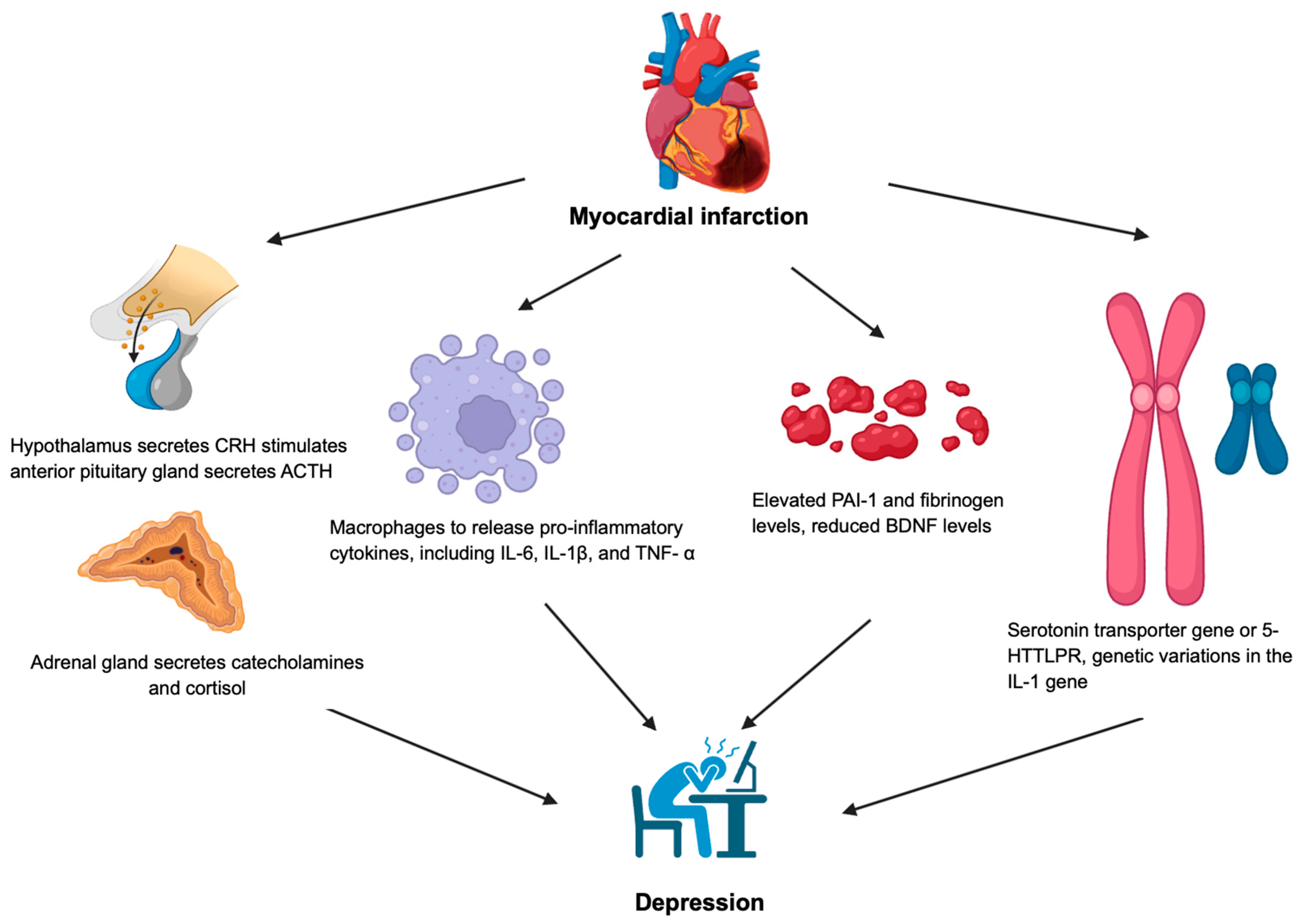
Figure 1. Pathophysiology of myocardial infarction and depression. ACTH: adrenocorticotropic hormone, BDNF: brain-derived neurotrophic factor, CRH: corticotropin-releasing hormone, IL: interleukin; PAI-1: Plasminogen activator inhibitor 1, TNF- α: tumor necrosis factor- α; 5-HTTLPR: serotonin transporter gene variant.
Preprints 148715 g001
Figure 2. Pathophysiology of myocardial infarction and bipolar disorder. ACTH: adrenocorticotropic hormone, CRH: corticotropin-releasing hormone, LDL: low-density lipoprotein, MI: myocardial infarction, MTHFR: methylenetetrahydrofolate reductase, NMDA: N-methyl-D-aspartate, ROS: reactive oxygen species,.
Preprints 148715 g002
Disclaimer/Publisher’s Note: The statements, opinions and data contained in all publications are solely those of the individual author(s) and contributor(s) and not of MDPI and/or the editor(s). MDPI and/or the editor(s) disclaim responsibility for any injury to people or property resulting from any ideas, methods, instructions or products referred to in the content.
Copyright: This open access article is published under a Creative Commons CC BY 4.0 license, which permit the free download, distribution, and reuse, provided that the author and preprint are cited in any reuse.
Prerpints.org logo

Preprints.org is a free preprint server supported by MDPI in Basel, Switzerland.

Subscribe

Disclaimer

Terms of Use

Privacy Policy

Privacy Settings

© 2025 MDPI (Basel, Switzerland) unless otherwise stated