

Submitted:
21 February 2025
Posted:
24 February 2025
You are already at the latest version
Abstract
Groundwater is a vital resource for ecosystems, with its recharge process influenced by climate change and urbanization. The transformation of natural and urban landscapes and over-extraction of groundwater contribute to its depletion and degradation. Groundwater Recharge and management are intricately linked to land use and landscape. Despite this close connection, spatially integrating groundwater recharge strategies in the landscape context remains underexplored. This systematic review synthesizes state-of-the-art research at the intersection of spatial planning, landscape, and groundwater recharge. We employed a combination of bibliometric visualization and thematic analysis and reviewed 126 studies published between 1990 and April 2024 from the Scopus and Web of Science databases. Based on their objectives and outcomes, we found four prominent themes in these clusters: groundwater recharge potential studies, groundwater vulnerability studies, design-based studies, and participatory studies. When organized iteratively, these clusters can become potential building blocks of a framework for a landscape-based groundwater recharge approach. With interdisciplinary collaboration, spatial visualization and mapping, co-creative design, and feedback mechanism at its core, this approach can enhance stakeholder communication and translate highly specialized technical knowledge into adaptive, actionable insights. This study also highlights that including spatial design can help develop landscape-based groundwater recharge for long-term sustainable regional development.
Keywords:
Groundwater recharge
; Landscape-based groundwater recharge
; spatial planning and groundwater recharge
; land use and groundwater recharge
; Interdisciplinary collaboration
1. Introduction
Groundwater is a vital source of freshwater, particularly in water-scarce regions [1]. Besides serving as a drinking water source to over two billion people around the globe, it also supports the agriculture industry and overall socioeconomic growth [2]. However, uncontrolled urbanization and overexploitation of groundwater resources threaten groundwater resources' sustainability [3,4]. For example, in regions like North Africa and South Asia, over-extraction of groundwater for irrigation and rapidly growing urbanization have led to aquifer depletion and reduced recharge zones [5].
These challenges are further exacerbated by altered rainfall patterns, prolonged droughts, and accelerated evapotranspiration rates due to climate change [6,7]. In addition, pollutants from untreated wastewater and agriculture runoff continue to degrade groundwater quality [8]. These multiple threats to groundwater underscore the urgent need for sustainable groundwater management strategies to address recharge and quality issues [9,10].
Groundwater recharge (GWR) is the process of replenishing underground aquifers. It is essential for maintaining groundwater levels and ensuring long-term water security. It occurs naturally (through precipitation and infiltration) or through managed interventions (Manged Aquifer recharge) [11]. Various surface and subsurface landscape conditions influence GWR, including land use, vegetation, geology, and soil type. Besides its hydrological importance, GWR provides essential ecosystem services, such as reducing saltwater intrusion, enhancing biodiversity, and improving soil fertility [10].
This nexus between GWR and spatial, social, and ecological processes aligns with using landscape as a base for design and planning, emphasizing the interconnectedness of natural and human systems [12]. Besides physical landscape characteristics, this approach values social, economic, and political drivers of land use decisions to offer a holistic framework for addressing complex environmental challenges [13]. This approach is particularly relevant in groundwater management, where recharge processes depend on ecological and anthropogenic factors.
Spatial planning umbrellas GWR into sustainable urban and regional development. Practices such as water-sensitive urban design (WSUD), integrated water resources management (IWRM), and sponge cities demonstrate the potential of planning strategies to enhance GWR measures through permeable pavements, green roofs, and rainwater harvesting. However, despite these advances, spatial planning rarely prioritizes GWR in a landscape context. The critical barriers are insufficient collaboration between stakeholders like hydrologists, urban planners, landscape designers, and governments, and limited subsurface hydrological data. Addressing these gaps holds significant implications, particularly for water-scarce regions, where ineffective recharge is the leading cause of water stress and compromised ecosystem resilience.
This review synthesizes state-of-the-art literature at the intersection of spatial planning, landscape, and groundwater recharge. We used bibliometric visualization and thematic analysis of 126 studies published between 1990 and April 2024, identifying four key themes: groundwater recharge potential, vulnerability, design-based approaches, and participatory studies. By highlighting gaps in the spatial application of GWR, this review proposes an operational framework for landscape-based GWR. That bridges the gap between hydrology and spatial landscape design to support adaptive, socially inclusive, and ecologically sustainable groundwater management practices.
2. Materials and Methods
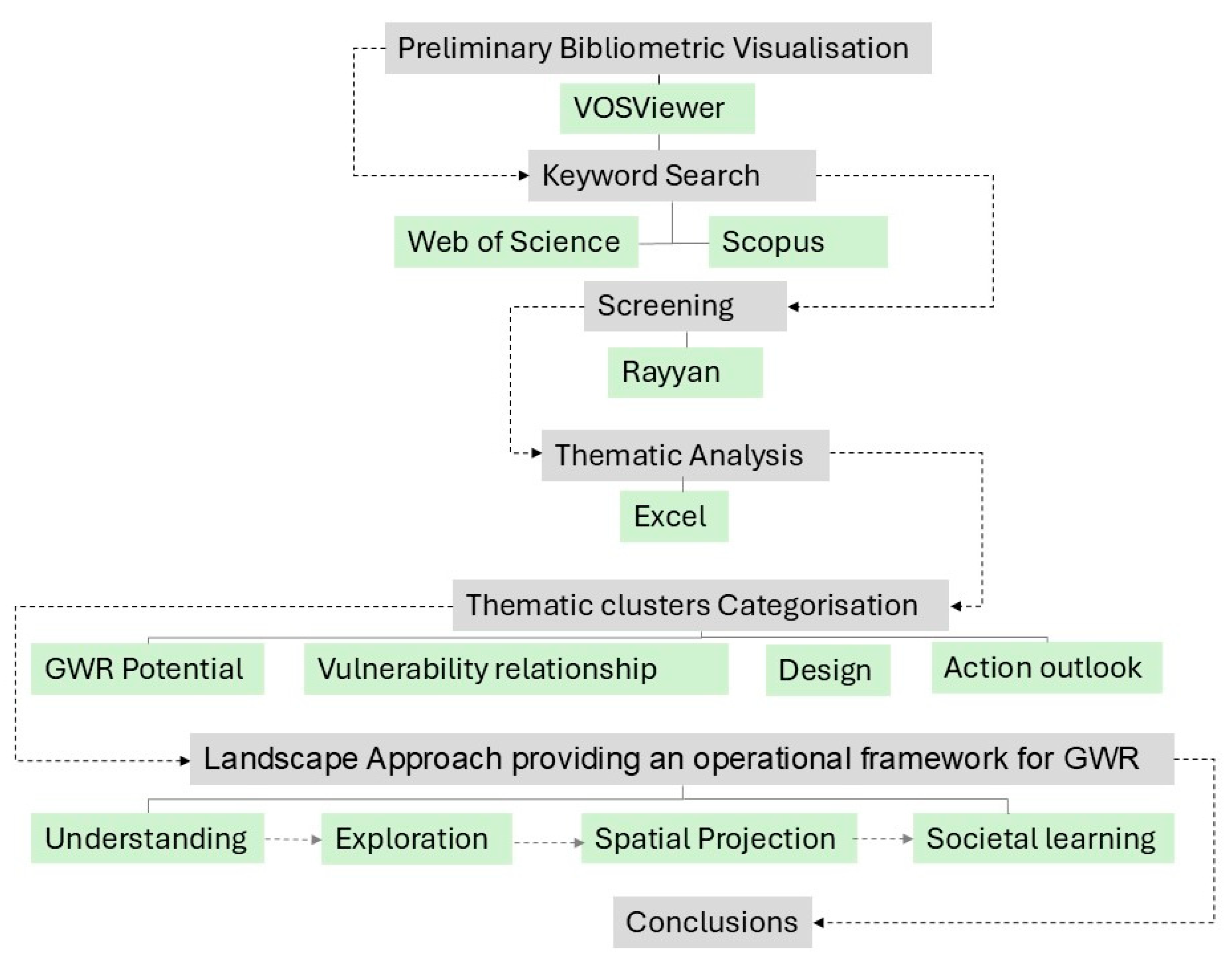
Firstly, we conducted an exploratory bibliometric visualization analysis using VOS Viewer as a preliminary tool to examine trends and identify gaps in the existing literature on "groundwater recharge" [14]. Next, we defined three primary keywords: “groundwater recharge,” “landscape,” and “spatial planning.” We included two multidisciplinary databases, Web of Science (WOS) and Scopus, to obtain robust datasets and a wide range of records. These databases were chosen for their extensive coverage of scientific literature. Then, we selected the related keywords to reflect the key research themes and were expanded with associated terms to ensure comprehensive coverage of relevant literature.
The three groups of keywords were combined using the “AND” operation to retrieve articles relevant to the specific research. We performed searches on titles, abstracts, and keywords for both databases. The search was limited to studies published between 1990 and 2024, with English as the language option. Following the PRISMA guidelines [15], 257 results were obtained from Scopus and 116 from Web of Science on May 6, 2024.

Table 1.
List of keywords used in Scopus and WOS database.
| KW-1 | KW-2 | KW-3 |
|---|---|---|
| (Groundwater recharge | Landscape | Spatial planning |
| Related Keywords | ||
| "Groundwater" OR "Groundwater recharge" OR "Aquifer recharge" OR "Groundwater Potential" OR "Managed Aquifer recharge" OR "Groundwater management" | "Landscape" OR "Landscape-scale planning" OR " Green space" OR "Landscape design" OR "Vegetation" OR "Landscape approach" OR "Nature-based solutions" | "Spatial planning" OR "Land-use planning" OR "Urban Design" OR "urban planning" OR "Regional planning" OR "Regional development" OR "Multiscale planning" |
To facilitate initial screening and the removal of duplicates, we used Rayyan [16], an advanced web-based tool designed to assist in systematic review management, particularly in the screening and inclusion/exclusion process. After removing 96 duplicates, we further screened the remaining 277 records based on inclusion and exclusion criteria and their accessibility. The inclusion criteria were (1) empirical research studies and (2) studies relevant to spatial planning or landscape. The exclusion criteria were: (1) studies not focused on groundwater (GW) and groundwater recharge (GWR) as the research theme (52 studies), (2) studies that did not integrate spatial planning (4 studies), and (3) studies with irrelevant methodological approaches (17 studies). Additionally, 60 studies were excluded because they were not accessible or had broken links, and 18 records were removed as they were previous literature reviews.
We also employed inductive thematic analysis to identify different themes within the literature. This thematic analysis followed the approach Braun & Clarke outlined [17]. After the first round of screening, we thematically clustered 126 remaining records based on their objectives, relevance to spatial planning and landscape, methodologies, and findings using Excel. Subsequently, the findings from the literature were synthesized and applied to develop a framework for landscape-based groundwater recharge [18], and conclusions were drawn based on the analysis. After all the authors discussed the selected groups of keywords and inclusion and exclusion criteria, the first author screened the studies and performed categorization and organization in Excel and Rayyan. This process and results were discussed and validated weekly by the other two others to resolve any conflicts and bias and to assess certainty. This also helped in the thematic categorisation of different records and forming an outlook towards landscape-based groundwater recharge in terms of existing literature.
Figure 1.
Flow Diagram of the Study.
3. Results
3.1. Visualisation Analysis
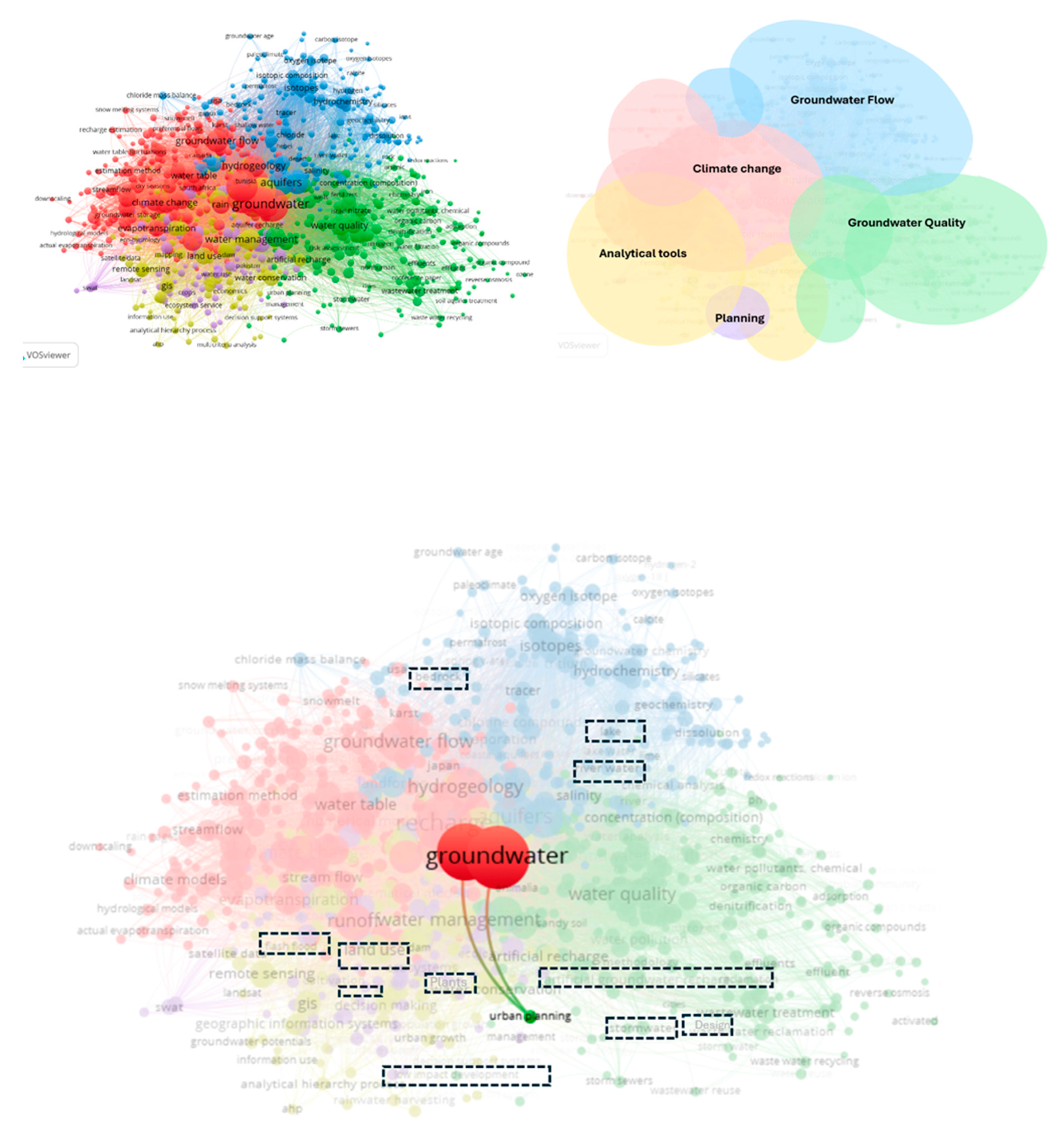
The bibliometric visualization results showed key groundwater recharge (GWR) research trends. This highlighted a focus on its quality, flow, climate change impacts, and analytical techniques. Notably, we found that urban planning is a minor area of interest and is disconnected from related themes such as design, development, land use, and landscape features. This gap will be further explored in Section 3.2.
A comparative analysis of annual publication trends in the Web of Science (WOS) and Scopus databases from 1990 to 2024 indicates a general increase in publications, although with noticeable fluctuations. There were no publications in WOS from 1990 to 1995, while Scopus saw a decline in publications between 2008 and 2015, with a notable increase in 2018. Since data was retrieved in early May 2024, the number of publications for that year is still lower than expected, but this number is likely to rise by the end of the year (Figure 2).
The spatial distribution of studies is fragmented, with United States contributing to most publications (14), followed by China (13) (Figure 3). Discipline-wise, most studies in both databases fall under environmental sciences (46% in WOS and 38.8% in Scopus), followed by Earth and planetary sciences in Scopus and Water resources in WOS. Interestingly, there is no significant association between urban planning and landscape design disciplines. However, the research demonstrates strong connections with ecology, geography, computer science, mathematics, and civil engineering, highlighting the multidisciplinary nature of groundwater recharge studies.
Figure 3.
Annual distribution of studies related to Landscape-based GWR.
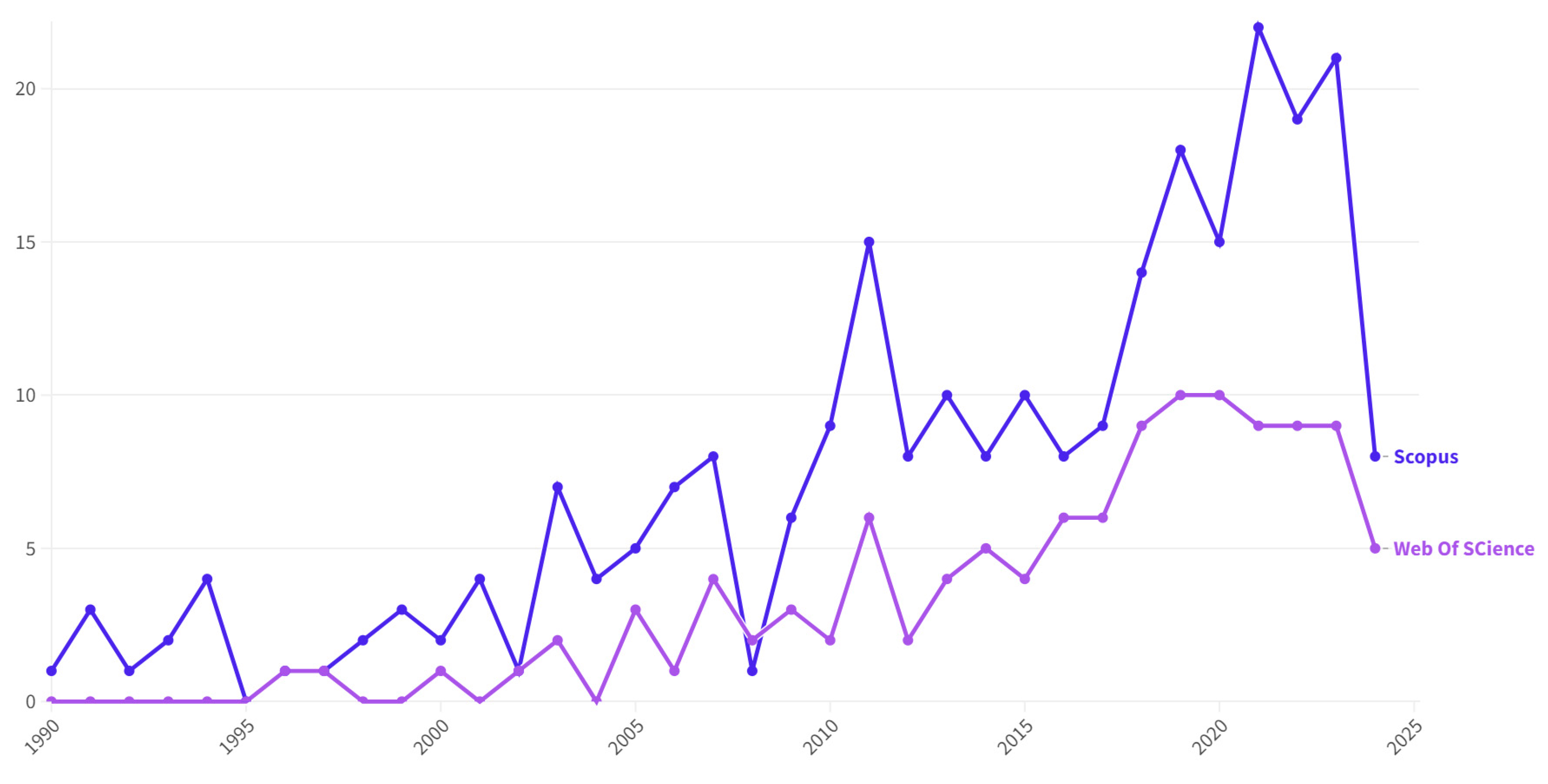
Figure 4.
Global distribution of Records of landscape-based GWR.
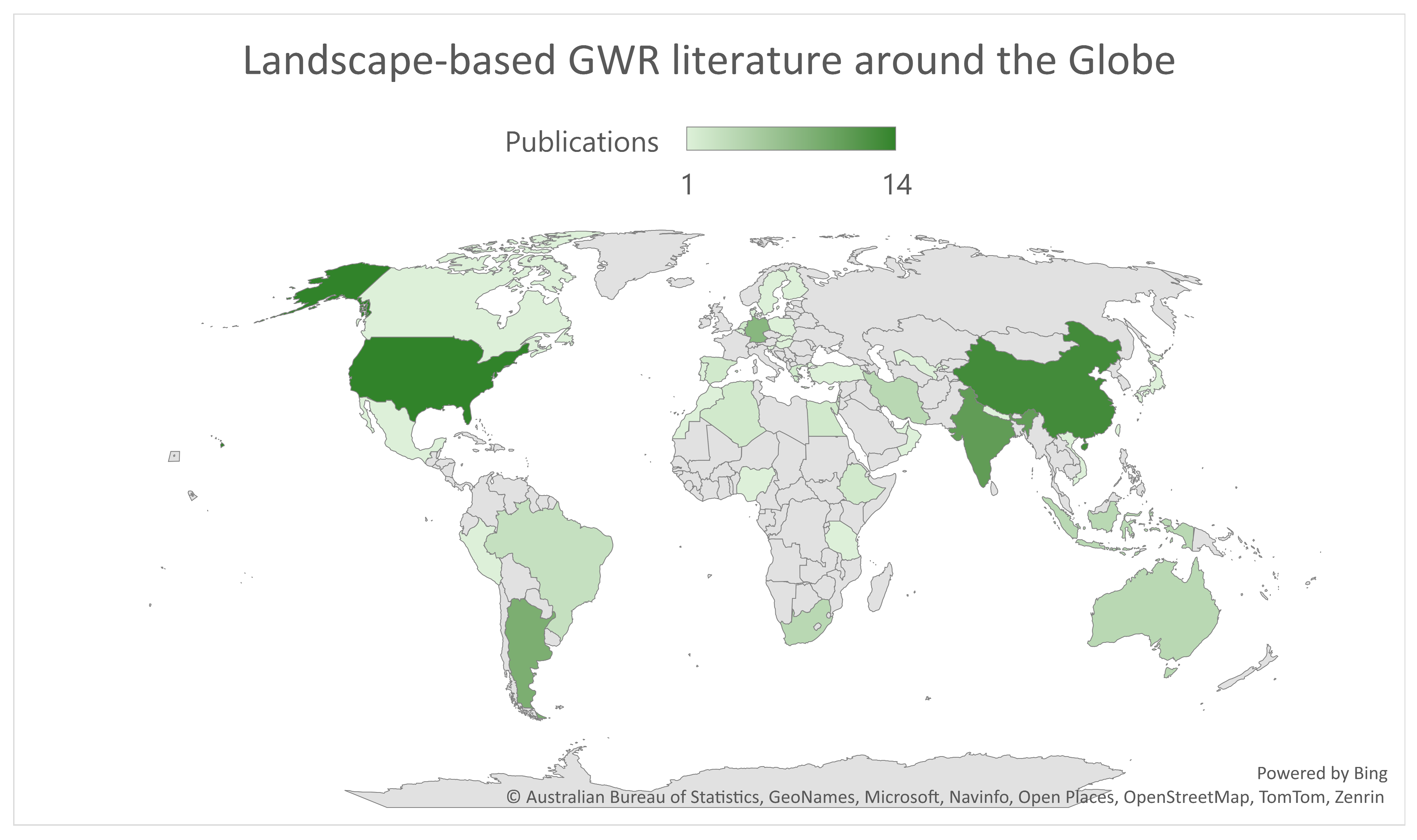
Figure 5.
a): Broad visualisation result of GWR literature from VOS Viewer. (b)Major clusters of GWR research (preliminary research) (c) Urban planning existing as a small cluster and as an isolated entity from design, landscape, land-use, water features in GWR research.
Figure 5.
a): Broad visualisation result of GWR literature from VOS Viewer. (b)Major clusters of GWR research (preliminary research) (c) Urban planning existing as a small cluster and as an isolated entity from design, landscape, land-use, water features in GWR research.
3.2. Thematic Categorisation in Groundwater Recharge Literature from a Spatial Planning and Landscape Perspective
We systematically categorized the studies based on their objectives, relevance to spatial planning and landscape, methodologies, and findings. In total, six thematic clusters were identified, which were subsequently merged into four main areas. These clusters represent the major themes emerging from the literature on groundwater recharge (GWR) about spatial planning and landscape:
- Groundwater Recharge Potential Mapping: Studies focusing on identifying and mapping areas with high groundwater recharge potential.
- Vulnerable relationship between climate change, urban landscape, and groundwater hydrology: Research underscoring the vulnerable relationship between climate change and urban landscapes, and factors affecting groundwater recharge and hydrological processes.
- Spatial Design in Groundwater Recharge: Studies exploring spatial design interventions such as green infrastructure, water-sensitive urban design (WSUD), and landscape planning to enhance groundwater recharge.
- Participatory outlook: Research focused on participatory approaches in groundwater management, emphasizing community and stakeholder engagement and collaborative decision-making processes.
These four thematic clusters highlight key areas of research that intersect with spatial planning and landscape, offering spatial insights into sustainable groundwater recharge and ecosystem management strategies. It is also clear from Table 3 that vulnerability studies, particularly those focusing on the intersection of climate change and groundwater, dominate the literature, with a high concentration of studies addressing the role of groundwater in ecosystem services.
Table 2.
Studies distributed in different themes.
| Clusters | Numbers (From the appendix) | Total number | ||
|---|---|---|---|---|
| GWR Potential mapping | 68,74, 78,91,98,117 | 6 | ||
| Vulnerable relationship between climate change, urban landscape, and groundwater hydrology | Landscape and climate conditions as Indicators of Groundwater Vulnerability | 7,8,10,11,12,14,15,16,18,20,21,25, 30,36,37,38,39,42,44,49,50,54,56,71, 72,88,89,90,92,93,99,101,102,104,107, 109,110,111,112,118,119,120 |
42 | 84 |
| Groundwater as a Marker of Landscape Fragility | 4,6,17,23,28,29,33,35,40,52,57,59,60,69, 73,75,77,80,82,83,84,87,94,95,97,100,114, 115,124,125 |
30 | ||
| Groundwater in ecosystem service evaluation | 34,43,47,53,55,61,63,64,65,85,106,126 | 12 | ||
| Spatial Design in Groundwater Recharge | Spatial Design to improve GWR | 5,27,46,67,70,76,108,127 | 8 | 23 |
| GW in integrated urban water management approach | 2,3,9,19,26,31,32,58,79,86,96, 103,113,116,121 |
15 | ||
| Participatory outlook | 13,22,24,41,45,48,51,62,66,81,105,122,123 | 13 | ||
3.2.1. GWR Potential Mapping
Groundwater Recharge Potential mapping studies render the relationship between spatial and hydrological layers (both surface and sub-surface) to estimate the influence of different landscape factors on groundwater hydrology. These studies identified optimal GWR locations on different scales using GIS-based analysis, machine learning, and statistical models. We found six studies in this cluster, with five from arid and semi-arid regions, where groundwater recharge is crucial for water security and resilience.
The research outcomes include comprehensive maps of landscape composition (geomorphology, geological conditions, soil conditions), land-use practices (Urban, infrastructure, agriculture), socio-cultural influences (administrative and cultural landscapes), hydrology-related ecosystems (surface water bodies, existing aquifers), and suitability mapping to find the optimum landscape conditions for GWR. Integrating remote sensing data has made these analyses cost-effective and more accessible.
Various decision-making frameworks enhance the reliability of these studies. For example, the Analytical Hierarchy Process (AHP) systematically assigns weights to different landscape factors impacting groundwater recharge [19,20,21]. However, the Analytical Network Process (ANP) accounts for interdependencies and feedback loops among input factors, addressing potential subjectivity in AHP-based models [22]. Advanced machine learning algorithms and hybrid approaches further improve the accuracy of GWR potential mapping[23,24].
Validation techniques such as groundwater level data analysis, sensitivity testing, and incorporating human perceptions strengthen the reliability and applicability of these studies [19,21,23,24]. These methods provide a holistic framework for understanding and planning GWR potential, particularly in regions with critical groundwater reliance.
Table 3.
An overview of studies presented in the cluster of GWR Potential mapping.
| No. | Author | Country | Scale | Input Parameters | Highest influencing Parameter | Model/ Methodology | Validation | Additional Associated dimension |
|---|---|---|---|---|---|---|---|---|
| 1 | De Souza et al. (2019) | Brazil | Basin | Elevation Rainfall, Land cover, Soil type, | Rainfall | Random Forest Model and BALSEQ Model | Soil Moisture Data | --- |
| 2 | Bara et. Al (2022) | India | Regional | Slope, Aspect, Altitude, Drainage Density, Pond Density, LULC, NDVI, Rainfall, Temp., Lithology, Geomorphology, Lineament, Soil type | LULC and Lithology | Weighted Overlay Method, AHP | Groundwater Elevation Datasets | --- |
| 3 | Das et. Al (2021) | India | Sub-district | Lithology, Geomorphology, Lineament, Soil type, LULC, Av. Slope, Drainage Density, | Geomor-phology | Weighted Overlay Method, AHP | Groundwater level | Human Adaptation behaviour |
| 4 | w. Chen et al. (2019) | China | Regional | Elevation, Slope, Aspect, Plan curvature, Profile curvature, TWI, SPI, STI, Lithology, LULC, NDVI, Distance to roads, Distance to streams | Lithology | FLDA, BFLDA, RFLDA | Friedman Test, Wilcoxon signed-rank test, ROC | --- |
| 5 | Gizaw et al. (2023) | Ethiopia | Sub-Basin/ catchment | slope, geomorphology, NDVI, elevation, geology, LULC, soil, rainfall, and drainage density |
Slope | Weighted Overlay, AHP | Boreholes and Spring yield data | --- |
| 6 | Singha and Pasupuleti (2020) | India | District | Aquifer, Soil, Geomorphology, Slope, Drainage Density, LULC, NDVI, Rainfall | Aquifer | ANP | Groundwater level | --- |
3.2.2. Vulnerability Studies- Understanding the Relationship Between Groundwater, Urban Landscape, and Climate Change
This cluster explores the two-way relationship between groundwater (GW) and natural and urban landscapes, also emphasizing how both are influenced by climate change and anthropogenic pressures. The studies highlight the vulnerability of GW under current and future scenarios providing insights towards sustainable landscape planning and ecosystem management.
3.2.2.1. Landscape and Climate Conditions as Indicators of GW Vulnerability
By taking individual or collective urban landscape layers/climate changes as indicators, this section explores how GW quality, quantity, flow, and temperature changes are affected. GW vulnerability to pollution calls for context-specific spatial and environmental strategies, interdisciplinary collaboration, and policy integration for sustainable urban and rural development [25]. The spatial divergence between master planning and urban growth trends can severely impact GW conditions, potentially compromising urban water supplies. Not only do hard surfaces, but poorly planned landscape interventions disrupt terrain and context, exacerbating water management challenges [26]. Ecological integration and stakeholder collaboration can help revitalize urban landscapes and optimize GW conditions [27].
Landforms and Soil Conditions as Key Indicators of GW Vulnerability- Landforms and soil conditions are critical to understanding groundwater recharge and contamination risks. For example, Falkowska found that morainic uplands and ablation covers are more suitable for GW storage due to their insulating properties [28]. In contrast, sandy landforms offer poor insulation and are more susceptible to GW pollution because of shallow water tables. At the local scale, isotopic analyses of various urban green spaces during drought revealed that shrublands are the most resilient, showing minimal evapotranspiration losses and maintaining high moisture content, followed by grasslands [29].
High karstification potential areas, typically with significant groundwater vulnerability, pose additional challenges [30]. The EPIK (epikarst, protective cover, infiltration conditions, Karst network) method for karst aquifer vulnerability mapping highlights areas near mining and urban developments as prone to contamination [31]. Additionally, agriculture, grazing, waste dumping, and illegal landfills further deteriorate GW quality in karst landscapes. In tectonic structures like grabens, which act as accumulation points, excessive water logging exacerbates the challenges of GW management [32]. Urbanization has a particularly critical impact on water resources in arid zones, further complicating GW management.
Landscape Types and Their Impact on GW Flow- Certain landscape types, such as grasslands, forest cover, and agroforestry, correlate positively with improved GW flow [33,34]. Replacing conventional crops with perennials like switchgrass and Short Rotation Coppice (SRC) in watershed management can also enhance GW recharge [35,36]. However, transitioning landscapes to plantations like blue gum can reduce GW recharge potential [37]. A study by R. Li et al. (2023) examining the effects of urbanization on the water cycle at the basin scale showed that increased agricultural activities and urbanization negatively impact GW quality [NO_PRINTED_FORM] [38]. Similarly, trees can either deplete GW in waterlogged areas or recharge it in drought-prone zones [39].
Role of Urban Heat Island Effect and dense Urbanisation in Groundwater Vulnerability- The urban heat island (UHI) effect has been shown to be positively correlated with increased impermeable surfaces, leading to enhanced runoff and flooding [40]. Interestingly, the Effective Impervious Area (EIA)—a refined metric—has been found to be a more accurate indicator of hydrological responses than the Total Impervious Area (TIA) [41]. The EIA index has revealed that sparse vegetation and cropland are associated with positive GW recharge, while urbanized areas with high imperviousness negatively impact GW flow.
Urbanization often results in converting vegetated or forested areas into barren land and, eventually, urbanized spaces. This transition increases runoff, accelerates soil erosion, decreases agricultural activities, and diminishes GW recharge capacity. Furthermore, traditional GW harvesting systems, such as Aflaj, are negatively impacted by these changes [42,43,44,45,46]. Specific urban land uses, such as cemeteries, road salting sites, and areas with reclaimed water containing pharmaceuticals and personal care products, are also known to have a detrimental effect on GW quality [47,48,49,50]. Also, barren land and pasture positively correlate with GW depth [51].
Dense residential development in low infrastructure and unsewered areas increases contamination risks to GW, particularly in regions with shallow groundwater tables [52]. The over-exploitation of wells, disruptions in canal systems, and changes in the groundwater-surface water relationship due to unplanned increase in urbanization led to fragmented changes that ultimately affect larger-scale water systems, reducing ecosystem services. Furthermore, the lack of integration between local and state-level land use planning and regulation limits the ability to address these challenges effectively [53].
Water Bodies and Groundwater Recharge- when managed as aqua nature-based solutions, urban water bodies can enhance GW recharge and improve resilience to droughts and flooding [54]. Groundwater-fed ponds provide more stable habitats, benefiting macroinvertebrate biodiversity. Modifications to these water bodies, such as ecological water diversion, positively correlate with improved GW quality, vegetation health, and support for agricultural activities and tourism, contributing to socioeconomic, hydrological, and ecological sustainability [55].
Role of Geological and Geomorphological Features in Groundwater Flow- Urban planning often overlooks the potential for groundwater flooding risk, despite geological and geomorphological features being key contributors to flooding in aquifer zones. Features like faults and slopes, which contribute to increased runoff and rising groundwater tables, complicate urban water management, especially in areas far from riparian zones [56]. Physiographic landscape features also indicate the discharge and recharge point of GW [57]. A study in Abu Dhabi by Elmahdy & Mohamed revealed that groundwater flow dynamics differ significantly across various geomorphological surfaces, such as local, intermediate, and regional flows, which are characterized by fresh, brackish, and saline water, respectively [58]. Integrating recharge and discharge systems into urban planning can help identify landscape features that contribute to sustainable groundwater management.
Impact of Surface Cover on Groundwater Temperature- Surface sealing significantly impacts GW temperature. Impervious surfaces increase GW temperatures [59]. A positive correlation exists between impervious areas and shallow subsurface aquifer temperature magnitudes [60]. Additionally, vertical groundwater flow, which acts as a heat transport mode in shallow depths, diminished after a radius of approximately 175 meters.
Monitoring Landscape and Climate Impacts on Groundwater- The "WATERWISE" and "Saxon Academy Landscape Monitoring Approach" (SALMA) are two key models that monitor the impacts of landscape and climate changes on hydrological conditions, providing valuable insights into the long-term sustainability of groundwater systems [61,62].
3.2.2.2. Groundwater as a Marker of Landscape Fragility
Groundwater (GW) levels and quality serve as critical indicators of landscape vulnerability, particularly in the context of natural and human-induced hazards. Changes in GW storage are strongly correlated with hazard mitigation and dryland resource management, reflecting its role in buffering against both natural and anthropogenic pressures [63]. Declines in GW levels, for instance, are often precursors to hazards such as landslides, land subsidence, and extreme rainstorm-induced challenges. Excessive GW extraction amplifies landslide risks, emphasizing the need for its monitoring as part of pre-hazard planning and urban development strategies, especially in mountainous terrains [64,65,66,67].
Interactions between GW and the landscape highlight its role in maintaining ecological functions, particularly during water scarcity. Urban natural reserves rely on GW to sustain transpiration rates during dry months and warm nights, ensuring vegetation resilience. Shallow-rooted vegetation, such as grasses, demonstrates greater vulnerability to water table depth fluctuations than deep-rooted trees, which can maintain high evapotranspiration (ET) rates due to adjacent water sources [68,69].
Hazards and Landscape Modifications-Improperly designed vineyard terraces and poorly managed drainage systems exacerbate hydrological instability, erosion, and landslide risks on slopes landslides [70,71]. Similarly, high groundwater coal basins (HGCBs) are highly susceptible to land subsidence and collapse, especially in areas with shallow GW levels and inadequate drainage [72]. In karst terrains, collapse susceptibility is heightened in regions close to springs, roads, and settlements, while areas with vegetation tend to be less vulnerable. Methods like the PI (Protective cover and Infiltration conditions) model demonstrate how GW elevation significantly influences aquifer vulnerability in these landscapes [73,74].
Urban and Regional Planning Implications- GW levels provide essential data for land-use optimization, guiding urban and regional planning efforts. For example, areas with deeper GW tables are better suited for landfill siting due to reduced contamination risks [75]. GW recharge (GWR) is a valuable indicator for ecological-economic zoning [76]. Infiltration systems like vegetated swales and bioretention cells are more effective in deeper GW regions, as they minimize pollutant transfer risks and improve urban water management transfer [77,78]. GW mapping further aids in identifying vulnerable zones for activities such as oil and gas extraction, ensuring environmental safety [79].
In arid and semi-arid regions, GW levels are integral to revising zoning methods for eco-environmental fragility assessments [80]. For instance, urban soil quality in areas with saline shallow GW shows higher levels in forests compared to local and riverside parks, highlighting the role of vegetation in enhancing soil quality [81]. Additionally, conservation practices in exurban housing areas help balance GW demand, social acceptance, and wildlife safety, optimizing landscape management [82].
Agriculture and climate response- GW availability is a cornerstone of irrigation expansion and agroforestry initiatives [83]. Performance indices for GW irrigation systems demonstrate how GW levels, infrastructure, and exploitation affect agricultural outcomes [84]. Crops sensitive to waterlogging require alternative land-use strategies informed by ecological and social sustainability criteria [72]. Agroforestry systems in saline GW regions have successfully minimized water demand while reactivating marginal landscapes, particularly in urban areas [85].
GW also influences forest responses to climate change, with variations observed across groundwater table depths and soil types [86]. Excessive extraction and over-reliance on GW lead to fragmented land-use patterns and declining meadows, emphasizing the need for sustainable extraction practices [87]. However, studies suggest that water table depth alone may not be a robust indicator for specific ecosystems, such as peatland vegetation, which rely on a broader range of environmental factors [88].
3.2.2.3. GW in Ecosystem Services Evaluation
The spatial valuation of regional landscapes links groundwater (GW) with ecosystem services (ES) and underscores its role in land-use planning and policymaking. Integrated spatial arrangements based on prioritization strategies and multi-zoning can mitigate conflicts among ecosystem services. For instance, trade-offs often arise between GW availability for irrigation and biodiversity conservation [89]. A Driver-Pressure-State-Impact-Response (DPSIR) framework used to analyze conflicts among ecosystem services for GW and bioenergy crop production under three scenarios (centralized, decentralized, and trend-based) indicated diminishing GW availability in centralized scenarios. However, decentralized scenarios, which showed only minor changes in GW availability, were preferred by stakeholders for their balanced approach [90].
Integrated modeling of GW and land-surface interactions has revealed that urbanization in upland regions has broader impacts on ecosystem yield due to reduced GW influence on land-surface processes, compared to the localized effects observed in lowland areas. This is attributed to feedback loops between root water uptake and lateral flow from nearby water sources. However, implementing high-resolution and high-pixel models for such studies remains challenging in data-scarce regions [91]. A study by Martínez-Santos et al. in 2021 used multi-layered supervised classification algorithms to map GW-dependent ecosystems in wetlands, highlighting how ecosystem services often extend beyond officially delineated boundaries. The study also emphasized the buffering role of wetlands in aquifer dynamics and GW storage Mapping groundwater-dependent ecosystems by means of multi-layer supervised classification[92].
Landscapes surrounded by forests in uplands often function as recharge zones, whereas those adjacent to high-intensity land use often act as discharge zones [93]. Urban expansion has been shown to reduce ecosystem service values in high GW table coal basins. Conversely, ecosystem service values increase with restoration activities, farmland conversion, and the creation of water bodies [94]. Urban green spaces, wetland restoration, and forested areas support GWR while contributing to high ecosystem service valuations, both ecologically and monetarily [95,96]. Regions with GW are among the most valuable in terms of relative annual ES flows [97].
Agroforestry systems have demonstrated an optimal balance of cultural and regulating ecosystem services, including biodiversity support, GW recharge, and monetization opportunities [98]. Pastures also facilitate GWR but remain vulnerable to climate change-induced GW variability. Through managed aquifer recharge (MAR), forest landscapes can improve GW management in river basins, further enhancing ES provisioning [99].
3.2.3. Spatial Design in Groundwater Recharge
Studies in this cluster are focused on integrating groundwater (GW) in urban landscapes to enhance landscape performance and hydrological conditions. They employ design explorations to visualize potential future landscape scenarios across different scales. This section has two sub-groups: spatial design as a landscape-based GWR tool and groundwater integration in urban water management systems.
3.2.3.1. Spatial Design as a Tool for Landscape-Based GWR
Thinking of groundwater as a vital resource associated with urban landscapes requires an in-depth understanding of the interactions between groundwater and space. Employing interactive mapping can facilitate an interdisciplinary and integrated approach to spatial planning [100]. A collaborative design studio approach, wherein master planning is seen from a landscape perspective, also offers a potential bridge between academic theory and practical implementation, enhancing infiltration opportunities [101].
In water-scarce cities, the design of socially inclusive multifunctional green spaces—such as stormwater ponds—can play a crucial role in groundwater recharge. These spaces can aid in Managed Aquifer Recharge (MAR), improving infiltration capacity and providing valuable amenity services to local communities [102]. Moreover, low-impact development strategies, i.e., modifying existing urban infrastructures to enhance infiltration, can improve GWR and mitigate urban water stress [103]. Landscape interventions like phytoremediation, constructed wetlands, and rehabilitating abandoned pits can also improve groundwater quality [104,105,106]. Furthermore, designing biofilters with plants to filter nitrogen-contaminated groundwater during the summer months and incorporating stormwater harvesting and treatment systems for the winter season can address water quality concerns in arid regions [107].
3.2.3.2. GW in Integrated Urban Water Management Approach
GW is a co-benefit of blue-green infrastructure [108], as it plays a central role in enhancing the resilience of urban water systems. Developing water-sensitive-spatial strategies at multiple scales, including local and urban levels, and systematically linking them through stakeholder involvement can provide a comprehensive approach to managing urban water scarcity [109]. The integration of both soft (e.g., green spaces) and complex (e.g., built structures) landscape interventions can restore natural hydrology, increase water conservation, and recharge groundwater aquifers [110].
A significant strategy is the integration of various water flows within urban planning, closing the water cycle loop. While ensuring efficient groundwater management, this approach also connects urban water cycles, landscape practices, and the role of key stakeholders [111] By integrating socio-ecological data into planning, cities can tailor their approaches to specific contexts [112].
Collaborative and interdisciplinary approaches, such as stormwater infiltration projects to boost groundwater levels, have shown promise in improving green and blue infrastructure. For example, a collaborative urban design project in Denmark majorly improved stormwater infiltration as part of a broader urban water management strategy [113]. Similarly, the sponge city concept (India), focusing on the improvement of stormwater retention and infiltration, holds potential benefits for groundwater recharge. However, the suitability of different sites for deep or shallow infiltration should be carefully considered, particularly in areas with shallow groundwater levels, steep slopes, or saline aquifers [114].
As demonstrated in India, the concept of smart cities supports the reuse of wastelands for groundwater recharge, combining natural and artificial recharge methods and creating cascade systems for storing treated wastewater in urban water bodies. These methods are crucial for combating water scarcity in arid regions [115].
Also, the conjunctive management of groundwater and surface water is significant, especially in limited groundwater supply areas. This approach also encourages in protecting river ecosystems under the pressures of climate change and urbanization [116]. Integrated planning that combines artificial recharge with natural groundwater replenishment using reclaimed water can offer sustainable urban water solutions, as seen in various case studies such as reclaimed water projects in Los Angeles and desalination initiatives in Tel Aviv [117,118,119]. Also, integrating groundwater recharge into anti-land subsidence planning and groundwater management can avoid fundamental urban problems [120]. However, sectoral approaches must be overcome to realize the full potential of integrated urban water management [121].
3.2.4. Participatory Outlook
This cluster focuses on research from a social, action, or participatory perspective, highlighting the importance of community involvement and collaborative governance in groundwater recharge (GWR) management. A study by Everard et al. (2018) demonstrated that integrating socio-ecological perspectives in technical solutions enhances resource management and promotes sustainable practices [122]. Involving local communities through interviews and employing frameworks like STEEP (Social, Technological, Ecological, Economic, Political) can address the complex relationship between ecosystems and urban development. These participatory approaches often emphasize local-scale, community-driven designs, which integrate green infrastructure development with long-term hydrological impacts. This process involves feedback loops, consultations, and informational sessions to educate communities about their potential exposure to groundwater issues and their role in its management [123].
One example of participatory tools is web-based platforms, such as the SOILCONSWEB-CGI system introduced by Terrible et al. in 2015 [124]. These platforms facilitate stakeholders through inclusive and informed decision-making. This allows for better management of fragmented urban landscapes. In the same way, geovisualization tools enable cross-scale and cross-level decision-making about groundwater sustainability among various stakeholders, promoting transparency and collaboration in planning [125]. However, limited sectoral knowledge often challenges effective groundwater management. To overcome this, integrating knowledge across different sectors and strengthening local stakeholders and existing structures can promote a polycentric approach to groundwater governance [126].
Conflicts between economic development and ecological restoration and inadequate communication among local stakeholders, scientists, and decision-makers often complicate groundwater management [127]. A solution proposed by Dhakal and Chevalier involves a two-tier governance framework that includes city governments and hydrological districts [128]. This framework highlights decentralization and local management of stormwater to improve stakeholder collaboration, increase groundwater replenishment and landscape improvement, and encourage inter-sectoral cooperation.
From a practical management perspective, assessing the ecological objectives of various stakeholders can lead to developing management strategies that address changes in baseflow and groundwater depth. Bhaskar et al. (2016) proposed a management framework or decision-support tool to monitor water-table depth and baseflow change due to urbanization and landscape vulnerabilities [46]. Land-use and land-cover (LULC) scenarios also help stakeholders prioritize land-use changes based on their potential impacts on groundwater and ecosystem services. For instance, in a regional spatial planning study in Jakarta, stakeholders ranked GWR as the third most important ecosystem service, following flood mitigation and biodiversity conservation [129]. However, in many regions where stakeholders are highly dependent on groundwater, it is often ranked lower in spatial planning decisions.
Participatory approaches also allow for the definition of dynamic and static LULC future scenarios, enabling stakeholders to assess the potential for increased aquifer recharge [130]. Braune and Xu in 2010, highlighted the need for top-down approaches in groundwater resource management in Sub-Saharan Africa, where groundwater is neglected despite its high socio-economic and ecological significance [131]. For such regions, effective management requires political will, systematic organization, and the integration of groundwater into local-scale planning.
Finally, the integration of both top-down (expert-driven) and bottom-up (community-driven) approaches in groundwater protection has been demonstrated in several studies. For example, in a groundwater protection area in Denmark, Vejre considered both approaches to balance the conflicting demands of (local) farmers and experts while enhancing landscape functions and maintaining groundwater quality [132]. This dual approach is vital for resolving conflicts and improving sustainable groundwater management at the local level. Furthermore, Kmoch highlighted the need for a comprehensive nexus of people (stakeholders), green infrastructure, and water interactions at a cross-sectoral scale to address water scarcity issues effectively and promote a holistic approach to groundwater governance [133].
4. Discussion
4.1. Existing Research Trends and Gaps
Though GWR is essentially linked to the landscape system, we observed less discussed contributions of spatial planning and landscape in the preliminary visualization of GWR literature. Specific keyword searches also revealed that only 6.3% (8 out of 126) of studies were focused on using spatial design for Groundwater recharge. Also, arid regions mostly conduct studies on GWR potential estimation because they rely on GW. We found an increasing yet fluctuating trend in literature connecting groundwater recharge, landscape, and spatial planning. These studies utilize a variety of research objectives, scales, and tools ranging from GIS, Machine learning, hydrological technicalities, socio-economic focus, and statistical modeling and call for the need for interdisciplinary collaboration between spatial planners, hydrologists, Engineers, and different stakeholders to attain a holistic implication pf landscape-based Groundwater recharge (GWR).
Urban planning and landscape design do not appear in the top 10 background disciplines, which sheds light on the dissociation between GWR and urban landscape context. Advanced remote sensing and digital modeling have contributed to efficient recharge estimates and optimum scenario generation. However, it also makes the studies very specialized and technical from a landscape design perspective. Though most authors have linked groundwater recharge to a step towards sustainable regional development, they lack systematic integration of groundwater recharge in urban and regional environments and mostly rely on quantitative methods and results. Hence, there is a need to translate this scientific knowledge as generalized, operative, and adaptive to contextual specifications. So that regions with data scarcity, sectoral approaches, and fewer resources can adapt and integrate this knowledge into urban and regional development.
4.2. Development of a Landscape-Based Framework for Integration of GWR in Spatial Planning
The four literature clusters highlight very significant insight into understanding the connection between landscape and groundwater recharge. The cluster of GWR potential studies provides knowledge acquisition of contextual landscape systems through mapping different landscape layers to co-create spatially explicit knowledge. The cluster of vulnerability studies is closely linked to exploring multi-scale spatial relationships between different landscape layers and synergies and conflicts under urban or climate change scenarios. Studies focusing on using spatial design visualizations to forecast future landscape conditions reinforce the importance of the co-creative design process. This also emphasizes the need to integrate multiple spatial-temporal scales, allowing for creating and delivering "transformative knowledge" that can be validated through continuous feedback. It can further develop principles and strategies to apply theoretical knowledge practically. The fourth cluster of action outlook, Prototyping GWR spatial solutions and pilot projects, enriches societal learning processes, reflecting upon the whole decision-making process of this transformative knowledge while bridging the gap between design and implementation.
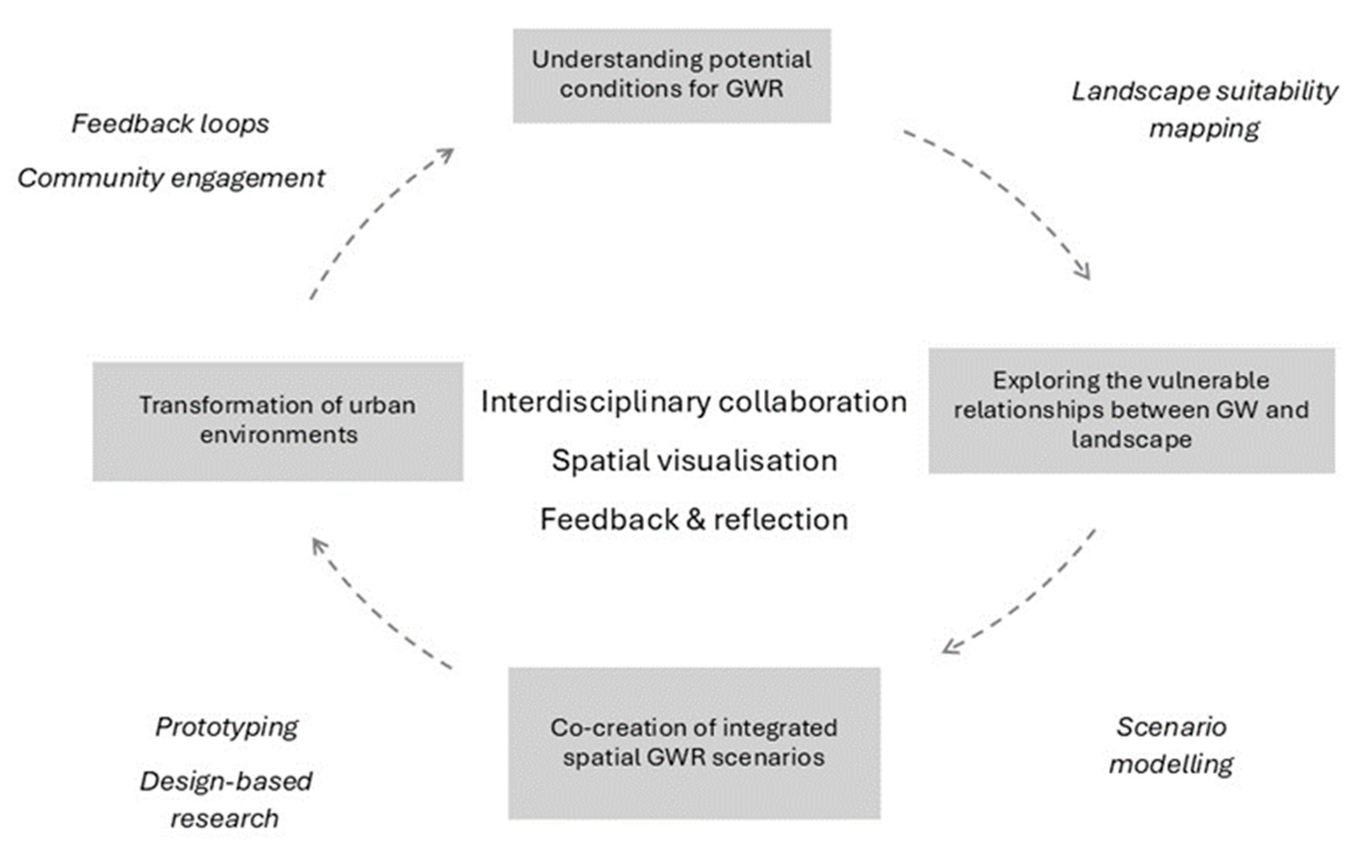
Though each cluster provided very valuable insights into groundwater recharge, it also reflects a lack of a holistic approach to the practical implementation of groundwater recharge from a spatial perspective. Hence, we propose integrating these four GWR research clusters as building blocks into an iterative loop to give a holistic understanding of groundwater recharge. This can systematize the existing fragmented and highly technical knowledge into a coherent strategy, helping landscape planners and other stakeholders to navigate complex spatial relationships and environmental dynamics. As a holistic and process-oriented methodology, this aligns with the landscape approach that offers substantial potential to integrate the four research clusters of GWR.
The landscape approach involves the mapping of landscape functions and the co-creation of spatially explicit and context-sensitive knowledge through the continuous loop of understanding, exploring, analyzing, and designing [134,135,136]. In this way, fragmented knowledge in GWR literature can be systematically integrated to create solutions to real-world issues (pragmatic worldview) [137]. Where landscape designers, with their expertise in spatial planning, can play a key role in translating these interdisciplinary concepts into tangible spatial solutions [138]. The relevant research from geography, statistics, computer science, hydrology, environmental science, urban planning, and landscape architecture underscores this opportunity for interdisciplinary collaboration to address GWR-related challenges effectively.
The framework emphasizes the following three core components
Interdisciplinary collaboration: Collaboration among designers, technical professionals, end-users, and policymakers is essential to co-create socially and ecologically inclusive GWR solutions. Assistance and knowledge-sharing forums can address data scarcity and promote adaptability.
Mapping and visualization tools: Mapping and visualization help to identify, assess, and communicate the potential of GWR in different landscapes. Suitability mapping helps to understand the landscape's functioning. Scenario modeling can help explore optimum spatial conditions for GWR. Spatial visualization of technical data assists in creating maximum participation from different stakeholders and addresses the conflict between ecological, economic, and societal needs by highlighting its relevancy to the specific context. It can improve stakeholder engagement by enabling participatory decision-making processes. In this way, diverse groups can understand and evaluate proposed solutions, including policymakers, developers, and local communities.
Moreover, for the regions with less favorable natural conditions for infiltration, these tools also evaluate the long-term feasibility of such projects by simulating groundwater dynamics under varying environmental and societal conditions.
Role of design: Design extends the utility of mapping and modeling by enabling the real-world implementation of spatial solutions. It transforms technical insights into tangible, adaptable, and inclusive interventions integrating social, ecological, and hydrological considerations. For example, the integration of infiltration zones in parks or permeable pavements in public spaces and streets can serve as pilot projects, offering valuable feedback for later improvements in design principles.
Landscape architects can create solutions to enhance recharge potential and improve social acceptance and accessibility by involving communities and other stakeholders in co-creative design processes. In this way, design provides "transformative knowledge" by spatially visualizing potential futures and bridging the gap between theory and practice across disciplines. By designing adaptable, multifunctional spatial strategies, planners can accommodate shifting priorities, whether due to climate change, urbanization, cultural norms, or policy changes. This way, landscape-based GWR integrates with broader ecological, aesthetic, and recreational goals [134].
Feedback, validation, and reflection: The Iterative nature of the landscape-based GWR approach ensures continuous feedback, validation, and reflection loop. This enables planners to address the wicked problem of urban water crises through complex, integrated scenarios [138]. Feedback from the local community and experts is integral for tailoring solutions for regional and cultural preferences, combining top-down and bottom-up planning strategies.
Figure 6.
An iterative framework for landscape-based GWR (Source: Author).
4.3. Limitations
This review is limited to two interdisciplinary academic databases, inherently limiting its scope to documented research. Thus, it overlooks analysis of practical landscape projects, urban and regional plans, and undocumented community-level initiatives for GWR from a landscape perspective. Also, this reliance on academic databases has excluded policy-driven advancements as it did not include technical reports, policy briefs, and professional planning documents.
5. Conclusions
In this study, we conducted a systematic literature review to examine how spatial planning can contribute to groundwater recharge (GWR). Our hypothesis was that GWR is predominantly understood in highly technical and specialized terms within the existing literature despite its close connection to the landscape. Both broader bibliometric visualization and targeted database search focusing on landscape, spatial planning, and GWR supported this hypothesis that, despite its technical emphasis, GWR is inherently linked to landscape dynamics.
We utilized two interdisciplinary databases, Scopus and Web of Science, to maximize the breadth of assessable results. Our findings indicate that each literature cluster corresponds to a distinct phase or fragment when arranged in an iterative loop, forming the basis of a landscape-based GWR framework. Central to this framework are interdisciplinary collaboration, co-creative design, visualization, and feedback. We linked GWR potential mapping to an understanding of landscape systems and vulnerability studies to understand the relationships between different landscape, urban, and cultural systems. Design-based studies as key to developing integrated spatial solutions and participatory studies were identified as vital for fostering societal learning. Through this, we propose a landscape-based approach for incorporating GWR into urban planning and regional development, with landscape design serving as the critical link between scientific research and practical application.
This study underscores the key role of spatial planners and landscape designers in developing social-ecological spatial GWR solutions. Furthermore, incorporating GWR as a crucial input in urban planning is vital for designing sustainable spatial solutions to contemporary urban challenges. Future research should focus on applying the proposed landscape-based framework in real-world contexts, particularly through pilot projects and case studies, to test the feasibility of GWR interventions, especially in arid regions. Also, policy framework designs facilitating the integration of GWR into urban and regional planning can foster adaptive and context-relevant spatial design solutions. Finally, enhancing groundwater management strategies' social and cultural relevance will be significant in ensuring their long-term success and sustainability.
Author Contributions
Amna Riaz: conceptualization, methodology, Software, Investigation, Writing – Original Draft Preparation, Visualization. Dr. Steffen Nijhuis: Supervision, Writing – Review& editing, Validation. Dr. Inge Bobbink: Supervision, Writing – Review & editing, Validation. All authors have read and agreed to the submitted version of the manuscript.
Funding
This research is funded by the Punjab Educational Endowment Fund Pakistan.
Data Availability Statement
The original contributions presented in the study are included in the review; further data inquiries can be directed to the corresponding author.
Conflicts of Interest
The authors declare no conflict of interest. There is no role in the role of the funding sponsors in the choice of research project, design of the study, collection, analysis, interpretation of data, writing the manuscript, or decision to publish the results.
References
- Ahmad, H. Hasan, M. M. Jilani, and S. I. Ahmed, “Mapping potential groundwater accumulation zones for Karachi city using GIS and AHP techniques,” Environ Monit Assess, vol. 195, no. 3, Mar. 2023. [CrossRef]
- UNESCO, “The United Nations World Water Development Report 2022: Groundwater- Making the invisible visible Executive Summary,” 2022.
- Y. Chen, Z. Li, Y. Fan, H. Wang, and H. Deng, “Progress and prospects of climate change impacts on hydrology in the arid region of northwest China,” Environ Res, vol. 139, pp. 11–19, May 2015. [CrossRef]
- A.C. R. Braga, S. A.C. R. Braga, S. Serrao-Neumann, and C. de Oliveira Galvão, “Groundwater Management in Coastal Areas through Landscape Scale Planning: A Systematic Literature Review,” Environ Manage, vol. 65, no. 3, pp. 321–333, 2020. [CrossRef]
- R. Damania, S. Desbureaux, A.-S. Rodella, J. Russ, and E. Zaveri, Quality Unknown: The Invisible Water Crisis. Washington, DC: World Bank, 2019. [CrossRef]
- V. Masson-Delmotte et al., Working Group I Contribution to the Sixth Assessment Report of the Intergovernmental Panel on Climate Change Edited by. 2021. [Online]. Available: www.ipcc.
- Dai, “Increasing drought under global warming in observations and models,” Nat Clim Chang, vol. 3, no. 1, pp. 52–58, Jan. 2013. [CrossRef]
- J. N. Galloway et al., “The Nitrogen Cascade,” 2003.
- S. S. D. Foster and P. J. Chilton, “Groundwater: The processes and global significance of aquifer degradation,” Dec. 29, 2003, Royal Society. [CrossRef]
- W. M.. Alley, T. E.. Reilly, and O. Lehn. Franke, Sustainability of ground-water resources. U.S. Dept. of the Interior, U.S. Geological Survey ; U.S. G.P.O. ; U.S. Geological Survey, Branch of Information Services [distributor], 1999.
- J. J. de Vries and I. Simmers, “Groundwater recharge: An overview of process and challenges,” Hydrogeol J, vol. 10, no. 1, pp. 5–17, Feb. 2002. [CrossRef]
- Ian, L. McHarg, Design with Nature. Philadelphia: Natural History Press, 1969. Accessed: Jan. 16, 2024. [Online]. Available: https://archive.
- J. Reed, L. Deakin, and T. Sunderland, “What are ‘Integrated Landscape Approaches’ and how effectively have they been implemented in the tropics: A systematic map protocol,” Jan. 07, 2015, BioMed Central Ltd. [CrossRef]
- A.Kirby, “Exploratory Bibliometrics: Using VOSviewer as a Preliminary Research Tool,” Publications, vol. 11, no. 1, Mar. 2023. [CrossRef]
- M. J. Page et al., “The PRISMA 2020 statement: An updated guideline for reporting systematic reviews,” International Journal of Surgery, vol. 88, Apr. 2021. [CrossRef]
- M. Ouzzani, H. Hammady, Z. Fedorowicz, and A. Elmagarmid, “Rayyan-a web and mobile app for systematic reviews,” Syst Rev, vol. 5, no. 1, Dec. 2016. [CrossRef]
- V. Braun and V. Clarke, “Using thematic analysis in psychology,” Qual Res Psychol, vol. 3, no. 2, pp. 77–101, 2006. [CrossRef]
- J. Lian, S. Nijhuis, G. Bracken, X. Wu, X. Wu, and D. Chen, “Conservation and development of the historic garden in a landscape context: A systematic literature review,” Jun. 01, 2024, Elsevier B.V. [CrossRef]
- M. Das, T. Parveen, D. Ghosh, and J. Alam, “Assessing groundwater status and human perception in drought-prone areas: a case of Bankura-I and Bankura-II blocks, West Bengal (India),” Environ Earth Sci, vol. 80, no. 18, Sep. 2021. [CrossRef]
- K. Bera, M. E. Newcomer, and P. Banik, “Groundwater recharge site suitability analysis through multi-influencing factors (MIF) in West Bengal dry-land areas, West Bengal, India,” Acta Geochimica, vol. 41, no. 6, pp. 1030–1048, Dec. 2022. [CrossRef]
- E. A. Gizaw, G. T. Bawoke, M. M. Alemu, and Z. L. Anteneh, “Spatial analysis of groundwater potential using remote sensing and GIS-based multi-criteria decision analysis method in Fetam-Yisir catchment, Blue Nile Basin, Ethiopia,” Applied Geomatics, vol. 15, no. 3, pp. 659–681, Sep. 2023. [CrossRef]
- S. Singha and S. Pasupuleti, “Delineation of Groundwater Prospect Zones in Arang Block, Raipur District, Chhattisgarh, Central India, Using Analytical Network Process,” Journal of the Geological Society of India, vol. 95, no. 6, pp. 609–615, Jun. 2020. [CrossRef]
- E. De Souza, L. M. Pontes, E. I. Fernandes Filho, C. E. G. R. Schaefer, and E. E. Dos Santos, “Spatial and temporal potential groundwater recharge: The case of the doce river basin, Brazil,” Rev Bras Cienc Solo, vol. 43, 2019. [CrossRef]
- W. Chen et al., “Novel Hybrid Integration Approach of Bagging-Based Fisher’s Linear Discriminant Function for Groundwater Potential Analysis,” Natural Resources Research, vol. 28, no. 4, pp. 1239–1258, Oct. 2019. [CrossRef]
- M. L. Collin and A. J. Melloul, “Assessing groundwater vulnerability to pollution to promote sustainable urban and rural development,” J Clean Prod, vol. 11, no. 7, pp. 727–736, Nov. 2003. [CrossRef]
- N. S. Nalini, “Urbanisation and changing temperature patterns in the city of Bengaluru,” Environ Dev Sustain, vol. 23, no. 6, pp. 9090–9109, 2021. [CrossRef]
- J. Tomaškinová and J. Tomaškin, “Assessment of anthropogenic activity negative impact on the karst landscape and a proposal for revitalization measures,” Carpathian Journal of Earth and Environmental Sciences, vol. 9, no. 1, pp. 117–123, 2014.
- E. Falkowska, “The significance of morphogenetic analysis in the assessment of soil-water conditions in Quaternary sediments,” Geomorphology, vol. 246, pp. 420–432, 2015. [CrossRef]
- L.-M. Kuhlemann, D. Tetzlaff, A. Smith, B. Kleinschmit, and C. Soulsby, “Using soil water isotopes to infer the influence of contrasting urban green space on ecohydrological partitioning,” Hydrol Earth Syst Sci, vol. 25, no. 2, pp. 927–943, 2021. [CrossRef]
- R. M. G. Lumongsod, N. T. Ramos, and C. B. Dimalanta, “Mapping the karstification potential of central Cebu, Philippines using GIS,” Environ Earth Sci, vol. 81, no. 18, 2022. [CrossRef]
- D. L. Pereira, P. Galvão, T. Lucon, and M. A. Fujaco, “Adapting the EPIK method to Brazilian Hydro(geo)logical context of the São Miguel watershed to assess karstic aquifer vulnerability to contamination,” J South Am Earth Sci, vol. 90, pp. 191–203, Mar. 2019. [CrossRef]
- A.E. El-Rayes, M. O. Arnous, E.-A. H. Shendi, M. H. Geriesh, and R. A. Gharib, “Morphotectonic controls on hydro-environmental hazards in rift basins: a case study from Southern Suez Canal Province, Egypt,” Geoenvironmental Disasters, vol. 10, no. 1, 2023. [CrossRef]
- J. A. Noriega-Puglisevich and K. I. Eckhardt, “Hydrological effects of the conversion of tropical montane forest to agricultural land in the central Andes of Peru,” Environmental Quality Management, 2024. [CrossRef]
- T. W. Negash, F. K. Abagale, and B. N. Baatuuwie, “Impact of land-use and land-cover change on watershed hydrology: a case study of Mojo watershed, Ethiopia,” Environ Earth Sci, vol. 81, no. 23, Dec. 2022. [CrossRef]
- G. Busch, “The impact of Short Rotation Coppice cultivation on groundwater recharge - a spatial (planning) perspective,” LANDBAUFORSCHUNG VOLKENRODE, vol. 59, no. 3, pp. 207–221, 2009.
- M. Wu and M.-A. Ha, Incorporating conservation practices into the future bioenergy landscape: Water quality and hydrology. 2017. [CrossRef]
- V. L. Versace, D. Ierodiaconou, F. Stagnitti, and A. J. Hamilton, “Appraisal of random and systematic land cover transitions for regional water balance and revegetation strategies,” Agric Ecosyst Environ, vol. 123, no. 4, pp. 328–336, Feb. 2008. [CrossRef]
- R. Li et al., “Effects of urbanization on the water cycle in the Shiyang River basin: based on a stable isotope method,” Hydrol Earth Syst Sci, vol. 27, no. 24, pp. 4437–4452, 2023. [CrossRef]
- J. C. Dagar, “Opportunities for Alternate Land Uses in Salty and Water Scarcity Areas,” 2009. [Online]. Available: https://www.researchgate. 2284.
- G. N. de Lima, M. A. Fonseca-Salazar, and J. Campo, “Urban growth and loss of green spaces in the metropolitan areas of São Paulo and Mexico City: effects of land-cover changes on climate and water flow regulation,” Urban Ecosyst, vol. 26, no. 6, pp. 1739–1752, Dec. 2023. [CrossRef]
- A.Balha, A. Singh, S. Pandey, R. Kumar, J. Mallick, and C. K. Singh, “Assessing the Impact of Land-Use Dynamics to Predict the Changes in Hydrological Variables Using Effective Impervious Area (EIA),” Water Resources Management, vol. 37, no. 10, pp. 3999–4014, Aug. 2023. [CrossRef]
- K. M. Al-Kindi, A. F. Alqurashi, A. Al-Ghafri, and D. Power, “Assessing the Impact of Land Use and Land Cover Changes on Aflaj Systems over a 36-Year Period,” Remote Sens (Basel), vol. 15, no. 7, Apr. 2023. [CrossRef]
- S. C. Vaddiraju and R. T, “Urbanization implications on hydro-meteorological parameters of Saroor Nagar Watershed of Telangana,” Environmental Challenges, vol. 8, Aug. 2022. [CrossRef]
- T. O. Randhir and O. Tsvetkova, “Spatiotemporal dynamics of landscape pattern and hydrologic process in watershed systems,” J Hydrol (Amst), vol. 404, no. 1–2, pp. 1–12, Jun. 2011. [CrossRef]
- Achmad, A. Anhar, and A. Izzaty, “Landscape patterns changes and relation to water infiltration of Krueng Peusangan Watershed in Aceh,” Dec. 02, 2021, IOP Publishing Ltd. [CrossRef]
- A.S. Bhaskar et al., “Will it rise or will it fall? Managing the complex effects of urbanization on base flow,” in Freshwater Science, University of Chicago Press, Mar. 2016, pp. 293–310. [CrossRef]
- L. S. Leonard, “Assessment of groundwater quality along cemeteries and associated potential health concerns in Dar es Salaam, Tanzania,” Water Pract Technol, vol. 17, no. 5, pp. 1218–1229, May 202. [CrossRef]
- S. Lyu, W. Chen, J. Qian, X. Wen, and J. Xu, “Prioritizing environmental risks of pharmaceuticals and personal care products in reclaimed water on urban green space in Beijing,” Science of the Total Environment, vol. 697, Dec. 2019. [CrossRef]
- M. L. Bester, E. O. Frind, J. W. Molson, and D. L. Rudolph, “Numerical investigation of road salt impact on an urban wellfield,” Ground Water, vol. 44, no. 2, pp. 165–175, Mar. 2006. [CrossRef]
- D. Fatta, D. Naoum, and M. Loizidou, “Integrated environmental monitoring and simulation system for use as a management decision support tool in urban areas,” J Environ Manage, vol. 64, no. 4, pp. 333–343, 2002. [CrossRef]
- N. N. Gao, F. Li, H. Zeng, and Y. R. Zheng, “The impact of human activities, natural factors and climate time-lag effects over 33 years in the heihe river basin, china,” Appl Ecol Environ Res, vol. 19, no. 3, pp. 1589–1606, 2021. [CrossRef]
- A.Lagro, B. T. Vowels, and B. Vondra, “Exurban housing development, onsite wastewater disposal, and groundwater vulnerability within a changing policy context,” 2017. [CrossRef]
- M. Baker, Y. Everett, L. Liegel, and R. Van Kirk, “Patterns of Irrigated Agricultural Land Conversion in a Western U.S. Watershed: Implications for Landscape-Level Water Management and Land-Use Planning,” Soc Nat Resour, vol. 27, no. 11, pp. 1145–1160, Nov. 2014. [CrossRef]
- S. Martín Muñoz, J. Schoelynck, D. Tetzlaff, R. Debbaut, M. Warter, and J. Staes, “Assessing biodiversity and regulatory ecosystem services in urban water bodies which serve as aqua-Nature-based Solutions,” Front Environ Sci, vol. 11, 2023. [CrossRef]
- Z. Lu et al., “The impacts of the ecological water diversion project on the ecology-hydrology-economy nexus in the lower reaches in an inland river basin,” Resour Conserv Recycl, vol. 164, Jan. 2021. [CrossRef]
- Attig, and T. McDermott, “Inondation par les eaux souterraines d’une terrasse fluvial dans le sud-ouest du Wisconsin, Etats Unis d’Amérique,” Hydrogeol J, vol. 22, no. 6, pp. 1421–1432, 2014. [CrossRef]
- A.Batelaan, F. De Smedt, and L. Triest, “Regional groundwater discharge: Phreatophyte mapping, groundwater modelling and impact analysis of land-use change,” J Hydrol (Amst), vol. 275, no. 1–2, pp. 86–108, Apr. 2003. [CrossRef]
- S. I. Elmahdy and M. M. Mohamed, “Groundwater of Abu Dhabi Emirate: A regional assessment by means of remote sensing and geographic information system,” Arabian Journal of Geosciences, vol. 8, no. 12, pp. 11279–11292, Dec. 2015. [CrossRef]
- F. Böttcher and K. Zosseder, “Thermal influences on groundwater in urban environments – A multivariate statistical analysis of the subsurface heat island effect in Munich,” Science of The Total Environment, vol. 810, p. 152193, Mar. 2022. [CrossRef]
- N. Gunawardhana and S. Kazama, “Using subsurface temperatures to derive the spatial extent of the land use change effect,” J Hydrol (Amst), vol. 460–461, pp. 40–51, 2012. [CrossRef]
- P. E. V Van Walsum, J. Runhaar, and J. F. M. Helming, “Spatial planning for adapting to climate change.” [Online]. Available: http://iwaponline.com/wst/article-pdf/51/5/45/435015/45.
- R. U. Syrbe, O. Bastian, M. Röder, and P. James, “A framework for monitoring landscape functions: The Saxon Academy Landscape Monitoring Approach (SALMA), exemplified by soil investigations in the Kleine Spree floodplain (Saxony, Germany),” Landsc Urban Plan, vol. 79, no. 2, pp. 190–199, Feb. 2007. [CrossRef]
- A.Ghosh, S. Bhattacharjee, and B. Bera, “Hydro-Geomorphological Mapping of Manbhum-Singhbhum Plateau (Part of Singhbhum Protocontinent, India) for Water Resource Development and Landuse Planning,” Journal of the Indian Society of Remote Sensing, vol. 51, no. 8, pp. 1757–1775, Aug. 2023. [CrossRef]
- R. Avtar, C. K. Singh, G. Singh, R. L. Verma, S. Mukherjee, and H. Sawada, “Landslide susceptibility zonation study using remote sensing and GIS technology in the Ken-Betwa River Link area, India,” Bulletin of Engineering Geology and the Environment, vol. 70, no. 4, pp. 595–606, Nov. 2011. [CrossRef]
- F. Benzenine, M. A. Allal, C. Abdelbaki, N. Kumar, M. Goosen, and J. M. Gathenya, “Multi-Hazard Risk Assessment and Landslide Susceptibility Mapping: A Case Study from Bensekrane in Algeria,” Sustainability (Switzerland), vol. 15, no. 3, Feb. 2023. [CrossRef]
- Q. Liu, W. Jian, and W. Nie, “Sustainable Cities and Society 69 (2021) 102817 Rainstorm-induced landslides early warning system in mountainous cities based on groundwater level change fast prediction,” 2021. [CrossRef]
- T. Wen et al., “Land-subsidence susceptibility mapping: assessment of an adaptive neuro-fuzzy inference system–genetic algorithm hybrid model,” Geocarto Int, vol. 37, no. 26, pp. 12194–12218, 2022. [CrossRef]
- V. Marchionni, A. Guyot, N. Tapper, J. P. Walker, and E. Daly, “Water balance and tree water use dynamics in remnant urban reserves,” J Hydrol (Amst), vol. 575, pp. 343–353, Aug. 2019. [CrossRef]
- S. Arden, X. Ma, and M. Brown, “An ecohydrologic model for a shallow groundwater urban environment,” Water Science and Technology, vol. 70, no. 11, pp. 1789–1797, 2014. [CrossRef]
- Koren, “Management of Landslides in Small Settlements in Slovenia,” in Advancing Culture of Living with Landslides, Springer International Publishing, 2017, pp. 989–998. [CrossRef]
- L. Falconi, G. Leoni, P. M. Arestegui, C. Puglisi, and S. Savini, “Geomorphological processes and cultural heritage of Maca and Lari Villages: An opportunity for sustainable tourism development in the Colca Valley (Province of Caylloma, Arequipa, South Perù),” in Landslide Science and Practice: Risk Assessment, Management and Mitigation, Springer Science and Business Media Deutschland GmbH, 2013, pp. 459–465. [CrossRef]
- Z. Li, S. Wu, S. Zhang, C. Nie, Y. Li, and Y. Huang, “Optimization of land reuse structure in coal mining subsided areas considering regional economic development: A case study in Pei County, China,” Sustainability (Switzerland), vol. 12, no. 8, 2020. [CrossRef]
- Yilmaz, “GIS based susceptibility mapping of karst depression in gypsum: A case study from Sivas basin (Turkey),” Eng Geol, vol. 90, no. 1–2, pp. 89–103, Mar. 2007. [CrossRef]
- Lombardo, “Estimation of intrinsic aquifer vulnerability with index-overlay and statistical methods: the case of eastern Kopaida, central Greece,” Appl Water Sci, vol. 7, no. 5, pp. 2215–2229, Sep. 2017. [CrossRef]
- A.Fatoyinbo et al., “Municipal solid waste landfill site selection: a geotechnical and geoenvironmental-based geospatial approach,” Environ Earth Sci, vol. 79, p. 231, 2020. [CrossRef]
- R. C. Crivelenti, C. R. P. Bueno, J. S. R. Pires, J. Francisco, and B. F. Lessi, “Ecological-economic zoning of the city of altinópolis - SP, Brazil,” Engenharia Agricola, vol. 36, no. 6, pp. 1218–1228, 2016. [CrossRef]
- A.Bao et al., “Ecological problems and ecological restoration zoning of the Aral Sea,” J Arid Land, vol. 16, no. 3, pp. 315–330, Mar. 2024. [CrossRef]
- Malekmohammadi, “Site selection of sustainable urban drainage systems using fuzzy logic and multi-criteria decision-making,” Water and Environment Journal, vol. 34, no. 4, pp. 584–599, Nov. 2020. [CrossRef]
- S. Esterhuyse et al., “Vulnerability mapping as a tool to manage the environmental impacts of oil and gas extraction,” R Soc Open Sci, vol. 4, no. 11, 2017. [CrossRef]
- S. Xue, C. Wang, Y. Wu, Q. Zhou, Z. Song, and Y. Wu, “Revised zoning method for environmental fragility evaluation to desertification in arid–semiarid areas: a case of Dousitu river basin,” Environ Earth Sci, vol. 80, no. 17, 2021. [CrossRef]
- Z. Sefati, B. Khalilimoghadam, and H. Nadian, “Assessing urban soil quality by improving the method for soil environmental quality evaluation in a saline groundwater area of Iran,” Catena (Amst), vol. 173, pp. 471–480, Feb. 2019. [CrossRef]
- M. Nielsen-Pincus et al., “Predicted effects of residential development on a northern Idaho landscape under alternative growth management and land protection policies,” Landsc Urban Plan, vol. 94, no. 3–4, pp. 255–263, 2010. [CrossRef]
- Y. Chen and Z. Paydar, “Evaluation of potential irrigation expansion using a spatial fuzzy multi-criteria decision framework,” Environmental Modelling and Software, vol. 38, pp. 147–157, Dec. 2012. [CrossRef]
- H. Susilo, D. Purwantoro, and S. Rahadiansyah, “Model Performance Index of Ground Water Irrigation Systems in the Karst Mountain Region: Case Study in Gunung Kidul Regency, Yogyakarta,” in IOP Conference Series: Earth and Environmental Science, IOP Publishing Ltd, Feb. 2021. [CrossRef]
- Khamzina, B. Tischbein, P. Knöfel, C. Conrad, and J. P. A. Lamers, “Spatio-temporal supply–demand of surface water for agroforestry planning in saline landscape of the lower Amudarya Basin,” J Arid Environ, vol. 162, pp. 53–61, Mar. 2019. [CrossRef]
- Lasch, <italic></italic>; et al. “Regional impact analysis of climate change on natural and managed forests in the Federal State of Brandenburg, Germany,” 1999.
- S. H. M. Langroodi, M. G. Masoum, H. Nasiri, and S. T. Javi, “Spatial and temporal variability analysis of groundwater quantity to land-use/land-cover change in the Khanmirza agricultural plain in Iran,” Arabian Journal of Geosciences, vol. 8, no. 10, pp. 8385–8397, Oct. 2015. [CrossRef]
- Å. Kasimir, H. He, J. Coria, and A. Nordén, “Land use of drained peatlands: Greenhouse gas fluxes, plant production, and economics,” Glob Chang Biol, vol. 24, no. 8, pp. 3302–3316, 2018. [CrossRef]
- V. Hermoso, L. Cattarino, S. Linke, and M. J. Kennard, “Catchment zoning to enhance co-benefits and minimize trade-offs between ecosystem services and freshwater biodiversity conservation,” Aquat Conserv, vol. 28, no. 4, pp. 1004–1014, Aug. 2018. [CrossRef]
- G. Lupp, R. Steinhäußer, O. Bastian, and R.-U. Syrbe, “Impacts of increasing bioenergy use on ecosystem services on nature and society exemplified in the German district of Görlitz,” Biomass Bioenergy, vol. 83, pp. 131–140, 2015. [CrossRef]
- S. C. Zipper, M. E. Soylu, C. J. Kucharik, and S. P. Loheide, “Quantifying indirect groundwater-mediated effects of urbanization on agroecosystem productivity using MODFLOW-AgroIBIS (MAGI), a complete critical zone model,” Ecol Modell, vol. 359, pp. 201–219, Sep. 2017. [CrossRef]
- Martínez-Santos, S. Díaz-Alcaide, A. De la Hera-Portillo, and V. Gómez-Escalonilla, “Mapping groundwater-dependent ecosystems by means of multi-layer supervised classification,” J Hydrol (Amst), vol. 603, Dec. 2021. [CrossRef]
- L. McLaughlin and M. J. Cohen, “Realizing ecosystem services: Wetland hydrologic function along a gradient of ecosystem condition,” Ecological Applications, vol. 23, no. 7, pp. 1619–1631, Oct. 2013. [CrossRef]
- W. Xiao, Y. Fu, T. Wang, and X. Lv, “Effects of land use transitions due to underground coal mining on ecosystem services in high groundwater table areas: A case study in the Yanzhou coalfield,” Land use policy, vol. 71, pp. 213–221, Feb. 2018. [CrossRef]
- T. Aevermann and J. Schmude, “Quantification and monetary valuation of urban ecosystem services in Munich, Germany,” Z Wirtschgeogr, vol. 59, pp. 188–200, 2015.
- Z. Pinke, M. Kiss, and G. L. Lövei, “Developing an integrated land use planning system on reclaimed wetlands of the Hungarian Plain using economic valuation of ecosystem services,” Ecosyst Serv, vol. 30, pp. 299–308, Apr. 2018. [CrossRef]
- Tammi, K. Mustajärvi, and J. Rasinmäki, “Integrating spatial valuation of ecosystem services into regional planning and development,” Ecosyst Serv, vol. 26, pp. 329–344, Aug. 2017. [CrossRef]
- L. L. Bremer et al., “Bringing multiple values to the table: Assessing future land-use and climate change in North Kona, Hawaiʻi,” Ecology and Society, vol. 23, no. 1, 2018. [CrossRef]
- L. T. Ha and W. G. M. Bastiaanssen, “Determination of Spatially-Distributed Hydrological Ecosystem Services (HESS) in the Red River Delta Using a Calibrated SWAT Model,” Sustainability (Switzerland), vol. 15, no. 7, Apr. 2023. [CrossRef]
- M. R. Doyle, P. Thalmann, and A. Parriaux, “Underground potential for urban sustainability: Mapping resources and their interactions with the Deep City method,” Sustainability (Switzerland), vol. 8, no. 9, Aug. 2016. [CrossRef]
- M. Teal, C.-S. Huang, and J. Rodiek, “Open space planning for Travis Country, Austin, Texas: A collaborative design,” Landsc Urban Plan, vol. 42, no. 2–4, pp. 259–268, 1998. [CrossRef]
- Mclachlan, <italic></italic>; et al. “Pathways to water resilient South African cities – from mono-functional to multi-functional stormwater infrastructure,” Sci Afr, vol. 20, Jul. 2023. [CrossRef]
- C. Matos, A. Briga Sá, I. Bentes, S. Pereira, and R. Bento, “An approach to the implementation of Low Impact Development measures towards an EcoCampus classification,” J Environ Manage, vol. 232, pp. 654–659, Feb. 2019. [CrossRef]
- Burlakovs, I. Grinfelde, J. Pilecka, Y. Jani, and W. Hogland, “Phytoremediation as tool for prevention of contaminant flow to hydrological systems,” in Research for Rural Development, 2018, pp. 188–194. [CrossRef]
- Z. Boukalová, J. Těšitel, and B. D. Gurung, “Nature-based water treatment solutions and their successful implementation in kathmandu valley, nepal,” WIT Transactions on Ecology and the Environment, vol. 242, pp. 121–132, 2020. [CrossRef]
- Y. Tang, H. feng Jia, Q. gui Jiang, and J. Wang, “Comprehensive rehabilitation planning of deserted pits and the case study in plain area of Beijing, China,” Landsc Urban Plan, vol. 99, no. 2, pp. 123–132, Feb. 2011. [CrossRef]
- A. Brenner, H. Cohen, O. Gradus, O. Koren, S. Shandalov, and Y. Zinger, “INCORPORATION OF HYBRID BIOFILTERS IN WATER-SENSITIVE URBAN DESIGN,” Present Environment and Sustainable Development, vol. 13, no. 2, pp. 167–177, Oct. 2019. [CrossRef]
- Kadaverugu, S. Dhyani, R. Dasgupta, P. Kumar, and C. Matli, “Urban sustainability and resilience building: Blue-green infrastructure for air pollution abatement and realizing multiple co-benefits,” in Blue-Green Infrastructure Across Asian Countries: Improving Urban Resilience and Sustainability, Springer Nature, 2022, pp. 397–417. [CrossRef]
- Singh and, V. Bakshi, “Geospatial approach for reducing water stress: case study of Delhi,” in Climate Change, Community Response and Resilience: Insight for Socio-Ecological Sustainability, Elsevier, 2023, pp. 467–497. [CrossRef]
- V. Novotny and K. Hill, “Diffuse pollution abatement - A key component in the integrated effort towards sustainable urban basins,” in Water Science and Technology, IWA Publishing, 2007, pp. 1–9. [CrossRef]
- Tjallingii, “Water flows and urban planning,” in Sustainable Urban Environments: An Ecosystem Approach, Springer Netherlands, 2012, pp. 91–111. [CrossRef]
- A.J. Melloul and S. H. Wollman, “Qualitative hydrological and land-use planning tool for the Israel Coastal aquifer,” Science of the Total Environment, vol. 309, no. 1–3, pp. 1–17, Jun. 2003. [CrossRef]
- B.Fryd et al., “Water sensitive urban design retrofits in Copenhagen - 40% to the sewer, 60% to the city,” Water Science and Technology, vol. 67, no. 9, pp. 1945–1952, 2013. [CrossRef]
- Lancia, C. Zheng, X. He, D. N. Lerner, C. Andrews, and Y. Tian, “Hydrogeological constraints and opportunities for ‘Sponge City’ development: Shenzhen, southern China,” J Hydrol Reg Stud, vol. 28, Apr. 2020. [CrossRef]
- Chandran, S. R. Thiruchelve, and M. Dhanasekarapandian, “Integrated urban water resources management strategy for a smart city in India,” Water Sci Technol Water Supply, vol. 21, no. 2, pp. 736–749, Mar. 2021. [CrossRef]
- A. Palmer, D. P. Lettenmaier, N. L. Poff, S. L. Postel, B. Richter, and R. Warner, “Climate change and river ecosystems: Protection and adaptation options,” Dec. 2009. [CrossRef]
- Sheikh, “Long-range planning for water reuse in the city of Los Angeles,” Water Science and Technology, vol. 24, no. 9, pp. 11–17, 1991. [CrossRef]
- Panayi, “USE OF A PUBLIC PERCEPTIONS STUDY TO ASSIST POLICY MAKING FOR RECLAIMED WATER REUSE Water Development Department Ministry of Agriculture, Natural Resources and Environment Republic of Cyprus 13 th International Conference on Environmental Science and Technology.
- L. Fertas, M. Alouat, and H. Benmahamed, “The Emergence of Irrigated Agriculture in Semi-Arid Zones in the Face of Climate Change and Urbanization in Peri-Urban Areas in Setif, Algeria,” Sustainability (Switzerland), vol. 16, no. 3, Feb. 2024. [CrossRef]
- R. Roggema and K. Bruin-Baerts, Waterman, vol. Part F8. 2023. [CrossRef]
- J. Alaerts, “Water, physically connected yet institutionally fragmented—Investing in its strategies, asset classes, and organizations,” in Financing Investment in Water Security: Recent Developments and Perspectives, Elsevier, 2022, pp. 17–55. [CrossRef]
- Everard, <italic></italic>; et al. , “Assessing the feasibility of integrating ecosystem-based with engineered water resource governance and management for water security in semi-arid landscapes: A case study in the Banas catchment, Rajasthan, India,” Science of the Total Environment, vol. 612, pp. 1249–1265, Jan. 2018. [CrossRef]
- Newman; et al. , “Citizen science-informed community master planning: Land use and built environment changes to increase flood resilience and decrease contaminant exposure,” Int J Environ Res Public Health, vol. 17, no. 2, Jan. 2020. [CrossRef]
- F. Terribile et al., “A Web-based spatial decision supporting system for land management and soil conservation,” Solid Earth, vol. 6, no. 3, pp. 903–928, Jul. 2015. [CrossRef]
- D. Milz, M. Zellner, C. Hoch, J. Radinsky, K. Pudlock, and L. Lyons, “Reconsidering Scale: Using Geographic Information Systems to Support Spatial Planning Conversations,” Planning Practice and Research, vol. 33, no. 3, pp. 291–308, May 2018. [CrossRef]
- Mukuyu, N. Nyambe, M. S. Magombeyi, and G. Y. Ebrahim, “Polycentric Groundwater Governance: Insights from the Kavango-Zambezi Transfrontier Conservation Area,” Int J Commons, vol. 18, no. 1, pp. 322–336, 2024. [CrossRef]
- X. Yang, J. Dong, and P. D. White, “The key role of water resources management in ecological restoration in Western China,” Geographical Research, vol. 44, no. 2, pp. 146–154, Jun. 2006. [CrossRef]
- P. Dhakal and L. R. Chevalier, “Urban Stormwater Governance: The Need for a Paradigm Shift,” Environ Manage, vol. 57, no. 5, pp. 1112–1124, 16. 20 May. [CrossRef]
- D. Vollmer, D. O. Pribadi, F. Remondi, E. Rustiadi, and A. Grêt-Regamey, “Prioritizing ecosystem services in rapidly urbanizing river basins: A spatial multi-criteria analytic approach,” Sustain Cities Soc, vol. 20, pp. 237–252, Jan. 2016. [CrossRef]
- D. Rivas-Tabares, A. M. Tarquis, Á. De Miguel, A. Gobin, and B. Willaarts, “Enhancing LULC scenarios impact assessment in hydrological dynamics using participatory mapping protocols in semiarid regions,” Science of the Total Environment, vol. 803, Jan. 2022. [CrossRef]
- E. Braune and Y. Xu, “The role of ground water in sub-Saharan Africa,” Ground Water, vol. 48, no. 2, pp. 229–238, Mar. 2010. [CrossRef]
- Vejre, J. P. Vesterager, L. S. Kristensen, and J. Primdahl, “Stakeholder and expert-guided scenarios for agriculture and landscape development in a groundwater protection area,” Journal of Environmental Planning and Management, vol. 54, no. 9, pp. 1169–1187, Nov. 2011. [CrossRef]
- Kmoch, A. Bou-Lahriss, and T. Plieninger, “Drought threatens agroforestry landscapes and dryland livelihoods in a North African hotspot of environmental change,” Landsc Urban Plan, vol. 245, 24. 20 May. [CrossRef]
- S. Nijhuis, “Landscape-Based Urbanism: Cultivating Urban Landscapes Through Design,” in Contemporary Urban Design Thinking, vol. Part F7, Springer Nature, 2022, pp. 249–277. [CrossRef]
- S. Nijhuis, L. Xiong, and D. Cannatella, “Towards a Landscape-based Regional Design Approach for Adaptive Transformation in Urbanizing Deltas,” Research in Urbanism Series, vol. 6, pp. 55–80, Sep. 2021. [CrossRef]
- Bürgi; et al. “Integrated landscape approach: Closing the gap between theory and application,” Sustainability (Switzerland), vol. 9, no. 8, p. 1371, Aug. 2017. [CrossRef]
- E. M. Alpak, D. G. Özkan, and T. Düzenli, “Systems approach in landscape design: a studio work,” Int J Technol Des Educ, vol. 28, no. 2, pp. 593–611, Jun. 2018. [CrossRef]
- A. Backhaus, O. fryd, and T. Dam, “Research in landscape architecture_methods and methodology,” in Research in landscape architecture_methods and methodology, A. Van den Brink, D. Bruns, H. Tobi, and S. Bell, Eds., Routledge, 2017, pp. 285–304.
Figure 2.
PRISMA framework followed for the systematic literature review.
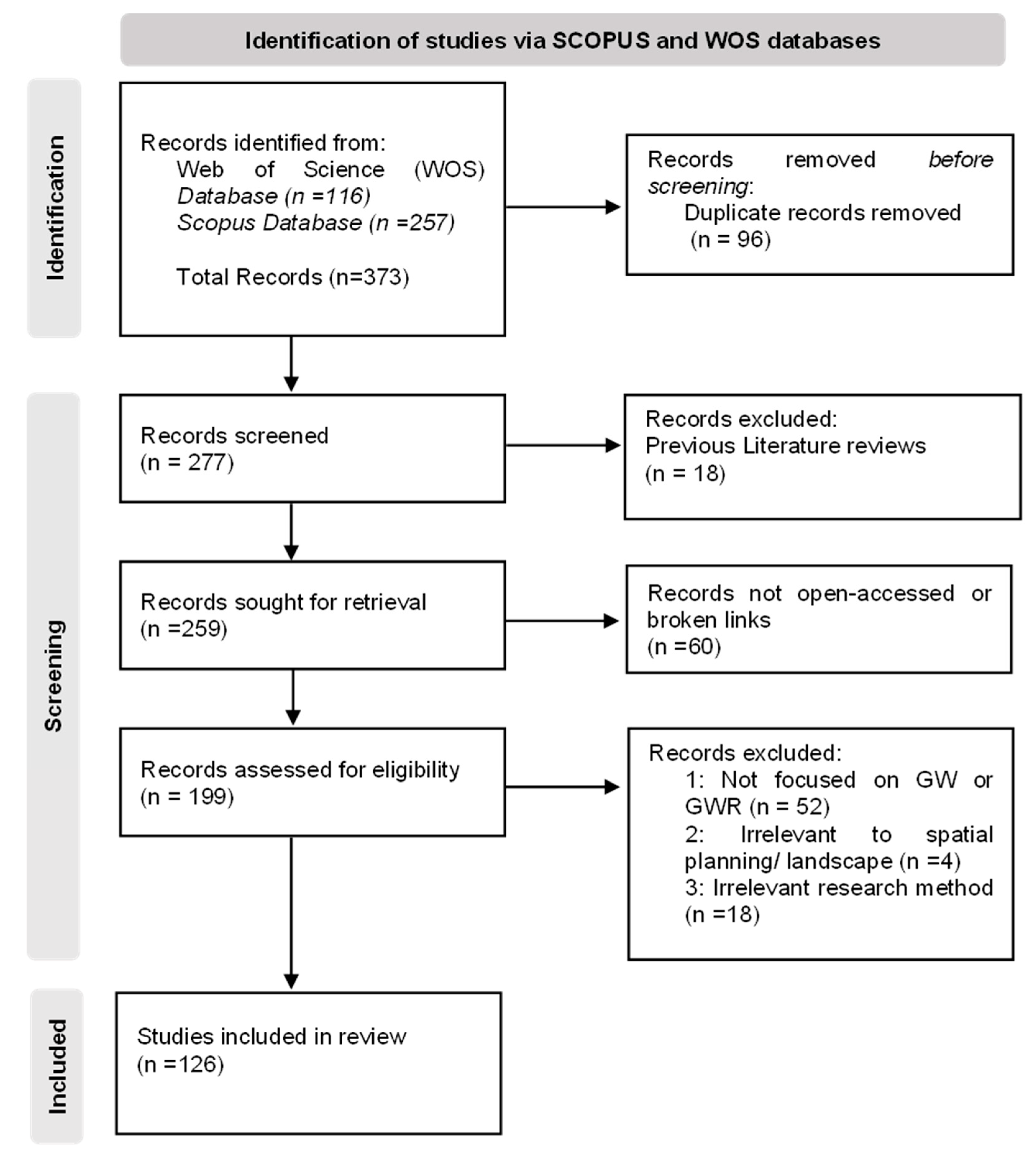
Disclaimer/Publisher’s Note: The statements, opinions and data contained in all publications are solely those of the individual author(s) and contributor(s) and not of MDPI and/or the editor(s). MDPI and/or the editor(s) disclaim responsibility for any injury to people or property resulting from any ideas, methods, instructions or products referred to in the content. |
© 2025 by the authors. Licensee MDPI, Basel, Switzerland. This article is an open access article distributed under the terms and conditions of the Creative Commons Attribution (CC BY) license (http://creativecommons.org/licenses/by/4.0/).
Copyright: This open access article is published under a Creative Commons CC BY 4.0 license, which permit the free download, distribution, and reuse, provided that the author and preprint are cited in any reuse.


