

Submitted:
24 February 2025
Posted:
25 February 2025
You are already at the latest version
Abstract
Although climate warming-induced reduction in snow cover makes technical snowmaking inevitable in moderate climatic regions, it causes hydrological, health-related and environmental concerns. This study analyzed culturable bacteriological indicators of water quality, presence and concentration of antimicrobials, genes determining bacterial antibiotic resistance (ARGs) and next-generation sequencing-based bacterial community composition and diversity in resource water and technical snow of five ski resorts. Numbers of culturable bacteria (E. coli, fecal enterococci, Salmonella, Staphylococcus) and prevalence of most ARGs (extended-spectrum beta-lactamase, macrolide–lincosamide–streptogramin B, streptomycin phosphotransferase, tetracycline efflux pump and sulfamethoxazole resistance determinant) decreased during snowmaking. Concentration of antimicrobial agents changed irregularly, e.g. ofloxacin (with the highest overall concentration) and erythromycin (most frequently detected) dropped through snowmaking process, while cefoxitin concentration exceeded LOQ only in technical snow. Finally, bacterial community composition altered during technical snowmaking due to advantage of certain strains over others in e.g. survivability in freezing temperatures or in the presence of antimicrobial agents. Some of these taxa were important for agriculture (Arthrobacter), or were potential pathogens to humans (Glutamicibacter), animals and plants (Flavobacteriaceae). With still not elucidated impact of technical snowmaking on the surrounding environment, in bacteriological, antibiotic and ARG contamination, or bacterial community alterations, further research is necessary.
Keywords:
antibiotics
; antibiotic resistant bacteria
; antibiotic resistance genes
; river water
; ski stations
; storage reservoirs
; technical snow
1. Introduction
Climate warming-induced reduction in snow cover results in the technical (artificial) snow production become inevitable in the moderate climate regions. The technical snow is produced as a surrogate for natural snow in regions where the natural snow is missing or uncertain and many ski runs rely entirely on technical snow for part of entire season. Due to the fact that resource water for technical snowmaking in the mountain areas is often polluted by wastewater and thus contains substantial numbers of bacteria [1], the concerns are associated with the effects of technical snowmaking on human health. Recent advances in physical biochemistry, analytical methods and molecular biology allowed for investigation of micropollutants in wastewater and the receiving waters and these analyses revealed that surface water resources in mountain areas are commonly contaminated with antimicrobial agents [2], antibiotic-resistant bacteria, genetic determinants of antimicrobial resistance [[5] as well as by potential bacterial pathogens [6]. All these contaminants can be transferred into technical snow and possibly re-enter the environment via meltwater runoff [3,4]. Apart from meteorological, hydrological as well as water quality and health-related concerns of technical snow production, another aspect to consider is the ecological impact it can have on soil on various levels. These issues include soil insulation, altered temperature conditions, mineralization increase due to snowmelt inflow [3,4], and finally alteration of soil microbial communities as well as horizontal transfer of antibiotic resistance genes between pathogenic and environmental bacteria. The current development in microbial community composition analyses (i.e. next generation sequencing) allowed to examine the bacterial community compositions in various environmental compartments, including resource water that is used for technical snow production and thus the possible effect that an extra input of such water may have on the microbial community already present in the environment. To date, scientific literature lacks studies concerning the effects of technical snow production related to its possible input of bacteria and micropollutants such as antimicrobial agents, antibiotic resistant bacteria and genetic determinants of antimicrobial resistance. The few studies that consider potential hazards related to bacteria associated with technical snow, concern bacterial additives used as ice nucleation activators, P. syringae [5].
Undoubtedly, the process of technical snow production does not remain indifferent to the adjacent environment and the aspects in which it can affect the ecosystem are multiple, diverse and require interdisciplinary analysis. Thus, this study was undertaken in order to expand the current still scarce knowledge on environmental and health-related impacts caused by technical snow production. This research was based on resource water (river water and reservoir-stored water) and technical snow (analyzed as snowmelt water) collected from five ski resorts located in the Polish mountains, that differed in height above sea level, population size and the distance from the pollution sources. A number of parameters were examined, i.e. culturable bacteriological indicators of water quality, presence and concentration of antimicrobial agents, genes determining bacterial antibiotic resistance, as well as next-generation sequencing-based bacterial community composition and diversity.
By analyzing the above listed parameters, each one separately and all together, we aimed to assess whether and how the process of technical snow production using water of varying quality and containing different concentrations of antibacterial agents, changes the above listed parameters and therefore to elucidate the possible effects it can have on the aquatic environment in their close proximity.
2. Results and Discussion
2.1. Culture-Based Assessment of Bacteriological Contamination
The culture-based analysis of bacterial contamination indicators (i.e. Escherichia coli, fecal enterococci, coagulase-positive Staphylococcus and Salmonella) was used as the first stage assessment and arrangement of the examined stations in terms of the overall quality. It is evident that numbers of culturable bacteria vary between the sites situated in different regions and between the samples of water / snow as well as water / reservoir / snow (Table 1). The most evident differences can be seen in the case of E. coli, the mean numbers of which range from its absence (or 1 CFU/100 ml) in the presumably most pristine region (BDF) to more than 224×103 CFU/100 ml in BDZ river water. Also the numbers of fecal enterococci were the lowest in the BDF site (mean number from 4 to 7 CFU/100 ml in river, reservoir-stored water and snowmelt water) and the highest in BDZ (more than 273 ×103 CFU/100 ml in river water). In most sites the numbers of bacterial contaminants sharply drop during the technical snow production process (e.g. for E. coli: a 93-fold decrease in B1 site, nearly 1,500-fold decrease in BDZ site, 3.5-fold decrease in R site and a decrease from 119 to 0 CFU/100 ml in B3). The similar drops in these values were observed in the case of fecal enterococci, Salmonella and S. aureus (Table 1).
2.2. Concentration of Antimicrobial Agents
Out of the 21 antimicrobial agents examined, 14 were detected above the LOQ values (Table 2). As shown in Table 3, a diverse range of the mean concentrations of antimicrobial agents was observed in the studied sites. With respect to the antimicrobial agents, the three most frequently detected antimicrobials comprised erythromycin (detected in 71% of all examined samples), tetracycline and trimethoprim (both detected in 35.5% of samples). However, these antimicrobials were not among the ones whose highest concentrations were observed during the study, like ofloxacin, the total concentration of which exceeded 2,000 ng/l. Regarding the differences between studied sites in terms of the antibiotic loads and prevalence, the more anthropogenically impacted sites, i.e. R and BDZ were characterized by both the highest total concentrations of antimicrobials and the highest detection rate (3,559.06 ng/l in R_W and 13 detected antibiotic agents, followed by 431.37 ng/l in R_S where 10 antimicrobials were detected; eight antimicrobials detected in BDZ_W and BDZ_S where the total concentration of antibiotics was 230.14 and 329.10 ng/l, respectively). The frequency of antibiotic detection within the samples are associated with the intake sites’ distance from the point sources of pollution, such as WWTPs and hospitals while the detection rates of individual antibiotics might be influenced by the seasonal patterns of respiratory infections in temperate climates and the prescription rates of e.g. macrolide antibiotics (such as erythromycin) or combinations of trimethoprim / sulfamethoxazole [6,7]. The quality of water in three out of the five examined sites is impacted by wastewater from various point sources: raw domestic effluents, effluents from nearby WWTPs and hospitals. The concentrations of antibiotics in wastewater effluents is influenced by a number of factors, including pattern and consumption rate, excretion rates, efficacy of elimination during the treatment process [8]. An important factor affecting the detection rates of antimicrobials is their persistence in aqueous environments and such are the ones detected most frequently in our study (i.e. macrolide erythromycin, trimethoprim) as well as fluoroquinolone [9] ofloxacin, the total concentration of which was the highest among all antimicrobials detected. Interestingly, in a few cases, the concentrations of antimicrobial agents in technical snowmelt water exceed the ones observed in river water or in reservoir-stored water. This is the case of: BDF site where cefoxitin was observed only in technical snow (112.59 ng/l), B1 where not only cefoxitin was observed only in technical snow (73.47 ng/l) but also the concentration of enrofloxacin in snow exceeded the one in river water (but was lower than in technical reservoir), clindamycin (2.47 ng/l in snowmelt water vs. 1.83 ng/l in river water), sulfamethoxazole and linezolid detected in snowmelt water (1.56 and 1.33 ng/l, respectively) whilst none in river or reservoir (Table 3); and finally the BDZ site where ciprofloxacin and oxytetracycline occurred in snowmelt water (15.37 and 61.36 ng/l, respectively) with none detected in river water. On the other hand, the concentrations of all antimicrobials in the R site were significantly lower (or none) in snowmelt water than in river water. There may be a few possible explanations of this irregularity. First of all, largely fluctuating concentrations of antimicrobials in flowing river water due to their fluctuations in wastewater effluents [7] which resulted in the antimicrobials not being captured during river water sampling, while the technical snow production results in significant volumes of water being trapped and stagnating on the slope surfaces. Secondly, the technical snow production process involves sublimation and evaporation while water droplets are traveling through the air thus resulting in certain amounts of water being lost (hence its high density and degree of compaction) [3,10], but not the compounds suspended therein. Finally, the degradation rates of antimicrobial agents varies depending on the environmental conditions. And so, following kinetic theory lower temperatures may slow down the process of antibiotics’ decomposition as the number of molecular collisions (affecting reactivity) increases as a function of temperature [11]. Also Loftin et al. [12] observed longer half-lives (including tetracyclines) of antibiotics in lower temperatures.
Even though the concentrations of antibiotics detected in this study are low, it needs to be stressed here that the observed concentrations are subinhibitory and thus are associated with a number of adverse effects, comprising: chronic toxicity, alterations in bacterial community structure and the most dramatic issue recently – the development of antibiotic resistance among bacteria following the environmental occurrence of antibiotic resistance genes [13,14]. Due to the multiple threats posed by the occurrence of antimicrobials in the environment, many countries have introduced regulations requiring the monitoring of certain substances The EU Commission has established a watch list of substances for Union-wide monitoring under the Water Framework Directive. The selection of antibiotics for the watch lists is in line with the European One Health Action Plan against antimicrobial resistance [15]. The selection of antibiotics for the fourth watch list includes clindamycin and ofloxacin [15], both detected in 29% of samples in this study and both of these substances are suggested to pose risk to the aquatic environment. Importantly, the total concentration of ofloxacin in this study was the highest among all antimicrobials (i.e. 2030.53 ng/l, Table 2).
Most of the antimicrobial agents detected in our study have also been reported by other authors as frequent contaminants of aquatic environment, mainly due to their resistance to degradation, continuous consumption and hydrophilicity which affects their mobility in the aquatic environment [13].

Table 2.
Mean concentrations of antimicrobial agents in the examined sites (the values are presented as means of all measurements), overall frequency of antimicrobial agents’ detection in all samples (the values are presented as percentage of detection in all examined samples, n=31) and the total concentrations of antimicrobial agents (presented as the sum of all measurements within the study).
Table 2.
Mean concentrations of antimicrobial agents in the examined sites (the values are presented as means of all measurements), overall frequency of antimicrobial agents’ detection in all samples (the values are presented as percentage of detection in all examined samples, n=31) and the total concentrations of antimicrobial agents (presented as the sum of all measurements within the study).
| Chemical group | Antibiotic | BDF_W | BDF_R | BDF_S | B1_W | B1_R | B1_S | R_W | R_S | B3_W | B3_S | BDZ_W | BDZ_S | frequency of detection (% of all samples) |
Total concentration of antibiotic in all samples (ng/l) |
| 2nd gen. cephalosporins | cefoxitin | 0.00 | 0.00 | 112.59 | 0.00 | 0.00 | 73.47 | 0.00 | 0.00 | 0.00 | 0.00 | 0.00 | 0.00 | 9.7 | 519.05 |
| fluoroquinolones | ciprofloxacin | 0.00 | 0.00 | 0.00 | 0.00 | 0.00 | 0.00 | 65.20 | 24.31 | 0.00 | 0.00 | 0.00 | 15.37 | 9.7 | 314.65 |
| enrofloxacin | 0.00 | 0.00 | 0.00 | 1.67 | 6.09 | 3.04 | 626.28 | 34.95 | 3.38 | 0.95 | 2.94 | 0.00 | 3.2 | 204.78 | |
| ofloxacin | 0.00 | 0.00 | 0.00 | 0.49 | 0.00 | 0.00 | 95.64 | 28.39 | 0.00 | 0.00 | 7.00 | 6.29 | 29.0 | 2030.53 | |
| lincosamids | clindamycin | 0.51 | 0.00 | 0.00 | 1.83 | <LOQ | 2.47 | 37.66 | 9.96 | 5.80 | 0.00 | 15.59 | 11.18 | 29.0 | 3.71 |
| macrolides | erythromycin | 0.10 | 0.00 | 0.00 | 0.07 | 0.00 | 0.05 | 0.30 | 0.24 | 0.00 | 0.00 | 0.30 | 0.20 | 71.0 | 251.15 |
| tylosin | 0.00 | 0.00 | 0.00 | 0.00 | 0.00 | 0.00 | 56.59 | 10.23 | 0.00 | 0.00 | 0.00 | 0.00 | 22.6 | 64.45 | |
| tetracyclines | doxycycline | 0.00 | 0.00 | 0.00 | 0.00 | 0.00 | 0.00 | 68.26 | 0.00 | 0.00 | 0.00 | 0.00 | 0.00 | 16.1 | 413.43 |
| oxytetracycline | 0.00 | 0.00 | 0.00 | 0.00 | 0.00 | 0.00 | 13.47 | 0.00 | 0.00 | 0.00 | 0.00 | 61.36 | 6.5 | 224.46 | |
| tetracycline | 0.00 | 0.00 | 0.00 | 0.00 | 0.00 | 0.00 | 9.23 | 0.00 | 0.00 | 0.00 | 0.00 | 0.00 | 35.5 | 214.61 | |
| sulphonamids | sulfamethoxazole | 0.00 | 0.00 | 0.00 | 0.00 | 0.00 | 1.56 | 20.90 | 4.69 | 1.48 | 0.00 | 34.05 | 8.83 | 3.2 | 27.70 |
| antifolates | trimethoprim | 0.00 | 0.00 | 0.00 | 1.10 | 0.00 | 0.18 | 38.57 | 7.70 | 2.59 | 0.00 | 8.61 | 4.93 | 35.5 | 188.63 |
| glycopeptides | vancomycin | 0.00 | 0.00 | 0.00 | 0.00 | 0.00 | 0.00 | 142.66 | 21.84 | 0.00 | 0.00 | 4.23 | 0.00 | 9.7 | 506.19 |
| oxazolidinones | linezolid | 0.00 | 0.00 | 0.00 | 0.00 | 0.00 | 1.33 | 17.40 | 1.48 | 1.63 | 0.00 | 3.99 | 1.55 | 6.5 | 200.44 |
| number of antibiotics detected | 2 | 0 | 1 | 5 | 2 | 7 | 13 | 10 | 5 | 1 | 8 | 8 | |||
| total concentration of antibiotics | 1.21 | 0 | 225.19 | 15.45 | 12.17 | 328.40 | 3559.06 | 431.37 | 29.77 | 1.90 | 230.14 | 329.10 | |||
2.3. Detection and Prevalence of Antibiotic Resistance Genes (ARGs)
The main concern associated with the presence of antimicrobials in the aquatic environment is their demonstrated impact on the development of antibiotic resistance genes (ARGs) in bacteria, and thus impacting wide spread of antibiotic resistant bacteria (ARB) throughout the environmental compartments [14]. In our study, PCR tests were employed, targeting a total of 29 ARGs, out of which nine were detected in the examined samples (Figure 1, Table 3). Of the nine ARGs identified, tetracycline efflux pump-encoding tetK was observed in the highest percentage, followed by β-lactamase determinant blaTEM and aminoglycoside (streptomycin) phosphotransferase encoding strA (Figure 1, Table 3). Also Sims et al. [7] found aminoglycoside and tetracycline resistance determinants to be the most frequent in their one-year wastewater-based epidemiology study conducted in a city of Bath. Many authors associate high abundance of certain types of ARGs with the close proximity of human or animal wastewater discharge sites as well as sites where increased concentrations of antimicrobial agents, such as pharmaceutical companies and hospitals, are discharged [9,13,16]. This is also due to the fact that particular types of ARGs dominate the human gut resistome and these include genes conferring the resistance to tetracyclines, aminoglycosides, β-lactams, macrolide-lincosamide-streptogramins (MLS) and vancomycin [9]. In this study, the areas directly exposed to anthropogenic impact in the form of WWTP discharge sites and hospitals were also characterized by broader variety of ARGs . For instance, the percentage share of all but one genes that were detected in this study was the highest in the BDZ site (directly impacted by the wastewater discharge), where eight out of nine detected genes were present (Table 3). In details, seven out of the nine detected genes were observed in both BDZ sites, while six out of nine genes were observed in R_W and B1_W sites (Supplementary Table S1), which corroborates the above mentioned associations.
Table 3.
Distribution of the detected antibiotic resistance genes in the examined ski stations.
| Site | beta-lactamases | altered penicillin-binding protein (PBP2a) | erythromycin esterase | macrolide ribosomal methylase | Aminoglycoside 3'-phosphotransferase | tetracycline efflux protein | dihydropteroate synthase | ||
| blaTEM | blaCTX-M | blaCTX-M3 | mecA | ereA | ermB | strA | tetK | sulIII | |
| BDF | 16.7 | 16.7 | 0 | 0 | 0 | 0 | 16.7 | 50.0 | 0 |
| B3 | 50.0 | 25.0 | 0 | 0 | 0 | 0 | 0 | 50.0 | 0 |
| B1 | 12.5 | 12.5 | 0 | 0 | 0 | 12.5 | 37.5 | 75 | 0 |
| R | 66.7 | 16.7 | 0 | 16.7 | 16.7 | 0 | 66.7 | 33.3 | 16.7 |
| BDZ | 100 | 33.3 | 16.7 | 0 | 83.3 | 100 | 100 | 66.7 | 16.7 |
| total share | 46.7 | 20.0 | 3.3 | 3.3 | 20.0 | 23.3 | 46.7 | 56.7 | 6.7 |
Combining analyses of antibiotics presence and concentrations with ARGs can help reveal whether and how the usage of antimicrobials impacts the development of antimicrobial resistance [7]. Several studies have attempted to investigate relationships between the abundance of antimicrobials in the environment and the respective genes with varying outcomes. Li et al. [17] found correlations between the tetracycline levels and the genes determining the resistance to tetracyclines, Rodriguez-Mozaz [18] reported significant correlations between ciprofloxacin and qnrS, ofloxacin and qnrS, clarithromycin and ermB, sulfamethoxazole and sul1 in wastewater. On the other hand, Sims et al. [7] found no correlation between the antimicrobials and ARGs. In this study, we sought correlations between the prevalence and concentrations of the detected antimicrobials and the prevalence of ARGs in the examined sites. We found a very strong positive correlation (0.93) between sulfamethoxazole and sulIII gene as well as between oxytetracycline and blaCTX-M3 (0.98). Erythromycin was correlated with blaTEM, ereA (erythromycin esterase; 0.71), strA and sulIII (Supplementary Table S2n coefficients). Generally, the sulIII gene most frequently correlated with antibiotics in the examined aquatic compartments (i.e. with doxycycline, enrofloxacin, erythromycin, clindamycin, linezolid, ofloxacin, sulfamethoxazole, tetracycline, trimethoprim, vancomycin and tylosin; Supplementary Table S2n coefficients). Wilson et al. [19] found the sulIII gene in groundwater samples collected at the site where high concentrations of antibiotics were detected and distribution of sulfonamide antibiotics coincided with the detection of sulIII gene, suggesting that this gene’s abundance may be related to a higher degree of selection pressure. The sulIII, as well as tetK gene (which was the most frequent one in the total pool of samples and the most frequent in the technical snow samples) were among the ones, for which more than 10-fold enrichment in wastewater treatment plant effluent compared to influent was observed by Pazda et al. [20]. Pazda et al. [20] explained this phenomenon by the selective pressure that favors bacteria harboring resistance genes and/or horizontal gene transfer between bacteria. Both these genes (i.e. sulIII and tetK) are located on mobile genetic elements, the presence of which play an important role in bacterial adaptation to unfavorable conditions and are a means of genetic information transfer among or between bacterial species, thus contributing to their extensive prevalence. On the other hand, Liu et al. [21] found no significant correlation between the ARGs of tet type and the respective tetracycline antibiotics, but the correlation with e.g. sulfonamides was observed. This suggests that the emergence of ARGs may result from the co-selection by antibiotics per se in the environment or other factors, such as temperature and heavy metal concentrations and other environmental pollutants.
However, one of the most important observations from our study is the fact that the prevalence of most ARGs decreases during the technical snow production process (Figure 1). The ski stations examined herein were divided into two groups – the ones where water is stored in technological reservoirs prior to snowmaking and the ones where no such reservoir is in use (Figure 2). It is evident that storage reservoirs contribute to elimination of ARGs, which are clearly abundant in river water. Among the processes involved in the elimination of ARGs in storage reservoirs, aeration and sedimentation seem the most probable and also mentioned by other authors as effective ones during ARGs elimination in wastewater treatment facilities [22]. Nevertheless, tetK and strA genes can still be found in the samples of technical snow, which suggests that they can be again released into the aquatic environment after snowmelt, but verification of this suspicion requires further studies encompassing the entire cycle of technical snow production process. Nevertheless, Pei et al. [23] in their study on the ARG response to various biological treatment methods found that tet and sul genes proved more stable in 4°C than in 20°C, suggesting that certain conditions may favor the spread and dissemination of ARGs in the environment and temperature close to freezing may be one of such conditions.
2.4. Bacterial Community Diversity, Composition and Multivariate Data Analyses
In order to explore changes in the bacterial community composition during the technical snow production, snowmelt water, reservoir-stored water and river water samples were analyzed through the V3-V4 16S rRNA Illumina sequencing. The metataxonomic data were used for the assessment of alpha and beta diversity of bacterial communities within the studied sites, to determine the bacterial community composition at different taxonomic levels as well as to designate the bacterial genera the prevalence of which differed significantly between the types of samples.
The alpha diversity indices were compared between the samples of water / reservoir / snow and between samples collected in various catchments (Figure 3). Both Shannon and Simpson indices were the highest for river water and in the case of Shannon index, the trend was river water >reservoir >technical snow, whereas for the Simpson index it was river water > technical snow >reservoir. In terms of the different catchments, both Shannon and Simpson indices decrease in the following order: R >BDZ > B1 >B3 > BDF, similarly to the decreasing anthropogenic impact put on the examined sites (Table 1). On the other hand, the dominance index, which suggests that one or a few taxa dominate in a community, was the highest in the BDF site, and the lowest in R site when considering the catchments, while the highest in reservoir-stored water and the lowest in technical snowmelt water when considering the river/reservoir/technical snow. These observations suggest that bacterial community diversity, may depend on the inflow and availability of growth-supporting substrates, which are presumably higher in wastewater-affected sites and in river or reservoir-stored water than in the pristine sites and technical snow lying on the slopes [24].
Beta-diversity between the bacterial community composition, based on next generation sequencing of V3-V4 16S rDNA from the water and snow samples from the examined sites was estimated based on the Bray-Curtis dissimilarity and hierarchical clustering analysis of the samples. The analysis indicated that bacterial communities clustered into three distinct groups (Figure 4), which consist in various types of samples and different sites. The first group clusters the most pristine sites / samples, i.e. BDF_W, BDF_R and B1_S, the second clusters closely two snow samples from anthropogenically impacted sites (R_S and BDZ_S), river water and snowmelt water from the Białka river (B1_W and B3_S) as well as the BDZ_W samples. Finally, the third cluster shows high similarity between the Białka river sites, associating B1_R and B3_S samples. The two remaining samples, i.e. BDF_S and R_W are the two most distant ones, as also confirmed by the Bray-Curtis dissimilarity values within the heatmap (Figure 4).
The above described diversity within the considered groups seems to be corroborated by the bacterial community composition analyses at phylum, family and genus levels. (Figure 5 A-C). At the phylum level (Figure 5A), the bacterial community composition showed significant differences both between the types of samples and the sites examined. Proteobacteria and Bacteroidetes were the two most prevalent phyla, but their share in the total composition of samples varied clearly. Bacteroidetes prevailed in BDF_W, BDF_R, B1_S and R_W, Proteobacteria predominated in BDF_S, B1_W, B1_R, R_S, B3_W and B3_S. Finally, the samples from the BDZ site differed from the remaining ones, as BDZ_W was dominated by Actinobacteria, while BDZ_S by Firmicutes. Clearly, only in the B_3 site, bacterial community composition was dominated by the same phylum (Proteobacteria), whereas in all other sites the technical snowmelt water evidently differed from river and reservoir-stored water. In summary, the three most prevalent phyla comprised Proteobacteria, Bacteroidetes and Actinobacteria, and these are found to be general components of freshwater bacterial communities worldwide [25,26]. At the family level (Figure 5B), Flavobacteriaceae was evidently the most prevalent one. It dominated in water samples of the most pristine BDF site (BDF_W and BDF_R), B1_S as well as in water of the most anthropogenically impacted site, R_W. This is not surprising, as this family comprises environmental genera, widely present in freshwater, sea water, sediments and only some species are considered as potential pathogens of humans and animals [27]. Interestingly, the second most abundant family within the examined samples was Enterobacteriaceae, which prevailed in two snow samples, namely the one from the most anthopogenically impacted site, i.e. R_S and the one from one of the most pristine sites, B3_S. One of possible explanations is the fact that members of Enterobacteriaceae family have been found to be able to survive low-temperature marine environments and can persist for long time in nonrecoverable but viable state [28]. Thus, even if members of this family constituted a small proportion of a bacterial community (i.e. relative abundance of Enterobacteriaceae in R_W is 0.13%), the technical snow production process, which involves freezing at below -4°C, might have promoted the dominance of these bacteria over others. In B3_W Enterobacteriaceae comprised 19.57%, but the species richness within the B3 site was one of the smallest, hence the situation might have been similar as in the R site. Finally, at the genus level, Deinococcus clearly dominated in three samples, namely: BDF_W, BDF_R and B1_S. Interestingly, in the BDF site this genus dominated in the river and reservoir water (relative abundance of 83.89% and 85.15%, respectively) to sharply drop in the snow (3.63%), whereas in the B1 site the proportion of this genus changes the other way, i.e. in the river water its proportion is low (3.11%) and increases in the reservoir stored water (21.15) to reach 71.37% in snowmelt water (Figure 5C). Species of the genus Deinococcus are known for their resistance to multiple stressors, such as ionizing radiation, desiccation, oxidative stress, high concentrations of xenobiotics like ethyl acetate, toluene and diethylphtalate, and have been isolated from a wide range of habitats, including oceans, deserts, hot springs, cold polar regions, severely contaminated sites etc. [29,30]. What needs to be mentioned here is the fact that microorganisms present abundantly in technical snow, will inevitable re-enter the environment with meltwater [3]. Thus, an important aspect to consider is the possible impact that these microorganisms may have on e.g. soil microbiota composition [3,4] and the possible effects for vegetation. For instance, Deinococcus radiodurans-derived IrrE protein has proved to significantly enhance salt tolerance in e.g. Brassica napus, thus the irrE gene has been proposed as a potentially promising transgene to improve abiotic stress in crop plants [31]. The second most abundant was Escherichia-Shigella group, which dominated in the same two snow samples as Enterobacteriaceae family (the most anthropogenically impacted R_S and one of the most pristine B3_S), so the explanation of its prevalence is probably the same. Nevertheless, water next to manure is considered to be important transmission vehicle for E. coli transfer to plant root zones and thus its enhanced prevalence in soil, due to the contaminated snowmelt water may have severe health effects [32]. Importantly, cells of E. coli were shown to adhere rapidly to leaf surface then showing remarkable resistance to disinfecting agents [33]. Flavobacterium, Rhodococcus, Geothrix, Truepera and Pseudomonas were also abundantly present and – identically as in the case of the previously described genera – their share differed clearly between the samples of water and snow (Figure 5C). The relative abundance of both Flavobacterium and Rhodococcus in BDZ_S was the highest and reached 10% (Figure 5C). Both these genera include species recognized as pathogens, others contribute positively to plant health and development by growth promotion, disease control, tolerance to abiotic stress, degradation of pesticides, siderophore production and metal scavenging [34,35].
The above listed as well as several other genera appeared to be the ones whose abundance was significantly different between the resource water and technical snow (Figure 6). In the case of the B1 site, both river water and reservoir water was included in Figure 6, as the differences between these two samples were evident, unlike in the case of the BDF site. It is clear that the differences in bacterial abundance vary between the examined sites and these variations include not only different bacterial genera that were enriched or substantially decreased during the technical snow production process. For example, the abundance of Deinococcus and Truepera increased in the B1 site by more than 400% and more than 1100%, respectively, in reservoir-stored water compared to river water and further increased by more than 4000% and 1800%, respectively, in technical snowmelt water, but it decreased by 96% in the BDF site. What might be the reason for such situation is the fact that the composition of bacterial communities in aquatic environments are result from the direct pollution from WWTP effluents, selective pressure of antimicrobial agents and complex ecological interactions among bacteria, which can vary greatly between the examined sites [36].
As a last step, Principal Component Analysis (PCA) was applied to determine the interrelations between the studied parameters and the factors that may most significantly shape the bacterial community within the examined samples of water and technical snow. The results (Figure 7A,B) indicate that the first three factors explain 59.05% of the variation within the dataset and allow to identify the most significant variables (Supplementary Table S3) determining the resulting differences between the samples. PC1 accounted for 24.67% of variance and pointed to the separation of the more anthropogenically impacted sites (i.e. BDZ and R) from the less impacted ones (B1, B3 and BDF). It also shows very close position of the least impacted BDF site (all samples) to water and snow of B1 site. In this component, four antimicrobial agents: ciprofloxacin, erythromycin, clindamycin, ofloxacin and trimethoprim are the most important variables influencing the variations in bacterial community composition (within which Aurantimicrobium, Arthrobacter, Atopococcus, Carnobacterium, Lactococcus, Blautia and Acinetobacter are most significantly impacted genera) and sum of antibiotic resistance genes. Correlation coefficients (Supplementary Table S2) show very similar interrelationships between the concentrations of antimicrobial agents and bacterial community composition, with the same bacterial genera highly correlated with high concentrations of the above listed antimicrobials. Erythromycin and clindamycin were also positively correlated with four antibiotic resistance determinants, i.e. blaTEM, ereA, strA and sulIII, while ofloxacin and trimethoprim – with sulIII. This indicates the significant impact antimicrobial agents have not only on antimicrobial resistance determinants in the environment, but also on bacterial community composition in the aquatic environment, which has also been mentioned by other Authors [37,38,39]. PC2, which explained 19.91% of variance among the samples points to most significant differences between technical snow in B3 and R sites and BDZ_W. In this component only the NGS reads had the highest loadings and these were Legionellaceae, Neisseriaceae, Amycolatopsis, Propionibacterium, Micrococaceae, followed by Bacillaceae, Sphingobacterium, Enterobacteriaceae, Staphylococcus and Escherichia. Finally the third component (PC3) explained 14.47% of variance between the samples and this factor was positively correlated to culturable bacteria, i.e. E. coli, Staphylococcus and Salmonella, antibiotic vancomycin and NGS-based reads of Pseudomonas, while negatively with culture-based enterococci (E. faecalis/E. faecium), antibiotic ciprofloxacin, NGS-based Carnobacterium and Hypnocyclicus (Supplementary Table S3). Correlation analysis also showed positive relations between vancomycin concentrations in the samples and culture-based results of E. coli, Staphylococcus and Salmonella, as well as Rhodococcus, Glutamicibacter, Pseudarthrobacter and Pseudomonas (Supplementary Table S2). It also most visibly demonstrates the diversity between the water and technical snow of one of the most anthropogenically impacted site (BDZ). Also the water and snow samples of the second anthropogenically impacted site (R) are located on the opposite sides of the axis, but much closer to one another (Figure 7B). This factor points clearly to the changes resulting from the technical snow production process and affecting both antibiotic concentrations in the samples but also the bacterial community composition, as both concentrations of vancomycin and ciprofloxacin change during the technical snow production in BDZ and R sites (Table 1) as well as the abundance of Carnobacterium, Rhodococcus, Pseudarthrobacter and Pseudomonas (Figure 6). One of the above listed, highly correlated with vancomycin, genera - Glutamicibacter has been mentioned as a pathogen associated with urinary tract infections and bacteremia [40]. On the other hand, Pseudarthrobacter, the abundance of which decreased in technical snow of the BDZ site compared to river water, has been considered as plant growth promoting bacterium, able to increase e.g. flavonoid content of plants, showing high IAA content, nitrogen-fixing, potassium- and phosphate solubilizing properties and positively affecting the growth of various plants [41,42]. Its closely related genus, Arthrobacter, acting as a tool for bioremediation in agriculture and plant growth promoter due to e.g. nitrogen fixation, potassium and phosphate solubilization, indole acetic acid synthesis [42], was positively correlated with antibiotics ciprofloxacin, ofloxacin and clindamycin and yet its abundance increased in BDZ_S compared to BDZ_W. These observations suggest that there are still many complex interrelations between the biotic and abiotic components of aquatic environment to be understood and studied.
3. Materials and Methods
3.1. Sampling Sites
The study sites comprised five ski stations where technical snow is produced from nearby rivers and streams. The ski stations are situated in the catchments of three rivers in southern Poland: Białka (two stations: B1 and B3), Biały Dunajec (two stations: BDF and BDZ) and Raba (R). Two out of the five ski stations (B1 and BDF) collect water in technical reservoirs prior to and during the winter seasons. Water is supplied to the reservoirs from the rivers and streams located in the direct vicinity of the ski stations, while the remaining three stations (B3, BDZ and R) produce technical snow withdrawn directly from the rivers and streams, via the pipelines that supply water to snow cannons. The precise location of the studied ski stations cannot be disclosed due to the confidentiality agreements with the ski station companies. The examined five ski stations vary in terms of the location of their water intakes for the technical snow production systems relative to the points of river water pollution. This translates into the anthropogenic pressure put on the water resources in the direct vicinity of the ski stations, which can be arranged in the following ascending order: BDF > B3 > B1 > R > BDZ (Table 1)..
3.2. Sample Collection
The following samples were collected: river water at intakes for technical snow production (five sites), technical reservoirs (two sites) and freshly produced technical snow (five sites). The samples were collected in two or three campaigns (depending on the weather conditions, i.e. when the ambient temperature was low enough (i.e. below -4°C) to allow for the technical snow production), between late November and early January. In total, 31 individual samples were examined, comprising n=13 river water, n=4 technical reservoir and n=14 melt water from freshly produced technical snow.
During sampling, the samples were collected in three instantaneous replications that formed the final mixed sample. River and reservoir-stored water was collected into sets of 1000 ml sterile polypropylene bottles while snow was collected by first scratching the superficial layer, followed by the collection of snow with a 1.0 m-long, 10 cm-wide snow corer and transferring the snow into sterile plastic bags where it was stored until melting. Then, snowmelt water was poured into sets of sterile 1000 ml polypropylene bottles and analyzed in the same way as river and reservoir water.
3.3. Culture-Based Microbiological Analysis of Samples
Membrane filtration method was used to enumerate Escherichia coli and Enterococcus faecalis / E. faecium in 100 ml in water and pour plate method was used to enumerate coagulase-positive Staphylococcus (including S. aureus) and Salmonella in 1 ml of water. E. coli was grown on Tryptone Bile-X-glucuronide agar (TBX) agar (Biomaxima, Lublin, Poland) and incubated at 44 °C for 24 h (blue-green colonies were counted as E. coli), E. faecalis / E. faecium were grown on Slanetz-Bartley agar (Biomaxima, Lublin, Poland) (dark red to light brown colonies after incubation at 37 °C for 72 h), Salmonella were grown on SS agar (Biomaxima, Lublin, Poland) (black colonies after incubation at 37 °C for 24 h) and coagulase-positive staphylococci were grown on Baird-Parker agar (dark grey to black colonies with a halo after at 37 °C for 48 h). After incubation, visible and characteristic colonies were counted and the results were expressed as the number of colony forming units per 100 ml (CFU/100 ml) or per 1 ml (CFU/ml).
3.4. Determining the Presence and Concentration of Antimicrobial Agents in Water and Snowmelt Samples
Antimicrobial agents were selected for the analysis based on their wide application in human and veterinary medicine in Europe, which was determined based on the documents such as reports of European Centre for Disease Prevention and Control [43] and European Medicines Agency [44]. In total, 21 antimicrobial agents were examined, which belonged to 14 classes: aminopenicillins (amoxicillin and ampicillin), 2nd gen. cephalosporins (cefoxitin), 3rd gen. cephalosporins (ceftazidime), fluoroquinolones (ciprofloxacin, enrofloxacin and ofloxacin), lincosamides (clindamycin), tetracyclines (doxycycline, oxytetracycline and tetracycline), macrolides (erythromycin and tylosin), aminoglycosides (gentamycin and netilmycin), oxazolidinones (linezolid), carbapenems (meropenem), semi-synthetic penicillins (piperacillin), sulphonamids (sulfamethoxazole), dihydrofolate reductase inhibitors (trimethoprim) and glycopeptides (vancomycin).
Antimicrobial agents were extracted from the water samples by solid-phase extraction (SPE) using Oasis HLB cartridges (6 cc Vac 500 mg Sorbent per cartridge, 60 μm Particle Size, Waters, Milford, USA), according to the procedure described in details by [45]. The quantitative assessment of antibiotic concentration in the examined samples was conducted using an Ultra High Performance Liquid Chromatography (UHPLC) device equipped with an autosampler (Agilent 1290 Infinity System) and mass spectrometer (MS) Agilent 6460 Triple Quad Detector (Santa Clara, USA) [45]. The presence of antimicrobials in the samples was verified based on their product ions resulting from the decay of precursor ions, developed by Lenart-Boroń et al. [2]. The limits of detection (LOD) ranged from 0.083 to 83.3 ng/L, limits of quantification – from 0.25 to 250 ng/L, while the SPE recovery ranged from 9.94% to c.a. 100% for various antimicrobial agents [45].
3.5. PCR Determination of Genetic Antimicrobial Resistance Determinants in Total Genomic DNA
The presence of 29 genes encoding various mechanisms of bacterial resistance to antimicrobial agents was assessed in total DNA extracts from river water, reservoir-stored water and snowmelt water. The following gene classes were examined (Table 4): extended-spectrum beta lactamase determinants: blaTEM, blaCTX-M, blaCTX-M3, blaCTX-M9, blaSHV, blaOXA-1, blaOXA-48, blaKPC, blaIMP, blaVIM, blaNDM; methicillin-resistance determinant mecA; macrolide–lincosamide–streptogramin B resistance encoding genes: ereA, ereB, ermA, ermB, msrA, msrB, mphA, lnuA, vatA, vatB, vga, vgb: and others: strA, dfrA12, aac6, tetK, sulIII.
Total bacterial DNA was extracted from 200 ml of water filtrates, collected on 0.22 µm sterile cellulose nitrate filters. After filtration, 1 ml of sterile 0.85% NaCl solution was poured on filters and stirred overnight at 120 rpm. Then, 1 ml of supernatant was collected and the filter surfaces were thoroughly swabbed and the entire content was transferred to a 1.5 ml Eppendorf tubes. DNA was extracted using Genomic Mini AX Bacteria+ Spin extraction kit (A&A Biotechnology, Gdańsk, Poland), following the manufacturer’s instructions.
PCR tests were performed in a 25 µl volume each, containing c.a. 50 ng of DNA template, 12.5 pM of each primer, 2.0 mM of dNTP, 1 × PCR buffer and 2.4 U Taq DNA polymerase (PCR Mix Plus Green, A&A Biotechnology, Gdańsk, Poland). The reactions were performed in a T100 thermal cycler (BioRad, USA), under temperature conditions optimal for the respective primers (Table 4). The resulting products were visualized in UV light after electrophoresis in 1 % agarose gel in 1 × TBE buffer, stained with SimplySafe (EurX, Gdańsk, Poland), with DNA 3 size marker (A&A Biotechnology, Gdańsk, Poland).
3.6. Illumina Sequencing of V3-V4 16S rRNA Amplicon
All samples in a total volume of 500 ml were vacuum filtered through 0.22 µm sterile cellulose nitrate filters (Sartorius, Germany) and bacterial genomic DNA was extracted using a Genomic Mini AX Bacteria + extraction kit (A&A Biotechnology, Gdańsk, Poland), followed by DNA purification using Anty- Inhibitor Kit (A&A Biotechnology, Gdańsk, Poland). DNA concentration was measured fluorometrically on a Qbit 4 Fluorometer (ThermoFisher Scientific, US). Amplicon libraries of the hypervariable V3-V4 region of the 16S rRNA gene were prepared according to the 16S Metagenomic Sequencing Library Preparation Part # 15044223 Rev. B (Illumina), followed by a two-step PCR using 16S amplicon PCR primer Forward (5′-TCGTCGGCAGCGTCAGATGTGTATAAGAGACAGCCTACGGGNGGCWGCAG-3′) and 16S Amplicon PCR Reverse Primer (5′-GTCTCGTGGGCTCGGAGATGTGTATAAGAGACAGGACTACHVGGGTATCTAATCC-3′) [59] and Herculase II Fusion DNA Polymerase Nextera XT Index Kit V2 (Agilent Technologies, Santa Clara, CA, USA). The sample libraries were loaded on an Illumina MiSeq platform and 2 × 300 bp reads were generated by Macrogen (South Korea).
3.7. Statistical Analyses
Pearson’s correlation coefficient was used to assess the correlation between the following parameters: numbers of culturable bacteria, antibiotic concentrations, sum of genes determining antimicrobial resistance and numbers of reads in identified genera (Illumina). Principal Component Analysis (PCA) was applied to explore the relationship between numbers of microorganisms, antibiotic concentrations, sum of genes determining antimicrobial resistance and numbers of reads in identified genera (Illumina). The number of principal components and the factors were selected according to the Kaiser criterion and the factors with eigenvalues >1.00 were taken into consideration. The tests were conducted in Statistica v. 13 (TIBCO Software, Palo Alto, USA).
The 16S rRNA V3–V4 regions from the Illumina sequencing were identified by comparing the sequence reads against the Greengenes v.13 database (97 % similarity, minimum score 40). The resulting sequences in the form of operational taxonomic units (OTUs) were taxonomically assigned to the phylum level or lower ranks using CLC Genomics Workbench v. 13 (Qiagen, Hilden, Germany) and Microbial Genomics Module Plugin v. 4.1. (Qiagen, Hilden, Germany). Data obtained on the occurrence of bacterial taxa were used to calculate the relative abundance of the most common bacterial genera and phyla. The calculations were conducted and graphs were constructed in R software (version 4.4.2) using the following packages: vegan [60], ggplot2 [61] and pheatmap [62].
4. Conclusions
The climate warming, in recent decades observed mostly as warm winters, cause serious challenges for ski stations in temperate climate zones. In order to allow functioning of the entire regions that depend on winter tourism, technical (artificial) snowmaking became inevitable. In this study, we examined whether technical snow production affects some environmental parameters that may in turn affect the overall condition of aquatic environment. The numbers of culturable E. coli, fecal enterococci, Staphylococcus and Salmonella allowed for preliminary arrangement of the ski stations in the ascending order of anthropogenic pressure: BDF > B3 > B1 > R > BDZ. The results of assessment whether concentrations of antimicrobial agents, genes determining the resistance to antibiotics and bacterial community composition change through the process of technical snow production from river water subjected to different levels of anthropogenic pressure are multi-layered and not straightforward. The numbers of culturable bacteria sharply drop during the technical snowmaking thus even if the snow is produced from water severely contaminated by wastewater inflow, the resulting snow does not seem to pose serious threat to human health. The concentrations of antimicrobial agents changed in an irregular manner. In some sites the concentrations of all antimicrobials detected in water were significantly smaller in snow, in others some antimicrobials decreased while others – increased and finally e.g. cefoxitin, ciprofloxacin and oxytetracycline were detected in snow with none detected in river water. This might have been due to the large fluctuations in antimicrobial agents’ concentration in flowing water combined with sublimation and evaporation processes during the technical snowmaking, resulting in high density and compaction of technical snow as well as lower degree of antimicrobials’ degradation in low temperatures. As many as nine antibiotic resistance genes (ARGs) were detected in the examined sites and their prevalence was strongly affected by the close vicinity of wastewater discharge sites. Prevalence of five genes (sulIII, blaCTX-M3, blaTEM, ereA, strA) correlated with presence and concentration of antimicrobial agents. Importantly, the prevalence of most ARGs decreased during technical snowmaking, more evidently in the ski stations where water is stored in technical reservoirs prior to snowmaking. Still some ARGs were found in technical snow and tetracycline efflux protein-encoding tetK (most frequently detected in snow) is not only located on a mobile genetic element, but its degradation was found to be reduced in cold temperatures, suggesting its potential for further environmental spread during technical snowmaking. Finally, the NGS-based analysis of bacterial community composition evidently indicates its changes through the process of technical snowmaking, which may be due to a variety of factors. Among these, survivability of certain strains in freezing temperatures, or inhibitory effect of antimicrobial agents that enter the technical snow are the most important ones. Some of the taxa whose prevalence most visibly increased or decreased in technical snow compared to resource water were of agricultural significance (Pseudarthrobacter, Arthrobacter) or can be potential human (Glutamicibacter), animal or plant pathogens (Flavobacteriaceae). Thus, altered bacterial community composition is important from various levels of practical reasons.
Despite concerns about impact it has on the surrounding environment or health outcomes it may have if technical snow is made of contaminated water or reclaimed water, the percentage of ski areas that use or rely on technical snow has gradually increased and as such this trend is not likely to reverse. Therefore, research is needed to address the still not elucidated issues of, for example, the impact that melting technical snow can have on the receiving waters and soil. This can be examined in terms of bacteriological contamination, antibiotic content, antibiotic resistance genes as well as in-depth, sequencing-based assessment of alterations of bacterial community composition..
Supplementary Materials
The following supporting information can be downloaded at the website of this paper posted on Preprints.org, Table S1: detailed parameters of the examined sites; Table S2: correlation coefficients; Table S3: PCA variables.
Author Contributions
Conceptualization, K.S. and A.L-B.; methodology, K.S., A.L.-B, and J.P.; software, K.S. and J.P.; validation, J.P and K.B., formal analysis, A.L-B.; investigation, K.S., J.P. and K.B.; resources, A.L-B.; data curation, K.B.; writing—original draft preparation, A.L.-B.; writing—review and editing, K.S. and K.B.; visualization, K.S. and A.L-B.; supervision, A.L-B.; project administration, A.L-B.; funding acquisition, A.L-B. All authors have read and agreed to the published version of the manuscript.
Funding
This research was funded by the Statutory Measures of the University of Agriculture in Kraków and the Statutory Measures of the Institute of Catalysis and Surface Chemistry.
Data Availability Statement
The data presented in this study are available on request from the corresponding author
Acknowledgments
not applicable
Conflicts of Interest
The authors declare no conflicts of interest.
References
- Lenart-Boroń, A.; Wolanin, A.; Jelonkiewicz, Ł.; Chmielewska-Błotnicka, D.; Zelazny, M. Spatiotemporal Variability in Microbiological Water Quality of the Białka River and Its Relation to the Selected Physicochemical Parameters of Water. Water, Air, and Soil Pollution 2016, 227. [CrossRef]
- Lenart-Boroń, A.; Prajsnar, J.; Guzik, M.; Boroń, P.; Chmiel, M. How Much of Antibiotics Can Enter Surface Water with Treated Wastewater and How It Affects the Resistance of Waterborne Bacteria: A Case Study of the Białka River Sewage Treatment Plant. Environmental research 2020, 191, 110037. [CrossRef]
- de Jong, C. Artificial Production of Snow. Encyclopedia of Earth Sciences Series 2011, Part 3, 61–66. [CrossRef]
- Rixen, C.; Stoeckli, V.; Ammann, W. Does Artificial Snow Production Affect Soil and Vegetation of Ski Pistes? A Review. Perspectives in Plant Ecology, Evolution and Systematics 2003, 5, 219–230. [CrossRef]
- Lagriffoul, A.; Boudenne, J.-L.; Absi, R.; Ballet, J.-J.; Berjeaud, J.-M.; Chevalier, S.; Creppy, E.E.; Gilli, E.; Gadonna, J.-P.; Gadonna-Widehem, P.; et al. Bacterial-Based Additives for the Production of Artificial Snow: What Are the Risks to Human Health? Science of The Total Environment 2010, 408, 1659–1666. [CrossRef]
- Iglesias, A.; Nebot, C.; Miranda, J.M.; Vázquez, B.I.; Abuín, C.M.F.; Cepeda, A. Determination of the Presence of Three Antimicrobials in Surface Water Collected from Urban and Rural Areas. Antibiotics (Basel, Switzerland) 2013, 2, 46–57. [CrossRef]
- Sims, N.; Kannan, A.; Holton, E.; Jagadeesan, K.; Mageiros, L.; Standerwick, R.; Craft, T.; Barden, R.; Feil, E.J.; Kasprzyk-Hordern, B. Antimicrobials and Antimicrobial Resistance Genes in a One-Year City Metabolism Longitudinal Study Using Wastewater-Based Epidemiology. Environmental Pollution 2023, 333, 122020. [CrossRef]
- Osorio, V.; Marcé, R.; Pérez, S.; Ginebreda, A.; Cortina, J.L.; Barceló, D. Occurrence and Modeling of Pharmaceuticals on a Sewage-Impacted Mediterranean River and Their Dynamics under Different Hydrological Conditions. Science of The Total Environment 2012, 440, 3–13. [CrossRef]
- Mutuku, C.; Gazdag, Z.; Melegh, S. Occurrence of Antibiotics and Bacterial Resistance Genes in Wastewater: Resistance Mechanisms and Antimicrobial Resistance Control Approaches. World Journal of Microbiology and Biotechnology 2022, 38, 152. [CrossRef]
- Grünewald, T.; Wolfsperger, F. Water Losses During Technical Snow Production: Results From Field Experiments. Frontiers in Earth Science 2019, 7.
- Kim, S.H.; Park, S.Y.; Kim, G.E.; Jho, E.H. Effect of PH and Temperature on the Biodegradation of Oxytetracycline, Streptomycin, and Validamycin A in Soil. Applied Biological Chemistry 2023, 66, 63. [CrossRef]
- Loftin, K.A.; Adams, C.D.; Meyer, M.T.; Surampalli, R. Effects of Ionic Strength, Temperature, and PH on Degradation of Selected Antibiotics. Journal of environmental quality 2008, 37, 378–386. [CrossRef]
- Felis, E.; Kalka, J.; Sochacki, A.; Kowalska, K.; Bajkacz, S.; Harnisz, M.; Korzeniewska, E. Antimicrobial Pharmaceuticals in the Aquatic Environment - Occurrence and Environmental Implications. European Journal of Pharmacology 2020, 866, 172813. [CrossRef]
- Kümmerer, K. Antibiotics in the Aquatic Environment – A Review – Part II. Chemosphere 2009, 75, 435–441. [CrossRef]
- Cortes, L.G.; Marinov, D.; Sanseverino, I.; Cuenca, A.N.; Niegowska, M.; Rodriguez, E.P.; Lettieri, T. Selection of Substances for the 4th Watch List under the Water Framework Directive; 2020; ISBN 9789276194262.
- Arsand, J.B.; Hoff, R.B.; Jank, L.; Bussamara, R.; Dallegrave, A.; Bento, F.M.; Kmetzsch, L.; Falção, D.A.; do Carmo Ruaro Peralba, M.; de Araujo Gomes, A.; et al. Presence of Antibiotic Resistance Genes and Its Association with Antibiotic Occurrence in Dilúvio River in Southern Brazil. The Science of the total environment 2020, 738, 139781. [CrossRef]
- Li, J.; Cheng, W.; Xu, L.; Strong, P.J.; Chen, H. Antibiotic-Resistant Genes and Antibiotic-Resistant Bacteria in the Effluent of Urban Residential Areas, Hospitals, and a Municipal Wastewater Treatment Plant System. Environmental science and pollution research international 2015, 22, 4587–4596. [CrossRef]
- Rodriguez-Mozaz, S.; Chamorro, S.; Marti, E.; Huerta, B.; Gros, M.; Sànchez-Melsió, A.; Borrego, C.M.; Barceló, D.; Balcázar, J.L. Occurrence of Antibiotics and Antibiotic Resistance Genes in Hospital and Urban Wastewaters and Their Impact on the Receiving River. Water Research 2015, 69, 234–242. [CrossRef]
- Wilson, G.J.L.; Perez-Zabaleta, M.; Owusu-Agyeman, I.; Kumar, A.; Ghosh, A.; Polya, D.A.; Gooddy, D.C.; Cetecioglu, Z.; Richards, L.A. Discovery of Sulfonamide Resistance Genes in Deep Groundwater below Patna, India. Environmental Pollution 2024, 356, 124205. [CrossRef]
- Pazda, M.; Rybicka, M.; Stolte, S.; Piotr Bielawski, K.; Stepnowski, P.; Kumirska, J.; Wolecki, D.; Mulkiewicz, E. Identification of Selected Antibiotic Resistance Genes in Two Different Wastewater Treatment Plant Systems in Poland: A Preliminary Study. Molecules 2020, 25.
- Liu, H.; Zhou, X.; Huang, H.; Zhang, J. Prevalence of Antibiotic Resistance Genes and Their Association with Antibiotics in a Wastewater Treatment Plant: Process Distribution and Analysis. Water 2019, 11.
- Su, H.; Li, W.; Okumura, S.; Wei, Y.; Deng, Z.; Li, F. Transfer, Elimination and Accumulation of Antibiotic Resistance Genes in Decentralized Household Wastewater Treatment Facility Treating Total Wastewater from Residential Complex. Science of The Total Environment 2024, 912, 169144. [CrossRef]
- Pei, R.; Cha, J.; Carlson, K.H.; Pruden, A. Response of Antibiotic Resistance Genes (ARG) to Biological Treatment in Dairy Lagoon Water. Environmental science & technology 2007, 41, 5108–5113. [CrossRef]
- Li, Z.; Yu, E.; Zhang, K.; Gong, W.; Xia, Y.; Tian, J.; Wang, G.; Xie, J. Water Treatment Effect, Microbial Community Structure, and Metabolic Characteristics in a Field-Scale Aquaculture Wastewater Treatment System. Frontiers in microbiology 2020, 11, 930. [CrossRef]
- Ji, B.; Liang, J.; Ma, Y.; Zhu, L.; Liu, Y. Bacterial Community and Eutrophic Index Analysis of the East Lake. Environmental pollution (Barking, Essex : 1987) 2019, 252, 682–688. [CrossRef]
- Wu, D.; Zou, Y.; Xiao, J.; Mo, L.; Lek, S.; Chen, B.; Fu, Q.; Guo, Z. The Spatiotemporal Variations of Microbial Community in Relation to Water Quality in a Tropical Drinking Water Reservoir, Southmost China. Frontiers in microbiology 2024, 15, 1354784. [CrossRef]
- Bernardet, J.-F.; Nakagawa, Y.; Holmes, B.; Prokaryotes, S.O.T.T.O.F.A.C.-L.B.O.T.I.C.O.S.O. Proposed Minimal Standards for Describing New Taxa of the Family Flavobacteriaceae and Emended Description of the Family. International journal of systematic and evolutionary microbiology 2002, 52, 1049–1070. [CrossRef]
- Smith, J.J.; Howington, J.P.; McFeters, G.A. Survival, Physiological Response and Recovery of Enteric Bacteria Exposed to a Polar Marine Environment. Applied and environmental microbiology 1994, 60, 2977–2984. [CrossRef]
- Gerber, E.; Bernard, R.; Castang, S.; Chabot, N.; Coze, F.; Dreux-Zigha, A.; Hauser, E.; Hivin, P.; Joseph, P.; Lazarelli, C.; et al. Deinococcus as New Chassis for Industrial Biotechnology: Biology, Physiology and Tools. Journal of applied microbiology 2015, 119, 1–10. [CrossRef]
- Jin, M.; Xiao, A.; Zhu, L.; Zhang, Z.; Huang, H.; Jiang, L. The Diversity and Commonalities of the Radiation-Resistance Mechanisms of Deinococcus and Its up-to-Date Applications. AMB Express 2019, 9, 138. [CrossRef]
- Pan, J.; Wang, J.; Zhou, Z.; Yan, Y.; Zhang, W.; Lu, W.; Ping, S.; Dai, Q.; Yuan, M.; Feng, B.; et al. IrrE, a Global Regulator of Extreme Radiation Resistance in Deinococcus Radiodurans, Enhances Salt Tolerance in Escherichia Coli and Brassica Napus. PloS one 2009, 4, e4422. [CrossRef]
- van Overbeek, L.; Duhamel, M.; Aanstoot, S.; van der Plas, C.L.; Nijhuis, E.; Poleij, L.; Russ, L.; van der Zouwen, P.; Andreo-Jimenez, B. Transmission of Escherichia Coli from Manure to Root Zones of Field-Grown Lettuce and Leek Plants. Microorganisms 2021, 9. [CrossRef]
- Banach, J.L.; van Bokhorst-van de Veen, H.; van Overbeek, L.S.; van der Zouwen, P.S.; van der Fels-Klerx, H.J.; Groot, M.N.N. The Efficacy of Chemical Sanitizers on the Reduction of Salmonella Typhimurium and Escherichia Coli Affected by Bacterial Cell History and Water Quality. Food Control 2017, 81, 137–146. [CrossRef]
- Seo, H.; Kim, J.H.; Lee, S.-M.; Lee, S.-W. The Plant-Associated Flavobacterium: A Hidden Helper for Improving Plant Health. The plant pathology journal 2024, 40, 251–260. [CrossRef]
- Mohammed, S.A.; Aman, S.; Singh, B. Unveiling the Positive Impacts of the Genus Rhodococcus on Plant and Environmental Health. Journal of Experimental Biology and Agricultural Sciences 2024, 12, 557–572. [CrossRef]
- Huerta, B.; Marti, E.; Gros, M.; López, P.; Pompêo, M.; Armengol, J.; Barceló, D.; Balcázar, J.L.; Rodríguez-Mozaz, S.; Marcé, R. Exploring the Links between Antibiotic Occurrence, Antibiotic Resistance, and Bacterial Communities in Water Supply Reservoirs. The Science of the total environment 2013, 456–457, 161–170. [CrossRef]
- Zhang, Y.; Wang, M.; Cheng, W.; Huang, C.; Ren, J.; Wan, T.; Gao, K. Effects of Water Environmental Factors and Antibiotics on Bacterial Community in Urban Landscape Lakes. Aquatic Toxicology 2023, 265, 106740. [CrossRef]
- Mu, X.; Huang, Z.; Ohore, O.E.; Yang, J.; Peng, K.; Li, S.; Li, X. Impact of Antibiotics on Microbial Community in Aquatic Environment and Biodegradation Mechanism: A Review and Bibliometric Analysis. Environmental Science and Pollution Research 2023, 30, 66431–66444. [CrossRef]
- Xu, Z.; Jiang, Y.; Te, S.H.; He, Y.; Gin, K.Y. The Effects of Antibiotics on Microbial Community Composition in an Estuary Reservoir during Spring and Summer Seasons. Water 2018, 10.
- Santos, R.G.; Hurtado, R.; Gomes, L.G.R.; Profeta, R.; Rifici, C.; Attili, A.R.; Spier, S.J.; Mazzullo, G.; Morais-Rodrigues, F.; Gomide, A.C.P.; et al. Complete Genome Analysis of Glutamicibacter Creatinolyticus from Mare Abscess and Comparative Genomics Provide Insight of Diversity and Adaptation for Glutamicibacter. Gene 2020, 741, 144566. [CrossRef]
- Ham, S.H.; Yoon, A.R.; Oh, H.E.; Park, Y.G. Plant Growth-Promoting Microorganism Pseudarthrobacter Sp. NIBRBAC000502770 Enhances the Growth and Flavonoid Content of Geum Aleppicum. Microorganisms 2022, 10.
- Issifu, M.; Songoro, E.K.; Onguso, J.; Ateka, E.M.; Ngumi, V.W. Potential of Pseudarthrobacter Chlorophenolicus BF2P4-5 as a Biofertilizer for the Growth Promotion of Tomato Plants. Bacteria 2022, 1, 191–206.
- European Centre for Disease Prevention and Control Antimicrobial Consumption in the EU / EEA ( ESAC-Net )- Annual Epidemiological Report 2020. European Centre for Disease Prevention and Control 2021.
- European Medicines Agency; Agency, E.M. Sales of Veterinary Antimicrobial Agents in 31 European Countries in 2019 and 2020 (EMA/294674/2019); 2021; ISBN 9789291550685.
- Lenart-Boroń, A.M.; Boroń, P.M.; Prajsnar, J.A.; Guzik, M.W.; Żelazny, M.S.; Pufelska, M.D.; Chmiel, M.J. COVID-19 Lockdown Shows How Much Natural Mountain Regions Are Affected by Heavy Tourism. The Science of the total environment 2022, 806, 151355. [CrossRef]
- Sáenz, Y.; Briñas, L.; Domínguez, E.; Ruiz, J.; Zarazaga, M.; Vila, J.; Torres, C. Mechanisms of Resistance in Multiple-Antibiotic-Resistant Escherichia Coli Strains of Human, Animal, and Food Origins. Antimicrobial Agents and Chemotherapy 2004, 48, 3996–4001. [CrossRef]
- Batchelor, M.; Hopkins, K.; Threlfall, E.J.; Clifton-Hadley, F.A.; Stallwood, A.D.; Davies, R.H.; Liebana, E. BlaCTX-M Genes in Clinical Salmonella Isolates Recovered from Humans in England and Wales from 1992 to 2003. Antimicrobial Agents and Chemotherapy 2005, 49, 1319–1322. [CrossRef]
- Costa, D.; Poeta, P.; Sáenz, Y.; Vinué, L.; Rojo-Bezares, B.; Jouini, A.; Zarazaga, M.; Rodrigues, J.; Torres, C. Detection of Escherichia Coli Harbouring Extended-Spectrum β-Lactamases of the CTX-M, TEM and SHV Classes in Faecal Samples of Wild Animals in Portugal. Journal of Antimicrobial Chemotherapy 2006, 58, 1311–1312. [CrossRef]
- Bouallègue-Godet, O.; Ben Salem, Y.; Fabre, L.; Demartin, M.; Grimont, P.A.D.; Mzoughi, R.; Weill, F.-X. Nosocomial Outbreak Caused by Salmonella Enterica Serotype Livingstone Producing CTX-M-27 Extended-Spectrum Beta-Lactamase in a Neonatal Unit in Sousse, Tunisia. Journal of clinical microbiology 2005, 43, 1037–1044. [CrossRef]
- Dallenne, C.; Da Costa, A.; Decré, D.; Favier, C.; Arlet, G. Development of a Set of Multiplex PCR Assays for the Detection of Genes Encoding Important Beta-Lactamases in Enterobacteriaceae. The Journal of antimicrobial chemotherapy 2010, 65, 490–495. [CrossRef]
- Cattoir, V.; Poirel, L.; Rotimi, V.; Soussy, C.-J.; Nordmann, P. Multiplex PCR for Detection of Plasmid-Mediated Quinolone Resistance Qnr Genes in ESBL-Producing Enterobacterial Isolates. The Journal of antimicrobial chemotherapy 2007, 60, 394–397. [CrossRef]
- Geha, D.J.; Uhl, J.R.; Gustaferro, C.A.; Persing, D.H. Multiplex PCR for Identification of Methicillin-Resistant Staphylococci in the Clinical Laboratory. Journal of clinical microbiology 1994, 32, 1768–1772. [CrossRef]
- Sutcliffe, J.; Grebe, T.; Tait-Kamradt, A.; Wondrack, L. Detection of Erythromycin-Resistant Determinants by PCR. Antimicrobial agents and chemotherapy 1996, 40, 2562–2566. [CrossRef]
- Lina, G.; Quaglia, A.; Reverdy, M.E.; Leclercq, R.; Vandenesch, F.; Etienne, J. Distribution of Genes Encoding Resistance to Macrolides, Lincosamides, and Streptogramins among Staphylococci. Antimicrobial agents and chemotherapy 1999, 43, 1062–1066. [CrossRef]
- Walsh, F.; Ingenfeld, A.; Zampicolli, M.; Hilber-Bodmer, M.; Frey, J.E.; Duffy, B. Real-Time PCR Methods for Quantitative Monitoring of Streptomycin and Tetracycline Resistance Genes in Agricultural Ecosystems. Journal of microbiological methods 2011, 86, 150–155. [CrossRef]
- Szczepanowski, R.; Linke, B.; Krahn, I.; Gartemann, K.-H.; Gützkow, T.; Eichler, W.; Pühler, A.; Schlüter, A. Detection of 140 Clinically Relevant Antibiotic-Resistance Genes in the Plasmid Metagenome of Wastewater Treatment Plant Bacteria Showing Reduced Susceptibility to Selected Antibiotics. Microbiology 2009, 155, 2306–2319. [CrossRef]
- Khosravi, A.D.; Jenabi, A.; Montazeri, E.A. Distribution of Genes Encoding Resistance to Aminoglycoside Modifying Enzymes in Methicillin-Resistant Staphylococcus Aureus (MRSA) Strains. The Kaohsiung journal of medical sciences 2017, 33, 587–593. [CrossRef]
- Warsa, U.C.; Nonoyama, M.; Ida, T.; Okamoto, R.; Okubo, T.; Shimauchi, C.; Kuga, A.; Inoue, M. Detection of Tet(K) and Tet(M) in Staphylococcus Aureus of Asian Countries by the Polymerase Chain Reaction. The Journal of antibiotics 1996, 49, 1127–1132. [CrossRef]
- Klindworth, A.; Pruesse, E.; Schweer, T.; Peplies, J.; Quast, C.; Horn, M.; Glöckner, F.O. Evaluation of General 16S Ribosomal RNA Gene PCR Primers for Classical and Next-Generation Sequencing-Based Diversity Studies. Nucleic acids research 2013, 41, e1. [CrossRef]
- Oksanen, J.; Simpson, G.L.; Blanchet, F.G.; Solymos, P.; Stevens, M.H.H.; Szoecs, E.; Wagner, H.; Barbour, M.; Bedward, M.; Bolker, B.; et al. Package ‘ Vegan .’ 2025.
- Wickham, H. Ggplot2: Elegant Graphics for Data Analysis; 2nd ed.; Springer International Publishing: Cham, Switzerland, 2016;
- Kolde, R. Package “Pheatmap”: Pretty Heatmaps. Version 1.0.12 2019, 1–8.
Figure 1.
The comparison of relative abundance (%) of genes determining antibiotic resistance present in the samples of river water and technical snow.
Figure 1.
The comparison of relative abundance (%) of genes determining antibiotic resistance present in the samples of river water and technical snow.
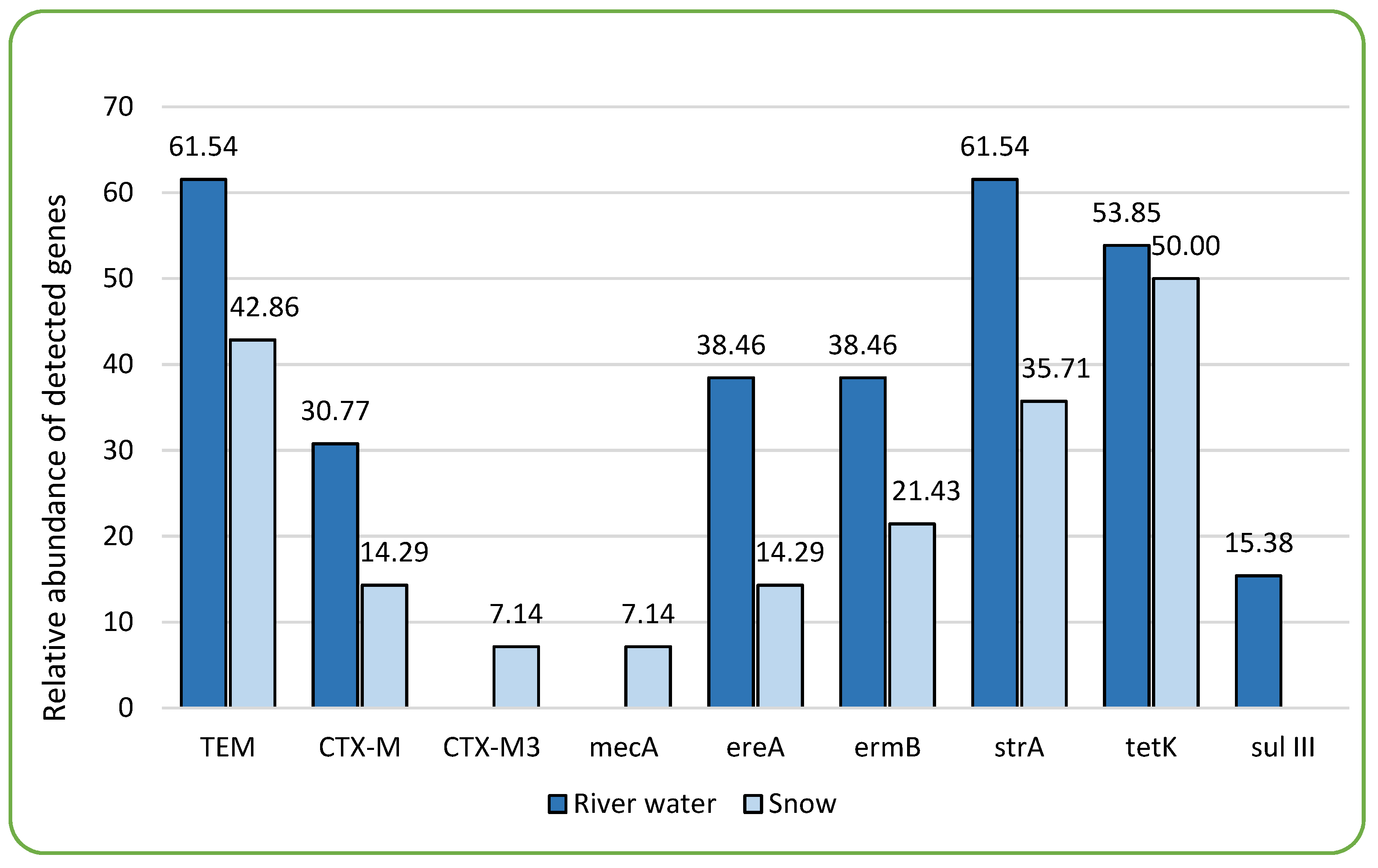
Figure 2.
Comparison of prevalence of detected ARGs in ski stations with and without reservoirs.
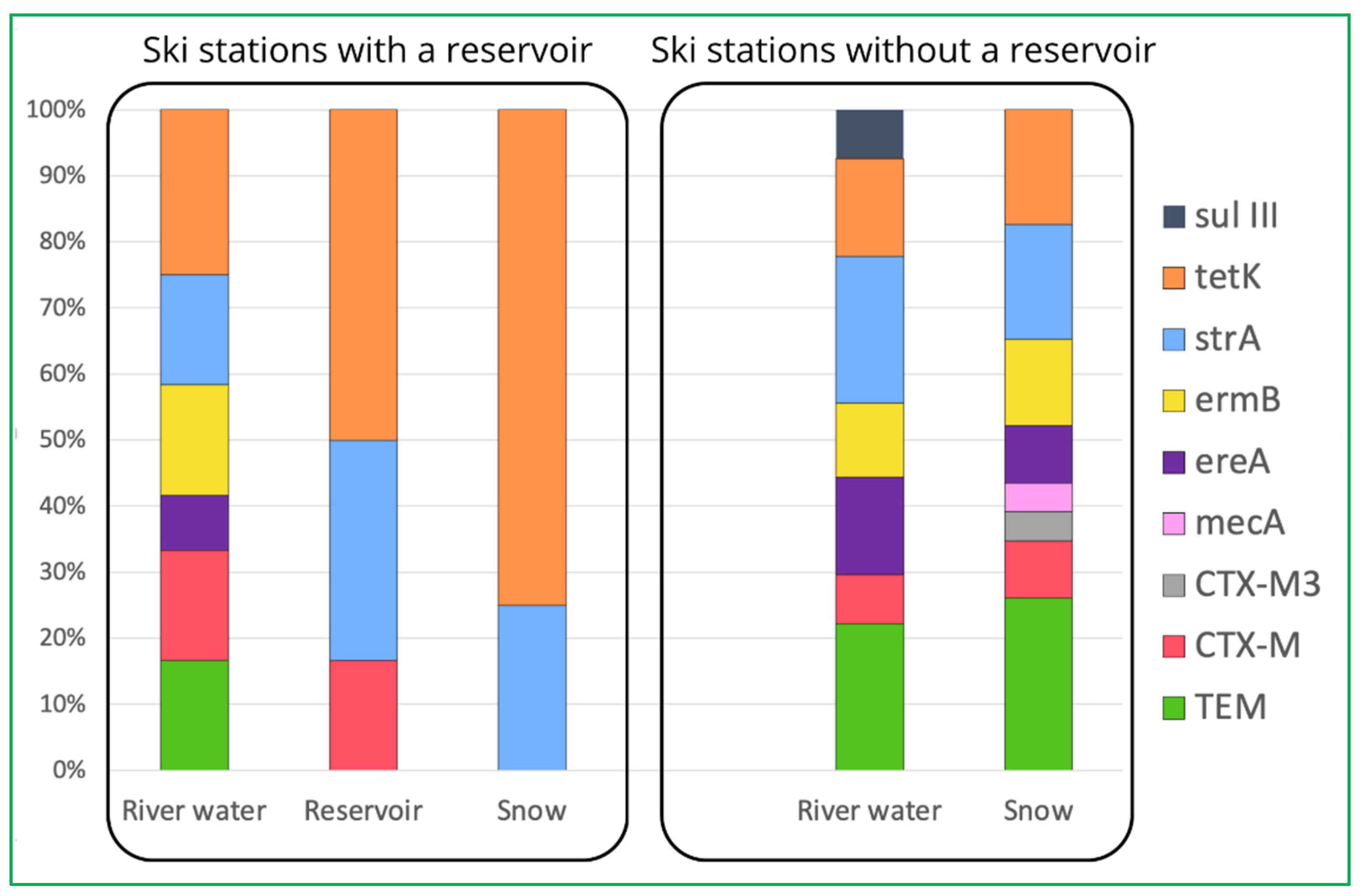
Figure 3.
Differences in alpha-diversity indices between the types of samples (river water, reservoir water, technical snow) and between the examined sites.
Figure 3.
Differences in alpha-diversity indices between the types of samples (river water, reservoir water, technical snow) and between the examined sites.
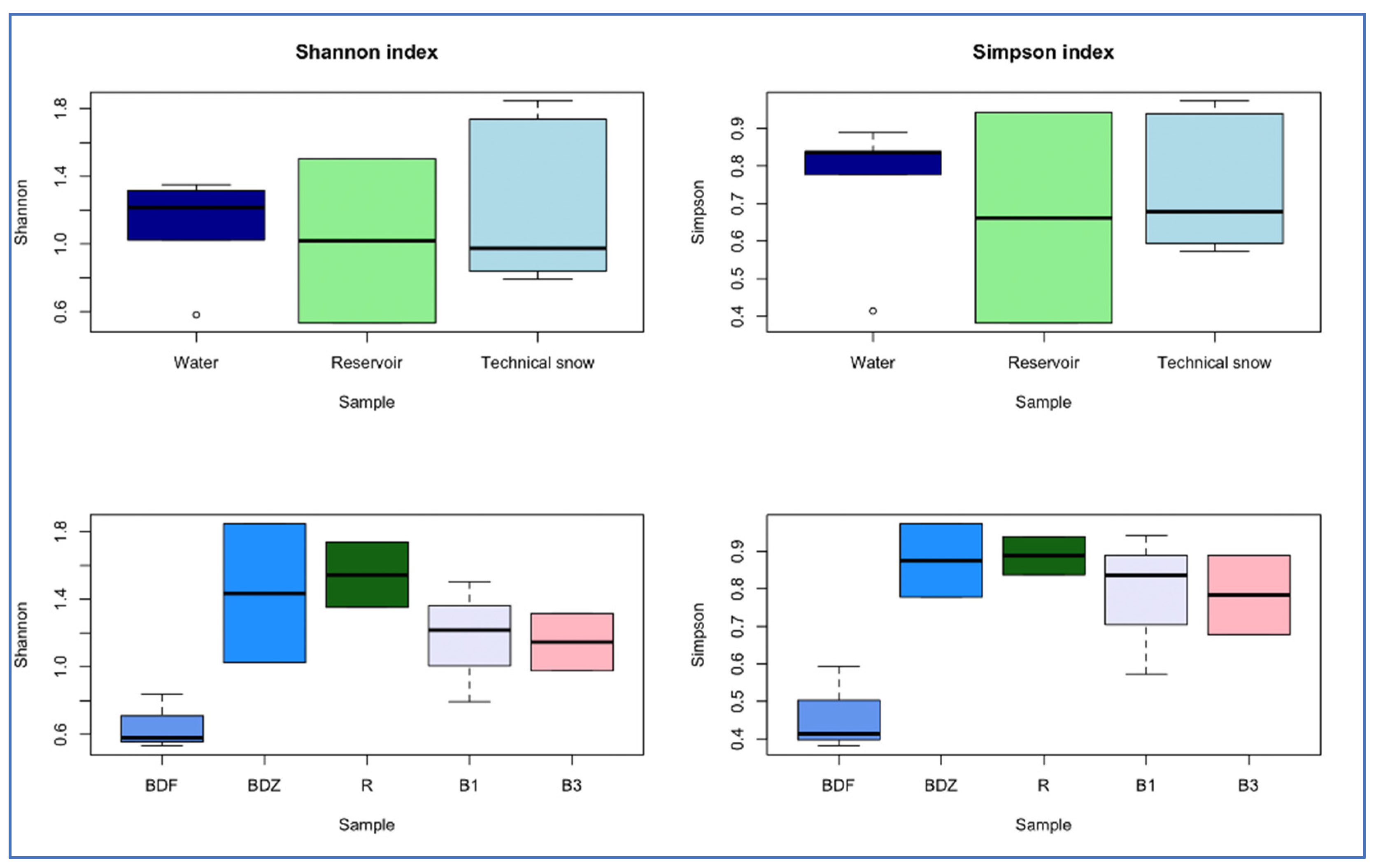
Figure 4.
Hierarchical clustering and a heatmap of pair-wise Bray-Curtis dissimilarity between bacterial communities of individual samples (0 indicates identical community composition and 1 indicates completely different compositions of compared samples).
Figure 4.
Hierarchical clustering and a heatmap of pair-wise Bray-Curtis dissimilarity between bacterial communities of individual samples (0 indicates identical community composition and 1 indicates completely different compositions of compared samples).
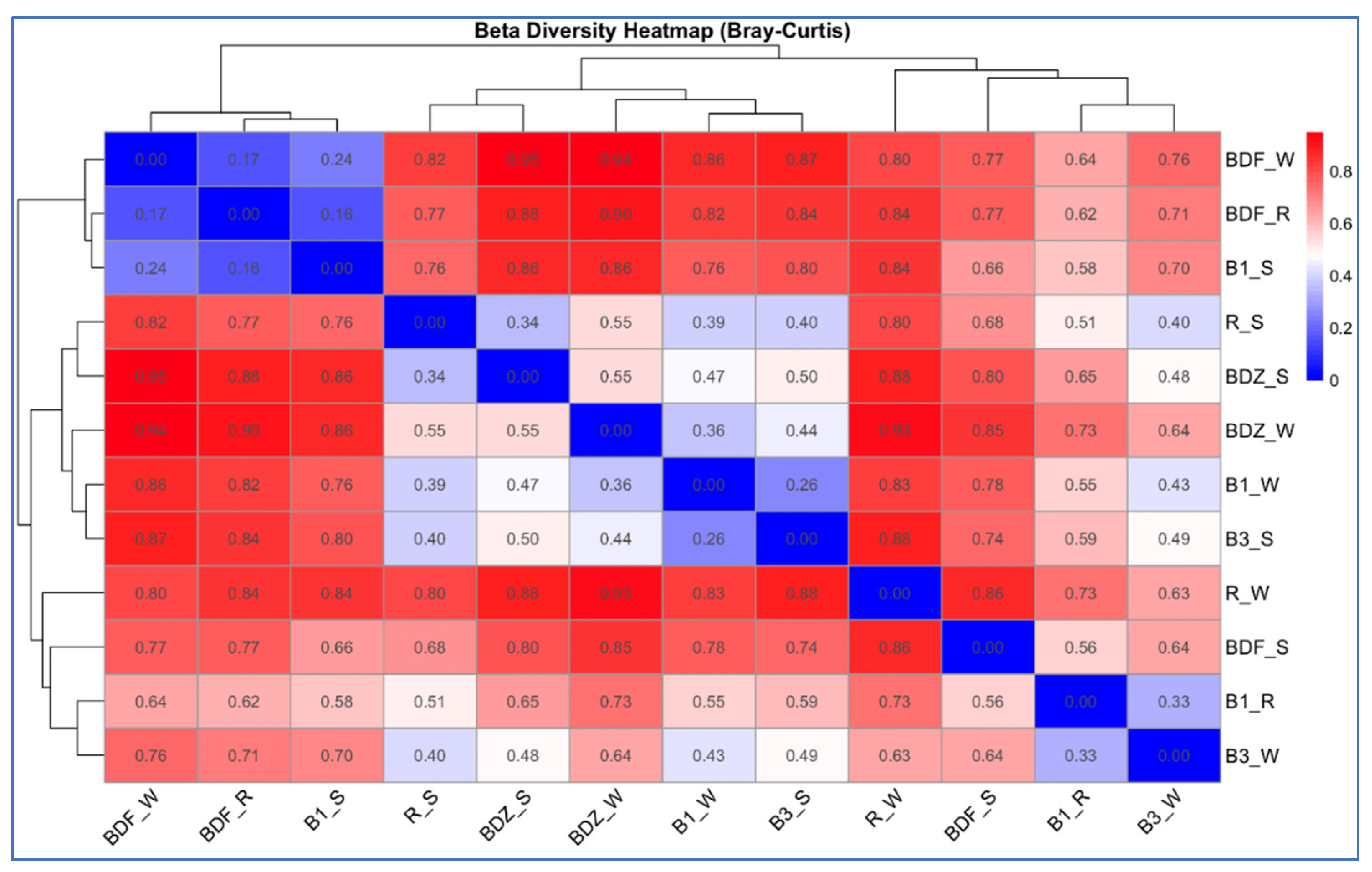
Figure 5.
Bacterial community composition of river water, reservoir water and snowmelt water samples, a) at the phylum level, b) at the family level and c) at the genus level.
Figure 5.
Bacterial community composition of river water, reservoir water and snowmelt water samples, a) at the phylum level, b) at the family level and c) at the genus level.
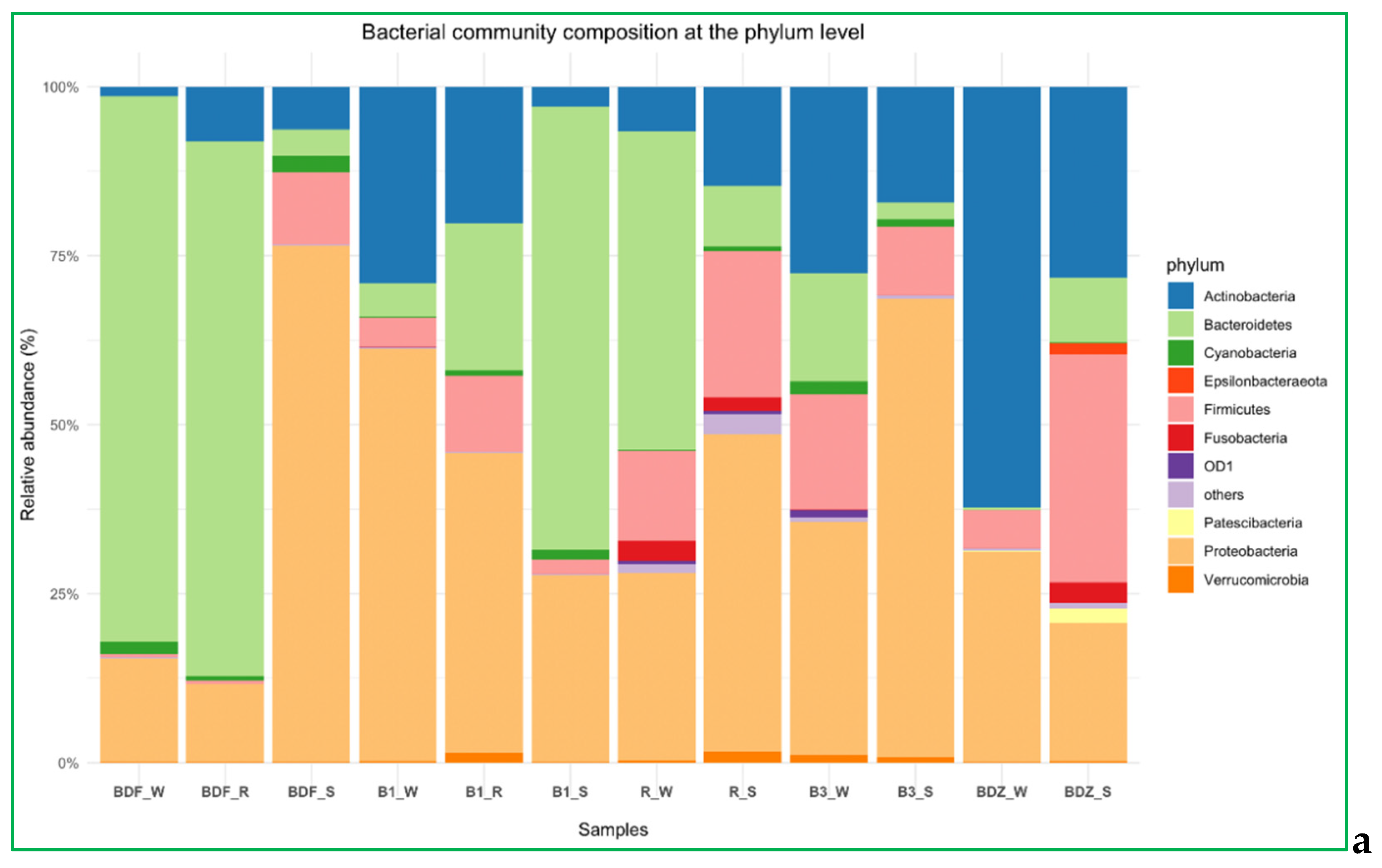
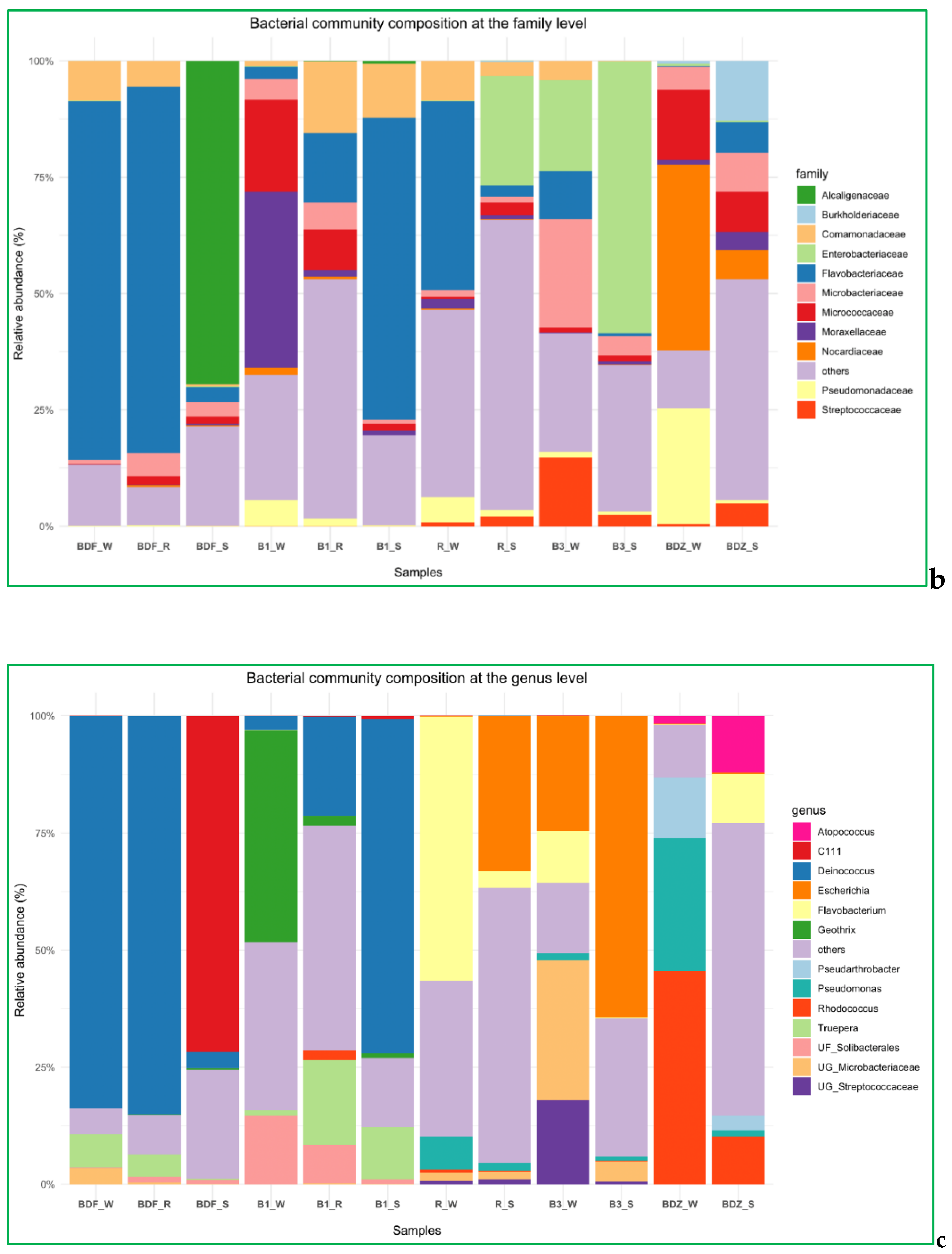
Figure 6.
Bar plots depicting the significant differences in the number of reads between the water and snow samples at the genus level (analysis was conducted for OTU exceeding the threshold of 100 reads).
Figure 6.
Bar plots depicting the significant differences in the number of reads between the water and snow samples at the genus level (analysis was conducted for OTU exceeding the threshold of 100 reads).
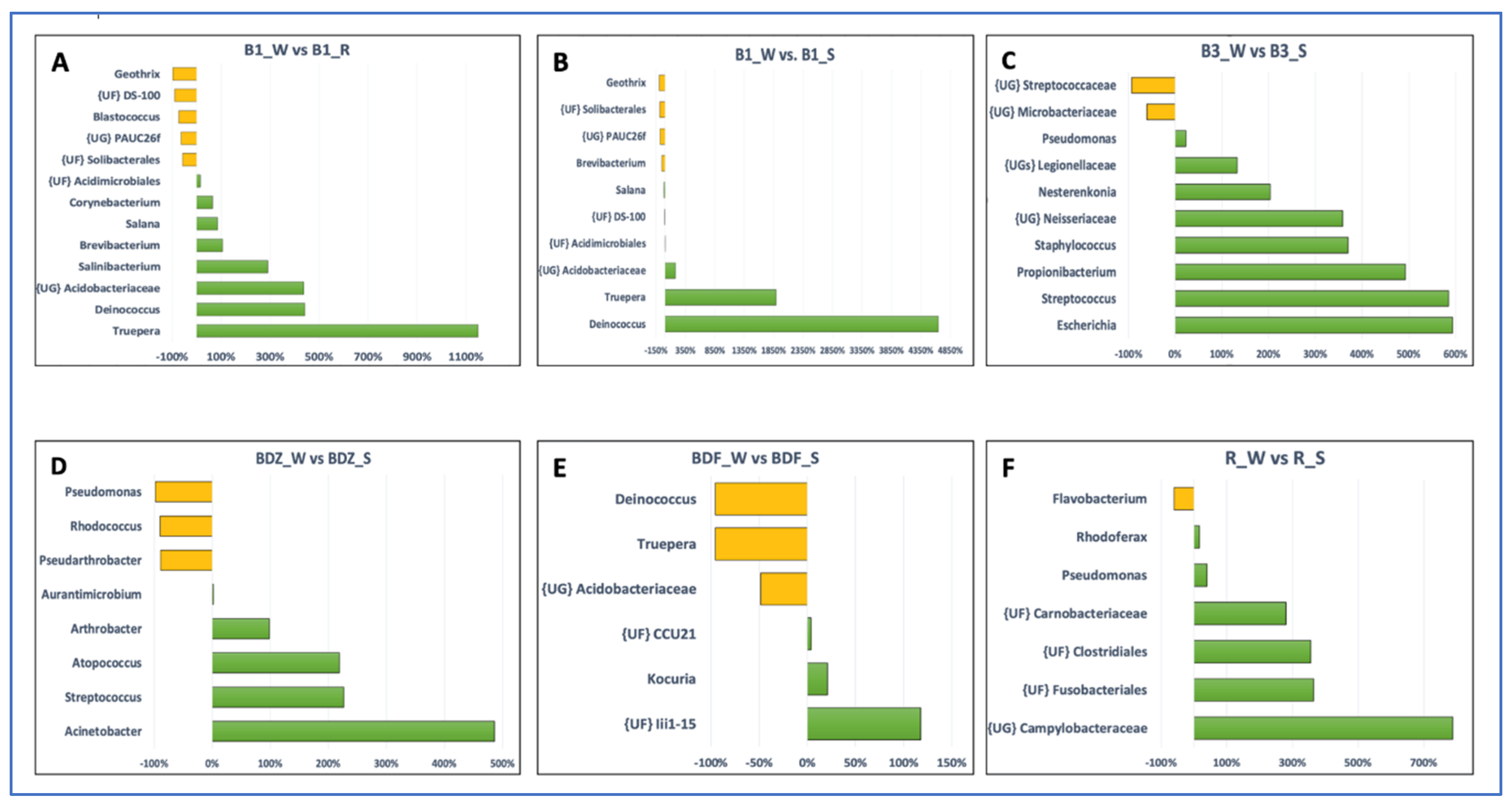
Figure 7.
Principal Component Analysis (PCA) based on the bacterial community composition at the genus level, culturable bacteria, concentrations of antibiotics and sum of genetic determinants of antibiotic resistance in a given sample. a) PC1 / PC2; b) PC1 / PC3.
Figure 7.
Principal Component Analysis (PCA) based on the bacterial community composition at the genus level, culturable bacteria, concentrations of antibiotics and sum of genetic determinants of antibiotic resistance in a given sample. a) PC1 / PC2; b) PC1 / PC3.
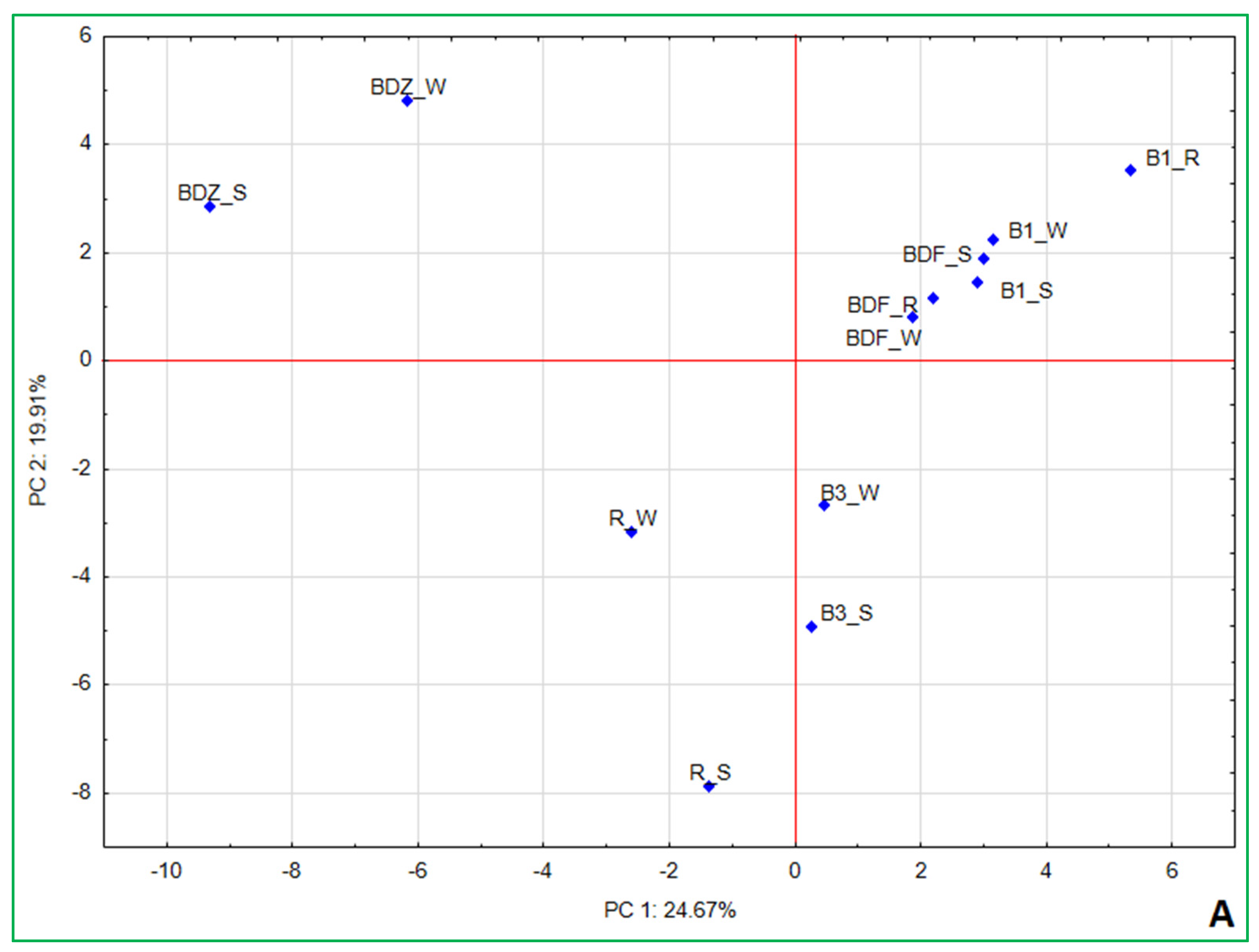
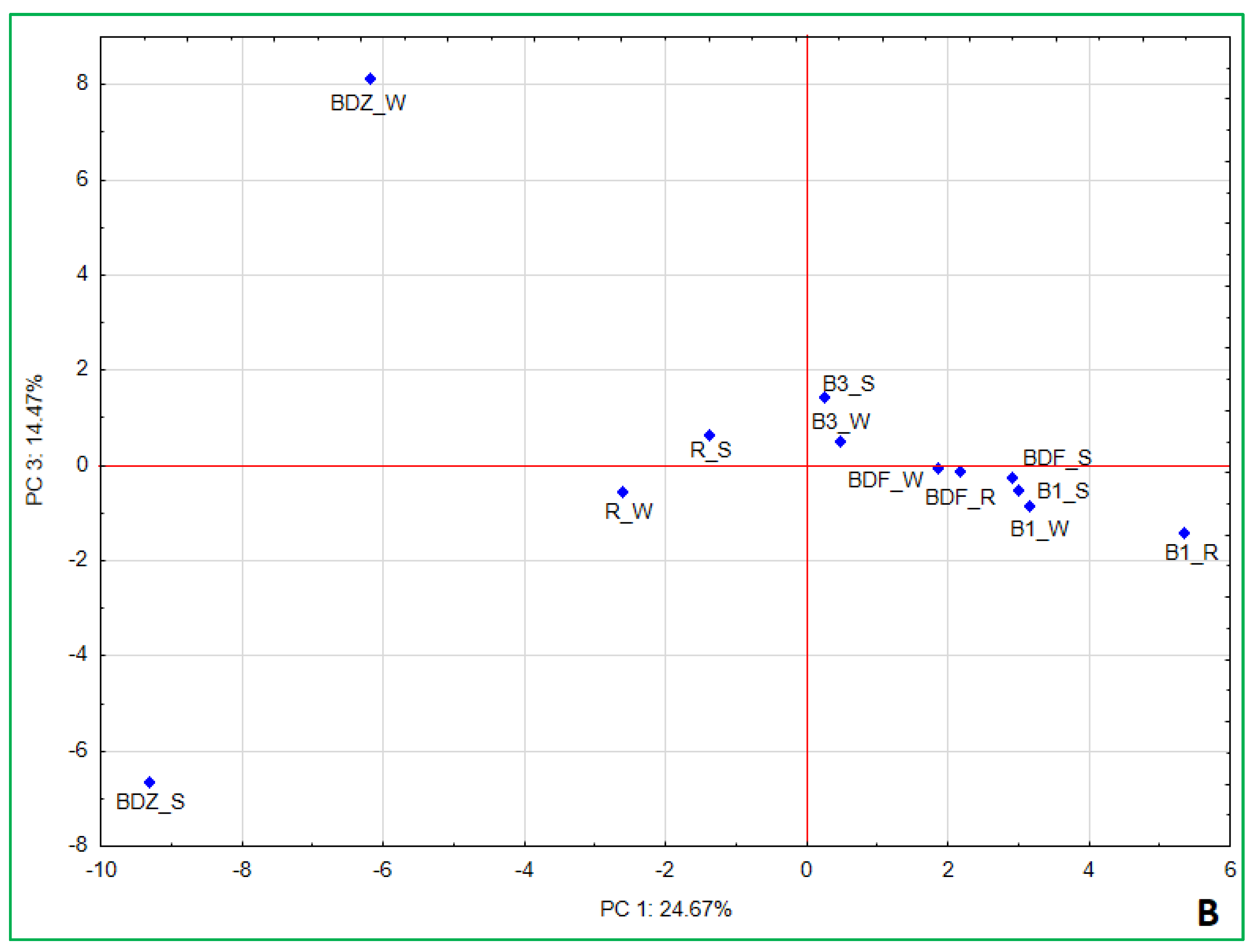
Table 1.
Brief description of study sites with mean numbers of bacterial indicators of water quality.
Table 1.
Brief description of study sites with mean numbers of bacterial indicators of water quality.
| Code | Height above sea level | number of inhabitants | Anthropogenic pressure description | Technical reservoir | sample description and code | E. coli | E. faecalis/ E. faecium | Salmonella | Coagulase-positive Staphylococci |
| [m a.s.l] | [yes/no] | CFU/100 ml | CFU/ml | ||||||
| BDF | 850 | 540 | upstream of a small village next to the Tatra National Park, upstream of wastewater discharge sites | yes | river water (BDF_W) | 1 | 4 | 1 | 0 |
| storage reservoir (BDF_R) | 0 | 5 | 0 | 350 | |||||
| snowmelt water (BDF_S) | 1 | 7 | 1 | 0 | |||||
| B3 | 760 | 950 | upstream of a small village next to the Tatra National Park and the Polish/Slovakian border | no | river water (B3_W) | 119 | 45 | 0 | 2 |
| snowmelt water (B3_S) | 0 | 26 | 0 | 2 | |||||
| B1 | 700 | 2,300 | center of a popular tourist resort, c.a. 3 km downstream of a WWTP | yes | river water (B1_W) | 186 | 94 | 0 | 0 |
| storage reservoir (B1_R) | 14 | 13 | 0 | 0 | |||||
| snowmelt water (B1_S) | 2 | 7 | 0 | 12 | |||||
| R | 315 | 17,500 | center of a medium-sized town, downstream of several ski resorts, c.a. 5 km downstream of a hospital, c.a. 10 km of a WWTP | no | river water (R_W) | 298 | 45 | 56 | 328 |
| snowmelt water (R_S) | 87 | 26 | 5 | 232 | |||||
| BDZ | 750 | 25,000 | center of a popular tourist resort, c.a. 3 km downstream of a WWTP, c.a. 2 km downstream of a hospital | no | river water (BDZ_W) | 224067 | 273641 | 10785 | 8667 |
| snowmelt water (BDZ_S) | 153 | 286 | 4 | 190 | |||||
Table 4.
PCR primers for antimicrobial resistance genes with primer annealing temperature and product length.
Table 4.
PCR primers for antimicrobial resistance genes with primer annealing temperature and product length.
| No. | Resistance mechanism | Gene | Primer | Sequence (5’-3’) | Annealing temp. (°C) | Product length (bp) | Reference |
| 1. | Extended-spectrum beta-lactamases (ESBL) | blaTEM | blaTEM-F | ATTCTTGAAGACGAAAGGGC ACGCTCAGTGGAACGAAAAC |
60 | 1150 | [46] |
| blaTEM-R | |||||||
| 2. | blaCTX-M | blaCTX-M-F | CGATGTGCAGTACCAGTAA TTAGTGACCAGAATCAGCGG |
55 | 585 | [47] | |
| blaCTX-M-R | |||||||
| 3. | blaCTX-M3 | blaCTX-M3-F | GTTACAATGTGTGAGAAGCAG CCGTTTCCGCTATTACAAAC |
50 | 1049 | [48] | |
| blaCTX-M3-R | |||||||
| 4. | blaCTX-M9 | blaCTX-M9-F | GTGACAAAGAGAGTGCAACGG ATGATTCTCGCCGCTGAAGCC |
54 | 856 | [49] | |
| blaCTX-M9-R | |||||||
| 5. | blaSHV | blaSHV-F | CACTCAAGGATGTATTGTG TTAGCGTTGCCAGTGCTCG |
52 | 885 | [46] | |
| blaSHV-R | |||||||
| 6. | blaOXA-1 | blaOXA-1-F | ACACAATACATATCAACTTCGC AGTGTGTTTAGAATGGTGATC |
61 | 813 | [46] | |
| blaOXA-1-R | |||||||
| 7. | Carbapenemases class D | blaOXA-48 | blaOXA-48-F | GCTTGATCGCCCTCGATT GATTTGCTCCGTGGCCGAAA |
60 | 281 | [50] |
| blaOXA-48-R | |||||||
| 8. | Carbapenemases class A | blaKPC | blaKPC-F | TGTTGCTGAAGGAGTTGGGC ACGACGGCATAGTCATTTGC |
57 | 340 | [50] |
| blaKPC-R | |||||||
| 9. | Carbapenemases class B | blaIMP | blaIMP-F | TTGACACTCCATTTACAG GATCGAGAATTAAGCCACCC |
56 | 139 | [50] |
| blaIMP-R | |||||||
| 10. | blaVIM | blaVIM-F | GATGGTGTTTGGTCGCATA CGAATGCGCAGCACCAG |
60 | 390 | [50] | |
| blaVIM-R | |||||||
| 11. | blaNDM | blaNDM-F | GGTTTGGCGATCTGGTTTTC CGGAATGGCTCATCACGATC |
60 | 621 | [51] | |
| blaNDM-R | |||||||
| 12. | Methicillin-resistance | mecA | mecA-F | GTAGAAAATGACTGAACGTCCGATAA CCAATTCCACATTGTTTCGGTCTAA |
55 | 310 | [52] |
| mecA-R | |||||||
| 13. | Macrolide-lincosamide-streptogramin B (MLSb) resistance genes | ereA | ereA -F ereA -R |
AACACCCTGAACCCAAGGGACG CTTCACATCCGGATTCGCTCGA | 57 | 420 | [53] |
| 14. | ereB | ereB -F ereB -R |
AGAAATGGAGGTTCATACTTACCA CATATAATCATCACCAATGGCA |
52 | 546 | [53] | |
| 15. | ermA | ermA -F ermA -R |
TCTAAAAAGCATGTAAAAGAA CTTCGATAGTTTATTAATATTAGT |
52 | 645 | [53] | |
| 16. | ermB | ermB -F ermB -R |
GAAAAGGTACTCAACCAAATA AGTAACGGTACTTAAATTGTTTAC |
55 | 639 | [53] | |
| 17. | msrA | msrA -F msrA -R |
GGCACAATAAGAGTGTTTAAAGG AAGTTATATCATGAATAGATTGTCCTGTT |
50 | 940 | [54] | |
| 18. | msrB | msrB -F msrB -R |
TATGATATCCATAATAATTATCCAATC AAGTTATATCATGAATAGATTGTCCTGTT |
50 | 595 | [54] | |
| 19. | mphA | mphA -F mphA -R |
AACTGTACGCACTTGC GGTACTCTTCGTTACC |
50 | 837 | [53] | |
| 20. | lnuA | lnuA -F lnuA -R |
GGTGGCTGGGGGGTAGATGTATTAACTGG GCTTCTTTTGAAATACATGGTATTTTTCGATC |
57 | 323 | [54] | |
| 21. | vatA | vatA -F vatA -R |
CAATGACCATGGACCTGATC CTTCAGCATTTCGATATCTC |
52 | 619 | [54] | |
| 22. | vatB | vatB -F vatB -R |
CCCTGATCCAAATAGCATATATCC CTAAATCAGAGCTACAAAGT |
52 | 602 | [54] | |
| 23. | vga | vga -F vga -R |
CCAGAACTGCTATTAGCAGATGAA AAGTTCGTTTCTCTTTTCGACG |
54 | 470 | [54] | |
| 24. | vgb | vgb -F vgb -R |
ACTAACCAAGATACAGGACC TTATTGCTTGTCAGCCTTCC |
53 | 734 | [54] | |
| 25. | Streptomycin resistance | strA | strA -F strA -R |
TCAATCCCGACTTCTTACCG CACCATGGCAAACAACCATA |
52 | 126 | [55] |
| 26. | Trimetophrim resistance | dfrA12 | dfrA12 -F dfrA12 -R |
TTTATCTCGTTGCTGCGATG AGGCTTGCCGATAGACTCAA |
50 | 155 | [56] |
| 27. | Aminoglycoside resistance | aac(6')/ aph(2'') | aac(6')/ aph(2'') -F aac(6')/ aph(2'')-R | CAGAGCCTTGGGAAGATGAAG CCTCGTGTAATTCATGTTCTGGC |
55 | 348 | [57] |
| 28. | Tetracyclines resistance | tetK | tetK -F tetK -R |
TCGATAGGAACAGCAGTA CAGCAGATCCTACTCCTT |
55 | 169 | [58] |
| 29. |
Sulfonamides resistance |
sulIII | sulIII -F sulIII -R |
ACCACCGATAGTTTTTCCGA TGCCTTTTTCTTTTAAAGCC |
62 | 199 | [56] |
Disclaimer/Publisher’s Note: The statements, opinions and data contained in all publications are solely those of the individual author(s) and contributor(s) and not of MDPI and/or the editor(s). MDPI and/or the editor(s) disclaim responsibility for any injury to people or property resulting from any ideas, methods, instructions or products referred to in the content. |
© 2025 by the authors. Licensee MDPI, Basel, Switzerland. This article is an open access article distributed under the terms and conditions of the Creative Commons Attribution (CC BY) license (http://creativecommons.org/licenses/by/4.0/).
Copyright: This open access article is published under a Creative Commons CC BY 4.0 license, which permit the free download, distribution, and reuse, provided that the author and preprint are cited in any reuse.


