
Submitted:
26 February 2025
Posted:
27 February 2025
You are already at the latest version
Abstract
Sustainability has been a long-time employed but distorted concept, following the unsuitable approaches used by large corporations claiming to achieve sustainability. Regardless, several reports show that the net-zero emission goal of 2050 will likely not be achieved in this century. This paper posits that circumnavigating this challenge demands the adoption of sufficiency-based objectives using a project management perspective with a laser focus on the choice of materials. This understanding stems from the belief that all production processes are fundamentally influenced by the choice of materials whether it be energy, construction, food processing etc.However, the paper does not neglect the laws of supply and demand, the economic turbulence of market forces, and the need for profit maximisation. Hence the recommendation for inducing a reductionist lifestyle through a sufficiency-based marketing mix aimed at altering consumption behaviours. The intent is to influence a consumer sufficiency-type demand and match it with relevant product types, consequently leading to significant waste negation. Therefore, this paper significantly examines the possible alterations and key determinants in the decision of what choice of materials to use in production, namely, reduce, reuse, and recycle. The results show that a full-on adoption of the circular economy model is currently impossible, but some parts of the model can be implemented and the existing sustainability activities by corporations further expanded. Based on earlier works, this paper recommends a sufficiency-based approach for achieving sufficiency at the micro-, meso- and macro-levels of sustainability.
Keywords:
sufficiency
; sustainability development
; material utilisation
; project management (PM)
; circular economy
1.0. INTRODUCTION
Attaining a circular economy has long been a lofty proposition that gained momentum following Kenneth Boulding’s 1996 essay “The Economics of the Coming Spaceship Earth” (Boulding, 2013). The circular economic model conveys the perspective of limiting the quantity of material resources used in industrial and production processes, and promotes the reconfiguration of current materials in other usable forms (Maitre-Ekern, 2018). Following the ancient understanding of the circle, being a geometric shape having no joints and being optimally balanced. The shape conveys an interconnectedness of all things, having no beginning nor end. Hence, it serves as the foundational template for the sought-after economy in which there are no joints (or waste points in this case), by ensuring the interconnectedness of all resources (both tangible and intangible) through a constant utilisation flow (Bianchini, Rossi and Pellegrini, 2019).
While such a lofty ambition holds great advantages from a theoretical standpoint in its negation of waste and proposed significant reduction in costs. Its implementation has broadcasted the need for reconfiguring existing industry operations by transforming energy sources and supply chains, with the supposed claims of making them environment-friendly; however, this has yet to be infrastructurally achieved (Agarwal, Tyagi and Garg, 2023; De Giovanni and Folgiero, 2023). This is because though it seems theoretically possible in utilising a finite number of atoms for a purpose and disassembling these atoms for another purpose (Allwood, 2024); employing it on an industrial scale is significantly challenging due to the numerous and complex constraints at play, especially, cost, quality and time. These constraints underscores the discourse’s approach of examining the intended objectives of a circular economy using a project management (PM) lens (Sanchez and Haas, 2018; Khalife and Dunay, 2019).
In examining the relationship between circular economy objectives and PM constraints, it is imperative to critically consider the trade-offs to be made among the three constraints in Figure 1. Iacovidou et al. (2017) explains that while it is necessary to balance project delivery across all three constraints, it does not necessarily demand an equal distribution, but an equitable distribution that permits the most minimal compromise possible. This proposes that the ideal entirety of the circular economy cannot be achieved, largely due to the transformation of large amounts of energy required in destroying and reforming atoms, and the likely loss of atoms in the process. Nevertheless, depending on the industry or field, some aspects of the circular economy frameworks can be made to function regardless of the trade-offs to be made (Kravchenko, Pigosso and McAloone, 2020).
Many studies support this stance on the actual feasibility of a whole circular economy as not being the proposed technical fix to the global environmental and economic problems it is purported to be (Van Fan et al., 2019; Adami and Schiavon, 2021; Iacovidou, Hahladakis and Purnell, 2021; Fellner and Brunner, 2022). Moreover, research on expanding mankind’s current production ability in sustaining existing industry processes with regards to energy sourcing, material utilisation and waste conversion, remains limited. As efforts are made to simultaneously conduct production while fulfilling Boulding’s stipulated criteria concerning achieving circular economy; “if global demand for both the volume and composition of products are stabilised” (Allwood, 2014, 2024). It has become more pertinent to critically reflect on the feasibility of the circular economy in terms of a project objectives and sub-component goals targeted at specific outcomes. Boulding’s criterion while simplistic has critical political, economic and social implications on the control of human needs, and consumer purchasing intention and action. However, fully conceding to this criterion negates the possibility of an extrinsically-forced control. Rather it espouses the necessity for an intrinsically-formed control on human needs and consumer purchase. Hence, calling for an approach focused on sufficiency rather than sustainability, with a project management mindset.
Therefore, this paper intends to critically examine the limitations of current sustainability development practices regarding material utilisation, from a PM perspective. The researcher believes a PM perspective is necessary in coordinating and implementing necessary solutions across all levels and dimensions of sustainability. The core processes of reduce, reuse and recycle will be examined with regards to their existing contributions towards achieving a circular economy. Lastly, a sufficiency approach for attaining key circular economy objectives will be proposed based on the observations of the critical assessments of material utilisation in industrial processes.
2.0. SUSTAINABILITY DEVELOPMENT LIMITATIONS IN MATERIAL UTILISATION.
Sustainability development has been popularly described using the Brundtland definition from the 1947 United Nations convention. This states that, “sustainable development is development that meets the needs of the present without compromising the ability of future generations to meet their own needs" (Emas, 2015). This definition has been the basis for evaluating the sustainability impact of industrial processes and practices. However, this definition begs the question of what approaches are actually used in achieving the needed sustainability impact. Hence, the often-examined approach of energy sourcing, material utilisation and waste-to-energy conversion (Islam and Hasanuzzaman, 2020; Sakalasooriya, 2021; Ogunmakinde, Egbelakin and Sher, 2022a). Based on growing research, these three aspects are the most fundamental dimensions of human and infrastructural development, and have been highlighted as core sectors requiring sustainability approaches across the agreed dimensions of sustainability, namely, economic, environmental and social dimensions (Ikromjonovich, 2023). This is highlighted in the ardent desire for a ‘balanced delivery’ across all dimensions using the triple bottom-line (TBL) framework and the sustainable development goals (SDGs) (Mancini et al., 2019; Giannetti et al., 2020; Ogunmakinde, Egbelakin and Sher, 2022b). Examining these core dimensions in an attempt to quantify their operational improvements, reveal a severely unbalanced delivery and slow adaptation (Fatimah et al., 2020). For instance, there have been significant strides in the development and adoption of renewable energy and energy efficiency in terms of energy sourcing in the last decade, as well as innovative processes in waste-to-fuel conversion (Saleh, 2020). Albeit, slowly when equated with global demand of fossil fuels and global waste generated. Nevertheless, material utilisation is yet to achieve any considerable stride, especially when the most fundamental decision of production remains: choice of materials (Allwood, 2024). This supposes that industries are more or less set in their ways and engaging in the easiest innovations, that does not disrupt the balance of operations and profit margins.
The popular science dogma taught to basic or primary school students (depending on the national structure of education), is that all things are matter and constitute atoms. Further science classes, explain the sub-components of atoms and their nature of conversion between states such as solid, liquid and gas. With more complex classes highlighting the conversion of matter between states and the popularised mantra “reduce, reuse, recycle”. According to Mohammed et al. (2020), earlier studies have proffered the combined use of these three processes as a robust approach in reducing the adverse societal impacts across the sustainability dimensions (economic, environment and social). Evidence from sustainability reports and conducted studies have shown that regardless of significant industry practices and consumption incorporating these three processes, materials utilisation efficiency is still questionable, with significant amounts of waste still being generated incrementally (Corona et al., 2019; Sodiq et al., 2019; Zorpas, 2020; Panchal, Singh and Diwan, 2021; Yu et al., 2021; Lamba et al., 2022). Additionally, predictive data has emphasised the future adverse impacts of waste on society and availability of resources (Meza et al., 2019; Ali et al., 2020). This leaves room for argument on the feasibility of the acclaimed sustainability approaches implemented towards sustainable development. Ordinarily, reuse and recycle are aligned with waste conversion; however, this paper incorporates both under material utilisation. This is because both processes aim at using waste from the end of a product lifecycle as formation materials in a new production cycle.
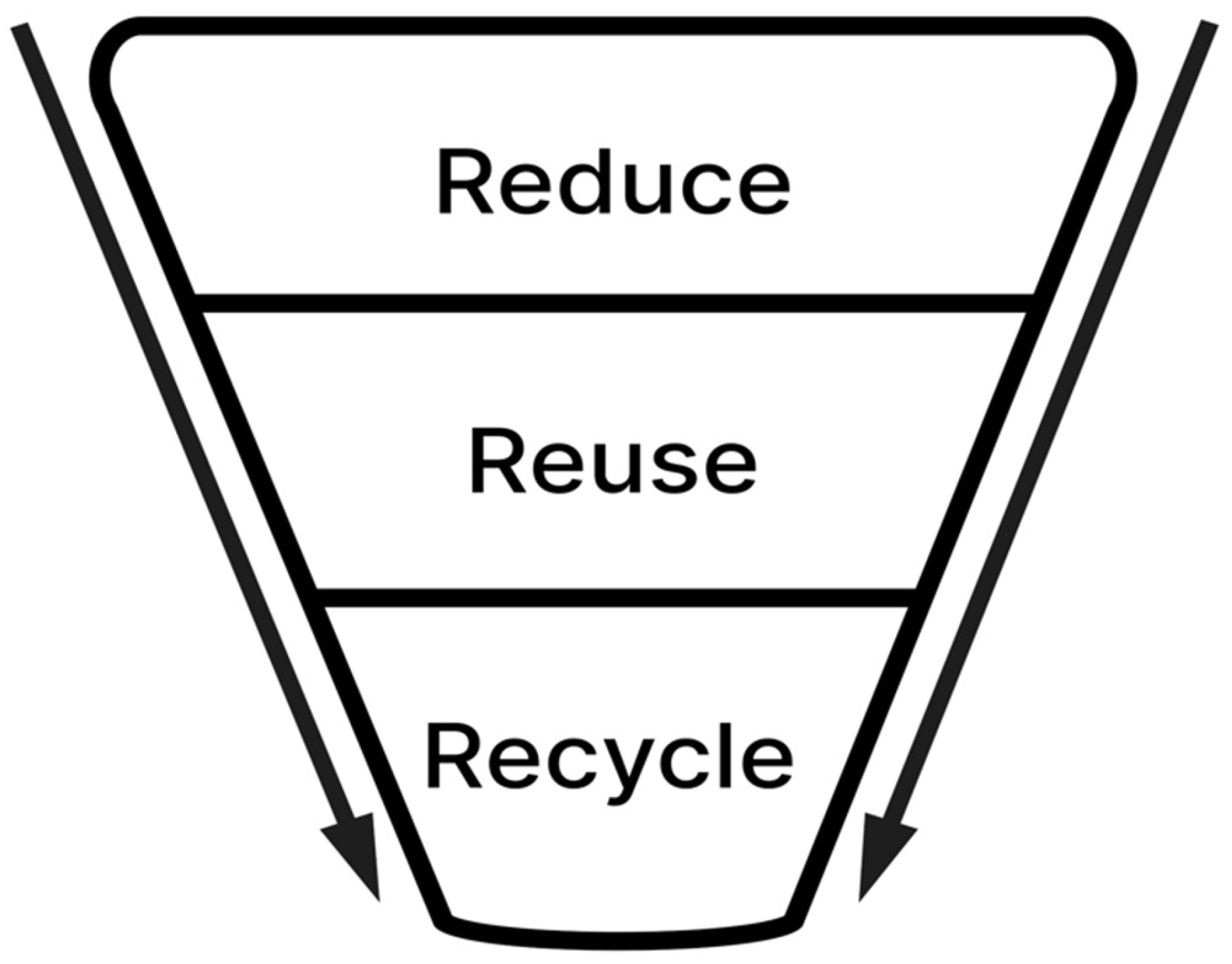
Figure 2.
Reduce, reuse and recycle.
2.1. REDUCE
This simply implies reducing the use of materials in production. However, the possibility of reduction holds a correlative relationship with consumption or consumer demand (Bélanger-Gravel et al., 2019). This highlights the crucial importance of sustainability marketing. Production and consumption variables vary, depending on the peculiarities of products, industry operations, and national markets. Nevertheless, market behaviour primarily remains subject to supply and demand. Ideally, a reduction in material utilisation in production will create a reduction in supply to the manufacturers. However, this may not necessarily result in reduced demand, but a higher level of unfulfilled consumers’ demands. A continued occurrence of this creates scarcity, and possibly hoarding due to product sellers seeking to increase selling prices and their profit margins. This is a total aberration to sustainability as the needs of the current generation are not met. This flaw in the reduction approach compels an alternative that reconfigures consumption, ensuring a lower demand for finished products, without compromising the needs of the present generation or the quality of product utility. Essentially, it necessitates the global human attainment of sufficiency as a lifestyle.
The human lifestyle is significantly affected by existing social status and cadres, which are heavily linked to wealth and desire for luxury. Kelleci and Yıldız (2021) proposed a guiding framework for levels of sustainability in marketing based on Kotler’s Dichotomy as shown in Figure 3. With Levels 4 and 5 designated as sustainable and sufficiency marketing orientations, each having refurbished and nominal consumption patterns, respectively. The preventionist paradigm (nominal consumption) while simple is the most complex of the proposed processes; hence, the inability and inefficiency of industries and national governments in coordinating any significant progress towards waste negation and reduced consumption. This is observed in the annual global demand surges for consumables (aside food) such as energy, vehicles, housing, clothes and luxury products (Ellsworth-Krebs, 2020). Furthermore, with many industries sharing supply chains, wherein the supply and demand actions in one industry, have significant impact on the product cost and materials availability in another industry. It is pertinent to conduct an efficient global systems evaluation in terms of the component sub-systems/industries, when examining consumption pathways (Puntillo, 2023). A good example is the fossil fuel industry which provides hydro-carbon fuels used in transportation and machine operations, iron employed in steel production and a wider range of production processes. An attempt to totally reconfigure the fossil fuel industry will demand the adjustment of all vehicular transportation including airplanes, ships and trains, and machine engines used in production. A currently impossible venture, as it is significantly cost ineffective.
Kelleci and Yildiz (2021) used the waste management aspect in distinguishing between sufficiency and sustainability, stating sufficiency to be focused on waste prevention, and sustainability on waste reduction. However, this framework poses a challenge concerning the feasibility of waste prevention. First, the definition of waste prevention is crucial, and it simply means negating the creation of any waste. While laudable, its feasibility is in question as waste is a primary component of all human production activities. Even if the tangible or physically identified wastes could be negated, what about energy, time frames and quality fluctuations beyond defined tolerance values. These are intangible yet crucial in production, and no machine efficiency can ever be 100% due to the definite waste of the intangible materials. The highest achievable efficiency is 99.99999999999%, and this significantly lowers with the increasing complexity of operations involved in any production process. Hence, absolute waste prevention is an impossibility. Nevertheless, adopting sufficiency development should be a function of a farther reach at waste reduction (Fatimah et al., 2020). Therefore, creating a system of nominalised lifestyle and demand, with equated provision for a balanced supply using the lowest number of resources (both tangible and intangible) in ensuring demand is met, proffers a sufficiency approach. However, this may require global aversion to luxury, which does not seem attainable with the generational cohorts of the Millennials and Gen Z (Han and Kim, 2020; Dobre et al., 2021).
Kelleci and Yıldız (2021) framework recommends that Level 4 marketing strategy should aim to develop a new consciousness among consumers towards consumption. However, even they acquiesce that Level 4 is limited by its dependency on the resale value of used products. This is because the employed strategy regarding offsetting ecological costs is the cheaper resale of used products in fuelling the second-hand markets, much of which are in Africa. Increased resales have elevated the volumes of goods in the second-hand market, especially thrift stores for clothes, and home appliances (Maes and Preston-Whyte, 2022; Manieson and Ferrero-Regis, 2023). Such supply inadvertently creates a demand for these goods as they are sold at a significantly cheaper price for its reusable utility. While this may offset, ecological costs such as depositing in landfills or recycling; it only pertains to that location and not the location of the second-hand market. Some studies have quoted the reduced consumption during the COVID following the trade and movement restrictions during the pandemic, as a form of sustainable action (Bouman, Steg and Dietz, 2021; Degli Esposti, Mortara and Roberti, 2021; Severo, De Guimarães and Dellarmelin, 2021; Shulla et al., 2021). However, it is pertinent to note that such reduced consumption cannot be wholly attributed to reduced demand, but rather inaccessibility by many due to protection measures inhibiting movement and interaction (Howarth et al., 2020; Jiang, Van Fan and Klemeš, 2021). This resulted in a significant portion of humanity’s needs not sufficiently met at the time. Moreover, the approach of instigating a global causal factor adversely impacting human health and interaction in order to lower global demand is by all means atrocious.
The Level 5 or sufficiency marketing seeks to “appease consumption-conscious customers who seek to minimise the unnecessary consumption of material goods and the pursuit of wealth for its own sake because of emerging lifestyle choices, such as downshifting or simple living” (Kelleci and Yıldız, 2021). According to Valentine (2020), data prior to the COVID showed that 19.2% of consumers from a large survey have taken action towards modifying their purchase and use behaviour. Nevertheless, this data does not substantiate the sustainability of such actions concerning long-term behaviours. Also, such consumption behaviour could be attributed to financial buoyancy, following poor economic financial performance with more adverse impact at the domestic level, than the supposed adoption of sustainability-based consumption. Any valuable inference from this data should be accessed annually post-COVID for a minimum of 5 years, in order to ascertain any significant change in consumer behaviour. Additionally, the recommended “pay-to-use” models are not so profound in its structural ability to prevent waste, but are rather focused on improving the efficiency of products and consumptive processes, ensuring nominal use of products and significantly reduced amounts of materials (Shen et al., 2023).
Another critical point of examination are irreplaceable materials and products. For example, iron ore, fossil fuels and cement are yet to be fully replaceable, as reducing the use of these materials has a resultant impact on purchase cost of materials and labour cost of production processes in many other industries (Allwood, 2024). Depending on the industry operation and final product characteristics, the replacement ratio of these materials may vary. However, replacement ratios are dependent on cost effectiveness, and this is influenced by the availability of natural resources, and other associated costs in material utilisation (Kisku et al., 2017; Kumar and Shukla, 2023). Several literatures have highlighted firms’ reluctance in fully incorporating new materials in a bid to reduce utilisation of scarce natural resources, attributing this reluctance to limited technology and cost (Litvinenko, 2020; Mariotti et al., 2020; Schrijvers et al., 2020; Velvizhi et al., 2022). This portends a sustainability dimension challenge in cost. A juxtapose as many literatures have touted that the circular economy adoption is intended to significantly reduce production costs in the long term. Nevertheless, these studies have been hesitant in quantifying the linear-to-circular economy transformation costs, often negating such a discourse as it questions the financial applicability of the proffered solutions to the linear economy. Additionally, the economy transformation process is currently approached in a top-to-bottom manner. Whereby, the closest products to human consumption are first altered, without any structural or systemic foundation facilitating long term enhancement of the sustainability dimensions.
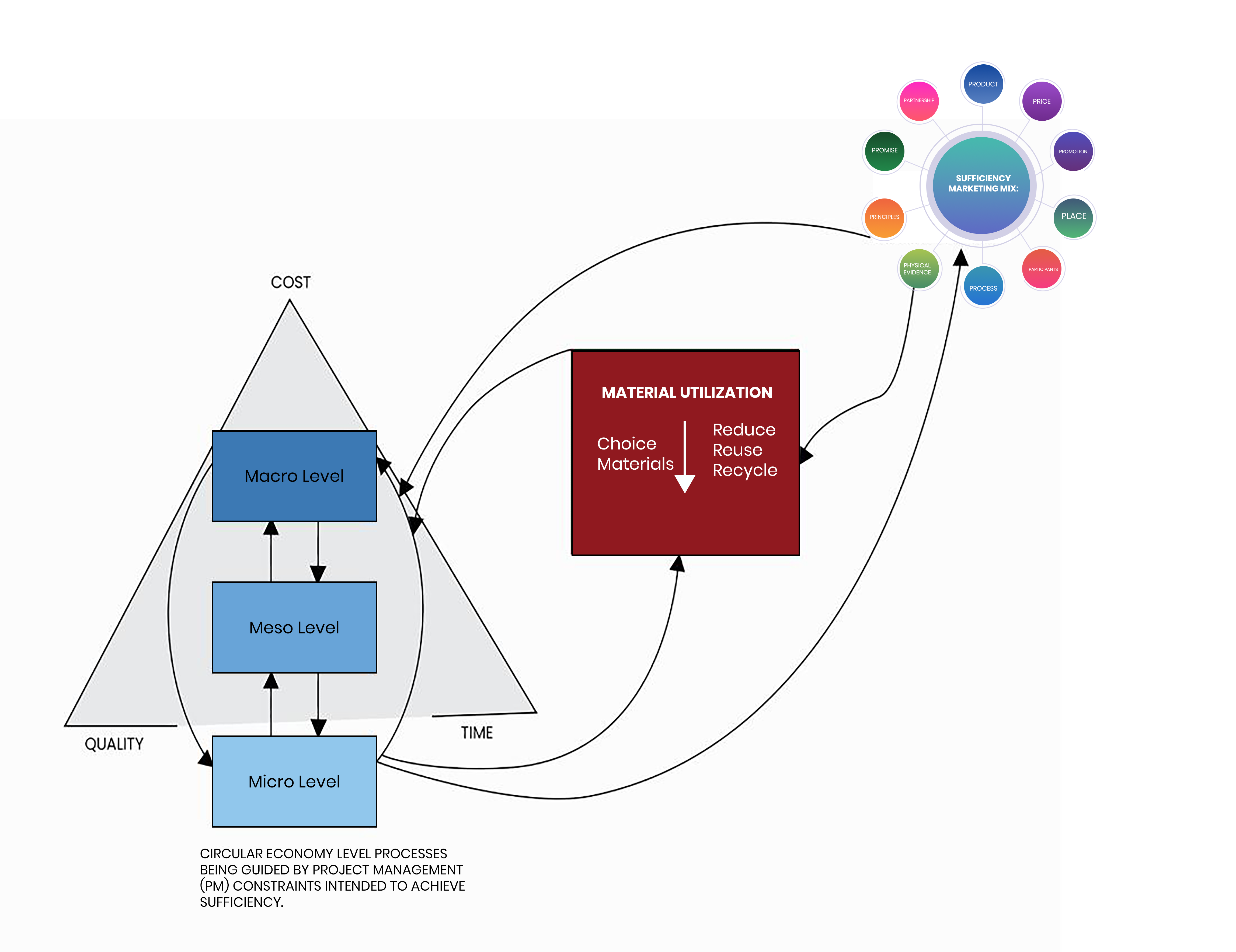
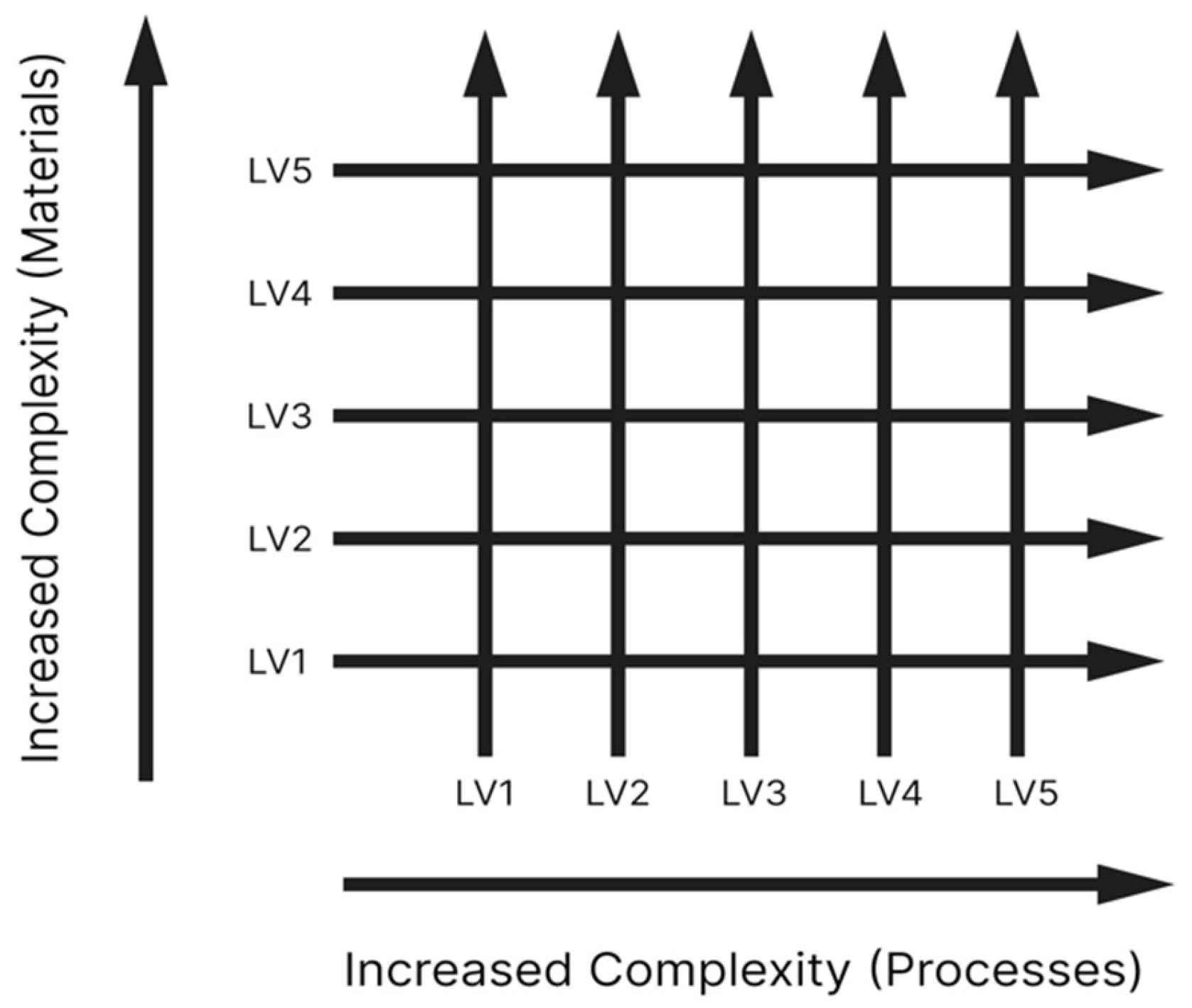
A good example is the promoted marketing strategy for Electric Vehicles (EV), a good idea intended to significantly reduce green-house gases (GHG) emission. However, its implementation and utility is hinged on two key variables: consumer purchase intention, and infrastructure in ensuring that the use of EV is sufficient enough to negate the use of fossil fuels in vehicular transport, at least in road vehicles. This has made its adoption remain a struggling trend even in developed economies such as the US, the UK and China (Hsieh, Pan and Green, 2020; Graham and Brungard, 2021; Husain et al., 2021); further, questioning the implemented approaches towards sustainability. Solving this requires establishing rapport on the necessity of sufficiency in the mindset of consumers, and developing aligned infrastructure that nominalises the demand on materials without compromising consumers’ comfort and value perception of the transport-based product (EV). While marketing the concept is critical for improved sufficiency, affording the product by the middle class remains another hurdle that TESLA and other EV companies are yet to solve. Hence, achieving sufficiency demands a treatment of the whole and a simultaneous treatment of the individual parts, through a matrix approach (bottom-to-top, and left-to-right). Bottom-to-top in terms of basic component materials to complex systems products, and left-to-right in terms of the simplest processes to the most complex processes; as shown in Figure 4. This is because materials and processes are the foundational components of all existing systems, and complex systems are an integration of simple systems. This can be achievable through inclusion of PM techniques on a larger scale.
2.2. REUSE
Reuse is simply the direct or indirect use of an already utilised material. Currently, it is the more efficient approach in material maximisation when compared to the more adopted recycling. This is due to the lower amounts of energy needed when reusing materials for a new product cycle and the associated labour costs (following reduced need of virgin materials) (Allwood, 2024). However, reuse is not applicable to all industries and all products. Reusing is a core function of the circular economy that agrees with the fundamental idea of “keeping the added value of a product as much as possible and eliminating waste” (Sariatli, 2017). It is a solution for the traditional linear production model, that has revealed the earth’s limitation in the supply of material input for humankind’s sustenance (Ghisellini, Cialani and Ulgiati, 2016). Nevertheless, reuse is strictly dependent on the material’s utility in a production cycle or product’s repeatable utility by consumers. This concurs with Braungart and McDonough (2009) cradle-to-cradle belief. Bui et al. (2022) posits that reuse as an industrial process possesses the better proficiency in the circular economy’s reverse material flow cycle when compared to recycling; as it is only the process that eliminates waste from the value chain.
Understandably, reuse is not applicable to all industries and products; however, the reuse of products remains a feasible approach to sufficiency development. This is because reusing materials and products ensures a reduced ‘need’ for materials in virgin production. Consequently, reducing the supply and demand, with more impact in the costs associated with material sourcing and utilisation (Keßler, Matlin and Kümmerer, 2021); an alignment to sufficiency development. However, the adoption of such an approach on a grander scale for the applicable products and industries requires careful consideration of the final products’ quality. This is because many products lose their efficacy with repeated use by consumers; which after extensive repetition are sent for recycling. Concerning consumer products, the length of time for reuse of a material is significantly dependent on the product type and quality strength, but in production it hinges on the effects its inclusion may have on the final product’s utility value (Cordella et al., 2020; Rahla, Mateus and Bragança, 2021).
Reuse as a process is the most politically influenced sustainability approach. This is obvious in the second-hand industry wherein clothes, cars and gadgets shipped to African and third-world nations, are fuelling the second-hand market (Bosangit, Iyanna and Koenig-Lewis, 2023). The second-hand industry for clothes and cars are well developed, however they are not well regulated. This is seen in the fluctuating purchase prices and the poor disposal of machine parts and clothing (Shola and Olanrewaju, 2020; Hansen and Le Zotte, 2022). Scraps are obtained from the over-used materials, and often used as material input in the recycling process. Achieving sufficiency in reuse requires robust structures and policies to govern the second-hand markets, and the disposal of over-used materials which cannot be used in existing industrial processes due to significantly lost efficacy. Additionally, integrating sufficiency as a criterion for major materials ensures that the over-used materials are recyclable. This approach systematically makes recyclability the final option for products and not the first, as is currently prioritised in industries.
2.3. RECYCLE
The most informed perspective is that recycling is not meant to be the preceding sustainability fix, more so, as it is the last option in the “reduce, reuse, recycle” mantra. However, industrial powers have sought the creation of a new market that profits them in billions; hence, the continued promotion of recycling processes (Etzioni, 2021). The most popular justification is the significant reduction in energy consumption and GHG emission compared to primary production process (Holappa, 2020; Khalid et al., 2022). They easily forget that, time and energy costs are crucial resources, though intangible. Regardless, more recent studies agree that recycling should be the last option; on the condition that, it is technically impossible to reduce and reuse with concern to the cost, quality and time aspects across sustainability dimensions (D’Adamo, Gastaldi and Rosa, 2020; Tao et al., 2020; Ferdous et al., 2021). Recycling is limited in industries due to the impossibility of a recycling route for some products, the significant loss of quality from following the recycling route, and significant energy requirement comparable to virgin production of some certain products (Allwood, 2014). Regardless, the problem remains that recycling is the most emphasised approach when it should be the last resort, in achieving the circular economy.
For instance, global demand for steel in 2024 is estimated for 1,849.1 million tonnes compared to 1,500 million tonnes in 2010 (Allwood, 2014; GMK, 2023). While a significant increase, a wider perspective from 1960 to date, puts it at a decline, as global demand quadrupled from 1960 till 2010. Evaluating the magnitude of material utilisation in recent projects and industrial demand, reveals significant progress in achieving dematerialisation of steels demands and reduction of its use in certain industries, namely, the construction and automobile industries (Singh and Chudasama, 2021; Aktaş, 2022; Diwan and Unnikrishnan, 2023; Smil, 2023). Dhar, Pathak and Shukla (2020) concur that such reduction in steel use is attributed to the construction process of reinforcing steel with concrete, and the use of aluminium, reinforced plastics and carbon fibres in the automobile industry. Steel recycling from scrap is heavily promoted due to the cost benefits in energy it provides (Allwood, 2024). However, there are three challenges affecting steel production with regards to achieving sufficiency.
First, is the still growing demand for steel. Currently, recycled steel accounts for 33% of all sourced steel, and data suggests it will increase to 50% sourcing by 2050 for global demand. This suggests a future limitation on the availability of scrap steel and highlights the growing scarcity of the resource in natural availability (Allwood, 2024). Second, there has been little innovation in the steel recycling process that permits further reduction in energy cost that would net significant profit compared to virgin production (Daehn et al., 2022). This is because industry profit is a benefit of scales, with significant profit made from continuous and compact production (Gielen et al., 2020). Third, steel is an internationally traded commodity and several correlative assessments have shown a relationship between the steel prices and national economies exchange rates (Tiwari et al., 2020; Ren et al., 2021). Hence, as a significantly imported and exported commodity, with a wide range of applications, attaining sufficiency in steel production and consumption is a hurdle of global magnitude.
Another industry is the cement industry, which is currently unrecyclable due to the exorbitant energy and high temperatures required in clinking, and the natural abundance of limestone (Dahanni et al., 2024). Ordinarily, the cement industry especially in the African market operates a linear economic model that is significantly dependent on fossil fuels. However, efforts from advanced economies at producing the so-claimed ‘green-concrete’, aim to reduce the adverse impacts the emitted GHGs have on the environment (Manjunatha et al., 2021). Such claims have necessitated a distinction between cement and concrete. Where cement is the binder and concrete is the aggregate mixture of cement, water, stones and sand (Rattanachu et al., 2020). Green concrete is an aggregate of supposed sustainable materials used in the production of low carbon concrete. Further criticism shows that it is actually the inclusion of waste into concrete formulation that reduces the need for limestone and cement inclusion; essentially, dematerialisation (Reis et al., 2021). While recycling is not possible in cement, dematerialisation of its content in concrete aggregate through inclusion of recyclable materials and other powders is feasible depending on the needed type of cement mixture.
3.0. ACHIEVING SUFFICIENCY IN MATERIAL UTILISATION
Existing sustainability approaches on material utilisation are hinged on efficiency, however, such approaches are limited in their durability. This has been critically accessed in the reuse and recycle sections of this discourse. This limitation necessitates the integration of a sufficiency approach in attaining a circular economy with regards to material utilisation. This approach will incorporate Kelleci and Yıldız (2021) sufficiency marketing, Velenturf and Purnell (2021) principles of circular economy and Nikolaou and Tsagarakis (2021) circular economy level analysis.
3.1. SUFFICIENCY MARKETING
This is obtained from Kelleci and Yıldız (2021) proposed framework for sustainability marketing. It encompasses the expanded form of the marketing mix, namely, product, price, promotion, place, participants, process, physical evidence, principles, promise and partnership as proposed by (Pomering, 2017). These components connote to their ordinary meanings in the conventional mix, but with the condition of attaining sufficiency. The core principle of a sufficiency marketing mix is to ensure that consumers’ purchasing intentions are aligned with sufficiency, thereby marketing the product in a manner that stimulates substantial sales and significant profit. This is because no matter the innovative and satisfactory utility of a product with concern to the sufficiency criteria. If it is not purchased significantly by users, it has essentially failed to facilitate sufficiency development.
The aspect of sufficiency marketing is an all-encompassing factor of the entire framework because its implementation is distinctly unique at the different levels of the circular economy; especially with specific products, industries and national economies. Its application within the constraints of cost, quality and time requires a successful marketing strategy, and the purchase of the product requires an idiosyncratic approach at each level, within each unique field. While this may be anathema to the need for a holistic view, it is the more feasible approach towards achieving sufficiency outcomes. Understandably, such an approach will not be fully applicable in all industries such as the cement and steel industry due to the limited technological advancements in production processes that are capable of altering the crucial decision of choice of materials. Nevertheless, the possibilities offered by dematerialization and reuse provide the benefits of optimizing resource stacks and flows, right from the intra-firm level to the global level (Nikolaou and Tsagarakis, 2021).
The impact of adopting a sufficiency marketing mix is critical to the intra and inter-firm operations, however, such an adoption is only feasible if the firm adopts a sufficiency-based organisational culture. First, it is the firm’s responsibility to consider the best design for production circularity and the most important decision in product design remains, the choice of materials. This assessment evaluates the efficacy and economic viability of incorporating source materials into subsequent manufacturing cycles for the production of recyclable and reusable components. Sufficiency marketing should not just be implemented by firms in order to garner sales, as this will be ineffective in facilitating equitable delivery across the economic, environmental and social dimensions of sustainability; thereby, reducing it to green marketing. Rather, it should become the inherent culture of the firm, present in its corporate strategy, vision and mission. Only then can it achieve long-term sufficiency, and this perspective must be applied in all components of the marketing mix.
3.2. CIRCULAR ECONOMY LEVELS
Nikolaou and Tsagarakis (2021) identified three key levels in the circular economy, namely, micro-, meso- and macro-levels. The micro-level concerns intra-firm operations and procedures integrating circular business models. The meso-level emphasises collaborative function among firms in co-production and co-provision of resources (waste from one firm being a material resource for another firm, or splitting production in parts among firms; where applicable). The macro-level focuses on national and legislative policies and planning, intended to facilitate the implementation of circular economy at the demographic levels of cities, regions and nations (Nikolaou and Tsagarakis, 2021). Incorporating the circular economy at each level will vary per industry and products, requiring a fine tuning of the basic principles and assumptions concerning linear-to-circular economy transformation and its advancement. This underscores the need for a sufficiency perspective attached to project management approaches in consideration of time, cost and quality, when designing and implementing a circular business model.
3.2.1. Micro-Level or Intra-firm operation
The sustainability marketing mix is crucial at this level, because the firm’s management is responsible for decision-making concerning each component P’s of the marketing mix. These decisions are constrained by cost, time and quality from a sufficiency perspective, and the impact of production processes across the dimensions of sustainability. At the base of operations is the core decision of material utilisation in product processing, whilst permitting maximum efficiency in operations and procedures within applicable constraints. Depending on the product and technological processes, trade-offs must be made; however, these trade-offs must be assessed in line with their impact on sufficiency development. For instance, current technological advancements permits nominal use of materials such as iron in the automobile and aero-assembly industry (Reduce). Therefore, sufficiency should seek for further reduction or reusable components within constraints. Also, transforming physical waste into material input for same or other production (Recycle) is significantly applicable in steel. However, a more significant displacement in steel use due to replacement with similar strengthened materials would significantly reduce energy consumption and costs of recycling.
3.2.2. Meso-Level or inter-firm operations
This emphasises co-production and collaboration between firms in same or similar industries. It includes industries where the waste materials can serve as material input in other industries (Nikolaou and Tsagarakis, 2021), and demands a transformation of the supply chain of waste into utility. Velenturf and Purnell (2021) recommends that an industry wide adoption of a circular business model is meant to proffer strong solutions with significant benefits and enhancement across dimensions of sustainability. Therefore, the mapping across organisations should not be aimed at reducing the existing adverse impacts from climate change, and deglobalization, but rather advancing societal well-being and integration. Depending on the intricacy of the inter-firm’s interaction either at industry or sector level, portfolio management will be required in handling the sub-projects and programmes in order to attain proficiency. However, co-production among firms may threaten the power of capitalism, wherein firms may have to sacrifice their significant competitive advantages and control of market shares.
3.2.3. Macro-level or national and regional level
This level demands the active engagement of stakeholders namely, government, organisations, and regulatory bodies in monitoring and creating the right climate and economic incentives for enhancing sufficiency development (Nikolaou and Tsagarakis, 2021). Participation at this level is intended to transform both production and consumption. Sustainability espouses that average consumption per person be reduced (Kelleci and Yıldız, 2021); however, the teeming population and increasing demand make attaining such an objective, a daunting challenge. This is evident in the still increasing production and demand levels across industries. Sufficiency on the contrary, aims to reconfigure consumption in a manner that espouses foremost the significant reduction of material input in production and the increase in products’ reuse utility. Therefore, making material utilisation the most fundamental process required in achieving the circular business model and economy.
However, as with human nature and seemingly firms’ profit goals, immediate rewards supersedes future gratification. Therefore, this level requires a system that regulates firms’ actions and operations, ensuring compliance to stipulated criteria. The systems must be capable of harmonising across all levels, and robust enough to facilitate changes that enhance long-term economic, social and environmental stability. Nevertheless, the uniqueness of sub-sectors negates the ‘one size fits all’ approach. Thus, each sub-sector approach should aim at system wide optimisation as against the focus of singly altering firm’s individual practices. Further, highlighting the need for advanced project and portfolio management competencies.
4.0. CONCLUSION AND IMPLICATION
This paper is meant to inform and advance the understanding of achieving sufficiency by adopting a PM perspective in reconfiguring material utilisation. Sufficiency is crucial to human sustenance and solving its related challenges demands a comprehensive understanding of the subject or relevant problem statement, before implementing a decisive action that will produce the intended outcomes. Hence, the inclusion of a project management perspective.
This paper posits that firms, government and organizations (depending on the production processes and sectors operations) are yet to accurately define the problem that impedes their achievement of sustainability and adoption of the circular economy model to a considerable extent. The lack of a project management perspective, coupled with an inaccurate problem definition and the failure to recognize necessary trade-offs, has resulted in repetitive errors and hampered progress toward achieving sustainability goals. Also, sectors which have comprehensively identified their challenges are intent on maintaining the status quo and reluctant in undergoing any transformation for fear of relinquishing market shares or diminishing their profit margins.
Obviously, the existing technology for the full-on adoption of the entire circular model is still decades or even centuries behind. Nevertheless, there are already established technologies in energy, construction, and food processing that permit a larger scale adoption than what is currently being employed. Beyond the firms’ profit maximization fixation, are the users’ consumption lifestyle which has become progressively wasteful. This is evidenced in the expansive growth of the second hand and recycling markets.
Additionally, the implementation of the reduction, reuse and recycle approach has been significantly distorted from its natural order of prioritisation. Naturally, waste prevention is only possible with a reductionist lifestyle, as this negates the production of waste that cannot be recycled. Moreover, there are still gaps in applicable recycling technology for many products; for instance, cement. Regardless, of technological progress towards improving use of existing products and their utilities. Firms and consumers themselves must reduce their utilisation of limited natural resources and consumption of products, respectively.
Lastly, driving such reductionist lifestyle as proposed by Kelleci and Yıldız (2021) requires firm’s integration of a sufficiency-focused market mix, akin to Pomering (2017) sustainability focused marketing mix. A propagation of a sufficiency marketing mix will gradually induce the needed reductionist lifestyle, with consequent implications on what is manufactured to meet needs. This is possible through collaborative partnerships at the micro-, meso- and macro-levels.
5.0. LIMITATIONS
The paper does not account for service-oriented products and significantly negates core aspects of production only focusing on material utilisation with respect to the circular economy and sufficiency development. Also, material utilisation categorially encompasses the tangible and intangible materials involved in production. However, this study is limited in its focus on the physical material inputs such as natural resources.
Funding
No funding, grants or other support was received in the preparation of this manuscript>
COMPETING INTERESTS
The authors have no competing interest be it financial or non-financial, to declare that are relevant to the content of this article
ETHICS APPROVAL
No empirical data was used, however Figure 3 was obtained from Kelleci and Yıldız (2021) which permits free use of image and copyrights under the CC BY 4.0 DEED
DATA AVAILABILITY STATEMENT
No new data were created or analysed in this study. Data sharing is not applicable to this article.
AUTHOR’S CONTRIBUTION STATEMENTS
Offorson Golden: conceptualisation, writing, editing, final writing Agbo Emmanuel: editing, final reviewing
Figure 1.
Iron triangle diagram.
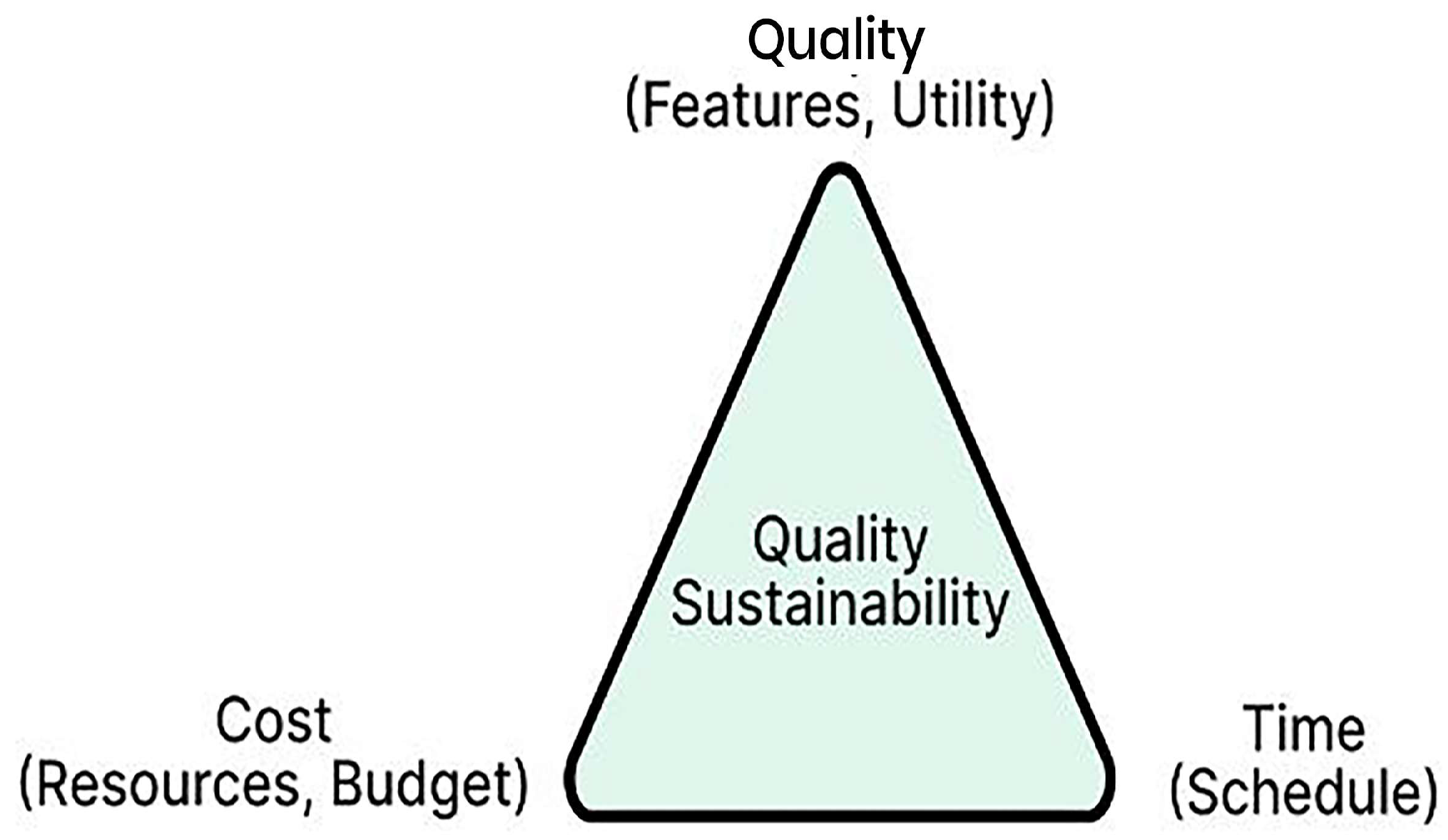
Figure 3.
Diagram of Kelleci and Yildiz proposed marketing framework towards achieving sustainability Source: (Kelleci and Yıldız, 2021).
Figure 3.
Diagram of Kelleci and Yildiz proposed marketing framework towards achieving sustainability Source: (Kelleci and Yıldız, 2021).
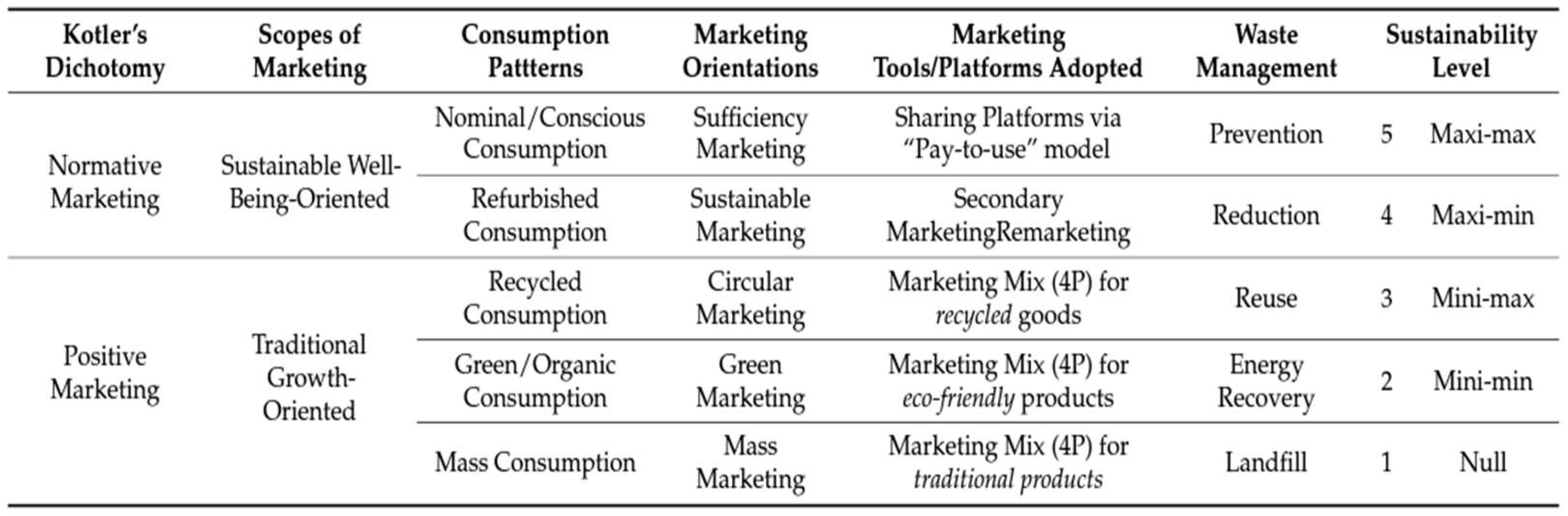
Figure 4.
Diagrammatic illustration of matrix approach.
References
- Adami, L. and Schiavon, M. (2021) ‘From circular economy to circular ecology: a review on the solution of environmental problems through circular waste management approaches’, Sustainability, 13(2), p. 925. Available online: https://www.mdpi.com/2071-1050/13/2/925 (accessed on 8 February 2024).
- Agarwal, S., Tyagi, M. and Garg, R.K. (2023) ‘Conception of circular economy obstacles in context of supply chain: a case of rubber industry’, International Journal of Productivity and Performance Management, 72(4), pp. 1111–1153. Available online: https://www.emerald.com/insight/content/doi/10.1108/IJPPM-12-2020-0686/full/html (accessed on 8 February 2024).
- Aktaş, C.B. (2022) ‘Dematerialization: Needs and Challenges’, in W. Leal Filho et al. (eds) Handbook of Sustainability Science in the Future. Cham: Springer International Publishing, pp. 1–13. [CrossRef]
- Ali, T. et al. (2020) ‘IoT-Based Smart Waste Bin Monitoring and Municipal Solid Waste Management System for Smart Cities’, Arabian Journal for Science and Engineering, 45(12), pp. 10185–10198. [CrossRef]
- Allwood, J.M. (2014) ‘Squaring the circular economy: the role of recycling within a hierarchy of material management strategies’, in Handbook of recycling. Elsevier, pp. 445–477. Available online: https://www.sciencedirect.com/science/article/pii/B9780123964595000301 (accessed on 8 February 2024).
- Allwood, J.M. (2024) ‘Material efficiency—Squaring the circular economy: Recycling within a hierarchy of material management strategies’, in Handbook of Recycling. Elsevier, pp. 45–78. Available online: https://www.sciencedirect.com/science/article/pii/B9780323855143000166 (accessed on 8 February 2024).
- Bélanger-Gravel, A. et al. (2019) ‘Pattern and correlates of public support for public health interventions to reduce the consumption of sugar-sweetened beverages’, Public health nutrition, 22(17), pp. 3270–3280. Available online: https://www.cambridge.org/core/journals/public-health-nutrition/article/pattern-and-correlates-of-public-support-for-public-health-interventions-to-reduce-the-consumption-of-sugarsweetened-beverages/B167B42E16C9F84B72518AB817013E34 (accessed on 8 February 2024).
- Bianchini, A., Rossi, J. and Pellegrini, M. (2019) ‘Overcoming the main barriers of circular economy implementation through a new visualization tool for circular business models’, Sustainability, 11(23), p. 6614. Available online: https://www.mdpi.com/2071-1050/11/23/6614 (accessed on 8 February 2024).
- Bosangit, C., Iyanna, S. and Koenig-Lewis, N. (2023) ‘Psst! Don’t tell anyone it’s second-hand: drivers and barriers of second-hand consumption in emerging markets’, Research Handbook on Ethical Consumption: Contemporary Research in Responsible and Sustainable Consumer Behaviour, p. 225. Available online: https://books.google.com/books?hl=en&lr=&id=uki-EAAAQBAJ&oi=fnd&pg=PA225&dq=secod+hand+market+Africa+clothes+vehicles+and+appliances+&ots=wtbLnMZzea&sig=wb6hkErhNzvCg9CRUqHo2XNBnHU (accessed on 8 February 2024).
- Boulding, K.E. (2013) ‘The economics of the coming spaceship earth’, in Environmental quality in a growing economy. RFF Press, pp. 3–14. Available online: https://api.taylorfrancis.com/content/chapters/edit/download?identifierName=doi&identifierValue=10.4324/9781315064147-2&type=chapterpdf (accessed on 8 February 2024).
- Bouman, T., Steg, L. and Dietz, T. (2021) ‘Insights from early COVID-19 responses about promoting sustainable action’, Nature Sustainability, 4(3), pp. 194–200. Available online: https://www.nature.com/articles/s41893-020-00626-x (accessed on 8 February 2024).
- Braungart, M.; McDonough, W. Cradle to cradle; Random House, 2009. [Google Scholar]
- Bui, T.-D. et al. (2022) ‘Opportunities and challenges for solid waste reuse and recycling in emerging economies: A hybrid analysis’, Resources, Conservation and Recycling, 177, p. 105968. Available online: https://www.sciencedirect.com/science/article/pii/S0921344921005772 (accessed on 8 February 2024).
- Cordella, M. et al. (2020) ‘Improving material efficiency in the life cycle of products: a review of EU Ecolabel criteria’, The International Journal of Life Cycle Assessment, 25(5), pp. 921–935. [CrossRef]
- Corona, B. et al. (2019) ‘Towards sustainable development through the circular economy—A review and critical assessment on current circularity metrics’, Resources, Conservation and Recycling, 151, p. 104498. Available online: https://www.sciencedirect.com/science/article/pii/S0921344919304045 (accessed on 8 February 2024).
- D’Adamo, I., Gastaldi, M. and Rosa, P. (2020) ‘Recycling of end-of-life vehicles: Assessing trends and performances in Europe’, Technological Forecasting and Social Change, 152, p. 119887. Available online: https://www.sciencedirect.com/science/article/pii/S0040162519320311 (accessed on 9 February 2024).
- Daehn, K. et al. (2022) ‘Innovations to decarbonize materials industries’, Nature Reviews Materials, 7(4), pp. 275–294. Available online: https://www.nature.com/articles/s41578-021-00376-y (accessed on 9 February 2024).
- Dahanni, H. et al. (2024) ‘Life cycle assessment of cement: Are existing data and models relevant to assess the cement industry’s climate change mitigation strategies? A literature review’, Construction and Building Materials, 411, p. 134415. Available online: https://www.sciencedirect.com/science/article/pii/S095006182304134X (accessed on 9 February 2024).
- De Giovanni, P. and Folgiero, P. (2023) Strategies for the circular economy: Circular districts and networks. Taylor & Francis. Available online: https://books.google.com/books?hl=en&lr=&id=siWnEAAAQBAJ&oi=fnd&pg=PT9&dq=squaring+the+circular+economy:+the+role+of+recycling+within+a+heirarchy+of+material+management+strategies+&ots=_uh2-hLC-8&sig=XReOXRxAf2r5VRfMCy5eMittipU (accessed on 8 February 2024).
- Degli Esposti, P., Mortara, A. and Roberti, G. (2021) ‘Sharing and Sustainable Consumption in the Era of COVID-19’, Sustainability, 13(4), p. 1903. 1903. Available online: https://www.mdpi.com/2071-1050/13/4/1903 (accessed on 8 February 2024).
- Dhar, S., Pathak, M. and Shukla, P.R. (2020) ‘Transformation of India’s steel and cement industry in a sustainable 1.5 C world’, Energy Policy, 137, p. 111104. Available online: https://www.sciencedirect.com/science/article/pii/S0301421519306913 (accessed on 9 February 2024).
- Diwan, H. and Unnikrishnan, S. (2023) ‘Prospects of Circularity in Steel Industry: Mapping Through LCA Approach’, in S.S. Muthu (ed.) Life Cycle Assessment & Circular Economy. Cham: Springer Nature Switzerland (Environmental Footprints and Eco-design of Products and Processes), pp. 35–46. [CrossRef]
- Dobre, C. et al. (2021) ‘The common values of social media marketing and luxury brands. The millennials and generation z perspective’, Journal of Theoretical and Applied Electronic Commerce Research, 16(7), pp. 2532–2553. Available online: https://www.mdpi.com/0718-1876/16/7/139 (accessed on 8 February 2024).
- Ellsworth-Krebs, K. (2020) ‘Implications of declining household sizes and expectations of home comfort for domestic energy demand’, Nature Energy, 5(1), pp. 20–25. Available online: https://www.nature.com/articles/s41560-019-0512-1 (accessed on 8 February 2024).
- Emas, R. (2015) ‘The concept of sustainable development: definition and defining principles’, Brief for GSDR, 2015, pp. 10–13140. Available online: https://sdgs.un.org/sites/default/files/documents/5839GSDR%25202015_SD_concept_definiton_rev.pdf (accessed on 8 February 2024).
- Etzioni, A. (2021) ‘Capitalism Needs to Be Re-encapsulated’, Society, 58(1), pp. 1–15. [CrossRef]
- Fatimah, Y.A. et al. (2020) ‘Industry 4.0 based sustainable circular economy approach for smart waste management system to achieve sustainable development goals: A case study of Indonesia’, Journal of Cleaner Production, 269, p. 122263. Available online: https://www.sciencedirect.com/science/article/pii/S0959652620323106 (accessed on 8 February 2024).
- Fellner, J. and Brunner, P.H. (2022) ‘Plastic waste management: is circular economy really the best solution?’, Journal of Material Cycles and Waste Management, 24(1), pp. 1–3. [CrossRef]
- Ferdous, W.; et al. Ferdous, W. et al. (2021) ‘Recycling of landfill wastes (tyres, plastics and glass) in construction–A review on global waste generation, performance, application and future opportunities’, Resources, Conservation and Recycling, 173, p. 105745. Available online: https://www.sciencedirect.com/science/article/pii/S0921344921003542 (accessed on 9 February 2024).
- Ghisellini, P., Cialani, C. and Ulgiati, S. (2016) ‘A review on circular economy: the expected transition to a balanced interplay of environmental and economic systems’, Journal of Cleaner production, 114, pp. 11–32. Available online: https://www.sciencedirect.com/science/article/pii/S0959652615012287 (accessed on 8 February 2024).
- Giannetti, B.F. et al. (2020) ‘Cleaner production for achieving the sustainable development goals’, Journal of Cleaner Production, 271, p. 122127. Available online: https://www.sciencedirect.com/science/article/pii/S0959652620321740 (accessed on 8 February 2024).
- Gielen, D. et al. (2020) ‘Renewables-based decarbonization and relocation of iron and steel making: A case study’, Journal of Industrial Ecology, 24(5), pp. 1113–1125. [CrossRef]
- Graham, J.D. and Brungard, E. (2021) ‘Consumer adoption of plug-in electric vehicles in selected countries’, Future Transportation, 1(2), pp. 303–325. Available online: https://www.mdpi.com/2673-7590/1/2/18 (accessed on 8 February 2024).
- Han, S.-L. and Kim, K. (2020) ‘Role of consumption values in the luxury brand experience: Moderating effects of category and the generation gap’, Journal of Retailing and Consumer Services, 57, p. 102249. Available online: https://www.sciencedirect.com/science/article/pii/S0969698920312571 (accessed on 8 February 2024).
- Hansen, K.T. and Le Zotte, J. (2022) ‘Introduction: Changing Secondhand Economies’, in Global Perspectives on Changing Secondhand Economies. Routledge, pp. 1–16. Available online: https://www.taylorfrancis.com/chapters/edit/10.4324/9781003258285-1/introduction-karen-tranberg-hansen-jennifer-le-zotte (accessed on 8 February 2024).
- Holappa, L. (2020) ‘A general vision for reduction of energy consumption and CO2 emissions from the steel industry’, Metals, 10(9), p. 1117. Available online: https://www.mdpi.com/2075-4701/10/9/1117?ref=boiling-cold (accessed on 9 February 2024).
- Howarth, C. et al. (2020) ‘Building a Social Mandate for Climate Action: Lessons from COVID-19’, Environmental and Resource Economics, 76(4), pp. 1107–1115. [CrossRef]
- Hsieh, I.-Y.L., Pan, M.S. and Green, W.H. (2020) ‘Transition to electric vehicles in China: Implications for private motorization rate and battery market’, Energy policy, 144, p. 111654. Available online: https://www.sciencedirect.com/science/article/pii/S0301421520303852 (accessed on 8 February 2024).
- Husain, I. et al. (2021) ‘Electric drive technology trends, challenges, and opportunities for future electric vehicles’, Proceedings of the IEEE, 109(6), pp. 1039–1059. Available online: https://ieeexplore.ieee.org/abstract/document/9316773/ (accessed on 8 February 2024).
- Iacovidou, E. et al. (2017) ‘Metrics for optimising the multi-dimensional value of resources recovered from waste in a circular economy: A critical review’, Journal of Cleaner Production, 166, pp. 910–938. Available online: https://www.sciencedirect.com/science/article/pii/S0959652617315421 (accessed on 8 February 2024).
- Iacovidou, E., Hahladakis, J.N. and Purnell, P. (2021) ‘A systems thinking approach to understanding the challenges of achieving the circular economy’, Environmental Science and Pollution Research, 28(19), pp. 24785–24806. [CrossRef]
- Ikromjonovich, B.I. (2023) ‘Sustainable Development in The Digital Economy: Balancing Growth and Environmental Concerns’, Al-Farg’oniy avlodlari, 1(3), pp. 42–50. Available online: https://cyberleninka.ru/article/n/sustainable-development-in-the-digital-economy-balancing-growth-and-environmental-concerns (accessed on 8 February 2024).
- Islam, M.M. and Hasanuzzaman, M. (2020) ‘Introduction to energy and sustainable development’, in Energy for sustainable development. Elsevier, pp. 1–18. Available online: https://www.sciencedirect.com/science/article/pii/B9780128146453000018 (accessed on 8 February 2024).
- Jiang, P., Van Fan, Y. and Klemeš, J.J. (2021) ‘Impacts of COVID-19 on energy demand and consumption: Challenges, lessons and emerging opportunities’, Applied energy, 285, p. 116441. Available online: https://www.sciencedirect.com/science/article/pii/S030626192100009X (accessed on 8 February 2024).
- Kelleci, A. and Yıldız, O. (2021) ‘A guiding framework for levels of sustainability in marketing’, Sustainability, 13(4), p. 1644. Available online: https://www.mdpi.com/2071-1050/13/4/1644 (accessed on 8 February 2024).
- Keßler, L., Matlin, S.A. and Kümmerer, K. (2021) ‘The contribution of material circularity to sustainability—Recycling and reuse of textiles’, Current Opinion in Green and Sustainable Chemistry, 32, p. 100535. Available online: https://www.sciencedirect.com/science/article/pii/S2452223621000912 (accessed on 8 February 2024).
- Khalid, M.Y. et al. (2022) ‘Recent trends in recycling and reusing techniques of different plastic polymers and their composite materials’, Sustainable Materials and Technologies, 31, p. e00382. Available online: https://www.sciencedirect.com/science/article/pii/S2214993721001378 (accessed on 9 February 2024).
- Khalife, M.A. and Dunay, A. (2019) ‘Project business model with the role of digitization and circular economies in project management’, Modern Science, 6, pp. 106–113. Available online: https://www.nemoros.cz/_files/ugd/b7f2f7_fc43f5e7f6ba4bd3a7520918908abfb9.pdf#page=106 (accessed on 8 February 2024).
- Kisku, N. et al. (2017) ‘A critical review and assessment for usage of recycled aggregate as sustainable construction material’, Construction and building materials, 131, pp. 721–740. Available online: https://www.sciencedirect.com/science/article/pii/S0950061816317810 (accessed on 8 February 2024).
- Kravchenko, M., Pigosso, D.C. and McAloone, T.C. (2020) ‘A trade-off navigation framework as a decision support for conflicting sustainability indicators within circular economy implementation in the manufacturing industry’, Sustainability, 13(1), p. 314. Available online: https://www.mdpi.com/2071-1050/13/1/314 (accessed on 8 February 2024).
- Kumar, P. and Shukla, S. (2023) ‘Utilization of steel slag waste as construction material: A review’, Materials Today: Proceedings, 78, pp. 145–152. Available online: https://www.sciencedirect.com/science/article/pii/S2214785323000317 (accessed on 8 February 2024).
- Lamba, P. et al. (2022) ‘Recycling/reuse of plastic waste as construction material for sustainable development: a review’, Environmental Science and Pollution Research, 29(57), pp. 86156–86179. [CrossRef]
- Litvinenko, V.S. (2020) ‘Digital Economy as a Factor in the Technological Development of the Mineral Sector’, Natural Resources Research, 29(3), pp. 1521–1541. [CrossRef]
- Maes, T. and Preston-Whyte, F. (2022) ‘E-waste it wisely: lessons from Africa’, SN Applied Sciences, 4(3), p. 72. [CrossRef]
- Maitre-Ekern, E. (2018) ‘Exploring the spaceship Earth: a circular economy for products’. Available online: https://papers.ssrn.com/sol3/papers.cfm?abstract_id=3330526 (accessed on 8 February 2024).
- Mancini, L. et al. (2019) ‘Mapping the role of raw materials in sustainable development goals’, A Preliminary Analysis of Links, Monitoring Indicators, and Related Policy Initiatives, 3, pp. 1–9. Available online: https://air.unimi.it/retrieve/f8602990-72dd-4177-a331-68994ea28a79/mapping%20the%20role%20of%20raw%20materials%20in%20sustainable%20development-KJ1A29595ENN.pdf (accessed on 8 February 2024).
- Manieson, L.A. and Ferrero-Regis, T. (2023) ‘Castoff from the West, pearls in Kantamanto? A critique of second-hand clothes trade’, Journal of Industrial Ecology, 27(3), pp. 811–821. [CrossRef]
- Manjunatha, M. et al. (2021) ‘Life cycle assessment (LCA) of concrete prepared with sustainable cement-based materials’, Materials Today: Proceedings, 47, pp. 3637–3644. Available online: https://www.sciencedirect.com/science/article/pii/S2214785321003370 (accessed on 9 February 2024).
- Mariotti, N. et al. (2020) ‘Recent advances in eco-friendly and cost-effective materials towards sustainable dye-sensitized solar cells’, Green chemistry, 22(21), pp. 7168–7218. Available online: https://pubs.rsc.org/en/content/articlehtml/2020/gc/d0gc01148g (accessed on 8 February 2024).
- Meza, J.K.S. et al. (2019) ‘Predictive analysis of urban waste generation for the city of Bogotá, Colombia, through the implementation of decision trees-based machine learning, support vector machines and artificial neural networks’, Heliyon, 5(11). Available online: https://www.cell.com/heliyon/pdf/S2405-8440 (accessed on 8 February 2024).
- Mohammed, M. et al. (2020) ‘A review on achieving sustainable construction waste management through application of 3R (reduction, reuse, recycling): A lifecycle approach’, in IOP Conference Series: Earth and Environmental Science. IOP Publishing, p. 012010. Available online: https://iopscience.iop.org/article/10.1088/1755-1315/476/1/012010/meta (accessed on 8 February 2024).
- Nikolaou, I.E. and Tsagarakis, K.P. (2021) ‘An introduction to circular economy and sustainability: Some existing lessons and future directions’, Sustainable Production and Consumption. Elsevier. Available online: https://www.sciencedirect.com/science/article/pii/S2352550921001834 (accessed on 9 February 2024).
- Ogunmakinde, O.E., Egbelakin, T. and Sher, W. (2022a) ‘Contributions of the circular economy to the UN sustainable development goals through sustainable construction’, Resources, Conservation and Recycling, 178, p. 106023. Available online: https://www.sciencedirect.com/science/article/pii/S0921344921006315 (accessed on 8 February 2024).
- Ogunmakinde, O.E., Egbelakin, T. and Sher, W. (2022b) ‘Contributions of the circular economy to the UN sustainable development goals through sustainable construction’, Resources, Conservation and Recycling, 178, p. 106023. Available online: https://www.sciencedirect.com/science/article/pii/S0921344921006315 (accessed on 8 February 2024).
- Panchal, R., Singh, A. and Diwan, H. (2021) ‘Does circular economy performance lead to sustainable development?–A systematic literature review’, Journal of Environmental Management, 293, p. 112811. Available online: https://www.sciencedirect.com/science/article/pii/S0301479721008732 (accessed on 8 February 2024).
- Pomering, A. (2017) ‘Marketing for Sustainability: Extending the Conceptualisation of the Marketing Mix to Drive Value for Individuals and Society at Large’, Australasian Marketing Journal, 25(2), pp. 157–165. [CrossRef]
- Puntillo, P. (2023) ‘Circular economy business models: Towards achieving sustainable development goals in the waste management sector—Empirical evidence and theoretical implications’, Corporate Social Responsibility and Environmental Management, 30(2), pp. 941–954. [CrossRef]
- Rahla, K.M., Mateus, R. and Bragança, L. (2021) ‘Selection criteria for building materials and components in line with the circular economy principles in the built environment—A review of current trends’, Infrastructures, 6(4), p. 49. Available online: https://www.mdpi.com/2412-3811/6/4/49 (accessed on 8 February 2024).
- Rattanachu, P. et al. (2020) ‘Performance of recycled aggregate concrete with rice husk ash as cement binder’, Cement and Concrete Composites, 108, p. 103533. Available online: https://www.sciencedirect.com/science/article/pii/S095894652030024X (accessed on 9 February 2024).
- Reis, D.C. et al. (2021) ‘Potential CO 2 reduction and uptake due to industrialization and efficient cement use in Brazil by 2050’, Journal of Industrial Ecology, 25(2), pp. 344–358. [CrossRef]
- Ren, L. et al. (2021) ‘A review of CO2 emissions reduction technologies and low-carbon development in the iron and steel industry focusing on China’, Renewable and Sustainable Energy Reviews, 143, p. 110846. Available online: https://www.sciencedirect.com/science/article/pii/S1364032121001404 (accessed on 9 February 2024).
- Sakalasooriya, N. (2021) ‘Conceptual analysis of sustainability and sustainable development’, Open Journal of Social Sciences, 9(03), p. 396. Available online: https://www.scirp.org/html/26-1764360_108042.htm (accessed on 8 February 2024).
- Saleh, H. (2020) ‘Implementation of sustainable development goals to makassar zero waste and energy source’, International Journal of Energy Economics and Policy [Preprint]. Available online: http://www.zbw.eu/econis-archiv/bitstream/11159/8450/1/1756272727_0.pdf (accessed on 8 February 2024).
- Sanchez, B. and Haas, C. (2018) ‘Capital project planning for a circular economy’, Construction Management and Economics, 36(6), pp. 303–312. [CrossRef]
- Sariatli, F. (2017) ‘Linear Economy Versus Circular Economy: A Comparative and Analyzer Study for Optimization of Economy for Sustainability’, Visegrad Journal on Bioeconomy and Sustainable Development, 6(1), pp. 31–34. [CrossRef]
- Schrijvers, D. et al. (2020) ‘A review of methods and data to determine raw material criticality’, Resources, conservation and recycling, 155, p. 104617. Available online: https://www.sciencedirect.com/science/article/pii/S0921344919305233 (accessed on 8 February 2024).
- Severo, E.A., De Guimarães, J.C.F. and Dellarmelin, M.L. (2021) ‘Impact of the COVID-19 pandemic on environmental awareness, sustainable consumption and social responsibility: Evidence from generations in Brazil and Portugal’, Journal of cleaner production, 286, p. 124947. Available online: https://www.sciencedirect.com/science/article/pii/S095965262034991X (accessed on 8 February 2024).
- Shen, Z. et al. (2023) ‘Quantifying Sustainability and Landscape Performance: A Smart Devices Assisted Alternative Framework’, Sustainability, 15(17), p. 13239. Available online: https://www.mdpi.com/2071-1050/15/17/13239 (accessed on 8 February 2024).
- Shola, A.T.I. and Olanrewaju, D.K. (2020) ‘Effects of the informal cross border trade in Western Africa: A study of Nigeria and Niger’, Jurnal Aplikasi Manajemen, Ekonomi Dan Bisnis, 4(2), pp. 34–42. Available online: http://www.jameb.stimlasharanjaya.ac.id/JAMEB/article/view/102 (accessed on 8 February 2024).
- Shulla, K. et al. (2021) ‘Effects of COVID-19 on the Sustainable Development Goals (SDGs)’, Discover Sustainability, 2(1), p. 15. [CrossRef]
- Singh, P.K. and Chudasama, H. (2021) ‘Conceptualizing and achieving industrial system transition for a dematerialized and decarbonized world’, Global Environmental Change, 70, p. 102349. Available online: https://www.sciencedirect.com/science/article/pii/S095937802100128X (accessed on 9 February 2024).
- Smil, V. (2023) Materials and Dematerialization: Making the Modern World. John Wiley & Sons. Available online: https://books.google.com/books?hl=en&lr=&id=llO-EAAAQBAJ&oi=fnd&pg=PR9&dq=dematerialisation+of+steel+in+construction+and+automobile+industry&ots=U-gipAWn0h&sig=RIcil2olCc5YyEp2Eutb227WFto (accessed on 9 February 2024).
- Sodiq, A. et al. (2019) ‘Towards modern sustainable cities: Review of sustainability principles and trends’, Journal of Cleaner Production, 227, pp. 972–1001. Available online: https://www.sciencedirect.com/science/article/pii/S0959652619311837 (accessed on 8 February 2024).
- Tao, M. et al. (2020) ‘Major challenges and opportunities in silicon solar module recycling’, Progress in Photovoltaics: Research and Applications, 28(10), pp. 1077–1088. [CrossRef]
- Tiwari, A.K. et al. (2020) ‘Time-frequency causality and connectedness between international prices of energy, food, industry, agriculture and metals’, Energy Economics, 85, p. 104529. Available online: https://www.sciencedirect.com/science/article/pii/S014098831930324X (accessed on 9 February 2024).
- Valentine, M. (2020) Conscious consumerism: How brands are rising to the challenge, Marketing Week. Available online: https://www.marketingweek.com/conscious-consumerism-brand-challenge/ (accessed on 8 February 2024).
- Van Fan, Y. et al. (2019) ‘Cross-disciplinary approaches towards smart, resilient and sustainable circular economy’, Journal of cleaner production, 232, pp. 1482–1491. Available online: https://www.sciencedirect.com/science/article/pii/S0959652619318025 (accessed on 8 February 2024).
- Velenturf, A.P. and Purnell, P. (2021) ‘Principles for a sustainable circular economy’, Sustainable Production and Consumption, 27, pp. 1437–1457. Available online: https://www.sciencedirect.com/science/article/pii/S2352550921000567 (accessed on 8 February 2024).
- Velvizhi, G. et al. (2022) ‘Integrated biorefinery processes for conversion of lignocellulosic biomass to value added materials: Paving a path towards circular economy’, Bioresource technology, 343, p. 126151. Available online: https://www.sciencedirect.com/science/article/pii/S0960852421014930 (accessed on 8 February 2024).
- Yu, K.H. et al. (2021) ‘Environmental planning based on reduce, reuse, recycle and recover using artificial intelligence’, Environmental Impact Assessment Review, 86, p. 106492. Available online: https://www.sciencedirect.com/science/article/pii/S0195925520306132 (accessed on 8 February 2024).
- Zorpas, A.A. (2020) ‘Strategy development in the framework of waste management’, Science of the total environment, 716, p. 137088. Available online: https://www.sciencedirect.com/science/article/pii/S0048969720305982 (accessed on 8 February 2024).
Disclaimer/Publisher’s Note: The statements, opinions and data contained in all publications are solely those of the individual author(s) and contributor(s) and not of MDPI and/or the editor(s). MDPI and/or the editor(s) disclaim responsibility for any injury to people or property resulting from any ideas, methods, instructions or products referred to in the content. |
© 2025 by the authors. Licensee MDPI, Basel, Switzerland. This article is an open access article distributed under the terms and conditions of the Creative Commons Attribution (CC BY) license (http://creativecommons.org/licenses/by/4.0/).
Copyright: This open access article is published under a Creative Commons CC BY 4.0 license, which permit the free download, distribution, and reuse, provided that the author and preprint are cited in any reuse.


