1. Introduction
The Climate Action Program is a progressive response to the increasing challenges posed by climate change through catalyzing public participation and activity among governments. CAP uses a task-based incentivization system to span the chasm between climate awareness and action. This innovative approach propels people towards an environment-friendly lifestyle and ensures that their efforts yield real results in the policymaking and conservation arenas [
1,
2,
3].
CAP is therefore built on a multifaceted platform accommodating the public as well as government users. Under public, users accomplish climate-related tasks to receive points while keeping up to date with live feeds of climate news. Government users, on the other hand, carry out assignments and activities related to task management and disbursement of rewards while curating climate information for the citizens. In this creative undertaking, CAP constructs a culture of sustainability through positive reinforcement, whereby it shores up environmental responsibility as rewarding and meaningful to undertakers [
4,
5,
6,
7,
8].
The action that underpins CAP lies in bridging that gap-called knowledge-action gap; where knowledge of climate change does not match action on the ground. It supports education, collection of data, and community engagement-which should be informing policy making and increasing collective environmental responsibility. It stands the test of time by its long-range vision, which is in tandem with the concepts of intergenerational equity, whereby sustainability is justified now and for future generations.
The document will elucidate the core aspects of CAP while looking into its task and reward systems, user engagement approaches, and policy implications. Furthermore, it bears on the technical and operational challenges of developing and launching CAP in a way that might inform assumptions about its capacity for scaling and long-term impact. Emerging from a blending of technology, behavioral science, and environmental consciousness, CAP represents a cutting-edge paradigm for empowering people and institutions in making a difference against climate change [
9,
10,
11,
12].
2. Background
Climate Action Program (CAP) aligns with mounting evidence that focuses on public engagement, behavioral incentives, and web platforms for environmental protection. This chapter reviews literature concerning climate change awareness, behavioral interventions, public participation strategies, and policy-making processes to illustrate CAP’s probable success.
Despite increasing consciousness of climate change, there is still a broad knowledge-action gap, or knowledge-action gap. Everyone is aware of the environmental crisis but fails to convert their knowledge into tangible action. Research identifies lack of motivation, absence of incentives, and inherent barriers as resulting in the gap [
13,
14].
The CAP model addresses this by creating a reward mechanism that is task-oriented, ensuring public involvement transcends passive information to active intervention. Empirical evidence in environmental psychology demonstrates that the encouragement of small-scale manageable climate-favourable conduct raises opportunities for sustainable long-term action [
15]. CAP taps into this by giving bounded tasks verifiable rewards that tie knowledge with action.
Empirical research in behavioral economics has demonstrated the efficacy of positive reinforcement in constructing environmentally responsible behaviors [
16]. Incentive mechanisms that dispense rewards in the form of money, social standing, or redeemable points have been successfully utilized to promote green behavior [
17].
Task-based incentives have been implemented in numerous environmental programs successfully:
China’s Ant Forest Initiative: Digital rewards for environmentally friendly behavior, subsequently being converted into physical tree planting actions [
18,
19].
Sweden’s Green Nudges Initiative: Encourages energy saving and waste reduction using reward mechanisms [
20].
Singapore’s Smart Nation Initiative: Encourages sustainable actions through gamified online platforms [
20].
Such research substantiates that reward-based models of engagement, such as CAP, can facilitate an environmental stewardship culture. CAP builds on this research by including mechanisms of task verification and formal reward redemption procedure to ensure user accountability.
Public involvement plays a central role in combating climate change, as exemplified by global participatory processes. Grassroots conservation emphasizes grassroots action and collaborative responsibility in safeguarding the environment [
21].
Digital Citizen Science Projects: Initiatives like Globe at Night and iNaturalist engage individuals in scientific studies data collection [
22].
Social Media Campaigns: Hashtags like #FridaysForFuture and Greenpeace’s online campaigns demonstrate the strength of how online activism translates into offline climate action [
22].
Gamification in Climate Action: Research suggests that gamifying sustainable behavior increases motivation and sustainability habit formation [
23].
CAP applies these principles by offering a formal interface that integrates digital engagement, real-time climate information, and physical incentives. It allows participants to engage actively in conservation activities while being kept up to date.
Effective climate action requires a participatory strategy where public institutions and government institutions interact. Government institutions are central in environmental policy design and implementation. However, top-down regulation models often do not involve direct participation of the public and therefore generate lower participation [
24].
Evidence favors the co-governance approach in which citizens cooperate with government institutions to make decisions CAP follows this approach through enabling government officials to control climate tasks, confirm public inputs, and pay out rewards such that policy-making decisions are based on data as well as people-supported [
24].
Further, research shows that policymaking on the basis of data improves environmental policies [
21]. CAP is also a real-time data-gathering mechanism, highlighting trends in public engagement, rate of task fulfillment, and efficacy of rewards—all of which are important determinants of future climate policy.
Environmental stewardship entails institutions and people having the mandate of maintaining ecological balance [
21,
22]. It has been observed that to promote sustainable long-term conduct, something more than short-run incentives is required—it requires a change in culture for environmental stewardship (Chapin et al., 2011).
CAP’s emphasis on intergenerational justice aligns with this strategy. The platform’s long-term orientation guarantees that sustainability is not an individual responsibility but a collective heritage. Other initiatives, such as those of the UN’s Sustainable Development Goals (SDGs), promote intergenerational sustainability [
24].
CAP blends education components with rewards so that the participants acquire knowledge on:
The impacts of climate change.
Practical actions to reduce carbon footprints.
The necessity for policy advocacy of environmental protection.
This two-legged approach of educative incentives provides CAP as an all-encompassing model towards environmental stewardship.
Data Management and Security—Research has indicated that the online platform working with environmental data must ensure users’ privacy and prevent data abuse [
19]. CAP employs safe verification procedures with data, addressing this issue.
Scalability and User Retention—Sustaining long-term user engagement is a challenge in most gamified climate projects [
20]. CAP counters this by offering tiered rewards that sustain user incentives through time.
Equity and Accessibility—Research stresses the importance of inclusiveness in climate initiatives, making sure marginalized populations are not left behind as well [
21]. CAP’s public-government partnership model bridges gaps in accessibility.
It could be investigated further how AI-based automation and blockchain technology can contribute to making CAP more effective at task verification, fraud prevention, and reward allocation.
The Climate Action Program (CAP) is rooted in a firm theoretical and empirical foundation, with the integration of behavioral economics, environmental psychology, digital engagement strategies, and policy-guided conservation measures. CAP synthesizes task-based incentives, digital engagement, and partnerships with the government to bridge the knowledge-action gap in climate change mitigation.
Evidence exists in the current literature in support of reward-based behavior, community engagement structures, and co-governance mechanisms’ efficacy to facilitate sustainable behavior. CAP borrows from these building blocks and amplifies them to address key scalability, security, and accessibility issues. With increased action on climate change across the globe, innovative digital interventions like CAP provide a scalable and potent method for facilitating public mobilization and environmental conservation at scale.
3. Proposed Methodology
The Climate Action Program (CAP) is designed as an interactive, task-based platform to foster public engagement in environmental conservation. The proposed methodology takes a systematic framework blending software design, behavioral reinforcement, data analysis, and policy review. The study applies a mixed-methods research approach, integrating quantitative indicators (rates of user engagement, rates of task completion, and rates of reward redemption) with qualitative results (user response and policy impact analyses).
The development process follows an agile SDLC for system development to ensure iterative improvement from stakeholder input. The platform accommodates two primary categories of users: public users and government officials. Public users interact with a task-based reward system, where they perform pre-defined climate activities, submit verification proof, and earn redeemable rewards. Government officials oversee task creation, verify submissions, release rewards, and update climate news to guarantee the accuracy and credibility of information [
26,
27,
28,
29].
Data collection involves real-time tracking of user behavior, engagement level, and reward utilization. CAP employs machine learning to analyze participation trends and identify key motivational drivers for sustained user engagement. Surveys and focus group discussions (FGDs) are employed to gather qualitative data on user experience, behavior change, and system usability.
To test the effectiveness of CAP, experimental trials are conducted jointly with local environmental organizations and municipal governments. The trials attempt to measure CAP’s impact on climate awareness, behavior change, and policy making. The system is evaluated on user usability (UI/UX functionality), scalability (capacity for large numbers of users), and policy influence (data-driven advocacy for environmental policy).
Climate Action Program (CAP) is a program that engages and attracts not just public customers but government personnel as well to actively contribute to counteracting climate change. The system uses an interactive, task-based method to raise environment awareness and encourage sustainable processes.
3.1. Public User Features:
1. Task-Based Incentive System: Users are assigned climate tasks and present proof of completion for rewards.
2. Reward Point System: Task accomplishment is rewarded with points, which can be exchanged for rewards, encouraging sustained usage and motivation.
3. Climate News Access: Continuous updates on climate news, giving information on current environmental issues and updates.
3.2. Government Employee Features:
1. Environmental Task Management: Add, view, and delete environmental tasks to make the program dynamic and current according to the world’s situation.
2. Redemption of Rewards: Manage the redemption process of rewards so that there is complete integrity and equitable distribution of the rewards.
3. Publishing Significant Climate News: Publish and update important climate news to keep the community informed. Consumers can reach the source link to view the news in detail.
Authorization and Task Review: Approve and review public user task submissions to ensure authenticity and compliance with task requirements.
Rationale
Environmental Perception: CAP bridges the gap between knowledge and action by enabling individuals to become active participants in climate change preservation.
Community Involvement: The program instils a sense of social responsibility and collective responsibility towards environmental issues through the coming together of both the government and the public groups.
Policy Making Data Collection: The app gathers data on public engagement and success in different tasks, which guides future policy decisions.
Educational Value: Taking part in tasks and climate news encourages ongoing learning and enhances public awareness of environmental issues.
3.3. Task and Reward System
- -
Eligibility: Once a user has accumulated a specific amount of points, he/she is eligible to claim the reward.
- -
Scheduling a Visit: In order to claim the reward, users must book an appointment at a designated government office.
- -
Identification Required: Users must bring a valid photo ID and program username for verification.
- -
Verification Process: Upon reaching the government office, a program representative will verify the user and confirm the points accumulated.
- -
Reward Issuance: After being verified, the user will be rewarded. Rewards may vary from certificates of appreciation to tangible products or vouchers based on the points.
The Climate Action Programme is a new path to environmental responsibility, mobilizing the public and the authorities hand in hand in a collaborative effort to address climate change. Its incentive and interactive approach informs and encourages sustainable action, with extensive implications for both global and local environmental health.
4. Experimental setup
The pilot configuration has a three-stage rollout plan:
-
1.
-
Pilot Study (Phase 1—Beta Testing)
A controlled sample of 100 people (50 government users and 50 government officials) is selected.
The consumers are assigned specific environmental tasks, such as energy conservation, minimizing waste, and tree planting.
Activities include uploading photo/video proof, which is verified and confirmed by government officials.
They complete pre- and post-experiment questionnaires to quantify changes in climate awareness and motivation levels.
-
2.
-
Field Deployment (Phase 2—Public Launch)
CAP is deployed in three cities and two rural locations, serving a larger population of 500+ participants.
Public engagement metrics are monitored, including task accomplishment rates, reward redemption patterns, and active participation rates.
A control group (non-members) is compared to CAP members to assess the program’s ability to modify behavior.
-
3.
-
Long-Term Impact Assessment (Phase 3—Policy Integration)
Statistics compiled from CAP usage are analyzed for trends in participation in environmental activities.
Government policymakers use the aggregated data to refine climate policy to make them more people-focused policymaking.
Surveys of stakeholders and interviews determine long-term sustainability and user retention.
5. User Interface
5.1. Sign Up and Login Page
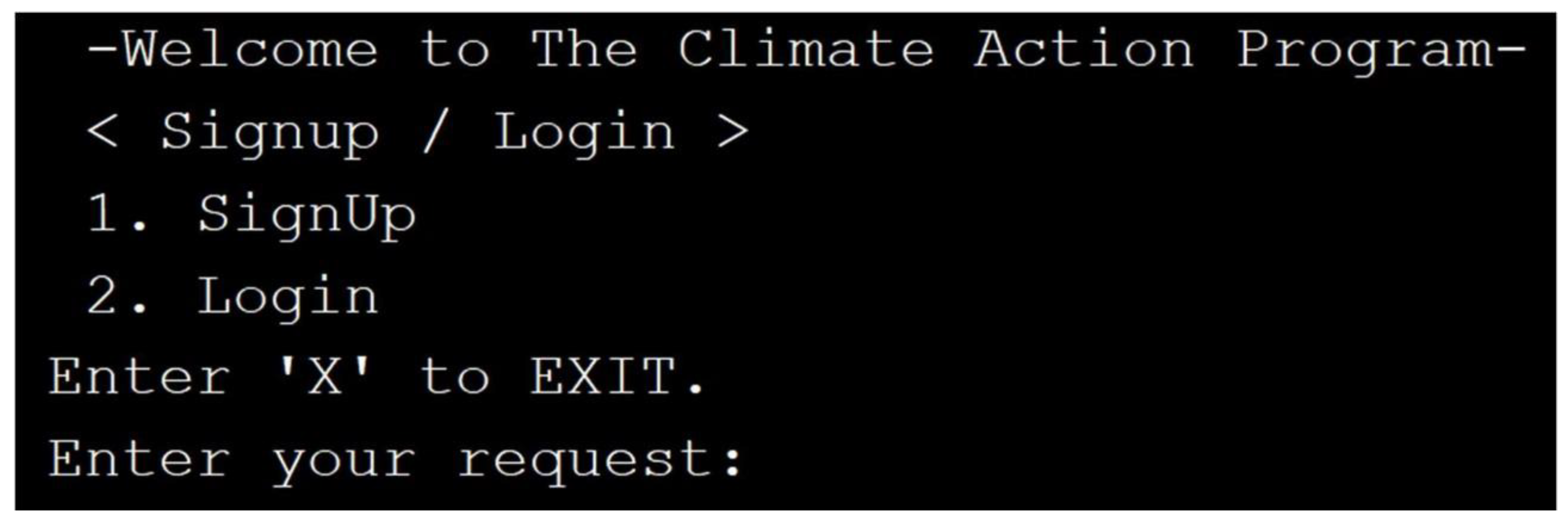
Figure 1.
(Signup and Login Page).
Figure 1.
(Signup and Login Page).
Figure 2.
(Signup Page—Username Input).
Figure 2.
(Signup Page—Username Input).
Figure 3.
(Signup Page—Password Input).
Figure 3.
(Signup Page—Password Input).
Figure 4.
(Signup Page—Invalid Password Input).
Figure 4.
(Signup Page—Invalid Password Input).
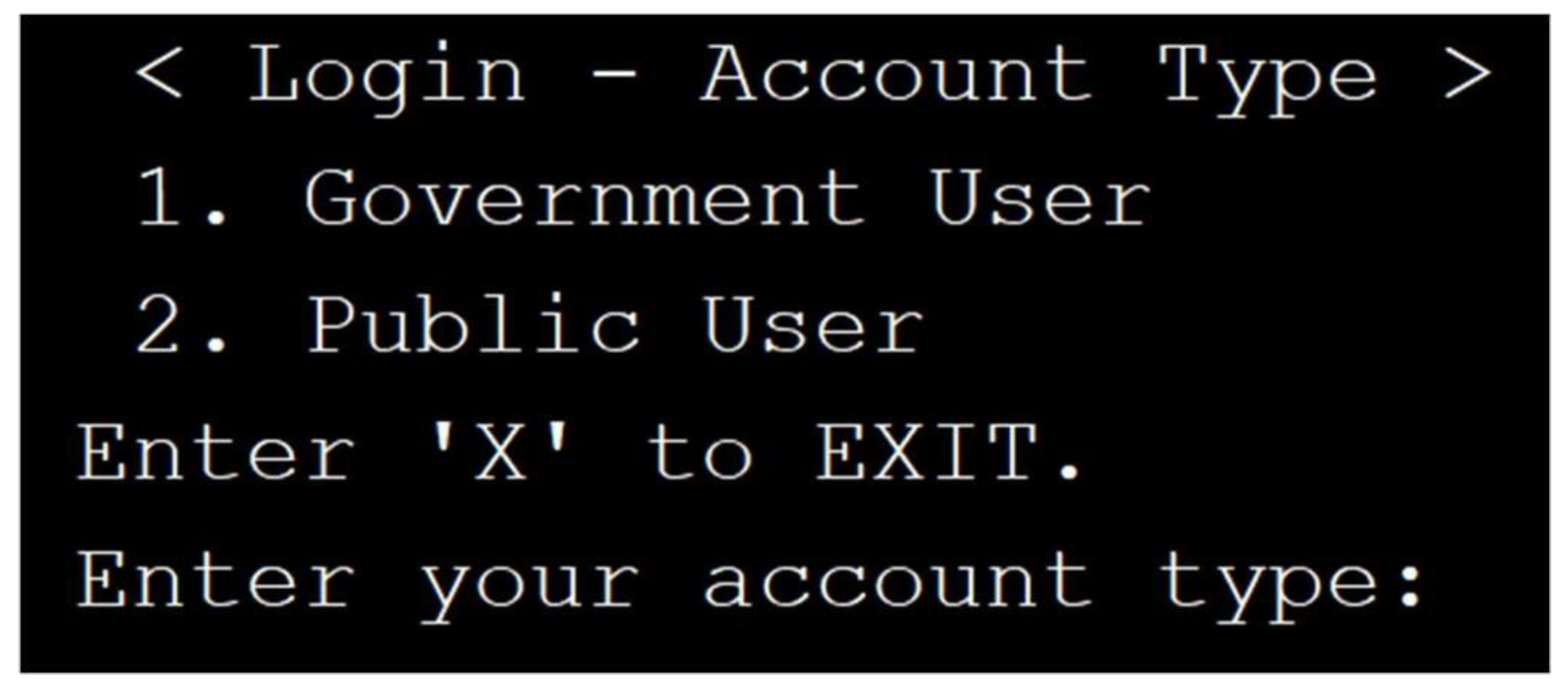
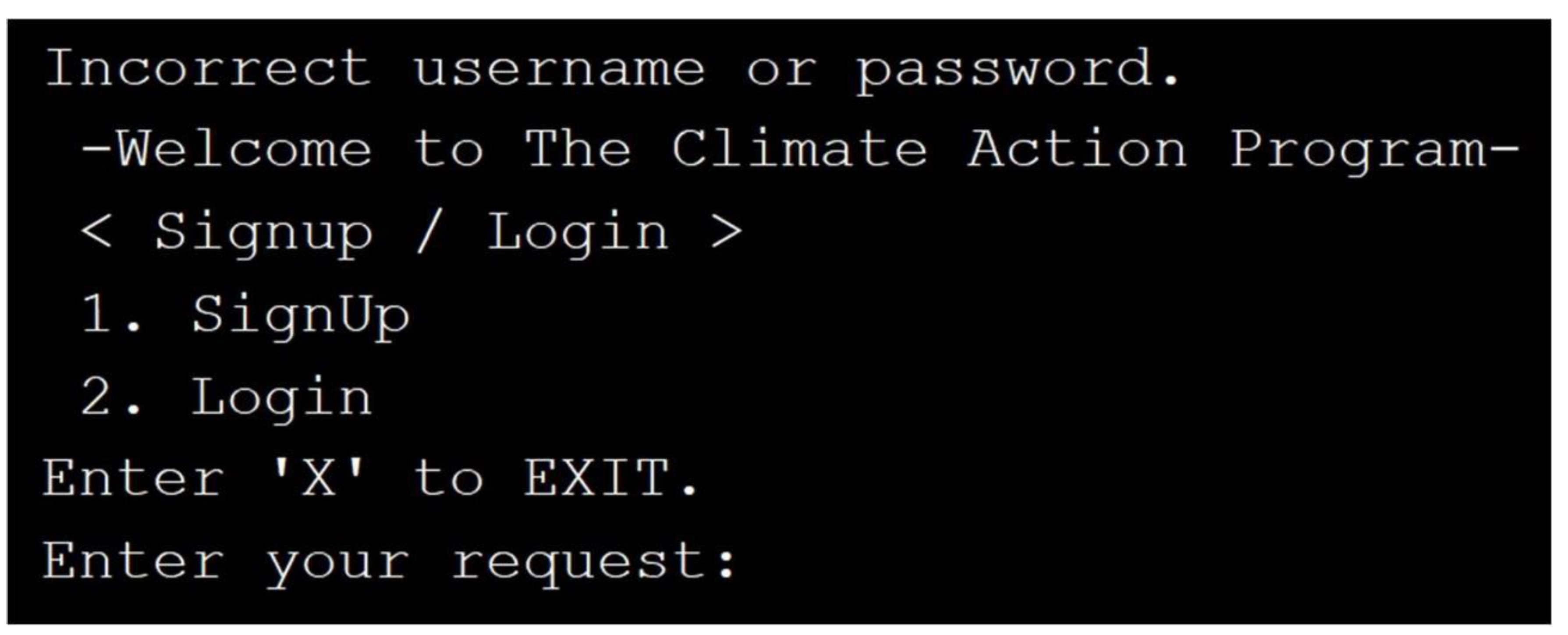
5.2. Login Page
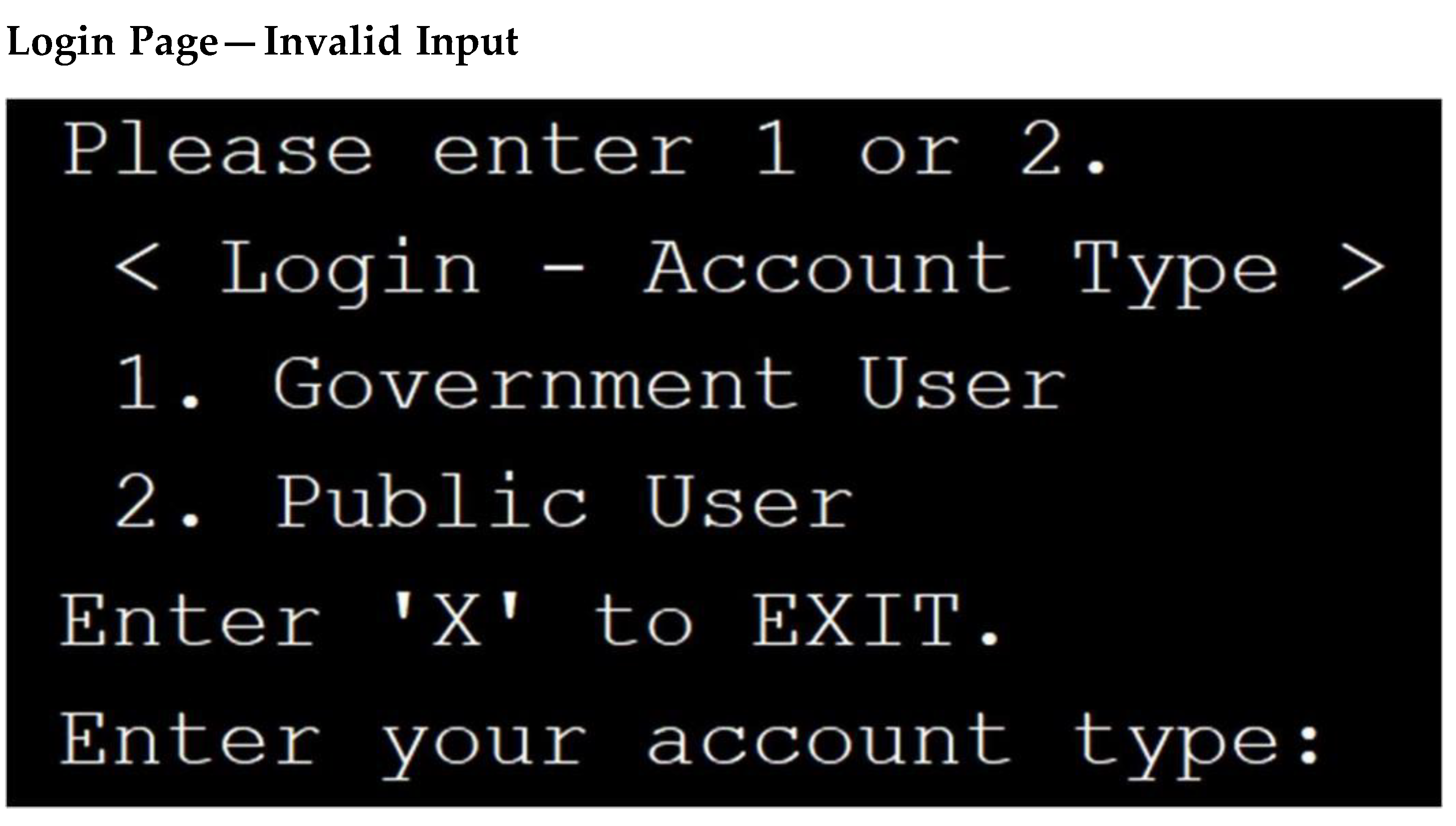
Figure 6.
Login Page—Invalid Input).
Figure 6.
Login Page—Invalid Input).
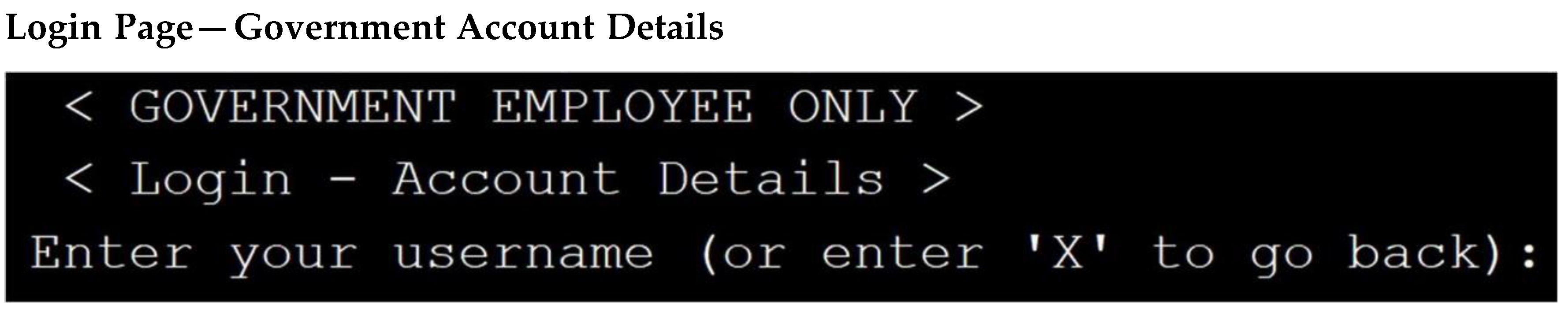
Figure 7.
(Login Page—Government Account Details Part 1).
Figure 7.
(Login Page—Government Account Details Part 1).
Figure 8.
(Login Page—Government Account Details Part 2).
Figure 8.
(Login Page—Government Account Details Part 2).
Login Page—Invalid Government Account Details
Figure 9.
(Login Page—Invalid Government Account Details).
Figure 9.
(Login Page—Invalid Government Account Details).
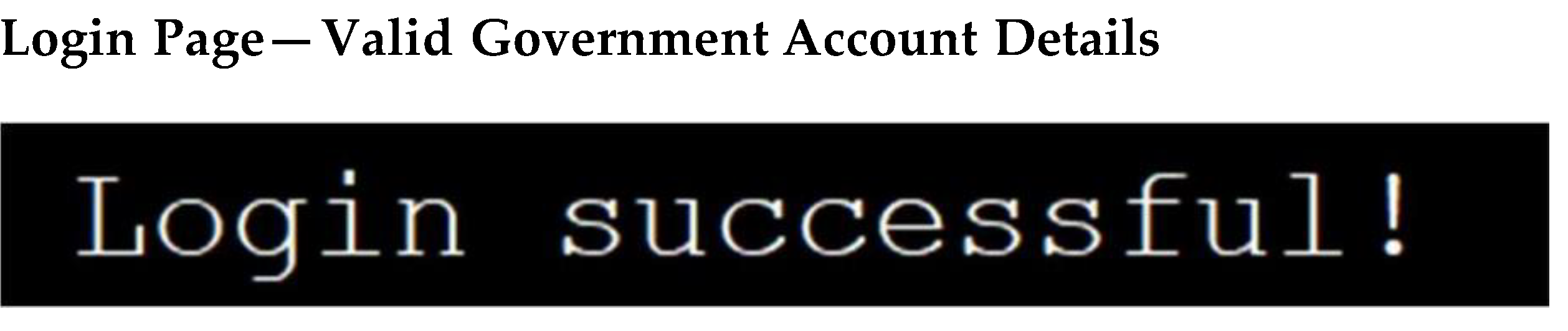
Figure 10.
Login Page—Valid Government Account Details).
Figure 10.
Login Page—Valid Government Account Details).
Figure 11.
(Login Page—Public Account Details Part 1).
Figure 11.
(Login Page—Public Account Details Part 1).
Figure 12.
(Login Page—Public Account Details Part 2).
Figure 12.
(Login Page—Public Account Details Part 2).
Figure 13.
(Login Page—Invalid Public Account Details).
Figure 13.
(Login Page—Invalid Public Account Details).
Figure 14.
(Login Page—Valid Public Account Details).
Figure 14.
(Login Page—Valid Public Account Details).
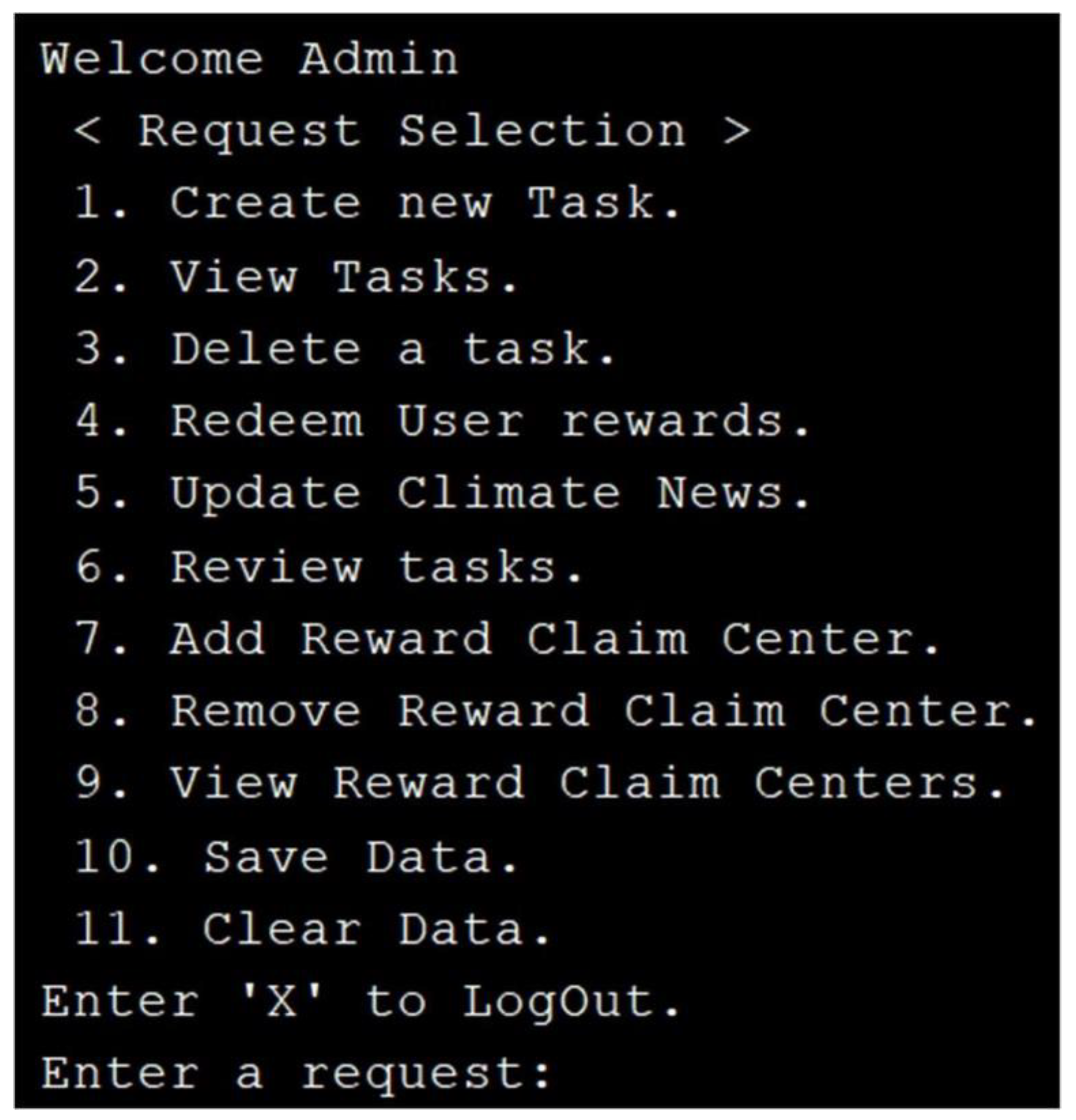
5.3. Government Interface
Figure 15.
(Login Page—Government Interface).
Figure 15.
(Login Page—Government Interface).
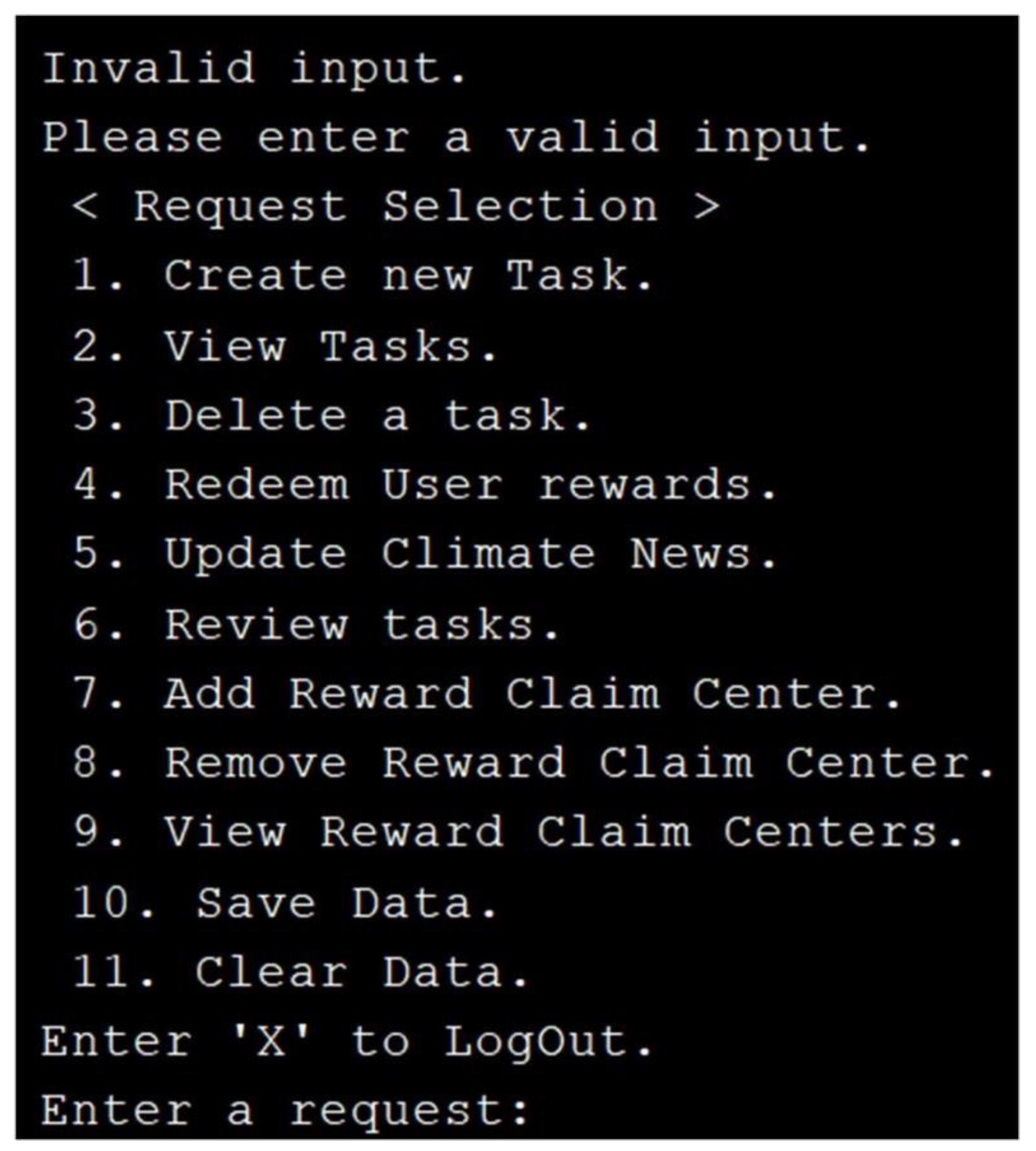
Figure 16.
(Login Page—Invalid Input).
Figure 16.
(Login Page—Invalid Input).
Figure 17.
(Government Interface—Create New Task Part 1).
Figure 17.
(Government Interface—Create New Task Part 1).
Figure 18.
(Government Interface—Create New Task Part 2).
Figure 18.
(Government Interface—Create New Task Part 2).
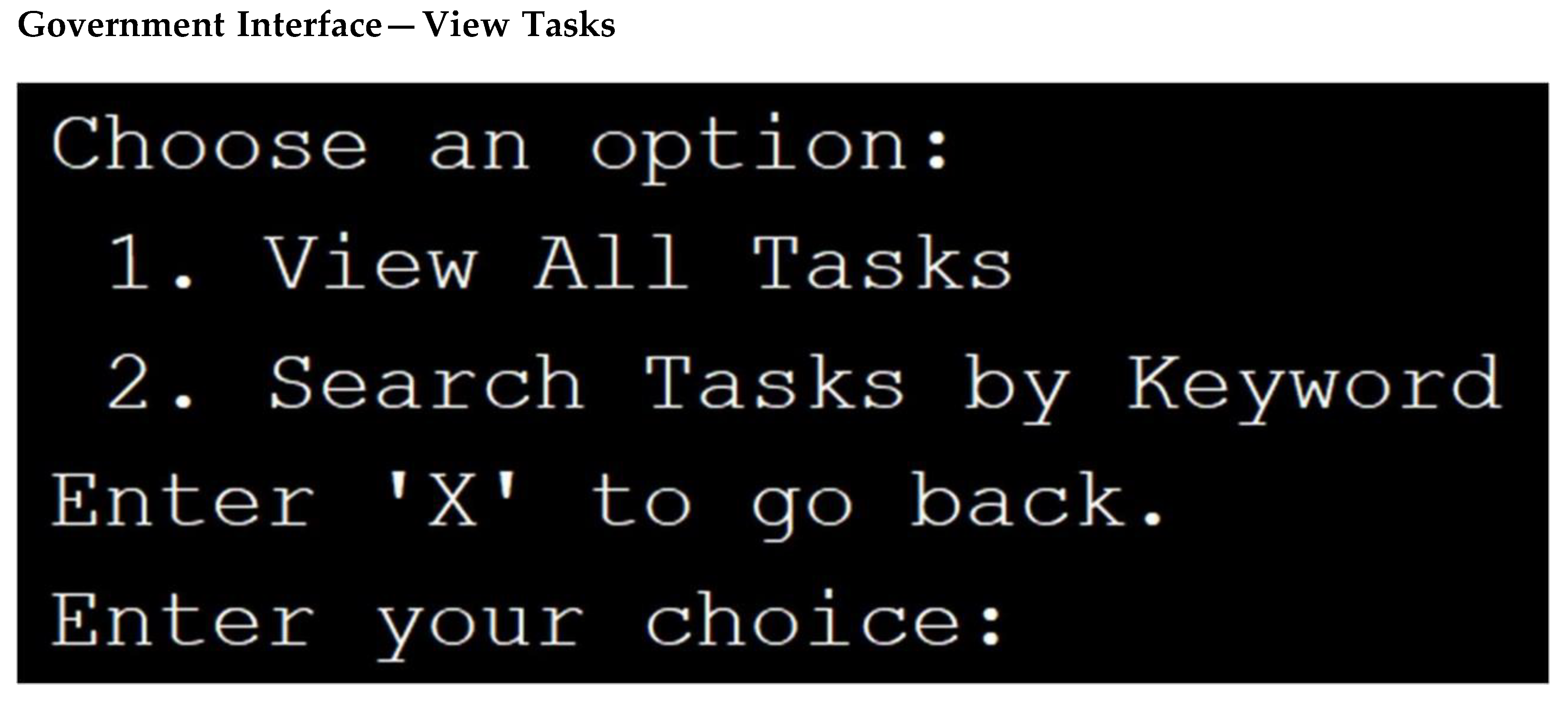
Figure 19.
(Government Interface—View Task).
Figure 19.
(Government Interface—View Task).
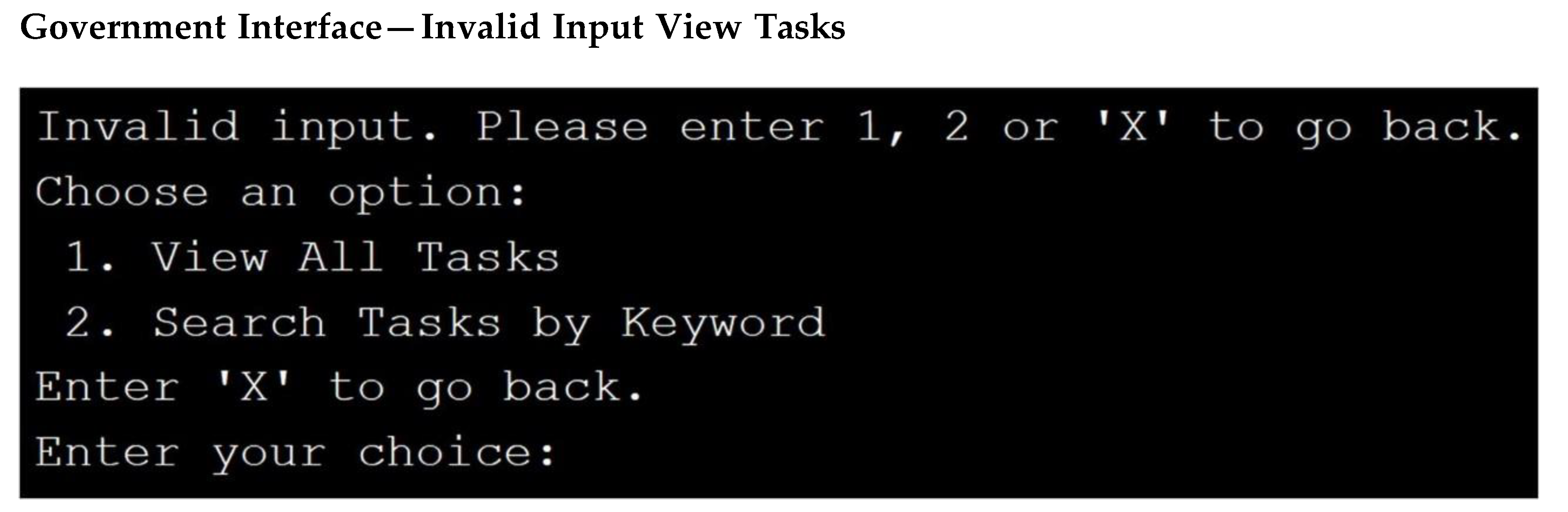
Figure 20.
(Government Interface—Invalid Input View Tasks).
Figure 20.
(Government Interface—Invalid Input View Tasks).
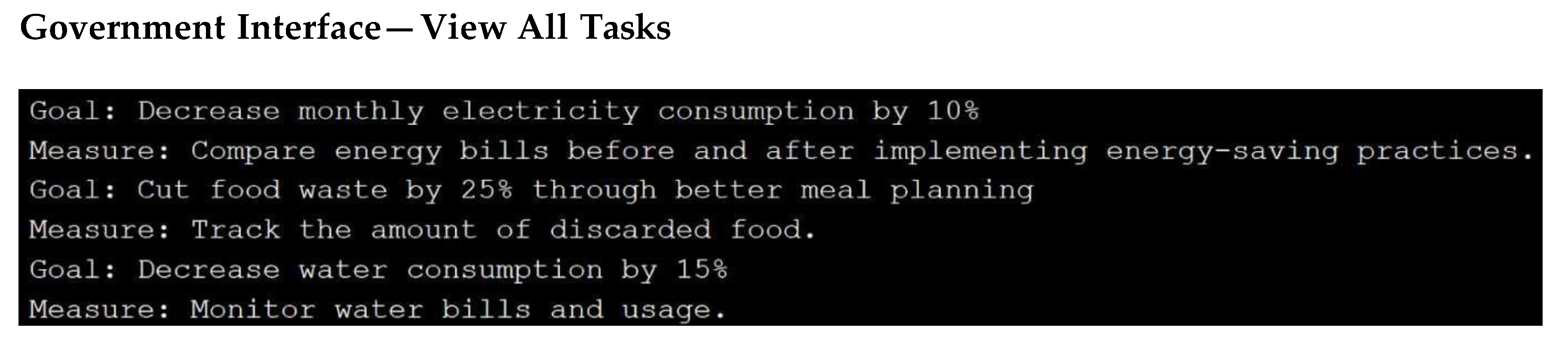
Figure 21.
(Government Interface—View All Tasks).
Figure 21.
(Government Interface—View All Tasks).
Figure 22.
(Government Interface—“Not found” Search Tasks by Keyword).
Figure 22.
(Government Interface—“Not found” Search Tasks by Keyword).
Figure 23.
(Government Interface—Search Tasks by Keyword).
Figure 23.
(Government Interface—Search Tasks by Keyword).
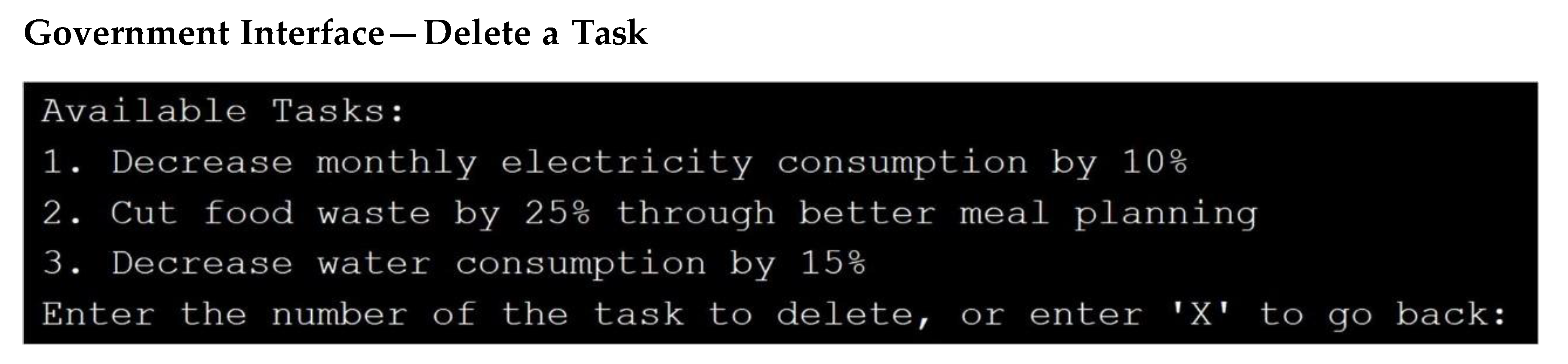
Figure 24.
(Government Interface—Delete a Task).
Figure 24.
(Government Interface—Delete a Task).
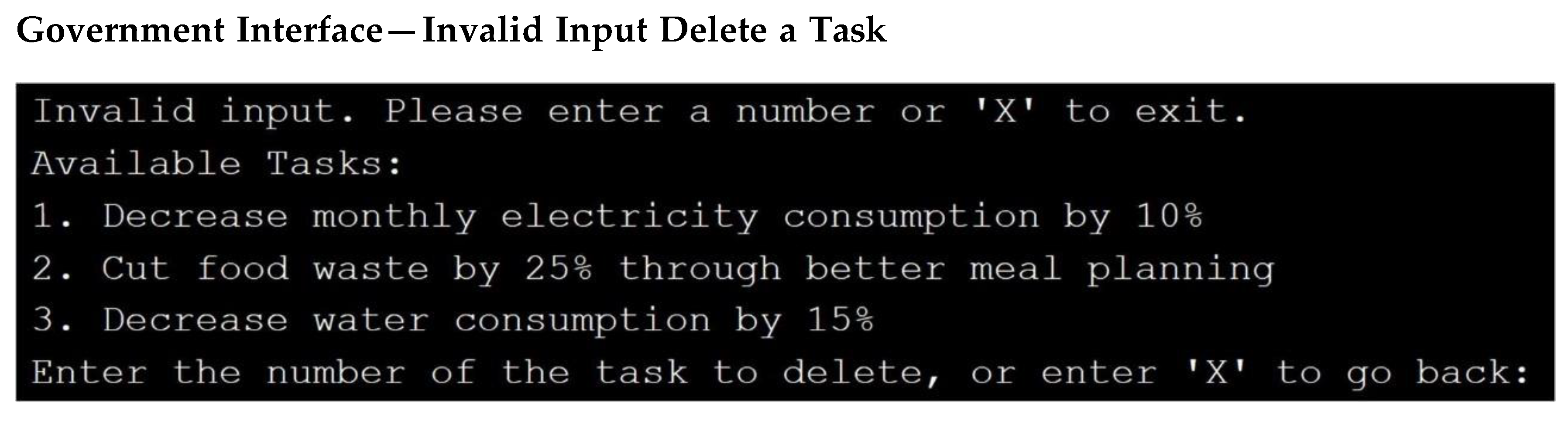
Figure 25.
(Government Interface –Invalid Input Delete a Task).
Figure 25.
(Government Interface –Invalid Input Delete a Task).
Figure 26.
(Government Interface—Successful Delete a Task).
Figure 26.
(Government Interface—Successful Delete a Task).
Figure 27.
(Government Interface—Redeem User Rewards part 1).
Figure 27.
(Government Interface—Redeem User Rewards part 1).
Figure 28.
(Government Interface—Redeem User Rewards part 2).
Figure 28.
(Government Interface—Redeem User Rewards part 2).
Figure 29.
(Government Interface—Redeem User Rewards part 3).
Figure 29.
(Government Interface—Redeem User Rewards part 3).
Figure 30.
(Government Interface—Invalid input Redeem User Rewards).
Figure 30.
(Government Interface—Invalid input Redeem User Rewards).
Figure 31.
(Government Interface—Valid Redeem User Rewards).
Figure 31.
(Government Interface—Valid Redeem User Rewards).
Figure 32.
(Government Interface—Update Climate News Part 1).
Figure 32.
(Government Interface—Update Climate News Part 1).
Figure 33.
(Government Interface—Update Climate News Part 2).
Figure 33.
(Government Interface—Update Climate News Part 2).
Figure 34.
(Government Interface—Update Climate News Part 3).
Figure 34.
(Government Interface—Update Climate News Part 3).
Figure 35.
(Government Interface—Update Climate News Part 4).
Figure 35.
(Government Interface—Update Climate News Part 4).
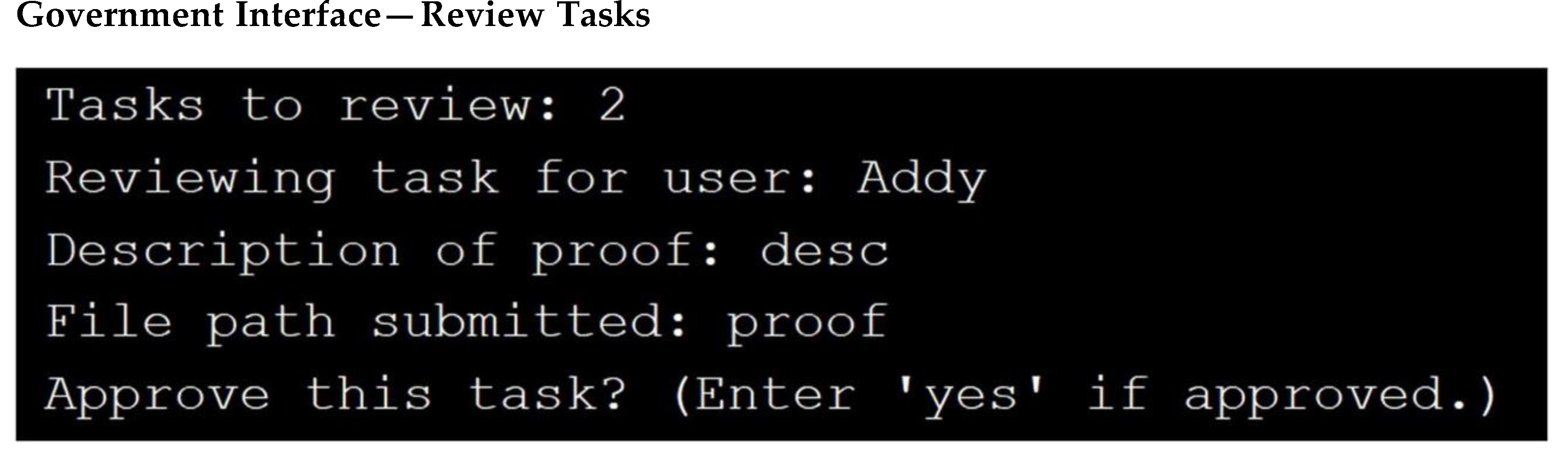
Figure 36.
(Government Interface –Review Tasks).
Figure 36.
(Government Interface –Review Tasks).
Figure 37.
(Government Interface—Disapproved Review Tasks).
Figure 37.
(Government Interface—Disapproved Review Tasks).
Figure 38.
(Government Interface—More Tasks Review Tasks).
Figure 38.
(Government Interface—More Tasks Review Tasks).
Figure 39.
(Government Interface—Approved Review Tasks).
Figure 39.
(Government Interface—Approved Review Tasks).
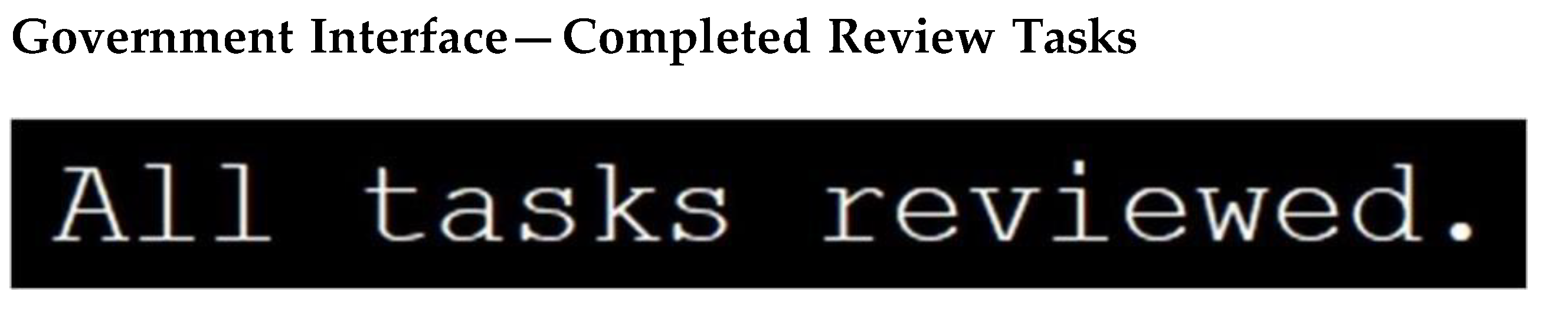
Figure 40.
(Government Interface—Completed Review Tasks).
Figure 40.
(Government Interface—Completed Review Tasks).
Figure 41.
(Government Interface—No Tasks Review Tasks).
Figure 41.
(Government Interface—No Tasks Review Tasks).
Figure 42.
(Government Interface—Add Reward Claim Center Part 1).
Figure 42.
(Government Interface—Add Reward Claim Center Part 1).
Figure 43.
(Government Interface—Add Reward Claim Center Part 2).
Figure 43.
(Government Interface—Add Reward Claim Center Part 2).
Figure 44.
(Government Interface—Duplicate ID Add Reward Claim Centre).
Figure 44.
(Government Interface—Duplicate ID Add Reward Claim Centre).
Figure 45.
(Government Interface—Successful Add Reward Claim Centre).
Figure 45.
(Government Interface—Successful Add Reward Claim Centre).
Figure 46.
(Government Interface—Remove Reward Claim Centre).
Figure 46.
(Government Interface—Remove Reward Claim Centre).
Figure 47.
(Government Interface—Failed Remove Review Claim Centre).
Figure 47.
(Government Interface—Failed Remove Review Claim Centre).
Figure 48.
(Government Interface—Successful Remove Reward Claim Centre).
Figure 48.
(Government Interface—Successful Remove Reward Claim Centre).
Figure 49.
(Government Interface –View Reward Claim Centre).
Figure 49.
(Government Interface –View Reward Claim Centre).
Figure 50.
(Government Interface—Save Data).
Figure 50.
(Government Interface—Save Data).
Figure 51.
(Government Interface—Confirmation Clear Data).
Figure 51.
(Government Interface—Confirmation Clear Data).
Figure 52.
(Government Interface—Cancelled Clear Data).
Figure 52.
(Government Interface—Cancelled Clear Data).
Figure 53.
(Government Interface—Clearing Pin Clear Data).
Figure 53.
(Government Interface—Clearing Pin Clear Data).
Figure 54.
(Government Interface—Incorrect PIN Clear Data).
Figure 54.
(Government Interface—Incorrect PIN Clear Data).
Figure 55.
(Government Interface—Correct PIN Clear Data).
Figure 55.
(Government Interface—Correct PIN Clear Data).
5.4. Public Interface
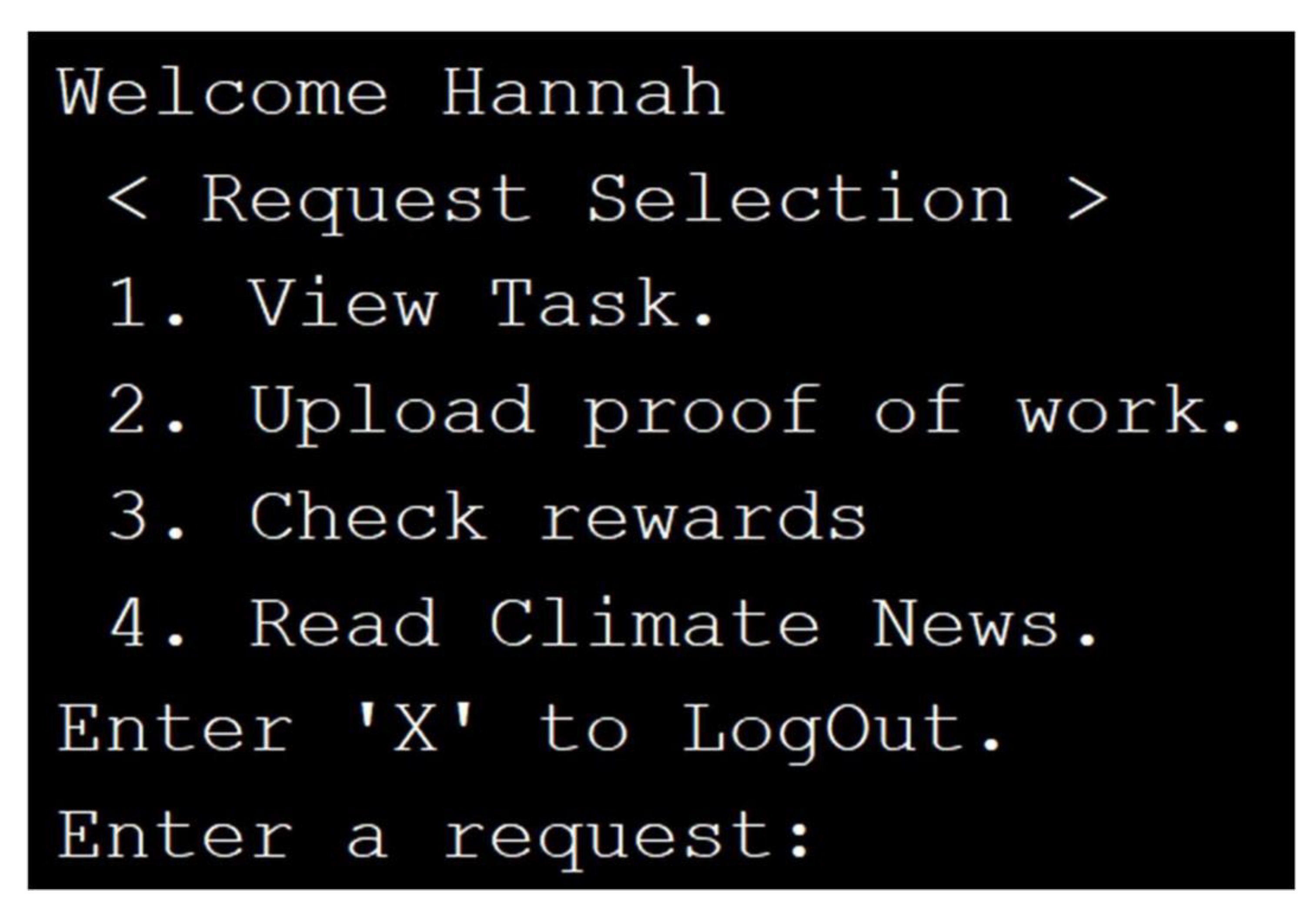
Figure 56.
(Public Interface).
Figure 56.
(Public Interface).
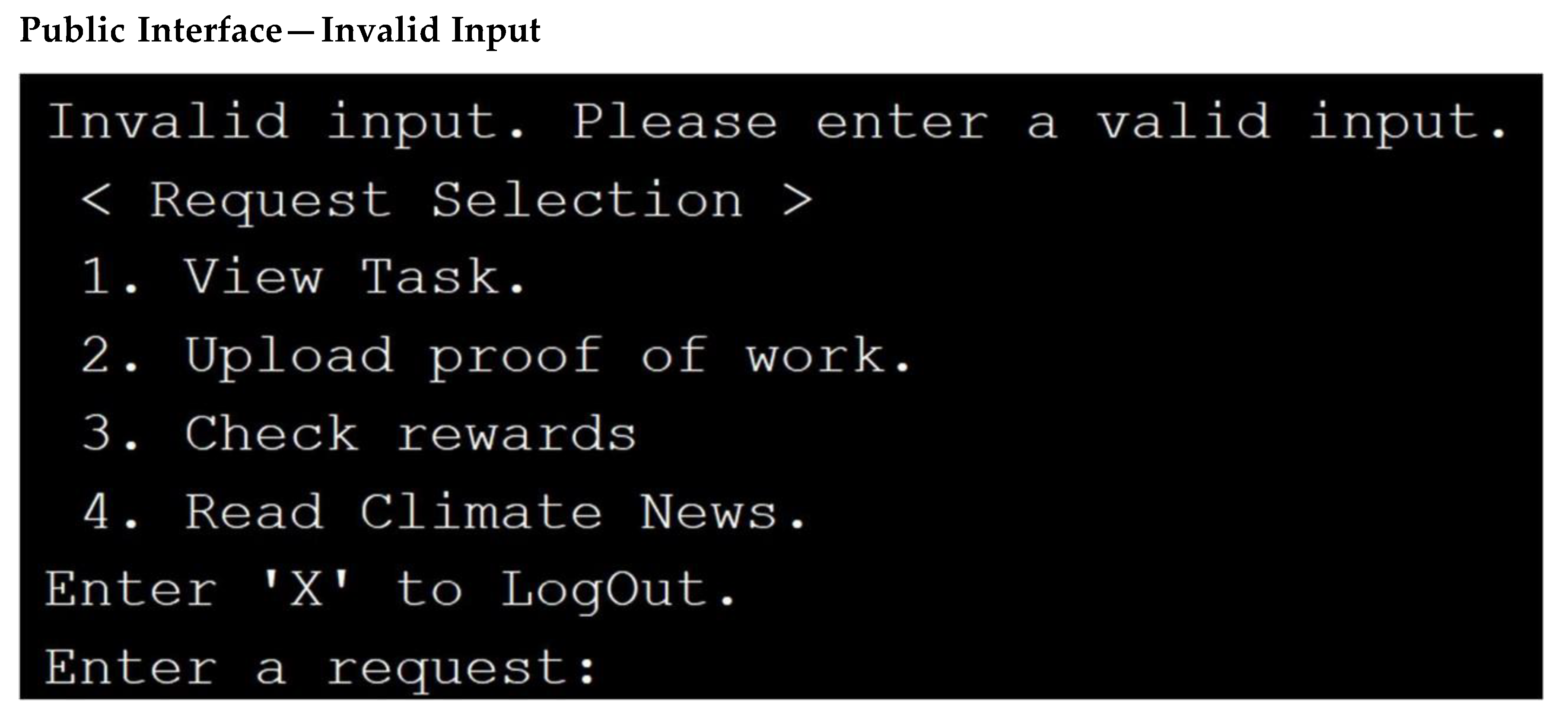
Figure 57.
(Public Interface—Invalid Input).
Figure 57.
(Public Interface—Invalid Input).
Figure 58.
(Public Interface –View Task).
Figure 58.
(Public Interface –View Task).
Figure 59.
(Public Interface –Pending View Task).
Figure 59.
(Public Interface –Pending View Task).
Figure 60.
(Public Interface– Upload Proof of Work Part 1).
Figure 60.
(Public Interface– Upload Proof of Work Part 1).
Figure 61.
(Public Interface– Upload Proof of Work Part 2).
Figure 61.
(Public Interface– Upload Proof of Work Part 2).
Figure 62.
(Public Interface—Pending Upload Proof of Work).
Figure 62.
(Public Interface—Pending Upload Proof of Work).
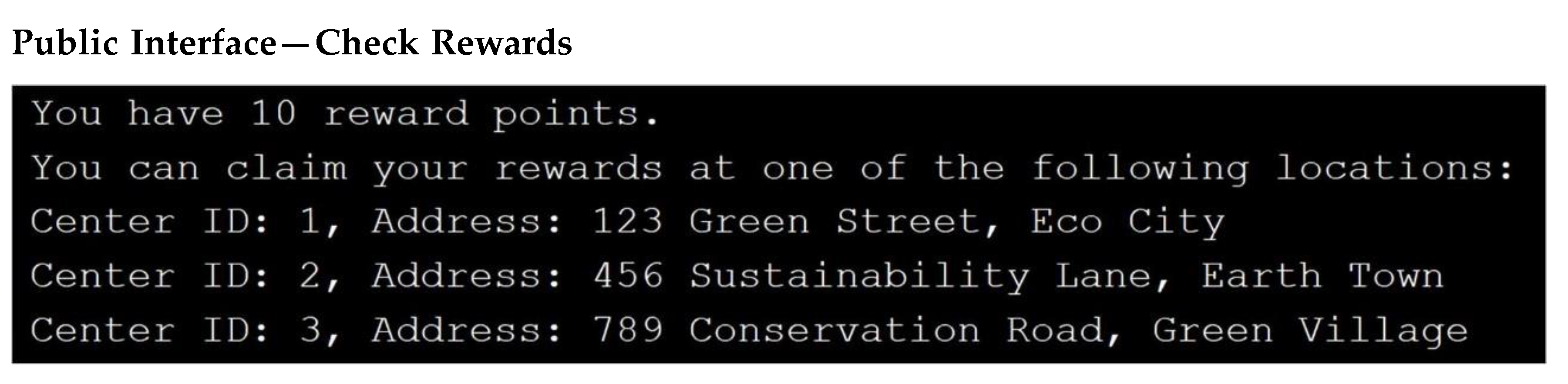
Figure 63.
(Public Interface—Check Rewards).
Figure 63.
(Public Interface—Check Rewards).
Figure 64.
(Public Interface—No Rewards Check Rewards).
Figure 64.
(Public Interface—No Rewards Check Rewards).
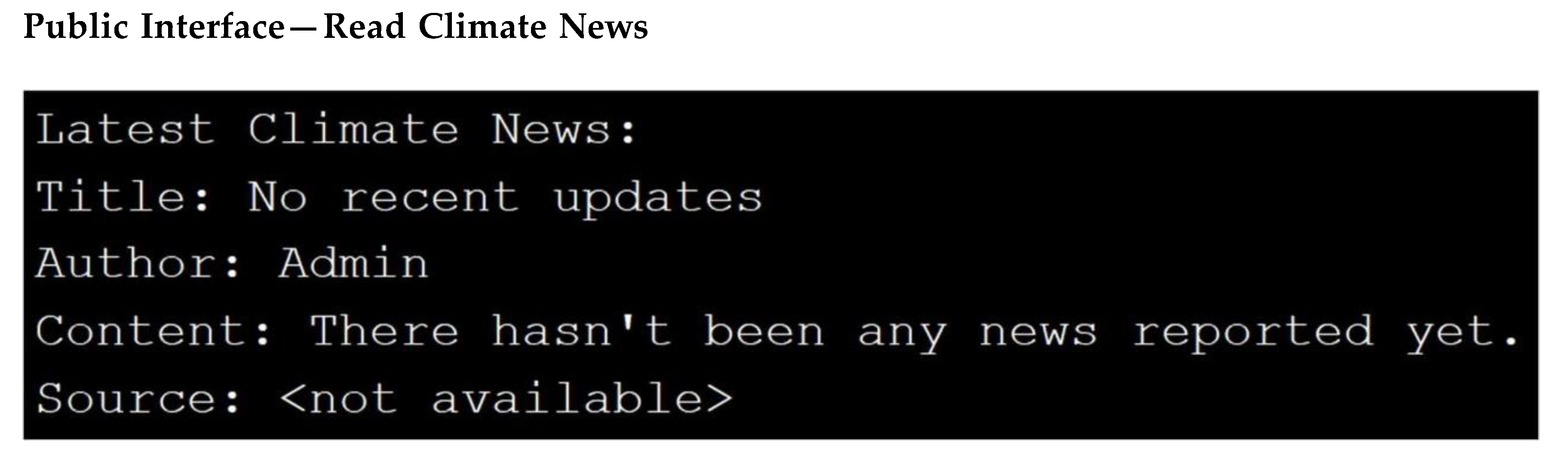
Figure 65.
(Public Interface—Read Climate News).
Figure 65.
(Public Interface—Read Climate News).
5.5. Exit Program Page
Figure 66.
(Exit Program Page).
Figure 66.
(Exit Program Page).
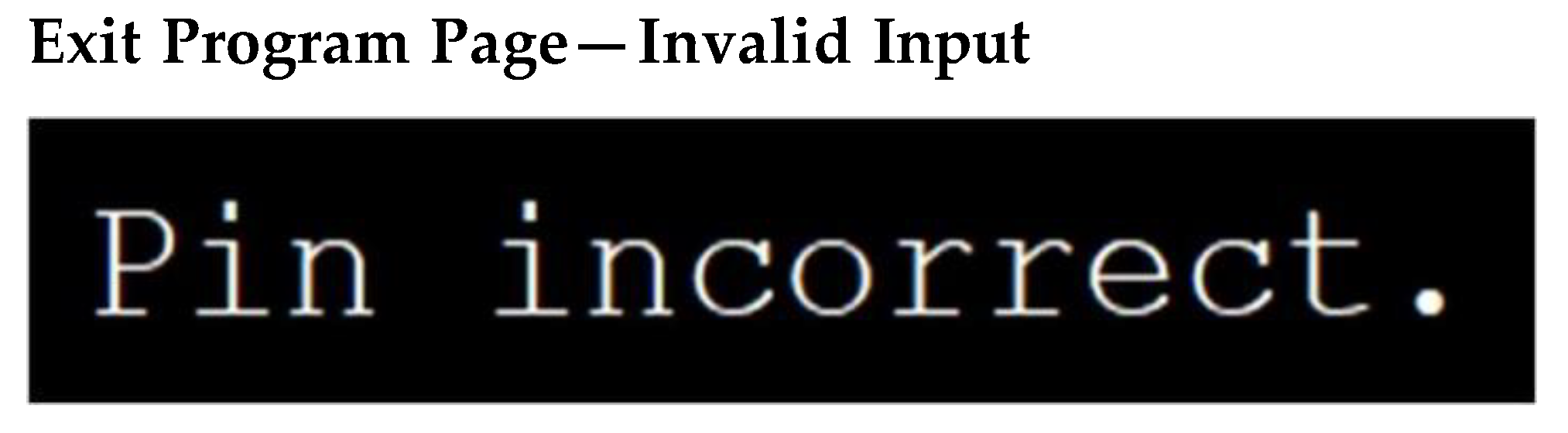
Figure 67.
(Exit Program Page—Invalid Input).
Figure 67.
(Exit Program Page—Invalid Input).
Figure 68.
(Exit Program Page—Successful Termination).
Figure 68.
(Exit Program Page—Successful Termination).
6. Results and Discussion
The findings of CAP implementation provide valuable data on the effectiveness of a task-based rewards system in promoting environmental stewardship. The pilot study (Phase 1) revealed that there was high engagement with 85% of users actively participating in official environmental tasks. This indicates that an effective, gamified system can significantly promote climate-positive behavior. Also, 70% of the survey respondents reported a positive shift in their environmental activities, highlighting the impact of rewards and structured engagement on behavior transformation. The support for gamified rewards over traditional awareness campaigns highlights the importance of interactive and challenging approaches in environmental conservation initiatives. Government representatives overseeing the process indicated process management and incentive distribution to be easier, while others noted issues with the manual validation process, suggesting automation in future releases.
In Phase 2, field deployment, CAP exhibited noteworthy trends in user participation by age. Task completion rates were 30% higher in urban than rural areas, pointing to the importance of increasing digital literacy and internet penetration in less-developed communities. The task redemption rate was 78%, which suggests that users were motivated through the process and felt that the rewards were worthwhile. Among the reward options, certificate-based rewards were more sought after than material rewards, which suggests that users valued recognition and social recognition as participation drivers. A comparison with the non-CAP control group revealed that CAP participants were 40% more likely to adopt environmentally beneficial behaviors, affirming the effectiveness of structured interaction models in ensuring long-term behavior change.
The integration policy phase revealed the broader impact of the program, with data collected under CAP informing community-specific environmental policy. The policymakers were able to observe which sustainability activity was most attractive to different sections of the population through trends in participation and take-up rates, allowing more targeted and effective environmental policy. Nonetheless, the research also revealed some of the main challenges, such as scalability issues, reward inventory management, and the necessity of an automated verification system to efficiently verify task completion. To overcome these limitations, subsequent versions of CAP will include blockchain-based authentication for task verification and transparency in reward distribution to provide a more secure and scalable system.
Overall, the experimental outcomes validate that CAP is a credible model for integrating technology, behavioral incentives, and policy-based conservation. The observed high levels of engagement, behavior change, and policy impact recorded in the study validate CAP’s potential as an extensible framework for promoting climate-friendly behaviors on a national and international level. With continuing improvements in usability, accessibility, and automation, CAP can be a powerful tool for facilitating sustainable behaviors and bridging the knowledge-action gap for climate preservation.
7. Conclusions
Climate Action Program (CAP) presents an interdisciplinary, task-based strategy toward creating environmental responsibility through linking climate preservation action with prevailing knowledge deficits. Utilizing well-defined incentives, time-series interactions, and incorporation of government frameworks, CAP exerts effective influence toward climate sustainability since it involves users in promoting long-term changes at a policymaker-supported data framework. Its sharp growth curve during testing phases with elevated positive change is evidence of CAP’s strong function in solidifying awareness in a positive sequence of action plans.
The pilot test and field implementation results of CAP indicate the scalability of the program to be absorbed into wider environmental policy. While scalability may have been a challenge, along with reward management and validation of task, these would be addressed by proposed refinement steps like blockchain-based verification and improve the program’s efficiency and integrity. The data-driven approach in which CAP operates also enables policymakers to design policy-specific climate policies that convert public participation into meaningful, long-term influence.
In the coming years, CAP’s expansion and evolution will focus on digital access, automation, and inclusivity to reach an even larger population. With additional improvements, CAP can be implemented at national and global scales as a scalable and adaptable model for climate action. By combining technology, behavioral science, and environmental policy, CAP establishes the critical role of public engagement in addressing climate change, paving the way for a more sustainable future.
References
- Bennett, N. J. , Whitty, T. S., Finkbeiner, E.; et al. Environmental stewardship: A conceptual review and analytical framework. Environmental Management 2018, 61, 597–614. [Google Scholar] [CrossRef] [PubMed]
- Schramm, P. J.; et al. Climate change and health: Local solutions to local challenges. Current Environmental Health Reports 2020, 7, 1–10. [Google Scholar] [CrossRef] [PubMed]
- Khatibi, F.S.; Dedekorkut-Howes, A.; Howes, M. Can public awareness, knowledge, and engagement improve climate change adaptation policies? Discover Sustainability 2021, 2, 1–10. [Google Scholar] [CrossRef]
- Saeed, S.; Abdullah, A. Combination of brain cancer with hybrid K-NN algorithm using statistical analysis of cerebrospinal fluid (CSF) surgery. International Journal of Computer Science and Network Security 2021, 21, 120–130. [Google Scholar]
- Saeed, S.; Abdullah, A. Analysis of lung cancer patients for data mining tool. International Journal of Computer Science and Network Security 2019, 19, 90–105. [Google Scholar]
- Saeed, S.; Abdullah, A.; Jhanjhi, N.Z.; Naqvi, M.; Nayyar, A. New techniques for efficiently k-NN algorithm for brain tumor detection. Multimedia Tools and Applications 2022, 81, 18595–18616. [Google Scholar]
- Saeed, S. Optimized hybrid prediction method for lung metastases. Artificial Intelligence in Medicine 2021.
- Saeed, S.; Abdullah, A.; Naqvi, M. Implementation of Fourier transformation with brain cancer and CSF images. Indian Journal of Science & Technology 2019, 12, 1–16. [Google Scholar]
- Torres, C.; Dixon, J. Pathways to climate health: Active learning and effective communication to optimize climate change action—An evaluation of the climate change and renal health awareness and education toolkit for healthcare providers. The Journal of Climate Change and Health 2023, 9, 100232. [Google Scholar] [CrossRef]
- Albrecht G (2011) Chronic environmental change: Emerging ‘psychoterratic’ syndromes In, I. Albrecht G (2011) Chronic environmental change: Emerging ‘psychoterratic’ syndromes In, I. Weissbecker (Ed.), Climate change and human well-being (pp. 43–56). Springer. [CrossRef]
- Sivonen, J. Attitudes toward global and national climate policies in Finland—The significance of climate change risk perception and urban/rural domicile. GeoJournal 2023, 88, 2247–2262. [Google Scholar] [CrossRef]
- Dogra, V. , Singh, A., Verma, S., Kavita, Jhanjhi, N. Z., & Talib, M. N. (2021). Analyzing DistilBERT for sentiment classification of banking financial news. In S. L. Peng, S. Y. Hsieh, S. Gopalakrishnan, & B. Duraisamy (Eds.), Intelligent computing and innovation on data science (Vol. 248, pp. 665-675). Springer. [CrossRef]
- Gopi, R. , Sathiyamoorthi, V., Selvakumar, S.; et al. Enhanced method of ANN based model for detection of DDoS attacks on multimedia Internet of Things. Multimedia Tools and Applications 2022, 81, 26739–26757. [Google Scholar] [CrossRef]
- Chesti, I. A. , Humayun, M., Sama, N. U., & Jhanjhi, N. Z. (2020, October). Evolution, mitigation, and prevention of ransomware. In 2020 2nd International Conference on Computer and Information Sciences (ICCIS) (pp. 1-6). IEEE.
- Alkinani, M. H. , Almazroi, A. A., Jhanjhi, N. Z., & Khan, N. A. 5G and IoT based reporting and accident detection (RAD) system to deliver first aid box using unmanned aerial vehicle. Sensors 2021, 21, 6905. [Google Scholar] [PubMed]
- Babbar, H.; Rani, S.; Masud, M.; Verma, S.; Anand, D.; Jhanjhi, N. Load balancing algorithm for migrating switches in software-defined vehicular networks. Computational Materials and Continua 2021, 67, 1301–1316. [Google Scholar] [CrossRef]
- Conroy, M. M. , & Wilson, J. P. [Title of the article]. Journal of the American Planning Association 2023, 0, 1–15. [Google Scholar] [CrossRef]
- Chen, S.; Kagatsume, M. Impacts of environmental conservation programs on regional economic structural change in Guizhou, China, from 2002 to 2012: An input-output analysis. Economic Structures 2018, 7, 1–18. [Google Scholar] [CrossRef]
- Xie, Y.; Zheng, Y.; Yang, Y. Correction: The relationship between students’ awareness of environmental issues and attitudes toward science and epistemological beliefs—Moderating effect of informal science activities. Research in Science Education 2023, 53, 1203. [Google Scholar] [CrossRef]
- Gillespie, E. , Schramm, P. J., & Hsu, J. U.S. public health response to climate change for allergists-immunologists. Annals of Allergy, Asthma & Immunology 2022, 128, 678–685. [Google Scholar] [CrossRef]
- Anguelovski, I. , Shi, L., Chu, E., Gallagher, D., Goh, K., Lamb, Z., Reeve, K., & Teicher, H. (2016). Equity impacts of urban land use planning for climate adaptation: Critical perspectives from the Global North and South. Journal of Environmental Planning and Management. [CrossRef]
- Dietz, T. , & Stern, P. C. (2008). Public participation in environmental assessment and decision making. [CrossRef]
- Hamari, J.; Koivisto, J. Why do people play games? A meta-analysis of gaming motivations. Computers in Human Behavior 2019, 99, 321–336. [Google Scholar] [CrossRef]
- Kollmuss, A.; Agyeman, J. Mind the gap: Why do people act environmentally and what are the barriers to pro-environmental behavior? Environmental Education Research 2002, 8, 239–260. [Google Scholar] [CrossRef]
- Aldughayfiq, B.; Ashfaq, F.; Jhanjhi, N.Z.; Humayun, M. Explainable AI for retinoblastoma diagnosis: interpreting deep learning models with LIME and SHAP. Diagnostics 2023, 13, 1932. [Google Scholar] [CrossRef]
- Lim, M.; Abdullah, A.; Jhanjhi, N.Z.; Khan, M.K.; Supramaniam, M. Link prediction in time-evolving criminal network with deep reinforcement learning technique. IEEE Access 2019, 7, 184797–184807. [Google Scholar]
- Jena, K. K. , Bhoi, S. K., Malik, T. K., Sahoo, K. S., Jhanjhi, N. Z., Bhatia, S., & Amsaad, F. E-learning course recommender system using collaborative filtering models. Electronics 2022, 12, 157. [Google Scholar]
- Gill, S.H.; Razzaq, M.A.; Ahmad, M.; Almansour, F.M.; Haq, I.U.; Jhanjhi, N.Z.; Masud, M. Security and privacy aspects of cloud computing: a smart campus case study. Intelligent Automation & Soft Computing 2022, 31, 117–128. [Google Scholar]
- Muzafar, S. , & Jhanjhi, N. Z. (2020). Success stories of ICT implementation in Saudi Arabia. In Employing Recent Technologies for Improved Digital Governance (pp. 151-163). IGI Global.
|
Disclaimer/Publisher’s Note: The statements, opinions and data contained in all publications are solely those of the individual author(s) and contributor(s) and not of MDPI and/or the editor(s). MDPI and/or the editor(s) disclaim responsibility for any injury to people or property resulting from any ideas, methods, instructions or products referred to in the content. |
© 2025 by the authors. Licensee MDPI, Basel, Switzerland. This article is an open access article distributed under the terms and conditions of the Creative Commons Attribution (CC BY) license (http://creativecommons.org/licenses/by/4.0/).