
Submitted:
04 March 2025
Posted:
04 March 2025
You are already at the latest version
Abstract
Obesity is a complex metabolic disorder with significant systemic implications, including insulin resistance, dyslipidemia, and cardiovascular disease. Traditional weight loss methods, such as lifestyle interventions and bariatric surgery, remain primary treatment modalities. However, emerging evidence suggests that selective fat removal may contribute to metabolic improvements. Vibration Amplification of Sound Energy at Resonance (VASER) liposuction, a minimally invasive fat reduction technique, has demonstrated potential metabolic benefits beyond aesthetic outcomes. This study evaluates the impact of VASER liposuction on metabolic parameters, including triglyceride levels and fasting blood glucose, in patients with a BMI above 30.
A retrospective analysis of 10 patients undergoing VASER liposuction was conducted, comparing preoperative and postoperative metabolic outcomes over a 12-month period. Results indicate significant reductions in triglycerides and improved glucose metabolism in patients adhering to dietary recommendations postoperatively. However, weight regain and fat redistribution were observed in those who did not maintain dietary adherence, suggesting that VASER liposuction alone is insufficient for sustained metabolic improvements. This study highlights the potential role of VASER liposuction as an adjunct in obesity management, warranting further investigation in controlled clinical trials.
Keywords:
VASER Liposuction
; Metabolic Health
; Obesity Management
; Triglycerides
; Liposuction Outcomes
1. Introduction
Obesity is a significant public health concern worldwide, contributing to metabolic dysfunctions such as insulin resistance, dyslipidemia, and cardiovascular disease, ultimately increasing morbidity and mortality [1,2]. While conventional treatment modalities—including dietary modifications, physical activity, pharmacotherapy, and bariatric surgery—are well-established, they often require long-term adherence, which remains a major challenge for many patients [3,4]. Surgical weight loss procedures such as bariatric surgery have shown significant metabolic benefits; however, they come with potential risks and complications, prompting researchers to explore alternative or adjunctive interventions [5].
Liposuction, traditionally viewed as a cosmetic procedure for body contouring, has recently garnered attention for its potential metabolic benefits. Several studies suggest that the removal of adipose tissue through liposuction may influence systemic metabolic markers, particularly lipid metabolism and glucose homeostasis [6,7].
Emerging evidence indicates that VASER liposuction may provide short-term metabolic improvements, including reductions in triglyceride levels and improvements in glycemic control [10]. A meta-analysis of liposuction studies has reported significant decreases in serum leptin, glucose, and lipid concentrations, further supporting the hypothesis that adipose tissue removal can have systemic metabolic effects [11]. However, some studies contradict these findings, emphasizing that metabolic benefits may not be sustained in the absence of dietary and lifestyle modifications [12]. Weight regain, fat redistribution, and contour irregularities have been observed in patients who do not adhere to postoperative dietary guidelines, raising concerns about the long-term efficacy of liposuction as a metabolic intervention [9,12].
Given these conflicting perspectives, this study aims to evaluate the metabolic effects of VASER liposuction in patients with BMI >30, focusing on changes in lipid profiles and weight maintenance over a 12-month period. By assessing both short- and long-term outcomes, this research seeks to determine whether VASER liposuction can serve as a complementary tool for obesity management and metabolic health optimization.
2. Materials and Methods
2.1. Study Design and Ethical Approval
This study was a retrospective analysis of 10 cases with a BMI between 30 and 40. Ethical approval was obtained from the Institutional Review Board (IRB) in accordance with the Declaration of Helsinki, and informed consent was obtained from all participants prior to data collection.
2.2. Patient Selection Criteria
The study included patients with a body mass index (BMI) >30 who underwent VASER liposuction for body contouring and metabolic evaluation. Inclusion criteria required patients to have stable weight for at least six months prior to surgery, without a history of bariatric surgery or major systemic illness. Patients with uncontrolled diabetes, cardiovascular disease, active malignancies, or recent pregnancy were excluded from the study.
2.3. VASER Liposuction Procedure
VASER liposuction was performed under tumescent anesthesia using ultrasound-assisted emulsification followed by suction aspiration. Fat was selectively removed from the abdomen, flanks, thighs, and other targeted areas. The procedure was conducted in a controlled surgical environment with intraoperative monitoring. Postoperative care included compression garment use, early ambulation, and dietary counseling to minimize complications and optimize recovery.
2.4. Data Analysis and Outcome Measures
Data were analyzed preoperatively and at 3, 6, and 12 months postoperatively. The primary metabolic outcomes included:
- Triglyceride Levels: Measured via fasting blood samples.
- Fasting Blood Glucose Levels: Evaluated using standard glucose testing.
Secondary outcomes included:
- Weight Loss and BMI Changes: Monitored at each follow-up visit.
- Body Contouring Results: Assessed using clinical photography and patient-reported satisfaction.
- Adherence to Postoperative Dietary Guidelines: Evaluated through patient-reported adherence and weight maintenance.
2.6. Study Limitations
This study is limited by its retrospective design and relatively small sample size. While metabolic improvements were observed, long-term sustainability beyond 12 months requires further investigation. Additionally, variations in dietary adherence may have influenced metabolic outcomes, necessitating controlled trials for more definitive conclusions.
3. Results
3.1. Metabolic Improvements
VASER liposuction demonstrated notable metabolic benefits in patients with BMI >30, particularly in those with preoperative dyslipidemia.
3.2. Weight Loss and Body Contouring Outcomes
VASER liposuction resulted in significant reductions in body weight and BMI while enhancing skin contraction.
- BMI Reduction: Patients experienced an average BMI decrease of 4.5 points over the 12-month period, with individual reductions ranging from 3.2 to 6.1 points.
- Weight Loss: The mean weight loss ranged from 7% to 14% of total body weight.
- Skin Retraction: Improved skin tightening was observed in all patients, particularly in those with higher weight loss percentages, corroborating the benefits of ultrasound-assisted liposuction in enhancing dermal contraction [7].
3.3. Challenges and Limitations
Despite the metabolic and aesthetic benefits, challenges were noted in postoperative patient outcomes.
- Fat Redistribution and Secondary Procedures: Two patients required sequential liposuction to address contour irregularities in the abdominal and flank regions. This aligns with literature indicating that secondary fat accumulation may occur in untreated areas if dietary habits are not maintained postoperatively [10].
3.4. Figures
Figure 1.
A 36 year old Male with Grade 2 Gynecomastia along with Fatty desposits on abodmen flanks areas He had VASER Liposucion on his chest abdomen flanks and lower back areas. (a): Front view of chest Abdomen flanks areas preoperatively. (b). Side viwes of Chest, Abdomen flanks pre operatively. (c) 1 month Post operative results showing front of the chest, abdomen and flanks. (d). Post operative results of chest Abdomen and flanks.
Figure 1.
A 36 year old Male with Grade 2 Gynecomastia along with Fatty desposits on abodmen flanks areas He had VASER Liposucion on his chest abdomen flanks and lower back areas. (a): Front view of chest Abdomen flanks areas preoperatively. (b). Side viwes of Chest, Abdomen flanks pre operatively. (c) 1 month Post operative results showing front of the chest, abdomen and flanks. (d). Post operative results of chest Abdomen and flanks.
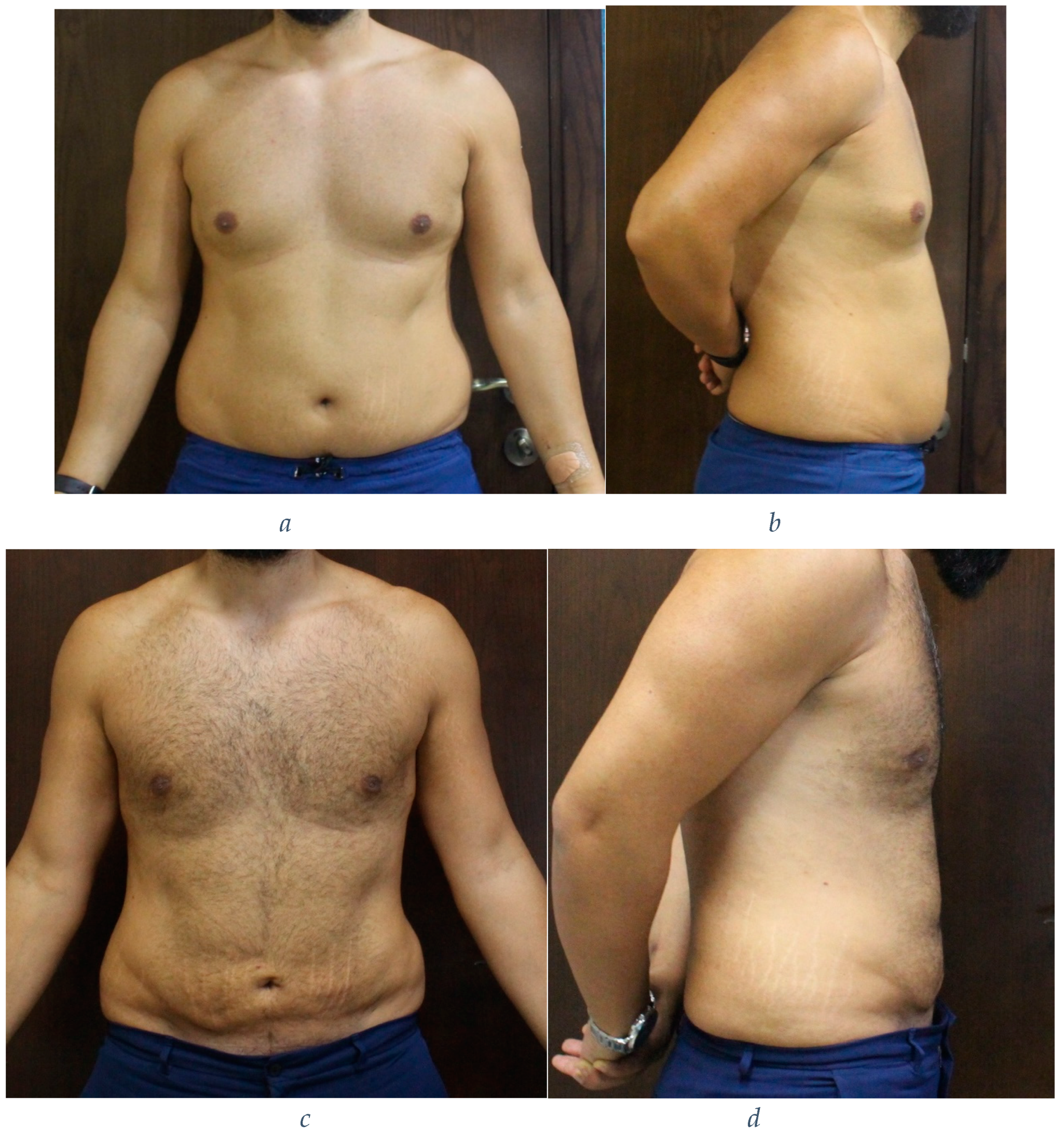
Figure 2.
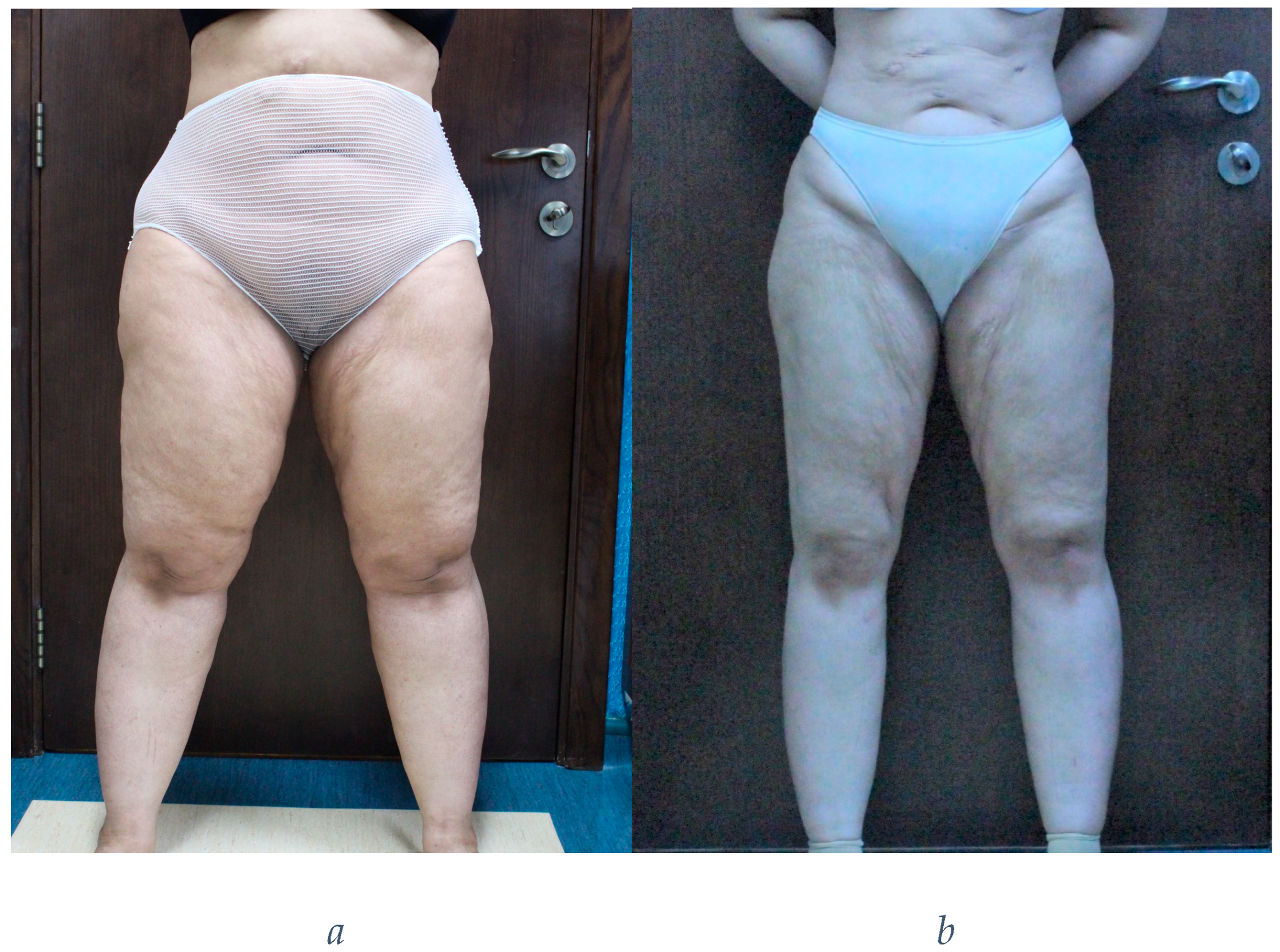
A 38 year old female with Lipodystrophy and extensive cellulite effecting both lower limbs under went VASER Liposuction of both Thighs, Knees and Calves. (a): Front view of lower limbs (thighs and knees) preoperatively. (b). Long term postoperative results of thighs and knees showing enhanced contour.
Figure 2.
A 38 year old female with Lipodystrophy and extensive cellulite effecting both lower limbs under went VASER Liposuction of both Thighs, Knees and Calves. (a): Front view of lower limbs (thighs and knees) preoperatively. (b). Long term postoperative results of thighs and knees showing enhanced contour.
4. Discussion
VASER liposuction has been proposed as a potential adjunct for obesity management due to its ability to selectively remove adipose tissue while preserving surrounding structures. Several studies have suggested that this technique may contribute to metabolic improvements beyond body contouring. A study by Gibas-Dorna et al. (2017) reported significant reductions in triglyceride levels and improved insulin sensitivity in overweight males following VASER liposuction [1]. Similarly, Kandulu (2023) demonstrated short-term improvements in lipid profiles postoperatively, though long-term data remain limited [2].
Despite these promising findings, the metabolic effects of liposuction remain a topic of debate. Santos et al. (2023) found that while some patients experienced metabolic improvements after body contouring surgery, the degree of benefit was highly dependent on preoperative metabolic status and postoperative adherence to dietary modifications [4]. This is consistent with our study, where patients who maintained dietary adherence exhibited sustained improvements, while those who failed to do so experienced weight regain and fat redistribution.
Furthermore, studies such as those by Gómez-Sámano et al. (2023) have highlighted the transient nature of metabolic benefits post-liposuction, emphasizing that lifestyle interventions are critical for long-term success [11]. The role of adipokines, including leptin and adiponectin, in post-liposuction metabolic shifts is an emerging area of research. Giugliano et al. (2004) suggested that reductions in visceral fat may lead to favorable changes in vascular inflammatory markers, potentially contributing to improved metabolic outcomes [7]. However, as noted by Crahay and Nizet (2016), liposuction alone does not address underlying metabolic dysfunction and must be supplemented with comprehensive lifestyle modifications [10].
Compared to bariatric surgery, which leads to more profound metabolic changes, VASER liposuction provides a less invasive alternative with a shorter recovery time. However, it does not induce the same magnitude of weight loss or metabolic reversal. Future research should focus on prospective controlled trials to better delineate the long-term metabolic effects of VASER liposuction and its role within a multidisciplinary obesity management framework.
5. Conclusion
VASER liposuction offers potential metabolic benefits beyond aesthetic improvement, particularly in patients with elevated triglyceride levels. However, these benefits are closely linked to postoperative adherence to dietary and lifestyle modifications. While our findings support the role of VASER liposuction as an adjunct in obesity management, further clinical studies are needed to establish its long-term metabolic implications and optimize patient selection criteria.
Funding
“This research received no external funding.”
Institutional Review Board Statement
“The study was conducted in accordance with the Declaration of Helsinki, and approved by the Institutional Review Board of Hasan Surgery FZ LLC.”
Informed Consent Statement
Informed consent was obtained from all subjects involved in the study.
Conflicts of Interest
The authors declare no conflicts of interest.
Abbreviations
The following abbreviations are used in this manuscript:
VASER – Vibration Amplification of Sound Energy at Resonance
References
- Gibas-Dorna M, Szulińska M, Turkowski P, et al. The Effect of VASER Abdominal Liposuction on Metabolic Profile in Overweight Males. Am J Mens Health 2017, 11, 284–293. [CrossRef]
- Kandulu, H. The Short-Term Effect of VASER Assisted Liposuction on Lipid Profile. Aesthetic Plast Surg 2023, 47, 685–689. [Google Scholar] [CrossRef]
- Gibas-Dorna M, Szulińska M, Turkowski P, et al. The Effect of VASER Abdominal Liposuction on Metabolic Profile in Overweight Males. Am J Mens Health 2017, 11, 284–293. [CrossRef]
- Santos LRA, da Costa PR, Maia TS, Junior AC, Resende V. Prospective cohort of parameters of glycemic and lipid metabolism after abdominoplasty in normal weight and formerly obese patiens. JPRAS Open 2023, 37, 155–162. [CrossRef]
- Ali, H. Successful Outcome of VASER Liposuction Followed by Keto Diet in a 35-year-old Man with Class III Obesity. Plast Reconstr Surg Glob Open 2024, 12, e6098. [Google Scholar] [CrossRef] [PubMed]
- Bassetto F, Bassiri Gharb B, Rampazzo A, Busetto L, Pigozzo S, Nolli M. Reply to: Effect of liposuction on insulin resistance and vascular inflammatory markers in obese women. Br J Plast Surg 2005, 58, 747–749. [CrossRef] [PubMed]
- Giugliano G, Nicoletti G, Grella E, et al. Effect of liposuction on insulin resistance and vascular inflammatory markers in obese women. Br J Plast Surg 2004, 57, 190–194. [CrossRef]
- Kandulu, H. The Short-Term Effect of VASER Assisted Liposuction on Lipid Profile. Aesthetic Plast Surg 2023, 47, 685–689. [Google Scholar] [CrossRef] [PubMed]
- Khedmatgozar H, Yadegari M, Khodadadegan MA, et al. The effect of ultrasound cavitation in combination with cryolipolysis as a non-invasive selective procedure for abdominal fat reduction. Diabetes Metab Syndr 2020, 14, 2185–2189. [CrossRef] [PubMed]
- Crahay FX, Nizet JL. Conséquences métaboliques et cardiovasculaires de la lipoaspiration: revue systématique de la littérature [Metabolic and cardiovascular consequences of suction-assisted lipectomy: Systematic review]. Ann Chir Plast Esthet 2016, 61, 270–286. [CrossRef]
- Gómez-Sámano MÁ, Guerrero-Castillo AP, Abarca-Arroyo JA, et al. Effect of Liposuction on Body Weight and Serum Concentrations of Leptin, Lipids, Glucose, and Insulin: A Meta-Analysis. Plast Reconstr Surg 2023, 151, 402e–411e. [CrossRef]
- Payer J Jr, Ziak P, Fedeles J Jr, Brazdilova K, Fedeles J. Changes in metabolic syndrome parameters after liposuction. Bratisl Lek Listy 2013, 114, 349–352. [CrossRef]
Disclaimer/Publisher’s Note: The statements, opinions and data contained in all publications are solely those of the individual author(s) and contributor(s) and not of MDPI and/or the editor(s). MDPI and/or the editor(s) disclaim responsibility for any injury to people or property resulting from any ideas, methods, instructions or products referred to in the content. |
© 2025 by the authors. Licensee MDPI, Basel, Switzerland. This article is an open access article distributed under the terms and conditions of the Creative Commons Attribution (CC BY) license (http://creativecommons.org/licenses/by/4.0/).
Copyright: This open access article is published under a Creative Commons CC BY 4.0 license, which permit the free download, distribution, and reuse, provided that the author and preprint are cited in any reuse.


