Preprint
Article

This version is not peer-reviewed.

The Brazilian Immunization Program and the Challenge of Self-Sufficiency in Vaccines and Hyperimmune Sera

Submitted:

03 March 2025

Posted:

04 March 2025

You are already at the latest version

Abstract

Vaccines are biological products that contain antigens capable of inducing specific and active immunity against an infectious agent or the toxin produced by some pathogens. For over a century, passive immunotherapy with polyclonal antibodies has been em-ployed in the treatment and post-exposure prophylaxis against various microorgan-isms and toxins. This study aims to evaluate the quantity and types of antigens and sera distributed by the National Immunization Program (NIP) and to analyze both the duration and challenges associated with technology transfer in vaccine production within Brazil. Furthermore, it assesses the impact of ongoing technology transfers. Methods: The study collected data from official systems for information on vaccine lots and their origin from 2014 to 2024, as well as the production stages in which pharmaceutical laboratories were certified by the national regulatory authority. Re-sults: Out of the 25 antigens provided by the NIP, 4 are produced using biotechnology methods, while the remaining 21 utilize conventional technology. The process of tech-nology transfer to Brazilian manufacturers takes between 3 to 15 years. Moreover, public laboratories still face challenges regarding physical infrastructure and acquir-ing the necessary qualifications certificates for production. Conclusions: Technology transfer in vaccine production is a high-risk endeavor that requires long-term plan-ning and investment. The ongoing technology transfers in Brazil have contributed to the NIP, but challenges remain in terms of infrastructure and qualifications. Ongoing advancements in technology are essential to remain aligned with progress.

Keywords: 
;  ;  ;  ;  

1. Introduction

Vaccines are biological products that contain antigens capable of inducing specific and active immunity against an infectious agent or the toxin produced by some pathogens[1,2,3]. Antigens can consist of whole inactivated microorganisms, whole microorganisms with their virulence attenuated, antigens excreted by microorganisms and produced by genetic engineering or chemical synthesis. Since the 18th century, it has been demonstrated that vaccination is the most efficient way to prevent and even eradicate various infectious diseases, such as smallpox and poliomyelitis. The most common method of vaccine administration is by injection, although some are administered by nasal or oral spray [4,5,6,7].
Selection of the appropriate antigen is essential for obtaining a vaccine, as it should consider the pathogenic organism's constituents required for inducing immune responses. Several immunogens, or vaccines can be obtained in different forms from pathogens [3,4].
In addition to antigens, vaccines may contain other components, such as adjuvants that enhance the immune response, stabilizers, and antimicrobials to prevent bacterial or fungal contamination in multidose vials [3,6].
Some vaccines represent a range of antigen combinations, formulations and adjuvant types targeting various pathogens per dose (3,8]. In recent decades, with the advent of biotechnology, particularly genetic manipulation techniques, has led to the development of vaccines primarily composed of proteins, which stand out for their safety, immunogenicity, and time reduction in their production (9-10].
The initial step in the development of deoxyribonucleic acid (DNA) vaccines involves acquiring a delivery vehicle for the antigen-coding gene. The DNA coding for the product of interest is introduced via plasmid or viral vector into bacteria, yeast, mammalian cell lines, insect, or plant. Transfected cells produce the selected protein and secrete it into the extracellular environment. This protein is recognized as foreign. The first DNA vaccine using recombinant DNA technology was the hepatitis B vaccine, derived from non-infectious hepatitis B virus particles [3,6,11,12].
The development of vaccines and therapies based on messenger ribonucleic acid (mRNA) has been enhanced to improve protein translation and modulate adaptive immunogenicity, especially when combined with the development of lipid nanoparticle (LNP) technology. The successful clinical application of COVID-19 vaccines based on nanoparticles has highlighted a promising future for the use of nanotechnology in vaccines [15,16]. This type of production method allows more accurate genetic information to be delivered, along with a lipid adjuvant effect, to antigen-presenting cells [13,14,15,16,17,18,19].
Passive immunotherapy using polyclonal antibodies has been used for the treatment and post-exposure prophylaxis against various microorganisms, toxins and animal poisons [8,20,21].
Poisoning and deaths resulting from snakebites are a particularly significant public health problem in rural tropical areas. Heterologous immunoglobulins derived from animal plasma have been the support for the treatment of snake bite poisoning for almost 130 years and are currently the most effective medications available [23].
Immunoglobulins can be purified by various methods, such as pepsin digestion and salting out, caprylic acid precipitation, immunoadsorption, chromatography, or by other chemical or physical methods. In Brazil, these fragments are purified through pepsin digestion and salting out with ammonium sulfate. Additionally, one producer has advanced its purification process by incorporating chromatography. This approach aligns with guidance from authoritative sources [8,21,22,23].
In 1973, Brazil Ministry of Health established the National Immunization Program (NIP), which provided planned and systematic actions in the supply of quality vaccines for all children in our country [24]. The first vaccination schedule included only four vaccines to prevent seven diseases in children up to one year old: severe forms of tuberculosis, poliomyelitis, diphtheria, tetanus, whooping cough and measles [25,26].
The eradication of poliomyelitis in Brazil occurred in 1989 when the last case was reported, leading Brazil to gain international certification for disease eradication in 1994 Since 1999, there has been a rapid incorporation of 14 vaccines offered at routine immunization schedule, contributing to the control of various diseases such as measles, rubella, severe forms of tuberculosis, diphtheria, accidental tetanus, whooping cough (pertussis), neonatal tetanus through immunization of pregnant women with diphtheria, tetanus and pertussis acellular (DTaP), among others (24-28].
In addition to the routine immunization schedule, Reference Centers for Special Immunobiologicals (RCSI) were established with the purpose of facilitating access for the population, especially individuals with congenital or acquired immunodeficiency and other special comorbid conditions [29].
The implementation of the Unified Health System (UHS) has meant that medical-hospital supplies (medicines, immunobiologicals, blood products and medical equipment) have acquired a major role. The Brazilian NRA is responsible for registering all health supplies, ensuring use by the target population (1,30].
Biological products are complex molecules, mixtures produced by biologicals process derived from living organisms, inherent com variation refleting molecular heterogeneity and characterised by their biological activity and structure or funcion (1-3].
Therefore, it is essential that the National Regulatory Authority (NRA) inspect source materials, active and critical components used in the manufacture of the product, tests performed during all stages of production, including on critical components, intermediates, drug substance and drug product. [31].
After inspections, the certificate for the production of vaccines and immunosera will only be provided if the whether national or international manufacturers comply with Good Manufacturing Practices (GMP) guidelines [32,33,34,35,36].
The NIP maintains a policy of partnerships and promotes the technological modernization of the national production infrastructure, giving preference to immunobiologicals from brazilian manufacturers [37]. However, if domestic producers are unable to meet the demand, the NIP activates the Revolving Fund for Vaccines (RFV) of the Pan American Health Organization (PAHO) for facilitating the purchase of vaccines pre-qualified by the World Health Organization (WHO) [38,39].
In the 1980s, approximately 80% of vaccines and sera used in Brazil were supplied by a private laboratory, which had its production lines closed for non-compliance with GMP [40].
To overcome the need for importing vaccines and sera, the National Self-Sufficiency Program in Immunobiologicals (NSPI) was established in 1985. This program invested heavily in domestic producers with the goal of achieving national self-sufficiency and progressively replacing imports of products linked to the NIP. Investment primarily focused on the country's self-sufficiency in the production of antivenoms, antitoxins, and antirabies sera, as well as eight vaccines: BCG, poliomyelitis, hepatitis B (rDNA), yellow fever, influenza, diphtheria, tetanus and pertussis (DTP), and Haemophilus influenzae (Hib) combined with DTP. Resources were allocated to the following laboratories: Institute of Immunobiological Technology (Bio-Manguinhos/Fiocruz/RJ), Butantan Institute (SP), Vital Brazil Institute (RJ), Institute of Technology of Paraná (Tecpar/PR), Ezequiel Dias Foundation (FUNED/MG); Ataulpho de Paiva Foundation (RJ); and Institute of Biological Research (IPB/RS) [41,42] (Figure 1).
The inclusion in the NPI calendar of new vaccines, produced using biotechnological and genetic manipulation techniques, as well as highly value-added vaccines, led national producers to strive for nationalization of these vaccines in the shortest time and at the lowest cost [42].
With the aim of meeting the demands of the NIP more quickly and achieving self-sufficiency, domestic producers have opted for the policy of Productive Development Partnerships (PDPs), supported by the Ministry of Health in technology transfer (TT) agreements for the local production of new vaccines [43]. Although the quantity of TT has increased since the 1990s, India, China, and Brazil stand out as the main beneficiary countries [44]. In technology transfer, the partner completely transfers the technology for vaccine production, including supplying the products during the transfer period. Thus, upon entering the TT project, the product also becomes part of the recipient's portfolio and can be supplied to the Ministry of Health. At the end of the TT process, the national manufacturer will be autonomous in vaccine production, providing a fully nationalized product to the Ministry of Health [45,46].
The TT model adopted by public companies is that of reverse transfer. In this model, knowledge transfer begins with the drug product, more straightforward stages of production from a technological perspective. It is then followed by the transfer of more complex and initial production stages [46].
At each stage of the TT progression, inspections are carried out by the Regulatory Authority to determine whether the Technical Operating Conditions (TOCs) comply with the requirements for an establishment or production line to be able to start commercial manufacturing (Figure 2) [46,47,48,49,50].

2. Materials and Methods

The list of vaccines and hyperimmune sera distributed by the NIP was obtained through consultation of the immunization schedule [26,27].
The authors consulted the harpya samples management system used by the Ministry of Health to review the quantities and origins of lots supplied to the NIP: vaccines from 2014 to 2024 and hyperimmune sera from 2015 to 2024.
The status of products registered as nationally manufactured or imported, as well as the transfer of technology (TT) for vaccines in progress, was verified through consultations on the Federal Official Journal and NRA website regarding the status of GMP certificates for each pharmaceutical product [51,52].
The results of the inquiries and assessments were added to tables and Excel® graphs.

3. Results

3.1. Vaccines

Out of a total of 25 antigens, either combined or monovalent, acquired by the NIP for routine immunizations, 4 antigens are produced using biotechnology, while 21 are produced using conventional technology (Table 1).
Several combined vaccines of two to five antigens targeting various pathogens per dose are used for routine immunization, such as diphtheria and tetanus vaccine (adsorbed, reduced diphtheria antigen content - dT), diphtheria, tetanus and whole-cell pertussis vaccine adsorbed (DTP), Diphtheria, Tetanus and acellular Pertussis vaccine (adsorbed – DTaP), targeted at pregnant women, Diphtheria, Tetanus, whole-cell Pertussis, Hepatitis B and Haemophilus influenzae type b (DTwP-HepB-Hib), Measles, Mumps and rubella (MMR) and Measles, Mumps, Rubella and Varicella (MMRV) (Brasil,2022).calendário) The advantage of these vaccines is that people do not need to go to health centers several times, increasing adherence and, consequently, vaccination coverage.
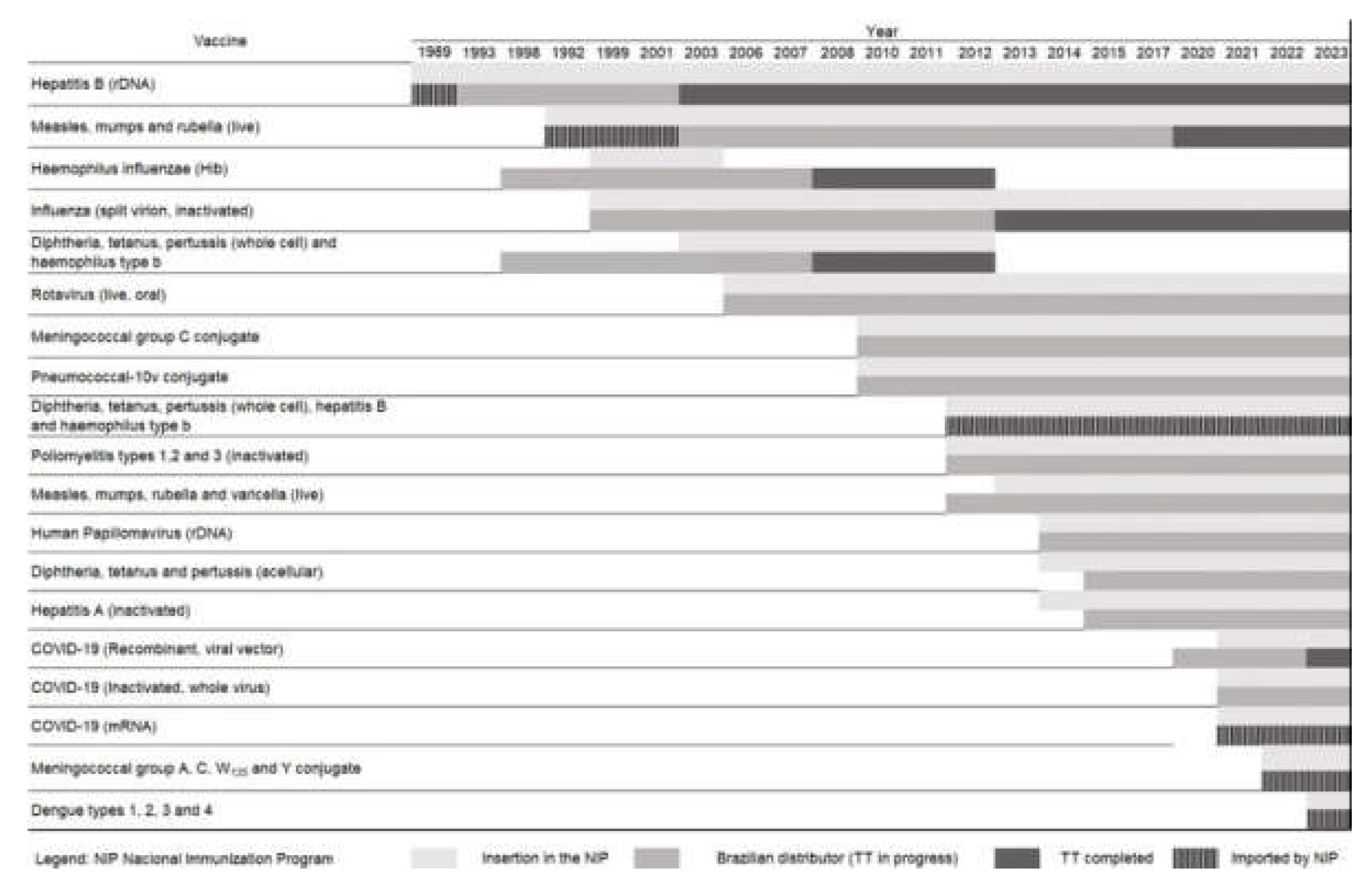
From 2014 to 2024, for routine immunization of children, adolescents, adults, and the elderly, 5 vaccines were exclusively imported, 11 were internally produced, and 10 are currently undergoing technology transfer (TT) (Figure 3).
Over 10 years, the NIP acquired 12,727 vaccine batches, of which 27% were imported, 33% entirely national, and 40% with TT in progress (Table 2).
At the RCSI, vaccines that are not included in routine vaccination are sourced from the international market, such as Pneumococcal – 13 valent conjugate, Pneumococcal – 23 valent conjugate and herpes-zoster.
3.2. hyperimmune sera
A summary of hyperimmune serum producers supplied to the Ministry of Health and their specific indications for human treatment are presented in Table 3.
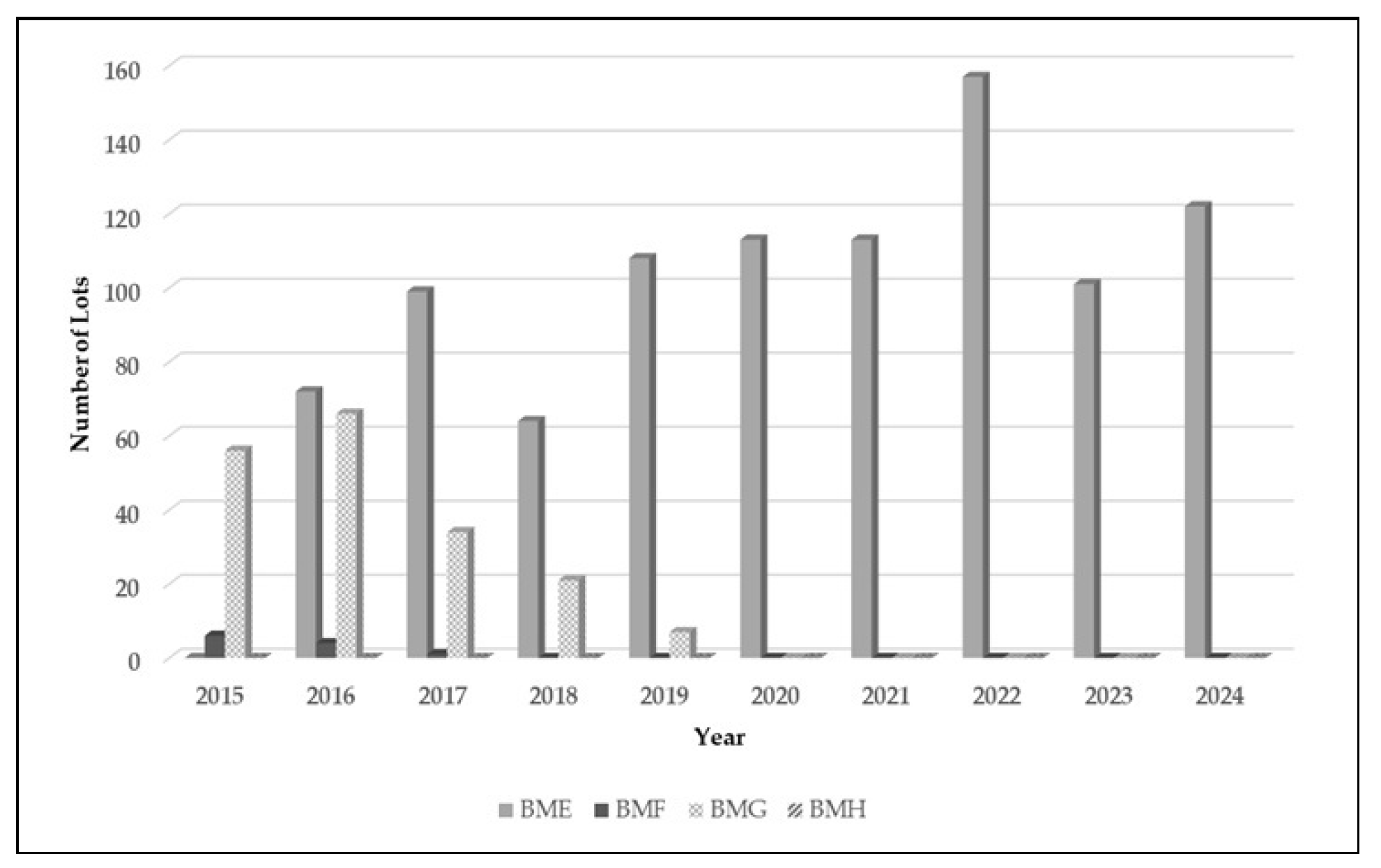
From 2015 to 2024, 1,144 batches of hyperimmune sera were distributed to the NIP. Since 2020, BME has supplied 100% of the demand (Figure 4).

4. Discussion and Conclusions

Vaccination is widely recognized as one of the most effective public health interventions worldwide. After 50 years since its establishment, the NlP demonstrates performance and scope comparable to that of developed countries. Since 1999, with the incorporation of technologically advanced and high-value-added vaccines into its routine, the program has accumulated successful experiences, contributing to the decline in morbidity and mortality from communicable diseases in the country [54,55].
With the crisis of immunobiological shortages in the country, the National Self-Sufficiency Program in Immunobiologicals (NSPI) invested significantly in domestic producers to achieve self-sufficiency in the production of antivenom serums, tetanus, diphtheria, and rabies serums, BCG vaccines, oral polio vaccine, hepatitis B (DNA), yellow fever, influenza, DTP, dTfor adults, and Haemophilus influenzae type b combined with DTP. However, according to the results, the goals of NSPI were not fully realized, and we continue to be dependent on the importation of vaccines [40,41,43].
The total quantity of diphtheria, tetanus, and pertussis (whole cell) vaccines, as well as diphtheria and tetanus (reduced antigen), was imported by the NIP, as there was no delivery during the study period by a domestic producer that had traditionally been a self-sufficient supplier of these vaccines. In 2012, the diphtheria, tetanus, pertussis (whole cell), hepatitis B, and Haemophilus type b vaccine was introduced as a replacement for DTP-Hib, which was already produced in partnership between Bio-Manguinhos/Fiocruz and Instituto Butantan [25]. Therefore, millions of doses of these three vaccines are currently imported by PAHO, mainly from India.
Brazilian manufacturers have had to make significant investments in facilities, equipment, and quality management due to current regulatory requirements. Many developing countries' laboratories are still working to meet GMP standards, affecting the supply of some immunobiologicals to the NIP. Consequently, Brazil's only BCG vaccine supplier was shut down by the NRA in 2022 for non-compliance with GMP, resulting in complete reliance on imports [36,56].
The NIP has been introducing new vaccines into the schedule, and the main mechanism is the Productive Development Partnership (PDP), involving the Ministry of Health, public institutions, and international private entities with the goal of strengthening the industrial complex and achieve self-sufficiency, a trend that has been ongoing since 1984 with the oral polio vaccine [25,42,57].
Four vaccines have already been nationalized by major domestic producers, and it's noteworthy that the Brazilian industrial complex has been more focused on acquiring technology for more complex vaccines [43,58]. The consideration spans a period of 10 to 20 years, involving various phases and regulatory requirements for each [59,60]. Therefore, it is extremely important that, before finalizing a TT agreement, a forecast beyond 5 to 10 years is made to calculate the long-term value of the product. Even with the transfer of ready technology, it may take 5 to 7 years for the product to be manufactured and licensed in the receiving country [61].
The data collected from official pharmaceutical laboratories revealed that the ongoing transfer periods range from 7 to 15 years. However, in Phase I, where products are received already filled in final vials, labeled, and packaged in Brazil, they are immediately integrated into the national producer's portfolio.
The delay in some technology transfers is due to the fact that the receiving Brazilian manufacturer does not yet possess the necessary infrastructure to fully absorb the process. To obtain the Technical Operational Conditions (TOC) from NRA for each production phase, it is necessary the construction of manufacturing units, acquisition and qualification of expensive equipment, qualifications for installation, performance and operation, production units for injectable water, systems for air conditioning in areas to maintain controlled classes of manufacturing environments, and validation of 3 production batches for the final registration [1,36,61].
Therefore, it is a high-risk endeavor, and without continuous efforts in technological development, it is possible that by the time the technology cycle has been transferred, the technological frontier of the sector may have already shifted [62]. This is especially considering that 70% of the global investment in vaccines focuses on new vaccines using rDNA, mRNA, chemical conjugation, genomics, and proteomics [59].
The Brazilian government must invest substantially in national manufacturers to foster rapid innovation. A key example is the swift nationalization of influenza, Hib, and COVID-19 vaccines, facilitated by investments from the National Program for Self-Sufficiency in Immunobiologicals (NPSI) and resources allocated during the COVID-19 pandemic.
When NPSI was established, in addition to the goal of achieving self-sufficiency in traditionally administered vaccines, it was recognized as essential to invest in the production of hyperimmune sera, especially antivenoms. These sera cannot be imported due to the distinct specificities of snake venoms worldwide [23,63]. Furthermore, other countries no longer rely on equine-produced antitetanus and antirabies sera. This would put Brazil in the position of having to import human immunoglobulins, which are highly expensive, especially considering our population density. Consequently, the current supply situation for these immunosera is extremely concerning, especially when we observe that only one manufacturer met 100% of the demand since 2020. The other manufacturers have undergone sanitary inspections by NRA and have made efforts to comply with GMP [36].
Additionally, all manufacturers still use outdated purification technology, restricted to the ammonium sulfate salting-out process and there must be more scientific and economic incentive to comply with the purity standards described in international compendia [21,23,65,66,67].

Acknowledgments

The authors would like to thank the administrative support of the Postgraduate Program in Sciences and Biotechnology of the Federal Fluminense University, the National Institute of Quality Control in Health of the Oswaldo Cruz Foundation and the National Health Surveillance Agency.

Conflicts of Interest

The authors declare no conflicts of interest.

Abbreviations

The following abbreviations are used in this manuscript:
COVID Corona Virus Desease
rDNA Recombinant Deoxyribonucleic Acid
mRNA Messenger Ribonucleic Acid
PAHO Pan American Health Organization
NSPI National Self-Sufficiency Program in Immunobiologicals
PDPs Productive Development Partnerships
TOCs Technical Operating Conditions
MMRV Measles, Mumps, Rubella and Varicella
INIP Imported by Nacional Immunization Program
DTwP-HepB-Hib Diphtheria, Tetanus, whole-cell Pertussis, Hepatitis B and Haemophilus influenzae type b
NIP National Immunization Program
LNP Lipid Nanoparticle
NRA National Regulatory Authority
DTP Diphtheria, Tetanus and Pertussis
Hib Haemophilus influenzae
MMR Measles, Mumps and Rubella
GMP Good Manufacturing Practices
RFV Revolving Fund for Vaccines
WHO World Health Organization
BCG Bacilo de Calmette-Guérin
BMA Brazilian Manufacturer A
BMB Brazilian Manufacturer B
BMC Brazilian Manufacturer C
BMD Brazilian Manufacturer D
BME Brazilian Manufacturer E
BMF Brazilian Manufacturer F
BMG Brazilian Manufacturer G
BMH Brazilian Manufacturer H
dT reduced diphtheria and Tetanus antigen

References

  1. Anvisa. Dispõe sobre o registro de produtos biológicos novos e produtos biológicos. Resolução da Diretoria colegiada nº 55, 2010.
  2. Strugnell, R; Zepp, F.; Cunningham, A.; Tantawichien, T. Vaccines Antigens. Chapter 3. In Understanding Modern Vaccines: Perspectives in Vaccinology; Garçon N., Stern, P.L., Cunningham, A.L., Eds.; Elsevier B.V., 2011; Volume 1, pp. 61-88.
  3. European Pharmacopoeia. Monograph 0153. Vaccines for human use. In Ph.Eur., 11th Ed.; European Department for the Quality of Medicines within the Council of Europe, Strasbourg, France, 2022; Volume 1, pp. 952-955.
  4. Greenwood, B. The Contribution of Vaccination to Global Health: Past, Present and future. Phil. Trans. R. Soc. 2014, 369. [CrossRef]
  5. Amanna, I.J.; Slifka, M.K. Successful Vaccines. Curr Top Microbiol Immunol. 2020, 428, pp. 1–30.
  6. United States Pharmacopoeia. Monography 1235. Vaccines for human use-General Considerations, 2023.
  7. World Health Organization. A Brief History of Vaccination. Available online: https://www.who.int/news-room/spotlight/history-of-vaccination/a-brief-history-of-vaccination?topicsurvey=ht7j2q)&gclid=CjwKCAjw1YCkBhAOEiwA5aN4AVQ_6RCpU_-K83mkDaPh03iNbcRKfo8wjzPpyG-DRNNjzF3KcKETzRoC1d0QAvD_BwE. (Accessed on 7 june 2024).
  8. Anvisa. Dispõe sobre a aprovação da Farmacopeia Brasileira 6ª edição. Resolução da Diretoria colegiada nº 298, 2019. Available online: https://www.gov.br/anvisa/pt-br/assuntos/farmacopeia/farmacopeia-brasileira (Accessed on 7 june 2024).
  9. Josefsberg, J.O.; Buckland B. Vaccine process technology. Biotechnology&Bioengineering. 2012, 109 (6), pp. 1443-1460.
  10. Kallon, S.; Shahryar, S.; Goonetilleke, N. Vaccines: Underlying Principles of Design and Testing. Clinical Pharmacology & Theapeutics. 2021, 109(4), pp.997-999. [CrossRef]
  11. Alcolea, P.J.; Alonso, A.; Larraga, V. The Antibiotic Resistance-Free Mammalian Expression Plasmid Vector PPAL for Development of Third Generation. Vaccines. 2019, 101, pp. 35–42. [CrossRef]
  12. Alcolea, P.J.; Larraga, J.; Rodríguez-Martín, D.; Alonso, A.; Loayza, F.J.; Rojas, J.M.; Ruiz-García, S.; Louloudes-Lázaro, A.; Carlón, A.B.; Sánchez-Cordón, P.J. Non-Replicative Antibiotic Resistance-Free DNA Vaccine Encoding S and N Proteins Induces Full Protection in Mice against SARS-CoV-2. Front. Immunol., 2022, 13. [CrossRef]
  13. Muhammad, Y.K.; Mohammed, A.; Khalid, A.; Ishtiaq, Q. Biotechnology and Its Applications in Vaccine Development. Biomed J Sci& Tech Res. 2021, 37(1), pp. 29114-16.
  14. Sahin, U.; Karikó, K.; Türeci, O. mRNA-based therapeutics — developing a new class of drugs. Nature Reviews Drug Discovery 2014, 13, pp. 759–780. [CrossRef]
  15. Kirtane, A.R.; Verma, M.; Karandikar, P.; Furin, J.; Langer R, Traverso, G. Nanotechnology Approaches for Global Infectious Diseases. Nat. Nanotechnol. 2021, 16, pp. 369–384. [CrossRef]
  16. Gregory, A.E; Titball, R.; Williamson, D. Vaccine Delivery Using Nanoparticles. Cell Infect. Microbiol. 2013, 3, pp.13.
  17. Zhao, L.; Seth, A.; Wibowo, N.; Zhao, C.X.; Mitter, N.; Yu, C.Z.; Middelberg, A.P.J. Nanoparticle Vaccines. Vaccine 2014, 32, pp. 327–337.
  18. Lozano, D.; Larraga, V.; Vallet-Regí, M.; Manzano, M.N. A Overview of the Use of Nanoparticles in Vaccine Development. Nanomaterials 2023, 13, pp. 1828. [CrossRef]
  19. Strohl, W.R.; Knight, D.M. Discovery and development of biopharmaceuticals: current issues. Curr Opin Biotechnol. 2009, 20(6), pp. 668–72. [CrossRef]
  20. Berry, J.D.; Gaudet, R.G. Antibodies in infectious diseases: polyclonals, monoclonals and niche biotechnology. N Biotechnol. 2011, 28 (5), pp. 489–501. [CrossRef]
  21. European Pharmacopoeia. Monograph 0084. Immunoserum for human use, animal. In Ph.Eur., 11th Ed.; European Department for the Quality of Medicines within the Council of Europe, Strasbourg, France, 2022; Volume 1, pp. 929-932.
  22. Casadevall, A.; Dadachova, E.; Pirofski, L.A. Passive antibody therapy for infectious diseases. Nat Rev Microbiol. 2004, 2(9), pp. 695–703. [CrossRef]
  23. World Health Organization. Guidelines for the production, control and regulation of snake antivenom. WHO Expert Committee on Biological Standardization: sixty-seventh report. WHO Technical Report Series, 1004. Annex 5. Geneva: World Health Organization, 2017.
  24. Da Silva Junior, J.B. ‘40 anos do programa nacional de imunizações: uma conquista da saúde pública brasileira’. Epidemiologia e Serviços de Saúde 2013, 22(1), pp. 7–8.
  25. Domingues, C.A.S.; Maranhão, A.G.K.; Teixeira, A.M.; Fantinato, F.F.S.; Domingues, R.A. 46 anos do Programa Nacional de Imunizações: uma história repleta de conquistas e desafios a serem superados. Cad. Saúde Pública 2020, 36 (2), pp. 1-17.
  26. Dourado, I. Cinco décadas do Programa Nacional de Imunizações (PNI). Correio Braziliense, 2023. Available online: https://sindusfarma.org.br/noticias/indice/exibir/20988-cinco-decadas-do-programa-nacional-de-imunizacoes-pni. (Accessed on 7 november 2024).
  27. Brasil. Manual de Normas e Procedimentos para Vacinação. Ministério da Saúde. Secretaria de Vigilância em Saúde. Departamento de Vigilância das Doenças Transmissíveis. Brasília, 2014. 176 p.
  28. Brasil. Ministério da Saúde. Available online: https://www.gov.br/saude/pt-br/campanhas-da-saude/2022/calendario-nacional-de-vacinacao/calendario-nacional-de-vacinacao.pdf/ (Accessed on 20 january 2024).
  29. Brasil. Manual dos centros de referência para imunobiológicos especiais. Ministério da Saúde. Secretaria de Vigilância em Saúde. Departamento de Imunização e Doenças Transmissíveis. 5th ed., Brasília, 2019.
  30. Brasil. Define o Sistema Nacional de Vigilância Sanitária, cria a Agência Nacional de Vigilância Sanitária, e dá outras providências. Lei 9.782. January 1999.
  31. World Health Organization. Guidelines for national authorities on quality assurance for biological products. WHO Technical Report Series 822. Annex 2, 1992.
  32. World Health Organization. WHO good manufacturing practices for biological products. WHO Technical Report Series 999. Annex 2, 2016.
  33. European Comission – EU. Guidelines for good manufacturing practice for medicinal products for human and veterinary use. Brussels: European Comission; 2012. (Available online: https://health.ec.europa.eu/system/files/2016-11/vol4-chap1_2013-01_en_0.pdf (Accessed on 20 january 2024.
  34. World Health Organizatio. WHO guideline on the implementation of quality management systems for national regulatory authorities. WHO Expert Committee on Specifications for Pharmaceutical Preparations: fifty fourth report. WHO Technical Report Series 1025. Annex 13, Geneva, 2020. (Available online: https://www.who.int/publications/i/item/978-92-4-000182-4. (accessed on 29 January 2023).
  35. World Health Organization. Good regulatory practices in the regulation of medical WHO. Technical Report Series 1033, 2021.
  36. Anvisa. Dispõe sobre as Diretrizes Gerais de Boas Práticas de Fabricação de Medicamentos. Resolução RDC Nº 658, 2022.
  37. Brasil. Programa nacional de imunizações - 30 anos. Ministério da Saúde. Secretaria de Vigilância em Saúde, Brasília, 2003.
  38. PAHO. (Available online: https://www.paho.org/pt/fundo-rotatorio. (Accessed on 20 january 2024).
  39. Gadelha, C.A.B. Desenvolvimento tecnológico: elo deficiente na inovação tecnológica de vacinas no Brasil. Hist. cienc. saude-Manguinhos 2003, 10 (suppl 2).
  40. Homma, A.; Martins, R.M.; Jessouroum, E.; Oliva, O. Desenvolvimento tecnológico: elo deficiente na inovação tecnológica de vacinas no Brasil. Hist. cienc. saude-Manguinhos 2003, 10 (2), pp. 671-96. [CrossRef]
  41. Gadelha, C.; Temporão, J.G. A indústria de vacinas no Brasil: desafios e perspectivas. BNDES conference, 1999.
  42. Domingues, C.A.S.; Woycicki, J.R.; Rezende, K.S.; Henriques, C.M.P. Programa Nacional de Imunização: a política de introdução de novas vacinas. Revista Eletronica Gestão & Saúde 2015, 6, pp. 3250-74.
  43. Homma, A.; Moreira, M. New challenges for national capability in vaccine technology: domestic technological innovation versus technology transfer. Cadernos de Saúde Pública 2008, 24(2), pp. 238-9.
  44. World Health Organization. Increasing access to vaccines through technology transfer and local production. Vaccine technology transfer in a global health crisis. World Health Organization, 2011.
  45. Moreira, M. PDP: uma solução que não pode ser única. Notícias e Artigos, 2017. (Available online: https://www.bio.fiocruz.br/index.php/br/noticias/1533-pdp-uma-solucao-que-nao-pode-ser-unica. (Accessed on 20 january 2024).
  46. World Health Organization. WHO guidelines on technology transfer in pharmaceutical manufacturing. WHO Technical Report Series 1044, Annex 4, 2022.
  47. Andrade, A. Avaliação e controle de riscos à qualidade nas operações de embalagem secundária da vacina rotavírus humano G1 P[8] (atenuada) unidose, Master's degree, Fundação Oswaldo Cruz, Rio de Janeiro, 2015.
  48. Portes, J.V.A. O processo de transferência internacional de tecnologia no setor de imunobiológicos: um estudo de caso, Master's degree, Universidade Federal do Rio de Janeiro, 2012.
  49. Luzia, A.B. Transferência de tecnologia e parceria para o desenvolvimento produtivo no setor de biotecnologia: um estudo de caso na Fundação Ezequiel Dias, Master's degree, Universidade Federal de Minas Gerais, 2015.
  50. Cruz, M.V.O. Gerenciamento de processos na gestão de contratos de transferência de tecnologia da produção de vacinas virais: Estudo de caso da vacina contra rotavírus humano G1 P[8] (atenuada), Master's degree, Fundação Oswaldo Cruz, Rio de Janeiro, 2018.
  51. Brasil. (Available online: https://www.in.gov.br/leiturajornal. (Accessed from 10 january 2023 to November 2024).
  52. Anvisa. (Available online: https://consultas.anvisa.gov.br/#/medicamentos/. (Accessed from 10 january 2023 to November 2024).
  53. Brasil. Guia de Vigilância em Saúde. Ministério da Saúde. Secretaria de Vigilância em Saúde. Departamento de Articulação Estratégica de Vigilância em Saúde. 5th ed., Brasília, 2022. P.126.
  54. Homma, A.; Martins, R.; Leal M.L.; Freire, M.S.; Couto, A.R. Atualização em vacinas, imunizações e inovação tecnológica. Ciência e Saúde Coletiva 2011, 16(2), pp. 445–458.
  55. Sato, A.P.S. National Immunization Program: Computerized Systemas a tool for newchallenges. Revista de Saúde Pública 2015, 49, pp.1–5.
  56. Brasil. Resolução RE 3.403/2016. Federal Official Journal, July 4, 2022.
  57. Nascimento, L.F.; Queiroz Filho, A.P. Parceria de desenvolvimento produtivo da vacina influenza no instituto butantan: análise da origem da infraestrutura biotecnológica e dos componentes. Revista Brasileira de Geografia Médica e da Saúde 2017, 13 (25), pp. 81-90. [CrossRef]
  58. Luchese, M.D.; Bertolini, S.R.; Moro, A.M.; Laurentis, A.L. Dependência tecnológica na produção de imunobiológicos no Brasil: transferência de tecnologia versus pesquisa nacional. Universidade e sociedade. ANDES-SN 2017, 59, pp. 46-59.
  59. Homma, A.; Freire, M.S.; Possa, C. Vacinas para doenças negligenciadas e emergentes no Brasil até 2030: o “vale da morte” e oportunidades para PD&I na Vacinologia. Cad. Saúde Pública 2020, 36 Sup 2.
  60. Greiner, M.A.; Franza, R.M. “Barriersand bridges for successful environmental Technology Transfer”. The Journal of Technology Transfer. 2003, 28 (2), pp.167-77. [CrossRef]
  61. Homma, A. The Brazilian vaccine manufacturers’ perspective and its current status. Biologicals 2009, 37 (3), pp. 173-6. [CrossRef]
  62. Gadelha, CAB.; Desenvolvimento, complexo industrial da saúde e política industrial. Revista de Saúde Pública. 2006; 40:11-23.
  63. Gutiérrez, J.M. Global Availability of Antivenoms: The Relevance of Public Manufacturing Laboratories. Toxins 2019, 11 (5), pp. 1-13. [CrossRef]
  64. Aswathy, A.; Karthika, R.; Bipin, G.N. Snake antivenom: Challenges and alternate approaches. Review. Biochemical Pharmacology 2020, 181, 114-135.
  65. Vargas M, Segura A, Villalta M, Herrera M, Gutiérrez JM, León G. Purificationofequinewhole IgG snake antivenom by using an aqueous two-phase system as a primary purification step. Biologicals 2015, 43(Issue 1), pp. 37-46. [CrossRef]
  66. Silva, F.S.Q. Avaliação da pureza de soros antiofídicos Brasileiros e Desenvolvimento de nova metodologia para essa finalidade, Master's degree, Fundação Oswaldo Cruz, Rio de Janeiro, 2008.
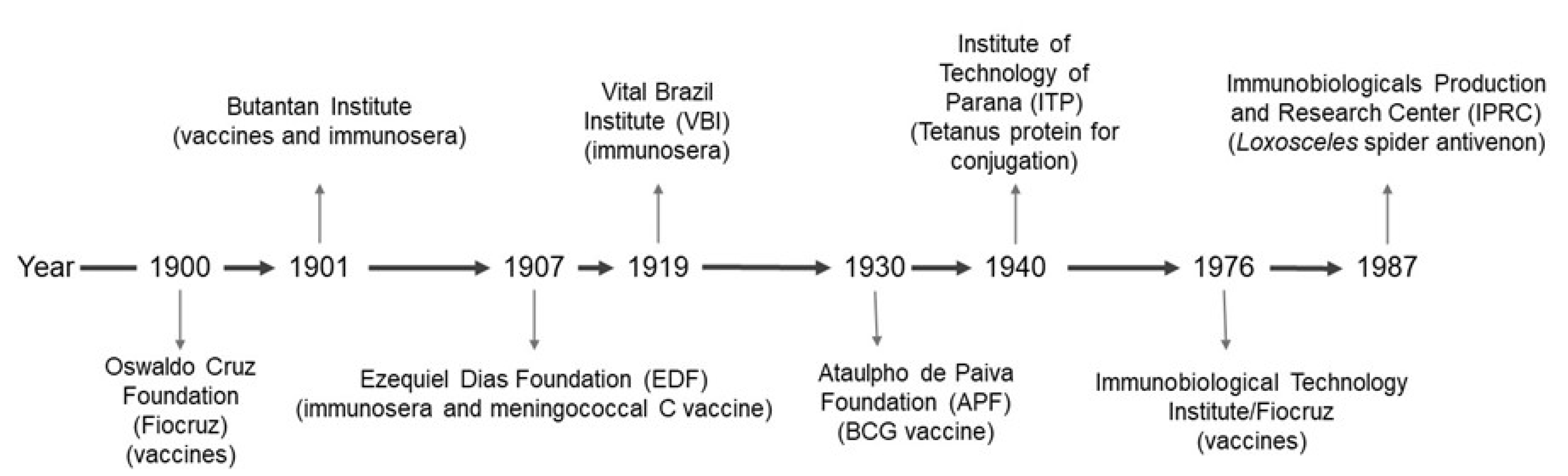
Figure 1. - Manufacturers of immunobiologicals in Brazil and their founding period (adapted by the authors).
Preprints 151149 g001
Figure 2. - Stages of technology transfer used in Brazil under the reverse modality (adapted by the authors).
Preprints 151149 g002
Figure 3. Timeline of vaccines distributed by the NIP that were entirely produced by brazilian manufacturers, imported or with technology transfer in progress [28,42]; author's survey in the Ministry of Health's sample management system, 2023).
Preprints 151149 g003
Figure 4. - Annual number of batches of hyperimmune serums delivered to the National NIP from 2015 to 2024 (author based on the sample management system of the Ministry of Health, 2024). Abbreviations: BME = Brazilian Manufacturer E; BMF = Brazilian Manufacturer F; BMG = Brazilian Manufacturer G; BM-H = Brazilian Manufacturer H.
Preprints 151149 g004
Table 1. Conventional and genetic engineering technologies for obtaining antigens used by Brazilian immunization program [3,6,8].
Types of antigens Offered by NIP
Live attenuated bacteria or virus BCG, oral rotavirus, yellow fever, measles, mumps, rubella, varicella, oral poliomyelitis, dengue tetravalente
Inactivated bacteria or vírus Influenza, pertussis, hepatitis A, rabies, whole virus Covid-19 and poliomyelitis
Inactivated toxins Diphtheria and tetanus
Conjugated Polysaccharide to carrier protein Meningococcal group C, pneumococcal 10- valent, Meningococcal group ACW135Y and haemophilus type b
- Recombinant technology through genetic modification in which the DNA encodes the antigen gene, using a vector (bacterial, yeast, viral, cells of human, insect or plant origin);
- Antigenic proteins in nanoparticles (mRNA);
- Viral vector
Human papilomavírus (rDNA), hepatitis B (rDNA), covid-19 (viral vector) and covid-19 (mRNA)
Abbreviations: BCG – Bacillus Calmette–Guérin; NIP – National Immunization Program; MRNA – messenger ribonucleic acid; rDNA – recombinant deoxyribonucleic acid.
Table 2. Vaccine batch quantities supplied to the National Immunization Program from 2014 to 2024 (Source: Ministry of Health's sample management system, 2024).
Vaccine INIP TT completed TT in progress
BMA BMB BMC BMB BMC BMD
BCG 120 388 - - - - -
COVID-19 (whole virus) - - - - 439 - -
COVID-19 (viral vector) 75 - - 162 - 412 -
COVID-19 (mRNA) 239 - - - - - -
Dengue types 1, 2, 3 and 4 283 - - - - - -
Diphtheria and tetanus (reduced antigen) 232 - 15 - - - -
Diphtheria, tetanus and pertussis (whole cell) 147 - 6 - - - -
Diphtheria, tetanus and pertussis (acellular) 152 - - - 107 - -
Haemophilus influenza b 20 - - 4 - - -
Diphtheria, tetanus, pertussis (whole cell), hepatitis B and haemophilus influenzae type b 722 - - - - - -
Hepatitis A 38 - - - 162 - -
Hepatitis B (rDNA) 118 - 111 - - - -
Human Papillomavírus (rDNA) 42 - - - 702 - -
Influenza (split virion) - - 767 - - - -
Measles, mumps and rubella - - - 1,010 - - -
Measles, mumps, rubella and varicella 71 - - - - 201 -
Meningococcal group C conjugate - - - - - - 918
Meningococcal group A, C, W135 and Y conjugate 187 - - - - 103 -
Pneumococcal-10 valente conjugate - - - - - 1,233 -
Poliomyelitis types 1 and 3 (oral) - - - 333 - - -
Poliomyelitis types 1,2 and 3 - - - - - 196 -
Rabies (cell culture) 4 - 329 - - - -
Rotavirus (oral) - - - - - 576 -
Varicella 1,045 - - - - - -
Yellow fever - - - 1,058 - - -
Total 3,495 388 1,228 2,567 1,410 2,721 918
Abbreviations: INIP = Imported by Nacional Immunization Program; TT in progress = Technology Transfer in progress; BMA = Brazilian Manufacturer A; BMB = Brazilian Manufacturer B; BMC = Brazilian Manufacturer C; BMD = Brazilian Manufacturer D; COVID = Corona Virus Disease.
Table 3. Brazilian Producers of hyperimmune sera provided to the Ministry of Health and their specific indications for human treatment [53].
Manufacturer Heterologous immunoserum Recommendation
BME Anti arachnoid (trivalent) Scorpions of the genus Tityus and spiders Phoneutria and Loxosceles.
Botulinum antitoxin Eliminate circulating toxin and Clostridium botulinum.
Diphtheria antitoxin Treatment of diphtheria. There is no indication for the prevention of diphtheria in vaccinated individuals.
Antilonomic L. obliqua caterpillar.
BME and BMF Antielapidic (bivalent) Snakes of the genus M. frontalis and M. corallinus.
BME/BMF/BMG Antibotropic (pentavalent) Snakes of the genus Bothrops: B. jararaca, B. jararacussu, B. moojeni, B. alternates and B. neuwiedi.
Antibotropic (pentavalent) and anticrothalic Snakes of the genus Bothrops and Crotalus.
Antibotropic (pentavalent) and antilaquetic Snakes of the genus Bothrops and Lachesis muta.
Anticrothalic Snakes of the genus Crotalus.
Antiscorpionic Scorpions of the genus Tityus.
Anti-rabies Rabies virus exposure, depending on the nature of the exposure.
Tetanus antitoxin Treatment of tetanus depending on the number of doses of tetanus toxoid previously received.
BMH Antiloxoscelic (trivalent) Accidents with spiders L. gaucho, L. intermedia e L. laeta.
Abbreviations: BME = Brazilian Manufacturer E; BMF = Brazilian Manufacturer F; BMG = Brazilian Manufacturer G; BM-H = Brazilian Manufacturer H.
Disclaimer/Publisher’s Note: The statements, opinions and data contained in all publications are solely those of the individual author(s) and contributor(s) and not of MDPI and/or the editor(s). MDPI and/or the editor(s) disclaim responsibility for any injury to people or property resulting from any ideas, methods, instructions or products referred to in the content.
Copyright: This open access article is published under a Creative Commons CC BY 4.0 license, which permit the free download, distribution, and reuse, provided that the author and preprint are cited in any reuse.
Prerpints.org logo

Preprints.org is a free preprint server supported by MDPI in Basel, Switzerland.

Subscribe

Disclaimer

Terms of Use

Privacy Policy

Privacy Settings

© 2025 MDPI (Basel, Switzerland) unless otherwise stated