Preprint
Review

This version is not peer-reviewed.

Potential Pharmacotherapy Pathways in MASLD

Submitted:

11 March 2025

Posted:

11 March 2025

You are already at the latest version

Abstract

Metabolic dysfunction-associated steatotic liver disease -MASLD, is the most common chronic liver disease worldwide, one of the leading causes of cirrhosis, hepatocellular carcinoma and liver transplantation in developed countries, and an important cardiovascular risk factor. It affects about 30% of the adult population and about 10% of the paediatric population. These figures may be underestimated due to the long-standing asymptomatic or sparse course of the disease, the lack of nationwide screening for MASLD in patients with risk factors for its development and the low awareness of both patients and physicians themselves. According to projections, this number could double by 2030 due to the growing obesity epidemic and the associated development of other weight-dependent metabolic complications, such as insulin resistance, pre-diabetic state, type 2 diabetes, lipid disorders and hypertension. The basis for prevention and treatment of MASLD is weight reduction with diet and regular physical activity and modern pharmacotherapy for obesity-related disease, as well as treatment aimed at reducing the cardiometabolic factors - diabetes, hyperlipidaemia and hypertension. Pharmacological treatment of hepatic steatosis, steatohepatitis or liver fibrosis alone is limited, and many drugs are currently in clinical trials. This article presents the current pharmacological options and potential pharmacotherapy pathways for the hepatic complications of MASLD - steatosis, steatohepatitis and incipient liver fibrosis.

Keywords: 
;  ;  ;  ;  ;  

Introduction

Metabolic dysfunction-associated steatotic liver disease - MASLD, is the most common chronic liver disease worldwide and one of the leading causes of cirrhosis, hepatocellular carcinoma and liver transplantation in developed countries, as well as an important cardiovascular risk factor. It affects about 30% of the adult population and about 10% of the paediatric population. These figures may be underestimated due to the long-standing asymptomatic or sparse course of the disease, the lack of nationwide screening for MASLD in patients with risk factors for its development and the low awareness of both patients and physicians themselves. According to projections, this number could double by 2030 due to the growing obesity epidemic and the associated development of other weight-dependent metabolic complications, such as insulin resistance, pre-diabetic state, type 2 diabetes, lipid disorders or hypertension, which are the main causes of the development of MASLD [1,2,3,4].
Lack of prophylaxis and late diagnosis of MASLD leads to hepatic complications - increased hepatic steatosis, steatohepatitis, progression of hepatic fibrosis, development of cirrhosis or hepatocellular carcinoma - and extrahepatic complications - mainly cardiovascular: arteriosclerosis, ischaemic heart disease (myocardial infarction or stroke) (Table 1.). It is cardiovascular disease, not hepatic complications, that is the main cause of death in patients with MASLD [1,2].
Hence, it is not uncommon for the disease to be diagnosed relatively late, after a cardiovascular incident or at the stage of advanced liver fibrosis or developed cirrhosis.
Imaging methods are used in the diagnosis of hepatic steatosis. Ultrasound has found the most frequent application because of its availability, low cost of performance and relatively high sensitivity and specificity. However, ultrasound detects steatosis only when 20-30% of hepatocytes are involved, so relatively late. According to the recommendations of American scientific societies, patients with risk factors for the development of MASLD - obesity, diabetes, hypertension or dyslipidaemia - should undergo liver elastography with the FibroScan method in order to detect steatosis at an early stage - when steatosis affects 5% of hepatocytes. FibroScan can also be used to assess the severity of steatosis related to the Brunt scale or liver fibrosis related to the Metavir scale in patients diagnosed with MASLD and to assess the risk of developing WASH or other liver complications using specific scales: FAST, Agile 3 and Agile 4. Computed tomography or magnetic resonance imaging are also used to assess hepatic steatosis; however, due to their availability and cost, they are not routinely used for diagnosis. Liver biopsy, although the gold standard, is currently used rarely for the diagnosis of MASLD. It is mainly reserved for doubtful cases, overlap syndromes or the diagnosis of MASLD or cirrhosis [1,6].
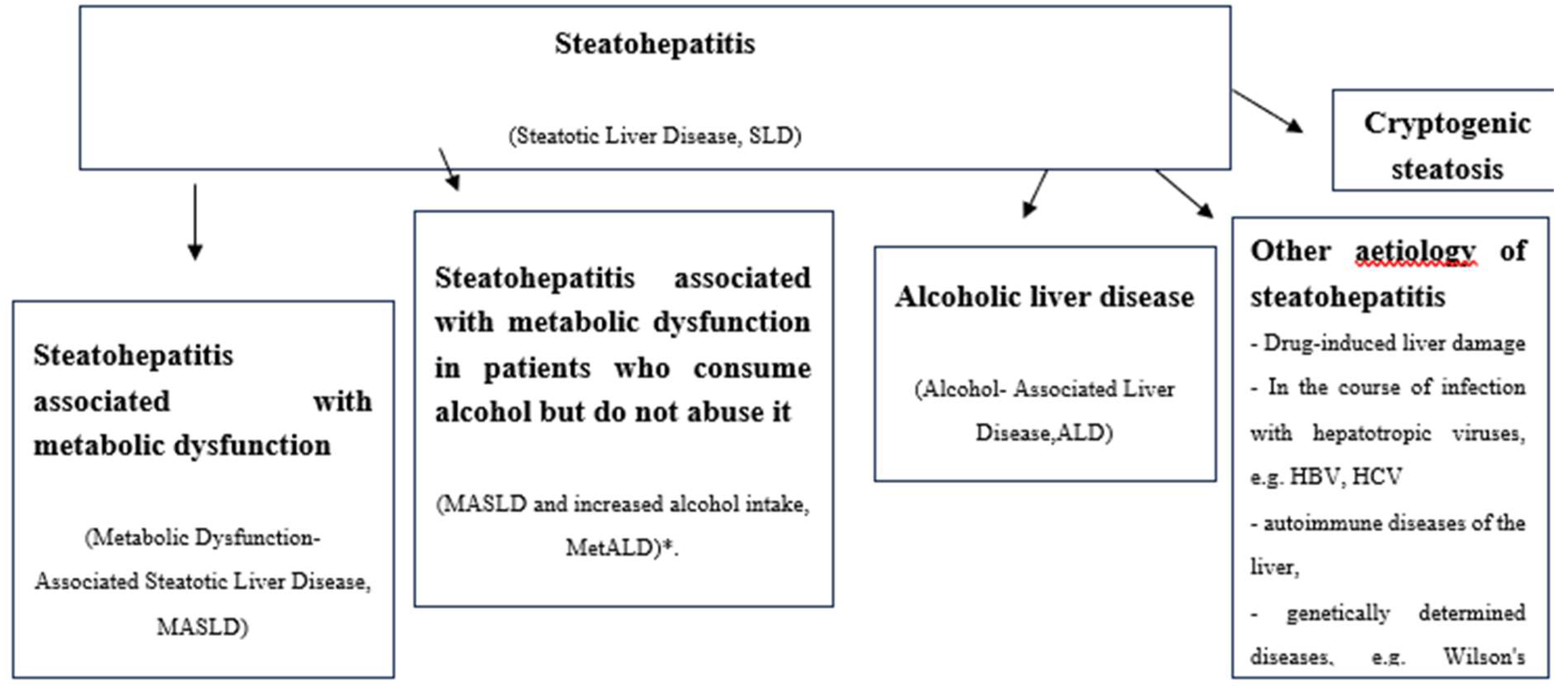
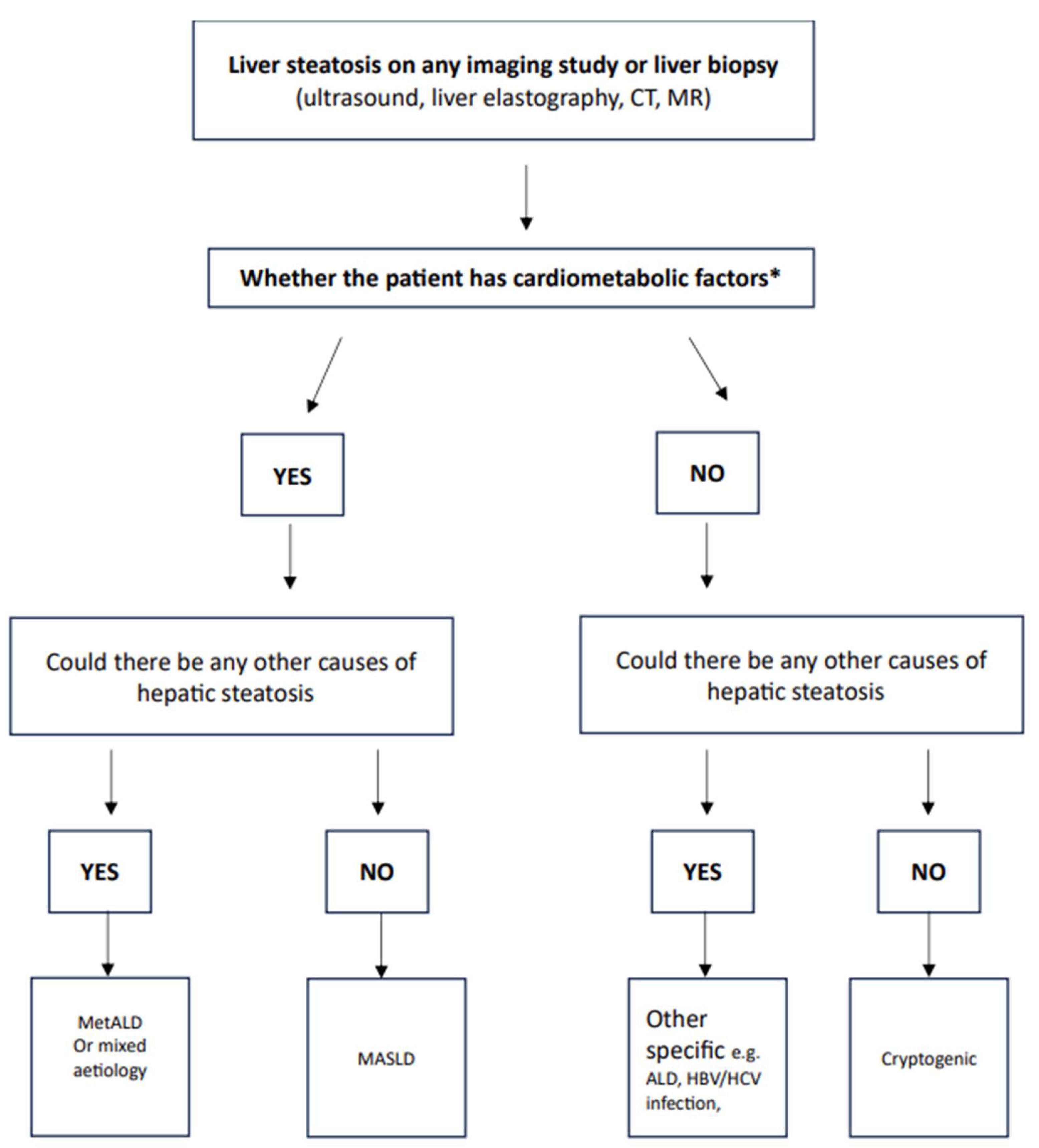
The diagnosis of hepatic steatosis in MASLD also requires the exclusion of other potential causes of hepatic steatosis such as alcohol consumption, drugs, viral hepatitis and others. (Fig.1,2).
Despite medical advances, there is still no effective pharmacological treatment strictly reserved for the treatment of hepatic steatosis, steatohepatitis or progressive liver fibrosis in the course of MASLD.
There are currently 3 main pillars in the therapeutic management of patients with MASLD.
Pillar I is the treatment of obesity-related disease, with a target weight reduction of 10% of baseline weight within 6 months [1]. It has been shown that sustained weight reduction can reduce or reverse hepatic steatosis depending on its severity and reduce the initial stages of liver fibrosis. Based on an analysis of 4 randomised trials, a weight reduction of min. 3% results in a reduction in steatosis in 35-100% of patients depending on the severity, a reduction in weight of min. 5% reduces the severity of ballooning degeneration/inflammation in 41- 100% of patients, a further weight reduction of at least 7% reduces the severity of WASH in 64-90% of patients, while a weight reduction of at least 10% results in regression of fibrosis (F1-F2) in 49% of patients
Pillar II is the elimination of cardiometabolic risk factors - the main cause of premature mortality in patients with MASLD - i.e. appropriate treatment of diabetes, lipid disorders and hypertension.
Pillar III, on the other hand, is the use in patients with diagnosed and confirmed steatohepatitis of drugs that have demonstrated in clinical trials the ability to reduce WASH and/or regress liver fibrosis - pioglitazone, vitamin E, GLP-1 or GLP-1/GIP analogues [1,7,8,9].
Figure 1. Causes of hepatic steatosis.
Preprints 152001 g001
*MetALD occurs when patients with cardiometabolic risk factors have a history of occasional alcohol consumption - in women, 20g to 50g per day or 140g to 350g per week, and in men, 30g to 60g per day and 210g to 420g per week.
Higher values are characteristic of alcoholic liver disease.
Figure 2. Algorithm for the management of patients with hepatic steatosis.
Preprints 152001 g002
*Cardiometabolic factors considered in patients with suspected MASLD.
  • BMI ≥25 kg/m2 or waist circumference ≥94 cm in men and ≥80 cm in women (or above normal depending on ethnicity),
  • blood pressure ≥130/85 mm Hg or treatment of hypertension,
  • Serum triglyceride concentration ≥1.7 mmol/l (150 mg/dl) or treatment of hypertriglyceridaemia,
  • serum HDL cholesterol concentration ≤1.0 mmol/l (<40 mg/dl) in men and ≤1.3 mmol/l (<50 mg/dl) in women or treatment of hypercholesterolaemia,
  • fasting glucose ≥5.6 mmol/l (100 mg/l) or 2 h after a glucose load ≥7.8 mmol/l (140 mg/dl) or HbA1c ≥5.7% (39 mmol/mol) or type 2 diabetes or treatment of type 2 diabetes.
Potential pharmacological options in MASLD
Although, at this point in time, no drug has gained FDA approval for the treatment of hepatic steatosis, given the diseases that are the underlying causes of this condition (including components of the metabolic syndrome: insulin resistance-related: obesity, carbohydrate and lipid metabolism disorders, blood pressure) and its complications (fibrosis, cirrhosis), a variety of pharmacotherapy pathways are used in clinical practice [10,11].
GLP-1 analogues are a broad group of incretinomimetic drugs finding recognition in the modern treatment of type 2 diabetes, obesity and their comorbidities (diabesity). GLP-1 analogues increase post-meal insulin secretion, inhibit glucagon secretion, reduce excess hepatic glucose secretion, decrease lipogenesis, delay gastric emptying, exhibit anti-inflammatory effects and act on the hunger and satiety centres located in the hypothalamus [12,13]. In 2014, it was shown that in patients with diabetes, exenatide had a beneficial effect on reversing hepatic steatosis (the comparator for exenatide in this case was insulin) [14]. In the same year, the group of Bi et al. also showed a benefit from exenatide in this respect, although here the differences between aGLP1 and pioglitazone or insulin were not proven at the same time [15]. 2 years later, another representative of aGLP1, liraglutide, was shown in the LEAN study to be both effective in reducing steatosis and liver fibrosis [16], which was also confirmed by subsequent studies from other scientific groups [17,18,19] (although not all - for example, Smits et al. in a 12-week study comparing the use of liraglutide and sitagliptinide in patients with type 2 diabetes, found that neither drug showed a significant difference in intrahepatic fat accumulation relative to the placebo group [20]). The D-LIFT study evaluating the efficacy of dulaglutide showed that the drug reduced intrahepatic fat volume by approximately 26.4 per cent with 24 weeks of use, but had no statistically or clinically significant effect on reducing perihepatic fat volume or the fibrotic process [21]. Semaglutide (which is the only GLP-1 analogue available in both oral form and subcutaneous injection) in a study by the group of Gad et al. showed beneficial effects on both the reduction of steatosis and liver fibrosis (assessed after 6 and 12 months of drug use), with semaglutide used in weekly subcutaneous injections performing best in both analyses [22] - this was a de facto confirmation of previous reports of the efficacy of this drug in the treatment of MASLD, while also noting the clinically relevant articulation of differences between different forms of delivery of the same active substance. With all the above information in mind, the use of GLP1 analogues should be considered as one of the first-line treatments for liver steatosis associated with metabolic disorders [23,24].
A somewhat distinct group of drugs are the dual GLP-1 and GIP receptor agonists. Glucose-dependent insulinotropic peptide (GIP) is another incretinomimetic hormone that, when secreted by the small intestine, increases insulin absorption and, per analogiam as with GLP-1, has a beneficial effect on fat metabolism [23]. At the moment, the only GLP-1 and GIP dual agonist preparation approved worldwide is thiothiazolidinedione, for which the 2022 SURPASS-3 MRI study demonstrated high efficacy at doses of 10 and 15mg in reducing intrahepatic fat. Given the short time of availability of the drug, further results of studies on the observation of long-term or long-distance complications should be patiently awaited [25,26,27].
Another drug, this time in the nature of a triple agonist (for GIP, GLP-1 and the receptor for glucagon) is retatrutide, currently only available in clinical trials - although it will be some time before the drug is on the full market, it is worth mentioning that in promising trial results to date, all doses of retatrutide produced a significant reduction in liver fat compared to the comparator placebo[27,28].
Another group of drugs with incretin-mimetic effects are the DPP4 inhbitors - these are weak hypoglycaemic drugs, mainly used in the initial stages of type 2 diabetes treatment, showing a neutral or minimally positive effect on weight reduction. Data on their real effect in the treatment of hepatic steatosis are limited - for vildagliptin, it has been proven to have a marginally significant beneficial effect on intrahepatic lipid accumulation, but this is not enough to recommend the use of gliptins in the treatment of MASLD (although, on the other hand, international bodies agree that their use in the treatment of patients with type 2 diabetes and concomitant fatty liver disease is safe in principle) [29,30].
Metformin is one of the antidiabetic drugs, a biguanide derivative whose primary mechanism of action is to increase the sensitivity of peripheral tissues to insulin. Chronic therapy (lasting a minimum of 2.8 years) results in an average weight reduction of 2.5 per cent, so ostensibly metformin could be a beneficial drug in the treatment of hepatic steatosis. However, this is not the case - the use of metformin has not been confirmed in sufficiently high-quality studies to date to be associated with beneficial changes in hepatic lipid architecture [31,32].
SGLT-2 inhibitors are drugs designed to increase renal resorption of glucose - they are used in the treatment of type 2 diabetes, but at the same time, due to their large proven cardioprotective benefits, these drugs have also found favour with cardiologists and nephrologists who have begun to use them in the treatment of chronic heart failure and chronic renal failure [33]. Glucosuria results in weight loss, averaging 1.8kg after a 12-week treatment in patients with pre-existing hyperglycaemia. In 2018, Kuchay et al. as part of the E-LIFT study demonstrated that empagliflozin used in patients with type 2 diabetes at a dose of 10mg daily for 20 weeks could be associated with a 5% reduction in liver fatness. In the same year, another group found that dapagliflozin used in a similar group of patients reduced the CAP parameter on liver elastography by approximately 10%, while having no statistically significant effect on liver fibrosis (except in the most stressed group, with measurements exceeding 8kPa). A pooled analysis of RCTs of various SGLT2 inhibitors by Mantovani et al. showed that iSGLT2 (with particular emphasis on empa- and dapaglifosine) significantly reduce intrahepatic lipid accumulation [34,35]. The results so far seem promising, but further, more extensive studies targeting the efficacy of treatment of hepatosteatosis sensu stricto should be patiently awaited at .
A special place in the EASL-EASD-EASO, AASLD and APASL guidelines for the management of MASLD is occupied by pioglitazone, which is a selective PPARγ agonist leading to an increase in tissue sensitivity to insulin and therefore a reduction in insulin resistance in adipose tissue, skeletal muscle and liver cells, with a concomitant reduction in free fatty acids and blood glucose [1]. According to Belfort et al., a six-month treatment with pioglitazone effectively reduces hepatic steatosis and inflammation in patients with pre-diabetes and type 2 diabetes, while Cusi et al.'s group demonstrated that a long-term (18-month) treatment also has a beneficial effect on the fibrosis process - results regarding a beneficial effect on hepatic steatosis (but not on fibrosis) were confirmed by a subsequent meta-analysis by Lian and Fu. Despite the above, due to the side effects of pioglitazone, such as hypoglycaemia, increased risk of osteoporotic fractures, weight gain, possible onset or exacerbation of heart failure, risk of bladder cancer, this therapy is questionable and not widely used. Other PPAR agonists - seladelpar, lanifibranor (which is a de facto pan-PPAR-agonist) and saroglitazar (a dual PPAR α/γ agonist) - are in clinical trials and appear promising in improving the extent of hepatic steatosis [36,37].
Fibrates, also belonging to the peroxisome proliferator-activated receptor (PPARα) agonists, show beneficial effects in the dyslipidaemia accompanying MASLD. The benefits include both a reduction in biochemical activity and a positive effect on histology (in terms of ballooning degeneration). Short treatment with bezafibrate (2-8 weeks) in combination with diet and increased physical activity reduced fine steatosis. Short 4-week treatment with gemfibrozil for WASH led to a reduction in aspartate aminotransferase (AST) and γ-glutamyltranspeptidase (GGT) activity, while no benefit was demonstrated with 1 year of clofibrate therapy [38].
Orlistat is a long-acting inhibitor of gastric and pancreatic lipase, designed to reduce the absorption of triglycerides from the gastrointestinal tract by approximately 30 per cent - it is thus used in the treatment of obesity, where it causes a reduction in body weight of approximately 5-10 per cent. The results of studies to date on the reversal of hepatic steatosis are inconsistent - on the one hand, we have results confirming such a positive consequence of the use of the drug; on the other hand, we also have the results of a study in which patients on a diet with vitamin E and randomised to orlistat or placebo did not show that orlistat led to a histopathologically confirmed reduction in hepatic steatosis (which would suggest that it was vitamin E, not orlistat, that was the key element in the treatment of steatosis)[ 39-43].
Interestingly, vitamin E can be found in official guidelines for the management of NAFLD, and this is due to its antioxidant properties - a study by Xuet al. found that high doses of vitamin E (800mg/d) can lead to normalisation of biochemical activity, as well as a reduction in steatosis and inflammation and even ballooning degeneration in patients without diabetes, although without improvement in fibrosis [44].
With regard to orlistat, however, a meta-analysis was published in 2024, which proved that this drug effectively and independently reduces peri-umbilical localised fat [45]. The main problem with the use of orlistat is its side effects - bloating, abdominal pain, fatty diarrhoea, skin lesions, impaired absorption of fat-soluble vitamins (A, D, E, K) requiring the implementation of adequate supplementation. Due to the potential impact of vitamin E on the incidence of prostate cancer in men >50 years of age and on the risk of stroke, it is currently rarely used. Vitamin E is not recommended in patients with diabetes or cirrhosis [46,47].
An important component of the metabolic syndrome, also linked to MASLD, is dyslipidaemia. Statins, i.e. HMG-CoA reductase inhibitors, are well-studied preparations with a well-established role in the treatment of dyslipidaemia - nevertheless, it should be noted that worldwide, treatment with these preparations is suboptimal; the results of the Khoo et al. study indicated that 59% of patients who do not take statins should take them, and 74% of patients taking statin therapy use them in a way that prevents them from achieving their therapeutic goal. A 2023 multivariate study by Ayad et al. showed that statin therapy significantly reduces intrahepatic fat concentrations (the risk of developing NAFLD with such therapy decreases by up to 31%) - an association was also identified between the use of simvastatin and lowastatin and the inhibition of genes acting on the expression of SREBP-1, PNPLA-3 and TMS6F, which may be one of the main factors contributing to this efficacy of therapy [48,49].
Statins, in particular, have beneficial effects on the liver in MASLD through their pleiotropic effects such as antioxidant, antiproliferative, anti-inflammatory, immunomodulatory, normalising endothelial function. The beneficial effects of statins on the liver, proven in numerous studies clinical trials, include: reduction in the severity of inflammatory changes, reduction in fibrosis, steatosis, reduction in portal pressure, reduction in disease progression in patients with cirrhosis, reduction in the risk of hepatocellular carcinoma in patients with cirrhosis, increased survival [1,50].
Ezetimibe, which in turn selectively inhibits cholesterol absorption in the small intestinal stroma, when added to statin therapy, produces an even greater improvement in the reduction of peri-hepatic fatness, according to the results of the ESSENTIAL trial (although, at the same time, this drug has no effect on liver fibrosis).According to the current Polish guidelines for the clinical management of patients with MASLD (coinciding with those of other scientific societies), hypolipemic therapy is recommended as for the general population [51,52].
Ursodeoxycholic acid is a natural, hydrophilic bile acid that inhibits intestinal absorption of cholesterol, reducing its secretion into bile (leading to a 40-60% reduction in bile cholesterol concentration) while showing pluripotent effects on the liver associated with cytoprotection and immunomodulation. To date, this drug has not been included in treatment recommendations for MASLD, despite showing beneficial effects on hepatic steatosis and gut microbiota in an animal model. However, the results on the human model were different - a randomised study by Dufour et al. showed a beneficial effect of ursodeoxycholic acid on hepatic steatosis, but only in combination with vitamin E; several years later, high doses of ursodeoxycholic acid (23-28g/kg/day) failed to achieve histopathologically recordable improvements in patients [53,54,55].
An interesting fact worth including in this review is that, since disruption of the gut flora is identified as one of the potential causes of the development of hepatic steatosis, it is likely that the use of probiotics could have a beneficial effect on treatment
Intestinal dysbiosis can influence the development and progression of MASLD through a number of metabolic, immunological and inflammatory mechanisms.
It can cause increased intestinal permeability (so-called leaky gut syndrome). Dysbiosis leads to damage of the intestinal barrier, which facilitates the passage of bacterial toxins (e.g. lipopolysaccharides - LPS) into the bloodstream activating the immune system, causing chronic inflammation and oxidative stress in the liver.LPS activates Toll-like receptors (TLR4) in hepatocytes and Kupffer cells, exacerbating steatosis and inflammation. Dysbiosis can increase endogenous ethanol production by bacteria, which has a toxic effect on the liver. Also, excess secondary bile acids can affect lipid metabolism and cause insulin resistance. Disruption of the gut microbiome also disrupts the balance between protective SCFAs (e.g. butyrate) and those that can promote lipogenesis (e.g. acetate, propionate). In turn, excess SCFAs can be a substrate for lipid production in the liver, exacerbating hepatic steatosis. Intestinal dysbiosis also increases calorie absorption from the diet and promotes insulin resistance, leading to excessive fat accumulation in the liver. It affects hormonal pathways, such as GLP-1 and FGF19, which regulate liver metabolism. Typically, patients with obesity and MASLD show a reduction in microbiota diversity. There is an increase in pro-inflammatory bacteria: an overgrowth of Enterobacteriaceae (e.g. Escherichia coli), an increase in endotoxin-producing bacteria (e.g. Proteobacteria), while there is a decrease in protective bacteria such as Faecalibacterium prausnitzii (with anti-inflammatory effects), Akkermansia muciniphila, which supports the integrity of the intestinal barrier.
Appropriate diet rich in vegetables and fruit, fermented products such as kefir, yoghurt or pickles, and restriction of simple sugars, saturated fats, alcohol and cigarettes are applicable in the treatment of intestinal dysbiosis. Prebiotics - such as fibre (e.g. inulin, oligofructose) support the growth of beneficial bacteria - are also applicable. And postbiotics, such as products of bacterial metabolism (e.g. butyrate), which can support the regeneration of the intestinal epithelium.
Indeed, according to previous reports, appropriately selected probiotic treatment (and especially in combination with symbiotics) may have beneficial effects in the ancillary treatment of steatosis and liver fibrosis - these would be mainly formulations based on Bifidobacterium longum, Lactobacillusparacasei, Lactobacillus johnsonii, Lacobacillus reuteri and others, which would be expected to reduce insulin resistance, the negative impact of dyslipidaemia and features of systemic inflammation. Experimental studies are also investigating the effect of transfer (transplantation) of the gut microbiota (FMT) on MASLD [56,57,58,59,60].
Also, some of the drugs used to treat MASLD also have a beneficial effect on the composition of the gut microbiota, e.g. UDCAs or GLP-1 analogues.

Summary

Despite continuous medical advances, we still do not have a typical pharmacotherapy targeting the treatment of steatosis and liver fibrosis in MASLD. Hence, so much emphasis is now placed on lifestyle medicine aimed at the prevention of lifestyle diseases, particularly targeting the prevention of obesity, diabetes, dyslipidaemia and hypertension, and thus also MASLD.
Every now and then, one can hear about further pathways for the potential pharmacotherapy of steatohepatitis and its complications - we are waiting for the results of studies on FGF19 analogues, FGF21 agonists, ketohexokinase inhibitors, novel THR-α and THR-β agonists, ASK1 inhibitors, galectin or caspase inhibitors, among others [61]. Farnesoid X receptor (X FXR) agonists - may provide many benefits in MASLD/MASH not only through stabilisation of lipid and carbohydrate metabolism, but also as a result of their immunomodulatory and anti-inflammatory effects. Also, recent studies on the use of Resmetirom, a selective thyroid hormone receptor-β agonist THR-β)are raising hopes for use in MASLD therapy [62,63].
Research targeting the modulation of the gut microbiota (through diet, probiotics, prebiotics or FMT) is now a promising approach for the future treatment and prevention of MASLD progression.
Be that as it may, however, it is crucial to point out that, according to current EASL-EASD-EASO guidelines, the cornerstone of the management of MASLD is multidisciplinary care, directed at the prevention and treatment of hepatic and non-hepatic complications - reduction of cardiometabolic factors. The basis is non-pharmacological treatment - diet and systematic physical activity and management directed at weight reduction. Pharmacotherapy of MASLD should be reserved for patients with features of hepatic inflammation, especially as co-occurring fibrosis at F2 level or higher - the authors of the guidelines point out that in the case of less severe disease, conservative prevention and appropriate treatment of comorbidities - the aforementioned obesity, diabetes, dyslipidaemia and hypertension - is justified [1,64,65,66,67].

References

  1. Rajewski P, Ciescinski J. The patient with steatohepatitis associated with metabolic dysfunction in clinical practice. Physician POZ. 2024;10(5).
  2. Kanwal, Fasiha, Neuschwander-Tetri, Brent A.; Loomba, Rohit; Rinella, Mary E. Metabolic dysfunction-associated steatotic liver disease: Update and impact of new nomenclature on the American Association for the Study of Liver Diseases practice guidance on nonalcoholic fatty liver disease. Hepatology 79(5):p 1212-1219, May 2024. |. [CrossRef]
  3. Devarbhavi H, Asrani SK, Arab JP, Nartey YA, Pose E, Kamath PS. Global burden of liver disease: 2023 update. J Hepatol. 2023 Aug;79(2):516-537. epub 2023 Mar 27. PMID: 36990226. [CrossRef]
  4. Rinella ME, Lazarus JV, Ratziu V, Francque SM, Sanyal AJ, Kanwal F, Romero D, Abdelmalek MF, Anstee QM, Arab JP, Arrese M, Bataller R, Beuers U, Boursier J, Bugianesi E, Byrne CD, Castro Narro GE, Chowdhury A, Cortez-Pinto H, Cryer DR, Cusi K, El-Kassas M, Klein S, Eskridge W, Fan J, Gawrieh S, Guy CD, Harrison SA, Kim SU, Koot BG, Korenjak M, Kowdley KV, Lacaille F, Loomba R, Mitchell-Thain R, Morgan TR, Powell EE, Roden M, Romero-Gómez M, Silva M, Singh SP, Sookoian SC, Spearman CW, Tiniakos D, Valenti L, Vos MB, Wong VW, Xanthakos S, Yilmaz Y, Younossi Z, Hobbs A, Villota-Rivas M, Newsome PN; NAFLD Nomenclature consensus group. A multisociety Delphi consensus statement on new fatty liver disease nomenclature. Hepatology. 2023 Dec 1;78(6):1966-1986. Epub 2023 Jun 24. PMID: 37363821; PMCID: PMC10653297. [CrossRef]
  5. Rinella ME, Neuschwander-Tetri BA, Siddiqui MS, Abdelmalek MF, Caldwell S, Barb D, Kleiner DE, Loomba R. AASLD Practice Guidance on the clinical assessment and management of nonalcoholic fatty liver disease. Hepatology. 2023 May 1;77(5):1797-1835. Epub 2023 Mar 17. PMID: 36727674; PMCID: PMC10735173. [CrossRef]
  6. Rajewski P, Ciescinski J, Rajewski P (2024) Use of Fibroscan Liver Elastography in the Rapid Diagnosis and Monitoring of MASLD Treatment. Ann Case Report. 9: 2129. [CrossRef]
  7. Vilar-Gomez E, Martinez-Perez Y, Calzadilla-Bertot L; et al. Weight loss through lifestyle modification signicantly reduces features of nonalcoholic steatohepatitis. Gastroenterology 2015; 149: 367-378.
  8. Hannah WN Jr, Harrison SA. Effect of Weight Loss, Diet, Exercise, and Bariatric Surgery on Nonalcoholic Fatty Liver Disease. Clin Liver Dis. 2016 May;20(2):339-50. epub 2016 Feb 17. PMID: 27063273. [CrossRef]
  9. Konerman MA et al. Pharmacotherapy for NASH: Current and emerging. J Hepatol (2017). [CrossRef]
  10. Suwała, S.; Junik, R. Assessment of the Liver Steatosisand Fibrosis Risk in Metabolic Syndrome and Its IndividualComponents, Considering the Varying Definitions Used in Clinical Practice throughout Time: A Retrospective Cross-Sectional Study. Biomedicines 2024, 12, 1739. [CrossRef]
  11. Cornell, S. A Review of GLP-1 Receptor Agonists in Type 2 Diabetes: A Focus on the Mechanism of Action of Once-weekly Agents. J Clin Pharm Ther 2020, 45, 17-27. [CrossRef]
  12. Wełnicki, M.; Gorczyca-Głowacka, I.; Mamcarz, A.; Filipiak, K.J.; Wożakowska-Kapłon, B.; Barylski, M.; Szymański, F.M.; Kasprzak, J.D.; Grabowski, M.; Dzida, G. The Use of GLP-1 Analogues in the Treatment of Diabetes in Patients with Cardiovascular Diseases. The Expert Opinion of the Working Group of Cardiovascular Pharmacotherapy of the Polish Cardiac Society. Kardiol Pol 2022, 80, 1286-1289. [CrossRef]
  13. Matyjaszek-Matuszek, B.; Szafraniec, A.; Porada, D. Pharmacotherapy of Obesity - State of the Art. EndocrinolPol 2018, 69. [CrossRef]
  14. Shao, N.; Kuang, H.Y.; Hao, M.; Gao, X.Y.; Lin, W.J.; Zou, W. Benefits of Exenatide on Obesity and Non-alcoholicFatty Liver Disease with Elevated Liver Enzymes in Patientsswith Type 2 Diabetes. Diabetes Metab Res Rev 2014, 30, 521-529. [CrossRef]
  15. Bi, Y.; Zhang, B.; Xu, W.; Yang, H.; Feng, W.; Li, C.; Tong, G.; Li, M.; Wang, X.; Shen, S.; et al. Effects of Exenatide, Insulin, and Pioglitazone on Liver Fat Content and Body Fat Distributions in Drug-Naive Subjects with Type 2 Diabetes. Acta Diabetol 2014, 51, 865-873. [CrossRef]
  16. Armstrong, M.J.; Gaunt, P.; Aithal, G.P.; Barton, D.; Hull, D.; Parker, R.; Hazlehurst, J.M.; Guo, K.; Abouda, G.; Aldersley, M.A.; et al. Liraglutide Safety and Efficacy in Patients with Non-Alcoholic Steatohepatitis (LEAN): A Multicentre, Double-Blind, Randomised, Placebo-ControlledPhase 2 Study. The Lancet 2016, 387, 679-690. [CrossRef]
  17. Bouchi, R.; Nakano, Y.; Fukuda, T.; Takeuchi, T.; Murakami, M.; Minami, I.; Izumiyama, H.; Hashimoto, K.; Yoshimoto, T.; Ogawa, Y. Reduction of Visceral Fat by Liraglutide Is Associated with Ameliorations of HepaticSteatosis, Albuminuria, and Micro-Inflammation in Type 2 Diabetic Patients with Insulin Treatment: A RandomizedControl Trial. Endocr J 2017, 64, 269-281. [CrossRef]
  18. Yan, J.; Yao, B.; Kuang, H.; Yang, X.; Huang, Q.; Hong, T.; Li, Y.; Dou, J.; Yang, W.; Qin, G.; et al. Liraglutide, Sitagliptin, and Insulin Glargine Added to Metformin: The Effect on Body Weight and Intrahepatic Lipid in Patients With Type 2 Diabetes Mellitus and Nonalcoholic Fatty LiverDisease. Hepatology 2019, 69, 2414-2426. [CrossRef]
  19. Guo, W.; Tian, W.; Lin, L.; Xu, X. Liraglutide or Insulin Glargine Treatments Improves Hepatic Fat in Obese Patientsswith Type 2 Diabetes and Nonalcoholic Fatty Liver Disease in Twenty-Six Weeks: A Randomized Placebo-Controlled Trial. Diabetes Res Clin Pract 2020, 170, 108487. [CrossRef]
  20. Smits, M.M.; Tonneijck, L.; Muskiet, M.H.A.; Kramer, M.H.H.; Pouwels, P.J.W.; Pieters-van den Bos, I.C.; Hoekstra, T.; Diamant, M.; van Raalte, D.H.; Cahen, D.L. Twelve WeekLiraglutide or Sitagliptin Does Not Affect Hepatic Fat in Type2 Diabetes: A Randomised Placebo-Controlled Trial. Diabetologia 2016, 59, 2588-2593. [CrossRef]
  21. . Kuchay, M.S.; Krishan, S.; Mishra, S.K.; Choudhary, N.S.; Singh, M.K.; Wasir, J.S.; Kaur, P.; Gill, H.K.; Bano, T.; Farooqui, K.J.; et al. Effect of Dulaglutide on Liver Fat in Patients with Type 2 Diabetes and NAFLD: RandomisedControlled Trial (D-LIFT Trial). Diabetologia 2020, 63, 2434-2445. [CrossRef]
  22. Gad, A.I.; Ibrahim, N.F.; Almadani, N.; Mahfouz, R.; Nofal, H.A.; El-Rafey, D.S.; Ali, H.T.; EL-Hawary, A.T.; Sadek, A.M.E.M. Therapeutic Effects of Semaglutide on Nonalcoholic Fatty Liver Disease with Type 2 DiabetesMellitus and Obesity: An Open-Label Controlled Trial. Diseases 2024, 12, 186. [CrossRef]
  23. Flint, A.; Andersen, G.; Hockings, P.; Johansson, L.; Morsing, A.; Sundby Palle, M.; Vogl, T.; Loomba, R.; Plum-Mörschel, L. Randomised Clinical Trial: Semaglutide versus Placebo Reduced Liver Steatosis but Not Liver Stiffness in Subjects with Non-alcoholic Fatty Liver Disease Assessed by Magnetic Resonance Imaging. Aliment Pharmacol Ther 2021, 54, 1150-1161. [CrossRef]
  24. Carretero-Gómez, J.; Carrasco-Sánchez, F.J.; Fernández-Rodríguez, J.M.; Casado-Escribano, P.; Miramontes-González, J.P.; Seguí-Ripoll, J.M.; Ena, J.; Arévalo-Lorido, J.C.. Effect of Semaglutide on Fatty Liver Disease Biomarkers in Patientsswith Diabetes and Obesity. Revista Clínica Española (English Edition) 2023, 223, 134-143. [CrossRef]
  25. Katsarou, A.; Tsioulos, G.; Kassi, E.; Chatzigeorgiou, A. Current and Experimental Pharmacotherapy for the Management of Non-Alcoholic Fatty Liver Disease. Hormones 2024, 23, 621-636. [CrossRef]
  26. Gastaldelli, A.; Cusi, K.; Fernández Landó, L.; Bray, R.; Brouwers, B.; Rodríguez, Á. Effect of Tirzepatide versus Insulin Degludec on Liver Fat Content and AbdominalAdipose Tissue in People with Type 2 Diabetes (SURPASS-3 MRI): A Substudy of the Randomised, Open-Label, Parallel-Group, Phase 3 SURPASS-3 Trial. Lancet DiabetesEndocrinol 2022, 10, 393-406. [CrossRef]
  27. Jastreboff, A.M.; Kaplan, L.M.; Frías, J.P.; Wu, Q.; Du, Y.; Gurbuz, S.; Coskun, T.; Haupt, A.; Milicevic, Z.; Hartman, M.L. Triple-Hormone-Receptor Agonist Retatrutide for Obesity - A Phase 2 Trial. New England Journal of Medicine2023, 389, 514-526. [CrossRef]
  28. Mantovani, A.; Byrne, C.D.; Targher, G. Efficacy of Peroxisome Proliferator-Activated Receptor Agonists, Glucagon-like Peptide-1 Receptor Agonists, or Sodium-Glucose Cotransporter-2 Inhibitors for Treatment of Non-Alcoholic Fatty Liver Disease: A Systematic Review. Lancet Gastroenterol Hepatol 2022, 7, 367-378. [CrossRef]
  29. Ciardullo, S.; Vergani, M.; Perseghin, G. NonalcoholicFatty Liver Disease in Patients with Type 2 Diabetes: Screening, Diagnosis, and Treatment. J Clin Med 2023, 12, 5597. [CrossRef]
  30. Knowler, W.C.; Barrett-Connor, E.; Fowler, S.E.; Hamman, R.F.; Lachin, J.M.; Walker, E.A.; Nathan, D.M.; Diabetes Prevention Program Research Group Reduction in the Incidence of Type 2 Diabetes with Lifestyle Interventionor Metformin. N Engl J Med 2002, 346, 393-403. [CrossRef]
  31. Li, Y.; Liu, L.; Wang, B.; Wang, J.; Chen, D. Metforminin Non-Alcoholic Fatty Liver Disease: A Systematic Reviewand Meta-Analysis. Biomed Rep 2013, 1, 57-64. [CrossRef]
  32. Lavine, J.E.; Schwimmer, J.B.; Van Natta, M.L.; Molleston, J.P.; Murray, K.F.; Rosenthal, P.; Abrams, S.H.; Scheimann, A.O.; Sanyal, A.J.; Chalasani, N.; et al. Effect of Vitamin E or Metformin for Treatment of Nonalcoholic FattyLiver Disease in Children and Adolescents: The TONIC Randomized Controlled Trial. JAMA 2011, 305, 1659-1668. [CrossRef]
  33. Donal, E.; L'official, G.; Kosmala, W. New Guidelinesfor Managing Chronic Heart Failure Patients and New Needsin Echocardiography. Int J Cardiol 2022, 353, 71-72. [CrossRef]
  34. Kuchay, M.S.; Krishan, S.; Mishra, S.K.; Farooqui, K.J.; Singh, M.K.; Wasir, J.S.; Bansal, B.; Kaur, P.; Jevalikar, G.; Gill, H.K.; et al. Effect of Empagliflozin on Liver Fat in Patients With Type 2 Diabetes and Nonalcoholic Fatty LiverDisease: A Randomized Controlled Trial (E-LIFT Trial). Diabetes Care 2018, 41, 1801-1808. [CrossRef]
  35. Shimizu, M.; Suzuki, K.; Kato, K.; Jojima, T.; Iijima, T.; Murohisa, T.; Iijima, M.; Takekawa, H.; Usui, I.; Hiraishi, H.; et al. Evaluation of the Effects of Dapagliflozin, a Sodium-glucose Co-transporter-2 Inhibitor, on Hepatic Steatosis and Fibrosis Using Transient Elastography in Patients with Type 2 Diabetes and Non-alcoholic Fatty Liver Disease. DiabetesObes Metab 2019, 21, 285-292. [CrossRef]
  36. Belfort, R.; Harrison, S.A.; Brown, K.; Darland, C.; Finch, J.; Hardies, J.; Balas, B.; Gastaldelli, A.; Tio, F.; Pulcini, J.; et al. A Placebo-Controlled Trial of Pioglitazone in Subjects with Nonalcoholic Steatohepatitis. New England Journal of Medicine 2006, 355, 2297-2307. [CrossRef]
  37. Cusi, K.; Orsak, B.; Bril, F.; Lomonaco, R.; Hecht, J.; Ortiz-Lopez, C.; Tio, F.; Hardies, J.; Darland, C.; Musi, N.; et al. Long-Term Pioglitazone Treatment for Patients With Nonalcoholic Steatohepatitis and Prediabetes or Type 2 Diabetes Mellitus. Ann Intern Med 2016, 165, 305. [CrossRef]
  38. Pawlak M., Lefebyre P., Staels B.: Molecular mechanism of PPARα action and its impact on lipid metabolism, inflammation and fibrosis in non-alcoholic fatty liver disease. J. Hepatol., 2015; 62: 720-733.
  39. . Harrison, S.A.; Fincke, C.; Helinski, D.; Torgerson, S.; Hayashi, P. A Pilot Study of Orlistat Treatment in Obese, Non-alcoholic Steatohepatitis Patients. Aliment Pharmacol Ther2004, 20, 623-628. [CrossRef]
  40. Zelber-Sagi, S.; Kessler, A.; Brazowsky, E.; Webb, M.; Lurie, Y.; Santo, M.; Leshno, M.; Blendis, L.; Halpern, Z.; Oren, R. A Double-Blind Randomized Placebo-ControlledTrial of Orlistat for the Treatment of Nonalcoholic Fatty LiverDisease. Clinical Gastroenterology and Hepatology 2006, 4, 639-644. [CrossRef]
  41. Esmail, V.A.W.; Mohammed, M.O.; Al-Nimer, M.S.M. Short-Term Orlistat Therapy Improves Fatty InfiltrationIndices and Liver Fibrosis Scores in Patients with Non-Alcoholic Fatty Liver Disease and Metabolic Syndrome. Arab Journal of Gastroenterology 2021, 22, 1-5. [CrossRef]
  42. Zahmatkesh, A.; Sohouli, M.H.; Shojaie, S.; Rohani, P. The Effect of Orlistat in the Treatment of Non-Alcoholic FattyLiver in Adolescents with Overweight and Obese. Eur J Pediatr 2023, 183, 1173-1182. [CrossRef]
  43. Harrison, S.A.; Fecht, W.; Brunt, E.M.; Neuschwander-Tetri, B.A.. Orlistat for Overweight Subjects with Nonalcoholic Steatohepatitis. Hepatology 2009, 49, 80-86. [CrossRef]
  44. Xu, R.; Tao, A.; Zhang, S.; Deng, Y.; Chen, G. Association between Vitamin E and Non-AlcoholicSteatohepatitis: A Meta-Analysis. Int J Clin Exp Med 2015, 8, 3924-3934.
  45. Mahmoud, A.; Mohamed, I.; Abuelazm, M.; Ahmed, A.A.S.; Saeed, A.; Elshinawy, M.; Almaadawy, O.; Abdelazeem, B. Efficacy of Orlistat in Obese Patients with Nonalcoholic Fatty Liver Disease: A Systematic Review and Meta-Analysis of Randomized Controlled Trials. BaylorUniversity Medical Center Proceedings 2024, 37, 603-612. [CrossRef]
  46. Klein EA, Thompson Jr IM, Tangen CM; et al. Vitamin E and the risk of prostate cancer: The Selenium and Vitamin E Cancer Prevention Trial (SELECT). JAMA 2011;306:1549-1556.
  47. Miller 3rd ER, Pastor-Barriuso R, Dalal D; et al. Meta- analysis: High-dosage vitamin E supplementation may increase all-cause mortality. Ann Intern Med 2005;142:37-46.
  48. Khoo, S.; Wong, V.W.; Goh, G.B.; Fan, J.; Chan, W.K.; Seto, W.; Chow, W.C.. Suboptimal Treatment of Dyslipidemiain Patients with Nonalcoholic Fatty Liver Disease. J Gastroenterol Hepatol 2020, 35, 320-325. [CrossRef]
  49. Ayada, I.; van Kleef, L.A.; Zhang, H.; Liu, K.; Li, P.; Abozaid, Y.J.; Lavrijsen, M.; Janssen, H.L.A.; van der Laan, L.J.W.; Ghanbari, M.; et al. Dissecting the MultifacetedImpact of Statin Use on Fatty Liver Disease: A Multidimensional Study. EBioMedicine 2023, 87, 104392. [CrossRef]
  50. Rajewski P, Kwiatkowska J, Nowicka-Matuszewska A, Rajewski P. Safety of statins in chronic liver disease. Physician POZ. 2024;10(2):111-117.
  51. Cho, Y.; Rhee, H.; Kim, Y.; Lee, M.; Lee, B.-W.; Kang, E.S.; Cha, B.-S.; Choi, J.-Y.; Lee, Y. Ezetimibe Combination Therapy with Statin for Non- Alcoholic Fatty Liver Disease: An Open-Label Randomized Controlled Trial (ESSENTIAL Study). BMC Med 2022, 20, 93. [CrossRef]
  52. Gorczyca-Głowacka, I.; Wełnicki, M.; Mamcarz, A.; Filipiak, K.J.; Wożakowska-Kapłon, B.; Barylski, M.; Szymański, F.M.; Kasprzak, J.D.; Tomasiewcz, K. MetabolicAssociated Fatty Liver Disease and Cardiovascular Risk: The Expert Opinion of the Working Group on CardiovascularPharmacotherapy of the Polish Cardiac Society. Kardiol Pol2023, 81, 207-214. [CrossRef]
  53. Dufour, J.; Oneta, C.M.; Gonvers, J.; Bihl, F.; Cerny, A.; Cereda, J.; Zala, J.; Helbling, B.; Steuerwald, M.; Zimmermann, A. Randomized Placebo-Controlled Trial of Ursodeoxycholic Acid With Vitamin E in NonalcoholicSteatohepatitis. Clinical Gastroenterology and Hepatology2006, 4, 1537-1543. [CrossRef]
  54. Ratziu, V.; de Ledinghen, V.; Oberti, F.; Mathurin, P.; Wartelle-Bladou, C.; Renou, C.; Sogni, P.; Maynard, M.; Larrey, D.; Serfaty, L.; et al. A Randomized Controlled Trial ofHigh]Dose Ursodesoxycholic Acid for NonalcoholicSteatohepatitis. J Hepatol 2011, 54, 1011-1019. [CrossRef]
  55. Lindor KD, Kowdley KV, Heathcote EJ; et al. Ursodeoxycholic acid for treatment of nonalcoholic steatohepatitis: Results of a randomised trial. Hepatology 2004; 39: 770-778.
  56. Hrncir, T.; Hrncirova, L.; Kverka, M.; Hromadka, R.; Machova, V.; Trckova, E.; Kostovcikova, K.; Kralickova, P.; Krejsek, J.; Tlaskalova-Hogenova, H. Gut Microbiota and NAFLD: Pathogenetic Mechanisms, Microbiota Signatures, and Therapeutic Interventions. Microorganisms 2021, 9, 957. [CrossRef]
  57. Tang, R.; Wei, Y.; Li, Y.; Chen, W.; Chen, H.; Wang, Q.; Yang, F.; Miao, Q.; Xiao, X.; Zhang, H.; et al. Gut MicrobialProfile Is Altered in Primary Biliary Cholangitis and PartiallyRestored after UDCA Therapy. Gut 2018, 67, 534-541. [CrossRef]
  58. Białczyk, A.; Rajewska, A.; Junik, R.; Suwała, S. The Role of Probiotics in Managing Metabolic- Associated FattyLiver Disease: An Updated Review. Current Research in Nutrition and Food Science Journal 2024, 12, 490-501. [CrossRef]
  59. Asgharian, A.; Askari, G.; Esmailzade, A.; Feizi, A.; Mohammadi, V. The Effect of Symbiotic Supplementation on Liver Enzymes, c-Reactive Protein and Ultrasound Findings in Patients with Non-Alcoholic Fatty Liver Disease: A ClinicalTrial. Int J Prev Med 2016, 7, 59. [CrossRef]
  60. Ferolla, S.; Couto, C.; Costa-Silva, L.; Armiliato, G.; Pereira, C.; Martins, F.; Ferrari, M.; Vilela, E.; Torres, H.; Cunha, A.; et al. Beneficial Effect of SynbioticSupplementation on Hepatic Steatosis and AnthropometricParameters, But Not on Gut Permeability in a Population with Nonalcoholic Steatohepatitis. Nutrients 2016, 8, 397. [CrossRef]
  61. Attia, S.L.; Softic, S.; Mouzaki, M. Evolving Role for Pharmacotherapy in NAFLD/NASH. Clin Transl Sci 2021, 14, 11-19. [CrossRef]
  62. Suvarna, R., Shetty, S. & Pappachan, J.M. Efficacy and safety of Resmetirom, a selective thyroid hormone receptor-β agonist, in the treatment of metabolic dysfunction-associated steatotic liver disease (MASLD): A systematic review and meta-analysis. Sci Rep 14, 19790 (2024). [CrossRef]
  63. Kokkorakis, M. et al. Resmetirom, the first approved drug for the management of metabolic dysfunction-associated steatohepatitis: Trials, opportunities, and challenges. Metab. Clin. Exp. 2024. [CrossRef]
  64. Sumida, Y. & Yoneda, M. Current and future pharmacological therapies for NAFLD/NASH. J. Gastroenterol. 2018, 53, 362-376. [CrossRef]
  65. Szymanski F., Tomasiewicz K., Olszanecka-Glinianowicz M., Dzida G. Decalogue of MAFLD. Expert consensus on the diagnosis and treatment of steatohepatic liver disease and related metabolic disorders. 2021. Available at: www.ptchc.pl (Access date: 15.02.2022.
  66. Tincopa, M. A., Anstee, Q. M. & Loomba, R. New and emerging treatments for metabolic dysfunction-associated steatohepatitis. Cell Metab. 2024, 36(5), 912-926. [CrossRef]
  67. Rajewski, P.; Cieściński, J.; Rajewski, P.; Suwała, S.; Rajewska, A.; Potasz, M. Dietary Interventions and Physical Activity as Crucial Factors in the Prevention and Treatment of Metabolic Dysfunction-Associated Steatotic Liver Disease. Biomedicines 2025, 13, 217. [CrossRef]

Table 1. Hepatic and extrahepatic complications of MASLD.
Liver complications Extrahepatic complications
- progression of hepatic steatosis (S1, S2, S3) - arteriosclerosis
- steatohepatitis -MASH - ischaemic heart disease
- progression of hepatic fibrosis (F1, F2, F3) to cirrhosis (F4) - chronic coronary syndrome, myocardial infarction
heart muscle
- primary liver cancer (HCC) - TIA
- liver transplantation - ischaemic stroke
Disclaimer/Publisher’s Note: The statements, opinions and data contained in all publications are solely those of the individual author(s) and contributor(s) and not of MDPI and/or the editor(s). MDPI and/or the editor(s) disclaim responsibility for any injury to people or property resulting from any ideas, methods, instructions or products referred to in the content.
Copyright: This open access article is published under a Creative Commons CC BY 4.0 license, which permit the free download, distribution, and reuse, provided that the author and preprint are cited in any reuse.
Prerpints.org logo

Preprints.org is a free preprint server supported by MDPI in Basel, Switzerland.

Subscribe

Disclaimer

Terms of Use

Privacy Policy

Privacy Settings

© 2026 MDPI (Basel, Switzerland) unless otherwise stated