
Submitted:
21 March 2025
Posted:
24 March 2025
You are already at the latest version
Abstract
This study aimed to determine the physical conditions of university students by evaluating their cardiorespiratory capacity and dynamometry. Materials and Methods: The research employed a quantitative approach with a cross-sectional, descriptive scope. It was non-experimental and observational, focusing on determining correlations between the proposed variables. Additionally, a machine learning model, specifically a random forest algorithm, was employed to analyze the importance of variables such as age, BMI, and handgrip strength in predicting cardiorespiratory capacity. The study involved 12,466 enrolled students, of whom 624 were tested and selected using cluster random sampling. This sample comprised 295 men and 329 women aged 15–44 years. Results: Regarding cardiorespiratory capacity, the highest mean was observed in tenth-semester students, at approximately 60%, followed by eighth-semester (49.48%) and seventh-semester (46.733%) students. The lowest levels were found in third-semester students (42.87%), followed by fourth-semester (43.03%) and sixth-semester (44.21%) students. The mean dynamometry value was highest among tenth-semester students (39.41%), followed by second-semester students (38.12%). The lowest values were recorded for fifth-semester students (30.57%), followed by fourth-semester students (31.12%). Conclusions: Homogeneous values were observed among fifth-semester students. The university students in this study exhibited adequate levels of cardiorespiratory capacity and handgrip strength, which may help reduce risk factors for potential non-communicable diseases (NCDs) in the future.

Keywords:
risk factors
; quality of life
; regular physical activity
; higher education
1. Introduction
Discussing cardiorespiratory conditions, grip strength, and non-communicable diseases (NCDs) throughout university life necessitates an understanding of the impact of physical activity (PA) and exercise on physical development and academic performance—topics that have been extensively studied in recent years. Regular PA and exercise contribute to improved academic performance among university students [1,2,3,4,5], enhancing concentration, reducing stress, promoting general well-being, and supporting good health [6]. Additionally, they facilitate better sleep [7], foster lifestyle habits, and encourage adequate nutrition [1]. Thus, it is crucial to epistemologically understand the variables of cardiorespiratory fitness, grip strength, NCDs, and university studies.
Cardiorespiratory capacity (VO2 max) refers to the process of oxygen acquisition by the muscular and respiratory systems, particularly during PA or exercise. It serves as a crucial indicator for diagnosing and promoting good health among practitioners [4]. Enhancing VO2 max can reduce cardiovascular risks, lower the development of type II diabetes, and help prevent cerebrovascular accidents (CVA). Additionally, it contributes to a reduction in body mass index (BMI), all of which are considered significant health risk factors [9].
Assessing muscle strength helps determine an individual's clinical condition and the types of activities they can perform and even predict mortality-related factors [10]. Manual grip strength can serve as both an identifier and an indicator of overall strength (whether high or low), muscle mass, nutritional status, and potential functional changes in individuals [11]. It also helps establish cardiovascular risk factors, functional limitations (gait and balance), disability, and mortality [11,12,13], acting as a sensitive predictive marker for outcomes associated with malnutrition in university students [13].
The academic life of university students demands significant dedication to their academic responsibilities, which can lead to changes in their social, economic, emotional, and physical behaviors. These changes can influence their eating habits, PA, and overall health [14]. Unbalanced and unhealthy food consumption, along with academic, emotional, and physical stress [14], [15], can trigger risk factors for cardiovascular diseases (coronary, cerebral, and peripheral vascular) [15]. As students’ progress through their semesters, they often take on increased academic responsibilities, which can lead to neglecting healthy eating habits and reduced PA. Additionally, as semesters advance, college students may adopt unhealthy habits such as alcohol consumption and smoking, which can adversely affect their physical conditions.
NCDs are long-lasting and slowly evolving [16] conditions that result in high rates of premature mortality, primarily due to cardiovascular diseases (17.9 million deaths per year), cancers (9.3 million), chronic respiratory diseases (4.1 million), and diabetes and kidney issues (2.0 million). Additionally, factors such as smoking, poor diet, lack of PA, excessive alcohol consumption, and unhealthy diets contribute to fundamental metabolic changes, thereby increasing the risk of developing and dying from NCDs [16].
Based on the information presented, it is evident that NCDs have significantly permeated the lives of university students due to high academic demands, unhealthy lifestyle habits, and a decrease in regular PA. This situation has been exacerbated by the COVID-19 pandemic, resulting in a lower quality of life (QOL) and an increased risk of death from various NCD-related factors [3,4,5,6,7,8,9,10,11,12,13,14,15,16,17]. Therefore, evaluating university students is essential for understanding, maintaining, and improving their personal, familial, economic, professional, and social QOL, among other aspects.
2. Materials and Methods
2.1. Type of Study
This research employed a quantitative, cross-sectional approach, as data were collected at a single point in time. The study had a descriptive scope, detailing and describing the numerical data of the variables. Additionally, it was developed using a non-experimental and observational design, as the variables were observed in their natural environment without intervention. It is also a correlational study, aiming to determine the correlations between the composite variable (sociodemographic factors: semester completed, age, sex) and the dependent variables (cardiorespiratory capacity and grip strength). This approach allows for prospective interpretation of possible future trends within the communities [18].
2.2. Population and Sample
This project involved the collection and analysis of numerical data from undergraduate students at the University of Caldas. The aim was to evaluate cardiorespiratory capacity and handgrip strength, thereby facilitating the identification of the risk of developing NCDs. The project focused on undergraduate students enrolled at the University of Caldas during the 2022–2023 academic year. Out of a total of 12,466 enrolled students, 624 were tested. These students were distributed across various professional undergraduate programs, with 8,823 students enrolled in technology programs. Specifically, a cohort of 3,643 students was drawn from six faculties and 37 programs. The study protocol received approval from the Bioethics Committee of the National University of Manizales and the Bioethics Committee of the Faculty of Health Sciences at the University of Caldas.
A probabilistic sample was chosen using a cluster sampling approach. To obtain a representative sample from the 37 academic programs and six faculties, a random cluster sampling method was employed. Since each academic program includes subjects exclusive to its students, groups were randomly selected from each program.
Cluster sampling was utilized in this study for practical, logistical, and methodological reasons, making it suitable for a population of 12,466 students distributed across 37 programs and six faculties. This approach facilitated the selection of specific classes as natural sampling units, ensuring representativeness by including students from diverse programs, faculties, and semesters.
The study sample included 624 students, representing 5% of the total population of 12,466. This sample size was considered adequate for population studies, provided that the selection is both random and representative. Using cluster sampling, students were randomly selected from 37 academic programs across six faculties, which included both technological and professional programs and encompassed all academic semesters. This approach ensured diversity in terms of disciplines, academic levels, and lifestyle habits.
Additionally, this method facilitated the efficient organization and administration of tests, reducing both costs and time by working with established groups and ensuring high participation levels. It minimized the exclusion of specific subgroups and allowed data collection in a controlled and standardized environment. From a methodological standpoint, cluster sampling was appropriate for the observational and descriptive design of the study, effectively fulfilling the objective of analyzing patterns and correlations in students' cardiorespiratory fitness and grip strength.
Cluster sampling offered several advantages in this study. Logistically, it allowed for the selection of natural groups (classes) instead of scattered individuals, thereby reducing time, effort, and costs through coordination with professors and the simultaneous administration of tests to several students. Representatively, it ensured diversity by including students from different faculties, programs, and semesters, thereby capturing general patterns and correlations among the studied variables. The simplicity of implementation facilitated logistics and guaranteed homogeneous conditions, which are essential for physical tests such as VO2 max. Finally, this approach reduced costs by concentrating measurements and optimized group testing by providing a practical and motivating environment.
Subsequently, the research professors involved in the present project requested permission to attend the aforementioned classes and survey all students in attendance. This approach ensured that all undergraduate programs at the university were addressed, involving students from each academic semester in the application of the tests. Attendance for the majority of students in the sample is accounted for in the Techniques and Instruments section.
2.3. Techniques and Instruments
Personal data were collected from all participating students and recorded in individual electronic records on a computer. To determine respiratory capacity (VO2 max), the Léger test or Course Navette test (20 m SRT) [19,20,21] was applied, which indirectly evaluates VO2 max [21]. The theoretical equivalences for VO2 max in the Course Navette test have a validity coefficient of 0.84; this equivalence was derived using the Léger formula [18]. For those under 18 years of age, VO2 max was determined as follows: VO2 max=31.025+(3.238*V)-(3.248*E)+(0.1536*V*E). For subjects older than 18 years, it was determined as follows: VO2 max=(5.857*V)-19.458. In both cases, V represents the speed at which the subject stops, and E denotes their age in years.
The above approach was referenced in [14], employing the Léger or Course Navette test. This test is expressed in liters per minute (l/m) or milliliters per kilogram per minute (ml/kg/min). It is characterized as a maximum incremental test, which involves jogging and running between two lines that are 20 m apart, marked by cones. Participants followed a pace established by the SRT 20 m protocol. The initial speed of the test was set at 8.0 km/h−1 and increased by 0.5 km/h−1 every minute, equivalent to 2.22 m s−1 for one minute. At the end of the first minute, the speed increased by 2.5 m s−1 and subsequently progressed by 0.14 m s−1 every minute thereafter (see Table 2).
Participants must step behind a 20 m line at the moment an audible sound is emitted. The test was conducted on a basketball court with an asphalt floor, and 170 examinees followed a pre-recorded auditory sound from an instrument (Bluetooth sound booth, rechargeable, J&R Technology brand, J 5194, with tripod) placed at the side of the space to facilitate the sound. Additionally, participants were grouped to provide a competitive and motivational environment. The purpose of the test is to maintain pace for as long as possible; it concludes when a participant fails to reach the line within the time interval.

Table 1.
Values of the aerobic capacity level for VO2 max, expressed in ml/kg/min [19].
Table 1.
Values of the aerobic capacity level for VO2 max, expressed in ml/kg/min [19].
| Men | ||||
| Low | Regular | Average | Good | Excellent |
| <25 | 25–33 | 34–42 | 43–52 | >52 |
| Female Participants | ||||
| Low | Regular | Average | Good | Excellent |
| <24 | 24–30 | 31–37 | 38–48 | >48 |
All students were instructed to gather in a large, open space where they were briefed on how the Léger or Course Navette test would be conducted. The test was scheduled at a time previously established with the teacher and the undergraduate students undergoing evaluation. They were advised 24 hours in advance to avoid consuming alcoholic beverages or any psychoactive substances or medications that could alter their normal physical condition.
For the handgrip strength test, which determines force in kilograms, a Takei dynamometer model Smedley III was used, with a precision of 0.5 kg. The test was performed using a standardized position: the subject was instructed to stand with their arms parallel to their body, ensuring no contact with their body (legs displaced laterally and the dynamometer in hand). They were then asked to apply grip force on the apparatus for at least three seconds to estimate their handgrip power [23,24,25]. Each individual performed two attempts with both their dominant and non-dominant hands, allowing for a one-minute rest between attempts. The best attempt data were recorded on their individual assessment sheet, defined in kilograms. This procedure was based on research conducted by the Asian Working Group for Sarcopenia (AWGS), which defines low muscle strength as an HGS of <26 kg for male participants and <18 kg for female participants [26].
2.4. Statistical Analysis
The statistical analysis was conducted using an Excel matrix with the study variable data. Descriptive statistics were performed to characterize the sample of students and assess cardiovascular risk, organized by sex and academic semester. VO2 max and handgrip strength were measured, and relevant tests were carried out.
3. Results
Figure 1 displays box plot graphs of the students' VO2 max levels according to their academic semester (at the University of Caldas for the 2022–2023 academic year). The box plots were created from a sample of 624 students.
3.1. VO2 Max Levels and Cardiorespiratory Capacity
On average, the highest VO2 max levels were observed in tenth-semester students; however, the sample size consisted of only 21 students. This result was followed by eighth-semester (49.48) and seventh-semester (46.733) students. The lowest levels were found in third-semester students (42.87), followed by fourth-semester (43.03) and sixth-semester (44.21) students. Since maximum oxygen levels fluctuated throughout the semesters, the authors were uncertain whether a clear increasing or decreasing trend was detected.
Figure 1 illustrates the box plot graphs for the ten academic semesters. It is evident that the first and sixth semesters exhibit greater dispersion in maximum VO2 max levels; however, the highest average oxygen levels were achieved by students in the eighth and tenth semesters.
3.2. Handgrip Strength
Table 3 presents descriptive statistics of handgrip strength levels, including the mean, standard deviation, minimum, and maximum values. The average handgrip strength was highest among tenth-semester students (39.41), followed by second-semester students (38.12). The minimum value was recorded in fifth-semester students (30.57), followed by fourth-semester students (31.12).
Figure 2 shows box plot graphs of the students' dynamometry levels, arranged according to their academic semester (at the University of Caldas for the 2022–2023 academic year). The box plots were created from a sample of 624 students.
3.3. Dynamometry Levels and Handgrip Strength
Figure 2 illustrates the descriptive statistics, including the minimum, average, and maximum values for students across ten academic semesters. It is observed that fifth-semester students exhibited the lowest manual grip strength, while tenth-semester students demonstrated the highest force. These findings are evident in the box plot graphs of manual grip strength (Figure 2) for each academic semester. Outlier values were noted in the fourth, fifth, sixth, seventh, and eighth semesters; however, in the fifth semester, there was a homogenization in the variability of students' handgrip strength.
Figure 3 presents a dispersion graph of VO2 max levels versus handgrip strength. A linear trend represents the simple linear regression graph of these variables, and an increasing trend can be observed (R2=0.501), suggesting that students with higher VO2 max levels tend to exhibit higher handgrip strength. However, it is important to note that handgrip strength does not directly influence maximum oxygen uptake levels.
Table 4 displays the descriptive statistics for VO2 max levels among male and female participants. On average, male participants exhibited a significantly higher VO2 max (47.64) than female participants (38.07). This trend is commonly observed in aerobic endurance studies, where factors such as greater muscle mass and physiological differences typically contribute to a higher aerobic capacity in males. The standard deviation for male participants (7.593) was slightly higher than that for female participants (6.181), suggesting greater variability in VO2 max values among males. In other words, the aerobic capacities of male participants in the group are more heterogeneous than those of female participants.
The minimum VO2 max values were quite similar between male (27.398) and female participants (27.227), indicating that both sexes include individuals with relatively low levels of aerobic capacity. Conversely, the maximum VO2 max values were higher for male participants (65.469) compared to female participants (61.25).
Figure 4 illustrates the frequency of students' VO2 max levels, categorized from excellent to poor. Each of these levels was further divided into different handgrip strength ratings, ranging from poor to excellent.
3.4. Machine Learning Model
A random forest model was performed with an R² of 0.834, indicating that it explains 83.42% of the variability in the target variable hand grip strength and an MSE of 19.09, reflecting accurate predictions. For this purpose, the predictor variables used were left-hand dynamometry, calf circumference, hip circumference, triceps folds, education, BMI, age, and gender. In addition, it can be observed in the importance graph that the variables with the greatest importance in the prediction were left-hand grip strength, calf circumference, and hip and triceps folds.
4. Discussion
4.1. Cardiorespiratory Capacity
When analyzing the results obtained from university students across academic semesters in the Léger test, which determines an individual's maximum aerobic capacity, we found that both female and male participants achieved satisfactory values. These values fall within the "good" (female participants: 38–48; male participants: 43–52) and "excellent" (female participants: 48 or more; male participants: 52 or more) ranges. These results suggest that, as students spend more time in higher education, they develop a greater health awareness. This increased awareness may stem from acquiring knowledge that emphasizes the importance of regular sports participation, PA, and exercise over time [27,28].
This study aligns with the findings of [29], where the authors evaluated the maximum oxygen consumption (VO2 max) of 41 first- and ninth-semester students at Mariana University in Colombia in 2022. Similar findings were reported in [30], which evaluated 421 male (30.6%) and female (69.4%) university students aged 18–29 at the Central University of Ecuador to identify potential cardiovascular risks and their association with VO2 max. Both studies underscore the importance of maintaining a normal range of VO2 max among university students, emphasizing its role in reducing the risk of acquiring NCDs. These studies illustrate the relationship between cardiorespiratory capacity and university students. The achieved values are quite satisfactory, indicating a positive change in attitude, approach, and rediscovery regarding the importance of engaging in and increasing PA. It can even be inferred that these students exhibit high levels of resilience in adapting to changes and challenges [31].
In addition, these changes and results contribute to reducing the future risk of acquiring NCDs related to cardiorespiratory capacity, such as cardiovascular disease, stroke, type II diabetes, and increased overweight and obesity. They can also assist in decreasing BMI, combating sedentary lifestyles, and promoting overall survival, PA, and cardiometabolic health [32,33,34,35].
It is important to highlight that, according to the results, the development of cardiorespiratory capacity and the maintenance and improvement of healthy lifestyle habits enable university students to reduce risk factors for acquiring NCDs (such as hypercholesterolemia, hypertension, diabetes mellitus, and high BMI, as well as physical inactivity and sedentary behaviors) [38].
4.2. Handgrip Strength
The results obtained in this study are related to handgrip strength (the general average is 35.9 kg). In this study, male participants averaged 44.6 kg, while female participants averaged 28.0 kg. These values are considered normal, as male participants generally possess greater muscle mass compared to their female counterparts [39,40,41,42].
Based on the obtained results, a comparison with other university students [40] indicates that the current study presents higher values for male participants (averages of 42 kg and 43.20 kg of strength, respectively). In the first study, female participants attained averages that were lower than those in the current study, while the second study presented higher values than our results (averages of 26.1 kg and 31.05 kg of strength, respectively). These findings suggest that over the course of ten academic semesters, university students in the current study exhibited higher HGS values than subjects in similar conditions.
These results suggest that if adolescents and young adults maintain or develop adequate levels of muscle strength and remain physically active until at least the age of 50, both male and female participants can avoid the risk of developing NCDs (such as sarcopenia, decreased neuronal processes, and overall reductions in strength and muscle mass during concentric movements, thereby delaying the onset of atrophy). Additionally, these results indicate potential benefits in reducing the incidence of certain cancers, dementia, respiratory diseases, and muscle mass deterioration [44,45,46].
The data demonstrate that maintaining strong grip strength throughout university life contributes to achieving better nutritional status and sustaining a healthy lifestyle. Stable grip strength is less likely to deteriorate over time and is more effective in maintaining adequate musculoskeletal functionality.
This contributes—among other factors—to reducing the negative effects of accidents, such as falls, while simultaneously lowering the risk of cardiovascular diseases, cancers, respiratory diseases, sarcopenia, and cardiometabolic disorders [47,48]. It also decreases the risk of premature disease and type II diabetes [49] and enhances protection against cancer mortality and hypertension [50,51,52]. This is crucial, as engaging in PA leads to an improved QOL [53]. The WHO and PAHO (2022) emphasize that developing this capacity also contributes to the prevention and control of NCDs. The benefits include reducing hypertension, maintaining an adequate BMI, strengthening mental health, and enhancing overall QOL and healthy lifestyle choices; these factors can also lower HDL and ameliorate high blood glucose levels [54]. Therefore, this study allowed us to identify the risk level of acquiring ENT through tests evaluating maximum oxygen consumption (VO2 max) and handgrip strength. The results indicate that the majority of the university students evaluated present indicators of normality.
5. Conclusions
University students should be encouraged and guided to engage in regular PA to reduce the risks of acquiring NCDs in the future, as these risks are related to cardiorespiratory capacity and handgrip strength. The mean handgrip strength among university students during their undergraduate studies was significantly higher in male participants compared to female participants, which can be attributed to muscle mass and hormonal differences, as well as the biological capacity to produce greater force. The results achieved in this study are relevant, indicating that most university students engage in healthy and regular PA throughout their studies, thereby reducing risk factors for acquiring NCDs (such as hypercholesterolemia, hypertension, diabetes mellitus, and high BMI) and minimizing physical inactivity and sedentary behaviors. There is substantial evidence suggesting that handgrip strength is an important health indicator due to its relationship with general muscle strength, the development of NCDs, and mortality rates among adults and older individuals. The dynamometry test is a valuable evaluation tool in clinical practice; it can be accurately repeated and used to diagnose common geriatric syndromes such as sarcopenia and frailty due to its ready availability. The VO2 max obtained indicates significant differences between academic semesters among students, although VO2 max levels fluctuate throughout the semesters, exhibiting both increasing and decreasing trends. In manual grip strength, high levels were observed at the beginning and end of the training semesters, while low levels were noted during the intermediate semesters (fourth and fifth academic semesters).
Author Contributions
Conceptualization, C.C.O. and C.F.A.; methodology, E.R. and C.C.O.; formal analysis, L.V.R.; investigation, C.F.A., C.C.O., and E.R.; resources, C.F.A. and E.R.; data curation, L.V.R.; writing—original draft preparation, C.C.O. and E.R.; writing—review and editing, C.C.O., L.V.R., C.F.A., and E.R.; visualization, C.C.O.; supervision, C.F.A. and E.R. All authors have read and agreed to the published version of the manuscript.
Funding
The authors thank the Ministry of Science, Technology, and Innovation (Minciencias) of Colombia for their financial support in developing this project.
Institutional Review Board Statement
The study was conducted according to the Declaration of Helsinki guidelines.
Informed Consent Statement
Risks and benefits were explained to the participants, and an institutionally approved consent form was signed prior to participation.
Data Availability Statement
Data sharing is not applicable to this article.
Conflicts of Interest
The authors declare no conflicts of interest.
References
- J. D. Cerón Bedoya, W. González Marmolejo, D. L. Mora Rojas, and E. J. Fernandez Barona. Relationship between the level of physical activity and academic performance in students of a university institution. Multicenter study. Challenges, vol. 47, pp. 775–782, 2023.
- N. M. Almoraie, N. M. Alothmani, W. D. Alomari, and A. H. Al-amoudi. Addressing nutritional problems and eating behaviors among college students: a narrative review. Journal of Nutrition Research, pp. 1–16, 2024. https://doi.org/10.1017/S0954422424000088.
- K. H. Escoto, M. N. Laska, N. Larson, D. Neumark-Sztainer, and P. J. Hannan. Work hours and perceived time barriers to healthy eating among young adults. American Journal of Health Behavior, vol. 36. no. 6, pp. 786–796, 2012, https://doi.org/10.5993/AJHB.36.6.6.
- N. M. Almoraie, R. Saqaan, R. Alharthi, A. Alamoudi, L. Badh, and I. M. Shatwan. Patterns of snacking consumption across the lifespan: Potential health implications. Nutrition Research (New York, N.Y.), vol. 91, pp. 81–94, 2021, https://doi.org/10.1016/j.nutres.2021.05.001.
- M. M. Witkowiak, A. N. Idris, A. Sato, et al.. Food insecurity and lifestyle behaviors in college students amid the COVID-19 pandemic: A comparative survey in three countries. BMC Public Health, vol. 24, p. 3571, 2024, https://doi.org/10.1186/s12889-024-21033-3.
- A.D. Alshallal et al.. Total and temporal patterns of physical activity in adolescents and associations with mental well-being. International Journal of Behavioral Nutrition and Physical Activity, vol. 21, no. 1, 2024, https://doi.org/10.1186/s12966-023-01553-8.
- P. Moreno Reyes, C. Muñoz Gutiérrez, R. Pizarro Mena, and S. Jiménez Torres. Effects of physical exercise on sleep quality, insomnia and daytime sleepiness in older people. Literature review. Spanish Journal of Geriatrics and Gerontology, vol. 55, no. 1, pp. 42–49, 2020, https://doi.org/10.1016/j.regg.2019.07.003.
- D. Lee, E. G. Artero, X. Sui, and S. N. Blair. Review: Mortality trends in the general population: the importance of cardiorespiratory fitness. Journal of Psychopharmacology, vol. 24, no. 4_suppl, pp. 27–35, 2010, https://doi.org/10.1177/1359786810382057.
- T. Williamson et al.. Cancer and cardiovascular disease: The impact of cardiac rehabilitation and cardiorespiratory fitness on survival. Magazine. International Cardiology, vol. 343, pp. 139–145, 2021, https://doi.org/10.1016/j.ijcard.2021.09.004.
- S. E. Mancilla, F. S. Ramos, and B. P. Morales. Manual grip strength according to age, gender and functional condition in Chilean older adults between 60 and 91 years old. Revista médica de Chile, vol. 144, no. 5, pp. 598–603, 2016. https://doi.org/10.4067/S0034- 98872016000500007.
- Y. Concha-Cisternas et al.. Manual grip strength. A simple, but strong predictor of health in adult population and older people. Medical Journal of Chile, vol. 150, no. 8, pp. 1075–1086, 2022, https://doi.org/10.4067/S0034- 98872022000801075.
- P. Galán-López, T. Gísladóttir, M. Pihu, A. J. Sánchez-Oliver, F. Ries, and R. Domínguez. Health-related physical fitness in adolescents from Spain, Estonia and Iceland: A cross-sectional and quantitative study. Sports, vol. 10, p. 188, 2022, https://doi.org/10.3390/sports10120188.
- C. Romero-Dapueto, J. Mahn, G. Cavada, R. Daza, V. Ulloa, and M. Antúnez. Standardization of manual grip strength in healthy Chilean adults over 20 years of age. Revista médica de Chile, vol. 147, no. 6, pp. 741–750, 2019. https://doi.org/10.4067/s0034- 98872019000600741.
- R. Durán-Galdo, V. Mamani-Urrutia, R. Durán-Galdo, and V. Mamani-Urrutia. Eating habits, physical activity and their association with academic stress in first-year university students of health sciences. Chilean Journal of Nutrition, vol. 48, no. 3, pp. 389–395, 2021, https://doi.org/10.4067/s0717-75182021000300389.
- A.Chamberlin, S. Nguyen-Rodríguez, V. B. Gris, W. Reiboldt, C. Peterson, and D. Spruijt-Metz. Factors related to academics and emotional eating in adolescents. Journal of School Health, vol. 88, no. 7, pp. 493–499, 2018, https://doi.org/10.1111/josh.12638.
- World Health Organization. Non-communicable diseases [Online]. Available: https://www.who.int/news -room/fact- sheets/detail/noncommunicable-diseases (accessed July 2, 2024).
- Bae, Eun-Jung et al.. Hand-grip strength and all-cause mortality in middle-aged and older Koreans. International Journal of Environmental Research and Public Health, vol. 16, no. 5, p. 740, 2019, https://doi.org/10.3390/ijerph16050740.
- R. Hernández, C. Fernández, and P. Baptista, Methodology of Research, 6th ed. Mcgraw-Hill Education: Mexico City, 2014.
- L. A. Léger and J. Lambert. A 20 m multi-stage maximum shuttle race test to predict VO2 max. Eur. J. Appl. Physiol., vol. 49, pp. 1–12, 1982, https://doi.org/10.1007/BF00428958.
- M. S. Verde, M. R. Esco, T. D. Martín, R. C. Pritchett, A. N. McHugh, and H. N. Williford. Cross-validation of two 20 m tests to predict V [combining the previous point] VO2max in college football players. vol. 27, pp. 1520–1528, 2013.
- R. Ramsbottom, J. Cervecero, and C. Williams. A progressive shuttle stroke test to estimate maximum oxygen uptake. Br. J. Sports Med., vol. 22, pp. 141–144, 1988. https://doi.org/10.1136/bjsm.22.4.141.
- L. A. Léger et al.. The multistage shuttle 20-meter running test for aerobic fitness. Journal of Sports Sciences, vol. 6, no. 2, pp. 93–101, 1988. https://doi.org/10.1080/02640418808729800.
- A.W. Gil et al.. Reproducibility of dynamometers in handrail format in the evaluation of grip and traction strength in young and older adults. Med. Eng. Phys., vol. 100, p. 103749, 2022, https://doi.org/10.1016/j.medengphy.2021.103749.
- M. A. Ali, K. Sundaraj, R. B. Ahmad, N. U. Ahamed, M. A. Islam, and S. Sundaraj. Evaluation of repetitive isometric contractions in the heads of the triceps brachii muscle during grip strength exercise. Technol. Health Care, vol. 22, pp. 617–625, 2014, https://doi.org/10.3233/THC-140833.
- M. Mathelin, F. Nageotte, P. Zanne, and B. Dresp-Langley. Sensors for expert gripping force profiling: towards the benchmarking of manual control of a robotic device for surgical tool movements. Sensors, vol. 19, p. 4575, 2019, https://doi.org/10.3390/s19204575.
- L. K. Chen et al.. Sarcopenia in Asia: Consensus report of the Asian working group on sarcopenia. J. Am. Med. Dir. Assoc., vol. 15, pp. 95–101, 2014, https://doi.org/10.1016/j.jamda.2013.11.025.
- L. M. Lara-Rodríguez, R. Juárez Lozano, and G. Medrano Donlucas. Physical culture in the university environment: Trend of sports and physical activity options from Mexican students in health sciences. IE REDIECH, vol. 14, p. e1608, 2023, https://doi.org/10.33010/ie_rie_rediech.v14i0.1608.
- J. Negret Fuentes. Citizenship training, physical culture and sport: Strategy for quality training. Rev. Cuba. Educ. Super., vol. 35, pp. 4–17, 2016, http://scielo.sld.cu/scielo.php?script=sci_arttext&pid=S0257-43142016000100001&lng=es&tlng=es.
- J. A. Muñoz Luna, G. León Castro, and D. Pérez Guerrero. Level of maximum oxygen consumption and sleep quality in university students. Mov. Cient., vol. 17, pp. 66–76, 2024, https://doi.org/10.33881/2011-7191.mct.17208.
- C. Escobar, V. Soto, N. Pacheco, and T. Barros. Association of modifiable cardiovascular risk factors and cardiovascular capacity in university population aged 18 to 29 years. Rev Fac Cien Med (Quito), vol. 47, pp. 25–34, 2022, https://doi.org/10.29166/rfcmq.v47i1.2973.
- Á. Serrano Sarmiento, R. Sanz Ponce, and A. González Bertolín. Resilience and COVID-19. An analysis of university students during confinement. Educ. Sci., vol. 11, p. 533, 2021, https://doi.org/10.3390/educsci11090533.
- J. M. Blodgett et al.. Physical activity and cardiometabolic health measured by device: The prospective physical activity, sitting, and sleep (ProPASS) consortium. European Journal of the Heart, vol. 45, no. 6, pp. 458–471, 2024, https://doi.org/10.1093/eurheartj/ehad717.
- S. Escandón, S. Andrade, M. J. Molina-Cando, F. Ramón, Z. Zamora, and A. Ochoa-Avilés. Percentile of physical condition in children and adolescents from Cuenca-Ecuador: Alpha-fit battery. International Journal of Medicine and Sciences of Physical Activity and Sport, vol. 23, no. 92, pp. 191–210, 2023, https://doi.org/10.15366/rimcafd2023.92.016.
- F. L. J. Visseren et al.. ESC guidelines on the prevention of cardiovascular disease in clinical practice. European Journal of the Heart, vol. 42, no. 34, pp. 3227–3337, 2021, https://doi.org/10.1093/eurheartj/ehab484.
- T. Williamson et al.. Cancer and cardiovascular disease: Ihe impact of cardiac rehabilitation and cardiorespiratory fitness on survival. International Journal of Cardiology, vol. 343, pp. 139–145, 2021, https://doi.org/10.1016/j.ijcard.2021.09.004.
- R. Chacón-Cuberos, F. Zurita-Ortega, J. L. Ubago-Jiménez, G. González-Valero, and M. Sánchez-Zafra. Physical condition, diet and digital leisure according to physical activity practice in university students of Granada. TK SPORT-Euro-American Journal of Sports Science, pp. 7–12, 2018, https://doi.org/10.6018/sportk.343121.
- A.M. Duquette and N. A. Adam. Determination of normative reference values of cardiovascular fitness in a Canadian college-age population using maximal exercise testing. Biomedical Human Kinetics, vol. 16, no. 1, pp. 106–112, 2024, https://doi.org/10.2478/bhk-2024-0011.
- Salinas-Rodríguez, B. Manrique-Espinoza, R. Palazuelos-González, A. Rivera-Almaraz, and A. Jáuregui. Trajectories of physical activity and sedentary behavior and their associations with quality of life, disability, and all-cause mortality. European Journal on Ageing and Physical Activity: Official Journal of the European Research Group on Older People and Physical Activity, vol. 19, no. 1, p. 13, 2022, https://doi.org/10.1186/s11556-022-00291-3.
- A.E. Svinøy, G. Hilde, A. Bergland, and B. H. Strand. Timed up and go: Reference values for community-dwelling older adults with and without arthritis and non-communicable diseases: The Tromsø study. Clinical Interventions in Aging, vol. 16, pp. 335–343, 2021, https://doi.org/10.2147/CIA.S294512.
- R. Rodríguez-Cuadra and S. F. Velasco-Ramírez. Manual dynamometry and level of physical activity in university students from Uruapan, Michoacán, Mexico. Journal of Clinical Nutrition and Hospital Dietetics, vol. 39, no. 3, pp. 109–114, 2019, https://dx.doi.org/10.12873/393rodriguez.
- A.M. Yorke, A. B. Curtis, M. Shoemaker, and E. Vangsnes. Grip strength values stratified by age, sex, and chronic disease status in adults aged 50 years and older. Journal of Geriatric Physiotherapy, vol. 38, no. 3, pp. 115–121, (2001). 2015, https://doi.org/10.1519/JPT.0000000000000037.
- A.Ertuğrul and Muhammet Fatih Aydık. Hand-grip strength as a marker of physical fitness and its association with body symmetry in young adults: An anthropological approach. Current Research in Social Sciences, vol. 9, no. 1, pp. 58–68, 2023, https://doi.org/10.30613/curesosc.1195115.
- J. A. Vivas-Díaz, R. Ramírez-Vélez, J. E. Correa-Bautista, and M. Izquierdo. Prehensile strength values by manual dynamometry in university students in Colombia. Hospital Nutrition, vol. 33, no. 2, pp. 330–336, 2016, https://doi.org/10.20960/nh.113.
- W. Geidl et al.. Dose-response relationship between physical activity and mortality in people with noncommunicable diseases: A study protocol for systematic review and meta-analysis of cohort studies. BMJ Open, vol. 9, no. 9, p. E028653, 2019, https://doi.org/10.1136/bmjopen-2018-028653.
- F. Petermann-Rocha et al.. Associations between physical frailty and dementia incidence: A prospective study of the UK Biobank. The lancet. Healthy Longevity, vol. 1, no. 2, pp. E58–E68, 2020, https://doi.org/10.1016/S2666-7568(20)30007-6.
- A. Celis-Morales et al.. Associations of grip strength with cardiovascular, respiratory, and cancer outcomes and all-cause mortality: Prospective cohort study of half a million participants from the UK Biobank. BMJ (Clinical Research Ed.). vol. 361, p. K1651, 2018, https://doi.org/10.1136/bmj.k1651.
- P. Parvin et al.. A pragmatic multisectoral lifestyle intervention to improve leisure-time physical activity from adolescence to early adulthood: The vital role of sex and intervention onset time. International Journal of Behavioral Nutrition and Physical Activity, vol. 19, no. 1, p. 65, 2022, https://doi.org/10.1186/s12966-022-01301-4.
- G. Hao, H. Chen, Y. Ying, M. Wu, G. Yang, and C. Jing. Relative hand grip strength and risk of cardiometabolic disorders: A prospective study. Frontiers in Physiology, vol. 11, p. 719, 2020, https://doi.org/10.3389/fphys.2020.00719.
- Ahmad et al.. Physical activity of patients with type 2 diabetes mellitus and non-diabetic participants in Yangon, Myanmar: A case-control study applying the International Physical Activity Questionnaires (IPAQ-S). Diabetes, Metabolic Syndrome and Obesity: Targets and Therapy, vol. 14, pp. 1729–1739, 2021, https://doi.org/10.2147/DMSO.S291468.
- S. A. Shah et al.. Factors associated with grip strength among older adults in Malaysia. Multidisciplinary Journal of Health, vol. 15, pp. 1023–1034, 2022, https://doi.org/10.2147/JMDH.S363421.
- Pratt et al.. Grip strength performance of 9431 GenoFit study participants: Normative data and associated factors. GeroScience, vol. 43, no. 5, pp. 2533–2546, 2021, https://doi.org/10.1007/s11357-021-00410-5.
- Y. Wu, W. Wang, T. Liu, and D. Zhang. Association of grip strength with the risk of all-cause mortality, cardiovascular disease, and cancer in community-dwelling populations: A meta-analysis of prospective cohort studies. Journal of the American Association of Medical Directors, vol. 18, no. 6, pp. e17–551.e35, 2017, https://doi.org/10.1016/j.jamda.2017.03.011.
- S. Siscovick, R. E. LaPorte, and J. M. Newman. The specific benefits and risks of physical activity and exercise for each disease. Public Health Reports (Washington, D.C.: 1974), vol. 100, no. 2, pp. 180–188, 1985.
- M. Phaswana, N. F. Gordon, and PJ-L. Gradidge. Sedentary behavior, physical activity patterns, and cardiometabolic risk factors in South African office workers. American Journal of Lifestyle Medicine, vol. 0, no. 0, 2023. https://doi.org/10.1177/15598276231210479.
Figure 1.
Box plot of each academic semester concerning VO2 max.
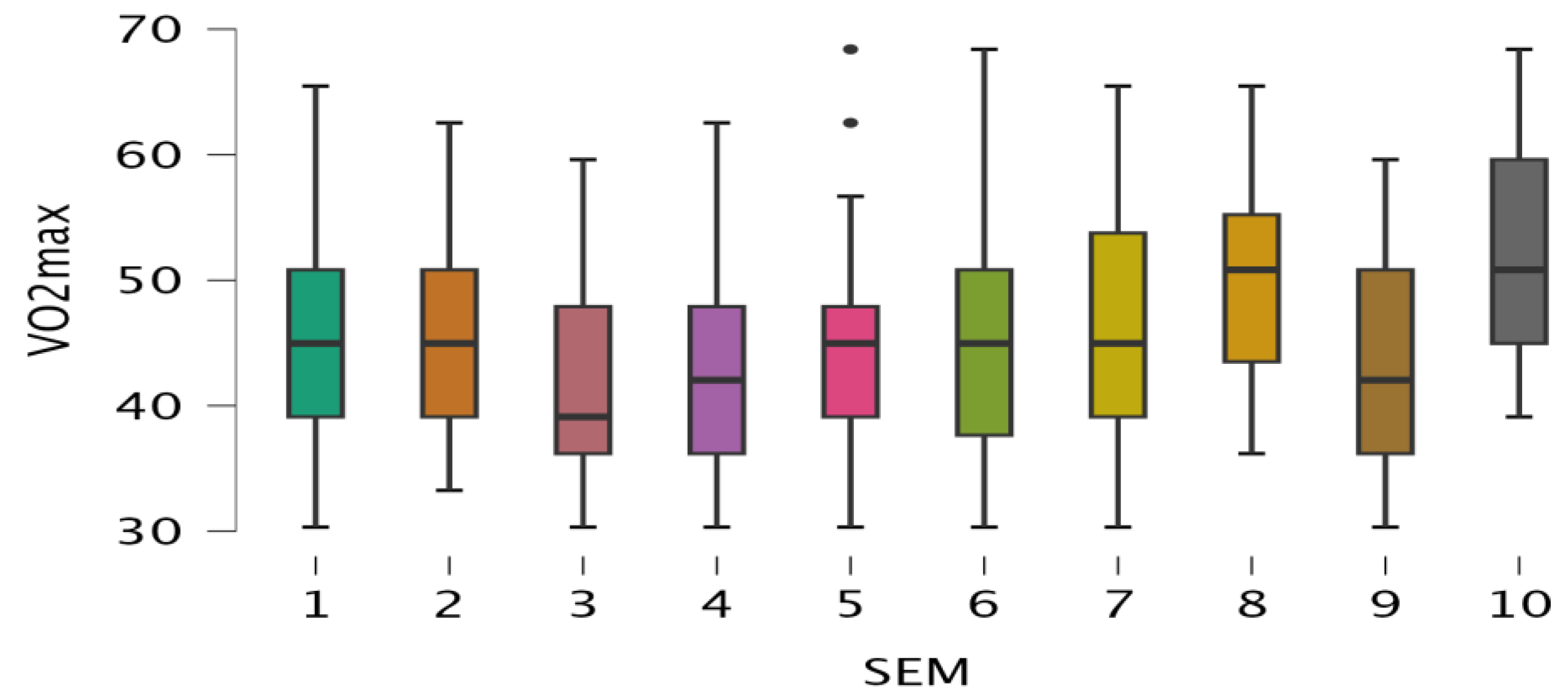
Figure 2.
Box plot of handgrip strength for each academic semester. It is observed that, in the eighth semester, students exhibited greater variability in their handgrip strength.
Figure 2.
Box plot of handgrip strength for each academic semester. It is observed that, in the eighth semester, students exhibited greater variability in their handgrip strength.
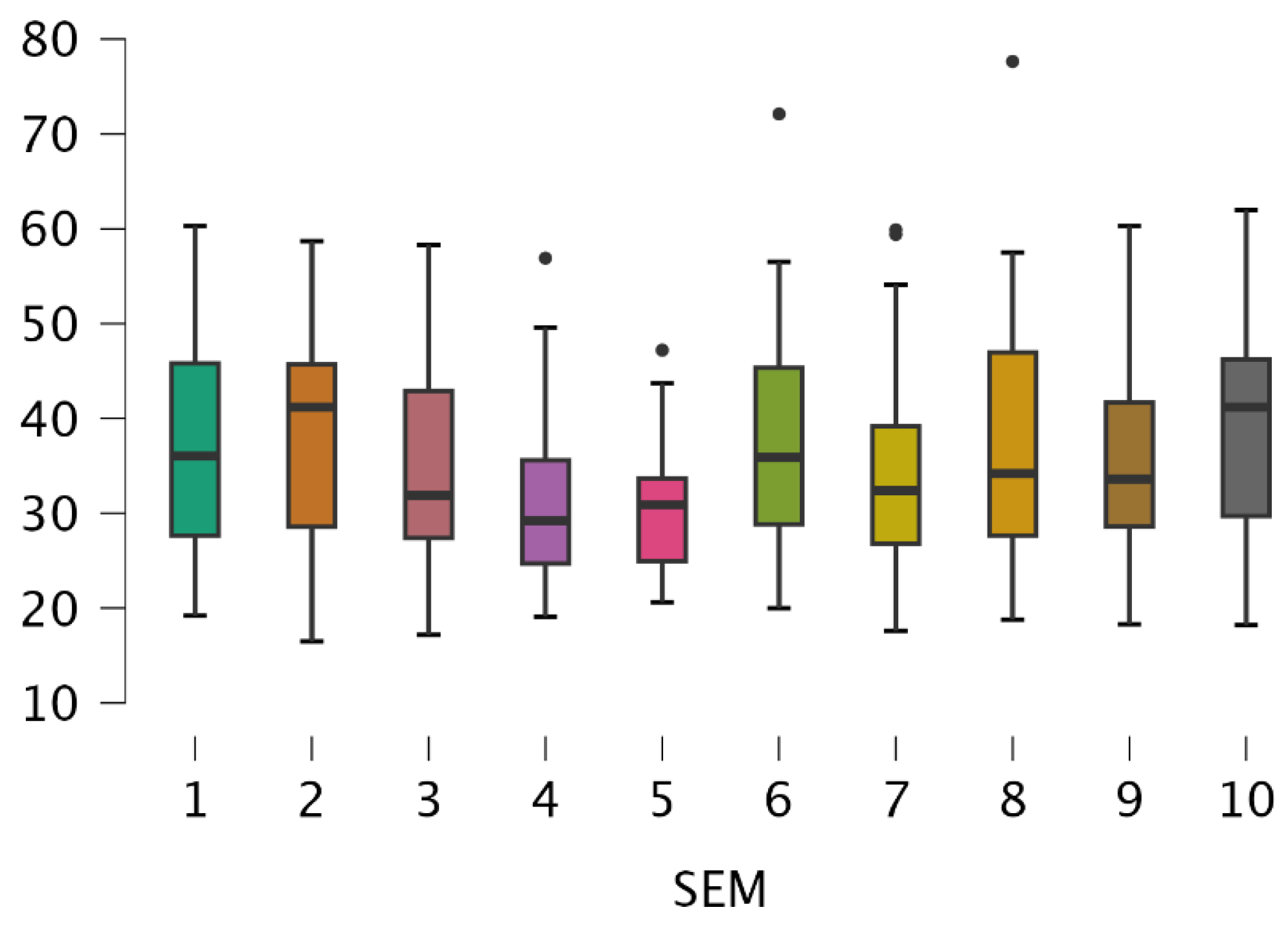
Figure 3.
A scatter graph of the VO2 max and handgrip strength variables shows an increasing relationship between both variables; as cardiorespiratory levels increase, handgrip strength also tends to increase. However, the relationship is not very strong (R2=0.501).
Figure 3.
A scatter graph of the VO2 max and handgrip strength variables shows an increasing relationship between both variables; as cardiorespiratory levels increase, handgrip strength also tends to increase. However, the relationship is not very strong (R2=0.501).
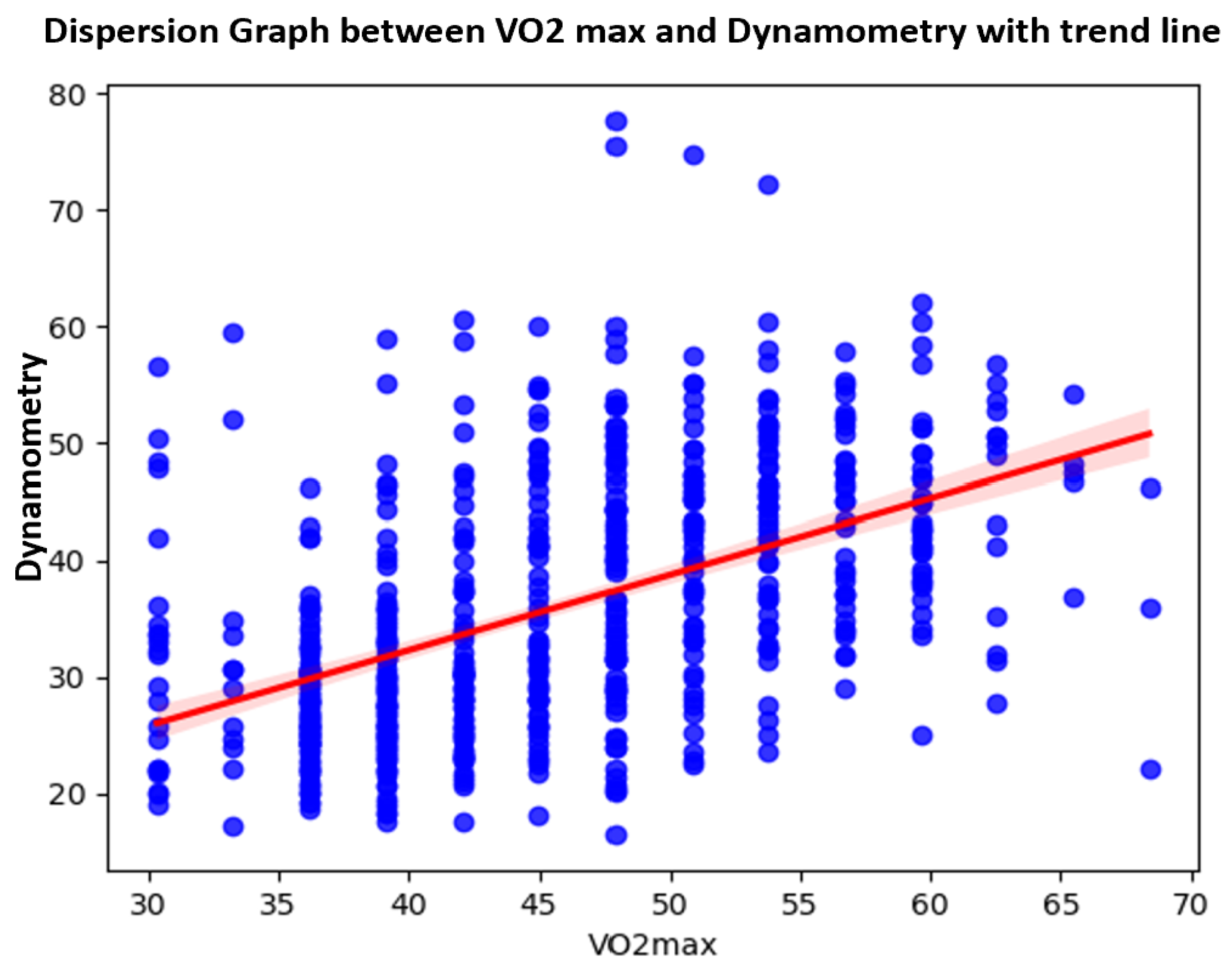
Figure 4.
Stacked bar graph showing an evaluation of cardiorespiratory capacity versus handgrip strength.
Figure 4.
Stacked bar graph showing an evaluation of cardiorespiratory capacity versus handgrip strength.
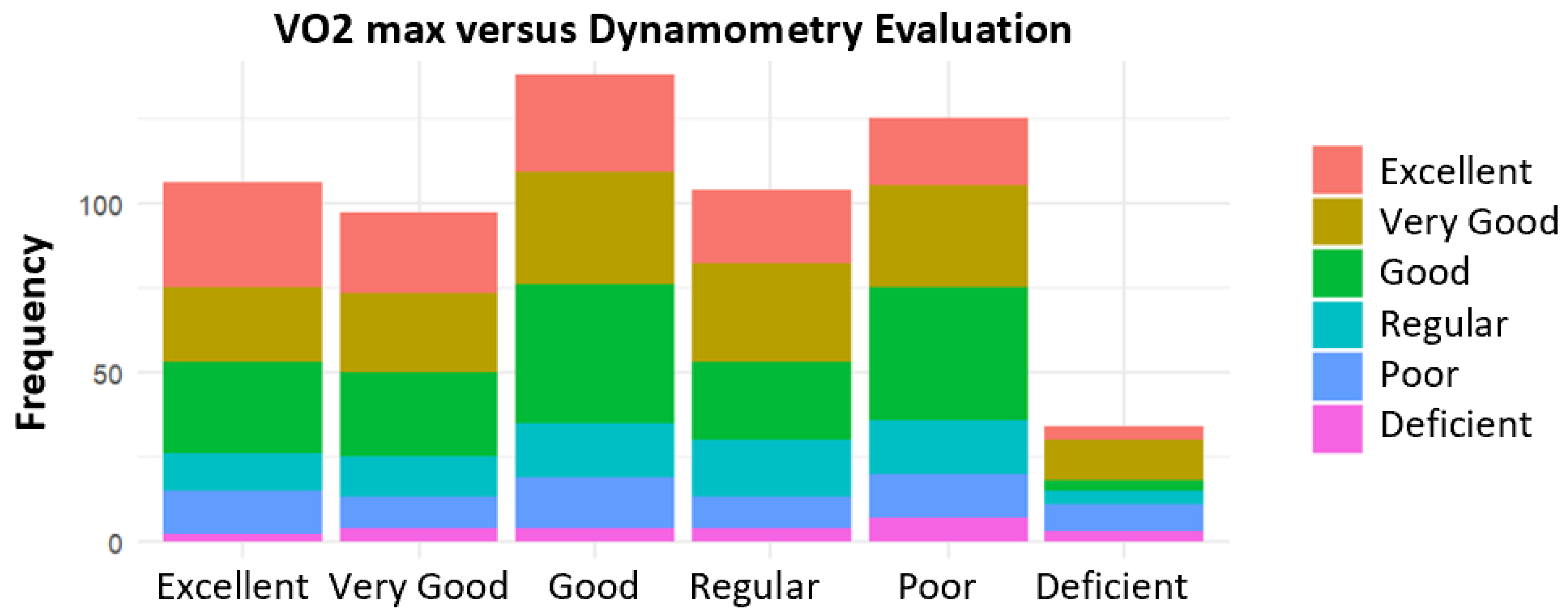
Figure 5.
Importance of variables in the Random Forest Model. This figure illustrates the relative contribution of each predictor variable to the model's performance. The variable DINA_IZQ (handgrip strength of the left hand) is the most significant predictor, indicating its strong relationship with the outcome variable. Other variables, such as PER_PANTORR, CADERA, and PL_TRICEPS, also contribute but to a much lesser extent. Demographic variables like SEXO, ESCOLARIDAD, and EDAD have minimal importance in this context.
Figure 5.
Importance of variables in the Random Forest Model. This figure illustrates the relative contribution of each predictor variable to the model's performance. The variable DINA_IZQ (handgrip strength of the left hand) is the most significant predictor, indicating its strong relationship with the outcome variable. Other variables, such as PER_PANTORR, CADERA, and PL_TRICEPS, also contribute but to a much lesser extent. Demographic variables like SEXO, ESCOLARIDAD, and EDAD have minimal importance in this context.
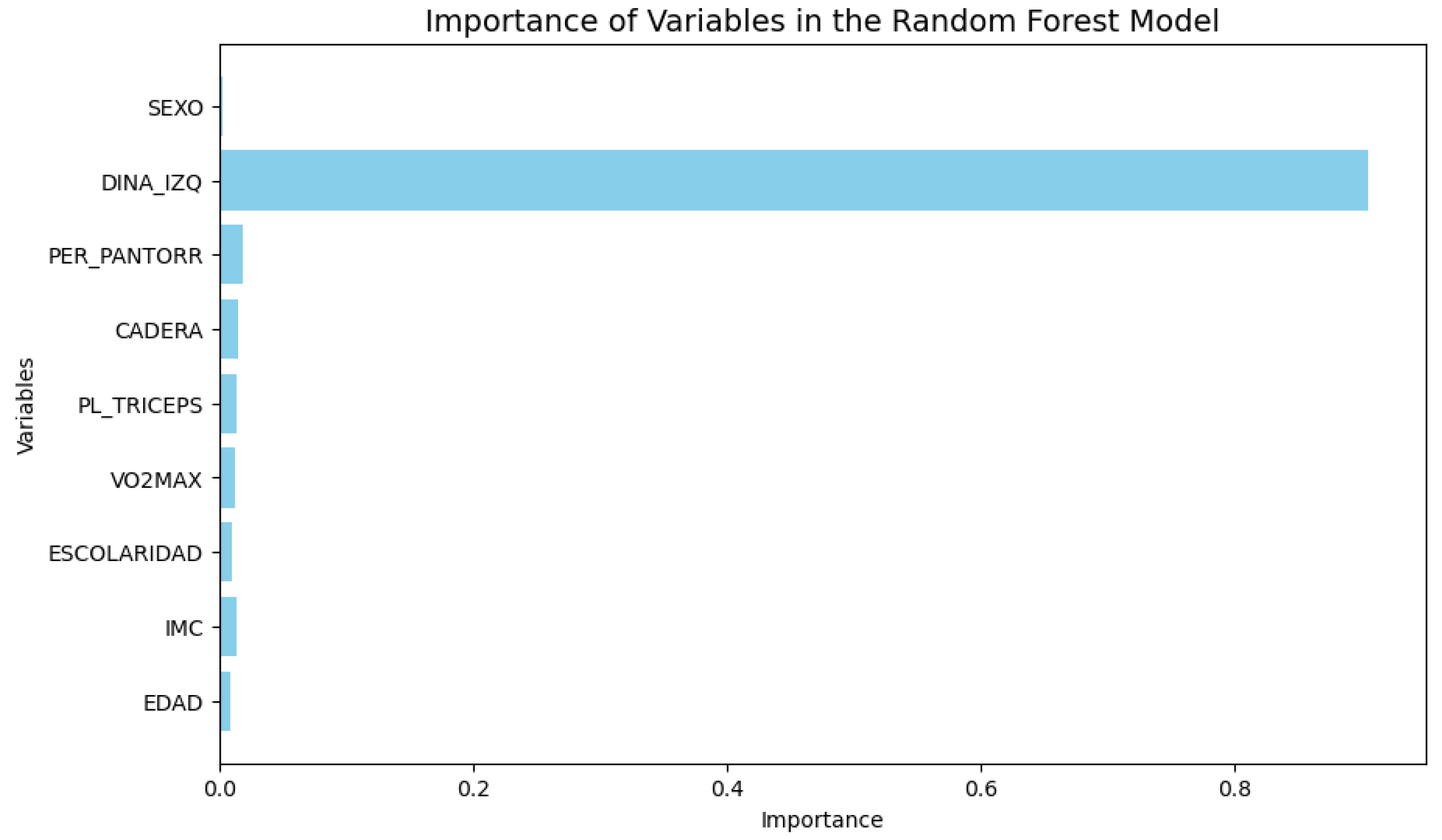
Table 2.
Protocol for the 20 m progressive shuttle run test.
| Speed (m·s−1) | Speed (km·h−1) | |
| Stage 1 | 2.22 | 8 |
| Stage 2 | 2.5 | 9 |
| Stage 3 | 2.64 | 9.5 |
| Stage 4 | 2.78 | 10 |
| Stage 5 | 2.92 | 10.5 |
| Stage 6 | 3.06 | 11 |
| Stage 7 | 3.2 | 11.5 |
| Stage 8 | 3.34 | 12 |
| Stage 9 | 3.48 | 12.5 |
| Stage 10 | 3.62 | 13 |
| Stage 11 | 3.76 | 13.5 |
| Stage 12 | 3.9 | 14 |
| Stage 13 | 4.04 | 14.5 |
| Stage 14 | 4.18 | 15 |
| Stage 15 | 4.32 | 15.5 |
| Stage 16 | 4.46 | 16 |
| Stage 17 | 4.6 | 16.5 |
| Stage 18 | 4.74 | 17 |
| Stage 19 | 4.88 | 17.5 |
| Stage 20 | 5.02 | 18 |
| Stage 21 | 5.16 | 18.5 |
Table 3.
Descriptive statistics of dynamometry according to sex.
| Dynamometry | |||||
| M | F | ||||
| Mean | 44.6 | 28.0 | |||
| Standard Deviation | 8.5 | 5.2 | |||
| Minimum | 22.0 | 16.5 | |||
| Maximum | 77.6 | 44.3 | |||
Table 4.
Descriptive statistics of VO2 max according to sex.
| VO2 max | |||||
| M | F | ||||
| Mean | 47.6 | 38.0 | |||
| Standard Deviation | 7.5 | 6.1 | |||
| Minimum | 27.3 | 27.2 | |||
| Maximum | 65.4 | 61.2 | |||
Disclaimer/Publisher’s Note: The statements, opinions and data contained in all publications are solely those of the individual author(s) and contributor(s) and not of MDPI and/or the editor(s). MDPI and/or the editor(s) disclaim responsibility for any injury to people or property resulting from any ideas, methods, instructions or products referred to in the content. |
© 2025 by the authors. Licensee MDPI, Basel, Switzerland. This article is an open access article distributed under the terms and conditions of the Creative Commons Attribution (CC BY) license (http://creativecommons.org/licenses/by/4.0/).
Copyright: This open access article is published under a Creative Commons CC BY 4.0 license, which permit the free download, distribution, and reuse, provided that the author and preprint are cited in any reuse.


