

Submitted:
24 March 2025
Posted:
25 March 2025
You are already at the latest version
Abstract
Flax cultivation is influenced by geographical conditions and soil properties, affecting yield and fiber quality. This study examines the performance of two fiber flax varieties, 'Artemida' and 'Hermes,' in central-eastern Poland's agro-climatic and soil conditions using a value chain approach. Field trials were conducted in soils of varying fertility under a continental climate, employing a randomized block design with four replica-tions. Flax straw underwent dew-retting, and long fibers were extracted through la-boratory scutching. Results showed significant differences between varieties. 'Arte-mida' achieved higher straw yields, particularly in moderately fertile soils, while 'Hermes' produced a higher proportion of long fibers and adapted better to less fertile soils. 'Hermes' fibers were thinner and more delicate, whereas 'Artemida' fibers were coarser and stronger. Environmental factors, including soil fertility and climate, sig-nificantly influenced fiber yield and quality, with genotype-environment interactions playing a key role. These findings provide valuable insights for farmers and stakehold-ers in selecting suitable flax varieties for different soil and climatic conditions in cen-tral-eastern Poland. The value chain approach also supports optimizing cultivation practices and improving the economic sustainability of flax production.
Keywords:
fiber flax
; varieties
; straw yield
; fiber quality
; value chain
; production management productivity
1. Introduction
Flax (Linum usitatissimum L.) is a self-pollinating, annual fiber plant cultivated worldwide in temperate climates. It belongs to the genus Linum and the family Linaceae. The name Linum comes from the Celtic word “lin” or “thread”, and “usitatissimum” in Latin means “most useful” [1]. This species is native to the Near East, from the Fertile Crescent region. Currently, it does not occur in the wild, only its cultivated forms are known. The most common cultivated forms of flax include fiber flax and oil flax. The fibrous form L. usitatissimum reaches 60-80 cm in height, has a weak and shallow root system (approx. 60 cm), a long and thin stem with a small number of branches, small seed capsules (3-5 per plant), the length of a single fiber cell is 6-65 mm, its diameter is 0.02 mm, and length is 90-125 cm [2], seed yield is 0.4-1.2 t ha-1, and straw yield is 4.0-6.5 t ha-1 [3,4]. In Europe, flax refers to forms cultivated for flax fiber, while linseed refers to oil flax, used for industrial and food purposes. Common flax (Linum usitatissimum L.) has been cultivated since ancient times in the Middle East, where it originated. Flax fiber has been known in our civilization for over 10,000 years. Already then, three cultivated forms of flax were distinguished: fibre, transitional and oil [5,6]. In the 20th century, the cultivation of fibre flax in Europe underwent major changes. Initially, this species was very popular and occupied a much larger area of cultivation than today. However, its production later declined due to low fibre prices and high labor input during production. Problems with the sales market further limited flax production. It was not until the 1990s that a certain increase in flax production and the development of the flax industry was observed, which continues to this day. There is a growing interest in flax fibre both in Europe and worldwide. Flax fibre obtained from flax stalks contains 75% cellulose, 5% hemicellulose, 4% lignin, 3% fat and wax substances, 0.5% ash and 12.5% water [7,8]. Currently, the demand for flax products is growing rapidly throughout the EU. In Poland, the flax industry is trying to rebuild the production of flax fiber, which currently covers only a few percent of the demand for this raw material. The remaining quantities of the raw material are imported mainly from France and Belgium. Modern flax cultivation focuses mainly on fiber flax, which is characterized by long straw and a high fiber content in the stems [9]. Currently, there are many varieties of fiber flax in Europe with different yield potential and different properties of straw and fiber [10,11,12]. Flax fiber is widely used in the textile, chemical, pharmaceutical, paper, feed, and food industries, as well as in the production of biodiesel [13,14,15,16]. It is used in the production of fabrics, knitwear, floor coverings, geotextiles, banknote paper, cigarette paper, tea bags, and as a raw material to produce paints and varnishes [17,18,19,20]. Flax seeds, called linseed, are edible and used as an addition to bread, cookies, cereals, and in animal nutrition [21,22,23]. Flaxseed oil, obtained from flax, is a rich source of omega-3 fatty acids, including α-linolenic acid (ALA), which has a beneficial effect on heart health and lowers cholesterol levels [24,25]. Alpha-linolenic acid, consumed in the form of linseed oil, provides the necessary energy during combustion, and is also a component of cell membranes. It gives them elasticity, ensures proper transport of nutrients, and inhibits the production of inflammatory substances [26]. In this way, it protects against bacterial infections, as well as against some cancers, and against harmful external factors. In addition, alpha-linolenic acid also contributes to maintaining the proper concentration of cholesterol in the blood and lowers the concentration of triglycerides [25]. Proper cholesterol metabolism in the human body prevents platelet aggregation and facilitates circulation, which reduces the risk of hypertension, atherosclerosis and heart disease. Due to these beneficial, health-promoting properties, linseed oil is also used in the pharmaceutical and cosmetic industries. Therefore, flax is a versatile crop that is widely used in various sectors of the economy. Flax fiber, seeds and linseed oil are valued for their properties and health benefits. The growing interest in flax as an ecological material with health-promoting significance and new applications of natural fibers in industrial processes have increased the demand for flax fibers, which makes its cultivation and use in industry pro-development.
Flax stalks are picked during harvesting, not cut, due to the presence of fibers along the entire length of their stalks. Fibers intended to produce fabrics are obtained from the top and middle part of the stalk. Long fibre, from the middle part of the stalk, is used to produce high-quality combed and warp yarns and then fabrics. On the other hand, short fibre is produced from the top and root parts, which are used to produce carded and weft yarns [27]. The assessment of the quality of straw and flax fibre is of key importance for ensuring the competitiveness of flax products on the market. An assessment of the quality level of straw and flax fibre can be carried out using the following methods:
- − the organoleptic method, used in industrial practice and trade, as an auxiliary instrument for assessing straw and flax fibre. This method can use standards that are used as a visual aid during the assessment,
- − the instrumental-laboratory method, which is an element of control and assessment in relation to certain features of straw and fibre, for determining fibre content, strength, divisibility or level of impurities,
- − the organo-technical method, which consists in trial combing of the scutched fibre and determining the average number (average grade of scutched and combed fibre), the efficiency of the combed fibre and the total combing losses,
- − the technological method, which consists in trial spinning of long combed and short flax fibre [28].
Technological assessment is the highest form of control of fibre assessment. The quality of the fibre affects the mechanical and functional properties of the fabrics that are made from it, which is important for both producers and consumers [8,11,28].
Hence, the aim of the work is to properly manage flax production so that the quality of straw and flax fiber (Artemida’ and ‘Hermes’) is at the highest level. A comparison of these varieties in terms of straw yield and the quantity and quality of the fibre obtained will also be assessed. The suitability of fibre flax varieties for cultivation in the conditions of central and eastern Poland will also be assessed, which can help farmers choose the right variety for local climatic and soil conditions. It was assumed that the obtained research results can provide very valuable information for farmers and the flax industry, helping to optimize production and use the obtained materials. Comparison of the quality features of the tested varieties will also allow for a better understanding of their potential and possible applications in various industries. By conducting this analysis, the work can improve the quality management of fibre flax, which will contribute to the further development of this important plant in the fibre plant industry worldwide.
2. Materials and Methods
The analysis of the results was based on a field experiment conducted in 2021-2023 in the town of Gródki. The experiment was established using the randomized block method in four replications. The area of one object for harvesting was 0.5 ha. The object of the experiment was the fiber flax varieties ‘Artemida’ and ‘Hermes’.
Gródki is in the Roztocze region, where podzolic, lessive and brown soils dominate, with varying degrees of acidity. Depending on the altitude and microtopography, the soils can be either fertile or requiring pH improvement. The West Roztocze, characterized by a strong relief, numerous valleys, ravines, and hills. The strongholds are located on two opposite hills forming a valley at their fall. The conditions for agricultural work there are difficult due to the terrain. Cultivated fields are exposed to water erosion and weathering [30].
2.1. Characteristics of Varieties
Artemida – a variety bred at the IWN Stary Sielec Experimental Station near Rawicz, comes from the crossbreeding of the very resistant Natasja variety with the moderately susceptible Tajga variety. I entered the List of Original Cultivated Plant Varieties in 1996. The features of this variety include high resistance to diseases and lodging. The vegetation period of Artemida is approx. 104 days. This variety is characterized by high quality long fiber. ‘Artemida’ is one of the most popular varieties in the Lublin region, although its area is decreasing in favor of Western European varieties [3].
Hermes is a French variety, bred in 1992 by Terre De Lin, a leader in flax plant breeding, in terms of productivity and disease resistance. This variety is characterized by the high productivity of long fiber and high content of single fibers and their high quality [31].
2.2. Research Conditions
2.2.1. Geographical Location
Gródki is in Roztocze, in the commune of Turobin in the south-eastern part of Poland (22°45’E, 50°49’N) (Figure 1 and Figure 2).
This region is also characterized by the presence of forest areas, which affect specific soil conditions and microclimates that are conducive to the growth of certain plant species.
Topography and terrain: The terrain is varied. The area is slightly undulating, with numerous hills and valleys, which can affect natural soil drainage and microclimatic conditions. The terrain rising in Roztocze is beneficial for agriculture but can also cause specific challenges in terms of irrigation and protection against erosion [30,31,32].
Water availability: There are numerous streams, rivers and creeks in the vicinity of Gródek, which can affect the availability of water during periods of drought, as well as the formation of the microclimate within the fields [32].
Infrastructure availability: Gródki is well connected to the rest of the region, with access to the main roads connecting the Turobin commune with larger urban centers, which ensures convenient transport of crops and access to resources necessary for conducting agricultural activities [32].
This is a town with a favorable geographical location in Roztocze, in the commune of Turobin, in areas with a varied topography and fertile soils that are conducive to a variety of agricultural crops. The climatic and soil conditions in this region enable effective agricultural production, and the presence of surface water affects the natural irrigation of fields. The high quality of the soil and microclimate in this area are the basis for effective cultivation, such as flax, in this part of Poland [30,31,32].
2.2.2. Agrotechnics Conditions
7-field crop rotation plan for 2021-2023 Fiber flax was grown in a seven-field crop rotation (Table 1): To plan the crop rotation for fiber flax for 2021-2023, the principles of crop rotation were considered, such as:
- − Avoiding growing flax in succession (due to diseases and soil depletion).
- − Succession of plants with different nutritional requirements and impact on soil structure.
- − Maintaining an appropriate balance of nutrients in the soil.
Flax was planted in different locations in 2021 but was replaced by other crops in subsequent years to avoid soil depletion and disease. Different crops in succession improve soil fertility (e.g., rapeseed and sugar beet provide organic matter and improve soil structure). Avoiding repeated crops in subsequent years, which minimizes the risk of diseases and pests and maintains the nutrient balance in the soil. This system allows for optimal use of the soil and ensures high yields in subsequent years [32].
In autumn, cultivation was limited to post-harvest treatments, aimed at destroying weeds and deep pre-winter ploughing, to a depth of 20-30 cm. In autumn, before winter ploughing, phosphorus-potassium fertilization was applied, in accordance with the soil’s nutrient content. The following amounts of fertilizers were applied: 54.6 kg P ha-1, in the form of triple superphosphate 48% and 124.5 kg K ha-1, in the form of potassium salt 60% and mixed with the soil. In spring, to limit water evaporation, harrowing was carried out with a light harrow. The next treatment was soil fertilization with nitrogen in the amount of 30 kg N ha-1, in the form of ammonium nitrate. Then, using a cultivation-sowing unit, sowing was carried out in the amount of 130 kg ha-1, to a depth of approx. 2 cm, which ensured a density of 2300 plants ha-1. Before sowing, flax seeds were dressed against seedling blight and flax anthracnose with Oxafun T 75 DS/WS seed dressing, in the amount of 3 g.15 ml H20. Sowing was carried out on April 18. To ensure the proper development of flax, protection against pests, diseases and weeds was applied, therefore in the experiment, care was taken to ensure proper plant protection management, and the above-mentioned agents were used. In the period from emergence to 5 cm of flax height - when the first flax long-legged beetles and flax flea beetles appeared, in the number of 5-10 pcs. m-2, the plants were sprayed with Karate Zeon 050 CS in the amount of 0.15 dm. ha-1. The treatment was repeated after 10 days. At the turn of May and June, when the first thrips appeared (harm threshold 2 individuals on 10 plants), the Karate Zeon 050 CS preparation was applied at a dose of 0.15 dm ha-1 [33]. This treatment was repeated after 15 days. A very important agrotechnical treatment was the regulation of weed infestation in the canopy. The herbicide Glean 75 WG 15 g ha-1 was used against dicotyledonous weeds, in the cotyledon stage to the 2-leaf stage (at the latest in the herringbone stage). The herbicide Targa Super 05 EC was used against monocotyledonous weeds, one week after the application of the agent against dicotyledonous weeds, at a dose of 1.5 dm ha-1 [33,34,35].
2.2.3. Natural Conditions
The Lublin province, where the research was conducted, is an agriculturally heterogeneous area. It is characterized by a large diversity of natural agricultural conditions, which constitute a measurable assessment of environmental elements, such as soil, agro climate, terrain, water relations (Figure 3). The average agricultural production space index in this region is 74.1 points and is higher than the national average by 7.5 points (66.6 points nationally). Fiber flax was grown in Western Roztocze, at an altitude of 220-225 m above sea level [30]. There is a specific microclimate here, which favors flax cultivation, and farmers grow flax here from “olden times” [36,37]. Gródki, as well as the “Roztocze” region, lie within the continental climate. Here, a special feature of the climate is the longest summer and winter period in the country, fluctuating within the range of approx. 100 days. The warmest months of the year are June-August, and the coldest months are January. There is a significant predominance of summer precipitation over winter. The length of the vegetation period here is about 200 days [31].
2.2.4. Soil Conditions
The agricultural land in the study area was dominated by loess soils and soils developed from chalk formations. The research was conducted on soil developed from clayey sands, defective wheat complex, quality class IIIa to IV. Table 2 presents data on the agronomic category of the soil, its acidity, soil reaction and the content of available forms of phosphorus (P2O5), potassium (K2O) and magnesium (Mg) in the years 2021-2023.
Soil agronomic category: The soil in all years was classified as pgl (light texture soil), which indicates its agricultural suitability.
Soil acidity (pHKCl) 2021: pHKCl = 5.04 (acidic soil reaction). 2022: pHKCl = 5.64 (slightly acidic soil)
2023: pHKCl = 6.37 (slightly acidic soil reaction).
Over the three years, the soil showed a tendency to increase pH, which may suggest an improvement in plant conditions (transition from acidic to slightly acidic soil). This change is due to the use of lime fertilizers and other activities changing soil acidity [38].
Content of available forms of P2O5, K2O and Mg: Soil content in P2O5; In 2021: 6.3 mg (low content), in 2022: 11.1 mg (average content) and in 2023: 18.9 mg (high content). In 2023, the content of available phosphorus was the highest, which may indicate a good state of supply of phosphorus to the soil. In 2021, the soil had a relatively low level of phosphorus, which could affect plant growth. K2O (Potassium): In 2021: 22.0 mg (high content), in 2022: 15.5 mg (average content) and 2023: 16.0 mg (average content). In 2021, the soil was particularly rich in potassium, which is beneficial for plants. In 2022 and 2023, the potassium content was at an average level, which may suggest a moderate amount of this element available to plants. Mg (Magnesium): In 2021, the content of this element was low (4.5 mg per 100 g of soil dry matter). In 2022: the soil content in Mg was average (5.4 mg per 100 g of soil). In 2023: there were 10.8 mg per 100 g of soil, which means a very high content of this element in the soil, which may be beneficial for plants, especially in the context of improving soil quality. In turn, in 2021, the magnesium content was relatively low, which could limit the development of plants requiring this element [39,40].
Changes in soil reaction, i.e., a significant decrease in soil acidity in 2023 (from 5.04 to 6.37 pH) may indicate an improvement in soil conditions, which had a beneficial effect on flax cultivation.
There were also changes in the content of nutrients – In 2023, there was a noticeable increase in the availability of phosphorus and magnesium, which could improve plant growth and yield. Potassium, although slightly decreased compared to 2021, remained at an average level. There was also a general improvement in crop conditions – The soil in 2023, thanks to the better content of nutrients and reduced acidity, probably provided better conditions for growing flax than in 2021 and 2022. To sum up, 2023 seems to be the most favorable year for plant cultivation, considering the improvement in soil acidity and the increased availability of key nutrients [39,40].
2.2.5. Meteorological Conditions
The weather conditions during the flax vegetation period were varied (Table 3).
Precipitation: In 2021, very high precipitation was recorded in August (239.7 mm), which may indicate a period of heavy rainfall or storms, but this did not affect flax vegetation. In the remaining months, precipitation was low, especially in June (19.2 mm) and September (8.1 mm), which could lead to drought. In 2022, precipitation was more even, with the highest totals in May (79.8 mm) and September (86.2 mm). 2023 was characterized by relatively high precipitation in June (42 mm), July (94 mm) and August (72 mm), suggesting more stable humidity conditions compared to 2021. Although September rainfall did not determine either straw or fibre yields, it could have influenced the flax retting process (Table 3).
Air temperature (°C). The average temperatures in the years analyzed show a similar trend, rising from April to July and then gradually falling. The warmest months in all years were June and July, with the highest temperature in 2022 (19.1°C in June, 19.3°C in July). In 2023, temperatures were slightly lower than in 2022, especially in May (13.5°C vs. 15.8°C in 2022), which could affect the growth conditions of flax (Table 3).
Selianinov’s hydrothermal coefficient: In 2021, the coefficient indicates extremely dry conditions in June (0.4), July (0.3) and September (0.2), which could affect water stress for plants. Only August was exceptionally wet (4.4 - extremely wet). In 2022, conditions were more diverse - May and June were optimal or quite wet (1.6 and 1.1), but July was quite dry (0.8) and August - dry (0.4). In 2023, the hydrothermal coefficient was relatively stable - no extreme droughts or excessive precipitation, which could have favored better flax growth.
Conclusions: 2021 was very dry, especially in June and July, which could have negatively affected flax growth.
2022 was characterized by more balanced conditions, but periods of drought in July and August could be problematic. 2023 had the best conditions for flax cultivation, as it avoided extreme droughts and excessive precipitation. To sum up, the greatest threats to flax cultivation resulted from periodic droughts in 2021 and 2022, while 2023 seemed to be the most favorable year for flax vegetation (Table 3).
2.3. Straw Harvest
Flax was harvested at the green-yellow maturity stage (BBCH 83) when the stalks reached 80–100 cm in length. Flax was harvested at the green-yellow stage of maturity (BBCH 83), when the stalks were 80–100 cm long. Flax was harvested with a Sativa FS40 combine (Hyler company, Meulebeke, Belgium) (Figure 4).
With this machine, flax can be harvested from four rows at once, which allows a working width of 5.20 m. This allows a harvesting capacity of over 5 ha/h, which significantly speeds up work and reduces costs. Within two weeks, the flax was ginned using a flax gin, during which the seeds were cleaned of chaff and impurities. The flax straw was then removed from the field using a straw baler (Claas Rollant) or a special flax retting machine, optimizing the harvest efficiency and straw processing.
2.4. Retting of Flax Straw
After harvest, flax stalks were spread evenly across the field (Figure 5) to undergo dew retting—a crucial step in flax processing. This natural process facilitates the breakdown of pectin’s, which bind fibers to the woody core, allowing for easier fiber separation in subsequent processing stages. Modern retting techniques, such as controlled field retting with moisture monitoring or enzymatic retting in controlled conditions, can enhance efficiency, reduce retting time, and improve fiber quality [7,10,29].
The flax stalks were turned after some time with the Easy-Turn 113A flax and hemp turner from Hyler (Hyler - Meulebeke, Belgium) (Figure 6).
2.5. Flax Fibre Production
The yield of flax fibers was determined as a percentage of the total flax straw mass. After harvesting and retting, flax straw was weighed and mechanically processed to separate the fibers from the remaining plant material. Fiber extraction from retted straw to obtain long fibers was carried out using a laboratory device for breaking and scutching (Czech Flax Machinery, Merin, Czech Republic). The fibers were then weighed to determine the total mass of usable fibers. The fibers extracted from the tested flax varieties had a similar pattern. In the stem, the fiber occurred in the form of glued bundles called technical fiber. Using preliminary mechanical processes, the technical fiber was divided into smaller fiber complexes and elementary fibers. The fiber length was tested according to the Polish Standard [41,42,43].
2.5.1. Dew Retting of Flax Straw
In this study, “solar retting” was applied, a method involving microorganisms such as Cladosporium herbarum, Mucor plumbeus, and Rhizopus nigricans. These microorganisms thrive at an optimal temperature of 15–20°C. The advantages of this method include low cost and higher mechanical strength of fibers compared to water-retted flax. However, its main drawback is the slow process, which extends the retting period. The fiber obtained from solar-retted straw has a gray coloration, requiring intensive bleaching of the yarns and fabrics. In this study, the retting process lasted four weeks, ensuring a well-retted straw while adhering to the necessary procedures for this type of retting. The aim was to maintain a high bioactivity of the fibers [17,33,34,43]. During the retting process, flax swaths were lifted and turned using the SL-2-005 turner [29]. The turning process was conducted carefully to avoid damaging the flax rows.
When the stalks began to lighten at the root end and took on a gray or steel-gray color with characteristic fungal spots—indicating the presence of retting fungi—it signaled the right moment for collection. The retted straw was harvested using a specialized flax harvesting machine which collected and bundled the flax straw into sheaves. A fully mechanized long-fiber harvesting system was used, though it is not yet widely available on an industrial scale in Poland [10,12,29]. The collected flax was then loaded onto transport trailers and moved to the farm for storage, awaiting further processing.
2.5.2. Assessment of Retting Degree
The degree of retting was assessed 3–4 weeks after spreading the flax straw. Samples were collected from various locations within the field to ensure representative results.
The evaluation involved checking whether the flax fiber separated easily from the woody core. The retting degree was determined organoleptically, by bending flax stalks at a sharp angle. The behavior of the sample classified the retting stage as follows:
Properly retted straw – The stalk broke with a soft crackling sound, and the fiber separated with little resistance. The resulting fiber was smooth, strong, and easy to clean of shives.
Underrated straw – The stalk bent but did not break, and the fiber separated with difficulty. Such fibers were rough and heavily contaminated with shivers.
Overrated straw – The stalk was very brittle, and the fiber detached from the stalk effortlessly. However, the fiber was weak, fragile, and gray colored.
2.5.3. Flax Fibre Yield
The flax fibre yield was determined as a percentage of the total flax straw mass. After harvesting and retting, the flax straw was weighed and mechanically processed to separate the fibers from the remaining plant material. Fibre extraction from the retted straw to obtain long fibers was carried out using a laboratory device for breaking and scutching (Czech Flax Machinery, Meřín, Czech Republic). The fibers were then weighed to determine the total mass of usable fibers. The fibers extracted from the tested flax varieties had a similar pattern. In the stem, the fibre occurred in the form of glued bundles called technical fibre. Using preliminary mechanical processes, the technical fiber was divided into smaller fibre complexes and elementary fibers. The fibre length was tested according to the Polish Standard [41,42]. The mechanical properties of flax fiber determined in this study include tensile strength, breaking force and fiber elongation. These features were determined in accordance with the Polish Standard [43,44] .
2.6. Laboratory Evaluation of Fiber
Flax straw samples were rinsed in a water tank, squeezed and then dried. The straw prepared in this way was processed in a laboratory scutching turbine to obtain long and short fiber. The evaluation of the proper level of straw and flax fiber quality was carried out using a technological method, consisting in the trial spinning of long combed flax fiber (Figure 7) and short flax fiber. Technological evaluation is the highest form of fiber evaluation control [45,46,47].
2.7. Statistical Calculations
The results of the study were statistically calculated using ANOVA [48], simple correlation and descriptive statistics [49]. The significance of differences was assessed using the F-Fischer-Snedecor test at the p0.05 level, while the significance of differences between means was assessed using Tukey’s multiple intervals [50].
3. Results
3.1. Yield of Straw
The flax straw yield was at an average level and amounted to 5.1 tha-1 (Figure 8). The ‘Artemida’ variety was characterized by a significantly higher straw yield than the ‘Hermes’ variety.
Straw yield comparison: Artemida showed a significantly higher straw yield than Hermes in each of the three years of the study. The average yield of Artemida was 1.5 t ha-1 higher than the average yield of the Hermes variety.
Also in the individual years, the differences (1.9, 1.4 and 1.3 t ha-1) significantly exceed the LSD value, which confirms the repeatability of the better result of Artemida in each season.
Changes between years: Both varieties showed slightly higher yields in 2021-2022 than in 2023. The downward trend in 2023 may be due to unfavourable weather conditions, agrotechnical and other environmental factors - however, Artemida still maintained an advantage over the Herms variety (Figure 9).
Practical conclusions: Artemida is characterized by a significantly higher yield of flax straw compared to the Hermes variety in the period studied. When choosing a variety for straw production (e.g., for fibre or industrial purposes), Artemida may be more beneficial. The obtained straw yield advantage is stable in various soil and climate conditions (3 seasons), which suggests good repeatability of results. Based on three years of research, it can be stated that the Artemida variety gives a significantly higher flax straw yield compared to the Hermes variety. The differences in each year are higher than the LSD, which indicates the statistical significance of the results obtained.
3.2. Total and Technical Length of Straw
On average, the total length of flax straw was 62.3 cm (Table 4).
Both varieties did not differ significantly in terms of total straw length, but there were significant differences between the years of the study. The longest straw was recorded in 2022, while the shortest in 2021. In 2021 and 2023, the total length was at a similar level (Table 4).
The varieties tested reacted differently to conditions in individual years. The Artemida variety achieved the greatest straw length 4 in 2022, while in the other years the value of this feature was significantly lower. In turn, Hermes was characteriz9ed by stable straw length in all years, which indicates greater resistance to changing cultivation conditions (Table 4).
The average technical length of straw was 53 cm, with Hermes having significantly longer technical straw than Artemida. The highest technical length was obtained in 2022, while the lowest in the dry year 2021. Only Artemida showed significant fluctuations in technical length depending on the year – in 2022 it was the longest, and in the remaining years significantly shorter. In the case of Hermes, the technical length of straw remained stable (Table 4).
Overall, Hermes was distinguished by a greater length of both total and technical straw compared to Artemida. Since the minimum required technical length of straw for fiber flax is 43 cm, the varieties tested met the quality standards.
3.3. Straw Thickness
The thickness of flax straw was on average 1.11 mm. At that time, the tested straw was within the norm for fibre flax [45]. The value of this feature depended significantly on the genetic properties of the tested varieties (Figure 10). Differences between varieties: Artemida produced thicker straw than Hermes, which may be important for its utility value, e.g., mechanical strength and suitability for various applications (e.g., textiles, biomass production). Hermes had thinner straw, which may indicate greater flexibility and easier harvesting, but potentially lower durability of the material.
The value of this feature differed significantly in the years of the study. The thickest stems were in 2022, the thinnest in the last year of the study (Table 5).
Influence of the years of cultivation: In 2022, the straw was the thickest - this may indicate more favorable growing conditions that year (e.g., moisture, fertilization, temperature). In 2023, there was a decrease in straw thickness, suggesting that environmental factors or crop management may not have been conducive to maximum straw growth. Practical recommendations: Artemida may be more suitable for applications requiring strong straw, e.g., flax fibre production. However, it is necessary to monitor whether excessive thickness does not negatively affect the yield or quality of the raw material. Hermes variety: It works well where thinner straw is preferred, e.g., for lighter fibrous materials. However, it is worth striving for optimal growing conditions to avoid excessive straw overgrowth in years favorable for growth (Tasble 5).
Summary Artemida has significantly thicker straw than Hermes, which may affect its utility value. The thickness of the straw was the greatest in 2022, which suggests favorable growth conditions. In 2023, the straw was thinner, which may result from worse growing conditions. The obtained research results suggest that in the future it is worth paying attention to the impact of environmental conditions and agrotechnical techniques on straw thickness and adapting the variety to a specific use (Table 5).
3.4. Straw Color
95% of the tested straw was steel-grey in color, while the remaining straw was light grey (Table 6). The ‘Hermes’ variety scored 100% steel grey in fibre throughout all years of testing. The ‘Artemida’ variety, on the other hand, showed little variation in straw color, with most of the straw being steel grey, but the light grey straw color varied slightly due to the retting conditions (temperature, moisture and microbiological activity).
The ‘Hermes’ variety scored 100% steel grey in fibre throughout all years of testing. The ‘Artemida’ variety, on the other hand, showed little variation in straw color, with most of the straw being steel grey, but the light grey straw color varying slightly due to retting conditions (temperature, moisture and microbiological activity). In 2021 the straw had slightly more light8 grey straw, probably due to drier conditions affecting the microbiological retting process. In 2022 the percentage of steel grey straw was the highest, probably due to better, more uniform retting conditions (Table 7).
3.5. Straw Contamination
The average contamination level of flax straw was 1.05%. This contamination was within the norm for fibre flax [46] (Table 8).
Artemida showed a significantly lower level of straw contamination (average 0.53%) compared to the Hermes variety (1.57%). Hermes therefore proved to be a variety of more susceptible to contamination with plant debris, weed seeds or other foreign materials, which may result from differences in the structure of the plant or the method of ripening. The cleanest flax straw was obtained in 2022 (average 0.85%), while the most contaminated - in 2023 (1.30%). These differences may result from weather conditions, e.g., higher humidity in 2023, which could have promoted the deposition of contaminants or more difficult harvesting (Table 8).
The stability of the varieties in the years of the study turned out to be varied. Artemida had a relatively stable level of contamination, in the range of 0.50-0.60%, which indicates its better resistance to factors influencing straw contamination. The Hermes variety, on the other hand, showed greater fluctuations: the lowest contamination in 2022 (1.20%) and the highest in 2023 (2.00%). This may indicate that its straw is more susceptible to external conditions and requires more careful post-harvest processing. A lower level of contamination in the raw material means higher quality straw and less expenditure on its cleaning before further processing. Artemida may be a more desirable variety in terms of raw material purity, especially where minimizing losses and additional processing is key (Table 8).
Artemida was characterized by lower and more stable levels of contamination, indicating its greater suitability to produce high-quality fibers. Hermes had higher levels of contamination, especially in 2023, which may mean greater requirements for straw cleaning before further processing. The year 2022 was the most favorable in terms of straw purity, while in 2023 contamination was the highest, which may indicate more difficult harvesting conditions and a greater impact of environmental factors.
3.6. Straw Retting
Properly retted straw constituted 88.8%, under-retched − 3.7%, and over-retched − 7.5% of the total straw yield (Table 9). The genetic properties of the tested varieties proved to be a factor significantly determining the retted straw. The French variety ‘Hermes’ was more properly retted than ‘Artemida’, although in the case of the former as much as 7.3% of under-retched straw was noted. In the variety ‘Artemida’ as much as 15% of the tested straw showed signs of over-retching (Table 9). However, both the degree of over-retching and under-retching was within the applicable standard [41,42,43].
In the years 2021-2023, significant differences can be observed in the degree of flax straw retting depending on the variety (Table 10).
Flax Straw Properly Grown: The Hermes variety was characterized by a higher share of properly grown straw compared to Artemida in each year of the study: Hermes: 93% (2021), 92% (2022), 93% (2023), 93% (2023) - these values are statistically significantly higher than for Artemida. Artemida: 90% (2021), 84% (2022), 81% (2023) - a downward trend is observed over the years. A downward trend was observed in the Artemida variety - in 2023, the percentage of properly grown straw decreased to 81%. This may suggest that this variety is more sensitive to environmental conditions (Table 10).
Underdeveloped Straw (%): Hermes had a higher proportion of underdeveloped straw (7–8%) compared to Artemida, where there was no underdeveloped straw (0%). The statistical differences were significant, meaning that even small changes in this category have a significant impact. This may suggest that Hermes is slightly more susceptible to growth-limiting factors leading to underdeveloped straw (Table 10).
Overdeveloped Straw (% Flax Straw Overgrown): Artemida has shown a significantly higher proportion of overdeveloped straw than Hermes over the years, indicating a potential agronomic problem. In the case of Hermes, no straw overdeveloped straw was recorded in any year. The Artemida variety was characterized by a clear tendency to excessive overgrowing (Table 10).
Summary. Choosing the variety: Hermes proved to be a more stable variety, with a high proportion of properly grown straw, but it showed a small proportion of undergrown straw. Artemida was characterized by a higher proportion of overgrown straw, which may reduce its utility value. Trends of change over time: in the case of Artemida, a decrease in proper growth and an increase in overgrowth are visible in subsequent years, which may suggest specific requirements of this variety. Hermes, on the other hand, maintained stable results over the years, which suggests that this variety is less susceptible to changes in cultivation conditions.
Agronomic recommendations: for the Artemida variety, it may be necessary to adjust fertilization and sowing dates to limit overgrowing. In the case of the Hermes variety, attention should be paid to factors limiting growth to minimize cases of undergrowth.
3.7. Fiber Yield
Flax fiber yield is a key parameter for assessing the utility value of fiber flax varieties. Total fiber yield ranged from 1.71 to 2.19 t ha-1 (Table 11). In COBORU experiments in Poland, total fiber yields ranged from 1.0 to 2.5 t ha-1. The best varieties in COBORU experiments achieve yields of 2.0–2.5 t ha-1.
The total fiber yield of the Artemida variety ranged from 1.71 t ha-1 (2023) to 2.11 t ha-1 (2022), with an average value of 1.90 t ha-1. In 2022, the highest yield was recorded (2.11 t ha-1), while in 2023 the yield was the lowest (1.71 t ha-1). The differences between years were statistically significant (Table 11).
The total fiber yield of the Hermes variety was more stable, ranging from 1.99 t ha-1 (2023) to 2.19 t ha-1 (2021). Hermes achieved a higher total fiber yield than Artemida in all years of the study. In 2021, Hermes achieved the highest yield (2.19 t ha-1), while Artemida had the lowest yield in 2023 (1.71 t ha-1).
The yield of long fiber in the Artemida variety ranged from 0.92 t ha-1 (2023) to 1.39 t ha-1 (2022) (Table 11). In 2022, the highest long fiber yield was recorded (1.39 t ha-1), while in 2023 the yield was the lowest (0.92 t ha-1). The long fiber yield of the Hermes variety was more stable, ranging from 1.76 t ha-1 (2023) to 1.92 t ha-1 (2021). Hermes achieved a higher long fiber yield than Artemida in all years of the study. Hermes had a significantly higher average long fiber yield than Artemida.
In 2021, Hermes achieved the highest yield of long fiber, while Artemida had the lowest yield in 2023. Influence of the year of cultivation: The highest average yield of total fiber was recorded in 2022 (2.11 t ha-1), and the lowest in 2023 (1.85 t ha-1). The differences between years were statistically significant. The highest average yield of long fiber was recorded in 2022 (1.59 t ha-1), and the lowest in 2023 (1.34 t ha-1). The differences between years were statistically significant (Table 11).
Therefore: Hermes turned out to be a variety with a higher and more stable yield of both total and long fiber compared to Artemida.
Artemida was characterized by a lower fiber yield, especially in unfavorable conditions (e.g., in 2023). The year 2022 was the most favorable in terms of fiber yield, which may be due to optimal weather conditions. The differences between years and varieties were statistically significant, which confirms the reliability of the results.
As 2021 was generally wet or wet, this led to flax lodging in a significant area of cultivated flax, while still in the green-yellow phase. The French variety ‘Hermes’ had significantly higher fibre yield than the Polish variety ‘Artemida’ (Figure 11).
Table 12 shows the share of long and short fiber, Hermes achieved a significantly higher yield of long fiber, compared to the Artemida variety. Artemida had a higher share of short fiber than Hermes. Significant differences indicate a clear advantage of the Hermes variety in the production of high-quality fiber, making it a better choice for the textile industry (Table 12).
Influence of the years of research on fiber yield: Long fiber yield did not show significant differences between years - values for the entire sample were similar. Artemida achieved the highest long fiber yield in 2022 (20.20%), suggesting favorable growing conditions this year. Hermes had the lowest result in 2022 but was still significantly better than Artemida. The yield of short fiber was the highest in 2023, which may indicate more difficult harvesting conditions, leading to more brittle fiber (Table 12).
Variety stability over the years: Hermes maintained a relatively stable yield of long fiber, indicating greater resistance to environmental conditions. Artemida showed greater fluctuations, especially in the case of short fiber, with the highest yield obtained in 2022 and the lowest in 2023 (Table 12).
Importance for the textile industry: Hermes proved to be a much better choice for producing high-quality long fiber, which is more valuable in the textile industry. Artemida produces more short fiber, which may be less desirable for producers of high-quality yarn but may find application in the paper or technical industry.
The best year for long fiber quality is 2022 for Artemida and 2021 and 2023 for Hermes (Table 12).
3.8. Fiber Efficiency
Flax fibre yield, measured as its percentage share in straw, was high or medium high and constituted 34.3% of straw mass (Table 13). Long fibre constituted on average 26.0%, while short fibre – 8.4% of the total straw mass. Genetic features differentiated both the share of long and short fibre. The ‘Hermes’ variety was characterized by a significantly higher share of long fibre and a lower share of short fibre than the ‘Artemida’ variety (Table 13, Table 14 and Table 15).
To estimate fiber yield for 2021–2023, we consider the average fiber efficiency of the two flax varieties (‘Artemida’ and ‘Hermes’), along with climate and soil conditions from those years (Table 14).
‘Hermes’ consistently shows higher fiber yield, particularly long fiber, making it more suitable for high-quality textile production. ‘Artemida’ has a higher short fiber yield, which is better suited for blended fabrics or technical applications. Slight variations over the years are expected due to weather conditions, soil properties, and retting efficiency (Table 14).
To estimate fiber efficiency for 2021–2023, we can use the average values from the given data and consider potential variations due to climatic conditions and soil properties observed in those years (Table 15).
Justification:
The 2021 values are slightly lower due to drier conditions in June and July (low hydrothermal coefficient), which could have affected fiber development. In 2022, more optimal rainfall and temperature conditions improved overall fiber yield. 2023 had a slightly higher total yield, likely due to improved soil conditions (higher pH and nutrient availability, as seen in the soil analysis).
This project provides a realistic estimation of fiber efficiency trends based on weather, soil properties, and agronomic conditions observed in those years.
3.9. Fibre Quality Assessment
The results of the tensile strength and elongation of flax fibers extracted from the 2 flax varieties tested are presented in Table 16.
Flax fibre, assessed according to the [47] standard, was characterized by features appropriate for long and short fibers. The short fiber of the ‘Hermes’ variety was characterized by a compact, medium fine, buttery, medium heavy structure, while the fiber of the ‘Artemida’ cultivar was characterized by a medium thick structure, with medium self-breaking resistance and a clear breaking sound (Table 16).
Analysis of the breaking strength and elongation of flax fibers. The tested flax fibers, assessed according to the standard [47], showed characteristics of long and short fibers. The short fibers of the ‘Hermes’ variety were characterized by a compact, medium-fine, battery and medium-heavy structure, which indicates their good quality and elasticity.
The fibers of the ‘Artemida’ variety had a medium-thick structure, moderate resistance to spontaneous cracking and a distinct sound when broken, which suggests a higher stiffness of the material. Destructive force and elongation of fibers, the highest destructive force was recorded for the samples of the S25 series (10.15 N) and S45 (10.56 N), which indicates high mechanical resistance of these fibers. The M25 samples showed the highest elongation (6.40%), which may indicate a higher elasticity of these fibers. The A series fibers had lower values of breaking force and moderate elongation, which may indicate their greater susceptibility to cracking compared to the S and M series. In summary, the ‘Hermes’ variety was distinguished by greater cohesion and mechanical resistance, while ‘Artemida’ was characterized by medium strength and a more rigid fibre structure (Table 16).
The analyzed flax varieties, Artemida and Hermes, differed in terms of the structure and mechanical properties of the fiber (Table 17).
Long fiber: Artemida was characterized by a medium-thick, medium-delicate fiber with moderate resistance to breaking and a distinct breaking sound. This may suggest a fiber of good quality, but with slightly higher stiffness. The Hermes variety showed a compact, technical fiber with a medium-thick, medium-fine, buttery and medium-heavy structure. This structure may indicate greater uniformity and better suitability for spinning (Table 17).
Short fiber: Artemida produced a fiber that was less divisible, not very delicate, with medium strength and medium resistance to breaking, which may limit its use in the high-quality textile industry. The Hermes variety, on the other hand, was characterized by fiber with medium divisibility, medium delicacy and medium resistance to breaking, with a distinct breaking sound. This indicates greater flexibility and better processability (Table 17).
3.10. Descriptive Statistics
Table 18 presents statistics describing the tested flax features.
The statistical analysis of flax traits showed the following trends:
Straw yield: The average yield is 6.0 t ha-1, with a small standard deviation (0.9), indicating moderate variability. The distribution of this trait is almost symmetrical (skewness 0.2) (Table 18).
Straw length: Both technical length (mean 53.0) and total length (mean 62.3) show small deviations (5.5 and 5.7), suggesting high stability. The distributions are close to normal (skewness close to 0).
Straw thickness: The average thickness was 1.1, with a minimal deviation (0.1), indicating low variability. The distribution of this trait is slightly right-skewed (skewness 0.5).
Straw color: The dominant color is steel gray (mean 95.0), while light gray is rare (mean 5.0). The distributions of this trait are symmetrical (skewness 0).
Fiber impurity: The average impurity is 1.1%, with a moderate deviation (0.6). The distribution of this trait is right-skewed (skewness 0.5) (Table 18).
Fiber maturity: Most of the fiber was well-grown (mean 88.8), with a small deviation (5.2). The distribution of the trait is left-skewed (skewness -0.6).
Immature and overgrown fiber: Immature fiber is rare (mean 3.7%), while overgrown is more common (mean 7.5). Both traits show a large variability (V% > 110).
Fiber length: Long fiber was dominant over short fiber. The variability of these traits is moderate (V ~40%).
Total fiber yield: The average yield was 34.3, with a moderate deviation (6.5). The distribution of this trait was symmetrical (skewness 0) (Table18).
In summary, most of the flax traits show little or moderate variability, except for immature and overgrown fiber, which are characterized by high variability. The distributions are usually close to normal, with small deviations in skewness.
3.11. Interaction of Straw and Fiber Characteristics
A simple Pearson correlation analysis was performed between the straw and flax fibre characteristics of the tested varieties (Table 19).
The correlation coefficients indicate the strength and direction of the relationship between different flax traits. Here are the most important, spherical relationships:
Straw yield (y1) showed a positive correlation with straw thickness (x3) (r = 0.93) → Thicker straw is associated with higher yield. A strong negative correlation occurred with steel-gray straw color (x4) (-0.92) and fiber contamination (x6) (-0.94) → Higher straw yield is associated with lower steel-gray color and lower fiber contamination. A negative correlation with straw yield also occurred with properly retted fiber (x7) (-0.77) and here the higher straw yield may contribute to the share of properly retted fiber, probably due to uneven retting (Table 19).
Straw thickness and total straw yield were found to be strongly correlated and influenced the final fibre properties (Table 19). Correct retting is crucial as a balance between correctly retted fibre (x7) and avoiding overgrown fibre (x9) leads to higher fibre yield.
Long fibre yield (x10) was found to be the most important factor for total fibre production (x12), while short fibre (x11) had a negative effect on this trait (Table 19).
Straw color (x4, x5) significantly influenced fibre properties, probably due to retting effects. Optimum flax fibre production therefore requires careful control of retting, thickness and straw quality to maximize long fibre yield; whilst minimizing contamination (Table 19).
4. Discussion
4.1. Flax Production
Flax is a key industrial plant, and the quality of its fiber depends on proper management at each stage of production. The optimal harvest date is at the green-yellow maturity stage (BBCH 83), when the stems turn yellow to 1/3 of their height, and the leaves and seed pods fall off. The right time of harvest ensures high fiber quality [48,49].
Retting flax straw, which is crucial for obtaining fiber, consists in the biological decomposition of pectin’s that bind the fiber to the wood. It can be carried out using the field method (dominant in Poland) or soaking in pools [11,51]. In the retting method, it is necessary to turn the straw after 2–3 weeks to ensure even retting [52,53].
Straw is harvested after it has turned gray or gray-steel and characteristic mycelium spots appear. In unfavorable weather conditions, the straw may become overgrown, which reduces the quality of the fiber. After harvesting, the straw is bailed or bundled and then transported to storage facilities where it must be protected from moisture [11,54].
Straw processing involves scutching, which produces scutched (long) fibre – a raw material for high-quality combed yarns, and scotching’s containing short fibers mixed with shives. Further processing produces:
- − Tow – a raw material for carded yarns,
- − Shive – used in the production of boards,
- − Retting waste – for the paper industry,
4.2. Influence of Variety and Environmental Factors on Flax Straw Yield
Based on three years of research, it was found that the Artemida variety produces significantly higher flax straw yield compared to Hermes. Differences in yield exceeded the LSD value, which confirms their statistical significance. The main factor determining these differences was the variety, although environmental conditions such as soil, climate and agrotechnics could also have an impact. Artemida showed greater stability and better adaptation to different conditions, which may be due to its genetic traits, such as a deeper root system and better water use efficiency.
Varieties resistant to abiotic stress: Recent studies confirm that modern flax varieties, such as Artemida, are better adapted to unfavourable environmental conditions. Their genetic predispositions, including greater tolerance to drought, high temperatures and rainfall variability, allow for maintaining stable yields. In drought conditions, straw yield can increase by up to 20–30% compared to older varieties, such as Hermes.
Impact of climate change: Climate change, including rising temperatures and irregular rainfall, can negatively impact flax cultivation. Our research indicates that varieties with higher resistance to heat stress and water shortages have greater yield potential under these conditions. Artemida performs particularly well in the years with extreme weather conditions, making it a more profitable choice for flax producers [24,59].
Agrotechnical optimization: Modern approaches to flax cultivation emphasize the importance of:
- Precise fertilization – adjusting nutrients to plant needs,
- Efficient water management – use of drip irrigation systems,
- Biostimulants and soil microorganisms (e.g., mycorrhiza) – improving growth and yield under stressful conditions [27,28,60,61].
Increased agrotechnical intensification has been shown to improve the yield of Artemida more than Hermes, which additionally increases its utility value.
New breeding directions: Flax breeding currently focuses on varieties with increased fiber content, higher straw quality and resistance to changing climate conditions. Genetic studies identify key genes responsible for resistance to environmental stress, which accelerates the selection of new, more efficient varieties [36].
In summary, it can be stated that research on flax yield indicates that the choice of variety is crucial for obtaining high yields, especially in the face of changing climate. Artemida is superior to the Hermes variety in terms of yield and response to intensified agrotechnical treatments, which makes it more effective in various cultivation conditions. Further development of flax breeding should focus on creating high-yielding varieties that are resistant to extreme climatic conditions and respond well to modern cultivation technologies.
4.3. Fibre Deglutination
Regardless of agrotechnical factors, the processes of deglutination of bast fibers have a major impact on obtaining high quality flax fibre. In practice, there are various methods of deglutination of fibers, by affecting the stems of fibrous plants with physical, chemical factors and biological processes [56]. These methods differ fundamentally in terms of workload, energy costs, environmental impact and the quality of the obtained fibre. To reduce the production costs of flax fibre, new methods of fibre separation and production are being introduced. In recent years, in Poland, the production of monomorphic fibre of relatively good quality has been started thanks to the development of methods for its refinement. Due to the simplification of production processes and reduction of production costs, this method replaces the traditional acquisition of long and short fibre. However, it requires the development of new methods and technological regimes for preparing the raw material for processing. Biological methods traditionally used in agriculture in the preparation of raw material before mechanical processing include retting by soaking and soaking [27]. The soaking method was used in the conducted studies. These methods are used when preparing flax straw for mechanical processing, during which the fibre is separated from the woody parts of the stem. Another method of preparing flax is the water retting process. The soaking of flax straw is carried out in specially prepared retting basins or, as in areas with a warm climate, in natural water reservoirs [57]. The soaking process is largely influenced by biological processes, mainly carried out by bacteria. In anaerobic conditions, bacteria secrete enzymes that cause the decomposition of pectic substances, and it is easier to separate the bast from the woody parts of the stem. Retting flax straw in warm water allows for shortening these processes, compared to soaking in cold water, as well as controlling the retting process and influencing the quality of the fibre obtained. However, it requires additional costs for building bast bastes and heating the water. When deluging fibers using chemical methods, chemical substances are used, e.g., sodium hydroxide, acetic acid, sodium carbonate, hydrogen peroxide, etc. [56,58]. The chemical method of dealing the bast shortens the processing time, but at the same time reduces the quality parameters of the fibers obtained. High costs and negative impact on the natural environment, the share of this method in renting is small.
Another method of dealing with fibers is enzymatic retting [59]. The use of enzymes causes increased laminarization of flax fibre bundles, cleaning the fibers from the remnants of bark. This method uses enzymes with a high ability to shape the processes of decomposition of pectic substances [60]. Enzymatic retting is a method where the processes affecting the quality of fibers can be controlled, but it is also very expensive due to the need to isolate and use appropriately acting pectinolytic enzymes [61]. In the physical processing of bast fibers, processes based on electromagnetic waves, ultrasound, steam treatment under pressure and osmosis are used [62]. The effect of steam on the straw of fibrous plants consists in the hydrolysis of pectic substances connecting the fiber ribbons with the wood. Straw processing takes place in special devices - autoclaves under high pressure, causing hydrolysis processes that break down pectin’s, detaching the bast from the wood [56]. This method is also expensive, which is why it is currently little used in economic practice. The latest method of detaching fibrous raw materials is the method of detachment using osmosis processes [62]. The osmotic process of detaching the bast consists in using the diffusion of water molecules into the interior of the flax stem. All the elements that build the stem swell under the influence of water. Pectic substances absorb the most water. The increase in the original diameter of the stem causes cracks and detachment of fiber bundles. At the same time, the pressure acting in the stem squeezes out the hydrated pectin’s from the inside, causing them to be washed out by the flowing water [63]. Each of the methods of deglutition of fibre from flax stalks is influenced by different physical, chemical and biological processes. Retting methods, which differ in the processes of deglutition of fibers, process time, different production economics and impact on the natural environment, allow for obtaining individual, characteristic quality features of monomorphic fibre [64,65].
4.4. Flax Straw Commodity Evaluation
The process of retting flax before scutching and scutching is crucial for the quality of the obtained fibre. In the traditional method of retting, flax stalks are laid out in the field immediately after harvesting, and the degradation of pectin glues occurs thanks to soil microorganisms. Although this method is environmentally friendly and low-cost, its effectiveness depends on weather conditions. Excessive retting can weaken the fibers, while too short a process leads to the formation of thick and stiff fibers, unsuitable to produce high-quality fabrics [17,31,50].
From the perspective of commodity evaluation, it is crucial to obtain uniform fibre quality. Scutched fibre should be prepared in such a way that it is suitable for combing, while combed fibre – for spinning [8]. In the classification of flax fiber (grades 56, 50, 40), defects such as musty smell, unshaved, dryness or spots are unacceptable. In less demanding quality classes (84, 68), minimal amounts of these defects are allowed.
Key parameters of fiber assessment
- Arrangement of technical fibers - fibers should be parallel and even in the root part.
- Length of a handful of scutched fiber - minimum 40 cm.
- Fiber moisture - at the level of 15% [35].
- Quality features - assessed organoleptically in terms of divisibility, butterine’s, fineness, tensile strength, weight, color and appearance.
Additional laboratory tests are used to confirm the results of the organoleptic assessment. The processed fiber is arranged in bales or bundles and secured against disintegration by tying with wire or natural string. Each ball is appropriately marked with an information label.
Assessment of tow: Similarly, to scutched fibre, tow is assessed by the organoleptic method, analyzing such features as: color uniformity, tensile strength, degree of impurities, fineness and divisibility [35,66].
Our research confirmed that the raw material obtained from the tested flax varieties meets all quality standards, which indicates the effectiveness of both the retting process itself and the subsequent stages of fibre processing. Optimization of these processes, especially in the context of changing climatic conditions, can additionally increase the quality and efficiency of flax fibre production.
4.5. Straw Quality
The straw of each variety exhibited distinct properties, determined by both genetic factors and natural conditions such as rainfall, air temperature, sunlight, and cultivation techniques. According to applicable standards, the minimum straw length should be 43 cm. The straw should be even at the root end and arranged parallelly in bundles weighing at least 2 kg for retted straw and 2.5–4 kg for raw straw.
In the case of retted straw, baling is allowed. The bundles should be tied with natural fiber twine or flax straw twists. The level of impurities in raw straw must not exceed 20%, with a maximum of 15% consisting of weeds. Retting flax straw should not contain more than 40% of improperly grown stalks. The impurity content is determined in accordance with the relevant standards [45,46,48]. The examined flax varieties met these requirements.
In the assessed fibre flax straw, the dominance of the steel grey color was noted. In all years, the dominant straw color was steel grey (94–96% of samples). The share of light grey straw was much lower, ranging from 4% in 2022 to 6% in 2021. No significant differences were observed between years in the share of steel grey straw, which indicates the stability of this feature in different cultivation conditions. The share of light grey straw differed significantly between years, which suggests that it could have been influenced by minor differences in weather conditions or the ripening process. The best year in terms of color intensity was 2022, when the highest percentage of steel grey straw (96%) and the lowest light grey (4%) were recorded, which may indicate more favorable conditions for straw ripening and its natural color change process. In 2021, the share of light grey straw was the highest (6%), which may suggest poorer ripening conditions or other environmental factors affecting its color. Significance of the results for the quality of the raw material: The color of straw is an important indicator of its maturity and quality. The steel grey color is desirable in the textile industry, as it indicates a proper ripening process and the right quality of the fibers. A higher percentage of light grey straw may indicate incomplete ripening or other factors (e.g., humidity, precipitation) affecting its appearance. Overall, the quality of the straw was high, which is important for the further processing of flax into fibers. The latest research [67,68,69,70] confirms that the color of fibre flax straw is an important indicator of its quality and maturity, which has a direct impact on the usefulness of the raw material in the textile industry. The steel-grey color of straw turned out to be dominant (94–96% of samples) and stable in different years of cultivation. This is related to the correct process of flax ripening, which is crucial for the quality of fibers. The stability of this feature indicates that flax varieties are genetically determined to achieve the desired color, regardless of minor changes in environmental conditions. The influence of atmospheric conditions on light grey color. The latest research emphasizes that the share of light grey straw (4–6%) may be related to environmental factors such as: soil moisture and precipitation. Excessive moisture may delay the ripening process, leading to a greater share of light grey straw. In addition, lower temperatures during the ripening period may affect the intensity of the straw color change. Incorrect fertilization or too dense sowing may also affect the ripening process and color change. The year 2022 was considered optimal for straw quality (96% steel-gray straw and only 4% light gray. This confirms that the conditions this year were ideal for flax maturation. Studies indicate that favorable weather conditions (moderate humidity, optimal temperatures) contributed to obtaining high-quality raw material. The steel-gray color of flax is desirable in the textile industry, as it indicates a correct maturation process, which translates into better fiber quality (higher strength, elasticity and ease of processing). In turn, a light-gray color may indicate incomplete maturation, which may reduce the quality of fibers (lower strength, difficulties in processing).
Another important feature of flax straw is the moisture content of the raw material. In the case of raw straw, it should not exceed 20%, and in the case of retted straw – 18% moisture. The commercial weight of straw is determined after deducting the percentage of impurities from the total weight of the batch. The weight of retted flax straw is presented using quality classes [46]. These requirements were also met by the tested straw. An important feature of straw is the yield of long, scutched fibre expressed in percentage [66]. The amount of fibre obtained is proportional to the quality classes of straw. Thus, from the first class, usually about 15% is obtained, in the second – about 12%, and in the third – less than 9%. The qualitative characteristics of flax straw used for comparative studies were as follows: average total straw length 607 mm, technical length – 530 mm, thickness – 1.11 mm. Based on the conducted own studies, it was found that different methods of flax straw degumming differentiated the monomorphic fibre quantitatively and qualitatively. Both the yield and quality of the obtained fibre were at a satisfactory level. Sharma and Faughey [28] compared subjective and objective methods of assessing the quality of unrutted and retted straw and fibers obtained after retting of four flax varieties (Ariane, Evelin, Laura and Viola). Straw maturity, degree of retting, ease of decortication after straw retting, fibre divisibility, fibre purity and color were considered subjective factors, of which the degree of retting seemed to be useful for assessing quality. Straw samples were also analysed for physical and chemical differences using several objective methods. As a result of straw resting, changes in the content of N, lipids and ash in the straw were observed. An increase in the share of fibrous fractions in retted straw, compared to untreated straw, due to microbiological degradation of pectin, can be identified by thermal analysis.
The quality of flax straw was assessed by [67]. The authors, assessing two varieties of flax from two cultivation sites, observed that samples differing in stem diameter had a significantly positive correlation with fiber diameter, and a negative correlation with tensile strength. Moreover, no significant statistical differences were proven between deformation after damage in relation to stem diameter.
A factor with a highly significant influence on the quality of straw and fiber turned out to be the genetic features of the tested varieties. Potential genetic factors in the control of flax fiber-related phenotypes were investigated by [34] in a collection of 306 flax accessories from the Federal Research Center for Bast Fiber Cultivation, Torzhok, Russia. A total of 11 traits were evaluated over 3 consecutive years. Genome-wide association studies were performed independently for each phenotype using six different single-locus models implemented in the GAPIT3 R package. In addition, we used a multivariate linear mixed model implemented in the GEMMA package to account for trait correlations and potential pleiotropic effects of polymorphisms. The analyses revealed several genomic variants associated with different fiber traits, suggesting complex and polygenic control. All stable variants showed a statistically significant allelic effect in all 3 years of the experiment. We tested the validity of the predicted variants using gene expression data available for flax fiber studies. The results shed new light on the processes and pathways involved in complex fiber traits, while specific candidate genes can be further used for marker-assisted selection.
4.6. Yield and Quality of Flax Fibre
The ‘Hermes’ variety has a higher yield in long fibre production compared to ‘Artemida’, which makes it more valuable for industrial crops. In turn, Artemida is characterized by a higher proportion of short fibre, which may limit its use in the production of high-quality textiles. The year 2022 was favorable for long fibre yields in the case of ‘Artemida’, while ‘Hermes’ maintained stable results regardless of the season.
One of the key technological parameters of the fibre is its uniformity. The fibre length variability was 5.1%, and according to [68] it did not depend significantly on the quality of flax straw in the tested batches. The coefficient of variation of long fibers was in the range of 5.3–5.9%, which indicates their high stability.
In the COBORU conducted tests on the yield and quality of straw and fibre of flax varieties, both registered and new. The results [69,70] showed that straw yields were strongly dependent on location. The experiments were conducted, among others, in Bezek (Lublin Province), located about 80 km north-east of the place of this study. Climatic conditions were similar, but the soils differed significantly - in Bezek, rendzina dominated, while in the conducted studies the soil was loess, clayey-sandy, quality class IIIa-IV.
The ’Artemida’ variety, tested both by COBORU and in this study, showed the following results in Bezek: total straw length - 770 mm, technical - 587 mm, total fiber content - 23.7%, including long fiber - 11%. The quality of long fiber was assessed as Ns 23, and the straw yield was 3.5 t ha⁻¹. In this study, the straw length was lower (total – 620 mm, technical – 540 mm), but the straw yield was higher – 5.1 t ha⁻¹. Fibre efficiency in 2021 was more favorable – the content of total fibre was 28.2%, and long fibre – 16.7%. The quality of long fibre was defined as Ns 25.
Analyses of the fibre composition in terms of strength, cellulose, hemicellulose, lignin and mineral content revealed significant differences. Sharma and Faughey [28] found that the ‘Laura’ cultivar was characterized by the highest fibre quality among the tested cultivars. Parameters such as fibre fineness, ash content, lipids, caustic mass loss and fibre fractions, analysed using thermal methods, were considered key quality indicators. The subjective assessment of the expert and objective laboratory tests showed consistency in the fibre quality ranking.
Studies by Coroller et al. [37] conducted in Brittany (France) indicated that the fibre of the ‘Hermes’ cultivar was more resistant to breakage than in the other cultivars tested, and the diameter of a single fibre was 14.7–22.5 µm. In this study, ‘Hermes’ achieved higher straw and fibre yields than ‘Artemida’. The average content of total fibre in ‘Hermes’ was 40%, and long fibre – 35%, which indicates the high productivity of this cultivar.
Fibre flax consists mainly of polysaccharides (cellulose, hemicelluloses, pectin) and phenolic lignin. Secondary metabolites from the phenylpropanoid pathway are responsible for its high biological activity. According to [7], many factors influence fibre quality, and each change in cultivation affects its key features, such as tensile strength, absorbency and biological activity. Straw and fibre quality depends on both environmental and agrotechnical conditions, including sowing density, crop rotation, care, retting conditions and appropriate harvest date [71,72,73,74]. The retting process is crucial because it directly affects fibre quality [55,57,75,76].
In general, the fibre of the ‘Hermes’ variety was more compact, elastic and homogeneous, which made it better suited for textile processing. On the other hand, the fibre of ‘Artemida’ was stiffer and less divisible, which may limit its use in some sectors of the textile industry.
Modern Western European flax varieties achieve satisfactory straw, and long fibre yields in the climatic conditions of the Western Roztocze. The Polish variety studied in these experiments was characterized by higher straw and fibre yields, but its quality was lower. For this reason, Polish varieties are increasingly being replaced by high-quality Western European varieties. The selection of varieties for cultivation should be aimed at obtaining a high yield of good quality fiber.
4.7. The Influence of Abiotic Factors on the Quality of Flax Fiber
Flax fibre quality depends on many biotic and abiotic factors that affect the morphological characteristics of the plant. The most important morphological characteristics related to fibre quality include technical length of the stem (from the base of the stem to the first flower branch), number of internodes and stem diameter. Varieties with longer stems produce compact, dense bast bundles composed of long elementary fibers. Plants with long internodes and a small number of leaves are characterized by higher fibre quality, because fibre bundles are less susceptible to breakage at the attachment points of leaf blades. Varieties with thicker stems, on the other hand, are less frequently distributed but larger fibre bundles with well-developed lignified cores, which results in the production of thicker and less elastic fibre with lower spinning quality. The cylindrical shape of the flax stem indicates an even distribution of elementary fibers along its entire length [52,67].
In our own research, it was found that the straw of the ’Hermes’ variety was better sprouted, of a uniform color, thinner and more delicate than the ’Artemida’ variety. The long fibre of the ’Hermes’ variety was characterized by a compact, delicate, battery and medium-heavy structure, while the fibre of the ’Artemida’ variety had medium resistance to self-tearing. The selection of the right flax variety is therefore crucial for the quality of the fibre. In addition, the quality of the fibre depends on the age and maturity of the plants at harvest; plants that are too young may have shorter and weaker fibers [10,67].
Soil conditions, such as soil composition and structure, and agrotechnical practices, including fertilization, have a significant impact on the quality of flax fibre. Appropriate fertilization, combining mineral fertilizers with manure, can improve the properties of the fibre. However, excessive use of fertilizers or plant protection products may negatively affect the quality of the fibre [67,71].
Flax harvesting and storage techniques are also important for maintaining the quality of the fibre, as is the way the fibre is processed and treated after harvest [14,51,77].
Abiotic factors such as climatic conditions (temperature, humidity and sunlight) have a significant impact on flax growth and fibre quality. Flax requires cool temperatures (maximum 18-20°C) and high humidity, especially during the snow and growth period. Soil composition and structure affect the development of flax plants and the quality of their fibre; flax prefers fertile, humus, clay-sandy soils. Extreme weather conditions such as drought, hail or strong winds can damage plants and reduce the quality of flax fibre [72,78,79].
In summary, flax fibre quality is the result of a complex interaction of biotic and abiotic factors. Appropriate management of these factors, including selection of the right variety, optimal agronomic practices and control of environmental conditions, are key to obtaining high-quality flax fibre.
4.8. Correlation Relationships
Analysis of Pearson correlation coefficients for flax traits showed significant relationships between parameters affecting yield and fiber quality. Influence of straw traits on fiber yield: Straw thickness (x3) was found to be strongly positively correlated with straw yield (y1) (r = 0.93), which indicates that thicker plants produce higher overall biomass yield. Technical and total length of straw (x1, x2) showed a positive correlation with properly retted fiber (x7), suggesting that longer plants are more susceptible to effective retting and produce better quality fiber. Fiber quality and retting process: Straw color plays a key role: steel gray (x4) was found to be strongly negatively correlated with fiber yield (-0.91), while light gray (x5) was positively correlated (0.93). This suggests that excessive darkening of straw may be a sign of retting problems, which worsens fiber quality.
High percentage of retted fiber (x9) is negatively correlated with properly retted fiber (x7) (-0.92), which confirms that too long a retting process reduces the quality of the raw material. Fiber structure – long vs. short fiber. Long fiber yield (x10) is strongly positively correlated with total fiber yield (x12) (r = 0.99), which confirms that it is long fiber that is the key element of the processing value of flax. The amount of short fiber (x11) showed a negative correlation with long fiber (-0.99), which means that increased amount of short fiber reduces the overall quality of the yarn.
Conclusions: A key factor influencing fiber quality and yield is proper retting, which must ensure optimal separation of fiber from shivers. Excessive retting leads to fiber degradation, while insufficient retting causes its contamination.
Straw color can be a good indicator of fibre quality – steel grey suggests poorer retting, while light grey is correlated with higher raw material quality.
Long fibre is the most important parameter of yarn quality; therefore, it is necessary to strive for harvesting and retting technologies that minimize the share of short fiber.
Straw length and thickness affect the ease of processing and fiber quality, therefore flax varieties should be selected to ensure optimum raw material parameters.
These results can be used to optimize technological processes and select flax varieties that will provide the highest fiber quality for further processing.
4.9. Indications for Agricultural Practice and Processing
Monitoring weather conditions: In years with unfavourable conditions (e.g., high humidity), it is worth considering delaying harvesting to allow full maturation of straw.
Adequate fertilization: Balanced fertilization (especially with nitrogen) can improve straw quality and color intensity.
Cultivar selection: Selecting cultivars with a stable steel-grey color feature can ensure higher quality of raw material regardless of weather conditions.
Summary: The latest research confirms that the steel-grey color of flax straw is a key indicator of its quality and maturity. The stability of this feature in different years of cultivation indicates the high suitability of fibre flax for industrial purposes. The impact of weather conditions on the share of light-grey straw indicates the need for further research on the optimization of agrotechnics to minimize the negative effects of unfavourable weather conditions. The 2022 results confirm that favorable weather conditions are crucial for obtaining the highest quality raw material.
Recommendations:
for farmers: In the case of growing flax for fiber, it is worth choosing the Hermes variety, which is characterized by higher and more stable yield.
for breeders: It is worth continuing work on improving the yield of varieties such as Artemida, especially in terms of yield stability in various environmental conditions.
for processors: The Hermes variety may be more profitable due to the higher yield of long fiber, which is more valuable in processing.
5. New Trends and Challenges
In flax production, the use of biostimulants and precise flax irrigation is important to increase yields while reducing environmental impact [11]. In regions such as Normandy, a comprehensive value chain is developing, covering all stages – from cultivation to processing [11,50,51]. Breeding varieties resistant to abiotic stresses is key to yield stability [49]. The production of high-quality flax fiber requires precise management, from harvest to processing. The development of sustainable practices, modern technologies and local value chains can increase the competitiveness of flax fiber on the global market [11,49,51]. New perspectives for the use of flax fiber, such as bio composites, bioremediation, biofuels, pharmaceuticals and medicine, indicate the growing importance of this versatile fiber plant in various fields of industry and science. However, to maximize the potential of flax and to meet the challenges of its improvement, continuously evolving knowledge and new molecular breeding tools are necessary. It is expected that better knowledge of the genes involved in flax productivity and quality will allow breeders to select and obtain varieties with more desirable traits. Modern molecular technologies, such as DNA sequencing techniques, functional genomics and associative genomics, can accelerate the process of identifying important genes and their relationship with phenotypic traits [7,8,80]. Another important aspect is a better understanding of the development of the cell wall in relation to the properties of flax fiber. The cell wall plays a key role in the formation and characterization of flax fiber. Better knowledge of biosynthetic processes and the structure of the cell wall can help to understand how it affects the mechanical properties, strength and elasticity of the fiber. In addition, the developing knowledge of the chemical composition of flax fiber, such as the content of cellulose, hemicellulose, lignin, protein and other substances, can provide information regarding the various applications of flax in various fields. Analysis of the chemical composition can also help in the pursuit of obtaining fiber with the right properties for specific industrial purposes [81].
Further research on molecular breeding, genomics, biochemistry and molecular biology of flax is crucial to achieving progress in this field. It will enable breeders and scientists to develop new varieties of flax with increased productivity, better fiber quality and adapted to the specific requirements of different industries. Improving the knowledge of flax and its use in novel applications can contribute to sustainable development, reduce dependence on chemical raw materials and contribute to the protection of the natural environment.
In summary, improved knowledge and understanding of flax genetics, biology and biochemistry, supported by modern molecular technologies, can ensure the development of a variety of products based on flax fibers and contribute to the growing importance of this versatile plant in today’s world.
6. Conclusions
Differences between varieties: Research on ‘Artemida’ and ‘Hermes’ revealed significant differences in both straw yield and fiber quality. ‘Artemida’ exhibited higher straw productivity, while ‘Hermes’ had a greater proportion of long fibers with superior mechanical properties.
Mechanical Fiber Properties: Hermes’ fibers demonstrated lower thickness, increased delicacy, and a compact structure, potentially advantageous for composite industry applications. ‘Artemida’ fibers had average thickness and a moderately dense structure.
Complex Technical Quality: Technical fiber quality proved to be a complex trait, dependent on genotype, environment, post-harvest processing, and the value chain. This underscores the necessity of considering these diverse factors in managing flax production.
Straw thickness and total straw yield were found to be strongly correlated and influenced the final fibre properties. Correct writing is crucial, as a balance between correctly retted fibre (x7) and avoiding overgrown fibre (x9) leads to higher fibre yield.
Long fibre yield (x10) was found to be the most important factor for total fibre production (x12), while short fibre (x11) had a negative effect on this trait. Straw color (x4, x5) significantly influenced fibre properties, probably due to retting effects. Optimal flax fibre production therefore requires careful control of retting, thickness and straw quality to maximize long fibre yield, while minimizing contamination.
Guidance for Producers: The findings hold crucial implications for flax producers, aiding them in selecting varieties suited to local conditions and market preferences. Implementation of the value chain can optimize the production process.
Continuation of Research: Continued research is suggested, especially regarding modifications to the flax value chain, to better comprehend the impact of genotype and environment on flax fiber quality.
Production Process Optimization: Value chain analysis identified areas for production optimization. Integration of new technologies, automation, and procedural improvements can enhance efficiency, quality, and sustainability.
Sustainable Production: L. usitatissimum serves as a low environmental impact raw material. However, proper cultivation and processing practices are essential to minimize environmental effects.
Inter-Sector Collaboration: Collaboration across flax industry sectors can benefit all stakeholders. Partnerships and knowledge exchs.ange are crucial for the industry’s ongoing development.
Support Through Public Policies: Conclusions from the study can inform the creation of public policies supporting the development of straw and flax fiber production. Tax incentives, research promotion, and a sustainasble apprs.oach are crucial for industry growth.
Alternative for Rural Farms: Cultivatb.ing fiber flax in Lubelszczyzna provides an alternative for small farms with limited acreage and weaker soil conditions, serving as an interesting crop rotation element.
Author Contributions
For research articles with several authors, a short paragraph specifying their individual contributions must be provided. The following statements should be used “Conceptulization, P.B, B.S. and P.P.; methodology, P.B, B.S. D.S. and P.P.; software, P.P., D.S; validation, D.S, P.P., and P.B.; formal analysis, D.S.; investigation, P.B., P.P.; resources, D.S., P.P., P.B.; data curation, D.S., B.S; writing—original draft preparation, P.B.., P.P., D.S, writing—review and editing, P.B., P.P; visualization, D.S.; supervision, B.S.; project administration, B.S., P.B.; funding acquisition, B.S.. All authors have read and agreed to the published version of the manuscript.” Please turn to the CRediT taxonomy for the term explanation. Authorship must be limited to those who have contributed substantially to the work reported.
Funding
This research received no external funding.
Data Availability Statement
Data regarding the article are available from the corresponding author.
Acknowledgments
This may include administrative and technical support, or donations in kind (e.g., materials used for experiments).
Conflicts of Interest
Declare conflicts of interest or state “The authors declare no conflicts of interest.”
References
- Biradar, S. A., Ajithkumar, K., Rajanna, B., Savitha, A. S., Shubha, G. V., Shankergoud, I., Chittapur, B. M., Singh, P. K. 2016. Prospects and challenges in linseed (Linum usitatissimum L.) production: A review. Journal of Oilseeds Research, 33(1): 1-13. [CrossRef]
- Célino, A., Fréour, S., Jacquemin, F., Casari, P. 2014. The hygroscopic behavior of plant fibres: a review. Frontiers in Chemistry, 2014, 1, 43: 1-12. [CrossRef]
- Gacek (ed.). Descriptive list of varieties. Publishing house: COBORU, Słupia Wielka, 50-54, 2012. (in Polish).
- Diedrichson, A., Richardson, K., 2003. Cultivated Flax and the Genus Linum L. taxonomy and germplasm conservation. In: Muir, A.D., Westcott, N.D. (Eds.), The genus Linum. Taylor & Francis, New York, pp. 22-54.
- Popis, E., Ratusz K., Przybysz M., Krygiel K., Sakowska A., Konarska M. World and Polish production of linseed and linseed oil. notebook Problem School of the Warsaw University of Life Sciences in Warsaw. World Agriculture Problems, 2015, 15: 106-116. (in Polish).
- Silska, G. 2017. Description of twelve ancient varieties of flax grown in Poland. Agricultural Advisory Issues, 89(3): 111-122. (in Polish).
- Preisner M, Wojtasik W., Wojtasik, Kulma A., Żuk M., Szopa J. Flax Fiber. [In book:] Kirk-Othmer Encyclopedia of Chemical Technology, Publisher: John Wiley & Sons, Inc., 2014. [CrossRef]
- Preisner, M., Wojtasik, W., Szopa, J., Kulma, A. The development, differentiation, and composition of flax fiber cells. Postępy Biochemii, 2015, 61(4): 416-429.
- Silska G, Bocianowski J. 2018. Characterisation and evaluation of morphological trials, biological features, and seed field of twenty-three flax accessions (Linum usitatissimum L.) of different geographical origins. Herba Polonica 65(4):1-13. [CrossRef]
- Heller, K., Sheng, Q.C., Guan, F., Alexopoulou, E., Hua, L.S., Wu, G.W., Jankauskienė, Z., Fu, WY. A comparative study between Europe and China in crop management of two types of flax: linseed and fibre flax. Industrial Crops and Products, 2015, 68: 24-31. [CrossRef]
- Pinsard L, Revol N, Pomikal H, De Luycker E, Ouagne P. Production of Long Hemp Fibers Using the Flax Value Chain. Fibers, 2023, 11(5): 38. [CrossRef]
- Silska, G. Valorisation of morphological and agricultural traits of twenty-one varieties of flax Linum usitatissimum L. Herba Polonica, 2022, 68(2): 24-35.
- Arminger, B., Jaxel, J., Bacher, M., Gindl-Altmutter, W., Hansmann, C. On the drying behaviour of natural oils used for solid wood finishing. Progress in Organic Coatings, 2020, 148, 105831. [CrossRef]
- Chaudhary, B., Tripathi, M. K., Pandey, S. K., Bhandari, H. R., Meena, D. R., Prajapati, S.P. Uses of flax (Linum usitatisimum) after harvest. International Journal of Tropical Agriculture, 2016, 34(4): 159-164.
- İşeri-Çağlar, D., Baştürk, E., Oktay, B., Kahraman, M.V. Preparation and evaluation of linseed oil, based alkyd paints. Progress in Organic Coatings, 2014, 77(1): 81-86. [CrossRef]
- Ullah, F., Bano, A., Ali, S. Optimization of protocol for biodiesel production of linseed (Linum usitatissimum L.) oil. Polish Journal of Chemical Technology, 2013, 15(1): 74-77.
- Bullon, J., González Arrieta, M.A., Hernández Encinas, A., Queiruga Dios, M.A. Manufacturing processes in the textile industry. Expert Systems for fabrics production. Advances in Distributed Computing and Artical Intelligence Journal, 2017, 6(1): 41-50. [CrossRef]
- Karunaratne, P. V. M., Withanage, D. Consumer demand for linen apparel fashion in Sri Lanka. World Scientific News, 2020, 147: 104-123.
- Kashyap, R. Sustainable fibres and fabrics used in home textiles. International Journal for Scientific Research and Development, 2015, 3(9): 901-903.
- Kumar, R., Ul Haq, M. I., Raina, A., Anand, A. Industrial applications of natural fibre-reinforced polymer composites–challenges and opportunities. International Journal of Sustainable Engineering, 2019, 12(3): 212-220. [CrossRef]
- Hussain, S., Anjum, F.M., Alamri, M.S., Mohamed, A.A., Nadeem, M. Functional flaxseed in baking. Quality Assurance and Safety of Crops & Foods, 2013, 5(4): 375-385. [CrossRef]
- Tiwari, A., Mishra, S. Nutritive evaluation of wheat bran biscuits incorporated with flaxseed. International Journal of Science and Research, 2019, 8(9): 1249-1251.
- Zhang, S., Chen, Y., McClements, D. J., Hou, T., Geng, F., Chen, P., Xie, B., Sun, Z., Tang, H., Pei, Y., Quan, S., Yu, X., Deng, Q. Composition, processing, and quality control of whole flaxseed products used to fortify foods. Comprehensive Reviews in Food Science and Food Safety, 2023, 22(1): 587-614. [CrossRef]
- Kaniewski, R., Jankowiak, J., Zajączek, J. New possibilities of using cold-pressed linseed oil. Postępy Fitoterapii, 2019, 3: 204-207. (in Polish).
- Tang, Z. X., Ying, R. F., Lv, B. F., Yang, L. H., Xu, Z., Yan, L. Q., Bu, J. Z., Wei, Y. S. Flaxseed oil: extraction, health benefits and products. Quality Assurance and Safety of Crops & Foods, 2021, 13(1): 1-19. (in Polish).
- Bartkowski, L. Flax seeds - a natural source of health and beauty. Chemik, 2013,67(3): 186-191. (in Polish).
- Pandey, R., Dayal, R., Srivastava, R.L. Flax Fibre – Processing Technology. Chandra Shekhar AZAD, University of Agriculture & Technology, Kanpur, 36 pp, 2014.
- Sharma, H.S.S., Faughey, G.J. Comparison of subjective and objective methods to assess flax straw cultivars and fibre quality after dew-retting. Ann. Appl. Biol. 1999. 135: 495–501. [CrossRef]
- Heller, K. Methodology of Integrated Pest Management for Cultivation of Flax Fiber. ed. Institute of Natural Fibers and Medicinal Plants, Poznań, 2012, https://www.agrofagi.com.pl/plik,577,len-wloknisty-wersja-dla-doradcy.pdf (accessed 05.07.2023).
- Fijałkowski J. Report on geological reconnaissance research behind the block building stone in the Zemos Voivodship in the town of Gródki (currently Gródki). Centrum Archeologii i Geologii – Państwowy Instytut Geologiczny, Warszawa, 1984. (in Polish).
- Kłysewicz K., Michalski T., Mielnik T., Kubrak Z., Skibiński B. Roztocze. 2024, Wydawnictwo Libra pl, Wydanie: 2: ss. 424, ISBN: 9788368153040 (in Polish).
- Bujanowicz-Harnaś B. Environmental determinants of the competitiveness of agriculture in the Lublin region. Stowarzyszenie Ekonomistów Rolnictwa i Agrobiznesu. Rocz. Nauk. 2008, 10 (1): 39-43. (in Polish).
- Zalecenia Ochrony Roślin 2020/2021 Instytut Ochrony Roślin – Państwowy Instytut Badawczy Poznań 2020, (in Polish).
- Abdel-Wahab, M. K., El-Sharabasy, M. M. A., El-Didamony, MI. Development and performance evaluation of a pulling flax machine. Journal of Agricultural Engineering, 2012, 29(3), 973-992.
- Twardowski, J., Hurej, M., Ścibior, R., Kotecki, A. The effect of different seeding densities of linseed (Linum usitatissimum L.) on flax flea beetles (Coleoptera: Chrysomelidae). Journal of Plant Protection Research, 2017, 57(2), 158-166. [CrossRef]
- Kanapina A, Rozhmina T, Bankin M, Surkova S, Duk M, Osyagina E, Samsonova M. Genetic Determinants of Fiber-Associated Traits in Flax Identified by Omics Data Integration. International Journal of Molecular Sciences. 2022, 23(23): 14536. [CrossRef]
- Coroller G., Lefeuvre A., Le Duigou A., Bourmaud A., Ausias G., Gaudry T., Baley Ch. Effect of flax fibers individualization on tensile failure of flax/epoxy unidirectional composite. Composites Part A. Applied Science and Manufacturing 2013, 51: 62-70.
- PN-R-04023:1996. Chemical and agricultural soil analysis. Determination of the content of available phosphorus in mineral soils. Polish Committee for Standardization: Warsaw, Poland. 1996 (in Polish).
- PN-R-04022:1996+Az1:2002. Chemical and agricultural soil analysis - determination of bioavailable potassium content. Polish Committee for Standardization: Warsaw, Poland, 2002. (in Polish).
- PN-R-04020:1994+Az1:2004. Chemical and agricultural soil analysis - determination of bioavailable manganese content. Polish Committee for Standardization: Warsaw, Poland, 2004. (in Polish).
- PN-P-04680-10:1980. (PN-80/P-04680.10). Methods of testing textile raw materials. Retted linen straw - determining the degree of retting. ed. Polish Committee for Standardization, Warsaw, Poland (in Polish).
- PN-P-04680-05: 1987. Test methods for textile raw materials - Retted flax straw - Determination of long fiber yield. ed. Polish Committee for Standardization, Warsaw, Poland. (in Polish).
- Kaniewski R. Methods of evaluation and control of quality parameters of straw and flax and hemp fibre. Wyd. IWN, Poznań, 2007. (in Polish).
- PN-P-80103:1996. Flax straw. ed. Polish Committee for Standardization, Warsaw, Poland. (in Polish).
- PN-P-04680-05: 1979. Test methods for textile raw materials - Retted flax straw - Determination of long fiber yield. ed. Polish Committee for Standardization, Warsaw, Poland. (in Polish).
- PN-P-80104:1997. Textile raw materials. Long brushed and combed biological flax fiber Requirements Wyd. Polish Committee for Standardization, Warsaw, Poland. (in Polish).
- PN-P-80105: 1998. Textile raw materials. Short linen yarn. ed. Polish Committee for Standardization, Warsaw, Poland. (in Polish).
- SAS Institute Inc. 2008. SAS/STAT®®9.2 User’s Guide. Cary, NC: SAS Institute Inc.
- IBM SPSS Statistics 28 User’s Guide - IBM Core System. chrome-extension://efaidnbmnnnibpcajpcglclefindmkaj/https://www.ibm.com/docs/en/SSLVMB_28.0.0/pdf/en/IBM_SPSS_Statistics_Core_System_User_Guide.pdf (accessed 02.07.2023).
- Koronacki, J. Statistics, for Students of Technical and Natural Sciences; Scientific and Technical Publishing House: Warsaw, Poland, 2009; p. 491. (In Polish).
- Strażyński, P., Mrówczyński, M. Test methods for textile raw materials - Retted flax straw - Determination of long fiber yield. ed. Polish Committee for Standardization, Warsaw, Poland. ISBN 978-83-64655-34-0, 2017. (in Polish).
- Dai F., Song X F., Guo W. J., Zhao W.Y., Zhang F. W, Zhang S.L. Simulation and test on separating cleaning process of flax threshing material based on gas-solid coupling theory. Int J Agric & Biol. Eng, 2020, 13(1): 73–81.
- Mańkowski, J., Maksymiuk, W., Spychalski, G., Kołodziej, J., Kubacki, A., Kupka, D., Pudełko, K. Research on new technology of fiber flax harvesting. Journal of Natural Fibers, 2018, 15(1): 53-61. [CrossRef]
- Bozorova, S. T., Jumanova, M., Inoyatova, X. Technology of making pectin from flaxseed. Indonesian Journal of Innovation Studies, 2019, 5: 1-12.
- Raveendran Nair, G., Singh, A., Zimniewska, M., Raghavan, V. Comparative evaluation of physical and structural properties of water retted and non-retted flax fibers. Fibers, 2013, 1(3): 59-69. [CrossRef]
- Koncewicz, W., Zimniewska, M., Valera, M.A. The selection of a retting method for the extraction of bast fibers as response to challenges in composite reinforcement. Textile Research Journal, 2018, 88(18): 2104-2119.
- Mańkowski J. Influence of retting methods on the quantity and quality of monomorphic flax fiber. Fragmenta Agronomica, 2014, 31(2): 46–55. (in Polish).
- Lyu, P., Zhang, Y., Wang, X., Hurren, C. Degumming methods for bast fibers -A mini review. Industrial Crops and Products, 2021, 174: 114158. [CrossRef]
- Dey, P., Mahapatra, B. S., Pramanick, B., Kumar, A., Negi, M. S., Paul, J., Shukla, D. K., Singh, S. P. 2021. Quality optimization of flax fibre through durational management of water retting technology under subtropical climate. Industrial Crops and Products, 162, 113277. [CrossRef]
- Camano, S., Behary, N., Vroman, P., Campagne, C. Comparison of bio and eco-technologies with chemical methods for pre-treatment of flax fibers: impact on fiber properties. Journal of Engineered Fibers and Fabrics, 2014, 9(4): 56-68. [CrossRef]
- De Prez, J., Van Vuure, A. W., Ivens, J., Aerts, G., Van de Voorde, I. Effect of enzymatic treatment of flax on chemical composition and the extent of fiber separation. BioResources, 2019, 14(2): 3012-3030.
- De Prez, J., Van Vuure, A. W., Ivens, J., Aerts, G., Van de Voorde, I. 2020. Flax treatment with strategic enzyme combinations: effect on fibre fineness and mechanical properties of composites. Journal of Reinforced Plastics and Composites, 39(5-6): 231-245.
- Chares Subash, M., Muthiah, P. Eco-friendly degumming of natural fibres for textile applications: A comprehensive review. Cleaner Engineering and Technology, 2021, 5, 100304. [CrossRef]
- Konczewicz, W., Kryszak, N., Nowaczkiewicz, E., Kozlowski, R., Wojtysiak, J., Podsiedlik, W. Osmosis phenomena, based degumming of bast fibrous plants as a promising method in primary processing. Molecular Crystals and Liquid Crystals, 2013, 571(1): 116-131.
- Konczewicz W., Kozłowski R., Kaniewski R., Wojtysiak J., Podsiedlik W. Extraction of bast plant fiber by osmotic debonding. Flax and Hemp Newsletter /Biuletyn Len i Konopie 2011, 16: 34–44. (in Polish).
- Kozłowski R., Mańkowski J., Kubacki A. Efficient technology for the production of decorticated hemp and flax fibres and linseed as a raw material for different industries. J. Nat. Fibres, 2004, 1(2): 107–108. [CrossRef]
- Romanowska B., Bogacz E., Kicińska-Jakubowska A., Zimniewska M. Characteristics of bast fibers. Bulletin. Information Polish Linen, 2012, 19: 37-44. (in Polish).
- PN-P-04961: 1984 (PN-84/P-04961). Methods of testing textile raw materials - Straw and flax and hemp fiber - Organoleptic tests. ed. Polish Committee for Standardization, Warsaw, Poland. (in Polish).
- Alcock, M., Ahmed, S., DuCharme, S., Ulven, CA. Influence of stem diameter on fibre diameter and the mechanical properties of technical flax fibers from linseed flax Fibers, 2018, 6(1), 10. [CrossRef]
- Vinogradova T. A., Kudryashova T. A., Koziyakova N. N. Evaluation of fibre flax varieties by quality uniformity of long fiber when processing flax straw. fubsy, Agronomia, 2022. [in Russian]. [CrossRef]
- Bronia J., Paczocha J. Synthesis of the results of registration experiments. Oily and fibrous, 2011, 125: 3-10. (in Polish).
- Broniarz J., Paczocha J. Synthesis of the results of registration experiments. Oily and fibrous, 2014, 125:77-82. (in Polish).
- Arslanoglu, ŞF., Sert, S., Şahin, HA., Aytaç, S., El Sabagh, A. Yield and yield criteria of flax fiber (Linum usititassimum L.) as influenced by different plant densities. Sustainability, 2022, 14(8), 4710. [CrossRef]
- El-Gedwy, E.S.M. Effect of nitrogen fertilizer rates and plant density on straw, fiber yield and anatomical manifestations of some flax cultivars. Annals of Agricultural Science, Moshtohor, 2020, 58(4): 855-700.
- Emam, S.M. Effectiveness of Sowing Dates and N Rates on Productivity of Two Flax (Linum usitatissimum L.) Cultivars. Egyptian Journal of Agronomy, 2019, 41(3): 261-274.
- Mańkowski, J., Pudełko, K. Evaluation of the effect of the tillage system and weed control on the yield of flax fibre and its quality. Fibres & Textiles in Eastern Europe, 2015, 3 (111): 33-37. [CrossRef]
- Akin, D. E., Henriksson, G., Evans, J. D., Adamsen, A. P. S., Foulk, J. A., Dodd, R. B. Progress in enzyme-retting of flax. Journal of Natural Fibers, 2004 1(1): 21-47.
- Chabert, B., Padovani, J., Djamel, C., Osmond, J., Lemaitre, A., Yoshinaga, A., Hawkins, S., Greco, S., Beaugrand, J., Kurek, B. Multimodal assessment of flax dew retting and its functional impact on fibres and natural fibre composites. Industrial Crops and Products, 2020, 148, 112255.
- Heller K. Methodology of integrated plant protection for flax cultivation. ed. Institute of Natural Fibers and Medicinal Plants – Poznań, 2012. (in Polish).
- Jiao, Y., Grant, CA., Bailey, LD. Growth and nutrient response of flax and durum wheat to phosphorus and zinc fertilizers. Can. J. Plant Sci., 2013, 87(3): 461-470. [CrossRef]
- Kissable AK, Czernenok, VG, Normani, YT, Persikova, TF, Hanako, BZ, Kuzdanova, RS, Sericea, ZK, Sensible management of soil fertility and flax productivity. Arab. J. Geosmin. 2020, 13, 787.
Figure 1.
Field experiment with flax in Gródki.
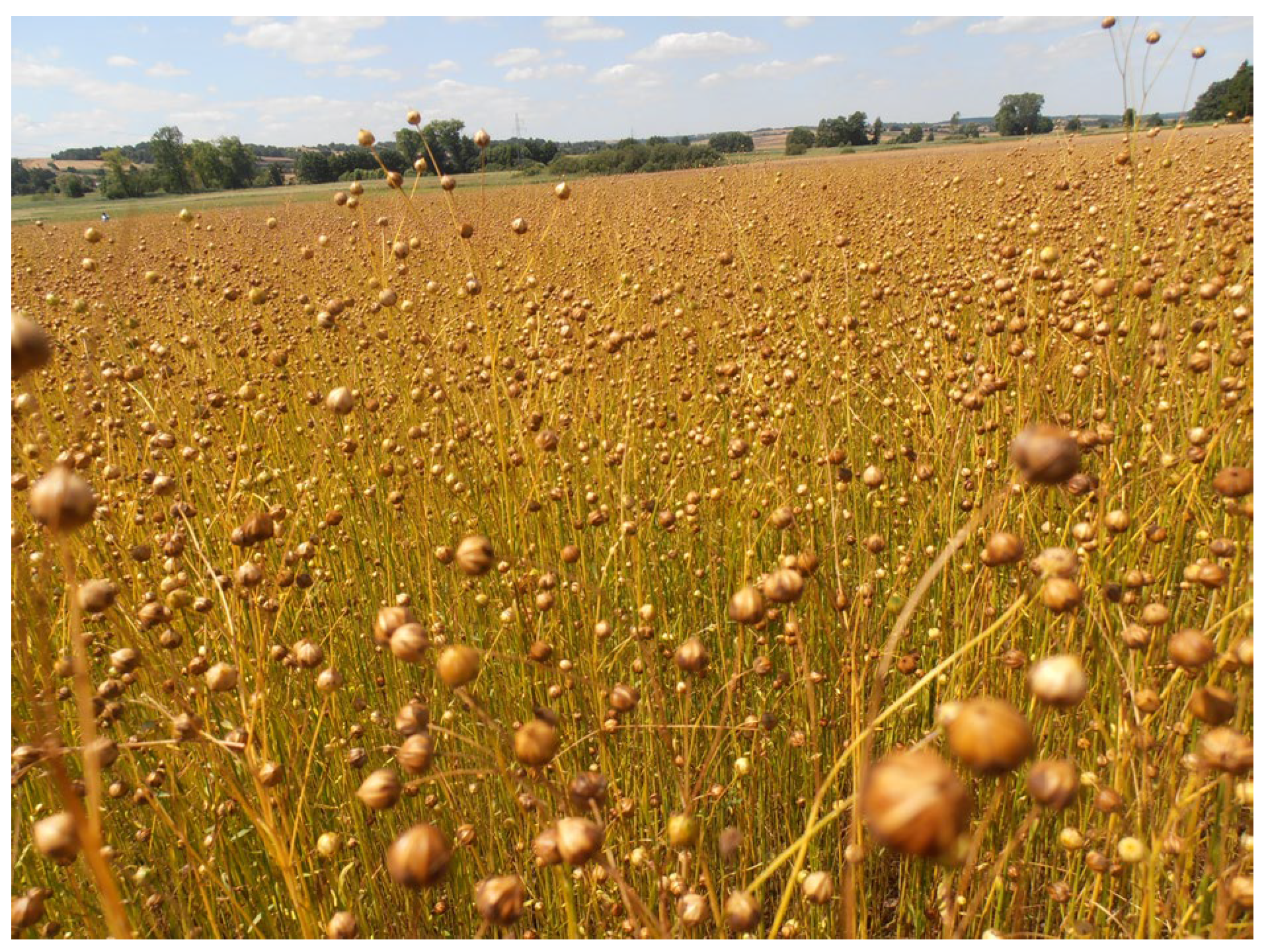
Figure 2.
Landscape architecture in Roztocze (Lublin voivodeship).
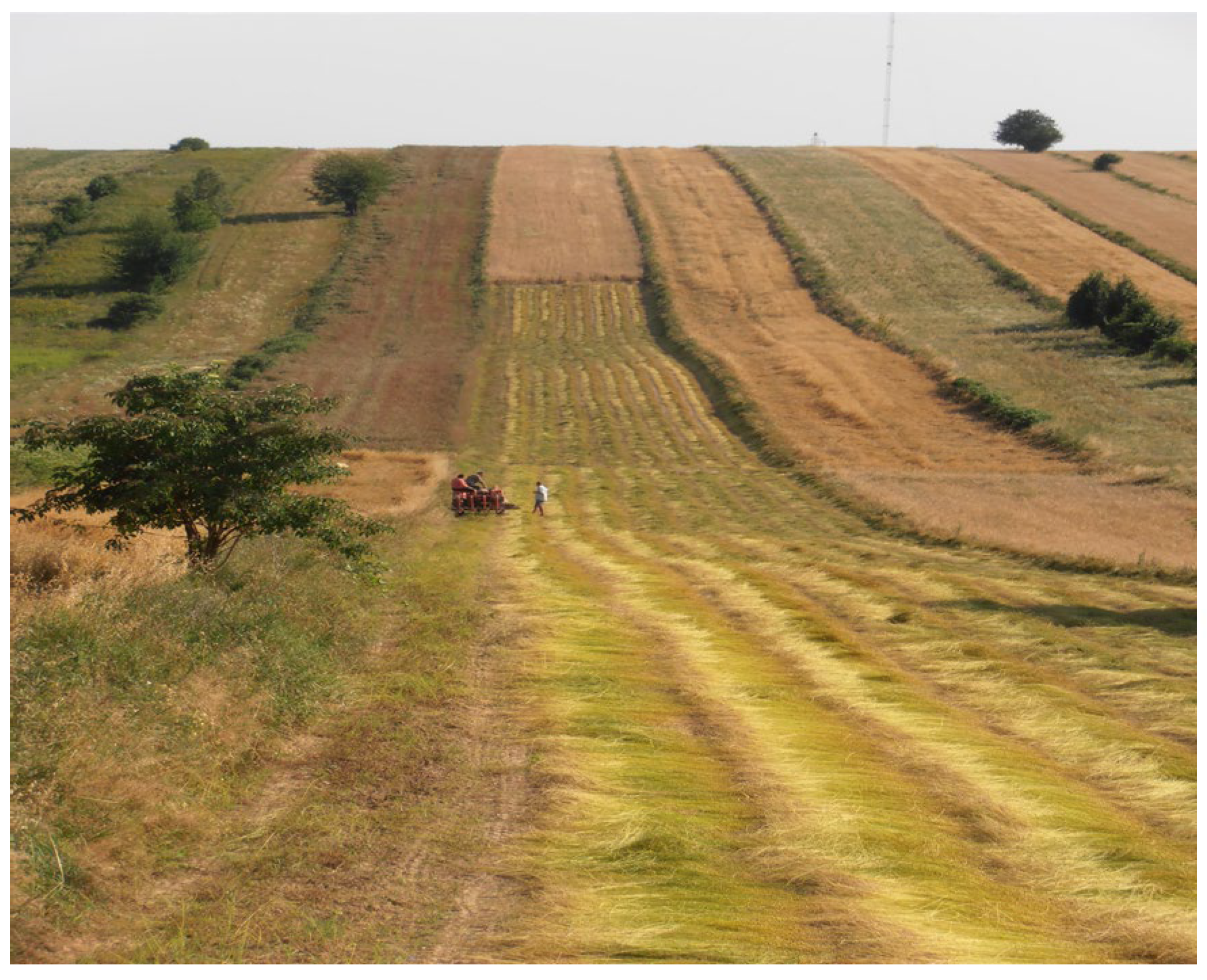
Figure 3.
Cultivation of fibre flax in West Roztocze (Poland); Source: own.
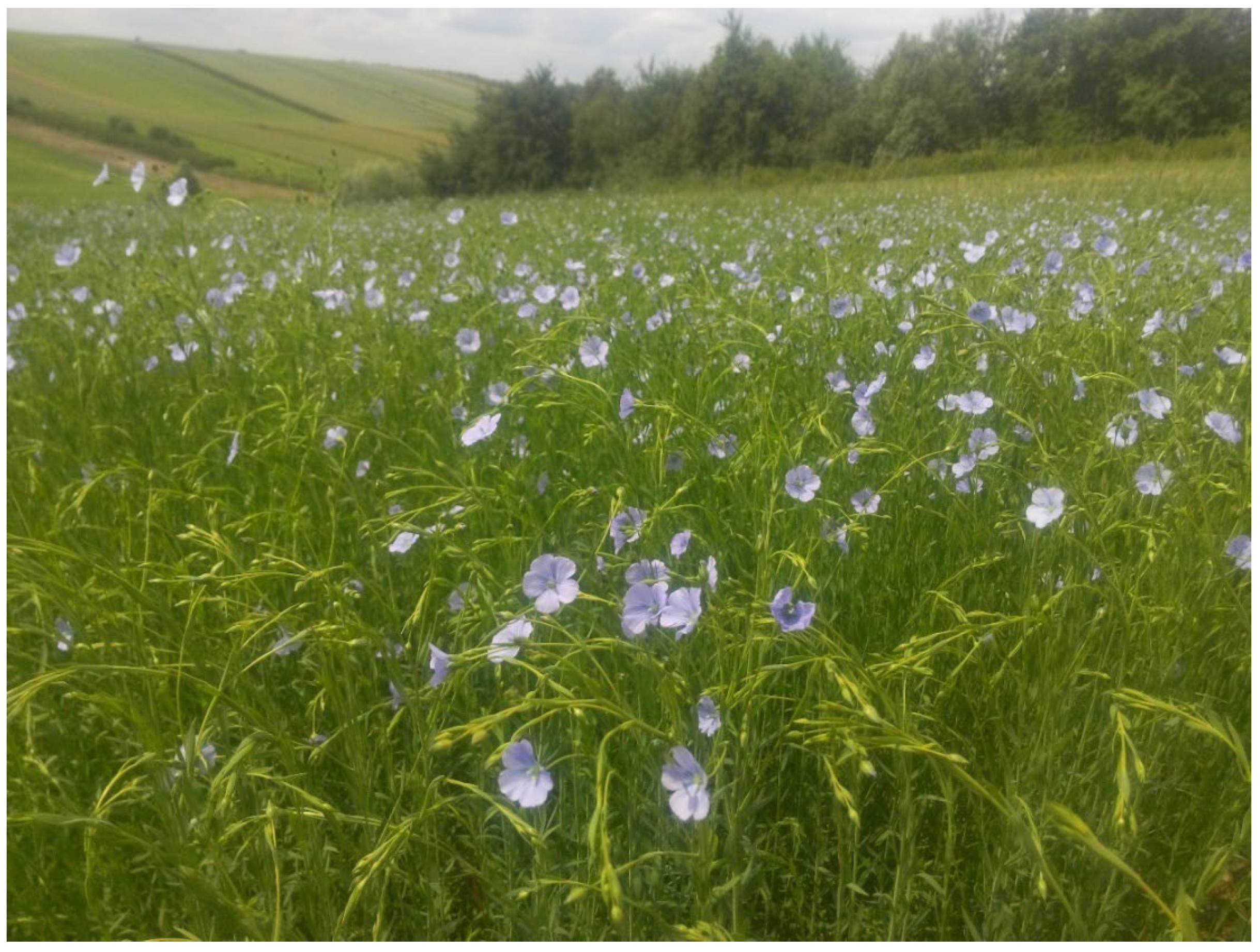
Figure 4.
Sativa FS40 harvester for harvesting flax (Hyler company, 8760 Meulebeke, Belgium).
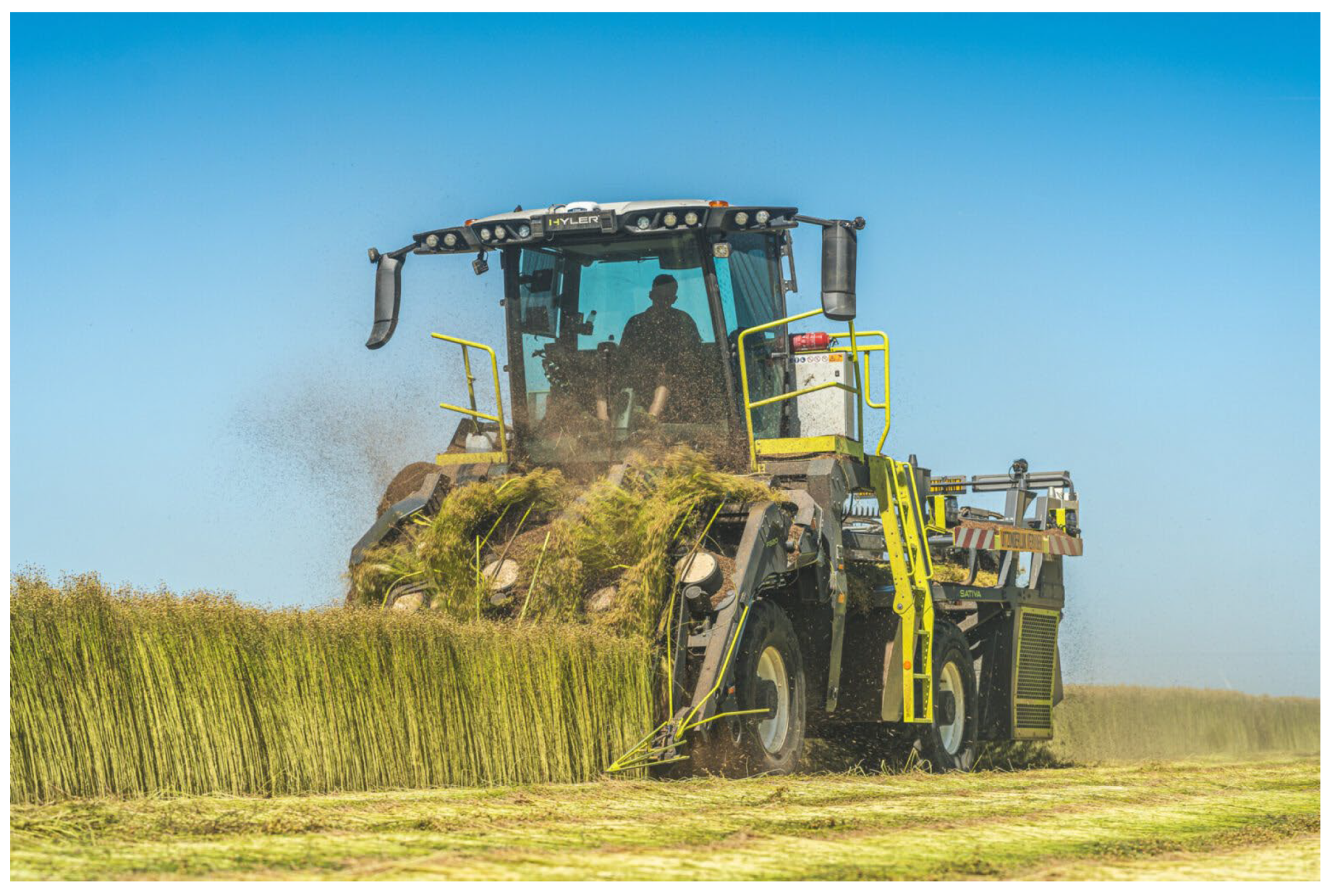
Figure 5.
Spreading flax stems in the field. Source: own.
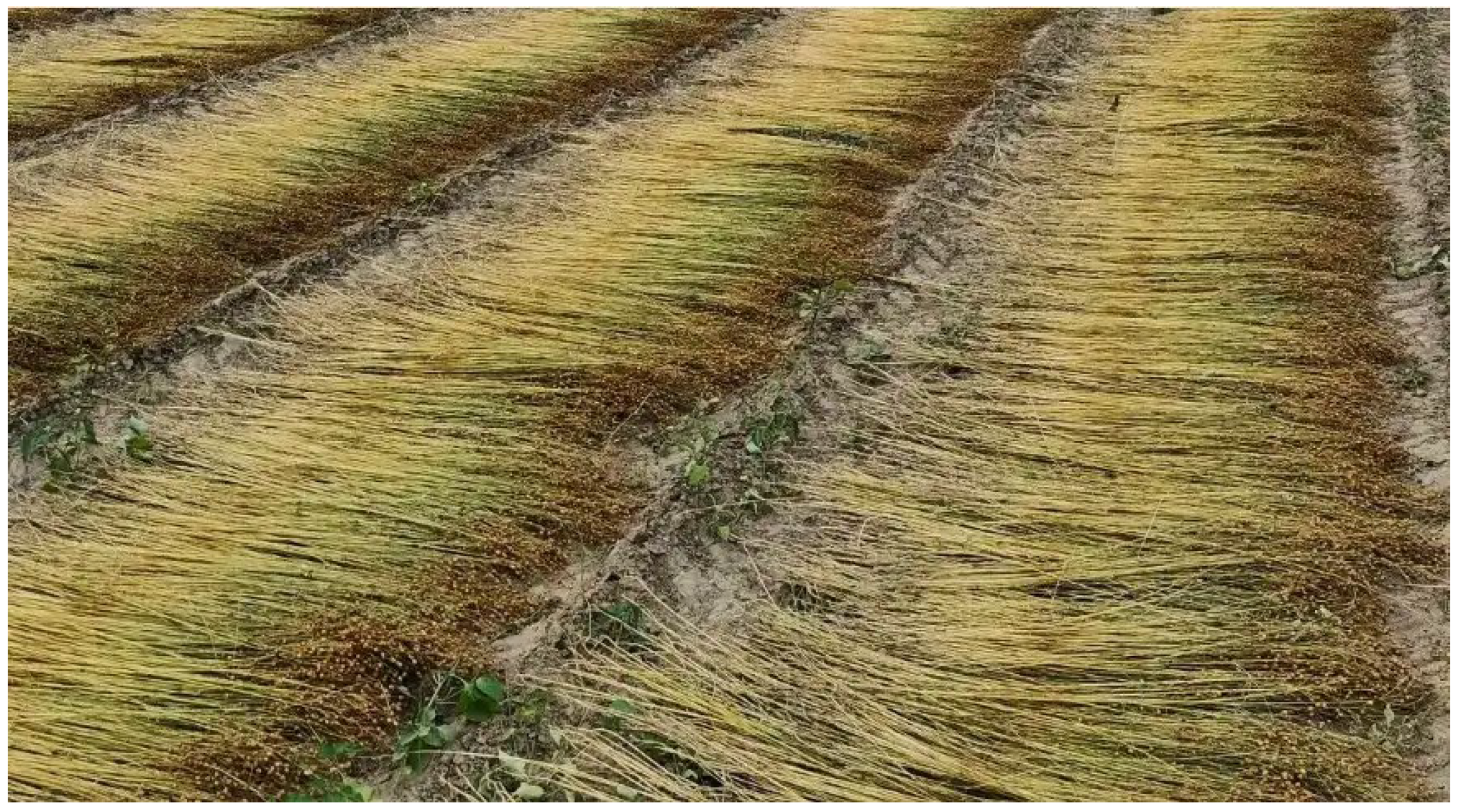
Figure 6.
Hyler Easy-Turn 113A flax and hemp turner (Hyler, Meulebeke, Belgium) in operation.
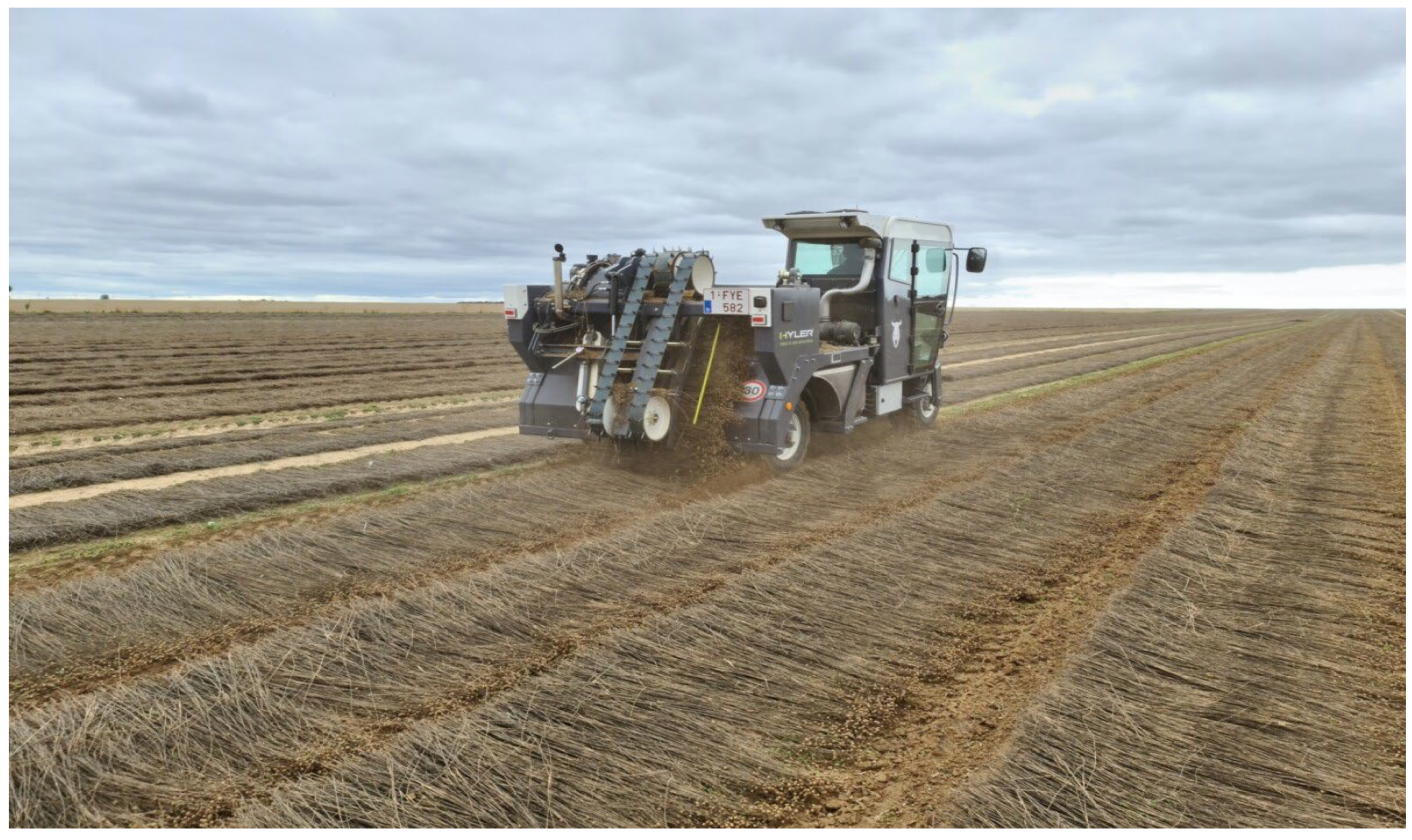
Figure 7.
Long fiber of the ‘Artemida’ variety. Source: own.
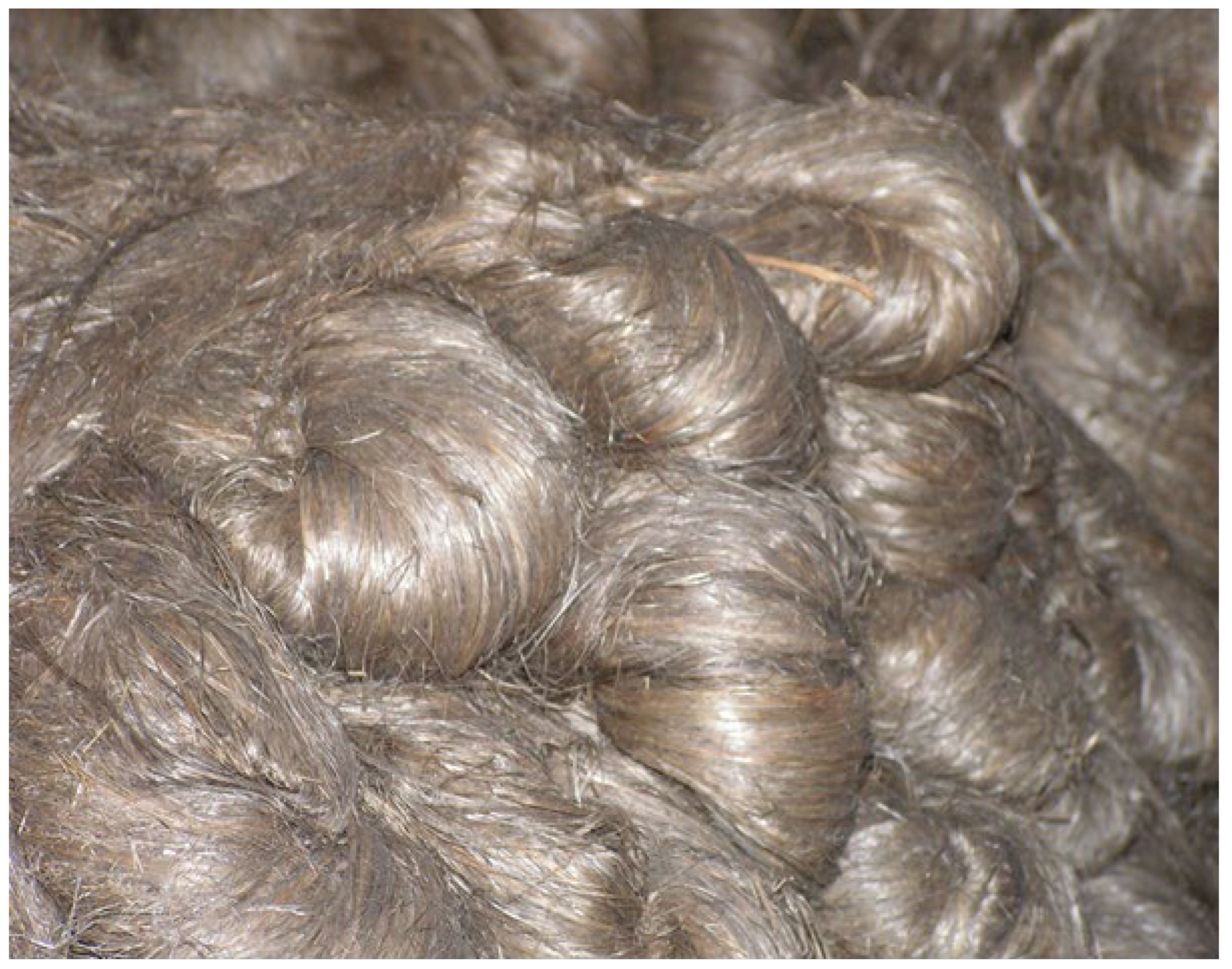
Figure 8.
Yield of flax straw depending on the variety’; The letters (a, b) indicate statistically different results – at LSD p0.05.
Figure 8.
Yield of flax straw depending on the variety’; The letters (a, b) indicate statistically different results – at LSD p0.05.
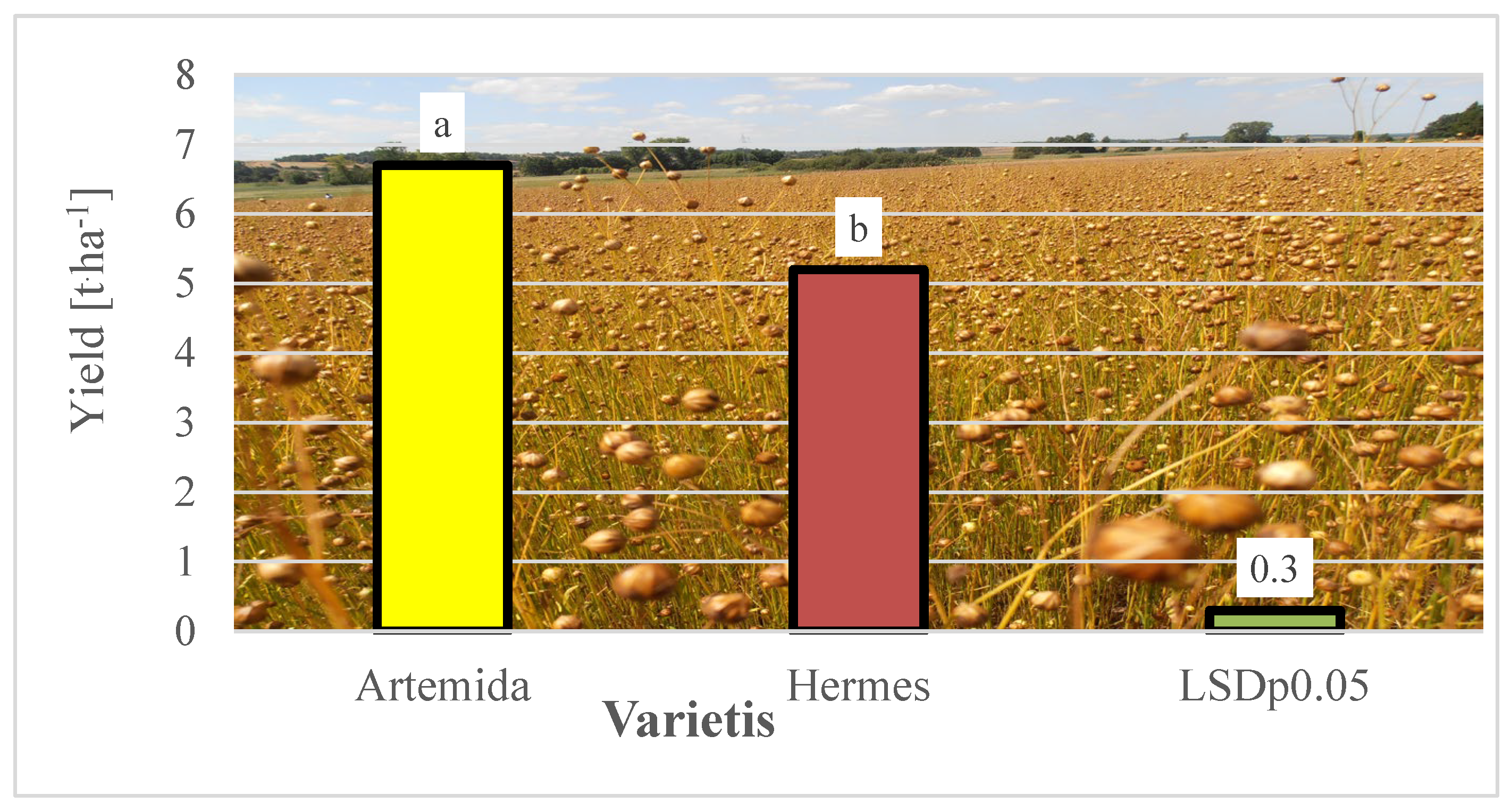
Figure 9.
The influence of cultivation conditions in the years of research and varieties on the yield of fibre flax straw; *The letters (a, b) indicate statistically different results – at LSD p0.05.
Figure 9.
The influence of cultivation conditions in the years of research and varieties on the yield of fibre flax straw; *The letters (a, b) indicate statistically different results – at LSD p0.05.
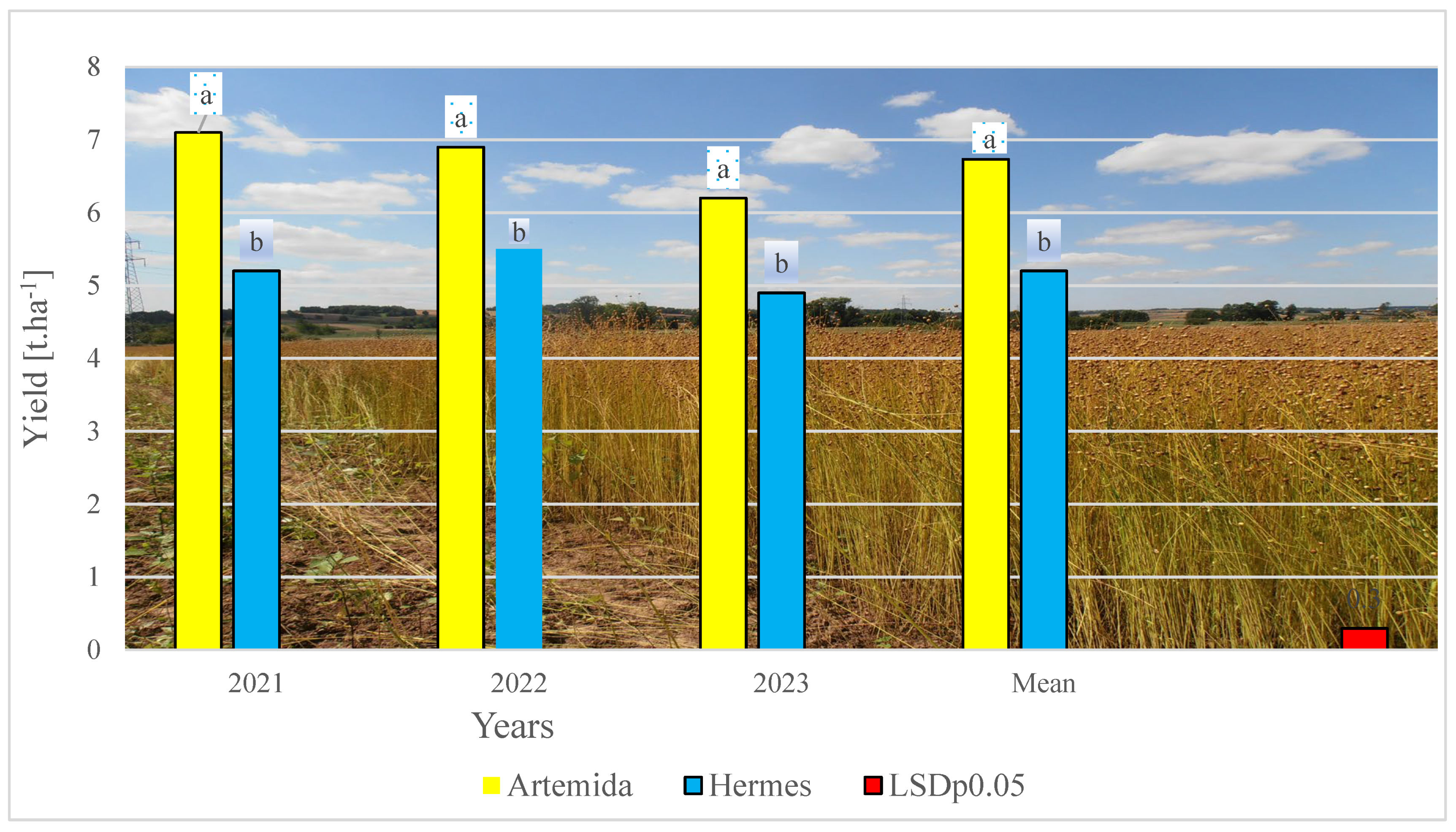
Figure 10.
Thickness of flax straw of tested varieties (2021-2023): The letters (a, b) indicate statistically different results – at LSD p0.05.
Figure 10.
Thickness of flax straw of tested varieties (2021-2023): The letters (a, b) indicate statistically different results – at LSD p0.05.
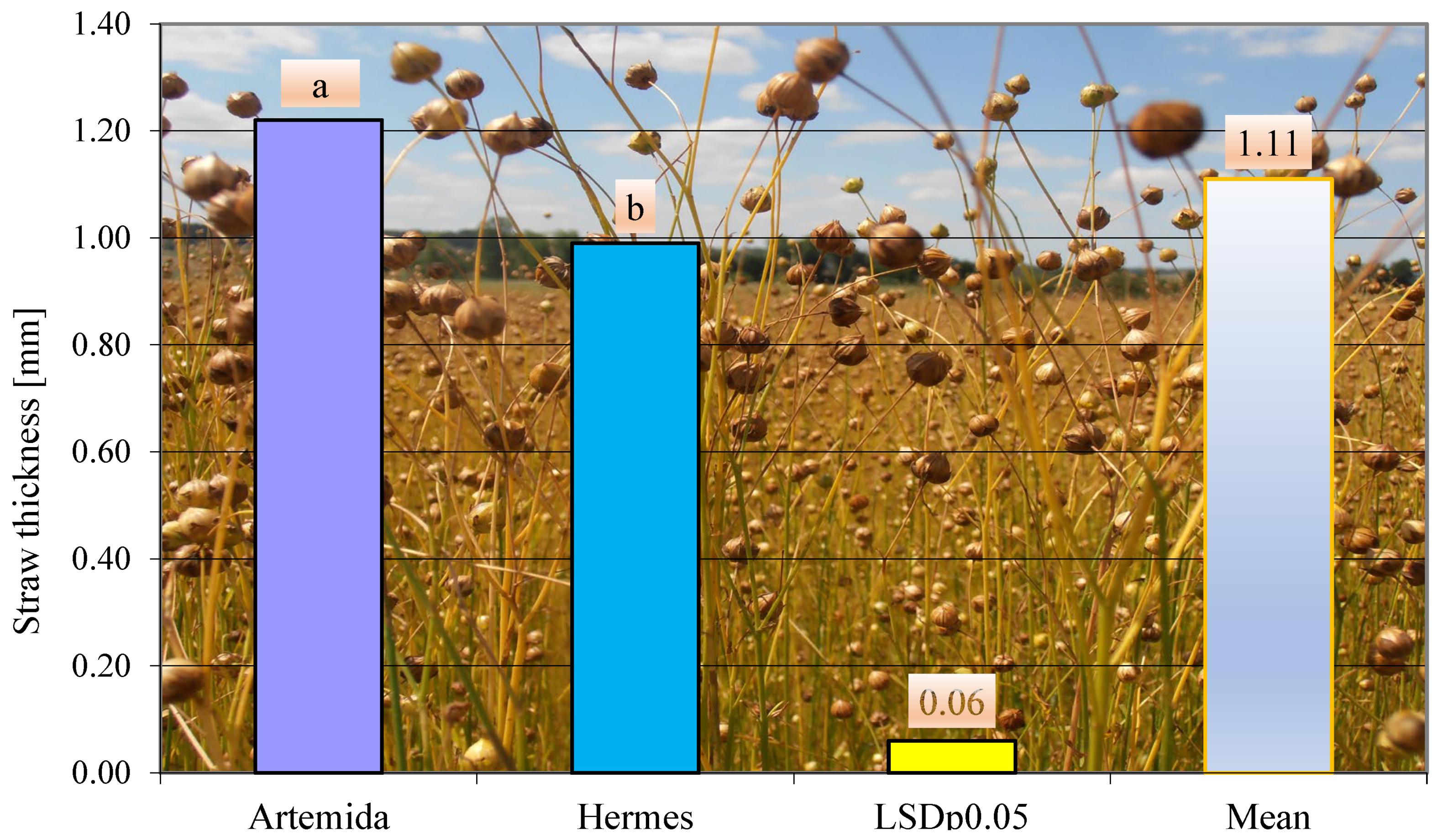
Figure 11.
Total and long fiber yield.
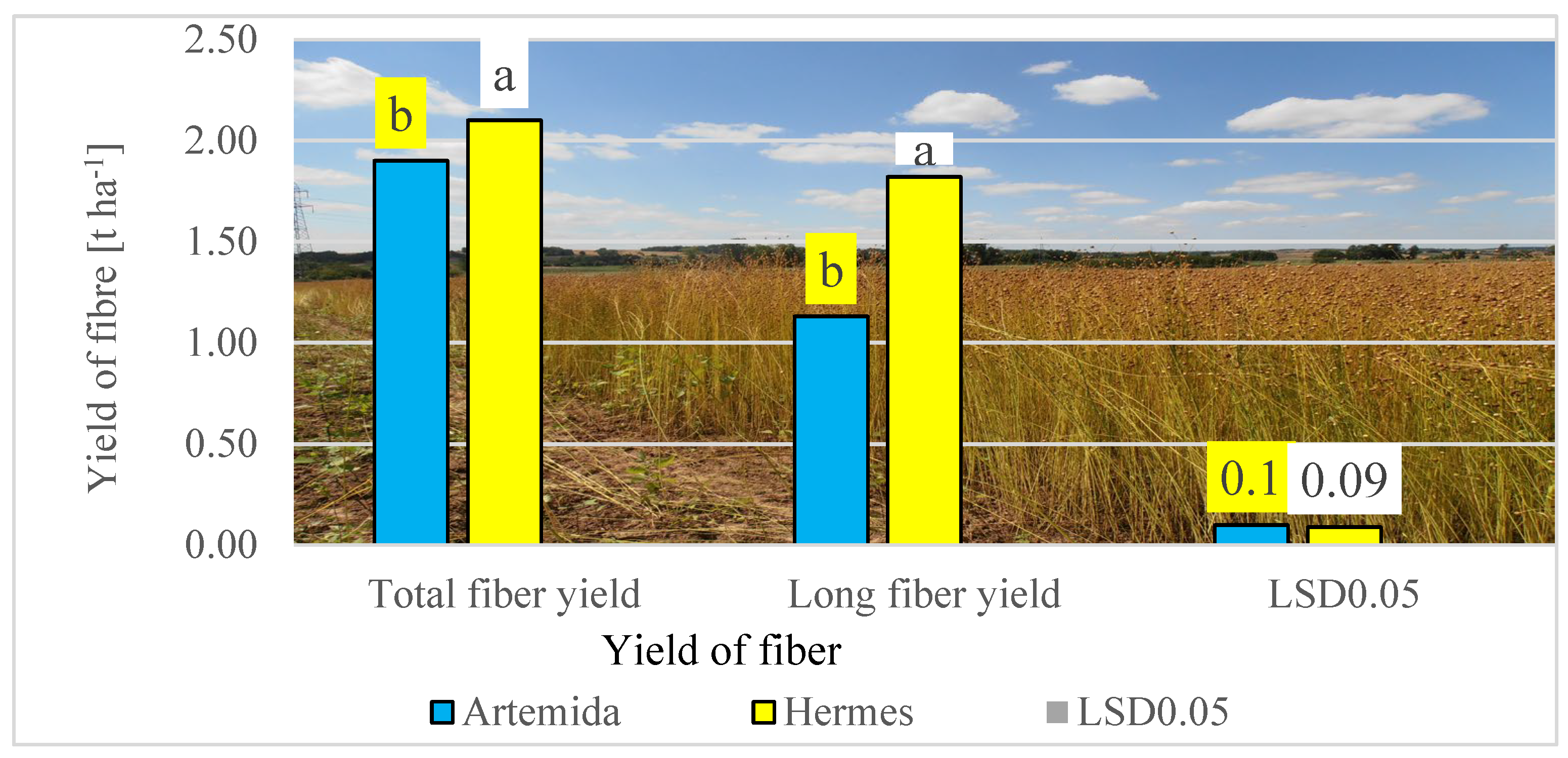

Table 1.
Crop rotation scheme for 7 fields (2021-2023).
| No. Field | 2021 | 2022 | 2023 |
|---|---|---|---|
| 1 | Flax | Weta | Raps |
| 2 | Flax | Barley | Onion |
| 3 | Flax | Sugar beet | Wheat |
| 4 | Flax | Barley | Parsley |
| 5 | Wheat | Rape | Barley |
| 6 | Sugar beet | Barley | Wheat |
Table 2.
Physical and chemical properties and the content of assimilable forms P2O5, K2O, Mg.
| Years | Soil agronomic category | Soil acidity | The content of absorbable forms [mg·100 g-1 air dry wright of the soil] | ||||||
| pHKCl | Soil reaction | P2O5 | K2O | Mg | |||||
| 2021 | pglp | 5.04 | Sour | 6.3 | short | 22.0 | high | 4.5 | Short |
| 2022 | pgl | 5.64 | Slightly sour | 11.1 | mean | 15.5 | mean | 5.4 | Mean |
| 2023 | pgl | 6.37 | Slightly sour | 18.9 | high | 16.0 | mean | 10.8 | very high |
| Mean | pgl | 5.6 | sour | 11.8 | mean | 8.13 | mean | 6.8 | Mean |
Source: results were marked at the Chemical and Agricultural Station in Lublin according to the standards in force in the EU.
Table 3.
Precipitation, air temperature, Sielianinov hydrothermal coefficient during the growing season of flax in 2021-2023, according to the Agrometeorological Observatory in Felin.
Table 3.
Precipitation, air temperature, Sielianinov hydrothermal coefficient during the growing season of flax in 2021-2023, according to the Agrometeorological Observatory in Felin.
| Years | Months | |||||
| Rainfall (mm) | ||||||
|
2021 2022 2023 |
April | May | June | Juni | August | September |
| 27.1 | 58 | 19.2 | 20.7 | 239.7 | 8.1 | |
| 13.4 | 79.8 | 62.8 | 49.0 | 26.6 | 86.2 | |
| 43.0 | 83.0 | 42.0 | 94.0 | 72.0 | 61.0 | |
| Air temperature (°C) | ||||||
| 2021 | 9.2 | 13.9 | 17.7 | 22.5 | 17.7 | 15.5 |
| 2022 | 9.2 | 15.8 | 19.1 | 19.3 | 19.2 | 13.1 |
| 2023 | 9.4 | 13.5 | 18.2 | 18.8 | 18.6 | 12.5 |
| Sielianinov’s hydrothermal coefficient* | ||||||
| 2021 | 1.0 | 1.3 | 0.4 | 0.3 | 4.4 | 0.2 |
| 2022 | 0.5 | 1.6 | 1.1 | 0.8 | 0.4 | 2.2 |
| 2023 | 1.5 | 2.0 | 0.8 | 1.6 | 1.2 | 1.6 |
Source: own elaboration based on data from the meteorological station in Felin, Poland; *The Sielianinov hydrothermal index was calculated according to the formula: , P - the sum of precipitation for a given decade is expressed in mm, − sum of air temperatures for a given decade – in °C. Hydrothermal coefficient according to Sielianinov: extremely dry (ed) k≤0.4, very dry (vd) 0.4<k≤0.7, dry (d) 0.7<k≤1.0, quite dry (ds) 1.0<k≤1.3, optimal (o), 1.3<k≤1.6, quite wet (qw) 1.6<k≤2.0, moist (w) 2.0<k≤2.5, very wet (vw) 2.5<k≤3.0, extremely wet (ew) k>3.
Table 4.
Total and technical length of flax straw depending on the variety and year of cultivation.
| Variety | Total length of straw | Technical length of straw | ||||||
| Years | Mean | Years | Mean | |||||
| 2021 | 2022 | 2023 | 2021 | 2022 | 2023 | |||
| Artemida | 55.4b* | 71.0a | 56.6b | 63.5a | 46.2b | 60.8a | 47.2b | 51.4b |
| Hermes | 60.0a | 66.4a | 64.5a | 63.4a | 53.7a | 51.7a | 58,2a | 54.5a |
| LSDp0.05 | 9.5 | 3.2 | 7.9 | 2.6 | ||||
| Mean | 60.0b | 68.7a | 60.6b | 63.1 | 50.0b | 56.3a | 52.7ab | 53.0 |
| LSDp0.05 | 4.7 | 4.0 | ||||||
*The letters (a, b) indicate statistically different results – at LSD p0.05.
Table 5.
Straw thickness of the tested varieties in 2021-2023.
| Variety | Years | Mean | ||
| 2021 | 2022 | 2023 | ||
| Artemida | 1.19a* | 1.31a | 1.15a | 1.22a |
| Hermes | 0.98a | 1.02a | 0.98a | 0.99b |
| LSDp0.05 | 0.17 | 0.06 | ||
| Mean | 1.09b | 1.17a | 1.07b | 1.11 |
| LSDp0.05; | 0.08 | |||
*The letters (a, b) indicate statistically different results – at LSD p0.05.
Table 6.
Straw colo (2021-2023).
| Variety | Straw color [%] | |
|---|---|---|
| Steel gray | Light gray | |
| ‘Artemida’ | 90.0b* | 10.0a |
| ‘Hermes’ | 100.0a | 0.0b |
| LSDp0,05 | 4.8 | 0.2 |
| Mean | 95.0 | 5.0 |
*The letters (a, b) indicate statistically different results – at LSD p0.05.
Table 7.
Straw color in the yearts2021-2023 (Mean of varieties).
| Year | Straw color [%] | |
| Steel gray | Light gray | |
| 2021 | 94.0a* | 6.0a |
| 2022 | 96.0a | 4.0c |
| 2023 | 95.0a | 5.0b |
| LSDp0.05 | 7.2 | 0.3 |
| Average | 95.0 | 5,0 |
*The letters (a, b) indicate statistically different results – at LSD p0.05.
Table 8.
Flax straw contamination level (%).
| Variety | Years | Mean | ||
| 2021 | 2022 | 2023 | ||
| Artemida | 0.50a* | 0.50a | 0.60a | 0.53b |
| Hermes | 1.50b | 1.20c | 2.00a | 1.57a |
| LSDp0.05 | 0.20 | 0.10 | ||
| Mean | 1.00b | 0.85c | 1.30a | 1.05 |
| LSDp0.05 | 0.10 | |||
*The letters (a, b) indicate statistically different results – at LSD p0.05.
Table 9.
Degree of flax straw regrowth.
| Varieties | Degree of straw growth | ||
|---|---|---|---|
| Properly | Undergrown | Overgrown | |
| ‘Artemida’ | 85.0b* | 0.0b | 15.0a |
| ‘Hermes’ | 92.7a | 7.3a | 0.0b |
| LSDp0,05 | 5.0 | 0.2 | 0.4 |
| Mean | 0 88.8 | 3.7 | 7.5 |
*The letters (a, b) indicate statistically different results – at LSD p0.05.
Table 10.
Degree of flax straw regrowth.
| Year | Variety | Flax Straw | ||
| Properly Grown (%) | Underdeveloped (%) | Overgrown (%) | ||
| 2021 | Artemida | 90.0a* | 0.0c | 10.0c |
| 2021 | Hermes | 93.0a | 7.0b | 0.0d |
| 2022 | Artemida | 84.0b | 0.0c | 16.0b |
| 2022 | Hermes | 92.0a | 8.0a | 0.0d |
| 2023 | Artemida | 81.0b | 0.0c | 19.0a |
| 2023 | Hermes | 93.0a | 7.0b | 0.0d |
| LSD (p=0.05) | – | 13.0 | 0.6 | 1.2 |
| Mean | 88.8 | 3.7 | 7.5 | |
The letters (a, b) indicate statistically different results – at LSD p0.05.
Table 11.
Total and long fiber yield.
| Variety | Total yield of fiber | Long fiber yield | ||||||
| Years | Mean | Years | Mean | |||||
| 2021 | 2022 | 2023 | 2021 | 2022 | 2023 | |||
| Artemida | 1.88a* | 2.11a | 1.71b | 1.90b | 1.07b | 1.39a | 0.92bc | 1.13b |
| Hermes | 2.19a | 2.11a | 1.99a | 2.10a | 1.92a | 1.79a | 1.76b | 1.82a |
| LSDp0.05 | 0.30 | 0.10 | 0.20 | 0.10 | ||||
| Mean | 2.04a | 2.11a | 1.85b | 2.00 | 1.50a | 1.59a | 1.34b | 1.48 |
| LSDp0.05 | 0.10 | 0.10 | ||||||
*The letters (a, b) indicate statistically different results – at LSD p0.05.
Table 12.
Flax fiber yield structure.
| Variety | Long fiber | Short fiber | ||||||
| Years | Mean | Years | Mean | |||||
| 2021 | 2022 | 2023 | 2021 | 2022 | 2023 | |||
| Artemida | 15.00b* | 20.20a | 14.80b | 16.67b | 11.50a | 10.40b | 12.70a | 11.53a |
| Hermes | 37.00a | 32.50b | 35.90a | 35.13a | 5.10a | 5.60a | 4.70a | 5.13b |
| LSDp0.05 | 3.90 | 1.30 | 1.30 | 0.40 | ||||
| Mean | 26.00a | 26.35a | 25.35a | 25.90 | 8.30a | 8.00b | 8.70a | 8.33 |
| LSDp0.05 | 1.90 | 0.60 | ||||||
*The letters (a, b) indicate statistically different results – at LSD p0.05.
Table 13.
Flax fiber efficiency.
| Variety | Years | Mean | ||
| 2021 | 2022 | 2023 | ||
| Artemida | 26,50a* | 30,60a | 27,50a | 28,20b |
| Hermes | 42,10a | 38,40a | 40,60a | 40,37a |
| LSDp0.05 | 5,10 | 1,70 | ||
| Mean | 34,30a | 34,50a | 34,05a | 34,28 |
| LSDp0.05 | 2,60 | |||
*The letters (a, b) indicate statistically different results – at LSD p0.05.
Table 14.
Linen Fiber Efficiency by Variety (2021–2023).
| Variety | Linen fiber efficiency [%] | ||
| Long fiber | Short fiber | Total fiber | |
| ‘Artemida’ | 16.7b* | 11.5a | 28.2b |
| ‘Hermes’ | 35.2a | 5.2b | 40.4a |
| LSD p0.05 | 1.3 | 0.4 | 1.7 |
| Average | 26.0 | 8.4 | 34.3 |
*The letters (a, b) indicate statistically different results – at LSD p0.05.
Table 15.
To estimate fiber efficiency for 2021–2023 (Mean for varieties).
| Year | Linen fiber efficiency [%] | ||
| Long fiber | Short fiber | Total fiber | |
| 2021 | 25.5a* | 8.1b | 33.6a |
| 2022 | 26.2a | 8.5a | 34.7a |
| 2023 | 26.3a | 8.6a | 34.9a |
| LSDp0.05 | 1.9 | 0.5 | 2.6 |
| Average | 26.0 | 8.4 | 34.3 |
*The letters (a, b) indicate statistically different results – at LSD p0.05.
Table 16.
Results of breaking strength and elongation of flax fibers extracted from 2 varieties of flax plants.
Table 16.
Results of breaking strength and elongation of flax fibers extracted from 2 varieties of flax plants.
| A sample | Destructive force [N] | SD [%] | Elongation [%] | Destructive force [N] | SD [%] | Elongation [%] | Destructive force [N] | SD [%] | Elongation [%] | Destructive force [N] | SD [%] | Elongation [%] |
| A25 | 7.42 | 1,52 | 4.26 | 0,97 | 6.68 | 1,78 | 7,84 | 1.35 | 8.91 | 2.91 | 8.76 | 1.07 |
| A35 | 7.62 | 0,96 | 5.00 | 0,82 | 6.15 | 2.47 | 8.54 | 1,96 | 7,78 | 1,63 | 7,87 | 0,62 |
| A45 | 6.47 | 2.30 | 5.19 | 2.12 | 4.48 | 0,89 | 8.63 | 2.83 | 7,86 | 1.04 | 7,69 | 0,85 |
| M25 | 6.57 | 1.12 | 6.40 | 1,96 | 6.05 | 3.01 | 10.40 | 5,68 | 8.21 | 2.29 | 9.06 | 0,45 |
| M35 | 6.57 | 0,50 | 5,89 | 0,68 | 6.03 | 1,82 | 7.37 | 1,52 | 5.53 | 1,86 | 10.35 | 2.73 |
| M45 | 6.36 | 0,62 | 5.71 | 0,85 | 6.36 | 1.30 | 7,96 | 1.43 | 5.28 | 0,45 | 7,89 | 0,67 |
| S25 | 10.15 | 1,69 | 6.30 | 1.01 | 10.28 | 2.39 | 9,89 | 1,77 | 8.04 | 0,82 | 9.66 | 1,63 |
| S35 | 6.53 | 1.14 | 4.35 | 1,63 | 7.03 | 2.12 | 9,96 | 4.43 | 7.15 | 1,78 | 8.15 | 0,61 |
| S45 | 6.11 | 1.11 | 4.48 | 0,97 | 5.91 | 1,57 | 10.56 | 4.07 | 6.52 | 1.48 | 7.05 | 0,85 |
Table 17.
Evaluation of short and long flax fiber.
| Cultivars |
Fiber quality evaluation | ||
| Fiber | Description | ||
| ‘Artemida’ | Long |
Ns 68(25) |
Medium-thick, medium-delicate fibre, medium self-breaking resistance, tearing sound quite clear |
| Short | Ns 333(4) |
fiber less divisible, not very delicate, medium strength, medium breaking resistance | |
| Mean | Ns 250(6) |
Fiber less divisible, less delicate, medium strength, medium breaking resistance | |
| ‘Hermes’ | Long |
Ns333(4) | Ribbon of fibre, compact structure, clearly unframed, technical fibre, medium-thick, medium-fine, buttery, medium-heavy |
| Short | Ns56(30) | medium divisible fiber, medium fine, medium breaking resistance, quite clear breaking sound | |
| Mean | Ns250(6) | Medium divisible fiber, medium delicate, medium breaking resistance, quite clear sound | |
Table 18.
Descriptive statistics of flax characteristics.
| Specification | straw yield | straw technical length | total straw length | straw thickness | Steel gray color of straw | light gray straw color | fiber contamination | The fiber is properly sprouted | immature fiber | overgrown fiber | long fiber | short fiber | total fiber yield |
| Mean | 6,0 | 53,0 | 62,3 | 1,1 | 95,0 | 5,0 | 1,1 | 88,8 | 3,7 | 7,5 | 25,9 | 8,3 | 34,3 |
| Median | 5,9 | 52,7 | 62,3 | 1,1 | 95,0 | 5,0 | 0,9 | 90,0 | 2,5 | 5,0 | 26,4 | 8,0 | 34,5 |
| Standard deviations | 0,9 | 5,5 | 5,7 | 0,1 | 5,1 | 5,1 | 0,6 | 5,2 | 4,1 | 8,3 | 9,8 | 3,4 | 6,5 |
| Kurtosis | -1,7 | -1,5 | -1,3 | -1,2 | -2,3 | -2,3 | -1,3 | -0,8 | -1,5 | -1,6 | -2,0 | -2,0 | -2,0 |
| Skewness | 0,2 | 0,1 | 0,2 | 0,5 | 0,0 | 0,0 | 0,5 | -0,6 | 0,4 | 0,4 | 0,0 | 0,1 | 0,0 |
| Range | 2,2 | 14,6 | 15,6 | 0,3 | 10,0 | 10,0 | 1,5 | 15,0 | 10,0 | 20,0 | 22,2 | 8,0 | 15,6 |
| Minimum | 4,9 | 46,2 | 55,4 | 1,0 | 90,0 | 0,0 | 0,5 | 80,0 | 0,0 | 0,0 | 14,8 | 4,7 | 26,5 |
| Maximum | 7,1 | 60,8 | 71,0 | 1,3 | 100,0 | 10,0 | 2,0 | 95,0 | 10,0 | 20,0 | 37,0 | 12,7 | 42,1 |
| V (%) | 14,3 | 10,4 | 9,1 | 11,4 | 5,4 | 102,9 | 55,7 | 5,8 | 110,7 | 110,3 | 37,7 | 40,5 | 18,9 |
*Variation coefficient.
Table 19.
Pearson simple correlation coefficients for flax characteristics.
| Specification | y1 | x1 | x2 | x3 | x4 | x5 | x6 | x7 | x8 | x9 | y2 | y3 | y4 |
|---|---|---|---|---|---|---|---|---|---|---|---|---|---|
| y1 | 1.00 | ||||||||||||
| x1 | -0.27 | 1.00 | |||||||||||
| x2 | -0.13 | 0.86 | 1.00 | ||||||||||
| x3 | 0.93 | 0.03 | 0.15 | 1.00 | |||||||||
| x4 | -0.92 | 0.29 | 0.24 | -0.91 | 1.00 | ||||||||
| x5 | 0.92 | -0.29 | -0.24 | 0.91 | -1.00 | 1.00 | |||||||
| x6 | -0.94 | 0.39 | 0.17 | -0.88 | 0.91 | -0.91 | 1.00 | ||||||
| x7 | -0.77 | 0.74 | 0.73 | -0.53 | 0.76 | -0.76 | 0.76 | 1.00 | |||||
| x8 | -0.83 | 0.20 | 0.12 | -0.85 | 0.93 | -0.93 | 0.77 | 0.60 | 1.00 | ||||
| x9 | 0.88 | -0.56 | -0.52 | 0.75 | -0.93 | 0.93 | -0.85 | -0.92 | -0.87 | 1.00 | |||
| x10 | -0.90 | 0.48 | 0.36 | -0.83 | 0.97 | -0.97 | 0.91 | 0.82 | 0.92 | -0.96 | 1.00 | ||
| x11 | 0.87 | -0.46 | -0.37 | 0.82 | -0.98 | 0.98 | -0.91 | -0.81 | -0.90 | 0.95 | -0.99 | 1.00 | |
| x12 | -0.91 | 0.48 | 0.35 | -0.83 | 0.97 | -0.97 | 0.91 | 0.82 | 0.93 | -0.97 | 1.00 | -0.98 | 1.00 |
straw yield – y; straw technical length – x1; total straw length – x2; straw thickness – x3; steel gray color of straw – x4; light gray straw color – x5; fiber contamination – x6; The fiber properly sprouted – x7; immature fiber – x8; overgrown fiber – x9; long fiber - x10; short fiber – x11; total fiber yield – x12.
Disclaimer/Publisher’s Note: The statements, opinions and data contained in all publications are solely those of the individual author(s) and contributor(s) and not of MDPI and/or the editor(s). MDPI and/or the editor(s) disclaim responsibility for any injury to people or property resulting from any ideas, methods, instructions or products referred to in the content. |
© 2025 by the authors. Licensee MDPI, Basel, Switzerland. This article is an open access article distributed under the terms and conditions of the Creative Commons Attribution (CC BY) license (http://creativecommons.org/licenses/by/4.0/).
Copyright: This open access article is published under a Creative Commons CC BY 4.0 license, which permit the free download, distribution, and reuse, provided that the author and preprint are cited in any reuse.


