
Submitted:
01 April 2025
Posted:
02 April 2025
You are already at the latest version
Abstract
As urban challenges intensify amid rapid growth, climate change, and resource scarcity, aligning smart city development with sustainability goals has become a global imperative. This study presents a bibliometric analysis of 615 publications indexed in Scopus from 2012 to 2024, exploring the evolving landscape of research at the intersection of smart cities and sustainability. Using Biblioshiny and VOSviewer, the study maps co-authorship patterns, keyword co-occurrence, and thematic structures to identify dominant trends, gaps, and emerging themes. The results reveal a strong focus on core concepts such as “smart cities,” “sustainability,” and “climate resilience,” with emerging interest in artificial intelligence, big data, and social equity. China, Italy, and Spain lead in global scholarly contribution, while collaboration networks remain concentrated in the Global North. Thematic evolution indicates a transition from purely tech-driven frameworks toward integrated, human-centric approaches addressing inclusivity, resilience, and governance. Despite increased contributions, social dimensions of sustainability remain unexplored, especially in Global South contexts. This study offers actionable insights for researchers, urban planners, and policymakers aiming to leverage digital innovation for inclusive and sustainable urban transformation aligned with SDG 11 and beyond.
Keywords:
Smart Cities
; Sustainability
; Climate resilience
; Urban innovation
; SDG 11
1. Introduction
The fast pace of global urbanization creates unprecedented challenges and opportunities for sustainable development. While cities continue to serve as the primary engines of economic growth and innovation, they face increasing pressures in terms of climate change, resource consumption, social inequality, and environmental degradation. The United Nations’ 2030 Agenda for Sustainable Development, specifically Sustainable Development Goal 11 (SDG 11) – “Make cities and human settlements inclusive, safe, resilient, and sustainable” - acknowledges the key role of urban sustainability in the attainment of global sustainable development (Guo, 2024). This necessitates a cognitive analysis of the contributions the research societies are working towards the achievement of SDG 11 and associated SDGs. Cities are categorized based on their diverse socio-ecological aspects that require greater accessibility in view of multidisciplinary approaches that address the intricate relationships between the environmental, social, and economic dimensions of sustainability (Macaione et al.; 2024). Concurrent to this, research from recent years remarks that urban sustainability has developed from the manner of siloed approaches to that of more holistic frameworks in recognition of the interconnection between various urban challenges (Spiliotopoulou & Roseland, 2021; Quitzau et al.; 2022; Bibri et al.; 2024).
The emergence of smart city approaches, and the technology linked policies has augmented the complexity of the research in urban sustainability (Rani et al.; 2021). The combination of digital technologies and data-driven methods for urban development and related strategies has evoked innovative opportunities for sustainable development at the same time questioned about its equity and accessibility (Bachmann et al.; 2022). This technological dimension has spawned many research streams on how smart city solutions can contribute to multiple SDGs simultaneously.
Resilience to Climate Change and the adaptation efforts are presently the emerging topics in urban sustainability research. Cities are observed as the crucial contributors to globally responsible emissions to climate change and, potentially, as leaders in climate action (Sancino et al.; 2021; Lin et al.; 2021). The study by Zuccaro et al.; (2018) describes the length at which cities are progressively implementing and integrating approaches to climate resilience that encompass both mitigation and adaptation strategies to address multiple SDGs. This is because the challenges of urban sustainability cannot be addressed in isolation.
Greater care and attention have been dedicated to the socio-ecological facets of urban development in tune with sustainability with respect to the pandemics in 2019 that signified the need for better research to bring about the existing urban inequalities and vulnerabilities. Further progressively, research studies on inclusive urban development have emphasized how cities would ensure sustainability and prepare cities itself for sustainable initiatives that benefit city communities with its residents in an equitable manner by providing affordable housing, public welfare and utilities, transportation, and inclusive mobility solutions (Pineo, 2020). Research by Chen (2023) remarks that smart city says that smart city expansion and progress must ensure sustainable practices integrating human welfare considering the socio-ecological and surrounding environments. Urban happiness can guide this, focusing on green spaces, pollution control, and infrastructure improvements rather than technology-centric solutions (Adel & HS Alani, 2024).
The positive association observed between urban sustainability research and SDG execution is inevitably essential for any further improvement in the attainment of goals. As discussed, though SDG 11 has explicitly emphasized sustainable cities and communities, the contribution of urban sustainability research to the achievement of multiple SDGs at once is also very prevalent. Citing an example referring to the research on urban green infrastructure which contributes to SDG 11 (Sustainable Cities) (Gelan & Girma, 2021), SDG 13 (Climate Action) (Lombardía & Gómez-Villarino, 2023), SDG 3 (Good Health and Well-being) (Shackleton, 2021), and SDG 15 (Life on Land) (Rozas-Vásquez et al.; 2022). Assessing the associations to understand its impact of research on sustainable development outcomes.
Regardless of the hike in the number of research studies on urban sustainability (Sharifi, 2020; Wang & Zhou, 2022; Zeng et al.; 2022), a systematic analysis is essential to explore the ways in which this research landscape has emerged and futuristically how it would advance in the attainment of SDGs. Bibliometric analysis is a powerful tool for mapping and understanding the structure and dynamics of scientific research in this field (Pessin et al.; 2022; Chandran & Sarath Chandran MC, 2024). The analysis supports the trends, gaps, and opportunities in research by assessing publication patterns, citation networks and thematic evolution.
Recent bibliometric studies have started exploring specific aspects of urban sustainability research. For instance, Wang et al.; (2023) discussed trends in the research on urban climate resilience, whereas (A. Ravisankar et al.; 2024) through bibliometric analysis discussed how to achieve SDG 11 by attaining rapid urbanization through sustainable cities and sustainability within the frames of publication and citation trends portraying new emerging themes like sustainability, remote sensing, and machine learning post-SDG 2030 agenda (Whittingham et al.; 2022). Therefore, it is necessary to conduct the bibliometric analysis of smart cities and sustainability research that identifies how the collective research of the urban sustainability field can contribute to SDG achievement.
The global spread of urban sustainability research also calls for attention. Though cities in the Global South face severe challenges with respect to sustainability, the aspect of production is observed to be skewed toward institutions in the Global North (Fuhr, 2021). Thus, it is vital to identify the topographies and the likely inequalities to confirm the guaranteed representation of inclusive research in this area.
Knowledge co-production and transdisciplinary has evolved as the notable topics of research on urban sustainability (Kruijf et al.; 2022). Research concurrently has progressed including the participation of several stakeholders, policymakers, and communities, which is considered integral to the research process (Grill, 2021). The trend observed in research towards a higher participatory method reflects the fact that successful solutions for urban sustainability require diverse perspectives and forms of knowledge. The temporal development of urban sustainability research is also important. With the adoption of the SDGs in 2015, there is a clear growth in research focusing on SDG targets and indicators (Michalina et al.; 2021). Nonetheless, this does not suggest that there has been such research having impacted policies and practices much or has a significant contribution toward the SDGs (Sianes et al.; 2022).
Innovative methodologies have also transformed urban sustainability research (Birsu Ece Kaya & İkbal ERBAŞ, 2023). Big data analytics, AI, and other advanced computational methods have been integrated to provide new avenues for understanding and addressing urban sustainability challenges (Bibri et al.; 2024). The urgency of urban sustainability challenges, combined with the approaching 2030 deadline for the SDGs, makes it particularly important to understand how research is contributing to sustainable urban development (Patel et al.; 2024). This understanding can help to identify research gaps, promote more effective resource allocation, and guide for future research priorities.
Related Studies
The last several decades have experienced growth in diversified research works, mainly due to novel contributions related to smart cities and sustainability (Table 1) creating knowledge areas which could enhance information related to appropriate urban development policies, use of technologies, and sustainability principles in their processes.
The findings from the recent studies point toward the direction and dynamic nature of research into smart cities and sustainability, underpinned by technology integration, governance, and environmental principles in making complex solutions for urban challenges. In this light, the present study seeks to answer the following research questions:
RQ1: How the concept of ‘Smart Cities and Sustainability’ developed over the past decades?
RQ2: Who are the key contributors to Smart Cities and Sustainability research?
RQ3: What are the emerging themes and future directions for research in Smart Cities and Sustainability?
2. Literature Review
2.1. Overview of Urban Sustainability Research
Urban sustainability research has witnessed drastic changes in the last decade in response to a global phenomenon known as urbanization and an unprecedented demand to meet issues such as climate change, depletion of resources, and socio-economic inequalities (Li et al.; 2022). According to the United Nations SDGs, with a specific reference to SDG 11, cities need to become inclusive, safe, resilient, and sustainable (Diaz-Sarachaga et al.; 2018). The focus on sustainability and urban development has instilled research interest among scholars to work on this topic, bringing more research outcomes in this area. Recent research studies show that the role of cities is dual in nature contributing as sources and solutions to sustainability challenges, urging more integrated methods to support urban planning with technological innovations and imperatives (Spiliotopoulou & Roseland, 2021; Quitzau et al.; 2022; Chen, 2023).
2.2. Research Clusters and Key Themes
2.2.1. Smart Cities and Sustainability Indicators
Smart City agendas combined with sustainability indicators have recently gained much attention. Digital technologies are Digital technologies are used in smart city frameworks to improve urban efficiency and manage sustainability goals with its inclusivity, resilience, and environmental balance (Quijano et al.; 2022). Bibliometric analysis emphasize that metrics should quantify social inclusiveness, environmental health, and economic resilience effectively so that technology can meaningfully contribute to more equitable outcomes (Chandran et al.; 2024). Studies recommend that there has been a transition towards “smart sustainable cities,” in which technology advancement is steered with equity-oriented and environmentally conscious approaches (Sharifi et al.; 2024).
2.2.2. Climate Resilience and Urban Adaptation
Climate resilience has become an emerging central theme in the urban sustainability research. Cities are taking on a set of integrated mitigation and adaptation strategies that can help them reduce vulnerabilities and build up their resilience to climate-related shocks (Jaiswal et al.; 2024). Various studies have, including urban infrastructure and governance systems, identified the relevance of indicators in a resilience-based framework (Suárez et al.; 2024; Ge et al.; 2024). In fact, more recent studies point to green infrastructure's ability to reduce urban heat islands (Pereira et al.; 2023) and improve air quality (Chandran et al.; 2024) which further helps meet several SDGs (Tate et al.; 2024).
2.2.3. Inclusivity and Equity in Urban Development
Inclusive urban development has gained prominence, especially in light of the socio-economic disparities accentuated by the COVID-19 pandemic (Prabhakar, 2024). Studies advocate for frameworks that prioritize affordable housing, accessible public spaces, and equitable mobility solution (Suárez et al.; 2024). This complements the focus on addressing equity and access challenges in urban sustainability by emphasizing that integrating social justice into these frameworks is essential for achieving truly inclusive and sustainable urban environments (Mohapatra et al.; 2024).
2.2.4. Geographical and Methodological Insights
Much attention is observed about the geographical disparity seen in urban sustainability research with institutions in the Global North contributing excessively to the literature (Gelan & Girma, 2021). Despite the pressing challenges faced by cities in the Global South, research outputs remain concentrated in regions with greater access to funding and institutional resources (Fuhr, 2021). It is observed methodologically, big data analytics, machine learning, and the adoption of the bibliometric approach has facilitated research on the trends to trace emergent themes in this area (Nageye et al.; 2024).
Although significant progress has been achieved, critical gaps remain in the integration of smart city and sustainability research. A large proportion of the frameworks lack the inclusiveness needed to address socioeconomic gaps, and transdisciplinary approaches are underrepresented in focusing on stakeholders outside academia. Hence, the present study aims to bridge the above gaps through a comprehensive bibliometric analysis of smart cities and sustainability research. By mapping the intellectual structures and identification of key trends, the study thus aligns with the research objectives of exploring contributions to the SDGs. Further the study emphasizes actionable insights for policymakers and practitioners to drive urban sustainability while addressing gaps in equity, inclusivity, and environmental resilience.
3. Materials and Methods
3.1. Bibliometric Literature Review
A systematic literature review approach was adopted with the help of PECO (Population, Exposure, Comparator, and Outcome) approach (Morgan et al.; 2018) for the specification of the domain. The focus in on areas within the domain that include both direct and indirect indicators, which effectively address the core themes surrounding smart cities and sustainability. The intentional application of the PECO approach ensured a standardized and replicable review protocol, hence aligning methodology with the thrust of the study to address the sustainability challenges in advancing SDG 11 objectives (A. Ravisankar et al.; 2024). The literature gathering process began from a set of keywords that have been informed by foundational works within the domain. We utilised the Scopus database, known for its strong citation coverage and frequent use in bibliometric analysis. Our procedure started with a keyword search of “smart cities”, “sustainable cities, “sustainable development” and “smart communities” within the Scopus database, focusing on the “title of articles, abstract and keywords” field. This has helped to gather the dataset that closely matches the scope of objectives set to investigate sustainable urban development and its contribution to the attainment of SDG 11. The initial set of keywords in Scopus database was the inclusion criteria which is depicted in Table 2 and Appendix I.
The search was restricted to documents classified as journal articles, in the language of English, and of the document type “article, books, reviews, conference papers”. The search results showed that there was an average annual growth rate of 45.09% in research articles published in 314 journals, 197 conference papers, 70 book chapters, 21 reviews, 9 conference reviews, and 3 books, between 2012 and 2024 (Table 3). A comprehensive review of article titles and abstracts was carried out to narrow it down to relevant materials on sustainability, smart cities and communities and sustainable development. From there, 1,721 articles were short-listed, narrowed down to this pool of documents, where it was selected through the inclusion criteria of articles demonstrating indicators with their units or having descriptive explanations that were found relevant for the study. Hence, the final screening process yielded a total of 615 articles for inclusion in the study with an average of 18.85 citations per document. These 615 research papers formed our final dataset depicted in Figure 1.
The dataset showed completeness in main fields: Author, Journal, Document Type, Publication Year, Language, Title, and Total Citations. Other fields considered for the study were Affiliation, Abstract, Cited References, Corresponding Author, and Keywords. This robust dataset provides a solid foundation for the study.
3.2. Data Analysis
Bibliometric analysis was used to find the answer to the research questions as it offers a precise scientific methodology (Chandran & Sarath Chandran MC, 2024;.Chandran et al.; 2024; Leonardo et al.; 2024) that starts with core topic identification, helps follow developments in research, maps collaborative networks, and analyzes publication patterns in order to understand smart cities and communities’ sustainability research further and avoid an unbalanced empirical reliance that usually made research streams highly fragmented and contentious. Bibliometric analysis is a technique that was first employed by Pritchard in 1969 (Pritchard, 1969). It has become widely popular in facilitating quantitative analysis since its inception.
Bibliometric analysis has not been widely applied in smart cities and sustainability research by using indexed keywords from multiple authors. However, earlier research has indicated that the inclusion of unsuitable keywords may influence findings results, particularly in the categorization of themes and the detection of emerging trends within specific domains of research (Leonardo et al.; 2024). To overcome this limitation, we exclusively focused on titles, keywords and abstracts that help improve the accuracy and reliability of results and also provide a very robust framework for scientific analysis.
The collected data was imported to R-studio (R-Programming) (Aria & Cuccurullo, 2017) and then processed for analysis using the bibliometrix R package (Web Interfaces) (Knell, 2014). In this step, the application used was biblioshiny for generation of collaboration maps and network analysis. Dimensions for the research comprised authors, articles, journals, countries, as well as significant metrics like contributions, keywords, H-indexes, and citations. A particular focus was also given to collaboration and co-citation networks within authors. Further we developed co-citation plot, collaboration plot, thematic map, and thematic evolution map using biblioshiny. On the other hand, keyword analysis, included co-occurrence mapping, and visualization was done using the word cloud. Further, we followed the recommendation of Van Eck and Waltman to do the keyword analysis and bibliometric pairing using the VOSviewer (van Eck & Waltman, 2010).
4. Results
4.1. Collaborations and Scientific Research Production
Figure 2 represents the trend of publications on smart cities and sustainability from 2012 to 2024. In the initial years of this period, the trend of publication was slow, with minimal growth up to 2014. However, from 2014 onwards, there was a marked and steady increase in scientific output. The publications peaked in 2023 with a count close to 100 articles, followed by a slight decline in 2024. This trend is an indication that there has been considerable interest and recognition of scholars toward smart cities and sustainable development related to global agendas on sustainability and the challenges they face in urbanization. Moreover, the annual growth (25.08%) trend also depicts a significant scholarly focus on these topics.
The international collaboration in smart cities and sustainability research is highlighted in Figure 3, where Italy and China collaborated with 210 articles, and cooperated with Spain 193 joint publications. Other significant Collaborations include India and Brazil 113 articles, Indonesia, and Greece with 72, Malaysia and USA 54, and with China 47. China and India have developed quite strong networks especially with European and North American peers, highlighting an active role to address the issues of sustainability. As a major regional player in Oceania, Australia demonstrates strong networks with Europe, Asia, and the United States. China is clearly the most collaborating country, exhibiting dense networks of different countries that underline its role as a pioneer in this arena. This global trend of partnership is testimony to the collective international call to accelerate research on smart cities and sustainability toward the achievement of the SDGs.
4.2. Top Journals
Table 4 depicts the top significant ten Journals according to their total number of citations in the topic of smart cities and sustainable development. The findings indicates that, ‘Cities’ which is published by Elsevier, leading at 1,875 citations at the top showing great influence and strength in the area. Secondly it is recorded by Sustainability with 942 (MDPI), followed by 760 citations for Sustainable Cities and Society, Journal of Cleaner Production and Energies covers 627 and 289 citations, Smart Cities with 222, Journal of Building Engineering with 186 citations, Social Indicators Research with 117, International Journal of Public Sector Management 56, Environment and Urbanisation by Sage with 53 citations. Of the top ten journals, four are published by Elsevier, which indicates strong presence and leadership in publishing high-impact research in this area. MDPI has also made significant contributions with three journals included in the list. The representation of journals from various publishers such as Springer, Emerald, and Sage highlight the interdisciplinary nature of the research in smart cities and sustainability. These journals have the high citation counts because of growing scholarly interest and relevance in furthering research toward the fulfillment of SDGs. The ranking stresses the critical importance of high-impact journals for research contributions as well as international collaboration in this important area.
4.3. Top Articles
Table 5 highlights the most cited articles in the domain of smart cities and sustainable development, published between 2012 and 2024, emphasizing their critical contributions to the field. Identifying these highly cited works is essential, as they serve as foundational references and guide future research directions. In this regard, Ahvenniemi et al. (2017), discussed the conceptual differences between sustainable and smart cities which stands at the highest number citations i.e.; 944 which is ranked as first. The second most cited paper is related to methodology to smart cities model by Lazaroiu & Roscia, (2012) with 473 citations. Another important work is related to Kaika, (2017) who examined the implications of resilience and indicators in the context of smart cities with 363 citations. Further the work by Klopp & Petretta, (2017) who studied the complexities and politics surrounding urban SDG indicators for sustainable cities attracting 325 citations. Of the top five, Huovila et al. (2019), focused on the discourse on standardized indicators for assessing smart sustainable cities, with 255 citations. These top-cited works underscore the interdisciplinary nature of research in smart cities and sustainability, addressing critical themes such as conceptual frameworks, methodological advancements, circular economy practices, and ICT applications. Their high citation counts highlight their significant influence and the growing scholarly interest in advancing sustainable urban development.
4.4. Top Authors
We identified 652 different authors from this study. One of the primary objectives of conducting bibliometric analysis is to identify the core authors within a specific domain who have significantly contributed to the literature on the subject matter (Donthu et al.; 2021). Table 6 presents the leading authors in smart cities and sustainability, ranked by fractionalized and complete article counts. Fractionalized counting is used here to provide a more reliable measure of an author’s contributions when co-authored articles. Based on the analysis, Garau C is the most contributed author with 9 articles and a fractionalized score of 2.50, which reflects the notable contribution to the domain. Sharifi A ranks second with 7 articles and a higher fractionalized score of 3.83, which indicates significant individual input across fewer co-authored works. Other authors, like Abu-Rayash A, Angelakoglou K, Giourka P, and Huovila A, published 4 articles each with fractionalized scores between 0.68 and 2.50, which reflected different levels of collaboration and individual input. This study points out the top authors in the literature on smart cities and sustainability and the fractionalized scores reflect the level of collaboration that is made in this interdisciplinary field while identifying key individual researchers who are pushing forward. This analysis provides a basis for understanding the scholarly landscape and identifying most influential authors whose works are pivotal for future studies.
4.5. Thematic Analysis
One of the core objectives of the present study is to identify the thematic base and direction of smart cities and sustainability research and outline possible avenues for further research. The present study identifies the top authors in the field which gives a complete overview of the most important contributors who have been propelling research development. The thematic depth of their contributions is outlined through the analysis, which is useful for giving an overview of the interdisciplinary nature of smart cities and sustainability studies. We utilised four analytical methods for thematic analysis: thematic map analysis (Figure 5), three field thematic evolution map (Figure 6), most relevant author keywords (Figure 7), and the thematic keyword map (Figure 8) (Chandran et al.; 2024).
Figure 4.
Keywords Sources of Production Overtime.
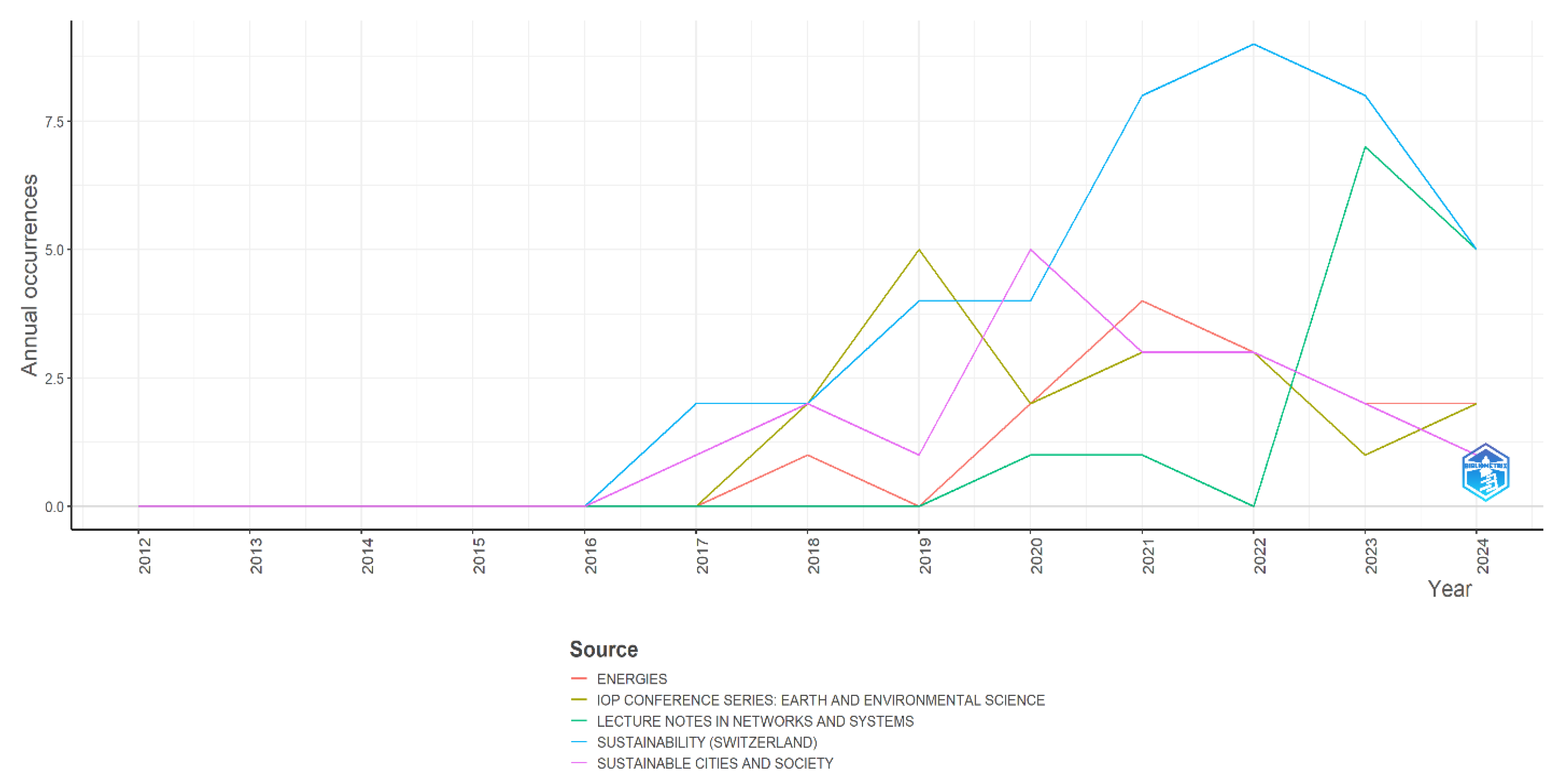
The annual production trends of top five leading sources in the field of smart cities and sustainability are between 2012 and 2024, with a peak contribution between 2016 and 2024 (Figure 4). From the journal ‘Sustainability’ presents the highest and most consistent growth, peaking around 2021, as it is one of the leading preferred publication platforms for interdisciplinary research in sustainability. This peak period underlines a multidisciplinary approach to addressing global urban and environmental challenges, driven by the growing global interest in achieving SDGs and advancing research in smart cities and sustainability practices as supported by Patel et al.; (2024).
The thematic map (Figure 5) provides an overview of the research field in smart cities and sustainability, categorizing themes based on their centrality and impact. Motor themes, such as smart city, sustainable city, and indicators, emerge as critical and highly influential areas, driving the research discourse and shaping advancements in urban sustainability and development. Basic themes, such as smart city, sustainability, and sustainable development, are the building blocks of the discipline, providing foundational knowledge but are less dynamic than motor themes. Further, emerging themes, such as smart cities, sustainability, and sustainable development, indicate areas that are gaining momentum or losing steam in the research landscape. Interestingly, no distinct niche themes are identified, suggesting a well-integrated research focus with few isolated high-impact studies.
Moreover, thematic evolution map (Figure 6) represents the progression of how research themes have evolved on smart cities and sustainability; how emerging concepts are developed over time into central ideas. Initial foundational studies include the works of Huovila et al. and Angelidou M.; where there as the establishment of indicators and frameworks in measuring smart and sustainable cities. Countries like Spain, Italy, and India are prominent contributors, with their research emphasizing urban sustainability, technological advancements, and policy frameworks. Over time, themes such as smart cities, sustainable cities, and indicators have become core ideas, reflecting their central role in advancing sustainable urban practices. The field has also seen significant interdisciplinary expansion, with emerging themes like big data, AI, and IoT highlighting the growing integration of technology into sustainability efforts (Gu et al.; 2025). Influential authors, including Huovila A.; Angelidou M.; and Bibri S.E.; have played a key role in shaping the discourse, transitioning from exploratory frameworks to widely accepted principles.
The visualization of the most relevant keywords (Figure 7) reinforces this evidence by finding the repeated and dominant concepts underlying research landscapes. Keywords such as smart city and cities (316) and sustainability (106) surfaced most often to indicate their important role in molding urban innovations and sustainable operations. Other frequently occurring terms consisted of sustainable development, indicators, and energy efficiency, which imply the integration of measurement frameworks into resource optimization schemes. Together, these insights recognize all the critical focus areas towards progression in sustainable urban practices and alignment with the overall intent of global sustainability goals (Chandran, 2024).
Thematic keyword map (Figure 8) further combines the centrality of concepts like smart city and sustainable development while mentioning the interaction of technology, environmental priorities, and governance frameworks in shaping the research. Themes such as sustainability, urban growth, and urban development highlight efforts toward sustainable urban transformation, while technological terms like artificial intelligence, big data, and the IoT reflect the growing integration of advanced technologies. Environmental priorities, including climate change, energy efficiency, and environmental sustainability, emphasize resource optimization and impact mitigation.
The most prominent keywords (Figure 9) depicted the areas of most significant core interest. The size and color of the boxes in the tree map obtained from the author's keywords represent frequency; higher frequencies have larger sizes. The top five most frequently occurring keywords are “smart city” with 312 occurrences (18%), “sustainable development” with 294 occurrences (17%), which reflects the main focus of the research on integrating sustainability into urban development through smart city initiatives followed by “sustainability” (71 occurrences, 4%), “urban growth” (64 occurrences, 4%), “decision making” (53 occurrences, 3%), and “urban development” (48 occurrences, 3%), showcasing the diverse aspects of urban transformation and governance addressed in the literature.
The findings pointed to the fact that research on smart cities and sustainability is multidimensional but mainly focuses on strategic integration, incorporating sustainability principles in urban planning, making use of technological innovations, and the socio-economic and environmental challenges (Leonardo et al.; 2024). These highlights the field’s alignment with the SDGs, offering valuable insights for policy making and economic strategies.
4.6. Network Analysis
We used Co-word analysis, Co-Citation Network analysis, Global collaboration Network, and Co-Occurrence Keyword Networks (Chandran & Sarath Chandran MC, 2024) to explore the scholarly contributions of smart cities and sustainability in greater depth. These findings enhance our understanding of the field by providing valuable insights into the field of scholarly collaboration and knowledge dissemination. We further integrated multiple network analysis to form a complete depiction of the literary scope in this field.
The co-citation network (Figure 10) captures the interconnected but different research paths, highlighting contributions of foundational work and emerging interdisciplinary perspectives that shape the discourse on smart cities and sustainability. The largest cluster (red) shows the well-known authors Albino V.; Caragliu A. and Angelidou M. who significantly contributed the framework area of smart cities and urban innovations with the biggest citation frequency showing their centrality in the relevant field. The second cluster (green) includes authors like Huovila A. and Ahvenniemi H. focused on a group of topics closely related with the red ones, indicating lower intellectual proximity combined with a weaker thematic fit as well. The third cluster (blue) consists of authors; Bibri S.E. and Girard P.; who used an interdisciplinary research approach, aiming at the sustainable principles within Smart City framework. This cluster is more distant from the others, suggesting a specialized but less frequently co-cited research focus.
Further, the global collaboration analysis (Figure 11) between co-authors, revealing 10 different clusters. The network shows diverse co-authorship network which is present within the smart cities and sustainability field. Among the clusters, the largest (blue) cluster indicates key contributors such as Angelakoglou K.; Kourtzanidis K.; and Nikolopoulos N.; reflecting a highly connected co-authorship network. The second prominent cluster (orange), with Garau C. and Pinna F. showing strong collaborative ties. Likewise, the green cluster emphasizes Sharifi A. and Allam Z.; while the red cluster illustrates the collaboration of Ohri A. with others. The small clusters include authors like Zhang Y. and Wang C. (purple), Yailymov B. and Shelestov A. (brown), and Huovila A. and Airaksinen M. (green). Such groups represent a more localized or specific collaboration within a larger field. While the clusters are very dispersed, this indicates that even though several very well-defined collaboration networks exist, there is still much to be learned through cross-regional and interdisciplinary partnering (Leonardo et al.; 2024). The visualization of varying degrees of co-authorship and collaboration suggests the opportunity to extend global partnerships in the field of smart cities and sustainability.
The co-occurrence keyword network (Figure 12) reveals seven distinct clusters, which represent a particular subfield in the research areas of smart cities, sustainability, and sustainable development. The largest and most central cluster (red) features keywords like smart city, sustainability, urban planning, and sustainable city prominently, indicating that these are crucially important to the research landscape and frequently interconnected. This cluster represents the embedding of core themes like urban transformation, governance, and indicators within sustainability-focused urban development. The second largest cluster (blue) contains keywords such as artificial intelligence, big data, machine learning, and IoT, reflecting the technological progress that underpins smart city innovations. These terms reflect increasing reliance on data-driven solutions and intelligent systems in attaining sustainable urbanization. The green cluster focuses on terms such as smart governance, mobility, and environment, which underlines the operational aspects of smart city implementation and their alignment with sustainability goals.
Smaller clusters, such as purple, features assessment tools and urban resilience, indicating their role in evaluating and strengthening the adaptability of urban systems. Additional clusters that include orange, which finds some terms like sustainable development goals. Brown cluster focusing on smart and sustainable cities. These two clusters shine with their special contribution to the broader discourse. The connections between these clusters above remind us that this is an interdisciplinary field of practice combining governance, technology, and environmental strategies to solve the challenge of global urban issues (Suárez et al.; 2024).
The co-word analysis network (Figure 13), generated through VOSviewer, points out the connectivity of key research themes in smart cities and sustainability. The overlay visualization of keywords with at least five occurrences illustrates their relationship and thematic evolution. The terms smart city, smart cities and sustainability are central to the network, which reflects their dominance in shaping the research landscape. Surrounded by these core terms are the close relations of concepts such as urban planning, sustainability, indicators, and quality of life, thus reflecting the leading themes of this direction. The network manifests significant interdisciplinary expansion over time. Technological advancements such as AI, IoT, and big data are moved together, indicating their growing importance in improving smart city solutions. The focus is on the resource optimization and ecological sustainability of environmental priorities, which includes climate change, energy efficiency, and environmental indicators.
The terms that associate to policy framework and the operational strategies are observed to be sustainable development goals, smart governance, and smart mobility (Figure 13). Emerging research directions that the network analysis identifies are digital twins, COVID-19, and electric vehicles, as shown in the ways recent global challenges and innovations have shaped the field. The usage of words such as resilience and social sustainability implies greater impact and significance on equity and adaptability in urban development. The findings suggest that smart city research emerge with multidisciplinary approach towards technology, environment and social aspects aligning with SDGs (Alazab et al.; 2021). The incorporation of these themes indicates a progressive approach to the challenge of urban development while ensuring sustainable and inclusive development (Guo, 2024). These findings highlight the significance of collaborative research and policy in stepping up innovation and tackling the complex problems in urban life.
5. Discussions
Cities around the world are currently being confronted with unparalleled challenges from increased urbanization, climate change, and resource depletion (Sancino et al.; 2021). The integration of smart city frameworks with SDGs has, therefore, become a necessity. The present study’s findings offer significant contribution into the changing landscape of research on smart cities and sustainability. The study utilised bibliometric techniques (Pritchard, 1969) to analyze co-citation (Figure10), co-authorship (Figure 11), and keyword co-occurrence networks (Figure 12) to determine thematic trends, influential authors (Figure 6), and emerging areas of interest (Figure 5 and 6) in the interdisciplinary field. The results of the study further highlighted the integration of technological (Ullah et al.; 2021), environmental (Michalina et al.; 2021), and governance frameworks (Patel et al.; 2024) to realize sustainable urban development.
The thematic analysis (Figure 4) identified the major role for the motor themes on the theme map like smart city, sustainable city, and indicators. The basic themes that provide the foundational knowledge for the domain are those that support these motor themes: sustainability and urban planning. Emerging themes such as big data and AI showed a draining nature of the field (Bibri et al.; 2024) and this transition reflects the growing reliance on intelligent systems to address complex urban challenges while promoting sustainability (Macaione et al.; 2024).
The keyword co-occurrence analysis (Figure 12) further supports the importance of these themes, where smart city and sustainability rank as the most connected terms. The emerging keywords such as smart mobility and resilience indicated a new direction towards more real-world challenges, such as climate change and social equity (Alazab et al.; 2021). These results clearly reflect the need to adopt a multi-disciplinary approach in dealing with urban issues as a whole (Leonardo et al.; 2024). The co-authorship network (Figure 11) shows the key authors who are the most influential ones, like Angelakoglou K. and Nikolopoulos N.; who are connected to the highest collaborative clusters. The networks showed the international nature of the field which is evident by the dominant contributions from authors belonging to countries like Spain, Italy, and India. However, the relatively less connected nature of the smaller clusters’ mentions the potential benefits that could be obtained from cross-regional and interdisciplinary collaborations in sharing knowledge and creating innovation in the field (Gu et al.; 2025).
The co-citation analysis (Figure 10) portrays the intellectual structure of the field, by authors like Albino V. and Huovila A. contributing to the foundations of the discourse. These authors’ work forms a foundation for subsequent studies, particularly for the development of frameworks and indicators of smart and sustainable cities (Leonardo et al.; 2024). These frameworks are embedded within policy and practice which continues to define an important frontier for progress in the field. Technological advancements (Sharifi et al.; 2024) became a fundamental driver of research in this field, as reflected by the dominant usage of keywords like IoT, big data, and artificial intelligence in the co-word analysis (Figure 13). It increasingly represents essential tools for optimizing urban systems, enhancing governance, and improving quality of life in cities (Ge et al.; 2024). This can be shown with the integration of digital twin technologies and machine learning. Energy efficiency and renewable sources, (Figure 5 and 8) represents an improvement in alignment by smart city research with the rest of global SDG goals (Ahvenniemi et al.; 2017). These technologies not only reduce environmental impacts but also promote economic and social benefits, particularly in underserved urban areas (Suárez et al.; 2024).
The findings of this study have significant implications for policymakers and practitioners aiming to advance sustainable urban development. The emphasis on themes like SDGs and governance suggests that aligning research with international frameworks can drive meaningful progress (Filho et al.; 2024). Policymakers should invest more in technology-driven solutions, such as smart mobility and energy efficiency, to address pressing urban challenges (Zhang et al.; 2024). Global and interdisciplinary collaborations, as indicated in author co-citation analysis (Figure 11) accelerates knowledge dissemination and innovation. Partnerships between academia, industry, and government can create synergies that enhance the practical implementation of research findings (Saeed Esfandi et al.; 2024). The future research should also focus on the open gaps identified in the keyword analysis, especially those less emphasized about social sustainability and equity. These dimensions can contribute significant difference in the general understanding of urban challenges and ensure all segments benefit from the smart city initiatives.
Finally, the study captures the dynamic, interdisciplinary nature of research in smart cities and sustainability. In this regard, the findings provide a guide for future research and policymaking in this field by identifying important themes, influential contributors, and emerging trends (Ullah et al.; 2021). Integrating technology, governance, and environmental strategies will prove to be indispensable in addressing the complex urban challenges and achieving sustainable development in cities worldwide.
The insights from this study provide a significant foundation for reshaping urban research agendas and informing policy frameworks. By identifying underexplored themes such as social equity, transdisciplinary governance, and Global South inclusion, the study supports city leaders, urban researchers, and funding agencies in aligning future research and investments with SDG 11 priorities. These findings can guide evidence-based urban policy development that is both inclusive and future-resilient.
6. Conclusions
The increasing pace of urbanization coupled with mounting sustainability concerns has propelled smart cities and sustainability to the forefront of global research and policy agendas. Through a comprehensive bibliometric analysis - the first of its kind in this domain - this study illuminates the key themes, influential contributors, and emerging trends that have shaped the field's evolution. The findings reveal a deeply interdisciplinary research landscape characterized by the convergence of environmental strategies, technological innovation, and governance frameworks to address complex urban challenges. Smart cities’ sustainability and urban development emerge as the primary motor themes driving the research momentum. The analysis highlights the growing prominence of cutting-edge technologies like artificial intelligence, big data analytics, and IoT in pursuing urban sustainability goals.
In addition, the approach has changed from isolated strategies to holistic frameworks that can address issues such as inclusion, resilience, and equity in the development of a city. In this regard, the present study focused on how global collaboration works as one of the key drivers for innovation and knowledge in this context. China, Italy, and Spain had become the leaders and they strongly contributed to the research on smart cities and sustainability. Even the filed has made significant progress, there is a need for more cross-regional and interdisciplinary partnerships to be developed to meet the specific needs of cities within different contexts. As it stands, despite the paces the field has taken, it is still lacking in some areas, especially in the realms of social sustainability and equity, which require greater attention in future research. Addressing these dimensions is critical to ensure that smart city initiatives are inclusive and beneficial to all sections of society, especially the underprivileged. Policymakers and practitioners should emphasize such frameworks that integrate sustainability principles with innovative technologies, thereby promoting collaboration between governments, academia, and industries. Thus, the study contributes to an understanding of the intellectual structure and thematic evolution of smart cities and sustainability research.
Although the results are insightful, there is a limitation associated with using Scopus only as the database and geographical representation. Future research can be expanded further to include databases such as WoS, SSCI, underrepresented regions and emerging contexts, thereby further enriching the field. These gaps, along with the promotion of innovative solutions, will advance cities toward becoming more resilient, equitable, and sustainable cities, aligned with global goals for urban development.
Informed Consent
No informed consent is required as the study does not involve any human participants.
Competing Interests
The authors declare no competing financial or non-financial interests that could have influenced the outcome of this study or the interpretation of its results.
Funding
Not Applicable.
Data Availability Statement
Data is provided within the manuscript or supplementary information files.
Appendix I
source: : ( title-abs-key ( smart and cities, and sustainable and cities, and sustainable and development ) or title ( smart and cities and communities ) ) and pub year > 2011 and pub year < 2025 and ( limit-to ( exact keyword , “smart city” ) or limit-to ( exact keyword , “sustainable development” ) or limit-to ( exact keyword , “smart cities” ) or limit-to ( exact keyword , “sustainability” ) or limit-to ( exact keyword , “urban growth” ) ) and ( limit-to ( language , “English” ) ) and ( limit-to ( subj area , “soci” ) or limit-to ( subj area , “ener” ) or limit-to ( subj area , “Envi” ) or limit-to ( subj area , “busi” ) or limit-to ( subj area , “econ” ) or limit-to ( subj area , “mult” ) ) and ( limit-to ( doctype , “ar” ) or limit-to ( doctype , “cp” ) ).
References
- Abu-Rayash, A.; Dincer, I. Development of integrated sustainability performance indicators for better management of smart cities. Sustainable Cities and Society 2021, 67, 102704. [Google Scholar] [CrossRef]
- Adel, A.; HS Alani, N. Human-Centric Collaboration and Industry 5.0 Framework in Smart Cities and Communities: Fostering Sustainable Development Goals 3, 4, 9, and 11 in Society 5.0. Smart Cities 2024, 7, 1723–1775. [Google Scholar] [CrossRef]
- Ahvenniemi, H.; Huovila, A.; Pinto-Seppä, I.; Airaksinen, M. What are the differences between sustainable and smart cities? Cities 2017, 60, 234–245. [Google Scholar] [CrossRef]
- Alazab, M.; Lakshmanna, K.; G, T.R.; Pham, Q.-V.; Reddy Maddikunta, P.K. Multi-objective cluster head selection using fitness averaged rider optimization algorithm for IoT networks in smart cities. Sustainable Energy Technologies and Assessments 2021, 43, 100973. [Google Scholar] [CrossRef]
- Aria, M.; Cuccurullo, C. bibliometrix: An R-tool for comprehensive science mapping analysis. Journal of Informetrics 2017, 11, 959–975. [Google Scholar] [CrossRef]
- Bachmann, N.; Tripathi, S.; Brunner, M.; Jodlbauer, H. The Contribution of Data-Driven Technologies in Achieving the Sustainable Development Goals. Sustainability 2022, 14, 2497. [Google Scholar] [CrossRef]
- Bibri, S.E.; Huang, J.; Jagatheesaperumal, S.K.; Krogstie, J. The synergistic interplay of artificial intelligence and digital twin in environmentally planning sustainable smart cities: A comprehensive systematic review. Environmental Science and Ecotechnology 2024, 20, 100433. [Google Scholar] [CrossRef] [PubMed]
- Birsu Ece Kaya, & İkbal ERBAŞ. The relationship between urban transformation and sustainability: a systematic review and future trends. Journal of Asian Architecture and Building Engineering, 2023; 1–20. [CrossRef]
- Chandran, R.; Sarath Chandran, MC. Green finance and sustainability: mapping research development through bibliometric analysis. Discover Sustainability 2024, 5. [Google Scholar] [CrossRef]
- Chandran, R.; Bindusree, A. R, & M.C. Sarath Chandran. Understanding public perceptions, attitudes, and awareness of air pollution and its effects on health. Elsevier EBooks, 2024; 235–257. [Google Scholar] [CrossRef]
- Chandran, S. (2024). Eco-friendly finance: the role of green CSR, processes, and products in enhancing brand trust and image. Environment Development and Sustainability. [CrossRef]
- Chandran, S.; Sathiyabama B,; N. Santhoshkumar. Sustainable Banking: A Literature Review and Bibliometric Analysis. International Journal of Banking Risk and Insurance 2024, 12, 9–17. [Google Scholar] [CrossRef]
- Chen, C.-W. Can smart cities bring happiness to promote sustainable development? Contexts and clues of subjective well-being and urban livability. Developments in the Built Environment 2023, 13, 100108. [Google Scholar] [CrossRef]
- Cheng, Y.; Zhang, Y.; Wang, J.; Jiang, J. The impact of the urban digital economy on China’s carbon intensity: Spatial spillover and mediating effect. Resources, Conservation and Recycling 2023, 189, 106762. [Google Scholar] [CrossRef]
- Diaz-Sarachaga, J.M.; Jato-Espino, D.; Castro-Fresno, D. Is the Sustainable Development Goals (SDG) index an adequate framework to measure the progress of the 2030 Agenda? Sustainable Development 2018, 26, 663–671. [Google Scholar] [CrossRef]
- Donthu, N.; Kumar, S.; Mukherjee, D.; Pandey, N.; Lim, W.M. How to conduct a bibliometric analysis: An overview and guidelines. Journal of Business Research 2021, 133, 285–296. [Google Scholar] [CrossRef]
- Filho, W.L.; Dibbern, T.; Alzira, M.; Cristofoletti, E.C.; Mbah, M.; Mishra, A.; Clarke, A.; Samuel, N.; Apraiz, J.C.; Abubakar, I.R.; Aina, Y.A. The added value of partnerships in implementing the UN sustainable development goals. Journal of Cleaner Production 2024, 438, 140794–140794. [Google Scholar] [CrossRef]
- Fuhr, H. The rise of the Global South and the rise in carbon emissions. Third World Quarterly 2021, 42, 1–23. [Google Scholar] [CrossRef]
- Garau, C.; Pavan, V.M. Evaluating Urban Quality: Indicators and Assessment Tools for Smart Sustainable Cities. Sustainability 2018, 10, 575. [Google Scholar] [CrossRef]
- Ge, Y.; Jia, W.; Zhao, H.; Xiang, P. A framework for urban resilience measurement and enhancement strategies: A case study in Qingdao, China. Journal of Environmental Management 2024, 367, 122047–122047. [Google Scholar] [CrossRef] [PubMed]
- Gelan, E.; Girma, Y. (2021). Urban green infrastructure accessibility for the achievement of SDG 11 in rapidly urbanizing cities of Ethiopia. GeoJournal. [CrossRef]
- Grill, C. Involving stakeholders in research priority setting: a scoping review. Research Involvement and Engagement 2021, 7. [Google Scholar] [CrossRef]
- Gu, Q.; Sing, M.C.P.; Jefferies, M.; Kanjanabootra, S. Bridging the gap between smart cities and sustainability: Current practices and future trends. Cities 2025, 159, 105799. [Google Scholar] [CrossRef]
- Guo, H. SDG 11, Sustainable Cities and Communities. Sustainable Development Goals Series 2024, 87–119. [Google Scholar] [CrossRef]
- Guo, Q.; Wang, Y.; Dong, X. Effects of smart city construction on energy saving and CO2 emission reduction: Evidence from China. Applied Energy 2022, 313, 118879. [Google Scholar] [CrossRef]
- Hannan, M.A.; Begum, R.A.; Al-Shetwi, A.Q.; Ker, P.J.; Al Mamun, M.A.; Hussain, A.; Basri, H.; Mahlia, T.M.I. Waste collection route optimisation model for linking cost saving and emission reduction to achieve sustainable development goals. Sustainable Cities and Society 2020, 62, 102393. [Google Scholar] [CrossRef]
- Huovila, A.; Bosch, P.; Airaksinen, M. Comparative analysis of standardized indicators for Smart sustainable cities: What indicators and standards to use and when? Cities 2019, 89, 141–153. [Google Scholar] [CrossRef]
- Ivars-Baidal, J.A.; Vera-Rebollo, J.F.; Perles-Ribes, J.; Femenia-Serra, F.; Celdrán-Bernabeu, M.A. Sustainable tourism indicators: what’s new within the smart city/destination approach? Journal of Sustainable Tourism 2021, 31, 1–24. [Google Scholar] [CrossRef]
- Jaiswal, A.; Sagar, R.; Pandey, A.; Yadav, D.; Ansari, M.S.; Rawat, R. Building Resilient Urban Futures: Adapting Cities to Climate Change Challenges 2024, 51–68. [CrossRef]
- Kaika, M. “Don’t call me resilient again! ”: the New Urban Agenda as immunology … or … what happens when communities refuse to be vaccinated with “smart cities” and indicators. Environment and Urbanization 2017, 29, 89–102. [Google Scholar] [CrossRef]
- Kalinin, M.; Krundyshev, V.; Zegzhda, P. Cybersecurity Risk Assessment in Smart City Infrastructures. Machines 2021, 9, 78. [Google Scholar] [CrossRef]
- Klopp, J.M.; Petretta, D.L. The urban sustainable development goal: Indicators, complexity, and the politics of measuring cities. Cities 2017, 63, 92–97. [Google Scholar] [CrossRef]
- Knell, R. (2014). Introductory R: A Beginner’s Guide to Data Visualisation, Statistical Analysis and Programming in R. Robert Knell.
- Kruijf, J.V.; Verbrugge, L.; Schröter, B.; Haan, R.; Cortes Arevalo, J.; Fliervoet, J.; Henze, J.; Albert, C. (2022). Knowledge co-production and researcher roles in transdisciplinary environmental management projects. Sustainable Development. [CrossRef]
- Lazaroiu, G.C.; Roscia, M. Definition methodology for the smart cities model. Energy 2012, 47, 326–332. [Google Scholar] [CrossRef]
- Leonardo, do, V.; Timo, W.; Moretto, Y. Smart city and sustainability indicators: a bibliometric literature review. Discover Sustainability, 2024; 5. [CrossRef]
- Li, X.; Stringer, L.C.; Dallimer, M. The Impacts of Urbanisation and Climate Change on the Urban Thermal Environment in Africa. Climate 2022, 10, 164. [Google Scholar] [CrossRef]
- Lin, B.B.; Ossola, A.; Alberti, M.; Andersson, E.; Bai, X.; Dobbs, C.; Elmqvist, T.; Evans, K.L.; Frantzeskaki, N.; Fuller, R.A.; Gaston, K.J.; Haase, D.; Jim, C.Y.; Konijnendijk, C.; Nagendra, H.; Niemelä, J.; McPhearson, T.; Moomaw, W.R.; Parnell, S.; Pataki, D. Integrating solutions to adapt cities for climate change. The Lancet Planetary Health 2021, 5, e479–e486. [Google Scholar] [CrossRef]
- Liu, J.; Chen, N.; Chen, Z.; Xu, L.; Du, W.; Zhang, Y.; Wang, C. Towards sustainable smart cities: Maturity assessment and development pattern recognition in China. Journal of Cleaner Production 2022, 370, 133248. [Google Scholar] [CrossRef]
- Lombardía, A.; Gómez-Villarino, M.T. (2023). Green infrastructure in cities for the achievement of the unsustainable development goals: a systematic review. Urban Ecosystems. [CrossRef]
- Macaione, I.; Raffa, A.; Andaloro, B. Climate-Adaptive Nature-Based Regenerative Urban Green Streetscapes: Design Exploration from the City of Matera. Sustainability 2024, 16, 6811–6811. [Google Scholar] [CrossRef]
- Michalina, D.; Mederly, P.; Diefenbacher, H.; Held, B. Sustainable Urban Development: A Review of Urban Sustainability Indicator Frameworks. Sustainability 2021, 13, 9348. [Google Scholar] [CrossRef]
- Mohapatra, S.; Maiya, G.A.; Nayak, U.U.; Benny, L.; Watson, J.; Kinjawadekar, A.; Nandineni, R.D. Centering Social Justice and Equity in Research on Accessibility to Public Buildings for Individuals with Mobility Disabilities: A scoping review. F1000Research 2024, 13, 930. [Google Scholar] [CrossRef] [PubMed]
- Morgan, R.L.; Whaley, P.; Thayer, K.A.; Schünemann, H.J. Identifying the PECO: A framework for formulating good questions to explore the association of environmental and other exposures with health outcomes. Environment International 2018, 121, 1027–1031. [Google Scholar] [CrossRef]
- Nageye, A.Y.; Jimale, A.D.; Abdullahi, M.O.; Ahmed, Y.A. Emerging Trends in Data Science and Big Data Analytics: A Bibliometric Analysis. International Journal of Electronics and Communication Engineering 2024, 11, 84–98. [Google Scholar] [CrossRef]
- Nikki Han, M.J.; Kim, M.J. A critical review of the smart city in relation to citizen adoption towards sustainable smart living. Habitat International 2021, 108, 102312. [Google Scholar] [CrossRef]
- Norouzi, M.; Chàfer, M.; Cabeza, L.F.; Jiménez, L.; Boer, D. Circular economy in the building and construction sector: A scientific evolution analysis. Journal of Building Engineering 2021, 44, 102704. [Google Scholar] [CrossRef]
- Ortega-Fernández, A.; Martín-Rojas, R.; García-Morales, V.J. Artificial Intelligence in the Urban Environment: Smart Cities as Models for Developing Innovation and Sustainability. Sustainability 2020, 12, 7860. [Google Scholar] [CrossRef]
- Patel, U.R. ; Amirhosein Ghaffarianhoseini, Ghaffarianhoseini, A. ; Burgess, A. Digital Twin Technology for sustainable urban development: A review of its potential impact on SDG 11 in New Zealand. Cities 2024, 155, 105484–105484. [Google Scholar] [CrossRef]
- Patrão, C.; Moura, P.; Almeida, A.T. de. Review of Smart City Assessment Tools. Smart Cities 2020, 3, 1117–1132. [Google Scholar] [CrossRef]
- Pereira, C. ; Inês Flores-Colen, & María Manuela Mendes. (2023). Guidelines to reduce the effects of urban heat in a changing climate: Green infrastructures and design measures. Sustainable Development. [CrossRef]
- Pessin, V.Z.; Yamane, L.H.; Siman, R.R. Smart bibliometrics: an integrated method of science mapping and bibliometric analysis. Scientometrics 2022, 127, 3695–3718. [Google Scholar] [CrossRef]
- Pineo, H. Towards healthy urbanism: inclusive, equitable and sustainable (THRIVES) – an urban design and planning framework from theory to praxis. Cities & Health 2020, 6, 1–19. [Google Scholar] [CrossRef]
- Prabhakar, A. A Sustainable and Inclusive Economic Development: A Global Imperative: A Global Imperative. Journal of Recycling Economy & Sustainability Policy 2024, 4, 1–16. [Google Scholar]
- Pritchard, A. Statistical bibliography. 1969.
- Quijano, A.; Hernández, J.L.; Nouaille, P. ; Mikko Virtanen, Sánchez-Sarachu, B.; Francesc Pardo-Bosch, & Knieling, J. (2022). Towards Sustainable and Smart Cities: Replicable and KPI-Driven Evaluation Framework. [CrossRef]
- Quitzau, M.-B.; Gustafsson, S.; Hoffmann, B.; Krantz, V. Sustainability coordination within forerunning Nordic municipalities – Exploring structural challenges across departmental silos and hierarchies. Journal of Cleaner Production 2022, 335, 130330. [Google Scholar] [CrossRef]
- Rani, S.; Mishra, R.K.; Usman, M.; Kataria, A.; Kumar, P.; Bhambri, P.; Mishra, A.K. Amalgamation of Advanced Technologies for Sustainable Development of Smart City Environment: A Review. IEEE Access 2021, 9, 150060–150087. [Google Scholar] [CrossRef]
- Ravisankar, Ibraheem, I.K.; Raha, S.; T. Sakthi, Ashok, J.; Anu Tonk. Bibliometric Analysis of AI Research in Sustainable Smart Cities. CRC Press EBooks, 2024; 189–208. [CrossRef]
- Rozas-Vásquez, D.; Spyra, M.; Jorquera, F.; Molina, S.; Caló, N.C. Ecosystem Services Supply from Peri-Urban Landscapes and Their Contribution to the Sustainable Development Goals: A Global Perspective. Land 2022, 11, 2006. [Google Scholar] [CrossRef]
- Saeed Esfandi, Safiyeh Tayebi, Byrne, J. ; Job Taminiau, Golkou Giyahchi, & Seyed Ali Alavi. Smart Cities and Urban Energy Planning: An Advanced Review of Promises and Challenges. Smart Cities 2024, 7, 414–444. [Google Scholar] [CrossRef]
- Sancino, A.; Stafford, M.; Braga, A.; Budd, L. What can city leaders do for climate change? Insights from the C40 Cities Climate Leadership Group network. Regional Studies 2021, 56, 1–10. [Google Scholar] [CrossRef]
- Shackleton, C.M. Urban Green Infrastructure for Poverty Alleviation: Evidence Synthesis and Conceptual Considerations. Frontiers in Sustainable Cities 2021, 3. [Google Scholar] [CrossRef]
- Sharifi, A. Urban sustainability assessment: An overview and bibliometric analysis. Ecological Indicators 2020, 121, 107102. [Google Scholar] [CrossRef]
- Sharifi, A.; Allam, Z.; Bibri, S.E.; Khavarian-Garmsir, A.R. Smart cities and sustainable development goals (SDGs): A systematic literature review of co-benefits and trade-offs. Cities 2024, 146, 104659. [Google Scholar] [CrossRef]
- Sianes, A.; Vega-Muñoz, A.; Tirado-Valencia, P.; Ariza-Montes, A. Impact of the Sustainable Development Goals on the academic research agenda. A scientometric analysis. PLOS ONE 2022, 17, e0265409. [Google Scholar] [CrossRef] [PubMed]
- Spiliotopoulou, M.; Roseland, M. Urban sustainability via urban productivity? A conceptual review and framework proposal. Local Environment 2021, 1–20. [Google Scholar] [CrossRef]
- Suárez, M.; Rieiro-Díaz, A.M.; Alba, D.; Langemeyer, J.; Gómez-Baggethun, E.; Ametzaga-Arregi, I. Urban resilience through green infrastructure: A framework for policy analysis applied to Madrid, Spain. Landscape and Urban Planning 2024, 241, 104923. [Google Scholar] [CrossRef]
- Tate, C.; Wang, R.; Selin Akaraci, Burns, C. ; Martin, L.; Clarke, M.; Hunter, R.F. The contribution of urban green and blue spaces to the United Nation’s Sustainable Development Goals: An evidence gap map. Cities 2024, 145, 104706–104706. [Google Scholar] [CrossRef]
- Ullah, F.; Qayyum, S.; Thaheem, M.J.; Al-Turjman, F.; Sepasgozar, S.M.E. Risk management in sustainable smart cities governance: A TOE framework. Technological Forecasting and Social Change 2021, 167, 120743. [Google Scholar] [CrossRef]
- Van Eck, N.J.; Waltman, L. Software survey: VOSviewer, a computer program for bibliometric mapping. Scientometrics 2010, 84, 523–538. [Google Scholar] [CrossRef]
- Wang, F.; Harindintwali, J.D.; Wei, K.; Shan, Y.; Mi, Z.; Costello, M.J.; Grunwald, S.; Feng, Z.; Wang, F.; Guo, Y.; Wu, X.; Kumar, P.; Matthias Kästner, Feng, X. ; Kang, S.; Li, Z.; Fu, Y.; Zhao, W.; Ouyang, C.; Shen, J. Climate change: Strategies for mitigation and adaptation. The Innovation Geoscience 2023, 1, 100015–100015. [Google Scholar] [CrossRef]
- Wang, M.; Zhou, T. Understanding the dynamic relationship between smart city implementation and urban sustainability. Technology in Society 2022, 70, 102018. [Google Scholar] [CrossRef]
- Whittingham, K.L.; Earle, A.G.; Leyva-de la Hiz, D.I.; Argiolas, A. The impact of the United Nations sustainable development goals on corporate sustainability reporting. BRQ Business Research Quarterly 2022, 26, 234094442210855. [Google Scholar] [CrossRef]
- Zeng, X.; Yu, Y.; Yang, S.; Lv, Y.; Sarker, M.N.I. Urban Resilience for Urban Sustainability: Concepts, Dimensions, and Perspectives. Sustainability 2022, 14, 2481. [Google Scholar] [CrossRef]
- Zhang, F.; Zhou, L.; Wang, Z.; Congna Lv, Zhang, Q. ; Wang, J.; Zhang, J.; Zhang, Y. Empowering urban energy transition through data-driven decision-making: A statistical examination of technological innovations in transportation and mobility. Sustainable Cities and Society 2024, 106, 105374–105374. [Google Scholar] [CrossRef]
- Zuccaro, G.; De Gregorio, D.; Leone, M.F. Theoretical model for cascading effects analyses. International Journal of Disaster Risk Reduction 2018, 30, 199–215. [Google Scholar] [CrossRef]
Figure 1.
Article selection for bibliometric review using PRISMA Model.
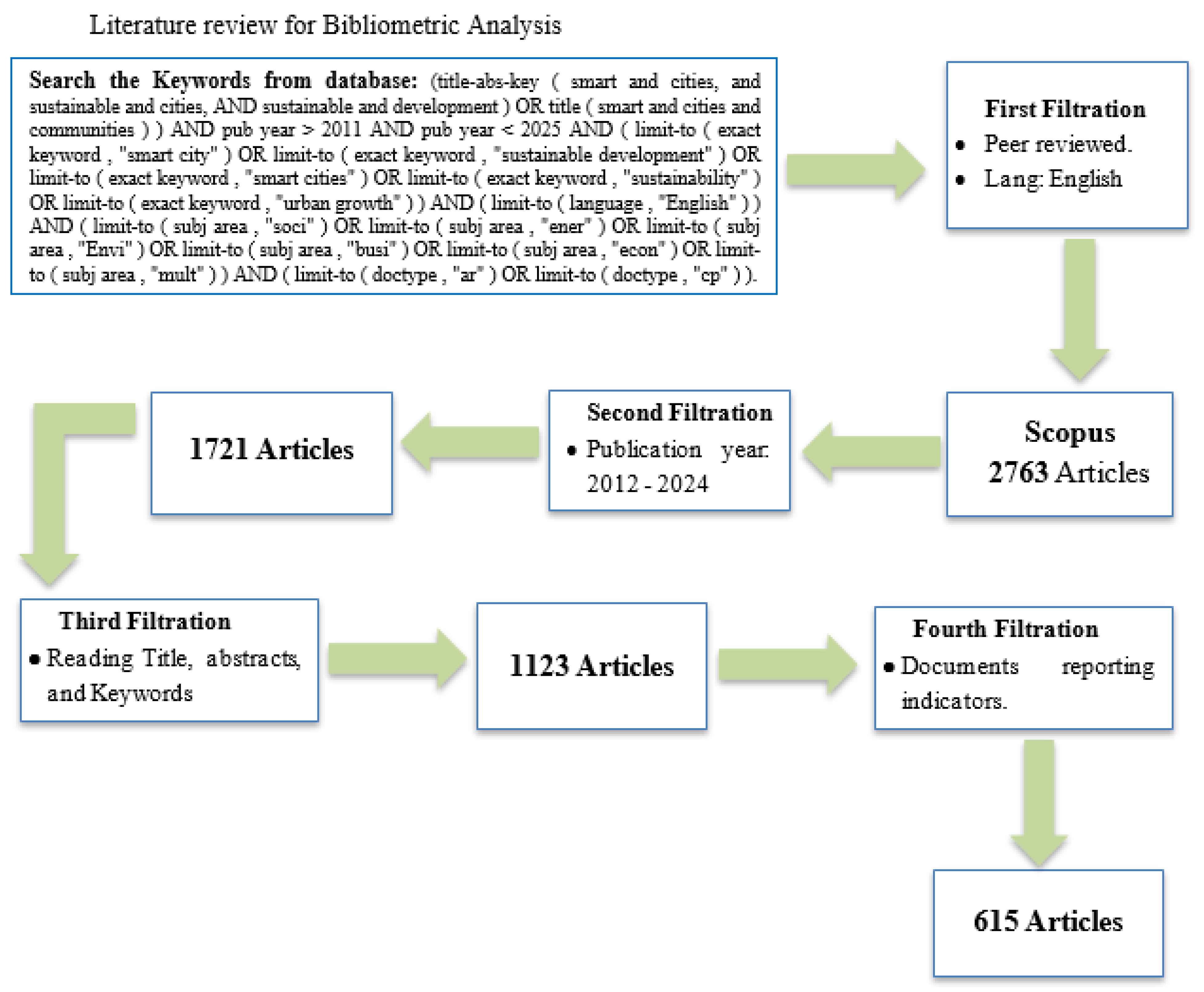
Figure 2.
Publication Trend – Annual Scientific Production.
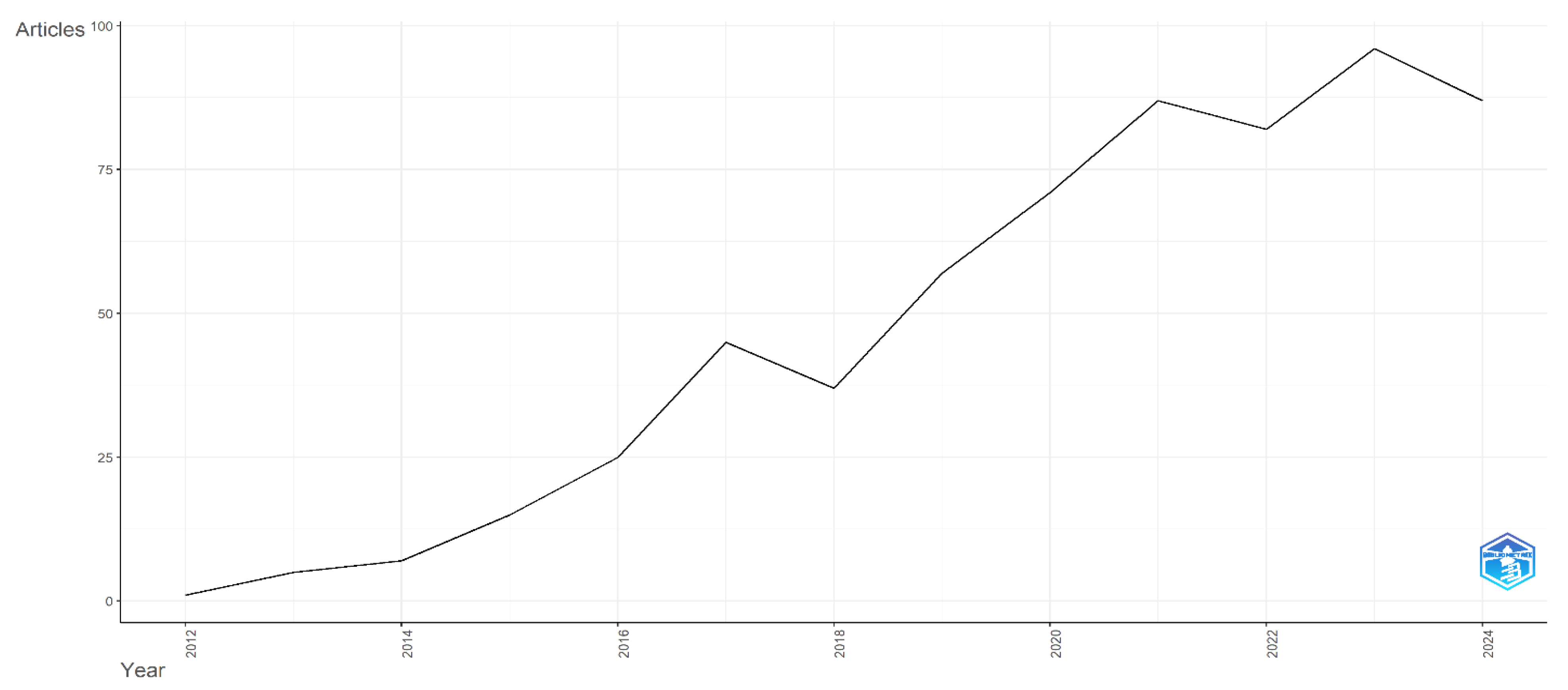
Figure 3.
Country Collaboration Map.
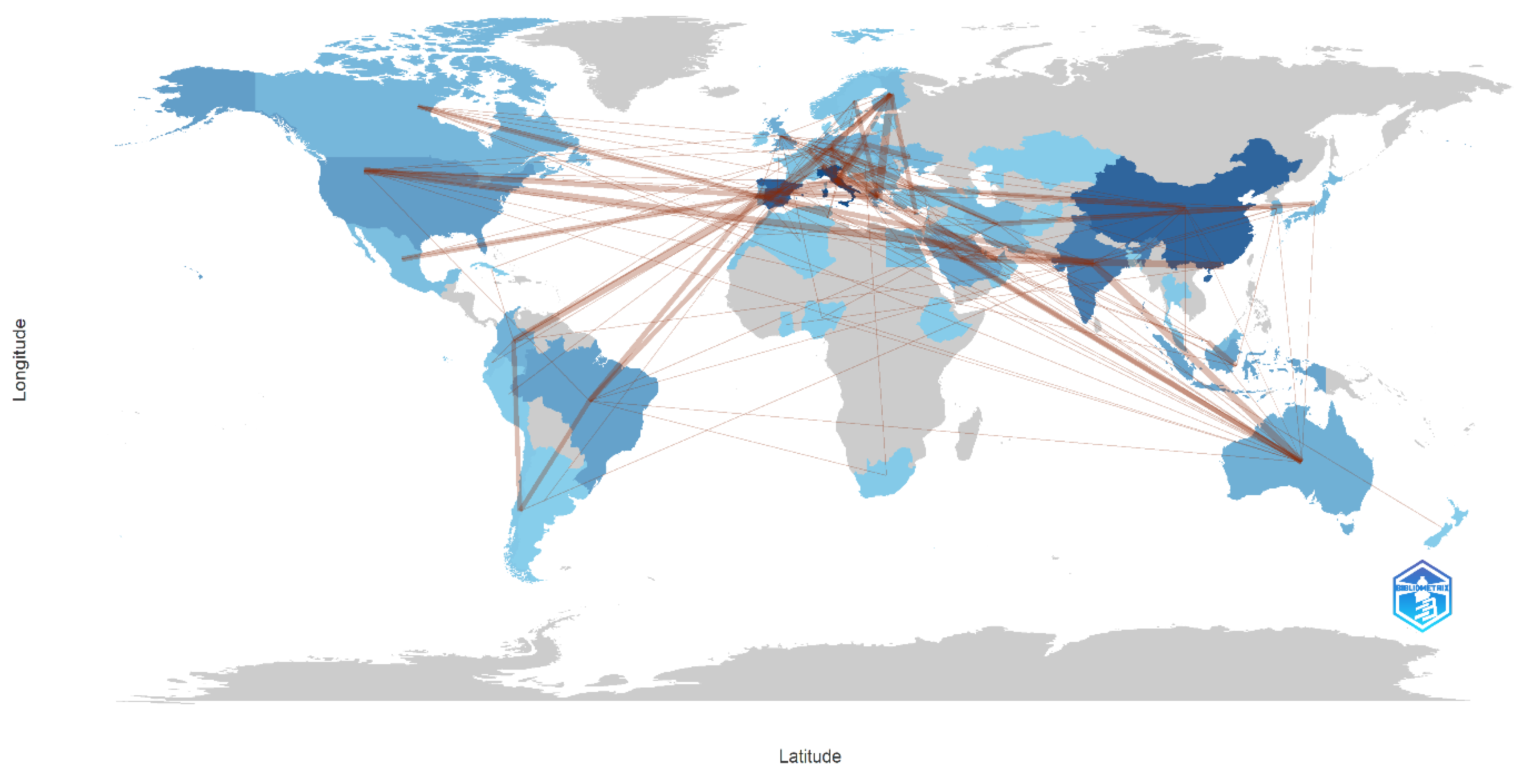
Figure 5.
Thematic Map Coupling. (Source: Field: ‘Author’s Keyword; No. of Words: 250; Minimum Cluster Frequency (per 1000 documents): 5; No. of Labels: 3; Clustering Algorithm: Walktrap).
Figure 5.
Thematic Map Coupling. (Source: Field: ‘Author’s Keyword; No. of Words: 250; Minimum Cluster Frequency (per 1000 documents): 5; No. of Labels: 3; Clustering Algorithm: Walktrap).
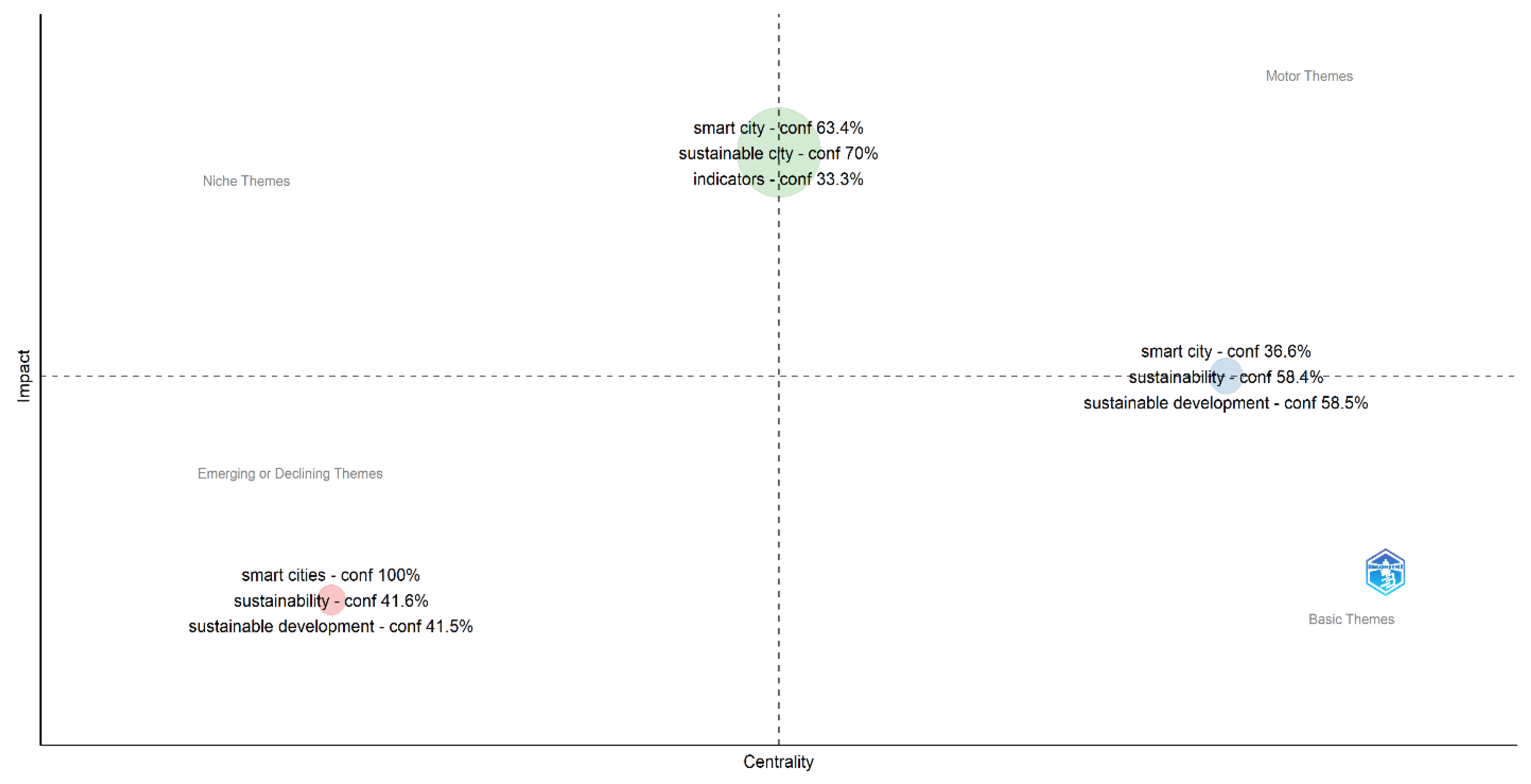
Figure 6.
Thematic Evolution Map.
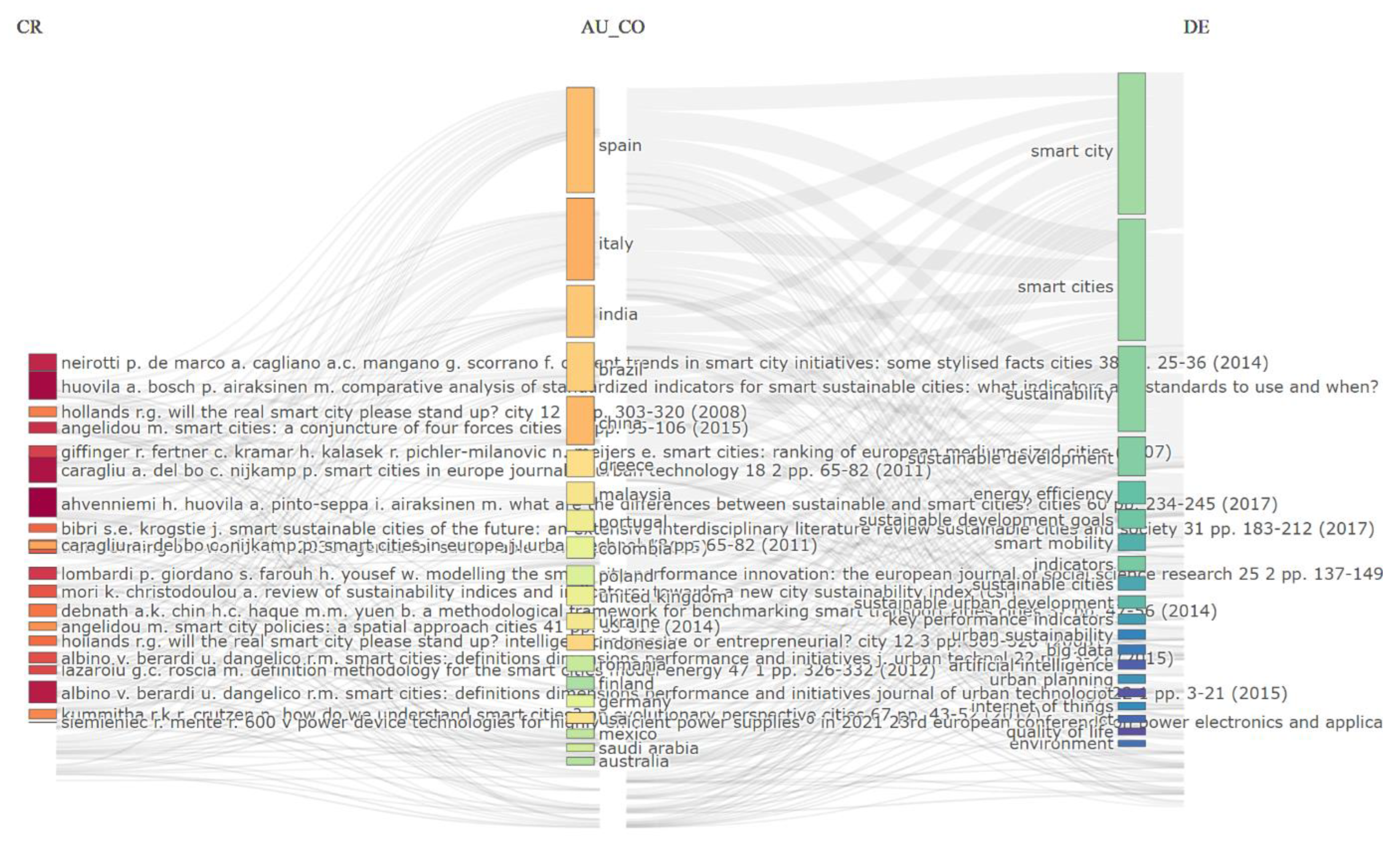
Figure 7.
Most Relevant Keywords.
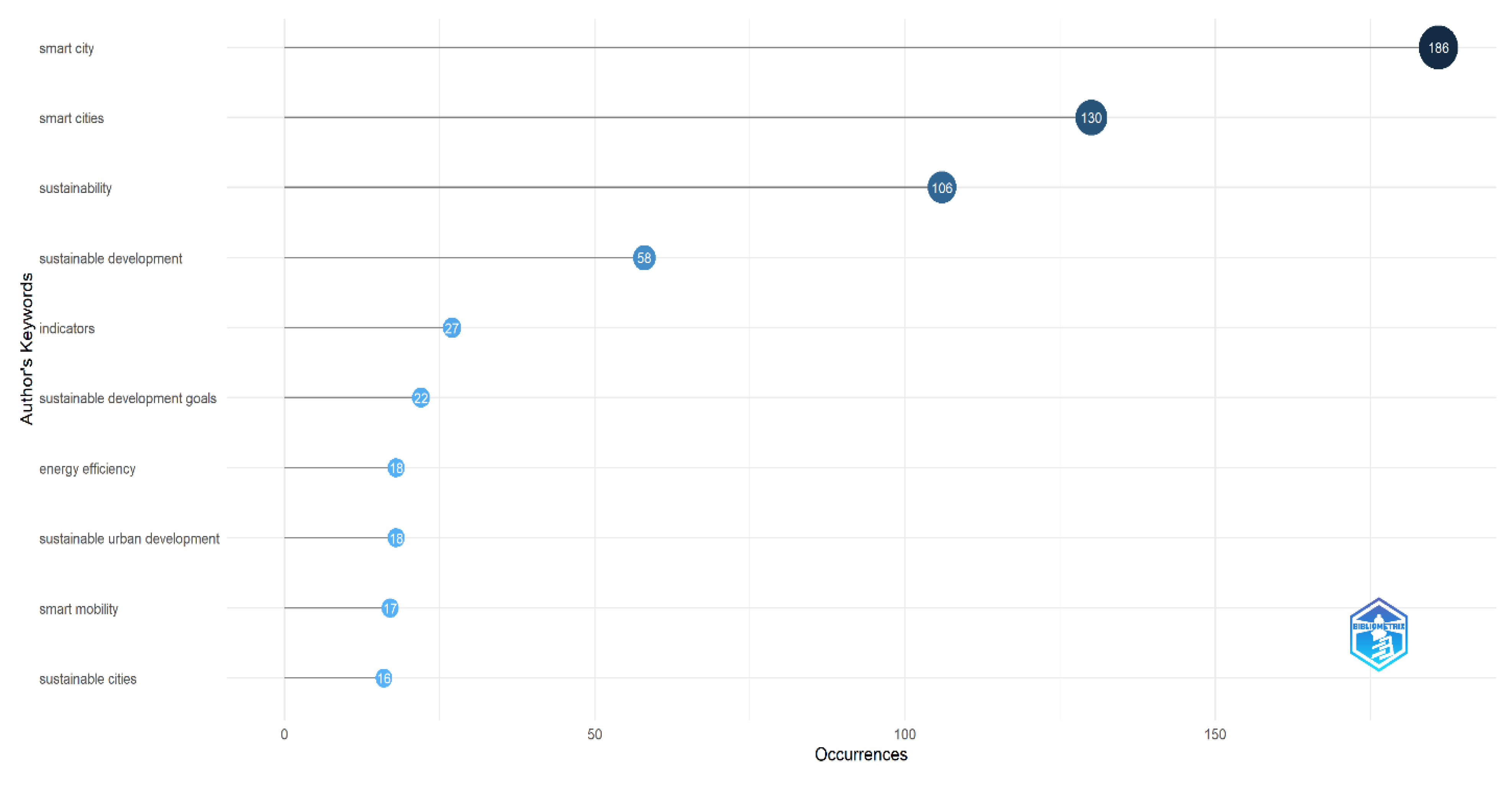
Figure 8.
Thematic Keyword Map.
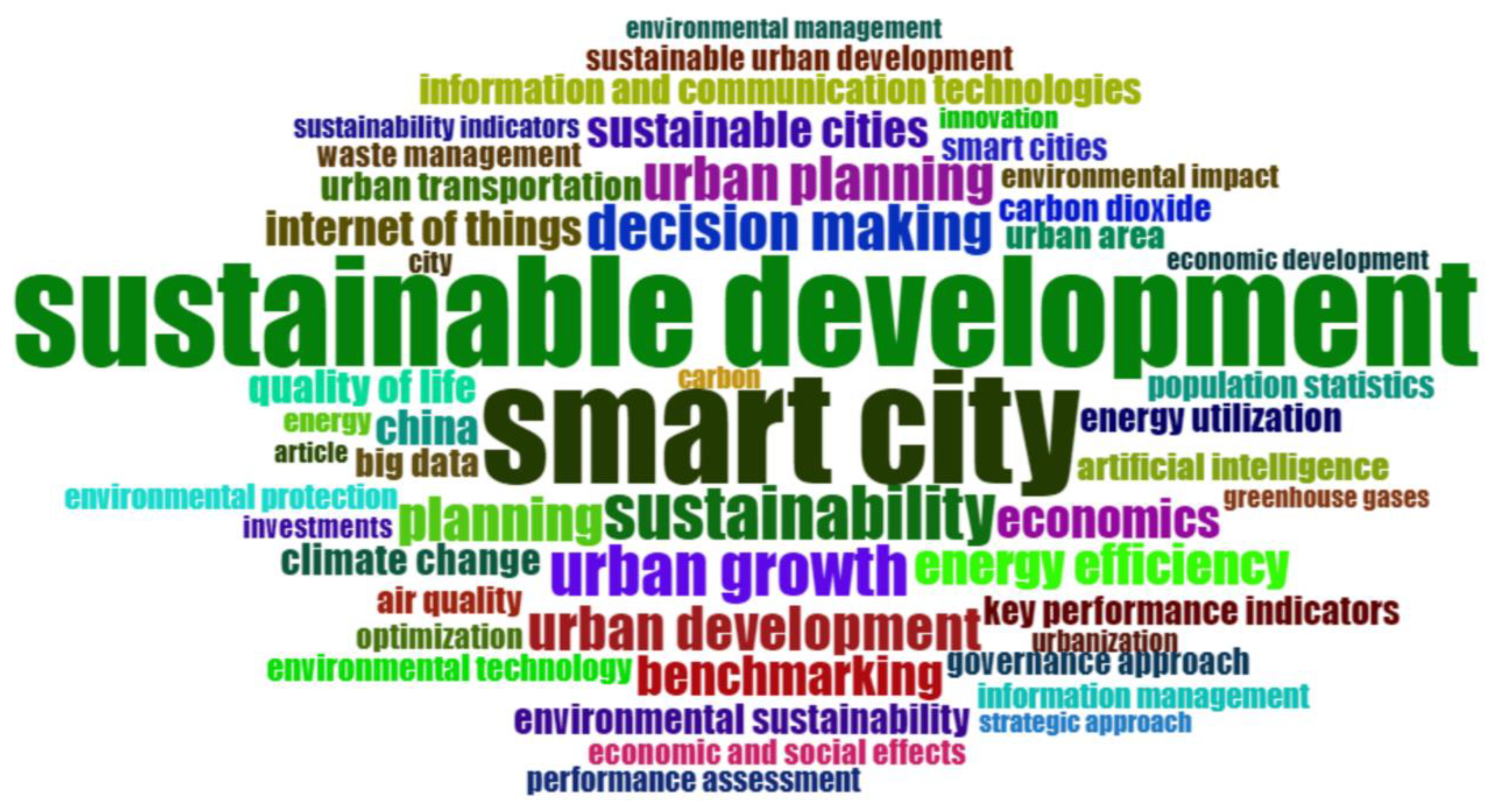
Figure 9.
Word Tree Map.
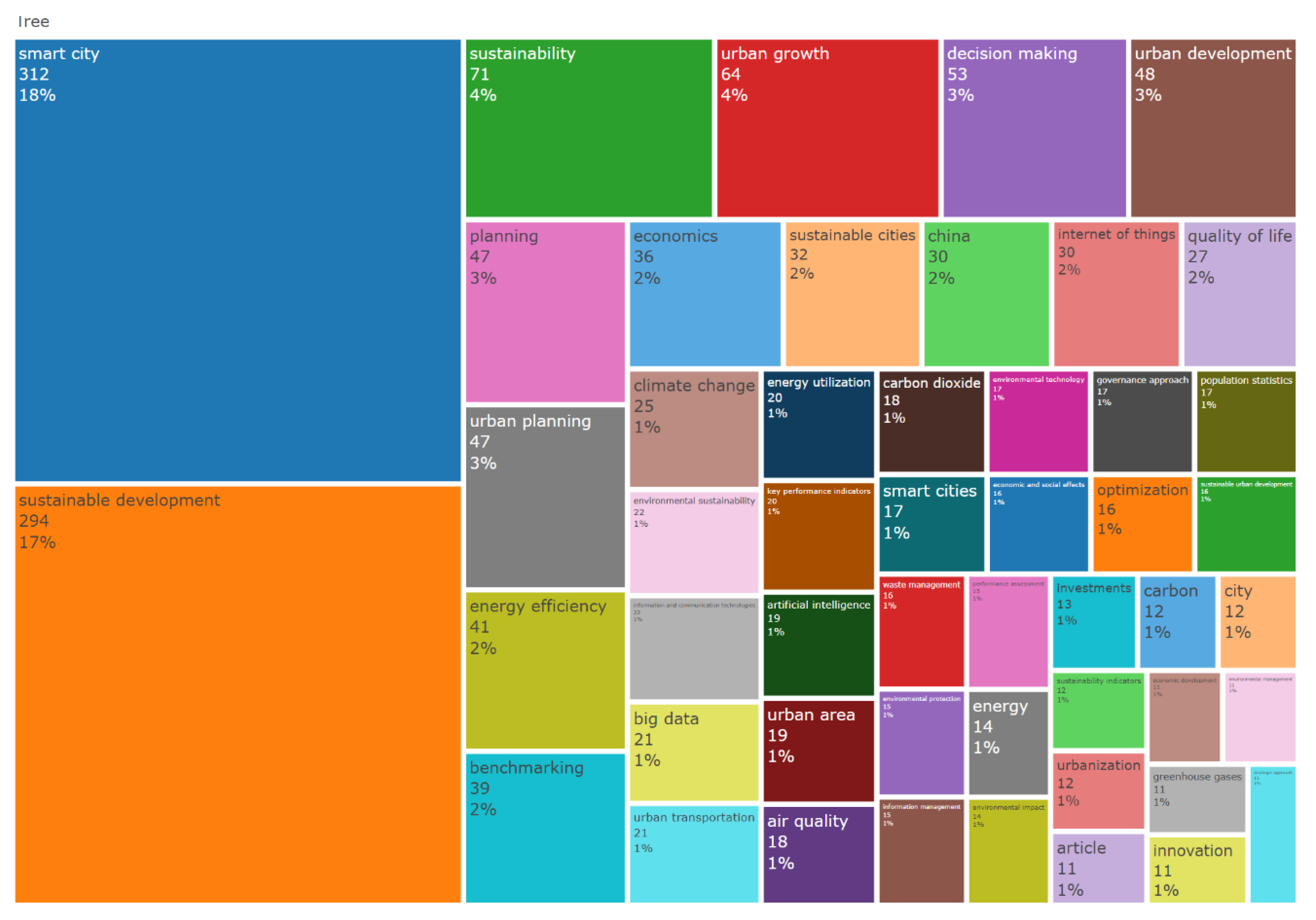
Figure 10.
Author Co-Citation Network.
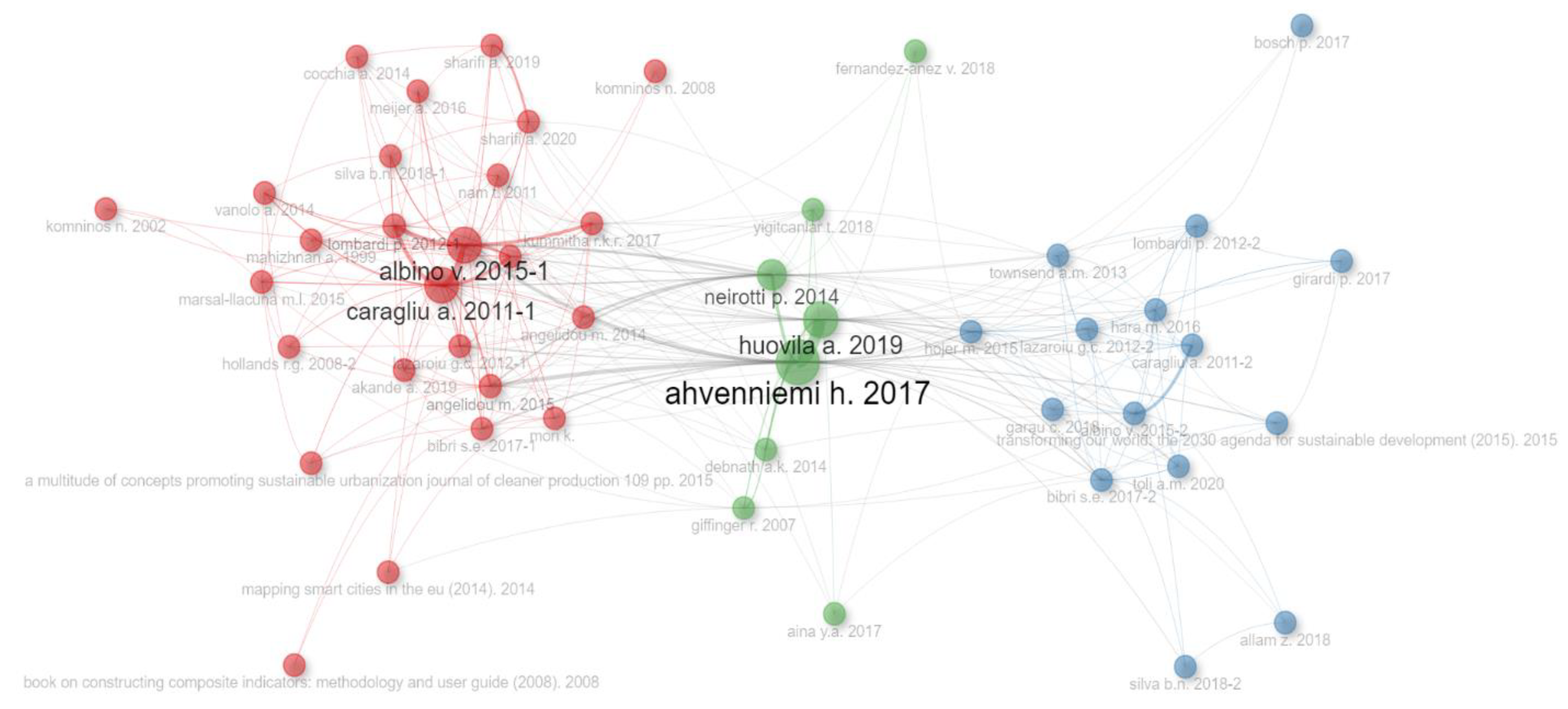
Figure 11.
Global Collaboration Network of Co-Authors.

Figure 12.
Co-Occurrence Keyword Network.
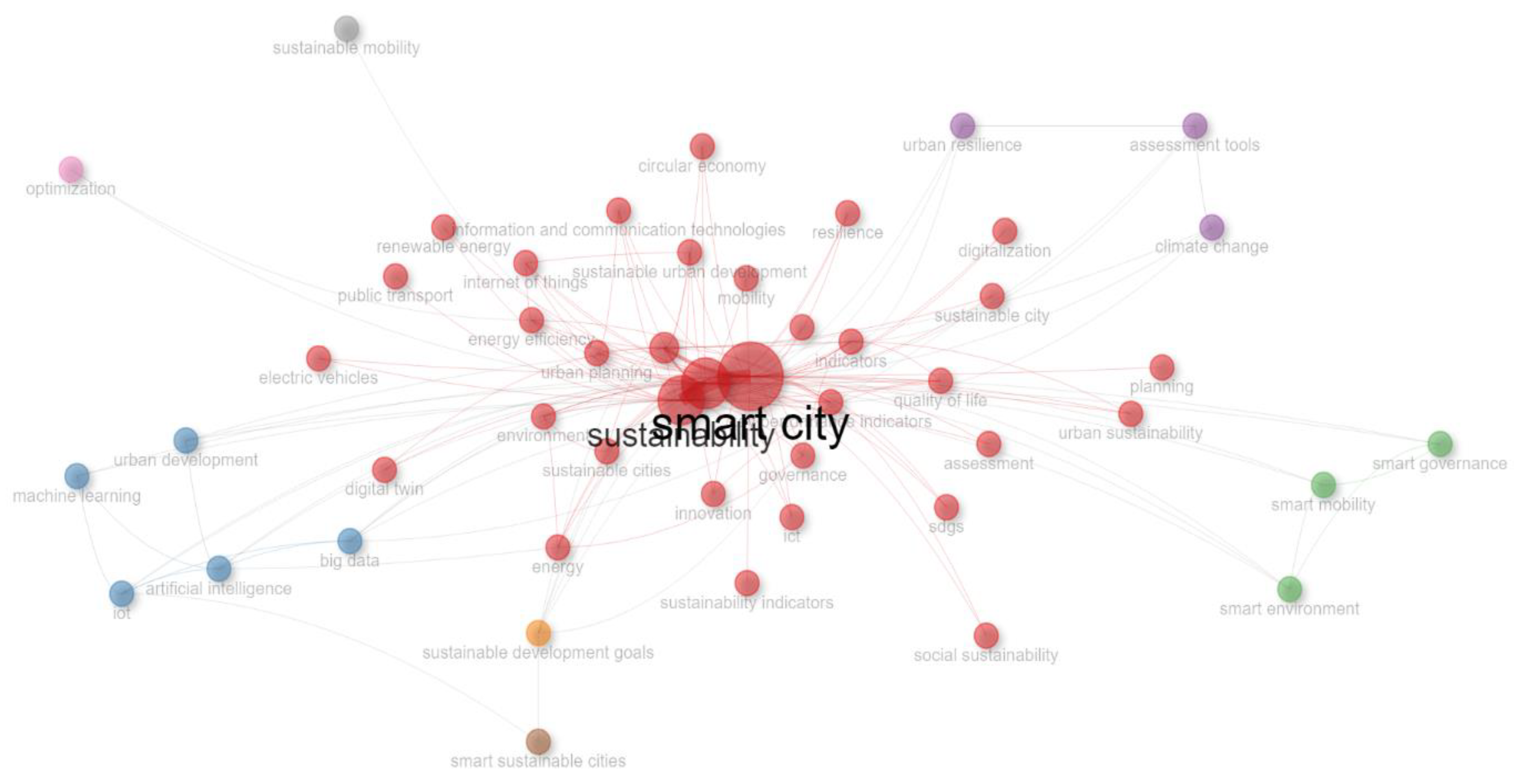
Figure 13.
Co-Word Analysis.
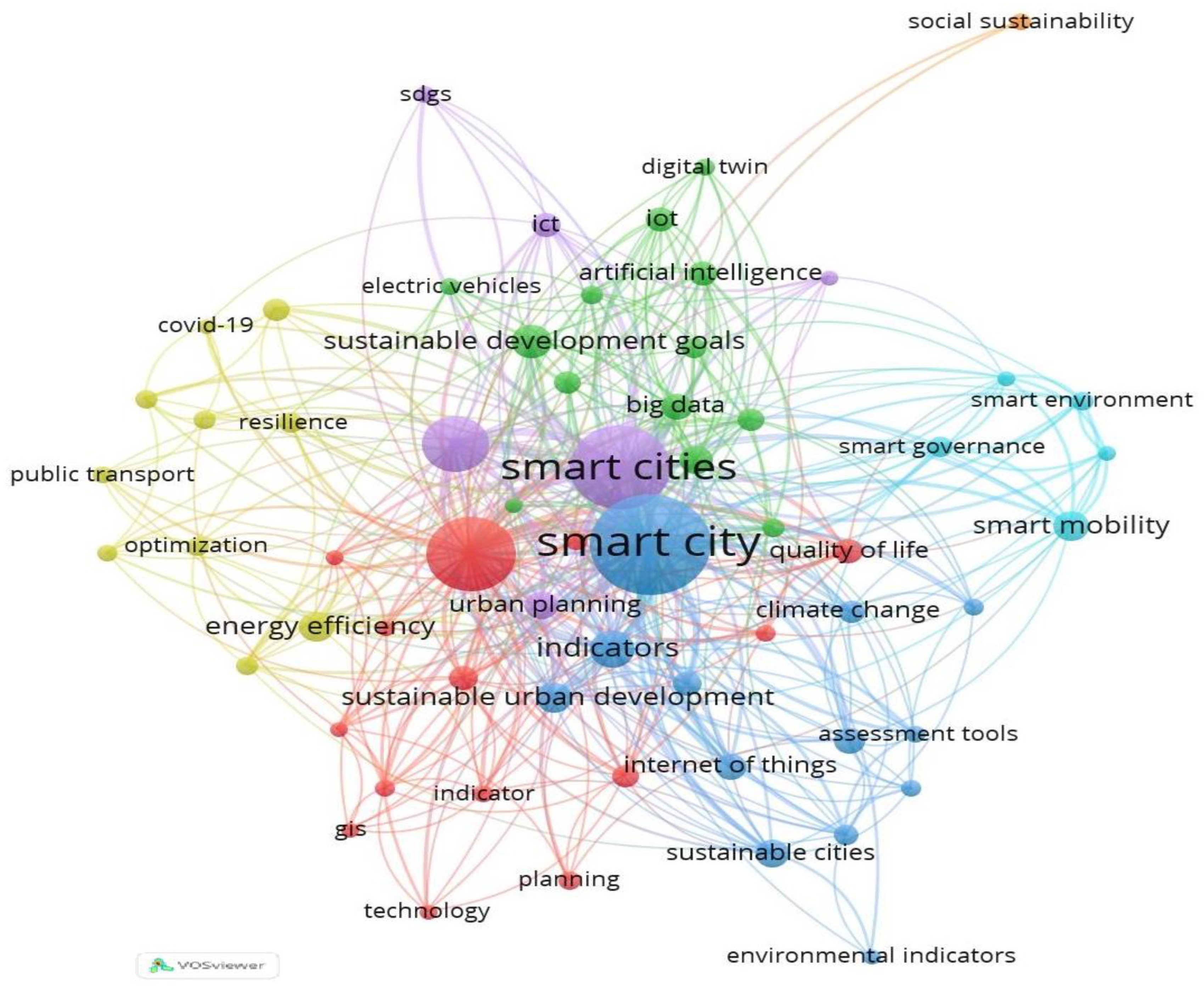

Table 1.
Recent studies related to Smart Cities and Sustainability.
| Author(s), year |
Major Findings | Citation Count | Paper Title | Prominent Journal Published |
|---|---|---|---|---|
| (Ahvenniemi et al.; 2017) | Smart city frameworks prioritize technology over sustainability, revealing critical gaps in urban development assessment methodologies and indicators. | 944 | What are the differences between sustainable and smart cities? | Cities |
| (Norouzi et al.; 2021) | Bibliometric analysis reveals Circular Economy research trends in construction, focusing on sustainability, waste management, and emerging smart technology paradigms. | 255 | Circular economy in the building and construction sector: A scientific evolution analysis | Journal of Building Engineering |
| (Guo et al.; 2022) | Smart city pilot policy in China reduces CO2 emissions, demonstrating digital transformation's potential for balancing growth and environmental protection. | 180 | Effects of smart city construction on energy saving and CO2 emission reduction: Evidence from China | Applied Energy |
| (Alazab et al.; 2021) | Enhanced clustering algorithm optimizes IoT sensor network performance in smart cities, improving energy efficiency and node longevity. | 130 | Multi-objective cluster head selection using fitness averaged rider optimization algorithm for IoT networks in smart cities | Sustainable Energy Technologies and Assessments |
| (Abu-Rayash & Dincer, 2021) | Smart City Index reveals socioeconomic and energy domains' critical role in urban resilience, with significant variations across global city performances. | 105 | Development of integrated sustainability performance indicators for better management of smart cities | Sustainable Cities and Society |
| (Cheng et al.; 2023) | Research from 286 Chinese cities reveals the digital economy significantly reduces urban carbon emissions, with the strongest effect observed in eastern regions and urban clusters. | 105 | The impact of the urban digital economy on China’s carbon intensity: Spatial spillover and mediating effect. | Resources, Conservation and Recycling |
| (Hannan et al.; 2020) | Innovative routing optimization model for solid waste collection reduces costs by 44.44%, emissions by 17.6%, and enhances municipal efficiency. | 99 | Waste collection route optimisation model for linking cost saving and emission reduction to achieve sustainable development goals | Sustainable Cities and Society |
| (Patrão et al.; 2020) | Smart City Assessment tools are designed to assess urban sustainability challenges, providing performance indicators for stakeholders to monitor multidisciplinary solutions for energy and environmental requirements. | 87 | Review of smart city assessment tools | Smart Cities |
| (Ivars-Baidal et al.; 2021) | Study explores significant gap between the technological discourse and the actual strategies for sustainable tourism development. | 75 | Sustainable tourism indicators: what’s new within the smart city/destination approach? | Journal of Sustainable Tourism |
| (Nikki Han & Kim, 2021) | Review explores citizen adoption in smart urbanism, developing a sustainable smart living framework to analyze urban development from a human-centric perspective. | 74 | A critical review of the smart city in relation to citizen adoption towards sustainable smart living | Habitat International |
| (Ortega-Fernández et al.; 2020) | Smart City strategies in Spanish cities, highlighting the need for integrated urban development approaches that address digital governance and sustainability. | 66 | Artificial intelligence in the urban environment: Smart cities as models for developing innovation and sustainability | Sustainability (Switzerland) |
| (Kalinin et al.; 2021) | Neural network approach assesses cybersecurity risks in smart city networks, addressing dynamic infrastructure vulnerabilities through object typing and data mining techniques. | 65 | Cybersecurity risk assessment in smart city infrastructures | Machines |
| (Quijano et al.; 2022) | The “My SMART Life” project, applied in Nantes, Hamburg, and Helsinki, uses a KPI-driven framework to assess cities' progress in energy, mobility, and governance, promoting replicability and avoiding biased interpretations. | 27 | Towards Sustainable and Smart Cities: Replicable and KPI-Driven Evaluation Framework | Buildings |
| (Liu et al.; 2022) | Smart sustainable city development indicators reveal four urban patterns in China, highlighting technological, environmental, social welfare, and innovation challenges through comprehensive assessment. | 24 | Towards sustainable smart cities: Maturity assessment and development pattern recognition in China | Journal of Cleaner Production |
Table 2.
Criteria for selection of articles from Scopus Database.
| Inclusion Criteria | Exclusion Criteria |
|---|---|
| Peer reviewed studies | Duplicate studies |
| English | No other languages |
| Title, Abstract and keywords related to smart cities, sustainable cities and communities, sustainable development | In print / SSRN / In Press / Patents |
| Document reporting indicators including review papers, conference papers. | Documents without indicators |
Table 3.
Overview of Bibliometric Review – Scopus database from 2012 – 2024.
| Description | Results |
|---|---|
| Timespan | 2012:2024 |
| Sources (Journals, Books, etc.) | 353 |
| Documents | 615 |
| Annual Growth Rate % | 45.09 |
| Document Average Age | 4.41 |
| Average citations per doc | 18.85 |
| References | 25547 |
| Document contents | |
| Keywords Plus (ID) | 2948 |
| Author's Keywords (DE) | 1763 |
| Authors | |
| Authors | 1891 |
| Authors of single-authored docs | 66 |
| Authors collaboration | |
| Single-authored docs | 70 |
| Co-Authors per Doc | 3.41 |
| International co-authorships % | 21.3 |
| Document types | |
| Article | 314 |
| Book | 3 |
| Book chapter | 70 |
| Conference paper | 197 |
| Conference review | 9 |
| Review | 22 |
Table 4.
Top 10 Journals in the order of highest number of citations.
| Rank | Source | Total Citations | Publisher |
|---|---|---|---|
| 1 | Cities | 1875 | Elsevier |
| 2 | Sustainability (Switzerland) | 942 | MDPI |
| 3 | Sustainable cities and society | 760 | Elsevier |
| 4 | Journal of cleaner production | 627 | Elsevier |
| 5 | Energies | 289 | MDPI |
| 6 | Smart cities | 222 | MDPI |
| 7 | Journal of Building Engineering | 186 | Elsevier |
| 8 | Social indicators research | 117 | Springer |
| 9 | International Journal of Public Sector Management | 56 | Emerald |
| 10 | Environment and Urbanisation | 53 | Sage |
Table 5.
Most cited Top 10 Journals in Scopus from 2012 and 2024.
| RANK | ARTICLE | TOTAL CITATIONS | TC PER YEAR |
|---|---|---|---|
| 1 | What are the differences between sustainable and smart cities? | 944 | 104.89 |
| 2 | Definition methodology for the smart cities model | 473 | 33.79 |
| 3 | ‘Don’t call me resilient again!’: the New Urban Agenda as immunology … or … what happens when communities refuse to be vaccinated with ‘smart cities’ and indicators. | 363 | 40.33 |
| 4 | The urban sustainable development goal: Indicators, complexity, and the politics of measuring cities. | 345 | 38.33 |
| 5 | Comparative analysis of standardized indicators for Smart sustainable cities: What indicators and standards to use and when? | 325 | 46.43 |
| 6 | Circular economy in the building and construction sector: A scientific evolution analysis. | 255 | 51.00 |
| 7 | ICT and sustainability in smart cities management. | 243 | 24.30 |
| 8 | Evaluating Urban Quality: Indicators and Assessment Tools for Smart Sustainable Cities. | 219 | 27.38 |
| 9 | On the evolution of “Cleaner Production” as a concept and a practice. | 207 | 25.88 |
| 10 | A critical review of selected smart city assessment tools and indicator sets. | 200 | 28.57 |
Table 6.
Top Contributed Authors.
| Authors | Articles | Articles Fractionalized |
|---|---|---|
| Garau C | 9 | 2.50 |
| Sharifi A | 7 | 3.83 |
| Abu-rayash A | 4 | 2.50 |
| Angelakoglou | 4 | 0.68 |
| Giourka P | 4 | 0.68 |
| Huovila A | 4 | 1.03 |
| Marsal-llacuna M-L | 4 | 4.00 |
| Nikolopoulos N | 4 | 0.68 |
| Ohri A | 4 | 1.25 |
| Shelestov A | 4 | 0.90 |
Disclaimer/Publisher’s Note: The statements, opinions and data contained in all publications are solely those of the individual author(s) and contributor(s) and not of MDPI and/or the editor(s). MDPI and/or the editor(s) disclaim responsibility for any injury to people or property resulting from any ideas, methods, instructions or products referred to in the content. |
© 2025 by the authors. Licensee MDPI, Basel, Switzerland. This article is an open access article distributed under the terms and conditions of the Creative Commons Attribution (CC BY) license (http://creativecommons.org/licenses/by/4.0/).
Copyright: This open access article is published under a Creative Commons CC BY 4.0 license, which permit the free download, distribution, and reuse, provided that the author and preprint are cited in any reuse.


