

Submitted:
05 April 2025
Posted:
08 April 2025
You are already at the latest version
Abstract
The Prime Minister’s Office of Bangladesh is the governmental ministration office with the responsibility of coordinating the actions of the work of all governmental ministry offices, on various matters, and serving and assisting the prime minister of Bangladesh in her daily work. Sheikh Hasina, the Prime Minister of the People's Republic of Bangladesh is the main governing body of the Prime Minister’s Office. There are total 12 division working in the prime minister’s office under direct super vision of the PM herself.
Keywords:
A Study on Personnel Management of Prime Minister’s Office of Bangladesh
Prime Minister’sOffice:
The Prime Minister’s Office of Bangladesh is the governmental ministration office with the responsibility of coordinating the actions of the work of all governmental ministry offices, on various matters, and serving and assisting the prime minister of Bangladesh in her daily work. Sheikh Hasina, the Prime Minister of the People's Republic of Bangladesh is the main governing body of the Prime Minister’s Office. There are total 12 division working in the prime minister’s office under direct super vision of the PM herself.
12. divisions under PMO
- Armed Forces Division
- Bangladesh Economic Zones Authority (BEZA)
- Bangladesh Export Processing Zone Authority (BEPZA)
- Board of Investment
- Privatization Commission, Bangladesh
- Public Private Partnership
- Governance Innovation Unit (GIU)
- National Security Intelligence (NSI)
- NGO Affairs Bureau
- Special Security Force
- Sub-regional Co-operation Cell (SRCC)
- Private Export Processing Zone (PEPZ)
The Services and Activities done by the PMO are:
| Assistance to the Prime Minister in the discharge of his/her responsibilities as and when necessary. |
| Assistance to the Prime Minister in the discharge of his/her Parliamentary responsibilities. |
| Matters relating to Politics. |
| Administration including financial matters of PMO. |
| National Security Intelligence (NSI). |
| Coordination of all Intelligence Agencies. |
| NGO Affairs |
| Matters Relating to Board of Investment (BOI). |
| Bangladesh Export Processing Zones Authority. |
| Administration and supervision of subordinate. |
| Administration and supervision of subordinate offices and organizations under this office. |
| Prime Minister's Security including Special Security Force. |
| Administration of Prime Minister's Discretionary Fund. |
| Messages and Addresses of the Prime Minister. |
| Reception of Foreign Heads of Government and dignitaries. |
| Arrangement of Protocol and Ceremonials. |
| Tours of the Prime Minister inside country (Foreign tours to be organized by the Ministry of Foreign Affairs). |
| Liaison with International Agencies and matters relating to treaties and agreements with other countries and world bodies relating to subjects assigned to this office. |
| All laws on subjects assigned to this office. |
| Inquiries and statistics on any of the subjects assigned to this office. |
| Fees in respect of any of the subjects assigned to this office except fees taken in courts. |
| Such other functions as may be assigned to this office from time to time. |
Chapter 1: An Investment Perspective of Human Resource Management
1.1. Prime Minister’s Office:
1.1.1. HR Value Chain:
The HR value chain argues that performance could be measured via four different sets of outcomes: employee, organizational, financial and accounting, and market based. This sequential outcome has a cause-and-effect relationship.
sequential outcome has a cause-and-effect relationship.
HR Value Chain Model
Figure 1.
HR Value Chain Model.
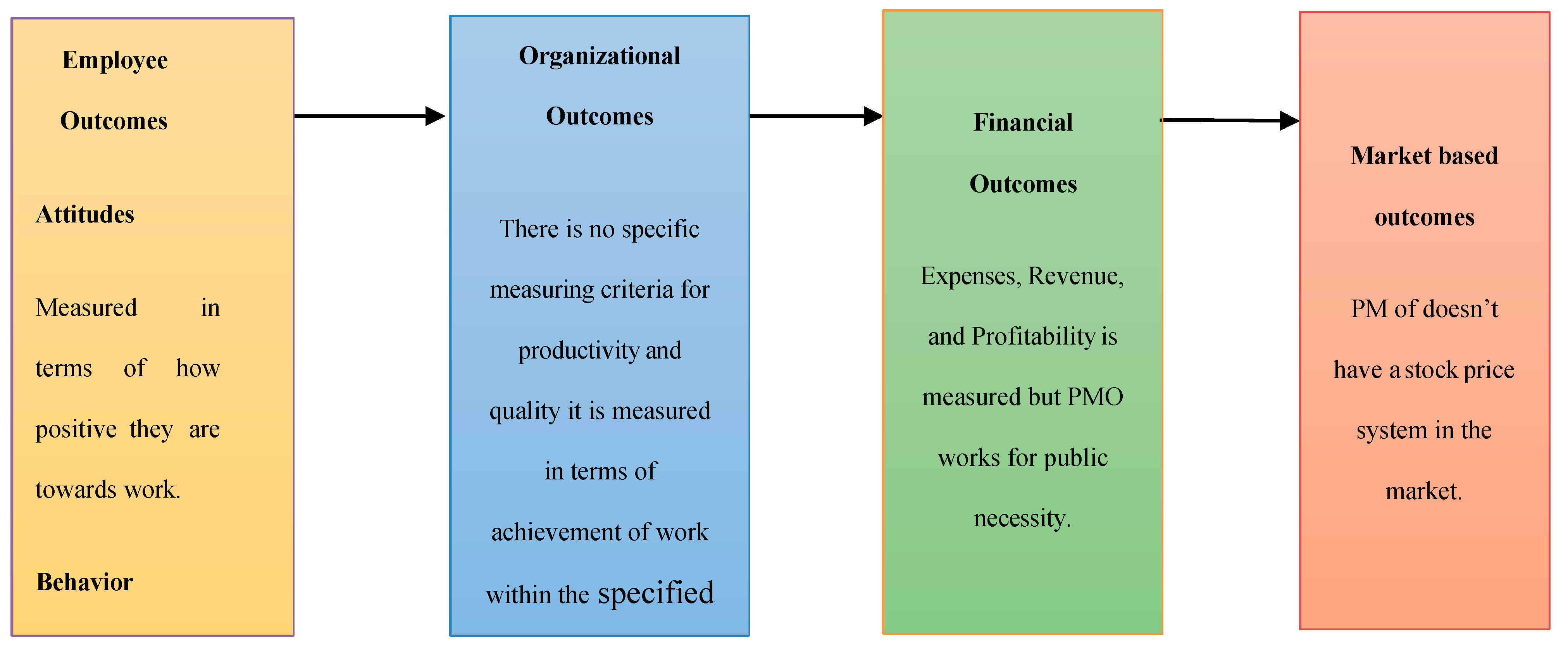
Employee Outcomes: The employee outcomes are generally measured in terms employee attitude and behavior but in PMO there is no measurement procedure for this kind of criteria therefore the employee outcome is measured in terms of how well are with behavingwith the higher authority and the performance is measured in terms of goal achieved but there isn’t any measuring criteria.
Organizational Outcomes: The PM office is Apex body in the business and the constitution the article 21 states the first objectives of PMO is to serve the public of the nation and article 7 states that public is the owner of the state, therefore PMO works solely for full filling
public necessity and hence the organization provides services to the public and the outcomeis measured in terms of achievement of those services.
Financial Outcomes: The PMO has to work to provide for the nation therefore even if it is incurring lose in some projects but it still continue with the project until and unless it finds out a better or effective project for full filling public needs.
Market-based Outcomes: The market-based outcomes are measured in terms of stock price in the market but this organization doesn’t have such criteria therefore this whole section from the value chain model can be removed for PMO.
Human Capital of PMO:
1.1.2. Model for Measuring Human Capital
Figure 2.
Model for Measuring Human Capital.
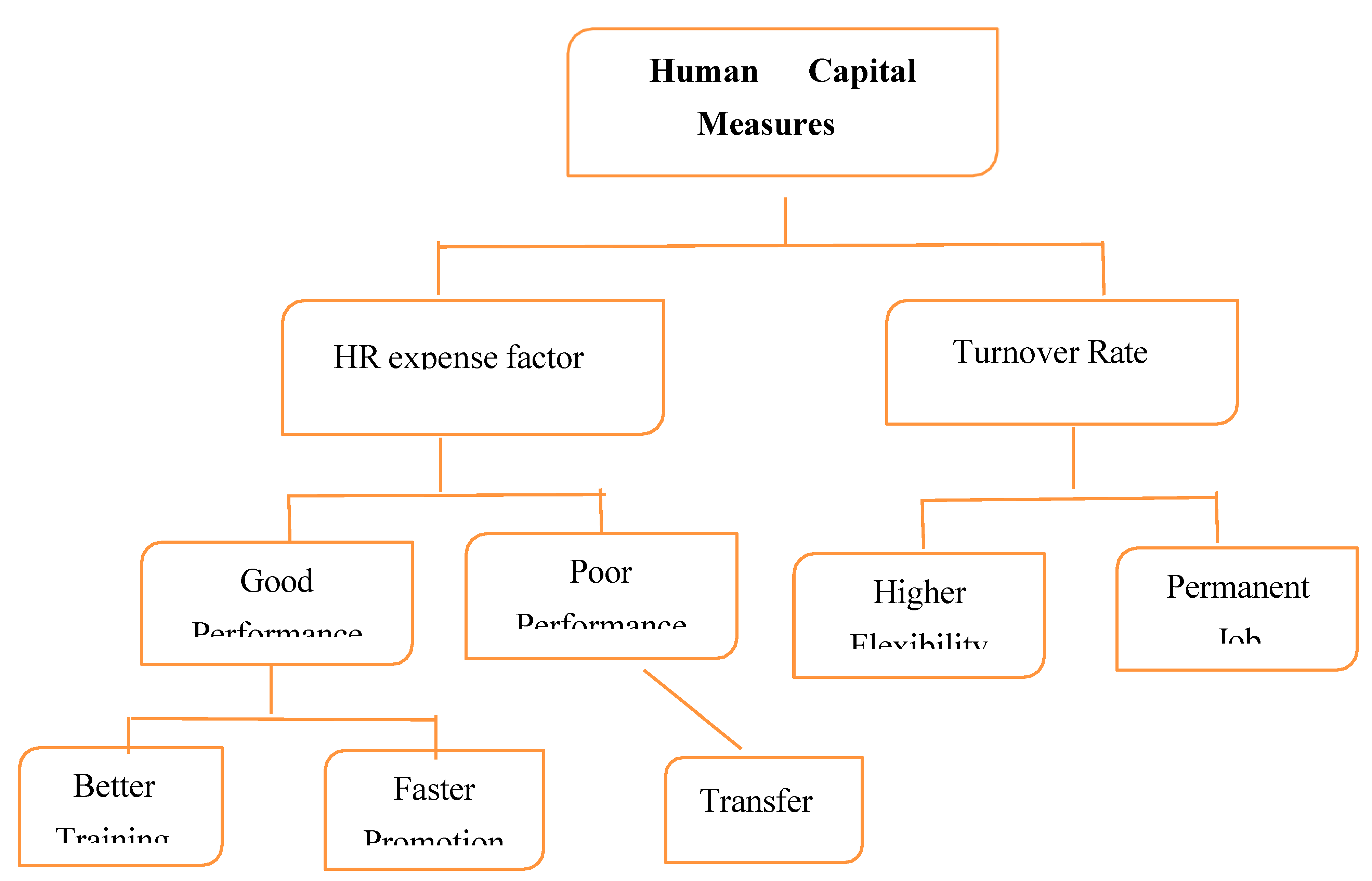
Human Capital is the prime asset of any kind of organization the effectiveness of human capital can be measured in terms absent rate, vacancy costs, return of investment etc.In PMO there is no such criteria for measuring Profit Per Employee, Return On Investment or Human Capital Value Addition. However HR expense factor is measured vaguely by the supervisor, if the employee performs better after the training he/she will be eligible to receive better training in the future (example training in abroad) or he/she will require less time to promote. But when an employee is performing poorly after training he/she will be transferred to an inferior office. The turnover rate is very low for government employees because of higher flexibility in the job and government jobs are usually permanent until the employee break a serious low or commits fraud.
1.1.3. Factors influencing an Organization’s Investment Orientation:
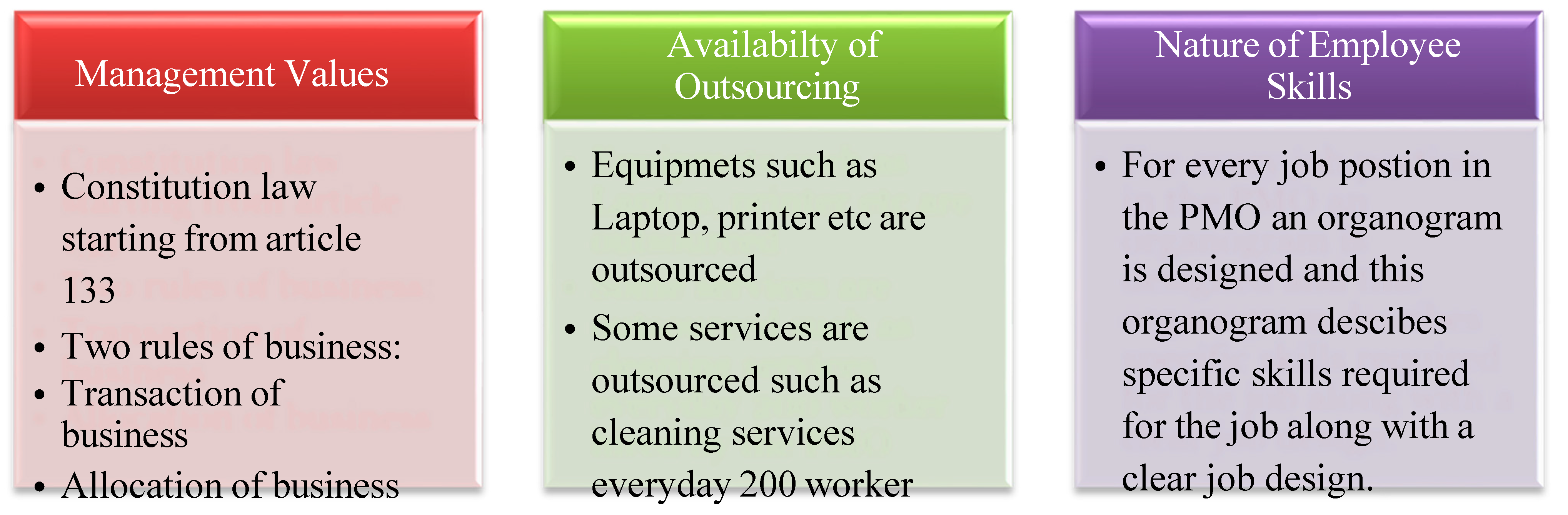
How “investment orientated” an organization is in its management of human resources depends on five major factors: Management values, Attitude towards risk, Utilitarianism, Availability of outsourcing, and Nature of employee skills.
Figure 3.
Model of Factors influencing an Organization’s Investment Orientation.
1.2. Proposed Model:
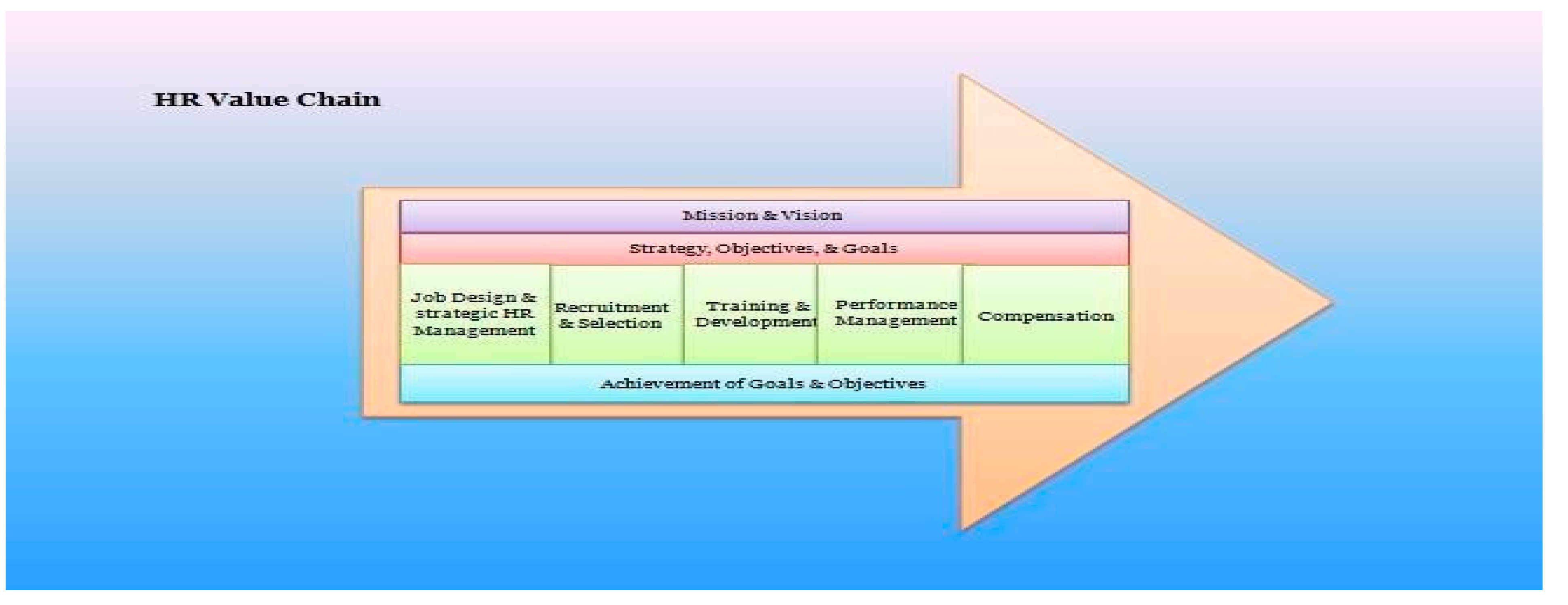
Figure : HR Value Chain
Chapter 2: Social Responsibility of Human Resource
Management
2.1. Prime Minister’s Office
2.1.1. Workforce Demographic Changes and Diversity:
Demographic changes in society and the composition of the workforce are creating a number of challenges for management of HR. Diversity has become and continues to be one of the main focus for both public and private organizations, recognizing and promoting diversity is seen as critical for organizational success.
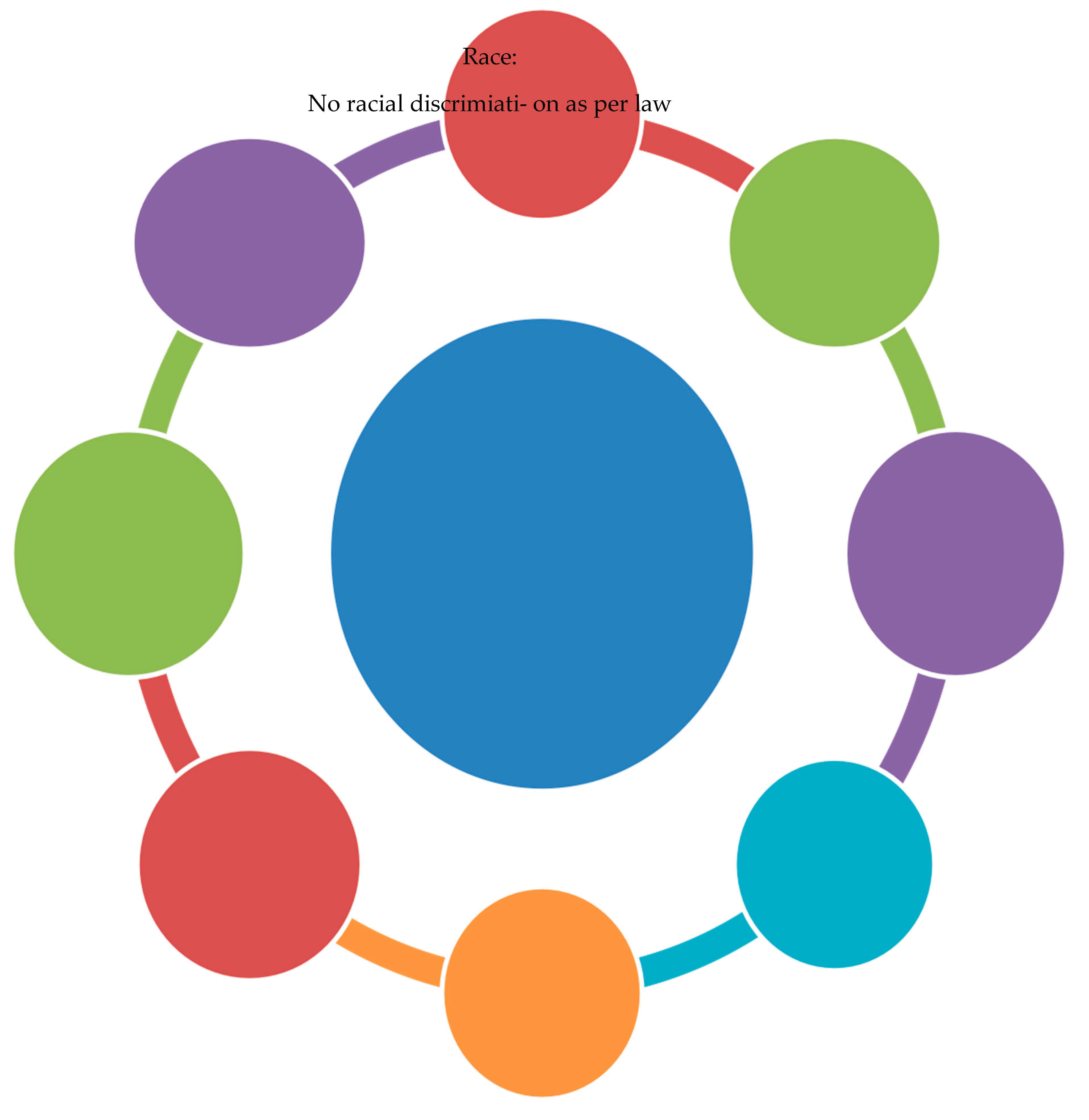
There is no racial discrimination in the PMO, as the office hires on a quota basis the jobs are designed in a grade system starting from 9th grade to 1st grade. The book rule of business has organogram for each departments and the number of employees required for a specific task along with the requirements and skills needed for the job. The ratio of male and female are divided in quota based for each grade of job, for example 1st grade job has quota for female 10% and 2nd gradehas quota 15% and there are also knowledge based opportunity which is 45% and quota based are rest 55%. There are also quota for disabled people except people who has blindness disability, shemale can also work for PMO. Family status for example freedom fighter, military, and other sectors have a quota for employment at PMO. These are all personal related dimension of diversity, the work related diversity are how PMO motivates, and what are the work ethic and job responsibility for a given job. The experience, work ethic, and job responsibility all are mentioned in all business rule book and for motivation there is no bonus but letter of appreciation and better training opportunities are given to the employees who performs better.
2.1.2. Model of Individual Dimensions & Diversity
Family status: quota for freedom fhigher and military
Figure 4.
Model of Individual Dimensions of Diversity.
2.3. Proposed Model:
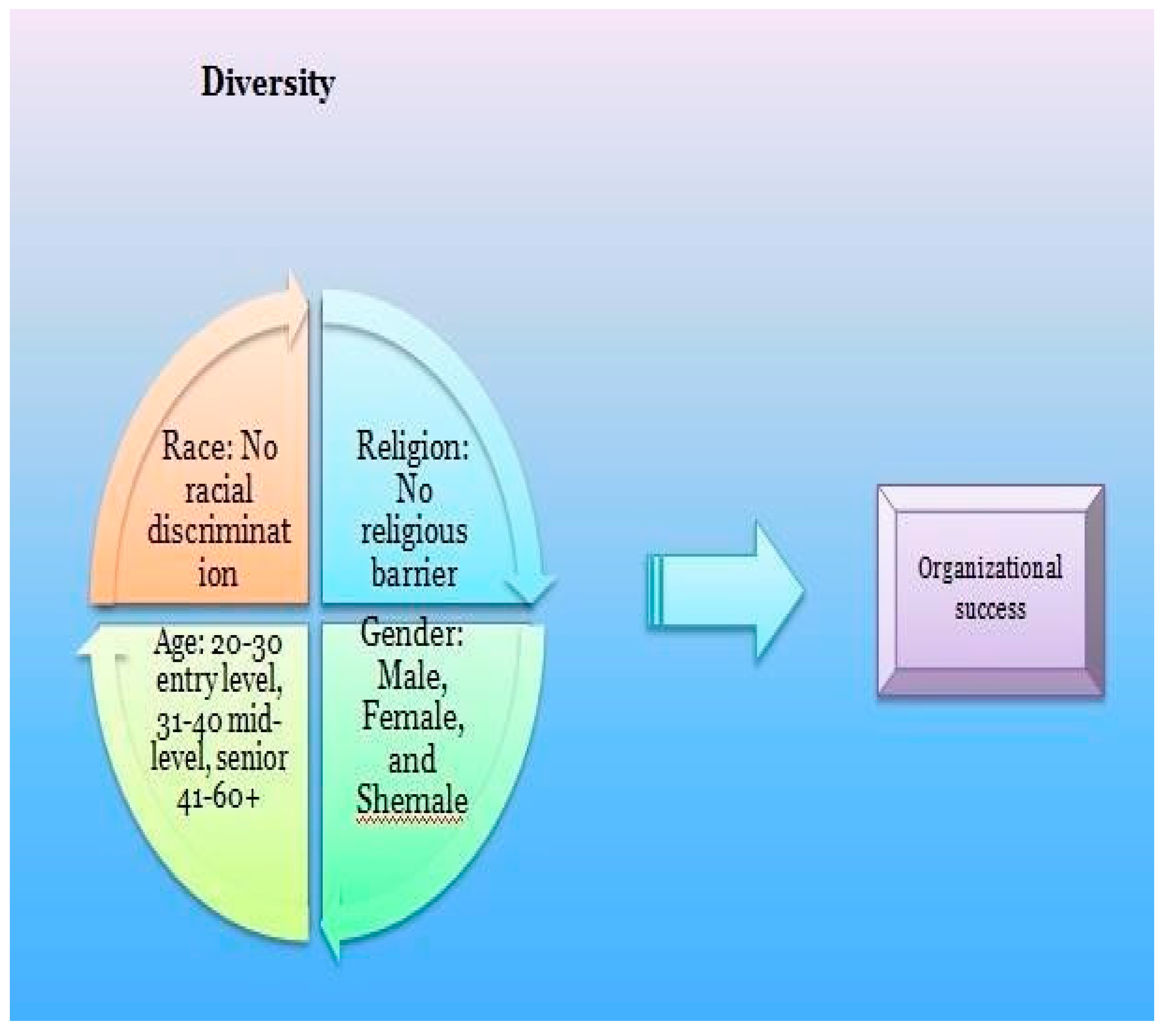
Figure: Diversity Model
Chapter 3: Personnel Management
3.1. Prime Minister’s Office:
Strategic management is the process by which organizations attempt to determine what needs to be done to achieve corporate objectives and, more important, how these objectives are met. Ideally the senior management examines the organization and the environment in which it operates and attempts to establish an optimal “fit” between the two to ensure organization’s success.
3.1.1. The Process of Personnel Management of PMO:
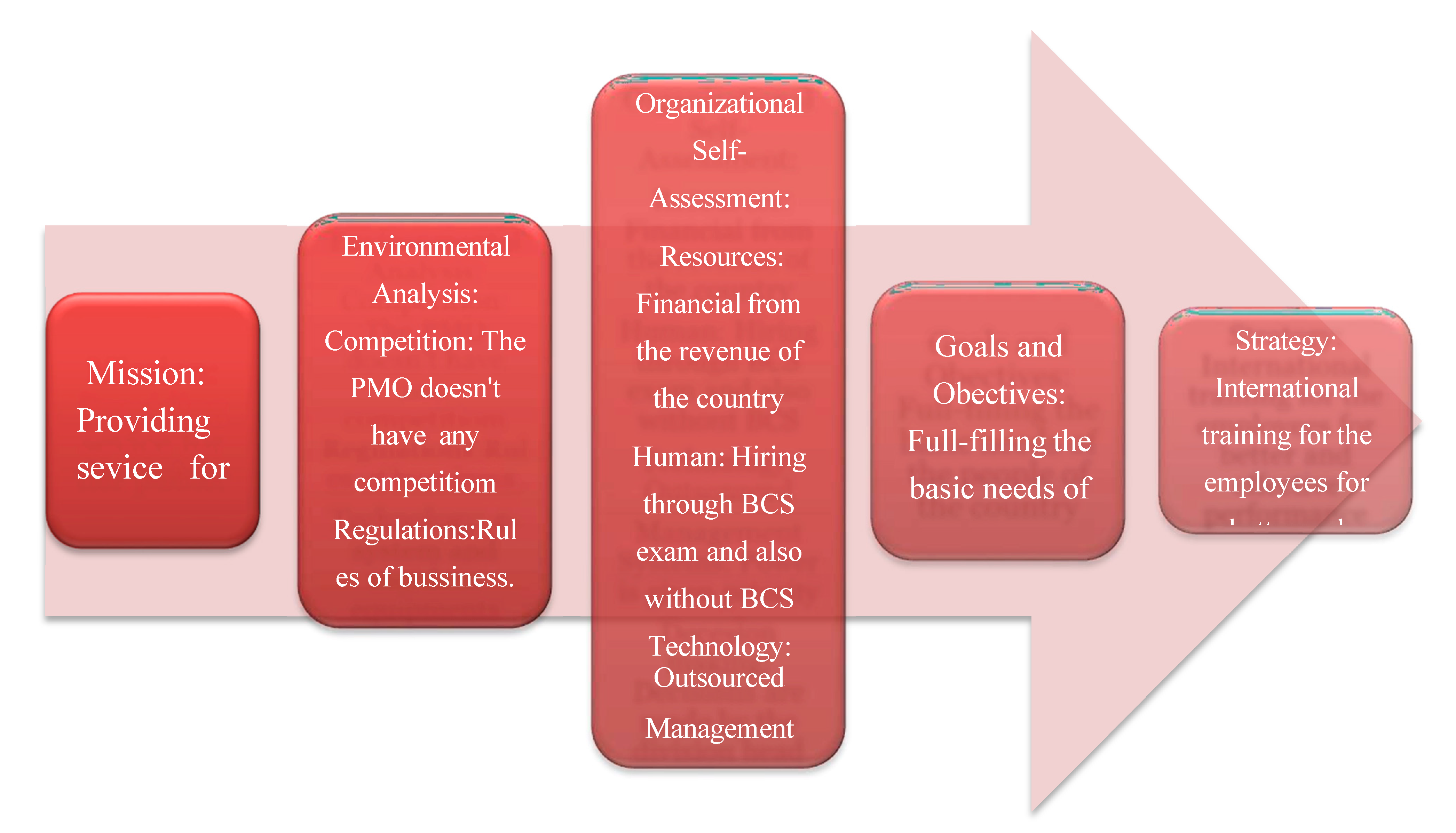
Figure: The Process of Personnel Management of PMO
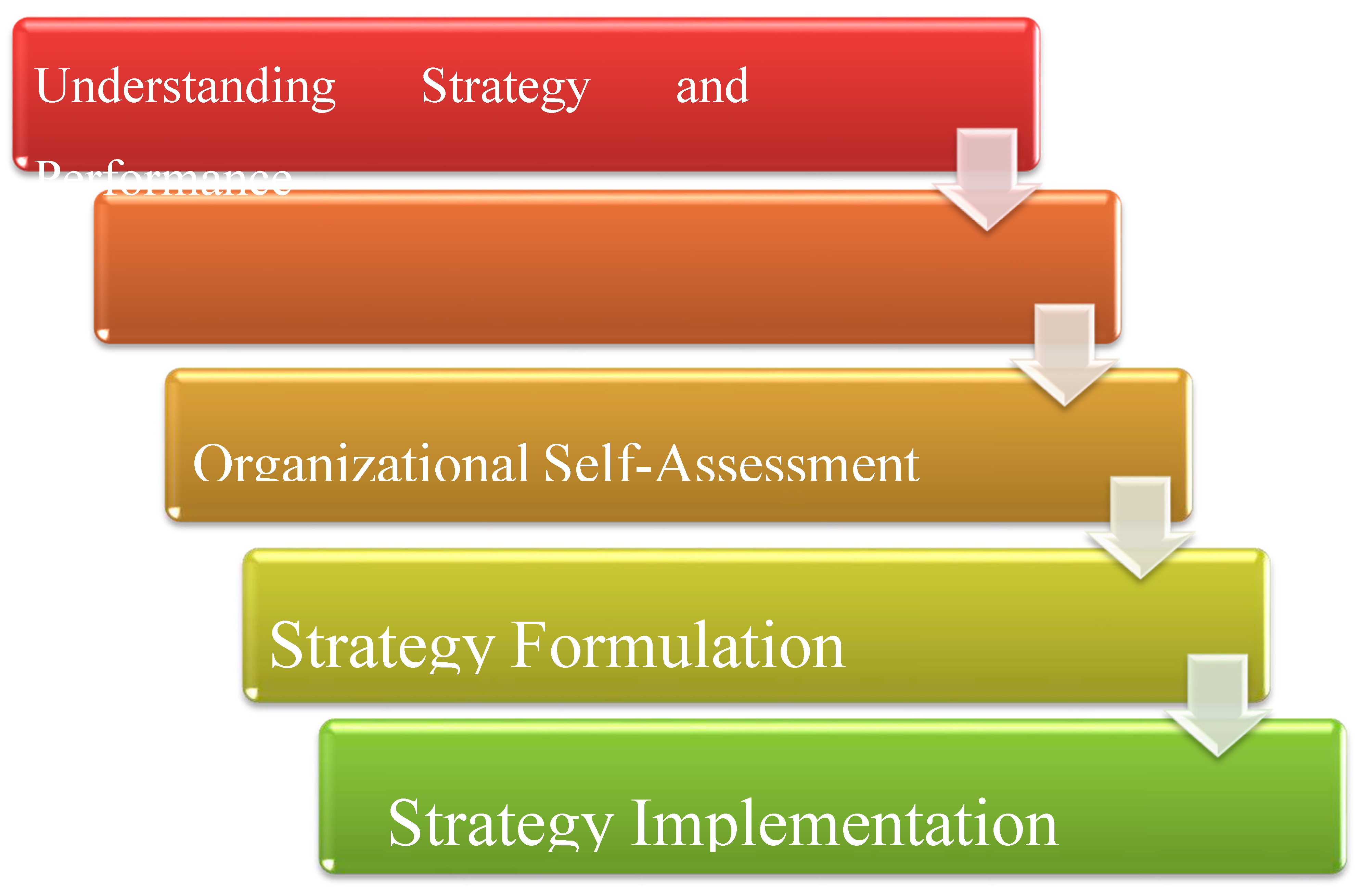
3.2. Proposed Model of Personnel Management:
Chapter 4: The Evolving Role of HRM
4.1. Prime Minister’s Office
The role of human resource management in organization has been evolving dramatically in recent years. The days “personnel department” are over. Strategic human resource management involves the development of a consistent, aligned, collection of practices, programs, and policies to facilitate the achievement of the organization’s strategic objectives.
4.1.1. Traditional HR versus Strategic HR:
Topic Traditional HR Strategic HR
Department
Administrative department controls hiring
HR department controls hiring
Nature of organization
Less Flexibility
Flexibility either public, statutory, non-statutory
Technology
Manual application process used to take longer time
Online application and aptitude test
Chapter 5: Human Resources Training
5.1. Prime Minister’s Office:
The human resource planning involves forecasting demand for employees, talent identification and assessment, and dealing with shortages.
♠ Forecasting- When government opens a new project it forecasts how many employees are required for the posts that have been created in the project organogram.
♠ Talent Identification and Assessment- For a particular position there is a set required skills and competency so the PMO gives advertisement in the newspaperto haunt the talent required and after screening they go for a written examfollowing with an interview for selection and identification of the right people.
♠ Dealing with shortages: When there is a shortage the PMO goes for attachment of an existing employee from other department.
♠ Dealing with surplus: PMO usually don’t have surpluses.
5.1.1. Human Resource Planning Model of PMO:
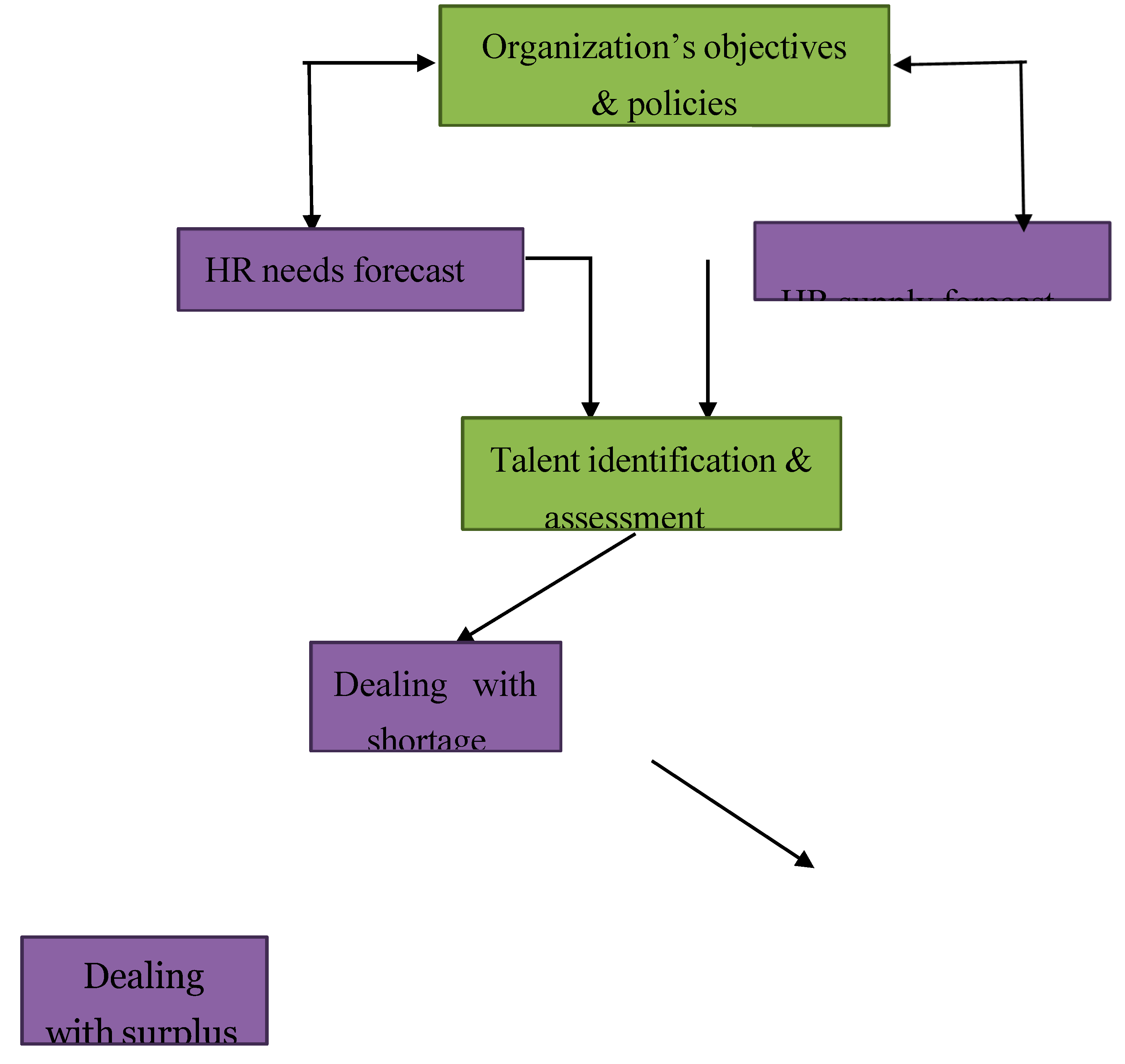
Figure : Human Resource Planning Model of PMO
5.2. Proposed Model 1:
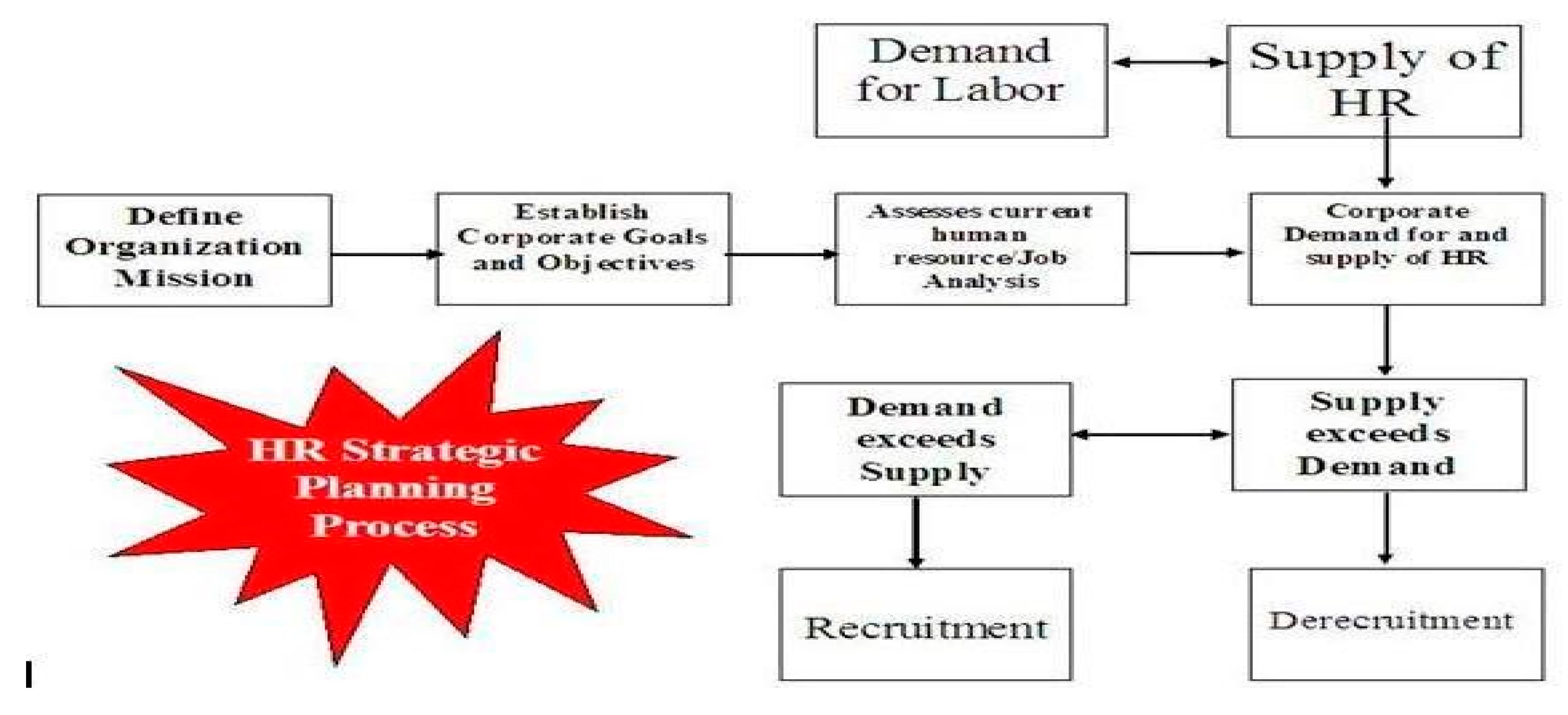
Figure: Propose Model for Human Resource Planning
5.3. Proposed Model 2:
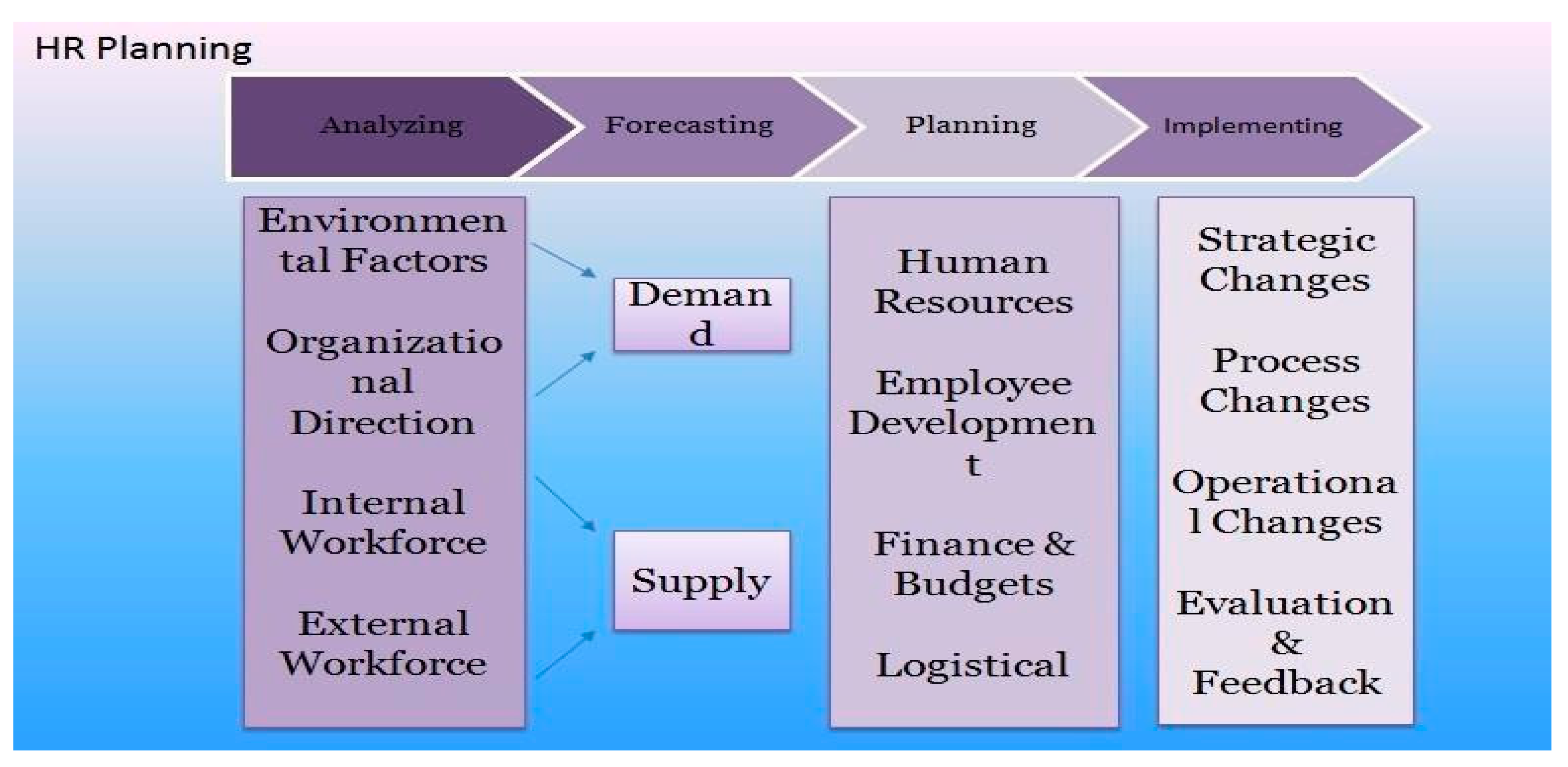
Figure: Propose Model for Human Resource Planning
Chapter 6: Design and Redesign of Work Systems
6.1. Prime Minister’s Office:
6.1.1. The Job Characteristic Model:
Figure 8.
The Job Characteristic Model.
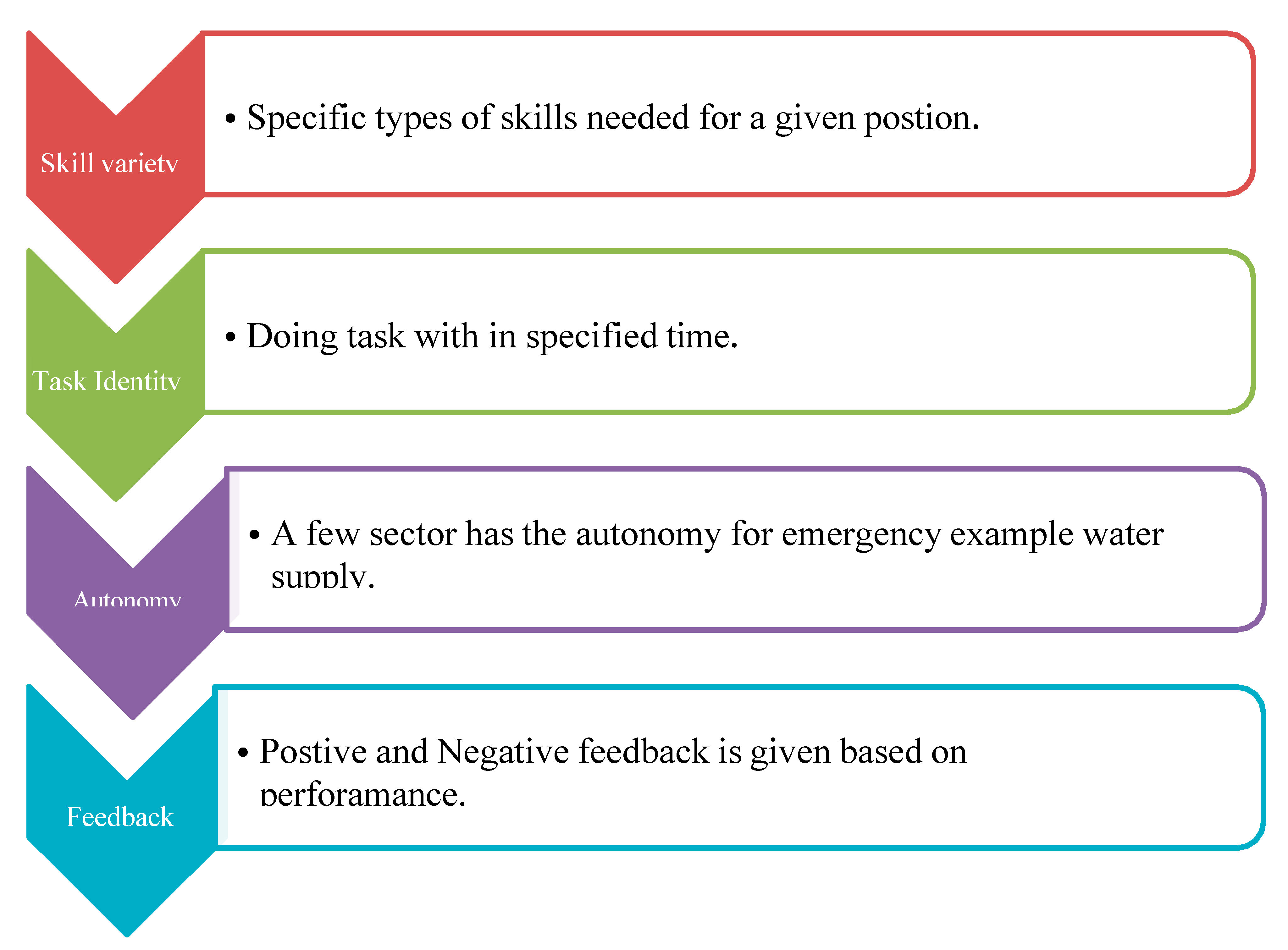
The redesign of work systems represents one of the most radical yet common changes taking place in organizations from an HR perspective. Although redesign effort may initially be very time consuming process, well designed flexible work systems can provide an organization with the ongoing ability to respond quickly to a changing environment.
6.1.2. Impact of Technology in PMO
Figure 9.
Impact of Technology in PMO.
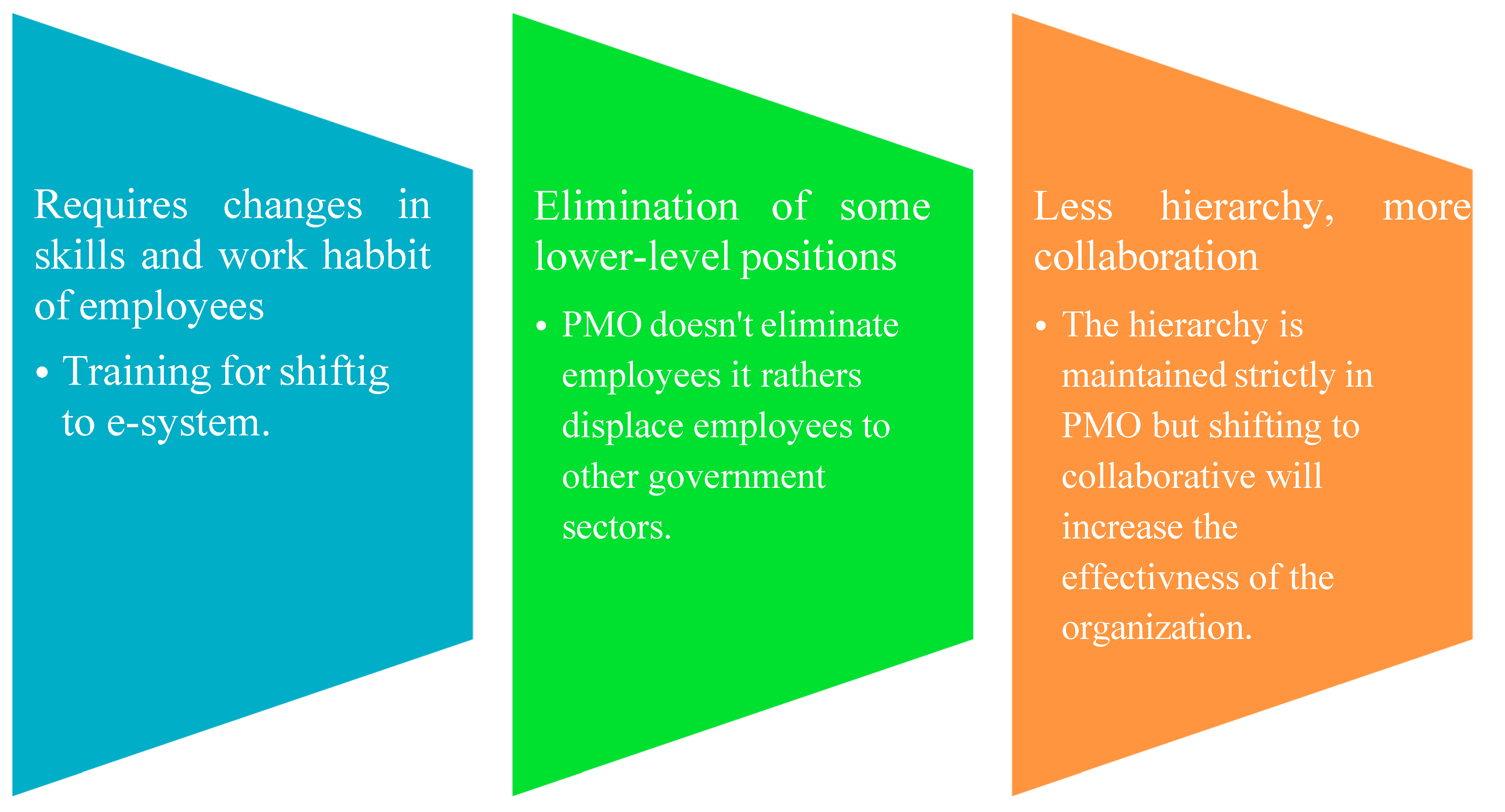
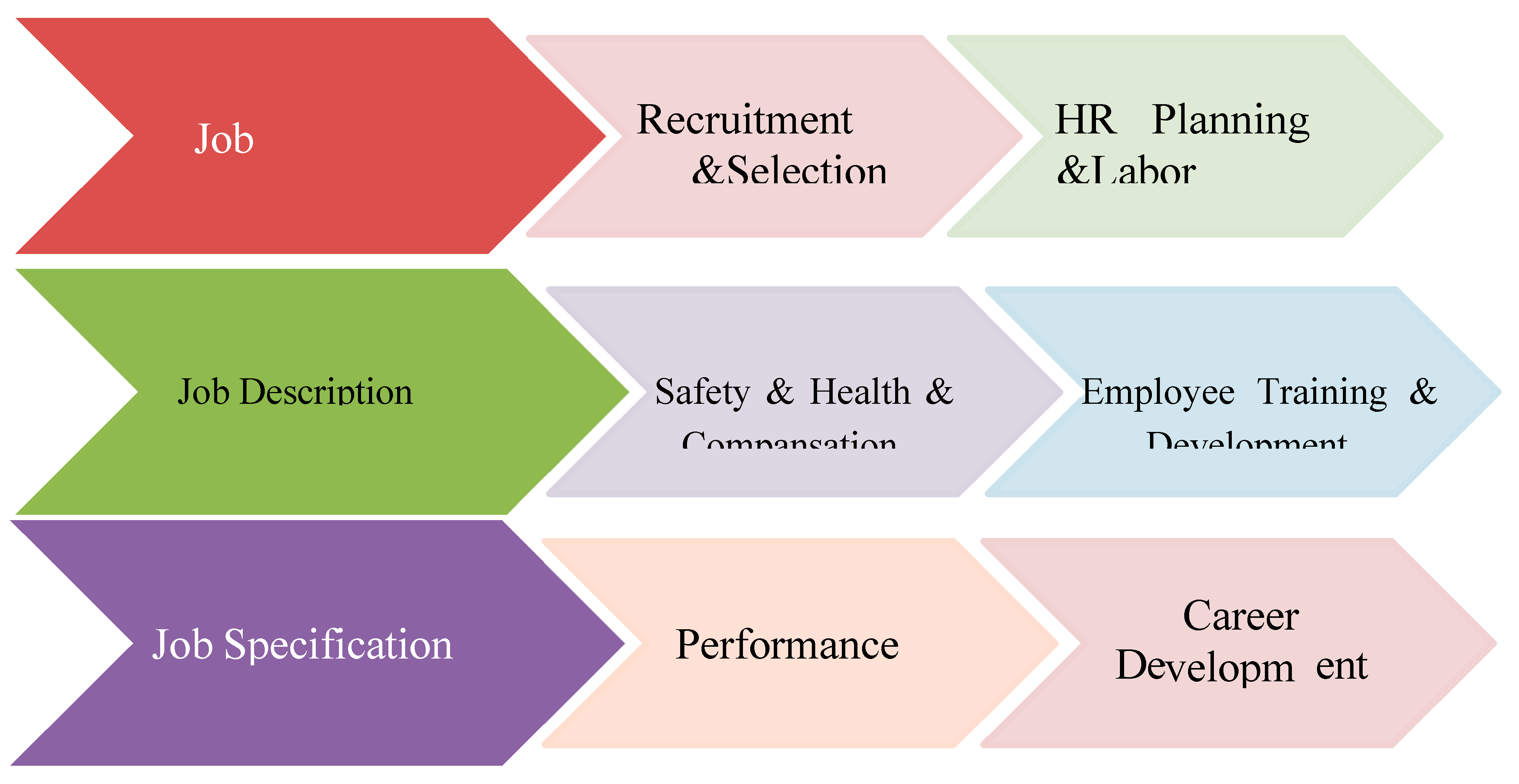
Figure: Job Model
Chapter 7: Staffing
7.1. Prime Minister’s Office
Staffing, the process of recruiting applicants and selecting prospective employees, remain key strategic area for human resource management. Given that an organization’sperformance is a direct result of the individual it employs, the specific strategies used and decisions made in the staffing process will directly impact an organization’s success or lack thereof.
7.1.1. A model of staffing process at Prime Minister’s Office:
Figure 10.
A model of staffing process at Prime Minister’s Office.
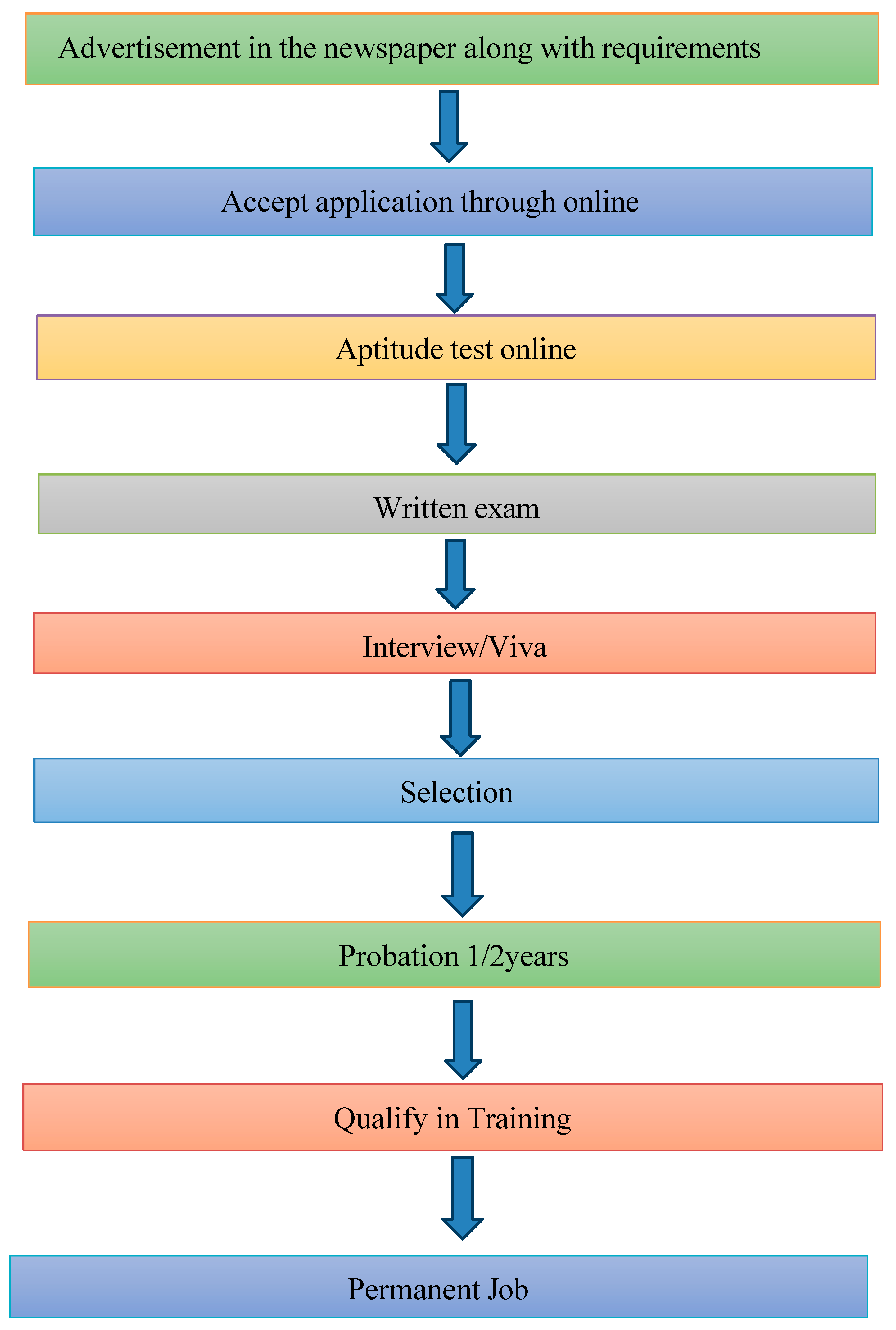
7.1.2. Model for Temporary Staffing:
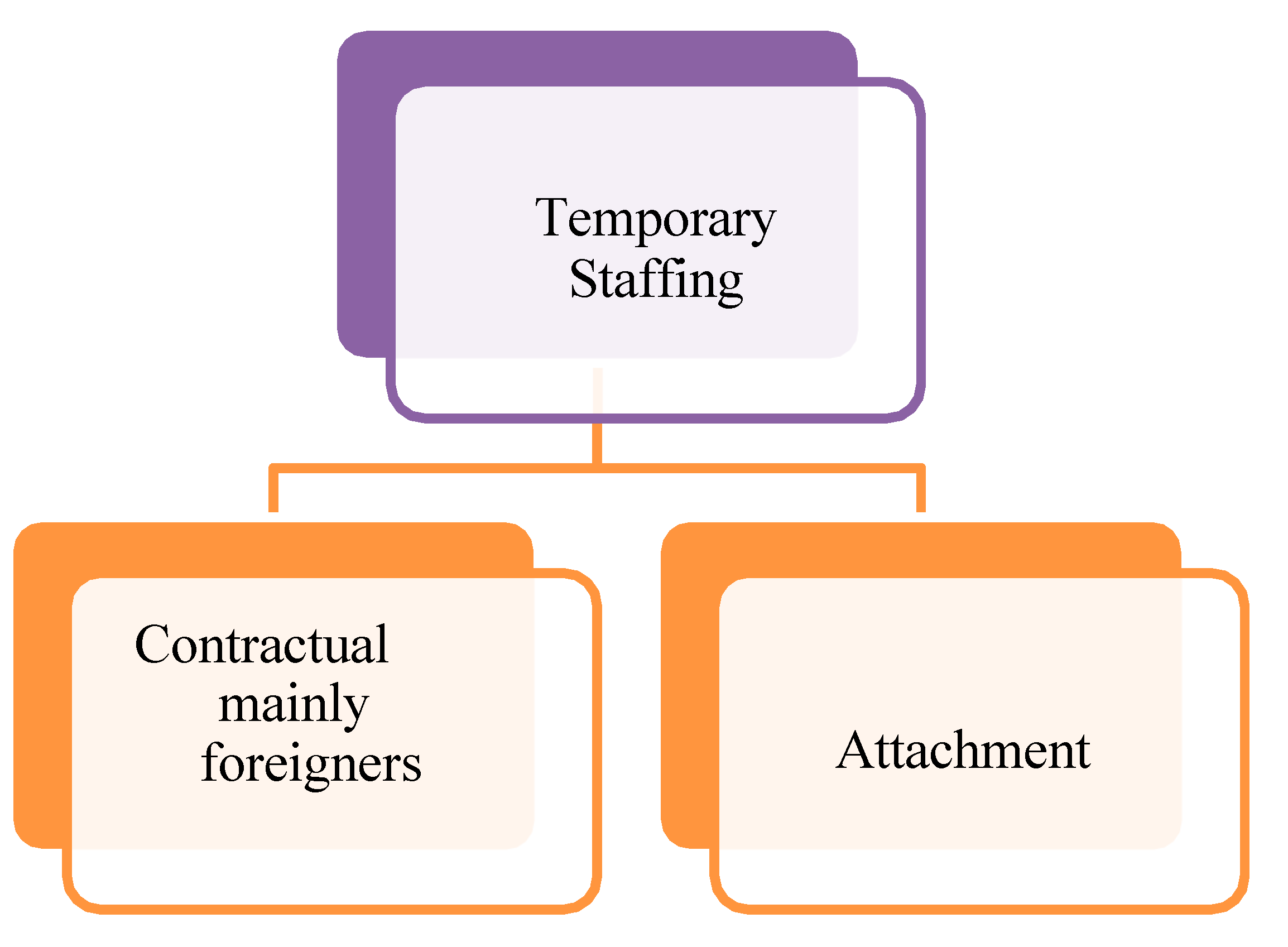
Figure: Model for Temporary Staffing
Chapter 8: Training and Development
8.1. Prime Minister’s Office
If an organization considers its employees to be human asset, training and development represents an ongoing investment in these assets and one of the most significant investments an organization can make. Training involves employees acquiring knowledge and learning skills that they will be able to use immediately.
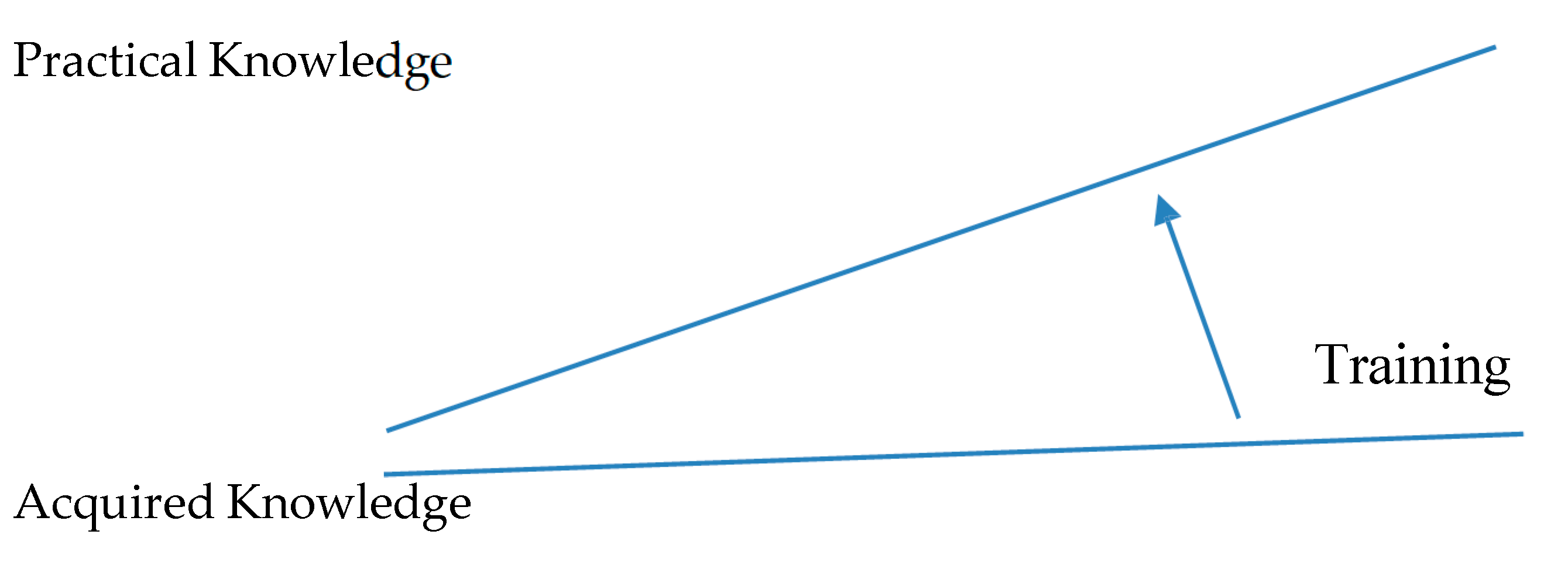
The gap between acquired knowledge and practical knowledge is covered with training. And the PMO has different types of training for its cadre and non-cadre employees.
8.1.1. Model for Types of Training at PMO:
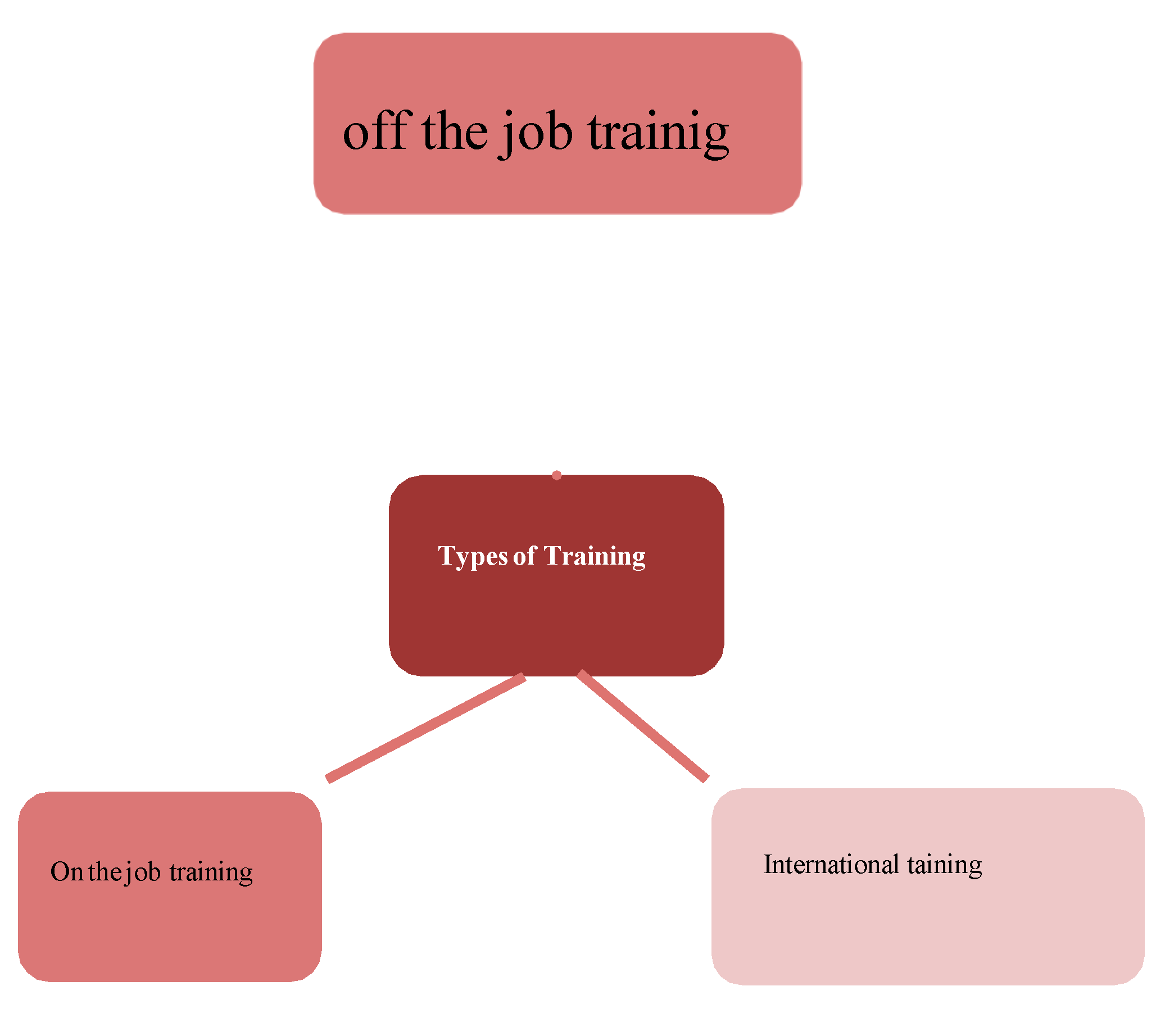
Figure: Model for Types of Training at PMO
8.1.2. Model for Training Policy at PMO
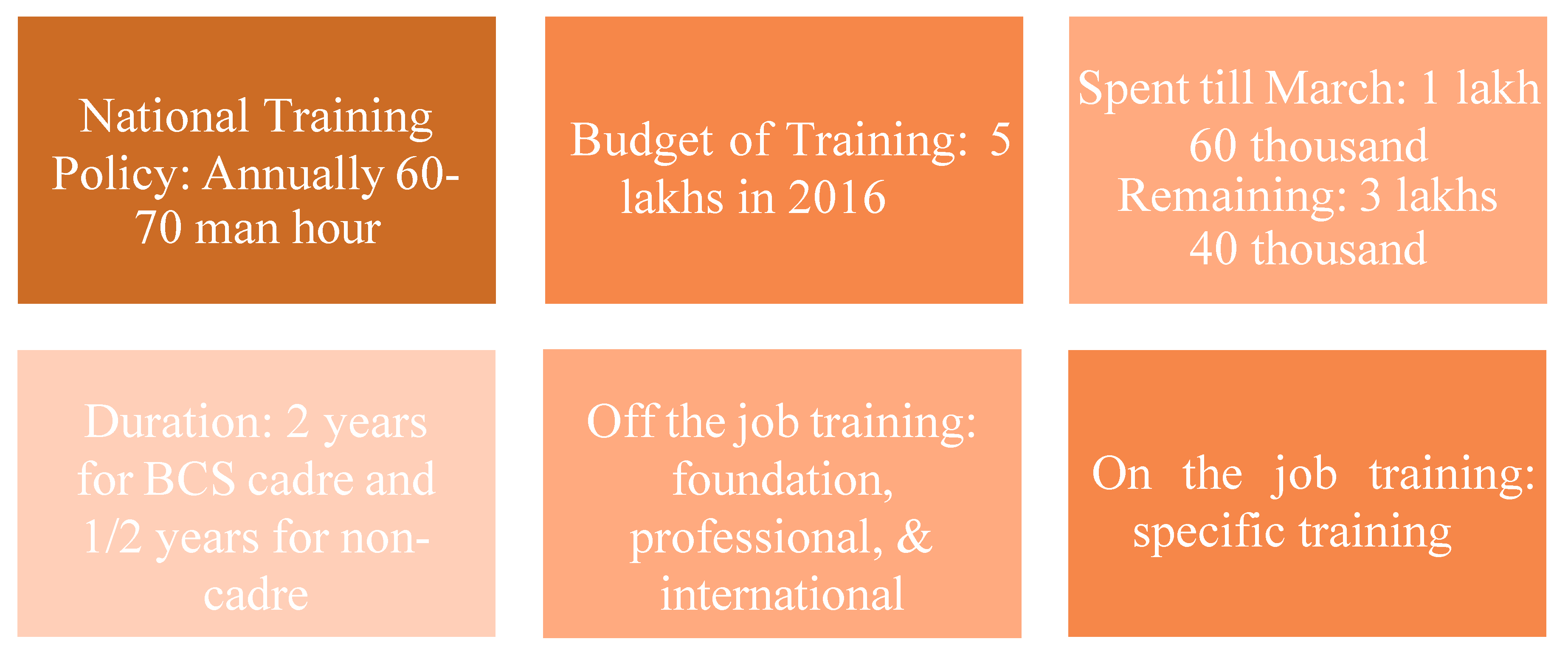
Figure: Model for Training Policy at PMO
8.1.3. Training for BCS Cadre:
| Off the job training Training Center | |
| Foundation for Administration Professional |
Bangladesh Public Administration Training Center (BPATC), Savar. |
| Foundation for Health Professional | Bangladesh Academy of Rural Development (BARD), Comilla |
| Foundation for Engineering Professional |
Peoples Development Community (PDC), Dhaka. |
| Foundation for Educational Professional |
National Academy for Educational Management, (NAEM), Dhaka. |
| Special or Specific Training for selected Employees. |
International Institutions for Training. |
Figure: Training for BCS Cadre
8.1.4. Model for Training Policy at PMO:
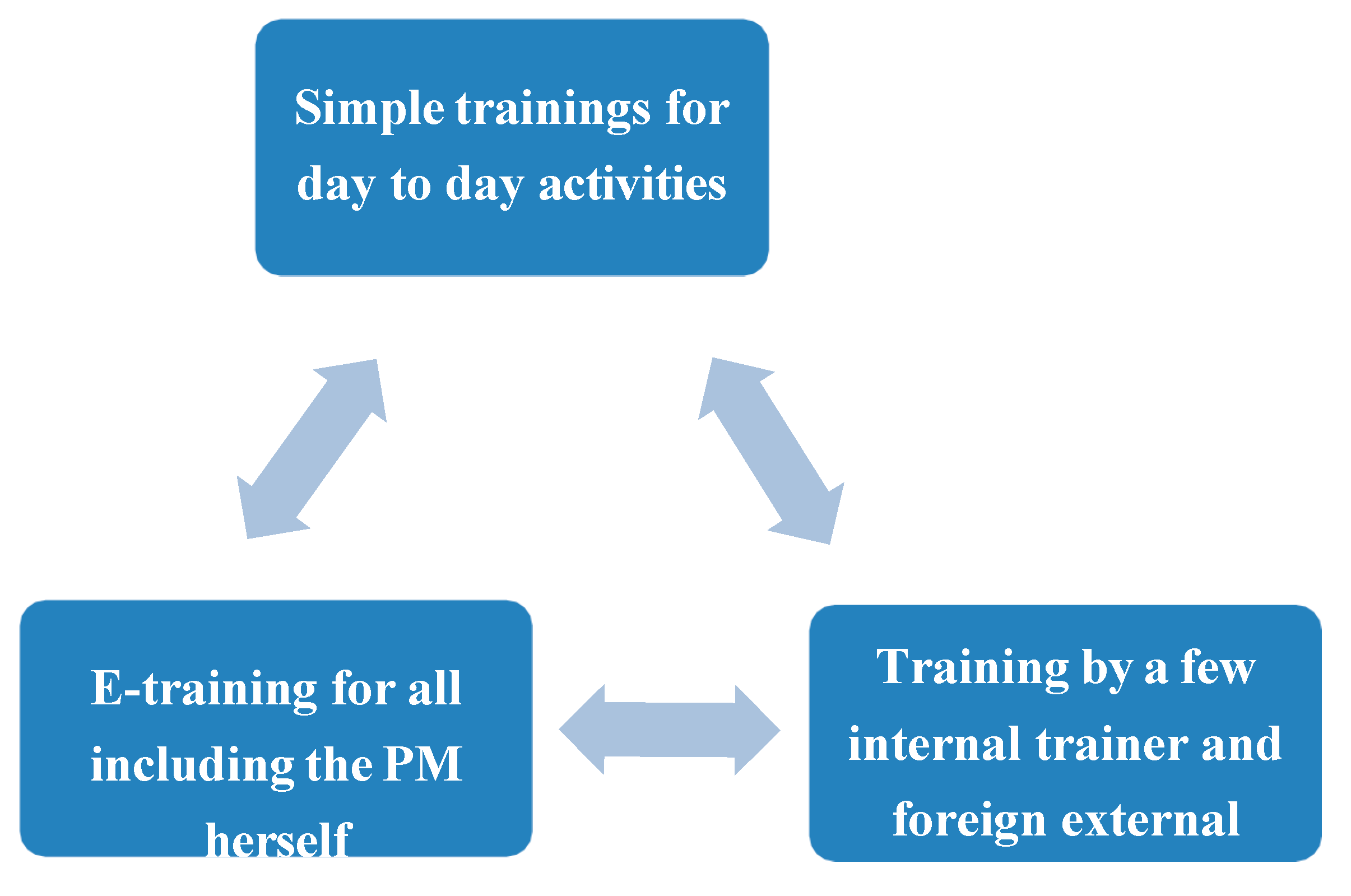
Figure: Model for on the job training
8.2. Proposed Training model
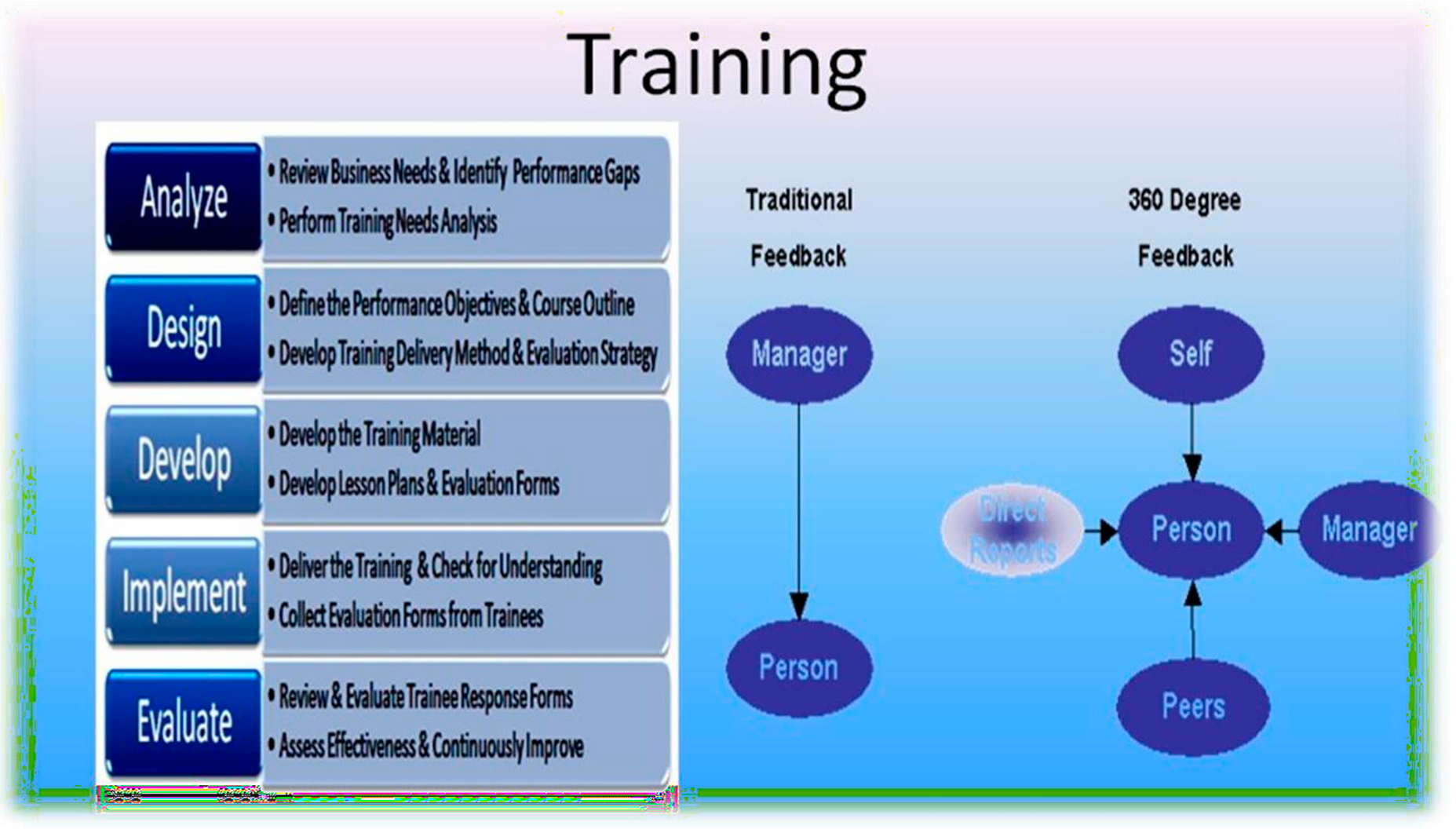
Figure: Training Model
Chapter 9: Performance Management and Feedback
9.1. Prime Minister’s Office
An Organization’s long-term success in meeting its strategic objectives rests with its ability to manage employee’s performance and ensure that performance measures are consistent with the organization’s needs. Appraisal often put employees in a defensive position therefore feedback is better since it involves mutual exchange of information.
9.1.1. Annual Confidential Report of PMO:
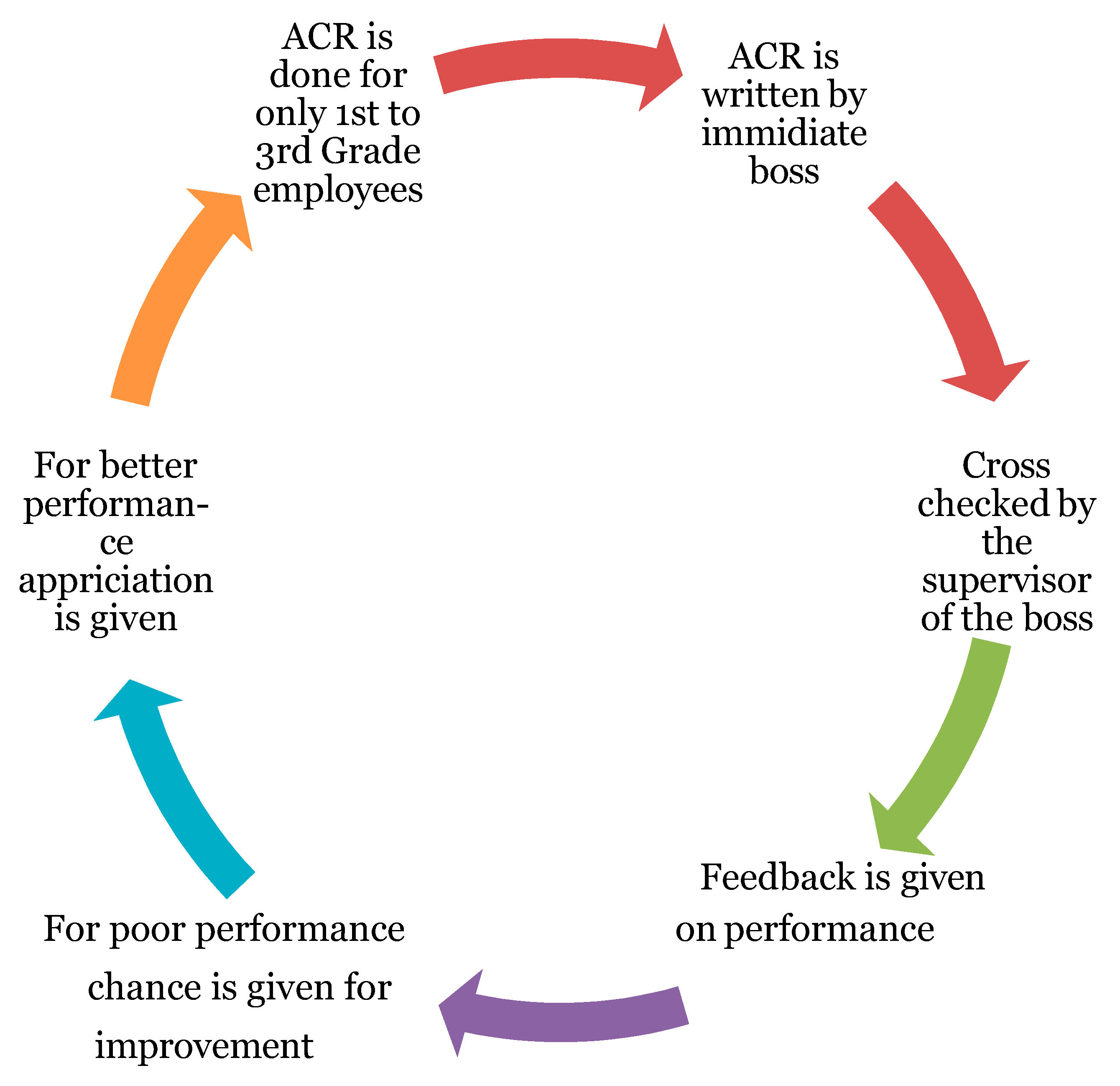
Figure: Annual Confidential Report of PMO
11.3. Proposed Model
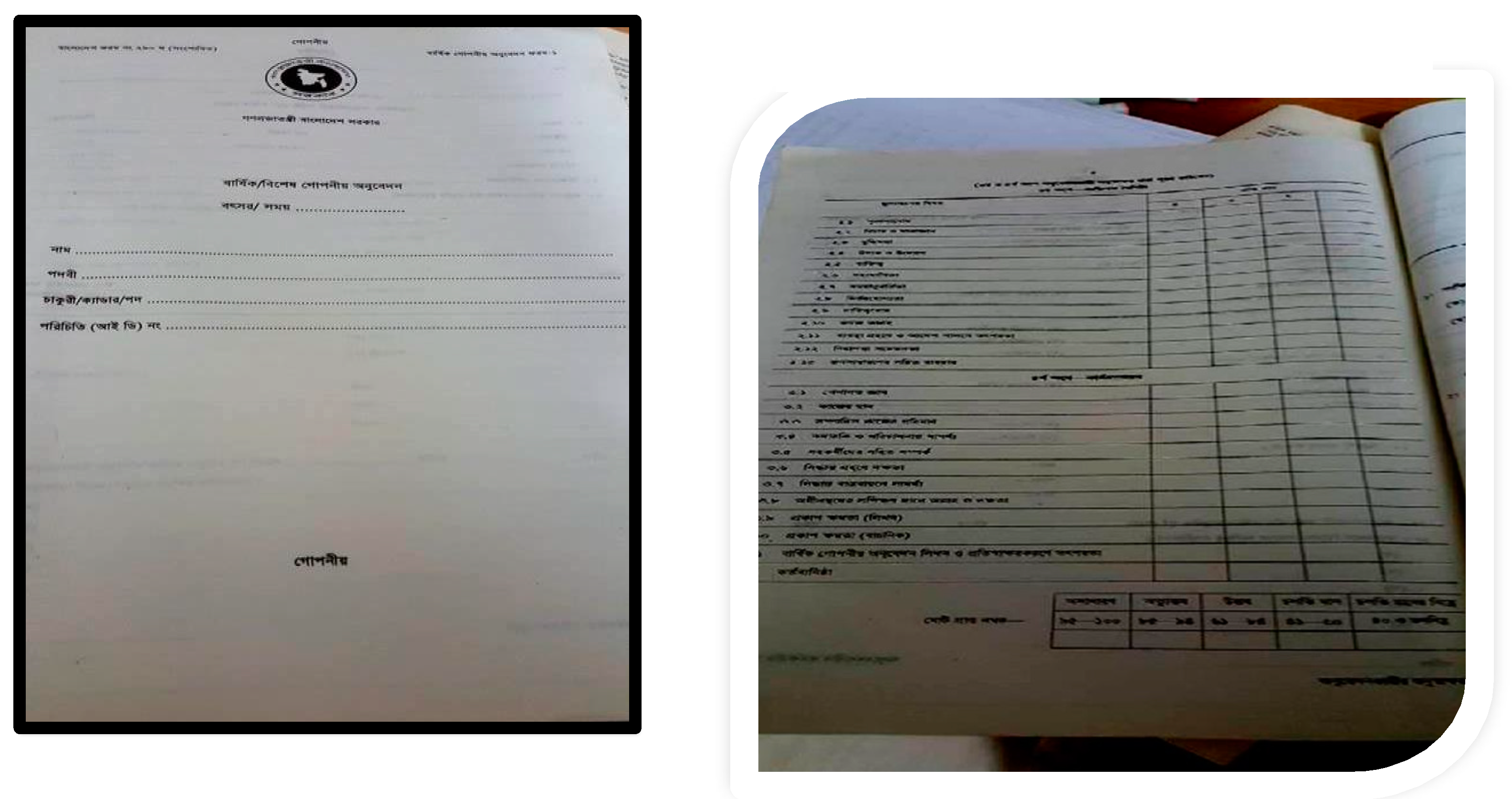
9.2.1. Performance Appraisal Format ACR:
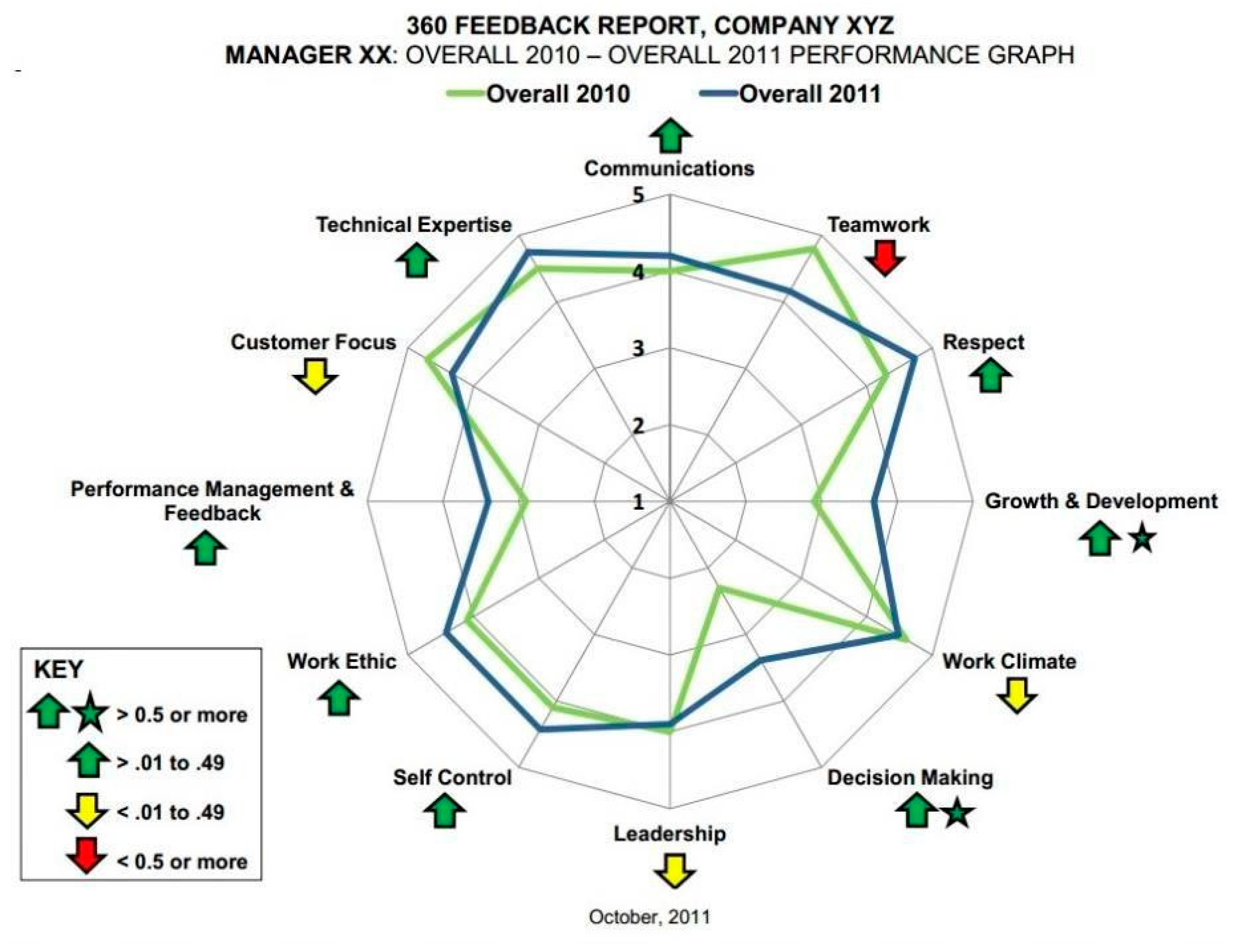
Figure: Performance Appraisal Model
Chapter 10: Compensation
10.1. Prime Minister’s Office
Compensation a key strategy area for organizations impacts an employer’s ability to attract applicants, retain employees, and ensure optimal levels of performance from employees in meeting the organization’s strategic objectives. The PMO has different level of pay scales for different grade of employees. Starting from, 1st grade BCS cadre to 20th grade lower grade employees. For different sector the pay scale differs according to the amount of work load experience etc. The senior level officers get 1st grade pay along with other benefits. All the information regarding the pay scale is given in the National Pay Scale 2015 section in the Bangladesh Ministry of Finance MOF website. Along with the pay there are early 3 festival bonus 2 Eid and Boishak.
10.1.1. Model for Compensation System of PMO
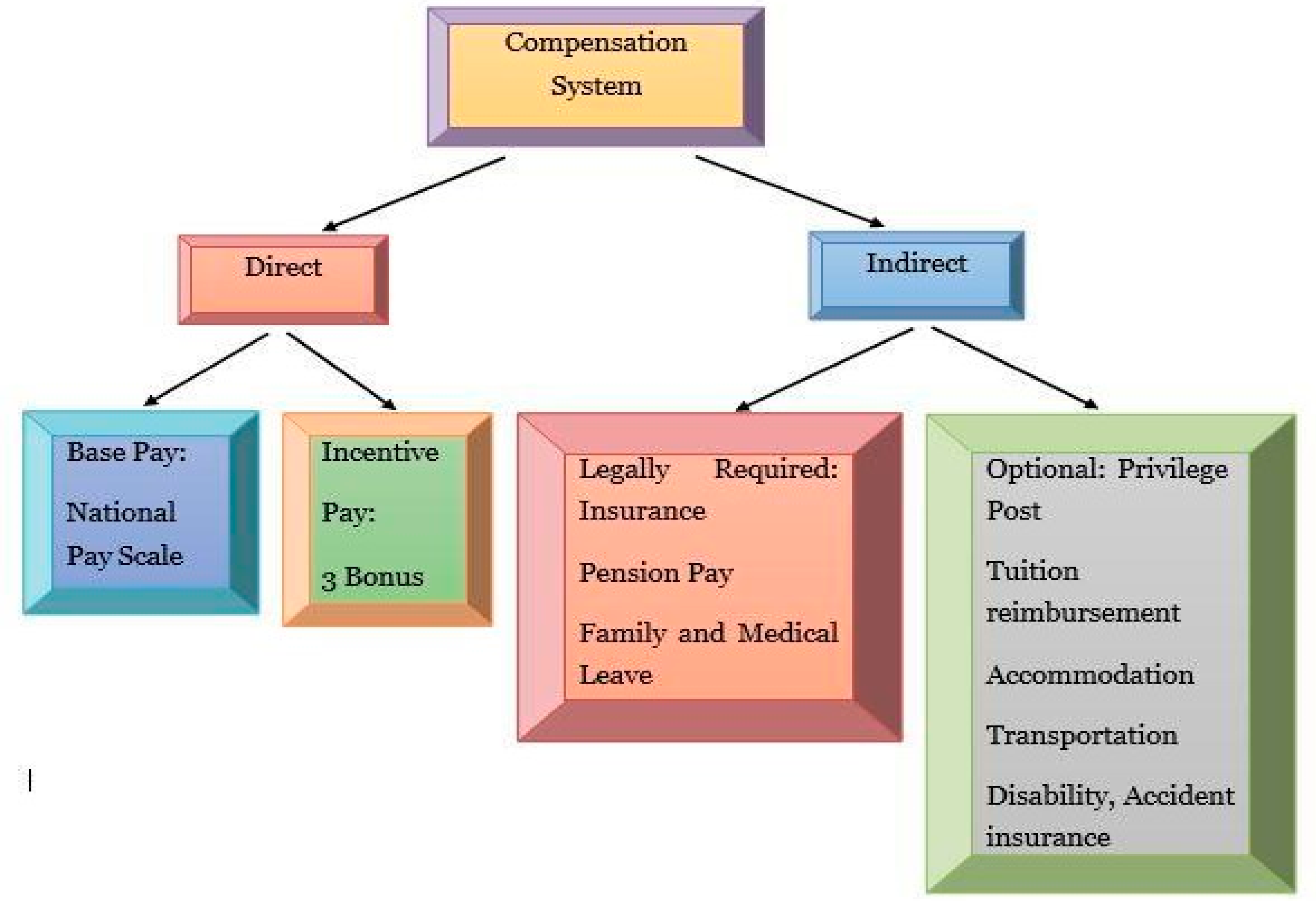
Figure : Model for Compensation System of PMO
11.4. Proposed Model:
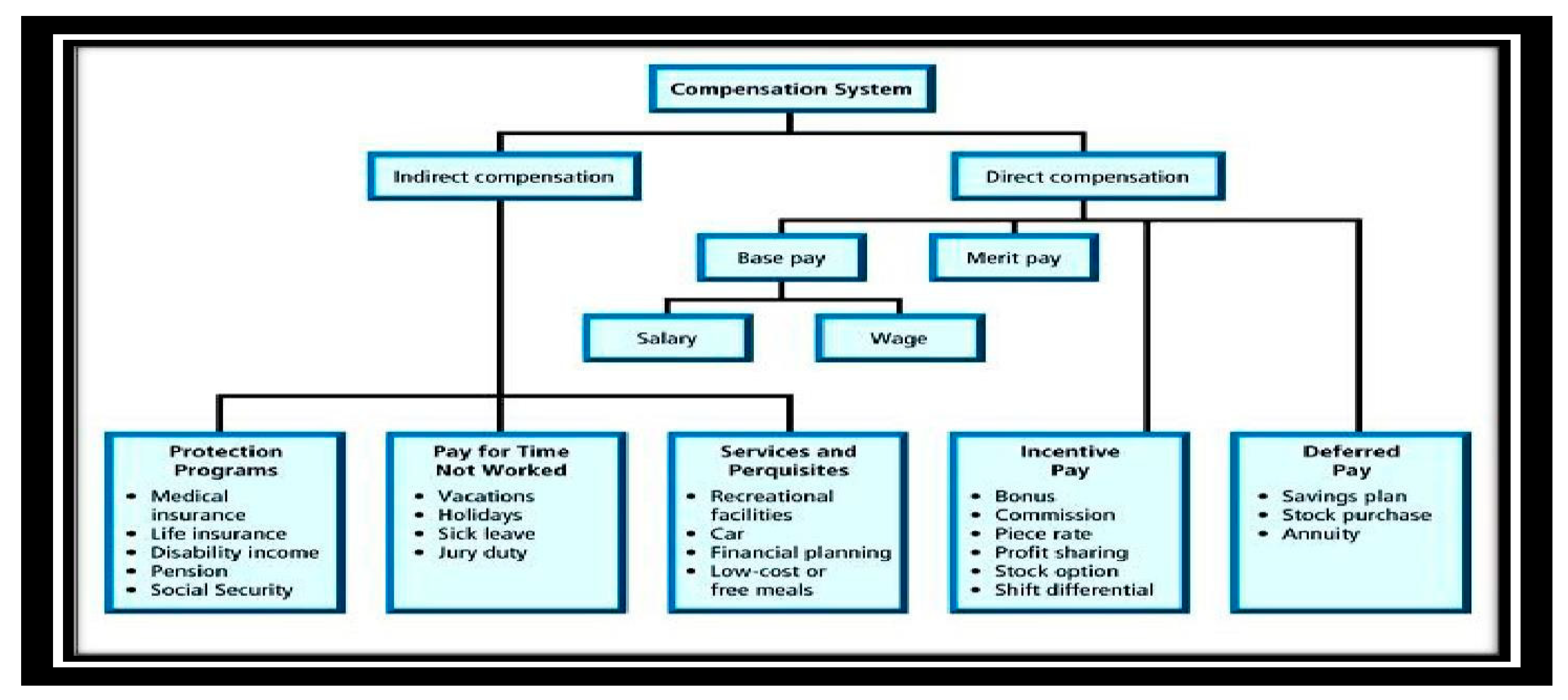
Figure: Salary Structure
Chapter 11: Global Human Resource Management
11.1. Prime Minister’s Office:
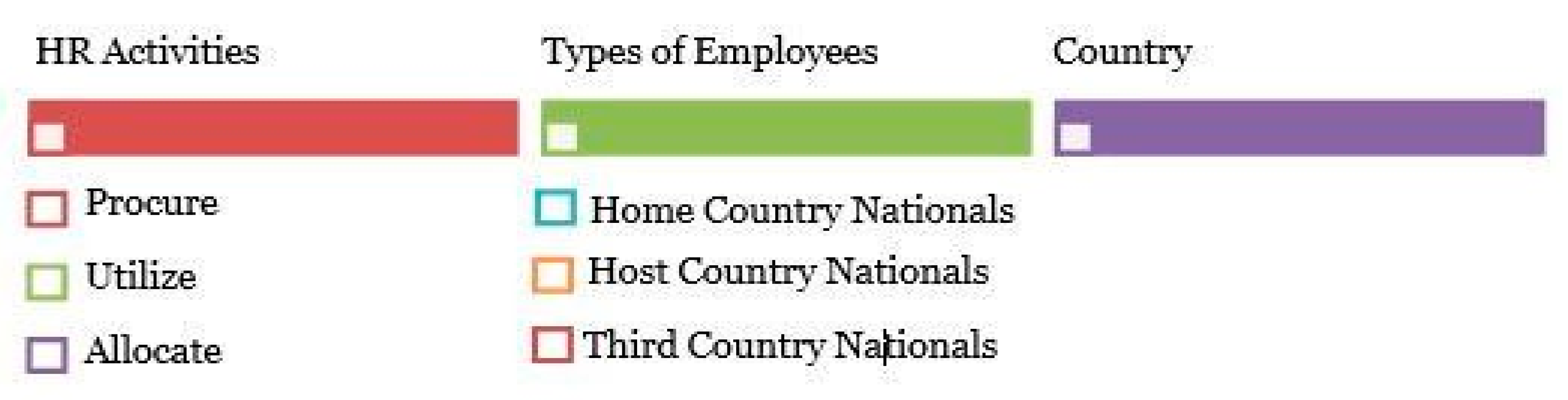
The global human resource management manage people globally for which a broader range of functional areas needs to be addressed. These areas includes clarifying taxation issues, coordinating foreign currency, exchange rates. It requires involvement of employee’s personal life there must be a human resource management for different geographic locations. And the organization will have to deal with complex external constitutions, including foreign governments and political and religious groups. Finally the global assignments involve exposure to risk. These risk includes the health andsafety of the employee and family, legal issues to host countries etc.
All the embassies in Bangladesh are directly connect with the PMO and all the embassy related documents passes though the PMO for approval.
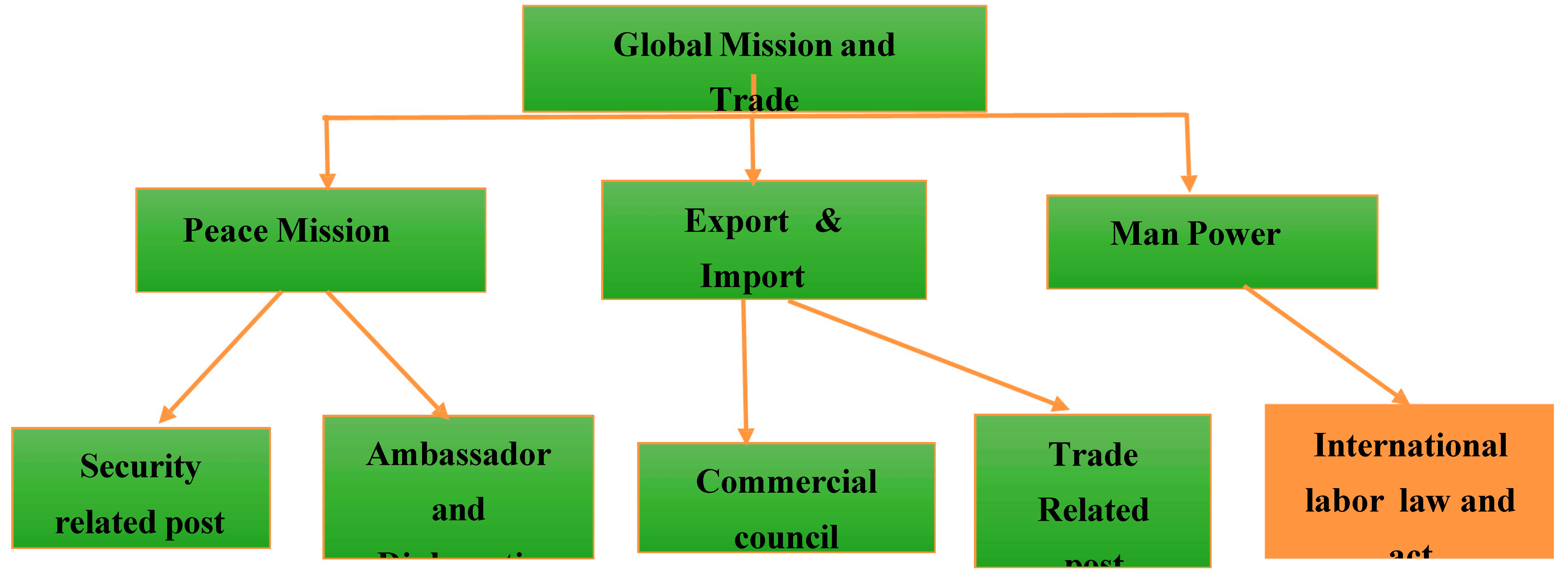
11.1.1. Model for Global Mission and Trade:
Figure 18.
Model for Global Mission and Trade.
11.2. Proposed Model
Conclusion:
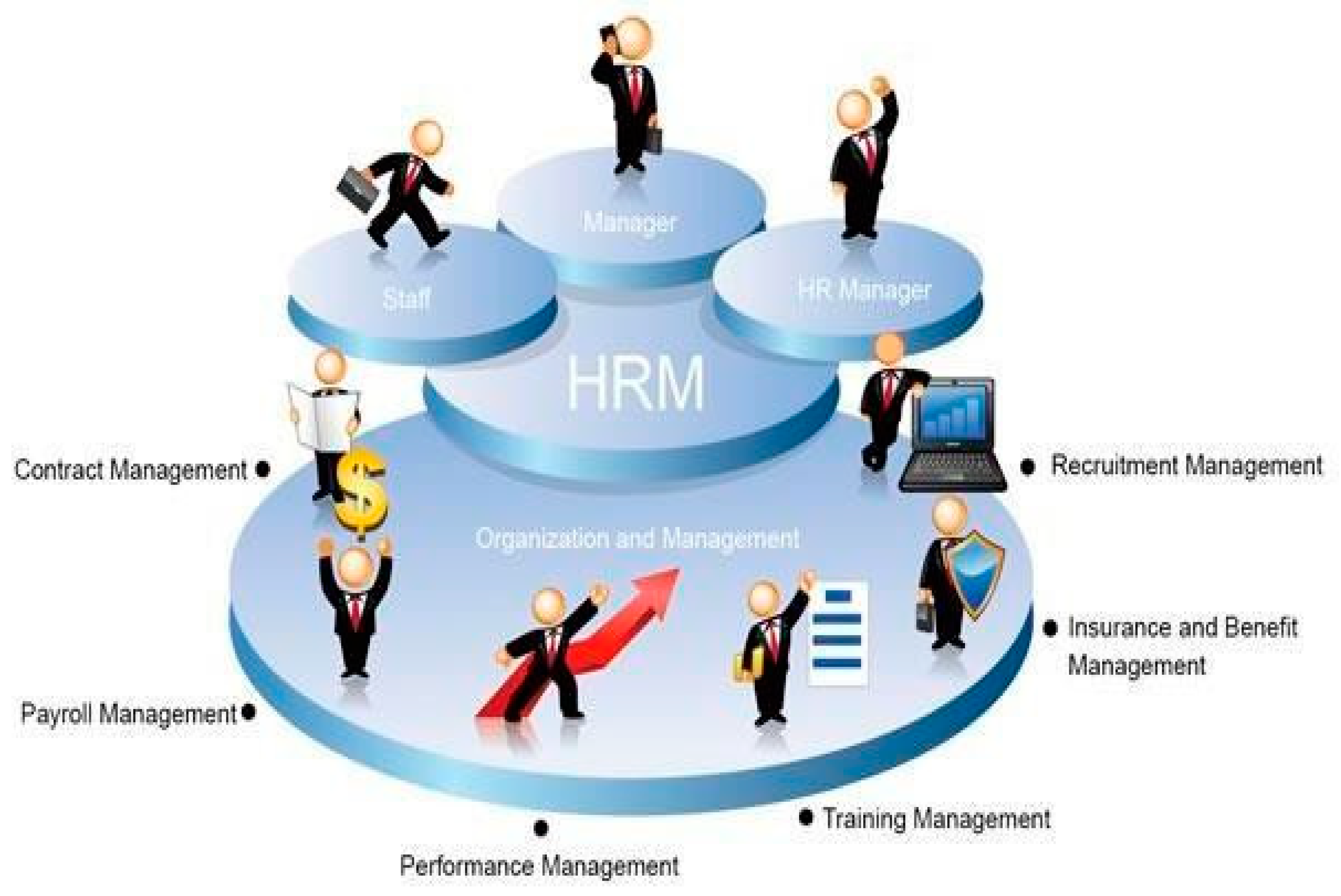
Personnel Management focuses on the different aspects of human resources management such as recruitment, hiring, compensation, and training of employees - but it does all of this with a focus on aligning with the organization's goals. HRM gives direction on how to build the foundation for strategic advantage by creating an effective organizational structure and design, culture, employee value proposition, systems thinking, an appropriate communication strategy and preparing an organization for a changing landscape, which includes downturns and mergers & acquisitions. Sustainability and corporate social responsibility come within the ambit of this discipline, especially with reference to organizational values and their expression in business decision making. HRM emphasizes organizational codes of ethics, managing the societal impact of business decisions, philanthropy and the role of the human resource professional in improving the quality of life of employees, their families and the community at large. –
Recommendations:
♠ Evaluation of training is highly recommended make an assessment of the employee before training and after training so that return on investment (ROI) can be measured easily.
♠ Creating a data base of existing employees for a better evaluation of all significant and insignificant activities of the employee.
♠ Introduction of 360 degree feedback is recommended, so that two way feedback (both employee and employer) is achieved.
♠ The hierarchy is maintained strictly in PMO but shifting to collaborative will increase the effectiveness of the organization.
♠ Increasing the autonomy of different government sector will ease the improvement sector and will save time.
Acknowledgement
Before I start the report it is very important for me to convey my heartiest gratitude towards some of my inspirations. At first, I would like to thank the Almighty Allahwho has enabled me with the ability to think broadly with my learning and complete this report work. It gives me immense pleasure in presenting my term paper on ‘Personnel Management of Prime Minister’s Office (PMO) of Bangladesh.’ The success of this report is a result of sheer determination and hard work and constant guidance from my mentor. Therefore, I would like to take this opportunity to add a special note of thanks for Professor Dr. Muhammad Sayadur Rahman, who undertook as my mentor despite his many other academic and professional commitments. His wisdom, knowledge, and commitment to the highest standards inspired and motivated us. I want to show my ample gratitude towards Muhammad Ashraf Siddique Bitu, (APS to Honorable Prime Minister), Prime Minister’s Office; without his insight, support, and information this report would have been incomplete. I would like thank Prime Minister Office for their rich and informative website. Without proper information the report would have been vague. Finally, I want to add a few words of appreciation towards Jahangirnagar University for offering this helpful course which assigns us to do such immense report work.
References
- Strategic Management of Human Recourses, Jeffrey A. Mello, 3rd edition, 2011.
- Strategic Human Resource Management, Micheal Armstrong, 3rd edition, 2006.
- 3. Muhammad Ashraf Siddique Bitu, APS to Honorable Prime Minister of BD.
- Allocation of Business among the different ministries and division, Rules of Business, 1996, revised in 2012, Cabinet Division.
- http://www.pmo.gov.
- http://www.mof.gov.
- http://www.mopa.gov.
- http://www.cabinet.gov.
Disclaimer/Publisher’s Note: The statements, opinions and data contained in all publications are solely those of the individual author(s) and contributor(s) and not of MDPI and/or the editor(s). MDPI and/or the editor(s) disclaim responsibility for any injury to people or property resulting from any ideas, methods, instructions or products referred to in the content. |
© 2025 by the authors. Licensee MDPI, Basel, Switzerland. This article is an open access article distributed under the terms and conditions of the Creative Commons Attribution (CC BY) license (http://creativecommons.org/licenses/by/4.0/).
Copyright: This open access article is published under a Creative Commons CC BY 4.0 license, which permit the free download, distribution, and reuse, provided that the author and preprint are cited in any reuse.


