

Submitted:
12 April 2025
Posted:
15 April 2025
You are already at the latest version
Abstract
Integrating smart technologies into historic cities presents a challenge, as they must balance modernisation with cultural heritage preservation. This study explores the intersection of urban cultural heritage and smart city development through a multidisciplinary literature review encompassing urban planning, smart technologies, heritage conservation, and place making. Using qualitative content analysis, key themes and patterns were identified to construct a conceptual framework. The findings reveal that cultural heritage sites play an active role in smart city planning by reinforcing historical identity and promoting urban sustainability. Additionally, the study highlights a gap in smart city frameworks, which often overlook cultural heritage preservation. The proposed framework offers insights for local governments and urban planners to develop culturally responsive smart cities while acknowledging the challenges of cross-city data comparisons due to varying contexts.
Keywords:
cultural heritage
; smart city
; development city
; place making
1. Introduction
Urban development is increasingly focused on integrating smart technologies into urban planning. However, historic cities face unique challenges in balancing modernisation with the preservation of cultural heritage. The integration of technology in smart cities is vital for fostering economic progress and improving the quality of life (Chen Cheng, 2023). It is equally crucial to consider socio-cultural factors to ensure inclusivity in urban development (Abdi Shahabazitabar, 2019; Angelidou et al., 2017). Furthermore, cultural heritage sites play a significant role in shaping urban identity, community development, and economic and environmental sustainability (Shmelev Shmeleva, 2025).
While smart technologies have become increasingly common for tracking and protecting cultural heritage assets (Daffara et al., 2019), their over-emphasis in urban development can erode social rights and democratic principles, as the focus shifts more towards technology and infrastructure (Alizadeh Sharifi, 2023). Equity in participation in smart city projects remains a challenge due to a gap in digital literacy. Several experts argue that digitally literate citizens tend to participate more in urban activities and projects (Lytras Visvizi, 2018). However, others contend that higher digital skills do not necessarily guarantee participation in these projects (Masucci et al., 2019). This raises important questions about whether cities are modernising at the expense of their cultural and historical identity. Pendlebury et al. (2012) argue that these challenges highlight the complex dilemmas of contemporary urban planning.
Contemporary research emphasises the role of cultural heritage in smart cities by facilitating place making and developing a sense of place and urban identity (Cartel et al., 2022). Some aspects of this work include highlighting the use of smart platforms for disseminating cultural knowledge (Borotová, 2022; Koukopoulos et al., 2017), addressing social challenges in historical environments (Clarke, 2019), and developing smart heritage tools (García Diego, 2022). Moreover, artificial intelligence (AI) plays a crucial role in enhancing citizenship engagement and fostering community identity.
While existing research widely acknowledges the role of heritage in smart cities, there remains a significant gap in the conceptual understanding of the unique role of place-making by heritage sites in the context of smart cities. Although there is a considerable amount of research on smart cities, earlier studies have highlighted the significance of public spaces and place-making, as well as the role that a sense of place and urban identity play in smart city initiatives (Cartel et al., 2022), they haven't delved further into linking these concepts to the limitations of participatory smart urban governance.
While AI has significantly improved urban computing, data analytics, and security (Antonić et al., 2024), its potential to facilitate cultural appreciation and community engagement is still not fully understood. AI applications within smart cities are usually regarded from the perspective of urban computing, data processing, security, or automation. Its use in encouraging active communities, distinct urban identity formation, and appreciation of culturally significant places of interest is still developing (Antonić et al., 2024). Even though technologies such as augmented reality (AR) or other AI simulations have already been studied within the scope of urban issues, they need deeper exploration regarding their potential for instrumental spaces within important cultural settings.
As a result of disparities in digital literacy, equity in participation for smart city projects remains an unresolved issue. Some scholars posit that digitally literate residents are more prone to participate in urban activities and projects (Lytras & Visvizi, 2018), while others argue that mere possessing advanced digital skills is not sufficient (Masucci et al., 2019). This reinforces the need to remedy socio-cultural gaps as part of smart city planning considerations. Despite the increasing attention given to the adoption of technology in the operation of smart city systems, a holistic framework for the integration of cultural heritage sites into smart city place making strategies is still lacking. There is not enough research on the interplay between smart cities alongside cultural heritage sites within place making and vice versa. And also, developing a specific model to illustrate the systematic incorporation of cultural heritage into the smart city paradigm is necessary to support the sustainability of urban environments.
The study aims to answer two key questions: 1) What factors shape the relationships between smart cities and cultural heritage sites and define the unique role of place making in this context, and 2) How can a conceptual framework for place making in a smart city be defined to effectively integrate cultural heritage sites. The research aims to develop a conceptual understanding and theoretical base on the integration of urban cultural heritage with smart city development to address this and arrive at a comprehensive understanding, the study conducts a systematic literature review of synthesising relevant research across various fields, including urban planning, smart city development, cultural heritage conservation, and place making. In doing so, it identifies themes, trends, and gaps to derive key indicators that form the multiple dimensions of the conceptual framework. The conceptual framework is expected to serve as a valuable reference for subsequent studies, enriching theoretical understanding and practical evaluation of localisation in smart cities. It is important to note that the study faces limitations, including the potential risk of generalising findings that are general and may vary for specific contexts due to the broad scope of the systematic review.
2. Materials and Methods
The methodology of conducting the present research is based on systematic review and analysis of the qualitative content of articles and scientific resources related to research keywords (Mengist et al, 2020). Systematic reviews are a type of review that uses repeatable analytical methods to collect secondary data and analyse it (Nunn & Chang, 2020). Also, qualitative data analysis requires some creativity in organising a pile of raw data and can be a daunting task for educational researchers. The whole process of analysing data involves breaking down raw data into manageable chunks. Effective qualitative data analysis plays a critical role in educational research outcomes (Shava et al, 2021). The key words in this study are: cultural heritage, smart city development, place making and the relationship between these keywords, which are extracted from the scientific databases web of science and Google scholar and output; The scientific resources obtained after extraction are entered into the End note 21 software for classification. EndNote 21 was selected over other reference management tools due to its AI-powered categorisation, superior citation tracking, seamless Web of Science integration, and advanced duplicate detection, making it optimal for systematic literature reviews. Naturally, some of the articles from search are unrelated or repetitive. At this point, the resulting scientific articles and resources are entered into the Covidence.org website to systematic review and delete unrelated and repetitive articles, so that the most important and relevant scientific articles and resources are obtained for qualitative content analysis through the formation of the Prisma diagram. At this point, after extracting the most important articles, they enter Maxqda 2020 software to perform qualitative content analysis and coding and categorisation.
According to Figure 1, the research process consists of searching through articles and publications regarding cultural heritage, smart city development, and place making in Web of Science and Google Scholar, and more sophisticated resources. All these resources are stored and organised in EndNote 21. The systematic review is done in Covidence.org to filter and choose relevant studies which is depicted by a PRISMA diagram. The requisite articles are analysed in MAXQDA 2020 to obtain qualitative data that deepens understanding on relationships among key research themes.
Systematic coding methods are used to examine the content of scientific articles and resources obtained, conceptualise and extract categories, and emphasise the use of open coding, axial coding and selective coding. In the open coding phase, primary concepts and major categories are extracted. In the axial coding phase, the relationship between the major categories is stabilised. Finally, in the selective coding phase, the key analytical category or core category is selected or extracted (Corbin, & Strauss, 2008).
In this study, the text coding of the above articles was done in three ways: open, axial and selective coding. The open coding process is the process of examining the number of factors and criteria affecting each of the areas of cultural heritage, smart city development and place making, depending on the wide area of previous research, these factors are numerous and share in many studies. The pivot coding process is done to determine the commonalities and alignment between open codes in order to classify them into related categories, which ultimately leads to the explanation of effective and relevant criteria in each of the three main areas of research, namely cultural heritage, smart city development and place making (selective codes) in such a way that they are explained in relation to each other and are in accordance with the main objective of the research.
2.1. Searching for Articles
- −
- Web of science database:
Search on web of Science database with the keywords Cultural heritage, Smart city and Place making based on the title and subject fields. Finally, 116 articles related to the research title were obtained, which were output to enter in the end note software in RIS format.
- −
- Google scholar database:
Search on Google Scholar was done in two ways: first, search was done by combining the keywords Cultural heritage and Smart city, at which point 50 articles related to the research title were obtained. Then the search was done by combining the keywords Cultural heritage, Smart city and Place making, at which point 22 articles related to the research title were obtained. The articles obtained from the Google Scholar database were output in End note format.
2.2. Entering the Output of the Databases Into the End Note 21 Software
At this point, the outputs from the web of Science and Google scholar databases entered End note 21, and a total of 189 articles were recognised and reviewed in the software.
In the next step, we'll delete duplicate articles in the End note software. To do this, we use the find Duplicate command from the library tab and delete duplicate articles. After deleting duplicate articles, 157 non-duplicate articles and documents related to the research title are obtained.
2.3. Input the Output of End Note Software Articles to the Covidence.org Website for Systematic Review
By entering 157 articles in the End note software to the website _ ‘Covidence.org’_ 115 more unrelated articles were removed in terms of title and in terms of research abstracts, and 42 related articles were approved. And then the Prisma diagram was drawn.
As shown in Figure 2, in the Prisma diagram, 329 studies were collected from multiple databases and registers like Google Scholar (n = 162), Web of Science (n = 108), and others (n = 59). Out of these 42 studies were selected for review, with none being classified as ongoing or pending classification.
2.4. Input Final Articles Into Maxqda 2020 Software for Coding and Categorisation
After extracting the articles and scientific resources, the text of all the articles obtained enters microsoft Office word and the final text file enters maxqda 2020 to encode and extract the articles in question. Figure 3 illustrates the qualitative data analysis phase, where the selected articles were analysed using MAXQDA.
The main codes extracted according to the research title include Cultural heritage, Smart city Development and Place making. 1280 subcodes were also extracted from the main research codes that the importance of each code is determined by the number of repetitions. These 1280 subcodes are categorised into 27 different code categories and subcodes of the main research codes. The subcodes of the study are listed in order of importance and repetition: cultural heritage, place making, urban management, local situations, smart city development, economic aspects, new technologies, urban space, identity, urban policy, urban planning, applications, modernisation, urban regeneration, participation, traditions, city plans, monitoring, urban development, infrastructure, historic city, mobilising, place network, digitalisation, protection of historical ambiance, energy supply, historic monuments and urban policy.
The Figure 4 clearly shows the importance of each subcode category by the number of repetitions of each code.
3. Results
The conceptualisation of literature and research findings is the most important part of the present study. The presentation of this conceptual framework is in the form of developing a model for place making with a smart city approach in cities of historical value and cultural heritage. That is, in a way, the most important elements and characteristics of communication between each of the concepts of cultural heritage, smart city and place making which are somehow connected, are identified and explained.
3.1. Results from Open Coding
The encoding of the research findings is based on the main areas of the present research. Based on this, 1280 open codes have been extracted. These codes are in the field of cultural heritage related to topics such as: environmental conditions, identity, social issues and public participation and historical features; in the field of smart cities, open codes are related to topics such as: technology, intelligence and software infrastructure development. Also, in the field of open code place making, they include topics of urban space management and planning, urban plans and infrastructure.
3.2. Results from Axial Coding
According to the analysis of the research findings based on qualitative analysis and coding of articles extracted from various scientific sources, the most important and key factors and indicators of the research were identified and categorised in the three main areas studied, namely smart city, cultural heritage and Place making.
Accordingly, the most important elements that contribute to the preservation of the cultural heritage of cities of historical value include: local status, identity, urban policy, urban regeneration, participation, traditions, monitoring, historical monuments and protection of historical environments.
The most important elements that contribute to the intelligence of culturally valuable cities also include: new technologies, software development, modernisation, urban development, mobilisation, digitisation and energy supply of the city.
Based on the description provided, the conceptual framework of the research is explained in the form of the following diagram.
And finally, the most important elements that are effective in place making in historical cities by relying on its link to the smart city, are include: urban management, economic aspects, urban space, urban planning, city plans, infrastructure and place network.
3.3. Results from Selective Coding
Axial coding is based on the classification of 27 axial codes obtained in three areas: the realisation of cultural heritage criteria, the realisation of smart city development criteria and the realisation of place making criteria in line with the main objective of the research, namely the link between the components of cultural heritage and smart city with the help of place making.
The conceptual framework presented in Figure 5 illustrates the integration of "cultural heritage" components with "smart city" development through the facilitation of "place making" elements.
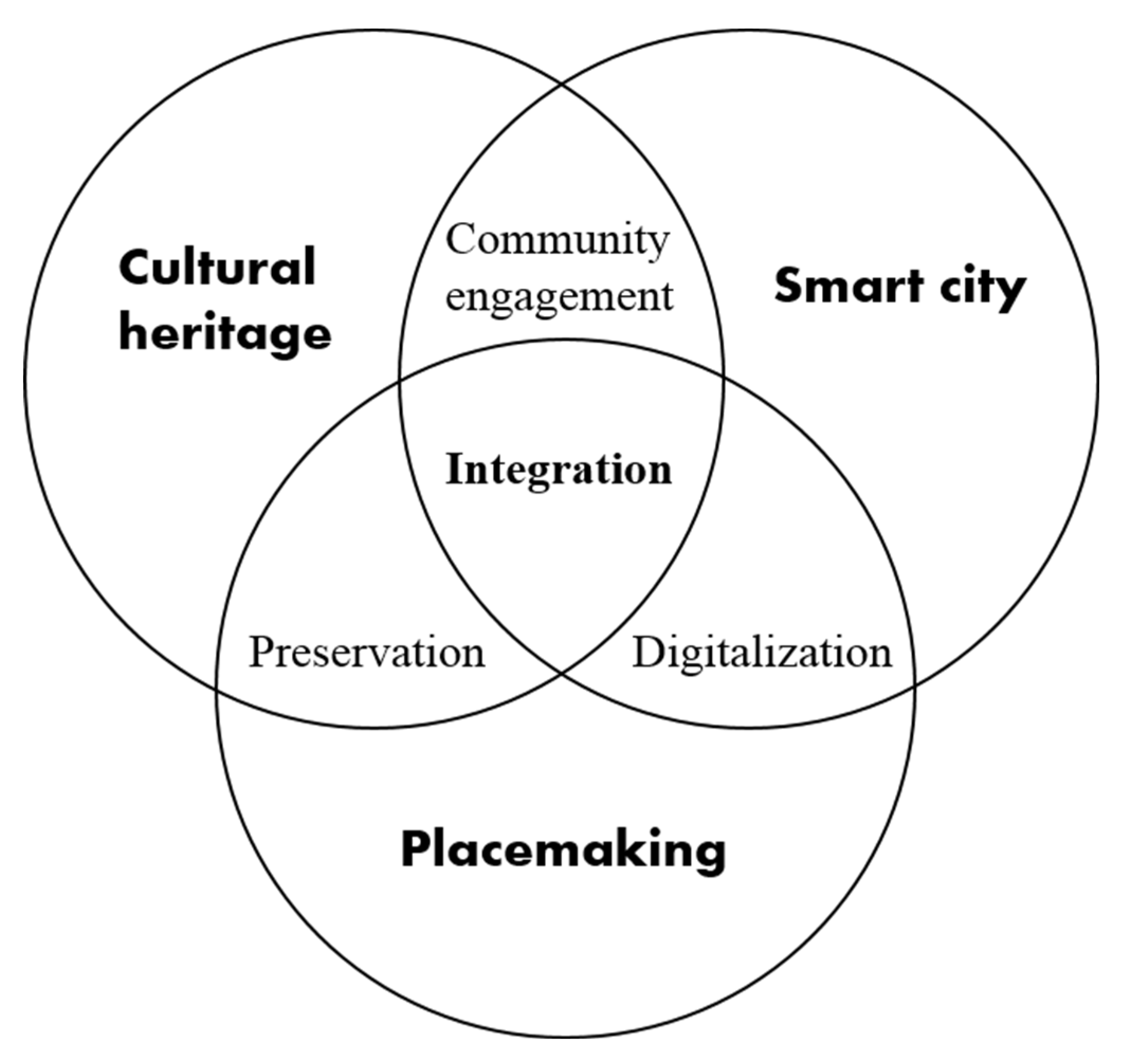
Next, after explaining the most important indicators of research in the relationship of the main concepts, including cultural heritage, smart cities and place making; we will explain the two-to-two connections between each of the main concepts of research and their indicators. It should be noted here that at this stage, the framework of the initial assessment discussed here is considered at the initial stage. The main indicators and relevant parameters for each feature of the four main elements place making which form the evaluation framework for the use of cultural heritage sites as a tool for place making in the context of Smart City are identified as follows:
- −
- Preservation: The concept of preservation comes from the connection and linking of the concepts of cultural heritage and place making.
- −
- Digitalisation: The concept of digitisation comes from connecting and linking the concepts of smart cities and place making.
- −
- Community engagement: The concept of social participation comes from connecting and linking the concepts of cultural heritage and the smart city.
- −
- Integration: Finally, the final concept of integration is derived from the communication and linking of the concepts of cultural heritage, smart city and place making.
As demonstrated in Figure 6, there is a Venn diagram that illustrates the three primary concepts of the research: Cultural Heritage, Smart City, and Place making. The diagram is composed of three circles, each representing one of the concepts and their key relationships are in their intersection.
Based on the main findings of the study, the most important dimensions and criteria of the relationship between the cultural heritage of the historical city and the development of the smart city include the identity and cultural status of the city, the status of participation and tourism in the city and the status of its historical monuments and environments. It can also be said that the intelligence of historical cities and historical spaces in these cities, if properly feasible and studied, can have effective and positive effects on the preservation of the cultural heritage and historical identity of these cities. Therefore, the conceptual framework developed in the present study is based on the three basic concepts of cultural heritage (with indicators: local status, identity, urban policy, urban regeneration, traditions, monitoring and privacy of historical monuments and environments), smart city (with indicators: new technologies, applications, modernisation, urban development, mobilisation, digitisation and energy supply) and place making (with indicators: urban management, economic aspects, urban space, Urban Planning and Urban Development Plans, urban infrastructure and place network) have been developed, which by communicating and linking two to two between each of the main concepts and their indicators is a final model with four basic components include: community engagement, preservation, digitalisation and integration It's explained.
4. Discussion
The key aim of this research was to formulate a conceptual framework that integrates cultural heritage with place making and smart city concepts. This is formulated in the form of principles of enabling change that ensures the historic city remains a smart city while still maintaining its cultural and historical heritage. This analysis is spelt out in the form of a final framework after an analysis of the chosen texts and the literature review including research articles through systematic review method under qualitative content analysis. The three scrutinised concepts cultural heritage, smart city, and place making are assumed to be the most aspects in the intelligent problem of preserving historical places and to be the center of the study qualitative content analysis.
Considering the prior research studies undertaken, some of the foremost issues of barriers relating to the smart evolution of historical cities can be understood as their cultural and historical heritage preservation of monuments and buildings in such cities (Angelidou et al, 2017), identity preservation (Pendlebury et al, 2012), and social engagement and relations (Shava et al, 2021) while advancing the social and technological structures that encompasses the principles of smart cities. On the face of it, there appears to be an obvious contradiction within the available literature (Tsoumanis et al, 2021). This contradiction is more pronounced considering the primary objective of a smart city which is to transform the functions and identity of traditional cities into modern ones.
Focusing on the research questions, we now move to address the first research question of the focal study which seeks the crucial parameters and facets of the interrelationship between the place making factors and smart city development phenomena for cities with a cultural heritage. The results depict the importance of the urban management systems and institutions for planning and operationalisation of the sustainable urban space development projects for these cities. Furthermore, the economic facets of smart city development, the required systems, the emergence or the upkeep of network connections between urban nodes and spaces need to be scrupulously planned.
To address the second research question, we look at how smart technologies integrated into urban sites and spaces affect the area of cultural heritage. The results indicate that there are three main considerations: community participation, the retention of cultural and historical heritage, and the digitalisation of cities with a heritage marker approach. Properly observing these principles enables smart city initiatives in historical cities to protect and advance their cultural and historical identity.
The conceptual model developed in this study fills the gaps whereby smart city development, cultural heritage, and place making interrelate and affect each other. It resolves existing gaps and interruptions in the theoretical literature on this topic. By examining the background of research in this field, less research had explained the conceptual model for linking these three concepts, but with a comprehensive study and examination of numerous sources and documents, this link was largely established.
The most important consequence of the research findings is the development of an efficient and comprehensive conceptual model to fill the study vacuum between the fields of cultural heritage, smart city development, place making, as well as its importance as a guide to smart urban development in identity and historical value cities. And it can help policymakers, planners and city managers to make urban spaces and spaces smart for historical value.
5. Conclusion
The importance of creative processes in urban design and the managing of spaces for people to reside in as well as the preservation of identity and heritage for cities is very clear. Particularly within historical cities, place making in urban design and development serves as a core strategy for sustaining and improving the town's resources. This systematic review reveals that culture and economy spatial development policies, urban planning and management, infrastructure development, and economic and spatial communication networks of a city are the strongest aspects of the sustainable cultural and spatial development. An important gap within the literature is the smart city phenomena and its impact towards cultural heritage resources including preservation and restoration of historical citadels. The inserted intelligent and digital technologies into the historic cities may sound paradoxical to conservation and protection efforts but the findings suggest that if smart city initiatives are implemented carefully, the historical cities would be more accessible, engaged, and interacted with without losing its unique historical cultural identity. This balance can be achieved through community engagement, responsible urban planning, and mindful digitalisation. And the review also indicates that there should be an effort to link place making, smart city transformation, and cultural heritage together. When applied with an appropriate level of engagement and sensitivity toward the needs of the city, digital technologies have the potential to enhance the cultural and historical character of these cities instead of destroying it. This ensures that enhancement of the city does not only aim at modernising it but also preserving the historical identity of the cities. The findings further emphasise that several of the ancient cities have suffered from having their identity diluted because of rampant urban growth coupled with poor efforts for heritage conservation. In the context of smart cities, it is equally important that urban digital transformation does not undermine the importance of inclusively tailored cultural preservation. Smart city approaches are required with the utmost care and consideration to social and cultural issues to foster effective urban civilisation.
Author Contributions
ET contributed to the data collection, formal analysis, investigation, data curation, software integration, writing of the original draft, and visualisation of the study. SP conceptualised the study, developed methodology, provided resources and managed project administration. MMR and CKK contributed to the methodology, validation, writing review, and editing, as well as the overall supervision of the project. All authors were involved in reviewing and editing the manuscript.
Funding
This research received no external funding.
Data Availability Statement
Due to the nature of the ethics approval, the collected data cannot be made publicly available, in accordance with ethical guidelines.
Acknowledgments
We would like to acknowledge Deakin University for its support in providing the software and other resources essential to this research.
Conflicts of Interest
The authors declare no conflict of interest.
References
- Abdi, Hamdim, Shahabazitabar, Maryam. (2019). Smart city: A review on concepts, definitions, standards, experiments, and challenges, Journal of Energy Management and Technology: 4(3).
- Alizadeh, Hadi., Sharifi, Ayyoob. (2023). Societal smart city: Definition and principles for post-pandemic urban policy and practice, Cities Volume 134.
- Andersson, D.E. , Andersson, A.E. and Mellander, C. (2011), Handbook of Creative Cities, Edward Elgar, Cheltenham.
- Angelidou, M. , Karachaliou, E., Angelidou, T., & Stylianidis, E. Cultural heritage in smart city environments. The International Archives of the Photogrammetry, Remote Sensing and Spatial Information Sciences, 2017, 42, 27–32. [Google Scholar]
- Antonić, Branislav., Dimelli, Despina., Rotondo, Francesco., Delgado Jiménez, Alexandra, Economou, Agisilaos. (2024). Place making within Urban Planning: Open Public Space between Regulations, Design and Digitalization, in book: Place making in Practice Volume 1 (pp.99-126) Chapter: 6Publisher: Brill.
- Ardito, L. , Ferraris, A., Petruzzelli, A. M., Bresciani, S., & Del Giudice, M. The role of universities in the knowledge management of smart city projects. Technological forecasting and social change, 2019, 142, 312–321. [Google Scholar]
- Baglioni, Michele., Poggi, Giovanna., Chelazzi, David., Baglioni, Piero. (2022). Advanced Materials in Cultural Heritage Conservation, Molecules 2021, 26(13). 26.
- Bauman, Z. (2013). Glocalization and hybridity. Glocalism J. Cult. Polit. Innov, 1, 1–5.
- Borotová, B. Cultural heritage challenges and Smart city concept (a strategic planning tool in a strategic planning framework). plaNext – next generation planning. 2022, 12, 31–51. [Google Scholar] [CrossRef] [PubMed]
- Caperna, A. (2010). Integrating ICT into Sustainable Local Policies, in C.N. Silva, ed., Handbook of Research on E-Planning – ICTs for Urban Development and Monitoring, New York: Information Science340-364.
- Cartel, Mélodie., Kibler, Ewald., Dacin, Tina. (2022). Unpacking “Sense of Place” and “Place-making” in Organization Studies: A Toolkit for Place-sensitive Research, The Journal of Applied Behavioral Science, Volume 58, Issue 2.
- Chen, Zhaoyu & Cheng, Irene. (2023). Smart cities and quality of life: a quantitative analysis of citizens' support for smart city development, Information Technology & People, ISSN: 0959-3845.
- Conti, A. (2009). Against cosmopolitanism historic preservation and the construction of argentinean identity. Future Anterior, 6(2), 1–13.
- Corbin, J & Strauss, A. (2008). Basics of qualitative research: Techniques and procedures for developing grounded theory (3rd ed.), Sage Publications, Inc.
- Daffara, Claudia., Marchioro, Giacomo & Ambrosini, Dario. (2019). Smartphone diagnostics for cultural heritage, Proceedings of SPIE - The International Society for Optical Engineering 11058.
- Daldanise, Gaia. (2020). From Place-Branding to Community-Branding: A Collaborative Decision-Making Process for Cultural Heritage Enhancement, Sustainability 2020, 12.
- Dragoni, Mauro., Tonelli, Sara., & Moretti, Giovanni. (2017). A Knowledge Management Architecture for Digital Cultural Heritage, Journal on Computing and Cultural Heritage (JOCCH), Volume 10, Issue 3, Article No.: 15, Pages 1 – 18.
- Dupre, Karine. (2018). Trends and gaps in place making in the context of urban development and tourism: 25 Years of Literature Review, Journal of Place Management and Development,. [CrossRef]
- Elias Bibri, Simon. (2018). Transitioning from Smart Cities to Smarter Cities: The Future Potential of ICT of Pervasive Computing for Advancing Environmental Sustainability, The Urban Book Series. Springer, Cham.
- Foster, Gillian., & Saleh, Ruba. The Adaptive Reuse of Cultural Heritage in European Circular City Plans: A Systematic Review. Sustainability 2021, 13, 2889.
- Freeman, Guo., Bardzell, Jefrey., & Bardzell, Shaowen. (2017). Aspirational design and messy democracy: Partisanship, policy, and hope in an Asian city, ACM Conference on Computer Supported Cooperative Work and Social Computing. ACM, 404–416.
- García, Marisol., Eizaguirre, Santiago., Pradel, Marc. (2015). Social innovation and creativity in cities: A socially inclusive governance approach in two peripheral spaces of Barcelona, City, Culture and Society, Volume 6, Issue 4.
- Gomstyn, Alice., Jonker, Alexandra. (2023). What is a smart city?, https://www.ibm.com/.
- Govers, R. , Go, F. (2009). Place Branding–Glocal, Physical and Virtual Identities Constructed, Imagined or Experienced; Palgrave Macmillan: New York, NY, USA.
- H. Khan, Huma., N. Malik, Muhammad., Zafar, Raheel., et al. (2020). Challenges for sustainable smart city development: A conceptual framework, Wiley, Sustainable Development. 2020 ;1–12.
- Hosagrahar, J.; Soule, J.; Girard, L.F.; Potts, A. Cultural Heritage, the Unsustainable Development Goals, and the New Urban Agenda. BDC Boll. Del Cent. Calza Bini, 2016, 16, 37–54. [Google Scholar]
- John Clarke, Nicholas. , Cornelie Kuipers, Marieke., & Roos, Job. Cultural resilience and the Smart and Sustainable City Exploring changing concepts on built heritage and urban redevelopment. Smart and Sustainable Built Environment, 2019, 9, 144–155. [Google Scholar]
- Juan Garcia Diego, Fernando. , Esteban, Borja., & Merello, Paloma. Design of a Hybrid (Wired/Wireless) Acquisition Data System for Monitoring of Cultural Heritage Physical Parameters in Smart Cities. Sensors 2015, 15, 7246–7266. [Google Scholar]
- Koukopoulos. , Zois, Koukopoulos., Dimitrios., & J. Jung, Jason. A trustworthy multimedia participatory platform for cultural heritage management in smart city environments. Multimed Tools Appl 2017, 76, 25943–25981. [Google Scholar]
- Kourtit, Karima. (2019). Cultural heritage, smart cities and digital data analytics, EASTERN JOURNAL OF EUROPEAN STUDIES Volume 10, Issue 1.
- Lew, Alan. (2019). Tourism planning and place making: place-making or placemaking?, Book of Tourism Planning and Development, Routledge.
- Local Government Association. (2022). People, culture, place: The role of culture in place making, Published by: LGA, CLOA.
- Lom, Michal & Pribyl, Ondrej. (2021). Smart city model based on systems theory, International Journal of Information Management Volume 56.
- Luciano, Margaret., DeChurch, Leslie., Mathieu, John. (2018). Multiteam Systems: A Structural Framework and Meso-Theory of System Functioning, Sage Journals, Volume 44, Issue 3.
- Lundh Snis, Ulrika. , Karin Olsson, Anna., & Bernhard, Irene Becoming a smart old town - How to manage stakeholder collaboration and cultural heritage. Journal of Cultural Heritage Management and Sustainable Development, 2021, 11, 627–641. [Google Scholar]
- Lytras, M. , & Visvizi, A. Who uses smart city services and what to make of it: Towards interdisciplinary smart cities research. Sustainability, 2018, 10, 1998–2013. [Google Scholar]
- Macke, Janaina., Casagrande, Rodrigo., Sarate, João Alberto., Silva, Kelin. (2018). Smart city and quality of life: Citizens’ perception in a Brazilian case study, Journal of Cleaner Production Volume 182, 1 May 2018, Pages 717-726.
- Magliacani, Michela. (2023). How the sustainable development goals challenge public management? Action research on the cultural heritage of an Italian smart city, Journal of Management and Governance, 27:987–1015.
- Mengist, Wondimagegn., Soromessa, Teshome., Legese, Gudina. (2020). Method for conducting systematic literature review and meta-analysis for environmental science research, MethodsX Volume 7.
- Menezes, M. , & Smaniotto Costa, C. (2017). People, public space, digital technology and social practice: An ethnographic approach. In A. Zammit & T. Kenna (Eds.), Enhancing places through technology (pp. 167–180). Edições Universitárias Lusófonas.
- Masucci M, Pearsall H and Wiig A The smart city conundrum for social justice: youth perspectives on digital technologies and urban transformations. Annals of the American Association of Geographers 2019, 110, 476–484.
- Nunn, Jack & Chang, Steven. (2020). What are Systematic Reviews? Wiki Journal of Medicine 7(1).
- Ogino, Masahiro, ed. (2021). The Sociology of Cultural Heritage from the Louvre to Hiroshima Dome. [In Japanese]. Tokyo: Shin-Yo-Sha.
- Paulina Mullina, Aina. (2022). The role of cultural heritage towards socio-economic development in Namibia: Case of Oshikoto region, PhD Thesis in university of Namibia.
- Pendlebury, J. , Short, M., & While, A. The urban identity crisis: Culture, politics, and built form. Urban Studies Review, 2012, 36, 2219–2245. [Google Scholar]
- Pettit, C. , Bakelmun, A., Lieske, S. N., Glackin, S., Thomson, G., Shearer, H., & Newman, P. Planning support systems for smart cities. City, Culture and Society, 2018, 12, 13–24. [Google Scholar]
- Petti, Luigi., Trillo, Claudia., Ncube Makore, Busisiwe. (2020), Cultural Heritage and Sustainable Development Targets: A Possible Harmonisation? Insights from the European Perspective, Sustainability 2020, 12(3).
- PPS. (2018). Place making: What if we built our cities around places? Project for Public Spaces. https://uploads-ssl.webflow.com/5810e16fbe876cec6bcbd86e/5b71f88ec6f4 726edfe3857d_2018%20place making%20booklet.pdf.
- Ramaprasad, Arkalgud., Sánchez-Ortiz, Aurora & Syn, Thant. (2017). A Unified Definition of a Smart City, Conference of Electronic Government.
- Rodrigues, C. , Skinner, H., Dennis, C., & Melewar, T. C. Towards a theoretical framework on sensorial place brand identity. Journal of Place Management and Development, 2020, 13, 273–295. [Google Scholar]
- Shava, George., Hleza, Siphumuzile., Tlou, Faith & Shonhiwa, Smarntha (2021). Qualitative content analysis, International Journal of Research and Innovation in Social Science (IJRISS) |Volume 5, Issue 7.
- Shmelev, S. E. , & Shmeleva, I. A. Smart and sustainable benchmarking of cities and regions in Europe: The application of multicriteria assessment. Cities, 2025, 156, 105533. [Google Scholar]
- Stratigea, Anastasia. (2012). The concept of ‘smart cities’. Towards community development? Netcom, 26-3/4.
- Stratigea, Anastasia. , Aliki Papadopoulou, Chrysaida., & Panagiotopoulou, Maria. Tools and Technologies for Planning the Development of Smart Cities. Journal of Urban Technology, 2015, 22, 43–62. [Google Scholar]
- Theodora, Yiota. Cultural Heritage as a Means for Local Development in Mediterranean Historic Cities-The Need for an Urban Policy. Heritage 2020, 3, 152–175. [Google Scholar] [CrossRef]
- Tsoumanis, Georgios. , Formiga, João., Bilo, Nuno., et al. The Smart Evolution of Historical Cities: Integrated Innovative Solutions Supporting the Energy Transition while Respecting Cultural Heritage. Sustainability 2021, 13, 9358. [Google Scholar] [CrossRef]
- Yigitcanlar, Tan. Position paper: Redefining knowledge-based urban development. International Journal of Knowledge-Based Development 2011, 2, 340–356. [Google Scholar]
- Yigitcanlar, Tan., Kamruzzaman, Md., Buys, Laurie., et al. (2017). Understanding ‘smart cities’: Intertwining development drivers with desired outcomes in a multidimensional framework, Cities, Volume 81, November 2018, Pages 145-160.
Figure 1.
Steps of research.
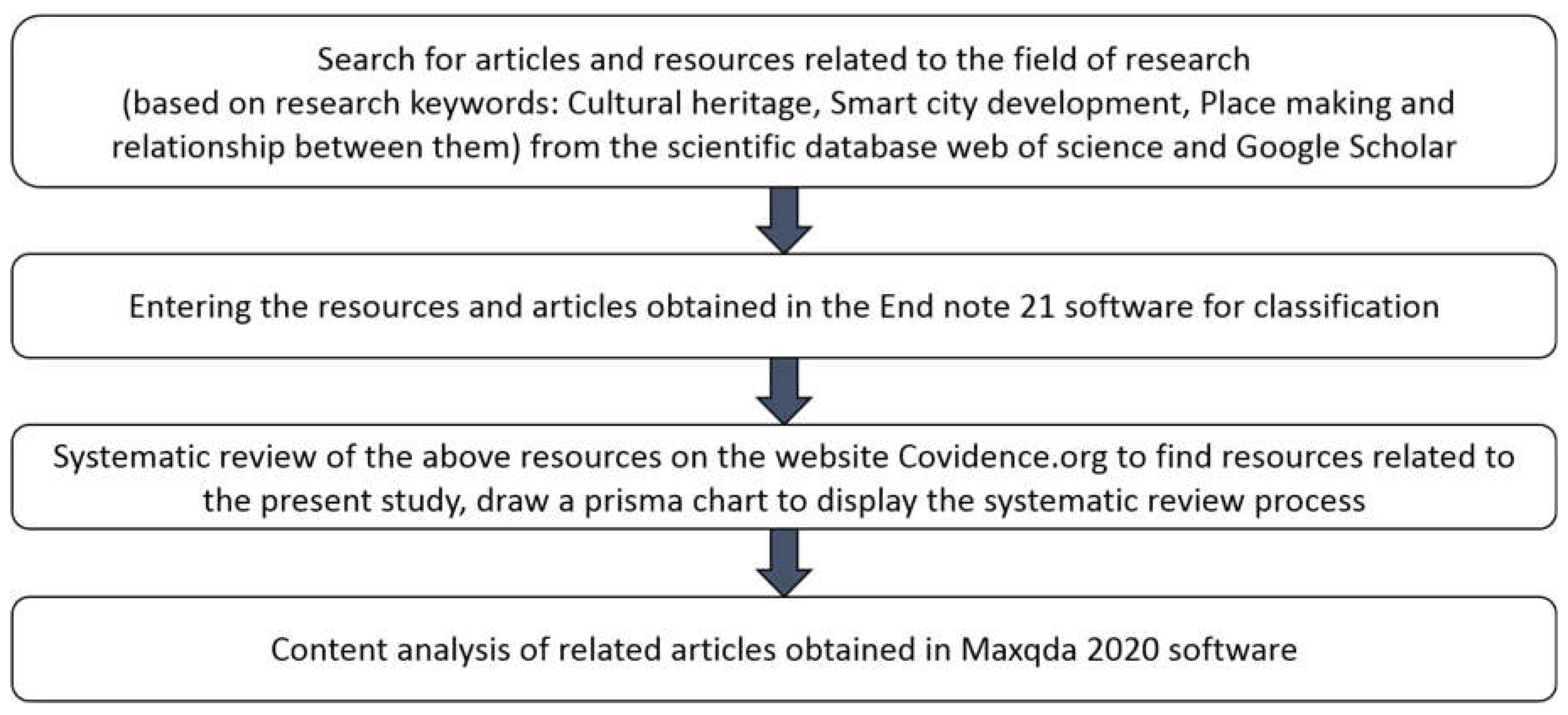
Figure 2.
Prisma diagram.
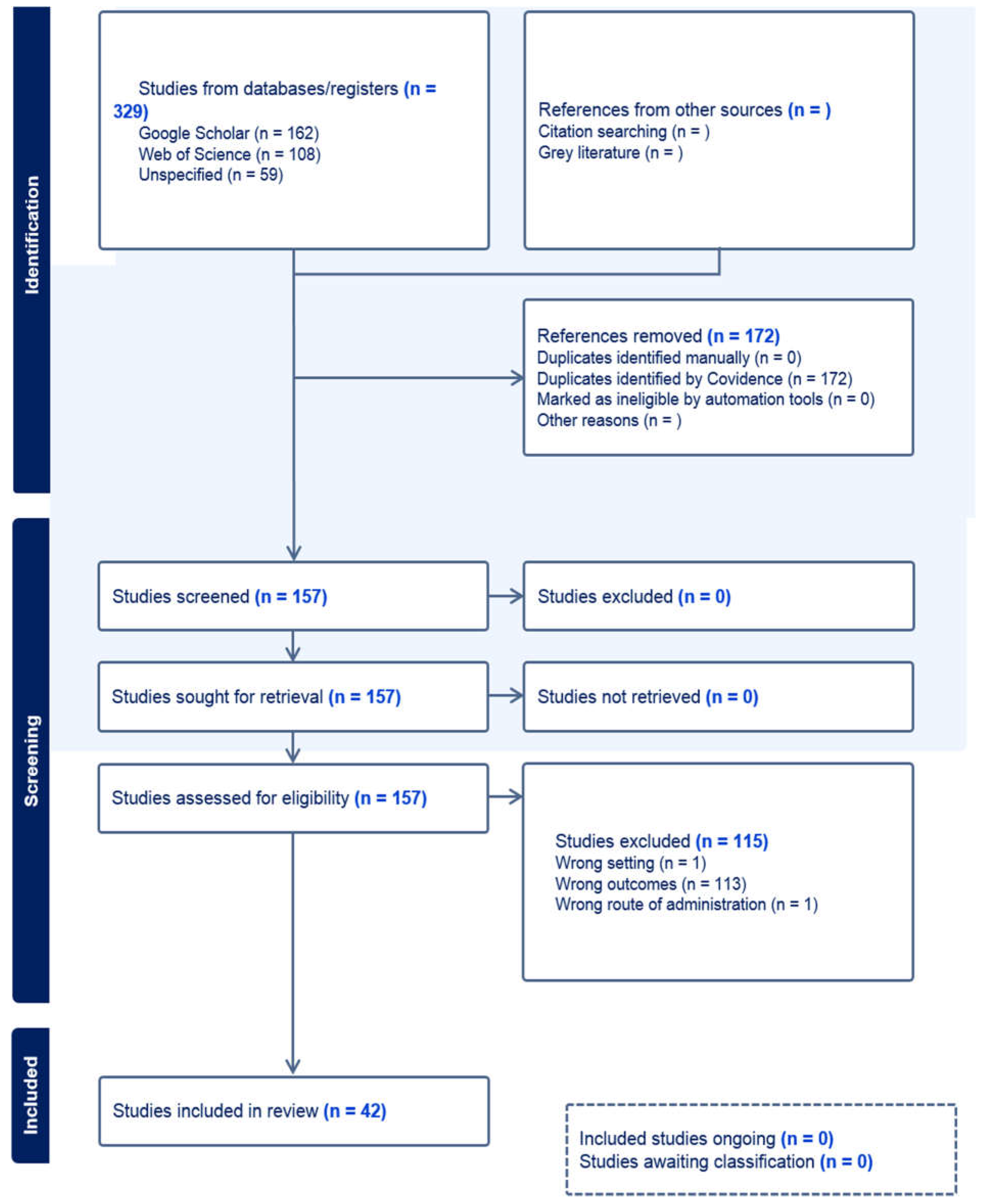
Figure 3.
Maxqda software environment.
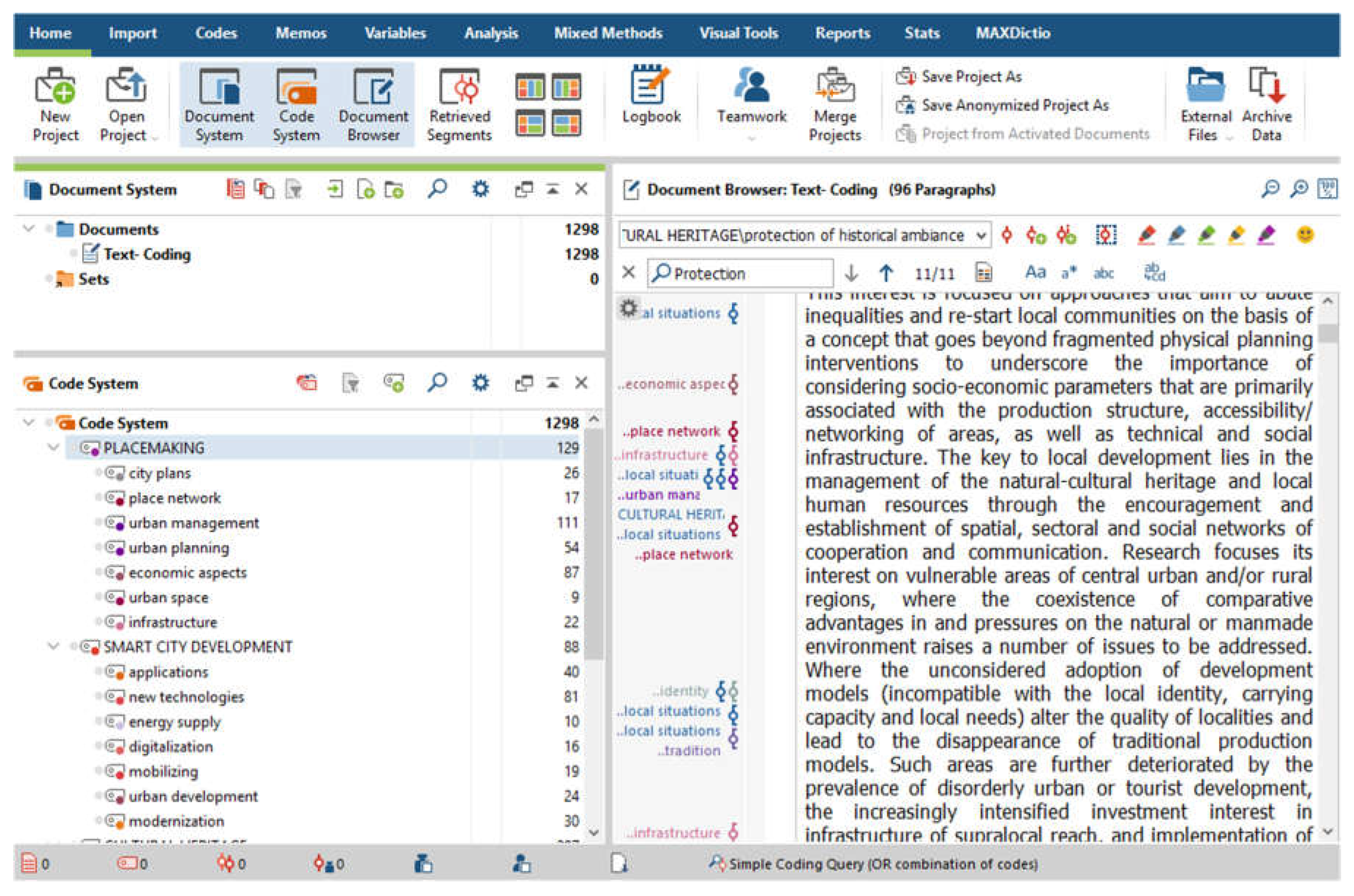
Figure 4.
The importance of codes.
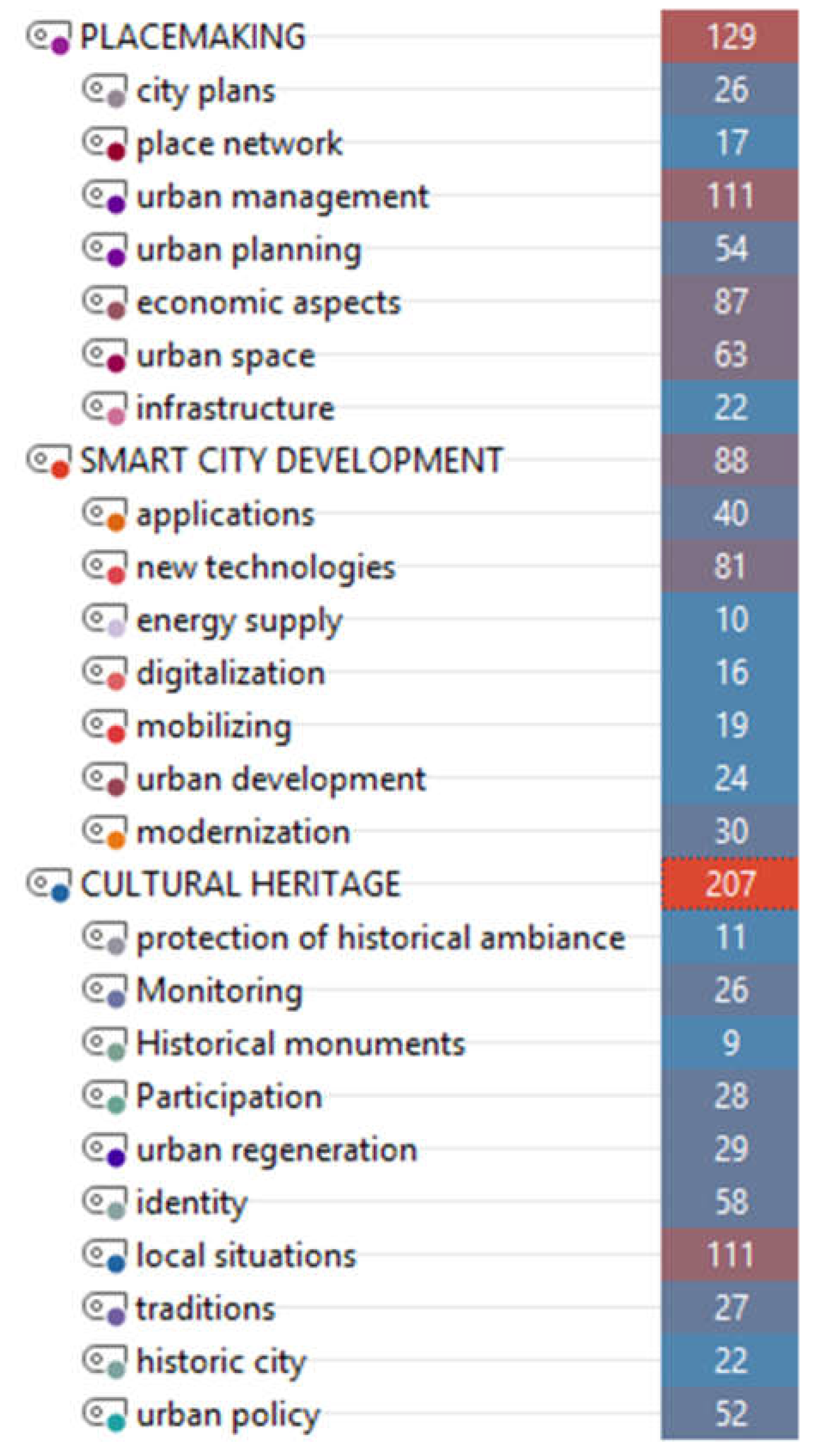
Figure 5.
The conceptual framework.
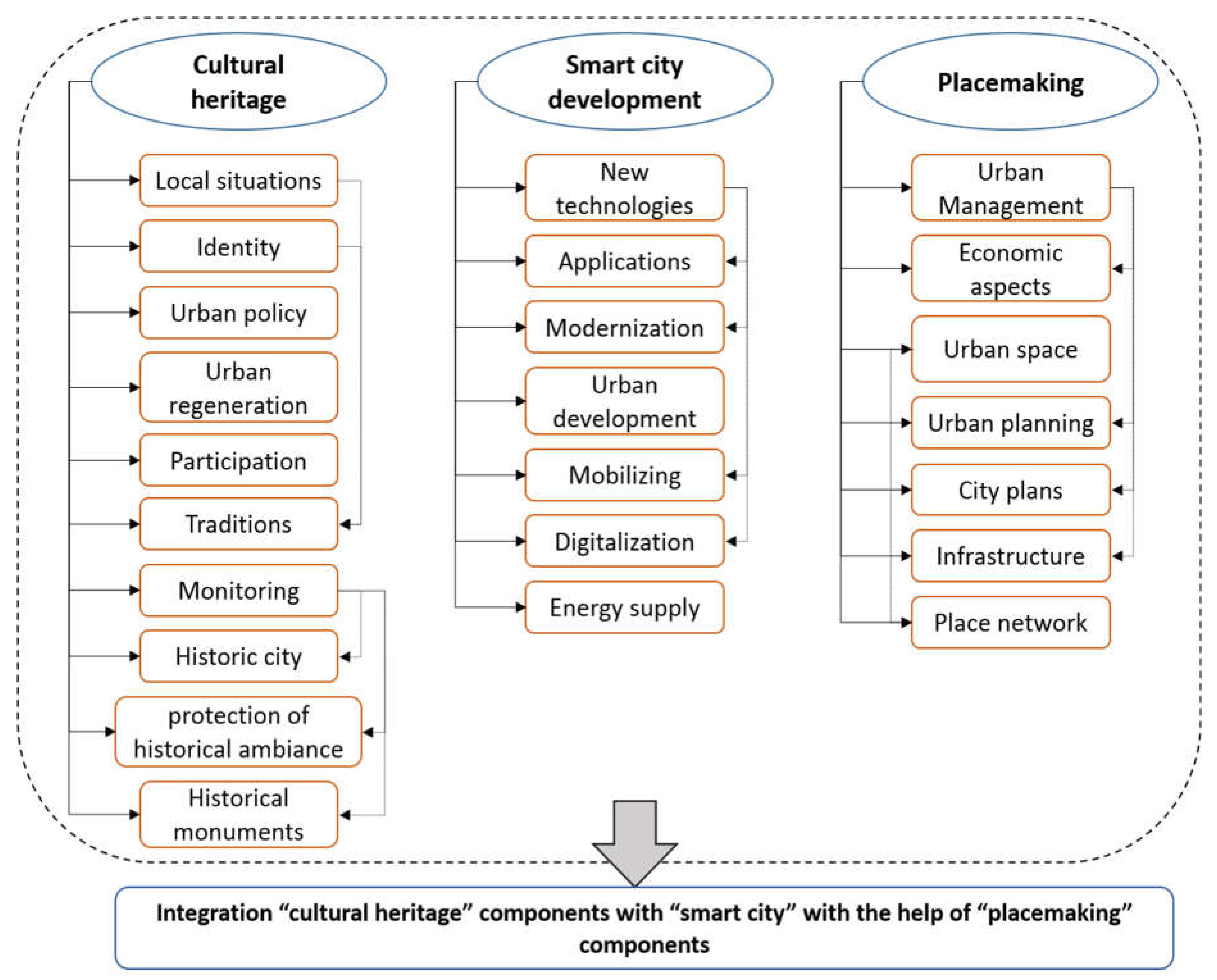
Figure 6.
The two-to-two link model of the main concepts of the research.
Disclaimer/Publisher’s Note: The statements, opinions and data contained in all publications are solely those of the individual author(s) and contributor(s) and not of MDPI and/or the editor(s). MDPI and/or the editor(s) disclaim responsibility for any injury to people or property resulting from any ideas, methods, instructions or products referred to in the content. |
© 2025 by the authors. Licensee MDPI, Basel, Switzerland. This article is an open access article distributed under the terms and conditions of the Creative Commons Attribution (CC BY) license (http://creativecommons.org/licenses/by/4.0/).
Copyright: This open access article is published under a Creative Commons CC BY 4.0 license, which permit the free download, distribution, and reuse, provided that the author and preprint are cited in any reuse.


