

Submitted:
15 April 2025
Posted:
15 April 2025
You are already at the latest version
Abstract
Gender-based violence (GBV) remains a critical public health and human rights concern in Timor-Leste, deeply rooted in intersecting social, economic, cultural, and institutional factors. Grounded in intersectionality theory, this narrative review explores how multiple dimensions such as gender, poverty, geographic isolation, health status, and customary norms exacerbate women’s vulnerability to GBV. Drawing on recent literature, national reports, and policy documents, the paper identifies key determinants that sustain violence, including entrenched patriarchal attitudes, weak law enforcement, limited access to healthcare and legal aid, and persistent stigma—particularly for women with disabilities or chronic illnesses such as HIV or tuberculosis. While legislative frameworks like the 2010 Law Against Domestic Violence exist, their implementation is constrained by cultural resistance and limited institutional capacity. The review synthesizes findings from national and regional reports, including the 2016 and 2022 Demographic and Health Survey (DHS), to highlight structural and institutional gaps that perpetuate violence and challenging effective response. This contributes to the existing literature by synthesizing fragmented data, identifying policy and service gaps, and aligning national challenges with global goals, particularly Sustainable Development Goals (SDG) 3 (health) and 5 (gender equality). It calls for stronger coordination between stakeholders to ensure comprehensive and contextually relevant GBV prevention and response strategies.
Keywords:
gender‐based violence
; Timor‐Leste
; intersectionality
; public health
; feminist theory
1. Introduction
1.1. Background
Gender-based violence (GBV) is a significant human rights issue worldwide, with women disproportionately affected, it is estimated nearly one in three women have faced physical and/or sexual violence at some point in their lives, most often at the hands of a current or former intimate partner. [1] The prevalence of violence varies significantly across different countries due to a multitude of factors [2,3,4]. These factors include historical, cultural, socio-economic, and legal aspects that shape the experiences and vulnerabilities of individuals, particularly women, to violence, for instance, in some countries, deeply rooted patriarchal traditions and cultural norms may contribute to the acceptance of gender-based violence (GBV) as a private or familial matter rather than a societal concern, in the other regions, economic dependence and lack of financial independence can make it difficult for individuals to leave abusive relationships. [4,5]. The Beijing Platform for Action was instrumental in recognizing the continuum of violence, acknowledging that GBV manifests in various forms—from rigid gender stereotyping and child marriage to sexual harassment, intimate partner violence, and femicide. These forms of violence, though distinct, share a common root cause: entrenched gender inequality and discriminatory social norms [5,6] Overall, understanding the complex interplay of these factors is essential for addressing the root causes of violence and implementing effective interventions to protect vulnerable populations and promote equality.
In the context of Timor-Leste, historical, cultural, and socio-economic factors contribute to the heightened vulnerability of women to GBV. Despite concerted national and international efforts to combat GBV, challenges persist in addressing the root causes and providing adequate support for survivors. Gender-based violence (GBV) remains a critical issue in Timor-Leste, with a significant proportion of women experiencing violence at the hands of intimate partners. According to UN Women’s Global Database on Violence Against Women, 58.8% of women in Timor-Leste have faced physical and/or sexual violence from an intimate partner in their lifetime, while 46.4% have experienced such violence in the past 12 months. Beyond intimate partner violence, 13.9% of women in Timor-Leste have experienced sexual violence from non-partners. Despite ranking 56th out of 156 countries in the Global Gender Gap Index, gender inequality remains, with disparities in economic participation, political representation, and access to justice exacerbating women’s vulnerability. The country’s 89th position out of 162 nations in the Gender Inequality Index further illustrates systemic barriers that limit women’s empowerment and contribute to the persistence of GBV. [7] Despite national and international efforts to combat GBV, challenges persist in addressing the root causes and providing adequate support for survivors. This review aims to address the following questions:
- Why does gender-based violence persist in Timor-Leste?
- How do various factors contribute to women’s vulnerability to gender-based violence in Timor-Leste?
2. Methods
This paper uses a narrative review approach, suitable for synthesizing diverse literature across legal, cultural, and public health domains [8,9,10]. Grounded in intersectionality theory [11,12] and feminist political economy frameworks [13], the review critically examines how socio-cultural norms, institutional structures, and health-related vulnerabilities interact to shape women’s exposure to GBV in Timor-Leste. [9,10]
2.1. Literature Selection
The literature reviewed for this article consists of a variety of sources, including Peer-reviewed journal articles that examine the dynamics of GBV and its contributing factors in Timor-Leste and similar post-conflict settings. Government reports and policy documents outline the legal frameworks and national strategies aimed at addressing GBV in the country.
Publications from international organizations such as the United Nations (UN WOMEN), WHO, World Bank, and local and international NGOs involved in addressing GBV in Timor-Leste. A comprehensive search was conducted in academic databases like Google Scholar, and PubMed using relevant keywords, including “gender-based violence,” “women’s vulnerability,” “Timor-Leste,” “patriarchy,” “human rights,” and “post-conflict societies.” In addition to peer-reviewed literature, grey literature, such as reports from the UN and various NGOs, was incorporated to offer a fuller understanding of the issue in Timor-Leste. No specific criteria were applied for the inclusion or exclusion of references found in the search engines. However, publications in English, Tetum, and Portuguese were given priority.
2.2. Data Extraction and Analysis
Data was systematically extracted from the selected studies and organized into key thematic areas: socio-cultural factors, economic factors, and institutional responses to GBV. The analysis was conducted through the using Feminist Theory, Intersectionality Theory, and health determinants perspectives. These theoretical perspectives guided the identification of common themes, contradictions, and gaps in the existing literature. Through this approach, this paper highlighted the factors that exacerbate women’s vulnerability to GBV and explored potential interventions and strategies for reducing gender-based violence in Timor-Leste.
3. Results and Discussion
3.1. Feminist Theory in Post-Conflict Contexts
Feminist theory provides a critical framework for analyzing gender-based violence (GBV) by highlighting how patriarchal structures, gender norms, and intersecting inequalities contribute to women’s vulnerability, feminist theory highlights patriarchal structures that perpetuate male dominance and women’s subordination, while Post-Conflict Framework, recognizes that societies emerging from conflict, such as Timor-Leste, often experience high levels of GBV due to weakened institutions and lingering militarized masculinities [14,15,16,17]. Traditional theories of violence and crime have often excluded women’s experiences, failing to account for the ways in which power, control, and social expectations influence GBV. In Timor-Leste, deeply entrenched patriarchal values reinforce male dominance, making it difficult for women to challenge gendered power imbalances and access justice. In post-conflict societies like Timor-Leste, where militarized masculinities persist, many men continue to assert control over women through physical and sexual violence as a means of reaffirming their dominance. Feminist criminologists further highlight how criminal behavior, including violence, is gendered, meaning that both perpetrators and victims experience crime differently based on gender roles [18]. In this context, GBV can be understood as both a product of systemic gender inequality and an individual means of asserting power. Timor-Leste has deeply rooted patriarchal traditions that define women as subordinate to men. These norms contribute to the acceptance of GBV as a private or familial matter rather than a societal concern. [19,20]
Violence against women and girls in Timor-Leste persists even in the context of illness, with many women experiencing gender-based violence (GBV) while suffering from diseases such as tuberculosis (TB) and HIV. Rather than receiving care and support, women with these health conditions may face increased stigma, neglect, or abuse—by their partner. [21] Women’s movements in Timor-Leste have a long history, originating during the colonial occupation, where women played a crucial role in resistance movements against foreign rule. Over time, these movements evolved from anti-occupation struggles to broader efforts aimed at combating gender discrimination and inequality. Today, campaigns and strategies continue to develop progressively, focusing on women’s rights, political participation, legal reforms, and protection against gender-based violence. These efforts have been instrumental in improving policies, raising awareness, and challenging deeply entrenched societal norms that perpetuate gender disparities. [22,23,24,25,26]
The historical context of gender-based violence in Timor-Leste is closely connected with the country’s tumultuous past, characterized by colonial oppression and violent conflict. For decades, the Indonesian occupation, followed by a struggle for independence, created an environment where violence became normalized, particularly against women. This legacy is manifest in contemporary issues, as women continue to face high rates of gender-based violence, severely hindering their chances for social and economic advancement [23,25,27,28]. Despite efforts from the government to address these issues, violence against women persists, illustrating the connection between security and development in fragile states. Furthermore, the patriarchal culture in Timor-Leste influence gender inequity, complicating women full participation in society and governance, studies emphasize that entrenched patriarchal norms continue to define gender roles, upholding male dominance and reinforcing GBV. While some progress is noted in women’s empowerment, resistance to change persists, especially in rural areas. [14,25,29,30].
Understanding this historical background is essential for addressing the vulnerabilities faced by women in the ongoing efforts against gender-based violence in Timor-Leste. There are report and research about the vulnerability of women to gender-based violence in Timor-Leste, it is a social issue that demands appropriate exploration, particularly considering the country’s recent sociopolitical transformations. Since gaining independence, Timor-Leste has made significant changes, however, inequalities and violence persist.
3.2. Intersectional Factors Contributing to Women’s Vulnerability to GBV in Timor-Leste
Grounded in Crenshaw’s intersectionality theory [11], this paper examines how intersecting identities—such as gender, poverty, rural location, and health status (including conditions like HIV, TB, and disability)—compound women’s vulnerability to gender-based violence (GBV) in Timor-Leste. This vulnerability is not caused by a single factor but emerges from the interaction of socio-cultural norms, economic and structural inequalities, weak legal and institutional frameworks, and health-related stigma. Together, these overlapping determinants reveal the complex and multidimensional nature of GBV, emphasizing the need for holistic, health-sensitive, and context-specific responses.
Socioeconomic Determinants of Gender-Based Violence (GBV)
Socioeconomic inequalities significantly increased women’s vulnerability to gender-based violence (GBV) in Timor-Leste. Women with limited access to education and economic opportunities are more likely to be financially dependent on their partners, making it harder to leave abusive relationships. The World Bank (2022) further notes that poverty increases household stress and limits access to essential support services, such as shelters, healthcare, and legal aid. [31]
The 2016 Timor-Leste Demographic and Health Survey (DHS) provides critical insights relevant to understanding women’s vulnerability to gender-based violence (GBV) in the country. Approximately 35% of women reported experiencing physical or sexual violence from an intimate partner in the past 12 months, underscoring the widespread prevalence of GBV. The survey also highlighted persistent gender norms, with only 34% of women and 40% of men believing a woman is justified in refusing sex with her husband under certain circumstances, reflecting deep-rooted attitudes that undermine women’s autonomy. Educational disparities remain significant, with 22% of women and 19% of men aged 15–49 having received no formal education—an important factor that limits women’s awareness of their rights and access to opportunities. Furthermore, women’s underrepresentation in the formal labor market and vulnerability within informal sectors contribute to economic dependence on abusive partners. Together, these findings demonstrate how social norms, limited education, and economic insecurity intersect to heighten women’s risk of GBV in Timor-Leste. [32,33,34]. While economic empowerment is often seen as a protective factor, evidence suggests that it must be accompanied by broader cultural and structural shifts to effectively reduce GBV [35]. These findings emphasized the need for integrated interventions that address both economic inequalities and the social norms that perpetuate GBV.
Law and Culture
Legal and Cultural Norms: Barriers to Justice and Protection
Cultural beliefs in Timor-Leste significantly shape how gender-based violence (GBV) is perceived and addressed. Domestic violence is often viewed as a private family issue rather than a criminal offense, encapsulated in the local Tetum proverb "kanuru ho bikan mak tarutu"—literally, "a clash between the spoon and the plate"—suggesting that conflict within marriage is routine and should be endured rather than resolved through formal justice mechanisms [22], which translates to "a clash between the plate and spoon,". Imply that such conflicts are routine in marriage, most women just accept the occurrence of the violence [14,36,37]. This perception discourages the reporting of abuse and stigmatizes survivors, pushing them to reconcile with their abusers.
Customary justice systems focus more on compensation rather than justice, which perpetuates impunity and discourages survivors from seeking formal legal remedies. Timor-Leste’s adoption of the 2010 Law Against Domestic Violence was a significant milestone in aligning national policy with international human rights standards. However, the law’s implementation is not consistent and limited in reach. Structural and institutional challenges persist. Law enforcement officers often lack the training or sensitivity to handle GBV cases appropriately, and legal literacy among the public is low. Many survivors are unaware of their rights or the protections afforded under the law, while those who do seek justice frequently encounter procedural delays, inadequate support, or retaliation from the community. [36,38,39]
Moreover, there is a critical gap in the coordination between formal legal institutions and customary justice systems. Survivors frequently navigate conflicting approaches that may either dilute justice or delay access to essential services. The lack of legal aid, psychosocial services, and safe shelters particularly in rural and remote areas remains a major barrier to effective legal resources and survivor protection.
Overall, while the legislative framework in Timor-Leste reflects progress, entrenched cultural norms and weak institutional capacities undermine the law’s intent and effectiveness. Addressing GBV in Timor-Leste therefore requires not only legal reform but also community-level engagement to challenge harmful norms, invest in survivor-centered services, and bridge the divide between formal and customary systems.
Health Determinants: Disease, Disability, and Increased Vulnerability to GBV
Health-related vulnerability is both a cause and consequence of GBV. Women with chronic illnesses or physical disabilities in Timor-Leste face heightened risks of gender-based violence (GBV), compounded by stigma, dependency, and inadequate access to services. Women with illnesses such as tuberculosis or HIV are at increased risk of GBV due to stigma and dependency on caregivers [37,40], in the other hand, women with disability in Timor Leste also experience gender base violence [41], lack of supportive environment in the health facilities in Timor Leste, heightens vulnerability and discourages help-seeking [42]. Additionally, COVID-19 pandemic along has been identified as one of the associated to gender based violence, due to isolation, loss of job that perturbate household income [37,43]. Access to healthcare and protection remains particularly limited in rural areas. GBV prevention policies and health interventions in Timor-Leste somehow neglect these intersections, not adequately integrate disability-sensitive and chronic illness-responsive frameworks. Recognizing the interplay between health status and GBV is essential for designing inclusive and survivor-centered responses.
There remain significant research gaps in understanding and addressing gender-based violence (GBV) in Timor-Leste. These include a lack of longitudinal data on GBV trends [44], limited exploration of survivor-centered justice models [40], and insufficient evidence assessing the effectiveness of economic interventions in reducing GBV. Furthermore, a deeper understanding is needed of men’s roles in both perpetuating and preventing GBV, including how male attitudes may be shifting in post-conflict contexts [14].
Relevance to Sustainable Development Goals (SDGs)
The findings of this review align with two key global development priorities—SDG 5: Achieve gender equality and empower all women and girls, and SDG 3: Ensure healthy lives and promote well-being for all at all ages. Gender-based violence (GBV) directly connected to SDG 5.2, [45] which calls for the elimination of all forms of violence against women and girls, including trafficking and sexual exploitation. In Timor-Leste, persistent GBV—driven by patriarchal norms, legal gaps, and socioeconomic dependency—continues to threaten women’s safety, autonomy, and participation in public life Addressing GBV through a holistic, intersectional, and public health-centered approach is thus essential not only for safeguarding women’s rights but also for achieving broader health and development outcomes.
Add to the discussion, this paper presents a framework to summarize the factors contributing to women’s vulnerability to gender-based violence. The following framework offers a contextually grounded contribution to the literature on gender-based violence by situating women’s vulnerability within the unique socio-political and post-conflict landscape of Timor-Leste. By integrating feminist, intersectional, and public health frameworks, it moves beyond one-dimensional explanations to divulge how multiple factors such as gender, poverty, health status, and cultural norms interact to drive GBV. The conceptual framework developed in this review is both analytical and advocacy-oriented, making it a practical tool for policy formulation and program design.
This paper adds to the limited research that connects GBV with physical and mental health outcomes, particularly among women with TB, HIV, and disabilities, thus reinforcing the importance of addressing GBV as a public health priority. In doing so, it bridges critical gaps in both academic discourse and policy action, while also amplifying under-researched voices in the Timorese context.
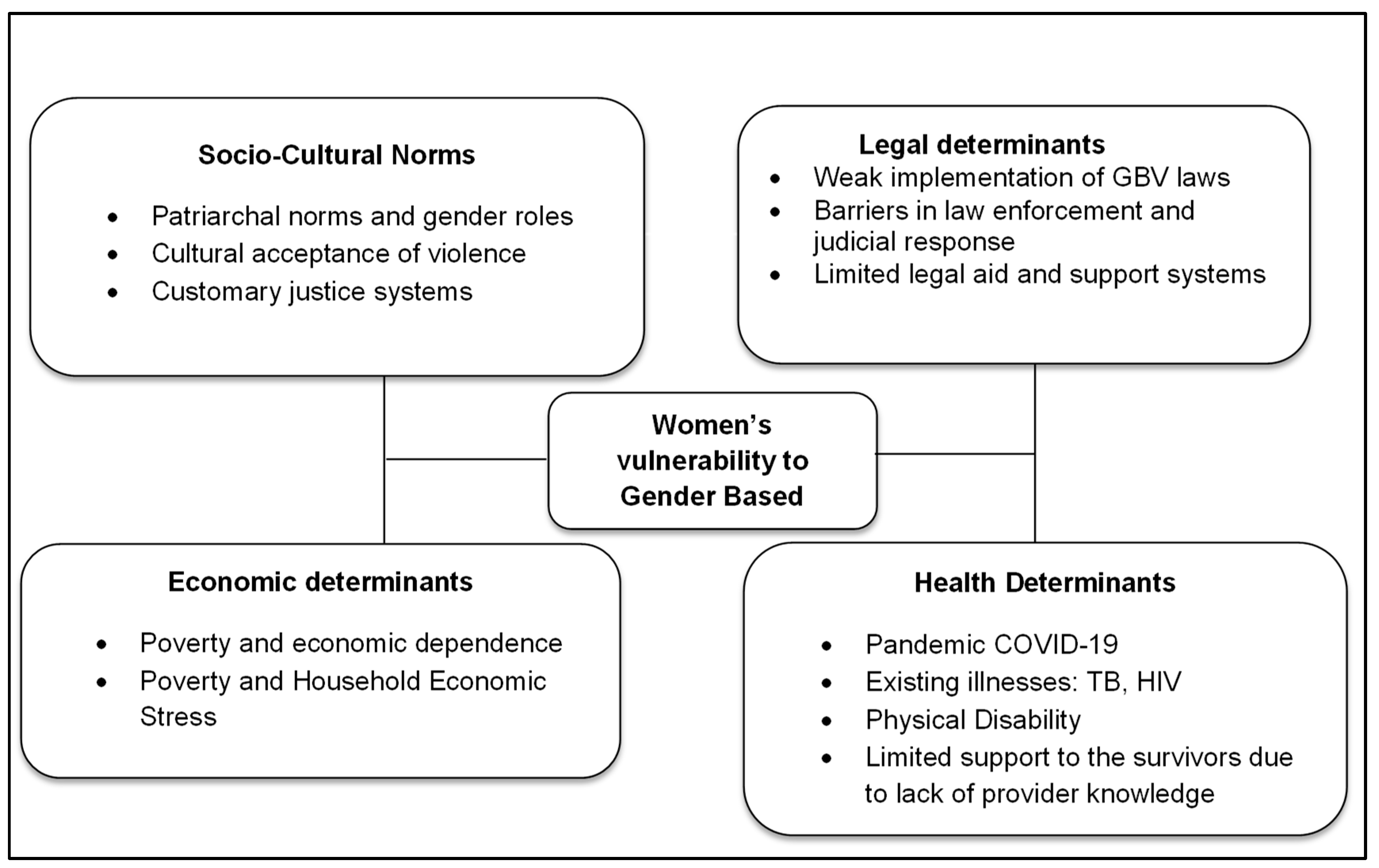
Figure 1.
Conceptual Framework: Factors Influencing Women’s Vulnerability to Gender-Based Violence in Timor Leste.
Figure 1.
Conceptual Framework: Factors Influencing Women’s Vulnerability to Gender-Based Violence in Timor Leste.
Limitations
First, there may be publication bias, as studies published in English, Tetum, or Portuguese were prioritized, potentially excluding valuable research published in other languages or formats. Additionally, while this review aims to be comprehensive, the complexity of GBV and the diverse experiences of women across different ethnic, economic, and social groups may not be fully captured. Consequently, certain marginalized or underrepresented groups may not be adequately addressed in the reviewed literature, knowledge gaps in general context also limit this paper discussion.
Conclusions
Gender-based violence (GBV) in Timor-Leste is both a public health and social issue rooted in intersecting social, economic, and cultural determinants. Using intersectional and feminist perspectives, this paper highlights how the roles and connection of the factors—such as poverty, illness, disability, and rigid gender norms in increased women’s vulnerability to violence. Cultural acceptance of violence and reliance on customary justice mechanisms reveal persistent legal gaps that challenge survivors’ access to justice. Women affected by illnesses like HIV or tuberculosis, or those with physical disabilities, often face stigma and limited access to care and protection. While efforts have been made to respond to GBV, greater investment in community engagement and survivor-centered, multisectoral interventions—including legal, social, and economic strategies—is essential. Further research is needed to develop effective and culturally appropriate solutions that address both immediate needs and long-term structural change.
Autor contributions
Conceptualization, M.A.M., N.d.P.S.S., and F.d.N.M.; methodology: MAM, N.G.S. and L.N.M.G. Writing—original draft preparation, M.A.M.and P.A.L.; writing—review and editing, N.M, B.V.A. All authors have read and agreed to the published version of the manuscript.
Funding
This research received no external funding.
Conflicts of Interest
The authors declare no conflicts of interest.
References
- UN WOMEN. Facts and figures: Ending violence against women | UN Women – Headquarters [Internet]. 2024 [cited 2025 Apr 1]. Available from: https://www.unwomen.org/en/articles/facts-and-figures/facts-and-figures-ending-violence-against-women.
- Global database on Violence against Women | UN Women Data Hub [Internet]. [cited 2025 Apr 2]. Available from: https://data.unwomen.org/global-database-on-violence-against-women.
- Administrative Data Mapping on Violence Against Women and Girls in Timor-Leste. 2022 [cited 2025 Apr 9]; Available from: https://timor-leste.unfpa.org/sites/default/files/pub-pdf/administrative_data_portrait_on_vawg_in_tl_2_feb_2022_0.pdf.
- Violence against women and girls – what the data tell us | World Bank Gender Data Portal [Internet]. [cited 2025 Apr 2]. Available from: https://genderdata.worldbank.org/en/data-stories/overview-of-gender-based-violence.
- UN. Beijing Declaration and Platform for Action Beijing + 5 Political Declaration and [Internet]. 1995. 277 p. Available from: https://www.icsspe.org/system/files/Beijing Declaration and Platform for Action.pdf.
- UN WOMEN. Beijing Women ’ S Rights in Review 25 Years After Beijing. 2025;3(6):33. Available from: https://www.unwomen.org/en/digital-library/ publications/2025/03/womens-rights-in-review-30-years-after-beijing. ISBN:.
- Country Fact Sheet | UN Women Data Hub [Internet]. [cited 2025 Apr 1]. Available from: https://data.unwomen.org/country/timor-leste.
- Greenhalgh T, Thorne S, Malterud K. Time to challenge the spurious hierarchy of systematic over narrative reviews? Eur J Clin Invest [Internet]. 2018;48(6):418–9. Available from: https://pubmed.ncbi.nlm.nih.gov/29578574/.
- Ferrari R. Writing narrative style literature reviews. Med Writ [Internet]. 2015;24(4):230–5. Available from: https://www.tandfonline.com/doi/full/10.1179/2047480615Z.000000000329.
- Sukhera, J. Narrative Reviews: Flexible, Rigorous, and Practical. J Grad Med Educ [Internet]. 2022 Aug 1 [cited 2025 Apr 1];14(4):414. Available from: https://pmc.ncbi.nlm.nih.gov/articles/PMC9380636/.
- Crenshaw, KW. Mapping the margins: Intersectionality, identity politics, and violence against women of color. Public Nat Priv Violence Women Discov Abus. 2013;43(6):93–118.
- Hankivsky, O. Women’s health, men’s health, and gender and health: implications of intersectionality. Soc Sci Med [Internet]. 2012 Jun [cited 2025 Apr 14];74(11):1712–20. Available from: https://pubmed.ncbi.nlm.nih.gov/22361090/.
- True, J. The Political Economy of Violence against Women [Internet]. The Political Economy of Violence against Women. Oxford University Press; 2012 [cited 2025 Apr 14]. 1–256 p. Available from: https://www.researchgate.net/publication/275311359_The_Political_Economy_of_Violence_Against_Women_A_Feminist_International_Relations_Perspective.
- Myrttinen, H. Violence and hegemonic masculinities in Timor-Leste – on the challenges of using theoretical frameworks in conflict-affected societies. Peacebuilding [Internet]. 2024 Oct 1 [cited 2025 Apr 1]; Available from: https://www.tandfonline.com/doi/abs/10.1080/21647259.2024.2384202.
- Mcphail BA, Busch NB, Kulkarni S, Rice G. An Integrative Feminist Model The Evolving Feminist Perspective on Intimate Partner Violence. Violence Against Women [Internet]. 2007 [cited 2025 Apr 1];13:817–41. Available from: http://vaw.sagepub.comhttp//online.sagepub.com.
- Niner, S. Hakat klot, narrow steps: Negotiating gender in post-conflict timor-leste. Int Fem J Polit [Internet]. 2011 Sep [cited 2025 Apr 14];13(3):413–35. Available from: https://scholar.google.com.au/citations?view_op=view_citation&hl=en&user=AGNTYTkAAAAJ&citation_for_view=AGNTYTkAAAAJ:d1gkVwhDpl0C.
- Niner, S. Veterans and Heroes: The Militarised Male Elite in Timor-Leste. Asia Pacific J Anthropol [Internet]. 2020 Mar 14 [cited 2025 Apr 14];21(2):117–39. Available from: https://www.fundasaunmahein.org/wp-content/uploads/2011/06/Veterans-and-Heroes-The-Militarised-Male-Elite-in-Timor-Leste.pdf.
- Renzetti, CM. Criminal Behavior, Theories of. Encycl Violence, Peace, Confl Vol 1-4, Third Ed [Internet]. 2022 Jan 1 [cited 2025 Apr 6];1:12–21. Available from: https://scholars.uky.edu/en/publications/criminal-behavior-theories-of-2.
- Timor-Leste: Politics, the patriarchy, and the paedophile priest – Monash Lens [Internet]. [cited 2025 Apr 14]. Available from: https://lens.monash.edu/@politics-society/2021/02/26/1382892/timor-leste-political-leadership-patriarchal-relationships-and-the-paedophile-priest.
- Parenting education brings fathers to the front in Timor-Leste | UNICEF Timor-Leste [Internet]. [cited 2025 Apr 14]. Available from: https://www.unicef.org/timorleste/stories/parenting-education-brings-fathers-front-timor-leste.
- Martins N, Soares D, Gusmao C, Nunes M, Abrantes L, Valadares D, et al. A qualitative exploration of the impact of the COVID-19 pandemic on gender-based violence against women living with HIV or tuberculosis in Timor Leste. 2024;1–20. Available from: http://dx.doi.org/10.1371/journal.pone.0306106.
- (ed.) SN. Women and the politics of gender in post-conflict Timor-Leste. Women in Asia Series. 2016.
- Pereira BAT. Women of Timor-Leste: Unyielding in the fight against wechsel oppression and violence. Stift Asienhaus Stift [Internet]. 2020;6. Available from: https://www.asienhaus.de/aktuelles/blickwechsel-women-of-timor-leste-unyielding-in-the-fight-against-oppression-and-violence.
- Mulder, S. Timor&Women_IWDA_Wave: Women and Political Leadership in Timor Leste- Literature Review. 2019;(October). Available from: https://iwda.org.au/assets/files/Women-and-Political-Leadership-Literature-Review-Timor-Leste_publicPDF3_3_2020.pdf.
- Niner SL, Loney H. The Women’s Movement in Timor-Leste and Potential for Social Change. Polit Gend [Internet]. 2020;16(3):874–902. Available from: https://research.ceu.edu/en/publications/the-womens-movement-in-timor-leste-and-potential-for-social-changes.
- From Resistence to Neoliberal Capture: NGOisation of Feminism in Timor-Leste | by Berta Antonieta | Mar, 2025 | Medium [Internet]. [cited 2025 Apr 4]. Available from: https://medium.com/@BertaAntonieta/from-resistence-to-neoliberal-capture-ngoisation-of-feminism-in-timor-leste-b12118b6e553.
- Charlesworth H, Wood M. Women and human rights in the rebuilding of East Timor. Nord J Int Law [Internet]. 2002 [cited 2025 Apr 4];71(2):325–48. Available from: http://journals.kluweronline.com/article.asp?PIPS=5109205.
- Durevall D, Lindskog A, Da Dalt AT, Wild K, Young F, Araujo G De, et al. Women’s Perceptions of Their Agency and Power in Post-Conflict Timor-Leste. J Int Womens Stud [Internet]. 2015;3(1):299–317. Available from: http://dx.doi.org/10.1016/S2214-109X(14)70343-2.
- In Women’s Words | Default Book Series [Internet]. [cited 2025 Apr 4]. Available from: https://www.liverpooluniversitypress.co.uk/doi/abs/10.3828/9781845198916.
- Niner SL, Loney H. The Women’s Movement in Timor-Leste and Potential for Social Change. Polit Gend [Internet]. 2020 Sep 1 [cited 2025 Apr 4];16(3):874–902. Available from: https://www.cambridge.org/core/journals/politics-and-gender/article/abs/womens-movement-in-timorleste-and-potential-for-social-change/32F60D519A349FFEA0B97CEE7F90312F.
- The World Bank. The Timor-Leste Country Gender Action Plan (CGAP) 2021 [Internet]. The Timor-Leste Country Gender Action Plan (CGAP) 2021. 2021. Available from: https://documents1.worldbank.org/curated/en/099905008122242158/pdf/P172182039349a03b0bd580523c9d4dd50c.pdf.
- World Bank Group. Timor-Leste Economic Report: Moving Beyond Uncertainty [Internet]. 2019 [cited 2020 Jun 9]. Available from:http://documents.worldbank.org/curated/en/207941557509771185/pdf/Timor-Leste-Economic-Report-Moving-Beyond-Uncertainty.pdf.
- Timor-Leste | World Bank Gender Data Portal [Internet]. [cited 2025 Apr 9]. Available from: https://genderdata.worldbank.org/en/economies/timor-leste.
- The World Bank. The World Bank Research Observer. 2021 [cited 2021 Sep 28]. Timor leste Overview. Available from: https://www.worldbank.org/en/country/timor-leste/overview.
- The Asia Foundation. Ending Violence against Women and Children in the Philippines. 2020; Available from:https://asiapacific.unfpa.org/en/publications/ending-violence-against-women-and-children-philippines.
- Madden, J. Engaging with Customary Law in Timor-Leste: Approaches to Increasing Women’s Access to Justice. 2013;1(2). Available from: https://www.undp.org/sites/g/files/zskgke326/files/2024-12/justicereform_report_en_digital_0.pdf.
- Martins N, Soares D, Gusmao C, Nunes M, Abrantes L, Valadares D, et al. A qualitative exploration of the impact of the COVID-19 pandemic on gender-based violence against women living with HIV or tuberculosis in Timor Leste. PLoS One [Internet]. 2024 Aug 1 [cited 2025 Apr 1];19(8). Available from: https://pubmed.ncbi.nlm.nih.gov/39133682/.
- Nazareth De Oliveira B, Bere MA, Wondeng H, Barros O, Gonçalves EC, Xavier J, et al. LEI E PRÁTICA DO PROCESSO PENAL NOS CASOS DE VIOLÊNCIA BASEADA NO GÉNERO EM TIMOR-LESTE Este relatório foi desenvolvido sob o patrocínio da Iniciativa Spotlight Timor-Leste RESPONSÁVEL TÉCNICA E AUTORA PRINCIPAL. [cited 2025 Apr 1]; Available from: www.jus.
- UNDP. Towards better justice Towards better justice. 2024;(May). Available from: https://www.undp.org/timor-leste/publications/towards-better-justice-analysis-and-recommendations-improving-justice-sector-timor-leste-main-report.
- The Asia Foundation. Understanding Violence against Women and Children in Timor-Leste: Findings from the Nabilan Baseline Study. 2016;1–204. Available from: www.asiafoundation.
- Casebolt T, Hardiman M. Experiences of gender based violence and help seeking trends among women with disabilities: an analysis of the demographic and health surveys. Health Sociol Rev [Internet]. 2024 [cited 2025 Apr 8];33(2):125–43. Available from: https://pubmed.ncbi.nlm.nih.gov/38832495/.
- Wild KJ, Gomes L, Fernandes A, de Araujo G, Madeira I, da Conceicao Matos L, et al. Responding to violence against women: A qualitative study with midwives in Timor-Leste. Women and Birth [Internet]. 2019 Aug 1 [cited 2025 Apr 1];32(4):e459–66. Available from: https://pubmed.ncbi.nlm.nih.gov/30448244/.
- Tackling Gender-Based Violence (GBV) in Timor-Leste - Timor-Leste | ReliefWeb [Internet]. [cited 2025 Apr 9]. Available from: https://reliefweb.int/report/timor-leste/tackling-gender-based-violence-gbv-timor-leste.
- Timor-leste UNIN, On RG, Violence TOG based, Misconduct S. UNITED NATIONS IN TIMOR-LESTE PREVENTION AND RESPONSE TO GENDER-BASED VIOLENCE ( INCLUDING HARASSMENT,. :1–64.
- Sustainable development High-level political forum on sustainable development, convened under the auspices of the Economic and Social Council Progress towards the Sustainable Development Goals. 2023 [cited 2025 Apr 14]; Available from: https://sdgs.un.org/goals.
Disclaimer/Publisher’s Note: The statements, opinions and data contained in all publications are solely those of the individual author(s) and contributor(s) and not of MDPI and/or the editor(s). MDPI and/or the editor(s) disclaim responsibility for any injury to people or property resulting from any ideas, methods, instructions or products referred to in the content. |
© 2025 by the authors. Licensee MDPI, Basel, Switzerland. This article is an open access article distributed under the terms and conditions of the Creative Commons Attribution (CC BY) license (http://creativecommons.org/licenses/by/4.0/).
Copyright: This open access article is published under a Creative Commons CC BY 4.0 license, which permit the free download, distribution, and reuse, provided that the author and preprint are cited in any reuse.


