

Submitted:
21 April 2025
Posted:
21 April 2025
You are already at the latest version
Abstract
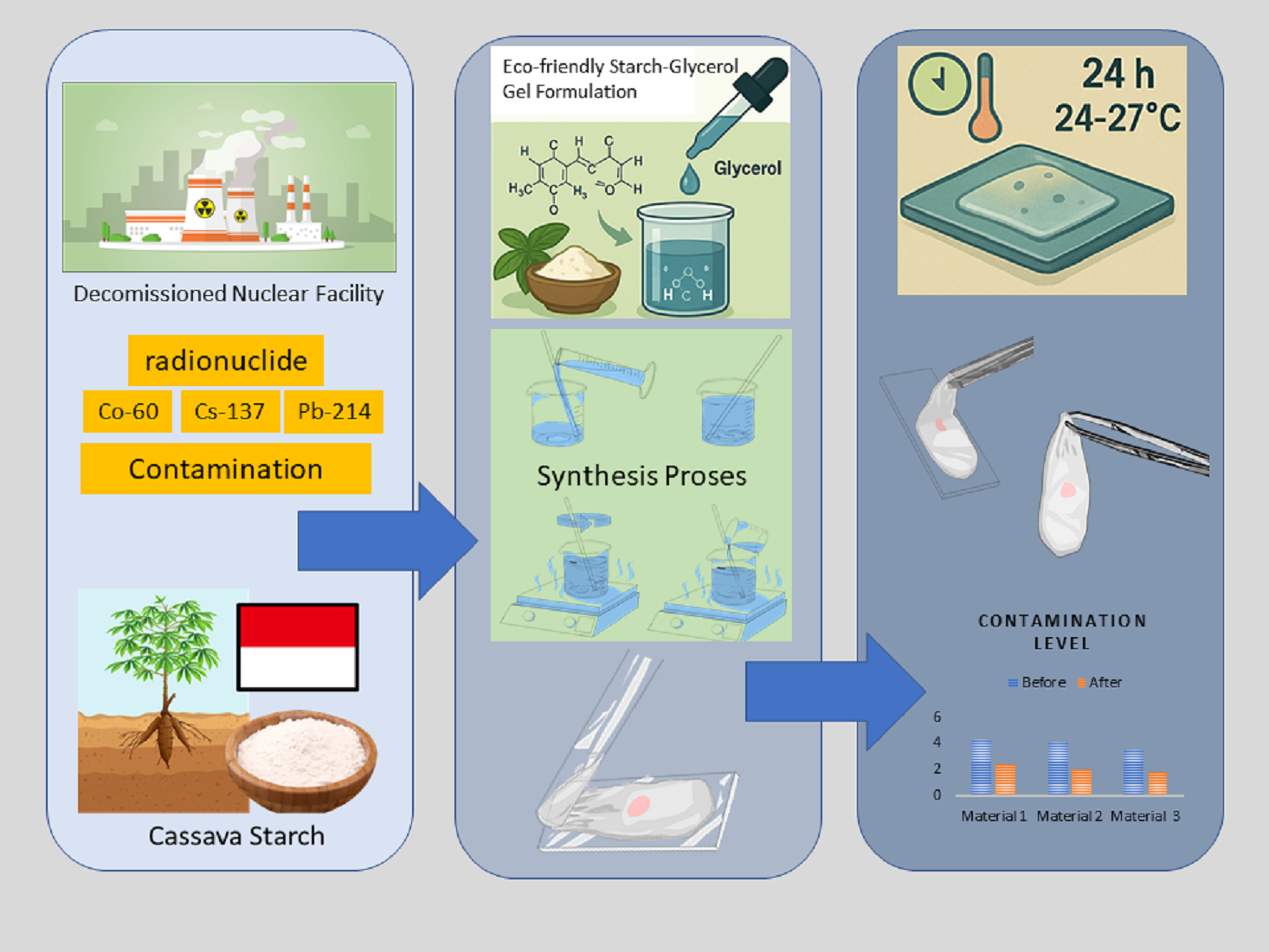
A nuclear facility undergoes decommissioning when it is no longer in use. Hazardous sites get decontaminated during decommissioning to protect workers, communities, and the environment. One decontamination technique involves peel-off gels made from polyvinyl alcohol (PVA). Cassava starch is a natural polymer. Cassava starch is a natural ingredient that is readily available, non-toxic, and environmentally friendly. Cassava starch, which is abundant in Indonesia in the form of processed flour, was used in this study as a peel-off gel material for metal ion decontamination. Cassava starch was synthesized and became denser and tighter upon the addition of glycerol. The starch-glycerol gel interacted with material add-ins like glass, metal plates, aluminum, and ceramics. A starch-glycerol gel can form a 24-27°C film for 24 hours. The analysis revealed that starch-glycerol gel could create a film and bind metal ions. The type of metal and the contaminated substance had a substantial impact on the metal ion binding outcomes. Extracting all metal ions from the contaminated material media was possible based on the concentration measurements. Therefore, starch-glycerol gel is a suitable alternative for cleaning surfaces and reducing the presence of heavy metal-contaminated materials. By directly testing the gel's application on radioactively contaminated objects, it is possible to gain a deeper understanding of how effectively starch-glycerol gel reduces surface contamination from radioactive compounds.
Keywords:
cassava starch
; decontamination gel
; material
; metal ion
; contamination
1. Introduction
Indonesia has three research reactors, namely: TRIGA 2000 Reactor Bandung (operating since 1965), Kartini Reactor Yogyakarta (operating since 1979), and GA Siwabessy Multipurpose Reactor (operating since 1987) [1,2,3]. They are over 50 years old and have an operating permit about to expire. Under applicable regulations, the TRIGA 2000 Bandung reactor must prepare an appropriate decommissioning program with provisions from the Indonesian Nuclear Energy Regulatory Agency (BAPETEN) and the International Atomic Energy Agency (IAEA) [4,5,6,7].
Nuclear plant decommissioning refers to the activities carried out after a nuclear reactor’s operating time or use permit has expired or it will no longer be in permanent use. Decommissioning is a complex and drawn-out procedure because several factors, including safety, health, security, and socioeconomics, must be considered. Decommissioning nuclear plants involves removing fuel from the reactor core, decontaminating the facility, and destroying the reactor facility to determine the radioactivity, radiation dose rate, and contamination level [8,9,10,11,12,13,14,15].
The disassembly method must be meticulously planned due to the potential for considerable radiation exposure and contamination of both the exterior and interior. To comply with the radiation protection program, the cutting method must be determined, the position or cutting area must be simulated before disassembly, and the likelihood of contaminating radionuclides or activating materials must be characterized. Before and after disassembly, decontamination is required to remove contaminants from the surface of the reactor facility or the surrounding area. Numerous decontamination techniques exist, including mechanical, chemical, electrochemical, and washing methods. The decontamination method can be modified depending on the type of radionuclide and the contaminated area or medium [16]. Chemical decontamination, which includes chemical solutions, foam, gels, and multiphase treatments; mechanical decontamination, which provides for water flushing, vacuuming, wiping, scrubbing, blasting, steam cleaning, high- and ultrahigh-pressure water jetting, grinding, milling, and sprouting; emerging technologies, which include light ablation, microwave scabbling, thermal degradation, and electromigration; and other methods, which include electropolishing, ultrasonic cleaning, and melting [17,18,19]. Decontamination using gel exhibited a higher decontamination rate than foam or jet. The gel can reduce contamination by 10–100%, whereas foam or jet can cause the highest decontamination at 30% [20]. Decontamination can reduce the amount and volume of solid waste produced by nuclear concrete facilities [21]. The method or type of decontamination affects the overall cost of decommissioning. Decontamination costs include materials, consumables, and other expenses, such as labour costs and processing decontamination waste [22,23].
Several radionuclides, such as Co-60, Cs-134, Cs-127, Sr-90, U-238, I-129, I-131, Te-129, Ag-110, Th-232, Pu-238, Pu-239, Pu-240, Ir-129, Am241, Tc-97, Tc-98, Tc-99, Zr-93, Zr-95, Fe-55, Nb-94, and other radionuclides which are the result of fission reaction activation, are contaminants in research reactor areas, based on experience in decommissioning research reactors. These radionuclides are the result of fission reaction activations. As per the IAEA Technical Report, radionuclides such as H-3, C-14, Na-22, Cl-36, Ar-39, Ca-41, Mn-54, Fe-55, Ni-59, Ni-63, Co-60, Zn-65, Mo-93, Zr-93, Nb-94, Ag-108m, Ag-110m, Sb-125, Ba-133, Cs-134, Eu-152, Eu-154, Eu-155, and Ho-166m are frequently discovered during reactor decommissioning [16,24].
One of the methods of frequent decontamination is coating contamination of the material’s surface with a gel made from polymer [19,25,26]. Castelani et al. (2014) researched using colloidal gel to coat small contaminated objects. The research results stated that combining carrageenan and silica decontamination gel can reduce contamination from Co-60 [27]. Moore et al. (2019) research on decontamination using a combination of polyvinylpyrrolidone polymer can reduce Sr-90 contamination by up to 87 % [28]. Research on gels for surface decontamination in nuclear facilities continues to expand, primarily utilizing gel materials composed of organic and inorganic polymer matrices [29]. Decontamination with gel can also be performed in large areas if there is dispersion or spread of contamination outside the facility [30].
Hydrogel materials for surface decontamination are primarily composed of synthetic or artificial chemical polymers, particularly polyethylene, polyvinyl, and polyacrylate [31,32,33]. In this study, we prepared a decontamination gel using polymers derived from natural materials, namely cassava starch flour, combined with distilled water and glycerol. Cassava starch was used because cassava production in Indonesia is relatively high, and the country is one of the world’s largest cassava-exporting countries [34]. Indonesian cassava production is primarily found on the islands of Java and Sumatra, and cassava serves as a food reserve during the dry season [35]. Cassava flour is a polysaccharide consisting of amylose and amylopectin. Cassava starch flour forms a gel when dissolved in water and heated [36,37]. Cassava starch is environmentally friendly, odourless, and non-toxic [38].
In this study, non-radioactive metal samples were used to investigate the characteristics and ability of cassava starch gel to bind metals, considering its environmentally friendly nature and easy availability in Indonesia. It is then expected that the results of this research will be the use of starch as a material for a radioactive decontamination gel, particularly in Indonesia, which has a reactor that is planned for decommissioning. The use of a gel made from starch and glycerol is also expected to reduce decommissioning costs and minimize the amount of active waste generated during dismantling.
2. Results and Discussion
2.1. Pati Gel
Figure 1 shows the starch gel films after storage and drying at a temperature of 24-27°C for 24 hours. In this study, the dried gel yielded an opaque and slightly translucent film. It was somewhat elastic and not quickly torn apart.
Starch is an ecologically beneficial natural polymer. Starch is often used to reduce pollution or contamination, especially with organic materials, because it has an active O-H group. Additionally, starch can be modified through chemical or physical processes to enhance its functionality as an adsorbent [39]. Starch contains functional groups that can enhance its adsorption performance through various interactions, such as electrostatic interactions or hydrogen bonding [40]. This study utilized starch as a polymer material to absorb or bind metal ions that contaminate the surface layers of materials such as glass, aluminum metal sheets, and ceramics. Glycerol was used in this study to improve the ability of starch to interact with metal ions. The combination of starch and glycerol formed peel-off films. Developing a starch-based peel-off gel formulation can create an effective solution with low cost, easily renewable resources, and easy application in the field, resulting in a more sustainable and environmentally friendly waste product. To optimize gel performance, nanostructuring techniques were employed to create materials with smaller pores and larger surface areas, thereby enhancing the metal binding efficiency.
The starch gel applied to the material’s surface dries, forming a film that can be peeled off after drying. The thickness of the drying film depended on the volume or amount of the gel. The film was evenly applied in one direction to the medium in the application study. The density of the film depended on the composition of the cassava starch and glycerol [41]. Three aspects can influence the success of a decontamination gel: the surface absorption of the applied gel, the viscosity of the gel and its ability to bind contaminants, the chemical bonds that comprise the gel, and the potential for interaction with contaminants [42]. This study found that gels with high viscosity are challenging to apply during decontamination, and the drying time for the gel to form a film is longer. The chemical bonds of the decontamination gel can be observed, regardless of whether changes occur in the film sample, as analyzed using FTIR analysis. Surface absorption is related to the material’s surface area and pore size. This study performed a BET test to determine the area and pore size of the starch-glycerol film.
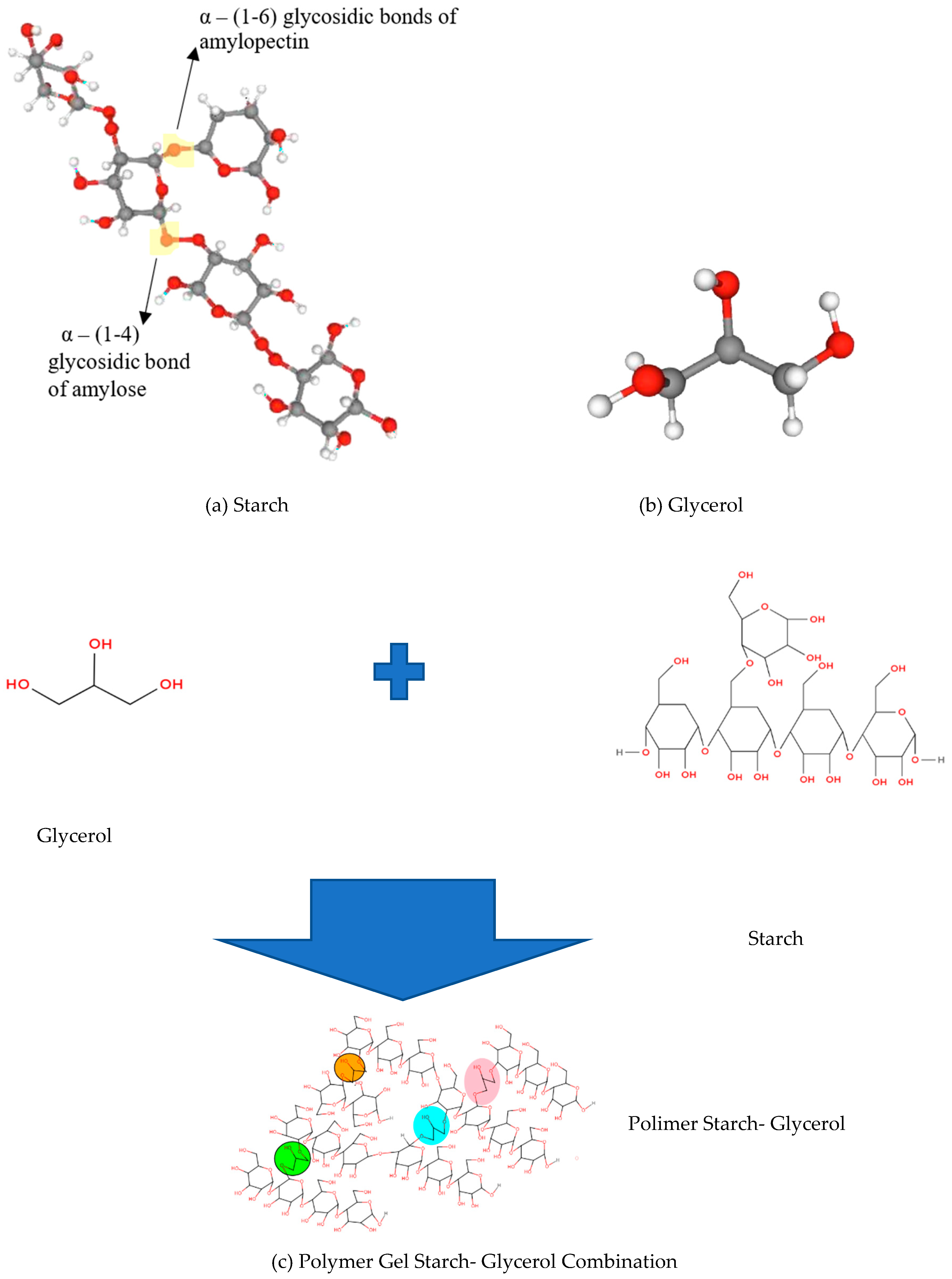
Cassava starch consists of two molecules: amylose and amylopectin. Amylopectin has a higher glucose content [24]. Amylose is a linear polymer of α-1,4 linked D-glucose [43]. Glycerol is a basic polyol with a prostereogenic center at position C2 and two primary and one secondary hydroxyl group. As a result, glycerol can undergo a wide range of chemical changes, including selective oxidation, dehydration, and hydrogenolysis, as well as selective protection and esterification, to provide a variety of valuable small-molecule building blocks with high chemical complexity for both polymer and small-molecule chemical synthesis [42].
Figure 2.
Structure Materials and Formation Gel Polymer.
2.2. FTIR Analysis
Cassava starch is bound to glycerol through glycosidic groups, forming crosslinks. FTIR analysis determined the functional groups of starch, glycerol, starch-glycerol, and starch–glycerol–metal. Starch is a polysaccharide with a typical FTIR spectrum at wavelengths of 1158, 1080, 1020, 931, and 855 cm-1 (800 – 1200 cm-1) gel, which is the vibration of the C-OH, CC, and CH side groups and COC glycosidic bond vibrations [44]. The specific spectrum for glycerol has the following wave numbers: 849 cm−1 C-C stretching; 1030 cm−1 C-O stretching; 1416 cm−1, 908 cm−1 CH2; 1108 cm−1 C-OH; 2880 and 2932 cm−1 C-H stretching; and 3286 cm−1 O-H stretching [45]. After starch and glycerol, there is an organic bond between starch cassava and glycerol.
The graph at Figure 3 above shows five types of functional groups (O-H, C-H, C-O- C, C-O, and C-N) where the wave number in starch between 3646.87 cm-1 - 3850.15 cm-1 is the O-H group, 3194.85 cm-1 is the wavelength of the C-H chain, in the range of 1635 cm – 1649.90 cm -1 is the length of the C=O carbonyl group, 1338.20 cm-1 is the wavelength of the C-N residual protein, 1076.78 cm-1 - 1148.78 cm -1 which is the C-O-C group of polysaccharides, 926.15 cm -1 - 992.91 cm-1 which is the C-O carbohydrate group from the glycosidic bond of starch.
To determine whether there was an interaction between the starch and glycerol gel and metal ions, contact was made between the starch and glycerol gel and metal ions on glass media. The results of the FTIR test for starch-glycerol-metal ions are shown in Figure 4, which shows no change in the spectrum of the starch-glycerol film. This can be caused by the low concentration of metal ions or the small number of metal ions that can affect the group bonds in the starch-glycerol gel.
2.3. SEM Analysis
The SEM analysis showed that metal ions adhered to the surface of the starch-glycerol gel molecules (Figure 5, Figure 6 and Figure 7). There is a difference between the surfaces of the starch-glycerol gel molecules and those of the starch-metal ion gel molecules. The difference is evident in the results of the SEM analysis at 5000x magnification (Figure 7). The surface appeared smooth and flat in the starch-glycerol molecule, whereas in the starch-glycerol-metal ion, there was a layer like a cloud or fog around the starch-glycerol molecule. Metal ions adhere to the surface of the starch-gelatin and form an amorphous structure.
2.4. BET Analysis
BET analysis was performed on cassava starch powder samples and dry starch-glycerol films and gels. The results of this analysis are presented in Table 1.
Figure 8.
Graph BET analysis: (a) powder even cassava, (b) starch-glycerol gel.
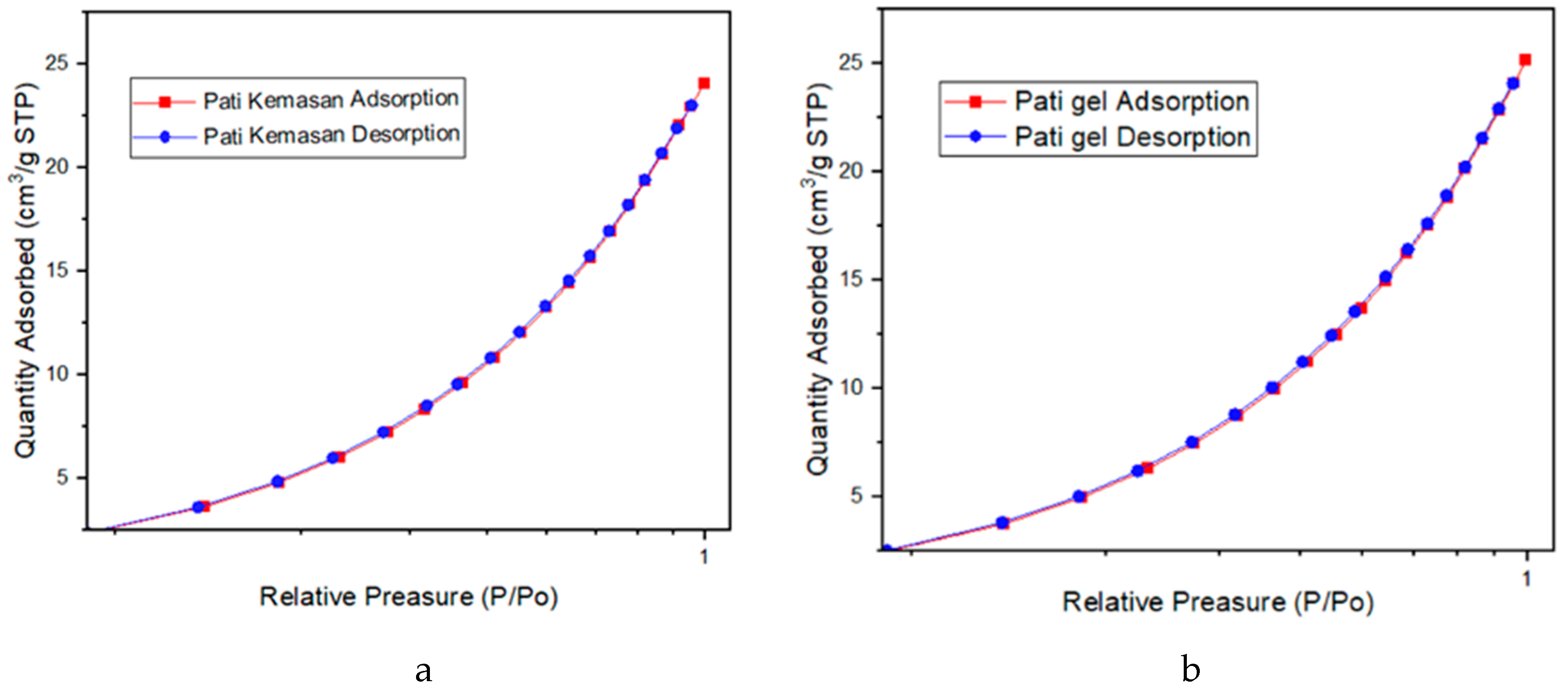
Based on the isotherm type, as shown in Figure 7, both samples are included in the type 3 isotherm type. Materials with type 3 isotherms have nonporous properties and adsorption energies [46]. Type 3 isotherms also exhibit complexities in physical adsorption [47]. It can be concluded that starch-glycerol gel can absorb and bind a material or material.
2.5. XRF Analysis
The results of this analysis are shown in Table 2. The samples analyzed by XRF were films formed by the contact between the starch-glycerol gel and metal ions that had dried on glass, aluminum, and ceramic media.
Table 2. The media, which dripped with distilled water, showed no metal or surface contamination. While the media contaminated by metal ions showed relatively high concentration figures, some decontamination gels gave higher values than the concentration of the solution dripped onto the media or material.
When metal ions are added as contaminants, they are prepared at a specific concentration to determine whether the starch-glycerol gel adsorbs metal ions. However, in this study, the concentration of metal ions in the starch-glycerol-metal ion film was found to be higher. The increase in metal ion concentration measured by XRF can occur because erosion has occurred due to water evaporation, causing the level to rise above the initial concentration [48]. However, a decrease in concentration can occur due to the interaction or absorption of metal ion solutions within the medium’s pores.
2.6. XRD Analysis
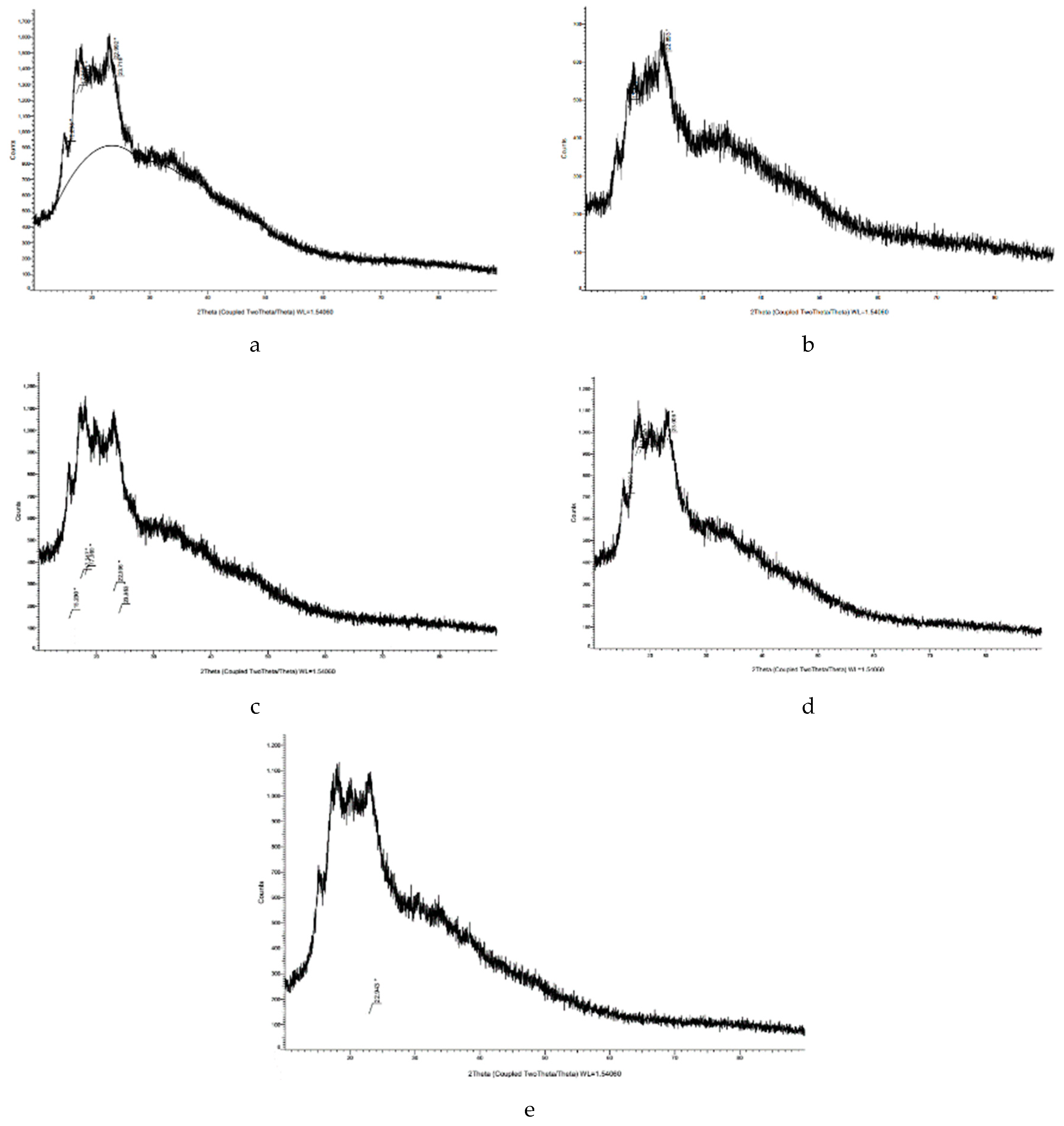
The XRD analysis results show that all starch–glycerol–metal film samples have an amorphous percentage above 65%, indicating that no chemical interaction can form crystals. The peaks observed in the starch-glycerol film and starch–glycerol–metal ion film were at 2θ angles with values of 15°, 17°, 18°, 22°, and 23°, which is consistent with the research conducted by Claudia et al. (2017) [49].
Amorphous polymers have irregular crystal structures. Amorphous polymers are flexible and transparent materials. The film resulting from the reaction between the starch-glycerol gel and metal ions is classified as semi-crystalline amorphous because it contains less than 35% crystals [50]. The crystallites in the film can originate from metal ion salts that do not fully react, interact, and bond with the O-H groups originating from the polymer gel.
Metal ions react with the nanoparticles of the starch-glycerol gel via electrostatic interactions. Metal ions interact with the starch-glycerol gel’s hydroxyl groups (O—H). Starch-glycerol gel has many hydroxyl groups because the crosslinking between starch and glycerol forms a polymer, as shown in Figure 2. The FTIR analysis revealed the presence of groups with a relatively high chance of interacting with metal ions. Organic groups, such as C-H, C-H2, O-H, C-C, and C-C-O, have a similar nature. That is, they can interact electrostatically with metal ions. In addition, the starch-glycerol gel, after drying into a film, has a reasonably high surface area and small pore size, making it easier to interact with metal ions [38,51]. The reaction is described as follows:
P-OH + M →P-OH-M
Information:
P-OH = Starch-glycerol Gel Polymer
M = Metal ion
P-OH-M = Starch - glycerol -metal ion film
Ionic bonds can form through electrostatic interactions if the contact between the gel and metal ions is maintained for 24 hours at room temperature. Based on several studies, the absorption or reaction can be increased by increasing the contact temperature. Additionally, several studies have shown that the contact time between the gel and metal ions is significantly influenced by the polymer structure of the gel material used [52]. Several studies on cassava starch-based hydrogels have shown that the absorption rate and interaction of the gel with metal ions are influenced by pH [53]. For further research, it is necessary to add temperature variables during incubation, contact time, and pH of the gel being tested, as well as chelating materials or agents that increase the binding of metal ions. Therefore, direct testing is required for materials contaminated with radioactive substances to ensure safety.
The high effectiveness of decontamination gel in reducing surface contamination can make it an option in reactor decommissioning activities or radiation facilities that use open radiation sources. Until now, the polymers used for decontamination gel materials have been synthetic polymers such as PVA. Gels consisting of PVA polymers and other mixed materials can reduce contamination levels and bind metal ions, especially heavy metals.
Figure 9.
Characterization Results XRD; (a) Starch -Glycerol, (b) Starch -Glycerol -Co, (c) Starch -Glycerol -Fe, (d) Starch -Glycerol -Hg, (e) Starch- Glycerol -Pb.
Figure 9.
Characterization Results XRD; (a) Starch -Glycerol, (b) Starch -Glycerol -Co, (c) Starch -Glycerol -Fe, (d) Starch -Glycerol -Hg, (e) Starch- Glycerol -Pb.
One example of the success of polymer gel composites used for heavy metal decontamination is a study conducted by Toader et al. (2019). The study involved the manufacture of a gel coating made of PVA combined with glycerol, EDTA, and bentonite. The results of the SEM analysis showed that the decontamination film had heavy metals attached to the gel part [54]. Our research showed the same results, namely that gels or films made from starch and glycerol can bind metals. This can be seen in Figure 7. The figure shows the presence of peaks from standard metal ions according to the contaminating metals used in this study.
Another study using gel or polymer hydrogel as a decontamination gel material was conducted by Mahrous et al. (2024). Mahrous et al.. used PVA gel to decontaminate Mo-99 on the surfaces of glass, stainless steel, and wood. The success rate of decontamination ranged from 94 % to 97 % [55,56]. Research conducted by Anggakusuma et al. (2024) showed that PVA gel combined with EDTA can reduce contamination by 53 to 98%, depending on the type of material surface (3). It can be concluded that surface decontamination of materials using gel or hydrogel methods has great potential in reducing the level of contamination of heavy metals or radioactive substances.
In other studies, PVA and other materials such as glycerol are used to react with crosslinking to form polymer bonds that form a gel under normal conditions and will become a film when dry [57]. So, this study uses natural materials that are easy to get and cheap. Of course, this is with the consideration that the material has properties or characteristics that are close to PVA. Cassava starch was chosen because cassava is one of the agricultural commodities in Indonesia, and cassava starch can be processed into food. In Indonesia, cassava starch and technical glycerol are easy to get, and the price is economical [34,35]. In this study, data was obtained that cassava starch reacted with glycerol at a specific concentration and heated at a certain temperature to form crosslinking, which will then become a gel and then dry at a particular time. This is almost the same as the properties of PVA. The abundance of cassava starch and glycerol in Indonesia is undoubtedly very promising if cassava starch-glycerol gel is used as a material for surface decontamination, especially for heavy metal contamination or radioactive contamination in nuclear or radiation facilities.
This can be an advantage because Indonesia has a National Research and Innovation Agency (BRIN) formed by the Indonesian Government as an institution tasked with conducting research, development, assessment, and application, as well as invention and innovation, the implementation of integrated nuclear power [58,59,60]. Indonesia has three research reactors, namely the TRIGA 2000 Reactor in Bandung (operating since 1965), the Kartini Yogyakarta Reactor (operating since 1979), and the GA Siwabessy Multipurpose Reactor (operating since 1987). The TRIGA 2000 Reactor is the first research reactor owned by BATAN. This reactor was built on January 1, 1964, in the Bandung Nuclear Area. It was inaugurated on February 20, 1965, with a capacity of 250 kW under the name of the TRIGA Mark II Bandung Reactor. In 1971, the reactor capacity was increased to 1 MW, and in 1996, the capacity was increased again to 2 MW, which was inaugurated on June 24, 2000 and renamed the TRIGA 2000 Bandung Reactor (1).
With an age that has reached more than 50 years, the TRIGA 2000 Bandung Reactor has previously experienced a suspension of its operating permit due to the inappropriateness of the building structure and the potential for natural disasters due to earthquakes from the Lembang fault. These indications show that the TRIGA 2000 Bandung Reactor facility has undergone an aging process. In 2017, the TRIGA 2000 Bandung Reactor successfully regained its operating permit, which will be valid until 2027, with a maximum power limitation of 1000 kW. In relation to this, the National Research and Innovation Agency (BRIN) has a plan to carry out the decommissioning process at the TRIGA 2000 Bandung Reactor [61,62,63].
In the general document of the TRIGA 2000 reactor decommissioning plan, BRIN can include a decontamination method with cassava starch-glycerin gel, of course by conducting direct tests. By reducing surface contamination on decommissioning materials, the volume of waste can be reduced. The decrease in waste volume will also reduce decommissioning costs, especially the costs for managing radioactive waste. In addition, it can reduce the area of decommissioning waste storage. Reducing the level of contamination can also provide security and safety guarantees for radiation workers in the process of dismantling nuclear reactors and their supporting facilities.
3. Material and Method
The cassava starch used was packaged starch sold in supermarkets under the brand name “Pak Tani Gunung” with a carbohydrate content of 87 g per 100 g of flour. Technical-grade glycerol was used at a concentration of 80–95%. The purified or distilled water used had a conductivity of 0.055 µS/cm and a COD content of 5 ppb.
The starch gel was prepared from packaged cassava starch flour (composition) 16 % w/v (16 g), technical glycerol 10 % w/v (10 g), and purified water was added until the volume reached 100 ml. To dissolve and mix the gel, cassava starch flour and glycerol were added to purified water and heated at 105–120 °C for 20–30 minutes. The contaminated material was prepared by dripping a solution of metal ions Hg(II) 10,000 ppm, Pb(II) 5,000 ppm, Fe(II) 10,000 ppm, and Co(II) 20,000 ppm on media in the form of glass (object glass), aluminium metal sheets, and commercial ceramics used in the buildings. The metal-ion solution drops were left at 24-27 °C for 24 h. After the metal solution in the medium dried, a starch-glycerol gel was added to the contaminated area, and the sample was stored at 24 - 27 °C for 24 hours.
For identification and characterization of the starch gel, analysis was carried out using Fourier Transform Infrared Spectroscopy (FTIR) ATR Thermo Nicolet iS5, Brunauer–Emmett–Teller (BET) Nova2000 Quantaqrom, Scanning electron microscopy (SEM) Jeol, X-ray fluorescence (XRF), and X-ray diffraction (XRD) (Bruker D8).
4. Conclusion
This study found that cassava starch combined with glycerol at 16% w/v cassava and 10% w/v glycerol can form a gel-shaped polymer that adsorbs metal ions on glass media, aluminium metal plates, and ceramics. The starch-glycerol gel forms a peel-off film that is easily peeled off when dry. This suggests that starch-glycerol gel can serve as an alternative method for decontaminating material surfaces. The adsorption capacity of this starch-glycerol gel is supported by the many O-H groups in the polymer, which can bind metal ions through electrostatic interactions. Another factor that contributes to the starch-glycerol gel having a good adsorption capacity is that, after the gel transforms into a film, its surface area value is relatively high and has a small pore size. This is almost the same as the properties of PVA. The abundance of cassava starch and glycerol in Indonesia is undoubtedly very promising if cassava starch-glycerol gel is used as a material for surface decontamination, especially for heavy metal contamination or radioactive contamination in nuclear or radiation facilities
Acknowledgements
The author would like to thank the National Research and Innovation Agency for providing the opportunity and permission to use the facility, as well as the KST Samaun Samadikun Laboratory for their support. We thank Teguh Yudha Sayuti Nugroho and Sayyida Zahra Jinan from Chemical Analysis, State Vocational High School 5 (SMKN 5), Bandung, for suport the sample preparation.
References
- Badan Tenaga Nujklir Nasional (BATAN). Buku Putih Pemanfaatan Reaktor Riset BATAN; BATAN: Jakarta, 2016; 1–66p. [Google Scholar]
- Alamsyah, R.; Yudhi Pristianto, A.P. Infrastuktur Keselamatan Dekomisioning Fasilitas Nuklir di Indonesia. In Prosiding Seminar Nasional Teknologi Pengelolaan Limbah XV-2017; Tanggerang, 2017; pp. 1–7. [Google Scholar]
- Anggakusuma, R.; Utama, G.L.; Zain, M.K.; Megasari, K. Reducing the Radioactive Surface Contamination Level of Cobalt-60-Contaminated Material with PVA-Glycerol-EDTA Combination Gel. Gels 2025, 11, 56. [Google Scholar] [CrossRef] [PubMed]
- Septilarso, A.; Kawasaki, D.; Yanagihara, S. Radioactive waste inventory estimation of a research reactor for decommissioning scenario development. J Nucl Sci Technol. 2020, 57, 253–262. [Google Scholar] [CrossRef]
- Utami, S.B.; Putero, S.H. Regulatory Framework for the Decommissioning of Indonesian Nuclear Facilities. Journal of Nuclear Engineering and Radiation Science 2017, 3. [Google Scholar] [CrossRef]
- Lauridsen, K. 11 - Recent experience in decommissioning research reactors. In Advances and Innovations in Nuclear Decommissioning; Laraia, M., Ed.; Woodhead Publishing, 2017; pp. 315–343, (Woodhead Publishing Series in Energy). [Google Scholar]
- Robinson, I.F. A nuclear inspector’s perspective on decommissioning at UK nuclear sites. J Radiol Prot [Internet] 1999, 19, 203–212. Available online: http://iopscience.iop.org/0952-4746/19/3/201. [CrossRef] [PubMed]
- Locatelli, G.; Mancini, M. Competitiveness of small-medium, new generation reactors: A comparative study on decommissioning. J Eng Gas Turbine Power 2010, 132. [Google Scholar] [CrossRef]
- Caldas Neto, A.B.; Silva, A.T. Strategies for decommissioning small nuclear reactors in Brazil. Nuclear Engineering and Design 2023, 414. [Google Scholar] [CrossRef]
- Bardtenschlager, R.; Bottger, D.; Gasch, A.; Majohr, N. Decommissioning of Light-Water Reactor Nuclear Power Plants. Nuclear Engineering and Design 1978, 1–51. [Google Scholar] [CrossRef]
- Suh, Y.A.; Hornibrook, C.; Yim, M.S. Decisions on nuclear decommissioning strategies: Historical review. Progress in Nuclear Energy [Internet] 2018, 106, 34–43. Available online: https://linkinghub.elsevier.com/retrieve/pii/S0149197018300234. [CrossRef]
- Mariani, C.; Mancini, M. Selection of projects’ primary and secondary mitigation actions through optimization methods in nuclear decommissioning projects. Nuclear Engineering and Design 2023, 407. [Google Scholar] [CrossRef]
- Invernizzi, D.C.; Locatelli, G.; Brookes, N.J. How benchmarking can support the selection, planning and delivery of nuclear decommissioning projects. Progress in Nuclear Energy 2017, 99, 155–164. [Google Scholar] [CrossRef]
- Invernizzi, D.C.; Locatelli, G.; Brookes, N.J. Managing social challenges in the nuclear decommissioning industry: A responsible approach towards better performance. International Journal of Project Management 2017, 35, 1350–1364. [Google Scholar] [CrossRef]
- De, P.L. Costs of decommissioning nuclear power plants: A report on recent international estimates. March 1990. [Google Scholar]
- Liu, S.; He, Y.; Xie, H.; Ge, Y.; Lin, Y.; Yao, Z.; et al. A State-of-the-Art Review of Radioactive Decontamination Technologies: Facing the Upcoming Wave of Decommissioning and Dismantling of Nuclear Facilities. Sustainability 2022, 14, 4021. [Google Scholar] [CrossRef]
- International Atomic Energy Agency. Global Status of Decommissioning of Nuclear Instalation [Internet]. Vienna. March 2023. Available online: www.iaea.org/publications.
- Gurau, D.; Deju, R. Radioactive decontamination technique used in decommissioning of nuclear facilities [Internet]. Article in Romanian Journal of Physics. 2014. Available online: https://www.researchgate.net/publication/280920950.
- Liu, S.; He, Y.; Xie, H.; Ge, Y.; Lin, Y.; Yao, Z.; et al. A State-of-the-Art Review of Radioactive Decontamination Technologies: Facing the Upcoming Wave of Decommissioning and Dismantling of Nuclear Facilities. Sustainability 2022, 14, 4021. [Google Scholar] [CrossRef]
- Koryakovskiy, Y.S.; Doilnitsyn, V.A.; Akatov, A.A. Improving the efficiency of fixed radionuclides’ removal by chemical decontamination of surfaces in situ. Nuclear Energy and Technology 2019, 5, 155–161. [Google Scholar] [CrossRef]
- Han, S.; Hong, S.; Nam, S.; Kim, W.S.; Um, W. Decontamination of concrete waste from nuclear power plant decommissioning in South Korea. Ann Nucl Energy 2020, 149. [Google Scholar] [CrossRef]
- Hahm, I.; Kim, D.; Ryu, H.J.; Choi, S. A multi-criteria decision-making process for selecting decontamination methods for radioactively contaminated metal components. Nuclear Engineering and Technology 2023, 55, 52–62. [Google Scholar] [CrossRef]
- Hertel, N.; Buttram, C.; Ervin, P.; Lunberg, L.; Marske, S. Research Reactor Decommissioning Planning—It is Never Too Early to Start. Sydney. March 2003. [Google Scholar]
- Cross, M.T.; Green, T.H.; Adsley, I. Characterisation of radioactive materials in redundant nuclear facilities: Key issues for the decommissioning plan. In Nuclear Decommissioning; Elsevier, 2012; pp. 87–116. [Google Scholar]
- Gurau, D.; Deju, R. Radioactive decontamination technique used in decommissioning of nuclear facilities. Article in Romanian Journal of Physics [Internet] 2014, 59, 912–919. Available online: https://www.researchgate.net/publication/280920950.
- Zhong, L.; Lei, J.; Deng, J.; Lei, Z.; Lei, L.; Xu, X. Existing and potential decontamination methods for radioactively contaminated metals-A Review. Progress in Nuclear Energy 2021, 139, 103854. [Google Scholar] [CrossRef]
- Castellani, R.; Poulesquen, A.; Goettmann, F.; Marchal, P.; Choplin, L. A topping gel for the treatment of nuclear contaminated small items. Nuclear Engineering and Design 2014, 278, 481–490. [Google Scholar] [CrossRef]
- Moore, J.J.; Raine, T.P.; Jenkins, A.; Livens, F.R.; Law, K.A.; Morris, K.; et al. Decontamination of caesium and strontium from stainless steel surfaces using hydrogels. React Funct Polym. 2019, 142, 7–14. [Google Scholar] [CrossRef]
- Gossard, A.; Lilin, A.; Faure, S. Gels, coatings and foams for radioactive surface decontamination: State of the art and challenges for the nuclear industry. Progress in Nuclear Energy 2022, 149, 104255. [Google Scholar] [CrossRef]
- Kaminski, M.D.; Lee, S.D.; Magnuson, M. Wide-area decontamination in an urban environment after radiological dispersion: A review and perspectives. In Journal of Hazardous Materials; Elsevier B.V., 2016; Volume 305, pp. 67–86. [Google Scholar]
- Agarwal, S.; Sadegh, H.; Monajjemi, M.; Hamdy, A.S.; Ali, G.A.M.; Memar, A.O.H.; et al. Efficient removal of toxic bromothymol blue and methylene blue from wastewater by polyvinyl alcohol. J Mol Liq. 2016, 218, 191–197. [Google Scholar] [CrossRef]
- Jung, C.H.; Moon, J.K.; Won, H.J.; Lee, K.W.; Kim, C.K. Chemical Gel for Surface Decontamination. Transactions of the Korean Nuclear Society Autumn Meeting Jeju.
- Ma, L.; Wang, J.; Han, L.; Lu, C. Research Progress of Chemical Decontamination Technology in the Decommissioning of Nuclear Facilities. International Core Journal of Engineering 2020, 6. [Google Scholar]
- Purna Yudha, E.; Salsabila, A.; Haryati, T. ANALISIS DAYA SAING EKSPOR KOMODITAS UBI KAYU INDONESIA, THAILAND DAN VIETNAM DI PASAR DUNIA. JURNAL MANEKSI 2023, 12, 417–424. [Google Scholar] [CrossRef]
- Ardyani, N.P.; Gunawan, B.; Harahap, J. Ekologi Politik Budidaya Singkong di Kecamatan Arjasari Kabupaten Bandung Provinsi Jawa Barat. Aceh Anthropological Journal 2022, 6, 137. [Google Scholar] [CrossRef]
- Fathoni, A.; Hartati, N.S.; Wahyuni, H.F.; Rahman, N.; Harmoko, R.; Perwitasari, U. Characterization of cassava starch and its potential for fermentable sugar production. In IOP Conference Series: Earth and Environmental Science; Institute of Physics Publishing, 2020. [Google Scholar]
- Wang, Z.; Mhaske, P.; Farahnaky, A.; Kasapis, S.; Majzoobi, M. Cassava starch: Chemical modification and its impact on functional properties and digestibility, a review. In Food Hydrocolloids; Elsevier B.V., 2022; Volume 129. [Google Scholar]
- Haq, F.; Yu, H.; Wang, L.; Teng, L.; Haroon, M.; Khan, R.U.; et al. Advances in chemical modifications of starches and their applications. In Carbohydrate Research; Elsevier Ltd., 2019; Volume 476, pp. 12–35. [Google Scholar]
- Sakhaei Niroumand, J.; Peighambardoust, S.J.; Mohammadi, R. Tetracycline decontamination from aqueous media using nanocomposite adsorbent based on starch-containing magnetic montmorillonite modified by ZIF-67. Int J Biol Macromol. 2024, 259. [Google Scholar] [CrossRef]
- Ahmadi, A.; Foroutan, R.; Esmaeili, H.; Peighambardoust, S.J.; Hemmati, S.; Ramavandi, B. Montmorillonite clay/starch/CoFe2O4 nanocomposite as a superior functional material for uptake of cationic dye molecules from water and wastewater. Mater Chem Phys. 2022, 284. [Google Scholar] [CrossRef]
- Edhirej, A.; Sapuan, S.M.; Jawaid, M.; Zahari, N.I. Preparation and characterization of cassava bagasse reinforced thermoplastic cassava starch. Fibers and Polymers 2017, 18, 162–171. [Google Scholar] [CrossRef]
- Zhong, L.; Lei, J.; Deng, J.; Lei, Z.; Lei, L.; Xu, X. Existing and potential decontamination methods for radioactively contaminated metals-A Review. Progress in Nuclear Energy 2021, 139, 103854. [Google Scholar] [CrossRef]
- Gurau, D.; Deju, R. Radioactive decontamination technique used in decommissioning of nuclear facilities [Internet]. Article in Romanian Journal of Physics. 2014. Available online: https://www.researchgate.net/publication/280920950.
- Fan, M.; Hu, T.; Zhao, S.; Xiong, S.; Xie, J.; Huang, Q. Gel characteristics and microstructure of fish myofibrillar protein/cassava starch composites. Food Chem. 2017, 218, 221–230. [Google Scholar] [CrossRef]
- de Barros, N.R.; dos Santos, R.S.; Miranda, M.C.R.; Bolognesi, L.F.C.; Borges, F.A.; Schiavon, J.V.; et al. Natural latex-glycerol dressing to reduce nipple pain and healing the skin in breastfeeding women. Skin Research and Technology 2019, 25, 461–468. [Google Scholar] [CrossRef]
- Condon, J.B. Surface area and porosity determinations by physisorption: Measurement, classical theories and quantum theory; Elsevier, 2020. [Google Scholar]
- Liu, S. Cooperative adsorption on solid surfaces. J Colloid Interface Sci. 2015, 450, 224–238. [Google Scholar] [CrossRef]
- Jannesarahmadi, S.; Aminzadeh, M.; Helmig, R.; Or, D.; Shokri, N. Quantifying Salt Crystallization Impact on Evaporation Dynamics From Porous Surfaces. Geophys Res Lett. 2024, 51. [Google Scholar] [CrossRef]
- Luchese, C.L.; Spada, J.C.; Tessaro, I.C. Starch content affects physicochemical properties of corn and cassava starch-based films. Ind Crops Prod. 2017, 109, 619–626. [Google Scholar] [CrossRef]
- Kılınç, Ö.; Toplan, N. Amorf Polimerler. ALKU Journal of Science 2023, 5. [Google Scholar]
- Liu, F.; Peng, G.; Li, T.; Yu, G.; Deng, S. Au(III) adsorption and reduction to gold particles on cost-effective tannin acid immobilized dialdehyde corn starch. Chemical Engineering Journal 2019, 370, 228–236. [Google Scholar] [CrossRef]
- Yang, J.; Bai, R.; Chen, B.; Suo, Z. Hydrogel Adhesion: A Supramolecular Synergy of Chemistry, Topology, and Mechanics. In Advanced Functional Materials; Wiley-VCH Verlag, 2020; Volume 30. [Google Scholar]
- Qamruzzaman, M.; Ahmed, F.; Mondal, M.I.H. An Overview on Starch-Based Sustainable Hydrogels: Potential Applications and Aspects. In Journal of Polymers and the Environment; Springer, 2022; Volume 30, pp. 19–50. [Google Scholar]
- Toader, G.; Stănescu, P.O.; Zecheru, T.; Rotariu, T.; El-Ghayoury, A.; Teodorescu, M. Water-based strippable coatings containing bentonite clay for heavy metal surface decontamination. Arabian Journal of Chemistry 2019, 12, 4026–4034. [Google Scholar] [CrossRef]
- Mahrous, S.S.; Mansy, M.S. Experimental study for the decontamination of various surfaces from 99Mo using PVA/Borax/Al(OH)3 strippable hydrogel. Applied Radiation and Isotopes 2024, 213. [Google Scholar] [CrossRef]
- Mahrous, S.S.; Borai, E.H.; Mansy, M.S. Polymeric gel for surface decontamination of long-lived gamma and beta-emitting radionuclides. Applied Radiation and Isotopes 2023, 197. [Google Scholar] [CrossRef]
- Chousidis, N. Polyvinyl alcohol (PVA)-based films: Insights from crosslinking and plasticizer incorporation. Engineering Research Express 2024, 6. [Google Scholar] [CrossRef]
- Pemerintah Republik Indonesia. Peraturan Presiden Republik Indonesia No. 78 Tahun 2021 tentang Badan Riset dan Inovasi Nasional. 2021; pp. 1–38. [Google Scholar]
- Badan Riset dan Inovasi Nasional. PERATURAN BADAN RISET DAN INOVASI NASIONAL REPUBLIK INDONESIA NOMOR 6 TAHUN 2021 TENTANG TUGAS, FUNGSI, DAN STRUKTUR ORGANISASI RISET TENAGA NUKLIR; BRIN Indonesia, 2021; pp. 1–19. [Google Scholar]
- Badan Riset dan Inovasi Nasional. PERATURAN BADAN RISET DAN INOVASI NASIONAL REPUBLIK INDONESIA NOMOR 1 TAHUN 2021 TENTANG ORGANISASI DAN TATA KERJA BADAN RISET DAN INOVASI NASIONAL; BRIN Indonesia, 2021; pp. 1–127. [Google Scholar]
- Badan Pengawas Tenaga Nuklir. Keputusan Kepala Badan Pengawas Tenaga Nuklir No. 500/IO/Ka-BAPETEN/29-V/2017 tentang Perpanjangan Izin Operasi Reaktor Triga 2000 Bandung; BAPETEN: Jakarta, 2017. [Google Scholar]
- Tyas, R.L.; Deswandri, D.; Intaningrum, D.; Purba, J.H. RISK ASSESSMENT ON THE DECOMMISSIONING STAGE OF INDONESIAN TRIGA 2000 RESEARCH REACTOR. JURNAL TEKNOLOGI REAKTOR NUKLIR TRI DASA MEGA 2022, 24, 75. [Google Scholar] [CrossRef]
- Alamsyah, R.; Yudhi Pristianto, A.P. INFRASTRUKTUR KESELAMATAN DEKOMISIONING FASILITAS NUKLIR DI INDONESIA. In Prosiding Seminar NasionalTeknologic; BATAN: Serpong, 2017. [Google Scholar]
Figure 1.
Film Gel Starch Glycerol (16-10 % w/v).
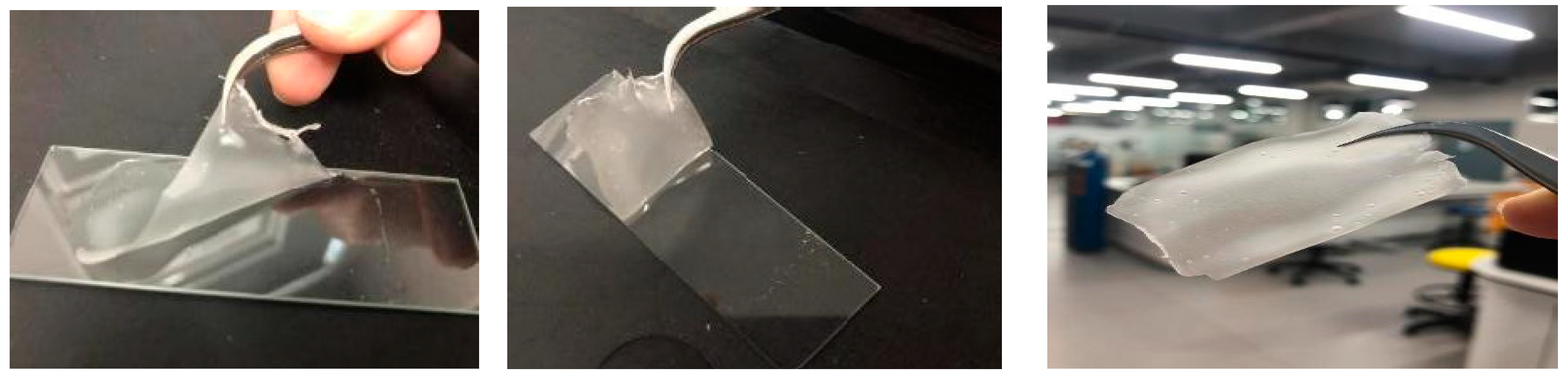
Figure 3.
Spectrum IR From Raw Material (a and b) and Fixed Film (c).
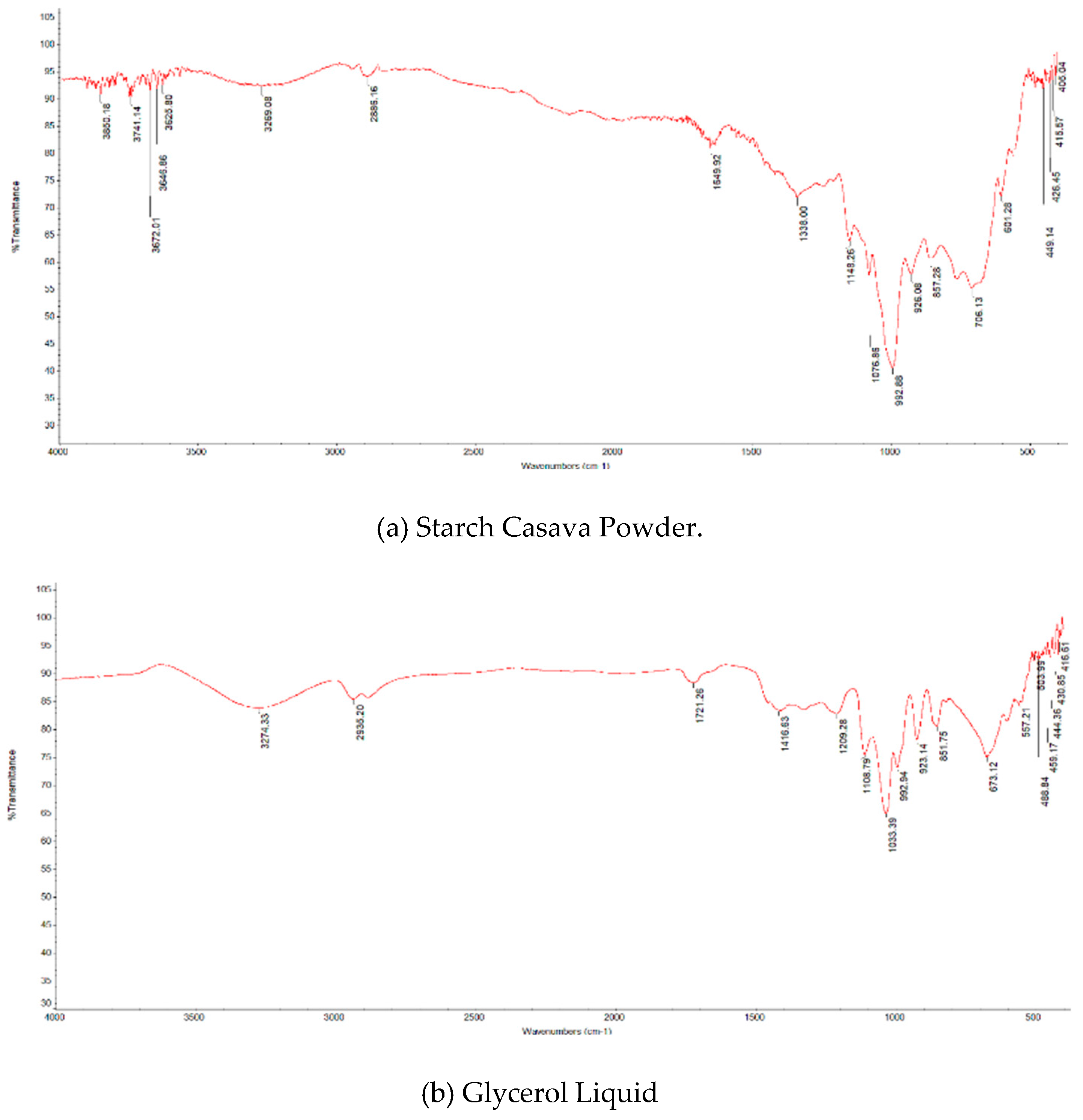
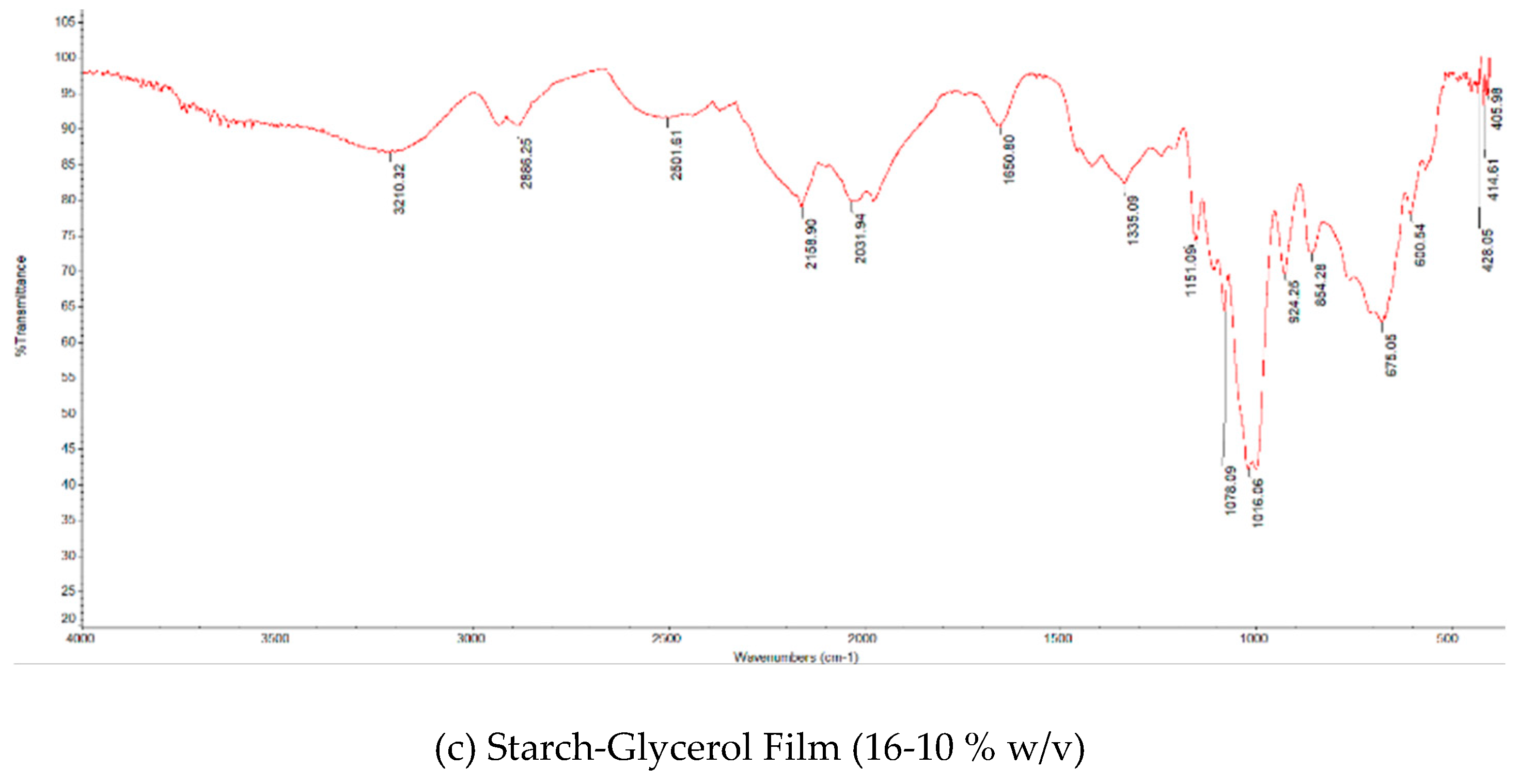
Figure 4.
FTIR spectrum with metal ions (purple = Starch-glycerol film, green = Starch - glycerol - Pb( II) film, blue = starch - glycerol -Hg(II), red = starch - glycerol -Fe(II), red light/pink = starch - glycerol -Co(II)).
Figure 4.
FTIR spectrum with metal ions (purple = Starch-glycerol film, green = Starch - glycerol - Pb( II) film, blue = starch - glycerol -Hg(II), red = starch - glycerol -Fe(II), red light/pink = starch - glycerol -Co(II)).
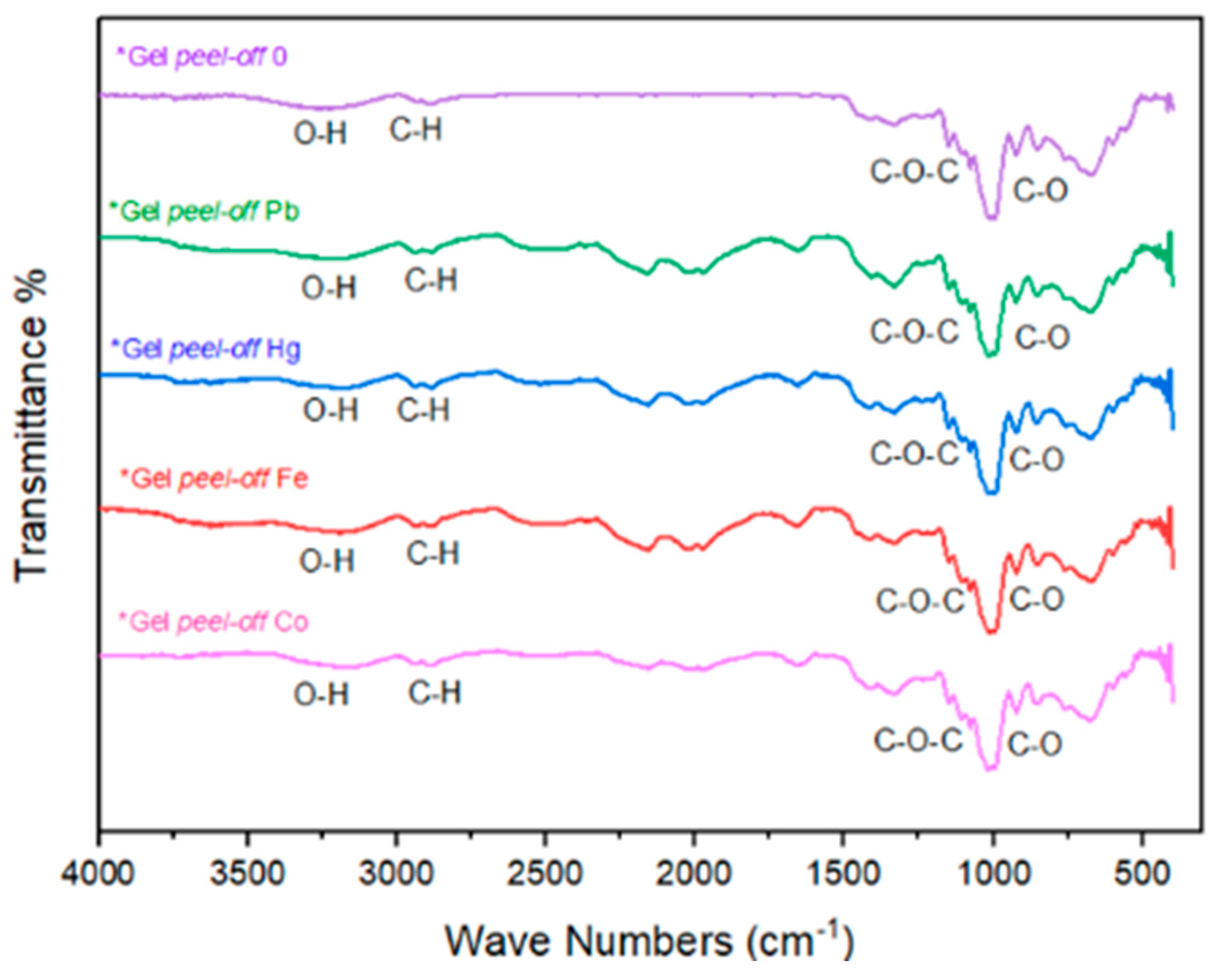
Figure 5.
Surface Immaging of Starch-Glyserol at 2500x and 5000x.
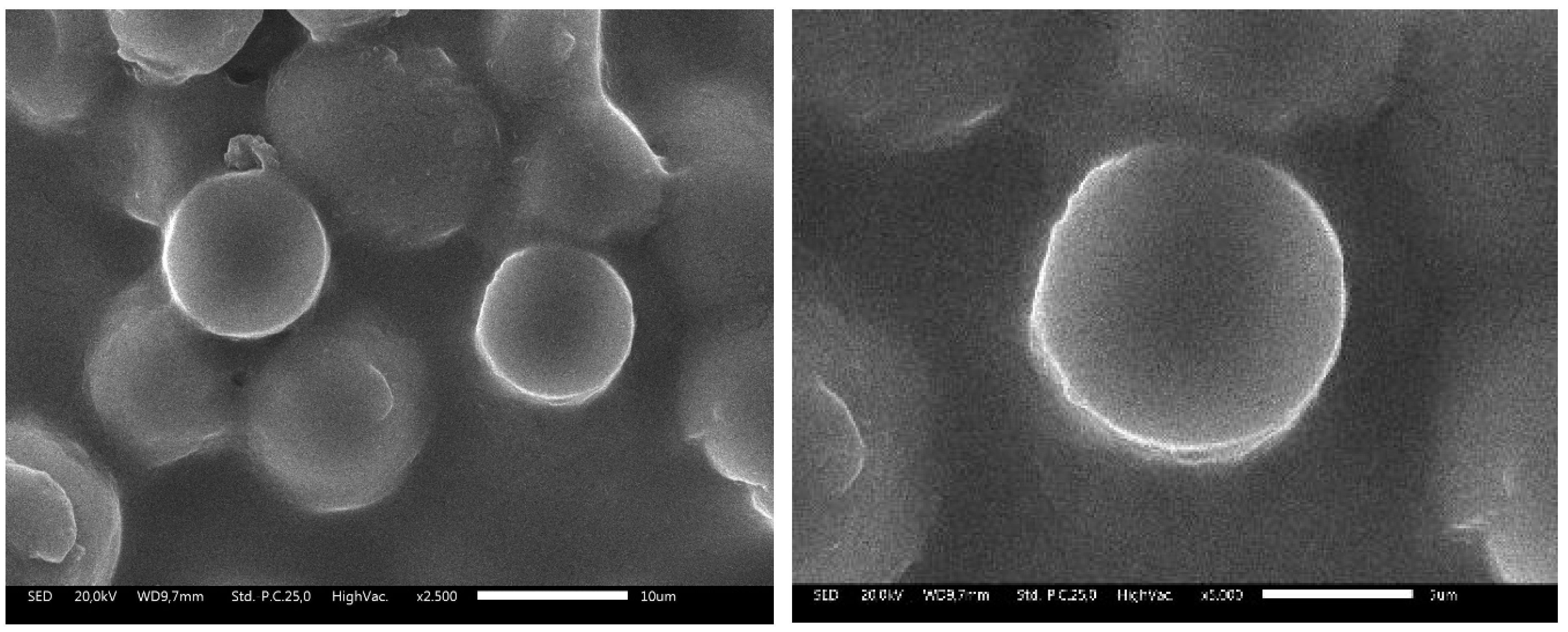
Figure 6.
Surface SEM Imaging Film Molecules 5000x; starch - glycerol -metal ion film.
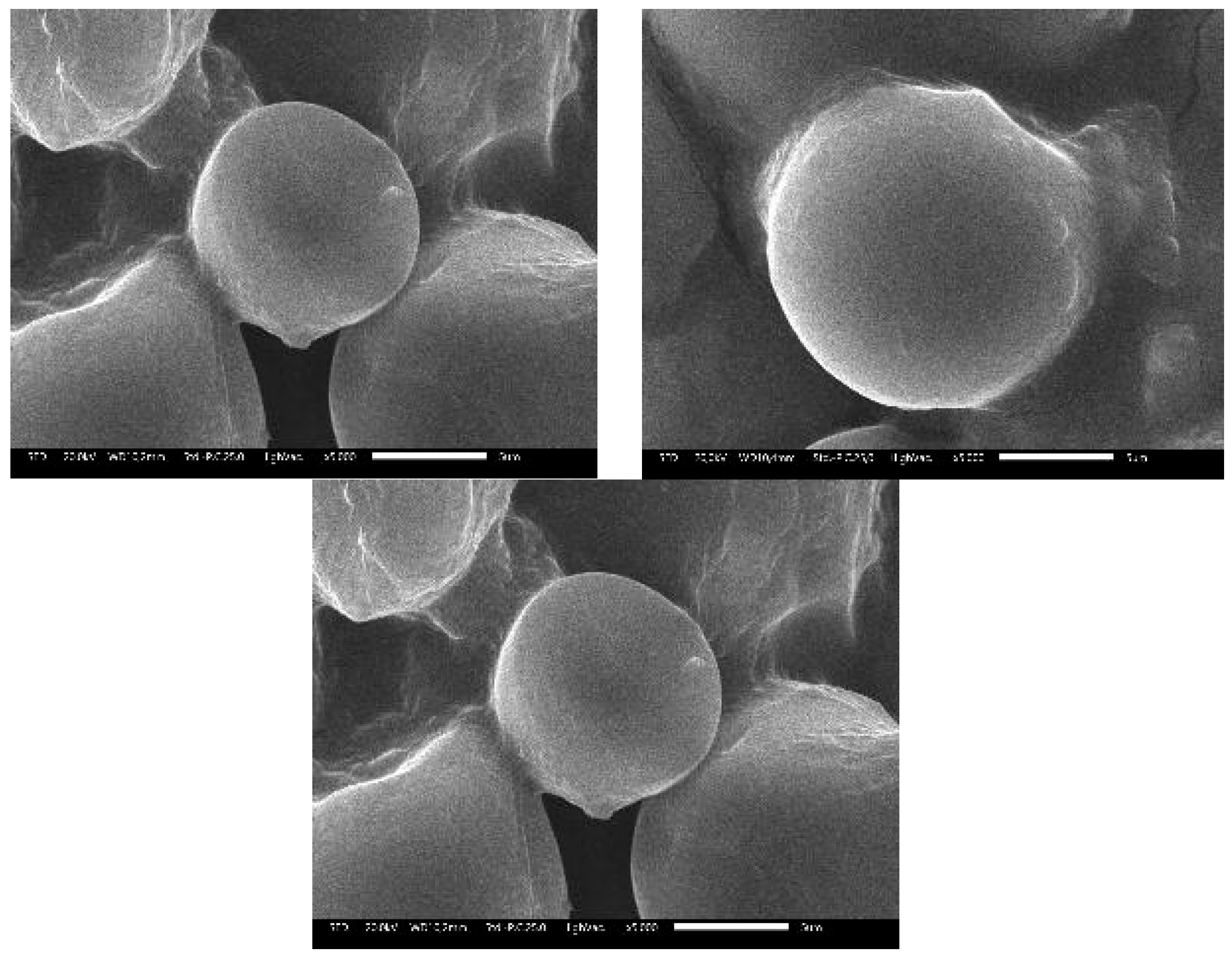
Figure 7.
SEM Characterization Results of Films Magnification 500 Times and compotition of material ion; Black Dot Indicate The Metal Ion.
Figure 7.
SEM Characterization Results of Films Magnification 500 Times and compotition of material ion; Black Dot Indicate The Metal Ion.
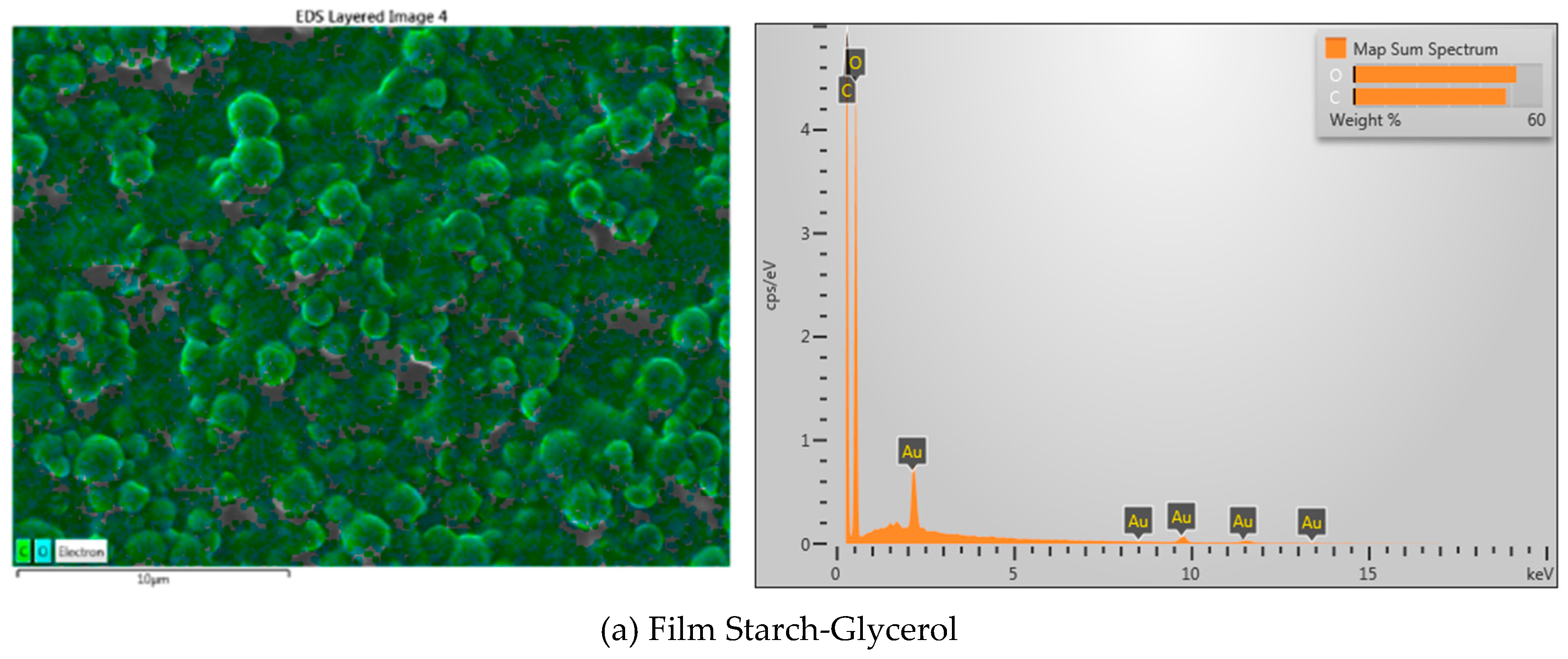
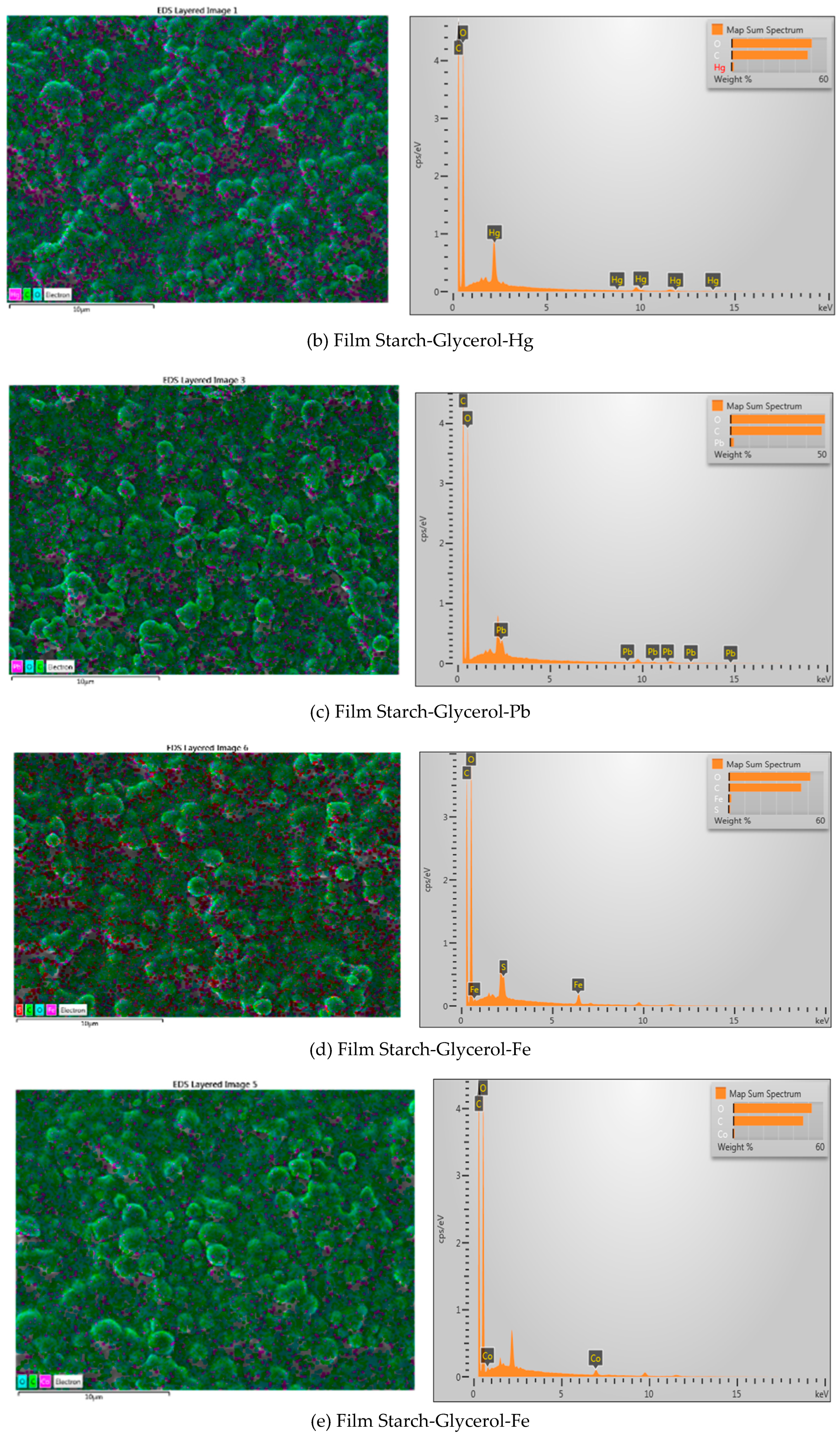

Table 1.
BET Analysis Results.
| Material name | Surface area (m2/gram) | Mean Pore Diameter (nm) | Total Pore Volume (cm3/gram) |
| Powder even cassava | 1202,047 | 0.1774 | 1,064 |
| Starch-glycerol film | 33703.643 | 0.1776 | 2,993 |
Table 2.
Analysis Element Metal On Gel.
| No. | Metal Ions | Concentration solution (ppm) | Values read on the resulting film decontamination of media: | ||
| Glass | Ceramics | Alumunium | |||
| 1. | Aquadest | 0 | 0 | 0 | 0 |
| 2 | Hg | 10,000 | 6600 | 19957 | 4309 |
| 3. | Pb | 5.000 | 18362 | 6081 | 8552 |
| 4. | Fe | 10.000 | 68419 | 123001 | 111970 |
| 5 | Co | 20.000 | 28761 | 16222 | 64587 |
Disclaimer/Publisher’s Note: The statements, opinions and data contained in all publications are solely those of the individual author(s) and contributor(s) and not of MDPI and/or the editor(s). MDPI and/or the editor(s) disclaim responsibility for any injury to people or property resulting from any ideas, methods, instructions or products referred to in the content. |
© 2025 by the authors. Licensee MDPI, Basel, Switzerland. This article is an open access article distributed under the terms and conditions of the Creative Commons Attribution (CC BY) license (http://creativecommons.org/licenses/by/4.0/).
Copyright: This open access article is published under a Creative Commons CC BY 4.0 license, which permit the free download, distribution, and reuse, provided that the author and preprint are cited in any reuse.


