

Submitted:
19 September 2019
Posted:
20 September 2019
Read the latest preprint version here
Abstract
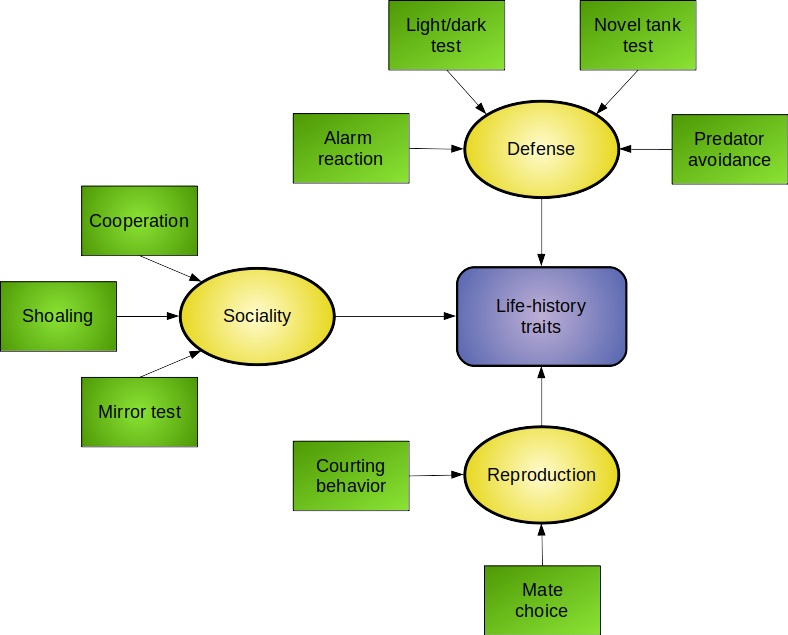
The industry is increasingly relying on fish for toxicity assessment. However, current guidelines for toxicity assessment focus on teratogenicity and mortality. From an ecotoxicological point of view, however, these endpoints are not sensitive enough, as they are not able to detect sub-lethal or non-teratogenic effects that can nonetheless result in decreased fitness and/or inability to adapt to a changing environment, affecting whole populations. Impacts of toxicants on neurobehavioral function have the potential to affect many different life-history traits, and are easier to assess in the laboratory than in the wild. We propose that carefully-controlled laboratory experiments on different behavioral domains – including anxiety, aggression, and exploration – can increase our understanding of the ecotoxicological impacts of contaminants, since these domains are related to traits such as defense, sociality, and reproduction, directly impacting life-history traits. We review the effects of selected contaminants on these tests, focusing on larval and adult zebrafish, showing that these behavioral domains are highly sensitive to small concentrations of these substances. These strategies suggest a way forward on ecotoxicological research using fish.
Keywords:
neurobehavioral assessment
; ecotoxicology
; zebrafish
; neurotoxicology
Copyright: This open access article is published under a Creative Commons CC BY 4.0 license, which permit the free download, distribution, and reuse, provided that the author and preprint are cited in any reuse.


