

Submitted:
03 January 2020
Posted:
04 January 2020
Read the latest preprint version here
Abstract
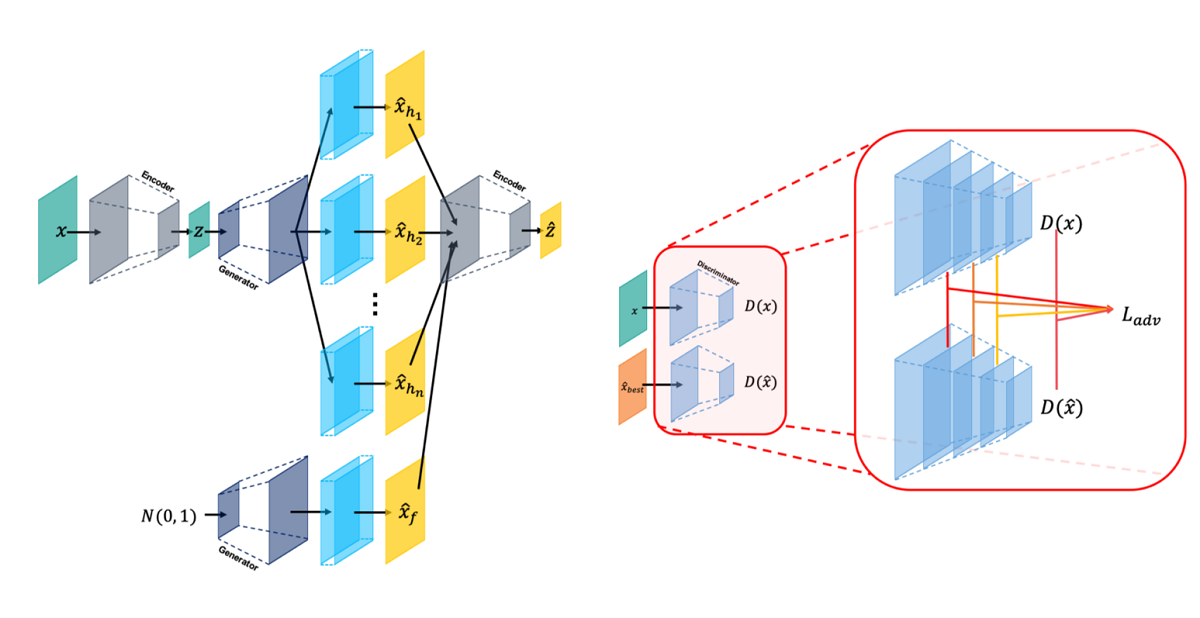
World Health Organization (WHO) provides the guideline for managing the Particulate Matter (PM) level because when the PM level is higher, it threats the human health. For managing PM level, the procedure for measuring PM value is needed firstly. The Beta Attenuation Monitor (BAM)-based PM sensor can be used for measuring PM value precisely. However, BAM-based sensor occurs not only high cost for maintaining but also cause of lower spatial resolution for monitoring PM level. We use Tapered Element Oscillating Microbalance (TEOM)-based sensors, which needs lower cost than BAM-based sensor, as a way to increase spatial resolution for monitoring PM level. The disadvantage of TEOM-based sensor is higher probability of malfunctioning than BAM-based sensor. In this paper, we aim to detect malfunctions for the maintenance of these cost-effective sensors. In this paper, we call many kinds of malfunctions from sensor as anomaly, and our purpose is detecting anomalies in PM sensor. We propose a novel architecture named with Hypothesis Pruning Generative Adversarial Network (HP-GAN) for anomaly detection. We present the performance comparison with other anomaly detection models with experiments. The results show that proposed architecture, HP-GAN, achieves cutting-edge performance at anomaly detection.
Keywords:
anomaly detection
; Generative Adversarial Network
; multiple hypothesis
; particulate matter
Copyright: This open access article is published under a Creative Commons CC BY 4.0 license, which permit the free download, distribution, and reuse, provided that the author and preprint are cited in any reuse.


