

Submitted:
30 March 2023
Posted:
31 March 2023
You are already at the latest version
Abstract
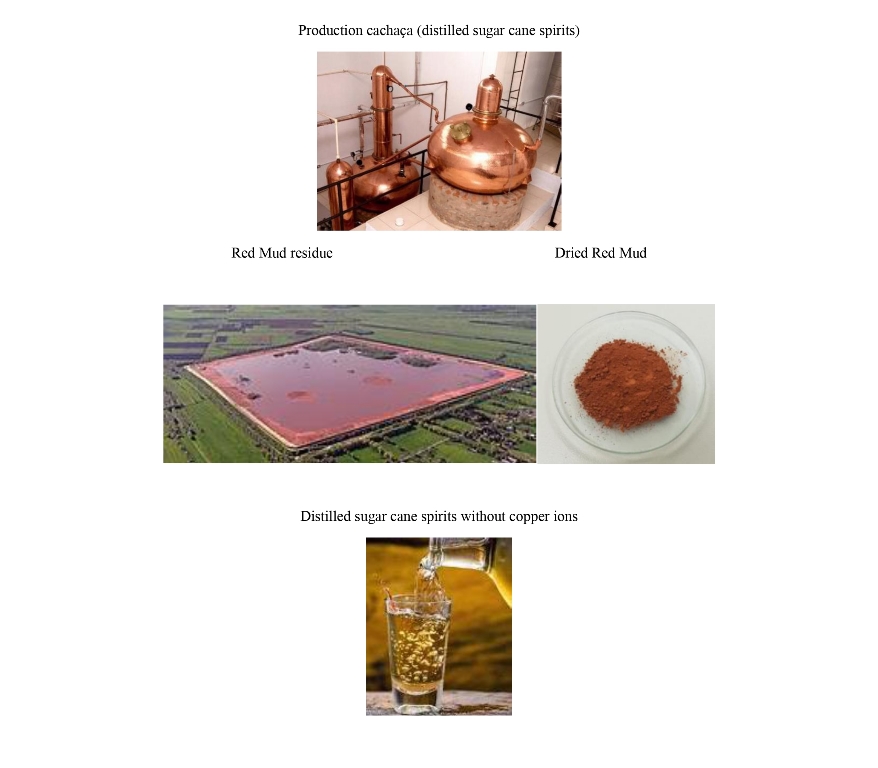
The presence of copper in distilled sugar cane spirits, especially cachaça produced in alembics, has impeded the marketing of this product. Red mud (RM) is a residue obtained from alumina production. It contains a high concentration of metal oxides and is very alkaline. The RM was dried at 100 oC and sifted through a 150-micron sieve. The sample was characterized by B.E.T. nitrogen adsorption, scanning electron microscopy-energy-dispersive X-ray (SEM-EDX) and Atomic Absorption Spectrometry (A.A.S.). The textural parameters indicate that the total surface area (S.T.) was 21.9 m2g-1, and the total volume pore (V.T.) was 0.09 cm3g-1. The RM (1 g) was stirred for two hours with a 1.0 L cachaça sample containing 9.39 mg of copper L-1 and filtered under atmospheric pressure. The concentration of copper ions detected in the filtrate was 0.00 mg L-1. No copper ions were retained when the cachaça was filtered through the RM under high pressure without stirring prior to filtration.
Keywords:
metals oxides
; surface hydrophilicity
; alcoholic beverage
; contaminants
; quality control
; mesoporous materials
1. Introduction
The presence of copper in distilled sugar cane spirits, especially cachaça produced in alembics constructed of copper, has impeded the marketing of this product [1,2,3,4]. International law limits the presence of copper in cachaça to (2 mg.L-1), which is lower than that specified by Brazilian legislation (5 mg.L-1) [5,6]. Limits for organic and inorganic compounds are established by Brazilian legislation. Copper, lead, and arsenic are among the inorganic contaminants.
Copper alembics are mainly responsible for the contamination of the beverage, but using these stills yields beverages with mild flavors. Copper is essential for human metabolism because it is a cofactor for various cellular enzymes. However, high concentrations of copper can lead to epilepsy, melanoma, rheumatoid arthritis, and the loss of the sense of taste [7,8]. Various methods for the removal of copper from cachaça utilizing clay [9], clay and charcoal [10], sugar cane bagasse [11], and agricultural and industrial residues [12] have been tested, as well as highly adsorptive synthetic materials [13], activated charcoal, CaCO3, MgCO3, aluminosilicates, and bentonite [13,14,15,16,17].
RM (Bauxite residue) is a solid residue produced during alumina production from the caustic digestion of bauxite ores, called the Bayer Process [18,19,20]. Approximately 1.5 tons of RM is produced for each ton of alumina [21]. The annual global production of RM is approximately 0.15 billion tons [22]. It is composed of fine particles of various mineral oxides, including aluminum, iron, silicon, titanium, and traces of other metals, and it has a highly alkaline pH of 10-12.5 [23,24]. Due to the RM’s alkaline nature and high metal content, its disposal in landfills causes a significant impact on soils and groundwater [25]. Global RM generation reached 77 Mt yr-1 in 2017 [25]. Industries and professionals are struggling to find adequate management strategies for the permanent and safe disposal of RM. In addition to its disposal, attempts have been made to utilize RM for other industrial and environmental purposes as a component in building brick materials [24,26,27], filler in asphalt roads [27], for the production of coagulants [28,29], adsorbent for inorganic and organic compounds [28,29,30] and as a catalyst [31,32,33]. However, despite such advances in utilization, most of the RM produced is disposed of in landfills. Therefore, credible strategies and methods must be sought to reduce environmental burdens and increase residue use for peaceful purposes.
Wang et al. [34] have discussed the application of RM to purify wastewater. They have reviewed the effectiveness of removing metal ions, non-metal ions, phenolic compounds, and dyes from wastewater and soils and removing sulfides and carbides from waste gas. The present study discusses using RM to remove copper ions from distilled sugar cane spirits.
2. Experimental
2.1. Materials and methods
RM was collected from the ALCOA industry (Juruti, PA, Brazil). Cachaça was purchased at a local market in Diamantina, Minas Gerais, Brazil.
2.2. Instrumentation
Energy-dispersive X-ray fluorescence EDX-720 spectrometer; EDX-720/800HS/900HS (Shimadzu Europe).
The thermal behavior of RM was evaluated by Thermogravimetry (TG) and by Differential Scanning Calorimetry (DSC), and the data were treated in the first derivative, the Thermogravimetry derivative (DTG). The TG curve was obtained on a TGA-50 Shimadzu thermobalance using an open alumina crucible with an accurately weighed 5-mg sample under a controlled inert argon atmosphere at a flow rate of 50 mL.min-1; the heating rate was 10 ºC.min-1, with a temperature range of 30-800 ºC. The derivative curve was obtained by T.A. data software. The DSC curve was obtained in a DSC-60 Plus Shimadzu cell under a controlled argon atmosphere, with a flow rate of 50 mL.min-1; the heating rate was 10 ºC.min-1, the temperature range was 30-350 ºC. About 1.5 mg of the sample was accurately weighed in a closed aluminum crucible. The measurements were carried out using a Shimadzu model XRD-6000 diffractometer using CuKa monochromatic radiation (λ = 0.15406 nm - 40 kV and 30 mA) at a scan rate of 2.0 degrees.s-1 covering the 2θ scale from 10-80°.
Analyzers for specific surface area, pore size, vapor adsorption, and chemisorption. RM pore volume, average pore diameter, and surface area were measured by nitrogen adsorption with a Quanta Chrome Novatouch LX2 apparatus through N2 equilibrium isotherms, physical adsorption, and desorption. Before analysis, the samples were activated at 100 °C for 3 hours to remove possible physisorbed water molecules in the pores. The specific areas were calculated using the Brunauer-Emmett-Teller (B.E.T.) equation with the Nova Win software. Pore volume and pore size distribution were obtained using the DFT method [35].
2.3. Typical procedures
2.3.1. Absorbent preparation
Red mud was dried at 100 °C for 24 h in a hot air oven. The dried RM sample was ground and sieved through a 150-micron sieve to furnish a uniform particle size. The sample was dried in a muffle furnace at temperatures ranging from 100 °C for 4 h. The dried RM samples (1.00 g) were directly applied as an absorbent for the copper contained in cachaça (1.0 L) by stirring for 2 h and filtering. The filtrate was analyzed for the presence of copper ions. A cachaça sample was also filtered through RM under a pressure of 1.0 Kgf/cm2 (14.2233 psi) without stirring before filtration.
3. Results and Discussion
3.1. RM Composition (RM physicochemical characterization)
RM, as a residue from the caustic digestion of bauxite. It contains all the elements in bauxite that are insoluble or partially soluble in caustic soda, plus sodium and calcium from the reagents added during digestion.
The main constituents of the RM were analyzed by atomic absorption spectrometry (A.A.S.). The A.A.S. technique was performed on a Varian spectrophotometer, model SpectrAA 50B. The working conditions were lamp current 4 mA, acetylene, and air mixture as the fuel in an oxidizing flame and wavelength of 324.7 nm. The calibration curve was obtained with successive dilutions (0, 1, 3, 5, 10, and 20 ppm) from an Ultra Scientific brand copper standard with 1000 ppm. The composition of the RM can be found in Table 1.
3.2. RM characterization
3.2.1. Thermal behavior of RM.
A gradual 5% mass loss between 30 ºC and 250 ºC occurred with the RM, as observed in the T.G. curve (Figure 1). This mass loss corresponded to the sample’s residual moisture. An endothermic phenomenon is observed in The D.S.C. curve of RM. This process consumes 79 J.g-1 between 236 ºC and 293 ºC in the same interval in which a 3% mass loss occurs, as observed in the T.G. curve (thin line; Figure 1). In the temperature range analyzed, no other thermal phenomenon was observed, as was expected because of the high thermal stability of the mud samples.
The heating promotes the dehydration of Al(OH)3 to form a much larger amount of Al2O3. Hematite (Fe2O3) is found throughout the process. being responsible for the color of the sample. The SiO2 phases undergo changes with heating because there is a large amount of Al(OH)3 at the beginning. After heating in the presence of the basic residue, silicates are attacked, including members of the SiO2 family of low crystallinity. The diagnostic peaks of the present phases have been indicated in Figure 2.
3.2.2. N2 adsorption/desorption isotherms
The characterization of the textural properties and surface chemistry of RM is used to explain the Cu+2 adsorption performance, especially at low pressures. The N2 adsorption/desorption isotherms of RM (Figure 3) exhibited the typical behavior of mesoporous materials. According to the IUPAC recommendations, such isotherms are classified as type IV. They are typical of mesopores with uniform cross sections, in which the formation of multilayers of the adsorbate by capillary condensation leads to H3-type hysteresis loops [36,37].
The textural parameters obtained by applying the B.E.T. and DFT approaches to the N2 adsorption/desorption data indicate that the total surface area (S.T.) was 21.9 m2g-1, and the total volume pore (V.T.) was 0.09 cm3g-1. Furthermore, RM displayed a half pore width of around 12.3 nm. The C-BET constant (35,36) also revealed a significantly smaller polar surface; the results attested to lower surface hydrophilicity.
3.3. RM as an adsorbent for cachaça treatment
3.3.1. Application of RM for the removal of copper ions from cachaça
Basic properties of adsorbent include surface activation (dehydration at 100 oC), high thermal stability, high abrasion resistance, and average pore diameters with a high exposed surface area that results in high adsorption capacity under atmospheric pressure. The cachaça originally contained 9.39 mg of copper ions per liter. No copper ions were detected in the filtrate (using 1.0 g RM per liter of cachaça). However, when the filtration was performed under pressure (1.0 Kgf.cm-2 or 14.2233 psi), no retention of copper ions occurred. Thus, the filtration process should be slow so that there is sufficient time for equilibration with the retention sites to occur. The use of pressure might also cause compacting of the RM so that penetration of the ions will be less efficient.
4. Conclusion
Maximum adsorption capacities for Cu2+ were observed for the RM aggregates. The concentration of copper in the cachaça decreased from 9.39 mg of copper per liter to 0 mg L-1 after treatment with 1.0 g of RM. Thus, the cachaça bought in a local market was adequate for consumption after being treated with RM. International law limits the presence of copper in cachaça to 2 mg.L-1. In contrast, the limit required by Brazilian legislation is 5 mg.L-1.
Acknowledgments
The authors acknowledge the support by the SENAI CIMATEC, PRPPG/UFVJM in response to Resolution 15/2019 and the Fundação de Apoio à Pesquisa do Estado de Minas Gerais - FAPEMIG (Chamada Universal), 0004022 code.
References
- Zacaroni LM, Cardoso MG, Saczk AA, Santiago WD, Anjos JP, Masson J, Duarte FC, Nelson DL (2011) Analysis of organic contaminants and copper in cachaça. Quim Nova. 34:320-324. [CrossRef]
- Cardoso MG (2020) Produção de aguardente de cana, 4ª ed. Editora UFLA, Lavras. 445.
- Zacaroni LM, Cardoso MG, Saczk, A, Santiago, WD, Anjos JP, Masson J,. Duarte FC, Nelson DL. (2010) Analysis of organic contaminants and copper in cachaça. Quím. Nova. 34: 320-324. [CrossRef]
- Caetano D, Lima, C.M.G., Sanson AL, Silva DF, Hassemer GS, Verruck S, Gregorio SR, Silva GA, Afonso RJCF, Coutrim MX, Batiha GE-S, Simal-Gandara J. (2022) Chemical Fingerprint of Non-aged Artisanal Sugarcane Kohonen Artificial Neural Network. Food Anal. Methods. 15: 3. [CrossRef]
- Brasil (2005a) Ministério da Agricultura, Pecuária e Abastecimento; Normative Instruction n° 13, June 29, 2005. Technical regulation for setting identity and quality standards for sugar cane spirit and cachaça. Diário Oficial da União, Brasília, June 30, 2005, Section 1, p. 11.
- Brasil (2005b) Ministério da Agricultura, Pecuária e Abastecimento. Normative Instruction n° 24, September 08, 2005. Approves the Operational Manual for Beverages and Vinegars. Diário Oficial da União, Brasília, September 20, 2005, Section 1.
- Pedroso MFM, Lima VI. (2001). Ecotoxicologia do cobre e seus compostos. Salvador: CRA.
- Sargentelli V. (1996). Aspectos do metabolismo do cobre no homem. Quím. Nova. 19: 290-293.
- Duarte FC, Cardoso MG, Magriotis ZM, Santiago WD, Mendonça, JGPL, Rodrigues MA. (2014) Remoção de cobre em cachaça usando argilas. Food Sci. Technol. Ciênc. Agrotec. 38: 382-389. [CrossRef]
- Zacaroni LM, Magriotis ZM, Cardoso MG, Santiago WD, Mendonça JG, Vieira SS, Nelson DL. (2015) Natural clay and commercial activated charcoal: Properties and application for the removal of copper from cachaça. Food Control 47: 536-544. [CrossRef]
- Machado AMR, Cardoso MG, Duarte FC, Anjos JP, Zacaroni LM, Santiago WD. (2016) Sugarcane bagasse performance in copper adsorption of pot still cachaça. Científica, Jaboticabal. 44: 138-145. [CrossRef]
- Honorato KR, Paulino IMR, Oliveira AM, Bergamasco R, Vieira AMS, Gomes RG. (2022) Removal of copper ions from alembic cachaça using agro-industrial residues as biosorbents. Food Addit. Contam. Part A. 39: 1424-1438. [CrossRef]
- Cantanhede LB, Lima JB, Lopes GS, Farias RF, Bezerra CWB. (2005). Uso de sílica e silica-titania organofuncionalizadas para a remoção de Cu (II) em aguardentes. Ciên. Tecnol. Alim. 25: 500-505.
- Bizelli LC, Ribeiro C.A.F., Novaes F.V. (2000) Double distillation of sugar cane spirit: copper and total acidity contents. Scientia Agricola. 57: 623-627.
- Cantão FO, Melo WC, Cardoso MG, Anjos JP, Oliveira LCA. (2010) Evaluation and removal of sugar cane brandy using aluminosilicates: zeolite and bentonite. Ciências Agrárias Ciênc. agrotec. 34: 1109-1115. [CrossRef]
- Lima AJB, Cardoso MG, Guerreiro MC, Pimentel FA. (2006) Using activated carbon to remove copper from sugar cane spirit. Quim. Nova. 29: 247-250. [CrossRef]
- Neves EA, Oliveira A, Fernandes AP, Nóbrega JA. (2007) Simple and efficient elimination of copper (II) in sugar-cane spirits. Food Chem. 101: 33-36. [CrossRef]
- A.W. Bray, D.I. Stewart, R. Courtney, S.P. Rout, P.N. Humphreys, W.M. Mayes, I.T. Burke, Sustained Bauxite Residue Rehabilitation with Gypsum and Organic Matter 16 years after Initial Treatment, Environmental Science & Technology 52 (2018) 152-161. [CrossRef]
- Wang X, Zhang Y, Liu J, Hu P, Meng K, Lv F, Tong W, Chu PK. (2017) Dealkalinization of red mud by carbide slag and flue gas. Clean Soil Air Water. 46: 1700634. [CrossRef]
- Lyu F, Sun N, Sun W, Khoso SA, Tang H-H, Wang L. (2019) Preliminary assessment of revegetation potential through ryegrass growing on bauxite residue. J. Cent. South Univ. 26: 404-409. [CrossRef]
- Guo Y, Zhao Q, Yan K, Cheng F, Lou H. (2014) Novel Process for Alumina Extraction via the Coupling Treatment of Coal Gangue and Bauxite Red Mud. Ind. Eng. Chem. Res. 53: 4518-4521. [CrossRef]
- Lyu F, Gao J-D, Sun W, Liu R-Q, Sun, X-D, Cao XF, Wang L, Sun W. (2019) Utilization of propyl gallate, a novel selective collector for diaspore flotation. Miner. Eng. 131: 66-72. [CrossRef]
- Khanna R, Konyukhov Y, Zinoveev D, Jayasankar K, Burmistrov I, Kravchenko M, Mukherjee PS. (2022). Red Mud as a Secondary Resource of Low-Grade Iron: A Global Perspective. Sustainability. 14: 1258. [CrossRef]
- Silveira NCG, Martins MLF, Bezerra ACS, Araújo FGS. (2021) Red Mud from the Aluminium Industry: Production, Characteristics, and Alternative Applications in Construction Materials—A Review. Sustainability 13: 12741. [CrossRef]
- Burke IT, Mayes WM, Peacock CL, Brown AP, Jarvis AP, Gruiz K, (2012) Speciation of Arsenic, Chromium, and Vanadium in Red Mud Samples from the Ajka Spill Site, Hungary, Environmental Science & Technology 46: 3085-3092. [CrossRef]
- Sglavo VM, Maurina S, Conci A, Salviati A, Carturan G, Cocco G. (2000) Bauxite ‘red mud’ in the ceramic industry. Part 2: production of clay-based ceramics, Journal of the European Ceramic Society 20: 245-252. [CrossRef]
- Liu W, Yang J, Xiao B. (2009) Application of Bayer red mud for iron recovery and building material production from aluminosilicate residues, Journal of hazardous materials 161: 474-478. [CrossRef]
- Brunori C, Cremisini C, Massanisso P, Pinto V, Torricelli L. (2005) Reuse of a treated red mud bauxite waste: studies on environmental compatibility, Journal of Hazardous Materials 117: 55-63. [CrossRef]
- Wang S, Boyjoo Y, Choueib A, Zhu Z. (2005) Removal of dyes from aqueous solution using fly ash and red mud, Water research 39: 129-138. [CrossRef]
- Gupta VK, Sharma S. (2002) Removal of Cadmium and Zinc from Aqueous Solutions Using Red Mud, Environmental Science & Technology 36: 3612-3617. [CrossRef]
- Pratt KC, Christoverson V. (1982) Hydrogenation of a model hydrogen-donor system using activated red mud catalyst. Fuel 61: 460-462. [CrossRef]
- Álvarez J, Ordóñez S, Rosal R, Sastre H, Dı́ez FV. A new method for enhancing the performance of red mud as a hydrogenation catalyst. (1999) Applied Catalysis A: General 180: 399-409. [CrossRef]
- do Prado NT, Heitmann AP, Mansur HS, Mansur AA, Oliveira LCA, de Castro CS (2017) PET-modified red mud as catalysts for oxidative desulfurization reactions. Journal of Environmental Sciences 57: 312-320. [CrossRef]
- Wang L, Hu G, Lyu F, Yue T, Tang H, Han H, Yang Y, Liu R, Sun W. (2019) Application of Red Mud in Wastewater Treatment. Minerals 9: 281. [CrossRef]
- Ravikovitch PI, Haller GL, Neimark AV (1998) Density functional theory model for calculating pore size distributions: pore structure of nanoporous catalysts. Advances in Colloid and Interface Science 76-77: 203-226. [CrossRef]
- Thommes M, Kaneko K, Neimark AV, Olivier JP, Rodriguez-Reinoso F, Rouquerol J, Sing KS. (2015) Physisorption of Gases, with Special Reference to the Evaluation of Surface Area and Pore Size Distribution (IUPAC Technical Report). Pure and Applied Chemistry 87: 1051-1069. [CrossRef]
- Sing KSW, Everett DH, Haul RAW, Moscou L, Pierotti RA, Rouquerol J, Siemieniewska T. (1985) Reporting Physisorption Data for Gas/Solid Systems with Special Reference to the Determination of Surface Area and Porosity. Pure and Applied Chemistry 57: 603-619. [CrossRef]
Figure 1.
Thermal behavior of RM described by Thermogravimetry (TG - thin line), Thermogravimetry derivative (DTG - gray line), and Differential Scanning Calorimetry (DSC – thick line).
Figure 1.
Thermal behavior of RM described by Thermogravimetry (TG - thin line), Thermogravimetry derivative (DTG - gray line), and Differential Scanning Calorimetry (DSC – thick line).
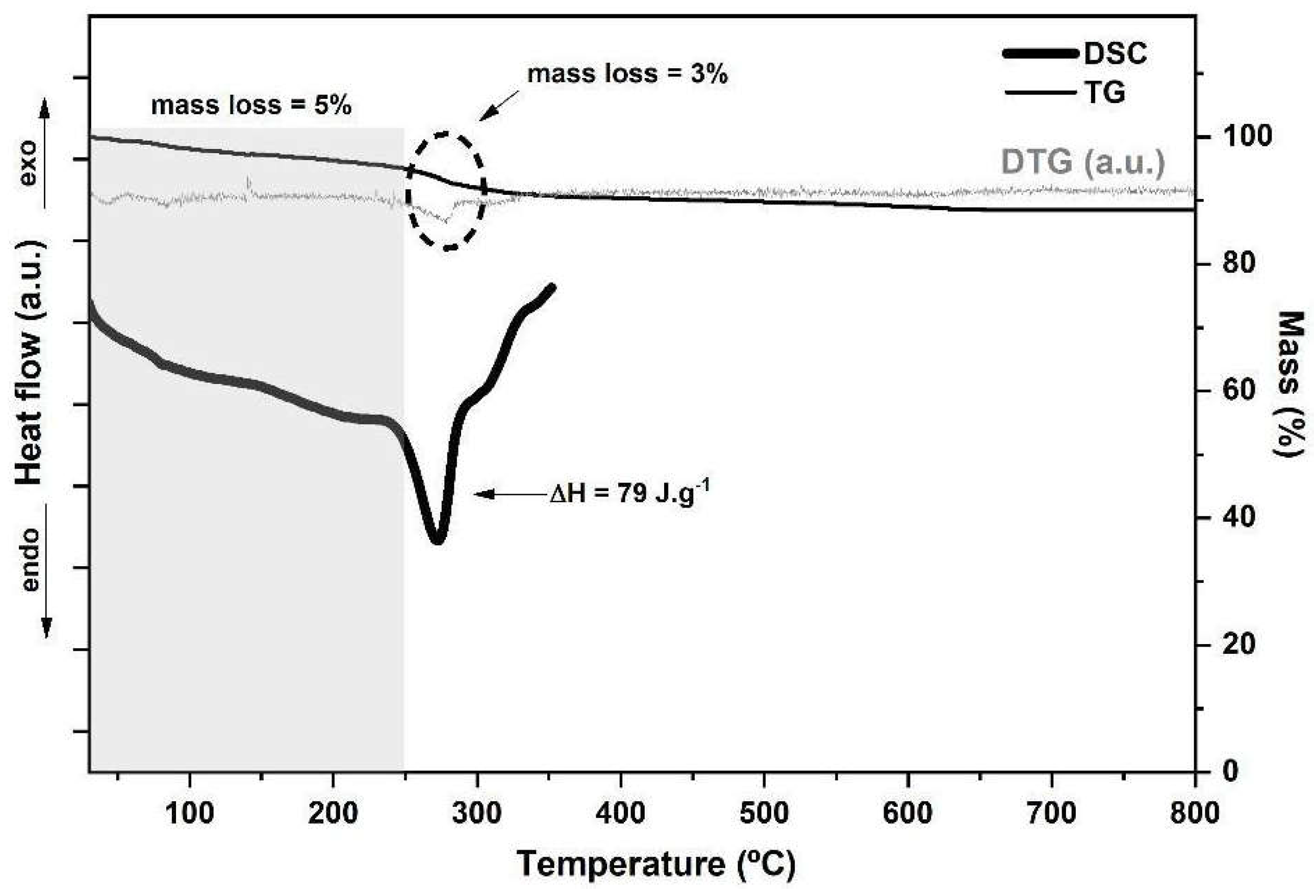
Figure 2.
RM X-ray overlapping from the heating at 100 ºC.
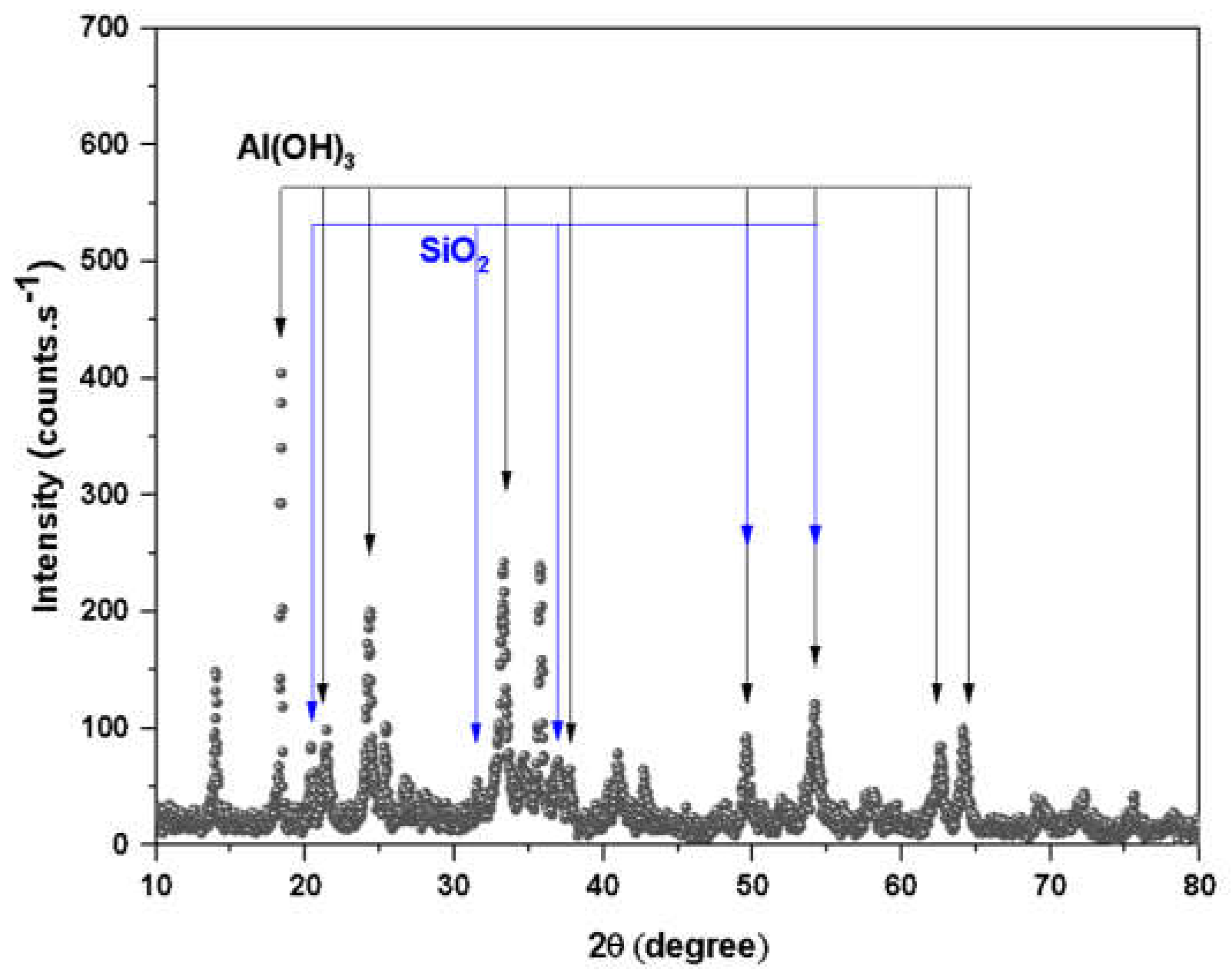
Figure 3.
N2 adsorption/desorption isotherm of RM.
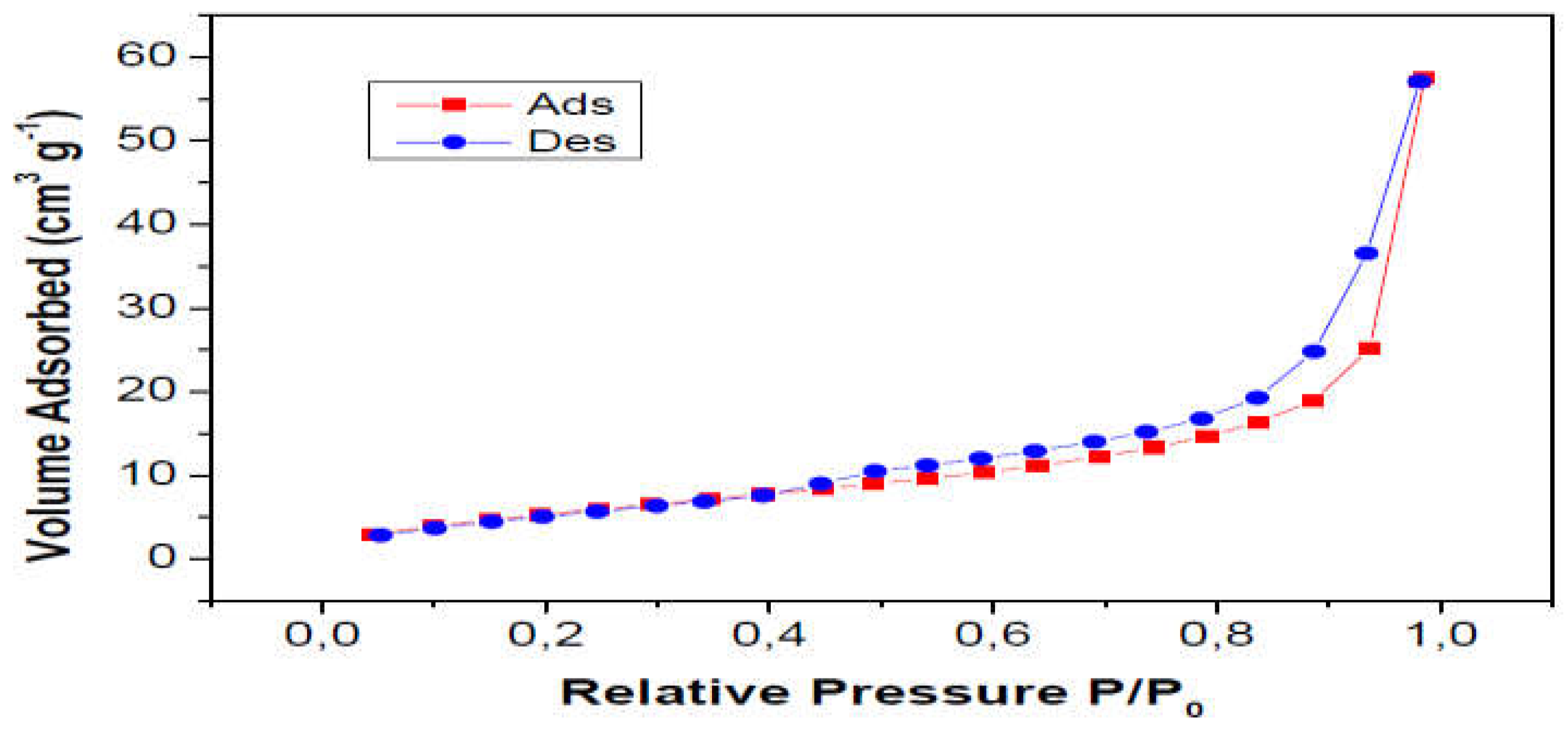

Table 1.
E.D.X. composition of RM.
| Element | E.D.X. composition (wt. %) Before adsorption |
E.D.X. composition (wt. %) After adsorption |
|---|---|---|
| Fe | 41.753 | 44.435 |
| Al | 30.754 | 29.357 |
| Si | 12.138 | 10.802 |
| Na | 9.927 | 10.089 |
| Ti | 3.894 | 3.758 |
| Ca | 0.909 | 0.883 |
| Zr | 0.193 | 0.228 |
| V | 0.165 | 0.166 |
| S | 0.115 | 0.088 |
| Cr | 0.088 | 0.081 |
| Ir | 0.050 | Not measured |
| Nb | 0.013 | 0.015 |
| Mn | Not measured | 0.056 |
| Cu | Not measured | 0.021 |
| Ga | Not measured | 0.019 |
Disclaimer/Publisher’s Note: The statements, opinions and data contained in all publications are solely those of the individual author(s) and contributor(s) and not of MDPI and/or the editor(s). MDPI and/or the editor(s) disclaim responsibility for any injury to people or property resulting from any ideas, methods, instructions or products referred to in the content. |
© 2023 by the authors. Licensee MDPI, Basel, Switzerland. This article is an open access article distributed under the terms and conditions of the Creative Commons Attribution (CC BY) license (http://creativecommons.org/licenses/by/4.0/).
Copyright: This open access article is published under a Creative Commons CC BY 4.0 license, which permit the free download, distribution, and reuse, provided that the author and preprint are cited in any reuse.


