

Submitted:
29 May 2023
Posted:
30 May 2023
Read the latest preprint version here
Abstract
Background: Arm elevation plays an important role in simple and complex daily tasks. Muscles that stabilize the shoulder girdle also function as respiratory accessory muscles. Dual demand on these muscles, particularly in patients with chronic respiratory conditions, leads to dyspnea and fatigue of the upper limb, making simple daily activities difficult. Various tests, including Grocery Shelving Task (GST), are designed to assess functional performance during upper limb activities. The aim of the study is to derive reference values for GST among the population of the United Arab Emirates Methods: This cross-sectional study was conducted with 220 healthy individuals of both genders between the ages of 20 and 69. Duration required to complete GST was recorded. The correlation between duration and age, height, body mass and body mass index (BMI) were also assessed. Results: Reference values for duration (in seconds) in females for age groups 20-29, 30-39, 40-49, 50-59 and 60-69 are 43.5±5.5, 43.1±8.08, 48.1±6.7, 44.9±7.1, 46.7±6.5 respectively. Values for males of age groups 20-29, 30-39, 40-49, 50-59 and 60-69 are 45.7±6.7, 44.8±8.9, 42.5±10.01, 53.4±4.2, and 53.9±5.4 respectively. Conclusion: Reference values for GST duration were obtained. Weak correlations were found between duration and age, height, body mass, BMI of the participants.
Keywords:
Arm elevation
; Grocery Shelving Test
; Functional assessment
; Reference values
; Upper limb activities
Introduction
Chronic obstructive pulmonary disease (COPD) is a progressive lung disease with symptoms that curb an individual’s ability to carry out the activities of daily living (ADLs) [1]. Arm activities, supported or unsupported, are common in all aspects of daily life. They play an important role in both simple and complex daily tasks such as grooming activities, washing the dishes, and putting groceries on shelves [2]. Dyspnea during routine ADLs involving unsupported upper limb activities is common and often leads to the avoidance of upper limb activities. This makes the patients progressively disabled as they can no longer cope with simple ADLs [3].
Dyspnea during upper limb activities can be due to the mechanical effects of arm elevation. The accessory respiratory muscles assist with the postural support of the arm, diminishing their participation in ventilation and shifting the respiratory work to the diaphragm [4,5]. Arm elevation increases functional residual capacity, possible mechanisms are the passive stretching of the thoracic muscles and the expansion of the rib cage, imposing a greater burden that must be overcome by the diaphragm [5.6].The reduction in upper limb muscle strength may increase arm fatigue, thereby contributing to the impairments [7].
Various tests have been designed for assessing upper limb function, including the, unsupported upper limb exercise test (UULEX) [8], six-minute pegboard and ring test (6PBRT) [9], the supported upper limb extremity test (SULEX) [3] and grocery shelving task (GST) [1]. GST is one of the highly reproducible standard evaluation tests that assess upper extremity function by asking patients to place two grocery shopping bags on a high shelf as quickly as possible [1]. Reference values for the test are required to compare with the values derived from patients and accordingly assess the impairments. These values can also serve as the target point for the upper limb strength training regime as a part of the pulmonary rehabilitation protocol. Studies have hardly been conducted to attain reference values for GST. As there is a lack of retrievable data regarding these values, the main aim of this study was to find the reference values of GST in the population of the United Arab Emirates population, for it to be used as an effective tool to test the functional capacity of people with different pulmonary conditions and diseases.
Material and methods
Study design
We conducted a cross-sectional study with a stratified sampling of 220 healthy individuals from different age groups (20-29, 30-39, 40-49, 50-59 and 60-69 years).
Ethical considerations
The approval for this study was received from the Ethical committee of the University of Sharjah. The participants were explained about the study procedure and written informed consent was taken from the eligible participants.
Recruitment of the participants
The recruitment of the healthy population for the study was initiated through an advertisement on social media stating- “a request to adults older than 20 years old to participate in a study on the GROCERY SHELVING TASK –a simple upper limb test”. Details regarding the test were provided. Investigators’ phone numbers and email addresses were also provided. Clinically healthy individuals were also recruited randomly from public places and through their families and friends for a period of 1 year (June 2021 to June 2022).
Eligibility criteria
The inclusion criteria were: healthy adult between the age of 20-70 years; of either gender; with a body mass index (BMI) of 18.5 kg/m2 to 40 kg/m ; no symptoms of cardiopulmonary disease; and those who can accomplish his or her ADLs with no restrictions. The exclusion criteria were any history of cardiopulmonary problems; recent surgery that prevents them from participating in the study test; any musculoskeletal, neuromuscular, or metabolic diseases; and any sort of deformities such as kyphosis, scoliosis (severe) that would interfere with protocol performance.
Initial evaluation
Demographic data were collected prior to the commencement of the test session. Body mass and height were measured to calculate body mass index (BMI). Baseline measurements of oxygen saturation, blood pressure, heart rate, respiratory rate, as well as breathlessness and fatigue score using modified Borg scale were taken at rest.
Procedure
The standard procedure and instructions of the GST were explained to the participants [1]. A shelf was placed 15 cm above the shoulder level while the participants were in a standing position. Then a 90 cm high table was placed 30 cm in front of the shelf. Twenty objects weighing 420-g were placed in 2 shopping bags on the floor on both sides of the table. The individual started the test from a sitting position in a chair, at a 1mtr distance from the table (Figure 1).
The instructions were as follows:
When instructed, get up as quickly as possible and place all these items as quickly as you can from the two shopping bags on the shelf in front of you. You may accomplish the task in any form you would like; you cannot hold more than one item at once or lift the bag directly to the shelf. Put your arms down when the task is over. The duration (in seconds) required to complete the task will be recorded. You can decrease your speed or pause if you need to.
A practice test was performed followed by one trial of GST. The variables were assessed at the baseline, immediately, 1 minute and after 3 minutes of finishing the task.
Statistical Analysis
Statistical analysis was performed using IBM SPSS statistics for Windows, version. 25.0 (IBM Corp., Armonk, NY, USA). The normality of data was checked using the Shapiro-Wilk test. Data were expressed as mean ± standard deviation. The correlation between the duration of the test and the age, height, and body mass of the participants were assessed using Pearson’s correlation test.
Results
A total of 220 apparently healthy individuals from both genders and different age groups were included in this study, involving a total of 127 females and 93 males from the ages of 20-29, 30-39, 40-49, 50-59, 60-69 years. The participants’ demographic data are presented in Table 1. Baseline values were comparable.
The duration, hemodynamic parameters, respiratory parameters, and fatigue pre- and post-GST are presented in Table 2 and Table 3. Heart rate, respiratory rate, peripheral oxygen saturation, and systolic blood pressure showed significant differences between the pre and post-test values in most of the age groups. Dyspnea and fatigue showed no significant difference in most age groups. The correlation analysis, as represented in Table 4, showed a weak positive correlation between the duration of GST test and age, body mass, height, BMI, among both females and males (Figure 2, Figure 3, Figure 4 and Figure 5).
Discussion
The current study aimed to identify GST reference values in the population of the United Arab Emirates. A total of 220 participants were recruited in the age groups 20-29, 30-39, 40-49, 50-59 and 60-69. A smaller number of participants could be recruited in the older age groups because of difficulty in meeting the eligibility criteria.
Significant differences were seen in the pre and post-test heart rate, respiratory rate, peripheral oxygen saturation and systolic blood pressure in most of the age groups. The reason for these changes could be the increase in metabolic demand caused by the exercising muscles. This demand is achieved through numerous changes in the cardiovascular and respiratory systems mediated by the sympathetic nervous system [10]. Similar increases in physiological parameters were seen in studies done on other upper limb functional tests [11,12].
Various factors could influence the duration required to perform the GST, therefore, we tried to find a correlation between the duration and demographic characteristics of the participants, such as age, height, body mass and BMI. All the variables had a weak correlation with the duration of the task. This is because the height of the shelf was adjusted according to the height of the participant. For example, the shelf was fixed at 15 cm above shoulder level for all the participants and did not have a fixed level from the ground which omits the height significance. The body mass factor did not interfere with the task results, as GST does not assess functional capacity through full body activities. As the BMI calculation is based on height and body mass, it was not significantly correlated to the duration of the task. These results are in accordance with the studies performed on other unsupported upper limb tests [9,11].
Although a weak correlation was found between age and duration was found, gradual increase in the duration required for completing the test was seen as the age increased. The factors that have been attributed to this result could be age related changes in cardiorespiratory endurance and muscle strength and endurance [13,14]. Reductions in proprioceptive abilities and memory as age progresses could also contribute to this result [15]. A similar trend of decreasing performance is seen in studies conducted on other upper limb tests [9,11]. Lima et al.[9] and Kulkarni et al.[11] discovered that the number of rings moved in six minutes decreased as age increased in studies to determine the normative values of the six-minute peg board and ring test.
The limitations of the present study were that we also did not consider the motivation levels while the test was performed. We also did not study more objective parameters like pulmonary functions in relation to the duration of the test. Factors such as balance and peripheral muscle strength that could have influenced the duration of the test were not studied. Future studies can be conducted on patients with pulmonary and cardiovascular conditions to assess their performance and to compare the difference from the normative values.
Conclusion
This study determined the normative values for GST among the United Arab Emirates population from the age 20 to 69 years. Changes were observed in heart rate, respiratory rate, peripheral oxygen saturation, and systolic blood pressure between the pre and post-test values in most of the age groups. Dyspnea and fatigue showed no significant difference in most age groups. Weak correlations were found between the duration of the task and the age, height, body mass, and BMI of the participants.
Funding
This work was supported by the Fundação Carlos Chagas Filho de Apoio à Pesquisa do Estado do Rio de Janeiro (FAPERJ, No. E-26/211.104/2021) and Coordenação de Aperfeiçoamento de Pessoal (CAPES, Finance Code 001; No. 88881.708719/2022-01, and No. 88887.708718/2022-00).
Declaration of interest
None
References
- Lima VP, Almeida FD, Janaudis-Ferreira T, Carmona B, Ribeiro-Samora GA, Velloso M. Reference values for the six minute peg board and ring test in healthy individuals in Brazil.J Bras Pneumol. 2018;44:190-194. [CrossRef]
- Hoogendam YY, van der Lijn F, Vernooij MW, Hofman A, Niessen WJ, van der Lugt A, et. al. Older age relates to worsening of fine motor skills: a population-based study of middleaged and elderly persons. Front Aging Neurosci. 2014;6:259-265. [CrossRef]
- Ingram LA, Butler AA, Walsh LD, Brodie MA, Lord SR, Gandevia SC. The upper limb Physiological Profile Assessment: Description, reliability, normative values and criterionvalidity. PloS One. 2019;14:e0218553. [CrossRef]
- Adamo DE, Alexander NB, Brown SH. The influence of age and physical activity on upper limb proprioceptive ability. J Aging Phys Act.2009;17:272-293. [CrossRef]
- Kulkarni MS, Alaparthi GK, Krishnan S, Ramakrishna A, Acharya V. Reference value for the six-minute peg board and ring test. A cross sectional study. Multidiscip Respir Med.2020;15(1). [CrossRef]
- Thimmaraju L, Anandarao SB. Gender differences in cardiovascular response to upper limb isometric exercises. Int J Res Health Sci.2014;2:454-461.
- Gulart AA, Munari AB, Tressoldi C, Dos Santos K, Karloh M, Mayer AF. Glittre-ADL multiple tasks induce similar dynamic hyperinflation with different metabolic and ventilatory demands in patients with COPD. J Cardiopulm Rehabil Prev.2017; 37 (6): 450-453. [CrossRef]
- Zhan S, Cerny FJ, Gibbons WJ, Mador MJ, Wu YM. Development of an unsupported arm exercise test in patients with chronic obstructive pulmonary disease. J Cardiopulm Rehabil. 2006;26:180-187.
- Lima VP, Almeida FD, Janaudis-Ferreira T, Carmona B, Ribeiro-Samora GA, Velloso M. Reference values for the six minute peg board and ring test in healthy individuals in Brazil.J Bras Pneumol. 2018;44:190-194. [CrossRef]
- Thimmaraju L, Anandarao SB. Gender differences in cardiovascular response to upper limb isometric exercises. Int J Res Health Sci.2014;2:454-461.
- Kulkarni MS, Alaparthi GK, Krishnan S, Ramakrishna A, Acharya V. Reference value for the six-minute peg board and ring test. A cross sectional study. Multidiscip Respir Med.2020;15(1). [CrossRef]
- Gulart AA, Munari AB, Tressoldi C, Dos Santos K, Karloh M, Mayer AF. Glittre-ADL multiple tasks induce similar dynamic hyperinflation with different metabolic and ventilatory demands in patients with COPD. J Cardiopulm Rehabil Prev.2017; 37 (6): 450-453. [CrossRef]
- Hoogendam YY, van der Lijn F, Vernooij MW, Hofman A, Niessen WJ, van der Lugt A, et. al. Older age relates to worsening of fine motor skills: a population-based study of middleaged and elderly persons. Front Aging Neurosci. 2014;6:259-265.
- Ingram LA, Butler AA, Walsh LD, Brodie MA, Lord SR, Gandevia SC. The upper limb Physiological Profile Assessment: Description, reliability, normative values and criterionvalidity. PloS One.2019;14:e0218553. [CrossRef]
- Adamo DE, Alexander NB, Brown SH. The influence of age and physical activity on upper limb proprioceptive ability. J Aging Phys Act.2009;17:272-293. [CrossRef]
Figure 1.
A: Starting position of Grocery Shelving Task. B: Participants performing the task procedure.
Figure 1.
A: Starting position of Grocery Shelving Task. B: Participants performing the task procedure.
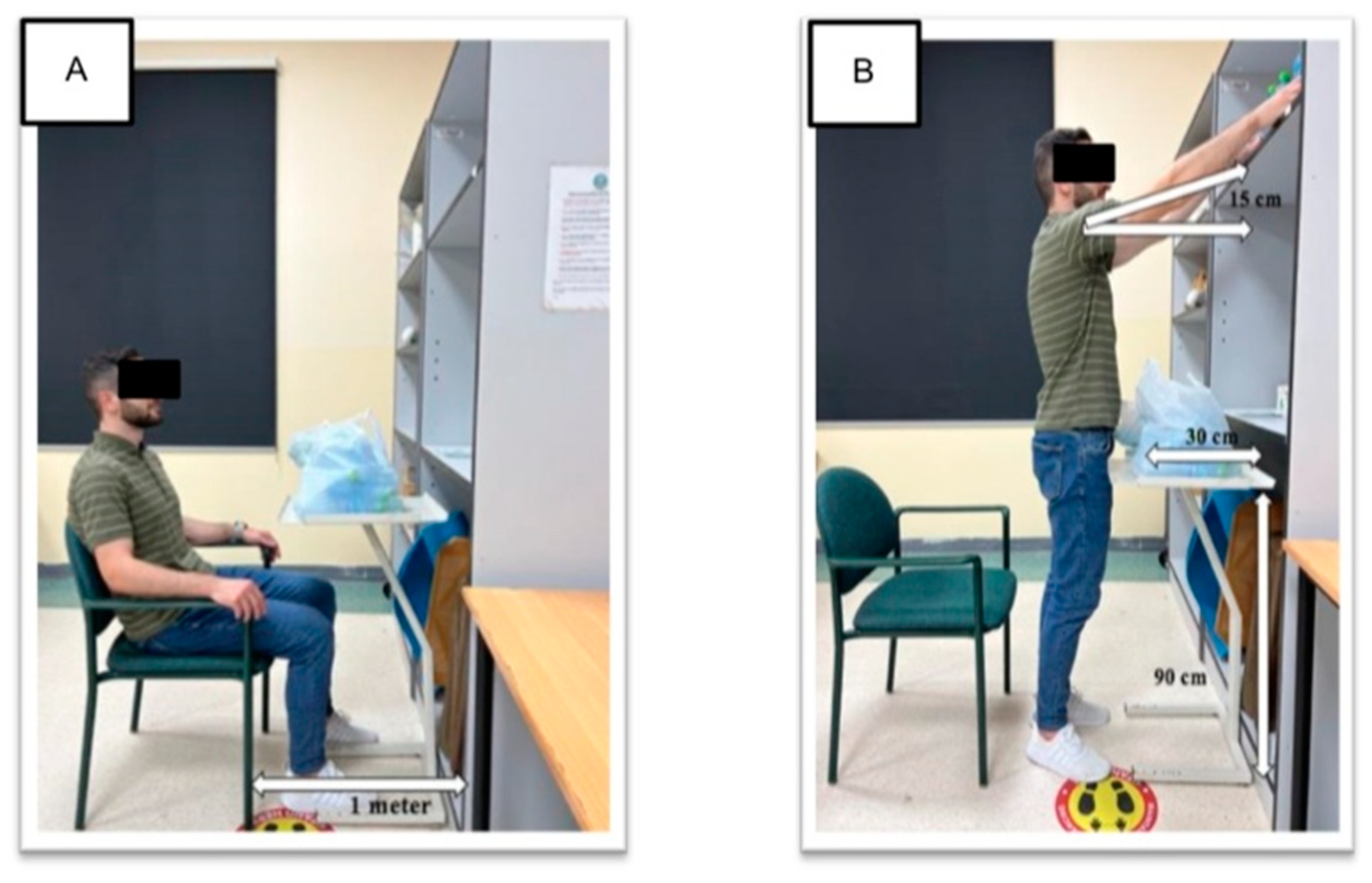
Figure 2.
Correlation between age and duration of the task among males and females.
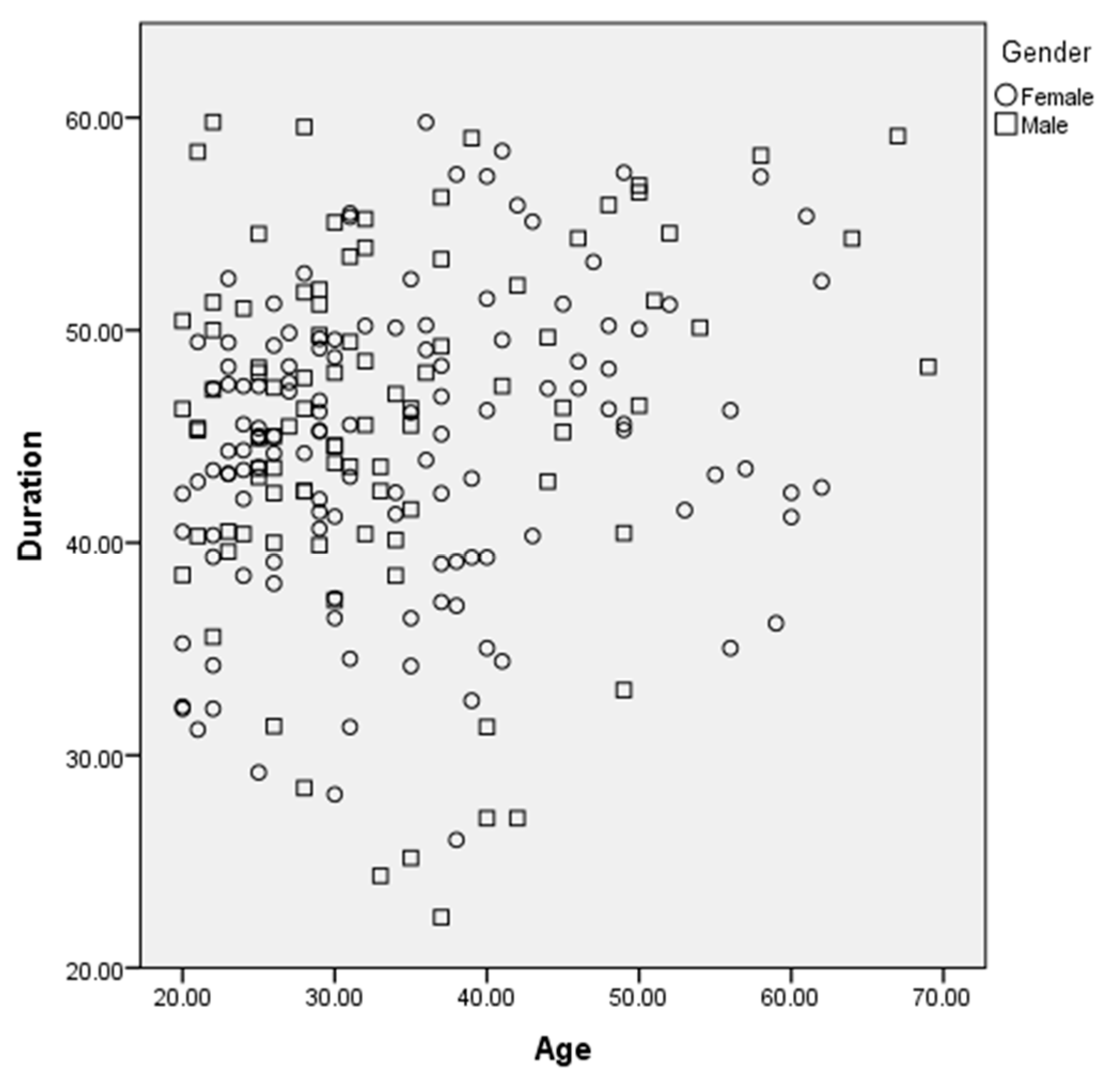
Figure 3.
Correlation between height and duration of the task among males and females.
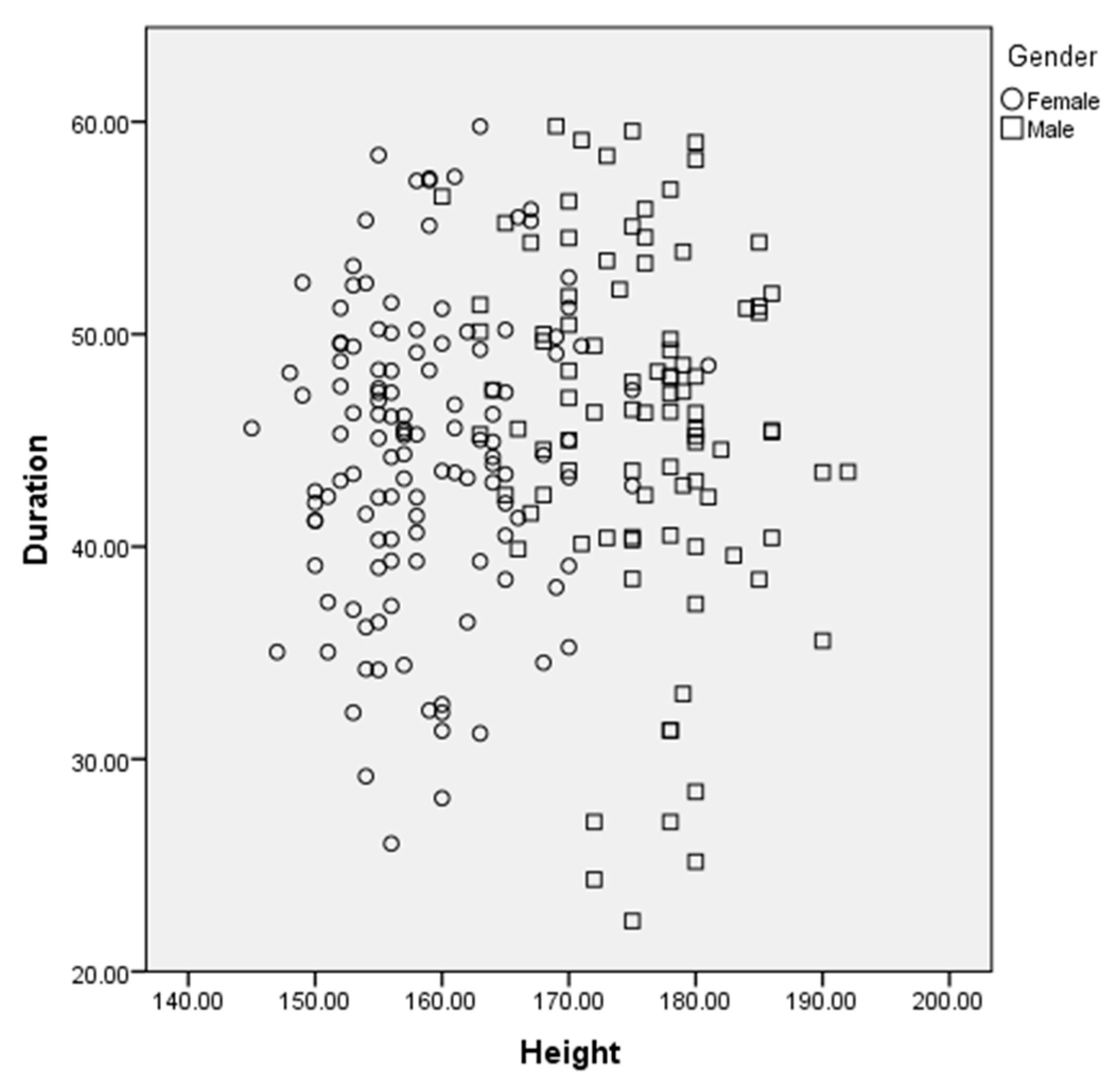
Figure 4.
Correlation between body mass and duration of the task among males and females.
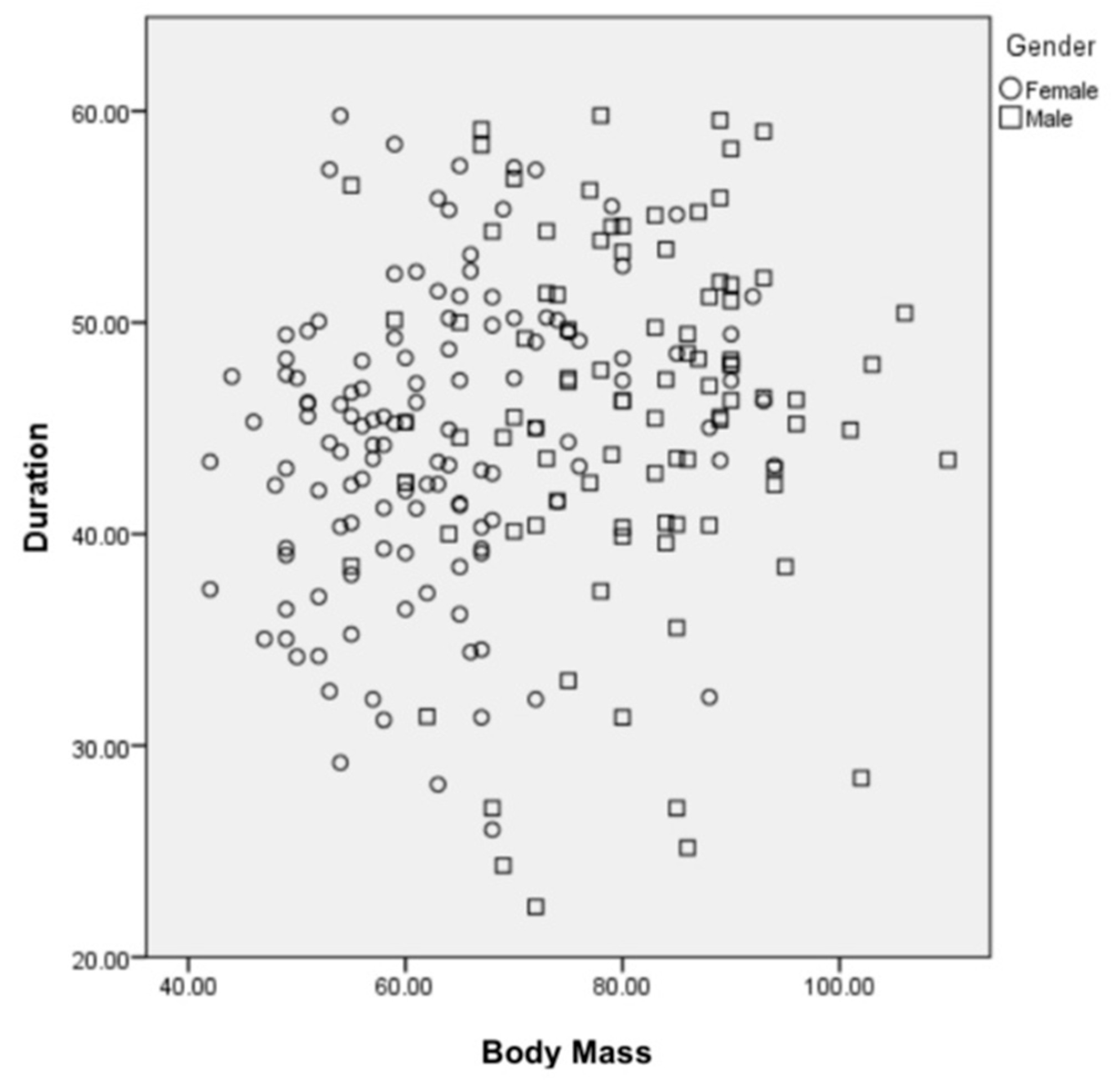
Figure 5.
Correlation between body mass index (BMI) and duration of the task among males and females.
Figure 5.
Correlation between body mass index (BMI) and duration of the task among males and females.
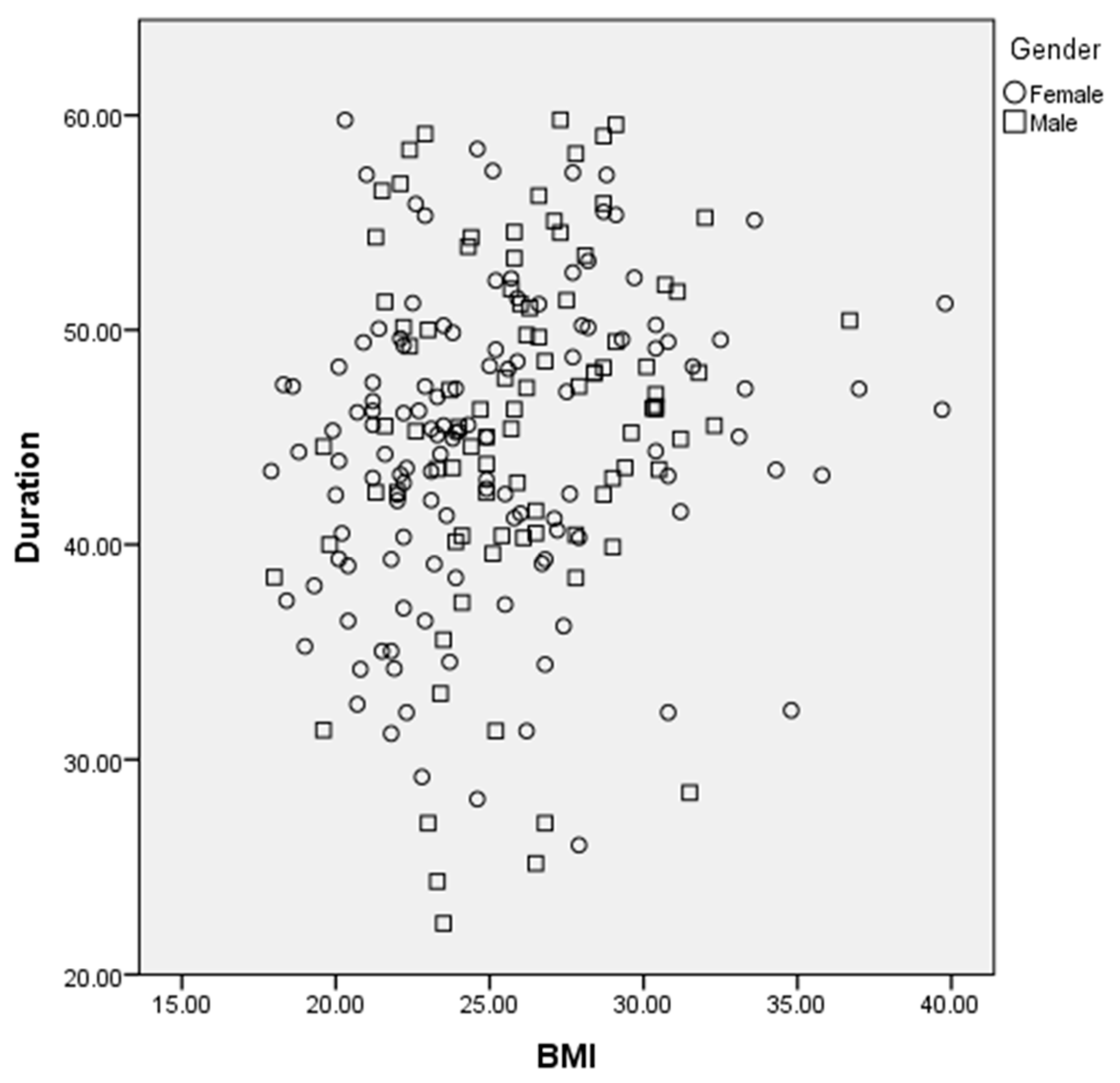

Table 1.
Demographic characteristics of the participants.
| Age Group (years) | 20-29 | 30-39 | 40-49 | 50-59 | 60-69 | |||||
|---|---|---|---|---|---|---|---|---|---|---|
| Gender | Males | Females | Males | Females | Males | Females | Males | Females | Males | Females |
| N | 40 | 54 | 30 | 37 | 13 | 22 | 7 | 9 | 3 | 5 |
| Age (years) (Mean±SD) | 24.8±2.9 | 24.6±2.8 | 33.2±2.6 | 34.4±3.1 | 44.2±3.1 | 44.09±3.4 | 52.1±2.9 | 55.1±2.9 | 66.6±2.5 | 61.0±1.0 |
| Height (m) (Mean±SD) | 178.02±6.9 | 160.4±7.09 | 174.4±5.3 | 158.3±5.4 | 175.8±5.4 | 157.4±6.9 | 170.7±8.3 | 156.7±4.9 | 169.3±2.08 | 152.6±2.6 |
| Body mass(kg) (Mean±SD) | 82.4±12.9 | 62.2±12.4 | 79.6±9.1 | 60.5±8.4 | 82.5±9.1 | 66.8±13.4 | 74.2±14.4 | 67.1±12.7 | 74.0±11.2 | 61.4±4.8 |
| BMI (kg/m2) (Mean±SD) | 25.9±3.7 | 24.1±4.6 | 26.2±3.1 | 24.1±2.9 | 26.7±2.8 | 27.04±5.6 | 25.5±3.4 | 27.2±4.5 | 25.8±3.7 | 26.3±1.7 |
BMI, Body mass index; SD, Standard deviation.
Table 2.
Duration, hemodynamic parameters, respiratory parameters, and fatigue in males pre and post grocery shelving task.
Table 2.
Duration, hemodynamic parameters, respiratory parameters, and fatigue in males pre and post grocery shelving task.
| Age Group | 20-29 | 30-39 | 40-49 | 50-59 | 60-69 | |
|---|---|---|---|---|---|---|
| Duration (seconds) | Mean±SD | 42.5±10.01 | 44.8±8.9 | 45.7±6.7 | 53.4±4.2 | 53.9±5.4 |
| Range | 27.04-55.8 | 22.3-59.03 | 28.4-59.7 | 46.4-58.2 | 48.2-59.1 | |
| HR (bpm) | Pre | 83.3±8.1 | 84.9±10.4 | 86.3±8.02 | 84.1±7.01 | 84.0±5.1 |
| Post | 87.8±10.1 | 87.3±12.1 | 89.4±12.1 | 88.4±7.9 | 82.0±8.5 | |
| p value | <0.001* | 0.17 | 0.16 | 0.04* | 0.5 | |
| RR (bpm) | Pre | 14.5±1.9 | 15.2±2.1 | 15.6±1.6 | 15.1±1.4 | 18.0±1.0 |
| Post | 16.5±1.7 | 15.8±2.1 | 16.2±1.9 | 16.4±1.9 | 19.0±1.0 | |
| p value | <0.001* | 0.14 | 0.21 | 0.06 | 1.0 | |
| SpO2 (%) | Pre | 99.5±0.5 | 98.9±1.2 | 99.2±0.7 | 99.1±0.6 | 97.6±0.5 |
| Post | 97.8±2.3 | 97.5±3.09 | 98.4±0.9 | 95.5±2.4 | 98.0±1.0 | |
| p value | <0.001* | 0.01* | 0.01* | 0.01* | 0.42 | |
| SBP (mmHg) | Pre | 120.1±6.8 | 120.1±6.9 | 117.8±9.8 | 123.0±10.9 | 128.6±5.5 |
| Post | 124.4±7.7 | 122.6±6.6 | 119.0±10.01 | 124.5±10.3 | 134.6±5.5 | |
| p value | <0.001* | 0.01* | 0.06 | 0.36 | 0.01* | |
| DBP (mmHg) | Pre | 73.0±6.3 | 73.8±6.4 | 72.1±9.1 | 77.5±2.9 | 73.6±5.5 |
| Post | 73.4±5.4 | 74.4±5.9 | 72.6±8.6 | 78.8±3.4 | 78.6±5.7 | |
| p value | 0.39 | 0.19 | 0.67 | 0.34 | 0.08 | |
| Dyspnea | Pre | 0.0±0.0 | 0.0±0.0 | 0.0±0.0 | 0.0±0.0 | 0.0±0.0 |
| Post | 0.05±0.2 | 0.1±0.5 | 0.07±0.2 | 0.2±0.7 | 1.3±1.5 | |
| p value | 0.16 | 0.09 | 0.33 | 0.35 | 0.27 | |
| Fatigue | Pre | 0.0±0.0 | 0.0±0.0 | 0.0±0.0 | 0.1±0.3 | 0.3±0.5 |
| Post | 0.1±0.4 | 0.1±0.6 | 0.1±0.5 | 0.5±0.1 | 2.0±2.0 | |
| p value | 0.16 | 0.16 | 0.33 | 0.35 | 0.19 |
SD, Standard deviation; HR, Heart rate; bpm, beats/minute; RR, Respiratory rate; bpm, breaths/minute; SpO2, Peripheral oxygen saturation; SBP, Systolic blood pressure; DBP, Diastolic blood pressure, Range: Minimum value to Maximum value, *p value<0.05-significant.
Table 3.
Duration, hemodynamic parameters, respiratory parameters, and fatigue in females pre and post grocery shelving task.
Table 3.
Duration, hemodynamic parameters, respiratory parameters, and fatigue in females pre and post grocery shelving task.
| Age Group | 20-29 | 30-39 | 40-49 | 50-59 | 60-69 | |
|---|---|---|---|---|---|---|
| Duration (seconds) | Mean±SD | 43.5±5.5 | 43.1±8.08 | 48.1±6.7 | 49.9±7.1 | 56.7±6.5 |
| Range | 29.1-52.67 | 26.02-59.7 | 34.4-58.4 | 40.0-57.2 | 41.2-65.3 | |
| HR (bpm) | Pre | 80.1±8.4 | 79.6±9.1 | 83.1±7.7 | 82.6±13.4 | 77.6±6.9 |
| Post | 86.4±8.4 | 84.6±11.06 | 89.09±9.4 | 89.3±15.3 | 84.2±10.1 | |
| p value | <0.001* | <0.001* | 0.001* | 0.009* | 0.06 | |
| RR (bpm) | Pre | 14.5±1.8 | 14.6±1.7 | 15.9±1.8 | 16.4±1.2 | 15.2±2.3 |
| Post | 16.3±1.6 | 15.9±1.9 | 17.6±2.4 | 17.6±1.8 | 16.6±2.5 | |
| p value | <0.001* | <0.001* | 0.001* | 0.01* | 0.38 | |
| SpO2 (%) | Pre | 99.5±0.5 | 98.6±1.3 | 98.5±2.2 | 98.8±0.7 | 98.2±1.3 |
| Post | 97.6±2.6 | 97.9±1.8 | 97.2±3.1 | 97.2±4.6 | 97.4±2.5 | |
| p value | <0.001* | 0.05* | 0.05* | 0.31 | 0.52 | |
| SBP (mmHg) | Pre | 118.9±7.7 | 118.0±8.8 | 123.04±8.4 | 126.1±81 | 122.4±13.3 |
| Post | 122.1±7.8 | 121.0±8.8 | 126.7±7.9 | 128.4±8.1 | 127.2±14.7 | |
| p value | <0.001* | <0.001* | <0.001* | 0.08 | 0.01* | |
| DBP (mmHg) | Pre | 71.6±6.4 | 72.8±6.7 | 76.1±6.9 | 74.5±8.09 | 69.2±10.05 |
| Post | 73.6±9.7 | 74.2±7.2 | 77.5±6.9 | 76.7±7.06 | 75.2±11.9 | |
| p value | 0.08 | 0.003* | 0.007* | 0.87 | 0.09 | |
| Dyspnea | Pre | 0.0±0.0 | 0.0±0.0 | 0.0±0.0 | 0.0±0.0 | 0.0±0.0 |
| Post | 0.1±0.6 | 0.2±0.7 | 0.3±0.7 | 0.5±1.6 | 0.6±1.3 | |
| p value | 0.06 | 0.05 | 0.04* | 0.34 | 0.37 | |
| Fatigue | Pre | 0.0±0.0 | 0.0±0.0 | 0.2±1.2 | 0.1±0.3 | 0.0±0.0 |
| Post | 0.5±1.3 | 0.2±0.9 | 0.5±1.5 | 0.5±1.3 | 1.6±3.04 | |
| p value | 0.004* | 0.09 | 0.03* | 0.34 | 0.37 |
SD, Standard deviation; HR, Heart rate; bpm, beats/minute; RR, Respiratory rate; bpm, breaths/minute; SpO2, Peripheral oxygen saturation; SBP, Systolic blood pressure; DBP, Diastolic blood pressure, Range: Minimum value to Maximum value, *p value<0.05-significant.
Table 4.
Correlation between the duration of the test and age, height, body index and the body mass index in females and males.
Table 4.
Correlation between the duration of the test and age, height, body index and the body mass index in females and males.
| Variables | Females | Males | |
| Age | r | 0.21 | 0.18 |
| P | 0.01 | 0.01 | |
| Height | r | 0.08 | 0.18 |
| P | 0.31 | 0.08 | |
| Body Mass | r | 0.11 | 0.06 |
| P | 0.08 | 0.56 | |
| Body Mass Index | r | 0.17 | 0.17 |
| P | 0.09 | 0.09 |
Disclaimer/Publisher’s Note: The statements, opinions and data contained in all publications are solely those of the individual author(s) and contributor(s) and not of MDPI and/or the editor(s). MDPI and/or the editor(s) disclaim responsibility for any injury to people or property resulting from any ideas, methods, instructions or products referred to in the content. |
© 2023 by the authors. Licensee MDPI, Basel, Switzerland. This article is an open access article distributed under the terms and conditions of the Creative Commons Attribution (CC BY) license (http://creativecommons.org/licenses/by/4.0/).
Copyright: This open access article is published under a Creative Commons CC BY 4.0 license, which permit the free download, distribution, and reuse, provided that the author and preprint are cited in any reuse.


