

Submitted:
04 September 2023
Posted:
06 September 2023
Read the latest preprint version here
Abstract
Today, numerous studies have shown that the physical environment in hospitals can significantly influence patients' well-being, comfort, and recovery. However, this is currently neglected in hospitals in the Global South. Therefore, there is an urgent need to increase the awareness to make it more applicable worldwide. Thus, this study focuses on improving the healing environment standards, by exploring the impact of evidence-based design and patient-centred care in hospitals for cancer patients; particularly the architectural space quality, on patient health outcomes as well as hospital staff health and wellbeing. In Global North countries, such as the UK, the Achieving Excellence Design Evaluation Toolkit (AEDET), is used by its National Health Services, to assess the effectiveness of various environmental attributes. However, these toolkits have not been designed for and do not work well within Global South countries, such as Northern Cyprus. To examine and compare the effectiveness of different physical environmental attributes and to evaluate user responses, the Post-Occupancy Evaluation Method and the AEDET toolkit have been used in the study. These were applied to both public and private hospitals in Northern Cyprus, involving cancer patients, staff, and professionals (n=220). The findings reveal the strength and weaknesses in terms of environmental comfort based on the aspects of evidence-based design of the hospitals such as natural light, air quality, noise, view, infection control, etc., to create a more optimal physical environment for better psychological outcomes. This is the first study to propose an adaptation of the AEDET toolkit to assist architects in designing healthcare facilities that are responsive to the requirements of hospital patients and staff; and to promote the quality of healing environment for improved health and well-being outcomes.
Keywords:
hospitals
; Environmental design
; environmental comfort
; healing environment
; patient-centred care
; evidence-based design
; architectural space quality
; health and wellbeing outcomes
1. Introduction
In hospitals, the process of applying architectural design is of great importance for the physiological, physical, and psychological health of the individual. The impacts of the physical environment on healing and wellbeing have become more and more important in recent years for both patients, their caregivers and medical professionals [1]. The first design guidelines for hospital wards were created by Florence Nightingale in her 1863 book Notes on Hospitals. They included considerations for spatial layout, materials, and color, but most importantly for the quality of the environment, where natural elements like daylight, fresh air ventilation, and heating played a key role in establishing sanitation standards [2]. In order to create an environment that will enhance the patient's quality of life, healing environments involve complicated relationships between practices, space, and care. Healing environments in healthcare settings aim to enhance healthcare quality and safety by utilizing evidence-based design principles and adopting a patient-centred care approach [3]. This approach recognizes the impact of physical environments on patients' well-being, comfort, and healing process. [4] For this purpose, the benefits of healing design in hospitals have been well evidenced by studies and experiments carried out. These include shortening the length of patients' stay in the hospital, accelerating the patient's recovery time, reducing painkiller doses, and reducing the productivity of medical staff. In addition to providing patients with the most cutting-edge medical care and technology, healing environments should also provide its users—staff members, patients, and their caregivers—with psychological, emotional, and social support [4]. However, healing environment design is universal and not only specific to hospitals, as it applies to all kinds of buildings, interiors, and other similar disciplines, such as in neurology, psychology, architecture, biophilic design and medicine. These disciplines can work together with the concept of evidence-based design (EBD), where many academic studies focused on these concepts within the architectural literature [5]. According to Alfonsi et al., [6], evidence-based design (EBD) is a research-driven approach that uses scientific evidence to guide design decisions in healthcare settings. It involves incorporating findings from studies and research into the design process to create environments that promote positive health outcomes and improve patient experiences. EBD considers various factors, such as the use of natural light, access to nature, noise reduction, infection control, and ergonomic design, among others, to enhance the healing environment. Researchers have examined the concept of hospital design in terms of different disciplines and orientations based on various conceptual and theoretical approaches. Roger Ulrich and colleagues conducted several experimental and quasi-experimental studies to determine the effects of healing hospitals on patients and other users [7]. They found that the environment, such as environmental comfort, which can be physical, functional, or psychological, affects patient wellbeing. As a result, the decision made by the designer has an impact on patient comfort and should be considered as such [7].
1.1. The Importance and the Study Challenge
A definition of health can be found in the prologue of the WHO constitution:
"Health is a state of complete physical, mental and social well-being and not merely the absence of disease or infirmity.[8]
In recent years, it has emerged in the literature the importance of hospitals needing to be carefully designed with patients and users in mind. This is even more important for cancer patients, in order to create an appropriate healing environment to support mood and reduce stress, affecting their health and well-being. Healthcare building facility design tries to maximize the quality of care for the patients and patient privacy through the patients’ experience [7]. For this reason, the study focuses on cancer patients. Cancer, as a disease , plays a crucial role patient psychological well-being. Jencks has provide evidence that cancer patients can live longer when recovering within a good environment [9]. According to the Ministry of Health statistics for cancer patients in N. Cyprus, there were around 700 cancer patients registered to the system. The general number of cancer patients have reached to 21000 since 1993, and 7000 were reported dead due to several types of cancer disease. The studies recorded 3633 patients during the last 5 years [10].
When designing hospitals, the focus is often on functional efficiency, without considering the mental and spiritual well-being of patients and staff. For this reason, that hospitals are typically associated with negative emotions such as fear, depression, and increased stress load, and accordingly, this creates reluctance in patients [11]. Designing healing hospitals for cancer patients will only be possible if architects are aware of the existence of healing concepts of design. In this direction, based on the literature reviewed, Ulrich, Phiri, Bobrow and Thomas points out healing environment design in hospitals has the following characteristics and values: [12,13,14]
- Shortening hospital stays,
- The great effect of exposure to nature on pain,
- Increased motivation and productivity in patients and staff.
1.2. Purpose and Objective of the Study
Emotions can have counter-productive effects on the immune system. Therefore, a psycho-social support design is required to prevent such feelings and aid the process of improving one’s health and well-being [4]. The healing environment design approach is a very broad concept. Healing design applications can be found on various scales. Healing environment design takes place in many disciplines such as interior architecture, architecture, landscape design, and urban planning. This study is limited to health buildings – oncology hospitals, from various building categories according to the function in the field of architecture and interior architecture as well as environmental aspects such as; natural light, air quality, view, use of art, noise, etc. There is a significant emphasis on designing healing environments to achieve better health outcomes for patients. Cancer is the most serious disease type which can cause many malignant conditions in people. The increasing number of cases and deaths due to cancer, in Northern Cyprus as the rest of the world in the past years cause fear for many individuals. According to the statistics from the Health Ministry of North Cyprus, [10], the increasing number of cancer care hospitals recently shows the importance of how there is a link between the environment and patient health and well-being. Therefore, this study aims to identify the strength and weaknesses of the oncology hospitals in North Cyprus and create a new design guide for the use of architects to increase hospital quality which can catch worldwide healthcare standards. This can be done by providing sustainable hospital design by considering energy efficiency, indoor air quality, and environmental sustainability for a healthy healing environment design for better health outcomes.
Within the scope of this strategy, newly built hospitals abroad are defined as "healing" facilities that have a positive impact on the built environment. Aside from the well-known functional complexity of healthcare facilities, there are several standards, guidelines, and requirements that architects must consider while designing hospitals. These vary from one country to the next in terms of quantity and focus. For instance, the Department of Health and NHS Estates in the UK have released a sizable number of standards and guideline documents to control and direct architects throughout the design process of healthcare facilities. [11], Phiri [12], in his book discovers and categorises EBD under four main headings as; Improving compliance, improving design quality, enhancing efficiency and effectiveness, achieving sustainability in architectural healthcare estates, where AEDET and ASPECT toolkit took place to support the argument under design quality indicator for better healthcare quality .
Design Quality Indicator (DQI) if used well meets with better health outcomes. AEDET and ASPECT Toolkit are the framework derived from DQI where meets under three main headings and categories as; [13], (AEDET) has a structured method for classifying each design criterion that was taken from the four NHS toolkits. The design quality indicator (DQI) is the foundation of the (AEDET). The DQI was created to assess the design quality of structures at each of the four critical stages of building development. In this study, the model was used to evaluate the privacy design requirements for the internal spaces offered in the inpatient wards of the physical facilities design of hospital buildings in developing countries. [14].
Scheme 1.
The framework of the NHS’s AEDET toolkit based on Design Quality Indicator. [13].
Scheme 1.
The framework of the NHS’s AEDET toolkit based on Design Quality Indicator. [13].
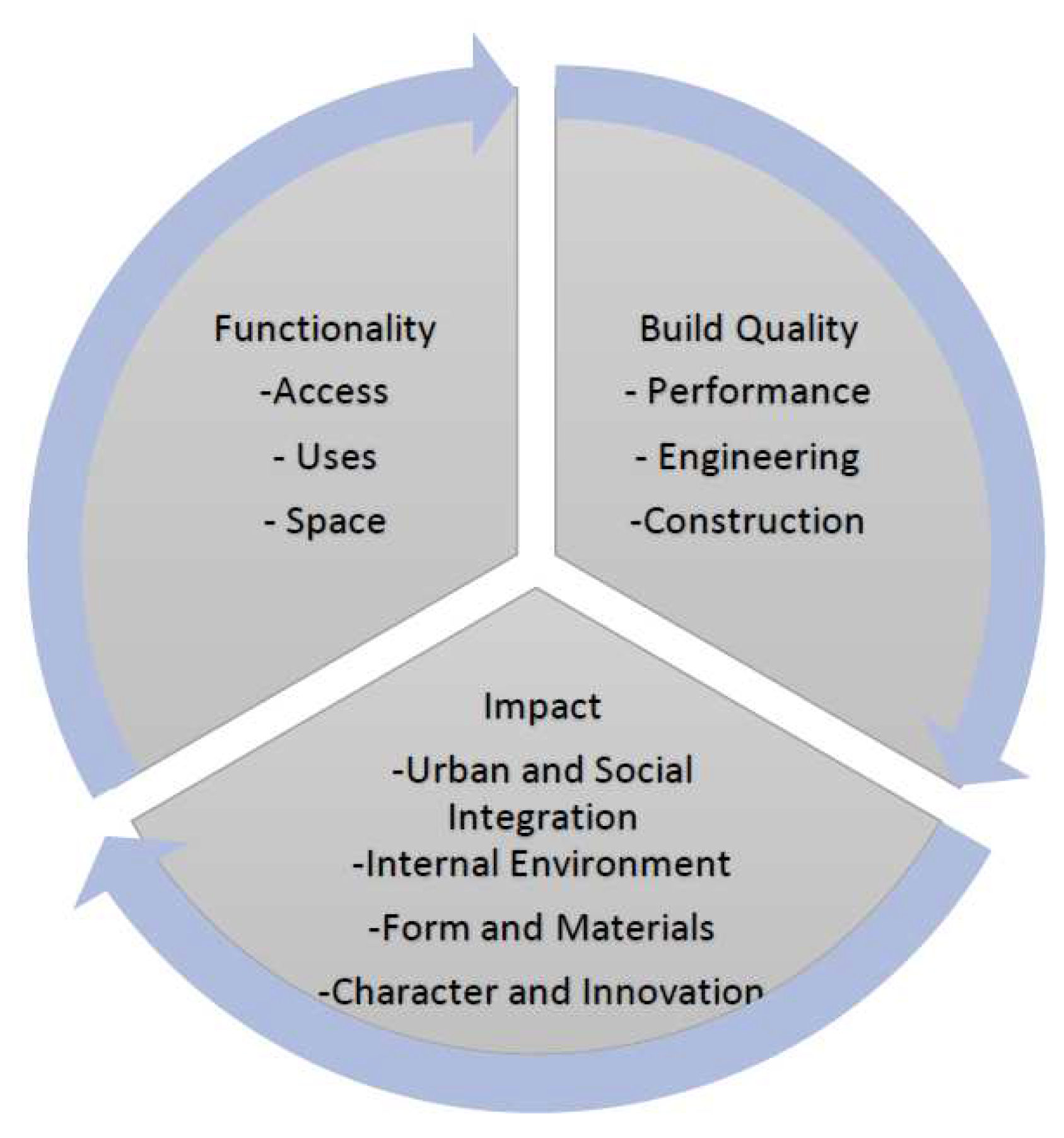
In this context, the aim is to investigate the concept of evidence-based design, patient-centred design in terms of healing environment in hospitals, to examine the cancer hospitals in Northern Cyprus, and to develop a guidance on how a hospital with a healing environment design should be. In addition, this study, it is aimed to analyze the healing environment design approach for cancer patients in detail.
Research has shown that access to nature, daylight, and other wellness factors can result in the patient using drugs and spending less time in the hospital. Nature can affect patients positively. It can easily catch a person’s emotions, attention, or interest and stop or reduce anxiety while bringing about desirable psychological changes. It can reduce blood pressure, ease pain and stimulate a patient’s senses positively. Natural environment and design have the link between patients’ minds and behaviors. A patient’s health can be improved in these environments where the senses are activated, and the dynamics between contrast and harmony are in balance. [15,16].
Nowadays, the practice of evidence-based design is being endorsed by research centers to guide design institutions in formulating secure and effective design strategies. This approach leverages design research and educational efforts to enhance the safety and functionality of buildings and their immediate surroundings.
According to Ulrich and others [15], the evidence-based design uses design principles fruit research and applications, patience, staff, and managerial development the results aim to be in this environment to design approach.
At the Center for Health Design, an organization that supports healthcare and design professionals to improve the quality of healthcare through evidence-based building design, researchers have proposed the definition of EBD as “the process of basing decisions about the built environment on credible research to achieve the best possible outcomes” [17].
Scientific evidence is used to improve the effectiveness of design interventions and gain the support of healthcare providers trained to rely solely on sound scientific data. This new scientific approach to the design of healing environments is generally referred to as ‘evidence-based design’ [16] The primary potential uses of the instruments are; measuring the facility design to develop the existing surroundings [18], devising updated hospital buildings, and offering a quantitative method for evaluating a built structure for research [19].
This study focuses on evaluating the link between nature, human comfort, and well-being to create healthy and sustainable spaces that enrich daily lives through the use of Evidence-based Design, Patient-Centred Care Design in terms of environmental comfort. The main purpose of the study is to raise awareness about the role of architecture in interacting with the healing environment in the healing process of cancer patients. In addition, it is to develop criteria and design guidelines for the implementation of cancer design practices in hospitals in Northern Cyprus and to fill the gap in the literature in this context. For this reason, in the study, the existing cancer hospitals in N. Cyprus were analysed and various ways and criteria were developed on how to reach healing hospitals.
2. Materials and Methods
2.1. Research Design Method
The study aims "to draw attention to the role of architecture in the interaction with nature and its elements in the healing process of patients, to develop criteria and design guidelines for the application of healing environment design in hospitals in N.Cyprus".
For this, mixed methods including both qualitative and quantitative approaches were used. Procedures include collecting, observing, analyzing, and comparing both qualitative and quantitative data in terms of primary and secondary data.
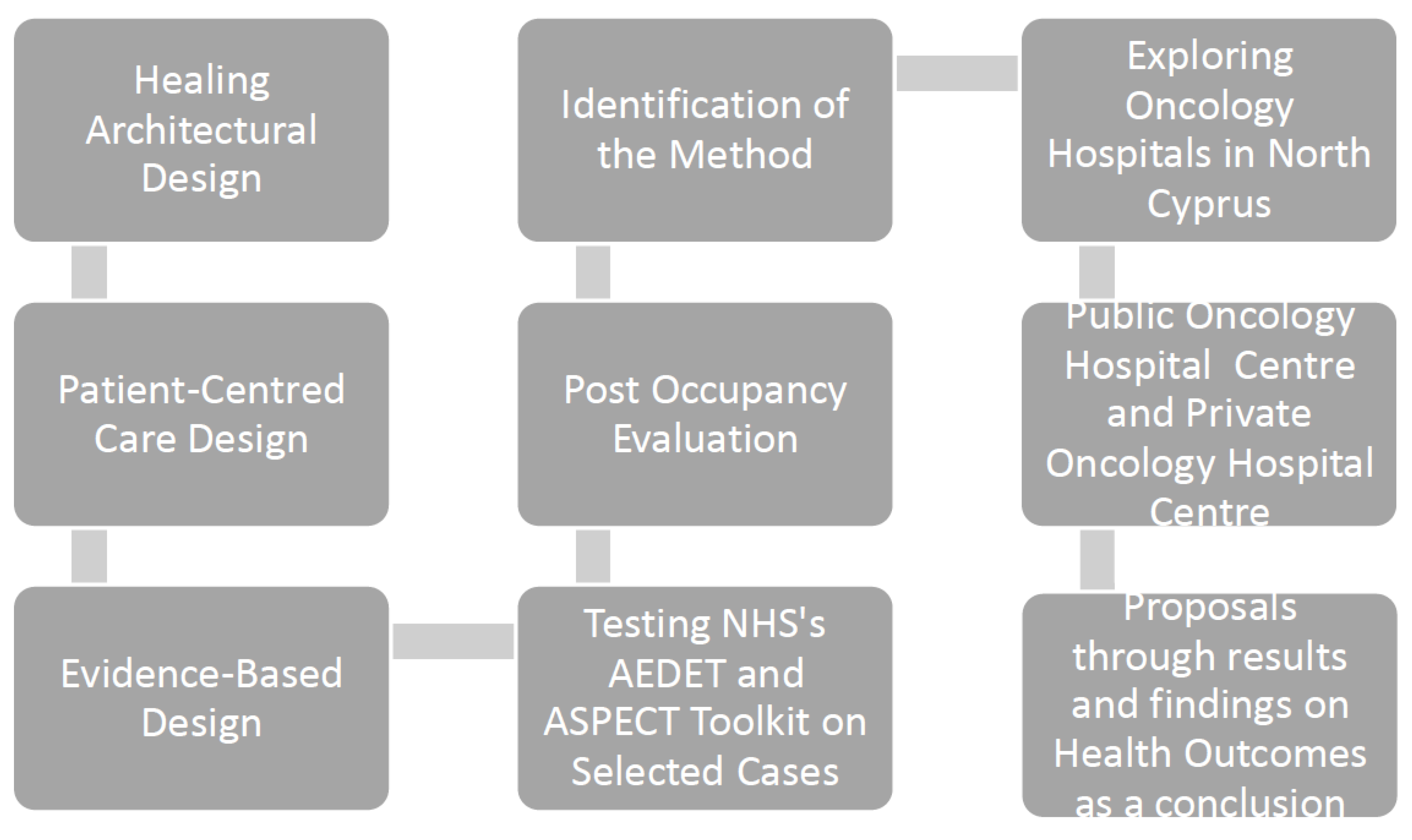
In general, the methodology of the research process proceeded as follows: An targeted literature search and data collection on the concept of evidence-based design, patient-centred care design, and biophilic design was conducted. Healing environment design literature and theories have been carefully studied to define guidelines. A targeted literature search and data collection process were carried out on evidence-based design in hospitals. To establish the analysis method of hospitals, a pilot analysis study was conducted on hospitals with selected toolkits. Existing oncology hospitals in N.Cyprus were researched. First of all, hospitals were examined in the selection of hospitals. At this stage of the study, various in-formation and documents regarding qualitative and quantitative sources were collected and individual interviews were conducted with some professionals. The number of existing oncology hospitals in N.Cyprus has been determined and architectural studies and AEDET and ASPECT evaluation toolkits were applied to the researched findings have been carried out. A comparison has been made between public and private hospitals according to the strengths and weaknesses, and a proposal for a new healing design for hospitals has been developed in line with the findings. The results and recommendations section has provided a design guide proposal based on all research and analysis.
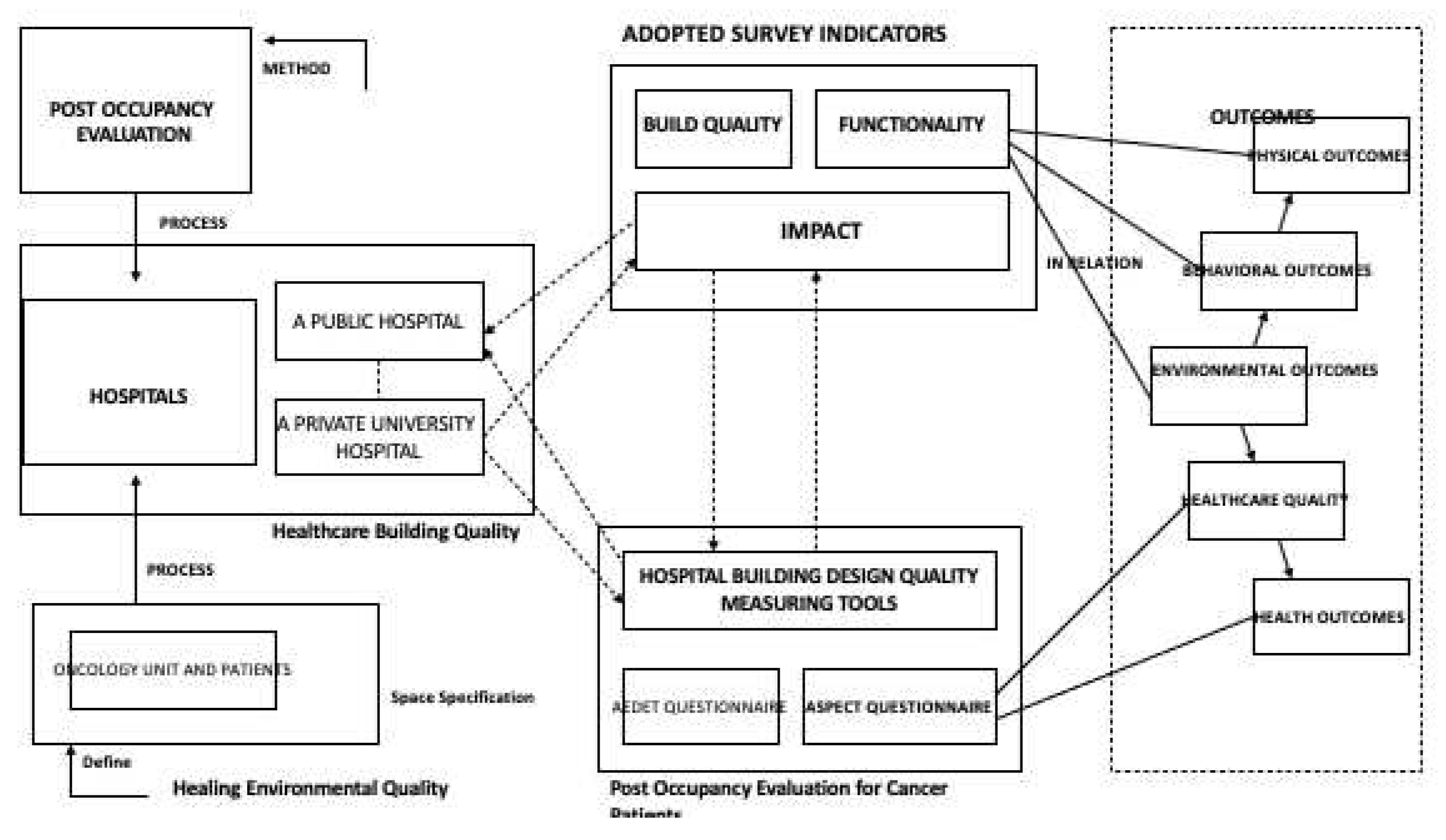
Scheme 2.
The framework of the study.
2.2. Research Limitation
The study focuses on the patient’s experiences with the healing process. The structure of the framework showed the main indicators such as; defining the health relation of physical and psychological aspects as well as the effect of surroundings measured in the healing process for the patients. Indicators are simply divided under the concept of evidence-based design and patient-centred care design which are the themes of physical and psychological indicators integrated with architectural physical, functional qualities, environmental qualities as well as behavioral qualities that have been measured.
The study explores and analyses two different healthcare facilities in Nicosia, Northern Cyprus mainly consist of the same characteristics as each other such as; one public oncology hospital, and one private oncology department of a university hospital. The profile of the users for these hospitals has been explored generally, however, the profile for the patients has been focused on short-term illnesses who have been experienced stay in hospital for at least one night. The patient’s ages were categorized as above 18 according to the adult age characteristics. Surveys were prepared to provide and receive data from the patients, staff, and relatives within the themes of physical, environmental, and behavioral characteristics formed from different functions from the general scale, followed by building scale and room-scale.
The study focuses on the physical, and psychological characteristics of the spaces how-ever; it does not include technical standards.

Table 1.
The limitation method for the study.
| Method | AEDET Questionnaire | ASPECT Questionnaire |
|---|---|---|
| Selection Criteria | Professionals such as architects, engineers and stakeholders. | Inpatient Cancer Patients, Relatives and Staff more than 18 years old |
| Location of the Selected Cases | Private University Hospital, Oncology Centre, Capital Nicosia | Public Hospital, Oncology Centre, Capital Nicosia |
| Selected Number of People | 20 Professionals such as architects, engineers and stakeholders. | 100 Cancer Patients 50 Relatives and 50 Staff |
2.3. Data Collection Methods
2.3.1. Post-Occupancy Evaluation, using the AEDET and ASPECT Toolkit
General hospital examples were examined in the field study carried out to examine the architectural space quality in oncology units. In the study; Public Hospital, Oncology Center, and Private Near East University Hospital, Oncology unit were selected as the study areas. When selecting the hospitals, the criteria were considered that the institutions to be examined are public and private hospitals, which are assumed to have more favorable spatial conditions, are preparing for accreditation, and have intensive surgery departments, hence the importance of patient rooms and their service life is long. In the course of the study and data analysis, hospitals are referred to as (A) and (B) hospitals without being named to be ethical.
As evaluation methods in fieldwork; a checklist and questionnaire and inquiry were used. The questions in the AEDET questionnaire, which was distributed amongst professionals such as architects, engineers and stake holders. Findings through the data collection formed the way of creating an assessment tool under the mentioned themes above. This was based on the formation of physical and psychological concepts, as well as from different distribution of functions according to the profile and needs of the user. The study focused on the patient experience in healthcare facilities to recognize the deficiencies within this context. As such, it was required to rethink the patient experience within healthcare facilities and create a new ‘suggested’ to be added guideline, which can be applied in other Global South countries worldwide.
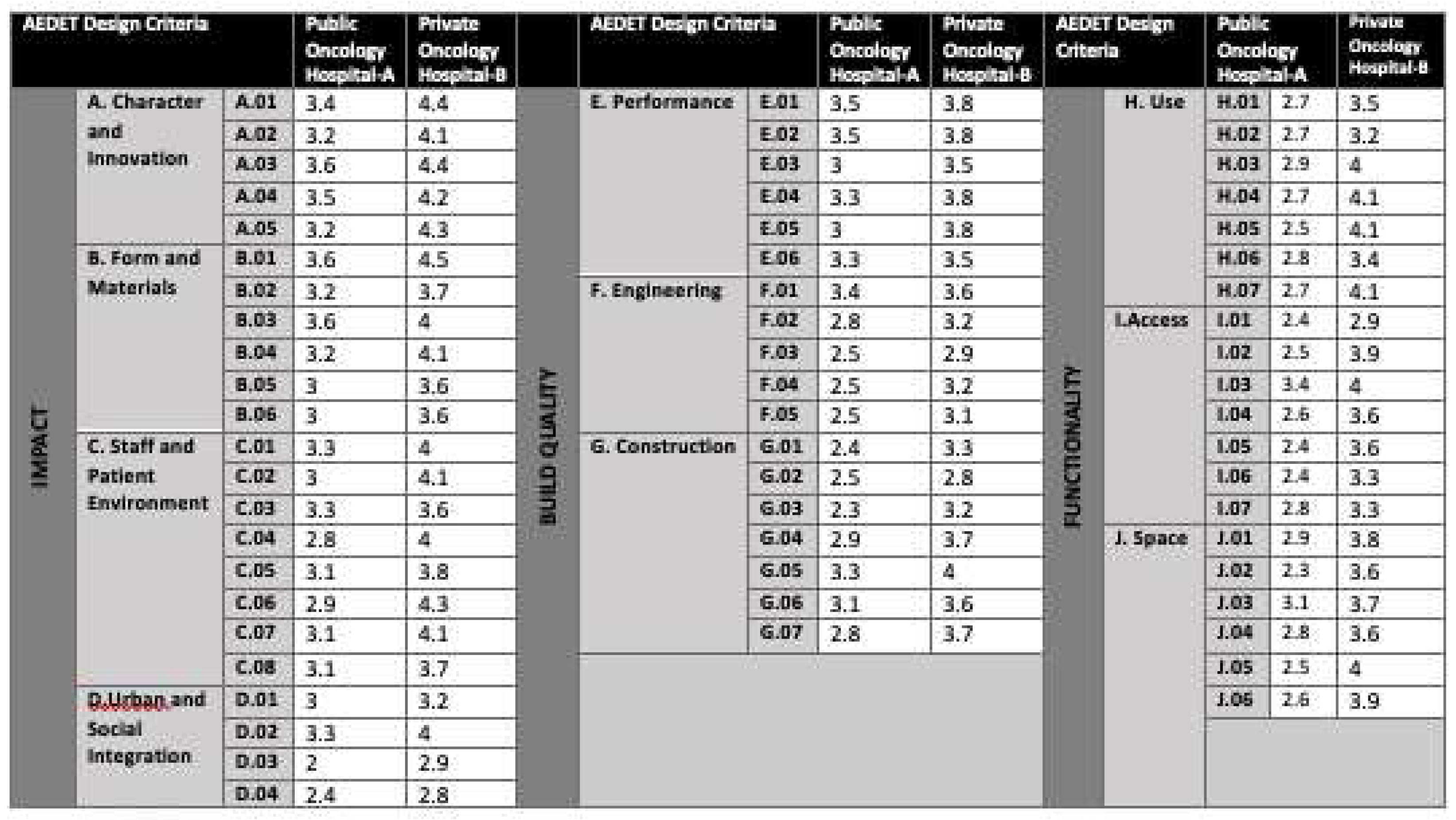
The overall results and mean comparison of the AEDET questionnaire shown above is in between the scoring of 1-6; where 1 is virtually no agreement, 2 is hardly any agreement, 3 is little agreement, 4 is a fair agreement, 5 is strong agreement and 6 is virtually complete agreement. Below are the main findings and comparisons made amongst the AEDET criteria for public and private hospitals. [14],
The primary method used in evaluating healthcare facilities within this study is the Post Occupancy Evaluation method (POE). POE is possibly the most well-known as an assessment method for evaluating the quality of buildings by users. ‘Post-occupancy’ refers to the building already being in use at the time of evaluation. In other words, POE can be described as progress for assessing facilities in a more defined and systematic way after the completion and the use of the building [20].
AEDET is a toolkit used for assessing the design quality of buildings within the healthcare sector. It creates a detailed report demonstrating the strengths and weak-nesses of the inspected design [14].
A Staff-and-Patient Environment Calibration Toolkit (ASPECT) supports the AEDET evolution toolkit to evaluate the design quality of spaces of hospitals for healthcare staff and their patients [21].
The research took place both in the oncology units of Near East University Hospital and State Hospital’s Oncology Centre. The main focus is based on patients’ perceptions through their experiences in the hospital.
Due to the pandemic period of COVID_19 which is occurring and affecting the world and as well as the island of Cyprus almost for more than three years now, the necessary permissions taken from the hospital took a considerable time, but all precautions were taken and one by one questionnaires process would be more appropriate and relevantly parallel to the studies as well as provide a more practical and more secure way to express the POE method.
The questionnaire is made and transferred digitally in google forms and done with different profile groups of users of the building consisting of:
- -
- 150 Cancer patients and relatives above 18 years old. (75 per each hospital)
- -
- 50 Doctors and staff. (25 per each hospital)
- -
- 20 Professionals such as architects and engineers and stakeholders.
The questionnaire is selected to be used due to the relevance to the study in terms of observation, environmental, functional, and behavioral aspects of the building as well as focusing on the patient’s needs. The key aspects have been used as the main framework, under the main themes, however, the questions were selected and modified according to the reasons decided.
An evaluation of the building in the use phase (Post Occupancy Evaluation), can be used in adjusting the building itself and to assist design processes. [20].
At the Center for Health Design, an organization that supports healthcare and design professionals to improve the quality of healthcare through evidence-based building design, researchers have proposed the definition of EBD as “the process of basing decisions about the built environment on credible research to achieve the best possible outcomes” [17]. Scientific evidence is used to improve the effectiveness of design interventions and gain the support of healthcare providers trained to rely solely on sound scientific data. This new scientific approach to the design of healing environments is generally referred to as ‘evidence-based design’ [22].
According to Ulrich [23], only the physical surrounding is healing for the patients supportive for the families, and efficient for the staff can be the result of design successfully. To sum it up, evidence-based design has provided scientific justification for deep-rooted notions on the importance of the physical environment for health and healing.
Healthcare building design frequently involves complex concepts, which are difficult to measure and evaluate. The Achieving Excellence Design Evaluation Toolkit (AEDET) is a questionnaire tool, which is used with post-occupancy evaluation to evaluate the quality of the healthcare buildings to understand their strength and weaknesses. AEDET evaluates a design by posing a series of clear, non-technical statements, based on three key criteria: Functionality, Build Quality, and Impact. [14].
To achieve this guidance, the evaluation method in the United Kingdom National Health System (NHS) accredited Achieving Excellence Design Evaluation Toolkit (AEDET) was used for the patients and caregivers. [14].
On the other hand, ASPECT; staff and patient environment is a complementary tool that is used alongside AEDET for the staff of the hospital. [21]. In the end; radar table formation was achieved based on the results and findings separately for the selected cases of one private hospital building which is the Oncology Unit of Near East University Hospital and the public Oncology Centre of Public Hospital which is based at the capital city, Nicosia. The analytical approach used in the end, and the results shown with the radar tables to evaluate selected cases together and make new suggestions in global standards for future healthcare architecture in North Cyprus.
Decision for the number of people were carried through previous relevant studies which were made already. Number of the attendants would be adequate to receive the most optimal results. The numbers are decided in collaboration with Cancer Research Centre to be more reachable and more likely to be returned.
The Method employed for data collection was the use of UK’s NHS AEDET Evolution and ASPECT Evaluation Toolkits Questionnaires, personal site observation and photographic documentation supplemented the toolkits’ evaluations. [21].
- The AEDET (Achieving Excellence Design Evaluation Toolkit) Evolution is part of a benchmarking tool which assisted in measuring and managing the design quality in the healthcare facilities. In terms of reliability, it includes references to evidence-based design literature and this is related to the criteria used in the evaluation. In terms of validity, its use is mandatory in the major hospital design development of North Cyprus. It evaluates a design through a series of statements which encompassed the three areas. The Impact Area deals with the degree to which the building created a sense of place and contributed positively to the lives of the users and its neighbours. It involves four sections - Character and Innovation, Form and Materials, Staff and Patient Environment, and Urban and Social Integration. The Build Quality Area deals with the physical components of the building rather than the spaces and involves three sections – Performance, Construction, and Engineering. The Functionality Area deals with issues on the primary purpose of the building and involves three sections – Use, Access, and Space as follows; [14].
Table 2.
AEDET Questionnaire Aspects with Numbers [14].
Table 2.
AEDET Questionnaire Aspects with Numbers [14].
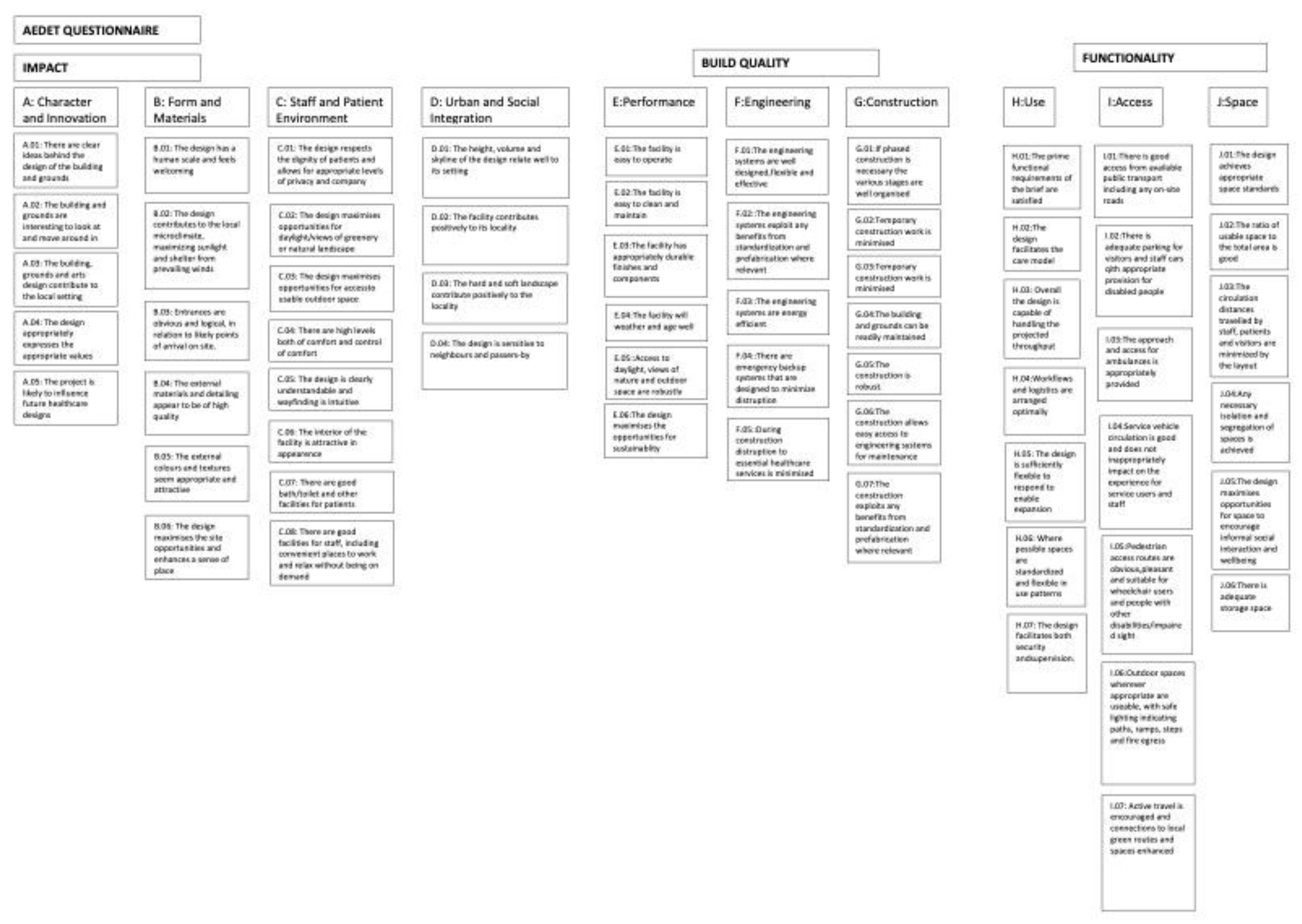
AEDET Toolkit is divided into three main categories as Impact, Build Quality and Functionality which looks the aspects of; A; Character and Innovation, B; Form and Materials, C; Staff and Patient Environment, D; Urban and Social Integration, E; Performance, F; Engineering, G; Construction, H; Use, I; Access, J; Space. The criteria under aspects also numbered as A.01-5, B01-6, C.01-6, D.01-4, E.01-6, F.01-5, G.01-7, H.01-7, I.01-7 and J.01-6. [14].
- The ASPECT (A Staff and Patient Environment Calibration Toolkit) measures the manner the healthcare environment can impact both on the satisfaction levels to patients, and provision of facilities to staff. It evaluates eight sections - Privacy, Company and Dignity; Views; Nature and Outdoors; Comfort and Control; Legibility of Place; Interior Appearance; Facilities; and Staff. In terms of reliability and validity, the ASPECT is based on a database of over 600 pieces of research. The ASPECT Evaluation, in the form of questionnaires assessed users’ satisfaction of both nurses and patients. An overall total of 50 staff, 20 professionals including architects, engineers and stakeholders and 150 cancer patients will respond to the questionnaires as follows;
Table 3.
ASPECT Questionnaire Aspects with Numbers. [21].
Table 3.
ASPECT Questionnaire Aspects with Numbers. [21].
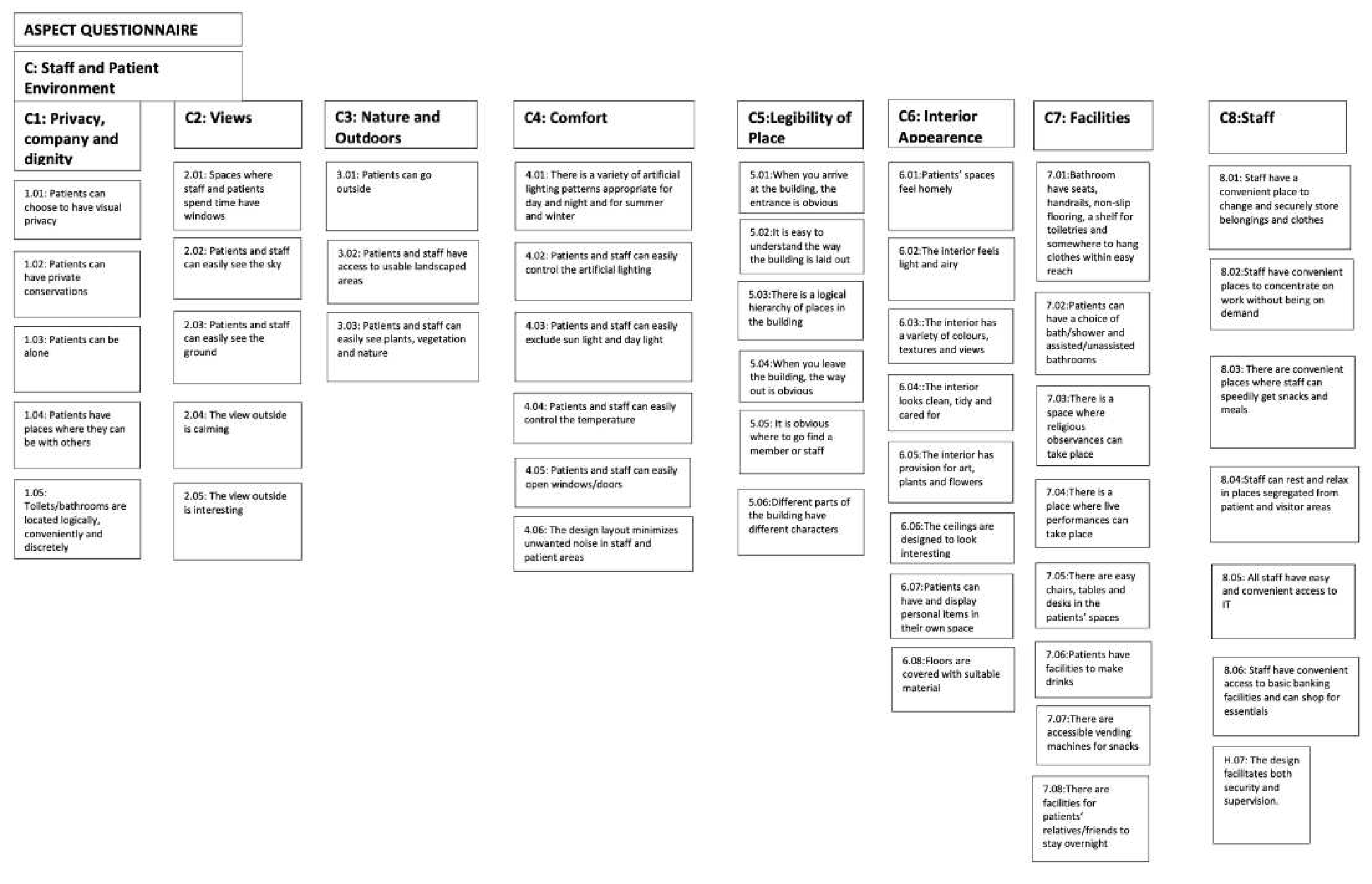
ASPECT Toolkit is taken from C criteria of AEDET Evaluation Toolkit as Staff and Patient Environment and opens up to eight aspects as; C1.1-5; Privacy, company and dignity, C2.1-5; Views, C3.1-3; Nature and Outdoors, C4.1-6; Comfort, C5.1-6; Legibility of Place, C6.1-8; Interior Appearance, C7.1-8; Facilities, and C.8.1-6; Staff consequently. [21].
Methodological framework below, starts with the decision of using POE method and applying AEDET and ASPECT toolkits in two different oncology hospitals to be able to compare within the main criteria of build quality, functionality and impact in relation to health outcomes and create a new assessment method through the findings for the use of architects while designing hospitals in N. Cyprus.
Scheme 2.
Methodological Framework for the study.
2.4. Data Analysis
2.4.1. Hospital A; A Public Nicosia Hospital’s Oncology Centre
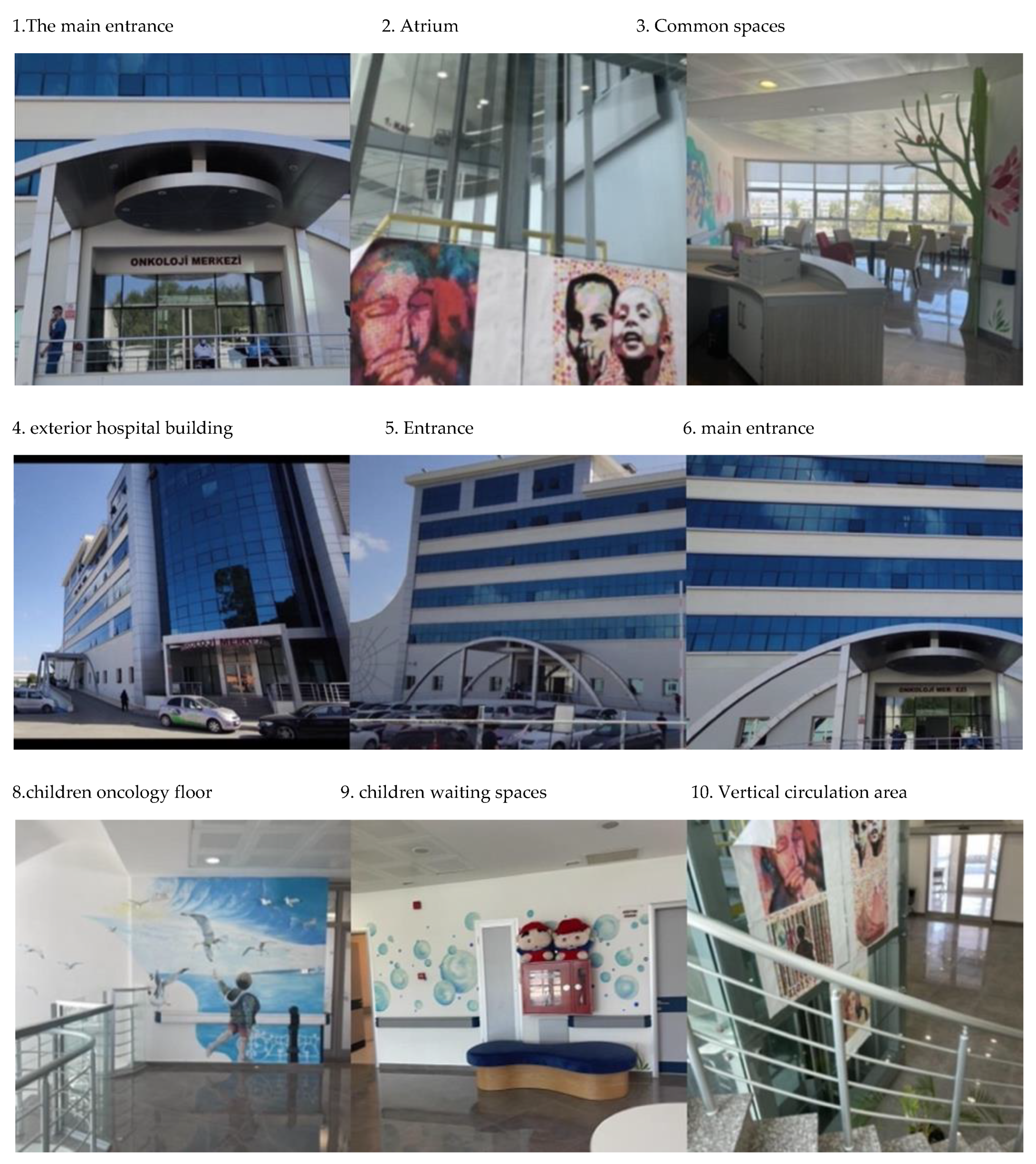
A Nicosia Public Hospital’s Oncology Centre, is cancer – oriented center established in 2016, and aims to provide global healthcare standards for cancer patients and promote their psychology in a new, technically, and physically developed suitable environment. [24]. There are 62 beds and 5 intensive care beds in the 6-story Oncology Center with a total capacity of 67 beds.
Figure 1.
Typical Functional floor plan for the oncology center.
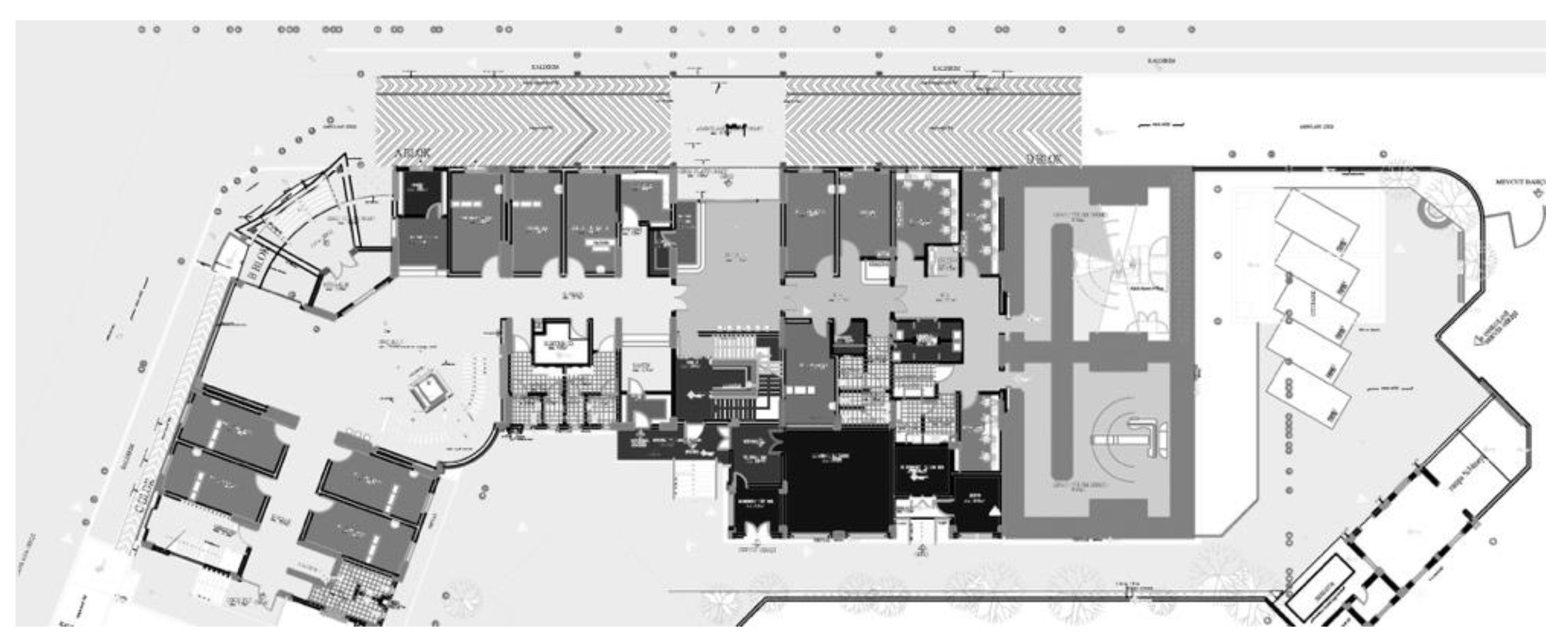
Figure 2.
Public Oncology Hospital, Nicosia.
2.4.2. Hospital B: Private Hospital Oncology Unit
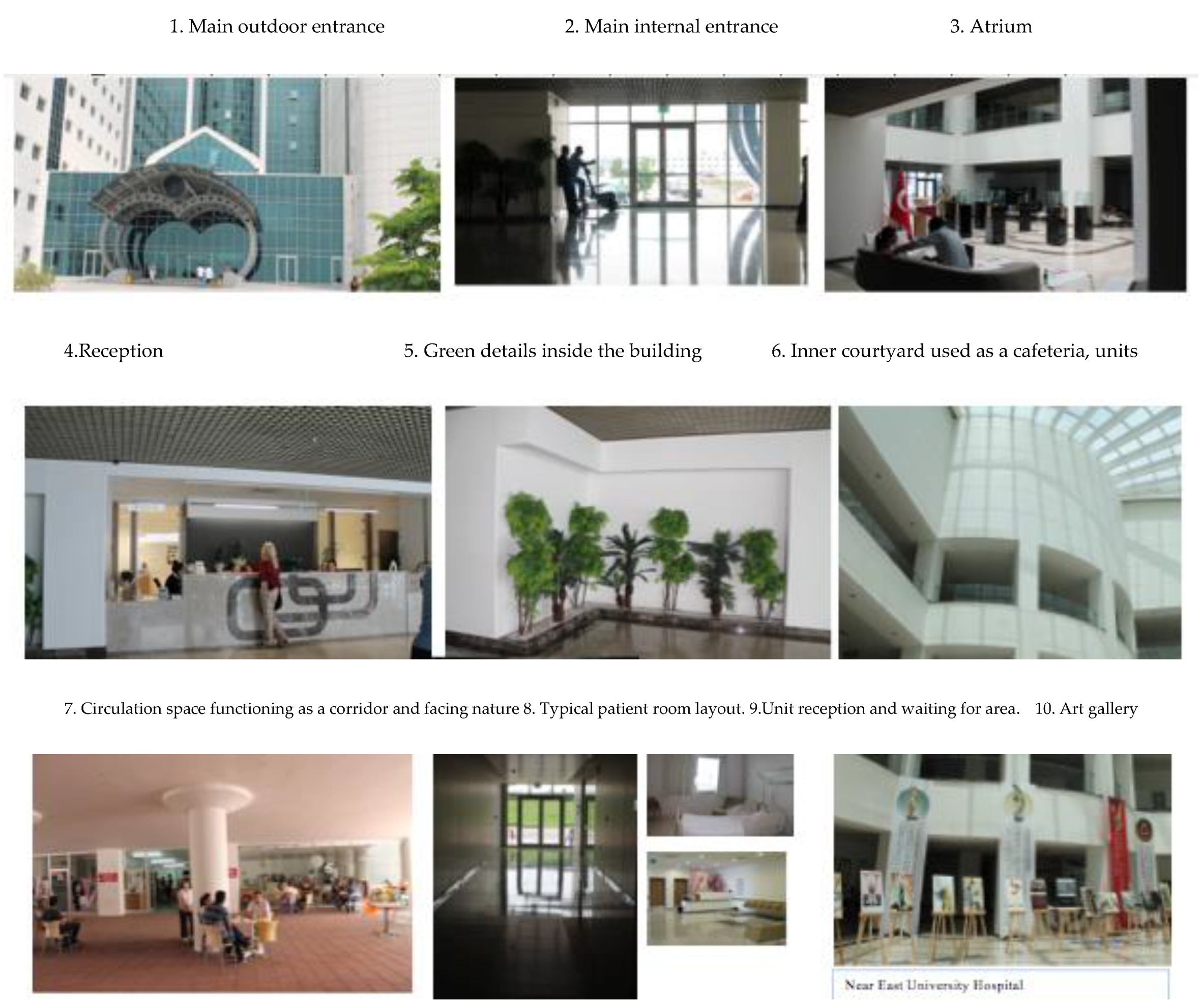
The hospital is composed of three separate blocks including several entrances to the accommodation unit for the patients and relatives. The main entrance is segregated from the other entrances to prevent public and private relationships. The hospital pro-poses specific entries for staff and service facilities. The emergency department also provides another entry to the facility which has a connection to the outpatient department to ease the travel distance between the departments.
Three separate blocks are as follows; Nine floored main central blocks are offering inpatient care. Four floored East Block is built for emergency services. Three floored West Block are for healthcare services. The floors are connected with a vertical circulation system.
The hospital is comprised of providing more than 200 single-patient rooms, 8 operational surgical spaces with contemporary equipped for operation, monitoring, and anesthesia as well as Neonatal Intensive care units, Intensive care Units where a laboratory is located nearby the Radiotherapy, Nuclear Medicine, and Radiotherapy centers to provide faster and most accurate results in diagnosis, scanning and treatments fort he, cancer patients. [25].
Figure 3.
Typical functional floor plan of the hospital.
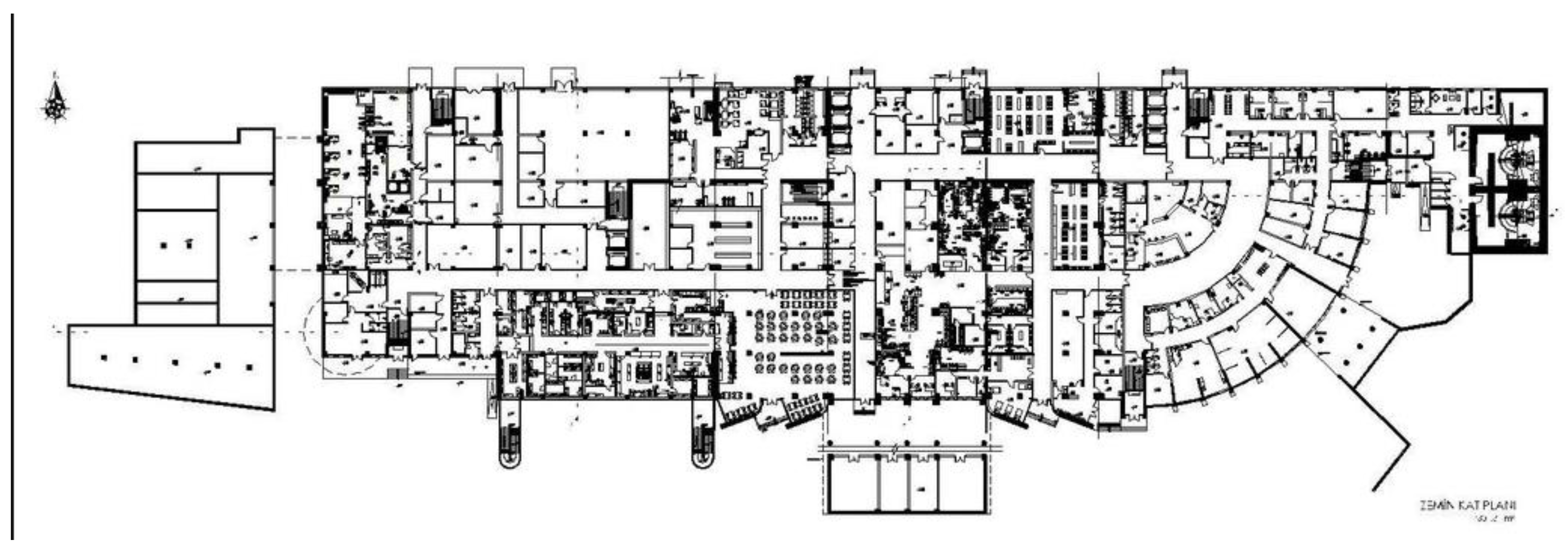
Figure 4.
Private Near East University Hospital from left to right.
3. Results
3.1. Findings for Data ANALYSIS Method for the AEDET Toolkit
The table presented below provides a comprehensive overview of the AEDET Criteria across ten distinct categories. The table includes the previously mentioned point allocations for each criterion. Additionally, the table presents a comparative summary of the overall results, quantified on a scale of 1 to 6. The AEDET evaluation highlights that the aspects related to public hospitals tend to fall below average, particularly in terms of functionality. While there isn't a significant disparity between the build quality and impact aspects for both public and private hospitals, a noteworthy distinction emerges when considering functionality. This divergence underscores a substantial difference in this particular aspect between the two types of hospitals.
Table 4.
AEDET Mean Results from Questionnaire out of 6 (n=200).
3.3. Comparative Case Study Findings Amongst Hospitals
Based on the data presented below, it is evident that private hospitals exhibit a higher score in comparison to public hospitals in terms of scoring. This disparity is particularly pronounced in terms of their distinct characteristics and innovative practices. However, the variation in building performance between the two categories is comparatively marginal.
Chart 1.
Clear comparison between hospitals for AEDET.
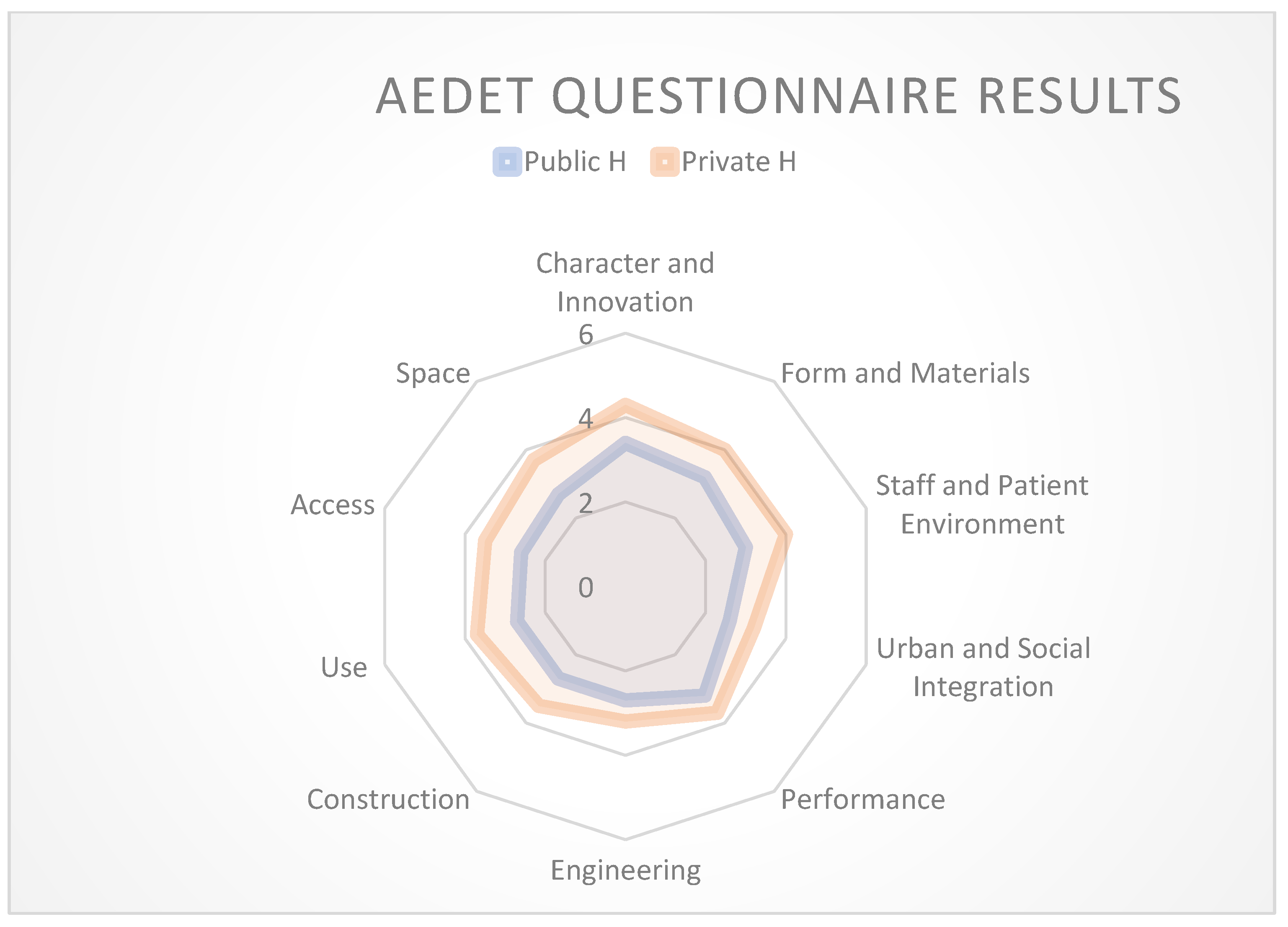
The radar table has been made below to show the comparison and the findings above more clearly in between Public and Private Hospitals.
3.4. Findings for Data Analysis Method ASPECT Toolkit
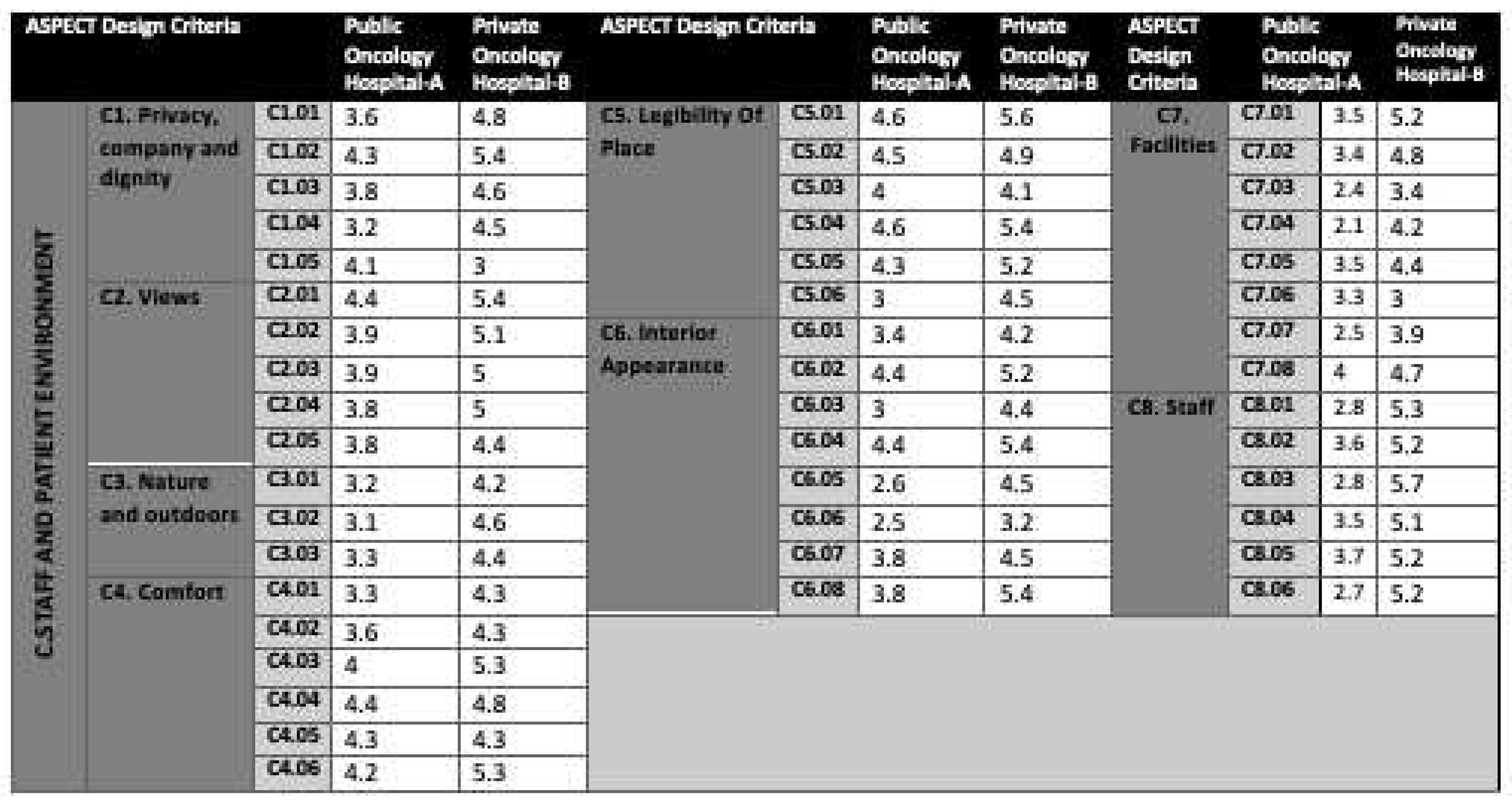
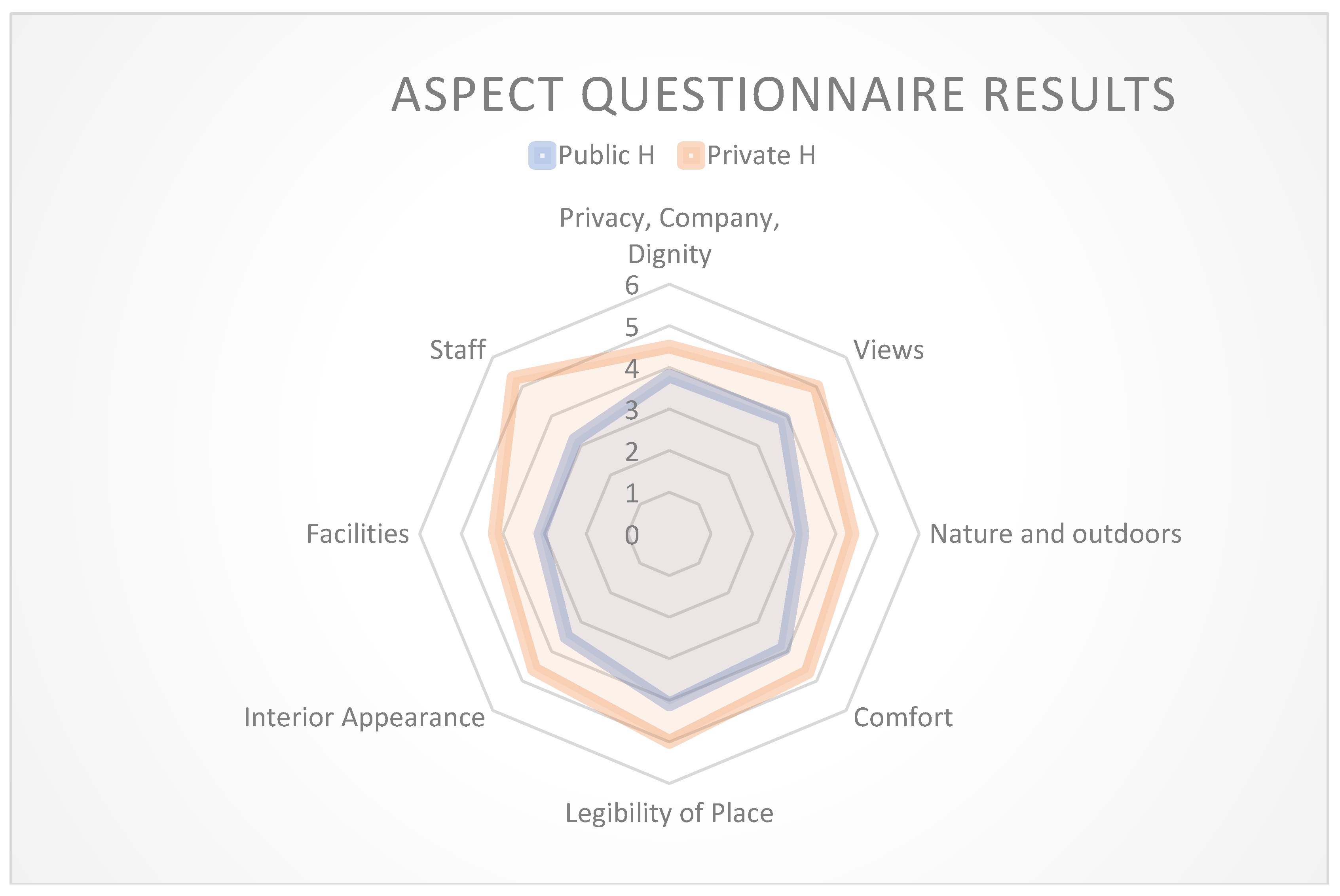
The overall results and mean comparison of the ASPECT questionnaire shown above is in between the scoring of 1-6 where 1 is virtually no agreement, 2 is hardly any agreement, 3 is little agreement, 4 is a fair agreement, 5 is strong agreement and 6 is virtually complete agreement. Below are the main findings and comparisons made amongst the ASPECT criteria for public and private hospitals. The comprehensive assessment indicates that both hospitals are situated at an intermediate level in terms of their overall performance. Notably, the aspect displaying the most pronounced vulnerability pertains to "Facilities" (c07), garnering a rating of 2.5 out of 6. This outcome suggests an inadequacy in the provisions extended to users within the public hospital context. Conversely, this same aspect yields a notably higher rating of 3.9 out of 6 for the private hospital, denoting a relatively more satisfactory arrangement of user-oriented facilities. The facet reflecting the most robust outcome pertains to the "Legibility of Place," wherein the public hospital secures a commendable score of 4.6 out of 6, and the private hospital excels with a score of 5.6 out of 6, affirming the effective navigational and comprehensible attributes of both establishments.
Table 5.
ASPECT Mean Results from Questionnaire out of 6 (n=200).
3.6. Comparative Case Study Findings Amongst Hospitals
The radar table has been made below to show the comparison and the findings above more clearly in between Public and Private Hospitals.
The radar table effectively underscores a distinct contrast between the private and public hospitals. Notably, "Staff Experience" emerges as a salient forte for the private hospital, while conversely ranking as the least prominent aspect for the public hospital. In the realm of user experience, the element of "Comfort" emerges as a pivotal determinant. This encompasses a spectrum ranging from lighting, air quality, and views to design layout, window provision, and temperature control. The collective impact of these factors cannot be overstated. It is noteworthy that user feedback uniformly converges on a specific observation: the inability to open windows, attributed to safety concerns. This convergence underscores a shared constraint experienced by users across both hospital types.
Chart 2.
ASPECT QUESTIONNAIRE – Staff and Patient Environment Comparison Radar Table.
4. Discussion
4.1. According to Data Method Analysis Results for AEDET Toolkit
The following table has been made through the results of the table for AEDET toolkit. The comparison has been made through each aspect for each hospital.
Table 6.
Discussion through Results for AEDET QUESTIONNAIRE.
| AEDET Aspects in Detail | Results for Physical Appearence |
| A.’Character and Innovation;’ | There is a slight difference in the impact session which forms character and innovation in both hospitals, the public oncology center is accepted as moderate for this section. Private Hospital oncology unit can be accepted as ‘good’. |
| B. ‘Form and Materials’ | This section consisted of 8 aspects where both hospital results were obtained with nearly similar or very small differences between them. In terms of forms and materials, colours, and textures main concern is the use of external colours. |
| C. ‘Staff and Patient Environment’ | In the interior environment section where it is extremely important for the general appearance, c7 was found to be almost the same for both hospitals. C6 needs to be improved for the public oncology center as well as for staff. |
| D.’Urban and Social Integration’ | In general, likewise, to the other sections, four aspects of urban and social integration including the height of the settings, positive attributes as well as landscape, parking spaces private hospital is more successful however landscaping and neighborhood are very poor in both hospitals which need to be improved. |
| E.’Performance’ | The building performance and facility are on average and very similar for both hospitals. |
| F.’Engineering’ | During construction disruption to essential healthcare services is minimized. Public Hospital is below the average where it could be constructed in a better engineering level. |
| G.’Construction’ | There are emergency backup systems that are designed to minimize disruption.The average values are very much clearly different from each other for both hospitals where, private hospital can be accepted as above average and public hospital is still below average. |
| H.’Use’ | The use of materials, colours, engineering systems are energy efficient for the private hospital, however again for public hospital it needs to be increased where it is the most weakest part could be. |
| I.’Access’ | The engineering systems exploit any benefits from standardization and prefabrication where relevant needs to be improved for both hospitals. Access to the hospitals could be better, if improved well it can be easily achieved. |
| J. ‘Space’ | is also a strong aspect which clearly needs to be improved for the public hospital. |
Drawing from the AEDET evaluation results and anchored in the backdrop of extensive background research, the conceptual study by Zeisel concerning the correlation between environmental factors and occupant health converges with the following key aspects: [26].
- User Comfort and Well-being: Zeisel's conceptual study aligns with the emphasis placed on user comfort and well-being within the AEDET evaluation. Both underscore the significance of factors like lighting, air quality, and design layout in shaping the occupants' overall experience and health.
- Staff Experience and Satisfaction: The evaluation's recognition of staff experience as a pivotal determinant resonates with Zeisel's insights into the impact of the environment on occupants, including healthcare staff. Both perspectives acknowledge that a conducive environment contributes to staff satisfaction and effectiveness.
- Safety Considerations: The shared user feedback regarding the inability to open windows due to safety concerns is in line with Zeisel's emphasis on safety and security within built environments. Both perspectives recognize that safety measures are imperative, even when they restrict certain environmental interactions.
- Holistic Environmental Design: Zeisel's study promotes a holistic approach to environmental design, ensuring that various elements harmonize to create a supportive atmosphere. Similarly, the AEDET evaluation's categories encompass diverse factors, reflecting the importance of an integrated approach to design and health outcomes.
- Occupant Control: Both viewpoints acknowledge the significance of providing occupants with control over their environment. Zeisel's study advocates for environments that allow occupants to adapt spaces to their needs, while the evaluation recognizes the challenge of providing such control while maintaining safety.
In essence, Zeisel's conceptual study and the AEDET evaluation share a common ground in their recognition of the intricate interplay between environmental design, occupant health, and well-being. They reinforce the idea that a well-thought-out environment can have a profound impact on occupants' physical and psychological health, highlighting the importance of conscientious design decisions in healthcare settings.[26].
- Healthcare environments would provide patients with a more nurturing, home-like environment based on transitional spaces with access to nature in line with patient-centred care design. This can be achieved by positioning the building towards the sun with a view of nature and using natural light instead of artificial light indoors by installing large windows. Additionally, avoiding noise by having single-bed patient rooms, using inner courtyards as well as outdoor healing gardens with natural materials, and using natural colors can calm patients’ emotions. The appropriate use of technology in healthcare environments could help provide sustainable environments. Proximity to nature has been an outstanding element in healing-space design. Daylight, ventilation, tranquility as well as using natural colors are constant aspects while designing hospitals [27].
- Environmental factors such as landscape, color, light, air quality, and noise have a direct influence on building designs, yet there is a shortage of planning in healthcare facilities for the patient’s health and wellness. This could be achieved through the use of natural settings, providing a visual connection with nature, and creating therapeutic healing gardens by using natural light and color to increase the standards of environmental qualities, which have proven to help patients recover faster [28].
Patient rooms must be designed to create a homely, attractive environment that contributes to patient well-being and faster recovery. Therefore, in stationary rooms and waiting areas, attention should be paid to the use of natural light, natural materials and textures, as well as artistic objects [29].
The following factors need to be considered by management to practice patient-centred care Design:
- The location of the building, the selection of the place with the city centre
- Contextual design principles
- The functional relationship of efficient and appropriate interior spaces
- Easy signs for in-hospital navigation
- Suitably designed and accessible structures for all people [30].
4.2. According to Data Method Analysis Results for ASPECT Toolkit
Table 7.
Discussion through Results for ASPECT QUESTIONNAIRE.
| ASPECT CRITERIA | Discussion through Results |
| C1.’Privacy, company and dignity’ | Patient privacy decisions, private conversations, being alone, and having places to be with others are higher in value when compared with the public oncology center. However, only toilets/bathrooms located logically are chosen to be more successful in the public oncology center. Overall, Private hospitals have better privacy, company, and dignity recognition compared to the Public Oncology Center. |
| C2.’Views’ | Natural view, time spend having windows, seeing the sky, seeing the ground, outside calming view, outside interesting view is near as reachable to the highest standards in the private hospital oncology unit. On the other hand, an obvious difference is observed in the decrease of values in Public H. Oncology Center where the location and the view are still on the average however not more than the Private Hospital. |
| C3.’Nature’ | Connection with nature and the outdoors needs to be studied furthermore by providing more access to the existing landscape or creating the landscape for the users to feel more engaged with nature itself. In this sense, a public hospital oncology center is very poor in terms of providing a natural environment as well a Private Hospital oncology unit can be developed to be better. |
| C4.’Comfort’ | In terms of comfort, the findings were almost close to each other with a slightly more successful for private hospital oncology unit. Patients and staff can easily control temperature and patients and staff can easily open windows and doors are quite equal for both hospitals which needed to be taken into consideration again. |
| C5.’Legibility of Place’ | The legibility of space especially different parts of the building has different characters is not at the level of standards in the public oncology center. However, entrance definition, exit definition, and finding related staff is near to the complete agreement for the private oncology unit. The hierarchy of places is almost the same and could be better in terms of, a patient needs to go to the upper levels to find the treatment rooms, it could be located closer to the entrance area. |
| C6.’Interior Appearance’ | Interior appearance definition is more successful in private oncology units where usage of suitable floor materials is successful, hygienic, application of art plants and flowers are not applied for the units but in general hospital usage was adequate. In both hospitals, the ceiling design was not successful and below limits. Unfortunately, Public Hospital appearance needs to be revised according to the standards which could be more flexible, sustainable, and easy to clean by providing more character to the interior design. |
| C7.’Facilities’ | The facilities are the poorest aspects of all the factors. Especially providing spaces for religious activities, live performances, and having snacks are again failed to pass the average in public oncology centers. The points in private hospital unit look more successful however, it could be better in providing facilities to make drinks, and even if there is a religious room the users do not know about it to make religious activities. |
| C8.Staff | Staff is the section where the most difference had in between both hospitals. Private H. Oncology unit is nearly to complete agreement and highest standards for the staff, however, on the other hand, the poorest results were obtained for Public Oncology Center found for the staff by having only nurse stations in the middle but no resting rooms provided for them |
4.4. Recommended Design Criteria Checklist
The table below summarises the results and discussion under the main categories of functionality, build quality and impact, the following recommendation checklist have been made to adapt the AEDET and ASPECT toolkits in order to improve for the use of hospitals in Northern Cyprus.
Table 8.
Recommended and adapted checklist for Northern Cyprus.
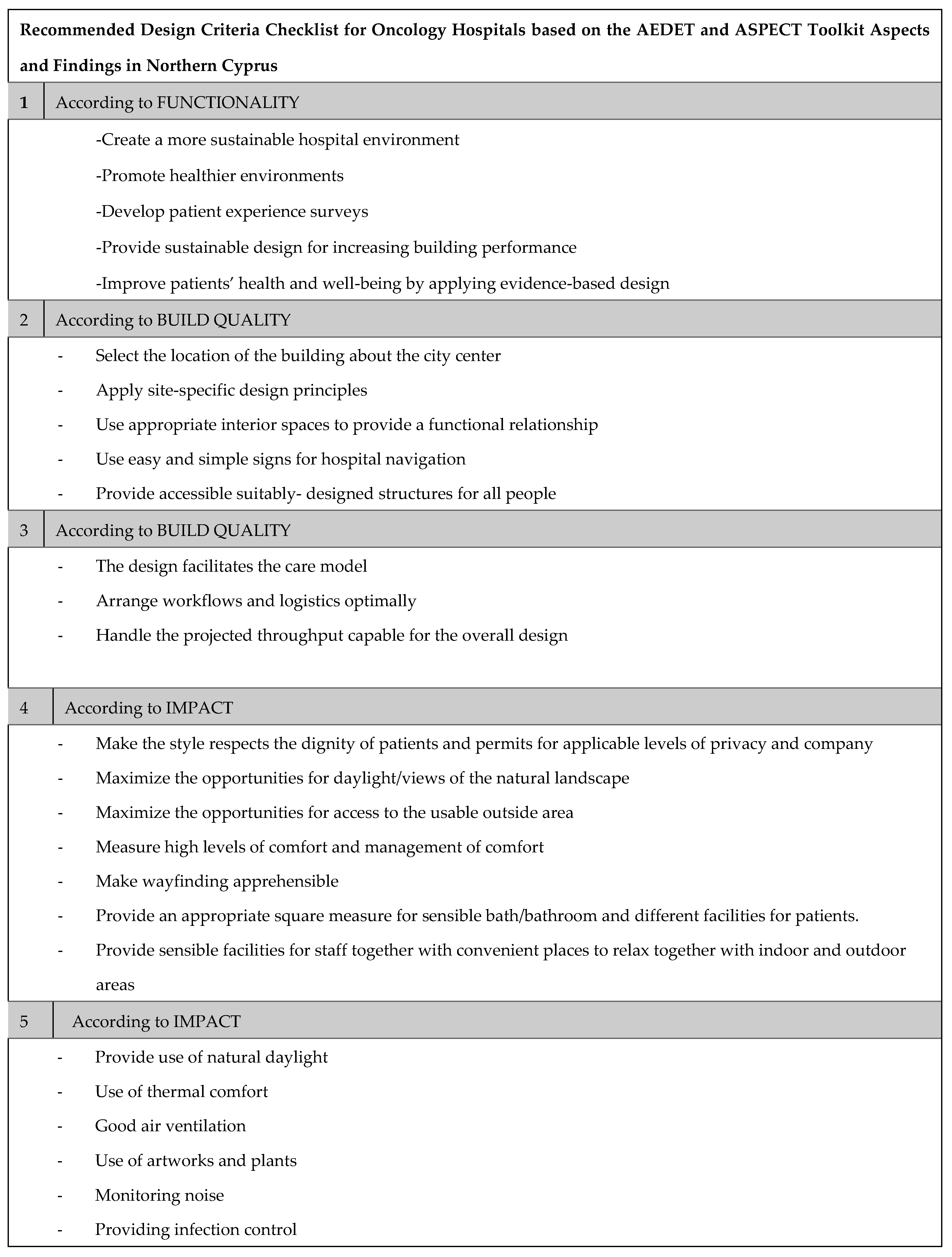
The recommended checklist made above is derived from the combined insights of the AEDET evaluation and ASPECT Toolkit analyses. It outlines key design criteria for creating effective and patient-centered oncology hospitals in Northern Cyprus. By considering these recommendations, hospitals can work toward providing healing environments that align with both functional and human aspects of healthcare design.
5. Conclusions
Human-environment interactions are intricate and entail personal characteristics in addition to social, cultural, and behavioral difficulties. [31] It is seen that the definitions of disease and health have changed many times in the evolution from the first hospital buildings in history to today's hospital structures, and many advances have been made in medical science. [32]
The AEDET evaluation indicates a positive shift in the physical qualities and design direction of hospitals, aligning with the goal of creating healing environments. [33]. However, this improvement does not appear to correspond with the levels of satisfaction reported by end users, as revealed in the ASPECT analyses.[34]. This incongruity emphasizes the intricate relationship between design evolution and user experience, prompting a need to address both physical and subjective aspects to ensure the creation of genuinely satisfying healing environments for N. Cyprus. The toolkits used in the evaluation processes ensure good quality in the development process, assuming they have been tailored to specific cases. Otherwise, they are inadequate. Thus, providing architects with a new ‘recommended’ toolkit checklist as an assessment method will help design better quality and qualified healthcare facilities. As Pantayou et al. in his article for Cyprus mentions that “ This study is one of a few focusing on Cyprus. It considers a relatively long time period and updated the previous evidence in the literature regarding heat-related morbidity”. This study also proves the development in terms of the importance of healthcare buildings on people’s health and wellbeing in Cyprus [35].
This study discovered that the availability of a healthcare facility evaluation toolkit is limited for the use of architects within the healthcare system. Different methods were tested and analysed for the Public and Private Hospitals in N. Cyprus to put into practice the abundance of research providing overviews of the sufficiency and deficiencies of hospitals in terms of PCD and EBD; through the use of a globally developed framework with internationally accredited healthcare instruments. This study contributes to the creation of a reliable toolkit to promote healthcare quality and environmental comfort, specifically within the Global South. This toolkit checklist will help architects in Global South countries design healthcare facilities according to localised patient needs and thus, promote healthcare quality that meets international standards for better health and well-being outcomes.
Supplementary Materials
The following supporting information can be downloaded at the website of this paper posted on Preprints.org.
Author Contributions
All authors contributed to the process. The authors' contributions are as follows: Conceptualization: Bedia Tekbiyik Tekin, Ozgur Dincyurek Methodology: Bedia Tekbiyik Tekin, Ozgur Dincyurek Formal analysis: Bedia Tekbiyik Tekin. Writing-original draft preparation: Bedia Tekbiyik Tekin Supervision, review, and editing: Ozgur Dincyurek. All authors have read the manuscript and they contributed to the work.
Funding
This research received no external funding.
Institutional Review Board Statement
This research was conducted according to the guidelines of the NHS under the open government license and approved by Eastern Mediterranean University, Research, and Publication Ethics Board.
Informed Consent Statement
Informed Consent Statement was obtained from all subjects involved in the study.
Data Availability Statement
Data supporting reported results can be requested from the corresponding author.
Acknowledgments
The authors would like to thank the Cancer Association of North Cyprus for their corporation in collecting data.
Conflicts of Interest
The authors declare no conflict of interest.
Appendix A
The appendix is attached as AEDET QUESTIONNAIRE and ASPECT Questionnaire distributed to the respondents.
References
- Huisman, E. R. C. M.; Morales, E.; van Hoof, J.; Kort, H. S. M. Healing Environment: A R view of the Impact of Physical Environmental Factors on Users. Building and Environment 2012, 58, 70–80. [Google Scholar] [CrossRef]
- Nightingale F. Introductory notes on lying-in institutions. London: Longmans, Green, 1871:3.
- Tekin, B.H.; Corcoran, R.; Gutiérrez, R.U. A Systematic Review and Conceptual Framework of Biophilic Design Parameters in Clinical Environments. HERD 2023, 16, 233–250. [Google Scholar] [CrossRef] [PubMed]
- MD, E. M. S. Healing Spaces: The Science of Place and Well-Being; Harvard University Press, 2010.p.50-70.
- Therapeutic Environments | WBDG – Whole Building Design Guide, 2016.
- Alfonsi, E.; Capolongo, S.; Buffoli, M. Evidence Based Design and healthcare: an unconventional approach to hospital design. Ann Ig. 2014, 26, 137–143. [Google Scholar] [CrossRef] [PubMed]
- Ulrich, R. S.; Simons, R. F.; Losito, B. D.; Fiorito, E.; Miles, M. A.; Zelson, M. Stress Recovery during Exposure to Natural and Urban Environments. Journal of Environmental Psychology 1991, 11, 201–230. [Google Scholar] [CrossRef]
- The World Health Organisation. Public Health, 1946; 60, 74–75. [CrossRef]
- Høybye, M.T. Healing environments in cancer treatment and care. Relations of space and practice in hematological cancer treatment. Acta Oncol. 2013, 52, 440–446. [Google Scholar] [CrossRef] [PubMed]
- Kidem Cyprus Cancer Statistics, Ministry of Health Report, 2018, 2-37.
- Gashoot, M. M. Holistic Healing Framework: Impact of the Physical Surrounding Design on Patient Healing and Wellbeing. Art and Design Review 2022, 10, 18–28. [Google Scholar] [CrossRef]
- Phiri, M. Design Tools for Evidence-Based Healthcare Design; Routledge: London, 2015. [Google Scholar]
- Available online: https://www.tandfonline.com/doi/abs/10.1080/0961321032000107564 (accessed on 20 July 2023).
- Available online: https://www.pcpd.scot.nhs.uk/Capital/SCIM_Pilot/2017/AEDET%20Refresh%20Guidance.docx (accessed on 10 May 2023).
- Ulrich, R. Nature and Mental Health: Biophilia and Biophobia. The Environment and Mental Health 2013, 179–196. [Google Scholar]
- Kobus, R. L. Building Type Basics for Healthcare Facilities; Wiley: Hoboken, NJ, 2008. [Google Scholar]
- CHD. Center for Health Design. Available online: https://www.healthdesign.org/certification-outreach/edac/about-ebd (accessed on 31 August 2022).
- Preiser Wolfgang F. E. Harvey Z. Rabinowitz and Edward T. White. 1988. Post-Occupancy Evaluation. New York: Van Nostrand Reinhold.
- Miller, R. L.; Swensson, E. S. New Directions In Hospital and Healthcare Facility Design; McGraw-Hill: New York, 1995. [Google Scholar]
- Der., V.; van, D. J. M.; van, W. H. B. R. Architecture in Use: An Introduction to the Programming, Design and Evaluation of Buildings; Elsevier: Amsterdam, 2005. [Google Scholar]
- The National Archives. The National Archives ASPECT. Available online: http://webarchive.nationalarchives.gov.uk/20130124042001/http://www.dh.gov.uk/prod_consum_dh/groups/dh_digitalassets/@dh/@en/documents/digitalasset/dh_082081.pdf (accessed on 20 August 2021).
- Kvåle, K.; Bondevik, M. What Is Important for Patient Centred Care? A Qualitative Study about the Perceptions of Patients with Cancer. Scandinavian Journal of Caring Sciences 2008, 22, 582–589. [Google Scholar] [CrossRef]
- Ulrich, R.S. View through a window may influence recovery from surgery. Science. 1984, 224, 420–421. [Google Scholar] [CrossRef] [PubMed]
- Available online: http://bndh.gov.ct.tr/tr/servisler/dahili-birimler/onkoloji.
- Available online: https://neareasthospital.com/departments/medical-oncology/?lang=en.
- Zeisel, J. Inquiry by Design: Environment/Behavior/Neuroscience in Architecture, Interiors, Landscape, and Planning; W.W. Norton & Co.: New York, 2006. [Google Scholar]
- Ulrich, R.S. How design impacts wellness. Healthc Forum J. 1992, 35, 20–25. [Google Scholar] [PubMed]
- Berg, A. E. V. d. Health impacts of healing environments: a review of evidence for benefits of nature, daylight, fresh air, and quiet in healthcare settings. University Hospital, Groningen, 2005.
- Greenberg, J.; Jonas, E. Psychological Motives and Political Orientation--the Left, the Right, and the Rigid: Comment on Jost et al. (2003). Psychological Bulletin 2003, 129, 376–382. [Google Scholar] [CrossRef] [PubMed]
- Changing Hospital Architecture / Edited by Sunand Prasad. London: RIBA, 2008.
- Taylor, E.; Hignett, S. DEEP SCOPE: A Framework for Safe Healthcare Design. Int. J. Environ. Res. Public Health 2021, 18, 7780. [Google Scholar] [CrossRef] [PubMed]
- Ismaeil, E.M.H.; Sobaih, A.E.E. Enhancing Healing Environment and Sustainable Finishing Materials in Healthcare Buildings. Buildings ‘Patients, staff members, and visitors might all benefit from healing architecture. Choosing an evaluation instrument for the interior finishing material in healthcare projects is one of the basic strategies to guarantee this great experience and create a healing atmosphere’. 2022, 12, 1676. [Google Scholar] [CrossRef]
- L., A. M.; A., F. J.; A., A. H.; J., A. M. Theoretical Issues and Conceptual Framework for Physical Facilities Design in Hospital Buildings. J. Archit. Environ. Struct. Eng. Res. 2021, 4, 28–35. [CrossRef]
- Ghazali, R.; Abbas, M. Y. Natural Environment in Paediatric Wards: Status and Implications. Procedia Social and Behavioral Sciences 2012, 68, 173–182. [Google Scholar] [CrossRef]
- Pantavou, K.; Giallouros, G.; Philippopoulos, K.; Piovani, D.; Cartalis, C.; Bonovas, S.; Nikolopoulos, G.K. Thermal Conditions and Hospital Admissions: Analysis of Longitudinal Data from Cyprus (2009–2018). Int. J. Environ. Res. Public Health 2021, 18, 13361. [Google Scholar] [CrossRef] [PubMed]
Disclaimer/Publisher’s Note: The statements, opinions and data contained in all publications are solely those of the individual author(s) and contributor(s) and not of MDPI and/or the editor(s). MDPI and/or the editor(s) disclaim responsibility for any injury to people or property resulting from any ideas, methods, instructions or products referred to in the content. |
© 2023 by the authors. Licensee MDPI, Basel, Switzerland. This article is an open access article distributed under the terms and conditions of the Creative Commons Attribution (CC BY) license (http://creativecommons.org/licenses/by/4.0/).
Copyright: This open access article is published under a Creative Commons CC BY 4.0 license, which permit the free download, distribution, and reuse, provided that the author and preprint are cited in any reuse.


