
Submitted:
09 November 2023
Posted:
10 November 2023
You are already at the latest version
Abstract
The manuscript delves into the intricacies of food production chains, offering a comprehensive breakdown of their components. Moreover, it sheds light on the initiatives orchestrated by government agencies to endorse sustainable practices and fortify areas of opportunity for producer organizations. While the context paints a broad picture, we contend that, to the best of our knowledge, there exists no comparable publication that succinctly encapsulates the role of government in bolstering food production chains. The document unfolds with a detailed exploration of the interaction mechanisms among the various components of the chain. Subsequently, it introduces a set of twelve elements meticulously outlining the multifaceted role of the government. Each element undergoes thorough scrutiny, fostering a nuanced understanding of the intricate relationship between the food production chain and the government's pivotal role in enhancing stability and efficiency. In conclusion, the manuscript not only lays bare the structural elements of food production chains but also presents a unique and in-depth analysis of the government's role, encapsulated within the framework of twelve essential elements.
Keywords:
food chain
; sustainability
; farmer’s organizations
; government
1. Introduction
Arid and semiarid lands are of the most vulnerable world regions to climate change effects. Other regions even those plenty in biodiversity, are experiencing an accelerate depletion of its natural resources. Since the last 20 years, the global traditional production systems are no longer easier to deal because the rain cycle is lack of stationarity. Well aware of this, governments, farmers, researchers, and policymakers, are dealing hard to convince farmers to evolve to sustainable practices that replace their traditional production systems. Many factors impede or retard this transition. Growing numbers of multi-actor governance systems aiming for sustainable products have emerged in international supply chains of specific products, such as timber, fruits, coffee, and cotton, during the last two decades [1,2,3,4]. Brokers, farmers and civil society have played a dominant role in initiating and auto-governing these systems. With notable world dominion of specific product markets as coffee, avocado, tequila, rice, maize, cacao, sugarcane, wheat, sorghum, etc., it is evident the emergence of promoting sustainable practices in various production chains world scale. More recently, this development has started to gain considerable momentum at regional scale associated with natural resources depletion, clear regionalization in water available for agriculture, migration of rural population and the unstable and frequently broken supply chain.
In the last five years’ world have entered a new phase in which the production of sustainable products has started to become a mainstream market activity [5,6,7,8] and this phenomenon have increased the instability of the world´s food production mainly associated with consumer markets seasonality. The 2022 Sustainable Market Share Index [9] finds that products marketed as sustainable are responsible for nearly a third of the growth in consumer packaged goods (CPGs) from 2013 to 2022, and market share growth continues year over year. Sustainability-marketed products continue to grow despite high inflation. Products marketed as sustainable now hold a 17.3% market share, up +0.3 percentage points versus 2021, continuing to grow in the face of high inflationary environment. Products marketed as sustainable grew ~2x faster than products not marketed as sustainable and achieved a 5-YR CAGR of 9.43% vs. 4.98% for its conventional counterparts.
The increasing demand of global sustainable products started with a small consumption market dominated by a lower demand and high process relationship. Starting in the late 1970s and 1980s, fair trade initiatives began to create new and shorter supply chains, linking small-scale producers in developing countries more directly with western consumers [10,11,12]. For this purpose, the cooperatives and promise of brought contracts models have been created. Along with this model, a new logistics maneuvers experienced an exacerbated dynamism. This model is framed in trading eco-friendly food, backed in sustainable practices, and securing its safety and healthiest. Control mechanisms for certifying environmental and social responsibility throughout the value chain were promoted as a product-added-value searching economic profitability for farmers.
Most of the governments, especially in developing countries, were unable to prevent the increasing shift of environmental impacts towards that result from growing international trade. Other governments, such as western governments, commerce chambers, and international agreements, dictate production conditions; i.e., the North America Free Trade Agreement (NAFTA) promises to lead to significant changes in US:Mexican agricultural trade [13], however, environmental and farm groups criticized its potential effects in environment and agricultural practices. Its modern version, the United States-Mexico-Canada Agreement (USCMA) was recognized as the most comprehensive and high standard free-agreement that updates modernizes and rebalances the NAFTA. It declares an environmental chapter that includes the strongest, most advanced, and most comprehensive set of environmental obligations of any U.S. trade agreement.
These diverse modes of organizing international trades within a firm’s supply chain have gained attention in various disciplines, all with their own key questions and perspectives [14]. In geographic economy, production systems are divided mainly by water availability, consumer’s organizations and trading mechanisms. This have been modern referred to as ‘sustainable food chain production”, with various possible strategies to be applied by leading farmers, farmer’s societies, local authorities and self-government. Production chain, in economics, an analytical tool used to understand the nature of the production process (including production of both goods and services) and its transformations. A food supply chain or food system refers to the processes that describe how food from a farm ends up on our tables. The processes include production, processing, distribution, consumption and disposal. [15], described extensively the concepts and components of a production chain. Is a sequence of productive activities leading to an end use—a chain of linked functions. Production chains are often called “value-added” or “value” chains. The stages in the chain are connected through a set of transactions. The organizational and geographical structure of the transactions characterize the nature of production. The concepts of the production chain and the production network are often used interchangeably. However, at least on the analytical level, it is possible to distinguish between production chain as a term characterizing a production process in general, involving various activities within the production system that may be performed by various organizations, and production network as a term characterizing a network of relationships within and between firms. (Figure 1).
2. Context of the Manuscript
This manuscript discusses three key findings and recommendations drawn from the analysis of risk management in the food chain. The examination of modes, efficiency, and challenges in food production chain yields valuable insights, paving the way for academic, business, and policy recommendations. Firstly, governance, encompassing technical and informational components, emerges as a central element in risk management analysis and design. An exhaustive consideration of threats, risks, and various factors (natural, technological, behavioral, dimensional, institutional) is imperative. Comparative assessments of benefits and costs, including third-party, transaction, and time-related considerations, are crucial for evaluating the efficiency, complementarities, and future potential of alternative modes—be they market-driven, private, public, or hybrid. Furthermore, adapting and enhancing the risk management system to leverage new opportunities and tackle emerging challenges is imperative.
Secondly, a shift towards more hybrid modes, involving both public and private or public and collective entities, is recommended. Such an approach offers advantages in terms of coordination, incentives, control, and costs. The complexities associated with purely public management of most agri-food-chain risks, attributed to factors such as agent opportunism, informal sectors, and externalities, necessitate the adoption of hybrid models. The introduction and enforcement of new rights, focusing on food security and risk-management responsibilities, coupled with support for private and collective initiatives—ranging from information dissemination to training and funding—prove to be more efficient strategies.
Thirdly, there is a call for increased support for multidisciplinary and interdisciplinary research focused on the factors, modes, and impacts of risk governance in the agri-food chain. This support is seen as essential for effectively informing national and international policies, designing modes for public interventions, and guiding individual, collective, and business actions in the realm of risk management.
In business management, the rationales of diverse strategies for supplier collaboration are studied from the perspective of assuring value creation and business success [17,18]. In these disciplines, strategies for assuring environmental and social responsibility throughout the value chain are usually not explicitly addressed [14]. In this article, we intend to link these various approaches in order to better understand governance aimed at sustainability in food chains. We use the concepts of value chain, supply chain and food chain, originating from these different disciplines, more or less as synonyms, with the first two in literature often having a more limited scope, excluding consumer and post-consumption activities [16]. A more extensive discussion on sustainable food chains has been enhanced there we distinguished three generations of how to do business by farmers and civil society responses in assuring sustainability in international food chains. Auto-consumption, joint food-chain arrangements, and cross-sector joint product-chain arrangements. In this article, this framework of business dynamics is extended with the roles that governments may have in food chains.
3. The Role of the Government
When it comes to regulating agricultural production chains, the government plays a central and multifaceted role. The involvement of the government is essential for ensuring the efficiency, fairness, and sustainability of agricultural practices. The government’s participation in regulating agricultural production chains is comprehensive and spans various aspects, from policy formulation to infrastructure development, environmental conservation, and market regulation. The goal is to create a conducive and sustainable environment for agricultural activities, ensuring the well-being of farmers, the resilience of the sector, and the provision of safe and quality food to consumers (Figure 2).
3.1. Policy Formulation and Implementation
The government is responsible for developing and implementing agricultural policies that guide the production, distribution, and marketing of agricultural products. Policies provide a framework for sustainable and equitable agricultural practices, addressing issues such as land use, water management, environmental conservation, and market access. The role of the government in policy formulation and implementation extends to a broader context that encompasses various aspects of the agricultural sector, including farmers’ organizations, trading regulations, and the entire supply chain. Policies may include initiatives for capacity building, training, and financial support to empower farmers’ organizations, enabling them to negotiate better prices, access resources, and participate in decision-making processes.
3.2. Quality Standards
The government supports the grouping and strengthening of farmers’ organizations, cooperatives, and associations. For farmers’ organizations to grant their crops access to consumer markets, they need to meet certain requirements and standards. These requirements often vary based on the type of crops, market regulations, and consumer expectations. Ensure that crops meet specific quality standards regarding size, color, taste, texture, and other relevant characteristics. Obtain certifications such as Global Good Agricultural Practices (GAP) or Organic Certification, depending on the production methods.
3.3. Market Compliance with Regulations
Adhere to local and international regulations governing the production, processing, and distribution of agricultural products to accomplish the legal requirements. For the purpose of traceability, the government have to promote that food comply with labeling and packaging regulations, providing accurate information about the product’s origin, nutritional content, and handling instructions.
- Food safety practices. These regulations keep us safe and ensure that we are consuming food that adheres and complies with health standards.
- Hygiene and sanitation. Implement and maintain high standards of hygiene and sanitation throughout the production and processing stages.
- Pesticide and chemical use. Follow guidelines on the proper use of pesticides and chemicals, ensuring residue levels comply with safety standards.
3.4. Regulation & Environment
Food systems exert major pressures on the environment.
Adopt sustainable farming practices that prioritize environmental conservation and resource efficiency.
- Seek certifications related to sustainable agriculture, such as Rainforest Alliance or Fair Trade, if applicable.
- Most environmental impacts in food supply chains occur through land use change or at the stage of agricultural production
3.5. Consumer Protection, Traceability and Transparency
Establish traceability systems that track the journey of crops from the farm to the consumer, providing transparency and accountability.
- Maintain detailed records of cultivation practices, inputs used, and other relevant information for traceability.
- Brand Building. Build a positive brand image for the farmers’ organization and its products, emphasizing quality, sustainability, and ethical practices.
- Communication Strategies. Implement effective communication strategies to connect with consumers and build trust.
3.6. Market Information (Regulation/Trading)
- Conduct market research to understand consumer preferences, market trends, and demand for specific crops.
- Consider diversifying crops based on market demand and trends, aligning production with consumer preferences and water fingerprint.
- Negotiation and contracts. Engage in negotiations with potential buyers, retailers, or distributors and establish clear contracts outlining terms and conditions.
- Consistent supply. Demonstrate the ability to provide a consistent and reliable supply of crops to meet market demands.
3.7. Supply Chain Coordination
Supply chain participants are no longer limited to the first-tier supplier, the manufacturer, and the distributor. Today, participants include everyone involved in the growing, harvesting, processing, packaging, transporting, holding, and selling of a food product [19].
Improving the efficiency of a supply chain involves optimizing processes, reducing costs, enhancing communication, and ensuring a seamless flow of products from production to consumption. The government plays a role in coordinating and aligning various stakeholders along the agricultural supply chain. Policies may include incentives for supply chain actors to adopt sustainable and efficient practices, encouraging collaboration and reducing inefficiencies.
By implementing a combination of these strategies, businesses can enhance the efficiency of their supply chains, reduce costs, improve customer satisfaction, and remain competitive in a dynamic marketplace.
- Implement efficient supply chain logistics to ensure timely and safe delivery of products to the market.
- Cold chain management. For perishable crops, establish and maintain a cold chain to preserve freshness and quality during transportation.
- Health food protocols. Ensure the update in accomplish the health food international regulations
3.8. Risk Management & Insurance
Implement robust quality assurance systems to monitor and control every stage of the production process.
- Training programs. Provide training to farmers on best practices and quality control measures.
- Partnerships. Collaborate with industry stakeholders, certification bodies, and retailers to enhance market access opportunities.
- Participation in certification programs. Enroll in recognized certification programs that validate adherence to specific quality and sustainability standards.
3.9. Research & Development
Invest in the education and training of farmers to enhance their knowledge and skills in modern agricultural practices.
- Organizational capacity. Strengthen the organizational capacity of the farmers’ organization to effectively manage production, processing, and marketing activities.
- Update the research capacities, technical programs, transferring knowledge.
- Digital platforms. Leverage digital platforms for market information, online sales, and communication with buyers.
- Precision agriculture. Explore the adoption of precision agriculture technologies for improved crop management.
- Supply chain management (SCM) Systems. Implement advanced SCM systems for end-to-end visibility, real-time data, and streamlined communication.
- Internet of things (IoT). Use IoT devices for tracking and monitoring inventory, equipment, and shipments.
- Predictive analytics. Leverage predictive analytics to identify potential issues before they occur, allowing for proactive problem-solving.
- Performance metrics. Establish key performance indicators (KPIs) to measure and analyze supply chain performance regularly.
3.10. Rural Development and Social Programs
In the context of rural development and social programs addressing climate change, it’s essential to incorporate a comprehensive approach that addresses multiple facets of sustainability and resilience. Policies extend to broader rural development initiatives aimed at improving infrastructure, education, and healthcare in rural areas. Governments implement social programs to address poverty, malnutrition, and other socio-economic challenges, directly impacting the well-being of farming communities.
3.11. Infrastructure Development
Infrastructure plays a crucial role in supporting various stages of the food production chain, from agricultural production to distribution and retail. Here’s why infrastructure development is important for governments in the food chain
3.12. International Trade Agreements
International trade agreements are treaties between two or more countries designed to reduce or eliminate certain barriers to trade and investment, and to facilitate stronger trade and commercial ties between participating countries.
4. Breaking Down the Twelve Components
It’s important to note that achieving stability in international food prices requires a multi-faceted and collaborative approach. Local, regional, and global efforts, along with the involvement of governments, international organizations, private sector entities, and civil society, are essential components of any strategy to address food price volatility and promote a more stable and resilient global food system.
Each component on the role of government institutions in the stability and efficiency of food production chains can be disaggregated. Some of these could be reconsidered by seeing such relevant and often overlooked aspects as the idiosyncrasies of producers, the availability of natural resources, forms of organization and the destination of production. It is advisable to consider the following approaches as suggestions.
Demand, planning and forecasting. Use machine learning capabilities to analytics and historical trends to accurately forecast demand size and where to distribute for each product. This minimizes the risk of overstocking or stockouts.
Inventory management.
- ▪
- New technology is supporting better monitoring and tracking, the history of goods sold and can help you forecast for future demand. It can run algorithms to determine what cloud-based inventory management systems.
- ▪
- Optimise food safety and can decrease food health-risk problems
- ▪
- Make processes more efficient and reduce the chances of perishable goods going to waste
- ▪
- Get food products onto shelves quicker so the product is still ripe for customers
- ▪
- Optimise transit and packaging processes that can reduce costs
- ▪
-
Inventory management systems can communicate with members of your supply chain and can yield access to information about the products in real-time.
- ▪
- Just-In-Time (JIT) Inventory. Adopt JIT principles to reduce excess inventory and holding costs while maintaining a responsive supply chain.
- ▪
- ABC Analysis. Prioritize inventory based on importance, focusing on high-value items and optimizing stock levels accordingly.
- ▪
- Supplier relationship management (SRM). Foster strong relationships with suppliers. Collaboration can lead to better pricing, timely deliveries, and joint problem-solving.
Logistics and transportation optimization.
- ▪
- Food supply chains encompass multiple actors and simultaneously produce multiple products that require transportation using various modes or networks before arriving on consumers’ tables [20].
- ▪
- Route Planning. Due to their perishability, limited storage capacity, safety and traceability requirements, optimize transportation routes to reduce costs and minimize delivery times.
- ▪
- Technology Integration. Use technology for real-time tracking and visibility, enabling efficient transportation management.
Warehouse efficiency.
- ▪
- Food and beverage distribution is undergoing significant changes. Inventory, production, and storage are all becoming leaner, and work is being pushed back to the warehouse. In a business of perishables, it makes great sense to cut waste and shorten the time between production and consumption [21].
- ▪
- Automation. Implement warehouse automation for tasks like picking, packing, and inventory management to enhance speed and accuracy.
- ▪
- Layout Optimization. Design warehouse layouts to minimize travel times and maximize storage capacity.
Collaboration and communication.
- ▪
- Food chains are striving to adopt innovations to ensure their survival, value creation and success.
- ▪
- Collaboration between stakeholders and farmers plays a prominent role in reducing food loss and waste (FLW)
- ▪
- Cross-Functional collaboration. Foster collaboration among different departments within the organization for better decision-making.
- ▪
- Communication platforms. Implement efficient communication platforms to enhance information sharing among stakeholders.
Risk management.
- ▪
- Supply chain risk management has become an emerging research field in recent years, aiming to protect supply chains from various disruptions and deliver sustainable and long-term benefits to stakeholders across the value chain [22]. Due to the increasing occurrence of natural disruptive events (e.g. adverse weather, insect attract, catastrophic event), technological (“pure” technical failures), or human origin (individual or collective actions/inactions, “human nature”), or a combination of them, caused by both human and also natural disasters,
- ▪
- Risks management studies predominately focus on the technical methods and the capability to perceive, prevent, mitigate, and recover from diverse risks.
- ▪
-
The individual behavior and actions causing risks may range from:
- ▪
- Agent’s ignorance (lack of sufficient knowledge, information, and training);
- ▪
- Risk-taking (retention) strategy of individuals (accepting “higher than normal” risk);
- ▪
- Mismanagement (bad planning, prevention, recovery);
- ▪
- Deliberate opportunistic behavior (pre-contractual cheating and “adverse selection”, post-contractual “moral hazard”);
- ▪
- Criminal acts (stealing property or yields, arson, invasion on individual safety);
- ▪
- Terrorist attacks (contamination of inputs and outputs aiming “mass terror”) etc.
- ▪
- Financial Instruments. Governments, farmers, and other stakeholders can explore financial instruments, such as futures contracts and options, to manage and hedge against price risks.
- ▪
- Crop Insurance. Implementing or enhancing crop insurance programs can help protect farmers from losses due to unpredictable events like extreme weather or pests.
-
Supply chain participants are no longer limited to the first-tier supplier, the manufacturer, and the distributor. Today, participants include everyone involved from “farm to fork” in the growing, harvesting, processing, packaging, transporting, holding, and selling of a food product.
- ▪
- Scenario Planning. Develop contingency plans for potential disruptions, such as natural disasters or supply chain interruptions.
- ▪
- Diversification. Diversify suppliers and sourcing strategies to mitigate risks associated with dependence on a single source.
Sustainability practices.
- ▪
- Sustainability in the food industry is about reducing food waste and lowering the impact of food production on the natural environment.
- ▪
- Blockchain technology can improve traceability throughout the food supply chain.
- ▪
- Embedded systems can monitor and control things such as water usage in agriculture and energy consumption during processing.
- ▪
- Machine learning and artificial intelligence can provide insights for food industry businesses and ensure that they are always operating at the highest level of efficiency.
- ▪
- Green Logistics. Adopt sustainable practices to reduce environmental impact, which can also result in cost savings and improved corporate responsibility
- ▪
- New machinery and processing equipment can help reduce food waste and decrease energy and resource consumption.
Continuous improvement.
- ▪
- Continuous improvement is a method employed to identify opportunities for streamlining work and reducing waste. It covers the ongoing development of products, optimization of processes, and streamlining of services in order to, as the name implies, be continuously improving your operations.
- ▪
- Kaizen Philosophy. Kaizen, which means “change for better” or “continuous improvement” in Japanese, is a philosophy and methodology that emphasizes the ongoing, incremental improvement of processes and practices within an organization. Kaizen is not a one-time event but a mindset that permeates an organization. It involves everyone, from top management to frontline workers, in the pursuit of excellence and continuous improvement. Regularly assess and refine processes to enhance efficiency.
- ▪
- Train employees on the latest technologies and best practices to ensure a skilled and adaptable workforce.
Cross-Functional training
- ▪
- Encourage collaboration between different departments and functions. Cross-functional teams can provide diverse perspectives and insights for improvement.
- ▪
- Encourage cross-functional training to enhance employees’ understanding of the entire supply chain, fostering a more collaborative approach.
Blockchain technology
- ▪
- Blockchain technology offers promising solutions for enhancing traceability in agriculture, providing transparency and accountability throughout the supply chain.
- ▪
- Implementing blockchain in agriculture, requires collaboration among stakeholders, investment in technology infrastructure, and addressing challenges such as data privacy and standardization. As blockchain continues to evolve, it holds great potential for revolutionizing the agriculture industry’s approach to traceability and supply chain management.
Customer feedback and collaboration
- ▪
- Collaboration in a supply chain continuously proves its role in increasing the performance of supply chains, which attracts the attention of both academia and practitioners, specifically, how to generate higher impacts of collaborative partnership on the performance of supply chains and measure them [23].
- ▪
- Customer-Centric approach. Gather customer feedback and align supply chain processes with customer expectations; nutrition, packing, presentation, perishable period and labelling.
Legal and regulatory compliance
- ▪
- In the food industry, strict standards regulate production environments to ensure consumer safety. Quality control of food products and their ingredients is regulated by local requirements and international standards to improve quality and efficiency. Regulatory agencies are also influenced by consumer demand, as seen with public pressure to reduce salt and sugar in food and provide more sustainable food production.
- ▪
- Adherence to Standards. Food compliance helps industries meet customer requirements, win new customers and supply safe food to local and global markets.
Price stabilization and market information.
- ▪
- Stabilizing international food prices and associated markets is a complex challenge that involves various factors, and there isn’t a one-size-fits-all solution. However, several organizations, initiatives, and measures aim to address food price volatility and promote stability in global food markets. Government implement price stabilization programs to protect farmers from extreme price fluctuations. Policies may promote the development of robust market information systems to provide real-time data on prices, demand, and market trends, empowering farmers to make informed decisions.
- ▪
- Agricultural trade and marketing have always been vital for global food security and economic development. However, the traditional methods of buying and selling agricultural products faced numerous challenges, such as limited access to market information and price fluctuations [24].
- ▪
- These systems act as intermediaries, providing near real-time information on market prices, supply and demand dynamics, weather patterns, pricing, transportation logistics, and other crucial factors that impact agricultural trade, enabling better decision-making by market participants.
- ▪
- Countries can implement transparent and fair trade policies that promote open markets, reduce trade barriers, and facilitate the flow of agricultural products.
- ▪
- Some countries implement domestic policies, such as price stabilization programs, to minimize the impact of price fluctuations on farmers and consumers.
- ▪
- Some countries maintain strategic food reserves to mitigate the impact of supply shocks and stabilize prices during times of scarcity.
Global governance and cooperation.
- ▪
- Climate change is an increasingly challenge to face in a world of highly integrated financial, consumers preferences and economic markets. Globally financial crisis and market inefficiencies are under constant pressure of agro industrial corporations.
- ▪
- Integration of food chains and the globalization of the food commodity market enables season-independent food supply; this interconnectivity also means that production shortfalls or price fluctuations in one major producing area or one major agricultural commodity can impact on other producers or consumers, in totally different regions.
- ▪
- International organizations like the Food and Agriculture Organization (FAO) of the United Nations, the World Trade Organization (WTO), and the International Monetary Fund (IMF) play roles in addressing food price stability through coordination, policy dialogue, and global governance.
- ▪
- Civil Society Organizations (CSO) and Non Governmental Organizations (NGOs) have become key players in the emerging global governance system of food security.
Agricultural Policies.
An extended context of global agricultural policies is mentioned by [25] in the next points:
- ▪
- Food production systems are going through a strong vertical integration process at the national and global levels through the development of large and complex global value chains.
- ▪
- Integrated food chains, managed by highly concentrated agro-industrial (often multinational) firms, are expected to increasingly expand into developing countries, integrating their agricultural producers into industrialized global or regional marketing chains
- ▪
- There is a trend towards increasing farm size, especially in developing countries and emerging economies in land-abundant regions, and a shift from small-size family farming to large-size enterprises based on hired labour and higher capital intensity.
- ▪
- The effects of climate change are expected to intensify over the decades to come, in spite of the mitigating measures underway. Given the degradation in dry lands and increased frequency of natural disasters, adaptation to climate change for agriculture requires medium- and long-term investments for irrigation, livestock and plant breeding, forestry etc.
- ▪
- The increasing economic interdependency and transnational character of private investment challenges national governments, particularly in smaller or developing countries.
Investment in Agriculture.
- ▪
- Infrastructure Development. Investments in agricultural infrastructure, such as transportation, storage, and processing facilities, can improve efficiency and reduce post-harvest losses.
- ▪
- Research and Development. Investing in agricultural research and development fosters innovation, leading to improved productivity and resilience against external shocks.
5. Contract Farming and Agreements
According with [26] at the heart of contract farming (CF) lies an agreement between farmers (producers) and buyers: both agree in advance on the terms and conditions for the production and marketing of farm products. These conditions usually specify the price to be paid to the farmer, the quantity and quality of the product demanded by the buyer, and the date for delivery to buyers. In some cases the contract may also include more detailed information on how the production will be carried out or if inputs such as seeds, fertilizers and technical advice will be provided by the buyer.
Contract farming and agreements are increasingly recognized as a valuable approach in the future of food production, especially in the context of enhancing food security. For some reasons contract farming is considered a promising model for the future. The growing interest in contract farming is associated with recent transformations in food and agricultural systems which make it increasingly difficult to meet consumer demands under more traditional, open market-based procurement strategies [26]. Policies support the development of contract farming frameworks, providing a legal and transparent basis for agreements between farmers and agribusinesses. Regulations may ensure that contracts are fair, transparent, and protect the interests of both farmers and buyers (Table 2).
While contract farming holds great potential, it is essential to address challenges such as power imbalances, contract enforcement, and the protection of farmers’ rights. Implementing supportive policies, fostering fair and transparent agreements, and ensuring inclusivity are crucial aspects of harnessing the benefits of contract farming for sustainable food production and enhanced food security.
6. Perspectives
This section describes the scope of the elements that need to be considered in order to consolidate intelligent production chains: Sustainable Agriculture Practices, Research and Technology Adoption, Risk Management and Insurance, Rural Development and Social Programs, International Trade and Agreements, Extension Services and Education, Food Safety and Quality Standards, and Community Engagement and Participation
6.1. Sustainable Agriculture Practices
Policies on environmental regulations address sustainable agricultural practices, including soil conservation, water management, and biodiversity protection. Governments may provide incentives or subsidies for farmers adopting environmentally friendly practices, aligning agricultural activities with long-term environmental health.
6.2. Research and Technology Adoption
Research, innovation, and the adoption of technology play pivotal roles in enhancing production chains, including in rainfed agriculture. Some factors that contribute to the improvement of rainfed agriculture are both government- and farmers-origin. Government policies allocate resources for agricultural research and development. Technology adoption incentives are provided to farmers to adopt innovative technologies, promoting productivity, resilience, and sustainable practices.
-
Improved Crop Varieties.
- ▪
- Research leads to the development of crop varieties that are more resilient to varying climatic conditions, including those associated with rainfed agriculture.
- ▪
- Adoption of improved seed varieties enhances crop yields and reduces vulnerability to weather-related risks.
-
Water Management Technologies.
- ▪
- Innovation in water management technologies, such as rainwater harvesting, moisture sensors, and efficient irrigation systems, contributes to optimizing water use in rainfed areas.
- ▪
- Adoption of these technologies helps farmers make better-informed decisions about water application and conservation.
-
Climate-Resilient Agriculture Practices.
- ▪
- Research informs the development of climate-resilient agricultural practices suitable for rainfed conditions.
- ▪
- Adoption of conservation agriculture, agroforestry, and sustainable soil management practices contributes to the resilience of rainfed farming systems.
-
Digital Agriculture and Precision Farming.
- ▪
- The adoption of digital technologies and precision farming tools allows farmers to monitor and manage their crops more effectively.
- ▪
- Weather forecasting apps, satellite imagery, and data analytics help farmers make data-driven decisions, improving resource allocation and crop management.
-
Index-Based Insurance.
- ▪
- Innovations in insurance products, such as index-based insurance, leverage technology to provide financial protection to farmers in rainfed areas.
- ▪
- Weather indices, monitored through technology, trigger insurance payouts, offering a faster and more efficient claims process.
-
Remote Sensing and Monitoring.
- ▪
- Remote sensing technologies contribute to monitoring crop health, identifying stress factors, and predicting potential yield losses.
- ▪
- Early warning systems based on satellite data assist farmers in responding to weather-related challenges in a timely manner.
-
Mobile Technology for Extension Services.
- ▪
- Mobile technology facilitates the dissemination of agricultural information, weather forecasts, and best practices to farmers in remote rainfed areas.
- ▪
- Farmer education and extension services delivered through mobile platforms enhance knowledge transfer.
-
Drones for Crop Monitoring.
- ▪
- The use of drones allows for efficient and detailed crop monitoring, especially in large rainfed agricultural areas.
- ▪
- Drones provide valuable insights into crop health, pest infestations, and overall field conditions.
-
Genetic Technologies.
- ▪
- Advances in genetic technologies, such as marker-assisted breeding, contribute to the development of crops with enhanced traits, including resistance to pests and diseases prevalent in rainfed regions.
-
Capacity Building and Training.
- ▪
- Research and innovation support capacity-building initiatives and training programs for farmers in rainfed areas.
- ▪
- Farmers adopting technology benefit from training on its proper use and integration into their farming practices.
-
Blockchain for Supply Chain Transparency.
- ▪
- Blockchain technology enhances transparency in supply chains, providing traceability from farm to market. This is valuable for both producers and consumers.
-
Smart Farming Equipment.
- ▪
- Adoption of smart farming equipment, such as sensor-equipped tractors and autonomous machinery, contributes to precision agriculture in rainfed areas.
The combination of research, innovation, and technology adoption is instrumental in addressing the unique challenges of rainfed agriculture. These advancements contribute to increased productivity, resilience to climate variability, and overall sustainability in rainfed farming systems.
6.3. Risk Management and Insurance
Addressing risk management and insurance for both irrigated and rainfed crops is crucial in promoting sustainable food production. While irrigated lands may have a more controlled water supply, rainfed areas are exposed to the variability of precipitation, making them susceptible to weather-related risks. Governments design and implement agricultural insurance schemes to mitigate risks associated with crop failures, pests, and natural disasters. Policies may include support mechanisms to make insurance more accessible and affordable for farmers.
-
Importance of Rainfed Agriculture.
- ▪
- Rainfed agriculture plays a significant role in global food production, contributing to the livelihoods of many farmers.
- ▪
- Rainfed areas often support the cultivation of various crops, including staple foods, and are vital for maintaining agricultural diversity.
-
Weather-Related Risks in Rainfed Agriculture.
- ▪
- Rainfed crops are vulnerable to weather-related risks such as droughts, floods, erratic rainfall, and other climatic variations.
- ▪
- These risks can have a direct impact on crop yields, affecting farmers’ income and food security.
-
Need for Comprehensive Insurance.
- ▪
- Insurance policies for rainfed crops should be comprehensive, covering a range of weather-related perils that could adversely affect production.
- ▪
- Coverage may include protection against drought, excess rainfall, hailstorms, and other weather extremes.
-
Inclusive Risk Management Strategies.
- ▪
- Developing risk management strategies that are inclusive of both irrigated and rainfed agriculture is essential.
- ▪
- Policies and programs should consider the unique challenges faced by rainfed farmers and provide tailored solutions.
-
Innovations in Insurance Products.
- ▪
- Innovations in insurance products, such as index-based insurance, can be beneficial for rainfed agriculture.
- ▪
- Index insurance relies on predetermined weather indices to trigger payouts, offering a quicker and more efficient claims process.
-
Government Support.
- ▪
- Government support is crucial in promoting the availability and affordability of insurance for rainfed crops.
- ▪
- Subsidies, incentives, and risk-sharing mechanisms can encourage farmers to adopt insurance as a risk management tool.
-
Community-Based Approaches.
- ▪
- Community-based insurance programs and cooperatives can be effective in pooling risks and providing support to farmers in rainfed areas.
- ▪
- Collective efforts can enhance resilience and foster community-level risk management.
-
Integration with Sustainable Practices.
- ▪
- Insurance programs should be integrated with sustainable agricultural practices to promote long-term resilience.
- ▪
- Practices such as conservation agriculture, agroforestry, and soil conservation contribute to sustainable rainfed farming.
-
Climate-Smart Agriculture.
- ▪
- Promoting climate-smart agricultural practices in rainfed areas can enhance adaptive capacity and reduce vulnerability to climate-related risks.
- ▪
- These practices may include water conservation, crop diversification, and the use of climate-resilient crop varieties.
A comprehensive and inclusive approach to risk management and insurance is essential for promoting sustainable food production in both irrigated and rainfed areas. Tailored solutions, innovations, and collaboration among stakeholders, including governments, insurers, and communities, are key to addressing the unique challenges faced by rainfed agriculture and ensuring the resilience of the global food system.
6.4. Rural Development and Social Programs
In the context of rural development and social programs addressing climate change, it’s essential to incorporate a comprehensive approach that addresses multiple facets of sustainability and resilience. Policies extend to broader rural development initiatives aimed at improving infrastructure, education, and healthcare in rural areas. Governments implement social programs to address poverty, malnutrition, and other socio-economic challenges, directly impacting the well-being of farming communities. By addressing these topics comprehensively, rural development and social programs can contribute to building climate-resilient communities, ensuring sustainable livelihoods, and fostering social and environmental well-being in the face of climate change.
-
Climate-Smart Agriculture Practices.
- ▪
- Promoting and educating farmers on climate-smart agricultural practices that enhance resilience to climate change. This includes practices such as conservation agriculture, agroforestry, and water-efficient irrigation.
-
Diversification of Livelihoods.
- ▪
- Encouraging the diversification of livelihoods to reduce dependence on single sectors that may be vulnerable to climate variability.
- ▪
- Promoting alternative income-generating activities that align with sustainable practices.
-
Water Management and Conservation.
- ▪
- Implementing water management strategies that enhance efficiency in water use, particularly in water-stressed areas.
- ▪
- Promoting rainwater harvesting, efficient irrigation technologies, and sustainable water resource management.
-
Education and Training.
- ▪
- Integrating climate change education into formal and informal education systems to increase awareness and understanding among rural communities.
- ▪
- Providing training programs on sustainable agricultural practices, climate-resilient livelihoods, and disaster preparedness.
-
Renewable Energy Adoption.
- ▪
- Encouraging the adoption of renewable energy sources for rural electrification, reducing reliance on fossil fuels.
- ▪
- Implementing community-based renewable energy projects that enhance energy access and sustainability.
-
Social Peace and Community Resilience.
- ▪
- Fostering social cohesion and community resilience to climate-related stresses.
- ▪
- Implementing programs that address social inequalities and empower marginalized groups, considering the potential for conflicts arising from resource scarcity.
-
Natural Resource Management.
- ▪
- Implementing sustainable natural resource management practices to prevent degradation of land, forests, and biodiversity.
- ▪
- Supporting reforestation and afforestation initiatives to enhance carbon sequestration and ecosystem services.
-
Access to Climate Information.
- ▪
- Improving access to timely and accurate climate information for rural communities to facilitate better decision-making.
- ▪
- Establishing early warning systems for extreme weather events and supporting community responses.
-
Climate-Resilient Infrastructure.
- ▪
- Designing and implementing climate-resilient infrastructure, including roads, bridges, and water supply systems, to withstand climate-related risks.
- ▪
- Integrating climate considerations into rural development planning.
-
Community-Based Adaptation Strategies.
- ▪
- Facilitating community-based adaptation strategies that empower local communities to identify and address climate risks.
- ▪
- Supporting the development of climate-resilient agricultural practices through farmer-led initiatives.
-
Food Security and Nutrition.
- ▪
- Enhancing food security through sustainable agricultural practices, crop diversification, and the promotion of resilient crop varieties.
- ▪
- Addressing nutritional challenges by promoting diverse and climate-resilient diets.
-
Financial Inclusion and Risk Management.
- ▪
- Promoting financial inclusion and access to credit for rural communities to build resilience against climate-related shocks.
- ▪
- Developing risk management and insurance mechanisms to protect farmers and communities from climate-related losses.
-
Ecosystem-Based Adaptation.
- ▪
- Implementing ecosystem-based adaptation approaches that leverage natural ecosystems to enhance resilience and support sustainable livelihoods.
-
Participatory Decision-Making.
- ▪
- Fostering participatory decision-making processes that involve local communities in the planning and implementation of climate adaptation and mitigation strategies.
- ▪
- Building local capacity for community-led initiatives and sustainable development practices.
-
Monitoring and Evaluation.
- ▪
- Establishing robust monitoring and evaluation mechanisms to assess the effectiveness of climate change adaptation and rural development programs.
- ▪
- Incorporating feedback loops for adaptive management based on changing climate dynamics.
6.5. International Trade and Agreements
Governments formulate trade policies that facilitate the export and import of agricultural products. Policies aim to enhance market access for domestic agricultural products in international markets, promoting economic growth in the sector. International trade agreements (ITA) indeed focus on facilitating the exchange of goods and services but often do not explicitly address migration. Migration, especially of rural populations, can have significant implications for food production stability and broader societal well-being. Here are some considerations of ITAs on food production chains.
-
Impact of Migration on Agriculture.
- ▪
- Rural-to-urban migration can lead to a loss of skilled labor in agriculture, affecting productivity and food production.
- ▪
- Aging rural populations without sufficient replacements may lead to reduced agricultural output.
-
Social and Economic Factors.
- ▪
- Migration is often driven by socio-economic factors such as employment opportunities, education, and better living conditions.
- ▪
- Rural areas may face challenges in providing comparable opportunities, leading to outmigration.
-
Policy and Infrastructure.
- ▪
- Policies that encourage rural development, job creation, and infrastructure improvement can help make rural areas more attractive.
- ▪
- Access to education, healthcare, and essential services in rural regions can mitigate migration pressures.
-
Agricultural Innovation
- ▪
- Investing in agricultural technology and innovation can make farming more efficient, reducing the dependency on labor and attracting the younger population.
-
Global Supply Chains
- ▪
- Global supply chains can benefit from the free movement of labor. Policies that consider the seasonal nature of agricultural work and provide avenues for legal migration can be explored.
6.6. Extension Services and Education
Extension services play a crucial role in the context of rural development and climate change adaptation. These services act as intermediaries between research institutions, government agencies, and rural communities, providing valuable information, training, and support to farmers. In the context of climate change, the role of extension services becomes even more critical. Governments invest in extension services to provide farmers with knowledge and training. Policies may include initiatives to enhance the educational opportunities of farmers, promoting informed decision-making and sustainable agricultural practices. By fulfilling these roles, extension services contribute significantly to building the adaptive capacity of rural communities, fostering sustainable agricultural practices, and promoting resilience in the face of climate change.
-
Dissemination of Climate Information.
- ▪
- Extension services facilitate the dissemination of climate information to farmers, providing them with timely and relevant data on weather patterns, seasonal forecasts, and climate projections.
- ▪
- They help farmers understand the implications of climate change on agriculture and make informed decisions based on weather patterns.
-
Capacity Building and Training.
- ▪
- Extension agents conduct training programs to build the capacity of farmers in climate-smart agricultural practices. This includes educating farmers on sustainable farming methods, water management, and conservation practices.
- ▪
- Training programs also focus on the adoption of resilient crop varieties and the implementation of climate-resilient livelihood strategies.
-
Technology Transfer.
- ▪
- Extension services play a key role in transferring technological innovations to rural communities. This includes introducing farmers to climate-resilient agricultural technologies, precision farming tools, and efficient irrigation systems.
- ▪
- They facilitate the adoption of new practices that enhance productivity and reduce vulnerability to climate-related risks.
-
Support for Diversification.
- ▪
- Extension agents assist farmers in diversifying their livelihoods by introducing alternative income-generating activities that are less vulnerable to climate variability.
- ▪
- They provide guidance on sustainable practices such as agroforestry, beekeeping, or eco-tourism that complement traditional agricultural activities.
-
Promotion of Adaptive Strategies.
- ▪
- Extension services promote and support the development of adaptive strategies tailored to the specific needs of local communities. This may include the implementation of climate-resilient cropping calendars, water harvesting techniques, and agroecological practices.
- ▪
- They encourage farmers to adopt flexible strategies that can be adjusted based on changing climate conditions.
-
Community Engagement.
- ▪
- Extension agents facilitate community engagement and participatory decision-making processes. They involve local communities in the planning and implementation of climate change adaptation measures, ensuring that interventions align with community needs and priorities.
- ▪
- They encourage the formation of farmer groups and cooperatives to enhance collective resilience.
-
Monitoring and Evaluation.
- ▪
- Extension services play a role in monitoring and evaluating the effectiveness of climate change adaptation initiatives. They assess the impact of interventions on farm productivity, income, and community resilience.
- ▪
- Regular feedback from extension agents helps in adapting and fine-tuning strategies based on real-time observations and experiences.
-
Access to Financial Services.
- ▪
- Extension services may facilitate access to financial services by connecting farmers with credit institutions and microfinance organizations. This helps farmers invest in climate-resilient practices and cope with climate-related shocks.
-
Promotion of Conservation Agriculture.
- ▪
- Extension agents promote conservation agriculture practices that enhance soil health, reduce erosion, and improve water use efficiency. These practices contribute to climate change mitigation and adaptation.
-
Disaster Preparedness and Response.
- ▪
- Extension services contribute to disaster preparedness by educating farmers on early warning systems and emergency response plans. They help communities develop strategies to cope with extreme weather events such as floods, droughts, or cyclones.
-
Policy Advocacy.
- ▪
- Extension services may engage in policy advocacy to ensure that government policies support climate-resilient agriculture. They advocate for the integration of climate change considerations into agricultural policies and programs.
-
Social Inclusion and Gender Equity:
- ▪
- Extension services work towards social inclusion and gender equity by ensuring that climate change adaptation strategies benefit all members of the community, including women and marginalized groups.
- ▪
- They promote gender-sensitive approaches and empower women in decision-making processes related to agricultural activities.
6.7. Food Safety and Quality Standards
Several organizations play a crucial role in defining food quality standards and issuing certifications. These organizations operate at national and international levels, setting standards to ensure the safety and quality of food products. These organizations and regulatory bodies contribute to the establishment of food quality standards, certification processes, and the overall safety and integrity of the global food supply chain. Governments establish and enforce food safety and quality standards. Policies include the development of inspection systems to ensure that agricultural products meet established standards, safeguarding consumer health.
- Codex Alimentarius Commission (Codex).
International. Jointly established by the Food and Agriculture Organization (FAO) and the World Health Organization (WHO), Codex develops international food standards, guidelines, and codes of practice. It aims to protect the health of consumers and ensure fair practices in the food trade.
- International Organization for Standardization (ISO). International.
ISO develops and publishes international standards, including those related to food safety, quality management, and traceability. ISO standards are widely recognized and adopted globally.
- Food and Agriculture Organization (FAO). United Nations (UN) – International.
As a specialized agency of the UN, FAO provides guidance on various aspects of food production and safety. It collaborates with other organizations to develop standards and promote sustainable agricultural practices.
- World Health Organization (WHO). United Nations (UN) – International.
WHO, as part of the UN system, focuses on public health, including aspects related to food safety and quality. It collaborates with Codex and other entities to establish international standards.
- United States Department of Agriculture (USDA).
United States. USDA sets standards for various agricultural products in the United States, including meat, poultry, and dairy. The USDA’s Agricultural Marketing Service (AMS) is involved in certification programs.
- European Food Safety Authority (EFSA).
European Union (EU). EFSA provides scientific advice on food safety issues to the European Commission, Parliament, and Member States. The EU establishes food safety regulations and standards based on EFSA’s assessments.
- Food Standards Australia New Zealand (FSANZ).
Australia and New Zealand. FSANZ develops and administers the Australia New Zealand Food Standards Code, which includes standards for food safety, labeling, and composition in the region.
- National Service of Health, Safety and Food Quality (SENASICA).
Food Safety and Standards Authority of Mexico.
- Rainforest Alliance. International
Rainforest Alliance is an international non-profit organization that focuses on sustainable agriculture. It provides certification for products, including coffee, cocoa, and bananas, based on environmental and social criteria.
- Fairtrade International. International
Fairtrade International sets standards for fair and ethical trade practices. It provides certification for products that meet these standards, ensuring fair treatment of producers and workers.
6.8. Community Engagement and Participation
The interaction between farmers, populations, decision-makers, and researchers is crucial for addressing natural resource management, soil recovery, and promoting sustainable food chains. Policies encourage community engagement and participatory approaches in decision-making processes. By empowering local communities governments promote the active participation of local communities in shaping policies that directly impact their agricultural activities.
-
Farmers.
- ▪
- Involve local communities in decision-making processes. Their insights can help design policies that address specific challenges faced by each region
- ▪
- Knowledge Sharing. Farmers possess valuable traditional knowledge about local ecosystems and farming practices. They can share their experiences and observations with researchers and decision-makers.
- ▪
- Participatory Research. Engaging farmers in participatory research allows them to contribute to the design and implementation of sustainable agricultural practices. This ensures that interventions are contextually relevant and aligned with local needs.
- ▪
- Adoption of Sustainable Practices. Farmers play a central role in adopting sustainable agricultural practices, such as conservation agriculture, organic farming, and agroecological approaches. Their active participation is key to the success of soil recovery initiatives.
- ▪
- Feedback Mechanisms. Farmers can provide feedback on the effectiveness of soil management practices, the performance of crop varieties, and the impact of interventions on their livelihoods.
-
Local Populations. Encourage local population to cooperate on issues related to migration, recognizing that the movement of people is a complex and interconnected global challenge
- ▪
- Awareness and education. Local populations, including non-farming communities, benefit from awareness campaigns and educational programs on the importance of natural resource conservation and sustainable agriculture.
- ▪
- Support for local initiatives. Supporting local initiatives, such as community-based conservation projects or farmers’ markets, contributes to the overall sustainability of the region.
- ▪
- Consumer choices. Informed consumers can make choices that support sustainable food chains. There is a role for local populations in demanding and supporting environmentally friendly and socially responsible food production.
-
Decision-Makers. Develop legal pathways for decision making that consider the seasonal nature of agricultural work. This can help address labor shortages during critical periods.
- ▪
- Policy Development. Decision-makers, including government officials and policymakers, play a vital role in developing and implementing policies that support sustainable agriculture and natural resource management.
- ▪
- Incentives and Regulations. Creating incentives for farmers to adopt sustainable practices and enforcing regulations that prevent environmental degradation are within the purview of decision-makers.
- ▪
- Investment in Research. Allocating resources for research on soil health, sustainable agriculture, and ecosystem resilience ensures evidence-based decision-making.
-
Research, innovation and conservation. Invest in research and development to promote innovation in agriculture, making it more attractive to the younger generation and reducing the labor-intensive nature of farming.
- ▪
- Scientific Studies. Researchers conduct scientific studies to understand soil dynamics, nutrient cycling, and the impact of agricultural practices on ecosystems. Their findings inform best practices for sustainable agriculture.
- ▪
- Technology and Innovation. Developing and disseminating innovative technologies, such as precision farming tools, efficient irrigation systems, and soil monitoring devices, contributes to sustainable agriculture.
- ▪
- Capacity Building. Researchers play a role in building the capacity of local communities and farmers by providing training and education on sustainable agricultural practices.
- ▪
- Knowledge Exchange. Engaging in knowledge exchange with farmers and local communities fosters a collaborative approach to addressing environmental challenges.
-
Collaborative Platforms.
- ▪
- Multi-Stakeholder Platforms. Creating multi-stakeholder platforms that bring together farmers, researchers, decision-makers, and local populations fosters dialogue and collaboration.
- ▪
- Community-Based Organizations. Supporting and strengthening community-based organizations that focus on sustainable agriculture and natural resource management enhances local engagement.
- ▪
- Collaborate with non-governmental organizations, international agencies, and private sector entities to create comprehensive solutions that address both rural development and migration challenges.
-
Integrated Approaches.
- ▪
- Holistic Planning. Integrated planning that considers environmental, social, and economic factors ensures a comprehensive approach to sustainable food chains and soil recovery.
- ▪
- Adaptive Management. Adopting adaptive management approaches allows for continuous learning and adjustment based on feedback from all stakeholders.
- ▪
- Develop agricultural policies that are inclusive and consider the needs of small-scale farmers. This may involve subsidies, training, and support programs.
-
Technology Transfer.
- ▪
- Demonstration Farms. Establishing demonstration farms that showcase sustainable practices allows farmers to observe and learn from successful examples.
- ▪
- Extension Services. Researchers can collaborate with extension services to disseminate research findings and best practices directly to farmers, ensuring that the latest knowledge reaches the grassroots level.
- ▪
- Promote sustainable and environmentally friendly agriculture practices that can attract individuals interested in contributing to eco-friendly and socially responsible food production.
-
Market Access and Value Chains. Explore policies that allow for flexible consumer markets, where farmers can move between crops production areas based on seasonal demands.
- ▪
- Fair Trade Practices. Decision-makers can implement policies that promote fair trade practices, ensuring that farmers receive fair compensation for their sustainable produce.
- ▪
- Local Markets. Supporting local markets and value chains encourages sustainable and locally resilient food systems.
In essence, effective collaboration among farmers, populations, decision-makers, and researchers involves a shared understanding of the importance of sustainable practices, open communication channels, and the recognition of each stakeholder’s role in contributing to the overall health of natural resources and food chains. This collaborative approach can lead to more resilient and sustainable agricultural systems.
5. Conclusions
The current environmental challenges, particularly in the context of climate change, is such a complex because of regional expression of its effects. The multifaceted impacts of rising temperatures, altered precipitation patterns, melting ice caps, and other ecological stressors pose significant threats to global food production systems. The complexity is further compounded by inefficient resource utilization, escalating greenhouse gas concentrations, food wastage, and geopolitical tensions. It is necessary to emphasize that the global climate system transitioning to a state without seasonality underscores the profound shifts occurring, introducing heightened uncertainty despite advancements in data modeling and artificial intelligence. In this context, we are calling to define the role of governments and institutions is crucial. Engaging the population in sustainable practices and instilling a sense of responsibility for the care and conservation of natural resources form a compelling narrative. It’s a narrative not just for researchers and decision-makers but for everyone involved in shaping the future. The acknowledgment that climate change is not a transient issue but a persistent reality reinforces the need for collective responsibility. Living with its effects demands a paradigm shift in how we approach agriculture, resource management, and societal well-being. This shared belief becomes the cornerstone for resilient and sustainable practices that can navigate the challenges posed by a changing climate.
Author Contributions
Conceptualization, VMRM and JARC; methodology, VMRM; investigation, VMRM; resources, VMRM.; writing—original draft preparation, VMRM; writing—review and editing, VMRM and JARC; visualization, VMRM; supervision, VMRM and JARC. All authors have read and agreed to the published version of the manuscript.”.
Funding
This research was supported by INSTITUTO NACIONAL DE INVESTIGACIONES FORESTALES, AGRÍCOLAS Y PECUARIAS. We thankful for technical and resources support.
Data Availability Statement
No new data were created.
Acknowledgments
We appreciate the technical support of Edwin C. García Alcocer, and Evelyn Galván Cárdenas.
Conflicts of Interest
The authors declare no conflict of interest.
References
- Blowfield, M. Ethical supply chains in the cocoa, coffee and tea industries. Greener Management International 2003, 43, 15–24. [Google Scholar] [CrossRef]
- Bush, S.; Khiem, N.; Sinh, L.X. Governing the Environmental and social dimensions of Pangasius production in Vietnam. a review. Aquaculture Economics and Management 2009, 13, 271–293. [Google Scholar] [CrossRef]
- Freidberg, S. Cleaning up down South. supermarkets, ethical trade and African horticulture. Social and Cultural Geography 2003, 4, 27–43. [Google Scholar] [CrossRef]
- Mefford, R. 2010. Offshoring, lean production and a sustainable global supply chain. European Journal of International Management 2010, 4, 303–315. [Google Scholar]
- Danse, M.; Wolters, T. Sustainable coffee in the mainstream. Greener Management International 2003, 43, 37–51. [Google Scholar] [CrossRef]
- Dolan, C.; Humphrey, J. Changing governance patterns in the trade in fresh vegetables between Africa and the United Kingdom. Environment and Planning 2004, A 36, 491–509. [Google Scholar] [CrossRef]
- Ras, P.; Vermeulen, W.J.V. Sustainable production and the performance of South African entrepreneurs in a global supply chain. The case of South African table grape producers. Sustainable Development 2009, 17, 325–340. [Google Scholar] [CrossRef]
- Raynolds, L.T. Mainstreaming fair trade coffee: from partnership to traceability. World Development 2008, 1–11. [Google Scholar] [CrossRef]
- NYU-STERN. Center for Sustainable Business | Sustainable Market Share Index. Available online: https://www.stern.nyu.edu/experience-stern/about/departments-centers-initiatives/centers-of-research/center-sustainable-business/research/csb-sustainable-market-share-index (accessed on 7 November 2023).
- Laine, E.L.; Laine, M. Finnish World Shops at a crossroads in the commercialized fair trade market. Sustainable Development 2009, 17, 274–283. [Google Scholar] [CrossRef]
- Roberts, S. Supply chain specific? Understanding the patchy success of ethical sourcing initiatives. Journal of Business Ethics 2003, 44, 159–170. [Google Scholar] [CrossRef]
- Tallontire, A. Top heavy? Governance issues and policy decisions for the fair trade movement. Journal of International Development 2009, 21, 1004–1014. [Google Scholar] [CrossRef]
- Abler, D.G.; Pick, D. NAFTA, Agriculture and environment. American Journal of Agricultural Economics 1993, 75, 794–798. [Google Scholar] [CrossRef]
- Vermeulen, W.J.V.; Kok, M.T.J. Government interventions in sustainable supply chain governance. Experience in Dutch front-running cases. Ecological Economics 2012, 83, 183–196. [Google Scholar] [CrossRef]
- Drahokoupil, J. Production chain. Available online: https://www.britannica.com/money/production-chain (accessed on 7 November 2023).
- Vermeulen, W.J.V.; Ras, P. The challenge of greening global product chains: meeting both ends. Sustainable Development 2006, 14, 245–256. [Google Scholar] [CrossRef]
- Porter, M. The big idea. Creating shared value. How to reinvent capitalism and unleash a wave of innovation and growth. Harvard Business Review 2011, 89. [Google Scholar]
- Williamson, O. Outsourcing. Transaction cost economics and supply chain management. Journal of Supply Chain Management 2008, 44, 5–16. [Google Scholar] [CrossRef]
- Deloitte. Chasen, R. Perspectives. Food safety supply chain risk management. Addressing food safety risks. Available online: https://www2.deloitte.com/us/en/pages/risk/articles/food-safety-supply-chain-risk.html (accessed on 7 November 2023).
- De, A.; Gorton, M.; Hubbard, C.; Aditjandra, P. Optimization model for sustainable food supply chains: An application to Norwegian salmon. Transportation Research Part E Logistics and Transportation Review 2022, 161, 102723. [Google Scholar] [CrossRef]
- Load mover Inc. Warehouse efficiency is key to future of food and beverage industry. Available on: https://www.loadmoverinc. Available online: https://www.loadmoverinc.com/warehouse-efficiency-is-key-to-future-of-food-and-beverage-industry/ (accessed on 7 November 2023).
- Azizsafaei, M.; Sarwar, D.; Fassam, L.; Khandan, R.; Hosseinian-Far, A. A Critical Overview of Food Supply Chain Risk Management. In Cybersecurity, Privacy and Freedom Protection in the Connected World. Advanced Sciences and Technologies for Security Applications; Jahankhani, H., Jamal, A., Lawson, S., Eds.; Springer: Cham, Switzerland, 2021. [Google Scholar] [CrossRef]
- Nha Trang, N.T.; Nguyen, T.-T.; Pham, H.V.; Anh Cao, T.T.; Trinh Thi, T.H.; Shahreki, J. Impacts of Collaborative Partnership on the Performance of Cold Supply Chains of Agriculture and Foods: Literature Review. Sustainability 2022, 14, 6462. [Google Scholar] [CrossRef]
- Medium. Perera, I. The Role of Market Information Systems in Facilitating Agricultural Trade and Marketing. Available online: https://medium.com/@madushanii926/the-role-of-market-information-systems-in-facilitating-agricultural-trade-and-marketing-45694744e79 (accessed on 7 November 2023).
- Page, H. 2013. Global Governance and Food Security as Global Public Good. Center of International cooperation. New York City University. Available online: http://www.hruae.org/uploads/documents/page_global_governance_public_good.pdf (accessed on 7 November 2023).
- FAO. Contract Farming Resource Centre. Available online: https://www.fao.org/in-action/contract-farming/background/what-is-contract-farming/en/ (accessed on 7 November 2023).
- Gillis, A.S. Product development (new product development -- NPD). Available online: https://www.techtarget.com/searchcio/definition/product-development-or-new-product-development-NPD (accessed on 7 November 2023).
Figure 1.
General representation of production chain’s components. Each of these constituents plays a critical role in ensuring a sustainable, efficient, and resilient food production chain that meets the needs of consumers while addressing environmental and societal challenges. The integration and collaboration among these components contribute to the overall success and effectiveness of the food production system. Table 1 shows a glimpse of each one.
Figure 1.
General representation of production chain’s components. Each of these constituents plays a critical role in ensuring a sustainable, efficient, and resilient food production chain that meets the needs of consumers while addressing environmental and societal challenges. The integration and collaboration among these components contribute to the overall success and effectiveness of the food production system. Table 1 shows a glimpse of each one.
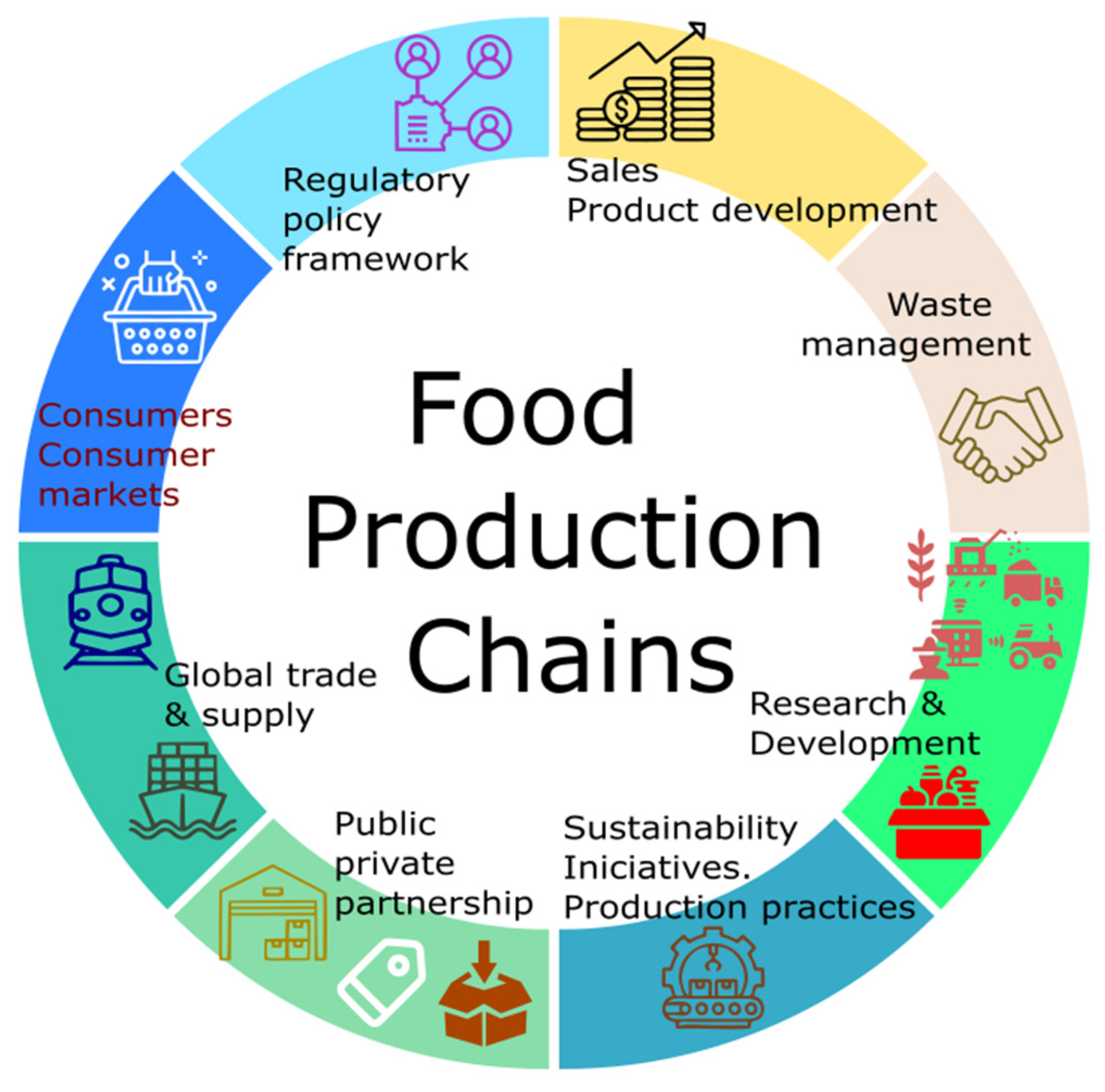
Figure 2.
General schematization of government’s role in food production chains. The twelve components underscore the importance of comprehensive governance considerations, the adoption of hybrid modes, and intensified research efforts to bolster the interactions mechanisms will derive in a more robust and efficient food chain.
Figure 2.
General schematization of government’s role in food production chains. The twelve components underscore the importance of comprehensive governance considerations, the adoption of hybrid modes, and intensified research efforts to bolster the interactions mechanisms will derive in a more robust and efficient food chain.
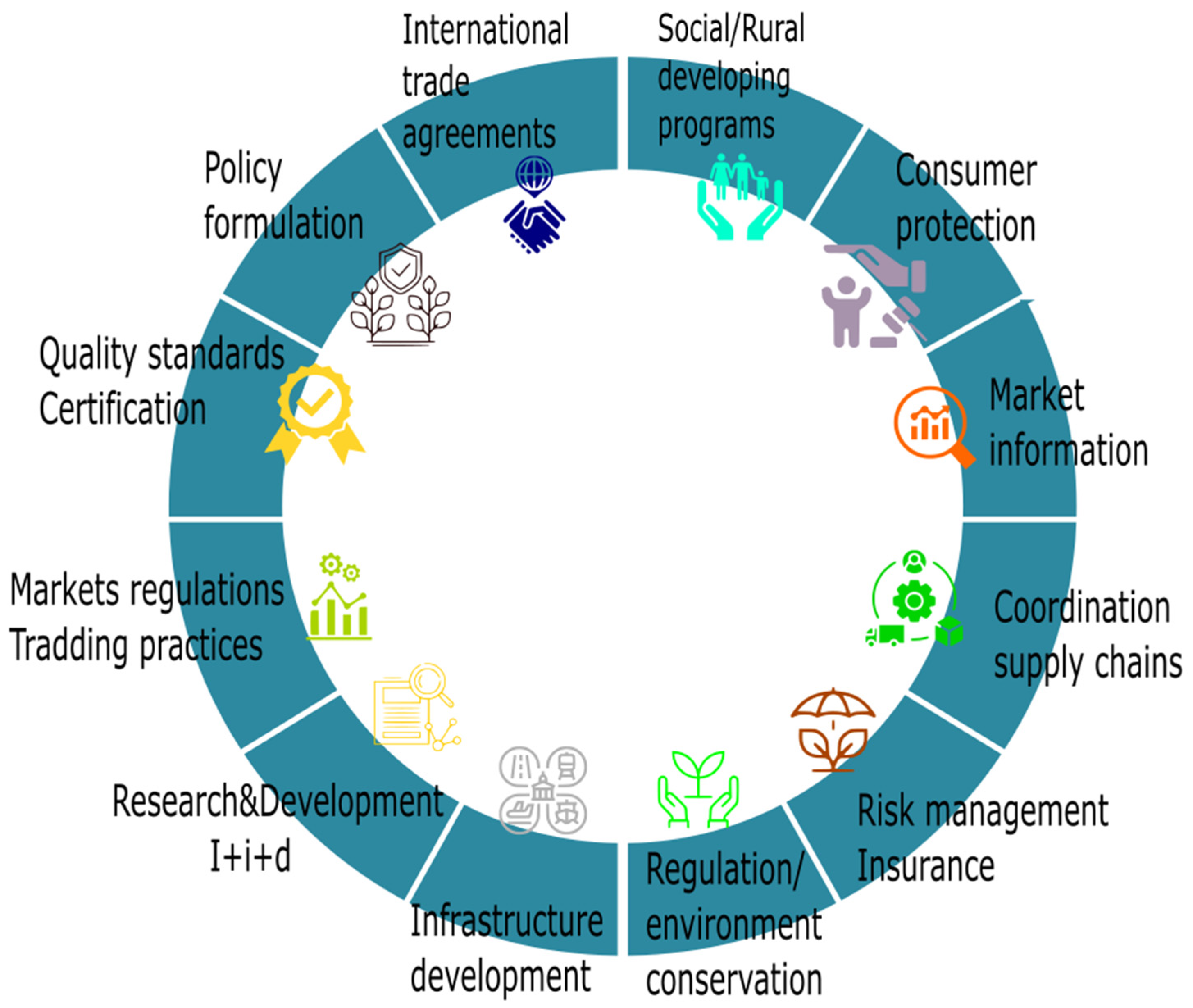

Table 1.
General description of main components of food production chains.
| COMPONENT | DESCRIPTION | KEY ACTIVITIES |
|---|---|---|
| Sales product development | Product development - also called new product management - is a series of steps that includes the conceptualization, design, development and marketing of newly created or newly rebranded goods or services. Product development includes a product’s entire journey - from the initial idea to after its market release [27]. The retail and marketing phase involves the sale of food products to consumers. This phase includes activities such as product display, advertising, promotions, and retail operations. | Supermarket operations, marketing campaigns, product placement, customer service. |
| Distribution and Logistics | Distribution and logistics focus on the efficient movement of food products from farmers location to retailers and eventually to consumers. It starts from the very beginning of the collecting harvest, and continues through the packing, labeling, and delivery of those goods and products to their intended retailers and consumers; it includes transportation, storage, and supply chain management. | Transportation, packing, labelling, warehousing, inventory management, distribution networks. |
| Consumer and consumers markets | A consumer market is one where retailers sell goods and services to customers for personal use or consumption. The consumption phase involves individuals or households purchasing, preparing, and consuming food products. It is the final stage where food is enjoyed and provides sustenance. | Cooking, meal preparation, dining, food consumption, waste food management |
| Waste management | Waste management addresses the proper handling and disposal of food waste generated at various stages of the production chain. It aims to minimize environmental impact and promote sustainability. | Recycling, composting, waste reduction strategies, waste-to-energy initiatives. |
| Regulatory and policy framework | The regulatory and policy framework includes laws, regulations, and policies governing food safety, quality, labeling, and production practices. It ensures compliance with standards and safeguards public health. | Policy development, regulatory enforcement, food safety inspections |
| Research, Development, & Innovation | Research and development focus on innovation and improvement in agricultural practices, food processing technologies, and nutritional content. It drives advancements in sustainable and efficient food production.Technology and innovation encompass the use of modern technologies to enhance efficiency, traceability, tracking and sustainability in the food production chain. This includes the application of IoT, blockchain, and precision agriculture. | Agricultural research, technology development, nutritional studies, innovation in food processing.Adoption of smart farming technologies, development of food traceability systems, innovation in packaging. |
| Sustainability initiatives | Sustainability initiatives focus on reducing the environmental impact of food production, promoting ethical practices, and ensuring the long-term viability of the food supply chain. | Sustainable farming practices, eco-friendly packaging, social responsibility programs. |
| Global trade and supply chain resilience | Global trade and supply chain resilience address the interconnectedness of the global food market. It involves managing risks, ensuring supply chain resilience, and facilitating international trade. | Trade agreements, risk management strategies, supply chain optimization. |
| Public-Private partnerships | Public-private partnerships involve collaboration between government entities and private businesses to address challenges and enhance the efficiency of the food production chain. | Joint initiatives, collaboration on research projects, infrastructure development. |
Table 2.
Advantages and disadvantages of contract farming and agreements.
| Entity | Advantages | Disadvantages |
|---|---|---|
| Farmers | Market Access. Contract farming provides farmers with a guaranteed market for their produce, ensuring that their crops will be purchased by the buyer. | Price Volatility. Prices agreed upon in contract farming agreements may not always reflect market fluctuations, potentially leading to missed opportunities for higher prices. |
| Risk Mitigation. Farmers may receive support in the form of inputs, technology, and know-how from the buyer, helping them mitigate risks associated with production | Dependency on Buyers. Farmers may become dependent on a single buyer, which could lead to a power imbalance in the relationship. | |
| Stable Income. Contract farming can provide farmers with a stable and predictable income, as they know in advance the price they will receive for their produce. | Contract Terms and Conditions. Some contract terms may be unfavorable to farmers, such as stringent quality standards, leading to potential challenges in meeting requirements. | |
| Access to Technology. Buyers often introduce modern agricultural practices and technology to farmers, enhancing productivity and efficiency. | Lack of Bargaining Power. Farmers, especially smallholders, may have limited bargaining power, making it challenging for them to negotiate favorable terms in the contract. | |
| Quality Standards. Contract farming agreements may include specifications for quality standards, encouraging farmers to produce crops that meet specific market requirements. | Limited Crop Choice. Contract farming may restrict farmers to specific crops demanded by the buyer, limiting their ability to diversify their production. | |
| Training and Capacity Building. Buyers may provide training and capacity-building programs to farmers, improving their skills and knowledge in agricultural practices. | Limited access to technology. Agribusinesses may offer extension services to support farmers in optimizing their production. | |
| Buyers | Supply Chain Control. Buyers gain more control over the supply chain, ensuring a consistent and reliable source of agricultural products. | Dependency on Farmers. Buyers may become dependent on a specific group of farmers, and disruptions in the supply chain could impact their operations. |
| Quality Assurance. Contract farming allows buyers to set quality standards, ensuring that the produced crops meet specific criteria. | Quality Control Challenges. Ensuring consistent quality across multiple smallholder farmers can be challenging, leading to potential quality control issues. | |
| Risk Sharing. Buyers and farmers can share risks, with buyers providing support and expertise to help mitigate challenges such as weather-related risks. | Enforcement Difficulties. Enforcing contract terms and ensuring compliance with quality standards may be challenging, especially in regions with weak legal systems. | |
| Efficient Logistics. Buyers can plan logistics more efficiently, knowing the quantity and timing of the agricultural products they will receive. | Costs of Support Services. Providing support services to farmers incurs additional costs for buyers, and these costs may impact profit margins. | |
| Access to Smallholder Farmers. Buyers can tap into a wider network of smallholder farmers, expanding their sourcing capabilities. | Market Risks. Buyers may bear market risks if they agree to fixed prices that do not reflect market fluctuations. |
Disclaimer/Publisher’s Note: The statements, opinions and data contained in all publications are solely those of the individual author(s) and contributor(s) and not of MDPI and/or the editor(s). MDPI and/or the editor(s) disclaim responsibility for any injury to people or property resulting from any ideas, methods, instructions or products referred to in the content. |
© 2023 by the authors. Licensee MDPI, Basel, Switzerland. This article is an open access article distributed under the terms and conditions of the Creative Commons Attribution (CC BY) license (http://creativecommons.org/licenses/by/4.0/).
Copyright: This open access article is published under a Creative Commons CC BY 4.0 license, which permit the free download, distribution, and reuse, provided that the author and preprint are cited in any reuse.


