
Submitted:
21 February 2024
Posted:
22 February 2024
You are already at the latest version
Abstract
The purpose of this review is to elucidate the actual threat of the most prevalent mycotoxins in agricultural commodities and human/animal food/feed for appearance of foodborne ailments and diseases. The underestimated hazard of joint mycotoxin uptake of animals or humans is critically discussed with regards to synergistic or additive interaction between some target mycotoxins. The real toxicity of target mycotoxin combinations as it happens in practice is evaluated and possible lower limit values or control measures are suggested in such cases. Some critical points in adequate risk assessment, hygiene control and regulation of mycotoxns are discussed. The efficiency of current mycotoxin regulations and control measures is evaluated in regards to human/animal health hazard. The risk assessment in the case of multiple mycotoxin exposure of humans/animals via the food/feed or agricultural commodities is evaluated and some suggestions are proposed in such cases. Appropriate control measures and food safety issues throughout the food supply chain are proposed in order to prevent target foodborne diseases. Some preventive measures and possible veterinary hygiene control or risk assessment are proposed in some practical cases of foodborne diseases for preventing mycotoxin contamination of animal products designed for human consumption and to avoid possible public health issues.
Keywords:
food security
; food safety
; foodborne ailments
; mycotoxins
; hygiene control
; risk assessment
; mycotoxin interaction
; control measures
1. Introduction
The mycotoxins are fungal metabolites, which are often contaminants of feeds or food commodity. This poses a serious hazard for animal/human health around the world. A lot of health ailments in animals/humans can be provoked by such food/feed, which is contaminated by mycotoxins. The cereals are invided by fungi in both cases: in the field or after the harvest and such invasion and subsequent mycotoxin production is often unavoidable due to some target environmental predisposing factors such as excessive raining at harvest time, increased humidity and unadequate storage conditions [1,2]. Independently of the large number of natural fungal metabolites (above 400), only 10–14 are mostly responsible for some foodborne ailments or compromised public health, e.g. ochratoxin A (OTA), aflatoxins (AFs) among which aflatoxin B1 (AFB1) and aflatoxin M1 (AFM1) are the most dangerous, fumonisins (FUMs) among which fumonisin B1 (FB1) is the most dangerous, ergot alkaloids, zearalenone (ZEA), patulin (PAT), deoxynivalenol (DON), diacetoxyscirpenol (DAS), T-2 and HT-2. These mycotoxins often contaminate feedstuffs, food commodities or animal/chicks products, e.g. eggs, meat or milk in concentations, which can compromise human health or animal wellbeing [3,4,5,6].
Animals, exposed to mycotoxins via the feedstuffs, often have some changes in the behavior, nervous signs or refuse to eat such feedstuffs, showing poor feed conversion or decreased body weight gain. Some foodborne diseases or increased number of secondary bacterial infectctions or decreased reproductive capacities can be often seen in such animals [7,8]. The well known toxic effects of mycotoxins are: nephrotoxic (mainly OTA and slightly FB1), neurotoxic (mainly FB1), immunosuppressive (mainly OTA, AFB1, DON and T-2 toxin), carcinogenic (mainly AFB1, OTA and FB1), oestrogenic (ZEA), genotoxic (mainly AFB1, OTA, T-2) effects [2,9,10].
The multiple mycotoxin contamination with several mycotoxins is often occurred in many feedstuffs or food commodities. The mycotoxins contents in the same cases are often below the maximum permitted levels and within European requirements, but such multiple mycotoxin contamination in low levels could be also harmful for animals/humans, having in mind the additive or synergistic effects between some target mycotoxins, which are often responsible for appearance of some foodborne ailments. Such joint mycotoxin interactions should be carefully investigated via some in vitro or in vivo studies and appropriate conclusions should be made in regard to the necessary hygiene control and the required risk assessment. In such a way the possible hazard for animals or humans could be analysed in depth and adequate preventive measures could be proposed for each particular case.
According to Food and Drug Administration (FDA), the economic costs of crop losses in USA due to mycotoxin contaminations and subsequent condemnation of feeds or food commodities is nearly $930 million per year [11]. FAO reported that nearly 25% of the world’s crops are contaminated by mycotoxins each year, wich contributes to nearly 1 billion tons of annual losses of feeds/foods [12]. In this regard, different kind of losses attributed to mycotoxins are known, e.g. losses of decreased livestock production, illness or death of animals/humans, increased necessity for medical care and veterinary service, increased costs for regulatory and preventive measures or mycotoxins detoxification, economic losses caused by food/feed scrapping, etc [5,10].
Currently, EU has accepted maximum permissible limits for most dangerous mycotoxins in human foods or animal feedstuffs [7], but these limits don’t take into consideration joint mycotoxin exposure and mycotoxins interaction, synergistic or additive effects of some mycotoxins and increased toxicity of such mycotoxin combinations even in lower contamination levels than permitted ones. Therefore, the effectiveness of current regulatory measures could be questionable, because the same regulations are based only on the toxicity of individual mycotoxin without taking into account possible mycotoxin interactions. In order to ensure more adequate food safety and effective control, some additional regulatory measures have to be introduced, which should take into consideration synergistic or additive mycotoxin interaction. Therefore, the knowledge of qualified experts in target research areas, incl. food science and technology, veterinary and human medicine, and agriculture, is of crucial necessity for introduction of such regulatory and quality control measures [10].
The purpose of this review is to elucidate the most prevalent mycotoxins in feedstuffs and agricultural commodities and to evaluate the possible hazard of such mycotoxin contamination for human or animal health. The underestimated hazard of joint mycotoxin exposure of animals or humans will be briefly elucidated. The effectiveness of the current provisions for the regulation of mycotoxins in feedstuffs and foods will also be discussed in relation to human and animal health. A brief investigation will be made about the possible veterinary preventive measures, hygiene control and risk assessment in regard to some foodborne ailments/diseases provoked by mycotoxins in the practice in order to reduce mycotoxins content in meat and other animal products, and to prevent subsequent entering of the same mycotoxins in commercial channels.
2. Mycotoxins Prevalence and Current Regulations
The seasonal weather conditions within each geographical area during critical growing stages of each plant species are of particular importance for explaining the levels of mycotoxin contamination. The variation in the results is usually a consequence of various important circumstances such as the type of the analyzed samples, the periods of the surveys and the weather fluctuations in each particular year of the survey. In addition, various environmental conditions, such as increased humidity, temperature, excessive rainfall, drought conditions, damages by insects, in addition to the used agronomic practices could provoke stress and further contribute to the development of the mould in the respective plants in the field before harvesting [13,14,15]. For example, the weather conditions known to lead to extensive AFs contamination are mainly the high temperature, the low rainfall and the followed drought stress, whereas Fusarium spp. producing DON and ZEA are mainly associated with a cool weather and excessively wet growing season [13,16]. Some of the mycotoxins such as OTA and AFs are mainly produced under the storage conditions for a prolonged time, and therefore are known as storage mycotoxins, whereas others such as FUMs, trichotecens, DON, ZEA and some other Fusarium mycotoxins are mostly produced in field conditions before harvesting [1]. In addition, the international grain trade may further distribute mycotoxins contaminated materials outside of their natural geographical areas of occurrence, and therefore, to complicate additionally the possible prediction of mycotoxin contamination of feeds or foods.
EU regulatory limits range from 0.1 μg/kg for AFB1 in processed cereal-based foods for human infants and young children, to 4000 μg/kg for FB1 and FB2 in unprocessed maize for human consumption, whereas in regard to milk and milk-based products, the limit for AFM1 is 0.05 μg/kg [2,17]. According to the EC regulation, the recommended limit for mycotoxins in wheat is 4 μg/kg for AFs, 2 μg/kg for AFB1, 1250 μg/kg for DON, 5 μg/kg for OTA, and 100 μg/kg for ZEA, whereas the most common mycotoxins in wheat flour are AFs, OTA and DON [2,17]. Therefore, the EU limits of the same mycotoxins in processed cereal products are lower such as 3 µg/kg for OTA, etc [18]. The maximum permitted levels of mycotoxins in maize when used for human consumption according to EC regulation are 4000 μg/kg for FUMs, 2 μg/kg for AFB1, 5 μg/kg for OTA, 1750 μg/kg for DON, 350 μg/kg for ZEA, 10 μg/kg for AFs, and 100 μg/kg for T-2 + HT-2 ZEA [2,7]. The mycotoxins contaminating the rice based on their prevalence are AFB1, ZEA, DON, FUMs, AF, OTA, and HT-2/T-2 toxins [19]. The maximum permitted levels of the same mycotoxins in rice defined by the EC are 10 μg/kg for AFs, 5 μg/kg for AFB1, 5 μg/kg for OTA, 100 μg/kg for ZEA, and 1250 μg/kg for DON [2,7].
The most common mycotoxin in barley was found to be DON, whereas in cereal porridge - AFs and DON, and in breakfast cereals – AFs [5]. The most common mycotoxins in fruits and vegetables were found to be OTA, PAT and trichothecenes [5]. AFs were most often found as natural contaminants in South Asia (78% positives samples with average contamination level of 128 μg/kg), followed by South-East Asia (55% positives samples with average contamination level of 61 μg/kg). In Germany, seven oilseed samples investigated in 2010 were found to contain AFB1 above the maximum limit [20]. ZEA was found to be most often contaminant in North Asia (56% positive samples with average contamination level of 386 μg/kg). DON was most often found as natural contaminant in North Asia (78% positives samples with average contamination level of 1,060 μg/kg). However, the highest average DON contamination has been found in North America (68% positives samples with average contamination level of 1,418 μg/kg) [21]. DON was also found to be equally prevalent in European and Canadian food with about 57% of the European [22] and about 59% of the Canadian food [23]. In Austrian feeds and feed raw materials DON was found in around 60% of investigated cereal samples other than maize and in around 95% of maize samples [20]. High DON contamination levels were also found in liquid pig feed samples in Netherlands, and 10% of the same sample exceeded the maximum permitted values [24]. Also, DON is found to be the most abundant mycotoxin in beer and, therefore, would be a real public health problem [25]. Some other mycotoxins such as AFs, OTA, ZEA and FUMs have been also reported to contaminate the beer at different stages of brewing [25]. FUMs were found as most frequent contaminant in South America (77% positives samples with average contamination level of 2,691 μg/kg). OTA was seen to be most often contaminant in South Asia (55% positives samples with average contamination level of 20 μg/kg). OTA was also seen to be a frequent contaminant in Eastern European samples (49% positives) evaluating the OTA exposure of EU population, but the average contamination level was much lower of 4 μg/kg) [6,21]. OTA in the same studies was found to be most prevalent in cocoa or cocoa products (81%), dried fruit (73%) and wine (59%), but it is important to mention that red or sweet wine was contaminated with higher OTA levels than other wines [6,26]. In addition to the cocoa products, OTA has been found most often and in high levels in coffee and chocolate [27,28,29]. A very high prevalence of OTA was also found in wheat products (94%) in Canada [23], but the highest concentrations of OTA have been identified in southern Europe [26]. AFs were found to be the most commons mycotoxins in the peanuts and pistachios [5].
OTA, in addition to AFs, has been also reported to contaminate animal products such as dried meat and other meat products such as sausages and salamis or eggs, which presents a global public health problem [30,31,32]. ZEA and DON were also reported to contaminante meat, but in lower degree [5]. AFs have been reported to be the most important contaminants of milk and dairy products such as cheese or yogurt [5]. The most often contaminants of eggs have been reported to be AFB1, OTA, ZEA and DON [33], which appeared to be a potential public health problem.
Contamination peaks of mycotoxins are often traceable to target regions and usually the same are linked to extreme weather or uncommon weather conditions. On the other hand, having in mind the climate change in Europe and all over the world, a possible increase of magnitude or frequency of human/animal exposure to mycotoxins is expected to occur, which respectively could further increase public health concerns. In this regards, mycotoxins, that have not been usually reported in foods/feeds from EU-countries might be occurred as a result of the change of distribution of some target fungal species in the regions with such climate changes, e.g. wider dissimination of Fusarium fungi and mycotoxins is expected to be seen in EU countries [34,35,36,37]. Therefore, a different exposure patern to mycotoxins is expected to occurred in EU countries nowadays or in the near future. For example, a strong A. flavus infection has been seen in 2003, because of the hot and dry weater, which led to high AFB1 contamination of maize in northern Italy [38]. A study of 110 samples revealed an AFB1 incidence of 75% with a mean level of 4.4 μg/kg. Because of the using of suchs maize as feed source for dairy cattle, a large contamination was subsequently seen of AFM1 in milk and, therefore, thousand tons of milk exceeding the EU maximum permitted levels of 0.05 μg/kg had to be discarded [20,39]. In addition, some species such as F. verticillioides, commonly associated with warmer and drier regions such as Italy or Spain, have been seen to be the predominant Fusarium species isolated from maize grown in Germany in 2006, which subsequently increased FUMs contamination of maize to 34% of the studied samples [40]. Such high contamination levels of AFB1 in EU also shows that climate change will entail a change in the patern of the current mycotoxin distribution in the future time.
In this regard, the development of predictive models for mycotoxin contamination in cereals, foods and feedstuffs, which are based on the data of the regional climate would be a valuable tool to evaluate the risk of mycotoxin contamination in each season. Although the climate is one of the most influential parameter in regard to the extent of mycotoxin contamination, some other measures such as crop rotation (avoiding maize as a pre-crop for wheat), tillage or planting time (earlier planting of maize is important) are also of crucial importance in order to reduce mycotoxin contamination of cereals [20].
In order to obtain reliable results for mycotoxins contamination, a proper sampling has to be performed. It is well known that sampling could be a significant source of error in quantifying mycotoxin contamination level due to some difficulties in the sampling from large grain consignments and because of the uneven distribution of mycotoxins within a single commodity [41]. Therefore, in order to ensure effective sampling procedure for cereal mycotoxin detection or quantification the EC Regulation 401/2006/EC laying down the methods of sampling and analysis for the official control of the mycotoxins contamination levels in feeds and foodstuffs. In this regard, precise details for the methods of sampling, criteria for sample preparation, acceptance parameters, analytical criteria for the performance of the methods of analysis are provided for the official controls, in addition to the criteria for reporting and interpretation of the results received [42]. In this regard, a lot of analytical methods for mycotoxin analysis in food and feedstuffs have been elaborated, e.g. such as immunoassay, high-performance liquid chromatography (HPLC), gas chromatography (GC), tandem mass spectrometry (MS/MS), gas chromatography/mass spectrometry (GC/MS) and liquid chromatography/mass spectrometry (LC/MS) among which the last one is increasingly widespread for detection of multiple mycotoxins conjugates [43,44,45,46,47,48,49,50]. Some high or ultra-performance chromatography systems coupled to mass spectrometry are also reported to be useful in the determination of the co-occurrence of multiple mycotoxins in food commodities [51]. The areas which need further investigations and refinement are regarding the conjugated or modified mycotoxin determination and the elaboration of new convenient, rapid and cheap analytical approach in this regard [52]. Also, more research investigations on the development and application of multi-mycotoxin analytical methods are necessary in this ragard. Some analytical methods as commercially available ELISA kits are also very popular because of their relatively low cost and easy application [52].
3. Joint Mycotoxin Exposure as a Cause of Foodborne Ailments
Currently, there are enough evidences for mycotoxins involvement in in some diseses in humans or farm animals such as equine leukoencephalomalacia, porcine pulmonary edema, alimentary toxic-aleukia in humans, porcine vulvovaginitis or rectal prolapse, stachybotryotoxicosis, mycotoxic porcine/chicken nephropathy, ergotism and some others [7,10,53,54,55]. Different animals or poultry have different sensitivity to mycotoxins as poultry species are more resistant to the toxicity of DON, FUMs and ZEA, whereas pigs are very sensitive to T-2 and DON [52].
Unfortunately, the toxic effects of mycotoxins and especially toxicity of various mycotoxin combinations on human health is scarcely investigated. So far, there are no sound proofs for mycotoxins involvement in some target diseases in humans from developing countries, where people are continuously exposed to mycotoxins contaminated foods. However, a relationship was seen between the concentration of FB1 in the maize, the quantrity of ingested maize products, and the incidence of esophageal cancer in people exposed to FB1 via the maize, which suggested that FB1 is probably responsible for human esophageal cancer in some countries, e.g. South Africa and China [56]. It was also found, that pregnant women who are ingested high concentrations of FUMs via the food at the initial stage of the pregnancy have a high risk of appearance of neural tube defects such as birth defects of the brain or spinal cord in their newborn childs [57]. Idiopathic Congestive Cardiopathy (ICC) in humans is another common disease seen in South Africa, which is also associated with ingestion of high levels of FB1 and other trichotecens, incl. moniliformin (MON), which is suspected to be partly responsible for the cardiac weakness. The disease is mainly established in old people who consumed a lot of home produced maize and drank a lot of home made beer [7,58].
On the other, feedstuffs contaminated by mycotoxins couuld contribute to mycotoxin contamination of some food products from animal origin such as milk, dairy products, meat or eggs, because of the carry-over of some mycotoxins from the forages to defined food products. This circumstance could further contribute to the increase of mycotoxins exposure of humans [4,59,60]. Another circumstance contributing to the mycotoxins exposure of humans is their thermal and chemical stability and the minimal loss during termal or production processing [61].
The multiple mycotoxin contamination of forages and food commodities has been reported to be responsible for many foodborne ailments or diseases in animals and humans (Figure 1) [7,54,55,62]. In addition, mycotoxins are reported to be responsible for some secondary bacterial diseases due to their immunosuppressive effects [54,55]. Some foodborne mycotoxicoses such as alimentary toxic aleukia in humans, equine leukoencephalomalacia, vulvovaginitis and rectal prolaps in pigs, porcine pulmonary oedema, human oesophageal carcinoma, stachybotryotoxicosis (Figure 1), mycotoxic porcine/chicken nephropathy (Figure 2), ergotism and many other diseases or ailments in animals or humans are some of the well known examples of foodborne mycotoxicoses [2,10].
Figure 1.
Foodborne mycotoxicoses and the hazard for animals or humans due to underestimated Tolerable Daily Intakes and the Risk Assessment from joint mycotoxins exposure in low contamination levels, e.g. masked mycotoxins, synergistic interaction between target mycotoxins and neglected hygiene control [7].
Figure 1.
Foodborne mycotoxicoses and the hazard for animals or humans due to underestimated Tolerable Daily Intakes and the Risk Assessment from joint mycotoxins exposure in low contamination levels, e.g. masked mycotoxins, synergistic interaction between target mycotoxins and neglected hygiene control [7].
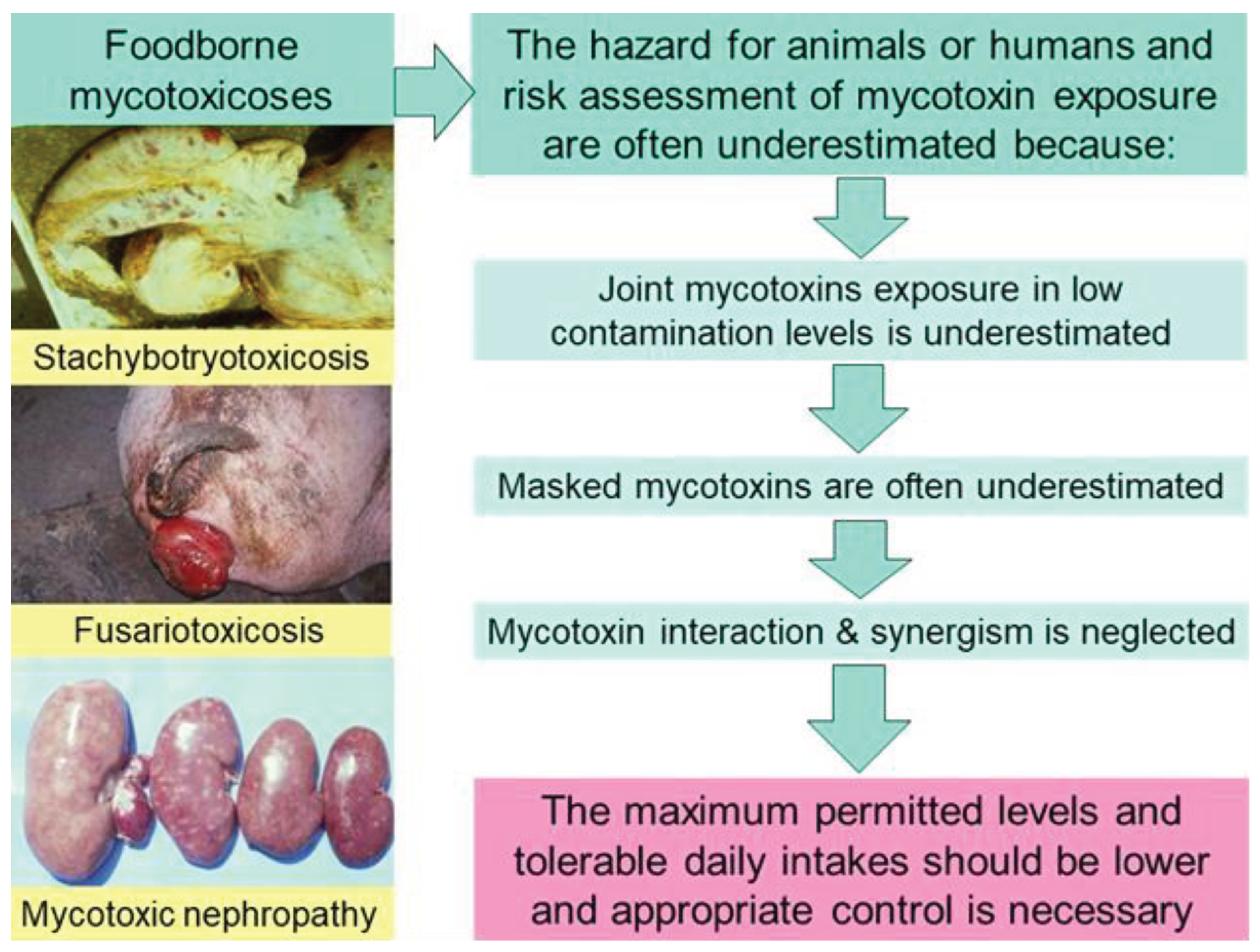
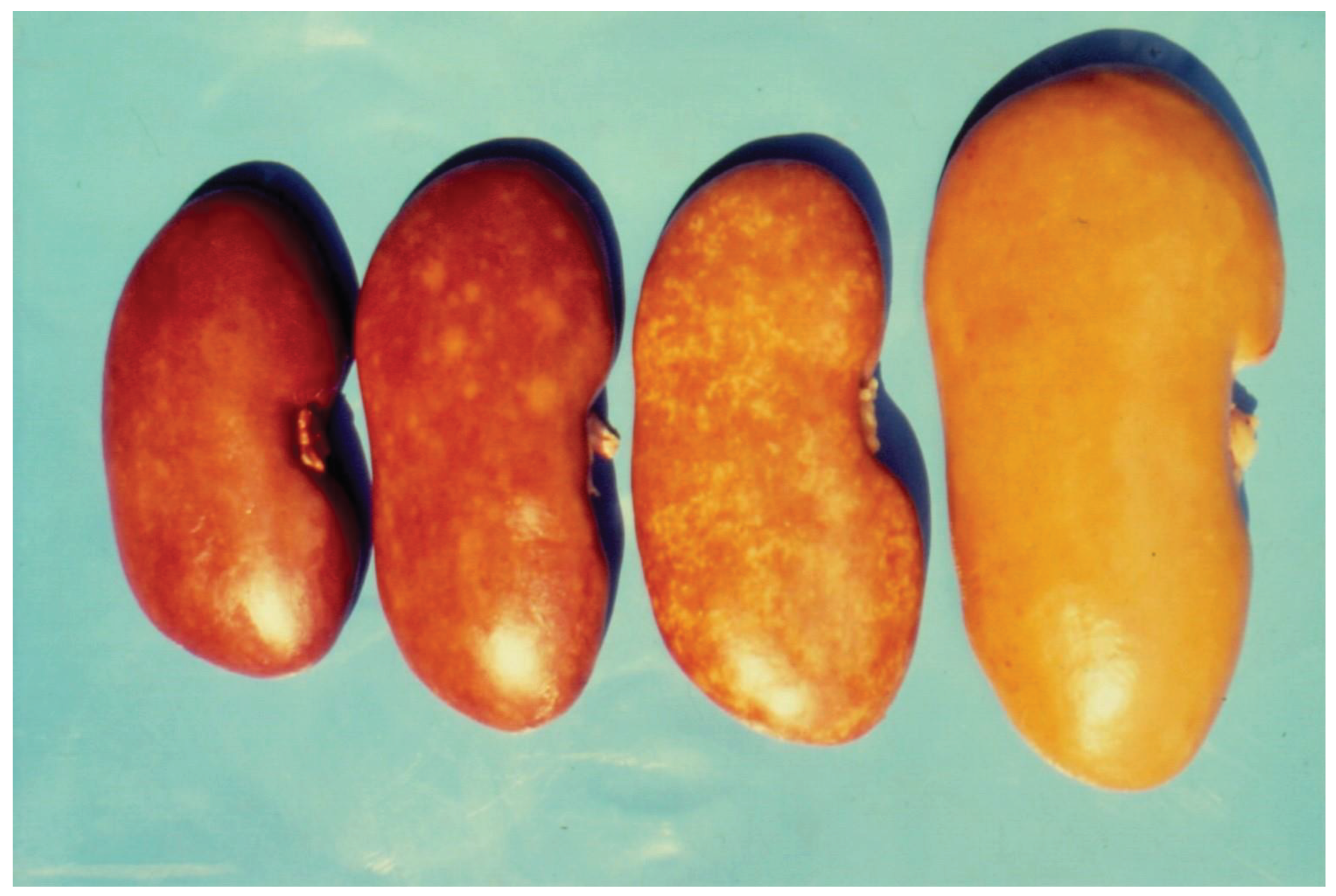
Figure 2.
Macroscopic appearance of kidneys with mycotoxic porcine nephropathy (MPN). Different degree of enlargement and mottled or enlarged and pale appearance of kidneys in pigs of 6–8 months of age taken at slaughter time. [54,86].
Fusarium mycotoxins, found to be mainly responsible for multiple mycotoxin contamination of maize and less often of oats, barley and wheat, are DON and ZEA. ZEA is mainly reported to contaminate cereal products, incl. feedstuffs, pasta, bread and beer [63] as well as animal products, incl. milk, meat and eggs [5]. DON is mainly reported to contaminate wheat, rye, corn, oats, barley, rice and sorghum [5]. ZEA was found to be involved in the appearance of many vulvovaginitis, rectal or vaginal prolapse in female pigs (Figure 1), some other estrogenic symptoms, incl. swelling of the mammary glands or infertility [7,64], whereas in male pigs a feminization and decrease in testosterone levels and/or spermatogenesis as well as decreased libido were observed [65]. ZEA has genotoxic action and would be partly responsible for the breast and esophageal carcinomas [66,67]. The International Agency for Research on Cancer (IARC) classified ZEA in group 3 (mycotoxins, which not exert carcinogenic effects on humans) [68,69]. The hyperestrogenism in female pigs (vulvovaginitis and rectal or vaginal prolapses), which is known to be the main sign of ZEA toxicosis, is usually seen only after prolonged ZEA intake for nearly a month, whereas the first clinical symptoms of exposure to feedstuffs contaminated with Fusarium graminearum and/or Fusarium culmorum are usually manifested by the toxic effects of DON, incl. cytotoxic and emetic effects (degenerative changes in gastrointestinal tract), neurotropic effect (paresis of the limbs) and immunosuppressive effect (secondary bacterial diseases) [2,7,70,71]. In humans, the main clinical symptoms due to DON exposure are vomiting, acute nausea, diarrhea, abdominal pain, dizziness, headache and fever [5].
Some other Fusarium mycotoxins, e.g. T-2 toxin, HT-2 toxin and DAS, which are produced mainly by Fusarium spp. from the section Sporotrichiella or F. poae species were found to possess also a strong cytotoxic, genotoxic and immunosuppressive effects [72]. Barley and oats were mainly the cultures, which are frequently contaminated with T-2 and HT-2 [20]. The damages in hematopoietic system, damages in eggshells and egg production, feed refusal and growth retardation are the main symptoms of T-2 toxicity [73]. The damages in cardiovascular system, growth retardation, lung damages are the main symptoms of DAS toxicity, which could add to clinical picture provoked by T-2 and HT-2 [7]. The most sensitive species to this fusariotoxicosis were found to be pigs and poultry [20], and the same symptoms are seen mainly after ingestion of hay, grain or straw, wintering in the open. This fusariotoxicosis in humans is famous as Alimentary Toxic Aleukia [74]. The clinical signs characteristic for this fusariotoxicosis are catarrhal or haemorrhagic gastroenteritis, accompanied by ulcera and necroses in the gastrointestinal system, damages in the kidney, liver, heart, brain and peripheral ganglia, which are responsible mucular spasms, paresis of the limbs and tremors [7]. Abdominal pain, diarrhea, nausea, tremors and weight loss are seen at initial stages of this fusariotoxicosis [75].
The equine leukoencephalomalacia is another important foodborne mycotoxicosis, which is provoked mainly by FUMs, among which FB1 is the most toxic. These mycotoxins were reported to contaminate mainly the maize in developing countries [53,76]. The porcine pulmonary oedema, which was recognized for the fiest time in U.S.A., being responsible for the death of many pigs was another foodborne mycotoxicosis provoked by mouldy maize containing FUMs [77]. The heart failure and subsequent oedema in the lung of pigs can be explained by the disfunction in myocardial contractility in pigs, which is induced by the increase of sphingosine and subsequent inhibition of L-type calcium channels in the myocardium [78]. A similar disturbance in contractility of myocardium in humans is known as ICC and was first recognized in 1980 in the rural hospitals in South Africa. The disese was supposed to be due to the intake of some fusarium mycotoxins such as FB1, MON, and some others [1,7].
AFs are other potent mycotoxins, which are often seen in feedstuffs or food commodities in together with other mycotoxins, which can complicate strongly the clinical and pathological findings. These mycotoxins, among which AFB1 is the most dangerous one, affect mostly the liver as the most sensitive are young animals, ducks and turkeys. The typical signs in the early stage of intoxication are: fatty degeneration or/and necroses in the liver, accompanied by proliferation of connective tissue in the interstitium, enlargement of the gall bladder and intestinal damages. The typical signs in later stages are: icterus and cirrhosis of the liver, hydrothorax, ascites, accompanied by a thickening of the skin around the mouth or neck and papillomas on the mucosa of abomasus, which are characteristic symptoms mainly in cattle. The decrease of body weight gain, immunosuppression and anemia [7,60,79,80] are some additional chronic signs of aflatoxicosis in animals, poultry or humans, which can be complicated by some other co-contaminating mycotoxins with similar toxic effects on farm animals [7]. AFB1 in combine with other mycotoxins can also induce edema in malnourished people and is often associated with Kwashiorkor disease [69,81]. IARC classified AFB1 as carcinogenic for humans (group 1 mycotoxin) and to be the main cause of nearly 28% of all liver cancers [69]. AFs was also reported to be teratogenic to embrios and to be able to cross the placental barrier [82].
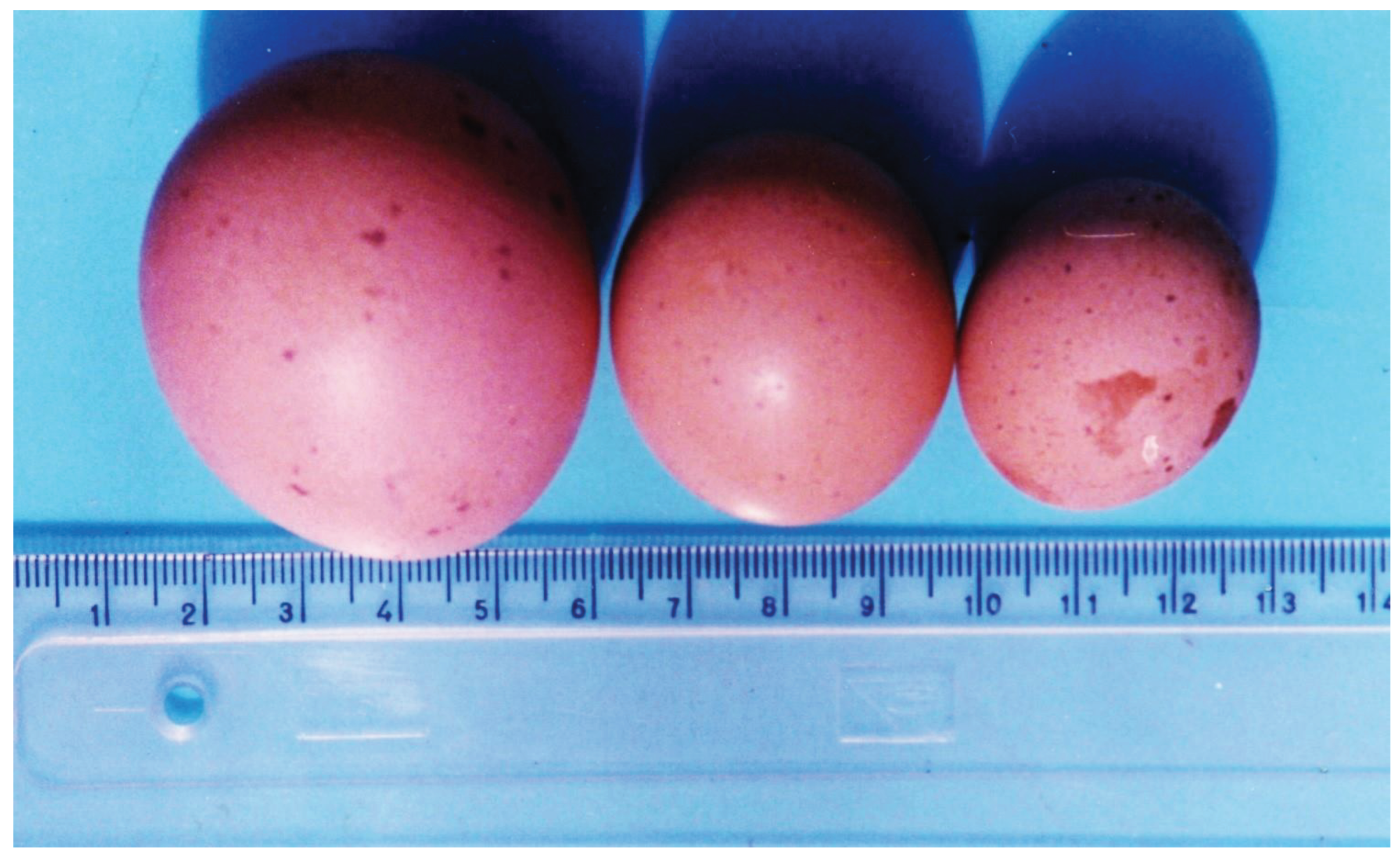
Mycotoxic porcine nephropathy (MPN) is also a mycotoxicosis, which is provoked by several mycotoxins, mainly OTA, penicillic acid (PA) and FB1 in some Balkan or African countries [54,55]. The same mycotoxins have synergistic (OTA and PA) [83,84] or additive (OTA and FB1) interaction [85]. The main clinical symptoms of MPN are the strong damages of kidneys (Figure 2) [54,55,86,87], but a decrease in weight gain, nervous symptoms (Figure 3), hepatocellular damages and a decrease in weight of eggs (Figure 4) can be also seen in chicks or laying hens exposed to the same mycotoxins [88,89,90,91,92].
Figure 3.
Nervous symptoms such as torticollis in a chick fed on moldy diet containing 790 ppb OTA and 2000-5000 ppb PA for 70 days [84].
Figure 3.
Nervous symptoms such as torticollis in a chick fed on moldy diet containing 790 ppb OTA and 2000-5000 ppb PA for 70 days [84].
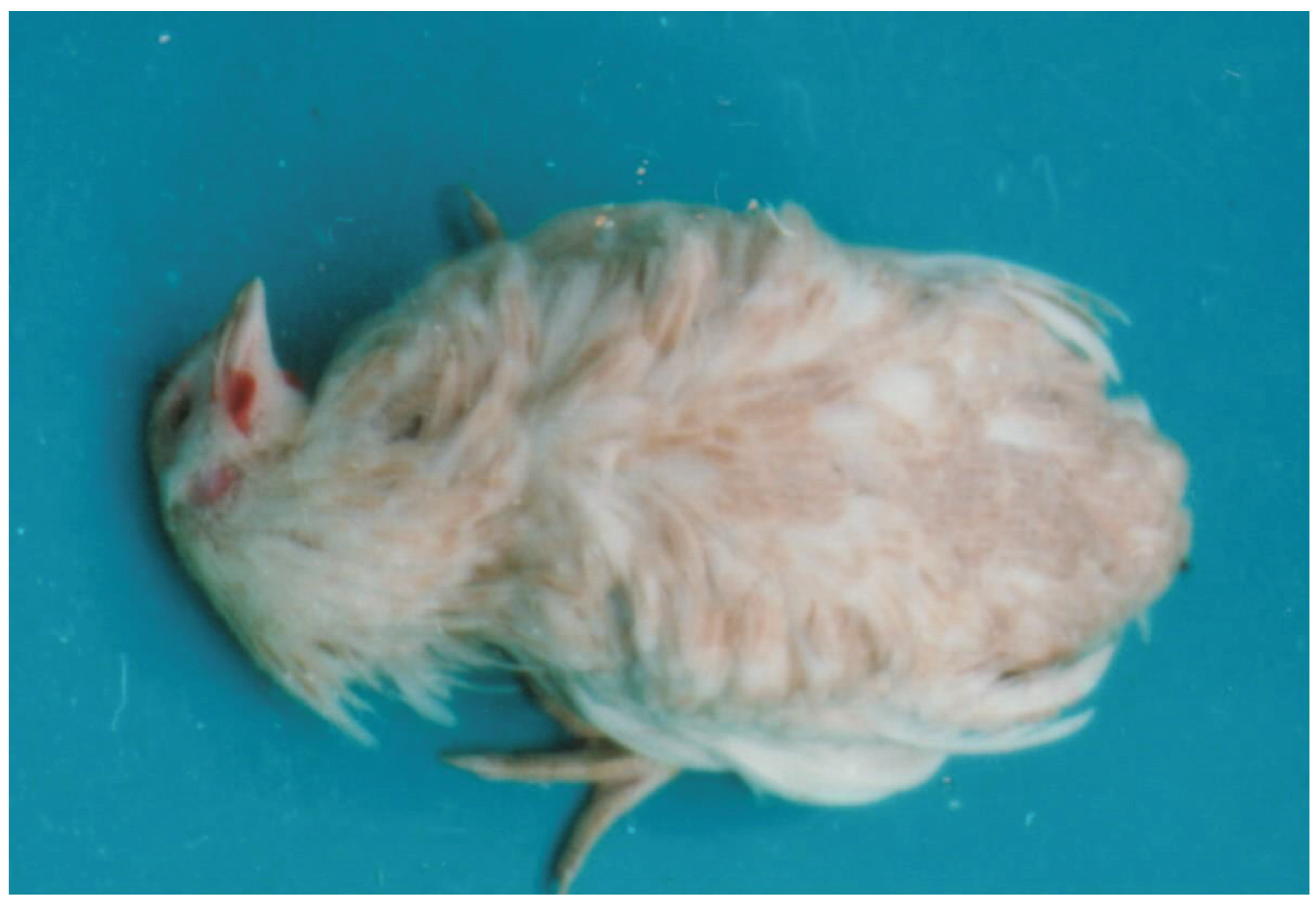
Figure 4.
Small size of eggs with the weight of 15.8 g (centre) and 25.8 g (right) and different sized spots and defects in the shell originated from laying hens exposed to 5 ppm OTA in the diet. Normal size of an egg from laying hen of control group (left) [92].
Figure 4.
Small size of eggs with the weight of 15.8 g (centre) and 25.8 g (right) and different sized spots and defects in the shell originated from laying hens exposed to 5 ppm OTA in the diet. Normal size of an egg from laying hen of control group (left) [92].
The fungal species Claviceps purpurea, which can produce a lot of mycotoxins, e.g. ergocristine, ergocryptine, peptide alkaloids such as ergosine, ergotamine and ergosecaline, lysergin amide derivatives such as ergometrine and ergine, biogene amines such as histamine and acetylcholine, and some others is amother dangerous mycotoxicosis known as Ergotism [7]. These mycotoxins are found in the fungal sclerotia, a compact mass of hyphae similar to a dark large wheat grain [3]. This fungus contaminates mainly wheat, rye, barley, oats and millet. In humans Ergotism is famous as St Anthony’s fire, and was known to cause hallucination. The St Anthony’s fire has been found to kill a lot of people in France in the Middle Ages [93]. Nowadays, the St Anthony’s fire is still found in some developing countries [94,95]. The main pathological/clinical symptoms of Ergotism are ischemic necroses of peripheral parts of the body, e.g. tail, ears or crown of hooves, induced by contraction of vessels, gangrene of extremits and peripheral parts of the limbs, in addition to some gastrointestinal signs, enhanced contractions of the uterus and subsequent prolapse of uterus and abortions [94,95,96].
Stachybotryotoxicosis is another mycotoxicosis, which is often seen in farm animals. It is provoked by fungal species Stachybotrys alternans (Stachybotrys altra), which contaminates the moist substrates (straw/hay/oats) containing plenty of cellulose. This fungus can produce very toxic compounds, e.g. satratoxins, verrucarins and roridins, and could be defined by the black coating. These fungal mycotoxins irritate mucosa of the oral cavity and gastrointestinal tract, causing a strong hyperaemia and inflmation. On the other hand, after mycotoxin cumulation, damages in the vessels and deep neurotrophic symmetrical necroses and ulcrers on gastrointestinal mucosa, oedema and haemorrhages are seen [7,97,98] (Figure 1). This mycotoxicosis shows a stationarity, because this fungus can survive for a long time in the soil outside the substrate, which explains the repeated contamination of animal feedstuffs [7].
Another dangerous mycotoxin for humans is PAT, which is often seen together with some other mycotoxins. PAT is reported in apples, grapes and pears damaged by brown rot, but also in the juice from the same fruits. It is also reported to contaminate vegetables, cereals and various types of cheese [5]. The rotten part of fruits should be removed before consumption in other to reduce the PAT content ingested by the consumers. PAT was reported to have many different toxic effects, e.g. neurotoxic, cytotoxic and carcinogenic effects, in addition to the reproductive disturbances [81,99,100]. The cytotoxic effect is manifested by some damages in the gastrointestinal tract, liver, kidneys, and disturbances in endocrine- and immune systems [101]. PAT is classified by IARC as a suspected carcinogen (from Group 3) [102,103].
It is a worrying circumstance, that a lot of mycotoxins have carcinogenic (Figure 5) genotoxic, teratogenic (Figure 6), and immunosuppressive properties, in addition to their acute toxic action [66,104,105,106,107,108,109,110]. A good example in this regard is FB1, which is suspected to provoke human esophageal cancer in South Africa [56] and to induce liver carcinomas in rats [111], in addition to its nephrotoxic effect and involvement in animal nephropathies in Bulgaria and South Africa together with OTA and PA [54,55]. The available data in the literature investigated mostly the carcinogenic effect of single and rarely of double mycotoxin exposure via in vitro studies [112], but in vivo studies investigating the chronic effect of multiple mycotoxins on the induction of neoplasia are scarce [113,114,115].
Figure 5.
(A) Neoplastic tissue proliferation (fibroma and fibroadenoma) in kidney with spontaneous mycotoxic porcine nephropathy [86]; (B) Adenocarcinoma in the kidney of rat exposed to 5 ppm OTA via the feed, which was slaughtered at the end of the 24th month of the experiment. Large grey-white neoplastic foci, which often merged each-other and protruded above kidney surface [106,107]; (C) Adenocarcinoma in the intestine of rat exposed to 10 ppm OTA via the feed, which died at the end of the 19th month of the experiment. Large greywhite neoplastic foci are seen on the intestinal serosa, which protruded significantly above its surface [106]; (D) Squamous cell carcinoma in the eye of a rat exposed to 10 ppm OTA via the feed, which was slaughtered at the end of the 24th month of the experiment [106].
Figure 5.
(A) Neoplastic tissue proliferation (fibroma and fibroadenoma) in kidney with spontaneous mycotoxic porcine nephropathy [86]; (B) Adenocarcinoma in the kidney of rat exposed to 5 ppm OTA via the feed, which was slaughtered at the end of the 24th month of the experiment. Large grey-white neoplastic foci, which often merged each-other and protruded above kidney surface [106,107]; (C) Adenocarcinoma in the intestine of rat exposed to 10 ppm OTA via the feed, which died at the end of the 19th month of the experiment. Large greywhite neoplastic foci are seen on the intestinal serosa, which protruded significantly above its surface [106]; (D) Squamous cell carcinoma in the eye of a rat exposed to 10 ppm OTA via the feed, which was slaughtered at the end of the 24th month of the experiment [106].
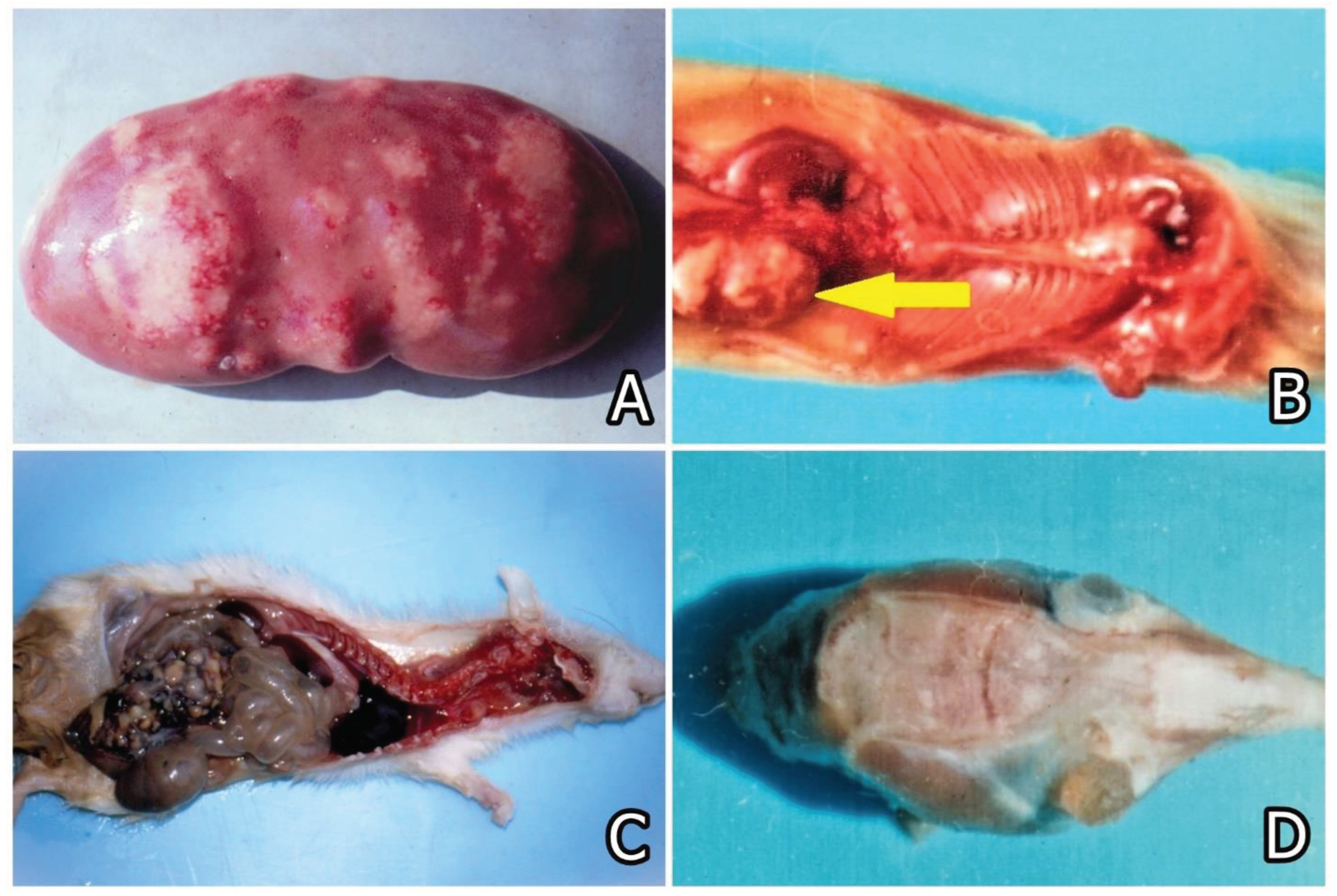
Figure 6.
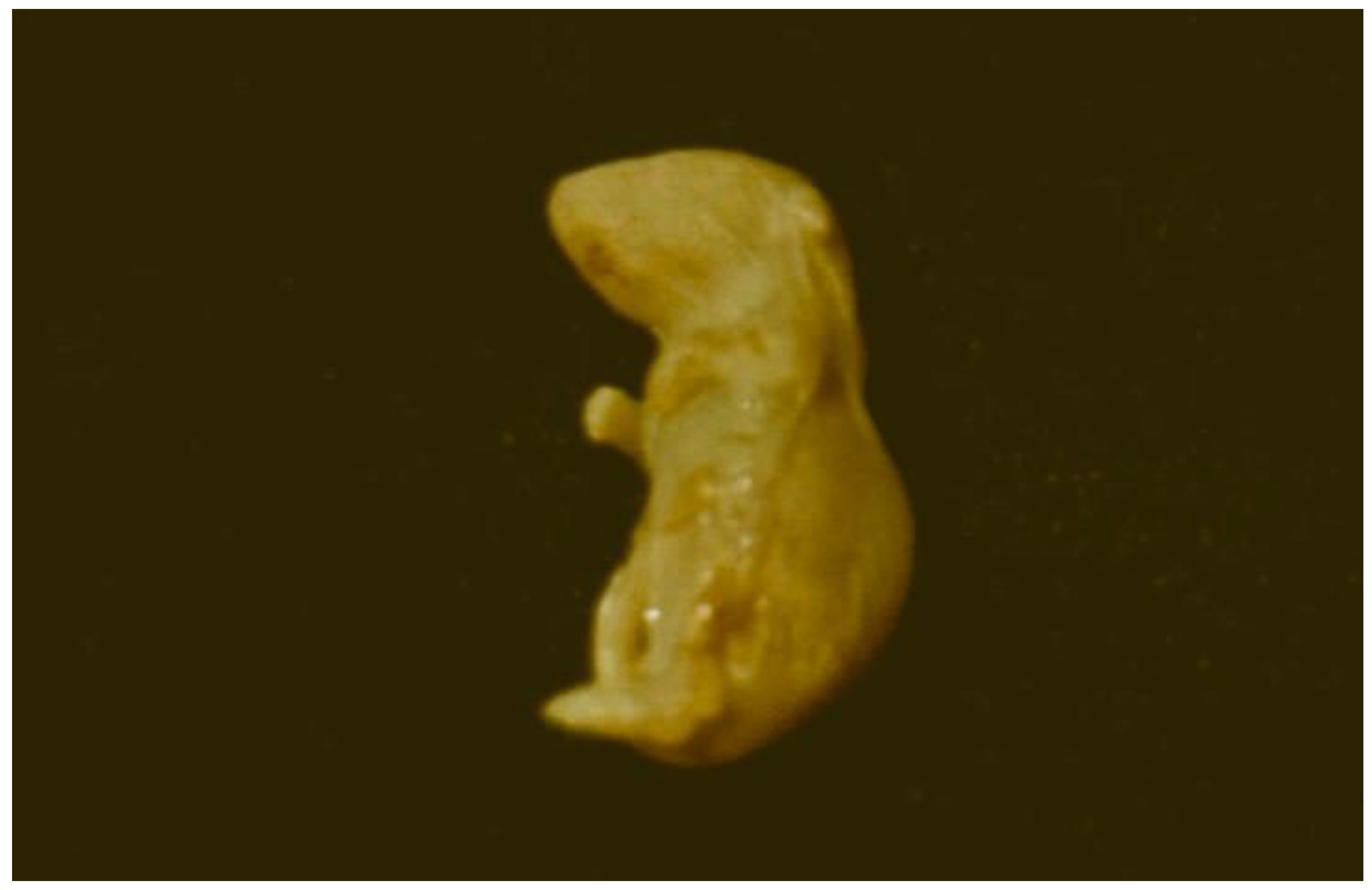
Malformations in newborn mouse whose mothers were exposed to 20 ppm OTA and 6 ppm OTB in the feed given from day 7 up to day 12 of the pregnancy - peromelia in the both right legs, astomia and anophthalmia [108].
Figure 6.
Malformations in newborn mouse whose mothers were exposed to 20 ppm OTA and 6 ppm OTB in the feed given from day 7 up to day 12 of the pregnancy - peromelia in the both right legs, astomia and anophthalmia [108].
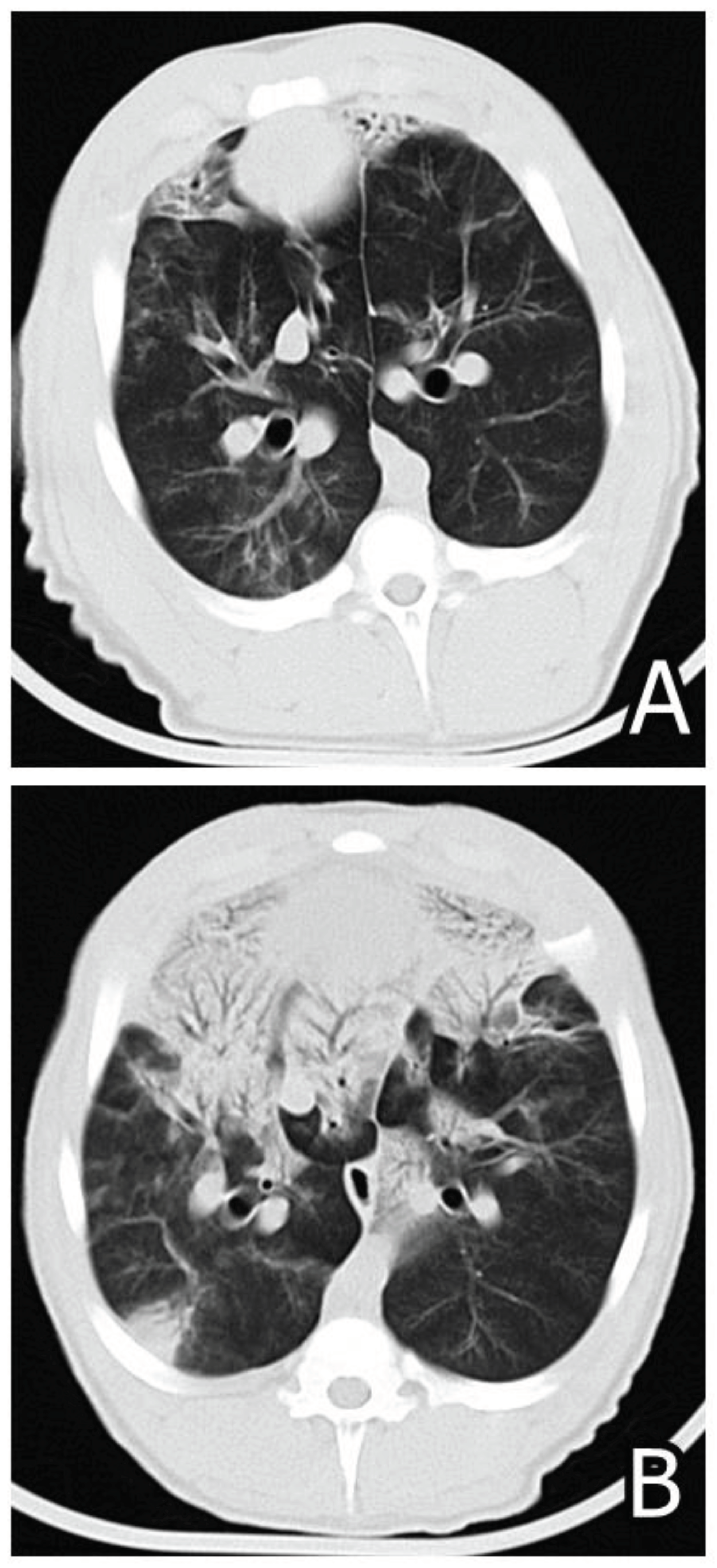
It is well known, that most of mycotoxins have strong immunosuppressive properties and can increase the susceptibility to secondary bacterial infection in concentrations similar to those in the practice [116,117,118,119,120,121], incl. susceptibility to salmonellosis [122,123,124] or colibacillosis [125] or to provoke a heavy progress of some infection such as Pasteurella multocida infection [126] and porcine reproductive and respiratory syndrome (PRRS) [127-130] (Figure 7) or parasitic invasions such as coccidiosis [90,91,92,93,94,95,96,97,98,99,100,101,102,103,104,105,106,107,108,109,110,111,112,113,114,115,116,117,118,119,120,121,122,123,124,125,126,127,128,129,130,131]. Having in mind this circumstance, it can be assumed that the combined mycotoxin exposure could really compromise the immune system of animals in very low concentrations having in mind synergistic or additive interaction between some target mycotoxins [85,88]. Therefore, it could be concluded that the increased morbidity and mortality in livestock and poultry exposed to various mycotoxin combinations via the feedstuffs is probably due to the increased susceptibility to secondary bacterial infections or to a heavy progression of parasitic diseases or microbial infections [2]. The oxidative stress, which can be provoked by many mycotoxins could additionally make worse the health of animals or humans [132,133].
Figure 7.
(A) Computed tomography (CT) image of the lung lesions of pig infected with M. hyopneumoniae in a definite sectioning plane on day 58 of the experiment demonstrating small foci of patchy ground glass opacification observed mainly in the cranial and middle lobes or in the cranial third of the caudal lobe of the lungs. (B) CT image of the lung lesions of pig infected with M. hyopneumoniae and exposed to 20 ppm FB1 via the diet in the same sectioning plane on day 58 of the experiment showing progressive development of pneumonic process as demonstrated by the extensive foci of patchy ground glass opacification observed in the cranial and middle lobes or in the cranial third of the caudal lobe of the lungs [129,130].
Figure 7.
(A) Computed tomography (CT) image of the lung lesions of pig infected with M. hyopneumoniae in a definite sectioning plane on day 58 of the experiment demonstrating small foci of patchy ground glass opacification observed mainly in the cranial and middle lobes or in the cranial third of the caudal lobe of the lungs. (B) CT image of the lung lesions of pig infected with M. hyopneumoniae and exposed to 20 ppm FB1 via the diet in the same sectioning plane on day 58 of the experiment showing progressive development of pneumonic process as demonstrated by the extensive foci of patchy ground glass opacification observed in the cranial and middle lobes or in the cranial third of the caudal lobe of the lungs [129,130].
4. Some Critical Points in Adequate Risk Assessment, Hygiene Control and Regulation of Mycotoxns
The following components of risk analysis, e.g. risk assessment, risk communication and risk management should be taken into consideration for providing adequate food safety. In order to provide adequate ‘risk assessment’, the following components have to be evaluated: hazard identification, hazard characterization, exposure assessment and risk characterization. In other to ensure adequate ‘risk communication’, the regular exchange of knowledge and opinions among the risk evaluators, the consumers and the risk managers is necessary during the process of risk analysis. However, the adequate “risk management” decision should be based not only on the “risk assessment”, but some other matters should be taken into consideration, e.g. environmental, economic, ethical and some other factors as well as effective control feasibility [1,7].
Therefore, Joint FAO/WHO Expert Committee on Food Additives (JECFA), after evaluation of the most dangerous mycotoxins, provided a mechanism for assessment of the toxic impact of each mycotoxin [134], which includes determination of no-observed-effect-level (NOEL) via experimental studies and subsequent applying of a safety factor, in order to estimate the Provisional Tolerable Weekly Intake (PTWI) or daily intake (PTDI). This approach evaluates mainly the maximum tolerated levels of mycotoxins in foods/feeds, but could not be applied in regards to the carcinogenic effect of some mycotoxins such as AFS, where “as low as reasonably achievable” (ALARA) approach or “as low as possible but technologically feasible and analytically detectable in the food ready for consumption” approuch should be applied [135]. International Agency for Research on Cancer (IARC) provides such a mechanism for evaluation carcinogenic properties of mycotoxins and the following groups of mycotoxins were created: group 1 (carcinogenic to humans, incl. AFB1), group 2A (probably carcinogenic to humans), group 2B (possibly carcinogenic to humans, incl. FB1 and OTA), group 3 (not classifiable as to its carcinogenicity to humans) [68,136]. Some revisions of the accepted criteria for this classification and regular updates in regards to some mycotoxins are periodically undertaken [10,69].
In this regard, the group TDI of 25 ng/kg bw for T-2, HT-2 and DAS, alone or in combination was recently decided by JECFA to be the most appropriate TDI [137] and the previous group provisional maximum tolerable daily intake (PMTDI) of 60 ng/kg bw for T-2 and HT-2, accepted at the 56th meeting and updated at the 83rd meeting to include DAS, is now changed (Table 1) [137,138,139,140].

Table 1.
Tolerable Daily Intake (TDI) of mycotoxins according to EU regulations and recommendations [17,137,138,139,140].
| Mycotoxins | TDI per kg b.w. (µg/kg b.w.) |
|---|---|
| Aflatoxins (AFs) (sum of AFB1, AFB2, AFG1, AFG2, AFM1) |
No exact value - as low as reasonably achievable (ALARA principle) - less than 0.001 - 0.01 (the lower dose concerns carcinogenic effect)) |
| Ochratoxin A (OTA) | 0.0002 - 0,017 (the lower dose concerns carcinogenic effect) |
| Patulin (PAT) | 0.4 |
| Deoxynivalenol (DON) | 1 |
| Nivalenol (NIV) | 1.2 |
| Zearalenone (ZEA) | 0.25 |
| T-2 + HT-2 toxins + DAS | 0.025 |
| Fumonisins (FUMs) | 2 |
Similarly, a group TDI of 1 µg/kg b.w. was designed for DON and its derivatives, e.g. 3-acetyldeoxynivalenol (3-ADON), 15-acetyldeoxynivalenol (15-ADON) and plant metabolite DON-3G, which is based on some experiments with mice in chronic mycotoxin exposure [140] (Table 1). In acute cases, however, 8 µg/kg b.w. per eating occation was accepted as a reference dose due to gastrointestinal damages reported in DON-exposed humans in China [141]. This TDI was based on the circumstance, that the same 3 derivatives can be biotransformed into DON in humans [142]. The evaluation of the risk of DON exposure of humans in EU population revealed, that a part of this population is exposed to concentrations, that represent a real health hazard [63,143].
The TDI of FUMs was set at 2 µg/kg b.w., because FB1 was suspected to provoke neural tube defects in the embryo [144] and scarce data are available for the mechanism of renal excretion of FB1 in humans. The same mycotoxin is poorly absorbed from gastrointestinal system and rapidly eliminated from the blood circulation via the hepatobiliary route, and mainly excreted through the faeces [63], which explains the absence of the required attention from the the scientific community. The additional efforts for claryfing toxicokinetics profile of this mycotoxin after oral ingestion would be useful to contribute further to the better risk assessment [63].
The TDI of AFs (a total sum of all forms of aflatoxins) is the lowest one, similarly to the maximum permitted levels of AFs in feeds or food commodities (Table 1), because AFB1 is classified by IARC as group 1 human carcinogen [68,69]. AFB1 and its metabolites are excreted via the feces, urine and milk, but the same mycotoxins can be also found in animals’ organs, meat or chicken eggs and, therefore, represent a real health hazard. Morever, the often contamination of cereal-based products, in addition to peanut cake, palm kernel, corn gluten meal, pork products, milk and eggs, increased possibility of human exposure to AFs [20,63]. It is a worrying circumstance, that above 80% of AFs are absorbed in the gastrointestinal tract of non-ruminant animals, mostly via passive transport, in comparison to the low rate of absorption of some other dangerous mycotoxins such as OTA or FUMs (from 1% upto 60%) [145].
The TDI of OTA, similarly to TDI of AFs has the lowest value (0.0002 - 0,017 µg/kg b.w.) as the lower dose concerns its carcinogenic effect (Table 1). OTA contamination is mainly occured in cereals, e.g. wheat, corn, rye flower, but also in eggs, kidneys, and sometimes in meat products [7]. The entero-hepatic circulation of OTA contributes to its retention for a longer time in gastrointestinal system, which could aggravate the health hazard. The proposed by JECFA initial value of 112 ng/kg b.w. PTWI for OTA corresponded to about 16 ng/kg b.w. PTDI [146]. This PTWI was then decreased to 100 ng/kg b.w. or 14 ng/kg b.w. PTDI [147], but after that it was increased again to 120 ng/kg b.w., which is equivalent to about 17 ng/kg b.w. PTDI (Table 1). This calculation of PTWI is based only on the nephrotoxic property of OTA without consideration of its carcinogenicity. There is another calculation of TDI made by Kuiper-Goodman and Scott, which is taking into consideration the carcinogenic effect of OTA, which range from 0,2 to 4,2 ng/kg b.w, depending on the methodology of calculation [148]. Having in mind the both calculations of TDI, the calculated average daily intakes of OTA in the people living in endemic for Balkan Endemic Nephropathy (BEN) areas in Bulgaria of 26.8 ng/kg b.w. for 1988, 36.4 ng/kg b.w. for 1989 and 34.2 ng/kg b.w. for 1990 respectively [3,7] are strongly above the TDI of 17 ng/kg b. w. (in regard to nephrotoxic effect of OTA) and even more strongly above the TDIs taking into consideration the cancerogenic property of OTA (0.2 to 4.2 ng/kg b.w) [148].
In regards to the possible veterinary hygiene control in OTA-content in animal products, the introduced measures in some EU countries, such as Denmark, would not be able to provide adequate food safety, because the same are not quite appropriate [3]. The accepted regulation in Denmark, requires study of all “mottled and/or enlarged kidneys” for OTA content during the slaughtering of pigs and condemnation of the carcasses, if OTA-content is more than 10 µg/kg [149]. Such regulations, however, are not very relevant and satisfactory, because the mottled appearance of kidneys can be provoked only after prolonged OTA-exposure of nearly 1-3 months [83,150]. Therefore, such regulation could not provide OTA-free pork and could not prevent OTA-contaminated meat to enter the commercial channals, which represents a potential risk for human health [3,151]. A possible and easy to achieve preventive measure could be to study a few blood samples of pigs or poultry in farms with nephropathy problems a few weeks (in pigs) or a few days (in poultry) before the slaughter time. In these cases, the feed source could be changed with a more relevant one for a week (in pigs) or for several days (in poultry), if OTA is found in the blood. A possible approach to prevent OTA contamination of meat and derived products could be the extending the fasting period (the feed deprivation) just before the slaughter time [151,152]. Such a measure is easy to perform and very effective, because of the short half-life of OTA in pigs (72 - 120 hours) and especially in poultry (4 hours) [153]. In such cases the OTA-levels in blood or tissues of respective poultry and pigs will be strongly decreased, and any loss from the condemnation of pig/chicken production will be avoided. Such control measures could ensure a more effective procedure for preventing subsequent OTA-exposure of humans via the meat or meat products as compared to the toxicological studies of "mottled kidneys" according to the regulations in Denmark. If the same control measures can not be performed, the removing (condemnation) of kidneys and liver in already slaughtered poultry, and only kidneys in already slaughtered pigs, where the largest quantity of OTA is accumulated, would be enough [89,152].
Also, it is of crucial importance the HACCP (Hazard Analysis and Critical Control Point) system to be introduced worldwide for ensuring a regular identification and assessment of possible hazard at different stages of food/feed production and undertaking of adequate measures for ensuring a regular control and food/feed safety, e.g. prevention strategies, good manufacturing practices, and regular quality control at various stages of food/feed production from the harvest of raw ingredients upto to the final consumer [3]. The knowledge for the content of target mycotoxins such as DON, ZEA and FUMs in each step of processing of maize and cereals is of crucial importance due to the high contamination levels of these mycotoxins in raw ingredients. Therefore, the enforcement of a regular surveillance control and adequate food safety regulations is also of critical necessity to provide a safe food/feed and to decrease incidences of foodborne ailments. In this regard, the automated sorting and segregation is applied for separation of AFs-contaminated peanuts, and the cereals cleaning prior the milling is applied to remove spores of fungi, debris and broken grains containing high concentrations of mycotoxins [154,155]. The removal of bran from flour intended for bread might also decrease human or animal exposure to mycotoxins and more lenient limits for raw ingredients should be accepted. However, it is debatable whether the consumer would prefer the bread and pastry prepared from wholemeal with its known health benefits or white bread and pastry without bran in order to decrease the risk of mycotoxin content [18].
The monitoring of food/feed quality and application of mycotoxins regulations is mainly available in developed countries, whereas such standards are not available or are ineffective in developing countries. The introducing of such regulations in developing countries is often very complicated, because of some problems with food supply. Moreover, such regulations often encourage the exportation of the crops with the best quality in order to comply with such regulations, which could increase the risk of mycotoxins exposure and some health ailments in local peoples due to the circumstance that foods/feeds or food ingredients with low quality usually remain for local consumption.
Currently, a lot of countries in the world have elaborated own limits and regulations, designed to ensure effective control of mycotoxins contamination in foods/feeds [2,7]. Nowadays, introducing a worldwide legislation and internationally recognized regulations is of crucial importance for minimizing the human and animal exposure to each mycotoxin or mycotoxins combination, when the “risk assessment” of such exposure is significant. However, in the process of evaluation of each particular “risk assessment”, the toxic effect of each mycotoxin and mycotoxin combination should be taken into account, in addition to the estimated mycotoxin exposure of any kind of animal or humans. Simultaneous exposure to several mycotoxins via the food commodities or feedstuffs, even at very concentarations for a long time (such as exposure to OTA and PA simultaneously) is of crucial importance for appearance of some foodborne ailments and could be a significant risk for animal/human health. Therefore, the real toxic and carcinogenic effects of various target mycotoxin combinations, which are often seen in the real practice should be carefully evaluated and new limit values must be introduced in such cases. Unfortunately, the current Maximum Permitted Levels (MPLs) and TDIs values of mycotoxins (Table 1) as accepted in EU for animal feed [138,156-158] or human food [17,138] are not very reliable, because the same take into consideration only the known toxic effect of each particular mycotoxin or a group of similar mycotoxins (such as sum of AFs or T-2+HT-2+DAS or FB1+FB2) on different animal species, but don’t take into consideration the actual mycotoxin interactions (synergistic or additive) as happen in the real practice. The United States Department of Agriculture has also accepted similar limits in USA, but the same also neglected the actual mycotoxin interactions as occurs in the practice [159]. Therefore, some additional regulations and control measures should be introduced in such cases, which are based on the known synergistic or additive interactions of some mycotoxins and their stronger toxic effects on animals/humans in such cases, e.g. OTA and PA [83,84,160,161] or OTA and FB1 [85], in order to provide adequate risk assessment and food safety. The necessity of international harmonization of such regulations and control measures should be also undertaken for facilitating the global food trade and food safety. The same regulations and risk assessments should be carefully designed and based on the toxic effects of multiple mycotoxin exposure as occurs in the real practice [10]. Such MPLs and TDIs should be also based on extensive studies in order to prevent excessive restrictions and excessive economic loss [1,7].
The elaboration of regulatory measures for mycotoxin content in food and feed, which are internationally recognized is a very difficult task, and therefore, preliminary elaboration and introduction of some temporary guideline limits in the cases imposing a significant human health hazard would be a more useful, and easy task to achieve.
The development of suitable networking system for dissemination of important knowledge should be also introduced and sustained at international level, e.g. staff training at regional and international level. Such international regulations and control measures should be scientifically based, and elaborated using the cooperation between all interested parties, e.g. consumers, manufacturers, traders and policy makers for ensuring wide distribution and compliance with the same rules. In the process of elaboration of such international regulations and standards, a lot of circumstances should be taken into consideration, e.g. scientific validity, adequate risk assessment, analytical accuracy, establishing the toxicity of mycotoxin combinations, which are most often occurred in the field, in addition to target economic and political factors, incl. the commercial interests of the countries and the food supply necessity in order to avoid unjustified rejections of raw food ingredients and possible economic difficulties for producers [1,7].
5. Concluding Remarks
It is well known by scientific community that human/animal exposure to mycotoxins via the food/feed could not be fully prevented, since mycotoxins are natural contaminants of food/feed ingredients. Some mycotoxins, e.g. aflatoxins, zearalenone and ochratoxin A, are much more hazardous, because of their transmission in milk of lactating cows (parent toxins or their metabolites, e.g. aflatoxin M1, zearalenone, α zearalenol) or eggs and meat (e.g. ochratoxin A).
The current national rules and regulations for monitoring and control of mycotoxins in foods and feedstuffs are mainly based on the evaluation of the threat of each individual mycotoxin for each individual country. This time, it is crucial to introduce a carefully designed surveillance control and modern internationally recognized biomonitoring measures evaluating the animal/human exposure to mycotoxins. Such control measures should be introduced worldwide for reliable control of the factors which are compromising the quality of the food/feed ingredients and commodity system. It is important to highlight, that introducing of much restrictive food safety regulations could lead to unjustified rejections of some raw food ingredients and the respective commodities, which could have fatal consequences for some small producers or traders and to put some unjustified barriers in international trade [1]. Therefore, a synchronization of current national regulations and elaboration of international regulations and standards for acceptable content of mycotoxins or target mycotoxin combinations in foods/feedstuffs and raw ingredients should be undertaken. Such international regulations would significantly improve the protection of all consumers worldwide and would facilitate the international trade and food safety, founded on the recent scientific achievements and the adequate risk assessment.
Nowadays, the regulations and standards in EU and US do not take into consideration mycotoxin interaction and the combined toxicity or carcinogenicity of mycotoxins, and the same are based only on individual toxic effects of mycotoxins. Therefore, the joint toxicity of some target combinations of mycotoxins should be deeply examined due to synergistic or additive interactions between mycotoxins and should be taken into consideration for regulatory purposes. Some additional experimental studies in animals or humans designed to clarify relationships between target mycotoxins and the respective health outcomes (e.g., Neural Tube Defects, Idiopathic Congestive Cardiopathy or oesophageal cancers in humans) are also of crucial importance. The human- or animal mycotoxin exposure in some countries (e.g. in the Balkan countries) is often seen to be within the TDI for each separate mycotoxin, but the joint toxic effect may often exceed strongly the toxicity of all individual mycotoxins [2].
The elaboration of suitable networking system for worldwide dissemination of target knowledge should be also introduced and sustained at international level. The cooperation between research institutions, consumers, manufacturers, traders and policy makers is also of crucial importance for resolving some of the current food safety matters and to facilitate the wide distribution and compliance with the same rules and standards in order to avoid unjustified rejections of raw food ingredients and possible economic difficulties for producers. Some political and economic factors, e.g. the commercial interests and the way of ensuring of sufficient food supply of the respective countries should be also taken into consideration in the decision making process. Any effort to improve the quality of food commodities should be also agreed with the consent of the people to bear any associated increase in the cost of the respective feeds or foods concerned.
Funding
The APC was funded by Faculty of Veterinary Medicine of Trakia University in Bulgaria.
Data Availability Statement
Not applicable for review paper.
Acknowledgments
This research was supported by Faculty of Veterinary Medicine of Trakia University in Bulgaria and partially by European Community under Marie Curie Outgoing International Fellowship under the 6th framework and Marie Curie International Research Staff Exchange Scheme under 7th framework (PIRSES-GA-2012-316067) and Department of Science and Technology in South Africa.
Conflicts of Interest
The author declares no conflicts of interest.
References
- Stoev, S.D. (2013). Food safety and increasing hazard of mycotoxin occurrence in foods and feeds. Crit. Rev. Food Sci. Nutr., 53(9), 887-901.
- Stoev, S.D. (2023). Foodborne Diseases due to Underestimated Hazard of Joint Mycotoxin Exposure at Low Levels and Possible Risk Assessment, Toxins, 15, 464. [CrossRef]
- Pereira, C.S., Cunha, S.C., Fernandes, J.O. (2019). Prevalent mycotoxins in animal feed: Occurrence and analytical methods. Toxins, 11, 290. [CrossRef]
- Vlachou, M., Pexara, A., Solomakos, N., Govaris, A. (2022). Ochratoxin A in Slaughtered Pigs and Pork Products. Toxins, 14, 67. [CrossRef]
- Marc, R.A. (2022). Implications of Mycotoxins in Food Safety, Book chapter 1, In: Mycotoxins and Food Safety - Recent Advances, London: IntechOpen, pp 1-146, https://www.intechopen.com/books/11023.
- Scientific Cooperation on Questions Relating to Food (SCOOP). (2002). Assesment of dietary intake of ochratoxin A by the population of EU Member States – Report Task 3.2.7. European Commission, Directorate-General Health and Consumer Protection, Available at: http://ec.europa.eu/food/fs/scoop/index_en.html.
- Stoev, S.D. (2015). Foodborne mycotoxicoses, risk assessment and underestimated hazard of masked mycotoxins and joint mycotoxin effects or interaction, Environ. Toxicol. Pharmacol., 9, 794–809.
- Gashaw M. (2015). Review on Mycotoxins in Feeds: Implications to Livestock and human health. E3 J. Agric. Res. Dev., 5, 137-0144.
- Kan, C.A., Meijer, G.A.L. (2007). The risk of contamination of food with toxic substances present in animal feed. Anim Feed Sci Technol., 133, 84-108. [CrossRef]
- Stoev, S.D. (2024). Food security, underestimated hazard of joint mycotoxin exposure and management of the risk of mycotoxin contamination, Food Control, 159, 110235. [CrossRef]
- CAST (Council for Agricultural Science and Technology) (2003). In: Mycotoxins: Risks in plant, animal, and human systems. Task Force Report N 139. Richard, J.L., Payne, G.A. (Eds.).: Ames, IA, USA.
- Smith M-C., Madec S., Coton E., Hymery N. (2016). Natural Co-Occurrence of Mycotoxins in Foods and Feeds and Their in vitro Combined Toxicological Effects. Toxins., 8, 94. [CrossRef]
- Munkvold, G.P. (2003). Cultural and genetic approaches to managing mycotoxins in maize. Annu. Rev. Phytopathol., 41, 99–116.
- Cotty, P.J., Jaime-Garcia, R. (2007). Effect of climate on aflatoxin producing fungi and aflatoxin contamination. Int. J. Food Microbiol., 119, 109–115.
- Teller, R.S., Schmidt, R.J., Whitlow, L.W., Kung, L., Jr. (2012). Effect of physical damage to ears of corn before harvest and treatment with various additives on the concentration of mycotoxins, silage fermentation, and aerobic stability of corn silage. J. Dairy Sci., 95, 1428–1436.
- Reyneri, A. (2006). The role of climatic condition on micotoxin production in cereal. Vet. Res. Comm., 30, 87–9.
- EC Regulation No 2023/915 of 25 April 2023 setting maximum levels for certain contaminants in foodstuffs and repealing Regulation (EC) No 1881/2006 of 19 December 2006.
- Scudamore, K.A., Banks, J.N. (2004). The fate of mycotoxins during cereal processing. In: Barug D., van Egmond H., López-García R., van Osenbruggen T., Visconti A. (Eds.), Meeting the mycotoxin menace. Wageningen Academic Publishers, pp. 165-181 (Proceedings of the 2nd World Mycotoxin Forum, Nordwijk, the Netherlands, 17-18 February 2003).
- Khodaei, D., Javanmardi, F., Khaneghah, A.M. (2021). The global overview of the occurrence of mycotoxins in cereals: A three-year survey. Curr. Opin. Food Sci., 39, 36-42.
- Streit, E., Schatzmayr, G., Tassis, P., Tzika, E., Marin, D., Taranu, I., Tabuc, C., Nicolau, A., Aprodu, I., Puel, O., et al. (2012). Current situation of mycotoxin contamination and co-occurrence in animal feed—Focus on Europe. Toxins, 4, 788–809.
- Schatzmayr, G., Streit, E. (2013). Global occurrence of mycotoxins in the food and feed chain: Facts and figures. World Mycotox. J., 6, 213–222.
- Scientific Cooperation on Questions Relating to Food (SCOOP). (2003). Collection of occurrence data of Fusarium toxins in food and assessment of dietary intake by the population of EU Member States. European Commission, Directorate-General Health and Consumer Protection, Available at: http://ec.europa.eu/food/fs/scoop/index_en.html.
- Canadian Food Inspection Agency (CFIA). (2012). Report 2010-2011 targeted surveys – ochratoxin A and deoxynivalenol in selected foods. Canadian Food Inspection Agency, Ontario, Canada.
- Adamse, P., van Egmond, H.J., Driessen, J.J.M., de Rijk, T.C., de Jong, J., de Nijs, M. (2012). Trend Analysis of Mycotoxins in Animal Feed. RIKILT-Institute of Food Safety: Wageningen, The Netherlands, pp 1–52.
- Kuzdraliński, A., Solarska, E., Muszyńska, M. (2013). Deoxynivalenol and zearalenone occurence in beers analysed by an enzyme-linked immunosorbent assay method. Food Control, 29(1), 22-24.
- Paterson, R.R.M., Venâncio, A., Lima, N., Guilloux-Bénatier, M., Rousseaux, S. (2018). Predominant mycotoxins, mycotoxigenic fungi and climate change related to wine. Food Res. Int., 103, 478-491. [CrossRef]
- Raters, M., Matissek, R. (2005). Study on distribution of mycotoxins in cocoa beans. Mycotox. Res., 21, 182-186.
- Filippo, R., Gallo, A., Terenzio B. (2020). Emerging mycotoxins in the food chain. Med J Nutrition Metab., 13, 1-21.
- Zapaśnik, A., Bryła, M., Wa´skiewicz, A., Ksieniewicz-Wo´zniak, E., Podolska, G. (2022). Ochratoxin A and 20R-Ochratoxin A in Selected Foodstuffs and Dietary Risk Assessment. Molecules, 27, 188. [CrossRef]
- Völkel, I. (2011). The carry-over of mycotoxins in products of animal origin with special regard to its implications for the European Food Safety Legislation. Food Sci. Nutr., 2, 852-867.
- Zhao, T., Shen, X.L., Chen, W., Liao, X., Yang, J., Wang, Y., Zou, Y., Fang, C. (2017). Advances in research of nephrotoxicity and toxic antagonism of ochratoxin A, Toxin Rev. 36 (1), 39-44. [CrossRef]
- Pizzolato Montanha, F., Anater, A., Burchard, J.F., Luciano, F.B., Meca, G., Manyes, L., et al. (2018). Mycotoxins in dry-cured meats: A review. Food Chem Toxicol., 111, 494-502. Epub 2017 Dec 5. PMID: 29217267. [CrossRef]
- Iqbal, S.Z., Nisar, S., Asi, M.R., Jinap, S. (2014). Natural incidence of aflatoxins, ochratoxin A and zearalenone in chicken meat and eggs. Food Control, Vol. 43, 98-103. [CrossRef]
- Miraglia, M., Marvin, H.J.P., Kleter, G.A., Battilani, P., Brera, C., Coni, E., et al. (2009). Climate Change and Food Safety: An Emerging Issue with Special Focus on Europe. Food Chem. Toxicol., 47, 1009–1021.
- Battilani, P., Toscano, P., Van Der Fels-Klerx, H.J., Moretti, A., Camardo Leggieri, M., Brera, C., et al. (2016). Aflatoxin B 1 Contamination in Maize in Europe Increases Due to Climate Change. Sci. Rep., 6, 1–7.
- Assunção, R., Martins, C., Viegas, S., Viegas, C., Jakobsen, L.S., Pires, S., et al. (2018). Climate Change and the Health Impact of Aflatoxins Exposure in Portugal–an Overview. Food Addit. Contam. Part A Chem. Anal. Control. Expo. Risk Assess., 35, 1610–1621.
- Alvito, P., Assunção, R. (2021). Climate Change and the Impact on Aflatoxin Contamination in Foods: Where Are We and What Should Be Expected? In: Aflatoxins in Food, Springer: Cham, Switzerland, ISBN 9783030857615, pp 275–288.
- Piva, G., Battilani, P., Pietri, A. (2006). Emerging issues in southern Europe: Aflatoxins in Italy. In: Barug, D., Bhatnagar, D. (Eds.), The Mycotoxin Factbook, Food and Feed Topics, Wageningen Academic Publishers: Wageningen, The Netherlands, pp. 139–153.
- EC Regulation No 165/2010 amending Regulation No 1881/2006 setting maximum levels for certain contaminants in foodstuffs as regards aflatoxins, 26 February 2010, Off. J. Eur. Union 2010, L50/8–L50/12.
- Goertz, A., Zuehlke, S., Spiteller, M., Steiner, U., Dehne, H.W., Waalwijk, C., et al. (2010). Fusarium species and mycotoxin profiles on commercial maize hybrids in Germany. Eur. J. Plant Pathol., 128, 101–111.
- Cheli, F., Campagnoli, A., Pinotti, L., Fusi, E., Dell’Orto, V. (2009). Sampling feed for mycotoxins: Acquiring knowledge from food. J. Anim. Sci., 8, 5–22.
- EC Regulation No 401/2006 laying down the methods of sampling and analysis for the official control of the levels of mycotoxins in foodstuffs, 23 February 2006, Off. J. Eur. Union L. 2006, 70, 12–34.
- Krska, R., Schubert-Ullrich, P., Molinelli, A., Sulyok, M., MacDonald, S., Crews, C. (2008). Mycotoxin analysis: An update. Food Addit. Contam. Part A Chem. Anal. Control Expo Risk Assess., 25, 152–163.
- Rahmani, A., Jinap, S., Soleimany, F. (2009). Qualitative and Quantitative Analysis of Mycotoxins. Compr. Rev. Food Sci. Food Saf., 8, 202–251.
- Turner, N.W., Subrahmanyam, S., Piletsky, S.A. (2009). Analytical methods for determination of mycotoxins: A review. Anal. Chim. Acta, 632, 168–180.
- Shephard, G.S., Berthiller, F., Burdaspal, P.A., Crews, C., Jonker, M.A., Krska, R., et al. (2013). Developments in mycotoxin analysis: An update for 2011–2012. World Mycotox. J., 6, 3–30.
- Berthiller, F., Burdaspal, P.A., Crews, C., Iha, M.H., Krska, R., Lattanzio, W.M.T., et al. (2014). Developments in mycotoxin analysis: An update for 2012–2013. World Mycotoxin J., 7, 3–33.
- Fiby, I., Sopel, M.M., Michlmayr, H., Adam, G., Berthiller, F. (2021). Development and Validation of an LC-MS/MS Based Method for the Determination of Deoxynivalenol and Its Modified Forms in Maize. Toxins 13(9), 600. [CrossRef]
- Iqbal, S.Z. (2021). Mycotoxins in food, recent development in food analysis and future challenges; a review. Curr. Opin. Food Sci., 42, 237-247. [CrossRef]
- Singh, J, Mehta, A. (2020) Rapid and sensitive detection of mycotoxins by advanced and emerging analytical methods: A review. Food Sci Nutr., 8(5), 2183-2204. [CrossRef]
- Battilani, P., Palumbo, R., Giorni, P., Dall’Asta, C., Dellafiora, L., Gkrillas, A., Toscano, P., Crisci, A., Brera, C., De Santis, B., Cammarano, R., Seta, M., Campbell, K., Elliot, C., Venancio, A., Lima, N., Gonçalves, A., Terciolo, C., Oswald, I., (2020). Mycotoxin mixtures in food and feed: Holistic, innovative, flexible risk assessment modelling approach. EFSA Support. Publ., 17, 1757E.
- Pinotti, L., Ottoboni, M., Giromini, C., Dell’Orto, V., Cheli, F. (2016). Mycotoxin contamination in the EU feed supply chain: A focus on cereal byproducts. Toxins, 8, 45.
- Marasas, W.F.O., Kellerman, J.S., Pienaar, J.G., Naude, T.W. (1976). Leukoencephalomalacia: A mycotoxicosis of Equidae caused by Fusarium moniliforme Sheldon. Onderstepoort J. Vet. Res., 43, 113-122.
- Stoev, S.D., Dutton, M., Njobeh, P., Mosonik, J., Steenkamp, P. (2010a). Mycotoxic nephropathy in Bulgarian pigs and chickens: complex aetiology and similarity to Balkan Enedemic Nephropathy. Food Addit. Contam. A., 27, 72-88.
- Stoev, S.D., Denev, S., Dutton, M.F., Njobeh, P.B., Mosonik, J.S., Steenkamp, P., Petkov, I. (2010b). Complex etiology and pathology of mycotoxic nephropathy in South African pigs. Mycotox. Res., 26, 31-46.
- Marasas, W.F.O., Jaskiewics, K., Venter, F.S., van Schalkwyk, D.J. (1988). Fusarium moniliforme contamination of maize in oesophageal cancer areas in Transkei. S. Afr. Med. J., 74, 110-114.
- Missmer, S.A., Suarez, L., Felkner, M., Wang, E., Merrill, A.H.Jr., Rothman, K.J., Hendricks, K.A. (2006). Exposure to fumonisins and the occurrence of neural tube defects along the Texas-Mexico border. Environ. Health Persp., 114, 237-241.
- Alshannaq, A., Yu, J-H. (2017). Occurrence, toxicity, and analysis of major mycotoxins in food. Int. J. Environ. Res. Public Health., 14(6), 1-20.
- Wu, F., Groopman, J.D., Pestka, J.J. (2014). Public Health Impacts of Foodborne Mycotoxins. Annu. Rev. Food Sci. Technol., 5, 351–372.
- Meizhen, Y.U., Ping, L.I.U. (2023). Discussion on emergency management of food safety from the perspective of foodborne diseases caused by mycotoxins. Food Sci. Technol., 43. [CrossRef]
- Köppen, R., Koch, M., Siegel, D., Merkel, S., Maul, R., Nehls, I. (2010). Determination of Mycotoxins in Foods: Current State of Analytical Methods and Limitations. Appl. Microbiol. Biotechnol., 86, 1595–1612.
- Stoev, S.D. (2017). Balkan Endemic Nephropathy – Still continuing enigma, risk assessment and underestimated hazard of joint mycotoxin exposure of animals or humans. Chem Biol Interact., 261, 63-79.
- Alvito, P., Assunção, R.M., Bajard, L., Martins, C., Mengelers, M.J.B., Mol, H., Namorado, S., van den Brand, A.D., Vasco, E., Viegas, S., Silva, M.J. (2022). Current Advances, Research Needs and Gaps in Mycotoxins Biomonitoring under the HBM4EU—Lessons Learned and Future Trends. Toxins 14, 826. [CrossRef]
- Fink-Gremmels, J., Malekinejad, H. (2007). Clinical effects and biochemical mechanisms associated with exposure to the mycoestrogen zearalenone. Anim. Feed Sci. Technol., 137, 326-341. [CrossRef]
- Zinedine, A., Soriano, J.M., Moltó, J.C., Mañes, J. (2007). Review on the toxicity, occurrence, metabolism, detoxification, regulations and intake of zearalenone: An oestrogenic mycotoxin. Food Chem. Toxicol., 45, 1-18. [CrossRef]
- Adeyeye, S.A. (2020). Aflatoxigenic fungi and mycotoxins in food: a review. Crit Rev Food Sci Nutr., 60(5), 709-721. [CrossRef]
- Awuchi, C.G., Ondari, E.N., Nwozo, S., Odongo, G.A., Eseoghene, I.J., Twinomuhwezi, H., Ogbonna, C.U., Upadhyay, A.K., Adeleye, A.O., Okpala, C.O.R. (2022). Mycotoxins’ toxicological mechanisms involving humans, livestock and their associated health concerns: a review. Toxins, 14(3), 167. [CrossRef]
- International Agency for Research on Cancer (IARC). (2002). Some Traditional Herbal Medicines, Some Mycotoxins, Naphthalene and Styrene, IARC: Lyon, France, Vol. 82, ISBN 9789283215875.
- International Agency for Research on Cancer (IARC). (2012). Mycotoxins and human health, IARC Press, Lyon, France, Vol. 158, pp. 87-104.
- Chaytor, A.C., Se,e M.T., Hansen, J.A., de Souza, A.L.P., Middleton, T.F., Kim, S.W. (2011). Effects of chronic exposure of diets with reduced concentrations of aflatoxin and deoxynivalenol on growth and immune status of pigs. J. Anim. Sci., 89, 124-135. [CrossRef]
- Maresca, M. (2013). From the gut to the brain: Journey and pathophysiological effects of the food-associated trichothecene mycotoxin deoxynivalenol. Toxins., 5, 784-820. [CrossRef]
- Richard, J.L. (2007). Some major mycotoxins and their mycotoxicoses--an overview. Int. J. Food Microbiol., 119(1-2), 3-10.
- Akande, K.E., Abubakar, M.M., Adegbola, T.A., Bogoro, S.E. (2006). Nutritional and health implications of mycotoxins in animal feeds: A review. Pak. J. Nutr. 5, 398-403. [CrossRef]
- Lutsky, I.I., Mor, N. (1981). Alimentary toxic aleukia (septic angina, endemic panmyelotoxicosis, alimentary hemorrhagic aleukia): t-2 toxin-induced intoxication of cats. Am. J. Pathol., 104(2), 189–191.
- Pleadin, J., Frece, J., Markov, K. (2019). Mycotoxins in food and feed (Chapter 8). In: Toldrá F (Ed.), Advances in Food and Nutrition Research. Cambridge, Massachusetts, United States: Academic Press, pp. 297-345.
- Conkova, E., Laciakova, A., Kovac, G., Seidel, H. (2003). Fusarial toxins and their role in animal diseases. Vet. Journal, 165, 214-220.
- Marasas, W.F.O. (2001). Discovery and occurrence of the fumonisins: A historical perspective. Environ. Health. Persp., 109, 239-243.
- Haschek, W.M., Rousseaux, C.G., Wallig, M.A. (2009). Fundamentals of Toxicologic Pathology. Academic Press, Elsevier, San Diego, California, pp 1-691.
- McMillan, A., Renaud, J.B., Burgess, K.M.N., Orimadegun, A.E., Akinyinka, O.O., Allen, S.J., Miller, J.D., Reid, G., Sumarah, M.W. (2018). Aflatoxin exposure in Nigerian children with severe acute malnutrition. Food Chem. Toxicol., 111, 356-362. [CrossRef]
- Jamil, M., Khatoon, A., Saleemi, M.K., Aleem, M.T., Bhatti, S.A., Abidin, Z.U., Imran, M., Naseem, M.N., Nawaz, M.Y., Tahir, M.W., Sultan, A., Waheed, N., Wang, N., Alsayeqh, A.F. (2022). Mycotoxins prevalence in poultry industry and its preventive strategies. In: Abbas R.Z., Khan A., Liu P. and Saleemi M.K. (Eds), Animal Health Perspectives, Unique Scientific Publishers, Faisalabad, Pakistan, Vol. 2, pp: 190-200. [CrossRef]
- Misihairabgwi, J. M., Ezekiel, C.N., Sulyok, M., Shephard, G.S., & Krska, R. (2019). Mycotoxin contamination of foods in Southern Africa: a 10-year review (2007-2016). Crit. Rev. Food Sci. Nutr., 59(1), 43-58. [CrossRef]
- Abdulrazzaq, Y.M., Osman, N., Ibrahim, A. (2002). Fetal exposure to aflatoxins in the United Arab Emirates. Ann. Trop. Paediatr., 22(1), 3-9.
- Stoev, S.D., Vitanov, S., Anguelov, G., Petkova-Bocharova, T., Creppy, E.E. (2001). Experimental mycotoxic nephropathy in pigs provoked by a mouldy diet containing ochratoxin A and penicillic acid. Vet. Res. Commun., 25, 205-223.
- Stoev, S.D., Stefanov, M., Denev, S., Radic, B., Domijan, A-M., Peraica, M. (2004). Experimental mycotoxicosis in chickens induced by ochratoxin A and penicillic acid and intervention by natural plant extracts. Vet. Res. Commun., 28, 727-746.
- Stoev, S.D., Gundasheva, D., Zarkov, I., Mircheva, T., Zapryanova, D., Denev, S., Mitev, Y., Daskalov, H., Dutton, M., Mwanza, M., Schneider, Y-J. (2012). Experimental mycotoxic nephropathy in pigs provoked by a mouldy diet containing ochratoxin A and fumonisin B1. Exp. Toxicol. Pathol., 64, 733-741.
- Stoev, S.D., Hald, B., Mantle, P. (1998a). Porcine nephropathy in Bulgaria: a progressive syndrome of complex of uncertain (mycotoxin) etiology. Vet. Rec., 142, 190-194.
- Stoev, S.D., Grozeva, N., Hald, B. (1998b). Ultrastructural and toxicological investigations in spontaneous cases of porcine nephropathy in Bulgaria. Vet. Arhiv, 68, 39-49.
- Stoev, S.D., Anguelov, G., Ivanov, I., Pavlov, D. (2000a). Influence of ochratoxin A and an extract of artichoke on the vaccinal immunity and health in broiler chicks. Exp. Toxicol. Pathol., 52, 43-55.
- Stoev, S.D., Daskalov, H., Radic, B., Domijan, A., Peraica, M. (2002a). Spontaneous mycotoxic nephropathy in Bulgarian chickens with unclarified mycotoxin aetiology. Vet. Res., 33, 83-94.
- Stoev, S.D., Koynarsky, V., Mantle, P.G. (2002b). Clinicomorphological studies in chicks fed ochratoxin A while simultaneously developing coccidiosis. Vet. Res. Commun., 26, 189-204.
- Stoev, S.D., Djuvinov, D., Mirtcheva, T., Pavlov, D., Mantle, P. (2002c). Studies on some feed additives giving partial protection against ochratoxin A toxicity in chicks. Toxicol. Lett., 135, 33-50.
- Stoev, S.D. (2010b). Studies on some feed additives and materials giving partial protection against the suppressive effect of ochratoxin A on egg production of laying hens. Res. Vet. Sci., 88, 486-491.
- Betina, V. (1989). Biological effects of mycotoxins. In: Betina V (Ed.), Mycotoxins: Chemical, Biological and Environmental Aspects. Elsevier Science Publishers, Amsterdam, 9, 42-58.
- International Program of Chemical Safety (IPCS). (1990). Selected mycotoxins: ochratoxins, trichothecenes, ergot. IPCS Environmental Health Criteria No. 105. WHO, Geneva.
- Schneider, D.J., Miles, C., Garthwaite, I., van Halderen, A., Wessels, J.C., Lategan, H.J. (1996). First report of ergot-alkaloid toxicity in South Africa. Onderstepoort J. Vet. Res., 63, 97-108.
- Bennett, J.W., Bentley, R. (1999). Pride and prejudice: the story of ergot. Perspect. Biol. Med., 42, 333-355.
- Schneider, D.J., Marasas, W.F., Dale Kuys, J.C., Kriek, N.P., Van Schalkwyk, G.C. (1979). A field outbreak of suspected stachybotryotoxicosis in sheep. J. S. Afr. Vet. Assoc., 50(2), 73-81.
- Lefebvre, H.P., Le Bars, J., Legrand, C., Le Bars, P., Dossin, O., Toutain, P.L., Braun, J.P. (1994). Three cases of equine stachybotryotoxicosis. Revue Med. Vet., 145(4), 267-269.
- Assunção, R., Alvito, P., Kleiveland, C. R., Lea, T. E. (2016). Characterization of in vitro effects of patulin on intestinal epithelial and immune cells. Toxicol. Lett., 250-251, 47-56. [CrossRef]
- Sohrabi, H., Arbabzadeh, O., Khaaki, P., Khataee, A., Majidi, M. R., & Orooji, Y. (2022). Patulin and Trichothecene: characteristics, occurrence, toxic effects and detection capabilities via clinical, analytical and nanostructured electrochemical sensing/biosensing assays in foodstuffs. Crit. Rev. Food Sci. Nutr., 62(20), 5540-5568. [CrossRef]
- Pal, S., Singh, N., & Ansari, K.M. (2017). Toxicological effects of patulin mycotoxin on the mammalian system: an overview. Toxicol. Res., 6(6), 764-771. [CrossRef]
- Shen, Y., Nie, J., Li, Z., Li, H., Wu, Y., Zhang, J. (2018). Research progress on contamination, toxicity, biosynthesis and influencing factors of mycotoxins in fruits. Shipin Kexue., (9), 294-304.
- Ramalingam, S., Bahuguna, A., Kim, M. (2019). The effects of mycotoxin patulin on cells and cellular components. Trends Food Sci. Technol., 83, 99-113. [CrossRef]
- Stoev, S.D. (2010a). Studies on carcinogenic and toxic effects of ochratoxin A in chicks. Special issue “Ochratoxins”. Toxins, 2, 649-664.
- Stoev, S.D. (2020). Long term preliminary studies on toxic and carcinogenic effect of individual or simultaneous exposure to ochratoxin A and penicillic acid in mice. Toxicon, 184, 192–201.
- Stoev, S.D. (2021). Follow up long term preliminary studies on carcinogenic and toxic effects of ochratoxin A in rats and the putative protection of phenylalanine. Toxicon, 190, 41-49. [CrossRef]
- Stoev, S.D. (2022a). New Evidences about the Carcinogenic Effects of Ochratoxin A and Possible Prevention by Target Feed Additives. Toxins, 14 (6) 380, https://www.mdpi.com/2072-6651/14/6/380/pdf.
- Stoev, S.D. (2022b). Studies on teratogenic effect of ochratoxin A given via mouldy diet in mice in various sensitive periods of the pregnancy and the putative protection of phenylalanine. Toxicon, 210, 32-38. [CrossRef]
- Pfohl-Leszkowicz, A., Manderville, R. (2012). An update on direct genotoxicity as a molecular mechanism of ochratoxin A carcinogenicity. Chem. Res. Toxicol., 25, 252–262.
- Claeys, L., Romano, C., De Ruyck, K., Wilson, H., Fervers, B., Korenjak, M., Zavadil, J., Gunter, M..J., De Saeger, S., De Boevre, M., Huybrechts, I. (2020). Mycotoxin exposure and human cancer risk: A systematic review of epidemiological studies. Compr. Rev. Food Sci. Food Safety, 1-16. [CrossRef]
- Gelderblom, W., Marasas, W., Farber, E. (1992). The cancer initiating potential of the fumonisin B mycotoxins. Carcinogenesis, 13, 433-437.
- Bensassi, F., Gallerne, C., Sharaf el dein, O., Hajlaoui, M.R., Lemaire, C., Bacha, H. (2014). In vitro investigation of toxicological interactions between the fusariotoxins deoxynivalenol and zearalenone. Toxicon, 84, 1–6. [CrossRef]
- De Ruyck, K., De Boevre, M., Huybrechts, I., De Saeger, S. (2015). Dietary mycotoxins, co-exposure, and carcinogenesis in humans: Short review. Mutat. Res. Rev. Muta.t Res., 766, 32–41. [CrossRef]
- Grenier, B., Loureiro-Bracarense, A.P., Lucioli, J., Pacheco, G.D., Cossalter, A.M., Moll, W.D., Schatzmayr, G., Oswald, I.P. (2011). Individual and combined effects of subclinical doses of deoxynivalenol and fumonisins in piglets, Molecular Nutrition & Food Research, 55, 761-771.
- Speijers, G.J.A., Speijers, M.H.M. (2004). Combined toxic effects of mycotoxins. Toxicol. Lett., 153, 91–98.
- Boonchuvit, B. Hamilton, P.B. Burmeister, H.R. (1975). Interaction of T-2 toxin with Salmonella infection in chickens. Poultry Sci., 54, 1693-1696.
- Ziprin, R.I., Holt, P.S., Mortensen, R. (1987). T-2 toxin effects on the serum amyloid P-component (SAP) response of Listeria monocytogenes and Salmonella typhimurium infected mice. Toxicol. Lett., 39, 177-184.
- Tai, J.H., Pestka, J.J. (1988). Impaired murine resistance to Salmonella typhimurium following oral exposure to the trichothecene T-2 toxin. Food Chem. Toxicol., 26, 691-698.
- Cooray, R., Jonsson, P. (1990). Modulation of resistance to mastitis pathogens by pre-treatment of mice with T-2 toxin. Food Chem. Toxicol., 28, 687-692.
- Oswald, I.P., Comera, C.(1998). Immunotoxicity of mycotoxins. Revue Med. Vet., 149, 585-590.
- Stoev, S.D., Goundasheva, D., Mirtcheva, T., Mantle, P.G. (2000b). Susceptibility to secondary bacterial infections in growing pigs as an early response in ochratoxicosis. Exp. Toxicol. Pathol., 52, 287-296.
- Elissalde, M.H., Ziprin, R.L., Huff, W.E., Kubena, L.F., Harvey, R.B. (1994). Effect of ochratoxin A on Salmonella-challenged broiler chicks. Poultry Sci., 73, 1241-1248.
- Fukata, T., Sasai, K., Baba, E., Arakawa, A. (1996). Effect of ochratoxin A on Salmonella typhimurium-challenged layer chickens. Avian Dis., 40(4), 924-926.
- Gupta, S., Jindal, N., Khokhar, R.S., Asrani, R.K., Ledoux, D.R., Rottinghaus, G.E. (2008). Individual and combined effects of ochratoxin A and Salmonella enterica serovar Gallinarum infection on pathological changes in broiler chickens. Avian Pathol., 37, 265-272.
- Kumar, A., Jindal, N., Shukla, C.L., Pal, Y., Ledoux, D.R., Rottinghaus, G.E. (2003). Effect of ochratoxin A on Escherichia coli-challenged broiler chicks. Avian Dis., 47, 415-424.
- Halloy, D.J., Gustin, P.G., Bouhet, S., Oswald, I.P. (2005). Oral exposure to culture material extract containing fumonisins predisposes swine to the development of pneumonitis caused by Pasteurella multocida. Toxicology, 213, 34−44.
- Ramos, C.M., Martinez, E.M., Carrasco, A.C., Puente, J.H.L., Quezada, F., Perez, J.T., Oswald, I.P., Elvira, S.M. (2010). Experimental trial of the effect of fumonisin B1 and the PRRS virus in swine. J. Anim. Vet. Adv., 9, 1301–1310.
- Pósa, R., Donkó, T., Bogner, P., Kovács, M., Repa, I., Magyar, T. (2011). Interaction of Bordetella bronchiseptica, Pasteurella multocida and fumonisin B1 in the porcine respiratory tract followed up by computed tomography. Can. J. Vet. Res., 75, 176-183.
- Pósa, R., Magyar, T., Stoev, S.D., Glávits, R., Donkó, T., Repa, I., Kovács, M. (2013). Use of Computed Tomography and Histopathologic Review for Lung Lesions Produced by the Interaction Between Mycoplasma hyopneumoniae and Fumonisin Mycotoxins in Pigs. Vet. Pathol., 50(6), 971-979.
- Pósa, R., Stoev, S.D., Kovács, M., Donkó, T., Repa, I., Magyar, T. (2016). A comparative pathological finding in pigs exposed to fumonisin B1 and/or Mycoplasma hyopneumoniae, Tox. Ind. Health, 32, 6, 998-1012.
- Koynarski, V., Stoev, S., Grozeva, N., Mirtcheva, T., Daskalov, H., Mitev, J., Mantle, P. (2007). Experimental coccidiosis provoked by Eimeria acervulina in chicks simultaneously fed on ochratoxin A contaminated diet. Res. Vet. Sci., 82, 225-231.
- Karamalakova, Y., Nikolova, G., Adhikari, M., Stoev, S.D., Agarwal, P., Gadjeva, V., Zhelev, Z. (2018). Oxidative-protective effects of Tinospora cordifolia extract on plasma and spleen cells after experimental ochratoxicosis. Comp. Clin. Path., Vol. 27 (6), 1487–1495. [CrossRef]
- Benkerroum, N. (2020). Chronic and acute toxicities of aflatoxins: mechanisms of action. Int. J. Environ. Res. Public Health, 17(2), 423. [CrossRef]
- Joint FAO/WHO Expert Committee on Food Additives (JECFA). (2001). Evaluation of certain mycotoxins that may contaminate food. 56th meeting of JECFA, Geneva.
- Rosner, H. (1998). Mycotoxin Regulations: an Update. Revue de Medecine Veterinaire, 149, 679-680.
- Castegnaro, M., McGregor, D. (1998). Carcinogenic risk assessment of mycotoxins. Revue Med. Vet., 149, 671-678.
- Joint FAO/WHO Expert Committee on Food Additives (JECFA). (2022). Ninety-third Virtual meeting, 24-25, 29-30 March and 1 April 2022. SUMMARY AND CONCLUSIONS, Issued on 12 April 2022.
- EC Recomendations 2013/165/EU on the presence of T-2 and HT-2 toxin in cereals and cereal products, 27 March 2013, pp 1-4.
- EFSA CONTAM Panel (EFSA Panel on Contaminants in the Food Chain) (2016). Appropriateness to set a group health-based guidance value for zearalenone and its modified forms. EFSA Journal, 14(4), 4425.
- EFSA CONTAM Panel (EFSA Panel on Contaminants in the Food Chain). (2017). Knutsen, H.K., Alexander, J., Barregård, L., Bignami, M., Brüschweiler, B., Ceccatelli, S., Cottrill, B., Dinovi, M., Grasl-Kraupp, B., et al. Risks to Human and Animal Health Related to the Presence of Deoxynivalenol and Its Acetylated and Modified Forms in Food and Feed. EFSA Journal, 15, 4718.
- Alexander, J., Barregård, L., Bignami, M., Brüschweiler, B., Ceccatelli, S., Cottrill, B., Dinovi, M., Grasl-Kraupp, B., et al. (2017). Risks to Human and Animal Health Related to the Presence of Deoxynivalenol and Its Acetylated and Modified Forms in Food and Feed. EFSA J. 15, 4718.
- Vidal, A., Claeys, L., Mengelers, M., Vanhoorne, V., Vervaet, C., Huybrechts, B., De Saeger, S., De Boevre, M. (2018). Humans Significantly Metabolize and Excrete the Mycotoxin Deoxynivalenol and Its Modified Form Deoxynivalenol-3-Glucoside within 24 Hours. Sci. Rep., 8, 1–11.
- Alvito, P., Barcelo, J., De Meester, J., Rito, E., Suman, M. (2021). Mitigation of Mycotoxins during Food Processing: Sharing Experience among Europe and South East Asia. Sci. Technol. Cereal. Oils Foods, 29, 59–70.
- Knutsen, H.K., Barregård, L., Bignami, M., Brüschweiler, B., Ceccatelli, S., Cottrill, B., Dinovi, M., Edler, L., Grasl-Kraupp, B., et al. (2018). Appropriateness to Set a Group Health-Based Guidance Value for Fumonisins and Their Modified Forms. EFSA J., 16, 5172.
- Grenier, B., Applegate, T.J. (2013). Modulation of intestinal functions following mycotoxin ingestion: Meta-analysis of published experiments in animals. Toxins, 5, 396–430.
- World Health Organization (WHO). (1991). Evaluation of certain food additives and contaminants. Thirty-seventh report of the joint FAO/WHO Expert Committee on Food Additives (WHO technical report series 806), World Health Organization, Geneva, pp 29-31.
- Joint FAO/WHO Expert Committee on Food Additives (JECFA). (1997). Toxicological evaluation of certain food additives. WHO Food Additives Series, Forty-nineth meeting of JECFA, Geneva.
- Kuiper-Goodman, T., Scott, P.M. (1989). Risk assessment of the mycotoxin ochratoxin A. Biomed. Environ. Sci., 2, 179–248.
- Boutrif, E., Canet, C. (1998). Mycotoxin prevention and control: FAO programes. Revue Med. Vet., 149, 681-694.
- Krogh, P., Hald, B., Pederson, J. (1973). Occurrence of ochratoxin A and citrinin in cereals associated with mycotoxic porcine nephropathy. Acta Path. Mcrobiol. Scand. Sect. B., 81, 689-695.
- Stoev, S.D., Stoeva, J., Anguelov, G., Hald, B., Creppy, E.E., Radic, B. (1998c). Haematological, biochemical and toxicological investigations in spontaneous cases with different frequency of porcine nephropathy in Bulgaria. Journal of veterinary medicine. Series A, 45, 229-236.
- Stoev, S.D. (2008). Complex Etiology, Prophylaxis and Hygiene Control in Mycotoxic Nephropathies in Farm Animals and Humans, Special Issue "Mycotoxins: Mechanisms of Toxicological Activity - Treatment and Prevention", Section “Molecular Pathology”. International journal of molecular sciences, 9, 578-605.
- Nordic Working Group on Food Toxicology and Risk Evaluation (NNT). (1991). Nordiske Seminar-og Arbeidsrapporter (1991:545). Health Evaluation of Ochratoxin A in Food Products, Nordic Council of Ministers, Copenhagen. 1991, pp 1-29.
- Dowell, F.E., Dorner, J.W., Cole, R.J., Davidson, J.I. (1990). Aflatoxin reduction by screening farmers stock peanuts. Peanut Sci., 17, 6-8.
- FAO. (2002). Manual on the application of the HACCP system in mycotoxin prevention and control. Joint FAO/WHO Food Standards Programme FAO, Rome, Italy.
- EC Recomendation 2006/576/EC on the presence of deoxynivalenol, zearalenone, ochratoxin A, T-2 and HT-2 and fumonisins in products intended for animal feeding, 17 August 2006, pp 1-3 (Off. J. Eur. Union L. 2006, 229, 7-9).
- EC Directive 2002/32/EC of the European Parliament and of the Council on undesirable substances in animal feed, 7 May 2002, pp 1-27 (Off. J. Eur. Union L. 2002, 140, 10-21).
- EC Directive 2003/100/EC of amending Annex I to Directive 2002/32/EC of the European Parliament and of the Council on undesirable substances in animal feed. 31 October 2003. Off. J. Eur. Union L. 2003, 285, 33–3.
- United States Department of Agriculture (USDA). (2017). GB 2761-2017: limit of mycotoxin in food of China National Food Safety Standard. Washington, USDA.
- Micco, C., Miraglia, M., Onori, R., Libanori, A., Brera, C., Mantovani, A., Macri, C. (1991). Effect of combined exposure to ochratoxin A and penicillic acid on residues and toxicity in broilers. La Ravista della Societa Italiana di Scienza dell'Allimentazione, 20, 101-108.
- Stoev, S.D., Denev, S. (2013). Porcine/Chicken or Human Nephropathy as the Result of Joint Mycotoxins Interaction. Special issue “Recent Advances in Ochratoxins Research”. Toxins, 5(9), 1503-1530.
Disclaimer/Publisher’s Note: The statements, opinions and data contained in all publications are solely those of the individual author(s) and contributor(s) and not of MDPI and/or the editor(s). MDPI and/or the editor(s) disclaim responsibility for any injury to people or property resulting from any ideas, methods, instructions or products referred to in the content. |
© 2024 by the authors. Licensee MDPI, Basel, Switzerland. This article is an open access article distributed under the terms and conditions of the Creative Commons Attribution (CC BY) license (http://creativecommons.org/licenses/by/4.0/).
Copyright: This open access article is published under a Creative Commons CC BY 4.0 license, which permit the free download, distribution, and reuse, provided that the author and preprint are cited in any reuse.


