

Submitted:
20 May 2024
Posted:
22 May 2024
You are already at the latest version
Abstract
Multi-stakeholder participation processes in watershed management face challenges due to limited monitoring and baseline data, resulting in a lack of awareness among stakeholders about the current state of the watershed. This knowledge gap often leads to conflicts of interest, where the broader impacts of individual decisions are overlooked. To overcome these limitations, this paper explores the design and implementation of a Serious Game (SG) aimed at co-producing a watershed management plan at the basin scale within the specific context of the Campoalegre River basin in Colombia. By providing an interactive platform, the SG facilitates collaboration between local actors, who may be unfamiliar with existing watershed plans, and decision-makers. The goal is to create a participatory space where stakeholders can comprehend the watershed management plan structure and prioritize actions based on various climatic, social, and economic conditions. Following the application of the SGs, stakeholders demonstrated an improved understanding of the basin, fostering increased participation, open debate, and the proposal of actions. These outcomes serve as valuable inputs for the implementation of water management planning policies, showcasing the potential of SGs in bridging knowledge gaps, and fostering effective multi-stakeholder engagement.
Keywords:
Water governance
; planning
; coproduction
; decision making
; collaboration
; discussion
; dialogue
; conflict resolution
1. Introduction
The increasingly widespread recognition of ‘coproduction’, i.e., the participation of non-research stakeholders in the production of knowledge, and the global trend towards Multi-Stakeholder Participation (MSP) in watershed management is heralding a new wave of methods and tools in water governance [1]. This transformation in policy and practice implies an important turning point, in which collaborative, trans- and inter- disciplinary research processes have become crucial to improve water governance. Such processes are needed to address the participatory inequities and marginalization currently prevalent in decision-making around water in Latin America [2].
Watershed management aims to protect the hydrological services, vegetation, and land use provided by the watershed by reducing or avoiding negative downstream or groundwater impacts [3]. To successfully implement watershed management actions, it is necessary to involve a representative array of multiple stakeholders [4], including all communities affected by the decisions [5].
Even when watershed management includes a broad representation of stakeholders in its participation processes, three common key barriers often hinder the stakeholders' ability to effectively influence the process. i) Environmental institutions and decision-makers frequently face knowledge gaps regarding the current conditions within the watershed. This knowledge deficiency can stem from a lack of watershed monitoring and baseline data, particularly in sectors such as agriculture, forestry, and mining [6]. Consequently, it is crucial to facilitate knowledge sharing among researchers, specialists, and practitioners across various fields within the watershed. ii) Unclear understanding of the watershed and the interconnections between influencing sectors, leading to the emergence of conflicts of interest. These conflicts of interest result from a lack of clarity in comprehending the relationships between different sectors, causing the effects of individual actions on other sectors to be often overlooked. This lack of clarity poses a significant challenge to watershed planning, as it impedes the effective integration of goals across all sectors [7]. In essence, the creation of conflicts of interest can be attributed to the absence of explicit knowledge and understanding of the connections between sectors within the watershed. iii) Lack of participation spaces where actors can be represented in the watershed planning process and influence the outcome of the watershed plans [8]. Additionally, stakeholders in a watershed are generally unaware of the existing planning policies in their region and their importance in water resources management. This challenge persists across different watersheds, where decision-makers apply strategic planning policy tools established by government authorities without these policies being known by the stakeholders due to their complexity and the lack of communication between stakeholders and decision-makers [9].
Serious Games (SG) are dynamic tools with multifaceted applications extending beyond the sole aim of knowledge generation [10] acknowledged for creating immersive learning environments [11], fostering participant engagement, overcoming communication barriers, and developing mediation and negotiation skills [12,13,14]. SGs have proven adaptable across diverse fields, including water policy and management. Catering to audiences with varying experience and knowledge levels, SGs are versatile instruments with wide-reaching potential.
Unlike traditional education-focused approaches, this paper emphasizes the role of SGs as a dynamic tool for water management planning. The SG designed for the Campoalegre River basin serves as an interactive platform to navigate the complexities of stakeholder involvement in the development of the water management plans. Incorporating realism and engagement, SGs offer a unique approach to addressing challenges in participatory processes. They serve as more than educational tools; they become instruments for experiential learning, fostering collaboration, and enhancing decision-making in water policy and management.
In the context of participatory focus, this paper explores the innovative use of SGs, examining their potential to break down communication barriers, enhance participant engagement, and address knowledge gaps among stakeholders involved in watershed planning processes. By assessing the application of SGs in this domain, the paper aims to contribute to a deeper understanding of their role in facilitating effective stakeholder participation within water management.
The paper is organized as follows: Section 2 defines the context of the basin participatory process within the larger planning framework in Colombia and the case study. Section 3 presents an overview of the SG concept and its applications in water resources management. Section 4 describes the methodology and design of the SG in the Campoalegre River basin. Section 5 describes the outcomes obtained from the application of the SG. Finally, section 6 presents conclusions and recommendations for future work.
2. The Case Study: Campoalegre River Basin, Colombia
2.1. The Participatory Framework in Watershed Management at Basin Scale
Integrated Water Resources Management (IWRM) is a general framework for water management which calls for participation from and collaboration between experts, government authorities, and the community [15]. IWRM intends to make decisions in a watershed more informed, creative, and rooted in the basin’s interdisciplinary knowledge [16]. In Colombia, the federal government adopted a national IWRM policy, known as National Policy for Integrated Water Resources Management (abbreviated as PNGIRH in Spanish), in 2010. The IWRM policy in Colombia calls for developing planning processes at different scales (national, regional, and local) in a nested system [17] by the application of different planning documents. Watershed Management Plan at Basin Scale (abbreviated as POMCA in Spanish) is the planning tool and guideline at the watershed hydrological scale, developed by Colombia Ministry of Environment, through which the coordinated use of soil, water, flora and fauna, and watershed management is planned, with the participation of the population living in the watershed territory, leading to the proper use and management of such resources [18].
The POMCA’s purpose is to balance the social and economic use of natural resources with conserving the ecological functions of the basin [18]. In the POMCA’s creation process, the stakeholders elect the members of the Basin Council, which is meant to represent the inhabitants and economic sectors in the watershed. The Basin Council’s role is to provide a space for dialogue, listen to proposals, and seek consensus around the management of the watershed [18].
Each Basin Council, with stakeholders such as water authorities, researchers, government and develops the POMCA in phases from preparation, diagnosis, prospective & environmental zoning, formulation, execution, and monitoring & evaluation. In formulation phase, each POMCA defines strategic focus areas, and outlines programs and projects to manage and conserve the watershed. The strategic focus areas define objectives with a set timeline, based on a diagnosis of the current conditions. The programs in the POMCA aim to work towards the objectives through a set of specific projects, often interconnected and coordinated with each other [18]. The programmatic component of the POMCA, an integral part of the formulation phase, is fundamental to achieve the objectives set forth in the POMCA, without neglecting the other strategic lines, programs or projects and activities that the water authorities or users implement in addition to those established in the POMCA.
The POMCA development process needs to properly consider the interests of all stakeholders to create a fair and equitable watershed plan. Transparent procedures can help build trust between the council members, creating an environment where a wider range of actors would feel comfortable providing feedback [17,18]. To best work towards implementing projects that maintain the provision of goods and ecosystem services of the watershed, the council should promote collective awareness of the economic value of water management and identify self-management and self-financing strategies from the territories. According to the POMCA Guideline developed by Colombia Ministry of Environment, the POMCA formulation phase should:
- Design participatory spaces to collect feedback from local actors and connect them with technical elements typical of planning methodologies.
- Foster understanding among both decision makers and stakeholders of the elements of the water management programs which must be included in the POMCA submission.
- Host consultation and dialogue to help modify, adjust, and approve of the POMCA strategic focus areas, programs, and projects.
- Guide the implementation phase of the POMCA by dialogue with the multiple stakeholders and local actors.
During watershed planning, due to competing environmental, social, and economic interest conflicts create barriers to water management often arise between stakeholders [19]. Specifically, the root source of the conflict is often due to competing and multiple water usage, e.g., for consumption, agricultural production, hydropower, recreation, and ecological purposes [20]. In addition, stakeholders often lack knowledge about the overall water availability and quality, making it difficult to define and evaluate management strategies for the basin [21].
In Colombia, particularly in the eco-region of Eje Cafetero, the water supply of the suburban area faces significant challenges due to a lack of planning, land use transformation, and shortcomings in the management of public utility companies [22]. The case study, Campoalegre river basin, is part of Eje Cafetero region. Therefore, there is a need for a tool in the planning process which could help stakeholders explore conflicts of interest in a constructive space, exchange knowledge, and co-produce watershed management plans.
2.2. Campoalegre River Basin Background
The Campoalegre River is in the western-central region of Colombia in the eco-region of Eje Cafetero (Figure 1). The basin encompasses an area of about 641 km2 and contains 7 municipalities, with 4 municipalities in the department of Risaralda (79% of its area) and 3 municipalities in the department of Caldas (22% of its area).
The Campoalegre River basin has a high diversity of climate types, with temperatures ranging from warm, temperate, and cold in the paramo [23]. This climate variability creates high species biodiversity as well as hydrologic variability. The headwaters present good water quality conditions and thermal springs having potential for geothermal energy development and tourism projects. The basin has high precipitation (1000 to 7000 mm/year) [24], allowing for significant agricultural development. Being in the coffee region of Colombia, coffee production generates the most employment and revenue in the basin. Tourism is the present sector with the greatest promise for growth in employment and economic development for the municipalities of the POMCA [23,25].
2.3. Defining Strategies, Focus Areas, Programs and Projects in the Watershed Management Plan (POMCA)
The programmatic component of the Campoalegre River Basin, developed by the Basin Council, integrates expertise from various stakeholders, including local institutions, communities, economic sectors, smallholders, indigenous groups, and academics. This collaborative effort is a result of an in-depth process involving problem and conflict identification within the region. It addresses crucial topics of interest such as water supply and quality, biodiversity, risk management, economic development, and governance, which emerged from the thorough analysis of issues affecting the watershed.
Initially, the council collected information in the pre- diagnostic, prospective and environmental zoning stages and to identify the problems and conflicts in the study area [25]. Subsequently, in addressing these issues, all involved actors actively participated in proposing solutions through a series of meetings that comprised two integral parts:
Problem and conflict identification, aligning with the diagnostic of the region, recognizing potential conflicts, and analyzing environmental zoning.
Proposing actions to respond to the identified problems and conflicts. The actions generated in these meetings form the programmatic component of the POMCA, comprised of the 5 strategic focus areas, 14 programs and 25 projects shown below in Table 1.
The intricate interactions and potential positive or negative impacts of these actions across different sectors remain unclear for the stakeholders and actors. That is when SG can play a crucial role in elucidating these complexities by providing a simulated environment where stakeholders can explore and understand the consequences of their decisions. This tool proves valuable in enhancing comprehension of the interconnectedness of various sectors within the watershed, facilitating more informed and effective decision-making processes.
3. Serious Game
3.1. Serious Game Concept in Conflict Resolution
SGs can accommodate participants with differing knowledge, relations, and cultures by implementing an adaptive and playful approach towards knowledge transfer [26]. The SGs also can contribute to conflict resolution by:
- Integrating information, simulation models, and expert knowledge across different components of water resources, rules, and cooperation in the same decision platform [27].
- Bringing stakeholders and researchers together in a safe space to discuss, learn, and extract the meaning and results of traditional decision-making models (hydrological), thereby helping close the knowledge gap between policy and science [28].
- Communicating complex ideas around competing interests or perspectives, prompting participants to find common goals and understand the larger context among the wider range of actors in the basin [29].
- Supporting strategic decision-making by prompting participants to seek solutions to the complex problems faced by decision-makers (public and private) during watershed planning [30].
3.2. Serious Game Applications in Water Resources
SGs have emerged as effective tools in water resources planning and management, offering immersive experiences to users while addressing critical aspects of sustainable water use and basin management. In this context, several SGs have been developed, each with a unique focus and set of objectives. Table 2 provides a concise overview of some notable SGs in the field.
These SGs serve diverse purposes, providing interactive learning experiences that range from educating students about water conflicts among farmers in Irrigania to fostering awareness of transboundary cooperation in Shariva. Aqua Republica addresses global conflicts through sustainable water management in a fictional basin, while SimBasin engages stakeholders in the decision-making processes of the Magdalena-Cauca Macrobasin in Colombia. Each game caters to specific needs within water resources planning and management.
Moreover, these SGs play a crucial role in capacity-building among basin stakeholders. Aqua Republica helps decision-makers and communities understand river basin concepts, promoting sustainable water management [31]. Shariva focuses on transboundary cooperation and flood management, offering a real case study related to the Mekong River Commission [32]. Irrigania aids students and educators in building capacity by simulating water conflicts among farmers [33]. SimBasin acts as a comprehensive tool to engage stakeholders in decision-making processes, allowing exploration of uncertainties and relationships in the basin [34].
SGs provide participants with a unique perspective on water, offering insights into surface versus groundwater value, the consideration of water as a good versus a right, and nexus connections. They effectively represent the basin in planning processes, aiding participants in understanding the current situation and anticipating future impacts of the watershed [35]. This understanding is crucial for developing effective watershed plans, as it enhances communication skills, fosters an understanding of underlying conflicts in the basin, and enriches participation processes [36].
Based on these applications, the implementation of a SG in participation processes and water policies, like the POMCA, is developed within a shared vision planning framework. It recognizes the roles played by players with different spatial influences and their often-contradictory decisions and interests (e.g., protection of biodiversity, maximization of economic benefits, improvement of water quality). This SG allows stakeholders to understand the projects and actions in the POMCA and their possible impacts, using fictional situations or challenges to guide users in choosing actions to address specific challenges.
4. Serious Game Development and Application: Watershed Management Plan at Campoalegre River Basin - Colombia
4.1. POMCA Campoalegre Serious Game Design
The POMCA Campoalegre Serious Game was developed to support the POMCA formulation phase described in section 2.1. for the Campoalegre river basin. The Campoalegre SG was applied in two online workshops in June 2021 (an online setting was used due to the COVID-19 pandemic). The game brought together stakeholders belonging to different productive sectors in the basin e.g., coffee federation, water supply companies, smallholders’ associations, NGOs, academia, environmental authorities, and municipal and government entities in charge of planning proc. es.
The game was developed by code on R and the web interface platform using the Shiny package. It may be accessed online via: https://latinoamericasei.shinyapps.io/Juego_Serio_POMCA_Campoalegre/. This Serious Game had four main objectives:
- Communicate complex ideas and concepts such as resource allocation models and connect stakeholders with practical, easy-to-understand tools.
- Allow stakeholders to get familiar with the guidelines and actions of the POMCA.
- Generate a participation space where stakeholders can explore alternative actions within the POMCA and their effects across the watershed related under different climatological, economic, and social scenarios.
- Open a free space for discussion and debate between decision-makers and stakeholders regarding the alternative POMCA actions during the game. It collects feedback from stakeholders about the POMCA actions so that watershed planning, and decisions are well-informed by considering different voices.
The SG was applied in the POMCA process because of its potential to raise awareness in a practical and straightforward way about the social, technical, and economic factors related to the management of complex water systems by bringing together multiple actors (state, users, and civil society) in a single space and using a conflict resolution approach. The SG may allow the POMCA formulation to be developed in a shared vision planning framework, recognizing the roles of the players (basin councilors and stakeholders such as representatives of local authorities, community, hydroelectric sector, aqueducts, smallholders, indigenous communities) with different spatial influence of their often-contradictory decisions and interests.
4.1.1. Problems and Conflicts Identification
To develop the Campoalegre SG, information and expert knowledge were integrated into 11 components related to the problems and conflicts identification in the region, including risk, supply and water quality, biodiversity, productive sectors, and governance. The components included in the game with its respective description is presented in Table 3.
4.1.2. Action Evaluations
The strategic focus areas, programs, and projects defined by the council for the Campoalegre river basin, presented in section 2.3 (Table 1), address the components associated with the problems and conflicts in the region. However, this information may be challenging for the stakeholders and actors in the region to comprehend. Therefore, it is crucial that they can understand the solutions proposed by the council through clear and easy-to-understand actions. For this Serious Game, the solutions from the council were grouped into actions that correspond to a subject, which, in turn, addresses the strategic focus areas, programs, and projects. The actions and subjects of the Serious Game are presented in Table 4.
To help conduct such an analysis of the effects of the proposed actions in each subject, it wasdeveloped an evaluation system in the SG defined by "Sustainability Points" (SP). The SP are a standardized measure of the predicted effects by component of each strategy in a given subbasin area. For example, an action that involves wastewater treatment systems in a subbasin will significantly increase SP in that sub-basin and downstream, particularly in the water quality component. However, sub-basins not connected to where the treatment system is implemented or components like the risk of flash floods would not be affected in terms of SP for these actions.
Because the game explores results related to components across a wide range of sectors, not all actions can be modelled in one software. To evaluate the predicted effects of the actions across the components of each sector, the games use the Leopold multi-criteria evaluation matrix [36,37]. This is a multi-criteria evaluation matrix used in environmental impact assessment, and it aims to systematically assess and evaluate the potential impacts of various land use alternatives on the environment. The matrix consists of rows representing different environmental factors or criteria (such as water quality, air quality, biodiversity, etc.) and columns representing different land use activities or alternatives. Each cell in the matrix contains a qualitative or quantitative score (SP for this Serious Game) representing the impact of a specific land use alternative on a particular environmental factor.
According to the combination of actions taken, the SP could increase or decrease depending on the predicted conditions of the sub-basin. The starting conditions of the basin, called the baseline scenario, and predicted effects of the actions were defined by the experts based on their knowledge of the Campoalegre River basin, insight from existing models and literature review.
4.1.3. Visualization of Results
For the Serious Game results to effectively support resource management and allocation decision-making, the information presented must be concrete, reliable, updated, and possess scientific integrity. The visualization of results is crucial, and color choices play a significant role, as western cultures associate green and blue with positive results and red with negative results [39].
The results of the Campoalegre Serious Game were visualized in Figure 2, demonstrating changes in Sustainability Points (SP) following the selection of action packages. Three types of visualization were employed:
Maps (Figure 2a): Sub-basins were colored according to changes in SP as the average of all components, but individual components could also be displayed;
Bar Charts (Figure 2b): Depicted the SP change in each sub-basin across each component;
Heatmaps (Figure 2c): Illustrated changes in SP in each sub-basin across each component.
4.2. Serious Games Rules and Application
The POMCA Campoalegre Serious Game is played according to the following steps and are described below:
- Instructor describes the methodology of the workshop and how the Serious Game will be played;
- Players are divided by random groups, get familiar with the Serious Game interface, and start to play;
- Players assign weights to each performance component (see Table 3);
- Players discuss selection of action packages according to a described challenge;
- Players describe in a textbox of the game why they choose the selected action package to respond to the challenge and press play;
- Players visualize results across maps and graphs available in the software to check how their action package resolves proposed challenges;
- Players discuss about the results of the game;
- Feedback of the game with all groups reunited.
The online workshop began by introducing Serious Games generally and their importance for participatory planning in natural resources management. Then, we presented background on the baseline scenario, of the Campoalegre River basin, the performance components, the POMCA actions included in the game, and how the results will be shown. To begin playing the game, the stakeholders were divided into playing groups. The moderator (affiliated with the researchers, environmental authorities, or decision-makers) of each group led the players through the game, following the instructions detailed above. After the formal gaming process, the players were called to discuss the game performance and debate the programmatic structure and actions included in the POMCA. Figure 3 summarize the methodology applied during the Serious Game workshop.
Figure 4 show graphically the SG application from steps 3 to 6. In the third step of the game, players assign a weight, from 0 to 100, to each of the performance components (Table 3) based on their perceived importance of each component. Before continuing, each group of players must discuss and reach a consensus on weights for each component. The weights are then used to generate the results and will be important when making the actions later in the game. The weights of the components cannot be changed during the game.
Once the weights are assigned to each component (totaling 100%), the players must take actions that respond to the challenges in the basin described below in this section. The players in each group must reach consensus and choose one or several options per subject. Collectively, the selected actions are called action packages. The available actions per subject were presented on Table 4.
The proposed challenges present hypothetical situations that may occur in the watershed. These situations are related to the climate, economic situation of the region, agricultural crops, governance, use of water resources, quality, and other aspects. The four challenges proposed were:
- There is a rainy season with multiple emergencies due to flash floods and landslides in the region.
- There is an economic boom in the tourism and agricultural sectors without adequate monitoring and control. This situation has negatively impacted natural resources due to lack of treatment and inadequate pollutant disposal. The agricultural frontier has expanded, increasing fragmentation and loss of biodiversity and ecosystem services. Projects that comply with current environmental regulations are supported.
- A dry season with high temperatures that caused multiple fires and water shortages has just ended. The quality of most of the alternative sources was not suitable for consumption because the wastewater was discharged directly without treatment. Lack of response from public and private actors has shown institutional weaknesses. There is a consensus on the need for rational management of resources and to implement water treatment systems. It is proposed to adjust the land and environmental management policies and there is high interest in restoration and conservation actions.
- Average weather season, with no shortage events, floods, mass removal events or fires. This has favored tourism and the implementation of agricultural projects. Partnerships between the public and private sectors have been strengthened.
After the group has selected the action packages for each challenge, they must describe reasoning for their proposed actions. The model then calculates the obtained Sustainability Points (SP) according to the selected action package. The platform then presents the results in maps, graphs, and heat maps to compare the SP under the baseline scenario defined by the expert’s knowledge and proposed action packages. If the SP of the simulation are higher than the current situation, then the results suggest the proposed actions would improve the watershed conditions. Otherwise, if the SP are lower, then the action package is predicted to create watershed conditions worse than in the baseline scenario.
Once the Campoalegre Serious Game concludes, participants engage in a crucial phase of reflection and discussion. Players convene to deliberate on the impacts of their chosen action packages across each predefined component. The goal is to collectively assess whether the implemented actions have enhanced Sustainability Points (SP) within the basin.
This post-game discussion serves as a vital forum for stakeholders to analyze the repercussions of their decisions on various facets of water resource management. Participants explore how their actions have influenced components such as water quality, biodiversity, governance, and other critical parameters. The focus is not only on individual success but on understanding the systemic effects of the chosen strategies.
Moreover, the discussion allows stakeholders to identify synergies or potential conflicts arising from the diverse set of actions taken by different groups. This collaborative reflection aids in developing a comprehensive understanding of the interplay between actions and their overarching impact on the watershed.
In addition to evaluating the immediate SP outcomes, participants dig into the broader implications for the Campoalegre River basin. They consider the potential long-term effects, sustainability of implemented measures, and any unforeseen consequences that may arise in future scenarios. The feedback generated during this post-game deliberation is invaluable for refining strategies, learning from collective experiences, and informing the ongoing process of watershed management planning.
According to the main criteria of SG in the water resources sector defined by Savic et al., 2016 [35] the following is a summary of the Campoalegre Serious Game
Application area: The game is applied around the implementation of the actions proposed in the Campoalegre POMCA formulation;
Number and type of players: This is a group game (maximum 10 people for each group) with representatives from different sectors that have influence in the watershed and are involved in the action definition process for the POMCA. The players are already familiar with the basin. The players must discuss and select the best actions to address the local challenges. Each session may have multiple groups to accommodate more participants;
User interface: We designed the game in the R – Shiny interface, which contains information in tabs about:
The programmatic content of POMCA (strategic focus areas, programs, and projects);
Introduction to the Serious Game, describing the definition and importance;
The current context of each POMCA action, including a description of the action, related limitations, opportunities, and conflicts, and predicted 20-year effects;
Game instructions;
The game platform – participants play the Serious Game by interacting with this tab;
Questions answered by the participants following the game, used to analyze the results;
Simulation model used: Leopold multi-criteria evaluation matrix;
Performance feedback: During the game, there is a moderator within each group. In our application, each moderator was affiliated with the researchers, environmental authorities, or decision-makers. The task of the moderators is to encourage multi-stakeholder participation and to collect ideas and valuable information from the discussions that can support the construction of the POMCA. Additionally, at the end of the game, the participants are sent a Google Forms survey about the game performance;
Progress monitoring: The game can be played multiple times, and the R platform saves the actions chosen and the results for each simulation. The same action package is not allowed to be selected twice, thus warning the group of players to change their decisions. The results are displayed through maps, bar charts and heat maps indicating the increase or decrease of sustainability points per sector component and micro basin;
Game portability: The game is played online with any device with internet access. An offline option is also possible on a computer by installing the R Studio software.
5. Serious Game Outcomes
The Campoalegre Serious Game played a crucial role in uniting stakeholders and actors within the river basin to collaboratively design the programmatic content of the POMCA, addressing critical issues in a participatory manner. The outcomes gleaned from discussions post-game underscored the significant contributions of the Serious Game. It facilitated a nuanced understanding of the POMCA's programmatic structure, explaining the direct relevance of its strategic focus areas, programs, and projects to the challenges and actions faced by decision-makers. In parallel, the Serious Game seamlessly complemented existing strategies of the POMCA, providing an innovative space for generating proposals that leveraged current strengths and charted a promising future for the basin.
The participatory decision-making exercise within the Serious Game was particularly lauded by participants for offering insights into the integration and interconnection of different POMCA areas. The workshop's pertinence, innovation, and the intuitiveness afforded by visual graphics and maps were highlighted. Participants expressed that similar Serious Game applications could prove beneficial in other environmental education contexts, fostering participatory spaces in the territory-building processes.
Acknowledging the complexity of POMCA formulation and the need to consider multiple uncertainties, players recommended the Serious Game as a supportive tool in planning processes, aiding in the construction of resilient plans across various uncertainties. One notable observation was the transformation of stakeholder perspectives regarding their interests within specific areas of the watershed. Initially, actors tended to prioritize actions focused solely on their respective zones. However, through the gameplay experience, they recognized both the positive and negative impacts at the basin level, leading to increased openness to forming alliances and implementing actions beyond their specific interests.
Moreover, this Serious Game, due to its incorporation of expert knowledge, allowed for the inclusion of qualitative strategies in a quantitative manner. Strategies such as tourism and governance, which are typically qualitative in nature, were quantified within the game framework, providing a more comprehensive and data-driven approach to decision-making.
Players' recommendations emphasized holistic perspectives, urging continuous recognition of the basin's baseline scenario and the importance of maintaining a strategic focus even during emergencies. They stressed the need for ideal articulation among multidisciplinary sectors facing challenges, emphasizing consensus-building among players with diverse roles. Economic limitations and necessary alliances for strategy implementation were recognized as crucial considerations. The Serious Game was identified as a valuable tool for understanding actor roles and the impact of components on various aspects of the basin. Lastly, decision-making was underscored to be information-driven, emphasizing the importance of open and shared information in the process. The synthesis of player conclusions and recommendations reflects the nuanced benefits and practical considerations derived from the Serious Game application in the Campoalegre river basin.
Comments about the Serious Game Performance
Following the workshop, participants provided valuable insights through open-ended responses, shedding light on their perceptions of the Serious Game and its utility. Notable comments include:
One participant highlighted, "The game is relevant; the workshop is novel, and the graphics help to understand the impact of the actions in the watershed more effectively.";
Emphasizing the importance of community engagement, another participant noted, "It is crucial to present the game with different communities, as it provides spaces for participation in territorial construction processes.";
Recognizing the complexity of the planning exercise, a participant stated, "It is a complex exercise that must consider multiple uncertainties. These tools support planning processes and build plans that can be resilient to different scenarios.";
Addressing the multifaceted challenges within the game, a participant mentioned, "The challenges involved multiple components at a time, and a consensus within the players must be reached. The game helps to understand how the components of POMCA play a key role.";
Acknowledging the interactive and informative aspects, another participant expressed, "Interesting dynamics, knowledge of territory, plans, and actions recognizing productive sectors, generating easy communication with different sectors."
These reflections provide valuable qualitative feedback on the relevance, community engagement potential, complexity, and interactive dynamics of the Serious Game. They collectively underscore the diverse benefits and insights gained by participants during the gaming experience.
6. Conclusions
Serious Games emerge as a highly valuable and adaptable tool for facilitating participation processes in water resources management, suitable for diverse scales and management contexts. Their engaging nature transforms what might be perceived as traditional resource allocation models into interactive, dynamic spaces for discussion and co-production. Through Serious Games, participants, representing various sectors and localities, engage in lively discussions, gaining insights into the complexities of decision-making and resource management. The interactive dynamics of Serious Games provide a unique platform for conflict resolution. Participants, often with conflicting goals and decisions, collaboratively navigate through scenarios, fostering understanding and compromise. This participatory approach contributes not only to conflict resolution but also to capacity building. Participants acquire a comprehensive understanding of the intricate interplay between socio-technical factors crucial for managing complex water systems.
In the specific case study detailed in this paper, the application of the Campoalegre Serious Game within the POMCA formulation process for the Campoalegre River basin in Colombia yielded positive feedback from participants. The game proved instrumental in stimulating communication and conflict resolution among stakeholders with diverse backgrounds and knowledge bases. The interactive elements and capacity-building aspects of the Serious Game facilitated mutual learning, enabling stakeholders to share insights and propose solutions across a spectrum of interests and perspectives. An additional strength of the Campoalegre Serious Game was its incorporation of real strategies from the POMCA, offering participants a tangible understanding of the programmatic structure. This not only enhanced their appreciation for the complexity of the POMCA but also encouraged constructive dialogue, leading to suggestions for new projects and potential modifications.
Future work should delve into assessing the costs and time associated with implementing POMCA actions within the game framework. This consideration will introduce realistic constraints, enabling stakeholders to make informed decisions while accounting for budgetary and time restrictions. By addressing these practical aspects, future iterations of Serious Games can enhance their effectiveness as tools for collaborative decision-making in water resources management.
Author Contributions
T.S., funding acquisition, A.M., W.R., T.S. project coordinators; C.G. led authorship of this paper, with invaluable contributions from A.M, B.M., T.S. and C.C.; A.M., T.S., W.R., and C.G., conceived and designed the methodology, data collection and analysis; A.M. and C.G. design the Serious Game platform; B.M. and C.C. writing-review and editing. All authors have read and agreed to the published version of the manuscript.
Funding
This research was funded by Corporación Autónoma de Caldas, Corpocaldas, “Convenio 161 de 2020” and “Water Beyond Boundaries” Initiative of Stockholm Environment Institute SEI.
Data Availability Statement
Serious Game can be found online at: https://latinoamericasei.shinyapps.io/Juego_Serio_POMCA_Campoalegre/
Acknowledgments
We would like to thank all our colleagues who were part of the Campoalegre River POMCA Formulation project: Wilford Rincón, Luisa Cardona, Javier Ariza, Carlos Ospina, Dora Suarez, Ricardo Moncada, Myriam Salazar. We thank the members of the Campoalegre River Basin Council, who allowed our intervention and provided valuable support in each part of the participatory process. We would also like to thank the Autonomous Corporations of Risaralda and Caldas, CARDER and Corpocaldas for believing in the proposed methodology and betting on innovation in this participatory process.
Conflicts of Interest
The authors declare no conflicts of interest.
References
- Dore, J.; Lebel, L.; Molle, F. A framework for analysing transboundary water governance complexes, illustrated in the Mekong Region. J. Hydrol. 2012, 466-467, 23–36. [Google Scholar] [CrossRef]
- Organization of American States. Inequality and Social Inclusion in the Americas: 14 Essays, 2nd ed.; Organization of American States: Washington, DC, 2011. [Google Scholar]
- Darghouth, S.; Ward, C.; Gambarelli, G.; Styger, E.; Roux, J. Watershed Management Approaches, Policies, and Operations: Lessons for Scaling Up. 2008. Available online: http://www.worldbank.org/water (accessed on 15 January 2023).
- Said, A.; Sehlke, G.; Stevens, D.; Glover, T.; Sorensen, D.; Walker, W.; Hardy, T. Exploring an innovative watershed management approach: From feasibility to sustainability. Energy 2006, 31, 2373–2386. [Google Scholar] [CrossRef]
- Bertule, M.; et al. Using indicators for improved water resources management - guide for basin managers and practitioners. 2017; p. 82.
- Barrow, C.J. River basin development planning and management: A critical review. World Dev. 1998, 26, 171–186. [Google Scholar] [CrossRef]
- Carr, G. Stakeholder and public participation in river basin management—an introduction. WIREs Water 2015, 2, 393–405. [Google Scholar] [CrossRef]
- Rimmert, M.; Baudoin, L.; Cotta, B.; Kochskämper, E.; Newig, J. Participation in River Basin Planning Under the Water Framework Directive – Has it Benefitted Good Water Status? Water Alternatives. 2020. Available online: www.water-alternatives.org (accessed on 7 August 2022).
- Bramanti; Paolo, R. Local development challenges and the role of ‘wide areas’ in strategic planning. The case of inter-municipal territorial unions of Friuli Venezia Giulia (Italy). OECD Working Paper. 2019. Available online: https://iris.unibocconi.it/handle/11565/4014768 (accessed on 6 February 2023).
- Abt, C. Serious games; Viking Press: New York, NY, USA, 1970. [Google Scholar]
- Evers, J. Playing Ravilla. When the game gets serious,” Flows – The scientific blog of the Water Governance Chair Group at IHE Delft Institute for Water Education. 2017. Available online: https://flows.hypotheses.org/215 (accessed on 6 August 2022).
- Bowers, C.; et al. Serious Games for Therapy: A Training Perspective. Journal of CyberTherapy & Rehabilitation 2011, 4. [Google Scholar]
- Kankaanranta, M.; Neittaanmaki, P. Design and Use of Serious Games. 2009. Available online: https://books.google.com.co/books?hl=es&lr=&id=1ILI08hVG9kC&oi=fnd&pg=PA3&dq=Design+and+Use+of+Serious+Games&ots=mKpJ6lkGp3&sig=qEwT--EacaOrOymSvrHTqOJCEaw&redir_esc=y#v=onepage&q=Design%20and%20Use%20of%20Serious%20Games&f=false (accessed on 6 August 2022).
- Sušnik, J.; Chew, C.; Domingo, X.; Mereu, S.; Trabucco, A.; Evans, B.; Vamvakeridou-Lyroudia, L.; Savić, D.A.; Laspidou, C.; Brouwer, F. Multi-Stakeholder Development of a Serious Game to Explore the Water-Energy-Food-Land-Climate Nexus: The SIM4NEXUS Approach. Water 2018, 10, 139. [Google Scholar] [CrossRef]
- Galvez, V.; Rojas, R. Collaboration and integrated water resources management: A literature review. World Water Policy 2019, 5, 179–191. [Google Scholar] [CrossRef]
- Van Cauwenbergh, N.; Ciuró, A.B.; Ahlers, R. Participatory processes and support tools for planning in complex dynamic environments: A case study on web-GIS based participatory water resources planning in Almeria, Spain. Ecol. Soc. 2018, 23. [Google Scholar] [CrossRef]
- V. Y. D. T. MINISTERIO DE AMBIENTE, “Política Nacional para la Gestión Integral del Recurso Hídrico,” Bogotá, D.C., 2010.
- Ministerio de Ambiente y Desarrollo Sostenible, “Guía técnica para la formulación de los planes de ordenación y manejo de cuencas hidrográficas POMCAS,” 2014. Available online: https://repositorio.gestiondelriesgo.gov.co/handle/20.500.11762/22585 (accessed on 6 August 2022).
- Adhami, M.; Sadeghi, S.H.; Sheikhmohammady, M. Making competent land use policy using a co-management framework. Land Use Policy 2018, 72, 171–180. [Google Scholar] [CrossRef]
- Minoia, P.; Camuffo, M. Social aspects of conflicting water uses,” NETWORK ON GOVERNANCE, SCIENCE AND TECHNOLOGY FOR SUSTAINABLE WATER RESOURCE MANAGEMENT IN THE MEDITERRANEAN. THE ROLE OF DSS TOOLS. 2006. Available online: https://www.researchgate.net/publication/303495695_Social_aspects_of_conflicting_water_uses (accessed on 6 August 2022).
- Dourojeanni and, N.U. CEPAL. División de Recursos Naturales e Infraestructura, Water management at the river basin level: Challenges in Latin America. 2001.
- González, J.L.; Moreno, J.G.; Barriga, J.C. Dispersión urbana y oferta hídrica en el eje cafetero colombiano. Revista Universidad Nacional de Colombia, 2012.
- Omega y Asociados LTDA, Corporación Autónoma Regional de Caldas: Corpocaldas, and Corporación Autónoma Regional de Risaralda: CARDER, “Fase de Diagnóstico del Ajuste del Plan de Ordenación y Manejo de la Cuenca Hidrográfica del Río Campoalegre y Otros Directos al Cauca,” 2020.
- López, O.L.O.; Peláez, K.C.; Upegui, J.J.V. Caracterización de los ecotopos cafeteros colombianos en el Triángulo del Café. 2017; 22. [Google Scholar] [CrossRef]
- Stockholm Environment Institute, Corporación Autónoma Regional de Caldas: Corpocaldas, and Corporación Autónoma Regional de Risaralda: CARDER, “Fase de Formulación del Ajuste del Plan de Ordenación y Manejo de la Cuenca Hidrográfica del Río Campoalegre y Otros Directos al Cauca,” 2021.
- Allal-Chérif, O.; Bidan, M. Collaborative open training with serious games: Relations, culture, knowledge, innovation, and desire. J. Innov. Knowl. 2017, 2, 31–38. [Google Scholar] [CrossRef]
- Rusca, M.; Heun, J.; Schwartz, K. Water management simulation games and the construction of knowledge. Hydrol. Earth Syst. Sci. 2012, 16, 2749–2757. [Google Scholar] [CrossRef]
- Hockaday, S.; Jarvis, T.; Taha, F. Serious Gaming in Water. Available online: https://www.mediate.com/serious-gaming-in-water/ (accessed on 6 August 2022).
- Laamarti, F.; Eid, M.; El Saddik, A. An Overview of Serious Games. Int. J. Comput. Games Technol. 2014, 2014, 1–15. [Google Scholar] [CrossRef]
- Hargadon, A.B.; Bechky, B.A. When Collections of Creatives Become Creative Collectives: A Field Study of Problem Solving at Work. Organ. Sci. 2006, 17, 484–500. [Google Scholar] [CrossRef]
- DHI: Danish Hydraulic Institute, “Aqua Republica”. Available online: https://www.unepdhi.org/aqua-republica/ (accessed on 6 August 2022).
- Douven, W.; Mul, M.L.; Son, L.; Bakker, N.; Radosevich, G.; Hendriks, A. Games to Create Awareness and Design Policies for Transboundary Cooperation in River Basins: Lessons from the Shariva Game of the Mekong River Commission. Water Resour. Manag. 2014, 28, 1431–1447. [Google Scholar] [CrossRef]
- Seibert, J.; Vis, M.J.P. Irrigania – a web-based game about sharing water resources. Hydrol. Earth Syst. Sci. 2012, 16, 2523–2530. [Google Scholar] [CrossRef]
- Craven, J.; Angarita, H.; Corzo Perez, G.A.; Vasquez, D. Development and testing of a river basin management simulation game for integrated management of the Magdalena-Cauca river basin. Environ. Model. Softw. 2017, 90, 78–88. [Google Scholar] [CrossRef]
- Savic, D.A.; Morley, M.S.; Khoury, M. Serious Gaming for Water Systems Planning and Management. Water 2016, 8, 456. [Google Scholar] [CrossRef]
- Loucks, D.P.; van Beek, E. Water Resource Systems Modeling: Its Role in Planning and Management. Water Resource Systems Planning and Management 2017, 51–72. [Google Scholar] [CrossRef] [PubMed]
- Leopold, L.B.; Clarke, F.E.; Hanshaw, B.B.; Balsley, J.R. A procedure for evaluating environmental impact. Circular 1971. [Google Scholar] [CrossRef]
- Josimovic, B.; Petric, J.; Milijic, S. The Use of the Leopold Matrix in Carrying Out the EIA for Wind Farms in Serbia. Energy Environ. Res. 2014, 4, p43. [Google Scholar] [CrossRef]
- Rathore, R.; Leggon, Z.; Lessard, L.; Schloss, K.B. Estimating Color-Concept Associations from Image Statistics. IEEE Trans. Vis. Comput. Graph. 2019, 26, 1. [Google Scholar] [CrossRef] [PubMed]
Figure 1.
Campoalegre River Basin Location. Source: Fase de Diagnóstico POMCA Campoalegre [23].
Figure 1.
Campoalegre River Basin Location. Source: Fase de Diagnóstico POMCA Campoalegre [23].
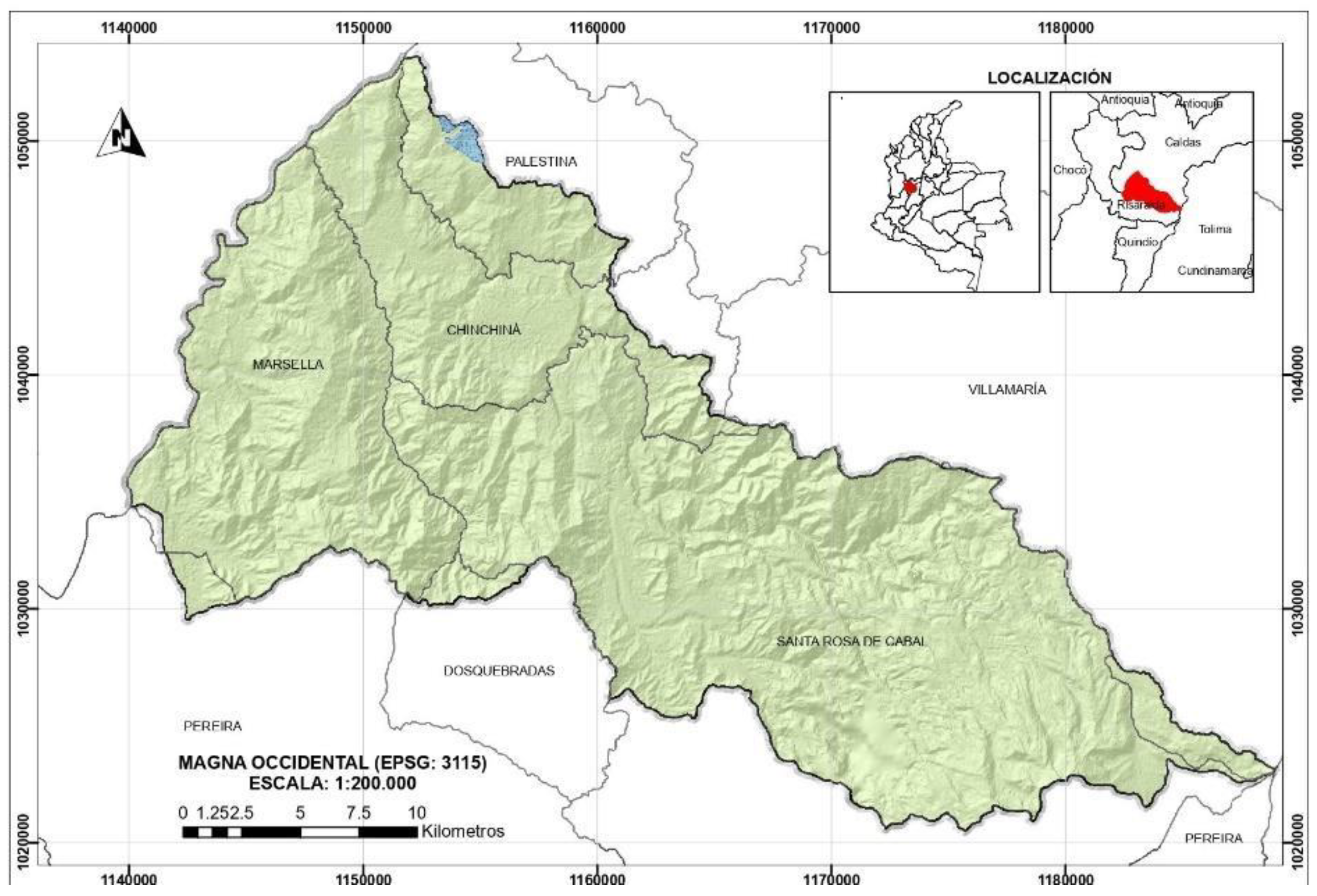
Figure 2.
Serious Game Results Visualization: (a) Maps; (b) Bar charts; (c) Heatmaps.
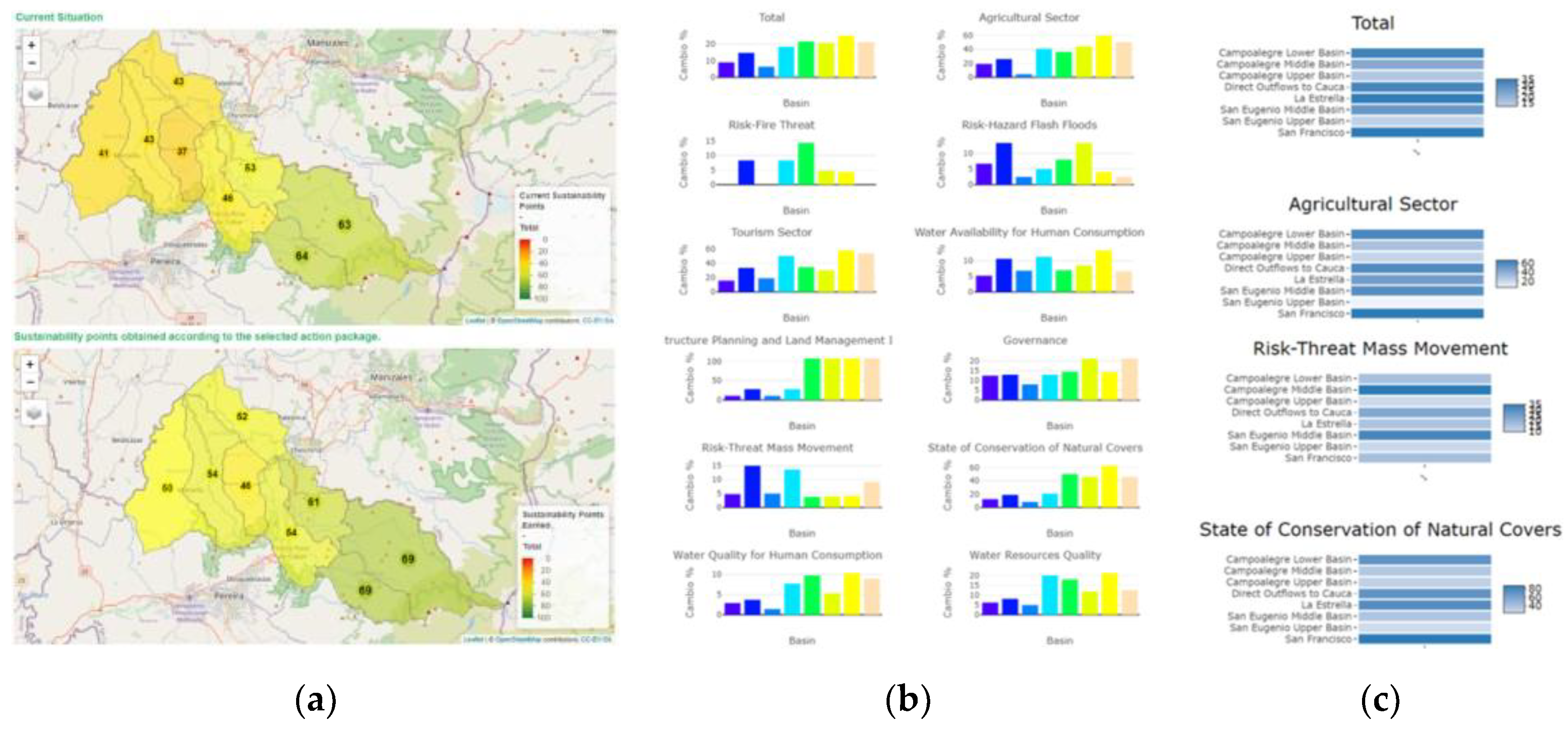
Figure 3.
Workshop Methodology.
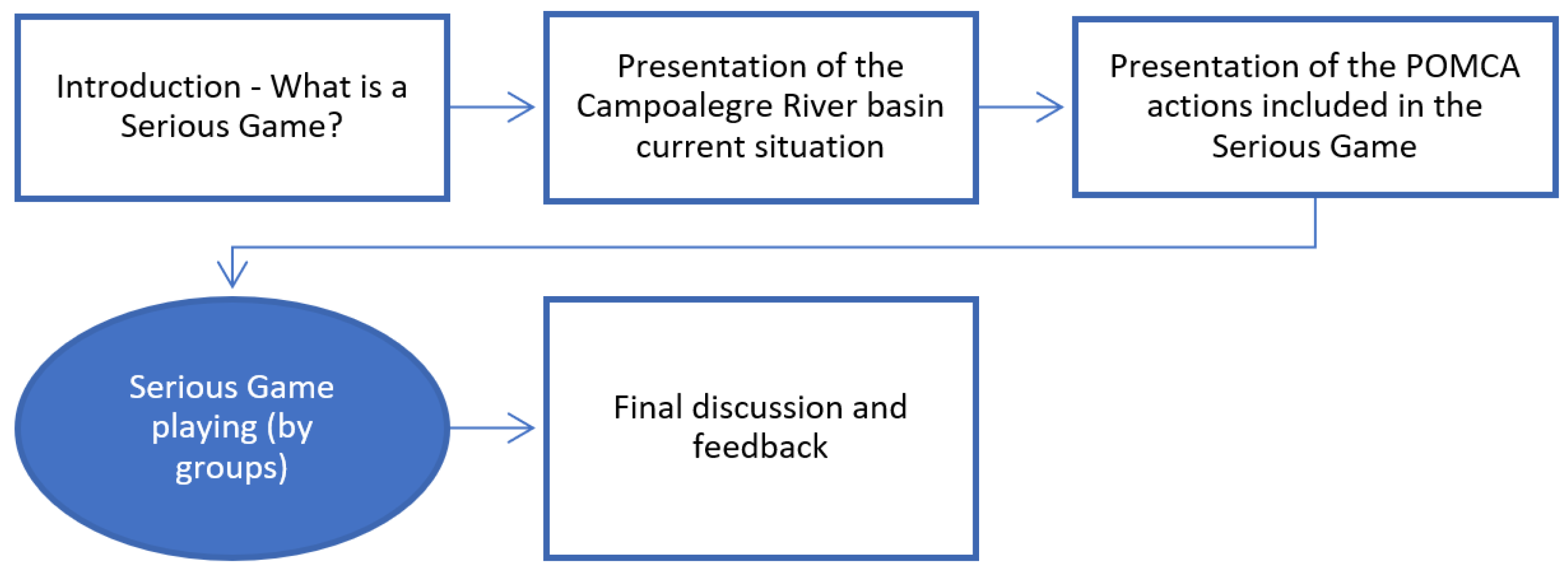
Figure 4.
Serious Game Application.
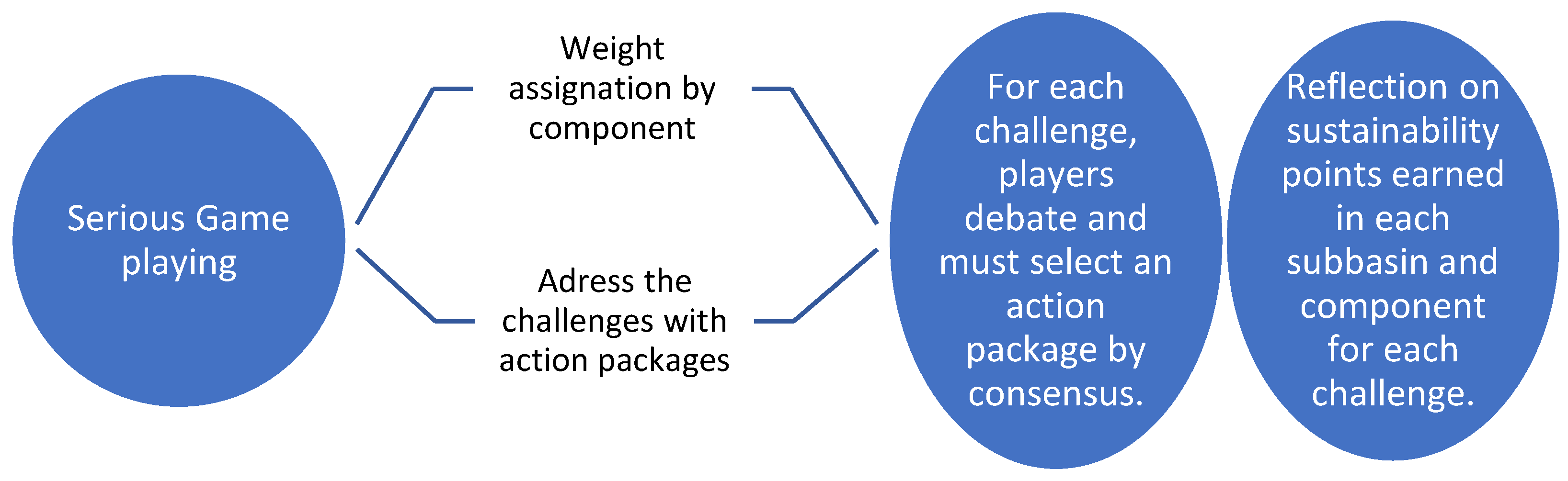

Table 1.
Strategic Focus Areas, Programs and Projects under POMCA Campoalegre.
| Strategic Focus Area | Program | Project |
|---|---|---|
| Environmental governance | Environmental education | Education as a tool to build a safe and sustainable territory |
| Territorial capacity | Capacity development of the Basin Council | |
| Strengthening capacities of community aqueducts | ||
| Participatory and collaborative management for the ordination and management of the basin | ||
| Development of community capacities to implement conservation measures, risk management and adaptation to climatic change | ||
| Financial management for the POMCA sustainability | ||
| Harmonization of management and planning instruments | ||
| Protection and safeguard of cultural heritage | Research, education, conservation, protection, and safeguard of cultural heritage | |
| Environmentally sustainable productive systems | Sustainable agricultural productive Systems | Integration of methodological strategies for the strengthening of the sustainability of agricultural production in the influence area of the Rio Campoalegre POMCA |
| Green businesses | Sustainable green business strengthening and development | |
| Sustainable tourism and associated strategic projects | Development and consolidation of entrepreneurs and business units of the ecotourism and agrotourism sector as green businesses | |
| Comprehensive disaster risk management and Adaptation to climate change | Disaster risk knowledge | Strengthening the level of risk knowledge in the basin |
| Disaster risk reduction and adaptation to climate change | Preventive measures for risk reduction | |
| Corrective and mitigation measures for risk reduction | ||
| Risk transfer | ||
| Disaster management | Strengthening preparation for emergency response | |
| Comprehensive management of biodiversity, water resources and their ecosystem services | Consolidation of the ecological structure of the watershed | Ecological structure of the basin with recognition in the planning instruments, environmental and territorial management |
| Conservation of the watershed ecological structure | ||
| Basic sanitation | Implementation of individual domestic wastewater treatment systems (Sistemas de Tratamiento de Aguas Residuales Domésticas STARD) in the rural areas of the basin | |
| Evaluation, adjustment, implementation, and monitoring of the master plans of aqueduct and sewer systems (Planes Maestros de Acueducto y Alcantarillado PMAA), Sanitation and Wastewater Management Plans (Planes de Saneamiento y Manejo de Vertimientos PSMV) and the Comprehensive Solid Waste Management Plans (Planes de Gestión Integral de Residuos Sólidos PGIRS) | ||
| Water safety | Formulation and/or updating and implementation of methodological guidelines by sector for the presentation and implementation of programs for the water efficient use and saving (Programa de Uso Eficiente y Ahorro del Agua PUEAA) | |
| Knowledge management | Regional environmental observatory for monitoring, follow-up, control, and evaluation | Regional and integral technological platform of monitoring, control, and evaluation |
| Watershed technical studies | Identification of the threat, vulnerability and analysis and risk assessment | |
| Studies for the evaluation of the state of biodiversity and its ecosystem services | ||
| Studies for the incorporation of environmental sustainability in the productive sector |
Table 2.
Serious Game Applications in Water Resources.
| Serious Game | Developer | Scope of Application | Main Objectives | Geographic Focus |
|---|---|---|---|---|
| Aqua Republica | DHI: Danish Hydraulic Institute, 2016 [31] | Water resources planning and management | Understand river basin concepts and visualize the consequence of their decisions | Fictional basin |
| Shariva (Shared River) | Douven et al., 2014 [32] | Transboundary cooperation, Flood management | Build capacity in transboundary cooperation addressing flood management and mitigation | Mekong River Commission |
| Irrigania | Seibert and Vis, 2012 [33] | Water use education | Represent water conflicts among farmers to educate students | Not specified. Fictional villages |
| SimBasin | Craven et al., 2017 [34] | Water resources planning and decision support | Bring stakeholders together and illustrate the uncertainties, relationships, and feedback in the basin, acting as an accessible introduction to modelling and decision support for non-experts | Magdalena-Cauca Macrobasin in Colombia |
Table 3.
Description of the Components Applied in Campoalegre Serious Game.
| Component | Description |
|---|---|
| Water quality for human consumption | Availability of water resources in terms of quality for human consumption |
| Water resources quality | Physical, chemical, and biological characteristics of the water bodies in the basin |
| Availability of water for human consumption | Availability of water resources in terms of quantity for human consumption |
| State of conservation of natural covers | Status of natural coverage in the sub-basins that favor the conservation of biodiversity and ecosystem services. |
| Ecological structure planning and land management instruments | The territorial entities and the environmental authority include in the land management instruments the strategic areas and ecosystems of the basin that should be conserved or restored. |
| Governance | The technical, administrative, and political capacity of the environmental authorities and territorial entities for water and natural resource management in the basin. The institutional arrangements and the supporting regulatory framework help to fulfill this purpose. The agreements between institutional and social organizations that contribute to water and natural resources management. |
| Risk-hazard flash floods | The risk of flash flood danger to lives or property |
| Risk-fire threat | The risk from plant cover fires, which can occur due to combustibility conditions of plant covers, temperatures, or lack of rain. High and medium threat levels are considered. |
| Risk-threat mass movement | Risk is considered in terms of a threat from mass movements, such as landslides. |
| Agricultural sector | Agricultural and livestock production systems that improve the production process and generate positive environmental impacts. |
| Tourism sector | Productive activity that consists of enjoying the natural attributes of the environment and that is carried out in an environmentally responsible manner. |
Table 4.
Campoalegre Serious Game Actions for each Subject.
| Subject | Action |
|---|---|
| Sanitation | Do nothing sanitation related |
| Implement sanitation and wastewater management plans | |
| Implement individual domestic wastewater treatment systems | |
| Cleaner production | |
| Risk mitigation measures | Do nothing risk mitigation measures related |
| Riverbanks management | |
| Stability, erosion control and water management | |
| Fire preparedness | |
| Environmentally sustainable production systems | Do nothing environmentally sustainable production systems related |
| Implementation of agroforestry, organic and conservation agriculture | |
| Implementation of sustainable livestock | |
| Implementation of polycultures | |
| Comprehensive management of biodiversity and ecosystem services | Do nothing comprehensive management of biodiversity and ecosystem services related |
| Conservation and restoration of strategic areas and ecosystems | |
| Ecological structure of the basin in land use and environmental planning instruments | |
| Safe and sustainable use of water | Do nothing safe and sustainable use of water related |
| Sectoral programs for the water efficient use and saving | |
| Sustainable tourism systems with a strengthened superstructure | Do nothing sustainable tourism systems with strengthened superstructure related |
| Strengthened sustainable value networks | |
| Environmental governance in the basin | Do nothing environmental governance in the basin related |
| Environmental education | |
| Strengthening of community aqueducts | |
| Capacity building of the River Basin Council | |
| Strengthening of institutional capacities | |
| Real and effective environmental participation to influence decision-making in the basin |
Disclaimer/Publisher’s Note: The statements, opinions and data contained in all publications are solely those of the individual author(s) and contributor(s) and not of MDPI and/or the editor(s). MDPI and/or the editor(s) disclaim responsibility for any injury to people or property resulting from any ideas, methods, instructions or products referred to in the content. |
© 2024 by the authors. Licensee MDPI, Basel, Switzerland. This article is an open access article distributed under the terms and conditions of the Creative Commons Attribution (CC BY) license (http://creativecommons.org/licenses/by/4.0/).
Copyright: This open access article is published under a Creative Commons CC BY 4.0 license, which permit the free download, distribution, and reuse, provided that the author and preprint are cited in any reuse.


