

Submitted:
28 August 2024
Posted:
29 August 2024
You are already at the latest version
Abstract
Although cicadas have traditionally been considered pests of little or no importance, since the beginning of this century, an increase in damages is being recorded in olive groves of southern Spain. According to our hypothesis, the new agricultural practices would be behind it. During 2024, Intensive sampling has been carried out in organic grove, with herbaceus cover (VC2), and a second one with mixed vegetation cover (VC1, in which the crushed remains of the annual pruning are added). In both ecological groves, inventories of the vegetation have been carried out, as well as intensive sampling in the olive canopy, with the densities of oviposition injuries being recorded and compared with respect to conventional management (CONV). The objectives of this study: (1) to quantify the density of oviposition lesions under these three different farming systems; (2) to determine priority areas for cicadas oviposition within trees; (3) to develop a sampling method to assess damage over large areas. The results show significant increases in density of injuries in organic groves, with maximum values recorded in the olive grove with mixed cover. Oviposition injuries show an altitudinal gradient distribution, with maximum values in the lower zone. The factors involved are discussed.
Keywords:
Olea europaea
; olive growing
; biodiversity
; herbaceous adventitious covers
; mixed green 23 covers
; cicadas
; Cicada barbara
; Cicadidae
; organic farming system
1. Introduction
Cicadas are mostly tropical or subtropical insects, but many species also inhabit temperate regions. Some are minor pests of various crops such as sugarcane, rice, coffee, fruit trees, either affecting the vitality of the trees and their normal radial incremental growth [1] by nymphal feeding or damaging twig branches during oviposition. Crops are lost when the females snap at points weakened, which can break and fall under the load of the crop, or because of strong wind [2,3,4,5]. In the Mediterranean region, anual cicadas such as Cicada barbara (Stål) and C. orni L. are two closely-related species that are morphologically very similar, with the exception of a few differences affecting the wing spotting pattern [6,7] and the genitalia of males [8]. They also show calling songs that are distinct in frequency and time domains [5,6,7,8]. The temporal configuration of Cicada barbara song is characterized by an uninterrupted pulse, while Cicada orni song shows a clear discontinuous pattern [9]. Both species are found mainly in open woodlands [10]. Only C. barbara is found in both North Africa and the Iberian Peninsula, while C. orni is distributed throughout southwestern, central and eastern Europe, western Asia and the Middle East [11,12]. According to Boulard (1982) [5], the populations of C. barbara in the Iberian Peninsula would correspond to C. barbara lusitanica Boulard, different from the type subspecies, which is only found in North Africa (C. barbara barbara Stål, which would explain a possible African origin of this species [5], as a hypothesis that could not be excluded [13]. Among their hosts, these two species affect to a wide range of host, such as Olea europaea L., Ceratonia siliqua L., Quercus sp., Pinus pinaster Aiton, Pinus pinea L., Pinus halepensis Mill., Pistacia lentiscus L., Vitis vinifera L., as well as the non-native species Eucalyptus globulus Labill. subsp. globulus [10,13,14,15,16], and show a relatively high overlap range, so it is common that in some localities males of both species can be observed singing in the same trees at the same time, and even within the same tree [6]. In the olive groves cicadas They are frequent in crops in France, northwest Africa [5,6], Italy [17], Portugal [6], Greece and Tunisia [18], and Spain [19], in any case, having been classified as pests of localized importance and punctual or intermittent appearance [20]. In Spain, the most closely related to the olive tree is C. barbara, which has been called the olive cicada [21]. Although in olive groves cicadas have traditionally been considered pests of little or no importance, from the end of at least the end of the 2000-2010 decade, an increase in populations of cycads is being recorded in olive groves of Andalusia (southern Spain), as well as in the severity of the injuries they caused [22,23]. Both adults and nymphs feed on xylem sap, and until recently have been considered potential vectors of Quick Decline Syndrome disease, caused by Xylella fastidiosa, however their role in the natural spread of this bacterium has been considered as null or insignificant [24]. Until now, studies on C. barbara in spanish olive groves come from crops in conventional farming, in which the nymphs have only the roots of the olive trees to feed. Indeed, there is little o null evidence that belowground feeding by cicadas on the roots of their host plants could have a negative effect on plant performance [25]. However (Yang, 2004) [26] indicates that although in general the feeding of the younger nymphs is of little consideration, the nymphs of the last age are much more voracious, and seriously affect the growth of the plants.Adults suck the olive sap from the main and secondary branches with smooth bark, although no assessment has been made of possible damages at this stage. [22]. Despite the above, the real damage to woody plants comes from the wounds caused by female cicadas when they slice branches to insert eggs [27]. These symptoms have been increasing in the southern spanish olive groves during the current 21st century, of particular concern in nurseries and young plantations [22,23]. Control of C. barbara is rather complex, mainly base on nocturnal application of pyrethroid insecticides during the oviposition period (July and August) has been relatively effective in conventional farming [23]. From laying, the eggs remain dormant until the autumn rainy period, which ussually ocurrs on October and November [22].
The increase in cicadas populations in Andalusian olive groves must be close related to the implementation of new agricultural practices in soil management, which would be triggering substantial changes of influence in the development of juvenile stages. These practices have had as a main objective of prevent soil erosion by implementing a herbaceous ground cover that forms a lowgrass prairie - which grows spontaneously or by artificial planting [28,29,30] and that is maintained under mower control. Among its advantages, the greater plant biodiversity contributes to keeping phytophagous insects under natural control [31], however, among its detractors many farmers highlight plant cover's most controversial facets, such as how it competes with crops for water and nutrients, which is especially intense during water-scarce periods (from mid-spring to early autumn, depending on the bioclimatic belt in which we are – Thermomediterranean or Mesomediterranean). To mitigate this effect, in most cases the herbaceous cover is periodically mowed mechanically, and the resulting residue is added in situ, forming a layer that prevents excessive evapotranspiration during the summer and protects the soil from erosion. In line with the above, the effect provided by the herbaceous vegetation cover is enhanced by the addition of the remains from the olive grove pruning -previously crushed- into the adventitious vegetation (mixed vegetal cover). These remains are composed of fine branches (usually less than 5 cm in diameter) and leaves [32], which represent an important source of nutrients [33], increasing nitrogen mineralization [34] and positively influencing the soil’s biological, chemical, and physical properties [35], resulting in a highly beneficial agricultural practice. [36,37,38,39,40]. Among other advantages, it provides a longer protective effect against erosion [32,33] compared to that provided by a single herbaceous cover [29], preventing the appearance in the crop area of ruderal plant species [36], and enhancing the production of adventitious flora. Cicada nymphs have soil habituates where they are exclusively xylem suckers [1,41,42,43,44], as they directly extract their food from the roots of the plants that develop in the crop area, and accordingly, Carpio et al. (2020) [43] point out that vegetation cover in olive groves determines the highest abundance of Cicadomorpha. Although these authors do not refer in particular to the Cicadidae, it follows that there is a need for attain a broader knowledge of the role played by cover crops that incorporate lowland prairie, as well as those close to patches of natural vegetation, borders, hedges or streams in the abundance and damages by the Cicadidae.
Intensive sampling of the olive tree canopy has been used in three types of crops: conventional farming, organic farming (a single herbaceous cover forming a lowgrass prairie) and organic farming, with a mixed cover, to address the objectives of this study, which were (1) to characterize and quantify the density of oviposition injuries under these different farming systems; (2) to determine priority areas for oviposition by cicadas within olive trees; (3) to provide the basis for developing an extensive sampling method, acceptable in terms of effort-yield and reliability that allows studies of the application of damage control measures in larger areas.
2. Materials and Methods
2.1. Description of the Study Area
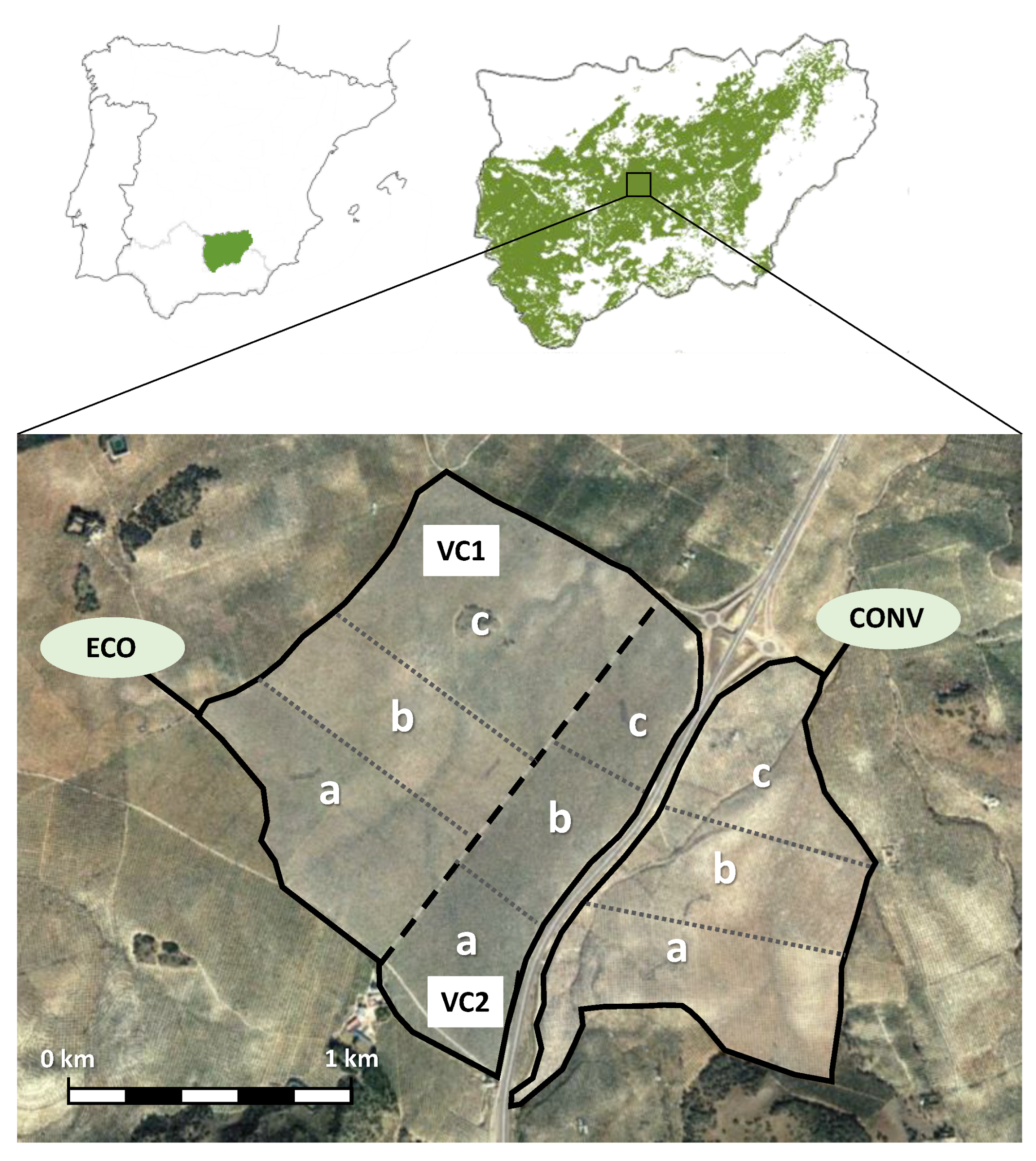
This study was carried out in olive groves in the province of Jaén (Andalusia, southern Spain) during the spring of 2022 and 2023. The specific area belongs to the olive groves located in a farm in the municipality of Mancha Real (Jaén, Andalusia, Spain) (Figure 1). Most of the olive trees are between 80 and 100 years old and belong to the “picual” variety, cultivated under irrigation and planted in a frame of 10 m x 10 m. In this olive grove, there are two large areas (Figure 1) that are characterized by different types of agricultural farming.
2.1.1. Olive Groves with Ecological Farming
These olive groves has a surface area of 238 ha, with the coordinates 37º 52’ 12.55’’ N, 3º 34’ 03.33’’ W, and altitude of approximately 500 m a.s.l. These olive groves receives edaphic fertilization through the application, twice a year, of organic and mineral nutrients. In addition, annual foliar fertilization is applied using crystalline urea (nitrogen content 46%), potassium sulfate, and natural amino acids (arginine, glycine, threonine, and proline). The pruning of three olives is carried out by sectors at the end of winter, with all the olive trees being pruned over three or four years. In this olive grove, two relatively large sub-areas were differentiated (Figure 1) depending on the fate of the pruning residues: (i) VC1, with an extension of 163 ha, in which the finer pruning remains (terminal shoots and leaves) are incorporated into the soil and spread along the central band of the interlines; (ii) (VC2) this olive grove has a surface área of 75 ha.
Figure 1.
Location of the study area in the province of Jaén (Southern Spain). Olive grove with conventional farming (CONV); olive grove with ecological farming (ECO), including two large extensions: Olive grove with single herbaceous cover (VC2, and olive grove with grove with mixed cover (VC1). By dotted lines, three blocks in each olive grove are delimited (a,b,c). Source: Own elaboration, using the Google Earth Pro geographic information system.
Figure 1.
Location of the study area in the province of Jaén (Southern Spain). Olive grove with conventional farming (CONV); olive grove with ecological farming (ECO), including two large extensions: Olive grove with single herbaceous cover (VC2, and olive grove with grove with mixed cover (VC1). By dotted lines, three blocks in each olive grove are delimited (a,b,c). Source: Own elaboration, using the Google Earth Pro geographic information system.
In both ecological olive groves, the development of a spontaneous and homogeneous vegetable cover is promoted in a controlled way at the end of spring, and to avoid overaccumulation of plant debris and reduce the fire risk, a pass is carried out using a tractor equipped with a paddle brush cutter. Its function is to crush the dry remains of the plant cover into very small fragments of a few millimeters, which are scattered on the olive grove’s surface. This results in a protective vegetable layer composed of small elements, the compaction of which makes considerable reduction of its thickness possible. Regarding pest and disease control, no synthetic chemical products are applied in the organic olive apart from pheromones in combination with specific devices (McPhail, delta, and chromotropic traps). The adventitious vegetation is mechanically controlled by clearing between March and April using a hammer tractor. The resulting plant remains are crushed and spread along the inter lines.
2.1.2. Olive Grove with Conventional Farming.
This olive grove has a surface area of 150 ha (CONV, Figure 1), this crop completely lacks herbaceous cover as well as any other plant species other than Olea europea. The soil fertilization is performed by applying organic and mineral nutrients twice a year, and additionally foliar fertilization is carried out annually with crystalline urea (46% nitrogen content), potassium sulfate, and natural amino acids (arginine, glycine, threonine, and proline). For the control of weeds and seeds, intense tillage is carried out by plowing and using the herbicide glyphosate (Roundup UltraPlus© 500mL, Monsanto, St. Louis, MO, USA). For pest control, the most widely used insecticide is Spinetoram-25% (Spintor® 480SC, Dow AgroSciences, Indianapolis, IN, USA) for controlling the olive moth (Prays oleae) and the olive fly, Bactrocera oleae (Rossi, 1790) (Diptera: Tephritidae). To control the branch borer, Euzophera pinguis (Haworth, 1811) (Lepidoptera: Pyralidae), Chlorpyrifos© 48% (IRAC Group 1B) is applied. For pathogen control, a fungicide application containing Agrofit ® (Agrocobre 50 colourless, Agroterra) is created as a wettable powder formulation that is 50% copper for use against the olive peacock spot (Spilocaea oleagina = Cycloconium oleaginum).
2.2. Sampling on the Vegetation Cover (VC1; VC2)
Five secuential sampling at weekly intervals (April-May 2022) were carried out on the herbaceous communities of the central blocks of both ecological groves. In each sampling in each of the olive groves, where an olive tree was chosen at random. Using a flexometer, a 5 m long transect was established, extending in an east–west direction at a distance approximately 3 m from the trunk of the selected trees. To facilitate the data collection, the transect was divided into 5 cm segments, with a total of 100 sampling points per transect. For each segment, the number of contacts of each plant taxa with the flexometer was recorded, as well as the total number of contact was recorded. The samples were determined using specific keys to the Flora vascular de Andalucía oriental [45], and the description of biotypes by Raunkier (1934) [46].
2.3. Sampling in Olive Tree Canopy (VC1; VC2; CONV)
To determine the density of oviposition injuries whithin trees, samplings were carried out at monthly intervals (March-May 2023). For this purpose, in each sampling date, an olive tree was randomly selected from every of the three blocks (a, b, c, Figure 1) of each olive farming (VC1, VC2, CONV). Prior to sampling, three altitudinal zones (low, medium and high) were considered in the trees, each corresponding to one third of the total height of the crown. Similarly, at each altitudinal level, four sectors were established corresponding to the four cardinal orientations: North (N), East (E), South (S) and West (W). For data collection, at each of the altitudinal level and cardinal sector, 20 twig branches (10 terminal twig branches and 10 subterminal twig branches) were randomly selected. The total number of samples in each olive tree and sampling date was 240 (40 in each of the cardinal orientation; of which 20 terminal and 20 subterminal twig branches), which represents a total number of 720 samples per sampling date, and a total number of of 2160 samples as a whole.
During the data collection, a segment of 30 cm length was established in every terminal/subterminal branch, where the whole number of injuries due to the oviposition by cicadas was counted, noting its length (cm), as well as its position in the axis of the shoot. Therefore, it was specified if the injury affected the upper, lower or lateral sides, in which case a distinction was made between right or left, taking into account the acropetal direction. Since different injuries frequently coalesce, in these the total length of the injury was noted. Since the damage often involved the branches to break; and due to the impossibility of attributing them accurately to cicadas injuries, due to the possibility to be caused by the olive bark beetle, Phloeotribus scarabaeoides [47,48], Therefore, this study does not allow to determine the exact proportion of twig branches fractured due to oviposition injuries by cicadas, which implies that its damages have been underestimated. When old oviposition injuries by cicadas have not involved branch fracture, the lesions may heal completely, scar remaining still clearly visible in subterminal twig branches up until 4-5 years from its origin.
2.4. Statistical Analysis
For the statistical analysis, the IBM SPSS Statistics 27 program was used. Initially, the normality of the data distributions was determined, for which the Shapiro-Wilk and Kolmogorov-Smirnov contrast test was used with the correction by Liliefors. To determine the homogeneity of the variables, Levene's test was applied. In order to obtain parametric distributions, the Arctangent transformation has been applied. Once the normal distribution of the data was assumed, analysis of variance (ANOVA) has been applied to determine the existence of statistically significant differences, and in cases in which differences have been verified, the contrast test has been applied by applying the minimum significant differences test (LSD). To compare abundance values of the different plant species present in both ecological olive groves, the Student's t test was applied.
To determine the minimum sample size, for each of the three altitudinal zones, the percentage error of an increasing number of samples in each altitudinal zone has been determined. Simple linear regression analysis has been applied to relate the accumulated number of damages in the different altitudinal zones and the increase in sampling size.
3. Results
3.1. Study of Herbaceus Cover (ECO-VC1 & ECO-VC2)
Vegetation sampling showed 20 herbaceous species in the organic olive groves (Table 1), among which 13 species were common to both, while 4 and 3 species were found exclusively in olive groves VC1 and VC2, respectively. Among the common species, 7 of them stood out from the rest due to their greater abundance (Table 1), in particular terophytes as Filago pyramidata, Bromus rubens, Astragalus hamosus, Trisetaria panicea, Filago fuscescens, Herniaria cinerea, and the hemicryptophyte Malva parviflora. Most of these start the vegetative growth of plan development during the winter, and were significantly abundant in olive grove CV1 (Table 1). With the exception of Filago fuscescens, which has a short vegetative growth of plan development, most of the taxa end in June-July (14 spp), 4 species still remain in August, and 4 spp has a second vegetative growth in autumn [39].
3.2. Description of Oviposition Injuries by Cicadas
Oviposition injuries consist of wounds incisions that cicadas carry out their ovipositor apparatus, which causes a deep cortical crack that affects the bark and mainly to the phloem, where the eggs are deposited in paired cells. The subsequent detachment and drying of the affected tissue with respect to the xylem causes a marked retraction of the margins on both sides of the incision. These injuries cause the tips of many terminal branches to wither and die, as well as that the fruits present on them. Dead and dying terminals droop, resulting in a type of tree injury called “flagging”. Some of these break off and fall to the ground, and when they do not break off they may eventually heal and scar, so the noticeable symptoms in the wound sites of the subterminal branches correspond to an irregular and knotty swelling [27].The average mean values of the oviposition injuries in terminal twig branches were of 6.21 cm (SD=3.38); 5.84 cm (SD=4.12 and 6.8 cm (SD=3.54) for the olive trees in each of the three blocks of the VC1 olive grove (Figure 2). The diameters of the terminal twig branches affected by oviposition injuries ranged from 1.5 mm to 5.5 mm, although the greatest proportion of lesions ranged were noted in twig branches from 2 to 4 mm (Figure 2), with average values of 3.32 mm, 2.87 mm and 3.12 mm, respectively for the olive trees in the blocks of olive grove VC1. (Figure 2). The injuries most frequently (48.4% to 56.6%) (Figure 3) affected the facing downwards side, and the lowest frequency (7.8% to 10.2%) corresponded to the upper side of the branch, oriented upwards.
Regarding the subterminal twig branches, no recent injuries were recorded, as these were older than 3 years (at the time of sampling they frequently showed an advanced degree of healing).
3.3. Influence of the Olive Farming System on the Density of Oviposition Injuries
The comparison of the density of injuries between the 3 types of growing farming system. significant differences were noted in both subterminal (ANOVA; F = 29.319; 2 d.f.; p < 0.001) and terminal branches (ANOVA; F = 101.187; 2 d.f.; p < 0.001). In both, the highest values were recorded in olive grove with mixed vegetation cover (VC1) (p< 0.05; Figure 4), in which almost 50% of the 40 cm of terminal twig branches showed oviposition injuries. On the other hand, conventional olive grove showed average values significantly lower in both terminal and subterminal twig branches (p < 0.05, Figure 4), with average values ranged from 30% to 50% of that observed in VC2, and of 25% of that observed in VC1 olive grove. In VC2 olive grove, trees showed intermediate values, and significantly different from VC1 and conventional olive groves.
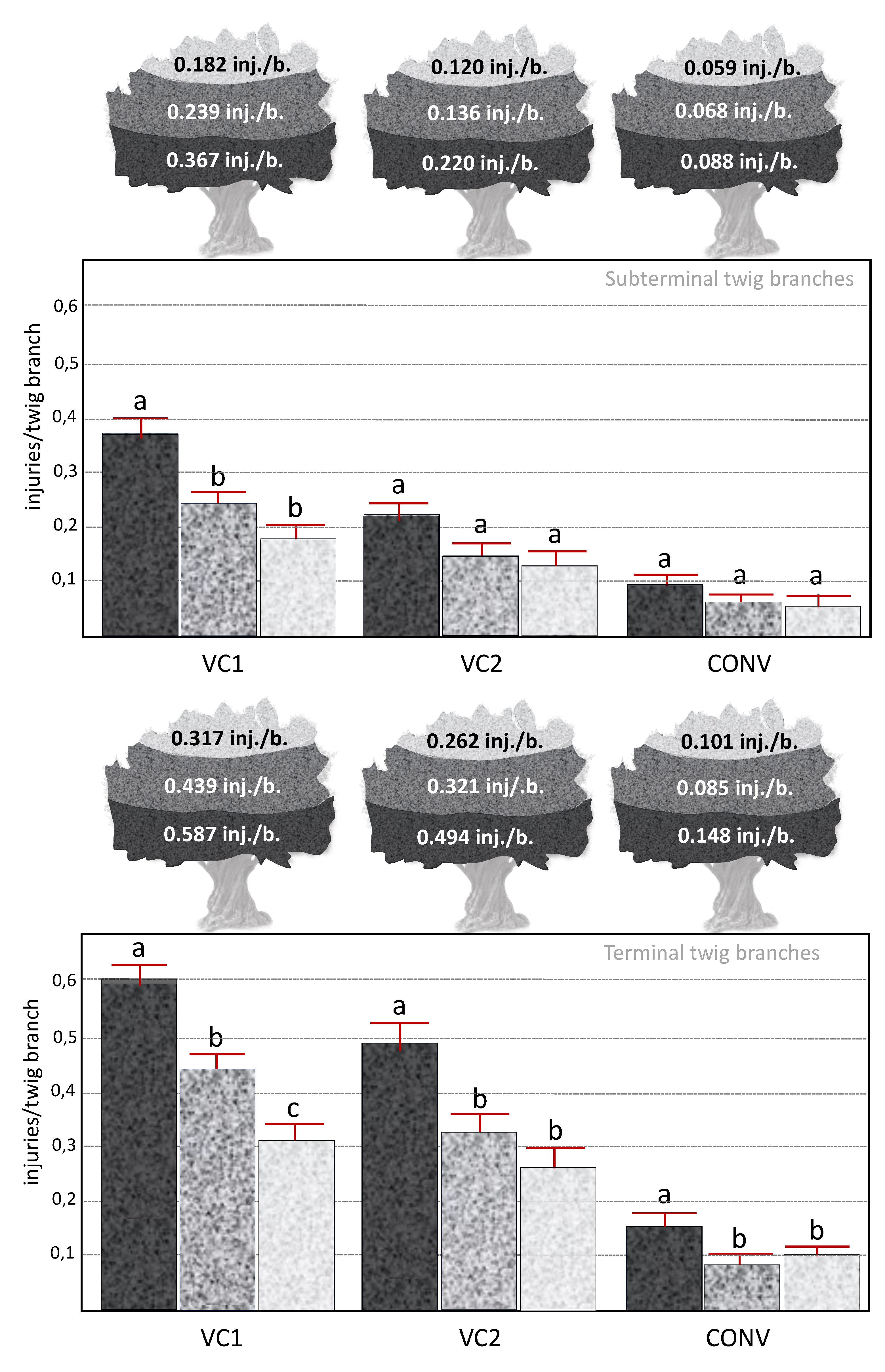
In the olive tree canopy, significant differences are found in the density of injuries between the different altitudinal zones (Figure 5). For the terminal branches, significant differences between areas were observed regardless of the type of farming [VC1: ANOVA; F = 22.744, 2 d.f.; p < 0.001]; [VC2: ANOVA; F = 11.382; 2 d.f.; p < 0.001] and [CONV: ANOVA; F = 5.245; 2 d.f.; p < 0.005]. The values reached maximum records in the lower zone, and particularly in olive groves VC1 and VC2, where the proportion of affected branches was greater than 50%. The values between the middle and upper zones in the VC2 and CONV groves were not statistically significant, although they were in the VC1 olive grove (Figure 5; p<0.05). As in the terminal branches, in the subterminal ones the highest values were recorded in the lower zone, although they were statistically significant only in the VC1 olive farming.
Figure 4.
Mean values (and standard error, SE) of the number of injuries/30 cm segment of subterminal (top) and terminal branches (bottom) in the olive trees from the three samplings carried out in each growing farming system (mixed cover (VC1, dark grey), simple herbaceous cover (VC2, medium grey) and conventional farming system (CONV, light grey). The mean values per tree and the standard error are indicated inside the diagrams. Statistically significant differences (p< 0.05) are indicated by different letters.
Figure 4.
Mean values (and standard error, SE) of the number of injuries/30 cm segment of subterminal (top) and terminal branches (bottom) in the olive trees from the three samplings carried out in each growing farming system (mixed cover (VC1, dark grey), simple herbaceous cover (VC2, medium grey) and conventional farming system (CONV, light grey). The mean values per tree and the standard error are indicated inside the diagrams. Statistically significant differences (p< 0.05) are indicated by different letters.
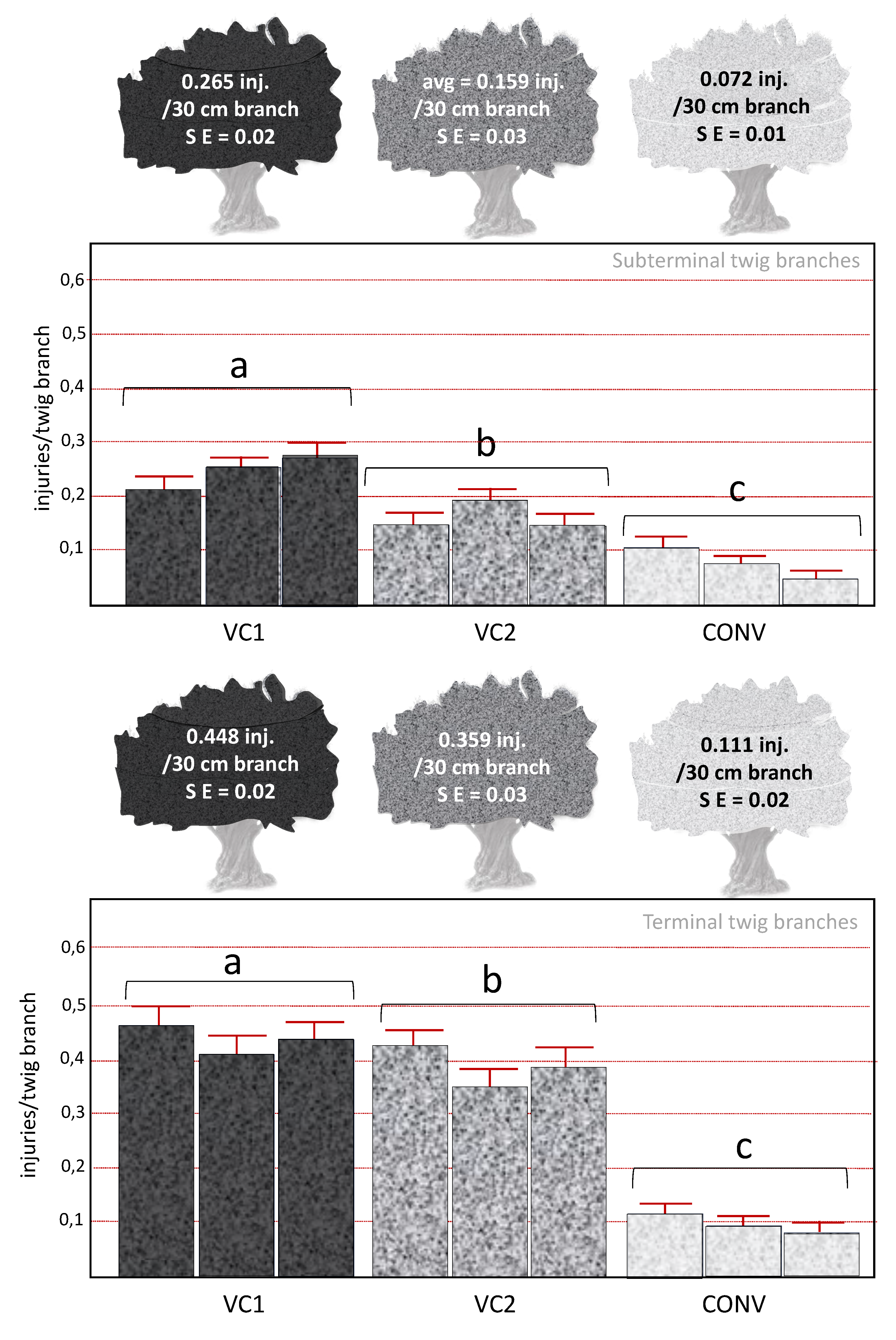
Figure 5.
Mean values (and standard error, SE) of the number of injuries/30 cm segment of subterminal (top) and terminal branches (bottom) in the high (light gray), medium (intermediate gray) and low (dark gray) zones in the olive trees of each growing farming system (mixed cover (VC1), simple herbaceous cover (VC2) and conventional farming system (CONV). The mean values per tree branch indicated inside the diagrams. Statistically significant differences (p< 0.05) are indicated by different letters.
Figure 5.
Mean values (and standard error, SE) of the number of injuries/30 cm segment of subterminal (top) and terminal branches (bottom) in the high (light gray), medium (intermediate gray) and low (dark gray) zones in the olive trees of each growing farming system (mixed cover (VC1), simple herbaceous cover (VC2) and conventional farming system (CONV). The mean values per tree branch indicated inside the diagrams. Statistically significant differences (p< 0.05) are indicated by different letters.
Regarding the distribution of injuries among the cardinal sectors of the trees, in none of the three types of olive farming system or types of branch (subterminal or terminal) the values showed statistically significant differences.
Considering the terminal branches, since these are where the lesions correspond to the most recent attacks (occurred in the last 2-3 years), which have not been healed, nor are they in the process of healing, there is a close relationship between the total number of injuries and the size of the sample, independently of the altitudinal floor in the olive tree (Figure 6). In the three altitudinal levels, by means of a simple linear regression analysis, regression lines with coefficients close to 99% are obtained.
3.4. Determination of an Extensive Sampling for Cataloging Olive Groves Based on Injuries Density
As shown in Figure 8, the relationship between % Error committed and sample size is practically identical at the three altitudinal levels. Obviously, the preference of cicadas for the lower area of the olive tree implies that higher estimates of injuries density would be obtained here. From this, the possibility arises of considering only samples in the lower area of the crown, from which the maximum attack values will be obtained, or distributing the samples homogeneously at different heights, in order to obtain a more realistic average of the average attack density per tree.
Figure 7.
Variation of the % Error in the estimate of the mean values of injuries / 30 cm segment of terminal twig branch, with increasing sampling size, in the three altitudinal zones of the trees (olive grove VC1).
Figure 7.
Variation of the % Error in the estimate of the mean values of injuries / 30 cm segment of terminal twig branch, with increasing sampling size, in the three altitudinal zones of the trees (olive grove VC1).
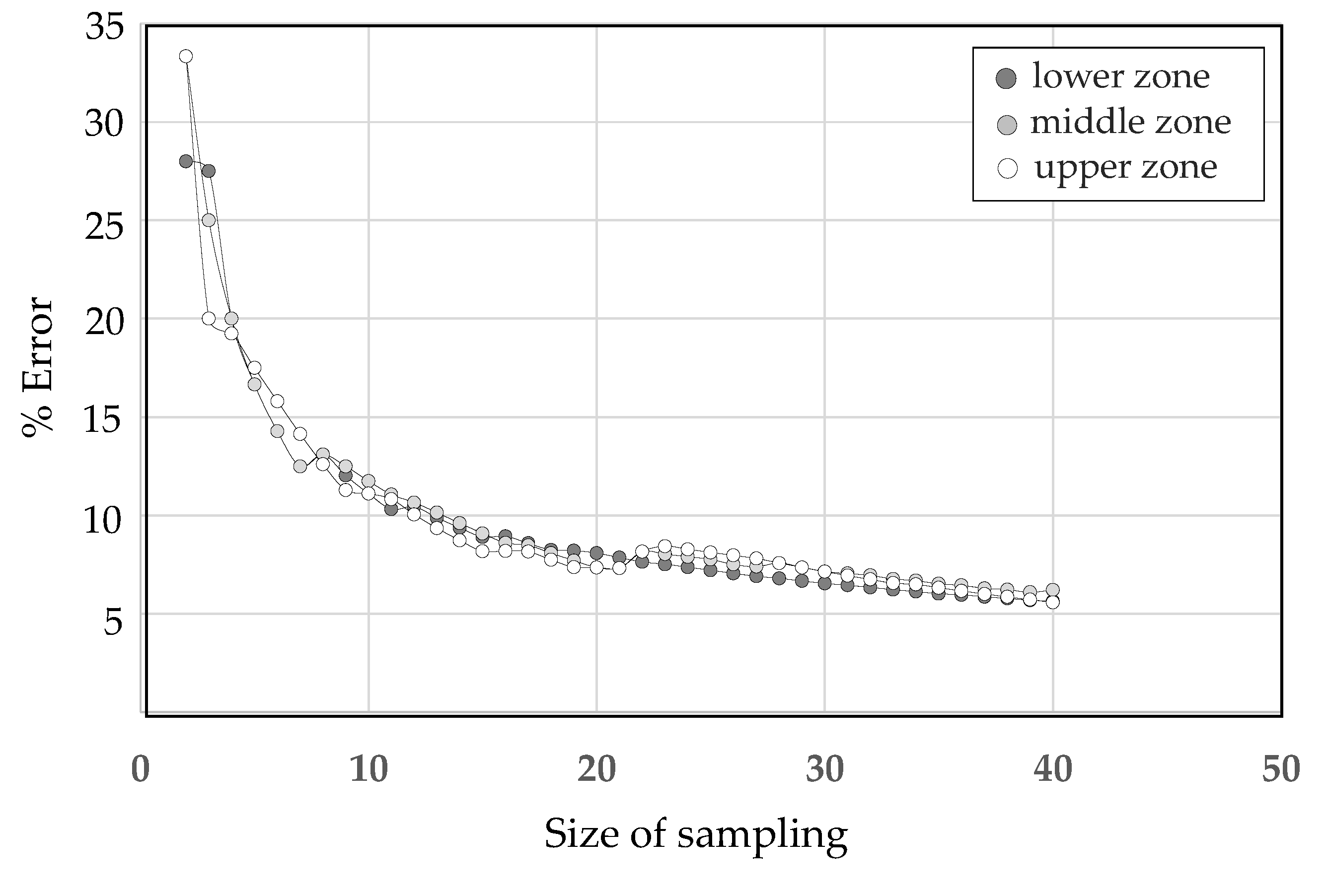

Table 2.
Variation of the % Error in the estimates of the mean number of the values of injuries / 30 cm segment of terminal twig branch, with increasing sampling size, in the three altitudinal levels of the trees (Lower, Middle and Upper part (olive grove VC1).
Table 2.
Variation of the % Error in the estimates of the mean number of the values of injuries / 30 cm segment of terminal twig branch, with increasing sampling size, in the three altitudinal levels of the trees (Lower, Middle and Upper part (olive grove VC1).
| N | Lower | Middle | Upper | N | Lower | Middle | Upper |
| 1 | - | - | - | 21 | 7,86 | 7,33 | 7,33 |
| 2 | 28,00 | 33,33 | 33,33 | 22 | 7,64 | 8,16 | 8,16 |
| 3 | 27,50 | 25,00 | 20,00 | 23 | 7,52 | 8,03 | 8,44 |
| 4 | 20,00 | 20,00 | 19,25 | 24 | 7,37 | 7,90 | 8,28 |
| 5 | 16,67 | 16,67 | 17,50 | 25 | 7,21 | 7,77 | 8,12 |
| 6 | 14,29 | 14,29 | 15,81 | 26 | 7,06 | 7,51 | 7,97 |
| 7 | 12,50 | 12,50 | 14,14 | 27 | 6,91 | 7,40 | 7,82 |
| 8 | 13,09 | 13,09 | 12,60 | 28 | 6,80 | 7,59 | 7,59 |
| 9 | 12,03 | 12,50 | 11,29 | 29 | 6,67 | 7,36 | 7,36 |
| 10 | 11,11 | 11,75 | 11,11 | 30 | 6,55 | 7,15 | 7,15 |
| 11 | 10,32 | 11,07 | 10,83 | 31 | 6,45 | 7,05 | 6,94 |
| 12 | 10,44 | 10,66 | 10,05 | 32 | 6,34 | 6,95 | 6,75 |
| 13 | 9,88 | 10,14 | 9,35 | 33 | 6,23 | 6,77 | 6,56 |
| 14 | 9,37 | 9,61 | 8,73 | 34 | 6,13 | 6,69 | 6,50 |
| 15 | 8,91 | 9,09 | 8,18 | 35 | 6,03 | 6,52 | 6,33 |
| 16 | 8,94 | 8,61 | 8,20 | 36 | 5,96 | 6,45 | 6,17 |
| 17 | 8,58 | 8,49 | 8,16 | 37 | 5,87 | 6,30 | 6,01 |
| 18 | 8,25 | 8,08 | 7,75 | 38 | 5,78 | 6,23 | 5,86 |
| 19 | 8,22 | 7,71 | 7,37 | 39 | 5,69 | 6,10 | 5,72 |
| 20 | 8,09 | 7,36 | 7,36 | 40 | 5,64 | 6,21 | 5,58 |
However, since the injuries to the subterminal twig branches were at least three years old, and as said before, were in the process of healing at the time of sampling, it is recommended to damage assessment by cicadas to focus exclusively on the terminal twig branches. On the other hand, although no differences between orientations exist, it is recommended to consider twig branches homogeneously from the entire periphery of the crown, and to select at least 3 olive trees in the target area. As an example of extensive sampling for the estimation of the intensity of attack of C. barbara, the selection of at least three olive trees, considering in each one 16 samples, 4 from each one of the cardinal orientations, would allow estimates with an %Error within tree lower than + 9% of the estimated average.
4. Discussion
The results show a clear preference of cicadas to lay eggs in the lower part of the canopy, as well as in the lower side of the terminal twig branches, protected from direct solar radiation, which is in line with what has been indicated in olive groves in southern Spain [22]. A tree canopy is a highly heterogeneous environment [49], so analyzing the preference of cicadas to place eggs in these microhabitats requires considering that during the oviposition period (July-August), the greatest risks to egg viability are determined by low environmental humidity (average values generally below 35%) and high temperatures, whose maximum records usually exceed 40ºC. Given the risk of dehydration as a determining factor, the selection of these microsites as the most favorable within the tree canopy represents an adaptation to minimize egg damaging by high temperatures [50]. Eggs are the most vulnerable stage, and are nearly isothermal with the microenvironments, so embryo temperature is determined by maternally chosen microhabitats, which are defined by interactions between ambient environmental characteristics (e.g. air temperature, solar radiation, wind speed) [51]. According to these authors, the energy budget of one microsite habitat differs from another depending on its position within the canopy, due to variations between them in radiation interception and wind attenuation due to the density of the foliage. Among the most remarcable feature of the eggs of temperate cicadas is the extremely long duration of the egg stage [52], which allows the eggs to face a sequence of environmental stresses over the course of the unfavorable seasons and hatch when more favorable conditions occur, such as the onset of the autumn rains [22]. Cicada nymphs are soil dwellers that feed exclusively on plant sap from root xylem vessels of their host plants stage [25,41,42], a food that is nutritionally dilute and difficult to obtain. Cicadas exhibit the longest development times and are among the largest insects [53,54], an adaptation selectively favoured [55], since it allows nymphs to store resources and produce more offspring [56]. During development, nymphs sometimes feed on a single root for their entire life span belowground [57], Although no significant relationship has been found between cicada emergence for any species of cicada and percent cover of individual plant species, suggesting that within a habitat type (grassland or forest), cicadas are generalist feeders [57]. The results of this study support this claim since no plant species other than the olive tree could provide food to the nymphs throughout their development [41]. However, the huge difference in damage density between the farming system considered here, highlights the role of low grass cover in the survival rate and production of cycads. During the autumn rains [17], the neonate nymphs that colonize the soil of the olive groves must find host roots in which they form feeding cells in them, where the nutrient cells are established for a period not specified in the species studied [56]. It has been suggested that establishing new feeding sites must probably be risky and costly for nymphs in terms of survival. To minimize these drawbacks, it has been postulated that nymphs can control the rate of feeding [1], and refrain from feeding at a rate that kills their host root, a common event in plants when they lose too many nutrients or water through their roots. due to parasitism by nematodes, fungi or insect nymphs such as cicadas. [53]. However, when circumstances require it, the change of location allows the nymphs to continue feeding, either at another point on the root of the same plant, or on roots of other nearest plants. This movement from the initial feeding root takes place through access tunnels to their more preferred root tissues over a succession of nymphal growth instars [20]. Since the development times of cicadas are influenced by the quality of food, it penalizes nymphs that fail to relocate to new feeding sites [56]. Our study shows that the change of location must be an essential event to nymphs, since the phenology of any potential host species in the olive grove would allow them to complete the development from a single specimen, not even a plant species other than the olive tree. Furthermore, the disappearance of herbaceous specimens from the crop area throughout the year, depending on their phenology, determines the need for the nymphs to change location. Among the crucial steps for nymps survival is the summer drought period, when the residual herbaceous plants of the vegetation cover can exclusively survive in the under the canopy of the olive trees, where the soil is kept moist by the drip irrigation devices. This means that species such as Heliotropium europaeum, Leontodon longirostris, Plantago lagopus, are available when most of the herbaceous plants have completed their vegetative growth of plant development. These specimens represent a potential food source for nymphs 1-2 years old, and that still requires feeding for a period of at least one year more. This would explain the differences in the density of injuries between conventional olive groves, and organic olive groves, where the maximum values are recorded. Another crucial event for the survival is during the host searching by newly hatched larvae, which has been shown to occur mainly in October and November [19], then after hatching, the hatching larvae colonize the soil to find the suitable host roots. During this stage, herbaceous plants such as Trisetaria panicea, Bromus rubens, Heliotropum europaeum, Leontodon longirrostris, Anagallis foemina, are during vegetative growth of plant development, and relatively abundant in the peripheral area of olive trees, then can allow them to establish the first feeding cells. During the course of winter, the greatest diversity of herbaceous plants, potential hosts, begin to vegetative growth of plant development at least until the end of spring. Since the probability of reaching full development depends on the success in maintaining a feeding quality by cicada nymphs, this penalizes nymphs that fail to relocate to new feeding sites [56], which directly impacts the juvenile mortality rate, therefore, greater plant diversity and abundance ensures greater chances of survival, which is in line with the results, and explains the higher densities of injuries in olive trees of both organic groves.
Soil fertilization is an important factor of which has been highlighted as influencing the development rate of nymphs. In this regard, experiments have been carried out involving intraspecific comparisons in fertilized and unfertilized conditions. When Mogannia minuta grew on its native Miscanthus grass host, most individuals required 3 years to complete development, but when they grew on fertilized sugarcane, most individuals matured in 2 years [58]. The Japanese cicada, Cryptotympana facialis, presented a median development period of 8 years when raised on native plants in outdoor cages, but only 5 years when raised on fertilized potted aloe plants [56]. Therefore, the greater contribution of nutrients in olive groves receiving extra fertilization through the addition of crushed plant material provides favorable conditions, as manifested in this study in the largest herbaceous production (5 of the 7 most numerous inventoried plant species were statistically more abundant in CV1 grove). This implies a greater success in the reproduction of cicadas, and is directly related to the higher rate of damage in the VC1 olive grove.
In short, although the ecosystem services provided to the farmer by the vegetation cover - whether simple or mixed – [31,59,60,61,62,63,64,65,66], in a context of IPM approach, affected farmers should take necessary corrective measures, among which we point out some alternatives:
- Conventional chemical control, using products with a notable knockdown effect on adults during the reproductive period [67]. Obviously this would not be a viable solution in organic crops, so for these, applications of kaolin-based formulation along with diatomaceous earth and essential oil have demonstrated an acceptable control of oviposition injuries [68].
- Complementary cultural methods, based on the suppression during the summer of plant specimens that develop in the peripheral area of olive trees, close to irrigation drippers, which would have a very negative impact on the survival rate of nymphs.
Author Contributions
Conceptualization, R.G.R., A.G.F., V.LC.; Methodology, R.G.R., A.G.F. Software, V.L.C.; Validation, R.G.R., A.G.F.; Formal analysis, R.G.R., V.L.C.; Investigation, R.G.R., A.G.F., VLC; Resources, J.F.C., M.S.P.; data curation, R.G.R., V.LC.; writing— original draft preparation, R.G.R.; writing—review and editing, R.G.R., A.G.F.; M.S.P.; visualization, A.G.F., V.C.L.; supervision, R.G.R.; project administration, R.G.R.; funding acquisition, R.G.R.; J.F.C. All authors have read and agreed to the published version of the manuscript.” Please turn to the CRediT taxonomy for the term explanation. Authorship must be limited to those who have contributed substantially to the work reported.
Funding
This research received no external funding.
Institutional Review Board Statement
This study did not require ethical approval.
Informed Consent Statement
Not applicable.
Acknowledgments
The authors would like to thank Prof. Dr. F. Márquez Jiménez, Director of the Department of Animal, Plant Biology and Ecology, for having facilitated the administrative procedures at all times and providing the technical support necessary for their completion.
Conflicts of Interest
The authors declare no conflicts of interest.
References
- Karban R. Addition of periodical cicada nymphs to an oak forest: effects on cicada density, acorn production, and rootlet density. Journal of Kansas Entom. Soc. 1985, 58, pp. 269–276.
- Logan, D.; Connolly, P. Cicadas from kiwifruit orchards in New Zealand and identification of their final instar exuviae (Cicadidae: Homoptera). New Zealand Entomologist, 2005, 28(1), pp. 37-48. [CrossRef]
- Spooner-Hart, R.; Tesoriero, L.; Hall, B. H. (2007). Field guide to olive pests, diseases and disorders in Australia. Brisbane, Queensland, Australia: Rural industries Research and Development Corporation.
- Moulds, M. S. Cicadas. In Encyclopedia of insects, 2009 (pp. 163-164). Academic Press.
- Boulard, M. Les cigales du Portugal, contribution à leur étude [Hom. Cicadidae]. In Annales de la Société entomologique de France (NS), 1982, 18(2), pp. 181-198. Taylor & Francis.
- Quartau, J. A. A numerical taxonomic analysis of interspecific morphological differences in two closely related species of Cicada (Homoptera, Cicadidae) in Portugal. Great Basin Nat. Mem. 1988, 12, pp.171–181.
- Ribeiro, M. Diferenciação em duas espécies gémeas do género Cicada L. (Insecta, Homoptera, Cicadoidea): Cicada orni L. e Cicada barbara (Stål) (Thesis). Faculty of Sciences, University of Lisbon, 1998.
- Seabra, S. G.; Pinto-Juma, G.: Quartau, J. A. Calling songs of sympatric and allopatric populations of Cicada barbara and C. orni (Hemiptera: Cicadidae) on the Iberian Peninsula. European Journal of Entomology 2006, 103(4), 843. [CrossRef]
- Louça, J.; Symons, J.; Rodrigues, D.; Morais, A. Pattern-oriented analysis of communication flow: The case study of Cicada barbara lusitanica. In 21st European Conference on Modelling and Simulation-ECMS 2007, pp. 229-234.
- Sueur, J.; Puissant, S.; Simoes, P. C.; Seabra, S.; Boulard, M.; Quartau, J. A. Cicadas from Portugal: revised 1004 list of species with eco-ethological data (Hemiptera : Cicadidae). Insect Syst Evol. 2004, 35: 177-187. [CrossRef]
- Popov A.V. The structure of the tymbals and the characteristics of the sound signals in singing cicadas (Homoptera, Cicadidae) in the southern regions of the USSR. Entomol. Rev. 1975, 54(2), pp. 7–35.
- Quartau, J. A.; Fonseca, P. J. An annotated check-list of the species of cicadas known to occur in Portugal (Homoptera: Cicadoidea). In Vidano C.; Arzone A. (eds): Proceedings of the 6th Auchenorrhyncha Meeting, Turin, Italy, September 7–11, 1988. Consiglio Nazionale delle Ricerche, Turin, pp. 367–375.
- Pinto-Juma, G. A.; Quartau, J. A.; Bruford, M. W. Population structure of Cicada barbara Stål (Hemiptera, Cicadoidea) from the Iberian Peninsula and Morocco based on mitochondrial DNA analysis. Bulletin of Entomological Research 2008, 98(1), pp. 15-25. [CrossRef]
- Quartau, J.A. Cigarras-esses insectos quase desconhecidos. Correio Natur. 1995, 19, pp. 33–38.
- Sueur J.; Aubin, T. Is microhabitat segregation between two cicada species (Tibicina haematodes and Cicada orni) due to calling song propagation constraints? Naturwissenschaften 2003, 90. pp. 322-326. [CrossRef]
- Patterson, I. J.; Massei, G.; Genov., P. The density of cicadas Cicada orni in Mediterranean coastal habitats. Italian Journal of Zoology 1997, 64(2), pp. 141-146. [CrossRef]
- Silvestri, F. "Entomologia applicata." Parte especiale, I. Portici (1939).
- Jardak, T.; Ksantini, M. La estructuración de la protección fitosanitaria del olivo en Túnez: Elementos básicos y necesidades económicas y ecológicas. Olivae: revista oficial del Consejo Oleícola Internacional, 1996 (61), pp. 24-33.
- Ruiz Castro, A. The Insect Fauna of Olive in Spain. A Study of the Classification and Biology of the Species of greatest economic Importance, 1951. 166-pp.
- Arambourg, Y. Traité d'entomologie oléicole. COI, 1986.
- Lay, J. M. B., Fraga, D. E., Font, R. C., Ferran, P. P., Rodríguez, M. F., Fontelles, F., ... & Quintana, M. F. Diversitat, distribució i fenologia de les cigales (Hemiptera: Cicadidae) a Catalunya (NE Península Iberica). Butlletí de la Institució Catalana d'Història Natural, 2021, pp. 59-72.
- González, M. I.; Alvarado, M.; Duran, J. M.; Serrano, A.; De la Rosa, A. Estudios sobre Cicada sp.(Homoptera: Cicadidae) en olivo. Boletín de Sanidad Vegetal Plagas, 1998, 24, pp. 803-432.
- Ruiz Torres, M. Análisis del estado de las plagas del olivar andaluz en 2008 y Reflexiones sobre algunas dificultades de Control. Incidencia de las principales plagas del olivar. Vida Rural 2008, pp. 44-48.
- Cornara, D.; Marra, M.; Tedone, B.; Cavalieri, V.; Porcelli, F.; Fereres, A., ... & Saponari, M. No evidence for cicadas’ implication in Xylella fastidiosa epidemiology. Entomologia Generalis 2020, 40(2), pp. 125-132. [CrossRef]
- White E., G.; Sedcole J., R. A study of the abundance and patchiness of cicada nymphs (Homoptera: Tibicinidae) in a New Zealand subalpine shrub-grassland. N Z J Zool 1993, 20, pp. 38–51. [CrossRef]
- Yang, L. H. Periodical cicadas as resource pulses in North American forests. Science 2004, 306(5701), pp. 1565-1567. [CrossRef]
- Raupp, M. J. Egg-laying and the dark side of cicadas, Magicicada spp. 2021. Web Editor: Chris Sargent; Web Designer: Kris Keochinda. https://bugoftheweek.com/blog/2021/6/14/egg-laying-and-the-dark-side-of-cicadas-cicadas-magicicada-spp (accessed on 11 08 2024).
- Casado, G. G.; Pulido, L. F. Manejo de la Cubierta Vegetal en el Olivar Ecológico en Andalucía: Siembra de Leguminosas Entre Calles; Dirección General de Agricultura Ecológica; Consejería de Agricultura y Pesca: Junta de Andalucía, Spain, 2007; 78 pp.
- Gómez J. A.; Sobrinho T. A., Giráldez, J.V.; Fereres E. Soil management effects on runoff, erosion and soil properties in an olive grove of Southern Spain. Soil Till Res. 2009, 102 (1), pp. 5-13. [CrossRef]
- Rodríguez-Entrena M, Arriaza M. Adoption of conservation agriculture in olive groves: Evidences from southern Spain. Land Use Policy 2013, 34: 294-300. [CrossRef]
- González-Ruiz, R., Gómez-Guzmán, J. A., Martínez-Rojas, M., García-Fuentes, A., Cordovilla, M. D. P., Sainz-Pérez, M.: Rodríguez-Lizana, A. The influence of mixed green covers, a new trend in organic olive growing, on the efficiency of predatory insects. Agriculture 2023, 13(4), 785. [CrossRef]
- García-Martín, J. F.; Cuevas, M.; Feng, C. H.; Álvarez-Mateos, P.; Torres, M.; Sánchez, S. Energetic valorisation of olive biomass: Olive-tree pruning, olive stones and pomaces. Processes 2020, 8, 511. [CrossRef]. [CrossRef]
- Azam, F. Comparative effects of organic and inorganic nitrogen sources applied to a flooded soil on rice yield and availability of N. Plant Soil 1990, 125, pp. 255–262. [CrossRef]. [CrossRef]
- Singh, H. Nitrogen mineralization, microbial biomass and crop yield affected by the placement of wheat residues and fertilizers in a semi-arid tropical soil with minimum tillage. J. Appl. Ecol. 1995, 32, pp. 588–595. [CrossRef]. [CrossRef]
- Rodríguez-Lizana, A.; Pereira, M. J.; Ribeiro, M. C.; Soares, A.; Márquez-García, F.; Ramos, A.; Gil-Ribes, J. Assessing Local Uncertainty of Soil Protection in an Olive Grove Area with Pruning Residues Cover: A Geostatistical Cosimulation Approach. Land Degrad. Dev. 2017, 28, pp. 2086–2097. [CrossRef]. [CrossRef]
- García-Fuentes, A.; Lendínez, M. L.; Salazar, C. Pérdida de diversidad vegetal en los olivares del Alto Valle del Guadalquivir: Alternativas agroecológicas. In La Cultura del Olivo, Ecología, Economía, Sociedad; Anta, J.L., Palacios, J., Guerrero, F. Eds.; Universidad de Jaén (Spain), 2005; pp. 300–430. ISBN 84-8439-250-3. 1.
- Calatrava, J.; Franco, J. A. Using pruning residues as mulch: Analysis of its adoption and process of diffusion in southern Spain olive orchards. J. Environ. Manag. 2011, 92, pp. 620–629. [CrossRef]. [CrossRef]
- Repullo, M.A.; Carbonell, R.; Hidalgo, J.; Rodríguez-Lizana, A.; Ordóñez, R. Using olive pruning residues to cover soil and improve fertility. Soil Tillage Res. 2012, 124, pp. 36–46. [CrossRef]. [CrossRef]
- Taguas, E.V.; Gómez, J. A. Vulnerabilidad de los olivares bajo la actual normativa de la PAC (Política Agraria Común) sobre la erosión del suelo: Un caso de estudio en el Sur de España. Política De Uso De La Tierra 2015, 42, pp. 683–694.
- Medina, J.; Monreal, C.; Barea, J. M.; Arriaga, C.; Borie, F.; Cornejo, P. Estabilización de residuos de cultivos y aplicación a suelos agrícolas y degradados: Una revisión. Gestión De Residuos 2015, 42, pp. 41–54.
- Cheung, W. K.; Marshall, A. T. Water and ion regulation in cicadas in relation to xylem feeding. Journal of Insect Physiology 1973, 19(9), pp. 1801-1816. [CrossRef]
- White, J.; Strehl, C. E. Xylem feeding by periodical cicada nymphs on tree roots. Ecological Entomology 1978, 3(4), pp. 323-327. [CrossRef]
- Carpio, A.J.; Solana, M; Tortosa, F.S.; Castro, J. Effect of cover crops in olive groves on Cicadomorpha communities.Spanish Journal of Agricultural Research, 2020, 18(2) . [CrossRef]
- Redak, R. A.; Purcell, A. H.; Lopes, J. R.; Blua, M. J.; Mizell Iii, R. F.; Andersen, P. C. The biology of xylem fluid feeding insect vectors of Xylella fastidiosa and their relation to disease epidemiology. Annual Rev.in Entomology, 2004, 49(1), pp. 243-270. [CrossRef]
- lanca, G; Cabezudo, B.; Cueto, M.; Salazar, C.; Morales Torres, C. Flora vascular de Andalucía oriental 2009, (4). G. Blanca (Ed.). Andalucia, Spain: Junta de Andalucia. Consejeria de Medio Ambiente.
- Raunkiaer, C. The life-forms of plants and their bearing on geography. The life forms of plants and statistical plant geography, 1934, pp. 2-104.
- González-Ruiz, R. Estudio bioecológico de Phloeotribus scarabaeoides Bernard (Coleoptera: Scolytidae) en la provincia de Granada. Ph D Degree-University of Granada (Spain), January 1989. 425 pp.
- González-Ruiz, R.; Campos, M. A preliminary study of the effect of attacks by Phloeotribus scarabaeoides (Bern.)(Coleoptera: Scolytidae) on the productivity of the olive tree (Olea europaea L.). Mitteilungen der Schweizerischen Entomologischen Gesellschaft 1994, 67: pp. 67-75.
- 49. Orians, C. M.; Jones, C.G. Plants as resource mosaics: a functional model for predicting patterns of within-plant resource heterogeneity to consumers based on vascular architecture and local environmental variability. Oikos 2001, 94, pp. 493–504. [CrossRef]
- Potter, K.; Davidowitz, G.; Woods, H. A. Insect eggs protected from high temperatures by limited homeothermy of plant leaves. Journal of Experimental Biology 2009, 212(21), pp. 3448-3454. [CrossRef]
- Pincebourde, S.; Sinoquet, H.; Combes, D.; Casas, J. Regional climate modulates the canopy mosaic of favourable and risky microclimates for insects. Journal of Animal Ecology 2007, 76(3), pp. 424-438. [CrossRef]
- Moriyama, M.; Yasuyama, K.; Numata, H. The formation of a hatching line in the serosal cuticle confers multifaceted adaptive functions on the eggshell of a cicada. Zoological Letters 2021, 7(1), 8. [CrossRef]
- Lloyd, M.; Dybas, H. S. The periodical cicada problem. Evolution 1966, pp. 466-505.
- Novotny, V.; Wilson, M. R. Why are there no small species among xylem-sucking insects? Evolutionary ecology 1997, 11, 419-437. [CrossRef]
- Karban, R. Prolonged development in cicadas. In The evolution of insect life cycles 1986, pp. 222-235. NY: Springer US.
- Karban, R. Why cicadas (Hemiptera: Cicadidae) develop so slowly. Biol. J. of the Lin. Soc. 2022, 135(2), pp. 291-298. [CrossRef]
- Callaham Jr, M. A.; Whiles, M. R.; Meyer, C. K.; Brock, B. L.; Charlton, R. E. Feeding ecology and emergence production of annual cicadas (Homoptera: Cicadidae) in tallgrass prairie. Oecologia 2000, 123, pp. 535-542. [CrossRef]
- Ito, Y.; Nagamine, M. 1981. Why a cicada, Mogannia minuta Matsumura, became a pest of sugarcane: an hypothesis based on the theory of escape. Ecological Entomology 1981, 6, pp. 273–283.
- Bozsik, A.; González-Ruiz, R. First data on the sibling species of the common green lacewings in Spain (Neuroptera: Chrysopidae):(The taxonomic status of the most important cryptic species of Chrysoperla carnea complex in Spain). In: Anonymous 4th International Plant Protection Symposium at Debrecen University and 11th Trans-Tisza Plant Protection Forum, 18-19 October, 2006, Debrecen, Hungary Debreceni Egyetem, Agrártudományi Centrum, Mezögazdaságtudományi Kar, pp. 3-11.
- González-Ruiz, R., Al-Asaad, S.; Bozsik A (2008) Influencia de las masas forestales en la diversidad y abundancia de los crisópidos (Neur.:" Chrysopidae") del olivar. Cuadernos de la Sociedad Española de Ciencias Forestales(26), pp. 33-38.
- Pappas ML, Broufas GD, Koveos DS (2007) Effects of various prey species on development, survival and reproduction of the predatory lacewing Dichochrysa prasina (Neu.: Chrysopidae). Biol. Control 2007 43(2), pp. 163-170. [CrossRef]
- Manojlovic B, Zabel A, Stankovic S et al (2001) Additional diet of the parasitoids (Hymenoptera: Braconidae) and the parasitizing of the Elm Bark Beetle (Coleoptera: Scolytidae). Anzeiger für Schädlingskunde= Journal of pest science 74(3), pp. 66-71. [CrossRef]
- Bozsik A. Nahrungsanalytische untersuchungen an einigen mitteleuropäischen chrysopiden-imagines (Neuroptera: Chrysopidae). Beiträge zur Entomologie= Contributions to Entomology 2000, 50(1), pp. 237-246. [CrossRef]
- Canard, M. Natural food and feeding habits of lacewings, in: Whittington, A. E; McEwen, P. K., New, T.R. (Eds.), Lacewings in the Crop Environment. Cambridge University Press, Cambridge, U.K. 2007; Volume 3, pp. 154–196., pp. 116–129.
- Tóth, M.; Bozsik, A.; Szentkirályi, F.; et al. Phenylacetaldehyde: a chemical attractant for common green lacewings (Chrysoperla carnea sl, Neuroptera: Chrysopidae). Eur J Entomol 2006, 103 (1), 267 pp. [CrossRef]
- Baur, R.; Wijnands, F.; Malavolta, C. Integrated Production – Objectives, Principles and Technical Guidelines. IOBC/WPRS Bulletin, Special Issue. 2011. Baur, R., Wijnands, F., & Malavolta, C. (Eds.). Integrated production: Objectives, Principles and Technical Guidelines. INRA, Unité de pathologie végétale.
- Hogmire, H.; W., Baugher, T. A.; Crim, V. L.: Walter, S. I. Effects and control of periodical cicada (Homoptera: Cicadidae) oviposition injury on nonbearing apple trees. Journal of economic entomology,1990, 83 (6), pp. 2401-2404. [CrossRef]
- Valizadeh, H., Abbasipour, H., & Farazmand, H. Evaluation of Kaolin Application on Oviposition Control of the Vine Cicada, Psalmocharias alhageos in Vineyards. Entomol Geneer. 2012, 34(4), pp. 279-286. [CrossRef]
- Frank, D. L. (2020). Evaluation of organically acceptable methods to control periodical cicada (Hemiptera: Cicadidae) oviposition injury on nonbearing apple trees. Journal of Entomological Science 2020, 55(2), pp. 210-218. [CrossRef]
Figure 2.
Frequency histograms of the length of the oviposition injuries (left series) and the diameters of the terminal branches affected (right series) in the olive trees of blocks (a, b and c) of the VC1 olive grove.
Figure 2.
Frequency histograms of the length of the oviposition injuries (left series) and the diameters of the terminal branches affected (right series) in the olive trees of blocks (a, b and c) of the VC1 olive grove.
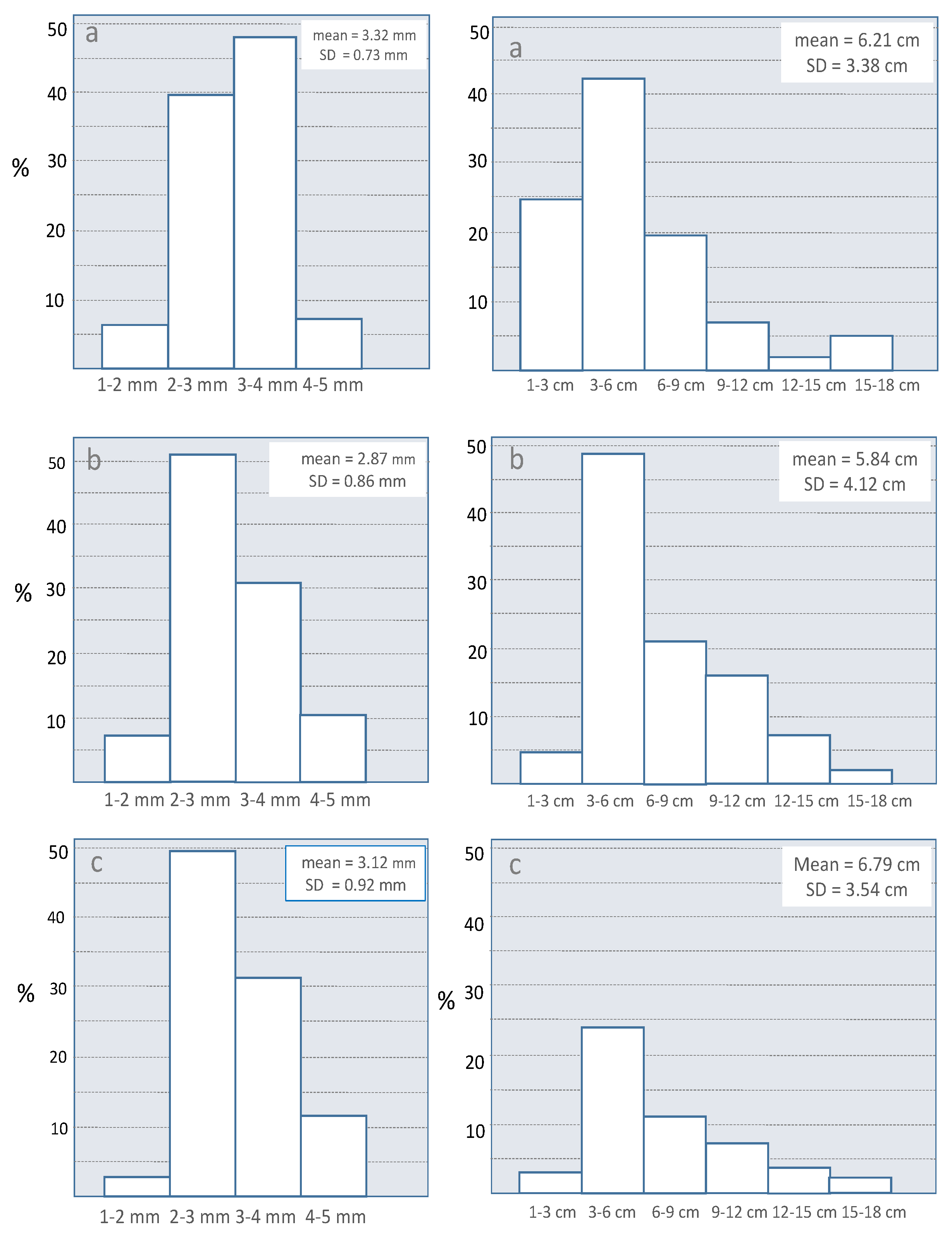
Figure 3.
Frequency distribution (%) of the position of injuries on the terminal branches, indicating the values on the upper, lower and lateral sides. Data correspond to the average values to the olive trees in the three blocks of the VC1 olive grove. The arrows point in the acropetal direction (towards the apex of the branch).
Figure 3.
Frequency distribution (%) of the position of injuries on the terminal branches, indicating the values on the upper, lower and lateral sides. Data correspond to the average values to the olive trees in the three blocks of the VC1 olive grove. The arrows point in the acropetal direction (towards the apex of the branch).
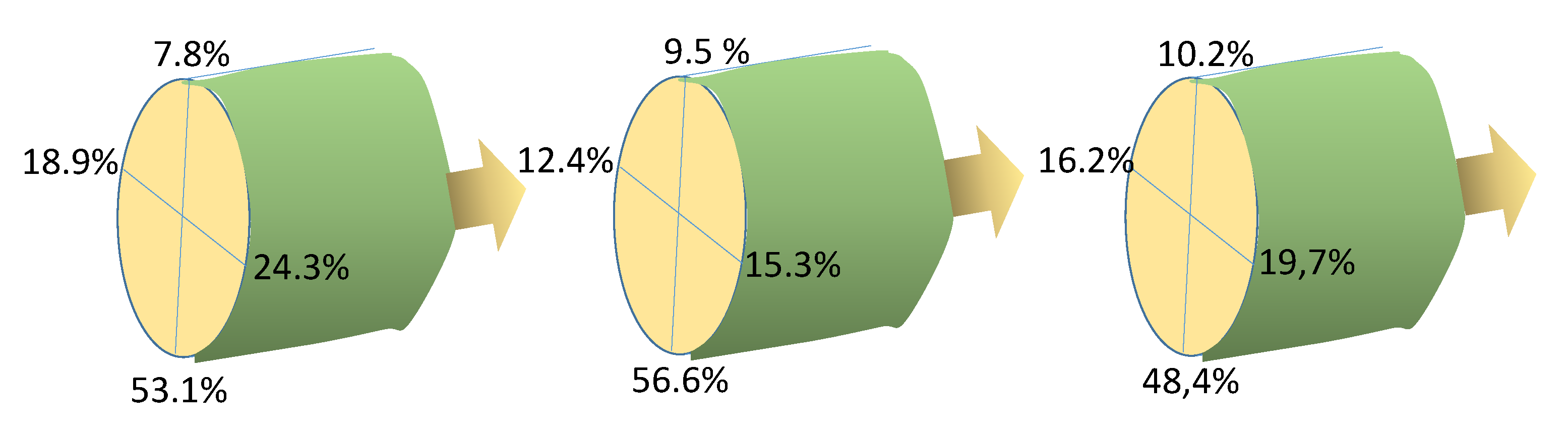
Figure 6.
Simple linear regression between the number (arctangent transformation) of ovipositions injuries in terminal branches (olive VC1; lower, middle and upper-per zones) and the sampling size.
Figure 6.
Simple linear regression between the number (arctangent transformation) of ovipositions injuries in terminal branches (olive VC1; lower, middle and upper-per zones) and the sampling size.
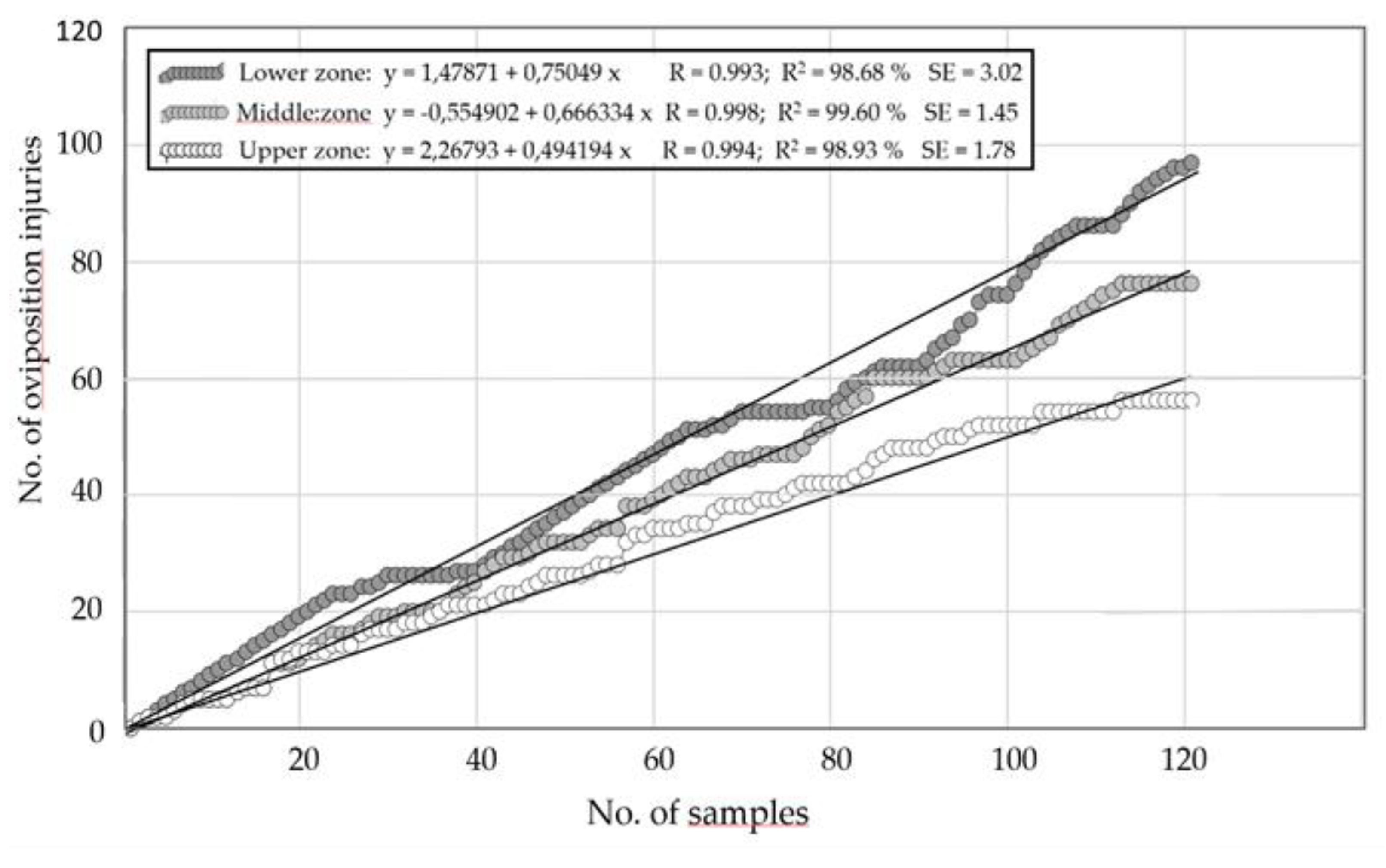
Table 1.
List of plant species inventoried in VC1 and VC2 olive groves, indicating biotypes, life form, no. of specimens collected (N), and abundance (%). By dark green (CV1) and light green (CV2), and the vegetative growth of plant development (months) for each species. The p values indicate statistically significant differences in abundance (t-Student test).
Table 1.
List of plant species inventoried in VC1 and VC2 olive groves, indicating biotypes, life form, no. of specimens collected (N), and abundance (%). By dark green (CV1) and light green (CV2), and the vegetative growth of plant development (months) for each species. The p values indicate statistically significant differences in abundance (t-Student test).
| (biotype)1 | months | ||||||||||||||||
| Sp | [life form]2 | N | %VC1 | %VC2 | p | I | II | III | IV | V | VI | VII | VIII | IX | X | XI | XII |
| Filago | (Th.) [e.] | 606 | 15,2 | 84,8 | <0.001 | ||||||||||||
| pyramidata L. | |||||||||||||||||
| Malva | (H./Th.) [fasc.] | 410 | 65,8 | 34,2 | <0.05 | ||||||||||||
| parviflora L. | |||||||||||||||||
| Bromus | (Th.) [caesp.] | 300 | 75,3 | 24,7 | >0.05 | ||||||||||||
| rubens L. | |||||||||||||||||
| Astragalus | (Th.) [e. fasc.] | 149 | 95,3 | 4,7 | <0.01 | ||||||||||||
| hamosus L. | |||||||||||||||||
| Trisetaria | (Th.) [caesp.] | 104 | 50 | 50 | >0.05 | ||||||||||||
| panicea (Lam.) | |||||||||||||||||
| Filago | (Th.) [e.] | 103 | 89,3 | 10,7 | <0.001 | ||||||||||||
| fuscescens Pomel | |||||||||||||||||
| Herniaria | (Th.) [creep.] | 91 | 80,2 | 19,8 | >0.05 | ||||||||||||
| cinerea D. C. | |||||||||||||||||
| Crucianella | (Th.) [e.] | 47 | 0 | 100 | >0.05 | ||||||||||||
| patula L. | |||||||||||||||||
| Diplotaxis | (Th.) [e.] | 35 | 0 | 100 | <0.01 | ||||||||||||
| virgata (Cav.) DC. | |||||||||||||||||
| Hordeum murinum | (Th.) [e.] | 34 | 85,3 | 14,7 | >0.05 | ||||||||||||
| leporinum Arcang. | |||||||||||||||||
| Trigonella | (Th.) [e.] | 26 | 23,1 | 76,9 | <0.01 | ||||||||||||
| monspeliaca L. | |||||||||||||||||
| Phalaris | (Th.) [caesp.] | 23 | 47,8 | 52,2 | >0.05 | ||||||||||||
| minor Retz. | |||||||||||||||||
| Heliotropium | (H.) [ros.] | 23 | 55,4 | 44,6 | >0.05 | ||||||||||||
| europaeum L. | |||||||||||||||||
| Plantago | (H./Th.) [ros.] | 22 | 100 | 0 | >0.05 | ||||||||||||
| lagopus L. | |||||||||||||||||
| Erodium | (Th.) [creep.] | 20 | 0 | 100 | >0.05 | ||||||||||||
| malacoides (L.) L'Hér. | |||||||||||||||||
| Ononis | (Th.) [e.] | 19 | 15,0 | 85,0 | >0.05 | ||||||||||||
| biflora Desf. | |||||||||||||||||
| Melilotus | (Th.) [e.] | 11 | 18,2 | 81,8 | >0.05 | ||||||||||||
| elegans Salzm. ex Ser. | |||||||||||||||||
| Leontodon longirostris | (H.) [ros.] | 10 | 0 | 100 | >0.05 | ||||||||||||
| (F. & P. D. Sell) Talav. | |||||||||||||||||
| Stellaria | (Th.) [e.] | 1 | 100 | 0 | >0.05 | ||||||||||||
| pallida (Dumort.) Piré | |||||||||||||||||
| Anagallis | (Th.) [e.] | 1 | 100 | 0 | >0.05 | ||||||||||||
| foemina Mill. | |||||||||||||||||
1 Biotypes: Terophyte (Th.); Hemicryptophyte [H]. 2 Life forms: caespitose [caesp.]; erect [e]; fasciculate [fasc.]; rosulate [ros.]; creeping [creep.].
Disclaimer/Publisher’s Note: The statements, opinions and data contained in all publications are solely those of the individual author(s) and contributor(s) and not of MDPI and/or the editor(s). MDPI and/or the editor(s) disclaim responsibility for any injury to people or property resulting from any ideas, methods, instructions or products referred to in the content. |
© 2024 by the authors. Licensee MDPI, Basel, Switzerland. This article is an open access article distributed under the terms and conditions of the Creative Commons Attribution (CC BY) license (http://creativecommons.org/licenses/by/4.0/).
Copyright: This open access article is published under a Creative Commons CC BY 4.0 license, which permit the free download, distribution, and reuse, provided that the author and preprint are cited in any reuse.


