

Submitted:
11 November 2024
Posted:
13 November 2024
You are already at the latest version
Abstract
Electric vehicle (EV) battery technology is at the forefront of the shift toward sustainable transportation. However, maximizing the environmental and economic benefits of EVs depends on advances in battery life cycle management. This comprehensive review analyses trends, techniques, and challenges across EV battery development, capacity prediction, and recycling, drawing on a dataset of over 22,000 articles from four major databases. Using Dynamic Topic Modelling (DTM), this study identifies key innovations and evolving research themes in battery related technologies, capacity degradation factors, and recycling methods. The literature is structured into two primary themes: (1) “Electric Vehicle Battery Technologies, Development & Trends” and (2) “Capacity Prediction and Influencing Factors.” DTM revealed pivotal findings: advancements in lithium-ion and solid-state batteries for higher energy density, improvements in recycling technologies to reduce environmental impact, and the efficacy of machine learning-based models for real-time capacity prediction. Gaps persist in scaling sustainable recycling methods, developing cost-effective manufacturing processes, and creating standards for life cycle impact assessment. Future directions emphasize multidisciplinary research on new battery chemistries, efficient end-of-life management, and policy frameworks that support circular economy practices. This review serves as a resource for stakeholders to address the critical technological and regulatory challenges that will shape the sustainable future of EVs.
Keywords:
electric vehicle battery
; dynamic topic modelling
; literature review
1. Introduction
Electric vehicles (EVs) present a critical pathway to reducing the environmental impacts associated with internal combustion engine (ICE) vehicles, which are substantial contributors to global greenhouse gas (GHG) emissions and urban air pollution. In 2020, transportation alone accounted for 36% of total CO₂ emissions in the United States according to U.S. Energy Information Administration, highlighting the need for electric mobility to meet climate targets and improve urban air quality. While EVs offer solutions by eliminating tailpipe emissions, their long-term sustainability is closely tied to the life cycle management of lithium-ion batteries, which are resource-intensive to produce and require scarce materials like lithium, cobalt, and nickel. The extraction and processing of these materials bring significant environmental and social challenges, from water depletion and habitat destruction to labor issues, with projections indicating that lithium supply may only meet half of the anticipated demand by 2030. Governments worldwide have enacted regulations and incentives, and major automakers have pledged to phase out ICE vehicles, accelerating EV adoption at a 54% compound annual growth rate from 2015 to 2020, data from U.S. Energy Information. Yet, scaling sustainable battery technology remains challenging as batteries degrade over time, losing capacity and efficiency due to factors like high charging rates and temperature extremes. This degradation affects EV performance and complicates recycling, underscoring the urgent need for efficient recycling practices and secondary-use applications to offset production impacts. Without these advancements, the environmental costs of battery production risk diminishing the benefits of transitioning to electric vehicles, making sustainable battery life cycle management essential to fulfilling the environmental promise of EVs.
This literature review aims to map the evolution of EV battery related technologies and provide valuable insights for a wide range of stakeholders. While previous studies have examined the technical and environmental aspects of EV battery technology, such as the comparative benefits over ICE vehicles, recycling challenges, and battery degradation methods, much of the existing literature remains fragmented. [1] indicate that EVs provide substantial emissions savings, yet these benefits are heavily dependent on factors like production emissions, energy grid composition, and recycling practices. However, critical gaps remain in understanding how advancements in battery health prediction, recycling techniques, and life cycle optimization can be integrated into a comprehensive, sustainable framework. This review bridges these gaps by connecting technological developments with practical, scalable solutions, contributing to a more holistic sustainability strategy for EV batteries.
To structure the exploration of these complex issues, this review divides into two primary themes: (1) “Electric Vehicle Battery Technologies, Development & Trends,” and (2) “Capacity Prediction and Influencing Factors.” The first theme focuses on advancements in battery materials, improvements in energy density, and development of sustainable recycling technologies, all of which are pivotal for the continued progress and scaling of EV battery technology. The second theme addresses techniques for predicting battery capacity and degradation over time, with an emphasis on data-driven methods like machine learning models that improve real-time monitoring and optimise battery management. This structured thematic approach aligns with the evolving research landscape and facilitates a comprehensive understanding of battery technology and its role in EV sustainability.
This integrated approach naturally leads to the three primary research questions driving this study: (1) What is the trend of battery-related technologies? (2) In line with technology development, what are the techniques used in predicting the remaining capacity of spent batteries? (3) What are the important elements that affect the remaining capacity? By addressing these questions, this study seeks to deepen our understanding of EV battery technology’s role in sustainability, providing a foundation for innovative solutions that support the global transition to a low-carbon economy.
The objectives of this study are threefold: First, to identify and analyse technological trends driving advancements in EV batteries, particularly focusing on new materials, design improvements, and manufacturing processes that enhance battery energy density, safety, and sustainability. Second, to evaluate the effectiveness of existing capacity prediction methodologies—such as machine learning models, electrochemical impedance spectroscopy, and data-driven approaches—and propose refinements that could improve their accuracy and applicability in real-world scenarios. Third, to explore how technological innovations in battery recycling and secondary use applications can be effectively implemented to optimise battery life cycle management, thus contributing to a circular economy.
To achieve the research objectives, this study utilises Dynamic Topic Modelling (DTM) to capture technological trends in battery development, drawing on data from scientific publications to identify key innovations and emerging research clusters. DTM enables both the analysis of methodologies for predicting battery capacity and the identification of factors influencing battery performance over time. This approach provides a comprehensive view of macro-level trends in battery technology and micro-level insights into technical aspects affecting battery health and sustainability. By integrating these analyses, the study seeks to bridge the gap between theoretical research and practical applications, offering a holistic perspective on EV battery life cycle management.
The remainder of this paper is organised as follows. Section 2 provides a descriptive analysis of the reviewed dataset, outlining the research design, detailing the proposed methodological framework and the implementation process of DTM analysis. In section 3, we dive into the results and in-depth review of research themes and topics from those results. Based on the findings in section 3, we continue to expand those findings with discussion, gaps, and future direction in section 4. Section 5 concludes.
2. Materials and Methods
2.1. Methodology Framework
This section presents a refined methodology framework for conducting a systematic literature review in Figure 1. The framework consists of seven key steps: (1) Establishing the research background to provide context and direction for the study, (2) Defining precise search terms and collecting relevant data using advanced search functions in Scopus, Science Direct, EBSCOhost, and Web of Science, ensuring comprehensive coverage of peer-reviewed literature, (3) Data cleaning & data preparation, (4) Descriptive analysis is presented to offer key insights and an overview of the subject area, (5) Feature reduction for selecting the most relevant terms in text data, aiding in clearer and more efficient data analysis, (6) DTM analysis is used to analyse and track how topics evolve over time within a collection of documents, (7) Synthesising findings in the discussion, identifying gaps and providing future research directions. This structured framework ensures a thorough exploration of the research landscape, leading to meaningful insights and recommendations.
2.2. Material Collection and Data Cleaning
The aim of this research is to explore trends in EV battery technologies, capacity prediction methods, and influencing factors throughout the battery life cycle. Therefore, two groups of keywords representing different aspects of the research were developed to effectively capture relevant literature:
- Battery technology keyword group: “electric vehicle”, “battery”, “EV”, “technology”, “development”, “innovation”, “trend”.
- Battery capacity and influencing factors keyword group: “second-Life”, “battery life cycle”, “remaining useful life”, “life cycle assessment”, “recycling”, “degradation”, “predict”, “reuse”, “impact factor”, “battery health”
Search terms were formed by combining keywords from these two groups, ensuring a comprehensive search strategy. Data was gathered from four well-established academic databases, namely Scopus, Science Direct, Web of Science, and EBSCOhost, covering peer-reviewed journal articles published in English. Although no restrictions were placed on the publication year because we want to track down the development of EV or EV battery from the beginning until now. The dataset structures are not completely standardised between the databases, so Python is used for exacting relevant information among all datasets for standardisation purpose, and aggregated into one main dataset.
The initial number of articles collected from the four databases was 1980 for Web of Science, 11730 for Scopus, 14824 for Science Direct, and 2755 for EBSCOhost. After aggregated into one main dataset, we excluded duplicate results, missing, invalid or omitted values, the final dataset contained 22,982 articles.
2.3. Descriptive Analysis
The descriptive analysis of articles distribution by year is shown in Figure 2. The steady rise in publications on battery technology, EVs, and sustainability reveals shifting industry and research priorities. Historical context (1970s–2000s): Early studies focused on foundational battery science with limited applications. Gradual growth (2000s–2010s): Publication rates increased with advancements in lithium-ion technology and early EV adoption, emphasising energy density, charge cycles, and safety. Sharp increase (2010s–2020): Interest surged with policy support for renewable energy and EVs, supported by technological advancements that reduced battery costs. Peak period (2020–2025): Publications reached new highs, focusing on zero-emission vehicles, battery lifespan, and recycling, aligning with sustainability goals. Future projections: Trends suggest a focus on solid-state batteries, fast-charging, and second-life applications, with interdisciplinary research integrating AI and life cycle assessments. The increasing complexity in publications reflects a targeted approach to life cycle prediction, recycling, and materials innovation, driven by policy and market demands for sustainable solutions. This highlights the value of DTM to identify and analyse evolving research themes.
Figure 3 presents the descriptive analysis of the top 20 journals in the dataset. It reveals leading publications like Renewable and Sustainable Energy Reviews, and Journal of Energy Storage, each with over 1,000 articles, underscoring the strong emphasis on sustainability within EV and battery research. Key journals such as Journal of Power Sources and Energies focus on energy and power systems, while Energy Storage Materials and Journal of Cleaner Production reflect a specialised interest in material science and sustainable production. World Electric Vehicle Journal stands out with its dedicated EV focus, while interdisciplinary journals like IEEE Access and International Journal of Hydrogen Energy bridge fields of engineering, hydrogen research, and alternative fuels. Emerging journals, including Nano Energy, indicate a recent shift towards high-tech battery advancements. This concentration of research highlights essential sources in EV technology, guiding targeted literature reviews across both niche and broader sustainability topics.
The publication trends in Figure 4 across the top 20 journals reveal dominant roles for Renewable and Sustainable Energy Reviews and Journal of Energy Storage, with consistently high volumes in renewable and storage research. Journal of Power Sources maintains a steady presence, contributing foundational work on battery and EV technology, while Energy Storage Materials and World Electric Vehicle Journal show recent growth, reflecting an increasing demand for specialised research in materials science and EVs. Broad-impact journals like Applied Energy and Energies align with the global shift toward renewables, and interdisciplinary journals such as IEEE Access, International Journal of Hydrogen Energy, and Journal of Cleaner Production bridge engineering and environmental science. Newer publications, such as Nano Energy, focus on advanced materials and nanotechnology, emphasizing the field’s dynamic and evolving focus on cutting-edge solutions in EV and battery research.
2.4. Feature Reduction with TF-IDF
Section 2.5 applies TF-IDF (Term Frequency-Inverse Document Frequency) to streamline the dataset of 22,982 articles, spanning from 1976 to 2025. While a large dataset provides comprehensive insights, it also introduces high noise levels, increases processing time, and complicates interpretation. Initial analysis indicated the need for feature reduction to ensure clarity and focus. To address this problem, we used text feature extraction or dimensionality reduction techniques. Although more advanced techniques like Latent Dirichlet Allocation (LDA) are available, TF-IDF is chosen for its simplicity and efficiency at this early stage [2]. We also want to utilise this step to divide our research into two themes: (1) “Electric Vehicle Battery Technologies, Development & Trend” to answer the first research question, and (2) “Electric Vehicle Battery Capacity Prediction: Influencing Factors” for the remaining two questions. By setting a 0.9 threshold [3] and ran TF-IDF for two themes, we select the top 10% of articles most relevant to each theme. This yields two focused datasets, each containing 2290 articles, enhancing the depth and clarity of our analysis.
2.5. Dynamic Topic Modelling (DTM)
DTM is a method that examines topic evolution within a body of literature over time, making it particularly valuable for analysing fields experiencing rapid development. Unlike static models, DTM captures shifts in word distributions across specified intervals, revealing changes in research focus and emerging themes. This approach is well-suited for fields like EV battery technology, where trends evolve swiftly in response to advancements and innovations.
In the context of this literature review on EV battery technologies and capacity prediction, DTM effectively supports the research goals by uncovering temporal trends, analysing evolving methodologies, and identifying influential factors affecting battery performance. This aligns with the research questions, as it enables tracking of technological shifts, examination of prominent capacity prediction techniques, and identification of emerging influences on battery longevity. By clustering literature into topic-time groups, DTM aids in selecting key articles, facilitating a deeper understanding of the field’s progress. We ran two separated DTM models, one for each theme.
DTM requires user to pre-define the number of k, which represents the number of topics the model will try to identify and track over time. This is similar to traditional topic models like LDA, where specifying k is essential to define the scope and granularity of the topics.
To find the optimal number of k, [4] proposed a coherence score, which becomes one of the most popular methods to identify k in topic modelling. We use Python Gensim package. For each potential k value, the model calculates the coherence score, which measures how well the words in each topic are semantically related. The k value with the highest coherence score generally indicates the best model. The DTM model with the k having the highest coherence score will be selected as the optimal number of topics for the dataset. We train DTM in a loop with k values from 2-52, according to [5], 50-loop is the most reasonable value for k. Figure 5 and 6 are the results for theme 1 and theme 2.
We can see that the optimal k value for theme 1 is 3 and theme 2 is 6.
The procedure for DTM method has the following steps: 1) Abstracts cleaning and preparation. 2) Identifying the optimal value of k using coherence score. 3) Clustering 2290 abstracts using DTM model and the optimal k for each time point (1976-2925) which is publication year in our dataset. 4) Visualising top 30 keywords in each topic in each time point using pyLDAvis package in python. 5) Labeling each topic for every time point using top 30 keywords. 6) Examining each topic’s label, identifying the evolution of each topic and creating new label for each evolution. 7) Combining the evolution of each topic and creating one final evolution of the main theme.
This is the original DTM design for both Theme 1 and Theme 2. However, in step 5 of Theme 2’s DTM analysis, we observed that all articles related to Theme 2 were classified under a single topic (Topic 5) and spanned a narrow publication period from 2022 to 2024. With such a short timeframe, we were unable to observe or identify any meaningful evolution. Therefore, we decided to reclassify these articles into distinct topics based on their titles. This approach allows us to identify various methods and techniques for battery capacity prediction, as well as the influencing factors. Furthermore, our primary goals in Theme 2 are to identify current methods for battery capacity prediction and relevant influencing factors. So, this is justifiable for us to adapt to the situation and make necessary adjustments.
2.6. Paper Selection for Content Discussion
To determine which articles are ideal for a deep-dive discussion after DTM, we use the metric called “document topic distribution”, which is one of the direct results from DTM. By focusing on High-Probability Documents per Topic: After DTM assigns topics over time, we can identify articles that have high relevance scores within specific topics. Articles with the highest probability for a given topic can offer rich details and unique insights into that theme, making them suitable for an in-depth analysis. This method allows us to focus on core articles that best represent each evolving topic within the research timeframe, ensuring they cover the essence of the identified trends. Based on the DTM results, 150 articles were chosen for in-depth analysis in Theme 1 with k=3, and 300 articles for Theme 2 with k=6, which will be further explored in the upcoming section on results and thematic review.
3. DTM Analysis, Results and In-Depth Review of Research Themes and Topics
3.1. Theme 1: Electric Vehicle Battery Technologies: Development and Trends
3.1.1. Topic 1: Foundations and Early Innovations (1976–1985)
- Energy Resource Evaluation and Performance Optimization (1976–1978)
During the late 1970s, research focused on evaluating energy resources and understanding the technological requirements for enhancing transportation efficiency. Studies emphasised performance optimisation for internal combustion engines and explored systematic approaches to resource requirements in energy applications. The development of daily density models for transportation systems aimed to improve range and efficiency, laying the groundwork for future battery innovations. [6] present short summaries of most of the battery systems that can be considered for electric vehicles. Many little-known systems are included, some with little or no experimental background, and thus are worth considering for future research. Electric vehicle battery requirements are postulated, and based on these requirements the battery candidates are evaluated for their near-term and long-term prospects. Being the first article on EV battery systems, this work plays a foundational role in assessing various battery technologies for electric vehicles. It explores early requirements and the potential of different systems, setting the stage for future innovations in the field. [7] introduce a model to estimate energy and power needs for EVs in different driving environments. It compares EVs to internal combustion vehicles, analysing energy use and range for various vehicle types using both lead-acid and high-performance batteries. Results show that EVs can be efficient in urban settings but are less effective for inter-city travel, where combustion engines perform better. The model also serves as a foundation for more advanced simulations in the future.
- Development of Lead-Acid and Early Lithium Technologies (1979–1983)
The period from 1979 to 1983 witnessed significant advancements in lead-acid battery development, particularly for telecommunications and component performance. Concurrently, initial explorations into lithium technologies began, aiming to improve energy systems' efficiency and performance. Efforts were made to enhance cell technology, reduce density in battery systems, and implement practical design improvements to extend system range. [8] discuss the future applications of battery energy storage in transport and stationary settings, focusing on environmental benefits and advancements in battery technologies. Motivated by the 1970s energy crisis, it examines existing battery chemistries (lead-acid, nickel-cadmium) and emerging systems like sodium-sulfur and lithium-based batteries. Findings suggest batteries are crucial for future energy storage, addressing energy density and cost challenges. The paper provides foundational knowledge for understanding the role of batteries in reducing fossil fuel reliance and integrating renewable energy. [9] examine improvements in lead-acid batteries for EVs through a systems design approach. The EV-3000 battery demonstrated effective advancements in energy density, power, and cycle life, highlighting that lead-acid batteries can still be viable for near-term EV use, especially in cost-sensitive markets.
3.1.2. Advancements and Market Influences (1986–1995)
- Chemical System Innovations and Environmental Considerations (1986)
In 1986, research delved into nonaqueous chemical systems, addressing challenges and fostering innovations in battery technology. Advancements in sodium-based energy systems focused on development and application perspectives, signaling a shift towards exploring alternative battery chemistries. [10] explore challenges in developing advanced traction batteries for EVs. It highlights the demanding specifications needed, which slows progress in battery development. Many parameters are interdependent, requiring compromises. Advanced batteries, including non-aqueous lithium and sodium designs, are briefly described, with the author suggesting that these may ultimately be ideal for EVs, though further work is needed.
- Impact of Advanced Technologies and Market Dynamics (1988–1991)
Between 1988 and 1991, evaluations of advanced lithium technologies highlighted their impact on EV performance and cost. Studies assessed the performance and cost factors of advanced energy systems for urban EVs, considering market implications. The development of advanced nuclear power systems and major utility programs in Europe emphasised clean energy initiatives and environmental sustainability. [11] discuss the impact of political events, like the Gulf crisis and Clean Air Act amendments, on energy technologies and EV adoption. It highlights how socio-political pressures have driven innovation in EVs, providing historical context for the evolution of energy solutions, though lacking in detailed technological analysis.
- Emergence of Hybrid Power Systems and Material Advancements (1992–1995)
From 1992 to 1995, the introduction of hybrid lead-acid cell technology for urban safety marked a significant milestone. The automotive industry recognised the need for new environmental programs, leading to advancements in motor technology. Innovations included synchronous systems and hybrid energy solutions, enhancing infrastructure efficiency and reducing environmental impact. Developments in platinum-based energy systems and advanced separator technologies improved efficiency and traction in hybrid technologies. [12] discuss about MARVEL which is an interactive microcomputer software developed to analyse battery, heat engine, and hybrid vehicle systems, focusing on least-life-cycle-cost analysis. It models interrelationships between battery parameters while avoiding premature specifications. MARVEL includes default data for various vehicles, driving profiles, and battery technologies, and can analyse electric, heat engine, or hybrid vehicles. The software is written in PL/I for IBM-compatible microcomputers. [13] explore the feasibility of lead-acid batteries for electric vehicles (EVs) and compares them to alternatives like PEM fuel cells and nickel-metal hydride batteries, in light of the California ZEV mandate. It finds that lead-acid batteries are cost-effective but limited by energy density, whereas fuel cells show promise for higher efficiency. The study provides insights into policy-driven development and highlights the early challenges in battery evolution for zero-emission vehicles.
3.1.3. Emergence of Hybrid and Fuel Cell Technologies (1996–2005)
- Addressing Performance Challenges in Lead-Acid Batteries (1996–1997)
Efforts to address performance challenges in lead-acid applications led to the development of additives that enhanced battery efficacy. The creation of lithium alloy technologies improved charge efficiency in automobiles, contributing to the advancement of zero-emission vehicles. [14] develop scalable lithium polymer batteries for EVs, with cell capacities up to 40 Ah. Using a cost-effective extrusion process, the batteries showed consistent performance and energy densities between 100-175 Wh/kg. While promising, the study lacks long-term data for larger cells and an economic analysis for mass production, contributing insights into scalable production and EV battery viability. These innovations were crucial in promoting sustainable transportation and reducing environmental pollutants. The main challenge is the lack of extensive real-world application data for the Zebra battery system. While the studies provide a thorough theoretical exploration of material synthesis and the electrochemical structure, the findings are largely limited to lab-scale production and simulations. This gap in real-world testing presents a significant barrier to validating the technology for broader commercial adoption and understanding its true performance under practical conditions. [15] review the advancements in the Zebra (sodium-nickel chloride) battery for EVs, focusing on the beta-alumina ceramic electrolyte critical for performance and safety. It details material synthesis, stability at 2.59V at 300°C, and cycle life, but lacks real-world application data. The paper emphases the importance of material advancements for battery durability and calls for further field testing for commercial validation. [16] assess the readiness of advanced batteries for EV commercialization under the California ZEV mandate. It projects nickel-metal hydride and lithium-ion as leading technologies and outlines a seven-stage commercialization process. Though based on 1996 data, it provides key insights into battery commercialization and the impact of regulations on EV technology.
- Development of High-Performance Hybrid Systems (1998–2001)
Between 1998 and 2001, research focused on enhancing energy system range through new technologies. The power and development of high-performance hybrid energy systems were explored, with advances in lithium and Nickel-Metal Hydride (NiMH) technologies. Enhancements in power and charging performance in hybrid lithium polymer storage systems were achieved, emphasizing cost-effective solutions for hybrid electric vehicles (HEVs). [17] details advancements in NiMH batteries for EVs and HEVs, focusing on performance improvement and cost reduction. Three battery iterations (GM01, GM02, GM03) were developed, achieving specific energy up to 95 Wh/kg. The study emphasizes enhanced manufacturability but lacks real-world performance data and discussion on large-scale production challenges. [18] reviews advancements in Ni-MH batteries, focusing on material improvements and their use in EVs like the Toyota RAV4 EV. It highlights increased energy density and better performance but mainly focuses on Japanese developments and lacks a cost comparison with lithium-ion batteries.
- Integration and Fuel Technology Advancements (2002–2005)
The importance of integration in hybrid automobile technology development was emphasised during this period. Cost-effective fuel technologies were developed to advance hybrid and fuel cell vehicle designs. Optimizing fuel cell performance and autonomy in hydrogen packs enhanced electric vehicle technology, contributing to the broader adoption of sustainable energy solutions. [19] review advancements in EV batteries, focusing on improved energy management, durability, and cost reduction. Key developments include better integrated circuits, enhanced nickel-metal hydride and lithium-ion batteries, and advanced thermal management. These advancements aim to make EVs more competitive with gasoline vehicles by extending battery life and improving efficiency. [20] present a BMS to optimise NiMH battery performance, safety, and life cycle in EVs. Key features include real-time state-of-charge (SOC) calculation, thermal management, and diagnostics, improving battery durability and safety.
3.1.4. Focus on Efficiency and Environmental Impact (2006–2015)
- Advancements in Hydrogen Fuel Cells and Emission Reduction (2006–2007)
Significant advancements in hydrogen fuel cell technology occurred between 2006 and 2007, focusing on performance enhancements and economic implications. The development of hybrid power systems with applications in fuel and energy sectors contributed to efforts in reducing emissions and promoting environmental sustainability. [21] examine China’s efforts to balance automotive growth with environmental goals by adopting cleaner technologies, such as hybrids and hydrogen vehicles. Government initiatives are highlighted as crucial, though challenges like high costs and infrastructure remain. The paper offers a policy-focused view on cleaner vehicle adoption, relevant for understanding regulatory impacts on EV technology advancement. [22] present a hybrid electric airport vehicle powered by hydrogen fuel cells and batteries, extending operational time beyond 6 hours. The fuel cells supply base power while batteries handle peak demands, improving efficiency and reducing emissions. The study highlights the potential of hydrogen-battery hybrids but lacks analysis of economic feasibility and scalability. [23] review advancements in Li-ion batteries for electric vehicles, focusing on improving energy density, safety, and thermal management. Key developments include new anode materials like silicon composites, improved cathode chemistries, and enhanced cooling systems. While the study provides insights into material and thermal advancements, it lacks cost analysis and experimental performance data. These findings are crucial for understanding Li-ion battery technology trends, predicting battery performance, and assessing secondary use in electric vehicle applications
- Power and Performance Optimization in Hybrid Technology (2008–2010)
From 2008 to 2010, key developments in hybrid technology aimed at enhancing fuel efficiency and power management. Innovations included advancements in energy systems and driving modes, improving the overall performance of hybrid vehicles. [24] explore system-level reliability in hybrid electric vehicles (HEVs) and the trade-offs between fuel economy and reliability. It finds that HEVs, particularly parallel architectures, have lower reliability than ICE vehicles due to added complexity but can achieve partial functionality through graceful degradation. The study highlights the need to balance fuel efficiency with reliability in HEV design, encouraging manufacturers to consider partial reliability as a strategy to enhance vehicle performance under failure conditions. [25] explore key design aspects and technological hurdles in PHEV development. It emphasises optimizing battery capacity, control strategies based on state-of-charge (SOC), and integrating efficient components like lithium-ion batteries. The study highlights the importance of scalable, efficient systems, and government incentives for advancing PHEV adoption. While the paper provides a comprehensive theoretical overview, it lacks empirical validation, suggesting future research should focus on real-world testing of these design considerations.
- Energy and Power Systems Evaluation (2011–2015)
Evaluations of energy and power systems in hybrid and EVs were conducted to assess impacts on range, cost, and efficiency. Cost management and emission reduction strategies were implemented in high-efficiency hybrid energy systems. Studies explored alternative fuels in urban transportation and conducted cycle and emission analyses to advance hybrid technology. [26] explore the use of nanostructured anode and cathode materials to improve power density in lithium-ion batteries while maintaining high energy density. Key findings include enhanced performance using nanostructured graphene, silicon, and LiFePO4 materials. The study emphasises that nanostructuring can make lithium-ion batteries more suitable for electric vehicles by bridging the gap between energy and power densities. However, it lacks discussion on scalability and cost, suggesting future research should address commercial production challenges. [27] assess the economic viability of V2G and B2G applications for EV batteries. V2G has potential in high-value grid services but faces cost barriers, while B2G's appeal is limited by uncertainties around residual value. Profitability remains marginal without subsidies. The study provides insights into secondary battery use, emphasising the need for cost reductions or favorable policies for economic viability. [28] evaluate advanced rechargeable batteries (LIB, LIP, ZEBRA, Ni–Cd) based on energy, environmental, economic, and technical metrics. LIBs stand out for their energy density and cost-effectiveness, making them ideal for portable electronics and EVs. LIP batteries also show potential but require improvements, while ZEBRA batteries are limited by higher costs. The study emphasises life cycle efficiency and environmental impacts, but lacks extensive recycling and end-of-life analysis. [29] evaluate different vehicle technologies (petrol, diesel, HEVs, BEVs, PHEVs) using Life Cycle Assessment (LCA) and Total Cost of Ownership (TCO). BEVs and PHEVs have the lowest environmental impact, but high purchase cost leads to a higher TCO compared to conventional vehicles. The study highlights the trade-off between environmental performance and cost, suggesting incentives may be needed for BEV adoption. This integrated environmental and financial analysis informs policymaking and supports the transition to cleaner vehicle technologies.
3.1.5. Sustainability and Material Efficiency (2016–2025)
- Technological Advancements and Emission Challenges (2016–2019)
Advancements in energy technologies concentrated on fuel utilisation and power systems, addressing emission challenges through innovative solutions. Emphasis was placed on technological development and performance analysis for cost efficiency, paving the way for more sustainable battery technologies. [30] compare the costs of managing peak electricity demand using traditional technologies, such as gas turbines and hydroelectric storage, with newer solutions like battery storage and vehicle-to-grid (V2G) systems. It finds that battery storage is more cost-effective for managing short peak periods under an hour, while traditional power plants and hydro storage are more economical for longer durations. V2G technology proves more efficient in low-voltage power grids, particularly for short-duration peak loads of up to 1-2 hours. Despite traditional power stations being generally cost-effective, battery storage and V2G can be advantageous in locations lacking natural gas infrastructure or where environmental regulations restrict fossil fuel use. The study recommends government support for R&D, reducing battery costs, and establishing favorable regulations to promote the adoption of battery storage and V2G technologies.
- Lithium-Ion Technologies and Recycling Methods (2020–2023)
From 2020 to 2023, focus shifted to energy systems incorporating lithium-ion cell technologies. Emission reduction strategies and recycling methods were implemented to address environmental concerns and material scarcity. Evaluations of charging methods and performance trends in lithium-ion technologies were conducted to enhance efficiency. [31] present an optimised liquid cooling thermal management system (BTM) for cylindrical lithium-ion batteries. Using COMSOL simulations, the study finds that a staggered cooling channel configuration improves temperature control, reducing risks of thermal runaway. The model shows potential for enhancing battery safety in EVs, although real-world testing is recommended. [32] evaluate different machine learning models—Linear Regression, Neural Network, and Modified Support Vector Machine (M-SVM)—to predict the state of health (SOH) of lithium-ion batteries in EVs. The M-SVM model showes superior performance in predicting battery SOH, indicating lower errors compared to the other methods. The study highlights the effectiveness of M-SVM in battery management systems for real-time health monitoring, though further research is needed to validate results across diverse datasets and conditions. [33] review battery thermal management (BTM) strategies for EVs, including active, passive, hybrid systems, and deep learning methods. It highlights hybrid cooling as the most efficient approach but notes its complexity and cost. Deep learning methods show promise for optimizing BTM through real-time adjustments, enhancing battery longevity. The study suggests a shift towards smarter, adaptive BTM systems, though more experimental validation is needed to confirm the findings in real-world conditions.
- Emission Reduction and Optimization (2024–2025)
The emphasis on emission reduction continued into 2024 and 2025, with cost, model, and performance analyses conducted to optimise lithium-ion energy systems. Enhancements in charging, heat management, and emission reduction techniques were implemented, preparing the industry for future challenges and promoting sustainability. [34] develop a physics-based model to evaluate energy losses and use-phase carbon emissions of EV batteries. It highlights how factors like regional GHG intensity and temperature impact emissions, with the thermal management system being a major contributor. The study underscores the significance of considering operational conditions for sustainable battery use, offering insights into improving battery efficiency and carbon management in diverse climates. The model provides a valuable tool for evaluating emissions but requires real-world validation.
3.2. Theme 2: Electric Vehicle Battery Capacity Prediction: Influencing Factors
3.2.1. Topic 1: Machine Learning Model for Battery Capacity Prediction
This theme focuses on using machine learning techniques to predict battery capacity and state of health (SOH) in EVs. Methods like neural networks and ensemble models help capture complex battery degradation patterns, improving prediction accuracy and enabling real-time monitoring to optimise battery performance and lifespan.
[35] present a novel hybrid approach for improving the accuracy and efficiency of SOH estimation in lithium-ion batteries. The authors combine Empirical Mode Decomposition (EMD), Gated Recurrent Unit (GRU) neural networks, Random Forest (RF), and Variance Contribution Ratio (VCR) to develop an effective model for battery health prediction. Using the NASA PCoE Li-ion battery dataset, the model outperforms traditional methods with prediction errors below 4%, making a notable contribution to advancing battery capacity prediction and health management for electric vehicles. [36] introduce a hybrid deep neural network (HDNN) for battery capacity estimation in EVs, using real-world data from 40 electric buses. The HDNN, combining convolutional and fully connected networks, achieved a MAPE of 2.79%, outperforming traditional methods, and is suitable for real-time battery management. This study significantly improves accuracy and robustness in battery health estimation. [37] review deep learning methods for predicting the remaining useful life (RUL) of energy storage systems like lithium-ion batteries. It finds that models like LSTM, GRU, CNN, and autoencoders, particularly in hybrid forms, outperform traditional methods in accuracy and efficiency. These techniques can enhance battery management by adapting to degradation over time, but further validation under real-world conditions is needed, along with improvements in generalisability and computational efficiency. [38] present a hybrid deep learning model for predicting RUL of lithium-ion batteries. The model combines domain knowledge-based features with features learned by a neural network, using a one-dimensional convolutional neural network (1D-CNN) and a fully connected network enhanced by a snapshot ensemble strategy. Trained on data from 124 commercial lithium-ion battery cells, the model outperformed traditional methods like SVR, GRU-RNN, and CNN-LSTM, achieving better accuracy and generalizability. This approach improves early RUL prediction, contributing to efficient EV battery management. [39] propose a hybrid neural network combining 1D CNN and BiLSTM to improve the prediction accuracy of lithium-ion battery RUL. Tested on NASA's battery datasets, the model outperformed traditional methods like RNN and LSTM by achieving lower prediction errors. The hybrid approach enhances feature extraction and time-series analysis, making it more accurate and reliable for battery management, though further testing on diverse datasets is needed. [40] present an optimised hybrid neural network using CNN and Bi-LSTM, improved with the Sparrow Search Algorithm (SSA), to predict SOH of lithium-ion batteries. Their model, tested on NASA battery data, showed high accuracy with prediction errors under 0.7%, outperforming traditional models. This approach enhances SOH prediction for EV batteries, making it suitable for battery management, though more testing on different battery types is needed.
3.2.2. Topic 2: Hybrid Models, Transfer Learning, and Data-Driven Method for Battery Capacity Prediction
This topic includes discussed hybrid models combining data-driven methods for battery capacity.
[41] develop a hybrid machine learning model called N-CatBoost to estimate the SOH of lithium-ion batteries using real-world data from the EVs. By combining CatBoost and NGBoost algorithms, their model provides accurate SOH predictions with uncertainty estimates. Tested on data from 15 EVs over a year, it achieved high accuracy with a MAPE of 0.817%, outperforming other machine learning methods. This approach improves battery health estimation in practical EV applications but requires further validation with more diverse data. [42] propose a data-driven method for estimating LiFePO₄ battery capacity using cloud-based charging data from EVs. By combining linear regression for slow-charging data and a neural network for fast-charging data, their approach achieved high accuracy with data from 85 vehicles over one year. This method enhances battery management by improving capacity estimation in real-world conditions, supporting better battery life for EVs. [43] develop a model for estimating the health of lithium-ion batteries in EVs, using real-world data like driving mileage and seasonal temperature. They applied advanced algorithms (VFFRLS and EPF) to achieve accurate capacity estimation, keeping errors within ±1.2%. This approach improves battery management under real-world conditions, although broader testing is needed for general use. [44] develop a voltage prediction method for lithium-ion batteries using sparse data. By using a self-attention network with transfer learning and a new SEE loss function, they achieved a mean error below 0.5%, outperforming traditional models. This approach improves battery monitoring in EVs, making battery management more accurate and efficient, but needs further testing in varied conditions.
[45] develop DLPformer, a hybrid model for predicting the state of charge (SOC) in EVs, using linear trend analysis and transformer-based machine learning. By integrating battery and vehicle data, the model improves prediction accuracy compared to traditional methods. It shows promising results for better battery management, but further testing under different conditions is needed for broader use. [46] propose a hybrid model that combines physics-based and data-driven methods to predict Li-ion battery degradation. Using a sequence-to-sequence deep learning approach, the model accurately predicts battery capacity using just 20% of early-cycle data, achieving a MAPE of less than 2.5%. This approach offers an efficient solution for early prediction, though more validation under varied conditions is needed. [47] propose a battery capacity estimation method combining an equivalent circuit model with quantile regression (QR) to address low-quality, inconsistent real-world data from EVs. By using QR to manage outliers and refine capacity estimation, the model achieved errors within 3.2%, significantly outperforming ordinary least squares (OLS) regression. This approach is effective for improving battery capacity estimation in practical, large-scale applications, though further validation in varied temperature conditions is needed.
[48] develop a hybrid transfer learning method for predicting lithium-ion battery capacity. By combining EEMD, SVR, and BiLSTM-AM, the approach captures both local and long-term degradation features, achieving high accuracy with errors between 0.6% and 6.96%. The method outperformed traditional models and is suitable for battery management systems, though further validation on diverse batteries is recommended. [49] develop an LSTM-based model to estimate lithium-ion battery health using incremental capacity analysis and transfer learning. This approach achieved high prediction accuracy, with an error under 2%, and adapted well to different battery conditions, providing a reliable solution for improving battery management systems in electric vehicles.
3.2.3. Topic 3: Advanced Signal Processing and Feature Extraction Techniques
This theme includes articles utilising advanced signal processing methods, such as incremental capacity analysis, differential voltage analysis, and wavelet transforms, to extract meaningful features for capacity prediction.
[50] develop a hybrid model combining Discrete Wavelet Transform (DWT) and an improved semi-empirical (ISE) aging model to predict RUL of lithium-ion batteries. Their model outperformed others like Particle Filter and LSTM, offering high accuracy with minimal data. This approach provides reliable early RUL predictions to optimise maintenance. [51] present a practical SoH estimation method for LiFePO₄ batteries using Gaussian Mixture Regression (GMR) combined with Incremental Capacity (IC) analysis. This approach, validated through aging tests, outperformed traditional methods like Linear Regression and Neural Networks in accuracy, achieving MAE and RMSE below 1%. The GMR-based method is suitable for EV battery management, offering high adaptability and low computational complexity. Future research should explore its applicability under dynamic charging conditions and for different battery types. [52] propose a SOH prediction method for lithium-ion batteries using wavelet-convolutional neural regression networks (CNRN) with Electrochemical Impedance Spectroscopy (EIS) frequency profiles. This method, validated with Eunicell LR2032 cells under various temperatures, improved SOH prediction accuracy by using wavelet decomposition for feature extraction in both time and frequency domains. Hybrid models like CNRN-GPR further boosted prediction performance. The study suggests expanding the dataset for more battery types and real-world testing to confirm robustness, making it relevant for battery health monitoring in electric vehicles and energy storage systems. [53] propose a method for estimating lithium-ion battery state-of-health (SOH) using incremental energy analysis (IEA) and a Bayesian-transformer model. The model achieved high accuracy. outperforming traditional methods like LSTM and SVR. This approach effectively enhances SOH prediction, supporting improved battery management and extended life cycle
3.2.4. Topic 4: Impact of Temperature and Thermal Effects on Battery Capacity
This topic focuses on how temperature influences battery capacity and the methodologies developed to predict and manage thermal effects.
[54] proposed a model to estimate the internal temperature and state-of-charge (SOC) of lithium-ion batteries using a fractional-order thermoelectric approach. This method achieved high accuracy, with errors of 0.5% for SOC and 0.3°C for temperature. It improves battery safety and management for electric vehicles, though further testing is needed for real-world use. [55] used ANN models to predict lithium-ion battery performance with direct oil cooling. The ANN_LM-Tan model showed high accuracy, predicting temperature within ±0.97% and voltage within ±4.81%. This method improves cooling system design for Evs. [56] developed ANN models (BP-NN, RBF-NN, Elman-NN) to predict lithium-ion battery temperatures under metal foam cooling. The Elman-NN model outperformed others in adaptability and speed, suggesting ANN as an efficient alternative to CFD for battery thermal management. Experimental validation is needed for real-world use. [57] used an ANN, specifically the Elman-NN model, to predict battery cell temperatures with a refrigerant direct cooling system (RDC-TMS). The Elman-NN showed high accuracy and RDC-TMS outperformed other cooling methods. This model improves battery cooling in electric vehicles, but future studies should test it under dynamic conditions and fast charging.
3.2.5. Topic 5: State of Charge (SOC) Estimation Methods
This theme focuses on articles that develop and improve SOC estimation methods, essential for accurate capacity prediction. Wu et al. (2022) [58] introduced an Interacting Multiple Model (IMM) method to estimate SOC and SOH in lithium-ion batteries, effectively addressing temperature and aging effects, with an SOC error margin around 2%. Future testing could apply this to various battery types. [59] utilise Neural Networks to predict the SOC-OCV relationship, achieving higher accuracy and lower complexity than traditional methods, which could enhance battery management system reliability under dynamic conditions. [60] propose a passive equalisation strategy to improve efficiency and extend battery life in lithium-ion packs, outperforming traditional methods and showing potential for EV applications, with real-world testing recommended for further validation.
3.2.6. Topic 6: Factors Influencing Battery Degradation and Capacity Loss
This topic explores factors significantly impacting lithium-ion battery (LIB) degradation in EVs, including operating conditions, SOC range, and charging patterns, all contributing to battery lifespan and performance. Key influences on degradation are temperature, Depth of Discharge (DoD), SOC, charging rates, and chemical mechanisms. Temperature plays a crucial role; high temperatures accelerate reactions like Solid Electrolyte Interphase (SEI) growth and electrolyte oxidation, while low temperatures increase internal resistance, risking issues like lithium plating. DoD directly affects mechanical and thermal stress—deeper discharges lead to structural changes, while a moderate DoD around 50% is optimal to reduce wear. SOC levels also impact degradation, with high SOC accelerating wear through increased chemical reactivity and low SOC increasing internal resistance. Maintaining SOC in an optimal range during cycling and storage is beneficial for longevity. Charging rates, or C-rates, further influence battery health; high rates induce thermal and mechanical stress, causing SEI growth, lithium plating, and capacity loss, while lower rates are preferable to reduce wear. Chemical degradation mechanisms like SEI growth, loss of lithium inventory (LLI), loss of active materials (LAM), and electrolyte loss also contribute to gradual capacity fade. SEI layer growth reduces capacity by consuming lithium ions, while LAM results from structural damage that limits the available reaction mass. Additional factors affecting LIB health include cycling frequency, user behavior, vehicle weight, infrastructure, and environmental conditions, such as climate and road types, which impact battery load and stress. For example, aggressive driving and heavy use of auxiliary systems may reduce battery life, and infrastructure aspects like charging station types and electricity mix can influence efficiency. Considering these varied factors is crucial for effective battery management, and strategies such as thermal management, optimised charging practices, moderate driving, and energy management systems collectively extend battery lifespan and enhance EV sustainability.
[61] develop a lithium-ion battery degradation model for EVs, incorporating time-varying temperatures and charge cycles, which outperformed traditional models with a prediction error of 2.34% compared to 11.18%. This model, optimised with Particle Swarm Optimization, underscores the impact of temperature fluctuations on battery capacity and suggests incorporating these factors in degradation models for better battery management. [62] propose a degradation model using MEEMD, MIV, and Bi-LSTM, achieving high accuracy (MAE of 0.0143) by using capacity, voltage, current, and temperature data. This study identifies key degradation factors, emphasizing the roles of internal parameters and operating conditions, such as high and fluctuating temperatures and frequent charging cycles. [63] review life cycle impacts, noting that battery degradation is influenced by production impacts of materials like cobalt, lithium, and nickel, as well as temperature fluctuations and charging patterns during use. Efficient recycling and second-life applications were also found to reduce degradation and environmental impact. Additional studies like [64] and [65] advanced degradation prediction methods by using partial charging segments for multi-type batteries, deep reinforcement learning for multi-formulation Li-ion batteries, respectively. These diverse approaches reflect ongoing efforts to enhance degradation predictions and improve the sustainability and performance of lithium-ion batteries in EVs.
4. Discussion, Gaps, and Future Direction
4.1. Theme 1: Electric Vehicle Battery Technologies: Development and Trends
4.1.1. Discussion
The initial stages of EV battery development centered on foundational innovations with lead-acid and early lithium technologies. Research during 1976–1985 laid the groundwork by evaluating energy resources and optimizing performance for internal combustion engines and early electric vehicles. The introduction of lead-acid batteries and explorations into lithium technologies marked significant milestones, setting the stage for future advancements.
Between 1986 and 1995, there was a shift towards chemical system innovations and addressing environmental considerations. The development of hybrid power systems and material advancements reflected a growing awareness of the need for cleaner energy solutions. The automotive industry's recognition of environmental programs led to innovations that enhanced infrastructure efficiency and reduced environmental impact.
The period from 1996 to 2005 witnessed the emergence of hybrid and fuel cell technologies, focusing on addressing performance challenges and integrating new power systems. Advancements in lithium and nickel-metal hydride (NiMH) technologies improved power and charging performance, making hybrid electric vehicles (HEVs) more viable and cost-effective.
From 2006 to 2015, the focus intensified on efficiency and environmental impact. Significant advancements in hydrogen fuel cells and efforts to reduce emissions highlighted the industry's commitment to sustainability. Evaluations of energy and power systems during this time contributed to optimizing hybrid and electric vehicles, enhancing their range, cost-efficiency, and overall performance.
The most recent phase, from 2016 to 2025, emphasizes sustainability and material efficiency. Technological advancements aim at emission challenges, with a particular focus on lithium-ion technologies and recycling methods. Efforts to incorporate recycling address environmental concerns and material scarcity, ensuring the sustainable use of resources. Enhancements in charging methods, heat management, and emission reduction techniques prepare the industry for future challenges.
4.1.2. Gaps
Despite considerable progress, several critical gaps remain. Scaling advanced technologies like solid-state and lithium-sulfur batteries for mass production is challenging, with economic viability and quality maintenance requiring further research. Comprehensive life cycle environmental impact assessments of new battery materials are lacking, making it difficult to ensure true sustainability. The absence of standardized testing protocols hinders reliable comparisons of performance and safety across emerging technologies. High production costs for advanced batteries limit accessibility, highlighting the need for cost-reduction innovations. Recycling methods for new chemistries remain underdeveloped, emphasizing the importance of sustainable end-of-life solutions as EV adoption grows. Integrating EVs into current energy grids, particularly with vehicle-to-grid (V2G) capabilities, presents infrastructure challenges, especially in managing peak loads. Extreme temperature conditions degrade battery performance, necessitating advanced thermal management systems. Additionally, reliance on scarce or ethically contentious materials, like cobalt, raises sustainability and social responsibility concerns.
4.1.3. Future Directions
To address existing gaps, several future directions are recommended. Scalable manufacturing processes should be developed to enable economical mass production of advanced batteries without sacrificing quality. Comprehensive life cycle analyses are necessary to understand and mitigate environmental impacts throughout battery lifespans. Industry-wide standards for testing and evaluating batteries would ensure reliable assessments of performance and safety. Cost reduction efforts should focus on alternative materials and production techniques to broaden accessibility. Advances in recycling technologies are essential to recover valuable materials and reduce environmental harm, while improved thermal management systems can optimise battery performance under varying conditions. Expanding infrastructure, including charging stations and smart grid technologies, is key to supporting the growing EV market and enabling vehicle-to-grid (V2G) capabilities. Research into abundant, ethically sourced materials can reduce dependence on scarce resources, and interdisciplinary collaboration among industry, academia, and government will further accelerate innovation, knowledge sharing, and policy development.
4.2. Theme 2: Electric Vehicle Battery Capacity Prediction: Influencing Factors
4.2.1. Discussion
The comprehensive review of current literature on electric vehicle (EV) battery capacity prediction reveals significant advancements driven primarily by the integration of machine learning (ML) and data-driven methodologies. The predominant focus across studies is the development and refinement of ML models, including neural networks, ensemble methods, and hybrid approaches, to accurately predict battery capacity and state of health (SOH). For instance, [35] demonstrated that combining Empirical Mode Decomposition (EMD) with Gated Recurrent Unit (GRU) neural networks and Random Forest (RF) significantly enhances SOH estimation accuracy, achieving prediction errors below 4%. Similarly, Gao et al. (2023) [39] and Zhou et al. (2024) [40] showcased hybrid neural networks incorporating Convolutional Neural Networks (CNN) and Bidirectional Long Short-Term Memory (BiLSTM) units, further reducing prediction errors and improving reliability.
Hybrid models that merge data-driven techniques with physics-based approaches have emerged as robust solutions for capacity prediction. Xu et al. (2023) [46] and Chou et al. (2023) [48] highlighted the efficacy of combining empirical models with deep learning frameworks, enabling accurate degradation trajectory predictions using limited early-cycle data. These hybrid methodologies address data scarcity issues and enhance model generalizability across diverse battery types and operational conditions.
Advanced signal processing and feature extraction techniques have also played a pivotal role in improving prediction accuracy. Techniques such as Discrete Wavelet Transform (DWT), Incremental Capacity (IC) analysis, and Electrochemical Impedance Spectroscopy (EIS) have been effectively utilised to extract meaningful features from battery performance data. [50] and Al-Hiyali et al. (2024) [52] demonstrated that integrating these signal processing methods with machine learning models significantly enhances the fidelity of remaining useful life (RUL) predictions, achieving errors below 1%.
Temperature and thermal effects have been identified as critical factors influencing battery degradation. Studies [54] and [55] developed accurate models for estimating internal battery temperatures and predicting thermal performance under various cooling strategies. Effective thermal management is essential not only for preventing thermal runaway but also for prolonging battery lifespan by mitigating temperature-induced degradation mechanisms.
SOC estimation remains a cornerstone for accurate capacity prediction. Advanced SOC estimation methods, such as the Interacting Multiple Model (IMM) employed by Wu et al. (2022) [58], have shown high accuracy in decoupling temperature and aging effects, maintaining SOC estimation errors around 2%. Precise SOC estimation is crucial for optimizing battery management systems, ensuring optimal performance, and extending battery life.
Moreover, the identification and analysis of factors influencing battery degradation—such as operating conditions, SOC range, charging patterns, and mechanical stresses—underscore the multifaceted nature of battery capacity loss. [61] emphasized the substantial impact of temperature fluctuations, depth of discharge (DoD), and charging rates on battery health, advocating for comprehensive models that incorporate these variables to enhance prediction accuracy and battery life cycle sustainability.
4.2.2. Gaps
Despite notable progress in EV battery capacity prediction, several key research gaps remain. Limited real-world validation restricts model robustness, as many models rely on controlled datasets with minimal validation across diverse EV types and conditions. Most studies focus on specific lithium-ion chemistries, limiting generalization across battery types and configurations. Models also often omit important operational factors such as user behavior and environmental conditions, leading to incomplete degradation predictions. High computational demands of advanced models hinder real-time application, underscoring the need for optimization. Current models struggle with long-term degradation forecasting across a battery’s life cycle, especially under varying conditions. Privacy and security concerns in data-driven models require further exploration, with federated learning offering potential but underexplored solutions. Additionally, limited integration of materials science, chemistry, and engineering insights restricts a holistic understanding of degradation, suggesting a need for multidisciplinary approaches to improve model accuracy.
4.2.3. Future Suggestions
To address these gaps and advance EV battery capacity prediction, future research should focus on several key areas. Enhanced data collection through partnerships with manufacturers and fleet operators can provide diverse, real-world operational data to improve model accuracy. Developing universal models that adapt across battery chemistries, using techniques like transfer and federated learning, will ensure broader applicability while maintaining data privacy. Models should also integrate varied operational factors, such as user behavior and environmental conditions, to capture comprehensive degradation patterns. Optimizing models for real-time deployment through computational techniques will support practical battery management applications. Long-term studies on battery performance under diverse conditions will refine predictions for capacity loss, while multidisciplinary research incorporating materials science and engineering can deepen understanding of degradation. Integrating thermal management in degradation models can further enhance safety and battery lifespan. Emerging machine learning techniques, including reinforcement learning and explainable AI, may improve performance and transparency. Testing models across a range of climates and driving conditions will ensure scalability, while data from recycling and second-life applications will support more sustainable battery management and life cycle practices.
5. Conclusions
This research has provided a thorough exploration of the trends shaping battery technology, which is foundational to the future of electric vehicles (EVs). By using a hybrid methodology that combines bibliometric and content analysis, this study identifies major advancements in battery materials, design, and manufacturing, highlighting innovations such as solid-state and lithium-sulfur batteries as well as improvements in lithium-ion chemistries. These advancements address critical EV challenges, including energy density, safety, and sustainability, while targeting limitations in range, charging time, and safety—key factors for the widespread adoption of EVs. By analyzing these emerging technologies, this study offers essential insights into how battery development aligns with EV industry needs.
Additionally, the study evaluates methodologies for predicting remaining battery capacity, revealing a strong trend toward machine learning and data-driven approaches to improve prediction accuracy. Techniques such as deep learning, transfer learning, and advanced signal processing are gaining prominence in real-time battery health monitoring, allowing for more accurate and timely capacity assessments. These data-centric methodologies support more effective battery management systems, potentially extending battery lifespans and ensuring that EVs remain reliable and efficient over time. Such advancements in capacity prediction contribute to optimizing EV performance and addressing concerns surrounding battery reliability and life cycle costs.
This literature review also delves into factors impacting battery capacity degradation, identifying key influences such as temperature extremes, depth of discharge, state of charge, charging rates, and overall operating conditions. Managing these factors is crucial for maintaining battery health and lifespan, and the study emphasizes the role of advanced battery management systems, thermal regulation, and optimised charging protocols in achieving sustainable life cycle practices. These insights are timely and relevant, not only to researchers but also to policymakers and industry leaders who are tasked with establishing standards and creating supportive frameworks for sustainable EV growth. By integrating perspectives from materials science, engineering, and environmental policy, this study bridges essential knowledge gaps in battery life cycle management.
In conclusion, this research presents a comprehensive analysis of battery technology developments, methodologies for capacity prediction, and factors affecting battery degradation, directly addressing the core research questions. The findings hold significant implications for the EV sector’s role in achieving sustainability goals. As the EV industry continues to evolve, aligning battery advancements with environmental targets is imperative. This research underscores the need for ongoing innovation, interdisciplinary collaboration, and life cycle-focused approaches to ensure that EVs fulfill their environmental potential, contributing to the broader goals of carbon neutrality and a resilient energy future for generations to come.
Author Contributions
Conceptualisation, Vo Tri Duc Sang, Quang Huy Duong, Li Zhou, Carlos F.A. Arranz; methodology, Vo Tri Duc Sang, Quang Huy Duong, Carlos F.A. Arranz; validation, Li Zhou; formal analysis, Vo Tri Duc Sang, Quang Huy Duong; investigation, Vo Tri Duc Sang; resources, Li Zhou; data curation, Vo Tri Duc Sang; writing—original draft preparation, Vo Tri Duc Sang; writing—review and editing, Quang Huy Duong, Li Zhou, Carlos F.A. Arranz; visualisation, Vo Tri Duc Sang; supervision, Li Zhou; project administration, Li Zhou; funding acquisition, Li Zhou, Quang Huy Duong, Carlos F.A. Arranz. All authors have read and agreed to the published version of the manuscript.
Funding
This research was supported by Horizon Europe, Grant Number 101192383, and the first author received the VC PhD scholarship at the University of Greenwich.
Data Availability Statements
The original data presented in the study are openly available in Scopus, Science Direct, Web of Science, and EBSCOhost.
Conflicts of Interest
The authors declare no conflicts of interest. The funders had no role in the design of the study; in the collection, analyses, or interpretation of data; in the writing of the manuscript; and in the decision to publish the results.
References
- Verma, S.; Dwivedi, G.; Verma, P. Life cycle assessment of electric vehicles in comparison to combustion engine vehicles: A review. Materials Today: Proceedings 2022, 49, 217–222. [Google Scholar] [CrossRef]
- Liu, Q.; Wang, J.; Yang, Y.; Wang, N.; Zhang, D.; Wang, N. ; Text features extraction based on TF-IDF associating semantic. 2018 IEEE 4th International Conference on Computer and Communications (ICCC), 2018, 8780663. [CrossRef]
- Dhar, A.; Dash, N. S.; Roy, K. Classification of text documents through distance measurement: An experiment with multi-domain Bangla text documents. 2017 IEEE 4th International Conference on Computer and Communications (ICCC), 2017, 8780663. [CrossRef]
- Mimno, D.; Wallach, H. M.; Talley, E.; Leenders, M.; McCallum, A. Optimizing Semantic Coherence in Topic Models. Proceedings of the 2011 Conference on Empirical Methods in Natural Language Processing, 2011, 262–272. [CrossRef]
- Chae, B. K.; Olson, D. A topical exploration of the intellectual development of Decision Sciences 1975–2016. Decision Sciences 2018, 52, 543–566. [Google Scholar] [CrossRef]
- Gross, S. Review of candidate batteries for electric vehicles. Energy Conversion 1976, 90021–8. [Google Scholar] [CrossRef]
- Blair, P.D. Modelling energy and power requirements of electric vehicles. Energy Conversion 1978, 90011–6. [Google Scholar] [CrossRef]
- McGeehin, P. Energy storage by batteries. Physics in Technology 1980, 104. [Google Scholar] [CrossRef]
- Andrew, M.G.; Weinlein, C.E. The lead-acid battery—Demonstrating the systems design approach to a practical electric vehicle power source. IEEE Transactions on Vehicular Technology, -32. [CrossRef]
- Dell, R.M. Materials development for advanced traction batteries. Materials and Design 1986, 90003–8. [Google Scholar] [CrossRef]
- Zorpette, G. Technology 1991: Power and Energy. IEEE Spectrum 1991, 67244. [Google Scholar] [CrossRef]
- Marr, W.W.; Walsh, W.J. Life-cycle cost evaluations of electric/hybrid vehicles. Energy Conversion and Management 1992, 13–M. [Google Scholar] [CrossRef]
- Appleby, A. J. Electrochemical energy - progress towards a cleaner future: lead acid batteries and the competition. Journal of Power Sources 1995, 53, 187–197. [Google Scholar] [CrossRef]
- Baudry, P.; Lascaud, S.; Majastre, H.; Bloch, D. Lithium polymer battery development for electric vehicle application. Journal of Power Sources 1997, 46–3. [Google Scholar] [CrossRef]
- Van Zyl, A. Review of the zebra battery system development. Solid State Ionics 1996, 200–7. [Google Scholar] [CrossRef]
- Mader, J. Commercialization of advanced batteries. IEEE Aerospace and Electronic Systems Magazine 1996, 967. [Google Scholar] [CrossRef]
- Gifford, P.; Adams, J.; Corrigan, D.; Venkatesan, S. Development of advanced nickel or metal hydride batteries for electric and hybrid vehicles. Journal of Power Sources 1999, 80, 157–163. [Google Scholar] [CrossRef]
- Sakai, T.; Uehara, I.; Ishikawa, H. R&D on metal hydride materials and Ni-MH batteries in Japan. Journal of Alloys and Compounds 1999, 59–4. [Google Scholar] [CrossRef]
- Oman, H. Battery developments that will make electric vehicles practical. IEEE Aerospace and Electronic Systems Magazine 2000, 768. [Google Scholar] [CrossRef]
- Jung, D.Y.; Lee, B.H.; Kim, S.W. Development of battery management system for nickel-metal hydride batteries in electric vehicle applications. Journal of Power Sources 2002, 20–4. [Google Scholar] [CrossRef]
- Zhao, J. Whither the Car? China’s Automobile Industry and Cleaner Vehicle Technologies. Development and Change 2006, 37, 121–144. [Google Scholar] [CrossRef]
- Fontela, P.; Soria, A.; Mielgo, J.; Sierra, J. F.; de Blas, J.; Gauchia, L.; Martínez, J. M. Airport electric vehicle powered by fuel cell. Journal of Power Sources 2007, 169, 184–193. [Google Scholar] [CrossRef]
- Shimamura, O.; Abe, T.; Watanabe, K.; Ohsawa, Y.; Horie, H. Research and development work on lithium-ion batteries for environmental vehicles. The World Electric Vehicle Association Journal 2007, 1, 251–257. [Google Scholar] [CrossRef]
- Masrur, M. A. Penalty for fuel economy—System level perspectives on the reliability of hybrid electric vehicles during normal and graceful degradation operation. IEEE Systems Journal 2008, 2, 476–483. [Google Scholar] [CrossRef]
- Amjad, S.; Neelakrishnan, S.; Rudramoorthy, R. Review of design considerations and technological challenges for successful development and deployment of plug-in hybrid electric vehicles. Renewable and Sustainable Energy Reviews 2010, 14, 1104–1110. [Google Scholar] [CrossRef]
- Mukherjee, R.; Krishnan, R.; Lu, T.-M.; Koratkar, N. Nanostructured electrodes for high-power lithium ion batteries. Nano Energy 2012, 1, 518–533. [Google Scholar] [CrossRef]
- Hein, R.; Kleindorfer, P.R.; Spinler, S. Valuation of electric vehicle batteries in vehicle-to-grid and battery-to-grid systems. Technological Forecasting and Social Change 2012, 10.002. [Google Scholar] [CrossRef]
- Hammond, G.P.; Hazeldine, T. Indicative energy technology assessment of advanced rechargeable batteries. Applied Energy 2015, 10.037. [Google Scholar] [CrossRef]
- Messagie, M.; Lebeau, K.; Coosemans, T.; Macharis, C.; van Mierlo, J. Environmental and financial evaluation of passenger vehicle technologies in Belgium. Sustainability (Switzerland) 2013, 5020. [Google Scholar] [CrossRef]
- Zhuk, A.; Zeigarnik, Y.; Buzoverov, E.; Sheindlin, A. Managing peak loads in energy grids: Comparative economic analysis. Energy Policy, 2016; 10.006. [Google Scholar] [CrossRef]
- Sun, Y.; Bai, R.; Ma, J. Development and Analysis of a New Cylindrical Lithium-Ion Battery Thermal Management System. Chinese Journal of Mechanical Engineering 2022, 00771-8. [Google Scholar] [CrossRef]
- Swarnkar, R.; Harikrishnan, R.; Thakur, P.; Singh, G. Electric Vehicle Lithium-ion Battery Ageing Analysis Under Dynamic Condition: A Machine Learning Approach. SAIEE Africa Research Journal 2023, 9962788. [Google Scholar] [CrossRef]
- Ali, Z.M.; Jurado, F.; Gandoman, F.H.; Ćalasan, M. Advancements in battery thermal management for electric vehicles: Types, technologies, and control strategies including deep learning methods. Ain Shams Engineering Journal 2024, 102908. [Google Scholar] [CrossRef]
- Yang, B.; Du, C.; Zhang, H.; Ma, X.; Shen, X.; Wang, D.; Yu, Z.; Huang, Q.; Gao, D.; Yin, Y.; Fang, Y.; Xu, R. A strategy to assess the use-phase carbon footprint from energy losses in electric vehicle battery. Journal of Cleaner Production 2024, 142569. [Google Scholar] [CrossRef]
- Wang, X.; Hu, B.; Su, X.; Xu, L.; Zhu, D. State of Health estimation for lithium-ion batteries using Random Forest and Gated Recurrent Unit. Journal of Energy Storage 2024, 109796. [Google Scholar] [CrossRef]
- Wang, Q.; Wang, Z.; Zhang, L.; Liu, P.; Zhou, L. A Battery Capacity Estimation Framework Combining Hybrid Deep Neural Network and Regional Capacity Calculation Based on Real-World Operating Data. IEEE Transactions on Industrial Electronics 2023, 3229350. [Google Scholar] [CrossRef]
- Ansari, S.A.A.M.Z.; Zainuri, M.A.; Hossain, L.; Ibrahim, M.; Hannan, M.A. Expert deep learning techniques for remaining useful life prediction of diverse energy storage systems: Recent Advances, execution features, issues, and future outlooks. Expert Systems with Applications 2024, 125163. [Google Scholar] [CrossRef]
- Xu, Q.; Wu, M.; Khoo, E.; Chen, Z.; Li, X. A Hybrid Ensemble Deep Learning Approach for Early Prediction of Battery Remaining Useful Life. IEEE/CAA Journal of Automatica Sinica 2302, 123024. [Google Scholar] [CrossRef]
- Gao, D.; Liu, X.; Zhu, Z.; Yang, Q. A hybrid CNN-BiLSTM approach for remaining useful life prediction of EVs lithium-Ion battery. Measurement and Control 2023, 03622. [Google Scholar] [CrossRef]
- Zhou, J.; Wang, S.; Cao, W.; Xie, Y.; Fernandez, C. State of health prediction of lithium-ion batteries based on SSA optimised hybrid neural network model. Electrochimica Acta 2024, 144146. [Google Scholar] [CrossRef]
- Wen, S.; Lin, N.; Huang, S.; Li, X.; Wang, Z.; Zhang, Z. Lithium battery state of health estimation using real-world vehicle data and an interpretable hybrid framework. Journal of Energy Storage 2024, 112623. [Google Scholar] [CrossRef]
- Zhou, X.; Han, X.; Wang, Y.; Lu, L.; Ouyang, M. A Data-Driven LiFePO4 Battery Capacity Estimation Method Based on Cloud Charging Data from Electric Vehicles. Batteries 2023, 9, 181. [Google Scholar] [CrossRef]
- Tian, J.; Liu, X.; Li, S.; Wei, Z.; Zhang, X.; Xiao, G.; Wang, P. Lithium-ion battery health estimation with real-world data for electric vehicles. Energy 2023, 126855. [Google Scholar] [CrossRef]
- Hong, J.; Zhang, H.; Zhang, X.; Yang, H.; Chen, Y.; Wang, F.; Huang, Z.; Wang, W. Online accurate voltage prediction with sparse data for the whole life cycle of Lithium-ion batteries in electric vehicles. Applied Energy 2024, 123600. [Google Scholar] [CrossRef]
- Wang, Y.; Chen, N.; Fan, G.; Yang, D.; Rao, L.; Cheng, S.; Song, X. DLPformer: A Hybrid Mathematical Model for State of Charge Prediction in Electric Vehicles Using Machine Learning Approaches. Mathematics 2023, 11224635. [Google Scholar] [CrossRef]
- Xu, L.; Deng, Z.; Xie, Y.; Lin, X.; Hu, X. A Novel Hybrid Physics-Based and Data-Driven Approach for Degradation Trajectory Prediction in Li-Ion Batteries. IEEE Transactions on Transportation Electrification 2023, 3212024. [Google Scholar] [CrossRef]
- Jiang, Y.; Meng, X. A battery capacity estimation method based on the equivalent circuit model and quantile regression using vehicle real-world operation data. Energy 2023, 129126. [Google Scholar] [CrossRef]
- Chou, J.-H.; Wang, F.-K.; Lo, S.-C. Predicting future capacity of lithium-ion batteries using transfer learning method. Journal of Energy Storage 2023, 108120. [Google Scholar] [CrossRef]
- Yao, L.; Wen, J.; Xu, S.; Zheng, J.; Hou, J.; Fang, Z.; Xiao, Y. State of Health Estimation Based on the Long Short-Term Memory Network Using Incremental Capacity and Transfer Learning. Sensors 2022, 07835. [Google Scholar] [CrossRef] [PubMed]
- Kim, J.; Sin, S.; Kim, J. Early remaining-useful-life prediction applying discrete wavelet transform combined with improved semi-empirical model for high-fidelity in battery energy storage system. Energy 2024, 131285. [Google Scholar] [CrossRef]
- Zhou, Z.; Duan, B.; Kang, Y.; Shang, Y.; Zhang, Q.; Zhang, C. Practical state of health estimation for LiFePO4 batteries based on Gaussian mixture regression and incremental capacity analysis. IEEE Transactions on Industrial Electronics 2023, 70, 2576–2584. [Google Scholar] [CrossRef]
- Al-Hiyali, M. I.; Kannan, R.; Alharthi, Y. Z.; Shutari, H. Exploiting the Electrochemical Impedance Spectroscopy Frequency Profiles for State-of-Health Prediction of Lithium-Ion Battery. Journal of The Electrochemical Society 2024, 171, 090528. [Google Scholar] [CrossRef]
- Li, Y.; Tu, L.; Zhang, C. A State-of-Health Estimation Method for Lithium Batteries Based on Incremental Energy Analysis and Bayesian Transformer. Journal of Electrical and Computer Engineering 2024, 5822106. [Google Scholar] [CrossRef]
- Wang, Y.; Zhou, C.; Zhao, G.; Chen, Z. A framework for battery internal temperature and state-of-charge estimation based on fractional-order thermoelectric model. Transactions of the Institute of Measurement and Control 2022, 67293. [Google Scholar] [CrossRef]
- Garud, K.S.; Han, J.-W.; Hwang, S.-G.; Lee, M.-Y. Artificial Neural Network Modelling to Predict Thermal and Electrical Performances of Batteries with Direct Oil Cooling. Batteries 2023, 9, 559. [Google Scholar] [CrossRef]
- Wang, Y.; Chen, X.; Li, C.; Yu, Y.; Zhou, G.; Wang, C.; Zhao, W. Temperature prediction of lithium-ion battery based on artificial neural network model. Applied Thermal Engineering 2023, 228, 120482. [Google Scholar] [CrossRef]
- Yuan, L.; Li, W.; Deng, W.; Sun, W.; Huang, M.; Liu, Z. Cell temperature prediction in the refrigerant direct cooling thermal management system using artificial neural network. Applied Thermal Engineering 2024, 123852. [Google Scholar] [CrossRef]
- Wu, Y.; Zhao, H.; Wang, Y.; Li, R.; Zhou, Y. Research on life cycle SOC estimation method of lithium-ion battery oriented to decoupling temperature. Energy Reports 2022, 36036. [Google Scholar] [CrossRef]
- Siva Suriya Narayanan, S.; Thangavel, S. Machine learning-based model development for battery state of charge–open circuit voltage relationship using regression techniques. Journal of Energy Storage 2022, 49, 104098. [Google Scholar] [CrossRef]
- Feng, F.; Song, B.; Xu, J.; Na, W.; Zhang, K.; Chai, Y. Multiple time scale state-of-charge and capacity-based equalisation strategy for lithium-ion battery pack with passive equaliser. Journal of Energy Storage 2022, 53, 105196. [Google Scholar] [CrossRef]
- Shu, X.; Yang, W.; Wei, K.; Qin, B.; Du, R.; Yang, B.; Garg, A. Research on capacity characteristics and prediction method of electric vehicle lithium-ion batteries under time-varying operating conditions. Journal of Energy Storage 2023, 58, 106334. [Google Scholar] [CrossRef]
- Lin, M.; Muyangzi. Lithium battery degradation prediction model based on capacity. IEEE Transactions on Vehicular Technology 2024, 73, 11110–11122. [Google Scholar] [CrossRef]
- Xia, X.; Li, P. A review of the life cycle assessment of electric vehicles: Considering the influence of batteries. Science of the Total Environment 2022, 814, 152870. [Google Scholar] [CrossRef]
- Sun, Y.; Tian, H.; Hu, F.; Du, J. Method for Evaluating Degradation of Battery Capacity Based on Partial Charging Segments for Multi-Type Batteries. Batteries 2024, 10, 187. [Google Scholar] [CrossRef]
- Wang, C.; Ding, Y.; Yan, N.; Ma, L.; Ma, J.; Lu, C.; Yang, C.; Su, Y.; Chong, J.; Jin, H.; Lin, Y. A novel Long-term degradation trends predicting method for Multi-Formulation Li-ion batteries based on deep reinforcement learning. Advanced Engineering Informatics 2022, 53, 101665. [Google Scholar] [CrossRef]
Figure 1.
Methodology Framework.
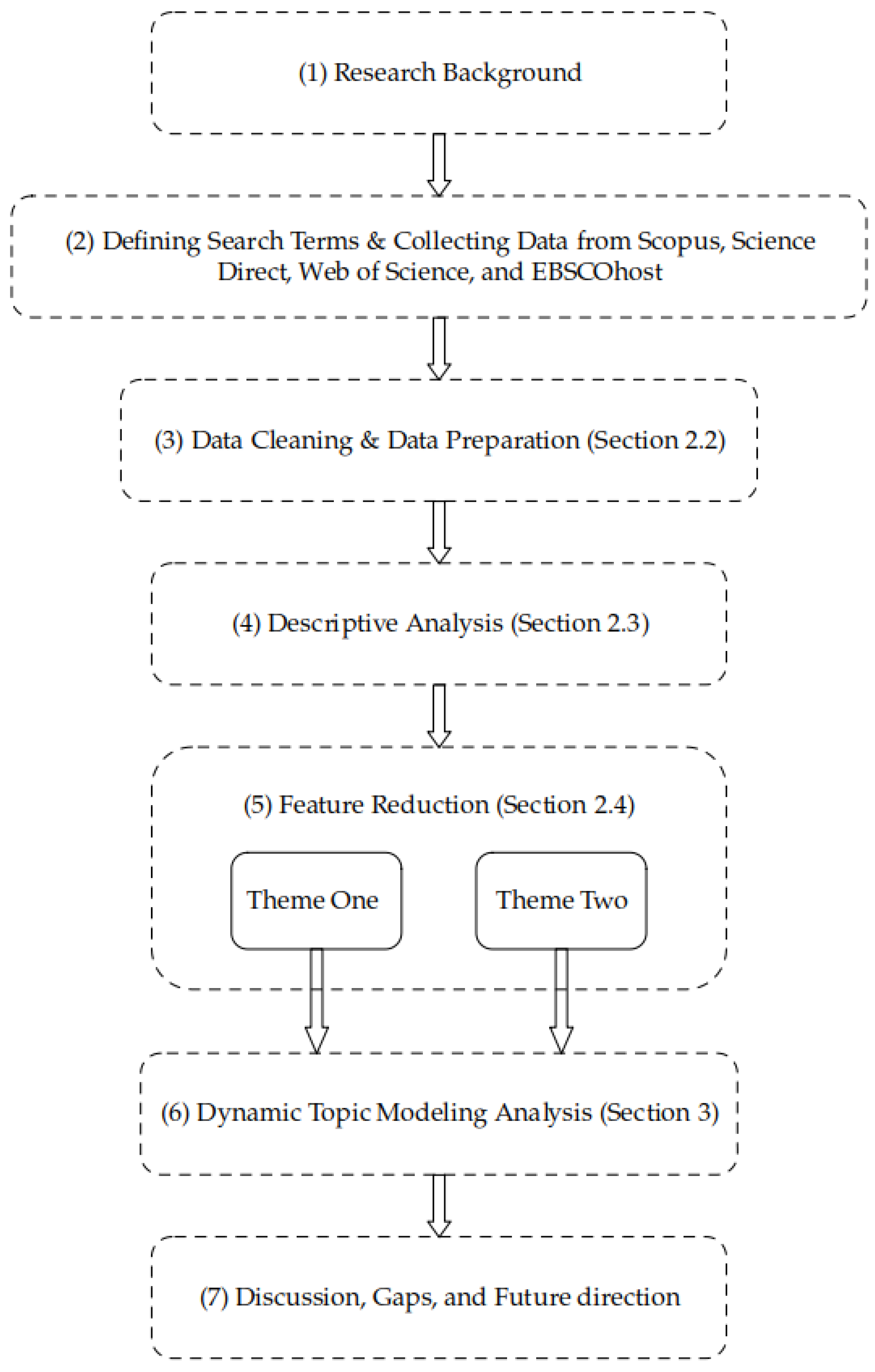
Figure 2.
Distribution of Articles by Publication Year.
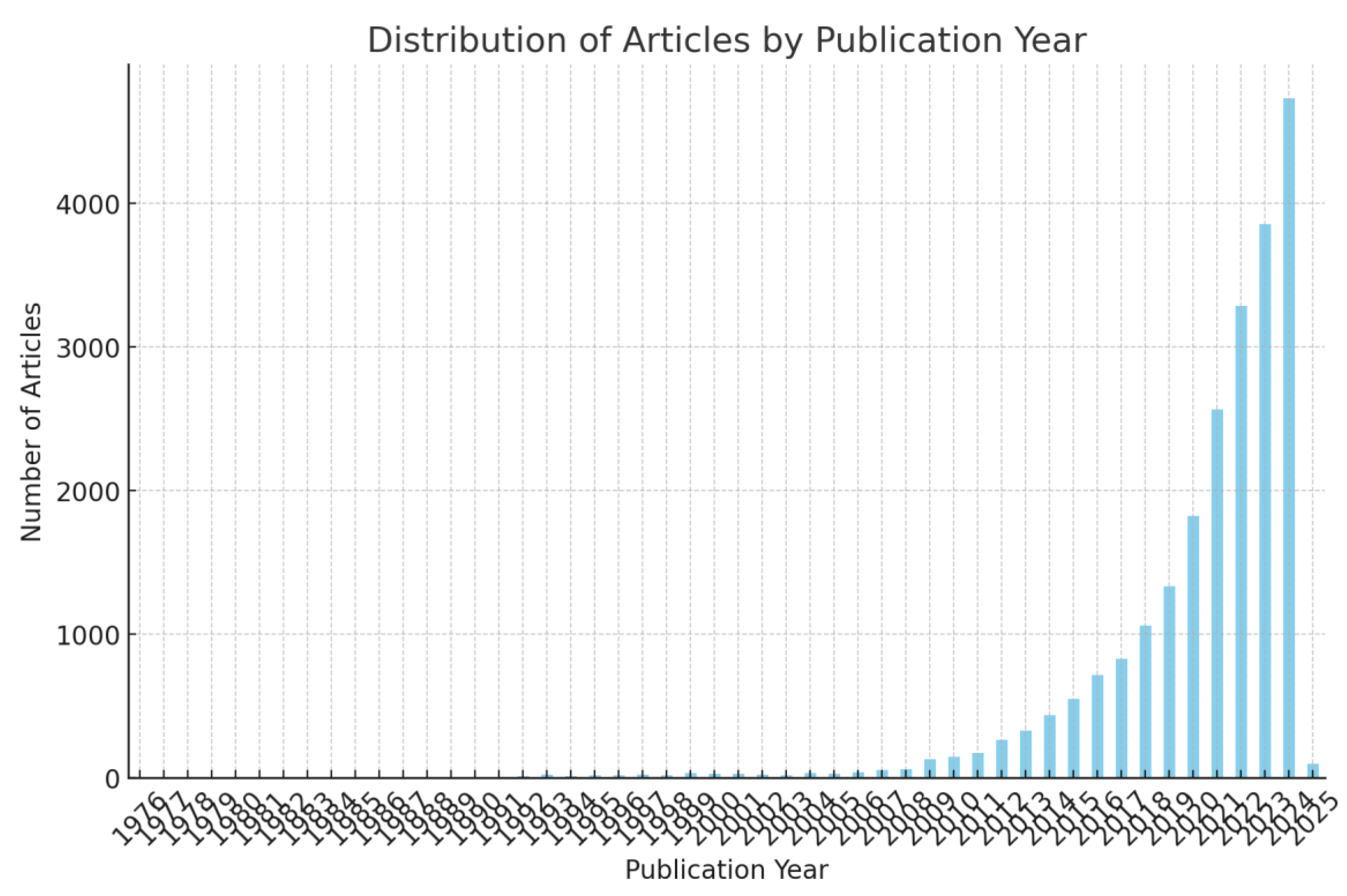
Figure 3.
Top 20 Journals by Articles Count.
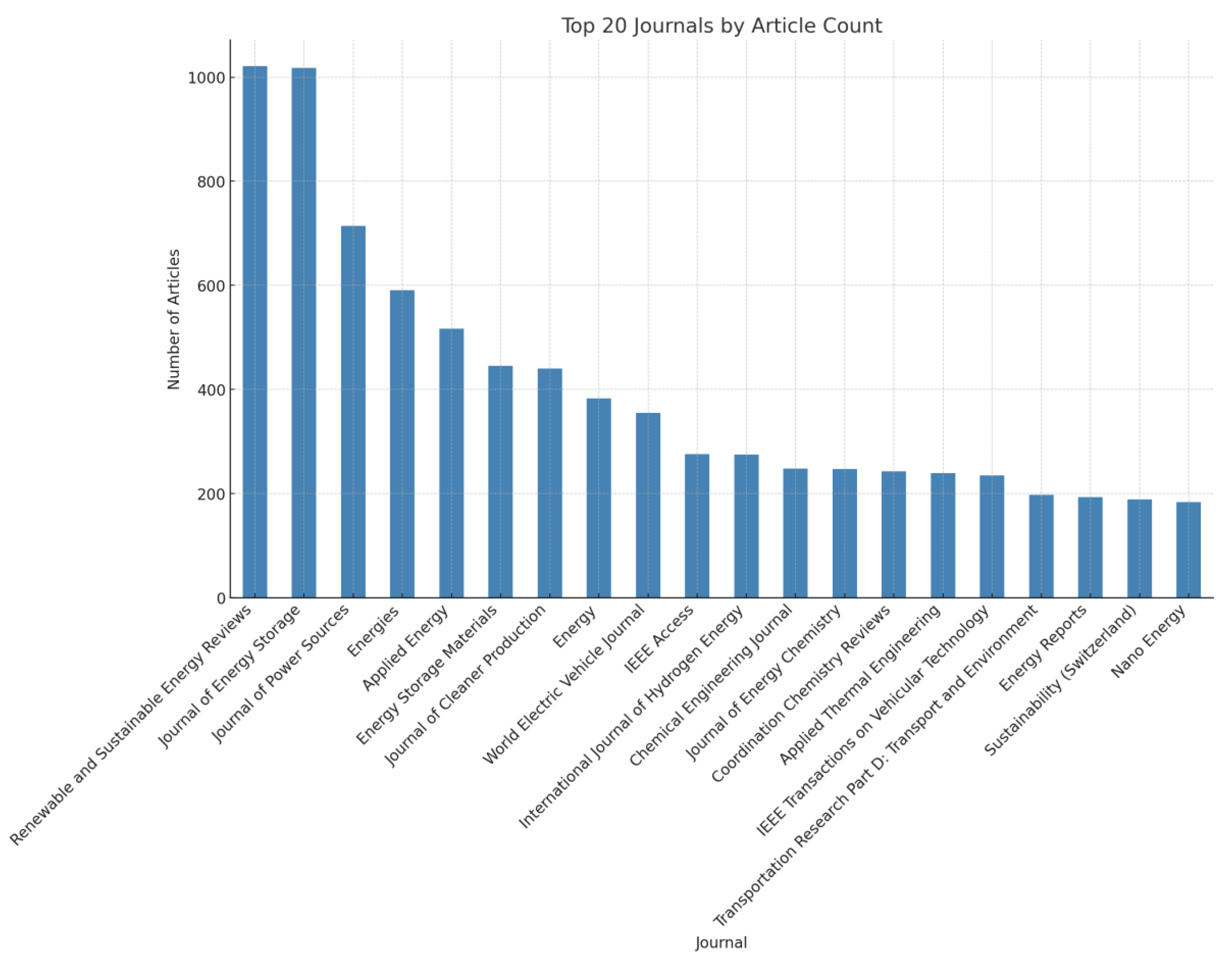
Figure 4.
Publication Trends by Journal (Top 20 Journals).
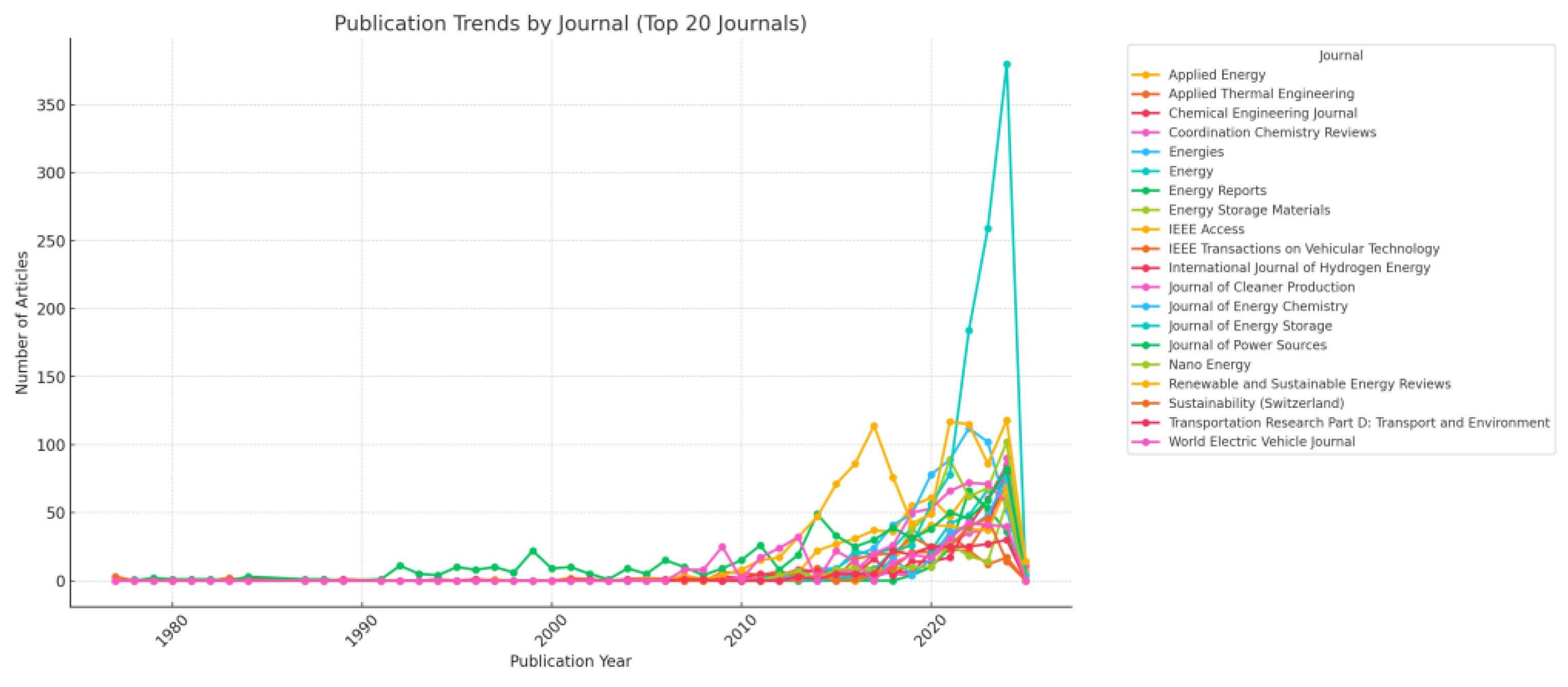
Figure 5.
Coherence Score vs. Number of Topics (k) Theme 1.
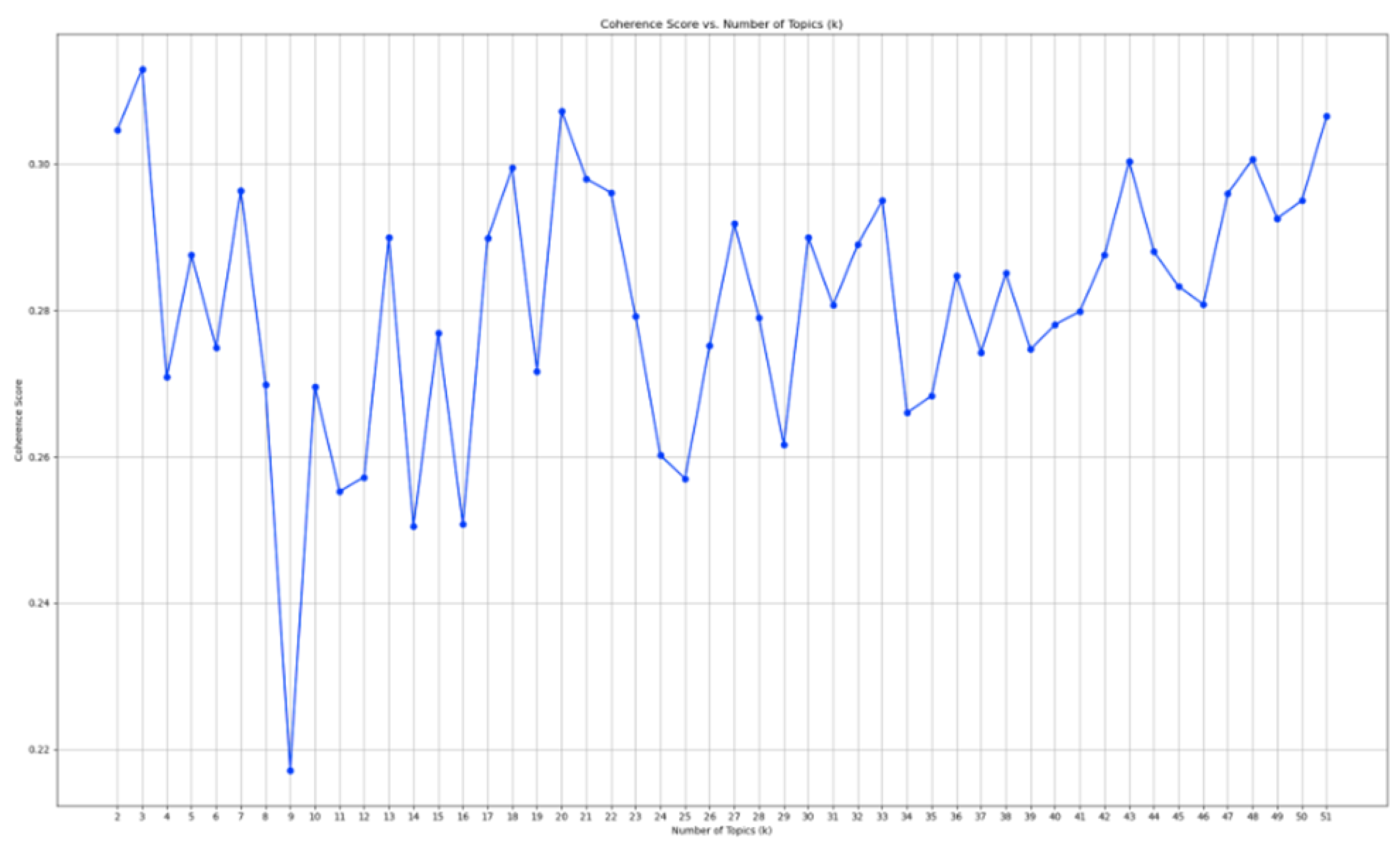
Figure 6.
Coherence Score vs. Number of Topics (k) Theme 2.
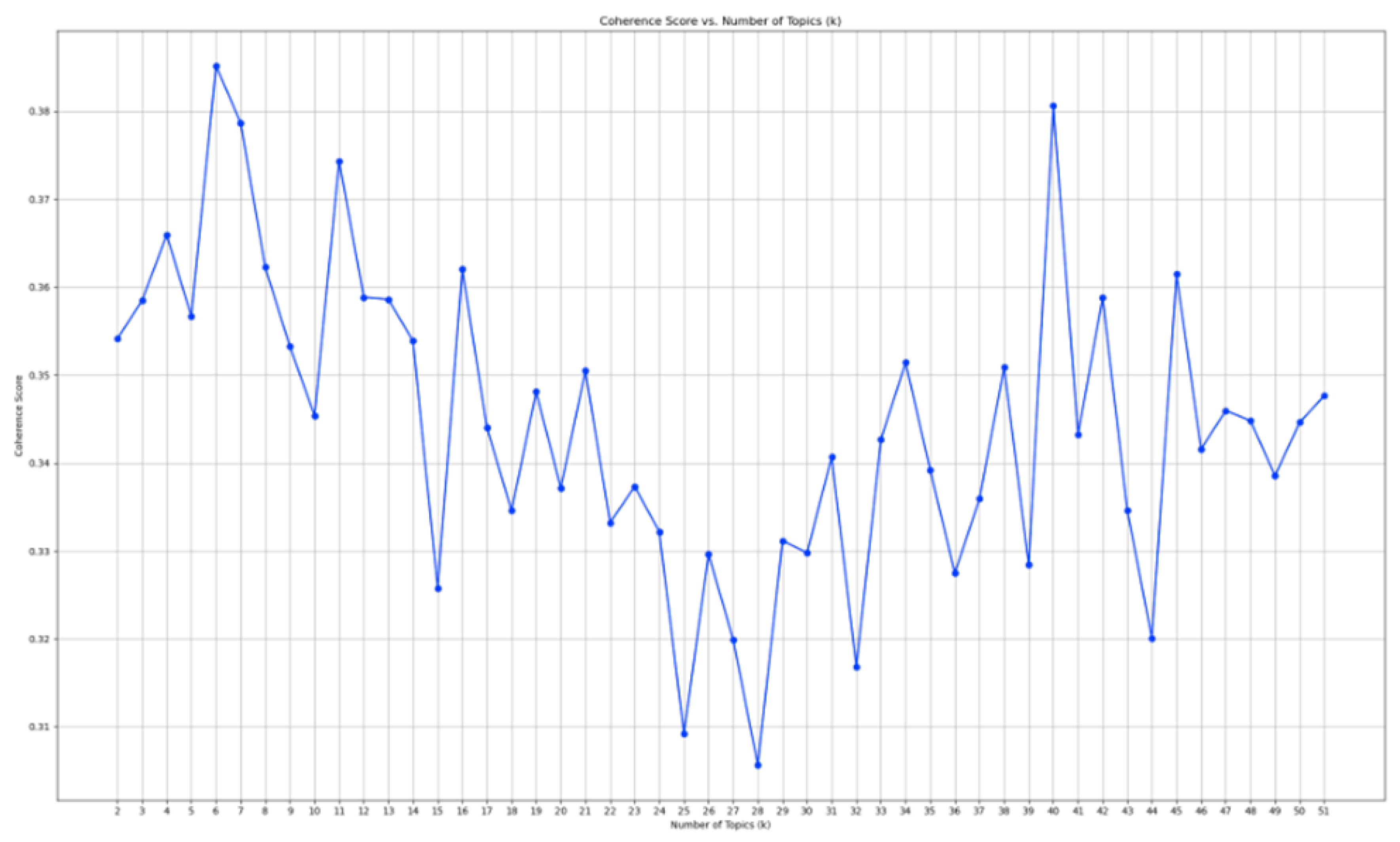
Figure 7.
Sematic Keyword Visualisation in Theme 1 in 1976.
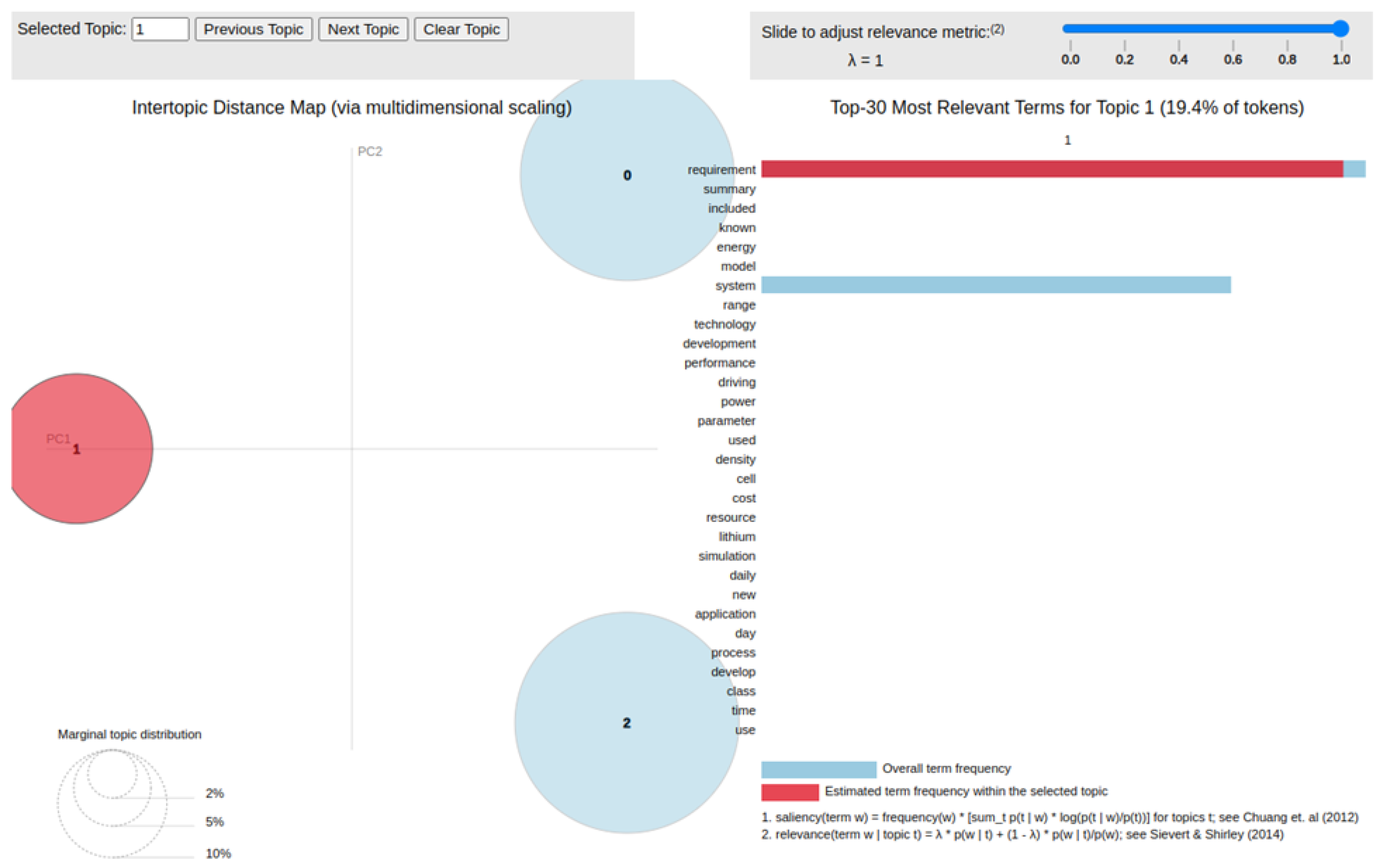
Figure 8.
Sematic Keywords Visualisation in Theme 1 in 2024.
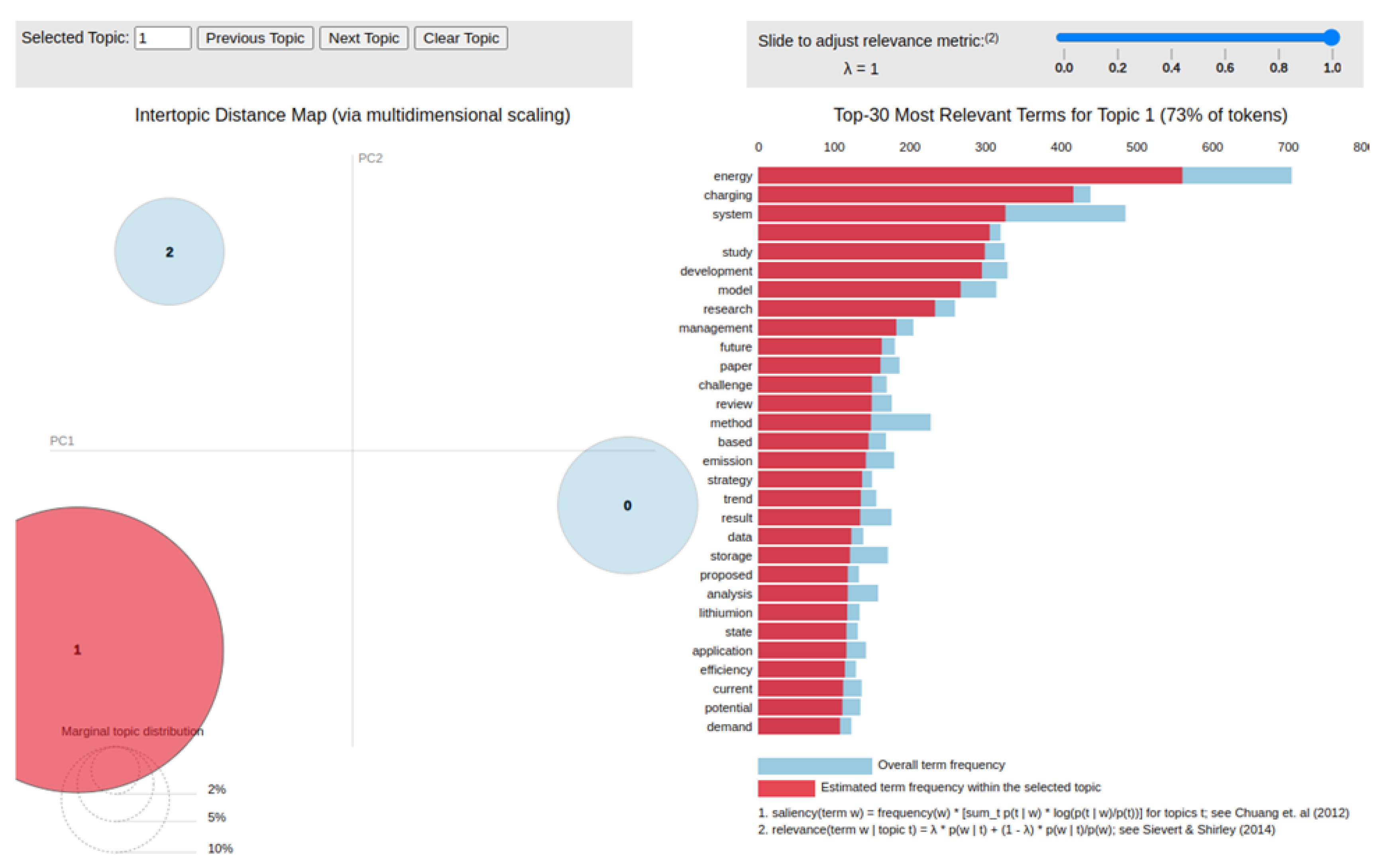
Figure 9.
Sematic Keywords Visualisation in Theme 2 in 1976.
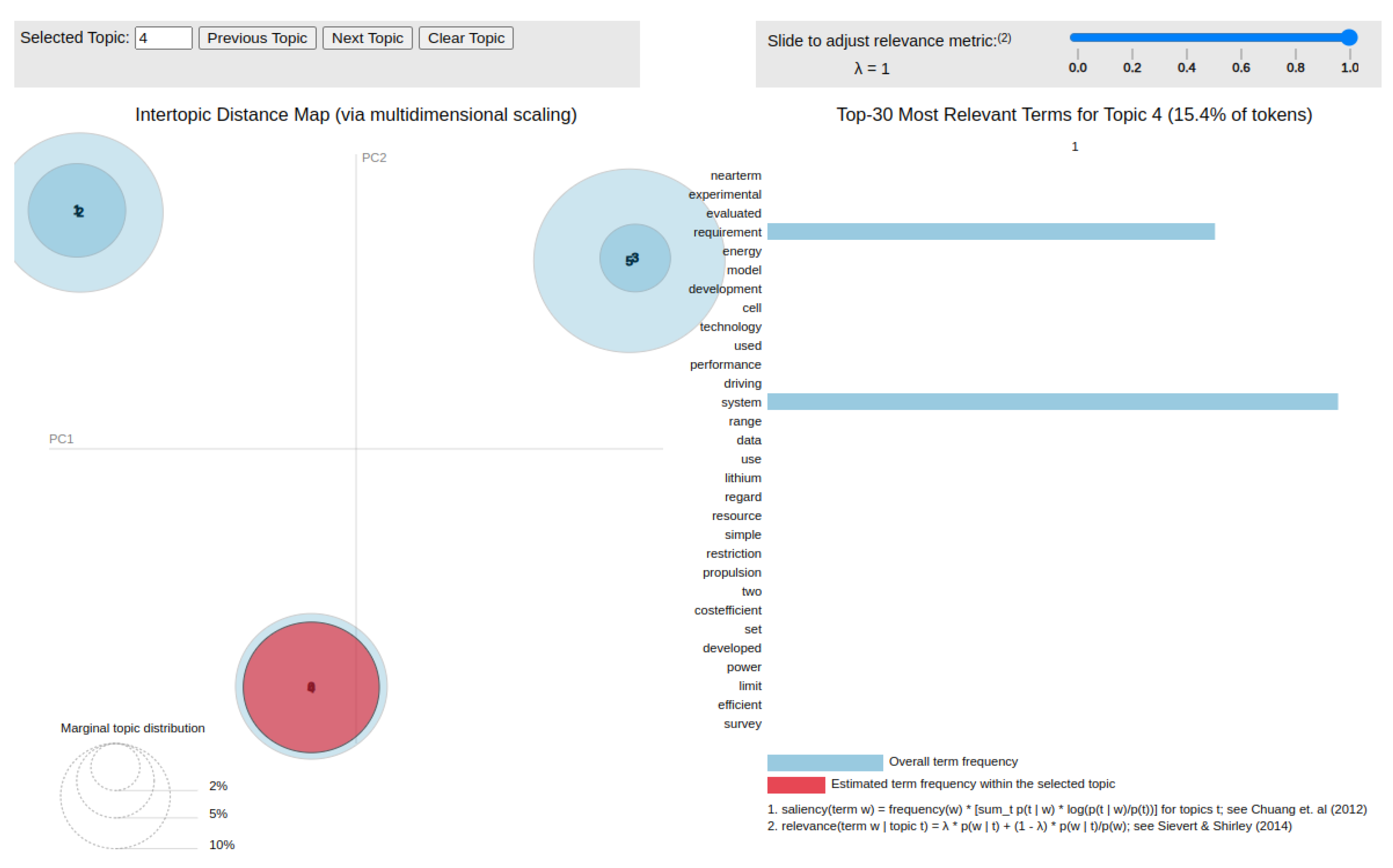
Figure 10.
Sematic Keywords Visualisation in Theme 2 in 2024.
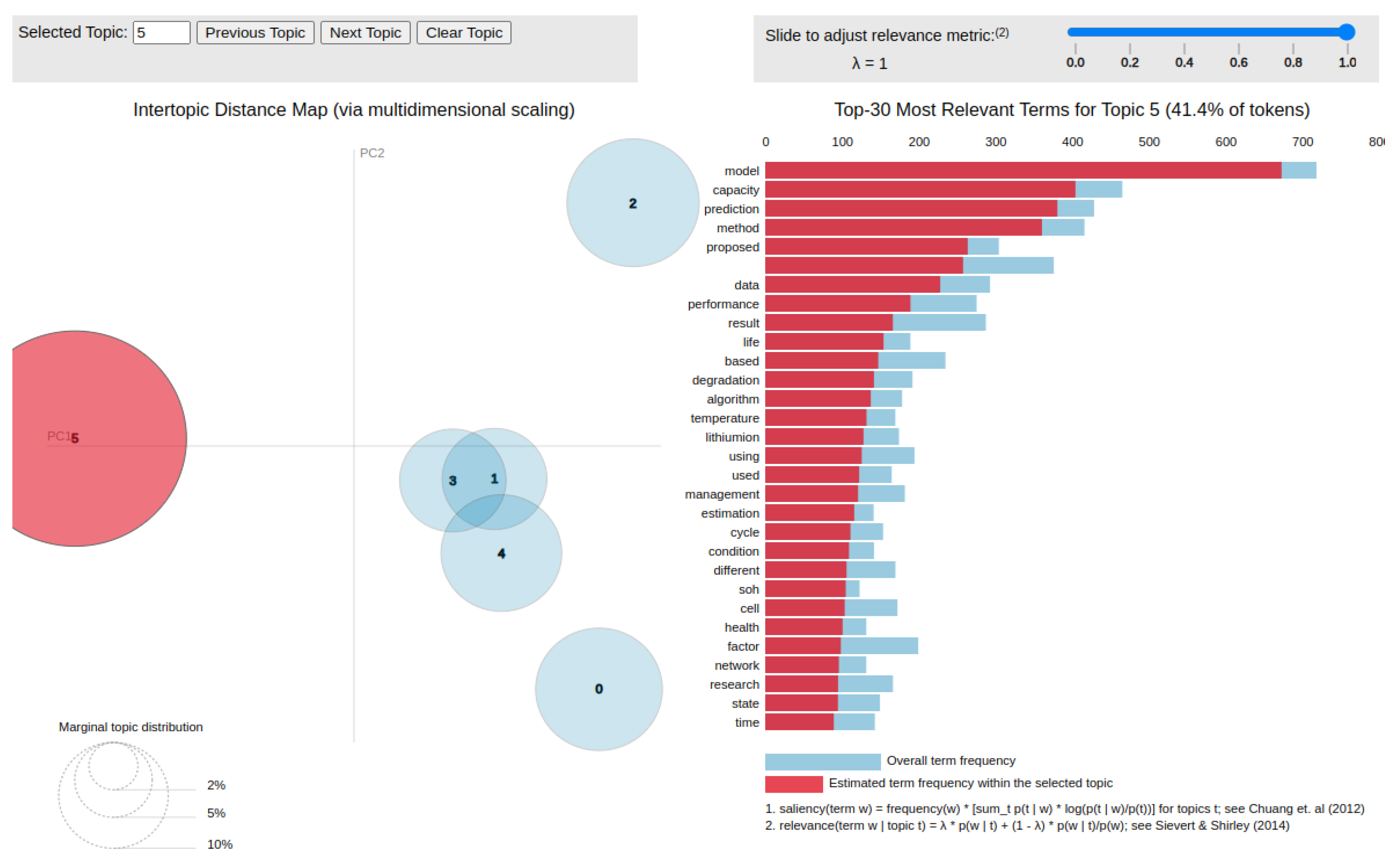

Table 1.
Theme 1 Top 30 Salient and Relevant Keywords and Frequency in 1976 & 2024.
| Year | Salient Words | Topic 0 | Topic 1 | Topic 2 |
|---|---|---|---|---|
| 1976 | Requirement system summary included known short thus considering prospect presented worth background evaluated nearterm longterm many experimental considered based future candidate research little model energy range technology development driving simulation |
Thus 0 short 0 considering 0 presented 0 worth 0 background 0 evaluated 0 nearterm 0 little 0 prospect 0 energy 0 system 0 range 0 model 0 technology 0 development 0 power 0 performance 0 parameter 0 driving 0 density 0 lithium 0 used 0 resource 0 requirement 0 cell 0 discussed 0 cost 0 time 0 new 0 |
Requirement 1.8 summary 0 included 0 known 0 energy 0 model 0 system 0 range 0 technology 0 development 0 performance 0 driving 0 power 0 parameter 0 used 0 density 0 cell 0 cost 0 resource 0 lithium 0 simulation 0 daily 0 new 0 application 0 day 0 process 0 develop 0 class 0 time 0 use 0 |
System 1.4 research 0 longterm 0 experimental 0 many 0 considered 0 based 0 future 0 candidate 0 little 0 energy 0 model 0 range 0 development 0 power 0 technology 0 performance 0 parameter 0 resources 0 driving 0 density 0 cost 0 used 0 daily 0 urban 0 cell 0 discussed 0 lithium 0 requirement 0 new 0 |
| 1976 | Summary of Energy System Requirements: Evaluating Long-term and Near-term Prospects for Technology Development | Overview of Energy Resource Parameters: Evaluating Technology Requirements and Performance | Understanding Energy Resource Requirements: A Focus on Performance and Application | Systematic Approach to Resource Requirements in Energy Applications |
| 2024 | technology power energy system material performance cell method cost using different storage emission model analysis result fuel recycling environmental application impact development also stability use current research potential trend capacity |
Technology 460 power 220 system 140 material 90 performance 86 cell 80 energy 80 method 65 cost 45 storage 40 result 30 analysis 29 model 27 recycling 22 environmental 20 different 18 also 18 fuel 15 review 15 management 15 emission 15 study 15 development 15 new 12 based 12 paper 12 current 11 potential 11 application 11 impact 11 |
Energy 560 charging 410 system 325 study 300 development 290 model 265 research 240 management 185 future 175 paper 170 challenge 150 review 150 method 150 based 145 emission 140 strategy 135 trend 130 result 130 data 120 storage 118 proposed 115 analysis 115 lithiumion 115 state 115 application 115 efficiency 110 current 108 potential 105 demand 100 |
Energy 70 using 25 different 25 system 25 model 24 cost 22 emission 20 cell 15 performance 15 development 15 method 15 storage 12 analysis 9 fuel 9 result 9 research 9 application 6 charging 6 technology 6 impact 5 trend 5 power 5 paper 5 recycling 5 current 4 study 4 environmental 4 potential 4 also 4 review 4 |
| 2024 | Technological Advances in Power and Energy Systems: Material Use, Emission Reduction, and Recycling | Technological Developments in Power Systems: Material Performance, Recycling, and Environmental Impact | Energy Systems Development: Charging Challenges, Emission Strategies, and Future Trends | Energy Systems and Emission Reduction: Cost, Models, and Performance Analysis |
Table 2.
Theme 2 Top 30 Salient & Relevant Keywords and Frequency in 1976 & 2024.
| Year | Salient Words | Topic 0 | Topic 1 | Topic 2 | Topic 3 | Topic 4 | Topic 5 |
|---|---|---|---|---|---|---|---|
| 1976 | little system thus requirement nearterm experimental evaluated candidate summary prospect based longterm considering short presented research background many worth known future considered included model performance development energy driving range power |
candidate summary prospect based requirement model energy development system cell resource power technology data range driving performance research lithium measurement various pattern simple restriction made discussed using new cost two |
thus system model energy performance development power range technology cell assess resource lithium used restriction differential new measurement various simplified based driving city storage internal number two aim coupled progress |
longterm research system considering presented short energy model development performance technology resource power range driving requirement data cell measurement made result used occurrence evaluated developed survey propulsion requires lithium granularity |
little model performance development energy driving technology cell system range lithium requirement resource set measurement used power made restriction discussed storage behavior application research data environment estimate result simple control |
nearterm experimental evaluated requirement energy model development cell technology used performance driving system range data use lithium regard resource simple restriction propulsion two costefficient set developed power limit efficient survey |
background many worth known future included considered little model energy cell technology resource performance range system requirement made driving data used survey lithium research development today internal application geological efficient |
| 1976 | Experimental Approaches for Short- and Long-Term Battery System Requirements | Requirement-Based Development and Performance Models for Lithium Battery Systems | Energy and Performance Models for Lithium Battery Systems in Various Driving Conditions | Long-Term System Development and Performance Evaluation in Lithium-Based Energy Models | Small-Scale Model Performance and Energy Resource Estimation for Lithium-Based Systems | Near-Term Experimental Evaluation of Cost-Efficient Lithium-Based Energy Models | Background and Future Considerations for Lithium-Based Energy Models and Performance Requirements |
| 2024 | energy charging system study model power prediction technology storage capacity paper method proposed result cost emission performance analysis recycling development adoption factor potential grid policy also review management thermal |
Energy 660 storage 75 power 40 paper 35 technology 33 analysis 31 factor 25 cost 23 result 20 system 20 using 19 however 18 study 217.5 strategy 17 research 16 high 15.5 fuel 15 cell 14.5 state 14 performance 13.5 degradation 12 used 12 management 12 application 12 capacity 12 material 12 based 12 current 12 different 12 |
Paper 35 performance 20 system 19 power 18 technology 18 study 15 result 15 cost 12 management 12 energy 12 application 12 factor 10 research 9 analysis 9 prediction 9 development 9 also 9 method 9 recycling 8 state 8 data 8 strategy 8 based 8 carbon 8 cell 8 lithiumion 8 using 8 capacity 8 emission 8 |
Charging 560 study 320 power 80 cost 50 factor 40 development 36 based 34 technology 20 energy 20 emission 19 paper 17 using 15 result 15 data 15 demand 15 grid 15 also 15 capacity 15 storage 13 station 11 cell 11 performance 11 efficiency 11 material 9 research 9 current 9 time 9 system 9 fuel 9 |
Technology 20 power 19 performance 16 result 14 cell 12 model 12 cost 11 management 10 paper 10 system 10 based 10 capacity 10 research 9 different 9 factor 9 approach 9 lithiumion 9 data 8 challenge 8 prediction 8 analysis 8 range 8 also 7 potential 7 adoption 7 strategy 7 high 7 development 7 future 7 |
System 450 technology 70 result 50 power 50 paper 35 energy 25 emission 25 different 20 based 18 development 17 factor 16 method 16 research 16 analysis 16 cost 14 strategy 14 performance 14 data 12 time 12 thermal 12 using 11 also 10 study 9 review 9 grid 9 high 9 cell 9 management 9 cycle 9 |
Model 670 capacity 400 prediction 380 method 360 proposed 270 data 240 performance 200 result 180 life 165 based 155 degradation 150 algorithm 145 temperature 140 lithiumion 135 using 132 used 128 management 125 estimation 120 cycle 115 condition 110 different 105 soh 100 cell 95 health 90 factor 88 network 87 research 87 state 87 time 85 |
| 2024 | Energy System Analysis: Predictive Modelling and Performance Evaluation for Enhanced Charging and Storage Solutions | Energy Analysis: Evaluating Storage and Power Technologies for Enhanced System Performance and Cost-Effectiveness | Energy System Performance: A Comprehensive Study on Power Technology, Cost Management, and Carbon Emission Strategies | Charging Infrastructure Study: Evaluating Power, Cost Factors, and Emission Impacts in Energy Storage Development | Technology Assessment for Power and Performance in Lithium-Ion Cell Models: Cost Management and Future Challenges | Systematic Evaluation of Technology and Power Factors in Energy Research: Analyzing Cost, Performance, and Emission Strategies | Modelling Capacity and Performance Prediction Methods: A Comprehensive Analysis of Lithium-Ion Systems and Their Degradation Factors |
Disclaimer/Publisher’s Note: The statements, opinions and data contained in all publications are solely those of the individual author(s) and contributor(s) and not of MDPI and/or the editor(s). MDPI and/or the editor(s) disclaim responsibility for any injury to people or property resulting from any ideas, methods, instructions or products referred to in the content. |
© 2024 by the authors. Licensee MDPI, Basel, Switzerland. This article is an open access article distributed under the terms and conditions of the Creative Commons Attribution (CC BY) license (http://creativecommons.org/licenses/by/4.0/).
Copyright: This open access article is published under a Creative Commons CC BY 4.0 license, which permit the free download, distribution, and reuse, provided that the author and preprint are cited in any reuse.


