

Submitted:
25 November 2024
Posted:
25 November 2024
You are already at the latest version
Abstract
This research paper used a mixed method approach to provide a new perspective on the impact of social media marketing and consumer purchase intention. Due to the technological development and addition of several functionalities to the social media platform in the recent past, the way consumers and firms engage has changed dramatically in this current competitive market. Earlier several papers used quantitative methods to understand the effect of social media marketing on consumer purchase intention. But huge criticism had been voiced against heavily used quantitative methods. Hence to encounter this criticism and better understand social media marketing as a tool to lure consumers both empirical study as well as a systematic literature review method were employed. At the first section of the research a systematic literature review method had been pursued followed by quantitative method to verify our finding using frequency distribution, factor analysis and Pearson Correlation test. The research results from this mixed method reveal that there is a significant positive relationship between social media marketing and purchase intention.
Keywords:
Social media marketing
; Mixed method
; Purchase intention
; Systematic review
; Consumer intention
1. Introduction
In the past, prior to the existence of advanced technology, people experienced limitations in terms of expressing oneself to the world and were able to speak out to a small audience. As time passed by the first social networking service, Six Degrees was created and has been active since 1997 [1]. Following this predecessor, Facebook and Myspace were brought out into the world. With the development of science and technology, our society has been greatly influenced by social network services. Social network services (SNS) are called this because of how they build their own online sites to create content services and share services and communications through connections with friends. Social network services include renowned online platforms such as YouTube, Facebook, Instagram, and Twitter, with a growing number of users utilizing them. Due to this repaid growth of digitalization, social platforms have fundamentally changed the dynamics of marketing and consumer engagement. Practically it is impossible to think for a modern day’s business owner who seeks to connect directly with their target customer without using SNS platform [2], namely Instagram, Facebook, X (previously known as Twitter). The obvious reason for rise of SNS can be distinguished by their functionality of real time interactions and engagement with the followers or customers, which helps to create more personalized products for their customers [3]. Furthermore, influencer marketing has brought a new perspective to the social media platform and given a different dimension to social media marketing and created a powerful intermediary between customers and companies [4]. This process of marketing tends to be more effective as the followers of the influences perceived that the recommendation is given by the peers rather than the marketers. Moreover, due to significant decrease of Internet cost and low-end smartphone, huge numbers of people entered into social networking platform which democratized marketing opportunities, more noticeable small to mid-size companies
These SNS platforms have reduced the cost of marketing online as well as create a venue for business to amplify their brand visibility and wide range of customers [5]. Furthermore, AI tools are also used by companies to analyze vast amounts of consumer data to refine and personalize marketing strategies [6]. Figure 1 shows that Social Media Marketing (SMM) is the most effective tactic used (53%) by marketers, at the same time it is not that difficult to implement (28%). On the other hand, Content marketing campaigns employed 48% and became the second most popular tactic used by marketers. However, it is reasonably difficult (38%) to deploy, followed by Search engine optimization, email marketing, data and AI driven marketing and Marketing automation campaign.
The core objective of this paper is to understand whether social media marketing, as well as influencer marketing, has become a leading tool for attracting consumers to make purchases in the 21st century using in-depth literature review and qualitative methods. This paper also examines how social media platforms have changed over time and ways of interacting between consumer and marketers as well as within followers. Earlier research papers heavily focused on quantitative methods for drawing conclusions for their research finding, this paper also followed the qualitative method with added in-depth systematic literature review to understand the impact of social media marketing (SMM) on consumer purchase intention. We extensively review existing literature in the field of social media marketing to understand the complexities and nuances of social media interaction [7] by going through several data base, i.e. Scopus, ScienceDirect, Google scholar at a same time adapt data driven methods to confirm our findings. Privacy is another important challenge in SMM. To provide personalize advertisement and enhance target customer most of the brands are gathering user personal data which raise a question of user data privacy rights. Besides, this also raise a question of of ethical and regulatory concern.
2. Literature Review
2.1. Evolution of Social Media Marketing (Influencer Marketing)
Social media, popularly known Facebook, Twitter or Instagram, have gone through noticeable evolution over the past decades, so the social media marketing methods from simple brand presence to sophisticated, data-driven strategies aiming to understand niche market, consumer interests and behavior [8]. Social media marketing was initially known for sharing organic content and community building, has moved to diverse fields which includes influencer marketing, live telecasting, or storytelling [9]. Furthermore, the rise of TikTok, (a China based social media platform), Instagram real and YouTube shorts have opened a new ways of targeting customers. Individuals who have built a significant follower on social media platforms such as TikTok, Instagram, YouTube or even Twitter and use their platform to shape opinion are considered influencer. With those noticeable followers help them to gain authenticity or reliability rather than traditional fame [10]. Earlier influencer marketing relied on celebrities’ endorsements to create brand awareness or brand recognition [9]. In present days influencer marketing plays a critical role in deciding consumer purchase intention [11]. Earlier research suggested that consumers often find recommendations from influencers they follow more credible than traditional advertisement [12].
2.2. Social Media Marketing (SMM) and Its Strategies
Social media is widely known for its affordable marketing technique and easy tools that businesses can utilize to enhance their sales and brand value [13,14,15] and social media marketing has long server and has functionality to two-way engagement and communicate with firm and their consumers [16]. Firms encourage their users to post pictures of the purchased products on SNS [17]. By doing so SNS platforms like Instagram, Facebook, Twitter etc. have helped marketers to build their brand [18,19,20,21] and created emotional connections with their customers [22]. Several marketing strategies are being used in social media, such as influencer partnerships, content marketing, location-based marketing strategies and community engagement [23]. There are influencers with a smaller number of followers (Micro-influencers) and there are influencers with larger number of flowers and can provide broad exposer are known as Macro-influencers. To reach more consumers in target specific demographics companies used to pay to social media for such services, target ads are one of the examples of it.
2.3. Social Listening
Social listening is another important dimension of social media marketing. It refers to the process of monitoring and analyzing the platform to better judge what is being said about a certain brand, their competitors, their quality of the products, etc. This is done by tracking conversations, content analysis, and feedback across SNS channels. By doing so social listening guides to understand customer preferences, needs and wants and what is wrong with the existing products [24,25,26,27]. Moreover, social listening also helps in understanding competitors’ activities, trends of the new generation as well as user emotion and early detection of crises [28], furthermore it also boosts overall customer satisfaction [29]. Present days advance analytics tools help marketers to track keywords, hashtags across multiple platforms [30,31]. This helps them to quickly react to it and facilitates staying ahead of their competitors [32,33].
2.4. Social Media and Consumer Behavior
Social media marketing has drastically changed the way consumers discover, analyze and make purchase decisions. Consumers frequently get to know about the new products, services or their potential strengths or weakness through social media platforms. AI algorithms and customized ads expand the visibility of brands for their customers. Apart from data driven algorithms, online customer reviews, posts or recommendations influence consumer behavior dramatically these days [4,34]. Consumers tend to rely more on peers’ reviews shared on social media platforms than posted by marketers [35]. In short, due to the interactive and dynamic nature of social media platforms, consumers have literally transformed the way of they used to make purchase decision [5]. Furthermore, due to impulse buying functionality of social media platform consumers are frequently influenced by viral content and trends [36,37]. Social media not only effect what the user buys but also how they interact and perceive the brand in the long term [38,39]. Pentina [40] have found that visual functionality of the SNS platform (i.e., Instagram, Facebook, Pinterest) stimulate higher level of engagement which directly or indirectly effect purchase intention [40,41].
2.5. Social Media and Purchase Intention
Several earlier research have discovered that social media platforms played a crucial role in shaping consumer purchase intention by providing SNS users generated comments or feedback or other kind of information [42,43]. Influencer marketing or their recommendations enhance trust and credibility towards the products and services [44]. On the other hand, personalized and customized advertisements also boost the user engagement and experience [42,45]. Furthermore, interactive functionalities of the social media platform enable companies to gather information about their users and preferences which helps firms to better understand the need and wants of their customers [46]. Besides this, social media platforms also encourage users to join companies’ pages to create a community around the brands. These pages allow users to share their experiences, preferences and recommendations, which further reinforce purchase intentions through peer influence [44]. Apart from these, SNS platforms have the functionality which allows users to purchase directly though SNS platform which adds another level of convenience [47]. Considering these it is clear that social media marketing has become increasingly important for businesses aiming to capitalize on the social media marketing to increase profitability. Therefore, this paper hypothesizes as follows
H1:
There is a significant relationship between social media marketing and purchase intention of the social media users.
3. Methodology
This research was conducted in-depth systematic literature review followed by survey method to explore whether social media marketing has emerged as an effective method for attracting consumers.. The literature review followed a systematic and structural approach to make sure of the reliability and validity of the research results. The first phase of the research involves a systematic review of peer-reviewed articles as authors understand the rigorousness of the methodology while conducting in-depth research study. Articles were taken from the reputed journals indexed in Scopus, Social Science Citation Index and ScienceDirect. By employing inclusion and exclusion criteria, systematic literature review (SLR) helps us to narrow down the biased and ensure the scientific rigor of our review [48]. The key steps of our methodology are as follows (Figure 2)
3.1. Qualitative Approach
3.1.1. Keyword Search Strategy
To find the relevant paper keyword search methods were initially employed. Keywords like “Social media marketing”, “Influencer marketing”, “consumer behavior”, “Digital marketing”, “online consumer engagement”, “purchase intention” are used to extract information from the earlier mentioned database.
3.1.2. Inclusion Criteria
To make sure enough credible academic papers have been included, we conducted a comprehensive search of academic paper published in peer-reviewed journals indexed in Social Science Citation Index, Scopus and ScienceDirect. To find the most relevant peer-reviewed papers the research was restricted to articles published within the last 15 years. A total of 803 journal papers were gathered at the initial stage.
Logically connected and relevant information was gathered and compiled which includes, finding of the research, research topics and authors name and date of publication.
3.1.3. Exclusion Criteria
First and foremost, papers that are not published in peer-reviewed have been excluded. Besides that, if the articles are published in non-indexed journals. Papers that do not provide empirical or theoretical frameworks in the field of social media marketing were also excluded. After the second level of exclusion a total of 357 papers were selected for further verification and finally a total of 22 papers were thoroughly gone through to draw conclusion for this research (Figure 2).
3.2. Quantitative Approach
The second part of the research used a structural questionnaire to gather samples for this research. The questionnaire for this research was categorized into three different sections. The first section of the questionnaire asked demographic questions followed by the impact of social media marketing and finally item question on consumer purchase intention and behavior.
3.4. Data Collection
An online survey was conducted to collect samples for this research paper. The targeted population for this survey includes active social media users aged between eighteen to sixty years. The respondents were randomly selected for this research. Samples were mostly collected from the university students as they are predominantly users of social media [49] and research also suggested that understanding the purchasing habits of students is necessary [50].
3.4.1. Instruments
4. Results
4.1. Study 1. In-Depth Systematic Literature Review Study
This research paper reveals several important findings on social media marketing and purchase intention of the SNS users. Analysis of the reviewed research articles emphasizes that social media marketing significantly influences purchase intentions through various ways like influencers recommendations and target advertising [2]. Several review articles highlighted that user generated content provides important information which shapes consumer perception and purchase intention [54]. Positive reviews increase the credibility and trust of the products and brand value. Therefore, it increases the purchase intention of the products. Research papers suggest that products received positive review will have higher chance of purchase than with no review or negative review [55]. Other research also proved that interactive nature of social media platforms enables a dynamic relationship between brand and customers. Moreover, direct communication through social media between brand and consumer increase customer engagement and credibility and brand loyalty. Community building activities are another dimension which is comparatively effective and encourage users to share and generate content, this leads to high level of engagement [56]. It is also found that with the purchase intention consumer also engage to know the consequences with the product and event organized by the particular brand [57,58,59]. Table 2 has an overall summary of the review papers, and their findings clearly suggest that there is a significant relationship between social media marketing and purchase intention. So, in summary, literature review result revealed that social media marketing significantly impacts purchase intention through influencer recommendation, review systems, targeted advertising, customized and personalized marketing methods. Furthermore, the interactive nature of social media platforms influences consumer attitudes and behaviors. Individuals also get functional, social and emotional benefits from social media marketing [60,61,62]. The findings of this qualitative literature review method pinpointed the crucial strategy social media marketing determining consumer purchase intentions. A qualitative method was pursued to verify whether this finding supported by the numbers or not.
4.2. Study 2: Quantitative Section
A cross-selection study was performed using a self-reported questionnaire. A sample of 220 were distributed using different kinds of social media platform. There were 210 valid responses, the remaining 10 samples were either having missing data or not suitable for the research due to inconsistency responses. This makes it to the response rate of 95.4%. The questionnaire was pre-tested by using pilot test and validity and reliability were ensured (45 and Table 6). Participants were informed the confidentiality and informed about the purpose of the study and their consent was gathered before collecting data. Descriptive statistics were employed to summarize demographic data and frequency distribution tables (Table 3 and Table 4) as well as a bar graph was drawn to get insight of the data (Figure 3). Table 3 shows 42(20%) of the respondents were 20 years old or less. In the age group of 21 to 30 years 40 respondents (19%) and there were 83 respondents which makes around 40% of the total respondents in the age group of 31 to 50 years. Followed by 45 (21.4%) respondents were 51 years or more. 119(56.7%) of the respondents were male and remaining 91(43.3%) were female. The survey of this research also investigated the occupation and found 73(34.7%) of them are employees, 113(53.8%) were students and small portion 24 (11.4%) were neither employee not students. As the research aims to investigate the Korean population hence, sample from Korean nationality was only considered (100%) for this research. Table 4 shows that 60.5% (129) of the respondents either agree or strongly agree that they think SNS marketing has increased due to the growing influence of social networks. 133 (63.4%) believe that Advertisement on social media platforms can influence my buying decision. Around 60% to 63.3% agreed that choosing products and a service to buy through advertisement on social media platform is wise idea and social media platforms increases their interest in buying products and service.
On the other hand, regarding purchase intention 128 (61%) of the respondents either agreed or strongly agreed that advertisement on social media platforms increases his/her interest in buying products and services. Same number of respondents believe also that interacting with the products advertise on social media increase my interest in buying that products and services. Around 150 respondents, which was approximately 70% of the respondents agreed that interacting with social media helps them to make better purchase decisions and will purchase products marketed on SNS. The bar group also shows the same (Figure 3).
4.2.1. Factor Analysis
To check the validity of the item questions, a factor analysis was executed using Statistical Package for the Social Science (SPSS 27.0) software. Factor analysis helps to understand how each item question is gathered or grouped together based on their correlation value. Our current research paper had a total of 10 item questions representing Social Media Marketing and purchase intention, with the factor load of more than 0.6 on each item clustering to dimension can indicate that they fall into those two intended variables. Table 5 shows that SSM_1, to SMM_6 all have factor loading more than 0.63 and PI_1 to PI_4 all have factor loading of 0.78 or more, which indicates that the items are strongly related to the factor. Based on the data values gathered using Google forms, the validity and reliability of the data were checked by using SPSS. The factor loading, and Cronbach’s alpha (Cr- α) value 0.758 for SMM and 0.787 for Purchase Intention were illustrated in the table below (Table 5).
The mean value, standard deviation, Composite reliability (CR) and Average Variance Extracted (AVE) were presented in Table 6 to determine if the data are suitable for stated analysis. The AVE scores ranked from 0.551 to 0.691 and were higher than the acceptable threshold of 0.50 [72] Table 6 provides further details about the variables and their values.
Table 7 illustrates the Pearson correlation between social media marketing and purchase intention. The correlation coefficient of 0.637 suggests a robust positive association between purchase intention and social media marketing. At the 0.01 level, a strong positive correlation indicates that there is a statistically significant relationship between purchase intention and social media marketing, with a p-value of 0.000. Put differently, we can argue that a greater percentage of the fluctuation in purchase intention can be explained by social media marketing. This means that improving one is likely to improve the other one.
4. Discussion
The main objective of the research work was to identify the influence of social media marketing on consumer purchase intention. Going through the systemic literature review and quantitative data analysis, it was interesting to learn that there is a significant relationship between social media marketing and purchase intention. In-depth literature also supported that user generated content improve the engagement with the product which some way around builds better brand value as well as brand recognition. Influencer recommendations play an important role in brand recognition and credibility. The idea of using SNS to contact people with a well-known personality (influencer) and turn them into marketing strategies was not common a few years back. This functionality has opened a new dimension of marketing and enabled influencers to be more actively involved in giving opinions or recommendations. Furthermore, social media algorithms increasing playing important role in how companies market their product to their end-user online.
This study has contributed to analysis of how companies are using SNS as a tool of marketing, and whether consumers are attracted by the companies’ strategy. Based on the research results, it is possible to say that social media marketing does lure consumers to purchase the companies’ products or services. People these days spend a big portion of time on SNS, it is a good way to advertise the products and services through SNS to draw people’s attention toward their products, and eventually success on selling them. SNS marketing and social media algorithms have fundamentally changed the digital marketing landscape. Companies are using AI-driven tools to engage customers more effectively on social media platforms. Having said that, it is also important to understand the importance of high-quality content creation and maintaining ethical issues is always challenging for the companies. Apart from this companies must consider various variables that SNS could bring negative effects to the companies’ reputation like over-exaggerated advertisements and the inconvenience of SNS applications. False and exaggerated advertisements, as an example, could be critical to the companies’ product sales, as much as people expect from the advertisements, it might bring disappointments that it might damage the companies in the long run [73].
5. Conclusions
In conclusion, this study enhances our understanding of the impact of social media marketing on consumer purchase intentions . The quantitative method offers significant advantages such as its ability to produce objective and reliable and generalizable results. Using structured questionnaires allows systematic collection of numerical data that can help in identifying patterns and test hypotheses and make reasonable predictions. The frequency distribution table shows that more than 60% of the respondents agree that SMM influences their purchase intention. The majority of the responded also disagree (54.8%) that seeing an advertisement on SNS is waste of time. Approximately 70% of the responded agreed that they have either purchased products marketed on social media also agreed that SMM help them to make better purchase decision. In terms of research hypothesis, collected data has proved that there is a significant positive relationship between social media marketing and purchase intention. Despite the significant advantage of quantitative research there are several limitations, oversimplifying complex social dimension is one of the notable drawbacks. Data driven results may fail to capture underline reasons or personal experiences. To to address these issue an in-dept systematic literature review was was employed along with quantitative method. We have concluded that a comprehensive literature review can balance the emphasis placed on either qualitative research method or quantitative research method. By employing a robust literature review with qualitative method, this paper addresses potential biases that may emerge in prioritizing single methodology over other. The balance approach can decrease the risk of overemphasizing the significance or effectiveness one approach this gives much more comprehensive and holistic understanding about the research question. Systematic literature review revealed the positive trend related to impact of SMM and purchase intention which compliment the result found employing quantitative methods.
The findings of this study have certain managerial implications for marketing managers. Results of this study suggested that social media platforms provide specific opportunities for companies. Companies can directly engage with their target customers. By creating interactive and authentic content marketers can create customer loyalty. Apart from this, social media platforms provide huge amounts of data that can be used to make better marketing strategies. Moreover, customer review, comments or endorsements play an important part in building consumer perception and purchase intention. By understanding and working on these implication marketers can effectively use social media to influence consumer purchase decisions.
Like many other papers, this paper also has several limitations. The sample size for the quantitative research was comparatively low. A bigger sample size may gives us much more comprehensive understanding.. While pursuing in-depth literature reviewwe have narrowed down our research paper based on key words like “Social media marketing”, “Influencer marketing”,“consumer behavior”,“Digital marketing”,“online consumer engagement”,“purchase intention. Broader key words could help us to find more research papers, which may have revealed unaddressed phenomena. Furthermore, sample data for this research was only taken from Korea, hence it would be difficult to generalize. To enhance the validity of the research finding, future research can be done adding data from other countries and test the hypothesis and will allow comparative analyses across different cultural and socioeconomic factors. further finding. Adding new sets of data to test the existing research hypothesis could uncover new insights and can draw more generally acceptable conclusion.
Author Contributions
Conceptualization, Maidu Islam; methodology, Maidul Islam; validation, Maidul Islam. and Shabnam A. Sheikh.; formal analysis, Maidul Islam; investigation, Maidul Islam; resources, Maidul Islam; data curation, Shabnam A Sheikh.; writing—Maidul Islam; writing—review and editing, Shabnam A. Sheikh; visualization, Shabnam A Sheikh.; funding acquisition, Maidul Islam. All authors have read and agreed to the published version of the manuscript.
Funding
This research was supported by the BISA Research Grant of Keimyung University [Grant no. 20210800]
Informed Consent Statement
Informed consent was obtained from all subjects involved in the study.
Conflicts of Interest
The authors declare no conflicts of interest
References
- Ngak, C. Then and now: A history of social networking sites. CBS News, February 04, 2014. Retrieved from https://www.cbsnews.com/pictures/then-and-now-a-history-of-social-networking-sites/2/.
- Kaplan, A.M.; Haenlein, M. Users of the world, unite! The challenges and opportunities of social media. Business Horizons 2010, 53, 59-68.
- Hoffman, D.L.; Fodor, M. Can you measure the ROI of your social media marketing? MIT Sloan Management Review 2010, 52, 41-49.
- Lee, E.-J.; Youn, S. Influence of internet interpersonal trust on social networking sites: A comparison of Facebook and MySpace. Journal of Interactive Advertising 2009, 10, 1-13.
- Mangold, W.G.; Faulds, D.J. Social media: The new hybrid element of the promotion mix. Bus. Horiz. 2009, 52, 357–365. [CrossRef]
- Smith, H.; Zook, Z. Marketing in the Age of Google, Facebook, and Amazon; Wiley: Hoboken, NJ, USA, 2016.
- Creswell, J.W.; Poth, C.N. Qualitative Inquiry and Research Design: Choosing Among Five Approaches, 4th ed.; SAGE Publications: Thousand Oaks, CA, USA, 2018; pp. 154–196.
- Hajli, M.N. A study of the impact of social media on consumers. Int. J. Mark. Res. 2014, 56, 387–404. [CrossRef]
- Tuten, T.L.; Solomon, M.R. Social Media Marketing, 3rd ed.; SAGE Publications Ltd.: Thousand Oaks, CA, USA, 2017.
- Abidin, C. Visibility labour: Engaging with Influencers’ Fashion Brands and #OOTD Advertisements on Instagram. Media International Australia 2016, 161, 86-100. [CrossRef]
- Lou, C.; Yuan, S. Influencer Marketing: How Message Value and Credibility Affect Consumer Trust of Branded Content on Social Media. J. Interact. Advert. 2018, 19, 58–73. [CrossRef]
- De Veirman, M.; Cauberghe, V.; Hudders, L. Marketing through Instagram influencers: the impact of number of followers and product divergence on brand attitude. Int. J. Advert. 2017, 36, 798–828. [CrossRef]
- Wibowo, A.; Chen, S.-C.; Wiangin, U.; Ma, Y.; Ruangkanjanases, A. Customer Behavior as an Outcome of Social Media Marketing: The Role of Social Media Marketing Activity and Customer Experience. Sustainability 2021, 13, 189. [CrossRef]
- Mason, A.N.; Narcum, J.; Mason, K. Social media marketing gains importance after Covid-19. Cogent Bus. Manag. 2021, 8. [CrossRef]
- Bilgin, Y. The effect of social media marketing activities on brand awareness, brand image, and brand loyalty. Business Management Studies: An International Journal 2018, 6, 128-148.
- Lipsman, A.; Mudd, G.; Rich, M.; Bruich, S. The power of “like”: How brands reach (and influence) fans through social media marketing. Journal of Advertising Research 2012, 52, 40-52.
- Almousa, A.; Kurt, A. The impact of social media marketing on customer satisfaction through brand image. Field Study of Turkey Telecommunication Companies (Doctoral dissertation) 2020.
- Hartzel, K.S.; Mahanes, C.J.; Maurer, G.J.; Sheldon, J.; Trunick, C.; Wilson, S.J. Corporate Posts and Tweets: Brand Control in Web 2.0. J. Inf. Knowl. Manag. 2011, 10, 51–58. [CrossRef]
- Evans, D.; Bratton, S.; McKee, J. Social Media Marketing. AG Printing & Publishing 2021.
- Razak, I.; Nirwanto, N.; Triatmanto, B. The impact of product quality and price on customer satisfaction with the mediator of customer value. IISTE: Journal of Marketing and Consumer Research 2016, 30, 59-68.
- Fanion, T. Social media brings benefits to top companies. Central Penn Business Journal 2011, 27, 76.
- Dessart, L.; Veloutsou, C.; Morgan-Thomas, A. Consumer engagement in online brand communities: a social media perspective. J. Prod. Brand Manag. 2015, 24, 28–42. [CrossRef]
- Smith, J.K. The impact of influencer marketing on consumer behavior. Journal of Consumer Behaviour 2020, 19, 426-439.
- He, W.; Zha, S.; Li, L. Social media competitive analysis and text mining: A case study in the pizza industry. Int. J. Inf. Manag. 2013, 33, 464–472. [CrossRef]
- Goh, K.-Y.; Heng, C.-S.; Lin, Z. Social Media Brand Community and Consumer Behavior: Quantifying the Relative Impact of User- and Marketer-Generated Content. Inf. Syst. Res. 2013, 24, 88–107. [CrossRef]
- Wang, Y.; Kim, D.J. The effect of user-generated content on product reviews: An empirical investigation. Journal of Electronic Commerce Research 2017, 18, 16-29.
- Pang, A.; Tan, E.S.; Lim, R.A. Managing communication crises in the 21st century. Public Relations Review 2014, 40, 910-918.
- Weller, K.; Bruns, A.; Burgess, J.; Mahrt, M.; Puschmann, C. Twitter and Society. Peter Lang, 2013.
- Zhao, L.; Stylianou, A.C.; Zheng, Y. Predicting social media users’ participation in brand-related activities: A three-motive model. Journal of Business Research 2017, 79, 174-183.
- Tuten, T.L.; Solomon, M.R. Social Media Marketing. SAGE Publications, 2015.
- Dwivedi, Y.K.; Ismagilova, E.; Hughes, D.L.; Carlson, J.; Filieri, R.; Jacobson, J.; Jain, V.; Karjaluoto, H.; Kefi, H.; Krishen, A.S.; et al. Setting the future of digital and social media marketing research: Perspectives and research propositions. Int. J. Inf. Manag. 2020, 59, 102168. [CrossRef]
- Li, Y.; Jurisica, I.; Liu, J. Social media mining for public health monitoring and surveillance. Pacific Symposium on Biocomputing 2014, 468-479.
- Kietzmann, J.H.; Hermkens, K.; McCarthy, I.P.; Silvestre, B.S. Social media? Get serious! Understanding the functional building blocks of social media. Bus. Horiz. 2011, 54, 241–251. [CrossRef]
- Laroche, M.; Habibi, M.R.; Richard, M.-O. To be or not to be in social media: How brand loyalty is affected by social media? International Journal of Information Management 2013, 33, 76-82.
- Gruen, T.W.; Osmonbekov, T.; Czaplewski, A.J. eWOM: The impact of customer-to-customer online know-how exchange on customer value and loyalty. J. Bus. Res. 2006, 59, 449–456. [CrossRef]
- Amaro, S.; Duarte, P. An integrative model of consumers' intentions to purchase travel online. Tour. Manag. 2015, 46, 64–79. [CrossRef]
- Koch, J.; Benlian, A. Promotional tactics for online viral marketing campaigns: How scarcity and personalization affect seed stage referrals. Journal of Interactive Marketing 2015, 32, 37-52.
- Hennig-Thurau, T.; Gwinner, K.P.; Walsh, G.; Gremler, D.D. Electronic word-of-mouth via consumer-opinion platforms: What motivates consumers to articulate themselves on the Internet? Journal of Interactive Marketing 2010, 18, 38-52.
- Erkan, I.; Evans, C. The influence of eWOM in social media on consumers’ purchase intentions: An extended approach to information adoption. Comput. Hum. Behav. 2016, 61, 47–55. [CrossRef]
- Pentina, I.; Zhang, L.; Basmanova, O. Antecedents and consequences of trust in a social media brand: A cross-cultural study of Twitter. 2013, 29, 1546–1555. [CrossRef]
- de Vries, L.; Gensler, S.; Leeflang, P.S. Popularity of Brand Posts on Brand Fan Pages: An Investigation of the Effects of Social Media Marketing. J. Interact. Mark. 2012, 26, 83–91. [CrossRef]
- Smith, J. Social media and purchase intention: A review of current trends. Marketing Insights 2023, 19, 112-127.
- Alalwan, A.A.; Rana, N.P.; Dwivedi, Y.K.; Algharabat, R. Social media in marketing: A review and analysis of the existing literature. Telematics Informatics 2017, 34, 1177–1190. [CrossRef]
- Johnson, M.; Lee, S. Influencer marketing and social proof: An analysis of consumer trust. International Journal of Consumer Studies 2022, 46, 133-144.
- Duffett, R.G. Influence of social media marketing communications on young consumers’ attitudes. Young- Consum. 2017, 18, 19–39. [CrossRef]
- Chen, Y.; Fay, S.; Wang, Q. The Role of Marketing in Social Media: How Online Consumer Reviews Evolve. J. Interact. Mark. 2011, 25, 85–94. [CrossRef]
- Brown, A.; Davis, L.; Evans, R. The impact of social media marketing on consumer behavior. Journal of Marketing Research 2024, 61, 45-62.
- Mariani, M.M.; Machado, I.; Magrelli, V.; Dwivedi, Y.K. Artificial intelligence in innovation research: A systematic review, conceptual framework, and future research directions. Technovation 2022, 122. [CrossRef]
- Smith, A.; Duggan, M. Online dating & relationships. Pew Research Center, 2013. Retrieved from https://www.pewresearch.org.
- Nielsen. The power of the student market: Understanding the purchasing habits of college students. Nielsen, 2018. Retrieved from https://www.nielsen.com.
- Seo, E.-J.; Park, J.-W. A study on the effects of social media marketing activities on brand equity and customer response in the airline industry. J. Air Transp. Manag. 2018, 66, 36–41. [CrossRef]
- Noreen, Tayyaba and Han, Sang-Lin. Exploratory Study of the Impact of Social Media Marketing on Consumer Purchase Intention, Asia Marketing Journal 2015, 17, 3.
- Aji, P.M.; Nadhila, V.; Sanny, L. Effect of social media marketing on Instagram towards purchase intention: Evidence from Indonesia’s ready-to-drink tea industry. Int. J. Data Netw. Sci. 2020, 91–104. [CrossRef]
- Hajli, N. A study of the impact of social media on consumers. International Journal of Market Research 2014, 56, 387-404.
- Chen, T.; Samaranayake, P.; Cen, X.; Qi, M.; Lan, Y.-C. The Impact of Online Reviews on Consumers’ Purchasing Decisions: Evidence From an Eye-Tracking Study. Front. Psychol. 2022, 13, 865702. [CrossRef]
- de Vries, L.; Gensler, S.; Leeflang, P.S. Popularity of Brand Posts on Brand Fan Pages: An Investigation of the Effects of Social Media Marketing. J. Interact. Mark. 2012, 26, 83–91. [CrossRef]
- Hall, J.; O’mahony, B.; Vieceli, J. An empirical model of attendance factors at major sporting events. Int. J. Hosp. Manag. 2010, 29, 328–334. [CrossRef]
- Hixson, E.J.; Vivienne, S.; McCabe, S.; Brown, G. Event Attendance Motivation and Place Attachment: an Exploratory Study of Young Residents in Adelaide, South Australia. Event Manag. 2011, 15, 233–243. [CrossRef]
- Wohlfeil, U.; Whelan, S. Consumer motivations to participate in event-marketing strategies. Journal of Marketing Management 2006, (22), 643–669.
- Jahn, B.; Kunz, W. How to transform consumers into fans of your brand. J. Serv. Manag. 2012, 23, 344–361. [CrossRef]
- Shao, G. Understanding the appeal of user-generated media: a uses and gratification perspective. Internet Res. 2009, 19, 7–25. [CrossRef]
- Zhang, J.; Sung, Y.; Lee, W. To Play or Not to Play: An Exploratory Content Analysis of Branded Entertainment in Facebook. Am. J. Bus. 2010, 25, 53–64. [CrossRef]
- Mangold, W.G.; Smith, S. Social media influencers: A marketing tool or a passing fad? Journal of Consumer Behaviour 2020, 19, 322-335.
- Smith, A.N.; Fischer, E.; Yongjian, C. How Social Media Influences Consumer Behavior. Journal of Consumer Psychology 2018, 28, 138-148.
- Qualman, E. Socialnomics: How Social Media Transforms the Way We Live and Do Business, 3rd ed.; Wiley: Hoboken, NJ, USA, 2019.
- Agnihotri, R.; Dingus, R.; Hu, M.Y.; Krush, M.T. Social media: Influencing customer satisfaction in B2B sales. Ind. Mark. Manag. 2016, 53, 172–180. [CrossRef]
- Brodie, R.J.; Ilic, A.; Juric, B.; Hollebeek, L. Consumer engagement in a virtual brand community: An exploratory analysis. J. Bus. Res. 2013, 66, 105–114. [CrossRef]
- Dahlen, M.; Lange, F.; Smith, T. Marketing Communications: A Brand Narrative Approach; John Wiley & Sons: Hoboken, NJ, USA, 2010.
- Waters, R.D.; Tindall, N.T.; Morton, T.S. Social media research: A guide to ethics. International Journal of Social Research Methodology 2020, 23, 1-17.
- Li, J.; Bernoff, J. Groundswell: Winning in a World Transformed by Social Technologies; Harvard Business Press: Boston, MA, USA, 2011.
- Fournier, S.; Avery, J.; Lewis, M. Consumer Engagement in a Virtual Brand Community. Journal of Consumer Psychology 2013, 23, 105-114.
- Wibowo, A.; Chen, S.-C.; Wiangin, U.; Ma, Y.; Ruangkanjanases, A. Customer Behavior as an Outcome of Social Media Marketing: The Role of Social Media Marketing Activity and Customer Experience. Sustainability 2021, 13, 189. [CrossRef]
- Bryła, P.; Chatterjee, S.; Ciabiada-Bryła, B. The Impact of Social Media Marketing on Consumer Engagement in Sustainable Consumption: A Systematic Literature Review. Int. J. Environ. Res. Public Heal. 2022, 19, 16637. [CrossRef]
- Jamil, K.; Dunnan, L.; Gul, R.F.; Shehzad, M.U.; Gillani, S.H.M.; Awan, F.H. Role of Social Media Marketing Activities in Influencing Customer Intentions: A Perspective of a New Emerging Era. Front. Psychol. 2022, 12, 808525. [CrossRef]
- Lim, W.M.; Rasul, T. Customer engagement and social media: Revisiting the past to inform the future. J. Bus. Res. 2022, 148, 325–342. [CrossRef]
- Bashar, A.; Wasiq, M.; Nyagadza, B.; Maziriri, E.T. Emerging trends in social media marketing: a retrospective review using data mining and bibliometric analysis. Futur. Bus. J. 2024, 10, 1–16. [CrossRef]
Figure 1.
Represent the most effective marketing tactics used by marketer and most difficult tactics to implement (Source: Ascend2 & its research partner, 2019).
Figure 1.
Represent the most effective marketing tactics used by marketer and most difficult tactics to implement (Source: Ascend2 & its research partner, 2019).
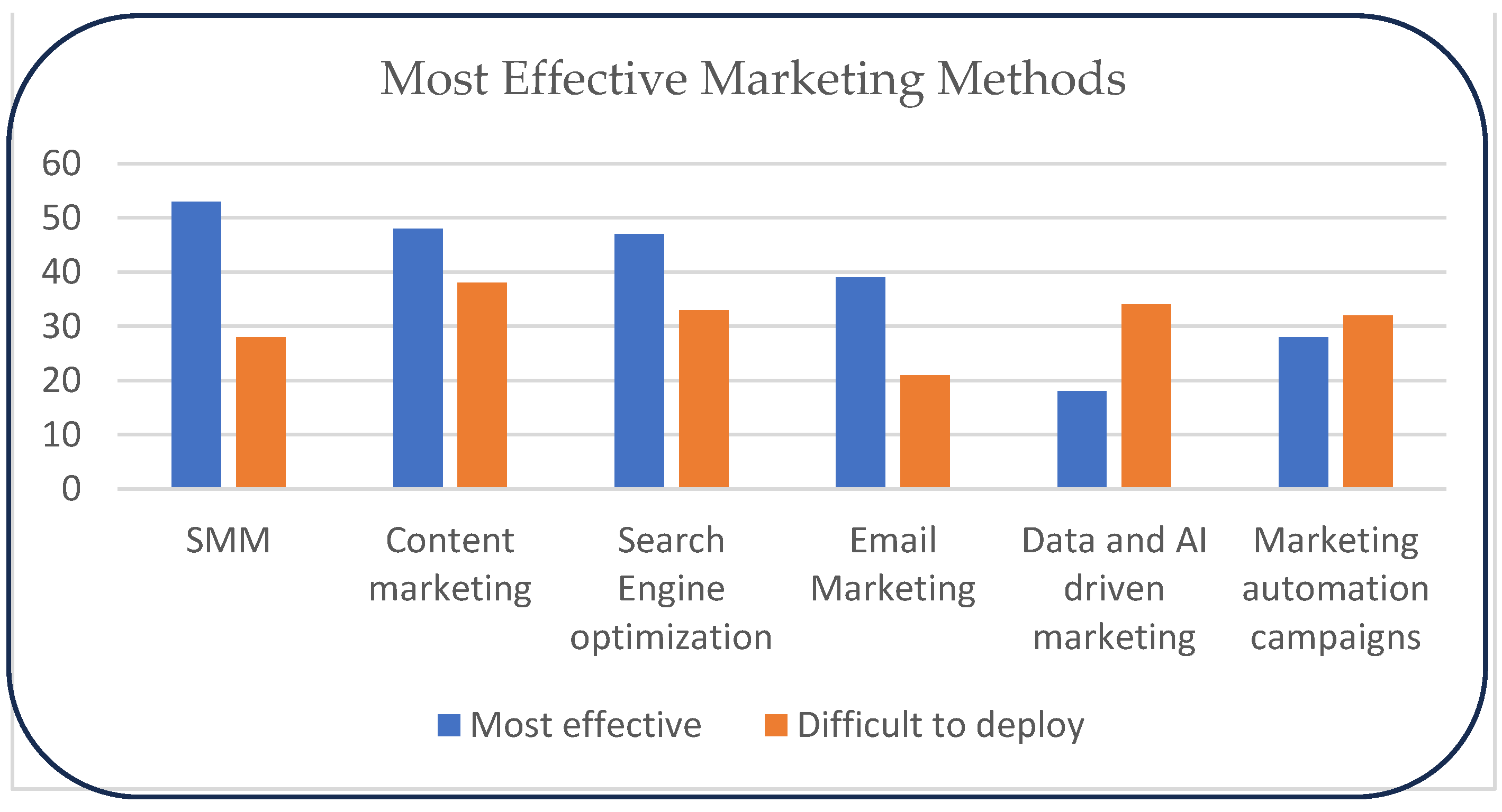
Figure 2.
Method of article selection from Extensive (803) search to finale selection (18).
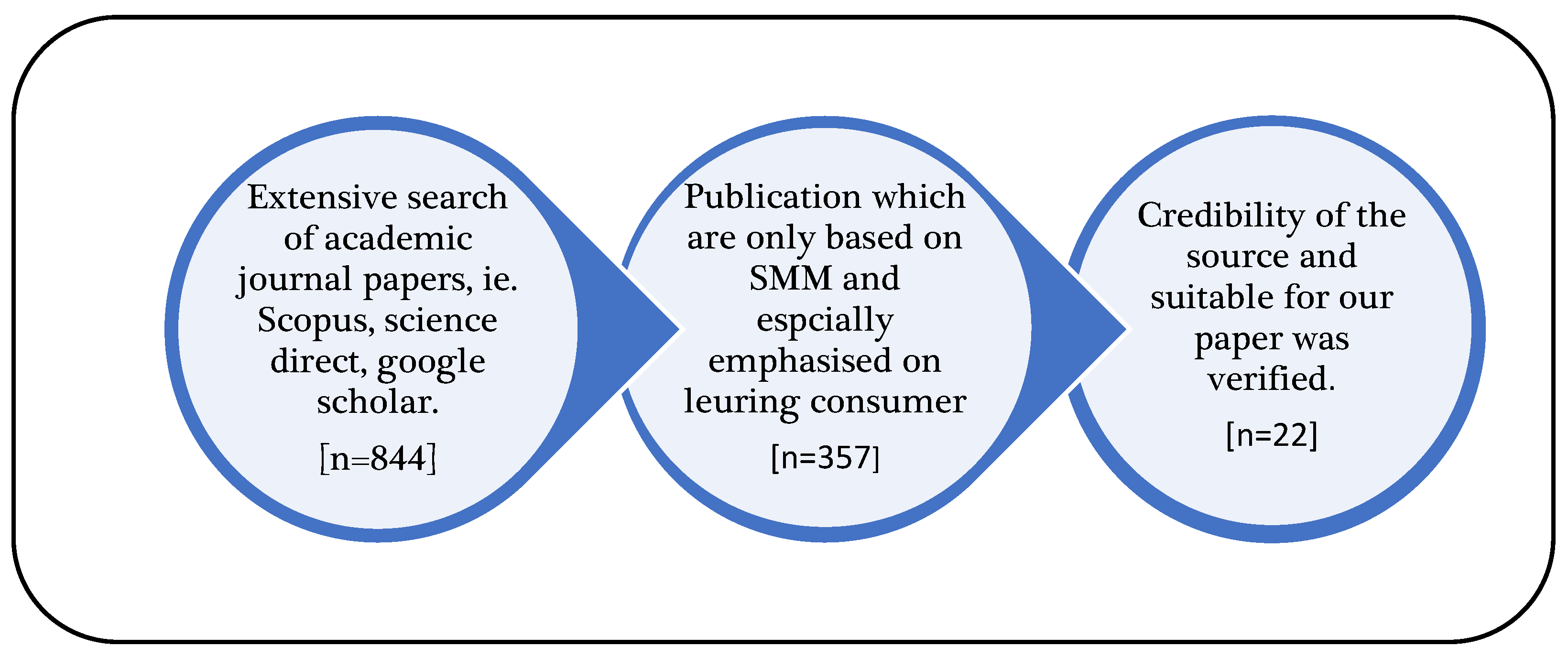
Figure 3.
Graphical representation of the important items of SMM and PI.
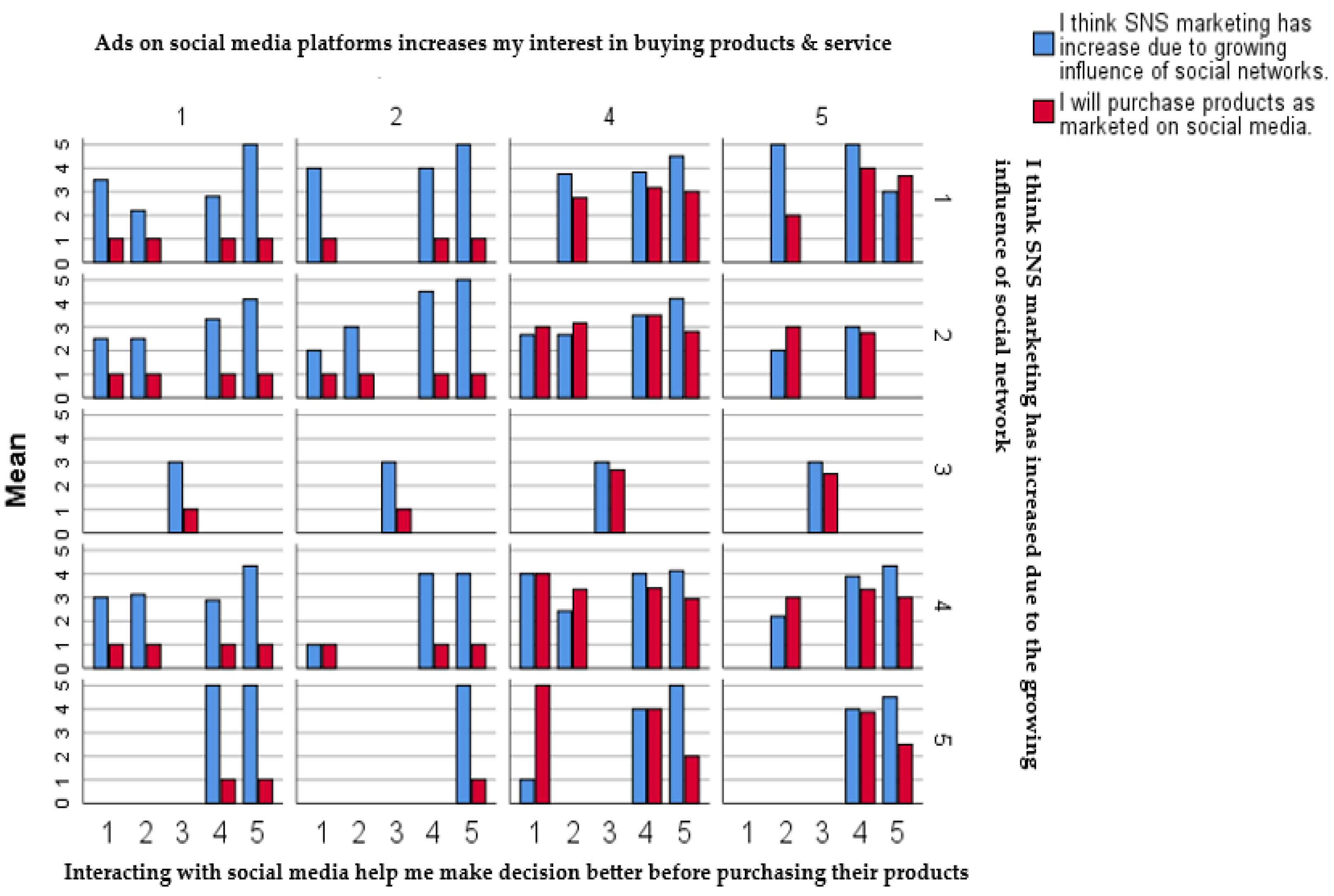

Table 1.
Scale development.
| Variables | Authors | Number of Items |
Likert Scales (1= Strongly Disagree to 5= Strongly agree) |
|---|---|---|---|
| Social Media Marketing (SMM) | Seo & Park (2018)[51] | 3 | 5 |
| Social Media Marketing (SMM) | Tayyaba Noreen, Sang-Lin Han (2015),[52] | 3 | 5 |
| Purchase Intention | Aji et al, (2020)[53] | 3 | 5 |
Table 2.
Summary of the relevant and qualified literature review for this study.
| Title of the research | Finding | Authors and journal with publication date |
|---|---|---|
| Users of the world, unite! The challenges and opportunities of social media. | SNS have developed into an important marketing method that allows indivudual customer to interact with firms and provide personalized information | Kaplan, A. M., & Haenlein, M. (2010)[2]. |
| Social media: The new hybrid element of the promotion mix | Influencer marketing and their interaction with the users play significan role in enhancing brand visibility and consumer engagement. | Mangold, W. G., & Faulds, D. J. (2009). Business Horizons [5] |
| A study of the impact of social media on consumers | Customer purchase intention and behavior significantly influence by user recommendation and User-generated content. | Hajli, N. (2014). International Journal of Market Research[8] |
| The impact of influencer marketing on consumer behavior:A meta analytic Review | Social media platform like Instagram, YouTube play important role in influencing user preference. | Smith, J. K. (2020). Journal of Consumer Behaviour [23] |
| Social Media Influencers: A Marketing Tool or a Passing Fad? | Social media Influencers are significantly enabling user engagement and preferences | Mangold, W. G., & Smith, S. (2020), Journal of Consumer Behaviour[63] |
| How Social Media Influences Consumer Behavior | Social media creates social proof and trust are also created by social media which influence consumer consumer buying behavior. | Smith, A. N., Fischer, E., & Yongjian, C. (2018), Journal of Consumer Psychology[64] |
| Popularity of brand posts on brand fan pages: An Investigation of the Effects of Social Media Marketing | Brand post on social media platform and their engagement determine their effectiveness of marketing. | Vries, L., Gensler, S., & Leeflang, P. S. (2012). Journal of Interactive Marketing [56] |
| Socialnomics: How social media transforms the way we live and do business | Despite significan advantages of Social media marketing it also offers significant disadvantages as ad fatigue and privacy concerns. | Qualman, E. (2019). Wiley[65] |
| Influence of internet interpersonal trust on social networking sites: A comparison of Facebook and MySpace | Social media marketing also depends on Trust in social media platforms influences consumer engagement. | Lee, E.-J., & Youn, S. (2009). Journal of Interactive Advertising [4] |
| Social Media: Influencing Customer Satisfaction in B2B Sales | Customer satisfaction and brand loyalty enhances by social media engagement in B2B sales. | Agnihotri, R., Dingus, R., Hu, M. Y., & Krush, M. T. (2016), Industrial Marketing Management[66] |
| Consumer engagement in a virtual brand community: An exploratory analysis. | When it comes ot brand community and engagement with the brand, Social media platforms are crucial. | Brodie, R. J., Ilic, A., Juric, B., & Hollebeek, L. (2013), Journal of Business Research [67] |
| Can You Measure the ROI of Your Social Media Marketing? | Return of Investment in SNS is complex to measure but its usefulness is justifiable . | Hoffman, D. L., & Fodor, M. (2010), MIT Sloan Management Review [3] |
| Marketing Communications: A Brand Narrative Approach | Social media marketing is much more effective when consistent brand messaging and engagment with the SNS platform. | Dahlen, M., Lange, F., & Smith, T. (2010), John Wiley & Sons [68] |
| Social Media Research: A Guide to Ethics | SMM is an important tool and it improve purchase intention,however privcy play critical role as well. | Waters, R. D., Tindall, N. T., & Morton, T. S. (2020), International Journal of Social Research Methodology [69] |
| Popularity of Brand Posts on Social Media | The attractiveness of brand posts depends on subject, timing, quality and engagement methods. | Vries, L., Gensler, S., & Leeflang, P. S. (2012), Journal of Interactive Marketing [56] |
| Groundswell: Winning in a World Transformed by Social Technologies | Consumer relationship with the firms are transforming with the help of Social technologies and business strategies. | Li, J., & Bernoff, J. (2011), Harvard Business Press [70] |
| Consumer Engagement in a Virtual Brand Community | Engaging consumers in virtual brand communities is another way of engage customers to boost loyalty, advocacy and purchase intention. | Fournier, S., Avery, J., & Lewis, M. (2013), Journal of Consumer Psychology[71] |
| Customer Behavior as an Outcome of Social Media Marketing:The Role of Social Media Marketing Activity and CustomerExperience | Social media interactions enhance brand equity and loyalty through a Stimulus-Organism-Response model. | Wibowo, A.; Chen, S. C.; Wiangin, U.; Ma, Y.; Ruangkanjanases(2020), Sustainability [72] |
| The Impact of Social Media Marketing on Consumer Engagement in Sustainable Consumption: A Systematic Literature Review. | Influencer marketing, balanced content design, and strong brand relationships as key strategies, with young, status-driven individuals showing the highest engagement. | Bryla, Pawel & Chatterjee, Shuvam & Ciabiada-Bryła, Beata.(2022), International Journal of Environmental Research and Public Health [73] |
| Role of Social Media Marketing Activities in Influencing Customer Intentions: A Perspective of a New Emerging Era | This study examines how social media marketing activities (SMMAs) influence user intentions on Facebook and Instagram, with social identification and satisfaction acting as mediators. Findings indicate that SMMAs significantly shape consumer intentions, offering valuable insights for marketers targeting Pakistani users. | Jamil Khalid , Dunnan Liu , Gul Rana Faizan , Shehzad Muhammad Usman , Gillani Syed Hussain Mustafa , Awan Fazal Hussain(2022), Frontiers in Psychology [74] |
| Customer engagement and social media: Revisiting the past to inform the future | This study reviews customer engagement (CE) research on social media, highlighting key influences, theoretical frameworks, and research gaps. | Lim, W. M.; Rasul, T.(2022), Journal of Business Research [75] |
| Emerging trends in social media marketing: a retrospective review using data mining and bibliometric analysis | This research emphasizes the need for further research on firm perspectives, particularly among small retailers, and the exploration of disruptive technologies like AI and blockchain in the field. | Bashar, Abu & Wasiq, Mohammad & Nyagadza, Brighton & Maziriri, Eugine. (2024), Future Business Journal [76] |
Table 3.
Demographic Characteristics.
| Variable | Description | Frequency | Percentage |
|---|---|---|---|
| Gender | Male | 119 | 56.7% |
| Female | 91 | 43.3% | |
| Age | ≤20 | 42 | 20% |
| 21-30 | 40 | 19% | |
| 31-40 | 43 | 20.5% | |
| 41-50 or more | 40 | 19% | |
| ≥51 | 45 | 21.4% | |
| Occupation | Employee | 73 | 34.7% |
| Students | 113 | 53.8% | |
| Others | 24 | 11.4% | |
| Nationality | Korean | 210 | 100% |
Table 4.
Frequency of agreement with the items of the Scale of Social Media Marketing and Purchase intention.
Table 4.
Frequency of agreement with the items of the Scale of Social Media Marketing and Purchase intention.
| Scale adopted | Items | Disagree (1~2) |
Uncer- tain(3) |
Agree (4~5) |
|||
|---|---|---|---|---|---|---|---|
| n | % | n | % | n | % | ||
| Social Media Marketing (SMM) | I think SNS marketing has increased due to the growing influence of social networks? | 71 | 33.8 | 10 | 4.8 | 129 | 60.5 |
| I feel Advertisement on social media platforms can influence my buying decision | 67 | 31.9 | 10 | 4.8 | 133 | 63.4 | |
| The ads that appear on my profile are relevant to my personal interests and I enjoy seeing them. | 86 | 41.0 | 10 | 4.8 | 114 | 54.3 | |
| I feel choosing products and a service to buy through advertisement on social media platform is wise idea. | 73 | 34.7 | 11 | 5.23 | 126 | 60.0 | |
| Advertisement on social media platforms increases my interest in buying products and service. | 70 | 33.3 | 3.3 | 2.1 | 133 | 63.3 | |
| I feel seeing an advertisement on social media platforms is waste of time. | 115 | 54.8 | 48 | 22.9 | 47 | 22.4 | |
| Purchase Intention | Advertisement on social media platforms increases my interest in buying products and services. | 76 | 36.1 | 4 | 1.9 | 128 | 61.9 |
| Interacting with the products advertise on social media increase my interest in buying that products and services | 68 | 32.3 | 14 | 6.6 | 128 | 61.0 | |
| Interacting with social media help me make decisions better before purchasing their product. | 54 | 25.7 | 9 | 4.28 | 147 | 70.0 | |
| I will purchase products as marketed on the social media | 51 | 24.2 | 10 | 4.76 | 149 | 70.9I | |
Table 5.
Factor loads of the items on the Factors after Rotation & Cronbach’s Alpha.
| Code | Items | 1 | 2 | Cr- α |
|---|---|---|---|---|
| SMM_1 | I think SNS marketing has increased due to the growing influence of social networks? | .632 | .119 |
0.758 |
| SMM _2 | I feel Advertisement on social media platforms can influence my buying decision | .764 | .285 | |
| SMM _3 | The ads that appear on my profile are relevant to my personal interests and I enjoy seeing them. | .760 | .117 | |
| SMM _4 | I feel choosing products and a service to buy through advertisement on social media platform is wise idea. | .796 | .032 | |
| SMM _5 | Advertisement on social media platforms increases my interest in buying products and service. | .841 | .029 | |
| SMM _6 | I feel seeing an advertisement on social media platforms is waste of time. | .810 | .030 | |
| PI_1 | Advertisement on social media platforms increases my interest in buying products and services. | .235 | .783 |
0.787 |
| PI_2 | Interacting with the products advertise on social media increase my interest in buying that products and services | .094 | .780 | |
| PI_3 | Interacting with social media help me make decisions better before purchasing their product. | .071 | .801 | |
| PI_4 | I will purchase products as marketed on the social media | .186 | .823 |
*SMM= Social Media Marketing; *PI= Purchase Intention.
Table 6.
Mean, Standard Deviation, Average Variance Extracted (AVE) & Composite Reliability (CR).
| Variable | Items | Statistics |
AVE |
Composite Reliability (CR) | |
|---|---|---|---|---|---|
| Mean | Std. Dev |
||||
| Social Media Marketing (SMM) |
I think SNS marketing has increased due to the growing influence of social networks? |
3.951 |
0.643 |
0.551 |
0.717 |
| I feel Advertisement on social media platforms can influence my buying decision | |||||
| The ads that appear on my profile are relevant to my personal interests and I enjoy seeing them. | |||||
| I feel choosing products and a service to buy through advertisement on social media platform is wise idea. | |||||
| Advertisement on social media platforms increases my interest in buying products and service. | |||||
| I feel seeing an advertisement on social media platforms is waste of time. | |||||
| Purchase Intention | Advertisement on social media platforms increases my interest in buying products and services. |
3.651 |
0.715 |
0.691 |
0.732 |
| Interacting with the products advertise on social media increase my interest in buying that products and services | |||||
| Interacting with social media help me make decisions better before purchasing their product. | |||||
| I will purchase products as marketed on the social media | |||||
Table 7.
The Pearson Correlation analysis of scale items.
| NS_avg | PI_avg | ||
|---|---|---|---|
| SMM_avg | Pearson Correlation | 1 | .637** |
| Sig. (2-tailed) | .000 | ||
| N | 210 | 210 | |
| PI_avg | Pearson Correlation | .637** | 1 |
| Sig. (2-tailed) | .000 | ||
| N | 210 | 210 | |
| ** Correlation is significant at the 0.01 level (2-tailed) | |||
Disclaimer/Publisher’s Note: The statements, opinions and data contained in all publications are solely those of the individual author(s) and contributor(s) and not of MDPI and/or the editor(s). MDPI and/or the editor(s) disclaim responsibility for any injury to people or property resulting from any ideas, methods, instructions or products referred to in the content. |
© 2024 by the authors. Licensee MDPI, Basel, Switzerland. This article is an open access article distributed under the terms and conditions of the Creative Commons Attribution (CC BY) license (http://creativecommons.org/licenses/by/4.0/).
Copyright: This open access article is published under a Creative Commons CC BY 4.0 license, which permit the free download, distribution, and reuse, provided that the author and preprint are cited in any reuse.


