
Submitted:
02 December 2024
Posted:
03 December 2024
You are already at the latest version
Abstract
With (a) an increasing role the concept of “Sufficiency Economy” plays in sustainable development, (b) its potential to effectively deal with wicked sustainability problems and (c) our limited knowledge about the relevant collective knowledge scholars have created, the present study reviews all related peer-review journal articles during the past 66 years (1957-2023) in the Scopus database by adopting the author citation and co-citation analyses to identify four schools of thought, and their leading scholars in the knowledge domain. Systematically, the most influential scholar is identified, whose collective body of knowledge is used as the basis to develop a Sufficiency Economy for Business Sustainability model as the frontier knowledge. Policy and managerial implications are also drawn from the model. Finally, drawing upon the analyses, informed future research directions have been discussed.
Keywords:
Sufficiency Economy
; Sustainability
; Sustainable development
; Sustainable leadership
; Corporate sustainability
1. Introduction
Traditional economic thinking holds that market mechanisms allocate resources most efficiently [1]. However, with such thinking, repeated economic crises and other issues suggest this view of market mechanisms is flawed. As a consequence of the profit-driven market mechanisms, the macroeconomic impacts of climate change are six times larger than previously documented [2]. A 1°C rise in global temperature lowers world GDP by 12% at peak [2]. Climate change leads to a present value welfare loss of 31% and a Social Cost of Carbon (SCC) of $1,056 per ton of carbon dioxide (tCO2) [2].
Since the market economy has failed, other models of economic growth that balance the development domains of society, environment and economy have emerged. One of the main tenets of Dharma is the idea of finding a happy medium between two competing philosophies [3,4]: one promotes maximizing growth and the other promotes minimizing utility, or fulfillment and austerity, in relation to one's day-to-day lives and the development of communities. One development philosophy in line with Dharma is the Sufficiency Economy philosophy. Motivated by a desire to find a happy medium, the Sufficiency Economy philosophy proposes doing just the right amount, neither too much nor too little [5], while taking care of stakeholders. A medium path is where the idea of "moderation" comes from; it is one of the daily moral precepts of Buddhism [6], later become core to the theory of corporate sustainability [7]. Both the sufficiency economy concept and "sustainable consumption and production" [8] aim to achieve more with less by separating economic growth from its possible harmful impacts on the society and the environment. The Sufficiency-oriented concept has recently received important scientific attention [9,10]. This is an endorsement for the Sufficiency Economy concept as a way to proceed to create and maintain a balance among the Triple Bottom Line domains of environment, society and economy.
In addition, the United Nations has acknowledged the Sufficiency Economy concept as a sustainable development approach of tremendous significance to communities around the world in times of rapid change [11]. The Sufficiency Economy concept is based on the philosophy of Sufficiency Economy [12]. It promotes moderation, awareness, ethical living, and balance in consumption, production, and overall lifestyles [13,14]. The philosophy complements the UN's own endorsement of a people-centered and sustainable path toward human progress. In fact, top experts in the field of human resource development highlighted “sufficiency economy” as a study direction [15]. Besides, empirical data suggests that the concept of the Sufficiency Economy is an effective approach to sustainable development in a wide range of settings [3], particularly in the business sector [7,16].
Indeed, the idea of “sufficiency” is a critical strategy for sustainable development that is garnering attention in both scientific and political realms [17]. In particular, it is also in line with the Cleaner Production concept [18] because the “sufficiency economy” approach suggests an integrated, preventative environmental strategy to processes, products and services to improve eco-efficiency and minimize risks to humans and the environment. Scholars have become more interested in it in the last decade [9,10,19]. In its summary for policymakers, the Intergovernmental Panel on Climate Change (IPCC) identified “sufficiency” for the first time as a key strategy to reduce climate change [[20], p. 41. “Sufficiency Economy” has also recently gained some traction in policymaking [21,22].
However, our review indicates that there is a definitional confusion among “sufficiency”, “sufficiency economy” and “sufficiency economy philosophy”. There is no doubt that the discussion surrounding a sufficiency orientation is complex, spanning areas like business, society, and agriculture. Additionally, although the first reported study related to “Sufficiency Economy” was found in 1957 and scholars have continued their research efforts in the domain until today, we know so little about the intellectual structure of the collective knowledge they have created. Therefore, if we are to use the “sufficiency economy” concept as a sustainability strategy, there is a need for a comprehensive review to systematically guide future research efforts.
Given the significance of the “Sufficiency Economy” concept, we outline gaps in the literature and specific contributions that the present study offers in the next section.
2. Knowledge Gaps and Contributions
Sufficiency Economy has been understood by scholars in manifold ways [3,23,24,25,26]. Some of them explain Sufficiency Economy as an economy that has not yet been industrialized or in the early phases of industrialization [23]. Others understand Sufficiency Economy as a philosophy that individuals who aim to cultivate virtue and wisdom tend to make reasonable, prudent, and moderate decisions that benefit both themselves and their communities [3,12]. Many scholars also view Sufficiency Economy as an approach to achieve sustainable development [27,28,29]. Complicating the definitional confusion further, most scholars regard “Sufficiency” in a sense of not too much [30,31,32], while a few others regard the term in a sense of not too much and not too little [11,19,33,34]. Given the diverse and sometimes contradictory views of “Sufficiency Economy”, there is a need to define Sufficiency Economy in a more encompassing way so that the global research efforts on Sufficiency Economy can be directed systematically, the first contribution of the present study.
Furthermore, given the triple planetary crises of pollution, biodiversity loss, and climate change, “sufficiency” may become a strong motivator for creative and fair approaches to meeting everyone's needs for services and well-being while using natural resources responsibly [20]. However, for “sufficiency economy” to have this transformative effect, there needs to be a shared comprehension of the idea and how business practices and policies may implement it, an area that is relatively unknown [3,7]. Filling in the gap, the present study explores this relatively unknown area.
Next, sustainability problems are wicked, so fixing one creates others [35]. The intricate relationships among the economy, the society, and the environment, previously viewed as distinct entities, are frequently characterized by simultaneous contradiction and tensions [36,37,38] due to imbalanced development, mounting social pressure, and stricter regulations. A holistic, system-based approach [39] is needed to meet these various, contradictory demands to survive and prosper. While the philosophical approach of Sufficiency Economy is regarded as such an approach to deal with the wicked sustainability problems [3,12,19,22,33], our primary review indicates that most “Sufficiency Economy” studies have not taken into consideration the wicked nature of sustainability problems and regarded “Sufficiency Economy” as simply “Sufficiency” or “being sufficient” [17,23,40,41,42], as opposed to a holistic, system-based approach. In response to effectively directing future research directions and dealing with the wicked sustainability problems, scholars need to understand the intellectual structure of the existing body of knowledge on Sufficiency Economy, created since 1957, and its influential scholars so that they can procced with their research efforts systematically, indicating a need for the present study.
Finally, in the corporate setting, a recent study [43] reveals that although many corporations have created the position of Chief Sustainability Officer (CSO) to supervise their sustainability initiatives, it is simply not effective in enhancing the prospect of corporate sustainability. Indeed, the creation of a CSO position may represent more of a symbolic, as opposed to substantive governance mechanism, as CSOs are not always effective in managing for corporate sustainability performance [43]. Being precise, the findings indicate that no relationship exists between CSO appointments and subsequent sustainability performance for corporations that were already weak sustainability performers, pointing out a lack of an effective and systematic approach to sustainability performance management. Since “Sufficiency Economy” is seen as a systematic approach to create and nurture corporate sustainability and calls for more research in this knowledge domain exist [3,7], the present study fills in this gap by deriving cutting-edge knowledge on Sufficiency Economy in the corporate sustainability context.
Since “Sufficiency Economy” is widely regarded as a sustainability strategy and the knowledge gaps exist, the current study investigates the global body of knowledge on “sufficiency economy” by exploring its intellectual structure and identifying influential scholars in the knowledge domain. Informed by these analyses, cutting-edge knowledge on Sufficiency Economy in business organizations will be derived along with policy and managerial implications. It will conclude by outlining future research directions for scholars and research implications.
The present study will address the following research questions (RQs).
RQ #1: Who are the highest-impact authors in the 66 years of collective sufficiency economy knowledge?
RQ #2: What is the intellectual structure that characterizes the sufficiency economy knowledge base?
RQ #3: What is the cutting-edge body of sufficiency economy knowledge base?
2. Methodology
The Integrated Systematic Literature Review (ISLR) procedure [44] is adopted. We delineate its step-by-step approach as follows: first, we conduct a basic keyword search, then proceed with a comprehensive examination to pinpoint relevant studies pertaining to our topic. Secondly, we carry out a bibliometric analysis of the identified literature and extract the primary findings from this analysis. The discussion of these findings is succeeded by the development of a theoretical model, drawing from significant literature revealed through bibliometric analysis. Finally, we address knowledge gaps, potential opportunities, and challenges for future research.
Our review methodology encompasses the use of three key approaches: the Preferred Reporting Items for Systematic Reviews and Meta-Analysis (PRISMA), bibliometric analysis, and the Theory Building. PRISMA aids in the screening of pertinent literature on the theme, while bibliometric analysis helps visualize the literature. The Theory Building approach is utilized to determine a collective body of essential knowledge and inform the formulation of our theoretical model. Each is discussed and justified in detail below.
3.1 Preferred Reporting Items for Systematic Reviews and Meta-Analysis (PRISMA)
We use published papers with the aim of performing a thorough systematic literature assessment on sufficiency economy. We follow the PRISMA criteria as stated by Moher et al. [45]. In practice, the materials of the most widely cited document repositories (such Scopus and Web of Science) overlap [46]. Clearly, the field of study being reviewed has a major influence on which document repository is best for the review. For instance, empirical comparisons have demonstrated that, although the Web of Science provides robust source coverage for the sciences, its coverage of the humanities and social sciences is far less extensive than that of Scopus [46,47,48,49]. While Google Scholar provides the most extensive document coverage, it does not seem to follow as strict guidelines when it comes to document inclusion [50] and lacks the data export features that the majority of bibliometric software packages demand. According to Falagas et al. [47], Scopus is another well-known and often used tool for reviews. As a result, the Scopus database is used in this study.
The most frequently employed approach in bibliometric reviews to commence our search is the utilization of keyword search. Occasionally, employing a search technique based on journals can yield better results. In this study, we however utilize the keyword search method as it is more effective than a journal-based strategy, which relies on the availability of a substantial number of specialized publications on the topic [51]. In our case, the notion of "Sufficiency Economy" is highly specialized and there are only a very few numbers of journals, if any, that focus on this topic. Therefore, the keyword-based technique is more suitable.
The keyword-based search technique commences by formulating a conceptual definition of the subject matter being examined. Next, we utilize the search engine of the content repository to establish a practical explanation of the central concept. This entails choosing various phrases as search terms and employing AND/OR/AND NOT operators. The search term string precisely delineates the operational parameters of the review [51]. In order to locate publications connected to sufficiency economy inside the Scopus database, we utilize keywords included in both author keywords and abstracts. We use author keywords because authors know best about the content of their papers. More precisely, our search queries consist of the terms "sufficiency" and "economy" as the operational definition because selecting either “sufficiency” or “economy” can lead to a search result that is not relevant to our focal theme of interest. In order to comprehensively investigate the complete body of information, our study does not employ any predetermined date for our search. As a result, we include papers spanning the period from 1957 to 2023.
The subsequent screening step is intended to guarantee the incorporation of papers of quality. During this screening process, we adhere to the inclusion/exclusion criteria detailed in Table 1, which involves considering only English peer-reviewed journal articles. To ensure the quality of the papers, we only use peer-reviewed journal articles. Our Scopus search yielded a total of 862 documents.
The search string used is “( KEY ( sufficiency AND economy ) OR ABS ( sufficiency AND economy ) ) AND ( LIMIT-TO ( DOCTYPE , “ar” ) ) AND ( LIMIT-TO ( LANGUAGE , “English” ) ) AND ( LIMIT-TO ( SRCTYPE , “j” ) ) AND ( LIMIT-TO ( PUBSTAGE , “final” ) OR LIMIT-TO ( PUBSTAGE , “aip” ) ) AND ( LIMIT-TO ( SUBJAREA , “SOCI” ) OR LIMIT-TO ( SUBJAREA , “ENVI” ) OR LIMIT-TO ( SUBJAREA , “ECON” ) OR LIMIT-TO ( SUBJAREA , “BUSI” ) OR LIMIT-TO ( SUBJAREA , “ENGI” ) OR LIMIT-TO ( SUBJAREA , “AGRI” ) OR LIMIT-TO ( SUBJAREA , “ARTS” ) OR LIMIT-TO ( SUBJAREA , “MULT” ) )”
In the eligibility stage, we conduct a preliminary content analysis involving three researchers, including the authors, to verify the suitability of the documents. All abstracts have been carefully reviewed to ensure their relevance to the objectives of our study. In cases where there were differing opinions among the researchers, these discrepancies were resolved through further discussion among the three of us. We have also found two same documents by Kantabutra in the Scopus data set. Thus, we have got rid of one. As a result, 858 documents are considered suitable for further analyses.
Two primary reasons for disqualifying these documents are either the absence of author names and missing data. Finally, we deem 858 documents as eligible for our study, as they are not only peer-reviewed but also contain the pertinent content necessary for our subsequent analyses. The overall document screening process is shown in Figure 1 below.
3.2. Bibliometric Analysis
Documenting and analyzing characteristics of a knowledge base represented by a discipline or line of investigation is the goal of a bibliometric review [51]. This essay explores Sufficiency Economy as the line of investigation. Bibliometric reviews seek to shed light on a knowledge base's thematic content, theoretical model, and publication landscape [51]. By combining the viewpoints of several academics in the focal area, they "introduce a measure of objectivity into the evaluation of scientific literature and hold the potential to increase rigor and mitigate researcher bias in reviews of scientific literature" [52, p. 429]. A bibliometric or science map is composed of nodes, symbolizing either researchers or keywords. This arrangement offers a panoramic view of research directions through the examination of citations and co-citations, allowing for the identification of trends within the academic landscape [53,54]. This study focuses on the author as the central unit for analysis, opting for citation analysis to highlight impact, rather than incorporating article download counts, because not all journal tracks download statistics [55].
The study also prefers the co-citation approach over bibliographic coupling and direct citation for identifying burgeoning research topics because of a number of benefits. Primarily, the co-citation analysis yields thematically cohesive and distinct research clusters. Additionally, it is noted that the direct citation is less precise, and the bibliographic coupling is mainly beneficial for assessing the thematic similarity between two topics, which does not align with the objectives of this research [56,57].
In applying the co-citation analysis, authors are selected as the primary unit for dissecting the Sufficiency Economy knowledge domain. This method is also instrumental in mapping out the relational dynamics and structural composition of the knowledge base by tallying the number of times a document from the Scopus database is cited by others, within or external to the data set [52]. The result from this stage is a set of schools of thought in the Sufficiency Economy knowledge domain. In the author co-citation analysis, authors are categorized into clusters on a network map according to the “similarity” of their co-cited works [58]. The intellectual structure revealed in a co-citation map is interpreted by examining the nature of similarities in the scholarship of the authors who comprise each of the clusters [56]. Consequently, the interpretation of a co-citation map necessitates a certain level of implicit knowledge of the literature [16]. In our case, we investigate the published works of authors on the map.
After two lists of top cited and co-cited authors are developed, we identify the most influential author in the Sufficiency Economy knowledge domain. Authors that appear on both lists of citations and co-citations are the most influential authors because they not only provide conceptual underpinnings for scholarship on Sufficiency Economy [16], but also influence the specific body of knowledge on Sufficiency Economy. We then use the articles produced by these influential scholars to derive a cutting-edge theoretical model in the next stage.
3.3 Theory Building Approach
The advancement of knowledge is contingent upon the development of theories [59]. While some scholars question the predominant role of theory [60,61], there is little disagreement regarding the significance of theory construction in the pursuit of knowledge [62]. The current investigation employs the theory building approach proposed by Shepherd and Patzelt [63] to advance the body of knowledge on Sufficiency Economy. Based on the criteria established by Whetten [64] for a simple theory, we utilize the following questions to guide the construction of our theoretical model.
- What are the key input, throughput, and output components for sustainability?
- How are the components related?
We read the identified articles from the bibliometric analysis and then compare a variety of probable conjectures from those articles so that highlighting can happen [65]. Our goal is to find out what knowledge is input, how it is processed, and what knowledge is output from those articles. The coding method [7] is used to find the knowledge components. First, the open coding method is used to find common themes in all the articles that have been found. This is done by reading each identified document line by line and paragraph by paragraph [66]. In a later step, we group these codes together into related ideas, which we call "open codes." During the open coding process, there are usually more than one open code [67]. The researchers have to put together open codes that are closely linked and overlap into a single set of key ideas [66]. The main focal core code is definitely linked to sustainability, which comes up naturally during the coding process given that Sufficiency Economy is an approach to achieve sustainability. The main focal core code of sustainability is linked to all the other influential core codes in some way. The researchers are required to identify the relationships among the influential and focal core codes [67], using knowledge from the literature. These influential core codes are essentially influencing concepts toward the focal core code of sustainability.
In naming the resulting codes or constructs, numerous strategies have been employed by theorists [63]. However, we attempt to utilize an “established construct” strategy [63] as much as possible in the current study, making it easy for scholars to follow the knowledge development.
The next following sections present and discuss the findings of the present study, including defining the term Sufficiency Economy, followed by the discussions of the frontier knowledge, implications and future research directions.
4. Defining Sufficiency Economy
The concept of sufficiency has been interpreted in numerous ways, one of which is as a negative connotation linked to a decline in living standards [23]. The discussion in this section is based upon the results from the author co-citation analysis, to be discussed in the following section, because several key points can be revealed to help us to understand how scholars have defined “sufficiency economy” in the existing body of knowledge.
As evident by the four schools of thought of Sufficiency Economy in Business, Sustainable Consumption, Natural Resources, and Food and Agriculture, the scope of being “sufficiency economy” is different to different scholars, although all meanings suggest being “sufficient”. As for the largest group of scholars in the Sustainable Consumption school, “sufficiency economy” suggests being sufficient in the way products/services are produced and consumed innovatively. In the second largest group of scholars in the Food and Agriculture school, “sufficiency economy” suggests a way to ensure that foods will always be sufficient for human beings with a particular focus on policy and management of the agricultural sector. More relatively related to the two groups of scholars in the schools of Sustainable Consumption and Food and Agriculture is the scholars in the smallest school of thought on Natural Resources. We can draw from this smallest school of thought that “sufficiency economy” suggests a sufficient utilization of limited natural resources. As for the last group of scholars in the school of Sufficiency Economy in Business, “sufficiency economy” suggests a holistic approach to run a sustainable business.
To address the definitional confusion among scholars, we adapt the definition of His late Majesty King Bhumibol Adulyadej of Thailand [68] because His Majesty’s philosophical definition is regarded as a flexible management paradigm and possible solution to complex issues [22] such as the wicked sustainability problems, thus encompassing the other existing definitions. In the present study, we thus define “sufficiency economy” as a philosophical approach to life and conduct that promotes a middle path to keep up with the changing world via sufficiency, prudence and virtues. Sufficiency comprises three elements: moderation, wisdom, and the need to build resilience in times of changes, whether internal or external. Moreover, applying theories in both planning and execution demands meticulous attention and sound discretion at all phases. In tandem, there is a need to adhere to the principles of knowledge, integrity, and truthfulness, as well as living with determination, patience, wisdom, and insight. This development is crucial for fostering the resilience and equilibrium needed to adapt to changes in the economy, society, environment, and culture.
This Sufficiency Economy definition is encompassing and can be applied with minimal adjustment to the existing definitions in the four schools of thought, so that the global research efforts on Sufficiency Economy can continue and be directed systematically. More critically, while most existing definitions on Sufficiency Economy emphasize a sense of not too much, which can be risky to achieving a balance development among the culture, society, environment and economy, the proposed definition emphasizes a middle path of “not too much” and “not too little”, suggesting a moderate path to effectively deal with the simultaneous and conflicting demands among stakeholders to create and maintain the balance.
5. Findings
Our study yields the subsequent findings to answer the research questions. Initially, we provide insights into the Sufficiency Economy knowledge domain by giving the results of the author co-citation analysis and author citation analyses.
5.1. Citation and Co-Citation Analyses
To answer RQ#1, we perform both citation and co-citation analyses, using author as the unit of analysis, discussed in detail below.
The bibliometric analysis serves as a valuable tool for identifying influential scholars and key knowledge production studies [69]. In our study, we utilize bibliometric analysis, as detailed in Table 2, to pinpoint scholars and assess their varying levels of impact. Subsequently, we assign a ranking to these scholars based on the quantity of citations, as illustrated below.
The result indicates that the top-five, most-cited scholars in the domain of Sufficiency Economy are Huang J. (1st), Rozelle S. (2nd), Saxena M. (3rd), Singal S.K. (3rd), Singhal S. (3rd), Subramanian K.A. (3rd), Kantabutra S. (4th), and Wang X. (5th) respectively. Kantabutra, S. is also the most productive author in the knowledge domain with 16 Scopus publications. These five scholars are impactful in the specific Sufficiency Economy domain of knowledge, although it must be noted that the 3rd position comprising four scholars who authored the same article.
To further analyze for influential authors in the Sufficiency Economy literature, we employ author co-citation analysis (ACA) to visually represent the intellectual construction presented by the authors. This analysis assigns a count of one each time two authors are cited jointly in another study. Their impact in the knowledge domain, both direct and indirect, is indicated by their co-citation frequency [70]. The findings from the author co-citation analysis are presented in Table 3, the top five foundation authors and their schools of thought in the Sufficiency Economy knowledge base are Kantabutra, S., Avery, G.C., Bocken, N.M., Liu, Y., Steinberger, J.K. and Wang, Y. Notably, we have taken two “author” items of “Arcia” and “Report” out from the original top five list because they are not an author. These five foundation scholars influence the conceptual underpinnings of the Sufficiency Economy knowledge domain.
According to the author citation and co-citation analyses, only Kantabutra, S. appears on both lists, suggesting that he is the most influential scholar in the Sufficiency Economy knowledge domain [16,44] because (a) he is impactful in the specific area of Sufficiency Economy, and (b) his work is also a foundation for other scholars to conduct other related studies in the knowledge domain of Sufficiency Economy.
When examining the analysis of different schools of thought within the Sufficiency Economy literature, as depicted in Figure 2, the co-citation map reveals the presence of four primary clusters or 'schools of thought', each with a minimum cluster size of three. These clusters collectively constitute the intellectual structure of the 66-year Sufficiency Economy knowledge base, providing insights to address Research Question #2.
The first cluster in red comprises 53 scholars, whose work is primarily concerned with sustainable consumption. This cluster is led by Bocken, N.M., Steinberger, J.K. and Jackson, T. The second cluster in green comprises 48 scholars, led by Liu, Y., Wang, Y. and Zhang, Y. Their work is primarily concerned with food and agriculture. The third cluster in blue comprises 13 scholars, led by Kantabutra, S., Avery, G.C. and Bergsteiner, H. Their work is primarily concerned with Sufficiency Economy in business organizations. As the smallest cluster of nine scholars led by Lenzen, M., Hubacek, K. and Peters, G.P., the fourth cluster in yellow is primarily concerned with natural resources. Table 4 shows top three scholars in each school and their co-citations.
6. Discussions of the Findings
In this section, we discuss the findings above, starting from author citation and co-citation analyses, followed by deriving the cutting-edge knowledge of the Sufficiency Economy knowledge domain.
6.1. Author Citation and Co-Citation Analyses
The result indicates that the top-five, most-cited scholars in the domain of Sufficiency Economy are Huang J. (1st), Rozelle S. (2nd), Saxena M. (3rd), Singal S.K. (3rd), Singhal S. (3rd), Subramanian K.A. (3rd), Kantabutra S. (4th), and Wang X. (5th) respectively. Looking more closely into their publications, Huang J. has been working in the area of agricultural policy focusing on food security. Rozelle S. has devoted the majority of his research career to issues pertaining to economic institutions, agricultural policies, poverty, and inequality in China. To these two scholars, Sufficiency Economy generally suggests self-sufficient economy. The fact that both scholars have researched in the area of agriculture is consistent with the result of the author co-citation analysis revealing that the second largest school of thought in the Sufficiency Economy knowledge domain is concerned with food and agriculture with 48 authors.
Subramanian K.A., Singal S.K., Saxena M, and Singhal S. have contributed only one article in the area of utilization of liquid biofuels in automotive diesel engines from an Indian perspective. Kantabutra S. on the other hand has solely worked in the area of Sufficiency Economy Philosophy in business organizations. Adhering to the philosophy, he has been exploring ways to ensure a sustainable enterprise. Sufficiency Economy to Kantabutra appears to be a philosophy used to lead a sustainable business. Wang X., with Huang J., Wang X., Zhi H., Huang Z. and Rozelle S., has contributed an article on subsidies and distortions in China's agriculture. Wang X., with Huang J. and Rozelle S., has also contributed another article on subsidization of farming households in China's agriculture. Wang X. has worked in the area of Sufficiency Economy in the agricultural sector.
Looking more closely into the author co-citation analysis, only Kantabutra from the list of top-five, most cited scholars appears on the top-five co-citation list, suggesting that he is the most influential scholar in the Sufficiency Economy knowledge domain as he has influenced over both the conceptual underpinnings of the knowledge domain and within the specific knowledge domain. After Kantabutra, Avery is the second most co-cited scholar as she has been working in the area of sustainable leadership, the concept of which is consistent with the Sufficiency Economy Philosophy [3]. Noticeably, Avery does not appear in the author citation analysis, suggesting that her work is not within the specific knowledge domain of Sufficiency Economy at least in the Scopus database. Avery appears in the author co-citation analysis because her work on Sustainable Leadership is fundamental to the conceptual underpinnings of the Sufficiency Economy knowledge domain, particularly in the Sufficiency Economy in Business school of thought.
Given the largest size of the Sustainable Consumption school of thought, it is not surprising to have two scholars from the school on the top-five author co-citation list with 200 co-citations in total. Not surprisingly also, two scholars from the Food and Agriculture school of thought appears on the top-five co-citation list with 128 co-citations in total. Surprisingly however, Kantabutra and Avery, who belong to the Sufficiency Economy in Business school of thought, which is the third largest school of thought consisting of only 13 scholars, occupy the top two positions on the top-five co-citation list with a total of 320 co-citations. This suggests that the collective work by Kantabutra and Avery from the third largest school has a great influence on the conceptual underpinnings of the entire Sufficiency Economy knowledge domain.
As shown in Figure 2, the first cluster comprises 53 scholars, whose work is primarily concerned with sustainable consumption. This cluster is led by Bocken N.M., Steinberger J.K. and Jackson T. In general, scholars in this school of thought view “sufficiency economy” as to align production and consumption levels with planetary boundaries, the emphasis is on encouraging less consumption or limited growth. Topics in this school includes circular economy, sustainable business model and responsible production and consumption. The second cluster comprises 48 scholars, led by Liu Y., Wang Y. and Zhang Y. Their work is primarily concerned with food and agriculture. The nature of work in this school is primarily at a policy level. The focus is food security, how we can ensure sufficient foods for all. Thus, Sufficiency Economy in this school primarily means food sufficiency. The third cluster comprises 13 scholars, led by Kantabutra S., Avery G.C. and Bergsteiner H. Their work is primarily concerned with Sufficiency Economy in business organizations. Much of Avery’s work has become a foundation for Kantabutra’s work on Sufficiency Economy in business, while Avery and Bergsteiner have produced knowledge in the same area of sustainable leadership. Sufficiency Economy in this school primarily suggests a philosophical approach to lead a sustainable enterprise. As the smallest cluster of nine scholars led by Lenzen M., Hubacek K. and Peters G.P., the fourth cluster is primarily concerned with natural resources and gas emissions due to overconsumption. Topics included in this school are for example life-cycle assessment, sufficiency-oriented lifestyles, climate change adaptation and mitigation, and land use change and governance. Sufficiency Economy in this school primarily means sufficient consumption to reduce the environmental impact.
As evident from the large distance between the Sufficiency Economy in Business school of thought and the other three schools, the body of knowledge in the Sufficiency Economy in Business school is quite different from the other schools, possibly because of two reasons. First, the Sufficiency Economy in Business school focuses on business organizations. Second, Sufficiency Economy is perceived in this school as a more holistic, philosophical approach to ensure sustainable development in business, different from the other schools where Sufficiency Economy is considered as a precise concept of trying to gain “sufficiency”.
The schools of Sustainable Consumption and Natural Resources are closely related because sustainable consumption is concerned with utilization of natural resources and gas emissions due to overconsumption. The distance from the Food and Agriculture school is far from the Sustainable Consumption and Natural Resources Schools because the body of knowledge contained in this school is policy-oriented by nature and primarily concerned with food security.
In the next section, we extract state-of-the-art insights regarding Sufficiency Economy from the collaborative research efforts of the most influential scholar identified through the author citation and co-citation analysis. Given that the business sector is a main driver of the way we consume, utilize natural resources and supply foods, the most influential scholar in this knowledge domain is from the school of Sufficiency Economy in Business.
7. Frontier Knowledge on Sufficiency Economy
In order to address Research Question #3, the process of theory development commences with the identification of researchers and their pertinent studies for study. In the present study, we determine the most influential scholars by looking for scholars who appear on both author citation and co-citation lists [16,44] because it indicates that they are cited in the Sufficiency Economy literature and its related foundation literature.
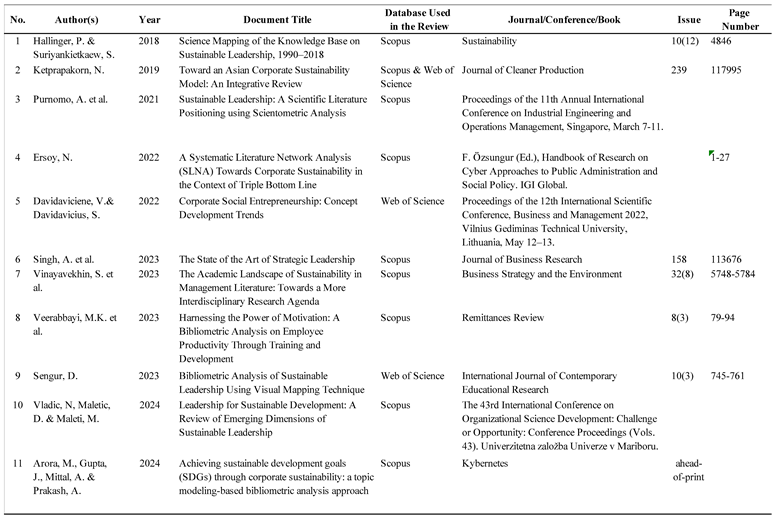
According to the author citation and co-citation analyses (Table 2 and Table 3), only Kantabutra appears on both lists, making him the most influential scholar in this Sufficiency Economy knowledge domain. To validate Kantabutra’s status as the most influential scholar worthy of further investigation, we examine the existing systematic reviews in the broad sphere of corporate sustainability. Endorsing Kantabutra’s influence, the existing reviews have continued to identify him among the top scholars in the corporate sustainability field as shown in Table 6 below.

Table 5.
Relevant systematic reviews endorsing the most influential scholar.
 |
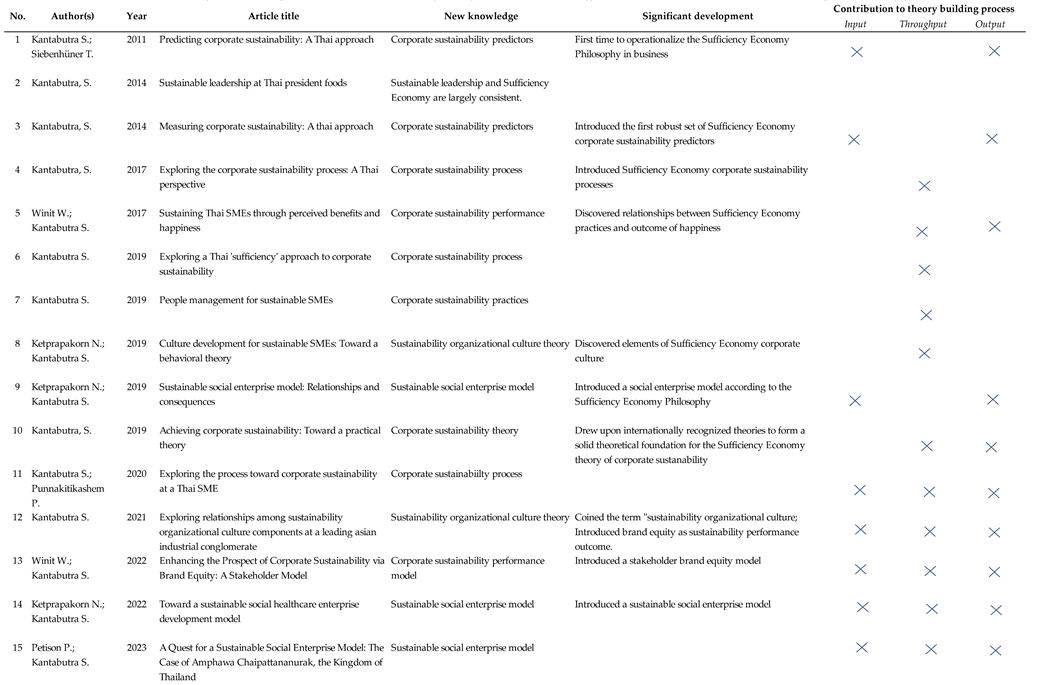
We thus use Kantabutra’s articles for the basis of further analysis for the cutting-edge knowledge on Sufficiency Economy in this section. His fifteen articles from our Scopus dataset are shown in Table 6 below. In Table 6, we have also chronically shown, for each article, new knowledge, significant development and contribution to the theory building process.
Clearly, Kantabutra’s collective work is not simply about resource utilization and degrowth. Indeed, his collective work falls within the business domain, and involves all elements of a simple theory: input, throughput and output knowledge, suggesting a more holistic approach to achieve sustainability. With sustainability as the overarching goal of his work, Kantabutra has identified Triple Bottom Line, Stakeholder Satisfaction and Stakeholder Brand Equity as the output knowledge. Interestingly, in one of his study on the development of a sustainable social enterprise model, he has identified socio-economic performance as an output of a sustainable social enterprise.
A significant portion of his work has also entailed the identification of Sufficiency Economy business indicators that enhance the likelihood of long-term corporate viability. Empirically, he has identified five corporate sustainability practices as leading indicators to ensuring corporate sustainability. They are Perseverance, Geosocial Development, Resilience Development, Moderation and Knowledge Sharing, later becoming core for his theory of corporate sustainability (Kantabutra and Ketprapakorn, 2020). Noticeably, these practices are derived from the Sufficiency Economy Philosophy in business organizations. Clearly, these are input knowledge.
Kantabutra's research has extensively explored into the theoretical pathways toward achieving corporate sustainability. The first Perseverance practice involves a commitment to enhancing processes, products, and services that benefit stakeholders. The second Resilience Development practice emphasizes the anticipation and preparedness for changes. The subsequent practice of Moderation revolves around finding a balance between short-term and long-term profitability rather than solely focusing on maximizing immediate gains. The fourth practice of Geosocial Development underscores investments in the well-being of stakeholders and the integration of social and environmental responsibility into operations. Finally, the last practice of Knowledge Sharing focuses on the sharing of knowledge within and beyond an organization to enhance the prospect for corporate sustainability. Importantly, these theoretical pathways align with the principles of the Sustainable Leadership model [3].
Another emerging input theme emerges from Kantabutra’s collective work is sustainability organizational culture. According to Kantabutra, the establishment of a sustainable firm requires the presence of such a culture. As a result, it is believed that an organizational culture focusing on sustainability is an input that results in sustainability. Looking more closely in his organizational culture articles, it is the sustainability organizational culture that drives the throughput processes via corporate sustainability practices. Accordingly, the following Sufficiency Economy for Business Sustainability (SEBS) model is derived as shown in Figure 3 below.
The Sufficiency Economy for Business Sustainability (SEBS) model starts with a Sufficiency Economy organizational culture as a pre-condition in ensuring business sustainability. The next input is the five corporate sustainability practices as driven by the sustainability organizational culture. Within the practices, there are six processes that lead to improving the prospect of corporate sustainability as indicated by the outputs of Triple Bottom Line, stakeholder satisfaction and stakeholder brand equity.
Based on the model, the following propositions can be drawn to direct global future research efforts.
- Proposition 1:
- Sufficiency Economy organizational culture drives the practices of Perseverance, Geosocial Development, Moderation, Resilience Development and Knowledge Sharing.
- Proposition 2:
- The practices of Perseverance, Geosocial Development, Moderation, Resilience Development and Knowledge Sharing lead to the six processes of perseverance to improve processes, products, and services for stakeholders, anticipation and prepare for change, balance between short-term and long-term profitability, investment in taking care of their stakeholders, integration of social and environmental responsibility with operation, and sharing knowledge within and outside an organization.
- Proposition 3:
- The six processes lead to the delivery of sustainability performance as measured by Triple Bottom Line outputs, stakeholder satisfaction and stakeholder brand equity.
8. Policy and Managerial Implications
Although the Sufficiency Economy for Business Sustainability (SEBS) model is new, it is constructed upon a peer-reviewed body of collective empirical and theoretical knowledge. Therefore, some practical policy and managerial implications for corporate leaders can be drawn.
In terms of policies, the findings offer some implications for human resource and organization development. First, corporate leaders should make sure that their people policies align with the Sufficiency Economy organizational culture, including the policies to promote from within the organization, give priority to the well-being of employees so that they stay, and avoid laying them off so that the culture can be continued in the future. Informed by the Perseverance practice, they should identify and promote perseverance as a core value. Moreover, a cultural communication should be included in the corporate leadership development program so that leaders know how to communicate the cultural beliefs and values among their employees. In terms of sustainability performance, corporate leaders should develop a policy to measure, monitor and manage both sustainability performance outputs and outcomes.
In addition to the human resources and organization development policies, corporate leaders can develop the following policies in other areas according to the five corporate sustainability practices. In terms of investment and marketing, they should develop a “moderation” policy where they will not maximize short-term profitability for shareholders/owner alone. In addition, they should adopt the “Geosocial Development” policy to promote a development that takes into consideration the culture, society, environment and economy, whether it is a development of a product/service or even new business. They should also have a ‘Sharing’ policy where they are willing to share their knowledge with a wide range of stakeholders for mutual benefits.
In terms of managerial implications, before adopting the Sustainable Development Goals (SDGs) and the Environment, Social and Governance (ESG), organizational culture must be assessed first whether it is supportive to sustainability. Sustainability organizational culture is characterized by stakeholder-focus vision and values of virtues (e.g., perseverance, generosity), social and environmental responsibility and innovation. Then, they should communicate the vision and values to gain commitment from their employees and stakeholders to the vision and values.
Secondly, corporate leaders may compare their existing practices and processes with the five high-level corporate sustainability practices of Perseverance, Geosocial Development, Moderation, Resilience Development and Knowledge Sharing and their associated processes. Where there is a consistency, they can adjust it toward more sustainability. The Perseverance practice emphasizes a perseverance workforce that does not give up easily despite great difficulty. The Perseverance value should be integrated as part of the human resource development plan. In terms of Geosocial Development practice, corporate leaders should take into consideration a whole range of stakeholders while developing its business, including the culture, the society, the environment and the economy. They should aim to get a balance among the four domains of development. The Moderation practice suggests that corporate leaders take a long-term view in running their business by not trying to maximize short-term value for shareholders alone, but a range of stakeholders. They should identify and prioritize stakeholders, and invest in developing a trusted relationship with them.
The Resilience Development practice is largely consistent to the prevailing practice of risk and change management. However, the Resilience Development practice is also concerned with how business can emerge even stronger after a crisis, suggesting the adoption of continuously learning and innovation across the organization. Then, corporate leaders should promote knowledge sharing within the organization and externally with a wide range of stakeholders, including competitors. Such a practice can lead to organizational innovation, risk mitigation, and cost efficiency.
Finally, corporate leaders may identify relevant Triple Bottom Line indicators as sustainability outputs to monitor and manage for their sustainability performance. These Triple Bottom Line indicators can be directly linked to their existing SDGs and ESG targets. In addition to the TBL indicators, they may identify and prioritize their stakeholders, regularly assess their satisfaction via a stakeholder satisfaction survey, and develop a Stakeholder Brand Equity index as an indicator of stakeholder wellbeing, the overarching goal of sustainable development. The stakeholder satisfaction and Stakeholder Brand Equity index are sustainability performance outcomes corporate leaders should take into consideration.
9. Future Research Directions
Clearly, future research can explore the three theoretical propositions in business organizations. Future research could explore whether the Sufficiency Economy organizational culture drives the practices of Perseverance, Geosocial Development, Moderation, Resilience Development and Knowledge Sharing and whether these practices lead to the six processes of perseverance to improve processes, products, and services for stakeholders, anticipation and prepare for change, balance between short-term and long-term profitability, investment in taking care of their stakeholders, integration of social and environmental responsibility with operation, and sharing knowledge within and outside an organization. Finally, future research could explore whether and how the six processes lead to the delivery of sustainability performance as measured by Triple Bottom Line outputs, stakeholder satisfaction and stakeholder brand equity.
Drawing from the SEBS model, the Sufficiency Economy organizational culture appears to be fundamental to sustainable business. This has an implication for future research in the other three schools of thought. Certainly, scholars in the Sustainable Consumption school may consider integrating Sufficiency Economy organizational culture in their future studies as a pre-condition for sustainable production and consumption. As a culture drives practices, scholars in the Sustainable Consumption school may explore the five practices of Perseverance, Geosocial Development, Moderation, Resilience Development and Knowledge Sharing and their six subsequent processes whether they can be applied in their respective knowledge domain. For example, driven by the Sufficiency Economy culture, the Moderation practice suggests a sense of not too much and not too little. This practice is certainly more inclusive than the “degrowth” concept since it only emphasizes a sense of not too much. This overlook is very critical since not enough spending for example can also stop an economy from growing, leading to many other problems. Thus, scholars in the Sustainable Consumption school can certainly integrate the Moderation practice and process within their future studies.
According to the SEBS model, stakeholder satisfaction, stakeholder brand equity, and Triple Bottom Line outputs can be used to quantify corporate sustainability. These measures are timely as they address the growing importance of sufficiency measures and practices highlighted in the IPCC report, Climate Change 2022: Mitigation of Climate Change [20]. The report emphasizes the need to meet human well-being needs while staying within the limits of available energy, materials, land, and water resources. "Aggressive and immediate mitigation policies with rapid and deep changes in demand" were recommended in the report. Sustainability scholars may adopt the usual Triple Bottom Line outputs and the unique stakeholder satisfaction and stakeholder brand equity as the measures for corporate sustainability in their future studies.
10. Conclusions
In answering RQ #1, we have identified the highest-impact authors on Sufficiency Economy via author citation and co-citation analyses. The most influential author in the knowledge domain is Kantabutra S. In answering RQ #2, we have identified four schools of thought in the knowledge domain: Sustainable Consumption, Food and Agriculture, Sufficiency Economy in Business and Natural Resources. Leading scholars in each school have also been identified. We have also addressed the first knowledge gap by proposing a Sufficiency Economy definition for future research.
In answering RQ #3, we have derived a Sufficiency Economy for Business Sustainability (SEBS) model as the cutting-edge body of the Sufficiency Economy knowledge by using the theory building approach. Here, we fill in the knowledge gap by providing some business implications. We conclude our study by introducing some informed future research directions. The obvious direction is to explore the Sufficiency Economy for Business Sustainability model via the three propositions.
Although the study offers some insights into the Sufficiency Economy knowledge domain, it is not without any limitation. First, the data set we gathered from Scopus is not as complete as it should be given the absence of author names and other missing data. These missing items could have been impactful to the present study. Second, although the data set is from Scopus and the co-citation analysis approach allows us to include influential documents from outside the Scopus database, all documents are in English. Some documents in other languages may have been relevant and reported significant findings. They unfortunately are excluded from the present study.
Conflicts of Interest
The authors declare no conflicts of interest.
References
- Mongsawad, P.; Thongpakde, N. Sufficiency Economy Philosophy: A Holistic Approach to Economic Development and Mainstream Economic Thought. Asian Soc. Sci. 2016, 12, 136. [Google Scholar] [CrossRef]
- Bilal, A.; Känzig, D. The Macroeconomic Impact of Climate Change: Global vs. Local Temperature. National Bureau of Economic Research 2024.
- Avery, G.; Bergsteiner, H. Practices for enhancing resilience and performance. Avery, G. (Ed.), Sufficiency Thinking, Routledge, New York, 235-247, 2020.
- Schumacher, E. Buddhist economics. Fellowship 1974, 40, 4. [Google Scholar]
- Kantabutra, S. Exploring a Thai 'sufficiency' approach to corporate sustainability. International Journal of Business Excellence 2019, 18, 1–21. [Google Scholar] [CrossRef]
- Keown, D. A Dictionary of Buddhism; Oxford University Press (OUP): Oxford, Oxfordshire, UK, 2004. [Google Scholar]
- Kantabutra, S.; Punnakitikashem, P. Exploring the Process Toward Corporate Sustainability at a Thai SME. Sustainability 2020, 12, 9204. [Google Scholar] [CrossRef]
- Merle, K. Thailand’s Sufficiency Economy and Sustainable Consumption and Production. Schroeder, P., Anggraeni, K., Sartori, S., and Weber, U. (Eds.), Sustainable Asia: Supporting the Transition to Sustainable Consumption and Production in Asian Developing Countries, World Scientific Publishing Company, Singapore, 291-325, 2017.
- Bocken, N.M.; Harsch, A.; Weissbrod, I. Circular business models for the fastmoving consumer goods industry: Desirability, feasibility, and viability. Sustainable Production and Consumption 2022, 30, 799–814. [Google Scholar] [CrossRef]
- Gossen, M.; Heinrich, A. Encouraging consumption reduction: Findings of a qualitative study with clothing companies on sufficiency-promoting communication. Clean. Responsible Consum. 2021, 3, 100028. [Google Scholar] [CrossRef]
- UNEP. Environmental agreements and cleaner production. United Nations Environment Programme, Nairobi, Kenya, 2006.
- Mongsawad, P. The philosophy of the sufficiency economy: a contribution to the theory of development. Asia-Pacific Dev. J. 2012, 17, 123–143. [Google Scholar] [CrossRef]
- Gossen, M.; Ziesemer, F.; Schrader, U. Why and How Commercial Marketing Should Promote Sufficient Consumption: A Systematic Literature Review. J. Macromarketing 2019, 39, 252–269. [Google Scholar] [CrossRef]
- Kropfeld, M.; Reichel, A. The business model of enough: value creation for sufficiency-oriented businesses. Aagaard, A., Lüdeke-Freund, F., and Wells, P. (Eds.), Business Models for Sustainability Transitions: How Organisations Contribute to Societal Transformation. Springer International Publishing, Cham, 163–189, 2021.
- Russ-Eft, D.; Watkins, K.E.; Marsick, V.J.; Jacobs, R.L.; McLean, G.N. What Do the Next 25 Years Hold for HRD Research in Areas of Our Interest? Hum. Resour. Dev. Q. 2014, 25, 5–27. [Google Scholar] [CrossRef]
- Hallinger, P.; Suriyankietkaew, S. Science Mapping of the Knowledge Base on Sustainable Leadership, 1990–2018. Sustainability 2018, 10, 4846. [Google Scholar] [CrossRef]
- Lage, J. Sufficiency and transformation–A semi-systematic literature review of notions of social change in different concepts of sufficiency. Front. Sustain. 2022, 3. [Google Scholar] [CrossRef]
- UNDP. Thailand Human Development Report 2007: Sufficiency Economy and Human Development. United Nations Development Programme, New York, US, 2007.
- Song, H. Sufficiency economy philosophy: Buddhism-based sustainability framework in Thailand. Bus. Strat. Environ. 2020, 29, 2995–3005. [Google Scholar] [CrossRef]
- IPCC. Climate Change 2022: Impacts, Adaptation and Vulnerability. Contribution of Working Group II to the Sixth Assessment Report of the Intergovernmental Panel on Climate Change. Pörtner, H.-O., Roberts, D., Tignor, M., Poloczanska, E., Mintenbeck, K., Alegría, A., Craig, M., Langsdorf, S., Löschke, S., Möller, V., Okem, A., and Rama, B. (Eds.), Intergovernmental Panel on Climate Change, Cambridge University Press, Cambridge, 3056, 2022.
- Contipelli, E.; Picciau, S. Post-COVID-19: Rebuilding our paradigms through sustainable development goals and the sufficiency economy philosophy. IndraStra Global: New York, 2020.
- von Feigenblatt, O.F.; Cooper, M.; Pardo, P. Sufficiency Economy Philosophy (SEP): Thailand’s Emic Approach to Governance and Development as Evidence of an Asian Value-Oriented Inclusive Leadership Management Philosophy. Strat. Anal. 2022, 46, 430–440. [Google Scholar] [CrossRef]
- Alexander, S. The sufficiency economy: Envisioning a prosperous way down. Simplicity Institute, 2012.
- Calkins, P. Sufficiency economy matrices: multi-period optimization for local development planners. Journal of Economics and Management 2009, 5, 305–332. [Google Scholar]
- Niessen, L.; Bocken, N.M. How can businesses drive sufficiency? The business for sufficiency framework. Sustain. Prod. Consum. 2021, 28, 1090–1103. [Google Scholar] [CrossRef]
- Spangenberg, J.H.; Lorek, S. Sufficiency and consumer behaviour: From theory to policy. Energy Policy 2019, 129, 1070–1079. [Google Scholar] [CrossRef]
- Jitsuchon, S. Thailand’s Sufficiency Economy Philosophy as an Alternative Path to Sustainable Development. Eur. J. Sustain. Dev. 2019, 8, 191–191. [Google Scholar] [CrossRef]
- Prayukvong, W.; Puntasen, A.; Foster, M.J.; Moopauak, K. The sufficiency economy philosophy as an approach to social innovation: case studies of local governments in Thailand. Innov. Eur. J. Soc. Sci. Res. 2023, 37, 118–135. [Google Scholar] [CrossRef]
- Rukspollmuang, C. Transforming learning for sufficiency economy philosophy and sustainable development through the triangle of living learning lab. Asia Pac. Educ. Rev. 2022, 23, 595–610. [Google Scholar] [CrossRef]
- Kropfeld, M. Lifestyles of enough exploring sufficiency-oriented consumption behavior from a social practice theory perspective. Journal of Consumer Culture 2023, 23, 369–390. [Google Scholar] [CrossRef]
- Sandberg, M. Sufficiency transitions: A review of consumption changes for environmental sustainability. J. Clean. Prod. 2021, 293. [Google Scholar] [CrossRef]
- Freudenreich, B.; Lüdeke-Freund, F.; Schaltegger, S. A Stakeholder Theory Perspective on Business Models: Value Creation for Sustainability. J. Bus. Ethics 2019, 166, 3–18. [Google Scholar] [CrossRef]
- Heingraj, S.; Amornpan, S. The Introduction of the Philosophy of Sufficiency Economy and Its Application to Consumer Context. Mark. Glob. Dev. Rev. 2019, 4. [Google Scholar] [CrossRef]
- Tantivejkul, S. His Majesty’s Philosophy of Sufficiency Economy: An Alternative for The Sustainable Development of Thailand. Prajñā Vihāra: Journal of Philosophy and Religion 2006, 7, 2. [Google Scholar]
- Rittel, H.; Webber, M. Dilemmas in a general theory of planning. Policy Sciences 1973, 4, 155–169. [Google Scholar] [CrossRef]
- Haffar, M.; Searcy, C. Classification of Trade-offs Encountered in the Practice of Corporate Sustainability. J. Bus. Ethic. 2015, 140, 495–522. [Google Scholar] [CrossRef]
- Hahn, T.; Figge, F.; Pinkse, J.; Preuss, L. A Paradox Perspective on Corporate Sustainability: Descriptive, Instrumental, and Normative Aspects. J. Bus. Ethic. 2017, 148, 235–248. [Google Scholar] [CrossRef]
- Pecl, G.T.; Araújo, M.B.; Bell, J.D.; Blanchard, J.; Bonebrake, T.C.; Chen, I.-C.; Clark, T.D.; Colwell, R.K.; Danielsen, F.; Evengård, B.; et al. Biodiversity redistribution under climate change: Impacts on ecosystems and human well-being. Science 2017, 355, eaai9214. [Google Scholar] [CrossRef] [PubMed]
- Galpin, T.; Whitttington, J.L.; Bell, G. Is your sustainability strategy sustainable? Creating a culture of sustainability. Corp. Governance: Int. J. Bus. Soc. 2015, 15, 1–17. [Google Scholar] [CrossRef]
- Alexander, S. What would a sufficiency economy look like?. Ingleby, M. and Randalls, S. (Ed.), Just Enough: The History, Culture and Politics of Sufficiency, Palgrave Pivot, London, UK. 117-134, 2019.
- Bärnthaler, R.; Gough, I. Provisioning for sufficiency: envisaging production corridors. Sustain. Sci. Pr. Policy 2023, 19, 2218690. [Google Scholar] [CrossRef]
- Hayden, A.; Dasilva, C. The wellbeing economy: Possibilities and limits in bringing sufficiency from the margins into the mainstream. Front. Sustain. 2022, 3, 966876. [Google Scholar] [CrossRef]
- Peters, G.F.; Romi, A.M.; Sanchez, J.M. The Influence of Corporate Sustainability Officers on Performance. J. Bus. Ethic. 2018, 159, 1065–1087. [Google Scholar] [CrossRef]
- Ketprapakorn, N. Toward an Asian corporate sustainability model: An integrative review. J. Clean. Prod. 2019, 239, 117995. [Google Scholar] [CrossRef]
- Moher, D.; Liberati, A.; Tetzlaff, J.; Altman, D. The PRISMA Group*. Preferred reporting items for systematic reviews and meta-analyses: the PRISMA statement. Annals of Internal Medicine 2010, 151, 264–269. [Google Scholar] [CrossRef] [PubMed]
- Mongeon, P.; Paul-Hus, A. The journal coverage of Web of Science and Scopus: A comparative analysis. Scientometrics 2016, 106, 213–228. [Google Scholar] [CrossRef]
- Falagas, M.E.; Pitsouni, E.I.; Malietzis, G.A.; Pappas, G.; Kouranos, V.D.; Arencibia-Jorge, R.; Karageorgopoulos, D.E.; Reagan-Shaw, S.; Nihal, M.; Ahmad, N.; et al. Comparison of PubMed, Scopus, Web of Science, and Google Scholar: strengths and weaknesses. FASEB J. 2008, 22, 338–342. [Google Scholar] [CrossRef]
- Moral-Muñoz, J.A.; Herrera-Viedma, E.; Santisteban-Espejo, A.; Cobo, M.J. Software tools for conducting bibliometric analysis in science: An up-to-date review. Prof. Inf. 2020, 29, e290103. [Google Scholar] [CrossRef]
- Norris, M.; Oppenheim, C. Comparing alternatives to the Web of Science for coverage of the social sciences’ literature. Journal of Informetrics, 2007; 1, 161–169. [Google Scholar] [CrossRef]
- Adriaanse, L.; Rensleigh, C. Web of Science, Scopus and Google Scholar: A content comprehensiveness comparison. The Electronic Library 2013, 31, 727–744. [Google Scholar] [CrossRef]
- Hallinger, P. Mapping the contributions of the Review of Educational Research to Education, 1931–2020. Review of Educational Research 2023, 93, 791–824. [Google Scholar] [CrossRef]
- Zupic, I.; Čater, T. Bibliometric methods in management and organization. Organizational Research Methods 2015, 18, 429–472. [Google Scholar] [CrossRef]
- Cobo, M.; López-Herrera, A.; Herrera-Viedma, E.; Herrera, F. Science mapping software tools: Review, analysis, and cooperative study among tools. Journal of the American Society for Information Science and Technology 2011, 62, 1382–1402. [Google Scholar] [CrossRef]
- van Eck, N.; Waltman, L. Visualizing bibliometric networks. Frenken, K., Hoekman, J., Ding, Y., Rousseau, R., and Wolfram, D., (Eds.), Measuring scholarly impact: Methods and practice, Springer International Publishing, Cham, 285-320, 2014.
- Plume, A.; Kamalski, J. Article downloads: An alternative indicator of national research impact and cross-sector knowledge exchange. Research Trends 2014, 1, 5. [Google Scholar]
- Boyack, K.W.; Klavans, R. Co-citation analysis, bibliographic coupling, and direct citation: Which citation approach represents the research front most accurately? J. Am. Soc. Inf. Sci. Technol. 2010, 61, 2389–2404. [Google Scholar] [CrossRef]
- Surwase, G.; Sagar, A.; Kademani, B.; Bhanumurthy, K. Co-citation analysis: An overview. Beyond librarianship: Creativity, innovation and discovery. BOSLA National Conference Proceedings, Mumbai (India) 2011, 179-185.
- Boyack, K.W.; Börner, K.; Klavans, R. Mapping the structure and evolution of chemistry research. Scientometrics 2008, 79, 45–60. [Google Scholar] [CrossRef]
- Shepherd, D.; Suddaby, R. Theory building: A review and integration. Journal of Management 2017, 43, 59–86. [Google Scholar] [CrossRef]
- Hambrick, D. The field of management's devotion to theory: Too much of a good thing? Academy of Management Journal 2007, 50, 1346–1352. [Google Scholar] [CrossRef]
- Pfeffer, C. I don’t like passing as a straight woman: Queer negotiations of identity and social group membership. American Journal of Sociology 2014, 120, 1–44. [Google Scholar] [CrossRef] [PubMed]
- Suddaby, R. Editor's comments: Why theory? Academy of Management Review 2014, 39, 407–411. [Google Scholar] [CrossRef]
- Shepherd, D.; Patzelt, H. Trailblazing in entrepreneurship: Creating new paths for understanding the field. Springer Nature, Cham, 2017.
- Whetten, D. What constitutes a theoretical contribution? Academy of Management Review 1989, 14, 490–495. [Google Scholar] [CrossRef]
- Weick, K. Theory construction as disciplined imagination. Academy of Management Review 1989, 14, 516–531. [Google Scholar] [CrossRef]
- Parker, L.; Roffey, B. Methodological themes: back to the drawing board: revisiting grounded theory and the everyday accountant’s and manager’s reality. Accounting, Auditing & Accountability Journal 1997, 10, 212–247. [Google Scholar]
- Corbin, J.; Strauss, A. Grounded theory research: Procedures, canons, and evaluative criteria. Qualitative Sociology 1990, 13, 3–21. [Google Scholar] [CrossRef]
- National Economic and Social Development Board (NESDB) What is Sufficiency Economy?. NESDB: Thailand, 2004.
- McCain, K. Mapping authors in intellectual space: A technical overview. Journal of the American Society for Information Science (1986-1998) 1990, 41, 433. [Google Scholar] [CrossRef]
- Small, H. Co-citation in the scientific literature: A new measure of the relationship between two documents. J. Am. Soc. Inf. Sci. 1973, 24, 265–269. [Google Scholar] [CrossRef]
- Kantabutra, S.; Siebenhuner, T. Predicting Corporate Sustainability: A Thai Approach. J. Appl. Bus. Res. (JABR) 2011, 27, 123–134. [Google Scholar] [CrossRef]
- Kantabutra, S. Sustainable leadership at Thai president foods. International Journal of Business 2014, 2, 152. [Google Scholar]
- Kantabutra, S. Measuring corporate sustainability: a Thai approach. Meas. Bus. Excel. 2014, 18, 73–88. [Google Scholar] [CrossRef]
- Kantabutra, S. Exploring the corporate sustainability process: A Thai perspective. International Journal of Productivity and Quality Management 2017, 22, 170–189. [Google Scholar] [CrossRef]
- Winit, W.; Kantabutra, S. Sustaining Thai SMEs through perceived benefits and happiness. Manag. Res. Rev. 2017, 40, 556–577. [Google Scholar] [CrossRef]
- Kantabutra, S. People management for sustainable SMEs. International Journal of Productivity and Quality Management, 2019; 28, 438–456. [Google Scholar]
- Ketprapakorn, N.; Kantabutra, S. Culture Development for Sustainable SMEs: Toward a Behavioral Theory. Sustainability 2019, 11, 2629. [Google Scholar] [CrossRef]
- Ketprapakorn, N.; Kantabutra, S. Sustainable Social Enterprise Model: Relationships and Consequences. Sustainability 2019, 11, 3772. [Google Scholar] [CrossRef]
- Kantabutra, S.; Ketprapakorn, N. Toward a theory of corporate sustainability: A theoretical integration and exploration. Journal of Cleaner Production, 2020; 270, 122292. [Google Scholar] [CrossRef]
- Kantabutra, S. Exploring Relationships among Sustainability Organizational Culture Components at a Leading Asian Industrial Conglomerate. Sustainability 2021, 13, 1733. [Google Scholar] [CrossRef]
- Winit, W.; Kantabutra, S. Enhancing the Prospect of Corporate Sustainability via Brand Equity: A Stakeholder Model. Sustainability 2022, 14, 4998. [Google Scholar] [CrossRef]
- Ketprapakorn, N.; Kantabutra, S. Toward an organizational theory of sustainability culture. Sustain. Prod. Consum. 2022, 32, 638–654. [Google Scholar] [CrossRef]
- Petison, P.; Kantabutra, S. A Quest for a Sustainable Social Enterprise Model: The Case of Amphawa Chaipattananurak, the Kingdom of Thailand. Sustainability 2022, 15, 326. [Google Scholar] [CrossRef]
Figure 1.
Document screening process
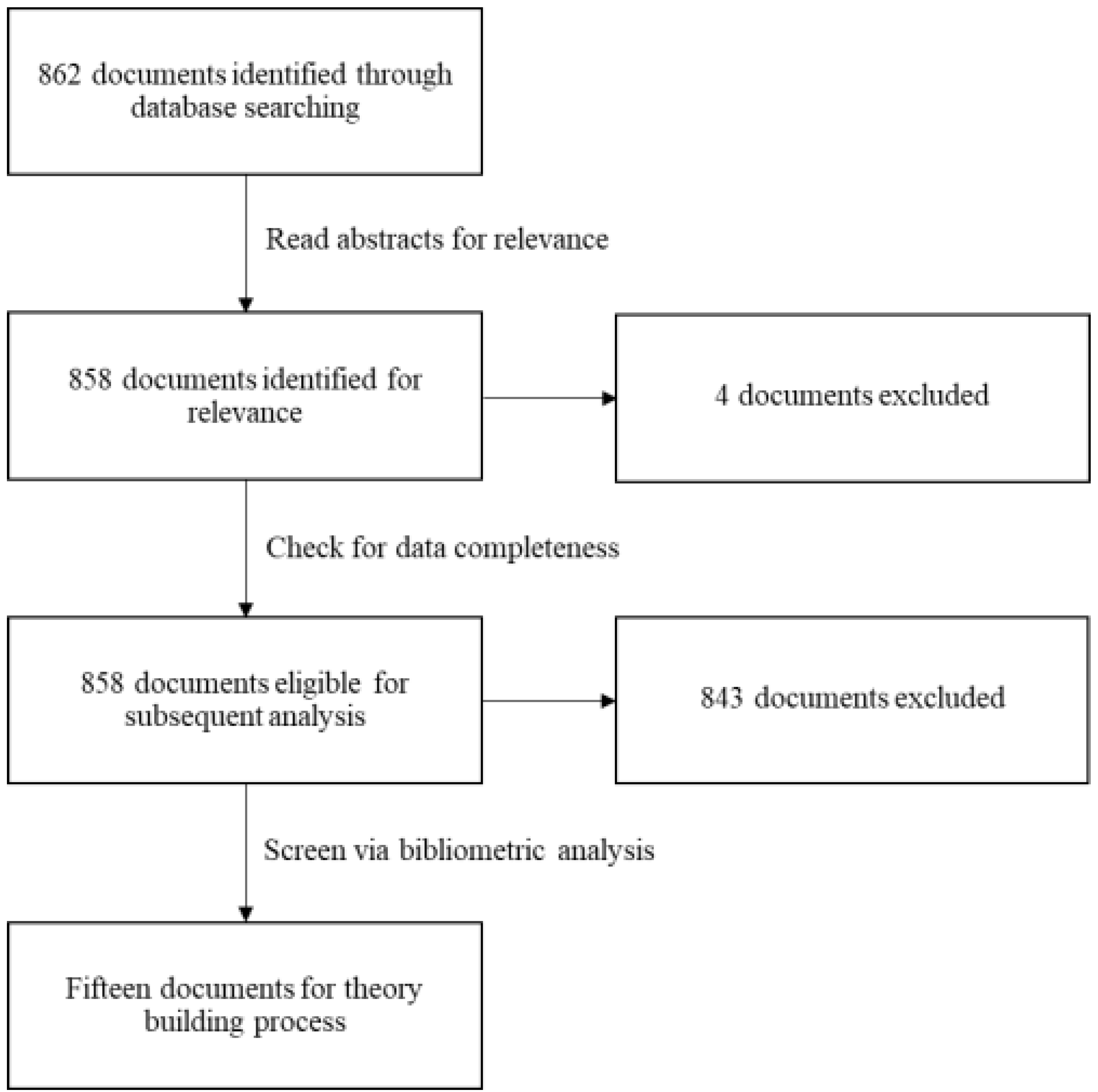
Figure 2.
Author co-citation analysis of Sufficiency Economy.
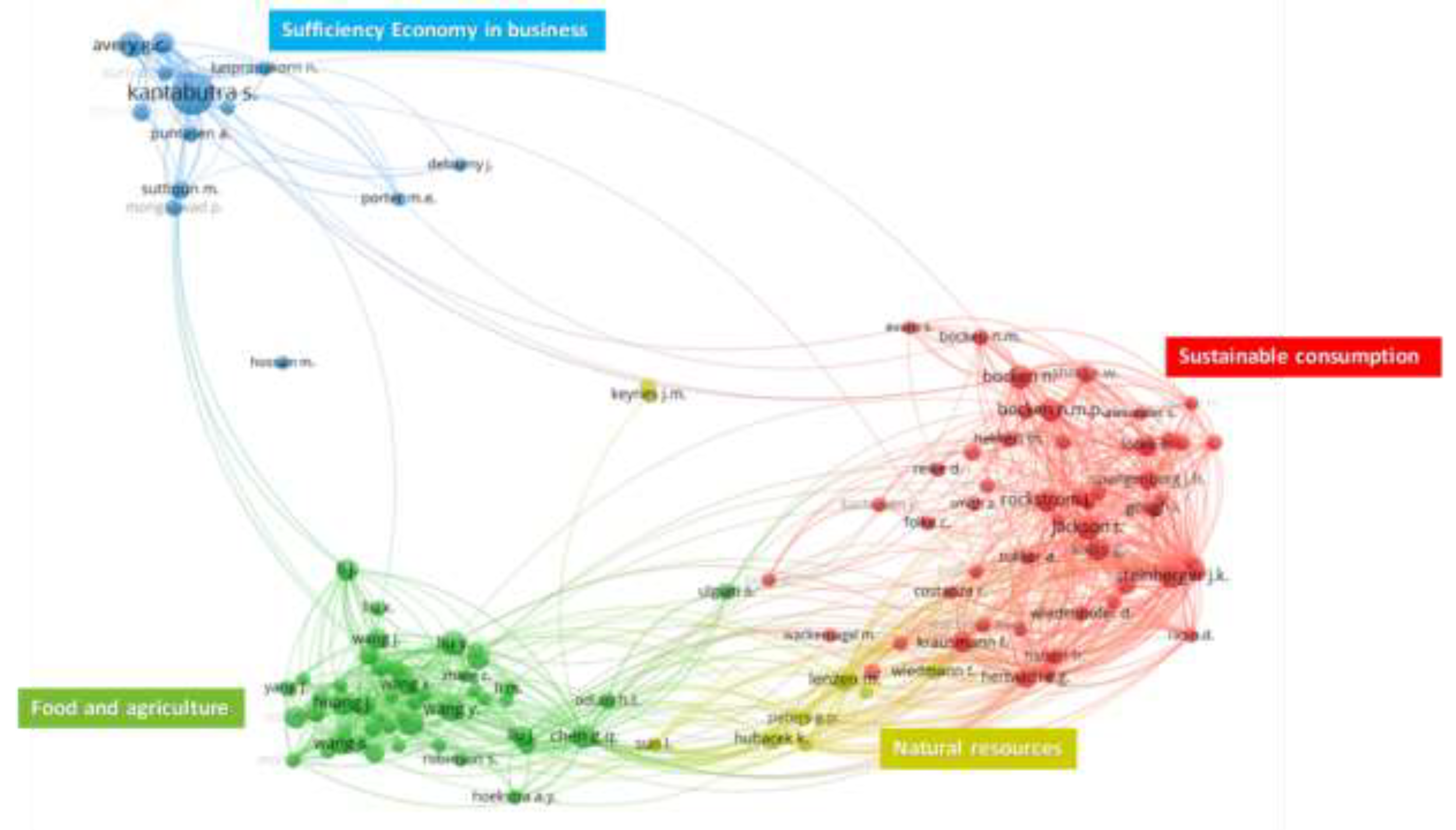
Figure 3.
Sufficiency Economy for Business Sustainability (SEBS) model.
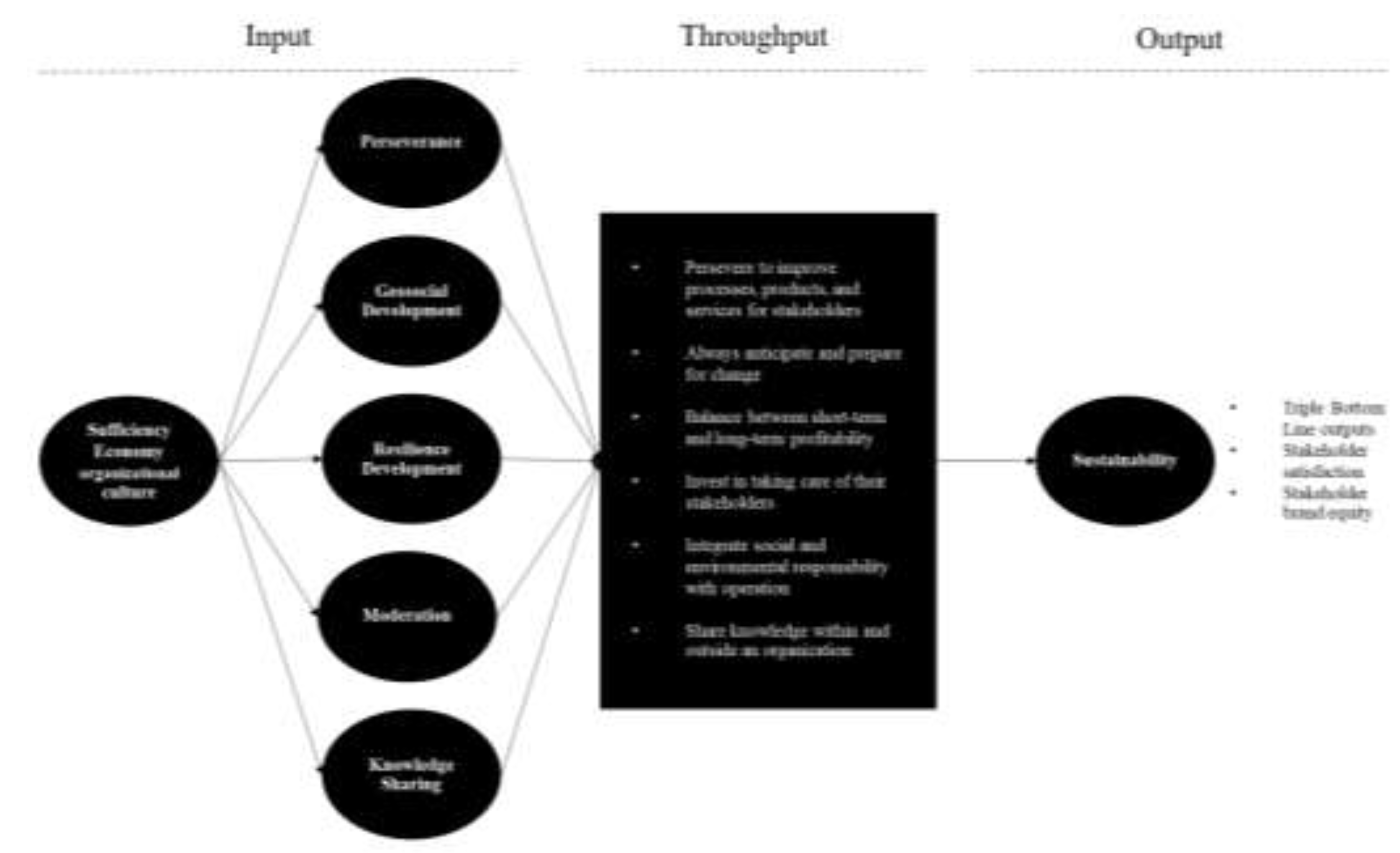
Table 1.
Inclusion and exclusion criteria.
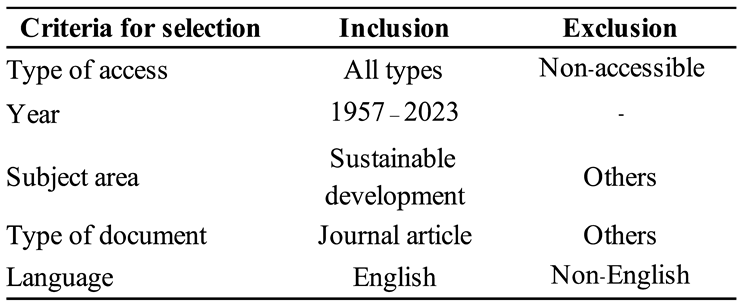 |
Table 2.
Rank order by author citations.
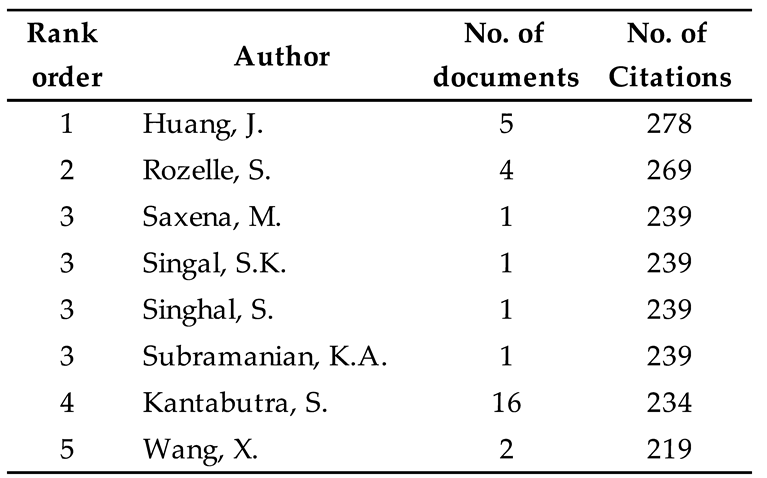 |
Table 3.
Rank order by author co-citations.
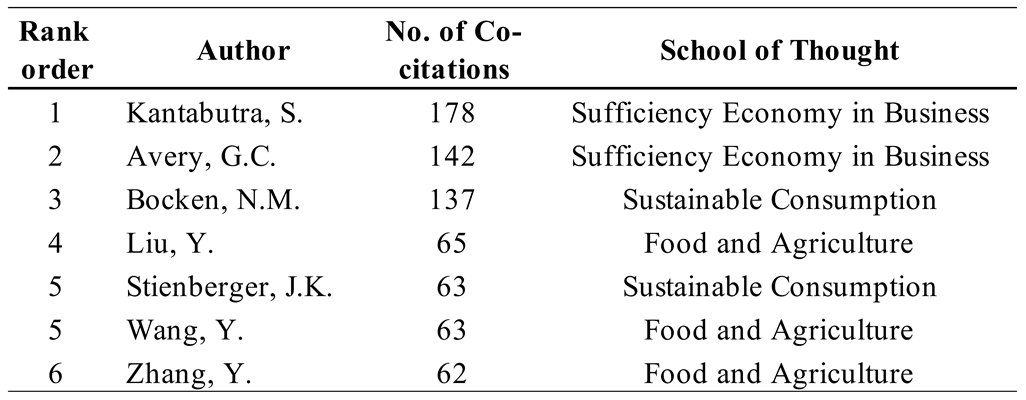 |
Table 4.
Sufficiency Economy Schools of Thought and their top-three authors.
 |
Table 6.
Kantabutra’s articles on Sufficiency Economy, and new knowledge, significant development and contribution to theory building process.
Table 6.
Kantabutra’s articles on Sufficiency Economy, and new knowledge, significant development and contribution to theory building process.
 |
Disclaimer/Publisher’s Note: The statements, opinions and data contained in all publications are solely those of the individual author(s) and contributor(s) and not of MDPI and/or the editor(s). MDPI and/or the editor(s) disclaim responsibility for any injury to people or property resulting from any ideas, methods, instructions or products referred to in the content. |
© 2024 by the authors. Licensee MDPI, Basel, Switzerland. This article is an open access article distributed under the terms and conditions of the Creative Commons Attribution (CC BY) license (http://creativecommons.org/licenses/by/4.0/).
Copyright: This open access article is published under a Creative Commons CC BY 4.0 license, which permit the free download, distribution, and reuse, provided that the author and preprint are cited in any reuse.


