1. Introduction
Globalization and economic growth have led to the development of towns and cities. Most countries have been increasingly investing in their metropolitan areas to attract investments, create employment, and generate revenues and finances to fund other developments. As a result, this growth has led to a significant increase in the number of people living in cities. Basiri et al. [
1] found that more than 50% of the global population currently lives in the city. This number is expected to increase to 66% by 2050 [
2]. While this population and urban growth have created numerous opportunities, they are also associated with multiple challenges, such as air and water pollution, loss of green spaces, waste management, and increased carbon footprint and emissions. The need to address these challenges has resulted in the emergence of a sustainable urban development concept. According to Trindade et al. [
3], this concept involves creating awareness of the production and use of resources in the cities for commercial, residential, and industrial purposes. In addition, intelligent cities have emerged as another solution to the environmental, social, and economic challenges associated with economic growth. These smart cities integrate advanced digital technologies to improve the competitiveness and attractiveness of the cities alongside their dwellers' quality of life and access to resources, opportunities, and services. These perspectives indicate the need to understand the intersection of smart urban development and sustainability.
Smart cities utilize information and communication technology (ICT) and Internet of Things (IoT) solutions to promote efficient management of urban resources. As a result, these innovative solutions result in positive outcomes, such as reducing waste and lowering greenhouse gas emissions [
4]. For example, smart energy grids can balance supply and demand to minimize energy waste. Intelligent public transportation systems can optimize routes and schedules to decrease traffic congestion and air pollution. These technologies have the potential to create healthier urban environments and enhance the quality of life by reducing noise, improving air quality, and expanding access to public services [
5]. In addition, smart cities enable data-driven decision-making, allowing city planners to respond proactively to emerging issues and improve service delivery.
However, implementing smart city initiatives requires substantial investment and a robust technological infrastructure, which can be challenging, particularly in developing regions with limited resources. Furthermore, data security, privacy, and inclusivity concerns arise as cities become more digitally connected [
6]. Smart city technologies may inadvertently deepen social inequalities without careful planning and policy frameworks, especially among populations lacking access to digital services. This systematic bibliometric review of the literature critically examines these factors, analyzing the opportunities and obstacles associated with smart cities to assess their true capacity to drive sustainable urban development. The findings provide insights into how technology can be effectively leveraged to create smart, equitable, and sustainable cities.
2. Materials and Methods
The researcher utilized the Systematic bibliometric literature review (LRSB) methodology to conduct the research. In addition, the study follows the Preferred Reporting Items for Systematic Reviews and Meta-Analyses (PRISMA) 2020 guidelines to ensure a structured and transparent approach in identifying and evaluating existing research on "Smart Cities" and "Sustainable Urban Development. PRISMA was chosen as it provides a rigorous framework for transparency and reproducibility in systematic reviews, ensuring comprehensive identification, screening, and evaluation of relevant studies [
7]. The Scopus database was used as the primary source for academic articles, conference proceedings, and reports, given its comprehensive coverage across disciplines pertinent to smart city initiatives and sustainability.
The LRSB methodology involves identifying and synthesizing relevant sources, providing an alternative approach to traditional literature review methods. It uses a replicable, scientific, and transparent framework that aims to reduce bias by thoroughly examining both published and unpublished literature related to the study topic [
8,
9,
10]. Furthermore, the researcher maintains an audit trail, which enables readers to assess the quality of the included studies, along with their methodologies and findings.
LRSB systematically screens and selects information sources to ensure the data's accuracy and reliability. This methodology is organized into three phases and six steps [
8,
9,
10] (
Table 1).
The researchers leveraged the Scopus database to identify and select well-regarded sources within the scientific and academic communities. However, a notable limitation of this study is its exclusive reliance on the Scopus database, which may overlook other important scientific and academic resources. To ensure a more comprehensive review, the literature search should include peer-reviewed scientific and academic publications up to October 2024 from a broader range of databases.
The search process commenced with the identification of the database, specifically Scopus. For the initial search, as detailed in
Table 2, the review was carried out using the Scopus database, renowned for its extensive collection of peer-reviewed literature. The screening and selection process involved multiple stages to ensure thoroughness and accuracy.
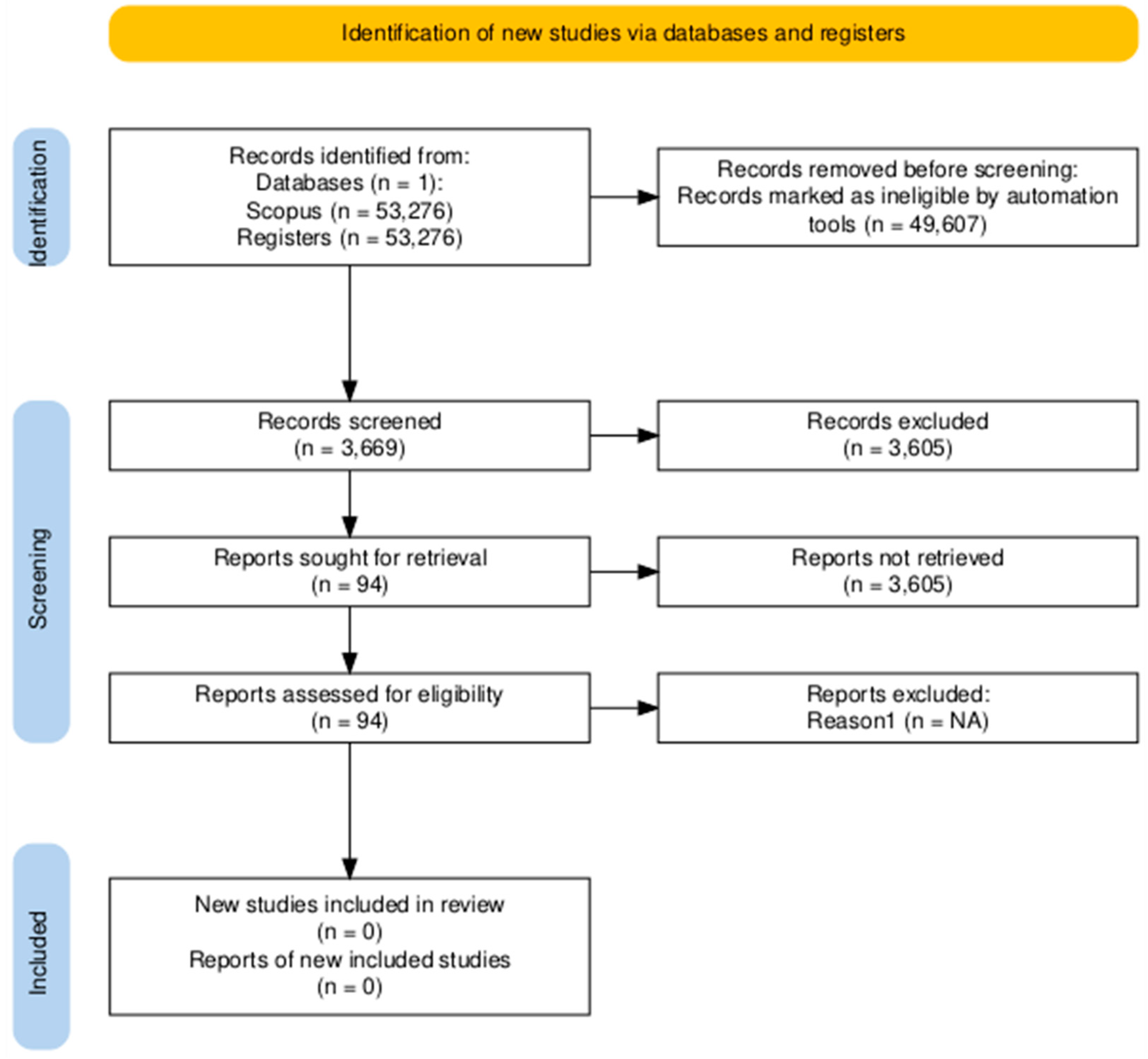
The search strategy was carefully constructed to ensure specificity and relevance. Initial searches were conducted using the terms "Smart Cities" in the title, abstract, or keywords, yielding a total of 53,276 documents. To narrow the focus to studies directly addressing sustainability, the search was refined to include both "Smart Cities" and "Sustainable Development," reducing the results to 3,669 documents. An inclusion criteria was applied to refine the search results further. In this case, studies were included if they met the following criteria: (i) peer-reviewed journal articles, conference proceedings, or reports published in English, (ii) focused on the concept of smart cities in conjunction with sustainable urban development, and (iii) contained empirical data or case studies on the implementation or impact of smart city technologies on urban sustainability, and (iv) were published within the last 10 years to ensure the research reflects current trends and technological advancements. Finally, the keyword "Sustainable Urban Development" was added, yielding a more targeted dataset of 94 documents synthesized in the final report.
The researchers implemented specific inclusion and exclusion criteria to ensure the topic's relevance. Studies were selected if they explicitly focused on smart cities and sustainable urban development. To maintain a high standard of quality, papers that were not peer-reviewed or lacked sufficient academic rigor were excluded. The selection process included a detailed review of each document's abstract to determine its relevance, followed by a comprehensive full-text analysis of those meeting the initial criteria. This systematic approach ensured that only the most pertinent and high-quality research was included, providing a robust and insightful foundation for understanding smart cities and sustainable urban development. Thematic analysis was employed to examine and organize the study's findings. According to Rosário et al. [
8,
9,
10], thematic analysis serves as a research method for extracting meaning and concepts from data by identifying, analyzing, and documenting recurring patterns or themes across selected studies. In a similar vein, Rosário et al. describe a theme-centric review as a technique that underscores the contributions of previous research to a study by highlighting key themes, concepts, and phenomena of interest. This methodology allows the researcher to organize the results around consistent themes, illustrating how businesses leverage predictive analytics to forecast customer behavior and strategically plan their actions. We applied both content and thematic analysis methods to identify, analyze, and present the diverse documents, as recommended by Rosário et al. [
8,
9,
10]. The 94 scientific and academic documents indexed in Scopus were analyzed both narratively and bibliometrically to extract content and uncover common themes that directly addressed the research question (
Figure 1).
The PRISMA 2020 guidelines establish standards aimed at improving the transparency and quality of systematic reviews. These guidelines feature a comprehensive checklist and flow diagram to aid researchers in reporting their systematic reviews in a clear and thorough manner. This initiative plays a vital role in ensuring the robustness and reliability of scientific evidence, thereby supporting informed decision-making in both clinical practice and scientific research [
11].
For data analysis, we employed content and thematic analysis methods to categorize and interpret the diverse documents, following the recommendations of Rosário et al. [
8,
9,
10]. The 94 documents indexed in Scopus were analyzed both narratively and bibliometrically to gain deeper insights into the content and identify common themes directly related to the research question [
8,
9,
10]. Among the selected documents, 55 are articles; 27 are conference papers; 9 are book series; and 3 are books.
3. Publication Distribution
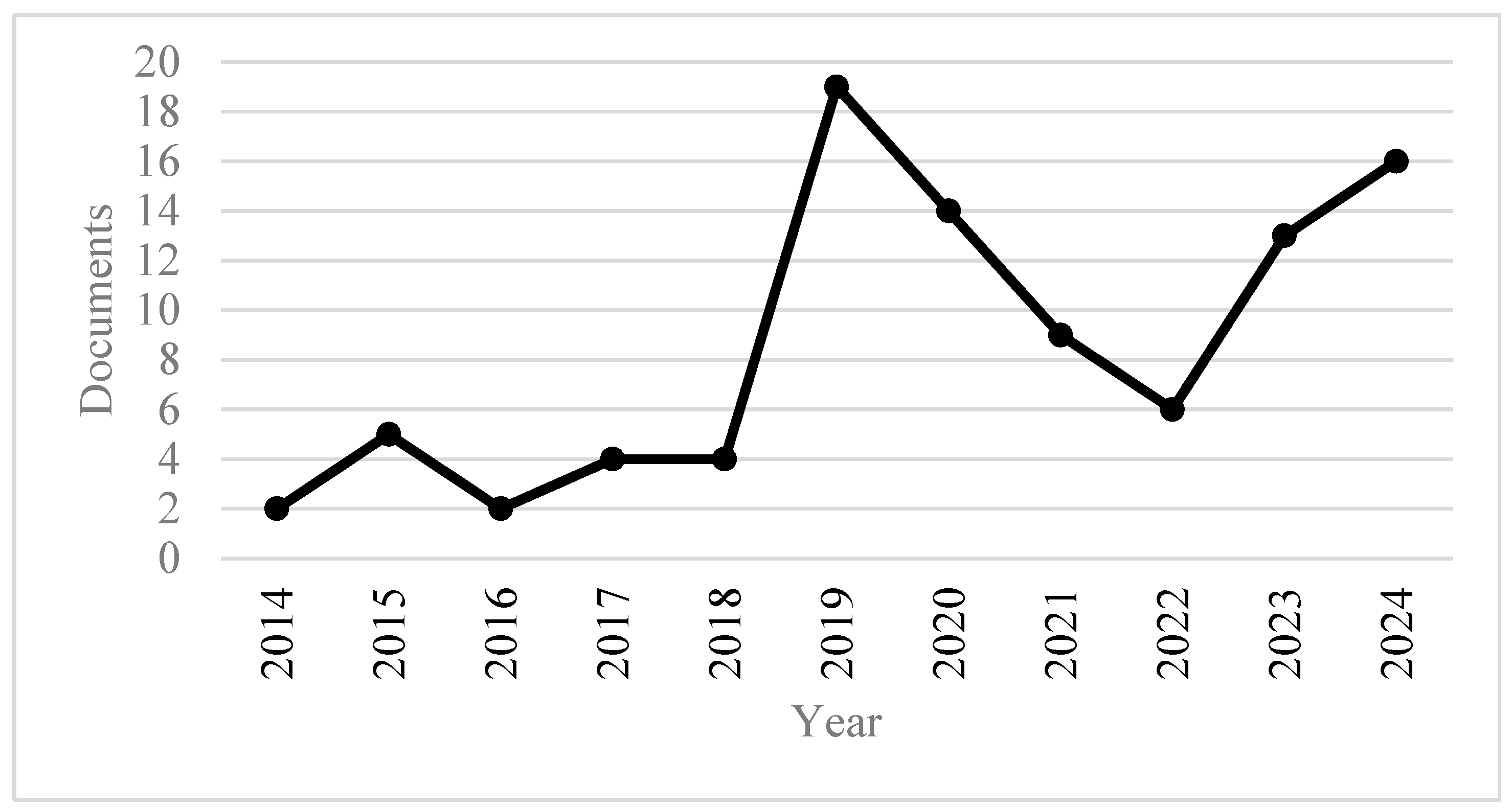
Analyze how IAnalyze Smart cities and sustainable urban development through October 2024. The year 2019 had the highest number of peer-reviewed publications, reaching 19.
Figure 2 summarizes the peer-reviewed literature published until October 2024.
The publications were organized as follows: Sustainability Switzerland (7); Energies (5); Technological Forecasting And Social Change (4); with 3 documents (Sustainable Cities And Society; Lecture Notes In Computer Science Including Subseries Lecture Notes In Artificial Intelligence And Lecture Notes In Bioinformatics; Journal Of Urban Technology; Iop Conference Series Earth And Environmental Science; Cities); with 2 document (Sensors; Journal Of Cleaner Production; International Symposium On Technology And Society Proceedings; E3s Web Of Conferences); and the remaining publications with 1 document.
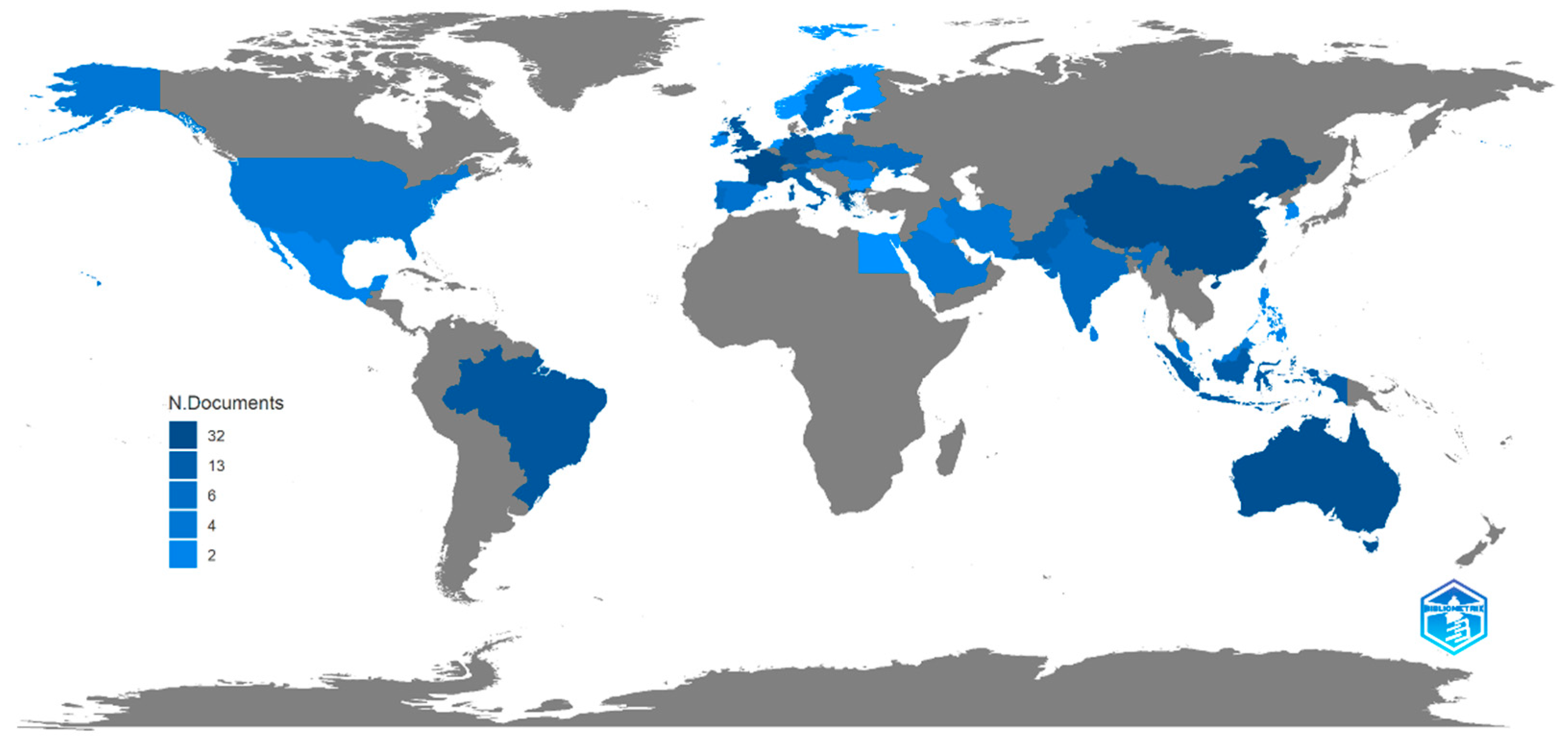
Likewise,
Figure 3 highlights the regions contributing most significantly to the literature on this topic. China, France, Australia, and Brazil emerge as the leading countries with the highest levels of scientific output in related fields, alongside other nations publishing on the subject.
Table 3 and
Figure 3 illustrate the top 10 countries making significant scientific contributions in the studied domains. This investigation seeks to identify nations that lead in the advancement of smart cities and sustainable urban development.
In
Table 4 we analyze the Scimago Journal & Country Rank (SJR), the best quartile, and the H index by Technological Forecasting And Social Change with 3,12 (SJR), Q1, and H index 179.
There is a total of 21 publications in Q1, 3 publications in Q2, 5 publications Q3, and 8 publications in Q4. Publications from best quartile Q1 represent 32% of the 66 publications titles; best quartile Q2 represents 5%, best Q3 represents 8% and best Q4 represents 12% of each of the titles of 66 publications.
Finally, 29 publications without indexing data represent 44% of publications. As shown in
Table 4, the significant majority of publications do have quartile Q1.
The subject areas covered by the 94 scientific and/or academic documents were: Engineering (40); Social Sciences (36); Computer Science (32); Environmental Science (27); Energy (26); Business, Management and Accounting (13); Mathematics (10); Earth and Planetary Sciences (9); Physics and Astronomy (7); Psychology (4); Decision Sciences 4); Medicine 3); Materials Science (3); Economics, Econometrics and Finance (3); Chemistry (3); Biochemistry, Genetics and Molecular Biology (3); Multidisciplinary (1); and Agricultural and Biological Sciences (1).
The most cited article was “Can cities become smart without being sustainable? A systematic review of the literature”, with 477 published Sustainable Cities and Society 2,550 (SJR), the best quartile (Q1) and with H index (130), this paper aims to address the question of whether cities can become smart without actually being sustainable.
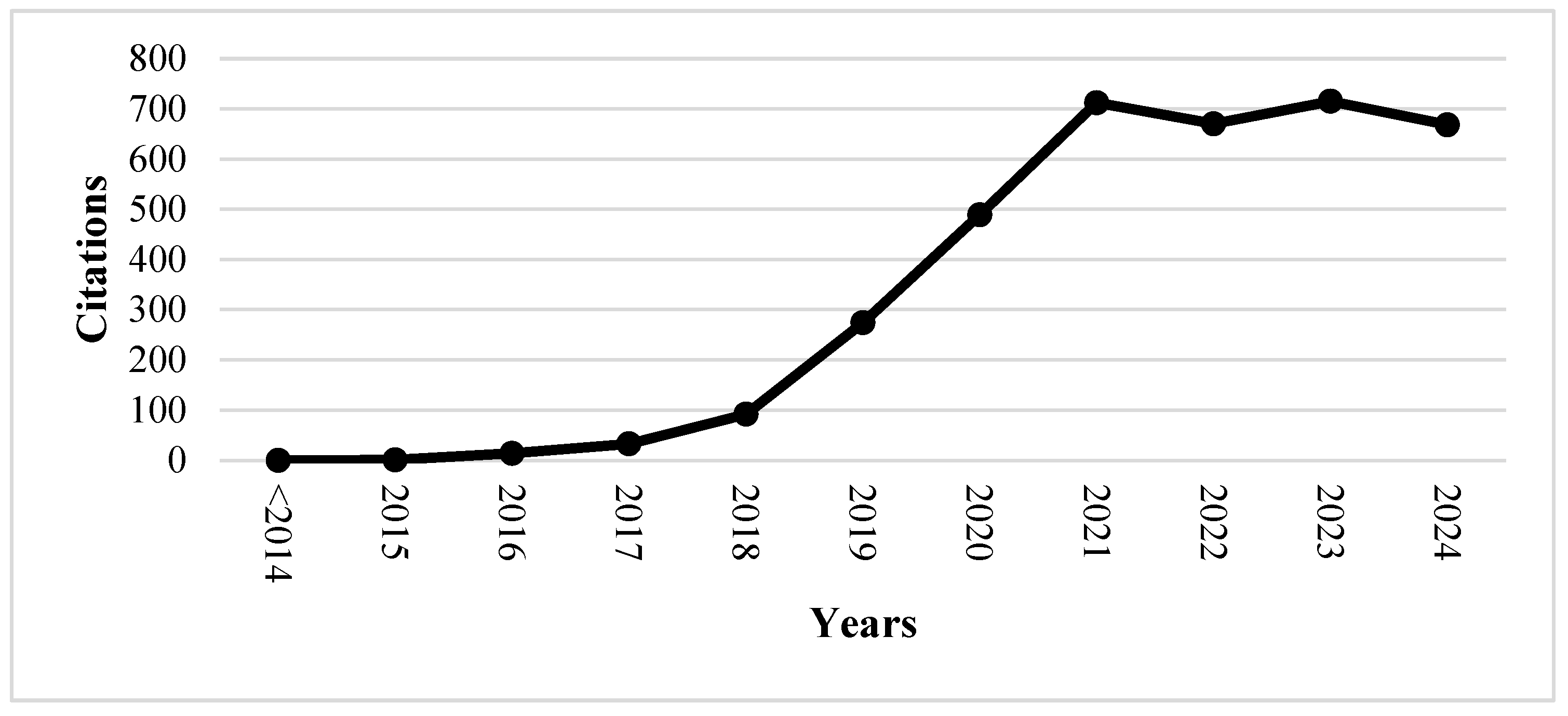
In
Figure 4 we can analyze citation changes for documents published until October 2024. The period 2014-2024 shows a positive net growth in citations with an R2 of 88%, reaching 3,671citations in October 2024.
The h-index is used to determine the productivity and impact of a published work based on the maximum number of included articles with at least the same number of citations. Of the documents considered for h-index, 26 were cited at least 26 times.
Citations of all scientific and/or academic documents from the period ≤2014 to until October 2024, with a total of 3,671 citations, of the 94 documents 23 were not cited (
Appendix A). The self-citation of documents in the period ≤2014 to October 2024 was self-cited 480 times.
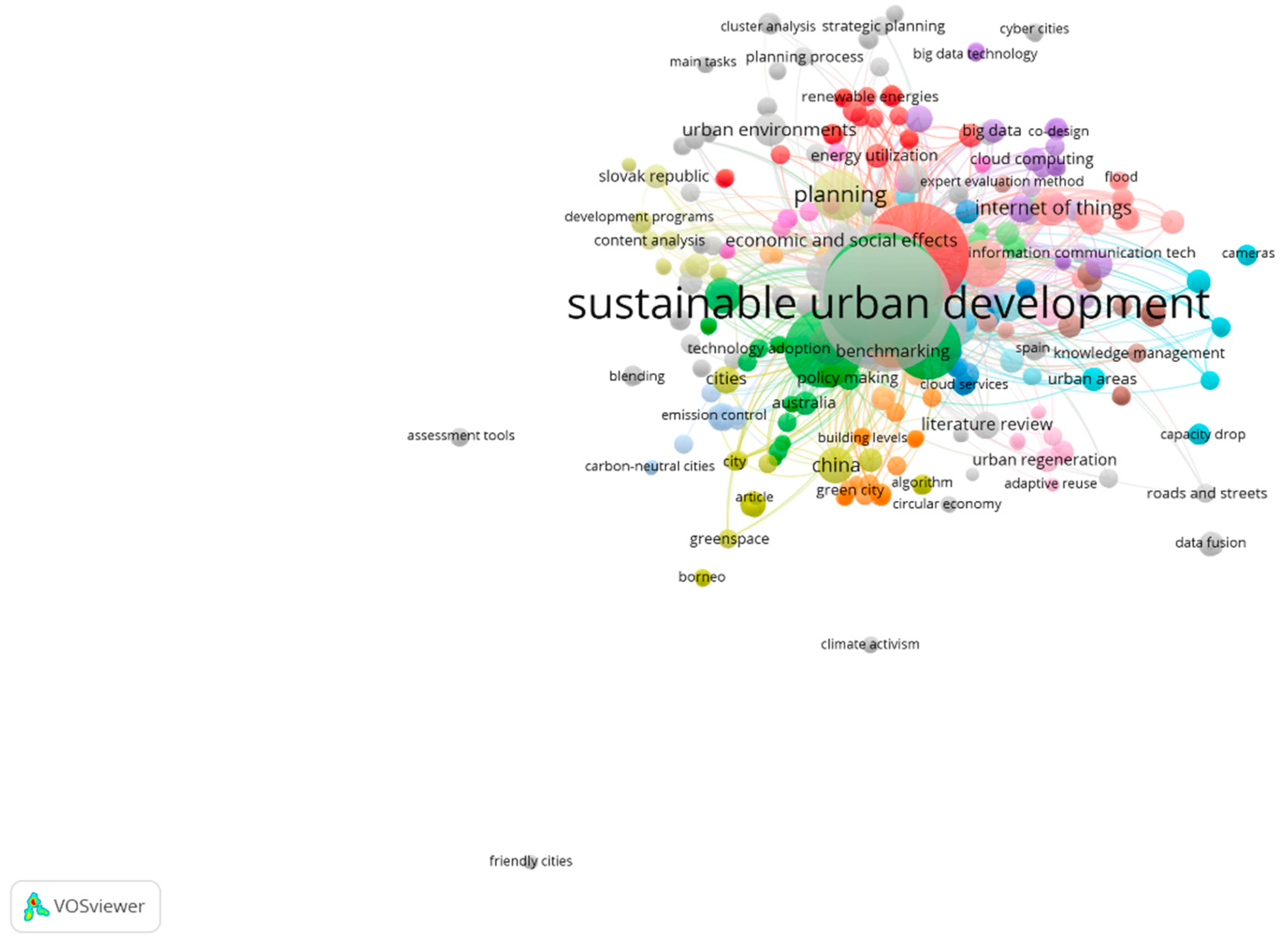
The bibliometric analysis aimed to identify metrics that reveal patterns and trends in the scientific or academic content of documents, with a particular emphasis on the main keywords (
Figure 5). This visualization highlights the predominant nodes in the network, where the size of each node corresponds to the frequency of its associated keyword, indicating its occurrence rate. Additionally, the connections between nodes represent keyword co-occurrences, showing which keywords tend to appear together. The thickness of these connections reflects the frequency of these co-occurrences, demonstrating how often keywords are linked.
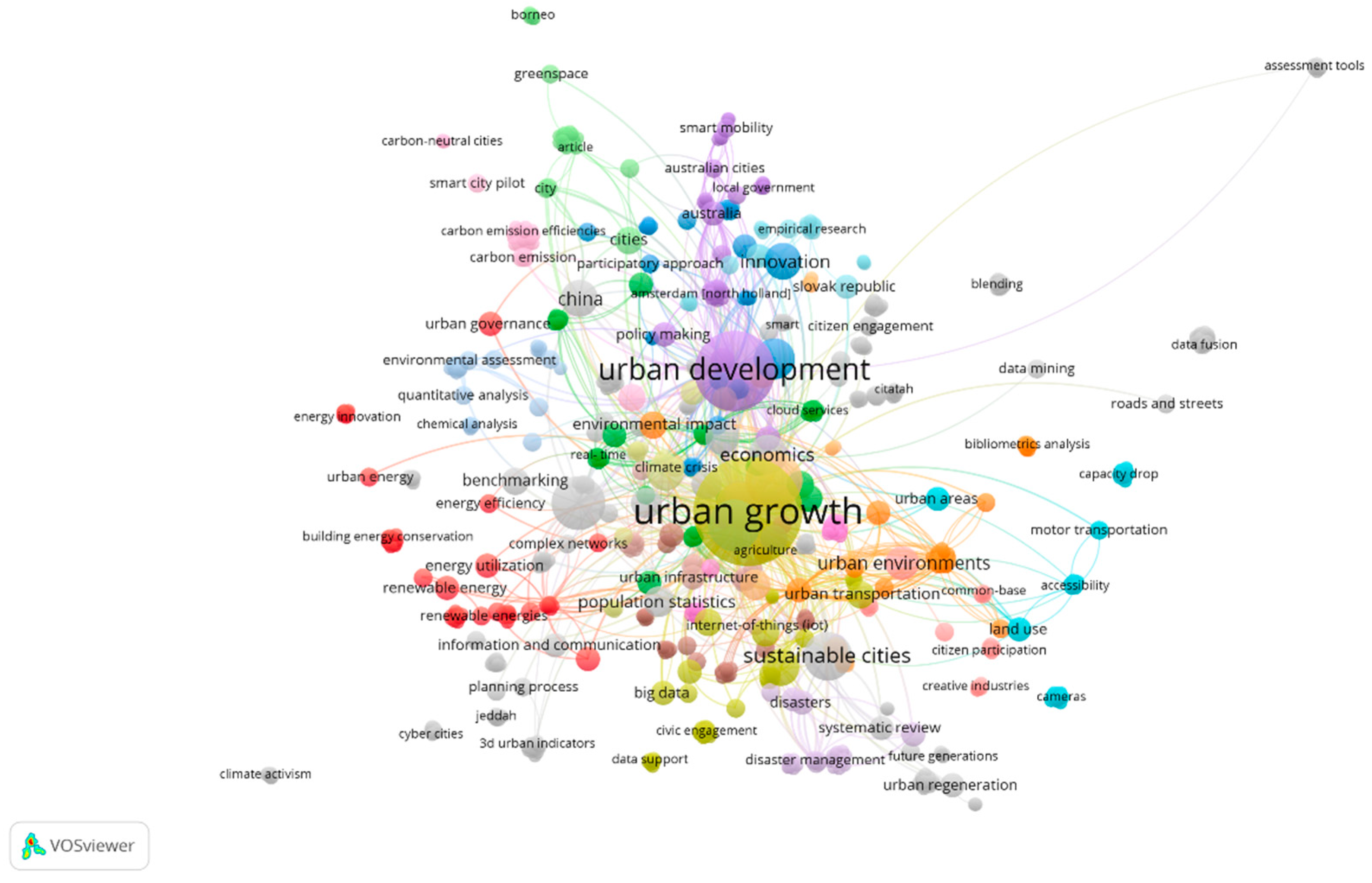
In these diagrams, the size of each node reflects the frequency of its associated keyword, while the thickness of the links between nodes represents how frequently these keywords co-occur. Different colors denote distinct thematic clusters. The nodes illustrate the variety of topics within each theme, and the links highlight the relationships between these topics within the same thematic group. The results were generated using VOSviewer, a scientific software tool designed to analyze key search terms such as "Smart Cities and Sustainable Urban Development." The study focused on scientific and academic documents related to these themes.
Figure 6 emphasizes the interconnected keywords, revealing the network of co-occurring terms within each scientific article. This analysis offers insights into the topics researchers have examined and highlights emerging trends for future research directions.
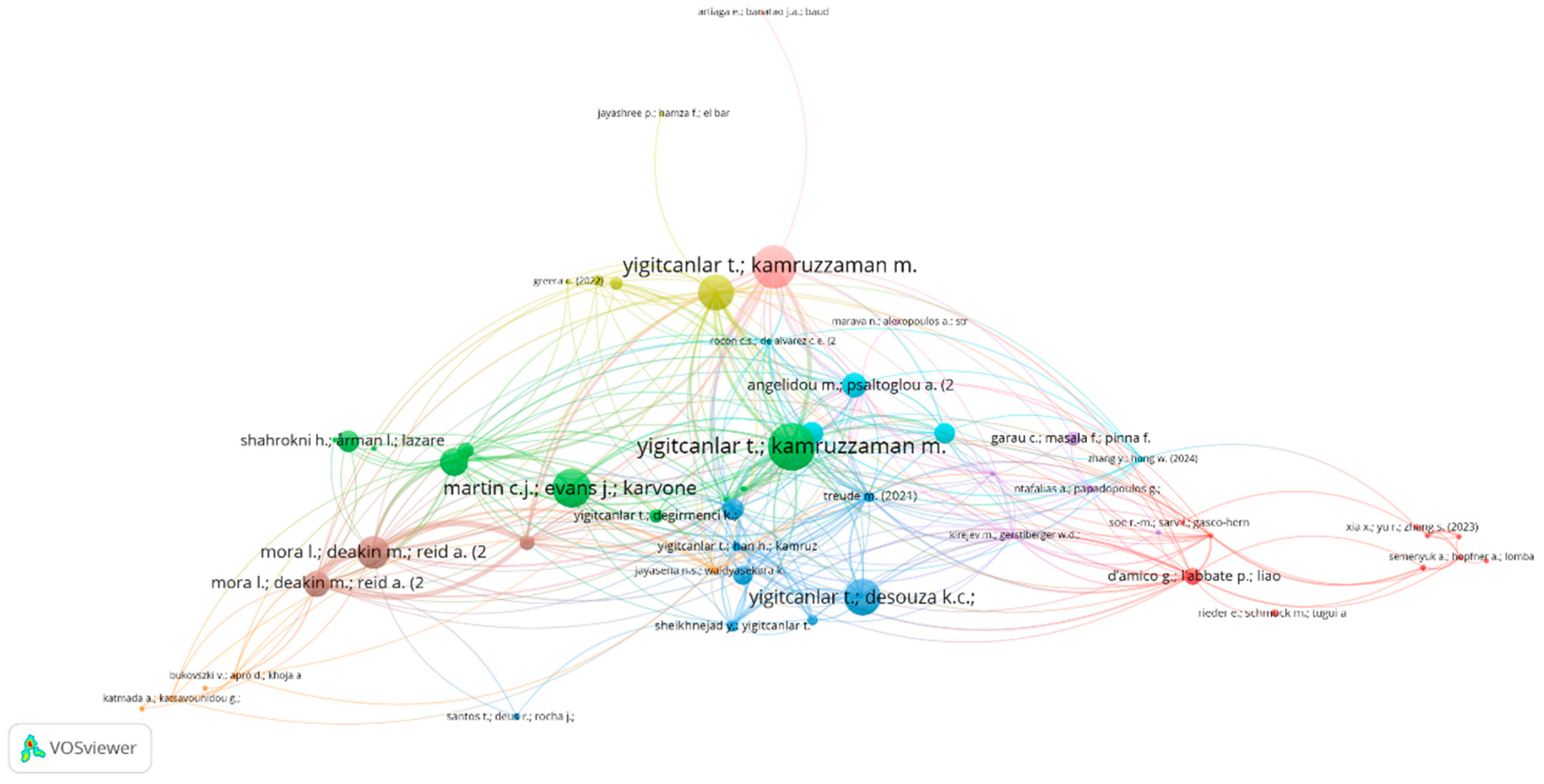
Finally,
Figure 7 presents a comprehensive bibliographic coupling based on document analysis, providing an interactive exploration of the co-citation network. This feature enables users to navigate the network and uncover patterns related to "Smart Cities and Sustainable Urban Development" across various studies.
In conclusion, the chosen methodology ensured precision and produced comprehensive data, offering a strong foundation for future researchers to expand upon this review. By addressing key issues, it improved the coherence, validity, and reliability of the findings. Adhering to established guidelines for systematic reviews and meta-analyses, we upheld a high standard of methodology, which will be further discussed in the following sections.
4. Theoretical Perspectives
As urbanization intensifies worldwide, sustainable urban growth has become a priority. Cities are seeking innovative ways to manage resources, reduce emissions, and create equitable living environments [
12]. Within this context, smart cities have emerged as a promising solution, integrating advanced technologies to enhance efficiency and resilience in urban systems. These cities leverage data and digital infrastructure to address the complexities of sustainable urban development, positioning themselves as pivotal models for achieving sustainability goals in urban environments [
13,
14]. This literature review explores how sustainability and sustainable urban growth intersect with smart city initiatives, examining their potential to transform urban areas into more sustainable and adaptive systems.
4.1. Smart Cities
The concept of smart cities represents an innovative approach to urban development that incorporates digital technology to enhance the functionality, livability, and sustainability of urban areas. Although the term has existed for years, Basiri et al. [
1] note that there is still no single definition of the smart city concept. This is mainly because multiple researchers have used different conceptual variants to describe it, leading to a lack of a one-size-fits-all definition. However, a smart city can be broadly defined as a city that uses digital solutions, such as the Internet of Things (IoT), data analytics, artificial intelligence (AI), and cloud computing, to collect and analyze data from various urban systems, including transportation, energy, waste management, and public services [
15,
16]. This data-driven approach enables city governments to make informed decisions, optimize resources, and create environments that improve residents' quality of life [
17]. Smart cities are built on integrating technology with urban infrastructure to address modern challenges, such as climate change, population growth, and resource scarcity while promoting economic growth and social inclusivity.
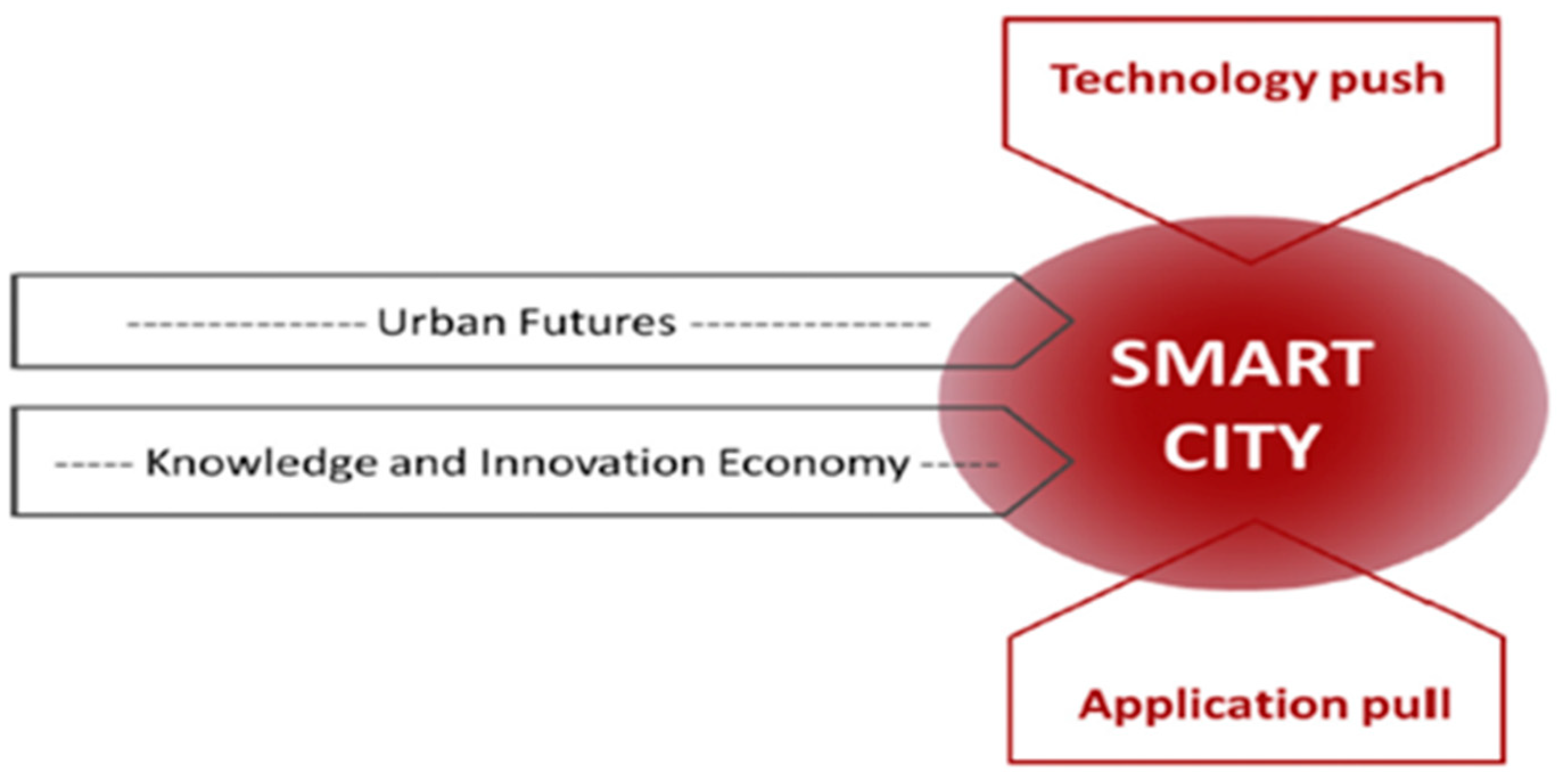
Various factors shape the evolution of smart cities, setting the foundation for urban innovation. Basiri et al. [
1] identify four forces: urban futures, knowledge and innovation economy, technology, and application pull (
Figure 8). Urban futures reflect the need for forward-looking strategies that envision sustainable cities with improved quality of life, leveraging advanced technology to foster resilience and adaptability. The knowledge and innovation economy emphasizes the role of knowledge as a critical asset, where continuous learning, creative industries, and intellectual resources drive urban growth and innovation. Technology push introduces cutting-edge tools, from digital infrastructures to intelligent systems, that streamline urban management, enabling smart cities to address complex transportation, energy, and healthcare challenges. Finally, application pull represents the increasing demand for smart solutions to urban issues spurred by rapid urbanization, resource constraints, and the desire for economic competitiveness.
4.2. Characteristics of Smart Cities
Smart cities are characterized by various aspects that differentiate them from traditional cities. These urban areas aim to enhance the quality of urban life by integrating technology, sustainability, and efficient management practices [
18]. They leverage digital tools and data-driven strategies to optimize resources, improve governance, and create more responsive urban spaces. The main characteristics include connectivity, sustainability, data-driven decision-making, and citizen engagement.
4.2.1. Connectivity
Connectivity forms the backbone of smart cities, enabling an interconnected ecosystem where information flows across various sectors. Smart cities gather real-time data through high-speed internet, extensive sensor networks, and IoT devices, facilitating instant communication and responsiveness [
19,
20]. This connectivity allows city services to adjust to changing conditions. For example, smart water management systems can monitor usage patterns in real-time, automatically adjusting water distribution based on demand, identifying leaks, and even alerting residents of potential issues [
21]. Such integrated connectivity improves efficiency and enhances the overall quality of urban life by creating a responsive and adaptive environment.
4.2.2. Sustainability
Sustainability is central to the vision of smart cities, which aim to reduce environmental impacts and promote greener urban living. Smart cities incorporate energy-efficient infrastructure, renewable energy sources, and low-emission transportation solutions to limit carbon footprints and resource consumption [
22]. Green building standards and energy-efficient technologies are applied to minimize energy usage in structures, while public transportation systems are often electrified or designed for minimal emissions [
23,
24]. In addition, Mora et al. [
25] explain that smart cities work to preserve resources for future generations by integrating sustainable practices in waste management and water conservation. This commitment to sustainability supports ecological health and makes urban areas more resilient and livable in the long term.
4.2.3. Data-driven decision-making
At the core of smart cities is a data-driven approach to governance and management. Vast amounts of data are collected through digital infrastructure, which is continuously analyzed to inform city policies, optimize operations, and proactively address potential issues [
26]. This data-driven insight supports more effective urban planning since real-time data enables city leaders to make evidence-based decisions, forecast demands, and efficiently allocate resources [
27,
28]. For instance, data analytics in public health can detect patterns in disease outbreaks, allowing rapid responses to prevent widespread issues. In this way, smart cities use data to improve services and anticipate future needs, creating a more resilient and proactive urban landscape.
4.2.4. Citizen engagement
Smart cities are designed to be citizen-centered, emphasizing transparency and public engagement. Digital platforms allow residents to provide feedback, participate in decision-making, and access information about city initiatives [
29]. Through mobile apps and online portals, citizens can report issues, suggest improvements, or vote on local projects. This builds a sense of community ownership and accountability. The focus on citizen engagement in smart cities ensures that city policies reflect the needs and preferences of residents, promoting inclusivity and trust in public institutions [
30,
31]. As a result, smart cities create a collaborative environment that supports adaptive and responsive urban development by integrating public input into governance.
4.3. Sustainable Urban Development
Sustainable urban development is a comprehensive approach to city planning and growth that seeks to balance economic, social, and environmental needs. This strategy incorporates the principle of sustainability to ensure that cities meet the requirements of present populations without compromising the ability of future generations to fulfill their own needs [
32,
33]. This concept acknowledges that urban areas are central hubs of economic activity, social interaction, and cultural exchange. However, they pose significant challenges like pollution, resource depletion, and social inequality [
34]. To address these complexities, sustainable urban development emphasizes efficient resource use, eco-friendly infrastructure, and policies that foster social inclusivity and resilience. In sustainable cities, growth is managed to reduce ecological footprints, enhance public health, and ensure equitable access to resources and services [
35,
36]. These cities embed sustainability into urban planning to better adapt to challenges like climate change, population growth, and economic shifts. This approach ultimately creates environments where communities can thrive over the long term.
4.4. Technological Components of Smart Cities
Technologies enable the seamless integration, management, and optimization of urban systems, making them central to the development of smart cities. Technological components such as digital infrastructure, cloud computing, the Internet of Things (IoT), artificial intelligence (AI), and big data analytics help create interconnected, responsive, and efficient urban environments [
37]. These technologies enable cities to become more sustainable, adaptable, and resilient, addressing complex challenges like population growth, environmental impact, and resource scarcity [
38]. As a result, technology-driven smart cities will shape the future of urban living, offering innovative solutions to current and emerging urban issues.
4.4.1. Digital Infrastructure
Digital infrastructure forms the foundational backbone of smart cities, enabling connectivity and communication across various urban systems. This infrastructure includes high-speed internet networks, fiber optics, Wi-Fi hotspots, and advanced telecommunications systems that facilitate rapid data transfer [
39]. In addition, digital infrastructure comprises physical components like data centers and servers, which store, process, and manage the vast amounts of information generated by city activities. Reliable digital infrastructure supports real-time communication among devices, applications, and services [
3,
40]. It allows cities to respond to dynamic situations such as traffic changes, energy consumption shifts, and emergencies [
41]. As the connective tissue of smart cities, digital infrastructure also plays a crucial role in enhancing access to public services, enabling more efficient transportation networks, and supporting communication channels that bridge gaps between government entities and citizens.
4.4.2. Cloud Computing
Cloud computing provides the computational power and storage flexibility necessary to support smart city applications. This innovation allows cities to manage large data volumes without needing expansive on-site hardware [
42]. With cloud computing, data from urban sensors, surveillance systems, and other smart devices is processed, stored, and accessed over the internet. This practice reduces the dependency on localized hardware and enables scalable solutions [
43]. Cloud technology offers smart cities the advantage of cost-effective data management since resources can be scaled up or down based on demand, eliminating the need for cities to invest heavily in physical infrastructure. Moreover, cloud computing facilitates remote access to city systems, which allows municipal workers, emergency responders, and other stakeholders to operate efficiently from anywhere with internet access [
44,
45]. This remote capability is particularly beneficial for ensuring continuity in urban operations and crisis management because it allows critical data to be accessed quickly and securely across departments.
4.4.3. Internet of Things (IoT)
The Internet of Things (IoT) is a network of interconnected physical devices, sensors, and systems that communicate and share data to enhance urban life. IoT plays a transformative role in smart cities by enabling real-time monitoring of various urban systems such as transportation, energy, waste management, and public safety [
46,
47]. IoT devices gather data from their environment, such as air quality, water levels, and temperature, and transmit it to centralized systems where it can be analyzed and acted upon. For instance, IoT-enabled streetlights can automatically adjust brightness based on surrounding light levels, reducing energy consumption while maintaining safety [
48]. In addition, Yigitcanlar et al. [
15] explain that IoT technology allows for predictive infrastructure maintenance, such as monitoring the structural health of bridges or water pipes, preventing costly repairs, and minimizing disruptions. IoT enables cities to operate more efficiently, reduce resource consumption, and respond swiftly to residents' needs by creating a network of interconnected, data-generating devices.
4.4.4. Artificial Intelligence (AI)
Artificial Intelligence (AI) is pivotal in processing the enormous data generated by smart cities, enabling predictive analysis, automated decision-making, and personalized services. AI algorithms can analyze patterns in urban data to optimize traffic flows, predict crime hotspots, and streamline waste management [
49,
50]. For example, AI can detect traffic congestion patterns and suggest optimal routes or adjust traffic signals to alleviate bottlenecks, enhancing city mobility. AI can analyze patient data in healthcare to improve diagnosis and treatment recommendations, particularly valuable for elderly care within urban populations [
51,
52]. AI-driven chatbots and virtual assistants also improve citizen engagement by providing automated responses to common queries, reducing the burden on city personnel [
53]. AI's machine-learning capabilities enable smart cities to continually refine services by learning from historical data [
54]. This makes urban management more adaptive, efficient, and responsive to changing needs.
4.4.5. Big Data Analytics
Big data analytics is a critical component of smart cities that empowers city officials to gain actionable insights from large and complex data sets. With the explosion of data from IoT devices, mobile applications, and social media, cities generate immense amounts of information that can be used to optimize urban services and policy-making [
53]. Big data analytics involves processing, analyzing, and visualizing this data to reveal patterns, trends, and correlations that are otherwise challenging to discern [
55,
56]. For instance, analyzing data from public transportation systems can identify peak usage times, allowing cities to allocate resources more effectively and reduce congestion. Similarly, data from environmental sensors can reveal pollution trends, guiding policy for cleaner air and water [
57,
58]. Big data analytics enables more informed decision-making and facilitates proactive governance, allowing city authorities to address issues before they escalate. Big data analytics supports the creation of more livable, sustainable, and resilient cities by turning data into insights.
4.5. Relationship between Sustainable Urban Development and Smart Cities
The relationship between sustainable urban development and smart cities is driven by the shared goal of creating environments that are efficient, livable, and adaptable to future challenges. While sustainable urban development emphasizes responsible resource management and environmental stewardship, smart cities leverage technology and data to optimize urban operations, enhance public services, and engage communities [
59]. These concepts form a synergistic approach that addresses contemporary urban issues and anticipates future needs through innovative, sustainable, and resilient solutions. This section explores how smart cities and sustainable urban development intersect across key areas to build better cities for tomorrow.
4.5.1. Resource Optimization
Resource optimization in smart cities represents a shift towards using advanced technologies to maximize the efficient use of urban resources such as energy, water, and materials. Through IoT and real-time data analytics, cities can continuously monitor resource usage, identify patterns, and adjust operations to reduce waste [
60]. For instance, smart meters in buildings can track energy consumption in real-time, allowing users to reduce their energy footprint and costs. Water management systems with sensors can detect leaks immediately, conserving water and minimizing losses [
61,
62]. Furthermore, smart cities employ predictive maintenance for infrastructure, extending the life of assets and preventing sudden failures that would require costly resources to repair [
63]. This systematic approach reduces operational costs for the city and supports sustainable urban development by conserving resources for future generations [
64]. Optimizing resource use helps balance the demands of a growing population with the finite resources available, creating a resilient, sustainable urban environment.
4.5.2. Energy Innovation
Energy innovation in smart cities focuses on creating sustainable and efficient energy systems to meet urban demands while minimizing environmental impact. Smart grids are a central component, allowing cities to optimize energy distribution and balance supply with real-time demand across sectors [
65,
66]. Smart cities reduce dependence on fossil fuels and lower greenhouse gas emissions by integrating renewable energy sources like solar and wind power into these grids. In addition, energy storage solutions, such as battery storage systems, enhance grid stability by storing excess renewable energy during peak times [
67,
68]. Smart buildings contribute by using advanced materials and automation systems to minimize energy consumption, reducing the city's overall energy needs [
69]. Electric vehicle charging networks also support the transition to low-emission transportation. These energy innovations align with sustainable urban development goals by promoting clean energy and improving urban resilience against fluctuating energy demands [
70]. This transformation positions smart cities as leaders in environmental responsibility and energy efficiency.
4.5.3. Carbon Emissions Reduction
Reducing carbon emissions is a core goal of smart cities. It is achieved through technology-driven strategies that monitor, control, and limit emissions across various urban sectors [
71]. Smart cities leverage IoT networks, data analytics, and AI to assess and manage carbon output from transportation, industry, and residential areas. Smart cities minimize emissions from transportation, a major source of urban pollution, by promoting electric vehicles, expanding public transportation, and supporting shared mobility solutions [
72,
73]. Smart building technologies also reduce emissions by optimizing energy usage and minimizing waste. Furthermore, cities implement green infrastructure, such as urban forests and green rooftops, which naturally absorb carbon dioxide and improve air quality [
74]. Smart waste management systems help decrease landfill emissions by improving recycling rates and waste processing efficiency. This comprehensive approach aligns with sustainable urban development objectives and contributes to global climate goals, supporting a cleaner, healthier environment for urban populations.
4.5.4. Mobility and Transportation
Smart cities are transforming mobility and transportation through innovative solutions that make urban transit more efficient, accessible, and environmentally friendly. By employing data-driven insights, smart cities optimize public transportation routes, reduce congestion, and support sustainable travel modes [
75]. Real-time data from sensors and GPS systems help adjust traffic flows, reducing travel times and emissions. Smart cities also encourage the adoption of electric and autonomous vehicles, lowering pollution levels and improving road safety [
76,
77]. Shared mobility services like bike-sharing, e-scooters, and car-sharing provide flexible transportation options, decreasing private car reliance [
78,
79]. These initiatives align with sustainable urban development by promoting low-emission travel, reducing the need for extensive road expansions, and preserving urban space for green areas and pedestrian pathways [
15,
80,
81]. Mobility innovations ensure that transportation systems can accommodate growing populations sustainably, resulting in healthier, more livable cities.
4.5.5. Quality of Life
Smart cities enhance residents' daily lives by making essential services, such as healthcare, education, and public safety, more accessible and responsive through technology. For example, telemedicine platforms improve healthcare access, especially in underserved communities, while e-learning platforms enable continuous education [
82]. Public spaces equipped with free Wi-Fi and intelligent lighting improve safety and accessibility. In addition, Neves et al. [
83] indicate that smart waste management and air quality monitoring systems contribute to cleaner, healthier urban environments. According to Radziszewska [
84], sustainable urban development complements these efforts by ensuring that the physical environment, including parks, green spaces, and recreational facilities, is designed to support well-being. These initiatives address the social, economic, and environmental needs of urban populations.
4.5.6. Community Engagement and Inclusion
Smart cities prioritize community engagement and inclusion by creating urban environments that are responsive to the needs of all residents. Digital platforms allow residents to participate in city planning and decision-making, enhancing transparency and trust between citizens and local governments [
85]. Moreover, smart cities ensure diverse perspectives shape urban policies and developments by enabling residents to provide feedback, report issues, and vote on initiatives. Jayasena et al. [
86] indicate that these platforms make city services more accessible since citizens can interact with officials, pay bills, or access public records online. Sustainable urban development complements this by promoting inclusive growth and ensuring marginalized communities have equal access to resources and opportunities [
87,
88]. These efforts create a participatory urban environment where all residents feel invested in the city's future and can actively contribute to its development.
4.5.7. Economic Growth and Innovation
Economic growth and innovation are pillars of smart cities. These cities leverage technology and data to create vibrant, future-ready economies. They promote digital entrepreneurship and support tech startups, thereby becoming hubs for innovation and attracting talent and investment [
89,
90]. Digital infrastructure, such as high-speed internet and cloud computing, enables businesses to operate efficiently, scale rapidly, and tap into global markets. Sustainable urban development aligns with these goals by ensuring economic growth does not compromise environmental and social well-being [
60]. Smart city initiatives and sustainable policies support job creation in emerging sectors, improve workforce skills through digital training, and promote a diverse economy that can adapt to changing global demands [
91]. This approach strengthens the urban economy and enhances the city's resilience against economic disruptions.
4.5.8. Public Safety and Security
Smart cities deploy advanced technologies that enable rapid response and crime prevention. Surveillance systems with facial recognition and predictive analytics help law enforcement agencies monitor high-risk areas and respond quickly to potential threats [
92]. Smart lighting in public areas improves visibility, reducing crime rates and enhancing residents' sense of safety. In addition, emergency response systems utilize real-time data to coordinate with hospitals, fire departments, and police, ensuring that services are provided efficiently during crises [
93]. Sustainable urban development promotes safer, community-focused urban planning with well-lit public spaces and accessible emergency infrastructure [
94]. Developing smart and sustainable cities creates secure environments that contribute to overall quality of life and social stability.
4.5.9. Climate Resilience
Smart cities and sustainable urban development promote climate resilience through innovations and solutions aimed at addressing the impacts of climate change. Smart cities use predictive analytics and IoT data to anticipate extreme weather events, enabling proactive measures like early warnings, evacuation plans, and resilient infrastructure [
92,
95] (Broto et al., 2020; Greera, 2022). Sustainable urban development complements this by designing infrastructure, such as flood-resistant buildings and green roofs, that can withstand climate stresses [
96] (Sotto et al., 2019). Both approaches aim to reduce the risk of damage and ensure that cities recover swiftly from climate-related disruptions. This resilience protects residents and resources and fosters long-term stability, allowing cities to thrive despite the environmental challenges.
4.5.10. Green Building and Urban Design
Green building and urban design are foundational elements in the relationship between smart cities and sustainable development. They focus on eco-friendly construction practices and sustainable urban layouts. According to Chan and Marafa [
97], smart cities use energy-efficient materials and design principles that minimize resource consumption, such as green roofs, natural ventilation, and optimized insulation. Sustainable urban development further supports these practices by advocating for mixed-use zoning, walkable neighborhoods, and ample green spaces that reduce urban heat islands and improve air quality [
98,
99]. Consequently, green building initiatives and smart urban planning create healthier, more sustainable environments that prioritize human well-being while reducing the ecological footprint of urban areas.
4.6. Role of Governance and Policy Frameworks
The development and success of smart cities depend on the implemented governance and policy frameworks. These policies provide structure, accountability, and strategic direction for implementing urban innovations. Effective governance establishes clear regulations, ethical guidelines, and standards to manage adopting new technologies responsibly [
75]. By creating these guidelines, city leaders and policymakers ensure that technology serves public interests, aligns with sustainability goals, and respects residents' privacy and data security rights [
100]. Governance frameworks guide collaborations across government departments, private-sector entities, and community stakeholders, fostering transparency and accountability in decision-making [
59,
101]. A well-structured governance model also enables cities to address challenges such as cybersecurity threats, data protection issues, and equity in access to digital resources. Through strong governance, smart cities can build public trust and confidence, ensuring that advancements benefit all residents fairly and inclusively.
Policy frameworks provide the foundational strategies and legal basis needed to implement sustainable development practices and technology integration. Policy frameworks outline a city's priorities and long-term vision, addressing critical aspects such as green energy initiatives, affordable housing, and inclusive digital infrastructure [
96]. These policies often promote public-private partnerships to leverage expertise and investment for large-scale projects like renewable energy plants or broadband expansion. Moreover, policy frameworks emphasize community engagement, encouraging residents to participate in city planning and innovation projects, which enhances social inclusion and civic participation [
72]. By aligning policies with global sustainability standards, such as the United Nations Sustainable Development Goals (SDGs), smart cities can reinforce their commitment to climate resilience and social equity. Ultimately, governance and policy frameworks create a cohesive structure that allows cities to scale up smart city projects sustainably, improving quality of life and ensuring a resilient, future-ready urban environment.
4.7. Challenges in Achieving Sustainability in Smart Cities
Sustainable smart cities present multiple opportunities for development and innovation. However, increasing reliance on technologies poses numerous challenges that often hinder their development [
102]. For instance, the significant collection of data raises privacy and safety concerns. These issues hinder people's and communities' willingness to adopt these technologies despite their potential capabilities. Here are some common challenges that city planners and policymakers must address to achieve the desired smart city development:
4.7.1. Data Privacy Concerns
Data privacy is a significant challenge in achieving sustainability in smart cities due to the extensive collection, storage, and processing of personal and behavioral data. In smart cities, countless sensors, cameras, and IoT devices continuously gather data to monitor and enhance urban services, from traffic flow and energy consumption to public safety [
99,
103]. While this data is essential for optimizing services, it also raises substantial privacy risks. Individuals may be unaware of the extent to which their data is collected or how it is used, which can lead to feelings of invasion and distrust [
102]. Furthermore, cities face a delicate balancing act between using data to create efficient, sustainable systems and respecting citizens' rights to privacy [
104,
105]. Without robust data protection measures and clear governance frameworks, the potential for misuse, data breaches, or unauthorized access to personal information is heightened. This makes data privacy a complex barrier to sustainable urban innovation.
4.7.2. Digital Inequality
Digital inequality refers to the disparity in access to digital technology and internet resources, which presents a significant challenge to sustainable smart city development. As cities implement technologies to improve urban life, such as smart transportation systems, digital healthcare solutions, and e-governance platforms, those without reliable access to technology or digital literacy risk being excluded from the benefits of these advancements [
102,
104]. This inequality is particularly pronounced among lower-income populations, the elderly, and people in rural or underserved urban areas who may not have regular internet access or the skills to navigate digital platforms. In smart cities, digital inequality undermines inclusivity [
89]. It can inadvertently increase social and economic divides since only certain population segments can fully engage with and benefit from smart city resources. This disparity challenges the goal of sustainability because cities cannot achieve true inclusiveness if a significant portion of residents is excluded from critical services, opportunities, and information that are increasingly available only in digital formats.
4.7.3. Financial and Ethical Implications
The financial and ethical implications of building and maintaining sustainable smart cities represent another critical challenge. Creating a smart city infrastructure demands significant investment in technology, physical infrastructure, and human resources. These demands can strain city budgets and require substantial financial backing from private-sector partners [
102,
105]. However, the involvement of private corporations introduces ethical concerns related to transparency, accountability, and potential conflicts of interest [
103]. For instance, private companies with access to public data may use it for profit-driven purposes, which might not align with the public's best interests or the city's sustainability goals. Moreover, Lomeli et al. [
105] notice that reliance on advanced technology can lead to ethical dilemmas about surveillance, control, and the commodification of personal data. Balancing the financial demands of sustainable smart city projects with ethical considerations about privacy, public welfare, and long-term societal impacts presents a complex hurdle that requires thoughtful, community-centered planning.
5. Conclusions
The emergence of smart cities reflects a global response to the challenges posed by rapid urbanization and resource constraints. As urban populations grow, cities face increasing demands for infrastructure, energy, and public services. Traditional urban development models often struggle to keep pace with these demands, creating a pressing need for sustainability initiatives that promote efficient and eco-friendly growth. Smart cities address this need by integrating digital technologies, such as IoT, cloud computing, and data analytics, to monitor, manage, and optimize city resources and services. At the intersection of technology and environmental responsibility, smart cities aim to reduce their carbon footprint, optimize resource usage, and improve the quality of urban life. Aligning urban growth with sustainable development principles ensures that these cities can adapt to changing environmental pressures while ensuring a higher standard of living for their residents.
Smart cities present a unique opportunity to enhance sustainable urban development through innovative technology and data-driven decision-making. Technologies enable cities to optimize resource allocation, improve mobility and public safety, and support energy innovation, all of which are critical to sustainable development. However, governance and policy frameworks are essential in guiding these advancements. Effective governance ensures that smart city initiatives prioritize public interest, promoting transparency, inclusivity, and ethical standards. Policy frameworks help align the actions of various stakeholders, including public agencies, private enterprises, and communities, to work towards shared sustainability goals. They provide the regulatory foundation for everything from green building standards to public data privacy, reinforcing the collaborative effort required to build adaptable, resilient cities that benefit all residents. With robust governance in place, cities can drive digital transformation in a way that respects social equity and fosters public trust.
Despite the potential of smart cities to drive sustainable urban development, several significant challenges need addressing to realize this vision. Data privacy concerns emerge as cities increase digital surveillance and data collection, raising questions about how residents' information is used and protected. Digital inequality is another barrier since not all populations have equal access to digital resources, which can exacerbate social disparities. In addition, the financial and ethical implications of funding smart city projects, often through public-private partnerships, require careful management to ensure that city initiatives do not prioritize profit over public welfare. Addressing these challenges is crucial to creating truly sustainable smart cities that are inclusive, ethical, and effective in achieving long-term sustainability goals. By proactively tackling these issues, cities can promote a smart, sustainable future that benefits all residents, creating technologically advanced, socially responsible, and ecologically balanced urban environments.
Research in Smart Cities and Sustainable Urban Development has expanded significantly, focusing on the integration of technology and sustainability in urban planning. Key contributions include theories that frame urban sustainability, practices that apply these frameworks, and innovative strategies that adapt to environmental, social, and economic needs: (i) the integration of green energy into urban management, a model in which urban planning actively incorporates green energy, moving cities toward sustainable operation through the integration of smart systems to manage resources and reduce emissions; (ii) the role of urban heritage in sustainable development, emphasizing the need for policies that preserve historic landscapes within the broader scope of urban sustainability. This approach connects past urban elements with future sustainable practices, suggesting that heritage maintenance can align with global sustainability goals; (iii) frameworks for repurposing underutilized urban spaces, often referred to as “urban voids,” into functional parts of the city. Adaptable and flexible urban design stands out as vital for sustainable development, especially in densely populated urban centers; (iv) smart systems and the role of big data in sustainable urban development, proposing that data-driven approaches can address urban challenges by enabling real-time decision-making in areas such as transportation, energy, and waste management; (v) collaborative urban governance through land registry systems. These tools facilitate responsive and participatory governance, which is essential to address the challenges exacerbated by the pandemic, especially in megacities; (vi) urban smart grid technologies, focusing on engineering control systems that support sustainable energy distribution. The importance of smart grids in maintaining efficient energy use and reducing environmental impacts in urban environments; (vii) green urbanism by proposing ecological design principles that help cities minimize their ecological footprints. Urban planning that prioritizes ecological sustainability, making cities resilient and less dependent on resources; and (viii) highlights sustainable building practices, particularly resource efficiency in construction. Their analysis suggests that designing high-rise buildings with sustainability in mind is crucial to reducing urban carbon footprints and improving overall city sustainability.
These contributions form a comprehensive vision of how cities can become more sustainable through smart technologies, green energy and adaptive urban design. They highlight a trend towards cities as complex ecosystems, where sustainable growth is achieved by harmonizing technological innovation with environmental and social responsibilities.
The future of research in Smart Cities and Sustainable Urban Development is broad and dynamic, reflecting the increasing complexities and demands of urban environments: (i) Future research will likely focus on developing smart cities that are resilient to the impacts of climate change, such as rising temperatures, rising sea levels, and extreme weather events. This includes studying climate-adaptive infrastructure, green and blue spaces, and responsive urban policies that help cities mitigate and adapt to environmental change; (ii) With the increasing reliance on data for smart city infrastructure, future studies are expected to focus on issues of privacy, ethical AI, and data governance. Research could address frameworks for ethical data collection, management, and use to protect citizen privacy while optimizing urban services; (iii) Integrating circular economy principles into urban planning is a key area for sustainable development. Future research could explore sustainable resource cycles within cities, focusing on waste minimization, recycling, and resource recovery to create a closed-loop urban ecosystem; (iv) future work will likely explore real-time data analytics for predictive urban planning, helping cities anticipate and respond to challenges before they arise. This could include the use of sensors, IoT, and AI to monitor urban systems and adapt based on predictive insights; and (v) as smart cities require collaboration across sectors, future research will likely focus on interdisciplinary approaches and governance models that integrate technology with social sciences, economics, and environmental science. This could also include comparative studies on governance structures that ensure sustainability is a central component of urban policy.
These lines of research reflect a shift toward a holistic view of urban sustainability, where smart technologies are not just tools but parts of a broader ecosystem aimed at improving environmental and social outcomes. As cities continue to evolve, integrating these areas will be essential to creating resilient, inclusive, and sustainable urban landscapes.
Author Contributions
Conceptualization, A.T.R., A.C.B.; methodology, A.T.R., A.C.B.; software, A.T.R., A.C.B.; validation, A.T.R., A.C.B.; formal analysis, A.T.R., A.C.B.; investigation, A.T.R., A.C.B.; resources, A.T.R., A.C.B.; data curation, A.T.R., A.C.B.; writing—original draft preparation, A.T.R., A.C.B.; writing—review and editing, A.T.R., A.C.B.; visualization, A.T.R., A.C.B.; supervision, A.T.R., A.C.B.; project administration, A.T.R., A.C.B.; funding acquisition, A.T.R., A.C.B. All authors have read and agreed to the published version of the manuscript.
Funding
The first author receives financial support from the Research Unit on Governance, Competitiveness and Public Policies (UIDB/04058/2020) + (UIDP/04058/2020), funded by national funds through FCT—Fundação para a Ciência e a Tecnologia.
Acknowledgments
We would like to express our gratitude to the Editor and the Referees. They offered valuable suggestions or improvements. The authors were supported by the GOVCOPP Research Center of the University of Aveiro, by The Centre for Research in Applied Communication, Culture, and by IADE—Universidade Europeia, Lisboa, Portugal.
Conflicts of Interest
The funders had no role in the design of the study; in the collection, analyses, or interpretation of data; in the writing of the manuscript, or in the decision to publish the results.
Appendix A
Table A1.
Overview of document citations period ≤2014 to 2024.
Table A1.
Overview of document citations period ≤2014 to 2024.
| Documents |
|
≤2014 |
2015 |
2016 |
2017 |
2018 |
2019 |
2020 |
2021 |
2022 |
2023 |
2024 |
Total |
| May urban digital twins spur the New Urban Agenda? The Spanish case study |
2024 |
0 |
0 |
0 |
0 |
0 |
0 |
0 |
0 |
0 |
0 |
1 |
1 |
| China's green building revolution: Path to sustainable urban futures |
2024 |
0 |
0 |
0 |
0 |
0 |
0 |
0 |
0 |
0 |
0 |
2 |
2 |
| Polycentric spatial Structure, digital economy and urban green sustainable development |
2024 |
0 |
0 |
0 |
0 |
0 |
0 |
0 |
0 |
0 |
0 |
2 |
2 |
| A significance of smart city pilot policies in China for enhancing carbon emission efficiency in construction |
2024 |
0 |
0 |
0 |
0 |
0 |
0 |
0 |
0 |
0 |
0 |
1 |
1 |
| Sensors on Internet of Things Systems for the Sustainable Development of Smart Cities: A Systematic Literature Review |
2024 |
0 |
0 |
0 |
0 |
0 |
0 |
0 |
0 |
0 |
0 |
6 |
6 |
| THE VOICE OF SOCIETY IN DESIGNING PUBLIC RECREATIONAL SPACES (PRS) IN AN URBAN ENVIRONMENT |
2024 |
0 |
0 |
0 |
0 |
0 |
0 |
0 |
0 |
0 |
0 |
2 |
2 |
| Analysis on the impact of smart city construction on urban greenness in China's megacities |
2024 |
0 |
0 |
0 |
0 |
0 |
0 |
0 |
0 |
0 |
0 |
1 |
1 |
| A Comprehensive Overview of Transformative Potential of Machine Learning and Wireless Sensor Networks in Sustainable Urban Development |
2024 |
0 |
0 |
0 |
0 |
0 |
0 |
0 |
0 |
0 |
0 |
1 |
1 |
| Contrasting “Smart Mobility” and “Sustainable Mobility” in Transport Governance: The Case of Municipalities in Estonia |
2024 |
0 |
0 |
0 |
0 |
0 |
0 |
0 |
0 |
0 |
0 |
1 |
1 |
| Sensors on the Internet of Things Systems for Urban Disaster Management: A Systematic Literature Review |
2023 |
0 |
0 |
0 |
0 |
0 |
0 |
0 |
0 |
0 |
1 |
7 |
8 |
| Evaluating the Impact of Smart City Policy on Carbon Emission Efficiency |
2023 |
0 |
0 |
0 |
0 |
0 |
0 |
0 |
0 |
0 |
1 |
7 |
8 |
| A Scientific Perspective on Using Artificial Intelligence in Sustainable Urban Development |
2023 |
0 |
0 |
0 |
0 |
0 |
0 |
0 |
0 |
0 |
5 |
7 |
12 |
| Urban Data Management using Cloud Computing and IoT |
2023 |
0 |
0 |
0 |
0 |
0 |
0 |
0 |
0 |
0 |
0 |
2 |
2 |
| Smart Cities: A Novel Framework for Energy Production and Harvesting using Renewable Energy |
2023 |
0 |
0 |
0 |
0 |
0 |
0 |
0 |
0 |
0 |
0 |
2 |
2 |
| Interdisciplinary Urban Planning in VR: Virtual Twins for Sustainable Urban Development |
2023 |
0 |
0 |
0 |
0 |
0 |
0 |
0 |
0 |
0 |
0 |
2 |
2 |
| Platform Urbanism for Sustainability |
2023 |
0 |
0 |
0 |
0 |
0 |
0 |
0 |
0 |
0 |
0 |
1 |
1 |
| "This (Smart) Town Ain't Big Enough": Smart Small Towns and Digital Twins for Sustainable Urban and Regional Development |
2023 |
0 |
0 |
0 |
0 |
0 |
0 |
0 |
0 |
0 |
0 |
1 |
1 |
| Points-of-Interest from Mapillary Street-level Imagery: A Dataset For Neighborhood Analytics |
2023 |
0 |
0 |
0 |
0 |
0 |
0 |
0 |
0 |
0 |
0 |
2 |
2 |
| A Comprehensive Methodology for Assessing the Impact of Smart City Interventions: Evidence from Espoo Transformation Process |
2022 |
0 |
0 |
0 |
0 |
0 |
0 |
0 |
0 |
4 |
5 |
2 |
11 |
| Systematic Mapping of Long-Term Urban Challenges |
2022 |
0 |
0 |
0 |
0 |
0 |
0 |
0 |
0 |
2 |
2 |
1 |
5 |
| What are the key factors affecting smart city transformation readiness? Evidence from Australian cities |
2022 |
0 |
0 |
0 |
0 |
0 |
0 |
0 |
0 |
16 |
9 |
20 |
45 |
| Sustainable urban development of the Slovak Republic |
2021 |
0 |
0 |
0 |
0 |
0 |
0 |
0 |
0 |
1 |
0 |
0 |
1 |
| Ensuring Engagement of Stakeholders in Smart City Projects: Case Study in Sri Lanka |
2021 |
0 |
0 |
0 |
0 |
0 |
0 |
0 |
0 |
2 |
5 |
4 |
11 |
| Assessing sustainable urban development trends in a dynamic tourist coastal area using 3D spatial indicators |
2021 |
0 |
0 |
0 |
0 |
0 |
0 |
0 |
0 |
2 |
2 |
7 |
11 |
| Past, present, future: Engagement with sustainable urban development through 35 city labels in the scientific literature 1990–2019 |
2021 |
0 |
0 |
0 |
0 |
0 |
0 |
0 |
7 |
12 |
15 |
18 |
53 |
| Optimization of a novel urban growth simulation model integrating an artificial fish swarm algorithm and cellular automata for a smart city |
2021 |
0 |
0 |
0 |
0 |
0 |
0 |
0 |
0 |
4 |
6 |
2 |
12 |
| Sustainable smart city—opening a black box |
2021 |
0 |
0 |
0 |
0 |
0 |
0 |
0 |
3 |
9 |
7 |
6 |
25 |
| Complexity of the Analysis of Financial Cloud Based on Fuzzy Theory in the Wisdom of Sustainable Urban Development |
2021 |
0 |
0 |
0 |
0 |
0 |
0 |
0 |
0 |
1 |
2 |
1 |
4 |
| A Framework for the Synergistic Integration of Fully Autonomous Ground Vehicles with Smart City |
2021 |
0 |
0 |
0 |
0 |
0 |
0 |
0 |
6 |
8 |
11 |
9 |
34 |
| Climate urbanism: Towards a critical research agenda |
2020 |
0 |
0 |
0 |
0 |
0 |
0 |
0 |
12 |
3 |
6 |
8 |
29 |
| The impacts of open data initiatives on smart cities: A framework for evaluation and monitoring |
2020 |
0 |
0 |
0 |
0 |
0 |
0 |
3 |
17 |
21 |
25 |
21 |
87 |
| Understanding sensor cities: Insights from technology giant company driven smart urbanism practices |
2020 |
0 |
0 |
0 |
0 |
0 |
0 |
2 |
12 |
19 |
12 |
20 |
65 |
| Critical Mapping of Indicators for Smart Cities Evaluation |
2020 |
0 |
0 |
0 |
0 |
0 |
0 |
0 |
1 |
0 |
0 |
0 |
1 |
| Survey of sustainable regeneration of historic and cultural cores of cities |
2020 |
0 |
0 |
0 |
0 |
0 |
0 |
0 |
7 |
6 |
10 |
1 |
24 |
| Future city-challenges and opportunities for water-sensitive sustainable cities, in India |
2020 |
0 |
0 |
0 |
0 |
0 |
0 |
0 |
1 |
0 |
1 |
1 |
3 |
| Implementation of Sustainable Urban Development through Project Management |
2020 |
0 |
0 |
0 |
0 |
0 |
0 |
0 |
0 |
0 |
1 |
0 |
1 |
| Considering urban development paths and processes on account of adaptive reuse projects |
2020 |
0 |
0 |
0 |
0 |
0 |
0 |
0 |
3 |
7 |
11 |
7 |
28 |
| Scientific landscape of sustainable urban and rural areas research: A systematic scientometric analysis |
2020 |
0 |
0 |
0 |
0 |
0 |
0 |
5 |
10 |
5 |
5 |
3 |
29 |
| Progress in implementation of sustainable development in V4 countries |
2020 |
0 |
0 |
0 |
0 |
0 |
0 |
0 |
0 |
0 |
1 |
1 |
2 |
| Contributions and risks of artificial intelligence (AI) in building smarter cities: Insights from a systematic review of the literature |
2020 |
0 |
0 |
0 |
0 |
0 |
0 |
22 |
52 |
50 |
78 |
72 |
274 |
| Approaches, advances, and applications in the sustainable development of smart cities: A commentary from the guest editors |
2019 |
0 |
0 |
0 |
0 |
0 |
0 |
6 |
3 |
3 |
5 |
4 |
21 |
| The making of smart cities: Are Songdo, Masdar, Amsterdam, San Francisco and Brisbane the best we could build? |
2019 |
0 |
0 |
0 |
0 |
0 |
1 |
26 |
46 |
33 |
37 |
18 |
161 |
| Potential of culture for sustainable urban development |
2019 |
0 |
0 |
0 |
0 |
0 |
0 |
1 |
0 |
2 |
2 |
1 |
6 |
| Aligning urban policy with climate action in the global south: Are Brazilian cities considering climate emergency in local planning practice? |
2019 |
0 |
0 |
0 |
0 |
0 |
1 |
11 |
4 |
5 |
1 |
6 |
28 |
| Smart solutions shape for sustainable low-carbon future: A review on smart cities and industrial parks in China |
2019 |
0 |
0 |
0 |
0 |
0 |
1 |
18 |
14 |
20 |
25 |
26 |
104 |
| From Assessment to Implementation: Design Considerations for Scalable Decision-Support Solutions in Sustainable Urban Development |
2019 |
0 |
0 |
0 |
0 |
0 |
0 |
0 |
2 |
1 |
0 |
0 |
3 |
| Inclusion as an Enabler to Sustainable Innovations in Smart Cities: A Multi-Level Framework |
2019 |
0 |
0 |
0 |
0 |
0 |
0 |
0 |
1 |
1 |
0 |
0 |
2 |
| Sustainable Development of Small and Medium Sized Cities: Use of Monitoring Frameworks in Reaching the SDGs |
2019 |
0 |
0 |
0 |
0 |
0 |
0 |
2 |
1 |
0 |
0 |
1 |
4 |
| Combining co-citation clustering and text-based analysis to reveal the main development paths of smart cities |
2019 |
0 |
0 |
0 |
0 |
1 |
12 |
14 |
27 |
30 |
29 |
26 |
139 |
| Strategic principles for smart city development: A multiple case study analysis of European best practices |
2019 |
0 |
0 |
0 |
0 |
1 |
10 |
27 |
50 |
45 |
51 |
31 |
215 |
| How to Overcome the Dichotomous Nature of Smart City Research: Proposed Methodology and Results of a Pilot Study |
2019 |
0 |
0 |
0 |
0 |
0 |
5 |
9 |
9 |
14 |
8 |
6 |
51 |
| Smart Cities and Mobility: Does the Smartness of Australian Cities Lead to Sustainable Commuting Patterns? |
2019 |
0 |
0 |
0 |
0 |
0 |
14 |
12 |
32 |
17 |
14 |
7 |
96 |
| Can cities become smart without being sustainable? A systematic review of the literature |
2019 |
0 |
0 |
0 |
0 |
0 |
28 |
86 |
106 |
85 |
94 |
73 |
473 |
| Towards Creating Place Attachment and Social Communities in the Smart Cities |
2019 |
0 |
0 |
0 |
0 |
0 |
0 |
0 |
1 |
1 |
1 |
2 |
5 |
| Design and validation of a computational program for analysing mental maps: Aram mental map analyzer |
2019 |
0 |
0 |
0 |
0 |
0 |
1 |
17 |
4 |
8 |
1 |
2 |
33 |
| Human Resources in the Urban Environment of Citatah Mining Area, West Bandung Regency, Indonesia |
2019 |
0 |
0 |
0 |
0 |
0 |
0 |
0 |
1 |
1 |
0 |
0 |
2 |
| City of the future: Urban monitoring based on smart sensors and open technologies |
2019 |
0 |
0 |
0 |
0 |
0 |
0 |
0 |
0 |
0 |
1 |
0 |
1 |
| Understanding ‘smart cities’: Intertwining development drivers with desired outcomes in a multidimensional framework |
2018 |
0 |
0 |
0 |
0 |
8 |
51 |
58 |
71 |
70 |
61 |
64 |
383 |
| Smart and sustainable? Five tensions in the visions and practices of the smart-sustainable city in Europe and North America |
2018 |
0 |
0 |
0 |
0 |
11 |
33 |
41 |
63 |
50 |
63 |
49 |
310 |
| Knowledge-perception bridge of green-smart integration of cities: An empirical study of Hong Kong |
2018 |
0 |
0 |
0 |
0 |
2 |
3 |
2 |
2 |
1 |
1 |
4 |
15 |
| An empirical investigation of social innovation initiatives for sustainable urban development |
2017 |
0 |
0 |
0 |
2 |
10 |
17 |
18 |
24 |
26 |
16 |
19 |
132 |
| Smart cities: Selection of indicators for vitória |
2017 |
0 |
0 |
0 |
0 |
0 |
0 |
0 |
1 |
0 |
1 |
0 |
2 |
| Sustainable development of smart cities: A systematic review of the literature |
2017 |
0 |
0 |
0 |
0 |
17 |
41 |
35 |
56 |
38 |
42 |
39 |
268 |
| Real-time ethics - A technology enabled paradigm of everyday ethics in smart cities: Shifting sustainability responsibilities through citizen empowerment |
2016 |
0 |
0 |
0 |
0 |
0 |
0 |
0 |
0 |
0 |
1 |
1 |
2 |
| Contemporary concepts of a city in the context of sustainable development: Perspective of humanities and natural sciences |
2016 |
0 |
0 |
1 |
1 |
1 |
5 |
2 |
1 |
1 |
4 |
0 |
16 |
| Evaluating the smart and sustainable built environment in urban planning |
2015 |
0 |
0 |
0 |
0 |
2 |
1 |
1 |
1 |
1 |
0 |
0 |
6 |
| Tools and Technologies for Planning the Development of Smart Cities |
2015 |
0 |
0 |
4 |
8 |
17 |
20 |
18 |
24 |
31 |
20 |
18 |
160 |
| Benchmarking smart urban mobility: A study on Italian cities |
2015 |
0 |
0 |
4 |
7 |
6 |
3 |
5 |
5 |
1 |
5 |
4 |
40 |
| Implementing smart urban metabolism in the Stockholm Royal Seaport: Smart city SRS |
2015 |
0 |
1 |
4 |
8 |
13 |
18 |
24 |
18 |
5 |
5 |
5 |
101 |
| Planning, development and management of sustainable cities: A commentary from the guest editors |
2015 |
0 |
0 |
1 |
7 |
3 |
9 |
24 |
14 |
8 |
5 |
10 |
81 |
| Shanghai's role in the Asian cyber city network: Using Google hyperlinks to measure Shanghai's development in the Information Age |
2014 |
0 |
0 |
0 |
0 |
0 |
0 |
0 |
0 |
0 |
1 |
0 |
1 |
| |
Total |
0 |
1 |
14 |
33 |
92 |
274 |
489 |
712 |
670 |
715 |
668 |
3,671 |
References
- Basiri, M., Azim, A. Z., and Farrokhi, M. Smart city solution for sustainable urban development. European Journal of Sustainable Development 2017, 6(1), 71-84. [CrossRef]
- Yigitcanlar, T., and Kamruzzaman, M. Planning, development and management of sustainable cities: A commentary from the guest editors. Sustainability (Switzerland) 2015, 7(11), 14677-14688. [CrossRef]
- Trindade, E. P., Hinnig, M. P. F., da Costa, E. M., Marques, J. S., Bastos, R. C., and Yigitcanlar, T. Sustainable development of smart cities: A systematic review of the literature. Journal of Open Innovation: Technology, Market, and Complexity 2017, 3(3), 1-14. [CrossRef]
- Angelidou, M., Psaltoglou, A., Komninos, N., Kakderi, C., Tsarchopoulos, P., and Panori, A. Enhancing sustainable urban development through smart city applications. Journal of science and technology policy management 2018, 9(2), 146-169. [CrossRef]
- Makieła, Z. J., Stuss, M. M., Mucha-Kuś, K., Kinelski, G., Budziński, M., and Michałek, J. Smart City 4.0: Sustainable Urban Development in the Metropolis GZM. Sustainability 2022, 14(6), 3516. [CrossRef]
- Solano, S. E., Casado, P. P., and Ureba, S. F. Smart cities and sustainable development. A Case Study. Sustainable Smart Cities 2017, 65-77. [CrossRef]
- Haddaway, N. R., Page, M. J., Pritchard, C. C., and McGuinness, L. A. PRISMA 2020: An R package and Shiny app for producing PRISMA 2020-compliant flow diagrams, with interactivity for optimised digital transparency and Open Synthesis. Campbell Systematic Reviews 2022, 18(2), e1230. [CrossRef]
- Rosário, A. T., Fernandes, F., Raimundo, R. G., and Cruz, R. N. Determinants of Nascent Entrepreneurship Development. In A. Carrizo Moreira and J. Dantas (Eds.), Handbook of Research on Nascent Entrepreneurship and Creating New Ventures (pp. 172-193) 2021. IGI Global. [CrossRef]
- Rosário, A.; Moreira, A.; Macedo, P. Competitive Dynamics of Strategic Groups in the Portuguese Banking Industry. Cuadernos De Gestión 2021, 21(2), 119–133. [CrossRef]
- Rosário, A.T.; Raimundo, R. Sustainable Entrepreneurship Education: A Systematic Bibliometric Literature Review. Sustainability 2024, 16, 784. [CrossRef]
- Page, M. J., McKenzie, J. E., Bossuyt, P. M., Boutron, I., Hoffmann, T. C., Mulrow, C. D., ... and Moher, D. The PRISMA 2020 statement: an updated guideline for reporting systematic reviews. BMJ, 2021, 372. [CrossRef]
- Diaz-Sarachaga, J. M. May urban digital twins spur the New Urban Agenda? The Spanish case study. Sustainable Cities and Society 2024, 114 C7 - 105788. [CrossRef]
- Martin, C. J., Evans, J., and Karvonen, A. Smart and sustainable? Five tensions in the visions and practices of the smart-sustainable city in Europe and North America. Technological Forecasting and Social Change 2018, 133, 269-278. [CrossRef]
- Yigitcanlar, T. Smart cities: An effective urban development and management model?. Australian Planner 2015, 52(1), 27-34. [CrossRef]
- Yigitcanlar, T., Kamruzzaman, M., Foth, M., Sabatini-Marques, J., da Costa, E., and Ioppolo, G. Can cities become smart without being sustainable? A systematic review of the literature. Sustainable Cities and Society 2019, 45, 348-365. [CrossRef]
- 16 Zhang, Y., and Hong, W. (2024). A significance of smart city pilot policies in China for enhancing carbon emission efficiency in construction. Environmental Science and Pollution Research, 31(26), 38153-38179. [CrossRef]
- Rocon, C. S., and de Alvarez, C. E. Smart cities: Selection of indicators for Vitória. International Journal of Sustainable Building Technology and Urban Development 2017, 8(2), 135-143. [CrossRef]
- da Silva Tomadon, L., do Couto, E. V., de Vries, W. T., and Moretto, Y. (2024). Smart city and sustainability indicators: a bibliometric literature review. Discover Sustainability, 5(1 C7 - 143). [CrossRef]
- Helder, J., Molar-Cruz, A., and Larios-Rosillo, V. M. Urban energy innovation index for Latin American cities. 5th IEEE International Smart Cities Conference, ISC2 2019 C7 - 9071741,.
- Kekkonen, A., and Beliatskaya, I. Tackling the sustainability crisis through digital collective intelligence: the principles of doughnut economics in smart cities. ACM International Conference Proceeding Series 2023.
- Kuru, K., and Khan, W. A Framework for the Synergistic Integration of Fully Autonomous Ground Vehicles with Smart City. IEEE Access, 9 C7 – 9305204 2021, 923-948. [CrossRef]
- Lombardi, P., and Giordano, S. Evaluating the smart and sustainable built environment in urban planning. In Handbook of Research on Social, Economic, and Environmental Sustainability in the Development of Smart Cities (pp. 44-59) 2015. IGI Global. [CrossRef]
- Mendoza, C. J. B., and Betia, C. J. R. Future of Prospective Smart Cities Outside Metro Manila. In Advances in 21st Century Human Settlements (pp. 473-490) 2023. Springer. [CrossRef]
- Massara, B., and Santo, K. Critical Mapping of Indicators for Smart Cities Evaluation. IOP Conference Series: Earth and Environmental Science 2020,.
- Mora, L., Deakin, M., and Reid, A. Combining co-citation clustering and text-based analysis to reveal the main development paths of smart cities. Technological Forecasting and Social Change 2019a, 142, 56-69. [CrossRef]
- Ntafalias, A., Papadopoulos, G., Papadopoulos, P., and Huovila, A. A Comprehensive Methodology for Assessing the Impact of Smart City Interventions: Evidence from Espoo Transformation Process. Smart Cities 2022, 5(1), 90-107. [CrossRef]
- Pellegrino, S. F. A Traffic Model with Junction Constraints for Smart Cities Development. Lecture Notes in Computer Science (including subseries Lecture Notes in Artificial Intelligence and Lecture Notes in Bioinformatics) 2022.
- Rasca, S., and Waeben, J. Sustainable Development of Small and Medium Sized Cities: Use of Monitoring Frameworks in Reaching the SDGs. 2019 Smart Cities Symposium Prague, SCSP 2019 - Proceedings C7 - 8805693,.
- Shahrokni, H., and Solacolu, A. Real-time ethics - A technology enabled paradigm of everyday ethics in smart cities: Shifting sustainability responsibilities through citizen empowerment. International Symposium on Technology and Society, Proceedings 2016,.
- Shahrokni, H., Årman, L., Lazarevic, D., Nilsson, A., and Brandt, N. Implementing smart urban metabolism in the Stockholm Royal Seaport: Smart city SRS. Journal of Industrial Ecology 2015, 19(5), 917-929. [CrossRef]
- Stratigea, A., Papadopoulou, C. A., and Panagiotopoulou, M. Tools and Technologies for Planning the Development of Smart Cities. Journal of Urban Technology 2015, 22(2), 43-62. [CrossRef]
- Tong, S. Typology of Transportation Accessibility for Smart and Sustainable Urban Development. Proceedings of SPIE - The International Society for Optical Engineering 2022.
- Alhubashi, H., Alamoudi, M., Imam, A., Abed, A., and Hegazy, I. Jeddah strategic approaches to sustainable urban development and vision 2030 alignment. International Journal of Low-Carbon Technologies 2024, 19, 1098-1111. [CrossRef]
- 34 Angelidou, M., and Psaltoglou, A. An empirical investigation of social innovation initiatives for sustainable urban development. Sustainable Cities and Society 2017, 33, 113-125. [CrossRef]
- Bukovszki, V., Apró, D., Khoja, A., Essig, N., and Reith, A. From assessment to implementation: design considerations for scalable decision-support solutions in sustainable urban development. IOP Conference Series: Earth and Environmental Science 2019.
- Douša, M. Sustainable urban development of the Slovak Republic. Bulletin of Geography. Socio-economic Series 2021, 54(54), 123-136. [CrossRef]
- Ortiz, D. Models for the development of Integrated Sustainable Urban Development Strategies (SUDS). Revista de Obras Publicas 2017, 164(3591), 105-114.
- Semenyuk, A., Hopfner, A., Lombardi, P. A., Richter, M., Sturing, S., and Komarnicki, P. (2023). Interdisciplinary Urban Planning in VR: Virtual Twins for Sustainable Urban Development. Proceedings of 2023 IEEE International Smart Cities Conference, ISC2 2023,.
- Mora, L., Deakin, M., Reid, A., and Angelidou, M. How to Overcome the Dichotomous Nature of Smart City Research: Proposed Methodology and Results of a Pilot Study. Journal of Urban Technology 2019, 26(2), 89-128. [CrossRef]
- Zarbakhsh, N., and McArdle, G. Points-of-Interest from Mapillary Street-level Imagery: A Dataset For Neighborhood Analytics. Proceedings - 2023 IEEE 39th International Conference on Data Engineering Workshops, ICDEW 2023,.
- Čepelová, A., and Douša, M. Progress in implementation of sustainable development in V4 countries. International Journal of Sustainable Development 2020, 23(3-4), 205-222. [CrossRef]
- Chen, Y., Yao, D., and Duan, Y. Complexity of the Analysis of Financial Cloud Based on Fuzzy Theory in the Wisdom of Sustainable Urban Development. Complexity, 2021 C7 - 3444437. [CrossRef]
- Hasan, M. Z., Hussain, M. Z., Mughees, A., Javaid, M. A., Noor, M., Nosheen, S.,…Mustafa, M. Urban Data Management using Cloud Computing and IoT. 2023 Computer Applications and Technological Solutions, CATS 2023,.
- Katmada, A., Katsavounidou, G., and Kakderi, C. Platform Urbanism for Sustainability. Lecture Notes in Computer Science (including subseries Lecture Notes in Artificial Intelligence and Lecture Notes in Bioinformatics) 2023.
- Leźnicki, M., and Lewandowska, A. Contemporary concepts of a city in the context of sustainable development: Perspective of humanities and natural sciences. Problemy Ekorozwoju 2016, 11(2), 45-54.
- Majeed, S. H., and Abdulwahid, A. H. The Application of the Internet of Things to Enhance Smart Cities. Journal of Physics: Conference Series 2019.
- Zeng, F., Pang, C., and Tang, H. Sensors on Internet of Things Systems for the Sustainable Development of Smart Cities: A Systematic Literature Review. Sensors 2024, 24(7 C7 - 2074). [CrossRef]
- Zeng, F., Pang, C., and Tang, H. Sensors on the Internet of Things Systems for Urban Disaster Management: A Systematic Literature Review. Sensors 2023, 23(17 C7 - 7475). [CrossRef]
- Garau, C., Masala, F., and Pinna, F. Benchmarking smart urban mobility: A study on Italian cities. Lecture Notes in Computer Science (including subseries Lecture Notes in Artificial Intelligence and Lecture Notes in Bioinformatics) 2015, 9156, 612-623. [CrossRef]
- Yigitcanlar, T., Desouza, K. C., Butler, L., and Roozkhosh, F. Contributions and risks of artificial intelligence (AI) in building smarter cities: Insights from a systematic review of the literature. Energies 2020, 13(6 C7 - 1473). [CrossRef]
- Huang, X., Xu, G., and Xiao, F. Optimization of a novel urban growth simulation model integrating an artificial fish swarm algorithm and cellular automata for a smart city. Sustainability (Switzerland) 2021, 13(4 C7 - 2338), 1-25. [CrossRef]
- D’Amico, G., L’Abbate, P., Liao, W., Yigitcanlar, T., and Ioppolo, G. Understanding sensor cities: Insights from technology giant company driven smart urbanism practices. Sensors (Switzerland) 2020, 20(16 C7 - 4391), 1-24. [CrossRef]
- Rieder, E., Schmuck, M., and Tugui, A. A Scientific Perspective on Using Artificial Intelligence in Sustainable Urban Development. Big Data and Cognitive Computing 2023, 7(1 C7 - 3). [CrossRef]
- Priyadarshi, R., Ranjan, R., Vishwakarma, A. K., and Kumar, R. R. A Comprehensive Overview of Transformative Potential of Machine Learning and Wireless Sensor Networks in Sustainable Urban Development. 2024 International Conference on Intelligent Systems for Cybersecurity, ISCS 2024.
- Chu, Y., Luan, Z., and Li, S. Research on smart city development and construction driven by big data technology. Lecture Notes in Electrical Engineering 2023.
- Mora, L., Deakin, M., and Reid, A. Strategic principles for smart city development: A multiple case study analysis of European best practices. Technological Forecasting and Social Change, 2019b, 142, 70-97. [CrossRef]
- Schima, R., Paschen, M., Dietrich, P., Bumberger, J., and Goblirsch, T. City of the future: Urban monitoring based on smart sensors and open technologies. SENSORNETS 2019 - Proceedings of the 8th International Conference on Sensor Networks 2019.
- Haerani, E., Muslim, F. N., Muslim, G. O., and Muslim, D. Human resources in the urban environment of Citatah Mining Area, West Bandung Regency, Indonesia. IOP Conference Series: Earth and Environmental Science 2019.
- Lawelai, H., and Nurmandi, A. Analyzing Smart Cities Governance Publications Using CiteSpace: Integration of Organizational Strategy and Human Resources for Sustainable Urban Development. Communications in Computer and Information Science 2024,.
- Čepelová, A., and Douša, M. Corporate responsibility for sustainable development in areas of human resources. Proceedings of the 32nd International Business Information Management Association Conference, IBIMA 2018 - Vision 2020: Sustainable Economic Development and Application of Innovation Management from Regional expansion to Global Growth 2018.
- Nedeva, K. Analysis of the Effects of the Implementation of the Sustainable Urban Development Strategy. E3S Web of Conferences 2021.
- Pereira, G. V., Klausner, L. D., Temple, L., Delissen, T., Lampoltshammer, T., and Priebe, T. (). "This (Smart) Town Ain't Big Enough": Smart Small Towns and Digital Twins for Sustainable Urban and Regional Development. CEUR Workshop Proceedings 2023.
- Popova, E., Zaborova, D., Strelets, K., and Mülfarth, R. C. K. SWOT Analysis for Sustainable Development of University Campus in Case Study at WC2 University Network Symposium. In Lecture Notes in Civil Engineering (Vol. 70, pp. 441-454) 2020. Springer. [CrossRef]
- Rachmawati, R., Haryono, E., Ghiffari, R. A., Reinhart, H., Fathurrahman, R., Rohmah, A. A.,…Kraas, F. Achieving Sustainable Urban Development for Indonesia's New Capital City. International Journal of Sustainable Development and Planning 2024, 19(2), 443-456. [CrossRef]
- Saleem, B., Zia, M. M., Zahra, M., Ahmad, F., and Muhammad, Z. Smart Cities: A Novel Framework for Energy Production and Harvesting using Renewable Energy. 2023 International Conference on IT and Industrial Technologies, ICIT 2023,.
- Vitkova, L., and Silaci, I. (). Potential of culture for sustainable urban development. IOP Conference Series: Materials Science and Engineering 2019,.
- Soulier, E., Calvez, P., and Zhu, W. Modelisation of "sustainable mobility and energy consumption practices" inside smart cities: A new approach based on smart grid technologies to promote ecological transition. In Smart Grids: Technologies, Applications and Management Systems (pp. 161-183) 2014. Nova Science Publishers, Inc.
- Treude, M. Sustainable smart city—opening a black box. Sustainability (Switzerland) 2021, 13(2 C7 - 769), 1-15. [CrossRef]
- Valentina, M., Tryputen, M., Vitaliy, K., Vitaliy, P., Artemchuk, V., and Andriichuk, V. Implementation of Sustainable Urban Development through Project Management. 2020 IEEE 7th International Conference on Energy Smart Systems, ESS 2020 - Proceedings C7 - 9160108,.
- Vardopoulos, I., Stamopoulos, C., Chatzithanasis, G., Michalakelis, C., Giannouli, P., and Pastrapa, E. Considering urban development paths and processes on account of adaptive reuse projects. Buildings 2020, 10(4 C7 - 73). [CrossRef]
- Wang, Y., Ren, H., Dong, L., Park, H. S., Zhang, Y., and Xu, Y. Smart solutions shape for sustainable low-carbon future: A review on smart cities and industrial parks in China. Technological Forecasting and Social Change 2019, 144, 103-117. [CrossRef]
- Xia, X., Yu, R., and Zhang, S. Evaluating the Impact of Smart City Policy on Carbon Emission Efficiency. Land 2023, 12(7 C7 - 1292). [CrossRef]
- Yigitcanlar, T., Degirmenci, K., Butler, L., and Desouza, K. C. What are the key factors affecting smart city transformation readiness? Evidence from Australian cities. Cities 2022, 120 C7 - 103434. [CrossRef]
- Xu, Y., Shi, Z., Xie, X., Chen, Z., and Xie, Z. Residual Channel Attention Fusion Network for Road Extraction Based on Remote Sensing Images and GPS Trajectories. IEEE Journal of Selected Topics in Applied Earth Observations and Remote Sensing 2024, 17, 8358-8369. [CrossRef]
- Kirejev, M., Gerstlberger, W. D., and Niine, T. Contrasting “Smart Mobility” and “Sustainable Mobility” in Transport Governance: The Case of Municipalities in Estonia. Scientific Papers of the University of Pardubice, Series D: Faculty of Economics and Administration 2024, 32(1). [CrossRef]
- Papageorgiou, G., Tsappi, E., and Wang, T. Smart Urban Systems Planning for Active Mobility and Sustainability. IFAC-PapersOnLine 2024.
- Svetlana, G., Maria, V., and Ksenia, E. Indicators and Digital Technologies for Assessing the Condition of Urban Soils. Lecture Notes in Networks and Systems 2023,.
- Yigitcanlar, T., Han, H., and Kamruzzaman, M. Approaches, advances, and applications in the sustainable development of smart cities: A commentary from the guest editors. Energies 2019, 12(23 C7 - 4554). [CrossRef]
- Wang, X. Shanghai's role in the Asian cyber city network: Using Google hyperlinks to measure Shanghai's development in the Information Age. ICT for Sustainability 2014, ICT4S 2014,.
- Yigitcanlar, T., and Kamruzzaman, M. Smart Cities and Mobility: Does the Smartness of Australian Cities Lead to Sustainable Commuting Patterns? Journal of Urban Technology 2019, 26(2), 21-46. [CrossRef]
- Yigitcanlar, T., Han, H., Kamruzzaman, M., Ioppolo, G., and Sabatini-Marques, J. The making of smart cities: Are Songdo, Masdar, Amsterdam, San Francisco and Brisbane the best we could build? Land Use Policy 2019, 88 C7 - 104187. [CrossRef]
- Jayasena, N. S., Waidyasekara, K. G. A. S., Mallawaarachchi, H., and Peiris, S. Ensuring Engagement of Stakeholders in Smart City Projects: Case Study in Sri Lanka. Journal of Urban Planning and Development 2021, 147(4 C7 - 05021045). [CrossRef]
- Neves, F. T., de Castro Neto, M., and Aparicio, M. The impacts of open data initiatives on smart cities: A framework for evaluation and monitoring. Cities, 106 C7 - 102860. [CrossRef]
- Radziszewska, A. Knowledge-Based Approach to Sustainable City Management: An Example of European Smart Cities. Proceedings of the European Conference on Knowledge Management, ECKM 2024,.
- 85 Jaššo, M., and Petríková, D. Towards Creating Place Attachment and Social Communities in the Smart Cities. In EAI/Springer Innovations in Communication and Computing (pp. 401-411) 2019. Springer Science and Business Media Deutschland GmbH. [CrossRef]
- Jayashree, P., Hamza, F., El Barachi, M., and Gholami, G. Inclusion as an Enabler to Sustainable Innovations in Smart Cities: A Multi-Level Framework. 2019 4th International Conference on Smart and Sustainable Technologies, SpliTech 2019 C7 - 8783013,.
- Schraven, D., Joss, S., and de Jong, M. Past, present, future: Engagement with sustainable urban development through 35 city labels in the scientific literature 1990–2019. Journal of Cleaner Production 2021, 292 C7 - 125924. [CrossRef]
- Sheikhnejad, Y., and Yigitcanlar, T. Scientific landscape of sustainable urban and rural areas research: A systematic scientometric analysis. Sustainability (Switzerland) 2020, 12(4 C7 - 1293). [CrossRef]
- Ding, Y., and Luo, Q. Polycentric spatial Structure, digital economy and urban green sustainable development. Journal of Cleaner Production 2024, 468 C7 - 143080. [CrossRef]
- Artiaga, E., Banatao, J. A., Baud, L., Brockman, B., Cadiou, H., Chadde, N.,…Zhou, Z. (2020). Space for urban planning: Team project conclusions from the space studies program. Proceedings of the International Astronautical Congress, IAC,.
- Chahardowli, M., Sajadzadeh, H., Aram, F., and Mosavi, A. Survey of sustainable regeneration of historic and cultural cores of cities. Energies 2020, 13(11 C7 - 2708). [CrossRef]
- Greera, C. (). Prioritizing Inclusion in Urban Development. International Symposium on Technology and Society, Proceedings 2022.
- Santos, T., Deus, R., Rocha, J., and Tenedório, J. A. Assessing sustainable urban development trends in a dynamic tourist coastal area using 3D spatial indicators. Energies 2021, 14(16 C7 - 5044). [CrossRef]
- Yigitcanlar, T., Kamruzzaman, M., Buys, L., Ioppolo, G., Sabatini-Marques, J., da Costa, E. M., and Yun, J. J. Understanding ‘smart cities’: Intertwining development drivers with desired outcomes in a multidimensional framework. Cities 2018, 81, 145-160. [CrossRef]
- Broto, V. C., Robin, E., and While, A. Climate urbanism: Towards a critical research agenda 2020. Springer. [CrossRef]
- Sotto, D., Philippi, A., Yigitcanlar, T., and Kamruzzaman, M. Aligning urban policy with climate action in the global south: Are Brazilian cities considering climate emergency in local planning practice? Energies 2019, 12(18 C7 - 3418). [CrossRef]
- Chan, C. S., and Marafa, L. M. Knowledge-perception bridge of green-smart integration of cities: An empirical study of Hong Kong. Sustainability (Switzerland) 2018, 10(1 C7 - 107). [CrossRef]
- Shuang, Q., and Zheng, Z. Analysis on the impact of smart city construction on urban greenness in China's megacities. Journal of Environmental Management 2024, 355 C7 - 120568. [CrossRef]
- Yu, H., Wen, B., Zahidi, I., Fai, C. M., and Madsen, D. Ø. China's green building revolution: Path to sustainable urban futures. Results in Engineering 2024, 23 C7 - 102430. [CrossRef]
- Aram, F., Solgi, E., García, E. H., Mohammadzadeh, S. D., Mosavi, A., and Shamshirband, S. Design and validation of a computational program for analysing mental maps: Aram mental map analyzer. Sustainability (Switzerland) 2019, 11(14 C7 - 3790). [CrossRef]
- Zysk, E., and Zalewska, K. The voice of society in designing public recreational spaces (PRS) in an urban environment. Economics and Environment 2024, 88(1 C7 - 715). [CrossRef]
- Pusalkar, V., Swamy, V., and Shivapur, A. Future city-challenges and opportunities for water-sensitive sustainable cities, in India. E3S Web of Conferences 2020.
- Marava, N., Alexopoulos, A., and Stratigea, A. Barriers to empowering and engaging youth in sustainable urban development endeavour: Experience gained from Korydallos Municipality – Greece. Geography Research Forum 2020, 40(1), 89-107.
- Soe, R. M., Sarv, L., and Gasco-Hernandez, M. Systematic Mapping of Long-Term Urban Challenges. Sustainability (Switzerland) 2022, 14(2 C7 - 817). [CrossRef]
- Ahmad, K., Maabreh, M., Ghaly, M., Khan, K., Qadir, J., and Al-Fuqaha, A. Developing future human-centered smart cities: Critical analysis of smart city security, Data management, and Ethical challenges. Computer Science Review 2022, 43, 100452. [CrossRef]
- Lomeli, B., Grajeda, M., and Gutierrez, S. (2024). SMART Cities and the Ethical Dilemma. Young Scientists and Philosophers on the Border, 1(1), 4.
|
Disclaimer/Publisher’s Note: The statements, opinions and data contained in all publications are solely those of the individual author(s) and contributor(s) and not of MDPI and/or the editor(s). MDPI and/or the editor(s) disclaim responsibility for any injury to people or property resulting from any ideas, methods, instructions or products referred to in the content. |
© 2024 by the authors. Licensee MDPI, Basel, Switzerland. This article is an open access article distributed under the terms and conditions of the Creative Commons Attribution (CC BY) license (https://creativecommons.org/licenses/by/4.0/).