

Submitted:
18 February 2025
Posted:
18 February 2025
Read the latest preprint version here
Abstract
Background: Prehabilitation emerges as a program designed to enhance the patient’s functional capacity before surgery by addressing three key aspects: physical activity, proper nutrition, and the reduction of anxiety and frustration. Various prehabilitation models exist to optimize patients before surgery, including programs led by anesthesiologists, surgeons, endocrinologists, etc. The existing models demonstrate that appropriate patient optimization before surgery reduces postoperative complications, hospital stay, and re-admissions.(2) Methods: A total of 211 patients were included, of whom 76 were not enrolled in the surgical prehabilitation program based on the advanced practice nursing and internist model (control group), while 135 benefited from this program (intervention group).; (3) Results: Following the surgical prehabilitation model led by an advanced practice nurse in collaboration with an internist, a significant reduction was achieved in blood transfusions (p=0.014), postoperative complications (p<0.001), and hospital length of stay (p=0.004). Likewise, annual costs were reduced by a total of €593,453. (4) Conclusions: Following a surgical prehabilitation model reduces the number of postoperative complications, decreases hospital length of stay, and increases the savings on red blood cell transfusions. Likewise, implementing a model led by an advanced practice nurse in collaboration with an internist significantly reduces the annual costs of a tertiary hospital.
Keywords:
Prehabilitation
; Advanced practice nurse
; Surgery
; postoperative complications
; perioperative care
1. Introduction
Since the Danish Henrik Kehlet introduced the fast-track concept in the 90s, we have incorporated this concept with increasing acceptance by all healthcare professionals involved directly or indirectly in the surgical process. The peri-operative changes introduced by this concept have allowed for better postoperative outcomes, which ultimately translate into a quicker recovery of the patient’s basal state [1]. This application of fast-track could bring evident benefits at the time, but currently, it is not enough due to the increased comorbidities, greater frailty, and increased life expectancy of the population. For all these reasons, we need better preoperative optimization of their basal state, beyond minimizing the possible surgical aggression. To achieve this, it is necessary to improve their functional state (physical, nutritional, and psychological), as it is one of the factors involved in poor postoperative evolution and one on which we can act [2].
Based on all mentioned, prehabilitation emerges as a program designed to improve the patient’s functional capacity before surgery by addressing three aspects: physical activity, proper nutrition, and reduction of anxiety and frustration. Several published studies support the improvement of pre-surgical functional condition with prehabilitation programs, which may include specific interventions such as exercise, education, smoking cessation, nutritional assessment and education, psychological support, and optimization of comorbidities and their treatments [3,4,5,6,7,8].
This preparation requires an active participation from the patient, and for this it is necessary for them to understand the significance of their effort [9,10].
There are many models of how to carry out surgical prehabilitation. In some hospitals, such as the Clinic of Barcelona, this program is led by anesthesiologist doctors and includes nursing staff from Anesthesia, physiotherapists, nutritionists, and psychologists. Additionally, it is supported by other specialists like surgeons, pulmonologists, and cardiologists, who are involved throughout the surgical process. In these programs, the initial assessment is performed by anesthesiology, and the patient is referred to different professionals as needed [11]. Other models are managed by the surgery department and refer the patient to various specialists according to their needs [12]. With these models and others existing, the patient is positively optimized but needs to go through multiple consultations.
The results of prehabilitation in abdominal surgery are also diverse. Authors like Boden I et al [13], Martin D et al [7,14] assert that these programs reduce postoperative complications and hospital stays, in addition to being reliable and safe, significantly reducing hospital costs annually [7,13,14,15]. Another study conducted at the Infanta Cristina University Hospital, where the prehabilitation consultation is led by nurses and internists, evidences that with this model, the patients improve their quality of life and functionality, reduce postoperative complications, readmissions, hospital stays, and healthcare costs [16].
Within this framework, the main goal of the present study was to evaluate cost savings at a tertiary hospital, following the prehabilitation model presented in the study. As secondary objectives, postoperative complications, days of hospital stay after the surgical intervention, and blood requirements used in the immediate and distant postoperative periods were analyzed.
2. Materials and Methods
2.1. Study Design
An observational, descriptive, comparative pre-post study was conducted at the Universitary Hospital Infanta Cristina at Parla (Community of Madrid) on a profile of patients who underwent scheduled major surgery (aged over 18 years). The surgical prehabilitation program (led by an advanced practice nurse and supported by an internist) compared an intervention group (which received a functional, clinical, and psychological intervention) with the group receiving standard preoperative care.
The surgical prehabilitation program began in early 2020 for all patients on the surgical waiting list scheduled for major surgery, except those undergoing emergency surgery, hospitalized patients, or patients of the Department of Otolaryngology.
The retrospective review of patient records covered surgeries performed between January 1, 2019, and December 31, 2023. All participants had previously been included on the surgical waiting list for major surgery, including oncological procedures (digestive, urological, and gynecological surgeries) and non-oncological procedures such as orthopedic surgeries (primary hip and knee arthroplasty) and gynecological surgeries (hysterectomies). Patients who were transferred to other hospitals or canceled their surgery were excluded from the study.
Regarding patient recruitment, the control group included patients who underwent surgery in 2019, while the intervention group included patients who participated in the prehabilitation program and underwent surgery between 2020 (with an interruption due to COVID-19), 2021, 2022, and 2023.
2.1.1. Studied Variables
The following clinical and demographics variables were collected: sex, age, and oncological disease (yes or no).
In addition, descriptive variables were recorded before surgery, such as the number of consultations performed to optimize the patient. Postoperative variables related to clinical outcomes, including complications, the number of red blood cell units required, and the average duration of hospital stay until discharge were also analyzed.
Another key aspect of data collection was the cost savings generated following the implementation of the surgical prehabilitation program.
2.1.2. Intervention
The intervention group followed the preoperative intervention program between 15 and 30 days before the procedure.
The process begins at the moment the responsible surgeon places the patient on the surgical waiting list, generating a referral to the Surgical Prehabilitation Unit, along with laboratory tests associated with the program to detect deficiencies, anemia, and other conditions such as diabetes and dyslipidemia, which may affect the peri-operative and late postoperative period.
If the patient has an oncological condition, they are evaluated by the Advanced Practice Nurse (APN) within 48 hours of inclusion, prior to the anesthesia assessment, to allow for maximum optimization time, given that surgery occurs within 30 days. If the patient is scheduled to receive neoadjuvant therapy before surgery, the evaluation takes place at the beginning of the treatment to prevent deterioration caused by oncological therapy before surgery. This is due to the limited time frame available before the surgical intervention. For non-oncological surgeries, the timeline is more flexible, and evaluations are conducted 21 to 30 days before surgery Figure 1.
Once the patient is assessed in the prehabilitation program, they undergo comprehensive screening, including a bio-psychosocial assessment Figure 2, which consists of:
- Nutritional assessment using GLIM criteria.
- Laboratory tests including C-reactive protein (CRP), albumin, prealbumin, lymphocytes, and cholesterol.
- Multifunctional assessment, including BMI, and rectus femoris muscle measurements via ultrasound, along with complete biolectrical impedance analysis (BIA) including fat mass, muscle mass and total body water using phase angle (PA estimation.
Additional laboratory tests assess hemoglobin levels, iron profile, vitamin B12, and folic acid to identify anemia (preoperative hemoglobin <13 g/dL) and vitamin D levels, which are correlated with muscle contraction.
Functional assessment includes:
- Six-meter walk test and handgrip dynamometry to evaluate muscle contraction
- Degree of dependence and frailty assessed using the Barthel Index and later the FRAIL scale
- Pulmonary capacity assessment and optimization using a respiratory incentive device, which is provided directly in consultation to increase pulmonary capacity.
Additionally, psychological evaluation is performed by:
- Measuring self-esteem using the Rosenberg Self-Esteem Scale
- Assessing body image perception using the Body Image Scale (BIS) questionnaire
- Determining quality of life with the EuroQoL 5D test
If the patient presents low self-esteem (Rosenberg <25 points) and/or poor quality of life (EuroQoL 5D >5 points), they are referred to a psycho-oncologist for further assessment and intervention.
3. Results
A total of 211 patients were included in the study, of whom 135 belonged to the group that received optimization before surgery (intervention group) and 76 to those who did not receive it (control group).
The described sample consisted mostly of men (58.5%), with a mean age of 65.67 years (Table A1). A total of 88.6% were oncology patients, and only 14.4% had received neoadjuvant therapy.
Regarding complications, statistically significant results were obtained (p<0.001), with the control group experiencing more complications after surgery (52.6% versus 25.0% in the intervention group). The OR for complications based on whether optimization was received before surgery was [OR = 3.434; 95% CI (1.890; 6.241)].
The intervention group required fewer blood transfusions than the control group (90.1% versus 75%, p=0.014) [OR = 3.128; 95% CI (1.445; 6.772)]. Similarly, the intervention group received fewer red blood cell concentrates than the control group (0.80 versus 2.24, p<0.001). The length of hospital stay and readmissions were higher in the control group compared to the intervention group (p=0.004, p=0.014, respectively) Table A2
3.1. Costs
For the study conducted, the calculation includes the 135 patients in the intervention group and the 76 patients in the control group. To estimate the cost savings in euros for the hospital resulting from the implementation of the program between January 1, 2020, and December 30, 2022, the inclusion visit, the visit the day before surgery, and the visit one month after surgery were considered.
For the effectiveness/efficiency analysis contemplated in this study, the following cost-saving indicators have been selected: hospital stay savings, the number of consultations saved (due to avoided referrals to other specialists), the number of complications prevented (including re-operation), and finally, the number of red blood cell concentrate units saved. This allows us to calculate the corresponding economic savings Table A3.
- (1)
- Savings in hospital stays
Based on the obtained data, the average hospital stay was 8.34 days for patients included in the prehabilitation program versus 11.63 days for those not included. This results in a total savings of 444.15 hospital stays, which is equivalent to 53 potential admissions for gastrointestinal, urological, gynecological, hepatobiliary, or pancreatic surgery, with an average cost per admission of €6,786. Therefore, the total savings amount to 53 potential discharges/admissions × €6,786 per discharge, totaling €359,658.
- (2)
- Reduction in preoperative consultations
The reduction in the number of consultations following the establishment of the surgical prehabilitation unit has been estimated at 21.3%. This translates to a savings of 59 consultations for the 135 patients in the intervention group compared to the control group. Given that each consultation costs €75, the total savings amount to €4,425.
- (3)
- Reduction in postoperative complications
In the control group, 52.6% of patients experienced postoperative complications, compared to 25.0% in the intervention (prehabilitation) group. This corresponds to avoiding postoperative complications in 37 patients. Complications often result in additional surgical intervention or pharmacological treatment. Taking this consideration, the estimated cost per complication, based on GRD 252.2 (abdominal/gastrointestinal procedure complications), is €5,835. Calculated over 37 patients, this results in a total savings of €215,895.
- (4)
- Savings on blood transfusion requirements
Regarding the need for red blood cell transfusions, 25.0% of the control group required transfusions, compared to 9.9% in the intervention(prehabilitation group). This means transfusions were avoided in 20 patients, with an average of 2 blood-derived units per patient (costing €110 per unit), resulting in total savings of €4,400.
- (5)
- Total Program Savings
The total savings from the program amount to €593,453 for a sample of 135 patients (see Table 3). These unit prices in euros are based on Order 1975/2023, of December 29, from the Madrid Health Department, which establishes the public prices for healthcare services and activities in the Community of Madrid.
4. Discussion
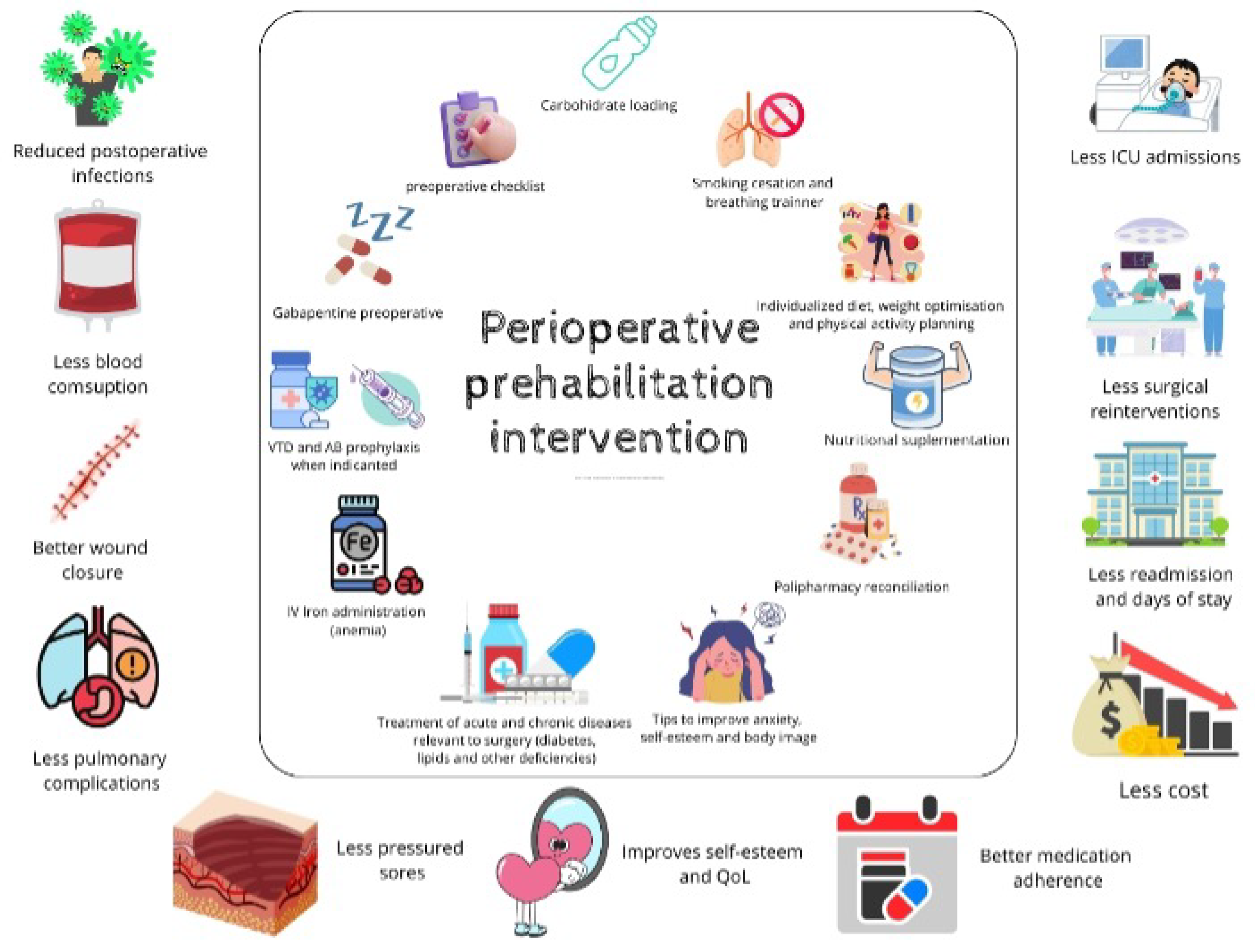
Patient preparation before major surgery for oncological patients, between 10 and 21 days prior to the operation Figure 2, has shown many beneficial effects when it includes enhancing nutritional status with hyperproteical supplements and carbohydrate-rich shakes for those with malnutrition, increasing lung capacity using incentive spirometer, a physical exercise program, and optimizing anemia and comorbidities through medical treatment [17,18,19,20]. This study showed that adequate preoperative preparation significantly reduces the complication rate in oncological interventions (p<0.001). Patients undergoing this regimen not only had shorter hospital stays (p = 0.004) but also fewer readmissions (p = 0.014) compared to the control group. A relevant aspect is the number of visits required before surgery. National prehabilitation models (GERM Group) require intervention from multiple specialists (hematologists, endocrinologists, cardiologists, pulmonologists, physiotherapists, etc.) and a higher number of consultations, increasing systemic costs and impacting patient quality of life due to time spent on multiple appointments, averaging five visits per patient and delaying prehabilitation start. At the Hospital Infanta Cristina of Parla, the model we have implemented, following IMPRICA and belonging to the GERM group, centralizes coordination in advanced practice nursing alongside an internist, allowing optimization to begin within less than 48 hours from inclusion in surgery waiting list, requiring only one patient visit, thus improving quality of life and reducing hospital costs. According to evidence from Schack et al. and the Spanish multimodal rehabilitation group, there is a higher risk of mortality and complications for patients with untreated anemia [21]. As suggested in the study, early treatment of patients with carboxymaltose iron reduces postoperative complications. Our study shows those who do not receive preoperative intravenous iron are 3.434 times more at risk for postoperative complications. It is logically deducible that optimal hemoglobin levels following intravenous iron administration indicate that, although the patient may experience bleeding during surgery, postoperative hemoglobin levels will be higher than if blood products were not administered when levels are below 13 g/dL. This helps prevent decompensation in patients with heart failure, exacerbation of chronic kidney disease, or delays in postoperative rehabilitation caused by acute anemic syndrome Figure 3. Additionally, delayed hospital discharge can increase the risk of nosocomial infection. In summary, this translates into a reduced need for blood (25.0% in the control group versus 9.9% in the intervened group), a shorter postoperative stay, fewer complications for the patient, and cost savings for the system. This is reflected in improved 30-day mortality rates, as described by Schack et al. in their series [22] The aforementioned, in terms of cost-effectiveness, translates into savings of 593,453 euros (savings of 4,395.95 euros per patient) with the implementation of the surgical prehabilitation program, as evidenced in this article. These findings align with the meta-analysis conducted by Rombey and Tanja, which identifies savings between 100 and 1,000 euros per patient with a multimodal rehabilitation program. Despite the positive results in the meta-analysis, our program at the Hospital Infanta Cristina has yielded even greater savings.
5. Conclusions
As a conclusion, following a surgical prehabilitation model reduces the number of postoperative complications, decreases the length of hospital stay, and increases savings on red blood cell transfusions. Similarly, implementing a model led by an advanced practice nurse along with an internist significantly saves the annual costs of a tertiary-level hospital.
Author Contributions
Conceptualization, N.M. and F.G.; methodology, N.M.; validation, N.M., F.R. and F.G.; formal analysis, V.I.; investigation, V.I and F.R.; resources, F.G.; data curation, N.M.; writing—original draft preparation, N.M.; writing—review and editing, F.G.; visualization, F.R.; supervision, N.M.; project administration, N.M. and F.G. All authors have read and agreed to the published version of the manuscript.
Funding
This research received no external funding.
Institutional Review Board Statement
The study was conducted in accordance with the Declaration of Helsinki, and approved by the Ethics Committee Segovia—Arana Biomedical Research Institute of Universitary Hospital Puerta de Hierro (protocol code ACT 15.18 year 2018)
Informed Consent Statement
Informed consent was obtained from all subjects involved in the study.
Data Availability Statement
We encourage all authors of articles published in MDPI journals to share their research data. In this section, please provide details regarding where data supporting reported results can be found, including links to publicly archived datasets analyzed or generated during the study. Where no new data were created, or where data is unavailable due to privacy or ethical restrictions, a statement is still required. Suggested Data Availability Statements are available in section “MDPI Research Data Policies” at https://www.mdpi.com/ethics.
Conflicts of Interest
The authors declare no conflicts of interest.
Abbreviations
The following abbreviations are used in this manuscript:
| APN | Advanced practice nurse |
| BIS | Body image scale |
| BMI | Body mass index |
| GERM | Grupo Español de Rehabilitación Multimodal |
| GLIM | Global leadership initiative on Malnutrition |
| IMPRICA | Implementación nacional de la vía RICA |
Appendix A
Appendix A.1. Tables

Table A1.
Cost-Saving Table Specified by Units and Concepts, as well as Individualized Costs with a Prehabilitation Program Led by an Advanced Practice Nurse.
Table A1.
Cost-Saving Table Specified by Units and Concepts, as well as Individualized Costs with a Prehabilitation Program Led by an Advanced Practice Nurse.
| Units earned | Cost per unit (€) | Total earned (€) | |
| Hospital stay length | 53 days | 6.786,00 | 359.658,00 |
| Médical visits | 180 | 75,00 | 13.500,00 |
| Adverse effects | 37 | 5.835,00 | 215.895,00 |
| Blood saving | 40 | 110,00 | 4.400,00 |
| Total | 593.453,00 | ||
Table A2.
Sociodemographic and clinical variables.
| Control (n=76) |
Study (n=125) |
Total (n=211) |
p-value | ||
| Age mean (SD) | 67.88 (10.15) | 64.43 (12.06) | 65.67 (11.50) | 0.370 | |
| Gender | Men n(%) | 53 (69.7%) | 73 (54.1%) | 127 (58.6%) | 0.030 |
| Women n(%) | 23 (30.3%) | 62 (45.9%) | 84 (39.1%) | ||
| Oncologycal patient | Yes n(%) | 67 (88.2%) | 119 (88.8%) | 186 (88.6%) | 0.527 |
| No | 9 (11.8%) | 16 (11.2%) | 25 (11.4%) | ||
| Neoadyuvancia | Yes | 10 (13.23%) | 20 (15.2%) | 30 (14.4%) | 0.694 |
| No | 66 (86.8%) | 115 (84.8%) | 181 (85.6%) | ||
Table A3.
Clínical variables.
| Control n=76 |
Study n=135 |
Total n=211 |
p-value | ||
| Adverse events n (%) |
Yes | 40 (52.6%) | 33 (25%) | 73 (35.1%) | <0.001 |
| No | 36 (47.4%) | 102 (75%) | 135 (64.9%) | ||
| Blood requirements n(%) |
Yes | 19 (25%) | 13 (9.9%) | 32 (15.5%) | 0.014 |
| No | 57 (75%) | 122 (90.1%) | 179 (84.5%) | ||
| Units of Blood | 0.75 (2.24) | 0.22 (0.80) | 0.42 (1.52) | <0.001 | |
| Hospital Stay Mean (SD) |
11.63 (10.63) | 8.34 (6.70) | 9.5 (8.4) | 0.004 | |
| Re-admission n (%) |
Yes | 15 (19.7%) | 10 (7.6%) | 25 (12.1%) | 0.014 |
| No | 61 (80.3%) | 125 (92.4%) | 186 (87.9%) | ||
Appendix B
All appendix sections must be cited in the main text. In the appendices, Figures, Tables, etc. should be labeled, starting with “A”—e.g., Figure A1, Figure A2, etc.
References
- Zargar-Shoshtari, K.; Hill, A.G. Postoperative Fatigue: A Review. World Journal of Surgery 2009, 33, 738. [CrossRef]
- Buchner, D.M.; Wagner, E.H. Preventing Frail Health. Clinics in Geriatric Medicine 1992, 8, 1–18. [CrossRef]
- Lorca Parraguez, L.A.; Leao-Ribeiro, I.; Martínez-Mardones, M.B.; Plasser-Troncoso, J.; Vivallos González, J.; Salas Ocaranza, R.; Torres-Castro, R. Resultados funcionales de un programa de prehabilitación en cirugía electiva de cáncer colorrectal. Revista de Cirugía 2022, 74. [CrossRef]
- Van Rooijen, S.; Carli, F.; Dalton, S.; Thomas, G.; Bojesen, R.; Le Guen, M.; Barizien, N.; Awasthi, R.; Minnella, E.; Beijer, S.; et al. Multimodal prehabilitation in colorectal cancer patients to improve functional capacity and reduce postoperative complications: the first international randomized controlled trial for multimodal prehabilitation. BMC Cancer 2019, 19, 98. [CrossRef]
- Barberan-Garcia, A.; Ubre, M.; Pascual-Argente, N.; Risco, R.; Faner, J.; Balust, J.; Lacy, A.; Puig-Junoy, J.; Roca, J.; Martinez-Palli, G. Post-discharge impact and cost-consequence analysis of prehabilitation in high-risk patients undergoing major abdominal surgery: secondary results from a randomised controlled trial. British Journal of Anaesthesia 2019, 123, 450–456. [CrossRef]
- Jin, S.; Li, S.; Zhang, Q.; Pang, D. Preoperative physical exercise strategies for patients undergoing major abdominal cancer surgery: a scoping review. Supportive Care in Cancer 2021, 29, 7057–7071. [CrossRef]
- Martin, D.; Besson, C.; Pache, B.; Michel, A.; Geinoz, S.; Gremeaux-Bader, V.; Larcinese, A.; Benaim, C.; Kayser, B.; Demartines, N.; et al. Feasibility of a prehabilitation program before major abdominal surgery: a pilot prospective study. Journal of International Medical Research 2021, 49, 03000605211060196. [CrossRef]
- Mayo, N.E.; Feldman, L.; Scott, S.; Zavorsky, G.; Kim, D.J.; Charlebois, P.; Stein, B.; Carli, F. Impact of preoperative change in physical function on postoperative recovery: Argument supporting prehabilitation for colorectal surgery. Surgery 2011, 150, 505–514. [CrossRef]
- Lawrence, V.A.; Hazuda, H.P.; Cornell, J.E.; Pederson, T.; Bradshaw, P.T.; Mulrow, C.D.; Page, C.P. Functional independence after major abdominal surgery in the elderly. Journal of the American College of Surgeons 2004, 199, 762–772. [CrossRef]
- Balagué, C.; Arroyo, A. Prehabilitation: Another Step Towards the Optimization of Surgical Patients. Cirugía Española (English Edition) 2020, 98, 175–177. [CrossRef]
- El Clínic aplica un programa de prehabilitación que reduce al 50% las complicaciones post-quirúricas. [Internet]. [Citado 16 de febrero de 2025] Disponible en:https://www.clinicbarcelona.org/noticias/el-clinic-aplica-un-programa-de-prehabilitacion-que-reduce-al-50-las-complicaciones-en-pacientes-quirurgicos-de-alto-riesgo.
- Herrero Martín, L. Rehabilitación multimodal en cirugía bariátrica: actualización en la prevención y tratamiento de las náuseas y los vómitos postoperatorios [Internet]. [Citado 16 de febrero de 2025]. Disponible en:https://www.revista-portalesmedicos.com/revista-medica/rehabilitacion-multimodal-en-cirugia-bariatrica-actualizacion-en-la-prevencion-y-tratamiento-de-las-nauseas-y-los-vomitos-postoperatorios/. revista-portalesmedicos.com 2024, XIX, 89.
- Martínez, P. Prehabilitación. Un posible nuevo enfoque en la cirugía. Ocronos 2022, 5, 278.
- Boukili, I.E.; Flaris, A.N.; Mercier, F.; Cotte, E.; Kepenekian, V.; Vaudoyer, D.; Glehen, O.; Passot, G. Prehabilitation before major abdominal surgery: Evaluation of the impact of a perioperative clinical pathway, a pilot study. Scandinavian Journal of Surgery 2022, 111, 14574969221083394. [CrossRef]
- Boden, I.; Skinner, E.H.; Browning, L.; Reeve, J.; Anderson, L.; Hill, C.; Robertson, I.K.; Story, D.; Denehy, L. Preoperative physiotherapy for the prevention of respiratory complications after upper abdominal surgery: pragmatic, double blinded, multicentre randomised controlled trial. BMJ 2018, p. j5916. [CrossRef]
- Mudarra García, N.; García Sánchez, F.J. Enfermera de práctica avanzada en Programa de Prehabilitación Quirúrgica. Metas de Enfermería 2023, 26. [CrossRef]
- Okam, M.M.; Koch, T.A.; Tran, M.H. Iron Supplementation, Response in Iron-Deficiency Anemia: Analysis of Five Trials. The American Journal of Medicine 2017, 130, 991.e1–991.e8. [CrossRef]
- Muñoz, M.; Gómez-Ramírez, S.; Besser, M.; Pavía, J.; Gomollón, F.; Liumbruno, G.M.; Bhandari, S.; Cladellas, M.; Shander, A.; Auerbach, M. Current misconceptions in diagnosis and management of iron deficiency. Blood Transfusion 2017. [CrossRef]
- Jimenez Trasobares, M.; Royo Ruiz, M.; Blesa Miedes, M.; Larraga Lagunas, M. Bases de la terapia de prehabilitación, 2023.
- López Rodríguez-Arias, F.; Sánchez-Guillén, L.; Armañanzas Ruiz, L.I.; Díaz Lara, C.; Lacueva Gómez, F.J.; Balagué Pons, C.; Ramírez Rodríguez, J.M.; Arroyo, A. A Narrative Review About Prehabilitation in Surgery: Current Situation and Future Perspectives. Cirugía Española (English Edition) 2020, 98, 178–186. [CrossRef]
- Culebras, J.M. INFECCIÓN QUIRÚRGICA Y MALNUTRICIÓN. NUTRICION HOSPITALARIA 2014, pp. 509–513. [CrossRef]
- Schack, A.; Berkfors, A.A.; Ekeloef, S.; Gögenur, I.; Burcharth, J. The Effect of Perioperative Iron Therapy in Acute Major Non-cardiac Surgery on Allogenic Blood Transfusion and Postoperative Haemoglobin Levels: A Systematic Review and Meta-analysis. World Journal of Surgery 2019, 43, 1677–1691. [CrossRef]
Figure 1.
Prehabilitation process.
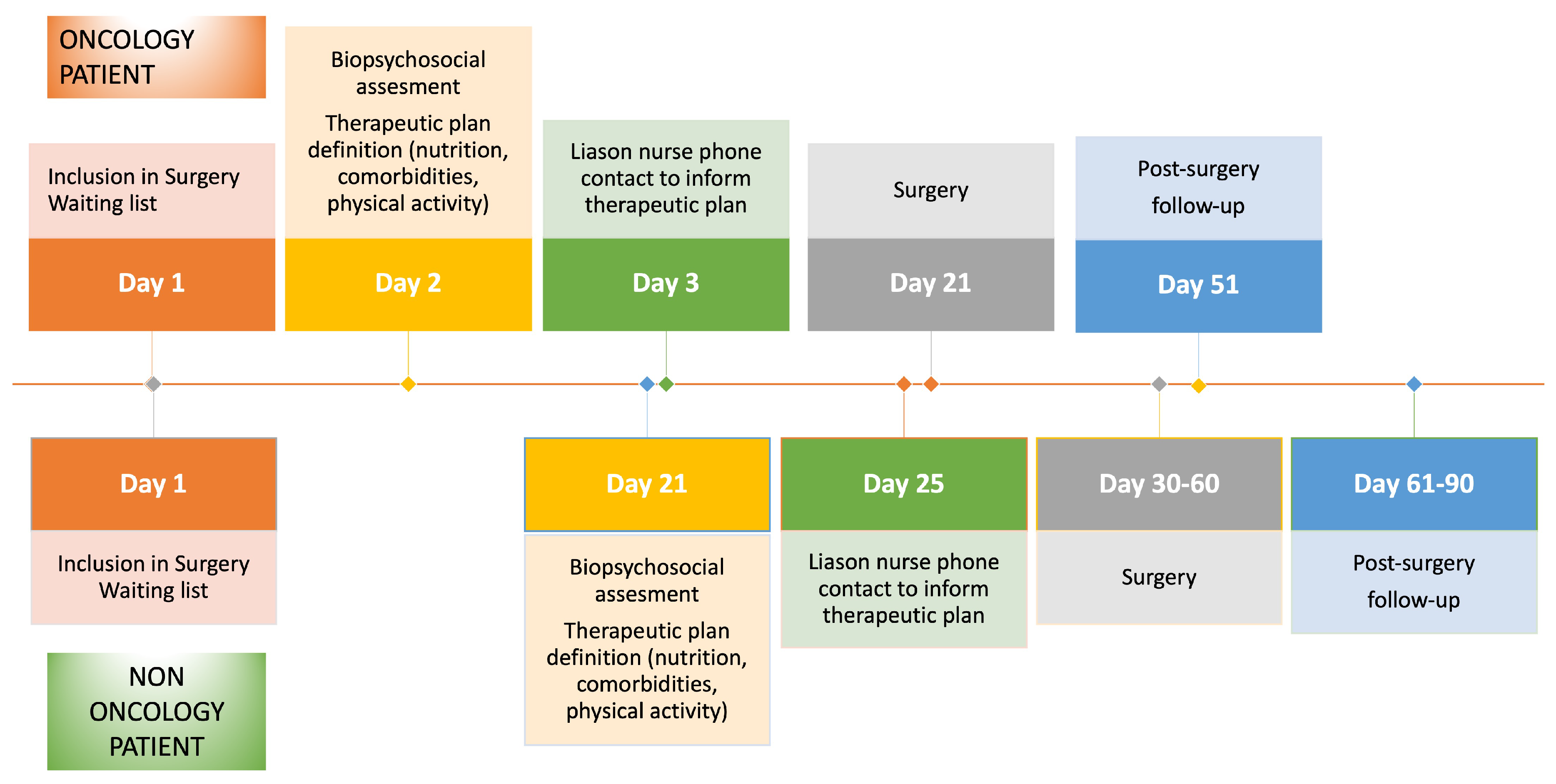
Figure 2.
10 phases prehabilitation program.
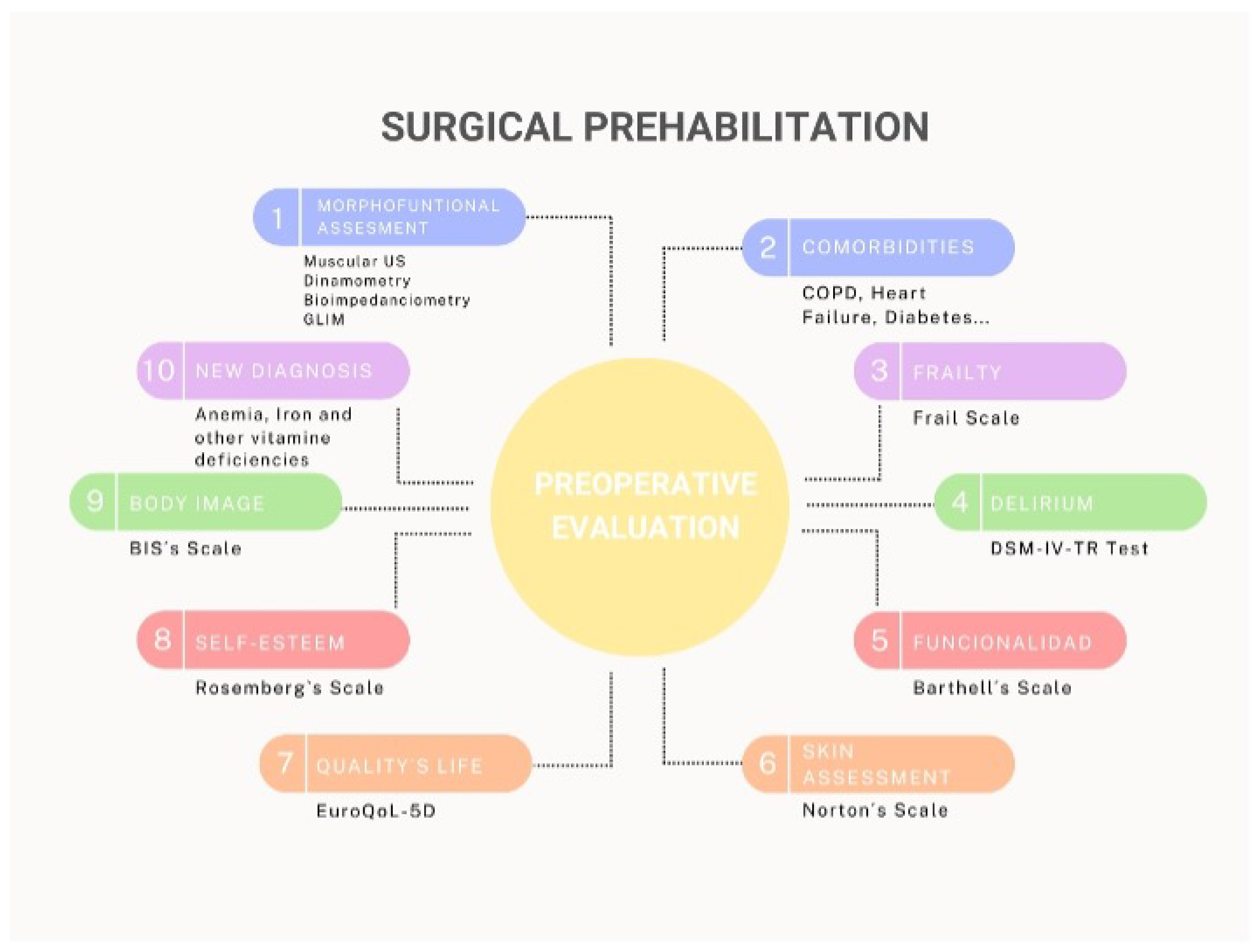
Figure 3.
Perioperative intervention.
Disclaimer/Publisher’s Note: The statements, opinions and data contained in all publications are solely those of the individual author(s) and contributor(s) and not of MDPI and/or the editor(s). MDPI and/or the editor(s) disclaim responsibility for any injury to people or property resulting from any ideas, methods, instructions or products referred to in the content. |
© 2025 by the authors. Licensee MDPI, Basel, Switzerland. This article is an open access article distributed under the terms and conditions of the Creative Commons Attribution (CC BY) license (http://creativecommons.org/licenses/by/4.0/).
Copyright: This open access article is published under a Creative Commons CC BY 4.0 license, which permit the free download, distribution, and reuse, provided that the author and preprint are cited in any reuse.


