

Submitted:
27 February 2025
Posted:
27 February 2025
You are already at the latest version
Abstract
Coal industry remains a significant source of environmental pollution. Development of coal-water fuel allows for the reduction of harmful emissions (CO₂, SO₂, etc.) due to more complete and environmentally friendly combustion of the fuel, making it an attractive transition solution towards cleaner energy. This study uses electropulse processing, which significantly increased the efficiency of the coal grinding process compared to mechanical action methods (cone mills, drum mills, etc.). The main advantages of the electropulse technology are grinding efficiency, reduced high environmental impact (no need for chemical reagents and waste minimization), and the ability to produce coal powder with improved porosity and a larger surface area. The electrode in electropulse devices plays a decisive role in obtaining coal powder for coal-water fuel. The positive electrode must be resistant to high temperatures and aggressive conditions arising during the pulse processing. We have developed an optimal electrode design, including a gap between the metal rod and insulation, which ensures high resistance to pulse discharges. Increasing the capacity of the capacitor and the number of pulse discharges has had a positive effect on the yield of the finished product. The developed technology of electric impulse coal grinding helps to reduce the negative impact of the coal industry on the environment.
Keywords:
electric impulse technology
; coal grinding
; coal-water fuel
; electrode
; electric impulse chamber
1. Introduction
Coal is one of the main energy and fuel resources in the world, which plays an important strategic role in the development of energy and the economy of various countries. The world’s largest coal deposits are located in 70 countries, 50 of which are engaged in industrial coal mining. Despite the fact that there are alternative energy sources, they cannot meet the growing human demand for energy. Also, a large amount of waste has accumulated in the world, which worsens the environmental situation and at the same time has energy value. As a rule, this is waste from coal mining enterprises, oil companies, etc. [1].
In the case of traditional coal combustion, the minerals contained in it are emitted as ash. Ash is removed from boilers or particulate matter trapping devices. However, some of them are released into the atmosphere as particulate matter. This causes various negative impacts on the environment. Such emissions can be particulate matter, SOx, NOx, greenhouse gases, toxic metals [2,3,4]. To reduce these environmental problems, environmentally friendly use of coal is necessary.
As can be seen from the practices, methods of converting coal into liquid fuel are being considered. Coal liquefaction is not a new technology. It has been developed and used since the beginning of the 20th century. A number of experimental studies show that adding water to the coal combustion process helps to significantly reduce the content of harmful substances and reduce dependence on oil. This contributes to environmental safety, economic benefits and energy diversification [5]. There are many works, which consider the technologies and possible applications of coal-water suspension (CWS) as coal-water fuel (CWF) as an alternative fuel source [6]. Coal-water fuel is a product of the transformation of a mixture of finely ground coal and water in proportions. This ensures that the resulting composition remains stable without separation for an extended period [7,8]. Depending on the conditions for preparing coal-water fuel, its stability can also be ensured by adding a small amount of special stabilizer additives into the composition [9]. The advantages of implementing this technology include: the possibility of transportation via pipeline, explosion and fire safety, the possibility of burning various types of coal, a high degree of carbon burnout, a low level of harmful emissions (NOx, SOx, CO), the possibility of using low-calorie coals from coal preparation to obtain coal-water fuel. Despite the fact that the caloric content of fuel decreases by approximately 3 times when water is added, this processing technology is considered promising due to its high environmental friendliness [10].
For the production the coal powder product used in coal-water fuel (CWF), various methods of coal grinding are used to achieve the required particle size. The main methods are: mechanical, impact, abrasive, hydraulic, ultrasonic, reactive (jet) grinding, cryogenic and electric impulse grinding. The development of technologies for the production of coal-water fuel is a pressing issue, as it contributes to improving the environmental situation and ensuring sustainable energy based on renewable sources.
Among modern methods, the electric impulse method stands out as an effective way to obtain coal with high reactivity. Electric impulse grinding (EPG) is a modern technology based on the use of high-voltage electrical discharges to destroy solid materials. The principle of the method is to generate an electric field that causes discharges in the interelectrode space. The discharges create local mechanical stresses. This leads to the destruction of the material along natural cracks and boundaries. The key parameters of the process are the discharge energy, the conductivity of the material and the design of the electrodes. Optimization of these parameters allows for a significant increase in the efficiency of grinding. This method has also been successfully applied for mineral processing [11,12], waste recycling [13] and coal preparation for energy use [14].
The article [15] describes experiments on coal grinding in a laboratory vibratory mill to obtain a coal-water suspension (CWS) intended for use as fuel. The study examined the influence of such parameters as grinding duration, composition and volume of balls on the degree of coal grinding and particle size distribution. Two samples of Polish hard coal with different characteristics, including ash content, carbon, oxygen and vitrinite content, were used in the experiments. The results showed that the vibratory mill effectively ensures coal grinding to the required granulation degree for CWS. The minimum average particle diameter was 12.57 μm and 13.9 μm, and the time required to achieve a particle size of less than 100 μm was 1 and 1.5 hours. It was also found that a decrease in the average particle size leads to an increase in the viscosity of the suspension, which plays an important role in the transportation and storage of CWS.
The article [16] considers the destruction of coal rock under the influence of hydraulic pressure and electrical pulses, and also develops a model of damage to coal rock. It was found that an increase in voltage from 7 kV to 13 kV leads to a significant increase in damage to coal rock. At the same time, hydrostatic pressure has a smaller effect: with an increase in pressure from 1 MPa to 8 MPa, damage increases by only 6.1 %. The most significant cracks with a high degree of penetration are observed at a voltage of 13 kV and a pressure of 8 MPa. The ABAQUS/XFEM module was used to analyze the propagation of cracks in the rock. The coincidence of the results of numerical modeling and laboratory experiments confirms the correctness of the applied approach. The article represents a significant contribution to the development of coal rock destruction technologies. The authors found that electrical pulses in combination with hydraulic pressure significantly increase the efficiency of destruction.
The article [17] presents experiments studying the influence of the thickness of carbon samples and the breakdown voltage on the voltage and current characteristics during electrical destruction in air. The experiment was conducted using a specialized system for passing electrical discharges through carbon samples of different thicknesses. The thickness of the carbon layer varied from 5 to 20 mm, and the breakdown voltage from 15 to 40 kV. The energy of the electrical discharge was controlled and changed to study its influence on the destruction process. The results showed that the thickness of the carbon layer significantly affects the energy distribution and the formation of microcracks. Thicker samples required a higher breakdown voltage to initiate effective destruction. Optimum parameters were achieved with a carbon layer thickness of 10–15 mm and a breakdown voltage of 25–35 kV, which ensured the maximum degree of destruction and energy conversion efficiency. The study showed that the correct selection of the breakdown voltage and thickness of the carbon layer allows minimizing energy losses, directing most of it to the formation and development of cracks. In addition, electrical destruction reduces the mechanical impact on the rock, which reduces the likelihood of environmental pollution.
The choice of electrode material is very important in coal destruction processes. It significantly affects the process of coal destruction using electric discharges, including electric impulse grinding. The article [18] considered the influence of various electrode materials on the coal destruction process. The authors in their work emphasize the importance of choosing the electrode material to optimize the coal destruction process. Various materials were studied, including carbon and metal electrodes. The results of the studies showed that the choice of electrode material significantly affects the degree of coal destruction. This is due to differences in the conductivity and chemical activity of the materials.
Based on the analysis, it can be concluded that electric impulse coal grinding is a promising direction that ensures high process efficiency. The key factors determining its effectiveness are the discharge energy, coal conductivity and electrode design, which contributes to a significant increase in grinding efficiency.
The aim of this work is to manufacture a positive electrode of an electric pulse device for obtaining coal powder and to study the effect of electric pulse discharges on raw material grinding. This method has been implemented in the Electropulse Technology Laboratory of the Karaganda University named after Ye.A. Buketov [19].
2. Experimental Setup and Research Methodology
- The electric pulse unit consists of the following main units:
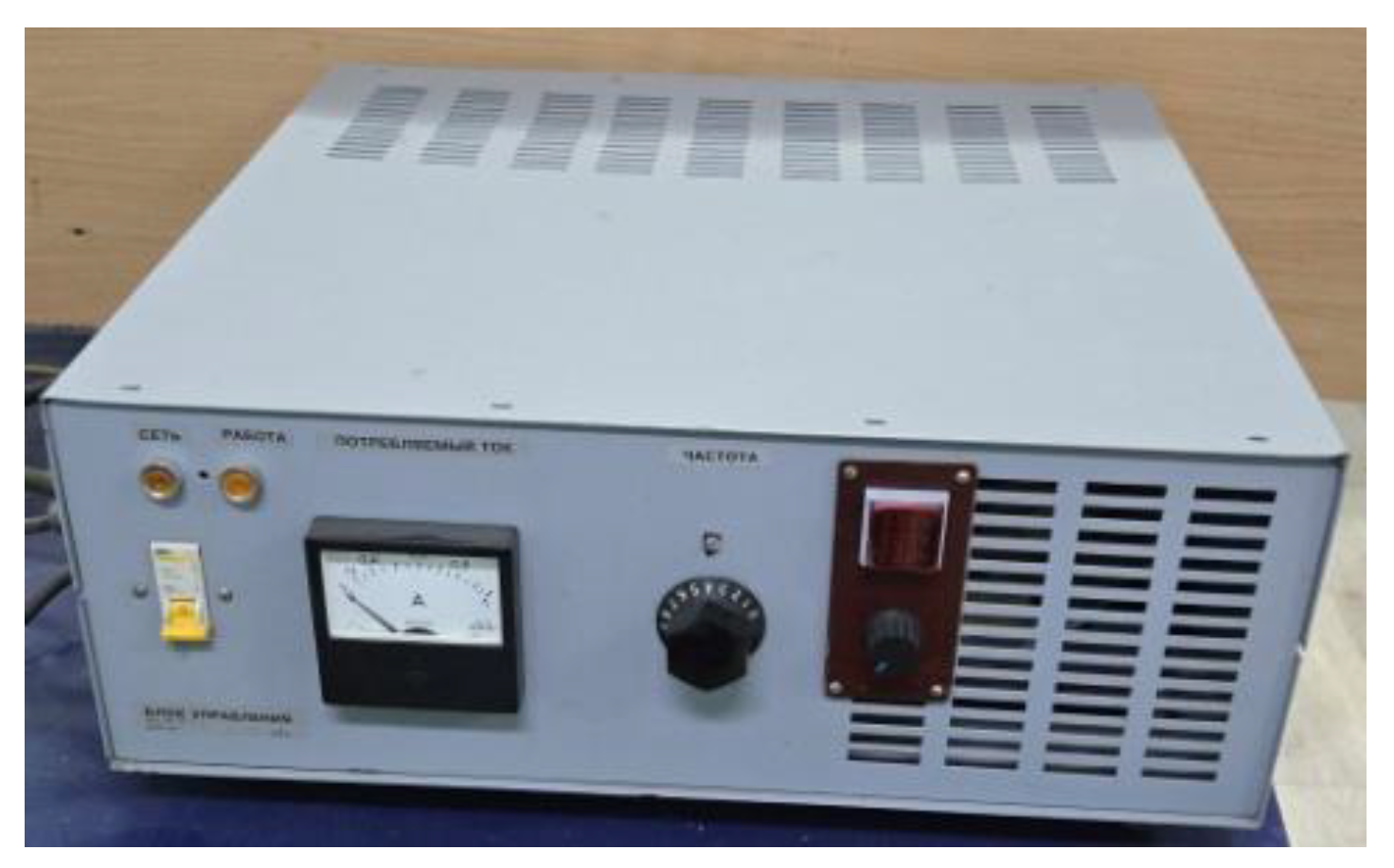
- Control unit for monitoring the operating modes of the installation (see Figure 1);
- Generator for converting AC voltage at the input into DC voltage at the output;
- Capacitor for energy storage;
- Protection system for switching off the unit in cases when the voltage on the capacitor exceeds the established safe working voltage of the discharge;
- Spark gap (forming gap) consisting of two conductive hemispherical electrodes separated by an air gap designed to form an electric spark between the conductors;
- Working chamber for grinding coal.
Figure 1.
Control block.
The generator with a forming gap is one of the main units of the installation (see Figure 2). In the experimental researches, pulse capacitors (see Figure 3) with a nominal voltage of up to 100 kV and a capacity of: C=0.25 μF (4 pcs), C=0.4 μF (5 pcs) were used. The technical characteristics of the installation are given in Table 1.
The installation can be turned off automatically when the protection circuit is activated. The protection scheme works as follows. When the set safe operating voltage is exceeded, a protective arrestor is triggered, further closing the circuit consisting of the resistance and the primary winding of the pulse transformer. The alternating voltage from the secondary winding is rectified and supplied to the relay, which, when triggered, turns off the installation.
The voltage of the pulsed discharges (U, kV) was changed by increasing or decreasing the distance (l, mm) between the hemispherical electrodes in the forming gap (see Figure 4.). Voltage measurement was performed using a three-limit electrostatic kilovoltmeter (measuring limits of the device: 25 – 50 – 75 kV), where is the limit of the permissible value of the basic error in the working part of the scale is ± 2.0%.
The container (reservoir) of the working chamber for grinding coal is made of stainless steel grade 08X18H10, belonging to the austenitic group of alloys (see Figure 5). High-chromium austenitic stainless steel grade 08X18H9 was used as the electrode (positive electrode) powered by the power source of the installation. The positive electrode was insulated with fluoroplastic F-4 and attached to the upper part of the working chamber. The fluoroplast served as the lid of the working chamber, and also served as an electrical insulator between the positive and negative electrodes. The negative electrode was the inner surface of the reservoir bottom.
The material is pulverized using the electric pulse method as follows. After powering the generator from the control unit, the high voltage at the generator output is supplied in parallel to the capacitor. The voltage accumulated on the capacitor increases to a value at which there is a spontaneous breakdown of the air space between the hemispherical electrodes in the forming gap. Further, all the energy stored in the capacitor is instantly supplied to the working chamber. When a spark discharge is formed between the positive and negative electrodes in the working chamber with a mixture of liquid and carbon, shock waves are formed, as a result of which the material is crushed.
3. Results and Discussion
3.1. The Test Results of the Positive Electrode
The main obstacle to ensuring long-term continuous operation of the vast majority of electric pulse crushing and crushing chambers for a long time was the insufficient stability of the front end of the insulation of the working electrodes [20]. In this regard, experimental studies have studied the effect of pulsed electrical discharges on the insulation of a positive electrode in a coal crushing chamber. For this purpose, two different versions of the working electrode were considered (see Figure 6):
- Sample № 1 – the outer part of the front end of the positive electrode is completely insulated with fluoroplastic;
- Sample № 2 – in the presence of a space between the insulation and the electrode, in addition, the diameter of the front end of the electrode was reduced by 1.5 times compared with its main diameter.
For both models, the front end of the metal rod protruded 10 mm from the insulation. During the research, the dependence of the diameter of the insulation (fluoroplast) on the diameter of the electrode was determined (Table 2 and Table 3). The electrodes were tested with the following parameters of the electric pulse installation: capacitor capacity – C = 2μF, pulse discharge voltage (U) – 30 kV and 40 kV, number of pulse discharges – N = 2000–8000. The distance between the positive and negative electrodes was 25 mm.
The results obtained for sample № 1 show that even with an increase in the insulation diameter depending on the diameter of the metal electrode from 3 to 6 times, fluoroplastic poorly resists the impact of a pulse discharge. Since a further increase in the diameter of the electrode insulation leads to a decrease in the volume of the working chamber, experiments for a sample of this type were discontinued.
For sample № 2, the distance between the metal electrode and its insulation was S=2.5 mm (Table 3). For this type of model, the following optimal test results were obtained depending on the parameters of the electric pulse discharge:
- by increasing the diameter of the insulation by 4 times depending on the diameter of the metal electrode (D=4×d), an effective version of the working electrode was obtained, resistant to the effects of the pulse discharge;
- based on the results of the experiment, the possibility of saving insulation material was noted compared to model № 1.
The following researches were devoted to determining the ratio of the distances between the electrode and its insulation (see Figure 7). In the tests, the distance between the insulator and the electrode varied from 1 mm to 8 mm. The experiment was carried out under the following conditions: the number of pulse discharges (N) – 2500–10000, the capacitor capacity – C=2 μF, the discharge voltage (U) 30–50 kV (Table 4).
The results of the research showed that the ratio (S) between the insulation of the positive electrode and its metal rod, one of the main devices for forming a pulsed electric discharge in a liquid medium, should be from 3 mm to 8 mm. A further increase in the space between the electrode and its insulation led to a thinning of the insulation thickness of the electrode system.
The resistance of an electrode of this shape to electrical impulse discharges is explained as follows:
- the liquid (technical water) in the space between the electrode and the insulation serves as additional insulation and prevents damage to the fluoroplastic;
- the protruding part of the electrode from the insulation diverts streamers from the fluoroplastic. This is explained by the fact that streamers usually grow intensively from the end of the electrode.
- the active surface of the end of the thin electrode protruding far from the insulation, due to its small diameter, does not exceed the active surface of the usually used thick electrode, slightly protruding from the insulation [21].
3.2. Grinding of Coal by the Electric Impulse Method
This paper proposes a method for grinding coal based on the use of the energy of pulsed shock waves generated as a result of a spark electric discharge in a liquid (technical water), which makes it possible to solve a number of problems associated with the disintegration of natural raw materials. Experimental researches on coal grinding were carried out under the following conditions (Figure 8):
- capacitor capacitance – from 0.25 μF to 1 μF (to increase the electric capacitance of the capacitor, 4 capacitors with the same nominal voltage and capacitance (100 kV, C=0.25 μF) were connected in parallel);
- pulse discharge voltage – U=32 kV;
- number of pulse discharges from 250 to 1500;
- electrode sample № 1: electrode insulation diameter, depending on the diameter of the metal electrode – D =7×d;
- electrode sample № 2: distance between the metal electrode and its insulation - S=3 mm; electrode insulation diameter, depending on the diameter of the metal electrode – D =4×d.
The parameters of the feedstock for each experiment were constant: fraction diameter 9–15 mm, weight 100 g. The weight of the raw material before and after processing by the electropulse method was determined using electronic scales (maximum load - 1200 g; resolution - 0.001 g). The diameter of the fraction of the feedstock was determined using an electronic (digital) caliper (indicator resolution step 0.01 mm). Analysis of the granulometric composition of the coal powder obtained by the electropulse method was determined by the sieve method according to GOST 12536-2014 "Methods of laboratory determination of granulometric (grain) and microaggregate composition". The crushed coal powder was sifted through a sieve with a hole diameter of 200 μm (the sieve was calibrated in accordance with GOST 51568-99).
The yield of the finished product was determined as follows: K = (m1/m2)·100%, m1 - is the average mass of sifted coal powder from a sieve with a grid diameter of 200 µm after grinding using the electric pulse method, m2 - is the mass of the original raw material.
Figure 8 shows that by increasing the capacitor capacity and the number of pulse discharges, it is possible to increase the yield of the finished product. This was achieved when the system of positive electrodes in the working chamber for grinding coal had a special space between the metal rod and the insulation (compared to the sample of electrode No. 1, i.e. with the results of obtaining coal powder, when the outer part of the front end of the positive electrode is completely insulated with fluoroplastic).
4. Conclusions
Based on the analysis of the main results of scientific research, an electrode resistant to the effects of pulsed electric discharges was developed. Coal was crushed depending on the electrical and geometric parameters of the installation. Granulometric analyses of raw materials were carried out and the dependence of the yield of the finished product on the parameters of pulsed discharges was studied. As a result of the studies carried out using the electropulse method, coal powder with a diameter of less than 200 μm was obtained. The results of the experiment make it possible to create an optimal version of the working chamber for crushing materials using the electropulse method.
Funding
This research is funded by the Science Committee of the Ministry of Science and Higher Education of the Republic of Kazakhstan (Grant AP23488837).
References
- World Energy Council, World Energy Resources: Coal 2013. 2013. Available online: https://www.worldenergy.org/assets/images/imported/2013/10/WER_2013_1_Coal.pdf.
- IPCC, Climate Change 2007: Synthesis Report. 2007. Available online: https://www.enviro.wiki/images/b/be/2007-IPCC-Climate_change_synthesis_report.pdf.
- IEA, IEA Coal Research: Clean Coal Centre. Advances in multi-pollutant Control. 2013. Available online: https://usea.org/sites/default/files/112013_Advances%20in%20multi-pollutant%20control_ccc227.pdf.
- Pudasainee, D.; Kim, J.H.; Yoon, Y.S.; Seo, Y.C. Oxidation, reemission and mass distribution of mercury in bituminous coal fired power plants with SCR, CS-ESP and wet FGD. Fuel. 2012, 93, 312–318. [Google Scholar] [CrossRef]
- World Coal Institute, Coal: Liquid Fuels. 2009. Available online: https://web.archive.org/web/20151122232436/http://www.worldcoal.org/sites/default/files/coal_liquid_fuels_report(03_06_2009).pdf.
- Snetkova, I.M. Production technology and fuel and energy characteristics of alternative liquid coal fuel. Publishing House «Gornaya Kniga» 2008, 182–189. [Google Scholar]
- Serant, F.A.; Tsepenok, A.I.; Ovchinnikov, Yu.V.; Lutsenko, S.V.; Karpov, E.G. Preparation of water-coal fuel and its combustion technologies. Collection of scientific articles. Modern science. 2011, 1, 95–101. Available online: https://modern.science.triacon.org/ru/issues/2011/files/papers/1/95-101.pdf.
- Maloletnev, A.S.; Naumov, K.I. Сoal-derived liquid fuel. Publishing House «Gornaya Kniga». 2014, 227–237. [Google Scholar]
- Zenkov, A.; Sokolova, E.Ya. Coal-water slurry. Language and world culture: The view of young researchers: Proceedings of the XV All-Russian Scientific and Practical Conference. TPU Publishing House. 2016, 3, 152–157. Available online: https://earchive.tpu.ru/bitstream/11683/32428/1/conference_tpu-2016-C89_V3_p152-157.pdf.
- Ibragimov, N.I.; Mukolyants, A.A.; Ergasheva, D.K.; Babaev, M. Sh. Research and development of technology for obtaining coal-water suspension based on coal from the Angren coal mine. Young scientist. Ecology 2017, 8, 103–109. Available online: https://moluch.ru/archive/142/pdf/883/.
- Bulkairova, G.; Nussupbekov, B.; Bolatbekova, M.; Khassenov, A.; Nussupbekov, U.; Karabekova, D. A research of the effect of an underwater electric explosion on the selectivity of destruction of quartz raw materials. Eastern-European Journal of Enterprise Technologies. 2023, 3, 30–37. [Google Scholar] [CrossRef]
- Khassenov, A.; Bulkairova, G.; Karabekova, D.; Bolatbekova, M.; Alpyssova, G.; Kudussov, A.; Kissabekova, P. Identification of the impact of electric pulse action on the disintegration of a natural mineral. Eastern-European Journal of Enterprise Technologies. 2024, 1, 54–59. [Google Scholar] [CrossRef]
- Khassenov, A.; Karabekova, D.; Bolatbekova, M.; Nussupbekov, B.; Kudussov, A.; Chirkova, L.; Kissabekova, P. Identification of the effect of electric pulse discharges on the recycling of household glass. Eastern-European Journal of Enterprise Technologies. 2024, 2, 6–13. [Google Scholar] [CrossRef]
- Kurytnik, I.P.; Khassenov, A.K.; Nussupbekov, U.B.; Karabekova, D.Z.; Nussupbekov, B.R.; Bolatbekova, M. Development of a grinding device for producing coal powder-raw materials of coal-water fuel. Archive of Mechanical Engineering. 2022, 69, 259–268. [Google Scholar] [CrossRef]
- Jolanta Robak; Karina Ignasiak; Michal Rejdak. Coal micronization studies in vibrating mill in terms of Coal-Water Slurry (CWS) Fuel preparation. Journal of Ecological Engineering 2017, 18, 111–118. [Google Scholar] [CrossRef] [PubMed]
- Xiankai, B.; Jiaxing, C.; Wenxiang, Z.; Junyu, G.; Yuan, L.; Jinchang, Z. Study on the damage model of coal rock caused by hydraulic pressure and electrical impulse in borehole. Geofluids. 2021, 19. [Google Scholar] [CrossRef]
- Zhang, X.; Lin, B.; Li, Y.; Zhu, C. Experimental study on the effect of coal thickness and breakdown voltage on energy conversion during electrical disintegration. Fuel 2020, 259. [Google Scholar] [CrossRef]
- Zhang, X.; Lin, B.; Li, Y. Experimental study on the effects of electrode materials on coal breaking by plasma. Fuel 2020, 270. [Google Scholar] [CrossRef]
- Nussupbekov, B.; Khassenov, A.; Nussupbekov, U.; Akhmadiyev, B.; Karabekova, D.; Kutum, B.; Tanasheva, N. Development of technology for obtaining coal-water fuel. Eastern-European Journal of Enterprise Technologies. 2022, 3, 39–46. [Google Scholar] [CrossRef]
- Yutkin, L.A. Electrohydraulic effect and its application in industry. Mechanical engineering 1986. [Google Scholar]
- Starkov, N.V. Compact electrode systems of pulsed electrohydraulic (EG) installations. Electronic processing of materials. 2014, 50, 115–120. Available online: https://cyberleninka.ru/article/n/kompaktnye-elektrodnye-sistemy-impulsnyh-elektrogidravlicheskih-eg-ustanovok/viewer.
Figure 2.
Generator with forming gap: a) front view; b) top image.
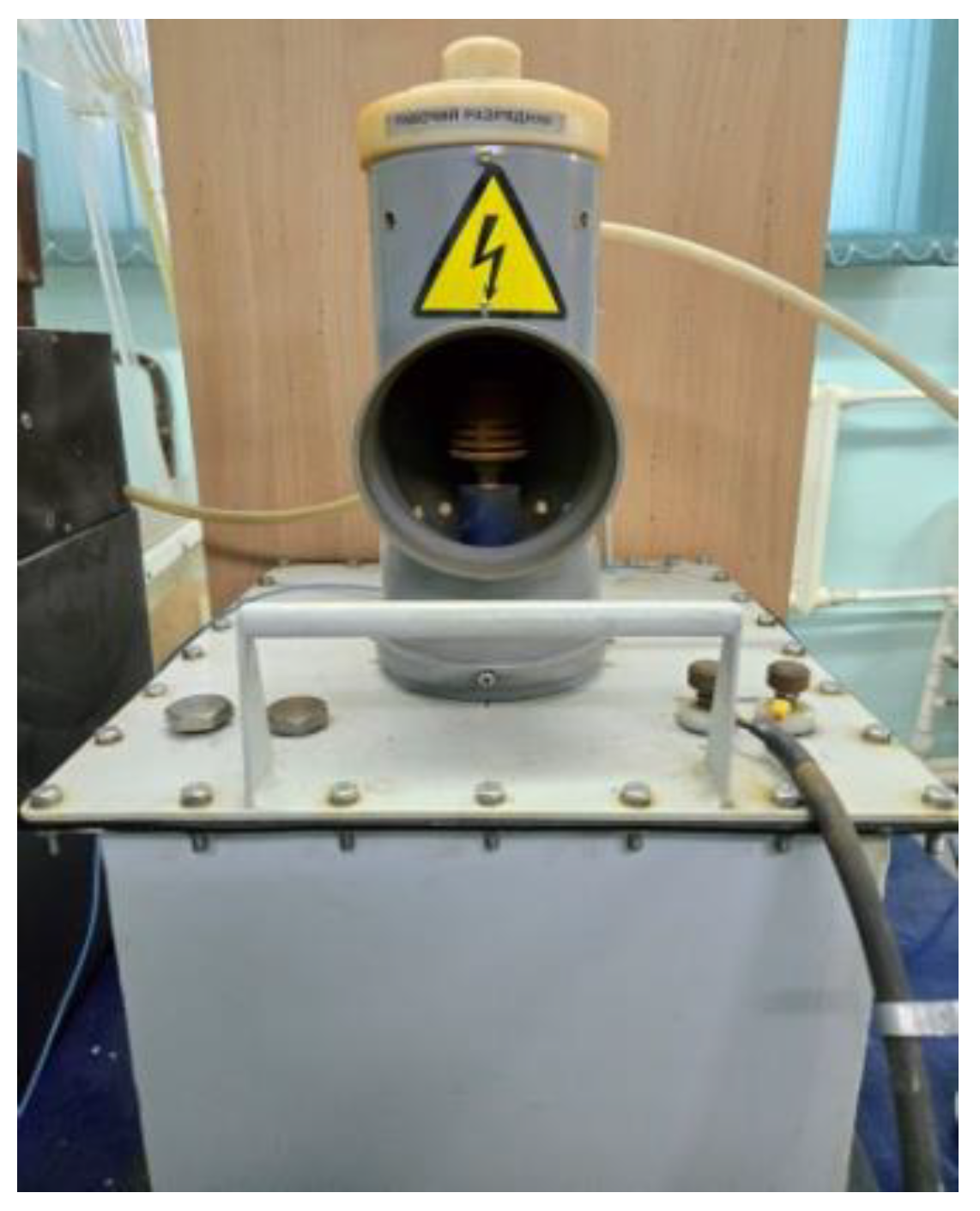
Figure 3.
Capacitor and installation protection system: a) front view; b) side view.
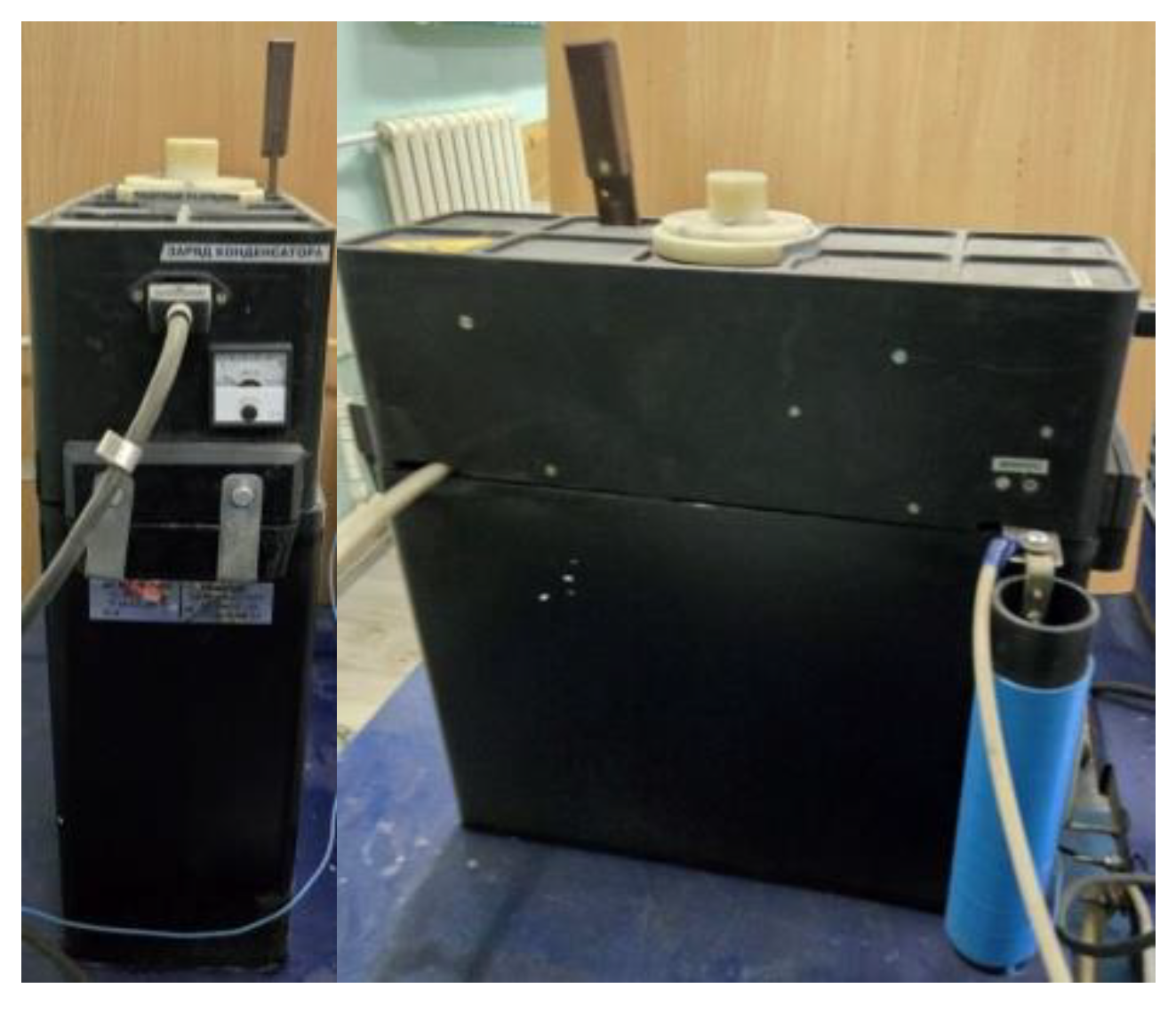
Figure 4.
Change in the voltage of a pulsed discharge depending on the distance between hemispherical metal electrodes in the forming gap.
Figure 4.
Change in the voltage of a pulsed discharge depending on the distance between hemispherical metal electrodes in the forming gap.
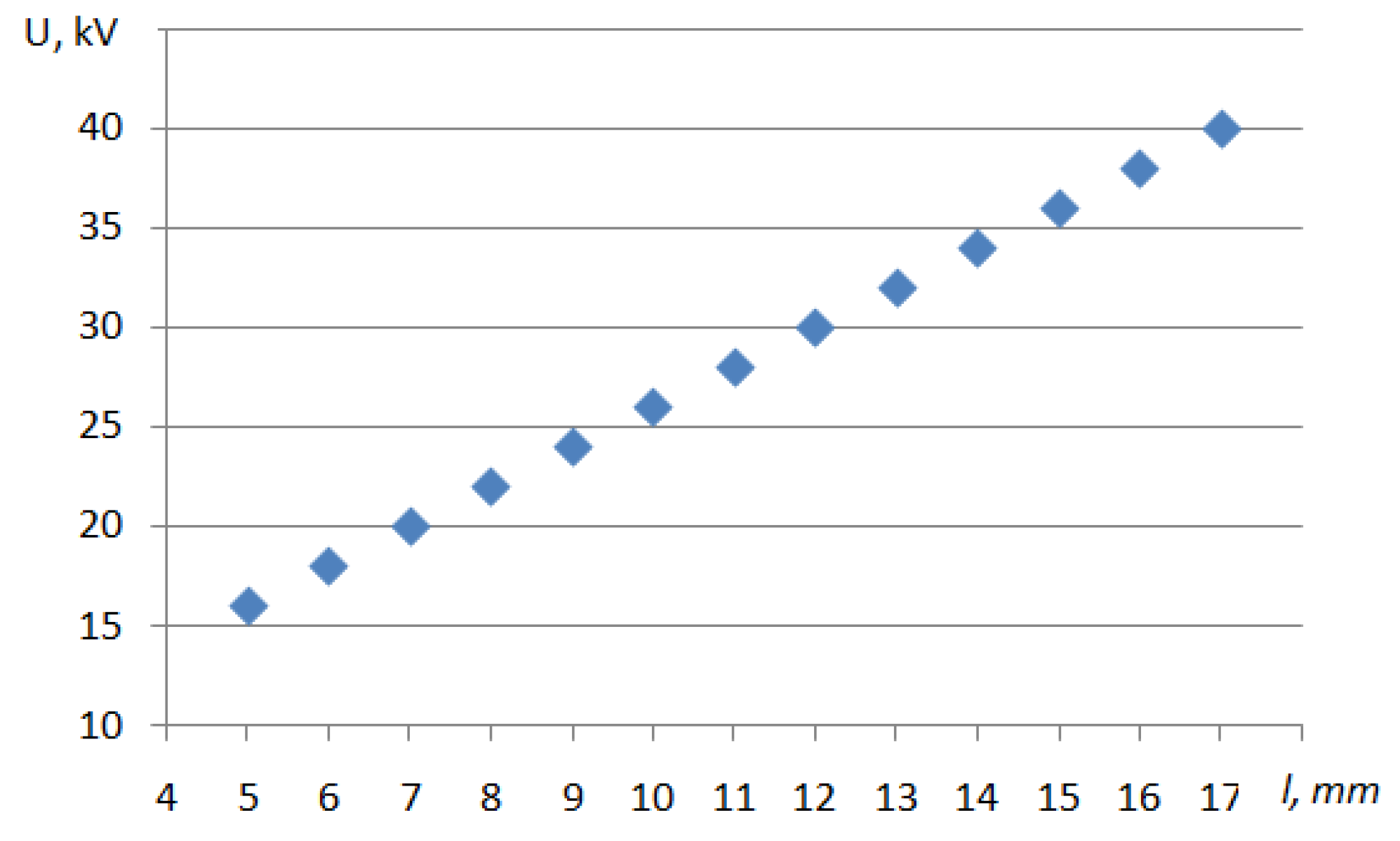
Figure 5.
Working chamber for grinding coal: a) working chamber; b) top view of the working chamber lid; c) the inner surface of the reservoir of the working chamber; d) a positive electrode insulated with fluoroplastic.
Figure 5.
Working chamber for grinding coal: a) working chamber; b) top view of the working chamber lid; c) the inner surface of the reservoir of the working chamber; d) a positive electrode insulated with fluoroplastic.
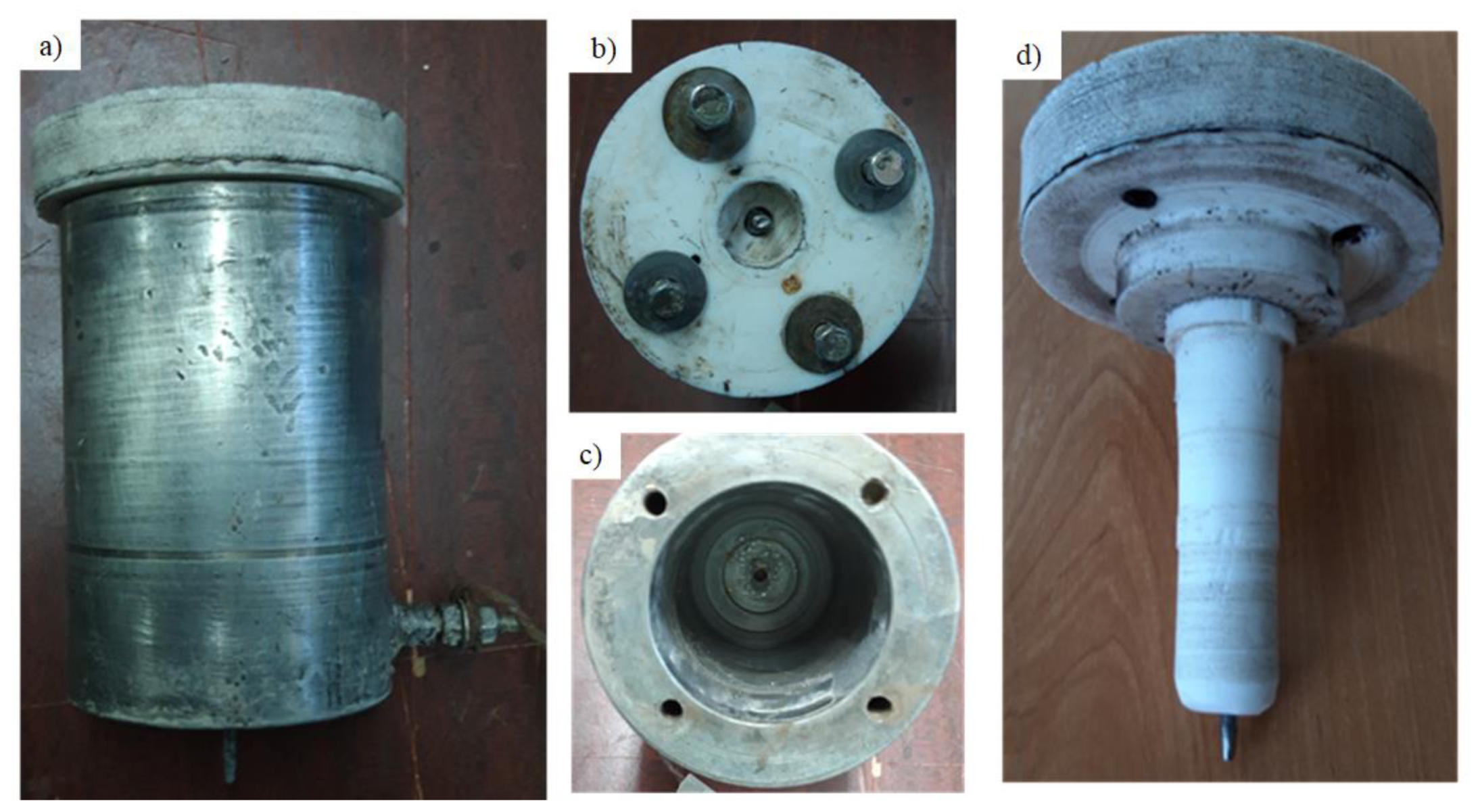
Figure 6.
The positive electrode: a) the outer part of the front end of the positive electrode is completely insulated with fluoroplast; b) if there is a space between the insulation and the electrode; 1 – metal rod; 2 – fluoroplast; 3 – the space between the metal electrode and its insulation.
Figure 6.
The positive electrode: a) the outer part of the front end of the positive electrode is completely insulated with fluoroplast; b) if there is a space between the insulation and the electrode; 1 – metal rod; 2 – fluoroplast; 3 – the space between the metal electrode and its insulation.
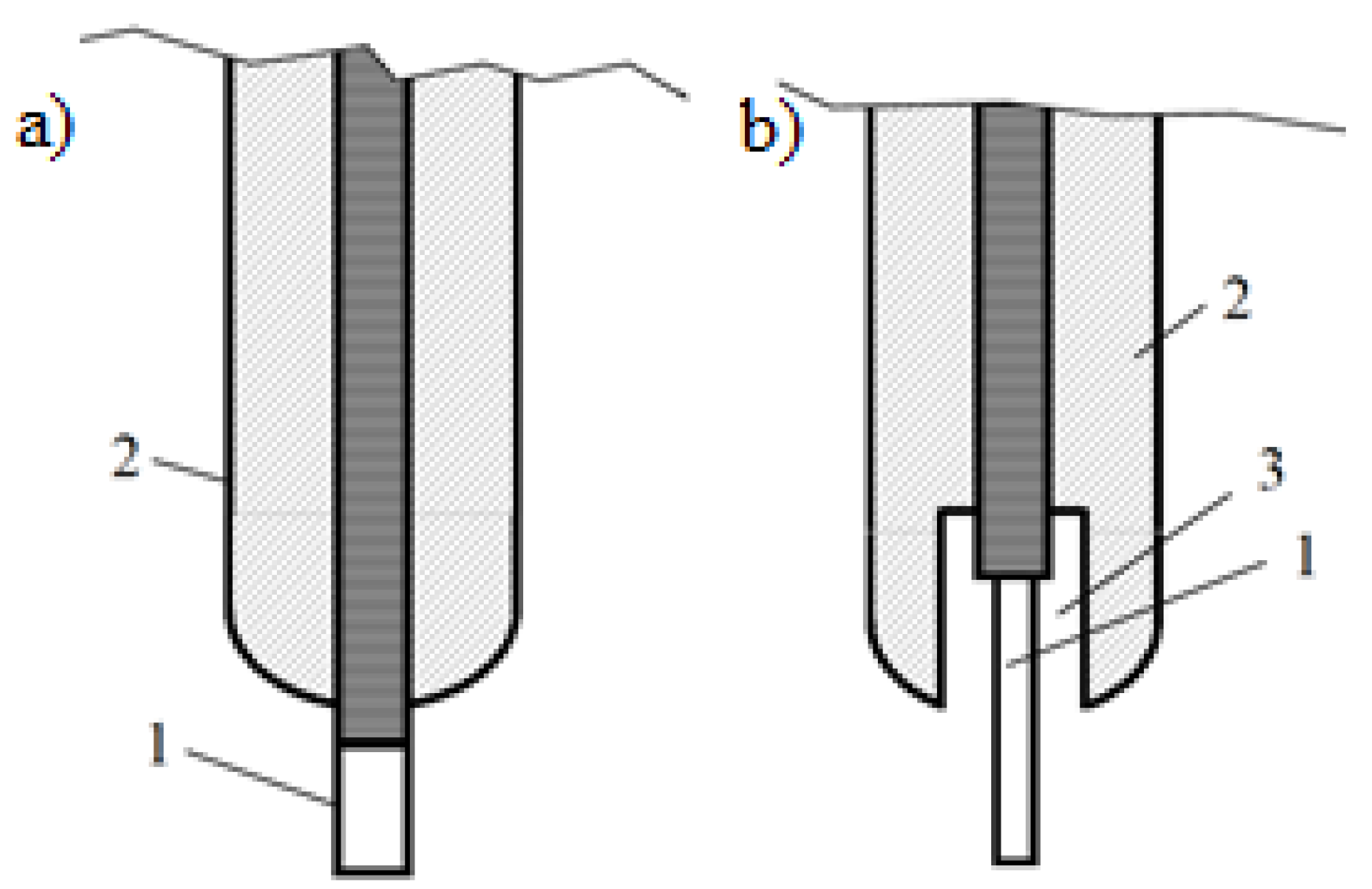
Figure 7.
Front end of the working electrode: S - is the distance between the electrode and its insulation, d - is the electrode diameter, D - is the insulation diameter.
Figure 7.
Front end of the working electrode: S - is the distance between the electrode and its insulation, d - is the electrode diameter, D - is the insulation diameter.
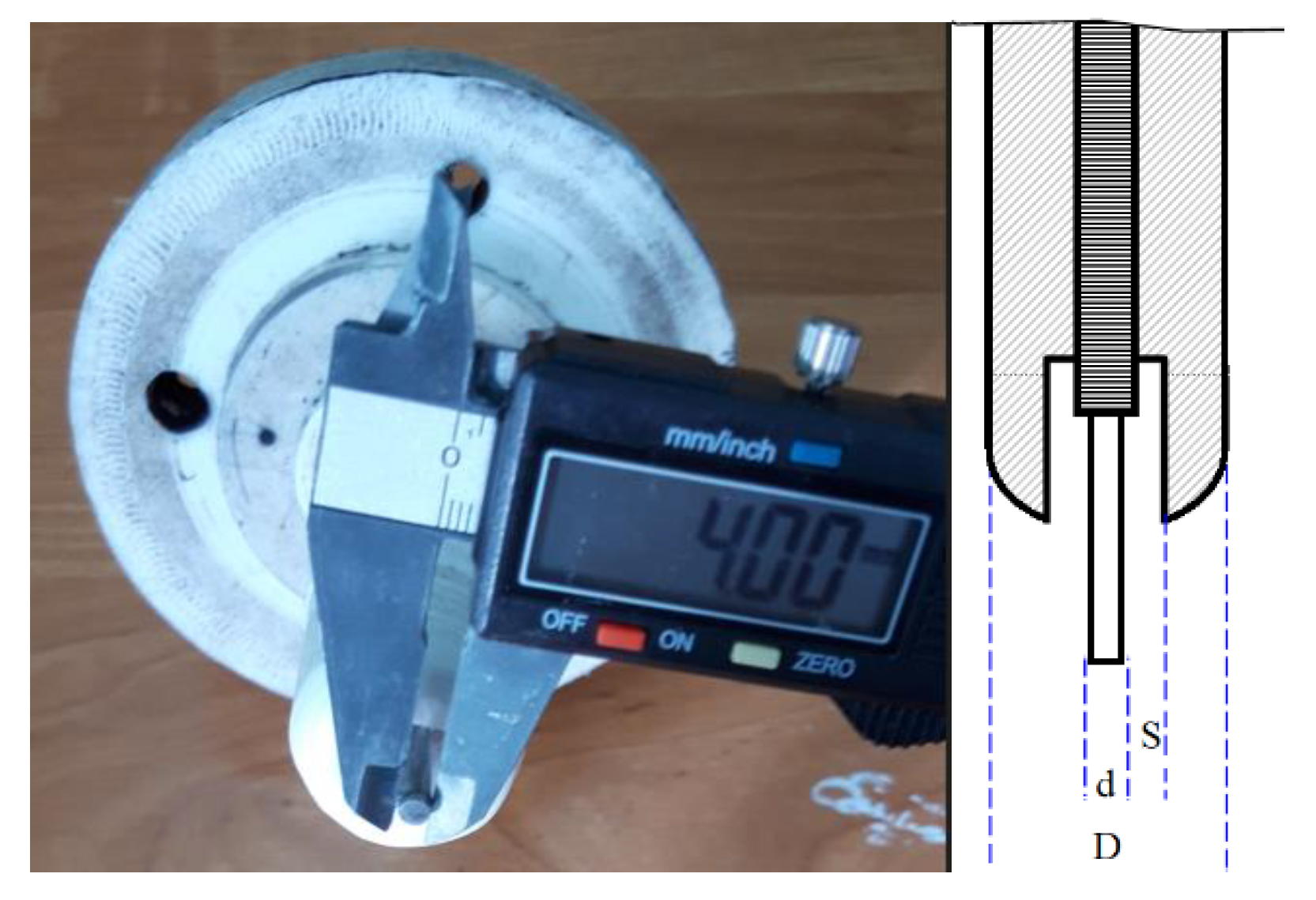
Figure 8.
Dependence of the yield of the finished product on the capacity of the capacitor and the number of pulse discharges: 1 - the outer part of the front end of the positive electrode is completely insulated with fluoroplastic (sample № 1); 2 - in the presence of space between the insulation and the electrode (sample № 2).
Figure 8.
Dependence of the yield of the finished product on the capacity of the capacitor and the number of pulse discharges: 1 - the outer part of the front end of the positive electrode is completely insulated with fluoroplastic (sample № 1); 2 - in the presence of space between the insulation and the electrode (sample № 2).
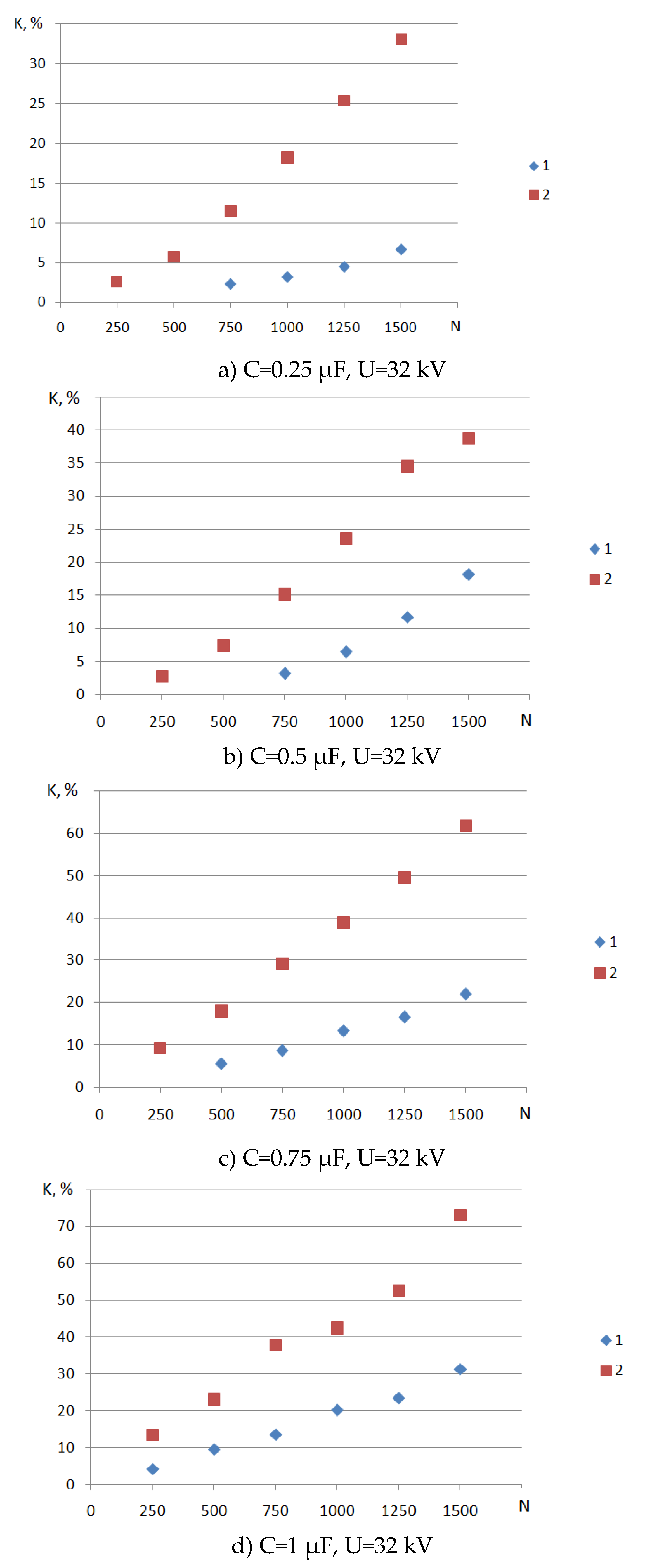

Table 1.
Technical characteristics of the installation.
| Working fluid | Technical water |
| Power supply network parameters: | |
| Voltage, V | 220 |
| Frequency, Hz | 50 |
| Power consumption, kW | 2,5 |
Table 2.
Results of the research of the dependence of the insulation diameter (D) on the diameter of the electrode (d) for sample № 1.
Table 2.
Results of the research of the dependence of the insulation diameter (D) on the diameter of the electrode (d) for sample № 1.
| N | 2000 | 4000 | 6000 | 8000 |
| D =3×d | ||||
| U=30 kV | + | + | - | - |
| U=40 kV | + | - | - | - |
| D =4×d | ||||
| U=30 kV | + | - | - | - |
| U=40 kV | - | - | - | - |
| D =5×d | ||||
| U=30 kV | + | + | - | - |
| U=40 kV | + | - | - | - |
| D =6×d | ||||
| U=30 kV | + | + | + | + |
| U=40 kV | + | + | - | - |
| D =7×d | ||||
| U=30 kV | + | + | + | + |
| U=40 kV | + | + | + | + |
| Note: "+" - the fluoroplast is not damaged, "-" - the fluoroplast is damaged. | ||||
Table 3.
Results of the research of the dependence of the insulation diameter (D) on the electrode diameter (d) for sample № 2.
Table 3.
Results of the research of the dependence of the insulation diameter (D) on the electrode diameter (d) for sample № 2.
| N | 2000 | 4000 | 6000 | 8000 |
| D =2×d | ||||
| U=30 kV | + | + | + | + |
| U=40 kV | - | - | - | - |
| D =3×d | ||||
| U=30 kV | + | + | + | + |
| U=40 kV | + | + | - | - |
| D =4×d | ||||
| U=30 kV | + | + | + | + |
| U=40 kV | + | + | + | + |
| Note: “+” – fluoroplastic is not damaged, “-” – fluoroplastic is damaged. | ||||
Table 4.
Resilts of research then determine the ratio of distances between the electrode and yts insulation.
Table 4.
Resilts of research then determine the ratio of distances between the electrode and yts insulation.
| N | 2500 | 5000 | 7500 | 10000 |
| S=1 mm | ||||
| U=30 kV | + | + | + | + |
| U=40 kV | + | + | - | - |
| U=50 kV | - | - | - | - |
| S=2 mm | ||||
| U=30 kV | + | + | + | + |
| U=40 kV | + | + | + | + |
| U=50 kV | + | + | - | - |
| S=3 mm | ||||
| U=30 kV | + | + | + | + |
| U=40 kV | + | + | + | + |
| U=50 kV | + | + | + | + |
| S=8 mm | ||||
| U=30 kV | + | + | + | + |
| U=40 kV | + | + | + | + |
| U=50 kV | + | + | + | + |
| Note: “+” – fluoroplastic is not damaged, “-” – fluoroplastic is damaged. | ||||
Disclaimer/Publisher’s Note: The statements, opinions and data contained in all publications are solely those of the individual author(s) and contributor(s) and not of MDPI and/or the editor(s). MDPI and/or the editor(s) disclaim responsibility for any injury to people or property resulting from any ideas, methods, instructions or products referred to in the content. |
© 2025 by the authors. Licensee MDPI, Basel, Switzerland. This article is an open access article distributed under the terms and conditions of the Creative Commons Attribution (CC BY) license (https://creativecommons.org/licenses/by/4.0/).
Copyright: This open access article is published under a Creative Commons CC BY 4.0 license, which permit the free download, distribution, and reuse, provided that the author and preprint are cited in any reuse.


