

Submitted:
11 March 2025
Posted:
12 March 2025
You are already at the latest version
Abstract
Antarctic microorganisms have genomic characteristics and biological functions to ensure survival in complex habitats, potentially representing bioactive compounds of biotechnological interest. Pseudarthrobacter sp. So.54 is an Antarctic bacteria strain isolated from the rhizospheric soil of Colobanthus quitensis. Our work aimed to study its genomic characteristics and metabolic potential, linked to environmental adaptation and the production of secondary metabolites with possible biotechnological applications. Whole-genome sequencing, assembly, phylogenetic analysis, functional annotation, and genomic islands prediction were performed to determine the taxonomic affiliation and differential characteristics of the strain So.54. Additionally, Biosynthetic Gene Clusters (BGCs) responsible for secondary metabolites production were identified. The assembled genome of strain So.54 has 3,871,805 bp with 66.0 % G + C content. Phylogenetic analysis confirmed that strain So.54 belongs to the Pseudarthrobacter genus, nevertheless, its nucleotide and amino acid identity values were below the species threshold. The main metabolic pathways and 64 genomic islands associated with stress defense and environmental adaptation, such as heavy metal resistance genes, were identified. AntiSMASH analysis predicted six BGCs with low or no similarity to known clusters, suggesting potential as novel natural products. These findings indicate that strain So.54 could be a novel Pseudarthrobacter species with significant environmental adaptation and biotechnological potential.
Keywords:
extreme environments
; microorganisms
; adaptation
; whole genome
; bioactive compounds
1. Introduction
Pseudarthrobacter, a genus of the family Micrococcaceae, which belongs to the phylum Actinobacteroidota, comprises aerobic, motile, and Gram-positive bacteria [1]. This genus is classified outside the Arthrobacter genus due to differences in phylogenetic position and chemotaxonomic traits, including a polar lipid profile, quinone system, and peptidoglycan type, between the two groups [2,3]. However, both genera have similar genomes containing features to survive in adverse environmental conditions, such as the Antarctic. This continent is considered the coldest, driest, and windiest environment [4]. These extreme conditions have favoured the evolution and adaptation of microorganisms in the Antarctic.
Previous studies have described that Pseudarthrobacter sp. has functional genes that resist desiccation, low temperature and nutritional levels, and high irradiation conditions [5,6]. Some of these genes are related to membrane transport, stress response, resistance to antibiotics and toxic compounds, metabolism of carbohydrates and aromatic compounds, and heavy metal tolerance [7,8]. Polysaccharides, such as glycogen, trehalose, and maltodextrin, are major carbohydrates present in cold-adapted microorganisms, and bacteria with their complete metabolic pathways indicate the ability to conserve energy and its utilisation [9]. Another survival strategy appears to be to possess a flexible cellular membrane resulting from a higher proportion of unsaturated fatty acids and a high production of catalases and superoxide dismutases that have considerable capacity to turn down higher reactive oxygen species (ROS) assembly [10].
Actinobacteroidota phylum members such as Pseudarthrobacter sp. could generate new metabolic pathways under stress conditions, allowing the synthesis of new bioactive products with unique properties and structures associated with the presence of biosynthetic gene clusters (BGCs). Actinobacteroidota is the most productive group of bacteria in drug discovery. It can possess dozens of BGCs to produce secondary metabolites, and only about 10% have been described [11]. Due to its known efficiency in secondary metabolites production, this group still is to be extensively explored and reported to have bioactive compounds with several biotechnological applications, including antibiotic, antifungal, anti-inflammatory, antiparasitic, antitumor, antiviral, insecticidal, growth-promoting metabolites and enzyme inhibitors [12]. In this context, in the present work, we isolated a Pseudarthrobacter strain from Antarctic rhizospheric soil and studied its genomic characteristics associated with environmental adaptation and metabolic potential.
2. Materials and Methods
2.1. Bacterial Isolation and Cultivation
Rhizosphere soil samples were collected in triplicate between February and May 2022 from Colobanthus quitensis plants on King George Island, Antarctica. Three quadrants (5 × 5 m each) were established at each sampling site, representing three rhizosphere cores. Within each quadrant, three plants and their rhizosphere soil were randomly selected and combined to form a composite rhizosphere soil sample. During sampling, the rhizosphere soil of each plant was carefully extracted by excavating the root zone to a depth of 0–20 cm using a sterilized spade. Soil located approximately 2 mm from the roots was collected and placed into sterile polyethylene bags. The samples were refrigerated at 4°C, transported to the laboratory, and stored at −80°C until further analysis.
To isolate bacteria from previous samples, 1 g of soil was taken and diluted in 100 mL of sterile saline solution (0.9%). The mixture was then shaken for 30 minutes in a vortex at room temperature. Subsequently, 50 µL of the shaken mixture was plated onto Tryptic Soy Agar (TSA) (agar 15.0 g/L, pancreatic digest of casein 15.0 g/L, sodium chloride 5.0 g/L, and papaic digest of soybean 5.0 g/L), King Agar B (agar 10.0 g/L, dipotassium hydrogen phosphate 1.5 g/L, magnesium sulfate 1.5 g/L, and mixed peptone 20.0 g/L), and R2A (yeast extract 0.5 g/L, protease peptone 0.5 g/L, casein hydrolysate 0.5 g/L, glucose 0.5 g/L, starch soluble 0.5 g/L, sodium pyruvate 0.3 g/L, di-potassium hydrogen phosphate 0.3 g/L, magnesium sulfate anhydrous 0.024 g/L, and agar-agar 15.0 g/L) culture media plates in serial dilutions ranging from 10⁻² to 10⁻¹⁰. The cultures were incubated for 4 weeks at 15 °C. The resulting colonies were isolated and subsequently plated until purification in Luria Bertani (LB) agar medium (bacteriological agar 15.0 g/L, tryptone 10.0 g/L, sodium chloride 10.0 g/L, and yeast extract 5.0g/L). Pure cultures were preserved by freezing at −80 °C in glycerol (20% v/v) until further use. The strain used in this study was deposited in the Colección Chilena de Cultivos Tipo – CCCT (Universidad de La Frontera) under accession code So.54.
For DNA extraction, the isolated bacterial strain was inoculated on LB agar and incubated at 15 °C for seven days until suitable microbial growth was observed.
2.2. DNA Extraction
Genomic DNA extraction was performed using the AccuPrep ® Genomic DNA Extraction Kit (K-3032G, BIONEER, Daejeon, Korea) following the manufacturer’s instructions. DNA quality was assessed by fluorescence quantification using the Qubit dsDNA HS Assay Kit (Invitrogen, USA), and a final DNA concentration greater than or equal to 50 ng/μL was selected. Integrity was verified by 1% agarose gel and purity according to A260/A280.
2.3. Genome Sequencing and Assembly of Pseudarthrobacter sp. So.54
The genome sequencing was performed using Oxford Nanopore Technologies (ONT) technologies. The ONT library was prepared using the Rapid Sequencing kit SQK-RBK004 and sequenced on the MinION Mk1C of the Extreme Environments Biotechnology Laboratory (Universidad de La Frontera, Chile), according to the manufacturer’s recommendations and using the MinKNOW software v.4.0.20. The base-calling of the ONT reads was performed with Guppy v3.1.5 software. The quality control of readings was evaluated using the Nanoplot v1.40.0 tool [13]. After that, the adapters were cut with Porechop v.0.2.4, and the sequences with a quality more significant than ten were filtered using Nanofilt v2.8.0 [13]. De novo assembly was performed using NECAT v.0.0.1 [14] with the default tool parameters. Finally, the quality and contamination of the genomes assembled with the Quast v5.0.2 and CheckM v1.1.3 tools were evaluated [15,16].
2.4. Phylogenetic Analysis
The Type Strain Genome Server (TYGS) was used to analyze the phylogeny [17]. First, the So.54 genome was compared against all type strain genomes available in the TYGS database via the MASH algorithm, a fast approximation of intergenomic relatedness [18] and the type strains with the smallest MASH distances were chosen. Second, the 16S rDNA gene sequence of the So.54 strain was extracted using RNAmmer [19] and subsequently BLASTed [20]. All pairwise comparisons among the genomes were conducted using the Genome BLAST Distance Phylogeny approach (GBDP) and accurate intergenomic distances inferred under the algorithm ’trimming’ and distance formula d5 [21]. The resulting intergenomic distances were used to infer a balanced minimum evolution tree with branch support via FASTME 2.1.6.1, including SPR postprocessing [22]. Branch support was inferred from 100 pseudo-bootstrap replicates each. The tree was rooted at the midpoint and visualized with PhyD3 [23]. The type-based species clustering using a 70% digital DNA-DNA hybridization (dDDH) radius around each of the 15 type strains was done as previously described [17] and subspecies clustering was done using a 79% dDDH threshold [24]. Also, the pairwise whole genome comparisons of average nucleotide identity (ANI) and average amino acid identity (AAI) were calculated according to Konstantinidis and Tiedje using the scripts available at http://enve-omics.gatech.edu/ [25].
2.5. Genomic Bioinformatics Analysis
A circular map of the So.54 genome was prepared using the PROKSEE server (https://beta.proksee.ca/projects). The draft genome sequence was annotated using the Rapid Annotation Subsystem Technology (RAST) server. The RAST server annotated and classified predicted genes according to function [26,27]. Genome annotation was performed using PROKKA [28] and the amino acid sequences were submitted to the Kyoto Encyclopedia of Genes and Genomes (KEGG). The functional categories analysis and metabolic pathways were determined using BlastKOALA in KEGG [29] and Anvi’o7 platform [30]. Further, CAZyme analysis was conducted with the help of dbCAN3 server, selecting three tools that comprise HMMER: dbCAN (E-Value < 1e-15, coverage > 0.35), DIAMOND: CAZy (E-Value < 1e-102) and HMMER: dbCAN-sub (E-Value < 1e-15, coverage > 0.35) [31].
3. Results
3.1. General Genomic Features of Strain So.54
We sequenced and assembled the complete genome of strain So.54 in one unique contig with a total length of 3,871,805 base pairs (bp) and a G + C content of 66.0 %. Using Proksee, a circular map of this genome was obtained, as shown in Figure 1A. The genomic annotation revealed a predicted number of protein-coding genes (CDSs) of 4732, including hypothetical protein, and the total numbers of tRNA and rRNA are 55 and 16, respectively. The results from phylogenetic analysis using TYGS showed that strain So.54 was closely related to Pseudarthrobacter albicanus NJ-Z5 and Arthrobacter oryzae DSM 25586 as shown in Figure 1B. These results confirmed that this strain belongs to the Micrococcaceae family and Actinobacteroidota phylum. Additionally, the strain So.54 exhibited the highest dDDH, ANI, and AAI values with P. albicanus NJ-Z5 (25.3% dDDH, 83%ANI, 81%AAI) and A. oryzae DSM 25586 (24.6% dDDH, 83%ANI, 82%AAI) (Table S1, Figure S1). However, these values were relatively low, suggesting that the Antarctic strain So.54 might be a novel species of the genus Pseudarthrobacter.
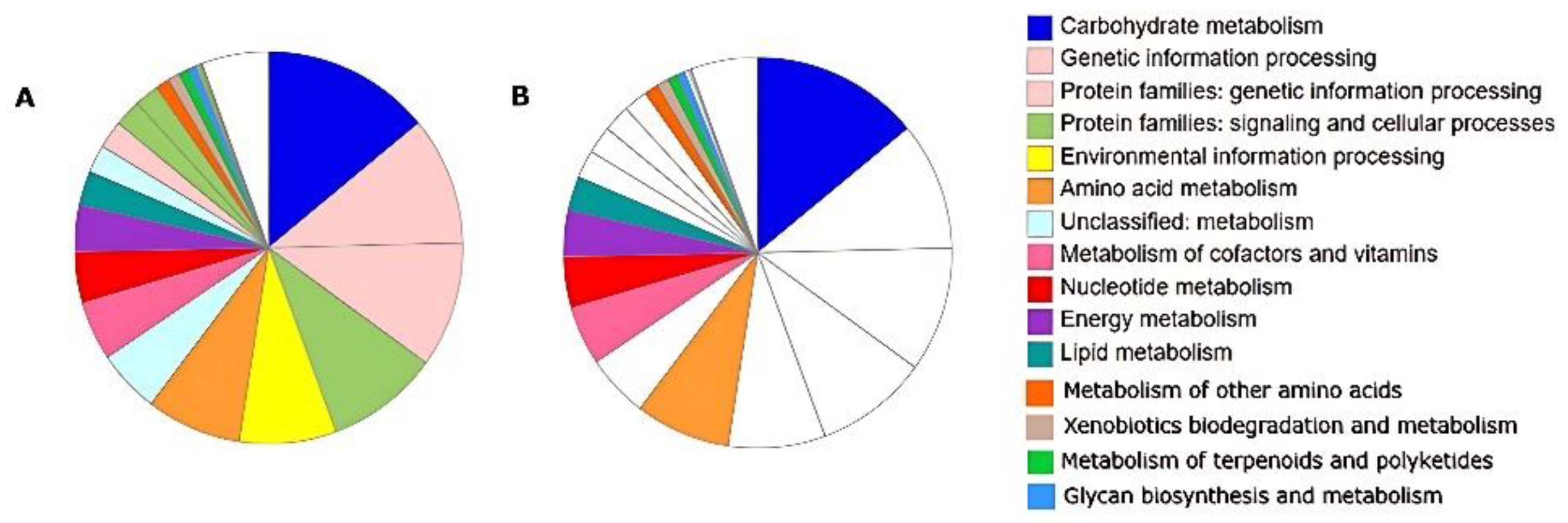
Genomic functional analysis was performed using the KEGG database. The approximate functional distribution of strain So.54 was obtained. Among 4546 genes, 31.5 % (1434) of them were annotated. Gene functions were divided into four categories by the KEGG database: Metabolism (708 genes), Genetic Information Processing (334 genes), Cellular Process (196 genes), and Environmental Information Processing (116 genes), and then each category was further subdivided into subcategories (Figure 2A). Main genetic content was involved in metabolic pathways of carbohydrates (202 genes), amino acids (114), cofactors and vitamins (70 genes), nucleotides (61 genes), energy (55 genes), lipids (41 genes), other amino acids (17 genes), terpenoids and polyketides (12 genes) and glycan (10 genes). Also, 14 genes were related to xenobiotics biodegradation and metabolism pathway (Figure 2B). The results confirmed that strain So.54 has a strong carbohydrate metabolism, which might be related to environmental adaptation and complex carbohydrates’ degradation, transformation, and utilisation.
Figure 1.
(A) Genome circle map of strain Pseudarthrobacter sp. So.54. GC content (black), GC skew curves (+/-, green/ purple), coding sequences (CDSs, dark blue), rRNAs (light orange), tRNAs (pink), tmRNAs (vermilion), and open reading frames (ORFs, light blue); (B) Phylogenetic tree was constructed based on the whole genome using the Genome-BLAST distance phylogenetic method (GBDP) tool. According to the GBDP distance formula d5, the branch lengths were scaled.
Figure 1.
(A) Genome circle map of strain Pseudarthrobacter sp. So.54. GC content (black), GC skew curves (+/-, green/ purple), coding sequences (CDSs, dark blue), rRNAs (light orange), tRNAs (pink), tmRNAs (vermilion), and open reading frames (ORFs, light blue); (B) Phylogenetic tree was constructed based on the whole genome using the Genome-BLAST distance phylogenetic method (GBDP) tool. According to the GBDP distance formula d5, the branch lengths were scaled.
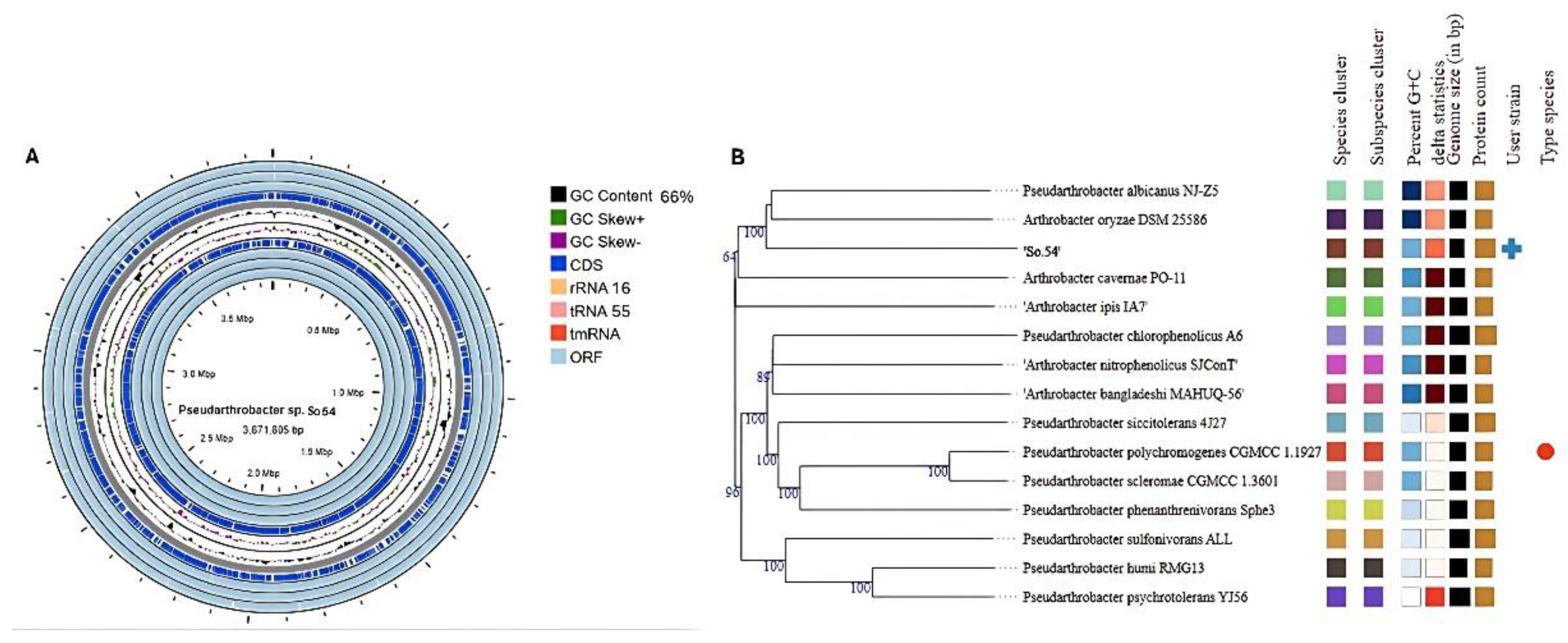
Figure 2.
(A) Functional categories analysis of Pseudarthrobacter sp. So.54. (B) Genes involved in metabolic pathways. The results were based on BlastKOALA in the Kyoto Encyclopedia of Genes and Genomes (KEGG).
Figure 2.
(A) Functional categories analysis of Pseudarthrobacter sp. So.54. (B) Genes involved in metabolic pathways. The results were based on BlastKOALA in the Kyoto Encyclopedia of Genes and Genomes (KEGG).
3.5. Metabolic Features and Genes Related to Environmental Adaptation
Metabolic reconstruction indicated that strain So.54 possesses several genes involved in pathways related to environmental adaptation (Table S2). The energy metabolism was associated with carbon fixation (M00165, reductive pentose phosphate cycle, and M00579, phosphate acetyltransferase-acetate kinase pathway) and metabolism of methane (M00345, formaldehyde assimilation) and sulfur (M00176, assimilatory sulfate reduction). Two complete pathways to ATP synthesis were identified, involving cytochrome c oxidase (M00155) and F-type ATPase (M00157). Also, fatty acid metabolism is associated with the obtention of energy through beta-oxidation for acyl-CoA synthesis (M00086). Related to amino acid metabolism, we identified a complete GABA (gamma-aminobutyrate) shunt pathway (M00027). For the metabolism of cofactors and vitamins, thiamine salvage pathway (M00899) and biosynthesis pathway of Pyridoxal-P (M00916), NAD (M00115), coenzyme A (CoA) (M00120), lipoic acid (M00881), and heme (M00926) were completed in the strain So.54 genome sequence. Also, a complete pathway for C1-unit interconversion (M00140) was identified.
The strain So.54 only had two blocks missing in the non-mevalonate pathway for the biosynthesis of C5 isoprenoids (M00096). Also, this strain has the potential to degrade xenobiotics such as toluene (M00538), xylene (M00537), catechol (M00568), and phenylacetate (M00878). Thirteen genes were related to these pathway modules, although none are complete. With regards to drug resistance, this strain has the gene for beta-lactam resistance (M00627, beta-lactamase class A (EC 3.5.2.6)) and multidrug resistance associated with multidrug efflux pumps (M00639, MexCD-OprJ; M00769, MexPQ-OpmE; and M00714, QacA).
Specifically regarding carbohydrate metabolism, this strain posses the Embden–Meyerhof pathway of glycolysis (M00001), gluconeogenesis (M00003), the citrate cycle (Krebs cycle) (M00009), pentose phosphate pathway (oxidative (M00006) and nonoxidative phases (M00007)), the Leloir pathway of galactose degradation (M00632), and, the semi-phosphorylative Entner-Doudoroff pathway (M00308) as an interesting metabolic strategy to degradate glucose and survive to different environmental conditions. Also, we identified genes related to the glyoxylate cycle (M00012), a metabolic variation of the Krebs cycle. In addition, this strain possesses metabolic pathways for biosynthesis and degradation of polysaccharides and oligosaccharides such as glycogen (M00854, M00855) and trehalose (M00565), respectively.
3.5.1. CAZyme Analysis
Based on the CAZyme annotation, the strain So.54 encodes 40 glycoside hydrolases (GH), 39 glycosyltransferases (GT), eight carbohydrate-binding modules (CBM), five auxiliary activities (AA), and four carbohydrate esterases (CE) (Figure 3). These observations indicated that glycoside hydrolases and glycosyl transferases accounted for the majority in strain So.54, providing a basis for forming, transferring and further metabolizing monosaccharides, polysaccharides, and glycosides. We identified CAZyme members of GH and GT families involved in trehalose and glycogen metabolic pathways (Table 1).
The trehalose and glycogen metabolic pathways were evaluated using the KEGG annotation database with the Anvi’o7 platform. The strain So.54 exhibited a complete TreY/TreZ pathway (enzymes such as maltooligosyl-trehalose synthase and maltooligosyl-trehalose trehaldohydrolase) for trehalose biosynthesis and genes corresponding to the classical path of bacterial glycogen metabolism were identified (Figure S2). This pathway includes five essential enzymes: ADP-glucose pyrophosphorylase (GlgC), glycogen synthase (GlgA), glycogen branching enzyme (GlgB), glycogen phosphorylase (GlgP), and glycogen debranching enzyme (GlgX). Additionally, the seed viewer identified all genes involved in both pathways within the RAST annotation. Therefore, we can confirm the existence of these complete pathways for trehalose and glycogen metabolism in the strain So.54.
Figure 3.
CAZy annotation classification distribution map. The horizontal axis is the CAZy category, and the vertical axis is the number of genes annotated by the corresponding category.
Figure 3.
CAZy annotation classification distribution map. The horizontal axis is the CAZy category, and the vertical axis is the number of genes annotated by the corresponding category.
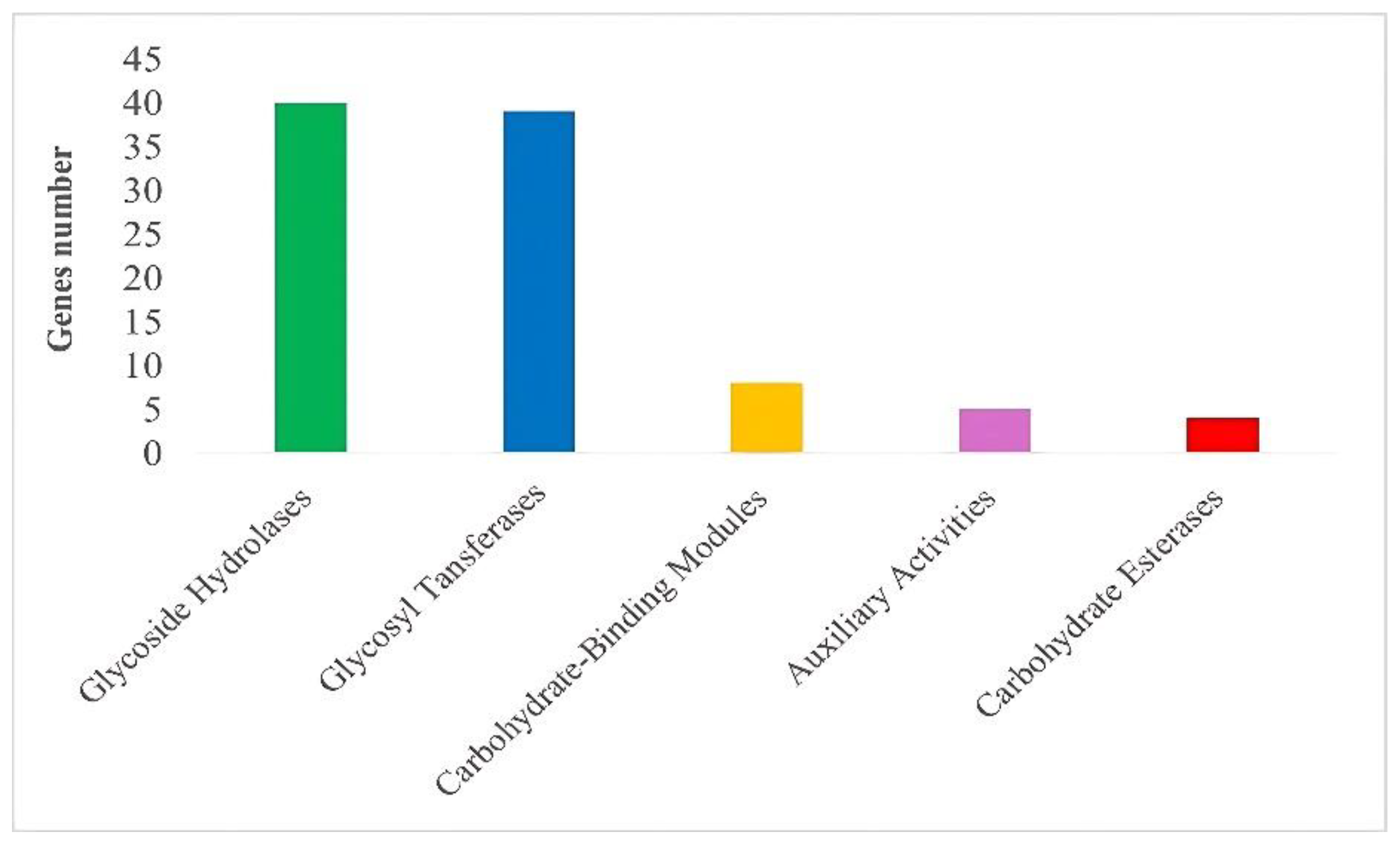

Table 1.
List of enzymes in Pseudarthrobacter sp. So.54 associated with trehalose and glycogen metabolic pathways.
Table 1.
List of enzymes in Pseudarthrobacter sp. So.54 associated with trehalose and glycogen metabolic pathways.
| CAZyme group | Enzyme activity | Genes | EC Number | Number |
|---|---|---|---|---|
| - | ADP-glucose pyrophosphorylase | glgC | EC 2.7.7.27 | 1 |
|
GT5 |
Predicted glycogen synthase, ADP-glucose transglucosylase, Actinobacterial type | glgA | EC 2.4.1.21 | 2 |
| NDP-glucose---starch glucosyltransferase | waxy | EC 2.4.1.242 | 2 | |
|
GH13 CBM48 |
1,4-alpha-glucan (glycogen) branching enzyme, GH-13-type | glgB | EC 2.4.1.18 | 3 |
| - | UTP--glucose-1-phosphate uridylyltransferase | galU | EC 2.7.7.9 | 1 |
| GT3 | Glycogen synthase | gys | EC 2.4.1.11 | 1 |
| GT35 | Glycogen phosphorylase | glgP | EC 2.4.1.1 | 3 |
| - | Phosphoglucomutase | pgm | EC 5.4.2.2 | 1 |
| GH13 CBM48 |
Isoamylase/Glycogen debranching enzyme | treX/glgX | EC 3.2.1.68/ 3.2.1.- | 2 |
| Malto-oligosyltrehalose synthase | treY | EC 5.4.99.15 | 5 | |
| Malto-oligosyltrehalose trehalohydrolase | treZ | EC 3.2.1.141 | 1 |
GH, glycosyl hydrolase; CBM, carbohydrate-binding modules; GT, glycosyltransferase; EC, enzyme commission number.
3.5.2. Stress Response Genes in the Strain So.54
Genome analysis revealed that strain Pseudarthrobacter sp. So.54 has multiple genes related to the response to osmotic and oxidative stress, which could be representative of its adaptation to the Antarctic environmental conditions (Table 2). Two genes (aqpZ and glpF) are related to the osmoregulation in this genome, encoding the aquaporin Z and glycerol uptake facilitator protein. Moreover, the genome of strain So.54 contained eleven genes predicted to encode antioxidant enzymes such as catalase, superoxide dismutase, thioredoxins, peroxidases, organic hydroperoxide resistance proteins, and NsrR protein, which is also associated with nitrosative stress.
3.6. Genomic Islands Prediction
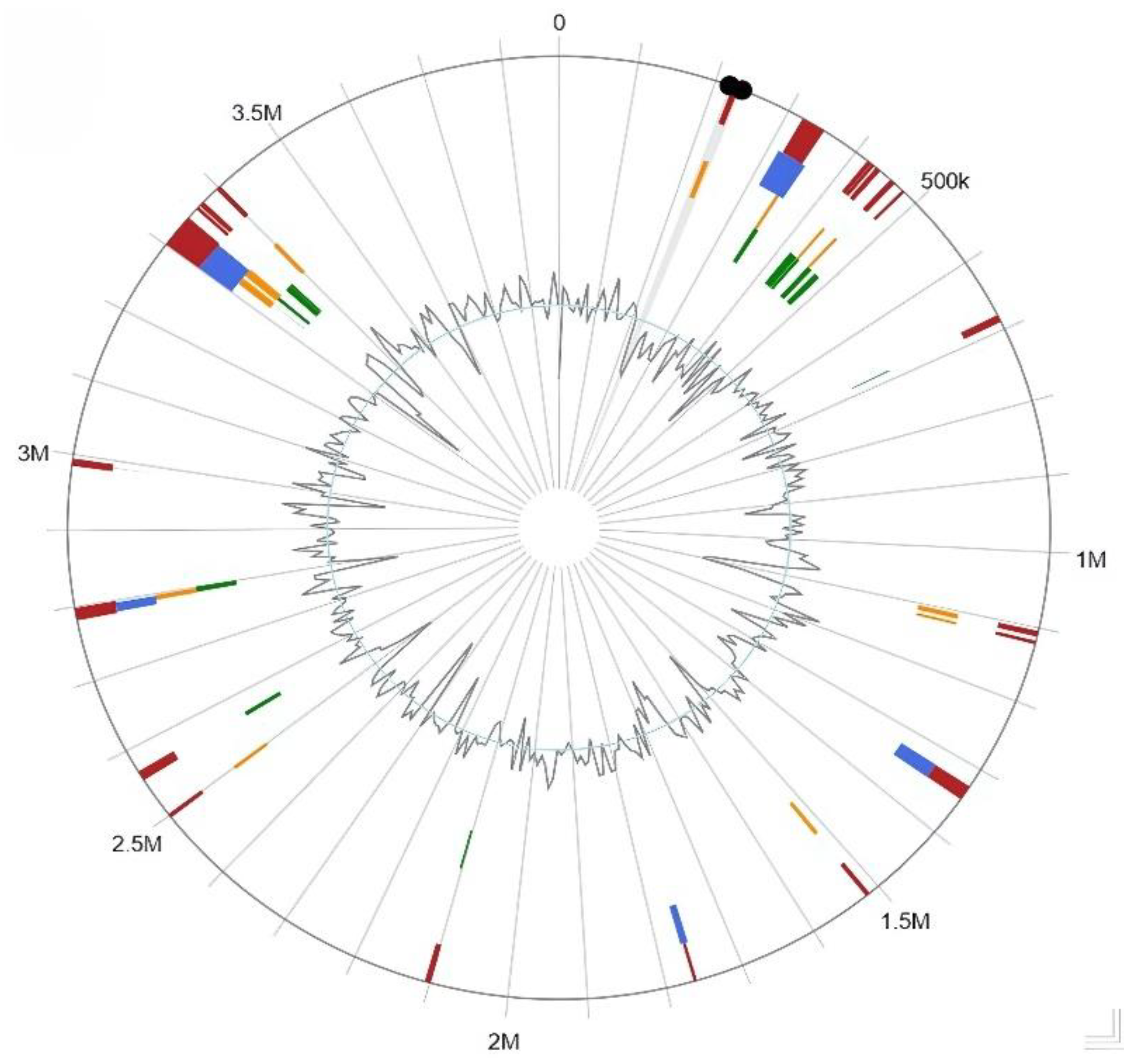
A total of 64 genomic islands (GIs) and their location in the genome of the strain were predicted by IslandViewer4 (Figure 4). The 64 GIs were composed of 392 genes, with gene distributions ranging from 222,813 to 3,343,834 bp. Among them, 301 genes expressed hypothetical nonfunctional proteins, 11 genes expressed mobile element proteins (IS3 family transposase: ISBli10, ISBli28, ISAau1, and ISAar46), and the most were related to adaptability to the Antarctic environment (Table S3).
We identify many genes associated with the metabolism of carbohydrates (maa, malQ, sugA, and rbs genes), lipids (dagK gene), nucleotides (rutD, upp, and puR genes), amino acids (dapH and pat genes), cofactors and vitamins (thiM, btuD, and lcfB genes), and energy (dsbD gene). Two GIs contain the genes amdA and fmdA that allow bacteria to use acetamide and formamide as a carbon or nitrogen source, respectively. Also, the nifH gene is present in the genome of this strain, which plays a crucial role in N2 fixation.
Other genes (tcrY, mshA, murQ, anmK, dasA, B, C, and ripB) associated with stress defence and environmental adaptation were identified in the strain So.54 . In addition, this strain contained two GIs with genes (gsiA, gsiB, gsiC, gsiD, and ggt) involved in these functions, as well as two GIs with genes related to heavy metal resistance, including copper, cobalt, zinc, and cadmium. Three genes within the same GI encoded the multicopper oxidases mco and MmcO, along with a copper-exporting P-type ATPase B (CopB). Other GIs contained czcD genes encoding cobalt-zinc-cadmium resistance proteins and zitB genes that codified zinc transporters. Additionally, six crcB genes related to fluorite resistance were identified in three GIs of our strain, and the bcrA gene encodes a transport ATP-binding protein that confers resistance to bacitracin.
Figure 4.
Predicted genomic islands (GIs) of Pseudarthrobacter sp. So.54. Red shows the prediction by the integrated approach; blue represents the results from IslandPath-DIMOB; orange displays genomic islands predicted via SIGI-HMM; green shows the results from IslandPick.
Figure 4.
Predicted genomic islands (GIs) of Pseudarthrobacter sp. So.54. Red shows the prediction by the integrated approach; blue represents the results from IslandPath-DIMOB; orange displays genomic islands predicted via SIGI-HMM; green shows the results from IslandPick.
3.7. Secondary Metabolites
To gain further insight into the potential secondary metabolites of strain So.54, secondary metabolism genes were predicted with antiSMASH tool. This analysis revealed six distinct gene clusters related to betalactone, type III polyketide synthase (T3PKS), non-alpha poly-amino acids like e-Polylysin (NAPAA), an unspecified ribosomally synthesised and post-translationally modified peptide product (RiPP-like), and two nonribosomal peptide synthetase like fragments (NRPS-like) (Figure 5). Cluster 1 (betalactone) had a high similarity of 95-100% with betalactone BGC in species of the genus Arthrobacter and a strain of Pseudarthrobacter scleromae (Figure S3). However, this cluster and the identified NRPS-like sequences exhibited low similarity (less than 50%) to known BGCs in the database. Meanwhile, T3PKS, NAPAA, and RiPP-like showed no similarity to any known BGC.
4. Discussion
Pseudarthrobacter species are found in diverse environments, including soil, water, and extreme habitats [34]. In this study, we isolated the strain So.54 from Antarctic soil, similar to P. albicanus NJ-25 [35] and P. psychrotolerans YJ56 [36], which were also isolated from Antarctic soil. According to the dDDH, ANI, and AAI results, this strain may represent a novel species within the genus Pseudarthrobacter. The dDDH values did not exceed the 70% threshold for species delineation. Additionally, the ANI and AAI values were below the recommended cutoff of 95–96% [37] and the proposed species boundary of 85–90% [38], respectively.
The genome of strain So.54 contained several genes related to environmental adaptation and important complete pathways such as GABA pathway were identified. GABA plays an important role as a signaling molecule that responds to pH variation, osmotic or ionic, and cold stress [39,40]. Therefore, its production is considered a strategy to survive stressful environmental conditions. Also, it is known that coenzyme and vitamin metabolism play important roles in the stress adaptation/resistance mechanism. The thiamine salvage pathway and biosynthesis pathway of Pyridoxal-P, NAD, CoA, lipoic acid, and heme were completed in our strain. The potential biotechnological and contribution to the adaptation of bacteria under extreme conditions has been demonstrated in these pathways [41,42,43,44]. Essential thiamin synthetic enzymes such as ThiE (EC 2.5.1.3) are proposed as promising drug targets [45], and the CoA biosynthesis has been reported as antimicrobial drug target too, acquiring biotechnological importance in our strain [46]. In addition, the PdxS enzyme (EC 4.3.3.6) present in the biosynthesis pathway of Pyridoxal-P (vitamin B6) is involved in several types of stress resistance [47].
The presence of genes involved in the non-mevalonate pathway for C5 isoprenoid biosynthesis in the strain So.54 is particularly important. In this pathway, isopentenyl diphosphate (IPP) and dimethylallyl diphosphate (DMAPP) serve as key intermediates, and their component enzymes have been genetically validated as drug targets [48]. Isoprenoids are crucial in helping bacteria adapt to various environmental stresses, including temperature fluctuations, oxidative stress, and osmotic pressure. Carotenoids, a type of isoprenoid, protect bacteria from oxidative damage by detoxifying reactive oxygen species (ROS) [49]. Additionally, due to their unique structure and antioxidant properties, carotenoid pigments are the primary agents preventing the harmful effects of UV radiation [50]. In permanently cold environments, such as Antarctica, where the temperature during the year is usually below zero and does not exceed 15°C, carotenoids play a role in the modulation of membrane fluidity and protect bacterial cells against disruption from freezing.
The genome of strain So.54 also contains genes, and multidrug efflux pumps that may confer resistance to β-lactam antibiotics and multidrug resistance, respectively. Naturally occurring antibiotic resistance genes in Antarctic surface soils mainly encode single or multidrug efflux pumps and provide inactivation of aminoglycosides, chloramphenicol, and β-lactam antibiotics—Gram-positive Actinobacteroidota and Pseudomonadota harbor 9% antibiotic resistance genes [51].
On the other hand, regarding carbohydrate metabolism, it is vital to highlight the metabolic pathway associated with the glyoxylate cycle in strain So.54. This cycle is a metabolic variation of the Krebs cycle, enabling bacteria to metabolize acetate and fatty acids while efficiently assimilating carbon sources, which is crucial for survival in diverse environments [52]. Additionally, this strain possesses metabolic pathways for biosynthesis and degradation of polysaccharides and oligosaccharides, such as glycogen and trehalose. Bacteria with glycogen storage may have more varied lifestyles and occupy more diverse habitats and, thus, on average, will be more durable [53]. Also, it is reported that trehalose is involved in bacterial adaptation to temperature fluctuation, hyperosmolarity, and desiccation resistance [9].
Given the findings on carbohydrate metabolisms analysis, we further explore the carbohydrate-active enzymes (CAZymes), which are enzymes associated with the biosynthesis, binding, and catabolism of carbohydrates such as trehalose and glycogen. The enzymes identified in strain So.54 may play a crucial role in understanding the survival mechanisms of cold-adapted organisms in extreme environments and could have significant biotechnological potential. The presence of complete pathways for trehalose and glycogen metabolism in this strain is consistent with findings in Pseudarthrobacter sulfonivorans strain Ar51 and Arthrobacter sp. PAMC25564, whose enzymes are active at low temperatures and suitable for biotechnological applications [9,54].
Genes encoding osmoregulatory proteins, such as aquaporin Z and glycerol uptake facilitator protein, were also identified in strain So.54. Osmotic stress from the environment is an essential factor determining any microorganism’s ability to increase in its habitat. In a high osmotic environment, the primary response of bacteria is to accumulate various solutes at a concentration nearly equal to the osmolarity of the medium [55]. Multiple osmoregulatory transporters, such as overlapping energy coupling mechanisms, substrate specificity, and mechanosensitive channels, are known to cope with osmotic stress [56]. Aquaporins are an osmotically inducible protein released in an osmoregulatory response, which is required for growing cells. Although bacterial aquaporin proteins can theoretically contribute to osmoregulation, studies indicate that they likely function to improve freeze tolerance under rapid freezing conditions [57]. Similar to our results, the genome of psychotrophic Pseudarthrobacter sulfonivorans strain Ar51 had two aquaporin Z genes [54]. Also, glycerol uptake facilitator proteins is known to be in response to osmotic pressure. The glycerol formation and degradation should be regarded as an osmoregulatory mechanism necessary to maintain a suitable osmotic pressure within the cells [58].
Stress conditions such as cold and toxic pollutants exacerbate cellular oxidative stress, and psychrotolerants possess several molecular mechanisms to cope with these adverse conditions in the Antarctic environment [59]. As a psychrotolerant bacterium, the strain So.54 genome reflected the molecular response to environmental stress, by the presence of anti-oxidative protein-coding genes. At lower temperatures, reactive oxygen species (ROS) production and the associated gas solubility are more significant, and commonly linked with cellular damage. Along with ROS, lower temperature promotes activities like solubility of nutrients, diffusion reduction, stress expansion, and formation and desiccation of ice. Due to the increase in ROS, there is a high production of catalases and superoxide dismutases considered to turn down ROS assembly [10]. The transcriptomic analysis shows the presence of superoxide reductase, 3- Cys thioredoxin peroxidase, and other proteins like anti-oxidation stress proteins and electron-transfer enzymes at lower temperatures [60]. Some of the genes responsible for ROS response under oxidative stress are sodA (encoding for superoxide dismutase), tpx (encoding for thiol peroxidases), trxA (encoding for thioredoxins), osmC/ohr (encoding for organic hydroperoxide reductase), trxB (encoding for thioredoxin reductase), and katA (encoding for catalase). These genes can be present in multiple copies in psychrophiles, contributing to their survival in cold environments and when exposed to high UV radiation [61]. In Actinobacteria, these enzymes have been identified, as well as proteins that regulate genes in the NO stress response and ROS production induced by heavy metals [62]. Similarly, nitric oxide (NO) is a highly reactive and toxic free radical gas that can freely diffuse into cells and attack the redox centers of proteins [63]. High concentrations of heavy metals give rise to ROS production, disrupting the redox homeostasis of cells [64].
Due to their properties, these antioxidant enzymes have been of interest in biotechnology [65,66] with a growing market demand [67]. Cold-adapted enzymes, such as those found in Antarctica, possess inherent properties that make them more effective catalysts at low temperatures. Compared to their mesophilic counterparts, these enzymes can function well under extreme conditions, offering significant market potential in biotechnological industries [68,69]. Several cold-adapted enzymes from Antarctic bacteria have been explored, including superoxide dismutase, thioredoxin, and peroxiredoxin, which have been utilized in the food, cosmetics, healthcare, and pharmaceutical industries [70,71,72,73]. The application of these enzymes has also been reported in agriculture, mainly associated with oxidative stress mitigation in plants, plant growth promotion, bioremediation, and soil protection [74,75]. All these findings suggest that our strain is of biotechnological interest.
Horizontal transfer of mobile elements in microbial communities is an essential mechanism by which bacterial genomes evolve and adapt to specific environmental stresses [76]. Hence, studying the content on the genomic islands could provide information about the evolution, adaptability, metabolic and defense capabilities of Pseudarthrobacter sp. So.54. We identified several genes in this strain linked to adaptation to the Antarctic environment. Among them were the tcrY gene, which encodes a putative sensor histidine kinase essential for bacterial response and adaptation to environmental changes [77], and the mshA gene, which encodes D-inositol-3-phosphate glycosyltransferase, playing a crucial role in the mycothiol (MSH) biosynthesis pathway. The MSH functions as a protected detoxifying cysteine reserve, detoxifying alkylating agents, reactive oxygen and nitrogen species, and antibiotics [78].
Although MSH is the major thiol found in Actinobacteria, this strain has two GIs with genes (gsiA, gsiB, gsiC, gsiD, and ggt genes) associated with the production and utilization of glutathione, protecting the cell from the action of low pH, chlorine compounds, and oxidative and osmotic stresses [79,80,81]. Cell wall, membrane, and envelope-component synthesis in bacteria are fundamental to supporting cold and protecting the cell against disruption by ice formation and osmotic pressure [82]. Some genes (murQ, anmK, dasA, B, C, and ripB genes) that respond to these functions were found in our strain.
We can also gain valuable insights into specific genes in this strain. For instance, the presence of the nifH gene could suggest that strain So.54 functions as a plant growth-promoting rhizobacterium, which was isolated from the rhizospheric soil of Colobanthus quitensis. Similar results were found in Pseudarthrobacter oxydans NCCP-2145, considered a halotolerant plant growth-promoting bacterium isolated from rhizospheric soil [83], and Pseudarthrobacter chlorophenolicus BF2P4-5 with potential as biofertilizer [84]. Other studies also indicated that P. oxydans, previously characterized for their plant growth-promoting traits, could be a future biostimulant for stressed plants [85].
Genomic islands (GIs) containing genes associated with resistance to potentially toxic elements were also identified in this study. Similar to our results, several genes identified in Arthrobacter sp. PAMC25284 and Pseudarthrobacter sp. NIBRBAC000502772 were related to heavy metal resistance [1,8]. Also, resistance to multiple heavy metals (As3+, Cd2+, Cr6+, Cu2+, and Ni2+) was shown in isolates of Pseudarthrobacter and Arthrobacter associated with contaminated soils [86]. The acquisition of these GIs on the strain So.54 might play an important role in its survival and colonization to the Antarctic rhizo-colonization. The activities of microbial communities and the enzymes involved in different metabolic processes are affected by different environmental pollutants [87]. Studies have reported the presence of contaminants in the Antarctic continent, including heavy metals, antibiotics, and pesticides transported by natural processes through the air and water. Also, active volcanoes contribute a significant amount of heavy metals to the soil.
Regarding antibiotic resistance, it has been described that introducing foreign microorganisms due to tourism and scientific activities increased the acquisition of these genes by horizontal gene transfer [88]. The presence of genes related to heavy metal resistance in the strain So.54 has a relevant meaning in soil bioremediation. Some bacteria isolated from such toxic metal-contaminated/polluted sites have been found suitable for bioremediation of these sites [89]. Microbial bioremediation is much cheaper, eco-friendly, and advantageous over other conventional remediation methods [90].
In the analysis of the identified BGCs within the strain So.54, six distinct BGCs were observed. Cluster 1 showed to beta-lactone-containing protease inhibitor. Betalactone natural products are compounds isolated from bacteria known to have potent anticancer, antibiotic, and anti-obesity properties. This cluster was similar to the microansamycin biosynthesis cluster, although in a low percentage (7%). Microansamycin is a kind of ansamycin, which belongs to a family of macrolactams with remarkable bioactivities that are synthesized by type I polyketide synthase (PKS) using 3-amino-5-hydroxybenzoic acid (AHBA) as the starter unit. Most members of the family have strong antimicrobial, antifungal, anticancer and antiviral activities [91]. Also, this cluster had a high similarity of 95-100% with betalactone BGC in species of the genus Arthrobacter and a strain of Pseudarthrobacter scleromae. Several studies in Arthrobacter sp. have reported the presence of BGCs that codify betalactone. Such is the case of Arthrobacter wenxiniae sp. nov., a novel plant growth-promoting rhizobacteria species [92], and Arthrobacter sp. GN70, which had a BGC coding for betalactone with 7% similarity to microansamycin, is equal to our results [93]. Besides, the same authors reported BGCs coding for type 3 polyketide synthase (T3PKS), non-alpha poly-amino acids such as e-Polylysin (NAPAA) and post-translationally modified peptides (RiPPs) in these species. It was similar in our case, where BGCs coding for T3PKS, NAPAA, and RiPPs were found in Pseudarthrobacter sp. So.54 genome. These clusters showed no similarities with known BGCs and might represent a source for studying potentially novel natural products.
Polyketides are a large class of natural products that exert pharmacologically valuable activities such as antibiotic, anticancer, immunosuppressive, and cholesterol-lowering effects [94]. Condensation reactions are catalyzed by polyketide synthases (PKSs), which are classified into three types (I, II, and III) based on their domain structures and subunit organizations. In bacteria, products of type III PKSs serve as the precursors for UV-protective pigments [95], antibiotics [96], and lipids that confer antibiotic resistance [97]. Seventeen bacterial types III PKSs have been experimentally characterized; ten of them are Actinobacteria [98]. In the genus Pseudarthrobacter, BGCs coding for T3PKS have been found. Similar to our results, it was reported in Pseudarthrobacter sulfonivorans strain Ar51, a bacterium with the capacity to survive extreme environmental conditions [54]. Also, antimicrobial properties have been related to NAPAA; e-Polylysin is widely used as an antibacterial agent because of its broad antimicrobial spectrum [99] and RiPPs, of which 3,933 biosynthetic gene clusters have been observed in Actinobacteria [100].
The regions 2 and 6 of Pseudarthrobacter sp. So.54 genome contains BGCs coding for nonribosomal peptide synthetase (NRPS). NRPS and PKS have been studied for their antimicrobial potential. Numerous antimicrobial compounds such as beta-lactams, tetracyclines, phenazine, and aminoglycosides have already been isolated and characterized from several Actinobacteria and are used as drugs to control diverse human diseases. NRPS and PKS pathways are thought to be responsible for synthesizing these compounds in this group [101]. NRPS clusters in Pseudarthrobacter sp. So.54 genome had similar genes with known secondary metabolites, including tetrocarcin A (4%) and stenothricin (27%). The gene cluster responsible for the production of tetrocarcin A is predominantly of polyketide origin [102]. Tetrocarcin exhibits antitumor activity and has been observed to interfere with different antiapoptotic pathways depending on cell type. In HeLa cells, tetrocarcin inhibits the mitochondrial functions of the Bcl-2 family of proteins and induces apoptosis [103]. Besides, its bactericidal activity has been demonstrated [104]. This action is also specific to stenothricin, an antibiotic that inhibits the cell wall synthesis of certain bacteria [105]. Several studies have shown evidence that this peptide antibiotic is produced for Actinobacteria such as Arthrobacter sp. [93,106]. Notably, the low similarity of BGCs in our strain with known clusters may represent the generation of new metabolites from a potentially novel species of Pseudarthrobacter sp. (So.54).
5. Conclusions
In this study, the whole genome of Pseudarthrobacter sp. So.54 was assembled, and the genomic characteristics were described by genomic analysis. The phylogenetic results confirmed that this strain belongs to the Pseudarthrobacter genus, phylum Actinobacteroidota. The low dDDH, ANI, and AAI values indicated that strain So.54 may be a new species of the genus Pseudarthrobacter. Our work enriches knowledge about Antarctic bacteria, describing a new strain with genomic content related to environmental adaptation that is valuable for biotechnological applications. In this sense, functional annotation and CAZyme analysis demonstrated the capacity to metabolize complex carbohydrates, including complete pathways for trehalose and glycogen, which are essential for resistance to temperature fluctuations, osmotic stress, and desiccation. Genomic island analysis identified genes associated with nitrogen fixation (nifH), stress adaptation (oxidative and osmotic), heavy metal resistance, and the metabolism of environmental pollutants, underscoring its biotechnological potential in bioremediation and plant growth promotion. Furthermore, the prediction of secondary metabolites revealed the presence of biosynthetic gene clusters associated with polyketides and nonribosomal peptides, which could represent sources of novel natural compounds. Together, these findings position Pseudarthrobacter sp. So.54 is a promising model for studying cold-adapted microorganisms with potential biotechnological applications in extreme environments.
Supplementary Materials
The following supporting information can be downloaded at the website of this paper posted on Preprints.org, Figure S1: Pairwise comparisons of the average nucleotide identity (A) and average amino acid identity (B) between genome sequencing of strain So.54 (highlighted within a blue box) and representative species of Pseudarthrobacter and Arthrobacter genus; Figure S2: Predicted pathways for trehalose and glycogen metabolism in Pseudarthrobacter sp. So.54 as a cold adaptation response. KEGG annotation database with the Anvi’o7 platform- predicted enzyme pathways (green squares) and dbCAN3-predicted CAZyme family (orange squares). Trehalose biosynthesis pathway (black line), glycogen biosynthesis pathway (red line) and glycogen degradation pathway (blue line); Figure S3: Similarity plots of betalactone BGC of Pseudarthrobacter sp. So.54 (highlighted) with species of the Arthrobacter and Pseudarthrobacter genus. The colors match the shared genes; Table S1: Comparison of strain So.54 with Pseudarthrobacter sp. and Arthrobacter sp. concerning digital hybridization ADN-ADN (dDDH) values and G+C content difference. dDDH formula d4: references values recommended by TYGS; Table S2: Genes potentially involved in metabolic pathways associated with environmental adaptation in the strain So.54; Table S3: Functional protein-producing genes identified in genomic islands of Pseudarthrobacter sp. So.54 by IslandViewer4.
Author Contributions
Conceptualization, D.G., M.J.C, and L.B.; methodology, D.G. and M.J.C; software, P.B. and C.V.U.; validation, M.J.C. and K.L.; formal analysis, D.G., P.B., and C.V.U.; investigation, D.G..; resources, L.B. and K.N-M..; data curation, D.G., P.B., and C.V.U; writing—original draft preparation, D.G..; writing—review and editing, D.G., M.J.C., K.L., K.N-M, and L.B.; visualization, D.G.; supervision, M.J.C, K.N-M, and L.B.; project administration, L.B.; funding acquisition, L.B. and K.N-M. All authors have read and agreed to the published version of the manuscript.
Funding
This research was funded by the Agencia Nacional de Investigación y Desarrollo (ANID) Chile, FONDECYT Regular project 1210563; Grant Doctorado Nacional 21240305 for D.G.; Instituto Antártico Chileno (INACH), project RG_07_24.
Conflicts of Interest
The authors declare no conflicts of interest. The funders had no role in the design of the study, the collection, analysis, or interpretation of data, the writing of the manuscript, or the decision to publish the results.
References
- Park, M.K.; Park, Y.J.; Kim, M.; Kim, M.C.; Ibal, J.C.; Kang, G.U.; et al. Complete genome sequence of a plant growth-promoting bacterium Pseudarthrobacter sp. NIBRBAC000502772, isolated from shooting range soil in the Republic of Korea. Korean J. Microbiol. 2020, 56, 390-393. [CrossRef]
- Busse, H.J. Review of the taxonomy of the genus Arthrobacter, emendation of the genus Arthrobacter sensu lato, proposal to reclassify selected species of the genus Arthrobacter in the novel genera Glutamicibacter gen. nov., Paeniglutamicibacter gen. nov., Pseudoglutamicibacter gen. nov., Paenarthrobacter gen. nov. and Pseudarthrobacter gen. nov., and emended description of Arthrobacter roseus. Int. J. Syst. Evol. Microbiol. 2016, 66, 9-37. [CrossRef]
- Busse, H.J.; Schumann, P. Reclassification of Arthrobacter enclensis as Pseudarthrobacter enclensis comb. nov., and emended descriptions of the genus Pseudarthrobacter, and the species Pseudarthrobacter phenanthrenivorans and Pseudarthrobacter scleromae. Int. J. Syst. Evol. Microbiol. 2019, 69, 3508-3511. [CrossRef]
- Sivalingam, P.; Hong, K.; Pote, J.; Prabakar, K. Extreme environment Streptomyces: potential sources for new antibacterial and anticancer drug leads?. Int. J. Microbiol. 2019, 2019, 5283948. [CrossRef]
- Boetius, A.; Anesio, A.M.; Deming, J.W.; Mikucki, J.A.; Rapp, J.Z. Microbial ecology of the cryosphere: sea ice and glacial habitats. Nat. Rev. Microbiol. 2015, 13, 677-690. [CrossRef]
- King-Miaow, K.; Lee, K.; Maki, T.; LaCapBugler, D.; Archer, S.D.J. Airborne microorganisms in Antarctica: transport, survival and establishment. In The Ecological Role of Micro-organisms in the Antarctic Environment; Castro-Sowinski, S., Ed; Springer: Cham, Switzerland, 2019; pp. 163-196. [CrossRef]
- Ben Fekih, I.; Ma, Y.; Herzberg, M.; Zhang, C.; Li, Y.P.; Mazhar, S.H.; et al. Draft genome sequence of Pseudarthrobacter sp. strain AG30, isolated from a gold and copper mine in China. Microbiol. Resour. Announc. 2018, 7, e01329-18. [CrossRef]
- Karmacharya, J.; Shrestha, P.; Han, S.R.; Park, H.; Oh, T.J. Complete genome sequencing of polar Arthrobacter sp. PAMC25284, copper tolerance potential unraveled with genomic analysis. Int. J. Microbiol. 2022, 2022, 1162938. [CrossRef]
- Han, S.R.; Kim, B.; Jang, J.H.; Park, H.; Oh, T.J. Complete genome sequence of Arthrobacter sp. PAMC25564 and its comparative genome analysis for elucidating the role of CAZymes in cold adaptation. BMC Genom. 2021, 22, 1-14. [CrossRef]
- Shivani, T.; Aishwarya, H.; Mahesh, C.; Suneel, D. Psychrophiles: A journey of hope. J. Biosci. 2021, 46, 64. [CrossRef]
- Seyedsayamdost, M.R. High-throughput platform for the discovery of elicitors of silent bacterial gene clusters. Proc. Natl. Acad. Sci. 2014, 111, 7266-7271. [CrossRef]
- Nair, S.; Abraham, J. Natural products from Actinobacteria for drug discovery. In Advances in Pharmaceutical Biotechnology: Recent Progress and Future Applications; Patra, J., Shukla, A., Das, G., Eds.; Springer: Singapore, 2020; pp. 333-363. [CrossRef]
- De Coster, W.; D’hert, S.; Schultz, D.T.; Cruts, M.; Van Broeckhoven, C. NanoPack: visualizing and processing long-read sequencing data. Bioinformatics 2018, 34, 2666-2669. [CrossRef]
- Chen, Y.; Nie, F.; Xie S.Q.; Zheng, Y.F.; Dai, Q.; Bray, T.; et al. Efficient assembly of nanopore reads via highly accurate and intact error correction. Nat. Commun. 2021, 12, 60. [CrossRef]
- Gurevich, A.; Saveliev, V.; Vyahhi, N.; Tesler, G. QUAST: quality assessment tool for genome assemblies. Bioinformatics 2013, 29, 1072-1075. [CrossRef]
- Parks, D.H.; Imelfort, M.; Skennerton, C.T.; Hugenholtz, P.; Tyson, G.W. CheckM: assessing the quality of microbial genomes recovered from isolates, single cells, and metagenomes. Genome Res. 2015, 25, 1043-1055. [CrossRef]
- Meier-Kolthoff, J.P.; Göker, M. TYGS is an automated high-throughput platform for state-of-the-art genome-based taxonomy. Nat. Commun. 2019, 10, 2182. [CrossRef]
- Ondov, B.D.; Treangen, T.J.; Melsted, P.; Mallonee, A.B.; Bergman, N.H.; Koren, S.; Phillippy, A.M. Mash: fast genome and metagenome distance estimation using MinHash. Genome Biol. 2016, 17, 1-14. [CrossRef]
- Lagesen, K.; Hallin, P.; Rødland, E.A.; Stærfeldt, H.H.; Rognes, T.; Ussery, D.W. RNAmmer: consistent and rapid annotation of ribosomal RNA genes. Nucleic Acids Res. 2007, 35, 3100-3108. [CrossRef]
- Camacho, C.; Coulouris, G.; Avagyan, V.; Ma, N.; Papadopoulos, J.; Bealer, K.; Madden, T.L. BLAST+: architecture and applications. BMC Bioinform. 2009, 10, 1-9. [CrossRef]
- Meier-Kolthoff, J.P.; Auch, A.F.; Klenk, H.P.; Göker, M. Genome sequencebased species delimitation with confidence intervals and improved distance functions. BMC Bioinform. 2013, 14, 1-14. [CrossRef]
- Lefort, V.; Desper, R.; Gascuel, O. FastME 2.0: a comprehensive, accurate, and fast distance-based phylogeny inference program. Mol. Biol. Evol. 2015, 32, 2798-2800. [CrossRef]
- Kreft, Ł.; Botzki, A.; Coppens, F.; Vandepoele, K.; Van Bel, M. PhyD3: a phylogenetic tree viewer with extended phyloXML support for functional genomics data visualization. Bioinformatics 2017, 33, 2946-2947. [CrossRef]
- Meier-Kolthoff, J.P.; Hahnke, R.L.; Petersen, J.; Scheuner, C.; Michael, V.; et al. Complete genome sequence of DSM 30083 T, the type strain (U5/41 T) of Escherichia coli, and a proposal for delineating subspecies in microbial taxonomy. Stand. Genomic Sci. 2014, 9, 1-19. [CrossRef]
- Environmental Microbial Genomics Laboratory. Available online: https://enve-omics.gatech.edu/ (accessed on 06 June 2024).
- Aziz, R.K.; Bartels, D.; Best, A.A.; DeJongh, M.; Disz, T.; Edwards, R.A.; et al. The RAST Server: rapid annotations using subsystems technology. BMC Genom. 2008, 9, 1-15. [CrossRef]
- Brettin, T.; Davis, J.J.; Disz, T.; Edwards, R.A.; Gerdes, S.; Olsen, G.J.; et al. RASTtk: a modular and extensible implementation of the RAST algorithm for building custom annotation pipelines and annotating batches of genomes. Sci. Rep. 2015, 5, 8365. [CrossRef]
- Seemann, T. Prokka: rapid prokaryotic genome annotation. Bioinformatics 2014, 30, 2068–2069. [CrossRef]
- Kanehisa, M.; Sato, Y.; Morishima, K. BlastKOALA and GhostKOALA: KEGG tools for functional characterization of genome and metagenome sequences. J. Mol. Biol. 2016, 428, 726-731. [CrossRef]
- Eren, A.M.; Esen, Ö.C.; Quince, C.; Vineis, J.H.; Morrison, H.G.; Sogin, M.L.; Delmont, T.O. Anvi’o: an advanced analysis and visualization platform for ’omics data. PeerJ 2015, 3, e1319. [CrossRef]
- Zheng, J.; Ge, Q.; Yan, Y.; Zhang, X.; Huang, L.; Yin, Y. dbCAN3: automated carbohydrate-active enzyme and substrate annotation. Nucleic Acids Res. 2023, 51, W115-W121. [CrossRef]
- Bertelli, C.; Laird, M.R.; Williams, K.P.; Simon Fraser University Research Computing Group; Lau, B.Y.; Hoad, G.; et al. IslandViewer 4: expanded prediction of genomic islands for larger-scale datasets. Nucleic Acids Res. 2017, 45, W30-W35. [CrossRef]
- Blin, K.; Shaw, S.; Kloosterman, A.M.; Charlop-Powers, Z.; Van Wezel, G.P.; Medema, M.H.; Weber, T. antiSMASH 6.0: improving cluster detection and comparison capabilities. Nucleic Acids Res. 2021, 49, W29-W35. [CrossRef]
- Tshishonga, K.; Serepa-Dlamini, M.H. Draft genome sequence of Pseudarthrobacter phenanthrenivorans Strain MHSD1, a bacterial endophyte isolated from the medicinal plant Pellaea calomelanos. Evol. Bioinform. 2020, 16, 1176934320913257. [CrossRef]
- Chen, Y.; Zhang, H.; Ping, W.; Zhu, L.; Xin, Y.; Zhang, J. Pseudarthrobacter albicanus sp. nov., isolated from Antarctic soil. Int. J. Syst. Evol. Microbiol. 2022, 72, 005182. [CrossRef]
- Shin, Y.; Lee, B.H.; Lee, K.E.; Park, W. Pseudarthrobacter psychrotolerans sp. nov., a cold-adapted bacterium isolated from Antarctic soilInt. J. Syst. Evol. Microbiol. 2020, 70, 6106-6114. [CrossRef]
- Richter, M.; Rosselló-Móra, R. Shifting the genomic gold standard for the prokaryotic species definition. Proc. Natl. Acad. Sci. 2009, 106, 19126-19131. [CrossRef]
- Qin, Q.L.; Xie, B.B.; Zhang, X.Y.; Chen, X.L.; Zhou, B.C.; Zhou, J.; et al. A proposed genus boundary for the prokaryotes based on genomic insights. J. Bacteriol. 2014, 196, 2210-2215. [CrossRef]
- Jantaro, S.; Kanwal, S. Low-molecular-weight nitrogenous compounds (GABA and polyamines) in blue–green algae. In Algal Green Chemistry; Rastogi, R.P., Madamwar, D., Pandey, A., Eds.; Elsevier: Amsterdam, The Netherlands, 2017; pp. 149-169. [CrossRef]
- Shiels, K.; Murray, P.; Saha, S.K. Marine cyanobacteria as potential alternative source for GABA production. Bioresour. Technol. Rep. 2019, 8, 100342. [CrossRef]
- Ciok, A.; Budzik, K.; Zdanowski, M.K.; Gawor, J.; Grzesiak, J.; Decewicz, P.; et al. Plasmids of psychrotolerant Polaromonas spp. isolated from Arctic and Antarctic glaciers–diversity and role in adaptation to polar environments. Front. Microbiol. 2018, 9, 1285. [CrossRef]
- Frankenberg, N.; Moser, J.; Jahn, D. Bacterial heme biosynthesis and its biotechnological application. Appl. Microbiol. Biotechnol. 2003, 63, 115-127. [CrossRef]
- Jenkins, A.H.; Schyns, G.; Potot, S.; Sun, G.; Begley, T. P. A new thiamin salvage pathway. Nat. Chem. Biol. 2007, 3, 492-497. [CrossRef]
- Revuelta, J.L.; Serrano-Amatriain, C.; Ledesma-Amaro, R.; Jiménez, A. Formation of folates by microorganisms: towards the biotechnological production of this vitamin. Appl. Microbiol. Biotechnol. 2018, 102, 8613-8620. [CrossRef]
- Du, Q.; Wang, H.; Xie, J. Thiamin (vitamin B1) biosynthesis and regulation: a rich source of antimicrobial drug targets?. Int. J. Biol. Sci. 2011, 7, 41. [CrossRef]
- Spry, C.; Kirk, K.; Saliba, K.J. Coenzyme A biosynthesis: an antimicrobial drug target. FEMS Microbiol. Rev. 2008, 32, 56-106. [CrossRef]
- Castro-Severyn, J.; Pardo-Esté, C.; Mendez, K.N.; Morales, N.; Marquez, S.L.; Molina, F.; et al. Genomic variation and arsenic tolerance emerged as niche specific adaptations by different Exiguobacterium strains isolated from the extreme Salar de Huasco environment in Chilean–Altiplano. Front. Microbiol. 2020, 11, 554642. [CrossRef]
- Hunter, W.N. The non-mevalonate pathway of isoprenoid precursor biosynthesis. J. Biol. Chem. 2007, 282, 21573-21577. [CrossRef]
- Saini, R.K.; Sivanesan, I.; Keum, Y.S. Emerging roles of carotenoids in the survival and adaptations of microbes. Indian J. Microbiol. 2019, 59, 125-127. [CrossRef]
- Dieser, M.; Greenwood, M.; Foreman, C.M. Carotenoid pigmentation in Antarctic heterotrophic bacteria as a strategy to withstand environmental stresses. Arct. Antarct. Alp. Res. 2010, 42, 396-405. [CrossRef]
- Morozova, O.V.; Andreeva, I.S.; Zhirakovskiy, V.Y.; Pechurkina, N.I.; Puchkova, L.I.; Saranina, I.V.; et al. Antibiotic resistance and cold-adaptive enzymes of antarctic culturable bacteria from King George Island. Polar Sci. 2022, 31, 100756. [CrossRef]
- Aliyu, H.; De Maayer, P.; Cowan, D. The genome of the Antarctic polyextremophile Nesterenkonia sp. AN1 reveals adaptive strategies for survival under multiple stress conditions. FEMS Microbiol. Ecol. 2016, 92. [CrossRef]
- Wang, L.; Wise, M.J. Glycogen with short average chain length enhances bacterial durability. Naturwissenschaften 2011, 98, 719-729. [CrossRef]
- Zhang, H.; Sun, H.; Yang, R.; Li, S.; Zhou, M.; Gao, T.; et al. Complete genome sequence of a psychotrophic Pseudarthrobacter sulfonivorans strain Ar51 (CGMCC 4.7316), a novel crude oil and multi benzene compounds degradation strain. J. Biotechnol. 2016, 231, 81-82. [CrossRef]
- Csonka, L.N. Physiological and genetic responses of bacteria to osmotic stress. Microbiol. Rev. 1989, 53, 121-147. [CrossRef]
- Wood, J.M. Osmosensing by bacteria: signals and membrane-based sensors. Microbiol. Mol. Biol. Rev. 1999, 63, 230-262. [CrossRef]
- Tanghe, A.; Van Dijck, P.; Thevelein, J. M. Why do microorganisms have aquaporins? Trends Microbiol. 2006, 14, 78- 85. [CrossRef]
- Ben-Amotz, A.; Avron, M.The role of glycerol in the osmotic regulation of the halophilic alga Dunaliella parva. Plant Physiol. 1973, 51, 875-878. [CrossRef]
- Otur, Ç.; Okay, S.; Kurt-Kızıldoğan, A. Whole genome analysis of Flavobacterium aziz-sancarii sp. nov., isolated from Ardley Island (Antarctica), revealed a rich resistome and bioremediation potential. Chemosphere 2023, 313, 137511. [CrossRef]
- Chen, Z.; Feng, D.; Zhang, B.; Wang, Q.; Luo, Y.; Dong, X. Proteomic insights into the temperature responses of a cold-adaptive archaeon Methanolobus psychrophilus R15. Extremophiles 2015, 19, 249- 259. [CrossRef]
- De Maayer, P.; Anderson, D.; Cary, C.; Cowan, D.A. Some like it cold: understanding the survival strategies of psychrophiles. EMBO Rep. 2014, 15, 508-517. [CrossRef]
- Banerjee, G.; Ray, A.K.; Pandey, S.; Kumar, R. An alternative approach of toxic heavy metal removal by Arthrobacter phenanthrenivorans: assessment of surfactant production and oxidative stress. Curr. Sci. 2016, 110, 2124-2128. http://www.jstor.org/stable/24908142.
- Tucker, N.P.; Hicks, M.G.; Clarke, T.A.; Crack, J.C.; Chandra, G.; Le Brun, N.E.; et al. The transcriptional repressor protein NsrR senses nitric oxide directly via a [2Fe-2S] cluster. PloS one 2008, 3, e3623. [CrossRef]
- Tiwari, S.; Lata, C. Heavy metal stress, signaling, and tolerance due to plant-associated microbes: an overview. Front. Plant Sci. 2018, 9, 452. [CrossRef]
- Boehmwald, F.; Muñoz, P.; Flores, P.; Blamey, J.M. Functional screening for the discovery of new extremophilic enzymes. In Biotechnology of Extremophiles: Grand Challenges in Biology and Biotechnology; Rampelotto, P., Ed.; Springer: Cham, Switzerland, 2016; Volume 1, pp. 321–350. [CrossRef]
- Kaushal, J.; Mehandia, S.; Singh, G.; Raina, A.; Arya, S.K. Catalase enzyme: Application in bioremediation and food industry. Biocatal. Agric. Biotechnol. 2018, 16, 192-199. [CrossRef]
- Liu, X.; Kokare, C. Microbial enzymes of use in industry. In Biotechnology of microbial enzymes, 2nd ed.; Brahmachari, G., Ed.; Academic Press: London, UK, 2023; pp. 405-444. [CrossRef]
- Cavicchioli, R.; Charlton, T.; Ertan, H.; Omar, S.M.; Siddiqui, K.S.; Williams, T. Biotechnological uses of enzymes from psychrophiles. Microb. Biotechnol. 2011, 4, 449-460. [CrossRef]
- Raymond-Bouchard, I.; Goordial, J.; Zolotarov, Y.; Ronholm, J.; Stromvik, M.; Bakermans, C.; Whyte, L.G. Conserved genomic and amino acid traits of cold adaptation in subzero-growing Arctic permafrost bacteria. FEMS Microbiol. Ecol. 2018, 94, fiy023. [CrossRef]
- Abrashev, R.; Feller, G.; Kostadinova, N.; Krumova, E.; Alexieva, Z.; Gerginova, M.; et al. Production, purification, and characterization of a novel cold-active superoxide dismutase from the Antarctic strain Aspergillus glaucus 363. Fungal Biol. 2016, 120, 679-689. [CrossRef]
- Wang, Q.; Nie, P.; Hou, Y.; Wang, Y. Purification, biochemical characterization and DNA protection against oxidative damage of a novel recombinant superoxide dismutase from psychrophilic bacterium Halomonas sp. ANT108. Protein Expr. Purif. 2020, 173, 105661. [CrossRef]
- Ramasamy, K.P.; Mahawar, L.; Rajasabapathy, R.; Rajeshwari, K.; Miceli, C.; Pucciarelli, S. Comprehensive insights on environmental adaptation strategies in Antarctic bacteria and biotechnological applications of cold adapted molecules. Front. Microbiol. 2023, 14, 1197797. [CrossRef]
- Wang, Y.; Hou, Y.; Nie, P.; Wang, Y.; Ren, X.; Wei, Q.; Wang, Q. A novel cold-adapted and salt-tolerant RNase R from Antarctic sea-ice bacterium Psychrobacter sp. ANT206. Molecules 2019, 24, 2229. [CrossRef]
- Ham, S.H.; Yoon, A.R.; Oh, H.E.; Park, Y.G. Plant growth-promoting microorganism Pseudarthrobacter sp. NIBRBAC000502770 enhances the growth and flavonoid content of Geum aleppicum. Microorganisms 2022, 10, 1241. [CrossRef]
- Sun, W.; Shahrajabian, M.H.; Soleymani, A. The Roles of Plant-Growth-Promoting Rhizobacteria (PGPR)-Based Biostimulants for Agricultural Production Systems. Plants 2024, 13, 613. [CrossRef]
- Feng, Z.; Wang, Y.; Ma, L.; Huang, S.; Wang, L.; He, J.; Guo, C. Genomic Characteristics and Functional Analysis of Brucella sp. Strain WY7 Isolated from Antarctic Krill. Microorganisms 2023, 11, 2281. [CrossRef]
- Ishii, E.; Eguchi, Y. Diversity in sensing and signaling of bacterial sensor histidine kinases. Biomolecules 2021, 11, 1524. [CrossRef]
- Newton, G.L.; Buchmeier, N.; Fahey, R.C. Biosynthesis and functions of mycothiol, the unique protective thiol of Actinobacteria. Microbiol. Mol. Biol. Rev. 2008, 72, 471-494. [CrossRef]
- Lienkamp, A.C.; Heine, T.; Tischler, D. Glutathione: a powerful but rare cofactor among Actinobacteria. In Advances in Applied Microbiology; Gadd, G.M., Sariaslani, S., Eds.;, Academic Press: London, UK, 2020; pp. 181-217. [CrossRef]
- Masip, L.; Veeravalli, K.; Georgiou, G. The many faces of glutathione in bacteria. Antioxid. Redox Signal. 2006, 8, 753-762. [CrossRef]
- Wang, Z.; Xia, X.; Zhang, M.; Fang, J.; Li, Y. Purification and characterization of glutathione binding protein GsiB from Escherichia coli. Biomed. Res. Int. 2018, 2018. [CrossRef]
- Tribelli, P.M.; López, N.I. Reporting key features in cold-adapted bacteria. Life 2018, 8, 8. [CrossRef]
- Bushra, R.; Uzair, B.; Ali, A.; Manzoor, S.; Abbas, S.; Ahmed, I. Draft genome sequence of a halotolerant plant growth-promoting bacterium Pseudarthrobacter oxydans NCCP-2145 isolated from rhizospheric soil of mangrove plant Avicennia marina. Electr. J. Biotechnol. 2023, 66, 52-59. [CrossRef]
- Issifu, M.; Songoro, E.K.; Onguso, J.; Ateka, E.M.; Ngumi, V.W. Potential of Pseudarthrobacter chlorophenolicus BF2P4-5 as a Biofertilizer for the Growth Promotion of Tomato Plants. Bacteria 2022, 1, 191-206. [CrossRef]
- Latif, A.; Ahmad, R.; Ahmed, J.; Mueen, H.; Khan, S.A.; Bibi, G. Novel halotolerant PGPR strains alleviate salt stress by enhancing antioxidant activities and expression of selected genes leading to improved growth of Solanum lycopersicum. Scientia Hortic. 2024, 338, 113625. [CrossRef]
- Singh, K.N.; Narzary, D. Heavy metal tolerance of bacterial isolates associated with overburden strata of an opencast coal mine of Assam (India). Environ. Sci. Pollut. Res. 2021, 28, 63111-63126. [CrossRef]
- Hong, S.; Soyol-Erdene, T.O.; Hwang, H.J.; Hong, S.B.; Hur, S.D.; Motoyama, H. Evidence of global-scale As, Mo, Sb, and Tl atmospheric pollution in the Antarctic snow. Environ. Sci. Technol. 2012, 46, 11550-11557. [CrossRef]
- Núñez-Montero, K.; Rojas-Villalta, D.; Barrientos, L. Antarctic Sphingomonas sp. So64. 6b showed evolutive divergence within its genus, including new biosynthetic gene clusters. Front. Microbiol. 2022, 13, 1007225. [CrossRef]
- Marzan, L.W.; Hossain, M.; Mina, S.A.; Akter, Y.; Chowdhury, A.M.A. Isolation and biochemical characterization of heavy-metal resistant bacteria from tannery effluent in Chittagong city, Bangladesh: Bioremediation viewpoint. Egypt. J. Aquat. Res. 2017, 43, 65-74. [CrossRef]
- Mishra, B.; Varjani, S.; Kumar, G.; Awasthi, M.K.; Awasthi, S.K.; Sindhu, R.; et al. Microbial approaches for remediation of pollutants: innovations, future outlook, and challenges. Energy Environ. 2021, 32, 1029-1058. [CrossRef]
- Wang, H.X.; Chen, Y.Y.; Ge, L.; Fang, T.T.; Meng, J., Liu, Z.; et al. PCR screening reveals considerable unexploited biosynthetic potential of ansamycins and a mysterious family of AHBA- containing natural products in actinomycetes. J. Appl. Microbiol. 2013, 115, 77-85. [CrossRef]
- Sun, Y.C.; Sun, P.; Xue, J.; Du, Y.; Yan, H.; Wang, L.W.; et al. Arthrobacter wenxiniae sp. nov., a novel plant growth-promoting rhizobacteria species harbouring a carotenoids biosynthetic gene cluster. Antonie Van. Leeuwenhoek 2022, 115, 353-364. [CrossRef]
- Chhetri, G.; Kim, I.; Kang, M.; So, Y.; Kim, J.; Seo, T. An Isolated Arthrobacter sp. Enhances Rice (Oryza sativa L.) Plant Growth Microorg. 2022, 6, 1187. [CrossRef]
- Staunton, J.; Weissman, K.J. Polyketide biosynthesis: a millennium review. Nat. Prod. Rep. 2001, 18, 380- 416. [CrossRef]
- Zeng, J.; Decker, R.; Zhan, J. Biochemical characterization of a type III polyketide biosynthetic gene cluster from Streptomyces toxytricini. Appl. Biochem. Biotechnol. 2012, 166, 1020-1033. [CrossRef]
- Teufel, R.; Kaysser, L.; Villaume, M.T.; Diethelm, S.; Carbullido, M.K.; Baran, P.S.; Moore, B. S. One-pot enzymatic synthesis of merochlorin A and B. Angew. Chem. Int. Ed. 2014, 53, 11019-11022. [CrossRef]
- Funabashi, M.; Funa, N.; Horinouchi, S. Phenolic lipids synthesized by type III polyketide synthase confer penicillin resistance on Streptomyces griseus. J. Biol. Chem. 2008, 283, 13983-13991. [CrossRef]
- Shimizu, Y.; Ogata, H.; Goto, S. Type III polyketide synthases: functional classification and phylogenomics. ChemBioChem 2017, 18, 50-65. [CrossRef]
- Ye, R.; Xu, H.; Wan, C.; Peng, S.; Wang, L.; Xu, H.; et al. Antibacterial activity and mechanism of action of ε-poly-l-lysine. Biochem. Biophys. Res. Commun. 2013, 439, 148-153. [CrossRef]
- Skinnider, M. A.; Johnston, C.W.; Edgar, R.E.; Dejong, C.A.; Merwin, N.J.; Rees, P.N.; Magarvey, N.A. Genomic charting of ribosomally synthesized natural product chemical space facilitates targeted mining. Proc. Natl. Acad. Sci. 2016, 113, E6343-E6351. [CrossRef]
- Verma, E.; Chakraborty, S.; Tiwari, B.; Mishra, A.K. Antimicrobial compounds from Actinobacteria: synthetic pathways and applications. In New and Future Developments in Microbial Biotechnology and Bioengineering; Singh, B.P., Gupta, V.K., Passari, A.K., Eds.; Elsevier: Amsterdam, The Netherlands, 2018; pp. 277-295. [CrossRef]
- Fang, J.; Zhang, Y.; Huang, L.; Jia, X.; Zhang, Q.; Zhang, X.; Liu, W. Cloning and characterization of the tetrocarcin A gene cluster from Micromonospora chalcea NRRL 11289 reveals a highly conserved strategy for tetronate biosynthesis in spirotetronate antibiotics. J. Bacteriol. 2008, 190, 6014-6025. [CrossRef]
- Vieweg, L.; Reichau, S.; Schobert, R.; Leadlay, P.F.; Süssmuth, R.D. Recent advances in the field of bioactive tetronates. Nat. Prod. Rep. 2014, 31, 1554-1584. [CrossRef]
- Tomita, F.; Tamaoki, T.; Shirahata, K.; Kasai, M.; Morimoto, M.; Ohkubo, S.; et al. Novel antitumor antibiotics, tetrocarcins. J. Antibiot. 1980, 33, 668-670. [CrossRef]
- Hasenböhler, A.; Kneifel, H.; König, W.A.; Zähner, H.; Zeiler, H.J. Metabolic products of microorganisms: 134. Stenothricin, a new inhibitor of the bacterial cell wall synthesis. Arch. Microbiol. 1974, 99, 307- 321. [CrossRef]
- Shaligram, S.; Narwade, N.P.; Kumbhare, S.V.; Bordoloi, M.; Tamuli, K.J.; Nath, S.; et al. Integrated Genomic and Functional Characterization of the Anti-diabetic Potential of Arthrobacter sp. SW1. Curr. Microbiol. 2021, 78, 2577-2588. [CrossRef]
Figure 5.
Identified secondary metabolite gene clusters in Pseudarthrobacter sp. So.54 using AntiSMASH analysis with strictness ’relaxed’.
Figure 5.
Identified secondary metabolite gene clusters in Pseudarthrobacter sp. So.54 using AntiSMASH analysis with strictness ’relaxed’.
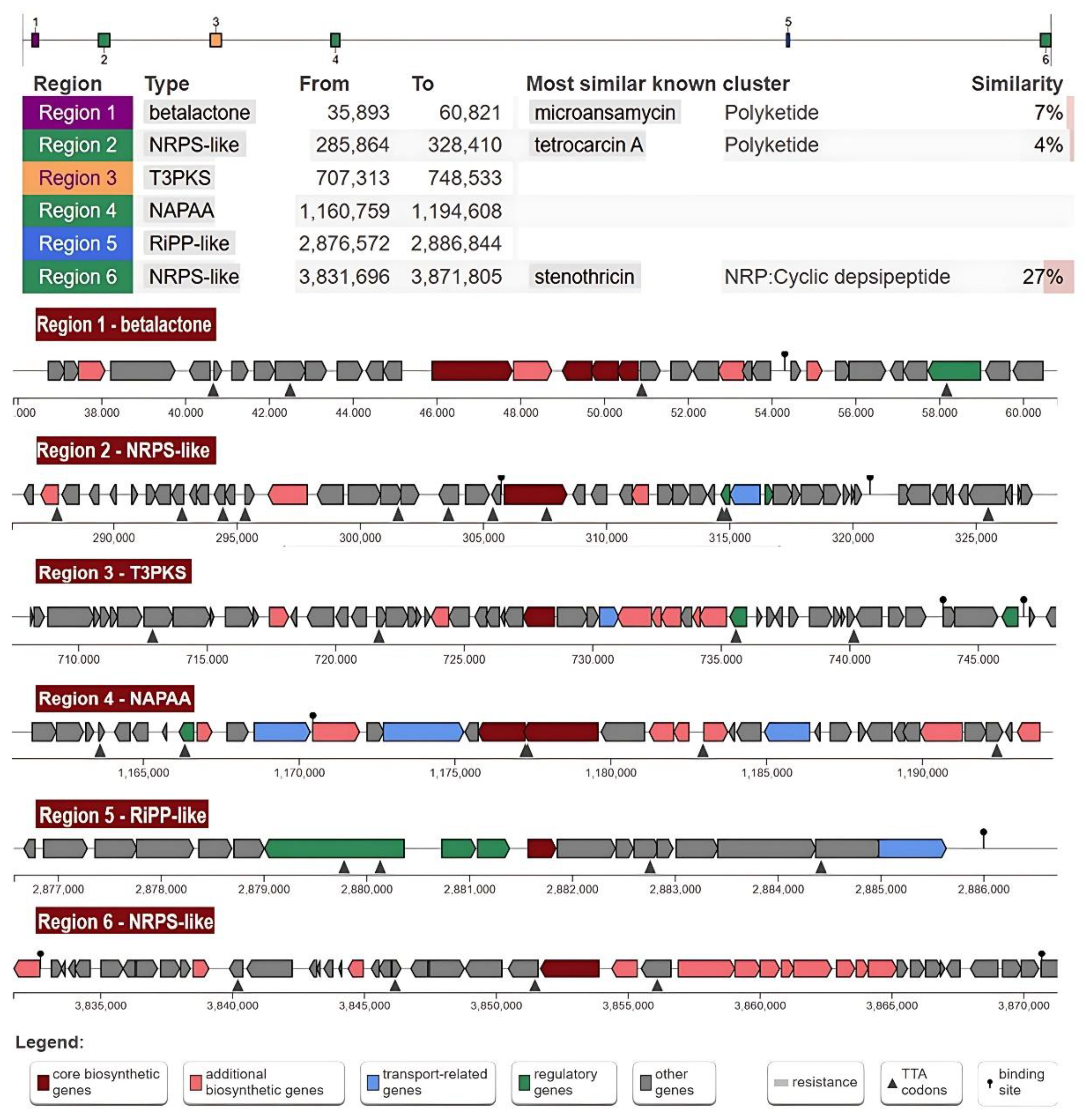
Table 2.
Genes encoding stress response proteins as predicted in the genome of Pseudarthrobacter sp. So.54.
Table 2.
Genes encoding stress response proteins as predicted in the genome of Pseudarthrobacter sp. So.54.
| Gene | Start | Stop | Length (bp) | EC number | Protein description |
|---|---|---|---|---|---|
| aqpZ | 1215433 | 1214576 | 858 | Aquaporin Z | |
| glpF | 800030 | 799281 | 750 | Glycerol uptake facilitator protein | |
| nsrR | 3009139 | 3008675 | 465 | Nitrite-sensitive transcriptional repressor NsrR | |
| oxyR | 2203595 | 2204515 | 921 | Hydrogen peroxide-inducible genes activator | |
| yaaA | 1016474 | 1017181 | 708 | Peroxide stress protein YaaA | |
| ahpE | 1031338 | 1030820 | 519 | EC:1.11.1.15 | Alkyl hydroperoxide reductase E |
| trxA | 468834 1764701 2494905 3758479 |
469199 1765114 2495231 3758916 |
366 414 327 438 |
Thioredoxin | |
| tpx | 2154742 | 2155221 | 480 | Thioredoxin-dependent thiol peroxidase | |
| trxB | 2493849 3682416 |
2494865 3683393 |
1016 978 |
EC:1.8.1.9 | Thioredoxin-disulfide reductase |
| osmCL | 2895233 | 2895063 | 171 | Organic hydroperoxide resistance transcriptional regulator | |
| osmCLR | 119555 | 119337 | 219 | Organic hydroperoxide resistance protein | |
| sodA | 608696 | 609319 | 624 | EC:1.15.1.1 | Superoxide dismutase [Mn/Fe] |
| katA | 1782412 3440614 |
1783911 3441678 | 1500 1065 |
EC:1.11.1.6 | Catalase |
Disclaimer/Publisher’s Note: The statements, opinions and data contained in all publications are solely those of the individual author(s) and contributor(s) and not of MDPI and/or the editor(s). MDPI and/or the editor(s) disclaim responsibility for any injury to people or property resulting from any ideas, methods, instructions or products referred to in the content. |
© 2025 by the authors. Licensee MDPI, Basel, Switzerland. This article is an open access article distributed under the terms and conditions of the Creative Commons Attribution (CC BY) license (http://creativecommons.org/licenses/by/4.0/).
Copyright: This open access article is published under a Creative Commons CC BY 4.0 license, which permit the free download, distribution, and reuse, provided that the author and preprint are cited in any reuse.


