

Submitted:
14 March 2025
Posted:
17 March 2025
You are already at the latest version
Abstract
As hydrogen emerges as a pivotal energy carrier in the global transition towards net-zero emissions, addressing its technological and regulatory challenges is essential for large-scale deployment. The widespread adoption of hydrogen technologies requires extensive research, technical advancements, validation, testing, and certification to en-sure their efficiency, reliability, and safety across various applications, including indus-trial processes, power generation, and transportation. This study provides an overview of key enabling technologies for green hydrogen production and distribution, high-lighting the critical challenges that must be overcome to facilitate their widespread adoption. It examines key hydrogen use cases across multiple sectors, analysing their associated technical and infrastructural challenges. Technological advancements re-quired to improve hydrogen production, storage, transportation, and end-use applica-tions are discussed. The development of state-of-the-art testing and validation facilities is also assessed, as these are vital for ensuring safety, performance, and regulatory compliance. This work also reviews ongoing academic and industrial initiatives in the UK, aimed at promoting technological innovation, advancing hydrogen expertise, and developing world-class testing infrastructures. This study emphasises the need for stronger, more integrated collaboration between universities, industries, and certifying bodies. Building a strong network that promotes knowledge sharing, standardisation, and innovation for expanding hydrogen solutions and creating a sustainable hydrogen economy.
Keywords:
Hydrogen
; Hydrogen Value Chain
; Hydrogen technologies
; Utilisation
; Testing
1. Introduction
In response to the Paris Agreement, many nations have pledged to reach net-zero greenhouse gas emissions before 2070, with 66% of these pledging to meet the target by 2050 and 22% by 2030 [1]. To achieve these goals an unprecedented transition from fossil fuel-based economies towards sustainable and carbon-free energy sources is required. Decarbonisation strategies will differ across nations, depending on their energy mix, natural resource availability, and consumption patterns. The broad approach appears to be electrifying the majority of energy consumption and transitioning to a nuclear fission and renewables-based energy grid with energy storage to support energy availability. However, the extent to which industries like steel, cement, aviation, and heavy transport can be electrified, and whether intermittent renewable energy can ensure a secure and reliable grid, is much debated. In addition, it is perceived that the power generation, storage, distribution, and utilisation upgrades required to fully, or almost fully, electrify a national grid even in the most advanced economies are, if not technologically implausible, financially prohibitive due to the large amounts of infrastructure upgrades and raw materials required.
One approach to support electrification is to utilise renewable or low-carbon electricity to produce hydrogen as an energy carrier through electrolysis; a process that uses electrical current to split water molecules into hydrogen and oxygen. A renewables-based economy that functions with hydrogen as one of its primary energy vectors is often referred to as a hydrogen economy. A hydrogen economy has the potential to deliver many benefits as nations are better placed to capitalise on their natural renewable resources. Hydrogen can be produced in resource-rich yet remote locations and transported long distances at a reduced cost and growing stores have the potential to provide long-term energy security for nations.
In the United Kingdom, there has been a considerable effort from the government, industry, research organisations, and academia to capitalise on existing energy, material, and chemical expertise and lead innovation in decarbonisation technologies utilising hydrogen. As such the government has developed a succession of hydrogen strategies, investment plans, roadmaps, and standards to encourage investment and growth in this sector [1,2]. The UK’s short-term ambition is to generate 10 GW of low-carbon hydrogen production capacity by 2030 [3].
However, several significant challenges limit the rollout of the hydrogen economy such as the lack of infrastructure, immature production technologies, scale-up, and integration processes combined with the public and industrial concerns about safety, reliability, and economic viability of green hydrogen projects. To tackle some of these challenges, it has been proposed that the technologies underpinning a hydrogen economy require independent testing and validation. This will better inform the public, policy-makers, researchers, and investors of the suitability of a given technology and accelerate the development of new technologies and strategies that can meet the required demand. As such, this paper aims to review various key enabler technologies and the multi-sector use cases for hydrogen, to provide a basis for the development of testing and validation facilities and test plans. Additionally, it will review some of the UK’s efforts to advance hydrogen-based technologies in pursuit of its 2050 Net-Zero carbon emission target.
2. Green Hydrogen Production and Distribution
Building a robust hydrogen value chain presents several challenges, including the underdeveloped infrastructure for hydrogen production, storage, transportation, and distribution. Therefore, a significant investment is required to up-scale green hydrogen production capacities and develop pipelines, storage facilities, and refuelling stations to support large-scale deployment. This section explores some of the key aspects driving advancements in this field.
2.1. Green Hydrogen Production
The production of hydrogen using renewable energy is a rapidly expanding industry and plays a vital role in the global effort to achieve net-zero emissions. By producing hydrogen from renewable sources and using it to fuel low-carbon or zero-emission technologies, this adaptable resource can be used across various sectors. Renewable energy sources like solar, wind, and hydroelectric power provide clean electricity that can be converted into hydrogen, commonly known as green hydrogen [2].
To enable effective hydrogen generation within the renewable energy sector, a reliable and consistent energy supply is essential to ensure a continuous flow of electricity. Green hydrogen, generated via electrolysis using renewable energy, is highly favourable for its zero carbon emissions [3]. Benefiting from abundant and cost-effective renewable energy, electrolysis can produce green hydrogen with minimal carbon impact, especially when facilities are strategically located near renewable energy sources.
Electrolysis for hydrogen production involves using electricity to separate water into hydrogen and oxygen molecules. The fundamental component required for this process is an electrolytic cell, consisting of two electrodes: a negatively charged cathode and a positively charged anode. Electrolysers will play a crucial role in producing hydrogen for a variety of applications and may be located at decentralised production sites such as airports, bus depots, or quaysides, rather than relying solely on large-scale hydrogen production from a single source. This shift will necessitate the development of efficient and compact electrolyser systems that are easy to install and capable of quick start times to accommodate irregular refuelling patterns. These systems can be effectively integrated with on-site renewable energy production, where the generated energy is distributed via a microgrid. Electrolysers come in various scales and types, with some of the most widely used technologies for hydrogen production being:
- Alkaline (ALK): ALK electrolysers are the most established electrolyser technology, with the concept dating back to 1800 AD. ALK electrolysers are available in larger stack sizes and at an industrial scale, they can achieve efficiencies of around 65% (Lower Heating Value – LHV) and generally operate at temperatures between 70 to 140 °C and pressures between 5 and 30 bar, however, operation at higher pressures is typical of the ‘next-generation’ of ALK electrolysers currently under development [4,5].
- Proton Exchange Membrane (PEM): PEM electrolysers are regarded as one of the most efficient and robust technologies for hydrogen production. Their physical and power capacities (MW) can be easily adjusted by modifying the number of cell stacks to meet the required output. While recent advancements have significantly reduced their costs, PEM electrolysers remain approximately 30% more expensive than Alkaline (ALK) electrolysers at the initial investment stage [6]. This additional cost is largely due to the utilisation of advanced materials in the cell’s ion conduction membrane and Platinum Group Metals (PGMs) to catalyse the reaction. Typically, PEM electrolysers operate at temperatures of 60 to 80 °C and pressures of up to 30 bar, with higher-pressure demonstrators currently under development [7]. They can achieve efficiencies of up to 70% (LHV) [8].
- Solid Oxide Electrolysers (SOEC): SOECs are popular for their high efficiency due to their operation at elevated temperatures (500-800 °C). These electrolysers typically consist of ceramic materials like yttria or nickel-stabilized zirconia, which function as oxygen ion conductors. The high operating temperature enhances ionic conductivity within the electrolyte and accelerates electrochemical reaction kinetics, making SOECs more efficient than other electrolysis methods. Operating at temperatures above the boiling point and utilising a solid electrolyte, SOECs achieve superior electrical efficiency while avoiding issues related to gas and liquid distribution. Additionally, they do not require precious metal catalysts, unlike low-temperature electrolysis methods. Another advantage of SOECs is their ability to leverage heat from diverse sources such as nuclear energy, concentrated solar power plants, geothermal energy, and industrial waste heat, reducing the electrical energy required for hydrogen production. When accounting for both electrical and thermal energy contributions, SOECs efficiencies can surpass 80% (LHV). However, the high-temperature operation presents challenges, including prolonged startup times and accelerated material degradation. These factors necessitate using expensive components and complex manufacturing processes, resulting in higher capital expenditures compared to other electrolysis technologies [9].
- Anion Exchange Membrane (AEM): AEM technology is a new development building on the same principal reaction of alkaline electrolysis. Rather than a simple diaphragm, AEM utilises a membrane capable of catalysing the reaction without using PGMs catalysts and with the need for a minimal liquid electrolyte. Water is circulated with a small fraction of alkaline electrolyte within the membrane, producing oxygen and hydrogen. Oxygen is formed from OH- and H2O at the anode and is partially dissolved in H2O, but hydrogen is formed directly at the cathode and can be either dissolved in water or taken as a gas directly with special diffusion layers. The technology is still under development and further research is needed to enhance the stability of membranes, catalysts and power efficiency and reduce the cost [10].
Different electrolyser types and their Technology Readiness Levels (TRL), as assessed by the International Energy Agency, are shown in Figure 1 [6]. The most advanced and widely used technologies are Proton Exchange Membrane (PEM) and Alkaline (ALK) electrolysers, which are also the most common for commercial applications. As of 2023, PEM and ALK electrolysers have an estimated total installed capacity of 921 MW and 1152 MW, respectively [6]. Additionally, other electrolyser technologies contribute an estimated 811 MW of installed capacity, bringing the global total to nearly 2.9 GW. With future project pipelines, global electrolysis capacity could rise to between 170 and 365 GW by 2030 [6].
Green hydrogen produced by electrolysis can offer several key benefits, such as [11]:
- Environmental Benefits: When derived from renewable sources, it produces no green-house gas emissions or air pollutants during combustion. However, under certain con-ditions such as high temperature and the presence of atmospheric Nitrogen, the pro-duction of nitrogen oxides (NOx) is possible.
- Versatility: It can be applied across various industries, including transportation, chemi-cal processing, and power generation.
- High Efficiency: Hydrogen fuel cells (see Appendix A.1) are more efficient in converting chemical energy into electricity compared to combustion-based alternatives.
- Storage and Distribution of energy: Hydrogen allows for the storage of surplus renew-able energy generated during peak periods, making it available for use during lower generation times.
- However, green hydrogen production also comes with several challenges:
- High Production Costs: Producing green hydrogen from renewable energy is often more expensive than conventional methods, combined with the high initial costs of the necessary technology.
- Infrastructure Requirements: Establishing production facilities near renewable energy sources, along with expanding the availability of storage tanks and transportation sys-tems, is essential.
- Safety Concerns: Hydrogen's high flammability necessitates stringent safety measures in the design, operation, and maintenance of facilities.
- Technological Development: Scaling up production to meet demand will require ad-vancements in technology to improve efficiency and minimise conversion and storage losses.
Despite advancements in hydrogen production technologies, only 5 MW of green hydrogen projects are currently operational in the UK [12]. This underscores the need for significant growth and development in the sector to reduce reliance on carbon-emitting energy sources. Figure 2 shows the demand for hydrogen in every sector is set to increase dramatically in the future, highlighting the need for a better infrastructure to facilitate this progression. Examples of ongoing and upcoming projects across the UK and Ireland focused on producing hydrogen from renewable sources are given in Table 1.
2.2. Hydrogen Compression
A compressor is essential for the effective storage or distribution of hydrogen produced via electrolysis. While hydrogen has a high energy density by mass (142 MJ/kg), its volumetric energy density (12.8 MJ/m3 @ NTP) is significantly lower. Hydrogen output pressure is typically around 30 to 40 bar for a PEM electrolyser, while for alkaline electrolysers, the output pressure is even lower. At 40 bar and standard temperature (298 K), storing 1 kg of hydrogen would require a tank with a capacity of approximately 300 litres. Scaling this up to the hydrogen production of a 1 MW plant, which generates approximately 480 kg per day, would necessitate extremely large storage tanks, making storage at such low pressures impractical for most solutions.
Compressing hydrogen presents several challenges, primarily due to its tendency to degrade the materials it is in contact with. This degradation can occur through mechanisms such as hydrogen embrittlement and high-temperature hydrogen attack. To address these issues, hydrogen compressor components must be designed to resist such effects, which often require utilising specialised materials and coatings. These additions significantly increase costs compared to conventional gas compressor [13]. Hydrogen, being the lightest of all gases, requires significant energy for compression. Its small molecular size also makes it prone to leakage through gaps in conventional mechanical compressors, especially around rotating equipment. Additionally, maintaining the purity of hydrogen during compression is critical. For high-purity applications, such as hydrogen used in fuel cells, non-lubricated compressors are typically preferred to avoid contamination [14]. Hydrogen compressors serve various purposes, including use in hydrogen production by electrolysis, where they compress the gas for easier and more efficient storage or distribution. They are also widely used in refuelling stations to compress hydrogen to the required pressure for specific applications. Additionally, smaller compressors are often paired with fuel cells to provide the necessary pressure for optimal performance.
Compressors possess critical performance characteristics that determine their suitability for specific applications, and these attributes can be enhanced through testing and innovation. Efficiency is a key factor, as hydrogen compression is highly energy-intensive; selecting the wrong compressor size, power consumption, or type could significantly reduce overall plant efficiency. Reliability and durability are equally important in supporting the hydrogen economy, as compressors operate in demanding environments with continuous use and exposure to hydrogen degradation mechanisms. Additionally, the compression ratio and flow rate must be accurately specified, as these parameters vary widely between different types of compressors. Most compressors currently used in hydrogen applications fall into two main categories: positive displacement compressors and centrifugal compressors. Table 2, outlines the characteristics of each type in detail.
2.3. Hydrogen Storage
Hydrogen storage and distribution are integral components of the hydrogen value chain. Hydrogen is stored and distributed in various forms, with the most common being gaseous, liquid, carrier-based, and liquid organic hydrogen carrier (LOHC) systems as shown in Table 3. To establish a sustainable hydrogen value chain, it is crucial to develop efficient, cost-effective, and safe storage methods. The UK will require 150 TWh of storage capacity to decarbonise gas usage and meet future energy demands [15].
Hydrogen is typically stored in high-pressure tanks or large geological formations, depending on factors such as type, location, and quantity. One major advantage of hydrogen storage is its ability to capture excess energy during periods of low demand, which can then be used to supplement the grid during peak times. Figure 3, shows a database created by the University of Edinburgh, detailing the locations and capacities of hydrogen storage facilities across the UK [16]. The database also highlights key links throughout the country, emphasising regions with significant hydrogen production activity.
Currently, the two primary forms of hydrogen storage used in the UK are compressed hydrogen and liquid hydrogen. Compressed gas storage involves storing hydrogen gas under high pressure in specially designed tanks or containers. The gas is typically compressed to pressures between 350 and 700 bar to increase volumetric storage density. The main components of a compressed gas storage system include:
- Storage Tanks: Made from high-strength materials, such as carbon fibre composites or metal alloys like aluminium and steel, which are designed to withstand the high pressures of compressed hydrogen. A Summary of various hydrogen storage tank types is provided in Table 4, along with some Hydrogen storage tank manufacturers in Appendix A.2.
- Pressure Regulation Systems: These systems ensure safe handling and usage by regulating the pressure of the stored hydrogen. They include components such as pressure relief devices, valves, and pressure sensors.
- Safety Features: Advanced safety mechanisms are integrated to prevent hazards like leaks or ruptures. These features may include leak detection systems, pressure monitoring, and redundant safety measures.
- Filling and Dispensing Equipment: Essential infrastructure for filling and dispensing hydrogen is required for applications like hydrogen fuel cell vehicle refuelling stations or industrial processes.
Compressed gas storage offers several advantages, including straightforward technology, established infrastructure, and quick refuelling times, making it well-suited for applications like hydrogen-powered vehicles. However, it also faces challenges such as the need for high-pressure tanks, which are often bulky and costly, and the energy-intensive nature of the compression process. Ongoing research focuses on enhancing tank materials, increasing storage capacity, and optimising compression technologies to improve the efficiency and cost-effectiveness of compressed gas storage for broader hydrogen adoption.
Liquid hydrogen storage involves maintaining hydrogen in its liquid state at extremely low temperatures, typically below its boiling point of -252.87 °C. With a significantly higher energy density than compressed gas storage, liquid hydrogen is ideal for applications where space and weight are critical, such as aerospace and long distance transportation of energy. Key components and considerations for liquid hydrogen storage include [17]:
- Cryogenic Storage Tanks: Liquid hydrogen is stored in double-walled, insulated cryogenic tanks designed to maintain ultra-low temperatures and minimise hydrogen boil-off. These tanks are commonly made from materials such as stainless steel or aluminium.
- Insulation: To reduce heat transfer and minimise boil-off rates, tanks are heavily insulated with materials like perlite, fiberglass, or vacuum insulation.
- Safety Systems: Safety measures include pressure relief devices, venting systems, and leak detection to ensure safe storage and handling of the cold and highly volatile liquid.
- Boil-off Management: Despite insulation, some evaporation occurs due to heat ingress. Boil-off gas is typically captured, reliquefied, or vented in a controlled manner to prevent overpressure in the tanks.
- Transfer and Dispensing Equipment: Infrastructure for transferring and dispensing liquid hydrogen is essential for applications like refuelling stations for rocket launches or specialised vehicles. Equipment must be designed to handle the extreme temperatures associated with liquid hydrogen.
Liquid hydrogen storage provides high energy density, making it ideal for long-duration storage and applications where space and weight are critical factors. However, it necessitates specialised infrastructure, stringent handling protocols, and advanced safety measures due to the extremely low temperatures required. Current research aims to enhance insulation materials, minimise boil-off rates, and develop more efficient cryogenic storage systems to improve the practicality and cost-effectiveness of liquid hydrogen storage.
2.4. Hydrogen Distribution
To bridge the gap between hydrogen production and its end use across various industries, it is crucial to transport hydrogen efficiently, minimising losses and addressing potential safety hazards. Currently, the hydrogen distribution sector is in its early stages, largely because most hydrogen production occurs near its point of consumption. However, as hydrogen adoption grows, the need for a robust distribution network is becoming increasingly important [18]. Table 5 shows various hydrogen distribution methods, with the choice of technique depending on factors such as the hydrogen state, geography, distance, and quantity [19]. Hydrogen distribution relies on infrastructure including pipelines, liquefaction plants, storage facilities, compressors, and dispensers, each of which presents its own set of challenges. Currently, the most common method of hydrogen distribution is transporting liquefied hydrogen by truck, as shown in Figure 4 [20]. This approach is primarily used due to the limited availability of pipeline infrastructure and the relatively short distances over which hydrogen is typically transported. As global hydrogen use expands, alternative methods such as shipping and rail transport are expected to play a larger role in facilitating long-distance distribution.
Despite the growing demand for hydrogen in recent years, the distribution sector continues to face significant challenges. A major issue is the development of infrastructure, particularly pipelines. In the UK, approximately 300,000 km of gas pipelines are currently used for methane, some of which could be repurposed for hydrogen. However, this involves high costs and safety concerns, including the risk of leakage [19]. Additionally, the costs associated with producing, storing, and distributing hydrogen remain higher than those of conventional fuels, posing a barrier to widespread adoption, especially during the early stages of market development. Safety concerns also present challenges for the sector. The high flammability of hydrogen necessitates specialised handling and robust safety measures during transportation, storage, and use. Ensuring the safety of both infrastructure and personnel is critical, making it essential for companies to adhere to established policies and legislation. Another key factor is distribution efficiency, as energy losses can occur during hydrogen production, compression, and transportation, depending on the production method. Overcoming these challenges requires coordinated efforts among governments, industries, and research institutions to develop innovative solutions, reduce costs, enhance efficiency, and ensure the safe and sustainable integration of hydrogen as a clean energy carrier [21].
2.5. Valves and Instrumentation
Valves are crucial for controlling and isolating equipment in hydrogen production, storage, and distribution processes. They often work in tandem with instrumentation components or integrate them directly. These components support process controls and include devices such as gas and conductivity analysers, level sensors, pressure sensors, and temperature sensors [22]. Valves used in hydrogen applications require additional design considerations due to the unique properties of hydrogen, including its highly flammable and volatile nature. Like other equipment in hydrogen environments, the material chosen for valves must be resistant to hydrogen embrittlement. This phenomenon typically occurs at pressures between 20 and 130 bar, though it generally does not occur at temperatures above 150°C. Low-quality steels, nickel, and cast irons are particularly vulnerable to embrittlement, even with relatively low concentrations of hydrogen. In contrast, materials such as aluminium alloys, austenitic stainless steels, and copper alloys are more suitable for hydrogen environments [23].
The small molecular size of hydrogen and high gas pressures present additional design challenges, particularly ensuring that valves remain leak-proof during operation. This is known as "fugitive emissions," where gas inadvertently leaks from pressure-containing systems. It is estimated that 60% of all escaping emissions come from valves, which can pose significant safety risks, especially in applications such as refuelling stations or onboard transport systems [23]. Some standards define the requirements for control valves in hydrogen systems, as well as testing standards covering all operating temperatures and pressures that must be followed. Common valve types used in hydrogen applications include [23]:
- Ball Valves: These are frequently used to control hydrogen gas flow. A robust stem and seal design are essential to ensure a reliable seal and prevent stem blowout.
- Check Valves: Crucial for safely operating hydrogen compressors, check valves manage backflow and protect users, while also withstanding rapid temperature and pressure fluctuations.
- Safety/Pressure Relief Valves: These are commonly used in hydrogen storage, fuel cells, and production facilities to prevent overpressure that could lead to explosion risks. They automatically release excess pressure when a certain threshold is exceeded.
- Solenoid Valves: Electrically controlled valves that either stop or allow the flow of hydrogen, solenoid valves are used in applications like refuelling stations, power generation, and aviation to control hydrogen flow.
The use of temperature monitoring and pressure sensors is essential throughout the hydrogen production process, as well as in other stages such as storage, transport, and distribution. For instance, in green hydrogen production, pressure sensors help ensure that electrolysers operate under optimal pressure conditions for improved efficiency, while also preventing overpressure, which can be hazardous and lead to unnecessary energy consumption by compressors. Pressure transmitters are commonly used in hydrogen applications, but they must be designed to endure the challenging hydrogen environment and meet applicable standards, with some having certifications from organisations such as TUV NORD [22].
3. Hydrogen Utilisation
Hydrogen holds significant potential to replace fossil fuels in sectors such as manufacturing, transportation, power, and more. It is viewed as a promising energy source that can help tackle environmental emissions, promote sustainability, and address energy shortages and security concerns. As a clean energy carrier, hydrogen's versatility supports a broad range of applications across different industries. Some key use cases for hydrogen are Shown in Figure 5 and briefly summarised in the following.
3.1. Grid Balancing
Renewable energy generation can be utilised by storing excess energy during peak production times and releasing it to the grid during periods of low output. This process, known as grid balancing, ensures the correct amount of electricity flows through the grid, maintaining a stable output without fluctuations or outages. It enables the grid to manage the intermittency and storage challenges of renewable energy sources, creating a more resilient energy system [24]. In addition to ensuring smooth electricity supply, storing excess electricity as hydrogen offers a cost-effective solution. Hydrogen storage allows for long-term energy storage, making it a sustainable option for balancing the grid. This approach can reduce practices such as wind farm curtailment, where turbines are turned off due to insufficient grid capacity to transport excess energy to high-demand areas. For example, in Scotland, excess wind generated electricity often cannot be transported to southern regions, leading to turbine shutdowns. In 2020/21, 2.9 TWh of wind power was curtailed, enough to power 800,000 households, resulting in £402 million paid to operators to reduce wind generation [25].
Integrating hydrogen with smart grid technology is crucial for fully harnessing the potential of renewable energy. A smart grid is an electrical grid that transfers data between providers, the grid, and consumers, enabling automatic management of power supply, demand, and production. Renewable hydrogen is a valuable resource for smart grids, providing readily available stored energy. The use of smart grids can reduce costs for both consumers and suppliers [26]. During periods of low energy generation, the stored hydrogen can be converted back to electricity through fuel cells or combustion processes.
3.2. Power Generation
As mentioned earlier, hydrogen distribution presents challenges, but with future plans to replace natural gas, the ideal scenario would involve utilsing existing pipelines for a quicker transition. However, this is complicated by the high potential for hydrogen leakage [27]. There are also concerns regarding blending hydrogen with natural gas and using the existing infrastructure. Some of the challenges are:
- Energy Density: Hydrogen has a lower volumetric energy density compared to methane, meaning that end users would need to consume more hydrogen to achieve the same output as natural gas.
- Fire Risk: Hydrogen is highly flammable, necessitating additional safety measures.
- Equipment Damage: Due to differences in volume between hydrogen and methane, existing equipment may need to be modified to handle higher flow rates.
To establish an effective distribution network, retrofitting the natural gas infrastructure is necessary. If pipelines could be updated, it would help reduce capital costs, as the UK already has 7,666 km of high-pressure gas piping in place [28]. In Europe, there is currently 1,569 km of operational hydrogen pipeline distribution network [29]. Several pilot projects are currently underway to test the safety and feasibility of using existing natural gas infrastructure for hydrogen distribution. One example is the Hydeploy project in the UK, which started in 2019. This project involved blending 20% hydrogen into a private gas network at Keele University, supplying 100 homes and 30 university buildings. Extensive laboratory tests on gas appliances and infrastructure revealed that this level of blended hydrogen did not negatively impact the safety or material properties of the equipment [30].
The four main gas appliances in a home are the gas hob, gas oven, gas fire, and gas boiler. The popularity of these appliances varies, as there are electric alternatives available for all of them. When considering the use of hydrogen in existing appliance designs, certain components will need to be modified to ensure safe and efficient operation. For example, for hobs, ovens, and fires, it is expected that the primary airflow will need to be adjusted, and the internal volume may need to be reduced or removed to prevent gas accumulation [31]. Burner designs must also be reconsidered to accommodate the higher flame speed and improve ignition detection. For boilers, some components may need to be redesigned to account for hydrogen different heat transfer characteristics, and updated valves will be required for varying flow rates and sealing needs [31]. While some gas boilers are marketed as "hydrogen-ready," this generally means that certain components will still need to be changed, or they are suitable only for blended fuel rather than pure hydrogen.
The odourless, colourless, and tasteless nature of hydrogen gas present a significant safety risk in domestic environments, as it can be nearly impossible to detect a leak without specialised equipment. This could lead to a dangerous build-up of hydrogen in confined spaces, where its low ignition temperature makes it highly susceptible to ignition and explosion. To mitigate these risks, an odour may be added to the gas network for easier detection, or hydrogen sensors can be deployed [27].
The potential to burn hydrogen in power plants to generate electricity has been explored, but this process is constrained by the efficiency of the power-to-gas and gas-to-power conversion, which is typically around 40% [32]. Despite these low efficiencies, this method may still play a significant role in future energy networks, particularly for large-scale storage of excess electricity generated from renewable sources. For hydrogen to replace natural gas in power stations, its production must increase significantly, as gas-powered stations in the UK generated 23.6 TWh of electricity, accounting for 35% of total generation in the third quarter of 2023 [33]. A project to develop a hydrogen-powered power station is currently underway by Scottish and Southern Energy plc (SSE) and Equinor. Located in North Lincolnshire, this facility aims to be the world’s first 100% hydrogen-fuelled power station, with a capacity of 1,800 MW. However, this project will use blue hydrogen, produced from natural gas reforming combined with carbon capture technology [34].
Designing a hydrogen power plant will require several modifications compared to a conventional gas turbine, particularly if an existing plant is converted to burn pure hydrogen or a hydrogen blend. Key modifications may include:
- Blended Approach: A blending station and specialised monitoring equipment will be necessary to control the hydrogen mixture fed into the power station. Additionally, monitoring other plant properties such as efficiency, pressure drop, pre-heating, combustion stability, and dew point will be essential to accommodate hydrogen unique properties [35].
- Hydrogen-Resistant Materials: The plant will need components made from hydrogen-resistant materials to handle the differing flow rates, pressures, temperatures, and potential for embrittlement associated with hydrogen. Larger pipe diameters may also be required, as hydrogen has a lower volumetric density than natural gas [35].
- Heat Recovery Steam Generator (HRSG): The HRSG will need to be redesigned to accommodate hydrogen at different pressures, flow rates, and potentially higher exhaust gas temperatures. Strict ventilation measures will be essential to prevent unburnt hydrogen accumulation, which could present an explosion risk. Additionally, higher exhaust temperatures will result in increased NOx emissions, requiring effective catalytic reduction systems [35].
3.3. Transportation
The transport sector is estimated to account for 20-30% of global CO2 emissions due to the combustion of fossil fuels. As a result, hydrogen has emerged as a critical fuel for decarbonising this sector and achieving net zero targets [36]. While various energy conversion technologies are suited to different sectors, the high energy density of hydrogen, particularly in comparison to other zero-carbon alternatives like batteries, has led to a focus on longer-range applications. Some examples of hydrogen use in transportation are shown in Table 6.
The aviation industry is a significant consumer of fossil fuels. It is anticipated that hydrogen-powered solutions will first become commercially viable in smaller aircraft, utilising fuel cell technology to convert hydrogen into electrical energy for electric propulsion systems. Alternatively, hydrogen may be used in hybrid configurations alongside other fuel sources, offering greater energy storage and faster refuelling compared to battery-only alternatives. For larger aircrafts, transitioning to hydrogen fuel presents greater challenges. Liquid hydrogen can be burned in modified gas turbine engines, but hydrogen lower volumetric energy density compared to conventional aviation fuel necessitates the development of unique storage solutions, potentially impacting aircraft design.
Hydrogen is also being explored as a fuel source in the rail industry, utilising either Internal Combustion Engines (ICE) or fuel cell technology. As of March 2023, only 38% (6,065 km) of Great Britain’s railway lines were electrified, leaving 62% reliant on diesel or bio-mode engines [37]. Challenges to electrification include the significant infrastructure investment required and physical obstacles along certain routes. To meet net zero targets aligned with government policies, the rail sector's decarbonisation strategy includes prioritising electrification where feasible and pursuing hydrogen power where it is not. However, unlike other sectors, rail transport is less constrained by size and weight restrictions, making hydrogen-powered solutions more practical for testing and implementation. Early trials with retrofitted trains have required substantial space within carriages for hydrogen storage tanks. However, future innovations aim to integrate modular storage beneath the carriages, preserving passenger space while improving system efficiency and performance [38].
Hydrogen-powered vehicles have been in existence for decades but have struggled to succeed in penetrating the automotive market. While a few hydrogen cars are commercially available in the UK, the focus has increasingly shifted toward Heavy Goods Vehicles (HGVs) and buses. There were approximately 300 hydrogen-powered vehicles on UK roads (by Nov. 2023), with 131 of these being buses [39]. These hydrogen buses use fuel cell technology, storing hydrogen gas at 350 bar in tanks typically mounted on the roof [39]. The hydrogen passes through fuel cell stacks to generate power for the electric motor that drives the bus. Depending on the size of the onboard storage tanks, hydrogen buses can achieve a daily range of up to 500 km [39].
A major barrier to the adoption of hydrogen cars in the UK is the lack of suitable refuelling infrastructure. Effective refuelling stations rely on robust hydrogen distribution networks, whether through pipelines or delivery trucks, as well as high-pressure storage facilities and adequate hydrogen production to meet demand. Only 11 public hydrogen refuelling stations were operational in the UK in 2023, making hydrogen vehicles less practical for general consumers. In contrast, buses and HGVs can refuel at dedicated depot facilities, which has driven their more significant adoption [40].
Hydrogen is also viewed as a promising fuel for decarbonising the shipping industry and enabling the development of low-carbon vessels. The International Maritime Organisation has set a target of achieving net-zero greenhouse gas emissions from shipping by 2050, encouraging operators and manufacturers to explore alternative fuel sources. In 2018, global shipping emissions exceeded 1 billion tonnes of CO2 and are expected to rise further without intervention [41]. Similar to the aviation sector, hydrogen technology is expected to be initially deployed in smaller vessels, either newly built or retrofitted. These vessels can be powered by fuel cell technology paired with an electric propulsion system or by burning hydrogen in ICEs. Fortunately, electric propulsion systems are already widely used in the maritime industry, commonly powered by diesel generators. These systems offer benefits such as lower noise, reduced vibration, quicker responsiveness to operational needs, and lower air pollutant emissions [42]. This existing infrastructure makes retrofitting vessels for hydrogen use more feasible without requiring extensive drivetrain modifications. Hydrogen ICEs are particularly suited to operations demanding higher throttle variations and heavier loads, while fuel cells may require hybrid battery systems to meet similar operational demands [43]. Some vessels are already equipped with dual-fuel engines capable of using hydrogen to reduce emissions.
Hydrogen technology is also becoming more popular as a solution for reducing emissions from port operations. Forklifts and trucks powered by fuel cell technology are being trailed in various projects across the UK and Europe. These trials aim to assess hydrogen suitability for meeting the tight schedules and 24-hour operational demands typical of port activities.
4. Advancing Hydrogen Technologies and Testing Facilities
The success of hydrogen projects will largely depend on the commitment of governments and businesses to advancing the hydrogen economy and their willingness to invest in its growth. In April 2022, following the surge in oil prices, the UK doubled its hydrogen production capacity target to 10 GW, with at least 6 GW expected to come from electrolytic production. This move aims to accelerate the development of the hydrogen economy further and faster [44]. This ambitious target is projected to create over 12,000 jobs by 2030 and attract £11 billion in private investment to the sector [58]. To support this transition, the UK Department for Energy Security & Net Zero (DESNZ) has introduced allocation rounds and funding programs, including the £240 million Net Zero Hydrogen Fund to facilitate the construction of production projects [44]. Recognising the importance of innovation, the department also launched the £60 million Low Carbon Hydrogen Supply 2 competition to support research and development of novel technologies across the hydrogen value chain [44].
As the hydrogen economy grows, advancing the UK's technological expertise in hydrogen systems will not only support domestic markets but also position the UK as a leader in this field. This expertise can be exported globally to assist other nations in achieving their hydrogen strategy targets. The priorities for hydrogen development differ across sectors, each shaped by unique needs and operational requirements. The global green hydrogen market, valued at $6.26 billion in 2023, is projected to rise to $67.64 billion by 2030, emphasising the immense opportunities for developing test facilities for various technology validation at scale [45]. Establishing effective testing programs requires careful consideration of several factors, as shown in Figure 6. Key elements include materials, operating temperatures, mechanical properties, and the specific application of hydrogen within the sector. Additional sector-specific factors to address include the energy source, which dictates the hydrogen production method, the required purity levels of hydrogen, cost implications, certification standards, and safety requirements [46]. By addressing these variables, testing programs can be designed to meet the precise demands of each sector, ensuring optimal performance and compliance.
UK Test Facilities
The UK has established a range of hydrogen testing facilities and programs that cater to various markets, typically classified based on their temperature and pressure capabilities, which inherently define the sectors they serve. A report by the Henry Royce Institute, a national hub for advanced materials and research innovation, evaluated the UK's hydrogen testing infrastructure and highlighted areas requiring improvement [47]. The report identified gaps in testing capabilities, particularly in material analysis for cryogenic and high-temperature environments. Additionally, it emphasised the need for advancements in hydrogen sensor technology, mechanistic studies, and accelerated aging resources to support the development and deployment of hydrogen technologies.
UK Universities play a significant role in the development of testing facilities and the implementation of hydrogen systems and technologies. The University of Bath operates a green hydrogen manufacturing site at the Institute for Advanced Automotive Propulsion Systems, with capabilities to test hydrogen fuel cells and ICE of up to 500 kW, along with evaluating sub-components. Its key focus areas include decarbonising facility energy use, supporting research into sustainable propulsion technologies, and advancing hydrogen use in the transport sector [48,49]. The University of Sheffield has launched a £21 million Transitional Energy Research Centre (TERC) to produce, store, and utilise hydrogen. Its facilities include a hydrogen-fired 300 kW combustion test rig supporting fuel switching in industrial applications, along with innovations in electrolysers, fuel cells, and blended hydrogen for domestic use [50]. Loughborough University hosts one of Europe’s largest green hydrogen research groups, supporting large-scale research and innovation. It also offers doctoral training in green hydrogen and has forged partnerships with companies like Rolls Royce to develop hydrogen combustion engine technology capable of powering various types of aircraft [51] Other universities in the UK are also actively involved in hydrogen research. For example, the University of Southampton contributes expertise in cryogenics, Ulster University is recognised for its work in hydrogen safety. The University of Birmingham has performed some pioneering works for developing hydrogen purification and hydrogen storage materials in close collaboration with the University of Nottingham and other UK universities. Additionally, there has been significant investment in establishing test facilities, such as the University of Glasgow’s Hydrogen Innovation Centre. This centre supports academics and commercial enterprises in Scotland to develop and advance experimental hydrogen technologies [52].
In addition, several industrial key players in the hydrogen technology development sector operate testing facilities within the UK, focusing on various aspects of research and innovation. Element, a global provider of testing, inspection, and certification services, specialises in testing materials, coatings, and electrochemistry under environmental conditions. Their activities also include expanding facilities to conduct fracture mechanics and mechanical testing in hydrogen environments. They also evaluate materials subjected to cryogenic conditions and investigate hydrogen permeation in polymers. DNV, with extensive experience and expertise, offers advisory services across the hydrogen economy, from production to end use. They explore hydrogen applications in homes, businesses, and transport while considering market potential, safety, and infrastructure needs. With over ten labs worldwide dedicated to hydrogen testing and research, one of their labs focuses specifically on hydrogen exposure, investigating material damage caused by hydrogen and assessing their performance in gaseous hydrogen environments. TÜV SÜD provides compatibility testing solutions for process safety and hydrogen-based pressure equipment, ensuring technologies meet the appropriate standards for production and transportation. Their testing services encompass critical components such as tanks, valves, sensors, fuel cells, and storage systems, assessing for leaks, overpressure, and hydrogen permeation. Other companies contributing to hydrogen testing in the UK include Airbus, Ricardo, National Grid, and GKN, each playing a role in advancing hydrogen technology for various applications.
The hydrogen industry, like any other, includes Small and Medium Enterprises (SMEs) striving to establish themselves through various innovations. These businesses contribute advancements across diverse areas, including inspection and maintenance, hydrogen distribution, electrolysis, and storage. However, many SMEs lack the resources to develop their testing facilities and often rely on third-party providers for such services. With its established reputation for supporting smaller companies in other sectors of offshore energy, Offshore Renewable Energy Catapult (ORE Catapult) can serve as a reliable partner for these businesses. Ensuring the protection of Intellectual Property (IP) will be a key priority when collaborating with SMEs to foster innovation and growth in the hydrogen sector.
5. Conclusions
Green hydrogen produced from renewable sources holds significant potential in reducing global CO2 emissions, making it a critical component in the transition towards a more sustainable future. As such, numerous industries and applications stand to benefit from the continued advancement of hydrogen technologies. Key sectors like aviation and automotive have witnessed substantial progress in recent years, with hydrogen technology capabilities expanding to include fuel cell systems and hydrogen-powered vehicles. However, other areas, particularly energy networks, distribution, and storage, have experienced slower development, hindering the widespread adoption of hydrogen on a large scale. These areas could greatly benefit from the establishment of dedicated testing facilities that enable the further development and refinement of technologies tailored to hydrogen infrastructure.
In addition to the technological advancements, various government funding initiatives and policies are designed to accelerate the development of hydrogen systems. These programs promote innovation and emphasise the importance of establishing testing and validation facilities that can de-risk hydrogen technologies and prove their viability at scale. Such facilities are essential in ensuring hydrogen technologies' safety, efficiency, and performance, enabling their widespread deployment in diverse applications.
Furthermore, a more integrated collaboration between universities, industries, and certifying bodies is crucial for accelerating the successful implementation of hydrogen technologies. Universities can provide valuable research expertise and innovation, while industries bring practical insights into real-world applications. Certifying bodies, on the other hand, ensure that the technologies meet the necessary safety, performance, and regulatory standards. Strengthening the relationships between these sectors will help to enhance the development of hydrogen technologies, encourage greater innovation, and ultimately facilitate their broader adoption in the global energy markets.
Author Contributions
Shahrouz Nayebossadri: Writing – review & editing, Writing –original draft, Visualization, Validation, Supervision, Methodology Investigation, Formal analysis, Conceptualization. Michael Walsh: Writing – review & editing, Validation, Investigation. Michael Smailes: Resources, Project administration, Funding acquisition, review & editing.
Funding
This research was funded by Hydrogen Innovation Initiative (HII) program.
Data Availability Statement
All relevant data for this study are provided in the paper.
Conflicts of Interest
The authors declare no conflicts of interest. The funders had no role in the design of the study; in the collection, analyses, or interpretation of data; in the writing of the manuscript; or in the decision to publish the results.
Appendix A
Appendix A1. Fuel Cells
A fuel cell comprises an anode, a cathode, and an electrolyte. Hydrogen fuel is supplied to the anode, while air is fed to the cathode. At the anode, a catalyst separates hydrogen molecules into protons and electrons. The electrons travel through an external circuit to the cathode, generating a flow of electricity. Meanwhile, the protons pass through the electrolyte to the cathode, where they combine with oxygen and electrons to produce water and heat as by-products [66].
Fuel cell technology is applicable across all sectors of the transport industry, offering a superior range compared to battery alternatives. Fuel cells generate DC electricity from hydrogen and oxygen, with water as the primary by-product and a typical efficiency of around 60% [66].
There are various types of fuel cells, each with unique characteristics such as performance range (kW), operating temperature, efficiency, and electrolyte composition, which determine their suitability for specific applications. Examples include alkaline fuel cells, proton exchange membrane (PEM) fuel cells, and phosphoric acid fuel cells. For manufacturers, key areas of focus are reducing the cost of fuel cell stacks, employing advanced high-volume manufacturing techniques, and enhancing performance to increase power densities and ensure durability under transportation demands. Prominent hydrogen fuel cell manufacturers include:
- Ballard Power Systems – Canada
- AFC Energy PLC – United Kingdom
- PowerCell Group – Sweden
- Intelligent Energy – United Kingdom
Appendix A2. Storage
Hydrogen storage poses significant challenges due to the high pressures, low tempera-tures, and the volatile nature of the element. The development of safe and efficient hydrogen storage tanks for use in transportation is essential for advancing the sector. These tanks must be designed to withstand unpredictable scenarios such as collisions and operational stresses while ensuring safety in environments with a high density of people. Key manufacturers of hy-drogen storage tanks include:
- Hexagon Purus – Norway
- NPROXX – Netherlands
- Airbus – Europe
- CMB.TECH – Belgium
- Glacier Energy – United Kingdom
References
- Our World in Data, “Status of net-zero carbon emissions targets ,” https://ourworldindata.org/grapher/net-zero-targets. Accessed: Feb. 04, 2025. [Online]. Available: https://ourworldindata.org/grapher/net-zero-targets.
- Word Economic Forum, “What is green hydrogen and why do we need it? An expert explains.”.
- M. S. Herdem et al., “A brief overview of solar and wind-based green hydrogen production systems: Trends and standardization,” Int J Hydrogen Energy, vol. 51, pp. 340–353, Jan. 2024. [CrossRef]
- V. Knop, “Alkaline electrolysers, A world of energy,” https://www.awoe.net/Water-Electrolysis-Alkaline-Technology.html.
- M. P. Novoa, C. Rengifo, and M. Figueredo, “Steady and Dynamic State Simulation-based Study of the Coupling of Electrolysis and Methanation Processes within Power to Methane (PtM) Context,” in Computer Aided Chemical Engineering, vol. 50, Elsevier B.V., 2021, pp. 1093–1098. [CrossRef]
- International energy agency, “Electrolysers, Overview,” https://www.iea.org/energy-system/low-emission-fuels/electrolysers.
- R. Hancke, T. Holm, and Ø. Ulleberg, “The case for high-pressure PEM water electrolysis,” Energy Convers Manag, vol. 261, Jun. 2022. [CrossRef]
- TUV NORD, “Electrolysis of water for the production of hydrogen,” ttps://www.tuev-nord.de/en/company/energy/hydrogen/production-electrolysis-of-water/.
- S. G. Nnabuife, A. K. Hamzat, J. Whidborne, B. Kuang, and K. W. Jenkins, “Integration of renewable energy sources in tandem with electrolysis: A technology review for green hydrogen production,” Int J Hydrogen Energy, 2024. [CrossRef]
- K. Chand and O. Paladino, “Recent developments of membranes and electrocatalysts for the hydrogen production by anion exchange membrane water electrolysers: A review,” Feb. 01, 2023, Elsevier B.V. [CrossRef]
- IRENA, “Hydrogen : a renewable energy perspective,” International Renewable Energy Agency, Abu Dhabi, 2019.
- Jessica Casey, “New Guide Shows How to Scale Up UK’s Green Hydrog,” https://www.energyglobal.com/other-renewables/02112023/renewableuks-new-guide-shows-how-to-scale-up-uks-green-hydrogen-industry/. Accessed: Jan. 30, 2025. [Online]. Available: https://www.energyglobal.com/other-renewables/02112023/renewableuks-new-guide-shows-how-to-scale-up-uks-green-hydrogen-industry/.
- Henry Royce Institute, “MATERIALS CHALLENGES TO ENABLE HYDROGEN DEPLOYMENT AT SCALE BY 2050.".
- pdm analysis, “Screw Compressors and the Challenges of Hydrogen Compression,” https://pdmanalysis.co.uk/screw-compressors-and-the-challenges-of-hydrogen-compression/. Accessed: Feb. 04, 2025. [Online]. Available: https://pdmanalysis.co.uk/screw-compressors-and-the-challenges-of-hydrogen-compression/.
- J. Scafidi, M. Wilkinson, S. M. V. Gilfillan, N. Heinemann, and R. S. Haszeldine, “A quantitative assessment of the hydrogen storage capacity of the UK continental shelf,” Int J Hydrogen Energy, vol. 46, no. 12, pp. 8629–8639, Feb. 2021. [CrossRef]
- The University of Edinburgh, “UK Hydrogen Storage Database,” https://geosciences.ed.ac.uk/research/institutes-centres/institutes/earth-planetary-science/edinburgh-earth-resources/research-activities/geoenergy/uk-hydrogen-storage-database. Accessed: Feb. 05, 2025. [Online]. Available: https://geosciences.ed.ac.uk/research/institutes-centres/institutes/earth-planetary-science/edinburgh-earth-resources/research-activities/geoenergy/uk-hydrogen-storage-database.
- T. Zhang, J. Uratani, Y. Huang, L. Xu, S. Griffiths, and Y. Ding, “Hydrogen liquefaction and storage: Recent progress and perspectives,” Apr. 01, 2023, Elsevier Ltd. [CrossRef]
- International Energy Agency, “The Future of Hydrogen,” 2019.
- Hydrogen UK, “Network and Storage ,” https://hydrogen-uk.org/hydrogen-in-the-uk/the-hydrogen-story/storage/. Accessed: Feb. 05, 2025. [Online]. Available: https://hydrogen-uk.org/hydrogen-in-the-uk/the-hydrogen-story/storage/.
- B. C. Tashie-Lewis and S. G. Nnabuife, “Hydrogen Production, Distribution, Storage and Power Conversion in a Hydrogen Economy - A Technology Review,” Nov. 15, 2021, Elsevier B.V. [CrossRef]
- J. A. Riera, R. M. Lima, and O. M. Knio, “A review of hydrogen production and supply chain modeling and optimization,” Apr. 30, 2023, Elsevier Ltd. [CrossRef]
- Cornelia Huber, “Smart instrumentation helps with green hydrogen production, sustainability,” Control Engineering, vol. 70, no. 3, pp. 17–20, 2023.
- Anju Thangam Joy, “Valves For Hydrogen Applications,” https://tameson.co.uk/pages/hydrogen-valves. Accessed: Jan. 30, 2025. [Online]. Available: https://tameson.co.uk/pages/hydrogen-valves.
- Department for Energy Security & Net Zero, “HYDROGEN STRATEGY DELIVERY UPDATE,” 2023.
- Lane Clark & Peacock, “Renewables curtailment and the role of long duration storage,” 2022.
- E. Samani, A. D’Amicis, J. D. M. de Kooning, D. Bozalakov, P. Silva, and L. Vandevelde, “Grid balancing with a large-scale electrolyser providing primary reserve,” IET Renewable Power Generation, vol. 14, no. 16, pp. 3070–3078, Dec. 2020. [CrossRef]
- International Gas Detectors (IGD), “Hydrogen gas detection solutions ,” https://www.internationalgasdetectors.com/applications/hydrogen-gas-detection-solutions/. Accessed: Jan. 30, 2025. [Online]. Available: https://www.internationalgasdetectors.com/applications/hydrogen-gas-detection-solutions/.
- national gas, “Our netwrok and assets ,” https://www.nationalgas.com/our-businesses/our-network-and-assets. Accessed: Jan. 30, 2025. [Online]. Available: https://www.nationalgas.com/our-businesses/our-network-and-assets.
- European Hydrogen Observatory, “The European hydrogen market landscape,” 2024. [Online]. Available: https://observatory.clean-hydrogen.europa.eu/.
- HyDeploy, “Project Phases,” https://hydeploy.co.uk/project-phases/. Accessed: Jan. 30, 2025. [Online]. Available: https://hydeploy.co.uk/project-phases/.
- Frazer-Nash Consultancy, “Appraisal of Domestic Hydrogen Appliances,” 2018.
- Leigh Collins, “Why hydrogen-fired power plants ’will play a major role in the energy transition,” https://www.rechargenews.com/energy-transition/why-hydrogen-fired-power-plants-will-play-a-major-role-in-the-energy-transition/2-1-1045768?zephr_sso_ott=gI78mW. Accessed: Jan. 30, 2025. [Online]. Available: https://www.rechargenews.com/energy-transition/why-hydrogen-fired-power-plants-will-play-a-major-role-in-the-energy-transition/2-1-1045768?zephr_sso_ott=gI78mW.
- Department for Energy Security & Net Zero, “Energy Trends September 2023,” 2023. Accessed: Feb. 05, 2025. [Online]. Available: https://assets.publishing.service.gov.uk/media/654e1d25c0e06800101b2d56/Energy_Trends_September_2023.pdf.
- KEADBY NEXT GENERATION POWER STATION, “Capturing the potential of the Humber ,” https://keadbynextgen.com/. Accessed: Jan. 30, 2025. [Online]. Available: https://keadbynextgen.com/.
- J. L. K. W. E. Y. and E. Z. J. Johansson, Hydrogen power and heat with Siemens Energy gas turbines. Siemens Energy Global GmbH & Co. KG, 2022.
- ARUP, “Hydrogen Transport-Fuelling The Future.” Accessed: Jan. 31, 2025. [Online]. Available: https://www.arup.com/globalassets/downloads/insights/the-future-of-energy-green-hydrogn-transport.pdf.
- Office of the Rail and Road, “Rail Infrastructure and Assets, April 2023 to March 2024,” 2023.
- Porterbrook, “HydroFLEX is the UK’s first hydrogen-ready passenger train,” https://www.porterbrook.co.uk/innovation/hydroflex-cop. Accessed: Jan. 31, 2025. [Online]. Available: https://www.porterbrook.co.uk/innovation/hydroflex-cop.
- Zemo Partnership, “Buses & Coaches,” https://www.zemo.org.uk/work-with-us/buses-coaches/low-emission-buses/areas-of-operation.htm. Accessed: Jan. 31, 2025. [Online]. Available: https://www.zemo.org.uk/work-with-us/buses-coaches/low-emission-buses/areas-of-operation.htm.
- Cranfiled University, “How a UK hydrogen car industry could cut fuel costs and carbon emissions,” https://www.cranfield.ac.uk/press/news-2023/how-a-uk-hydrogen-car-industry-could-cut-fuel-costs-and-carbon-emissions. Accessed: Jan. 31, 2025. [Online]. Available: https://www.cranfield.ac.uk/press/news-2023/how-a-uk-hydrogen-car-industry-could-cut-fuel-costs-and-carbon-emissions.
- European Commission, “Reducing emissions from the shipping sector,” https://climate.ec.europa.eu/eu-action/transport/reducing-emissions-shipping-sector_en. Accessed: Jan. 31, 2025. [Online]. Available: https://climate.ec.europa.eu/eu-action/transport/reducing-emissions-shipping-sector_en.
- Interreg, “DIESEL-ELECTRIC PROPULSION FACT SHEET No. 2,” 2020. Accessed: Jan. 31, 2025. [Online]. Available: https://www.dst-org.de/wp-content/uploads/2020/05/Fact-Sheet-02_Diesel-Electric.pdf.
- Cummins, “Hydrogen internal combustion engines and hydrogen fuel cells ,” https://www.cummins.com/news/2022/01/27/hydrogen-internal-combustion-engines-and-hydrogen-fuel-cells. Accessed: Feb. 05, 2025. [Online]. Available: https://www.cummins.com/news/2022/01/27/hydrogen-internal-combustion-engines-and-hydrogen-fuel-cells. 202.
- Department for Energy Security & Net Zero, “Hydrogen Strategy Update to the Market: December 2024,” 2024.
- Precedence Research, “Green Hydrogen Market Size, Share, and Trends 2024 to 2034,” https://www.precedenceresearch.com/green-hydrogen-market. Accessed: Jan. 31, 2025. [Online]. Available: https://www.precedenceresearch.com/green-hydrogen-market.
- HM Government, UK Hydrogen Strategy. [Dandy Booksellers Ltd], 2021.
- Henry Royce, “UK HYDROGEN: TESTING GAP ANALYSIS AND NEXT STEPS MAY 2022,” 2022.
- IAAPS, “IAAPS joins forces with Sierra CP on cutting edge hydrogen test cell installation,” https://iaaps.co.uk/news-events/iaaps-joins-forces-with-sierra-cp-on-cutting-edge-hydrogen-test-cell-installation. Accessed: Feb. 05, 2025. [Online]. Available: https://iaaps.co.uk/news-events/iaaps-joins-forces-with-sierra-cp-on-cutting-edge-hydrogen-test-cell-installation.
- University of Bath, “South West UK’s first Green Hydrogen production facility is set to open at new IAAPS research base,” https://www.bath.ac.uk/announcements/south-west-uks-first-green-hydrogen-production-facility-is-set-to-open-at-new-iaaps-research-base/. Accessed: Jan. 31, 2025. [Online]. Available: https://www.bath.ac.uk/announcements/south-west-uks-first-green-hydrogen-production-facility-is-set-to-open-at-new-iaaps-research-base/.
- University of Sheffield, “Hydrogen ,” https://www.sheffield.ac.uk/energy/our-research/hydrogen-0. Accessed: Jan. 31, 2025. [Online]. Available: https://www.sheffield.ac.uk/energy/our-research/hydrogen-0.
- Loughborough University, “Hydrogen capabilities at Loughborough University,” https://www.lboro.ac.uk/research/hydrogen/. Accessed: Jan. 31, 2025. [Online]. Available: https://www.lboro.ac.uk/research/hydrogen/.
- University of Glasgow, “Hydrogen Innovation Centre and testing facility to boost green energy development,” https://www.gla.ac.uk/news/archiveofnews/2023/may/headline_953923_en.html. Accessed: Jan. 31, 2025. [Online]. Available: https://www.gla.ac.uk/news/archiveofnews/2023/may/headline_953923_en.html.
- Marouani et al., “Integration of Renewable-Energy-Based Green Hydrogen into the Energy Future,” Processes, vol. 11, no. 9, Sep. 2023. [CrossRef]
- Energia group, “green hydrogen production and potential ,” https://energiagroup.com/renewables/green-hydrogen/. Accessed: Feb. 03, 2025. [Online]. Available: https://energiagroup.com/renewables/green-hydrogen/.
- ScottishPower, “green Hydrogen for Glasgow,” https://www.scottishpower.com/news/pages/green_hydrogen_for_glasgow.aspx. Accessed: Feb. 03, 2025. [Online]. Available: https://www.scottishpower.com/news/pages/green_hydrogen_for_glasgow.aspx.
- VATTENFALL, “World’s first hydrogen producing offshore wind turbine gets £9.3 million funding boost,” https://group.vattenfall.com/uk/newsroom/pressreleases/2022/aberdeen-hydrogen. Accessed: Feb. 03, 2025. [Online]. Available: https://group.vattenfall.com/uk/newsroom/pressreleases/2022/aberdeen-hydrogen.
- edf, “Tees Green Hydrogen ,” https://www.edf-re.uk/our-sites/tees-hydrogen/. Accessed: Feb. 03, 2025. [Online]. Available: https://www.edf-re.uk/our-sites/tees-hydrogen/.
- Hyfindr, “Hydrogen Copresors ,” https://hyfindr.com/en/hydrogen-knowledge/hydrogen-compressors. Accessed: Feb. 03, 2025. [Online]. Available: https://hyfindr.com/en/hydrogen-knowledge/hydrogen-compressors.
- US Department of Energy, “Gaseous Hydrogen Compression ,” https://www.energy.gov/eere/fuelcells/gaseous-hydrogen-compression. Accessed: Feb. 03, 2025. [Online]. Available: https://www.energy.gov/eere/fuelcells/gaseous-hydrogen-compression.
- A World of Energy (AWOE), “Hydrogen compression ,” https://www.awoe.net/Hydrogen-Compression-General.html. Accessed: Feb. 03, 2025. [Online]. Available: https://www.awoe.net/Hydrogen-Compression-General.html.
- Li et al., “Small-Scale High-Pressure Hydrogen Storage Vessels: A Review,” Feb. 01, 2024, Multidisciplinary Digital Publishing Institute (MDPI). [CrossRef]
- ZEROAVIA, “Flying World’s Largest Aircraft Powered with a Hydrogen Electric Engine ,” https://www.prnewswire.com/news-releases/zeroavia-makes-aviation-history-flying-worlds-largest-aircraft-powered-with-a-hydrogen-electric-engine-301726022.html. Accessed: Feb. 03, 2025. [Online]. Available: https://www.prnewswire.com/news-releases/zeroavia-makes-aviation-history-flying-worlds-largest-aircraft-powered-with-a-hydrogen-electric-engine-301726022.html.
- WRIGHT, “StreetDeck Hydroliner FCEV,” https://wrightbus.com/en-gb/hydrogen-bus-streetdeck-hydrolinerFCEV. Accessed: Feb. 03, 2025. [Online]. Available: https://wrightbus.com/en-gb/hydrogen-bus-streetdeck-hydrolinerFCEV.
- BALLARD, “World’s first liquid-powered hydrogen ship, MF Hydra, is powered by Ballard’s fuel cells,” https://blog.ballard.com/marine/worlds-first-liquid-powered-hydrogen-ship-mf-hydra-is-powered-by-ballards-fuel-cells. Accessed: Feb. 03, 2025. [Online]. Available: https://blog.ballard.com/marine/worlds-first-liquid-powered-hydrogen-ship-mf-hydra-is-powered-by-ballards-fuel-cells.
- HYUNDAI, “XCIENT Fuel Cell Truck,” https://ecv.hyundai.com/global/en/products/xcient-fuel-cell-truck-fcev/. Accessed: Feb. 03, 2025. [Online]. Available: https://ecv.hyundai.com/global/en/products/xcient-fuel-cell-truck-fcev/.
- US Department of Energy, “Fuel Cells ,” https://www.energy.gov/eere/fuelcells/fuel-cells. Accessed: Feb. 03, 2025. [Online]. Available: https://www.energy.gov/eere/fuelcells/fuel-cells.
Figure 1.
Electrolysers TRL Levels [6].
Figure 1.
Electrolysers TRL Levels [6].
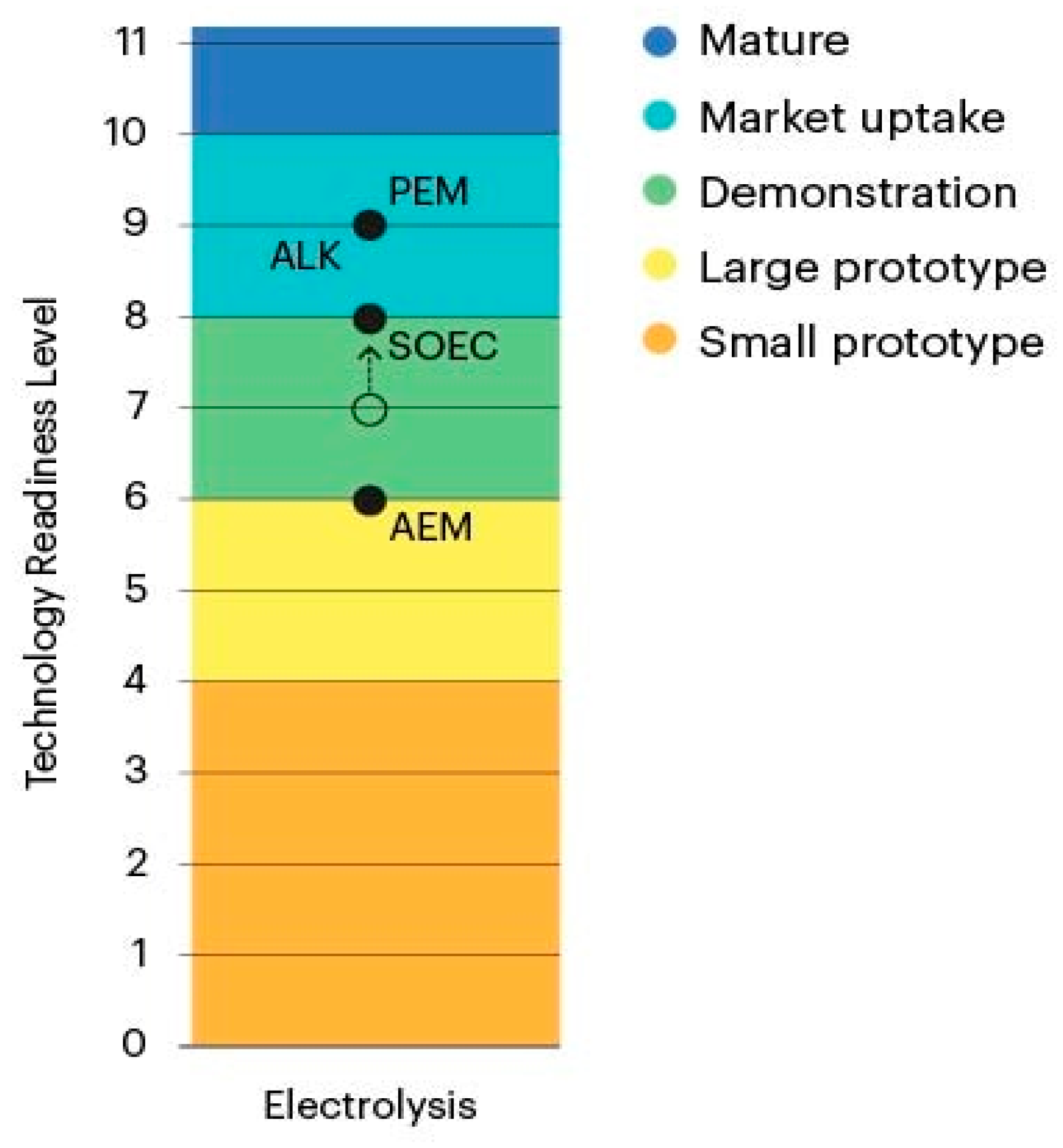
Figure 2.
Future green hydrogen demand [53].
Figure 2.
Future green hydrogen demand [53].
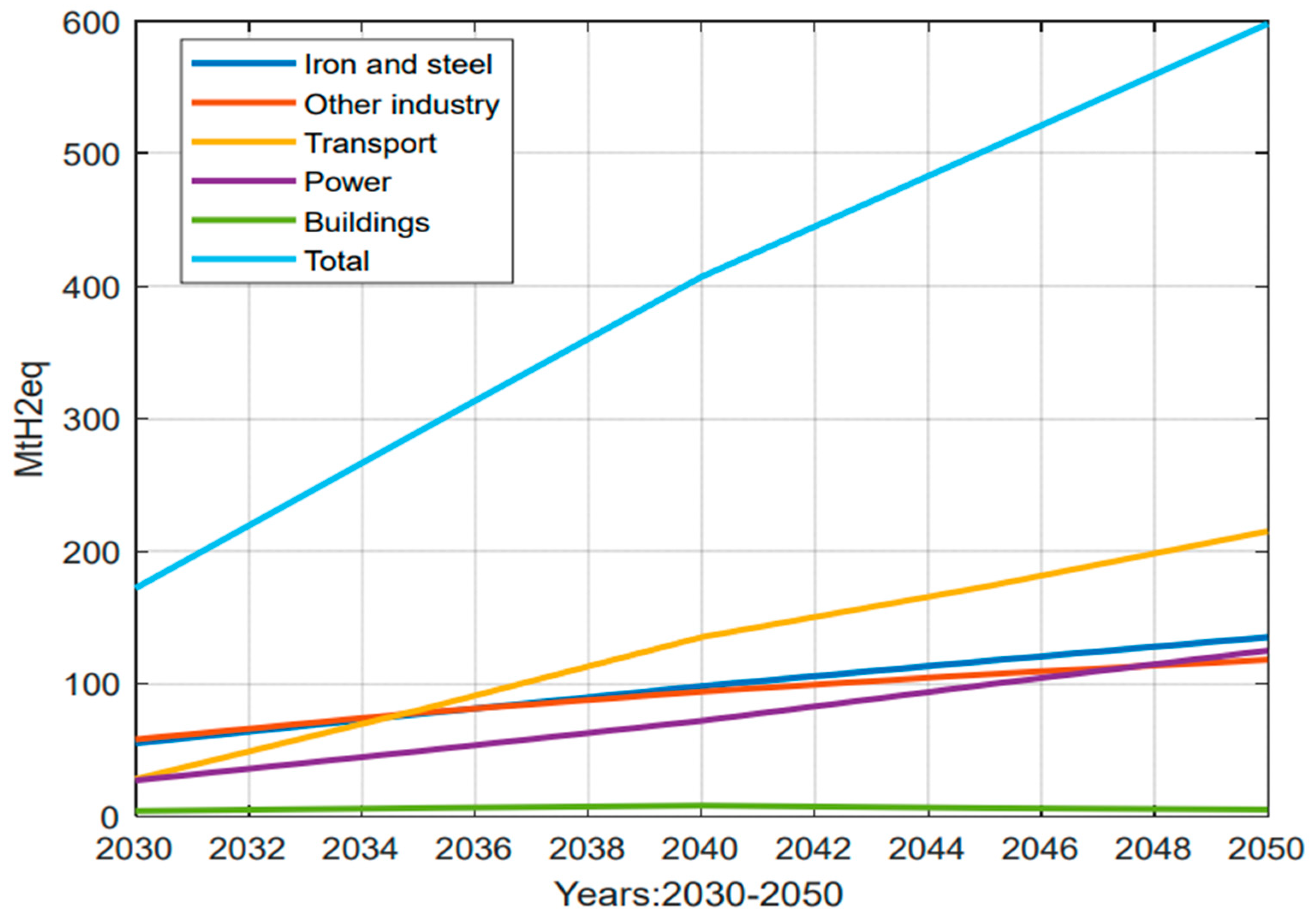
Figure 3.
Integrated hydrogen storage database [16].
Figure 3.
Integrated hydrogen storage database [16].
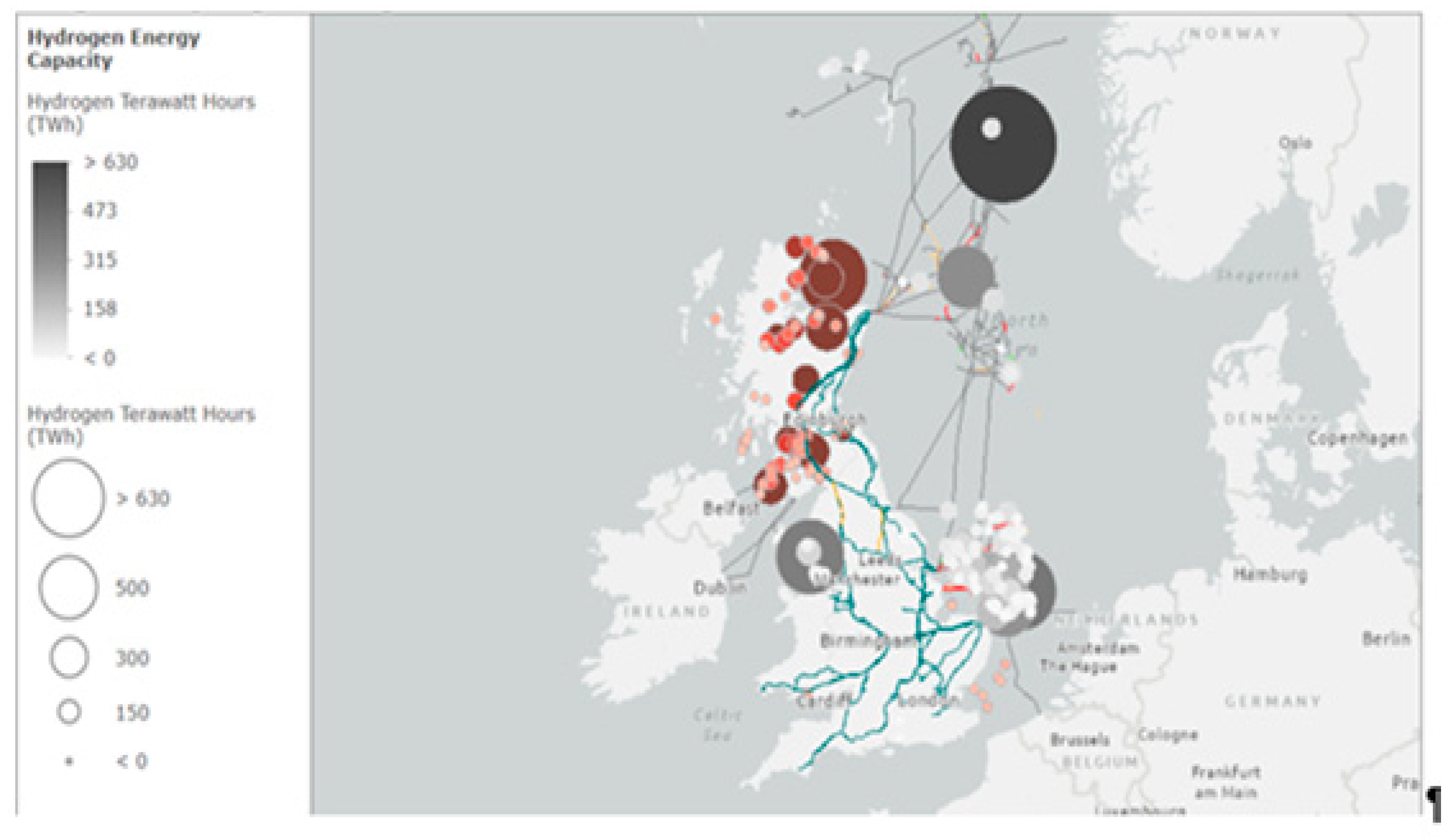
Figure 4.
Frequency of hydrogen transport methods.
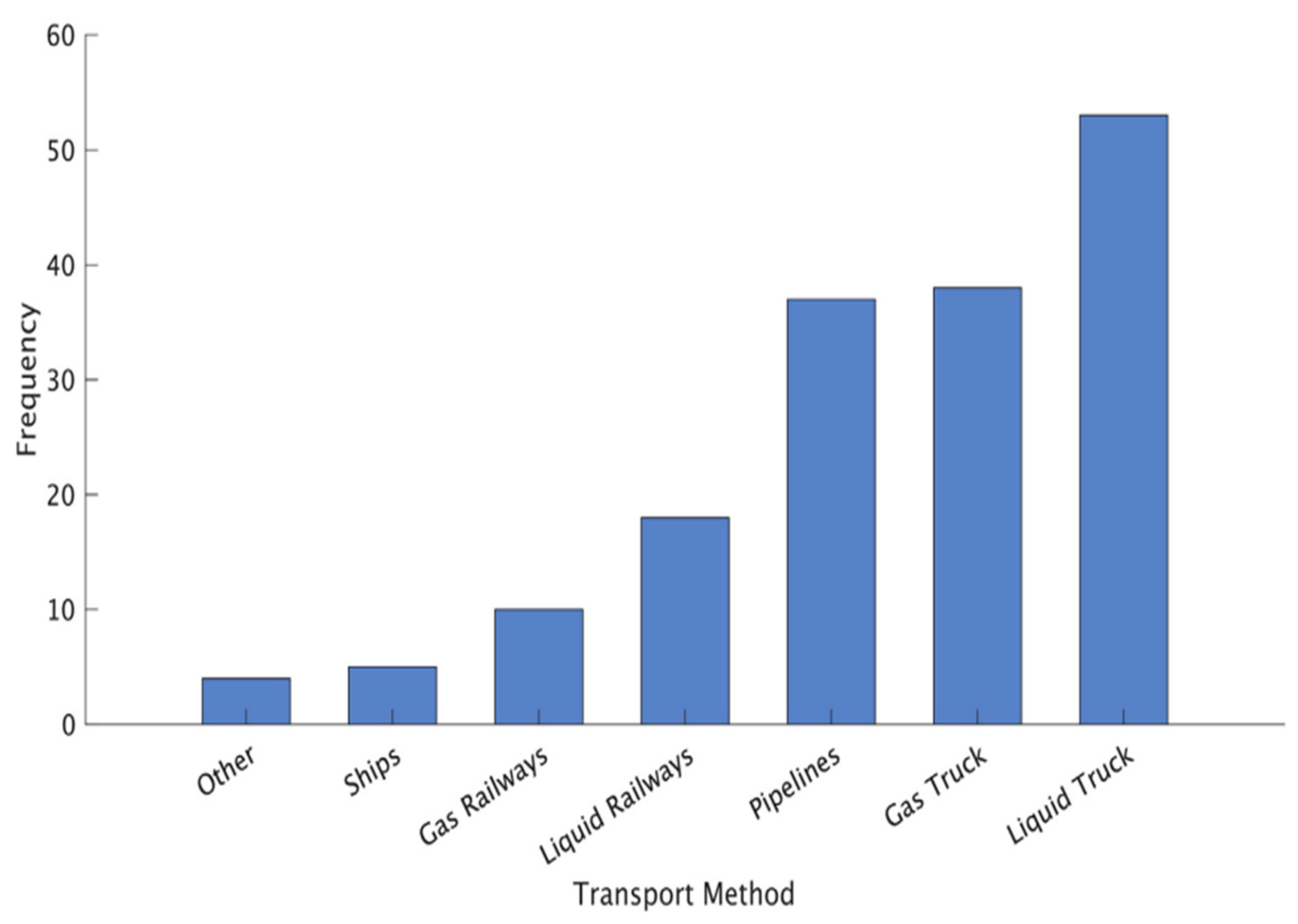
Figure 5.
Hydrogen use cases.
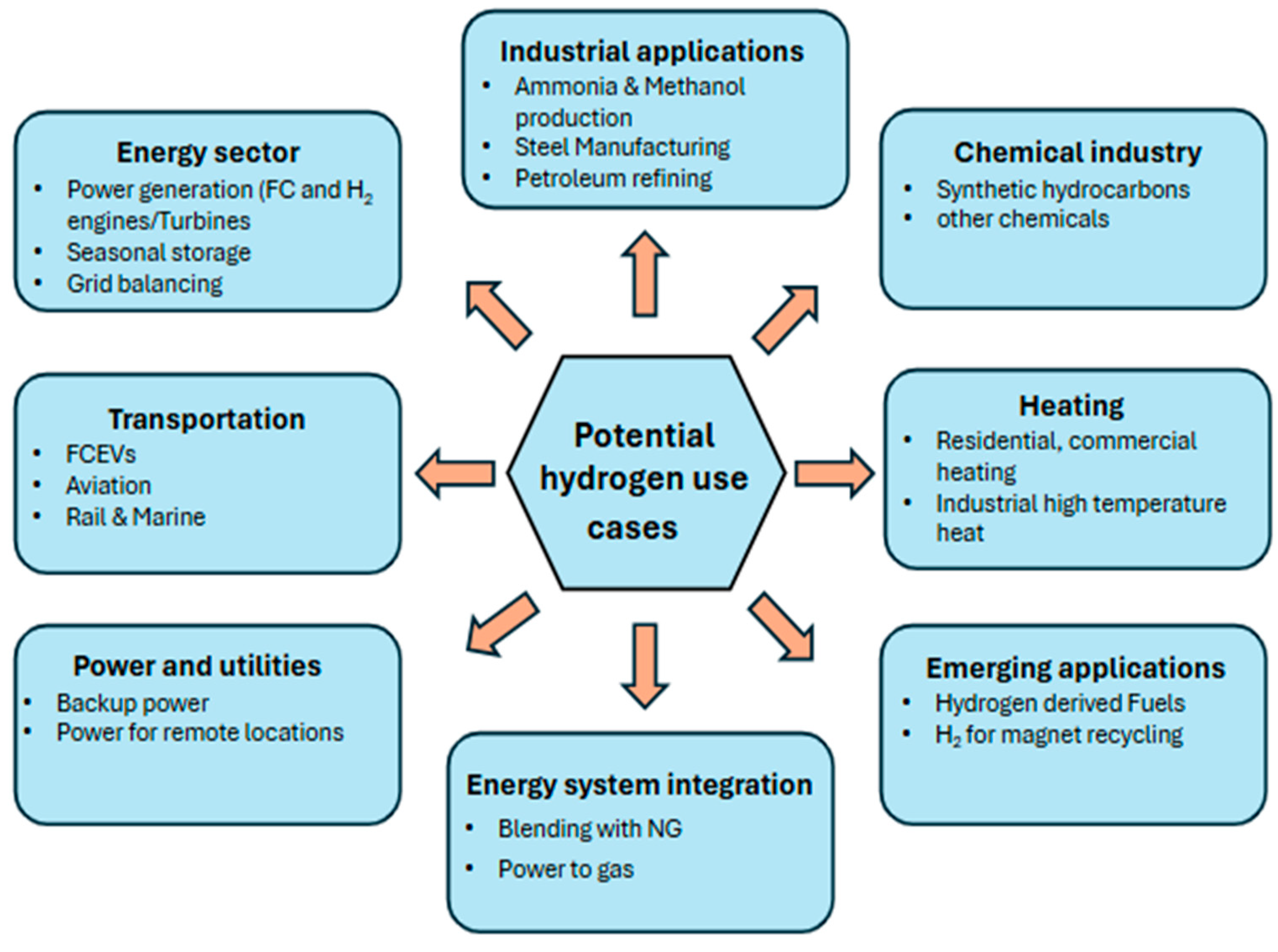
Figure 6.
Test aspects diagram.
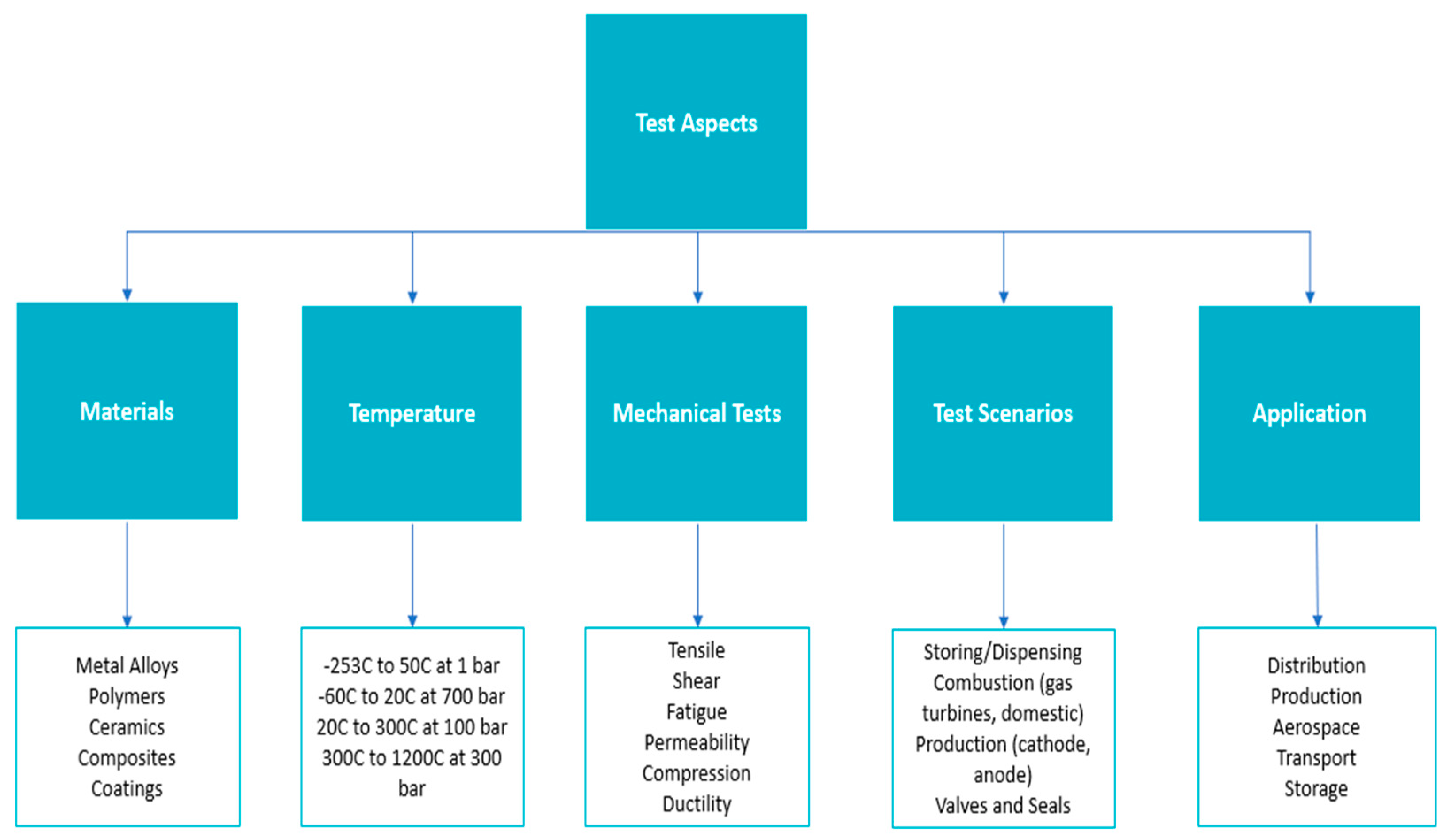

Table 1.
Hydrogen production projects from renewable energy sources.
| Name | Company | Country | Year | Technical Summary |
|---|---|---|---|---|
| Long Mountain Wind Farm [54] | Energia | Ireland | 2020 |
|
| Whitlee Wind Farm [55] | Scottish Power | UK | ~2023 |
|
| Hydrogen Turbine 1 [56] | Vattenfall | UK | 2025 |
|
| Tees Green Hydrogen [57] | EDF Renewables | UK | 2026 |
|
Table 2.
Various types of hydrogen compressors.
| Compressor Type | Description |
|---|---|
| Reciprocating | Within a reciprocating hydrogen compressor, a motor with linear drive is used to move a piston or plunger back and forth, increasing its pressure by reducing the volume occupied by hydrogen gas. They have high efficiency and durability and they are typically used in low/medium pressure applications [58]. |
| Centrifugal | A centrifugal compressor uses a spinning impeller to compress the hydrogen gas, typically tip speeds of the impeller can be 3x that required for natural gas due to hydrogen low molecular weight [59]. This creates a high velocity flow of hydrogen which is converted to high pressure by a diffuser. This type of compressor has high flow rates and compact size and it is generally used for high pressure applications [58]. |
| Diaphragm | Diaphragm compressors work in a similar way to reciprocating ones where a flexible membrane moves back and forth reducing the gases volume and hence increasing the pressure. This compressor type has a low compression ratio so contains more compression stages than other types. This type can mitigate the need for lubricating oils and has low noise and vibration characteristics [58]. |
| Ionic | Ionic compressors use ionic liquids that are in contact with the hydrogen gas, in place of a piston. They are driven back and forth reducing the volume of the hydrogen leading to a pressure increase. This compressor type does not require bearings or seals which can be common failure points. They are often found at hydrogen refuelling stations [59]. |
| Electrochemical | This compressor type is one of the newest concepts in development, where the hydrogen gas is compressed by electricity and does not contain any moving parts. It uses a permeable membrane where hydrogen molecules go through a dissociation reaction on one side and then recombines on the other. This creates a small increase in pressure where several membranes can be stacked to facilitate larger pressure increases [60]. |
Table 3.
Typical hydrogen storage methods.
| Hydrogen Form | Description |
|---|---|
| Compressed (Gas) | Kept at pressures of up to 700 bar which increases the storage density allowing larger quantities to be transported more easily. |
| Liquefied | Lowering the temperature to a cryogenic level (-253 °C) increases the density making it easier to store and transport in tanks. |
| Carrier (e.g. ammonia) | Ammonia has high storage densities of hydrogen and produces no waste when reformed. |
| Liquid Organic Hydrogen Carrier (LOHC) | Unsaturated organic compounds can hold large amounts of hydrogen. When it is hydrogenated for storage purposes very high densities and efficiency ratings can be achieved. |
Table 4.
Different types of hydrogen storage tanks [61].
Table 4.
Different types of hydrogen storage tanks [61].
| Vessel Class | Material | Pressure | Cost Bracket |
|---|---|---|---|
| Type I | Metal. Typically stainless steel | 200 bar | Low |
| Type II | Metal with CRFP wrap around cylinder | 300 bar | Moderate |
| Type III | Metal liner with CFRP wrap around the entire vessel | 700 bar | Highest |
| Type IV | Non-metal with CRFP wrap and plastic liner | 700 bar | High |
Table 5.
Hydrogen transportation methods.
| Transport Method | Hydrogen State | Opportunities | Challenges |
|---|---|---|---|
| Road | Gas/Liquid | Travel to areas that don’t have pipeline infrastructure | Requires smaller journeys due to tanker size |
| Rail | Gas/Liquid | Travel to areas that don’t have pipeline infrastructure | May need to be transported by road depending on the lines |
| Sea | Liquid | Can transport high volumes | Most likely needs converting back to compressed gas |
| New Pipeline | Gas | Designed for hydrogen use and its volume density | Expensive to implement |
| Modified Gas Pipeline | Gas | Cost effective, reduces CO2 emissions | Repairs to existing pipelines to make them leakproof can be costly |
Table 6.
Examples of hydrogen use in transportation.
| Type | Company | Country | Year | Technical Summary |
|---|---|---|---|---|
| Dornier 228 twin-engine aircraft [62] | ZeroAvia | UK | 2023 |
|
| StreetDeck Hydroliner [63] | Wright Bus | UK | 2021 |
|
| MF Hydra, Passenger Ferry [64] | Norled AS | Norway | 2023 |
|
| XCIENT Fuel Cell Truck [65] | Hyundai | Switzerland | 2020 |
|
| HydroFLEX, Hydrogen train [38] | Porterbrook,University of Birmingham | UK | 2023 |
|
Disclaimer/Publisher’s Note: The statements, opinions and data contained in all publications are solely those of the individual author(s) and contributor(s) and not of MDPI and/or the editor(s). MDPI and/or the editor(s) disclaim responsibility for any injury to people or property resulting from any ideas, methods, instructions or products referred to in the content. |
© 2025 by the authors. Licensee MDPI, Basel, Switzerland. This article is an open access article distributed under the terms and conditions of the Creative Commons Attribution (CC BY) license (http://creativecommons.org/licenses/by/4.0/).
Copyright: This open access article is published under a Creative Commons CC BY 4.0 license, which permit the free download, distribution, and reuse, provided that the author and preprint are cited in any reuse.


