

Submitted:
16 March 2025
Posted:
17 March 2025
You are already at the latest version
Abstract
Sustainable leadership plays a pivotal role in fostering long-term economic, social, and environmental development. As businesses increasingly integrate sustainability into their core strategies, leaders must adopt approaches that align profitability with ethical responsibility. This paper explores how sustainable leadership contributes to sustainable development by examining key leadership principles, decision-making frameworks, and corporate strategies. The discussion highlights the shift from short-term financial goals to long-term value creation, emphasising stakeholder engagement, ethical governance, and innovation. By integrating environmental, social, and governance (ESG) principles, leaders can enhance resilience, drive corporate sustainability initiatives, and positively impact communities. The study also underscores the importance of knowledge-sharing, organisational culture, and adaptability in embedding sustainability into business practices. Through a systematic bibliometric literature review, this research provides insights for executives, policymakers, and academics seeking to navigate the evolving landscape of sustainability-driven leadership. The findings underscore the necessity of aligning leadership strategies with global sustainability imperatives.
Keywords:
sustainable leadership
; sustainable development
1. Introduction
Sustainability has become an increasingly pressing global concern in recent years, influencing governments, businesses, and society. Consumers are showing a preference for companies that adopt environmentally and socially responsible practices. For example, Davies [1] found that 36% of surveyed consumers have made modest changes towards buying sustainable products, while 27% have made significant changes. In addition, investors are incorporating environmental, social, and governance (ESG) criteria into their decision-making. For instance, Alves [2] found that investments in energy transition technologies grew 17% year-over-year, reaching US $1.7 trillion in 2023. In addition, global issuance of green bonds grew by 13% compared to a decade earlier, reaching US $600 billion. These initiatives have led to the rise of sustainable development and consequent sustainable leadership.
With sustainability becoming a crucial topic, businesses are no longer judged solely on financial performance. Their long-term viability is increasingly tied to their ability to balance profitability with environmental and social responsibility. Sustainable development seeks to meet the needs of the present without compromising the ability of future generations to meet their own needs. According to Tomislav [3], sustainable development entails three key perspectives: economic growth within environmental limits, fair distribution of resources to improve quality of life, and long-term resource management to support future generations. It has become a crucial global priority, evidenced by initiatives such as the United Nations Sustainable Development Goals (SDGs). Achieving sustainable development necessitates a new breed of leadership that recognizes the connection between organizational success and sustainable development.
Sustainable leadership is a critical factor in shaping financially robust and environmentally and socially responsible businesses. Liao [4] describes it as a form of leadership that aims to “balance the relationship between people, profits and the earth, and promote the sustainability of the enterprise through corresponding management practices” (p.3). Unlike traditional leadership approaches that prioritize short-term financial gains, sustainable leadership focuses on long-term value creation, ethical decision-making, and stakeholder engagement [5]. Sustainable leaders recognize that businesses operate within a larger socio-environmental context and that their decisions impact shareholders, employees, customers, communities, and the planet. As a result, Tideman et al. [6] explain that they champion corporate sustainability initiatives, drive innovation toward eco-friendly solutions, and promote a corporate culture that aligns business objectives with broader sustainability goals. Embedding sustainability into corporate strategy and decision-making allows sustainable leaders to help organizations mitigate risks, enhance brand reputation, and create a lasting positive impact on society.
This paper explores how sustainable leadership can leverage sustainable development. It examines the strategies and practices leaders can implement to bridge the gap between business success and sustainability imperatives. This provides insights that business leaders, investors, and policymakers can implement to achieve sustainable development
2. Materials and Methods
This study employs a systematic bibliometric literature review (LRSB) guided by the Preferred Reporting Items for Systematic Reviews and Meta-Analyses (PRISMA 2020) framework. The researcher used the systematic review approach to ensure a structured and transparent process for identifying, selecting, and analyzing relevant academic literature on sustainable leadership and its role in sustainable development. This aligns with Page et al. [7] assertion that authors conducting systematic reviews should “prepare a transparent, complete, and accurate account of why the review was done, what they did (such as how studies were identified and selected) and what they found” (p.1). The PRISMA 2020 methodology provided a structured framework for screening and selecting the sources. Haddaway et al. [8] recommend the use of this framework because it results in “more complete reporting of systematic reviews” (p.2). Therefore, combining these methods offers a comprehensive way of analyzing the study topic and presenting the findings.
The LRSB method, as extensively explored by Rosário and Dias [9]; Rosário et al. [10], offers a more comprehensive and organized analysis of a research field compared to traditional literature reviews. This approach focuses on the careful selection of studies that closely correspond to the research question, ensuring maximum transparency. As a result, it facilitates a thorough evaluation of methodologies, results, and overall study quality.
By following a systematic and structured approach, the LRSB method implements a rigorously designed protocol for screening and selecting sources, thereby enhancing the reliability and significance of the data. This method progresses through three distinct phases, which are broken down into six systematic steps, as outlined in Table 1, and elaborated further by Rosário and Dias [9]; Rosário et al. [10].
The study utilized the Scopus database to pinpoint and choose credible sources, taking advantage of its strong standing in academic and scientific circles. However, a significant drawback was the sole dependence on Scopus, which might have excluded pertinent studies accessible through other databases. Additionally, the search was restricted to works published up to March 2025, possibly limiting the inclusion of the latest research findings.
To maintain a high level of rigor and credibility, this study deliberately focused on peer-reviewed academic and scientific works, as explained by Rosário & Dias [9]; Rosário et al. [10].
The researcher began by selecting an appropriate database, in this case, Scopus. The researcher then conducted an initial search using the keyword “sustainable leadership” in the title, abstract, and keywords. This resulted in 480 documents. To refine the results and focus specifically on the intersection of sustainable leadership and sustainable development, an additional filter was applied using the exact keyword “sustainable development.” This filter narrowed the selection to 73 relevant documents synthesized in the literature review section (N-=73).
To ensure the relevance and methodological thoroughness of the materials reviewed in the final report, the research followed clearly defined inclusion and exclusion criteria (Table 2). The focus was strictly on academic journal articles that offered a detailed exploration of the use of artificial intelligence to enhance marketing strategies in corporate settings.
To maintain the dataset’s integrity, any studies not explicitly centered on artificial intelligence were excluded. This careful selection process helped uphold the quality of the final literature collection while keeping it closely aligned with the core objectives of the study. A comprehensive breakdown of the search methodology is available in Table 2, with further elaboration provided by Rosário and Dias [9]; Rosário et al. [10].
A comprehensive examination of the selected literature was undertaken through a rigorous process of content and thematic analysis. This approach was structured in accordance with the methodological guidelines proposed by Rosário and Dias [9] and Rosário et al. [10]. To ensure that only sources of high academic standing and direct relevance were incorporated, a set of well-defined selection parameters was rigorously enforced.
This analytical process concentrated on academic studies examining consumer behavior in the luxury brand industry, prioritizing those that showed a clear conceptual and empirical connection to the study’s key goals. Each document underwent a thorough assessment, evaluating its relevance to the research topic, the strength of its methodology, and its publication in peer-reviewed scholarly journals. Figure 1 provides a visual summary of the selection framework.
The study involved a detailed examination of 73 scholarly and scientific publications sourced from the Scopus database. This process integrated both bibliometric and narrative analytical techniques, ensuring a multidimensional approach to evaluating the collected literature. The methodological foundation for this analysis was drawn from the framework outlined by Rosário and Dias [9] and Rosário et al. [10].
Through this approach, a systematic review of the content was conducted, allowing for the identification of key thematic patterns closely aligned with the central research inquiries. The combined methodologies facilitated a deeper understanding of the prevailing discussions within the academic discourse, ensuring that the analysis remained both structured and reflective of the broader intellectual landscape.
Of the 73 documents selected, 44 were articles, 20 were conference papers, 6 were reviews, and 3 were Book chapters.
3. Publication Distribution
Peer-reviewed articles on a Comprehensive the “ How sustainable leadership can leverage Sustainable Development”, March 2025. The year 2024 has the highest number of peer-reviewed publications, reaching 13. Figure 2 summarizes the peer-reviewed literature published until March 2025.
The publications were sorted out as follows: Sustainability Switzerland (18); 2021 Sustainable Leadership And Academic Excellence International Conference Slae 2021 (5); Proceedings Of The European Conference On Management Leadership And Governance (3); Journal Of Cleaner Production (3); Sustainable Development (2); Business Strategy And Development (2); and the remaining publications with 1 document.
Figure 3 showcases the nations leading in scientific contributions across particular research domains, with China, Malaysia, India, and Poland emerging as the top contributors based on publication volume. These countries exhibit a prominent research footprint, underscoring their significant involvement in driving progress and expanding knowledge within their respective fields of study.
An overview of the leading contributors to research in the analyzed domains is presented in Table 3 and Figure 3. These visual representations illustrate the ten most active countries in terms of scholarly output, emphasizing their role in advancing knowledge on luxury branding and consumer behavior. This examination sheds light on the geographic distribution of academic interest, providing a deeper understanding of how different nations prioritize research in this field and the extent of their intellectual engagement.
The results provide a comparative analysis of global research activities, emphasizing regions that have consistently prioritized the study of market trends and brand dynamics. By visualizing these contributions, the research highlights disparities in academic focus and sheds light on how diverse research traditions influence the discussion around consumer behavior and strategies for luxury brands.
Bradford’s law identifies a select group of ten publications, visually distinguished in Figure 4, as the principal sources within the field. Together, these publications account for approximately 40% of the total academic output related to the subject. This principle suggests that when a research area begins to gain prominence, a limited number of journals initially dominate the dissemination of findings.
Over time, these key publications establish themselves as primary reference points, while additional outlets gradually start incorporating studies on the topic.
As scholarly interest expands, a central collection of journals emerges as the dominant contributors, shaping the intellectual discourse in the field. Within this core set, four journals are particularly influential, with the first two playing a pivotal role in establishing foundational knowledge. These publications facilitate academic dialogue by serving as a platform where researchers engage with existing literature, reference prior work, and contribute to the evolving body of scholarship in the area.
The subject areas covered by the 73 scientific and/or academic documents were: Social Sciences (43); Business, Management and Accounting (36); Energy (28); Environmental Science (27); Computer Science (18); Engineering (16); Psychology (7); Economics, Econometrics and Finance (5); Decision Sciences (4); Medicine (3); Mathematics (2); Materials Science (1); Chemical Engineering (1); Agricultural and Biological Sciences (1).
The most quoted article was “Systematic literature review on sustainable human resource management”, with 319 quotes published in the Journal of Cleaner Production 2,06 (SJR), the best quartile (Q1), and with H index (309). The main purpose of the study is to analyze the state-of-the-art of sustainable human resources management and to identify key elements, trends and research gaps.
In Figure 5, we can analyse citation changes for documents published until March 2025. The period ≤2015-2025 shows a positive net growth in citations with an R2 of 73%, reaching 2015 in 2025 (Appendix A).
The h-index is a widely used metric to measure the scholarly impact and productivity of academic publications. It is calculated by identifying the highest number of works that have each received at least the same number of citations. In this study, the analysis of the h-index revealed that 20 publications met the benchmark, with each garnering a minimum of 20 citations.
This metric provides valuable insights into the reach and significance of research within its discipline. By combining citation frequency with publication volume, it offers a holistic perspective on the academic contributions of an author or field. The findings emphasize how these publications have influenced discussions and inspired further investigations, highlighting their pivotal role in advancing knowledge in the area of study.
Citations for all scientific and academic documents from the period up to March 2025 totalled 1,774 (Appendix A), with 20 of the 73 documents remaining uncited.
A bibliometric analysis was conducted using the principal keywords “sustainable leadership” and “sustainable development”, enabling the identification of emerging patterns and critical indicators that illustrate the evolving trajectory of academic and scientific inquiry in this field. The results of this analysis, as depicted in Figure 6, provide a comprehensive overview of how research on these topics has expanded over time.
To ensure a structured and data-driven approach, this examination was carried out utilizing VOSviewer software. Particular emphasis was placed on the primary search terms, ensuring that the analysis accurately captured the most relevant trends within the body of literature. The findings offer valuable insights into the intellectual structure of the field, highlighting key areas of scholarly focus and potential future directions for research.
This research is based on an extensive examination of scholarly and scientific literature exploring the role of the Internet of Things and artificial intelligence in advancing marketing strategies. A three-field plot has been utilized to focus on the central area of interest, wherein “AU” denotes the author, identifying the principal researcher associated with the work. This is further linked to “CR” (cited references) and “DE” (author keywords), providing insight into how the research connects with broader academic discussions.
To investigate the associations between key terms frequently employed by authors in the reviewed studies, a specialized analytical framework was applied. Using Bilimetrix, a structured diagram was developed to visualize these interconnections. The resulting representation, displayed in Figure 7, offers a detailed perspective on the conceptual linkages and thematic interactions that define scholarly discourse in this domain.
The Sankey diagram serves as a visual tool to illustrate the distribution and prominence of various thematic areas, with the size of each node reflecting the frequency of occurrence. The connecting pathways between these nodes represent the relationships and transitions among key themes, with the width of each connection indicating the degree of association. This methodological approach, as outlined by Xiao et al. [11], provides a structured way to depict the evolution and interconnectivity of central concepts within the research.
As demonstrated in Figure 7, certain keywords emerge as dominant within the dataset. Notably, “sustainable leadership” registers 19 inbound connections with no outgoing links, while “sustainable development” is associated with 11 inbound flows and no outbound flows. Similarly, “sustainability” appears with 10 inbound connections, and “marketing” follows closely with 9 inbound links. These core terms are found to be closely aligned with the most frequently cited references, signifying their integral role in shaping the academic discourse in this domain.
Figure 8 offers a detailed visualization of the connections between key concepts in academic literature, showcasing the relationships among frequently used terms. By mapping these associations, the analysis reveals dominant themes within the discipline and provides an organized summary of the main topics explored in scholarly research. This method not only sheds light on prevailing trends but also identifies potential gaps that merit further exploration.
Furthermore, the figure illustrates a broad network of co-citations and thematic groupings, offering a clearer understanding of how sources are interconnected. Recognizing these citation patterns is essential in supporting the study’s findings, as it uncovers the foundational structure of academic discussions and the intellectual paths shaping research within the field.
In addition, Figure 9 presents an extensive network of interconnected citations, allowing for a more comprehensive analysis of how references are linked within the academic landscape. This graphical representation provides deeper insight into patterns of scholarly influence, highlighting the relationships between frequently cited works and their broader impact on the field.
By mapping these connections, the visualization contributes to a clearer understanding of citation dynamics, reinforcing the study’s findings by demonstrating the structural coherence of the referenced literature. The examination of these interrelations plays a crucial role in identifying key contributions and tracing the intellectual development of the subject over time.
4. Theoretical Perspectives
Sustainable leadership emphasizes long-term responsibility, ethical governance, and the integration of social, environmental, and economic considerations in decision-making. It prioritizes resilience, innovation, and stakeholder engagement to ensure organizations thrive while contributing positively to society and the environment [12]. On the other hand, Singh [13] explains that sustainable development focuses on meeting present needs without compromising the ability of future generations to meet their own. This section synthesizes data to show the intersection of these concepts.
4.1. Sustainability and Sustainable Development
Sustainability and sustainable development are deeply interconnected and often used in the corporate world to achieve competitive advantage. Sustainability refers to maintaining ecological, social, and economic systems over time without depleting resources or causing long-term harm [14]. The UN World Commission on Environment and Development (WCED) defined it as meeting the needs of the present generation without compromising the ability of future generations to meet their own needs [15]. This definition shows that although current generations can use resources to meet their needs, they must do so in ways that leave enough for future generations. Therefore, the concept emphasizes a balance between economic development and environmental and social responsibility. On the other hand, sustainable development builds upon this concept by providing structured approaches to achieve sustainability. For instance, [16] indicate that sustainable development integrates environmental protection, social equity, and economic growth into policies, business practices, and global initiatives. Therefore, while sustainability is the ultimate goal, sustainable development outlines strategies to help achieve it.
Sustainable development entails three main elements; economic, environmental, and social. These components are the basis for the triple-bottom-line (TBL) model, which shows the interconnection between people, planet, and profits. These three pillars ensure that organizations achieve sustainability while also maintaining economic viability. Bencsik [15] explains that balancing these pillars requires leaders to replace isolated policies with cross-sectoral institutional frameworks and integrated policies. This shows that sustainability and sustainable development require strategic collaborations among stakeholders. Below is a comprehensive explanation of each TBL component:
4.1.1. Environmental Protection
This dimension highlights the necessity of environmental sustainability by promoting responsible resource management, pollution reduction, and ecological conservation. Organizations committed to environmental stewardship implement practices such as reducing carbon emissions, minimizing waste, adopting renewable energy sources, and enhancing energy efficiency [17,18]. Sustainable development requires businesses and industries to shift toward circular economy models, which emphasize recycling, reusing materials, and reducing overall resource consumption. In addition, Boeske [19] indicate that conservation efforts, such as afforestation, biodiversity protection, and sustainable land-use planning, play a crucial role in mitigating climate change and preserving natural ecosystems. Environmental sustainability extends to product design and manufacturing, where companies develop eco-friendly materials and sustainable packaging to reduce environmental impact [20]. Organizations comply with evolving regulations and contribute to global efforts to combat climate change and ensure the well-being of future generations by integrating environmental responsibility into their operations.
4.1.2. Economic Sustainability
The economic pillar of the TBL model expands the traditional definition of economic success by emphasizing ethical business practices, sustainable investment strategies, and long-term financial viability. While profitability remains a key driver for organizations, sustainable businesses recognize that financial success should not come at the expense of environmental degradation or social inequality [21,22]. Giovannoni and Fabietti [23] show the effectiveness of integrating sustainability into a company’s operations, arguing that it leads to “increased production efficiency, cost reduction and improved market reputation with benefits for financial performance” (p.30). Moreover, ethical economic growth encourages organizations to embrace responsible sourcing, fair trade practices, and transparency in financial dealings. This results in enhanced brand reputation, increased customer loyalty, and resilience to market fluctuations.
4.1.2. Social Development
Social sustainability is concerned with the well-being of the people. It promotes fair treatment of individuals and equitable access to resources. Businesses and institutions prioritizing social sustainability invest in fair labor practices, employee well-being, diversity and inclusion, and community development initiatives [24]. This includes providing safe working conditions, offering fair wages, and ensuring equal opportunities regardless of gender, race, or socioeconomic background. Beyond internal workforce policies, organizations committed to social sustainability also engage in corporate social responsibility (CSR) efforts, supporting education, healthcare, and local community programs [12,25,26]. Moreover, they embrace ethical supply chain management to ensure that products and services are sourced responsibly without exploiting workers or violating human rights. Prioritizing these people-centered initiatives contributes to a more just and inclusive society, enhancing overall social stability and long-term development.
4.2. Sustainable Leadership
Corporate, political, and government leaders face numerous challenges today. These include climate change concerns, talent shortages, unstable financial markets, and social and environmental responsibility. As a result, it has become more important to have leaders who understand the crucial role and impact of sustainable development [27]. These leaders have the knowledge and capability to make complex decisions that aim to balance people, profit, and the earth. As a result, sustainable leadership has become a popular alternative management approach since it emphasizes leaders’ understanding of the interdependence between economic and natural systems [28,29]. Thus, Suriyankietkaew et al. [26] define it as a leadership approach that archives long-term organizational and societal sustainability by integrating economic growth with environmental stewardship and social well-being. Consequently, sustainable leadership involves ethical decision-making and systemic changes to ensure sustainability across industry and government levels. Therefore, Bencsik [15] found that sustainable leadership delivers results that align with the three elements of the TBL framework, including environmental, social, and economic performance. As a result, the scholar identifies three requirements of TBL in relationship to sustainable leadership: “environmental stewardship (ES), expected behaviour, values (EBV) and conscious thinking (CT)” (p.4).
Sustainable leaders prioritize long-term achievements rather than immediate short-term benefits. They create lifelong value and long-term prosperity for all stakeholders. Bencsik [15] explains that these leaders go “beyond following the expectations of “greening” and social responsibility to meet the requirements of sufficient profit for growth, business resilience and a sustainable planet at the same time” (p.4). Similarly, Iqbal and Ahmad [16] found that these leaders “share long-term visions, identify sustainability problems, spurs green initiatives and instil green management policies” (p.5). They do this while maintaining quality stakeholder engagement, monitoring changes in the external environment, and ensuring organizational performance.
4.3. Attributes of Sustainable Leadership
Sustainable leadership encompasses a range of attributes that contribute to long-term organizational success while addressing environmental and social challenges. For instance, leaders who embrace sustainability recognize the importance of ethical decision-making and strategic foresight [30]. They also promote a culture that prioritizes people and the planet:
4.3.1. Employee Empowerment
Sustainable leaders empower their employees. This attribute promotes a culture of autonomy, responsibility, and continuous learning within organizations. Sustainable leaders recognize that engaged and motivated employees are essential for driving long-term success and innovation [31]. They create opportunities for employees to contribute meaningfully to decision-making processes, allowing them to take ownership of their work and develop leadership skills. This empowerment involves providing training, mentorship programs, and career development opportunities that enhance employee capabilities while aligning their goals with the organization’s sustainability mission [32,33]. When employees feel valued and empowered, they are more likely to embrace sustainable practices, suggest innovative solutions, and actively contribute to corporate social responsibility initiatives. Moreover, Segovia-Pérez et al. [12] found that organizations that prioritize employee empowerment benefit from higher retention rates, improved productivity, and a positive workplace culture. Creating an environment of trust and collaboration ensures that employees are not just contributors but active participants in shaping the organization’s sustainable future.
4.3.2. Knowledge Sharing and Transfer
Sustainable leadership thrives on the effective dissemination and transfer of knowledge within an organization and beyond. Knowledge sharing involves creating an open culture where employees, stakeholders, and industry partners collaborate to exchange ideas, best practices, and innovative solutions [34,35]. Sustainable leaders facilitate this process by implementing systems such as mentorship programs, cross-functional teams, and digital knowledge management platforms that encourage continuous learning. Bencsik [15] indicates that these leaders ensure that sustainability-related expertise is shared across different levels of the organization. This enables employees to integrate environmentally and socially responsible practices into their daily work. Knowledge transfer is also critical for ensuring long-term organizational resilience because it prevents the loss of valuable insights when employees transition to new roles or leave the company [15,36]. Moreover, Iqbal and Piwowar-Sulej [37] indicate that leaders who promote knowledge sharing extend their impact beyond their organizations by engaging in partnerships, industry forums, and academic collaborations to drive collective progress in sustainability. This learning and information exchange culture promotes adaptability, innovation, and a shared commitment to sustainable development.
4.3.3. Promote Sustainable Products and Services
One of the defining characteristics of sustainable leadership is a strong commitment to promoting products and services that align with environmental and social responsibility goals. Christofi et al. [38] explain that sustainable leaders encourage the development of goods and services that minimize environmental impact, utilize ethical sourcing, and contribute to societal well-being. This may involve investing in renewable energy, biodegradable packaging, or fair-trade supply chains to ensure that offerings meet sustainability standards [39,40]. In addition, sustainable leaders advocate for transparency in product development, ensuring that customers are informed about the sustainability aspects of the products they purchase. Beyond product innovation, they influence consumer behavior by educating the market on the benefits of sustainable consumption and making eco-friendly choices more accessible [41,42]. Mellner [43] further explains that companies that focus on sustainable products and services reduce their ecological footprint and gain competitive advantages as demand for environmentally conscious goods continues to rise. Sustainable leaders help reshape industries and move markets toward more responsible and ethical consumption patterns through this approach.
4.3.4. Relationship Building
Sustainable leadership is deeply rooted in building and maintaining strong relationships with stakeholders, employees, communities, and industry partners. Effective relationship-building builds trust and enables collaboration and long-term engagement [44]. This ensures that sustainability initiatives receive broad support and commitment. Sustainable leaders actively engage with internal teams, listening to their concerns, valuing their contributions, and creating an inclusive organizational culture [45]. Externally, they establish partnerships with suppliers, customers, governmental agencies, and non-profit organizations to advance sustainability efforts beyond their immediate business operations [15,46]. They also emphasize transparency in communication, keeping stakeholders informed about sustainability goals, progress, and challenges. Sustainable leaders create networks that drive shared responsibility and collective action toward sustainable development by nurturing meaningful relationships. This attribute is crucial in addressing global sustainability challenges since cross-sector collaboration and stakeholder engagement are essential for achieving systemic change and long-term impact.
4.3.5. Fostering Sustainable Behaviors
Achieving sustainability goals requires adopting behaviors that align with long-term environmental and social well-being. Asif et al. [28] indicate that leaders achieve this by setting clear sustainability goals, leading by example, and integrating sustainability into the organization’s culture and daily operations. They implement policies that encourage sustainable workplace practices, such as reducing waste, conserving energy, and supporting ethical sourcing [47,48]. In addition, they recognize the importance of behavioral change at all levels of the organization and provide incentives that motivate employees to adopt eco-friendly and socially responsible habits. This may include reward programs, sustainability training, and awareness campaigns reinforcing the importance of sustainable decision-making [49]. Furthermore, Jusoh et al. [50] demonstrate that sustainable leaders extend these behaviors beyond the workplace by engaging with customers and the broader community, advocating for responsible consumption and ethical business practices. Promoting sustainable behaviors allows leaders to ensure that sustainability is not just a corporate initiative but a fundamental aspect of how the organization and its stakeholders operate.
4.3.6. Driving Innovation
Innovation is a fundamental driver of sustainability. Sustainable leaders prioritize the development of creative solutions that address environmental and social challenges [51]. They promote a culture of experimentation and continuous improvement, encouraging teams to explore new technologies, business models, and operational processes that enhance sustainability. This may include advancements in renewable energy, circular economy practices, and digital solutions that optimize resource efficiency [52,53]. Sustainable leaders also support research and development efforts that lead to the creation of more sustainable materials, energy-efficient production methods, and eco-friendly supply chains. They collaborate with external partners, such as startups, universities, and research institutions, to stay at the forefront of sustainability innovation [54,55]. Sustainable leaders driving innovation ensure their organizations’ long-term success and contribute to industry-wide advancements that accelerate the transition to a more sustainable global economy.
4.3.7. Advocates for Diversity, Equity, and Inclusion
Sustainable leadership is closely tied to diversity, equity, and inclusion (DEI). according to Cooper et al. [56], these leaders recognize that sustainable progress can only be achieved through fairness, representation, and equal opportunities for all. Leaders committed to DEI actively work to create inclusive workplaces where individuals from diverse backgrounds feel valued and empowered to contribute. They implement policies that promote gender equality, accessibility, and fair hiring practices [14]. This initiative ensures that all employees have opportunities for career growth and development. Sustainable leaders advocate for social justice by supporting underrepresented communities, addressing systemic inequalities, and integrating DEI into corporate social responsibility programs [56,57]. Research has shown that diverse teams drive innovation and improve decision-making [58]. This makes DEI an essential component of organizational resilience and sustainability. Championing diversity, equity, and inclusion creates environments that support collaboration, respect, and social progress. This ultimately contributes to a more just and sustainable world.
4.3.8. Promotes Circular Economy Practices
Traditionally, businesses operated under a linear economic model, where resources are extracted, used, and discarded. However, sustainable leaders recognize the need to shift to a circular economy that emphasizes resource efficiency, waste reduction, and product lifecycle management [21]. They implement strategies such as recycling, upcycling, and designing products for longevity to minimize environmental impact. Circular economy practices involve sustainable product design and responsible supply chain management, ensuring that raw materials are sourced ethically and used efficiently [59,60]. Sustainable leaders encourage organizations to explore alternative business models, such as product-as-a-service or leasing. These models reduce waste and extend product lifespans. In addition, they collaborate with policymakers, industry leaders, and consumers to create ecosystems that support circular economy principles [21]. Promoting circular economy practices helps reduce environmental degradation, lower production costs, and create a more resilient and regenerative economic system that aligns with sustainability goals.
4.4. Leadership Concepts Connected to Sustainable Development
Sustainable development has significantly influenced leadership by providing a framework that guides leaders in creating long-term value while addressing environmental, social, and economic challenges. As organizations navigate the complexities of sustainability, leaders must integrate the principles of sustainable development into their leadership approaches to ensure resilience, adaptability, and ethical decision-making [61]. Below is a comprehensive analysis of various concepts from sustainable development that influence sustainable leadership:
4.4.1. Corporate Social Responsibility and Responsible Leadership
Corporate social responsibility (CSR) and responsible leadership are essential components of sustainable development that ensure businesses contribute positively to society while minimizing negative impacts. CSR encompasses a company’s ethical responsibilities, including environmental stewardship, fair labor practices, and community engagement. According to Hamidu et al. [62] (p.84), CSR encourages businesses to engage in five activities; (i) integrating sustainability practices, (ii) transparency and accountability, (iii) maintaining good relationships with stakeholders, (iv) advocating for human rights and good governance, and (v) complying with accepted international standards on CSR, and (vi) engage in ethical business activities. These principles guide businesses in making responsible decisions that balance profitability with social and environmental well-being, ensuring long-term sustainability and ethical operations.
Sustainable leaders drive CSR initiatives by embedding responsible business practices into their organizational culture, aligning financial performance with social and environmental well-being. This involves supporting local communities, engaging in philanthropic activities, and implementing sustainability-driven policies such as reducing carbon emissions and promoting fair trade [25]. Responsible leadership extends beyond CSR by emphasizing ethical decision-making, stakeholder accountability, and long-term vision. Santana and Lopez-Cabrales [22] explain that responsible leaders prioritize transparency, inclusivity, and the well-being of employees, customers, and communities. Organizations that integrate CSR and responsible leadership enhance their reputation and brand loyalty and contribute to broader sustainability goals. This results in a business ecosystem that prioritizes ethical and sustainable growth.
4.4.2. Leadership Ethics
Leadership ethics is a fundamental principle in sustainable development. It ensures that leaders make decisions based on integrity, fairness, and long-term societal well-being. According to Xuecheng and Iqbal [41], ethical leadership requires a commitment to moral values such as honesty, accountability, and equity, ensuring that business and policy decisions align with sustainability goals. Sustainable leaders act as role models by creating an ethical workplace culture where employees feel empowered to uphold principles of fairness and transparency. They also engage in ethical decision-making by considering the social, environmental, and economic implications of their actions [46,63]. This extends to areas such as ethical supply chain management, responsible resource usage, and advocating for fair wages and labor rights. Xuecheng et al. [46] states that ethical leadership builds stakeholder trust, strengthens organizational credibility, and enhances long-term resilience. Embedding ethical principles into leadership practices enables organizations to create sustainable business models that contribute to social justice, environmental conservation, and economic prosperity.
4.4.3. Systems Thinking
Sustainable leadership requires leaders to understand the interconnectedness between social, environmental, and economic performance. According to Balda et al. [64], systems thinking emphasizes a holistic approach to decision-making, recognizing that changes in one area can have significant effects across multiple sectors. Sustainable leaders who apply systems thinking analyze the broader implications of their strategies, ensuring that short-term solutions do not create long-term challenges [65]. For example, a company that adopts sustainable sourcing practices must consider the impacts on local communities, biodiversity, and supply chain resilience. Leaders can develop strategies that promote long-term sustainability by identifying patterns, dependencies, and feedback loops within complex systems [66]. Systems thinking also encourages cross-sector collaboration. This enhances partnerships between businesses, governments, and non-profits to address global sustainability challenges [67]. Through this approach, leaders create adaptive, resilient organizations that balance economic growth with environmental and social responsibility. This strategy ultimately drives meaningful progress toward sustainable development.
4.4.4. Sustainable leaders as Changemakers
Sustainable leaders act as changemakers by challenging the status quo and driving meaningful transformations within organizations and society. According to Rodríguez [68], they proactively advocate for sustainability policies, implement eco-friendly initiatives, and foster a culture of innovation. Unlike traditional leaders who focus solely on financial performance, changemakers prioritize long-term sustainability by influencing corporate strategy, stakeholder engagement, and public policy [47,69]. They inspire employees and communities by demonstrating commitment to ethical practices, corporate social responsibility, and environmental conservation. Moreover, they leverage their influence to push for systemic change, encouraging industries to transition to sustainable business models [46,70]. Changemakers also recognize the importance of education and awareness, using their platforms to inform stakeholders about sustainability challenges and solutions. Sustainable leaders take bold actions and lead by example, accelerating the organizational and global transition toward a more sustainable and equitable future.
4.4.5. Resilience and Adaption
Sustainable development encourages continuous learning and improvement in the face of uncertainty and change. For instance, companies must adopt new business models that respond to current sustainability needs and concerns. This highlights the need for resilience and adaption as crucial principles of sustainable leadership [64]. Sustainable leaders cultivate resilience by preparing their organizations to withstand economic fluctuations, environmental challenges, and social disruptions. They implement strategies that enhance organizational flexibility, such as investing in renewable energy, diversifying supply chains, and adopting digital transformation [29,71]. Adaptation involves responding proactively to emerging sustainability challenges, such as climate change, resource scarcity, and shifting consumer expectations. Balda et al. [64] show that embracing adaptability encourages innovation, builds a learning culture, and remains open to new ideas that align with sustainability goals. They also establish resilience at a community level by supporting social initiatives, workforce development, and disaster preparedness [68]. Consequently, these sustainable leaders ensure that their organizations and communities can navigate uncertainties while continuing to drive progress toward sustainable development.
4.4.6. Interdependence
Interdependence highlights the interconnectedness of businesses, societies, and ecosystems. Leaders who recognize interdependence understand that sustainability challenges cannot be addressed in isolation and require collaborative solutions [67,72]. They build strong relationships with stakeholders, including employees, customers, governments, and NGOs, to co-create sustainable initiatives. Interdependence also extends to supply chains, where ethical sourcing and responsible production practices are crucial for reducing environmental impact and promoting social equity [44,73]. Sustainable leaders advocate for industry-wide cooperation, encouraging businesses to share best practices and resources to drive collective progress. They also engage in global sustainability efforts, supporting policies that promote environmental conservation, social justice, and economic equity [74]. These initiatives allow them to adopt a cooperative approach to sustainable development, ensuring that organizations work together to achieve long-term success while addressing pressing global challenges.
4.4.7. Transformation
Sustainable leadership requires leaders to rethink traditional business models and embrace sustainability-driven change. Hofmann et al. [75] argue that sustainable leaders drive transformation by shifting organizational priorities from short-term profits to long-term value creation. This involves integrating sustainability into business strategy, adopting renewable energy solutions, and redesigning products to minimize waste [54]. Transformation also occurs at a cultural level, where leaders cultivate a workplace environment that prioritizes ethical decision-making, employee well-being, and environmental responsibility. In addition, transformation extends beyond individual organizations since sustainable leaders influence industry standards, government policies, and consumer behaviors [68,76]. Leaders who champion for transformative change help businesses transition toward a regenerative economy where sustainability is embedded in every aspect of operations. Transformation involves compliance with regulations and proactive innovation and leadership that redefines the future of sustainable development.
4.4.8. Followership
Followership plays a critical role in sustainable leadership. Balda et al. [64] describes followership as the “understanding the connection, interactions, and salience of those in leadership and others” (p.135). The scholars further argue that sustainable development “does not lie in a person but rather in an interactive dynamic” between a leader and follower(s). In this regard, the effectiveness of sustainability initiatives depends on collective action and engagement. Leaders can set the vision for sustainable development. However, achieving meaningful progress requires employees, stakeholders, and communities to actively participate [77]. Sustainable leaders cultivate strong followership by building trust, inspiring commitment, and empowering individuals to take ownership of sustainability efforts. This involves transparent communication, inclusivity, and providing opportunities for stakeholders to contribute ideas and solutions. According to Suriyankietkaew and Avery [29], effective followership also means holding leaders accountable and ensuring that sustainability goals remain a priority. Organizations are more likely to succeed long-term when employees and stakeholders actively engage in sustainability efforts [78]. Sustainable leaders recognize that leadership is not a one-way process but a collaborative journey where followership is just as important as visionary leadership.
4.4.9. Learning and Leadership Development
Sustainability challenges and solutions are constantly evolving and require leaders to adapt to new knowledge, skills, and approaches. This makes learning and leadership development essential for driving sustainable development [61]. Leaders committed to sustainability must cultivate a learning-oriented mindset, actively seeking opportunities for growth and improvement through professional development programs, mentorship, and collaboration with experts in the field. Thus, Abhishek et al. [79] indicate that they must create a learning culture within their organizations to empower their teams to embrace innovative solutions, adopt best practices, and stay ahead of emerging sustainability trends. Leadership development programs that emphasize sustainability equip current and future leaders with the necessary competencies to address complex global challenges, such as climate change, social inequality, and responsible resource management [80,81]. In addition, integrating sustainability principles into leadership training ensures that leaders are prepared to navigate ethical dilemmas, balance stakeholder interests, and drive meaningful change [82]. This approach enables sustainable leaders to create resilient organizations that can adapt to the changing demands of sustainability and remain competitive in a globalized economy.
4.4.10. Negotiating Power
Organizational leaders are expected to balance various interests while striving to achieve long-term sustainability goals. For instance, sustainable leaders often work with multiple stakeholders, including governments, investors, employees, communities, and advocacy groups. Each of these groups has different priorities and expectations. Balda et al. [64] assert that successfully negotiating power requires facilitating inclusive dialogue, mediating conflicts, and seeking consensus-driven solutions that benefit both business and society. Rather than exerting authority through top-down decision-making, sustainable leaders leverage influence, collaboration, and ethical persuasion to align diverse interests with sustainability objectives [83,84]. They also recognize the importance of empowering marginalized voices and ensuring equitable participation in decision-making processes. Daversa and Farias [85] found that they skillfully navigate power structures to drive systemic change, advocate for responsible policies, and encourage businesses to operate in socially and environmentally responsible ways. Ultimately, negotiating power is about using leadership influence ethically and strategically to promote sustainability and create lasting positive impact.
4.4.11. Sustainable Performance
Sustainable development promotes a shift from traditional performance metrics to sustainable performance that accounts for economic, social, and environmental responsibilities. These sustainability dimensions are integrated into business operations, decision-making, and strategic planning [86,87]. Leaders who prioritize sustainable performance ensure that their organizations create value for shareholders, employees, communities, and the planet. This approach involves setting sustainability goals, such as reducing carbon emissions, enhancing social equity, and promoting ethical supply chains alongside financial targets [88,89]. Sustainable leaders drive performance by supporting innovation, engaging stakeholders, and implementing responsible business practices that contribute to long-term growth without depleting resources or harming future generations. Measuring sustainable performance requires organizations to track environmental impact, social contributions, and governance standards [90,91]. These strategies ensure accountability and continuous improvement. Leaders who incorporate sustainability into performance metrics create resilient organizations capable of adapting to global challenges while maintaining profitability and ethical integrity.
5. Conclusions
Sustainable development and leadership are inseparable in shaping a future where economic growth, social equity, and environmental responsibility coexist. Sustainable development provides a framework that urges businesses and societies to balance progress with resource conservation and ethical considerations. On the other hand, leadership acts as the driving force that translates these principles into action. For instance, sustainable leaders recognize that long-term success depends on integrating sustainability into business models, decision-making, and workplace culture. They create inclusive and ethical workplaces, promote responsible innovation, and prioritize long-term value creation over short-term gains. Attributes such as employee empowerment, knowledge sharing, relationship building, sustainable behaviors, and driving innovation ensure that leaders create resilient organizations capable of navigating global sustainability challenges. Incorporating these qualities allows leaders to strengthen their organizations and contribute to broader societal well-being. This ensures that business success aligns with the principles of sustainability.
The principles of sustainable development shape leadership practices in various ways. For instance, they emphasize ethical decision-making, stakeholder engagement, and a systems-oriented approach to problem-solving. Corporate social responsibility and ethical leadership encourage organizations to operate with integrity and transparency, ensuring that business strategies align with broader societal and environmental goals. Systems thinking and interdependence highlight the complexity of sustainability challenges, requiring leaders to adopt a holistic perspective that considers the interconnectedness of economic, social, and environmental factors. Leaders who embrace sustainability act as catalysts for change, driving transformation, fostering resilience, and adapting to evolving global challenges. The findings also show that a commitment to continuous learning equips leaders with the skills needed to implement sustainability-driven initiatives. The ability to navigate power dynamics allows them to balance competing interests and advocate for responsible policies. Sustainable performance reinforces the idea that profitability and sustainability are not opposing forces but complementary drivers of long-term success. These elements create a leadership framework that enables organizations to thrive while contributing positively to society and the environment.
As businesses and societies continue to face mounting environmental and social challenges, the role of sustainable leadership becomes increasingly critical. Sustainable leaders must recognize that their influence extends beyond their organizations, shaping industries, communities, and global sustainability efforts. Leaders can create lasting positive change by embracing ethical leadership, investing in innovation, and embedding sustainability into every aspect of decision-making. The future of leadership lies in the ability to balance economic, social, and environmental priorities, ensuring that business success does not come at the expense of people or the planet. As sustainability becomes a defining force in leadership, those who commit to its principles will be the architects of a more resilient, equitable, and prosperous future.
As the concept evolves, future research should explore innovative frameworks, emerging trends, and interdisciplinary approaches to enhance its impact on sustainable development: (i) Digital Transformation and AI in Sustainable Leadership. The integration of Artificial Intelligence and big data in sustainable leadership can drive data-driven decision-making for sustainable policies. Research Opportunity: Investigate how AI-driven leadership models influence environmental, social, and governance performance; (ii) Sustainable Leadership in Climate Change Resilience. Future research should examine how leadership strategies influence climate adaptation policies and disaster resilience planning. Research Opportunity: Develop leadership models that integrate climate risk assessments and urban resilience; (iii) Ethical and Responsible Leadership for Sustainable Development. Investigating the role of ethics, values, and stakeholder engagement in leadership practices that promote sustainability. Research Opportunity: Analyze how corporate governance frameworks shape responsible business practices; and (iv) Cross-Sectoral Leadership for Sustainability. Future research should explore collaborative leadership across industries, governments, and NGOs. Research Opportunity: Develop frameworks for public-private partnerships to address global sustainability challenges.
Future research in sustainable leadership should focus on digital transformation, climate adaptation, ethical leadership, circular economy models, social innovation, cross-sectoral partnerships, and capacity building. These areas will enhance the effectiveness of leadership strategies in achieving the Sustainable Development Goals.
Author Contributions
Conceptualization, A.T.R. and A.C.B.; methodology, A.T.R. and A.C.B.; software, A.T.R. and A.C.B.; validation, A.T.R. and A.C.B.; formal analysis, A.T.R. and A.C.B.; investigation, A.T.R. and A.C.B.; resources, A.T.R. and A.C.B.; data curation A.T.R. and A.C.B.; writing—original draft preparation, A.T.R. and A.C.B.; writing—review and editing, A.T.R. and A.C.B.; visualization, A.T.R. and A.C.B.; supervision, A.C.B. and A.T.R.; project administration, A.C.B. and A.T.R.; funding acquisition, A.C.B. and A.T.R. All authors have read and agreed to the published version of the manuscript.
Funding
The first author receives financial support from the Research Unit on Governance, Competitiveness and Public Policies (UIDB/04058/2020) + (UIDP/04058/2020), funded by national funds through FCT—Fundação para a Ciência e a Tecnologia. The second author receives financial support from UNIDCOM under a grant from the Fundação para a Ciência e Tecnologia (FCT) No. UIDB/00711/2020 attributed to UNIDCOM - Unidade de Investigação em Design e Comunicação, Lisbon, Portugal.
Institutional Review Board Statement
Not applicable.
Informed Consent Statement
Not applicable.
Data Availability Statement
Not applicable.
Acknowledgments
We would like to express our gratitude to the Editor and the Referees. They offered extremely valuable suggestions or improvements. The authors were supported by the GOYCOPP Research Unit of Universidade de Aveiro and UNIDCOM, IADE–Faculdade de Design, Tecnologia e Comunicação, Universidade Europeia.
Conflicts of Interest
The funders had no role in the design of the study; in the collection, analyses, or interpretation of data; in the writing of the manuscript, or in the decision to publish the results.
Appendix A

Table A1.
Overview of document citations period ≤2015 to 2025.
| Documents | ≤2015 | 2016 | 2017 | 2018 | 2019 | 2021 | 2021 | 2022 | 2023 | 2024 | 2025 | Total | |
| Sustainable development through frugal innovation: the role of leadership, entrepreneurial bricolage and knowledge diversity | 2025 | 0 | 0 | 0 | 0 | 0 | 0 | 0 | 0 | 0 | 0 | 6 | 6 |
| Sustainable leadership and sustainable entrepreneurship: a systematic literature review | 2024 | 0 | 0 | 0 | 0 | 0 | 0 | 0 | 0 | 0 | 0 | 3 | 3 |
| Understanding Resilience and Sustainability in Organizations: A Cutting-Edge Framework and the Research Agenda | 2024 | 0 | 0 | 0 | 0 | 0 | 0 | 0 | 0 | 0 | 0 | 1 | 1 |
| Patterns in Clinical Leadership Learning: Understanding the Quality of Learning about Leadership to Support Sustainable Transformation in Healthcare Education | 2024 | 0 | 0 | 0 | 0 | 0 | 0 | 0 | 0 | 0 | 0 | 2 | 2 |
| Does the micro become macro in developing economies? A study to trace sustainable circular replacements for emerging world’s green development | 2024 | 0 | 0 | 0 | 0 | 0 | 0 | 0 | 0 | 0 | 0 | 2 | 2 |
| Exploring sustainable leadership: trends and insights from a bibliometric analysis in business and management | 2024 | 0 | 0 | 0 | 0 | 0 | 0 | 0 | 0 | 0 | 0 | 1 | 1 |
| Driving Sustainable Performance in SMEs Through Frugal Innovation: The Nexus of Sustainable Leadership, Knowledge Management, and Dynamic Capabilities | 2024 | 0 | 0 | 0 | 0 | 0 | 0 | 0 | 0 | 0 | 0 | 1 | 1 |
| Servant leadership, environmental passion and workplace green behavior in higher education institutions | 2024 | 0 | 0 | 0 | 0 | 0 | 0 | 0 | 0 | 0 | 0 | 3 | 3 |
| Performance Assessment of Sustainable Leadership of Enterprise’s Circular Economy-Driven Innovative Activities | 2024 | 0 | 0 | 0 | 0 | 0 | 0 | 0 | 0 | 0 | 0 | 4 | 4 |
| Role of Educational Leadership for Sustainable Development | 2023 | 0 | 0 | 0 | 0 | 0 | 0 | 0 | 0 | 0 | 0 | 1 | 1 |
| Frugal innovation embedded in business and political ties: transformational versus sustainable leadership | 2023 | 0 | 0 | 0 | 0 | 0 | 0 | 0 | 0 | 0 | 0 | 9 | 9 |
| Leadership towards Sustainability: A Review of Sustainable, Sustainability, and Environmental Leadership | 2023 | 0 | 0 | 0 | 0 | 0 | 0 | 0 | 0 | 0 | 2 | 14 | 16 |
| Sustainable Leadership in Practice in Hungary | 2023 | 0 | 0 | 0 | 0 | 0 | 0 | 0 | 0 | 0 | 0 | 1 | 1 |
| Competences associated to sustainable leadership practices: a study carried out in the public city administration of Fazenda Rio Grande, State of Paraná | 2023 | 0 | 0 | 0 | 0 | 0 | 0 | 0 | 0 | 0 | 0 | 3 | 3 |
| Sustainable leadership and heterogeneous knowledge sharing: the model for frugal innovation | 2023 | 0 | 0 | 0 | 0 | 0 | 0 | 0 | 0 | 0 | 9 | 24 | 42 |
| How Does Sustainable Leadership Affect Environmental Innovation Strategy Adoption? The Mediating Role of Environmental Identity | 2023 | 0 | 0 | 0 | 0 | 0 | 0 | 0 | 0 | 0 | 4 | 3 | 7 |
| Leadership styles and sustainable performance: A systematic literature review | 2023 | 0 | 0 | 0 | 0 | 0 | 0 | 0 | 0 | 1 | 18 | 64 | 96 |
| Sustainable leadership in higher education institutions: social innovation as a mechanism | 2022 | 0 | 0 | 0 | 0 | 0 | 0 | 0 | 0 | 12 | 21 | 32 | 76 |
| Background on the Sustainability of Knowledge | 2022 | 0 | 0 | 0 | 0 | 0 | 0 | 0 | 0 | 1 | 1 | 2 | 4 |
| Building Relations between the Company and Employees: The Moderating Role of Leadership | 2022 | 0 | 0 | 0 | 0 | 0 | 0 | 0 | 0 | 0 | 0 | 1 | 1 |
| Sustainable Leadership, Environmental Turbulence, Resilience, and Employees’ Wellbeing in SMEs | 2022 | 0 | 0 | 0 | 0 | 0 | 0 | 0 | 0 | 5 | 4 | 9 | 23 |
| Strategic leadership and management factors driving sustainability in health-care organizations in Thailand | 2022 | 0 | 0 | 0 | 0 | 0 | 0 | 0 | 0 | 0 | 3 | 6 | 11 |
| Ethical Leadership, Bricolage, and Eco-Innovation in the Chinese Manufacturing Industry: A Multi-Theory Perspective | 2022 | 0 | 0 | 0 | 0 | 0 | 0 | 0 | 0 | 2 | 2 | 7 | 13 |
| Practice of Sustainability Leadership: A Multi-Stakeholder Inclusive Framework | 2022 | 0 | 0 | 0 | 0 | 0 | 0 | 0 | 0 | 1 | 4 | 5 | 11 |
| Responsible Leadership and Sustainable Development in East Asia Economic Group: Application of Social Exchange Theory | 2022 | 0 | 0 | 0 | 0 | 0 | 0 | 0 | 0 | 5 | 8 | 11 | 25 |
| Sustainable Leadership Practices and Competencies of SMEs for Sustainability and Resilience: A Community-Based Social Enterprise Study | 2022 | 0 | 0 | 0 | 0 | 0 | 0 | 0 | 0 | 7 | 33 | 35 | 83 |
| Insights on entrepreneurial bricolage and frugal innovation for sustainable performance | 2021 | 0 | 0 | 0 | 0 | 0 | 0 | 2 | 4 | 16 | 14 | 25 | 66 |
| Sustainable leadership and management of complex engineering systems: A team based structured case study approach | 2021 | 0 | 0 | 0 | 0 | 0 | 0 | 0 | 0 | 5 | 6 | 3 | 14 |
| Exploring relationships among sustainability organizational culture components at a leading asian industrial conglomerate | 2021 | 0 | 0 | 0 | 0 | 0 | 0 | 0 | 4 | 7 | 8 | 4 | 24 |
| Leadership Behavior and Sustainable Leadership among Higher Education Institutions of Pakistan | 2021 | 0 | 0 | 0 | 0 | 0 | 0 | 0 | 0 | 2 | 2 | 7 | 11 |
| Interdisciplinary Educational Models for Creating CSR and Sustainability Culture in European Business Schools | 2021 | 0 | 0 | 0 | 0 | 0 | 0 | 0 | 0 | 0 | 1 | 0 | 1 |
| Sustainable Leadership and Academic Excellence: Arab Culture Perspective | 2021 | 0 | 0 | 0 | 0 | 0 | 0 | 0 | 0 | 4 | 2 | 1 | 7 |
| A Mediated Moderated Analysis of Psychological Safety and Employee Empowerment between Sustainable Leadership and Sustainable Performance of SMEs | 2021 | 0 | 0 | 0 | 0 | 0 | 0 | 0 | 0 | 1 | 3 | 10 | 14 |
| Sustainable development: The colors of sustainable leadership in learning organization | 2021 | 0 | 0 | 0 | 0 | 0 | 0 | 1 | 10 | 24 | 25 | 57 | 124 |
| Environmental issues as an indispensable aspect of sustainable leadership | 2020 | 0 | 0 | 0 | 0 | 0 | 0 | 1 | 10 | 4 | 13 | 9 | 40 |
| What are the attributes of sustainable leadership? | 2020 | 0 | 0 | 0 | 0 | 0 | 0 | 0 | 0 | 5 | 7 | 5 | 23 |
| Sustainable development and human resource management: A science mapping approach | 2019 | 0 | 0 | 0 | 0 | 0 | 0 | 3 | 10 | 10 | 9 | 17 | 51 |
| Education for sustainable leadership: Fostering women’s empowerment at the University Level | 2019 | 0 | 0 | 0 | 0 | 0 | 0 | 7 | 7 | 5 | 5 | 4 | 29 |
| The influence of personal and organizational factors on researchers’ attitudes towards sustainable research productivity in Saudi universities | 2019 | 0 | 0 | 0 | 0 | 0 | 0 | 2 | 3 | 9 | 5 | 5 | 25 |
| Systematic literature review on sustainable human resource management | 2019 | 0 | 0 | 0 | 0 | 0 | 17 | 28 | 41 | 54 | 75 | 92 | 319 |
| Science Mapping of the Knowledge Base on Sustainable Leadership, 1990-2018 | 2018 | 0 | 0 | 0 | 0 | 0 | 10 | 13 | 17 | 23 | 28 | 41 | 142 |
| Manufacturing SME’s - A sustainable approach, a sustainable leader | 2018 | 0 | 0 | 0 | 0 | 0 | 0 | 0 | 1 | 0 | 1 | 0 | 2 |
| Sustainability leadership, the key to a better world - A case study on Romania’s situation | 2017 | 0 | 0 | 0 | 0 | 0 | 2 | 4 | 1 | 2 | 0 | 0 | 9 |
| Best practices of engineering education internationalization in a Russian Top-20 university | 2016 | 0 | 0 | 0 | 0 | 3 | 1 | 7 | 1 | 5 | 0 | 0 | 17 |
| Locating sustainable leadership within a typology of leadership in business | 2016 | 0 | 0 | 0 | 0 | 0 | 0 | 1 | 0 | 1 | 2 | 1 | 6 |
| A comprehensive model of factors for sustainable leadership | 2016 | 0 | 0 | 0 | 0 | 0 | 0 | 0 | 0 | 0 | 0 | 0 | 1 |
| The case for sustainability in data centers | 2016 | 0 | 0 | 0 | 0 | 1 | 0 | 0 | 1 | 0 | 0 | 0 | 2 |
| Sustainable leadership practices driving financial performance: Empirical evidence from Thai SMEs | 2016 | 0 | 0 | 0 | 3 | 3 | 9 | 14 | 9 | 15 | 14 | 15 | 82 |
| Sitting between two chairs: Introducing social sustainability in three large Swedish contractor companies | 2015 | 0 | 0 | 1 | 0 | 0 | 0 | 0 | 0 | 0 | 0 | 0 | 1 |
| Sustainability or limitless expansion: Paradigm shift in HRD practice and teaching | 2012 | 10 | 6 | 2 | 2 | 4 | 1 | 5 | 2 | 5 | 3 | 4 | 35 |
| Sustainable leadership practices for enhancing business resilience and performance | 2011 | 14 | 7 | 8 | 10 | 7 | 17 | 10 | 31 | 32 | 48 | 53 | 230 |
| Sustainable leadership: Leading business, industry and local government towards a sustainable future | 2011 | 0 | 2 | 0 | 0 | 0 | 0 | 0 | 0 | 0 | 0 | 0 | 2 |
| Servant and sustainable leadership: An analysis in the manufacturing environment | 2010 | 2 | 3 | 1 | 0 | 1 | 4 | 5 | 5 | 5 | 9 | 15 | 52 |
| Total | 26 | 18 | 12 | 15 | 19 | 61 | 103 | 157 | 268 | 389 | 608 | 1,774 |
References
- Davies, K. Consumer shift towards buying sustainable products over the past five years 2022. Statista, 2025. https://www.statista.com/statistics/1377869/global-shift-to-buying-sustainable-products/.
- Alves, B. Sustainability - statistics & facts. Statista, 2024. https://www.statista.com/topics/7845/sustainability/#topicOverview.
- Tomislav, K. The concept of sustainable development: From its beginning to the contemporary issues. Zagreb International Review of Economics & Business, 2018, 21(1), 67-94.
- Liao, Y. Sustainable leadership: A literature review and prospects for future research. Frontiers in Psychology, 2022, 13, 1-11. [CrossRef]
- McCann, J. T., & Holt, R. A. Defining sustainable leadership. International Journal of Sustainable Strategic Management, 2010, 2(2), 204-210. [CrossRef]
- Tideman, S. G., Arts, M. C., & Zandee, D. P. Sustainable leadership: Towards a workable definition. Journal of Corporate Citizenship, 2013, (49), 17-33. [CrossRef]
- Page, M. J., McKenzie, J. E., Bossuyt, P. M., Boutron, I., Hoffmann, T. C., Mulrow, C. D., ... and Moher, D. The PRISMA 2020 statement: an updated guideline for reporting systematic reviews. Bmj, 2021, 372. [CrossRef]
- Haddaway, N. R., Page, M. J., Pritchard, C. C., and McGuinness, L. A. PRISMA 2020: An R package and Shiny app for producing PRISMA 2020-compliant flow diagrams, with interactivity for optimised digital transparency and Open Synthesis. Campbell Systematic Reviews 2022, 18(2), e1230. [CrossRef]
- Rosário, A.T.; Dias, J.C. Exploring the Landscape of Smart Tourism: A Systematic Bibliometric Review of the Literature of the Internet of Things. Adm. Sci. 2024, 14, 22. [CrossRef]
- Rosário, A. T., Fernandes, F., Raimundo, R. G., & Cruz, R. N. Determinants of Nascent Entrepreneurship Development. In A. Carrizo Moreira & J. Dantas (Eds.), Handbook of Research on Nascent Entrepreneurship and Creating New Ventures 2021, (pp. 172-193). IGI Global Scientific Publishing. [CrossRef]
- Xiao, Z., Qin, Y., Xu, Z., Antucheviciene, J., & Zavadskas, E. K. The Journal Buildings: A Bibliometric Analysis (2011–2021). Buildings, 2022, 12(1), 37–52. [CrossRef]
- Segovia-Pérez, M., Laguna-Sánchez, P., & de la Fuente-Cabrero, C. Education for sustainable leadership: Fostering women’s empowerment at the University Level. Sustainability (Switzerland), 2019, 11(20 C7 - 5555). [CrossRef]
- Singh, B. Role of Educational Leadership for Sustainable Development. Education and Self Development, 2023, 18(4), 30-41. [CrossRef]
- Subha Pradha, P. S. Sustainability Leadership in Higher Education Institutions. In Organization, Purpose and Values: Integrating Diversity, Equity and Inclusion, 2024, (pp. 173-192). Taylor and Francis. [CrossRef]
- Bencsik, A. Background on the Sustainability of Knowledge. Sustainability (Switzerland), 2022a, 14(15 C7 - 9698). [CrossRef]
- Achmad, F., & Inrawan Wiratmadja, I. Driving Sustainable Performance in SMEs Through Frugal Innovation: The Nexus of Sustainable Leadership, Knowledge Management, and Dynamic Capabilities. IEEE Access, 2024, 12, 103329-103347. [CrossRef]
- Iqbal, Q., & Piwowar-Sulej, K. Sustainable leadership, environmental turbulence, resilience, and employees’ wellbeing in SMEs. Frontiers in Psychology, 2022b, 13 C7 - 939389. [CrossRef]
- Woo, E. J., & Kang, E. Environmental issues as an indispensable aspect of sustainable leadership. Sustainability (Switzerland), 2020, 12(17 C7 - 7014). [CrossRef]
- Boeske, J. Leadership towards Sustainability: A Review of Sustainable, Sustainability, and Environmental Leadership. Sustainability (Switzerland), 2023, 15(16 C7 - 12626). [CrossRef]
- Hu, L., Chang, T. W., Lee, Y. S., Yen, S. J., & Ting, C. W. How does sustainable leadership affect environmental innovation strategy adoption? the mediating role of environmental identity. International Journal of Environmental Research and Public Health, 2023, 20(1 C7 - 894). [CrossRef]
- Rawat, P., Arya, V., Paul, J., & Roy, H. Does the micro become macro in developing economies? A study to trace sustainable circular replacements for emerging world’s green development. Business Strategy and the Environment, 2024, 33(3), 2478-2496. [CrossRef]
- Santana, M., & Lopez-Cabrales, A. Sustainable development and human resource management: A science mapping approach. Corporate Social Responsibility and Environmental Management, 2019, 26(6), 1171-1183. [CrossRef]
- Giovannoni, E., & Fabietti, G. What is sustainability? A review of the concept and its applications. Integrated reporting: Concepts and cases that redefine corporate accountability, 2013, 21-40.
- Iqbal, Q., & Piwowar-Sulej, K. Sustainable leadership in higher education institutions: social innovation as a mechanism. International Journal of Sustainability in Higher Education, 2022a, 23(8), 1-20. [CrossRef]
- Serafimova, D. Interdisciplinary Educational Models for Creating CSR and Sustainability Culture in European Business Schools. 2021 Sustainable Leadership and Academic Excellence International Conference, SLAE 2021,.
- Suriyankietkaew, S., & Avery, G. Sustainable leadership practices driving financial performance: Empirical evidence from Thai SMEs. Sustainability (Switzerland), 2016, 8(4 C7 - 327). [CrossRef]
- Abdeldayem, M. M., Aldulaimi, S. H., & Alazzawi, A. Sustainable Leadership and Academic Excellence: Arab Culture Perspective. In 2021 Sustainable Leadership and Academic Excellence International Conference (SLAE) 2021, (pp. 33-37). IEEE. [CrossRef]
- Asif, M. U., Asad, M., Bhutta, N. A., & Khan, S. N. Leadership Behavior and Sustainable Leadership among Higher Education Institutions of Pakistan. 2021 Sustainable Leadership and Academic Excellence International Conference, SLAE 2021,.
- Avery, G. C., & Bergsteiner, H. Sustainable leadership practices for enhancing business resilience and performance. Strategy & Leadership, 2011, 39(3), 5-15. [CrossRef]
- Armani, A. B., Petrini, M., & Santos, A. C. What are the attributes of sustainable leadership? Revista Brasileira de Gestão de Negócios, 2020, 22(4), 820-835. [CrossRef]
- Asad, M., Asif, M. U., Allam, Z., & Sheikh, U. A. A Mediated Moderated Analysis of Psychological Safety and Employee Empowerment between Sustainable Leadership and Sustainable Performance of SMEs. 2021 International Conference on Sustainable Islamic Business and Finance, SIBF 2021.
- Ortiz, G., Herrera, M. G., Swain, R., Mendoza, A., & Mireles, D. Empowering Students for Climate Action: Xignux Challenge Initiative, Developing Sustainable Competences Fostering Educational Innovation. 2023 IEEE IFEES World Engineering Education Forum and Global Engineering Deans Council: Convergence for a Better World: A Call to Action, WEEF-GEDC 2023 - Proceedings,.
- Piwowar-Sulej, K., & Iqbal, Q. Sustainability and software development projects: leadership, core self-evaluation and empowerment as critical success factors. European Business Review, 2025, 37(2), 371-394. [CrossRef]
- Bencsik, A. Sustainable management based on sustainable knowledge. Proceedings of the European Conference on Management, Leadership and Governance, 2022b.
- Iqbal, Q., Piwowar-Sulej, K., & Kallmuenzer, A. Sustainable development through frugal innovation: the role of leadership, entrepreneurial bricolage and knowledge diversity. Review of Managerial Science, 2025, 19(2), 573-594. [CrossRef]
- Hallinger, P., & Suriyankietkaew, S. Science Mapping of the Knowledge Base on Sustainable Leadership, 1990-2018. Sustainability (Switzerland), 2018, 10(12 C7 - 4846). [CrossRef]
- Iqbal, Q., & Piwowar-Sulej, K. Sustainable leadership and heterogeneous knowledge sharing: the model for frugal innovation. European Journal of Innovation Management, 2023b, 26(7), 655-673. [CrossRef]
- Christofi, M., Leonidou, E., & Vrontis, D. Cause–related marketing, product innovation and extraordinary sustainable leadership: the root towards sustainability. Global Business and Economics Review, 2015, 17(1), 93-111. [CrossRef]
- Begum, S., Xia, E., Ali, F., Awan, U., & Ashfaq, M. Achieving green product and process innovation through green leadership and creative engagement in manufacturing. Journal of Manufacturing Technology Management, 2022, 33(4), 656-674. [CrossRef]
- Pabian, A. Sustainable top managers and their activities in the enterprise of the future. System Safety: Human - Technical Facility - Environment, 2019.
- Xuecheng, W., & Iqbal, Q. Ethical Leadership, Bricolage, and Eco-Innovation in the Chinese Manufacturing Industry: A Multi-Theory Perspective. Sustainability (Switzerland), 2022, 14(12 C7 - 7070). [CrossRef]
- McCusker, E. K. Manufacturing SME’s - A sustainable approach, a sustainable leader. 2018 2nd International Symposium on Small-Scale Intelligent Manufacturing Systems, SIMS 2018.
- Mellner, C. Sustainable Leadership and Work-Nonwork Boundary Management and in a Changing World of Work. In Virtual Management and the New Normal: New Perspectives on HRM and Leadership since the COVID-19 Pandemic, 2023, (pp. 383-403). Springer International Publishing. [CrossRef]
- Słupska, U., Drewniak, Z., Drewniak, R., & Karaszewski, R. Building Relations between the Company and Employees: The Moderating Role of Leadership. Sustainability (Switzerland), 2022, 14(14 C7 - 8840). [CrossRef]
- Kantabutra, S. Exploring relationships among sustainability organizational culture components at a leading Asian industrial conglomerate. Sustainability (Switzerland), 2021, 13(4 C7 - 1733), 1-31. [CrossRef]
- Xuecheng, W., Ahmad, N. H., Iqbal, Q., & Saina, B. Responsible Leadership and Sustainable Development in East Asia Economic Group: Application of Social Exchange Theory. Sustainability (Switzerland), 2022, 14(10 C7 - 6020). [CrossRef]
- Tung, T. M., Lan, D. H., Cuc, T. T. K., Oanh, V. T. K., & Benavides, P. A. (2024). Changemakers: Educational psychology’s role in fostering sustainable behaviors. Sustainable Development, 32(6), 6968-6982. [CrossRef]
- 48 Macke, J., & Genari, D. Systematic literature review on sustainable human resource management. Journal of Cleaner Production, 2024, 208, 806-815. [CrossRef]
- Xing, S., Zainal, S. R. B. M., & Iqbal, Q. Servant leadership, environmental passion and workplace green behavior in higher education institutions. Journal of Infrastructure, Policy and Development, 2024, 8(3 C7 - 3290). [CrossRef]
- Jusoh, A., Abbas, A. F., & Latif, H. A. Exploring sustainable leadership: trends and insights from a bibliometric analysis in business and management. International Journal of Business and Society, 2024, 25(Special Issue), 113-126. [CrossRef]
- Boca, G. D., Mukaj, L., & Vishkurti, M. A comprehensive model of factors for sustainable leadership. Proceedings of the 27th International Business Information Management Association Conference - Innovation Management and Education Excellence Vision 2020: From Regional Development Sustainability to Global Economic Growth, IBIMA, 2016.
- Hu, L., Li, H. X., Lee, S. C., Lee, Y. S., & Yen, S. J. How Does Sustainable Leadership Promote the Willingness to Adopt an Environmental Innovation Strategy? The Key Mediating Role of Environmental Value. Sustainability (Switzerland), 2016, 16(7 C7 - 2988). [CrossRef]
- Iqbal, Q., & Ahmad, N. H. Sustainable development: The colors of sustainable leadership in learning organization. Sustainable Development, 2021, 29(1), 108-119. [CrossRef]
- Iqbal, Q., & Piwowar-Sulej, K. Frugal innovation embedded in business and political ties: transformational versus sustainable leadership. Asian Business and Management, 2023a, 22(5), 2225-2248. [CrossRef]
- Popescu, C. R. G. H., Popescu, G. N., & Popescu, V. A. A. V. Sustainability leadership, the key to a better world - A case study on Romania’s situation. Proceedings of the 29th International Business Information Management Association Conference - Education Excellence and Innovation Management through Vision 2020: From Regional Development Sustainability to Global Economic Growth, 2017.
- Cooper, A., Purnsley, B., Washington, F., & Bell, R. L. Is the leadership for diversity, equity, and inclusion here to stay. Journal of Organizational Culture Communications and Conflict, 2023, 27(1), 1-9.
- Maithili, P., Sarigha, S. G., Sivaranjani, K., & Sribalaji, S. Role of women in sustainable leadership. 2nd International Conference on Advancements in Electrical, Electronics, Communication, Computing and Automation, ICAECA, 2023.
- Achebe, N., Gibbs, C., Johnson, B., Valez Ortiz, D., & Nwaiche, C. Creating Sustainable University Structures for Offices of Diversity, Equity, and Inclusion (DEI). Journal of Higher Education Management, 2022, 37(2), 4-21. https://nwandoachebe.com/wp-content/uploads/2023/11/creating-sustainable-university-structures.pdf.
- Bashynska, I., Malynovska, Y., Kolinko, N., Bielialov, T., Järvis, M., Kovalska, K., & Saiensus, M. Performance Assessment of Sustainable Leadership of Enterprise’s Circular Economy-Driven Innovative Activities. Sustainability (Switzerland), 2024, 16(2 C7 - 558). [CrossRef]
- Quirke, P. (2021). Sustainable Leadership in a Post Pandemic HE World. 2021 Sustainable Leadership and Academic Excellence International Conference, SLAE 2021,.
- Zhang, G., Chen, P., & Xu, S. Developing and validating a scale for measuring sustainable leadership development among teachers in Chinese higher education institutions. Journal of Cleaner Production, 2025, 486 C7 - 144403. [CrossRef]
- Hamidu, A., Haron, M., & Amran, A. Corporate social responsibility: A review on definitions, core characteristics and theoretical perspectives. Mediterranean Journal of Social Sciences, 2015, 6(4), 83-95. https://papers.ssrn.com/sol3/papers.cfm?abstract_id=2861506.
- Bedi, A., Alpaslan, C. M., & Green, S. A meta-analytic review of ethical leadership outcomes and moderators. Journal of Business Ethics, 2016, 139, 517-536. [CrossRef]
- Balda, J. B., Stanberry, J., & Altman, B. Leadership and the regenerative economy-concepts, cases, and connections: leveraging the Sustainable Development Goals to move toward sustainability leadership. New Directions for Student Leadership, 2023, (179), 121-141. [CrossRef]
- Jamieson, M. V., Lefsrud, L. M., Sattari, F., & Donald, J. R. Sustainable leadership and management of complex engineering systems: A team based structured case study approach. Education for Chemical Engineers, 2021, 35, 37-46. [CrossRef]
- Piwowar-Sulej, K., & Iqbal, Q. Leadership styles and sustainable performance: A systematic literature review. Journal of Cleaner Production, 2023, 382 C7 - 134600. [CrossRef]
- Kim, J. Collaborative leadership and financial sustainability in local government. Local Government Studies, 2018, 44(6), 874-893.
- Rodríguez, J. Transformational change through leadership: Lessons from the first electric metro line in Lima. International Conference on Sustainable Infrastructure 2019: Leading Resilient Communities through the 21st Century - Proceedings of the International Conference on Sustainable Infrastructure, 2019.
- Baughan, P. The Urgency of Sustainability in Higher Education: Drivers, Strategies and Pedagogies for Change. 2021 Sustainable Leadership and Academic Excellence International Conference, SLAE, 2021.
- Ribeiro, G. K. A., & Leitão, J. Sustainable leadership and sustainable entrepreneurship: a systematic literature review. Discover Sustainability, 2024, 5(1 C7 - 188). [CrossRef]
- Kantabutra, S., & Ketprapakorn, N. Understanding Resilience and Sustainability in Organizations: A Cutting-Edge Framework and the Research Agenda. Sustainability (Switzerland), 2024, 16(19 C7 - 8431). [CrossRef]
- Saha, R., Shashi, Cerchione, R., Singh, R., & Dahiya, R. Effect of ethical leadership and corporate social responsibility on firm performance: A systematic review. Corporate Social Responsibility and Environmental Management, 2020, 27(2), 409-429.
- Chen, L., Zhao, X., Tang, O., Price, L., Zhang, S., & Zhu, W. Supply chain collaboration for sustainability: A literature review and future research agenda. International journal of production economics, 2017, 194, 73-87. [CrossRef]
- Zada, M., Erkol Bayram, G., Contreras-Barraza, N., Kaptangil, K., & Aylan, S. Integrating Social Media-Driven Service Innovation and Sustainable Leadership: Advancing Sustainable Practices in Tourism and Hospitality. Sustainability (Switzerland), 2025, 17(2 C7 - 399). [CrossRef]
- Hofmann, R., Chu, C. P. K., Twiner, A., & Vermunt, J. D. Patterns in clinical leadership learning: understanding the quality of learning about leadership to support sustainable transformation in healthcare education. Sustainability (Switzerland), 2024, 16(10 C7 - 4165). [CrossRef]
- Tozer, R., Flucker, S., & Whitehead, B. The case for sustainability in data centers. ASHRAE Transactions, 2016.
- Tuffley, D., Wong, Y. K., & Houghton, L. Optimizing engineering project governance for sustainability. Advanced Materials Research, 2012.
- Sathiyaseelan, A., Balasundaram, S., Zirkler, M., & Patangia, B. Innovative Leadership and Sustainable Development: Exploring Resource-Efficient Strategies Among Indian Managers. Business Strategy and Development, 2024, 7(4 C7 - e70049). [CrossRef]
- Abhishek, N., Rahiman, H. U., Kulal, A., Kambali, U., & Panakaje, N. (). Sustainable Strategies and Business Responsibility Practices: An Evidence from India. In Technical and Vocational Education and Training, 2024, (Vol. 38, pp. 41-58). Springer. [CrossRef]
- Wright, J. D. No easy answers: Research and innovation for the forestry sector. Forestry Chronicle, 2002, 78(4), 511-514. [CrossRef]
- Ziyatdinova, J., Bezrukov, A., Sanger, P. A., & Osipov, P. Best practices of engineering education internationalization in a Russian Top 20 university. ASEE 2016 International Forum, 2016.
- Ardichvili, A. Sustainability or limitless expansion: Paradigm shift in HRD practice and teaching. European Journal of Training and Development, 2012, 36(9), 873-887. [CrossRef]
- Brandt, E. Locating sustainable leadership within a typology of leadership in business. International Journal of Intelligent Enterprise, 2016, 3(3-4), 190-204. [CrossRef]
- Cerutti, P. S., Sarate, J. A. R., & Macke, J. Organisational leadership for sustainability: employees’ perception of talent retention. International Journal of Innovation and Sustainable Development, 2023, 17(4), 425-446. [CrossRef]
- Daversa, M. C. A., & Farias, A. Competences associated to sustainable leadership practices: a study carried out in the public city administration of Fazenda Rio Grande, State of Paraná. Revista de Gestão Social e Ambiental, 2023, 17(10 C7 - e04293). [CrossRef]
- Iqbal, Q., Ahmad, N. H., & Halim, H. A. Insights on entrepreneurial bricolage and frugal innovation for sustainable performance. Business Strategy and Development, 2021, 4(3), 237-245. [CrossRef]
- Koch, C., & Buser, M. Sitting between two chairs: Introducing social sustainability in three large Swedish contractor companies. Proceedings of the 31st Annual Association of Researchers in Construction Management Conference, ARCOM 2015,.
- Suriyankietkaew, S., & Kungwanpongpun, P. Strategic leadership and management factors driving sustainability in health-care organizations in Thailand. Journal of Health Organization and Management, 2022, 36(4), 448-468. [CrossRef]
- Suriyankietkaew, S., Krittayaruangroj, K., & Iamsawan, N. Sustainable Leadership Practices and Competencies of SMEs for Sustainability and Resilience: A Community-Based Social Enterprise Study. Sustainability (Switzerland), 2022, 14(10 C7 - 5762). [CrossRef]
- Bencsik, A., & Berke, S. Sustainable Leadership in Practice in Hungary. Proceedings of the European Conference on Management, Leadership and Governance, 2023.
- McCann, J. T., & Holt, R. A. Servant and sustainable leadership: An analysis in the manufacturing environment. International Journal of Management Practice, 2010, 4(2), 134-148. [CrossRef]
- Saha, R., Shashi, Cerchione, R., Singh, R., & Dahiya, R. Effect of ethical leadership and corporate social responsibility on firm performance: A systematic review. Corporate Social Responsibility and Environmental Management, 2020, 27(2), 409-429.
Figure 1.
PRISMA 2020 flow diagram for the systematic literature search [8].
Figure 1.
PRISMA 2020 flow diagram for the systematic literature search [8].
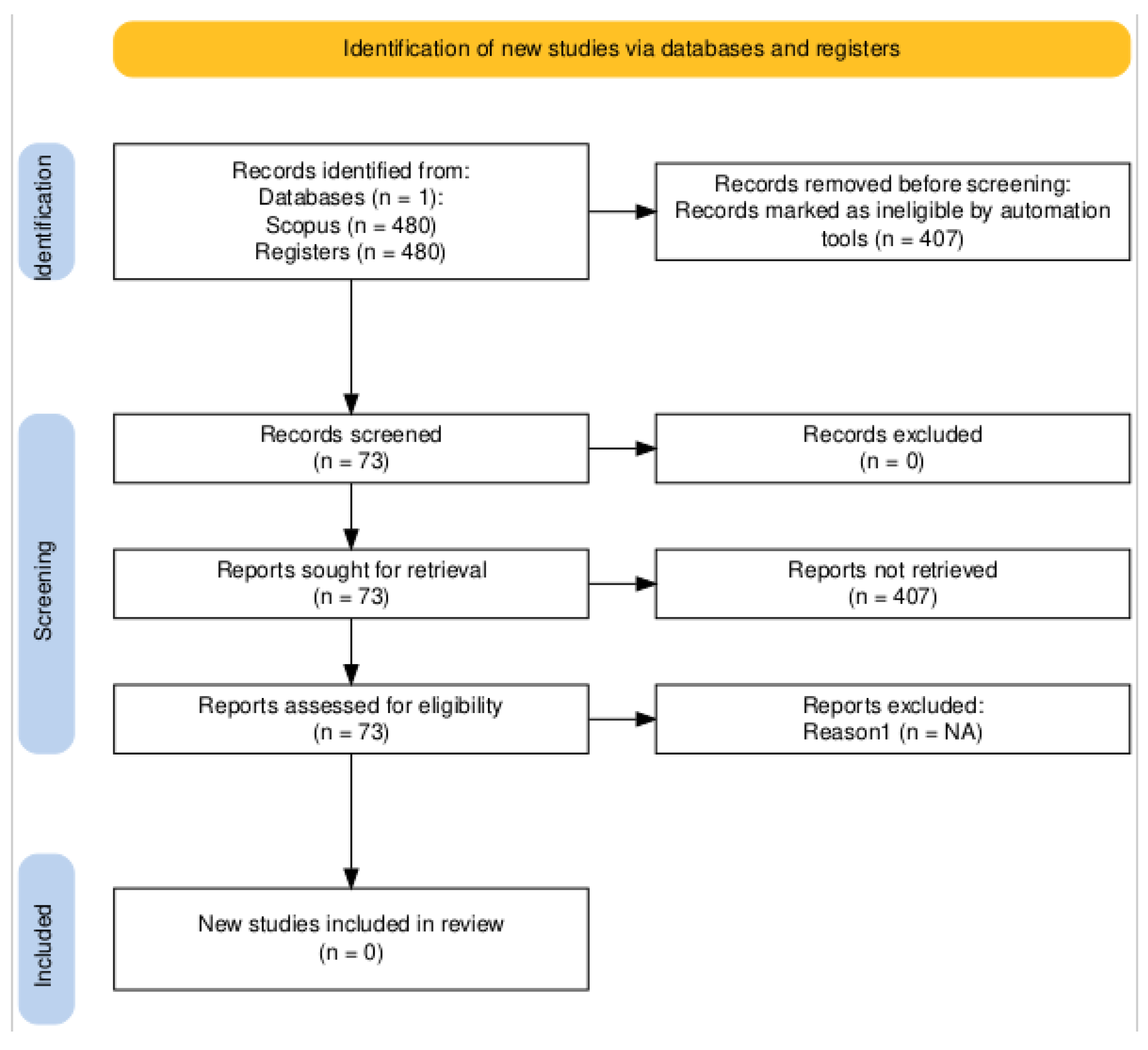
Figure 2.
Documents by year.
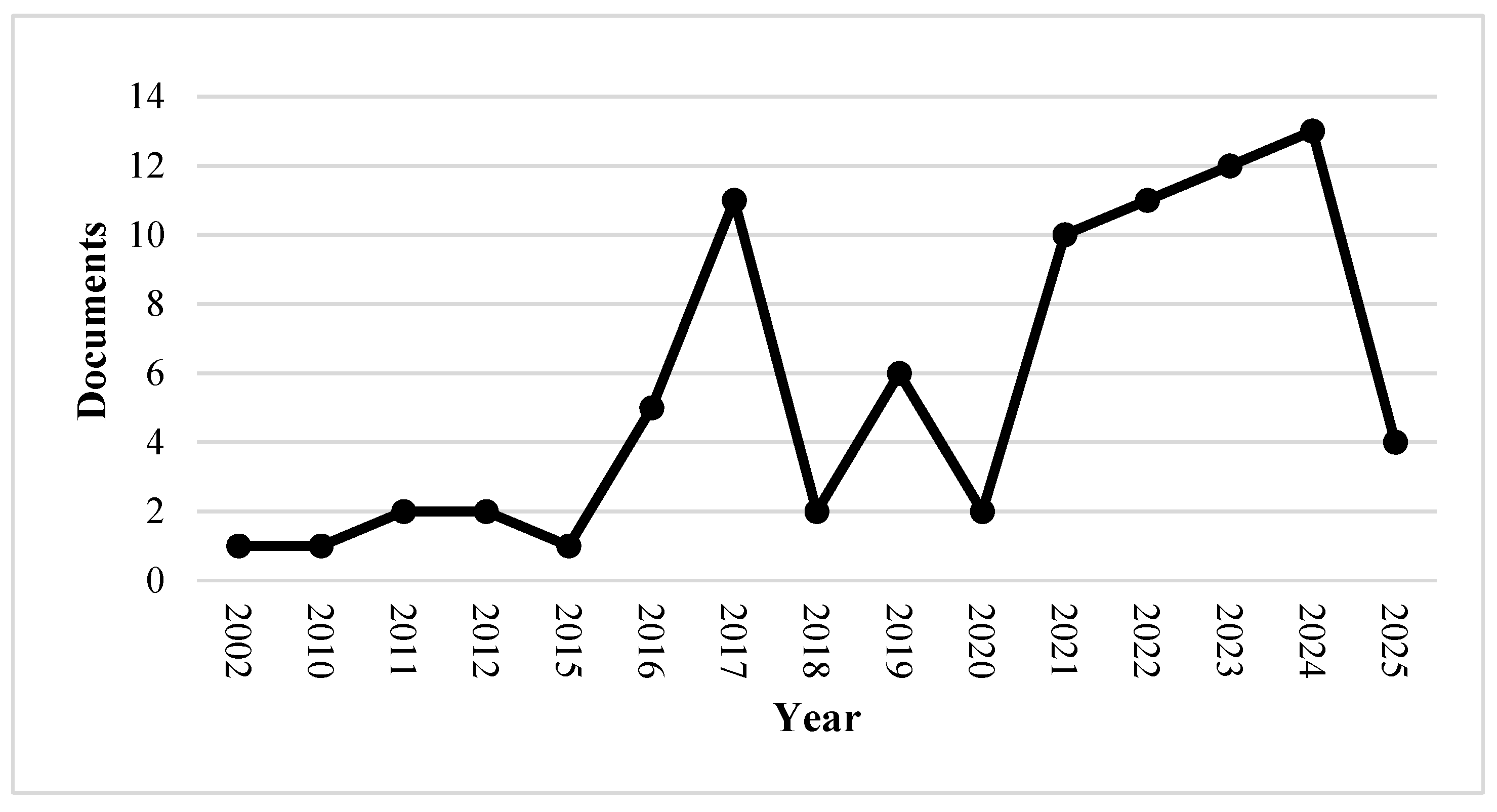
Figure 3.
Scientific production by country.
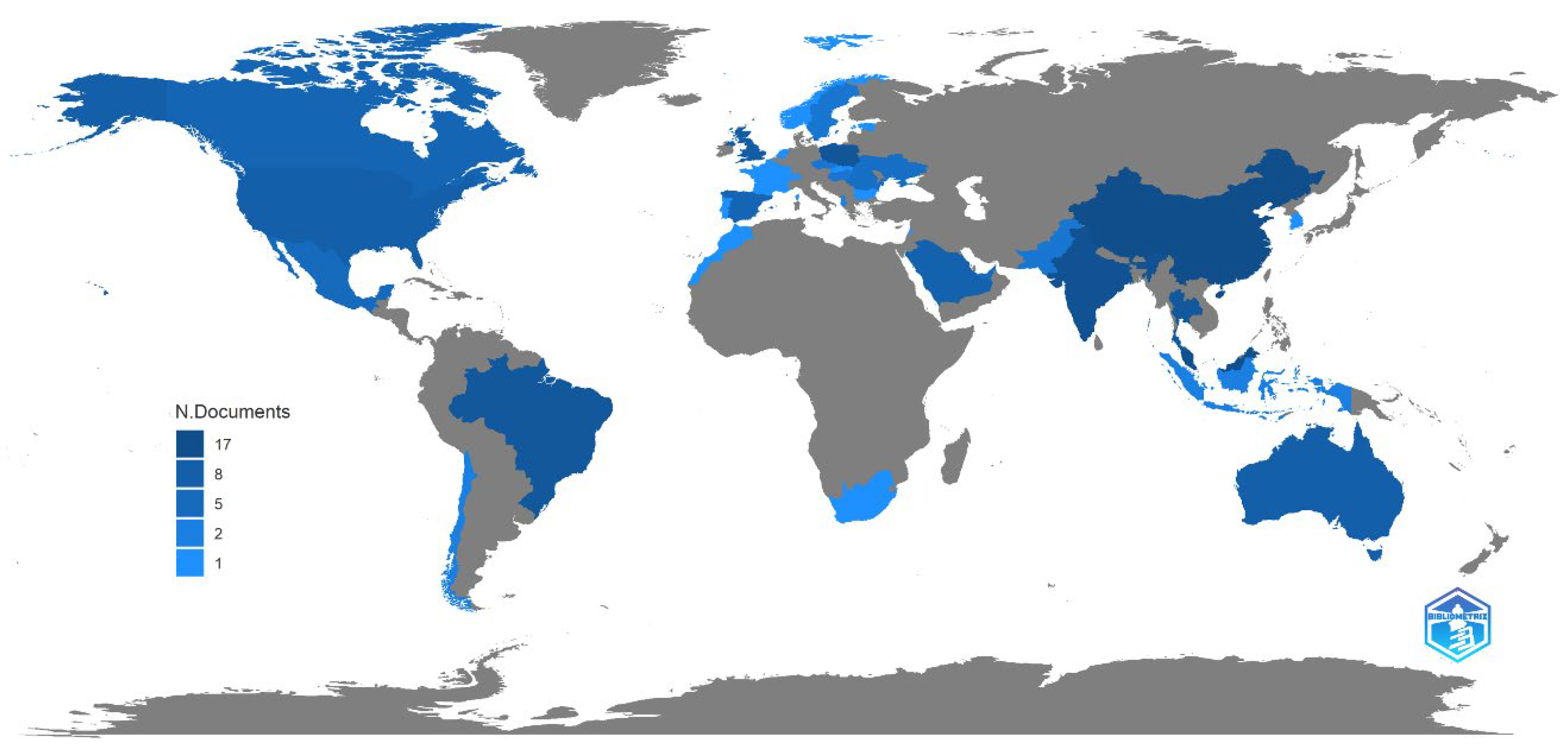
Figure 4.
Core sources by Bradford`s law (2002-2025).
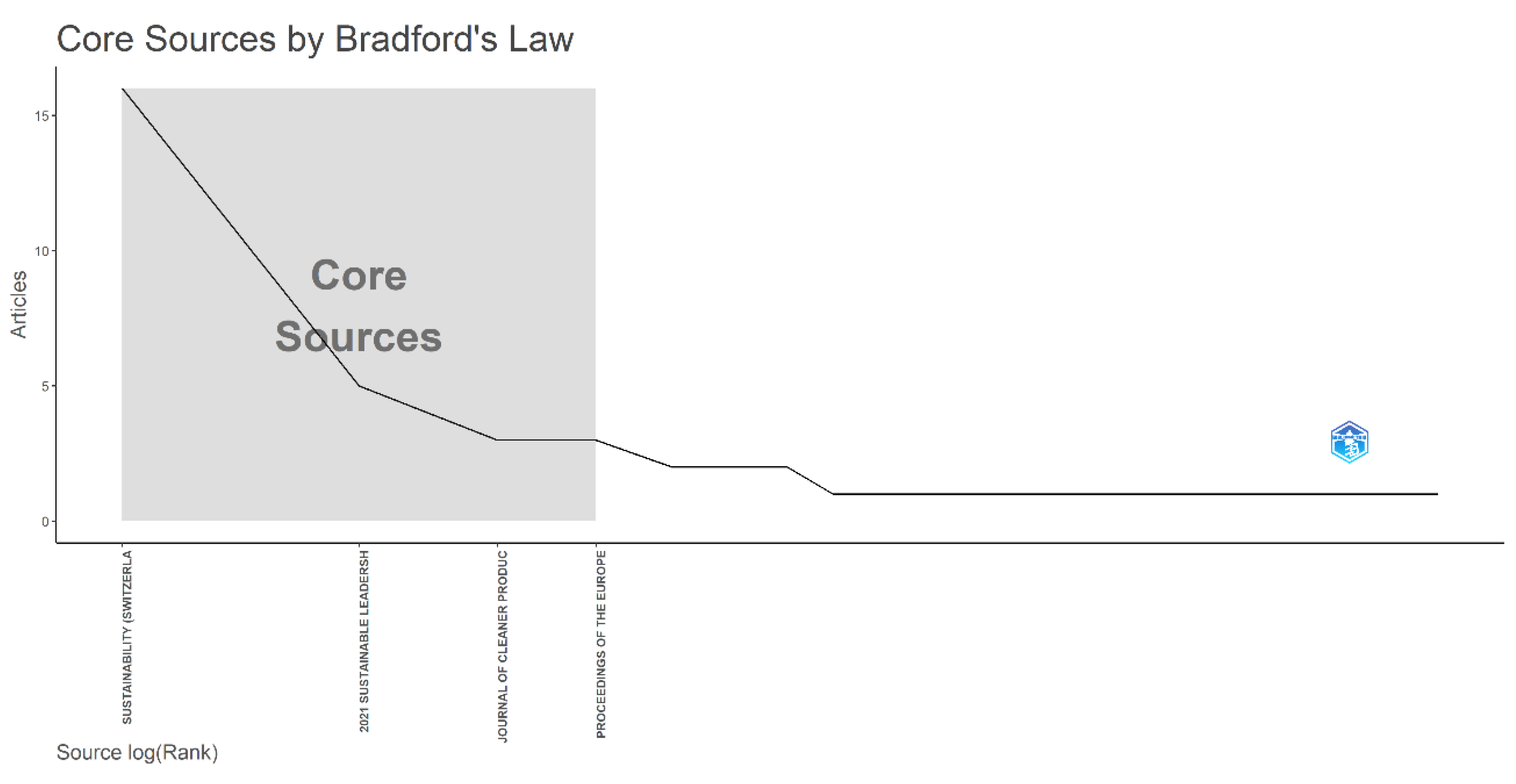
Figure 5.
Evolution of citations between ≤2015 and 2025.

Figure 6.
Network of all keywords.
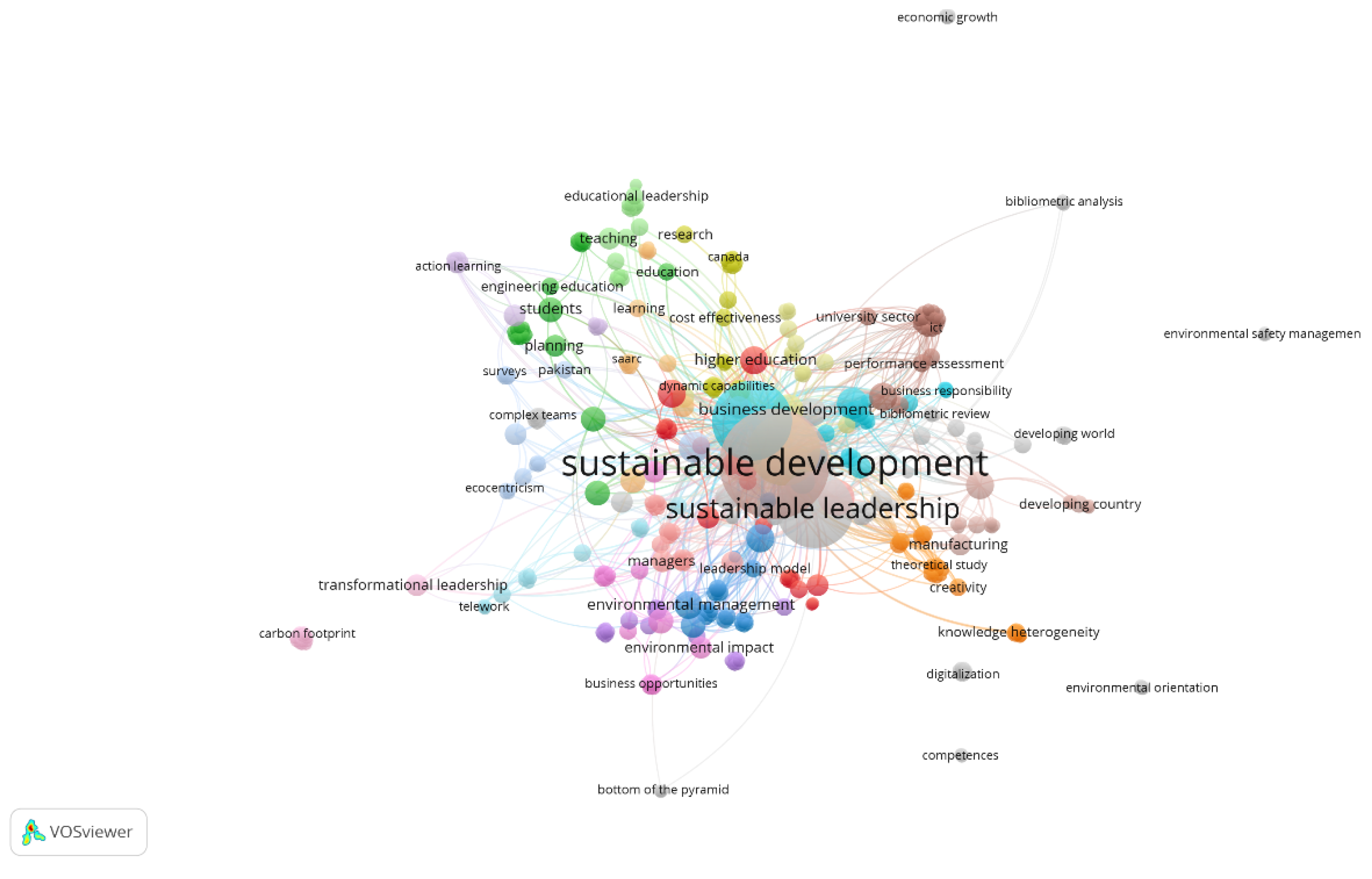
Figure 7.
Three fields plot analysis (AU=authors, CR=references, DE=authors keywords).
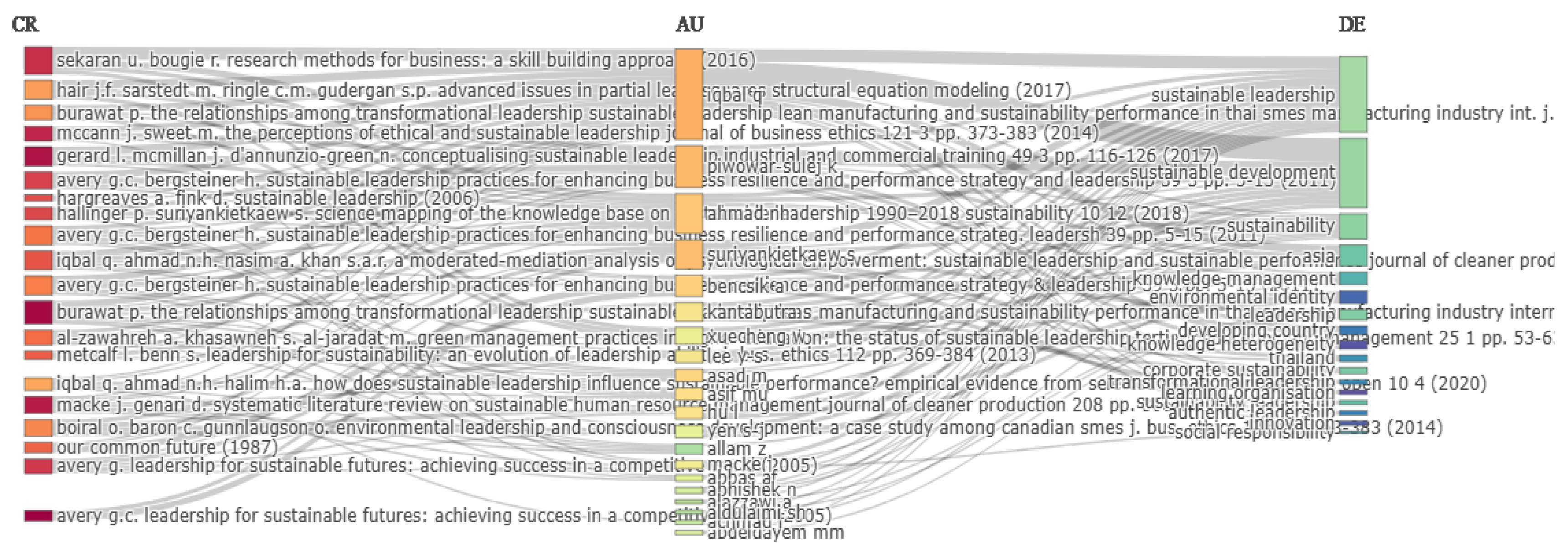
Figure 8.
Network of Linked Keywords.
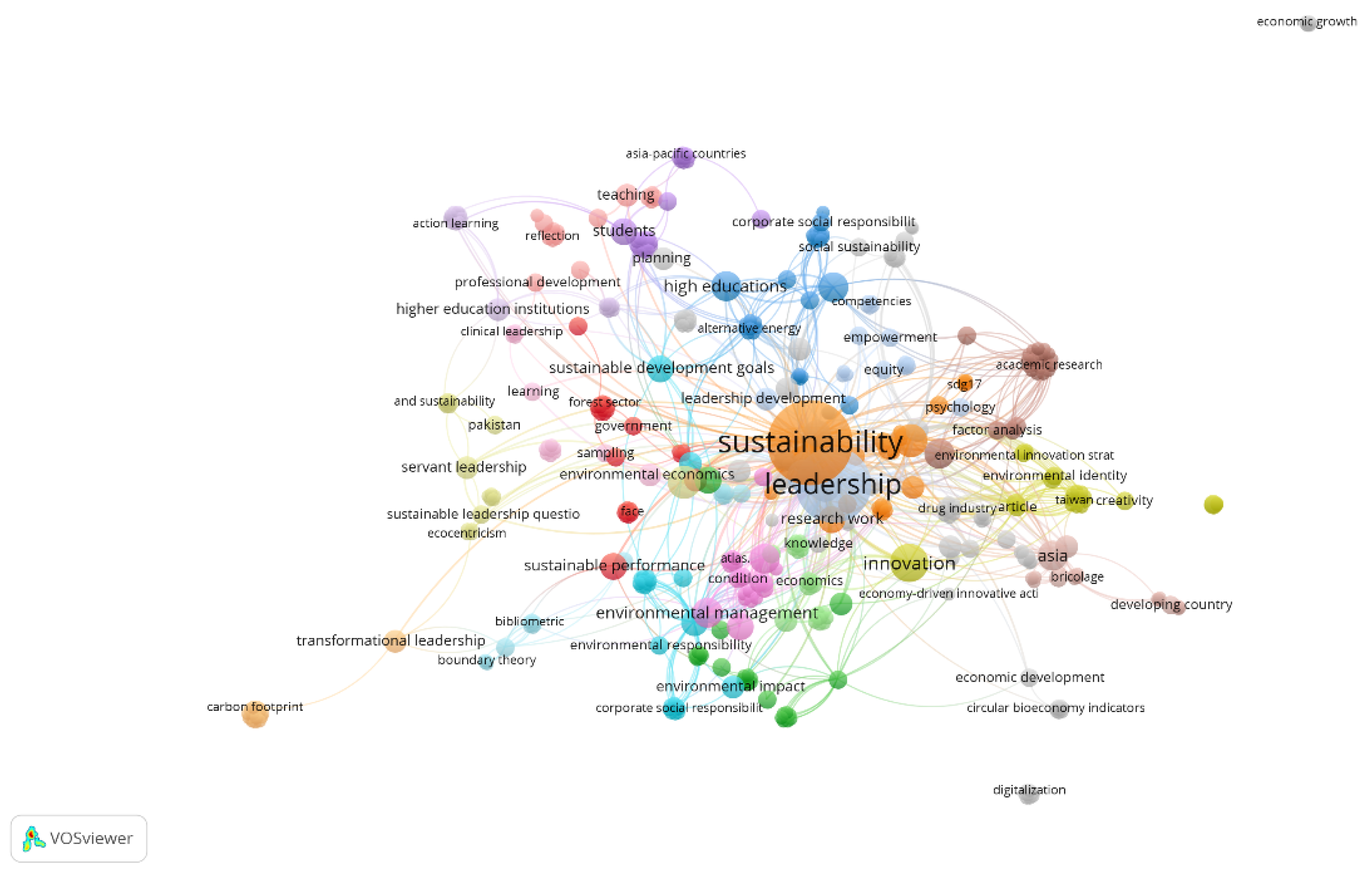
Figure 9.
Network of co-citation.
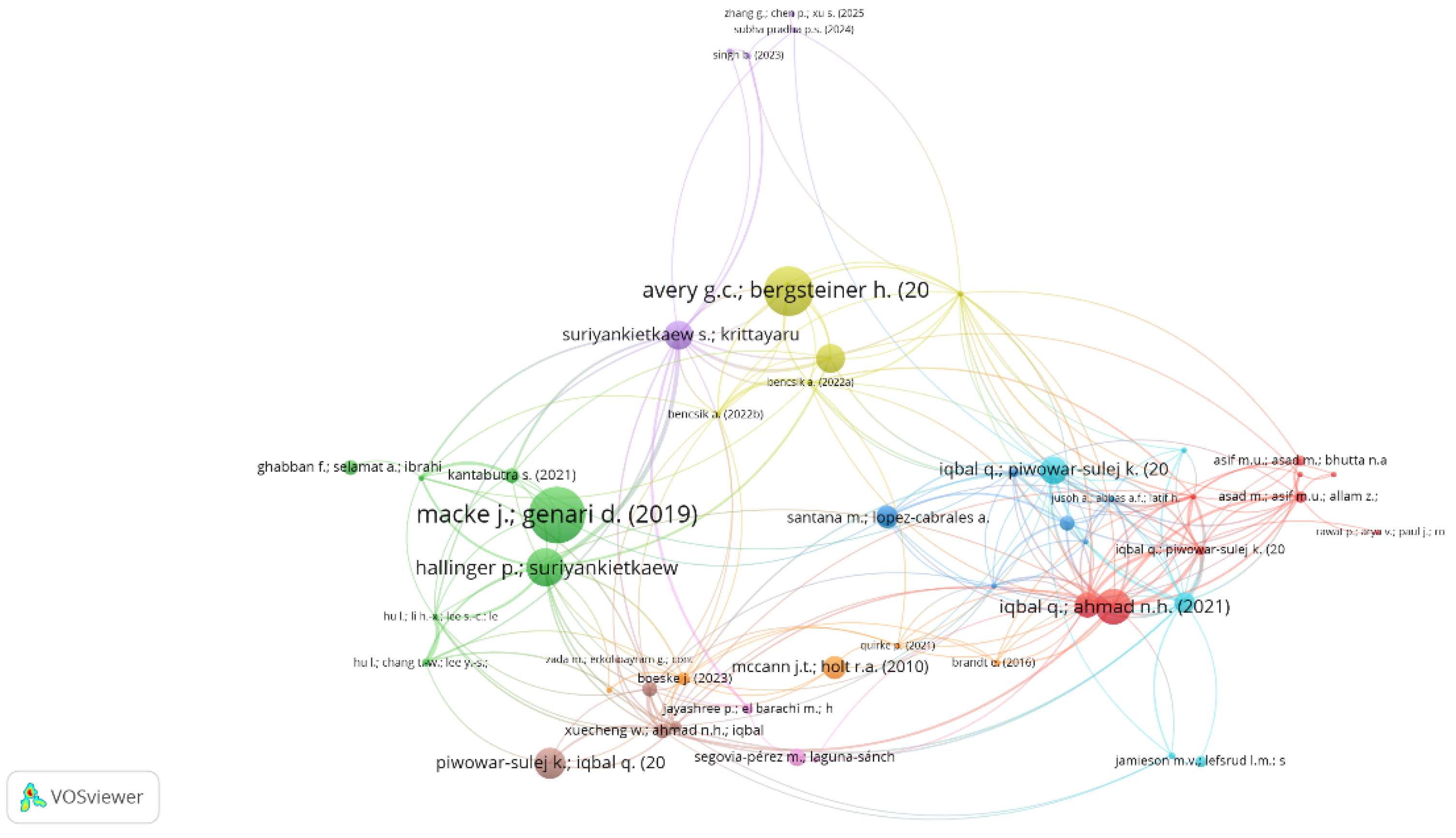
Table 1.
Process of systematic LRSB.
| Fase | Step | Description |
| Exploration | Step 1 | formulating the research problem |
| Step 2 | searching for appropriate literature | |
| Step 3 | critical appraisal of the selected studies | |
| Step 4 | data synthesis from individual sources | |
| Interpretation | Step 5 | reporting findings and recommendations |
| Communication | Step 6 | Presentation of the LRSB report |
Table 2.
Screening Methodology.
| Database Scopus | Screening | Publications |
| Meta-search | Keyword: sustainable leadership | 480 |
| Inclusion Criterion | Keyword: sustainable leadership Exact Keyword: sustainable development |
73 |
| Screening | Keyword: sustainable leadership Exact Keyword: sustainable development Until March 2025 |
73 |
Table 3.
Top 10 countries by number of publications.
| Country | Number of Publications |
| CHINA | 17 |
| MALAYSIA | 16 |
| INDIA | 14 |
| POLAND | 12 |
| BRAZIL | 11 |
| THAILAND | 11 |
| UK | 9 |
| AUSTRALIA | 8 |
| USA | 8 |
| BAHRAIN | 7 |
Source: own elaboration.
Disclaimer/Publisher’s Note: The statements, opinions and data contained in all publications are solely those of the individual author(s) and contributor(s) and not of MDPI and/or the editor(s). MDPI and/or the editor(s) disclaim responsibility for any injury to people or property resulting from any ideas, methods, instructions or products referred to in the content. |
© 2025 by the authors. Licensee MDPI, Basel, Switzerland. This article is an open access article distributed under the terms and conditions of the Creative Commons Attribution (CC BY) license (http://creativecommons.org/licenses/by/4.0/).
Copyright: This open access article is published under a Creative Commons CC BY 4.0 license, which permit the free download, distribution, and reuse, provided that the author and preprint are cited in any reuse.


