

Submitted:
22 March 2025
Posted:
27 March 2025
You are already at the latest version
Abstract
Clove is an ancient spice with powerful medicinal characteristics that may treat a wide range of diseases while also controlling beneficial effects on the body. Its bioactive component, vanillin (4-hydroxy-3-methoxybenzaldehyde), has a beneficial effect on human health. This study aims to identify proteins that interact with vanillin in order to predict their possible impacts on the human body. We retrieved 99 protein sequences from the STITCH, STRING, UniProtKB, and NCBI databases and interacted with them, resulting in 49 sequences after the BLAST search. A functional annotation research revealed both positive and negative regulatory mechanisms important for the maintenance of biological processes, molecular activities, and cellular components in human health. Pathway analysis indicated that these compounds play significant roles in KEGG and Reactome-related pathways.Furthermore, the vanillin molecule possesses anticancer, antioxidant, antisickling, antimicrobial, and anti-inflammatory activities that suppress a variety of genetic diseases, neurological diseases, and cancers. Consequently, this research will aid in the identification of therapeutic-related protein interactions and signaling pathways, as well as the development of medications containing vanillin.
Keywords:
clove
; vanillin
; functional analysis
; pathway analysis
1. Introduction
A medium-sized tree (8–12 m) belonging to the Myrtaceae family, Syzygium aromaticum (synonym: Eugenia cariophylata) is a common phenolic plant, spice, and more specifically essential oils (EOs), which have a high content of bioactive compounds and are commonly known as clove(Cortés-Rojas, de Souza, et al., 2014). It is native to the Maluku Islands in east Indonesia and can be grown across the world, including Brazil in the state of Bahia, Madagascar (Ullah & Hamza, 2023). One of the most precious spices, cloves have been used for centuries as a food preservation agent, for therapeutic use, and as an essential oil (EO) in the food, cosmetics, pharmaceutical, biomedical, and sanitary sectors(Cav, Roda Rita, Amaury Taboada Rodriguez, 2021). One of the most efficient sources of phenolic compounds, comprising eugenol, vanillin, gallic acid, eugenol acetate, β-caryophyllene, and several others, contains cloves.
Vanillin (4-hydroxy-3-the methoxybenzaldehyde) is the most widespread phenolic compound isolated from cloves(Kamat et al., 2000). It has substantial antimutagenic and anticarcinogenic capabilities that alleviate the proliferation of malignancies in the colon that are triggered by multiple agents in rat models. Many researchers have been investigating vanillin's antimutagenic qualities during the past few decades(Akagi et al., 1995; Imanishi et al., 1990). Vanillin's antimutagenic role in mutagenesis generated by 4-nitroquinoline 1-oxide, furylfuramide, captan, or methylglyoxal in Escherichia coli was initially demonstrated back in 1986 (Tai et al., 2011). A diet containing considerable amounts of vanillin, which has anticancer and antioxidant properties, may lessen the development of cancer via free radicals (Tai et al., 2011). Human health will be adversely affected by high quantities of vanillin consumed from meals and beverages(Tai et al., 2011). Both in vitro and in vivo, vanillin was said to be lowering X-ray or UV light-induced mutations in mammalian cells(Imanishi et al., 1990). Reactive oxygen species (ROS) scavenging, error-prone SOS repair inhibition, non-homologous DNA end-joining inhibition, and recA-dependent recombinational repair-enhancing protein have all been proposed as reasons for vanillin's antimutagenic properties(K. L. Ho et al., 2009). In order to cure sickle cell anemia (HBS), vanillin boasts anti-sickling properties(Arya et al., 2021). High-performance liquid chromatography was used to find that vanillin covalently comprises sickle hemoglobin (HBS) in red blood cell solutions(Abraham et al., 1991).Vanillin facilitated insulin glycation and amyloid aggregation for causing neurodegenerative disease and nephropathy, neuropathy, and retinopathy diabetes, and additionally it demonstrated cytoprotective and antioxidant actions against Advanced Glycation End Products (AGE) and Non-Enzymatic Glycation (NEG)(Awasthi & Saraswathi, 2016). Vanillin reveals neuroprotective properties in animals, including ischemia and Huntington's disease (HD)(Gupta & Sharma, 2014a). It also has a substantial impact on learning memory and locomotory motor coordination in rats with 3-nitropropionic acid (3NPA)-induced HD(Gupta & Sharma, 2014a). Vanillin shows natural wound healing features, and its chitosan hydrogel based on Schiff base and hydrogen connection between them, and additionally the chitosan-vanillin membrane, have been shown recently for promoting angiogenic stimulation, collagen deposition, and re-epithelialization in tissue engineering(Xu et al., 2018). Vanillin has applications in the cosmeceutical industry due to its aroma and antioxidant features, which have played an important part in skin renewal and healing processes(Taboonpong et al., 2017). Vanillin blocked the production of pro-inflammatory cytokines and UV-B-induced phosphorylation of ataxia telangiectasia mutants (ATM), serine-threonine kinase checkpoint kinase 2 (Chk2), tumor suppressor protein 53 (p53), and p38/mitogen-activated protein kinase (p38), leading to therapeutic benefits and antioxidant effects(Lee et al., 2014).
Bioinformatics has historically given important tools for evaluating these types of investigations. The Biochemical Interactions Indexing Engine and the Protein Interactions Database Search Engine have notable manuals on chemical-protein and protein-protein interaction systems, making it straightforward to figure out the adverse effects of Vanillin. STITCH is a web-based service that analyzes the interactions between chemicals and proteins inside particular organisms via testing and methodical scraping (Kuhn et al., 2014). STRING 12.0 is a web server for conserving and organizing protein-protein interactions, particularly biological and physical(Szklarczyk et al., 2023). Furthermore, Omicsbox has been utilized for analyzing genomic and proteomic data, discovering correlations between genetic sequences in biological functions, molecular activities, and cellular components, and identifying pathways utilizing resources such as KEGG and Reactome. Understanding whether human proteins interact with the naturally occurring substance vanillin, as well as showcasing the biological, cellular, and molecular functions of all of these proteins and the beneficial and adverse consequences of vanillin, are among the intended objectives of this study.
2. Methods and Materials
2.1. Network Retrieval
In the current study, Vanillin interacts with human (Homo sapiens) proteins compiled from the STITCH 5.0 (http://stitch.embl.de) internet server, as described by Ali et al. Vanillin attaches to human proteins and is then utilized for detecting protein-protein interactions. Use STRING to get all known human protein linkages from both direct (physical) and indirect (functional) sources.
2.2. Sequencing Assortment
Protein-protein interactions have been highlighted in the table, which was used to generate protein sequences by utilizing the FASTA and UniProt (https://www.uniprot.org/) databases. During the sequence collecting procedure, redundant sequences were discarded and all acquired protein sequences have been assembled in a single FASTA file for additional analysis.format retrieved from the NCBI protein database (https://www.ncbi.nlm.nih.gov/protein/).
2.3. Functional and Pathway Analysis
OmicsBox 3.2 is bioinformatics software used to evaluate NGS data from genomes, transcriptomes, and metagenomes. OmicsBox software has been employed to execute biological annotation and pathway investigation on FASTA protein sequences.
3. Results
3.1. Interaction Prediction
In the current research on both the beneficial and detrimental effects of clove vanillin on Homo sapiens have been explored using STITCH 5.0, a bioinformatics analysis tool that provides a possible network of 9 proteins (Figure 1). The function and interaction scores is illustrated in Table 1.
Using the bioinformatics tools STRING 12.0, it was determined that each of the 9 proteins for Vanillin interacted with another 10 proteins, yielding a total of 99 proteins for Vanillin. Each protein's interaction network was graphically depicted (Figure 2), and their unique protein-protein interactions (PPI) were reported in Table 2.
3.2. Protein Accession, Amino Acid Sequence Retrieval
Using STRING 12.0 for the PPI analysis, we identified 99 proteins from Vanillin. These proteins' accession numbers and amino acid lengths were compiled concurrently from the protein databases UniProtKB and NCBI. We used protein-protein blast to minimize duplication and gathered FASTA files for functional annotation analysis using these protein accession codes. Following a blast analysis in Table 3, we identified 49 proteins and conducted functional annotation.
3.3. Functional Annotation Analysis and Pathway Analysis after Blast Search
In the current research, functional annotation evaluation of vanillin reveals very effective biological processes, cellular components, and molecular activities in humans (Figure 3). Pathway analysis of vanillin was additionally identified using omics box tools, and the analysis indicates many sorts of signaling pathways in various species with their correct IDs and different kinds of databases, such as KEGG (Kyoto Encyclopedia of Genes and Genomes) and Reactome, as shown in Table 4.
Vanillin regulates anatomical structure development, lipid metabolism, transmembrane transport, inflammatory response, signaling and carbohydrate metabolism, transferase activity, transporter activity, lipid-binding molecular function, and regulatory activity (Figure 3). The analysis of pathways also reveals several types of signaling pathways, including the P53 signaling pathway, JAK-STAT pathway, relaxin signaling pathway, mTOR signaling pathway, PPAR signaling pathway, IL-17 signaling pathway, MAPK pathway, thyroid hormone signaling pathway, cAMP signaling pathway, and Hippo pathway. The pathway assessment depicts a variety of diseases, most notably coronavirus disease (COVID-19), tuberculosis, hepatitis B, hepatitis C, diabetic cardiomyopathy, malaria, and Cushing syndrome; it is also responsible for several types of cancer, including microRNA cancer, proteoglycan cancer, prostate cancer, bladder cancer, and transcriptional misregulation.
Vanillin and its related proteins are often found in cellular components, including the endoplasmic reticulum, extracellular space, cytosol, plasma membrane, and mitochondria (Figure 3). These proteins additionally serve a crucial function in many different types of metabolism, particularly ascorbate and aldarate metabolism, selenocompound metabolism, vitamin D metabolism, cysteine and methionine metabolism, retinol metabolism, tryptophan metabolism, glycine, serine metabolism, arachidonic acid metabolism, linoleic metabolism, nitrogen metabolism, porphyrine metabolism, drug metabolism, and the ingestion of SetMet, Sec, and Msec into H2Se met (Table 4).
4. Discussion
Clove (Syzygium aromaticum) is a spice plant with chemotherapeutical properties, including vanillin, which has constructive impacts on the human physique (Cortés-Rojas, De Souza, et al., 2014). Vanillin is observed in numerous species and has bioenergetic interactions. It is a flavor and aromatic compound and modulates metabolic and signaling pathways .
Bioinformatics research makes it easier to find a wide range of proteins and their activities, as well as functionally annotate and analyze these proteins. These kinds of proteins have been linked to a variety of illnesses, including metabolic, neurological, and genetic disorders, as well as several forms of cancer. Vanillin is absorbed via many modes of exposure and eliminated in the urine, with a tiny amount excreted as unmetabolized vanillin (K. Ho et al., 2011).
Vanillin was found to interact with 49 functional proteins that are linked to human health. Vanillin has anti-inflammatory, antibacterial, antibiotic potential, antifungal, and antiviral properties, among other things (Vanillin: A Review on the Therapeutic Prospects of a Popular Flavouring Molecule | Advances in Traditional Medicine, n.d.) (Antibacterial Mechanism of Vanillin against Escherichia Coli O157: H7: Heliyon, n.d.) (Vanilla Modulates the Activity of Antibiotics and Inhibits Efflux Pumps in Drug-Resistant Pseudomonas Aeruginosa | Biologia, n.d.) (Full Article: Antifungal Activity of Vanilla Juice and Vanillin against Alternaria Alternata, n.d.) . Vanillin was additionally shown to have anticlastogenic, antimutagenic, and anticancer effects, making it a potential nutraceutical molecule (Mourtzinos et al., 2009).According to the study that we conducted, vanillin acts on the cell cycle, causes apoptosis, and prevents cancer. Ho et al. found that the compound inhibited G2/M and G0/G1 cell cycle stages in 5-bromo-2-deoxyuridine-labeling cell proliferation and caused apoptosis in HT-29 cancer cells (IC50 value of 400 μg/ml), indicating potential for colorectal cancer prevention (K. Ho et al., 2009).
Vanillin's anti-inflammatory and antioxidant qualities aid in the treatment of hypoxic-ischemic brain damage and Alzheimer's disease(Albrecht et al., 2019) (Iannuzzi et al., 2023). It's a neurodevelopmental and neurodegenerative condition. It occurs as a result of a shortage of oxygen and a restriction of blood flow in the brain, triggering anaerobic metabolism (Albrecht et al., 2019). Vanillin's antioxidant properties, the hippo signaling pathway, and other interleukin signaling pathways all contribute to the prevention of some types of deficits. According to Lan and colleagues' research on the rat model, vanillin plays a critical part during these diseases; hippo signaling pathways and interleukin pathways help to prevent those diseases because vanillin promotes early neurofunction development, mitigates histo-morphological damage, and protects neuronal damage in the cortex and hippocampal CA1 and CA3 regions after HIBD in neonatal rats (Lan et al., 2019).
Vanillin modulates a wide range of metabolic activities and signaling pathways in the human body. This molecule has an effect on cell signaling, differentiation, anatomical structure creation, programmed cell death, the inflammatory response, glucose and lipid metabolism, nerve control, and other processes. Furthermore, these bioactive compounds have a direct relationship with the cell's subcellular organelles. Vanillin has been seen to interact with cell membranes, nucleoplasm, endoplasmic reticulum, cytosol, mitochondria, and the extracellular space. According to Gupta and Sharma's rat model experiments, vanillin ameliorated 3-nitropropionic acid-induced defective mitochondrial enzyme complexes (I, II, and IV) and prevented Huntington's disease (Gupta & Sharma, 2014b). Vanillin also protects the mitochondria, and its protective mechanism assists to activate the antiapoptotic pathway via the mitochondria(Neurosupportive Role of Vanillin, a Natural Phenolic Compound, on Rotenone Induced Neurotoxicity in SH-SY5Y Neuroblastoma Cells - Dhanalakshmi - 2015 - Evidence-Based Complementary and Alternative Medicine - Wiley Online Library, n.d.) . Moreover, Sheetal D Ullal and Yogesh Belagali demonstrated that vanillin serves a key part in lipid metabolism, and that when co-administered with HFD, vanillin can lower total cholesterol, triglyceride, and VLDL-C levels compared to the HFD control and atorvastatin groups, as well as contribute to reducing those parameters via free radical scavenging activity (Belagali et al., 2013).
Vanillin and its derivatives have medicinal qualities that treat a number of human ailments. Amor et al. (2014) found that vanillin works on a variety of neurodegenerative diseases, including Parkinson's disease, traumatic brain and spinal cord injury, stroke, multiple sclerosis, neuropsychiatric disorders, and amyotrophic lateral sclerosis, as well as neuropsychiatric disorders and genetic disorders caused by progressive neuron dysfunction in the central nervous system (Amor et al., 2014). Industrially manufactured vanillin is utilized as a flavoring ingredient in a wide range of goods, including fragrances. It is a source of dopa, leading to the precursors of the neurotransmitters dopamine, norepinephrine, and epinephrine (Martău et al., 2021). Vanillin is projected to play a major part in pharmaceuticals and biomedicine due to its derivatives activity, which employs different chemicals for diverse reasons and develops innovative composites that are employed in a variety of illnesses, disorders, and other applications. Many chemicals have already been successfully tested, including metal particles, metal oxides, nanoparticles, phenolic compounds, plant extracts, biopolymers, pharmaceuticals, and so on. Even if the synthesized compounds are low in toxicity and biocompatible, the possibilities for combinations are endless (Kafali et al., 2024). Our study solely looked at the potential adverse outcomes of vanillin; we need molecular drug design and animal experiments to determine the advantageous and detrimental impacts of these compounds.
5. Conclusions
Our findings show that several proteins interact with vanillin and have potential therapeutic effects (biological, molecular, and cellular), as well as other types of pathway activity that are directly or indirectly influenced by the human body. This bioinformatics technique precisely identified various possible activities and pathways (apoptosis, hippo signaling pathways, interleukin pathway) that mitigate cancer, inflammation, and neurodegenerative illness. Apoptosis is a critical function that regulates the cell cycle and prevents colorectal cancer; hippo signaling pathways protect neurons and prevent hypoxic-ischemic brain damage. Notably, these medications are utilized to treat a wide range of illnesses. Vanillin inhibits infectious diseases such as malaria, hepatitis B, and hepatitis C. However, another research revealed that vanillin is widely used in the pharmaceutical business due to its antibacterial properties and wound healing activity. The limitation of this study is that it needs to declare those proteins, and additionally, in vitro and in vivo studies are needed to illustrate the rest. The downside of this investigation involves the fact that it must reveal those proteins, and more in vitro and in vivo investigations are required to demonstrate the rest.
References
- Abraham, D. J., Mehanna, A. S., Wireko, F. C., Whitney, J., Thomas, R. P., & Orringer, E. P. (1991). Vanillin, a potential agent for the treatment of sickle cell anemia. Blood, 77(6), 1334–1341. [CrossRef]
- Akagi, K., Hirose, M., Hoshiya, T., Mizoguchi, Y., Ito, N., & Shirai, T. (1995). Modulating effects of ellagic acid, vanillin and quercetin in a rat medium term multi-organ carcinogenesis model. Cancer Letters, 94(1), 113–121. [CrossRef]
- Albrecht, M., Zitta, K., Groenendaal, F., van Bel, F., & Peeters-Scholte, C. (2019). Neuroprotective strategies following perinatal hypoxia-ischemia: Taking aim at NOS. Free Radical Biology and Medicine, 142, 123–131. [CrossRef]
- Amor, S., Peferoen, L. A. N., Vogel, D. Y. S., Breur, M., Van Der Valk, P., Baker, D., & Van Noort, J. M. (2014). Inflammation in neurodegenerative diseases – an update. Immunology, 142(2), 151–166. [CrossRef]
- Antibacterial mechanism of vanillin against Escherichia coli O157: H7: Heliyon. (n.d.). Retrieved December 13, 2024, from https://www.cell.com/heliyon/fulltext/S2405-8440(23)06488-5.
- Arya, S. S., Rookes, J. E., Cahill, D. M., & Lenka, S. K. (2021). Vanillin: A review on the therapeutic prospects of a popular flavouring molecule. Advances in Traditional Medicine, 21(3), 415–431. [CrossRef]
- Awasthi, S., & Saraswathi, N. T. (2016). Vanillin restrains non-enzymatic glycation and aggregation of albumin by chemical chaperone like function. International Journal of Biological Macromolecules, 87, 1–6. [CrossRef]
- Belagali, Y., Ullal, S. D., Shoeb, A., Bhagwath, V., Ramya, K., & Maskeri, R. (2013). Effect of Vanillin on lipid profile in a model of hyperlipidemia, a preliminary study. IJEB Vol.51(04) [April 2013]. http://nopr.niscpr.res.in/handle/123456789/16551.
- Cav, Roda Rita, Amaury Taboada Rodriguez, et al. (2021). Synergistic Antimicrobial Activities of Combinations of.
- Cortés-Rojas, D. F., de Souza, C. R. F., & Oliveira, W. P. (2014). Clove (Syzygium aromaticum): A precious spice. Asian Pacific Journal of Tropical Biomedicine, 4(2), 90–96. [CrossRef]
- Cortés-Rojas, D. F., De Souza, C. R. F., & Oliveira, W. P. (2014). Clove (Syzygium aromaticum): A precious spice. Asian Pacific Journal of Tropical Biomedicine, 4(2), 90–96. [CrossRef]
- Full article: Antifungal activity of vanilla juice and vanillin against Alternaria alternata. (n.d.). Retrieved December 13, 2024, from https://www.tandfonline.com/doi/full/10.1080/19476337.2019.1586776.
- Gupta, S., & Sharma, B. (2014a). Pharmacological benefits of agomelatine and vanillin in experimental model of Huntington’s disease. Pharmacology Biochemistry and Behavior, 122, 122–135. [CrossRef]
- Gupta, S., & Sharma, B. (2014b). Pharmacological benefits of agomelatine and vanillin in experimental model of Huntington’s disease. Pharmacology Biochemistry and Behavior, 122, 122–135. [CrossRef]
- Ho, K. L., Yazan, L. S., Ismail, N., & Ismail, M. (2009). Apoptosis and cell cycle arrest of human colorectal cancer cell line HT-29 induced by vanillin. Cancer Epidemiology, 33(2), 155–160. [CrossRef]
- Ho, K., Yazan, L. S., Ismail, N., & Ismail, M. (2009). Apoptosis and cell cycle arrest of human colorectal cancer cell line HT-29 induced by vanillin. Cancer Epidemiology, 33(2), 155–160. [CrossRef]
- Ho, K., Yazan, L. S., Ismail, N., & Ismail, M. (2011). Toxicology study of vanillin on rats via oral and intra-peritoneal administration. Food and Chemical Toxicology, 49(1), 25–30. [CrossRef]
- Iannuzzi, C., Liccardo, M., & Sirangelo, I. (2023). Overview of the Role of Vanillin in Neurodegenerative Diseases and Neuropathophysiological Conditions. International Journal of Molecular Sciences, 24(3), 1817. [CrossRef]
- Imanishi, H., Sasaki, Y. F., Matsumoto, K., Watanabe, M., Ohta, T., Shirasu, Y., & Tutikawa, K. (1990). Suppression of 6-TG-resistant mutations in V79 cells and recessive spot formations in mice by vanillin. Mutation Research Letters, 243(2), 151–158. [CrossRef]
- Kafali, M., Finos, M. A., & Tsoupras, A. (2024). Vanillin and Its Derivatives: A Critical Review of Their Anti-Inflammatory, Anti-Infective, Wound-Healing, Neuroprotective, and Anti-Cancer Health-Promoting Benefits. Nutraceuticals, 4(4), 522–561. [CrossRef]
- Kamat, J. P., Ghosh, A., & Devasagayam, T. P. A. (2000). [No title found]. Molecular and Cellular Biochemistry, 209(1/2), 47–53. [CrossRef]
- Kuhn, M., Szklarczyk, D., Pletscher-Frankild, S., Blicher, T. H., Von Mering, C., Jensen, L. J., & Bork, P. (2014). STITCH 4: Integration of protein–chemical interactions with user data. Nucleic Acids Research, 42(D1), D401–D407. [CrossRef]
- Lan, X.-B., Wang, Q., Yang, J.-M., Ma, L., Zhang, W.-J., Zheng, P., Sun, T., Niu, J.-G., Liu, N., & Yu, J.-Q. (2019). Neuroprotective effect of Vanillin on hypoxic-ischemic brain damage in neonatal rats. Biomedicine & Pharmacotherapy, 118, 109196. [CrossRef]
- Lee, J., Cho, J. Y., Lee, S. Y., Lee, K.-W., Lee, J., & Song, J.-Y. (2014). Vanillin protects human keratinocyte stem cells against Ultraviolet B irradiation. Food and Chemical Toxicology, 63, 30–37. [CrossRef]
- Mourtzinos, I., Konteles, S., Kalogeropoulos, N., & Karathanos, V. T. (2009). Thermal oxidation of vanillin affects its antioxidant and antimicrobial properties. Food Chemistry, 114(3), 791–797. [CrossRef]
- Neurosupportive Role of Vanillin, a Natural Phenolic Compound, on Rotenone Induced Neurotoxicity in SH-SY5Y Neuroblastoma Cells—Dhanalakshmi—2015—Evidence-Based Complementary and Alternative Medicine—Wiley Online Library. (n.d.). Retrieved December 13, 2024, from https://onlinelibrary.wiley.com/doi/full/10.1155/2015/626028.
- Szklarczyk, D., Kirsch, R., Koutrouli, M., Nastou, K., Mehryary, F., Hachilif, R., Gable, A. L., Fang, T., Doncheva, N. T., Pyysalo, S., Bork, P., Jensen, L. J., & Von Mering, C. (2023). The STRING database in 2023: Protein–protein association networks and functional enrichment analyses for any sequenced genome of interest. Nucleic Acids Research, 51(D1), D638–D646. [CrossRef]
- Taboonpong, S., Kiratipaiboon, C., Phiboonchaiyanan, P. P., Junthongjin, P., Trithossadech, P., & Chanvorachote, P. (2017). Vanillin increases stem cell signal and cell adhesion in keratinocytes. Thai Journal of Pharmaceutical Sciences (TJPS), 41(2), Article 2. http://www.tjps.pharm.chula.ac.th/ojs/index.php/tjps/article/view/368.
- Tai, A., Sawano, T., Yazama, F., & Ito, H. (2011). Evaluation of antioxidant activity of vanillin by using multiple antioxidant assays. Biochimica et Biophysica Acta - General Subjects, 1810(2), 170–177. [CrossRef]
- Ullah, M. A., & Hamza, A. H. A. (2023). Role of Clove in Human Medical History. SAR Journal of Anatomy and Physiology, 4(02), 10–19. [CrossRef]
- Vanilla modulates the activity of antibiotics and inhibits efflux pumps in drug-resistant Pseudomonas aeruginosa | Biologia. (n.d.). Retrieved December 13, 2024, from https://link.springer.com/article/10.2478/s11756-020-00617-5.
- Vanillin: A review on the therapeutic prospects of a popular flavouring molecule | Advances in Traditional Medicine. (n.d.). Retrieved December 13, 2024, from https://link.springer.com/article/10.1007/S13596-020-00531-W.
- Xu, C., Zhan, W., Tang, X., Mo, F., Fu, L., & Lin, B. (2018). Self-healing chitosan/vanillin hydrogels based on Schiff-base bond/hydrogen bond hybrid linkages. Polymer Testing, 66, 155–163. [CrossRef]
Figure 1.
Using STITCH 5.0, interactions between vanillin and human proteins are predicted.
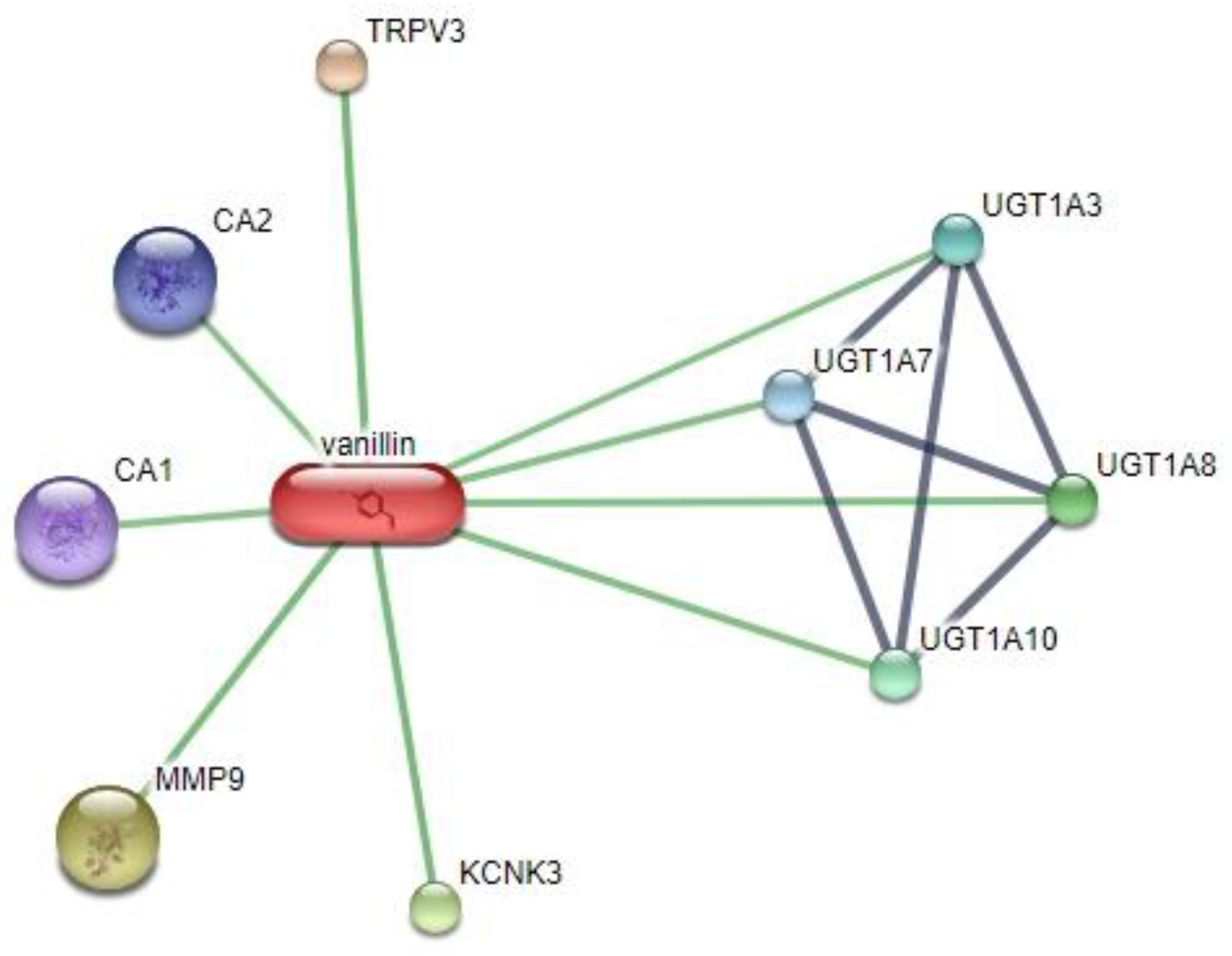
Figure 2.
Protein-Protein interaction (PPI) of Vanillin identified via STRING 12.0.
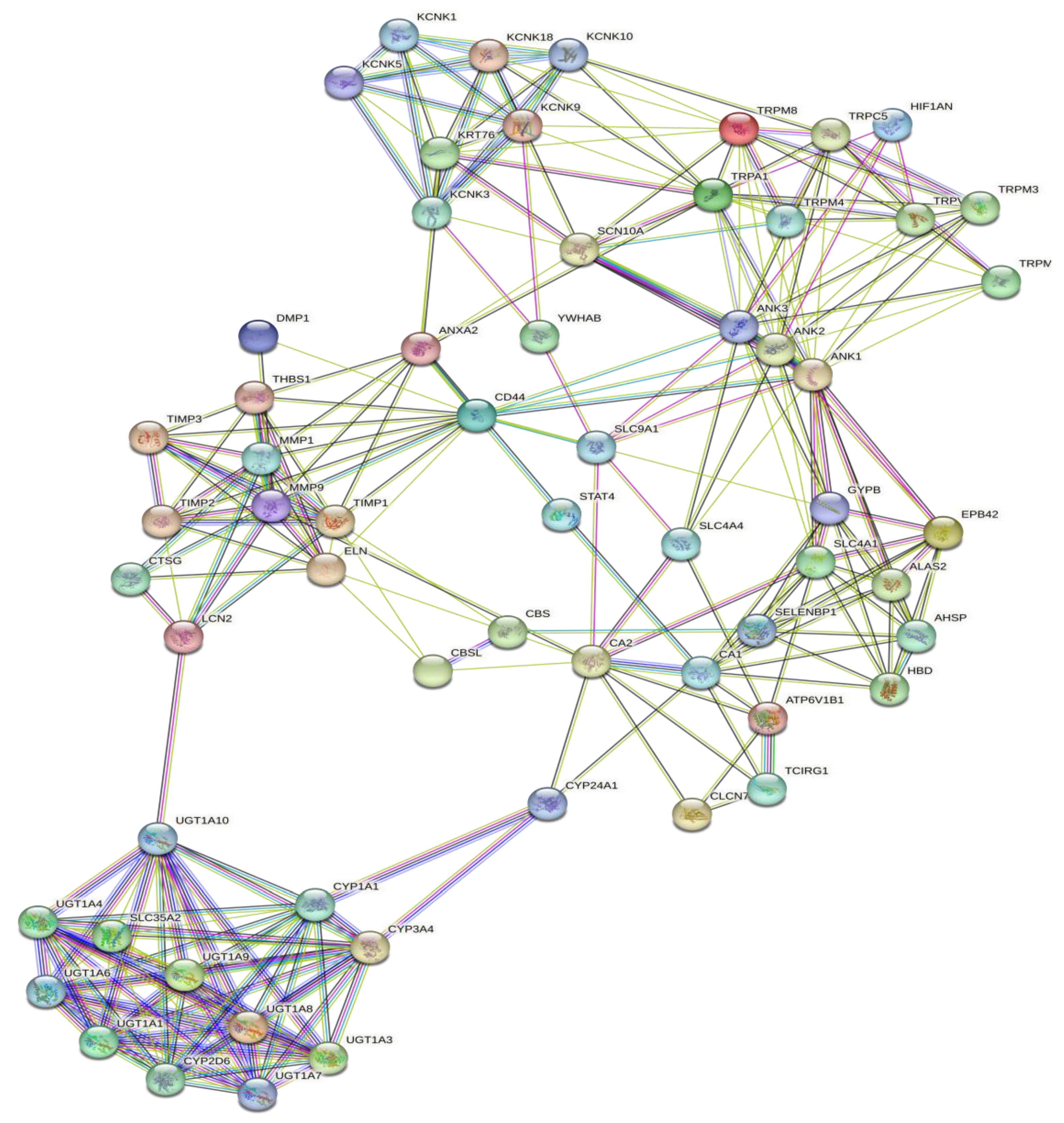
Figure 3.
Functional annotation analysis of Vanillin showed the various biological processes (a), localization of cellular components (b) and molecular functions (c) of different proteins in Homo sapiens.
Figure 3.
Functional annotation analysis of Vanillin showed the various biological processes (a), localization of cellular components (b) and molecular functions (c) of different proteins in Homo sapiens.
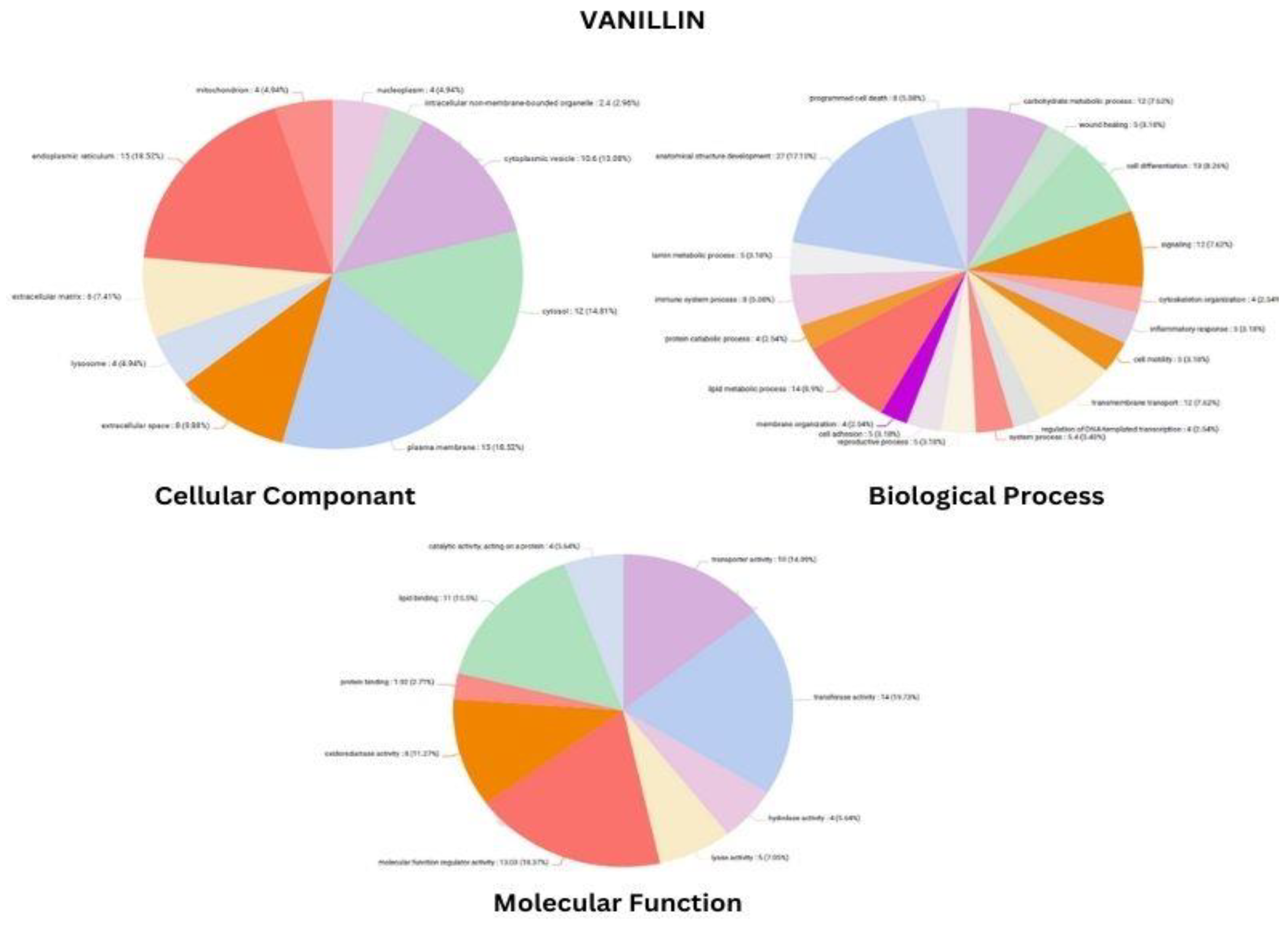

Table 1.
List of proteins that interact with Vanillin identified using STITCH 5.0, along with their short descriptions.
Table 1.
List of proteins that interact with Vanillin identified using STITCH 5.0, along with their short descriptions.
| PROTEIN CODE | ACCESSION NUMBER | INFORMATION | SCORE | AMINO ACID |
|---|---|---|---|---|
| CA1 | ENSP00000430656 | carbonic anhydrase I; | 0.700 | 261 |
| CA2 | ENSP00000285379 | carbonic anhydrase II; | 0.700 | 260 |
| UGT1A7 | ENSP00000362525 | UDP glucuronosyltransferase 1 family, polypeptide A7 | 0.737 | 530 |
| UGT1A3 | ENSP00000418532 | UDP glucuronosyltransferase 1 family, polypeptide A7; | 0.737 | 534 |
| UGT1A10 | ENSP00000343838 | UDP glucuronosyltransferase 1 family, polypeptide A7; | 0.739 | 530 |
| UGT1A8 | ENSP00000362549 | UDP glucuronosyltransferase 1 family, polypeptide A7; | 0.739 | 530 |
| KCNK3 | ENSP00000306275 | potassium channel, subfamily K, member 3; | 0.800 | 394 |
| MMP9 | ENSP00000361405 | matrix metallopeptidase 9 (gelatinase B, 92kDa gelatinase, 92kDa type IV collagenase); | 0.800 | 707 |
| TRPV3 | ENSP00000461518 | transient receptor potential cation channel, subfamily V, member 3 | 0.818 | 790 |
Table 2.
The interaction between vanillin and proteins has been identified using the STITCH and STRING technologies.
Table 2.
The interaction between vanillin and proteins has been identified using the STITCH and STRING technologies.
| Stitch | CA1 | CA2 | UGT1A7 | UGT1A3 | UGTA10 | UGT1A8 | KCNK3 | MMP9 | TRPV3 |
| String | AHSP | CA1 | UGT1A6 | UGT1A9 | UGT1A1 | UGT1A6 | KCNK9 | TIMP1 | TRPM8 |
| ALAS2 | ATP6V1B1 | UGT1A1 | UGT1A6 | UGT1A8 | UGT1A9 | S100A100 | TIMP2 | HIF1AN | |
| HBD | CBS | UGT1A10 | UGT1A1 | UGT1A6 | UGT1A3 | KRT76 | LCN2 | ANK1 | |
| CA2 | CBSL | UGT1A9 | UGT1A8 | UGT1A9 | UGT1A1 | KCNK5 | CD44 | ANK3 | |
| EPB42 | TCIRG1 | UGT1A4 | UGT1A4 | UGT1A4 | UGT1A10 | KCNK18 | THBS1 | ANK2 | |
| SLC4A1 | SLC9A1 | UGT1A8 | UGT1A10 | UGT1A7 | UGT1A4 | KCNK1 | TIMP3 | TRPM3 | |
| GYPB | SLC4A4 | UGT1A3 | UGT1A7 | UGT1A3 | UGT1A7 | KCNK10 | CTSG | TRPM4 | |
| SELENBP1 | SLC4A1 | CYP3A4 | CYP3A4 | CYP3A4 | CYP3A4 | YWHAB | DMP1 | TRPA1 | |
| STAT4 | CYP24A1 | SLC35A2 | CYP2D6 | SLC35A2 | SLC35A2 | SCN10A | ELN | TRPC5 | |
| CYP24A1 | CLCN7 | CYP1A1 | SLC35A2 | CYP1A1 | CYP1A1 | ANXA2 | MMP1 | TRPM7 |
Table 3.
List of vanillin interacting proteins of STRING 12.0 after blast searching.
| SL No |
Accession Number | Protein name | Amino acid | SL No |
Accession Number | Protein name | Amino acid | SL No |
Accession Number | Protein name | Amino acid |
| 1 | AAH27890.1 | CA1 | 261 | 18 | NP_659505.1 | 790 | 35 | NP_002091.4 | GYPB | 91 | |
| 2 | CAG38763.1 | CA2 | 260 | 19 | NP_001305151.1 | AHSP | 102 | 36 | CAG33133.1 | SELENBP1 | 472 |
| 3 | AAG30419.1 | UGT1A7 | 530 | 20 | NP_000023.2 | ALAS2 | 587 | 37 | NP_003142.1 | STAT4 | 748 |
| 4 | NP_061966.1 | UDP1A3 | 534 | 21 | NP_000510.1 | HBD | 147 | 38 | NP_000773.2 | CYP24A1 | 514 |
| 5 | AAG30417.1 | UGT1A10 | 530 | 22 | AAH96094.1 | EPB42 | 691 | 39 | NP_066307.1 | UGT1A9 | 530 |
| 6 | NP_061949.3 | UGT1A8 | 530 | 23 | NP_061948.1 | UGT1A10 | 530 | 40 | NP_059488.2 | CYP3A4 | 503 |
| 7 | NP_002237.1 | KCNK3 | 394 | 24 | NP_009051.1 | UGT1A3 | 534 | 41 | NP_001306146.1 | CD44 | 742 |
| 8 | NP_004985.2 | MMP9 | 707 | 25 | NP_005651.1 | SLC35A2 | 396 | 42 | NP_000353.1 | TIMP3 | 211 |
| 9 | NP_001683.2 | ATP6V1B1 | 513 | 26 | NP_003237.2 | THBS1 | 1170 | 43 | NP_056932.2 | KRT76 | 638 |
| 10 | AAH10242.1 | CBS | 551 | 27 | NP_001902.1 | CTSG | 255 | 44 | NP_003731.1 | KCNK5 | 499 |
| 11 | XP_054180901.1 | CBSL | 551 | 28 | NP_004398.1 | DMP1 | 513 | 45 | NP_862823.1 | KCNK18 | 384 |
| 12 | NP_006010.2 | TCIRG1 | 830 | 29 | NP_001265868.1 | ELN | 786 | 46 | NP_002236.1 | KCNK1 | 336 |
| 13 | NP_003038.2 | SLC9A1 | 815 | 30 | NP_002412.1 | MMP1 | 469 | 47 | NP_612190.1 | KCNK10 | 543 |
| 14 | NP_001091954.1 | SLC4A4 | 1079 | 31 | NP_001269463.1 | KCNK9 | 374 | 48 | NP_003395.1 | YWHAB | 246 |
| 15 | NP_001278.1 | CLCN7 | 805 | 32 | NP_002957.1 | S100A10 | 97 | 49 | AAH93056.1 | ANXA2 | 339 |
| 16 | NP_001063.2 | UGT1A6 | 532 | 33 | NP_006505.4 | SCN10A | 1956 | ||||
| 17 | NP_000454.1 | UGT1A1 | 533 | 34 | NP_000333.1 | SLC4A1 | 911 | ||||
Table 4.
KEGG and Reactome Pathways analysis of Vanillin interacted Proteins.
| KEGG ID | PATHWAY | KEGG ID | PATHWAY | KEGG ID | PATHWAY |
| Ko04510 | Focal adhesion | Ko05200 | Pathways in cancer | Ko04360 | Axon guidance |
| Ko00941 | Flavonoid biosynthesis | Ko04350 | TGF beta signaling pathway | Ko05171 | Coronavirus disease-COVID19 |
| Ko04115 | P53 signaling pathway | Ko05160 | Hepatitis C | Ko04080 | Neuroactive ligand receptor interaction |
| Ko05204 | Chemical carcinogenesis,DNA adducts | Ko05161 | Hepatitis B | Ko00040 | Pentose and glucuronate interconversions |
| Ko05322 | Systemic lupus erythematosus | Ko04929 | GnRH secretion | Ko05165 | Human papillomavirus infection |
| Ko04750 | Inflammatory mediator regulation of TRP channels | Ko04927 | Cortisol synthesis and secretion | Ko00270 | Cysteine and methionine metabolism |
| Ko05169 | Epstein barr virus infection | Ko04928 | Parathyroid hormone synthesis,secretion and action | Ko00791 | Atrazine degradation |
| Ko05323 | Rheumatoid arthritis | Ko04925 | Aldosterone synthesis and secretion | Ko04624 | Toll and Imd signaling pathway |
| Ko04630 | JAK-STAT pathway | Ko00053 | Ascorbate and aldarate metabilism | Ko00830 | Retinol metabolism |
| Ko05202 | Transcriptional misregulation in cancer | Ko04926 | Relaxin signaling pathway | Ko04742 | Taste transduction |
| Ko00944 | Flavone and flavonol biosynthesis | Ko00450 | Selenocompound metabolism | Ko04621 | NOD like receptor signaling pathway |
| Ko04110 | Cell cycle | Ko05219 | Bladder cancer | Ko04066 | HF-1signaling pathway |
| Ko01240 | Biosynthesis of co factor | Ko05215 | Prostrate cancer | Ko05152 | tuberculosis |
| Ko05321 | Inflammatory bowel disease | Ko04640 | Hematopoietic cell lineage | Ko00380 | Tryotophan metabolism |
| Ko04934 | Cushing syndrome | Ko00232 | Caffeine metabolism | Ko04919 | Thyroid hormone signaling pathway |
| Ko04657 | IL-17 signaling pathway | Ko04668 | TNF signaling pathway | Ko00260 | Glycine,serine and threonine metabolism |
| Ko04658 | Th1 and Th2 cell differentiation | Ko04024 | cAMP signaling pathway | Ko00140 | Steroid hormone biosynthesis |
| Ko04810 | Regulation of actin cytoskeleton | Ko04145 | Phagosome |
Ko04915 | Estrogen signaling pathway |
| Ko04015 | Rap1 signaling pathway | Ko00910 | Nitrogen metabolism | ko04913 | Ovarian steroidogenesis |
| Ko04013 | MAPK signaling pathway-fly | Ko04142 | Lysosome |
Ko05207 | Chemical carcinogenesis-receptor activation |
| Ko03320 | PRAP signaling pathway | Ko05110 | Vibrio cholera infection | Ko04911 | Insulin secretion |
| Ko04371 | Apelin signaling pathway | Ko04260 | Cardiac muscle contraction | Ko05208 | Chemical carcinogenesis –reactive oxygen species |
| Ko00190 | Oxidative phosphorylation | Ko04261 | Adrenergic signaling in cardiomyocytes | Ko01522 | Endrocrine resistance |
| Ko00071 | Fatty acid degradation | Ko00100 | Steroid biosynthesis | Ko04512 | ECM -receptor interaction |
| Ko00590 | Arachidonic acid metabolism | Ko00980 | Metabolism of xenobiotics by cytochrome P450 | Ko05205 | Proteoglycans in cancer |
| Ko00073 | Cutin,suberine and wax biosynthesis | Ko00860 | Porphyrin metabolism | Ko05206 | microRNAs in cancer |
| Ko00591 | Linoleic acid metabolism | Ko00982 | Drug metabolism-cytochrome P450 | Ko05203 | Viral carcinogenesis |
| Ko00195 | photosynthesis | Ko00983 | Drug metabolism –other enzymes | Ko04114 | Oocyte meiosis |
| Ko05120 | Epithelial cell signaling in Helicobacter pylori infection | Ko00363 | Bisphenol degradation | Ko05144 | malaria |
| Ko04670 | Leukocyte transendothelial migration | Ko04613 | Neutrophil extracellular trap formation | Ko05143 | African trypanosomiasis |
| Ko04150 | mTOR signaling pathway | Ko04217 | necroptosis | Ko05131 | Shigellosis |
| Ko04151 | PI3K-Akt signaling pathway | Ko04976 | Bile secreation | Ko05132 | Salmonella infection |
| Ko05418 | Fluid shear stress and atherosclerosis | Ko04614 | Renin angiotensin system | Ko04978 | Mineral absorption |
| Ko04390 | Hippo signaling pathway | Ko04218 | Cellular senescence | Ko04971 | Gastric acid secretion |
| Ko04391 | Hippo signaling pathway-fly | Ko04974 | Protein digestion and absroption | Ko04964 | Proximal tubule bicarbonate reclamation |
| Ko05417 | Lipid and atherosclerosis | Ko04972 | Pancreatic secretion | Ko05415 | Diabetic cardimyopathy |
| Reactome id | Description | Reactome id | Description | Reactome id | Description |
| R-HSA-6805567 | keratinization | R-HSA-5576892 | Phase 0 rapid depolarisation | R-BTA-450513 | Tristetraprolin binds and destabilizes mRNA |
| R-HSA-9020958 | Interleukin-21signaling | R-HSA-8984722 | Interleukin-20 family signaling | R-HSA-727802 | Transport of nucleotide sugars |
| R-HSA-8957275 | Post-translational protein phosphorylation | R-HSA-425986 | Sodium exchange | R-BTA-111447 | Activation of BAD and translocation to mitrochondria |
| R-HSA-5579016 | Defective UGT1A4 causes hyperbilurubinemia | R-HSA-5579002 | Defective UGT1A1 causes hyperbilirubinemia | R-HSA-381426 | Regulation of insulin-like Growth Factor transport and uptake by insulin |
| R-HSA-1592389 | Activation of matrix Metalloproteinases | R-BTA-392517 | Rap 1 signaling | R-HSA-1614603 | Cysteine formation from homocysteine |
| R-HSA-9027307 | Biosynthesis of maresin-like SPMs | R-HSA-3000178 | ECM proteoglycans | R-HSA-77387 | Insulin receptor recycling |
| R-HSA-2022377 | Metabolism of Angiotensinogen to Angiotensins | R-HSA-8854691 | Interleukin-20 family signaling | R-HSA-1222556 | ROS and RNS production in phagocytes |
| R-BTA-5628897 | TP53 regulates metabolic genes | R-HSA-5576886 | Phase 4- resting membrane potential | R-BTA-75035 | Chk1/Chk2 mediatyed inactivation of Cyclin B:cdk1 complex |
| R-HSA-1475029 | Reversible hydration of carbon dioxide | R-BTA-5675221 | Negative regulation of MAPK activation | R-HSA-189493 | Heme degredation |
| R-HSA-447043 | Neurofascin interactions | R-HSA-983712 | Ion channel transport | R-HSA-8950505 | Gene and protein expression by JAK-STAT signaling after interleukin-12 |
| R-HSA-1299308 | Tandem of pore domain in a weak inwardly rectifying K+ channels(TWIK) | R-BTA -5674135 | MAP2K and MAPK activation | R-HSA-211916 | Vitamins |
| R-HSA-447041 | CHL1 interactions | R-HSA-418890 | Role of second messengers in netrin-1 signaling | R-HSA-2672351 | Stimuli-sensing channels |
| R-HSA-9020933 | Interleukin-23 signaling | R-HSA-3295583 | TRP channels | Plant Reactom ID | Description |
| R-HSA-1566948 | Elastic-fibre formation | R-HSA-9660826 | Purinergic signaling in leishmaniasis infection | R-AHA-1119523 | Tetrahydrofolate biosynthesis II |
| R-HSA-1299316 | TWIK-related acid –sensitive K+(TASK) | R-HSA-1237044 | Erythrocyte take up carbon dioxide and release oxygen | R-ACH-1119415 | Leucopelargonidin and leucocyanidin biosynthesis |
| R-HSA-6785807 | Interleukin-4 and interleukin-13 signaling | R-HSA-877300 | Interferon gramma signaling | R-ACH-1119322 | Leucodelphinidin biosynthesis |
| R-HSA-425381 | Bicarbonate transporters | R-HSA-9754706 | Atorvastatin ADME | R-ACH-9609573 | Tricin biosynthesis |
| R-BTA-5673000 | RAF activation | R-HSA-448706 | Interleukin-1 processing | R-AHA-1119477 | Starch biosynthesis |
| R-BTA-450385 | BRF1 binds and destabilizes mRNA | R-HSA-2408508 | Metabolism of ingested SeMet,Sec,MeSec into H2Se | R-QLO-5367729 | Strigolactone biosynthesis |
| R-HSA-9623433 | NR1H2 and NR1H3 regulate gene expression to control bile acid homeostate | R-SSC-75205 | Dissolution of fibrin clot | R-AHA-1119265 | Tetra ghydrofolate biosynthesis I |
| R-HSA-983231 | Factors involved in megakaryocyte development and platelet production | R-HSA-5423646 | Aflatoxin activation and detoxification | R-AHA-1119465 | Sucrose biosynthesis |
| R-HSA-2160916 | Hyaluronan uptake and degredation | R-HSA-917977 | Transferrin endocytosis and recycling | R-HSA-1234174 | Cellular responses to hypoxia |
| R-HSA-9757110 | Prednisone ADME | R-HSA-9027307 | Biosynthesis of maresin-like SPMs | R-HSA-189451 | Heme biosynthesis |
| R-HSA-6798695 | Neutrophil degranulation | R-HSA-2672351 | Stimuli-sensing channels | R-HSA-9717207 | Sensory perception of sweet,bitter and umami taste |
| R-BTA-166208 | mTORC1- mediated signaling | R-HSA-211916 | Vitamins |
R-HSA-114608 | Platelate degranulation |
| R-BTA-5625740 |
RHO GTPases activate PKNs | R-HSA-1299344 | TRESK | R-HSA-5619072 | Defective SLC35A2 causes congential disorder of glycosylation 2M |
| R-HSA-1299344 | TWIK-related spinal cord K+ channel | R-HSA-9639288 | Amino acids regulate mTORC1 | R-HSA-196791 | Vitamin D metabolism |
| R-HSA-9639288 | Amino acids regulate mTORC1 | R-HSA-9635465 | Suppression of apoptosis | R-HSA-1234174 | Cellular responses to hypoxia |
| R-HSA-9635465 | Suppression of apoptosis | R-HSA-1989781 | PPARA activates gene expressions | R-HSA-189451 | Heme biosynthesis |
| R-HSA-1989781 | PPARA activates gene expression | R-HSA-447038 | NrCAM interactions | R-HSA-9717207 | Sensory perception of sweet,bitter and umami taste |
| R-HSA-447038 | NrCAM interactions | R-BTA-170968 | Frs2-mediated activation | R-BTA-114608 | Platelate degranulation |
| R-HSA-170968 | Frs2-mediated activation | R-HSA-202733 | Cell surface interactions at the vascular wall | R-HSA-5619072 | Defective SLC35A2 causes congential disorder of glycosylation 2M |
| R-HSA-202733 | Cell surface interactions at the vascular wall | R-HSA-156588 | glucuronidation | R-HSA-6803157 | Antimicrobial peptides |
| R-HSA-156588 | glucuronidation | R-BTA-2028269 | Signaling by Hippo | R-HSA-6807878 | COPI-mediated anterograde transport |
| R-HSA-2028269 | Signaling by Hippo | R-HSA-6783783 | Interleukin-10 signaling | R-HSA-6809371 | Formation of the cornifide envelope |
| R-HSA-6783783 | Interleukin-10 signaling | R-HSA-445095 | Interaction between L1 and Ankyrins | R-HSA-9753281 | Paracetamol ADME |
| R-HSA-1592389 | Activation of Matrix MEtalloproteinases | R-HSA-9749641 | Asprine ADME | R-HSA-8936459 | RUNX1 regulates genes involved in megakaryocyte differentiation |
| R-HSA-211981 | xenobiotics | R-HSA-5619050 | Defective SLC4A1 causes hereditary spherocytosis type 4 | R-HSA-1299503 | TWIK related potassium channel |
| R-HSA-1247673 | Erythrocytes take up oxygen and release carbon dioxide | R-HSA-5619054 | Defective SLC4A4 causes renal tubular acidosis,poximal | R-HSA-6803157 | Antimicrobial peptides |
| R-HSA-5579010 | Defective CYP24A1 causes HCAI | R-BTA-96144399 | Regulation of localization of FOXO transcription factors |
Disclaimer/Publisher’s Note: The statements, opinions and data contained in all publications are solely those of the individual author(s) and contributor(s) and not of MDPI and/or the editor(s). MDPI and/or the editor(s) disclaim responsibility for any injury to people or property resulting from any ideas, methods, instructions or products referred to in the content. |
© 2025 by the author. Licensee MDPI, Basel, Switzerland. This article is an open access article distributed under the terms and conditions of the Creative Commons Attribution (CC BY) license (https://creativecommons.org/licenses/by/4.0/).
Copyright: This open access article is published under a Creative Commons CC BY 4.0 license, which permit the free download, distribution, and reuse, provided that the author and preprint are cited in any reuse.


