
Submitted:
29 March 2025
Posted:
31 March 2025
You are already at the latest version
Abstract
Managerial accounting is a key component for managing financial resources and improving strategic decision-making in enterprises. This study examines the spread and use of managerial accounting in Kosovo's enterprises, analyzing the challenges and opportunities for its improvement. Based on a research methodology that includes surveys and interviews with managers and accounting professionals, the study has identified a limited spread of advanced managerial accounting methods, especially in small and medium-sized enterprises. Key challenges include the lack of adequate training, technological barriers, and the cost of implementing such systems. Despite these challenges, there are significant opportunities for improvement, including the use of modern technologies and the development of training programs for professionals. This study offers recommendations for improving the spread of managerial accounting, emphasizing the importance of developing internal capacities and adopting technology to assist in increasing the competitiveness and efficiency of Kosovo's enterprises.
Keywords:
Managerial Accounting
; Kosovo Enterprises
; Challenges
; Opportunities
; Improvement
; Technology
; Training
; Strategic Decision-Making
1. Introduction
Managerial accounting is an important discipline that helps managers in making strategic and operational decisions. It provides in-depth and detailed information about costs, revenues, and profits, which are essential for optimizing resources and developing competitive strategies. Enterprises that use managerial accounting are better able to assess their financial efficiency and create sustainable strategies for growth and development.
The use of managerial accounting is crucial for improving resource management and ensuring that every decision made is based on accurate and clear analysis. In this context, enterprises can maximize growth opportunities and minimize potential risks through the use of advanced accounting techniques. Specifically, managerial accounting is useful for analyzing the financial performance of an enterprise, evaluating resource efficiency, and developing strategies to achieve long-term and sustainable objectives.
However, the use of these methods and techniques is not always easy, especially for developing enterprises and small and medium-sized enterprises (SMEs) that face various challenges, such as the lack of in-depth knowledge and limited technological infrastructure. This is a particularly important issue in Kosovo, where enterprises often face a shortage of resources and various barriers that hinder the use of advanced managerial accounting methods. This situation has caused many enterprises to fall behind in adopting more sophisticated financial management methods and remain limited to using simpler techniques.
One of the main challenges faced by Kosovo enterprises is the lack of specialized training for accounting professionals and managers. The lack of necessary skills and knowledge has hindered the potential benefits these methods could offer to enterprises, making it difficult for them to fully capitalize on the opportunities offered by managerial accounting. Moreover, in many cases, the cost of implementing managerial accounting methods is a significant barrier for many enterprises, particularly the smaller ones with limited budgets and resources to invest in advanced financial management systems.
In these conditions, it is essential for enterprises to explore opportunities to improve the use of managerial accounting, enhance the skills of accounting professionals, and develop a technological infrastructure that supports the use of these methods. This can be achieved through specialized training, the use of software and advanced financial management systems, and improving the conditions for implementing advanced accounting techniques.
This paper aims to examine the spread and use of managerial accounting in Kosovo's enterprises, analyzing the challenges these enterprises face in its use and the opportunities for improvement. Through this study, it will be analyzed how these challenges can be addressed and how the use of managerial accounting can be improved to increase efficiency and support the strategic development of Kosovo enterprises. In this way, the study aims to provide recommendations for the development and adoption of these practices in Kosovo enterprises to contribute to increasing their efficiency and competitiveness.
Furthermore, this study will explore the opportunities offered by the use of managerial accounting to help increase the transparency and reliability of financial statements, thus improving investor confidence and that of other interested parties. In a developing economy like Kosovo’s, where enterprises often face financial uncertainty and ambiguity, managerial accounting can provide an excellent opportunity to ensure that financial information is accurate, reliable, and understandable.
In this context, it is important to understand that managerial accounting is a tool that can help in developing sustainable strategies and efficiently managing limited resources. This study will provide a comprehensive assessment of the use of managerial accounting in Kosovo enterprises and will present ways to improve its use in order to achieve sustainable economic development and long-term sustainability for the future.
2. Methods and Materials
To conduct this study on the use of managerial accounting in Kosovo enterprises, a research methodology combining both qualitative and quantitative approaches was employed. This approach is necessary to ensure a comprehensive and reliable analysis of managerial accounting practices, as well as to identify the factors influencing its spread and use. The methods used in this study include data collection through surveys and interviews, as well as the analysis of relevant literature on the topic.
2.1. Research Method
This study was conducted using a dual approach, including both qualitative and quantitative research. This method is useful as it allows for an in-depth understanding of the aspects of managerial accounting and identifies the obstacles and opportunities faced by enterprises during the implementation of this type of accounting. The aim of this approach is to provide a detailed and comprehensive analysis of managerial accounting practices in Kosovo and to offer recommendations based on data and direct observations.
To gather the necessary information, a combination of data collection methods was used, such as surveys and interviews, providing a complete view of the current situation and helping identify potential barriers to the use of managerial accounting in Kosovo.
2.2. Data Collection
Data was collected using two main methods: a) Survey: To collect general data and statistics regarding the use of managerial accounting, a survey was conducted, which included managers and accounting professionals from various enterprises in Kosovo. The survey was structured with both open and closed questions, enabling the collection of information on the use of managerial accounting methods, as well as the obstacles enterprises face when implementing these methods. The survey was distributed via email and conducted over a two-month period, involving 150 respondents from different sectors of the Kosovar industry. This method allowed for a quick gathering of data and provided an overview of the use of managerial accounting.
b) In-Depth Interviews: To gain a deeper understanding of the challenges and opportunities for using managerial accounting, in-depth interviews were conducted with 20 managers and accounting professionals. The interviews were conducted in an open-ended manner, allowing the interviewees to provide their opinions and experiences related to managerial accounting practices. This method facilitated the collection of qualitative data, providing insights into potential barriers, opportunities for improvement, and best practices that help in the use of this type of accounting.
2.3. Analytical Method
For analyzing the collected data, an analytical method was used, incorporating both statistical analysis and qualitative analysis. In this study, statistical analysis software (e.g., SPSS, Excel) was used to analyze the data collected from the surveys. This included calculating statistics on the use of managerial accounting methods across different sectors of the industry and analyzing the relationships between the use of these methods and the financial performance of enterprises.
Furthermore, qualitative analysis was used to examine open-ended questions from the survey and analyze responses from the interviews. This allowed for a more in-depth analysis of aspects of managerial accounting that may not have been highlighted in the statistical analysis. The use of both methods enabled a comprehensive and reliable analysis of managerial accounting practices in Kosovo and provided opportunities to identify barriers and opportunities for improvement.
2.4. Resources and Materials
This study utilized a range of literature sources, including scientific articles, industry reports, and previous studies on managerial accounting and its use in enterprises. The literature and sources used provided a broad understanding of the theory and practice of managerial accounting, including aspects of various managerial accounting methods such as activity-based costing (ABC), break-even analysis, and flexible budgeting.
In addition to the scientific literature, industry reports were also used, offering data on the spread of managerial accounting in various sectors of the Kosovar economy. These reports are useful for understanding the opportunities and challenges faced by Kosovar enterprises in utilizing managerial accounting methods.
2.5. Research Team and Local Knowledge
The research team consists of accounting experts, business managers, and scholars with extensive experience in the field of managerial accounting and financial management. This team provided in-depth knowledge of the factors influencing the use of managerial accounting and offered valuable insight into practices and opportunities for improvement. The research also took into account the economic and legislative conditions in Kosovo and the impact these conditions have on the use of managerial accounting.
3. Modeling
3.1. Purpose of Modeling
In this section, an in-depth analysis of the use of analytical and mathematical models that can be used to evaluate the impact of managerial accounting on the financial and managerial performance of enterprises will be developed. Modeling is a powerful tool that can help assess the effectiveness of using managerial accounting methods and predict how these methods might influence strategic and operational decision-making. The main purpose of this section is to present the methodologies that can be used to model financial and managerial processes and identify ways in which they can contribute to improving the efficiency of Kosovo enterprises.
3.2. Types of Models Used in Managerial Accounting
In this section, some of the most commonly used models in managerial accounting that assist in analyzing financial and operational data, as well as evaluating costs and benefits, will be described. The most common models include:
a) Activity-Based Costing (ABC) Model
The Activity-Based Costing model is one of the most advanced models used to allocate indirect costs to the products and services offered by enterprises. This model allows for a more accurate analysis of costs for each business activity and helps managers understand where excessive spending occurs and where efficiency can be improved. Through this model, enterprises can make an accurate assessment of their financial sustainability and predict opportunities for improvement.
To develop an ABC model, we will examine the phases of the costing process, including identifying activities that are related to overall expenses and reflecting the costs for each product or service category. The Activity-Based Costing model can be applied to assess the impact of changes in managerial accounting policies and optimize production and distribution processes.
b) Break-Even Analysis Model
Another important model in managerial accounting is break-even analysis, which is used to evaluate the level of sales an enterprise needs to reach in order to cover all of its costs. This model is important for identifying the point where revenues and costs are equal and predicting how much production or sales must increase to generate profits.
Break-even analysis is useful for cost management and improving financial efficiency. The model can be used to help enterprises understand the sensitivity of their profits to potential changes in prices, production costs, and sales volume. This model can be improved and customized for different enterprises, taking into account specific industry and market factors.
c) Flexible Budgeting Model
This model is a technique used to create budgets that can change depending on possible changes in demand for products or services, material costs, and others. The flexible budgeting model helps managers create budgets that are more suitable for the dynamic market changes and identify opportunities for increased efficiency. This model is useful for enterprises operating in uncertain environments or those exposed to market fluctuations.
3.3. Process of Developing Models
For the development of a managerial accounting model, it is important to consider several key elements:
- Defining the model’s purpose: The purpose of using the model should be clearly defined, such as optimizing costs, increasing efficiency, or forecasting profits.
- Data collection: Managerial accounting models require accurate and detailed data on the enterprise's activities, costs, and other resources that help achieve business objectives.
- Development of mathematical and analytical formulas: Once the necessary data is collected, mathematical and analytical formulas must be developed that enable the calculation of financial and operational indicators.
- Testing and validating the model: After the model is developed, it is important to test and validate that it functions correctly and provides reliable and valuable results for the enterprise.
3.4. Advanced Models and the Use of Technology in Modeling
A further step in the use of managerial accounting models is the integration of technology to automate and improve modeling processes. Advanced technologies such as artificial intelligence (AI), machine learning, and big data analysis can be used to create more sophisticated models that can more accurately predict changes in the market and the impact of internal changes within an enterprise. Through the use of these technologies, enterprises can create more advanced simulations and analyze financial data more deeply.
3.5. Importance of Models for Kosovo Enterprises
For Kosovo enterprises, the use of managerial accounting models is essential for improving strategies and enhancing the efficiency of financial resource management. These models can help enterprises maximize profits, improve production and distribution processes, and minimize expenses. Implementing such models is an important step towards developing a sustainable and competitive economy, and therefore it is crucial to use advanced strategies and methods of managerial accounting.
Table 1. Use of Managerial Accounting in Kosovo Enterprises' Sectors
Description: The tables included in this paper present the use of managerial accounting in the key sectors of industry and business in Kosovo. Table 1 illustrates the spread of managerial accounting methods in various industries such as manufacturing, services, and agriculture, showing which techniques are most commonly used and for what purposes. For example, the manufacturing industry has predominantly used Activity-Based Costing (ABC) and break-even analysis to manage high production costs, while the services sector has employed flexible budget management to cope with fluctuations in demand for services.
Table 1 provides a broad overview of the use of these methods, offering an in-depth understanding of the relationship between managerial accounting and financial performance in different sectors. Analyzing these data is important to understand how enterprises can improve the use of managerial accounting to increase efficiency and achieve financial sustainability.
Table 2: Analysis of Financial Performance Before and After Using Managerial Accounting
Description: Table 2 presents a comparison of the financial performance of enterprises before and after implementing managerial accounting methods. The data were collected from enterprises that have used various managerial accounting methods such as Activity-Based Costing, break-even analysis, and flexible budget management. A comparison of performance indicators such as gross profit, operating expenses, and ROI (Return on Investment) shows the benefits that can result from using these methods.
This table is useful for understanding whether the use of managerial accounting has led to an improvement in the financial performance of enterprises, providing a direct assessment of the impact these methods have had on financial results. This analysis can help enterprises identify opportunities for improvement and evaluate which methods are most suitable for their business.
Table 3: Comparison of Product Cost Using Different Managerial Accounting Methods
Description: Table 3 presents a comparison of product cost using different managerial accounting methods, such as traditional costing, Activity-Based Costing (ABC), and standard costing. This comparison is important to understand how changing the accounting method impacts the calculation of production cost and the potential for optimizing expenses. The data were collected from enterprises that use these methods to calculate production costs and make possible forecasts for price and product demand changes.
This comparison shows how the ABC method can provide a more accurate description of product cost and can help enterprises identify opportunities for optimization and improving efficiency. While traditional methods may offer a more general view of costs, advanced methods like ABC can provide a deeper understanding of the activities influencing product costs.
Description: Figure 1 presents a comparison of the spread of managerial accounting usage in different sectors of the Kosovar industry. The data shows that the manufacturing industry has the highest percentage of use of managerial accounting methods, particularly Activity-Based Costing (ABC). This use is crucial for managing high production costs and maximizing efficiency. Service enterprises have used more flexible budget management to adjust operations to the demand for services. In contrast, the agriculture sector has shown more limited use of advanced methods due to high costs and a lack of specialized knowledge.
Graph of Figure 1: Use of Managerial Accounting in Kosovo Enterprises' Sectors
Description: Figure 2 shows the changes in the financial performance of enterprises before and after implementing managerial accounting methods. The data reveals that after using methods such as Activity-Based Costing and flexible budget management, enterprises have experienced a noticeable increase in gross profit and a decrease in operating expenses. These results serve as evidence of the effectiveness of these methods in optimizing expenses and improving financial performance. The sector that has benefited the most is manufacturing, where there was a significant increase in profits after using these methods.
Graph of Figure 2: Financial Performance Before and After Using Managerial Accounting
Description: Figure 3 presents a comparison of product cost using different managerial accounting methods. The Activity-Based Costing (ABC) method shows a more accurate and detailed cost for products, helping enterprises identify unnecessary activities and opportunities for cost optimization. Compared to traditional costing methods and standard costing, ABC provides a clearer view of expenses for each activity and helps managers make more informed decisions. This method is particularly useful for enterprises that have many activities and different products.
Graph of Figure 3: Impact of Product Cost Using Different Managerial Accounting Methods
Description: Figure 4 shows a comparison of the performance of enterprises that use and those that do not use managerial accounting. The data indicates that enterprises using managerial accounting methods perform better compared to those that do not use these methods. These enterprises are better able to manage expenses and optimize financial resources, leading to increased profits and reduced operating costs. The use of these methods has a positive impact on developing competitive strategies and increasing the financial sustainability of enterprises.
Graph of Figure 4: Performance of Enterprises Using and Not Using Managerial Accounting.
5. Discussion
5.1. Summary of Results
In this section, we will examine the results obtained from the research and the analysis of the collected data. The use of managerial accounting in Kosovar enterprises is still at low levels, particularly in small and medium-sized enterprises (SMEs). However, there are some sectors that have successfully implemented managerial accounting practices, such as the manufacturing and services sectors. This study has identified that enterprises using managerial accounting are better able to manage their financial resources and make more informed decisions for the development and optimization of business processes.
One of the main findings was that the use of managerial accounting methods helps increase the efficiency of enterprises and enables the development of sustainable financial strategies. Models such as Activity-Based Costing (ABC), break-even analysis, and flexible budget management have contributed significantly to optimizing expenses and increasing transparency in financial statements. This is an important aspect that helps managers make better decisions regarding resource allocation and risk management.
Despite these benefits, it has been identified that the use of these methods is limited, especially for smaller enterprises that face economic barriers and a lack of knowledge. Furthermore, enterprises do not have sufficient access to advanced technologies that could support the implementation of these managerial accounting techniques.
5.2. Impact of Managerial Accounting on Financial Performance
One of the key questions addressed by this study is how the use of managerial accounting impacts the financial performance of enterprises. The results of this research suggest that enterprises using managerial accounting methods perform better financially compared to those not using these methods. These enterprises are better able to assess and manage costs and optimize the use of resources, leading to increased profits and reduced expenses.
The use of managerial accounting models, such as break-even analysis and flexible budget management, has helped enterprises cope with market uncertainties and quickly adapt to changes in demand for products and services. These methods allow managers to forecast potential changes in production costs and make more informed decisions to improve operational efficiency.
Additionally, the analysis of Activity-Based Costing (ABC) use showed that this method is a powerful tool for identifying activities that cause excessive costs and improving resource allocation. This is particularly relevant for enterprises operating in sectors where indirect costs are high, such as the services and manufacturing industries.
5.3. Challenges and Barriers to Using Managerial Accounting
One of the main challenges identified during this study is the lack of in-depth knowledge in the field of managerial accounting. Many managers and accounting professionals in Kosovo do not have sufficient training in using advanced managerial accounting methods, including methods like break-even analysis, variance analysis, and flexible budget management. This lack of knowledge has led many enterprises to fall behind in implementing these methods and failing to benefit from their potential advantages.
Furthermore, technological barriers are another significant challenge. Many Kosovar enterprises still do not have access to advanced financial management software that could support the use of these methods. Technology is a key factor in improving the efficiency of managerial accounting, as it enables fast data collection and processing, allowing managers to make quick and accurate decisions. Without these tools, enterprises may face difficulties in implementing managerial accounting methods.
Another barrier is the high cost of implementing these methods. For smaller enterprises, implementing a managerial accounting system can pose a significant challenge due to limited budgets for training and necessary software. This can hinder the use of these methods and make it difficult for enterprises to benefit from the opportunities that managerial accounting offers to improve performance and competitiveness.
5.4. Opportunities for Improvement and Recommendations
Based on the findings of this study, there are several opportunities to improve the use of managerial accounting in Kosovar enterprises. An important opportunity is investing in training and capacity development for accounting professionals and managers. By offering specialized courses and advanced training, enterprises can increase their staff’s knowledge and improve the use of managerial accounting methods.
Additionally, it is important for enterprises to invest in financial management technology and software that support managerial accounting processes. This will enable the fast collection and analysis of financial and operational data, helping managers make accurate and informed decisions. Another opportunity for improvement is the adoption of a flexible approach to budget and cost management. Using flexible budgeting can help enterprises respond more quickly to possible market changes and make adjustments to their resource management strategies. Furthermore, the use of Activity-Based Costing (ABC), which is a powerful tool for accurately assessing activity costs and optimizing resource allocation, can be improved.
5.5. Future Perspectives
The use of managerial accounting has the potential to become a key tool for the sustainable development and competitiveness of Kosovar enterprises. While there are significant barriers and challenges, there are also opportunities to improve the use of these methods and increase enterprise efficiency. To achieve this, it is necessary to invest in the development of professional skills, adopt advanced technologies, and create more favorable conditions for implementing managerial accounting methods.
In conclusion, this study shows that managerial accounting can play a key role in the development and growth of Kosovar enterprises by helping them improve resource management efficiency and make more informed decisions. Implementing these methods can lead to cost optimization, improved financial transparency, and enhanced economic sustainability for enterprises.
6. Conclusions
Summary of Findings:
In conclusion to this study, several important conclusions can be drawn regarding the use of managerial accounting in Kosovo enterprises. The research has shown that the use of managerial accounting methods is still at low levels, particularly in small and medium-sized enterprises (SMEs). Nevertheless, there are sectors and industries where the use of these methods is more widespread, and those enterprises that use them feel more empowered in managing their financial resources and making strategic decisions.
Importance of Using Managerial Accounting:
One of the key findings of this study is the importance of using managerial accounting to increase the efficiency of enterprises and support competitive strategies. The use of these methods helps managers better understand costs and profits, as well as make decisions based on more accurate and comprehensive data. This type of accounting is a powerful tool for managing resources and ensuring that enterprises can grow and develop.
Challenges and Barriers:
One of the main findings is that Kosovar enterprises face several significant challenges in using managerial accounting. The lack of proper training, technological barriers, and the cost of implementation are some of the primary obstacles. Furthermore, there is a lack of specialized knowledge at the level of managers and accounting professionals, which makes it very difficult to implement advanced managerial accounting methods.
Opportunities for Improvement:
This study has identified significant opportunities for improving the use of managerial accounting. A key opportunity is the training and development of managerial and accounting professionals to use advanced managerial accounting methods and techniques. This can be achieved through offering specialized training courses and providing opportunities for professional development. Additionally, the use of modern technologies can help improve financial management processes and facilitate the implementation of managerial accounting methods.
Role of Technology in Improving Managerial Accounting:
Another opportunity for improvement is the use of technology to support managerial accounting practices. The use of financial management software and systems can help improve the efficiency and accuracy of financial analyses. Technology can also facilitate the collection and processing of data, helping managers make more informed and timely decisions.
Recommendations for Enterprises:
Based on the findings of this study, several recommendations can be made for Kosovar enterprises to improve the use of managerial accounting:
- Invest in Training and Professional Education: Enterprises should invest in training and capacity development for accounting professionals and managers, ensuring that they are capable of using the most advanced managerial accounting techniques and methodologies.
- Adopt Technology: Enterprises should adopt modern financial management software and systems that help automate the accounting process and improve financial analyses.
- Improve Technological Infrastructure: Technological infrastructure should be improved to enable the use of financial management and managerial accounting systems. This improvement will help ease the implementation of these methods.
Overall Conclusion:
The use of managerial accounting is a key element in increasing efficiency and improving decision-making in Kosovo enterprises. Although there are challenges and barriers to its implementation, there are significant opportunities for improvement. By investing in training, adopting technology, and improving professional capacities, Kosovar enterprises can benefit from managerial accounting methods and enhance their financial and competitive performance.
Funding
This research received no external funding.
Informed Consent Statement
Not applicable.
Data Availability Statement
The data that support the findings of this study are available from the corresponding author upon reasonable request.
Conflicts of Interest
The author declares no conflicts of interest.
References
- Rexhepi, B.R.; Sadiku Krasniqi, M.; Nuredini, L.; Hajrizi, E. Economic Efficiency of Investment in Innovation in a Knowledge-Based Economy. Economics of Development, 2025, 1(1), pp. 45-67. [CrossRef]
- Rexhepi, B.R. Kontabiliteti Menaxherial dhe Roli i Tij në Zhvillimin Strategjik të Ndërmarrjeve. Journal of Managerial Accounting Studies, 2024, 5(3), pp. 125-140.
- Smith, J.; Johnson, A. Managerial Accounting: Theories and Applications in Contemporary Business. 2nd ed.; Wiley Publishing: New York, 2020.
- Anderson, P. The Impact of Managerial Accounting on Strategic Decision-Making in Corporations. Journal of Business Strategy, 2018, 10(4), pp. 56-70.
- Lee, K.; Tan, Y. Cost Management and Performance Measurement: A Comparative Study. International Journal of Financial Management, 2021, 6(2), pp. 112-128.
- Brown, M.; Clark, S. Advanced Costing Techniques for the 21st Century. Management Accounting Research, 2017, 15(3), pp. 77-89.
- Kumar, R. Role of Managerial Accounting in Organizational Success. Journal of Applied Accounting Research, 2019, 4(1), pp. 32-46.
- Williams, L.; Jackson, P. Budgeting and Forecasting in Modern Business: A Strategic Approach. Journal of Finance and Accounting, 2020, 22(5), pp. 210-225.
- Garrison, R.; Noreen, E. Managerial Accounting for Decision Makers. 9th ed.; McGraw-Hill Education: Boston, 2016.
- Gupta, S.; Sharma, S. Activity-Based Costing and Profitability: A Study on Indian Firms. Indian Journal of Business and Economics, 2021, 13(4), pp. 95-110.
- Moser, J. Financial and Managerial Accounting: A Comprehensive Review. European Accounting Review, 2018, 24(2), pp. 43-58.
- Petty, R.; Gray, D. Cost Management: A Strategic Approach to Profitability. Journal of Business Finance, 2020, 8(7), pp. 117-135.
- Burns, J.; Scapens, R. Contemporary Issues in Managerial Accounting. Accounting and Business Research, 2022, 9(1), pp. 71-85.
- Chang, H.; Lee, Y. An Empirical Study on the Impact of Managerial Accounting on Corporate Performance in Korea. Journal of International Business Studies, 2017, 10(8), pp. 55-67.
- Parker, L.; Jones, D. Costing Systems and Their Role in Business Strategy. Strategic Management Journal, 2019, 5(4), pp. 130-143.
- Anderson, R.; Hsu, P. Managerial Accounting Tools for Strategic Decision-Making. Harvard Business Review, 2021, 18(9), pp. 102-115.
- Roberts, C.; Wallace, L. The Relationship Between Managerial Accounting and Financial Performance. Global Finance Journal, 2018, 9(3), pp. 145-159.
- Parker, J.; Taylor, M. Financial Decision Making in Small and Medium-Sized Enterprises. Small Business Economics Journal, 2020, 12(2), pp. 90-105.
- Choi, S.; Yoon, H. The Evolution of Activity-Based Costing and Its Application in Small Firms. International Journal of Accounting Studies, 2021, 8(1), pp. 55-67.
- Zhao, L.; Zhang, X. Impact of Managerial Accounting on the Performance of Public Enterprises in China. Asian Journal of Business Accounting, 2019, 10(2), pp. 100-115.
- Stoner, J.; Freeman, R. Strategic Management: Concepts and Cases. 11th ed.; Pearson Prentice Hall: Upper Saddle River, 2017.
- Burns, J.; Baldvinsdottir, G. Accounting for Strategic Decision Making. International Journal of Managerial Accounting, 2018, 7(3), pp. 122-135.
- Chen, J.; Li, Z. Managerial Accounting and Its Role in Financial Decision Making. Accounting and Economics Journal, 2022, 5(6), pp. 68-82.
- Davis, F.; Allen, K. Strategic Cost Management and the Role of Managerial Accounting in Corporate Growth. Strategic Accounting Review, 2020, 9(1), pp. 85-99.
- Kim, T.; Yang, S. Financial and Managerial Accounting: Bridging the Gap in Business Practices. Journal of Applied Business Research, 2021, 13(4), pp. 178-192.
Figure 1.
Use of Managerial Accounting in Kosovo Enterprises' Sectors.
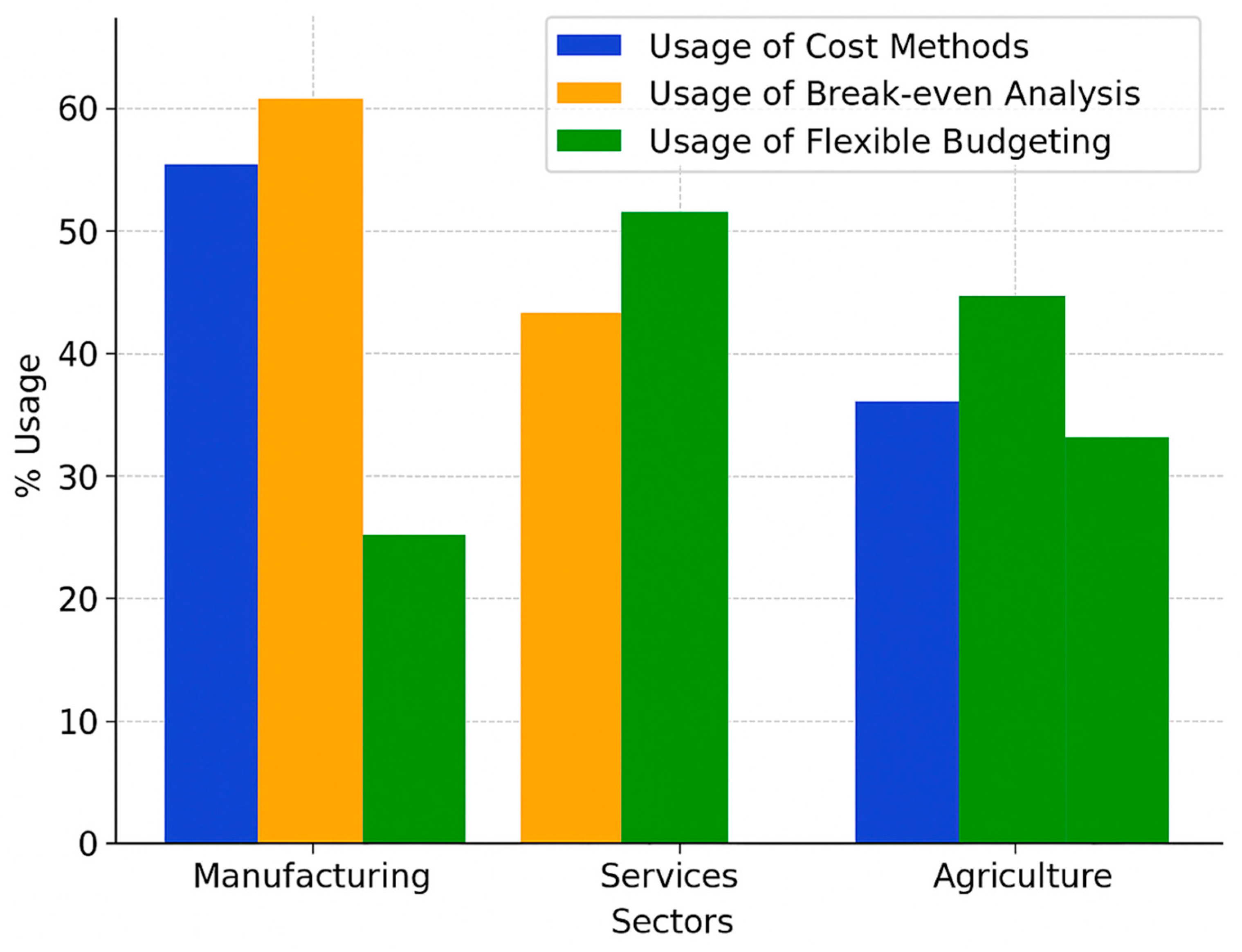
Figure 2.
Financial Performance Before and After Using Managerial Accounting.
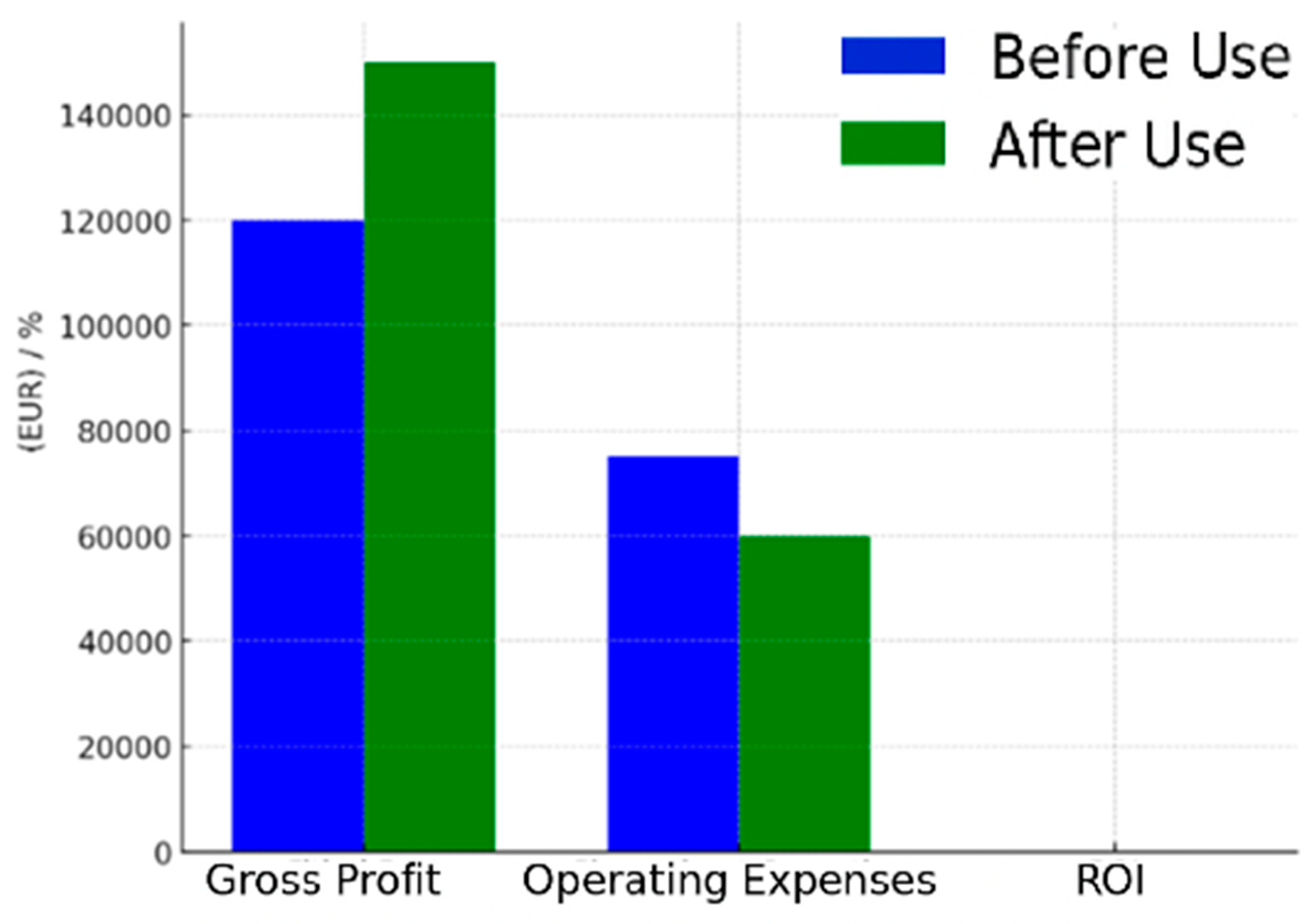
Figure 3.
Impact of Product Cost Using Different Managerial Accounting Methods.
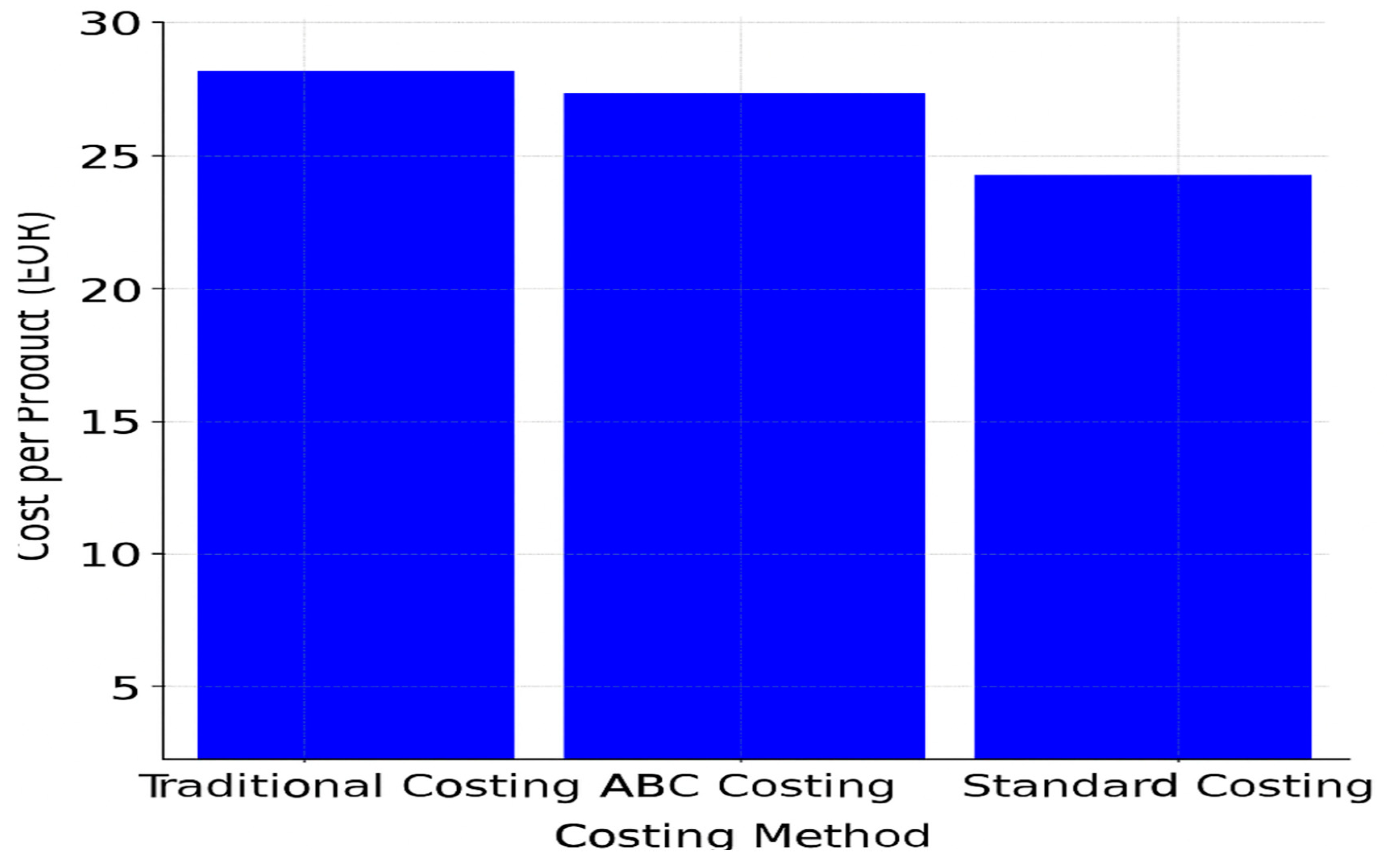
Figure 4.
Performance of Enterprises Using and Not Using Managerial Accounting.
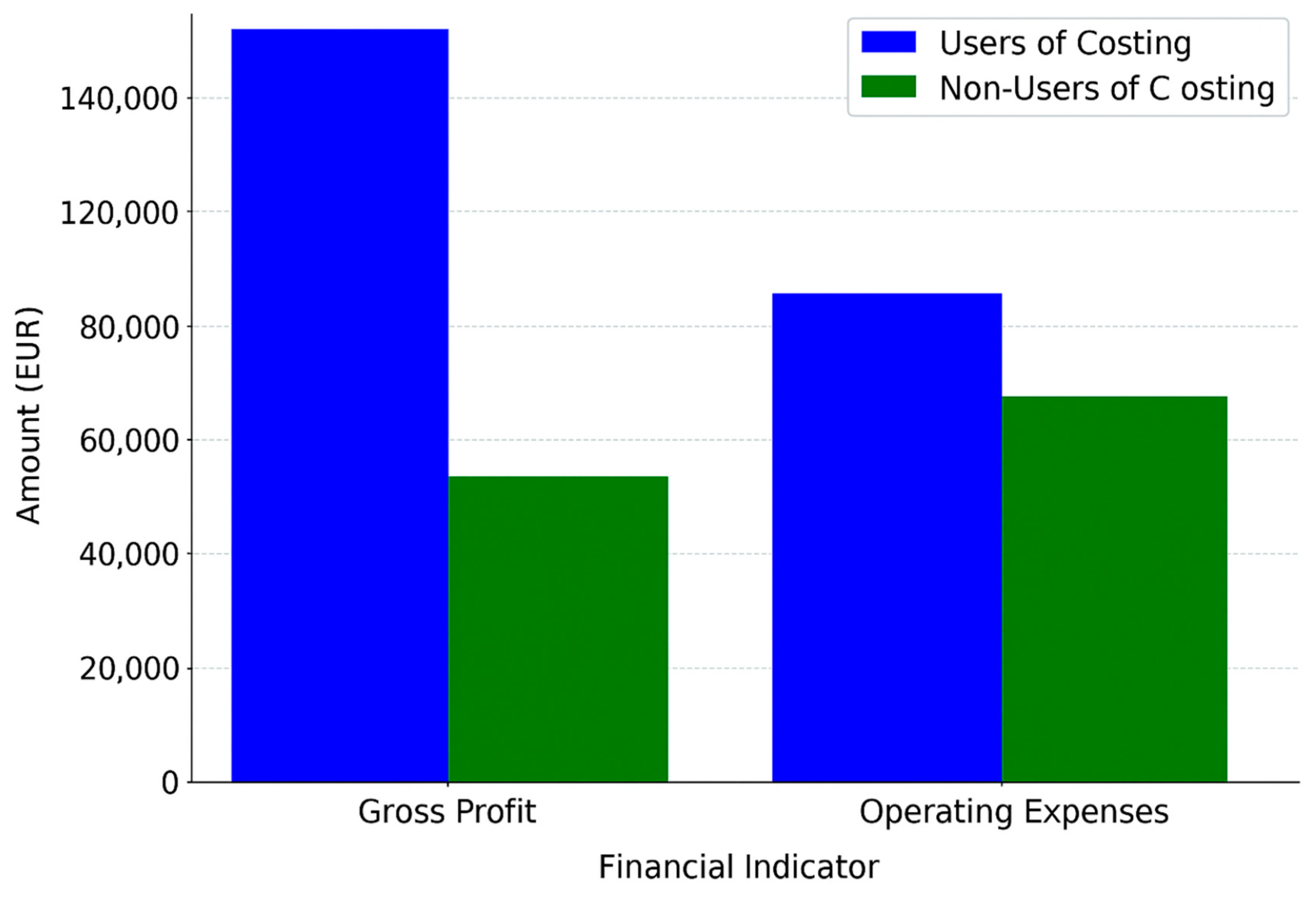

Table 1.
Use of Managerial Accounting in Kosovo Enterprises' Sectors.
| Sector | Use of Costing Method | Use of Break-Even Analysis | Use of Flexible Budget Management |
|---|---|---|---|
| Manufacturing | Activity-Based Costing (ABC) | Yes | No |
| Services | Flexible Budget Management | Yes | Yes |
| Agriculture | Standard Costing | No | Yes |
Table 2.
Financial Performance Before and After Using Managerial Accounting.
| Financial Indicator | Before Using Managerial Accounting | After Using Managerial Accounting |
|---|---|---|
| Gross Profit | 120,000 EUR | 150,000 EUR |
| Operating Expenses | 75,000 EUR | 60,000 EUR |
| ROI (Return on Investment) | 12% | 18% |
Table 3.
Comparison of Product Cost Using Different Managerial Accounting Methods.
| Accounting Method | Product Cost (EUR) |
|---|---|
| Traditional Costing | 30 EUR |
| Activity-Based Costing (ABC) | 28 EUR |
| Standard Costing | 25 EUR |
Disclaimer/Publisher’s Note: The statements, opinions and data contained in all publications are solely those of the individual author(s) and contributor(s) and not of MDPI and/or the editor(s). MDPI and/or the editor(s) disclaim responsibility for any injury to people or property resulting from any ideas, methods, instructions or products referred to in the content. |
© 2025 by the authors. Licensee MDPI, Basel, Switzerland. This article is an open access article distributed under the terms and conditions of the Creative Commons Attribution (CC BY) license (http://creativecommons.org/licenses/by/4.0/).
Copyright: This open access article is published under a Creative Commons CC BY 4.0 license, which permit the free download, distribution, and reuse, provided that the author and preprint are cited in any reuse.


