

Submitted:
01 April 2025
Posted:
01 April 2025
You are already at the latest version
Abstract
In the last two decades the use of photovoltaic panels for the production of electricity has increased significantly, which leads to the need to solve the problems related to the end-of-life disposal of the panels and the development of appropriate technologies for their recycling. One of the key steps in this process is the separation of the tempered glass layer. Various technologies and devices are known for separating the glass of the solar panel by cutting with a knife, as well as other instruments, with the different methods being based on mechanical, chemical and thermal processes and accordingly having their own advantages and disadvantages. This article proposes an innovative approach for mechanical delamination of solar panels using a metal wire heated by Joule heating, with the potential to become an energy-efficient, economical and environmentally friendly method. The publication presents results from experiments using this type of tool to separate the layers of solar panels. Photos from a thermal camera are presented, showing the heat distribution in the panel and the reached operating temperature of the heated metal wire, necessary to soften the EVA bonding layer.
Keywords:
solar panels
; recycling
; delamination
; metal wire
; Joule heating
1. Introduction
The rising worldwide need for clean, renewable energy has driven the expanded utilization of photovoltaic technology [1], where solar cells have emerged as a significant player in the renewable energy arena [2]. In recent years PV energy, harnessing solar radiation to produce electricity, has become a prevalent method for power generation [3]. Among the different types of photovoltaic panels, silicon panels are the most common worldwide, comprising 85%–90% of the PVs on the market. Such panels are generally composed of 77.5% glass, 1.6% metal filaments, 6.8% solar cells, and 14.1% polymers [4].
In a transformative development, solar energy is projected to exceed natural gas by 2026 and coal by 2027, solidifying its position as the dominant contributor to the world’s installed electricity capacity [5]. At the forefront of this shift are crystalline silicon photovoltaics modules, the primary tools in PV systems for solar energy capture [6]. The number of photovoltaic installations is increasing due to the rapid growth of solar power energy in industries. This growth is evidenced by a significant increase in installations, with an over 90% surge in the past decade, from 104 to 1053 GW [7]. While this rapid expansion has led to notable progress in solar energy production, it has also raised a crucial environmental issue [8]. As these installations reach their end-of-life state, PV cell disposal and recycling have emerged as key aspects of sustainable energy management [9]. This is necessary to limit potential ecological harm, such as soil and water contamination from hazardous compounds used in solar panels, and to avoid resource depletion [10], because waste generated from solar panels is considered as one of the future challenging waste streams [11,12]. Globally, only approximately 10% of photovoltaic modules are recycled due to regulatory deficiencies [13]. By putting in place efficient recycling procedures, solar panel trash may be recycled with less negative environmental impact, valuable resources recovered, and less demand for new raw materials [14].
Various methods, including thermal, chemical and mechanical processes, are employed for the recycling of PV modules [15,16]. Thermal methods, particularly pyrolysis, effectively break down organic materials but are energy-intensive. Chemical processes are adept at recovering high-purity materials but struggle with ecological and cost considerations [17]. Mechanical recycling of PV panels has garnered significant research attention due to its implications for sustainable energy solutions. This process typically begins with the dismantling of panels, which involves removing components such as the aluminum frame, encapsulating layers, Ag-printed Si solar cells, back sheets, junction boxes, and embedded cables [18,19]. Following dismantling, the segregation of primary components, including aluminium frames, solar cells, wiring, and laminated glass, is carried out [20]. It is emphasized that prioritizing glass recycling is crucial for maximizing mass recovery and ensuring the economic feasibility of the process [21]. To facilitate separation, various techniques are employed, ranging from manual methods to thermal treatments and automated systems [22,23,24,25,26,27,28,29,30,31,32].
Devices for separating the glass of a solar panel by cutting with a knife, as well as other instruments, are known. An invention [33] relates to separating the tempered glass (transparent layer) without breaking it using two consecutive knives. The proposed method focuses on preserving the glass intact, although most panels subject to recycling have broken glass, and in most cases preserving the glass intact is not economically feasible from the point of view of its subsequent transport and utilization. There is another technical solution [34], which relates to separating the glass and other components mechanically using two blades - transverse and longitudinal, which have the ability to recycle double-sided panels. The panel passes through a spring-loaded heated roller to melt the bonding material (EVA), which allows for processing of different panel thicknesses, after which the layers are separated depending on the configuration of the solar panel. There is also an invention [35], which relates to preliminary thermal treatment of the solar panel and subsequent mechanical treatment to separate the glass by attaching it to the worktable by vacuum and separating the lower part. The subject of another design involves mechanical separation of the glass by using several knives at a certain distance and pulling the separated material, gripped in jaws [36]. There are other patents related to the mechanical separation of elements from solar panels. Korea Institute of Energy Research proposes a method for recycling of solar panels by crushing the glass with the maximum amount of material separated from the remaining layers without adhesion of adhesive materials and additional chemical action. Various crushing rollers and tips have been considered [37]. Hebei Phoenix Valley Zero Carbon Development Research Institute and Yingli Energy China Co Ltd hold a patent for a promising method for recycling solar panels by crushing the panel and subsequent separation of the fractions by various mechanical methods using conventional technologies [38]. A patent filed by Yingli Group Co Ltd in 2012 relates to the separation of glass from the solar panel and subsequent crushing and sorting of the remaining layers without chemical action [39]. Another patent proposes a technology for thermal treatment of the EVA layer in order to separate the glass from the solar panel [40]. A technology for crushing solar panel glass, its subsequent removal using a knife and sorting the fractions is patented by Showa Shell Sekiyu KK [41].
This article proposes an innovative approach for mechanical delamination of solar panels way using a metal wire heated by Joule heating. The publication presents results from experiments using this type of tool to separate the layers of solar panels. Photos from a thermal camera are presented, showing the heat distribution in the panel and the reached operating temperature of the heated metal wire, necessary to soften the EVA bonding layer. The proposed method for mechanically separating the glass of the panel proves promising, combining a simple cutting tool, energy efficiency and a simple and inexpensive device design, for which an application for registration of a Utility Model has been filed.
2. Materials and Methods
2.1. Test Samples
For the purposes of the study, pre-cut pieces of an obsolete single-sided PV panel with cracked glass with approximate dimensions of 150x300 mm were used. A test sample is shown in Figure 1.
The entire thickness of the test panel is about 4.5 mm, distributed as follows: 3 mm for the tempered glass, 1 mm for the insulating back sheet, 0.4 mm for the photovoltaic solar cell layer, and less than 0.1 mm for each of the bonding layers. The cross-sectional structure of the panel is shown schematically, not to scale, in Figure 2.
2.2. Proof-of-Concept Test Device and Other Tools
For testing purposes, a simple manual proof-of-concept device was constructed, consisting of a plastic frame and a place to attach a metal wire. A spring was also added to provide additional tension when heating the wire. Two cables with cable clamps at the end were added to allow an electrical current to be applied to the wire via an external power supply so that it could be resistive-heated. Experiments were performed with two types of ferritic iron-chromium-aluminium alloy wires suitable for Joule heating – Kanthal Round Wire with a diameter of 0.2 mm and Kanthal with a rectangular cross-section and dimensions of 1.250x0.150 mm. The length of the working area of the cutting wire is about 500 mm. The device is shown in Figure 3.
A DC Power Supply HY3005D 30V/5A was used for the tests, shown in Figure 4.
Due to the large energy dissipation of the heated wire when cutting the panel, a Steinel HL 2020 E hot air gun was also used for part of the experiments to maintain stable temperature in the area of passage of the cutting tool.
A FLIR ONE EDGE – Wireless Thermal Imaging Camera was used to track the heating of the panel and to monitor the temperature in the area where the cutting heated wire passed.
2.3. Experimental Setup
A piece of the solar panel is attached to a fixed table using clamps. Experiments were conducted with two orientations of the piece – with glass facing the table (Figure 5a) and with insulating back sheet facing the table (Figure 5b).
Electric current is passed along the length of the wire to heat it and then it is threaded into the EVA layer between the glass and the photovoltaic solar cells. By alternating longitudinal and transverse movements of the wire, the layers are separated, as shown in Figure 6.
3. Results
3.1. Test Results with Kanthal Round Wire
Experiments have been conducted to separate the glass layer using a heated Kanthal wire with a circular cross-section and a diameter of 0.2 mm without additional heating of the test specimen. The required wire temperature, sufficient to soften the EVA layer, is expected to be in the range of 100-180 °C, and is achieved with a voltage supplied from the external power supply of 9.5 V and an electric current of 3.6 A.
Figure 7a shows a photo from the thermal camera after threading the round heated wire into the bonding layer between the glass and the PV cells. A portion of the crushed separated glass is shown in Figure 7b. The experiment was conducted with the insulating back sheet pointing towards the table.
An attempt with a round wire to separate the insulating back sheet of the solar panel from the PV layer was also made. The result of a partially separated insulation layer is shown in Figure 8. The experiment was conducted with the glass layer pointing towards the table and with additional heating using a hot air gun.
3.2. Test Results with Kanthal Wire with a Rectangular Cross-Section
Tests using a rectangular wire were performed with additional heating of the test specimen using a hot air gun. A wire heating temperature of over 160 °C was achieved at a voltage of 5.6 V and an electric current of 5.2 A. А thermal image of the rectangular heated wire is shown in Figure 9a. Figure 9b shows a thermal image of the rectangular wire being threaded between the glass layer and the PV layer with insulating back sheet facing the table.
The passage of the wire through the EVA layer and the separation of the glass layer are shown in Figure 10a,b.
The separated glass is shown in Figure 11a and the PV cells layer with the remaining EVA on top of it – in Figure 11b.
Thermal image of an attempt to thread the rectangular wire between the glass and the PV cells during an experimental setup of the test specimen with the glass layer pointing towards the table is shown in Figure 12.
4. Discussion
When performing the tests with a round wire, it was found that movement between the layers was difficult due to the shape of the wire and the lack of a guiding surface. Therefore, further experiments were performed wih a Kanthal heating wire with a rectangular cross-section.
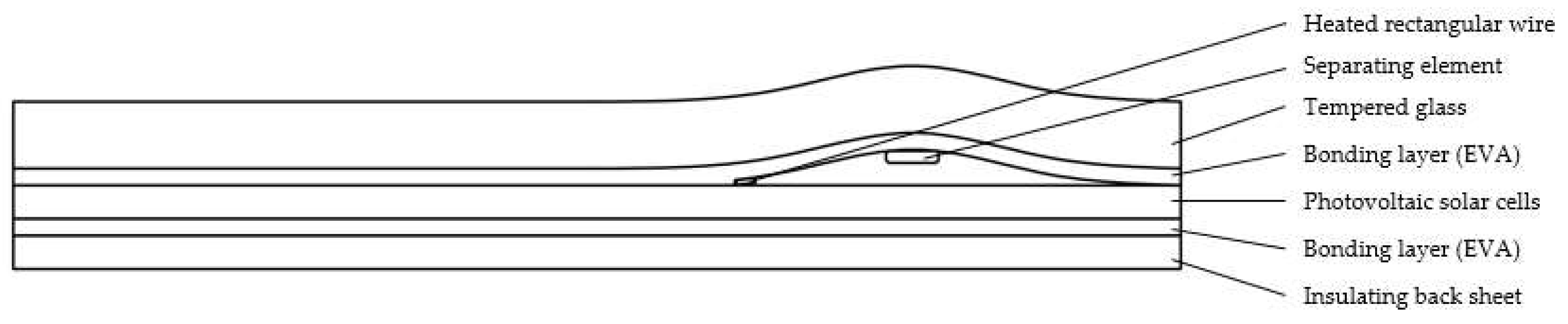
During experiments with rectangular wire, it was found that better threading was obtained when the insulating back sheet was placed facing the table. In this way, the glass layer provided greater stiffness to the test specimen and allowed for stable wire guidance between the layers (Figure 10a,b), which was not possible when the glass layer was facing the table (Figure 12). Based on the test results, it was also found that the angle of attack was also important for good separation of the glass layer and it is appropriate to be in the range of 0-45 °. It was confirmed that a wire heating temperature between 120 and 170 °C was sufficient to soften the EVA bonding layer, with additional heating of the test specimens with a hot air gun allowing for faster separation and easier wire guidance. It was found that the main part of the EVA binder remained on the PV cell layer and not on the glass, as seen in Figure 11a,b. It was also concluded that it was necessary to have an additional separating element to prevent the layers from re-adhering after the heated wire passed through, as well as that it was necessary to provide greater tension on the wire.
Based on the analysis of the results obtained from the tests performed, an exemplary scheme for separating the glass layer from the PV solar cells layer in solar panels has been proposed, shown in Figure 13.
The proposed approach offers satisfactory results in the tests conducted. One of its major advantages over other methods discussed in the Introduction is the lack of the necessity to manufacture a special profiled cutting tool – the Kanthal wire is a standardized mass-produced product with low cost. The use of Joule heating is also justified as a feasible method for heating the cutting tool. Due to the above, it can be concluded that the proposed method has the potential to be energy-efficient, economical and environmentally friendly.
The presented research is part of the development of a device for separating the glass of a solar panel, for which an application for registration of a Utility Model has been filed with the Patent Office of the Republic of Bulgaria.
5. Patents
Application for registration of a Utility Model № BG/U/2025/6400 with the Patent Office of Republic of Bulgaria.
Author Contributions
Conceptualization, methodology, writing—original draft preparation, M.Z; software, resources, visualization, K.D.; validation, V.K, A.N. and K.S.; investigation, K.S. and A.N.; writing—review and editing, V.K..; supervision, V.K.; project administration, Y.S.; funding acquisition, Y.S. All authors have read and agreed to the published version of the manuscript.
Funding
This study is financed by the European Union-Next Generation EU, through the National Recovery and Resilience Plan of the Republic of Bulgaria, project № BG-RRP-2.004-0005.
Data Availability Statement
Data will be available on request.
Conflicts of Interest
The authors declare no conflicts of interest.
Abbreviations
The following abbreviations are used in this manuscript:
| EVA | Ethylene-vinyl acetate |
| PV | Photovoltaic |
| GW | Gigawatts |
References
- Islam, I.; Jadin, M.S.; Al Mansur, A.; Kamari, N.A.M.; Jamal, T.; Lipu, M.S.H.; Azlan, M.N.M.; Sarker, M.R.; Shihavuddin, A.S.M. Techno-Economic and Carbon Emission Assessment of a Large-Scale Floating Solar PV System for Sustainable Energy Generation in Support of Malaysia’s Renewable Energy Roadmap. Energies 2023, 16, 4034. [CrossRef]
- Huang, W.-H.; Shin, W.J.; Wang, L.; Sun, W.-C.; Tao, M. Strategy and technology to recycle wafer-silicon solar modules. Sol. Energy 2017, 144, 22–31. [CrossRef]
- Franco, M.A.; Groesser, S.N. A Systematic Literature Review of the Solar Photovoltaic Value Chain for a Circular Economy. Sustainability 2021, 13, 9615. [CrossRef]
- Sah, D.; Chitra; Lodhi, K.; Kant, C.; Srivastava, S.K.; Kumar, S. Extraction and Analysis of Recovered Silver and Silicon from Laboratory Grade Waste Solar Cells. Silicon 2022, 14, 9635–9642. [CrossRef]
- International Energy Agency. Renewables 2022: Analysis and Forecast to 2027; International Energy Agency: Paris, France, 2023.
- Heath, G.A.; Silverman, T.J.; Kempe, M.; Deceglie, M.; Ravikumar, D.; Remo, T.; Cui, H.; Sinha, P.; Libby, C.; Shaw, S. Research and development priorities for silicon photovoltaic module recycling to support a circular economy. Nat. Energy 2020, 5, 502–510. [CrossRef]
- IRENA. Renewable Energy Statistics; IRENA: Abu Dhabi, United Arab Emirates, 2023.
- Ghosh, M.K.; Mansur, A.; Rifat, A.I.; Mollik, A.A.; Ghosh, A.K.; Soheb, M.; Islam, I.; Haq, M.A.U. The Prospect of Waste Management System for Solar Power Plants in Bangladesh: A Case Study. In Proceedings of the 2023 5th International Conference on Sustainable Technologies for Industry 5.0 (STI), Dhaka, Bangladesh, 9–10 December 2023; IEEE: Piscataway, NJ, USA; pp. 1–5. [CrossRef]
- Jung, B.; Park, J.; Seo, D.; Park, N. Sustainable System for Raw-Metal Recovery from Crystalline Silicon Solar Panels: From Noble-Metal Extraction to Lead Removal. ACS Sustain. Chem. Eng. 2016, 4, 4079–4083. [CrossRef]
- Akhter, M.; Al Mansur, A.; Islam, M.I.; Lipu, M.S.H.; Karim, T.F.; Abdolrasol, M.G.M.; Alghamdi, T.A.H. Sustainable Strategies for Crystalline Solar Cell Recycling: A Review on Recycling Techniques, Companies, and Environmental Impact Analysis. Sustainability 2024, 16, 5785. [CrossRef]
- Islam, M.T.; Iyer-Raniga, U.; Trewick, S. Recycling Perspectives of Circular Business Models: A Review. Recycling 2022, 7, 79. [CrossRef]
- Spooren, J.; Binnemans, K.; Björkmalm, J.; Breemersch, K.; Dams, Y.; Folens, K.; González-Moya, M.; Horckmans, L.; Komnitsas, K.; Kurylak, W. Near-zero-waste processing of low-grade, complex primary ores and secondary raw materials in Europe: Technology development trends. Resour. Conserv. Recycl. 2020, 160, 104919. [CrossRef]
- Gerold, E.; Antrekowitsch, H. Advancements and Challenges in Photovoltaic Cell Recycling: A Comprehensive Review. Sustainability 2024, 16, 2542. [CrossRef]
- Wang, T.-Y.; Hsiao, J.-C.; Du, C.-H. Recycling of materials from silicon base solar cell module. In Proceedings of the 2012 IEEE 38th Photovoltaic Specialists Conference (PVSC), Austin, TX, USA, 3–8 June 2012; IEEE: Piscataway, NJ, USA, 2012; pp. 2355–2358. [CrossRef]
- Huang, W.-H.; Tao, M. A simple green process to recycle Si from crystalline-Si solar cells. In Proceedings of the 2015 IEEE 42nd Photovoltaic Specialists Conference (PVSC), New Orleans, LA, USA, 14–19 June 2015; IEEE: Piscataway, NJ, USA, 2015; pp. 1–4. [CrossRef]
- Todorov, G.; Vasilev, H.; Kamberov, K.; Ivanov, Ts.; Sofronov, Y.; Concept and Virtual Prototyping of Cooling Module for Photovoltaic System. In Proceedings of the 2021 6th International Symposium on Environment-Friendly Energies and Applications (EFEA), Sofia, Bulgaria, 2021; pp. 1-4. [CrossRef]
- Chen, P.-H.; Chen, W.-S.; Lee, C.-H.; Wu, J.-Y. Comprehensive Review of Crystalline Silicon Solar Panel Recycling: From Historical Context to Advanced Techniques. Sustainability 2024, 16, 60. [CrossRef]
- Savvilotidou, V.; Antoniou, A.; Gidarakos, E. Toxicity assessment and feasible recycling process for amorphous silicon and CIS waste photovoltaic panels. Waste Manag. 2017, 59, 394–402. [CrossRef]
- Dias, P.; Javimczik, S.; Benevit, M.; Veit, H.; Bernardes, A.M. Recycling WEEE: Extraction and concentration of silver from waste crystalline silicon photovoltaic modules. Waste Manag. 2016, 57, 220–225. [CrossRef]
- Latunussa, C.E.L.; Ardente, F.; Blengini, G.A.; Mancini, L. Life Cycle Assessment of an innovative recycling process for crystalline silicon photovoltaic panels. Sol. Energy Mater. Sol. Cells 2016, 156, 101–111. [CrossRef]
- Pagnanelli, F.; Moscardini, E.; Granata, G.; Atia, T.A.; Altimari, P.; Havlik, T.; Toro, L. Physical and chemical treatment of end of life panels: An integrated automatic approach viable for different photovoltaic technologies. Waste Manag. 2017, 59, 422–431. [CrossRef]
- Shin, J.; Park, J.; Park, N. A method to recycle silicon wafer from end-of-life photovoltaic module and solar panels by using recycled silicon wafers. Sol. Energy Mater. Sol. Cells 2017, 162, 38. [CrossRef]
- Granata, G.; Pagnanelli, F.; Moscardini, E.; Havlik, T.; Toro, L. Recycling of photovoltaic panels by physical operations. Sol. Energy Mater. Sol. Cells 2014, 123, 239–248. [CrossRef]
- Wang, T.-Y.; Hsiao, J.-C.; Du, C.-H. Recycling of materials from silicon base solar cell module. In Proceedings of the 2012 38th IEEE Photovoltaic Specialists Conference, Austin, TX, USA, 3–8 June 2012. [CrossRef]
- Kim, Y.; Lee, J. Dissolution of ethylene vinyl acetate in crystalline silicon PV modules using ultrasonic irradiation and organic solvent. Sol. Energy Mater. Sol. Cells 2012, 98, 317–322. [CrossRef]
- Tammaro, M.; Rimauro, J.; Fiandra, V.; Salluzzo, A. Thermal treatment of waste photovoltaic module for recovery and recycling: Experimental assessment of the presence of metals in the gas emissions and in the ashes. Renew. Energy 2015, 81, 103–112. [CrossRef]
- Chitra; Sah, D.; Lodhi, K.; Kant, C.; Saini, P.; Kumar, S. Structural composition and thermal stability of extracted EVA from silicon solar modules waste. Sol. Energy 2020, 211, 74–81. [CrossRef]
- Dias, P.; Schmidt, L.; Gomes, L.B.; Bettanin, A.; Veit, H.; Bernardes, A.M. Recycling waste crystalline silicon photovoltaic modules by electrostatic separation. J. Sustain. Metall. 2018, 4, 176–186. [CrossRef]
- Mulazzani, A.; Eleftheriadis, P.; Leva, S. Recycling c-Si PV Modules: A Review, a Proposed Energy Model and a Manufacturing Comparison. Energies 2022, 15, 8419. [CrossRef]
- Zeng, D.-w.; Born, M.; Wambach, K. Pyrolysis of EVA and its application in recycling of photovoltaic modules. J. Environ. Sci. 2004, 16, 889–893.
- Bombach, E.; Röver, I.; Müller, A.; Schlenker, S.; Wambach, K.; Kopecek, R.; Wefringhaus, E. Technical experience during thermal and chemical recycling of a 23 year old PV generator formerly installed on Pellworm island. In Proceedings of the 21st European Photovoltaic Solar Energy Conference, Dresden, Germany, 4–8 September 2006.
- Mapari, R.; Narkhede, S.; Navale, A.; Babrah, J. Automatic waste segregator and monitoring system. Int. J. Adv. Comput. Res. 2020, 10, 171. [CrossRef]
- Sangho, Ch.; Hyonsoo, K.; Youngkook, K. Solar panel recycling apparatus and method. Patent WO2020197231A1, filed 24 March 2020, and issued 1 October 2020.
- Young Kook, K. Apparatus for recycling solar cell module, Patent KR102154030B1, filed 16 April 2019, and issued 9 September 2020.
- Motoo, T.; Junichi, S.; Keiichiro, U. Solar battery module recycling method, Patent JP2015110201A, filed 6 December 2013, and issued 18 June 2015.
- Dunxin, L.; Yijun, L.; Yisheng, L.; Defeng, L.; Lu, L.; Ying, W. Method and device for disassembling and recycling TPT back plate, EVA (ethylene vinyl acetate copolymer)/battery piece and glass, Patent CN109530394B, filed 19 November 2018, and issued 8 October 2021.
- Tsushima, T; Ogasawara, Sh.; Kurihara, K.; Ibarada, N.; Nobuyuki, Ts. Solar battery module recycling method and solar battery module recycling device, Patent JP2018086651A, filed 7 December 2017, and issued 7 June 2018.
- Xinjuan, L; Guoyi, D.; Weidong, L.; Cuigu, W.; Zhijun, Ch.; Chao, M.; Beihai, Y.; Ying, L.; Mengmeng, W.; Yingye, L. Photovoltaic module recycling method and system, Patent CN110571306A, filed 12 September 2019, and issued 13 December 2019.
- Lu, Zh.; Han, L.; Yunfeng, M.; Chongzhen, M.; Ziqi, Y.; Shengguang, Zh.; Yinfeng, H.; Jianwen, Zh.; Mingyu, L.; Qian, L.; Zhansheng, Zh.; Jindou, H. Recovery method and device of complete glass photovoltaic module, Patent CN111790723A, filed 24 June 2024, and issued 20 October 2020.
- Jingyang, L.; Qiao, Q.; Yuwen, G.; Li, D. EVA heat treatment method of waste crystalline silicon solar cell module, Patent CN103978010A, filed 8 May 2014, and issued 13 August 2014.
- Kushiya, K. Recycling method of solar cell module, Patent JP5574750B2, filed 25 February 2010, and issued 20 August 2014.
Figure 1.
Test sample from an obsolete single-sided PV panel.
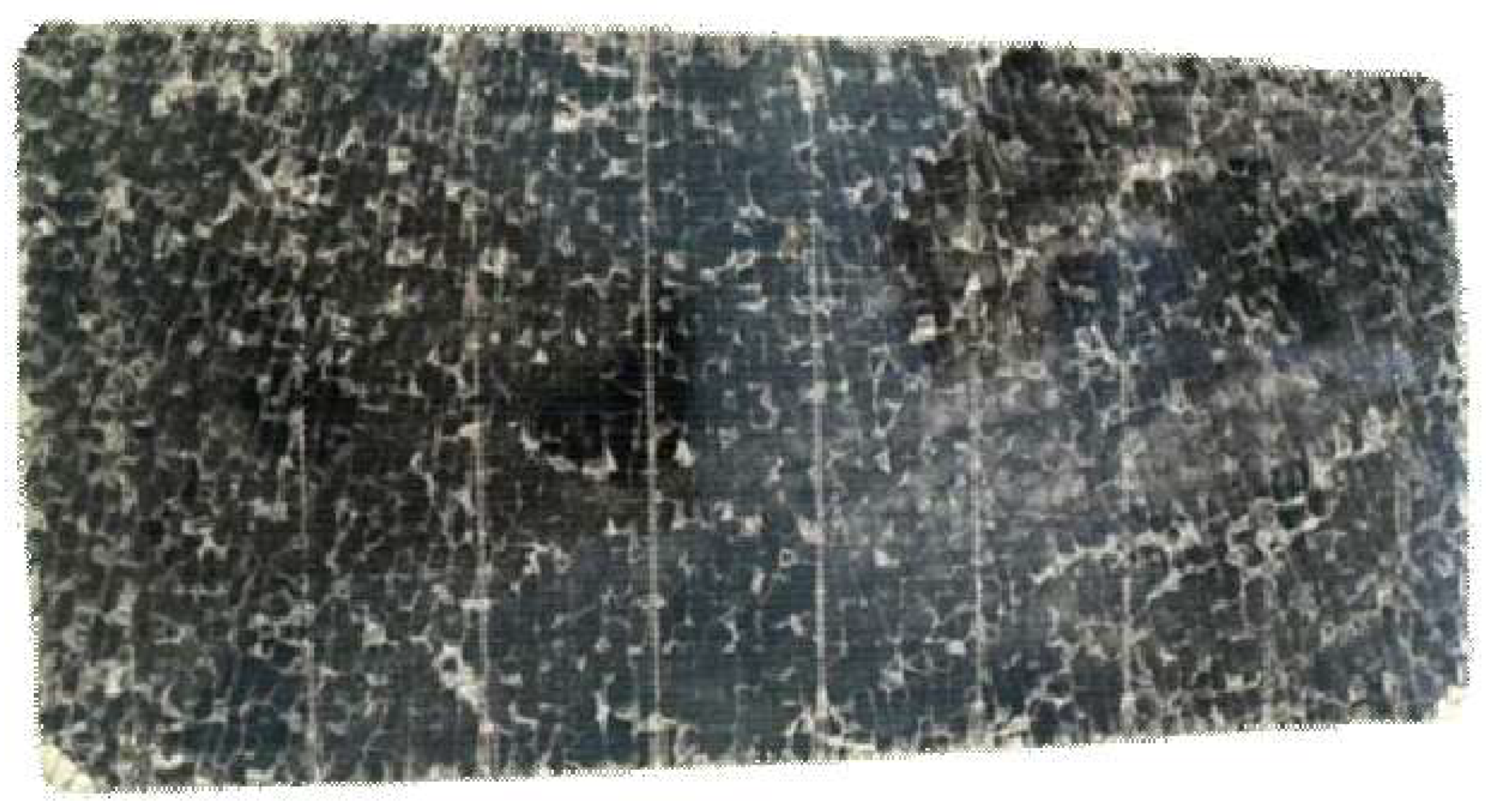
Figure 2.
Scheme of the cross-sectional structure of the panel used for the tests.
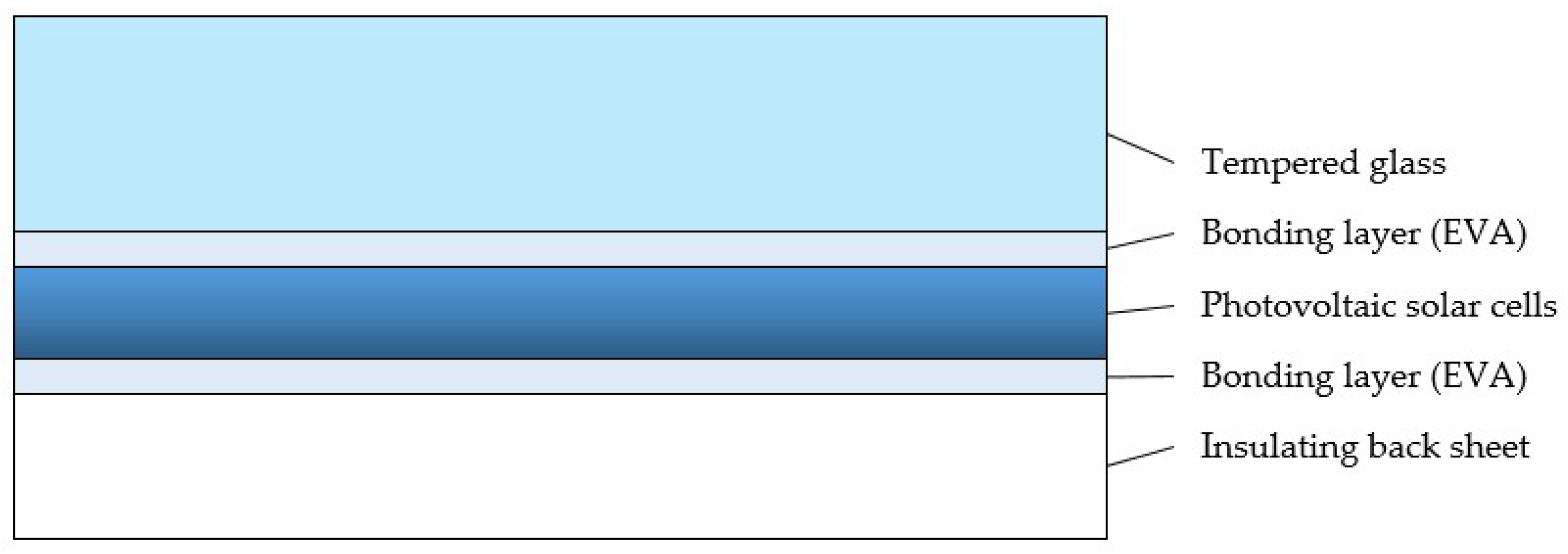
Figure 3.
Manual proof-of-concept test device with a metal wire.
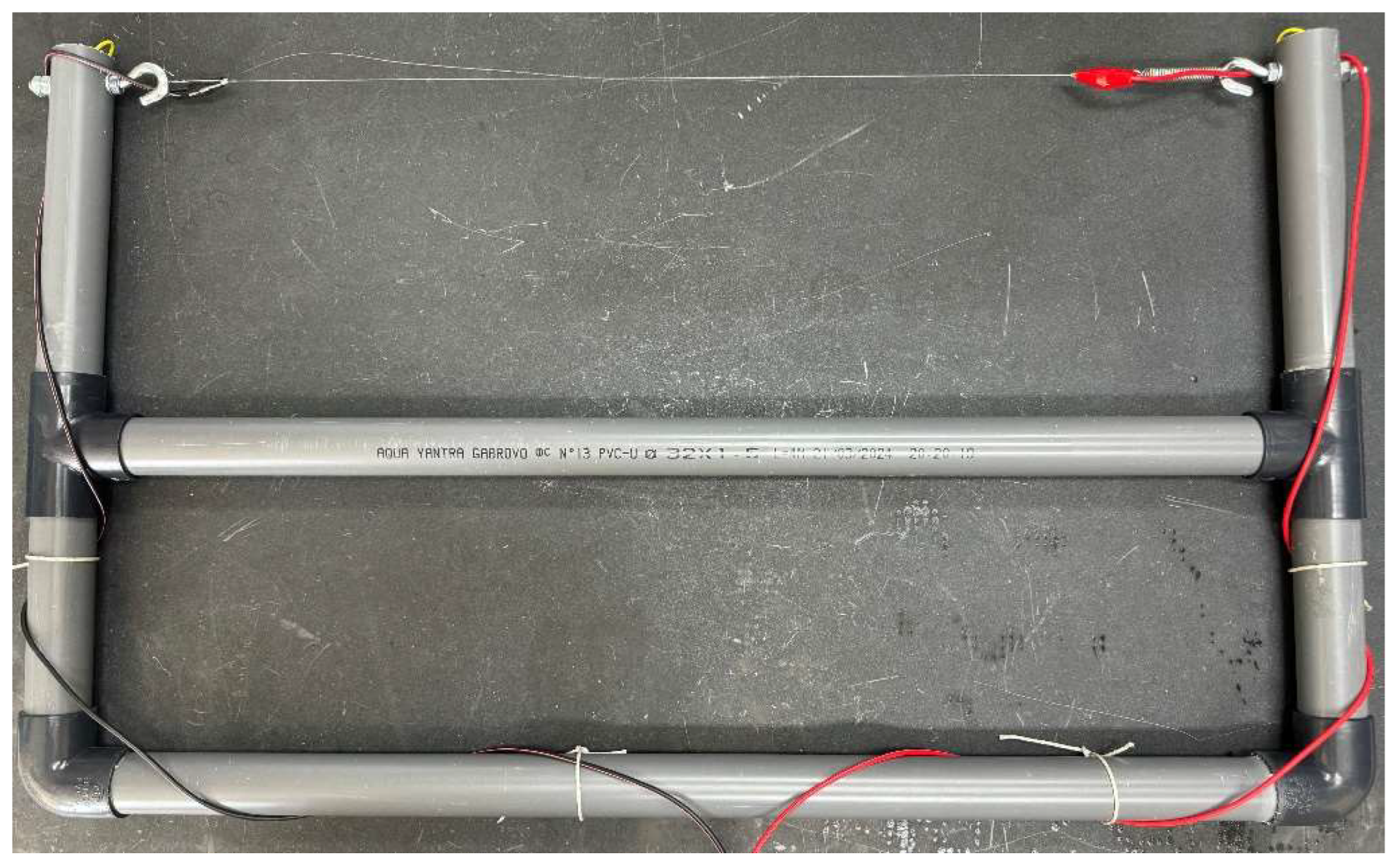
Figure 4.
DC Power Supply HY3005D 30V/5A during testing.
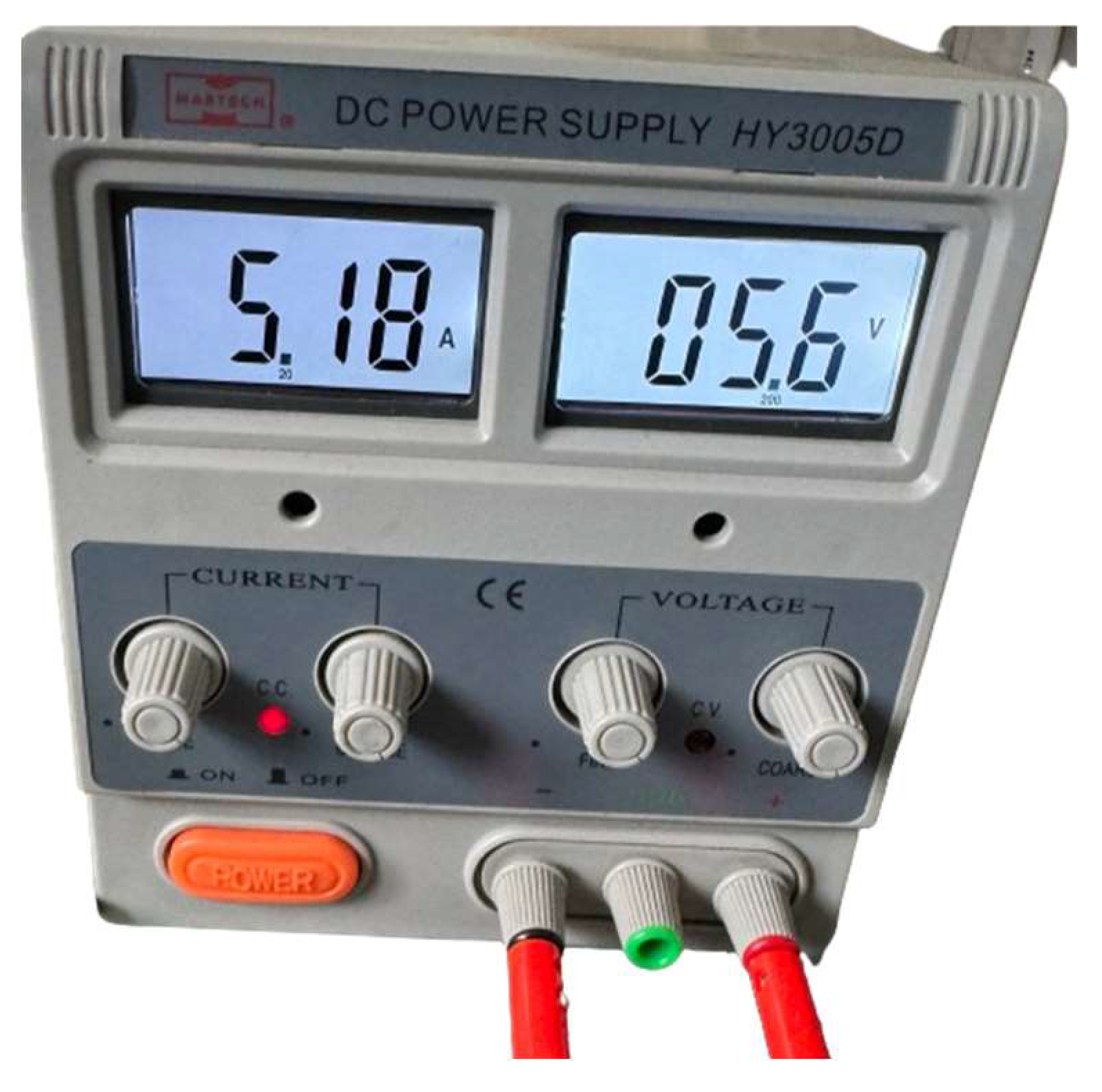
Figure 5.
Different orientations of the pieces: (a) with glass facing the table; (b) with insulating back sheet facing the table.
Figure 5.
Different orientations of the pieces: (a) with glass facing the table; (b) with insulating back sheet facing the table.
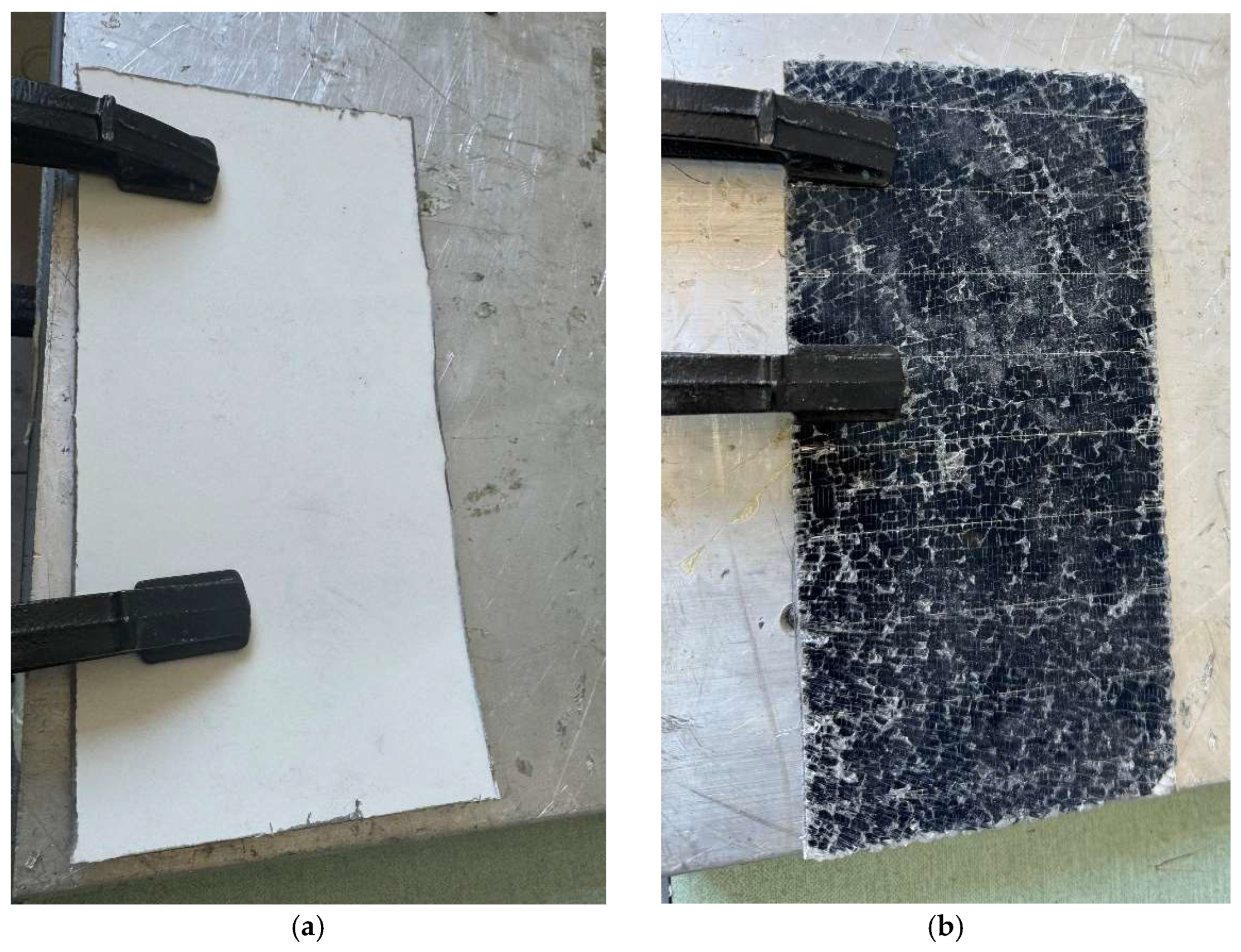
Figure 6.
The wire threaded into the EVA layer between the glass and the photovoltaic solar cells.
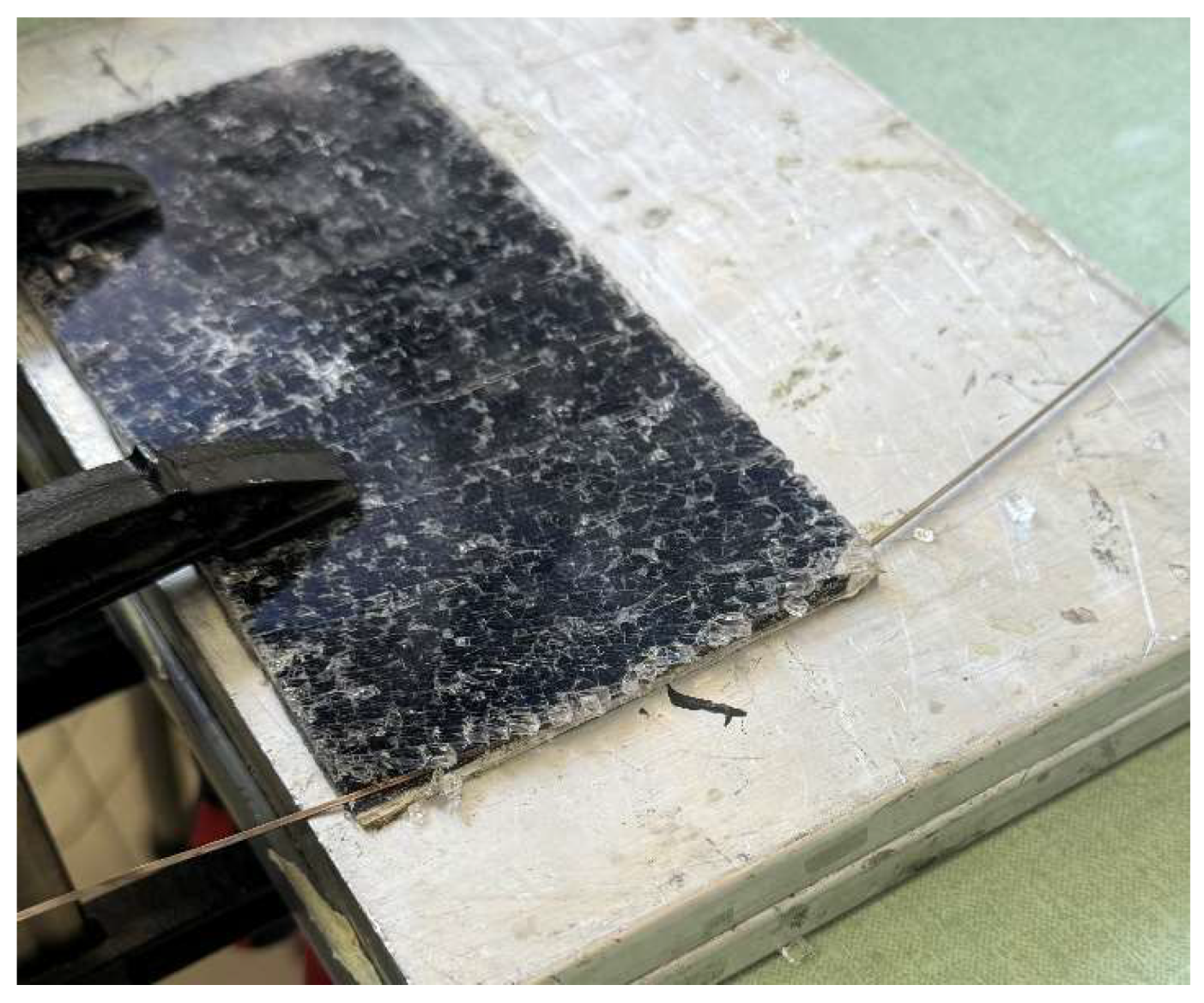
Figure 7.
Test results of glass separation using a round wire and a specimen placed with the glass layer facing the table: (a) photo from the thermal camera after threading the round heated wire into the bonding layer between the glass and the PV cells; (b) portion of the crushed separated glass.
Figure 7.
Test results of glass separation using a round wire and a specimen placed with the glass layer facing the table: (a) photo from the thermal camera after threading the round heated wire into the bonding layer between the glass and the PV cells; (b) portion of the crushed separated glass.
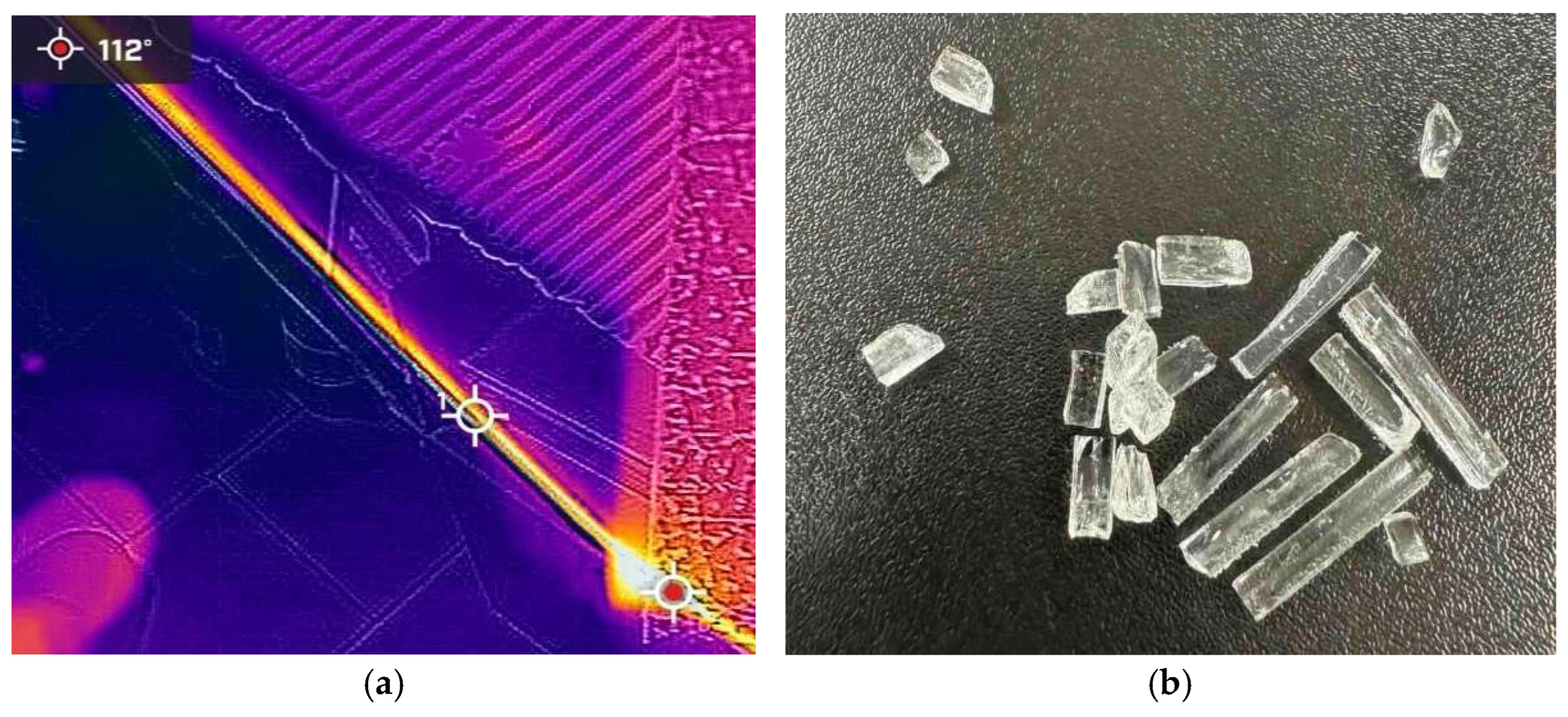
Figure 8.
Partially separated insulating back sheet.
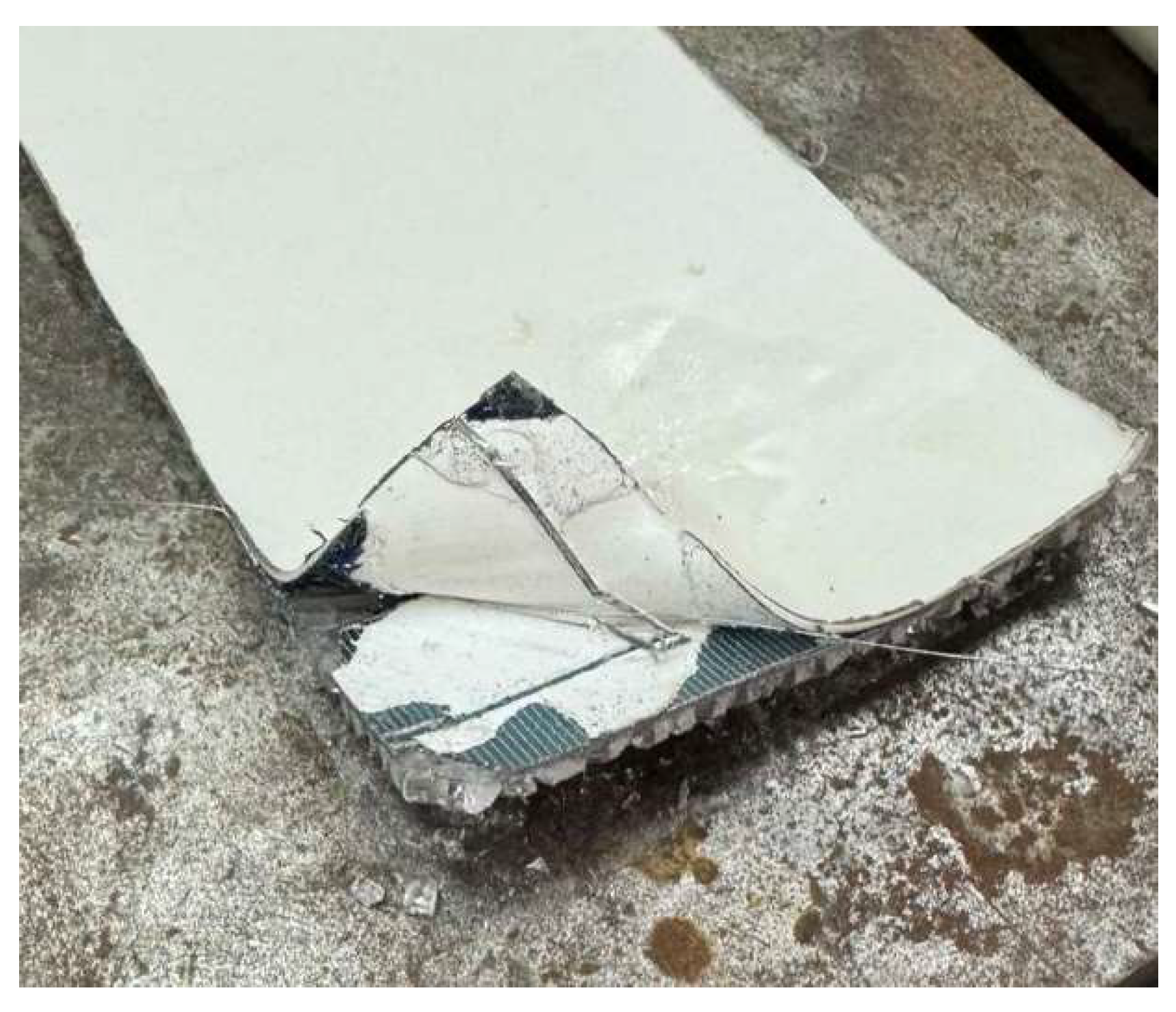
Figure 9.
Thermal images: (a) of the rectangular heated wire; (b) of the rectangular wire being threaded between the glass layer and the PV layer with insulating back sheet facing the table.
Figure 9.
Thermal images: (a) of the rectangular heated wire; (b) of the rectangular wire being threaded between the glass layer and the PV layer with insulating back sheet facing the table.
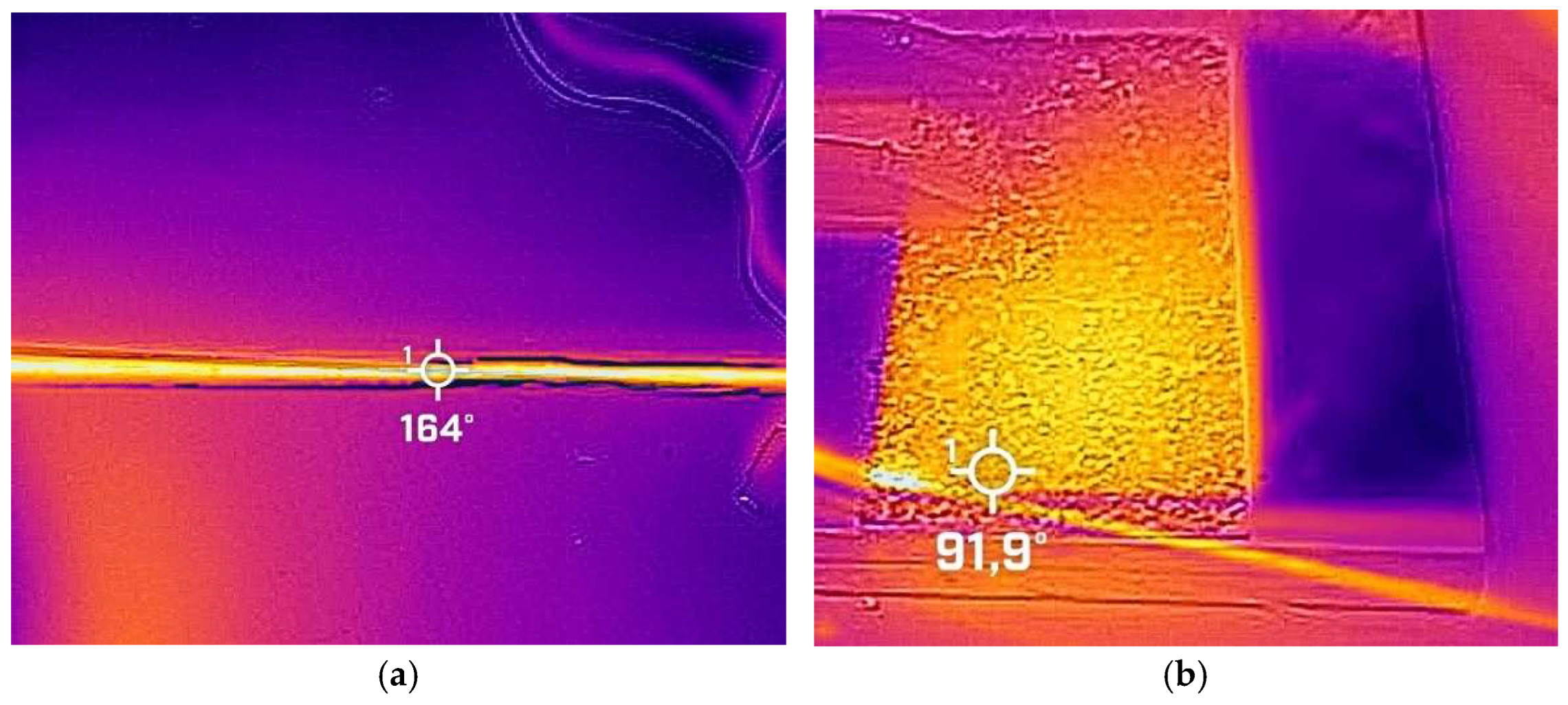
Figure 10.
Heated wire movement: (a) in the beginning of the cutting process; (b) during the cutting process.
Figure 10.
Heated wire movement: (a) in the beginning of the cutting process; (b) during the cutting process.
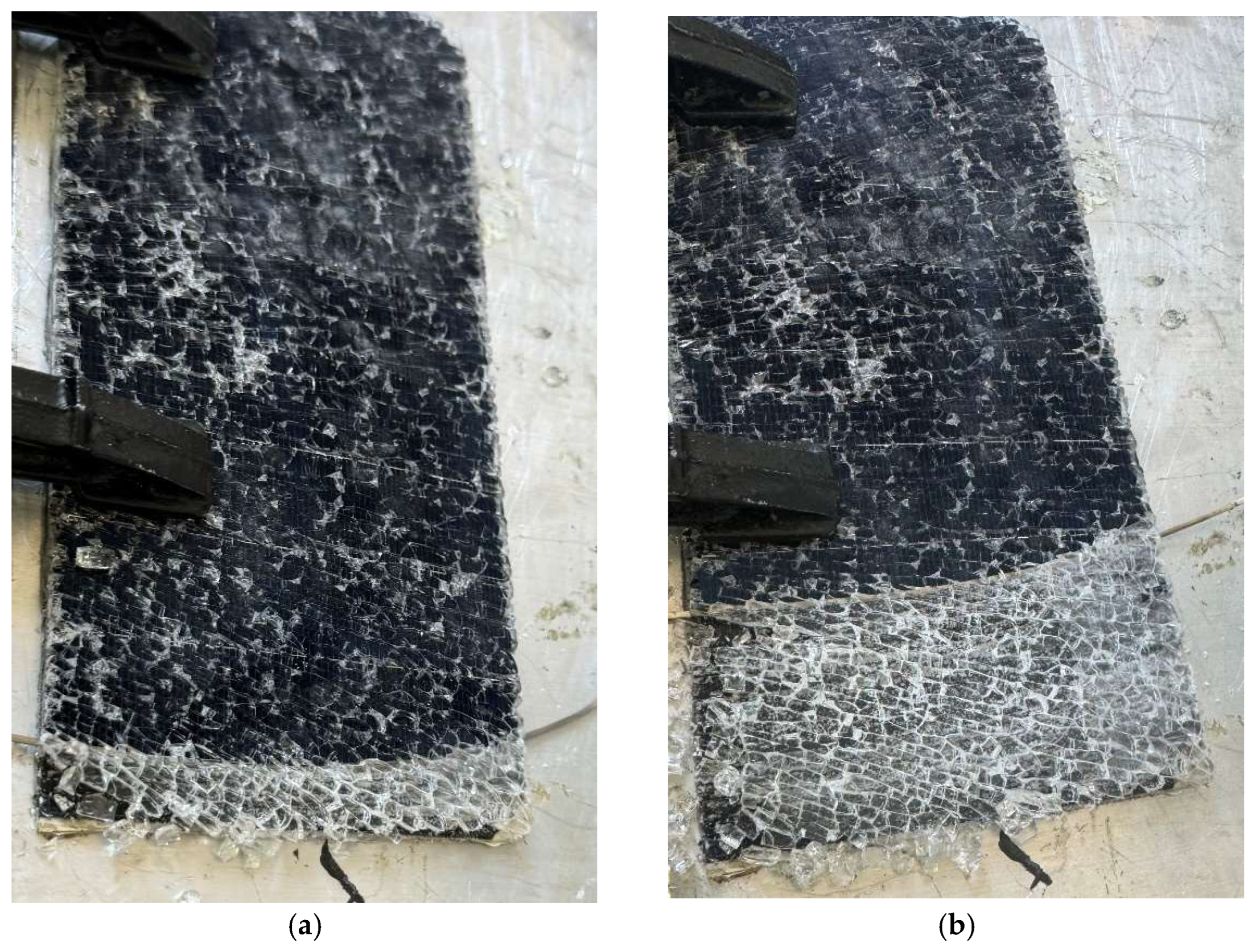
Figure 11.
(a) Separated glass; (b) PV cells layer with the remaining EVA on top of it.
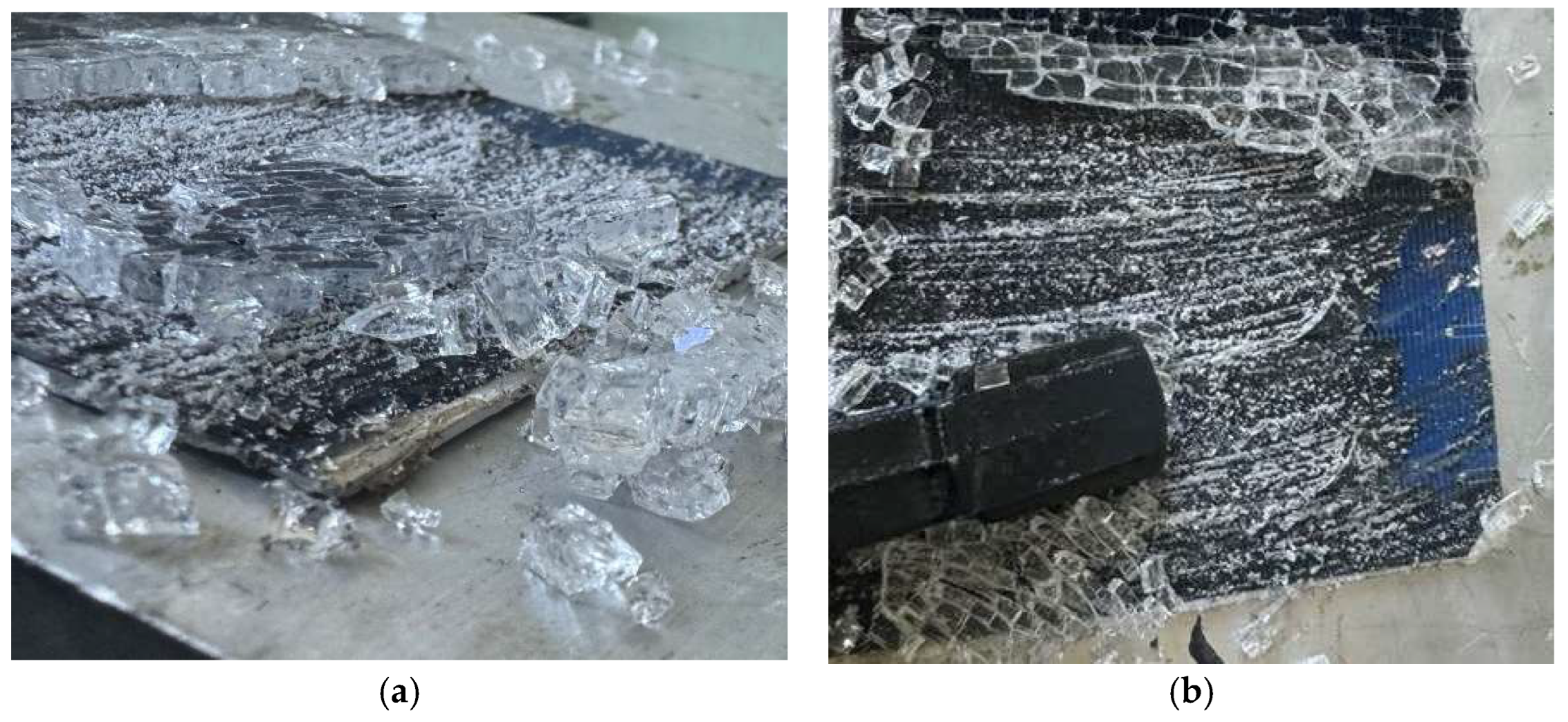
Figure 12.
Thermal image on an attempt to thread the rectangular wire with the glass layer pointing towards the table.
Figure 12.
Thermal image on an attempt to thread the rectangular wire with the glass layer pointing towards the table.
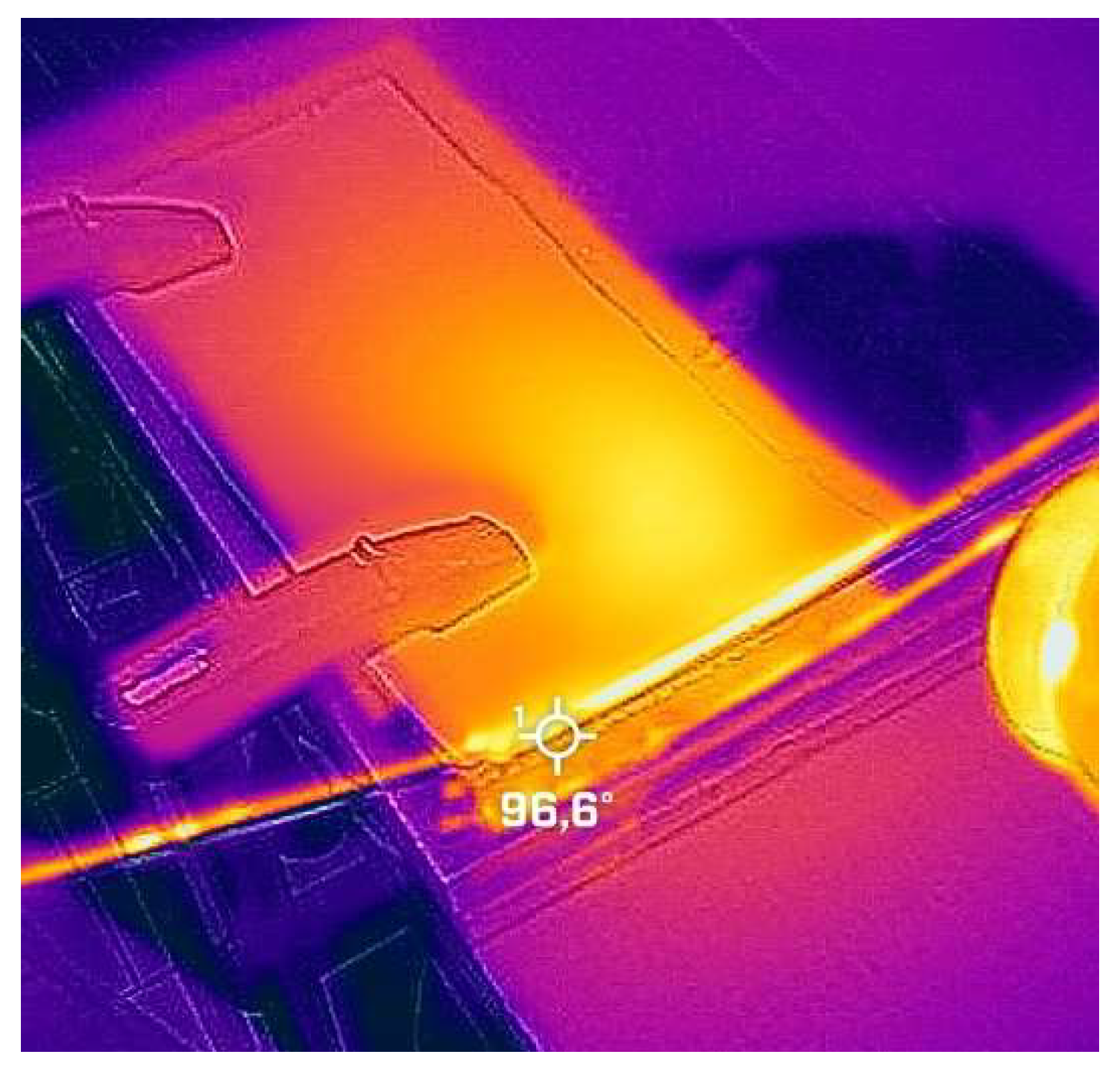
Figure 13.
Exemplary scheme for separating the glass layer from the PV cell layer in solar panels.
Disclaimer/Publisher’s Note: The statements, opinions and data contained in all publications are solely those of the individual author(s) and contributor(s) and not of MDPI and/or the editor(s). MDPI and/or the editor(s) disclaim responsibility for any injury to people or property resulting from any ideas, methods, instructions or products referred to in the content. |
© 2025 by the authors. Licensee MDPI, Basel, Switzerland. This article is an open access article distributed under the terms and conditions of the Creative Commons Attribution (CC BY) license (http://creativecommons.org/licenses/by/4.0/).
Copyright: This open access article is published under a Creative Commons CC BY 4.0 license, which permit the free download, distribution, and reuse, provided that the author and preprint are cited in any reuse.


